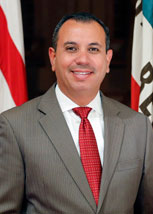
AB 1506: Labor Code Private Attorneys General Act of 2004.
- Session Year: 2015-2016
- House: Assembly
- Latest Version Date: 2015-10-02
The Labor Code Private Attorneys General Act of 2004 authorizes an aggrieved employee to bring a civil action to recover specified civil penalties, that would otherwise be assessed and collected by the Labor and Workforce Development Agency, on behalf of the employee and other current or former employees for the violation of certain provisions affecting employees. The act provides the employer with the right to cure certain violations before the employee may bring a civil action, as specified. For other violations, the act requires the employee to follow specified procedures before bringing an action.
Existing law requires an employer to provide its employees with specified information regarding their wages, including, among others, the inclusive dates of the period for which the employee is paid and the name and address of the legal entity that is the employer, either semimonthly or at the time of each wage payment and provides that the employer does not have the right to cure a violation of that requirement before an employee may bring a civil action under the act.
This bill would provide an employer with the right to cure a violation of the requirement that an employer provide its employees with the inclusive dates of the pay period and the name and address of the legal entity that is the employer before an employee may bring a civil action under the act. The bill would provide that a violation of that requirement shall only be considered cured upon a showing that the employer has provided a fully compliant, itemized wage statement to each aggrieved employee, as specified. The bill would limit the employers right to cure with respect to alleged violations of these provisions to once in a 12-month period, as specified. The bill would also delete references to obsolete provisions of law.
This bill would declare that it is to take effect immediately as an urgency statute.
The Labor Code Private Attorneys General Act of 2004 authorizes an aggrieved employee to bring a civil action to recover specified civil penalties, that would otherwise be assessed and collected by the Labor and Workforce Development Agency, on behalf of the employee and other current or former employees for the violation of certain provisions affecting employees. The act provides the employer with the right to cure certain violations before the employee may bring a civil action, as specified. For other violations, the act requires the employee to follow specified procedures before bringing an action.
Existing law requires an employer to provide its employees with specified information regarding their wages, including, among others, the inclusive dates of the period for which the employee is paid and the name and address of the legal entity that is the employer, either semimonthly or at the time of each wage payment and provides that the employer does not have the right to cure a violation of that requirement before an employee may bring a civil action under the act.
This bill would provide an employer with the right to cure a violation of that the requirement that an employer provide its employees with the inclusive dates of the pay period and the name and address of the legal entity that is the employer before an employee may bring a civil action under the act. The bill would provide that a violation of that requirement shall only be considered cured upon a showing that the employer has provided a fully compliant, itemized wage statement to each aggrieved employee, as specified. The bill would limit the employers right to cure with respect to alleged violations of these provisions to once in a 12-month period, as specified. The bill would also delete references to obsolete provisions of law.
The Labor Code Private Attorneys General Act of 2004 authorizes an aggrieved employee to bring a civil action to recover specified civil penalties, that would otherwise be assessed and collected by the Labor and Workforce Development Agency, on behalf of the employee and other current or former employees for the violation of certain provisions affecting employees. The act provides the employer with the right to cure certain violations before the employee may bring a civil action, as specified. For other violations, the act requires the employee to follow specified procedures before bringing an action.
Existing law requires an employer to provide its employees with specified information regarding their wages, including, among others, the inclusive dates of the period for which the employee is paid and the name and address of the legal entity that is the employer, either semimonthly or at the time of each wage payment and provides that the employer does not have the right to cure a violation of that requirement before an employee may bring a civil action under the act.
This bill would provide an employer with the right to cure a violation of that requirement that an employer provide its employees with the inclusive dates of the pay period and the name and address of the legal entity that is the employer before an employee may bring a civil action under the act. The bill would provide that a violation of that requirement shall only be considered cured upon a showing that the employer has provided a fully compliant, itemized wage statement to each aggrieved employee, as specified. The bill would also delete references to obsolete provisions of law.
Existing law authorizes specified employees working in the entertainment industry and their employers to enter into a collective bargaining agreement to establish a time limit for payment of wages after an employee is discharged or laid off.
Existing law imposes a civil penalty on an employer who pays an employee by a check, draft, or voucher that is refused payment because it is drawn on a nonexistent account or on an account that has insufficient funds, as specified.
This bill would apply the civil penalty provision for payment of employee wages with insufficient funds to an employer who employs specified employees working in the entertainment industry.
(a)Notwithstanding any other provision of law, any provision of this code that provides for a civil penalty to be assessed and collected by the Labor and Workforce Development Agency or any of its departments, divisions, commissions, boards, agencies, or employees, for a violation of this code, may, as an alternative, be recovered through a civil action brought by an aggrieved employee on behalf of himself or herself and other current or former employees pursuant to the procedures specified in Section 2699.3.
(b)For purposes of this part, person has the same meaning as defined in Section 18.
(c)For purposes of this part, aggrieved employee means any person who was employed by the alleged violator and against whom one or more of the alleged violations was committed.
(d)For purposes of this part, cure means that the employer abates each violation alleged by any aggrieved employee, the employer is in compliance with the underlying statutes as specified in the notice required by this part, and any aggrieved employee is made whole. A violation of paragraph (6) or (8) of subdivision (a) of Section 226 shall only be considered cured upon a showing that the employer has provided a fully compliant, itemized wage statement to each aggrieved employee for each pay period for the three-year period prior to the date of the written notice sent pursuant to paragraph (1) of subdivision (c) of Section 2699.3.
(e)(1)For purposes of this part, whenever the Labor and Workforce Development Agency, or any of its departments, divisions, commissions, boards, agencies, or employees, has discretion to assess a civil penalty, a court is authorized to exercise the same discretion, subject to the same limitations and conditions, to assess a civil penalty.
(2)In any action by an aggrieved employee seeking recovery of a civil penalty available under subdivision (a) or (f), a court may award a lesser amount than the maximum civil penalty amount specified by this part if, based on the facts and circumstances of the particular case, to do otherwise would result in an award that is unjust, arbitrary and oppressive, or confiscatory.
(f)For all provisions of this code except those for which a civil penalty is specifically provided, there is established a civil penalty for a violation of these provisions, as follows:
(1)If, at the time of the alleged violation, the person does not employ one or more employees, the civil penalty is five hundred dollars ($500).
(2)If, at the time of the alleged violation, the person employs one or more employees, the civil penalty is one hundred dollars ($100) for each aggrieved employee per pay period for the initial violation and two hundred dollars ($200) for each aggrieved employee per pay period for each subsequent violation.
(3)If the alleged violation is a failure to act by the Labor and Workplace Development Agency, or any of its departments, divisions, commissions, boards, agencies, or employees, there shall be no civil penalty.
(g)(1)Except as provided in paragraph (2), an aggrieved employee may recover the civil penalty described in subdivision (f) in a civil action pursuant to the procedures specified in Section 2699.3 filed on behalf of himself or herself and other current or former employees against whom one or more of the alleged violations was committed. Any employee who prevails in any action shall be entitled to an award of reasonable attorneys fees and costs. Nothing in this part shall operate to limit an employees right to pursue or recover other remedies available under state or federal law, either separately or concurrently with an action taken under this part.
(2)No action shall be brought under this part for any violation of a posting, notice, agency reporting, or filing requirement of this code, except where the filing or reporting requirement involves mandatory payroll or workplace injury reporting.
(h)No action may be brought under this section by an aggrieved employee if the agency or any of its departments, divisions, commissions, boards, agencies, or employees, on the same facts and theories, cites a person within the timeframes set forth in Section 2699.3 for a violation of the same section or sections of the Labor Code under which the aggrieved employee is attempting to recover a civil penalty on behalf of himself or herself or others or initiates a proceeding pursuant to Section 98.3.
(i)Except as provided in subdivision (j), civil penalties recovered by aggrieved employees shall be distributed as follows: 75 percent to the Labor and Workforce Development Agency for enforcement of labor laws and education of employers and employees about their rights and responsibilities under this code, to be continuously appropriated to supplement and not supplant the funding to the agency for those purposes; and 25 percent to the aggrieved employees.
(j)Civil penalties recovered under paragraph (1) of subdivision (f) shall be distributed to the Labor and Workforce Development Agency for enforcement of labor laws and education of employers and employees about their rights and responsibilities under this code, to be continuously appropriated to supplement and not supplant the funding to the agency for those purposes.
(k)Nothing contained in this part is intended to alter or otherwise affect the exclusive remedy provided by the workers compensation provisions of this code for liability against an employer for the compensation for any injury to or death of an employee arising out of and in the course of employment.
(l)The superior court shall review and approve any penalties sought as part of a proposed settlement agreement pursuant to this part.
(m)This section shall not apply to the recovery of administrative and civil penalties in connection with the workers compensation law as contained in Division 1 (commencing with Section 50) and Division 4 (commencing with Section 3200), including, but not limited to, Sections 129.5 and 132a.
(n)The agency or any of its departments, divisions, commissions, boards, or agencies may promulgate regulations to implement the provisions of this part.
SEC. 2.Section 2699.3 of the Labor Code is amended to read:2699.3.(a)A civil action by an aggrieved employee pursuant to subdivision (a) or (f) of Section 2699 alleging a violation of any provision listed in Section 2699.5 shall commence only after the following requirements have been met:
(1)The aggrieved employee or representative shall give written notice by certified mail to the Labor and Workforce Development Agency and the employer of the specific provisions of this code alleged to have been violated, including the facts and theories to support the alleged violation.
(2)(A)The agency shall notify the employer and the aggrieved employee or representative by certified mail that it does not intend to investigate the alleged violation within 30 calendar days of the postmark date of the notice received pursuant to paragraph (1). Upon receipt of that notice or if no notice is provided within 33 calendar days of the postmark date of the notice given pursuant to paragraph (1), the aggrieved employee may commence a civil action pursuant to Section 2699.
(B)If the agency intends to investigate the alleged violation, it shall notify the employer and the aggrieved employee or representative by certified mail of its decision within 33 calendar days of the postmark date of the notice received pursuant to paragraph (1). Within 120 calendar days of that decision, the agency may investigate the alleged violation and issue any appropriate citation. If the agency determines that no citation will be issued, it shall notify the employer and aggrieved employee of that decision within five business days thereof by certified mail. Upon receipt of that notice or if no citation is issued by the agency within the 158-day period prescribed by subparagraph (A) and this subparagraph or if the agency fails to provide timely or any notification, the aggrieved employee may commence a civil action pursuant to Section 2699.
(C)Notwithstanding any other provision of law, a plaintiff may as a matter of right amend an existing complaint to add a cause of action arising under this part at any time within 60 days of the time periods specified in this part.
(b)A civil action by an aggrieved employee pursuant to subdivision (a) or (f) of Section 2699 alleging a violation of any provision of Division 5 (commencing with Section 6300) other than those listed in Section 2699.5 shall commence only after the following requirements have been met:
(1)The aggrieved employee or representative shall give notice by certified mail to the Division of Occupational Safety and Health and the employer, with a copy to the Labor and Workforce Development Agency, of the specific provisions of Division 5 (commencing with Section 6300) alleged to have been violated, including the facts and theories to support the alleged violation.
(2)(A)The division shall inspect or investigate the alleged violation pursuant to the procedures specified in Division 5 (commencing with Section 6300).
(i)If the division issues a citation, the employee may not commence an action pursuant to Section 2699. The division shall notify the aggrieved employee and employer in writing within 14 calendar days of certifying that the employer has corrected the violation.
(ii)If by the end of the period for inspection or investigation provided for in Section 6317, the division fails to issue a citation and the aggrieved employee disputes that decision, the employee may challenge that decision in the superior court. In such an action, the superior court shall follow precedents of the Occupational Safety and Health Appeals Board. If the court finds that the division should have issued a citation and orders the division to issue a citation, then the aggrieved employee may not commence a civil action pursuant to Section 2699.
(iii)A complaint in superior court alleging a violation of Division 5 (commencing with Section 6300) other than those listed in Section 2699.5 shall include therewith a copy of the notice of violation provided to the division and employer pursuant to paragraph (1).
(iv)The superior court shall not dismiss the action for nonmaterial differences in facts or theories between those contained in the notice of violation provided to the division and employer pursuant to paragraph (1) and the complaint filed with the court.
(B)If the division fails to inspect or investigate the alleged violation as provided by Section 6309, the provisions of subdivision (c) shall apply to the determination of the alleged violation.
(3)(A)Nothing in this subdivision shall be construed to alter the authority of the division to permit long-term abatement periods or to enter into memoranda of understanding or joint agreements with employers in the case of long-term abatement issues.
(B)Nothing in this subdivision shall be construed to authorize an employee to file a notice or to commence a civil action pursuant to Section 2699 during the period that an employer has voluntarily entered into consultation with the division to ameliorate a condition in that particular worksite.
(C)An employer who has been provided notice pursuant to this section may not then enter into consultation with the division in order to avoid an action under this section.
(4)The superior court shall review and approve any proposed settlement of alleged violations of the provisions of Division 5 (commencing with Section 6300) to ensure that the settlement provisions are at least as effective as the protections or remedies provided by state and federal law or regulation for the alleged violation. The provisions of the settlement relating to health and safety laws shall be submitted to the division at the same time that they are submitted to the court. This requirement shall be construed to authorize and permit the division to comment on those settlement provisions, and the court shall grant the divisions commentary the appropriate weight.
(c)A civil action by an aggrieved employee pursuant to subdivision (a) or (f) of Section 2699 alleging a violation of any provision other than those listed in Section 2699.5 or Division 5 (commencing with Section 6300) shall commence only after the following requirements have been met:
(1)The aggrieved employee or representative shall give written notice by certified mail to the Labor and Workforce Development Agency and the employer of the specific provisions of this code alleged to have been violated, including the facts and theories to support the alleged violation.
(2)(A)The employer may cure the alleged violation within 33 calendar days of the postmark date of the notice. The employer shall give written notice by certified mail within that period of time to the aggrieved employee or representative and the agency if the alleged violation is cured, including a description of actions taken, and no civil action pursuant to Section 2699 may commence. If the alleged violation is not cured within the 33-day period, the employee may commence a civil action pursuant to Section 2699.
(B)(i)Subject to the limitation in clause (ii), no employer may avail himself or herself of the notice and cure provisions of this subdivision more than three times in a 12-month period for the same violation or violations contained in the notice, regardless of the location of the worksite.
(ii)No employer may avail himself or herself of the notice and cure provisions of this subdivision with respect to alleged violations of paragraph (6) or (8) of subdivision (a) of Section 226 more than once in a 12-month period for the same violation or violations contained in the notice, regardless of the location of the worksite.
(3)If the aggrieved employee disputes that the alleged violation has been cured, the aggrieved employee or representative shall provide written notice by certified mail, including specified grounds to support that dispute, to the employer and the agency. Within 17 calendar days of the postmark date of that notice, the agency shall review the actions taken by the employer to cure the alleged violation, and provide written notice of its decision by certified mail to the aggrieved employee and the employer. The agency may grant the employer three additional business days to cure the alleged violation. If the agency determines that the alleged violation has not been cured or if the agency fails to provide timely or any notification, the employee may proceed with the civil action pursuant to Section 2699. If the agency determines that the alleged violation has been cured, but the employee still disagrees, the employee may appeal that determination to the superior court.
(d)The periods specified in this section are not counted as part of the time limited for the commencement of the civil action to recover penalties under this part.
SEC. 3.Section 2699.5 of the Labor Code is amended to read:2699.5.The provisions of subdivision (a) of Section 2699.3 apply to any alleged violation of the following provisions: subdivision (k) of Section 96, Sections 98.6, 201, 201.3, 201.5, 201.7, 202, 203, 203.1, 203.5, 204, 204a, 204b, 204.1, 204.2, 205, 205.5, 206, 206.5, 208, 209, and 212, subdivision (d) of Section 213, Sections 221, 222, 222.5, 223, and 224, paragraphs (1) to (5), inclusive, (7), and (9) of subdivision (a) of Section 226, Sections 226.7, 227, 227.3, 230, 230.1, 230.2, 230.3, 230.4, 230.7, 230.8, and 231, subdivision (c) of Section 232, subdivision (c) of Section 232.5, Sections 233, 234, 351, 353, and 403, subdivision (b) of Section 404, Sections 432.2, 432.5, 432.7, 435, 450, 510, 511, 512, 513, 551, 552, 601, 602, 603, 604, 750, 751.8, 800, 850, 851, 851.5, 852, 921, 922, 923, 970, 973, 976, 1021, 1021.5, 1025, 1026, 1101, 1102, 1102.5, and 1153, subdivisions (c) and (d) of Section 1174, Sections 1194, 1197, 1197.1, 1197.5, and 1198, subdivision (b) of Section 1198.3, Sections 1199, 1199.5, 1290, 1292, 1293, 1293.1, 1294, 1294.1, 1294.5, 1296, 1297, 1298, 1301, 1308, 1308.1, 1308.7, 1309, 1309.5, 1391, 1391.1, 1391.2, 1392, 1683, and 1695, subdivision (a) of Section 1695.5, Sections 1695.55, 1695.6, 1695.7, 1695.8, 1695.9, 1696, 1696.5, 1696.6, 1697.1, 1700.25, 1700.26, 1700.31, 1700.32, 1700.40, and 1700.47, Sections 1735, 1771, 1774, 1776, 1777.5, 1811, 1815, 2651, and 2673, subdivision (a) of Section 2673.1, Sections 2695.2, 2800, 2801, 2802, 2806, and 2810, subdivision (b) of Section 2929, and Sections 3095, 6310, 6311, and 6399.7.
SEC. 4.This act is an urgency statute necessary for the immediate preservation of the public peace, health, or safety within the meaning of Article IV of the Constitution and shall go into immediate effect. The facts constituting the necessity are:
In order to incentivize prompt resolution of disputes over itemized wage statements under Part 13 (commencing with Section 2698) of Division 2 of the Labor Code arising from certain specified claims under Section 226 of the Labor Code, it is necessary that this act take effect immediately.
(a)Notwithstanding any other provision of law, any provision of this code that provides for a civil penalty to be assessed and collected by the Labor and Workforce Development Agency or any of its departments, divisions, commissions, boards, agencies, or employees, for a violation of this code, may, as an alternative, be recovered through a civil action brought by an aggrieved employee on behalf of himself or herself and other current or former employees pursuant to the procedures specified in Section 2699.3.
(b)For purposes of this part, person has the same meaning as defined in Section 18.
(c)For purposes of this part, aggrieved employee means any person who was employed by the alleged violator and against whom one or more of the alleged violations was committed.
(d)For purposes of this part, cure means that the employer abates each violation alleged by any aggrieved employee, the employer is in compliance with the underlying statutes as specified in the notice required by this part, and any aggrieved employee is made whole. A violation of paragraph (6) or (8) of subdivision (a) of Section 226 shall only be considered cured upon a showing that the employer has provided a fully compliant, itemized wage statement to each aggrieved employee for each pay period for the three-year period prior to the date of the written notice sent pursuant to paragraph (1) of subdivision (c) of Section 2699.3.
(e)(1)For purposes of this part, whenever the Labor and Workforce Development Agency, or any of its departments, divisions, commissions, boards, agencies, or employees, has discretion to assess a civil penalty, a court is authorized to exercise the same discretion, subject to the same limitations and conditions, to assess a civil penalty.
(2)In any action by an aggrieved employee seeking recovery of a civil penalty available under subdivision (a) or (f), a court may award a lesser amount than the maximum civil penalty amount specified by this part if, based on the facts and circumstances of the particular case, to do otherwise would result in an award that is unjust, arbitrary and oppressive, or confiscatory.
(f)For all provisions of this code except those for which a civil penalty is specifically provided, there is established a civil penalty for a violation of these provisions, as follows:
(1)If, at the time of the alleged violation, the person does not employ one or more employees, the civil penalty is five hundred dollars ($500).
(2)If, at the time of the alleged violation, the person employs one or more employees, the civil penalty is one hundred dollars ($100) for each aggrieved employee per pay period for the initial violation and two hundred dollars ($200) for each aggrieved employee per pay period for each subsequent violation.
(3)If the alleged violation is a failure to act by the Labor and Workplace Development Agency, or any of its departments, divisions, commissions, boards, agencies, or employees, there shall be no civil penalty.
(g)(1)Except as provided in paragraph (2), an aggrieved employee may recover the civil penalty described in subdivision (f) in a civil action pursuant to the procedures specified in Section 2699.3 filed on behalf of himself or herself and other current or former employees against whom one or more of the alleged violations was committed. Any employee who prevails in any action shall be entitled to an award of reasonable attorneys fees and costs. Nothing in this part shall operate to limit an employees right to pursue or recover other remedies available under state or federal law, either separately or concurrently with an action taken under this part.
(2)No action shall be brought under this part for any violation of a posting, notice, agency reporting, or filing requirement of this code, except where the filing or reporting requirement involves mandatory payroll or workplace injury reporting.
(h)No action may be brought under this section by an aggrieved employee if the agency or any of its departments, divisions, commissions, boards, agencies, or employees, on the same facts and theories, cites a person within the timeframes set forth in Section 2699.3 for a violation of the same section or sections of the Labor Code under which the aggrieved employee is attempting to recover a civil penalty on behalf of himself or herself or others or initiates a proceeding pursuant to Section 98.3.
(i)Except as provided in subdivision (j), civil penalties recovered by aggrieved employees shall be distributed as follows: 75 percent to the Labor and Workforce Development Agency for enforcement of labor laws and education of employers and employees about their rights and responsibilities under this code, to be continuously appropriated to supplement and not supplant the funding to the agency for those purposes; and 25 percent to the aggrieved employees.
(j)Civil penalties recovered under paragraph (1) of subdivision (f) shall be distributed to the Labor and Workforce Development Agency for enforcement of labor laws and education of employers and employees about their rights and responsibilities under this code, to be continuously appropriated to supplement and not supplant the funding to the agency for those purposes.
(k)Nothing contained in this part is intended to alter or otherwise affect the exclusive remedy provided by the workers compensation provisions of this code for liability against an employer for the compensation for any injury to or death of an employee arising out of and in the course of employment.
(l)The superior court shall review and approve any penalties sought as part of a proposed settlement agreement pursuant to this part.
(m)This section shall not apply to the recovery of administrative and civil penalties in connection with the workers compensation law as contained in Division 1 (commencing with Section 50) and Division 4 (commencing with Section 3200), including, but not limited to, Sections 129.5 and 132a.
(n)The agency or any of its departments, divisions, commissions, boards, or agencies may promulgate regulations to implement the provisions of this part.
SEC. 2.Section 2699.3 of the Labor Code is amended to read:2699.3.(a)A civil action by an aggrieved employee pursuant to subdivision (a) or (f) of Section 2699 alleging a violation of any provision listed in Section 2699.5 shall commence only after the following requirements have been met:
(1)The aggrieved employee or representative shall give written notice by certified mail to the Labor and Workforce Development Agency and the employer of the specific provisions of this code alleged to have been violated, including the facts and theories to support the alleged violation.
(2)(A)The agency shall notify the employer and the aggrieved employee or representative by certified mail that it does not intend to investigate the alleged violation within 30 calendar days of the postmark date of the notice received pursuant to paragraph (1). Upon receipt of that notice or if no notice is provided within 33 calendar days of the postmark date of the notice given pursuant to paragraph (1), the aggrieved employee may commence a civil action pursuant to Section 2699.
(B)If the agency intends to investigate the alleged violation, it shall notify the employer and the aggrieved employee or representative by certified mail of its decision within 33 calendar days of the postmark date of the notice received pursuant to paragraph (1). Within 120 calendar days of that decision, the agency may investigate the alleged violation and issue any appropriate citation. If the agency determines that no citation will be issued, it shall notify the employer and aggrieved employee of that decision within five business days thereof by certified mail. Upon receipt of that notice or if no citation is issued by the agency within the 158-day period prescribed by subparagraph (A) and this subparagraph or if the agency fails to provide timely or any notification, the aggrieved employee may commence a civil action pursuant to Section 2699.
(C)Notwithstanding any other provision of law, a plaintiff may as a matter of right amend an existing complaint to add a cause of action arising under this part at any time within 60 days of the time periods specified in this part.
(b)A civil action by an aggrieved employee pursuant to subdivision (a) or (f) of Section 2699 alleging a violation of any provision of Division 5 (commencing with Section 6300) other than those listed in Section 2699.5 shall commence only after the following requirements have been met:
(1)The aggrieved employee or representative shall give notice by certified mail to the Division of Occupational Safety and Health and the employer, with a copy to the Labor and Workforce Development Agency, of the specific provisions of Division 5 (commencing with Section 6300) alleged to have been violated, including the facts and theories to support the alleged violation.
(2)(A)The division shall inspect or investigate the alleged violation pursuant to the procedures specified in Division 5 (commencing with Section 6300).
(i)If the division issues a citation, the employee may not commence an action pursuant to Section 2699. The division shall notify the aggrieved employee and employer in writing within 14 calendar days of certifying that the employer has corrected the violation.
(ii)If by the end of the period for inspection or investigation provided for in Section 6317, the division fails to issue a citation and the aggrieved employee disputes that decision, the employee may challenge that decision in the superior court. In such an action, the superior court shall follow precedents of the Occupational Safety and Health Appeals Board. If the court finds that the division should have issued a citation and orders the division to issue a citation, then the aggrieved employee may not commence a civil action pursuant to Section 2699.
(iii)A complaint in superior court alleging a violation of Division 5 (commencing with Section 6300) other than those listed in Section 2699.5 shall include therewith a copy of the notice of violation provided to the division and employer pursuant to paragraph (1).
(iv)The superior court shall not dismiss the action for nonmaterial differences in facts or theories between those contained in the notice of violation provided to the division and employer pursuant to paragraph (1) and the complaint filed with the court.
(B)If the division fails to inspect or investigate the alleged violation as provided by Section 6309, the provisions of subdivision (c) shall apply to the determination of the alleged violation.
(3)(A)Nothing in this subdivision shall be construed to alter the authority of the division to permit long-term abatement periods or to enter into memoranda of understanding or joint agreements with employers in the case of long-term abatement issues.
(B)Nothing in this subdivision shall be construed to authorize an employee to file a notice or to commence a civil action pursuant to Section 2699 during the period that an employer has voluntarily entered into consultation with the division to ameliorate a condition in that particular worksite.
(C)An employer who has been provided notice pursuant to this section may not then enter into consultation with the division in order to avoid an action under this section.
(4)The superior court shall review and approve any proposed settlement of alleged violations of the provisions of Division 5 (commencing with Section 6300) to ensure that the settlement provisions are at least as effective as the protections or remedies provided by state and federal law or regulation for the alleged violation. The provisions of the settlement relating to health and safety laws shall be submitted to the division at the same time that they are submitted to the court. This requirement shall be construed to authorize and permit the division to comment on those settlement provisions, and the court shall grant the divisions commentary the appropriate weight.
(c)A civil action by an aggrieved employee pursuant to subdivision (a) or (f) of Section 2699 alleging a violation of any provision other than those listed in Section 2699.5 or Division 5 (commencing with Section 6300) shall commence only after the following requirements have been met:
(1)The aggrieved employee or representative shall give written notice by certified mail to the Labor and Workforce Development Agency and the employer of the specific provisions of this code alleged to have been violated, including the facts and theories to support the alleged violation.
(2)(A)The employer may cure the alleged violation within 33 calendar days of the postmark date of the notice. The employer shall give written notice by certified mail within that period of time to the aggrieved employee or representative and the agency if the alleged violation is cured, including a description of actions taken, and no civil action pursuant to Section 2699 may commence. If the alleged violation is not cured within the 33-day period, the employee may commence a civil action pursuant to Section 2699.
(B)No (i)Subject to the limitation in clause (ii), no employer may avail himself or herself of the notice and cure provisions of this subdivision more than three times in a 12-month period for the same violation or violations contained in the notice, regardless of the location of the worksite.
(ii)No employer may avail himself or herself of the notice and cure provisions of this subdivision with respect to alleged violations of paragraph (6) or (8) of subdivision (a) of Section 226 more than once in a 12-month period for the same violation or violations contained in the notice, regardless of the location of the worksite.
(3)If the aggrieved employee disputes that the alleged violation has been cured, the aggrieved employee or representative shall provide written notice by certified mail, including specified grounds to support that dispute, to the employer and the agency. Within 17 calendar days of the postmark date of that notice, the agency shall review the actions taken by the employer to cure the alleged violation, and provide written notice of its decision by certified mail to the aggrieved employee and the employer. The agency may grant the employer three additional business days to cure the alleged violation. If the agency determines that the alleged violation has not been cured or if the agency fails to provide timely or any notification, the employee may proceed with the civil action pursuant to Section 2699. If the agency determines that the alleged violation has been cured, but the employee still disagrees, the employee may appeal that determination to the superior court.
(d)The periods specified in this section are not counted as part of the time limited for the commencement of the civil action to recover penalties under this part.
SEC. 2.SEC. 3.Section 2699.5 of the Labor Code is amended to read:2699.5.The provisions of subdivision (a) of Section 2699.3 apply to any alleged violation of the following provisions: subdivision (k) of Section 96, Sections 98.6, 201, 201.3, 201.5, 201.7, 202, 203, 203.1, 203.5, 204, 204a, 204b, 204.1, 204.2, 205, 205.5, 206, 206.5, 208, 209, and 212, subdivision (d) of Section 213, Sections 221, 222, 222.5, 223, and 224, paragraphs (1) to (5), inclusive, (7), and (9) of subdivision (a) of Section 226, Sections 226.7, 227, 227.3, 230, 230.1, 230.2, 230.3, 230.4, 230.7, 230.8, and 231, subdivision (c) of Section 232, subdivision (c) of Section 232.5, Sections 233, 234, 351, 353, and 403, subdivision (b) of Section 404, Sections 432.2, 432.5, 432.7, 435, 450, 510, 511, 512, 513, 551, 552, 601, 602, 603, 604, 750, 751.8, 800, 850, 851, 851.5, 852, 921, 922, 923, 970, 973, 976, 1021, 1021.5, 1025, 1026, 1101, 1102, 1102.5, and 1153, subdivisions (c) and (d) of Section 1174, Sections 1194, 1197, 1197.1, 1197.5, and 1198, subdivision (b) of Section 1198.3, Sections 1199, 1199.5, 1290, 1292, 1293, 1293.1, 1294, 1294.1, 1294.5, 1296, 1297, 1298, 1301, 1308, 1308.1, 1308.7, 1309, 1309.5, 1391, 1391.1, 1391.2, 1392, 1683, and 1695, subdivision (a) of Section 1695.5, Sections 1695.55, 1695.6, 1695.7, 1695.8, 1695.9, 1696, 1696.5, 1696.6, 1697.1, 1700.25, 1700.26, 1700.31, 1700.32, 1700.40, and 1700.47, Sections 1735, 1771, 1774, 1776, 1777.5, 1811, 1815, 2651, and 2673, subdivision (a) of Section 2673.1, Sections 2695.2, 2800, 2801, 2802, 2806, and 2810, subdivision (b) of Section 2929, and Sections 3095, 6310, 6311, and 6399.7.
(a)Notwithstanding any other provision of law, any provision of this code that provides for a civil penalty to be assessed and collected by the Labor and Workforce Development Agency or any of its departments, divisions, commissions, boards, agencies, or employees, for a violation of this code, may, as an alternative, be recovered through a civil action brought by an aggrieved employee on behalf of himself or herself and other current or former employees pursuant to the procedures specified in Section 2699.3.
(b)For purposes of this part, person has the same meaning as defined in Section 18.
(c)For purposes of this part, aggrieved employee means any person who was employed by the alleged violator and against whom one or more of the alleged violations was committed.
(d)For purposes of this part, cure means that the employer abates each violation alleged by any aggrieved employee, the employer is in compliance with the underlying statutes as specified in the notice required by this part, and any aggrieved employee is made whole. A violation of paragraph (6) or (8) of subdivision (a) of Section 226 shall only be considered cured upon a showing that the employer has provided a fully compliant, itemized wage statement to each aggrieved employee for each pay period for the three-year period prior to the date of the written notice sent pursuant to paragraph (1) of subdivision (c) of Section 2699.3.
(e)(1)For purposes of this part, whenever the Labor and Workforce Development Agency, or any of its departments, divisions, commissions, boards, agencies, or employees, has discretion to assess a civil penalty, a court is authorized to exercise the same discretion, subject to the same limitations and conditions, to assess a civil penalty.
(2)In any action by an aggrieved employee seeking recovery of a civil penalty available under subdivision (a) or (f), a court may award a lesser amount than the maximum civil penalty amount specified by this part if, based on the facts and circumstances of the particular case, to do otherwise would result in an award that is unjust, arbitrary and oppressive, or confiscatory.
(f)For all provisions of this code except those for which a civil penalty is specifically provided, there is established a civil penalty for a violation of these provisions, as follows:
(1)If, at the time of the alleged violation, the person does not employ one or more employees, the civil penalty is five hundred dollars ($500).
(2)If, at the time of the alleged violation, the person employs one or more employees, the civil penalty is one hundred dollars ($100) for each aggrieved employee per pay period for the initial violation and two hundred dollars ($200) for each aggrieved employee per pay period for each subsequent violation.
(3)If the alleged violation is a failure to act by the Labor and Workplace Development Agency, or any of its departments, divisions, commissions, boards, agencies, or employees, there shall be no civil penalty.
(g)(1)Except as provided in paragraph (2), an aggrieved employee may recover the civil penalty described in subdivision (f) in a civil action pursuant to the procedures specified in Section 2699.3 filed on behalf of himself or herself and other current or former employees against whom one or more of the alleged violations was committed. Any employee who prevails in any action shall be entitled to an award of reasonable attorneys fees and costs. Nothing in this part shall operate to limit an employees right to pursue or recover other remedies available under state or federal law, either separately or concurrently with an action taken under this part.
(2)No action shall be brought under this part for any violation of a posting, notice, agency reporting, or filing requirement of this code, except where the filing or reporting requirement involves mandatory payroll or workplace injury reporting.
(h)No action may be brought under this section by an aggrieved employee if the agency or any of its departments, divisions, commissions, boards, agencies, or employees, on the same facts and theories, cites a person within the timeframes set forth in Section 2699.3 for a violation of the same section or sections of the Labor Code under which the aggrieved employee is attempting to recover a civil penalty on behalf of himself or herself or others or initiates a proceeding pursuant to Section 98.3.
(i)Except as provided in subdivision (j), civil penalties recovered by aggrieved employees shall be distributed as follows: 75 percent to the Labor and Workforce Development Agency for enforcement of labor laws and education of employers and employees about their rights and responsibilities under this code, to be continuously appropriated to supplement and not supplant the funding to the agency for those purposes; and 25 percent to the aggrieved employees.
(j)Civil penalties recovered under paragraph (1) of subdivision (f) shall be distributed to the Labor and Workforce Development Agency for enforcement of labor laws and education of employers and employees about their rights and responsibilities under this code, to be continuously appropriated to supplement and not supplant the funding to the agency for those purposes.
(k)Nothing contained in this part is intended to alter or otherwise affect the exclusive remedy provided by the workers compensation provisions of this code for liability against an employer for the compensation for any injury to or death of an employee arising out of and in the course of employment.
(l)The superior court shall review and approve any penalties sought as part of a proposed settlement agreement pursuant to this part.
(m)This section shall not apply to the recovery of administrative and civil penalties in connection with the workers compensation law as contained in Division 1 (commencing with Section 50) and Division 4 (commencing with Section 3200), including, but not limited to, Sections 129.5 and 132a.
(n)The agency or any of its departments, divisions, commissions, boards, or agencies may promulgate regulations to implement the provisions of this part.
SEC. 2.Section 2699.5 of the Labor Code is amended to read:2699.5.The provisions of subdivision (a) of Section 2699.3 apply to any alleged violation of the following provisions: subdivision (k) of Section 96, Sections 98.6, 201, 201.3, 201.5, 201.7, 202, 203, 203.1, 203.5, 204, 204a, 204b, 204.1, 204.2, 205, 205.5, 206, 206.5, 208, 209, and 212, subdivision (d) of Section 213, Sections 221, 222, 222.5, 223, and 224, paragraphs (1) to (5), inclusive, (7), and (9) of subdivision (a) of Section 226, Sections 226.7, 227, 227.3, 230, 230.1, 230.2, 230.3, 230.4, 230.7, 230.8, and 231, subdivision (c) of Section 232, subdivision (c) of Section 232.5, Sections 233, 234, 351, 353, and 403, subdivision (b) of Section 404, Sections 432.2, 432.5, 432.7, 435, 450, 510, 511, 512, 513, 551, 552, 601, 602, 603, 604, 750, 751.8, 800, 850, 851, 851.5, 852, 921, 922, 923, 970, 973, 976, 1021, 1021.5, 1025, 1026, 1101, 1102, 1102.5, and 1153, subdivisions (c) and (d) of Section 1174, Sections 1194, 1197, 1197.1, 1197.5, and 1198, subdivision (b) of Section 1198.3, Sections 1199, 1199.5, 1290, 1292, 1293, 1293.1, 1294, 1294.1, 1294.5, 1296, 1297, 1298, 1301, 1308, 1308.1, 1308.7, 1309, 1309.5, 1391, 1391.1, 1391.2, 1392, 1683, and 1695, subdivision (a) of Section 1695.5, Sections 1695.55, 1695.6, 1695.7, 1695.8, 1695.9, 1696, 1696.5, 1696.6, 1697.1, 1700.25, 1700.26, 1700.31, 1700.32, 1700.40, and 1700.47, paragraphs (1), (2), and (3) of subdivision (a) of, and subdivision (e) of, Section 1701.4, subdivision (a) of Section 1701.5, Sections 1701.8, 1701.10, 1701.12, 1735, 1771, 1774, 1776, 1777.5, 1811, 1815, 2651, and 2673, subdivision (a) of Section 2673.1, Sections 2695.2, 2800, 2801, 2802, 2806, and 2810, subdivision (b) of Section 2929, and Sections 3095, 6310, 6311, and 6399.7.
SECTION 1.Section 203.1 of the Labor Code is amended to read:203.1.If an employer pays an employee in the regular course of employment or in accordance with Section 201, 201.3, 201.5, 201.7, 201.9, or 202 any wages or fringe benefits, or both, by check, draft or voucher, which check, draft or voucher is subsequently refused payment because the employer or maker has no account with the bank, institution, or person on which the instrument is drawn, or has insufficient funds in the account upon which the instrument is drawn at the time of its presentation, so long as the same is presented within 30 days of receipt by the employee of the check, draft or voucher, those wages or fringe benefits, or both, shall continue as a penalty from the due date thereof at the same rate until paid or until an action therefor is commenced. However, those wages and fringe benefits shall not continue for more than 30 days and this penalty shall not apply if the employer can establish to the satisfaction of the Labor Commissioner or an appropriate court of law that the violation of this section was unintentional. This penalty also shall not apply in any case in which an employee recovers the service charge authorized by Section 1719 of the Civil Code in an action brought by the employee thereunder.
If an employer pays an employee in the regular course of employment or in accordance with Section 201, 201.3, 201.5, 201.7, 201.9, or 202 any wages or fringe benefits, or both, by check, draft or voucher, which check, draft or voucher is subsequently refused payment because the employer or maker has no account with the bank, institution, or person on which the instrument is drawn, or has insufficient funds in the account upon which the instrument is drawn at the time of its presentation, so long as the same is presented within 30 days of receipt by the employee of the check, draft or voucher, those wages or fringe benefits, or both, shall continue as a penalty from the due date thereof at the same rate until paid or until an action therefor is commenced. However, those wages and fringe benefits shall not continue for more than 30 days and this penalty shall not apply if the employer can establish to the satisfaction of the Labor Commissioner or an appropriate court of law that the violation of this section was unintentional. This penalty also shall not apply in any case in which an employee recovers the service charge authorized by Section 1719 of the Civil Code in an action brought by the employee thereunder.
|
Date
|
Status
|
|---|---|
| Oct 2, 2015 | Chaptered by Secretary of State - Chapter 445, Statutes of 2015. |
| Oct 2, 2015 | Approved by the Governor. |
| Sep 18, 2015 | Enrolled and presented to the Governor at 4 p.m. |
| Sep 9, 2015 | Urgency clause adopted. Senate amendments concurred in. To Engrossing and Enrolling. (Ayes 80. Noes 0. Page 2993.). |
| Sep 9, 2015 | Urgency clause adopted. Senate amendments concurred in. To Engrossing and Enrolling. (Ayes 80. Noes 0.). |
| Sep 9, 2015 | Urgency clause adopted. Senate amendments concurred in. To Engrossing and Enrolling. |
| Sep 8, 2015 | From committee: That the Senate amendments be concurred in. (Ayes 6. Noes 0.) (September 8). |
| Sep 3, 2015 | Re-referred to Com. on L. & E. pursuant to Assembly Rule 77.2. |
| Sep 2, 2015 | Read third time. Urgency clause adopted. Passed. Ordered to the Assembly. (Ayes 40. Noes 0. Page 2412.). |
| Sep 2, 2015 | Read third time. Urgency clause adopted. Passed. Ordered to the Assembly. |
| Sep 2, 2015 | In Assembly. Concurrence in Senate amendments pending. May be considered on or after September 4 pursuant to Assembly Rule 77. |
| Sep 1, 2015 | Read second time. Ordered to third reading. |
| Aug 31, 2015 | Read third time and amended. Ordered to second reading. |
| Aug 18, 2015 | Read second time. Ordered to third reading. |
| Aug 17, 2015 | From committee: Be placed on second reading file pursuant to Senate Rule 28.8. |
| Jul 8, 2015 | From committee: Do pass and re-refer to Com. on APPR. (Ayes 6. Noes 0.) (July 7). Re-referred to Com. on APPR. |
| Jun 30, 2015 | From committee chair, with author's amendments: Amend, and re-refer to committee. Read second time, amended, and re-referred to Com. on JUD. |
| Jun 29, 2015 | Re-referred to Com. on JUD. |
| Jun 25, 2015 | From committee: Do pass and re-refer to Com. on RLS. (Ayes 5. Noes 0.) (June 24). Re-referred to Com. on RLS. |
| Jun 15, 2015 | From committee chair, with author's amendments: Amend, and re-refer to committee. Read second time, amended, and re-referred to Com. on L. & I.R. |
| May 14, 2015 | Referred to Com. on L. & I.R. |
| May 4, 2015 | In Senate. Read first time. To Com. on RLS. for assignment. |
| May 4, 2015 | Read third time. Passed. Ordered to the Senate. (Ayes 51. Noes 26. Page 1262.) |
| May 4, 2015 | Read third time. Passed. Ordered to the Senate. |
| Apr 30, 2015 | Read second time. Ordered to third reading. |
| Apr 29, 2015 | From committee: Do pass. (Ayes 12. Noes 5.) (April 29). |
| Apr 23, 2015 | From committee: Do pass and re-refer to Com. on APPR. (Ayes 5. Noes 2.) (April 22). Re-referred to Com. on APPR. |
| Mar 26, 2015 | Referred to Com. on L. & E. |
| Mar 5, 2015 | From printer. May be heard in committee April 4. |
| Mar 4, 2015 | Read first time. To print. |
|
Date
|
Description
|
Location
|
Votes
|
|
|---|---|---|---|---|
| Sep 9, 2015 | AB 1506 HERNÁNDEZ Concurrence - Urgency Added | Assembly Floor |
Passed |
|
| Sep 8, 2015 | With recommendation: That Senate amendments be concurred in. | Assembly Standing Committee on Labor and Employment |
Passed |
|
| Sep 2, 2015 | Assembly 3rd Reading AB1506 Roger Hernández By Anderson Urgency Clause | Senate Floor |
Passed |
|
| Jul 7, 2015 | Do pass, but first be re-referred to the Committee on [Appropriations] | Senate Standing Committee on Judiciary |
Passed |
|
| Jun 24, 2015 | Do pass, but first be re-referred to the Committee on [Rules] | Senate Standing Committee on Labor and Industrial Relations |
Passed |
|
| May 4, 2015 | AB 1506 L. & E. Assembly Third Reading By HERNÁNDEZ | Assembly Floor |
Passed |
|
| Apr 29, 2015 | Do pass. | Assembly Standing Committee on Appropriations |
Passed |
|
| Apr 22, 2015 | Do pass and be re-referred to the Committee on [Appropriations] | Assembly Standing Committee on Labor and Employment |
Passed |
This list shows positions taken on this bill by organizations on the date displayed, which is linked to the original source.
Positions by individuals are not included.
AB 1506
Page 3
CONCURRENCE IN SENATE AMENDMENTS
AB 1506
(Roger Hernández)
As Amended August 31, 2015
2/3 vote. Urgency
ASSEMBLY: |
51-26 |
(May 4, 2015) |
SENATE: |
40-0 |
(September 2, 2015) |
COMMITTEE VOTE: |
6-0 |
September 8, 2015 |
RECOMMENDATION: |
concur |
(L. & E.)
Original Committee Reference: L. & E.
SUMMARY: Amends the Labor Code Private Attorneys General Act of 2004 (PAGA) to provide an employer with the right to cure a violation of failing to provide its employees with a wage statement containing the inclusive dates of the pay period and the name and address of the legal entity that is the employer.
The Senate amendments delete the contents of this bill and instead:
Remove from PAGA's enumerated list of serious violations an employer's failure to include in the wage statement the inclusive dates of the period for which the employee is paid and the name and address of the legal entity that is the employer.
Require an aggrieved employee to provide notice of the alleged violations and a right to cure to the employer for failing to detail the inclusive dates of the period for which the employee is paid and the name and address of the legal entity that is the employer.
Include in the definition of "cure" that a violation of the detailed wage statement that fails to provide the inclusive dates of the period for which the employee is paid and the name and address of the legal entity that is the employer is only considered cured upon a showing that the employer has provided a fully compliant, itemized wage statement to each aggrieved employee for each pay period for the three-year period prior to the date of the employee's notice.
Prohibit an employer from availing himself or herself of the notice and right to cure provisions, with respect to allegations of failing to provide a wage statement that details the inclusive dates of the period for which the employee is paid and the name and address of the legal entity that is the employer, more than once in a 12-month period for the same violation or violations contained in the notice, regardless of the location of the worksite.
Add co-authors.
Add an urgency clause.
EXISTING LAW:
Under PAGA, authorizes an aggrieved employee to bring a civil action to recover specified civil penalties that would otherwise be assessed and collected by the Labor and Workforce Development Agency, on behalf of the employee and other current or former employees for the violation of certain provisions affecting employees. (Labor Code (LC) Section 2699.)
Provides a list of enumerated, serious Labor Code violations (including, but not limited to, violations of wage and hour, overtime, child labor, agricultural, entertainment and garment industry labor laws, and public works laws) for which an aggrieved employee may commence a civil action for civil penalties that could otherwise be assessed or collected by the Labor and Workforce Development Agency (LWDA). (LC Section 2699.5.) This list includes a violation for failing to provide an accurate itemized statement in writing detailing specified wage, employer, and employee information. (Id.)
Requires an employer to provide, as specified, either as a detachable part of the check, draft, or voucher paying the employee’s wages, or separately when wages are paid by personal check or cash, an accurate itemized statement in writing showing a) gross wages earned, b) total hours worked by the employee, as specified, c) the number of piece-rate units earned and any applicable piece rate if the employee is paid on a piece-rate basis, d) all deductions, provided that all deductions made on written orders of the employee may be aggregated and shown as one item, e) net wages earned, f) the inclusive dates of the period for which the employee is paid, g) the name of the employee and only the last four digits of his or her social security number or an employee identification number other than a social security number, h) the name and address of the legal entity that is the employer and, if the employer is a farm labor contractor, as defined, the name and address of the legal entity that secured the services of the employer, and i) all applicable hourly rates in effect during the pay period and the corresponding number of hours worked at each hourly rate by the employee and, beginning July 1, 2013, if the employer is a temporary services employer as defined in LC Section 201.3, the rate of pay and the total hours worked for each temporary services assignment. (LC Section 226(a).)
Provides that for serious violations, including failure to provide any of the information required to be itemized above, an aggrieved employee may bring a civil action against an employer for civil penalties after the employee gives written notice by certified mail to the Labor and Workforce Development Agency and the employer of the specific provisions alleged to have been violated, including the facts and theories to support the alleged violation. (LC Section 2699.3(a)(1).) The aggrieved employee may commence a civil action, after a specified waiting period, upon receiving notice from the Agency that it does not intend to investigate the alleged violation, or, if after an investigation, the Agency does not intend to issue a citation. (LC Section 2699.3(a)(2).)
Provides that for other specified Labor Code violations or violations not otherwise enumerated as serious violations, an employer is entitled to notice of the violations, as specified, and has a right to cure the violation before the aggrieved employee may bring a civil action against an employer for civil penalties. (LC Section 2699.3(c)(2)(A).) However, an employer may not avail himself or herself of the notice and cure provisions more than three times in a 12-month period for the same violation or violations contained in the notice, regardless of the location of the worksite. (LC Section 26933(c)(2)(B).)
Defines "cure" to mean that the employer abates each violation alleged by any aggrieved employee, the employer is in compliance with the underlying statutes as specified in the employee's notice, and any aggrieved employee is made whole.
FISCAL EFFECT: According to the Senate Appropriations Committee, pursuant to Senate Rule 28.8, negligible state costs.
COMMENTS: Existing law requires every employer to furnish each of its employees with an accurate itemized statement, as specified, that shows, among other things, the inclusive dates of the period for which the employee is paid and the name and address of the legal entity that is the employer. (LC Sections 226(a)(6), (8).) Existing law provides that all information required to be included in the wage statement is a serious violation subject to PAGA and does not provide an employer the right to cure the violation before the aggrieved employee can sue the employer for civil penalties. (LC Sections 2699.3, 2699.5.)
Proponents argue that wage statement violations are one area in which employers have seen an increase in frivolous litigation regarding technical violations that do not harm or injure the employee.
Proponents note that the April 16, 2014, Los Angeles Daily Journal article titled "An Alternative to Employee Class Actions," documents that PAGA lawsuits have increased over 400% between 2005 and 2013, given the ease of filing such cases without satisfying class action requirements and the potential financial windfall. Proponents argue that this bill would help curb this type of frivolous litigation under PAGA with regard to only two sections of Labor Code Section 226, specifically paragraphs (a)(6) (requiring the inclusive dates of the pay period) and (8) (employer’s legal name and address), by allowing an employer 33 days to cure any alleged violation. Under PAGA, for non-serious labor violations, the employer is entitled to notice of the violations and a right to cure before the employee can file the PAGA action. (LC Section 2699.3(c).) If the employer cannot cure the violation, then the employee would still be able to file a civil action and obtain any unpaid wages, penalties, and attorney’s fees. Proponents contend that this bill would provide the appropriate balance of allowing an employer to correct unintentional errors without the threat of a multi-million dollar lawsuit that could put the employer out of business, while still protecting the employee's ability to obtain accurate information.
The Consumer Attorneys of California raised the concern that this bill would allow employers to violate the wage statement requirements, be given the opportunity to correct the wage statements, correct the wage statements, then violate the law again. To address this concern, the bill was recently amended to limit an employer's right to cure pay statement violations, as specified in this bill, to one time in a 12-month period.
There is currently no opposition on file to this bill.
Analysis Prepared by: Ben Ebbink / L. & E. / (916) 319-2091 FN: 0002280
AB 1506
Page 4
Date of Hearing: September 8, 2015
ASSEMBLY COMMITTEE ON LABOR AND EMPLOYMENT
Roger Hernández, Chair
AB 1506 (
Roger Hernández) – As Amended August 31, 2015
SUBJECT: Labor Code Private Attorneys General Act of 2004.
SUMMARY: Amends the Labor Code Private Attorneys General Act of 2004 (PAGA) to provide an employer with the right to cure a violation of failing to provide its employees with a wage statement containing the inclusive dates of the pay period and the name and address of the legal entity that is the employer. Specifically, this bill:
Removes from PAGA's enumerated list of serious violations an employer’s failure to include in the wage statement the inclusive dates of the period for which the employee is paid and the name and address of the legal entity that is the employer.
Requires an aggrieved employee to provide notice of the alleged violations and a right to cure to the employer for failing to detail the inclusive dates of the period for which the employee is paid and the name and address of the legal entity that is the employer.
Includes in the definition of “cure” that a violation of the detailed wage statement that fails to provide the inclusive dates of the period for which the employee is paid and the name and address of the legal entity that is the employer is only considered cured upon a showing that the employer has provided a fully compliant, itemized wage statement to each aggrieved employee for each pay period for the three-year period prior to the date of the employee’s notice.
Prohibits an employer from availing himself or herself of the notice and right to cure provisions, with respect to allegations of failing to provide a wage statement that details the inclusive dates of the period for which the employee is paid and the name and address of the legal entity that is the employer, more than once in a 12-month period for the same violation or violations contained in the notice, regardless of the location of the worksite.
EXISTING LAW:
Under PAGA, authorizes an aggrieved employee to bring a civil action to recover specified civil penalties that would otherwise be assessed and collected by the Labor and Workforce Development Agency, on behalf of the employee and other current or former employees for the violation of certain provisions affecting employees. (Lab. Code Sec. 2699.)
Provides a list of enumerated, serious Labor Code violations (including, but not limited to, violations of wage and hour, overtime, child labor, agricultural, entertainment and garment industry labor laws, and public works laws) for which an aggrieved employee may commence a civil action for civil penalties that could otherwise be assessed or collected by the Labor and Workforce Development Agency (LWDA). (Lab. Code Sec. 2699.5.) This list includes a violation for failing to provide an accurate itemized statement in writing detailing specified wage, employer, and employee information. (Id.)
Requires an employer to provide, as specified, either as a detachable part of the check, draft, or voucher paying the employee’s wages, or separately when wages are paid by personal check or cash, an accurate itemized statement in writing showing (1) gross wages earned, (2) total hours worked by the employee, as specified, (3) the number of piece-rate units earned and any applicable piece rate if the employee is paid on a piece-rate basis, (4) all deductions, provided that all deductions made on written orders of the employee may be aggregated and shown as one item, (5) net wages earned, (6) the inclusive dates of the period for which the employee is paid, (7) the name of the employee and only the last four digits of his or her social security number or an employee identification number other than a social security number, (8) the name and address of the legal entity that is the employer and, if the employer is a farm labor contractor, as defined, the name and address of the legal entity that secured the services of the employer, and (9) all applicable hourly rates in effect during the pay period and the corresponding number of hours worked at each hourly rate by the employee and, beginning July 1, 2013, if the employer is a temporary services employer as defined in Section 201.3, the rate of pay and the total hours worked for each temporary services assignment. (Lab. Code Sec. 226(a).)
Provides that for serious violations, including failure to provide any of the information required to be itemized above, an aggrieved employee may bring a civil action against an employer for civil penalties after the employee gives written notice by certified mail to the Labor and Workforce Development Agency and the employer of the specific provisions alleged to have been violated, including the facts and theories to support the alleged violation. (Lab. Code Sec. 2699.3(a)(1).) The aggrieved employee may commence a civil action, after a specified waiting period, upon receiving notice from the Agency that it does not intend to investigate the alleged violation, or, if after an investigation, the Agency does not intend to issue a citation. (Lab. Code Sec. 2699.3(a)(2).)
Provides that for other specified Labor Code violations or violations not otherwise enumerated as serious violations, an employer is entitled to notice of the violations, as specified, and has a right to cure the violation before the aggrieved employee may bring a civil action against an employer for civil penalties. (Lab. Code Sec. 2699.3(c)(2)(A).) However, an employer may not avail himself or herself of the notice and cure provisions more than three times in a 12-month period for the same violation or violations contained in the notice, regardless of the location of the worksite. (Lab. Code Sec. 26933(c)(2)(B).)
Defines “cure” to mean that the employer abates each violation alleged by any aggrieved employee, the employer is in compliance with the underlying statutes as specified in the employee’s notice, and any aggrieved employee is made whole.
FISCAL EFFECT: According to the Senate Appropriations Committee, pursuant to Senate Rule 28.8, negligible state costs.
COMMENTS: Existing law requires every employer to furnish each of its employees with an accurate itemized statement, as specified, that shows, among other things, the inclusive dates of the period for which the employee is paid and the name and address of the legal entity that is the employer. (Lab. Code Sec. 226(a)(6), (8).) Existing law provides that all information required to be included in the wage statement is a serious violation subject to PAGA and does not provide an employer the right to cure the violation before the aggrieved employee can sue the employer for civil penalties. (Lab. Code Secs. 2699.3, 2699.5.)
Proponents argue that wage statement violations are one area in which employers have seen an increase in frivolous litigation regarding technical violations that do not harm or injure the employee.
Proponents note that the April 16, 2014, Los Angeles Daily Journal article titled “An Alternative to Employee Class Actions,” documents that PAGA lawsuits have increased over 400 percent between 2005 and 2013, given the ease of filing such cases without satisfying class action requirements and the potential financial windfall. Proponents argue that this bill would help curb this type of frivolous litigation under PAGA with regard to only two sections of Labor Code Section 226, specifically paragraphs (a)(6) (requiring the inclusive dates of the pay period) and (8) (employer’s legal name and address), by allowing an employer 33 days to cure any alleged violation. Under PAGA, for non-serious labor violations, the employer is entitled to notice of the violations and a right to cure before the employee can file the PAGA action. (Lab. Code Sec. 2699.3(c).) If the employer cannot cure the violation, then the employee would still be able to file a civil action and obtain any unpaid wages, penalties, and attorney’s fees. Proponents contend that this bill would provide the appropriate balance of allowing an employer to correct unintentional errors without the threat of a multi-million dollar lawsuit that could put the employer out of business, while still protecting the employee’s ability to obtain accurate information.
The Consumer Attorneys of California raised the concern that this bill would allow employers to violate the wage statement requirements, be given the opportunity to correct the wage statements, correct the wage statements, then violate the law again. To address this concern, the bill was recently amended to limit an employer’s right to cure pay statement violations, as specified in this bill, to one time in a 12-month period.
There is currently no opposition on file to this bill.
REGISTERED SUPPORT / OPPOSITION:
Support
Air Conditioning Trade Association
Associated Builders and Contractors – San Diego Chapter
Associated Builders and Contractors of California
Associated General Contractors
Association of California Insurance Companies
Brea Chamber of Commerce
California Ambulance Association
California Apartment Association
California Asian Pacific Chamber of Commerce
California Association of Bed and Breakfast Inns
California Association of Licensed Security Agencies, Guards and Associations
California Association of Realtors
California Bankers Association
California Business Properties Association
California Business Roundtable
California Chamber of Commerce
California Cotton Ginners Association
California Cotton Growers Association
California Defense Counsel
California Employment Law Council
California Farm Bureau Federation
California Forestry Association
California Fresh Fruit Association
California Grocers Association
California Hotel and Lodging Association
California League of Food Processors
California Manufacturers and Technology Association
California Pool & Spa Association
California Professional Association of Specialty Contractors
California Restaurant Association
California Retailers Association
California State Council of the Society for Human Resource Management
Camarillo Chamber of Commerce
Chambers of Commerce Alliance Ventura & Santa Barbara Counties
Civil Justice Association of California
Computing Technology Industry Association
Family Business Association of California
Goleta Valley Chamber of Commerce
Greater Bakersfield Chamber of Commerce
Irvine Chamber of Commerce
Lodi Chamber of Commerce
National Federation of Independent Business
North Orange County Chamber of Commerce
Oxnard Chamber of Commerce
Plumbing-Heating-Cooling Contractors Association of California
Rancho Cordova Chamber of Commerce
Sierra Pacific Industries
Simi Valley Chamber of Commerce
Southwest California Legislative Council
Torrance Area Chamber of Commerce
Valley Industry & Commerce Association
Verizon
Western Agriculture Processors Association
Western Electrical Contractors Association
Western Growers Association
Wine Institute
Opposition
None on file.
Analysis Prepared by: Ben Ebbink / L. & E. / (916) 319-2091
AB 1506
Page 3
CONCURRENCE IN SENATE AMENDMENTS
AB 1506
(Roger Hernández)
As Amended August 31, 2015
2/3 vote. Urgency
ASSEMBLY: |
51-26 |
(May 4, 2015) |
SENATE: |
40-0 |
(September 2, 2015) |
Original Committee Reference: L. & E.
SUMMARY: Amends the Labor Code Private Attorneys General Act of 2004 (PAGA) to provide an employer with the right to cure a violation of failing to provide its employees with a wage statement containing the inclusive dates of the pay period and the name and address of the legal entity that is the employer.
The Senate amendments delete the contents of this bill and instead:
Remove from PAGA's enumerated list of serious violations an employer's failure to include in the wage statement the inclusive dates of the period for which the employee is paid and the name and address of the legal entity that is the employer.
Require an aggrieved employee to provide notice of the alleged violations and a right to cure to the employer for failing to detail the inclusive dates of the period for which the employee is paid and the name and address of the legal entity that is the employer.
Include in the definition of "cure" that a violation of the detailed wage statement that fails to provide the inclusive dates of the period for which the employee is paid and the name and address of the legal entity that is the employer is only considered cured upon a showing that the employer has provided a fully compliant, itemized wage statement to each aggrieved employee for each pay period for the three-year period prior to the date of the employee's notice.
Prohibit an employer from availing himself or herself of the notice and right to cure provisions, with respect to allegations of failing to provide a wage statement that details the inclusive dates of the period for which the employee is paid and the name and address of the legal entity that is the employer, more than once in a 12-month period for the same violation or violations contained in the notice, regardless of the location of the worksite.
Add co-authors.
Add an urgency clause.
EXISTING LAW:
Under PAGA, authorizes an aggrieved employee to bring a civil action to recover specified civil penalties that would otherwise be assessed and collected by the Labor and Workforce Development Agency, on behalf of the employee and other current or former employees for the violation of certain provisions affecting employees. (Labor Code (LC) Section 2699.)
Provides a list of enumerated, serious Labor Code violations (including, but not limited to, violations of wage and hour, overtime, child labor, agricultural, entertainment and garment industry labor laws, and public works laws) for which an aggrieved employee may commence a civil action for civil penalties that could otherwise be assessed or collected by the Labor and Workforce Development Agency (LWDA). (LC Section 2699.5.) This list includes a violation for failing to provide an accurate itemized statement in writing detailing specified wage, employer, and employee information. (Id.)
Requires an employer to provide, as specified, either as a detachable part of the check, draft, or voucher paying the employee’s wages, or separately when wages are paid by personal check or cash, an accurate itemized statement in writing showing a) gross wages earned, b) total hours worked by the employee, as specified, c) the number of piece-rate units earned and any applicable piece rate if the employee is paid on a piece-rate basis, d) all deductions, provided that all deductions made on written orders of the employee may be aggregated and shown as one item, e) net wages earned, f) the inclusive dates of the period for which the employee is paid, g) the name of the employee and only the last four digits of his or her social security number or an employee identification number other than a social security number, h) the name and address of the legal entity that is the employer and, if the employer is a farm labor contractor, as defined, the name and address of the legal entity that secured the services of the employer, and i) all applicable hourly rates in effect during the pay period and the corresponding number of hours worked at each hourly rate by the employee and, beginning July 1, 2013, if the employer is a temporary services employer as defined in Section 201.3, the rate of pay and the total hours worked for each temporary services assignment. (LC Section 226(a).)
Provides that for serious violations, including failure to provide any of the information required to be itemized above, an aggrieved employee may bring a civil action against an employer for civil penalties after the employee gives written notice by certified mail to the Labor and Workforce Development Agency and the employer of the specific provisions alleged to have been violated, including the facts and theories to support the alleged violation. (LC Section 2699.3(a)(1).) The aggrieved employee may commence a civil action, after a specified waiting period, upon receiving notice from the Agency that it does not intend to investigate the alleged violation, or, if after an investigation, the Agency does not intend to issue a citation. (LC Section 2699.3(a)(2).)
Provides that for other specified Labor Code violations or violations not otherwise enumerated as serious violations, an employer is entitled to notice of the violations, as specified, and has a right to cure the violation before the aggrieved employee may bring a civil action against an employer for civil penalties. (LC Section 2699.3(c)(2)(A).) However, an employer may not avail himself or herself of the notice and cure provisions more than three times in a 12-month period for the same violation or violations contained in the notice, regardless of the location of the worksite. (LC Section 26933(c)(2)(B).)
Defines "cure" to mean that the employer abates each violation alleged by any aggrieved employee, the employer is in compliance with the underlying statutes as specified in the employee's notice, and any aggrieved employee is made whole.
FISCAL EFFECT: According to the Senate Appropriations Committee, pursuant to Senate Rule 28.8, negligible state costs.
COMMENTS: Existing law requires every employer to furnish each of its employees with an accurate itemized statement, as specified, that shows, among other things, the inclusive dates of the period for which the employee is paid and the name and address of the legal entity that is the employer. (LC Section 226(a)(6), (8).) Existing law provides that all information required to be included in the wage statement is a serious violation subject to PAGA and does not provide an employer the right to cure the violation before the aggrieved employee can sue the employer for civil penalties. (LC Sections 2699.3, 2699.5.)
Proponents argue that wage statement violations are one area in which employers have seen an increase in frivolous litigation regarding technical violations that do not harm or injure the employee.
Proponents note that the April 16, 2014, Los Angeles Daily Journal article titled "An Alternative to Employee Class Actions," documents that PAGA lawsuits have increased over 400% between 2005 and 2013, given the ease of filing such cases without satisfying class action requirements and the potential financial windfall. Proponents argue that this bill would help curb this type of frivolous litigation under PAGA with regard to only two sections of Labor Code Section 226, specifically paragraphs (a)(6) (requiring the inclusive dates of the pay period) and (8) (employer’s legal name and address), by allowing an employer 33 days to cure any alleged violation. Under PAGA, for non-serious labor violations, the employer is entitled to notice of the violations and a right to cure before the employee can file the PAGA action. (LC Section 2699.3(c).) If the employer cannot cure the violation, then the employee would still be able to file a civil action and obtain any unpaid wages, penalties, and attorney’s fees. Proponents contend that this bill would provide the appropriate balance of allowing an employer to correct unintentional errors without the threat of a multi-million dollar lawsuit that could put the employer out of business, while still protecting the employee's ability to obtain accurate information.
The Consumer Attorneys of California raised the concern that this bill would allow employers to violate the wage statement requirements, be given the opportunity to correct the wage statements, correct the wage statements, then violate the law again. To address this concern, the bill was recently amended to limit an employer's right to cure pay statement violations, as specified in this bill, to one time in a 12-month period.
There is currently no opposition on file to this bill.
Analysis Prepared by: Ben Ebbink / L. & E. / (916) 319-2091 FN: 0001754
AB 1506
Page 8
|
Office of Senate Floor Analyses (916) 651-1520 Fax: (916) 327-4478 |
THIRD READING
Bill No: AB 1506
Author: Roger Hernández (D), et al.
Amended: 8/31/15 in Senate
SENATE LABOR & IND. REL. COMMITTEE: 5-0, 6/24/15
AYES: Mendoza, Stone, Jackson, Leno, Mitchell
SENATE JUDICIARY COMMITTEE: 6-0, 7/7/15
AYES: Jackson, Moorlach, Hertzberg, Leno, Monning, Wieckowski
NO VOTE RECORDED: Anderson
SENATE APPROPRIATIONS COMMITTEE: Senate Rule 28.8
ASSEMBLY FLOOR: 51-26, 5/4/15 - See last page for vote
SUBJECT: Labor Code Private Attorneys General Act of 2004
DIGEST: This bill, under the Labor Code Private Attorneys General Act of 2004 (PAGA), provides an employer with the right to cure a violation of failing to provide its employees with a wage statement containing the inclusive dates of the pay period and the name and address of the legal entity that is the employer before an employee may bring a civil action under the act. This bill limits the employer’s right to cure such a violation to once in a 12-month period.
Senate Floor Amendments of 8/31/15 (1) add Senator Mendoza as a principal coauthor of the bill and Assemblymembers Dodd, Grove as well as Senators Hertzberg, Leno, Moorlach, Stone and Wieckowski as coauthors; and (2) add an urgency clause stating the need for the provisions to go into effect immediately in order to incentivize prompt resolution of disputes over itemized wage statements.
Existing law:
Requires every employer, semimonthly or at the time of each payment of wages, to provide each employee with an accurate itemized statement, in writing, that contains the following information (Labor Code §226):
Gross wages earned;
Total hours worked by the employee (except salaried exempt employees);
Piece rate units earned and the applicable rate, if paid on a piece rate basis;
All deductions;
Net wages earned;
Inclusive dates of the pay period;
Name of the employee and the last four digits of his/her social security number or employee identification number;
Name and address of the legal entity that is the employer and, if the employer is a farm labor contractor, the name and address of the legal entity that secured the services of the employer; and
All applicable hourly rates during the pay period and the corresponding number of hours the employee worked at each hourly rate.
Provides an employee suffering injury as a result of a knowing and intentional failure by an employer to comply with the itemized statement requirements the right to recover specified damages and reasonable attorney’s fees and costs.
Defines “suffering injury” as an employer’s failure to provide a wage statement with accurate and complete information and the employee cannot promptly and easily determine from the wage statement alone one or more of the following:
Amount of gross wages or net wages paid or any of the other information required to be provided on the itemized wage statement.
Which deductions the employer made to determine net wages paid.
The name and address of the employer, and if the employer is a farm labor contractor, the name and address of the legal entity that secured the services.
Name of the employee and last four digits of his/ her Social Security Number or employee ID.
Provides, under PAGA, that any provision of the Labor Code that authorizes a civil penalty to be assessed and collected for a violation of this code, may, as an alternative, be recovered through a civil action in addition to the awarding of reasonable attorney’s fees and costs.
Provides, under PAGA, that for serious violations, including failure to provide any of the information required to be itemized above, an aggrieved employee may bring a civil action against an employer after giving written notice to the Labor and Workforce Development Agency (LWDA) and the employer of the alleged violation, including the facts and theories to support the allegation. If no action is taken by the LWDA, the aggrieved employee may commence a civil action.
Authorizes, for other specified violations not otherwise enumerated as serious, an employer to “cure” the alleged violation before a civil action may commence, meaning the employer abates each violation to be in compliance with the law and all aggrieved employees are made whole. However, an employer may not avail himself or herself of the cure provisions more than three times in a 12-month period for the same violation(s).
This bill:
Removes from the list of serious violations under PAGA an employer’s failure to include in the wage statement (a) the inclusive dates of the pay period, and (b) the name and address of the legal entity that is the employer.
Provides an employer with the opportunity to “cure” alleged violations of these two requirements before a PAGA claim may be filed.
Specifies that “cure” in this case means that the employer has provided a fully compliant, itemized wage statement to each aggrieved employee for each pay period of the previous three-years from the date of the notice.
Prohibits an employer from availing himself or herself of the notice and cure provisions for failing to accurately include these items on the itemized wage statement more than once in a 12-month period for the same violation(s) contained in the notice, regardless of the worksite location.
Removes cross-references to repealed statutes.
Background
Private Attorneys General Act of 2004. PAGA went into effect on January 1, 2004 pursuant to SB 796 (Dunn, Chapter 906, Statutes of 2003). According to the legislative findings accompanying the enactment of SB 796, adequate financing of essential labor law enforcement functions is necessary to achieve maximum compliance with state labor laws in the underground economy and to ensure an effective disincentive for employers to engage in unlawful and anticompetitive business practices. Prior to the bills enactment, staffing levels for state labor law enforcement agencies had declined and, unfortunately, have been unable to keep up with the growth of the labor market. In enacting PAGA, the Legislature emphasized the importance of providing another avenue for the collection of civil penalties for violations of the Labor Code. PAGA authorized aggrieved employees to take these cases to court while also ensuring that state labor law enforcement agencies’ enforcement actions have primacy over any private enforcement efforts.
The provisions of PAGA were significantly amended by SB 1809 (Dunn, Chapter 221, Statutes of 2004) by enacting specified procedural and administrative requirements that must be met prior to bringing a private action to recover civil penalties. Provisions of SB 1809 also expanded judicial review of PAGA claims by requiring courts to review and approve any penalties sought as part of a proposed settlement agreement, and those portions of settlements concerning violations of health and safety laws. In addition, courts were authorized to award a lesser amount if to do so otherwise would result in an award that is unjust, arbitrary and oppressive, or confiscatory.
Procedural requirements under PAGA. As discussed above, SB 1809 significantly amended the provisions of the PAGA by enacting specified procedural and administrative requirements. SB 1809 essentially enacted three different procedural requirements depending on the type of violation and established “notice and cure” provisions for violations of Labor Code not enumerated as serious. For these violations, the aggrieved employee must give written notice to the LWDA and the employer of the alleged violation and the employer may cure the violation within 33 days and give written notice to the employee and the LWDA of its actions. If the violation is cured, no civil action pursuant to PAGA may commence. If the alleged violation is not cured, a civil action pursuant to PAGA may commence, with some exceptions for disputes on the alleged violation being cured. (NOTE: Please see Senate Labor and Industrial Relations Committee analysis for further discussion on these items.)
Recent concerns over PAGA litigation for “minor” violations. Existing law requires every employer to furnish each of its employees with an accurate itemized statement, as specified, that shows, among other things, the inclusive dates of the period for which the employee is paid and the name and address of the legal entity that is the employer. Under existing law, failure to provide all information required to be included in the wage statement is a serious violation subject to PAGA and does not provide an employer the right to cure the violation before the aggrieved employee can sue the employer for civil penalties.
Proponents argue that wage statement violations are one area in which employers have seen an increase in frivolous litigation regarding technical violations that do not harm or injure the employee. These examples include: (1) placing the company logo on the wage statement rather than spelling out the name of the employer; (2) failing to include items like "LLC", "LP", or "Inc." after the name of the employer; and (3) listing the last date of the pay period, but not the beginning date of the pay period (even though the employees are paid every two weeks). Some employers have reported that because the civil penalties can be quite large, even for such minor violations, they have been forced to settle such claims rather than risk higher penalty awards by litigating the claims further.
Proponents cite Elliot v. Spherion Pacific Work, LLC (2008) 572 F.Supp.2d 1169, as an example of this problem. In this case, Elliot, the plaintiff, a temporary employee, alleged her employer failed to pay in a timely manner, failed to pay her for time worked, and issued wage statements that did not include all of the information required by state and federal law, and the complaint included a claim for civil penalties under PAGA. With respect to the wage statements, the plaintiff argued that the employer included a truncated version of the employer’s name on the wage statements, which referred to “Spherion Pacific Work, LLC,” but the full name of the employer was Spherion Pacific Workforce, LLC.
The Elliot court also discussed whether the plaintiff suffered any injury due to the truncated employer’s name on the wage statement and reviewed other cases in which an employer failed to provide the required information. The Elliot court held that the employee provided no evidence that she suffered injury of any sort due to the employer’s use of a slightly truncated name on the wages statements. Although the court ultimately dismissed this cause of action, the employer incurred unnecessary legal costs and attorney’s fees to have it dismissed.
SB 1255 (Wright, Chapter 843, Statutes of 2012) attempted to address frivolous wage statement actions by defining what constitutes suffering injury from the employer’s failure to provide the required information in a wage statement. However, proponents argue that numerous PAGA lawsuits have been filed for technical violations of wage statements that do not cause any harm to employees.
Related Legislation
AB 588 (Grove, 2015) is substantially similar to this bill and provides an employer with the right to cure a violation of wage statement law requirements before an employee may bring a civil action under PAGA. AB 588 allows employers to cure for all items required on the wage statement while this bill only allows employers to cure for failure to accurately include dates of the pay period and the name and address of the legal entity that is the employer before. AB 588 is currently in the Assembly Labor and Employment Committee.
FISCAL EFFECT: Appropriation: No Fiscal Com.: Yes Local: No
Air Conditioning Trade Association
Associated Builders and Contractors – San Diego Chapter
Associated Builders and Contractors of California
Associated General Contractors
Association of California Insurance Companies
Brea Chamber of Commerce
California Ambulance Association
California Apartment Association
California Asian Pacific Chamber of Commerce
California Association of Bed and Breakfast Inns
California Association of Licensed Security Agencies, Guards and Associations
California Association of Realtors
California Bankers Association
California Business Properties Association
California Business Roundtable
California Chamber of Commerce
California Cotton Ginners Association
California Cotton Growers Association
California Defense Counsel
California Employment Law Council
California Farm Bureau Federation
California Forestry Association
California Fresh Fruit Association
California Grocers Association
California Hotel and Lodging Association
California League of Food Processors
California Manufacturers and Technology Association
California Pool & Spa Association
California Professional Association of Specialty Contractors
California Restaurant Association
California Retailers Association
California State Council of the Society for Human Resource Management
Camarillo Chamber of Commerce
Chambers of Commerce Alliance Ventura & Santa Barbara Counties
Civil Justice Association of California
Computing Technology Industry Association
Family Business Association of California
Goleta Valley Chamber of Commerce
Greater Bakersfield Chamber of Commerce
Irvine Chamber of Commerce
Lodi Chamber of Commerce
National Federation of Independent Business
North Orange County Chamber of Commerce
Oxnard Chamber of Commerce
Plumbing-Heating-Cooling Contractors Association of California
Rancho Cordova Chamber of Commerce
Sierra Pacific Industries
Simi Valley Chamber of Commerce
Southwest California Legislative Council
Torrance Area Chamber of Commerce
Valley Industry & Commerce Association
Verizon
Western Agriculture Processors Association
Western Electrical Contractors Association
Western Growers Association
Wine Institute
OPPOSITION: (Verified 8/31/15)
None received
ARGUMENTS IN SUPPORT: Proponents argue that Labor Code provisions regarding information required to be included in wage statements is one area in which employers have seen an increase in frivolous litigation regarding technical violations that do not harm or injure the employee. They cite as an example a company who was sued for millions of dollars in PAGA penalties and attorney’s fees in Yolo County because the itemized wage statement only included the ending date of the pay period, yet specified the employee was paid on a weekly basis. Proponents cite an April 16, 2014 Los Angeles Daily Journal article titled “An Alternative to Employee Class Actions,” which reported that PAGA lawsuits have increased over 400% between 2005 and 2013, given the ease of filing such cases without satisfying class action requirements and the potential financial windfall.
The author and proponents believe that this bill will help curb this type of frivolous litigation under PAGA with regard to only two sections of Labor Code, by allowing an employer 33 days to cure any alleged violation. If the employer cannot cure the violation, then the employee would still be able file a civil action and obtain any unpaid wages, penalties and attorney’s fees. They argue that this reform would provide the appropriate balance of allowing an employer to correct unintentional errors for minor violations without the threat of a multi-million dollar lawsuit that could put the employer out of business, while still protecting the employee’s ability to obtain accurate information.
ASSEMBLY FLOOR: 51-26, 5/4/15
AYES: Alejo, Bloom, Bonilla, Bonta, Brown, Burke, Calderon, Chau, Chiu, Chu, Cooley, Cooper, Dababneh, Daly, Dodd, Eggman, Frazier, Cristina Garcia, Eduardo Garcia, Gatto, Gipson, Gomez, Gonzalez, Gordon, Gray, Roger Hernández, Holden, Irwin, Jones-Sawyer, Levine, Low, McCarty, Medina, Mullin, Nazarian, Obernolte, O'Donnell, Perea, Quirk, Rendon, Ridley-Thomas, Rodriguez, Salas, Santiago, Mark Stone, Thurmond, Ting, Weber, Williams, Wood, Atkins
NOES: Achadjian, Travis Allen, Baker, Bigelow, Brough, Chang, Chávez, Beth Gaines, Gallagher, Grove, Hadley, Harper, Jones, Kim, Lackey, Linder, Maienschein, Mathis, Mayes, Melendez, Olsen, Patterson, Steinorth, Wagner, Waldron, Wilk
NO VOTE RECORDED: Campos, Dahle, Lopez
Prepared by: Alma Perez / L. & I.R. / (916) 651-1556
9/1/15 21:19:54
AB 1506
Page 9
|
Office of Senate Floor Analyses (916) 651-1520 Fax: (916) 327-4478 |
THIRD READING
Bill No: AB 1506
Amended: 6/30/15 in Senate
SENATE LABOR & IND. REL. COMMITTEE: 5-0, 6/24/15
AYES: Mendoza, Stone, Jackson, Leno, Mitchell
SENATE JUDICIARY COMMITTEE: 6-0, 7/7/15
AYES: Jackson, Moorlach, Hertzberg, Leno, Monning, Wieckowski
NO VOTE RECORDED: Anderson
SENATE APPROPRIATIONS COMMITTEE: Senate Rule 28.8
ASSEMBLY FLOOR: 51-26, 5/4/15 - See last page for vote
SUBJECT: Labor Code Private Attorneys General Act of 2004
DIGEST: This bill, under the Labor Code Private Attorneys General Act of 2004 (PAGA), provides an employer with the right to cure a violation of failing to provide its employees with a wage statement containing the inclusive dates of the pay period and the name and address of the legal entity that is the employer before an employee may bring a civil action under the act. This bill limits the employer’s right to cure such a violation to once in a 12-month period.
Existing law:
Requires every employer, semimonthly or at the time of each payment of wages, to provide each employee with an accurate itemized statement, in writing, that contains the following information (Labor Code §226):
Gross wages earned;
Total hours worked by the employee (except salaried exempt employees);
Piece rate units earned and the applicable rate, if paid on a piece rate basis;
All deductions;
Net wages earned;
Inclusive dates of the pay period;
Name of the employee and the last four digits of his/her social security number or employee identification number;
Name and address of the legal entity that is the employer and, if the employer is a farm labor contractor, the name and address of the legal entity that secured the services of the employer; and
All applicable hourly rates during the pay period and the corresponding number of hours the employee worked at each hourly rate.
Provides an employee suffering injury as a result of a knowing and intentional failure by an employer to comply with the itemized statement requirements the right to recover specified damages and reasonable attorney’s fees and costs.
Defines “suffering injury” as an employer’s failure to provide a wage statement with accurate and complete information and the employee cannot promptly and easily determine from the wage statement alone one or more of the following:
Amount of gross wages or net wages paid or any of the other information required to be provided on the itemized wage statement.
Which deductions the employer made to determine net wages paid.
The name and address of the employer, and if the employer is a farm labor contractor, the name and address of the legal entity that secured the services.
Name of the employee and last four digits of his/ her Social Security Number or employee ID.
Provides, under PAGA, that any provision of the Labor Code that authorizes a civil penalty to be assessed and collected for a violation of this code, may, as an alternative, be recovered through a civil action in addition to the awarding of reasonable attorney’s fees and costs.
Provides, under PAGA, that for serious violations, including failure to provide any of the information required to be itemized above, an aggrieved employee may bring a civil action against an employer after giving written notice to the Labor and Workforce Development Agency (LWDA) and the employer of the alleged violation, including the facts and theories to support the allegation. If no action is taken by the LWDA, the aggrieved employee may commence a civil action.
Authorizes, for other specified violations not otherwise enumerated as serious, an employer to “cure” the alleged violation before a civil action may commence, meaning the employer abates each violation to be in compliance with the law and all aggrieved employees are made whole. However, an employer may not avail himself or herself of the cure provisions more than three times in a 12-month period for the same violation(s).
This bill:
Removes from the list of serious violations under PAGA an employer’s failure to include in the wage statement (a) the inclusive dates of the pay period, and (b) the name and address of the legal entity that is the employer.
Provides an employer with the opportunity to “cure” alleged violations of these two requirements before a PAGA claim may be filed.
Specifies that “cure” in this case means that the employer has provided a fully compliant, itemized wage statement to each aggrieved employee for each pay period of the previous three-years from the date of the notice.
Prohibits an employer from availing himself or herself of the notice and cure provisions for failing to accurately include these items on the itemized wage statement more than once in a 12-month period for the same violation(s) contained in the notice, regardless of the worksite location.
Removes cross-references to repealed statutes.
Background
Private Attorneys General Act of 2004. The Labor Code Private
Attorneys General Act went into effect on January 1, 2004 pursuant to SB 796 (Dunn, Chapter 906, Statutes of 2003). According to the legislative findings accompanying the enactment of SB 796, adequate financing of essential labor law enforcement functions is necessary to achieve maximum compliance with state labor laws in the underground economy and to ensure an effective disincentive for employers to engage in unlawful and anticompetitive business practices. Prior to the bills enactment, staffing levels for state labor law enforcement agencies had declined and, unfortunately, have been unable to keep up with the growth of the labor market. In enacting PAGA, the Legislature emphasized the importance of providing another avenue for the collection of civil penalties for violations of the Labor Code. PAGA authorized aggrieved employees to take these cases to court while also ensuring that state labor law enforcement agencies’ enforcement actions have primacy over any private enforcement efforts.
The provisions of PAGA were significantly amended by SB 1809 (Dunn, Chapter 221, Statutes of 2004) by enacting specified procedural and administrative requirements that must be met prior to bringing a private action to recover civil penalties. Provisions of SB 1809 also expanded judicial review of PAGA claims by requiring courts to review and approve any penalties sought as part of a proposed settlement agreement, and those portions of settlements concerning violations of health and safety laws. In addition, courts were authorized to award a lesser amount if to do so otherwise would result in an award that is unjust, arbitrary and oppressive, or confiscatory.
Procedural Requirements under PAGA. As discussed above, SB 1809 significantly amended the provisions of the PAGA by enacting specified procedural and administrative requirements. SB 1809 essentially enacted three different procedural requirements depending on the type of violation and established “notice and cure” provisions for violations of Labor Code not enumerated as serious. For these violations, the aggrieved employee must give written notice to the LWDA and the employer of the alleged violation and the employer may cure the violation within 33 days and give written notice to the employee and the LWDA of its actions. If the violation is cured, no civil action pursuant to PAGA may commence. If the alleged violation is not cured, a civil action pursuant to PAGA may commence, with some exceptions for disputes on the alleged violation being cured. Please see Senate Labor and Industrial Relations Committee analysis for further discussion on these items.
Recent concerns over PAGA litigation for “minor” violations. Existing law requires every employer to furnish each of its employees with an accurate itemized statement, as specified, that shows, among other things, the inclusive dates of the period for which the employee is paid and the name and address of the legal entity that is the employer. Under existing law, failure to provide all information required to be included in the wage statement is a serious violation subject to PAGA and does not provide an employer the right to cure the violation before the aggrieved employee can sue the employer for civil penalties.
Proponents argue that wage statement violations are one area in which employers have seen an increase in frivolous litigation regarding technical violations that do not harm or injure the employee. These examples include: (1) placing the company logo on the wage statement rather than spelling out the name of the employer; (2) failing to include items like "LLC", "LP", or "Inc." after the name of the employer; and (3) listing the last date of the pay period, but not the beginning date of the pay period (even though the employees are paid every two weeks). Some employers have reported that because the civil penalties can be quite large, even for such minor violations, they have been forced to settle such claims rather than risk higher penalty awards by litigating the claims further.
Proponents cite Elliot v. Spherion Pacific Work, LLC (2008) 572 F.Supp.2d 1169, as an example of this problem. In this case, Elliot, the plaintiff, a temporary employee, alleged her employer failed to pay in a timely manner, failed to pay her for time worked, and issued wage statements that did not include all of the information required by state and federal law, and the complaint included a claim for civil penalties under PAGA. With respect to the wage statements, the plaintiff argued that the employer included a truncated version of the employer’s name on the wage statements, which referred to “Spherion Pacific Work, LLC,” but the full name of the employer was Spherion Pacific Workforce, LLC.
The court discussed the legislative intent of the wage statement requirement that an employer provide its legal name and address, and noted that “[i]f the legislature had intended to require an employer to show its complete name on wage statements, it would have stated so in this section. Indeed, the specificity required in the remainder of section 226(a) -- requiring, for example, various subcategories of information relating to pay rates, hours worked, and deductions -- demonstrates that, when the legislature drafted this statute, it well knew how to require highly detailed information on wage statements. By contrast, instead of requiring an employer to state its ‘complete’ or ‘registered’ name, section 226(a)(8) only requires the employer to state its ‘name and address.’ Because Defendant was the ‘legal entity’ that employed Plaintiff, and because Defendant showed its ‘name and address,’ Defendant complied with section 226(a)(8).” (Id., pp. 1179, 1180.)
The Elliot court also discussed whether the plaintiff suffered any injury due to the truncated employer’s name on the wage statement and reviewed other cases in which an employer failed to provide the required information. The Elliot court held that the employee provided no evidence that she suffered injury of any sort due to the employer’s use of a slightly truncated name on the wages statements. Although the court ultimately dismissed this cause of action, the employer incurred unnecessary legal costs and attorney’s fees to have it dismissed.
SB 1255 (Wright, Chapter 843, Statutes of 2012) attempted to address frivolous wage statement actions by defining what constitutes suffering injury from the employer’s failure to provide the required information in a wage statement. However, proponents argue that numerous PAGA lawsuits have been filed for technical violations of wage statements that do not cause any harm to employees.
Related Legislation
AB 588 (Grove, 2015) is substantially similar to this bill and provides an employer with the right to cure a violation of wage statement law requirements before an employee may bring a civil action under PAGA. AB 588 allows employers to cure for all items required on the wage statement while this bill only allows employers to cure for failure to accurately include dates of the pay period and the name and address of the legal entity that is the employer before. AB 588 is currently in the Assembly Labor and Employment Committee.
FISCAL EFFECT: Appropriation: No Fiscal Com.: Yes Local: No
Air Conditioning Trade Association
Associated Builders and Contractors – San Diego Chapter
Associated Builders and Contractors of California
Associated General Contractors
Association of California Insurance Companies
Brea Chamber of Commerce
California Ambulance Association
California Apartment Association
California Asian Pacific Chamber of Commerce
California Association of Bed and Breakfast Inns
California Association of Licensed Security Agencies, Guards and Associations
California Association of Realtors
California Bankers Association
California Business Properties Association
California Business Roundtable
California Chamber of Commerce
California Cotton Ginners Association
California Cotton Growers Association
California Defense Counsel
California Employment Law Council
California Farm Bureau Federation
California Forestry Association
California Fresh Fruit Association
California Grocers Association
California Hotel and Lodging Association
California League of Food Processors
California Manufacturers and Technology Association
California Pool & Spa Association
California Professional Association of Specialty Contractors
California Restaurant Association
California Retailers Association
California State Council of the Society for Human Resource Management
Camarillo Chamber of Commerce
Chambers of Commerce Alliance Ventura & Santa Barbara Counties
Civil Justice Association of California
Computing Technology Industry Association
Family Business Association of California
Goleta Valley Chamber of Commerce
Greater Bakersfield Chamber of Commerce
Irvine Chamber of Commerce
Lodi Chamber of Commerce
National Federation of Independent Business
North Orange County Chamber of Commerce
Oxnard Chamber of Commerce
Plumbing-Heating-Cooling Contractors Association of California
Rancho Cordova Chamber of Commerce
Sierra Pacific Industries
Simi Valley Chamber of Commerce
Southwest California Legislative Council
Torrance Area Chamber of Commerce
Valley Industry & Commerce Association
Verizon
Western Agriculture Processors Association
Western Electrical Contractors Association
Western Growers Association
Wine Institute
OPPOSITION: (Verified 8/18/15)
None received
ARGUMENTS IN SUPPORT: Proponents argue that Labor Code provisions regarding information required to be included in wage statements is one area in which employers have seen an increase in frivolous litigation regarding technical violations that do not harm or injure the employee. They cite as an example a company who was sued for millions of dollars in PAGA penalties and attorney’s fees in Yolo County because the itemized wage statement only included the ending date of the pay period, yet specified the employee was paid on a weekly basis. Proponents cite an April 16, 2014 Los Angeles Daily Journal article titled “An Alternative to Employee Class Actions,” which reported that PAGA lawsuits have increased over 400% between 2005 and 2013, given the ease of filing such cases without satisfying class action requirements and the potential financial windfall.
The author and proponents believe that this bill will help curb this type of frivolous litigation under PAGA with regard to only two sections of Labor Code, by allowing an employer 33 days to cure any alleged violation. If the employer cannot cure the violation, then the employee would still be able file a civil action and obtain any unpaid wages, penalties and attorney’s fees. They argue that this reform would provide the appropriate balance of allowing an employer to correct unintentional errors for minor violations without the threat of a multi-million dollar lawsuit that could put the employer out of business, while still protecting the employee’s ability to obtain accurate information.
ASSEMBLY FLOOR: 51-26, 5/4/15
AYES: Alejo, Bloom, Bonilla, Bonta, Brown, Burke, Calderon, Chau, Chiu, Chu, Cooley, Cooper, Dababneh, Daly, Dodd, Eggman, Frazier, Cristina Garcia, Eduardo Garcia, Gatto, Gipson, Gomez, Gonzalez, Gordon, Gray, Roger Hernández, Holden, Irwin, Jones-Sawyer, Levine, Low, McCarty, Medina, Mullin, Nazarian, Obernolte, O'Donnell, Perea, Quirk, Rendon, Ridley-Thomas, Rodriguez, Salas, Santiago, Mark Stone, Thurmond, Ting, Weber, Williams, Wood, Atkins
NOES: Achadjian, Travis Allen, Baker, Bigelow, Brough, Chang, Chávez, Beth Gaines, Gallagher, Grove, Hadley, Harper, Jones, Kim, Lackey, Linder, Maienschein, Mathis, Mayes, Melendez, Olsen, Patterson, Steinorth, Wagner, Waldron, Wilk
NO VOTE RECORDED: Campos, Dahle, Lopez
Prepared by: Alma Perez / L. & I.R. / (916) 651-1556
8/19/15 20:39:18
**** END ****
AB 1506 (Roger Hernández)
Page 10 of 10
Senator Hannah-Beth Jackson, Chair
2015-2016 Regular Session
AB 1506 (Roger Hernández)
Version: June 30, 2015
Hearing Date: July 7, 2015
Fiscal: Yes
Urgency: No
TMW
SUBJECT
Labor Code Private Attorneys General Act of 2004
DESCRIPTION
This bill, under the Labor Code Private Attorneys General Act of 2004 (PAGA), would provide an employer with the right to cure a violation of failing to provide its employees with a wage statement containing the inclusive dates of the pay period and the name and address of the legal entity that is the employer.
BACKGROUND
In 2003, the Labor Code Private Attorneys General Act of 2004 (PAGA) was enacted and authorized employees to file civil actions against employers for civil penalties otherwise assessed or collected by the Labor and Workforce Development Agency. (See SB 796 (Dunn, Chapter 906, Statutes of 2003).) The civil penalties and private right of action established by SB 796 were intended to improve Labor Code enforcement since state labor law enforcement agencies had fallen drastically behind the growth in the labor force and the lack of enforcement was expected to worsen with the state budget crisis. Before PAGA was enacted, many Labor Code violations were punishable only as misdemeanors, with no civil penalty or other sanction attached. Since district attorneys tend to direct their resources to violent crimes and other public priorities, Labor Code violations rarely resulted in criminal investigations and prosecutions. (Sen. Rules Com., Off. of Sen. Floor Analyses, Unfinished Bus. analysis of Sen. Bill No. 1809 (2003-2004 Reg. Sess.) p. 6.)
To address business group concerns that PAGA tipped the balance of labor law protection in disproportionate favor of employees by encouraging private attorneys to act as bounty hunters pursuing frivolous violations on behalf of employees, SB 1809 (Dunn, Chapter 221, Statutes of 2004) specified procedural and administrative requirements in order for an aggrieved employee to file a civil action under PAGA to recover civil penalties against an employer, prohibited a PAGA action for posting, notice, agency reporting, and filing requirements, expanded judicial review to proposed PAGA settlement agreements, and authorized the court to award a lesser civil penalty, as specified.
PAGA provides a list of serious Labor Code violations that do not provide an employer a right to cure or the ability to fix the violation before the employee can file the civil action for penalties. Labor Code Section 226 violations (dealing with the requirement for an itemized wage statement) are among the list of serious violations that do not qualify an employer for a right to cure under PAGA. Labor Code violations not specifically enumerated are subject to the employee notice and employer’s right to cure provisions.
Since 1943, the Legislature has recognized the importance of providing an itemized wage statement to employees. In 1976, the Legislature enacted AB 3731 (Lockyer, Chapter 832, Statutes of 1976), which provided employees with specified damages if they could demonstrate they had suffered damages due to the employer’s failure to provide wage statement information. AB 3731 was enacted to ensure that employees were adequately informed of compensation received, that the employees were not being short changed their wages, and to assist employees establish eligibility for unemployment insurance. Labor Code Section 226 subsequently has been amended numerous times to require additional information to be itemized on the wage statement, and to provide additional damages to an employee.
In 2012, after several court cases resulted in differing standards for whether an employee has suffered injury from an employer’s failure to provide required information on a wage statement, SB 1255 (Wright, Chapter 843, Statutes of 2012) provided a statutory definition of what constitutes “suffering injury” for purposes of recovering damages pursuant to the itemized wage statement requirements, including failure by the employer to provide a wage statement or failure to provide accurate or complete information regarding the other specified items, as specified.
Similarly, this bill seeks to address several court cases that have resulted in large civil penalties resulting from an employer’s failure to provide in the itemized wage statement the employer’s entire legal name and the inclusive dates of the period for which the employee is paid.
CHANGES TO EXISTING LAW
Existing law, the Labor Code Private Attorneys General Act of 2004, authorizes an aggrieved employee to bring a civil action to recover specified civil penalties that would otherwise be assessed and collected by the Labor and Workforce Development Agency, on behalf of the employee and other current or former employees for the violation of certain provisions affecting employees. (Lab. Code Sec. 2699.)
Existing law provides a list of enumerated, serious Labor Code violations (including, but not limited to, violations of wage and hour, overtime, child labor, agricultural, entertainment and garment industry labor laws, and public works laws) for which an aggrieved employee may commence a civil action for civil penalties that could otherwise be assessed or collected by the Labor and Workforce Development Agency (LWDA). (Lab. Code Sec. 2699.5.) This list includes a violation for failing to provide an accurate itemized statement in writing detailing specified wage, employer, and employee information. (Id.)
Existing law requires an employer to provide, as specified, either as a detachable part of the check, draft, or voucher paying the employee’s wages, or separately when wages are paid by personal check or cash, an accurate itemized statement in writing showing (1) gross wages earned, (2) total hours worked by the employee, as specified, (3) the number of piece-rate units earned and any applicable piece rate if the employee is paid on a piece-rate basis, (4) all deductions, provided that all deductions made on written orders of the employee may be aggregated and shown as one item, (5) net wages earned, (6) the inclusive dates of the period for which the employee is paid, (7) the name of the employee and only the last four digits of his or her social security number or an employee identification number other than a social security number, (8) the name and address of the legal entity that is the employer and, if the employer is a farm labor contractor, as defined, the name and address of the legal entity that secured the services of the employer, and (9) all applicable hourly rates in effect during the pay period and the corresponding number of hours worked at each hourly rate by the employee and, beginning July 1, 2013, if the employer is a temporary services employer as defined in Section 201.3, the rate of pay and the total hours worked for each temporary services assignment. (Lab. Code Sec. 226(a).)
Existing law provides that for serious violations, including failure to provide any of the information required to be itemized above, an aggrieved employee may bring a civil action against an employer for civil penalties after the employee gives written notice by certified mail to the Labor and Workforce Development Agency and the employer of the specific provisions alleged to have been violated, including the facts and theories to support the alleged violation. (Lab. Code Sec. 2699.3(a)(1).) The aggrieved employee may commence a civil action, after a specified waiting period, upon receiving notice from the Agency that it does not intend to investigate the alleged violation, or, if after an investigation, the Agency does not intend to issue a citation. (Lab. Code Sec. 2699.3(a)(2).)
Existing law provides that for other specified Labor Code violations or violations not otherwise enumerated as serious violations, an employer is entitled to notice of the violations, as specified, and has a right to cure the violation before the aggrieved employee may bring a civil action against an employer for civil penalties. (Lab. Code Sec. 2699.3(c)(2)(A).) However, an employer may not avail himself or herself of the notice and cure provisions more than three times in a 12-month period for the same violation or violations contained in the notice, regardless of the location of the worksite. (Lab. Code Sec. 26933(c)(2)(B).)
Existing law defines “cure” to mean that the employer abates each violation alleged by any aggrieved employee, the employer is in compliance with the underlying statutes as specified in the employee’s notice, and any aggrieved employee is made whole.
This bill would remove from the enumerated list of serious violations an employer’s failure to include in the wage statement the inclusive dates of the period for which the employee is paid and the name and address of the legal entity that is the employer.
This bill would require an aggrieved employee to provide notice of the alleged violations and a right to cure to the employer for failing to detail the inclusive dates of the period for which the employee is paid and the name and address of the legal entity that is the employer.
This bill would include in the definition of “cure” that a violation of the detailed wage statement that fails to provide the inclusive dates of the period for which the employee is paid and the name and address of the legal entity that is the employer is only considered cured upon a showing that the employer has provided a fully compliant, itemized wage statement to each aggrieved employee for each pay period for the three-year period prior to the date of the employee’s notice.
This bill would prohibit an employer from availing himself or herself of the notice and right to cure provisions, with respect to allegations of failing to provide a wage statement that details the inclusive dates of the period for which the employee is paid and the name and address of the legal entity that is the employer, more than once in a 12-month period for the same violation or violations contained in the notice, regardless of the location of the worksite.
This bill would also remove cross-references to repealed statutes.
COMMENT
1. Stated need for the bill
The author writes:
Recently, some employers have reported being sued over very minor or technical violations of the itemized wage statement requirements. These examples include: (1) placing the company logo on the wage statement rather than spelling out the name of the employer; (2) failing to include items like “LLC”, “LP”, or “Inc.” after the name of the employer; and (3) listing the last date of the pay period, but not the beginning date of the pay period (even though the employees are paid every two weeks.)
Some employers have reported that because the civil penalties can be quite large, even for such minor violations, they have been forced to settle such claims for hundreds of thousands of dollars rather than risk higher penalty awards by litigating the claims further.
AB 1506 attempts to strike a balance between protecting the integrity and importance of wage statements and providing some relief to employers from litigation over minor violations. AB 1506 provides that if the alleged violation involves the wage statement’s inclusion of (1) the name and address of the employer, or (2) the inclusive dates of the pay period, then the employer shall have an opportunity to “cure” the violation before any [Labor Code Private Attorneys General Act of 2004 (PAGA)] claim may be filed.
However, the bill specifies that “cure” means that the employer must issue fully compliant wage statements to employees for the entire statutory period (three years). This will ensure that employees are provided with accurate wage statements but will also ensure that employers have an opportunity to remedy the situation prior to facing litigation over minor violations.
2. Removing failure to provide certain wage statement details from list of serious violations under PAGA
Existing law requires every employer to furnish each of its employees with an accurate itemized statement, as specified, that shows, among other things, the inclusive dates of the period for which the employee is paid and the name and address of the legal entity that is the employer. (Lab. Code Sec. 226(a)(6), (8).) Existing law provides that all information required to be included in the wage statement is a serious violation subject to PAGA and does not provide an employer the right to cure the violation before the aggrieved employee can sue the employer for civil penalties. (Lab. Code Secs. 2699.3, 2699.5.)
Proponents argue that wage statement violations are one area in which employers have seen an increase in frivolous litigation regarding technical violations that do not harm or injure the employee. Proponents cite to Elliot v. Spherion Pacific Work, LLC (2008) 572 F.Supp.2d 1169, as an example of this problem. In Elliot, the plaintiff, a temporary employee, alleged her employer failed to pay the employee in a timely manner, failed to pay her for time worked, and issued wage statements that did not include all of the information required by state and federal law, and the complaint included a claim for civil penalties under PAGA. With respect to the wage statements, the plaintiff argued that the employer included a truncated version of the employer’s name on the wage statements, which referred to “Spherion Pacific Work, LLC,” but the full name of the employer was Spherion Pacific Workforce, LLC. (Id., pp. 1173, 1179.) The court discussed the legislative intent of the wage statement requirement that an employer provide its legal name and address, and noted that “[i]f the legislature had intended to require an employer to show its complete name on wage statements, it would have stated so in this section. Indeed, the specificity required in the remainder of section 226(a) -- requiring, for example, various subcategories of information relating to pay rates, hours worked, and deductions -- demonstrates that, when the legislature drafted this statute, it well knew how to require highly detailed information on wage statements. By contrast, instead of requiring an employer to state its ‘complete’ or ‘registered’ name, section 226(a)(8) only requires the employer to state its ‘name and address.’ Because Defendant was the ‘legal entity’ that employed Plaintiff, and because Defendant showed its ‘name and address,’ Defendant complied with section 226(a)(8).” (Id., pp. 1179, 1180.)
The Elliot court then discussed whether the plaintiff suffered any injury due to the truncated employer’s name on the wage statement and reviewed other cases in which an employer failed to provide the required information on a wage statement. (Id., p. 1181.) The court noted that the injuries to employees in those cases included the possibility of not being paid overtime, employee confusion over whether they received all wages owed them, difficulty and expense involved in reconstructing pay records, and forcing employees to make mathematical computations to analyze whether the wages paid in fact compensated them for all hours worked. (Id.) The Elliot court held that the employee provided no evidence that she suffered injury of any sort due to the employer’s use of a slightly truncated name of the wages statements, and the PAGA claim, along with all of the plaintiff’s causes of action for labor violations, failed as a matter of law, and the employer’s motion for summary judgment of the employee’s action was granted. (Id., p. 1181.)
Notably, SB 1255 (Wright, Chapter 843, Statutes of 2012) attempted to address frivolous wage statement actions by defining what constitutes suffering injury from the employer’s failure to provide the required information in a wage statement. However, proponents argue that numerous PAGA lawsuits have been filed for technical violations of wage statements that do not cause any harm to employees. Further, proponents assert that because of the substantial civil penalties under PAGA, PAGA claims are commonly filed by plaintiffs with other claims as a bargaining chip.
One example is Willner v. Manpower, Inc. (2014) 35 F.Supp.3d 1116, in which the plaintiff, a temporary employee, alleged the employer failed to pay timely weekly wages under Labor Code Section 201.3(b)(1), failed to furnish accurate wage statements under Labor Code Section 226, and violated the Unfair Competition Law by failing to provide accurate wage statements and to pay timely wages. The plaintiff claimed penalties under PAGA for failure to furnish accurate wage statements and to pay timely wages, and failure to pay timely wages due at separation under Labor Code Sections 201 and 203. With respect to the wage statement violations, the plaintiff alleged that the wage statements failed to contain the inclusive dates of the period for which the employee was paid and failed to state the employer’s address. (Id., p. 1128.) The employer argued that the wage statements issued to the plaintiff, as a temporary employee, included every work date for which the plaintiff was paid, and the employer’s address appeared on the checks attached to the wage statements and on the front of the envelopes containing the statements. (Id., pp. 1128-1129.) The court, denying the employer’s motion for summary judgment, concluded that the evidence established that the wage statements failed to comply with Section 226(a)(6), requiring the inclusive dates of the pay period, and Section 226(a)(8), requiring the name and address of the legal entity that is the employer, which satisfied the plaintiff’s first element of her claim for damages under Section 226(e). (Id., p. 1129.)
Following the court’s ruling on the plaintiff’s and defendant’s motions for summary judgment, the employer entered into a settlement agreement with the plaintiff, which was reviewed in June of this year by the court as required under PAGA. (Willner v. Manpower, Inc. (2015) U.S. Dist. LEXIS 80697.) The employer settled the class action for $8.75 million, which represented “between 30 and 35 percent of the recovery that the plaintiff class estimated would be likely at trial if Plaintiff were to prevail, and included payments to the class, attorneys’ fees for $2,625,000 and costs for $33,300; a service award to Plaintiff; PAGA penalties payable to the California Labor and Workforce Development Agency in the amount of $65,625.00; a $25,000.00 hold-back fund to cover payments to claimants who were mistakenly omitted from the class list and/or whose eligible paystub count was incorrectly calculated; and $102,000.00 in estimated costs of settlement administration.” (Id., p. 4.) In reviewing the settlement agreement, the court noted that risk, expense, complexity, and likely duration of the case favored settlement. (Id., p. 9.) On this point, the court stated that “[a]bsent settlement, Class Counsel ‘anticipate a vigorous and lengthy challenge to both class certification and the merits of Plaintiff’s claims.’ [Citations omitted.] The litigation history in this case supports this prediction. Plaintiff’s efforts to obtain class certification, establish liability, and present evidence regarding damages and penalties may take years, and any recovery might be further delayed by appellate proceedings. [] This factor favors approval, which offers immediate and certain recovery to class members.” (Id., pp. 9-10.) The court also noted that the lawsuit also precipitated the employer’s decision to change its wage statements to include its employer address and the pay period beginning date, which would continue to benefit all of the employer’s hourly employees in California by enabling them to more easily verify the correct payment of their wages. (Id., p. 11.)
Proponents note that the April 16, 2014, Los Angeles Daily Journal article titled “An Alternative to Employee Class Actions,” documents that PAGA lawsuits have increased over 400 percent between 2005 and 2013, given the ease of filing such cases without satisfying class action requirements and the potential financial windfall. Proponents argue that this bill would help curb this type of frivolous litigation under PAGA with regard to only two sections of Labor Code Section 226, specifically paragraphs (a)(6) (requiring the inclusive dates of the pay period) and (8) (employer’s legal name and address), by allowing an employer 33 days to cure any alleged violation. Under PAGA, for non-serious labor violations, the employer is entitled to notice of the violations and a right to cure before the employee can file the PAGA action. (Lab. Code Sec. 2699.3(c).) If the employer cannot cure the violation, then the employee would still be able to file a civil action and obtain any unpaid wages, penalties, and attorney’s fees. Proponents contend that this bill would provide the appropriate balance of allowing an employer to correct unintentional errors without the threat of a multi-million dollar lawsuit that could put the employer out of business, while still protecting the employee’s ability to obtain accurate information.
3. Limitations on right to cure
The Consumer Attorneys of California raised the concern that this bill would allow employers to violate the wage statement requirements, be given the opportunity to correct the wage statements, correct the wage statements, then violate the law again. To address this concern, the bill was recently amended to limit an employer’s right to cure pay statement violations, as specified in this bill, to one time in a 12-month period.
Support: Air Conditioning Trade Association; Associated Builders and Contractors of California; Associated Builders and Contractors – San Diego Chapter; Associated General Contractors; Association of California Insurance Companies; Brea Chamber of Commerce; California Ambulance Association; California Apartment Association; California Asian Pacific Chamber of Commerce; California Association of Bed and Breakfast Inns; California Association of Licensed Security Agencies, Guards and Associations; California Association of Realtors; California Bankers Association; California Business Properties Association; California Business Roundtable; California Chamber of Commerce; California Cotton Ginners Association; California Cotton Growers Association; California Defense Counsel; California Employment Law Council; California Farm Bureau Federation; California Forestry Association; California Fresh Fruit Association; California Grocers Association; California Hotel and Lodging Association; California League of Food Processors; California Manufacturers and Technology Association; California Pool & Spa Association; California Professional Association of Specialty Contractors; California Restaurant Association; California Retailers Association; California State Council of the Society for Human Resource Management; Camarillo Chamber of Commerce; Chambers of Commerce Alliance Ventura & Santa Barbara Counties; Civil Justice Association of California; Computing Technology Industry Association; Family Business Association of California; Fullerton Chamber of Commerce; Goleta Valley Chamber of Commerce; Greater Bakersfield Chamber of Commerce; Irvine Chamber of Commerce; Lodi Chamber of Commerce; National Federation of Independent Business; Oxnard Chamber of Commerce; Plumbing-Heating-Cooling Contractors Association of California; Rancho Cordova Chamber of Commerce; Sierra Pacific Industries; Simi Valley Chamber of Commerce; Southwest California Legislative Council; Torrance Area Chamber of Commerce; Valley Industry & Commerce Association; Verizon; Western Agriculture Processors Association; Western Electrical Contractors Association; Western Growers Association; Wine Institute
HISTORY
Source: Author
Related Pending Legislation: AB 588 (Grove, 2015) is substantially similar to this bill and would provide an employer with the right to cure a violation of wage statement law requirements before an employee may bring a civil action under PAGA. AB 588 is currently in the Assembly Labor and Employment Committee.
Prior Legislation:
SB 1255 (Wright, Chapter 843, Statutes of 2012) See Background; Comment 2.
AB 1319 (Krekorian, Chapter 286, Statutes of 2009) repealed, revised, and recast provisions of the Labor Code regulating advance-fee talent services cross-referenced in the list of serious violations under the Labor Code Private Attorneys General Act of 2004 (PAGA).
SB 1809 (Dunn, Chapter 221, Statutes of 2004) See Background.
SB 796 (Dunn, Chapter 906, Statutes of 2003) See Background.
AB 3731 (Lockyer, Ch. 832, Stats. 1976) See Background.
Prior Vote:
Senate Labor and Industrial Relations Committee (Ayes 5, Noes 0)
Assembly Floor (Ayes 51, Noes 26)
Assembly Appropriations Committee (Ayes 12, Noes 5)
Assembly Labor and Employment Committee (Ayes 5, Noes 2)
**************
AB 1506 (Roger Hernández) Page 7 of 7
SENATE COMMITTEE ON LABOR AND INDUSTRIAL RELATIONS
Senator Tony Mendoza, Chair
2015 - 2016 Regular
Bill No: AB 1506 Hearing Date: June 24, 2015
Author: |
Roger Hernández |
||
Version: |
June 15, 2015 |
||
Urgency: |
No |
Fiscal: |
Yes |
Consultant: |
Alma Perez-Schwab |
||
Subject: Labor Code Private Attorneys General Act of 2004.
KEY ISSUES
Should the Legislature provide an employer with the right to “cure” the minor violations of (1) not including the dates of the pay period on an employee’s wage statement or (2) not including the correct legal name and address of the employer before an aggrieved employee can bring a civil action under the Private Attorneys’ General Act?
ANALYSIS
Existing law requires every employer, semimonthly or at the time of each payment of wages, to provide each employee with an accurate itemized statement, in writing, that contains the following information (Labor Code §226):
Gross wages earned;
Total hours worked by the employee (except salaried exempt employees);
Piece rate units earned and the applicable piece rate, if paid on a piece rate basis;
All deductions;
Net wages earned;
Inclusive dates of the pay period;
Name of the employee and the last four digits of his/her social security number or employee identification number;
Name and address of the legal entity that is the employer and, if the employer is a farm labor contractor, the name and address of the legal entity that secured the services of the employer; and
All applicable hourly rates during the pay period and the corresponding number of hours the employee worked at each hourly rate.
Under existing law, an employee suffering injury as a result of a knowing and intentional failure by an employer to comply with the itemized statement requirements is entitled to recover the greater of all actual damages or $50 for the initial pay period in which a violation occurs and $100 per employee for each violation in a subsequent pay period, not exceeding an aggregate penalty of $4,000, and is entitled to an award of costs and reasonable attorney’s fees.
Under existing law, an employee is deemed to suffer injury if the employer fails to:
Provide a wage statement.
Provide accurate and complete information as required in items (1) to (9) above and the employee cannot promptly and easily determine from the wage statement alone one or more of the following:
Amount of gross wages or net wages paid or any of the other information
required to be provided on the itemized wage statement.
Which deductions the employer made to determine net wages paid.
The name and address of the employer, and if the employer is a farm labor contractor, the name and address of the legal entity that secured the services.
Name of the employee and last four digits of his/ her SSN or employee ID number.
Under the existing Private Attorneys General Act of 2004 (PAGA), any provision of the Labor Code that provides for a civil penalty to be assessed and collected by the Labor and Workforce Development Agency or any of its departments, divisions, commissions, boards, agencies, or employees, for a violation of this code, may, as an alternative, be recovered through a civil action brought by an aggrieved employee on his/her behalf or that of other current and former employees. Among other things, PAGA authorizes (Labor Code §2698-2699.3):
For all provisions of this code, except those for which a civil penalty is specifically provided, a civil penalty for a violation of these provisions, as specified.
An aggrieved employee who prevails in a civil action may recover the civil penalties awarded and shall be entitled to an award of reasonable attorney's fees and costs.
Employers to “cure” the alleged violation within a specified timeframe. The employer must give written notice to the employee (or representative) and the agency of the action taken to cure the violation and no civil action may commence. If the alleged violation is not cured within the specified time, the employee may commence the civil action.
“Cure” means the employer abates each violation alleged, he/she is in compliance with the underlying statutes, and all aggrieved employees are made whole.
Civil penalties recovered by aggrieved employees are divided, giving 75 percent to the Labor and Workforce Development Agency and 25 percent to the aggrieved employees.
This Bill would amend PAGA in order to provide employers with the right to cure a violation of law related to itemized wage statements before a civil action can be brought by an aggrieved employee. Specifically, this bill:
Provides that if the alleged violation involves the wage statement’s inclusion of (1) the name and address of the employer, or (2) the inclusive dates of the pay period, then the employer shall have an opportunity to “cure” the violation before a PAGA claim may be filed.
Specifies that “cure” in this case means that the employer has provided a fully compliant, itemized wage statement to aggrieved employees for each pay period of the previous three-years.
Deletes references to obsolete provisions of law.
COMMENTS
1. Background on the Private Attorneys General Act of 2004 (PAGA):
The Labor Code Private Attorneys General Act went into effect on January 1, 2004 pursuant to SB 796 (Dunn) of 2003. The Legislative findings accompanying the enactment of SB 796 stated the following:
"Adequate financing of essential labor law enforcement functions is necessary to achieve maximum compliance with state labor laws in the underground economy and to ensure an effective disincentive for employers to engage in unlawful and anticompetitive business practices.
Although innovative labor law education programs and self-policing efforts by industry watchdog groups may have some success in educating some employers about their obligations under state labor laws, in other cases the only meaningful deterrent to unlawful conduct is the vigorous assessment and collection of civil penalties as provided in the Labor Code.
Staffing levels for state labor law enforcement agencies have, in general, declined over the last decade and are likely to fail to keep up with the growth of the labor market in the future.
It is therefore in the public interest to provide that civil penalties for violations of the Labor Code may also be assessed and collected by aggrieved employees acting as private attorneys general, while also ensuring that state labor law enforcement agencies’ enforcement actions have primacy over any private enforcement efforts undertaken pursuant to this act."
The author and sponsors of SB 796 argued that the bill would address inadequacies in labor law enforcement in two major ways. First, the bill assigned civil fine amounts to the large number of Labor Code provisions, which previously carried prohibitions or criminal fines, but not civil penalties. Second, it authorized the filing of civil actions to recover existing and new civil penalties by aggrieved workers acting as private attorneys general.
The provisions of PAGA were significantly amended by SB 1809 (Dunn) of 2004 by enacting specified procedural and administrative requirements that must be met prior to bringing a private action to recover civil penalties. Moreover, SB 1809 provided that no action shall be brought for a posting, notice, agency reporting, or filing requirement, except as specified. Provisions of SB 1809 also expanded judicial review of PAGA claims by requiring courts to review and approve any penalties sought as part of a proposed settlement agreement, and those portions of settlements concerning violations of health and safety laws. In addition, courts were authorized to award a lesser amount if to do so otherwise would result in an award that is unjust, arbitrary and oppressive, or confiscatory.
2. Procedural Requirements under PAGA:
As discussed above, SB 1809 significantly amended the provisions of the PAGA by enacting specified procedural and administrative requirements that must be met prior to bringing a private action to recover civil penalties. SB 1809 essentially enacted three different procedural requirements depending on the type of violation.
First, for “serious” labor code violations, SB 1809 established a new procedure that an aggrieved employee must follow prior to bringing a civil action to recover penalties for enumerated, serious Labor Code violations (including, but not limited to, violations of wage and hour, overtime, child labor, agricultural, entertainment and garment industry labor laws, and public works laws). First, the aggrieved employee must provide written notice of the violation to the Labor and Workforce Development Agency (LWDA) and to the employer. The LWDA has 30 days to decide if it will investigate the violation. If the LWDA decides to investigate, it must notify the employer and the aggrieved employee within 33 days. Within 120 days of that decision, the LWDA may investigate and issue any appropriate citation. If the LWDA fails to act, the aggrieved employee may pursue a civil action under PAGA.
Second, it established specified "notice and cure" provisions for those Labor Code violations not enumerated as "serious" above, nor subject to the Cal-OSHA provisions specified below. For these violations, the aggrieved employee must give written notice to the LWDA and the employer of the alleged violation. The employer may “cure” the violation within 33 days and give written notice to the employee and the LWDA of its actions. If the violation is cured, no civil action pursuant to PAGA may commence. If the alleged violation is not cured, the aggrieved employee may commence a civil action pursuant to PAGA. If the aggrieved employee disputes that the alleged violation has been cured, the employee must provide written notice to the employer and the LWDA - who must then review the actions of the employer and make a determination. If the LWDA determines that the violation has not been cured or if the agency fails to provide timely or any notification, the aggrieved employee may proceed with a civil action pursuant to PAGA. If the agency has determined that the alleged violation has been cured, but the employee still disagrees, the employee may appeal that determination to the superior court.
Finally, with regards to health and safety violations, SB 1809 established procedures that an aggrieved employee must follow prior to initiating a civil action to recover penalties for violations, other than sections that are specifically enumerated as serious violations. First, the aggrieved employee must give written notice to the Division of Occupational Safety and Health (DOSH) within the Department of Industrial Relations (DIR) and the employer of the alleged violation. DOSH must inspect or investigate the alleged violation and if DOSH issues a citation, no civil action pursuant to PAGA may commence. If, by the end of the period for inspection or investigation, DOSH fails to issue a citation and the employee disputes that decision, the employee may challenge the decision in the superior court. If the court finds that DOSH should have issued a citation and orders DOSH to issue a citation, then no civil action pursuant to PAGA may commence. If DOSH fails to inspect or investigate the alleged violation within the period specified in existing law, the "notice and cure" provisions outlined above apply to the determination of the alleged violation.
3. Recent Concerns over PAGA Litigation for “Minor” Violations:
According to the author, recently some employers have reported being sued under PAGA over very minor or technical violations of the itemized wage statement requirements in law. These examples include: (1) placing the company logo on the wage statement rather than spelling out the name of the employer; (2) failing to include items like "LLC", "LP", or "Inc." after the name of the employer; and (3) listing the last date of the pay period, but not the beginning date of the pay period (even though the employees are paid every two weeks. Some employers have reported that because the civil penalties can be quite large, even for such minor violations, they have been forced to settle such claims for hundreds of thousands of dollars rather than risk higher penalty awards by litigating the claims further.
The author cites as an example of such litigation, the case of Elliot v. Spherion Pacific Work, LLC, 572 F.Supp.2d 1169 (2008), in which an employee alleged a cause of action under Labor Code Section 226 because the employer used a truncated name on the wage statement. Specifically, the employer’s name on the wage statement was “Spherion Pacific Work, LLC,” instead of Spherion's legal name, “Spherion Pacific Workforce, LLC.” The employee did not allege that this truncated version of the employer’s name misled her, confused her, or caused her any injury. Although the court ultimately dismissed this cause of action, the employer incurred unnecessary legal costs and attorney’s fees to have it dismissed.
4. Need for this bill?
Under current law, alleged violations of Labor Code Section 226 are enumerated as "serious" violations under the first procedural mechanism under PAGA. Therefore, an aggrieved employee must first provide written notice of the violation to the LWDA and to the employer. If the LWDA fails to act, the aggrieved employee may pursue a civil action under PAGA for the alleged violation.
Because of the recent upward trend of cases being filed under PAGA for the minor violations of not including the dates of the pay period or not including the correct name of the employer, the author believes it is necessary to amend PAGA to give employers the opportunity to “cure” such violations before a case can be brought. This bill proposes to delete Labor Code Section 226 from the list of enumerated "serious" violations described above. Therefore, these two specific types of claims for violation of Labor Code 226 would fall under the "notice and cure" provisions of PAGA giving employer the ability to cure the alleged violation within the time provided in PAGA.
All other remaining parts of the itemized wage statements would remain as enumerated "serious" violations under PAGA for which an employer would not have an opportunity to cure. Moreover, the bill specifies that "cure" means that the employer must issue fully compliant wage statements to employees for the entire statutory period (three years). This will ensure that employees are provided with accurate wage statements but will also ensure that employers have an opportunity to remedy the situation prior to facing litigation over minor violations.
5. Proponent Arguments:
According to proponents, Under PAGA, an employee can immediately sue for the Labor Code violations listed in Labor Code Section 2699.5, including failure to include all the information required in an itemized wage statement. Proponents argue that this is one area in which employers have seen an increase in frivolous litigation regarding technical violations that do not harm or injure the employee. They cite as an example a company who was sued for millions of dollars in PAGA penalties and attorney’s fees in Yolo County because the itemized wage statement only included the ending date of the pay period, yet specified the employee was paid on a weekly basis. Proponents cite an April 16, 2014 Los Angeles Daily Journal article titled “An Alternative to Employee Class Actions,” which reported that PAGA lawsuits have increased over 400% between 2005 and 2013, given the ease of filing such cases without satisfying class action requirements and the potential financial windfall.
The author and proponents of this bill believe that it will help curb this type of frivolous litigation under PAGA with regard to only two sections of Labor Code, by allowing an employer 33 days to cure any alleged violation. If the employer cannot cure the violation, then the employee would still be able file a civil action and obtain any unpaid wages, penalties and attorney’s fees. They argue that this reform would provide the appropriate balance of allowing an employer to correct unintentional errors for minor violations without the threat of a multi-million dollar lawsuit that could put the employer out of business, while still protecting the employee’s ability to obtain accurate information.
6. Opponent Arguments:
None received.
7. Prior Legislation:
AB 588 (Grove) of 2015: Assembly Labor and Employment Committee
AB 588 is almost identical to this bill and would have provided an employer with the right to cure a violation of wage statement law requirements before an employee may bring a civil action under PAGA. The first bill hearing was canceled at the request of the author.
SB 1255 (Wright) of 2012: Chaptered
SB 1255 provided a statutory definition of what constitutes “suffering injury” for purposes of recovering damages pursuant to the itemized wage statements requirements including failure by the employer to provide a wage statement or failure to provide accurate or complete information regarding the other specified items, as specified.
SUPPORT
California Chamber of Commerce
Air Conditioning Trade Association
Associated Builders and Contractors of California
Associated Builders and Contractors – San Diego Chapter
Associated General Contractors
Association of California Insurance Companies
Brea Chamber of Commerce
California Ambulance Association
California Apartment Association
California Asian Pacific Chamber of Commerce
California Association of Bed and Breakfast Inns
California Association of Licensed Security Agencies, Guards and Associations
California Association of Realtors
California Bankers Association
California Business Properties Association
California Business Roundtable
California Cotton Ginners Association
California Cotton Growers Association
California Defense Counsel
California Employment Law Council
California Farm Bureau Federation
California Forestry Association
California Fresh Fruit Association
California Grocers Association
California Hotel and Lodging Association
California League of Food Processors
California Manufacturers and Technology Association
California Pool & Spa Association
California Professional Association of Specialty Contractors
California Restaurant Association
California Retailers Association
California State Council of the Society for Human Resource Management
Camarillo Chamber of Commerce
Chambers of Commerce Alliance Ventura & Santa Barbara Counties
Civil Justice Association of California
CompTIA
Family Business Association of California
Fullerton Chamber of Commerce
Goleta Valley Chamber of Commerce
Greater Bakersfield Chamber of Commerce
Irvine Chamber of Commerce
Lodi Chamber of Commerce
National Federation of Independent Business
Oxnard Chamber of Commerce
Plumbing-Heating-Cooling Contractors Association of California
Rancho Cordova Chamber of Commerce
Sierra Pacific Industries
Simi Valley Chamber of Commerce
Southwest California Legislative Council
Torrance Area Chamber of Commerce
Valley Industry & Commerce Association
Verizon
Western Agriculture Processors Association
Western Electrical Contractors Association
Western Growers Association
Wine Institute
OPPOSITION
None received
-- END –
AB 1506
Page 2
ASSEMBLY THIRD READING
AB 1506
(Committee on Labor and Employment)
As Introduced March 4, 2015
Majority vote
Committee |
Votes |
Ayes |
Noes |
Labor |
5-2 |
Roger Hernández, Chu, Low, McCarty, Thurmond |
Harper, Patterson |
Appropriations |
12-5 |
Gomez, Bloom, Bonta, Calderon, Daly, Eggman, Eduardo Garcia, Holden, Quirk, Rendon, Weber, Wood |
Bigelow, Chang, Gallagher, Jones, Wagner |
SUMMARY: Makes a clarifying change to add a statutory cross-reference to a provision of existing law related to specified "waiting time" penalties.
FISCAL EFFECT: According to the Assembly Appropriations Committee, this bill will result in minor and absorbable costs to the Department of Industrial Relations.
COMMENTS: When an employee is discharged, the wages earned and unpaid at the time of discharge are due and payable immediately. When an employee quits, their final wages are generally due not less than 72 hours later, unless they had given 72 hours previous notice of their intention to quit.
As an exception to the time for final payment of wages discussed above, certain industries have special time periods for the final payment of wages due to the unique nature of their industries. For example, payment of wages for employees laid off or discharged from production of motion pictures may be made by the next regular payday (Labor Code Section 201.5). Existing law also has special provisions related to temporary service employees, which generally requires weekly pay (Labor Code Section 201.3).
Existing law provides that if an employer pays an employee any wages or fringe benefits, or both, and the check, draft or voucher is subsequently refused payment because the employer has no account with the bank or has insufficient funds, those wages or fringe benefits, or both, shall continue as a penalty from the due date thereof at the same rate until paid or until an action therefor is commenced. However, the law provides that those wages and fringe benefits shall not continue for more than 30 days and this penalty shall not apply if the employer can establish to the satisfaction of the Labor Commissioner or an appropriate court of law that the violation of the law was unintentional (Labor Code Section 203.1).
Labor Code Section 203.1 specifically cross-references the special Labor Code provisions noted above to provide that these penalties are still applicable once the special time for payment of wages has lapsed in those unique industries.
However, Labor Code Section 203.1 fails to cross-reference one special rule for final payment of wages – those governing live theatrical and concert events. Current law allows employees at venues that host live theatrical and concert events and their employers to enter into a collective bargaining agreement to establish a time limit for payment of wages after an employee is discharged or laid off (Labor Code Section 201.9).
This appears to be an oversight, and this bill will amend the law to add to Labor Code Section 203.1 the appropriate cross-reference to Labor Code Section 201.9.
This measure is very similar to AB 2743 (Labor Committee) of 2014, which amended a different section of the law that failed to properly cross-reference Labor Code Section 201.9. Last year, Legislative Counsel identified Labor Code Section 203.1 as containing a similar error, but it was too late to amend AB 2743 to make the additional change. Therefore, this bill makes the additional clarifying change identified by Legislative Counsel.
Analysis Prepared by: Ben Ebbink / L. & E. / (916) 319-2091 FN: 0000214
AB 1506
Page 1
Date of Hearing: April 29, 2015
ASSEMBLY COMMITTEE ON APPROPRIATIONS
Jimmy Gomez, Chair
AB 1506
(Committee on Labor and Employment) – As Introduced March 4, 2015
Policy Committee: |
Labor and Employment |
Vote: |
5 - 2 |
|
|
|
|
|
|
|
|
Urgency: No State Mandated Local Program: No Reimbursable: No
SUMMARY:
This bill makes a clarifying change to add a statutory cross-reference to a provision of existing law related to specified "waiting time" penalties as they relate to theatrical employees.
FISCAL EFFECT:
Minor, absorbable costs to the Department of Industrial Relations.
COMMENTS:
Purpose. Under existing law, certain industries have special time periods to provide final pay to an employee that is discharged or quits. For example, payment of wages for employees laid off or discharged from production of motion pictures may be made by the next regular payday. If an employer willfully fails to pay any wages of an employee who is discharged or who quits, the wages of the employee continue as a penalty for up to 30 days. These wages are often referred to as "waiting time" penalties.
This measure is very similar to AB 2743 (Labor Committee), Chapter 210, Statutes of 2014, which amended a different section of the law that failed to properly cross-reference labor code related to this issue. Last year, legislative counsel identified this error but it was too late to amend AB 2743 to make the additional change. Therefore, this bill makes the additional clarifying change identified by Legislative Counsel.
Analysis Prepared by: Misty Feusahrens / APPR. / (916) 319-2081
AB 1506
Page 2
Date of Hearing: April 22, 2015
ASSEMBLY COMMITTEE ON LABOR AND EMPLOYMENT
Roger Hernández, Chair
AB 1506
(Committee on Labor and Employment) – As Introduced March 4, 2015
SUBJECT: Wages: theatrical employees
SUMMARY: Makes a clarifying change to add a statutory cross-reference to a provision of existing law related to specified "waiting time" penalties.
FISCAL EFFECT: Unknown
COMMENTS: When an employee is discharged, the wages earned and unpaid at the time of discharge are due and payable immediately. When an employee quits, their final wages are generally due not less than 72 hours later, unless they had given 72 hours previous notice of their intention to quit.
As an exception to the time for final payment of wages discussed above, certain industries have special time periods for the final payment of wages due to the unique nature of their industries. For example, payment of wages for employees laid off or discharged from production of motion pictures may be made by the next regular payday. (Labor Code Section 201.5). Existing law also has special provisions related to temporary service employees, which generally requires weekly pay. (Labor Code Section 201.3).
Existing law provides that if an employer pays an employee any wages or fringe benefits, or both, and the check, draft or voucher is subsequently refused payment because the employer has no account with the bank or has insufficient funds, those wages or fringe benefits, or both, shall continue as a penalty from the due date thereof at the same rate until paid or until an action therefor is commenced. However, the law provides that those wages and fringe benefits shall not continue for more than 30 days and this penalty shall not apply if the employer can establish to the satisfaction of the Labor Commissioner or an appropriate court of law that the violation of the law was unintentional. (Labor Code Section 203.1).
Labor Code Section 203.1 specifically cross-references the special Labor Code provisions noted above to provide that these penalties are still applicable once the special time for payment of wages has lapsed in those unique industries.
However, Labor Code Section 203.1 fails to cross-reference one special rule for final payment of wages – those governing live theatrical and concert events. Current law allows employees at venues that host live theatrical and concert events and their employers to enter into a collective bargaining agreement to establish a time limit for payment of wages after an employee is discharged or laid off. (Labor Code Section 201.9).
This appears to be an oversight, and this bill will amend the law to add to Labor Code Section 203.1 the appropriate cross-reference to Labor Code Section 201.9.
This measure is very similar to AB 2743 (Labor Committee) from 2014, which amended a different section of the law that failed to properly cross-reference Labor Code Section 201.9. Last year, legislative counsel identified Section 203.1 as containing a similar error, but it was too late to amend AB 2743 to make the additional change. Therefore, this bill makes the additional clarifying change identified by Legislative Counsel.
REGISTERED SUPPORT / OPPOSITION:
Support
None on file.
Opposition
None on file.
Analysis Prepared by: Ben Ebbink / L. & E. / (916) 319-2091
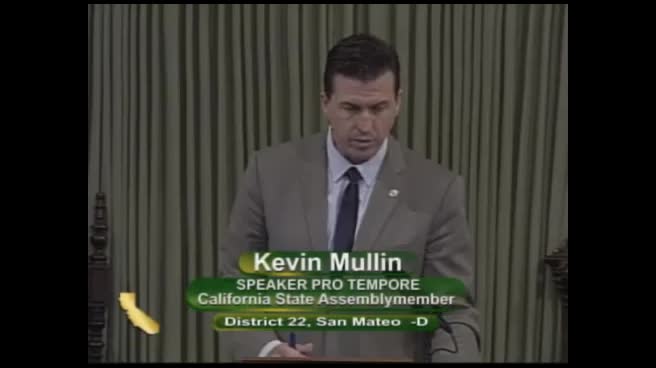
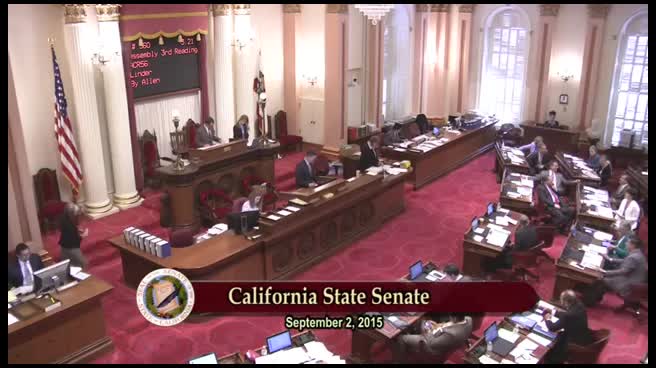
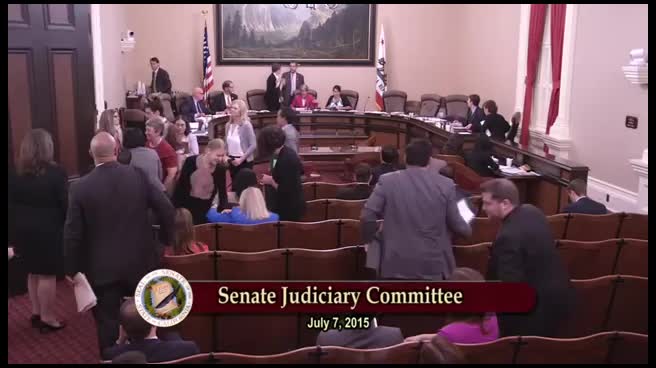
Bill Author

Bill Co-Author(s):