AB 1100: Taxation: homeowners' exemption and renters' credit.
- Session Year: 2017-2018
- House: Assembly
- Latest Version Date: 2017-05-18
(1)Existing property tax law provides, pursuant to the authority of a specified provision of the California Constitution, for a homeowners exemption in the amount of $7,000 of the full value of a dwelling, as defined, and authorizes the Legislature to increase this exemption.
This bill, beginning with the lien date for the 201819 fiscal year, contingent upon a specified appropriation, would increase the homeowners exemption from $7,000 to $25,000 of the full value of a dwelling. This bill would also require, for the 201920 fiscal year and for each fiscal year thereafter, the county assessor to adjust the amount of the homeowners exemption by the percentage change in the House Price Index for California for the first 3 quarters of the prior calendar year, as specified.
(2)The California Constitution requires the Legislature, whenever it increases the homeowners property tax exemption, to provide a comparable increase in benefits to qualified renters. The Personal Income Tax Law authorizes various credits against the taxes imposed by that law, including a credit for qualified renters in the amount of $120 for married couples spouses filing joint returns, heads of household, and surviving spouses if adjusted gross income is $50,000 or less, and in the amount of $60 for other individuals if adjusted gross income is $25,000 or less. Existing law requires the Franchise Tax Board to annually adjust for inflation these adjusted gross income amounts.
This bill, for taxable years each taxable year beginning on and after January 1, 2018, contingent upon a specified appropriation, would increase this credit for a qualified renter to $428 for married couples spouses filing joint returns, heads of household, and surviving spouses if adjusted gross income is $50,000 or less, as adjusted for inflation, and to an amount equal to $214 for other individuals if adjusted gross income is $25,000 or less, as adjusted for inflation. The bill would also require, for taxable years beginning on or after January 1, 2019, the Franchise Tax Board to annually adjust for inflation, based upon the California Consumer Price Index, the amount of these credits. The bill would also make technical, nonsubstantive changes to the renters credit.
(3)Existing law requires the state to reimburse local agencies annually for certain property tax revenues lost as a result of any exemption or classification of property for purposes of ad valorem property taxation.
This bill would provide that, notwithstanding those provisions, no appropriation is made and the state shall not reimburse local agencies under those provisions for property tax revenues lost by them pursuant to the bill.
(4)This bill would take effect immediately as a tax levy.
(1)Existing property tax law provides, pursuant to the authority of a specified provision of the California Constitution, for a homeowners exemption in the amount of $7,000 of the full value of a dwelling, as defined, and authorizes the Legislature to increase this exemption.
This bill, beginning with the lien date for the 201819 fiscal year, would increase the homeowners exemption from $7,000 to $25,000 of the full value of a dwelling. This bill would also require, for the 201920 fiscal year and for each fiscal year thereafter, the county assessor to adjust the amount of the homeowners exemption by the percentage change in the House Price Index for California for the first 3 quarters of the prior calendar year, as specified.
(2)The California Constitution requires the Legislature, whenever it increases the homeowners property tax exemption, to provide a comparable increase in benefits to qualified renters. The Personal Income Tax Law authorizes various credits against the taxes imposed by that law, including a credit for qualified renters in the amount of $120 for married couples filing joint returns, heads of household, and surviving spouses if adjusted gross income is $50,000 or less, and in the amount of $60 for other individuals if adjusted gross income is $25,000 or less. Existing law requires the Franchise Tax Board to annually adjust for inflation these adjusted gross income amounts.
This bill, for taxable years beginning on and after January 1, 2018, would increase this credit for a qualified renter to $428 for married couples filing joint returns, heads of household, and surviving spouses if adjusted gross income is $50,000 or less, as adjusted for inflation, and to an amount equal to $214 for other individuals if adjusted gross income is $25,000 or less, as adjusted for inflation. The bill would also require, for taxable years beginning on or after January 1, 2019, the Franchise Tax Board to annually adjust for inflation, based upon the California Consumer Price Index, the amount of these credits. The bill would also make technical, nonsubstantive changes to the renters credit.
(3)Existing law requires the state to reimburse local agencies annually for certain property tax revenues lost as a result of any exemption or classification of property for purposes of ad valorem property taxation.
This bill would provide that, notwithstanding those provisions, no appropriation is made and the state shall not reimburse local agencies under those provisions for property tax revenues lost by them pursuant to the bill.
(4)This bill would take effect immediately as a tax levy.
(a)The homeowners property tax exemption is in the amount of the assessed value of the dwelling specified in this section, as authorized by subdivision (k) of Section 3 of Article XIII of the Constitution. That exemption is in the following amounts:
(1)Seven Except as otherwise provided in paragraph (2), seven thousand dollars ($7,000) of the full value of the dwelling through the 201718 fiscal year. dwelling.
(2)(A)Beginning If any budget measure specifically appropriates money to the board for the costs associated with this paragraph, beginning with the lien date for the 201819 fiscal year, twenty-five thousand dollars ($25,000) of the full value of the dwelling.
(B)Beginning If this paragraph is operative, beginning with the lien date for the 201920 fiscal year and for each fiscal year thereafter, thereafter, for which an appropriation described in subparagraph (A) is made, the assessor shall adjust the exemption amount of the prior fiscal year by the percentage change, rounded to the nearest one-thousandth of 1 percent, in the House Price Index for California for the first three quarters of the prior calendar year, as determined by the federal Housing Finance Agency.
(b)(1)The exemption does not extend to property that is rented, vacant, under construction on the lien date, or that is a vacation or secondary home of the owner or owners, nor does it apply to property on which an owner receives the veterans exemption.
(2)Notwithstanding paragraph (1), if a person receiving the exemption is not occupying the dwelling on the lien date because the dwelling was damaged in a misfortune or calamity, the person shall be deemed to occupy that same dwelling as his or her principal place of residence on the lien date, provided the persons absence from the dwelling is temporary and the person intends to return to the dwelling when possible to do so. Except as provided in paragraph (3), when a dwelling has been totally destroyed, and thus no dwelling exists on the lien date, the exemption provided by this section shall not be applicable until the structure has been replaced and is occupied as a dwelling.
(3)A dwelling that was totally destroyed in a disaster for which the Governor proclaimed a state of emergency, that qualified for the exemption provided by this section prior to the commencement date of the disaster and that has not changed ownership since the commencement date of the disaster, shall be deemed occupied by the person receiving the exemption on the lien date provided the person intends to reconstruct a dwelling on the property and occupy the dwelling as his or her principal place of residence when it is possible to do so.
(c)For purposes of this section, all of the following apply:
(1)Owner includes a person purchasing the dwelling under a contract of sale or who holds shares or membership in a cooperative housing corporation, which holding is a requisite to the exclusive right of occupancy of a dwelling.
(2)(A)Dwelling means a building, structure, or other shelter constituting a place of abode, whether real property or personal property, and any land on which it may be situated. A two-dwelling unit shall be considered as two separate single-family dwellings.
(B)Dwelling includes the following:
(i)A single-family dwelling occupied by an owner thereof as his or her principal place of residence on the lien date.
(ii)A multiple-dwelling unit occupied by an owner thereof on the lien date as his or her principal place of residence.
(iii)A condominium occupied by an owner thereof as his or her principal place of residence on the lien date.
(iv)Premises occupied by the owner of shares or a membership interest in a cooperative housing corporation, as defined in subdivision (i) of Section 61, as his or her principal place of residence on the lien date. Each exemption allowed pursuant to this subdivision shall be deducted from the total assessed valuation of the cooperative housing corporation. The exemption shall be taken into account in apportioning property taxes among owners of share or membership interests in the cooperative housing corporations so as to benefit those owners who qualify for the exemption.
(d)The exemption provided for in subdivision (k) of Section 3 of Article XIII of the California Constitution shall first be applied to the building, structure, or other shelter and the excess, if any, shall be applied to any land on which it may be located.
SEC. 2.Section 17053.5 of the Revenue and Taxation Code is amended to read:17053.5.(a)(1)For a qualified renter, there shall be allowed a credit against his or her net tax, as defined in Section 17039. The amount of the credit shall be as follows:
(A)Except as otherwise provided in subparagraph (B):
(A)(i)(i)For spouses filing joint returns, heads of household, and surviving spouses, as defined in Section 17046, the credit shall be equal to one hundred twenty dollars ($120) if adjusted gross income is fifty thousand dollars ($50,000) or less.
(ii)For other individuals, the credit shall be equal to sixty dollars ($60) if adjusted gross income is twenty-five thousand dollars ($25,000) or less.
(B)If any budget measure specifically appropriates moneys to the Franchise Tax Board for the costs associated with this subparagraph for any taxable year beginning on or after January 1, 2018, subparagraph (A) shall not be operative and this subparagraph shall be operative for that taxable year:
(ii)(i)For taxable years beginning on or after January 1, 2018, spouses filing joint returns, heads of household, and surviving spouses, as defined in Section 17046, the credit shall be equal to four hundred twenty-eight dollars ($428) for taxpayers described in clause (i). For taxable years beginning on or after January 1, 2019, the Franchise Tax Board shall adjust the amount of the credit as provided by subdivision (j).
(B)(i)For other individuals, the credit shall be equal to sixty dollars ($60) if adjusted gross income is twenty-five thousand dollars ($25,000) or less.(ii)For taxable years beginning on or after January 1, 2018, other individuals, the credit shall be equal to two hundred fourteen dollars ($214) for taxpayers described in clause (i). For taxable years beginning on or after January 1, 2019, the Franchise Tax Board shall adjust the amount of the credit as provided by subdivision (j).
(2)Except as provided in subdivision (b), spouses shall receive but only one credit under this section. If the spouses file separate returns, the credit may be taken by either or equally divided between them, except as follows:
(A)If one spouse was a resident for the entire taxable year and the other spouse was a nonresident for part or all of the taxable year, the resident spouse shall be allowed one-half the credit allowed to married persons and the nonresident spouse shall be permitted one-half the credit allowed to married persons, prorated as provided in subdivision (e).
(B)If both spouses were nonresidents for part of the taxable year, the credit allowed to married persons shall be divided equally between them subject to the proration provided in subdivision (e).
(b)For spouses, if each spouse maintained a separate place of residence and resided in this state during the entire taxable year, each spouse will be allowed one-half the full credit allowed to married persons provided in subdivision (a).
(c)For purposes of this section, a qualified renter means an individual who satisfies both of the following:
(1)Was a resident of this state, as defined in Section 17014.
(2)Rented and occupied premises in this state which constituted his or her principal place of residence during at least 50 percent of the taxable year.
(d)Qualified renter does not include any of the following:
(1)An individual who for more than 50 percent of the taxable year rented and occupied premises that were exempt from property taxes, except that an individual, otherwise qualified, is deemed a qualified renter if he or she or his or her landlord pays possessory interest taxes, or the owner of those premises makes payments in lieu of property taxes that are substantially equivalent to property taxes paid on properties of comparable market value.
(2)An individual whose principal place of residence for more than 50 percent of the taxable year is with any other person who claimed that individual as a dependent for income tax purposes.
(3)An individual who has been granted or whose spouse has been granted the homeowners property tax exemption during the taxable year. This paragraph does not apply to an individual whose spouse has been granted the homeowners property tax exemption if each spouse maintained a separate residence for the entire taxable year.
(e)An otherwise qualified renter who is a nonresident for any portion of the taxable year shall claim the credits set forth in subdivision (a) at the rate of one-twelfth of those credits for each full month that individual resided within this state during the taxable year.
(f)A person claiming the credit provided in this section shall, as part of that claim, and under penalty of perjury, furnish that information as the Franchise Tax Board prescribes on a form supplied by the board.
(g)The credit provided in this section shall be claimed on returns in the form as the Franchise Tax Board may from time to time prescribe.
(h)For purposes of this section, premises means a house or a dwelling unit used to provide living accommodations in a building or structure and the land incidental thereto, but does not include land only, unless the dwelling unit is a mobilehome. The credit is not allowed for any taxable year for the rental of land upon which a mobilehome is located if the mobilehome has been granted a homeowners exemption under Section 218 in that year.
(i)This section shall become operative on January 1, 1998, and applies to any taxable year beginning on or after January 1, 1998.
(j)For each taxable year beginning on or after January 1, 1999, the Franchise Tax Board shall recompute the adjusted gross income amounts set forth in subdivision (a). For each taxable year beginning on or after January 1, 2019, the Franchise Tax Board shall also recompute the amount of the credit set forth in subdivision (a). These computations shall be made as follows:(j)(1)If subparagraph (A) of paragraph (1) of subdivision (a) is operative, for each taxable year beginning on or after January 1, 1999, the Franchise Tax Board shall recompute the adjusted gross income amounts set forth in subparagraph (A) of paragraph (1) of subdivision (a).
(2)If subparagraph (B) of paragraph (1) of subdivision (a) is operative for a taxable year:
(A)For the next following taxable year the Franchise Tax Board shall recompute the adjusted gross income amounts set forth in subparagraph (B) of paragraph (1) of subdivision (a).
(B)For the next following taxable year for which subdivision (B) of paragraph (1) of subdivision (a) is not operative, the amounts set forth in subparagraph (A) of paragraph (1) of subdivision (a) shall apply, as adjusted as if they had been applied for each preceding taxable year and subparagraph (B) had never been operative. For each following taxable year, the Franchise Tax Board shall recompute the adjusted gross income amounts.
(3)The recomputation shall be made as follows:
(1)(A)The Department of Industrial Relations shall transmit annually to the Franchise Tax Board the percentage change in the California Consumer Price Index for all items from June of the prior calendar year to June of the current year, no later than August 1 of the current calendar year.
(2)(B)The Franchise Tax Board shall compute an inflation adjustment factor by adding 100 percent to that portion of the percentage change figure furnished pursuant to paragraph (1) subparagraph (A) and dividing the result by 100.
(3)(C)The Franchise Tax Board shall multiply the amounts in paragraph (1) of subdivision (a) for the preceding taxable year by the inflation adjustment factor determined in paragraph (2), subparagraph (A), and round off the resulting products to the nearest one dollar ($1).
(4)In computing the amounts pursuant to this subdivision, the amounts provided in subparagraph (A) of paragraph (1) of subdivision (a) shall be twice the amount provided in subparagraph (B) of paragraph (1) of subdivision (a).(D)(i)In computing the amounts pursuant to this subdivision, the amounts provided in clause (i) of subparagraph (A) of paragraph (1) of subdivision (a) shall be twice the amount provided in clause (ii) of subparagraph (A) of paragraph (1) of subdivision (a).
(ii)In computing the amounts pursuant to this subdivision, the amounts provided in clause (i) of subparagraph (B) of paragraph (1) of subdivision (a) shall be twice the amount provided in clause (ii) of subparagraph (B) of paragraph (1) of subdivision (a).
SEC. 3.Notwithstanding Section 2229 of the Revenue and Taxation Code, no appropriation is made by this act and the state shall not reimburse any local agency under that section for any property tax revenues lost by it pursuant to this act.
SEC. 4.This act provides for a tax levy within the meaning of Article IV of the California Constitution and shall go into immediate effect.
(a)The homeowners property tax exemption is in the amount of the assessed value of the dwelling specified in this section, as authorized by subdivision (k) of Section 3 of Article XIII of the California Constitution. That exemption shall be in the amount of seven thousand dollars ($7,000) of the full value of the dwelling. is in the following amounts:
(1)Seven thousand dollars ($7,000) of the full value of the dwelling through the 201718 fiscal year.
(2)(A)Beginning with the lien date for the 201819 fiscal year, twenty-five thousand dollars ($25,000) of the full value of the dwelling.
(B)Beginning with the lien date for the 201920 fiscal year and for each fiscal year thereafter, the assessor shall adjust the exemption amount of the prior fiscal year by the percentage change, rounded to the nearest one-thousandth of 1 percent, in the House Price Index for California for the first three quarters of the prior calendar year, as determined by the federal Housing Finance Agency.
(b)(1)The exemption does not extend to property that is rented, vacant, under construction on the lien date, or that is a vacation or secondary home of the owner or owners, nor does it apply to property on which an owner receives the veterans exemption.
(2)Notwithstanding paragraph (1), if a person receiving the exemption is not occupying the dwelling on the lien date because the dwelling was damaged in a misfortune or calamity, the person shall be deemed to occupy that same dwelling as his or her principal place of residence on the lien date, provided the persons absence from the dwelling is temporary and the person intends to return to the dwelling when possible to do so. Except as provided in paragraph (3), when a dwelling has been totally destroyed, and thus no dwelling exists on the lien date, the exemption provided by this section shall not be applicable until the structure has been replaced and is occupied as a dwelling.
(3)A dwelling that was totally destroyed in a disaster for which the Governor proclaimed a state of emergency, that qualified for the exemption provided by this section prior to the commencement date of the disaster and that has not changed ownership since the commencement date of the disaster, shall be deemed occupied by the person receiving the exemption on the lien date provided the person intends to reconstruct a dwelling on the property and occupy the dwelling as his or her principal place of residence when it is possible to do so.
(c)For purposes of this section, all of the following apply:
(1)Owner includes a person purchasing the dwelling under a contract of sale or who holds shares or membership in a cooperative housing corporation, which holding is a requisite to the exclusive right of occupancy of a dwelling.
(2)(A)Dwelling means a building, structure, or other shelter constituting a place of abode, whether real property or personal property, and any land on which it may be situated. A two-dwelling unit shall be considered as two separate single-family dwellings.
(B)Dwelling includes the following:
(i)A single-family dwelling occupied by an owner thereof as his or her principal place of residence on the lien date.
(ii)A multiple-dwelling unit occupied by an owner thereof on the lien date as his or her principal place of residence.
(iii)A condominium occupied by an owner thereof as his or her principal place of residence on the lien date.
(iv)Premises occupied by the owner of shares or a membership interest in a cooperative housing corporation, as defined in subdivision (i) of Section 61, as his or her principal place of residence on the lien date. Each exemption allowed pursuant to this subdivision shall be deducted from the total assessed valuation of the cooperative housing corporation. The exemption shall be taken into account in apportioning property taxes among owners of share or membership interests in the cooperative housing corporations so as to benefit those owners who qualify for the exemption.
(d)The exemption provided for in subdivision (k) of Section 3 of Article XIII of the California Constitution shall first be applied to the building, structure, or other shelter and the excess, if any, shall be applied to any land on which it may be located.
SEC. 2.Section 17053.5 of the Revenue and Taxation Code is amended to read:17053.5.(a)(1)For a qualified renter, there shall be allowed a credit against his or her net tax, as defined in Section 17039. The amount of the credit shall be as follows:
(A)(i)For spouses filing joint returns, heads of household, and surviving spouses, as defined in Section 17046, the credit shall be equal to one hundred twenty dollars ($120) if adjusted gross income is fifty thousand dollars ($50,000) or less.
(ii)For taxable years beginning on or after January 1, 2018, the credit shall be equal to four hundred twenty-eight dollars ($428) for taxpayers described in clause (i). For taxable years beginning on or after January 1, 2019, the Franchise Tax Board shall adjust the amount of the credit as provided by subdivision (j).
(B)(i)For other individuals, the credit shall be equal to sixty dollars ($60) if adjusted gross income is twenty-five thousand dollars ($25,000) or less.
(ii)For taxable years beginning on or after January 1, 2018, the credit shall be equal to two hundred fourteen dollars ($214) for taxpayers described in clause (i). For taxable years beginning on or after January 1, 2019, the Franchise Tax Board shall adjust the amount of the credit as provided by subdivision (j).
(2)Except as provided in subdivision (b), spouses shall receive but one credit under this section. If the spouses file separate returns, the credit may be taken by either or equally divided between them, except as follows:
(A)If one spouse was a resident for the entire taxable year and the other spouse was a nonresident for part or all of the taxable year, the resident spouse shall be allowed one-half the credit allowed to married persons and the nonresident spouse shall be permitted one-half the credit allowed to married persons, prorated as provided in subdivision (e).
(B)If both spouses were nonresidents for part of the taxable year, the credit allowed to married persons shall be divided equally between them subject to the proration provided in subdivision (e).
(b)For spouses, if each spouse maintained a separate place of residence and resided in this state during the entire taxable year, each spouse will be allowed one-half the full credit allowed to married persons provided in subdivision (a).
(c)For purposes of this section, a qualified renter means an individual who satisfies both of the following:
(1)Was a resident of this state, as defined in Section 17014.
(2)Rented and occupied premises in this state which constituted his or her principal place of residence during at least 50 percent of the taxable year.
(d)Qualified renter does not include any of the following:
(1)An individual who for more than 50 percent of the taxable year rented and occupied premises that were exempt from property taxes, except that an individual, otherwise qualified, is deemed a qualified renter if he or she or his or her landlord pays possessory interest taxes, or the owner of those premises makes payments in lieu of property taxes that are substantially equivalent to property taxes paid on properties of comparable market value.
(2)An individual whose principal place of residence for more than 50 percent of the taxable year is with another any other person who claimed that individual as a dependent for income tax purposes.
(3)An individual who has been granted or whose spouse has been granted the homeowners property tax exemption during the taxable year. This paragraph does not apply to an individual whose spouse has been granted the homeowners property tax exemption if each spouse maintained a separate residence for the entire taxable year.
(e)An otherwise qualified renter who is a nonresident for any portion of the taxable year shall claim the credits set forth in subdivision (a) at the rate of one-twelfth of those credits for each full month that individual resided within this state during the taxable year.
(f)A person claiming the credit provided in this section shall, as part of that claim, and under penalty of perjury, furnish that information as the Franchise Tax Board prescribes on a form supplied by the board.
(g)The credit provided in this section shall be claimed on returns in the form as the Franchise Tax Board may from time to time prescribe.
(h)For purposes of this section, premises means a house or a dwelling unit used to provide living accommodations in a building or structure and the land incidental thereto, but does not include land only, unless the dwelling unit is a mobilehome. The credit is not allowed for any taxable year for the rental of land upon which a mobilehome is located if the mobilehome has been granted a homeowners exemption under Section 218 in that year.
(i)This section shall become operative on January 1, 1998, and applies to any taxable year beginning on or after January 1, 1998.
(j)For each taxable year beginning on or after January 1, 1999, the Franchise Tax Board shall recompute the adjusted gross income amounts set forth in subdivision (a). The computation For each taxable year beginning on or after January 1, 2019, the Franchise Tax Board shall also recompute the amount of the credit set forth in subdivision (a). These computations shall be made as follows:
(1)The Department of Industrial Relations shall transmit annually to the Franchise Tax Board the percentage change in the California Consumer Price Index for all items from June of the prior calendar year to June of the current year, no later than August 1 of the current calendar year.
(2)The Franchise Tax Board shall compute an inflation adjustment factor by adding 100 percent to the that portion of the percentage change figure which is furnished pursuant to paragraph (1) and dividing the result by 100.
(3)The Franchise Tax Board shall multiply the amount in subparagraph (B) of amounts in paragraph (1) of subdivision (d) (a) for the preceding taxable year by the inflation adjustment factor determined in paragraph (2), and round off the resulting products to the nearest one dollar ($1).
(4)In computing the amounts pursuant to this subdivision, the amounts provided in subparagraph (A) of paragraph (1) of subdivision (a) shall be twice the amount provided in subparagraph (B) of paragraph (1) of subdivision (a).
SEC. 3.Notwithstanding Section 2229 of the Revenue and Taxation Code, no appropriation is made by this act and the state shall not reimburse any local agency under that section for any property tax revenues lost by it pursuant to this act.
SEC. 4.This act provides for a tax levy within the meaning of Article IV of the California Constitution and shall go into immediate effect.
REVISIONS: HeadingLine 5.|
Date
|
Status
|
|---|---|
| Feb 1, 2018 | From committee: Filed with the Chief Clerk pursuant to Joint Rule 56. |
| Jan 31, 2018 | Died pursuant to Art. IV, Sec. 10(c) of the Constitution. |
| May 26, 2017 | In committee: Held under submission. |
| May 24, 2017 | In committee: Set, first hearing. Referred to APPR. suspense file. |
| May 22, 2017 | Re-referred to Com. on APPR. |
| May 18, 2017 | Read second time and amended. |
| May 17, 2017 | From committee: Amend, and do pass as amended and re-refer to Com. on APPR. (Ayes 9. Noes 1.) (May 15). |
| Mar 27, 2017 | In committee: Hearing postponed by committee. |
| Mar 27, 2017 | Coauthors revised. |
| Mar 15, 2017 | Coauthors revised. |
| Mar 6, 2017 | Referred to Com. on REV. & TAX. |
| Feb 19, 2017 | From printer. May be heard in committee March 21. |
| Feb 17, 2017 | Read first time. To print. |
|
Date
|
Description
|
Location
|
Votes
|
|
|---|---|---|---|---|
| May 15, 2017 | Do pass as amended and be re-referred to the Committee on [Appropriations] | Assembly Standing Committee on Revenue and Taxation |
Passed |
This list shows positions taken on this bill by organizations on the date displayed, which is linked to the original source.
Positions by individuals are not included.
Date of Hearing: May 24, 2017
ASSEMBLY COMMITTEE ON APPROPRIATIONS
Lorena Gonzalez Fletcher, Chair
ABPCA Bill Id:AB 1100
Author:(Chen) – As Introduced Ver:May 18, 2017
Policy Committee: | Revenue and Taxation | Vote: | 9 - 1 |
Urgency: No State Mandated Local Program: No Reimbursable: No
SUMMARY:
This bill increases the homeowners’ property tax exemption and the renters’ credit amounts. Specifically, this bill:
- Increases the homeowners' property tax exemption from $7,000 to $25,000, beginning with the lien date for fiscal year 2018-19. The exemption will then be adjusted by the percentage change in the Housing Price Index for California, as specified.
- Increases the renter’s credit available for taxable year 2018 from $120 to $428 for married couples filing joint returns, heads of household, and surviving spouses, and from $60 to $214 for other individuals.
- Increases the adjusted gross income (AGI) thresholds that determine eligibility for the renters’ credit by inflation starting on taxable year 2019.
- Makes the provisions of this bill contingent upon a budget appropriation to the Board of Equalization (BOE) and the Franchise Tax Board (FTB) to administer the proposed increased homeowner’s property tax exemption and proposed increased renters’ credit.
FISCAL EFFECT:
- Modest GF cost pressures for BOE and FTB to administer the proposed tax policies as required by this bill. These costs only materialize if BOE and FTB receive a budget appropriation to administer the provisions of this bill, as required.
- Additional General Fund (GF) cost pressures of $1.25 billion in 2018-19 and $1.23 in 2019-20, which reflect the combined revenue loss from the state reimbursement to local governments for the loss of property tax associated with the increased homeowner’s exemption as well as the revenue loss from the proposed expansion of the renters’ credit. This revenue loss occurs if the BOE and FTB receive an appropriation to administer the provisions of this bill.
COMMENTS:
- Background. In 1968, voters enacted the homeowners' exemption to provide Californians property tax relief. The exemption, which reduces the taxable value of a home, may only be claimed by a taxpayer who owns and occupies a home as his or her principal residence. While the exemption can be increased, the California Constitution requires that the state reimburse local governments for the lost property tax revenue and that benefits to renters are increased by a comparable amount.
- Purpose. According to the author, AB 1100 will ease the financial burden that comes with owning a home. The author notes that this bill will also put more money in the pockets of California renters through a corresponding increase to the renters’ credit.
- Recent Legislation. AB 476 (Chang), of the 2015-16 Legislative Session, which was substantially similar to this bill, died in the Assembly Committee on Revenue and Taxation.
Analysis Prepared by: Luke Reidenbach / APPR. / (916) 319-2081
Date of Hearing: May 15, 2017
ASSEMBLY COMMITTEE ON REVENUE AND TAXATION
Sebastian Ridley-Thomas, Chair
ABPCA Bill Id:AB 1100 (
Author:Chen) – As Introduced Ver:February 17, 2017
Majority vote. Tax levy. Fiscal committee.
SUBJECT: Taxation: homeowners’ exemption and renters’ credit
SUMMARY: Increases the homeowners' property tax exemption and the renters' credit amounts. Specifically, this bill:
- Increases the homeowners' property tax exemption from $7,000 to $25,000, beginning with the lien date for fiscal year (FY) 2018-19.
- Requires a county assessor, beginning with the lien date for FY 2019-20 and each FY thereafter, to adjust the amount of the homeowners' exemption by the percentage change in the House Price Index for California, as specified.
- Increases, for taxable years beginning on or after January 1, 2018, the existing nonrefundable renters' tax credit under the Personal Income Tax (PIT) Law that may be claimed by qualified renters as follows:
- From $120 to $428 for married couples filing joint returns, heads of household, and surviving spouses under the specified adjusted gross income (AGI) limit; and,
- From $60 to $214 for other individuals under the specified AGI limit.
- Requires the Franchise Tax Board (FTB) to annually adjust the specified AGI amounts for inflation for each taxable year beginning on or after January 1, 2019.
- Provides, notwithstanding Revenue and Taxation Code (R&TC) Section 2229, that no appropriation is made by this act and that the state shall not reimburse any local agency for any property tax revenues lost.
- Takes immediate effect as a tax levy.
EXISTING LAW:
- Provides that all property is taxable, unless otherwise provided by the California Constitution or federal laws.
- Limits ad valorem taxes on real property to 1% of the full cash value of that property and limits future annual increases in assessed values to the rate of inflation, not to exceed 2%, as long as the property remains under the same ownership.
- Exempts from property taxation the first $7,000 of assessed value of an owner-occupied principal place of residence ("homeowners' exemption").
- Authorizes the Legislature to increase the amount of the homeowners' exemption if both of the following occur:
- Local governments are reimbursed for the revenue loss; and,
- Benefits to renters (currently provided via the renters' tax credit) are increased by a comparable amount.
- Requires the state to reimburse each local government for the revenue loss from the homeowners' exemption in the same FY. .
- Allows a nonrefundable tax credit under the PIT Law for qualified renters as follows:
- $120 for married couples filing joint returns, heads of household, and surviving spouses if AGI is $50,000 or less; or,
- $60 for other individuals if AGI is $25,000 or less.
- Requires the FTB to adjust annually the specified AGI amounts for inflation. For tax year 2016, the AGI limits are $78,125 and $39,062, respectively.
- Allows an individual to deduct real property taxes under the PIT Law if that taxpayer reports itemized deductions in the taxable year.
FISCAL EFFECT: The State Board of Equalization (BOE) estimates annual General Fund revenue losses of $1.06 billion from the increase in the state reimbursement to local governments for the homeowners' exemption. The BOE estimates the revenue loss will grow significantly over time due to the compounding effect of the Housing Price Index adjustment.
The FTB estimates General Fund revenue gains of $30 million in FY 2018-19 and $60 million in FY 2019-20 from the reduction in property taxes claimed as itemized deductions. However, the FTB also estimates General Fund revenue losses of $220 million in FY 2018-19 and $230 million in FY 2019-20 from the increase in the renters' credit. Overall, the FTB estimates General Fund revenue losses of $190 million in FY 2018-19 and $170 million in FY 2019-20.
COMMENTS:
- The author has provided the following statement in support of this bill:
The current homeowner's exemption in California is $7000. This is taken off the value of a homeowner's primary residence, amounting to $70 annually off of your property tax bill, or one percent. As of 1974 when the homeowner's exemption was last changed, the median California home price was approximately $21,000. Today, it is nearly $450,000 and climbing. Clearly this benefit to taxpayers has not kept up with the price of homes.
AB 1100 is needed to adjust with California's inflation and ease the financial burden that comes with owning a home. This bill will also put more money in the pockets of California renters to give them the opportunity to own a home themselves one day by adjusting the renter's credit by a corresponding amount.
- The sponsor of this bill, the Howard Jarvis Taxpayers Association states in support that "[e]ven with Proposition 13, California is still a high property tax state, ranking 22nd in combined state-local property taxes according to the non-partisan Tax Foundation" and when California's current "revenue windfall is compared against the fact that we are a high tax state in just about every category then the justification for not approving tax relief quickly disappears."
- The California Tax Reform Association states in opposition that "[t]he homeowners' exemption is an anomaly from the pre-Proposition 13 era, which is why increasing the exemption has been rejected by the legislature many times in the past." Current homeowners are already protected from rising costs in the housing market so "there is no justification for receiving additional benefits when they already own their homes and have substantial tax benefits, not just from Prop. 13 but from mortgage interest deductions and capital gains breaks."
- Committee Staff Comments:
- Homeowners' Property Tax Exemption: Prior to Proposition 13's enactment in 1978, the law required assessors to cyclically reassess property to its current market value, with these periodic reassessments causing substantial property tax increases due to escalating real estate values in the 1960s and 1970s. In 1968, voters enacted the homeowners' exemption to provide some property tax relief. The exemption, which reduces the taxable value of a home, may only be claimed by a taxpayer who owns and occupies a home as his or her principal residence. In FY 2015-16, the homeowners' exemption was subject to 5.1 million claims.
According to the BOE, numerous bills were introduced in the Legislature in the following years to increase the exemption, but all were rejected. The prevailing view was that continuous increases in the homeowners' exemption would only provide temporary property tax relief in inflationary times, and that fundamentally changing the property tax system to contain rapidly increasing property taxes was the better approach. Ultimately, voters approved Proposition 13.
- Impact of Proposition 13: Although the amount of tax relief due to the homeowners' exemption was clearly more valuable in 1974, it may be argued that the need for the homeowners' exemption was made obsolete by the passage of Proposition 13 because protections against rising property taxes are now built into the tax system. Proposition 13 was designed to provide real property tax relief by imposing a set of interlocking limitations upon the assessment and taxing powers of state and local governments. Proposition 13 generally limits the maximum amount of any ad valorem tax on real property to no more than 1% of the property's full cash value, as adjusted for the lesser of inflation or 2% per year.
As a result of Proposition 13, California homeowners bear a low property tax burden in comparison to homeowners in other states. According to the Tax Foundation's Facts & Figures 2017: How Does Your State Compare?, California ranks 36th for property taxes paid as a percentage of owner-occupied housing value, with 35 other states imposing higher property taxes using this metric. The effective property tax rate on owner-occupied housing (which is calculated as total real property taxes paid divided by total home value) amounts to 0.72% in California. In contrast, that rate is 1.38% in New York (ranking 14th) and 1.63% in Texas (ranking 7th). Hawaii has the lowest rate of 0.28% (ranking 50th).
- Other Existing Property Tax Benefits: In addition to protections guaranteed by Proposition 13, owner-occupied housing is also heavily subsidized by the federal and state governments. Existing federal and state income tax laws allow deductions from income for mortgage interest on first and second homes, and exclusions from income of up to $250,000 ($500,000 for joint filers) of gain on the sale of a principal residence. Property taxes may also be deducted for federal and state tax purposes. Some economists have argued that tax subsidies for homeownership are factored into the price of housing and, thus, essentially inflate the prices of homes. This preferential tax treatment may encourage households to over-invest in housing and invest less in business investments that might contribute more to the nation's productivity and output.[1] It may also be argued that an increased renters' credit could have a similar impact on the rental market and simply push rents higher instead of providing taxpayers with meaningful relief.
- House Price Index: This bill requires the county assessor to index the amount of the homeowners' exemption every year by the percentage change in the House Price Index, as specified. During periods of time when the change in the House Price Index is negative, assessors would thus be required to reduce the exemption amount previously provided. However, the proposed adjustment would also provide on-going increased property tax reductions if values of homes in California soar, while an adjustment to the assessed value of a house would remain subject to the 2% constitutional inflation cap set by Proposition 13.
- Property Tax Reimbursements for Local Governments: The California Constitution authorizes the Legislature to increase the amount of the homeowners' exemption from $7,000, but only if local governments are reimbursed for the property tax revenue loss and benefits to renters are increased by a comparable amount. Although this bill provides, notwithstanding R&TC Section 2229, that the state shall not reimburse any local agency for any property tax revenues lost, this provision does not affect the constitutional requirement that local governments be reimbursed for revenue loss resulting from an increase in the homeowners' exemption. It is the intent of the author that reimbursement occurs as required by the California Constitution.
- Renters' Credit Increase: As required by the California Constitution, this bill increases benefits to renters by increasing the renters' credit from $120 to $428 for specified joint filers and from $60 to $214 for other individual filers. Although the renters' credit can only be claimed by taxpayers with AGI under $78,125 and $39,062, respectively, for tax year 2016, it is a non-refundable credit, meaning that taxpayers may not see a benefit if their tax liability is insufficient to be offset by a credit. While increasing the renters' credit could provide considerable relief to some low-income individuals, the increase would also put money in the pockets of individuals who may not notice it. Additionally, a greater proportion of renters in regions of California with lower median incomes and costs of living may become eligible for the credit compared to renters in regions with higher median incomes and costs of living where California's ongoing affordable housing crisis is most pronounced.
- Related Legislation:
- AB 181 (Lackey) would double the renters' credit amount and increase the income eligibility limits for the credit, if funding for the credit's expansion is appropriated in the state budget. AB 181 has been referred to the Committee on Appropriations's Suspense File.
- AB 1582 (Bonta) would triple the renters' credit amount and increase the income eligibility limits for the credit for qualified taxpayers in high-cost areas. AB 1582 will be heard by this Committee today.
- Prior Legislation: AB 476 (Chang), of the 2015-16 Legislative Session, was substantially similar to this bill. AB 476 was held on this Committee's Suspense File.
REGISTERED SUPPORT / OPPOSITION:
Support
Howard Jarvis Taxpayers Association (Sponsor)
California Association of Realtors
Southwest California Legislative Council
Opposition
California Tax Reform Association
Analysis Prepared by: Irene Ho / REV. & TAX. / (916) 319-2098
Mark P. Keightley, The Mortgage Interest and Property Tax Deductions: Analysis and Options, Congressional Research Service, March 18, 2014. ↑
Date of Hearing: March 27, 2017
ASSEMBLY COMMITTEE ON REVENUE AND TAXATION
Sebastian Ridley-Thomas, Chair
ABPCA Bill Id:AB 1100 (
Author:Chen) – As Introduced Ver:February 17, 2017
Majority vote. Tax levy. Fiscal committee.
SUBJECT: Taxation: homeowners’ exemption and renters’ credit
SUMMARY: Increases the homeowners' property tax exemption and the renters' credit amounts. Specifically, this bill:
- Increases the homeowners' property tax exemption from $7,000 to $25,000, beginning with the lien date for fiscal year (FY) 2018-19.
- Requires a county assessor, beginning with the lien date for FY 2019-20 and each FY thereafter, to adjust the amount of the homeowners' exemption by the percentage change in the House Price Index for California, as specified.
- Increases, for taxable years beginning on or after January 1, 2018, the existing nonrefundable renters' tax credit under the Personal Income Tax (PIT) Law that may be claimed by qualified renters as follows:
- From $120 to $428 for married couples filing joint returns, heads of household, and surviving spouses under the specified adjusted gross income (AGI) limit; and,
- From $60 to $214 for other individuals under the specified AGI limit.
- Requires the Franchise Tax Board (FTB) to annually adjust the specified AGI amounts for inflation for each taxable year beginning on or after January 1, 2019.
- Provides, notwithstanding Revenue and Taxation Code (R&TC) Section 2229, that no appropriation is made by this act and that the state shall not reimburse any local agency for any property tax revenues lost.
- Takes immediate effect as a tax levy.
EXISTING LAW:
- Provides that all property is taxable, unless otherwise provided by the California Constitution or federal laws.
- Limits ad valorem taxes on real property to 1% of the full cash value of that property and limits future annual increases in assessed values to the rate of inflation, not to exceed 2%, as long as the property remains under the same ownership.
- Exempts from property taxation the first $7,000 of assessed value of an owner-occupied principal place of residence ("homeowners' exemption").
- Authorizes the Legislature to increase the amount of the homeowners' exemption if both of the following occur:
- Local governments are reimbursed for the revenue loss; and,
- Benefits to renters (currently provided via the renters' tax credit) are increased by a comparable amount.
- Requires the state to reimburse each local government for the revenue loss from the homeowners' exemption in the same FY.
- Allows a nonrefundable tax credit under the PIT Law for qualified renters as follows:
- $120 for married couples filing joint returns, heads of household, and surviving spouses if AGI is $50,000 or less; or,
- $60 for other individuals if AGI is $25,000 or less.
- Requires the FTB to adjust annually the specified AGI amounts for inflation. For tax year 2016, the AGI limits are $78,125 and $39,062, respectively.
- Allows an individual to deduct real property taxes under the PIT Law if that taxpayer reports itemized deductions in the taxable year.
FISCAL EFFECT: The State Board of Equalization (BOE) estimates annual General Fund revenue losses of $1.06 billion from the increase in the state reimbursement to local governments for the homeowners' exemption. The BOE estimates the revenue loss will grow significantly over time due to the compounding effect of the Housing Price Index adjustment. The FTB's estimate of General Fund revenue losses from the increased renters' credit is pending.
COMMENTS:
- The author has provided the following statement in support of this bill:
The current homeowner's exemption in California is $7000. This is taken off the value of a homeowner's primary residence, amounting to $70 annually off of your property tax bill, or one percent. As of 1974 when the homeowner's exemption was last changed, the median California home price was approximately $21,000. Today, it is nearly $450,000 and climbing. Clearly this benefit to taxpayers has not kept up with the price of homes.
AB 1100 is needed to adjust with California's inflation and ease the financial burden that comes with owning a home. This bill will also put more money in the pockets of California renters to give them the opportunity to own a home themselves one day by adjusting the renter's credit by a corresponding amount.
- The sponsor of this bill, the Howard Jarvis Taxpayers Association states that "[e]ven with Proposition 13, California is still a high property tax state, ranking 22nd in combined state-local property taxes according to the non-partisan Tax Foundation" and when California's current "revenue windfall is compared against the fact that we are a high tax state in just about every category then the justification for not approving tax relief quickly disappears."
- The California Tax Reform Association states that [t]he homeowners' exemption is an anomaly from the pre-Proposition 13 era, which is why increasing the exemption has been rejected by the legislature many times in the past." Current homeowners are already protected from rising costs in the housing market so "there is no justification for receiving additional benefits when they already own their homes and have substantial tax benefits, not just from Prop. 13 but from mortgage interest deductions and capital gains breaks."
- Committee Staff Comments:
- Homeowners' Property Tax Exemption: Prior to Proposition 13's enactment in 1978, the law required assessors to cyclically reassess property to its current market value, with these periodic reassessments causing substantial property tax increases due to escalating real estate values in the 1960s and 1970s. In 1968, voters enacted the homeowners' exemption to provide some property tax relief. The exemption, which reduces the taxable value of a home, may only be claimed by a taxpayer who owns and occupies a home as his or her principal residence. In FY 2015-16, the homeowners' exemption was subject to 5.1 million claims.
According to the BOE, numerous bills were introduced in the Legislature in the following years to increase the exemption, but all were rejected. The prevailing view was that continuous increases in the homeowners' exemption would only provide temporary property tax relief in inflationary times, and that fundamentally changing the property tax system to contain rapidly increasing property taxes was the better approach. Ultimately, voters approved Proposition 13.
- Impact of Proposition 13: Although the amount of tax relief due to the homeowners' exemption was clearly more valuable in 1974, it may be argued that the need for the homeowners' exemption was made obsolete by the passage of Proposition 13 because protections against rising property taxes are now built into the tax system. Proposition 13 was designed to provide real property tax relief by imposing a set of interlocking limitations upon the assessment and taxing powers of state and local governments. Proposition 13 generally limits the maximum amount of any ad valorem tax on real property to no more than 1% of the property's full cash value, as adjusted for the lesser of inflation or 2% per year.
As a result of Proposition 13, California homeowners bear a low property tax burden in comparison to homeowners in other states. According to the Tax Foundation's Facts & Figures 2017: How Does Your State Compare?, California ranks 36th for property taxes paid as a percentage of owner-occupied housing value, with 35 other states imposing higher property taxes using this metric. The effective property tax rate on owner-occupied housing (which is calculated as total real property taxes paid divided by total home value) amounts to 0.72% in California. In contrast, that rate is 1.38% in New York (ranking 14th) and 1.63% in Texas (ranking 7th). Hawaii has the lowest rate of 0.28% (ranking 50th).
- Other Existing Property Tax Benefits: In addition to protections guaranteed by Proposition 13, owner-occupied housing is also heavily subsidized by the federal and state governments. Existing federal and state income tax laws allow deductions from income for mortgage interest on first and second homes, and exclusions from income of up to $250,000 ($500,000 for joint filers) of gain on the sale of a principal residence. Property taxes may also be deducted for federal and state tax purposes. Some economists have argued that tax subsidies for homeownership are factored into the price of housing and, thus, essentially inflate the prices of homes. This preferential tax treatment may encourage households to over-invest in housing and invest less in business investments that might contribute more to the nation's productivity and output.[1] It may also be argued that an increased renters' credit could have a similar impact on the rental market and simply push rents higher instead of providing taxpayers with meaningful relief.
- House Price Index: This bill requires the county assessor to index the amount of the homeowners' exemption every year by the percentage change in the House Price Index, as specified. During periods of time when the change in the House Price Index is negative, assessors would thus be required to reduce the exemption amount previously provided. However, the proposed adjustment would also provide on-going increased property tax reductions if values of homes in California soar, while an adjustment to the assessed value of a house would remain subject to the 2% constitutional inflation cap set by Proposition 13.
- Property Tax Reimbursements for Local Governments: The California Constitution authorizes the Legislature to increase the amount of the homeowners' exemption from $7,000, but only if local governments are reimbursed for the property tax revenue loss and benefits to renters are increased by a comparable amount. Although this bill provides, notwithstanding R&TC Section 2229, that the state shall not reimburse any local agency for any property tax revenues lost, this provision does not affect the constitutional requirement that local governments be reimbursed for revenue loss resulting from an increase in the homeowners' exemption. It is the intent of the author that reimbursement occurs as required by the California Constitution.
- Renters' Credit Increase: As required by the California Constitution, this bill increases benefits to renters by increasing the renters' credit from $120 to $428 for specified joint filers and from $60 to $214 for other individual filers. Although the renters' credit can only be claimed by taxpayers with AGI under $78,125 and $39,062, respectively, for tax year 2016, it is a non-refundable credit, meaning that taxpayers may not see a benefit if their tax liability is insufficient to be offset by a credit. While increasing the renters' credit could provide considerable relief to some low-income individuals, the increase would also put money in the pockets of individuals who may not notice it. Additionally, a greater proportion of renters in regions of California with lower median incomes and costs of living may become eligible for the credit compared to renters in regions with higher median incomes and costs of living where California's ongoing affordable housing crisis is most pronounced.
- Related Legislation: AB 181 (Lackey) would double the renters' credit amount for qualified renters and increase the income eligibility limits for the credit. AB 181 is scheduled to be heard by this Committee today.
- Prior Legislation: AB 476 (Chang), of the 2015-16 Legislative Session, was substantially similar to this bill. AB 476 was held on this Committee's Suspense File.
REGISTERED SUPPORT / OPPOSITION:
Support
Howard Jarvis Taxpayers Association (Sponsor)
California Association of Realtors
Opposition
California Tax Reform Association
Analysis Prepared by: Irene Ho / REV. & TAX. / (916) 319-2098
Mark P. Keightley, The Mortgage Interest and Property Tax Deductions: Analysis and Options, Congressional Research Service, March 18, 2014. ↑
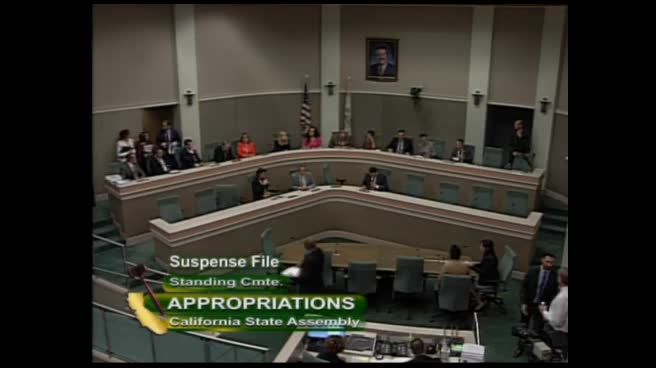
Discussed in Hearing
 1H
Assembly Standing Committee on Appropriations
 12MIN