AB 1132: Nonvehicular air pollution: order for abatement.
- Session Year: 2017-2018
- House: Assembly
- Latest Version Date: 2017-08-07
Existing law regulates the emission of air pollutants by stationary sources and authorizes the regional air quality management districts and air pollution control districts (air districts) to enforce those requirements. Existing law authorizes the governing boards and the hearing boards of air districts to issue an order for abatement, after notice and an abatement hearing, whenever they find a violation of those requirements.
This bill would authorize an air pollution control officer, if the officer finds that any person is causing an imminent and substantial endangerment to the public health or welfare, or the environment, by violating those requirements, to issue an interim order for abatement pending an abatement hearing before the hearing board of the air district. The bill would require the officer, before issuing the interim order, to make reasonable efforts to meet and confer with the person and make a good faith effort to agree with the person on a stipulated interim order. The bill would require the officer to notify the person of issuance of an interim order or stipulated interim order and provide the person with an accusation stating the grounds for the order and procedures for challenging the order. The bill would require the air district to schedule an abatement hearing upon receipt of a defense to the accusation. The bill would provide for the interim order to expire or to be rescinded or vacated pending final resolution of the abatement hearing, as specified.
Existing law regulates the emission of air pollutants by stationary sources and authorizes the regional air quality management districts and air pollution control districts (air districts) to enforce those requirements. Existing law authorizes the governing boards and the hearing boards of air districts to issue an order for abatement, after notice and an abatement hearing, whenever they find a violation of those requirements.
This bill would authorize the an air pollution control officer, if the officer finds that any person is causing an imminent and substantial endangerment to the public health or welfare, or the environment, by violating those requirements, to issue an interim order for abatement pending an abatement hearing before the hearing board of the air district. The bill would require the officer, before issuing the interim order, to make reasonable efforts to meet and confer with the person and make a good faith effort to agree with the person on a stipulated interim order. The bill would require the officer to notify the person of issuance of an interim order or stipulated interim order and provide the person with an accusation stating the grounds for the order and procedures for challenging the order. The bill would require the air district to schedule an abatement hearing upon receipt of a defense to the accusation. The bill would permit an provide for the interim order to expire or to be rescinded or vacated by the officer or the hearing board pending final resolution of the abatement hearing, as specified.
Existing law regulates the emission of air pollutants by stationary sources and authorizes the regional air quality management districts and air pollution control districts (air districts) to enforce those requirements. Existing law authorizes the governing boards and the hearing boards of air districts to issue an order for abatement, after notice and a an abatement hearing, whenever they find a violation of those requirements.
This bill would authorize the air pollution control officer, if he or she the officer finds that any person is causing an imminent and substantial endangerment to the public health or welfare, or the environment, by violating those requirements, to issue an interim order for abatement pending a an abatement hearing before the hearing board of the air district. The bill would require the air pollution control officer to notify the alleged violator of the order and would establish a procedure for a postorder hearing. district. The bill would require the officer, before issuing the interim order, to make reasonable efforts to agree with the person on a stipulated interim order. The bill would require the officer to notify the person of issuance of an interim order or stipulated interim order and provide the person with an accusation stating the grounds for the order and procedures for challenging the order. The bill would require the air district to schedule an abatement hearing upon receipt of a defense to the accusation. The bill would permit an interim order to be rescinded or vacated by the officer or the hearing board pending final resolution of the abatement hearing, as specified.
Existing law regulates the emission of air pollutants by stationary sources and authorizes the regional air quality management districts and air pollution control districts (air districts) to enforce those requirements. Existing law authorizes the governing boards and the hearing boards of air districts to issue an order for abatement, after notice and a hearing, whenever they find a violation of those requirements.
This bill would authorize the air pollution control officer, if he or she determines that a person has violated those requirements and the violation presents an imminent and substantial endangerment to the public health or welfare, or the environment, finds that any person is causing an imminent and substantial endangerment to the public health or welfare, or the environment, by violating those requirements, to issue an interim order for abatement pending a hearing before the hearing board of the air district. The bill would require the air pollution control officer to notify the alleged violator of the order and would establish a procedure for a postorder hearing.
Existing law regulates the emission of air pollutants by stationary sources and authorizes the regional air quality management districts and air pollution control districts (air districts) to enforce those requirements. Existing law authorizes the governing boards and the hearing boards of air districts to issue an order for abatement, after notice and a hearing, whenever they find a violation of those requirements.
This bill would authorize the air pollution control officer, if he or she determines that a person has violated those requirements and the violation presents an imminent and substantial endangerment to the public health or welfare, or the environment, to issue an order for abatement pending a hearing before the hearing board of the air district. The bill would require the air pollution control officer to notify the alleged violator of the order and would establish a procedure for a postorder hearing.
(a)The air pollution control officer may issue an interim order for abatement, pending a hearing pursuant to Section 42451, if the air pollution control officer finds that any person is causing an imminent and substantial endangerment to the public health or welfare, or the environment, by constructing or operating any article, machine, equipment, or other contrivance without a permit required by this part, or by violating Section 41700 or 41701 or any order, rule, or regulation prohibiting or limiting the discharge of air contaminants into the air. An interim order under this subdivision or subdivision (b) shall be effective upon the notification of the person of the issuance of the order. In notifying the person, the air pollution control officer shall also provide the person with an accusation specifying the grounds on which the order is issued and procedures by which the person may challenge the order.
(b)Before issuing an interim order, the air pollution control officer shall make reasonable efforts to meet and confer with the person regarding the imminent and substantial endangerment findings and make a good faith effort to agree on a stipulated interim order. The person may offer, for the air pollution control officers consideration, any proposed alternative air pollution control measures that will prevent further imminent and substantial endangerment.
(c)Upon receipt by the district of a notice of defense to the accusation from the person, the district shall, within 3 business days, set the matter for a hearing pursuant to this article, which shall be held and completed as soon as possible, but not later than 30 days after the receipt of the notice. If the hearing is not completed within this 30-day period, the interim order shall be rescinded unless the hearing has already commenced and the hearing board has made a preliminary determination that there is substantial evidence that an imminent and substantial endangerment to the public health or welfare, or the environment, still exists.
(d)Except as provided in subdivisions (c), (e), and (f), an interim order shall remain in effect until the hearing board has made a final determination on the merits, which shall be as soon as possible, but not later than 14 days after the completion of the hearing. If the determination is not transmitted within this period, the order shall be of no further effect.
(e)The air pollution control officer shall rescind an interim order if he or she finds that the order is no longer necessary.
(f)The hearing board shall vacate an interim order at any time after the hearing has commenced if it finds that an imminent and substantial endangerment to the public health or welfare, or the environment, does not exist or no longer exists. Nothing in this subdivision shall preclude the air pollution control officer from continuing to seek an order for abatement from the hearing board.
(g)The air pollution control officer shall not delegate the authority provided by this section. If the air pollution control officer is unavailable or absent, the person designated to serve as the air pollution control officer under those circumstances may exercise the authority provided by this section, which shall not be delegated by that person.
(h)Matters under this section shall be considered and concluded with all due expedience.
(a)The air pollution control officer may issue an interim order for abatement, pending a hearing pursuant to Section 42451, if the air pollution control officer finds that any person is causing an imminent and substantial endangerment to the public health or welfare, or the environment, by constructing or operating any article, machine, equipment, or other contrivance without a permit required by this part, or by violating Section 41700 or 41701 or any order, rule, or regulation prohibiting or limiting the discharge of air contaminants into the air. An interim order under this subdivision or subdivision (b) shall be effective upon the notification of the person of the issuance of the order. In notifying the person, the air pollution control officer shall also provide the person with an accusation specifying the grounds on which the order is issued and procedures by which the person may challenge the order.
(b)Before issuing an interim order, the air pollution control officer shall make reasonable efforts to meet and confer with the person regarding the imminent and substantial endangerment findings and make a good faith effort to agree on a stipulated interim order. The person may offer, for the air pollution control officers consideration, any proposed alternative air pollution control measures that will prevent further imminent and substantial endangerment.
(c)Upon receipt by the district of a notice of defense to the accusation from the person, the district shall, within 3 business days, set the matter for a hearing pursuant to this article, which shall be held and completed as soon as possible, but not later than 30 days after the receipt of the notice. If the hearing is not completed within this 30-day period, the interim order shall be rescinded unless the hearing has already commenced and the hearing board has made a preliminary determination that there is substantial evidence that an imminent and substantial endangerment to the public health or welfare, or the environment, still exists.
(d)The air pollution control officer may rescind an interim order if he or she finds that the order is no longer necessary.(e)(d)Except as provided in subdivisions (d) (c), (e), and (f), an interim order shall remain in effect until the hearing is completed and the hearing board has made a final determination on the merits, which shall be made within as soon as possible, but not later than 14 days after the completion of the hearing. If the determination is not transmitted within this period, the order shall be of no further effect.
(e)The air pollution control officer shall rescind an interim order if he or she finds that the order is no longer necessary.
(f)The hearing board may shall vacate an interim order at any time after the hearing has commenced if it finds that an imminent and substantial endangerment to the public health or welfare, or the environment, does not exist or no longer exists. Nothing in this subdivision shall preclude the air pollution control officer from continuing to seek an order for abatement from the hearing board.
(g)The air pollution control officer may shall not delegate the authority provided by this section unless the delegation of authority is necessary due to the absence or unavailability of the air pollution control officer. section. If the air pollution control officer is unavailable or absent, the person designated to serve as the air pollution control officer under those circumstances may exercise the authority provided by this section, which shall not be delegated by that person.
(h)Matters under this section shall be considered and concluded with all due expedience.
(a)The air pollution control officer may issue an interim order for abatement, pending a hearing pursuant to Section 42451, if the air pollution control officer finds that any person is causing an imminent and substantial endangerment to the public health or welfare, or the environment, by constructing or operating any article, machine, equipment, or other contrivance without a permit required by this part, or by violating Section 41700 or 41701 or any order, rule, or regulation prohibiting or limiting the discharge of air contaminants into the air. The order An interim order under this subdivision or subdivision (b) shall be effective upon the notification of the person of the issuance of the order. In notifying the person, the air pollution control officer shall also provide that the person with an accusation specifying the grounds on which the order is issued and procedures by which the person may challenge the order.
(b)Before issuing an interim order, the air pollution control officer shall make reasonable efforts to meet and confer with the person regarding the imminent and substantial endangerment findings and to agree on a stipulated interim order. The person may offer, for the officers consideration, any proposed alternative measures that will prevent further imminent and substantial endangerment.
(b)(c)Upon receipt by the district of a notice of defense to the accusation from the person, the district shall, within 15 3 business days, set the matter for a hearing pursuant to this article, which shall be held as soon as possible, but not later than 30 days after the receipt of the notice.
(d)The air pollution control officer may rescind an interim order if he or she finds that the order is no longer necessary.
(c)The(e)Except as provided in subdivisions (d) and (f), an interim order shall remain in effect until the hearing is completed and the hearing board has made a final determination on the merits, which shall be made within 60 14 days after the completion of the hearing. If the determination is not transmitted within this period, the order shall be of no further effect.
(f)The hearing board may vacate an interim order at any time after the hearing has commenced if it finds that an imminent and substantial endangerment to the public health or welfare, or the environment, does not exist or no longer exists. Nothing in this subdivision shall preclude the air pollution control officer from continuing to seek an order for abatement from the hearing board.
(g)The air pollution control officer may not delegate the authority provided by this section unless the delegation of authority is necessary due to the absence or unavailability of the air pollution control officer.
(a)If the air pollution control officer determines that a person is The air pollution control officer may issue an interim order for abatement, pending a hearing pursuant to Section 42451, if the air pollution control officer finds that any person is causing an imminent and substantial endangerment to the public health or welfare, or the environment, by constructing or operating any article, machine, equipment, or other contrivance without a permit required by this part, or is in violation of by violating Section 41700 or 41701 or of any order, rule, or regulation prohibiting or limiting the discharge of air contaminants into the air and that the violation presents an imminent and substantial endangerment to the public health or welfare, or the environment, the air pollution control officer may issue an order for abatement to the person pending a hearing pursuant to Section 42450. air. The order shall be effective upon the notification of the person of the issuance of the order. In notifying the person, the air pollution control officer shall also provide that person with an accusation specifying the grounds on which the order is issued and procedures by which the person may challenge the order.
(b)Upon receipt by the air district of a notice of defense to the accusation from the person, the air district shall, within 15 days, set the matter for a hearing pursuant to this article, which shall be held as soon as possible, but not later than 30 days after the receipt of the notice.
(c)The order shall remain in effect until the hearing is completed and the hearing board has made a final determination on the merits, which shall be made within 60 days after the completion of the hearing. If the determination is not transmitted within this period, the order shall be of no further effect.
(a)If the air pollution control officer determines that a person is constructing or operating any article, machine, equipment, or other contrivance without a permit required by this part, or is in violation of Section 41700 or 41701 or of any order, rule, or regulation prohibiting or limiting the discharge of air contaminants into the air and that the violation presents an imminent and substantial endangerment to the public health or welfare, or the environment, the air pollution control officer may issue an order for abatement to the person pending a hearing pursuant to Section 42450. The order shall be effective upon the notification of the person of the order. In notifying the person, the air pollution control officer shall also provide that person with an accusation specifying the grounds on which the order is issued and procedures by which the person may challenge the order.
(b)Upon receipt by the air district of a notice of defense to the accusation from the person, the air district shall, within 15 days, set the matter for a hearing pursuant to this article, which shall be held as soon as possible, but not later than 30 days after the receipt of the notice.
(c)The order shall remain in effect until the hearing is completed and the hearing board has made a final determination on the merits, which shall be made within 60 days after the completion of the hearing. If the determination is not transmitted within this period, the order shall be of no further effect.
|
Date
|
Status
|
|---|---|
| Aug 7, 2017 | Chaptered by Secretary of State - Chapter 171, Statutes of 2017. |
| Aug 7, 2017 | Approved by the Governor. |
| Jul 31, 2017 | Enrolled and presented to the Governor at 3:30 p.m. |
| Jul 20, 2017 | Senate amendments concurred in. To Engrossing and Enrolling. (Ayes 61. Noes 0. Page 2639.). |
| Jul 17, 2017 | In Assembly. Concurrence in Senate amendments pending. May be considered on or after July 19 pursuant to Assembly Rule 77. |
| Jul 17, 2017 | Read third time. Passed. Ordered to the Assembly. |
| Jul 10, 2017 | Read second time and amended. Ordered to third reading. |
| Jul 6, 2017 | From committee: Amend, and do pass as amended. (Ayes 6. Noes 1.) (July 5). |
| Jun 21, 2017 | In committee: Testimony taken. Hearing postponed by committee. |
| Jun 5, 2017 | From committee chair, with author's amendments: Amend, and re-refer to Com. on EQ. Read second time and amended. |
| Jun 1, 2017 | Referred to Com. on EQ. |
| May 22, 2017 | In Senate. Read first time. To Com. on RLS. for assignment. |
| May 22, 2017 | Read third time. Passed. Ordered to the Senate. (Ayes 55. Noes 13. Page 1639.) |
| May 2, 2017 | Read second time. Ordered to third reading. |
| May 1, 2017 | Withdrawn from committee. |
| Apr 25, 2017 | Re-referred to Com. on APPR. |
| Apr 24, 2017 | Read second time and amended. |
| Apr 20, 2017 | From committee: Amend, and do pass as amended and re-refer to Com. on APPR. (Ayes 7. Noes 3.) (April 17). |
| Apr 3, 2017 | In committee: Set, first hearing. Hearing canceled at the request of author. |
| Mar 6, 2017 | Referred to Com. on NAT. RES. |
| Feb 19, 2017 | From printer. May be heard in committee March 21. |
| Feb 17, 2017 | Read first time. To print. |
|
Date
|
Description
|
Location
|
Votes
|
|
|---|---|---|---|---|
| Jul 20, 2017 | AB 1132 GARCIA, C. Concurrence in Senate Amendments | Assembly Floor |
Passed |
|
| Jul 17, 2017 | Favorable with 8 amendments | Senate Floor |
Passed |
|
| Jul 5, 2017 | Do pass as amended | Senate Standing Committee on Environmental Quality |
Passed |
|
| May 22, 2017 | AB 1132 GARCIA, C. Assembly Third Reading | Assembly Floor |
Passed |
|
| Apr 17, 2017 | Do pass as amended and be re-referred to the Committee on [Appropriations] | Assembly Standing Committee on Natural Resources |
Passed |
This list shows positions taken on this bill by organizations on the date displayed, which is linked to the original source.
Positions by individuals are not included.
CONCURRENCE IN SENATE AMENDMENTS
CSA1 Bill Id:AB 1132
Author:(Cristina Garcia)
As Amended Ver:July 10, 2017
Majority vote
ASSEMBLY: | 55-13 | (May 22, 2017) | SENATE: | 35-2 | (July 17, 2017) |
Original Committee Reference: NAT. RES.
SUMMARY: Authorizes an air pollution control officer (APCO) to issue an interim order for abatement (OFA), pending hearing by the air district hearing board, for violations that present an imminent and substantial endangerment to the public health or welfare, or the environment.
The Senate amendments:
- Require the APCO, before issuing an OFA, to make reasonable efforts to meet and confer with the person regarding the imminent and substantial endangerment findings and make a good faith effort to agree on a stipulated OFA.
- Authorize the person to offer for the APCO's consideration any proposed alternative air pollution control measures that will prevent further imminent and substantial endangerment.
- Reduce the time for the district to set the OFA for hearing from 15 to 3 business days.
- Require the OFA to be rescinded if the hearing is not completed within 30 days, unless the hearing has already commenced and the hearing board has made a preliminary determination that there is substantial evidence that an imminent and substantial endangerment to the public health or welfare, or the environment, still exists.
- Reduce the time for the hearing board to make a final determination on the merits from 60 to 14 days after the completion of the hearing.
- Require the APCO to rescind an OFA if he or she finds that it is no longer necessary.
- Require the hearing board to vacate an OFA at any time after the hearing has commenced if it finds that an imminent and substantial endangerment to the public health or welfare, or the environment, does not exist or no longer exists.
- Prohibit the APCO, or the designee in the absence of the APCO, from delegating OFA authority.
- Require matters to be considered and concluded with all due expedience.
EXISTING LAW:
- Establishes the Air Resources Board (ARB) to regulate motor vehicle emissions, coordinate activities of air districts for the purposes of the federal Clean Air Act, and implement the California Global Warming Solutions Act.
- Subject to the powers of the ARB, requires air districts to adopt and enforce rules and regulations to achieve and maintain the state and federal ambient air quality standards in all areas affected by non-vehicular emission sources under their jurisdiction.
- Generally prohibits a person, except as specified, from discharging air contaminants or other material that cause injury, detriment, nuisance, or annoyance or endanger the comfort, repose, health or safety to any considerable number of persons, or to the public, or that cause, or have a tendency to cause, injury or damage to a business or property.
- Authorizes the governing board or the hearing board of an air district, after notice and a hearing, to issue an order for abatement whenever it finds that any person is constructing or operating any article, machine, equipment, or other contrivance without a required permit, or is in violation of any order, rule, or regulation prohibiting or limiting the discharge of air contaminants into the air.
FISCAL EFFECT: This bill is keyed non-fiscal by the Legislative Counsel.
COMMENTS: Under current state law, an APCO discovering an air pollution violation may seek an OFA to prevent further violations from the source. Prior to issuing the order, the matter must be heard by either the air district's governing board or hearing board, following 10 days' notice, including publication in a daily newspaper.
Under Section 303 of the federal Clean Air Act, the Administrator of the Environmental Protection Agency is authorized to issue an emergency order, when the Administrator finds evidence that a pollution source is presenting an imminent and substantial endangerment to public health or welfare, or the environment, to immediately restrain any person causing or contributing to the alleged pollution to stop the emission of air pollutants causing or contributing to such pollution or to take such other action as may be necessary.
The State Water Resources Control Board and the Department of Toxic Substances Control have similar authority to issue cease and desist orders, pending a hearing.
Proponents point to several recent incidents where air districts were aware of hazardous emissions being released into the air that directly impacted local communities, but were unable to act in a timely fashion to stop the emissions. Examples include Hixson, a chrome plater in Newport Beach, and Anaplex, a chrome anodizer in Paramount, each of which continued to emit dangerous levels of hexavalent chromium even after the air district informed them that emissions were endangering public health. In addition, Exide, a lead-acid battery recycler in Vernon, continued to operate for months after the air district identified excessive emissions of lead and arsenic.
According to the author, under current law, once an imminent and substantial danger to the public has been identified, an air district must first receive permission from its board before it can proceed with an order for abatement. The petition for order for abatement may not be heard unless there has been 10 days of notice to the public (and facility) which in practice works out closer to 15 days to allow for publication in the newspaper. Theoretically, a case could be heard within one to five days approximately 15 days after the order is issued, and the hearing board could issue its decision at that time meaning the process would be 15 to 20 days. Technically, however, hearings can and do drag on for weeks or months because facilities can postpone and make procedural moves that delay the final decision by the board.
Analysis Prepared by: Lawrence Lingbloom / NAT. RES. / (916) 319-2092 FN: 0001238
Office of Senate Floor Analyses (916) 651-1520 Fax: (916) 327-4478 | AB |
THIRD READING
Bill No: AB 1132
Amended: 7/10/17 in Senate
SENATE ENVIRONMENTAL QUALITY COMMITTEE: 6-1, 7/5/17
AYES: Wieckowski, Gaines, Hill, Lara, Skinner, Stern
NOES: Stone
ASSEMBLY FLOOR: 55-13, 5/22/17 - See last page for vote
DIGEST:
This bill allows, with specifications, an Air Pollution Control Officer (APCO) to issue an interim order for abatement prior to an administrative hearing if they determine that a person is responsible for emissions that qualify as an imminent and substantial endangerment to the public health or welfare, or the environment.
ANALYSIS: Existing federal law sets, in the Federal Clean Air Act (FCAA) and its implementing regulations, National Ambient Air Quality Standards (NAAQS) for six criteria pollutants, provides that air basins that do not achieve NAAQS as nonattainment, allows only California to set vehicular emissions standards stricter than the federal government, and allows other states to adopt either the federal or California vehicular emissions standards. (42 U.S.C. §7401 et seq.)
Existing state law:
- Establishes the Air Resources Board (ARB) as the air pollution control agency in California and requires the ARB, among other things, to control emissions from a wide array of mobile sources and coordinate with local air districts to control emissions from stationary sources in order to implement the FCAA. (Health and Safety Code (HSC) §39500 et seq.)
- Provides shared authority over toxic air contaminant emissions between ARB and local air districts. (HSC §39650 et seq.)
- Requires, subject to the powers and duties of the ARB, the local air districts to adopt and enforce rules and regulations to achieve and maintain the state and federal ambient air quality standards in all areas affected by emission sources under their jurisdiction, and to enforce all applicable provisions of state and federal law. (HSC §40001)
- Defines “person” as any person, firm, association, organization, partnership, business trust, corporation, limited liability company, or company. (HSC §19)
- Defines “person” to include any state or local governmental agency or public district, or any officer or employee thereof, and the United States or its agencies, to the extent authorized by federal law. (HSC §39047).
- Authorizes a hearing board established within a local air district, after holding a 10-day, publicly noticed hearing, to approve an order for abatement if it determines that a person is:
- Constructing or operating any article, machine, equipment, or other contrivance without a permit, or of any order, rule, or regulation prohibiting or limiting the discharge of air contaminants into the air. (HSC §42450)
- Discharging from any source quantities of air contaminants or other material that cause injury, detriment, nuisance, or annoyance to any considerable number of persons or to the public, or that endanger the comfort, repose, health, or safety of any of those persons or the public, or that cause, or have a natural tendency to cause, injury or damage to business or property. (HSC §41700)
- Discharging into the atmosphere from any source any air contaminant, other than uncombined water vapor, for a period or periods aggregating more than three minutes in any one hour which has opacity sufficient to obscure an observer’s view, as specified. (HSC §41701)
- Constructing or operating any article, machine, equipment, or other contrivance without a permit, or of any order, rule, or regulation prohibiting or limiting the discharge of air contaminants into the air. (HSC §42450)
- Requires that an order for abatement be framed in the manner of a writ of injunction requiring a person to refrain from a particular act, such as emitting toxic air contaminants, and allows orders to require a person to refrain from a particular act unless certain conditions are met. (HSC § 42452)
- Requires each local air district to appoint an Air Pollution Control Officer (APCO) with specified duties and responsibilities. (HSC §40750 et seq.)
- Authorizes an APCO, at any time, to require from an applicant for, or the holder of, any permit information, analyses, plans, or specifications that will disclose the nature, extent, quantity, or degree of air contaminants which are, or may be, discharged under the permit. (HSC §42303)
This bill:
- Allows an APCO to issue an interim order for abatement prior to an administrative hearing if they determine that a person is responsible for emissions that qualify as an imminent and substantial endangerment to the public health or welfare, or the environment.
- Requires an APCO, prior to issuing an interim order for abatement, to make reasonable efforts to meet and confer with the person to discuss the problematic emissions and to make a good faith effort to agree on a stipulated interim order.
- Requires a local air district to set a hearing within three business days of the person proving the district with a notice of defense.
- Requires that the hearing pursuant to this bill be no later than 30 days after the notice of defense was received, and specifies that an interim order for abatement shall be rescinded after 30 days unless the hearing board makes a preliminary determination that imminent and substantial endangerment to the public health or welfare, or the environment, still exists.
- Requires the APCO to rescind an interim order for abatement if they find the order is no longer necessary.
- Requires a hearing board to vacate an interim order for abatement if it finds that an imminent and substantial endangerment to the public health or welfare, or the environment, does not exist.
- Requires, unless vacated by the APCO or hearing board, that an interim order for abatement remain in effect until a hearing board makes a final determination, and requires that a hearing board make its final determination within 14 days of the completion of the hearing.
- Removes the effect of an interim order for abatement if the hearing board fails to transmit a final determination within 14 days after the completion of the hearing.
- Prohibits the APCO from delegating their authority provided by the bill and specifies that, should the APCO be absent or unavailable, the person designated to serve as the APCO may exercise this authority.
Background
- Regulatory jurisdiction. State law assigns the ARB with primary responsibility for control of mobile-source air pollution, including adoption of rules for reducing vehicle emissions and the specification of vehicular fuel composition. Stationary sources of air pollution, such as factories and refineries, are under the jurisdiction of local air districts (e.g., South Coast Air Quality Management District, San Joaquin Valley Air Pollution Control District). ARB and the local air districts share jurisdiction over emissions of toxics from stationary sources.
- Hexavalent chromium. Chromium is a natural element that occurs in two basic forms: chromium-3 and chromium-6. Chromium-3 is an essential nutrient with a daily amount of 50-200 micrograms/day for adults. While at very high doses it may have acute health effects, there is no evidence that it is carcinogenic. Chromium-6, on the other hand, is a known carcinogen.
Hexavalent chromium, also called chromium-6, came to the public’s attention with the 2000 release of the movie Erin Brockovich, which told the story of the hexavalent chromium contamination of the drinking water in Hinkley, California.
Hexavalent chromium is a heavy metal used in producing pigments, leather tanning, electroplating, metal processing, wood preservation, and in alloys such as stainless steel. It was also used to inhibit corrosion in cooling towers -- the use that contaminated Hinkley’s water by the Pacific Gas and Electric Company.
Drinking water sources can become contaminated by leaks and discharges from industrial facilities and hazardous waste sites.
Since that time hexavalent chromium has been detected in 2,475 California drinking water sources. These sources are spread throughout 51 out of 58 counties.
In order to protect public health, and because the federal government had not adopted an MCL for hexavalent chromium, the California Legislature passed SB 351 (Ortiz, Chapter 602, Statutes of 2001), requiring the development of a state drinking water standard for hexavalent chromium by January 2004. - Health impacts of hexavalent chromium. Hexavalent chromium is a carcinogen and a reproductive toxicant for both males and females. As a result, it was added to California’s Proposition 65 list of toxic substances in December 2008. Exposure to hexavalent chromium occurs through breathing, ingestion, and contact with the skin. Although most of the known health impacts are related to inhalation, there is now strong data linking ingestion of hexavalent chromium, such as through drinking water, to severe health effects. In addition to cancer and reproductive harm, short and long-term exposures can lead to eye and respiratory irritation, asthma attacks, nasal ulcers, dermal burns, anemia, acute gastroenteritis, vertigo, gastrointestinal hemorrhage, convulsions, ulcers, and damage or failure of the liver and kidneys.
- Sources of hexavalent chromium. Hexavalent chromium can be naturally occurring. In addition to natural sources, hexavalent chromium can be discharged from dye and paint pigments, wood preservatives, chrome plating wastes, and hazardous waste sites. Communities near chromium waste disposal sites or chromium manufacturing and processing plants are at particular risk of exposure.
- Anaplex Corporation. After investigating complaints regarding metallic odors beginning in 2013 in the city of Paramount, California, in the fall of 2016, the South Coast Air Quality Management District (SCAQMD) initiated a new metals monitoring program using portable monitors, a new application of this technology. By October 2016, the SCAQMD discovered hexavalent chromium “hotspots” that were up to 350 times higher than background levels for the region.
After an investigation into possible sources of the hexavalent chromium, SCAQMD identified two facilities as significant emitters of hexavalent chromium. The SCAQMD filed a Petition for Order for Abatement with the SCAQMD Hearing Board against these two companies. The first company, Aerocraft Heat Treating Company, began working with regulators to reach a Stipulated Order for Abatement on December 16, 2016 that established a threshold nuisance-based level of 1.0 ng/m3 of hexavalent chromium emissions. Under the stipulated order, emissions above this level required Aerocraft to shut down its hexavalent chromium emitting activities.
The second company, Anaplex Corporation, refused to work with regulators to reach the same type of stipulated order until January 10, 2017, almost a month later. During that interim period, Anaplex’s monitored readings reached three times the nuisance-based threshold level.
Local air districts do not have the authority to shut down plants or processes with excessive emissions unless they hold a hearing before the air district’s Hearing Board, which must be preceded by at least 10 days’ public notice, including newspaper notice. Such an order may be issued only after an evidentiary hearing before the Hearing Board and approval by that Board. In contrast, the US EPA, the State Water Resources Control Board, and the Department of Toxic Substances Control all have authority to issue a cease and desist order or temporarily suspend a permit pending a hearing. This means that imminent and substantial endangerment to public health or welfare, or the environment, can continue to occur long after their discovery if a facility chooses not to cooperate with a local air district. When Anaplex refused to stipulate to an abatement order, as Aerocraft had, SCAQMD sought a restraining order against Anaplex in order to protect the public and the environment in advance of their public hearing.
In late December of 2016, a Los Angeles County Superior Court Judge rejected the restraining order request by SCAQMD, who was also joined by the Los Angeles County Department of Public Health in seeking the immediate cessation of hexavalent chromium emissions from Anaplex. The Superior Court ruled that the Hearing Board had “primary jurisdiction” and the SCAQMD must proceed with the Petition before the Hearing Board. In mid-January of 2017, Anaplex agreed to stipulate to an Order for Abatement, which the Hearing Board approved.
In the intervening months, Anaplex has been ordered once and Aerocraft has been ordered multiple times by the SCAQMD to temporarily shut down hexavalent chromium operations due to excessive emissions. In each case, the curtailment order was issued pursuant to the Order for Abatement approved by SCAQMD’s Hearing Board. SCAQMD monitors for metals at sites near these facilities at least every three days and requires curtailment when monitored levels of hexavalent chromium exceed a level corresponding to 100 in a million cancer risk at nearby residences. SCAQMD staff also inspects these two facilities to verify compliance with the curtailment orders, and both facilities have been required to develop and implement risk reduction plans to bring their facility risk below 25 in a million as required by SCAQMD Rule 1402.
FISCAL EFFECT: Appropriation: Fiscal Com.: Local:
Action Now
American Lung Association in California
American Veterans
Apostolic Faith Center
Bay Area Air Quality Management District
California Air Pollution Control Officers Association
California Communities Against Toxics
California Kids IAQ
California League of Conservation Voters
California Safe Schools
Center on Race, Poverty & the Environment
Coalition for a Safe Environment
Coalition for Clean Air
Community Dreams
Del Amo Action Committee
Desert Citizens Against Pollution
EMERGE California
Environmental Defense Fund
From Lot to Spot, Inc.
Healthy African American Families II
Healthy Homes Collaborative
Leadership Counsel for Justice & Accountability
Los Angeles County Board of Supervisors
Mothers of East Los Angeles
NAACP-San Pedro-Wilmington Chapter
Nanette Diaz Barragán, U.S. Representative, California Congressional District 44
Natural Resources Defense Council
Sacramento Metropolitan Air Quality Management District
San Francisco Bay Area Physicians for Social Responsibility
San Pedro & Peninsula Homeowners Coalition
Sierra Club California
Society for Positive Action
South Coast Air Quality Management District
St. Philomena Social Justice Ministry
Torrance Refinery Action Alliance
Wilmington Improvement Network
None received
ASSEMBLY FLOOR: 55-13, 5/22/17
AYES: Acosta, Aguiar-Curry, Arambula, Baker, Berman, Bloom, Bocanegra, Burke, Caballero, Calderon, Chau, Chiu, Chu, Cooley, Cooper, Dababneh, Daly, Eggman, Friedman, Cristina Garcia, Eduardo Garcia, Gipson, Gloria, Gomez, Gonzalez Fletcher, Gray, Grayson, Holden, Irwin, Jones-Sawyer, Kalra, Lackey, Levine, Limón, Low, Maienschein, McCarty, Medina, Mullin, Muratsuchi, O'Donnell, Quirk, Reyes, Ridley-Thomas, Rodriguez, Rubio, Salas, Santiago, Steinorth, Mark Stone, Thurmond, Ting, Weber, Wood, Rendon
NOES: Travis Allen, Bigelow, Brough, Choi, Flora, Fong, Harper, Kiley, Mathis, Melendez, Obernolte, Patterson, Waldron
NO VOTE RECORDED: Bonta, Cervantes, Chávez, Chen, Cunningham, Dahle, Frazier, Gallagher, Mayes, Nazarian, Quirk-Silva, Voepel
7/12/17 11:41:45
**** END ****
SENATE COMMITTEE ON ENVIRONMENTAL QUALITY
Senator Wieckowski, Chair
2017 - 2018 Regular
Bill No: AB 1132
Author: | Cristina Garcia | ||
Version: | 6/5/2017 | Hearing Date: | 7/5/2017 |
Urgency: | No | Fiscal: | No |
Consultant: | David Ernest García | ||
SUBJECT: Nonvehicular air pollution: order for abatement.
ANALYSIS:
Existing federal law:
- The Federal Clean Air Act (FCAA) and its implementing regulations set National Ambient Air Quality Standards (NAAQS) for six criteria pollutants, designate air basins that do not achieve NAAQS as nonattainment, allow only California to set vehicular emissions standards stricter than the federal government, and allow other states to adopt either the federal or California vehicular emissions standards. (42 U.S.C. §7401 et seq.)
Existing state law:
- Establishes the Air Resources Board (ARB) as the air pollution control agency in California and requires the ARB, among other things, to control emissions from a wide array of mobile sources and coordinate with local air districts to control emissions from stationary sources in order to implement the FCAA. (Health and Safety Code (HSC) §39500 et seq.)
- Provides shared authority over toxic air contaminant emissions between ARB and local air districts. (HSC §39650 et seq.)
- Requires, subject to the powers and duties of the ARB, the local air districts to adopt and enforce rules and regulations to achieve and maintain the state and federal ambient air quality standards in all areas affected by emission sources under their jurisdiction, and to enforce all applicable provisions of state and federal law. (HSC §40001)
- Defines “person” as any person, firm, association, organization, partnership, business trust, corporation, limited liability company, or company. (HSC §19)
- Defines “person” to include any state or local governmental agency or public district, or any officer or employee thereof, and the United States or its agencies, to the extent authorized by federal law. (HSC §39047).
- Authorizes a hearing board established within a local air district, after holding a 10-day, publicly noticed hearing, to approve an order for abatement if it determines that a person is:
- Constructing or operating any article, machine, equipment, or other contrivance without a permit, or of any order, rule, or regulation prohibiting or limiting the discharge of air contaminants into the air. (HSC §42450)
- Discharging from any source quantities of air contaminants or other material that cause injury, detriment, nuisance, or annoyance to any considerable number of persons or to the public, or that endanger the comfort, repose, health, or safety of any of those persons or the public, or that cause, or have a natural tendency to cause, injury or damage to business or property. (HSC §41700)
- Discharging into the atmosphere from any source any air contaminant, other than uncombined water vapor, for a period or periods aggregating more than three minutes in any one hour which has opacity sufficient to obscure an observer’s view, as specified. (HSC §41701)
- Constructing or operating any article, machine, equipment, or other contrivance without a permit, or of any order, rule, or regulation prohibiting or limiting the discharge of air contaminants into the air. (HSC §42450)
- Requires that an order for abatement be framed in the manner of a writ of injunction requiring a person to refrain from a particular act, such as emitting toxic air contaminants, and allows orders to require a person to refrain from a particular act unless certain conditions are met. (HSC § 42452)
- Requires each local air district to appoint an Air Pollution Control Officer (APCO) with specified duties and responsibilities. (HSC §40750 et seq.)
- Authorizes an APCO, at any time, to require from an applicant for, or the holder of, any permit information, analyses, plans, or specifications that will disclose the nature, extent, quantity, or degree of air contaminants which are, or may be, discharged under the permit. (HSC §42303)
This bill:
- Allows an APCO to issue an interim order for abatement prior to an administrative hearing if they determine that a person is responsible for emissions that qualify as an imminent and substantial endangerment to the public health or welfare, or the environment.
- Requires an APCO, prior to issuing an interim order for abatement, to make reasonable efforts to meet and confer with the person to discuss the problematic emissions and to agree on a stipulated interim order.
- Requires a local air district to set a hearing on the interim order for abatement within three business days of the person being notified of the interim order for abetment.
- Requires that the hearing on the interim order for abatement be no later than 30 days after the interim order for abatement was issued.
- Allows the APCO to rescind an interim order for abatement if they find the order is no longer necessary.
- Allows a hearing board to vacate an interim order for abatement if it finds that an imminent and substantial endangerment to the public health or welfare, or the environment, does not exist.
- Requires, unless vacated by the APCO or hearing board, that an interim order for abatement remain in effect until a hearing board makes a final determination on the merits of the interim order for abatement.
- Requires that a hearing board make its final determination on an interim order for abatement within 14 days after the completion of the hearing.
- Removes the effect of an interim order for abatement if the hearing board fails to transmit a final determination within 14 days after the completion of the hearing.
- Prohibits the APCO from delegating their authority provided by the bill unless such delegation is necessary due to absence or unavailability of the APCO.
Background
- Health Impacts of Air Pollution. When not adequately controlled, air pollution has dire consequences on the health and safety of both people and the environment. Poor air quality causes the lungs to constrict, resulting in wheezing, shortness of breath and chest tightness, especially during exercise or physical activity.
It is well known that air pollution causes asthma. According to the Centers for Disease Control and Prevention, nationwide 7.4% of adults and 8.6% of children have been diagnosed with asthma. In California, the numbers are significantly higher: 13.1% of adults and 12.5% of children have been diagnosed with asthma. Lower income and minority groups are disproportionately affected by asthma due to their increased exposure to air pollution.
Depending on exposure, air pollution alone can cause an increased risk of cardiovascular and respiratory illness, lung disease, cancerous tumors, birth defects, premature births, developmental disorders, central nervous system damage, intellectual disability, persistent memory impairments, epilepsy, dementia, and premature death. - Air Quality Standards. The Federal Clean Air Act (FCAA) passed in 1963 and has been revised many times thereafter. The FCAA and its implementing regulations are intended to protect public health and environmental quality by limiting and reducing pollution from various sources. Under the FCAA, the United States Environmental Protection Agency (US EPA) establishes National Ambient Air Quality Standards (NAAQS) that apply to outdoor air throughout the country.
In 1969 and 1971, ARB set the first air quality standards for ozone, Particulate Matter (PM), oxides of nitrogen (NOx), oxides of sulfur (SOx), and carbon monoxide due to their negative impacts on public health above specified concentrations.
The federal government followed suit and set NAAQS for six “criteria pollutants.” These included ground-level ozone, PM, NOx, SOx, and carbon monoxide, and added lead. Now, the US EPA reviews each NAAQS at five-year intervals to ensure that the standards are based on the most recent scientific information.
Regions that do not meet the national standards for any one of the standards are designated “nonattainment areas.” The FCAA sets deadlines for attainment based on the severity of nonattainment and requires states to develop comprehensive plans, known as the state implementation plan (SIP), to attain and maintain air-quality standards for each area designated nonattainment for an NAAQS. - Regulatory jurisdiction. State law assigns the ARB with primary responsibility for control of mobile-source air pollution, including adoption of rules for reducing vehicle emissions and the specification of vehicular fuel composition. Stationary sources of air pollution, such as factories and refineries, are under the jurisdiction of local air districts (e.g., South Coast Air Quality Management District, San Joaquin Valley Air Pollution Control District). ARB and the local air districts share jurisdiction over emissions of toxics from stationary sources.
- Hexavalent chromium. Chromium is a natural element that occurs in two basic forms: chromium-3 and chromium-6. Chromium-3 is an essential nutrient with a daily amount of 50-200 micrograms/day for adults. While at very high doses it may have acute health effects, there is no evidence that it is carcinogenic. Chromium-6, on the other hand, is a known carcinogen.
Hexavalent chromium, also called chromium-6, came to the public’s attention with the 2000 release of the movie Erin Brockovich, which told the story of the hexavalent chromium contamination of the drinking water in Hinkley, California.
Hexavalent chromium is a heavy metal used in producing pigments, leather tanning, electroplating, metal processing, wood preservation, and in alloys such as stainless steel. It was also used to inhibit corrosion in cooling towers -- the use that contaminated Hinkley’s water by the Pacific Gas and Electric Company.
Drinking water sources can become contaminated by leaks and discharges from industrial facilities and hazardous waste sites.
Since that time hexavalent chromium has been detected in 2,475 California drinking water sources. These sources are spread throughout 51 out of 58 counties.
In order to protect public health, and because the federal government had not adopted an MCL for hexavalent chromium, the California Legislature passed SB 351 (Ortiz, Chapter 602, Statutes of 2001), requiring the development of a state drinking water standard for hexavalent chromium by January 2004. - Health impacts of hexavalent chromium. Hexavalent chromium is a carcinogen and a reproductive toxicant for both males and females. As a result, it was added to California’s Proposition 65 list of toxic substances in December 2008. Exposure to hexavalent chromium occurs through breathing, ingestion, and contact with the skin. Although most of the known health impacts are related to inhalation, there is now strong data linking ingestion of hexavalent chromium, such as through drinking water, to severe health effects. In addition to cancer and reproductive harm, short and long-term exposures can lead to eye and respiratory irritation, asthma attacks, nasal ulcers, dermal burns, anemia, acute gastroenteritis, vertigo, gastrointestinal hemorrhage, convulsions, ulcers, and damage or failure of the liver and kidneys.
- Sources of hexavalent chromium. Hexavalent chromium can be naturally occurring. In addition to natural sources, hexavalent chromium can be discharged from dye and paint pigments, wood preservatives, chrome plating wastes, and hazardous waste sites. Communities near chromium waste disposal sites or chromium manufacturing and processing plants are at particular risk of exposure.
- Anaplex Corporation. After investigating complaints regarding metallic odors beginning in 2013 in the city of Paramount, California, in the fall of 2016, the South Coast Air Quality Management District (SCAQMD) initiated a new metals monitoring program using portable monitors, a new application of this technology. By October 2016, the SCAQMD discovered hexavalent chromium “hotspots” that were up to 350 times higher than background levels for the region.
After an investigation into possible sources of the hexavalent chromium, SCAQMD identified two facilities as significant emitters of hexavalent chromium. The SCAQMD filed a Petition for Order for Abatement with the SCAQMD Hearing Board against these two companies. The first company, Aerocraft Heat Treating Company, began working with regulators to reach a Stipulated Order for Abatement on December 16, 2016 that established a threshold nuisance-based level of 1.0 ng/m3 of hexavalent chromium emissions. Under the stipulated order, emissions above this level required Aerocraft to shut down its hexavalent chromium emitting activities.
The second company, Anaplex Corporation, refused to work with regulators to reach the same type of stipulated order until January 10, 2017, almost a month later. During that interim period, Anaplex’s monitored readings reached three times the nuisance-based threshold level.
Local air districts do not have the authority to shut down plants or processes with excessive emissions unless they hold a hearing before the air district’s Hearing Board, which must be preceded by at least 10 days’ public notice, including newspaper notice. Such an order may be issued only after an evidentiary hearing before the Hearing Board and approval by that Board. In contrast, the US EPA, the State Water Resources Control Board, and the Department of Toxic Substances Control all have authority to issue a cease and desist order or temporarily suspend a permit pending a hearing. This means that imminent and substantial endangerment to public health or welfare, or the environment, can continue to occur long after their discovery if a facility chooses not to cooperate with a local air district. When Anaplex refused to stipulate to an abatement order, as Aerocraft had, SCAQMD sought a restraining order against Anaplex in order to protect the public and the environment in advance of their public hearing.
In late December of 2016, a Los Angeles County Superior Court Judge rejected the restraining order request by SCAQMD, who was also joined by the Los Angeles County Department of Public Health in seeking the immediate cessation of hexavalent chromium emissions from Anaplex. The Superior Court ruled that the Hearing Board had “primary jurisdiction” and the SCAQMD must proceed with the Petition before the Hearing Board. In mid-January of 2017, Anaplex agreed to stipulate to an Order for Abatement, which the Hearing Board approved.
In the intervening months, Anaplex has been ordered once and Aerocraft has been ordered multiple times by the SCAQMD to temporarily shut down hexavalent chromium operations due to excessive emissions. In each case, the curtailment order was issued pursuant to the Order for Abatement approved by SCAQMD’s Hearing Board. SCAQMD monitors for metals at sites near these facilities at least every three days and requires curtailment when monitored levels of hexavalent chromium exceed a level corresponding to 100 in a million cancer risk at nearby residences. SCAQMD staff also inspects these two facilities to verify compliance with the curtailment orders, and both facilities have been required to develop and implement risk reduction plans to bring their facility risk below 25 in a million as required by SCAQMD Rule 1402.
Comments
- Purpose of Bill. According to the author, “under current law, a petition for order of abatement may not be heard unless there has been a minimum of 10 days of notice to the public and to the facility, which in practice is usually closer to 15 days to allow for publication in a newspaper. Once this time has passed, the issue must then be set for a hearing and a presentation to the hearing board must be made. While this weeks-long process drags on, children and families in nearby neighborhoods continue to be harmed by highly toxic chemicals and air pollution. Air districts must be empowered to protect our most vulnerable communities without delay.
- Tightening up the back end. Under AB 1132, a hearing on the interim order for abatement must take place within 30 days after the entity has responded to an air district’s accusation of imminent and substantial endangerment. The district’s hearing board then has 14 days to issue a decision. Assuming the hearing is not continued and that the entity responded to the accusation the same day it received the accusation, this allows a business to be shut down for up to 44 days. If a hearing is continued, a shut down under this bill could drag on for months.
While larger businesses are more likely to be able to weather the length of this type of shut down, smaller businesses would likely suffer severe economic impacts.
At the June 21, 2017 Senate Environmental Quality Committee hearing on this measure, proponents of this bill argued that the Department of Toxic Substances Control (DTSC) has similar authority. As such, much of the language in AB 1132 is similar to that authority granted to DTSC by Health and Safety Code §25186.2, although negotiations between the author and stakeholders shortened some of the time frames and added in additional safeguards for the regulated community.
Also at the June 21, 2017 hearing, the Senate Environmental Quality Committee stated that the “temporary injunction” this bill proposes to give an APCO the authority to issue is an important tool to protect public health and the environment. Although concerns were raised about due process, it was acknowledged that such an order could have shut down problematic emissions at Anaplex weeks before the hearing board made its determination on an abatement order. This is because, under current law, local air districts do not have the authority to shut down plants or processes with excessive emissions unless they hold a hearing before the air district’s Hearing Board, which must be preceded by at least 10 days’ public notice. In the case of Anaplex it took a month for SCAQMD to shut down the excessive hexavalent chromium emissions, but it did so with a determination by a hearing board.
At the June 21, 2017 hearing on this measure, proponents argued that requiring a hearing board to come to conclude its hearing within 30 days is not workable, but existing practice proves otherwise. If an air district can currently prepare its case in a month, as SCAQMD did with Anaplex, there is no logical argument that it could not do so while the “temporary injunction” provided by this bill is in effect. The Senate Environmental Quality Committee expressed that requiring a hearing triggered by an interim order for abatement to be concluded in the same time frame that air districts currently have is a reasonable balance between protecting public health and the environment, and the right to due process.
According to concerned stakeholders, they believe that after receiving an interim order of abatement they should be entitled to an accelerated hearing upon request, and that under no circumstances should a hearing pursuant to an interim order of abatement be continued. They also asked that, under all circumstances, a hearing pursuant to an interim order for abatement be held within 15 days of receipt by the district of the “notice of defense.” Considering other legal constraints on air districts (e.g., 10-day notice of the hearing in a newspaper), 15 days is likely an untenably short period of time.
Given that the district will have had to prepare an accusation of imminent and substantial endangerment, that such an accusation is a very serious matter, and that currently air districts are capable of preparing and concluding a hearing within a month, a question arises as to why this process is so long. Technical and clarifying amendments are needed to require a hearing on an interim order for abatement to be expedient. Further amendments are needed to require the hearing to be concluded no more than 30 days after the order went into effect. - A paradox of delegation. Currently, AB 1132 contains the following language in subdivision (d): “The air pollution control officer may not delegate the authority provided by this section unless the delegation of authority is necessary due to the absence or unavailability of the air pollution control officer.”
A question arises as to how an APCO could possibly delegate the authority granted by this bill if they are absent or unavailable in the first place. An amendment is needed to automatically delegate the authority to issue an interim order of abatement if the APCO is absent or unavailable. - Dealing with a bad actor. Newly added language to the bill requires that before such an order is made, the APCO must make reasonable efforts to meet and confer with the polluter to discuss the problematic emissions and to agree on a stipulated interim order.
As noted in the background, Anaplex did not cooperate with SCAQMD. By placing the burden for the APCO to meet with the polluter prior to issuing an interim abatement order to meet and confer about the problematic emissions and agree upon a stipulated order, a future incident dealing with a similarly obstinate entity could render the authority provided by this bill moot.
Therefore, an amendment is needed to clarify that negotiations on a stipulated order must be conducted in good faith. - Technical and clarifying amendments. Two times in AB 1132, upon finding that an interim order for abatement is no longer necessary or that imminent and substantial endangerment to public health or the environment does not or no longer exists, the option to rescind or vacate an interim order for abatement is authorized. Under these circumstances, it makes no sense not to require the order to be lifted, so an amendment is needed to change “may” to “shall” in existing subdivisions (d) and (f).
SOURCE:
Author
SUPPORT:
Action Now
American Lung Association in California
American Veterans (AMVETS)
Apostolic Faith Center
Bay Area Air Quality Management District
California Air Pollution Control Officers Association
California Communities Against Toxics
California Kids IAQ
California League of Conservation Voters
California Safe Schools
Center on Race, Poverty & the Environment
Coalition for a Safe Environment
Coalition for Clean Air
Community Dreams
Del Amo Action Committee
Desert Citizens Against Pollution
EMERGE California
Environmental Defense Fund
From Lot to Spot, Inc.
Healthy African American Families II
Healthy Homes Collaborative
Leadership Counsel for Justice & Accountability
Los Angeles County Board of Supervisors
Mothers of East Los Angeles
NAACP-San Pedro-Wilmington Chapter
Nanette Diaz Barragán, U.S. Representative, California Congressional District 44
Natural Resources Defense Council
Sacramento Metropolitan Air Quality Management District
San Francisco Bay Area Physicians for Social Responsibility
San Pedro & Peninsula Homeowners Coalition
Sierra Club California
Society for Positive Action
South Coast Air Quality Management District
St. Philomena Social Justice Ministry
Torrance Refinery Action Alliance
Wilmington Improvement Network
OPPOSITION:
None received
-- END --
SENATE COMMITTEE ON ENVIRONMENTAL QUALITY
Senator Wieckowski, Chair
2017 - 2018 Regular
Bill No: AB 1132
Author: | Cristina Garcia | ||
Version: | 6/5/2017 | Hearing Date: | 6/21/2017 |
Urgency: | No | Fiscal: | No |
Consultant: | David Ernest García | ||
SUBJECT: Nonvehicular air pollution: order for abatement
ANALYSIS:
Existing federal law:
- The Federal Clean Air Act (FCAA) and its implementing regulations set National Ambient Air Quality Standards (NAAQS) for six criteria pollutants, designate air basins that do not achieve NAAQS as nonattainment, allow only California to set vehicular emissions standards stricter than the federal government, and allow other states to adopt either the federal or California vehicular emissions standards. (42 U.S.C. §7401 et seq.)
Existing state law:
- Establishes the Air Resources Board (ARB) as the air pollution control agency in California and requires the ARB, among other things, to control emissions from a wide array of mobile sources and coordinate with local air districts to control emissions from stationary sources in order to implement the FCAA. (Health and Safety Code (HSC) §39500 et seq.)
- Provides shared authority over toxic air contaminant emissions between ARB and local air districts. (HSC §39650 et seq.)
- Requires, subject to the powers and duties of the ARB, the local air districts to adopt and enforce rules and regulations to achieve and maintain the state and federal ambient air quality standards in all areas affected by emission sources under their jurisdiction, and to enforce all applicable provisions of state and federal law. (HSC §40001)
- Defines “person” as any person, firm, association, organization, partnership, business trust, corporation, limited liability company, or company. (HSC §19)
- Defines “person” to include any state or local governmental agency or public district, or any officer or employee thereof, and the United States or its agencies, to the extent authorized by federal law. (HSC §39047).
- Authorizes a hearing board established within a local air district, after holding a 10-day, publicly noticed hearing, to approve an order for abatement if it determines that a person is:
- Constructing or operating any article, machine, equipment, or other contrivance without a permit, or of any order, rule, or regulation prohibiting or limiting the discharge of air contaminants into the air. (HSC §42450)
- Discharging from any source quantities of air contaminants or other material that cause injury, detriment, nuisance, or annoyance to any considerable number of persons or to the public, or that endanger the comfort, repose, health, or safety of any of those persons or the public, or that cause, or have a natural tendency to cause, injury or damage to business or property. (HSC §41700)
- Discharging into the atmosphere from any source any air contaminant, other than uncombined water vapor, for a period or periods aggregating more than three minutes in any one hour which has opacity sufficient to obscure an observer’s view, as specified. (HSC §41701)
- Constructing or operating any article, machine, equipment, or other contrivance without a permit, or of any order, rule, or regulation prohibiting or limiting the discharge of air contaminants into the air. (HSC §42450)
- Requires that an order for abatement be framed in the manner of a writ of injunction requiring a person to refrain from a particular act, such as emitting toxic air contaminants, and allows orders to require a person to refrain from a particular act unless certain conditions are met. (HSC § 42452)
- Requires each local air district to appoint an Air Pollution Control Officer (APCO) with specified duties and responsibilities. (HSC §40750 et seq.)
- Authorizes an APCO, at any time, to require from an applicant for, or the holder of, any permit information, analyses, plans, or specifications that will disclose the nature, extent, quantity, or degree of air contaminants which are, or may be, discharged under the permit. (HSC §42303)
This bill:
- Allows an APCO to issue an interim order for abatement prior to an administrative hearing if they determine that a person is responsible for emissions that qualify as an imminent and substantial endangerment to the public health or welfare, or the environment.
- Requires an APCO, prior to issuing an interim order for abatement, to make reasonable efforts to meet and confer with the person to discuss the problematic emissions and to agree on a stipulated interim order.
- Requires a local air district to set a hearing on the interim order for abatement within three business days of the person being notified of the interim order for abetment.
- Requires that the hearing on the interim order for abatement be no later than 30 days after the interim order for abatement was issued.
- Allows the APCO to rescind an interim order for abatement if they find the order is no longer necessary.
- Allows a hearing board to vacate an interim order for abatement if it finds that an imminent and substantial endangerment to the public health or welfare, or the environment, does not exist.
- Requires, unless vacated by the APCO or hearing board, that an interim order for abatement remain in effect until a hearing board makes a final determination on the merits of the interim order for abatement.
- Requires that a hearing board make its final determination on an interim order for abatement within 14 days after the completion of the hearing.
- Removes the effect of an interim order for abatement if the hearing board fails to transmit a final determination within 14 days after the completion of the hearing.
- Prohibits the APCO from delegating their authority provided by the bill unless such delegation is necessary due to absence or unavailability of the APCO.
Background
- Health Impacts of Air Pollution. When not adequately controlled, air pollution has dire consequences on the health and safety of both people and the environment. Poor air quality causes the lungs to constrict, resulting in wheezing, shortness of breath and chest tightness, especially during exercise or physical activity.
It is well known that air pollution causes asthma. According to the Centers for Disease Control and Prevention, nationwide 7.4% of adults and 8.6% of children have been diagnosed with asthma. In California, the numbers are significantly higher: 13.1% of adults and 12.5% of children have been diagnosed with asthma. Lower income and minority groups are disproportionately affected by asthma due to their increased exposure to air pollution.
Depending on exposure, air pollution alone can cause an increased risk of cardiovascular and respiratory illness, lung disease, cancerous tumors, birth defects, premature births, developmental disorders, central nervous system damage, intellectual disability, persistent memory impairments, epilepsy, dementia, and premature death. - Air Quality Standards. The Federal Clean Air Act (FCAA) passed in 1963 and has been revised many times thereafter. The FCAA and its implementing regulations are intended to protect public health and environmental quality by limiting and reducing pollution from various sources. Under the FCAA, the United States Environmental Protection Agency (US EPA) establishes National Ambient Air Quality Standards (NAAQS) that apply to outdoor air throughout the country.
In 1969 and 1971, ARB set the first air quality standards for ozone, Particulate Matter (PM), oxides of nitrogen (NOx), oxides of sulfur (SOx), and carbon monoxide due to their negative impacts on public health above specified concentrations.
The federal government followed suit and set NAAQS for six “criteria pollutants.” These included ground-level ozone, PM, NOx, SOx, and carbon monoxide, and added lead. Now, the US EPA reviews each NAAQS at five-year intervals to ensure that the standards are based on the most recent scientific information.
Regions that do not meet the national standards for any one of the standards are designated “nonattainment areas.” The FCAA sets deadlines for attainment based on the severity of nonattainment and requires states to develop comprehensive plans, known as the state implementation plan (SIP), to attain and maintain air-quality standards for each area designated nonattainment for an NAAQS. - Regulatory jurisdiction. State law assigns the ARB with primary responsibility for control of mobile-source air pollution, including adoption of rules for reducing vehicle emissions and the specification of vehicular fuel composition. Stationary sources of air pollution, such as factories and refineries, are under the jurisdiction of local air districts (e.g., South Coast Air Quality Management District, San Joaquin Valley Air Pollution Control District). ARB and the local air districts share jurisdiction over emissions of toxics from stationary sources.
- Hexavalent chromium. Chromium is a natural element that occurs in two basic forms: chromium-3 and chromium-6. Chromium-3 is an essential nutrient with a daily amount of 50-200 micrograms/day for adults. While at very high doses it may have acute health effects, there is no evidence that it is carcinogenic. Chromium-6, on the other hand, is a known carcinogen.
Hexavalent chromium, also called chromium-6, came to the public’s attention with the 2000 release of the movie Erin Brockovich, which told the story of the hexavalent chromium contamination of the drinking water in Hinkley, California.
Hexavalent chromium is a heavy metal used in producing pigments, leather tanning, electroplating, metal processing, wood preservation, and in alloys such as stainless steel. It was also used to inhibit corrosion in cooling towers -- the use that contaminated Hinkley’s water by the Pacific Gas and Electric Company.
Drinking water sources can become contaminated by leaks and discharges from industrial facilities and hazardous waste sites.
Since that time hexavalent chromium has been detected in 2,475 California drinking water sources. These sources are spread throughout 51 out of 58 counties.
In order to protect public health, and because the federal government had not adopted an MCL for hexavalent chromium, the California Legislature passed SB 351 (Ortiz, Chapter 602, Statutes of 2001), requiring the development of a state drinking water standard for hexavalent chromium by January 2004. - Health impacts of hexavalent chromium. Hexavalent chromium is a carcinogen and a reproductive toxicant for both males and females. As a result, it was added to California’s Proposition 65 list of toxic substances in December 2008. Exposure to hexavalent chromium occurs through breathing, ingestion, and contact with the skin. Although most of the known health impacts are related to inhalation, there is now strong data linking ingestion of hexavalent chromium, such as through drinking water, to severe health effects. In addition to cancer and reproductive harm, short and long-term exposures can lead to eye and respiratory irritation, asthma attacks, nasal ulcers, dermal burns, anemia, acute gastroenteritis, vertigo, gastrointestinal hemorrhage, convulsions, ulcers, and damage or failure of the liver and kidneys.
- Sources of hexavalent chromium. Hexavalent chromium can be naturally occurring. In addition to natural sources, hexavalent chromium can be discharged from dye and paint pigments, wood preservatives, chrome plating wastes, and hazardous waste sites. Communities near chromium waste disposal sites or chromium manufacturing and processing plants are at particular risk of exposure.
- Anaplex Corporation. After investigating complaints regarding metallic odors beginning in 2013 in the city of Paramount, California, in the fall of 2016, the South Coast Air Quality Management District (SCAQMD) initiated a new metals monitoring program using portable monitors, a new application of this technology. By October 2016, the SCAQMD discovered hexavalent chromium “hotspots” that were up to 350 times higher than background levels for the region.
After an investigation into possible sources of the hexavalent chromium, SCAQMD identified two facilities as significant emitters of hexavalent chromium. The SCAQMD filed a Petition for Order for Abatement with the SCAQMD Hearing Board against these two companies. The first company, Aerocraft Heat Treating Company, began working with regulators to reach a Stipulated Order for Abatement on December 16, 2016 that established a threshold nuisance-based level of 1.0 ng/m3 of hexavalent chromium emissions. Under the stipulated order, emissions above this level required Aerocraft to shut down its hexavalent chromium emitting activities.
The second company, Anaplex Corporation, refused to work with regulators to reach the same type of stipulated order until January 10, 2017, almost a month later. During that interim period, Anaplex’s monitored readings reached three times the nuisance-based threshold level.
Local air districts do not have the authority to shut down plants or processes with excessive emissions unless they hold a hearing before the air district’s Hearing Board, which must be preceded by at least 10 days’ public notice, including newspaper notice. Such an order may be issued only after an evidentiary hearing before the Hearing Board and approval by that Board. In contrast, the US EPA, the State Water Resources Control Board, and the Department of Toxic Substances Control all have authority to issue a cease and desist order or temporarily suspend a permit pending a hearing. This means that imminent and substantial endangerment to public health or welfare, or the environment, can continue to occur long after their discovery if a facility chooses not to cooperate with a local air district. When Anaplex refused to stipulate to an abatement order, as Aerocraft had, SCAQMD sought a restraining order against Anaplex in order to protect the public and the environment in advance of their public hearing.
In late December of 2016, a Los Angeles County Superior Court Judge rejected the restraining order request by SCAQMD, who was also joined by the Los Angeles County Department of Public Health in seeking the immediate cessation of hexavalent chromium emissions from Anaplex. The Superior Court ruled that the Hearing Board had “primary jurisdiction” and the SCAQMD must proceed with the Petition before the Hearing Board. In mid-January of 2017, Anaplex agreed to stipulate to an Order for Abatement, which the Hearing Board approved.
In the intervening months, Anaplex has been ordered once and Aerocraft has been ordered multiple times by the SCAQMD to temporarily shut down hexavalent chromium operations due to excessive emissions. In each case, the curtailment order was issued pursuant to the Order for Abatement approved by SCAQMD’s Hearing Board. SCAQMD monitors for metals at sites near these facilities at least every three days and requires curtailment when monitored levels of hexavalent chromium exceed a level corresponding to 100 in a million cancer risk at nearby residences. SCAQMD staff also inspects these two facilities to verify compliance with the curtailment orders, and both facilities have been required to develop and implement risk reduction plans to bring their facility risk below 25 in a million as required by SCAQMD Rule 1402.
Comments
- Purpose of Bill. According to the author, “under current law, a petition for order of abatement may not be heard unless there has been a minimum of 10 days of notice to the public and to the facility, which in practice is usually closer to 15 days to allow for publication in a newspaper. Once this time has passed, the issue must then be set for a hearing and a presentation to the hearing board must be made. While this weeks-long process drags on, children and families in nearby neighborhoods continue to be harmed by highly toxic chemicals and air pollution. Air districts must be empowered to protect our most vulnerable communities without delay.
- Tightening up the back end. Under AB 1132, a hearing on the interim order for abatement must take place within 30 days after the entity has responded to an air district’s accusation of imminent and substantial endangerment. The district’s hearing board then has 14 days to issue a decision. Assuming the hearing is not continued and that the entity responded to the accusation the same day it received the accusation, this allows a business to be shut down for up to 44 days. If a hearing is continued, a shut down under this bill could drag on for months.
While larger businesses are more likely to be able to weather the length of this type of shut down, smaller businesses would likely suffer severe economic impacts.
Given that the district will have had to prepare an accusation of imminent and substantial endangerment and that such an accusation is a very serious matter, a question arises as to why this process is so long. An amendment is needed to require a hearing on an interim order for abatement is expedient. - A paradox of delegation. Currently, AB 1132 contains the following language in subdivision (d): “The air pollution control officer may not delegate the authority provided by this section unless the delegation of authority is necessary due to the absence or unavailability of the air pollution control officer.”
A question arises as to how an APCO could possibly delegate the authority granted by this bill if they are absent or unavailable in the first place. An amendment is needed to automatically delegate the authority to issue an interim order of abatement if the APCO is absent or unavailable. - Dealing with a bad actor. Newly added language to the bill requires that before such an order is made, the APCO must make reasonable efforts to meet and confer with the polluter to discuss the problematic emissions and to agree on a stipulated interim order.
As noted in the background, Anaplex did not cooperate with SCAQMD. By placing the burden for the APCO to meet with the polluter prior to issuing an interim abatement order to meet and confer about the problematic emissions and agree upon a stipulated order, a future incident dealing with a similarly obstinate entity could render the authority provided by this bill moot.
Therefore, an amendment is needed to clarify that an agreement on a stipulated order is not required for an interim order for abatement to go into effect. - Technical and clarifying amendments. Two times in AB 1132, upon finding that an interim order for abatement is no longer necessary or that imminent and substantial endangerment to public health or the environment does not or no longer exists, the option to rescind or vacate an interim order for abatement is authorized. Under these circumstances, it makes no sense not to require the order to be lifted, so an amendment is needed to change “may” to “shall” in existing subdivisions (d) and (f).
SOURCE:
Author
SUPPORT:
Action Now
American Lung Association in California
American Vets
Apostolic Faith Center
Bay Area Air Quality Management District
California Air Pollution Control Officers Association
California Communities Against Toxics
California Kids IAQ
California League of Conservation Voters
California Safe Schools
Center on Race, Poverty & the Environment
Coalition for a Safe Environment
Coalition for Clean Air
Community Dreams
Del Amo Action Committee
Desert Citizens Against Pollution
Emerge California
Environmental Defense Fund
From Lot to Spot, Inc.
Healthy African American Families II
Healthy Homes Collaborative
Leadership Counsel for Justice & Accountability
Los Angeles County Board of Supervisors
Mothers of East Los Angeles
NAACP-San Pedro-Wilmington Chapter
Nanette Diaz Barragán, U.S. Representative, California Congressional District 44
Natural Resources Defense Council
Sacramento Metropolitan Air Quality Management District
San Francisco Bay Area Physicians for Social Responsibility
San Pedro & Peninsula Homeowners Coalition
Sierra Club California
Society for Positive Action
South Coast Air Quality Management District
St. Philomena Social Justice Ministry
Torrance Refinery Action Alliance
Wilmington Improvement Network
OPPOSITION:
None received
-- END --
ASSEMBLY THIRD READING
ATR Bill Id:AB 1132
Author:(Cristina Garcia)
As Amended Ver:April 24, 2017
Majority vote
Committee | Votes | Ayes | Noes |
Natural Resources | 7-3 | Cristina Garcia, Chau, Eggman, Limón, McCarty, Muratsuchi, Mark Stone | Acosta, Travis Allen, Harper |
SUMMARY: Authorizes an air pollution control officer (APCO) to issue an interim order for abatement (OFA), pending hearing by the air district hearing board, for violations that present an imminent and substantial endangerment to the public health or welfare, or the environment.
EXISTING LAW:
- Establishes the Air Resources Board (ARB) to regulate motor vehicle emissions, coordinate activities of air districts for the purposes of the federal Clean Air Act, and implement the California Global Warming Solutions Act.
- Subject to the powers of the ARB, requires air districts to adopt and enforce rules and regulations to achieve and maintain the state and federal ambient air quality standards in all areas affected by non-vehicular emission sources under their jurisdiction.
- Generally prohibits a person, except as specified, from discharging air contaminants or other material that cause injury, detriment, nuisance, or annoyance or endanger the comfort, repose, health or safety to any considerable number of persons, or to the public, or that cause, or have a tendency to cause, injury or damage to a business or property.
- Authorizes the governing board or the hearing board of an air district, after notice and a hearing, to issue an order for abatement whenever it finds that any person is constructing or operating any article, machine, equipment, or other contrivance without a required permit, or is in violation of any order, rule, or regulation prohibiting or limiting the discharge of air contaminants into the air.
THIS BILL:
- Authorizes an APCO to issue an interim OFA, pending a hearing of the district hearing board, if the APCO determines that a person is in violation, either by operating without a permit or exceeding a district permit or rule, and the violation presents an imminent and substantial endangerment to the public health or welfare, or the environment.
- Provides the OFA is effective upon notification, and require the APCO's notification to include an accusation specifying the grounds for the OFA and procedures for challenging the OFA.
- Requires the air district to set the matter for hearing within 15 days of receiving a notice of defense and hold the hearing as soon as possible, but not later than 30 days after receiving the notice.
- Requires the OFA to remain in effect until the hearing is completed and the hearing board has made a final determination. Provides that the OFA expires if the final determination is not made within 60 days of the hearing.
FISCAL EFFECT: This bill is keyed non-fiscal by the Legislative Counsel.
COMMENTS: Under current state law, an APCO discovering an air pollution violation may seek an OFA to prevent further violations from the source. Prior to issuing the order, the matter must be heard by either the air district's governing board or hearing board, following 10 days' notice, including publication in a daily newspaper.
Under Section 303 of the federal Clean Air Act, the Administrator of the Environmental Protection Agency is authorized to issue an emergency order, when the Administrator finds evidence that a pollution source is presenting an imminent and substantial endangerment to public health or welfare, or the environment, to immediately restrain any person causing or contributing to the alleged pollution to stop the emission of air pollutants causing or contributing to such pollution or to take such other action as may be necessary.
The State Water Resources Control Board and the Department of Toxic Substances Control have similar authority to issue cease and desist orders, pending a hearing.
Proponents point to several recent incidents where air districts were aware of hazardous emissions being released into the air that directly impacted local communities, but were unable to act in a timely fashion to stop the emissions. Examples include Hixson, a chrome plater in Newport Beach, and Anaplex, a chrome anodizer in Paramount, each of which continued to emit dangerous levels of hexavalent chromium even after the air district informed them that emissions were endangering public health. In addition, Exide, a lead-acid battery recycler in Vernon, continued to operate for months after the air district identified excessive emissions of lead and arsenic.
According to the author, under current law, once an imminent and substantial danger to the public has been identified, an air district must first receive permission from its board before it can proceed with an order for abatement. The petition for order for abatement may not be heard unless there has been 10 days of notice to the public (and facility) which in practice works out usually to closer to 15 days to allow for publication in the newspaper. Theoretically, a case could be heard within 1-5 days approximately 15 days after the order is issued, and the hearing board could issue its decision at that time meaning the process would be 15-20 days. Technically, however, hearings can and do drag on for weeks or months because facilities can postpone and make procedural moves that delay the final decision by the board.
Analysis Prepared by: Lawrence Lingbloom / NAT. RES. / (916) 319-2092 FN: 0000222
Date of Hearing: April 17, 2017
ASSEMBLY COMMITTEE ON NATURAL RESOURCES
Cristina Garcia, Chair
ABPCA Bill Id:AB 1132 (
Author:Cristina Garcia) – As Introduced Ver:February 17, 2017
SUBJECT: Nonvehicular air pollution: order of abatement
SUMMARY: Authorizes an air pollution control officer (APCO) to issue an order for abatement (OFA), pending hearing by the air district board, for violations that present an imminent and substantial endangerment to the public health or welfare, or the environment.
EXISTING LAW:
- Establishes the Air Resources Board (ARB) to regulate motor vehicle emissions, coordinate activities of air districts for the purposes of the federal Clean Air Act, and implement the California Global Warming Solutions Act (AB 32).
- Subject to the powers of the ARB, requires air districts to adopt and enforce rules and regulations to achieve and maintain the state and federal ambient air quality standards in all areas affected by non-vehicular emission sources under their jurisdiction.
- Generally prohibits a person, except as specified, from discharging air contaminants or other material that cause injury, detriment, nuisance, or annoyance or endanger the comfort, repose, health or safety to any considerable number of persons, or to the public, or that cause, or have a tendency to cause, injury or damage to a business or property.
- Authorizes the governing board or the hearing board of an air district, after notice and a hearing, to issue an order for abatement whenever it finds that any person is constructing or operating any article, machine, equipment, or other contrivance without a required permit, or is in violation of any order, rule, or regulation prohibiting or limiting the discharge of air contaminants into the air.
THIS BILL:
- Authorizes an APCO to issue an OFA, pending a hearing of the district board, if the APCO determines that a person is in violation, either by operating without a permit or exceeding a district permit or rule, and the violation presents an imminent and substantial endangerment to the public health or welfare, or the environment.
- Provides the OFA is effective upon notification, and require the APCO's notification to include an accusation specifying the grounds for the OFA and procedures for challenging the OFA.
- Requires the air district to set the matter for hearing within 15 days of receiving a notice of defense and hold the hearing as soon as possible, but not later than 30 days after receiving the notice.
- Requires the OFA to remain in effect until the hearing is completed and the hearing board has made a final determination. Provides that the OFA expires if the final determination is not made within 60 days of the hearing.
FISCAL EFFECT: Unknown
COMMENTS:
- Background. Under current state law, an APCO discovering an air pollution violation may seek an OFA to prevent further violations from the source. Prior to issuing the order, the matter must be heard by either the air district's governing board or hearing board, following 10 days' notice, including publication in a daily newspaper.
Under Section 303 of the federal Clean Air Act, the Administrator of the Environmental Protection Agency is authorized to issue an emergency order, when the Administrator finds evidence that a pollution source is presenting an imminent and substantial endangerment to public health or welfare, or the environment, to immediately restrain any person causing or contributing to the alleged pollution to stop the emission of air pollutants causing or contributing to such pollution or to take such other action as may be necessary.
The State Water Resources Control Board and the Department of Toxic Substances Control have similar authority to issue cease and desist orders, pending a hearing.
Proponents point to several recent incidents where air districts were aware of hazardous emissions being released into the air that directly impacted local communities, but were unable to act in a timely fashion to stop the emissions. Examples include Hixson, a chrome plater in Newport Beach, and Anaplex, a chrome anodizer in Paramount, each of which continued to emit dangerous levels of hexavalent chromium even after the air district informed them that emissions were endangering public health. In addition, Exide, a lead-acid battery recycler in Vernon, continued to operate for months after the air district identified excessive emissions of lead and arsenic.
- Author's statement:
Under current law, once an imminent and substantial danger to the public has been identified, an air district must first receive permission from its board before it can proceed with an order for abatement. The petition for order for abatement may not be heard unless there has been 10 days of notice to the public (and facility) which in practice works out usually to closer to 15 days to allow for publication in the newspaper. Theoretically, a case could be heard within 1-5 days approximately 15 days after the order is issued, and the hearing board could issue its decision at that time meaning the process would be 15-20 days. Technically, however, hearings can and do drag on for weeks or months because facilities can postpone and make procedural moves that delay the final decision by the board.
- How long does the hearing board need to meet and decide? This bill gives the air district 30 days following receipt of a notice of defense to hold a hearing on the matter, which is well in excess of the 10 days' notice required for hearing board actions. The bill then requires the hearing board to make a final determination on the merits within 60 days, or the interim order expires. Thus the total time an interim OFA may be in effect could be as long as 90 days, plus the time it takes the person to prepare a notice of defense. By comparison, an emergency variance to an air district rule may be granted by a member of the hearing board without notice and hearing, but remains in effect for only 30 days. The author and the committee may wish to consider whether the 30 and 60 day deadlines can be shortened to expedite hearing and deciding an interim OFA.
- Heads up. To expedite corrective action and precautionary measures to protect public health and welfare, the author and the committee may wish to consider requiring the APCO to notify the person and the city manager or county executive officer, as applicable, of the imminent and substantial endangerment to the public health or welfare, or the environment, and the pending issuance of the order at the earliest feasible time.
- Which board hears the order? The author and the committee may wish to consider clarifying that an interim OFA will be heard by the air district hearing board, rather than the governing board.
REGISTERED SUPPORT / OPPOSITION:
Support
American Lung Association in California
Bay Area Air Quality Management District
California Air Pollution Control Officers Association
California Safe Schools
Center for Community Action and Environmental Justice
Center on Race, Poverty & the Environment
Coalition for Clean Air
Esperanza Community Housing
Families Lobbying Against Refinery Exposures (FLARE)
From Lot to Spot
Healthy African American Families II
IVAN Statewide Network
Leadership Counsel for Justice & Accountability
Natural Resources Defense Council
Pacific Asian Consortium in Employment
Paramount Community Coalition Against Toxins
Physicians for Social Responsibility – Los Angeles
Sacramento Metropolitan Air Quality Management District
San Francisco Bay Area Physicians for Social Responsibility
Save Porter Ranch
Sierra Club California
South Coast Air Quality Management District
Torrance Refinery Action Alliance
31 Individuals
Opposition
California Business Properties Association
California Chamber of Commerce
California Construction and Industrial Materials Association
California League of Food Processors
California Manufacturers & Technology Association
Metal Finishing Association of Northern California
Metal Finishing Association of Southern California
West Coast Chapter of the Institute of Scrap Recycling Industries
Western Growers
Western States Petroleum Association
Analysis Prepared by: Lawrence Lingbloom / NAT. RES. /
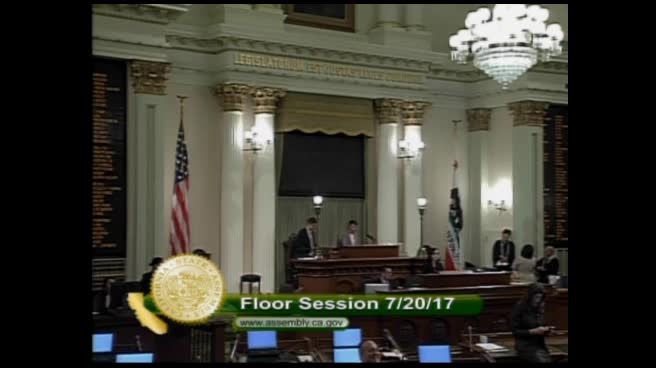
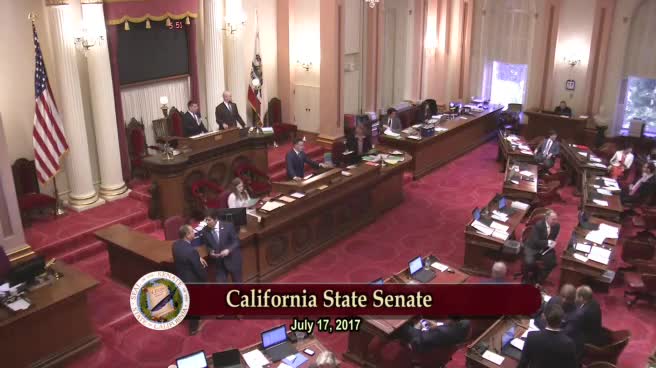
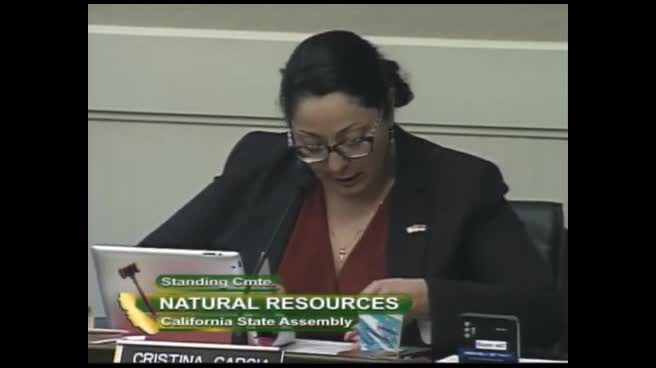
Bill Author

Bill Co-Author(s):
