AB 1162: California Global Warming Solutions Act of 2006: Low-Carbon Fuel Standard regulations.
- Session Year: 2017-2018
- House: Assembly
- Latest Version Date: 2018-06-14
The California Global Warming Solutions Act of 2006 establishes the State Air Resources Board as the state agency responsible for monitoring and regulating sources emitting greenhouse gases. The act requires the state board to approve a statewide greenhouse gas emissions limit equivalent to the statewide greenhouse gas emissions level in 1990 to be achieved by 2020 and to ensure that statewide greenhouse gas emissions are reduced to at least 40% below the 1990 level by 2030. Pursuant to the act, the state board has adopted the Low-Carbon Fuel Standard regulations.
This bill would require the state board to recognize as generating an innovative crude production method credit under the Low-Carbon Fuel Standard regulations the use of renewable natural gas to displace the existing use of natural gas by oil and natural gas companies that are otherwise eligible to opt in to the innovative crude provisions of the regulations, as specified.
The Contractors State License Law provides for the licensure and regulation of contractors by the Contractors State License Board. That law requires a county or city that requires the issuance of a permit for the construction, alteration, improvement, demolition, or repair of any building or structure to require the applicant for a permit to file a specified statement.This bill would require a specified licensed electrical contractor to include in this statement an additional statement regarding its licensure.The Contractors State License Law provides for the licensure and regulation of contractors by the Contractors State License Board. That law requires a county or city that requires the issuance of a permit for the construction, alteration, improvement, demolition, or repair of any building or structure to require the applicant for a permit to file a specified statement.
This bill would require a specified licensed electrical contractor to include in this statement an additional statement regarding its licensure.
Existing law creates the Division of Labor Standards Enforcement in the Department of Industrial Relations. Existing law prescribes various duties for the division, including maintaining minimum standards for the competency and training of electricians through a system of testing and certification.This bill would make a nonsubstantive change in these provisions.Existing law creates the Division of Labor Standards Enforcement in the Department of Industrial Relations. Existing law prescribes various duties for the division, including maintaining minimum standards for the competency and training of electricians through a system of testing and certification.
This bill would make a nonsubstantive change in these provisions.
(a)For purposes of this section, Low-Carbon Fuel Standard means the Low-Carbon Fuel Standard regulations (Subarticle 7 (commencing with Section 95480) of Title 17 of the California Code of Regulations).
(b)The state board shall recognize as generating an innovative production method credit under the Low-Carbon Fuel Standard renewable natural gas used to displace the existing use of natural gas by oil and natural gas companies that are otherwise eligible to opt in to the innovative crude provisions of the Low-Carbon Fuel Standard.
(c)Oil and natural gas companies that are reporting entities as part of the Low-Carbon Fuel Standard may use renewable natural gas delivered from a common carrier pipeline to generate an innovative production method credit.
SECTION 1.Section 7031.5 of the Business and Professions Code is amended to read:7031.5.(a)A county or city that requires the issuance of a permit as a condition precedent to the construction, alteration, improvement, demolition, or repair of any building or structure shall also require that an applicant for such a permit file as a condition precedent to the issuance of the permit a statement that he or she has prepared and signed stating that the applicant is licensed under the provisions of this chapter, giving the number of the license and stating that it is in full force and effect, or, if the applicant is exempt from the provisions of this chapter, the basis for the alleged exemption.(b)A contractor licensed as a Class C-10 electrical contractor with the Contractors State License Board shall include a further statement that he or she is in compliance with, and there are no grounds for disciplinary proceedings under, Section 108.2 of the Labor Code in the statement required pursuant to subdivision (a).(c)Any violation of this section by any applicant for a permit shall be subject to a civil penalty of not more than five hundred dollars ($500).Each (a)A county or city which that requires the issuance of a permit as a condition precedent to the construction, alteration, improvement, demolition demolition, or repair of any building or structure shall also require that each an applicant for such a permit file as a condition precedent to the issuance of a the permit a statement which that he or she has prepared and signed stating that the applicant is licensed under the provisions of this chapter, giving the number of the license and stating that it is in full force and effect, or, if the applicant is exempt from the provisions of this chapter, the basis for the alleged exemption.
(b)A contractor licensed as a Class C-10 electrical contractor with the Contractors State License Board shall include a further statement that he or she is in compliance with, and there are no grounds for disciplinary proceedings under, Section 108.2 of the Labor Code in the statement required pursuant to subdivision (a).
Any(c)Any violation of this section by any applicant for a permit shall be subject to a civil penalty of not more than five hundred dollars ($500).
SECTION 1.Section 108 of the Labor Code is amended to read:108.(a)The Division of Labor Standards Enforcement shall do the following:(1)Maintain minimum standards for the competency and training of electricians through a system of testing and certification.(2)Maintain an advisory committee and panels as necessary to carry out the functions under this section. There shall be contractor representation from both joint apprenticeship programs and unilateral nonunion programs in the electrical contracting industry.(3)Establish and collect fees necessary to implement this section.(4)Carry out the responsibilities of the Division of Apprenticeship Standards that are specified in Subchapter 4 (commencing with Section 290) of Chapter 2 of Division 1 of Title 8 of the California Code of Regulations. The Labor Commissioner may amend or repeal existing regulations or adopt new regulations as necessary to enforce this section. Pending amendments to conform to this section, any reference within the Subchapter 4 regulations to the Chief of the Division of Apprenticeship Standards is deemed a reference to the Labor Commissioner, and references to prior statutory sections are deemed to refer to current statutory language as follows:(A)References to former Section 3099 refer to current Section 108.(B)References to former Section 3099.2 refer to current Section 108.2.(C)References to former Section 3099.3 refer to current Section 108.3.(D)References to former Section 3099.4 refer to current Section 108.4.(E)References to former Section 3099.5 refer to current Section 108.5.(5)Issue certification cards to electricians who have been certified pursuant to this section. Notwithstanding Section 13340 of the Government Code, fees collected pursuant to paragraph (3) are continuously appropriated in an amount sufficient to pay the costs of issuing certification cards, and that amount may be expended for that purpose by the division.(6)Maintain an electrical certification curriculum committee comprised of representatives of the State Department of Education, the California Community Colleges, and the division. The electrical certification curriculum committee shall do all of the following:(A)Establish written educational curriculum standards for enrollees in training programs established pursuant to Section 108.4.(B)If an educational providers curriculum meets the written educational curriculum standards established in accordance with subparagraph (A), designate that curriculum as an approved curriculum of classroom instruction.(C)At the committees discretion, review the approved curriculum of classroom instruction of any designated educational provider. The committee may withdraw its approval of the curriculum if the educational provider does not continue to meet the established written educational curriculum standards.(D)Require each designated educational provider to submit an annual notice to the committee stating whether the educational provider is continuing to offer the approved curriculum of classroom instruction and whether any material changes have been made to the curriculum since its approval.(b)There shall be no discrimination for or against any person based on membership or nonmembership in a union.(c)As used in this section, electricians includes all persons who engage in the connection of electrical devices for electrical contractors licensed pursuant to Section 7058 of the Business and Professions Code, specifically, contractors classified as electrical contractors in the Contractors State License Board Rules and Regulations. This section does not apply to electrical connections under 100 volt-amperes. This section does not apply to persons performing work to which Section 7042.5 of the Business and Professions Code is applicable, or to electrical work ordinarily and customarily performed by stationary engineers. This section does not apply to electrical work in connection with the installation, operation, or maintenance of temporary or portable electrical equipment performed by technicians in the theatrical, motion picture production, television, hotel, exhibition, or trade show industries.(a)The Division of Labor Standards Enforcement shall do all of the following:
(1)Maintain minimum standards for the competency and training of electricians through a system of testing and certification.
(2)Maintain an advisory committee and panels as necessary to carry out the functions under this section. There shall be contractor representation from both joint apprenticeship programs and unilateral nonunion programs in the electrical contracting industry.
(3)Establish and collect fees necessary to implement this section.
(4)Carry out the responsibilities of the Division of Apprenticeship Standards that are specified in Subchapter 4 (commencing with Section 290) of Chapter 2 of Division 1 of Title 8 of the California Code of Regulations. The Labor Commissioner may amend or repeal existing regulations or adopt new regulations as necessary to enforce this section. Pending amendments to conform to this section, any reference within the Subchapter 4 regulations to the Chief of the Division of Apprenticeship Standards is deemed a reference to the Labor Commissioner, and references to prior statutory sections are deemed to refer to current statutory language as follows:
(A)References to former Section 3099 refer to current Section 108.
(B)References to former Section 3099.2 refer to current Section 108.2.
(C)References to former Section 3099.3 refer to current Section 108.3.
(D)References to former Section 3099.4 refer to current Section 108.4.
(E)References to former Section 3099.5 refer to current Section 108.5.
(5)Issue certification cards to electricians who have been certified pursuant to this section. Notwithstanding Section 13340 of the Government Code, fees collected pursuant to paragraph (3) are continuously appropriated in an amount sufficient to pay the costs of issuing certification cards, and that amount may be expended for that purpose by the division.
(6)Maintain an electrical certification curriculum committee comprised of representatives of the State Department of Education, the California Community Colleges, and the division. The electrical certification curriculum committee shall do all of the following:
(A)Establish written educational curriculum standards for enrollees in training programs established pursuant to Section 108.4.
(B)If an educational providers curriculum meets the written educational curriculum standards established in accordance with subparagraph (A), designate that curriculum as an approved curriculum of classroom instruction.
(C)At the committees discretion, review the approved curriculum of classroom instruction of any designated educational provider. The committee may withdraw its approval of the curriculum if the educational provider does not continue to meet the established written educational curriculum standards.
(D)Require each designated educational provider to submit an annual notice to the committee stating whether the educational provider is continuing to offer the approved curriculum of classroom instruction and whether any material changes have been made to the curriculum since its approval.
(b)There shall be no discrimination for or against any person based on membership or nonmembership in a union.
(c)As used in this section, electricians includes all persons who engage in the connection of electrical devices for electrical contractors licensed pursuant to Section 7058 of the Business and Professions Code, specifically, contractors classified as electrical contractors in the Contractors State License Board Rules and Regulations. This section does not apply to electrical connections under 100 volt-amperes. This section does not apply to persons performing work to which Section 7042.5 of the Business and Professions Code is applicable, or to electrical work ordinarily and customarily performed by stationary engineers. This section does not apply to electrical work in connection with the installation, operation, or maintenance of temporary or portable electrical equipment performed by technicians in the theatrical, motion picture production, television, hotel, exhibition, or trade show industries.
|
Date
|
Status
|
|---|---|
| Jun 18, 2018 | Read second time. Ordered to third reading. |
| Jun 14, 2018 | Read second time and amended. Ordered returned to second reading. |
| Aug 24, 2017 | Ordered to inactive file at the request of Senator Hertzberg. |
| Jun 28, 2017 | Read second time. Ordered to third reading. |
| Jun 27, 2017 | From committee: Do pass. (Ayes 9. Noes 0.) (June 26). |
| May 18, 2017 | Referred to Com. on B., P. & E.D. |
| May 4, 2017 | In Senate. Read first time. To Com. on RLS. for assignment. |
| May 4, 2017 | Read third time. Passed. Ordered to the Senate. (Ayes 75. Noes 0. Page 1386.) |
| May 3, 2017 | Read second time. Ordered to third reading. |
| May 2, 2017 | From committee: Do pass. (Ayes 13. Noes 0.) (May 2). |
| Mar 22, 2017 | Re-referred to Com. on B. & P. |
| Mar 21, 2017 | From committee chair, with author's amendments: Amend, and re-refer to Com. on B. & P. Read second time and amended. |
| Mar 20, 2017 | Referred to Com. on B. & P. |
| Feb 19, 2017 | From printer. May be heard in committee March 21. |
| Feb 17, 2017 | Read first time. To print. |
|
Date
|
Description
|
Location
|
Votes
|
|
|---|---|---|---|---|
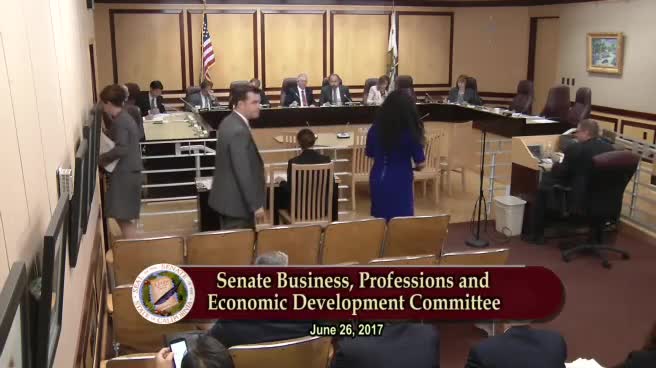
| Jun 26, 2017 | Do pass | Senate Standing Committee on Business, Professions and Economic Development |
Passed |
|
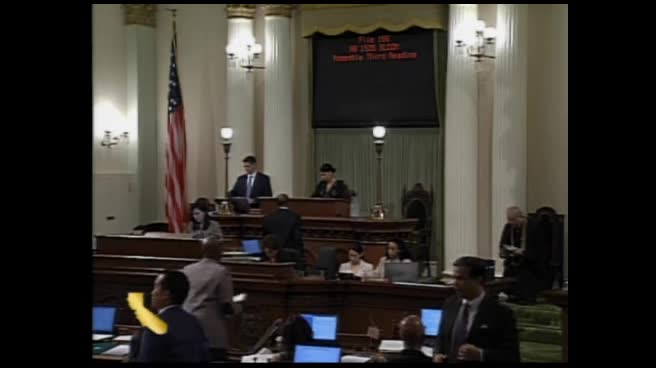
| May 4, 2017 | AB 1162 BOCANEGRA Assembly Third Reading | Assembly Floor |
Passed |
|
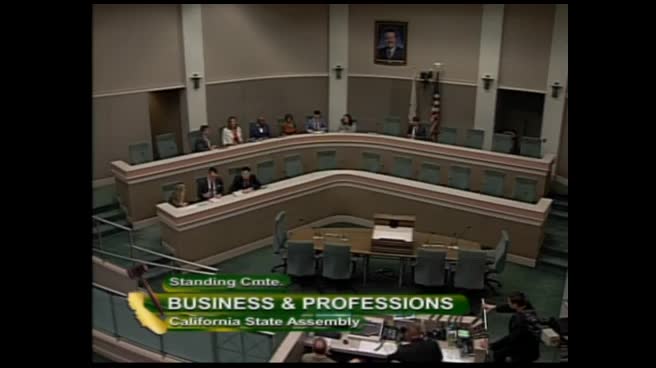
| May 2, 2017 | Do pass. | Assembly Standing Committee on Business and Professions |
Passed |
This list shows positions taken on this bill by organizations on the date displayed, which is linked to the original source.
Positions by individuals are not included.
SENATE COMMITTEE ON
BUSINESS, PROFESSIONS AND ECONOMIC DEVELOPMENT
Senator Jerry Hill, Chair
2017 - 2018 Regular
Bill No: AB 1162 Hearing Date: June 26, 2017
Author: | Bocanegra | ||
Version: |
| ||
Urgency: | Fiscal: | ||
Consultant: | |||
Subject: Electrical contractors: local permits: use of certified electricians
SUMMARY:
Requires a licensed C-10 electrical contractor to include an additional statement on his or her application for a local permit indicating that he or she is in compliance with the State’s electrician certification law.
Existing law:
- Provides for the licensure and regulation of more than 300,000 contractors under the Contractors' State License Law by the Contractor State License Board (CSLB) within the Department of Consumer Affairs (DCA). The CSLB is under the direction of the registrar of contractors (Registrar). (Business and Professions Code (BPC) § 7000 et seq.)
- Requires each city or county which requires the issuance of a permit for construction, alteration, improvement, demolition, or repair of any building or structure to file a statement that the applicant is a licensed contractor or is exempt from licensure, as specified. (BPC § 7031.5)
- Requires persons who perform work as electricians to become certified and prohibits uncertified persons from performing electrical work for which certification is required. (Labor Code (LC) §108.2(a))
- Specifies that certification is required only for those persons who perform work as electricians for contractors licensed as class C-10 electrical contractors under the CSLB’s rules and regulations. (LC § 108.2(b)(1))
- Specifies the following as additional grounds for disciplinary proceedings, including suspension or revocation of the license of a class C-10 electrical contractor:
- The contractor willfully employs one or more uncertified persons to perform work as electricians;
- The contractor willfully fails to provide the adequate supervision of uncertified workers, as specified; and,
- The contractor willfully fails to provide adequate supervision of apprentices performing work, as specified. (LC § 801.2(h))
This bill:
- Requires a contractor licensed as a Class C-10 electrical contractor, by the CSLB, to include an additional statement that he or she is incompliance with the State’s electrician certification law, and there are no disciplinary proceedings under specified provisions of the Labor Code, in the statement provided to a city or county regarding his or her licensure status in order to obtain a local permit.
- Makes other technical and clarifying changes.
FISCAL EFFECT:
None. This bill is not keyed fiscal by Legislative Counsel.
COMMENTS:
- Purpose. This bill is sponsored by the Author. According to the Author, “This bill further requires C-10 contractors to attest with a written statement that they are in compliance with Section 108.2 when seeking a permit. This bill strengthens existing law by creating an additional incentive for contractors to employ certified electricians and to comply with the state’s certification law.”
- CSLB. The CSLB is responsible for implementation and enforcement of the Contractors State License Law; the laws and regulations related to the licensure, practice and discipline of the construction industry in California. All businesses and individuals who construct or alter, or offer to construct or alter, any building, highway, road, parking facility, railroad, excavation, or other structure in California must be licensed by the CSLB if the total cost (labor and materials) of one or more contracts on the project is $500 or more. The CSLB licenses contractors in 44 license classifications and two certifications. California requires licensed contractors to be used on any construction project that costs more than five hundred dollars.
Under current law, BPC § 7031.5, counties or cities may require a permit as a condition to the construction, alteration, demolition, or repair of any building or structure. As part of the permit application process, a city, county or city and county require each permit applicant to submit a signed statement that specifying that he or she is a licensed contractor by the CSLB including the license number, a statement that the license is in full force and effect, or a statement that the applicant is exempt from the Contractor’s License Law along with the basis for the exemption. This bill would additionally require a C-10 licensed contractor to sign an additional attestation that he or she is in compliance with the current electrician certification law.
Under current law, any violation of submitting the statement required by a city or county subjects the applicant to a civil penalty. That same penalty will be applicable to the C-10 licensed contractor under the provisions proposed by this bill.
- C-10 Contractor and Electrician Certification. According to the CSLB, a C-10 electrical contractor places, installs, erects or connects any electrical wires, fixtures, appliances, apparatus, raceways, conduits, solar photovoltaic cells or any part thereof, which generate, transmit, transform or utilize electrical energy in any form or for any purpose. In addition, to holding a license issued by the CSLB, current law, LC 108.2, requires C-10 contractors to abide by the electrician certification law, administered through the Department of Industrial Relations. Specifically, each person who performs work as an electrician is required to become certified. C-10 license holders are not required to obtain the separate certification; however, the employees that work under the C-10 contractor’s license are required to obtain certification. In addition, if a licensed C-10 contractor is working under another C-10 license holder as an employee, then he or she is subject to the certification law and must also be certified. If a C-10 contractor is in violation of the certification law, he or she is subject to discipline by the CSLB.
Persons operating in other specified classifications such as a class C-7 low voltage systems or class C-45 electric sign contractors as long as the work performed is within the scope of the class C-7 or class-45 license are not required to comply with the certification requirements.
The CSLB is charged with enforcing the electrician certification law. Non-compliance of the law could subject the licensee to administrative action by the CSLB and according to the Labor Commissioner’s Web site, could potentially open contractors and workers up to civil suits should there be problems with work done by an uncertified worker. In addition, under California Code of Regulations (CCR) Title 8 § 294.0, any person who displays a certificate, or otherwise claims to be certified, who is not certified shall be prohibited from taking the test for certification for a period of seven (7) years. This bill simply requires C-10 contractors to provide an additional statement to local jurisdictions that he or she is in compliance with the certification law when seeking a local permit for construction related activities.
- Arguments in Support. The California State Association of Electrical Workers writes in support, “We strongly support AB 1162 by Assembly Member Bocanegra. This bill amends [§] 7031.5 of the [BPC] to enhance the electrical certification requirements found in [LC] § 108.”
The National Electrical Contractors Association writes in support, “AB 1162 will require a C-10 electrical contractor, when applying for a permit with a city or county to include a statement that he or she is in compliance with the state’s electrical certification law. Increased awareness and compliance with the electrical certification program will ensure safer electrical installations, protect against property damage and increase safety on construction projects.”
The Western Electrical Contractors Association has a position of support if amended and writes, “[we] support Electrician Certification but suggest that the statement required of contractors be modified as follows: "b) A contractor licensed as a Class C-10 electrical contractor with the Contractors’ State License Board shall include a further statement that, to the best of their knowledge, he or she is in compliance with, and there are no grounds for disciplinary proceedings under, Section 108.2 of the Labor Code in the statement required pursuant to subdivision
(a). The purpose of this change is to distinguish between an intentional and unintentional violation of the [LC].”
SUPPORT AND OPPOSITION:
Support:
California State Association of Electrical Workers
National Electrical Contractors Association
Support if Amended:
Western Electrical Contractors Association
Opposition:
None on file as of June 20, 2017.
-- END --
Office of Senate Floor Analyses (916) 651-1520 Fax: (916) 327-4478 | AB |
THIRD READING
Bill No: AB 1162
:
SENATE BUS., PROF. & ECON. DEV. COMMITTEE: 9-0, 6/26/17
AYES: Hill, Fuller, Dodd, Galgiani, Glazer, Hernandez, Newman, Pan, Wilk
ASSEMBLY FLOOR: 75-0, 5/4/17 - See last page for vote
DIGEST:
This bill requires a licensed C-10 electrical contractor to include an additional statement on his or her application for a local permit indicating that he or she is in compliance with the state’s electrician certification law.
Existing law:
- Provides for the licensure and regulation of more than 300,000 contractors under the Contractors' State License Law by the Contractor State License Board (CSLB) within the Department of Consumer Affairs. The CSLB is under the direction of the registrar of contractors. (Business and Professions Code (BPC) § 7000 et seq.)
- Requires each city or county which requires the issuance of a permit for construction, alteration, improvement, demolition, or repair of any building or structure to file a statement that the applicant is a licensed contractor or is exempt from licensure, as specified. (BPC § 7031.5)
- Requires persons who perform work as electricians to become certified and prohibits uncertified persons from performing electrical work for which certification is required. (Labor Code (LC) §108.2(a))
- Specifies that certification is required only for those persons who perform work as electricians for contractors licensed as class C-10 electrical contractors under the CSLB’s rules and regulations. (LC § 108.2(b)(1))
- Specifies the following as additional grounds for disciplinary proceedings, including suspension or revocation of the license of a class C-10 electrical contractor: (LC § 801.2(h))
- The contractor willfully employs one or more uncertified persons to perform work as electricians;
- The contractor willfully fails to provide the adequate supervision of uncertified workers, as specified; and,
- The contractor willfully fails to provide adequate supervision of apprentices performing work, as specified.
This bill:
- Requires a contractor licensed as a Class C-10 electrical contractor, by the CSLB, to include an additional statement that he or she is incompliance with the state’s electrician certification law, and there are no disciplinary proceedings under specified provisions of the Labor Code, in the statement provided to a city or county regarding his or her licensure status in order to obtain a local permit.
- Makes other technical and clarifying changes.
Background
Under current law, BPC Section 7031.5, counties or cities may require a permit as a condition to the construction, alteration, demolition, or repair of any building or structure. As part of the permit application process, a city, county or city and county require each permit applicant to submit a signed statement that specifying that he or she is a licensed contractor by the CSLB including the license number, a statement that the license is in full force and effect, or a statement that the applicant is exempt from the Contractor’s License Law along with the basis for the exemption. This bill additionally requires a C-10 licensed contractor to sign an additional attestation that he or she is in compliance with the current electrician certification law. Any violation of submitting the statement required by a city or county subjects the applicant to a civil penalty. That same penalty will be applicable to the C-10 licensed contractor under the provisions proposed by this bill.
C-10 contractor and electrician certification. According to the CSLB, a C-10 electrical contractor places, installs, erects or connects any electrical wires, fixtures, appliances, apparatus, raceways, conduits, solar photovoltaic cells or any part thereof, which generate, transmit, transform or utilize electrical energy in any form or for any purpose. In addition, to holding a license issued by the CSLB, current law, LC Section 108.2, requires C-10 contractors to abide by the electrician certification law, administered through the Department of Industrial Relations. Specifically, each person who performs work as an electrician is required to become certified. C-10 license holders are not required to obtain the separate certification; however, the employees that work under the C-10 contractor’s license are required to obtain certification. In addition, if a licensed C-10 contractor is working under another C-10 license holder as an employee, then he or she is subject to the certification law and must also be certified. If a C-10 contractor is in violation of the certification law, he or she is subject to discipline by the CSLB.
The CSLB is charged with enforcing the electrician certification law. Non-compliance of the law could subject the licensee to administrative action by the CSLB and according to the Labor Commissioner’s Web site, could potentially open contractors and workers up to civil suits should there be problems with work done by an uncertified worker. In addition, under California Code of Regulations Title 8 Section 294.0, any person who displays a certificate, or otherwise claims to be certified, who is not certified shall be prohibited from taking the test for certification for a period of seven years. This bill simply requires C-10 contractors to provide an additional statement to local jurisdictions that he or she is in compliance with the certification law when seeking a local permit for construction related activities.
Comments
Support if amended. The Western Electrical Contractors Association has a position of support if amended and writes, “[we] support Electrician Certification but suggest that the statement required of contractors be modified as follows: ‘b) A contractor licensed as a Class C-10 electrical contractor with the Contractors’ State License Board shall include a further statement that, to the best of their knowledge [emphasis added], he or she is in compliance with, and there are no grounds for disciplinary proceedings under, Section 108.2 of the Labor Code in the statement required pursuant to subdivision (a). The purpose of this change is to distinguish between an intentional and unintentional violation of the [LC].’”
FISCAL EFFECT: Appropriation: Fiscal Com.: Local:
California State Association of Electrical Workers
National Electrical Contractors Association
OPPOSITION: (Verified 6/28/17)
None received
ARGUMENTS IN SUPPORT: The California State Association of Electrical Workers writes in support, “We strongly support AB 1162 by Assembly Member Bocanegra. This bill amends [§] 7031.5 of the [BPC] to enhance the electrical certification requirements found in [LC] § 108.”
The National Electrical Contractors Association writes in support, “AB 1162 will require a C-10 electrical contractor, when applying for a permit with a city or county to include a statement that he or she is in compliance with the state’s electrical certification law. Increased awareness and compliance with the electrical certification program will ensure safer electrical installations, protect against property damage and increase safety on construction projects.”
ASSEMBLY FLOOR: 75-0, 5/4/17
AYES: Acosta, Aguiar-Curry, Arambula, Baker, Berman, Bloom, Bocanegra, Bonta, Brough, Burke, Caballero, Calderon, Cervantes, Chau, Chávez, Chen, Chiu, Choi, Chu, Cooley, Cooper, Cunningham, Dababneh, Dahle, Daly, Eggman, Flora, Fong, Frazier, Friedman, Gallagher, Eduardo Garcia, Gipson, Gloria, Gomez, Gonzalez Fletcher, Gray, Grayson, Holden, Irwin, Jones-Sawyer, Kalra, Kiley, Lackey, Levine, Limón, Low, Maienschein, Mathis, Mayes, McCarty, Medina, Melendez, Mullin, Muratsuchi, Nazarian, Obernolte, O'Donnell, Quirk, Quirk-Silva, Reyes, Ridley-Thomas, Rodriguez, Rubio, Salas, Santiago, Steinorth, Mark Stone, Thurmond, Ting, Voepel, Waldron, Weber, Wood, Rendon
NO VOTE RECORDED: Travis Allen, Bigelow, Cristina Garcia, Harper, Patterson
6/28/17 15:16:20
**** END ****
ASSEMBLY THIRD READING
ATR Bill Id:AB 1162
Author:(Bocanegra)
As Amended Ver:March 21, 2017
Majority vote
Committee | Votes | Ayes | Noes |
Business & Professions | 13-0 | Low, Brough, Baker, Bloom, Chiu, Cunningham, Gipson, Grayson, Holden, Irwin, Mullin, Steinorth, Ting |
SUMMARY: Requires licensed Class C-10 electrical contractors to include a statement on their application for a city or county permit that they are in compliance with the state's electrical certification law. Specifically, this bill:
Requires that Class C-10 electrical contractors include a statement on their application for a city or county permit that they are in compliance with the state's electrical certification law and that there are no grounds for disciplinary proceedings under the law.
FISCAL EFFECT: None. This bill is keyed non-fiscal by the Legislative Counsel.
COMMENTS:
Purpose. This bill is author sponsored. According to the author, "This bill supports the policy of requiring C-10 electrical contractors to use certified electricians. Certification means that these electricians completed a course and received a certification card. AB 1162 will require those contractors, when applying for a permit, to include a statement that all of the electricians on their crew are certified and trained to do the work required. By adding a penalty for not complying, this bill will incentivize contractors to employ qualified workers, ensuring that permitted work is being done properly by certified electricians. This bill will positively affect people contracting for work and contractors themselves because it encourages compliance with the law and the employment of qualified workers."
Background. The Contractors State License Board (CSLB) is the regulatory entity responsible for licensing contractors and enforcing the Contractors State License Law. The mission of CSLB is to, "protect consumers by regulating the construction industry through policies that promote the health, safety, and general welfare of the public in matters relating to construction." The CSLB licenses all businesses and individuals who construct or alter, or offer to construct or alter, any building, highway, road, parking facility, railroad, excavation, or other structure in California. The CSLB licenses contractors in 44 license classifications and two certifications. California requires licensed contractors to be used on any construction project that costs more than $500. The CSLB currently collects information about its licensees that it in turn, publishes to its Web site.
Class C-10 Electrical Contractor License. The CSLB maintains a variety of specialty licensing categories for contractors, including Class C-10 Electrical Contractor. According to the CSLB C-10 Licenses are required for "An electrical contractor [that] places, installs, erects or connects any electrical wires, fixtures, appliances, apparatus, raceways, conduits, solar photovoltaic cells or any part thereof, which generate, transmit, transform or utilize electrical energy in any form or for any purpose."
Application Statement. Current law requires that applicants for permits in a city or county file a statement that the applicant is licensed. This bill's provisions would add an additional requirement that this statement also include confirmation that the applicant is certified under Labor Code 108.2. It is the intention of the author that this additional verification will result in decreased fraud and fewer uncertified electricians operating in the state.
Analysis Prepared by: Jimmy Fremgen / B. & P. / 916-319-3301 FN: 0000224
Date of Hearing:
ASSEMBLY COMMITTEE ON BUSINESS AND PROFESSIONS
Evan Low, Chair
ABPCA Bill Id:AB 1162
Author:(Bocanegra) – As Amended Ver:March 21, 2017
SUBJECT: Electrical contractors: local permits: use of certified electricians.
SUMMARY: Requires licensed Class C-10 electrical contractors to include a statement on their application for a city or county permit that they are in compliance with the state’s electrical certification law.
EXISTING LAW:
- Establishes the Contractors' State License Board (CSLB) to license and regulate professions related to construction and to promote the health, safety, and general welfare of the public. (Business and Professions Code (BPC) Section 7000 et seq.)
- Requires that cities or counties requiring the issuance of a permit for construction, alteration, improvement, demolition, or repair of any building or structure shall require that applicants for such a permit file a statement that the applicant is a licensed contractor or exempt from licensure. (BPC Section 7031.5)
- Requires that persons working under a class C-10 electrical contractors license be certified by the Division of Labor Standards Enforcement, sets exceptions and standards for discipline. (Labor Code 108.2)
THIS BILL:
- Requires that Class C-10 electrical contractors include a statement on their application for a city or county permit that they are in compliance with the state’s electrical certification law and that there are no grounds for disciplinary proceedings under the law.
FISCAL EFFECT: None. This bill is keyed non-fiscal by the Legislative Counsel.
COMMENTS:
Purpose. This bill is author sponsored. According to the author, “This bill supports the policy of requiring C-10 electrical contractors to use certified electricians. Certification means that these electricians completed a course and received a certification card. AB 1162 will require those contractors, when applying for a permit, to include a statement that all of the electricians on their crew are certified and trained to do the work required. By adding a penalty for not complying, this bill will incentivize contractors to employ qualified workers, ensuring that permitted work is being done properly by certified electricians. This bill will positively affect people contracting for work and contractors themselves because it encourages compliance with the law and the employment of qualified workers.”
Background. The CSLB is the regulatory entity responsible for licensing contractors and enforcing the Contractors State License Law. The mission of CSLB is to, “protect consumers by regulating the construction industry through policies that promote the health, safety, and general welfare of the public in matters relating to construction.” The CSLB licenses all businesses and individuals who construct or alter, or offer to construct or alter, any building, highway, road, parking facility, railroad, excavation, or other structure in California. The CSLB licenses contractors in 44 license classifications and two certifications. California requires licensed contractors to be used on any construction project that costs more than five hundred dollars. The CSLB currently collects information about its licensees that it in turn, publishes to its website.
Class C-10 Electrical Contractor License. The CSLB maintains a variety of specialty licensing categories for contractors, including Class C-10 Electrical Contractor. According to the CSLB C-10 Licenses are required for “An electrical contractor [that] places, installs, erects or connects any electrical wires, fixtures, appliances, apparatus, raceways, conduits, solar photovoltaic cells or any part thereof, which generate, transmit, transform or utilize electrical energy in any form or for any purpose.”
Application Statement. Current law requires that applicants for permits in a city or county file a statement that the applicant is licensed. This bill’s provisions would add an additional requirement that this statement also include confirmation that the applicant is certified under Labor Code 108.2. It is the intention of the author that this additional verification will result in decreased fraud and fewer uncertified electricians operating in the state.
ARGUMENTS IN SUPPORT:
The California State Association of Electrical Workers writes, "This legislation will further the goal of ensuring that only certified electricians are performing work for C-10 electrical contractors. We urge your AYE vote on AB 1162”
The Western Electrical Contractors Association has a position of support if amended and writes, “[we] support Electrician Certification but suggest that the statement required of contractors be modified as follows: "b) A contractor licensed as a Class C-10 electrical contractor with the Contractors’ State License Board shall include a further statement that, to the best of their knowledge, he or she is in compliance with, and there are no grounds for disciplinary proceedings under, Section 108.2 of the Labor Code in the statement required pursuant to subdivision (a).”
ARGUMENTS IN OPPOSITION:
None on file.
IMPLEMENTATION ISSUES:
The letter from the Western Electrical Contractors Association expresses that contractors may not be aware of pending disciplinary action and may unknowingly transmit an inaccurate statement on its application. To avoid this issue, the letter proposes the inclusion of the phrase, “to the best of their knowledge” in the bill.
While concern over this intent may be valid, the language proposed does not set a real enforceable standard as “to the best of their knowledge” is a subjective term. The author is encouraged to work with stakeholders to address these concerns and work on a potential solution.
REGISTERED SUPPORT:
California State Association of Electrical Workers
REGISTERED OPPOSITION:
None on file.
Analysis Prepared by: Jimmy Fremgen / B. & P. / 916-319-3301
Discussed in Hearing
 2MIN
Senate Standing Committee on Business, Professions and Economic Development
 1MIN
Assembly Floor
 2MIN
Assembly Standing Committee on Business and Professions

Bill Co-Author(s):