AB 1194: Elections: local bond measures: tax rate statement.
- Session Year: 2017-2018
- House: Assembly
- Latest Version Date: 2017-10-14
Existing law requires local government agencies, when submitting for voter approval bond measures that will be secured by an ad valorem tax, to provide the voters, along with a sample ballot, a statement that includes estimates of tax rates and debt service in connection with the measure, including estimates of the tax rates required to fund the bond issue during the first fiscal year after the first sale of the bonds and the first fiscal year after the last sale of the bonds. This statement must be included in voter information guides for those bond measures, as specified.
This bill would require the statement to include an estimate of the average annual tax rate required to fund the proposed bond measure for the duration of its debt service, and to identify the final fiscal year in which the tax is anticipated to be collected. By expanding the scope of information that local government agencies must provide in the statement, the bill would impose a state-mandated local program.
The California Constitution requires the state to reimburse local agencies and school districts for certain costs mandated by the state. Statutory provisions establish procedures for making that reimbursement.
This bill would provide that, if the Commission on State Mandates determines that the bill contains costs mandated by the state, reimbursement for those costs shall be made pursuant to the statutory provisions noted above.
Existing law requires local government agencies, when submitting for voter approval bond measures that will be secured by an ad valorem tax, to provide the voters, along with a sample ballot, a statement that includes estimates of tax rates and debt service in connection with the measure, including estimates of the tax rates required to fund the bond issue during the first fiscal year after the first sale of the bonds and the first fiscal year after the last sale of the bonds. This statement must be included in voter information guides for those bond measures, as specified.
This bill would require the statement to include an estimate of the average annual tax rate required to fund the proposed bond measure for the duration of its debt service, and to identify the final fiscal year in which the tax is anticipated to be collected. By expanding the scope of information that local government agencies must provide in the statement, the bill would impose a state-mandated local program.
The California Constitution requires the state to reimburse local agencies and school districts for certain costs mandated by the state. Statutory provisions establish procedures for making that reimbursement.
This bill would provide that, if the Commission on State Mandates determines that the bill contains costs mandated by the state, reimbursement for those costs shall be made pursuant to the statutory provisions noted above.
Existing law requires local government agencies, when submitting for voter approval bond measures that will be secured by an ad valorem tax, to provide the voters, along with a sample ballot, a statement that includes estimates of tax rates and debt service in connection with the measure measure, including estimates of the tax rates required to fund the bond issue during the first fiscal year after the first sale of the bonds and the first fiscal year after the last sale of the bonds. This statement must be included in voter information guides for those bond measures, as specified.
This bill would require the statement to also include an estimate of the average annual tax rate required to fund the proposed bond measure for the duration of its debt service, and to identify the final fiscal year in which the tax is anticipated to be collected. By expanding the scope of information that local government agencies must provide in the statement, the bill would impose a state-mandated local program.
The California Constitution requires the state to reimburse local agencies and school districts for certain costs mandated by the state. Statutory provisions establish procedures for making that reimbursement.
This bill would provide that, if the Commission on State Mandates determines that the bill contains costs mandated by the state, reimbursement for those costs shall be made pursuant to the statutory provisions noted above.
Existing law requires local government agencies, when submitting for voter approval bond measures that will be secured by an ad valorem tax, to provide the voters, along with a sample ballot, a statement that includes estimates of tax rates and debt service in connection with the measure. This statement must be included in voter information guides for those bond measures, as specified.
This bill would require the statement to also include a table that shows examples of the estimated tax liability property owners could incur if a local bond measure is approved. an estimate of the average annual tax rate required to fund the proposed bond measure for the duration of its debt service, and to identify the final fiscal year in which the tax is anticipated to be collected. By expanding the scope of information that local government agencies must provide in the statement, the bill would impose a state-mandated local program.
Existing law requires that the ballots used when voting upon a proposed county, city, or district ordinance submitted to the voters as an initiative measure have printed on them specified text, including a statement describing the nature of the proposed ordinance.This bill would extend these ballot requirements to any measure submitted to the voters that is proposed by a local governing body or submitted to the voters as an initiative or referendum measure. The bill would require the statement of a measure authorizing the issuance of bonds to be funded by an ad valorem tax to include language that refers voters to the voter information guide in order to understand possible effects on their property taxes. By expanding the scope of local measures to which ballot requirements apply and adding statements that must be printed on certain ballots, the bill would impose a state-mandated local program.The California Constitution requires the state to reimburse local agencies and school districts for certain costs mandated by the state. Statutory provisions establish procedures for making that reimbursement.
This bill would provide that, if the Commission on State Mandates determines that the bill contains costs mandated by the state, reimbursement for those costs shall be made pursuant to the statutory provisions noted above.
Existing law requires local government agencies, when submitting for voter approval bond measures that will be secured by an ad valorem tax, to provide the voters, along with a sample ballot, a statement that includes estimates of tax rates and debt service in connection with the measure. This statement must be included in voter information guides for those bond measures, as specified.
This bill would require that the statement to also include a table that shows examples of the estimated tax liability property owners could incur if a local bond measure is approved.
Existing law requires that the ballots used when voting upon a proposed county, city, or district ordinance submitted to the voters as an initiative measure have printed on them specified text, including a statement describing the nature of the proposed ordinance.
This bill would extend these ballot requirements to any measure submitted to the voters that is proposed by a local governing body or submitted to the voters as an initiative or referendum measure. The bill would require the statement of a measure authorizing the issuance of bonds to be funded by an ad valorem tax to include language that refers voters to the Tax Rate Statement in the Voter Information Guide. voter information guide in order to understand possible effects on their property taxes. By expanding the scope of local measures to which ballot requirements apply and adding statements that must be printed on certain ballots, the bill would impose a state-mandated local program.
The California Constitution requires the state to reimburse local agencies and school districts for certain costs mandated by the state. Statutory provisions establish procedures for making that reimbursement.
This bill would provide that, if the Commission on State Mandates determines that the bill contains costs mandated by the state, reimbursement for those costs shall be made pursuant to the statutory provisions noted above.
Existing law requires local government agencies, when submitting for voter approval bond measures that will be secured by an ad valorem tax, to provide the voters, along with a sample ballot, a statement that includes estimates of tax rates and debt service in connection with the measure.
This bill would require that statement to also include a table that shows examples of the estimated tax liability property owners could incur if a local bond measure is approved.
Existing law requires that the ballots used when voting upon a proposed county, city, or district ordinance submitted to the voters as an initiative measure have printed on them specified text relating to text, including a statement describing the nature of the proposed ordinance and dictates placement of that text. ordinance.
This bill would require that the ballots used when voting upon a bond measure proposed by a local governing body or submitted to the voters as an initiative measure include a specified statement related to average property value and property taxes. This bill would extend these ballot requirements to any measure submitted to the voters that is proposed by a local governing body or submitted to the voters as an initiative or referendum measure. The bill would require the statement of a measure authorizing the issuance of bonds to be funded by an ad valorem tax to include language that refers voters to the Tax Rate Statement in the Voter Information Guide. By expanding the scope of local measures to which ballot requirements apply and adding statements that must be printed on certain ballots, the bill would impose a state-mandated local program.
The California Constitution requires the state to reimburse local agencies and school districts for certain costs mandated by the state. Statutory provisions establish procedures for making that reimbursement.
This bill would provide that, if the Commission on State Mandates determines that the bill contains costs mandated by the state, reimbursement for those costs shall be made pursuant to the statutory provisions noted above.
Existing law requires that the ballots used when voting upon a proposed county, city, or district ordinance submitted to the voters as an initiative measure have printed on them specified text relating to the proposed ordinance and dictates placement of that text.
This bill would require that the ballots used when voting upon a bond measure proposed by a local governing body or submitted to the voters as an initiative measure include a specified statement related to average property value and property taxes. By adding statements that must be printed on certain ballots, the bill would impose a state-mandated local program.
The California Constitution requires the state to reimburse local agencies and school districts for certain costs mandated by the state. Statutory provisions establish procedures for making that reimbursement.
This bill would provide that, if the Commission on State Mandates determines that the bill contains costs mandated by the state, reimbursement for those costs shall be made pursuant to the statutory provisions noted above.
Existing law requires that the ballots used when voting upon a proposed county, city, or district ordinance submitted to the voters as an initiative measure have printed on them specified text relating to the proposed ordinance and dictates placement of that text.
This bill would require that the ballots used when voting upon a bond measure proposed by a local governing body or submitted to the voters as an initiative measure include a specified statement related to average property value and property taxes. By adding statements that must be printed on certain ballots, the bill would impose a state-mandated local program.
The California Constitution requires the state to reimburse local agencies and school districts for certain costs mandated by the state. Statutory provisions establish procedures for making that reimbursement.
This bill would provide that, if the Commission on State Mandates determines that the bill contains costs mandated by the state, reimbursement for those costs shall be made pursuant to the statutory provisions noted above.
(a)In connection with each bond issue specified in Section 9400, a statement shall be mailed to the voters with the sample ballot for the bond election. The statement required by this section shall be filed with the elections official conducting the election not later than the 88th day before the election, and shall include all of the following:
(1)The best estimate from official sources of the average annual tax rate that would be required to be levied to fund that bond issue over the entire duration of the bond debt service, based on assessed valuations available at the time of the election or a projection based on experience within the same jurisdiction or other demonstrable factors. The estimate shall also identify the final fiscal year in which the tax is anticipated to be collected.
(2)The best estimate from official sources of the highest tax rate that would be required to be levied to fund that bond issue, and an estimate of the year in which that rate will apply, based on assessed valuations available at the time of the election or a projection based on experience within the same jurisdiction or other demonstrable factors.
(3)The best estimate from official sources of the total debt service, including the principal and interest, that would be required to be repaid if all the bonds are issued and sold. The estimate may include information about the assumptions used to determine the estimate.
(b)In addition, the statement may contain a declaration of policy of the legislative or governing body of the applicable jurisdiction, proposing to use revenues other than ad valorem taxes to fund the bond issue, and the best estimate from official sources of these revenues and the reduction in the tax rate levied to fund the bond issue resulting from the substitution of revenue.
(c)The words tax rate as used in this chapter means tax rate per one hundred dollars ($100) of assessed valuation on all property to be taxed to fund a bond issue described in Section 9400.
SEC. 2.If the Commission on State Mandates determines that this act contains costs mandated by the state, reimbursement to local agencies and school districts for those costs shall be made pursuant to Part 7 (commencing with Section 17500) of Division 4 of Title 2 of the Government Code.
(a)In connection with each bond issue specified in Section 9400, a statement shall be mailed to the voters with the sample ballot for the bond election. The statement required by this section shall be filed with the elections official conducting the election not later than the 88th day before the election, and shall include all of the following:
(1)The best estimate from official sources of the average annual tax rate that would be required to be levied to fund that bond issue over the entire duration of the bond debt service, based on assessed valuations available at the time of the election or a projection based on experience within the same jurisdiction or other demonstrable factors. The estimate shall also identify the final fiscal year in which the tax is anticipated to be collected.
(2)The best estimate from official sources of the highest tax rate that would be required to be levied to fund that bond issue, and an estimate of the year in which that rate will apply, based on assessed valuations available at the time of the election or a projection based on experience within the same jurisdiction or other demonstrable factors.
(3)The best estimate from official sources of the total debt service, including the principal and interest, that would be required to be repaid if all the bonds are issued and sold. The estimate may include information about the assumptions used to determine the estimate.
(b)In addition, the statement may contain a declaration of policy of the legislative or governing body of the applicable jurisdiction, proposing to use revenues other than ad valorem taxes to fund the bond issue, and the best estimate from official sources of these revenues and the reduction in the tax rate levied to fund the bond issue resulting from the substitution of revenue.
(c)The words tax rate as used in this chapter means tax rate per one hundred dollars ($100) of assessed valuation on all property to be taxed to fund a bond issue described in Section 9400.
SEC. 2.If the Commission on State Mandates determines that this act contains costs mandated by the state, reimbursement to local agencies and school districts for those costs shall be made pursuant to Part 7 (commencing with Section 17500) of Division 4 of Title 2 of the Government Code.
(a)In connection with each bond issue specified in Section 9400, a statement shall be mailed to the voters with the sample ballot for the bond election. The statement required by this section shall be filed with the elections official conducting the election not later than the 88th day before the election, and shall include all of the following:
(1)The best estimate from official sources of the average annual tax rate that would be required to be levied to fund that bond issue over the entire duration of the bond debt service, based on assessed valuations available at the time of the election or a projection based on experience within the same jurisdiction or other demonstrable factors. The estimate shall also identify the final fiscal year in which the tax is anticipated to be collected.
(2)The best estimate from official sources of the tax rate that would be required to be levied to fund that bond issue during the first fiscal year after the first sale of the bonds based on assessed valuations available at the time of the election or a projection based on experience within the same jurisdiction or other demonstrable factors.(3)The best estimate from official sources of the tax rate that would be required to be levied to fund that bond issue during the first fiscal year after the last sale of the bonds if the bonds are proposed to be sold in series, and an estimate of the year in which that rate will apply, based on assessed valuations available at the time of the election or a projection based on experience within the same jurisdiction or other demonstrable factors.(4)(2)The best estimate from official sources of the highest tax rate that would be required to be levied to fund that bond issue, and an estimate of the year in which that rate will apply, based on assessed valuations available at the time of the election or a projection based on experience within the same jurisdiction or other demonstrable factors.
(5)(3)The best estimate from official sources of the total debt service, including the principal and interest, that would be required to be repaid if all the bonds are issued and sold. The estimate may include information about the assumptions used to determine the estimate.
(b)In addition, the statement may contain a declaration of policy of the legislative or governing body of the applicable jurisdiction, proposing to use revenues other than ad valorem taxes to fund the bond issue, and the best estimate from official sources of these revenues and the reduction in the tax rate levied to fund the bond issue resulting from the substitution of revenue.
(c)The words tax rate as used in this chapter means tax rate per one hundred dollars ($100) of assessed valuation on all property to be taxed to fund a bond issue described in Section 9400.
SEC. 2.If the Commission on State Mandates determines that this act contains costs mandated by the state, reimbursement to local agencies and school districts for those costs shall be made pursuant to Part 7 (commencing with Section 17500) of Division 4 of Title 2 of the Government Code.
(a)In connection with each bond issue specified in Section 9400, a statement shall be mailed to the voters with the sample ballot for the bond election. The statement required by this section shall be filed with the elections official conducting the election not later than the 88th day before the election, and shall include all of the following:
(1)The best estimate from official sources of the average annual tax rate that would be required to be levied to fund that bond issue over the entire duration of the bond debt service, based on assessed valuations available at the time of the election or a projection based on experience within the same jurisdiction or other demonstrable factors. The estimate shall also identify the final fiscal year in which the tax is anticipated to be collected.
(1)(2)The best estimate from official sources of the tax rate that would be required to be levied to fund that bond issue during the first fiscal year after the first sale of the bonds based on assessed valuations available at the time of the election or a projection based on experience within the same jurisdiction or other demonstrable factors.
(2)(3)The best estimate from official sources of the tax rate that would be required to be levied to fund that bond issue during the first fiscal year after the last sale of the bonds if the bonds are proposed to be sold in series, and an estimate of the year in which that rate will apply, based on assessed valuations available at the time of the election or a projection based on experience within the same jurisdiction or other demonstrable factors.
(3)(4)The best estimate from official sources of the highest tax rate that would be required to be levied to fund that bond issue, and an estimate of the year in which that rate will apply, based on assessed valuations available at the time of the election or a projection based on experience within the same jurisdiction or other demonstrable factors.
(4)(5)The best estimate from official sources of the total debt service, including the principal and interest, that would be required to be repaid if all the bonds are issued and sold. The estimate may include information about the assumptions used to determine the estimate.
(5)A table with two columns containing all of the following:(A)In the first column, both of the following:(i)A heading that reads For property with an enrolled value of:(ii)Five rows, each containing a dollar figure in increasing increments of one hundred thousand dollars ($100,000), beginning with an amount that is two hundred thousand dollars ($200,000) less than the median home price, rounded to the nearest fifty thousand dollars ($50,000), in the jurisdiction in which the bond is proposed.(B)In the second column, both of the following:(i)A heading that reads Your tax increase could be:(ii)Five rows, each containing a dollar figure derived from multiplying the property value in the adjoining row under the first column by the tax rate in paragraph (3).(b)In addition, the statement may contain a declaration of policy of the legislative or governing body of the applicable jurisdiction, proposing to use revenues other than ad valorem taxes to fund the bond issue, and the best estimate from official sources of these revenues and the reduction in the tax rate levied to fund the bond issue resulting from the substitution of revenue.
(c)The words tax rate as used in this chapter means tax rate per one hundred dollars ($100) of assessed valuation on all property to be taxed to fund a bond issue described in Section 9400.
SEC. 2.Section 13119 of the Elections Code is amended to read:13119.(a)The ballots used when voting upon a measure proposed by a local governing body or submitted to the voters as an initiative or referendum measure pursuant to Division 9 (commencing with Section 9000), including a measure authorizing the issuance of bonds or the incurrence of debt, shall have printed on them the words Shall the measure (stating the nature thereof) be adopted? Opposite the statement of the measure to be voted on, and to its right, the words Yes and No shall be printed on separate lines, with voting squares. If a voter stamps a cross (+) in the voting square after the printed word Yes, his or her vote shall be counted in favor of the adoption of the measure. If he or she stamps a cross (+) in the voting square after the printed word No, his or her vote shall be counted against its adoption.(b)If the proposed measure imposes a tax or raises the rate of a tax, the ballot shall include in the statement of the measure to be voted on the amount of money to be raised annually and the rate and duration of the tax to be levied.(c)If the proposed measure authorizes the issuance of bonds to be funded by an ad valorem tax, the ballot shall include in the statement of the measure the following sentence: See the Voter Information Guide for effects on your property taxes.(d)For purposes of this section, local governing body means the governing body of a city, county, city and county, including a charter city or charter county, or district.SEC. 3.SEC. 2.If the Commission on State Mandates determines that this act contains costs mandated by the state, reimbursement to local agencies and school districts for those costs shall be made pursuant to Part 7 (commencing with Section 17500) of Division 4 of Title 2 of the Government Code.
(a)In connection with each bond issue specified in Section 9400, a statement shall be mailed to the voters with the sample ballot for the bond election. The statement required by this section shall be filed with the elections official conducting the election not later than the 88th day before the election, and shall include all of the following:
(1)The best estimate from official sources of the tax rate that would be required to be levied to fund that bond issue during the first fiscal year after the first sale of the bonds based on assessed valuations available at the time of the election or a projection based on experience within the same jurisdiction or other demonstrable factors.
(2)The best estimate from official sources of the tax rate that would be required to be levied to fund that bond issue during the first fiscal year after the last sale of the bonds if the bonds are proposed to be sold in series, and an estimate of the year in which that rate will apply, based on assessed valuations available at the time of the election or a projection based on experience within the same jurisdiction or other demonstrable factors.
(3)The best estimate from official sources of the highest tax rate that would be required to be levied to fund that bond issue, and an estimate of the year in which that rate will apply, based on assessed valuations available at the time of the election or a projection based on experience within the same jurisdiction or other demonstrable factors.
(4)The best estimate from official sources of the total debt service, including the principal and interest, that would be required to be repaid if all the bonds are issued and sold. The estimate may include information about the assumptions used to determine the estimate.
(5)A table with two columns containing all of the following:
(A)In the first column, both of the following:
(i)A heading that reads For property with an enrolled value of:
(ii)5 Five rows, each containing a dollar figure in increasing increments of $100,000, one hundred thousand dollars ($100,000), beginning with $300,000 and ending with $700,000. an amount that is two hundred thousand dollars ($200,000) less than the median home price, rounded to the nearest fifty thousand dollars ($50,000), in the jurisdiction in which the bond is proposed.
(B)In the second column, both of the following:
(i)A heading that reads Your tax increase could be:
(ii)5 Five rows, each containing a dollar figure derived from multiplying the property value in the adjoining row under the first column by the tax rate in paragraph (3).
(b)In addition, the statement may contain a declaration of policy of the legislative or governing body of the applicable jurisdiction, proposing to use revenues other than ad valorem taxes to fund the bond issue, and the best estimate from official sources of these revenues and the reduction in the tax rate levied to fund the bond issue resulting from the substitution of revenue.
(c)The words tax rate as used in this chapter means tax rate per one hundred dollars ($100) of assessed valuation on all property to be taxed to fund a bond issue described in Section 9400.
SEC. 2.Section 13119 of the Elections Code is amended to read:13119.(a)The ballots used when voting upon a measure proposed by a local governing body or submitted to the voters as an initiative or referendum measure pursuant to Division 9 (commencing with Section 9000), including a measure authorizing the issuance of bonds or the incurrence of debt, shall have printed on them the words Shall the measure (stating the nature thereof) be adopted? Opposite the statement of the measure to be voted on, and to its right, the words Yes and No shall be printed on separate lines, with voting squares. If a voter stamps a cross (+) in the voting square after the printed word Yes, his or her vote shall be counted in favor of the adoption of the measure. If he or she stamps a cross (+) in the voting square after the printed word No, his or her vote shall be counted against its adoption.
(b)If the proposed measure imposes a tax or raises the rate of a tax, the ballot shall include in the statement of the measure to be voted on the amount of money to be raised annually and the rate and duration of the tax to be levied.
(c)If the proposed measure authorizes the issuance of bonds to be funded by an ad valorem tax, the ballot shall include in the statement of the measure the following sentence: For an example of your potential tax liability under this ordinance, please refer to the Tax Rate Statement in the See the Voter Information Guide. Guide for effects on your property taxes.
(d)For purposes of this section, local governing body means the governing body of a city, county, city and county, including a charter city or charter county, or district, including a school district.
SEC. 3.If the Commission on State Mandates determines that this act contains costs mandated by the state, reimbursement to local agencies and school districts for those costs shall be made pursuant to Part 7 (commencing with Section 17500) of Division 4 of Title 2 of the Government Code.
(a)In connection with each bond issue specified in Section 9400, a statement shall be mailed to the voters with the sample ballot for the bond election. The statement required by this section shall be filed with the elections official conducting the election not later than the 88th day before the election, and shall include all of the following:
(1)The best estimate from official sources of the tax rate that would be required to be levied to fund that bond issue during the first fiscal year after the first sale of the bonds based on assessed valuations available at the time of the election or a projection based on experience within the same jurisdiction or other demonstrable factors.
(2)The best estimate from official sources of the tax rate that would be required to be levied to fund that bond issue during the first fiscal year after the last sale of the bonds if the bonds are proposed to be sold in series, and an estimate of the year in which that rate will apply, based on assessed valuations available at the time of the election or a projection based on experience within the same jurisdiction or other demonstrable factors.
(3)The best estimate from official sources of the highest tax rate that would be required to be levied to fund that bond issue, and an estimate of the year in which that rate will apply, based on assessed valuations available at the time of the election or a projection based on experience within the same jurisdiction or other demonstrable factors.
(4)The best estimate from official sources of the total debt service, including the principal and interest, that would be required to be repaid if all the bonds are issued and sold. The estimate may include information about the assumptions used to determine the estimate.
(5)A table with two columns containing all of the following:
(A)In the first column, both of the following:
(i)A heading that reads For property with an enrolled value of:
(ii)5 rows, each containing a dollar figure in increasing increments of $100,000, beginning with $300,000 and ending with $700,000.
(B)In the second column, both of the following:
(i)A heading that reads Your tax increase could be:
(ii)5 rows, each containing a dollar figure derived from multiplying the property value in the adjoining row under the first column by the tax rate in paragraph (3).
(b)In addition, the statement may contain a declaration of policy of the legislative or governing body of the applicable jurisdiction, proposing to use revenues other than ad valorem taxes to fund the bond issue, and the best estimate from official sources of these revenues and the reduction in the tax rate levied to fund the bond issue resulting from the substitution of revenue.
(c)The words tax rate as used in this chapter means tax rate per one hundred dollars ($100) of assessed valuation on all property to be taxed to fund a bond issue described in Section 9400.
SECTION 1.SEC. 2.Section 13119 of the Elections Code is amended to read:13119.(a)The ballots used when voting upon a measure proposed county, city, or district ordinance by a local governing body or submitted to the voters of the respective local government as an initiative or referendum measure pursuant to Division 9 (commencing with Section 9000) 9000), including a measure authorizing the issuance of bonds or the incurrence of debt, shall have printed on them the words Shall the ordinance measure (stating the nature thereof) be adopted? Opposite the statement of the ordinance measure to be voted on, and to its right, the words Yes and No shall be printed on separate lines, with voting squares. If a voter stamps a cross (+) in the voting square after the printed word Yes, his or her vote shall be counted in favor of the adoption of the ordinance. measure. If he or she stamps a cross (+) in the voting square after the printed word No, his or her vote shall be counted against its adoption.
(b)If the proposed ordinance measure imposes a tax or raises the rate of a tax, the ballot shall include in the statement of the ordinance measure to be voted on the amount of money to be raised annually and the rate and duration of the tax to be levied.
(c)The ballots used when voting upon a measure authorizing the issuance of bonds that is proposed by a local governing body or submitted to the voters as an initiative measure pursuant to Division 9 (commencing with Section 9000), shall have printed on them in the ballot label, the following statement: The average assessed valuation of residential property in the ____(insert name of the government entity) is $____. Based on this figure, your property taxes may increase by $____ if this bond is approved.(c)If the proposed measure authorizes the issuance of bonds to be funded by an ad valorem tax, the ballot shall include in the statement of the measure the following sentence: For an example of your potential tax liability under this ordinance, please refer to the Tax Rate Statement in the Voter Information Guide.
(d)For purposes of this section, local governing body means the governing body of a city, county, city and county, including a charter city or charter county, or district, including a school district.
SEC. 2.SEC. 3.If the Commission on State Mandates determines that this act contains costs mandated by the state, reimbursement to local agencies and school districts for those costs shall be made pursuant to Part 7 (commencing with Section 17500) of Division 4 of Title 2 of the Government Code.
(a)The ballots used when voting upon a proposed county, city, or district ordinance submitted to the voters of the respective local government as an initiative measure pursuant to Division 9 (commencing with Section 9000) shall have printed on them the words Shall the ordinance (stating the nature thereof) be adopted? Opposite the statement of the ordinance to be voted on, and to its right, the words Yes and No shall be printed on separate lines, with voting squares. If a voter stamps a cross (+) in the voting square after the printed word Yes, his or her vote shall be counted in favor of the adoption of the ordinance. If he or she stamps a cross (+) in the voting square after the printed word No, his or her vote shall be counted against its adoption.
(b)If the proposed ordinance imposes a tax or raises the rate of a tax, the ballot shall include in the statement of the ordinance to be voted on the amount of money to be raised annually and the rate and duration of the tax to be levied.
(c)The ballots used when voting upon a measure authorizing the issuance of bonds that is proposed by a local governing body or submitted to the voters as an initiative measure pursuant to Division 9 (commencing with Section 9000), shall have printed on them in the ballot label, the following statement: The average assessed valuation of residential property in the County of _______ ____(insert name of the government entity) is $_______. $____. Based on this figure, your property taxes may increase by $___ $____ if this bond is approved.
SEC. 2.If the Commission on State Mandates determines that this act contains costs mandated by the state, reimbursement to local agencies and school districts for those costs shall be made pursuant to Part 7 (commencing with Section 17500) of Division 4 of Title 2 of the Government Code.
(a)The ballots used when voting upon a proposed county, city, or district ordinance submitted to the voters of the respective local government as an initiative measure pursuant to Division 9 (commencing with Section 9000) shall have printed on them the words Shall the ordinance (stating the nature thereof) be adopted? Opposite the statement of the ordinance to be voted on, and to its right, the words Yes and No shall be printed on separate lines, with voting squares. If a voter stamps a cross (+) in the voting square after the printed word Yes, his or her vote shall be counted in favor of the adoption of the ordinance. If he or she stamps a cross (+) in the voting square after the printed word No, his or her vote shall be counted against its adoption.
(b)If the proposed ordinance imposes a tax or raises the rate of a tax, the ballot shall include in the statement of the ordinance to be voted on the amount of money to be raised annually and the rate and duration of the tax to be levied.
(c)The ballots used when voting upon a measure authorizing the issuance of bonds that is proposed by a local governing body or submitted to the voters as an initiative measure pursuant to Division 9 (commencing with Section 9000), shall have printed on them in the ballot label, the following statement: The average assessed valuation of residential property in the County of _______ is $_______. Based on this figure, your property taxes may increase by $___ if this bond is approved.
SEC. 2.If the Commission on State Mandates determines that this act contains costs mandated by the state, reimbursement to local agencies and school districts for those costs shall be made pursuant to Part 7 (commencing with Section 17500) of Division 4 of Title 2 of the Government Code.
HeadingLines 1 and 2.|
Date
|
Status
|
|---|---|
| Oct 14, 2017 | Chaptered by Secretary of State - Chapter 795, Statutes of 2017. |
| Oct 14, 2017 | Approved by the Governor. |
| Sep 19, 2017 | Enrolled and presented to the Governor at 3 p.m. |
| Sep 11, 2017 | Senate amendments concurred in. To Engrossing and Enrolling. |
| Sep 6, 2017 | In Assembly. Concurrence in Senate amendments pending. May be considered on or after September 8 pursuant to Assembly Rule 77. |
| Sep 6, 2017 | Read third time. Passed. Ordered to the Assembly. |
| Aug 29, 2017 | Read second time. Ordered to third reading. |
| Aug 28, 2017 | From committee: Be ordered to second reading pursuant to Senate Rule 28.8. |
| Aug 21, 2017 | In committee: Hearing postponed by committee. |
| Aug 21, 2017 | From committee chair, with author's amendments: Amend, and re-refer to committee. Read second time, amended, and re-referred to Com. on APPR. |
| Jul 13, 2017 | From committee: Do pass and re-refer to Com. on APPR. (Ayes 4. Noes 0.) (July 12). Re-referred to Com. on APPR. |
| Jun 28, 2017 | From committee: Do pass and re-refer to Com. on E. & C.A. (Ayes 7. Noes 0.) (June 28). Re-referred to Com. on E. & C.A. |
| Jun 14, 2017 | Referred to Coms. on GOV. & F. and E. & C.A. |
| Jun 5, 2017 | In Senate. Read first time. To Com. on RLS. for assignment. |
| Jun 1, 2017 | Read third time. Passed. Ordered to the Senate. (Ayes 70. Noes 4. Page 2039.) |
| May 31, 2017 | Assembly Rule 69(d) suspended. (Page 1990.) |
| May 30, 2017 | Assembly Rule 69(b) suspended. (Ayes 53. Noes 23. Page 1851.) |
| May 11, 2017 | Read second time. Ordered to third reading. |
| May 10, 2017 | From committee: Do pass. (Ayes 13. Noes 1.) (May 10). |
| May 3, 2017 | Re-referred to Com. on APPR. |
| May 2, 2017 | Read second time and amended. |
| May 1, 2017 | From committee: Amend, and do pass as amended and re-refer to Com. on APPR. (Ayes 7. Noes 0.) (April 26). |
| Apr 20, 2017 | Re-referred to Com. on E. & R. |
| Apr 19, 2017 | From committee chair, with author's amendments: Amend, and re-refer to Com. on E. & R. Read second time and amended. |
| Apr 5, 2017 | In committee: Set, first hearing. Hearing canceled at the request of author. |
| Mar 20, 2017 | Re-referred to Com. on E. & R. |
| Mar 16, 2017 | From committee chair, with author's amendments: Amend, and re-refer to Com. on E. & R. Read second time and amended. |
| Mar 9, 2017 | Referred to Com. on E. & R. |
| Feb 21, 2017 | Introduced measure version corrected. |
| Feb 19, 2017 | From printer. May be heard in committee March 21. |
| Feb 17, 2017 | Read first time. To print. |
|
Date
|
Description
|
Location
|
Votes
|
|
|---|---|---|---|---|
| Sep 11, 2017 | AB 1194 DABABNEH Concurrence in Senate Amendments | Assembly Floor |
Passed |
|
| Sep 6, 2017 | Assembly 3rd Reading AB1194 Dababneh et al. By McGuire | Senate Floor |
Passed |
|
| Jul 12, 2017 | Do pass, but first be re-referred to the Committee on [Appropriations] | Senate Standing Committee on Elections and Constitutional Amendments |
Passed |
|
| Jun 28, 2017 | Do pass, but first be re-referred to the Committee on [Elections and Constitutional Amendments] | Senate Standing Committee on Governance and Finance |
Passed |
|
| Jun 1, 2017 | AB 1194 DABABNEH Assembly Third Reading | Assembly Floor |
Passed |
|
| Jun 1, 2017 | AB 1194 DABABNEH Assembly Third Reading Motion to Postpone to a Time Cer By KILEY Motion to Lay on the Table By CALDERON | Assembly Floor |
Passed |
|
| May 10, 2017 | Do pass. | Assembly Standing Committee on Appropriations |
Passed |
|
| Apr 26, 2017 | Do pass as amended and be re-referred to the Committee on [Appropriations] | Assembly Standing Committee on Elections and Redistricting |
Passed |
This list shows positions taken on this bill by organizations on the date displayed, which is linked to the original source.
Positions by individuals are not included.
CONCURRENCE IN SENATE AMENDMENTS
CSA1 Bill Id:AB 1194
Author:(Dababneh)
As Amended Ver:August 21, 2017
Majority vote
ASSEMBLY: | 70-4 | (June 1, 2017) | SENATE: | 31-3 | (September 6, 2017) |
Original Committee Reference: E. & R.
SUMMARY: Requires the fiscal statement that is required to be included in the sample ballot for local bond measures to include the best estimate from official sources of the average annual tax rate that would be required to be levied to fund the bond issue over the entire duration of the bond debt service, as specified. Requires the estimate to identify the final fiscal year in which the tax is anticipated to be collected.
The Senate amendments delete provisions of law that require the fiscal statement included in the sample ballot for local bond measures to include the best estimate from official sources of the tax rate that would be required to be levied to fund that bond issue during the first fiscal year after the first sale of the bonds and during the first fiscal year after the last sale of the bonds if the bonds are proposed to be sold in series.
EXISTING LAW requires a local government agency, when submitting bond measures that will be secured by an ad valorem tax for voter approval, to mail a statement to voters with the sample ballot for the bond election. Requires the statement to include all of the following:
- The best estimate from official sources of the tax rate that would be required to be levied to fund that bond issue during the first fiscal year after the first sale of the bonds based on assessed valuations available at the time of the election or a projection based on the experience within the same jurisdiction or other demonstrable factors;
- The best estimate from official sources of the tax rate that would be required to be levied to fund that bond issue during the first fiscal year after the last sale of the bonds if the bonds are proposed to be sold in series, and an estimate of the year in which that rate will apply, based on assessed valuations available at the time of the election or a projection based on the experience within the same jurisdiction or other demonstrable factors;
- The best estimate from official sources of the highest tax rate that would be required to be levied to fund that bond issue, and an estimate of the year in which that rate will apply, based on assessed valuations available at the time of the election or a projection based on the experience within the same jurisdiction or other demonstrable factors; and,
- The best estimate from official sources of the total debt service, including principal and interest, that would be required to be repaid if all bonds are issued and sold. Permits the estimate to include information about the assumptions used to determine the estimate.
FISCAL EFFECT: According to the Senate Appropriations Committee, pursuant to Senate Rule 28.8, negligible costs.
COMMENTS: According to the author, "This measure will increase transparency for voters regarding the effects that local bond measures may have on their residential property taxes."
The Senate amendments delete provisions of law that require the fiscal statement included in the sample ballot for local bond measures to include the best estimate of the tax rate that would be required to be levied to fund that bond during the first fiscal year after the first sale of the bonds and during the first fiscal year after the last sale of the bonds if the bonds are proposed to be sold in series and instead only require the sample ballot to include the best estimate of the average annual tax rate and the best estimate of the highest tax rate that would be required to be levied to fund that bond issue. This bill as amended in the Senate is generally consistent with Assembly actions.
Analysis Prepared by: Nichole Becker / E. & R. / (916) 319-2094 FN: 0001491
Office of Senate Floor Analyses (916) 651-1520 Fax: (916) 327-4478 | AB |
THIRD READING
Bill No: AB 1194
:
SENATE GOVERNANCE & FIN. COMMITTEE: 7-0, 6/28/17
AYES: McGuire, Nguyen, Beall, Hernandez, Hertzberg, Lara, Moorlach
SENATE ELECTIONS & C.A. COMMITTEE: 4-0, 7/12/17
AYES: Stern, Anderson, Hertzberg, Leyva
NO VOTE RECORDED: Allen
SENATE APPROPRIATIONS COMMITTEE: Senate Rule 28.8
ASSEMBLY FLOOR: 70-4, 6/1/17 - See last page for vote
DIGEST:
This bill alters the information that must be included in the fiscal statement of the sample ballot for local bond measures.
ANALYSIS: Existing law requires a local government agency, when submitting bond measures that will be secured by an ad valorem tax for voter approval, to mail a statement to voters with the sample ballot for the bond election, which includes all of the following:
- The best estimate from official sources of the tax rate that would be required to be levied to fund that bond issue during the first fiscal year after the first sale of the bonds based on assessed valuations available at the time of the election or a projection based on the experience within the same jurisdiction or other demonstrable factors;
- The best estimate from official sources of the tax rate that would be required to be levied to fund that bond issue during the first fiscal year after the last sale of the bonds if the bonds are proposed to be sold in series, and an estimate of the year in which that rate will apply, based on assessed valuations available at the time of the election or a projection based on the experience within the same jurisdiction or other demonstrable factors;
- The best estimate from official sources of the highest tax rate that would be required to be levied to fund that bond issue, and an estimate of the year in which that rate will apply, based on assessed valuations available at the time of the election or a projection based on the experience within the same jurisdiction or other demonstrable factors; and,
- The best estimate from official sources of the total debt service, including principal and interest, that would be required to be repaid if all bonds are issued and sold. Permits the estimate to include information about the assumptions used to determine the estimate.
This bill:
- Requires the fiscal statement that is required to be included in the sample ballot for local bond measures to include the best estimate from official sources of the average annual tax rate that would be required to be levied to fund the bond issue over the entire duration of the bond debt service instead of the tax rate needed during the first fiscal year after the sale of the bonds. The estimate must also identify the final fiscal year in which the tax is anticipated to be collected.
- Deletes the requirement that best estimate from official sources of the tax rate that would be required to be levied to fund that bond issue during the first fiscal year after the last sale of the bonds if the bonds are proposed to be sold in series, and an estimate of the year in which that rate will apply, based on assessed valuations available at the time of the election or a projection based on the experience within the same jurisdiction or other demonstrable factors be included in fiscal statement of the sample ballot for local bond measures.
Background
California’s local agencies, and in some cases nonprofit and public corporations, are authorized to issue a variety of types of bonds to fund a wide range of infrastructure projects, including assessment bonds, general obligation (GO) bonds, revenue bonds, Mark-Roos bonds, Mello-Roos bonds, conduit bonds, pension obligation bonds, among others. Each type of bond has different requirements for issuance and provides funding for different types of infrastructure development and maintenance. Some types of bonds must be approved by 2/3 of voters, such as GO bonds (except for school GO bonds, which require a 55% majority) while others can be issued with majority voter approval, or no voter approval at all.
Each bond type has different restrictions and is secured by a specific revenue source. For example, local governments raise ad valorem property taxes as needed to repay GO bonds, as is specifically allowed under Proposition 13. Alternatively, a local agency could fund a sewage treatment plant by selling revenue bonds secured by the revenues from the monthly sewer fees paid by citizens. Governments typically pay higher interest rates when they borrow through revenue bonds rather than GO bonds because GO bonds are backed by the issuer’s full faith and credit.
To increase transparency regarding the impact of local bonds on voters, the author wants the fiscal statement in the sample ballot to include the annual tax rate needed to fund the issuance of bonds.
Comments
Purpose of the bill. According to the author, “Current law requires that a ‘tax rate statement’ be prepared and mailed out to all voters which include the best estimate of the highest tax rate for voters, as well as the best estimate of total debt service. While this information is helpful to taxpayers, it is often difficult to locate in the ballot pamphlet and fails to clearly inform taxpayers just how much their individual property taxes might increase. AB 1194 will increase transparency for voters regarding the effects that local bond measures may have on their property taxes by providing accessible information so that voters could easily calculate the tax implication.”
Necessary? The fiscal statement that is required to be sent to voters with the sample ballot already contains information related to the tax rate required to fund bonds. Each additional piece of information that is required to be printed and mailed increases costs. Although AB 1194 requires new information to be included in the fiscal statement, it is unclear what problem this bill is attempting to address and why this information is beneficial.
Mandate. The California Constitution generally requires the state to reimburse local agencies for their costs when the state imposes new programs or additional duties on them. According to the Legislative Counsel’s Office, AB 1194 creates a new state-mandated local program. Ultimately, the Commission on State Mandates determines if a mandate is reimbursable and the amount of reimbursement to be provided.
FISCAL EFFECT: Appropriation: Fiscal Com.: Local:
California Apartment Association
California Association of County Treasurers and Tax Collectors
California Taxpayers Association
Howard Jarvis Taxpayers Association
Orange County Auditor-Controller, Eric H. Woolery
OPPOSITION: (Verified 8/28/17)
California Teachers Association
ASSEMBLY FLOOR: 70-4, 6/1/17
AYES: Acosta, Travis Allen, Arambula, Baker, Berman, Bigelow, Bloom, Bocanegra, Brough, Burke, Caballero, Calderon, Cervantes, Chau, Chávez, Chen, Chu, Cooley, Cooper, Cunningham, Dababneh, Dahle, Daly, Eggman, Flora, Fong, Frazier, Gallagher, Cristina Garcia, Eduardo Garcia, Gipson, Gloria, Gomez, Gray, Grayson, Harper, Holden, Irwin, Jones-Sawyer, Kiley, Lackey, Levine, Low, Maienschein, Mathis, Mayes, Medina, Melendez, Mullin, Muratsuchi, Nazarian, Obernolte, Patterson, Quirk, Quirk-Silva, Reyes, Ridley-Thomas, Rodriguez, Rubio, Salas, Santiago, Steinorth, Mark Stone, Thurmond, Ting, Voepel, Waldron, Weber, Wood, Rendon
NOES: Friedman, Gonzalez Fletcher, Limón, O'Donnell
NO VOTE RECORDED: Aguiar-Curry, Bonta, Chiu, Choi, Kalra, McCarty
8/29/17 15:04:20
SENATE COMMITTEE ON
ELECTIONS AND CONSTITUTIONAL AMENDMENTS
Senator Henry Stern, Chair
2017 - 2018 Regular
Bill No: 1194 Hearing Date: 7/12/17
Author: | Dababneh | ||
Version: |
| ||
Urgency: | Fiscal: | ||
Consultant: | |||
Subject:
DIGEST
This bill requires an estimate of the average annual tax rate required to repay bonds to be included in the fiscal statement that must be inside the sample ballot for local bond measures.
ANALYSIS
Existing law:
- Requires local government agencies, when submitting bond measures that will be secured by an ad valorem property tax for voter approval, to mail a fiscal statement to voters with the sample ballot for the bond election. The fiscal statement must include the following:
- The best estimate from official sources of the tax rate that would be required to be levied to fund the bonds during the first fiscal year after the first sale of the bonds.
- The best estimate from official sources of the tax rate that would be required to be levied to fund that bond issue during the first fiscal year after the last sale of the bonds if the bonds are proposed to be sold in series, and an estimate of the year in which that rate will apply, based on assessed valuations available at the time of the election.
- The best estimate from official sources of the highest tax rate that would be required to be levied to fund that bond issue, and an estimate of the year in which that rate will apply, based on assessed valuations available at the time of the election.
- The best estimate from official sources of the total debt service, including principal and interest, which would be required to be repaid if all bonds are issued and sold. The estimate can include information about the assumptions used to determine the estimate.
This bill:
- Requires the aforementioned statement to also include the best estimate from official sources of the average annual tax rate that would be required to be levied to fund that bond issue over the entire duration of the bond debt service, based on assessed valuations available at the time of the election or a projection based on experience within the same jurisdiction or other demonstrable factors. The estimate must also identify the final fiscal year in which the tax is anticipated to be collected.
BACKGROUND
Local Bonds. California’s local agencies, and in some cases nonprofit and public corporations, are authorized to issue a variety of types of bonds to fund a wide range of infrastructure projects, including assessment bonds, general obligation (GO) bonds, revenue bonds, Mark-Roos bonds, Mello-Roos bonds, conduit bonds, pension obligation bonds, among others. Each type of bond has different requirements for issuance and provides funding for different types of infrastructure development and maintenance. Some types of bonds must be approved by 2/3 of voters, such as GO bonds (except for school GO bonds, which require a 55% majority) while others can be issued with majority voter approval, or no voter approval at all.
Each bond type has different restrictions and is secured by a specific revenue source. For example, local governments raise ad valorem property taxes as needed to repay GO bonds, as is specifically allowed under Proposition 13. Alternatively, a local agency could fund a sewage treatment plant by selling revenue bonds secured by the revenues from the monthly sewer fees paid by citizens. Governments typically pay higher interest rates when they borrow through revenue bonds rather than GO bonds because GO bonds are backed by the issuer’s full faith and credit.
COMMENTS
- According to the author: Current law requires that a “tax rate statement” be prepared and mailed out to all voters which provide the best estimate of the highest tax rate for voters, as well as the best estimate of total debt service. While this information is helpful to taxpayers, it is often difficult to locate in the ballot pamphlet and fails to clearly inform taxpayers just how much their individual property taxes might increase.
AB 1194 will increase transparency for voters regarding the effects that local bond measures may have on their property taxes. By providing accessible information, such as the best estimate of the average annual tax rate and the last year when the bond is expected to be paid, voters will have the ability to easily calculate the tax implication. This bill will ensure voters can make informed and confident decisions about investing in their communities. - Argument in Opposition. In a letter opposing this bill, the California Teachers Association stated the following:
AB 1194 requires the fiscal statement included in the sample ballot for local bond measures to include the best estimate from official sources of the average annual tax rate required to be levied to fund the bond issue over the entire duration of the bond debt service and requires the estimate to identify the final fiscal year the tax is anticipated to be collected.
CTA is very appreciative of the number of amendments taken, but our teacher leaders remain concerned that “estimates” of the annual tax rate to be levied, “projections” based on experience and “other demonstrable factors” could have a chilling effect on the passage of local bond measures and for these reasons they have voted to oppose AB 1194.
RELATED/PRIOR LEGISLATION
AB 776 (Harper), which is also being heard in this committee today, requires the ballot label for local school bond measures to include the following sentence: “See Voter Information Guide for effects on your property taxes.”
AB 195 (Obernolte), which is pending before the Governor, requires the ballot statement for all local ballot measures that impose a tax or raise the rate of a tax to include specified information about the tax, instead of making such a requirement applicable only to local initiative measures.
PRIOR ACTION
Senate Governance and Finance Committee: Assembly Floor: | 7 - 0 70 - 4 |
Assembly Appropriations Committee: | 13 - 1 |
Assembly Committee: | 7 - 0 |
POSITIONS
Sponsor: Author
Support: California Apartment Association
California Association of County Treasurers and Tax Collectors
California Taxpayers Association
Howard Jarvis Taxpayers Association
Orange County Auditor-Controller, Eric H. Woolery
Oppose: California Teachers Association
-- END --
SENATE COMMITTEE ON GOVERNANCE AND FINANCE
Senator Mike McGuire, Chair
2017 - 2018 Regular
Bill No: | AB 1194 | Hearing Date: | 6/28/17 |
Author: | Dababneh | Tax Levy: | No |
Version: | 5/30/17 | Fiscal: | Yes |
Consultant: | MacDonald | ||
Elections: local bond measures: tax rate statement
Requires an estimate of the average annual tax rate required to repay bonds to be included in the fiscal statement that must be inside the sample ballot for local bond measures.
Background
California’s local agencies, and in some cases nonprofit and public corporations, are authorized to issue a variety of types of bonds to fund a wide range of infrastructure projects, including assessment bonds, general obligation (GO) bonds, revenue bonds, Mark-Roos bonds, Mello-Roos bonds, conduit bonds, pension obligation bonds, among others. Each type of bond has different requirements for issuance and provides funding for different types of infrastructure development and maintenance. Some types of bonds must be approved by 2/3 of voters, such as GO bonds (except for school GO bonds, which require a 55% majority) while others can be issued with majority voter approval, or no voter approval at all.
Each bond type has different restrictions and is secured by a specific revenue source. For example, local governments raise ad valorem property taxes as needed to repay GO bonds, as is specifically allowed under Proposition 13. Alternatively, a local agency could fund a sewage treatment plant by selling revenue bonds secured by the revenues from the monthly sewer fees paid by citizens. Governments typically pay higher interest rates when they borrow through revenue bonds rather than GO bonds because GO bonds are backed by the issuer’s full faith and credit.
Local government agencies, when submitting bond measures that will be secured by an ad valorem property tax for voter approval, must mail a statement to voters with the sample ballot for the bond election. The fiscal statement must include the following:
- The best estimate from official sources of the tax rate that would be required to be levied to fund the bonds during the first fiscal year after the first sale of the bonds.
- The best estimate from official sources of the tax rate that would be required to be levied to fund that bond issue during the first fiscal year after the last sale of the bonds if the bonds are proposed to be sold in series, and an estimate of the year in which that rate will apply, based on assessed valuations available at the time of the election.
- The best estimate from official sources of the highest tax rate that would be required to be levied to fund that bond issue, and an estimate of the year in which that rate will apply, based on assessed valuations available at the time of the election.
- The best estimate from official sources of the total debt service, including principal and interest, which would be required to be repaid if all bonds are issued and sold. The estimate can include information about the assumptions used to determine the estimate.
To increase transparency regarding the impact of local bonds on voters, the author wants the fiscal statement in the sample ballot to include the annual tax rate needed to fund the issuance of bonds.
Proposed Law
Assembly Bill 1194 requires the fiscal statement that is required to be included in the sample ballot for local bond measures to include the best estimate from official sources of the average annual tax rate that would be required to be levied to fund the bond issue over the entire duration of the bond debt service, as specified. The estimate must also identify the final fiscal year in which the tax is anticipated to be collected.
State Revenue Impact
No estimate.
Comments
- Purpose of the bill. According to the author, “Current law requires that a ‘tax rate statement’ be prepared and mailed out to all voters which include the best estimate of the highest tax rate for voters, as well as the best estimate of total debt service. While this information is helpful to taxpayers, it is often difficult to locate in the ballot pamphlet and fails to clearly inform taxpayers just how much their individual property taxes might increase. AB 1194 will increase transparency for voters regarding the effects that local bond measures may have on their property taxes by providing accessible information so that voters could easily calculate the tax implication.”
- Necessary? The fiscal statement that is required to be sent to voters with the sample ballot already contains information related to the tax rate required to fund bonds. Each additional piece of information that is required to be printed and mailed increases costs. Although AB 1194 requires new information to be included in the fiscal statement, it is unclear what problem this bill is attempting to address and why this information is beneficial. The Committee may wish to consider the need for this bill in light of potentially adding costs to already costly elections.
- Mandate. The California Constitution generally requires the state to reimburse local agencies for their costs when the state imposes new programs or additional duties on them. According to the Legislative Counsel’s Office, AB 1194 creates a new state-mandated local program. Ultimately, the Commission on State Mandates determines if a mandate is reimbursable and the amount of reimbursement to be provided.
- Double-referred. The Senate Rules Committee referred AB 1194 to both the Committees on Governance and Finance, which considers bills affecting local governance, and Elections and Constitutional Amendments.
Assembly Actions
Assembly Elections 7-0
Assembly Appropriations 13-1
Assembly Floor 70-4
Support and Opposition
(6/23/17)
Support: California Association of County Treasurers and Tax Collectors; California Taxpayers Association; Howard Jarvis Taxpayers Association.
Opposition: Unknown.
-- END --
ASSEMBLY THIRD READING
ATR Bill Id:AB 1194
Author:(Dababneh)
As Amended Ver:May 30, 2017
Majority vote
Committee | Votes | Ayes | Noes |
Elections | 7-0 | Berman, Harper, Santiago, Cunningham, Low, Mullin, Weber |
|
Appropriations | 13-1 | Bigelow, Bloom, Bocanegra, Brough, Calderon, Chau, Eggman, Fong, Gallagher, Eduardo Garcia, Gray, Obernolte, Reyes | Gonzalez Fletcher |
SUMMARY: Requires the fiscal statement that is required to be included in the sample ballot for local bond measures to include the best estimate from official sources of the average annual tax rate that would be required to be levied to fund the bond issue over the entire duration of the bond debt service, as specified. Requires the estimate to identify the final fiscal year in which the tax is anticipated to be collected.
EXISTING LAW: Requires a local government agency, when submitting bond measures that will be secured by an ad valorem tax for voter approval, to mail a statement to voters with the sample ballot for the bond election, which includes all of the following:
- The best estimate from official sources of the tax rate that would be required to be levied to fund that bond issue during the first fiscal year after the first sale of the bonds based on assessed valuations available at the time of the election or a projection based on the experience within the same jurisdiction or other demonstrable factors;
- The best estimate from official sources of the tax rate that would be required to be levied to fund that bond issue during the first fiscal year after the last sale of the bonds if the bonds are proposed to be sold in series, and an estimate of the year in which that rate will apply, based on assessed valuations available at the time of the election or a projection based on the experience within the same jurisdiction or other demonstrable factors;
- The best estimate from official sources of the highest tax rate that would be required to be levied to fund that bond issue, and an estimate of the year in which that rate will apply, based on assessed valuations available at the time of the election or a projection based on the experience within the same jurisdiction or other demonstrable factors; and,
- The best estimate from official sources of the total debt service, including principal and interest, that would be required to be repaid if all bonds are issued and sold. Permits the estimate to include information about the assumptions used to determine the estimate.
FISCAL EFFECT: Unknown. State-mandated local program; contains reimbursement direction.
COMMENTS: According to the author, "This measure will increase transparency for voters regarding the effects that local bond measures may have on their residential property taxes."
Analysis Prepared by: Nichole Becker / E. & R. / (916) 319-2094 FN: 0000916
ASSEMBLY THIRD READING
ATR Bill Id:AB 1194
Author:(Dababneh)
As Amended Ver:May 2, 2017
Majority vote
Committee | Votes | Ayes | Noes |
Elections | 7-0 | Berman, Harper, Santiago, Cunningham, Low, Mullin, Weber | |
Appropriations | 13-1 | Bigelow, Bloom, Bocanegra, Brough, Calderon, Chau, Eggman, Fong, Gallagher, Eduardo Garcia, Gray, Obernolte, Reyes | Gonzalez Fletcher |
SUMMARY: Requires certain fiscal information to be included in the sample ballot for local bond measures, as specified. Specifically, this bill:
- Requires the fiscal statement that a local government agency is required to include in the sample ballot for local bond measures that will be secured by an ad valorem tax to also include a table that shows examples of the estimated tax liability property owners could incur if the local bond measure is approved by the voters. Specifically, this bill requires a table with two columns containing all of the following:
- In the first column, both of the following:
- A heading that reads: "For property with an enrolled value of:"
- Five rows, each containing a dollar figure in increasing increments of $100,000, beginning with an amount that is $200,000 less than the median home price, rounded to the nearest $50,000, in the jurisdiction in which the bond is proposed.
- In the second column, both of the following:
- A heading that reads "Your tax increase could be."
- Five rows, each containing a dollar figure derived from multiplying the property value in the adjoining row under the first column by the tax rate of the best estimate of the highest tax rate that would be required to be levied to fund the bond issue, as specified.
- In the first column, both of the following:
- Requires the ballot statement for all local ballot measures that impose a tax or raise the rate of a tax, including measures authorizing the issuance of bonds or the incurrence of debt, to include in the statement of the measure to be voted on the amount of money to be raised annually and the rate and duration of the tax to be levied, instead of making such a requirement applicable only to local initiative measures (i.e., measures that are placed on the ballot through a petition signed by voters of the local jurisdiction).
- Requires the ballot, if a proposed measure authorizes the issuance of bonds to be funded by an ad valorem tax, to include in the statement of the measure the following sentence: "See the Voter Information Guide for effects on your property taxes."
- Defines "local governing body," for the purposes of this bill, to mean the governing body of a city, county, city and county, including a charter city or charter county, or district.
FISCAL EFFECT: According to the Assembly Appropriations Committee, this bill is not likely to create a reimbursable state mandate because it does not change the 75 word limit for ballot labels, instead this bill requires that the specified 11-word statement be included and count toward the 75 word limit. As such, this bill would not change the size of a local bond measures space on a ballot. In addition, any costs associated with printing the required statement would be paid to the county elections official by the local agency placing the measure on the ballot.
COMMENTS: According to the author, "This measure will increase transparency for voters regarding the effects that local bond measures may have on their residential property taxes."
Current law requires the statement of all measures submitted to the voters to be abbreviated on the ballot in a ballot label. Additionally existing law prohibits the ballot label from containing more than 75 words and requires it to be the condensed version of the ballot title and summary including the financial impact summary prepared pursuant to existing law. Because this bill requires a statement to be included in the ballot label, it will be counted towards the 75 word limit in current law, thereby reducing the number of words available to describe the substantive provisions of the measure.
Please see the policy committee analysis for a full discussion of this bill.
Analysis Prepared by: Nichole Becker / E. & R. / (916) 319-2094 FN: 0000352
Date of Hearing: May 10, 2017
ASSEMBLY COMMITTEE ON APPROPRIATIONS
Lorena Gonzalez Fletcher, Chair
ABPCA Bill Id:AB 1194
Author:(Dababneh) – As Amended Ver:May 2, 2017
Policy Committee: | Elections and Redistricting | Vote: | 7 - 0 |
|
| ||
|
|
Urgency: No State Mandated Local Program: Yes Reimbursable: No
SUMMARY:
This bill requires certain fiscal information to be included in the statement that is mailed to voters when a local bond measure is on the ballot as well as including the same information in the Voter Information Guide. In addition, this bill requires a specific statement be included on the ballot for all local bond measures. Specifically, this bill:
- Requires a table showing examples of the tax increase under the measure be included in fiscal statement that a local government agency is required to send with the sample ballot for local bond measures that will be secured by an ad valorem tax. Specifically, this bill requires a table with one column that shows a range of property values and the second column showing the corresponding estimated tax increase under the measure. In addition, this table is required to be included in the Voter Information Guide.
- Expands to all ballot measures that impose a tax or authorize the incurrence of debt, the requirement to include information on the amount of money to be raised annually and the rate and duration of the tax to be levied in the statement of the measure on the ballot. Currently, this requirement only applies to measures placed on the ballot by a petition signed by voters, and not measures that are placed on the ballot by a local governing body.
- Requires the ballots for all such local tax or debt measures to include the specific 11-word statement “See the Voter Information Guide for effects on your property taxes.” This statement will count toward the 75-word maximum allowed under existing law to describe a local measure on the ballot.
FISCAL EFFECT:
This bill is not likely to create a reimbursable state mandate because it does not change the 75- word limit for ballot labels, instead this bill requires that the specified 11-word statement be included and count toward the 75-word limit. As such, this bill would not change the size of a local bond measure’s space on a ballot. In addition, any costs associated with printing the required statement would be paid to the county elections official by the local agency placing the measure on the ballot.
COMMENTS:
- Background. Existing law requires a local agency, when submitting bond measures that will be secured by an ad valorem tax for voter approval, to mail a statement to voters with the sample ballot for the bond election. This statement must include specified information, such as estimates of the tax rate necessary to repay the bonds and the total cost of repaying the bonds. However, this requirement does not apply to bond measures placed on the ballot by a petition signed by voters.
Existing law requires certain information be included on the ballot for a local tax or bond measure, if that measure was placed on the ballot by a petition signed by voters. This requirement provides the voter with information on the amount of money to be raised and the rate and duration of the tax. However, this information is not required under state law, if the local tax or bond measure was placed on the ballot by a local governing body.
- Purpose. According to the author, “This bill increases transparency for voters considering local ballot measures by providing accessible information regarding the implications that certain measures could have on residential property taxes.”
- Related Legislation. AB 776 (Harper) requires the ballot label for a local school bond measure to include the 10-word statement “See Voter Information Guide for effects on your property taxes.” AB 776 is also in this committee.
Analysis Prepared by: Jessica Peters / APPR. / (916) 319-2081
Date of Hearing: April 26, 2017
ASSEMBLY COMMITTEE ON ELECTIONS AND REDISTRICTING
Marc Berman, Chair
ABPCA Bill Id:AB 1194 (
Author:Dababneh) – As Amended Ver:April 19, 2017
SUBJECT: Elections: local government measures: ballot text.
SUMMARY: Requires certain fiscal information to be included in the sample ballot for local bond measures, as specified. Specifically, this bill:
- Requires the fiscal statement that a local government agency is required to include in the sample ballot for local bond measures that will be secured by an ad valorem tax to also include a table that shows examples of the estimated tax liability property owners could incur if the local bond measure is approved by the voters. Specifically, this bill requires a table with two columns containing all of the following:
- In the first column, both of the following:
- A heading that reads: "For property with an enrolled value of:"
- 5 rows, each containing a dollar figure in increasing increments of $100,000, beginning with $300,000 and ending with $700,000.
- In the second column, both of the following:
- A heading that reads "Your tax increase could be."
- 5 rows, each containing a dollar figure derived from multiplying the property value in the adjoining row under the first column by the tax rate of the best estimate of the highest tax rate that would be required to be levied to fund the bond issue, as specified.
- In the first column, both of the following:
- Requires the ballot statement for all local ballot measures that impose a tax or raise the rate of a tax, including measures authorizing the issuance of bonds or the incurrence of debt, to include in the statement of the measure to be voted on the amount of money to be raised annually and the rate and duration of the tax to be levied, instead of making such a requirement applicable only to local initiative measures (i.e., measures that are placed on the ballot through a petition signed by voters of the local jurisdiction).
- Requires the ballot, if a proposed measure authorizes the issuance of bonds to be funded by an ad valorem tax, to include in the statement of the measure the following sentence: “For an example of your potential tax liability under this ordinance, please refer to the Tax Rate Statement in the Voter Information Guide.”
- Defines “local governing body,” for the purposes of this bill, to mean the governing body of a city, county, city and county, including a charter city or charter county, or district, including a school district.
EXISTING LAW:
- Requires ballots used when voting upon a proposed county, city, or district ordinance submitted to voters as an initiative measure to have printed on them a specified statement describing the proposed ordinance.
- Requires the ballot, if a proposed local initiative imposes a tax or raises the rate of a tax, to include in the statement of the ordinance to be voted on the amount of money to be raised annually and the rate and duration of the tax to be levied.
- Requires a local government agency, when submitting for voter approval bond measures that will be secured by an ad valorem tax, to mail a statement to voters with the sample ballot for the bond election. Requires the statement to include all of the following:
- The best estimate from official sources of the tax rate that would be required to be levied to fund that bond issue during the first fiscal year after the first sale of the bonds based on assessed valuations available at the time of the election or a projection based on the experience within the same jurisdiction or other demonstrable factors;
- The best estimate from official sources of the tax rate that would be required to be levied to fund that bond issue during the first fiscal year after the last sale of the bonds if the bonds are proposed to be sold in series, and an estimate of the year in which that rate will apply, based on assessed valuations available at the time of the election or a projection based on the experience within the same jurisdiction or other demonstrable factors;
- The best estimate from official sources of the highest tax rate that would be required to be levied to fund that bond issue, and an estimate of the year in which that rate will apply, based on assessed valuations available at the time of the election or a projection based on the experience within the same jurisdiction or other demonstrable factors; and,
- The best estimate from official sources of the total debt service, including principal and interest, that would be required to be repaid if all bonds are issued and sold. Permits the estimate to include information about the assumptions used to determine the estimate.
- The best estimate from official sources of the tax rate that would be required to be levied to fund that bond issue during the first fiscal year after the first sale of the bonds based on assessed valuations available at the time of the election or a projection based on the experience within the same jurisdiction or other demonstrable factors;
- Defines the words "tax rate" to mean tax rate per one hundred dollars ($100) of assessed valuation on all property to be taxed to fund a bond issue.
- Requires the statement of all measures submitted to the voters to be abbreviated on the ballot in a ballot label. Prohibits the ballot label from containing more than 75 words and requires it to be the condensed version of the ballot title and summary including the financial impact summary prepared pursuant to existing law.
FISCAL EFFECT: Unknown. State-mandated local program; contains reimbursement direction.
COMMENTS:
- Purpose of the Bill: According to the author:
This measure will increase transparency for voters regarding the effects that local bond measures may have on their residential property taxes.
- Ballot Form: Current law requires a ballot to comply with a variety of laws that dictate its content. For example, a ballot must contain the title of each office, the names of all qualified candidates, as specified, ballot designations, as specified, titles and summaries of measures submitted to voters, and instructions to voters, among other things. Moreover, current law requires a ballot to be printed in a certain form, as specified. Once all of these requirements are met, there is limited space left on the ballot to accommodate further requirements. Consequently, it is common practice to include other important election information in the sample ballot or ballot pamphlet that is sent to all registered voters. For bond measures, current law requires the sample ballot to contain a statement that includes estimates of tax rates and debt service in connection with the measure. Specifically, current law requires the statement to include estimates of the tax rate increase for the first and last issuance of the bond, an estimate of the highest tax rate over the life of the bond, as well as an estimate of the total debt service, including principal and interest, as specified. This bill adds more requirements to the sample ballot and requires the statement to also include a table that shows examples of the estimated tax liability property owners could incur if the local bond measure is approved by the voters. Specifically, the bill requires the table to only show examples of how much a property owner's tax might increase calculated by multiplying the property's enrolled value by the highest tax rate. The bill does not provide examples of other estimated tax rates required to be included in the statement under current law. Below is a rudimentary example of what the chart could look like:
For property with an enrolled value of: | Your tax increase could be: |
$300,000 | (x highest tax rate) = |
$400,000 | (x highest tax rate) = |
$500,000 | (x highest tax rate) = |
$600,000 | (x highest tax rate) = |
$700,000 | (x highest tax rate) = |
The bill does not provide a local government agency with the flexibility to make changes to the table required to be provided in the sample ballot. Local jurisdictions may have property values that are lower or higher than those provided on the table.
- 75 Word Ballot Label Restriction: Current law requires the statement of all measures submitted to the voters to be abbreviated on the ballot in a ballot label. Additionally existing law prohibits the ballot label from containing more than 75 words and requires it to be the condensed version of the ballot title and summary including the financial impact summary prepared pursuant to existing law. This bill requires the ballot label for any proposed measure authorizing the issuance of bonds to include the following statement: "For an example of your potential tax liability under this ordinance, please refer to the Tax Rate Statement in the Voter Information Guide." Because this bill requires a statement to be included in the ballot label, it will be counted towards the 75 word limit in current law, thereby reducing the number of words available to describe the substantive provisions of the measure.
- Arguments in Support: In support the, California Taxpayers Association writes:
Local agencies already conduct a fiscal estimate of the tax impact associated with a bond, as is necessary to determine if the bond can be issued and repaid. AB 1194 simply makes this information accessible to the voters by requiring any measure submitted by a local governing body to include language that directs voters to the Tax Rate Statement in the voter information guide.
Often, voters do not realize that local general obligation bonds are repaid by higher property taxes, and are unaware of the Tax Rate Statement in the voter guide.
AB 1194 improves transparency and provides property owners with the necessary information to understand and plan for their future property tax liabilities in an upfront and transparent fashion.
- Arguments in Opposition: In opposition, the California School Boards Association writes:
This bill requires the ballot label to refer to the tax statement that is also in the ballot pamphlet. Since state law caps the ballot label at 75 words, AB 1194 would further limit the ability of local educational agencies to inform voters about the benefits of the proposed tax measure. This lack of information could result in fewer votes for these measures and therefore decreased resources for public schools.
Additionally, this bill's creation of a table with examples of the tax increase for property owners of five specified values is more misleading and less useful to taxpayers than the existing wording of the tax statement, which presents tax rates per $100,000 assessed valuation. The current presentation makes it easier for voters to quickly determine the potential increase in the particular taxes.
- Related Legislation: AB 776 (Harper), which is also being heard in this committee today, requires the ballot label for local school bond measures to include specified fiscal information.
AB 195 (Obernolte) requires the ballot statement for all local ballot measures that impose a tax or raise the rate of a tax to include specified information about the tax, instead of making such a requirement applicable only to local initiative measures. AB 195 passed out of the Assembly Elections & Redistricting Committee on a 7-0 vote.
REGISTERED SUPPORT / OPPOSITION:
Support
California Association of County Treasurers and Tax Collectors (prior version)
California Taxpayers Association
Howard Jarvis Taxpayers Association
Opposition
California Federation of Teachers (prior version)
California School Boards Association
Coalition for Adequate School Housing (prior version)
Analysis Prepared by: Nichole Becker / E. & R. / (916) 319-2094
Date of Hearing: April 26, 2017
ASSEMBLY COMMITTEE ON ELECTIONS AND REDISTRICTING
Marc Berman, Chair
ABPCA Bill Id:AB 1194 (
Author:Dababneh) – As Amended Ver:April 19, 2017
SUBJECT: Elections: local government measures: ballot text.
SUMMARY: Requires certain fiscal information to be included in the sample ballot for local bond measures, as specified. Specifically, this bill:
- Requires the fiscal statement that a local government agency is required to include in the sample ballot for local bond measures that will be secured by an ad valorem tax to also include a table that shows examples of the estimated tax liability property owners could incur if the local bond measure is approved by the voters. Specifically, this bill requires a table with two columns containing all of the following:
- In the first column, both of the following:
- A heading that reads: "For property with an enrolled value of:"
- 5 rows, each containing a dollar figure in increasing increments of $100,000, beginning with $300,000 and ending with $700,000.
- In the second column, both of the following:
- A heading that reads "Your tax increase could be."
- 5 rows, each containing a dollar figure derived from multiplying the property value in the adjoining row under the first column by the tax rate of the best estimate of the highest tax rate that would be required to be levied to fund the bond issue, as specified.
- In the first column, both of the following:
- Requires the ballot statement for all local ballot measures that impose a tax or raise the rate of a tax, including measures authorizing the issuance of bonds or the incurrence of debt, to include in the statement of the measure to be voted on the amount of money to be raised annually and the rate and duration of the tax to be levied, instead of making such a requirement applicable only to local initiative measures (i.e., measures that are placed on the ballot through a petition signed by voters of the local jurisdiction).
- Requires the ballot, if a proposed measure authorizes the issuance of bonds to be funded by an ad valorem tax, to include in the statement of the measure the following sentence: “For an example of your potential tax liability under this ordinance, please refer to the Tax Rate Statement in the Voter Information Guide.”
- Defines “local governing body,” for the purposes of this bill, to mean the governing body of a city, county, city and county, including a charter city or charter county, or district, including a school district.
EXISTING LAW:
- Requires ballots used when voting upon a proposed county, city, or district ordinance submitted to voters as an initiative measure to have printed on them a specified statement describing the proposed ordinance.
- Requires the ballot, if a proposed local initiative imposes a tax or raises the rate of a tax, to include in the statement of the ordinance to be voted on the amount of money to be raised annually and the rate and duration of the tax to be levied.
- Requires a local government agency, when submitting for voter approval bond measures that will be secured by an ad valorem tax, to mail a statement to voters with the sample ballot for the bond election. Requires the statement to include all of the following:
- The best estimate from official sources of the tax rate that would be required to be levied to fund that bond issue during the first fiscal year after the first sale of the bonds based on assessed valuations available at the time of the election or a projection based on the experience within the same jurisdiction or other demonstrable factors;
- The best estimate from official sources of the tax rate that would be required to be levied to fund that bond issue during the first fiscal year after the last sale of the bonds if the bonds are proposed to be sold in series, and an estimate of the year in which that rate will apply, based on assessed valuations available at the time of the election or a projection based on the experience within the same jurisdiction or other demonstrable factors;
- The best estimate from official sources of the highest tax rate that would be required to be levied to fund that bond issue, and an estimate of the year in which that rate will apply, based on assessed valuations available at the time of the election or a projection based on the experience within the same jurisdiction or other demonstrable factors; and,
- The best estimate from official sources of the total debt service, including principal and interest, that would be required to be repaid if all bonds are issued and sold. Permits the estimate to include information about the assumptions used to determine the estimate.
- The best estimate from official sources of the tax rate that would be required to be levied to fund that bond issue during the first fiscal year after the first sale of the bonds based on assessed valuations available at the time of the election or a projection based on the experience within the same jurisdiction or other demonstrable factors;
- Defines the words "tax rate" to mean tax rate per one hundred dollars ($100) of assessed valuation on all property to be taxed to fund a bond issue.
- Requires the statement of all measures submitted to the voters to be abbreviated on the ballot in a ballot label. Prohibits the ballot label from containing more than 75 words and requires it to be the condensed version of the ballot title and summary including the financial impact summary prepared pursuant to existing law.
FISCAL EFFECT: Unknown. State-mandated local program; contains reimbursement direction.
COMMENTS:
- Purpose of the Bill: According to the author:
This measure will increase transparency for voters regarding the effects that local bond measures may have on their residential property taxes.
- Ballot Form: Current law requires a ballot to comply with a variety of laws that dictate its content. For example, a ballot must contain the title of each office, the names of all qualified candidates, as specified, ballot designations, as specified, titles and summaries of measures submitted to voters, and instructions to voters, among other things. Moreover, current law requires a ballot to be printed in a certain form, as specified. Once all of these requirements are met, there is limited space left on the ballot to accommodate further requirements. Consequently, it is common practice to include other important election information in the sample ballot or ballot pamphlet that is sent to all registered voters. For bond measures, current law requires the sample ballot to contain a statement that includes estimates of tax rates and debt service in connection with the measure. Specifically, current law requires the statement to include estimates of the tax rate increase for the first and last issuance of the bond, an estimate of the highest tax rate over the life of the bond, as well as an estimate of the total debt service, including principal and interest, as specified. This bill adds more requirements to the sample ballot and requires the statement to also include a table that shows examples of the estimated tax liability property owners could incur if the local bond measure is approved by the voters. Specifically, the bill requires the table to only show examples of how much a property owner's tax might increase calculated by multiplying the property's enrolled value by the highest tax rate. The bill does not provide examples of other estimated tax rates required to be included in the statement under current law. Below is a rudimentary example of what the chart could look like:
For property with an enrolled value of: | Your tax increase could be: |
$300,000 | (x highest tax rate) = |
$400,000 | (x highest tax rate) = |
$500,000 | (x highest tax rate) = |
$600,000 | (x highest tax rate) = |
$700,000 | (x highest tax rate) = |
The bill does not provide a local government agency with the flexibility to make changes to the table required to be provided in the sample ballot. Local jurisdictions may have property values that are lower or higher than those provided on the table.
- 75 Word Ballot Label Restriction: Current law requires the statement of all measures submitted to the voters to be abbreviated on the ballot in a ballot label. Additionally existing law prohibits the ballot label from containing more than 75 words and requires it to be the condensed version of the ballot title and summary including the financial impact summary prepared pursuant to existing law. This bill requires the ballot label for any proposed measure authorizing the issuance of bonds to include the following statement: "For an example of your potential tax liability under this ordinance, please refer to the Tax Rate Statement in the Voter Information Guide." Because this bill requires a statement to be included in the ballot label, it will be counted towards the 75 word limit in current law, thereby reducing the number of words available to describe the substantive provisions of the measure.
- Arguments in Support: In support the, California Taxpayers Association writes:
Local agencies already conduct a fiscal estimate of the tax impact associated with a bond, as is necessary to determine if the bond can be issued and repaid. AB 1194 simply makes this information accessible to the voters by requiring any measure submitted by a local governing body to include language that directs voters to the Tax Rate Statement in the voter information guide.
Often, voters do not realize that local general obligation bonds are repaid by higher property taxes, and are unaware of the Tax Rate Statement in the voter guide.
AB 1194 improves transparency and provides property owners with the necessary information to understand and plan for their future property tax liabilities in an upfront and transparent fashion.
- Arguments in Opposition: In opposition, the California School Boards Association writes:
This bill requires the ballot label to refer to the tax statement that is also in the ballot pamphlet. Since state law caps the ballot label at 75 words, AB 1194 would further limit the ability of local educational agencies to inform voters about the benefits of the proposed tax measure. This lack of information could result in fewer votes for these measures and therefore decreased resources for public schools.
Additionally, this bill's creation of a table with examples of the tax increase for property owners of five specified values is more misleading and less useful to taxpayers than the existing wording of the tax statement, which presents tax rates per $100,000 assessed valuation. The current presentation makes it easier for voters to quickly determine the potential increase in the particular taxes.
- Related Legislation: AB 776 (Harper), which is also being heard in this committee today, requires the ballot label for local school bond measures to include specified fiscal information.
AB 195 (Obernolte) requires the ballot statement for all local ballot measures that impose a tax or raise the rate of a tax to include specified information about the tax, instead of making such a requirement applicable only to local initiative measures. AB 195 passed out of the Assembly Elections & Redistricting Committee on a 7-0 vote.
REGISTERED SUPPORT / OPPOSITION:
Support
Howard Jarvis Taxpayers Association (Sponsor)
California Association of County Treasurers and Tax Collectors (prior version)
California Taxpayers Association
Opposition
California Federation of Teachers (prior version)
California School Boards Association
Coalition for Adequate School Housing (prior version)
Analysis Prepared by: Nichole Becker / E. & R. / (916) 319-2094
Discussed in Hearing
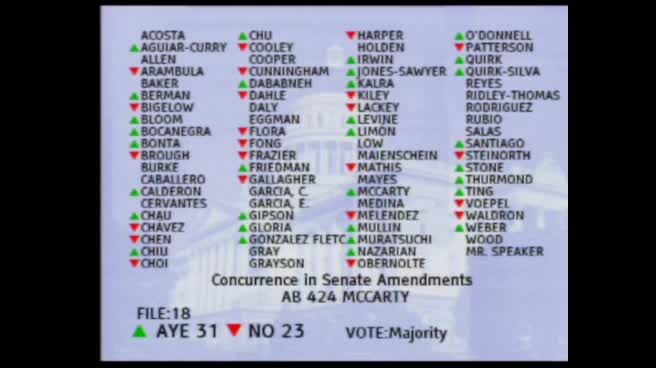 1MIN
Assembly Floor
 2MIN
Senate Floor
 3MIN
Senate Standing Committee on Elections and Constitutional Amendments
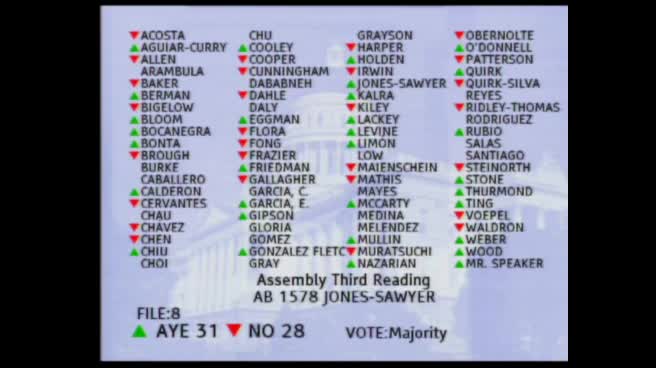 8MIN
Assembly Floor
 1MIN
Assembly Floor
 2MIN