AB 1223: Construction contract payments: Internet Web site posting.
- Session Year: 2017-2018
- House: Assembly
- Latest Version Date: 2017-10-08
Existing law imposes specified requirements on state agencies regarding payment of construction contracts. Existing law also requires the Department of General Services to publish in the California State Contracts Register notice of progress payments made to prime contractors.
This bill would require, within 10 days of making a construction contract payment, a state agency that maintains an Internet Web site to post on its Internet Web site the project for which the payment was made, the name of the construction contractor or company paid, the date the payment was made or the date the state agency transmitted instructions to the Controller or other payer to make the payment, the payment application number or other identifying information, and the amount of the payment. The bill would exempt from these provisions construction contracts valued below $25,000 and specified progress payments published in the California State Contracts Register under existing law.
Existing law imposes specified requirements on state agencies regarding payment of construction contracts. Existing law also requires the Department of General Services to publish in the California State Contracts Register notice of progress payments made to prime contractors.
This bill would require, within 10 days of making a construction contract payment, a state agency that maintains an Internet Web site to post on its Internet Web site the project for which the payment was made, the name of the construction contractor or company paid, the date the payment was made, made or the date the state agency transmitted instructions to the Controller or other payer to make the payment, the payment application number or other identifying information, and the amount of the payment. The bill would exempt from these provisions construction contracts valued below $25,000 and specified progress payments published in the California State Contracts Register under existing law.
Existing law imposes specified requirements on state agencies regarding payment of construction contracts. Existing law also requires the Department of General Services to publish in the California State Contracts Register notice of progress payments made to prime contractors.
This bill would require, within 21 10 days of making a construction contract payment, a state agency that maintains an Internet Web site to post on its Internet Web site the project for which the payment was made, the name of the construction contractor or company paid, the date the payment was made, the payment application number or other identifying information, and the amount of the payment. The bill would exempt from these provisions construction contracts valued below $25,000 and specified progress payments published in the California State Contracts Register under existing law.
Existing law imposes specified requirements on state agencies regarding payment of construction contracts. Existing law also requires the Department of General Services to publish in the California State Contracts Register notice of progress payments made to prime contractors.
This bill would require, within 21 days of making a construction contract payment, a state agency that maintains an Internet Web site to post on its Internet Web site the project for which the payment was made, the name of the construction contractor or company paid, the date the payment was made, the payment application number or other identifying information, and the amount of the payment. The bill would exempt from these provisions construction contracts valued below $25,000 from these provisions. and specified progress payments published in the California State Contracts Register under existing law.
Existing law imposes specified requirements on state and local agencies regarding payment of construction contracts.
This bill would require, within 21 days of making a construction contract payment, a state or local agency that maintains an Internet Web site to post on its Internet Web site the project for which the payment was made, the name of the construction contractor or company paid, the date the payment was made, the payment application number or other identifying information, and the amount of the payment. The bill would exempt construction contracts valued below $25,000 from these provisions.
The California Constitution requires the state to reimburse local agencies and school districts for certain costs mandated by the state. Statutory provisions establish procedures for making that reimbursement.This bill would provide that, if the Commission on State Mandates determines that the bill contains costs mandated by the state, reimbursement for those costs shall be made pursuant to the statutory provisions noted above.Existing law imposes specified requirements on state and local agencies regarding payment of construction contracts.
This bill would require, within 10 21 days of making a construction contract payment, a state or local agency that maintains an Internet Web site to post on its Internet Web site the project for which the payment was made, the name of the construction contractor or company paid, the date the payment was made, the payment application number or other identifying information, and the amount of the payment. The bill would exempt construction contracts valued below $25,000 from these provisions.
The California Constitution requires the state to reimburse local agencies and school districts for certain costs mandated by the state. Statutory provisions establish procedures for making that reimbursement.
This bill would provide that, if the Commission on State Mandates determines that the bill contains costs mandated by the state, reimbursement for those costs shall be made pursuant to the statutory provisions noted above.
Existing law imposes specified requirements on state and local agencies regarding payment of construction contracts.
This bill would require, within 10 days of making a construction contract payment, a state or local agency to post to on its Internet Web site the project for which the payment was made, the names of each name of the construction contractor paid and or company paid, the date the payment was made, the payment application number or other identifying information, and the amount of the payment.
The California Constitution requires the state to reimburse local agencies and school districts for certain costs mandated by the state. Statutory provisions establish procedures for making that reimbursement.
This bill would provide that, if the Commission on State Mandates determines that the bill contains costs mandated by the state, reimbursement for those costs shall be made pursuant to the statutory provisions noted above.
Existing law imposes specified requirements on state and local agencies regarding payment of construction contracts.
This bill would require, within 10 days of making a construction contract payment, a state or local agency to post to its Internet Web site the names of each construction contractor paid and the date and amount of the payment.
The California Constitution requires the state to reimburse local agencies and school districts for certain costs mandated by the state. Statutory provisions establish procedures for making that reimbursement.
This bill would provide that, if the Commission on State Mandates determines that the bill contains costs mandated by the state, reimbursement for those costs shall be made pursuant to the statutory provisions noted above.
(a)Within 10 days of making a construction contract payment, a state agency that maintains an Internet Web site shall post on its Internet Web site the following:
(1)The project for which the payment was made.
(2)The name of the construction contractor or company paid.
(3)The date the payment was made or the date the state agency transmitted instructions to the Controller or other payer to make the payment.
(4)The payment application number or other identifying information.
(5)The amount of the payment.
(b)This section shall not apply to a construction contract valued below twenty-five thousand dollars ($25,000).
(c)This section shall not apply to progress payments published under Section 10262.3.
(a)Within 10 days of making a construction contract payment, a state agency that maintains an Internet Web site shall post on its Internet Web site the following:
(1)The project for which the payment was made.
(2)The name of the construction contractor or company paid.
(3)The date the payment was made. made or the date the state agency transmitted instructions to the Controller or other payer to make the payment.
(4)The payment application number or other identifying information.
(5)The amount of the payment.
(b)This section shall not apply to a construction contract valued below twenty-five thousand dollars ($25,000).
(c)This section shall not apply to progress payments published under Section 10262.3.
(a)Within 21 10 days of making a construction contract payment, a state agency that maintains an Internet Web site shall post on its Internet Web site the following:
(1)The project for which the payment was made.
(2)The name of the construction contractor or company paid.
(3)The date the payment was made.
(4)The payment application number or other identifying information.
(5)The amount of the payment.
(b)This section shall not apply to a construction contract valued below twenty-five thousand dollars ($25,000).
(c)This section shall not apply to progress payments published under Section 10262.3.
(a)Within 21 days of making a construction contract payment, a state agency that maintains an Internet Web site shall post on its Internet Web site the following:
(1)The project for which the payment was made.
(2)The name of the construction contractor or company paid.
(3)The date the payment was made.
(4)The payment application number or other identifying information.
(5)The amount of the payment.
(b)This section shall not apply to a construction contract valued below twenty-five thousand dollars ($25,000).
(c)This section shall not apply to progress payments published under Section 10262.3.(a)Within 21 days of making a construction contract payment, a state agency that maintains an Internet Web site shall post on its Internet Web site the following:
(1)The project for which the payment was made.
(2)The name of the construction contractor or company paid.
(3)The date the payment was made.
(4)The payment application number or other identifying information.
(5)The amount of the payment.
(b)This section shall not apply to a construction contract valued below twenty-five thousand dollars ($25,000).
SEC. 2.Section 20104.60 is added to the Public Contract Code, immediately following Section 20104.50, to read:20104.60.(a)Within 21 days of making a construction contract payment, a local agency that maintains an Internet Web site shall post on its Internet Web site the following:(1)The project for which the payment was made.(2)The name of the construction contractor or company paid.(3)The date the payment was made.(4)The payment application number or other identifying information.(5)The amount of the payment.(b)This section shall not apply to a construction contract valued below twenty-five thousand dollars ($25,000).SEC. 3.If the Commission on State Mandates determines that this act contains costs mandated by the state, reimbursement to local agencies and school districts for those costs shall be made pursuant to Part 7 (commencing with Section 17500) of Division 4 of Title 2 of the Government Code.(a)Within 10 21 days of making a construction contract payment, a state agency that maintains an Internet Web site shall post on its Internet Web site the following:
(a)(1)The project for which the payment was made.(b)(2)The name of the construction contractor or company paid.(c)(3)The date the payment was made.(d)(4)The payment application number or other identifying information.(e)(5)The amount of the payment.(b)This section shall not apply to a construction contract valued below twenty-five thousand dollars ($25,000).SEC. 2.Section 20104.60 is added to the Public Contract Code, immediately following Section 20104.50, to read:20104.60.(a)Within 10 21 days of making a construction contract payment, a local agency that maintains an Internet Web site shall post on its Internet Web site the following:
(a)(1)The project for which the payment was made.(b)(2)The name of the construction contractor or company paid.(c)(3)The date the payment was made.(d)(4)The payment application number or other identifying information.(e)(5)The amount of the payment.(b)This section shall not apply to a construction contract valued below twenty-five thousand dollars ($25,000).SEC. 3.If the Commission on State Mandates determines that this act contains costs mandated by the state, reimbursement to local agencies and school districts for those costs shall be made pursuant to Part 7 (commencing with Section 17500) of Division 4 of Title 2 of the Government Code.
If the Commission on State Mandates determines that this act contains costs mandated by the state, reimbursement to local agencies and school districts for those costs shall be made pursuant to Part 7 (commencing with Section 17500) of Division 4 of Title 2 of the Government Code.
Within 10 days of making a construction contract payment, a state agency shall post to its Internet Web site the names of each construction contractor paid and the date and amount of the payment.
SEC. 2.Section 20104.60 is added to the Public Contract Code, immediately following Section 20104.50, to read:20104.60.Within 10 days of making a construction contract payment, a local agency shall post to its Internet Web site the names of each construction contractor paid and the date and amount of the payment.
SEC. 3.If the Commission on State Mandates determines that this act contains costs mandated by the state, reimbursement to local agencies and school districts for those costs shall be made pursuant to Part 7 (commencing with Section 17500) of Division 4 of Title 2 of the Government Code.
|
Date
|
Status
|
|---|---|
| Oct 8, 2017 | Chaptered by Secretary of State - Chapter 585, Statutes of 2017. |
| Oct 8, 2017 | Approved by the Governor. |
| Sep 21, 2017 | Enrolled and presented to the Governor at 3:30 p.m. |
| Sep 13, 2017 | Assembly Rule 77(a) suspended. |
| Sep 12, 2017 | In Assembly. Concurrence in Senate amendments pending. May be considered on or after September 14 pursuant to Assembly Rule 77. |
| Sep 11, 2017 | Read third time. Passed. Ordered to the Assembly. |
| Sep 6, 2017 | Read second time. Ordered to third reading. |
| Sep 5, 2017 | Read third time and amended. Ordered to second reading. |
| Aug 22, 2017 | Read second time. Ordered to third reading. |
| Aug 21, 2017 | From committee: Be ordered to second reading pursuant to Senate Rule 28.8. |
| Jul 11, 2017 | From committee: Do pass and re-refer to Com. on APPR. (Ayes 13. Noes 0.) (July 11). Re-referred to Com. on APPR. |
| Jul 5, 2017 | From committee chair, with author's amendments: Amend, and re-refer to committee. Read second time, amended, and re-referred to Com. on G.O. |
| Jun 20, 2017 | From committee chair, with author's amendments: Amend, and re-refer to committee. Read second time, amended, and re-referred to Com. on G.O. |
| Jun 8, 2017 | Referred to Com. on G.O. |
| May 30, 2017 | In Senate. Read first time. To Com. on RLS. for assignment. |
| May 30, 2017 | Read third time. Passed. Ordered to the Senate. (Ayes 72. Noes 1. Page 1794.) |
| May 18, 2017 | Read second time. Ordered to third reading. |
| May 17, 2017 | From committee: Do pass. (Ayes 17. Noes 0.) (May 17). |
| May 4, 2017 | Re-referred to Com. on APPR. |
| May 3, 2017 | From committee chair, with author's amendments: Amend, and re-refer to Com. on APPR. Read second time and amended. |
| Apr 27, 2017 | From committee: Do pass and re-refer to Com. on APPR. (Ayes 7. Noes 0.) (April 26). Re-referred to Com. on APPR. |
| Apr 19, 2017 | Re-referred to Com. on L. GOV. |
| Apr 18, 2017 | Read second time and amended. |
| Apr 17, 2017 | From committee: Amend, and do pass as amended and re-refer to Com. on L. GOV. (Ayes 6. Noes 1.) (April 5). |
| Mar 28, 2017 | Re-referred to Com. on A. & A.R. |
| Mar 27, 2017 | From committee chair, with author's amendments: Amend, and re-refer to Com. on A. & A.R. Read second time and amended. |
| Mar 9, 2017 | Referred to Coms. on A. & A.R. and L. GOV. |
| Feb 19, 2017 | From printer. May be heard in committee March 21. |
| Feb 17, 2017 | Read first time. To print. |
|
Date
|
Description
|
Location
|
Votes
|
|
|---|---|---|---|---|
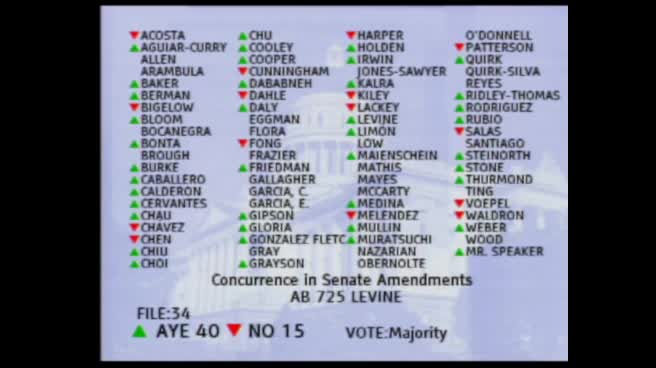
| Sep 13, 2017 | AB 1223 CABALLERO Concurrence in Senate Amendments | Assembly Floor |
Passed |
|
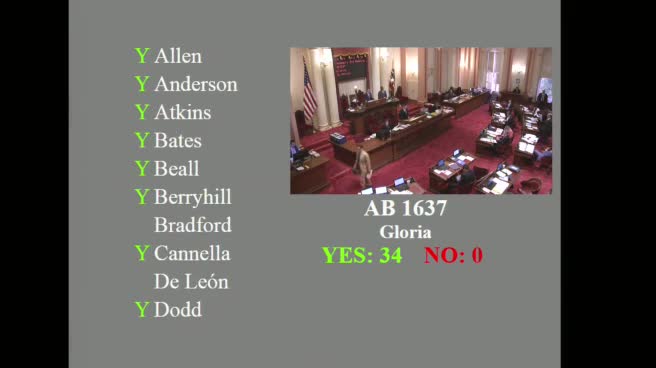
| Sep 11, 2017 | Assembly 3rd Reading AB1223 Caballero By Cannella | Senate Floor |
Passed |
|
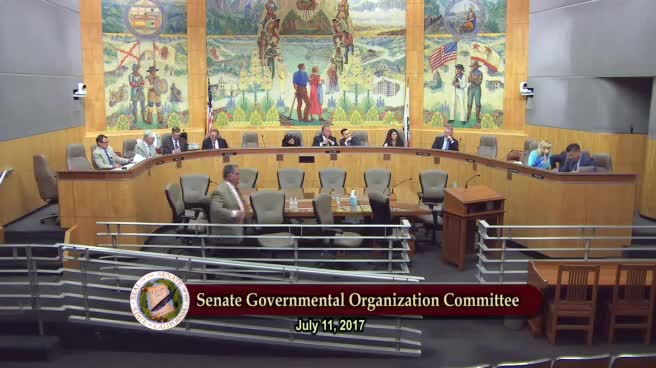
| Jul 11, 2017 | Do pass, but first be re-referred to the Committee on [Appropriations] | Senate Standing Committee on Governmental Organization |
Passed |
|
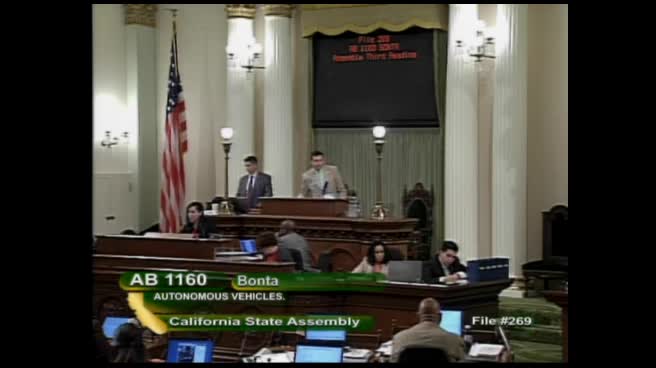
| May 30, 2017 | AB 1223 CABALLERO Assembly Third Reading | Assembly Floor |
Passed |
|
| May 17, 2017 | Do pass. | Assembly Standing Committee on Appropriations |
Passed |
|
| Apr 26, 2017 | Do pass and be re-referred to the Committee on [Appropriations] | Assembly Standing Committee on Local Government |
Passed |
|
| Apr 5, 2017 | Do pass as amended and be re-referred to the Committee on [Local Government] | Assembly Standing Committee on Accountability and Administrative Review |
Passed |
This list shows positions taken on this bill by organizations on the date displayed, which is linked to the original source.
Positions by individuals are not included.
CONCURRENCE IN SENATE AMENDMENTS
CSA1 Bill Id:AB 1223
Author:(Caballero)
As Amended Ver:September 5, 2017
Majority vote
ASSEMBLY: | 72-1 | (May 30, 2017) | SENATE: | 38-0 | (September 11, 2017) |
Original Committee Reference: A. & A.R.
SUMMARY: Requires state agencies that maintain an Internet Web site to post the following information about construction contract payments valued at $25,000 or more on their Internet Web sites within 10 days of making the payment:
- The project for which the payment was made;
- The name of the construction contractor or company paid;
- The date the payment was made or the state agency instructed the State Controller or other payer to make the payment;
- The payment application number or other identifying information; and,
- The amount of the payment.
The Senate amendments:
- Exempt progress payments that are already published in the California State Contracts Register from the provisions of this bill.
- Reinstate a prior provision requiring the information to be posted within 10 days.
- Make minor technical, non-substantive changes.
FISCAL EFFECT: According to the Senate Appropriations Committee, pursuant to Senate Rule 28.8, negligible state costs.
Analysis Prepared by: Cassie Royce / A. & A.R. / (916) 319-3600 FN: 0001897
Office of Senate Floor Analyses (916) 651-1520 Fax: (916) 327-4478 | AB |
THIRD READING
Bill No: AB 1223
:
SENATE GOVERNMENTAL ORG. COMMITTEE: 13-0, 7/11/17
AYES: Dodd, Berryhill, Bradford, Cannella, Gaines, Galgiani, Glazer, Hill, Hueso, Lara, Mendoza, Portantino, Vidak
SENATE APPROPRIATIONS COMMITTEE: Senate Rule 28.8
ASSEMBLY FLOOR: 72-1, 5/30/17 - See last page for vote
SOURCE: American Subcontractors Association California, Inc.
DIGEST: This bill requires, within 10 days of making a construction contract payment, a state agency that maintains an Internet Web site to post on its Internet Web site the project for which the payment was made, the name of the construction contractor or company paid, the date the payment was made, the payment application number or other identifying information, and the amount paid.
Senate Floor Amendments of 9/5/17 provide the option for a state agency to post the date the state agency transmitted instructions to the State Controller or other payer to make the payment.
ANALYSIS:
Existing law:
- Provides for the prompt payment of contractors who perform undisputed work for public agencies.
- Requires a public entity to pay a general contractor within 30 days after receipt of an undisputed payment invoice.
- Directs a general contractor to pay its subcontractors within seven days after receipt of a progress payment.
- Establishes an arbitration-based claims resolution process for payment disputes.
This bill:
- Requires, within 10 days of making a construction contract payment, a state agency that maintains an Internet Web site to post on its Internet Web site the following:
- The project for which the payment was made.
- The name of the construction contractor or company paid.
- The date the payment was made or the date the state agency transmitted instructions to the Controller or other payer to make the payment.
- The payment application number of other identifying information.
- Exempts construction contracts valued below $25,000.
- Exempts progress payments that are already published by the Department of General Services in the California State Contracts Register from the provisions of this bill.
Background
Current process. Most public works projects require a public agency to provide progress payments to its general contractor. This is typically based on stages of completion of the project. Subsequently, these progress payments result in required payments to subcontractors who have performed labor or provided materials for the job.
Current law generally requires a general contractor to pay any subcontractor within seven days of receipt of a progress payment. When a general contractor fails to pay the subcontractor on time, current law prescribes various remedies available to the subcontractor to collect payment. For example, provisions in the Business and Professions Code and the Public Contract Code specify that failure to pay a subcontractor in a timely manner subjects the general contractor to a penalty, payable to the subcontractor, of 2% of the amount due per month for every month that payment is not made.
In addition, failure of a general contractor to pay subcontractors on time can be cause for disciplinary action by the Contractors State License Board. The Civil Code also outlines a number of other legal remedies that a subcontractor can rely on when a general contractor fails to make timely payments.
It should be noted that the California Department of Transportation currently posts construction contract payment information on its Web site. This bill requires all state agencies that maintain an Internet Web site to post similar that information.
Comments
Purpose of the bill. According to the author’s office, “current law provides that general contractors must make payment to subcontractors within seven days of receiving payment from the public entity owner. However, subcontractors are not always aware that their general contractors have been paid by public entities for work they performed. This bill will enable construction subcontractors to verify that public project owners have paid their general contractors for work performed by the subcontractors. This will streamline the payments to subcontractors who, under existing law, are entitled to receive their payment within seven days of the general contractors receiving their pay.”
Related/Prior Legislation
AB 547 (Chavez, 2017) requires state agencies to pay properly submitted, undisputed invoices from a disabled veteran business enterprise that is also a small business within 30 days of receiving the invoice. (Pending on the Senate Floor)
SB 293 (Padilla, Chapter 700, Statutes of 2011) established a four-year limit on retention in public works project, with specified exceptions, and modified provisions regarding payments to subcontractors and provisions regarding subcontractor claims for nonpayment.
FISCAL EFFECT: Appropriation: Fiscal Com.: Local:
American Subcontractors Association California, Inc. (source)
Air Conditioning Sheet Metal Association
Air-Conditioning & Refrigeration Contractors Association
American Fire Sprinkler Association
California Legislative Conference of the Plumbing, Heating, and Piping Industry
California Professional Association of Specialty Contractors
Construction Preliens & Paperwork
Finishing Contractors Association of Southern California
Independent Roofing Contractors of California, Inc.
National Electrical Contractors Association
Northern California Allied Trades
Pacific Southwest Structures, Inc.
Painting & Decorating Contractors of California Inc.
Plumbing-Heating-Cooling Contractors Association of California
Roofing Contractors Association of California
Rua & Son Mechanical
Tri-Co Floors, Inc.
Wall and Ceiling Alliance
Western Electrical Contractors Association
Western Fire Protection, Inc.
Various individuals
None received
ARGUMENTS IN SUPPORT: Supporters of the bill argue that this bill will assist specialty subcontractors to obtain progress and final payments on public works construction by tracking when a general contractor is paid by the State entity who owns the project.
In addition, supporters argue that this bill “will enable construction subcontractors to verify that public project owners have paid their general contractors for work performed by the subcontractor. It is very often difficult for subcontractors to enforce their right to be timely paid because they cannot verify when the general contractor has been paid; AB 1223 enables them to timely request their payment. Then, under existing law, they are entitled to receive their payment within seven days of the general contractor getting paid.”
ASSEMBLY FLOOR: 72-1, 5/30/17
AYES: Acosta, Aguiar-Curry, Arambula, Baker, Berman, Bigelow, Bloom, Bocanegra, Bonta, Brough, Burke, Caballero, Calderon, Cervantes, Chávez, Chiu, Chu, Cooley, Cooper, Cunningham, Dababneh, Daly, Flora, Fong, Frazier, Friedman, Gallagher, Cristina Garcia, Eduardo Garcia, Gipson, Gloria, Gomez, Gonzalez Fletcher, Gray, Grayson, Holden, Irwin, Jones-Sawyer, Kalra, Kiley, Lackey, Levine, Limón, Low, Maienschein, Mathis, Mayes, McCarty, Medina, Melendez, Mullin, Muratsuchi, Nazarian, Obernolte, O'Donnell, Patterson, Quirk, Quirk-Silva, Reyes, Ridley-Thomas, Rodriguez, Rubio, Salas, Santiago, Steinorth, Mark Stone, Thurmond, Ting, Waldron, Weber, Wood, Rendon
NOES: Harper
NO VOTE RECORDED: Travis Allen, Chau, Chen, Choi, Dahle, Eggman, Voepel
9/6/17 15:58:13
**** END ****
Office of Senate Floor Analyses (916) 651-1520 Fax: (916) 327-4478 | AB |
THIRD READING
Bill No: AB 1223
:
SENATE GOVERNMENTAL ORG. COMMITTEE: 13-0, 7/11/17
AYES: Dodd, Berryhill, Bradford, Cannella, Gaines, Galgiani, Glazer, Hill, Hueso, Lara, Mendoza, Portantino, Vidak
SENATE APPROPRIATIONS COMMITTEE: Senate Rule 28.8
ASSEMBLY FLOOR: 72-1, 5/30/17 - See last page for vote
SOURCE: American Subcontractors Association California, Inc.
DIGEST: This bill requires, within 10 days of making a construction contract payment, a state agency that maintains an Internet Web site to post on its Internet Web site the project for which the payment was made, the name of the construction contractor or company paid, the date the payment was made, the payment application number or other identifying information, and the amount paid.
ANALYSIS:
Existing law:
- Provides for the prompt payment of contractors who perform undisputed work for public agencies.
- Requires a public entity to pay a general contractor within 30 days after receipt of an undisputed payment invoice.
- Directs a general contractor to pay its subcontractors within seven days after receipt of a progress payment.
- Establishes an arbitration-based claims resolution process for payment disputes.
This bill:
- Requires, within 10 days of making a construction contract payment, a state agency that maintains an Internet Web site to post on its Internet Web site the following:
- The project for which the payment was made.
- The name of the construction contractor or company paid.
- The date the payment was made.
- The payment application number of other identifying information.
- Exempts construction contracts valued below $25,000.
- Exempts progress payments that are already published by the Department of General Services in the California State Contracts Register from the provisions of this bill.
Background
Current process. Most public works projects require a public agency to provide progress payments to its general contractor. This is typically based on stages of completion of the project. Subsequently, these progress payments result in required payments to subcontractors who have performed labor or provided materials for the job.
Current law generally requires a general contractor to pay any subcontractor within seven days of receipt of a progress payment. When a general contractor fails to pay the subcontractor on time, current law prescribes various remedies available to the subcontractor to collect payment. For example, provisions in the Business and Professions Code and the Public Contract Code specify that failure to pay a subcontractor in a timely manner subjects the general contractor to a penalty, payable to the subcontractor, of 2% of the amount due per month for every month that payment is not made.
In addition, failure of a general contractor to pay subcontractors on time can be cause for disciplinary action by the Contractors State License Board. The Civil Code also outlines a number of other legal remedies that a subcontractor can rely on when a general contractor fails to make timely payments.
It should be noted that the California Department of Transportation currently posts construction contract payment information on its Web site. This bill requires all state agencies that maintain an Internet Web site to post similar that information.
Comments
Purpose of the bill. According to the author’s office, “current law provides that general contractors must make payment to subcontractors within seven days of receiving payment from the public entity owner. However, subcontractors are not always aware that their general contractors have been paid by public entities for work they performed. This bill will enable construction subcontractors to verify that public project owners have paid their general contractors for work performed by the subcontractors. This will streamline the payments to subcontractors who, under existing law, are entitled to receive their payment within seven days of the general contractors receiving their pay.”
Related/Prior Legislation
AB 547 (Chavez, 2017) requires state agencies to pay properly submitted, undisputed invoices from a disabled veteran business enterprise that is also a small business within 30 days for receiving the invoice. (Pending in Senate Appropriations Committee)
SB 293 (Padilla, Chapter 700, Statutes of 2011) established a four-year limit on retention in public works project, with specified exceptions, and modified provisions regarding payments to subcontractors and provisions regarding subcontractor claims for nonpayment.
FISCAL EFFECT: Appropriation: Fiscal Com.: Local:
American Subcontractors Association California, Inc. (source)
Air Conditioning Sheet Metal Association
Air-Conditioning & Refrigeration Contractors Association
American Fire Sprinkler Association
California Legislative Conference of the Plumbing, Heating, and Piping Industry
California Professional Association of Specialty Contractors
Construction Preliens & Paperwork
Finishing Contractors Association of Southern California
Independent Roofing Contractors of California, Inc.
National Electrical Contractors Association
Northern California Allied Trades
Pacific Southwest Structures, Inc.
Painting & Decorating Contractors of California Inc.
Plumbing-Heating-Cooling Contractors Association of California
Roofing Contractors Association of California
Rua & Son Mechanical
Tri-Co Floors, Inc.
Wall and Ceiling Alliance
Western Electrical Contractors Association
Western Fire Protection, Inc.
Various individuals
OPPOSITION: (Verified 8/21/17)
None received
ARGUMENTS IN SUPPORT: Supporters of the bill argue that this bill will assist specialty subcontractors to obtain progress and final payments on public works construction by tracking when a general contractor is paid by the State entity who owns the project.
In addition, supporters argue that this bill “will enable construction subcontractors to verify that public project owners have paid their general contractors for work performed by the subcontractor. It is very often difficult for subcontractors to enforce their right to be timely paid because they cannot verify when the general contractor has been paid; AB 1223 enables them to timely request their payment. Then, under existing law, they are entitled to receive their payment within seven days of the general contractor getting paid.”
ASSEMBLY FLOOR: 72-1, 5/30/17
AYES: Acosta, Aguiar-Curry, Arambula, Baker, Berman, Bigelow, Bloom, Bocanegra, Bonta, Brough, Burke, Caballero, Calderon, Cervantes, Chávez, Chiu, Chu, Cooley, Cooper, Cunningham, Dababneh, Daly, Flora, Fong, Frazier, Friedman, Gallagher, Cristina Garcia, Eduardo Garcia, Gipson, Gloria, Gomez, Gonzalez Fletcher, Gray, Grayson, Holden, Irwin, Jones-Sawyer, Kalra, Kiley, Lackey, Levine, Limón, Low, Maienschein, Mathis, Mayes, McCarty, Medina, Melendez, Mullin, Muratsuchi, Nazarian, Obernolte, O'Donnell, Patterson, Quirk, Quirk-Silva, Reyes, Ridley-Thomas, Rodriguez, Rubio, Salas, Santiago, Steinorth, Mark Stone, Thurmond, Ting, Waldron, Weber, Wood, Rendon
NOES: Harper
NO VOTE RECORDED: Travis Allen, Chau, Chen, Choi, Dahle, Eggman, Voepel
8/22/17 16:14:25
**** END ****
SENATE COMMITTEE ON GOVERNMENTAL ORGANIZATION
Senator Bill Dodd
Chair
2017 - 2018 Regular
Bill No: 1223 Hearing Date: 7/11/2017
Author: | |||
Version: | 7/5/2017 Amended | ||
Urgency: | No | Fiscal: | Yes |
Consultant: | Felipe Lopez | ||
SUBJECT: Construction contract payments: Internet Web site posting
DIGEST: This bill requires, within 10 days of making a construction contract payment, a state agency that maintains an Internet Web site to post on its Internet Web site the project for which the payment was made, the name of the construction contractor or company paid, the date the payment was made, the payment application number or other identifying information, and the amount paid.
ANALYSIS:
Existing law:
- Provides for the prompt payment of contractors who perform undisputed work for public agencies.
- Requires a public entity to pay a general contractor within 30 days after receipt of an undisputed payment invoice.
- Directs a general contractor to pay its subcontractors within seven days after receipt of a progress payment.
- Establishes an arbitration-based claims resolution process for payment disputes.
This bill:
- Requires, within 10 days of making a construction contract payment, a state agency that maintains an Internet Web site to post on its Internet Web site the following:
- The project for which the payment was made.
- The name of the construction contractor or company paid.
- The date the payment was made.
- The payment application number of other identifying information.
- Exempts construction contracts valued below $25,000.
- Exempts progress payments that are already publish by the Department of General Services in the California State Contracts Register from the provisions of this bill.
Background
Purpose of the bill. According to the author’s office, “current law provides that general contractors must make payment to subcontractors within seven days of receiving payment from the public entity owner. However, subcontractors are not always aware that their general contractors have been paid by public entities for work they performed. This bill will enable construction subcontractors to verify that public project owners have paid their general contractors for work performed by the subcontractors. This will streamline the payments to subcontractors who, under existing law, are entitled to receive their payment within seven days of the general contractors receiving their pay.”
Current process. Most public works projects require a public agency to provide progress payments to its general contractor. This is typically based on stages of completion of the project. Subsequently, these progress payments result in required payments to subcontractors who have performed labor or provided materials for the job.
Current law generally requires a general contractor to pay any subcontractor within seven days of receipt of a progress payment. When a general contractor fails to pay the subcontractor on time, current law prescribes various remedies available to the subcontractor to collect payment. For example, provisions in the Business and Professions Code and the Public Contract Code specify that failure to pay a subcontractor in a timely manner subjects the general contractor to a penalty, payable to the subcontractor, of 2% of the amount due per month for every month that payment is not made.
In addition, failure of a general contractor to pay subcontractors on time can be cause for disciplinary action by the Contractors' State License Board. The Civil Code also outlines a number of other legal remedies that a subcontractor can rely on when a general contractor fails to make timely payments.
It should be noted that the California Department of Transportation currently posts construction contract payment information on its Web site. This bill requires all state agencies that maintain an Internet Web site to post similar that information.
Prior/Related Legislation
AB 547 (Chavez, 2017) would require state agencies to pay properly submitted, undisputed invoices from a disabled veteran business enterprise that is also a small business within 30 days for receiving the invoice.
SB 293 (Padilla, Chapter 700, Statutes of 2011) established a four-year limit on retention in public works project, with specified exceptions, and modified provisions regarding payments to subcontractors and provisions regarding subcontractor claims for nonpayment.
FISCAL EFFECT: Appropriation: Fiscal Com.: Local:
SUPPORT:
American Subcontractors Association California, Inc. (Source)
Air Conditioning Sheet Metal Association
Air-Conditioning & Refrigeration Contractors Association
American Fire Sprinkler Association
California Legislative Conference of the Plumbing, Heating, and Piping Industry
California Professional Association of Specialty Contractors
Construction Preliens & Paperwork
Finishing Contractors Association of Southern California
Independent Roofing Contractors of California, Inc.
National Electrical Contractors Association
Northern California Allied Trades
Pacific Southwest Structures, Inc.
Painting & Decorating Contractors of California Inc.
Plumbing-Heating-Cooling Contractors Association of California
Roofing Contractors Association of California
Rua & Son Mechanical
Tri-Co Floors, Inc.
Wall and Ceiling Alliance
Western Electrical Contractors Association
Western Fire Protection, Inc.
Various Individuals
OPPOSITION:
None received
ARGUMENTS IN SUPPORT: Supporters of the bill argue that this bill will assist specialty subcontractors to obtain progress and final payments on public works construction by tracking when a general contractor is paid by the State entity who owns the project.
In addition, supporters argue that this bill “will enable construction subcontractors to verify that public project owners have paid their general contractors for work performed by the subcontractor. It is very often difficult for subcontractors to enforce their right to be timely paid because they cannot verify when the general contractor has been paid; AB 1223 enables them to timely request their payment. Then, under existing law, they are entitled to receive their payment within seven days of the general contractor getting paid.”
ASSEMBLY THIRD READING
ATR Bill Id:AB 1223
Author:(Caballero)
As Amended Ver:May 3, 2017
Majority vote
Committee | Votes | Ayes | Noes |
Accountability | 6-1 | Eggman, Burke, Flora, Frazier, Medina, Quirk-Silva | Lackey |
Local Government | 7-0 | Aguiar-Curry, Bloom, Caballero, Gonzalez Fletcher, Grayson, Lackey, Ridley-Thomas | |
Appropriations | 17-0 | Gonzalez Fletcher, Bigelow, Bloom, Levine, Bonta, Brough, Calderon, Quirk, Eggman, Fong, Thurmond, Gallagher, Eduardo Garcia, Gray, Muratsuchi, Obernolte, Reyes |
SUMMARY: Requires state agencies that maintain an Internet Web site to post the following information about construction contract payments valued at $25,000 or more on their websites within 21 days of making the payment:
- The project for which the payment was made;
- The name of the construction contractor or company paid;
- The date the payment was made;
- The payment application number or other identifying information; and,
- The amount of the payment.
EXISTING LAW:
- Provides for the prompt payment of contractors who perform undisputed work for public agencies.
- Requires a public entity to pay a general contractor (GC) within 30 days after receipt of an undisputed payment invoice.
- Directs a general contractor to pay its subcontractors within seven days after receipt of a progress payment.
- Establishes an arbitration-based claims resolution process for payment disputes.
FISCAL EFFECT: According to the Assembly Appropriations Committee:
- Minor ongoing costs of $13,500 (various funds) per year for increased workload to collect construction contract information, and post it on the website. Currently, the Department of General Services (DGS) staff spends 20 hours per month keying construction contracts payments into the Cal eProcure. This bill will require entering the same information again into a DGS-hosted Web site.
- Unknown, one-time costs to DGS' Enterprise Technology Services Division to build a new portal on its Web site to host the construction payment information.
COMMENTS: Most public works projects involve a public agency paying the GC in progress payments that are usually based on stages of completion. Those payments, in turn, result in required payments to the subcontractors who have performed labor or provided materials to the job. According to the author, this bill is intended to enable construction subcontractors to verify that state agencies have paid their GCs. The sponsor, American Subcontractors Association California, Inc., states that the posting of this information will provide needed verification to allow subcontractors to enforce their right to be paid timely.
Current law generally requires a GC to pay any subcontractor within seven days of receipt of a progress payment. When a GC fails to pay the subcontractor on time, current law prescribes various remedies available to the subcontractor to collect payment. For example, provisions in the Business and Professions Code and the Public Contract Code specify that failure to pay a subcontractor in a timely manner subjects the GC to a penalty, payable to the subcontractor, of 2% of the amount due per month for every month that payment is not made and can be cause for disciplinary action by the Contractors' State License Board. The Civil Code also identifies a number of other legal remedies that a subcontractor can rely on when the GC fails to pay.
The California Department of Transportation currently posts construction contract payment information on its website. This bill would require all state agencies that maintain Web sites to post similar construction contractor payment information.
Analysis Prepared by: Cassie Royce / A. & A.R. / (916) 319-3600 FN: 0000461
Date of Hearing: May 17, 2017
ASSEMBLY COMMITTEE ON APPROPRIATIONS
Lorena Gonzalez Fletcher, Chair
ABPCA Bill Id:AB 1223
Author:(Caballero) – As Amended Ver:May 3, 2017
Policy Committee: | Accountability and Administrative Review | Vote: | 6 - 1 |
Local Government | 7 - 0 | ||
|
|
Urgency: No State Mandated Local Program: No Reimbursable: No
SUMMARY: This bill requires a state agency that maintains an Internet Web site, to post to their Web site specified payment information for construction contracts valued at $25,000 or more within 21 days of making those payments. The information includes:
- The project for which the payment was made;
- The name of the construction contractor or company paid;
- The date the payment was made and the amount;
- The payment application number or other identifying information.
FISCAL EFFECT:
- Minor ongoing costs of $13,500 (various funds) per year for increased workload to collect construction contract information, and post it on the website. Currently, DGS staff spends 20 hours per month keying construction contracts payments into the Cal eProcure. This bill will require entering the same information again into a DGS-hosted web site.
- Unknown, one-time costs to DGS’ Enterprise Technology Services Division to build a new portal on its web site to host the construction payment information.
COMMENTS:
- Purpose. This bill is seeking to address the timely payment of subcontractors by making contractor payment information available on state agency Web sites. Subcontractors assert that it is often difficult to enforce their right to be timely paid because they cannot verify when the general contractor has been paid.
According to the author, "This bill will enable construction subcontractors to verify that public project owners have paid their general contractors for work performed by the subcontractors. This will streamline the payments to subcontractors…It is my due diligence to ensure our California workers are paid in a timely manner, regardless of job sector. I want to promote governmental transparency and accountability, by making such payment information easily accessible to the public."
- Background. Most public works projects require a public agency to provide progress payments to its general contractor, which is typically based on stages of completion of the project. Progress payments, in turn, result in required payments to subcontractors who have performed labor or provided materials for the job.
Existing law generally requires a general contractor to pay any subcontractor within seven days of receipt of a progress payment. When a general contractor fails to pay the subcontractor on time, current law prescribes various remedies available to the subcontractor to collect payment. For example, provisions in the Business and Professions Code and the Public Contract Code specify that failure to pay a subcontractor in a timely manner subjects the general contractor to a penalty, payable to the subcontractor, of 2% of the amount due per month for every month that payment is not made. In addition, failure of a general contractor to pay subcontractors on time can be cause for disciplinary action by the Contractors' State License Board. The Civil Code also identifies a number of other legal remedies that a subcontractor can rely on when a general contractor fails to make timely payments.
The California Department of Transportation currently posts construction contract payment information on its Web site. This bill requires all state agencies to post this information.
Analysis Prepared by: Jennifer Swenson / APPR. / (916) 319-2081
Date of Hearing: April 26, 2017
ASSEMBLY COMMITTEE ON LOCAL GOVERNMENT
Cecilia Aguiar-Curry, Chair
ABPCA Bill Id:AB 1223 (
Author:Caballero) – As Amended Ver:April 18, 2017
SUBJECT: Construction contract payments: Internet Web site posting.
SUMMARY: Requires state and local agencies to post specified information about construction contract payments on their websites within 21 days of making a payment. Specifically, this bill:
- Requires state and local agencies to post the following information on their websites, if they maintain one, within 21 days of making a construction contract payment for contracts valued at $25,000 or more:
- The project for which the payment was made;
- The name of the construction contractor or company paid;
- The date the payment was made;
- The payment application number or other identifying information; and,
- The amount of the payment.
- Provides that, if the Commission on State Mandates determines that this bill contains costs mandated by the state, reimbursement to local agencies and school districts for those costs shall be made pursuant to current law governing state mandated local costs.
EXISTING LAW:
- Provides for the prompt payment of contractors who perform undisputed work for public agencies.
- Requires a public entity to pay a general contractor within 30 days after receipt of an undisputed payment invoice.
- Directs a general contractor to pay its subcontractors within seven days after receipt of a progress payment.
- Establishes an arbitration-based claims resolution process for payment disputes.
FISCAL EFFECT: This bill is keyed fiscal and contains a state-mandated local program.
COMMENTS:
- Bill Summary. This bill requires state and local agencies to post specified information on their websites, if they maintain one, within 21 days of making a construction contract payment for contracts valued at $25,000 or more. The information that must be posted includes:
- The project for which the payment was made;
- The name of the construction contractor or company paid;
- The date the payment was made;
- The payment application number or other identifying information; and,
- The amount of the payment.
This bill is sponsored by the American Subcontractors Association California, Inc.
- Author's Statement. According to the author, "This bill will enable construction subcontractors to verify that public project owners have paid their general contractors for work performed by the subcontractors. This will streamline the payments to subcontractors…It is my due diligence to ensure our California workers are paid in a timely manner, regardless of job sector. I want to promote governmental transparency and accountability, by making such payment information easily accessible to the public."
- Background. Most public works projects require a public agency to provide progress payments to its general contractor, which is typically based on stages of completion of the project. Progress payments, in turn, result in required payments to subcontractors who have performed labor or provided materials for the job.
Current law generally requires a general contractor to pay any subcontractor within seven days of receipt of a progress payment. When a general contractor fails to pay the subcontractor on time, current law prescribes various remedies available to the subcontractor to collect payment. For example, provisions in the Business and Professions Code and the Public Contract Code specify that failure to pay a subcontractor in a timely manner subjects the general contractor to a penalty, payable to the subcontractor, of 2% of the amount due per month for every month that payment is not made. In addition, failure of a general contractor to pay subcontractors on time can be cause for disciplinary action by the Contractors' State License Board. The Civil Code also identifies a number of other legal remedies that a subcontractor can rely on when a general contractor fails to make timely payments.
The author's office points to a recent project at Southwestern College in San Diego. According to the author's office, "The General Contractor for the project was paid for November and December billings ($1,700,000 combined) for Pacific Southwest Structures, Inc. (PSSI) work on February 13, 2017. By law the General Contractor should have paid PSSI no later than February 20, 2017. (However, the) (s)ubcontractor (did not receive) payment until March 6, 2017. Current law allows for the collection of interest for delayed payments when General Contractors have been paid and do not pay the subcontractor within the specified time. By the letter of the law, at 24% interest per annum, that works out to over $16,000.00 for the project completed by PSSI. It should be noted that all paperwork for this construction project was submitted in a timely manner and in no way delayed the General Contractor from paying the Subcontractor."
According to the sponsor, the California Department of Transportation and the City of San Diego currently post construction contract payment information on their respective websites.
- Policy Considerations. The Committee may wish to consider the following:
- Accountability Shift. This bill imposes a new requirement on state and local agencies for a problem they have not created – general contractors not paying subcontractors on time. The Committee may wish to consider if this is an appropriate shift of accountability from general contractors to public agencies.
- Will Problem Be Remedied? It is not clear that general contractors will be motivated by the provisions of this bill to make timely payments to their subcontractors. The Committee may wish to consider if the provisions of this bill will solve the stated problem.
- Arguments in Support. The American Subcontractors Association California, Inc., sponsor of this bill, state, "It is very often difficult for subcontractors to enforce their right to be timely paid because they cannot verify when the general contractor has been paid; AB 1223 enables them to timely request their payment…(Other remedies) can incur legal costs, further delay payments, spoil the relationship with the GC, and put the subcontractors farther behind the money curve when they need the cash now to pay employee wages, taxes, union trust funds, insurance, and to purchase materials."
- Arguments in Opposition. The Association of California Healthcare Districts, Association of California School Administrators, California School Boards Association, California Special Districts Association, California State Association of Counties, League of California Cities, and Urban Counties of California, in opposition, write, "AB 1223…would require hundreds of postings over the course of several months or years in some instances depending on the size and scope of the project. Unfortunately, AB 1223 confuses the relationship between a public agency and their contractor’s subcontractor while draining resources from those agencies. This measure puts a local agency on the hook despite that they have met their contractual obligation and duty to pay with no benefit to that agency."
- Double-Referral. This bill was heard in the Assembly Accountability and Administrative Review Committee, where it passed on April 5, 2017, with a 6-1 vote.
REGISTERED SUPPORT / OPPOSITION:
Support
American Subcontractors Association California, Inc. [SPONSOR]
Air Conditioning Sheet Metal Association
Air-conditioning & Refrigeration Contractors Association
American Fire Sprinkler Association
California Legislative Conference of the Plumbing, Heating and Piping Industry
Finishing Contractors Association of Southern California
Independent Roofing Contractors of California, Inc.
National Electrical Contractors Association
Northern California Allied Trades
Plumbing-Heating-Cooling Contractors Association of California
Union Roofing Contractors Association
Wall and Ceiling Alliance
Western Electrical Contractors Association
Seven individual supporters
Opposition
Association of California Healthcare Districts
Association of California School Administrators
California School Boards Association
California Special Districts Association
California State Association of Counties
League of California Cities
Urban Counties of California
Analysis Prepared by: Angela Mapp / L. GOV. / (916) 319-3958
Date of Hearing: April 5, 2017
ASSEMBLY COMMITTEE ON ACCOUNTABILITY AND ADMINISTRATIVE REVIEW
Susan Talamantes Eggman, Chair
ABPCA Bill Id:AB 1223 (
Author:Caballero) – As Amended Ver:March 27, 2017
SUBJECT: Construction contract payments: Internet Web site posting
SUMMARY: Requires state and local agencies to post the following information about construction contract payments on their websites within 10 days of making the payment:
- The project for which the payment was made;
- The name of the construction contractor or company paid;
- The date the payment was made;
- The payment application number or other identifying information; and,
- The amount of the payment.
EXISTING LAW:
- Provides for the prompt payment of contractors who perform undisputed work for public agencies.
- Requires a public entity to pay a general contractor (GC) within 30 days after receipt of an undisputed payment invoice.
- Directs a general contractor to pay its subcontractors within seven days after receipt of a progress payment.
- Establishes an arbitration-based claims resolution process for payment disputes.
FISCAL EFFECT: Unknown
COMMENTS: Most public works projects involve a public agency paying the GC in progress payments that are usually based on stages of completion. Those payments, in turn, result in required payments to the subcontractors who have performed labor or provided materials to the job. According to the author, this bill is intended to enable construction subcontractors to verify that public project owners have paid their GCs. The sponsor, American Subcontractors Association California, Inc., states that the posting of this information will provide needed verification to allow subcontractors to enforce their right to be paid timely.
Current law generally requires a GC to pay any subcontractor within seven days of receipt of a progress payment. When a GC fails to pay the subcontractor on time, current law prescribes various remedies available to the subcontractor to collect payment. For example, provisions in the Business and Professions Code and the Public Contract Code specify that failure to pay a subcontractor in a timely manner subjects the GC to a penalty, payable to the subcontractor, of 2% of the amount due per month for every month that payment is not made and can be cause for disciplinary action by the Contractors' State License Board. The Civil Code also identifies a number of other legal remedies that a subcontractor can rely on when the GC fails to pay.
According to the sponsor, the California Department of Transportation and the City of San Diego currently post construction contract payment information on their respective websites. These agencies engage in a high volume of construction contract work. Requiring all public agencies to post similar construction contractor payment information may not be practical for those that lack resources, have little construction contract work, or are so small that they do not maintain a website.
Various subcontractor groups support this bill, stating that it will help them ascertain when GCs have been paid and provide public notice that they can refer to when requesting payment within seven days as required under current law.
Opponents, representing counties, school boards, school administrators, and healthcare districts, are concerned that this bill creates additional workloads, drains resources, confuses the relationship between a public agency and their contractor's subcontractor, and makes agencies responsible for posting their contractual payment obligations with no benefit to them. The Southern California Contractors Association also objects to this bill, arguing that it represents an enforcement problem, not a legislative one.
Contractors who perform work for public agencies are required to be paid promptly. However, it is unclear how the approach in this bill will help subcontractors actually get paid on time.
PROPOSED AMENDMENTS: The author will be presenting the following amendments at the hearing:
- Change the timeframe for posting the required information from 10 days to 21 days.
- Limit the provisions of this bill to construction contracts valued at $25,000 or more.
- Clarify that the requirements of this bill only apply to agencies that maintain an Internet website.
DOUBLE REFERRAL: This bill is double-referred. Should it pass this committee, it will be re-referred to the Assembly Local Government Committee.
REGISTERED SUPPORT / OPPOSITION:
Support
American Subcontractors Association California, Inc. (sponsor)
Air Conditioning Sheet Metal Association
Air-conditioning & Refrigeration Contractors Association
California Legislative Conference of the Plumbing, Heating and Piping Industry
California Professional Association of Specialty Contractors
Finishing Contractors Association of Southern California
National Electrical Contractors Association
Northern California Allied Trades
Wall and Ceiling Alliance
Union Roofing Contractors Association
Opposition
Association of California Healthcare Districts
Association of California School Administrators
California School Boards Association
California State Association of Counties
Southern California Contractors Association
Urban Counties of California
Analysis Prepared by: Cassie Royce / A. & A.R. /
Discussed in Hearing
 1MIN
Assembly Floor
 1MIN
Senate Floor
 2MIN
Senate Standing Committee on Governmental Organization
 1MIN
Assembly Floor
 2MIN
Assembly Standing Committee on Appropriations
 8MIN
Assembly Standing Committee on Local Government
 20MIN
Assembly Standing Committee on Accountability and Administrative Review
Bill Author

Bill Co-Author(s):