AB 1255: Mobile application: driver's licenses and identification cards.
- Session Year: 2017-2018
- House: Assembly
- Latest Version Date: 2017-04-06
Existing law requires the Department of Motor Vehicles to issue to a person a drivers license as applied for when the department determines that the applicant is lawfully entitled to a license. Existing law requires the license to state specified information, including the true full name, age, and mailing address of the licensee and a brief description and engraved picture or photograph of the licensee for the purpose of identification.
Existing law authorizes the department to issue an identification card to any person attesting to his or her true full name, correct age, and other identifying data as certified by the applicant for the identification card.
This bill would require the department to conduct a pilot project to test the effectiveness of utilizing best practice standards for the assessment of creating a digital mobile drivers license application for smartphone use. The bill would require the pilot project to use an assessment protocol or process developed by the department in collaboration with other stakeholders to execute the pilot project. The bill would require the department to solicit participation in the pilot project by department and Department of Transportation employees on or before April 1, 2018, and would require that those employees be selected and begin operation of the pilot project on or before July 1, 2018. The bill would require the department to report the status of the project to the California State Assembly on or before July 1, 2019, and to have full implementation of the application on or before January 1, 2020. The bill would also make legislative findings and declarations.This bill would require the department to conduct a pilot program to evaluate the use of a digital mobile drivers license application for smartphone use. The bill would require the department to issue a request for proposal for a digital mobile drivers license vendor at the same time it issues a request for proposal for a traditional drivers license vendor and would require the department to select a digital mobile drivers license vendor on or before October 1, 2019. The bill would specify that any data exchanged between the department and the digital mobile drivers license application or the digital mobile drivers license vendor is limited to the types of data accessible on a traditional drivers license and would prohibit the department from receiving or retaining any information generated during the pilot program regarding the movement, location, or use of a person participating in the program. The bill would require the department to submit a report of the results of the program, as specified, to the Legislature on or before July 1, 2023. The bill would also make legislative findings and declarations. The bill would provide that its provisions will remain in effect only until January 1, 2025, and as of that date are repealed.
Existing law requires the Department of Motor Vehicles to issue to a person a drivers license as applied for when the department determines that the applicant is lawfully entitled to a license. Existing law requires the license to state specified information, including the true full name, age, and mailing address of the licensee and a brief description and engraved picture or photograph of the licensee for the purpose of identification.
Existing law authorizes the department to issue an identification card to any person attesting to his or her true full name, correct age, and other identifying data as certified by the applicant for the identification card.
This bill would require the department to conduct a pilot project to test the effectiveness of utilizing best practice standards for the assessment of creating a digital mobile drivers license application for smartphone use. The bill would require the pilot project to use an assessment protocol or process developed by the department in collaboration with other stakeholders to execute the pilot project. The bill would require the department to solicit participation in the pilot project by department and Department of Transportation employees on or before April 1, 2018, and would require that those employees be selected and begin operation of the pilot project on or before July 1, 2018. The bill would require the department to report the status of the project to the California State Assembly on or before July 1, 2019, and to have full implementation of the application on or before January 1, 2020. The bill would also make legislative findings and declarations.
The Legislature finds and declares all of the following:
(a)A digital mobile drivers license can assist law enforcement. A digital mobile drivers license can help law enforcement determine if personal information is accurate and authentic. Currently, the primary means of validation in most scenarios is visual inspection of the physical card, but this requires an officer to have knowledge of out-of-state licenses in order to validate the validity of an out-of-state license. An officer in one state might not be familiar with the security features of another states drivers license, which can make law enforcements job more complicated. However, if states have a standard digital mobile drivers license, then they can connect to each others secure back-end data and validate an out-of-state credential.
(b)A digital mobile drivers license can provide a higher level of security. With a digital mobile drivers license, perpetrators would have less access to a persons information than they would if a person lost his or her physical license because a digital mobile drivers license can only be accessed using an application-specific PIN, or even biometrics, so the information cannot be retrieved if a telephone is lost or stolen. For people wary of storing sensitive information on a telephone, digital credentials will make licenses more secure than ever, requiring a PIN or fingerprint verification. This will make it difficult to have a fake ID. Additionally, if a person is worried about losing his or her telephone, the digital mobile drivers license can be remotely deactivated or wiped almost instantly.
(c)A digital mobile drivers license can provide more privacy for consumers. Much of the excitement about digital mobile drivers licenses comes from the possibilities they hold for states with regard to flexibility, verification, and data management. States can provide all the typical information found on a hard copy, hardcopy, such as date of birth or photograph, and citizens have control over what information is shared. For example, when asked to prove their age, citizens can display only their age or date of birth without showing their address or other personal information.
(d)A digital mobile drivers license can provide more government flexibility. A digital mobile drivers license offers states more flexibility during the issuance process. Most states issue their licenses centrally, which means that the license is produced at a remote location and then mailed to the recipient. When a Californian goes to the Department of Motor Vehicles, he or she is issued a temporary paper license to carry until the permanent version arrives in the mail. With a digital mobile drivers license, digital issuance can be immediate, replacing the need for a temporary paper license. This gives states more flexibility for many reasons. A state can revoke or invalidate a persons digital mobile drivers license after a period of time, encouraging the person to begin using the permanent updated version or to take action if he or she has not yet received a physical drivers license. In addition, currently most temporary licenses have few security features that prevent fraudulent copies from being made. A digital mobile drivers license could reduce the security challenges of temporary paper drivers licenses.
(e)A digital mobile drivers license is the license of the future and several other states have already conducted pilot programs. Iowa was the first state to decide to test a digital mobile drivers license in 2014 and it started a pilot program with 100 state employees by the end of 2015. Iowa hopes to make its digital mobile drivers license application public in 2017. Legislatures in Arizona, Illinois, Texas, Utah, and other states have authorized the study of digital mobile drivers licenses. Colorado, Idaho, Maryland, and Washington D.C. are currently on their way to set up a digital mobile drivers license pilot program funded by a federal grant with the goal of defining and creating a convenient, secure way for citizens and authenticating parties to exchange and verify government-issued credential information via smartphone. In addition, the American Association of Motor Vehicle Administrators has a working group looking at digital mobile drivers licenses standards and specifications.
SEC. 2.Article 6 (commencing with Section 13020) is added to Chapter 1 of Division 6 of the Vehicle Code, to read:6.Mobile Application13020.(a)The department shall conduct a pilot project to test the effectiveness of utilizing best practice standards for the assessment of creating a digital mobile drivers license application for smartphone use.(b)The pilot project shall meet all of the following conditions:(1)On or before April 1, 2018, the department shall solicit participation in the pilot project by Department of Motor Vehicles and Department of Transportation employees. Department of Motor Vehicles and Department of Transportation employees shall be selected and begin operation of the pilot project on or before July 1, 2018.(2)The pilot project shall use an assessment protocol or process developed by the department in collaboration with other stakeholders to execute the pilot project.(3)On or before July 1, 2019, the department shall report the status of the pilot project to the California State Assembly. The report shall be submitted in compliance with Section 9795 of the Government Code. The requirement for submitting a report imposed by this paragraph is inoperative on January 1, 2020, pursuant to Section 10231.5 of the Government Code.(4)On or before January 1, 2020, full implementation of a digital mobile drivers license application for smartphone use shall go into effect.SEC. 2.Article 6 (commencing with Section 13020) is added to Chapter 1 of Division 6 of the Vehicle Code, to read:6.Mobile Application13020.(a)The department shall conduct a pilot program to evaluate the use of a digital mobile drivers license application for smartphone use.
(b)(1)The department shall issue a request for proposal for a digital mobile drivers license vendor at the same time the department issues a request for proposal for a traditional drivers license vendor. The department shall select a digital mobile drivers license vendor on or before October 1, 2019.
(2)The pilot program shall be limited to persons who have voluntarily chosen to participate in the program.
(3)Any data exchanged between the department and the digital mobile drivers license application or the digital mobile drivers license vendor shall be limited to the types of data accessible on a traditional drivers license. The department shall not receive or retain any information generated during the pilot program regarding the movement, location, or use of a person participating in the pilot program.
(c)(1)On or before July 1, 2023, the department shall submit a report of the results of the program to the Legislature. The report shall be submitted in compliance with Section 9795 of the Government Code.
(2)The report shall include, but not be limited to, all of the following:
(A)An evaluation of the cost-effectiveness of the digital mobile drivers license.
(B)An evaluation of security features necessary to protect against unauthorized access to information.
(C)Recommendations of subsequent actions, if any, that should be taken with regard to digital mobile drivers licenses.
13021.This article shall remain in effect only until January 1, 2025, and as of that date is repealed.
The Legislature finds and declares all of the following:
(a)A digital mobile drivers license can assist law enforcement. A digital mobile drivers license can help law enforcement determine if personal information is accurate and authentic. Currently, the primary means of validation in most scenarios is visual inspection of the physical card, but this requires an officer to have knowledge of out-of-state licenses in order to validate the validity of an out-of-state license. An officer in one state might not be familiar with the security features of another states drivers license, which can make law enforcements job more complicated. However, if states have a standard digital mobile drivers license, then they can connect to each others secure back-end data and validate an out-of-state credential.
(b)A digital mobile drivers license can provide a higher level of security. With a digital mobile drivers license, perpetrators would have less access to a persons information than they would if a person lost his or her physical license because a digital mobile drivers license can only be accessed using an application-specific PIN, or even biometrics, so the information cannot be retrieved if a telephone is lost or stolen. For people wary of storing sensitive information on a telephone, digital credentials will make licenses more secure than ever, requiring a PIN or fingerprint verification. This will make it difficult to have a fake ID. Additionally, if a person is worried about losing his or her telephone, the digital mobile drivers license can be remotely deactivated or wiped almost instantly.
(c)A digital mobile drivers license can provide more privacy for consumers. Much of the excitement about digital mobile drivers licenses comes from the possibilities they hold for states with regard to flexibility, verification, and data management. States can provide all the typical information found on a hard copy, such as date of birth or photograph, and citizens have control over what information is shared. For example, when asked to prove their age, citizens can display only their age or date of birth without showing their address or other personal information.
(d)A digital mobile drivers license can provide more government flexiblity. A digital mobile drivers license offers states more flexiblity during the issuance process. Most states issue their licenses centrally, which means that the license is produced at a remote location and then mailed to the recipient. When a Californian goes to the Department of Motor Vehicles, he or she is issued a temporary paper license to carry until the permanent version arrives in the mail. With a digital mobile drivers license, digital issuance can be immediate, replacing the need for a temporary paper license. This gives states more flexibility for many reasons. A state can revoke or invalidate a persons digital mobile drivers license after a period of time, encouraging the person to begin using the permanent updated version or to take action if he or she has not yet received a physical drivers license. In addition, currently most temporary licenses have few security features that prevent fraudulent copies from being made. A digital mobile drivers license could reduce the security challenges of temporary paper drivers licenses.
(e)A digital mobile drivers license is the license of the future and several other states have already conducted pilot programs. Iowa was the first state to decide to test a digital mobile drivers license in 2014 and it started a pilot program with 100 state employees by the end of 2015. Iowa hopes to make its digital mobile drivers license application public in 2017. Legislatures in Arizona, Illinois, Texas, Utah, and other states have authorized the study of digital mobile drivers licenses. Colorado, Idaho, Maryland, and Washington D.C. are currently on their way to set up a digital mobile drivers license pilot program funded by a federal grant with the goal of defining and creating a convenient, secure way for citizens and authenticating parties to exchange and verify government-issued credential information via smartphone. In addition, the American Association of Motor Vehicle Administrators has a working group looking at digital mobile drivers licenses standards and specifications.
SEC. 2.Article 6 (commencing with Section 13020) is added to Chapter 1 of Division 6 of the Vehicle Code, to read:6.Mobile Application13020.(a)The department shall conduct a pilot project to test the effectiveness of utilizing best practice standards for the assessment of creating a digital mobile drivers license application for smartphone use.
(b)The pilot project shall meet all of the following conditions:
(1)On or before April 1, 2018, the department shall solicit participation in the pilot project by Department of Motor Vehicles and Department of Transportation employees. Department of Motor Vehicles and Department of Transportation employees shall be selected and begin operation of the pilot project on or before July 1, 2018.
(2)The pilot project shall use an assessment protocol or process developed by the department in collaboration with other stakeholders to execute the pilot project.
(3)On or before July 1, 2019, the department shall report the status of the pilot project to the California State Assembly. The report shall be submitted in compliance with Section 9795 of the Government Code. The requirement for submitting a report imposed by this paragraph is inoperative on January 1, 2020, pursuant to Section 10231.5 of the Government Code.
(4)On or before January 1, 2020, full implementation of a digital mobile drivers license application for smartphone use shall go into effect.
|
Date
|
Status
|
|---|---|
| Feb 1, 2018 | From committee: Filed with the Chief Clerk pursuant to Joint Rule 56. |
| Jan 31, 2018 | Died pursuant to Art. IV, Sec. 10(c) of the Constitution. |
| May 26, 2017 | In committee: Held under submission. |
| May 3, 2017 | In committee: Set, first hearing. Referred to APPR. suspense file. |
| Apr 18, 2017 | From committee: Do pass and re-refer to Com. on APPR. (Ayes 11. Noes 1.) (April 17). Re-referred to Com. on APPR. |
| Apr 17, 2017 | Re-referred to Com. on TRANS. |
| Apr 6, 2017 | From committee chair, with author's amendments: Amend, and re-refer to Com. on TRANS. Read second time and amended. |
| Mar 9, 2017 | Referred to Com. on TRANS. |
| Feb 19, 2017 | From printer. May be heard in committee March 21. |
| Feb 17, 2017 | Read first time. To print. |
|
Date
|
Description
|
Location
|
Votes
|
|
|---|---|---|---|---|
| Apr 17, 2017 | Do pass and be re-referred to the Committee on [Appropriations] | Assembly Standing Committee on Transportation |
Passed |
This list shows positions taken on this bill by organizations on the date displayed, which is linked to the original source.
Positions by individuals are not included.
Date of Hearing: May 3, 2017
ASSEMBLY COMMITTEE ON APPROPRIATIONS
Lorena Gonzalez Fletcher, Chair
ABPCA Bill Id:AB 1255
Author:(Dababneh) – As Amended Ver:April 6, 2017
Policy Committee: | Transportation | Vote: | 11 - 1 |
|
| ||
|
|
Urgency: No State Mandated Local Program: No Reimbursable: No
SUMMARY:
This bill requires the Department of Motor Vehicles (DMV) to conduct a pilot program to evaluate the use of a digital driver license (DDL) application for smartphone use. Specifically, this bill:
- Requires DMV to issue a request for proposal for a DDL vendor at the same time DMV issues a request for proposal for a traditional driver license vendor, and requires DMV to select a vendor by October 1, 2019.
- Restricts participation in the pilot program to persons who have voluntarily chosen to participate in the program.
- Limits any data exchanged between DMV and the DDL application or DDL vendor to the types of data accessible on a traditional driver’s license and prohibits DMV from receiving or retaining any information generated during the pilot program regarding the movement, location, or use of a person participating in the pilot program.
- Requires DMV to submit a report of the results of the pilot program to the Legislature by July 1, 2023, including an evaluation of the cost-effectiveness of the DDL, an evaluation of the security features necessary to protect against unauthorized access to information, and recommendations, if any, for subsequent actions relating to DDL.
FISCAL EFFECT:
- Costs in the hundreds of thousands to millions of dollars (Motor Vehicle Account) for DMV to conduct a pilot program specified in this bill, depending on the size and scope of the pilot. For example, DMV previously estimated it would cost $300,000 to develop a feasibility study of DDLs. It is likely that a full pilot with active participants would cost significantly more. As another example, there is an ongoing DDL pilot in several other states that is funded through a $2 million federal grant.
- Unknown potential cost increases to DMV’s contract for traditional driver licenses, by requiring this vendor and the vendor for the pilot program be procured at the same time. This is because putting multiple similar contracts out to bid at the same time could reduce competition thereby resulting in higher costs.
COMMENTS:
- Background. Existing law authorizes DMV to issue a driver license or an identification card to an eligible applicant, as specified. Existing law also requires a driver license to display specific information including the licensee’s true full name, age, mailing address, driver’s license number, signature, brief description, and an engraved picture of the licensee for identification purposes. A driver is requires to have his or her valid driver license in his or her immediate possession at all times when driving a motor vehicle upon a highway and to display his or her driver license for examination upon demand of a peace officer enforcing the provisions of the Vehicle Code.
- Purpose. According to the author, “A DDL is innovative technology that goes beyond consumer convenience. It adds a higher level of security because the DDL can only be accessed using digital credentials, such as a PIN or biometrics. Therefore information cannot be retrieved if a phone is lost or stolen.”
- Previous Legislation. AB 221 (Dababneh) of the 2015-16 Legislative Session would have required DMV to study the feasibility of developing a DDL application for smartphone use, as specified. AB 221 was vetoed by Governor Brown. In his veto message, the Governor stated, “While the idea of a digital license sounds innovative, it poses numerous technical difficulties. Given the many new responsibilities that the Department of Motor Vehicles is already dealing with, I don’t believe this bill is advisable.”
Analysis Prepared by: Jessica Peters / APPR. / (916) 319-2081
Date of Hearing: April 17, 2017
ASSEMBLY COMMITTEE ON TRANSPORTATION
Jim Frazier, Chair
ABPCA Bill Id:AB 1255 (
Author:Dababneh) – As Amended Ver:April 6, 2017
SUBJECT: Mobile application: driver’s licenses and identification cards
SUMMARY: Requires the Department of Motor Vehicles (DMV) to conduct a pilot program to evaluate the use of a digital driver’s license (DDL) application for smartphone use. Specifically, this bill:
- Requires DMV to issue a request for proposal for a DDL vendor at the same time DMV issues a request for proposal for a traditional driver’s license vendor, and requires DMV to select a vendor by October 1, 2019.
- Restricts participation in the pilot program to persons who have voluntarily chosen to participate in the program.
- Limits any data exchanged between DMV and the DDL application or DDL vendor to the types of data accessible on a traditional driver’s license and prohibits DMV from receiving or retaining any information generated during the pilot program regarding the movement, location, or use of a person participating in the pilot program.
- Requires DMV to submit a report of the results of the program to the Legislature by July 1, 2023, including an evaluation of the cost-effectiveness of the DDL, an evaluation of the security features necessary to protect against unauthorized access to information, and recommendations, if any, for subsequent actions relating to DDL.
EXISTING LAW:
- Authorizes DMV to issue a driver’s license or an identification card to an eligible applicant, as specified.
- Requires a driver’s license to display specific information including the licensee’s true full name, age, mailing address, driver’s license number, signature, brief description, and an engraved picture of the licensee for identification purposes.
- Requires a licensee to have his or her valid driver’s license in his or her immediate possession at all times when driving a motor vehicle upon a highway and to display his or her driver’s license for examination upon demand of a peace officer enforcing the provisions of the Vehicle Code.
- Federal law, the REAL ID Act, imposes standards on state driver’s licenses to improve security.
- Authorizes DMV to conduct a pilot program to evaluate alternatives to vehicle license plates, registration stickers, and registration cards until January 1, 2019, and requires DMV to report on the results of the pilot program to the Legislature no later than July 1, 2020.
FISCAL EFFECT: Unknown
COMMENTS: In 2015, the Iowa Department of Transportation began a pilot program testing the use of a DDL smartphone application. The pilot program, which began internally with Department of Transportation employees, was expected to be made available to the general public in 2017. The pilot identified features such as enhanced security and interoperability as advantages of a DDL application, while attempting to address concerns such as how a mobile device will be handled by law enforcement during a traffic stop, how information will be stored on the application, and how the DDL will comply with federal REAL ID requirements. Tennessee, Arizona, Utah, Louisiana, Illinois, and North Dakota are among the states that have since begun examining the feasibility of developing a DDL option.
This bill would require DMV to conduct a pilot program to evaluate the use of a DDL smartphone application in California. This bill also sets standards for what data may be shared between DMV, a vendor, and application users, and requires DMV to report back to the Legislature upon the pilot’s conclusion. According to the author, security features embedded in the application would “make it safer for Californians in the event of theft or loss compared to a traditional driver’s license,” and would merely offer an alternative to a physical driver’s license.
As it is unclear whether a DDL would meet federal requirements under the REAL ID Act, a DDL is unlikely to completely replace a conventional physical driver’s license in the immediate future.
DMV is currently conducting a pilot examining alternatives to vehicle license plates, registration stickers, and registration cards, with digital offerings among the alternatives being considered. Synchronization across all of these documents, including a DDL, through a digital platform may eventually enhance the security of motorists’ personal information while making it easier and more efficient to comply with traffic laws.
Previous legislation: AB 221 (Dababneh) of 2015 would have required DMV to study the feasibility of developing a DDL application for smartphone use, as specified. AB 221 was vetoed by Governor Brown. In his veto message, the Governor stated, “While the idea of a digital license sounds innovative, it poses numerous technical difficulties. Given the many new responsibilities that the Department of Motor Vehicles is already dealing with, I don’t believe this bill is advisable.”
REGISTERED SUPPORT / OPPOSITION:
Support
Gemalto, Inc.
HID Global
Opposition
None on file
Analysis Prepared by: Justin Behrens / TRANS. /
Discussed in Hearing
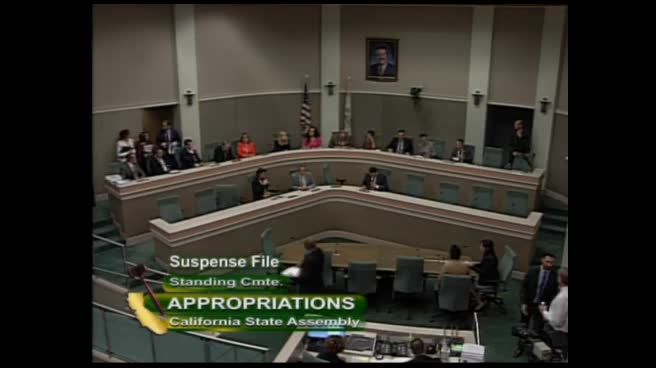 1H
Assembly Standing Committee on Appropriations
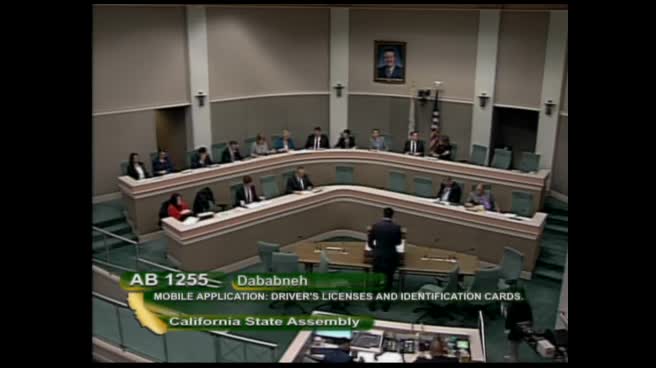 19MIN
Assembly Standing Committee on Transportation
Bill Author

Bill Co-Author(s):