AB 1273: California Environmental Quality Act: exemption: levee repairs.
- Session Year: 2017-2018
- House: Assembly
- Latest Version Date: 2017-05-02
Existing law, the California Environmental Quality Act (CEQA), requires a lead agency, as defined, to prepare, or cause to be prepared, and certify the completion of, an environmental impact report on a project that it proposes to carry out or approve that may have a significant effect on the environment, as defined, or to adopt a negative declaration if it finds that the project will not have that effect, unless the project is exempt from the act.
CEQA provides for various exemptions from the requirements of the act.
This bill would, until July 1, 2028, 2023, exempt from the requirements of CEQA repairs of critical levees of the State Plan of Flood Control within an existing levee footprint to meet standards of public health and safety. safety, except as otherwise provided in a specified regulation. The bill would require the lead agency to take certain actions regarding the repairs.
Existing law, the California Environmental Quality Act (CEQA), requires a lead agency, as defined, to prepare, or cause to be prepared, and certify the completion of, an environmental impact report on a project that it proposes to carry out or approve that may have a significant effect on the environment, as defined, or to adopt a negative declaration if it finds that the project will not have that effect, unless the project is exempt from the act.
CEQA provides for various exemptions from the requirements of the act.
This bill would, until July 1, 2028, exempt from the requirements of CEQA repairs of critical levees of the State Plan of Flood Control within an existing levee footprint to meet standards of public health and safety. The bill would require the lead agency to take certain actions regarding the repairs.
Existing law, the Urban Water Management Planning Act, requires every public and private urban water supplier that directly or indirectly provides water for municipal purposes to prepare and adopt an urban water management plan.This bill would make nonsubstantive changes to that act.Existing law, the Urban Water Management Planning Act, requires every public and private urban water supplier that directly or indirectly provides water for municipal purposes to prepare and adopt an urban water management plan.
This bill would make nonsubstantive changes to that act.
(a)This division does not apply to the repair of critical levees of the State Plan of Flood Control specified pursuant to Section 8361 of the Water Code within an existing levee footprint to meet standards of public health and safety. safety, except as otherwise provided in Section 15300.2 of Title 14 of the California Code of Regulations.
(b)For purposes of undertaking urgent levee repairs, the lead agency shall do all of the following:
(1)Conduct outreach efforts in the vicinity of the project to ensure public awareness of the proposed repair work prior to approval of the project.
(2)To the extent feasible, comply with standard construction practices, including, but not limited to, any rules, guidelines, or regulations adopted by the applicable air district for construction equipment and for control of particulate matter emissions.
(3)To the extent feasible, use equipment powered by emulsified diesel fuel, electricity, natural gas, or ultralow sulfur diesel as an alternative to conventional diesel-powered construction equipment.
(c)This section shall become inoperative on July 1, 2028, 2023, and, as of January 1, 2029, 2024, is repealed.
(a)This division does not apply to the repair of critical levees of the State Plan of Flood Control specified pursuant to Section 8361 of the Water Code within an existing levee footprint to meet standards of public health and safety.
(b)For purposes of undertaking urgent levee repairs, the lead agency shall do all of the following:
(1)Conduct outreach efforts in the vicinity of the project to ensure public awareness of the proposed repair work prior to approval of the project.
(2)To the extent feasible, comply with standard construction practices, including, but not limited to, any rules, guidelines, or regulations adopted by the applicable air district for construction equipment and for control of particulate matter emissions.
(3)To the extent feasible, use equipment powered by emulsified diesel fuel, electricity, natural gas, or ultralow sulfur diesel as an alternative to conventional diesel-powered construction equipment.
(c)This section shall become inoperative on July 1, 2028, and, as of January 1, 2029, is repealed.
SECTION 1.Section 10610 of the Water Code is amended to read:10610.This part shall be known, and may be cited, as the Urban Water Management Planning Act.This part shall be known known, and may be cited cited, as the Urban Water Management Planning Act.
|
Date
|
Status
|
|---|---|
| Jul 11, 2017 | In committee: Set, first hearing. Failed passage. |
| Jul 6, 2017 | From committee: Do pass and re-refer to Com. on N.R. & W. (Ayes 4. Noes 1.) (July 5). Re-referred to Com. on N.R. & W. |
| Jun 8, 2017 | Referred to Coms. on EQ. and N.R. & W. |
| May 30, 2017 | In Senate. Read first time. To Com. on RLS. for assignment. |
| May 30, 2017 | Read third time. Passed. Ordered to the Senate. (Ayes 59. Noes 12. Page 1856.) |
| May 25, 2017 | Read second time. Ordered to third reading. |
| May 24, 2017 | From committee: Do pass. (Ayes 12. Noes 5.) (May 24). |
| May 3, 2017 | Re-referred to Com. on APPR. |
| May 2, 2017 | Read second time and amended. |
| May 1, 2017 | From committee: Amend, and do pass as amended and re-refer to Com. on APPR. (Ayes 8. Noes 2.) (April 24). |
| Mar 29, 2017 | Re-referred to Com. on NAT. RES. |
| Mar 28, 2017 | From committee chair, with author's amendments: Amend, and re-refer to Com. on NAT. RES. Read second time and amended. |
| Mar 27, 2017 | Referred to Com. on NAT. RES. |
| Feb 19, 2017 | From printer. May be heard in committee March 21. |
| Feb 17, 2017 | Read first time. To print. |
|
Date
|
Description
|
Location
|
Votes
|
|
|---|---|---|---|---|
| Jul 11, 2017 | Do pass, but first be re-referred to the Committee on [Appropriations] | Senate Standing Committee on Natural Resources and Water |
Failed |
|
| Jul 5, 2017 | Do pass, but first be re-referred to the Committee on [Natural Resources and Water] | Senate Standing Committee on Environmental Quality |
Passed |
|
| May 30, 2017 | AB 1273 GALLAGHER Assembly Third Reading | Assembly Floor |
Passed |
|
| May 24, 2017 | Do pass. | Assembly Standing Committee on Appropriations |
Passed |
|
| Apr 24, 2017 | Do pass as amended and be re-referred to the Committee on [Appropriations] | Assembly Standing Committee on Natural Resources |
Passed |
This list shows positions taken on this bill by organizations on the date displayed, which is linked to the original source.
Positions by individuals are not included.
SENATE COMMITTEE ON NATURAL RESOURCES AND WATER
Senator Robert Hertzberg, Chair
2017 - 2018 Regular
Bill No: AB Hearing Date: July 11, 2017
Author: | Gallagher | ||
Version: | May 2, 2017 | ||
Urgency: | No | Fiscal: | Yes |
Consultant: | Dennis O'Connor | ||
Subject: California Environmental Quality Act: exemption: levee repairs
BACKGROUND AND EXISTING LAW
In 2006, the legislature passed and the governor signed AB 1039 (Nunez & Perata). The purpose of the bill was to provide streamlining of environmental laws. Among the bill’s provisions was an exemption from the California Environmental Quality Act (CEQA) for the repair of critical levees of the Sacramento River Flood Control Project that are within an existing levee footprint to meet standards of public health and safety.
For purposes of undertaking urgent levee repairs, the lead agency was required to do all of the following:
- Conduct outreach efforts in the vicinity of the project to ensure public awareness of the proposed repair work prior to approval of the project.
- To the extent feasible, comply with standard construction practices, including, but not limited to, any rules, guidelines, or regulations adopted by the applicable air district for construction equipment and for control of particulate matter emissions.
- To the extent feasible, use equipment powered by emulsified diesel fuel, electricity, natural gas, or ultralow sulfur diesel as an alternative to conventional diesel-powered construction equipment.
This provision was sunset on July 1, 2016.
PROPOSED LAW
This bill would reinstate the exemption from CEQA for the repair of critical levees of the Sacramento River Flood Control Project. These provisions are to sunset on July 1, 2023.
ARGUMENTS IN SUPPORT
According to the author, “Our aging levee system was delivered an enormous blow as a result of the high-rain season. Repair and maintenance needs are staggering. The 2017 Central Valley Flood Protection Plan update estimates up to $21 billion needed over 30 years for upkeep of the State Plan of Flood Control system of levees and bypasses. AB 1273 simply extends a narrowly tailored CEQA exemption put in place by AB 1039 (Núñez, 2006) that expired in 2016. This exemption is for the repair of specified levees that the state maintains as part of the State Plan of Flood Control pursuant to Section 8361 of the Water Code. Additionally, projects are subject to the same exceptions that exist for categorical exemptions, and an exemption could not be granted if there could be environmental harm. Passage of this bill would expedite repairs of our critical levees and mark a crucial step towards revitalizing our crumbling water infrastructure.”
ARGUMENTS IN OPPOSITION
The opponents state, “We oppose AB 1273, which creates an unnecessary exemption from the California Environmental Quality Act (CEQA) for levee repairs. Existing exemptions from the law are sufficient to allow for minor and emergency levee repairs that do not have impacts to proceed, while still requiring major levee changes that are not under an emergency setting to undergo analysis to protect the environment.”
“CEQA requires a public disclosure of environmental impacts of a project, and mitigation of those impacts. While levee repairs are a project, numerous exemptions exist in the law that would allow any minor or emergency projects to begin without review, should the need be demonstrated.”
“We do not believe that any further exemption is necessary and warranted.”
COMMENTS
What Are Critical Levees? This bill exempts from CEQA “the repair of critical levees of the State Plan of Flood Control.” Although this is language based on previous legislation, there is no definition of “critical levee.” It may be that the original exemption language was intended to address “…levee repairs for those critical levee erosion sites identified under Governor’s Executive Order S-01-06…” in AB 142 (Núñez, Perata, 2006).
In the absence of clarifying language, it would likely be up to the Central Valley Flood Protection Board to determine which levees are deemed “critical.”
SUGGESTED AMENDMENTS: None
SUPPORT
Association of California Water Agencies
California Chamber of Commerce
OPPOSITION
California League of Conservation Voters
Sierra Club California
-- END --
SENATE COMMITTEE ON ENVIRONMENTAL QUALITY
Senator Wieckowski, Chair
2017 - 2018 Regular
Bill No: AB 1273
Author: | Gallagher | ||
Version: | 5/2/2017 | Hearing Date: | 7/5/2017 |
Urgency: | No | Fiscal: | Yes |
Consultant: | Joanne Roy | ||
SUBJECT: California Environmental Quality Act: exemption: levee repairs.
ANALYSIS:
Existing law:
- Requires lead agencies with the principal responsibility for carrying out or approving a proposed discretionary project to prepare a negative declaration (ND), mitigated negative declaration (MND), or environmental impact report (EIR) for this action, unless the project is exempt from CEQA (CEQA includes various statutory exemptions, as well as categorical exemptions in the CEQA Guidelines). (Public Resources Code (PRC) §21000 et seq.).
- Provides that specific actions necessary to prevent or mitigate an emergency are exempt from CEQA (PRC §21080(b)(4), CEQA Guidelines §15269).
- Pursuant to the CEQA Guidelines, includes various categorical exemptions, such as:
- Repair and maintenance of existing structures and facilities. (CEQA Guidelines §15301)
- Replacement or reconstruction of existing structures and facilities (CEQA Guidelines §15302).
- New construction or conversion of small structures. (CEQA Guidelines §15303).
- Minor alterations to land (CEQA Guidelines §15304).
- Information collection (CEQA Guidelines §15306).
- Repair and maintenance of existing structures and facilities. (CEQA Guidelines §15301)
This bill:
- Exempts from CEQA the repair of critical levees of the State Plan of Flood Control (SPFC) within an existing levee footprint to meet standards of public health and safety except as otherwise provided in CEQA guidelines to assure exempt projects do not have a significant effect on the environment.
- Sunsets the exemption July 1, 2023.
Background
- Background on CEQA.
- Overview of CEQA Process. CEQA provides a process for evaluating the environmental effects of a project, and includes statutory exemptions, as well as categorical exemptions in the CEQA guidelines. If a project is not exempt from CEQA, an initial study is prepared to determine whether a project may have a significant effect on the environment. If the initial study shows that there would not be a significant effect on the environment, the lead agency must prepare a negative declaration. If the initial study shows that the project may have a significant effect on the environment, the lead agency must prepare an EIR.
Generally, an EIR must accurately describe the proposed project, identify and analyze each significant environmental impact expected to result from the proposed project, identify mitigation measures to reduce those impacts to the extent feasible, and evaluate a range of reasonable alternatives to the proposed project. Prior to approving any project that has received environmental review, an agency must make certain findings. If mitigation measures are required or incorporated into a project, the agency must adopt a reporting or monitoring program to ensure compliance with those measures.
If a mitigation measure would cause one or more significant effects in addition to those that would be caused by the proposed project, the effects of the mitigation measure must be discussed but in less detail than the significant effects of the proposed project. - What is analyzed in an environmental review? Pursuant to CEQA, an environmental review analyzing the significant direct and indirect environmental impacts of a proposed project may include water quality, surface and subsurface hydrology, land use and agricultural resources, transportation and circulation, air quality and greenhouse gas emissions, terrestrial and aquatic biological resources, aesthetics, geology and soils, recreation, public services and utilities such as water supply and wastewater disposal, and cultural resources. The analysis must also evaluate the cumulative impacts of any past, present, and reasonably foreseeable projects/activities within study areas that are applicable to the resources being evaluated. A study area for a proposed project must not be limited to the footprint of the project because many environmental impacts of a development extend beyond the identified project boundary. Also, CEQA stipulates that the environmental impacts must be measured against existing physical conditions within the project area, not future, allowable conditions.
- CEQA provides hub for multi-disciplinary regulatory process. A CEQA exemption does not alleviate a project proponent from its obligation to obtain mandatory permits or adhere to specified regulatory programs. CEQA assists in moving a project through the multi-disciplinary, regulatory process because responsible agencies rely on the lead agency’s environmental documentation in acting on the aspect of the project that requires its approval and must prepare its own findings regarding the project. A variety of issues, many of which involve permitting and/or regulatory program requirements, should be coordinated and analyzed together as a whole. CEQA provides a comprehensive analysis of a project’s impacts in those subject areas.
- Overview of CEQA Process. CEQA provides a process for evaluating the environmental effects of a project, and includes statutory exemptions, as well as categorical exemptions in the CEQA guidelines. If a project is not exempt from CEQA, an initial study is prepared to determine whether a project may have a significant effect on the environment. If the initial study shows that there would not be a significant effect on the environment, the lead agency must prepare a negative declaration. If the initial study shows that the project may have a significant effect on the environment, the lead agency must prepare an EIR.
- Levees. According to DWR, a levee is a man-made structure (usually an earthen embankment) designed and constructed in accordance with sound engineering practices to contain, control, or divert the flow of water so as to provide protection from flooding for flows up to a certain amount.
A levee system is a flood protection system that consists of a levee, or levees, and associated structures, such as closure and drainage devices, which are designed to work together to provide some degree of protection for an identified geographic area and are constructed, operated, and maintained in accordance with sound engineering practices.
No matter how much protection is provided, areas within the natural floodplains of rivers and streams will always face some flood risk. Levee systems are designed to provide a specific level of protection. “Residual risk” refers to the risk of flooding that exists in an area from potential floods that exceed the design of current protection systems and due to the chance that the existing system could experience an unexpected failure. Several factors can cause levees to fail such as erosion from wave action, rodent burrowing, and unauthorized encroachments. Furthermore, levee improvement projects that increase the level of flood protection can actually increase flood risk if additional development occurs in the protected flood-prone areas. - State Plan of Flood Control (SPFC). California’s largest flood management system is SPFC, which covers more than 1,600 miles of levees along the Sacramento and San Joaquin River channels, Sutter and Yolo basins, and Feather, Yuba, Bear, and American Rivers. Facilities of the SPFC include levees, weirs, channels, and other features of the federal and state authorized flood control facilities for which the Central Valley Flood Protection Board or DWR has given the assurances of nonfederal cooperation to the United States required for the project, and those facilities identified in Water Code §8361. SPFC facilities protect more than one million people and approximately $70 billion in assets.
Comments
- Purpose of Bill. According to the author, “Our aging levee system was delivered an enormous blow as a result of the high-rain season. Repair and maintenance needs are staggering. The 2017 Central Valley Flood Protection Plan update estimates up to $21 billion needed over 30 years for upkeep of the State Plan of Flood Control system of levees and bypasses. AB 1273 simply extends a narrowly tailored CEQA exemption put in place by AB 1039 (Núñez, 2006) that expired in 2016. This exemption is for the repair of specified levees that the state maintains as part of the State Plan of Flood Control pursuant to Section 8361 of the Water Code. Additionally, projects are subject to the same exceptions that exist for categorical exemptions, and an exemption could not be granted if there could be environmental harm. Passage of this bill would expedite repairs of our critical levees and mark a crucial step towards revitalizing our crumbling water infrastructure.”
- Exemptions in current law utilized for levee projects. This bill creates an exemption for levee projects. A search of CEQANet database, for the time period between January 2000 and June 2017, shows that out of 531 levee-related projects:
- Notice of Exemption (NOE): 435;
- ND: 35;
- MND: 42; and,
- EIR: 19.
It should be noted that 435 NOEs mean that at least 435 levee projects were exempt from CEQA because current law does not mandate the filing of an NOE for all exempted projects.
It also should be noted that of the 435 NOEs listed, none of those projects utilized the levee exemption upon which this bill is based. A question arises as to why the exemption that was repealed in 2016 should be exhumed.
There are several exemptions applicable to levee projects in existing law and currently being utilized. In fact, the numbers above show that a significant majority of levee projects are not subject to an EIR, ND, or MND. Considering that several exemptions exist and are being used for levee projects and the CEQANet database does not show that the repealed exemption was ever used, the Committee may wish to consider the need for this bill.
- The “repair of critical levees.” This bill exempts from CEQA “the repair of critical levees of the State Plan of Flood Control.” Although this is language based on previous legislation, AB 1039 (Núñez, Perata, Chapter 31, Statutes of 2006), there is no definition of “critical levee.” It seems that this bill may have intended to address “…levee repairs for those critical levee erosion sites identified under Governor’s Executive Order S-01-06…” in AB 142 (Núñez, Perata, Chapter 34, Statutes of 2006).
- What do we lose with a CEQA exemption? It is not unusual for certain interests to assert that CEQA impedes on a project coming to fruition or that a particular exemption will expedite construction of a particular type of project and reduce costs. This, however, frequently overlooks the benefits of environmental review: to inform decisionmakers and the public about project impacts, identify ways to avoid or significantly reduce environmental damage, prevent environmental damage by requiring feasible alternatives or mitigation measures, disclose to the public reasons why an agency approved a project if significant environmental effects are involved, involve public agencies in the process, and increase public participation in the environmental review and the planning processes.
If a project is exempt from CEQA, certain issues may not get addressed. For example:
- How can decisionmakers and the public be aware of impacts, mitigation measures, and alternatives of an exempt action?
- Is it appropriate for the public to live with the consequences of exempt projects where impacts are not mitigated and alternatives are not considered regarding certain matters, such as air quality, water quality, noise, cumulative impacts, and growth inducing impacts?
- Because adverse project impacts do not disappear when they are not identified and mitigated with an exemption, does the exemption result in a direct transfer of responsibility for mitigating impacts from the project applicant/developer to the public (i.e., taxpayers) if impacts are ultimately addressed after completion of the project?
- If taxpayers, rather than a developer, are ultimately responsible for mitigating impacts of an exempt project after project completion, what assessments or taxes will be increased to fund mitigation or pay for alternatives at a later date?
Regardless of the ultimate goal of repairing levees quickly and cost-effectively, the short-term, long-term, and/or permanent consequences of a project should be known by the decisionmakers, the project proponent, and the public before a project is approved, and mitigated or avoided if possible before it is too late – CEQA specifically provides for that informed and responsible decisionmaking. Knowing and addressing issues during the planning stage is most likely going to be more cost-effective than having to potentially fix an issue that has already begun the construction process.
Does bypassing CEQA potentially create more of a liability for those decisionmakers who should have known about potential impacts, but chose not to? Also, does the short-term benefit of expediency justify potentially long-term, permanent consequences/damages to the environment or a community?
- CEQA litigation. It is not unusual for certain interests to blame CEQA lawsuits for causing problems to a project. However, it should be noted that the only tool for enforcing CEQA is litigation.
Those citing CEQA litigation as a problem do not indicate the result of that litigation. For example, were significant impacts that were not evaluated in the initial document ultimately addressed? What would have been the result if those impacts had not been mitigated (e.g., flooding, exposure of people to hazards, inadequate public services, congestion)?
Also, how prevalent is CEQA litigation? According to the CEQA in the 21st Century report by BAE Economics and commissioned by the Rose Foundation for Communities and the Environment (August 2016), the number of lawsuits filed under CEQA has averaged 195 per year since 2002. Fewer than 1 out of every 100 projects reviewed under CEQA (that were not considered exempt) were subject to litigation. The estimated rate of litigation for all CEQA projects undergoing environmental review (excluding exemptions) was 0.7% for the past few years.
To help put this in perspective, the total number of CEQA cases filed make up approximately 0.02% of 1,100,000 civil cases filed annually in California.
Furthermore, the California Attorney General’s office conducted a case study of CEQA challenges in the City and County of San Francisco from July 2011 through December 2011 and found that 18 lawsuits were filed out of 5,203 projects considered under CEQA.
According to the Natural Resources Defense Council, a review of CEQA challenges in the City of Los Angeles from January 2011 through July 20, 2012, shows that of 1,182 projects reviewed under CEQA, 18 were challenged, which is a litigation rate of 1.5%.
Although certain interests believe CEQA litigation to be a swathing impediment to some projects, the numbers above seem to indicate otherwise. The volume of CEQA litigation is low considering the thousands of projects subject to CEQA each year as well as the volume of civil litigation in general statewide. And if a project is the subject of litigation, perhaps the cause of action has merit and ensures compliance with the law.
Related/Prior Legislation
AB 1849 (Logue, 2014) would have exempted the maintenance, repair, or replacement of existing levees from CEQA. AB 1849 was not heard in the Assembly Natural Resources Committee.
AB 1039 (Núñez, Perata, Chapter 31, Statutes of 2006) exempted from CEQA, the repair of critical levees of the Sacramento River Flood Control Project that are within an existing levee footprint to meet standards of public health and safety.
AB 2026 (Aghazarian, 2006) would have exempted routine levee maintenance from CEQA and would have established protections of public health and safety as the highest consideration in the Reclamation Board setting standards for maintenance and operation of flood protection facilities. AB 2026 failed passage in the Assembly Natural Resources Committee.
DOUBLE REFERRAL:
If this measure is approved by the Senate Environmental Quality Committee, the do pass motion must include the action to re-refer the bill to the Senate Natural Resources and Water Committee.
SOURCE:
Author
SUPPORT:
Association of California Water Agencies
California Chamber of Commerce
OPPOSITION:
California League of Conservation Voters
Sierra Club California
-- END --
ASSEMBLY THIRD READING
ATR Bill Id:AB 1273
Author:(Gallagher)
As Amended Ver:May 2, 2017
Majority vote
Committee | Votes | Ayes | Noes |
Natural Resources | 8-2 | Cristina Garcia, Acosta, Travis Allen, Chau, Eggman, Flora, Limón, McCarty | Muratsuchi, Mark Stone |
Appropriations | 12-5 | Bigelow, Bloom, Bocanegra, Bonta, Brough, Chau, Quirk, Fong, Gallagher, Eduardo Garcia, Jones-Sawyer, Obernolte | Gonzalez Fletcher, Gloria, Friedman, Muratsuchi, Reyes |
SUMMARY: Establishes a California Environmental Quality Act (CEQA) exemption for specified flood control levee repairs until July 1, 2023. Specifically, this bill exempts the repair of critical levees of the State Plan for Flood Control within an existing levee footprint to meet standards of public health and safety except as otherwise provided in CEQA guidelines to assure exempt projects do not have a significant effect on the environment.
EXISTING LAW:
- Requires lead agencies with the principal responsibility for carrying out or approving a proposed project to prepare a negative declaration, mitigated negative declaration, or environmental impact report (EIR) for this action, unless the project is exempt from CEQA (CEQA includes various statutory exemptions, as well as categorical exemptions in the CEQA guidelines).
- Requires the Office of Planning and Research (OPR) to prepare and develop proposed guidelines for the implementation of CEQA by public agencies, then transmit them to the Secretary of the Natural Resources Agency, who must certify and adopt the guidelines, and update them at least once every two years. Requires the CEQA Guidelines to include a list of classes of projects that have been determined not to have a significant effect on the environment and that shall be exempt from CEQA (i.e., "categorical exemptions"). The categorical exemptions are subject to exceptions to assure eligible projects do not have a significant effect on the environment, including when cumulative impacts of successive projects of the same type in the same place may result in significant effect or there is a reasonable possibility that the project will have a significant effect due to unusual circumstances.
- Exempts from CEQA:
- Projects undertaken, carried out, or approved by a public agency to maintain, repair, restore, demolish, or replace property or facilities damaged or destroyed as a result of a disaster in a disaster-stricken area in which a state of emergency has been proclaimed by the Governor.
- Emergency repairs to publicly- or privately-owned service facilities necessary to maintain service essential to the public health, safety, or welfare.
- Specific actions necessary to prevent or mitigate an emergency. This does not include long-term projects undertaken for the purpose of preventing or mitigating a situation that has a low probability of occurrence in the short term.
- From 2006-2016, exempted the repair of critical levees of the State Plan for Flood Control within an existing levee footprint to meet standards of public health and safety funded pursuant to Proposition 1E (2006), except as otherwise provided in Section 15300.2 of the CEQA Guidelines (i.e., exceptions to assure exempt projects don't have a significant effect on the environment).
FISCAL EFFECT: According to the Assembly Appropriations Committee, no additional state costs.
COMMENTS: Multiple agencies at each level of government (state, federal, and local) have some responsibilities for flood management. In addition, private entities own and operate some flood control facilities. The state carries out a number of programs designed to provide flood management. Some of these programs are operated directly by the state, while others provide grants to local agencies for similar purposes.
The state is primarily responsible for flood control in the Central Valley. The Central Valley flood control system includes about 1,600 miles of levees, as well as other flood control infrastructure such as overflow weirs and channels. The state directly funds the construction and repair of flood management structures such as levees, typically with a federal and local cost share. For approximately 80% of the levees in the Central Valley flood control system, the state has turned over the operations and maintenance to local governments (primarily local flood control districts), although the state retains ultimate responsibility for these levees and the system as a whole.
Proposition 1E, the Disaster Preparedness and Flood Prevention Bond Act of 2006, authorized the state to sell $4.09 billion in general obligation bonds for various flood management programs, including $3 billion to evaluate, repair, and restore existing levees in the state's Central Valley flood control system; to improve or add facilities in order to increase flood protection for urban areas in the state's Central Valley flood control system; and to reduce the risk of levee failure in the Delta region through grants to local agencies and direct spending by the state. A companion bill, AB 1039 (Núñez), Chapter 31, Statutes of 2006, included the CEQA exemption partially reenacted by this bill, which expired July 1, 2016.
The committee has been able to identify one project that claimed the AB 1039 exemption, and it doesn't appear to be a levee repair. According to Office of Planning and Research 's (OPR's) State Clearinghouse CEQAnet database, the Eastside Water District filed a notice of exemption with OPR in May 2016 for a project near Turlock titled "Mustang Creek Managed Aquifer Recharge." The project claimed several CEQA exemptions, including the AB 1039 exemption. However, OPR's State Clearinghouse records are not comprehensive. There may be other local projects that used the exemption without filing notice with OPR. An inquiry to Department of Water Resources (DWR) is pending.
Analysis Prepared by: Lawrence Lingbloom / NAT. RES. / (916) 319-2092 FN: 0000528
Date of Hearing: May 24, 2017
ASSEMBLY COMMITTEE ON APPROPRIATIONS
Lorena Gonzalez Fletcher, Chair
ABPCA Bill Id:AB 1273
Author:(Gallagher) – As Amended Ver:May 2, 2017
Policy Committee: | Natural Resources | Vote: | 8 - 2 |
|
| ||
|
|
Urgency: No State Mandated Local Program: No Reimbursable: No
SUMMARY:
This bill establishes a California Environmental Quality Act (CEQA) exemption for specified flood control levee repairs until July 1, 2023.
Specifically, this bill exempts the repair of critical levees of the State Plan for Flood Control within an existing levee footprint to meet standards of public health and safety except as otherwise provided in CEQA guidelines to assure exempt projects do not have a significant effect on the environment.
FISCAL EFFECT:
No additional state costs.
COMMENTS:
- Background. Multiple agencies at each level of government (state, federal, and local) have some responsibilities for flood management. In addition, private entities own and operate some flood control facilities. The state carries out a number of programs designed to provide flood management. Some of these programs are operated directly by the state, while others provide grants to local agencies for similar purposes.
The state is primarily responsible for flood control in the Central Valley. The Central Valley flood control system includes about 1,600 miles of levees, as well as other flood control infrastructure such as overflow weirs and channels. The state directly funds the construction and repair of flood management structures such as levees, typically with a federal and local cost share. For approximately 80% of the levees in the Central Valley flood control system, the state has turned over the operations and maintenance to local governments (primarily local flood control districts), although the state retains ultimate responsibility for these levees and the system as a whole.
Proposition 1E, the Disaster Preparedness and Flood Prevention Bond Act of 2006, authorized the state to sell $4.09 billion in general obligation bonds for various flood management programs, including $3 billion to evaluate, repair, and restore existing levees in the state’s Central Valley flood control system; to improve or add facilities in order to increase flood protection for urban areas in the state’s Central Valley flood control system; and to reduce the risk of levee failure in the Delta region through grants to local agencies and direct spending by the state.
A companion bill, AB 1039 (Núñez), Chapter 31, Statutes of 2006, included the CEQA exemption partially reenacted by this bill, which expired July 1, 2016. Unlike AB 1039, the exemption added by this bill is not contingent on state funding, has no companion funding measure, and excludes the exceptions based on Section 15300.2 of the CEQA Guidelines
- Purpose. According to the author, environmental compliance is one of the greatest factors in inflating levee repair costs, and can also cause significant delays. AB 1273 will help prevent delays while providing cost-savings for the repair of these critical levees by renewing the 2006 CEQA exemption for the SPFC levees until 2023.”
Analysis Prepared by: Jennifer Galehouse / APPR. / (916) 319-2081
Date of Hearing: April 24, 2017
ASSEMBLY COMMITTEE ON NATURAL RESOURCES
Cristina Garcia, Chair
ABPCA Bill Id:AB 1273 (
Author:Gallagher) – As Amended Ver:March 28, 2017
SUBJECT: California Environmental Quality Act: exemption: levee repairs
SUMMARY: Establishes a California Environmental Quality Act (CEQA) exemption for specified flood control levee repairs until July 1, 2028.
EXISTING LAW:
- Requires lead agencies with the principal responsibility for carrying out or approving a proposed project to prepare a negative declaration, mitigated negative declaration, or environmental impact report (EIR) for this action, unless the project is exempt from CEQA (CEQA includes various statutory exemptions, as well as categorical exemptions in the CEQA guidelines).
- Requires the Office of Planning and Research (OPR) to prepare and develop proposed guidelines for the implementation of CEQA by public agencies, then transmit them to the Secretary of the Natural Resources Agency, who must certify and adopt the guidelines, and update them at least once every two years. Requires the CEQA Guidelines to include a list of classes of projects that have been determined not to have a significant effect on the environment and that shall be exempt from CEQA (i.e., "categorical exemptions"). The categorical exemptions are subject to exceptions to assure eligible projects do not have a significant effect on the environment, including when cumulative impacts of successive projects of the same type in the same place may result in significant effect or there is a reasonable possibility that the project will have a significant effect due to unusual circumstances.
- Exempts from CEQA:
- Projects undertaken, carried out, or approved by a public agency to maintain, repair, restore, demolish, or replace property or facilities damaged or destroyed as a result of a disaster in a disaster-stricken area in which a state of emergency has been proclaimed by the Governor.
- Emergency repairs to publicly- or privately-owned service facilities necessary to maintain service essential to the public health, safety, or welfare.
- Specific actions necessary to prevent or mitigate an emergency. This does not include long-term projects undertaken for the purpose of preventing or mitigating a situation that has a low probability of occurrence in the short term.
- From 2006-2016, exempted the repair of critical levees of the State Plan for Flood Control within an existing levee footprint to meet standards of public health and safety funded pursuant to Proposition 1E (2006), except as otherwise provided in Section 15300.2 of the CEQA Guidelines (i.e., exceptions to assure exempt projects don't have a significant effect on the environment).
THIS BILL reenacts the levee repair exemption until 2028, without the requirement for bond funding or the exception provided in Section 15300.2 of the CEQA Guidelines.
FISCAL EFFECT: Unknown
COMMENTS:
- Background. Multiple agencies at each level of government (state, federal, and local) have some responsibilities for flood management. In addition, private entities own and operate some flood control facilities. The state carries out a number of programs designed to provide flood management. Some of these programs are operated directly by the state, while others provide grants to local agencies for similar purposes.
The state is primarily responsible for flood control in the Central Valley. The Central Valley flood control system includes about 1,600 miles of levees, as well as other flood control infrastructure such as overflow weirs and channels. The state directly funds the construction and repair of flood management structures such as levees, typically with a federal and local cost share. For approximately 80% of the levees in the Central Valley flood control system, the state has turned over the operations and maintenance to local governments (primarily local flood control districts), although the state retains ultimate responsibility for these levees and the system as a whole.
Proposition 1E, the Disaster Preparedness and Flood Prevention Bond Act of 2006, authorized the state to sell $4.09 billion in general obligation bonds for various flood management programs, including $3 billion to evaluate, repair, and restore existing levees in the state’s Central Valley flood control system; to improve or add facilities in order to increase flood protection for urban areas in the state’s Central Valley flood control system; and to reduce the risk of levee failure in the Delta region through grants to local agencies and direct spending by the state.
A companion bill, AB 1039 (Núñez), Chapter 31, Statutes of 2006, included the CEQA exemption partially reenacted by this bill, which expired July 1, 2016. Unlike AB 1039, the exemption added by this bill is not contingent on state funding, has no companion funding measure, and excludes the exceptions based on Section 15300.2 of the CEQA Guidelines.
- Author's statement:
In 2006, voters passed Proposition 1E to provide $4.09 billion in General Obligation Bonds for flood control projects. The proposition also required the creation of a “State Plan of Flood Control” (SPFC) to provide a comprehensive plan for how to protect Sacramento and San Joaquin Valley communities from flooding. The SPFC was a response to the Paterno v. State of California case (2003), in which the Supreme Court found that California was liable for the 1986 Linda Levee collapse in Yuba County that killed two and destroyed thousands of homes. The state has passed much of the maintenance for the San Joaquin River portion of the SPFC to 81 different Local Maintaining Agencies. However, the State maintains control for about 293 miles of levees on the Sacramento River portion of the SPFC.
In addition to passing the bond and formalizing the SPFC, legislation (AB 1039) passed to give a CEQA exemption for critical levees maintained by the state. Unfortunately, this exemption expired in 2016. The January and February 2017 storm events highlighted the importance of meeting our levee maintenance and repair needs, and it is crucial that this exemption is renewed.
The 2017 Central Valley Flood Protection Plan update estimates up to $21 billion needed over 30 years for upkeep of the SPFC system of levees and bypasses. An analysis by the DWR and the U.S. Army Corps of Engineers identified more than $50 billion in needs in a 2013 report. A 2017 report by the Legislative Analyst’s Office found that to reduce flood risk across the state, tens of billions of dollars above current expenditure levels are needed over the next couple of decades. In light of these facts, the legislature must take action to reduce cost and expedite the repairs of critical levees.
Environmental compliance is one of the greatest factors in inflating levee repair costs, and can also cause significant delays. AB 1273 will help prevent delays while providing cost-savings for the repair of these critical levees by renewing the 2006 CEQA exemption for the SPFC levees until 2028.
- Has the AB 1039 exemption been useful? The committee has been able to identify one project that claimed the AB 1039 exemption, and it doesn’t appear to be a levee repair. According to OPR's State Clearinghouse CEQAnet database, the Eastside Water District filed a notice of exemption with OPR in May 2016 for a project near Turlock titled "Mustang Creek Managed Aquifer Recharge." The project claimed several CEQA exemptions, including the AB 1039 exemption. However, OPR's State Clearinghouse records are not comprehensive. There may be other local projects that used the exemption without filing notice with OPR. An inquiry to DWR is pending.
If the author and the committee feel the AB 1039 should be reenacted, they may wish to consider including the condition "except as otherwise provided in Section 15300.2 of the CEQA Guidelines."
REGISTERED SUPPORT / OPPOSITION:
Support
California Chamber of Commerce
Opposition
California League of Conservation Voters
Sierra Club California
Analysis Prepared by: Lawrence Lingbloom / NAT. RES. /
Discussed in Hearing
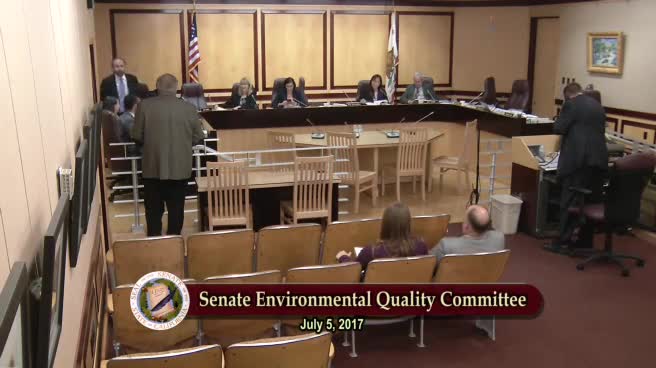 22MIN
Senate Standing Committee on Environmental Quality
 1MIN
Assembly Floor
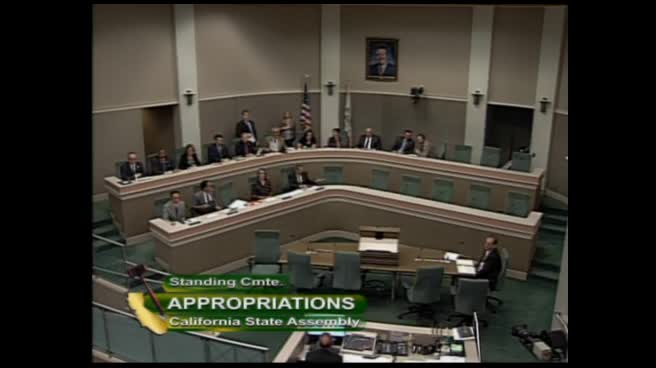 1MIN
Assembly Standing Committee on Appropriations
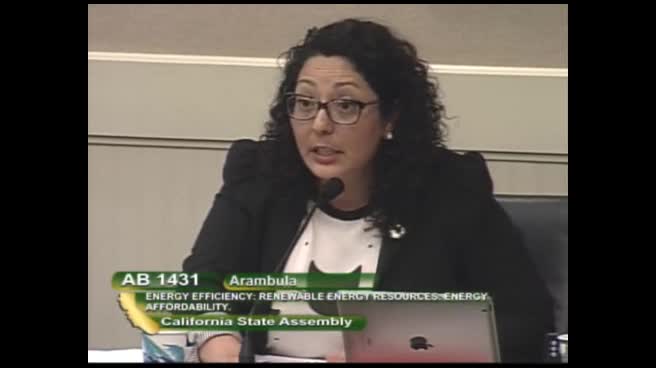 5MIN
Assembly Standing Committee on Natural Resources
Bill Author

Bill Co-Author(s):