AB 1305: Sales and use taxes: worthless accounts.
- Session Year: 2017-2018
- House: Assembly
- Latest Version Date: 2017-05-01
(1)The Sales and Use Tax Law provides that a retailer is relieved from liability for sales or use tax where the measure of the tax is represented by accounts that have been found to be worthless and charged off, as specified. Existing law provides that a retailer may take as a deduction against that tax liability, the amount found to be worthless and charged off, if the retailer has previously paid the tax as provided. Existing law includes as a retailer certain affiliated entities.
This bill instead would define a retailer to include a successor, as defined, that pays full consideration for receivables acquired from a retailer.
(2)Existing law further provides, in the case of accounts held by a lender, that the lender is entitled to a deduction or refund of the sales or use tax previously reported and paid by the retailer on that account if certain conditions are met.
This bill would eliminate these provisions.
Existing state sales and use tax laws impose a tax on retailers measured by the gross receipts from the sale of tangible personal property sold at retail in this state, or on the storage, use, or other consumption in this state of tangible personal property purchased from a retailer for storage, use, or other consumption in this state. The Sales and Use Tax Law requires every person desiring to engage in or conduct business as a seller within this state to file with the State Board of Equalization an application for a permit for each place of business, as specified. Existing law, whenever a person fails to comply with the sales tax laws and regulations, authorizes the board upon hearing, after giving the person 10 days written notice of the hearing, as provided, to revoke or suspend any one or more of the permits held by the person.This bill, instead, would require 15 days written notice of the hearing.Existing state sales and use tax laws impose a tax on retailers measured by the gross receipts from the sale of tangible personal property sold at retail in this state, or on the storage, use, or other consumption in this state of tangible personal property purchased from a retailer for storage, use, or other consumption in this state. The Sales and Use Tax Law requires every person desiring to engage in or conduct business as a seller within this state to file with the State Board of Equalization an application for a permit for each place of business, as specified. Existing law, whenever a person fails to comply with the sales tax laws and regulations, authorizes the board upon hearing, after giving the person 10 days written notice of the hearing, as provided, to revoke or suspend any one or more of the permits held by the person.
This bill, instead, would require 15 days written notice of the hearing.
Existing property tax law requires assessees to report change in ownership information to the assessor, as provided.This bill would make a nonsubstantive change to that provision.Existing property tax law requires assessees to report change in ownership information to the assessor, as provided.
This bill would make a nonsubstantive change to that provision.
(a)A retailer is relieved from liability for sales tax that became due and payable, insofar as the measure of the tax is represented by accounts that have been found to be worthless and charged off for income tax purposes by the retailer or, if the retailer is not required to file income tax returns, charged off in accordance with generally accepted accounting principles. A retailer that has previously paid the tax may, under rules and regulations prescribed by the board, take as a deduction the amount found worthless and charged off by the retailer. If these accounts are thereafter in whole or in part collected by the retailer, the amount collected shall be included in the first return filed after the collection and the tax shall be paid with the return. For purposes of this subdivision, the term retailer shall include any entity affiliated with the retailer under Section 1504 of Title 26 of the United States Code.
(b)(1)In the case of accounts held by a lender, a retailer or lender that makes a proper election under paragraph (4) shall be entitled to a deduction or refund of the tax that the retailer has previously reported and paid if all of the following conditions are met:(A)A deduction was not previously claimed or allowed on any portion of the accounts.(B)The accounts have been found worthless and written off by the lender in accordance with the requirements of subdivision (a).(C)The contract between the retailer and the lender contains an irrevocable relinquishment of all rights to the account from the retailer to the lender.(D)The retailer remitted the tax on or after January 1, 2000.(E)The party electing to claim the deduction or refund under paragraph (4) files a claim in a manner prescribed by the board.(2)If the retailer or the lender thereafter collects in whole or in part any accounts, one of the following shall apply:(A)If the retailer is entitled to the deduction or refund under the election specified in paragraph (4), the retailer shall include the amount collected in its first return filed after the collection and pay tax on that amount with the return.(B)If the lender is entitled to the deduction or refund under the election specified in paragraph (4), the lender shall pay the tax to the board in accordance with Section 6451.(3)For purposes of this subdivision, the term lender means any of the following:(A)Any person that holds a retail account which that person purchased directly from a retailer who reported the tax.(B)Any person that holds a retail account pursuant to that persons contract directly with the retailer that reported the tax.(C)Any person that is either an affiliated entity, under Section 1504 of Title 26 of the United States Code, of a person described in subparagraph (A) or (B), or an assignee of a person described in subparagraph (A) or (B).(4)For purposes of this section, a proper election shall be established when the retailer that reported the tax and the lender prepare and retain an election form, signed by both parties, designating which party is entitled to claim the deduction or refund. This election may not be amended or revoked unless a new election, signed by both parties, is prepared and retained by the retailer and the lender.(b)For purposes of this section:
(1)Retailer shall include a successor that pays full consideration for receivables acquired from the retailer.
(2)A successor as described in paragraph (1) is a purchaser of a business or stock of goods for which liability of the predecessor could be imposed under Article 7 (commencing with Section 6811) of Chapter 6.
SEC. 2.Section 6203.5 of the Revenue and Taxation Code is amended to read:6203.5.(a)A retailer is relieved from liability to collect use tax that became due and payable, insofar as the measure of the tax is represented by accounts that have been found to be worthless and charged off for income tax purposes by the retailer or, if the retailer is not required to file income tax returns, charged off in accordance with generally accepted accounting principles. A retailer that has previously paid the amount of the tax may, under rules and regulations prescribed by the board, take as a deduction the amount found worthless and charged off by the retailer. If these accounts are thereafter in whole or in part collected by the retailer, the amount collected shall be included in the first return filed after the collection and the amount of the tax shall be paid with the return. For purposes of this subdivision, the term retailer shall include any entity affiliated with the retailer under Section 1504 of Title 26 of the United States Code.
(b)(1)In the case of accounts held by a lender, a retailer or lender that makes a proper election under paragraph (4) shall be entitled to a deduction or refund of the tax that the retailer has previously reported and paid if all of the following conditions are met:(A)A deduction was not previously claimed or allowed on any portion of the accounts.(B)The accounts have been found worthless and written off by the lender in accordance with the requirements of subdivision (a).(C)The contract between the retailer and the lender contains an irrevocable relinquishment of all rights to the account from the retailer to the lender.(D)The retailer remitted the tax on or after January 1, 2000.(E)The party electing to claim the deduction or refund under paragraph (4) files a claim in a manner prescribed by the board.(2)If the retailer or the lender thereafter collects in whole or in part any accounts, one of the following shall apply:(A)If the retailer is entitled to the deduction or refund under the election specified in paragraph (4), the retailer shall include the amount collected in its first return filed after the collection and pay tax on that amount with the return.(B)If the lender is entitled to the deduction or refund under the election specified in paragraph (4), the lender shall pay the tax to the board in accordance with Section 6451.(3)For purposes of this subdivision, the term lender means any of the following:(A)Any person that holds a retail account which that person purchased directly from a retailer who reported the tax.(B)Any person that holds a retail account pursuant to that persons contract directly with the retailer that reported the tax.(C)Any person that is either an affiliated entity, under Section 1504 of Title 26 of the United States Code, of a person described in subparagraph (A) or (B), or an assignee of a person described in subparagraph (A) or (B).(4)For purposes of this section, a proper election shall be established when the retailer that reported the tax and the lender prepare and retain an election form, signed by both parties, designating which party is entitled to claim the deduction or refund. This election may not be amended or revoked unless a new election, signed by both parties, is prepared and retained by the retailer and the lender.(b)For purposes of this section:
(1)Retailer shall include a successor that pays full consideration for receivables acquired from the retailer.
(2)A successor as described in paragraph (1) is a purchaser of a business or stock of goods for which liability of the predecessor could be imposed under Article 7 (commencing with Section 6811) of Chapter 6.
SECTION 1.Section 6070 of the Revenue and Taxation Code is amended to read:6070.Whenever any person fails to comply with any provision of this part relating to the sales tax or any rule or regulation of the board relating to the sales tax prescribed and adopted under this part, the board upon hearing, after giving the person 15 days notice in writing specifying the time and place of hearing and requiring him to show cause why his permit or permits should not be revoked, may revoke or suspend any one or more of the permits held by the person. The board shall give to the person written notice of the suspension or revocation of any of his permits. The notices herein required may be served personally or by mail in the manner prescribed for service of notice of a deficiency determination. The board shall not issue a new permit after the revocation of a permit unless it is satisfied that the former holder of the permit will comply with the provisions of this part relating to the sales tax and the regulations of the board.Whenever any person fails to comply with any provision of this part relating to the sales tax or any rule or regulation of the board relating to the sales tax prescribed and adopted under this part, the board upon hearing, after giving the person 10 15 days notice in writing specifying the time and place of hearing and requiring him to show cause why his permit or permits should not be revoked, may revoke or suspend any one or more of the permits held by the person. The board shall give to the person written notice of the suspension or revocation of any of his permits. The notices herein required may be served personally or by mail in the manner prescribed for service of notice of a deficiency determination. The board shall not issue a new permit after the revocation of a permit unless it is satisfied that the former holder of the permit will comply with the provisions of this part relating to the sales tax and the regulations of the board.
SECTION 1.Section 90 of the Revenue and Taxation Code is amended to read:90.An assessee shall report change in ownership information to the assessor as provided in Article 2.5 (commencing with Section 480) of Chapter 3 of Part 2.Assessees An assessee shall report change in ownership information to the assessor as provided in Article 2.5 (commencing with Section 480) of Chapter 3 of Part 2.
|
Date
|
Status
|
|---|---|
| Feb 1, 2018 | From committee: Filed with the Chief Clerk pursuant to Joint Rule 56. |
| Jan 31, 2018 | Died pursuant to Art. IV, Sec. 10(c) of the Constitution. |
| May 8, 2017 | In committee: Testimony taken. Hearing postponed by committee. |
| May 2, 2017 | Re-referred to Com. on REV. & TAX. |
| May 1, 2017 | From committee chair, with author's amendments: Amend, and re-refer to Com. on REV. & TAX. Read second time and amended. |
| Apr 4, 2017 | Re-referred to Com. on REV. & TAX. |
| Apr 3, 2017 | From committee chair, with author's amendments: Amend, and re-refer to Com. on REV. & TAX. Read second time and amended. |
| Mar 30, 2017 | Referred to Com. on REV. & TAX. |
| Feb 19, 2017 | From printer. May be heard in committee March 21. |
| Feb 17, 2017 | Read first time. To print. |
This list shows positions taken on this bill by organizations on the date displayed, which is linked to the original source.
Positions by individuals are not included.
Date of Hearing: May 8, 2017
ASSEMBLY COMMITTEE ON REVENUE AND TAXATION
Sebastian Ridley-Thomas, Chair
ABPCA Bill Id:AB 1305 (
Author:Cristina Garcia) – As Amended Ver:May 1, 2017
Majority vote. Fiscal committee.
SUBJECT: Sales and use taxes: worthless accounts
SUMMARY: Deletes the provisions of the Sales and Use Tax (SUT) Law that, in the case of worthless accounts held by a "lender", entitle the "lender" to a deduction or refund of the SUT previously reported and paid by the retailer. Specifically, this bill contains additional conforming amendments to:
- Define a "retailer" to include a successor that pays full consideration for receivables acquired from the retailer.
- Define a "successor" as a purchaser of a business or stock of goods for which liability of the predecessor could be imposed under Revenue and Taxation Code Section 6811 et seq.
EXISTING LAW:
- Relieves retailers from liability for SUT, insofar as the measure of the tax is represented by accounts that have been found to be worthless and charged off for income tax purposes, as specified.
- Allows a retailer that has previously paid the tax to take as a bad debt deduction the amount found worthless and charged off. If, however, these accounts are thereafter collected by the retailer, the amount collected must be included in the first SUT return filed after the collection and the tax paid with the return.
- Provides that, in the case of accounts held by a "lender", a retailer or "lender" that makes a proper election shall be entitled to a deduction or refund of the tax that the retailer has previously reported and paid if all of the following conditions are met:
- A deduction was not previously claimed or allowed on any portion of the accounts;
- The accounts have been found worthless and written off by the "lender", as specified;
- The contract between the retailer and the lender contains an irrevocable relinquishment of all rights to the account from the retailer to the "lender"; and,
- The party electing to claim the deduction or refund files a claim as prescribed by the State Board of Equalization (BOE).
- Provides that, if the retailer or "lender" thereafter collects in whole or in part any accounts, one of the following shall apply:
- If the retailer is entitled to the deduction or refund, the retailer shall include the amount collected in its first return filed after the collection and pay tax on that amount with the return; or,
- If the "lender" is entitled to the deduction or refund, the "lender" shall pay the tax to the BOE.
- Defines the term "lender" as any person that:
- Holds a retail account which that person purchased directly from a retailer who reported the tax;
- Holds a retail account pursuant to that person's contract directly with the retailer that reported the tax; or,
- Is either an affiliated entity, as defined, of a person described above, or an assignee of a person described above.
FISCAL EFFECT: The BOE's preliminary fiscal estimate is that this bill would increase state and local revenues by $40 million annually.
COMMENTS:
- The author has provided the following statement in support of this bill:
The provisions that allow a lender to obtain a refund for sales and use tax paid by the retailer on accounts found to be worthless were added by AB 599 (Lowenthal, Stats. 2000, Ch. 600). At the time, BOE estimated a minimum annual revenue loss of at least $6 million. In 2008 the BOE granted an average of $41.6 million in refunds to lenders and total that number has grown to $74 million. In today's economic climate, this amount is only going to increase as consumer defaults rise. In light of this reality, it is high time for the Legislature to examine whether California should continue to serve as a guarantor for commercial loans that turn out to be unwise.
- This bill is opposed by the California Credit Union League, which notes the following:
Eliminating the ability of a credit union to seek . . . reimbursement will have significant adverse impacts on California credit unions' member-owners. Historically, credit unions have engaged in very prudent lending practices while at the same time working hard to serve those who may have been turned away at other lending institutions. AB 1305 would make it more difficult for credit unions to take on that risk and would increase the cost of financial services for all of the California families and individuals that look to their local credit union for excellent service and favorable rates.
- Committee Staff Comments:
- An overview of existing law: The existing "bad debt" provisions apply to two broad categories of "lenders". The first category includes entities holding a retail account purchased directly from a retailer. The second category includes those holding a retail account pursuant to a contract directly with the retailer that reported the tax.
- Buyers of accounts receivable: Businesses involved with credit sales often sell their receivables. These receivables are generally sold either "with recourse" or "without recourse". As the name suggests, when receivables are sold "with recourse", the purchaser has some form of recourse against the retailer if the debt cannot be collected. Accounts sold "without recourse" are debts where the purchaser accepts all risks connected with collecting the debt. Generally, those selling accounts with recourse receive a better price for these accounts receivable compared to accounts sold without recourse because there is less risk to the purchaser.
- An overview of existing law: The existing "bad debt" provisions apply to two broad categories of "lenders". The first category includes entities holding a retail account purchased directly from a retailer. The second category includes those holding a retail account pursuant to a contract directly with the retailer that reported the tax.
The provisions allowing buyers of accounts receivable to claim a deduction or refund for SUT paid by the retailer on accounts determined to be worthless were added by AB 599 (Lowenthal), Chapter 600, Statutes of 2000.
Under this provision, assume a retailer sells an item on credit for $10,000. Applying a base SUT rate of 7.25%, the retailer would have to report and remit tax of $725 on the sale. Further assume that after a few months the retailer sold the account receivable to a third party (i.e., "lender"), and that after the purchase the lender was unable to recover any amount on the debt. The existing bad debt provisions authorize the lender to obtain a "refund" of the sales tax originally paid by the retailer.
- Holders of a retail account under a contract with the retailer: As noted above, the existing bad debt provisions also apply to "lenders" holding a retail account under a contract directly with the retailer that reported the tax. Thus, if a credit union provided onsite financing at a car dealership for a loan that later proved uncollectible, the credit union would be entitled to a "refund" of the sales tax reported on the sale by the car dealer.
- Effect of this bill: Since the enactment of these bad debt provisions, the BOE has received numerous refund claims for SUT remitted by retailers on accounts found to be worthless by "lenders" including credit unions, thrift and loan associations, banks, and various financial services companies. Enactment of this bill would essentially end SUT refunds to these entities.
Enactment of this bill would also eliminate the considerable BOE staff time devoted to verifying the accuracy of bad debts claimed. The BOE has historically noted a significant audit workload associated with verifying the refund claims submitted by retailer affiliates and lenders under current law. This bill would essentially eliminate this workload and enable BOE field auditors to focus their efforts on revenue-generating activities.
- Policy considerations: Ostensibly, traditional lenders like banks and credit unions are charging interest on loans to cover the potential risk of default. Thus, it is not entirely clear to Committee staff why the state should serve as a partial guarantor on loans that potentially should never have been made. Furthermore, if a consumer obtains a bank loan and five days later decides to use that money to buy a car, the bank is not entitled to a "refund" of SUT remitted to the state on that transaction if the loan goes bad. Why, if the lender has a contract with the retailer and provides "onsite" financing, should the lender be entitled to a refund?
- Related legislation: AB 1839 (Calderon), of the 2007-08 Legislative Session, contained provisions substantially similar to this bill. AB 1839 (Calderon) failed on the Assembly Floor by a vote of 27 to 36.
REGISTERED SUPPORT / OPPOSITION:
Support
None on file
Opposition
California Bankers Association
California Chamber of Commerce
California Credit Union League
California Financial Services Association
California Retailers Association
California Taxpayers Association
The Card Coalition
Analysis Prepared by: M. David Ruff / REV. & TAX. / (916) 319-2098
Discussed in Hearing
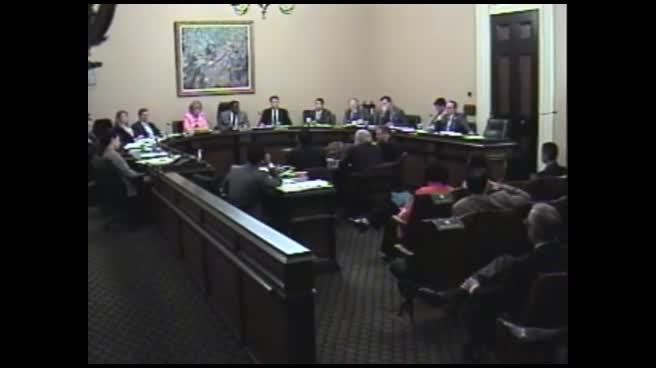 49MIN
Assembly Standing Committee on Revenue and Taxation
Bill Author

Bill Co-Author(s):