AB 1312: Sexual assault victims: rights.
- Session Year: 2017-2018
- House: Assembly
- Latest Version Date: 2017-10-12
(1)Existing law grants the victim of sexual assault, as specified, the right to have a victim advocate and a support person of the victims choosing at any interview by law enforcement authorities, district attorneys, or defense attorneys. Existing law requires the law enforcement authority or district attorney, before commencing the initial interview, to notify a victim that he or she has this right.
This bill would require a law enforcement authority or district attorney to also notify the victim that he or she has the right to request to have a person of the same gender or opposite gender as the victim present in the room during any interview with a law enforcement official or district attorney, unless no such person is reasonably available. The bill would prohibit a law enforcement official from discouraging a victim from receiving a medical evidentiary or physical examination. The bill would require every local law enforcement agency to develop a card, as specified, that explains the rights of sexual assault victims, including, among other information, a clear statement that the victim is not required to participate in the criminal justice system or to receive a medical evidentiary or physical examination in order to retain his or her rights under law. The bill would require a law enforcement official or medical provider to provide this card to the victim upon the initial interaction. The bill would also require a law enforcement official, upon written request by the victim, to furnish a copy of the initial crime report related to the sexual assault, as specified. The bill would require a prosecutor, upon written request by the victim, to provide the defendants information on a sex offender registry, if any, to the victim. The bill would specify that a victims waiver of the right to an advocate is not admissible in court, unless the waiver is at issue in the pending litigation.
(2)Existing law states the minimum standards for the examination and treatment of victims of sexual assault or attempted sexual assault, including child molestation, and the collection and preservation of evidence therefrom. Existing law requires a physician or other health care provider to give a female victim of sexual assault postcoital contraception upon the request of the victim.
This bill would require the postcoital contraception to be provided at no cost to the victim.
(3)Existing law requires a law enforcement officer assigned to an alleged violation of specified domestic violence or sexual assault crimes to provide the victim of the crime with a Victims of Domestic Violence card, as specified. Existing law requires a medical provider to notify a sexual assault victim that he or she has the right to have a sexual assault counselor and at least one other support person of his or her choosing before commencing an initial medical evidentiary or physical examination.
This bill would require a law enforcement officer assigned to an alleged violation of specified domestic violence or sexual assault crimes to also provide the victim with the card developed by local law enforcement agencies, described above, that explains the rights of sexual assault victims, if applicable. The bill would also require a medical provider to give the victim the card developed by local law enforcement agencies, described above, before the commencement of any initial medical evidentiary or physical examination arising out of a sexual assault if the law enforcement agency has provided the card to the medical provider in a language understood by the victim. The bill would require the medical provider to give the victim the opportunity to shower or bathe at no cost to the victim after the examination is conducted, unless a showering or bathing facility is not available.
(4)Existing law requires a law enforcement agency that intends to destroy or dispose of rape kit evidence or other crime scene evidence from an unsolved sexual assault case before the expiration of the statute of limitations to give written notification, as specified, to the victim of that intention.
This bill would prohibit a law enforcement agency from destroying or disposing of rape kit evidence or other crime scene evidence from an unsolved sexual assault case before at least 20 years, or if the victim was under 18 years of age at the time of the alleged offense, before the victims 40th birthday.
(5)Because this bill imposes new requirements on local entities, including, but not limited to, law enforcement agencies and local entities that provide medical services, it would impose a state-mandated local program.
The California Constitution requires the state to reimburse local agencies and school districts for certain costs mandated by the state. Statutory provisions establish procedures for making that reimbursement.
This bill would provide that, if the Commission on State Mandates determines that the bill contains costs mandated by the state, reimbursement for those costs shall be made pursuant to the statutory provisions noted above.
(1)Existing law grants the victim of sexual assault, as specified, the right to have a victim advocate and a support person of the victims choosing at any interview by law enforcement authorities, district attorneys, or defense attorneys. Existing law requires the law enforcement authority or district attorney, before commencing the initial interview, to notify a victim that he or she has this right. Existing law provides that the waiver of this right is privileged in court.
This bill would require a law enforcement authority or district attorney to also notify the victim that he or she has the right to request to have a person of the same gender or opposite gender as the victim present in the room during any interview with a law enforcement official or district attorney, unless no such person is reasonably available. The bill would prohibit a law enforcement official from discouraging a victim from receiving a medical evidentiary or physical examination. The bill would require every local law enforcement agency to develop a card, as specified, that explains the rights of sexual assault victims, including, among other information, a clear statement that the victim is not required to participate in the criminal justice system or to receive a medical evidentiary or physical examination in order to retain his or her rights under law. The bill would require a law enforcement official or medical provider to provide this card to the victim upon the initial interaction. The bill would also require a law enforcement official, upon written request by the victim, to furnish a copy of all law enforcement reports the initial crime report related to the sexual assault, as specified. The bill would require a prosecutor, upon written request by the victim, to provide the defendants information on a sex offender registry, if any, to the victim. The bill would specify that a victims waiver of the right to an advocate is not admissible in court, unless the waiver is at issue in the pending litigation.
(2)Existing law states the minimum standards for the examination and treatment of victims of sexual assault or attempted sexual assault, including child molestation, and the collection and preservation of evidence therefrom. Existing law requires a physician or other health care provider to give a female victim of sexual assault postcoital contraception upon the request of the victim.
This bill would require the postcoital contraception to be provided at no cost to the victim.
(3)Existing law requires a law enforcement officer assigned to an alleged violation of specified domestic violence or sexual assault crimes to provide the victim of the crime with a Victims of Domestic Violence card, as specified. Existing law requires a medical provider to notify a sexual assault victim that he or she has the right to have a sexual assault counselor and at least one other support person of his or her choosing before commencing an initial medical evidentiary or physical examination.
This bill would require a law enforcement officer assigned to an alleged violation of specified domestic violence or sexual assault crimes to also provide the victim with the card developed by local law enforcement agencies, described above, that explains the rights of sexual assault victims, if applicable. The bill would also require a medical provider to give the victim the card developed by local law enforcement agencies, described above, before the commencement of any initial medical evidentiary or physical examination arising out of a sexual assault. assault if the law enforcement agency has provided the card to the medical provider in a language understood by the victim. The bill would require the medical provider to give the victim the opportunity to shower or bathe at no cost to the victim after the examination is conducted, unless a showering or bathing facility is not available.
(4)Existing law requires a law enforcement agency that intends to destroy or dispose of rape kit evidence or other crime scene evidence from an unsolved sexual assault case before the expiration of the statute of limitations to give written notification, as specified, to the victim of that intention.
This bill would prohibit a law enforcement agency from destroying or disposing of rape kit evidence or other crime scene evidence from an unsolved sexual assault case before at least 20 years, or if the victim was under 18 years of age at the time of the alleged offense, before the victims 40th birthday.
(5)This bill would also require the court, upon request by a sexual assault victim during a criminal proceeding related to the alleged sexual assault, to provide the victim and the victims family members, friends, and witnesses with a secure waiting area that is separate from the waiting area of the defendant and the defendants family members, friends, witnesses, and attorneys, and separate from the district attorneys office.(6)(5)Because this bill imposes new requirements on local entities, including, but not limited to, law enforcement agencies and local entities that provide medical services, it would impose a state-mandated local program.
The California Constitution requires the state to reimburse local agencies and school districts for certain costs mandated by the state. Statutory provisions establish procedures for making that reimbursement.
This bill would provide that, if the Commission on State Mandates determines that the bill contains costs mandated by the state, reimbursement for those costs shall be made pursuant to the statutory provisions noted above.
(1)Existing law grants the victim of sexual assault, as specified, the right to have a victim advocate and a support person of the victims choosing at any interview by law enforcement authorities, district attorneys, or defense attorneys. Existing law requires the law enforcement authority or district attorney, before commencing the initial interview, to notify a victim that he or she has this right. Existing law provides that the waiver of this right is privileged in court.
This bill would require a law enforcement authority or district attorney to also notify the victim that he or she has the right to request to have a person of the same gender or opposite gender as the victim present in the room during any interview with a law enforcement official or district attorney, unless no such person is reasonably available. The bill would prohibit a law enforcement official from discouraging a victim from receiving a medical evidentiary or physical examination. The bill would require every local law enforcement agency to develop a card, as specified, that explains the rights of sexual assault victims, including, among other information, a clear statement that the victim is not required to participate in the criminal justice system or to receive a medical evidentiary or physical examination in order to retain his or her rights under law. The bill would require a law enforcement official or medical provider to provide this card to the victim upon the initial interaction. The bill would also require a law enforcement official, upon written request by the victim, to furnish a copy of all law enforcement reports related to the sexual assault, as specified. The bill would require a prosecutor, upon written request by the victim, to provide the defendants information on a sex offender registry, if any, to the victim. The bill would specify that a victims waiver of the right to an advocate is not admissible in court, unless the waiver is at issue in the pending litigation.
(2)Existing law states the minimum standards for the examination and treatment of victims of sexual assault or attempted sexual assault, including child molestation, and the collection and preservation of evidence therefrom. Existing law requires a physician or other health care provider to give a female victim of sexual assault postcoital contraception upon the request of the victim.
This bill would require the postcoital contraception to be provided at no cost to the victim.
(3)Existing law requires a law enforcement officer assigned to an alleged violation of specified domestic violence or sexual assault crimes to provide the victim of the crime with a Victims of Domestic Violence card, as specified. Existing law requires a medical provider to notify a sexual assault victim that he or she has the right to have a sexual assault counselor and at least one other support person of his or her choosing before commencing an initial medical evidentiary or physical examination.
This bill would require a law enforcement officer assigned to an alleged violation of specified domestic violence or sexual assault crimes to also provide the victim with the card developed by local law enforcement agencies, described above, that explains the rights of sexual assault victims, if applicable. The bill would also require a medical provider to give the victim the card developed by local law enforcement agencies, described above, before the commencement of any initial medical evidentiary or physical examination arising out of a sexual assault. The bill would require the medical provider to give the victim the opportunity to shower or bathe at no cost to the victim after the examination is conducted, unless a showering or bathing facility is not available.
(4)Existing law requires a law enforcement agency that intends to destroy or dispose of rape kit evidence or other crime scene evidence from an unsolved sexual assault case before the expiration of the statute of limitations to give written notification, as specified, to the victim of that intention.
This bill would prohibit a law enforcement agency from destroying or disposing of rape kit evidence or other crime scene evidence from an unsolved sexual assault case before at least 20 years, or if the victim was under 18 years of age at the time of the alleged offense, before the victims 40th birthday.
(5)This bill would also require the court, upon request by a sexual assault victim during a criminal proceeding related to the alleged sexual assault, to provide the victim and the victims family members, friends, and witnesses with a secure waiting area that is separate from the waiting area of the defendant and the defendants family members, friends, witnesses, and attorneys, and separate from the district attorneys office.
(6)Because this bill imposes new requirements on local entities, including, but not limited to, law enforcement agencies and local entities that provide medical services, it would impose a state-mandated local program.
The California Constitution requires the state to reimburse local agencies and school districts for certain costs mandated by the state. Statutory provisions establish procedures for making that reimbursement.
This bill would provide that, if the Commission on State Mandates determines that the bill contains costs mandated by the state, reimbursement for those costs shall be made pursuant to the statutory provisions noted above.
(1)Existing law grants the victim of sexual assault, as specified, the right to have a victim advocate and a support person of the victims choosing at any interview by law enforcement authorities, district attorneys, or defense attorneys. Existing law requires the law enforcement authority or district attorney, before commencing the initial interview, to notify a victim that he or she has this right.
This bill would require a law enforcement authority or district attorney to also notify the victim that he or she has the right to request to be interviewed by a law enforcement official or district attorney of the same gender or opposite gender, unless one is not reasonably available. have a person of the same gender or opposite gender as the victim present in the room during any interview with a law enforcement official or district attorney, unless no such person is reasonably available. The bill would prohibit a law enforcement official from discouraging a victim from receiving a medical evidentiary or physical examination. The bill would require the Department of ______ to develop a document, every local law enforcement agency to develop a card, as specified, that explains the rights of sexual assault victims, including, among other information, a clear statement that the victim is not required to participate in the criminal justice system or to receive a medical evidentiary or physical examination in order to retain his or her rights under law. The bill would require a law enforcement official or medical provider to provide this document card to the victim upon the initial interaction. The bill would also require a law enforcement official, upon written request by the victim, to furnish a copy of all law enforcement reports related to the sexual assault, as specified. The bill would require a prosecutor, upon written request by the victim, to provide the defendants information on a sex offender registry, if any, to the victim.
(2)Existing law requires a county hospital to, without charge, provide the victim of rape or other sexual assault with testing for venereal disease and pregnancy in addition to any examination performed without charge to a victim of rape or other sexual assault, as specified.This bill would require a county hospital to also, without charge, provide the victim with postcoital contraception, to be dispensed by a qualified health professional, if a victim requests it within 4 hours of arriving at the county hospital.(2)Existing law states the minimum standards for the examination and treatment of victims of sexual assault or attempted sexual assault, including child molestation, and the collection and preservation of evidence therefrom. Existing law requires a physician or other health care provider to give a female victim of sexual assault postcoital contraception upon the request of the victim.
This bill would require the postcoital contraception to be provided at no cost to the victim.
(3)Existing law requires a law enforcement officer assigned to an alleged violation of specified domestic violence or sexual assault crimes to provide the victim of the crime with a Victims of Domestic Violence card, as specified. Existing law requires a medical provider to notify a sexual assault victim that he or she has the right to have a sexual assault counselor and at least one other support person of his or her choosing before commencing an initial medical evidentiary or physical examination.
This bill would require a medical provider to also notify the victim about the ramifications of delaying the medical evidentiary or physical examination if a sexual assault counselor cannot be summoned. law enforcement officer assigned to an alleged violation of specified domestic violence or sexual assault crimes to also provide the victim with the card developed by local law enforcement agencies, described above, that explains the rights of sexual assault victims, if applicable. The bill would also require a medical provider to give the victim the card developed by local law enforcement agencies, described above, before the commencement of any initial medical evidentiary or physical examination arising out of a sexual assault. The bill would require the medical provider to give the victim the opportunity to shower or bathe at no cost to the victim after the examination is conducted, unless a showering or bathing facility is not available.
(4)Existing law prohibits a qualified health care professional, hospital, or other emergency medical facility performing a medical evidentiary examination of a victim of sexual assault, as specified, from charging the costs of the emanation either directly or indirectly to the victim. Existing law specifies that a victim is not required to participate in the criminal justice system either before this examination or at any other time.This bill would require those entities to inform the victim that a refusal to participate in the criminal justice system is not a ground for denial of either treatment of injuries and any possible pregnancy or sexually transmitted disease, if the victim wishes to obtain that treatment, or of any other right provided by law to victims of sexual assault or crime generally.(5)(4)Existing law requires a law enforcement agency that intends to destroy or dispose of rape kit evidence or other crime scene evidence from an unsolved sexual assault case before the expiration of the statute of limitations to give written notification, as specified, to the victim of that intention.
This bill would prohibit a law enforcement agency from destroying or disposing of rape kit evidence or other crime scene evidence from an unsolved sexual assault case before the statute of limitations expires. at least 20 years, or if the victim was under 18 years of age at the time of the alleged offense, before the victims 40th birthday.
(6)(5)This bill would also require the court, upon request by a sexual assault victim during a criminal proceeding related to the alleged sexual assault, to provide the victim and the victims family members, friends, and witnesses with a secure waiting area that is separate from the waiting area of the defendant and the defendants family members, friends, witnesses, and attorneys, and separate from the district attorneys office.
(7)(6)Because this bill imposes new requirements on local entities, including, but not limited to, law enforcement agencies and local entities that provide medical services, it would impose a state-mandated local program.
The California Constitution requires the state to reimburse local agencies and school districts for certain costs mandated by the state. Statutory provisions establish procedures for making that reimbursement.
This bill would provide that, if the Commission on State Mandates determines that the bill contains costs mandated by the state, reimbursement for those costs shall be made pursuant to the statutory provisions noted above.
(1)Existing law grants the victim of sexual assault, as specified, the right to have a victim advocate and a support person of the victims choosing at any interview by law enforcement authorities, district attorneys, or defense attorneys. Existing law requires the law enforcement authority or district attorney, before commencing the initial interview, to notify a victim that he or she has this right.
This bill would require a law enforcement authority or district attorney to also notify the victim that he or she has the right to request to be interviewed by a law enforcement official or district attorney of the same gender or opposite gender, unless one is not reasonably available. The bill would prohibit a law enforcement official from discouraging a victim from receiving a medical evidentiary or physical examination. The bill would require the Department of ______ to develop a document, as specified, that explains the rights of sexual assault victims, including, among other information, a clear statement that the victim is not required to participate in the criminal justice system or to receive a medical evidentiary or physical examination in order to retain his or her rights under law. The bill would require a law enforcement official or medical provider to provide this document to the victim upon the initial interaction. The bill would also require a law enforcement official, upon written request by the victim, to furnish a copy of all law enforcement reports related to the sexual assault, as specified. The bill would require a prosecutor, upon written request by the victim, to provide the defendants information on a sex offender registry, if any, to the victim.
(2)Existing law requires a county hospital to, without charge, provide the victim of rape or other sexual assault with testing for venereal disease and pregnancy in addition to any examination performed without charge to a victim of rape or other sexual assault, as specified.
This bill would require a county hospital to also, without charge, provide the victim with postcoital contraception, to be dispensed by a qualified health professional, if a victim requests it within 4 hours of arriving at the county hospital.
(3)Existing law requires a medical provider to notify a sexual assault victim that he or she has the right to have a sexual assault counselor and at least one other support person of his or her choosing before commencing an initial medical evidentiary or physical examination.
This bill would require a medical provider to also notify the victim about the ramifications of delaying the medical evidentiary or physical examination if a sexual assault counselor cannot be summoned. The bill would require the medical provider to give the victim the opportunity to shower or bathe at no cost to the victim after the examination is conducted, unless a showering or bathing facility is not available.
(4)Existing law prohibits a qualified health care professional, hospital, or other emergency medical facility performing a medical evidentiary examination of a victim of sexual assault, as specified, from charging the costs of the emanation either directly or indirectly to the victim. Existing law specifies that a victim is not required to participate in the criminal justice system either before this examination or at any other time.
This bill would require those entities to inform the victim that a refusal to participate in the criminal justice system is not a ground for denial of either treatment of injuries and any possible pregnancy or sexually transmitted disease, if the victim wishes to obtain that treatment, or of any other right provided by law to victims of sexual assault or crime generally.
(5)Existing law requires a law enforcement agency that intends to destroy or dispose of rape kit evidence or other crime scene evidence from an unsolved sexual assault case before the expiration of the statute of limitations to give written notification, as specified, to the victim of that intention.
This bill would prohibit a law enforcement agency from destroying or disposing of rape kit evidence or other crime scene evidence from an unsolved sexual assault case before the statute of limitations expires.
(6)This bill would also require the court, upon request by a sexual assault victim during a criminal proceeding related to the alleged sexual assault, to provide the victim and the victims family members, friends, and witnesses with a secure waiting area that is separate from the waiting area of the defendant and the defendants family members, friends, witnesses, and attorneys, and separate from the district attorneys office.
(7)Because this bill imposes new requirements on local entities, including, but not limited to, law enforcement agencies and local entities that provide medical services, it would impose a state-mandated local program.
The California Constitution requires the state to reimburse local agencies and school districts for certain costs mandated by the state. Statutory provisions establish procedures for making that reimbursement.
This bill would provide that, if the Commission on State Mandates determines that the bill contains costs mandated by the state, reimbursement for those costs shall be made pursuant to the statutory provisions noted above.
(a)Whenever there is an alleged violation or violations of subdivision (e) of Section 243, or Section 261, 261.5, 262, 273.5, 286, 288a, or 289, the law enforcement officer assigned to the case shall immediately provide the victim of the crime with the Victims of Domestic Violence card, as specified in subparagraph (H) of paragraph (9) of subdivision (c) of Section 13701, or with the card described in subdivision (a) of Section 680.2, whichever is more applicable.
(b)(1)The law enforcement officer, or his or her agency, shall immediately notify the local rape victim counseling center, whenever a victim of an alleged violation of Section 261, 261.5, 262, 286, 288a, or 289 is transported to a hospital for any medical evidentiary or physical examination. The hospital may notify the local rape victim counseling center, when the victim of the alleged violation of Section 261, 261.5, 262, 286, 288a, or 289 is presented to the hospital for the medical or evidentiary physical examination, upon approval of the victim. The victim has the right to have a sexual assault counselor, as defined in Section 1035.2 of the Evidence Code, and a support person of the victims choosing present at any medical evidentiary or physical examination.
(2)Prior to the commencement of any initial medical evidentiary or physical examination arising out of a sexual assault, the medical provider shall give the victim the card described in subdivision (a) of Section 680.2. This requirement shall apply only if the law enforcement agency has provided the card to the medical provider in a language understood by the victim.
(3)The hospital may verify with the law enforcement officer, or his or her agency, whether the local rape victim counseling center has been notified, upon the approval of the victim.
(4)A support person may be excluded from a medical evidentiary or physical examination if the law enforcement officer or medical provider determines that the presence of that individual would be detrimental to the purpose of the examination.
(5)After conducting the medical evidentiary or physical examination, the medical provider shall give the victim the opportunity to shower or bathe at no cost to the victim, unless a showering or bathing facility is not available.
(6)A medical provider shall, within 24 hours of obtaining sexual assault forensic evidence from the victim, notify the law enforcement agency having jurisdiction over the alleged violation if the medical provider knows the appropriate jurisdiction. If the medical provider does not know the appropriate jurisdiction, the medical provider shall notify the local law enforcement agency.
SEC. 2.Section 679.04 of the Penal Code is amended to read:679.04.(a)A victim of sexual assault as the result of any offense specified in paragraph (1) of subdivision (b) of Section 264.2 has the right to have victim advocates and a support person of the victims choosing present at any interview by law enforcement authorities, district attorneys, or defense attorneys. A victim retains this right regardless of whether he or she has waived the right in a previous medical evidentiary or physical examination or in a previous interview by law enforcement authorities, district attorneys, or defense attorneys. However, the support person may be excluded from an interview by law enforcement or the district attorney if the law enforcement authority or the district attorney determines that the presence of that individual would be detrimental to the purpose of the interview. As used in this section, victim advocate means a sexual assault counselor, as defined in Section 1035.2 of the Evidence Code, or a victim advocate working in a center established under Article 2 (commencing with Section 13835) of Chapter 4 of Title 6 of Part 4.
(b)(1)Prior to the commencement of the initial interview by law enforcement authorities or the district attorney pertaining to any criminal action arising out of a sexual assault, a victim of sexual assault as the result of any offense specified in Section 264.2 shall be notified in writing by the attending law enforcement authority or district attorney that he or she has the right to have victim advocates and a support person of the victims choosing present at the interview or contact, about any other rights of the victim pursuant to law in the card described in subdivision (a) of Section 680.2, and that the victim has the right to request to have a person of the same gender or opposite gender as the victim present in the room during any interview with a law enforcement official or district attorney, unless no such person is reasonably available. This subdivision applies to investigators and agents employed or retained by law enforcement or the district attorney.
(2)At the time the victim is advised of his or her rights pursuant to paragraph (1), the attending law enforcement authority or district attorney shall also advise the victim of the right to have victim advocates and a support person present at any interview by the defense attorney or investigators or agents employed by the defense attorney.
(3)The presence of a victim advocate shall not defeat any existing right otherwise guaranteed by law. A victims waiver of the right to a victim advocate is inadmissible in court, unless a court determines the waiver is at issue in the pending litigation.
(4)The victim has the right to request to have a person of the same gender or opposite gender as the victim present in the room during any interview with a law enforcement official or district attorney, unless no such person is reasonably available. It is the intent of the Legislature to encourage every interviewer in this context to have trauma-based training.
(c)An initial investigation by law enforcement to determine whether a crime has been committed and the identity of the suspects shall not constitute a law enforcement interview for purposes of this section.
(d)A law enforcement official shall not, for any reason, discourage a victim of an alleged sexual assault from receiving a medical evidentiary or physical examination.
SEC. 3.Section 680 of the Penal Code is amended to read:680.(a)This section shall be known as and may be cited as the Sexual Assault Victims DNA Bill of Rights.
(b)The Legislature finds and declares all of the following:
(1)Deoxyribonucleic acid (DNA) and forensic identification analysis is a powerful law enforcement tool for identifying and prosecuting sexual assault offenders.
(2)Existing law requires an adult arrested for or charged with a felony and a juvenile adjudicated for a felony to submit DNA samples as a result of that arrest, charge, or adjudication.
(3)Victims of sexual assaults have a strong interest in the investigation and prosecution of their cases.
(4)Law enforcement agencies have an obligation to victims of sexual assaults in the proper handling, retention, and timely DNA testing of rape kit evidence or other crime scene evidence and to be responsive to victims concerning the developments of forensic testing and the investigation of their cases.
(5)The growth of the Department of Justices Cal-DNA databank and the national databank through the Combined DNA Index System (CODIS) makes it possible for many sexual assault perpetrators to be identified after their first offense, provided that rape kit evidence is analyzed in a timely manner.
(6)Timely DNA analysis of rape kit evidence is a core public safety issue affecting men, women, and children in the State of California. It is the intent of the Legislature, in order to further public safety, to encourage DNA analysis of rape kit evidence within the time limits imposed by subparagraphs (A) and (B) of paragraph (1) of subdivision (g) of Section 803.
(7)In order to ensure that sexual assault forensic evidence is analyzed within the two-year timeframe required by subparagraphs (A) and (B) of paragraph (1) of subdivision (g) of Section 803 and to ensure the longest possible statute of limitations for sex offenses, including sex offenses designated pursuant to those subparagraphs, the following should occur:
(A)A law enforcement agency in whose jurisdiction a sex offense specified in Section 261, 261.5, 262, 286, 288a, or 289 occurred should do one of the following for any sexual assault forensic evidence received by the law enforcement agency on or after January 1, 2016:
(i)Submit sexual assault forensic evidence to the crime lab within 20 days after it is booked into evidence.
(ii)Ensure that a rapid turnaround DNA program is in place to submit forensic evidence collected from the victim of a sexual assault directly from the medical facility where the victim is examined to the crime lab within five days after the evidence is obtained from the victim.
(B)The crime lab should do one of the following for any sexual assault forensic evidence received by the crime lab on or after January 1, 2016.
(i)Process sexual assault forensic evidence, create DNA profiles when able, and upload qualifying DNA profiles into CODIS as soon as practically possible, but no later than 120 days after initially receiving the evidence.
(ii)Transmit the sexual assault forensic evidence to another crime lab as soon as practically possible, but no later than 30 days after initially receiving the evidence, for processing of the evidence for the presence of DNA. If a DNA profile is created, the transmitting crime lab should upload the profile into CODIS as soon as practically possible, but no longer than 30 days after being notified about the presence of DNA.
(C)This subdivision does not require a lab to test all items of forensic evidence obtained in a sexual assault forensic evidence examination. A lab is considered to be in compliance with the guidelines of this section when representative samples of the evidence are processed by the lab in an effort to detect the foreign DNA of the perpetrator.
(D)This section does not require a DNA profile to be uploaded into CODIS if the DNA profile does not meet federal guidelines regarding the uploading of DNA profiles into CODIS.
(E)For purposes of this section, a rapid turnaround DNA program is a program for the training of sexual assault team personnel in the selection of representative samples of forensic evidence from the victim to be the best evidence, based on the medical evaluation and patient history, the collection and preservation of that evidence, and the transfer of the evidence directly from the medical facility to the crime lab, which is adopted pursuant to a written agreement between the law enforcement agency, the crime lab, and the medical facility where the sexual assault team is based.
(8)For the purpose of this section, law enforcement means the law enforcement agency with the primary responsibility for investigating an alleged sexual assault.
(c)(1)Upon the request of a sexual assault victim, the law enforcement agency investigating a violation of Section 261, 261.5, 262, 286, 288a, or 289 shall inform the victim of the status of the DNA testing of the rape kit evidence or other crime scene evidence from the victims case. The law enforcement agency may, at its discretion, require that the victims request be in writing. The law enforcement agency shall respond to the victims request with either an oral or written communication, or by email, if an email address is available. Nothing in this subdivision requires that the law enforcement agency communicate with the victim or the victims designee regarding the status of DNA testing absent a specific request from the victim or the victims designee.
(2)Subject to the commitment of sufficient resources to respond to requests for information, sexual assault victims have the following rights:
(A)The right to be informed whether or not a DNA profile of the assailant was obtained from the testing of the rape kit evidence or other crime scene evidence from their case.
(B)The right to be informed whether or not the DNA profile of the assailant developed from the rape kit evidence or other crime scene evidence has been entered into the Department of Justice Data Bank of case evidence.
(C)The right to be informed whether or not there is a match between the DNA profile of the assailant developed from the rape kit evidence or other crime scene evidence and a DNA profile contained in the Department of Justice Convicted Offender DNA Data Base, provided that disclosure would not impede or compromise an ongoing investigation.
(3)This subdivision is intended to encourage law enforcement agencies to notify victims of information which is in their possession. It is not intended to affect the manner of or frequency with which the Department of Justice provides this information to law enforcement agencies.
(d)If the law enforcement agency does not analyze DNA evidence within six months prior to the time limits established by subparagraphs (A) and (B) of paragraph (1) of subdivision (g) of Section 803, a victim of a sexual assault offense specified in Section 261, 261.5, 262, 286, 288a, or 289 shall be informed, either orally or in writing, of that fact by the law enforcement agency.
(e)(1)If the law enforcement agency intends to destroy or dispose of rape kit evidence or other crime scene evidence from an unsolved sexual assault case, a victim of a violation of Section 261, 261.5, 262, 286, 288a, or 289 shall be given written notification by the law enforcement agency of that intention.
(2)A law enforcement agency shall not destroy or dispose of rape kit evidence or other crime scene evidence from an unsolved sexual assault case before at least 20 years, or if the victim was under 18 years of age at the time of the alleged offense, before the victims 40th birthday.
(f)Written notification under subdivision (d) or (e) shall be made at least 60 days prior to the destruction or disposal of the rape kit evidence or other crime scene evidence from an unsolved sexual assault case.
(g)A sexual assault victim may designate a sexual assault victim advocate, or other support person of the victims choosing, to act as a recipient of the above information required to be provided by this section.
(h)It is the intent of the Legislature that a law enforcement agency responsible for providing information under subdivision (c) do so in a timely manner and, upon request of the victim or the victims designee, advise the victim or the victims designee of any significant changes in the information of which the law enforcement agency is aware. In order to be entitled to receive notice under this section, the victim or the victims designee shall keep appropriate authorities informed of the name, address, telephone number, and email address of the person to whom the information should be provided, and any changes of the name, address, telephone number, and email address, if an email address is available.
(i)A defendant or person accused or convicted of a crime against the victim shall have no standing to object to any failure to comply with this section. The failure to provide a right or notice to a sexual assault victim under this section may not be used by a defendant to seek to have the conviction or sentence set aside.
(j)The sole civil or criminal remedy available to a sexual assault victim for a law enforcement agencys failure to fulfill its responsibilities under this section is standing to file a writ of mandamus to require compliance with subdivision (d) or (e).
SEC. 4.Section 680.2 is added to the Penal Code, to read:680.2.(a)Upon the initial interaction with a sexual assault victim, a law enforcement officer or medical provider shall provide the victim with a card to be developed by every local law enforcement agency, in consultation with sexual assault experts, that explains all of the rights of sexual assault victims in clear language that is comprehensible to a person proficient in English at the fifth grade level, in at least 12-point font, and available in all major languages of the state. This card shall include, but is not limited to, all of the following:
(1)A clear statement that a sexual assault victim is not required to participate in the criminal justice system or to receive a medical evidentiary or physical examination in order to retain his or her rights under law.
(2)Telephone or Internet Web site contact information for a nearby rape crisis center and sexual assault counselor.
(3)Information about the types of law enforcement protection available to the sexual assault victim, including a temporary protection order, and the process to obtain that protection.
(4)Instructions for requesting the results of the analysis of the victims sexual assault forensic evidence.
(5)Information about state and federal compensation funds for medical and other costs associated with the sexual assault and information on any municipal, state, or federal right to restitution for sexual assault victims if a criminal trial occurs.
(6)A clear statement that the victim has the right to have a sexual assault counselor and at least one other support person of the victims choosing present at any initial medical evidentiary examination, physical examination, or investigative interview arising out of a sexual assault, and that a sexual assault counselor can be contacted 24 hours a day.
(7)Information about the rate of potential evidence degradation.
(8)A clear statement that if sexual assault forensic evidence will be tested, it should be transported to the crime laboratory and analyzed within the time limits imposed by subparagraphs (A) and (B) of paragraph (1) of subdivision (g) of Section 803.
(9)A clear statement that the law enforcement agency or crime laboratory will retain the sexual assault forensic evidence for at least 20 years, or if the victim was under 18 years of age at the time of the alleged offense, at least until the victims 40th birthday.
(b)A law enforcement official shall, upon written request by a sexual assault victim, furnish a free copy of the initial crime report related to the sexual assault, regardless of whether the report has been closed by the law enforcement agency, to the victim. A law enforcement agency may redact personal, identifying information in the copy furnished to the victim.
(c)A prosecutor shall, pursuant to Section 290.46, upon written request by a sexual assault victim, provide the convicted defendants information on a sex offender registry to the victim, if the defendant is required to register as a sex offender.
(d)The law enforcement agency shall provide sufficient copies of the card described in subdivision (a) to each provider in its jurisdiction of medical evidentiary examinations or physical examinations arising out of sexual assault.
SEC. 5.Section 13823.11 of the Penal Code is amended to read:13823.11.The minimum standards for the examination and treatment of victims of sexual assault or attempted sexual assault, including child molestation, and the collection and preservation of evidence therefrom include all of the following:
(a)Law enforcement authorities shall be notified.
(b)In conducting the physical examination, the outline indicated in the form adopted pursuant to subdivision (c) of Section 13823.5 shall be followed.
(c)Consent for a physical examination, treatment, and collection of evidence shall be obtained.
(1)Consent to an examination for evidence of sexual assault shall be obtained before the examination of a victim of sexual assault and shall include separate written documentation of consent to each of the following:
(A)Examination for the presence of injuries sustained as a result of the assault.
(B)Examination for evidence of sexual assault and collection of physical evidence.
(C)Photographs of injuries.
(2)Consent to treatment shall be obtained in accordance with usual hospital policy.
(3)A victim of sexual assault shall be informed that he or she may refuse to consent to an examination for evidence of sexual assault, including the collection of physical evidence, but that a refusal is not a ground for denial of treatment of injuries and for possible pregnancy and sexually transmitted diseases, if the person wishes to obtain treatment and consents thereto.
(4)Pursuant to Chapter 3 (commencing with Section 6920) of Part 4 of Division 11 of the Family Code, a minor may consent to hospital, medical, and surgical care related to a sexual assault without the consent of a parent or guardian.
(5)In cases of known or suspected child abuse, the consent of the parents or legal guardian is not required. In the case of suspected child abuse and nonconsenting parents, the consent of the local agency providing child protective services or the local law enforcement agency shall be obtained. Local procedures regarding obtaining consent for the examination and treatment of, and the collection of evidence from, children from child protective authorities shall be followed.
(d)A history of sexual assault shall be taken.
The history obtained in conjunction with the examination for evidence of sexual assault shall follow the outline of the form established pursuant to subdivision (c) of Section 13823.5 and shall include all of the following:
(1)A history of the circumstances of the assault.
(2)For a child, any previous history of child sexual abuse and an explanation of injuries, if different from that given by parent or person accompanying the child.
(3)Physical injuries reported.
(4)Sexual acts reported, whether or not ejaculation is suspected, and whether or not a condom or lubricant was used.
(5)Record of relevant medical history.
(e)(1)If indicated by the history of contact, a female victim of sexual assault shall be provided with the option of postcoital contraception by a physician or other health care provider.
(2)Postcoital contraception shall be dispensed by a physician or other health care provider upon the request of the victim at no cost to the victim.
(f)Each adult and minor victim of sexual assault who consents to a medical examination for collection of evidentiary material shall have a physical examination which includes, but is not limited to, all of the following:
(1)Inspection of the clothing, body, and external genitalia for injuries and foreign materials.
(2)Examination of the mouth, vagina, cervix, penis, anus, and rectum, as indicated.
(3)Documentation of injuries and evidence collected.
Prepubertal children shall not have internal vaginal or anal examinations unless absolutely necessary. This does not preclude careful collection of evidence using a swab.
(g)The collection of physical evidence shall conform to the following procedures:
(1)Each victim of sexual assault who consents to an examination for collection of evidence shall have the following items of evidence collected, except where he or she specifically objects:
(A)Clothing worn during the assault.
(B)Foreign materials revealed by an examination of the clothing, body, external genitalia, and pubic hair combings.
(C)Swabs and slides from the mouth, vagina, rectum, and penis, as indicated, to determine the presence or absence of semen.
(D)If indicated by the history of contact, the victims urine and blood sample, for toxicology purposes, to determine if drugs or alcohol were used in connection with the assault. Toxicology results obtained pursuant to this paragraph shall not be admissible in any criminal or civil action or proceeding against any victim who consents to the collection of physical evidence pursuant to this paragraph. Except for purposes of prosecuting or defending the crime or crimes necessitating the examination specified by this section, any toxicology results obtained pursuant to this paragraph shall be kept confidential, may not be further disclosed, and shall not be required to be disclosed by the victim for any purpose not specified in this paragraph. The victim shall specifically be informed of the immunity and confidentiality safeguards provided herein.
(2)Each victim of sexual assault who consents to an examination for the collection of evidence shall have reference specimens taken, except when he or she specifically objects thereto. A reference specimen is a standard from which to obtain baseline information (for example: pubic and head hair, blood, and saliva for DNA comparison and analysis). Reference specimens may also be collected at a later time if they are needed. These specimens shall be taken in accordance with the standards of the local criminalistics laboratory.
(3)A baseline gonorrhea culture, and syphilis serology, shall be taken, if indicated by the history of contact. Specimens for a pregnancy test shall be taken, if indicated by the history of contact.
(4)(A)If indicated by the history of contact, a female victim of sexual assault shall be provided with the option of postcoital contraception by a physician or other health care provider.
(B)Postcoital contraception shall be dispensed by a physician or other health care provider upon the request of the victim at no cost to the victim.
(h)Preservation and disposition of physical evidence shall conform to the following procedures:
(1)All swabs and slides shall be air-dried before packaging.
(2)All items of evidence including laboratory specimens shall be clearly labeled as to the identity of the source and the identity of the person collecting them.
(3)The evidence shall have a form attached which documents its chain of custody and shall be properly sealed.
(4)The evidence shall be turned over to the proper law enforcement agency.
SEC. 6.Section 13823.95 of the Penal Code is amended to read:13823.95.(a)No costs incurred by a qualified health care professional, hospital, or other emergency medical facility for the medical evidentiary examination portion of the examination of the victim of a sexual assault, as described in the protocol developed pursuant to Section 13823.5, when the examination is performed pursuant to Sections 13823.5 and 13823.7, shall be charged directly or indirectly to the victim of the assault.
(b)Any victim of a sexual assault who seeks a medical evidentiary examination, as that term is used in Section 13823.93, shall be provided with a medical evidentiary examination. A victim of a sexual assault shall not be required to participate or to agree to participate in the criminal justice system, either prior to the examination or at any other time.
(c)The cost of a medical evidentiary examination performed by a qualified health care professional, hospital, or other emergency medical facility for a victim of a sexual assault shall be treated as a local cost and charged to the local law enforcement agency in whose jurisdiction the alleged offense was committed; provided, however, that the local law enforcement agency may seek reimbursement, as provided in subdivision (d), for the cost of conducting the medical evidentiary examination portion of a medical examination of a sexual assault victim who does not participate in the criminal justice system.
(d)The amount that may be charged by a qualified health care professional, hospital, or other emergency medical facility to perform the medical evidentiary examination portion of a medical examination of a victim of a sexual assault shall not exceed three hundred dollars ($300). The Office of Emergency Services shall use the discretionary funds from federal grants awarded to the agency pursuant to the federal Violence Against Women and Department of Justice Reauthorization Act of 2005 and the federal Violence Against Women Reauthorization Act of 2013 through the federal Office of Violence Against Women, specifically, the STOP (Services, Training, Officers, and Prosecutors) Violence Against Women Formula Grant Program, to cover the cost of the medical evidentiary examination portion of a medical examination of a sexual assault victim.
SEC. 7.If the Commission on State Mandates determines that this act contains costs mandated by the state, reimbursement to local agencies and school districts for those costs shall be made pursuant to Part 7 (commencing with Section 17500) of Division 4 of Title 2 of the Government Code.
(a)Whenever there is an alleged violation or violations of subdivision (e) of Section 243, or Section 261, 261.5, 262, 273.5, 286, 288a, or 289, the law enforcement officer assigned to the case shall immediately provide the victim of the crime with the Victims of Domestic Violence card, as specified in subparagraph (H) of paragraph (9) of subdivision (c) of Section 13701, or with the card described in subdivision (a) of Section 680.2, whichever is more applicable.
(b)(1)The law enforcement officer, or his or her agency, shall immediately notify the local rape victim counseling center, whenever a victim of an alleged violation of Section 261, 261.5, 262, 286, 288a, or 289 is transported to a hospital for any medical evidentiary or physical examination. The hospital may notify the local rape victim counseling center, when the victim of the alleged violation of Section 261, 261.5, 262, 286, 288a, or 289 is presented to the hospital for the medical or evidentiary physical examination, upon approval of the victim. The victim has the right to have a sexual assault counselor, as defined in Section 1035.2 of the Evidence Code, and a support person of the victims choosing present at any medical evidentiary or physical examination.
(2)Prior to the commencement of any initial medical evidentiary or physical examination arising out of a sexual assault, the medical provider shall give the victim the card described in subdivision (a) of Section 680.2. This requirement shall apply only if the law enforcement agency has provided the card to the medical provider in a language understood by the victim.
(3)The hospital may verify with the law enforcement officer, or his or her agency, whether the local rape victim counseling center has been notified, upon the approval of the victim.
(4)A support person may be excluded from a medical evidentiary or physical examination if the law enforcement officer or medical provider determines that the presence of that individual would be detrimental to the purpose of the examination.
(5)After conducting the medical evidentiary or physical examination, the medical provider shall give the victim the opportunity to shower or bathe at no cost to the victim, unless a showering or bathing facility is not available.
(6)A medical provider shall, within 24 hours of obtaining sexual assault forensic evidence from the victim, notify the law enforcement agency having jurisdiction over the alleged violation if the medical provider knows the appropriate jurisdiction. If the medical provider does not know the appropriate jurisdiction, the medical provider shall notify the local law enforcement agency.
SEC. 2.Section 679.04 of the Penal Code is amended to read:679.04.(a)A victim of sexual assault as the result of any offense specified in paragraph (1) of subdivision (b) of Section 264.2 has the right to have victim advocates and a support person of the victims choosing present at any interview by law enforcement authorities, district attorneys, or defense attorneys. A victim retains this right regardless of whether he or she has waived the right in a previous medical evidentiary or physical examination or in a previous interview by law enforcement authorities, district attorneys, or defense attorneys. However, the support person may be excluded from an interview by law enforcement or the district attorney if the law enforcement authority or the district attorney determines that the presence of that individual would be detrimental to the purpose of the interview. As used in this section, victim advocate means a sexual assault counselor, as defined in Section 1035.2 of the Evidence Code, or a victim advocate working in a center established under Article 2 (commencing with Section 13835) of Chapter 4 of Title 6 of Part 4.
(b)(1)Prior to the commencement of the initial interview by law enforcement authorities or the district attorney pertaining to any criminal action arising out of a sexual assault, a victim of sexual assault as the result of any offense specified in Section 264.2 shall be notified in writing by the attending law enforcement authority or district attorney that he or she has the right to have victim advocates and a support person of the victims choosing present at the interview or contact, about any other rights of the victim pursuant to law in the card described in subdivision (a) of Section 680.2, and that the victim has the right to request to have a person of the same gender or opposite gender as the victim present in the room during any interview with a law enforcement official or district attorney, unless no such person is reasonably available. This subdivision applies to investigators and agents employed or retained by law enforcement or the district attorney.
(2)At the time the victim is advised of his or her rights pursuant to paragraph (1), the attending law enforcement authority or district attorney shall also advise the victim of the right to have victim advocates and a support person present at any interview by the defense attorney or investigators or agents employed by the defense attorney.
(3)The presence of a victim advocate shall not defeat any existing right otherwise guaranteed by law. A victims waiver of the right to a victim advocate is inadmissible in court, unless a court determines the waiver is at issue in the pending litigation.
(4)The victim has the right to request to have a person of the same gender or opposite gender as the victim present in the room during any interview with a law enforcement official or district attorney, unless no such person is reasonably available. It is the intent of the Legislature to encourage every interviewer in this context to have trauma-based training.
(c)An initial investigation by law enforcement to determine whether a crime has been committed and the identity of the suspects shall not constitute a law enforcement interview for purposes of this section.
(d)A law enforcement official shall not, for any reason, discourage a victim of an alleged sexual assault from receiving a medical evidentiary or physical examination.
SEC. 3.Section 680 of the Penal Code is amended to read:680.(a)This section shall be known as and may be cited as the Sexual Assault Victims DNA Bill of Rights.
(b)The Legislature finds and declares all of the following:
(1)Deoxyribonucleic acid (DNA) and forensic identification analysis is a powerful law enforcement tool for identifying and prosecuting sexual assault offenders.
(2)Existing law requires an adult arrested for or charged with a felony and a juvenile adjudicated for a felony to submit DNA samples as a result of that arrest, charge, or adjudication.
(3)Victims of sexual assaults have a strong interest in the investigation and prosecution of their cases.
(4)Law enforcement agencies have an obligation to victims of sexual assaults in the proper handling, retention, and timely DNA testing of rape kit evidence or other crime scene evidence and to be responsive to victims concerning the developments of forensic testing and the investigation of their cases.
(5)The growth of the Department of Justices Cal-DNA databank and the national databank through the Combined DNA Index System (CODIS) makes it possible for many sexual assault perpetrators to be identified after their first offense, provided that rape kit evidence is analyzed in a timely manner.
(6)Timely DNA analysis of rape kit evidence is a core public safety issue affecting men, women, and children in the State of California. It is the intent of the Legislature, in order to further public safety, to encourage DNA analysis of rape kit evidence within the time limits imposed by subparagraphs (A) and (B) of paragraph (1) of subdivision (g) of Section 803.
(7)In order to ensure that sexual assault forensic evidence is analyzed within the two-year timeframe required by subparagraphs (A) and (B) of paragraph (1) of subdivision (g) of Section 803 and to ensure the longest possible statute of limitations for sex offenses, including sex offenses designated pursuant to those subparagraphs, the following should occur:
(A)A law enforcement agency in whose jurisdiction a sex offense specified in Section 261, 261.5, 262, 286, 288a, or 289 occurred should do one of the following for any sexual assault forensic evidence received by the law enforcement agency on or after January 1, 2016:
(i)Submit sexual assault forensic evidence to the crime lab within 20 days after it is booked into evidence.
(ii)Ensure that a rapid turnaround DNA program is in place to submit forensic evidence collected from the victim of a sexual assault directly from the medical facility where the victim is examined to the crime lab within five days after the evidence is obtained from the victim.
(B)The crime lab should do one of the following for any sexual assault forensic evidence received by the crime lab on or after January 1, 2016.
(i)Process sexual assault forensic evidence, create DNA profiles when able, and upload qualifying DNA profiles into CODIS as soon as practically possible, but no later than 120 days after initially receiving the evidence.
(ii)Transmit the sexual assault forensic evidence to another crime lab as soon as practically possible, but no later than 30 days after initially receiving the evidence, for processing of the evidence for the presence of DNA. If a DNA profile is created, the transmitting crime lab should upload the profile into CODIS as soon as practically possible, but no longer than 30 days after being notified about the presence of DNA.
(C)This subdivision does not require a lab to test all items of forensic evidence obtained in a sexual assault forensic evidence examination. A lab is considered to be in compliance with the guidelines of this section when representative samples of the evidence are processed by the lab in an effort to detect the foreign DNA of the perpetrator.
(D)This section does not require a DNA profile to be uploaded into CODIS if the DNA profile does not meet federal guidelines regarding the uploading of DNA profiles into CODIS.
(E)For purposes of this section, a rapid turnaround DNA program is a program for the training of sexual assault team personnel in the selection of representative samples of forensic evidence from the victim to be the best evidence, based on the medical evaluation and patient history, the collection and preservation of that evidence, and the transfer of the evidence directly from the medical facility to the crime lab, which is adopted pursuant to a written agreement between the law enforcement agency, the crime lab, and the medical facility where the sexual assault team is based.
(8)For the purpose of this section, law enforcement means the law enforcement agency with the primary responsibility for investigating an alleged sexual assault.
(c)(1)Upon the request of a sexual assault victim, the law enforcement agency investigating a violation of Section 261, 261.5, 262, 286, 288a, or 289 shall inform the victim of the status of the DNA testing of the rape kit evidence or other crime scene evidence from the victims case. The law enforcement agency may, at its discretion, require that the victims request be in writing. The law enforcement agency shall respond to the victims request with either an oral or written communication, or by email, if an email address is available. Nothing in this subdivision requires that the law enforcement agency communicate with the victim or the victims designee regarding the status of DNA testing absent a specific request from the victim or the victims designee.
(2)Subject to the commitment of sufficient resources to respond to requests for information, sexual assault victims have the following rights:
(A)The right to be informed whether or not a DNA profile of the assailant was obtained from the testing of the rape kit evidence or other crime scene evidence from their case.
(B)The right to be informed whether or not the DNA profile of the assailant developed from the rape kit evidence or other crime scene evidence has been entered into the Department of Justice Data Bank of case evidence.
(C)The right to be informed whether or not there is a match between the DNA profile of the assailant developed from the rape kit evidence or other crime scene evidence and a DNA profile contained in the Department of Justice Convicted Offender DNA Data Base, provided that disclosure would not impede or compromise an ongoing investigation.
(3)This subdivision is intended to encourage law enforcement agencies to notify victims of information which is in their possession. It is not intended to affect the manner of or frequency with which the Department of Justice provides this information to law enforcement agencies.
(d)If the law enforcement agency does not analyze DNA evidence within six months prior to the time limits established by subparagraphs (A) and (B) of paragraph (1) of subdivision (g) of Section 803, a victim of a sexual assault offense specified in Section 261, 261.5, 262, 286, 288a, or 289 shall be informed, either orally or in writing, of that fact by the law enforcement agency.
(e)(1)If the law enforcement agency intends to destroy or dispose of rape kit evidence or other crime scene evidence from an unsolved sexual assault case, a victim of a violation of Section 261, 261.5, 262, 286, 288a, or 289 shall be given written notification by the law enforcement agency of that intention.
(2)A law enforcement agency shall not destroy or dispose of rape kit evidence or other crime scene evidence from an unsolved sexual assault case before at least 20 years, or if the victim was under 18 years of age at the time of the alleged offense, before the victims 40th birthday.
(f)Written notification under subdivision (d) or (e) shall be made at least 60 days prior to the destruction or disposal of the rape kit evidence or other crime scene evidence from an unsolved sexual assault case.
(g)A sexual assault victim may designate a sexual assault victim advocate, or other support person of the victims choosing, to act as a recipient of the above information required to be provided by this section.
(h)It is the intent of the Legislature that a law enforcement agency responsible for providing information under subdivision (c) do so in a timely manner and, upon request of the victim or the victims designee, advise the victim or the victims designee of any significant changes in the information of which the law enforcement agency is aware. In order to be entitled to receive notice under this section, the victim or the victims designee shall keep appropriate authorities informed of the name, address, telephone number, and email address of the person to whom the information should be provided, and any changes of the name, address, telephone number, and email address, if an email address is available.
(i)A defendant or person accused or convicted of a crime against the victim shall have no standing to object to any failure to comply with this section. The failure to provide a right or notice to a sexual assault victim under this section may not be used by a defendant to seek to have the conviction or sentence set aside.
(j)The sole civil or criminal remedy available to a sexual assault victim for a law enforcement agencys failure to fulfill its responsibilities under this section is standing to file a writ of mandamus to require compliance with subdivision (d) or (e).
SEC. 4.Section 680.2 is added to the Penal Code, to read:680.2.(a)Upon the initial interaction with a sexual assault victim, a law enforcement officer or medical provider shall provide the victim with a card to be developed by every local law enforcement agency, in consultation with sexual assault experts, that explains all of the rights of sexual assault victims in clear language that is comprehensible to a person proficient in English at the fifth grade level, in at least 12 point 12-point font, and available in all major languages of the state. This card shall include, but is not limited to, all of the following:
(1)A clear statement that a sexual assault victim is not required to participate in the criminal justice system or to receive a medical evidentiary or physical examination in order to retain his or her rights under law.
(2)Telephone or Internet Web site contact information for a nearby rape crisis center and sexual assault counselor.
(3)Information about the types of law enforcement protection available to the sexual assault victim, including a temporary protection order, and the process to obtain that protection.
(4)Instructions for requesting the results of the analysis of the victims sexual assault forensic evidence.
(5)Information about state and federal compensation funds for medical and other costs associated with the sexual assault and information on any municipal, state, or federal right to restitution for sexual assault victims if a criminal trial occurs.
(6)A clear statement that the victim has the right to have a sexual assault counselor and at least one other support person of the victims choosing present at any initial medical evidentiary examination, physical examination, or investigative interview arising out of a sexual assault, and that a sexual assault counselor can be contacted 24 hours a day.
(7)Information about the rate of potential evidence degradation.
(8)A clear statement that if sexual assault forensic evidence will be tested, it should be transported to the crime laboratory and analyzed within the time limits imposed by subparagraphs (A) and (B) of paragraph (1) of subdivision (g) of Section 803.
(9)A clear statement that the law enforcement agency or crime laboratory will retain the sexual assault forensic evidence for at least 20 years, or if the victim was under 18 years of age at the time of the alleged offense, at least until the victims 40th birthday.
(b)A law enforcement official shall, upon written request by a sexual assault victim, furnish a free copy of the initial crime report related to the sexual assault, regardless of whether the report has been closed by the law enforcement agency, to the victim. A law enforcement agency may redact personal, identifying information in the copy furnished to the victim.
(c)A prosecutor shall, pursuant to Section 290.46, upon written request by a sexual assault victim, provide the convicted defendants information on a sex offender registry to the victim, if the defendant is required to register as a sex offender.
(d)The law enforcement agency shall provide sufficient copies of the card described in subdivision (a) to each provider in its jurisdiction of medical evidentiary examinations or physical examinations arising out of sexual assault.
SEC. 5.Section 13823.11 of the Penal Code is amended to read:13823.11.The minimum standards for the examination and treatment of victims of sexual assault or attempted sexual assault, including child molestation, and the collection and preservation of evidence therefrom include all of the following:
(a)Law enforcement authorities shall be notified.
(b)In conducting the physical examination, the outline indicated in the form adopted pursuant to subdivision (c) of Section 13823.5 shall be followed.
(c)Consent for a physical examination, treatment, and collection of evidence shall be obtained.
(1)Consent to an examination for evidence of sexual assault shall be obtained before the examination of a victim of sexual assault and shall include separate written documentation of consent to each of the following:
(A)Examination for the presence of injuries sustained as a result of the assault.
(B)Examination for evidence of sexual assault and collection of physical evidence.
(C)Photographs of injuries.
(2)Consent to treatment shall be obtained in accordance with usual hospital policy.
(3)A victim of sexual assault shall be informed that he or she may refuse to consent to an examination for evidence of sexual assault, including the collection of physical evidence, but that a refusal is not a ground for denial of treatment of injuries and for possible pregnancy and sexually transmitted diseases, if the person wishes to obtain treatment and consents thereto.
(4)Pursuant to Chapter 3 (commencing with Section 6920) of Part 4 of Division 11 of the Family Code, a minor may consent to hospital, medical, and surgical care related to a sexual assault without the consent of a parent or guardian.
(5)In cases of known or suspected child abuse, the consent of the parents or legal guardian is not required. In the case of suspected child abuse and nonconsenting parents, the consent of the local agency providing child protective services or the local law enforcement agency shall be obtained. Local procedures regarding obtaining consent for the examination and treatment of, and the collection of evidence from, children from child protective authorities shall be followed.
(d)A history of sexual assault shall be taken.
The history obtained in conjunction with the examination for evidence of sexual assault shall follow the outline of the form established pursuant to subdivision (c) of Section 13823.5 and shall include all of the following:
(1)A history of the circumstances of the assault.
(2)For a child, any previous history of child sexual abuse and an explanation of injuries, if different from that given by parent or person accompanying the child.
(3)Physical injuries reported.
(4)Sexual acts reported, whether or not ejaculation is suspected, and whether or not a condom or lubricant was used.
(5)Record of relevant medical history.
(e)(1)If indicated by the history of contact, a female victim of sexual assault shall be provided with the option of postcoital contraception by a physician or other health care provider.
(2)Postcoital contraception shall be dispensed by a physician or other health care provider upon the request of the victim at no cost to the victim.
(f)Each adult and minor victim of sexual assault who consents to a medical examination for collection of evidentiary material shall have a physical examination which includes, but is not limited to, all of the following:
(1)Inspection of the clothing, body, and external genitalia for injuries and foreign materials.
(2)Examination of the mouth, vagina, cervix, penis, anus, and rectum, as indicated.
(3)Documentation of injuries and evidence collected.
Prepubertal children shall not have internal vaginal or anal examinations unless absolutely necessary. This does not preclude careful collection of evidence using a swab.
(g)The collection of physical evidence shall conform to the following procedures:
(1)Each victim of sexual assault who consents to an examination for collection of evidence shall have the following items of evidence collected, except where he or she specifically objects:
(A)Clothing worn during the assault.
(B)Foreign materials revealed by an examination of the clothing, body, external genitalia, and pubic hair combings.
(C)Swabs and slides from the mouth, vagina, rectum, and penis, as indicated, to determine the presence or absence of semen.
(D)If indicated by the history of contact, the victims urine and blood sample, for toxicology purposes, to determine if drugs or alcohol were used in connection with the assault. Toxicology results obtained pursuant to this paragraph shall not be admissible in any criminal or civil action or proceeding against any victim who consents to the collection of physical evidence pursuant to this paragraph. Except for purposes of prosecuting or defending the crime or crimes necessitating the examination specified by this section, any toxicology results obtained pursuant to this paragraph shall be kept confidential, may not be further disclosed, and shall not be required to be disclosed by the victim for any purpose not specified in this paragraph. The victim shall specifically be informed of the immunity and confidentiality safeguards provided herein.
(2)Each victim of sexual assault who consents to an examination for the collection of evidence shall have reference specimens taken, except when he or she specifically objects thereto. A reference specimen is a standard from which to obtain baseline information (for example: pubic and head hair, blood, and saliva for DNA comparison and analysis). Reference specimens may also be collected at a later time if they are needed. These specimens shall be taken in accordance with the standards of the local criminalistics laboratory.
(3)A baseline gonorrhea culture, and syphilis serology, shall be taken, if indicated by the history of contact. Specimens for a pregnancy test shall be taken, if indicated by the history of contact.
(4)(A)If indicated by the history of contact, a female victim of sexual assault shall be provided with the option of postcoital contraception by a physician or other health care provider.
(B)Postcoital contraception shall be dispensed by a physician or other health care provider upon the request of the victim at no cost to the victim.
(h)Preservation and disposition of physical evidence shall conform to the following procedures:
(1)All swabs and slides shall be air-dried before packaging.
(2)All items of evidence including laboratory specimens shall be clearly labeled as to the identity of the source and the identity of the person collecting them.
(3)The evidence shall have a form attached which documents its chain of custody and shall be properly sealed.
(4)The evidence shall be turned over to the proper law enforcement agency.
SEC. 6.Section 13823.95 of the Penal Code is amended to read:13823.95.(a)No costs incurred by a qualified health care professional, hospital, or other emergency medical facility for the medical evidentiary examination portion of the examination of the victim of a sexual assault, as described in the protocol developed pursuant to Section 13823.5, when the examination is performed pursuant to Sections 13823.5 and 13823.7, shall be charged directly or indirectly to the victim of the assault.
(b)Any victim of a sexual assault who seeks a medical evidentiary examination, as that term is used in Section 13823.93, shall be provided with a medical evidentiary examination. A victim of a sexual assault shall not be required to participate or to agree to participate in the criminal justice system, either prior to the examination or at any other time.
(c)The cost of a medical evidentiary examination performed by a qualified health care professional, hospital, or other emergency medical facility for a victim of a sexual assault shall be treated as a local cost and charged to the local law enforcement agency in whose jurisdiction the alleged offense was committed; provided, however, that the local law enforcement agency may seek reimbursement, as provided in subdivision (d), for the cost of conducting the medical evidentiary examination portion of a medical examination of a sexual assault victim who does not participate in the criminal justice system.
(d)The amount that may be charged by a qualified health care professional, hospital, or other emergency medical facility to perform the medical evidentiary examination portion of a medical examination of a victim of a sexual assault shall not exceed three hundred dollars ($300). The Office of Emergency Services shall use the discretionary funds from federal grants awarded to the agency pursuant to the federal Violence Against Women and Department of Justice Reauthorization Act of 2005 and the federal Violence Against Women Reauthorization Act of 2013 through the federal Office of Violence Against Women, specifically, the STOP (Services, Training, Officers, and Prosecutors) Violence Against Women Formula Grant Program, to cover the cost of the medical evidentiary examination portion of a medical examination of a sexual assault victim.
SEC. 7.If the Commission on State Mandates determines that this act contains costs mandated by the state, reimbursement to local agencies and school districts for those costs shall be made pursuant to Part 7 (commencing with Section 17500) of Division 4 of Title 2 of the Government Code.
(a)Whenever there is an alleged violation or violations of subdivision (e) of Section 243, or Section 261, 261.5, 262, 273.5, 286, 288a, or 289, the law enforcement officer assigned to the case shall immediately provide the victim of the crime with the Victims of Domestic Violence card, as specified in subparagraph (H) of paragraph (9) of subdivision (c) of Section 13701, or with the card described in subdivision (a) of Section 680.2, whichever is more applicable.
(b)(1)The law enforcement officer, or his or her agency, shall immediately notify the local rape victim counseling center, whenever a victim of an alleged violation of Section 261, 261.5, 262, 286, 288a, or 289 is transported to a hospital for any medical evidentiary or physical examination. The hospital may notify the local rape victim counseling center, when the victim of the alleged violation of Section 261, 261.5, 262, 286, 288a, or 289 is presented to the hospital for the medical or evidentiary physical examination, upon approval of the victim. The victim has the right to have a sexual assault counselor, as defined in Section 1035.2 of the Evidence Code, and a support person of the victims choosing present at any medical evidentiary or physical examination.
(2)Prior to the commencement of any initial medical evidentiary or physical examination arising out of a sexual assault, the medical provider shall give the victim the card described in subdivision (a) of Section 680.2. This requirement shall apply only if the law enforcement agency has provided the card to the medical provider in a language understood by the victim.
(3)The hospital may verify with the law enforcement officer, or his or her agency, whether the local rape victim counseling center has been notified, upon the approval of the victim.
(4)A support person may be excluded from a medical evidentiary or physical examination if the law enforcement officer or medical provider determines that the presence of that individual would be detrimental to the purpose of the examination.
(5)After conducting the medical evidentiary or physical examination, the medical provider shall give the victim the opportunity to shower or bathe at no cost to the victim, unless a showering or bathing facility is not available.
(6)A medical provider shall, within 24 hours of obtaining sexual assault forensic evidence from the victim, notify the law enforcement agency having jurisdiction over the alleged violation. violation if the medical provider knows the appropriate jurisdiction. If the medical provider does not know the appropriate jurisdiction, the medical provider shall notify the local law enforcement agency.
SEC. 2.Section 679.04 of the Penal Code is amended to read:679.04.(a)A victim of sexual assault as the result of any offense specified in paragraph (1) of subdivision (b) of Section 264.2 has the right to have victim advocates and a support person of the victims choosing present at any interview by law enforcement authorities, district attorneys, or defense attorneys. A victim retains this right regardless of whether he or she has waived the right in a previous medical evidentiary or physical examination or in a previous interview by law enforcement authorities, district attorneys, or defense attorneys. However, the support person may be excluded from an interview by law enforcement or the district attorney if the law enforcement authority or the district attorney determines that the presence of that individual would be detrimental to the purpose of the interview. As used in this section, victim advocate means a sexual assault counselor, as defined in Section 1035.2 of the Evidence Code, or a victim advocate working in a center established under Article 2 (commencing with Section 13835) of Chapter 4 of Title 6 of Part 4.
(b)(1)Prior to the commencement of the initial interview by law enforcement authorities or the district attorney pertaining to any criminal action arising out of a sexual assault, a victim of sexual assault as the result of any offense specified in Section 264.2 shall be notified in writing by the attending law enforcement authority or district attorney that he or she has the right to have victim advocates and a support person of the victims choosing present at the interview or contact, about any other rights of the victim pursuant to law in the card described in subdivision (a) of Section 680.2, and that the victim has the right to request to have a person of the same gender or opposite gender as the victim present in the room during any interview with a law enforcement official or district attorney, unless no such person is reasonably available. This subdivision applies to investigators and agents employed or retained by law enforcement or the district attorney.
(2)At the time the victim is advised of his or her rights pursuant to paragraph (1), the attending law enforcement authority or district attorney shall also advise the victim of the right to have victim advocates and a support person present at any interview by the defense attorney or investigators or agents employed by the defense attorney.
(3)The presence of a victim advocate shall not defeat any existing right otherwise guaranteed by law. A victims waiver of the right to a victim advocate is inadmissible in court, unless a court determines the waiver is at issue in the pending litigation.
(4)The victim has the right to request to have a person of the same gender or opposite gender as the victim present in the room during any interview with a law enforcement official or district attorney, unless no such person is reasonably available. It is the intent of the Legislature to encourage every interviewer in this context to have trauma-based training.
(c)An initial investigation by law enforcement to determine whether a crime has been committed and the identity of the suspects shall not constitute a law enforcement interview for purposes of this section.
(d)A law enforcement official shall not, for any reason, discourage a victim of an alleged sexual assault from receiving a medical evidentiary or physical examination.
SEC. 3.Section 680 of the Penal Code is amended to read:680.(a)This section shall be known as and may be cited as the Sexual Assault Victims DNA Bill of Rights.
(b)The Legislature finds and declares all of the following:
(1)Deoxyribonucleic acid (DNA) and forensic identification analysis is a powerful law enforcement tool for identifying and prosecuting sexual assault offenders.
(2)Existing law requires an adult arrested for or charged with a felony and a juvenile adjudicated for a felony to submit DNA samples as a result of that arrest, charge, or adjudication.
(3)Victims of sexual assaults have a strong interest in the investigation and prosecution of their cases.
(4)Law enforcement agencies have an obligation to victims of sexual assaults in the proper handling, retention, and timely DNA testing of rape kit evidence or other crime scene evidence and to be responsive to victims concerning the developments of forensic testing and the investigation of their cases.
(5)The growth of the Department of Justices Cal-DNA databank and the national databank through the Combined DNA Index System (CODIS) makes it possible for many sexual assault perpetrators to be identified after their first offense, provided that rape kit evidence is analyzed in a timely manner.
(6)Timely DNA analysis of rape kit evidence is a core public safety issue affecting men, women, and children in the State of California. It is the intent of the Legislature, in order to further public safety, to encourage DNA analysis of rape kit evidence within the time limits imposed by subparagraphs (A) and (B) of paragraph (1) of subdivision (g) of Section 803.
(7)In order to ensure that sexual assault forensic evidence is analyzed within the two-year timeframe required by subparagraphs (A) and (B) of paragraph (1) of subdivision (g) of Section 803 and to ensure the longest possible statute of limitations for sex offenses, including sex offenses designated pursuant to those subparagraphs, the following shall should occur:
(A)A law enforcement agency in whose jurisdiction a sex offense specified in Section 261, 261.5, 262, 286, 288a, or 289 occurred, shall occurred should do one of the following for any sexual assault forensic evidence received by the law enforcement agency on or after January 1, 2016:
(i)Submit sexual assault forensic evidence to the crime lab within 20 days after it is booked into evidence.
(ii)Ensure that a rapid turnaround DNA program is in place to submit forensic evidence collected from the victim of a sexual assault directly from the medical facility where the victim is examined to the crime lab within five days after the evidence is obtained from the victim.
(B)The crime lab shall should do one of the following for any sexual assault forensic evidence received by the crime lab on or after January 1, 2016.
(i)Process sexual assault forensic evidence, create DNA profiles when able, and upload qualifying DNA profiles into CODIS as soon as practically possible, but no later than 120 days after initially receiving the evidence.
(ii)Transmit the sexual assault forensic evidence to another crime lab as soon as practically possible, but no later than 30 days after initially receiving the evidence, for processing of the evidence for the presence of DNA. If a DNA profile is created, the transmitting crime lab should upload the profile into CODIS as soon as practically possible, but no longer than 30 days after being notified about the presence of DNA.
(C)This subdivision does not require a lab to test all items of forensic evidence obtained in a sexual assault forensic evidence examination. A lab is considered to be in compliance with the guidelines of this section when representative samples of the evidence are processed by the lab in an effort to detect the foreign DNA of the perpetrator.
(D)This section does not require a DNA profile to be uploaded into CODIS if the DNA profile does not meet federal guidelines regarding the uploading of DNA profiles into CODIS.
(E)For purposes of this section, a rapid turnaround DNA program is a program for the training of sexual assault team personnel in the selection of representative samples of forensic evidence from the victim to be the best evidence, based on the medical evaluation and patient history, the collection and preservation of that evidence, and the transfer of the evidence directly from the medical facility to the crime lab, which is adopted pursuant to a written agreement between the law enforcement agency, the crime lab, and the medical facility where the sexual assault team is based.
(8)For the purpose of this section, law enforcement means the law enforcement agency with the primary responsibility for investigating an alleged sexual assault.
(c)(1)Upon the request of a sexual assault victim, the law enforcement agency investigating a violation of Section 261, 261.5, 262, 286, 288a, or 289 shall inform the victim of the status of the DNA testing of the rape kit evidence or other crime scene evidence from the victims case. The law enforcement agency may, at its discretion, require that the victims request be in writing. The law enforcement agency shall respond to the victims request with either an oral or written communication, or by email, if an email address is available. Nothing in this subdivision requires that the law enforcement agency communicate with the victim or the victims designee regarding the status of DNA testing absent a specific request from the victim or the victims designee.
(2)Subject to the commitment of sufficient resources to respond to requests for information, sexual assault victims have the following rights:
(A)The right to be informed whether or not a DNA profile of the assailant was obtained from the testing of the rape kit evidence or other crime scene evidence from their case.
(B)The right to be informed whether or not the DNA profile of the assailant developed from the rape kit evidence or other crime scene evidence has been entered into the Department of Justice Data Bank of case evidence.
(C)The right to be informed whether or not there is a match between the DNA profile of the assailant developed from the rape kit evidence or other crime scene evidence and a DNA profile contained in the Department of Justice Convicted Offender DNA Data Base, provided that disclosure would not impede or compromise an ongoing investigation.
(3)This subdivision is intended to encourage law enforcement agencies to notify victims of information which is in their possession. It is not intended to affect the manner of or frequency with which the Department of Justice provides this information to law enforcement agencies.
(d)If the law enforcement agency does not analyze DNA evidence within six months prior to the time limits established by subparagraphs (A) and (B) of paragraph (1) of subdivision (g) of Section 803, a victim of a sexual assault offense specified in Section 261, 261.5, 262, 286, 288a, or 289 shall be informed, either orally or in writing, of that fact by the law enforcement agency.
(e)(1)If the law enforcement agency intends to destroy or dispose of rape kit evidence or other crime scene evidence from an unsolved sexual assault case, a victim of a violation of Section 261, 261.5, 262, 286, 288a, or 289 shall be given written notification by the law enforcement agency of that intention.
(2)A law enforcement agency shall not destroy or dispose of rape kit evidence or other crime scene evidence from an unsolved sexual assault case before at least 20 years, or if the victim was under 18 years of age at the time of the alleged offense, before the victims 40th birthday.
(f)Written notification under subdivision (d) or (e) shall be made at least 60 days prior to the destruction or disposal of the rape kit evidence or other crime scene evidence from an unsolved sexual assault case.
(g)A sexual assault victim may designate a sexual assault victim advocate, or other support person of the victims choosing, to act as a recipient of the above information required to be provided by this section.
(h)It is the intent of the Legislature that a law enforcement agency responsible for providing information under subdivision (c) do so in a timely manner and, upon request of the victim or the victims designee, advise the victim or the victims designee of any significant changes in the information of which the law enforcement agency is aware. In order to be entitled to receive notice under this section, the victim or the victims designee shall keep appropriate authorities informed of the name, address, telephone number, and email address of the person to whom the information should be provided, and any changes of the name, address, telephone number, and email address, if an email address is available.
(i)A defendant or person accused or convicted of a crime against the victim shall have no standing to object to any failure to comply with this section. The failure to provide a right or notice to a sexual assault victim under this section may not be used by a defendant to seek to have the conviction or sentence set aside.
(j)The sole civil or criminal remedy available to a sexual assault victim for a law enforcement agencys failure to fulfill its responsibilities under this section is standing to file a writ of mandamus to require compliance with subdivision (d) or (e).
SEC. 4.Section 680.2 is added to the Penal Code, to read:680.2.(a)Upon the initial interaction with a sexual assault victim, a law enforcement officer or medical provider shall provide the victim with a card to be developed by every local law enforcement agency, in consultation with sexual assault experts, that explains all of the rights of sexual assault victims in clear language that is comprehensible to a person proficient in English at the fifth grade level, accessible to persons with a visual disability, in at least 12 point font, and available in all major languages of the state. This card shall include, but is not limited to, all of the following:
(1)A clear statement that a sexual assault victim is not required to participate in the criminal justice system or to receive a medical evidentiary or physical examination in order to retain his or her rights under law.
(2)Telephone or Internet Web site contact information for a nearby rape crisis center and sexual assault counselor.
(3)Information about the types of law enforcement protection available to the sexual assault victim, including a temporary protection order, and the process to obtain that protection.
(4)Instructions for requesting the results of the analysis of the victims sexual assault forensic evidence.
(5)Information about state and federal compensation funds for medical and other costs associated with the sexual assault and information on any municipal, state, or federal right to restitution for sexual assault victims if a criminal trial occurs.
(6)A clear statement that the victim has the right to have a sexual assault counselor and at least one other support person of the victims choosing present at any initial medical evidentiary or physical examination examination, physical examination, or investigative interview arising out of a sexual assault. assault, and that a sexual assault counselor can be contacted 24 hours a day.
(7)Information about the ramifications of delaying a medical evidentiary or physical examination if a sexual assault counselor cannot be summoned. rate of potential evidence degradation.
(8)A clear statement that if sexual assault forensic evidence will be tested, it will should be transported to the crime laboratory and analyzed within the time limits imposed by subparagraphs (A) and (B) of paragraph (1) of subdivision (g) of Section 803, unless the victim requests in writing for the crime laboratory to defer analysis of the sexual assault forensic evidence. 803.
(9)A clear statement that the law enforcement agency or crime laboratory will retain the sexual assault forensic evidence for at least 20 years, or if the victim was under 18 years of age at the time of the alleged offense, at least until the victims 40th birthday.
(10)A clear statement that the victim may request the crime laboratory to analyze the sexual assault forensic evidence at any later date before the expiration of the applicable retention period described in paragraph (9).(b)A law enforcement official shall, upon written request by a sexual assault victim, furnish a free copy of all law enforcement reports the initial crime report related to the sexual assault, regardless of whether the report has been closed by the law enforcement agency, to the victim. A law enforcement agency may redact personal, identifying information in the copy furnished to the victim.
(c)A prosecutor shall, pursuant to Section 290.46, upon written request by a sexual assault victim, provide the convicted defendants information on a sex offender registry to the victim, if the defendant is required to register as a sex offender.
(d)The law enforcement agency shall provide sufficient copies of the card described in subdivision (a) to each provider in its jurisdiction of medical evidentiary examinations or physical examinations arising out of sexual assault.
SEC. 5.Section 680.3 is added to the Penal Code, to read:680.3.Upon request by a sexual assault victim during a criminal proceeding related to the alleged sexual assault, the court shall provide the victim and the victims family members, friends, and witnesses with a secure waiting area that is separate from the waiting area of the defendant and the defendants family members, friends, witnesses, and attorneys, and separate from the district attorneys office.SEC. 6.SEC. 5.Section 13823.11 of the Penal Code is amended to read:13823.11.The minimum standards for the examination and treatment of victims of sexual assault or attempted sexual assault, including child molestation, and the collection and preservation of evidence therefrom include all of the following:
(a)Law enforcement authorities shall be notified.
(b)In conducting the physical examination, the outline indicated in the form adopted pursuant to subdivision (c) of Section 13823.5 shall be followed.
(c)Consent for a physical examination, treatment, and collection of evidence shall be obtained.
(1)Consent to an examination for evidence of sexual assault shall be obtained before the examination of a victim of sexual assault and shall include separate written documentation of consent to each of the following:
(A)Examination for the presence of injuries sustained as a result of the assault.
(B)Examination for evidence of sexual assault and collection of physical evidence.
(C)Photographs of injuries.
(2)Consent to treatment shall be obtained in accordance with usual hospital policy.
(3)A victim of sexual assault shall be informed that he or she may refuse to consent to an examination for evidence of sexual assault, including the collection of physical evidence, but that a refusal is not a ground for denial of treatment of injuries and for possible pregnancy and sexually transmitted diseases, if the person wishes to obtain treatment and consents thereto.
(4)Pursuant to Chapter 3 (commencing with Section 6920) of Part 4 of Division 11 of the Family Code, a minor may consent to hospital, medical, and surgical care related to a sexual assault without the consent of a parent or guardian.
(5)In cases of known or suspected child abuse, the consent of the parents or legal guardian is not required. In the case of suspected child abuse and nonconsenting parents, the consent of the local agency providing child protective services or the local law enforcement agency shall be obtained. Local procedures regarding obtaining consent for the examination and treatment of, and the collection of evidence from, children from child protective authorities shall be followed.
(d)A history of sexual assault shall be taken.
The history obtained in conjunction with the examination for evidence of sexual assault shall follow the outline of the form established pursuant to subdivision (c) of Section 13823.5 and shall include all of the following:
(1)A history of the circumstances of the assault.
(2)For a child, any previous history of child sexual abuse and an explanation of injuries, if different from that given by parent or person accompanying the child.
(3)Physical injuries reported.
(4)Sexual acts reported, whether or not ejaculation is suspected, and whether or not a condom or lubricant was used.
(5)Record of relevant medical history.
(e)(1)If indicated by the history of contact, a female victim of sexual assault shall be provided with the option of postcoital contraception by a physician or other health care provider.
(2)Postcoital contraception shall be dispensed by a physician or other health care provider upon the request of the victim at no cost to the victim.
(f)Each adult and minor victim of sexual assault who consents to a medical examination for collection of evidentiary material shall have a physical examination which includes, but is not limited to, all of the following:
(1)Inspection of the clothing, body, and external genitalia for injuries and foreign materials.
(2)Examination of the mouth, vagina, cervix, penis, anus, and rectum, as indicated.
(3)Documentation of injuries and evidence collected.
Prepubertal children shall not have internal vaginal or anal examinations unless absolutely necessary. This does not preclude careful collection of evidence using a swab.
(g)The collection of physical evidence shall conform to the following procedures:
(1)Each victim of sexual assault who consents to an examination for collection of evidence shall have the following items of evidence collected, except where he or she specifically objects:
(A)Clothing worn during the assault.
(B)Foreign materials revealed by an examination of the clothing, body, external genitalia, and pubic hair combings.
(C)Swabs and slides from the mouth, vagina, rectum, and penis, as indicated, to determine the presence or absence of semen.
(D)If indicated by the history of contact, the victims urine and blood sample, for toxicology purposes, to determine if drugs or alcohol were used in connection with the assault. Toxicology results obtained pursuant to this paragraph shall not be admissible in any criminal or civil action or proceeding against any victim who consents to the collection of physical evidence pursuant to this paragraph. Except for purposes of prosecuting or defending the crime or crimes necessitating the examination specified by this section, any toxicology results obtained pursuant to this paragraph shall be kept confidential, may not be further disclosed, and shall not be required to be disclosed by the victim for any purpose not specified in this paragraph. The victim shall specifically be informed of the immunity and confidentiality safeguards provided herein.
(2)Each victim of sexual assault who consents to an examination for the collection of evidence shall have reference specimens taken, except when he or she specifically objects thereto. A reference specimen is a standard from which to obtain baseline information (for example: pubic and head hair, blood, and saliva for DNA comparison and analysis). Reference specimens may also be collected at a later time if they are needed. These specimens shall be taken in accordance with the standards of the local criminalistics laboratory.
(3)A baseline gonorrhea culture, and syphilis serology, shall be taken, if indicated by the history of contact. Specimens for a pregnancy test shall be taken, if indicated by the history of contact.
(4)(A)If indicated by the history of contact, a female victim of sexual assault shall be provided with the option of postcoital contraception by a physician or other health care provider.
(B)Postcoital contraception shall be dispensed by a physician or other health care provider upon the request of the victim at no cost to the victim.
(h)Preservation and disposition of physical evidence shall conform to the following procedures:
(1)All swabs and slides shall be air-dried before packaging.
(2)All items of evidence including laboratory specimens shall be clearly labeled as to the identity of the source and the identity of the person collecting them.
(3)The evidence shall have a form attached which documents its chain of custody and shall be properly sealed.
(4)The evidence shall be turned over to the proper law enforcement agency.
SEC. 7.SEC. 6.Section 13823.95 of the Penal Code is amended to read:13823.95.(a)No costs incurred by a qualified health care professional, hospital, or other emergency medical facility for the medical evidentiary examination portion of the examination of the victim of a sexual assault, as described in the protocol developed pursuant to Section 13823.5, when the examination is performed pursuant to Sections 13823.5 and 13823.7, shall be charged directly or indirectly to the victim of the assault.
(b)Any victim of a sexual assault who seeks a medical evidentiary examination, as that term is used in Section 13823.93, shall be provided with a medical evidentiary examination. A victim of a sexual assault shall not be required to participate or to agree to participate in the criminal justice system, either prior to the examination or at any other time.
(c)The cost of a medical evidentiary examination performed by a qualified health care professional, hospital, or other emergency medical facility for a victim of a sexual assault shall be treated as a local cost and charged to the local law enforcement agency in whose jurisdiction the alleged offense was committed; provided, however, that the local law enforcement agency may seek reimbursement, as provided in subdivision (d), for the cost of conducting the medical evidentiary examination portion of a medical examination of a sexual assault victim who does not participate in the criminal justice system.
(d)The amount that may be charged by a qualified health care professional, hospital, or other emergency medical facility to perform the medical evidentiary examination portion of a medical examination of a victim of a sexual assault shall not exceed three hundred dollars ($300). The Office of Emergency Services shall use the discretionary funds from federal grants awarded to the agency pursuant to the federal Violence Against Women and Department of Justice Reauthorization Act of 2005 and the federal Violence Against Women Reauthorization Act of 2013 through the federal Office of Violence Against Women, specifically, the STOP (Services, Training, Officers, and Prosecutors) Violence Against Women Formula Grant Program, to cover the cost of the medical evidentiary examination portion of a medical examination of a sexual assault victim.
SEC. 8.SEC. 7.If the Commission on State Mandates determines that this act contains costs mandated by the state, reimbursement to local agencies and school districts for those costs shall be made pursuant to Part 7 (commencing with Section 17500) of Division 4 of Title 2 of the Government Code.
CORRECTIONS: HeadingLines 2 and 4.(a)Whenever there is an alleged violation or violations of subdivision (e) of Section 243, or Section 261, 261.5, 262, 273.5, 286, 288a, or 289, the law enforcement officer assigned to the case shall immediately provide the victim of the crime with the Victims of Domestic Violence card, as specified in subparagraph (H) of paragraph (9) of subdivision (c) of Section 13701, or with the card described in subdivision (a) of Section 680.2, whichever is more applicable.
(b)(1)The law enforcement officer, or his or her agency, shall immediately notify the local rape victim counseling center, whenever a victim of an alleged violation of Section 261, 261.5, 262, 286, 288a, or 289 is transported to a hospital for any medical evidentiary or physical examination. The hospital may notify the local rape victim counseling center, when the victim of the alleged violation of Section 261, 261.5, 262, 286, 288a, or 289 is presented to the hospital for the medical or evidentiary physical examination, upon approval of the victim. The victim has the right to have a sexual assault counselor, as defined in Section 1035.2 of the Evidence Code, and a support person of the victims choosing present at any medical evidentiary or physical examination.
(2)Prior to the commencement of any initial medical evidentiary or physical examination arising out of a sexual assault, the medical provider shall give the victim the card described in subdivision (a) of Section 680.2.
(3)The hospital may verify with the law enforcement officer, or his or her agency, whether the local rape victim counseling center has been notified, upon the approval of the victim.
(4)A support person may be excluded from a medical evidentiary or physical examination if the law enforcement officer or medical provider determines that the presence of that individual would be detrimental to the purpose of the examination.
(5)After conducting the medical evidentiary or physical examination, the medical provider shall give the victim the opportunity to shower or bathe at no cost to the victim, unless a showering or bathing facility is not available.
(6)A medical provider shall, within 24 hours of obtaining sexual assault forensic evidence from the victim, notify the law enforcement agency having jurisdiction over the alleged violation.
SEC. 2.Section 679.04 of the Penal Code is amended to read:679.04.(a)A victim of sexual assault as the result of any offense specified in paragraph (1) of subdivision (b) of Section 264.2 has the right to have victim advocates and a support person of the victims choosing present at any interview by law enforcement authorities, district attorneys, or defense attorneys. A victim retains this right regardless of whether he or she has waived the right in a previous medical evidentiary or physical examination or in a previous interview by law enforcement authorities, district attorneys, or defense attorneys. However, the support person may be excluded from an interview by law enforcement or the district attorney if the law enforcement authority or the district attorney determines that the presence of that individual would be detrimental to the purpose of the interview. As used in this section, victim advocate means a sexual assault counselor, as defined in Section 1035.2 of the Evidence Code, or a victim advocate working in a center established under Article 2 (commencing with Section 13835) of Chapter 4 of Title 6 of Part 4.
(b)(1)Prior to the commencement of the initial interview by law enforcement authorities or the district attorney pertaining to any criminal action arising out of a sexual assault, a victim of sexual assault as the result of any offense specified in Section 264.2 shall be notified in writing by the attending law enforcement authority or district attorney that he or she has the right to have victim advocates and a support person of the victims choosing present at the interview or contact, about any other rights of the victim pursuant to law in the card described in subdivision (a) of Section 680.2, and that the victim has the right to request to have a person of the same gender or opposite gender as the victim present in the room during any interview with a law enforcement official or district attorney, unless no such person is reasonably available. This subdivision applies to investigators and agents employed or retained by law enforcement or the district attorney.
(2)At the time the victim is advised of his or her rights pursuant to paragraph (1), the attending law enforcement authority or district attorney shall also advise the victim of the right to have victim advocates and a support person present at any interview by the defense attorney or investigators or agents employed by the defense attorney.
(3)The presence of a victim advocate shall not defeat any existing right otherwise guaranteed by law. A victims waiver of the right to a victim advocate is privileged in court. inadmissible in court, unless a court determines the waiver is at issue in the pending litigation.
(4)The victim has the right to request to have a person of the same gender or opposite gender as the victim present in the room during any interview with a law enforcement official or district attorney, unless no such person is reasonably available. It is the intent of the Legislature to encourage every interviewer in this context to have trauma-based training.
(c)An initial investigation by law enforcement to determine whether a crime has been committed and the identity of the suspects shall not constitute a law enforcement interview for purposes of this section.
(d)A law enforcement official shall not, for any reason, discourage a victim of an alleged sexual assault from receiving a medical evidentiary or physical examination.
SEC. 3.Section 680 of the Penal Code is amended to read:680.(a)This section shall be known as and may be cited as the Sexual Assault Victims DNA Bill of Rights.
(b)The Legislature finds and declares all of the following:
(1)Deoxyribonucleic acid (DNA) and forensic identification analysis is a powerful law enforcement tool for identifying and prosecuting sexual assault offenders.
(2)Existing law requires an adult arrested for or charged with a felony and a juvenile adjudicated for a felony to submit DNA samples as a result of that arrest, charge, or adjudication.
(3)Victims of sexual assaults have a strong interest in the investigation and prosecution of their cases.
(4)Law enforcement agencies have an obligation to victims of sexual assaults in the proper handling, retention, and timely DNA testing of rape kit evidence or other crime scene evidence and to be responsive to victims concerning the developments of forensic testing and the investigation of their cases.
(5)The growth of the Department of Justices Cal-DNA databank and the national databank through the Combined DNA Index System (CODIS) makes it possible for many sexual assault perpetrators to be identified after their first offense, provided that rape kit evidence is analyzed in a timely manner.
(6)Timely DNA analysis of rape kit evidence is a core public safety issue affecting men, women, and children in the State of California. It is the intent of the Legislature, in order to further public safety, to encourage DNA analysis of rape kit evidence within the time limits imposed by subparagraphs (A) and (B) of paragraph (1) of subdivision (g) of Section 803.
(7)In order to ensure that sexual assault forensic evidence is analyzed within the two-year timeframe required by subparagraphs (A) and (B) of paragraph (1) of subdivision (g) of Section 803 and to ensure the longest possible statute of limitations for sex offenses, including sex offenses designated pursuant to those subparagraphs, the following shall occur:
(A)A law enforcement agency in whose jurisdiction a sex offense specified in Section 261, 261.5, 262, 286, 288a, or 289 occurred, shall do one of the following for any sexual assault forensic evidence received by the law enforcement agency on or after January 1, 2016:
(i)Submit sexual assault forensic evidence to the crime lab within 20 days after it is booked into evidence.
(ii)Ensure that a rapid turnaround DNA program is in place to submit forensic evidence collected from the victim of a sexual assault directly from the medical facility where the victim is examined to the crime lab within five days after the evidence is obtained from the victim.
(B)The crime lab shall do one of the following for any sexual assault forensic evidence received by the crime lab on or after January 1, 2016.
(i)Process sexual assault forensic evidence, create DNA profiles when able, and upload qualifying DNA profiles into CODIS as soon as practically possible, but no later than 120 days after initially receiving the evidence.
(ii)Transmit the sexual assault forensic evidence to another crime lab as soon as practically possible, but no later than 30 days after initially receiving the evidence, for processing of the evidence for the presence of DNA. If a DNA profile is created, the transmitting crime lab should upload the profile into CODIS as soon as practically possible, but no longer than 30 days after being notified about the presence of DNA.
(C)This subdivision does not require a lab to test all items of forensic evidence obtained in a sexual assault forensic evidence examination. A lab is considered to be in compliance with the guidelines of this section when representative samples of the evidence are processed by the lab in an effort to detect the foreign DNA of the perpetrator.
(D)This section does not require a DNA profile to be uploaded into CODIS if the DNA profile does not meet federal guidelines regarding the uploading of DNA profiles into CODIS.
(E)For purposes of this section, a rapid turnaround DNA program is a program for the training of sexual assault team personnel in the selection of representative samples of forensic evidence from the victim to be the best evidence, based on the medical evaluation and patient history, the collection and preservation of that evidence, and the transfer of the evidence directly from the medical facility to the crime lab, which is adopted pursuant to a written agreement between the law enforcement agency, the crime lab, and the medical facility where the sexual assault team is based.
(8)For the purpose of this section, law enforcement means the law enforcement agency with the primary responsibility for investigating an alleged sexual assault.
(c)(1)Upon the request of a sexual assault victim, the law enforcement agency investigating a violation of Section 261, 261.5, 262, 286, 288a, or 289 shall inform the victim of the status of the DNA testing of the rape kit evidence or other crime scene evidence from the victims case. The law enforcement agency may, at its discretion, require that the victims request be in writing. The law enforcement agency shall respond to the victims request with either an oral or written communication, or by email, if an email address is available. Nothing in this subdivision requires that the law enforcement agency communicate with the victim or the victims designee regarding the status of DNA testing absent a specific request from the victim or the victims designee.
(2)Subject to the commitment of sufficient resources to respond to requests for information, sexual assault victims have the following rights:
(A)The right to be informed whether or not a DNA profile of the assailant was obtained from the testing of the rape kit evidence or other crime scene evidence from their case.
(B)The right to be informed whether or not the DNA profile of the assailant developed from the rape kit evidence or other crime scene evidence has been entered into the Department of Justice Data Bank of case evidence.
(C)The right to be informed whether or not there is a match between the DNA profile of the assailant developed from the rape kit evidence or other crime scene evidence and a DNA profile contained in the Department of Justice Convicted Offender DNA Data Base, provided that disclosure would not impede or compromise an ongoing investigation.
(3)This subdivision is intended to encourage law enforcement agencies to notify victims of information which is in their possession. It is not intended to affect the manner of or frequency with which the Department of Justice provides this information to law enforcement agencies.
(d)If the law enforcement agency does not analyze DNA evidence within six months prior to the time limits established by subparagraphs (A) and (B) of paragraph (1) of subdivision (g) of Section 803, a victim of a sexual assault offense specified in Section 261, 261.5, 262, 286, 288a, or 289 shall be informed, either orally or in writing, of that fact by the law enforcement agency.
(e)(1)If the law enforcement agency intends to destroy or dispose of rape kit evidence or other crime scene evidence from an unsolved sexual assault case, a victim of a violation of Section 261, 261.5, 262, 286, 288a, or 289 shall be given written notification by the law enforcement agency of that intention.
(2)A law enforcement agency shall not destroy or dispose of rape kit evidence or other crime scene evidence from an unsolved sexual assault case before at least 20 years, or if the victim was under 18 years of age at the time of the alleged offense, before the victims 40th birthday.
(f)Written notification under subdivision (d) or (e) shall be made at least 60 days prior to the destruction or disposal of the rape kit evidence or other crime scene evidence from an unsolved sexual assault case.
(g)A sexual assault victim may designate a sexual assault victim advocate, or other support person of the victims choosing, to act as a recipient of the above information required to be provided by this section.
(h)It is the intent of the Legislature that a law enforcement agency responsible for providing information under subdivision (c) do so in a timely manner and, upon request of the victim or the victims designee, advise the victim or the victims designee of any significant changes in the information of which the law enforcement agency is aware. In order to be entitled to receive notice under this section, the victim or the victims designee shall keep appropriate authorities informed of the name, address, telephone number, and email address of the person to whom the information should be provided, and any changes of the name, address, telephone number, and email address, if an email address is available.
(i)A defendant or person accused or convicted of a crime against the victim shall have no standing to object to any failure to comply with this section. The failure to provide a right or notice to a sexual assault victim under this section may not be used by a defendant to seek to have the conviction or sentence set aside.
(j)The sole civil or criminal remedy available to a sexual assault victim for a law enforcement agencys failure to fulfill its responsibilities under this section is standing to file a writ of mandamus to require compliance with subdivision (d) or (e).
SEC. 4.Section 680.2 is added to the Penal Code, to read:680.2.(a)Upon the initial interaction with a sexual assault victim, a law enforcement officer or medical provider shall provide the victim with a card to be developed by every local law enforcement agency, in consultation with sexual assault experts, that explains all of the rights of sexual assault victims in clear language that is comprehensible to a person proficient in English at the fifth grade level, accessible to persons with a visual disability, and available in all major languages of the state. This card shall include, but is not limited to, all of the following:
(1)A clear statement that a sexual assault victim is not required to participate in the criminal justice system or to receive a medical evidentiary or physical examination in order to retain his or her rights under law.
(2)Telephone or Internet Web site contact information for a nearby rape crisis center and sexual assault counselor.
(3)Information about the types of law enforcement protection available to the sexual assault victim, including a temporary protection order, and the process to obtain that protection.
(4)Instructions for requesting the results of the analysis of the victims sexual assault forensic evidence.
(5)Information about state and federal compensation funds for medical and other costs associated with the sexual assault and information on any municipal, state, or federal right to restitution for sexual assault victims if a criminal trial occurs.
(6)A clear statement that the victim has the right to have a sexual assault counselor and at least one other support person of the victims choosing present at any initial medical evidentiary or physical examination arising out of a sexual assault.
(7)Information about the ramifications of delaying a medical evidentiary or physical examination if a sexual assault counselor cannot be summoned.
(8)A clear statement that if sexual assault forensic evidence will be tested, it will be transported to the crime laboratory and analyzed within the time limits imposed by subparagraphs (A) and (B) of paragraph (1) of subdivision (g) of Section 803, unless the victim requests in writing for the crime laboratory to defer analysis of the sexual assault forensic evidence.
(9)A clear statement that the law enforcement agency or crime laboratory will retain the sexual assault forensic evidence for at least 20 years, or if the victim was under 18 years of age at the time of the alleged offense, at least until the victims 40th birthday.
(10)A clear statement that the victim may request the crime laboratory to analyze the sexual assault forensic evidence at any later date before the expiration of the applicable retention period described in paragraph (9).
(b)A law enforcement official shall, upon written request by a sexual assault victim, furnish a free copy of all law enforcement reports related to the sexual assault, regardless of whether the report has been closed by the law enforcement agency, to the victim. A law enforcement agency may redact personal, identifying information in the copy furnished to the victim.
(c)A prosecutor shall, pursuant to Section 290.46, upon written request by a sexual assault victim, provide the convicted defendants information on a sex offender registry, if any, to the victim. registry to the victim, if the defendant is required to register as a sex offender.
SEC. 5.Section 680.3 is added to the Penal Code, to read:680.3.Upon request by a sexual assault victim during a criminal proceeding related to the alleged sexual assault, the court shall provide the victim and the victims family members, friends, and witnesses with a secure waiting area that is separate from the waiting area of the defendant and the defendants family members, friends, witnesses, and attorneys, and separate from the district attorneys office.
SEC. 6.Section 13823.11 of the Penal Code is amended to read:13823.11.The minimum standards for the examination and treatment of victims of sexual assault or attempted sexual assault, including child molestation, and the collection and preservation of evidence therefrom include all of the following:
(a)Law enforcement authorities shall be notified.
(b)In conducting the physical examination, the outline indicated in the form adopted pursuant to subdivision (c) of Section 13823.5 shall be followed.
(c)Consent for a physical examination, treatment, and collection of evidence shall be obtained.
(1)Consent to an examination for evidence of sexual assault shall be obtained before the examination of a victim of sexual assault and shall include separate written documentation of consent to each of the following:
(A)Examination for the presence of injuries sustained as a result of the assault.
(B)Examination for evidence of sexual assault and collection of physical evidence.
(C)Photographs of injuries.
(2)Consent to treatment shall be obtained in accordance with usual hospital policy.
(3)A victim of sexual assault shall be informed that he or she may refuse to consent to an examination for evidence of sexual assault, including the collection of physical evidence, but that a refusal is not a ground for denial of treatment of injuries and for possible pregnancy and sexually transmitted diseases, if the person wishes to obtain treatment and consents thereto.
(4)Pursuant to Chapter 3 (commencing with Section 6920) of Part 4 of Division 11 of the Family Code, a minor may consent to hospital, medical, and surgical care related to a sexual assault without the consent of a parent or guardian.
(5)In cases of known or suspected child abuse, the consent of the parents or legal guardian is not required. In the case of suspected child abuse and nonconsenting parents, the consent of the local agency providing child protective services or the local law enforcement agency shall be obtained. Local procedures regarding obtaining consent for the examination and treatment of, and the collection of evidence from, children from child protective authorities shall be followed.
(d)A history of sexual assault shall be taken.
The history obtained in conjunction with the examination for evidence of sexual assault shall follow the outline of the form established pursuant to subdivision (c) of Section 13823.5 and shall include all of the following:
(1)A history of the circumstances of the assault.
(2)For a child, any previous history of child sexual abuse and an explanation of injuries, if different from that given by parent or person accompanying the child.
(3)Physical injuries reported.
(4)Sexual acts reported, whether or not ejaculation is suspected, and whether or not a condom or lubricant was used.
(5)Record of relevant medical history.
(e)(1)If indicated by the history of contact, a female victim of sexual assault shall be provided with the option of postcoital contraception by a physician or other health care provider.
(2)Postcoital contraception shall be dispensed by a physician or other health care provider upon the request of the victim at no cost to the victim.
(f)Each adult and minor victim of sexual assault who consents to a medical examination for collection of evidentiary material shall have a physical examination which includes, but is not limited to, all of the following:
(1)Inspection of the clothing, body, and external genitalia for injuries and foreign materials.
(2)Examination of the mouth, vagina, cervix, penis, anus, and rectum, as indicated.
(3)Documentation of injuries and evidence collected.
Prepubertal children shall not have internal vaginal or anal examinations unless absolutely necessary. This does not preclude careful collection of evidence using a swab.
(g)The collection of physical evidence shall conform to the following procedures:
(1)Each victim of sexual assault who consents to an examination for collection of evidence shall have the following items of evidence collected, except where he or she specifically objects:
(A)Clothing worn during the assault.
(B)Foreign materials revealed by an examination of the clothing, body, external genitalia, and pubic hair combings.
(C)Swabs and slides from the mouth, vagina, rectum, and penis, as indicated, to determine the presence or absence of semen.
(D)If indicated by the history of contact, the victims urine and blood sample, for toxicology purposes, to determine if drugs or alcohol were used in connection with the assault. Toxicology results obtained pursuant to this paragraph shall not be admissible in any criminal or civil action or proceeding against any victim who consents to the collection of physical evidence pursuant to this paragraph. Except for purposes of prosecuting or defending the crime or crimes necessitating the examination specified by this section, any toxicology results obtained pursuant to this paragraph shall be kept confidential, may not be further disclosed, and shall not be required to be disclosed by the victim for any purpose not specified in this paragraph. The victim shall specifically be informed of the immunity and confidentiality safeguards provided herein.
(2)Each victim of sexual assault who consents to an examination for the collection of evidence shall have reference specimens taken, except when he or she specifically objects thereto. A reference specimen is a standard from which to obtain baseline information (for example: pubic and head hair, blood, and saliva for DNA comparison and analysis). Reference specimens may also be collected at a later time if they are needed. These specimens shall be taken in accordance with the standards of the local criminalistics laboratory.
(3)A baseline gonorrhea culture, and syphilis serology, shall be taken, if indicated by the history of contact. Specimens for a pregnancy test shall be taken, if indicated by the history of contact.
(4)(A)If indicated by the history of contact, a female victim of sexual assault shall be provided with the option of postcoital contraception by a physician or other health care provider.
(B)Postcoital contraception shall be dispensed by a physician or other health care provider upon the request of the victim at no cost to the victim.
(h)Preservation and disposition of physical evidence shall conform to the following procedures:
(1)All swabs and slides shall be air-dried before packaging.
(2)All items of evidence including laboratory specimens shall be clearly labeled as to the identity of the source and the identity of the person collecting them.
(3)The evidence shall have a form attached which documents its chain of custody and shall be properly sealed.
(4)The evidence shall be turned over to the proper law enforcement agency.
SEC. 7.Section 13823.95 of the Penal Code is amended to read:13823.95.(a)No costs incurred by a qualified health care professional, hospital, or other emergency medical facility for the medical evidentiary examination portion of the examination of the victim of a sexual assault, as described in the protocol developed pursuant to Section 13823.5, when the examination is performed pursuant to Sections 13823.5 and 13823.7, shall be charged directly or indirectly to the victim of the assault.
(b)Any victim of a sexual assault who seeks a medical evidentiary examination, as that term is used in Section 13823.93, shall be provided with a medical evidentiary examination. A victim of a sexual assault shall not be required to participate or to agree to participate in the criminal justice system, either prior to the examination or at any other time.
(c)The cost of a medical evidentiary examination performed by a qualified health care professional, hospital, or other emergency medical facility for a victim of a sexual assault shall be treated as a local cost and charged to the local law enforcement agency in whose jurisdiction the alleged offense was committed; provided, however, that the local law enforcement agency may seek reimbursement, as provided in subdivision (d), for the cost of conducting the medical evidentiary examination portion of a medical examination of a sexual assault victim who does not participate in the criminal justice system.
(d)The amount that may be charged by a qualified health care professional, hospital, or other emergency medical facility to perform the medical evidentiary examination portion of a medical examination of a victim of a sexual assault shall not exceed three hundred dollars ($300). The Office of Emergency Services shall use the discretionary funds from federal grants awarded to the agency pursuant to the federal Violence Against Women and Department of Justice Reauthorization Act of 2005 and the federal Violence Against Women Reauthorization Act of 2013 through the federal Office of Violence Against Women, specifically, the STOP (Services, Training, Officers, and Prosecutors) Violence Against Women Formula Grant Program, to cover the cost of the medical evidentiary examination portion of a medical examination of a sexual assault victim.
SEC. 8.If the Commission on State Mandates determines that this act contains costs mandated by the state, reimbursement to local agencies and school districts for those costs shall be made pursuant to Part 7 (commencing with Section 17500) of Division 4 of Title 2 of the Government Code.
(a)Whenever there is an alleged violation or violations of subdivision (e) of Section 243, or Section 261, 261.5, 262, 273.5, 286, 288a, or 289, the law enforcement officer assigned to the case shall immediately provide the victim of the crime with the Victims of Domestic Violence card, as specified in subparagraph (H) of paragraph (9) of subdivision (c) of Section 13701. 13701, or with the card described in subdivision (a) of Section 680.2, whichever is more applicable.
(b)(1)The law enforcement officer, or his or her agency, shall immediately notify the local rape victim counseling center, whenever a victim of an alleged violation of Section 261, 261.5, 262, 286, 288a, or 289 is transported to a hospital for any medical evidentiary or physical examination. The hospital may notify the local rape victim counseling center, when the victim of the alleged violation of Section 261, 261.5, 262, 286, 288a, or 289 is presented to the hospital for the medical or evidentiary physical examination, upon approval of the victim. The victim has the right to have a sexual assault counselor, as defined in Section 1035.2 of the Evidence Code, and a support person of the victims choosing present at any medical evidentiary or physical examination.
(2)Prior to the commencement of any initial medical evidentiary or physical examination arising out of a sexual assault, a victim shall be notified orally or in writing by the medical provider that the victim has the right to have present a sexual assault counselor and at least one other support person of the victims choosing, the ramifications of delaying the medical evidentiary or physical examination if a sexual assault counselor cannot be summoned, and any other rights of the victim pursuant to law in the document described in Section 680.2. the medical provider shall give the victim the card described in subdivision (a) of Section 680.2.
(3)The hospital may verify with the law enforcement officer, or his or her agency, whether the local rape victim counseling center has been notified, upon the approval of the victim.
(4)A support person may be excluded from a medical evidentiary or physical examination if the law enforcement officer or medical provider determines that the presence of that individual would be detrimental to the purpose of the examination.
(5)After conducting the medical evidentiary or physical examination, the medical provider shall give the victim the opportunity to shower or bathe at no cost to the victim, unless a showering or bathing facility is not available.
(6)A medical provider shall do both of the following: shall, within 24 hours of obtaining sexual assault forensic evidence from the victim, notify the law enforcement agency having jurisdiction over the alleged violation.
(A)Upon conducting a medical evidentiary examination to collect sexual assault forensic evidence, inform the sexual assault victim of all of the following:(i)The sexual assault forensic evidence will be transported to the crime laboratory and analyzed within the time limits imposed by subparagraphs (A) and (B) of paragraph (1) of subdivision (g) of Section 803, unless the victim requests in writing for the crime laboratory to defer analysis of the sexual assault forensic evidence.(ii)The crime laboratory will retain the sexual assault forensic evidence until the statute of limitations has expired as set forth in Sections 801.1 and 803.(iii)The victim may request the crime laboratory to analyze the sexual assault forensic evidence at any later date before the expiration of the applicable retention period.(B)Within 24 hours after obtaining sexual assault forensic evidence from the victim, notify the law enforcement agency having jurisdiction over the alleged violation.SEC. 3.SEC. 2.Section 679.04 of the Penal Code is amended to read:679.04.(a)A victim of sexual assault as the result of any offense specified in paragraph (1) of subdivision (b) of Section 264.2 has the right to have victim advocates and a support person of the victims choosing present at any interview by law enforcement authorities, district attorneys, or defense attorneys. A victim retains this right regardless of whether he or she has waived the right in a previous medical evidentiary or physical examination or in a previous interview by law enforcement authorities, district attorneys, or defense attorneys. However, the support person may be excluded from an interview by law enforcement or the district attorney if the law enforcement authority or the district attorney determines that the presence of that individual would be detrimental to the purpose of the interview. As used in this section, victim advocate means a sexual assault counselor, as defined in Section 1035.2 of the Evidence Code, or a victim advocate working in a center established under Article 2 (commencing with Section 13835) of Chapter 4 of Title 6 of Part 4.
(b)(1)Prior to the commencement of the initial interview by law enforcement authorities or the district attorney pertaining to any criminal action arising out of a sexual assault, a victim of sexual assault as the result of any offense specified in Section 264.2 shall be notified in writing by the attending law enforcement authority or district attorney that he or she has the right to have victim advocates and a support person of the victims choosing present at the interview or contact, about any other rights of the victim pursuant to law in the document described in Section 680.2, card described in subdivision (a) of Section 680.2, and that the victim has the right to request to be interviewed by a law enforcement official or district attorney of the same gender or opposite gender as the victim, unless no such law enforcement official or district attorney have a person of the same gender or opposite gender as the victim present in the room during any interview with a law enforcement official or district attorney, unless no such person is reasonably available. This subdivision applies to investigators and agents employed or retained by law enforcement or the district attorney.
(2)At the time the victim is advised of his or her rights pursuant to paragraph (1), the attending law enforcement authority or district attorney shall also advise the victim of the right to have victim advocates and a support person present at any interview by the defense attorney or investigators or agents employed by the defense attorney.
(3)The presence of a victim advocate shall not defeat any existing right otherwise guaranteed by law. A victims waiver of the right to a victim advocate is privileged in court.
(4)The victim has the right to request to have a person of the same gender or opposite gender as the victim present in the room during any interview with a law enforcement official or district attorney, unless no such person is reasonably available. It is the intent of the Legislature to encourage every interviewer in this context to have trauma-based training.
(c)An initial investigation by law enforcement to determine whether a crime has been committed and the identity of the suspects shall not constitute a law enforcement interview for purposes of this section.
(d)A law enforcement official shall not, for any reason, discourage a victim of an alleged sexual assault from receiving a medical evidentiary or physical examination.
SEC. 4.SEC. 3.Section 680 of the Penal Code is amended to read:680.(a)This section shall be known as and may be cited as the Sexual Assault Victims DNA Bill of Rights.
(b)The Legislature finds and declares all of the following:
(1)Deoxyribonucleic acid (DNA) and forensic identification analysis is a powerful law enforcement tool for identifying and prosecuting sexual assault offenders.
(2)Existing law requires an adult arrested for or charged with a felony and a juvenile adjudicated for a felony to submit DNA samples as a result of that arrest, charge, or adjudication.
(3)Victims of sexual assaults have a strong interest in the investigation and prosecution of their cases.
(4)Law enforcement agencies have an obligation to victims of sexual assaults in the proper handling, retention, and timely DNA testing of rape kit evidence or other crime scene evidence and to be responsive to victims concerning the developments of forensic testing and the investigation of their cases.
(5)The growth of the Department of Justices Cal-DNA databank and the national databank through the Combined DNA Index System (CODIS) makes it possible for many sexual assault perpetrators to be identified after their first offense, provided that rape kit evidence is analyzed in a timely manner.
(6)Timely DNA analysis of rape kit evidence is a core public safety issue affecting men, women, and children in the State of California. It is the intent of the Legislature, in order to further public safety, to encourage DNA analysis of rape kit evidence within the time limits imposed by subparagraphs (A) and (B) of paragraph (1) of subdivision (g) of Section 803.
(7)In order to ensure that sexual assault forensic evidence is analyzed within the two-year timeframe required by subparagraphs (A) and (B) of paragraph (1) of subdivision (g) of Section 803 and to ensure the longest possible statute of limitations for sex offenses, including sex offenses designated pursuant to those subparagraphs, the following should shall occur:
(A)A law enforcement agency in whose jurisdiction a sex offense specified in Section 261, 261.5, 262, 286, 288a, or 289 occurred, should shall do one of the following for any sexual assault forensic evidence received by the law enforcement agency on or after January 1, 2016:
(i)Submit sexual assault forensic evidence to the crime lab within 20 days after it is booked into evidence.
(ii)Ensure that a rapid turnaround DNA program is in place to submit forensic evidence collected from the victim of a sexual assault directly from the medical facility where the victim is examined to the crime lab within five days after the evidence is obtained from the victim.
(B)The crime lab should shall do one of the following for any sexual assault forensic evidence received by the crime lab on or after January 1, 2016.
(i)Process sexual assault forensic evidence, create DNA profiles when able, and upload qualifying DNA profiles into CODIS as soon as practically possible, but no later than 120 days after initially receiving the evidence.
(ii)Transmit the sexual assault forensic evidence to another crime lab as soon as practically possible, but no later than 30 days after initially receiving the evidence, for processing of the evidence for the presence of DNA. If a DNA profile is created, the transmitting crime lab should upload the profile into CODIS as soon as practically possible, but no longer than 30 days after being notified about the presence of DNA.
(C)This subdivision does not require a lab to test all items of forensic evidence obtained in a sexual assault forensic evidence examination. A lab is considered to be in compliance with the guidelines of this section when representative samples of the evidence are processed by the lab in an effort to detect the foreign DNA of the perpetrator.
(D)This section does not require a DNA profile to be uploaded into CODIS if the DNA profile does not meet federal guidelines regarding the uploading of DNA profiles into CODIS.
(E)For purposes of this section, a rapid turnaround DNA program is a program for the training of sexual assault team personnel in the selection of representative samples of forensic evidence from the victim to be the best evidence, based on the medical evaluation and patient history, the collection and preservation of that evidence, and the transfer of the evidence directly from the medical facility to the crime lab, which is adopted pursuant to a written agreement between the law enforcement agency, the crime lab, and the medical facility where the sexual assault team is based.
(8)For the purpose of this section, law enforcement means the law enforcement agency with the primary responsibility for investigating an alleged sexual assault.
(c)(1)Upon the request of a sexual assault victim, the law enforcement agency investigating a violation of Section 261, 261.5, 262, 286, 288a, or 289 may shall inform the victim of the status of the DNA testing of the rape kit evidence or other crime scene evidence from the victims case. The law enforcement agency may, at its discretion, require that the victims request be in writing. The law enforcement agency may shall respond to the victims request with either an oral or written communication, or by email, if an email address is available. Nothing in this subdivision requires that the law enforcement agency communicate with the victim or the victims designee regarding the status of DNA testing absent a specific request from the victim or the victims designee.
(2)Subject to the commitment of sufficient resources to respond to requests for information, sexual assault victims have the following rights:
(A)The right to be informed whether or not a DNA profile of the assailant was obtained from the testing of the rape kit evidence or other crime scene evidence from their case.
(B)The right to be informed whether or not the DNA profile of the assailant developed from the rape kit evidence or other crime scene evidence has been entered into the Department of Justice Data Bank of case evidence.
(C)The right to be informed whether or not there is a match between the DNA profile of the assailant developed from the rape kit evidence or other crime scene evidence and a DNA profile contained in the Department of Justice Convicted Offender DNA Data Base, provided that disclosure would not impede or compromise an ongoing investigation.
(3)This subdivision is intended to encourage law enforcement agencies to notify victims of information which is in their possession. It is not intended to affect the manner of or frequency with which the Department of Justice provides this information to law enforcement agencies.
(d)If the law enforcement agency does not analyze DNA evidence within six months prior to the time limits established by subparagraphs (A) and (B) of paragraph (1) of subdivision (g) of Section 803, a victim of a sexual assault offense specified in Section 261, 261.5, 262, 286, 288a, or 289 shall be informed, either orally or in writing, of that fact by the law enforcement agency.
(e)(1)If the law enforcement agency intends to destroy or dispose of rape kit evidence or other crime scene evidence from an unsolved sexual assault case, a victim of a violation of Section 261, 261.5, 262, 286, 288a, or 289 shall be given written notification by the law enforcement agency of that intention.
(2)A law enforcement agency shall not destroy or dispose of rape kit evidence or other crime scene evidence from an unsolved sexual assault case before the statute of limitations has expired, as set forth in Sections 801.1 and 803. at least 20 years, or if the victim was under 18 years of age at the time of the alleged offense, before the victims 40th birthday.
(f)Written notification under subdivision (d) or (e) shall be made at least 60 days prior to the destruction or disposal of the rape kit evidence or other crime scene evidence from an unsolved sexual assault case.
(g)A sexual assault victim may designate a sexual assault victim advocate, or other support person of the victims choosing, to act as a recipient of the above information required to be provided by this section.
(h)It is the intent of the Legislature that a law enforcement agency responsible for providing information under subdivision (c) do so in a timely manner and, upon request of the victim or the victims designee, advise the victim or the victims designee of any significant changes in the information of which the law enforcement agency is aware. In order to be entitled to receive notice under this section, the victim or the victims designee shall keep appropriate authorities informed of the name, address, telephone number, and email address of the person to whom the information should be provided, and any changes of the name, address, telephone number, and email address, if an email address is available.
(i)A defendant or person accused or convicted of a crime against the victim shall have no standing to object to any failure to comply with this section. The failure to provide a right or notice to a sexual assault victim under this section may not be used by a defendant to seek to have the conviction or sentence set aside.
(j)The sole civil or criminal remedy available to a sexual assault victim for a law enforcement agencys failure to fulfill its responsibilities under this section is standing to file a writ of mandamus to require compliance with subdivision (d) or (e).
SEC. 5.SEC. 4.Section 680.2 is added to the Penal Code, to read:680.2.(a)Upon the initial interaction with a sexual assault victim, a law enforcement officer or medical provider shall provide the victim with a document card to be developed by the Department of ______ every local law enforcement agency, in consultation with sexual assault experts, that explains all of the rights of sexual assault victims in clear language that is comprehensible to a person proficient in English at the fifth grade level, accessible to persons with a visual disability, and available in all major languages of the state. This document card shall include, but is not limited, to limited to, all of the following:
(1)A clear statement that a sexual assault victim is not required to participate in the criminal justice system or to receive a medical evidentiary or physical examination in order to retain his or her rights under law.
(2)Telephone or Internet Web site contact information for a nearby rape crisis center and sexual assault counselor.
(3)Information about the types of law enforcement protection available to the sexual assault victim, including a temporary protection order, and the process to obtain that protection.
(4)Instructions for requesting the results of the analysis of the victims sexual assault forensic evidence.
(5)Information about state and federal compensation funds for medical and other costs associated with the sexual assault and information on any municipal, state, or federal right to restitution for sexual assault victims if a criminal trial occurs.
(6)A clear statement that the victim has the right to have a sexual assault counselor and at least one other support person of the victims choosing present at any initial medical evidentiary or physical examination arising out of a sexual assault.
(7)Information about the ramifications of delaying a medical evidentiary or physical examination if a sexual assault counselor cannot be summoned.
(8)A clear statement that if sexual assault forensic evidence will be tested, it will be transported to the crime laboratory and analyzed within the time limits imposed by subparagraphs (A) and (B) of paragraph (1) of subdivision (g) of Section 803, unless the victim requests in writing for the crime laboratory to defer analysis of the sexual assault forensic evidence.
(9)A clear statement that the law enforcement agency or crime laboratory will retain the sexual assault forensic evidence for at least 20 years, or if the victim was under 18 years of age at the time of the alleged offense, at least until the victims 40th birthday.
(10)A clear statement that the victim may request the crime laboratory to analyze the sexual assault forensic evidence at any later date before the expiration of the applicable retention period described in paragraph (9).
(b)A law enforcement official shall, upon written request by a sexual assault victim, furnish a free, complete, and unaltered free copy of all law enforcement reports related to the sexual assault, regardless of whether the report has been closed by the law enforcement agency, to the victim. A law enforcement agency may redact personal, identifying information in the copy furnished to the victim.
(c)A prosecutor shall, upon written request by a sexual assault victim, provide the convicted defendants information on a sex offender registry, if any, to the victim.
SEC. 6.SEC. 5.Section 680.3 is added to the Penal Code, to read:680.3.Upon request by a sexual assault victim during a criminal proceeding related to the alleged sexual assault, the court shall provide the victim and the victims family members, friends, and witnesses with a secure waiting area that is separate from the waiting area of the defendant and the defendants family members, friends, witnesses, and attorneys, and separate from the district attorneys office.
SEC. 6.Section 13823.11 of the Penal Code is amended to read:13823.11.The minimum standards for the examination and treatment of victims of sexual assault or attempted sexual assault, including child molestation molestation, and the collection and preservation of evidence therefrom include all of the following:
(a)Law enforcement authorities shall be notified.
(b)In conducting the physical examination, the outline indicated in the form adopted pursuant to subdivision (c) of Section 13823.5 shall be followed.
(c)Consent for a physical examination, treatment, and collection of evidence shall be obtained.
(1)Consent to an examination for evidence of sexual assault shall be obtained prior to before the examination of a victim of sexual assault and shall include separate written documentation of consent to each of the following:
(A)Examination for the presence of injuries sustained as a result of the assault.
(B)Examination for evidence of sexual assault and collection of physical evidence.
(C)Photographs of injuries.
(2)Consent to treatment shall be obtained in accordance with usual hospital policy.
(3)A victim of sexual assault shall be informed that he or she may refuse to consent to an examination for evidence of sexual assault, including the collection of physical evidence, but that a refusal is not a ground for denial of treatment of injuries and for possible pregnancy and sexually transmitted diseases, if the person wishes to obtain treatment and consents thereto.
(4)Pursuant to Chapter 3 (commencing with Section 6920) of Part 4 of Division 11 of the Family Code, a minor may consent to hospital, medical, and surgical care related to a sexual assault without the consent of a parent or guardian.
(5)In cases of known or suspected child abuse, the consent of the parents or legal guardian is not required. In the case of suspected child abuse and nonconsenting parents, the consent of the local agency providing child protective services or the local law enforcement agency shall be obtained. Local procedures regarding obtaining consent for the examination and treatment of, and the collection of evidence from, children from child protective authorities shall be followed.
(d)A history of sexual assault shall be taken.
The history obtained in conjunction with the examination for evidence of sexual assault shall follow the outline of the form established pursuant to subdivision (c) of Section 13823.5 and shall include all of the following:
(1)A history of the circumstances of the assault.
(2)For a child, any previous history of child sexual abuse and an explanation of injuries, if different from that given by parent or person accompanying the child.
(3)Physical injuries reported.
(4)Sexual acts reported, whether or not ejaculation is suspected, and whether or not a condom or lubricant was used.
(5)Record of relevant medical history.
(e)(1)If indicated by the history of contact, a female victim of sexual assault shall be provided with the option of postcoital contraception by a physician or other health care provider.
(2)Postcoital contraception shall be dispensed by a physician or other health care provider upon the request of the victim. victim at no cost to the victim.
(f)Each adult and minor victim of sexual assault who consents to a medical examination for collection of evidentiary material shall have a physical examination which includes, but is not limited to, all of the following:
(1)Inspection of the clothing, body, and external genitalia for injuries and foreign materials.
(2)Examination of the mouth, vagina, cervix, penis, anus, and rectum, as indicated.
(3)Documentation of injuries and evidence collected.
Prepubertal children shall not have internal vaginal or anal examinations unless absolutely necessary. This does not preclude careful collection of evidence using a swab.
(g)The collection of physical evidence shall conform to the following procedures:
(1)Each victim of sexual assault who consents to an examination for collection of evidence shall have the following items of evidence collected, except where he or she specifically objects:
(A)Clothing worn during the assault.
(B)Foreign materials revealed by an examination of the clothing, body, external genitalia, and pubic hair combings.
(C)Swabs and slides from the mouth, vagina, rectum, and penis, as indicated, to determine the presence or absence of semen.
(D)If indicated by the history of contact, the victims urine and blood sample, for toxicology purposes, to determine if drugs or alcohol were used in connection with the assault. Toxicology results obtained pursuant to this paragraph shall not be admissible in any criminal or civil action or proceeding against any victim who consents to the collection of physical evidence pursuant to this paragraph. Except for purposes of prosecuting or defending the crime or crimes necessitating the examination specified by this section, any toxicology results obtained pursuant to this paragraph shall be kept confidential, may not be further disclosed, and shall not be required to be disclosed by the victim for any purpose not specified in this paragraph. The victim shall specifically be informed of the immunity and confidentiality safeguards provided herein.
(2)Each victim of sexual assault who consents to an examination for the collection of evidence shall have reference specimens taken, except when he or she specifically objects thereto. A reference specimen is a standard from which to obtain baseline information (for example: pubic and head hair, blood, and saliva for DNA comparison and analysis). Reference specimens may also be collected at a later time if they are needed. These specimens shall be taken in accordance with the standards of the local criminalistics laboratory.
(3)A baseline gonorrhea culture, and syphilis serology, shall be taken, if indicated by the history of contact. Specimens for a pregnancy test shall be taken, if indicated by the history of contact.
(4)(A)If indicated by the history of contact, a female victim of sexual assault shall be provided with the option of postcoital contraception by a physician or other health care provider.
(B)Postcoital contraception shall be dispensed by a physician or other health care provider upon the request of the victim. victim at no cost to the victim.
(h)Preservation and disposition of physical evidence shall conform to the following procedures:
(1)All swabs and slides shall be air-dried prior to before packaging.
(2)All items of evidence including laboratory specimens shall be clearly labeled as to the identity of the source and the identity of the person collecting them.
(3)The evidence shall have a form attached which documents its chain of custody and shall be properly sealed.
(4)The evidence shall be turned over to the proper law enforcement agency.
SEC. 7.Section 13823.95 of the Penal Code is amended to read:13823.95.(a)No costs incurred by a qualified health care professional, hospital, or other emergency medical facility for the medical evidentiary examination portion of the examination of the victim of a sexual assault, as described in the protocol developed pursuant to Section 13823.5, when the examination is performed pursuant to Sections 13823.5 and 13823.7, shall be charged directly or indirectly to the victim of the assault.
(b)(1)Any victim of a sexual assault who seeks a medical evidentiary examination, as that term is used in Section 13823.93, shall be provided with a medical evidentiary examination. A victim of a sexual assault shall not be required to participate or to agree to participate in the criminal justice system, either prior to the examination or at any other time.
(2)A qualified health care professional or an employee of a hospital or other emergency medical facility shall inform a victim of sexual assault that a refusal to participate in the criminal justice system is not a ground for denial of either of the following:(A)Treatment of injuries and any possible pregnancy or sexually transmitted disease, if the person wishes to obtain and consents to the treatment.(B)Any other right provided by law to victims of sexual assault or crime generally.(c)The cost of a medical evidentiary examination performed by a qualified health care professional, hospital, or other emergency medical facility for a victim of a sexual assault shall be treated as a local cost and charged to the local law enforcement agency in whose jurisdiction the alleged offense was committed; provided, however, that the local law enforcement agency may seek reimbursement, as provided in subdivision (d), for the cost of conducting the medical evidentiary examination portion of a medical examination of a sexual assault victim who does not participate in the criminal justice system.
(d)The amount that may be charged by a qualified health care professional, hospital, or other emergency medical facility to perform the medical evidentiary examination portion of a medical examination of a victim of a sexual assault shall not exceed three hundred dollars ($300). The Office of Emergency Services shall use the discretionary funds from federal grants awarded to the agency pursuant to the federal Violence Against Women and Department of Justice Reauthorization Act of 2005 and the federal Violence Against Women Reauthorization Act of 2013 through the federal Office of Violence Against Women, specifically, the STOP (Services, Training, Officers, and Prosecutors) Violence Against Women Formula Grant Program, to cover the cost of the medical evidentiary examination portion of a medical examination of a sexual assault victim.
SEC. 8.If the Commission on State Mandates determines that this act contains costs mandated by the state, reimbursement to local agencies and school districts for those costs shall be made pursuant to Part 7 (commencing with Section 17500) of Division 4 of Title 2 of the Government Code.
In addition to any examination performed without charge to a victim of rape or other sexual assault pursuant to Section 13823.95 of the Penal Code, a county hospital shall, without charge, provide the victim of rape, or other sexual assault, with testing for venereal disease and pregnancy. The county hospital shall also, without charge, provide the victim with postcoital contraception, to be dispensed by a qualified health professional, if a victim requests it within four hours of arriving at the county hospital.
SEC. 2.Section 264.2 of the Penal Code is amended to read:264.2.(a)Whenever there is an alleged violation or violations of subdivision (e) of Section 243, or Section 261, 261.5, 262, 273.5, 286, 288a, or 289, the law enforcement officer assigned to the case shall immediately provide the victim of the crime with the Victims of Domestic Violence card, as specified in subparagraph (H) of paragraph (9) of subdivision (c) of Section 13701.
(b)(1)The law enforcement officer, or his or her agency, shall immediately notify the local rape victim counseling center, whenever a victim of an alleged violation of Section 261, 261.5, 262, 286, 288a, or 289 is transported to a hospital for any medical evidentiary or physical examination. The hospital may notify the local rape victim counseling center, when the victim of the alleged violation of Section 261, 261.5, 262, 286, 288a, or 289 is presented to the hospital for the medical or evidentiary physical examination, upon approval of the victim. The victim has the right to have a sexual assault counselor, as defined in Section 1035.2 of the Evidence Code, and a support person of the victims choosing present at any medical evidentiary or physical examination.
(2)Prior to the commencement of any initial medical evidentiary or physical examination arising out of a sexual assault, a victim shall be notified orally or in writing by the medical provider that the victim has the right to have present a sexual assault counselor and at least one other support person of the victims choosing. choosing, the ramifications of delaying the medical evidentiary or physical examination if a sexual assault counselor cannot be summoned, and any other rights of the victim pursuant to law in the document described in Section 680.2.
(3)The hospital may verify with the law enforcement officer, or his or her agency, whether the local rape victim counseling center has been notified, upon the approval of the victim.
(4)A support person may be excluded from a medical evidentiary or physical examination if the law enforcement officer or medical provider determines that the presence of that individual would be detrimental to the purpose of the examination.
(5)After conducting the medical evidentiary or physical examination, the medical provider shall give the victim the opportunity to shower or bathe at no cost to the victim, unless a showering or bathing facility is not available.
(6)A medical provider shall do both of the following:
(A)Upon conducting a medical evidentiary examination to collect sexual assault forensic evidence, inform the sexual assault victim of all of the following:
(i)The sexual assault forensic evidence will be transported to the crime laboratory and analyzed within the time limits imposed by subparagraphs (A) and (B) of paragraph (1) of subdivision (g) of Section 803, unless the victim requests in writing for the crime laboratory to defer analysis of the sexual assault forensic evidence.
(ii)The crime laboratory will retain the sexual assault forensic evidence until the statute of limitations has expired as set forth in Sections 801.1 and 803.
(iii)The victim may request the crime laboratory to analyze the sexual assault forensic evidence at any later date before the expiration of the applicable retention period.
(B)Within 24 hours after obtaining sexual assault forensic evidence from the victim, notify the law enforcement agency having jurisdiction over the alleged violation.
SEC. 3.Section 679.04 of the Penal Code is amended to read:679.04.(a)A victim of sexual assault as the result of any offense specified in paragraph (1) of subdivision (b) of Section 264.2 has the right to have victim advocates and a support person of the victims choosing present at any interview by law enforcement authorities, district attorneys, or defense attorneys. A victim retains this right regardless of whether he or she has waived the right in a previous medical evidentiary or physical examination or in a previous interview by law enforcement authorities, district attorneys, or defense attorneys. However, the support person may be excluded from an interview by law enforcement or the district attorney if the law enforcement authority or the district attorney determines that the presence of that individual would be detrimental to the purpose of the interview. As used in this section, victim advocate means a sexual assault counselor, as defined in Section 1035.2 of the Evidence Code, or a victim advocate working in a center established under Article 2 (commencing with Section 13835) of Chapter 4 of Title 6 of Part 4.
(b)(1)Prior to the commencement of the initial interview by law enforcement authorities or the district attorney pertaining to any criminal action arising out of a sexual assault, a victim of sexual assault as the result of any offense specified in Section 264.2 shall be notified orally or in writing by the attending law enforcement authority or district attorney that the victim he or she has the right to have victim advocates and a support person of the victims choosing present at the interview or contact. contact, about any other rights of the victim pursuant to law in the document described in Section 680.2, and that the victim has the right to request to be interviewed by a law enforcement official or district attorney of the same gender or opposite gender as the victim, unless no such law enforcement official or district attorney is reasonably available. This subdivision applies to investigators and agents employed or retained by law enforcement or the district attorney.
(2)At the time the victim is advised of his or her rights pursuant to paragraph (1), the attending law enforcement authority or district attorney shall also advise the victim of the right to have victim advocates and a support person present at any interview by the defense attorney or investigators or agents employed by the defense attorney.
(3)The presence of a victim advocate shall not defeat any existing right otherwise guaranteed by law. A victims waiver of the right to a victim advocate is privileged in court.
(c)An initial investigation by law enforcement to determine whether a crime has been committed and the identity of the suspects shall not constitute a law enforcement interview for purposes of this section.
(d)A law enforcement official shall not, for any reason, discourage a victim of an alleged sexual assault from receiving a medical evidentiary or physical examination.
SEC. 4.Section 680 of the Penal Code is amended to read:680.(a)This section shall be known as and may be cited as the Sexual Assault Victims DNA Bill of Rights.
(b)The Legislature finds and declares all of the following:
(1)Deoxyribonucleic acid (DNA) and forensic identification analysis is a powerful law enforcement tool for identifying and prosecuting sexual assault offenders.
(2)Existing law requires an adult arrested for or charged with a felony and a juvenile adjudicated for a felony to submit DNA samples as a result of that arrest, charge, or adjudication.
(3)Victims of sexual assaults have a strong interest in the investigation and prosecution of their cases.
(4)Law enforcement agencies have an obligation to victims of sexual assaults in the proper handling, retention, and timely DNA testing of rape kit evidence or other crime scene evidence and to be responsive to victims concerning the developments of forensic testing and the investigation of their cases.
(5)The growth of the Department of Justices Cal-DNA databank and the national databank through the Combined DNA Index System (CODIS) makes it possible for many sexual assault perpetrators to be identified after their first offense, provided that rape kit evidence is analyzed in a timely manner.
(6)Timely DNA analysis of rape kit evidence is a core public safety issue affecting men, women, and children in the State of California. It is the intent of the Legislature, in order to further public safety, to encourage DNA analysis of rape kit evidence within the time limits imposed by subparagraphs (A) and (B) of paragraph (1) of subdivision (g) of Section 803.
(7)In order to ensure that sexual assault forensic evidence is analyzed within the two-year timeframe required by subparagraphs (A) and (B) of paragraph (1) of subdivision (g) of Section 803 and to ensure the longest possible statute of limitations for sex offenses, including sex offenses designated pursuant to those subparagraphs, the following should occur:
(A)A law enforcement agency in whose jurisdiction a sex offense specified in Section 261, 261.5, 262, 286, 288a, or 289 occurred, should do one of the following for any sexual assault forensic evidence received by the law enforcement agency on or after January 1, 2016:
(i)Submit sexual assault forensic evidence to the crime lab within 20 days after it is booked into evidence.
(ii)Ensure that a rapid turnaround DNA program is in place to submit forensic evidence collected from the victim of a sexual assault directly from the medical facility where the victim is examined to the crime lab within five days after the evidence is obtained from the victim.
(B)The crime lab should do one of the following for any sexual assault forensic evidence received by the crime lab on or after January 1, 2016.
(i)Process sexual assault forensic evidence, create DNA profiles when able, and upload qualifying DNA profiles into CODIS as soon as practically possible, but no later than 120 days after initially receiving the evidence.
(ii)Transmit the sexual assault forensic evidence to another crime lab as soon as practically possible, but no later than 30 days after initially receiving the evidence, for processing of the evidence for the presence of DNA. If a DNA profile is created, the transmitting crime lab should upload the profile into CODIS as soon as practically possible, but no longer than 30 days after being notified about the presence of DNA.
(C)This subdivision does not require a lab to test all items of forensic evidence obtained in a sexual assault forensic evidence examination. A lab is considered to be in compliance with the guidelines of this section when representative samples of the evidence are processed by the lab in an effort to detect the foreign DNA of the perpetrator.
(D)This section does not require a DNA profile to be uploaded into CODIS if the DNA profile does not meet federal guidelines regarding the uploading of DNA profiles into CODIS.
(E)For purposes of this section, a rapid turnaround DNA program is a program for the training of sexual assault team personnel in the selection of representative samples of forensic evidence from the victim to be the best evidence, based on the medical evaluation and patient history, the collection and preservation of that evidence, and the transfer of the evidence directly from the medical facility to the crime lab, which is adopted pursuant to a written agreement between the law enforcement agency, the crime lab, and the medical facility where the sexual assault team is based.
(8)For the purpose of this section, law enforcement means the law enforcement agency with the primary responsibility for investigating an alleged sexual assault.
(c)(1)Upon the request of a sexual assault victim, the law enforcement agency investigating a violation of Section 261, 261.5, 262, 286, 288a, or 289 may inform the victim of the status of the DNA testing of the rape kit evidence or other crime scene evidence from the victims case. The law enforcement agency may, at its discretion, require that the victims request be in writing. The law enforcement agency may respond to the victims request with either an oral or written communication, or by email, if an email address is available. Nothing in this subdivision requires that the law enforcement agency communicate with the victim or the victims designee regarding the status of DNA testing absent a specific request from the victim or the victims designee.
(2)Subject to the commitment of sufficient resources to respond to requests for information, sexual assault victims have the following rights:
(A)The right to be informed whether or not a DNA profile of the assailant was obtained from the testing of the rape kit evidence or other crime scene evidence from their case.
(B)The right to be informed whether or not the DNA profile of the assailant developed from the rape kit evidence or other crime scene evidence has been entered into the Department of Justice Data Bank of case evidence.
(C)The right to be informed whether or not there is a match between the DNA profile of the assailant developed from the rape kit evidence or other crime scene evidence and a DNA profile contained in the Department of Justice Convicted Offender DNA Data Base, provided that disclosure would not impede or compromise an ongoing investigation.
(3)This subdivision is intended to encourage law enforcement agencies to notify victims of information which is in their possession. It is not intended to affect the manner of or frequency with which the Department of Justice provides this information to law enforcement agencies.
(d)If the law enforcement agency does not analyze DNA evidence within six months prior to the time limits established by subparagraphs (A) and (B) of paragraph (1) of subdivision (g) of Section 803, a victim of a sexual assault offense specified in Section 261, 261.5, 262, 286, 288a, or 289 shall be informed, either orally or in writing, of that fact by the law enforcement agency.
(e)(1)If the law enforcement agency intends to destroy or dispose of rape kit evidence or other crime scene evidence from an unsolved sexual assault case prior to the expiration of the statute of limitations as set forth in Section 803, case, a victim of a violation of Section 261, 261.5, 262, 286, 288a, or 289 shall be given written notification by the law enforcement agency of that intention.
(2)A law enforcement agency shall not destroy or dispose of rape kit evidence or other crime scene evidence from an unsolved sexual assault case before the statute of limitations has expired, as set forth in Sections 801.1 and 803.
(f)Written notification under subdivision (d) or (e) shall be made at least 60 days prior to the destruction or disposal of the rape kit evidence or other crime scene evidence from an unsolved sexual assault case where the election not to analyze the DNA or the destruction or disposal occurs prior to the expiration of the statute of limitations specified in subdivision (g) of Section 803. case.
(g)A sexual assault victim may designate a sexual assault victim advocate, or other support person of the victims choosing, to act as a recipient of the above information required to be provided by this section.
(h) It is the intent of the Legislature that a law enforcement agency responsible for providing information under subdivision (c) do so in a timely manner and, upon request of the victim or the victims designee, advise the victim or the victims designee of any significant changes in the information of which the law enforcement agency is aware. In order to be entitled to receive notice under this section, the victim or the victims designee shall keep appropriate authorities informed of the name, address, telephone number, and email address of the person to whom the information should be provided, and any changes of the name, address, telephone number, and email address, if an email address is available.
(i)A defendant or person accused or convicted of a crime against the victim shall have no standing to object to any failure to comply with this section. The failure to provide a right or notice to a sexual assault victim under this section may not be used by a defendant to seek to have the conviction or sentence set aside.
(j)The sole civil or criminal remedy available to a sexual assault victim for a law enforcement agencys failure to fulfill its responsibilities under this section is standing to file a writ of mandamus to require compliance with subdivision (d) or (e).
SEC. 5.Section 680.2 is added to the Penal Code, to read:680.2.(a)Upon the initial interaction with a sexual assault victim, a law enforcement officer or medical provider shall provide the victim with a document to be developed by the Department of ______ that explains the rights of sexual assault victims in clear language that is comprehensible to a person proficient in English at the fifth grade level, accessible to persons with a visual disability, and available in all major languages of the state. This document shall include, but is not limited, to all of the following:
(1)A clear statement that a sexual assault victim is not required to participate in the criminal justice system or to receive a medical evidentiary or physical examination in order to retain his or her rights under law.
(2)Telephone or Internet Web site contact information for a nearby rape crisis center and sexual assault counselor.
(3)Information about the types of law enforcement protection available to the sexual assault victim, including a temporary protection order, and the process to obtain that protection.
(4)Instructions for requesting the results of the analysis of the victims sexual assault forensic evidence.
(5)Information about state and federal compensation funds for medical and other costs associated with the sexual assault and information on any municipal, state, or federal right to restitution for sexual assault victims if a criminal trial occurs.
(b)A law enforcement official shall, upon written request by a sexual assault victim, furnish a free, complete, and unaltered copy of all law enforcement reports related to the sexual assault, regardless of whether the report has been closed by the law enforcement agency, to the victim.
(c)A prosecutor shall, upon written request by a sexual assault victim, provide the convicted defendants information on a sex offender registry, if any, to the victim.
SEC. 6.Section 680.3 is added to the Penal Code, to read:680.3.Upon request by a sexual assault victim during a criminal proceeding related to the alleged sexual assault, the court shall provide the victim and the victims family members, friends, and witnesses with a secure waiting area that is separate from the waiting area of the defendant and the defendants family members, friends, witnesses, and attorneys, and separate from the district attorneys office.
SEC. 7.Section 13823.95 of the Penal Code is amended to read:13823.95.(a)No costs incurred by a qualified health care professional, hospital, or other emergency medical facility for the medical evidentiary examination portion of the examination of the victim of a sexual assault, as described in the protocol developed pursuant to Section 13823.5, when the examination is performed pursuant to Sections 13823.5 and 13823.7, shall be charged directly or indirectly to the victim of the assault.
(b)(1)Any victim of a sexual assault who seeks a medical evidentiary examination, as that term is used in Section 13823.93, shall be provided with a medical evidentiary examination. No A victim of a sexual assault shall not be required to participate or to agree to participate in the criminal justice system, either prior to the examination or at any other time.
(2)A qualified health care professional or an employee of a hospital or other emergency medical facility shall inform a victim of sexual assault that a refusal to participate in the criminal justice system is not a ground for denial of either of the following:
(A)Treatment of injuries and any possible pregnancy or sexually transmitted disease, if the person wishes to obtain and consents to the treatment.
(B)Any other right provided by law to victims of sexual assault or crime generally.
(c)The cost of a medical evidentiary examination performed by a qualified health care professional, hospital, or other emergency medical facility for a victim of a sexual assault shall be treated as a local cost and charged to the local law enforcement agency in whose jurisdiction the alleged offense was committed; provided, however, that the local law enforcement agency may seek reimbursement, as provided in subdivision (d), for the cost of conducting the medical evidentiary examination portion of a medical examination of a sexual assault victim who does not participate in the criminal justice system.
(d)The amount that may be charged by a qualified health care professional, hospital, or other emergency medical facility to perform the medical evidentiary examination portion of a medical examination of a victim of a sexual assault shall not exceed three hundred dollars ($300). The Office of Emergency Services shall use the discretionary funds from federal grants awarded to the agency pursuant to the federal Violence Against Women and Department of Justice Reauthorization Act of 2005 and the federal Violence Against Women Reauthorization Act of 2013 through the federal Office of Violence Against Women, specifically, the STOP (Services, Training, Officers, and Prosecutors) Violence Against Women Formula Grant Program, to cover the cost of the medical evidentiary examination portion of a medical examination of a sexual assault victim.
SEC. 8.If the Commission on State Mandates determines that this act contains costs mandated by the state, reimbursement to local agencies and school districts for those costs shall be made pursuant to Part 7 (commencing with Section 17500) of Division 4 of Title 2 of the Government Code.
|
Date
|
Status
|
|---|---|
| Oct 12, 2017 | Chaptered by Secretary of State - Chapter 692, Statutes of 2017. |
| Oct 12, 2017 | Approved by the Governor. |
| Sep 19, 2017 | Enrolled and presented to the Governor at 3 p.m. |
| Sep 11, 2017 | Senate amendments concurred in. To Engrossing and Enrolling. |
| Sep 7, 2017 | In Assembly. Concurrence in Senate amendments pending. May be considered on or after September 9 pursuant to Assembly Rule 77. |
| Sep 7, 2017 | Read third time. Passed. Ordered to the Assembly. |
| Sep 5, 2017 | Read second time. Ordered to third reading. |
| Sep 1, 2017 | From committee: Amend, and do pass as amended. (Ayes 7. Noes 0.) (September 1). |
| Aug 21, 2017 | In committee: Referred to APPR. suspense file. |
| Jul 12, 2017 | From committee: Do pass and re-refer to Com. on APPR. with recommendation: To Consent Calendar. (Ayes 7. Noes 0.) (July 11). Re-referred to Com. on APPR. |
| Jun 19, 2017 | In committee: Set, first hearing. Hearing canceled at the request of author. |
| Jun 14, 2017 | Referred to Com. on PUB. S. |
| Jun 1, 2017 | In Senate. Read first time. To Com. on RLS. for assignment. |
| May 31, 2017 | Measure version as amended on May 26 corrected. |
| May 30, 2017 | Read second time. Ordered to third reading. |
| May 26, 2017 | From committee: Amend, and do pass as amended. (Ayes 15. Noes 0.) (May 26). |
| May 17, 2017 | In committee: Set, first hearing. Referred to APPR. suspense file. |
| Apr 17, 2017 | Re-referred to Com. on APPR. |
| Apr 6, 2017 | Read second time and amended. |
| Apr 5, 2017 | From committee: Amend, and do pass as amended and re-refer to Com. on APPR. (Ayes 7. Noes 0.) (March 28). |
| Mar 23, 2017 | Re-referred to Com. on PUB. S. |
| Mar 22, 2017 | From committee chair, with author's amendments: Amend, and re-refer to Com. on PUB. S. Read second time and amended. |
| Mar 13, 2017 | Referred to Com. on PUB. S. |
| Feb 19, 2017 | From printer. May be heard in committee March 21. |
| Feb 17, 2017 | Read first time. To print. |
|
Date
|
Description
|
Location
|
Votes
|
|
|---|---|---|---|---|
| Sep 11, 2017 | AB 1312 GONZALEZ FLETCHER Concurrence in Senate Amendments | Assembly Floor |
Passed |
|
| Sep 7, 2017 | Assembly 3rd Reading AB1312 Gonzalez Fletcher By Skinner | Senate Floor |
Passed |
|
| Sep 1, 2017 | Do pass as amended | Senate Standing Committee on Appropriations |
Passed |
|
| Aug 21, 2017 | Placed on suspense file | Senate Standing Committee on Appropriations |
Passed |
|
| Jul 11, 2017 | Do pass, but first be re-referred to the Committee on [Appropriations] with the recommendation: To Consent Calendar | Senate Standing Committee on Public Safety |
Passed |
|
| May 31, 2017 | AB 1312 GONZALEZ FLETCHER Assembly Third Reading | Assembly Floor |
Passed |
|
| May 26, 2017 | Do pass as amended. | Assembly Standing Committee on Appropriations |
Passed |
|
| Mar 28, 2017 | Do pass as amended and be re-referred to the Committee on [Appropriations] | Assembly Standing Committee on Public Safety |
Passed |
This list shows positions taken on this bill by organizations on the date displayed, which is linked to the original source.
Positions by individuals are not included.
CONCURRENCE IN SENATE AMENDMENTS
CSA1 Bill Id:AB 1312
Author:(Gonzalez Fletcher and Berman)
As Amended Ver:September 1, 2017
Majority vote
ASSEMBLY: | 77-0 | (May 31, 2017) | SENATE: | 40-0 | (September 7, 2017) |
Original Committee Reference: PUB. S.
SUMMARY: Requires law enforcement and medical professionals to provide victims of sexual assault with written notification of their rights. Provides additional rights to victims of sexual assault.
The Senate amendments make technical, non-substantive changes.
EXISTING LAW:
- Encourages DNA analysis of rape kits within the statute of limitations, which states that a criminal complaint must be filed within one year after the identification of the suspect by DNA evidence, and that DNA evidence must be analyzed within two years of the offense for which it was collected.
- Encourages law enforcement agencies to submit rape kits to crime labs within 20 days after the kit is booked into evidence.
- Encourages the establishment of rapid turnaround DNA programs, where the rape kit is sent directly from the facility where it was collected to the lab for testing within five days.
- Encourages crime labs to do one of the following:
- Process rape kits, create DNA profiles when possible, and upload qualifying DNA profiles into CODIS within 120 days of receipt of the rape kit; or
- Transmit the rape kit to another crime lab within 30 days to create a DNA profile, and then upload the profile into CODIS within 30 days of being notified about the presence of DNA.
- Requires law enforcement agencies to inform victims in writing if they intend to destroy a rape kit 60 days prior to the destruction of the rape kit, when the case is unsolved and the statute of limitations has not run out.
- Specifies that whenever there is an alleged violation or violations of specified domestic violence or sexual assault, the law enforcement officer assigned to the case shall immediately provide the victim of the crime with the "Victims of Domestic Violence" card.
- Requires the "Victims of Domestic Violence" card to include a variety of information about services, restraining orders, and other victim's rights and remedies.
- States that law enforcement shall immediately notify the local rape victim counseling center, whenever a victim of an alleged violation of specified sexual assault crimes is transported to a hospital for any medical evidentiary or physical examination.
- Provides that the victim has the right to have a sexual assault counselor and a support person of the victim's choosing present at any medical evidentiary or physical examination.
- States that a support person may be excluded from a medical evidentiary or physical examination if the law enforcement officer or medical provider determines that the presence of that individual would be detrimental to the purpose of the examination.
- Specifies that a victim of sexual assault has the right to have victim advocates and a support person of the victim's choosing present at any interview by law enforcement authorities, district attorneys, or defense attorneys.
- States that the support person may be excluded from an interview by law enforcement or the district attorney if the law enforcement authority or the district attorney determines that the presence of that individual would be detrimental to the purpose of the interview.
- States that prior to the initial interview by law enforcement or the district attorney regarding a crime of sexual assault, the victim shall be notified orally or in writing that the victim has the right to have victim advocates and a support person of the victim's choosing present at the interview or contact, and that the victim has the right to have the same individuals present at any interview by the defense attorney or members of the defense team.
- States that the cost of a medical evidentiary examination for a victim of a sexual assault shall be treated as a local cost and charged to the local law enforcement agency; provided, however, that the local law enforcement agency may seek reimbursement, as for the cost of conducting the medical evidentiary examination portion of a medical examination of a sexual assault victim who does not participate in the criminal justice system.
AS PASSED BY THE ASSEMBLY, this bill:
- Stated that where there is an offense of domestic violence, as specified, or sexual assault, as specified, law enforcement shall immediately provide the victim of the crime a written card containing victims' rights and resources, as appropriate for domestic violence or sexual assault.
- Stated that prior to any initial medical evidentiary or physical examination arising out of a sexual assault, the medical provider shall provide written card containing victims' rights and resources for victims of sexual assault, as specified by this bill.
- Specified that the medical provider is only required to provide the specified information card to a victim if law enforcement has provided the card to the medical provider in a language understood by the victim.
- Stated that after conducting the medical evidentiary or physical examination, the medical provider shall give the victim the opportunity to shower or bathe at no cost to the victim, unless a showering or bathing facility is not available.
- Required that a medical provider notify the law enforcement agency having jurisdiction over the alleged violation within 24 hours of obtaining sexual assault forensic evidence, if the medical provider knows the appropriate jurisdiction. If the medical provider does not know the appropriate jurisdiction, the medical provider shall notify the local law enforcement agency.
- Specified that a sexual assault victim retains the right to have a victim advocates and a support person present at any interview by law enforcement authorities, district attorneys, or defense attorneys regardless of whether he or she has waived the right in a previous medical evidentiary or physical examination or in a previous interview by law enforcement authorities, district attorneys, or defense attorneys.
- Stated that prior to the initial interview by law enforcement authorities or the district attorney pertaining to a sexual assault, a victim of sexual assault the victim shall be notified in writing by the attending law enforcement authority or district attorney that he or she has the right to have victim advocates and a support person of the victim's choosing present at the interview, about any other rights of the victim pursuant to law in the card of rights described in this bill, and that the victim has the right to request to be interviewed by a law enforcement official or district attorney of the same gender or opposite gender as the victim, unless no such law enforcement official or district attorney is reasonably available.
- Stated that the presence of a victim advocate shall not defeat any existing right otherwise guaranteed by law.
- Specified that a victim's waiver of the right to a victim advocate is inadmissible in court, unless a court determines the waiver is at issue in the pending litigation.
- Stated that a law enforcement official shall not, for any reason, discourage a victim of an alleged sexual assault from receiving a medical evidentiary or physical examination.
- Provided that a law enforcement agency shall not destroy or dispose of rape kit evidence or other crime scene evidence from an unsolved sexual assault case before at least 20 years, or if the victim was under 18 years of age at the time of the alleged offense, before the victim's 40th birthday.
- Specified that if law enforcement intends to dispose of a rape kit evidence from an unsolved sexual assault case, a victim of specified sexual assault crimes must be given written notice at least 60 days prior to the disposal.
- Specified that upon the initial interaction with a sexual assault victim, a law enforcement officer or medical provider shall provide the victim with a card to be developed by every local law enforcement agency, in consultation with sexual assault experts that explains all of the rights of sexual assault victims in clear language that is comprehensible to a person proficient in English at the fifth grade level, in at least 12 point font, and available in all major languages of the state. This document shall include, but is not limited, to all of the following:
- A clear statement that a sexual assault victim is not required to participate in the criminal justice system or to receive a medical evidentiary or physical examination in order to retain his or her rights under law;
- Telephone or Internet Web site contact information for a nearby rape crisis center and sexual assault counselor;
- Information about the types of law enforcement protection available to the sexual assault victim, including a temporary protection order, and the process to obtain that protection.
- Instructions for requesting the results of the analysis of the victim's sexual assault forensic evidence;
- Information about state and federal compensation funds for medical and other costs associated with the sexual assault and information on any municipal, state, or federal right to restitution for sexual assault victims if a criminal trial occurs;
- A statement that the victim has the right to have a sexual assault counselor and at least one other support person of the victim's choosing present at any initial medical evidentiary examination, physical examination, or investigative interview arising out of a sexual assault, and that a sexual assault counselor can be contacted immediately 24 hours a day;
- Information about the rate of potential evidence degradation;
- A statement that if sexual assault forensic evidence will be tested, it should be transported to the crime laboratory and analyzed within specified time limits, unless the victim requests in writing for the crime laboratory to defer analysis of the sexual assault forensic evidence; and
- A statement that the law enforcement agency or crime laboratory will retain the sexual assault forensic evidence for at least 20 years, or if the victim was under 18 years of age at the time of the alleged offense, at least until the victim's 40th birthday.
- Required law enforcement agencies to provide sufficient copies of the information card to each provider in its jurisdiction of medical evidentiary or physical examinations arising out of sexual assaults.
- Required a law enforcement official to, upon written request by a sexual assault victim, furnish a free copy of the initial crime report related to the sexual assault, regardless of whether the report has been closed by the law enforcement agency, to the victim.
- Specified that law enforcement may redact personal, identifying information in the copy furnished to the victim.
- Stated that a prosecutor shall, upon written request by a sexual assault victim, provide the convicted defendant's information, as allowed pursuant to section 290.046, to the victim, if the defendant is required to register as a sex offender.
- Specified that postictal contraception shall be provided upon request of the victim at no cost to the victim.
FISCAL EFFECT: According to the Senate Appropriations Committee:
- One-time costs of about $3.4 million (General Fund) to the Department of Justice (DOJ) to construct an additional storage facility with $150,000 (General Fund) of ongoing annual costs for maintenance. The department anticipates the facility would need to be at least 10,000 square feet to store evidence for between twenty and forty years (for infant victims). The rape kit evidence would compound over the years as new kits would be required to be stored each year.
- Personnel costs of $64,000 (General Fund) to DOJ for 1.0 Property Controller I who would be required to evaluate cases and work at the storage facility.
- Unknown, potentially-significant costs in the hundreds of thousands of dollars (local funds/General Fund) to local law enforcement agencies to develop and print the sexual assault victim card created by this bill. There are over 500 local law enforcement agencies serving the cities and counties across the state. For a police department that employs about 200 officers, costs to comply with this provision of the bill would total approximately $1,500 annually.
COMMENTS:
According to the author, "The Center for Disease Control estimates that 25 million Americans are rape survivors. In California, there are an estimated two million female victims of rape and 5.6 million female victims of other sexual violence.
"To make matters worse, according to the U.S. Department of Justice, most sexual assault victims do not receive treatment for their injuries or report them to the police. The lack of reporting may often be due to the trauma of the actual reporting process, including the difficulty and costs related to participating in the legal process.
"Last year, Congress passed bipartisan legislation authored by Congresswoman Mimi Walters and Zoe Lofgren to help establish minimum standards for the rights of sexual assault survivors and legal procedures for law enforcement, ensuring that access to justice would not depend on geography. This bill included provisions on the preservation of rape kits, notification prior to destruction of a rape kit, a joint working group on the best practices regarding treatment and the preservation of forensic evidence, and grants to help fund notification of a victim's rights.
"While California has made efforts improve the testing and tracking of rape kits and the treatment of survivors, there are still loopholes in law and problems. For instance, current reading of California's code could allow for a rape kit to be destroyed after only two years. Furthermore, the complex medical and legal systems survivors face after the assault continues to be difficult to navigate for many due to a lack of clear information or extra accommodations an individual might need.
"For Amanda Nguyen, the founder of Rise, the process in Massachusetts of having to petition every six months to present the rape kit from being destroyed after having been sexually assaulted was a source of despair and frustration. This process in the criminal justice system forced her to continue to re-live the trauma and worry about her options of pressing charges in the future. No survivor of sexual assault should have to worry that the key piece of evidence in their future case might be destroyed before they are ready to press charges.
"AB 1312 would ensure rape kits are not prematurely destroyed, and expand the protections and services granted to victims of sexual assault. These additional rights for victims and clear distribution of relevant information will make the process easier for survivors and more mindful of their needs."
Analysis Prepared by: David Billingsley / PUB. S. / (916) 319-3744 FN: 0001856
Office of Senate Floor Analyses (916) 651-1520 Fax: (916) 327-4478 | AB |
THIRD READING
Bill No: AB 1312
Amended: 9/1/17 in Senate
SENATE PUBLIC SAFETY COMMITTEE: 7-0, 7/11/17
AYES: Skinner, Anderson, Bradford, Jackson, Mitchell, Stone, Wiener
SENATE APPROPRIATIONS COMMITTEE: 7-0, 9/1/17
AYES: Lara, Bates, Beall, Bradford, Hill, Nielsen, Wiener
ASSEMBLY FLOOR: 77-0, 5/31/17 - See last page for vote
DIGEST:
This bill requires law enforcement and medical professionals to provide victims of sexual assault with written notification of their rights and to provide additional rights to victims of sexual assault.
Existing law:
- Encourages DNA analysis of rape kits within the statute of limitations, which states that a criminal complaint must be filed within one year after the identification of the suspect by DNA evidence, and that DNA evidence must be analyzed within two years of the offense for which it was collected. (Penal Code § 680 (b)(6).)
- Encourages law enforcement agencies to submit rape kits to crime labs within 20 days after the kit is booked into evidence. (Penal Code § 680 (b)(7)(A)(i).)
- Encourages the establishment of rapid turnaround DNA programs, where the rape kit is sent directly from the facility where it was collected to the lab for testing within five days. (Penal Code § 680 (b)(7)(A)(ii) and (E).)
- Encourages crime labs to either process rape kits, create DNA profiles when possible, and upload qualifying DNA profiles into CODIS within 120 days of receipt of the rape kit; or transmit the rape kit to another crime lab within 30 days to create a DNA profile, and then upload the profile into CODIS within 30 days of being notified about the presence of DNA. (Penal Code§ 680 (b)(7)(B).)
- Requires law enforcement agencies to inform victims in writing if they intend to destroy a rape kit 60 days prior to the destruction of the rape kit, when the case is unsolved and the statute of limitations has not run out. (Penal Code §§ 680 (e) and (f), 803.)
- Specifies that whenever there is an alleged violation or violations of specified domestic violence or sexual assault, the law enforcement officer assigned to the case shall immediately provide the victim of the crime with the "Victims of Domestic Violence" card. (Penal Code § 264.2 (a).)
- Requires the "Victims of Domestic Violence" card to include a variety of information about services, restraining orders, and other victim's rights and remedies. (Penal Code § 3701 (c)(9)(H).)
- States that law enforcement shall immediately notify the local rape victim counseling center, whenever a victim of an alleged violation of specified sexual assault crimes is transported to a hospital for any medical evidentiary or physical examination. (Penal Code § 264.2 (b).)
- Provides that the victim has the right to have a sexual assault counselor and a support person of the victim's choosing present at any medical evidentiary or physical examination. (Penal Code § 264.2(b).)
- States that a support person may be excluded from a medical evidentiary or physical examination if the law enforcement officer or medical provider determines that the presence of that individual would be detrimental to the purpose of the examination. (Penal Code § 264.2 (c).)
- Specifies that a victim of sexual assault has the right to have victim advocates and a support person of the victim's choosing present at any interview by law enforcement authorities, district attorneys, or defense attorneys. (Penal Code § 679.04 (a).)
- States that the support person may be excluded from an interview by law enforcement or the district attorney if the law enforcement authority or the district attorney determines that the presence of that individual would be detrimental to the purpose of the interview. (Penal Code § 679.04 (a).)
- States that prior to the initial interview by law enforcement or the district attorney regarding a crime of sexual assault, the victim shall be notified orally or in writing that the victim has the right to have victim advocates and a support person of the victim's choosing present at the interview or contact, and that the victim has the right to have the same individuals present at any interview by the defense attorney or members of the defense team. (Penal Code § 679.04 (b).)
- States that the cost of a medical evidentiary examination for a victim of a sexual assault shall be treated as a local cost and charged to the local law enforcement agency; provided, however, that the local law enforcement agency may seek reimbursement, as for the cost of conducting the medical evidentiary examination portion of a medical examination of a sexual assault victim who does not participate in the criminal justice system. (Penal Code § 13823.95 (c).)
- States that amount that may be charged by a qualified health care professional, hospital, or other emergency medical facility to perform the medical evidentiary examination portion of a medical examination of a victim of a sexual assault shall not exceed three hundred dollars ($300). (Penal Code § 13823.95 (d).)
- States that the Office of Emergency Services shall use the discretionary funds from federal grants awarded to the agency through the federal Office of Violence Against Women, to cover the cost of the medical evidentiary examination portion of a medical examination of a sexual assault victim. (Penal Code § 13823.95 (d).)
- States that any health practitioner employed in a health facility as specified, who in his or her professional capacity or within the scope of his or her employment, provides medical services to a patient whom he or she knows or reasonably suspects is a person described as follows, shall immediately make a report as specified.
- States that the report shall include, but shall not be limited to, the following:
- The name of the injured person, if known.
- The injured person's whereabouts.
- The character and extent of the person's injuries. (Penal Code § 11160 (b)(4)(A)(B) and (C).)
- Provides that the identity of any person the injured person alleges inflicted the wound, other injury, or assaultive or abusive conduct upon the injured person. (Penal Code § 11160 (b)(4)(D).)
This bill:
- States that where there is an offense of domestic violence, as specified, or sexual assault, as specified, law enforcement shall immediately provide the victim of the crime a written card containing victims' rights and resources, as appropriate for domestic violence or sexual assault.
- States that prior to any initial medical evidentiary or physical examination arising out of a sexual assault, the medical provider shall provide written card containing victims' rights and resources for victims of sexual assault, as specified by this bill.
- Specifies that the medical provider is only required to provide the specified information card to a victim if law enforcement has provided the card to the medical provider in a language understood by the victim.
- States that after conducting the medical evidentiary or physical examination, the medical provider shall give the victim the opportunity to shower or bathe at no cost to the victim, unless a showering or bathing facility is not available.
- Requires that a medical provider notify the law enforcement agency having jurisdiction over the alleged violation within 24 hours of obtaining sexual assault forensic evidence, if the medical provider knows the appropriate jurisdiction. If the medical provider does not know the appropriate jurisdiction, the medical provider shall notify the local law enforcement agency.
- Specifies that a sexual assault victim retains the right to have a victim advocate and a support person present at any interview by law enforcement authorities, district attorneys, or defense attorneys regardless of whether he or she has waived the right in a previous medical evidentiary or physical examination or in a previous interview by law enforcement authorities, district attorneys, or defense attorneys.
- States that prior to the initial interview by law enforcement authorities or the district attorney pertaining to a sexual assault, a victim of sexual assault the victim shall be notified in writing by the attending law enforcement authority or district attorney that he or she has the right to have victim advocates and a support person of the victim's choosing present at the interview, about any other rights of the victim pursuant to law in the card of rights described in this bill, and that the victim has the right to request to be interviewed by a law enforcement official or district attorney of the same gender or opposite gender as the victim, unless no such law enforcement official or district attorney is reasonably available.
- States that the presence of a victim advocate shall not defeat any existing right otherwise guaranteed by law.
- Specifies that a victim's waiver of the right to a victim advocate is inadmissible in court, unless a court determines the waiver is at issue in the pending litigation.
- States that a law enforcement official shall not, for any reason, discourage a victim of an alleged sexual assault from receiving a medical evidentiary or physical examination.
- Provides that a law enforcement agency shall not destroy or dispose of rape kit evidence or other crime scene evidence from an unsolved sexual assault case before at least 20 years, or if the victim was under 18 years of age at the time of the alleged offense, before the victim's 40th birthday.
- Specifies that if law enforcement intends to dispose of a rape kit evidence from an unsolved sexual assault case, a victim of specified sexual assault crimes must be given written notice at least 60 days prior to the disposal.
- Specifies that upon the initial interaction with a sexual assault victim, a law enforcement officer or medical provider shall provide the victim with a card to be developed by every local law enforcement agency, in consultation with sexual assault experts that explains all of the rights of sexual assault victims in clear language that is comprehensible to a person proficient in English at the fifth grade level, in at least 12 point font, and available in all major languages of the state and specifies what shall be included.
- Requires law enforcement agencies to provide sufficient copies of the information card to each provider in its jurisdiction of medical evidentiary or physical examinations arising out of sexual assaults.
- Requires a law enforcement official to, upon written request by a sexual assault victim, furnish a free copy of the initial crime report related to the sexual assault, regardless of whether the report has been closed by the law enforcement agency, to the victim.
- Specifies that law enforcement may redact personal, identifying information in the copy furnished to the victim.
- States a prosecutor shall, upon written request by a sexual assault victim, provide the convicted defendant's information, as allowed pursuant to section 290.046, to the victim, if the defendant is required to register as a sex offender.
- Specifies that post-coital contraception shall be provided upon request of the victim at no cost to the victim.
FISCAL EFFECT: Appropriation: Fiscal Com.: Local:
According to the Senate Appropriations Analysis:
- One-time costs of about $3.4 million (General Fund) to the Department of Justice (DOJ) to construct an additional storage facility with $150,000 (General Fund) of ongoing annual costs for maintenance. The department anticipates the facility would need to be at least 10,000 square feet to store evidence for between twenty and forty years (for infant victims). The rape kit evidence would compound over the years as new kits would be required to be stored each year.
- Personnel costs of $64,000 (General Fund) to DOJ for 1.0 Property Controller I who would be required to evaluate cases and work at the storage facility.
- Unknown, potentially-significant costs in the hundreds of thousands of dollars (local funds/General Fund) to local law enforcement agencies to develop and print the sexual assault victim card created by this bill. There are over 500 local law enforcement agencies serving the cities and counties across the state. For a police department that employs about 200 officers, costs to comply with this provision of the bill would total approximately $1,500 annually.
California Catholic Conference
California Legislative Women’s Caucus
Californians for Safety and Justice
Crime Victims United of California
Joyful Heart Foundation
Los Angeles County Professional Peace Officers Association
National Association of Social Workers
Planned Parenthood
Rise
Riverside Sheriffs’ Association
Congresswoman Zoe Lofgren
Fiona Ma, Board of Equalization
a number of individuals
None received
ASSEMBLY FLOOR: 77-0, 5/31/17
AYES: Acosta, Aguiar-Curry, Travis Allen, Arambula, Baker, Berman, Bigelow, Bloom, Bocanegra, Bonta, Brough, Burke, Caballero, Calderon, Cervantes, Chau, Chávez, Chen, Chiu, Chu, Cooley, Cooper, Cunningham, Dababneh, Dahle, Daly, Flora, Fong, Frazier, Friedman, Gallagher, Cristina Garcia, Eduardo Garcia, Gipson, Gloria, Gomez, Gonzalez Fletcher, Gray, Grayson, Harper, Holden, Irwin, Jones-Sawyer, Kalra, Kiley, Lackey, Levine, Limón, Low, Maienschein, Mathis, Mayes, McCarty, Medina, Mullin, Muratsuchi, Nazarian, Obernolte, O'Donnell, Patterson, Quirk, Quirk-Silva, Reyes, Ridley-Thomas, Rodriguez, Rubio, Salas, Santiago, Steinorth, Mark Stone, Thurmond, Ting, Voepel, Waldron, Weber, Wood, Rendon
NO VOTE RECORDED: Choi, Eggman, Melendez
Prepared by: Mary Kennedy / PUB. S. /
9/3/17 17:49:00
**** END ****
SENATE COMMITTEE ON
Senator Ricardo Lara, Chair
2017 - 2018 Regular Session
AB 1312 (Gonzalez Fletcher) - Sexual assault victims: rights
Version: | Policy Vote: |
Urgency: | Mandate: |
Hearing Date: | Consultant: |
Bill Summary:
AB 1312 would require law enforcement and medical professionals to provide victims of sexual assault with written notification of their rights and would provide additional rights to victims of sexual assault. It also would require the retention of rape kit evidence for specified lengths of time.
*********** ANALYSIS ADDENDUM – SUSPENSE FILE ***********
The following information is revised to reflect amendments
adopted by the committee on September 1, 2017
Fiscal Impact:
- One-time costs of about $3.4 million (General Fund) to the Department of Justice (DOJ) to construct an additional storage facility with $150,000 (General Fund) of ongoing annual costs for maintenance. The department anticipates the facility would need to be at least 10,000 square feet to store evidence for between twenty and forty years (for infant victims). The rape kit evidence would compound over the years as new kits would be required to be stored each year.
- Personnel costs of $64,000 (General Fund) to DOJ for 1.0 Property Controller I who would be required to evaluate cases and work at the storage facility.
- Unknown, potentially-significant costs in the hundreds of thousands of dollars (local funds/General Fund) to local law enforcement agencies to develop and print the sexual assault victim card created by this bill. There are over 500 local law enforcement agencies serving the cities and counties across the state. For a police department that employs about 200 officers, costs to comply with this provision of the bill would total approximately $1,500 annually.
Author Amendments:
Add coauthors.
-- END --
SENATE COMMITTEE ON APPROPRIATIONS
Senator Ricardo Lara, Chair
2017 - 2018 Regular Session
AB 1312 (Gonzalez Fletcher) - Sexual assault victims: rights
Version: May 26, 2017 | Policy Vote: PUB. S. 7 - 0 |
Urgency: No | Mandate: Yes |
Hearing Date: August 21, 2017 | Consultant: Shaun Naidu |
This bill meets the criteria for referral to the Suspense File.
Bill Summary:
AB 1312 would require law enforcement and medical professionals to provide victims of sexual assault with written notification of their rights and would provide additional rights to victims of sexual assault. It also would require the retention of rape kit evidence for specified lengths of time.
Fiscal Impact:
- One-time costs of about $3.4 million (General Fund) to the Department of Justice (DOJ) to construct an additional storage facility with $150,000 (General Fund) of ongoing annual costs for maintenance. The department anticipates the facility would need to be at least 10,000 square feet to store evidence for between twenty and forty years (for infant victims). The rape kit evidence would compound over the years as new kits would be required to be stored each year.
- Personnel costs of $64,000 (General Fund) to DOJ for 1.0 Property Controller I who would be required to evaluate cases and work at the storage facility.
- Unknown, potentially-significant costs in the hundreds of thousands of dollars (local funds/General Fund) to local law enforcement agencies to develop and print the sexual assault victim card created by this bill. There are over 500 local law enforcement agencies serving the cities and counties across the state. For a police department that employs about 200 officers, costs to comply with this provision of the bill would total approximately $1,500 annually.
Background:
Sexual assault victims have the right to have a victim advocate and a support person of the victim’s choosing at any interview by law enforcement authorities, district attorneys, or defense attorneys, and whichever party is interviewing the victim is required to notify the victim of this right.
Existing law states the minimum standards for the examination and treatment of victims of sexual assault or attempted sexual assault, including child molestation, and the collection and preservation of evidence from the examination, including the requirement that a physician or other health care provider to give a female victim of sexual assault post-coital contraception upon the request of the victim.
Existing law requires a law enforcement officer assigned to an alleged violation of specified domestic violence or sexual assault crimes to provide the victim of the crime with a “Victims of Domestic Violence” card, as specified. Additionally, a medical provider is required to notify a sexual assault victim that he or she has the right to have a sexual assault counselor and at least one other support person of his or her choosing before starting an initial medical evidentiary or physical examination.
A law enforcement agency that intends to destroy or dispose of rape kit evidence or other crime scene evidence from an unsolved sexual assault case before the expiration of the statute of limitations is required to give written notification, as specified, to the victim of that intention.
Proposed Law:
This bill would require law enforcement and medical professionals to provide victims of sexual assault with written notification of their rights and provides additional rights to victims of sexual assault. Additionally, it would require, for unsolved crimes, the retention of rape kit evidence or crime scene evidence for at least 20 years or at least until the fortieth birthday if the victim was a minor at the time of the sexual assault.
Related Legislation:
AB 41 (Chiu, 2017) would require law enforcement agencies to report specified information, and update such information, regarding the collection and processing of sexual assault kit evidence, as specified. AB 41 is pending on the Suspense File of this Committee.
AB 334 (Cooper, 2017) would, in part, clarify rights of individuals who undergo a sexual assault medical examination and specify guidelines to establish implied consent to conduct a sexual assault medical exam when the patient is incapacitated. AB 334 is pending in the Senate Committee on Public Safety.
-- END --
SENATE COMMITTEE ON PUBLIC SAFETY
Senator Nancy Skinner, Chair
2017 - 2018 Regular
Bill No: AB 1312 Hearing Date: July 11, 2017
Author: | Gonzalez Fletcher | ||
Version: | May 26, 2017 | ||
Urgency: | No | Fiscal: | Yes |
Consultant: | MK | ||
Subject: Sexual Assault Victims: Rights
HISTORY
Source: Rise
Prior Legislation: AB 1517 (Skinner) Chapter 874, Stats. 2014
AB 898 (Chu) Chapter 537, Stats. 2003
Support: California Catholic Conference; California Legislative Women’s Caucus; Californians for Safety and Justice; Crime Victims United of California; Joyful Heart Foundation; Los Angeles County Professional Peace Officers Association; National Association of Social Workers; Planned Parenthood; Congresswoman Zoe Lofgren; Fiona Ma, Board of Equalization; a number of individuals
Opposition: None known
Assembly Floor Vote: 77 - 0
PURPOSE
The purpose of this bill is to require law enforcement and medical professionals to provide victims of sexual assault with written notification of their rights and to provide additional rights to victims of sexual assault.
Existing law encourages DNA analysis of rape kits within the statute of limitations, which states that a criminal complaint must be filed within one year after the identification of the suspect by DNA evidence, and that DNA evidence must be analyzed within two years of the offense for which it was collected. (Penal Code § 680 (b)(6).)
Existing law encourages law enforcement agencies to submit rape kits to crime labs within 20 days after the kit is booked into evidence. (Penal Code § 680 (b)(7)(A)(i).)
Existing law encourages the establishment of rapid turnaround DNA programs, where the rape kit is sent directly from the facility where it was collected to the lab for testing within five days. (Penal Code § 680 (b)(7)(A)(ii) and (E).)
Existing law encourages crime labs to do one of the following:
- Process rape kits, create DNA profiles when possible, and upload qualifying DNA profiles into CODIS within 120 days of receipt of the rape kit; or
- Transmit the rape kit to another crime lab within 30 days to create a DNA profile, and then upload the profile into CODIS within 30 days of being notified about the presence of DNA. (Penal Code§ 680 (b)(7)(B).)
Existing law requires law enforcement agencies to inform victims in writing if they intend to destroy a rape kit 60 days prior to the destruction of the rape kit, when the case is unsolved and the statute of limitations has not run out. (Penal Code §§ 680 (e) and (f), 803.)
Existing law specifies that whenever there is an alleged violation or violations of specified domestic violence or sexual assault, the law enforcement officer assigned to the case shall immediately provide the victim of the crime with the "Victims of Domestic Violence" card. (Penal Code § 264.2 (a).)
Existing law requires the "Victims of Domestic Violence" card to include a variety of information about services, restraining orders, and other victim's rights and remedies. (Penal Code § 3701 (c)(9)(H).)
Existing law states that law enforcement shall immediately notify the local rape victim counseling center, whenever a victim of an alleged violation of specified sexual assault crimes is transported to a hospital for any medical evidentiary or physical examination. (Penal Code § 264.2 (b).)
Existing law provides that the victim has the right to have a sexual assault counselor and a support person of the victim's choosing present at any medical evidentiary or physical examination. (Penal Code § 264.2(b).)
Existing law states that a support person may be excluded from a medical evidentiary or physical examination if the law enforcement officer or medical provider determines that the presence of that individual would be detrimental to the purpose of the examination. (Penal Code § 264.2 (c).)
Existing law specifies that a victim of sexual assault has the right to have victim advocates and a support person of the victim's choosing present at any interview by law enforcement authorities, district attorneys, or defense attorneys. (Penal Code § 679.04 (a).)
Existing law states that the support person may be excluded from an interview by law enforcement or the district attorney if the law enforcement authority or the district attorney determines that the presence of that individual would be detrimental to the purpose of the interview. (Penal Code § 679.04 (a).)
Existing law states that prior to the initial interview by law enforcement or the district attorney regarding a crime of sexual assault, the victim shall be notified orally or in writing that the victim has the right to have victim advocates and a support person of the victim's choosing present at the interview or contact, and that the victim has the right to have the same individuals present at any interview by the defense attorney or members of the defense team. (Penal Code § 679.04 (b).)
Existing law states that the cost of a medical evidentiary examination for a victim of a sexual assault shall be treated as a local cost and charged to the local law enforcement agency; provided, however, that the local law enforcement agency may seek reimbursement, as for the cost of conducting the medical evidentiary examination portion of a medical examination of a sexual assault victim who does not participate in the criminal justice system. (Penal Code § 13823.95 (c).)
Existing law specifies that amount that may be charged by a qualified health care professional, hospital, or other emergency medical facility to perform the medical evidentiary examination portion of a medical examination of a victim of a sexual assault shall not exceed three hundred dollars ($300). (Penal Code § 13823.95 (d).)
Existing law states that the Office of Emergency Services shall use the discretionary funds from federal grants awarded to the agency through the federal Office of Violence Against Women, to cover the cost of the medical evidentiary examination portion of a medical examination of a sexual assault victim. (Penal Code § 13823.95 (d).)
Existing law states that any health practitioner employed in a health facility as specified, who in his or her professional capacity or within the scope of his or her employment, provides medical services to a patient whom he or she knows or reasonably suspects is a person described as follows, shall immediately make a report as specified:
- Any person suffering from any wound or other physical injury inflicted by his or her own act or inflicted by another where the injury is by means of a firearm; (Penal Code § 11160 (a)(l).)
- Any person suffering from any wound or other physical injury inflicted upon the person where the injury is the result of assaultive or abusive conduct; (Penal Code § 11160 (a)(2).)
- States that a local law enforcement agency shall be notified and a written report shall be prepared and sent even if the person who suffered the wound, other injury, or assaultive or abusive conduct has expired, regardless of whether or not the wound, other injury, or assaultive or abusive conduct was a factor contributing to the death, and even if the evidence of the conduct of the perpetrator of the wound, other injury, or assaultive or abusive conduct was discovered during an autopsy; and (Penal Code § 11160 (b)(3).)
Existing law states that the report shall include, but shall not be limited to, the following:
- The name of the injured person, if known. (Penal Code § 11160 (b)(4)(A).)
- The injured person's whereabouts. (Penal Code § 11160 (b)(4)(B).)
- The character and extent of the person's injuries. (Penal Code § 11160 (b)(4)(C).)
Existing law provides that the identity of any person the injured person alleges inflicted the wound, other injury, or assaultive or abusive conduct upon the injured person. (Penal Code § 11160 (b)(4)(D).)
This bill states that where there is an offense of domestic violence, as specified, or sexual assault, as specified, law enforcement shall immediately provide the victim of the crime a written card containing victims' rights and resources, as appropriate for domestic violence or sexual assault.
This bill states that prior to any initial medical evidentiary or physical examination arising out of a sexual assault, the medical provider shall provide written card containing victims' rights and resources for victims of sexual assault, as specified by this bill.
This bill specifies that the medical provider is only required to provide the specified information card to a victim if law enforcement has provided the card to the medical provider in a language understood by the victim.
This bill states that after conducting the medical evidentiary or physical examination, the medical provider shall give the victim the opportunity to shower or bathe at no cost to the victim, unless a showering or bathing facility is not available.
This bill requires that a medical provider notify the law enforcement agency having jurisdiction over the alleged violation within 24 hours of obtaining sexual assault forensic evidence, if the medical provider knows the appropriate jurisdiction. If the medical provider does not know the appropriate jurisdiction, the medical provider shall notify the local law enforcement agency.
This bill specifies that a sexual assault victim retains the right to have a victim advocate and a support person present at any interview by law enforcement authorities, district attorneys, or defense attorneys regardless of whether he or she has waived the right in a previous medical evidentiary or physical examination or in a previous interview by law enforcement authorities, district attorneys, or defense attorneys.
This bill states that prior to the initial interview by law enforcement authorities or the district attorney pertaining to a sexual assault, a victim of sexual assault the victim shall be notified in writing by the attending law enforcement authority or district attorney that he or she has the right to have victim advocates and a support person of the victim's choosing present at the interview, about any other rights of the victim pursuant to law in the card of rights described in this bill, and that the victim has the right to request to be interviewed by a law enforcement official or district attorney of the same gender or opposite gender as the victim, unless no such law enforcement official or district attorney is reasonably available.
This bill states that the presence of a victim advocate shall not defeat any existing right otherwise guaranteed by law.
This bill specifies that a victim's waiver of the right to a victim advocate is inadmissible in court, unless a court determines the waiver is at issue in the pending litigation.
This bill states that a law enforcement official shall not, for any reason, discourage a victim of an alleged sexual assault from receiving a medical evidentiary or physical examination.
This bill provides that a law enforcement agency shall not destroy or dispose of rape kit evidence or other crime scene evidence from an unsolved sexual assault case before at least 20 years, or if the victim was under 18 years of age at the time of the alleged offense, before the victim's 40th birthday.
This bill specifies that if law enforcement intends to dispose of a rape kit evidence from an unsolved sexual assault case, a victim of specified sexual assault crimes must be given written notice at least 60 days prior to the disposal.
This bill specifies that upon the initial interaction with a sexual assault victim, a law enforcement officer or medical provider shall provide the victim with a card to be developed by every local law enforcement agency, in consultation with sexual assault experts that explains all of the rights of sexual assault victims in clear language that is comprehensible to a person proficient in English at the fifth grade level, in at least 12 point font, and available in all major languages of the state. This document shall include, but is not limited, to all of the following:
- A clear statement that a sexual assault victim is not required to participate in the criminal justice system or to receive a medical evidentiary or physical examination in order to retain his or her rights under law;
- Telephone or Internet Web site contact information for a nearby rape crisis center and sexual assault counselor;
- Information about the types of law enforcement protection available to the sexual assault victim, including a temporary protection order, and the process to obtain that protection;
- Instructions for requesting the results of the analysis of the victim's sexual assault forensic evidence;
- Information about state and federal compensation funds for medical and other costs associated with the sexual assault and information on any municipal, state, or federal right to restitution for sexual assault victims if a criminal trial occurs;
- A statement that the victim has the right to have a sexual assault counselor and at least one other support person of the victim's choosing present at any initial medical evidentiary examination, physical examination, or investigative interview arising out of a sexual assault, and that a sexual assault counselor can be contacted immediately 24 hours a day;
- Information about the rate of potential evidence degradation;
- A statement that if sexual assault forensic evidence will be tested, it should be transported to the crime laboratory and analyzed within specified time limits, unless the victim requests in writing for the crime laboratory to defer analysis of the sexual assault forensic evidence; and
- A statement that the law enforcement agency or crime laboratory will retain the sexual assault forensic evidence for at least 20 years, or if the victim was under 18 years of age at the time of the alleged offense, at least until the victim's 40th birthday.
This bill requires law enforcement agencies to provide sufficient copies of the information card to each provider in its jurisdiction of medical evidentiary or physical examinations arising out of sexual assaults.
This bill requires a law enforcement official to, upon written request by a sexual assault victim, furnish a free copy of the initial crime report related to the sexual assault, regardless of whether the report has been closed by the law enforcement agency, to the victim.
This bill specifies that law enforcement may redact personal, identifying information in the copy furnished to the victim.
This bill states that a prosecutor shall, upon written request by a sexual assault victim, provide the convicted defendant's information, as allowed pursuant to section 290.046, to the victim, if the defendant is required to register as a sex offender.
This bill specifies that post-coital contraception shall be provided upon request of the victim at no cost to the victim.
COMMENTS
1. Need for This Bill
According to the author:
Current California law has made strides in protecting survivors of sexual assault, but still contains loopholes and inadequacies. Some of the shortcomings include the lack of assurance that rape kits will be preserved for long enough, ensuring that options to choose post-coital contraception will be at no cost to the victim, and providing the most tailored and applicable information regarding resources available and the legal process to survivors.
The preservation of rape kits is a problem because the emotional trauma from assault may prevent a victim from pursuing their case immediately, but our laws should ensure that, if and when they do decide to pursue this, the evidence gathered is still intact. AB 1312 will require that rape kits are preserved for at least 20 years, or if the victim was a minor at the time of the alleged assault until their 40th birthday, in order to conform with recently passed federal legislation (HR 5578, 2016). By retaining the rape kits for an extended period of time, AB 1312 will allow survivors time to make decisions regarding legal options without having to worry that their inaction will lead to the destruction of crucial evidence.
AB 1312 will also require that the post-coital contraception provided to survivors of sexual assault who choose that option be provided at no cost, and create a new information card to be given to survivors by medical providers and law enforcement with specifically tailored information on their rights, resources and the legal process.
2. Sexual Assault Victims' DNA Bill of Rights
California established the Sexual Assault Victims' Bill of Rights in 2003. (AB 898 (Chu), Chapter 537, Statutes of 2003.) In passing that law, the Legislature found and declared that "[l]aw enforcement agencies have an obligation to victims of sexual assaults in the proper handling, retention and timely DNA testing of rape kit evidence or other crime scene evidence and to be responsive to victims concerning the developments of forensic testing and the investigation of their cases." Upon the request of the survivor, law enforcement agencies investigating the sexual assault may inform the survivor of the status of the DNA testing. Specifically, the California DNA Bill of Rights provides that subject to sufficient resources to respond to requests, survivors have a right to be informed whether or not the assailant's DNA profile was developed from the rape kit evidence, whether or not that profile was uploaded to the DNA database and whether or not a hit resulted from the upload.
The Sexual Assault Victims' Bill of Rights was amended by AB 1517 (Skinner), Chapter 874, Statutes of 2014. Those amendments encouraged law enforcement and crime labs to handle and process sexual assault forensic evidence within specific time frame.
This bill adds to the Sexual Assault Victims’ Bill of Rights and related sections including:
- Clarifying that the victim shall have an opportunity to shower or bathe after the exam.
- Providing that the medical provider shall notify law enforcement within 24 hours of obtaining sexual assault forensic evidence from a victim.
- Clarifying that a victim has the right to support person even if he or she has waived that right at some point in the process.
- Providing that the waiver of the right to an advocate is not admissible in court.
- Providing that the victim has a right to request to have a person of the same gender or opposite gender as the victim in the room during any interview with a law enforcement or district attorney.
- Provides that a law enforcement shall not destroy or dispose of rape kit evidence before at least 20 years or if the victim was under 18 years of age, before the victim’s 40th birthday.
- Provides that a sexual assault victim shall be given a card explaining the rights of a victim of a sexual assault and specifies what the card shall include.
- Clarifies that post-coital contraception shall be dispensed to a victim shall be at no cost to that victim.
3. Support
The sponsor of this bill Rise states:
Laws that govern sexual assault drastically vary from state to state. Rise’s goal is to fix this patchwork of rights for survivors. While California has many protections for sexual assault survivors, there are still loopholes in the law that allow sexual assault survivors to be revictimized by the system. AB 1312 addresses these issues.
Current reading of California’s code could allow for a rape kit to be destroyed after only two years with written notification, well before the statute of limitations. Not only does this hurt the survivor by denying them access to civil and criminal justice, but it also harms the State of California’s ability to prosecute these heinous crimes by destroying crucial evidence.
There are also no standards for notifying a sexual assault survivor of his or her rights. This puts the burden of navigating a complex medical and legal system on the victim, making the traumatic experience even more difficult. One California survivor was told by a hospital that she had to file a police report before getting medical treatment, contrary to California law. By the time she had gone through the entire process and filed a police report, traces of the date rape drugs that were in her system were already flushed. If she had been notified that her right to medical treatment and a rape kit were not contingent on engaging with the criminal just system, she may have had crucial evidence for a chance at pursuing justice. This is just one example of the different ways in which our system has failed sexual assault survivors.
AB 1312’s major provisions include ensuring rape kits are not destroyed prematurely, creating a standardized handling system of these kits for healthcare and criminal justice systems, informing survivors of their rights, ascertaining the retention of all applicable rights regardless of whether a survivor chooses to engage with the criminal justice system, and codifying important additional rights for survivors such as free contraception….
-- END –
ASSEMBLY THIRD READING
ATR Bill Id:AB 1312
Author:(Gonzalez Fletcher and Berman)
As Amended Ver:May 26, 2017
Majority vote
Committee | Votes | Ayes | Noes |
Public Safety | 7-0 | Jones-Sawyer, Lackey, Cunningham, Gonzalez Fletcher, Quirk, Rubio, Santiago | |
Appropriations | 15-0 | Gonzalez Fletcher, Bigelow, Bloom, Bocanegra, Bonta, Brough, Calderon, McCarty, Quirk, Fong, Friedman, Eduardo Garcia, Gray, Muratsuchi, Reyes |
|
SUMMARY: Requires law enforcement and medical professionals to provide victims of sexual assault with written notification of their rights. Provides additional rights to victims of sexual assault. Specifically, this bill:
- States that where there is an offense of domestic violence, as specified, or sexual assault, as specified, law enforcement shall immediately provide the victim of the crime a written card containing victims' rights and resources, as appropriate for domestic violence or sexual assault.
- States that prior to any initial medical evidentiary or physical examination arising out of a sexual assault, the medical provider shall provide written card containing victims' rights and resources for victims of sexual assault, as specified by this bill.
- Specifies that the medical provider is only required to provide the specified information card to a victim if law enforcement has provided the card to the medical provider in a language understood by the victim.
- States that after conducting the medical evidentiary or physical examination, the medical provider shall give the victim the opportunity to shower or bathe at no cost to the victim, unless a showering or bathing facility is not available.
- Requires that a medical provider notify the law enforcement agency having jurisdiction over the alleged violation within 24 hours of obtaining sexual assault forensic evidence, if the medical provider knows the appropriate jurisdiction. If the medical provider does not know the appropriate jurisdiction, the medical provider shall notify the local law enforcement agency.
- Specifies that a sexual assault victim retains the right to have a victim advocates and a support person present at any interview by law enforcement authorities, district attorneys, or defense attorneys regardless of whether he or she has waived the right in a previous medical evidentiary or physical examination or in a previous interview by law enforcement authorities, district attorneys, or defense attorneys.
- States that prior to the initial interview by law enforcement authorities or the district attorney pertaining to a sexual assault, a victim of sexual assault the victim shall be notified in writing by the attending law enforcement authority or district attorney that he or she has the right to have victim advocates and a support person of the victim's choosing present at the interview, about any other rights of the victim pursuant to law in the card of rights described in this bill, and that the victim has the right to request to be interviewed by a law enforcement official or district attorney of the same gender or opposite gender as the victim, unless no such law enforcement official or district attorney is reasonably available.
- States that the presence of a victim advocate shall not defeat any existing right otherwise guaranteed by law.
- Specifies that a victim's waiver of the right to a victim advocate is inadmissible in court, unless a court determines the waiver is at issue in the pending litigation.
- States that a law enforcement official shall not, for any reason, discourage a victim of an alleged sexual assault from receiving a medical evidentiary or physical examination.
- Provides that a law enforcement agency shall not destroy or dispose of rape kit evidence or other crime scene evidence from an unsolved sexual assault case before at least 20 years, or if the victim was under 18 years of age at the time of the alleged offense, before the victim's 40th birthday.
- Specifies that if law enforcement intends to dispose of a rape kit evidence from an unsolved sexual assault case, a victim of specified sexual assault crimes must be given written notice at least 60 days prior to the disposal.
- Specifies that upon the initial interaction with a sexual assault victim, a law enforcement officer or medical provider shall provide the victim with a card to be developed by every local law enforcement agency, in consultation with sexual assault experts that explains all of the rights of sexual assault victims in clear language that is comprehensible to a person proficient in English at the fifth grade level, in at least 12 point font, and available in all major languages of the state. This document shall include, but is not limited, to all of the following:
- A clear statement that a sexual assault victim is not required to participate in the criminal justice system or to receive a medical evidentiary or physical examination in order to retain his or her rights under law;
- Telephone or Internet Web site contact information for a nearby rape crisis center and sexual assault counselor;
- Information about the types of law enforcement protection available to the sexual assault victim, including a temporary protection order, and the process to obtain that protection.
- Instructions for requesting the results of the analysis of the victim's sexual assault forensic evidence;
- Information about state and federal compensation funds for medical and other costs associated with the sexual assault and information on any municipal, state, or federal right to restitution for sexual assault victims if a criminal trial occurs;
- A statement that the victim has the right to have a sexual assault counselor and at least one other support person of the victim's choosing present at any initial medical evidentiary examination, physical examination, or investigative interview arising out of a sexual assault, and that a sexual assault counselor can be contacted immediately 24 hours a day;
- Information about the rate of potential evidence degradation;
- A statement that if sexual assault forensic evidence will be tested, it should be transported to the crime laboratory and analyzed within specified time limits, unless the victim requests in writing for the crime laboratory to defer analysis of the sexual assault forensic evidence; and
- A statement that the law enforcement agency or crime laboratory will retain the sexual assault forensic evidence for at least 20 years, or if the victim was under 18 years of age at the time of the alleged offense, at least until the victim's 40th birthday.
- Requires law enforcement agencies to provide sufficient copies of the information card to each provider in its jurisdiction of medical evidentiary or physical examinations arising out of sexual assaults.
- Requires a law enforcement official to, upon written request by a sexual assault victim, furnish a free copy of the initial crime report related to the sexual assault, regardless of whether the report has been closed by the law enforcement agency, to the victim.
- Specifies that law enforcement may redact personal, identifying information in the copy furnished to the victim.
- States that a prosecutor shall, upon written request by a sexual assault victim, provide the convicted defendant's information, as allowed pursuant to section 290.046, to the victim, if the defendant is required to register as a sex offender.
- Specifies that postcoital contraception shall be provided upon request of the victim at no cost to the victim.
EXISTING LAW:
- Encourages DNA analysis of rape kits within the statute of limitations, which states that a criminal complaint must be filed within one year after the identification of the suspect by DNA evidence, and that DNA evidence must be analyzed within two years of the offense for which it was collected.
- Encourages law enforcement agencies to submit rape kits to crime labs within 20 days after the kit is booked into evidence.
- Encourages the establishment of rapid turnaround DNA programs, where the rape kit is sent directly from the facility where it was collected to the lab for testing within five days.
- Encourages crime labs to do one of the following:
- Process rape kits, create DNA profiles when possible, and upload qualifying DNA profiles into CODIS within 120 days of receipt of the rape kit; or
- Transmit the rape kit to another crime lab within 30 days to create a DNA profile, and then upload the profile into CODIS within 30 days of being notified about the presence of DNA.
- Requires law enforcement agencies to inform victims in writing if they intend to destroy a rape kit 60 days prior to the destruction of the rape kit, when the case is unsolved and the statute of limitations has not run out.
- Specifies that whenever there is an alleged violation or violations of specified domestic violence or sexual assault, the law enforcement officer assigned to the case shall immediately provide the victim of the crime with the "Victims of Domestic Violence" card.
- Requires the "Victims of Domestic Violence" card to include a variety of information about services, restraining orders, and other victim's rights and remedies.
- States that law enforcement shall immediately notify the local rape victim counseling center, whenever a victim of an alleged violation of specified sexual assault crimes is transported to a hospital for any medical evidentiary or physical examination.
- Provides that the victim has the right to have a sexual assault counselor and a support person of the victim's choosing present at any medical evidentiary or physical examination.
- States that a support person may be excluded from a medical evidentiary or physical examination if the law enforcement officer or medical provider determines that the presence of that individual would be detrimental to the purpose of the examination.
- Specifies that a victim of sexual assault has the right to have victim advocates and a support person of the victim's choosing present at any interview by law enforcement authorities, district attorneys, or defense attorneys.
- States that the support person may be excluded from an interview by law enforcement or the district attorney if the law enforcement authority or the district attorney determines that the presence of that individual would be detrimental to the purpose of the interview.
- States that prior to the initial interview by law enforcement or the district attorney regarding a crime of sexual assault, the victim shall be notified orally or in writing that the victim has the right to have victim advocates and a support person of the victim's choosing present at the interview or contact, and that the victim has the right to have the same individuals present at any interview by the defense attorney or members of the defense team.
- States that the cost of a medical evidentiary examination for a victim of a sexual assault shall be treated as a local cost and charged to the local law enforcement agency; provided, however, that the local law enforcement agency may seek reimbursement, as for the cost of conducting the medical evidentiary examination portion of a medical examination of a sexual assault victim who does not participate in the criminal justice system.
FISCAL EFFECT: According to the Assembly Appropriations Committee:
- Capital cost of $3 million (GF) for a new storage facility for Department of Justice (DOJ) to construct a storage facility to house rape kits and other sexual assault evidence for 20 to 40 years for unsolved crimes. This will require an additional $150,000 in annual maintenance in the on-going years, and additional resources to staff the facility.
- DOJ also has identified additional unknown costs to litigate additional cases.
- Unknown but significant reimbursable state-mandated costs (GF) in the tens of thousands of dollars for the additional requirements imposed on local law enforcement agencies, including the requirement for processing the DNA evidence.
COMMENTS:
According to the author, "The Center for Disease Control estimates that 25 million Americans are rape survivors. In California, there are an estimated 2 million female victims of rape and 5.6 million female victims of other sexual violence.
"To make matters worse, according to the U.S. Department of Justice, most sexual assault victims do not receive treatment for their injuries or report them to the police. The lack of reporting may often be due to the trauma of the actual reporting process, including the difficulty and costs related to participating in the legal process.
"Last year, Congress passed bipartisan legislation authored by Congresswoman Mimi Walters and Zoe Lofgren to help establish minimum standards for the rights of sexual assault survivors and legal procedures for law enforcement, ensuring that access to justice would not depend on geography. This bill included provisions on the preservation of rape kits, notification prior to destruction of a rape kit, a joint working group on the best practices regarding treatment and the preservation of forensic evidence, and grants to help fund notification of a victim's rights.
"While California has made efforts improve the testing and tracking of rape kits and the treatment of survivors, there are still loopholes in law and problems. For instance, current reading of California's code could allow for a rape kit to be destroyed after only two years. Furthermore, the complex medical and legal systems survivors face after the assault continues to be difficult to navigate for many due to a lack of clear information or extra accommodations an individual might need.
"For Amanda Nguyen, the founder of Rise, the process in Massachusetts of having to petition every six months to present the rape kit from being destroyed after having been sexually assaulted was a source of despair and frustration. This process in the criminal justice system forced her to continue to re-live the trauma and worry about her options of pressing charges in the future. No survivor of sexual assault should have to worry that the key piece of evidence in their future case might be destroyed before they are ready to press charges.
"AB 1312 would ensure rape kits are not prematurely destroyed, and expand the protections and services granted to victims of sexual assault. These additional rights for victims and clear distribution of relevant information will make the process easier for survivors and more mindful of their needs."
Analysis Prepared by: David Billingsley / PUB. S. / (916) 319-3744 FN: 0000604
Date of Hearing: May 17, 2017
ASSEMBLY COMMITTEE ON APPROPRIATIONS
Lorena Gonzalez Fletcher, Chair
ABPCA Bill Id:AB 1312
Author:(Gonzalez Fletcher) – As Amended Ver:April 6, 2017
Policy Committee: | Public Safety | Vote: | 7 - 0 |
|
|
Urgency: No State Mandated Local Program: Yes Reimbursable: Yes
SUMMARY:
This bill:
- Requires law enforcement and medical professionals to provide victims of sexual assault with written notification of their rights and provides additional rights to victims of sexual assault, in addition to specified free services.
- Mandates law enforcement and crime labs to complete tasks related to rape kit evidence within specific time periods. And requires, for unsolved crimes, the retention of rape kit evidence or crime scene evidence for at least 20 years, or at least until the 40th birthday if the victim was under 18 years of age at the time of the sexual assault.
- Requires the courts upon request by a sexual assault victim during a criminal proceeding related to the alleged sexual assault, to provide the victim and the victim's family members, friends, and witnesses with a secure waiting area separate from the district attorney's office and defendant's friends and family members.
FISCAL EFFECT:
- Unknown but significant trial court costs (GF/special funds) in the low millions of dollars to provide a secure waiting area for the victim, and the victim’s family, friends, and witnesses.
The Judicial Council questions the ability of courthouses to accommodate the secure waiting area requirement within existing space resources. Several new multi-million dollar courthouses have been completed in the past four years, and not one has this particular facility and the layout of older courthouses makes it impossible to create the waiting area. To accommodate the secure waiting area most courts would be forced to obtain and fund additional space.
In addition, this bill requires the waiting area to be “secure.” To make the waiting area “secure,” courts will be required to provide staff resources to secure the waiting area as well as expend funds for any associated facilities costs.
- Capital cost of $3 million (GF) for a new storage facility for Department of Justice (DOJ) to construct a storage facility to house rape kits and other sexual assault evidence for 20 to 40 years for unsolved crimes. This will require an additional $150,000 in annual maintenance in the on-going years, and additional resources to staff the facility.
- DOJ also has identified additional unknown costs to litigate additional cases.
- Unknown but significant reimbursable state-mandated costs (GF) in the tens of thousands of dollars for the additional requirements imposed on local law enforcement agencies, including the requirement for processing the DNA evidence by specified time lines.
COMMENTS:
- Purpose. According to the author, "The Center for Disease Control estimates that 25 million Americans are rape survivors. In California, there are an estimated 2 million female victims of rape and 5.6 million female victims of other sexual violence.”
The author also states, “While California has made efforts to improve the testing and tracking of rape kits and the treatment of survivors, there are still loopholes in the other law and problems. For instance, current reading of California's code could allow for a rape kit to be destroyed after only two years. Furthermore, the complex medical and legal systems survivors face after the assault continues to be difficult to navigate for many due to a lack of clear information or extra accommodations an individual might need.”
The author further states, "AB 1312 would ensure rape kits are not prematurely destroyed, and expand the protections and services granted to victims of sexual assault. These additional rights for victims and clear distribution of relevant information will make the process easier for survivors and more mindful of their needs."
- Background. Current law requires the Office of Emergency Services (OES) to use the discretionary funds from federal grants awarded to the agency through the federal Office of Violence Against Women, to cover the cost, of up to $300, of the medical evidentiary examination portion of a medical examination of a sexual assault victim.
The Sexual Assault Victims' Bill of Rights encourages law enforcement and crime labs to handle and process sexual assault forensic evidence within specific time frame. As a result of AB 1517 (Skinner), Chapter 874, Statutes of 2014, the Victims' DNA Bill of Rights currently provides that law enforcement should submit sexual assault forensic evidence to the crime labs within specified times and that crime labs should process the sexual assault forensic evidence within certain times.
This bill changes the advisory language of Sexual Assault Victims' DNA Bill of Rights to mandatory language, but does not change the time frames.
Current law requires law enforcement agencies to inform victims in writing if they intend to destroy a rape kit 60 days prior to its destruction, when the case is unsolved and the statute of limitations has not run out.
AB 1312 sets requirements for the retention of evidence, and provides for requirements prior to the destruction of evidence. Survivors of sexual assault will not have to worry about the destruction of evidence.
California law already provides a number of rights for sexual assault victims. This bill provides additional guarantees such as access to a free police report, notification to the victim about ramifications of delaying the sexual assault exam, access to a shower or bath after a sexual assault examination, and written advisement of victim rights and resources for help.
- Support: According to the Los Angeles County Professional Peace Officers Association, “The more the victim can be provided a sense of control in the process right from the start, (and throughout the interview), the more they'll be able to cooperate during the interview with law enforcement. AB 1312 states that prior to the initial interview by law enforcement or the district attorney regarding a crime of sexual assault, the victim must be notified orally or in writing that the victim has the right to have victim advocates and a support person of the victim's choosing present at the interview or contact, and that the victim has the right to have the same individuals present at any interview by the defense attorney or members of the defense team.
- Opposition. According to the California State Sheriffs' Association, "AB 1312 will result in law enforcement agencies and crime labs being required to expend significant resources to test rape kit evidenced and store evidence for decades. Rape kits may go untested for numerous reasons including the identity of perpetrator is not in question or the victim may have recanted his or her testimony. This bill makes no allowance for such a situation, or even a scenario in which the victim indicates that he or she no longer wishes to have his or her rape kit tested.”
- Related Legislation: AB 334 (Cooper) will clarify rights of individuals that undergo a sexual assault medical examination. Specifies guidelines to establish implied consent to conduct a sexual assault medical exam when the patient is incapacitated. AB 334 is in this Committee on Suspense.
AB 41 (Chiu) requires local law enforcement agencies to update the Sexual Assault Forensic Evidence Tracking (SAFE-T) database on the disposition of all sexual assault evidence kits in their custody that were collected after January 1, 2018. Also, the Department of Justice (DOJ) is required to provide quarterly reports to the Legislature summarizing the data received. This bill is on the Assembly floor.
Analysis Prepared by: Pedro Reyes / APPR. / (916) 319-2081
Date of Hearing:
Counsel: David Billingsley
ASSEMBLY COMMITTEE ON PUBLIC SAFETY
Reginald Byron Jones-Sawyer, Sr., Chair
ABPCA Bill Id:AB 1312
Author:(Gonzalez Fletcher) – As Amended Ver:
As Proposed to be Amended in Committee
SUMMARY:
Requires law enforcement and medical professionals to provide victims of sexual assault with written notification of their rights. Provides additional rights to victims of sexual assault. Mandates law enforcement and crime labs to complete tasks related to rape kit evidence within specific time periods. Specifically, this bill: >
- States that where there is an offense of domestic violence, as specified, or sexual assault, as specified, law enforcement shall immediately provide the victim of the crime a written card containing victims' rights and resources, as appropriate for domestic violence or sexual assault.
- States that prior to any initial medical evidentiary or physical examination arising out of a sexual assault, the medical provider shall provide written card containing victims' rights and resources for victims of sexual assault, as specified by this bill.
- States that after conducting the medical evidentiary or physical examination, the medical provider shall give the victim the opportunity to shower or bathe at no cost to the victim, unless a showering or bathing facility is not available.
- Requires that a medical provider notify the law enforcement agency having jurisdiction over the alleged violation within 24 hours of obtaining sexual assault forensic evidence.
- Specifies that a sexual assault victim retains the right to have a victim advocates and a support person present at any interview by law enforcement authorities, district attorneys, or defense attorneys regardless of whether he or she has waived the right in a previous medical evidentiary or physical examination or in a previous interview by law enforcement authorities, district attorneys, or defense attorneys.
- States that prior to the initial interview by law enforcement authorities or the district attorney pertaining to a sexual assault, a victim of sexual assault the victim shall be notified in writing by the attending law enforcement authority or district attorney that he or she has the right to have victim advocates and a support person of the victim's choosing present at the interview, about any other rights of the victim pursuant to law in the card of rights described in this bill, and that the victim has the right to request to be interviewed by a law enforcement official or district attorney of the same gender or opposite gender as the victim, unless no such law enforcement official or district attorney is reasonably available.
- States that the presence of a victim advocate shall not defeat any existing right otherwise guaranteed by law.
- Specifies that a victim's waiver of the right to a victim advocate is inadmissible in court, unless a court determines the waiver is at issue in the pending litigation.
- States that a law enforcement official shall not, for any reason, discourage a victim of an alleged sexual assault from receiving a medical evidentiary or physical examination.
- Provides that a law enforcement agency shall not destroy or dispose of rape kit evidence or other crime scene evidence from an unsolved sexual assault case before at least 20 years, or if the victim was under 18 years of age at the time of the alleged offense, before the victim's 40th birthday.
- Specifies that if law enforcement intends to dispose of a rape kit evidence from an unsolved sexual assault case, a victim of specified sexual assault crimes must be given written notice at least 60 days prior to the disposal.
- Requires a law enforcement agency, for specified sexual assaults, to submit sexual assault forensic evidence to the crime lab within 20 days after it is booked into evidence, or ensure that a rapid turnaround DNA program is in place to submit the evidence to the crime lab directly from the medical facility where the victim was examined within five days after the evidence is obtained.
- Requires crime labs to process sexual assault forensic evidence, create DNA profiles when able, and upload qualifying DNA profiles into CODIS as soon as practically possible, but no later than 120 days after initially receiving the evidence; or transmit the sexual assault forensic evidence to another crime lab as soon as practically possible, but not later than 30 days after initially receiving the evidence, for processing of the evidence for the presence of DNA.
- Specifies that upon the initial interaction with a sexual assault victim, a law enforcement officer or medical provider shall provide the victim with a card to be developed by every local law enforcement agency, in consultation with sexual assault experts that explains all of the rights of sexual assault victims in clear language that is comprehensible to a person proficient in English at the fifth grade level, accessible to persons with a visual disability, and available in all major languages of the state. This document shall include, but is not limited, to all of the following:
- A clear statement that a sexual assault victim is not required to participate in the criminal justice system or to receive a medical evidentiary or physical examination in order to retain his or her rights under law;
- Telephone or Internet Web site contact information for a nearby rape crisis center and sexual assault counselor;
- Information about the types of law enforcement protection available to the sexual assault victim, including a temporary protection order, and the process to obtain that protection.
- Instructions for requesting the results of the analysis of the victim's sexual assault forensic evidence;
- Information about state and federal compensation funds for medical and other costs associated with the sexual assault and information on any municipal, state, or federal right to restitution for sexual assault victims if a criminal trial occurs;
- A statement that the victim has the right to have a sexual assault counselor and at least one other support person of the victim's choosing present at any initial medical evidentiary or physical examination arising out of a sexual assault;
- Information about the ramifications of delaying a medical evidentiary or physical examination if a sexual assault counselor cannot be summoned;
- A statement that if sexual assault forensic evidence will be tested, it will be transported to the crime laboratory and analyzed within specified time limits, unless the victim requests in writing for the crime laboratory to defer analysis of the sexual assault forensic evidence;
- A statement that the law enforcement agency or crime laboratory will retain the sexual assault forensic evidence for at least 20 years, or if the victim was under 18 years of age at the time of the alleged offense, at least until the victim's 40th birthday; and
- A statement that the victim may request the crime laboratory to analyze the sexual assault forensic evidence at any later date before the expiration of the retention period.
- A clear statement that a sexual assault victim is not required to participate in the criminal justice system or to receive a medical evidentiary or physical examination in order to retain his or her rights under law;
- Requires a law enforcement official to, upon written request by a sexual assault victim, furnish a free copy of all law enforcement reports related to the sexual assault, regardless of whether the report has been closed by the law enforcement agency, to the victim.
- Specifies that law enforcement may redact personal, identifying information in the copy furnished to the victim.
- States that a prosecutor shall, upon written request by a sexual assault victim, provide the convicted defendant's information, as allowed pursuant to section 290.046, to the victim, if the defendant is required to register as a sex offender.
- Provides that upon request by a sexual assault victim during a criminal proceeding related to the alleged sexual assault, the court shall provide the victim and the victim's family members, friends, and witnesses with a secure waiting area separate from the district attorney's office and defendant's friends and family members.
- Specifies that postcoital contraception shall be provided upon request of the victim at no cost to the victim.
EXISTING LAW:
- Encourages DNA analysis of rape kits within the statute of limitations, which states that a criminal complaint must be filed within one year after the identification of the suspect by DNA evidence, and that DNA evidence must be analyzed within two years of the offense for which it was collected. (Pen. Code, § 680, subd. (b)(6).)
- Encourages law enforcement agencies to submit rape kits to crime labs within 20 days after the kit is booked into evidence. (Pen. Code, § 680, subd. (b)(7)(A)(i).)
- Encourages the establishment of rapid turnaround DNA programs, where the rape kit is sent directly from the facility where it was collected to the lab for testing within five days. (Pen. Code, § 680, subds. (b)(7)(A)(ii) and (E).)
- Encourages crime labs to do one of the following:
- Process rape kits, create DNA profiles when possible, and upload qualifying DNA profiles into CODIS within 120 days of receipt of the rape kit; or
- Transmit the rape kit to another crime lab within 30 days to create a DNA profile, and then upload the profile into CODIS within 30 days of being notified about the presence of DNA. (Pen. Code,§ 680, subd. (b)(7)(B).)
- Process rape kits, create DNA profiles when possible, and upload qualifying DNA profiles into CODIS within 120 days of receipt of the rape kit; or
- Requires law enforcement agencies to inform victims in writing if they intend to destroy a rape kit 60 days prior to the destruction of the rape kit, when the case is unsolved and the statute of limitations has not run out. (Pen. Code, §§ 680, subds. (e) and (f), 803.)
- Specifies that whenever there is an alleged violation or violations of specified domestic violence or sexual assault, the law enforcement officer assigned to the case shall immediately provide the victim of the crime with the "Victims of Domestic Violence" card. (Pen. Code, § 264.2, subd. (a).)
- Requires the "Victims of Domestic Violence" card to include a variety of information about services, restraining orders, and other victim's rights and remedies.
- States that law enforcement shall immediately notify the local rape victim counseling center, whenever a victim of an alleged violation of specified sexual assault crimes is transported to a hospital for any medical evidentiary or physical examination. (Pen. Code, § 264.2, subd. (b).)
- Provides that the victim has the right to have a sexual assault counselor and a support person of the victim's choosing present at any medical evidentiary or physical examination. (Pen. Code,§ 264.2, subd. (b).)
- States that a support person may be excluded from a medical evidentiary or physical examination if the law enforcement officer or medical provider determines that the presence of that individual would be detrimental to the purpose of the examination. (Pen. Code, § 264.2, subd. (c).)
- Specifies that a victim of sexual assault has the right to have victim advocates and a support person of the victim's choosing present at any interview by law enforcement authorities, district attorneys, or defense attorneys. (Pen. Code, § 679.04, subd. (a).)
- States that the support person may be excluded from an interview by law enforcement or the district attorney if the law enforcement authority or the district attorney determines that the presence of that individual would be detrimental to the purpose of the interview. (Pen. Code, § 679.04, subd. (a).)
- States that prior to the initial interview by law enforcement or the district attorney regarding a crime of sexual assault, the victim shall be notified orally or in writing that the victim has the right to have victim advocates and a support person of the victim's choosing present at the interview or contact, and that the victim has the right to have the same individuals present at any interview by the defense attorney or members of the defense team. (Pen. Code, § 679.04, subd. (b).)
- States that the cost of a medical evidentiary examination for a victim of a sexual assault shall be treated as a local cost and charged to the local law enforcement agency; provided, however, that the local law enforcement agency may seek reimbursement, as for the cost of conducting the medical evidentiary examination portion of a medical examination of a sexual assault victim who does not participate in the criminal justice system. (Pen. Code, § 13823.95, subd. (c).)
- Specifies that amount that may be charged by a qualified health care professional, hospital, or other emergency medical facility to perform the medical evidentiary examination portion of a medical examination of a victim of a sexual assault shall not exceed three hundred dollars ($300). (Pen. Code,§ 13823.95, subd. (d).)
- States that the Office of Emergency Services shall use the discretionary funds from federal grants awarded to the agency through the federal Office of Violence Against Women, to cover the cost of the medical evidentiary examination portion of a medical examination of a sexual assault victim. (Pen. Code,§ 13823.95, subd. (d).)
- States that any health practitioner employed in a health facility as specified, who in his or her professional capacity or within the scope of his or her employment, provides medical services to a patient whom he or she knows or reasonably suspects is a person described as follows, shall immediately make a report as specified:
- Any person suffering from any wound or other physical injury inflicted by his or her own act or inflicted by another where the injury is by means of a firearm; (Pen. Code, § 11160, subd. (a)(l).)
- Any person suffering from any wound or other physical injury inflicted upon the person where the injury is the result of assaultive or abusive conduct; (Pen. Code, § 11160, subd. (a)(2).)
- States that a local law enforcement agency shall be notified and a written report shall be prepared and sent even if the person who suffered the wound, other injury, or assaultive or abusive conduct has expired, regardless of whether or not the wound, other injury, or assaultive or abusive conduct was a factor contributing to the death, and even if the evidence of the conduct of the perpetrator of the wound, other injury, or assaultive or abusive conduct was discovered during an autopsy; and (Pen. Code, § 11160, subd. (b)(3).)
- The report shall include, but shall not be limited to, the following:
- The name of the injured person, if known. (Pen. Code,§ 11160, subd. (b)(4)(A).)
- The injured person's whereabouts. (Pen. Code,§ 11160, subd. (b)(4)(B).)
- The character and extent of the person's injuries. (Pen. Code, § 11160, subd. (b)(4)(C).)
- The name of the injured person, if known. (Pen. Code,§ 11160, subd. (b)(4)(A).)
- Any person suffering from any wound or other physical injury inflicted by his or her own act or inflicted by another where the injury is by means of a firearm; (Pen. Code, § 11160, subd. (a)(l).)
- The identity of any person the injured person alleges inflicted the wound, other injury, or assaultive or abusive conduct upon the injured person. (Pen. Code, § 11160, subd. (b)(4)(D).)
FISCAL EFFECT:
Unknown.
COMMENTS:
- Author's Statement: According to the author, "The Center for Disease Control estimates that 25 million Americans are rape survivors. In California, there are an estimated 2 million female victims of rape and 5.6 million female victims of other sexual violence.
"To make matters worse, according to the U.S. Department of Justice, most sexual assault victims do not receive treatment for their injuries or report them to the police. The lack of reporting may often be due to the trauma of the actual reporting process, including the difficulty and costs related to participating in the legal process.
"Last year, Congress passed bipartisan legislation authored by Congresswoman Mimi Walters and Zoe Lofgren to help establish minimum standards for the rights of sexual assault survivors and legal procedures for law enforcement, ensuring that access to justice would not depend on geography. This bill included provisions on the preservation of rape kits, notification prior to destruction of a rape kit, a joint working group on the best practices regarding treatment and the preservation of forensic evidence, and grants to help fund notification of a victim's rights.
"While California has made efforts improve the testing and tracking of rape kits and the treatment of survivors, there are still loopholes in law and problems. For instance, current reading of California's code could allow for a rape kit to be destroyed after only two years. Furthermore, the complex medical and legal systems survivors face after the assault continues to be difficult to navigate for many due to a lack of clear information or extra accommodations an individual might need.
"For Amanda Nguyen, the founder of Rise, the process in Massachusetts of having to petition every six months to present the rape kit from being destroyed after having been sexually assaulted was a source of despair and frustration. This process in the criminal justice system forced her to continue to re-live the trauma and worry about her options of pressing charges in the future. No survivor of sexual assault should have to worry that the key piece of evidence in their future case might be destroyed before they are ready to press charges.
"AB 1312 would ensure rape kits are not prematurely destroyed, and expand the protections and services granted to victims of sexual assault. These additional rights for victims and clear distribution of relevant information will make the process easier for survivors and more mindful of their needs." - Sexual Assault Victims' DNA Bill of Rights: California established the Sexual Assault Victims' Bill of Rights in 2003. (AB 898 (Chu), Chapter 537, Statutes of 2003.) In passing that law, the Legislature found and declared that "[l]aw enforcement agencies have an obligation to victims of sexual assaults in the proper handling, retention and timely DNA testing of rape kit evidence or other crime scene evidence and to be responsive to victims concerning the developments of forensic testing and the investigation of their cases." Upon the request of the survivor, law enforcement agencies investigating the sexual assault may inform the survivor of the status of the DNA testing. Specifically, the California DNA Bill of Rights provides that subject to sufficient resources to respond to requests, survivors have a right to be informed whether or not the assailant's DNA profile was developed from the rape kit evidence, whether or not that profile was uploaded to the DNA database and whether or not a hit resulted from the upload.
The Sexual Assault Victims' Bill of Rights was amended by 1517 (Skinner), Chapter 874, Statutes of 2014. Those amendments encouraged law enforcement and crime labs to handle and process sexual assault forensic evidence within specific time frame. As a result of AB 1517, the Victims' DNA Bill of Rights currently provides that law enforcement should submit sexual assault forensic evidence to the crime labs within specified times and that crime labs should process the sexual assault forensic evidence within certain times.
This bill changes the advisory language of Sexual Assault Victims' DNA Bill of Rights to mandatory language, but does not change the time frames. This change would require:- A law enforcement agency, for specified sexual assaults, to submit sexual assault forensic evidence to the crime lab within 20 days after it is booked into evidence, or ensure that a rapid turnaround DNA program is in place to submit the evidence to the crime lab directly from the medical facility where the victim was examined within five days after the evidence is obtained.
- A crime lab to process sexual assault forensic evidence, create DNA profiles when able, and upload qualifying DNA profiles into CODIS as soon as practically possible, but no later than 120 days after initially receiving the evidence; or transmit the sexual assault forensic evidence to another crime lab as soon as practically possible, but not later than 30 days after initially receiving the evidence, for processing of the evidence for the presence of DNA.
- A law enforcement agency, for specified sexual assaults, to submit sexual assault forensic evidence to the crime lab within 20 days after it is booked into evidence, or ensure that a rapid turnaround DNA program is in place to submit the evidence to the crime lab directly from the medical facility where the victim was examined within five days after the evidence is obtained.
This bill will also require that law enforcement or a medical provider give a sexual assault victim a document that includes, among other information:
- Information on sexual assault resources for victims;
- Instructions to request the result of the victim's sexual assault forensic evidence.
- A sexual assault victim is not required to participate in the criminal justice system or to receive a medical evidentiary examination to retain his or her rights under law.
- Information on compensation funds for medical and other costs associated with the sexual assault and information about victim restitution.
- Information on sexual assault resources for victims;
- Potential Concerns About Mandating Time Frames for Treatment of Evidence in All Cases With Sexual Assault Forensic Evidence: As described above, this bill requires, in connection with specified sexual assaults, law enforcement to submit sexual assault forensic evidence to a crime lab within certain time frames and that the crime lab must process the evidence for DNA within certain time frames. There is a concern such mandates might be an inefficient use of resources. In circumstances where the identity of the perpetrator is not in question, it might be a better policy choice to prioritize the testing of evidence from cases where the identity of the perpetrator is unknown. Many sexual assault cases involve situations in which the identity of both parties is known and both parties acknowledge that a sexual act occurred. frequently, these are cases where the parties knew each other prior to the alleged sexual assault. In most of those cases, the issue is consent, not identity, so DNA analysis would not add much, if anything, to a criminal investigation or prosecution. Mandating transfer and testing of all sexual assault forensic evidence within specific time frames might result in an expenditure of resources that could be targeted in a more effective fashion.
- The Violence Against Women Act (VAWA): The Violence Against Women Act was enacted by Congress in 1994. It was reauthorized in 2000 and 2005. On March 7, 2013, the President signed an extension of VAWA for another five years.
According to the U.S. Department of Justice, the intent of VAWA is to "remedy the legacy of laws and social norms that serve to justify violence against women. Since the passage of VAWA, there has been a paradigm shift in how the issue of violence against women is addressed." In 2000, VAWA expanded or created programs for sexual assault victims, dating violence victims and battered immigrants. Domestic violence victims who fled across state lines were allowed to obtain custody orders in their new states. In 2005, VAWA was expanded to include court training, child witness, and culturally-specific programs. Expansions of VAWA generally have been done to reach underserved populations.
The initial VAWA legislation established the Office on Violence Against Women (OVW) in the Department of Justice. According to the Department of Justice, "OVW administers financial and technical assistance ... around the country to facilitate" programs and practices to end or limit sexual assault, domestic and dating violence, and stalking. VAWA set national standards for state and local government responses to sexual assault, domestic violence, and related issues. These standards are maintained or enforced in significant part through conditions on grants of federal funds to states, local governments, tribal entities, non profit organizations, and even law schools. - National Protocol of Sexual Assault Medical Forensic Examinations: The Office of Violence Against Women completed a National Protocol of Sexual Assault Medical Forensic Examinations in 2013. As part of that protocol, it was recommended that sexual assault victims be provided with the following information:
- The process of reporting the sexual assault to law enforcement and the information that will typically be requested from the victim;
- Procedures dealing with reporting in the jurisdictional protocol for immediate response to sexual assault;
- Whether health care personnel are mandated by law to report the assault;
- The fact that the report will trigger an investigation. Depending upon the results of the investigation, the case may be referred to the prosecutor, and the prosecutor may file charges;
- The purposes of the exam and how documented injuries as well as evidence gathered could be used during investigation and prosecution;
- Types of evidence (beyond that found on patients) that may be gathered during an investigation;
- The fact that delays in reporting, especially extended ones, can result in loss of evidence and may negatively affect the ability of the criminal justice system to investigate and prosecute a case;
- The right to accept or decline exam procedures and the possible consequences of declining;
- The right to copies of any communication or report issued to law enforcement and procedures for accessing such data; and
- Policies related to payment for the exam, evidence collection, and medical care, whether or not a report is made. (A National Protocol of Sexual Assault Medical Forensic Examinations, U.S. Department of Justice, Office of Violence Against Women, April 2013, P. 52-53.)
- The process of reporting the sexual assault to law enforcement and the information that will typically be requested from the victim;
California law already provides a number of rights for sexual assault victims. This bill provides additional guarantees such as access to a free police report, notification to the victim about ramifications of delaying the sexual assault exam, access to a shower or bath after a sexual assault examination, and written advisement of victim rights and resources for help.
- Proposed Amendments to be Adopted in Committee: The proposed amendments:
- Clarify that the waiver of the right to a victim advocate is inadmissible in court, unless a court makes a determination that the waiver is at issue in litigation before the court.
- Specify that information provided to a sexual assault victim by a prosecutor be consistent with the inforn1ation allowed under Pen. Code,§ 290.46 (Megan's Law).
- Clarify that the waiver of the right to a victim advocate is inadmissible in court, unless a court makes a determination that the waiver is at issue in litigation before the court.
- Argument in Support: According to the Los Angeles County Professional Peace Officers Association, “"With sex crimes, the victim interview is usually the main evidence and, as with any other crime, the main source of evidence can be the most critical to obtain a conviction. At the same time, the sex crime victim's telling of their stories is usually much more inhibited and guarded than for victims of other crimes. Complicating the picture even more, no other crime victim interview tends to make the interviewer feel more uncertain about how best to proceed.
"The core injury of sex crimes is that the victims have been robbed of self-determination at the most intimate level of their being. So, understandably, victims are generally hyper vigilant around any sign of losing control again, especially around matters pertaining to the crime. They're particularly anxious about the unknown havoc a criminal case might further unleash in their lives.
"Left uremedied, these challenges of sex crime interviews lead again and again to loss of evidence, and, all too frequently, to loss of the victim's willingness to continue with the process. But they also mean that a little effort at improving these interviews can quickly bring immense benefits to sex crimes prosecutions. The more the victim can be provided a sense of control in the process right from the start, (and throughout the interview), the more they'll be able to cooperate during the interview with law enforcement. That's why it's important to give victims the option for the interview to be conducted by someone of the same gender from law enforcement or the district attorney." - Argument in Opposition: According to the California State Sheriffs' Association, "While we share your desire to see sexual assault crimes solved, we are concerned that AB 1312 will result in law enforcement agencies and crime labs being required to expend significant resources to test rape kit evidenced and store evidence for decades. Rape kits may go untested for numerous reasons including the identity of perpetrator is not in question or the victim may have recanted his or her testimony. This bill makes no allowance for such a situation, or even a scenario in which the victim indicates that he or she no longer wishes to have his or her rape kit tested. AB 1312 also reverses course on rape kit testing statues that have historically encouraged testing within specified timelines but have stopped short of mandating testing. A jurisdiction may have pending cases that demand forensic testing resources, and examining evidence from those cases may be more time-sensitive than testing a particular kit under specific time frames.
"Additionally, we are concerned about the cost and workload of being required to hold evidence for extended periods of time without relevant exceptions and provide a sexual assault victim with a document detailing a victim's rights. While we are sympathetic to the purpose for such mandates, we would note that these are yet further requirements being placed upon law enforcement without the provision of adequate resources to cover the costs of compliance.” - Related Legislation:
- AB 334 (Cooper), will clarify rights of individuals that undergo a sexual assault medical examination. Specifies guidelines to establish implied consent to conduct a sexual assault medical exam when the patient is incapacitated. AB 334 is awaiting hearing in the Assembly Judiciary Committee.
- AB 41 (Chiu), Would require law enforcement agencies to report information regarding rape kit evidence, within 120 days of the collection of the kit, to the Department of Justice through a database established by the department. AB 41 is awaiting hearing in the Assembly Appropriations Committee.
- AB 334 (Cooper), will clarify rights of individuals that undergo a sexual assault medical examination. Specifies guidelines to establish implied consent to conduct a sexual assault medical exam when the patient is incapacitated. AB 334 is awaiting hearing in the Assembly Judiciary Committee.
- Prior Legislation:
- AB 2499 (Maienschein), Chapter 884, Statutes of 2016, requires the Department of Justice (DOJ), on or before July 1, 2018 and in consultation with law enforcement agencies and crime victims groups, to update SAFE-T to allow victims to access the database to review the disposition of their rape kit.
- AB 1517 (Skinner), Chapter 874, Statutes of 2014, encourages law enforcement agencies to submit sexual assault forensic evidence received by the agency to a crime lab within 20 days after it is booked into evidence, and ensure that a rapid turnaround DNA program is in place to submit forensic evidence collected from the victim of a sexual assault to a crime lab within five days after the evidence is obtained from the victim.
- AB 558 (Portantino), of the 2009-2010 Legislative Session, would have required local law enforcement agencies responsible for taking or collecting rape kit evidence to annually report to the Department of Justice statistical information pertaining to the testing and submission for DNA analysis of rape kits. This bill was vetoed by Governor Schwarzenegger.
- AB 898 (Chu), Chapter 537, Statutes of 2003, established the "Sexual Assault Victims' DNA Bill of Rights."
- AB 2499 (Maienschein), Chapter 884, Statutes of 2016, requires the Department of Justice (DOJ), on or before July 1, 2018 and in consultation with law enforcement agencies and crime victims groups, to update SAFE-T to allow victims to access the database to review the disposition of their rape kit.
REGISTERED SUPPORT / OPPOSITION:
Support
Crime Victims United
Los Angeles County Professional Peace Officers Association
Opposition
California State Sheriffs' Association
Analysis Prepared by:
David Billingsley / PUB. S. /
Discussed in Hearing
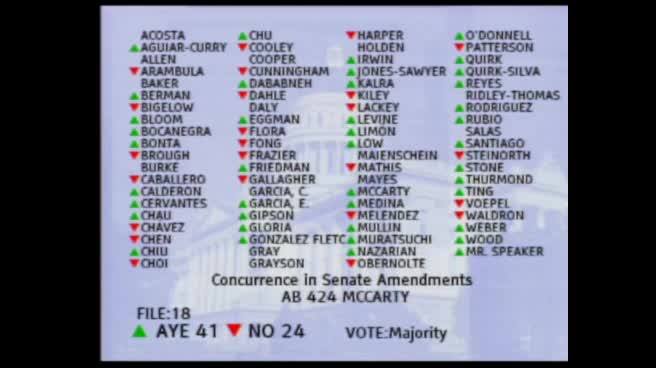 1MIN
Assembly Floor
 3MIN
Senate Floor
 1H
Senate Standing Committee on Appropriations
 1MIN
Assembly Floor
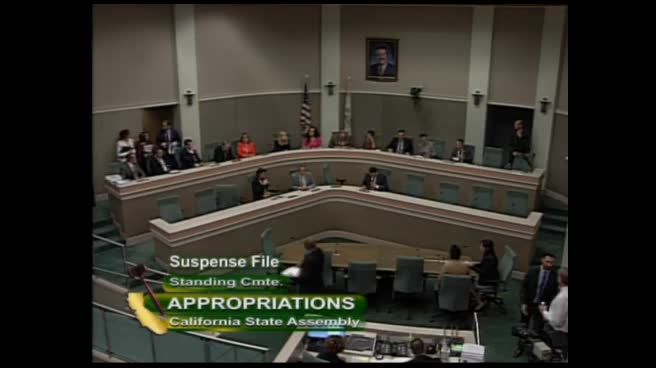 1H
Assembly Standing Committee on Appropriations
 15MIN