AB 1316: Public health: childhood lead poisoning: prevention.
- Session Year: 2017-2018
- House: Assembly
- Latest Version Date: 2017-10-05
Existing law, the Childhood Lead Poisoning Prevention Act of 1991, required the State Department of Public Health (formerly the State Department of Health Services) between July 1, 1992, and July 1, 1993, to adopt regulations establishing a standard of care at least as stringent as the most recent United States Centers for Disease Control and Prevention screening guidelines, whereby all children are evaluated for risk of lead poisoning by health care providers during each childs periodic health assessment. The standard of care, among others, is required to provide that, upon evaluation, those children determined to be at risk for lead poisoning, according to the regulations, are required to be screened. Existing law defines lead poisoning to mean the disease present when the concentration of lead in whole venous blood reaches or exceeds levels constituting a health risk, as specified in the most recent United States Centers for Disease Control and Prevention guidelines for lead poisoning as determined by the department, or when the concentration of lead in whole venous blood reaches or exceeds levels constituting a health risk as determined by the department, as specified. Existing law creates the Childhood Lead Poisoning Prevention Fund consisting of fees imposed on manufacturers and other persons formerly, presently, or both formerly and presently engaged in the stream of commerce of lead or products containing lead, or who are otherwise responsible for identifiable sources of lead that have significantly contributed historically, currently contribute, or both have significantly contributed historically and contribute currently to environmental lead contamination. The moneys in the fund are required to be expended, upon appropriation by the Legislature, for the purposes of the act.
This bill, among other things, would change the definition of lead poisoning to include concentrations of lead in arterial or cord blood. The bill would require that the regulations establishing a standard of care include the determination of risk factors for whether a child is at risk for lead poisoning and would require the department, when determining those risk factors, to consider the most significant environmental risk factors, as specified. The bill would require that the regulations be developed by July 1, 2019, in consultation with medical experts, environmental experts, appropriate professional organizations, the public, and others, as determined by the department. The bill would also clarify that the lead screening would not be paid for by funds from the Childhood Lead Poisoning Prevention Fund.
This bill would further require the department, by March 1, 2019, and by every March 1 thereafter, to prepare and prominently post on its Internet Web site information that, among other things, evaluates the departments progress in identifying children with high blood lead levels and reducing the incidence of excessive childhood lead exposure in this state, as provided. The bill would require the department to use an electronic database, as provided, to support electronic laboratory reporting of blood lead tests, management of lead-exposed children, and assessment of sources of lead exposure. The bill would make conforming and technical changes, and would delete obsolete provisions.
Existing law provides for the regulation of health insurers by the Department of Insurance. Existing law requires health insurers issuing group disability insurance that covers hospital, medical, or surgical expenses to provide benefits for comprehensive preventive care for children 18 years of age and younger under the terms and conditions agreed upon by the group policyholder and the insurer. Existing law requires those benefits to include periodic health evaluations, immunizations, and laboratory services in connection with those periodic health evaluations.
This bill, among other things, would add screening for blood lead levels in children who are at risk for lead poisoning to those required benefits, as specified.
Existing law, the Childhood Lead Poisoning Prevention Act of 1991, required the State Department of Public Health (formerly the State Department of Health Services) between July 1, 1992, and July 1, 1993, to adopt regulations establishing a standard of care at least as stringent as the most recent United States Centers for Disease Control and Prevention screening guidelines, whereby all children are evaluated for risk of lead poisoning by health care providers during each childs periodic health assessment. The standard of care, among others, is required to provide that, upon evaluation, those children determined to be at risk for lead poisoning, according to the regulations, are required to be screened. Existing law defines lead poisoning to mean the disease present when the concentration of lead in whole venous blood reaches or exceeds levels constituting a health risk, as specified in the most recent United States Centers for Disease Control and Prevention guidelines for lead poisoning as determined by the department, or when the concentration of lead in whole venous blood reaches or exceeds levels constituting a health risk as determined by the department, as specified. Existing law creates the Childhood Lead Poisoning Prevention Fund consisting of fees imposed on manufacturers and other persons formerly, presently, or both formerly and presently engaged in the stream of commerce of lead or products containing lead, or who are otherwise responsible for identifiable sources of lead that have significantly contributed historically, currently contribute, or both have significantly contributed historically and contribute currently to environmental lead contamination. The moneys in the fund are required to be expended, upon appropriation by the Legislature, for the purposes of the act.
This bill, among other things, would change the definition of lead poisoning to include concentrations of lead in arterial or cord blood. The bill would require that the regulations establishing a standard of care include the determination of risk factors for whether a child is at risk for lead poisoning and would require the department, when determining those risk factors, to consider the most significant environmental risk factors, as specified. The bill would require that the regulations be developed by July 1, 2019, in consultation with medical experts, environmental experts, appropriate professional organizations, the public, and others, as determined by the department. The bill would also clarify that the lead screening would not be paid for by funds from the Childhood Lead Poisoning Prevention Fund.
This bill would further require the department, by March 1, 2019, and by every March 1 thereafter, to prepare and prominently post on its Internet Web site information that, among other things, evaluates the departments progress in identifying children with high blood lead levels and reducing the incidence of excessive childhood lead exposure in this state, as provided. The bill would require the department to use an electronic database, as provided, to support electronic laboratory reporting of blood lead tests, management of lead-exposed children, and assessment of sources of lead exposure. The bill would make conforming and technical changes, and would delete obsolete provisions.
Existing law provides for the regulation of health insurers by the Department of Insurance. Existing law requires health insurers issuing group disability insurance that covers hospital, medical, or surgical expenses to provide benefits for comprehensive preventive care for children 18 years of age and younger under the terms and conditions agreed upon by the group policyholder and the insurer. Existing law requires those benefits to include periodic health evaluations, immunizations, and laboratory services in connection with those periodic health evaluations.
This bill, among other things, would add screening for blood lead levels in children who are at risk for lead poisoning to those required benefits, as specified.
Existing law, the Childhood Lead Poisoning Prevention Act of 1991, required the State Department of Public Health (formerly the State Department of Health Services) between July 1, 1992, and July 1, 1993, to adopt regulations establishing a standard of care at least as stringent as the most recent United States Centers for Disease Control and Prevention screening guidelines, whereby all children are evaluated for risk of lead poisoning by health care providers during each childs periodic health assessment. The standard of care, among others, is required to be provide that, upon evaluation, those children determined to be at risk for lead poisoning, according to the regulations, are required to be screened. Existing law defines lead poisoning to mean the disease present when the concentration of lead in whole venous blood reaches or exceeds levels constituting a health risk, as specified in the most recent United States Centers for Disease Control and Prevention guidelines for lead poisoning as determined by the department, or when the concentration of lead in whole venous blood reaches or exceeds levels constituting a health risk as determined by the department, as specified. Existing law creates the Childhood Lead Poisoning Prevention Fund consisting of fees imposed on manufacturers and other persons formerly, presently, or both formerly and presently engaged in the stream of commerce of lead or products containing lead, or who are otherwise responsible for identifiable sources of lead that have significantly contributed historically, currently contribute, or both have significantly contributed historically and contribute currently to environmental lead contamination. The moneys in the fund are required to be expended, upon appropriation by the Legislature, for the purposes of the act.
This bill, among other things, would change the definition of lead poisoning to include concentrations of lead in arterial or cord blood. The bill would require that the regulations establishing a standard of care include the determination of risk factors for whether a child is at risk for lead poisoning and would require the department, when determining those risk factors, to consider the most significant environmental risk factors, as specified, specified. The bill would require that the regulations be developed by July 1, 2019, in consultation with medical experts, environmental experts, appropriate professional organizations, the public, and others others, as determined by the department. The bill would also clarify that the lead screening would not be paid for by funds from the Childhood Lead Poisoning Prevention Fund.
This bill would also further require the department, by March 1, 2019, and by every March 1 thereafter, to prepare and prominently post on its Internet Web site a report information that, among other things, evaluates the departments progress in identifying children with high blood lead levels and reducing the incidence of excessive childhood lead exposure in this state, as provided. The bill would require the department to use an electronic database, as provided, to support electronic laboratory reporting of blood lead tests, management of lead-exposed children, and assessment of sources of lead exposure. The bill would make conforming changes, and technical changes, and would delete obsolete provisions.
Existing law provides for the regulation of health insurers by the Department of Insurance. Existing law requires health insurers issuing group disability insurance that covers hospital, medical, or surgical expenses to provide benefits for comprehensive preventative care for children 18 years of age and younger under the terms and conditions agreed upon by the group policyholder and the insurer. Existing law requires those benefits to include periodic health evaluations, immunizations, and laboratory services in connection with those periodic health evaluations.
This bill, among other things, would add screening for blood lead levels in children who are at risk for lead poisoning to those required benefits, as specified.
Existing law, the Childhood Lead Poisoning Prevention Act of 1991, required the State Department of Public Health (formerly the State Department of Health Services) between July 1, 1992, and July 1, 1993, to adopt regulations establishing a standard of care at least as stringent as the most recent United States Centers for Disease Control and Prevention screening guidelines, whereby all children are evaluated for risk of lead poisoning by health care providers during each childs periodic health assessment. The standard of care, among others, is required to be that, upon evaluation, those children determined to be at risk for lead poisoning, according to the regulations, are required to be screened. Existing law defines lead poisoning to mean the disease present when the concentration of lead in whole venous blood reaches or exceeds levels constituting a health risk, as specified in the most recent United States Centers for Disease Control and Prevention guidelines for lead poisoning as determined by the department, or when the concentration of lead in whole venous blood reaches or exceeds levels constituting a health risk as determined by the department, as specified. Existing law creates the Childhood Lead Poisoning Prevention Fund consisting of fees imposed on manufacturers and other persons formerly, presently, or both formerly and presently engaged in the stream of commerce of lead or products containing lead, or who are otherwise responsible for identifiable sources of lead that have significantly contributed historically, currently contribute, or both have significantly contributed historically and contribute currently to environmental lead contamination. The moneys in the fund are required to be expended, upon appropriation by the Legislature, for the purposes of the act.
This bill would require that the regulations establishing a standard of care include a risk assessment for determining whether a child is at risk for lead poisoning that considers the most significant environmental risk factors, as specified, and would clarify that the lead screening would not be paid for by funds from the Childhood Lead Poisoning Prevention Fund. The bill would also make conforming changes, technical changes, and delete obsolete provisions.This bill, among other things, would change the definition of lead poisoning to include concentrations of lead in arterial or cord blood. The bill would require that the regulations establishing a standard of care include the determination of risk factors for whether a child is at risk for lead poisoning and would require the department, when determining those risk factors, to consider the most significant environmental risk factors, as specified, The bill would require that the regulations be developed by July 1, 2019, in consultation with medical experts, environmental experts, appropriate professional organizations, the public, and others as determined by the department. The bill would also clarify that the lead screening would not be paid for by funds from the Childhood Lead Poisoning Prevention Fund.
This bill would also require the department, by March 1, 2019, and by every March 1 thereafter, to prepare and prominently post on its Internet Web site a report that, among other things, evaluates the departments progress in identifying children with high blood lead levels and reducing the incidence of excessive childhood lead exposure in this state, as provided. The bill would make conforming changes, technical changes, and delete obsolete provisions.
Existing law, the Childhood Lead Poisoning Prevention Act of 1991, required the State Department of Public Health (formerly the State Department of Health Services) between July 1, 1992, and July 1, 1993, to adopt regulations establishing a standard of care at least as stringent as the most recent United States Centers for Disease Control and Prevention screening guidelines, whereby all children are evaluated for risk of lead poisoning by health care providers during each childs periodic health assessment. The standard of care, among others, is required to be that, upon evaluation, those children determined to be at risk for lead poisoning, according to the regulations, are required to be screened. Existing law creates the Childhood Lead Poisoning Prevention Fund consisting of fees imposed on manufacturers and other persons formerly, presently, or both formerly and presently engaged in the stream of commerce of lead or products containing lead, or who are otherwise responsible for identifiable sources of lead that have significantly contributed historically, currently contribute, or both have significantly contributed historically and contribute currently to environmental lead contamination. The moneys in the fund are required to be expended, upon appropriation by the Legislature, for the purposes of the act.
This bill would instead require the standard of care to be that all children be screened for blood lead levels, as specified, require that the regulations establishing a standard of care include a risk assessment for determining whether a child is at risk for lead poisoning that considers the most significant environmental risk factors, as specified, and would clarify that the lead screening would not be paid for by funds from the Childhood Lead Poisoning Prevention Fund. The bill would also make conforming changes, technical changes, and delete obsolete provisions.
Existing law, the Childhood Lead Poisoning Prevention Act of 1991, required the State Department of Public Health (formerly the State Department of Health Services) between July 1, 1992, and July 1, 1993, to adopt regulations establishing a standard of care, care at least as stringent as the most recent United States Centers for Disease Control and Prevention screening guidelines, whereby all children are evaluated for risk of lead poisoning by health care providers during each childs periodic health assessment. The standard of care, among others, is required to be that, upon evaluation, those children determined to be at risk for lead poisoning, according to the regulations, are required to be screened. Existing law creates the Childhood Lead Poisoning Prevention Fund consisting of fees imposed on manufacturers and other persons formerly, presently, or both formerly and presently engaged in the stream of commerce of lead or products containing lead, or who are otherwise responsible for identifiable sources of lead that have significantly contributed historically, currently contribute, or both have significantly contributed historically and contribute currently to environmental lead contamination. The moneys in the fund are required to be expended, upon appropriation by the Legislature, for the purposes of the act.
This bill would instead require the standard of care to be that all children be screened for blood lead levels levels, as specified, and would clarify that the lead screening would not be paid for by funds from the Childhood Lead Poisoning Prevention Fund. The bill would also make conforming changes changes, technical changes, and delete obsolete provisions.
Existing law, the Childhood Lead Poisoning Prevention Act of 1991, required the State Department of Public Health (formerly the State Department of Health Services) between July 1, 1992, and July 1, 1993, to adopt regulations establishing a standard of care, at least as stringent as the most recent United States Centers for Disease Control and Prevention screening guidelines, whereby all children are evaluated for risk of lead poisoning by health care providers during each childs periodic health assessment. The standard of care, among others, is required to be that, upon evaluation, those children determined to be at risk for lead poisoning, according to the regulations, are required to be screened. Existing law creates the Childhood Lead Poisoning Prevention Fund consisting of fees imposed on manufacturers and other persons formerly, presently, or both formerly and presently engaged in the stream of commerce of lead or products containing lead, or who are otherwise responsible for identifiable sources of lead that have significantly contributed historically, currently contribute, or both have significantly contributed historically and contribute currently to environmental lead contamination. The moneys in the fund are required to be expended, upon appropriation by the Legislature, for the purposes of the act.
This bill would instead require the standard of care to be that all children be screened for blood lead levels and would clarify that the lead screening would not be paid for by funds from the Childhood Lead Poisoning Prevention Fund. The bill would also make conforming changes and delete obsolete provisions.
(a)Every health care service plan that covers hospital, medical, or surgical expenses on a group basis shall offer benefits for the comprehensive preventive care of children. This section shall apply to children 17 and 18 years of age, except as provided in subparagraph (D) of paragraph (2) of subdivision (b). Every plan shall communicate the availability of these benefits to all group contractholders and to all prospective group contractholders with whom they are negotiating. This section shall apply to a plan that, by rule or order of the director, has been exempted from subdivision (i) of Section 1367, insofar as that section and the rules thereunder relate to the provision of the preventive health care services described herein.
(b)For purposes of this section, benefits for the comprehensive preventive care of children shall comply with both of the following:
(1)Be consistent with both of the following:
(A)The most recent Recommendations for Preventive Pediatric Health Care, as adopted by the American Academy of Pediatrics.
(B)The most current version of the Recommended Childhood Immunization Schedule/United States, jointly adopted by the American Academy of Pediatrics, the Advisory Committee on Immunization Practices, and the American Academy of Family Physicians, unless the State Department of Public Health determines, within 45 days of the published date of the schedule, that the schedule is not consistent with the purposes of this section.
(2)Provide for the following:
(A)Periodic health evaluations.
(B)Immunizations.
(C)Laboratory services in connection with periodic health evaluations.
(D)Screening for blood lead levels in children of any age who are at risk for lead poisoning, as determined by a physician and surgeon affiliated with the plan, if the screening is prescribed by a health care provider affiliated with the plan.
(c)For purposes of this section, a health care provider is any of the following:
(1)A person licensed to practice medicine pursuant to Article 3 (commencing with Section 2050) of Chapter 5 of Division 2 of the Business and Professions Code.
(2)A nurse practitioner licensed to practice pursuant to Article 8 (commencing with Section 2834) of Chapter 6 of Division 2 of the Business and Professions Code.
(3)A physician assistant licensed to practice pursuant to Article 3 (commencing with Section 3513) of Chapter 7.7 of Division 2 of the Business and Professions Code.
SEC. 2.Section 105280 of the Health and Safety Code is amended to read:105280.For purposes of this chapter, the following definitions apply:
(a)Appropriate case management means health care referrals, environmental assessments, and educational activities, performed by the appropriate person, professional, or entity, necessary to reduce a childs exposure to lead and the consequences of the exposure, as determined by the United States Centers for Disease Control and Prevention, or as determined by the department pursuant to Section 105300.
(b)Lead poisoning means the disease present when the concentration of lead in whole venous, arterial, or cord blood reaches or exceeds levels constituting a health risk, as specified in the most recent United States Centers for Disease Control and Prevention guidelines for lead poisoning as determined by the department, or when the concentration of lead in whole venous, arterial, or cord blood reaches or exceeds levels constituting a health risk as determined by the department pursuant to Section 105300.
(c)Department means the State Department of Public Health.
(d)Health assessment has the same meaning as prescribed in Section 6800 of Title 17 of the California Code of Regulations.
(e)Screen means the medical procedure by which the concentration of lead in whole blood is measured.
(f)Health care means the identification, through evaluation and screening, if indicated, of lead poisoning, as well as any followup medical treatment necessary to reduce the elevated blood lead levels.
(g)Environmental lead contamination means the persistent presence of lead in the environment, in quantifiable amounts, that results in ongoing and chronic exposure to children.
SEC. 3.Section 105285 of the Health and Safety Code is amended to read:105285.(a)The department shall adopt regulations establishing a standard of care, at least as stringent as the most recent federal Centers for Disease Control and Prevention screening guidelines, whereby all children are evaluated for risk of lead poisoning by health care providers during each childs periodic health assessment. The regulations shall include the determination of risk factors for whether a child is at risk. When determining the risk factors, the department shall consider the most significant environmental risk factors, including, but not limited to, a childs time spent in a home, school, or building built before 1978, a childs proximity to a former lead or steel smelter or an industrial facility that historically emitted or currently emits lead, a childs proximity to a freeway or heavily traveled roadway, other potential risk factors for lead exposure, and known sources of lead contamination. By July 1, 2019, the regulations shall be developed in consultation with medical experts, environmental experts, appropriate professional organizations, the public, and others as determined by the department.
(b)The standard of care shall require a child who is determined to be at risk for lead poisoning, according to the regulations adopted pursuant to subdivision (a), to be screened.
(c)The standard of care shall provide that a child shall not be screened pursuant to this chapter if the parent or guardian of the child refuses to consent to the screening.
(d)The standard of care shall provide that health care providers are responsible only for evaluation of all children, for screening of children determined to be at risk, and for medically necessary followup services.
(e)The fee imposed by Section 105310 shall not be used to fund blood lead screening under this section.
SEC. 4.Section 105290 of the Health and Safety Code is amended to read:105290.When a child is identified with lead poisoning, the department shall ensure appropriate case management. The department may contract with any public or private entity, including local agencies, to conduct the case management.
SEC. 5.Section 105310 of the Health and Safety Code is amended to read:105310.(a)There is hereby imposed a fee on manufacturers and other persons formerly, presently, or both formerly and presently engaged in the stream of commerce of lead or products containing lead, or who are otherwise responsible for identifiable sources of lead that have significantly contributed historically, currently contribute, or both have significantly contributed historically and contribute currently to environmental lead contamination.
(b)The department shall, by regulation, establish specific fees to be assessed on manufacturers and other parties formerly, presently, or both formerly and presently engaged in the stream of commerce of lead or products containing lead, or who are otherwise responsible for identifiable sources of lead that, as determined by the department, have significantly contributed historically, currently contribute, or both have significantly contributed historically and contribute currently to environmental lead contamination.
To the maximum extent practicable, the fees shall be assessed on the basis of the following criteria:
(1)A persons past and present responsibility for environmental lead contamination.
(2)A persons market share responsibility for environmental lead contamination.
This section shall not apply to, and no fee shall be assessed upon, any retailer of lead or products containing lead.
(c)The fee shall be assessed and collected annually by the State Board of Equalization. The annual fee assessment in subdivision (a) shall be adjusted by the department to reflect both of the following:
(1)The increase in the annual average of the California Consumer Price Index, as recorded by the California Department of Industrial Relations, for the most recent year available.
(2)The increase or decrease in the number of children in California who are receiving services pursuant to this chapter.
This adjustment of fees shall not be subject to the requirements of Chapter 3.5 (commencing with Section 11340) of Part 1 of Division 3 of Title 2 of the Government Code.
(d)(1)A fee shall not be assessed upon a person if that person can demonstrate, as determined by the department, that his or her industry did not contribute in any manner, as described in this section, to environmental lead contamination.
(2)A fee shall not be assessed upon a party if that party demonstrates, as determined by the department, that the lead, or the product containing lead, with which it is currently, or was historically, associated does not currently, or did not historically, result in quantifiably persistent environmental lead contamination.
(e)The fee imposed pursuant to this section shall be administered and collected by the State Board of Equalization in accordance with Part 22 (commencing with Section 43001) of Division 2 of the Revenue and Taxation Code. The fees shall be deposited in the Childhood Lead Poisoning Prevention Fund, which is hereby created in the State Treasury. Moneys in the fund shall be expended for the purposes of this chapter, including the State Board of Equalizations costs of collection and administration of fees, upon appropriation by the Legislature. All interest earned on the moneys that have been deposited into the Childhood Lead Poisoning Prevention Fund shall be retained in that fund.
(f)The fees collected pursuant to this section and the earnings therefrom shall be used solely for the purposes of implementing this chapter. The department shall not collect fees pursuant to this section in excess of the amount reasonably anticipated by the department to fully implement this chapter. The department shall not spend more than it collects from the fees and the earnings in implementing this chapter. In no fiscal year shall the department collect more than sixteen million dollars ($16,000,000) in fees, as adjusted for inflation pursuant to subdivision (b).
(g)It is the intent of the Legislature, in subsequent legislation, to appropriate and deposit into the Childhood Lead Poisoning Prevention Fund the sum of one hundred twenty-eight thousand dollars ($128,000) from the General Fund on July 1, 1992, to the Controller for allocation as loans as follows:
(1)Seventy-eight thousand dollars ($78,000) to the department, for the purposes of adopting regulations to establish the fee schedule authorized by this section. The State Board of Equalization shall repay the amount of this appropriation, on or before June 30, 1993, with interest at the pooled money investment rate, from fees collected pursuant to this section.
(2)Fifty thousand dollars ($50,000) to the State Board of Equalization, for the purposes of implementing this section. The State Board of Equalization shall repay the amount of this appropriation on or before June 30, 1993, with interest at the pooled money investment rate, from fees collected pursuant to this section.
(h)Regulations adopted for fee assessment and collection pursuant to this section shall be exempt from review by the Office of Administrative Law.
SEC. 6.Section 124125 of the Health and Safety Code is amended to read:124125.(a)The Legislature hereby finds and declares that childhood lead exposure represents the most significant childhood environmental health problem in the state today; that too little is known about the prevalence, long-term health care costs, severity, and location of these problems in California; that it is well known that the environment is widely contaminated with lead; that excessive lead exposure causes acute and chronic damage to a childs renal system, red blood cells, and developing brain and nervous system; that at least one in every 25 children in the nation has an elevated blood lead level; and that the cost to society of neglecting this problem may be enormous.
(b)The Legislature further finds and declares that knowledge about where and to what extent harmful childhood lead exposures are occurring in the state could lead to the prevention of these exposures, and to the betterment of the health of Californias future citizens. Therefore, the enactment of this article establishes a state Childhood Lead Poisoning Prevention Program. The department shall accomplish all of the following:
(1)To compile information concerning the prevalence, causes, and geographic occurrence of high childhood blood lead levels.
(2)To identify and target areas of the state where childhood lead exposures are especially significant.
(3)To analyze information collected pursuant to this article and, where indicated, design and implement a program of medical followup and environmental abatement and followup that will reduce the incidence of excessive childhood lead exposures in California.
(c)(1)By March 1, 2019, and by March 1 of each year thereafter, the department shall prepare and prominently post on its Internet Web site information that evaluates the departments progress in meeting the goals of this section. The information shall also include all of the following:
(A)An annually updated analysis of the data and information identified and compiled relative to paragraphs (1) and (2) of subdivision (b).
(B)To the greatest extent possible, a list of the census tracts in which children test positive at a rate higher than the national average for blood lead in exceedance of the federal Centers for Disease Control and Preventions reference level for elevated blood lead based on the data and information received during the previous calendar year.
(2)All uses and disclosures of data made pursuant to this section shall comply with all applicable state and federal laws for the protection of the privacy and security of data, including, but not limited to, the Confidentiality of Medical Information Act (Part 2.6 (commencing with Section 56) of Division 1 of the Civil Code), the Information Practices Act of 1977 (Chapter 1 (commencing with Section 1798) of Title 1.8 of Part 4 of Division 3 of the Civil Code), Title 1.81 (commencing with Section 1798.80) of Part 4 of Division 3 of the Civil Code, the federal Health Insurance Portability and Accountability Act of 1996 (Public Law 104-191), and the federal Health Information Technology for Economic and Clinical Health Act, Title XIII of the federal American Recovery and Reinvestment Act of 2009 (Public Law 111-5), and implementing regulations.
SEC. 7.Section 124130 of the Health and Safety Code is amended to read:124130.(a)A laboratory that performs a blood lead analysis on a specimen of human blood drawn in California shall report the information specified in this section to the department for each analysis on every person tested.
(b)The analyzing laboratory shall report all of the following:
(1)The test results in micrograms of lead per deciliter.
(2)The name of the person tested.
(3)The persons birth date if the analyzing laboratory has that information, or if not, the persons age.
(4)The persons address, including the ZIP Code, if the analyzing laboratory has that information, or if not, a telephone number by which the person may be contacted.
(5)The name, address, and telephone number of the health care provider that ordered the analysis.
(6)The name, address, and telephone number of the analyzing laboratory.
(7)The accession number of the specimen.
(8)The date the analysis was performed.
(c)The analyzing laboratory shall report all of the following information that it possesses:
(1)The persons gender.
(2)The name, address, and telephone number of the persons employer, if any.
(3)The date the specimen was drawn.
(4)The source of the specimen, specified as venous, capillary, arterial, cord blood, or other.
(d)The analyzing laboratory may report to the department other information that directly relates to the blood lead analysis or to the identity, location, medical management, or environmental management of the person tested.
(e)If the result of the blood lead analysis is a blood lead level equal to or greater than 10 micrograms of lead per deciliter of blood, the report required by this section shall be submitted within three working days of the analysis. If the result is less than 10 micrograms per deciliter, the report required by this section shall be submitted within 30 calendar days.
(f)A report required by this section shall be submitted by electronic transfer.
(g)All information reported pursuant to this section shall be confidential, as provided in Section 100330, except that the department may share the information for the purpose of surveillance, case management, investigation, environmental assessment, environmental remediation, or abatement with the local health department, environmental health agency authorized pursuant to Section 101275, or building department. The local health department, environmental health agency, or building department shall otherwise maintain the confidentiality of the information in the manner provided in Section 100330.
(h)The director may assess a fine up to five hundred dollars ($500) against any laboratory that knowingly fails to meet the reporting requirements of this section.
(i)A laboratory shall not be fined or otherwise penalized for failure to provide the patients birth date, age, address, or telephone number if the result of the blood lead analysis is a blood lead level less than 25 micrograms of lead per deciliter of blood, and if all of the following circumstances exist:
(1)The test sample was sent to the laboratory by another medical care provider.
(2)The laboratory requested the information from the medical care provider who obtained the sample.
(3)The medical care provider that obtained the sample and sent it to the laboratory failed to provide the patients birth date, age, address, or telephone number.
SEC. 8.Section 124150 of the Health and Safety Code is amended to read:124150.The Legislature hereby finds and declares that the activities conducted by the department pursuant to Section 124130 have confirmed and supported the findings specified in Section 124125 and, in addition, have resulted in the following findings:
(a)Very few children are currently tested for elevated blood lead levels in California. The lead registry established pursuant to Section 124130 has been effective at identifying incidents of occupational lead poisoning; however, because childhood lead screening is not now required in California, the registry is unable to serve as the exclusive mechanism to identify children with elevated blood lead levels. Additional blood lead screening needs to be done to identify children at high risk of lead poisoning.
(b)Based on emerging information about the severe deleterious effects of low levels of lead on childrens health, the lead danger level is expected to continue to be lowered.
(c)Lead poisoning poses a serious health threat for significant numbers of California children. Based on lead registry reports and targeted screening results, the department has estimated that tens of thousands of California children may be suffering from blood lead levels greater than the danger level.
(d)The implications of lead exposure to children and pregnant women from lead brought home on the clothing of workers are unknown, but may be significant.
(e)Levels of lead found in soil and paint around and on housing constitute a health hazard to children living in the housing. No regulations currently exist to limit allowable levels of lead in paint surfaces in California housing.
SEC. 9.Section 124151 is added to the Health and Safety Code, to read:124151.The department shall use an electronic database consistent with the goals outlined in Section 124125 to support electronic laboratory reporting of blood lead tests reported pursuant to Section 124130, management of lead-exposed children, and assessment of sources of lead exposures.
SEC. 10.Section 10123.5 of the Insurance Code is amended to read:10123.5.(a)On or after January 1, 1993, every insurer issuing group disability insurance that covers hospital, medical, or surgical expenses shall provide benefits for the comprehensive preventive care of children 16 years of age or younger under those terms and conditions as may be agreed upon between the group policyholder and the insurer. Every insurer shall communicate the availability of these benefits to all group policyholders and to all prospective group policyholders with whom they are negotiating.
(b)For purposes of this section, benefits for the comprehensive preventive care of children shall comply with both of the following:
(1)Be consistent with both of the following:
(A)The most recent Recommendations for Preventive Pediatric Health Care, as adopted by the American Academy of Pediatrics.
(B)The most current version of the Recommended Childhood Immunization Schedule/United States, jointly adopted by the American Academy of Pediatrics, the Advisory Committee on Immunization Practices, and the American Academy of Family Physicians, unless the State Department of Public Health determines, within 45 days of the published date of the schedule, that the schedule is not consistent with the purposes of this section.
(2)Provide for the following:
(A)Periodic health evaluations.
(B)Immunizations.
(C)Laboratory services in connection with periodic health evaluations.
(D)Screening for blood lead levels in children who are at risk for lead poisoning, as determined by a health care provider in accordance with the applicable California regulations.
(c)For purposes of this section, a health care provider is any of the following:
(1)A person licensed to practice medicine pursuant to Article 3 (commencing with Section 2050) of Chapter 5 of Division 2 of the Business and Professions Code.
(2)A nurse practitioner licensed to practice pursuant to Article 8 (commencing with Section 2834) of Chapter 6 of Division 2 of the Business and Professions Code.
(3)A physician assistant licensed to practice pursuant to Article 3 (commencing with Section 3513) of Chapter 7.7 of Division 2 of the Business and Professions Code.
SEC. 11.Section 10123.55 of the Insurance Code is amended to read:10123.55.(a)On or after January 1, 1993, every insurer issuing group disability insurance that covers hospital, medical, or surgical expenses shall offer benefits for the comprehensive preventive care of children 17 and 18 years of age under those terms and conditions as may be agreed upon between the group policyholder and the insurer. Every insurer shall communicate the availability of these benefits to all group policyholders and to all prospective group policyholders with whom they are negotiating.
(b)For purposes of this section, benefits for the comprehensive preventive care of children shall comply with both of the following:
(1)Be consistent with both of the following:
(A)The most recent Recommendations for Preventive Pediatric Health Care, as adopted by the American Academy of Pediatrics.
(B)The most current version of the Recommended Childhood Immunization Schedule/United States, jointly adopted by the American Academy of Pediatrics, the Advisory Committee on Immunization Practices, and the American Academy of Family Physicians, unless the State Department of Public Health determines, within 45 days of the published date of the schedule, that the schedule is not consistent with the purposes of this section.
(2)Provide for the following:
(A)Periodic health evaluations.
(B)Immunizations.
(C)Laboratory services in connection with periodic health evaluations.
(D)Screening for blood lead levels in children who are at risk for lead poisoning, as determined by a health care provider in accordance with the applicable California regulations.
(c)For purposes of this section, a health care provider is any of the following:
(1)A person licensed to practice medicine pursuant to Article 3 (commencing with Section 2050) of Chapter 5 of Division 2 of the Business and Professions Code.
(2)A nurse practitioner licensed to practice pursuant to Article 8 (commencing with Section 2834) of Chapter 6 of Division 2 of the Business and Professions Code.
(3)A physician assistant licensed to practice pursuant to Article 3 (commencing with Section 3513) of Chapter 7.7 of Division 2 of the Business and Professions Code.
(a)Every health care service plan that covers hospital, medical, or surgical expenses on a group basis shall offer benefits for the comprehensive preventive care of children. This section shall apply to children 17 and 18 years of age, except as provided in subparagraph (D) of paragraph (2) of subdivision (b). Every plan shall communicate the availability of these benefits to all group contractholders and to all prospective group contractholders with whom they are negotiating. This section shall apply to a plan that, by rule or order of the director, has been exempted from subdivision (i) of Section 1367, insofar as that section and the rules thereunder relate to the provision of the preventive health care services described herein.
(b)For purposes of this section, benefits for the comprehensive preventive care of children shall comply with both of the following:
(1)Be consistent with both of the following:
(A)The most recent Recommendations for Preventive Pediatric Health Care, as adopted by the American Academy of Pediatrics.
(B)The most current version of the Recommended Childhood Immunization Schedule/United States, jointly adopted by the American Academy of Pediatrics, the Advisory Committee on Immunization Practices, and the American Academy of Family Physicians, unless the State Department of Public Health determines, within 45 days of the published date of the schedule, that the schedule is not consistent with the purposes of this section.
(2)Provide for the following:
(A)Periodic health evaluations.
(B)Immunizations.
(C)Laboratory services in connection with periodic health evaluations.
(D)Screening for blood lead levels in children of any age who are at risk for lead poisoning, as determined by a physician and surgeon affiliated with the plan, if the screening is prescribed by a health care provider affiliated with the plan.
(c)For purposes of this section, a health care provider is any of the following:
(1)A person licensed to practice medicine pursuant to Article 3 (commencing with Section 2050) of Chapter 5 of Division 2 of the Business and Professions Code.
(2)A nurse practitioner licensed to practice pursuant to Article 8 (commencing with Section 2834) of Chapter 6 of Division 2 of the Business and Professions Code.
(3)A physician assistant licensed to practice pursuant to Article 3 (commencing with Section 3513) of Chapter 7.7 of Division 2 of the Business and Professions Code.
SEC. 2.Section 105280 of the Health and Safety Code is amended to read:105280.For purposes of this chapter, the following definitions apply:
(a)Appropriate case management means health care referrals, environmental assessments, and educational activities, performed by the appropriate person, professional, or entity, necessary to reduce a childs exposure to lead and the consequences of the exposure, as determined by the United States Centers for Disease Control and Prevention, or as determined by the department pursuant to Section 105300.
(b)Lead poisoning means the disease present when the concentration of lead in whole venous, arterial, or cord blood reaches or exceeds levels constituting a health risk, as specified in the most recent United States Centers for Disease Control and Prevention guidelines for lead poisoning as determined by the department, or when the concentration of lead in whole venous, arterial, or cord blood reaches or exceeds levels constituting a health risk as determined by the department pursuant to Section 105300.
(c)Department means the State Department of Public Health.
(d)Health assessment has the same meaning as prescribed in Section 6800 of Title 17 of the California Code of Regulations.
(e)Screen means the medical procedure by which the concentration of lead in whole blood is measured.
(f)Health care means the identification, through evaluation and screening, if indicated, of lead poisoning, as well as any followup medical treatment necessary to reduce the elevated blood lead levels.
(g)Environmental lead contamination means the persistent presence of lead in the environment, in quantifiable amounts, that results in ongoing and chronic exposure to children.
SEC. 3.Section 105285 of the Health and Safety Code is amended to read:105285.(a)The department shall adopt regulations establishing a standard of care, at least as stringent as the most recent federal Centers for Disease Control and Prevention screening guidelines, whereby all children are evaluated for risk of lead poisoning by health care providers during each childs periodic health assessment. The regulations shall include the determination of risk factors for whether a child is at risk. When determining the risk factors, the department shall consider the most significant environmental risk factors, including, but not limited to, a childs time spent in a home, school, or building built before 1978, a childs proximity to a former lead or steel smelter or an industrial facility that historically emitted or currently emits lead, a childs proximity to a freeway or heavily traveled roadway, other potential risk factors for lead exposure, and known sources of lead contamination. By July 1, 2019, the regulations shall be developed in consultation with medical experts, environmental experts, appropriate professional organizations, the public, and others as determined by the department.
(b)The standard of care shall require a child who is determined to be at risk for lead poisoning, according to the regulations adopted pursuant to subdivision (a), to be screened.
(c)The standard of care shall provide that a child shall not be screened pursuant to this chapter if the parent or guardian of the child refuses to consent to the screening.
(d)The standard of care shall provide that health care providers are responsible only for evaluation of all children, for screening of children determined to be at risk, and for medically necessary followup services.
(e)The fee imposed by Section 105310 shall not be used to fund blood lead screening under this section.
SEC. 4.Section 105290 of the Health and Safety Code is amended to read:105290.When a child is identified with lead poisoning, the department shall ensure appropriate case management. The department may contract with any public or private entity, including local agencies, to conduct the case management.
SEC. 5.Section 105310 of the Health and Safety Code is amended to read:105310.(a)There is hereby imposed a fee on manufacturers and other persons formerly, presently, or both formerly and presently engaged in the stream of commerce of lead or products containing lead, or who are otherwise responsible for identifiable sources of lead that have significantly contributed historically, currently contribute, or both have significantly contributed historically and contribute currently to environmental lead contamination.
(b)The department shall, by regulation, establish specific fees to be assessed on manufacturers and other parties formerly, presently, or both formerly and presently engaged in the stream of commerce of lead or products containing lead, or who are otherwise responsible for identifiable sources of lead that, as determined by the department, have significantly contributed historically, currently contribute, or both have significantly contributed historically and contribute currently to environmental lead contamination.
To the maximum extent practicable, the fees shall be assessed on the basis of the following criteria:
(1)A persons past and present responsibility for environmental lead contamination.
(2)A persons market share responsibility for environmental lead contamination.
This section shall not apply to, and no fee shall be assessed upon, any retailer of lead or products containing lead.
(c)The fee shall be assessed and collected annually by the State Board of Equalization. The annual fee assessment in subdivision (a) shall be adjusted by the department to reflect both of the following:
(1)The increase in the annual average of the California Consumer Price Index, as recorded by the California Department of Industrial Relations, for the most recent year available.
(2)The increase or decrease in the number of children in California who are receiving services pursuant to this chapter.
This adjustment of fees shall not be subject to the requirements of Chapter 3.5 (commencing with Section 11340) of Part 1 of Division 3 of Title 2 of the Government Code.
(d)(1)A fee shall not be assessed upon a person if that person can demonstrate, as determined by the department, that his or her industry did not contribute in any manner, as described in this section, to environmental lead contamination.
(2)A fee shall not be assessed upon a party if that party demonstrates, as determined by the department, that the lead, or the product containing lead, with which it is currently, or was historically, associated does not currently, or did not historically, result in quantifiably persistent environmental lead contamination.
(e)The fee imposed pursuant to this section shall be administered and collected by the State Board of Equalization in accordance with Part 22 (commencing with Section 43001) of Division 2 of the Revenue and Taxation Code. The fees shall be deposited in the Childhood Lead Poisoning Prevention Fund, which is hereby created in the State Treasury. Moneys in the fund shall be expended for the purposes of this chapter, including the State Board of Equalizations costs of collection and administration of fees, upon appropriation by the Legislature. All interest earned on the moneys that have been deposited into the Childhood Lead Poisoning Prevention Fund shall be retained in that fund.
(f)The fees collected pursuant to this section and the earnings therefrom shall be used solely for the purposes of implementing this chapter. The department shall not collect fees pursuant to this section in excess of the amount reasonably anticipated by the department to fully implement this chapter. The department shall not spend more than it collects from the fees and the earnings in implementing this chapter. In no fiscal year shall the department collect more than sixteen million dollars ($16,000,000) in fees, as adjusted for inflation pursuant to subdivision (b).
(g)It is the intent of the Legislature, in subsequent legislation, to appropriate and deposit into the Childhood Lead Poisoning Prevention Fund the sum of one hundred twenty-eight thousand dollars ($128,000) from the General Fund on July 1, 1992, to the Controller for allocation as loans as follows:
(1)Seventy-eight thousand dollars ($78,000) to the department, for the purposes of adopting regulations to establish the fee schedule authorized by this section. The State Board of Equalization shall repay the amount of this appropriation, on or before June 30, 1993, with interest at the pooled money investment rate, from fees collected pursuant to this section.
(2)Fifty thousand dollars ($50,000) to the State Board of Equalization, for the purposes of implementing this section. The State Board of Equalization shall repay the amount of this appropriation on or before June 30, 1993, with interest at the pooled money investment rate, from fees collected pursuant to this section.
(h)Regulations adopted for fee assessment and collection pursuant to this section shall be exempt from review by the Office of Administrative Law.
SEC. 6.Section 124125 of the Health and Safety Code is amended to read:124125.(a)The Legislature hereby finds and declares that childhood lead exposure represents the most significant childhood environmental health problem in the state today; that too little is known about the prevalence, long-term health care costs, severity, and location of these problems in California; that it is well known that the environment is widely contaminated with lead; that excessive lead exposure causes acute and chronic damage to a childs renal system, red blood cells, and developing brain and nervous system; that at least one in every 25 children in the nation has an elevated blood lead level; and that the cost to society of neglecting this problem may be enormous.
(b)The Legislature further finds and declares that knowledge about where and to what extent harmful childhood lead exposures are occurring in the state could lead to the prevention of these exposures, and to the betterment of the health of Californias future citizens. Therefore, the enactment of this article establishes a state Childhood Lead Poisoning Prevention Program. The department shall accomplish all of the following:
(1)To compile information concerning the prevalence, causes, and geographic occurrence of high childhood blood lead levels.
(2)To identify and target areas of the state where childhood lead exposures are especially significant.
(3)To analyze information collected pursuant to this article and, where indicated, design and implement a program of medical followup and environmental abatement and followup that will reduce the incidence of excessive childhood lead exposures in California.
(c)(1)By March 1, 2019, and by March 1 of each year thereafter, the department shall prepare and prominently post on its Internet Web site information that evaluates the departments progress in meeting the goals of this section. The information shall also include all of the following:
(A)An annually updated analysis of the data and information identified and compiled relative to paragraphs (1) and (2) of subdivision (b).
(B)To the greatest extent possible, a list of the census tracts in which children test positive at a rate higher than the national average for blood lead in exceedance of the federal Centers for Disease Control and Preventions reference level for elevated blood lead based on the data and information received during the previous calendar year.
(2)All uses and disclosures of data made pursuant to this section shall comply with all applicable state and federal laws for the protection of the privacy and security of data, including, but not limited to, the Confidentiality of Medical Information Act (Part 2.6 (commencing with Section 56) of Division 1 of the Civil Code), the Information Practices Act of 1977 (Chapter 1 (commencing with Section 1798) of Title 1.8 of Part 4 of Division 3 of the Civil Code), Title 1.81 (commencing with Section 1798.80) of Part 4 of Division 3 of the Civil Code, the federal Health Insurance Portability and Accountability Act of 1996 (Public Law 104-191), and the federal Health Information Technology for Economic and Clinical Health Act, Title XIII of the federal American Recovery and Reinvestment Act of 2009 (Public Law 111-5), and implementing regulations.
SEC. 7.Section 124130 of the Health and Safety Code is amended to read:124130.(a)A laboratory that performs a blood lead analysis on a specimen of human blood drawn in California shall report the information specified in this section to the department for each analysis on every person tested.
(b)The analyzing laboratory shall report all of the following:
(1)The test results in micrograms of lead per deciliter.
(2)The name of the person tested.
(3)The persons birth date if the analyzing laboratory has that information, or if not, the persons age.
(4)The persons address, including the ZIP Code, if the analyzing laboratory has that information, or if not, a telephone number by which the person may be contacted.
(5)The name, address, and telephone number of the health care provider that ordered the analysis.
(6)The name, address, and telephone number of the analyzing laboratory.
(7)The accession number of the specimen.
(8)The date the analysis was performed.
(c)The analyzing laboratory shall report all of the following information that it possesses:
(1)The persons gender.
(2)The name, address, and telephone number of the persons employer, if any.
(3)The date the specimen was drawn.
(4)The source of the specimen, specified as venous, capillary, arterial, cord blood, or other.
(d)The analyzing laboratory may report to the department other information that directly relates to the blood lead analysis or to the identity, location, medical management, or environmental management of the person tested.
(e)If the result of the blood lead analysis is a blood lead level equal to or greater than 10 micrograms of lead per deciliter of blood, the report required by this section shall be submitted within three working days of the analysis. If the result is less than 10 micrograms per deciliter, the report required by this section shall be submitted within 30 calendar days.
(f)A report required by this section shall be submitted by electronic transfer.
(g)All information reported pursuant to this section shall be confidential, as provided in Section 100330, except that the department may share the information for the purpose of surveillance, case management, investigation, environmental assessment, environmental remediation, or abatement with the local health department, environmental health agency authorized pursuant to Section 101275, or building department. The local health department, environmental health agency, or building department shall otherwise maintain the confidentiality of the information in the manner provided in Section 100330.
(h)The director may assess a fine up to five hundred dollars ($500) against any laboratory that knowingly fails to meet the reporting requirements of this section.
(i)A laboratory shall not be fined or otherwise penalized for failure to provide the patients birth date, age, address, or telephone number if the result of the blood lead analysis is a blood lead level less than 25 micrograms of lead per deciliter of blood, and if all of the following circumstances exist:
(1)The test sample was sent to the laboratory by another medical care provider.
(2)The laboratory requested the information from the medical care provider who obtained the sample.
(3)The medical care provider that obtained the sample and sent it to the laboratory failed to provide the patients birth date, age, address, or telephone number.
SEC. 8.Section 124150 of the Health and Safety Code is amended to read:124150.The Legislature hereby finds and declares that the activities conducted by the department pursuant to Section 124130 have confirmed and supported the findings specified in Section 124125 and, in addition, have resulted in the following findings:
(a)Very few children are currently tested for elevated blood lead levels in California. The lead registry established pursuant to Section 124130 has been effective at identifying incidents of occupational lead poisoning; however, because childhood lead screening is not now required in California, the registry is unable to serve as the exclusive mechanism to identify children with elevated blood lead levels. Additional blood lead screening needs to be done to identify children at high risk of lead poisoning.
(b)Based on emerging information about the severe deleterious effects of low levels of lead on childrens health, the lead danger level is expected to continue to be lowered.
(c)Lead poisoning poses a serious health threat for significant numbers of California children. Based on lead registry reports and targeted screening results, the department has estimated that tens of thousands of California children may be suffering from blood lead levels greater than the danger level.
(d)The implications of lead exposure to children and pregnant women from lead brought home on the clothing of workers are unknown, but may be significant.
(e)Levels of lead found in soil and paint around and on housing constitute a health hazard to children living in the housing. No regulations currently exist to limit allowable levels of lead in paint surfaces in California housing.
SEC. 9.Section 124151 is added to the Health and Safety Code, to read:124151.The department shall use an electronic database consistent with the goals outlined in Section 124125 to support electronic laboratory reporting of blood lead tests reported pursuant to Section 124130, management of lead-exposed children, and assessment of sources of lead exposures.
SEC. 10.Section 10123.5 of the Insurance Code is amended to read:10123.5.(a)On or after January 1, 1993, every insurer issuing group disability insurance that covers hospital, medical, or surgical expenses shall provide benefits for the comprehensive preventive care of children 16 years of age or younger under those terms and conditions as may be agreed upon between the group policyholder and the insurer. Every insurer shall communicate the availability of these benefits to all group policyholders and to all prospective group policyholders with whom they are negotiating.
(b)For purposes of this section, benefits for the comprehensive preventive care of children shall comply with both of the following:
(1)Be consistent with both of the following:
(A)The most recent Recommendations for Preventive Pediatric Health Care, as adopted by the American Academy of Pediatrics.
(B)The most current version of the Recommended Childhood Immunization Schedule/United States, jointly adopted by the American Academy of Pediatrics, the Advisory Committee on Immunization Practices, and the American Academy of Family Physicians, unless the State Department of Public Health determines, within 45 days of the published date of the schedule, that the schedule is not consistent with the purposes of this section.
(2)Provide for the following:
(A)Periodic health evaluations.
(B)Immunizations.
(C)Laboratory services in connection with periodic health evaluations.
(D)Screening for blood lead levels in children who are at risk for lead poisoning, as determined by a health care provider in accordance with the applicable California regulations.
(c)For purposes of this section, a health care provider is any of the following:
(1)A person licensed to practice medicine pursuant to Article 3 (commencing with Section 2050) of Chapter 5 of Division 2 of the Business and Professions Code.
(2)A nurse practitioner licensed to practice pursuant to Article 8 (commencing with Section 2834) of Chapter 6 of Division 2 of the Business and Professions Code.
(3)A physician assistant licensed to practice pursuant to Article 3 (commencing with Section 3513) of Chapter 7.7 of Division 2 of the Business and Professions Code.
SEC. 11.Section 10123.55 of the Insurance Code is amended to read:10123.55.(a)On or after January 1, 1993, every insurer issuing group disability insurance that covers hospital, medical, or surgical expenses shall offer benefits for the comprehensive preventive care of children 17 and 18 years of age under those terms and conditions as may be agreed upon between the group policyholder and the insurer. Every insurer shall communicate the availability of these benefits to all group policyholders and to all prospective group policyholders with whom they are negotiating.
(b)For purposes of this section, benefits for the comprehensive preventive care of children shall comply with both of the following:
(1)Be consistent with both of the following:
(A)The most recent Recommendations for Preventive Pediatric Health Care, as adopted by the American Academy of Pediatrics.
(B)The most current version of the Recommended Childhood Immunization Schedule/United States, jointly adopted by the American Academy of Pediatrics, the Advisory Committee on Immunization Practices, and the American Academy of Family Physicians, unless the State Department of Public Health determines, within 45 days of the published date of the schedule, that the schedule is not consistent with the purposes of this section.
(2)Provide for the following:
(A)Periodic health evaluations.
(B)Immunizations.
(C)Laboratory services in connection with periodic health evaluations.
(D)Screening for blood lead levels in children who are at risk for lead poisoning, as determined by a health care provider in accordance with the applicable California regulations.
(c)For purposes of this section, a health care provider is any of the following:
(1)A person licensed to practice medicine pursuant to Article 3 (commencing with Section 2050) of Chapter 5 of Division 2 of the Business and Professions Code.
(2)A nurse practitioner licensed to practice pursuant to Article 8 (commencing with Section 2834) of Chapter 6 of Division 2 of the Business and Professions Code.
(3)A physician assistant licensed to practice pursuant to Article 3 (commencing with Section 3513) of Chapter 7.7 of Division 2 of the Business and Professions Code.
(a)Every health care service plan that covers hospital, medical, or surgical expenses on a group basis shall offer benefits for the comprehensive preventive care of children. This section shall apply to children 17 and 18 years of age, except as provided in subparagraph (D) of paragraph (2) of subdivision (b). Every plan shall communicate the availability of these benefits to all group contractholders and to all prospective group contractholders with whom they are negotiating. This section shall apply to a plan that, by rule or order of the director, has been exempted from subdivision (i) of Section 1367, insofar as that section and the rules thereunder relate to the provision of the preventive health care services described herein.
(b)For purposes of this section, benefits for the comprehensive preventive care of children shall comply with both of the following:
(1)Be consistent with both of the following:
(A)The most recent Recommendations for Preventive Pediatric Health Care, as adopted by the American Academy of Pediatrics.
(B)The most current version of the Recommended Childhood Immunization Schedule/United States, jointly adopted by the American Academy of Pediatrics, the Advisory Committee on Immunization Practices, and the American Academy of Family Physicians, unless the State Department of Public Health determines, within 45 days of the published date of the schedule, that the schedule is not consistent with the purposes of this section.
(2)Provide for the following:
(A)Periodic health evaluations.
(B)Immunizations.
(C)Laboratory services in connection with periodic health evaluations.
(D)Screening for blood lead levels in children of any age who are at risk for lead poisoning, as determined by a physician and surgeon affiliated with the plan, if the screening is prescribed by a health care provider affiliated with the plan.
(c)For purposes of this section, a health care provider is any of the following:
(1)A person licensed to practice medicine pursuant to Article 3 (commencing with Section 2050) of Chapter 5 of Division 2 of the Business and Professions Code.
(2)A nurse practitioner licensed to practice pursuant to Article 8 (commencing with Section 2834) of Chapter 6 of Division 2 of the Business and Professions Code.
(3)A physicians physician assistant licensed to practice pursuant to Article 3 (commencing with Section 3513) of Chapter 7.7 of Division 2 of the Business and Professions Code.
SEC. 2.Section 105280 of the Health and Safety Code is amended to read:105280.For purposes of this chapter, the following definitions apply:
(a)Appropriate case management means health care referrals, environmental assessments, and educational activities, performed by the appropriate person, professional, or entity, necessary to reduce a childs exposure to lead and the consequences of the exposure, as determined by the United States Centers for Disease Control and Prevention, or as determined by the department pursuant to Section 105300.
(b)Lead poisoning means the disease present when the concentration of lead in whole venous, arterial, or cord blood reaches or exceeds levels constituting a health risk, as specified in the most recent United States Centers for Disease Control and Prevention guidelines for lead poisoning as determined by the department, or when the concentration of lead in whole venous, arterial, or cord blood reaches or exceeds levels constituting a health risk as determined by the department pursuant to Section 105300.
(c)Department means the State Department of Public Health.
(d)Health assessment has the same meaning as prescribed in Section 6800 of Title 17 of the California Code of Regulations.
(e)Screen means the medical procedure by which the concentration of lead in whole blood is measured.
(f)Health care means the identification, through evaluation and screening, if indicated, of lead poisoning, as well as any followup medical treatment necessary to reduce the elevated blood lead levels.
(g)Environmental lead contamination means the persistent presence of lead in the environment, in quantifiable amounts, that results in ongoing and chronic exposure to children.
SEC. 3.Section 105285 of the Health and Safety Code is amended to read:105285.(a)The department shall adopt regulations establishing a standard of care, at least as stringent as the most recent federal Centers for Disease Control and Prevention screening guidelines, whereby all children are evaluated for risk of lead poisoning by health care providers during each childs periodic health assessment. The regulations shall include the determination of risk factors for whether a child is at risk. When determining the risk factors, the department shall consider the most significant environmental risk factors, including, but not limited to, a childs time spent in a home, school, or building built before 1978, a childs proximity to a former lead or steel smelter or an industrial facility that historically emitted or currently emits lead, a childs proximity to a freeway or heavily traveled roadway, other potential risk factors for lead exposure, and known sources of lead contamination. By July 1, 2019, the regulations shall be developed in consultation with medical experts, environmental experts, appropriate professional organizations, the public, and others as determined by the department.
(b)The standard of care shall require a child who is determined to be at risk for lead poisoning, according to the regulations adopted pursuant to subdivision (a), to be screened.
(c)The standard of care shall provide that a child shall not be screened pursuant to this chapter if the parent or guardian of the child refuses to consent to the screening.
(d)The standard of care shall provide that health care providers are responsible only for evaluation of all children, for screening of children determined to be at risk, and for medically necessary followup services.
(e)The fee imposed by Section 105310 shall not be used to fund blood lead screening under this section.
SEC. 4.Section 105290 of the Health and Safety Code is amended to read:105290.When a child is identified with lead poisoning, the department shall ensure appropriate case management. The department may contract with any public or private entity, including local agencies, to conduct the case management.
SEC. 5.Section 105310 of the Health and Safety Code is amended to read:105310.(a)There is hereby imposed a fee on manufacturers and other persons formerly, presently, or both formerly and presently engaged in the stream of commerce of lead or products containing lead, or who are otherwise responsible for identifiable sources of lead that have significantly contributed historically, currently contribute, or both have significantly contributed historically and contribute currently to environmental lead contamination.
(b)The department shall, by regulation, establish specific fees to be assessed on manufacturers and other parties formerly, presently, or both formerly and presently engaged in the stream of commerce of lead or products containing lead, or who are otherwise responsible for identifiable sources of lead that, as determined by the department, have significantly contributed historically, currently contribute, or both have significantly contributed historically and contribute currently to environmental lead contamination.
To the maximum extent practicable, the fees shall be assessed on the basis of the following criteria:
(1)A persons past and present responsibility for environmental lead contamination.
(2)A persons market share responsibility for environmental lead contamination.
This section shall not apply to, and no fee shall be assessed upon, any retailer of lead or products containing lead.
(c)The fee shall be assessed and collected annually by the State Board of Equalization. The annual fee assessment in subdivision (a) shall be adjusted by the department to reflect both of the following:
(1)The increase in the annual average of the California Consumer Price Index, as recorded by the California Department of Industrial Relations, for the most recent year available.
(2)The increase or decrease in the number of children in California who are receiving services pursuant to this chapter.
This adjustment of fees shall not be subject to the requirements of Chapter 3.5 (commencing with Section 11340) of Part 1 of Division 3 of Title 2 of the Government Code.
(d)(1)A fee shall not be assessed upon a person if that person can demonstrate, as determined by the department, that his or her industry did not contribute in any manner, as described in this section, to environmental lead contamination.
(2)A fee shall not be assessed upon a party if that party demonstrates, as determined by the department, that the lead, or the product containing lead, with which it is currently, or was historically, associated does not currently, or did not historically, result in quantifiably persistent environmental lead contamination.
(e)The fee imposed pursuant to this section shall be administered and collected by the State Board of Equalization in accordance with Part 22 (commencing with Section 43001) of Division 2 of the Revenue and Taxation Code. The fees shall be deposited in the Childhood Lead Poisoning Prevention Fund, which is hereby created in the State Treasury. Moneys in the fund shall be expended for the purposes of this chapter, including the State Board of Equalizations costs of collection and administration of fees, upon appropriation by the Legislature. All interest earned on the moneys that have been deposited into the Childhood Lead Poisoning Prevention Fund shall be retained in that fund.
(f)The fees collected pursuant to this section and the earnings therefrom shall be used solely for the purposes of implementing this chapter. The department shall not collect fees pursuant to this section in excess of the amount reasonably anticipated by the department to fully implement this chapter. The department shall not spend more than it collects from the fees and the earnings in implementing this chapter. In no fiscal year shall the department collect more than sixteen million dollars ($16,000,000) in fees, as adjusted for inflation pursuant to subdivision (b).
(g)It is the intent of the Legislature, in subsequent legislation, to appropriate and deposit into the Childhood Lead Poisoning Prevention Fund the sum of one hundred twenty-eight thousand dollars ($128,000) from the General Fund on July 1, 1992, to the Controller for allocation as loans as follows:
(1)Seventy-eight thousand dollars ($78,000) to the department, for the purposes of adopting regulations to establish the fee schedule authorized by this section. The State Board of Equalization shall repay the amount of this appropriation, on or before June 30, 1993, with interest at the pooled money investment rate, from fees collected pursuant to this section.
(2)Fifty thousand dollars ($50,000) to the State Board of Equalization, for the purposes of implementing this section. The State Board of Equalization shall repay the amount of this appropriation on or before June 30, 1993, with interest at the pooled money investment rate, from fees collected pursuant to this section.
(h)Regulations adopted for fee assessment and collection pursuant to this section shall be exempt from review by the Office of Administrative Law.
SEC. 6.Section 124125 of the Health and Safety Code is amended to read:124125.(a)The Legislature hereby finds and declares that childhood lead exposure represents the most significant childhood environmental health problem in the state today; that too little is known about the prevalence, long-term health care costs, severity, and location of these problems in California; that it is well known that the environment is widely contaminated with lead; that excessive lead exposure causes acute and chronic damage to a childs renal system, red blood cells, and developing brain and nervous system; that at least one in every 25 children in the nation has an elevated blood lead level; and that the cost to society of neglecting this problem may be enormous.
(b)The Legislature further finds and declares that knowledge about where and to what extent harmful childhood lead exposures are occurring in the state could lead to the prevention of these exposures, and to the betterment of the health of Californias future citizens. Therefore, it is the intent of the Legislature in enacting the enactment of this article to establish establishes a state Childhood Lead Poisoning Prevention Program within the department to Program. The department shall accomplish all of the following:
(1)To compile information concerning the prevalence, causes, and geographic occurrence of high childhood blood lead levels.
(2)To identify and target areas of the state where childhood lead exposures are especially significant.
(3)To analyze information collected pursuant to this article and, where indicated, design and implement a program of medical followup and environmental abatement and followup that will reduce the incidence of excessive childhood lead exposures in California.
(c)(1)By March 1, 2019, and by March 1 of each year thereafter, the department shall prepare and prominently post on its Internet Web site a report information that evaluates the departments progress in meeting the goals of this section. The report shall information shall also include all of the following:
(A)An annually updated analysis of the data and information identified and compiled relative to paragraphs (1) and (2) of subdivision (b).
(B)To the greatest extent possible, a list of the census tracts in which children test positive at a rate higher than the national average for blood lead in exceedance of the federal Centers for Disease Control and Preventions reference level for elevated blood lead based on the data and information received during the previous calendar year.
(2)All uses and disclosures of data made pursuant to this section shall comply with all applicable state and federal laws for the protection of the privacy and security of data, including, but not limited to, the Confidentiality of Medical Information Act (Part 2.6 (commencing with Section 56) of Division 1 of the Civil Code), the Information Practices Act of 1977 (Chapter 1 (commencing with Section 1798) of Title 1.8 of Part 4 of Division 3 of the Civil Code), Title 1.81 (commencing with Section 1798.80) of Part 4 of Division 3 of the Civil Code, the federal Health Insurance Portability and Accountability Act of 1996 (Public Law 104-191), and the federal Health Information Technology for Economic and Clinical Health Act, Title XIII of the federal American Recovery and Reinvestment Act of 2009 (Public Law 111-5), and implementing regulations.
SEC. 7.Section 124130 of the Health and Safety Code is amended to read:124130.(a)A laboratory that performs a blood lead analysis on a specimen of human blood drawn in California shall report the information specified in this section to the department for each analysis on every person tested.
(b)The analyzing laboratory shall report all of the following:
(1)The test results in micrograms of lead per deciliter.
(2)The name of the person tested.
(3)The persons birth date if the analyzing laboratory has that information, or if not, the persons age.
(4)The persons address, including the ZIP Code, if the analyzing laboratory has that information, or if not, a telephone number by which the person may be contacted.
(5)The name, address, and telephone number of the health care provider that ordered the analysis.
(6)The name, address, and telephone number of the analyzing laboratory.
(7)The accession number of the specimen.
(8)The date the analysis was performed.
(c)The analyzing laboratory shall report all of the following information that it possesses:
(1)The persons gender.
(2)The name, address, and telephone number of the persons employer, if any.
(3)The date the specimen was drawn.
(4)The source of the specimen, specified as venous, capillary, arterial, cord blood, or other.
(d)The analyzing laboratory may report to the department other information that directly relates to the blood lead analysis or to the identity, location, medical management, or environmental management of the person tested.
(e)If the result of the blood lead analysis is a blood lead level equal to or greater than 10 micrograms of lead per deciliter of blood, the report required by this section shall be submitted within three working days of the analysis. If the result is less than 10 micrograms per deciliter, the report required by this section shall be submitted within 30 calendar days.
(f)A report required by this section shall be submitted by electronic transfer.
(g)All information reported pursuant to this section shall be confidential, as provided in Section 100330, except that the department may share the information for the purpose of surveillance, case management, investigation, environmental assessment, environmental remediation, or abatement with the local health department, environmental health agency authorized pursuant to Section 101275, or building department. The local health department, environmental health agency, or building department shall otherwise maintain the confidentiality of the information in the manner provided in Section 100330.
(h)The director may assess a fine up to five hundred dollars ($500) against any laboratory that knowingly fails to meet the reporting requirements of this section.
(i)A laboratory shall not be fined or otherwise penalized for failure to provide the patients birth date, age, address, or telephone number if the result of the blood lead analysis is a blood lead level less than 25 micrograms of lead per deciliter of blood, and if all of the following circumstances exist:
(1)The test sample was sent to the laboratory by another medical care provider.
(2)The laboratory requested the information from the medical care provider who obtained the sample.
(3)The medical care provider that obtained the sample and sent it to the laboratory failed to provide the patients birth date, age, address, or telephone number.
SEC. 8.Section 124150 of the Health and Safety Code is amended to read:124150.The Legislature hereby finds and declares that the activities conducted by the department pursuant to Section 124130 have confirmed and supported the findings specified in Section 124125 and, in addition, have resulted in the following findings:
(a)Very few children are currently tested for elevated blood lead levels in California. The lead registry established pursuant to Section 124130 has been effective at identifying incidents of occupational lead poisoning; however, because childhood lead screening is not now required in California, the registry is unable to serve as the exclusive mechanism to identify children with elevated blood lead levels. Additional blood lead screening needs to be done to identify children at high risk of lead poisoning.
(b)Based on emerging information about the severe deleterious effects of low levels of lead on childrens health, the lead danger level is expected to continue to be lowered.
(c)Lead poisoning poses a serious health threat for significant numbers of California children. Based on lead registry reports and targeted screening results, the department has estimated that tens of thousands of California children may be suffering from blood lead levels greater than the danger level.
(d)The implications of lead exposure to children and pregnant women from lead brought home on the clothing of workers are unknown, but may be significant.
(e)Levels of lead found in soil and paint around and on housing constitute a health hazard to children living in the housing. No regulations currently exist to limit allowable levels of lead in paint surfaces in California housing.
SEC. 9.Section 124151 is added to the Health and Safety Code, to read:124151.The department shall use an electronic database consistent with the goals outlined in Section 124125 to support electronic laboratory reporting of blood lead tests reported pursuant to Section 124130, management of lead-exposed children, and assessment of sources of lead exposures.
SEC. 10.Section 10123.5 of the Insurance Code is amended to read:10123.5.(a)On or after January 1, 1993, every insurer issuing group disability insurance which that covers hospital, medical, or surgical expenses shall provide benefits for the comprehensive preventive care of children 16 years of age or younger under such those terms and conditions as may be agreed upon between the group policyholder and the insurer. Every insurer shall communicate the availability of such these benefits to all group policyholders and to all prospective group policyholders with whom they are negotiating.
(b)For purposes of this section, benefits for the comprehensive preventive care of children shall comply with both of the following:
(1)Be consistent with both of the following:
(A)The most recent Recommendations for Preventive Pediatric Health Care, as adopted by the American Academy of Pediatrics in September of 1987. Pediatrics.
(B)The most current version of the Recommended Childhood Immunization Schedule/United States, jointly adopted by the American Academy of Pediatrics, the Advisory Committee on Immunization Practices, and the American Academy of Family Physicians, unless the State Department of Health Services Public Health determines, within 45 days of the published date of the schedule, that the schedule is not consistent with the purposes of this section.
(2)Provide for the following:
(A)Periodic health evaluations.
(B)Immunizations.
(C)Laboratory services in connection with periodic health evaluations.
(D)Screening for blood lead levels in children who are at risk for lead poisoning, as determined by a health care provider in accordance with the applicable California regulations.
(c)For purposes of this section, a health care provider is any of the following:
(1)A person licensed to practice medicine pursuant to Article 3 (commencing with Section 2050) of Chapter 5 of Division 2 of the Business and Professions Code.
(2)A nurse practitioner licensed to practice pursuant to Article 8 (commencing with Section 2834) of Chapter 6 of Division 2 of the Business and Professions Code.
(3)A physician assistant licensed to practice pursuant to Article 3 (commencing with Section 3513) of Chapter 7.7 of Division 2 of the Business and Professions Code.
SEC. 11.Section 10123.55 of the Insurance Code is amended to read:10123.55.(a)On or after January 1, 1993, every insurer issuing group disability insurance which that covers hospital, medical, or surgical expenses shall offer benefits for the comprehensive preventive care of children 17 and 18 years of age under such those terms and conditions as may be agreed upon between the group policyholder and the insurer. Every insurer shall communicate the availability of these benefits to all group policyholders and to all prospective group policyholders with whom they are negotiating.
(b)For purposes of this section, benefits for the comprehensive preventive care of children shall comply with both of the following:
(1)Be consistent with both of the following:
(A)The most recent Recommendations for Preventive Pediatric Health Care, as adopted by the American Academy of Pediatrics in September of 1987. Pediatrics.
(B)The most current version of the Recommended Childhood Immunization Schedule/United States, jointly adopted by the American Academy of Pediatrics, the Advisory Committee on Immunization Practices, and the American Academy of Family Physicians, unless the State Department of Health Services Public Health determines, within 45 days of the published date of the schedule, that the schedule is not consistent with the purposes of this section.
(2)Provide for the following:
(A)Periodic health evaluations.
(B)Immunizations.
(C)Laboratory services in connection with periodic health evaluations.
(D)Screening for blood lead levels in children who are at risk for lead poisoning, as determined by a health care provider in accordance with the applicable California regulations.
(c)For purposes of this section, a health care provider is any of the following:
(1)A person licensed to practice medicine pursuant to Article 3 (commencing with Section 2050) of Chapter 5 of Division 2 of the Business and Professions Code.
(2)A nurse practitioner licensed to practice pursuant to Article 8 (commencing with Section 2834) of Chapter 6 of Division 2 of the Business and Professions Code.
(3)A physician assistant licensed to practice pursuant to Article 3 (commencing with Section 3513) of Chapter 7.7 of Division 2 of the Business and Professions Code.
(a)Every health care service plan that covers hospital, medical, or surgical expenses on a group basis shall offer benefits for the comprehensive preventive care of children. This section shall apply to children 17 and 18 years of age, except as provided in subparagraph (D) of paragraph (2) of subdivision (b). Every plan shall communicate the availability of these benefits to all group contractholders and to all prospective group contractholders with whom they are negotiating. This section shall apply to a plan that, by rule or order of the director, has been exempted from subdivision (i) of Section 1367, insofar as that section and the rules thereunder relate to the provision of the preventive health care services described herein.
(b)For purposes of this section, benefits for the comprehensive preventive care of children shall comply with both of the following:
(1)Be consistent with both of the following:
(A)The most recent Recommendations for Preventive Pediatric Health Care, as adopted by the American Academy of Pediatrics in September of 1987. Pediatrics.
(B)The most current version of the Recommended Childhood Immunization Schedule/United States, jointly adopted by the American Academy of Pediatrics, the Advisory Committee on Immunization Practices, and the American Academy of Family Physicians, unless the State Department of Public Health determines, within 45 days of the published date of the schedule, that the schedule is not consistent with the purposes of this section.
(2)Provide for the following:
(A)Periodic health evaluations.
(B)Immunizations.
(C)Laboratory services in connection with periodic health evaluations.
(D)Screening for blood lead levels in children of any age who are at risk for lead poisoning, as determined by a physician and surgeon affiliated with the plan, if the screening is prescribed by a physician and surgeon health care provider affiliated with the plan.
(c)For purposes of this section, a health care provider is any of the following:
(1)A person licensed to practice medicine pursuant to Article 3 (commencing with Section 2050) of Chapter 5 of Division 2 of the Business and Professions Code.
(2)A nurse practitioner licensed to practice pursuant to Article 8 (commencing with Section 2834) of Chapter 6 of Division 2 of the Business and Professions Code.
(3)A physicians assistant licensed to practice pursuant to Article 3 (commencing with Section 3513) of Chapter 7.7 of Division 2 of the Business and Professions Code.
SEC. 2.Section 105280 of the Health and Safety Code is amended to read:105280.For purposes of this chapter, the following definitions apply:
(a)Appropriate case management means health care referrals, environmental assessments, and educational activities, performed by the appropriate person, professional, or entity, necessary to reduce a childs exposure to lead and the consequences of the exposure, as determined by the United States Centers for Disease Control and Prevention, or as determined by the department pursuant to Section 105300.
(b)Lead poisoning means the disease present when the concentration of lead in whole venous venous, arterial, or cord blood reaches or exceeds levels constituting a health risk, as specified in the most recent United States Centers for Disease Control and Prevention guidelines for lead poisoning as determined by the department, or when the concentration of lead in whole venous venous, arterial, or cord blood reaches or exceeds levels constituting a health risk as determined by the department pursuant to Section 105300.
(c)Department means the State Department of Public Health.
(d)Health assessment has the same meaning as prescribed in Section 6800 of Title 17 of the California Code of Regulations.
(e)Screen means the medical procedure by which the concentration of lead in whole venous blood is measured.
(f)Health care means the identification, through evaluation and screening, if indicated, of lead poisoning, as well as any followup medical treatment necessary to reduce the elevated blood lead levels.
(g)Environmental lead contamination means the persistent presence of lead in the environment, in quantifiable amounts, that results in ongoing and chronic exposure to children.
SEC. 3.Section 105285 of the Health and Safety Code is amended to read:105285.(a)The department shall adopt regulations establishing a standard of care, at least as stringent as the most recent federal Centers for Disease Control and Prevention screening guidelines, whereby all children are evaluated for risk of lead poisoning by health care providers during each childs periodic health assessment. The regulations shall include a risk assessment for determining whether a child is at risk that considers the determination of risk factors for whether a child is at risk. When determining the risk factors, the department shall consider the most significant environmental risk factors, including, but not limited to, a childs time spent in a home, school, or building built before 1978, a childs proximity to a former lead or steel smelter, a childs proximity to a freeway, a childs consumption of imported foods and spices, and other known risk factors for lead exposure. The smelter or an industrial facility that historically emitted or currently emits lead, a childs proximity to a freeway or heavily traveled roadway, other potential risk factors for lead exposure, and known sources of lead contamination. By July 1, 2019, the regulations shall be developed in consultation with medical experts, environmental experts, appropriate professional organizations, and the public, the public, and others as determined by the department.
(b)The standard of care shall require a child who is determined to be at risk for lead poisoning, according to the regulations adopted pursuant to subdivision (a), to be screened.
(c)The standard of care shall provide that a child shall not be screened pursuant to this chapter if the parent or guardian of the child refuses to consent to the screening.
(d)The standard of care shall provide that health care providers are responsible only for evaluation of all children, for screening of children determined to be at risk, and for medically necessary followup services.
(e)The fee imposed by Section 105310 shall not be used to fund blood lead screening under this section.
SEC. 4.Section 105290 of the Health and Safety Code is amended to read:105290.When a child is identified with lead poisoning, the department shall ensure appropriate case management. The department may contract with any public or private entity, including local agencies, to conduct the case management.
SEC. 5.Section 105310 of the Health and Safety Code is amended to read:105310.(a)There is hereby imposed a fee on manufacturers and other persons formerly, presently, or both formerly and presently engaged in the stream of commerce of lead or products containing lead, or who are otherwise responsible for identifiable sources of lead that have significantly contributed historically, currently contribute, or both have significantly contributed historically and contribute currently to environmental lead contamination.
(b)The department shall, by regulation, establish specific fees to be assessed on manufacturers and other parties formerly, presently, or both formerly and presently engaged in the stream of commerce of lead or products containing lead, or who are otherwise responsible for identifiable sources of lead that, as determined by the department, have significantly contributed historically, currently contribute, or both have significantly contributed historically and contribute currently to environmental lead contamination.
To the maximum extent practicable, the fees shall be assessed on the basis of the following criteria:
(1)A persons past and present responsibility for environmental lead contamination.
(2)A persons market share responsibility for environmental lead contamination.
This section shall not apply to, and no fee shall be assessed upon, any retailer of lead or products containing lead.
(c)The fee shall be assessed and collected annually by the State Board of Equalization. The annual fee assessment in subdivision (a) shall be adjusted by the department to reflect both of the following:
(1)The increase in the annual average of the California Consumer Price Index, as recorded by the California Department of Industrial Relations, for the most recent year available.
(2)The increase or decrease in the number of children in California who are receiving services, excluding screening for blood lead levels as described in Section 105285, services pursuant to this chapter.
This adjustment of fees shall not be subject to the requirements of Chapter 3.5 (commencing with Section 11340) of Part 1 of Division 3 of Title 2 of the Government Code.
(d)(1)A fee shall not be assessed upon a person if that person can demonstrate, as determined by the department, that his or her industry did not contribute in any manner, as described in this section, to environmental lead contamination.
(2)A fee shall not be assessed upon a party if that party demonstrates, as determined by the department, that the lead, or the product containing lead, with which it is currently, or was historically, associated does not currently, or did not historically, result in quantifiably persistent environmental lead contamination.
(e)The fee imposed pursuant to this section shall be administered and collected by the State Board of Equalization in accordance with Part 22 (commencing with Section 43001) of Division 2 of the Revenue and Taxation Code. The fees shall be deposited in the Childhood Lead Poisoning Prevention Fund, which is hereby created in the State Treasury. Moneys in the fund shall be expended for the purposes of this chapter, including the State Board of Equalizations costs of collection and administration of fees, upon appropriation by the Legislature. All interest earned on the moneys that have been deposited into the Childhood Lead Poisoning Prevention Fund shall be retained in that fund.
(f)The fees collected pursuant to this section and the earnings therefrom shall be used solely for the purposes of implementing this chapter. The department shall not collect fees pursuant to this section in excess of the amount reasonably anticipated by the department to fully implement this chapter. The department shall not spend more than it collects from the fees and the earnings in implementing this chapter. In no fiscal year shall the department collect more than sixteen million dollars ($16,000,000) in fees, as adjusted for inflation pursuant to subdivision (b).
(g)It is the intent of the Legislature, in subsequent legislation, to appropriate and deposit into the Childhood Lead Poisoning Prevention Fund the sum of one hundred twenty-eight thousand dollars ($128,000) from the General Fund on July 1, 1992, to the Controller for allocation as loans as follows:
(1)Seventy-eight thousand dollars ($78,000) to the department, for the purposes of adopting regulations to establish the fee schedule authorized by this section. The State Board of Equalization shall repay the amount of this appropriation, on or before June 30, 1993, with interest at the pooled money investment rate, from fees collected pursuant to this section.
(2)Fifty thousand dollars ($50,000) to the State Board of Equalization, for the purposes of implementing this section. The State Board of Equalization shall repay the amount of this appropriation on or before June 30, 1993, with interest at the pooled money investment rate, from fees collected pursuant to this section.
(h)Regulations adopted for fee assessment and collection pursuant to this section shall be exempt from review by the Office of Administrative Law.
SEC. 6.Section 124125 of the Health and Safety Code is amended to read:124125.(a)The Legislature hereby finds and declares that childhood lead exposure represents the most significant childhood environmental health problem in the state today; that too little is known about the prevalence, long-term health care costs, severity, and location of these problems in California; that it is well known that the environment is widely contaminated with lead; that excessive lead exposure causes acute and chronic damage to a childs renal system, red blood cells, and developing brain and nervous system; that at least one in every 25 children in the nation has an elevated blood lead level; and that the cost to society of neglecting this problem may be enormous.
The(b)The Legislature further finds and declares that knowledge about where and to what extent harmful childhood lead exposures are occurring in the state could lead to the prevention of these exposures, and to the betterment of the health of Californias future citizens. Therefore, it is the intent of the Legislature in enacting this article to establish a state Childhood Lead Poisoning Prevention Program within the department to accomplish all of the following:
(a)(1)To compile information concerning the prevalence, causes, and geographic occurrence of high childhood blood lead levels.
(b)(2)To identify and target areas of the state where childhood lead exposures are especially significant.
(c)(3)To analyze information collected pursuant to this article and, where indicated, design and implement a program of medical followup and environmental abatement and followup that will reduce the incidence of excessive childhood lead exposures in California.
(c)(1)By March 1, 2019, and by March 1 of each year thereafter, the department shall prepare and prominently post on its Internet Web site a report that evaluates the departments progress in meeting the goals of this section. The report shall include all of the following:
(A)An annually updated analysis of the data and information identified and compiled relative to paragraphs (1) and (2) of subdivision (b).
(B)To the greatest extent possible, a list of the census tracts in which children test positive at a rate higher than the national average for blood lead in exceedance of the federal Centers for Disease Control and Preventions reference level for elevated blood lead based on the data and information received during the previous calendar year.
(2)All uses and disclosures of data made pursuant to this section shall comply with all applicable state and federal laws for the protection of the privacy and security of data, including, but not limited to, the Confidentiality of Medical Information Act (Part 2.6 (commencing with Section 56) of Division 1 of the Civil Code), the Information Practices Act of 1977 (Chapter 1 (commencing with Section 1798) of Title 1.8 of Part 4 of Division 3 of the Civil Code), Title 1.81 (commencing with Section 1798.80) of Part 4 of Division 3 of the Civil Code, the federal Health Insurance Portability and Accountability Act of 1996 (Public Law 104-191), and the federal Health Information Technology for Economic and Clinical Health Act, Title XIII of the federal American Recovery and Reinvestment Act of 2009 (Public Law 111-5), and implementing regulations.
SEC. 7.Section 124130 of the Health and Safety Code is amended to read:124130.(a)A laboratory that performs a blood lead analysis on a specimen of human blood drawn in California shall report the information specified in this section to the department for each analysis on every person tested.
(b)The analyzing laboratory shall report all of the following:
(1)The test results in micrograms of lead per deciliter.
(2)The name of the person tested.
(3)The persons birth date if the analyzing laboratory has that information, or if not, the persons age.
(4)The persons address address, including the ZIP Code, if the analyzing laboratory has that information, or if not, a telephone number by which the person may be contacted.
(5)The name, address, and telephone number of the health care provider that ordered the analysis.
(6)The name, address, and telephone number of the analyzing laboratory.
(7)The accession number of the specimen.
(8)The date the analysis was performed.
(c)The analyzing laboratory shall report all of the following information that it possesses:
(1)The persons gender.
(2)The name, address, and telephone number of the persons employer, if any.
(3)The date the specimen was drawn.
(4)The source of the specimen, specified as venous, capillary, arterial, cord blood, or other.
(d)The analyzing laboratory may report to the department other information that directly relates to the blood lead analysis or to the identity, location, medical management, or environmental management of the person tested.
(e)If the result of the blood lead analysis is a blood lead level equal to or greater than 10 micrograms of lead per deciliter of blood, the report required by this section shall be submitted within three working days of the analysis. If the result is less than 10 micrograms per deciliter, the report required by this section shall be submitted within 30 calendar days.
(f)Commencing January 1, 2003, a report required by this section shall be submitted by hand, courier, postal mail, facsimile, or electronic transfer. Commencing January 1, 2005, a(f)A report required by this section shall be submitted by electronic transfer.
(g)All information reported pursuant to this section shall be confidential, as provided in Section 100330, except that the department may share the information for the purpose of surveillance, case management, investigation, environmental assessment, environmental remediation, or abatement with the local health department, environmental health agency authorized pursuant to Section 101275, or building department. The local health department, environmental health agency, or building department shall otherwise maintain the confidentiality of the information in the manner provided in Section 100330.
(h)The director may assess a fine up to five hundred dollars ($500) against any laboratory that knowingly fails to meet the reporting requirements of this section.
(i)A laboratory shall not be fined or otherwise penalized for failure to provide the patients birth date, age, address, or telephone number if the result of the blood lead analysis is a blood lead level less than 25 micrograms of lead per deciliter of blood, and if all of the following circumstances exist:
(1)The test sample was sent to the laboratory by another medical care provider.
(2)The laboratory requested the information from the medical care provider who obtained the sample.
(3)The medical care provider that obtained the sample and sent it to the laboratory failed to provide the patients birth date, age, address, or telephone number.
SEC. 6.SEC. 8.Section 124150 of the Health and Safety Code is amended to read:124150.The Legislature hereby finds and declares that the activities conducted by the department pursuant to Section 124130 have confirmed and supported the findings specified in Section 124125 and, in addition, have resulted in the following findings:
(a)Very few children are currently tested for elevated blood lead levels in California. The lead registry established pursuant to Section 124130 has been effective at identifying incidents of occupational lead poisoning; however, because childhood lead screening is not now required in California, the registry is unable to serve as the exclusive mechanism to identify children with elevated blood lead levels. Additional blood lead screening needs to be done to identify children at high risk of lead poisoning.
(b)Based on emerging information about the severe deleterious effects of low levels of lead on childrens health, the lead danger level is expected to continue to be lowered.
(c)Lead poisoning poses a serious health threat for significant numbers of California children. Based on lead registry reports and targeted screening results, the department has estimated that tens of thousands of California children may be suffering from blood lead levels greater than the danger level.
(d)The implications of lead exposure to children and pregnant women from lead brought home on the clothing of workers is are unknown, but may be significant.
(e)Levels of lead found in soil and paint around and on housing constitute a health hazard to children living in the housing. No regulations currently exist to limit allowable levels of lead in paint surfaces in California housing.
(a)Every health care service plan that covers hospital, medical, or surgical expenses on a group basis shall offer benefits for the comprehensive preventive care of children. This section shall apply to children 17 and 18 years of age, except as provided in subparagraph (D) of paragraph (2) of subdivision (b). Every plan shall communicate the availability of these benefits to all group contractholders and to all prospective group contractholders with whom they are negotiating. This section shall apply to a plan that, by rule or order of the director, has been exempted from subdivision (i) of Section 1367, insofar as that section and the rules thereunder relate to the provision of the preventive health care services described herein.
(b)For purposes of this section, benefits for the comprehensive preventive care of children shall comply with both of the following:
(1)Be consistent with both of the following:
(A)The Recommendations for Preventive Pediatric Health Care, as adopted by the American Academy of Pediatrics in September of 1987.
(B)The most current version of the Recommended Childhood Immunization Schedule/United States, jointly adopted by the American Academy of Pediatrics, the Advisory Committee on Immunization Practices, and the American Academy of Family Physicians, unless the State Department of Public Health determines, within 45 days of the published date of the schedule, that the schedule is not consistent with the purposes of this section.
(2)Provide for the following:
(A)Periodic health evaluations.
(B)Immunizations.
(C)Laboratory services in connection with periodic health evaluations.
(D)Screening for blood lead levels in all children if the screening is prescribed by a physician and surgeon affiliated with the plan.(D)Screening for blood lead levels in children of any age who are at risk for lead poisoning, as determined by a physician and surgeon affiliated with the plan, if the screening is prescribed by a physician and surgeon affiliated with the plan.
SEC. 2.Section 105280 of the Health and Safety Code is amended to read:105280.For purposes of this chapter, the following definitions apply:
(a)Appropriate case management means health care referrals, environmental assessments, and educational activities, performed by the appropriate person, professional, or entity, necessary to reduce a childs exposure to lead and the consequences of the exposure, as determined by the United States Centers for Disease Control and Prevention, or as determined by the department pursuant to Section 105300.
(b)Lead poisoning means the disease present when the concentration of lead in whole venous blood reaches or exceeds levels constituting a health risk, as specified in the most recent United States Centers for Disease Control and Prevention guidelines for lead poisoning as determined by the department, or when the concentration of lead in whole venous blood reaches or exceeds levels constituting a health risk as determined by the department pursuant to Section 105300.
(c)Department means the State Department of Public Health.
(d)Health assessment has the same meaning as prescribed in Section 6800 of Title 17 of the California Code of Regulations.
(e)Screen means the medical procedure by which the concentration of lead in whole venous blood is measured.
(f)Health care means the identification, through evaluation and screening, if indicated, of lead poisoning, as well as any followup medical treatment necessary to reduce the elevated blood lead levels.
(g)Environmental lead contamination means the persistent presence of lead in the environment, in quantifiable amounts, that results in ongoing and chronic exposure to children.
SEC. 3.Section 105285 of the Health and Safety Code is amended to read:105285.(a)The department shall adopt regulations establishing a standard of care, at least as stringent as the most recent federal Centers for Disease Control and Prevention screening guidelines, whereby all children are evaluated for risk of lead poisoning by health care providers during each childs periodic health assessment. The regulations shall include a risk assessment for determining whether a child is at risk that considers the most significant environmental risk factors, including, but not limited to, a childs time spent in a home, school, or building built before 1978, a childs proximity to a former lead or steel smelter, a childs proximity to a freeway, a childs consumption of imported foods and spices, and other known risk factors for lead exposure. The regulations shall be developed in consultation with medical experts, environmental experts, appropriate professional organizations, and the public, as determined by the department.
(b)The standard of care shall require that all children be screened in accordance with the timeframes for screening established in Section 37100 of Title 17 of the California Code of Regulations.(b)The standard of care shall require a child who is determined to be at risk for lead poisoning, according to the regulations adopted pursuant to subdivision (a), to be screened.
(c)The standard of care shall provide that a child shall not be screened pursuant to this chapter if the parent or guardian of the child refuses to consent to the screening.
(d)The standard of care shall provide that health care providers are responsible for evaluation of all children and for medically necessary followup services.(d)The standard of care shall provide that health care providers are responsible only for evaluation of all children, for screening of children determined to be at risk, and for medically necessary followup services.
SEC. 4.Section 105290 of the Health and Safety Code is amended to read:105290.When a child is identified with lead poisoning, the department shall ensure appropriate case management. The department may contract with any public or private entity, including local agencies, to conduct the case management.
SEC. 5.Section 105310 of the Health and Safety Code is amended to read:105310.(a)There is hereby imposed a fee on manufacturers and other persons formerly, presently, or both formerly and presently engaged in the stream of commerce of lead or products containing lead, or who are otherwise responsible for identifiable sources of lead that have significantly contributed historically, currently contribute, or both have significantly contributed historically and contribute currently to environmental lead contamination.
(b)The department shall, by regulation, establish specific fees to be assessed on manufacturers and other parties formerly, presently, or both formerly and presently engaged in the stream of commerce of lead or products containing lead, or who are otherwise responsible for identifiable sources of lead that, as determined by the department, have significantly contributed historically, currently contribute, or both have significantly contributed historically and contribute currently to environmental lead contamination.
To the maximum extent practicable, the fees shall be assessed on the basis of the following criteria:
(1)A persons past and present responsibility for environmental lead contamination.
(2)A persons market share responsibility for environmental lead contamination.
This section shall not apply to, and no fee shall be assessed upon, any retailer of lead or products containing lead.
(c)The fee shall be assessed and collected annually by the State Board of Equalization. The annual fee assessment in subdivision (a) shall be adjusted by the department to reflect both of the following:
(1)The increase in the annual average of the California Consumer Price Index, as recorded by the California Department of Industrial Relations, for the most recent year available.
(2)The increase or decrease in the number of children in California who are receiving services, excluding screening for blood lead levels as described in Section 105285, pursuant to this chapter.
This adjustment of fees shall not be subject to the requirements of Chapter 3.5 (commencing with Section 11340) of Part 1 of Division 3 of Title 2 of the Government Code.
(d)(1)A fee shall not be assessed upon a person if that person can demonstrate, as determined by the department, that his or her industry did not contribute in any manner, as described in this section, to environmental lead contamination.
(2)A fee shall not be assessed upon a party if that party demonstrates, as determined by the department, that the lead, or the product containing lead, with which it is currently, or was historically, associated does not currently, or did not historically, result in quantifiably persistent environmental lead contamination.
(e)The fee imposed pursuant to this section shall be administered and collected by the State Board of Equalization in accordance with Part 22 (commencing with Section 43001) of Division 2 of the Revenue and Taxation Code. The fees shall be deposited in the Childhood Lead Poisoning Prevention Fund, which is hereby created in the State Treasury. Moneys in the fund shall be expended for the purposes of this chapter, including the State Board of Equalizations costs of collection and administration of fees, upon appropriation by the Legislature. All interest earned on the moneys that have been deposited into the Childhood Lead Poisoning Prevention Fund shall be retained in that fund.
(f)The fees collected pursuant to this section and the earnings therefrom shall be used solely for the purposes of implementing this chapter. The department shall not collect fees pursuant to this section in excess of the amount reasonably anticipated by the department to fully implement this chapter. The department shall not spend more than it collects from the fees and the earnings in implementing this chapter. In no fiscal year shall the department collect more than sixteen million dollars ($16,000,000) in fees, as adjusted for inflation pursuant to subdivision (b).
(g)It is the intent of the Legislature, in subsequent legislation, to appropriate and deposit into the Childhood Lead Poisoning Prevention Fund the sum of one hundred twenty-eight thousand dollars ($128,000) from the General Fund on July 1, 1992, to the Controller for allocation as loans as follows:
(1)Seventy-eight thousand dollars ($78,000) to the department, for the purposes of adopting regulations to establish the fee schedule authorized by this section. The State Board of Equalization shall repay the amount of this appropriation, on or before June 30, 1993, with interest at the pooled money investment rate, from fees collected pursuant to this section.
(2)Fifty thousand dollars ($50,000) to the State Board of Equalization, for the purposes of implementing this section. The State Board of Equalization shall repay the amount of this appropriation on or before June 30, 1993, with interest at the pooled money investment rate, from fees collected pursuant to this section.
(h)Regulations adopted for fee assessment and collection pursuant to this section shall be exempt from review by the Office of Administrative Law.
SEC. 6.Section 124150 of the Health and Safety Code is amended to read:124150.The Legislature hereby finds and declares that the activities conducted by the department pursuant to Section 124130 have confirmed and supported the findings specified in Section 124125 and, in addition, have resulted in the following findings:
(a)Very few children are currently tested for elevated blood lead levels in California. The lead registry established pursuant to Section 124130 has been effective at identifying incidents of occupational lead poisoning; however, because childhood lead screening is not now required in California, the registry is unable to serve as the exclusive mechanism to identify children with elevated blood lead levels. Additional blood lead screening needs to be done to identify children at high risk of lead poisoning.
(b)Based on emerging information about the severe deleterious effects of low levels of lead on childrens health, the lead danger level is expected to continue to be lowered.
(c)Lead poisoning poses a serious health threat for significant numbers of California children. Based on lead registry reports and targeted screening results, the department has estimated that tens of thousands of California children may be suffering from blood lead levels greater than the danger level.
(d)The implications of lead exposure to children and pregnant women from lead brought home on the clothing of workers is unknown, but may be significant.
(e)Levels of lead found in soil and paint around and on housing constitute a health hazard to children living in the housing. No regulations currently exist to limit allowable levels of lead in paint surfaces in California housing.
REVISIONS: HeadingLine 3.(a)Every health care service plan that covers hospital, medical, or surgical expenses on a group basis shall offer benefits for the comprehensive preventive care of children. This section shall apply to children 17 and 18 years of age, except as provided in subparagraph (D) of paragraph (2) of subdivision (b). Every plan shall communicate the availability of these benefits to all group contractholders and to all prospective group contractholders with whom they are negotiating. This section shall apply to a plan that, by rule or order of the director, has been exempted from subdivision (i) of Section 1367, insofar as that section and the rules thereunder relate to the provision of the preventive health care services described herein.
(b)For purposes of this section, benefits for the comprehensive preventive care of children shall comply with both of the following:
(1)Be consistent with both of the following:
(A)The Recommendations for Preventive Pediatric Health Care, as adopted by the American Academy of Pediatrics in September of 1987.
(B)The most current version of the Recommended Childhood Immunization Schedule/United States, jointly adopted by the American Academy of Pediatrics, the Advisory Committee on Immunization Practices, and the American Academy of Family Physicians, unless the State Department of Public Health determines, within 45 days of the published date of the schedule, that the schedule is not consistent with the purposes of this section.
(2)Provide for the following:
(A)Periodic health evaluations.
(B)Immunizations.
(C)Laboratory services in connection with periodic health evaluations.
(D)For health care service plan contracts within the scope of this section, screening Screening for blood lead levels in all children when if the screening is prescribed by a physician and surgeon affiliated with the plan. This subparagraph shall be applicable to all children and shall not be limited to children 17 and 18 years of age.
SEC. 2.Section 105280 of the Health and Safety Code is amended to read:105280.For purposes of this chapter, the following definitions apply:
(a)Appropriate case management means health care referrals, environmental assessments, and educational activities, performed by the appropriate person, professional, or entity, necessary to reduce a childs exposure to lead and the consequences of the exposure, as determined by the United States Centers for Disease Control and Prevention, or as determined by the department pursuant to Section 105300.
(b)Lead poisoning means the disease present when the concentration of lead in whole venous blood reaches or exceeds levels constituting a health risk, as specified in the most recent United States Centers for Disease Control and Prevention guidelines for lead poisoning as determined by the department, or when the concentration of lead in whole venous blood reaches or exceeds levels constituting a health risk as determined by the department pursuant to Section 105300.
(c)Department means the State Department of Public Health.
(d)Health assessment has the same meaning as prescribed in Section 6800 of Title 17 of the California Code of Regulations.
(e)Screen means the medical procedure by which the concentration of lead in whole venous blood is measured.
(f)Health care means the identification, through evaluation and screening, if indicated, of lead poisoning, as well as any followup medical treatment necessary to reduce the elevated blood lead levels.
(g)Environmental lead contamination means the persistent presence of lead in the environment, in quantifiable amounts, that results in ongoing and chronic exposure to children.
SEC. 3.Section 105285 of the Health and Safety Code is amended to read:105285.(a)The department shall adopt regulations establishing a standard of care, at least as stringent as the most recent United States federal Centers for Disease Control and Prevention screening guidelines, whereby all children are evaluated for risk of lead poisoning by health care providers during each childs periodic health assessment. The regulations shall be developed in consultation with medical experts, environmental experts, appropriate professional organizations, and the public, as determined by the department.
(b)The standard of care shall provide require that all children shall be screened. be screened in accordance with the timeframes for screening established in Section 37100 of Title 17 of the California Code of Regulations.
(c)The standard of care shall provide that a child shall not be screened pursuant to this chapter if the parent or guardian of the child refuses to consent to the screening.
(d)The standard of care shall provide that health care providers are responsible only for evaluation of all children and for medically necessary followup services.
SEC. 4.Section 105290 of the Health and Safety Code is amended to read:105290.When a child is identified with lead poisoning, the department shall ensure appropriate case management. The department may contract with any public or private entity, including local agencies, to conduct the case management.
SEC. 5.Section 105310 of the Health and Safety Code is amended to read:105310.(a)There is hereby imposed a fee on manufacturers and other persons formerly, presently, or both formerly and presently engaged in the stream of commerce of lead or products containing lead, or who are otherwise responsible for identifiable sources of lead that have significantly contributed historically, currently contribute, or both have significantly contributed historically and contribute currently to environmental lead contamination.
(b)After July 1, 1992, but on or before January 1, 1993, the The department shall, by regulation, establish specific fees to be assessed on manufacturers and other parties formerly, presently, or both formerly and presently engaged in the stream of commerce of lead or products containing lead, or who are otherwise responsible for identifiable sources of lead that, as determined by the department, have significantly contributed historically, currently contribute, or both have significantly contributed historically and contribute currently to environmental lead contamination.
To the maximum extent practicable, the fees shall be assessed on the basis of the following criteria:
(1)A persons past and present responsibility for environmental lead contamination.
(2)A persons market share responsibility for environmental lead contamination.
This section shall not apply to, and no fee shall be assessed upon, any retailer of lead or products containing lead.
(c)The fee shall be assessed and collected annually by the State Board of Equalization. The first payment of these fees shall be due on or before April 1, 1993. The annual fee assessment in subdivision (a) shall be adjusted by the department to reflect both of the following:
(1)The increase in the annual average of the California Consumer Price Index, as recorded by the California Department of Industrial Relations, for the most recent year available.
(2)The increase or decrease in the number of children in California who are receiving services, excluding screening for blood lead levels as described in Section 105285, pursuant to this chapter.
This adjustment of fees shall not be subject to the requirements of Chapter 3.5 (commencing with Section 11340) of Part 1 of Division 3 of Title 2 of the Government Code.
(d)(1)A fee shall not be assessed upon a person if that person can demonstrate, as determined by the department, that his or her industry did not contribute in any manner, as described in this section, to environmental lead contamination.
(2)A fee shall not be assessed upon a party if that party demonstrates, as determined by the department, that the lead, or the product containing lead, with which it is currently, or was historically, associated does not currently, or did not historically, result in quantifiably persistent environmental lead contamination.
(e)The fee imposed pursuant to this section shall be administered and collected by the State Board of Equalization in accordance with Part 22 (commencing with Section 43001) of Division 2 of the Revenue and Taxation Code. The fees shall be deposited in the Childhood Lead Poisoning Prevention Fund, which is hereby created in the State Treasury. Moneys in the fund shall be expended for the purposes of this chapter, including the State Board of Equalizations costs of collection and administration of fees, upon appropriation by the Legislature. All interest earned on the moneys that have been deposited into the Childhood Lead Poisoning Prevention Fund shall be retained in that fund.
(f)The fees collected pursuant to this section and the earnings therefrom shall be used solely for the purposes of implementing this chapter. The department shall not collect fees pursuant to this section in excess of the amount reasonably anticipated by the department to fully implement this chapter. The department shall not spend more than it collects from the fees and the earnings in implementing this chapter. In no fiscal year shall the department collect more than sixteen million dollars ($16,000,000) in fees, as adjusted for inflation pursuant to subdivision (b).
(g)It is the intent of the Legislature, in subsequent legislation, to appropriate and deposit into the Childhood Lead Poisoning Prevention Fund the sum of one hundred twenty-eight thousand dollars ($128,000) from the General Fund on July 1, 1992, to the Controller for allocation as loans as follows:
(1)Seventy-eight thousand dollars ($78,000) to the department, for the purposes of adopting regulations to establish the fee schedule authorized by this section. The State Board of Equalization shall repay the amount of this appropriation, on or before June 30, 1993, with interest at the pooled money investment rate, from fees collected pursuant to this section.
(2)Fifty thousand dollars ($50,000) to the State Board of Equalization, for the purposes of implementing this section. The State Board of Equalization shall repay the amount of this appropriation on or before June 30, 1993, with interest at the pooled money investment rate, from fees collected pursuant to this section.
(h)Regulations adopted for fee assessment and collection pursuant to this section shall be exempt from review by the Office of Administrative Law.
SEC. 6.Section 124150 of the Health and Safety Code is amended to read:124150.The Legislature hereby finds and declares that the activities conducted by the department pursuant to Section 124130 have confirmed and supported the findings specified in Section 124125 and, in addition, have resulted in the following findings:
(a)Very few children are currently tested for elevated blood lead levels in California. The lead registry established pursuant to Section 124130 has been effective at identifying incidents of occupational lead poisoning; however, because childhood lead screening is not now required in California, the registry is unable to serve as the exclusive mechanism to identify children with elevated blood lead levels. Additional blood lead screening needs to be done to identify children at high risk of lead poisoning.
(b)Based on emerging information about the severe deleterious effects of low levels of lead on childrens health, the lead danger level is expected to be lowered from 25 to 15 micrograms of lead per deciliter of human blood. continue to be lowered.
(c)Lead poisoning poses a serious health threat for significant numbers of California children. Based on lead registry reports and targeted screening results, the department has estimated that tens of thousands of California children may be suffering from blood lead levels greater than the danger level.
(d)The implications of lead exposure to children and pregnant women from lead brought home on the clothing of workers is unknown, but may be significant.
(e)Levels of lead found in soil and paint around and on housing constitute a health hazard to children living in the housing. No regulations currently exist to limit allowable levels of lead in paint surfaces in California housing.
(a)On and after January 1, 1993, every Every health care service plan that covers hospital, medical, or surgical expenses on a group basis shall offer benefits for the comprehensive preventive care of children. This section shall apply to children 17 and 18 years of age, except as provided in paragraph (4) subparagraph (D) of paragraph (2) of subdivision (b). Every plan shall communicate the availability of these benefits to all group contractholders and to all prospective group contractholders with whom they are negotiating. This section shall apply to a plan which, that, by rule or order of the director, has been exempted from subdivision (i) of Section 1367, insofar as that section and the rules thereunder relate to the provision of the preventive health care services described herein.
(b)For purposes of this section, benefits for the comprehensive preventive care of children shall comply with both of the following:
(1)Be consistent with both of the following:
(A)The Recommendations for Preventive Pediatric Health Care, as adopted by the American Academy of Pediatrics in September of 1987.
(B)The most current version of the Recommended Childhood Immunization Schedule/United States, jointly adopted by the American Academy of Pediatrics, the Advisory Committee on Immunization Practices, and the American Academy of Family Physicians, unless the State Department of Health Services Public Health determines, within 45 days of the published date of the schedule, that the schedule is not consistent with the purposes of this section.
(2)Provide for the following:
(A)Periodic health evaluations.
(B)Immunizations.
(C)Laboratory services in connection with periodic health evaluations.
(D)For health care service plan contracts within the scope of this section that are issued, amended, or renewed on and after January 1, 1993, screening for blood lead levels in children at risk for lead poisoning, as determined by a physician and surgeon affiliated with the plan, section, screening for blood lead levels in all children when the screening is prescribed by a physician and surgeon affiliated with the plan. This subparagraph shall be applicable to all children and shall not be limited to children 17 and 18 years of age.
SEC. 2.Section 105280 of the Health and Safety Code is amended to read:105280.For purposes of this chapter, the following definitions apply:
(a)Appropriate case management means health care referrals, environmental assessments, and educational activities, performed by the appropriate person, professional, or entity, necessary to reduce a childs exposure to lead and the consequences of the exposure, as determined by the United States Centers for Disease Control, Control and Prevention, or as determined by the department pursuant to Section 105300.
(b)Lead poisoning means the disease present when the concentration of lead in whole venous blood reaches or exceeds levels constituting a health risk, as specified in the most recent United States Centers for Disease Control and Prevention guidelines for lead poisoning as determined by the department, or when the concentration of lead in whole venous blood reaches or exceeds levels constituting a health risk as determined by the department pursuant to Section 105300.
(c)Department means the State Department of Health Services. Public Health.
(d)Health assessment has the same meaning as prescribed in Section 6800 of Title 17 of the California Code of Regulations.
(e)Screen means the medical procedure by which the concentration of lead in whole venous blood is measured.
(f)Health care means the identification, through evaluation and screening, if indicated, of lead poisoning, as well as any followup medical treatment necessary to reduce the elevated blood lead levels.
(g)Environmental lead contamination means the persistent presence of lead in the environment, in quantifiable amounts, that results in ongoing and chronic exposure to children.
SEC. 3.Section 105285 of the Health and Safety Code is amended to read:105285.(a)After July 1, 1992, but on or before July 1, 1993, the The department shall adopt regulations establishing a standard of care, at least as stringent as the most recent United States Centers for Disease Control and Prevention screening guidelines, whereby all children shall be are evaluated for risk of lead poisoning by health care providers during each childs periodic health assessment. The regulations shall be developed in consultation with medical experts, environmental experts, appropriate professional organizations, and the public, as determined by the department.
(b)The standard of care shall provide that, upon evaluation, those children determined to be at risk for lead poisoning, according to the regulations adopted pursuant to subdivision (a), that all children shall be screened.
(c)The standard of care shall provide that no a child shall not be screened pursuant to this article chapter if the parent or guardian of the child refuses to consent to the screening.
(d)The standard of care shall provide that health care providers shall be are responsible only for evaluation of all children, for screening of children determined to be at risk, children and for medically necessary followup services.
(e)The standard of care established pursuant to this section shall not become operative before April 1, 1993.SEC. 4.Section 105290 of the Health and Safety Code is amended to read:105290.On or after April 1, 1993, in those instances in which When a child is identified with lead poisoning, the department shall ensure appropriate case management. The department may contract with any public or private entity, including local agencies, to conduct the case management.
SEC. 5.Section 105310 of the Health and Safety Code is amended to read:105310.(a)There is hereby imposed a fee on manufacturers and other persons formerly, presently, or both formerly and presently engaged in the stream of commerce of lead or products containing lead, or who are otherwise responsible for identifiable sources of lead, which lead that have significantly contributed historically, currently contribute, or both have significantly contributed historically and contribute currently to environmental lead contamination.
(b)After July 1, 1992, but on or before January 1, 1993, the department shall, by regulation, establish specific fees to be assessed on manufacturers and other parties formerly, presently, or both formerly and presently engaged in the stream of commerce of lead or products containing lead, or who are otherwise responsible for identifiable sources of lead which, that, as determined by the department, have significantly contributed historically, currently contribute, or both have significantly contributed historically and contribute currently to environmental lead contamination.
To the maximum extent practicable, the fees shall be assessed on the basis of the following criteria:
(1)A persons past and present responsibility for environmental lead contamination.
(2)A persons market share responsibility for environmental lead contamination.
This section shall not apply to, and no fee shall be assessed upon, any retailer of lead or products containing lead.
(c)The fee shall be assessed and collected annually by the State Board of Equalization. The first payment of these fees shall be due on or before April 1, 1993. The annual fee assessment in subdivision (a) shall be adjusted by the department to reflect both of the following:
(1)The increase in the annual average of the California Consumers Consumer Price Index, as recorded by the California Department of Industrial Relations, for the most recent year available.
(2)The increase or decrease in the number of children in California who are receiving services services, excluding screening for blood lead levels as described in Section 105285, pursuant to this article. chapter.
This adjustment of fees shall not be subject to the requirements of Chapter 3.5 (commencing with Section 11340) of Part 1 of Division 3 of Title 2 of the Government Code.
(d)(1)No A fee shall not be assessed upon a person if that person can demonstrate, as determined by the department, that his or her industry did not contribute in any manner, as described in this section, to environmental lead contamination.
(2)No A fee shall not be assessed upon a party if that party demonstrates, as determined by the department, that the lead, or the product containing lead, with which it is currently, or was historically, associated does not currently, or did not historically, result in quantifiably persistent environmental lead contamination.
(e)The fee imposed pursuant to this section shall be administered and collected by the board State Board of Equalization in accordance with Part 22 (commencing with Section 43001) of Division 2 of the Revenue and Taxation Code. The fees shall be deposited in the Childhood Lead Poisoning Prevention Fund, which is hereby created in the State Treasury. Moneys in the fund shall be expended for the purposes of this chapter, including the State Board of Equalizations costs of collection and administration of fees, upon appropriation by the Legislature. All interest earned on the moneys which that have been deposited into the Childhood Lead Poisoning Prevention Fund shall be retained in that fund.
(f)The fees collected pursuant to this section and the earnings therefrom shall be used solely for the purposes of implementing this chapter. The department shall not collect fees pursuant to this section in excess of the amount reasonably anticipated by the department to fully implement this chapter. The department shall not spend more than it collects from the fees and the earnings in implementing this chapter. In no fiscal year shall the department collect more than sixteen million dollars ($16,000,000) in fees, as adjusted for inflation pursuant to subdivision (b).
(g)It is the intent of the Legislature, in subsequent legislation, to appropriate and deposit into the Childhood Lead Poisoning Prevention Fund the sum of one hundred twenty-eight thousand dollars ($128,000) from the General Fund on July 1, 1992, to the Controller for allocation as loans as follows:
(1)Seventy-eight thousand dollars ($78,000) to the department, for the purposes of adopting regulations to establish the fee schedule authorized by this section. The State Board of Equalization shall repay the amount of this appropriation, on or before June 30, 1993, with interest at the pooled money investment rate, from fees collected pursuant to this section.
(2)Fifty thousand dollars ($50,000) to the State Board of Equalization, for the purposes of implementing this section. The State Board of Equalization shall repay the amount of this appropriation on or before June 30, 1993, with interest at the pooled money investment rate, from fees collected pursuant to this section.
(h)Regulations adopted for fee assessment and collection pursuant to this section shall be exempt from review by the Office of Administrative Law.
CORRECTIONS: HeadingLine 1.|
Date
|
Status
|
|---|---|
| Oct 5, 2017 | Chaptered by Secretary of State - Chapter 507, Statutes of 2017. |
| Oct 5, 2017 | Approved by the Governor. |
| Sep 19, 2017 | Enrolled and presented to the Governor at 3 p.m. |
| Sep 11, 2017 | Senate amendments concurred in. To Engrossing and Enrolling. |
| Sep 6, 2017 | In Assembly. Concurrence in Senate amendments pending. May be considered on or after September 8 pursuant to Assembly Rule 77. |
| Sep 6, 2017 | Read third time. Passed. Ordered to the Assembly. |
| Sep 5, 2017 | Read second time. Ordered to third reading. |
| Sep 1, 2017 | From committee: Amend, and do pass as amended. (Ayes 7. Noes 0.) (September 1). |
| Aug 21, 2017 | In committee: Referred to APPR. suspense file. |
| Jul 6, 2017 | From committee: Do pass and re-refer to Com. on APPR. (Ayes 7. Noes 0.) (July 5). Re-referred to Com. on APPR. |
| Jul 3, 2017 | Read second time and amended. Re-referred to Com. on EQ. |
| Jun 29, 2017 | From committee: Amend, and do pass as amended and re-refer to Com. on EQ. (Ayes 7. Noes 0.) (June 28). |
| Jun 8, 2017 | Referred to Coms. on HEALTH and EQ. |
| May 30, 2017 | In Senate. Read first time. To Com. on RLS. for assignment. |
| May 30, 2017 | Read third time. Passed. Ordered to the Senate. (Ayes 69. Noes 3. Page 1839.) |
| May 26, 2017 | Coauthors revised. |
| May 17, 2017 | In committee: Set, first hearing. Referred to APPR. suspense file. |
| May 3, 2017 | Re-referred to Com. on APPR. |
| May 2, 2017 | Read second time and amended. |
| May 1, 2017 | From committee: Amend, and do pass as amended and re-refer to Com. on APPR. (Ayes 14. Noes 1.) (April 25). |
| Apr 19, 2017 | Re-referred to Com. on HEALTH. |
| Apr 18, 2017 | From committee chair, with author's amendments: Amend, and re-refer to Com. on HEALTH. Read second time and amended. |
| Apr 5, 2017 | From committee: Do pass and re-refer to Com. on HEALTH. (Ayes 4. Noes 2.) (April 4). Re-referred to Com. on HEALTH. |
| Mar 13, 2017 | Referred to Coms. on E.S. & T.M. and HEALTH. |
| Mar 6, 2017 | Introduced measure version corrected. |
| Feb 19, 2017 | From printer. May be heard in committee March 21. |
| Feb 17, 2017 | Read first time. To print. |
|
Date
|
Description
|
Location
|
Votes
|
|
|---|---|---|---|---|
| Sep 11, 2017 | AB 1316 QUIRK Concurrence in Senate Amendments | Assembly Floor |
Passed |
|
| Sep 6, 2017 | Assembly 3rd Reading AB1316 Quirk et al. By Skinner | Senate Floor |
Passed |
|
| Sep 1, 2017 | Do pass as amended | Senate Standing Committee on Appropriations |
Passed |
|
| Aug 21, 2017 | Placed on suspense file | Senate Standing Committee on Appropriations |
Passed |
|
| Jul 5, 2017 | Do pass, but first be re-referred to the Committee on [Appropriations] | Senate Standing Committee on Environmental Quality |
Passed |
|
| Jun 28, 2017 | Do pass as amended, but first amend, and re-refer to the Committee on [Environmental Quality] | Senate Standing Committee on Health |
Passed |
|
| May 30, 2017 | AB 1316 QUIRK Assembly Third Reading | Assembly Floor |
Passed |
|
| May 26, 2017 | Do pass. | Assembly Standing Committee on Appropriations |
Passed |
|
| Apr 25, 2017 | Do pass as amended and be re-referred to the Committee on [Appropriations] | Assembly Standing Committee on Health |
Passed |
|
| Apr 4, 2017 | Do pass and be re-referred to the Committee on [Health] | Assembly Standing Committee on Environmental Safety and Toxic Materials |
Passed |
This list shows positions taken on this bill by organizations on the date displayed, which is linked to the original source.
Positions by individuals are not included.
CONCURRENCE IN SENATE AMENDMENTS
CSA1 Bill Id:AB 1316
Author:(Quirk and Cristina Garcia)
As Amended Ver:September 1, 2017
Majority vote
ASSEMBLY: | 69-3 | (May 30, 2017) | SENATE: | 40-0 | (September 6, 2017) |
Original Committee Reference: E.S. & T.M.
SUMMARY: Requires the California Department of Public Health (CDPH) to define "risk" in the regulations for the Childhood Lead Poisoning Prevention Program (CLPPP). Specifically, this bill:
- Requires CDPH to revise its regulations for the CLPPP to redefine the assessment of risks for the purposes of evaluating a child's risk for lead exposure.
- Requires CDPH to consider the most significant risk factors for childhood lead exposure, including, but not limited to, a child's time spent in a home, school, or building built before 1978, a child's proximity to a former lead or steel smelter or an industrial facility that historically emitted or currently emits lead, a child's proximity to a freeway or heavily travelled roadway, potential risk factors for lead exposure, and known sources of lead contamination.
- Makes several technical and clarifying changes to the CLPPP statute and the mandate on health care service plans that offer preventive services for children.
The Senate amendments:
- Require CDPH to prepare and prominently post on its Internet Web site information about CDPH's progress in meeting the CLPPP goals specified in statute, including an annually updated analysis of the data and information identified and compiled related to prevalence, causes, occurrences, and significant target areas related to lead exposure rates. Requires the information posted to include, to the greatest extent possible, a list of the census tracts in which children test positive for lead exposure at a rate higher than the national average for blood lead in exceedance of the United States Centers for Disease Control and Prevention (CDC) reference level for elevated blood lead.
- Link CDPH's electronic blood lead level database to the current statutory CLPPP goals.
- Revise the requirements for developing the assessment of risk to "consider" the most significant risk factors and to include an industrial facility that historically emitted or currently emits lead and a heavily traveled roadway, other potential risk factors, and delete "a child's consumer of imported foods and spices" as a risk factor. Require the regulations to be developed by July 1, 2019.
- Require zip codes to be included in the information that the analyzing laboratory that performs a blood lead analysis must report to CDPH.
- Revise the deadline for the annual information to be posted on CDPH's Internet Web site from December 1 to March 1.
- Make clear that all state and federal laws to protect confidentiality of medical information apply to posting census tract info of elevated blood lead level data.
- Update the health plan requirements under the CLPPP to include the most recent recommendations for Preventive Pediatric Health Care, as adopted by the American Academy of Pediatrics, rather than the September 1987 version.
- Replace the term "physician and surgeon" with "health care provider," defined as a person licensed to practice medicine, a licensed nurse practitioner, as specified, or a licensed physician assistant.
- Prohibit the Childhood Lead Poisoning Prevention fees from being used to fund blood lead screening.
- Make other technical revisions.
EXISTING LAW:
- Establishes the Childhood Lead Poisoning Prevention Act of 1991, which requires CDPH to adopt regulations establishing a standard of care at least as stringent as the most recent CDC screening guidelines, requiring all children to be evaluated for risk of lead poisoning by health care providers during each child's periodic health assessment. (Health & Safety Code (HSC) Section 124125, et seq.)
- Requires CDPH, through the CLPPP, to take steps that it determines are necessary to reduce the incidence of excessive childhood lead exposure in California. (HSC Section 124165)
FISCAL EFFECT: According to the Senate Appropriations Committee, enactment of this bill would result in: one-time costs of $250,000 over two years for CDPH to revise existing regulations and provide outreach to medical providers about the revised standard of care for assessing risk of lead poisoning; ongoing costs of up $1.1 million per year for CDPH to analyze blood test results by testing laboratories, analyze cases with elevated lead levels, and coordinate with local public health officials to ensure children with elevated blood lead levels receive appropriate interventions; ongoing costs of up to $1.4 million per year in additional funding to local public health officials to provide services to children with elevated blood levels, including home visits and environmental assessments, coordination of services, and monitoring; and, likely additional health care spending by CalPERS of less than $200,000 per year.
COMMENTS:
Lead: Lead has been listed under California's Proposition 65 since 1987 as a substance that can cause reproductive damage and birth defects, and has been listed as a chemical known to cause cancer since 1992. There is no level of lead that has been proven safe, either for children or for adults. Millions of children are being exposed to lead in their homes, increasing their risks for damage to the brain and nervous system; slowed growth and development; and, learning, behavior, hearing, and speech problems.
Childhood Lead Poisoning Prevention Program (CLPPP): Under the CLPPP, CDPH's regulations require physicians to give all children "anticipatory guidance" on lead, whereby the physicians tell children and their parents why lead is a hazard, and then evaluate children for lead exposure. (California Code of Regulations Section 37100) Additionally, those regulations require physicians to order a blood lead screening for all children on a publicly funded program for low-income children or children who are deemed at high risk for lead exposure.
When evaluating a child's lead exposure risk, physicians are required to ask one, and only one question, to evaluate a child's risk for lead exposure: "Does your child live in, or spend a lot of time in, a place built before 1978 that has peeling or chipped paint or that has been recently renovated?" If the parent or guardian answers "yes" or "don't know" to the question, the physician must order a blood lead screening for the child.
However, it is widely known that lead exposure is not limited to old houses with peeling paint. Living near an old lead smelter, or other industrial facility with lead air emissions, contact with leaded jewelry, and drinking water from lead-contaminated plumbing can all lead to high lead exposure risk, among many other exposure pathways in daily life.
For that reason, many children not on government assistance programs and not living in old houses may actually be exposed to lead and not getting an appropriate evaluation for lead risk and screened as-needed. According to the Public Health Institute study, A Hidden Problem: Lead-Poisoned Children in the United States, more than half of the children in California with elevated blood lead levels at or in exceedance of 10 mg/dL are not screened for lead.
To address this gap in lead exposure evaluations, this bill requires CDPH to revise its regulations for the CLPPP to reevaluate the assessment of risk for the purposes of evaluating a child's risk for lead exposure.
Cost benefit analysis: According to CDPH, "an average of $3,720 in lifetime earnings are lost for each one mcg/dL increase in blood lead. Preventing even a small increase in blood lead of 2-3 mcg/dL in 1,000 additional children a year will yield about $7 million to $11 million in economic benefits statewide for each annual cohort of additional children receiving intervention. These calculations, based on the loss of earning due to a decrease in IQ, do not factor in the considerable costs for special education and social services and for chronic health conditions that would also be avoided."
CDPH indicates that up to an additional 300,000 blood lead tests could be performed annually under this bill.
Analysis Prepared by: Paige Brokaw / E.S. & T.M. / (916) 319-3965 FN: 0001781
Office of Senate Floor Analyses (916) 651-1520 Fax: (916) 327-4478 | AB |
THIRD READING
Bill No: AB 1316
: 9/1/17
SENATE HEALTH COMMITTEE: 7-0, 6/28/17
AYES: Hernandez, Nguyen, Atkins, Leyva, Newman, Nielsen, Roth
NO VOTE RECORDED: Mitchell, Monning
SENATE ENVIRONMENTAL QUALITY COMMITTEE: 7-0, 7/5/17
AYES: Wieckowski, Stone, Gaines, Hill, Lara, Skinner, Stern
SENATE APPROPRIATIONS COMMITTEE: 7-0, 9/1/17
AYES: Lara, Bates, Beall, Bradford, Hill, Nielsen, Wiener
ASSEMBLY FLOOR: 69-3, 5/30/17 - See last page for vote
SOURCE: Environmental Working Group
DIGEST:
This bill requires the Childhood Lead Poisoning Prevention Program regulations to include a risk assessment for determining whether a child is “at risk” that considers the most significant environmental risk factors, including, a child’s time spent in a home, school, or building built before 1978, a child’s proximity to a former lead or steel smelter, or industrial facility that historically emitted or currently emits lead, a child’s proximity to a freeway or heavily traveled roadway, and other potential risk factors for lead exposure.
Existing law:
- Regulates health care service plans through the Department of Managed Health Care and health insurers through the California Department of Insurance.
- Requires every health care service plan that covers hospitals, medical, or surgical expenses on a group basis and every insurer issuing group disability insurance which covers hospital, medical, or surgical expenses to provide benefits for the comprehensive preventive care of children 16 years of age or younger under the terms and conditions agreed upon between the group subscriber and the group contract holders and the plan or insurer.
- Requires benefits for the comprehensive preventive care of children to be consistent with specified recommendations from specified entities, and provide for the following:
- Periodic health evaluations.
- Immunizations.
- Laboratory services in connection with periodic health evaluations.
- For health care service plan contracts screening for blood lead levels in children at risk for lead poisoning, as determined by a physician and surgeon affiliated with the plan, when the screening is prescribed by a physician and surgeon affiliated with the plan. Makes this provision applicable to all children and not limited to children 17 and 18 years of age.
- Establishes the Childhood Lead Poisoning Prevention Act of 1991 which requires the California Department of Public Health (CDPH) to adopt regulations establishing a standard of care, at least as stringent as the most recent United States Centers for Disease Control screening guidelines, whereby all children are evaluated for risk of lead poisoning by health care providers during each child’s periodic health assessment.
- Requires the standard of care to provide that, upon evaluation, those children determined to be “at risk” for lead poisoning, according to the regulations be screened. However, no child shall be screened if the parent or guardian of the child refuses to consent to the screening.
- Requires health care providers to be responsible only for evaluation of all children, for screening of children determined to be at risk, and for medically necessary follow-up services.
- Imposes a fee on manufacturers and other persons engaged in the stream of commerce of lead or products containing lead, or who are otherwise responsible for identifiable sources of lead, which have significantly contributed to environmental lead contamination. Requires the Childhood Lead Poisoning Prevention Program (CLPPP) to be fully supported from these fees.
This bill:
- Requires the CLPPP regulations to include the determination of risk factors for whether a child is “at risk” and requires CDPH when determining the risk factors to consider the most significant environmental risk factors, including, but not limited to, a child’s time spent in a home, school, or building built before 1978, a child’s proximity to a former lead or steel smelter or industrial facility that historically emitted or currently emits lead, a child’s proximity to a freeway or heavily traveled roadway, other potential risk factors for lead exposure, and known sources of lead contamination. Requires the regulations, by July 1, 2019, to be developed in consultations with experts and others.
- Revises findings and declarations to delete a reference to a specific blood lead range so that it reads: Based on emerging information about the severe deleterious effects of low levels of lead on children’s health, the lead danger level is expected to “continue to be lowered” rather than “be lowered from 25 to 15 micrograms of lead per deciliter of human blood.”
- Requires by March 1, 2019, and annually thereafter, CDPH to prepare and prominently post a report that evaluates CDPH’s progress in meeting specified goals.
- Requires CDPH to use an electronic database, as specified, to support electronic laboratory reporting of BLL tests, management of lead-exposed children, and assessment of sources of lead exposures.
- Makes several technical and clarifying changes to the CLPPP statute and the mandate on health care service plans to offer preventive services for children, such as including screening for blood lead levels (BLL) in children who are at risk for lead poisoning, as determined by a health care provider in accordance with applicable California regulations, and defining health care provider in the Insurance Code mandate provisions.
Comments
- Author’s statement. According to the author, pursuant to CDPH regulations for the CLPPP, when assessing a child's lead exposure risk, physicians are required to ask one, and only one question, to evaluate a child’s risk for lead exposure related to older housing and peeling paint. Additionally, those regulations require all health care providers to order a blood lead screening for all children on a publicly funded program for low-income children. However, it is widely known that lead exposure is not limited to old houses with peeling paint. Living near an old lead smelter, or other industrial facility with lead air emissions, consuming imported food, spices or candy, or using imported pottery can all lead to high lead exposure risk, among many other exposure pathways in daily life. For that reason, many children not on government assistance programs and not living in old houses may actually be exposed to lead and not getting an appropriate evaluation for lead risk and screened as-needed. To address this gap in lead exposure evaluations, AB 1316 requires CDPH to revise its regulations for the CLPPP to redefine the risk assessment for the purposes of evaluating a child's risk for lead exposure. The bill will require CDPH to consider the most significant risk factors, including, but not limited to, a child's time spent in a home, school, or building built before 1978, a child's proximity to a former lead or steel smelter, a child's proximity to a freeway, a child's consumption of imported foods and spices, and other known risk factors for lead exposure.
- CDPH data. According to CDPH, 2012 is the most recent year for which blood lead testing results have been fully analyzed statewide. Information for testing results from 2007 through 2012 is posted on the CDPH Web site broken out by county, child age, and BLL. State-wide information for 2013 is forthcoming. The data include the top 200 California zip codes with BLL at and above 4.5 micrograms per deciliter, for children under age six, with at least 500 children tested. Statewide, 1.89% of children under age six who were tested in 2012 had BLLs of equal to or greater than 4.5 micrograms per deciliter. Those top 200 California zip codes represent 22 out of 58 counties.
- Reuters Study. A March 22, 2017 article published by Reuters titled “Lead Poisoning Afflicts Neighborhoods Across California,” indicates that dozens of California communities have experienced recent rates of childhood lead poisoning that surpass those of Flint Michigan, with one Fresno location showing rates nearly three times higher. Reuters found at least 29 California neighborhoods where children had elevated lead tests as high as in Flint. Other zip codes with rates equal to or greater than Flint were found in the counties of Alameda (Oakland), Los Angeles, Monterey, and Humboldt. The data for the study was released by CDPH in response to a records request by Reuters and a limited set of numbers previously disclosed by the state. The data is based on tests conducted during 2012.
- Public Health Institute Study. An April 2017 study by the Public Health Institute published in Pediatrics indicates that lead reporting may be capturing just two out of every three children poisoned by lead. The study which assessed child lead poisoning in the U.S. from 1999 to 2010, found states where more than 80% of lead-poisoned children remain unidentified. Researchers expect that testing rates have only declined in the subsequent years. For each state, researchers estimated the prevalence of children aged 12 months to five years with elevated BLLs, defined as 10 micrograms per deciliter and higher from 1999 to 2010, the years in which the most accurate data for estimating prevalence were available. These prevalence estimates were compared to the numbers of elevated BLL cases reported to the CDC during this time period. In California, only 37% of children with elevated BLL were identified
FISCAL EFFECT: Appropriation: Fiscal Com.: Local:
According to the Senate Appropriations Committee:
- One-time costs of $250,000 over two years for CDPH to revise existing regulations and provide outreach to medical providers about the revised standard of care for assessing risk of lead poisoning (Childhood Lead Poisoning Prevention Fund).
- Ongoing costs of up $1.1 million per year for CDPH to analyze blood test results reported to CDPH by testing laboratories, analyze cases with elevated lead levels, and coordinate with local public health officials to ensure children with elevated BLLs receive appropriate interventions (Childhood Lead Poisoning Prevention Fund). According to CDPH, revising the standard of care to include questions about more possible routes of lead exposure is likely to result in additional blood tests being ordered by health care officials. As noted below, CDPH’s projection of additional blood tests is likely to overestimate the number of additional blood tests that will be ordered based on the changes in the screening criteria made in the bill.
- Ongoing costs of up to $1.4 million per year in additional funding to local public health officials to provide services to children with elevated blood levels, including home visits and environmental assessments, coordination of services, and monitoring (Childhood Lead Poisoning Prevention Fund).
- No additional costs to the Medi-Cal program are anticipated. Current law already requires blood testing for lead poisoning for children enrolled in Medi-Cal, regardless of their risk factors.
- Likely additional health care spending by CalPERS of less than $200,000 per year (various funds). A prior version of this bill that would have required testing for all children to be covered by health plans and insurers, including CalPERS plans. The California Health Benefits Review Program projected that version of the bill to have an annual cost to CalPERS of about $300,000 per year. Because the bill has been narrowed to only require a blood test for at risk children (but with a broader risk assessment than current law), the resulting costs to CalPERS are likely to be substantially lower than the prior version.
- No additional costs are anticipated due to the requirement that CDPH use an electronic database for the reporting of laboratory results, as this reflects current practice in the program.
- No additional costs are anticipated due to the change that explicitly requires coverage for screening for BLLs by health insurers, as blood lead screening is already required to be covered as a preventative service.
Environmental Working Group (source)
Alameda County Board of Supervisors
Alameda County Lead Poisoning Prevention Program
Asian Pacific Environmental Network
Association of Regional Center Agencies
Breast Cancer Prevention Partners
California Academy of Family Physicians
California Academy of Preventive Medicine
California Academy of Physician Assistants
California Communities Against Toxics
California Environmental Justice Alliance
California Health+ Advocates
California League of Conservation Voters
California Medical Association
California Safe Schools
Californians for a Healthy & Green Economy
CALPIRG
Center for Environmental Health
Center for Food Safety
Center on Race, Poverty and the Environment
Children Now
City and County of San Francisco
City of Berkeley
City of Emeryville
City of Fremont
City of Los Angeles
City of Oakland
City/County of San Francisco
Clean Water Action
Clean Water Action Justice Alliance
Coalition for a Safe Environment
Common Sense Kids Action
Consumer Attorneys of California
Del Amo Action Committee
Desert Citizens Against Pollution
East Bay Agency for Children
Environmental Justice Coalition for Water
Friends Committee on Legislation of California
Inquilinos Unidos (United Tenants)
Natural Resources Defense Counsel
Nurse-Family Partnership
Physicians for Social Responsibility, San Francisco Bay Area Chapter
Sierra Club California
Society for Positive Action
Strategic Actions for a Just Economy
California Department of Public Health
ARGUMENTS IN SUPPORT: The Environmental Working Group (EWG) writes that lead in blood is considered elevated when lead measures at least five micrograms per deciliter of blood and that today 2.5% of the nation’s children one to five years old have blood levels higher than this threshold. Although available data demonstrates that pockets of California’s children are seriously lead-exposed, we really don’t know which kids are lead-poisoned. EWG states, according to CDPH, in 2012, children tested in 145 zip codes throughout the state had elevated BLL above the national rate of 2.5%. In 26 of these zip codes, in which at least 250 children were tested, children tested positive for elevated BLLs five to nearly 14% of the time – in other words, two to over five times the national rate. These rates dwarf those of children in Flint, Michigan, where 5%, or twice the national rate, of children tested have elevated BLLs. A recent study published in the journal Pediatrics found that 63% of California’s children with BLL of 10 micrograms per deciliter and above are not identified. This bill will help ensure that more children exposed to lead are identified, removed from lead exposure, and provided the services they need to overcome lead’s damage. The costs incurred by CDPH to comply with this bill can be paid for with available fee revenue already used by CDPH to fund the CLPPP. Proponents support this bill because it requires CDPH to revise its regulations to use a lead-poisoning risk assessment that considers the most significant environmental factors. They also point out that eleven other states currently require that doctors test all children for lead exposure, and these states, identify lead-poisoned kids at much higher rates than does California.
ARGUMENTS IN OPPOSITION: CDPH requested several amendments which have been incorporated into this bill. CDPH’s amendments clarify the bill’s provisions and eliminate language which could jeopardize activities currently funded by the CLPPP fund, update the reference of the recommendations for Preventive Pediatric Health Care, as adopted by the American Academy of Pediatrics to the “most recent,” instead of the outdated ones from September 1987, and add mid-level practitioners to the types of providers who can order blood lead tests, by replacing “physician and surgeon” with “health care provider.”
ASSEMBLY FLOOR: 69-3, 5/30/17
AYES: Acosta, Aguiar-Curry, Travis Allen, Arambula, Baker, Berman, Bigelow, Bloom, Bocanegra, Bonta, Burke, Caballero, Calderon, Cervantes, Chen, Chiu, Chu, Cooley, Cooper, Cunningham, Dababneh, Daly, Flora, Fong, Frazier, Friedman, Gallagher, Cristina Garcia, Eduardo Garcia, Gipson, Gloria, Gomez, Gonzalez Fletcher, Gray, Grayson, Holden, Irwin, Jones-Sawyer, Kalra, Lackey, Levine, Limón, Low, Maienschein, Mathis, Mayes, McCarty, Medina, Melendez, Mullin, Muratsuchi, Nazarian, Obernolte, O'Donnell, Quirk, Quirk-Silva, Reyes, Ridley-Thomas, Rodriguez, Rubio, Salas, Santiago, Mark Stone, Thurmond, Ting, Waldron, Weber, Wood, Rendon
NOES: Chávez, Kiley, Voepel
NO VOTE RECORDED: Brough, Chau, Choi, Dahle, Eggman, Harper, Patterson, Steinorth
9/4/17 12:40:50
**** END ****
SENATE COMMITTEE ON
Senator Ricardo Lara, Chair
2017 - 2018 Regular Session
AB 1316 (Quirk) - Public health: childhood lead poisoning: prevention
Version: | Policy Vote: |
Urgency: | Mandate: |
Hearing Date: | Consultant: |
Bill Summary:
AB 1316 would require the Department of Public Health to revise the existing regulations that define the standard of care for screening children for risk of lead poisoning.
*********** ANALYSIS ADDENDUM – SUSPENSE FILE ***********
The following information is revised to reflect amendments
adopted by the committee on September 1, 2017
Fiscal Impact:
- One-time costs of $250,000 over two years for the Department of Public Health to revise existing regulations and provide outreach to medical providers about the revised standard of care for assessing risk of lead poisoning (Childhood Lead Poisoning Prevention Fund).
- Ongoing costs of up $1.1 million per year for the Department of Public Health to analyze blood test results reported to the Department by testing laboratories, analyze cases with elevated lead levels, and coordinate with local public health officials to ensure children with elevated blood lead levels receive appropriate interventions (Childhood Lead Poisoning Prevention Fund). According to the Department, revising the standard of care to include questions about more possible routes of lead exposure is likely to result in additional blood tests being ordered by health care officials. As noted below, the Department’s projection of additional blood tests is likely to overestimate the number of additional blood tests that will be ordered based on the changes in the screening criteria made in the bill.
- Ongoing costs of up to $1.4 million per year in additional funding to local public health officials to provide services to children with elevated blood levels, including home visits and environmental assessments, coordination of services, and monitoring (Childhood Lead Poisoning Prevention Fund).
- No additional costs to the Medi-Cal program are anticipated. Current law already requires blood testing for lead poisoning for children enrolled in Medi-Cal, regardless of their risk factors.
- Likely additional health care spending by CalPERS of less than $200,000 per year (various funds). A prior version of this bill that would have required testing for all children to be covered by health plans and insurers, including CalPERS plans. The California Health Benefits Review Program projected that version of the bill to have an annual cost to CalPERS of about $300,000 per year. Because the bill has been narrowed to only require a blood test for at risk children (but with a broader risk assessment than current law), the resulting costs to CalPERS are likely to be substantially lower than the prior version.
- No additional costs are anticipated due to the requirement that the Department use an electronic database for the reporting of laboratory results, as this reflects current practice in the program.
- No additional costs are anticipated due to the change that explicitly requires coverage for screening for blood lead levels by health insurers, as blood lead screening is already required to be covered as a preventative service.
Author Amendments:
Require the Department of Public Health to use an electronic database to support laboratory reporting and specifically require coverage for screening for blood lead levels in children who are at risk for lead poisoning by health insurers, and make clarifying changes.
-- END --
SENATE COMMITTEE ON
Senator Ricardo Lara, Chair
2017 - 2018 Regular Session
AB 1316 (Quirk) - Public health: childhood lead poisoning: prevention
Version: | Policy Vote: |
Urgency: | Mandate: |
Hearing Date: | Consultant: |
This bill meets the criteria for referral to the Suspense File.
Bill Summary:
AB 1316 would require the Department of Public Health to revise the existing regulations that define the standard of care for screening children for risk of lead poisoning.
Fiscal Impact:
- One-time costs of $250,000 over two years for the Department of Public Health to revise existing regulations and provide outreach to medical providers about the revised standard of care for assessing risk of lead poisoning (Childhood Lead Poisoning Prevention Fund).
- Ongoing costs of up $1.1 million per year for the Department of Public Health to analyze blood test results reported to the Department by testing laboratories, analyze cases with elevated lead levels, and coordinate with local public health officials to ensure children with elevated blood lead levels receive appropriate interventions (Childhood Lead Poisoning Prevention Fund). According to the Department, revising the standard of care to include questions about more possible routes of lead exposure is likely to result in additional blood tests being ordered by health care officials. As noted below, the Department’s projection of additional blood tests is likely to overestimate the number of additional blood tests that will be ordered based on the changes in the screening criteria made in the bill.
- Ongoing costs of up to $1.4 million per year in additional funding to local public health officials to provide services to children with elevated blood levels, including home visits and environmental assessments, coordination of services, and monitoring (Childhood Lead Poisoning Prevention Fund).
- No additional costs to the Medi-Cal program are anticipated. Current law already requires blood testing for lead poisoning for children enrolled in Medi-Cal, regardless of their risk factors.
- Likely additional health care spending by CalPERS of less than $200,000 per year (various funds). A prior version of this bill that would have required testing for all children to be covered by health plans and insurers, including CalPERS plans. The California Health Benefits Review Program projected that version of the bill to have an annual cost to CalPERS of about $300,000 per year. Because the bill has been narrowed to only require a blood test for at risk children (but with a broader risk assessment than current law), the resulting costs to CalPERS are likely to be substantially lower than the prior version.
Background:
Under current law, health plans and health insurers are required to provide coverage for screening for blood lead levels for children who are at risk of lead poisoning, as determined by a physician. The Department of Public Health is required to adopt regulations establishing the standard of care for evaluating children at risk of lead poisoning. The current regulations require health care providers to only assess whether the child lives in or spends time in a place built before 1978 that has peeling or chipped paint or that has recently been renovated. If the answer to that question is yes or the parent or guardian does not know, the physician is required to order a blood test. In addition, under current law, all children enrolled in Medi-Cal are required to have their blood tested for lead at 12 and 24 months.
Under current law, the Department of Public Health oversees the Childhood Lead Poisoning Prevention Program. Under the Program, the Department receives the results of all blood tests for lead poisoning from the testing laboratory. For results that indicate lead poisoning (currently defined as a blood lead level over 4.5 micrograms of lead per deciliter of blood), the Department works with local health officials to provide services such as home visitations to assess environmental risk, assistance connecting with health care services, and ongoing monitoring. According to the Department, much of the analysis of the data provided by laboratories must be done manually to ensure positive results are identified and that the positive results are correctly connected with the child’s correct home address and other contact information, so that local health officials can connect with the child’s family. The Department also provides funding to local health departments to support their activities. The Program is supported by a fee assessed on businesses whose products currently contain lead or formerly contained lead (such as paint manufacturers).
Proposed Law:
AB 1316 would require the Department of Public Health to revise the existing regulations that define the standard of care for screening children for risk of lead poisoning.
Specific provisions of the bill would:
- Revise the current mandate on health plans and insurers to cover blood testing for lead poisoning, to allow additional health care providers to prescribe the test;
- Require the Department to adopt regulations establishing the standard of care, for evaluating children for risk of lead poisoning, to include specified risk factors;
- Prohibit the fee imposed to support the program to be used to fund blood lead screening;
- Require the Department to prepare an annual report on its progress in reducing lead exposure, with specified information;
- Make technical and conforming changes.
Related Legislation:
AB 247 (Garcia) would require the Office of Environmental Health Hazard Assessment to convene a Lead Advisory Task Force. That bill will be heard in this committee.
Staff Comments:
The Department indicates that up to an additional 300,000 tests could be performed annually under the bill. This represents a significant increase over the 650,000 children that are tested annually. The analysis of a prior version of the bill by the California Health Benefits Review Program found that a requirement that all children be tested for lead poisoning, regardless of risk, would result in an additional 250,000 tests per year. (That estimate did not include Medi-Cal enrollees, who are already required to receive blood tests for lead poisoning.) Since the current version of the bill has been scaled back to require blood tests for children meeting additional screening criteria, it seems unlikely that the number of additional tests would be as large as the 300,000 tests anticipated by the Department. Therefore, it is likely that the cost estimates above represent an upper bound on additional costs and that actual costs may be significantly lower.
Under current practice, the Department of Public Health generally does not use funds in the Childhood Lead Poisoning Prevention Fund to pay for blood tests. Generally, the cost for blood tests are paid for by the Medi-Cal program (General fund and federal funds) or private health insurance. However, the Department has provided about $725,000 per year to the Department of Health Care Services to pay for blood testing for individuals who are uninsured. Under the bill, using those funds to pay for blood testing would be prohibited. However, the Department of Public Health indicates that there are other activities to the support the Program provided by the Department of Health Care Services and the currently budgeted amount of $725,000 would be provided to the Department of Health Care Services to support those other activities.
Expenditures from the Childhood Lead Poisoning Prevention Program currently exceed fee revenues by about $14 million per year. Increased costs under this bill will increase the structural deficit in the Childhood Lead Poisoning Prevention Fund. However, the fund has a projected fund balance at the end of 2017-18 of over $50 million. At some point in the next few years, the Department will need to either increase the fee levied on lead producing industries (which it can do through regulation) or reduce program expenditures.
-- END --
SENATE COMMITTEE ON ENVIRONMENTAL QUALITY
Senator Wieckowski, Chair
2017 - 2018 Regular
Bill No: AB 1316
Author: | Quirk and Cristina Garcia | ||
Version: | 7/3/2017 | Hearing Date: | 7/5/2017 |
Urgency: | No | Fiscal: | Yes |
Consultant: | Anna Reade | ||
SUBJECT: Public health: childhood lead poisoning: prevention.
ANALYSIS:
Existing law:
- Establishes the Childhood Lead Poisoning Prevention Act of 1991, which requires the California Department of Public Health (CDPH) to adopt regulations establishing a standard of care at least as stringent as the most recent United States Centers for Disease Control (CDC) screening guidelines, requiring all children to be evaluated for risk of lead poisoning by health care providers during each child’s periodic health assessment. (Health & Safety Code (HSC) §124125, et seq.)
- Requires CDPH, through the Childhood Lead Poisoning Prevention Program (CLPPP), to take steps that it determines are necessary to reduce the incidence of excessive childhood lead exposure in California. (HSC §124165)
- Requires health care service plan contracts to offer benefits for the comprehensive preventive care of children, including screening for blood lead levels in children at risk for lead poisoning, as determined by a physician and surgeon affiliated with the plan, when the screening is prescribed by a physician and surgeon affiliated with the plan. (HSC §1367.3)
- Authorizes a parent or legal guardian to opt-out of the standard of care for lead screening. (HSC §105285 (c))
This bill:
- Requires CDPH to reassess the risk factors that determine whether a child is “at risk” of elevated blood lead levels.
- Requires CDPH to consider the most significant risk factors, including, but not limited to, a child’s time spent in a home, school, or building built before 1978, a child’s proximity to a former lead or steel smelter, a child’s proximity to a freeway or heavily travelled roadway, other potential risk factors for lead exposure and known sources of lead contamination.
- Requires that these regulations shall be developed by July 1, 2019 in consultation with medical experts, environmental experts, appropriate professional organizations, and the public.
- A laboratory that performs a blood lead analysis on human blood drawn in California is required to report to CDPH, among other things, the address of the person from which the specimen was drawn. This bill specifies that a ZIP Code be included in the address.
- By March 1, 2019, and by March 1 of each year thereafter, requires CDPH to prepare and prominently post on its Internet Web site a report that evaluates the department’s progress in meeting the goals of the Childhood Lead Poisoning Prevention Act. The report shall include the following:
- Annually updated analysis of information concerning: prevalence, causes, and geographic occurrence of high childhood blood lead levels, and the identification and targeting of areas of the state where childhood lead exposures are especially significant.
- To the greatest extent possible, a list of census tracts in which children test positive at a rate higher than the national average for elevated blood lead levels, as set by the CDC, based on data received during the previous calendar year.
- Specifies that all uses and disclosures of data made pursuant to this section shall comply with all applicable state and federal laws for protection of privacy and security of data.
- Deletes obsolete provisions and makes other conforming changes.
Background
- Lead is a potent health hazard. Lead has been listed under Proposition 65 since 1987 as a substance that can cause reproductive damage and birth defects, and has been on the list of chemicals known to cause cancer since 1992. Lead is a neurotoxin and is particularly hazardous to children.
Lead in young children even at very minute levels can result in reduced IQ, learning disabilities, attention deficit disorders, behavioral problems, stunted growth, impaired hearing, and kidney damage.
For adults, high levels of exposure to lead can result in kidney problems, high blood pressure, nerve disorders, fertility problems, muscle and joint pain, irritability, memory and concentration problems. Furthermore, pregnant women can pass lead contained in their bodies to their fetuses.
- Lead as a public health issue. Over the past few decades, in recognition of the health risks involved in exposure to lead, products that contain lead have been restricted or phased out of use, including lead-based paint, leaded gasoline, and lead-containing plumbing materials.
However, lead exposure continues to be a health risk today. Previous wide-spread use of lead-containing products in the past has created significant legacy sources of lead contamination that must be dealt with today.
According to the CDC, lead-based paint and lead-contaminated dust are the most hazardous sources of lead for children in the United States. Lead-based paints were banned for use in housing in 1978. Thus, houses built before 1978 are likely to contain some lead-based paint, which deteriorates and can lead to elevated levels of lead-contaminated house dust.
Other potential sources of exposure for the general population include lead-contaminated drinking water and soils (especially near freeways and industrial areas), and imported foods, dishware, pottery, jewelry, cosmetics and folk remedies from countries with fewer regulations on lead-containing products.
Additionally, given recent events, like the Exide Technologies lead-acid battery recycling facility contamination of nearby communities, which resulted in the state’s most extensive and expensive lead-contaminated soil removal effort in California history, lead exposure continues to be a public health issue.
- Childhood Lead Poisoning Prevention Act (Act). In response to the particular hazards lead poses for children, California passed the Childhood Lead Poisoning Prevention Act in 1991, which required CDPH to establish a childhood lead poisoning prevention program to increase awareness regarding the hazards of lead exposure, reduce lead exposure, increase the number of children assessed and their blood tested for lead poisoning, and identify and conduct medical follow-up of high-risk children.
In response, CDPH established the Childhood Lead Poisoning Prevention Branch (CLPPB), which works with local CLPPPs to provide services to children who have > 4.5 μg/dL of lead in their blood, which is aligned with CDC’s most recent findings on the toxicity of lead in children (see comment #4 below).
In most California counties and a few cities, local CLPPPs provide services to all California children under 21 based on blood lead levels. These services are free regardless of Medicaid, immigration, or insurance status. If a local health jurisdiction doesn’t have the resources to deal with a lead case, CLPPB is able to offer them.
Services include home visits and environmental investigations (EIs) for children meeting state case definition. In California, the definition of a California State Case is: a California child under age 21 with either a single blood lead level (BLL) ≥ 14.5 μg/dL (venous) or two persistent BLLs ≥ 9.5 μg/dL, taken at least 30 days apart, with the second test being venous. There may be lower blood lead level tests in between. This is aligned with the CDC’s recommendation for EIs when blood lead levels reach 10 μg/dL.
An Environmental Professional (EP) performs the environmental investigation, inspecting the home and testing and collecting samples for laboratory testing of dust, soil, paint and water. The investigation is conducted in the home and, if needed, in other locations where the child spends a significant amount of time. The EP is responsible for following up to ensure the property is remediated if lead hazards are identified.
A Public Health Nurse (PHN) performs a home visit which includes an interview of the family to collect information for assessing and managing the case, a nutritional assessment, and education of the family. The PHN also evaluates the risk of take-home lead exposure, and tests or collects samples of personal property for laboratory testing.
The CLPPPs (or the CLPPB in non-contract counties) also provide services to lead-exposed children not meeting state case criteria. Children with blood lead levels ≥ 4.5 μg/dL to a single blood lead level of 14.4 μg/dL receive at a minimum monitoring and outreach and education.
Children meeting the state case definition receive full case management services, including a home visit, environmental investigation and continued surveillance, monitoring and referrals, as needed. Services for children whose blood lead levels are in the lower range may include other graded responses up to and including public health nursing and environmental investigation as for cases depending on the circumstances, as resources allow.
Current regulations require all health care providers to order a blood lead screening at 12 and 24 months for all children on a publicly funded program for low-income children or children who are deemed at high risk for lead exposure.
When assessing a child’s lead exposure risk, physicians are required to ask one question to evaluate a child’s risk for lead exposure: “Does your child live in, or spend a lot of time in, a place built before 1978 that has peeling or chipped paint or that has been recently renovated?” If the parent or guardian answers “yes” or “don't know” to the question, the physician must order a blood lead screening for the child.
CLPPB keeps a state-wide database of all blood tested for lead and shares results with local health jurisdictions and other relevant agencies. For high blood lead level cases, alerts are released so that local jurisdictions can quickly respond to a potential case of lead poisoning. From 2007 to 2012 the percentage of children in California that have tested for greater than 4.5 μg/dL of lead in their blood has consistently decreased (from 7.5% to under 2%), with around 600,000 to 700,000 children tested annually.
- Recent CDC reassessment of lead. Over the last several years, CDC has altered their guidelines related to lead exposure. Previously, the CDC defined 10 micrograms per deciliter (μg/dL) of lead in the blood as a “level of concern.” In 2012, the CDC’s Advisory Committee on Childhood Lead Poisoning Prevention released a report called, “Low Level Lead Exposure Harms Children: A Renewed Call for Primary Prevention.” The report recommended elimination of the term “blood lead level of concern” because evidence representing a diverse group of children found that low BLL were associated with IQ deficits; attention-related behaviors; decreased academic achievement; and cardiovascular, immunological, and endocrine effects. Furthermore, these impacts appeared to be irreversible. The report also declared that these negative impacts are not confined to children of lower socioeconomic status groups. The report recommended a renewed focus on primary prevention. In place of a “blood lead level of concern” of 10 μg/dL, the report recommended a reference value based on the 97.5th percentile of the National Health and Nutrition Examination Survey BLL distribution for children aged 1 to 5 years, which is currently 5 μg/dL. The Committee recommended that 5 μg/dL of lead in the blood be used to identify an elevated BLL in children. At the time of the 2012 report, the Committee estimated that about 450,000 children in the U.S. had BLL above the 5 μg/dL cut off and should subsequently receive lead education, medical monitoring, and environmental assessments.
Comments
- Purpose of Bill. Author states: “Pursuant to the California Department of Public Health’s (CDPH) regulations for the Childhood Lead Poisoning Prevention Program (CLPPP), when assessing a child’s lead exposure risk, physicians are required to ask one, and only one question, to evaluate a child’s risk for lead exposure related to older housing and peeling paint. Additionally, those regulations require all health care providers to order a blood lead screening for all children on a publicly funded program for low-income children.
“However, it is widely known that lead exposure is not limited to old houses with peeling paint. Living near an old lead smelter, or other industrial facility with lead air emissions, consuming imported food, spices or candy, or using imported pottery can all lead to high lead exposure risk, among many other exposure pathways in daily life.
“For that reason, many children not on government assistance programs and not living in old houses may actually be exposed to lead and not getting an appropriate evaluation for lead risk and screened as-needed.
“To address this gap in lead exposure evaluations, AB 1316 requires CDPH to revise its regulations for the CLPPP to redefine the risk assessment for the purposes of evaluating a child’s risk for lead exposure. The bill will require CDPH to consider the most significant risk factors, including, but not limited to, a child’s time spent in a home, school, or building built before 1978, a child’s proximity to a former lead or steel smelter, a child’s proximity to a freeway, a child’s consumption of imported foods and spices, and other known risk factors for lead exposure.”
- Reuters’ lead articles. In December 2016, Reuters released a study, “Off the charts: The thousands of U.S. locales where lead poisoning is worse than in Flint,” that analyzed BLL data from state health departments and the CDC. It found nearly 3,000 areas nationwide with recently recorded lead poisoning rates at least double those in Flint, Michigan during the peak of that city's contamination crisis in 2014. A March 22, 2017, follow up article by Reuters found at least 29 neighborhoods in California where children had elevated lead tests at rates at least as high as in Flint. It also found eight ZIP Codes in Alameda County had rates equal to or greater than those found in Flint. Other counties containing ZIP Codes with high exposure rates included Los Angeles, Monterey, and Humboldt.
However, it is important to note that the data used in the Reuters’ study for California was from 2012, the same year that the CDC lowered its elevated BLL threshold from 10 μg/dL to 5 μg/dL. Therefore, the elevated BLL rate (percentage of children testing above the regulatory threshold) for California automatically went from 0.27% to 1.92%. Certain county rates were also significantly increased, for example, Humboldt county’s elevated BLL rate went from 1.12% to 6.57% and Nevada county’s rate went from 0.52% to 5.02%.
After the CDC lowered its elevated BLL threshold, most California agencies involved in lead regulation, including CDPH, modified their regulations to comply with the CDC’s new recommendations. These new regulations may have continued to lower California’s elevated BLL rate, however without access to more recent data on elevated BLL rates, it is impossible to say or compare to more current elevated BLL rates in other states.
- Current lead testing coverage. In 2012 over 650,000 individual children up to age 21 were blood lead tested in California (some children are tested more than once) and over 409,000 of these were under age three. In that year, there were approximately 570,400 children who were age one and two and who were living in households below 250% of the poverty level. They would be the primary target population for lead testing. This provides a rough estimate of 72% actual tests of the number of expected tests, if all children are receiving tests that are the “12 month” and “24 month” tests. However, not all children are tested twice and a larger percentage of individual children are likely receiving at least one test. These statistics on screening compliance don’t take into account the children not covered by Medi-Cal that should be screened due to high risk, which indicates compliance is likely lower.
Furthermore, a recent study published in Pediatrics, Assessing Child Lead Poisoning Case Ascertainment in the US, 1999-2010, used data from the National Health and Nutrition Examination Survey (NHANES) to estimate expected rates of elevated BLL levels across the states. The authors then compared expected rates to reported rates to assess the adequacy of lead screening in the US. From the results, the authors estimate that more than half of the children in California with elevated blood lead levels at or in exceedance of 10 ug/dL (previous threshold for elevated BLL) were not screened for lead.
Therefore, there may be children with lead exposure who are not being screened, and consequently not receiving public health services to address or abate their exposure.
- Increased surveillance. Although there are caveats with both studies mentioned above, the data suggests that there are areas in California where the elevated BLL rate is higher than the national average and that there may be a significant number of children with elevated BLL that are not being screened and therefore not being treated for lead exposure. Redefining the factors that place a child “at risk” of elevated BLL will result in increased and better targeted screening. Additionally, that availability of more up-to-date data and analysis by CDPH on rates of elevated BLL will help guide policy, regulation, and health interventions to lower the rates of lead poisoning across the state.
Related/Prior Legislation
- AB 247 (Garcia, 2017) would establish a Statewide Lead Advisory Taskforce to review and provide recommendations regarding policies and procedures to reduce lead poisoning in the state. Senate – In committee Process – Environmental Quality.
DOUBLE REFERRAL:
This measure was heard in Senate Health Committee on June 28, 2017, and passed out of committee with a vote of 7-0.
SOURCE:
Environmental Working Group
SUPPORT:
Alameda County Board of Supervisors
Alameda County Healthy Homes, Joint Powers Authority
Asian Pacific Environmental Network
Association of Regional Center Agencies
Breast Cancer Prevention Partners
California Academy of Preventive Medicine
California Environmental Justice Alliance
California Communities Against Toxics
California Health+ Advocates
California League of Conservation Voters
California Safe Schools
Californians for a Healthy & Green Economy
CALPIRG
Center for Environmental Health
Center for Food Safety
Center on Race, Poverty and the Environment
Children Now
City of Berkeley
City of Emeryville
City of Fremont
City of Los Angeles
City of Oakland
Clean Water Action
Coalition for a Safe Environment
Consumer Attorneys of California
Del Amo Action Committee
Desert Citizens Against Pollution
East Bay Agency for Children
Environmental Justice Coalition for Water
Environmental Working Group
Friends Committee on Legislation of California
Food and Water Watch
Inquilinos Unidos (United Tenants)
Natural Resources Defense Counsel
Physicians for Social Responsibility, San Francisco Bay Area Chapter
Sierra Club California
Society for Positive Action
Strategic Actions for a Just Economy
OPPOSITION:
California Department of Public Health
ARGUMENTS IN SUPPORT:
“There is no safe exposure to lead…The CDC estimates that, nationwide, 2.5 percent of small children have elevated blood lead levels. The CDC also states that almost all U.S. children are at risk for lead poisoning and that, unless communities can prove lead poisoning is not a risk, the agency’s goal is for all children to be screened.
“Although children in California are still exposed to lead, few are tested for lead poisoning. In a report issued this month, the Public Health Institute states that, due to a lack of testing, more than 63 percent of California’s lead-poisoned children are not identified. As a result, these unidentified, lead-poisoned children do not receive the assistance that they need to avoid lead and minimize its damage.
“California’s kids deserve better. We should test many more kids for lead exposure, and the Department of Public Health’s regulations should be revised to make this happen.”
-- END --
SENATE COMMITTEE ON HEALTH
Senator Ed Hernandez, O.D., Chair
BILL NO: AB 1316
AUTHOR: | Quirk | ||
VERSION: | May 26, 2017 | ||
HEARING DATE: | June 28, 2017 | ||
CONSULTANT: | Teri Boughton | ||
SUBJECT: Public health: childhood lead poisoning: prevention
SUMMARY:
- Requires the Childhood Lead Poisoning Prevention Program regulations to include a risk assessment for determining whether a child is “at risk” that considers the most significant environmental risk factors, including, but not limited to, a child’s time spent in a home, school, or building built before 1978, a child’s proximity to a former lead or steel smelter, a child’s proximity to a freeway, a child’s consumption of imported foods and spices, and other known risk factors for lead exposure.
Existing law:
- Regulates health care service plans through the Department of Managed Health Care and health insurers through the California Department of Insurance.
- Requires, to the extent required by federal law, a group or individual health care service plan contract issued, amended, renewed, or delivered on or after September 23, 2010, to comply with the preventive services mandate without cost sharing as required by the federal Patient Protection and Affordable Care Act (ACA), and any rules or regulations issued under that section. Establishes, to the extent required by the ACA, 10 essential health benefits (EHB), as specified.
- Requires every health care service plan that covers hospitals, medical, or surgical expenses on a group basis and every insurer issuing group disability insurance which covers hospital, medical, or surgical expenses to provide benefits for the comprehensive preventive care of children 16 years of age or younger under the terms and conditions agreed upon between the group subscriber and the group contract holders and the plan or insurer. Applies the same requirements described in 5)-6) below with the exception 6) b) iv) below.
- Requires every health care service plan that covers hospital, medical, or surgical expenses on a group basis and every insurer issuing group disability insurance which covers hospital, medical, or surgical expenses to offer benefits for the comprehensive preventive care of children. Applies to children 17 and 18 years of age, except as provided in 6) b) iv) below.
- Requires every plan or insurer to communicate the availability of these benefits to all group contract holders and to all prospective group contract holders with whom they are negotiating.
- Requires benefits for the comprehensive preventive care of children to comply with both of the following:
- Be consistent with both of the following:
- The Recommendations for Preventive Pediatric Health Care, as adopted by the American Academy of Pediatrics in September of 1987.
- The most current version of the Recommended Childhood Immunization Schedule/United States, jointly adopted by the American Academy of Pediatrics, the Advisory Committee on Immunization Practices, and the American Academy of Family Physicians, unless the State Department of Health Services determines, within 45 days of the published date of the schedule, that the schedule is not consistent with this law.
- Provide for the following:
- Periodic health evaluations.
- Immunizations.
- Laboratory services in connection with periodic health evaluations.
- For health care service plan contracts screening for blood lead levels in children at risk for lead poisoning, as determined by a physician and surgeon affiliated with the plan, when the screening is prescribed by a physician and surgeon affiliated with the plan. Makes this provision applicable to all children and not limited to children 17 and 18 years of age.
- Requires every insurer issuing, amending, or renewing a policy of individual or group disability insurance that covers hospital, medical, or surgical expenses to offer coverage for screening for blood lead levels for covered children. Exempts specified accident, specified disease, hospital indemnity, Medicare supplement, or long-term care health insurance policies.
- Establishes the Childhood Lead Poisoning Prevention Act of 1991 which requires the California Department of Public Health (CDPH) to adopt regulations establishing a standard of care, at least as stringent as the most recent United States Centers for Disease Control screening guidelines, whereby all children are evaluated for risk of lead poisoning by health care providers during each child’s periodic health assessment.
- Requires the standard of care to provide that, upon evaluation, those children determined to be “at risk” for lead poisoning, according to the regulations be screened. However, no child shall be screened if the parent or guardian of the child refuses to consent to the screening.
- Requires health care providers to be responsible only for evaluation of all children, for screening of children determined to be at risk, and for medically necessary follow-up services.
- Imposes a fee on manufacturers and other persons engaged in the stream of commerce of lead or products containing lead, or who are otherwise responsible for identifiable sources of lead, which have significantly contributed to environmental lead contamination. Requires the Childhood Lead Poisoning Prevention Program (CLPPP) to be fully supported from these fees.
This bill:
- Requires the CLPPP regulations to include a risk assessment for determining whether a child is “at risk” that considers the most significant environmental risk factors, including, but not limited to, a child’s time spent in a home, school, or building built before 1978, a child’s proximity to a former lead or steel smelter, a child’s proximity to a freeway, a child’s consumption of imported foods and spices, and other known risk factors for lead exposure.
- Excludes screening for blood lead levels from the annual fee assessment.
- Revises findings and declarations to delete a reference to a specific blood lead range so that it reads: Based on emerging information about the severe deleterious effects of low levels of lead on children’s health, the lead danger level is expected to “continue to be lowered” rather than “be lowered from 25 to 15 micrograms of lead per deciliter of human blood.”
- Makes several technical and clarifying changes to the CLPPP statute and the mandate on health care service plans to offer preventive services for children.
FISCAL EFFECT:
According to the Assembly Appropriations Committee, enactment of this bill would result in increased first year CDPH costs of approximately $650,000 for regulation development and $700,000 for local assistance, second year costs of $1.3 million for regulation development, and $1.4 million for local assistance. (Childhood Lead Poisoning Prevention Fee)
PRIOR VOTES:
Assembly Floor: | 69 - 3 |
Assembly Appropriations Committee: | 15 - 0 |
Assembly Environmental Safety and Toxic Materials Committee: | 4 - 2 |
COMMENTS:
- Author’s statement. According to the author, pursuant to CDPH regulations for the CLPPP, when assessing a child's lead exposure risk, physicians are required to ask one, and only one question, to evaluate a child’s risk for lead exposure related to older housing and peeling paint. Additionally, those regulations require all health care providers to order a blood lead screening for all children on a publicly funded program for low-income children. However, it is widely known that lead exposure is not limited to old houses with peeling paint. Living near an old lead smelter, or other industrial facility with lead air emissions, consuming imported food, spices or candy, or using imported pottery can all lead to high lead exposure risk, among many other exposure pathways in daily life. For that reason, many children not on government assistance programs and not living in old houses may actually be exposed to lead and not getting an appropriate evaluation for lead risk and screened as-needed. To address this gap in lead exposure evaluations, AB 1316 requires CDPH to revise its regulations for the CLPPP to redefine the risk assessment for the purposes of evaluating a child's risk for lead exposure. The bill will require CDPH to consider the most significant risk factors, including, but not limited to, a child's time spent in a home, school, or building built before 1978, a child's proximity to a former lead or steel smelter, a child's proximity to a freeway, a child's consumption of imported foods and spices, and other known risk factors for lead exposure.
- Lead poisoning. According to CDPH, lead is a naturally occurring metal that has been used in many products and is harmful to the human body. There is no known safe level of lead. Small amounts of lead can build up in the body and cause lifelong learning and behavior problems. Lead Poisoning is the most common environmental illness in California children and it is preventable. The United States has taken many steps to remove sources of lead, but it is still around. Lead in paint was severely restricted in 1978. Lead solder in food cans was banned in the 1980s, and lead in gasoline was removed during the early 1990s.
Children under six years old and fetuses are at greatest risk of harmful health effects from lead poisoning as their brains and nervous systems are still forming. They frequently crawl on floors or furniture contaminated with lead dust and put their hands or other objects in their mouths. Lead can be measured in their blood and remains in their bodies for a long time. Children may eat paint chips or chew on the surfaces of cribs, highchairs, windows, woodwork, walls, doors, or railings that contain lead. Lead may be in the soil where children play, especially near busy roadways or factories. The lead from gasoline used for many years has settled onto soil and is difficult to remove. This soil may also be tracked inside on shoes and clothing. Some countries other than the United States still allow lead solder in food cans. Imported home remedies, cosmetics, pottery, candies or foods (especially from Mexico, containing chili or tamarind) and tableware may contain lead. Lead has also been found in inexpensive children’s jewelry sold in vending machines across the country.
- Centers for Disease Control and Prevention (CDC). The CDC CLPPP compiles state surveillance data for children age <72 months who were tested for lead at least once since January 1, 1997. A blood lead test is the best way to measure lead exposure. Children are given a blood test to determine the level of lead in their blood. The amount of lead in blood is referred to as blood lead level (BLL). BLLs are measured in micrograms of lead per deciliter of blood. There is no known identified safe BLL. Funded health departments are required to provide data to CDC; other health departments are not. According to a report published by the California Health Benefits Review Program (CHBRP) based on a previous version of this bill, CDC’s Advisory Committee on Childhood Lead Poisoning Prevention released a 2012 report that recommended elimination of the term “blood lead level of concern” because evidence representing a diverse group of children found that low blood lead levels were associated with IQ deficits; attention-related behaviors; decreased academic achievement; and cardiovascular, immunological, and endocrine effects. The report indicates that these impacts appear to be irreversible and not confined to children of lower socioeconomic status groups. The CDC advisory committee report recommends a reference value blood level distribution for children aged one to five years of five micrograms per deciliter.
- CLPPP. In California, the CLPPP, within CDPH, provides services to the community for the purpose of increasing awareness regarding the hazards of lead exposure, reducing lead exposure, and increasing the number of children assessed and appropriately blood tested for lead poisoning. The CLPPP program offers home visitation, environmental home inspections, and nutritional assessments to families of children found to be severely lead poisoned. The CLPPP provides telephone contacts and educational materials to families of lead-poisoned and lead-exposed children. The CLPPP provides information and education to the general public, medical providers, and community-based organizations.
- CDPH data. According to CDPH, 2012 is the most recent year for which blood lead testing results have been fully analyzed statewide. Information from this analysis, and ones done for testing results from 2007 through 2012, are posted on the CDPH website with the information broken out by county, child age, and BLL. State-wide information for 2013 is forthcoming. The data on CDPH’s website include the top 200 California zip codes with BLL at and above 4.5 micrograms per deciliter, for children under age six, with at least 500 children tested. Statewide, 1.89% of children under age six who were tested in 2012 had BLLs of equal to or greater than 4.5 micrograms per deciliter. Those top 200 California zip codes represent 22 out of 58 counties.
- Reporting. Results of all blood lead tests are sent to CDPH by the analyzing laboratory. These test results are shared immediately, over the web, with local health jurisdictions. The local jurisdictions also receive immediate alerts about very high BLLs, reports every two weeks on children with increased BLLs, and data disks with all blood lead information for their jurisdictions which are issued quarterly and annually. The local health jurisdictions have access to information that is current. CDPH indicates that it receives about 700,000 blood lead tests a year. The information that accompanies the test results (such as address or zip code) may be incomplete or wrong. Sometimes the test result is sent twice. As its first priority, CDPH spends considerable time finding the correct information for children with increased BLLs, matching the information if the child has been tested before, and providing this to the local jurisdictions. This is crucial to assure that additional lead exposure is prevented in these children and public health services are given. Blood lead test results also are sent by laboratories directly to the health care provider of the child. CDPH then manually cleans the hundreds of thousands of test results and assign them to the child’s location. These are not functions that are automated.
- Reuters Study. A March 22, 2017 article published by Reuters titled “Lead Poisoning Afflicts Neighborhoods Across California,” indicates that dozens of California communities have experienced recent rates of childhood lead poisoning that surpass those of Flint Michigan, with one Fresno location showing rates nearly three times higher. Reuters found at least 29 California neighborhoods where children had elevated lead tests as high as in Flint. Other zip codes with rates equal to or greater than Flint were found in the counties of Alameda (Oakland), Los Angeles, Monterey, and Humboldt. The data for the study was released by CDPH in response to a records request by Reuters and a limited set of numbers previously disclosed by the state. The data is based on tests conducted during 2012.
- Public Health Institute Study. An April 2017 study by the Public Health Institute (PHI) published in Pediatrics indicates that lead reporting may be capturing just two out of every three children poisoned by lead. The study which assessed child lead poisoning in the US from 1999 to 2010, found states where more than 80% of lead-poisoned children remain unidentified. Researchers expect that testing rates have only declined in the subsequent years. For each state, researchers estimated the prevalence of children aged 12 months to 5 years with elevated BLLs, defined as 10 micrograms per deciliter and higher from 1999 to 2010, the years in which the most accurate data for estimating prevalence were available. These prevalence estimates were compared to the numbers of elevated BLL cases reported to the CDC during this time period. In California, only 37% of children with elevated BLL were identified
- Coverage for screening. According to CHBRP, all children in Medicaid are required to receive blood lead tests at 12 and 24 months. Any child between 24 and 72 months who did not receive a test at the scheduled times must receive a blood lead test. Administering the risk assessment questionnaire without a blood lead test does not meet the requirements. Additionally, through the Early and Periodic Screening Diagnostic and Treatment benefit, children have coverage for any medically necessary service to address conditions identified by screening. With regard to health plans and health insurance policies, testing for blood levels in at-risk children is a covered benefit under state law and the ACA. Specifically, preventive care, screening, and immunizations are a covered benefit in California’s EHB benchmark plan which applies to individual and small group plans, and under federally required preventive services under the ACA, which applies to non-grandfathered group and individual health insurance plans and policies.
- Double referral. This bill is double referred. Should it pass out of this committee, it will be referred to the Senate Committee on Environmental Quality.
- Related legislation. AB 247 (Garcia) requires the Office of Environmental Health Hazard Assessment to convene a Lead Advisory Taskforce to review and advise on policies and procedures to reduce childhood lead poisoning in the state. AB 247 is pending in the Senate Committee on Environmental Quality.
- Prior legislation. SB 775 (Ridley-Thomas of 2007) would have, among other provisions, required CDPH to make available on its Website the most current information on lead, as specified, and would have required providers primarily responsible for providing prenatal care to explain to pregnant women that lead poisoning prevention information is available on the Website or provide other information about lead poisoning prevention. SB 775 was vetoed by the Governor who indicated: “While I support programs to reduce lead exposure for children, this bill is duplicative of existing state requirements and may jeopardize overall funding for lead poisoning prevention. Many of the bill's provisions are unnecessary and are already being accomplished administratively.”
AB 1979 (Lee, Chapter 797, Statutes of 1991) requires every health care service plan contract that covers hospital, medical, or surgical expenses on a group basis that is issued, amended, or renewed, on and after January 1, 1993, to include within the required comprehensive preventive care of children, screening for blood lead levels for covered children at risk for lead poisoning, as determined by a physician and surgeon affiliated with the plan, when the screening is prescribed by a physician and surgeon affiliated with the plan. AB 1979 also requires every nonprofit hospital service plan contract which is issued, amended, or renewed, and every insurer issuing, amending, or renewing a policy of individual or group disability insurance, that covers hospital, medical, or surgical expenses, except for prescribed policies, to offer coverage for screening for blood lead levels for covered children, as prescribed.
- Support. The Environmental Working Group (EWG) writes that lead in blood is considered elevated when lead measures at least five micrograms per deciliter of blood and that today 2.5% of the nation’s children one to five years old have blood levels higher than this threshold. Although available data demonstrates that pockets of California’s children are seriously lead-exposed, we really don’t know which kids are lead-poisoned. EWG states, according to CDPH, in 2012, children tested in 145 zip codes throughout the state had elevated BLL above the national rate of 2.5%. In 26 of these zip codes, in which at least 250 children were tested, children tested positive for elevated BLLs five to nearly 14% of the time – in other words, two to over five times the national rate. These rates dwarf those of children in Flint, Michigan, where five percent, or twice the national rate, of children tested have elevated BLLs. A recent study published in the journal Pediatrics found that 63% of California’s children with BLL of 10 micrograms per deciliter and above are not identified. This bill will help ensure that more children exposed to lead are identified, removed from lead exposure, and provided the services they need to overcome lead’s damage. The costs incurred by CDPH to comply with this bill can be paid for with available fee revenue already used by the department to fund the CLPPP. Proponents support this bill because it requires CDPH to revise its regulations to use a lead-poisoning risk assessment that considers the most significant environmental factors. They also point out that eleven other states currently require that doctors test all children for lead exposure, and these states, coincidentally identify lead-poisoned kids at much higher rates than does California.
- Support if amended. The California Academy of Family Physicians (CAFP) writes that this bill still appears to require that certain risk factors be included in the assessment. While CAFP believes reevaluating the existing risk assessment is reasonable, they would prefer that the risk factors included would be decided through an open regulatory process and not mandated by statute. CAFP asks for amendments to clarify that the questions included in mandatory risk are not predetermined. The California Medical Association requests amendments to clarify that the regulatory process will not presuppose the questions to be included in mandatory risk assessment.
- Oppose Unless Amended. CDPH believes that amendments are necessary to clarify the bill’s provisions and to eliminate language which could jeopardize activities currently funded by the CLPPP fund. CDPH’s amendments update the reference of the recommendations for Preventive Pediatric Health Care, as adopted by the American Academy of Pediatrics to the “most recent,” instead of the outdated ones from September 1987. CDPH notes that new recommendations were adopted in 2016. CDPH’s amendments add mid-level practitioners to the types of providers who can order blood lead tests, by replacing “physician and surgeon” with “health care provider.” Additionally, the amendments add “cord blood and arterial blood” to the state case screening definition because cord blood and arterial blood draws are considered to be the equivalent of a venous blood draw for the purposes of lead testing.
- Amendments. The author is requesting the committee approve amendments to do the following:
- Require CDPH to prepare and prominently post on its internet web site an annual report that evaluates the department’s progress in meeting the goals specified in statute, including an annually updated analysis of the data and information identified and compiled related to prevalence, causes, occurrences and significant target areas. Additionally, to the greatest extent possible, a list of the census tracts in which children test positive at a rate higher than the national average for blood lead in exceedance of the CDC reference level for elevated blood lead.
- Revise the risk assessment requirements in developing the standard of care regulation to “consider” the most significant risk factors and to include an industrial facility that historically emitted or currently emits lead and a heavily traveled roadway, other potential risk factors and delete “a child’s consumer of imported foods and spices.” Require the regulations to be developed by July 1, 2019.
- Require zip code to be included in information that the analyzing laboratory that performs a blood lead analysis must report to CDPH.
- Revise the deadline for the annual public report from December 1 to March 1.
- Make clear that all state and federal laws to protect confidentiality of medical information apply.
- Update the health plan requirement to include the most recent recommendations for Preventive Pediatric Health Care, as adopted by the American Academy of Pediatrics, rather than the September 1987 version.
- Replace the term “physician and surgeon” with “health care provider” defined as a person licensed to practice medicine, as specified, a licensed nurse practitioner, as specified or a licensed physician’s assistant, as specified.
- Prohibit the fee, as specified, from being used to fund blood lead screening.
- Make other technical revisions requested by CDPH.
SUPPORT AND OPPOSITION:
Support: Environmental Working Group (sponsor)
Alameda County Board of Supervisors
Alameda County Lead Poisoning Prevention Program
Asian Pacific Environmental Network
Association of Regional Center Agencies
Breast Cancer Prevention Partners
California Academy of Preventive Medicine
California Communities Against Toxics
California Environmental Justice Alliance
California Health+ Advocates
California League of Conservation Voters
California Safe Schools
Californians for a Healthy & Green Economy
CALPIRG
Center for Environmental Health
Center for Food Safety
Center on Race, Poverty and the Environment
Children Now
City and County of San Francisco
City of Berkeley
City of Emeryville
City of Fremont
City of Los Angeles
City of Oakland
Clean Water Action
Coalition for a Safe Environment
Common Sense Kids Action
Consumer Attorneys of California
Del Amo Action Committee
East Bay Agency for Children
Environmental Justice Coalition for Water
Friends Committee on Legislation of California
Inquilinos Unidos (United Tenants)
Natural Resources Defense Counsel
Nurse-Family Partnership
Physicians for Social Responsibility, San Francisco Bay Area Chapter
Sierra Club California
Society for Positive Action
Strategic Actions for a Just Economy
Oppose: California Department of Public Health
-- END --
ASSEMBLY THIRD READING
ATR Bill Id:AB 1316
Author:(Quirk and Cristina Garcia)
As Amended Ver:May 2, 2017
Majority vote
Committee | Votes | Ayes | Noes |
Environmental Safety | 4-2 | Quirk, Cristina Garcia, Friedman, Holden | Dahle, Chen |
Health | 14-1 | Wood, Maienschein, Bonta, Burke, Gallagher, Limón, McCarty, Nazarian, Quirk-Silva, Ridley-Thomas, Rodriguez, Santiago, Chiu, Waldron | Patterson |
Appropriations | 15-0 | Gonzalez Fletcher, Bigelow, Bloom, Bocanegra, Bonta, Brough, Calderon, McCarty, Quirk, Friedman, Eduardo Garcia, Gray, Muratsuchi, Obernolte, Reyes |
|
SUMMARY: Requires the California Department of Public Health (CDPH) to define "risk" in the regulations for the Childhood Lead Poisoning Prevention Program (CLPPP). Specifically, this bill:
- Requires CDPH to revise its regulations for the CLPPP to redefine the risk assessment for the purposes of evaluating a child's risk for lead exposure.
- Requires CDPH to consider the most significant risk factors, including, but not limited to, a child's time spent in a home, school, or building built before 1978, a child's proximity to a former lead or steel smelter, a child's proximity to a freeway, a child's consumption of imported foods and spices, and other known risk factors for lead exposure.
FISCAL EFFECT: According to the Assembly Appropriations Committee, enactment of this bill would result in increased first year CDPH costs of approximately $650,000 for regulation development and $700,000 for local assistance, second year costs of $1.3 million for regulation development, and $1.4 million for local assistance. (Childhood Lead Poisoning Prevention Fee)
COMMENTS: Lead: Lead has been listed under California's Proposition 65 since 1987 as a substance that can cause reproductive damage and birth defects, and has been listed as a chemical known to cause cancer since 1992. According to the Office of Environmental Health Hazard Assessment (OEHHA), decreased intelligence in children is among the more serious non-carcinogenic effects. There is no level of lead that has been proven safe, either for children or for adults. Even a slight elevation in blood levels can reduce IQ and stunt development. Millions of children are being exposed to lead in their homes, increasing their risks for damage to the brain and nervous system, slowed growth and development, learning and behavior problems, hearing, and speech problems.
Childhood Lead Poisoning Prevention Program (CLPPP): Under the CLPPP, CDPH's regulations require a physician to give all children "anticipatory guidance" on lead-- in other words, tell children and their parents why lead is a hazard, and to evaluate all children for lead exposure. (California Code of Regulations Section 37100) Additionally, those regulations require all health care providers to order a blood lead screening for all children on a publicly funded program for low-income children or children who are deemed at high risk for lead exposure.
When assessing a child's lead exposure risk, physicians are required to ask one, and only one question, to evaluate a child’s risk for lead exposure: "Does your child live in, or spend a lot of time in, a place built before 1978 that has peeling or chipped paint or that has been recently renovated?" If the parent or guardian answers "yes" or "don't know" to the question, the physician must order a blood lead screening for the child.
However, it is widely known that lead exposure is not limited to old houses with peeling paint. Living near an old lead smelter, or other industrial facility with lead air emissions, consuming imported food, spices or candy, or using imported pottery can all lead to high lead exposure risk, among many other exposure pathways in daily life.
For that reason, many children not on government assistance programs and not living in old houses may actually be exposed to lead and not getting an appropriate evaluation for lead risk and screened as-needed.
To address this gap in lead exposure evaluations, this bill requires CDPH to revise its regulations for the CLPPP to redefine the risk assessment for the purposes of evaluating a child's risk for lead exposure. The bill will require CDPH to consider the most significant risk factors, including, but not limited to, a child's time spent in a home, school, or building built before 1978, a child's proximity to a former lead or steel smelter, a child's proximity to a freeway, a child's consumption of imported foods and spices, and other known risk factors for lead exposure.
How many children are tested now? According to CDPH, in 2012, more than 650,000 individual children up to age 21 were blood lead tested in California.
According to Medi-Cal Managed Care Quarterly Performance Dashboard (Released August 18, 2014), there were 800,548 children covered by Medi-Cal as of March 2014. If CDPH collected 650,000 blood lead levels for individual children, and there are 800,548 children on Medi-Cal, there is roughly a 20% compliance gap.
Of course, those statistics on compliance do not take into account the children not on a publicly-funded program for low-income children that should be screened due to high risk, which indicates compliance is much lower. Therefore, there may be children with lead exposure who are not being screened and consequently are not receiving public health services to address or abate that exposure.
This bill will require CDPH to define "risk" in regulation, with the goal of informing pediatricians who evaluate children on the most significant lead exposure risks
Analysis Prepared by: Paige Brokaw / E.S. & T.M. / (916) 319-3965 FN: 0000742
Date of Hearing: May 17, 2017
ASSEMBLY COMMITTEE ON APPROPRIATIONS
Lorena Gonzalez Fletcher, Chair
ABPCA Bill Id:AB 1316
Author:(Quirk) – As Amended Ver:May 2, 2017
Policy Committee: | Environmental Safety and Toxic Materials | Vote: | 4 - 2 |
Health | 14 - 1 | ||
|
|
Urgency: No State Mandated Local Program: No Reimbursable: No
SUMMARY:
This bill requires California Department of Public Health (CDPH) to include, in its regulations that establish a standard of care to evaluate children's risk of lead poisoning, a risk assessment for determining whether a child is at risk that considers the most recent significant environmental risk factors, including, but not limited to:
- The time a child spends in a home, school or building build before 1978;
- A child's proximity to a former lead or steel smelter or freeway;
- A child's consumption of imported foods and spices; and
- Other known risk factors for lead exposure.
Additionally, this bill requires a child who is determined to be at risk for lead poisoning pursuant to the regulations to be screened for blood lead levels (BLL), and provides that health care providers are responsible for evaluating all children, screening at risk children, and providing medically necessary follow-up services.
FISCAL EFFECT:
Increased first year CDPH costs of approximately $650,000 for regulation development and $700,000 for local assistance and second year costs of $1.3 million for regulation development and $1.4 million for local assistance.(Childhood Lead Poisoning Prevention Fee).
COMMENTS:
- Purpose. According to the author, "Since the 1970s, federal and state policies banning the use of lead in gasoline and paint have resulted in drastic reductions in childhood lead exposure. However, legacy lead found in paint, plumbing, contaminated soil, water sources, lead-contaminated dust at shooting ranges, molten lead and lead solder used in hobbies (such as stained glass making), lead glazes for pottery, art paints, glassblowing coloring agents, plastic food wrap pigments, certain cosmetics and folk remedies, and inadequately glazed lead in pottery used for food storage or cooking means that children continue to be exposed to this toxic metal.
There is no safe exposure to lead. Lead has multiple toxic effects on the human body. Decreased intelligence and physical developmental challenges in children are among the more serious non-carcinogenic effects. Even a slight elevation in BLL can reduce IQ and stunt development. The CDC estimates that 2.5% of small children have elevated levels nationwide. The CDC states that almost all U.S. children are at risk for lead poisoning and that, unless communities can prove lead poisoning is not a risk the "goal is that all children should be screened."
- Lead. Lead has been listed under California's Proposition 65 since 1987 as a substance that can cause reproductive damage and birth defects and has been on the list of chemicals known to cause cancer since 1992. Even at low levels, lead may cause a range of health effects including behavioral problems and learning disabilities. Children six years old and younger are most at risk because this is when the brain is developing. The US EPA estimates that 10 to 20% of the total lead exposure for young children comes from drinking water.
There is no level of lead that has been proven safe, either for children or for adults. Both the U.S. Centers for Disease Control and Prevention (CDC) and the California DHS (now CDPH) consider any blood lead level more than 10 μg/dl (micrograms of lead per deciliter of blood) to be unsafe for children.
Exposure to lead can seriously harm a child’s health. Even a slight elevation in blood levels can reduce IQ and stunt development. Millions of children are being exposed to lead in their homes, increasing their risks for damage to the brain and nervous system, slowed growth and development, learning and behavior problems, hearing, and speech problems.
The Center for Disease Control's (CDC) 2012 Advisory Committee on Childhood Lead Poisoning Prevention statement "Low Level Lead Exposure Harms Children: A Renewed Call for Primary Prevention" found that the adverse health effects of BLLs less than 10 μg/dL in children extend beyond cognitive function to include cardiovascular, immunological, and endocrine effects.
The CDC also stated that "such effects do not appear to be confined to lower socioeconomic status populations. Therefore, the absence of an identified BLL without deleterious effects combined with the evidence that these effects, in the absence of other interventions, appear to be irreversible, underscores the critical importance of primary prevention."
The CDC recommendation is to consider intervention options above the current "reference level" of either 5 ug/dL (or potentially 3.5 ug/dL). However, there is concern that IQ damage occurs from exposures in the 0-3 ug/dL range, and that intervening after 5 μg/dL is too late.
Despite that guidance, in California, no health services are required for BLLs less than 4.5 µg/dL.
The IQ lost references come from the calculations published in the 2008 study, "A Strategy for Comparing the Contributions of Environmental Chemicals and Other Risk Factors to Neurodevelopment of Children," by David C. Bellinger of Harvard Medical School showing that the total number of millions of IQ points lost is highest in the group of children exposed to lead less than 5 ug/dL.
Analysis Prepared by: Jennifer Galehouse / APPR. / (916) 319-2081
Date of Hearing: April 25, 2017
ASSEMBLY COMMITTEE ON HEALTH
Jim Wood, Chair
ABPCA Bill Id:AB 1316
Author:Quirk – As Amended Ver:April 18, 2017
SUBJECT: Public health: childhood lead poisoning: prevention.
SUMMARY: Revises the existing standard of care for those children determined to be at risk for lead poisoning and requires all children to be screened for blood lead levels (BLL). Specifically, this bill
- Revises requirements for coverage by health care service plans (health plans) in the group market for BLL screening and requires BLL screening for all children if prescribed by a physician and surgeon affiliated with the health plan.
- Revises the existing standard of care for BLL screening to requires all children to be screened within existing timeframes and that health care providers be responsible for the evaluation of all children and for medically necessary follow-up services.
- Excludes the number of children screened for BLL under this bill when determining the annual assessment fee collected from lead manufacturer, as specified.
- Updates existing legislative intent based on emerging information about the severe deleterious effects of low levels of lead on children’s health.
- Deletes obsolete provisions and makes other conforming changes.
EXISTING LAW:
- Establishes the Childhood Lead Poisoning Act of 1991, which requires the California Department of Public Health (DPH) to adopt regulations establishing a standard of care at least as stringent as the most recent United States Centers for Disease Control and Prevention (CDC) screening guidelines, requiring all children to be evaluated for risk of lead poisoning by health care providers during each child's periodic health assessment (at specified ages and timeframes). Authorizes DPH to define blood lead testing protocols, and to identify and ensure follow up services for children exposed to lead.
- Establishes the Childhood Lead Prevention Fund to support lead poisoning prevention program for children.
- Requires that laboratories that analyze human blood for lead levels to report all results (not limited to children) to the state.
- Authorizes a parent or legal guardian to opt-out of the standard of care for lead screening.
- Establishes the Department of Managed Health Care (DMHC) to regulate health plans; the California Department of Insurance (CDI) to regulate health insurers.
- Establishes the Medi-Cal program, administered by DHCS, under which qualified low-income individuals receive health care benefits.
- Requires every group health plan that covers hospital, medical, or surgical expenses to offer benefits for the comprehensive preventive care of children, including screening for BLL in children at risk for lead poisoning, as determined by a physician and surgeon affiliated with the plan, when the screening is prescribed by a physician and surgeon affiliated with the plan.
- Requires health plans to provide basic health care services, including physician services; hospital inpatient and ambulatory care services; diagnostic laboratory and diagnostic and therapeutic radiologic services; home health services; preventive health services; emergency health care services; and, hospice care.
- Requires health plans and insurers providing health coverage in the individual and small group markets to cover, at a minimum, essential health benefits (EHBs), including the 10 EHB benefit categories in the Patient Protection and Affordable Care Act (ACA): ambulatory patient services; emergency services; hospitalization; maternity and newborn care; mental health and substance use disorder services, including behavioral health treatment; prescription drugs; rehabilitative and habilitative services and devices; laboratory services; preventive and wellness services and chronic disease management; and, pediatric services, including oral and vision care.
- Requires, under the ACA, all non-grandfathered group health plans and health insurance coverage offered in the individual or group market to cover without cost sharing all evidenced-based items or services that have in effect a rating of “A” or “B” in the current recommendations of the U.S. Preventive Services Task Force.
FISCAL EFFECT: This bill has not yet been analyzed by a fiscal committee.
COMMENTS:
- PURPOSE OF THIS BILL. According to the author, since the 1970s, federal and state policies banning the use of lead in gasoline and paint have resulted in drastic reductions in childhood lead exposure. However, legacy lead found in paint, plumbing, contaminated soil, water sources, lead-contaminated dust at shooting ranges, molten lead and lead solder used in hobbies (such as stained glass making), lead glazes for pottery, art paints, glassblowing coloring agents, plastic food wrap pigments, certain cosmetics and folk remedies, and inadequately glazed lead in pottery used for food storage or cooking means that children continue to be exposed to this toxic metal.
According to the author, there is no safe exposure to lead. Lead has multiple toxic effects on the human body. Decreased intelligence and physical developmental challenges in children are among the more serious non-carcinogenic effects. Even a slight elevation in BLL can reduce IQ and stunt development. The CDC estimates that 2.5% of small children have elevated levels nationwide. The CDC states that almost all U.S. children are at risk for lead poisoning and that, unless communities can prove lead poisoning is not a risk the "goal is that all children should be screened."
According to DPH, BLL test results are reported annually for approximately 650,000 children statewide. That is only 20% of the more than 3 million children ages 0-5 living in California. Therefore, there may be children with lead exposure who are not being screened, and consequently not receiving public health services to address or abate their exposure.
- BACKGROUND.
- Sources of lead. According to DPH, common sources of lead include:
- Lead-based paint (pre-1978) in homes and on furniture, including paint chips;
- Lead contaminated soil;
- Dust contaminated with lead from paint or soil;
- Imported cosmetics;
- Imported pottery and dishware with leaded glaze;
- Some imported foods; and,
- Metal jewelry.
- Sources of lead. According to DPH, common sources of lead include:
Lead can also be found in water due to lead piping, soldering and industrial lead contamination and in soil.
- Screening guidelines.
- BLL guidelines. Over the last several years, CDC has altered their guidelines related to lead exposure. Previously, the CDC defined 10 micrograms per deciliter (μg/dL) of lead in the blood as a “level of concern.” In 2012, the CDC’s Advisory Committee on Childhood Lead Poisoning Prevention released a report called, “Low Level Lead Exposure Harms Children: A Renewed Call for Primary Prevention.” The report recommended elimination of the term “blood lead level of concern” because evidence representing a diverse group of children found that low BLL were associated with IQ deficits; attention-related behaviors; decreased academic achievement; and cardiovascular, immunological, and endocrine effects. Furthermore, these impacts appeared to be irreversible. The report also declared that these negative impacts are not confined to children of lower socioeconomic status groups. The report recommended a renewed focus on primary prevention. In place of a “blood lead level of concern” of 10 μg/dL, the report recommended a reference value based on the 97.5th percentile of the National Health and Nutrition Examination Survey BLL distribution for children aged 1 to 5 years, which is currently 5 μg/dL. The Committee recommended that 5 μg/dL of lead in the blood be used to identify an elevated BLL in children. At the time of the 2012 report, the Committee estimated that about 450,000 children in the U.S. had BLL above the 5 μg/dL cut off and should subsequently receive lead education, medical monitoring, and environmental assessments.
- Universal versus targeted screening. In 2009, the CDC Committee updated its recommendations for targeted versus universal screening. The CDC recommended that in states where existing data demonstrates that universal screening is not the most effective way to identify lead exposure, states should target lead screening toward groups of children that are at higher risk for elevated BLLs. The CDC noted that “a new blood lead screening strategy is needed that accounts for local variations in risk and disparities at the local level.” The CDC update noted that state lead poisoning prevention programs should work with state Medicaid programs to analyze existing data on lead exposure and lead screening patterns.
- Screening guidelines.
In 2012, the Centers for Medicare & Medicaid Services (CMS) aligned with the CDC’s recommendations on lead screening for Medicaid eligible children. Together, the CDC and CMS developed a protocol for states that wished to apply to move from a universal screening program for Medicaid-eligible children to a targeted approach. In order to switch to a targeted approach, state Medicaid programs and health departments must demonstrate with data that universal screening is not needed. State Medicaid programs and health departments in states that switch to a targeted approach must also create new lead screening guidelines for providers. States that do not have this type of data must continue to universally screen Medicaid-eligible children for lead exposure. At the time of this report, only Arizona in 2014 had switched to a targeted Medicaid screening program. The Arizona Department of Health Service’s three-year goal is to increase the utility of their targeted screening plan by: (1) increasing screening rates to 85% in targeted ZIP codes; (2) assessing the indicators used to develop the targeted high-risk ZIP codes; and, (3) reducing the number of targeted high-risk ZIP codes.
- Periodicity Schedules. The following two blood lead risk assessment and testing schedules appears to be the most relevant for this bill: the Early Periodic Screening Diagnostic and Treatment (EPSDT) guidelines and the American Academy of Pediatrics’ Bright Futures (Bright Futures) guidelines. EPSDT requires a blood lead test for children enrolled in Medicaid at 12 months and 24 months. If any child enrolled in Medicaid between 24 and 72 months does not have a record of a previous blood lead test, they must receive one. The Bright Futures recommends a risk assessment for lead exposure and subsequent blood lead test if the risk assessment is positive. The Bright Futures periodicity schedule recommends a risk assessment at well-child visits for the following ages: 6, 9, 12, 18, and 24 months and at 3, 4, 5, and 6 years of age.
- California Health Benefits Review Program (CHBRP) analysis. AB 1996 (Thomson), Chapter 795, Statutes of 2002, requests the University of California to assess legislation proposing a mandated benefit or service and prepare a written analysis with relevant data on the medical, economic, and public health impacts of proposed health plan and health insurance benefit mandate legislation. CHBRP was created in response to AB 1996. SB 125 (Hernandez), Chapter 9, Statutes of 2015, added an impact assessment on essential health benefits, and legislation that impacts health insurance benefit designs, cost sharing, premiums, and other health insurance topics. CHBRP states in its analysis of AB 1316 the following:
- Enrollees covered. Currently, 100% of enrollees with DMHC-regulated group health insurance subject to this bill have coverage for BLL testing, as do 100% of enrollees with individual coverage and CDI-regulated group coverage who are not subject to the mandate. However, commercial plan enrollees currently receive BLL testing is available only after a risk assessment (e.g., questionnaire) has been conducted and a child is deemed at-risk for lead exposure. Thus, CHBRP assumes 0% of commercial enrollees are tested for blood lead without a prior risk assessment. Current coverage of blood lead testing was determined by a survey of the largest (by enrollment) providers of health insurance in California. Post mandate, 100% of enrollees with private health insurance will continue to have coverage for blood lead testing, but under this bill, the standard of care will shift to testing all children for lead exposure without a prior risk assessment. If enacted, this bill would affect the health insurance of approximately 13.1 million enrollees (33.7% of all Californians). This represents 55% of the 24 million Californians who will have health insurance regulated by the state that may be subject to any state health benefit mandate law. If enacted, the law would affect the health insurance of group enrollees in DMHC regulated plans, exempting individual DMHC regulated plans, all CDI regulated policies, and Medi-Cal (including Medi-Cal Managed Care). In California, children in state assistance programs, including Medi-Cal, are already covered for universal screening, as all children in California’s state assistance programs are assumed to be at-risk for lead exposure.
- Benefit coverage and EHBs. At baseline, CHBRP estimates that 100% of enrollees impacted by this bill have coverage for blood lead tests, but in private plans subject to this bill, they are only routinely provided when a child is deemed at risk. This bill would not appear to exceed the EHBs.
- Utilization. In the first year of implementation, CHBRP estimates that for enrollees aged 0 to 72 months in DMHC- and CDI-regulated plans, there is an increase of 252,754 BLL tests, or 15.6 tests per 1,000, or a 273% utilization. Broken down by age group, this increase is comprised of: a. 0–24 months: additional 249,853 enrollees in DMHC- and CDI-regulated plans tested for BLL (an increase of 393%) b. 24-72 months: additional 2,901 blood level tests (an increase of 10%).
- Expenditures. Total net expenditures are estimated to increase by $6.2 million or 0.004% for the year following implementation of the mandate. In California, all children in publicly supported programs (such as Medi-Cal and WIC, which is a federally-funded health and nutrition program for women, infants, and children) are covered for BLL testing. Children are tested at both 12 and 24 months. Children who were not tested at those scheduled ages in publicly supported programs are covered for testing between 24 to 72 months. Therefore, there would be no measurable impact projected on the Medi-Cal population. CHBRP estimates that total employer premium expenditures for the California Public Employees' Retirement System (CalPERS) HMOs are estimated to increase by $291,000, or 0.0060%. Of the amount CalPERS would pay in additional total premium, about $165,000 would be the cost borne by the General Fund for CalPERS HMO members who are state employees or their dependents.
- Medical effectiveness. CHBRP concludes that there is insufficient evidence that a universal screening approach for childhood lead exposure is more effective than a targeted approach of screening high-risk children. CHBRP notes that the absence of evidence does not mean there is no effect; but that the effect is unknown.
- Public health. In the first year postmandate, CHBRP estimates that an additional 4,777 California children may be accurately detected with BLLs ≥4.5 μg/dL due to increased testing, 13.8% of whom may have BLLs ≥9.5 μg/dL. This increased surveillance may lead to the discovery of new “hot spots” of lead exposure risk around the state, with the potential for longer term abatement activities to prevent further exposure. This impact would extend past the first year of implementation. CHBRP estimates no further public health impact in the first 12 months due to clear and convincing evidence that the majority of counseling and education interventions to reduce child BLLs are ineffective and the minimal proportion of cases which would have BLLs high enough to receive chelation therapy.
- Long-term impacts. It is likely there will continue to be a steady state of enrollees receiving blood lead tests after the first year of implementation as blood lead testing for 12- and 24-month-old children is conducted. As with utilization impacts, it is not likely that expenditures will change if a steady state of testing is assumed. The long-term public health impacts will include increased childhood lead exposure surveillance and potentially the identification of previously unknown areas where lead exposure is a problem, which could lead to public health environmental abatement efforts and reduced prevalence of elevated childhood lead exposures. Environmental interventions undertaken by public health agencies or at the policy level to remove lead paint from homes or to reduce lead in soil have been found to be effective in lowering BLL within affected communities.
- Medicaid and Early Periodic Screening Diagnostic and Treatment. All children in Medicaid are required to receive blood lead tests at 12 and 24 months. Any child enrolled in Medicaid between 24 and 72 months who did not receive a test at the scheduled times must receive a blood lead test. Administering the risk assessment questionnaire without a blood lead test does not meet requirements for children enrolled in Medicaid. Through the EPSDT benefit, Medicaid provides coverage for any medically necessary service to address conditions identified by screening, regardless of whether a necessary service is covered through the state plan. Additionally, Medicaid reimburses for “lead investigations” in the primary residence or home of a child with an elevated BLL to identify source(s) of lead exposure. Health care providers who meet the specific state’s qualifications may provide the home or residence lead investigation.
- Other states. Currently, 11 states and Washington, D.C., require blood lead tests for all children.
- SUPPORT. The Environmental Working Group, sponsor of this bill, states that this bill will help ensure that children exposed to lead are identified and provided the services they need to overcome the debilitating effects of lead. The Physicians for Social Responsibility states that in California, only 20% of more than 3 million children ages 0-5 are reported to be screened and this means many children who are experiencing daily lead exposure may not be receiving BLL screen and needed public health services to address their exposure. The Alameda County Board of Supervisors writes that this bill ensures that toxicity in the blood among the youngest children is detected early on and does not lead to lifelong health problems. California Health+ Advocates writes that the health consequences of lead are innumerable and should be mitigated at every possible step.
- OPPOSITION. The California Medical Association writes that the requirements of this bill would legislate the practice of medicine and that best practices do not currently recommend universal screening. The American Academy of Pediatrics contends that it is critical to focus limited resources on preventing lead poisoning before it occurs by removing sources of lead from the environment given that no treatment for lead exposure has been shown to improve neurological outcomes. The California Chamber of Commerce contends that this bill would require health plan coverage of invasive blood tests for all children, even those at low or no risk of exposure to lead and would result in significant overutilization of such services resulting in increased premiums for all enrollees and purchasers.
- RELATED LEGISLATION. AB 247 (Garcia) requires the Office of Environmental Health Hazard Assessment to convene a Lead Advisory Taskforce to review and advise on policies and procedures to reduce childhood lead poisoning in the state. Currently pending in the Assembly Appropriations Committee.
- PREVIOUS LEGISLATION. SB 775 (Ridley-Thomas) of 2007 would have, among other provisions, required DPH to make available on its Website the most current information on lead, as specified, and would have required providers primarily responsible for providing prenatal care to explain to pregnant women that lead poisoning prevention information is available on the Website or provide other information about lead poisoning prevention. SB 775 was vetoed by the Governor who indicated: “While I support programs to reduce lead exposure for children, this bill is duplicative of existing state requirements and may jeopardize overall funding for lead poisoning prevention. Many of the bill's provisions are unnecessary and are already being accomplished administratively.”
- DOUBLE REFFERED. This bill was heard in the Assembly Environmental Safety and Toxic Materials Committee and passed with a 4-2 vote.
- AUTHOR’S AMENDMENTS. This bill requires all children to be screened for BLL. To address some of the concerns raised by the physician community with respect to the standard of care, the author intends to amend this bill as follows:
- To require health plans to provide for coverage of BLL screening to children of any age who are at risk for lead poisoning;
- To require that the regulations establishing a standard of care include a risk assessment to determine whether a child is at risk for lead poisoning that considers the most significant environmental risk factors, as specified; and,
- To establish that under the standard of care health care providers are responsible only for the evaluation, screening of children determined to be at risk and for medically necessary follow up services.
- COMMENT. This bill, as currently drafted, proposes a standard of care for BLL screening to require all children be screened. Pursuant to CDC’s recommendation, (see discussion in background above under 2) b) ii)) there are two BLL screening approaches: a) universal screening, which is screening all children, regardless of risk; and, b) targeted screening, which involves lead screening guidelines for providers.
REGISTERED SUPPORT / OPPOSITION:
Support
Center for Environmental Health (cosponsor)
Environmental Working Group (cosponsor)
Alameda County Board of Supervisors
Children Now
California Communities Against Toxics
California Environmental Justice Alliance
California Health+Advocates
California Safe Schools
CHANGE
Clean Water Action
Coalition for a Safe Environment
Consumers Attorneys of California
Del Amo Action Committee
Desert Citizens Against Pollution
Environmental Justice Coalition for Water
Friends Committee on Legislation of California
Physicians for Social Responsibility
San Francisco Bay Area Center
Sierra Club California
Strategic Actions for a Just Economy
Society for Positive Action
Opposition
American Academy of Pediatrics
America’s Health Insurance Plans
Association of California Life and Health Insurance Companies
California Academy of Family Physicians
California Association of Health Plans
California Chamber of Commerce
California Medical Association
Analysis Prepared by: Kristene Mapile / HEALTH / (916) 319-2097
Date of Hearing: April 4, 2017
ASSEMBLY COMMITTEE ON ENVIRONMENTAL SAFETY AND TOXIC MATERIALS
Bill Quirk, Chair
ABPCA Bill Id:AB 1316 (
Author:Quirk) – As Introduced Ver:February 17, 2017
SUBJECT: Public health: childhood lead poisoning: prevention
SUMMARY: Expands blood lead screening requirements to all children in California. Specifically, this bill:
- Requires every health care service plan that covers hospital, medical, or surgical expenses on a group basis to provide screening for blood lead levels in all children when the screening is prescribed by a physician and surgeon affiliated with the plan.
- Requires the standard of care for lead screening to provide that all children shall be screened.
- Requires the standard of care to provide that health care providers are responsible for evaluation of all children for lead screening and for medically necessary follow-up services.
- Excludes any costs incurred under the Childhood Lead Poisoning Prevention Program (CLPPP) as a result of an increase in the number of children receiving blood lead screening from the special fund that supports the CLPPP.
- Strikes outdated, obsolete provisions of current law.
EXISTING LAW:
- Establishes the Childhood Lead Poisoning Prevention Act of 1991, which requires the California Department of Public Health (CDPH) to adopt regulations establishing a standard of care at least as stringent as the most recent United States Centers for Disease Control screening guidelines, requiring all children to be evaluated for risk of lead poisoning by health care providers during each child's periodic health assessment. (Health & Safety Code (HSC) § 124125, et seq.)
- Requires CDPH, through the CLPPP, to take steps that it determines are necessary to reduce the incidence of excessive childhood lead exposure in California. (HSC § 124165)
- Requires health care service plan contracts to offer benefits for the comprehensive preventive care of children, including screening for blood lead levels in children at risk for lead poisoning, as determined by a physician and surgeon affiliated with the plan, when the screening is prescribed by a physician and surgeon affiliated with the plan. (HSC § 1367.3)
- Authorizes a parent or legal guardian to opt-out of the standard of care for lead screening. (HSC § 105285 (c))
FISCAL EFFECT: Unknown.
COMMENTS:
The problem with lead: Lead has been listed under California's Proposition 65 since 1987 as a substance that can cause reproductive damage and birth defects, and has been listed as a chemical known to cause cancer since 1992. According to the Office of Environmental Health Hazard Assessment (OEHHA), lead has multiple toxic effects on the human body. Decreased intelligence in children is among the more serious non-carcinogenic effects.
There is no level of lead that has been proven safe, either for children or for adults. The Center for Disease Control and Prevention (CDC) found, based on the U.S. Census Bureau 2010 count of the number of children between the ages of 1 and 5 years old, that approximately 2.6% of U.S. children in that age group have high levels of lead in their blood (BLL ≥ 5 µg/dL). That BLL -- 5 µg/dL -- is the federal reference level at which health services should be provided to a child with elevated BLL. In California, the reference level is more stringent at 4.5 µg/dL.
Exposure to lead can seriously harm a child’s health. Even a slight elevation in blood levels can reduce IQ and stunt development. Millions of children are being exposed to lead in their homes, increasing their risks for damage to the brain and nervous system, slowed growth and development, learning and behavior problems, hearing, and speech problems.
The CDC's 2012 Advisory Committee on Childhood Lead Poisoning Prevention statement "Low Level Lead Exposure Harms Children: A Renewed Call for Primary Prevention" found that the adverse health effects of BLLs less than 10 μg/dL in children extend beyond cognitive function to include cardiovascular, immunological, and endocrine effects.
The CDC also stated that "such effects do not appear to be confined to lower socioeconomic status populations. Therefore, the absence of an identified BLL without deleterious effects combined with the evidence that these effects, in the absence of other interventions, appear to be irreversible, underscores the critical importance of primary prevention."
The CDC recommendation is to consider intervention options above the current "reference level" of either 5 ug/dL (or potentially 3.5 ug/dL). However, there is concern that IQ damage occurs from exposures in the 0-3 ug/dL range, and that intervening after 5 μg/dL is too late.
Despite that guidance, in California, no health services are required for BLLs less than 4.5 µg/dL.
The IQ lost references come from the calculations published in the 2008 study, "A Strategy for Comparing the Contributions of Environmental Chemicals and Other Risk Factors to Neurodevelopment of Children," by David C. Bellinger of Harvard Medical School showing that the total number of millions of IQ points lost is highest in the group of children exposed to lead less than 5 ug/dL.
Childhood Lead Poisoning Prevention Program (CLPPP): CDPH administers the Childhood Lead Poisoning Prevention Act (Act). The goal of the Act is to eliminate childhood lead poisoning by identifying and caring for lead burdened children and preventing environmental exposures to lead.
Under current law for the CLPPP (the program under the Act), the Legislature finds and declares that knowledge about where and to what extent harmful childhood lead exposures are occurring in the state could lead to the prevention of these exposures, and to the betterment of the health of California’s future citizens.
Under the CLPPP guiding statutes, the intent of the Legislature is to establish a state CLPPP to accomplish all of the following: to compile information concerning the prevalence, causes, and geographic occurrence of high childhood blood lead levels; and, to identify and target areas of the state where childhood lead exposures are especially significant.
Lead is ubiquitous: Since the 1970s, federal and state policies banning the use of lead in gasoline and paint have resulted in drastic reductions in childhood lead exposure. However, legacy lead – in paint, plumbing, contaminated soil, water sources – and other potential sources of exposure in our daily lives means that children are still exposed to this toxic metal.
Specifically, current environmental exposure risks include:
- Soil. Though the federal government began to phase out the use of lead in gasoline in 1974, lead was not fully banned as a gasoline additive in California until 1992. Lead-contaminated soil still exists along roadsides and medians, and that likely means any homes, playgrounds, and day care centers that are near freeways or major traffic arteries may have lead contaminated soil.
- Paint in older homes. Although the U.S. Consumer Product Safety Commission banned the use of lead-based paint in 1978, buildings built prior to the ban still likely have lead paint, which presents risk for lead dust exposure to children who live in or spend time in pre-1978 buildings.
- Lead in pipes (contaminated drinking water). Plumbing installed prior to 1930 is considered most likely to contain lead, and the most prevalent sources of lead in drinking water are from pipes, fixtures, and associated hardware from which the lead can leach. Most of California's housing stock was built before lead plumbing was completely banned in 2010.
- Stationary source air emissions. In March 2015, the Exide Technologies (Exide) lead-acid battery recycling facility in Vernon, California was forced to close due to its years of lead (and other contaminant) pollution. The Department of Toxic Substances Control (DTSC) estimates between 5,000 - 10,000 properties are contaminated with lead from Exide. Currently, under the CLPPP, there are 128 facilities that pay fees due to historic or current releases of lead into the air.
- Shooting ranges. Several indoor and outdoor shooting ranges have been closed recently due to extensive lead contamination in soil and water on public land.
- Utility poles. In 2015, it was found that PG&E transmission towers have been flaking lead-based paint in residential yards in the San Francisco Bay Area. PG&E has utility poles all over Northern California, and poles similarly painted with historic lead paint could be all over California.
- Jewelry. Lead has often been used in jewelry, to make the article heavier, brighten colors, and to stabilize or soften plastic. Despite laws banning lead in jewelry or requiring labeling for lead exposure, businesses have been caught supplying retailers or directly selling Californians jewelry containing high levels of lead.
- Food. Many foods contain unsafe levels of lead, including imported candies; imported spices, such as turmeric, cardamom, fenugreek, and chili powder; and, balsamic vinegar.
- Children's toys. Toys imported into the United States or antique toys and collectibles painted with lead paint passed down through generations put children at risk for lead exposure.
- Household products. Lead can also be found on products that may be used in a home, such as imported pottery and ceramics, and even children's sippy cups.
Measuring lead exposure: A blood lead test is the best way to measure lead exposure. Therefore, the most common method of measuring lead exposure is via BLLs, the amount of lead measured in whole blood. Because the half-life of lead in blood is about 36 days, BLLs usually reflect recent exposure. BLLs are also useful because the frequency and severity of symptoms increase as the BLLs increase.
According to the American Academy of Pediatrics (AAP), blood lead screening can be carried out on a capillary blood sample, which is drawn from a finger stick. The AAP notes that while finger-prick samples are appropriate for screening tests, all elevated capillary levels should have confirmation with a venous blood draw since blood draws are more reliable. An elevated capillary lead level indicates that lead is in the child's environment, even if the venous level is low, so primary prevention and education should be initiated.
California BLL testing requirements: CDPH's regulations require all health care providers who perform a periodic health assessment of a child to offer verbal guidance to the parent or legal guardian about the risks of lead exposure and to order BLL screening to all children on government assistance programs or children who are deemed at high risk for lead exposure (California Code of Regulation (CCR) § 37100).
Because calcium and iron prevent lead uptake in the body, an empty stomach can lead to higher risk for lead absorption. For that reason, the CLPP requires all children on a publicly funded program for low-income children, such as Medi-Cal and the Special Supplemental Nutrition Program for Women, Infants and Children (WIC), to be tested for lead.
If a child does not receive services from a publicly funded program for low-income children, the parent or guardian must complete a survey at the pediatrician's office on lead exposure to determine risk. The survey asks one question: "Does your child live in, or spend a lot of time in, a place built before 1978 that has peeling or chipped paint or that has been recently renovated?" If the answer is 'yes' or 'unknown,' then the health provider/pediatrician is supposed to order a lead test.
Those children receiving services from a publicly funded program for low-income children are required to be blood lead tested at age 12-months and 24-months. Children not tested at those ages are to be tested at any time up to 72-months, when the health care provider determines that the child was not tested as required.
Under AB 1316, it is the intent of the author to require all children, not just those receiving services from a publicly funded assistance program, to be screened for lead consistent with those timeframes established by CDPH for lead screening.
Reuters study: In December 2016, Reuters released a study, "Off the charts: The thousands of U.S. locales where lead poisoning is worse than in Flint," that analyzed BLL data from state health departments and the CDC. It found nearly 3,000 areas nationwide with recently recorded lead poisoning rates at least double those in Flint, Michigan during the peak of that city's contamination crisis. A March 22, 2017, follow up article by Reuters found at least 29 neighborhoods in California where children had elevated lead tests at rates at least as high as in Flint. It also found eight zip codes in Alameda County had rates equal to or greater than those found in Flint. Other counties containing zip codes with high exposure rates included Los Angeles, Monterrey, and Humboldt.
Where are the lead exposures occurring: The answer to that is not entirely known. It is hard to know where clusters of lead exposure are occurring partially because of the lack of testing for all children.
According to CDPH, by Fiscal Year 2017-18, improvements will have been made to the current BLL system it uses to improve accuracy of geocoding sufficient enough to allow them to begin geospatial analyses on BLL data. At that point, CDPH will begin performing analyses to identify areas in the state where children are at increased risk for elevated BLLs. CDPH anticipates that these geospatial analyses will be updated on an annual basis along with our other blood lead data, as information is released. That data, however, will only represent a small percentage of children in the state.
This bill would require the BLL data from all children screened to be submitted to CDPH, in accordance with the current data submission requirements.
More can be done: The 2015-16 Budget Act created a three-person Independent Review Panel (IRP) to oversee DTSC's programs and report to the Legislature on improvements that can be made to protect Californians and the environment from toxic waste. The December 27, 2016, IRP report made the following recommendation:
"Require collaboration between national, state, and local agencies to better make available and use data, including blood data, to address lead contamination in California communities."
How many children are tested now?: According to CDPH, in 2012 more than 650,000 individual children up to age 21 were blood lead tested in California (some children are tested more than once) and more than 409,000 of these were younger than age 3 years old. According to those results, approximately 12,000 screened children, or 0.3%, have a BLL greater than 10 μg/dL. Approximately 2% have a BLL greater than 5 μg/dL.
According to CDPH, even with testing focusing on at risk children, the percent of California children found with blood lead levels at and in exceedance of 4.5 μg/dL in 2012 was 1.9%; well below the 2.5 % with BLLs below the CDC's reference level of 5 μg/dL. While that statistic might suggest that BLLs are low and increased screening is unnecessary, those data are incomplete and do not account for all of the children potentially exposed to significant levels of lead and not ever screened.
BLL testing gap: According to a University of Michigan researcher who mapped the lead testing rates across the United States using CDC and state department of health data, less than 5% of children younger than 6 years old are tested in California.
According to Medi-Cal Managed Care Quarterly Performance Dashboard (Released August 18, 2014), there were 800,548 children covered by Medi-Cal as of March 2014. If CDPH collected 650,000 BLL for individual children, and there are 800,548 children on Medi-Cal, there is roughly a 20% compliance gap.
Of course, those statistics on compliance do not take into account the children not on publicly funded programs for low-income children that should be screened due to high risk, which indicates compliance is likely much lower. Therefore, there may be children with lead exposure who are not being screened, and consequently not receiving public health services to address or abate their exposure. The gaps in BLL data make tracking poisoned children more daunting.
It is worth noting that that could be because different pediatricians have different practices for assessing lead exposure or because pediatricians are not universally educated on all of the environmental lead exposure risks and therefore underestimate the risk for lead exposure; it could be because current law authorizes parents to opt-out of a lead screening if they choose to do so.
Expanding lead testing to all children: There may be concern that by expanding testing to all children, the state will dilute its resources for childhood lead poisoning prevention.
In addition to early intervention possibilities, by expanding BLL testing to all children and collecting the data, the state can ascertain where there are lead exposure clusters, which is the first step in determining the exposure pathways and then reducing those exposures.
As an example, at the request of the California Environmental Protection Agency, CDPH analyzed BLL data for children living in the area around the Exide facility, and on April 8, 2016, released an analysis that found BLLs in children near the former Exide facility are higher than for those who live further from the facility. The analysis also showed that children younger than six years old living in the area near the Exide facility were more likely to have higher blood lead levels than children in Los Angeles County overall.
Specifically, CDPH found that 3.58% of young children, within one mile of the former Exide facility, had levels of 4.5 ug/dL or greater. For comparison, during 2012 in Los Angeles County overall, 1.95% of children fell into this higher BLL category. In the zone greater than one mile from the former Exide facility, but still within the study’s broader Exide analysis area, reaching up to 4.5 miles from the facility, the percentage of children in the higher category was 2.41%.
Despite the years of violations for lead and other toxic emissions, it took DTSC until 2016 to gather and report data on 10,000 contaminated properties nearby, where hundreds of children had elevated BLLs. Had CDPH done more comprehensive testing on children before DTSC requested it, the state may have identified lead clusters around Exide, which could have led to an investigation and earlier action to clean up the contamination.
Making America … worse: According to The Children's Partnership's June 2016 report, "The Affordable Care Act and Children’s Coverage in California," more than 5 million children, more than half of California’s children, are enrolled in Medi-Cal, California’s Medicaid program, and more than 70,000 children are covered through Covered California. President Trump and Congress have proposed to repeal the Affordable Care Act (ACA), which would strip millions of Californians of health care, making testing and needed medical care for children with lead exposure even harder. Reducing the scope of the ACA could threaten government assistance to children in California, thereby reducing the number of children tested for lead under the current CLPPP. Expanding lead testing to all children in California will ensure no children fall through the cracks.
Arguments in opposition: The California Medical Association (CMA) is strongly concerned about the bill mandating a standard of care. By requiring all children to be screened for lead, the bill is altering the current standard of care that physicians are required by law to provide, and expanding that mandate, and legal liability, on doctors. Secondly, the American Academy of Pediatrics, California (AAP-CA) does not recommend the universal screening for children. Both CMA and AAP-CA are concerned that the legislation contradicts the current medical literature on lead screening. Removing that expanded mandate could alleviate the concerns of the medical community.
The California Association of Health Plans (CAHP) raised the concern that the bill could be interpreted to require all children to be tested at every health visit. This is not the intent. The author intends to have children screened for lead consistent with the current time frames for screening in the California Code of regulations, which requires lead screening at 12-months and 24-months and on an as-needed basis based on lead exposure risk and BLL test scores. The author may wish to consider making that clarification.
CAHP also argues that the federal Taskforce on Preventative Services (Taskforce) recommends against universal lead screening, and that the Affordable Care Act (notwithstanding all of the uncertainty with federal health care law) links no-cost disease screenings to that Taskforce’s recommendations. For instance, the Taskforce recommends regular pap smears and mammograms as preventative care, so those screenings are covered by health plans. Because lead screening is not recommended, the health plans would require enrollee cost share, which could mean that the children being screened would have to pay out of pocket for the costs.
Related legislation: AB 247 (C. Garcia) would require OEHHA to convene a Lead Advisory Taskforce to review and advise on policies and procedures to reduce childhood lead poisoning in the state. That bill was approved by the Assembly Environmental Safety & Toxic Materials Committee on March 7, 2017.
If both that bill and this bill become law, the data obtained by this bill could inform the Taskforce's analyses of the state's policies and actions on lead exposure, abatement, and remediation.
Double referral: AB 1316 is double referred to the Assembly Health Committee. Should this bill be approved by the Assembly Environmental Safety & Toxic Materials Committee, the author may wish to consider amending the bill in the next policy committee.
REGISTERED SUPPORT / OPPOSITION:
Support
California Environmental Justice Alliance
Californians for a Healthy & Green Economy
Center for Environmental Health
Clean Water Action
Common Sense Kids Action
Consumer Attorneys of California
Environmental Justice Coalition for Water
Environmental Working Group
Friends Committee on Legislation of California
Physicians for Social Responsibility, San Francisco Bay Area Chapter
Sierra Club California
Strategic Actions for a Just Economy
Opposition
American Academy of Pediatrics, California
California Association of Health Plans
California Chamber of Commerce
California Medical Association
Analysis Prepared by: Paige Brokaw / E.S. & T.M. /
Discussed in Hearing
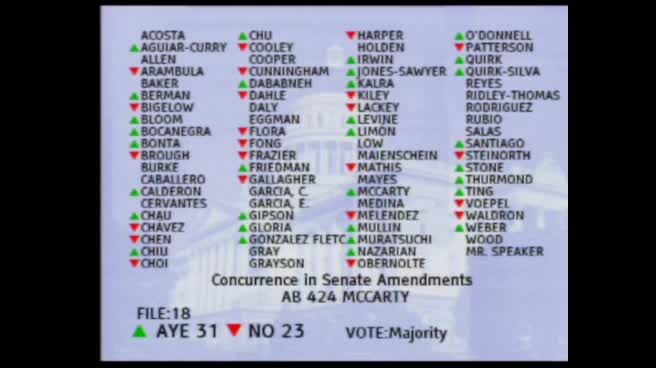 1MIN
Assembly Floor
 2MIN
Senate Floor
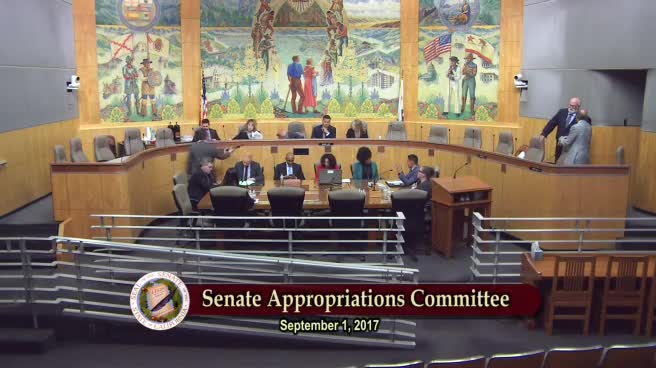 1H
Senate Standing Committee on Appropriations
 4MIN
Senate Standing Committee on Environmental Quality
 8MIN
Senate Standing Committee on Health
 1MIN
Assembly Floor
 1H
Assembly Standing Committee on Appropriations
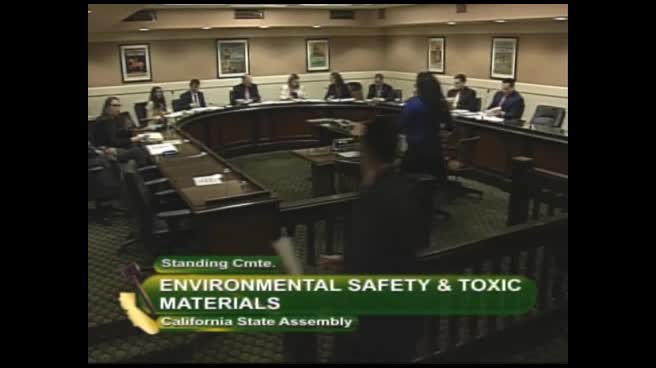 23MIN