AB 132: Public contracts: 2028 Olympic Games and Paralympic Games.
- Session Year: 2017-2018
- House: Assembly
- Latest Version Date: 2017-10-15
Existing law provides specified requirements in awarding certain public contracts.
This bill would authorize the Governor to execute games support contracts, not to exceed a specified amount, in connection with the site selection process for the City of Los Angeles to become the host for the 2028 Olympic Games and Paralympic Games, that accept financial liability to provide the state security for amounts owed by the Organizing Committee for the Olympic Games (OCOG), as specified, and for any financial deficit accruing to the OCOG as a result of the hosting of the games by the endorsing municipality, as defined.
The bill would establish the Olympic Games Trust Fund in the State Treasury and would, upon appropriation by the Legislature, make the money in the fund available for these purposes, as specified.
This bill would make legislative findings and declarations that, among other things, the endorsing municipality has developed a self-sufficient bid for financing the games.
(1)Existing law authorizes specified counties, commencing January 1, 2018, and any county except the County of Los Angeles, commencing January 1, 2020, to conduct any election as an all-mailed ballot election if specified conditions are satisfied. The County of Los Angeles is authorized, commencing January 1, 2020, to conduct any election as a vote center election if specified conditions are satisfied. No later than 4 years after conducting its first vote center election, the County of Los Angeles will be authorized to conduct all-mailed ballot elections in the same manner as other counties. Existing law requires that the plan for the administration of an all-mailed ballot election conducted by a county include a voter education and outreach plan approved by the Secretary of State. Existing law requires the Secretary of State, within 6 months of each election conducted by a county as an all-mailed ballot election or vote center election, to report specified information regarding the election to the Legislature.This bill would require the Secretary of State to assist each county conducting an all-mailed ballot election in 2018 in providing additional voter education and community outreach, including, but not limited to, direct contact with voters. The bill would authorize the Secretary of State to provide funding allocated for these purposes to each county. The bill would authorize the Secretary of State to contract with any qualified person or organization for purposes of preparing the report to the Legislature. The bill would appropriate $350,000 from the General Fund to the Secretary of State for these purposes, with $100,000 allocated for the report to the Legislature and $250,000 allocated for assisting counties in providing additional voter education and outreach.(2)The California Constitution enables electors to initiate a recall of state officers by gathering sufficient signatures within a 160-day period. Upon certification by the Secretary of State that this requirement has been met, the California Constitution authorizes the Governor to call a recall election within 60 to 80 days or to consolidate it with a regularly scheduled election that is within 180 days of the certification of the signatures. The California Constitution authorizes the Legislature to provide for recall elections, and existing statutes establish a procedural framework for certifying recall petitions and holding recall elections.Existing law requires the Secretary of State to notify a county elections official that a petition received a sufficient number of signatures to initiate a recall election. After this notice has been provided, existing law provides for a period of 30 business days in which voters who signed the petition may withdraw their signatures. No later than 10 days after that period ends, county elections officials are required to report to the Secretary of State the total number of signatures that were withdrawn, and this process continues until the Secretary of State determines that there is a sufficient number of verified signatures, not including withdrawn signatures, to initiate a recall election. If a sufficient number of verified signatures is ultimately obtained, the Department of Finance, in consultation with affected elections officials and the Secretary of State, is required to estimate the costs of the recall election if it is held as a special election or as part of the next regularly scheduled election. The Secretary of State is prohibited from certifying the sufficiency of the signatures until the Joint Legislative Budget Committee has had 30 days to review and comment on the Department of Finances estimate of the costs of the recall election. Following that period, the Department of Finances estimate must be posted on the Secretary of States Internet Web site, and the Department of Finance is authorized to direct the Controller to remit specified costs of conducting the recall election to affected counties.This bill would repeal and reenact those provisions for a specified reason. This bill would require that the Department of Finance submit its estimate of the costs of the recall election within 30 business days of receipt of the Secretary of States notice of sufficient signatures to initiate a recall. The bill would also repeal a $5,000,000 appropriation to the Department of Finance for allocation to counties for recall election costs and provisions that allow for the use of random sampling as a method of verifying signatures for a recall petition, thereby requiring the examination and verification of each signature filed.The bill would state various findings and declarations of the Legislature, including the Legislatures intent that specified changes in the Elections Code relating to recall elections apply retroactively.By increasing the duties of local officials, this bill would impose a state-mandated local program.(3)The California Constitution requires the state to reimburse local agencies and school districts for certain costs mandated by the state. Statutory provisions establish procedures for making that reimbursement.This bill would provide that, if the Commission on State Mandates determines that the bill contains costs mandated by the state, reimbursement for those costs shall be made pursuant to the statutory provisions noted above.(4)This bill would declare that it is to take effect immediately as a bill providing for appropriations related to the Budget Bill.(1)Existing law authorizes specified counties, commencing January 1, 2018, and any county except the County of Los Angeles, commencing January 1, 2020, to conduct any election as an all-mailed ballot election if specified conditions are satisfied. The County of Los Angeles is authorized, commencing January 1, 2020, to conduct any election as a vote center election if specified conditions are satisfied. No later than 4 years after conducting its first vote center election, the County of Los Angeles will be authorized to conduct all-mailed ballot elections in the same manner as other counties. Existing law requires that the plan for the administration of an all-mailed ballot election conducted by a county include a voter education and outreach plan approved by the Secretary of State. Existing law requires the Secretary of State, within 6 months of each election conducted by a county as an all-mailed ballot election or vote center election, to report specified information regarding the election to the Legislature.
This bill would require the Secretary of State to assist each county conducting an all-mailed ballot election in 2018 in providing additional voter education and community outreach, including, but not limited to, direct contact with voters. The bill would authorize the Secretary of State to provide funding allocated for these purposes to each county. The bill would authorize the Secretary of State to contract with any qualified person or organization for purposes of preparing the report to the Legislature. The bill would appropriate $350,000 from the General Fund to the Secretary of State for these purposes, with $100,000 allocated for the report to the Legislature and $250,000 allocated for assisting counties in providing additional voter education and outreach.
(2)The California Constitution enables electors to initiate a recall of state officers by gathering sufficient signatures within a 160-day period. Upon certification by the Secretary of State that this requirement has been met, the California Constitution authorizes the Governor to call a recall election within 60 to 80 days or to consolidate it with a regularly scheduled election that is within 180 days of the certification of the signatures. The California Constitution authorizes the Legislature to provide for recall elections, and existing statutes establish a procedural framework for certifying recall petitions and holding recall elections.
Existing law requires the Secretary of State to notify a county elections official that a petition received a sufficient number of signatures to initiate a recall election. After this notice has been provided, existing law provides for a period of 30 business days in which voters who signed the petition may withdraw their signatures. No later than 10 days after that period ends, county elections officials are required to report to the Secretary of State the total number of signatures that were withdrawn, and this process continues until the Secretary of State determines that there is a sufficient number of verified signatures, not including withdrawn signatures, to initiate a recall election. If a sufficient number of verified signatures is ultimately obtained, the Department of Finance, in consultation with affected elections officials and the Secretary of State, is required to estimate the costs of the recall election if it is held as a special election or as part of the next regularly scheduled election. The Secretary of State is prohibited from certifying the sufficiency of the signatures until the Joint Legislative Budget Committee has had 30 days to review and comment on the Department of Finances estimate of the costs of the recall election. Following that period, the Department of Finances estimate must be posted on the Secretary of States Internet Web site, and the Department of Finance is authorized to direct the Controller to remit specified costs of conducting the recall election to affected counties.
This bill would repeal and reenact those provisions for a specified reason. This bill would require that the Department of Finance submit its estimate of the costs of the recall election within 30 business days of receipt of the Secretary of States notice of sufficient signatures to initiate a recall. The bill would also repeal a $5,000,000 appropriation to the Department of Finance for allocation to counties for recall election costs and provisions that allow for the use of random sampling as a method of verifying signatures for a recall petition, thereby requiring the examination and verification of each signature filed.
The bill would state various findings and declarations of the Legislature, including the Legislatures intent that specified changes in the Elections Code relating to recall elections apply retroactively.
By increasing the duties of local officials, this bill would impose a state-mandated local program.
(3)The California Constitution requires the state to reimburse local agencies and school districts for certain costs mandated by the state. Statutory provisions establish procedures for making that reimbursement.
This bill would provide that, if the Commission on State Mandates determines that the bill contains costs mandated by the state, reimbursement for those costs shall be made pursuant to the statutory provisions noted above.
(4)This bill would declare that it is to take effect immediately as a bill providing for appropriations related to the Budget Bill.
This bill would express the intent of the Legislature to enact statutory changes relating to the Budget Act of 2017.This bill would express the intent of the Legislature to enact statutory changes relating to the Budget Act of 2017.
This act is known, and may be cited, as the 2028 Olympic Games and Paralympic Games Act.
SEC. 2.For purposes of this act:
(a)Endorsing municipality means the City of Los Angeles, which has authorized a bid by the Organizing Committee for the Olympic Games (OCOG) for selection of the municipality as the site of the games.
(b)Games means the 2028 Olympic and Paralympic Games.
(c)Games support contract means a joinder agreement or a similar contract executed by the Governor and containing terms permitted or required by this act.
(d)Joinder agreement means an agreement in connection with the selection of a site in this state for the location of the games.
(e)OCOG means a nonprofit corporation, or its successor in interest, that:
(1)Has been authorized by the endorsing municipality to pursue an application and bid on the endorsing municipalitys behalf to a site selection organization for selection as the site for the games.
(2)With the authorization of the endorsing municipality, has executed a bid committee agreement with the United States Olympic Committee regarding a bid and the bid process to host the games.
(f)Site selection organization means the International Olympic Committee, the International Paralympic Committee, or both, as applicable.
(g)State security means the financial obligation, not to exceed two hundred seventy million dollars ($270,000,000), undertaken by the state pursuant to a games support contract executed by the Governor in accordance with this act.
SEC. 3.The Legislature finds and declares all of the following:
(a)The purpose of this act is to provide assurances required by a site selection organization that will select a city to host the games.
(b)Hosting the games in California is expected to generate billions of dollars for the states economy. The OCOG, on behalf of the endorsing municipality, has developed a self-sufficient bid and plan for financing the games that is based on realistic and conservative revenue scenarios, and it has budgeted sufficient funds to reimburse local and regional governments for services provided during the games.
(c)The endorsing municipality plans to host a sustainable and environmentally responsible games, has committed to sports and recreational opportunities for young people throughout each area by planning to generate a legacy for youth programs and other sports purposes in this state with excess revenues from the games, and plans to develop and implement a unique and broad-based, cultural program.
(d)The endorsing municipality will involve athletes, sports professionals, environmentalists, business and financial experts, nonprofit organizations, youth service leaders, and individuals who represent the entire diversity of the endorsing municipalitys state in its bid.
(e)The endorsing municipality expects that if it is chosen as the host city, and once the games have concluded, there will be net revenue exceeding expenses that can be devoted to legacy programs for youth and citizens of California.
SEC. 4.(a)The Governor may execute games support contracts on behalf of the state that, in accordance with law and subject to the requirements and limitations set forth in Sections 5, 6, and 7 of this act, accept financial liability, funded solely by means of the funding mechanism established by Sections 5, 6, and 7 of this act, and in an aggregate amount that under no circumstance shall exceed two hundred seventy million dollars ($270,000,000), to provide the state security for the following:
(1)Amounts owed by the OCOG to a site selection organization for claims by third parties arising out of or relating to the games.
(2)Any financial deficit accruing to the OCOG as a result of the hosting of the games by the endorsing municipality. Any liability for an amount in excess of the state security of two hundred seventy million dollars ($270,000,000) shall be the responsibility of parties other than the state.
(b)The games support contracts may contain additional provisions that the Governor requires in order to carry out the purposes of this act.
SEC. 5.(a)There is hereby established in the State Treasury a special fund to be known as the Olympic Games Trust Fund.
(b)The state may choose to fund the Olympic Games Trust Fund in any manner it considers appropriate and at the time or times the state determines necessary. It is the intent of the Legislature that the funding mechanism for the fund shall be determined on or about the time of the selection of the endorsing municipality as the host city by the site selection organizations.
(c)The funds in the trust fund may be used only for the sole purpose of fulfilling the obligations of the state under a games support contract to provide the state security. Notwithstanding any other law, the Controller may use the funds in the trust fund for cashflow loans to the General Fund as provided in Sections 16310 and 16381 of the Government Code.
(d)No additional state funds shall be deposited into the Olympic Games Trust Fund once the Director of Finance determines that the account has achieved, or is reasonably expected to otherwise accrue, the balance necessary to provide the state security pursuant to a games support contract.
(e)If the endorsing municipality is selected by the site selection organization as the host city for the games, the Olympic Games Trust Fund shall be maintained until the Director of Finance makes a determination that the states obligation to provide the state security under a games support contract has been satisfied and concluded, at which time the trust fund shall be terminated.
(f)If the endorsing municipality in the State of California is not selected by the site selection organization as the host city for the games, the Olympic Games Trust Fund shall be immediately terminated.
(g)Upon the termination of the Olympic Games Trust Fund, all sums earmarked, transferred, or contained in the fund, along with any investment earnings retained in the fund, shall immediately revert to the General Fund.
SEC. 6.(a)Any moneys deposited, transferred, or otherwise contained in the Olympic Games Trust Fund established in Section 5 of this act shall be, upon appropriation by the Legislature, used for the sole purpose of providing the state security under a games support contract. The state security may be provided by moneys contained in the trust fund established in Section 5 of this act, or by insurance coverage, letters of credit, or other secured instruments purchased or secured by the moneys, or by any combination thereof as specified in a games support contract. In no event may the liability of the state under all games support contracts, any other agreements related to the conduct of the games, and all financial obligations of the state otherwise arising under this act, exceed two hundred seventy million dollars ($270,000,000) in the aggregate.
(b)Obligations authorized by this act shall be payable solely from the Olympic Games Trust Fund. Neither the full faith and credit nor the taxing power of the state are or shall be pledged for any payment under any obligation authorized by this act.
SEC. 7.The state shall, subject to the limitations set forth in Sections 5 and 6 of this act and the games support contract, be the payer of last resort with regard to the use of the state security. The state security may not be accessed to cover any obligation of the state under a games support contract until after all of the following occur:
(a)The security provided by the OCOG is fully expended and exhausted.
(b)The endorsing municipality has expended and exhausted at least two hundred seventy million dollars ($270,000,000) of the endorsing municipalitys security.
(c)Any security provided by any other person or entity is fully expended and exhausted.
(d)The limits of available insurance policies have been fully expended and exhausted.
(e)The OCOG has exhausted all efforts to seek payment from all third parties owing moneys or otherwise liable to the OCOG.
SEC. 8.The OCOG shall list the state as an additional insured on any policy of insurance purchased by the OCOG to be in effect in connection with the preparation for and conduct of the games.
SEC. 9.The OCOG shall not engage in any conduct that reflects unfavorably upon this state, the endorsing municipality, or the games, or that is contrary to law or to the rules and regulations of the United States Olympic Committee and the International Olympic and International Paralympic Committees.
This act is known, and may be cited, as the 2028 Olympic Games and Paralympic Games Act.
SEC. 2.For purposes of this act:
(a)Endorsing municipality means the City of Los Angeles, which has authorized a bid by the Organizing Committee for the Olympic Games (OCOG) for selection of the municipality as the site of the games.
(b)Games means the 2028 Olympic and Paralympic Games.
(c)Games support contract means a joinder agreement or a similar contract executed by the Governor and containing terms permitted or required by this act.
(d)Joinder agreement means an agreement in connection with the selection of a site in this state for the location of the games.
(e)OCOG means a nonprofit corporation, or its successor in interest, that:
(1)Has been authorized by the endorsing municipality to pursue an application and bid on the endorsing municipalitys behalf to a site selection organization for selection as the site for the games.
(2)With the authorization of the endorsing municipality, has executed a bid committee agreement with the United States Olympic Committee regarding a bid and the bid process to host the games.
(f)Site selection organization means the International Olympic Committee, the International Paralympic Committee, or both, as applicable.
(g)State security means the financial obligation, not to exceed two hundred seventy million dollars ($270,000,000), undertaken by the state pursuant to a games support contract executed by the Governor in accordance with this act.
SEC. 3.The Legislature finds and declares all of the following:
(a)The purpose of this act is to provide assurances required by a site selection organization that will select a city to host the games.
(b)Hosting the games in California is expected to generate billions of dollars for the states economy. The OCOG, on behalf of the endorsing municipality, has developed a self-sufficient bid and plan for financing the games that is based on realistic and conservative revenue scenarios and scenarios, and it has budgeted sufficient funds to reimburse local and regional governments for services provided during the games.
(c)The endorsing municipality plans to host a sustainable and environmentally responsible games, has committed to sports and recreational opportunities for young people throughout each area by planning to generate a legacy for youth programs and other sports purposes in this state with excess revenues from the games, and plans to develop and implement a unique and broad-based, cultural program.
(d)The endorsing municipality will involve athletes, sports professionals, environmentalists, business and financial experts, nonprofit organizations, youth service leaders, and individuals who represent the entire diversity of the endorsing municipalitys state in its bid.
(e)The endorsing municipality expects that if it is chosen as the host city, and once the games have concluded, there will be net revenue exceeding expenses that can be devoted to legacy programs for youth and citizens of California.
SEC. 4.(a)The Governor may execute games support contracts on behalf of the state that, in accordance with law and subject to the requirements and limitations set forth in Sections 5, 6, and 7 of this act, accept financial liability, funded solely by means of the funding mechanism established by Sections 5, 6, and 7 of this act, and in an aggregate amount that under no circumstance shall exceed two hundred seventy million dollars ($270,000,000), to provide the state security for the following:
(1)Amounts owed by the OCOG to a site selection organization for claims by third parties arising out of or relating to the games.
(2)Any financial deficit accruing to the OCOG as a result of the hosting of the games by the endorsing municipality. Any liability for an amount in excess of the state security of two hundred seventy million dollars ($270,000,000) shall be the responsibility of parties other than the state.
(b)The games support contracts may contain additional provisions that the Governor requires in order to carry out the purposes of this act.
SEC. 5.(a)There is hereby established in the State Treasury a special fund to be known as the Olympic Games Trust Fund.
(b)The state may choose to fund the Olympic Games Trust Fund in any manner it considers appropriate and at the time or times the state determines necessary. It is the intent of the Legislature that the funding mechanism for the fund shall be determined on or about the time of the selection of the endorsing municipality as the host city by the site selection organizations.
(c)The funds in the trust fund may be used only for the sole purpose of fulfilling the obligations of the state under a games support contract to provide the state security. Notwithstanding any other law, the Controller may use the funds in the trust fund for cashflow loans to the General Fund as provided in Sections 16310 and 16381 of the Government Code.
(d)No additional state funds shall be deposited into the Olympic Games Trust Fund once the Director of Finance determines that the account has achieved, or is reasonably expected to otherwise accrue, the balance necessary to provide the state security pursuant to a games support contract.
(e)If the endorsing municipality is selected by the site selection organization as the host city for the games, the Olympic Games Trust Fund shall be maintained until the Director of Finance makes a determination that the states obligation to provide the state security under a games support contract has been satisfied and concluded, at which time the trust fund shall be terminated.
(f)If the endorsing municipality in the State of California is not selected by the site selection organization as the host city for the games, the Olympic Games Trust Fund shall be immediately terminated.
(g)Upon the termination of the Olympic Games Trust Fund, all sums earmarked, transferred, or contained in the fund, along with any investment earnings retained in the fund, shall immediately revert to the General Fund.
SEC. 6.(a)Any moneys deposited, transferred, or otherwise contained in the Olympic Games Trust Fund established in Section 5 of this act shall be, upon appropriation by the Legislature, used for the sole purpose of providing the state security under a games support contract. The state security may be provided by moneys contained in the trust fund established in Section 5 of this act, or by insurance coverage, letters of credit, or other secured instruments purchased or secured by the moneys, or by any combination thereof as specified in a games support contract. In no event may the liability of the state under all games support contracts, any other agreements related to the conduct of the games, and all financial obligations of the state otherwise arising under this act, exceed two hundred seventy million dollars ($270,000,000) in the aggregate.
(b)Obligations authorized by this act shall be payable solely from the Olympic Games Trust Fund. Neither the full faith and credit nor the taxing power of the state are or shall be pledged for any payment under any obligation authorized by this act.
SEC. 7.The state shall, subject to the limitations set forth in Sections 5 and 6 of this act and the games support contract, be the payer of last resort with regard to the use of the state security. The state security may not be accessed to cover any obligation of the state under a games support contract until after all of the following occur:
(a)The security provided by the OCOG is fully expended and exhausted.
(b)The endorsing municipality has expended and exhausted at least two hundred seventy million dollars ($270,000,000) of the endorsing municipalitys security.
(c)Any security provided by any other person or entity is fully expended and exhausted.
(d)The limits of available insurance policies have been fully expended and exhausted.
(e)The OCOG has exhausted all efforts to seek payment from all third parties owing moneys or otherwise liable to the OCOG.
SEC. 8.The OCOG shall list the state as an additional insured on any policy of insurance purchased by the OCOG to be in effect in connection with the preparation for and conduct of the games.
SEC. 9.The OCOG shall not engage in any conduct that reflects unfavorably upon this state, the endorsing municipality, or the games, or that is contrary to law or to the rules and regulations of the United States Olympic Committee and the International Olympic and International Paralympic Committees.
CORRECTIONS: HeadingLines 4 and 6.This act is known, and may be cited, as the 2028 Olympic Games and Paralympic Games Act.
SEC. 2.For purposes of this act:
(a)Endorsing municipality means the City of Los Angeles, which has authorized a bid by the Organizing Committee for the Olympic Games (OCOG) for selection of the municipality as the site of the games.
(b)Games means the 2028 Olympic and Paralympic Games.
(c)Games support contract means a joinder agreement or a similar contract executed by the Governor and containing terms permitted or required by this act.
(d)Joinder agreement means an agreement in connection with the selection of a site in this state for the location of the games.
(e)OCOG means a nonprofit corporation, or its successor in interest, that:
(1)Has been authorized by the endorsing municipality to pursue an application and bid on the endorsing municipalitys behalf to a site selection organization for selection as the site for the games.
(2)With the authorization of the endorsing municipality, has executed a bid committee agreement with the United States Olympic Committee regarding a bid and the bid process to host the games.
(f)Site selection organization means the International Olympic Committee, the International Paralympic Committee, or both, as applicable.
(g)State security means the financial obligation, not to exceed two hundred seventy million dollars ($270,000,000), undertaken by the state pursuant to a games support contract executed by the Governor in accordance with this act.
SEC. 3.The Legislature finds and declares all of the following:
(a)The purpose of this act is to provide assurances required by a site selection organization that will select a city to host the games.
(b)Hosting the games in California is expected to generate billions of dollars for the states economy. The OCOG, on behalf of the endorsing municipality, has developed a self-sufficient bid and plan for financing the games that is based on realistic and conservative revenue scenarios and has budgeted sufficient funds to reimburse local and regional governments for services provided during the games.
(c)The endorsing municipality plans to host a sustainable and environmentally responsible games, has committed to sports and recreational opportunities for young people throughout each area by planning to generate a legacy for youth programs and other sports purposes in this state with excess revenues from the games, and plans to develop and implement a unique and broad-based, cultural program.
(d)The endorsing municipality will involve athletes, sports professionals, environmentalists, business and financial experts, nonprofit organizations, youth service leaders, and individuals who represent the entire diversity of the endorsing municipalitys state in its bid.
(e)The endorsing municipality expects that if it is chosen as the host city, and once the games have concluded, there will be net revenue exceeding expenses that can be devoted to legacy programs for youth and citizens of California.
SEC. 4.(a)The Governor may execute games support contracts on behalf of the state that, in accordance with law and subject to the requirements and limitations set forth in Sections 5, 6, and 7 of this act, accept financial liability, funded solely by means of the funding mechanism established by Sections 5, 6, and 7 of this act, and in an aggregate amount that under no circumstance shall exceed two hundred seventy million dollars ($270,000,000), to provide the state security for the following:
(1)Amounts owed by the OCOG to a site selection organization for claims by third parties arising out of or relating to the games.
(2)Any financial deficit accruing to the OCOG as a result of the hosting of the games by the endorsing municipality. Any liability for an amount in excess of the state security of two hundred seventy million dollars ($270,000,000) shall be the responsibility of parties other than the state.
(b)The games support contracts may contain additional provisions that the Governor requires in order to carry out the purposes of this act.
SEC. 5.(a)There is hereby established in the State Treasury a special fund to be known as the Olympic Games Trust Fund.
(b)The state may choose to fund the Olympic Games Trust Fund in any manner it considers appropriate and at the time or times the state determines necessary. It is the intent of the Legislature that the funding mechanism for the fund shall be determined on or about the time of the selection of the endorsing municipality as the host city by the site selection organizations.
(c)The funds in the trust fund may be used only for the sole purpose of fulfilling the obligations of the state under a games support contract to provide the state security. Notwithstanding any other law, the Controller may use the funds in the trust fund for cashflow loans to the General Fund as provided in Sections 16310 and 16381 of the Government Code.
(d)No additional state funds shall be deposited into the Olympic Games Trust Fund once the Director of Finance determines that the account has achieved, or is reasonably expected to otherwise accrue, the balance necessary to provide the state security pursuant to a games support contract.
(e)If the endorsing municipality is selected by the site selection organization as the host city for the games, the Olympic Games Trust Fund shall be maintained until the Director of Finance makes a determination that the states obligation to provide the state security under a games support contract has been satisfied and concluded, at which time the trust fund shall be terminated.
(f)If the endorsing municipality in the State of California is not selected by the site selection organization as the host city for the games, the Olympic Games Trust Fund shall be immediately terminated.
(g)Upon the termination of the Olympic Games Trust Fund, all sums earmarked, transferred, or contained in the fund, along with any investment earnings retained in the fund, shall immediately revert to the General Fund.
SEC. 6.(a)Any moneys deposited, transferred, or otherwise contained in the Olympic Games Trust Fund established in Section 5 of this act shall be, upon appropriation by the Legislature, used for the sole purpose of providing the state security under a games support contract. The state security may be provided by moneys contained in the trust fund established in Section 5 of this act, or by insurance coverage, letters of credit, or other secured instruments purchased or secured by the moneys, or by any combination thereof as specified in a games support contract. In no event may the liability of the state under all games support contracts, any other agreements related to the conduct of the games, and all financial obligations of the state otherwise arising under this act, exceed two hundred seventy million dollars ($270,000,000) in the aggregate.
(b)Obligations authorized by this act shall be payable solely from the Olympic Games Trust Fund. Neither the full faith and credit nor the taxing power of the state are or shall be pledged for any payment under any obligation authorized by this act.
SEC. 7.The state shall, subject to the limitations set forth in Sections 5 and 6 of this act and the games support contract, be the payer of last resort with regard to the use of the state security. The state security may not be accessed to cover any obligation of the state under a games support contract until after all of the following occur:
(a)The security provided by the OCOG is fully expended and exhausted.
(b)The endorsing municipality has expended and exhausted at least two hundred seventy million dollars ($270,000,000) of the endorsing municipalitys security.
(c)Any security provided by any other person or entity is fully expended and exhausted.
(d)The limits of available insurance policies have been fully expended and exhausted.
(e)The OCOG has exhausted all efforts to seek payment from all third parties owing moneys or otherwise liable to the OCOG.
SEC. 8.The OCOG shall list the state as an additional insured on any policy of insurance purchased by the OCOG to be in effect in connection with the preparation for and conduct of the games.
SEC. 9.The OCOG shall not engage in any conduct that reflects unfavorably upon this state, the endorsing municipality, or the games, or that is contrary to law or to the rules and regulations of the United States Olympic Committee and the International Olympic and International Paralympic Committees.
All matter omitted in this version of the bill appears in the bill as amended in the Senate, August 21, 2017. (JR11)The Legislature finds and declares all of the following:
(a)Senate Bill 96 of the 201718 Regular Session (Chapter 28 of the Statutes of 2017), which took effect on June 27, 2017, is a bill providing for appropriations related to the budget bill passed by the Senate and Assembly on June 15, 2017. Among other statutory changes, Senate Bill 96 revised provisions of the Elections Code relating to recall petition procedures, including those governing signature verification by county elections officials and the timeline for petition certification by the Secretary of State.
(b)On July 20, 2017, the Howard Jarvis Taxpayers Association and certain individuals who signed a petition to recall Senator Josh Newman filed an Emergency Petition for Writ of Mandate and Request for Immediate Stay against Secretary of State Alex Padilla in the California Court of Appeal, Third Appellate District, asking the court to compel Secretary of State Padilla to certify the recall petition in accordance with the law that was in effect before Senate Bill 96 was enacted.
(c)On August 14, 2017, the Court of Appeal issued an alternative writ of mandate staying Secretary of State Padilla from enforcing the amendments to the Elections Code effected by Senate Bill 96. The court order cites both the requirement in Section 9 of Article IV of the California Constitution that [a] statute shall embrace but one subject, which shall be expressed in its title, and the California Supreme Court decision in Harbor v. Deukmejian (1987) 43 Cal.3d 1078, in which the Supreme Court held that Senate Bill 1379 of the 198384 Regular Session of the Legislature (Chapter 268 of the Statutes of 1984) was invalid as a violation of the aforementioned single subject rule in Section 9 of Article IV.
(d)To eliminate any issue as to whether the changes to recall petition procedures made by Senate Bill 96 are enacted in violation of the single subject rule, it is the intent of the Legislature to repeal those provisions and reenact them in this act, which embraces only the subject of elections.
SEC. 2.The Legislature finds and declares all of the following:
(a)Pursuant to Section 16 of Article II of the California Constitution, the Legislature is required to provide for the circulation, filing, and certification of petitions, nomination of candidates, and the recall election.
(b)Recall elections are extraordinary elections in which an official may be removed by fewer voters than the number of voters who elected that official.
(c)Before a recall election is held, any and all steps should be employed to ensure the accuracy and validity of the petition process.
(d)It is the Legislatures intent that the changes made to the Elections Code by Sections 6, 7, 9, 11, and 13 of this act apply retroactively to recalls that are pending at any stage at the time of the acts enactment.
SEC. 3.Section 4005 of the Elections Code is amended to read:4005.(a)Notwithstanding Section 4000 or any other law, on or after January 1, 2018, the Counties of Calaveras, Inyo, Madera, Napa, Nevada, Orange, Sacramento, San Luis Obispo, San Mateo, Santa Clara, Shasta, Sierra, Sutter, and Tuolumne, and, except as provided in Section 4007, on or after January 1, 2020, any county may conduct any election as an all-mailed ballot election if all of the following apply:
(1)(A)At least two ballot dropoff locations are provided within the jurisdiction where the election is held or the number of ballot dropoff locations are fixed in a manner so that there is at least one ballot dropoff location provided for every 15,000 registered voters within the jurisdiction where the election is held, as determined on the 88th day before the day of the election, whichever results in more ballot dropoff locations. For purposes of this subparagraph, a vote center that includes an exterior ballot drop box counts only as a single ballot dropoff location. Ballot dropoff locations shall comply with the regulations adopted pursuant to subdivision (b) of Section 3025.
(B)A ballot dropoff location provided for under this section consists of a secure, accessible, and locked ballot box located as near as possible to established public transportation routes and that is able to receive voted ballots. All ballot dropoff locations shall be open at least during regular business hours beginning not less than 28 days before the day of the election, and on the day of the election. At least one ballot dropoff location shall be an accessible, secured, exterior drop box that is available for a minimum of 12 hours per day including regular business hours.
(2)(A)The county elections official permits a voter residing in the county to do any of the following at a vote center:
(i)Return, or vote and return, his or her vote by mail ballot.
(ii)Register to vote, update his or her voter registration, and vote pursuant to Section 2170.
(iii)Receive and vote a provisional ballot pursuant to Section 3016 or Article 5 (commencing with Section 14310) of Chapter 3 of Division 14.
(iv)Receive a replacement ballot upon verification that a ballot for the same election has not been received from the voter by the county elections official. If the county elections official is unable to determine if a ballot for the same election has been received from the voter, the county elections official may issue a provisional ballot.
(v)Vote a regular, provisional, or replacement ballot using accessible voting equipment that provides for a private and independent voting experience.
(B)Each vote center shall have at least three voting machines that are accessible to voters with disabilities.
(3)(A)On the day of the election, from 7 a.m. to 8 p.m., inclusive, and on each of the three days before the election, for a minimum of eight hours per day, at least one vote center is provided for every 10,000 registered voters within the jurisdiction where the election is held, as determined on the 88th day before the day of the election. At least 90 percent of the number of vote centers required by this subparagraph shall be open for all four days during the required times. Up to 10 percent of the number of vote centers required by this subparagraph may be open for less than four days if at least one vote center is provided for every 10,000 registered voters on each day.
(B)Notwithstanding subparagraph (A), for a jurisdiction with fewer than 20,000 registered voters, a minimum of two voter centers are provided on the day of the election and on each of the three days before the election within the jurisdiction where the election is held.
(4)(A)Beginning 10 days before the day of the election and continuing daily up to and including the fourth day before the election, for a minimum of eight hours per day, at least one vote center is provided for every 50,000 registered voters within the jurisdiction where the election is held, as determined on the 88th day before the day of the election.
(B)Notwithstanding subparagraph (A), for a jurisdiction with fewer than 50,000 registered voters, a minimum of two vote centers are provided within the jurisdiction where the election is held.
(C)The vote centers provided under this section are established in accordance with the accessibility requirements described in Article 5 (commencing with Section 12280) of Chapter 3 of Division 12, the federal Americans with Disabilities Act of 1990 (42 U.S.C. Sec. 12101 et seq.), the federal Help America Vote Act of 2002 (52 U.S.C. Sec. 20901 et seq.), and the federal Voting Rights Act of 1965 (52 U.S.C. Sec. 10101 et seq.).
(D)The vote centers provided under this section are equitably distributed across the county so as to afford maximally convenient options for voters and are established at accessible locations as near as possible to established public transportation routes. The vote centers shall be equipped with voting units or systems that are accessible to individuals with disabilities and that provide the same opportunity for access and participation as is provided to voters who are not disabled, including the ability to vote privately and independently in accordance with Sections 12280 and 19240.
(E)(i)The vote centers provided under this section have an electronic mechanism for the county elections official to immediately access, at a minimum, all of the following voter registration data:
(I)Name.
(II)Address.
(III)Date of birth.
(IV)Language preference.
(V)Party preference.
(VI)Precinct.
(VII)Whether or not the voter has been issued a vote by mail ballot and whether or not a ballot has been received by the county elections official.
(ii)The electronic mechanism used to access voter registration data shall not be connected in any way to a voting system.
(5)A method is available for voters with disabilities to request and receive a blank vote by mail ballot and, if a replacement ballot is necessary, a blank replacement ballot that voters with disabilities can read and mark privately and independently pursuant to the federal Help America Vote Act of 2002 (52 U.S.C. Sec. 20901 et seq.).
(6) (A) Except as otherwise provided for in this section, election boards for the vote centers established under this section meet the requirements for eligibility and composition pursuant to Article 1 (commencing with Section 12300) of Chapter 4 of Division 12.
(B)Each vote center provides language assistance in all languages required in the jurisdiction under subdivision (c) of Section 12303 or Section 203 of the federal Voting Rights Act of 1965 (52 U.S.C. Sec. 10101 et seq.) in a manner that enables voters of the applicable language minority groups to participate effectively in the electoral process. Each vote center shall post information regarding the availability of language assistance in English and all other languages for which language assistance is required to be provided in the jurisdiction under subdivision (c) of Section 12303 or Section 203 of the federal Voting Rights Act of 1965 (52 U.S.C. Sec. 10101 et seq.).
(i)If a vote center is located in, or adjacent to, a precinct, census tract, or other defined geographical subsection required to establish language requirements under subdivision (c) of Section 12303 or Section 203 of the federal Voting Rights Act of 1965 (52 U.S.C. Sec. 10101 et seq.), or if it is identified as needing language assistance through the public input process described in clause (ii), the county elections official shall ensure that the vote center is staffed by election board members who speak the required language. If the county elections official is unable to recruit election board members who speak the required language, alternative methods of effective language assistance shall be provided by the county elections official.
(ii)The county elections official shall solicit public input regarding which vote centers should be staffed by election board members who are fluent in a language in addition to English pursuant to subdivision (c) of Section 12303 and Section 203 of the federal Voting Rights Act of 1965 (52 U.S.C. Sec. 10101 et seq.).
(iii)The county elections official shall provide notice in the sample ballot, in vote by mail materials, and on his or her Internet Web site of the specific language services available at each vote center.
(C)Each vote center provides election materials translated in all languages required in the jurisdiction under subdivision (c) of Section 14201 and Section 203 of the federal Voting Rights Act of 1965 (52 U.S.C. Sec. 10101 et seq.).
(D)Each vote center provides reasonable modifications and auxiliary aids and services as required by the federal Americans with Disabilities Act of 1990 (42 U.S.C. Sec. 12101 et seq.) and the federal Rehabilitation Act of 1973 (29 U.S.C. Sec. 701 et seq.).
(7)(A)Beginning 10 days before the election, the county elections official maintains, in an electronic format, an index of voters who have done any of the following at one of the voter centers established pursuant to this section:
(i)Registered to vote or updated his or her voter registration.
(ii)Received and voted a provisional ballot or replacement ballot.
(iii)Voted a ballot using equipment at the vote center.
(B)The index required by subparagraph (A) includes the same information for each voter as is required to be included on copies of the index of affidavits of voter registration that are posted pursuant to Section 14294. The index required by subparagraph (A) shall be updated continuously during any time that a vote center is open in the jurisdiction.
(8)(A)Beginning 29 days before the day of the election, the county elections official mails to each registered voter a vote by mail ballot packet that includes a return envelope with instructions for the use and return of the vote by mail ballot.
(B)The county elections official delivers to each voter, with either the sample ballot sent pursuant to Section 13303 or with the vote by mail ballot packet, all of the following:
(i)A notice, translated in all languages required under subdivision (c) of Section 14201 and Section 203 of the federal Voting Rights Act of 1965 (52 U.S.C. Sec. 10101 et seq.), that informs voters of all of the following:
(I)An all-mailed ballot election is being conducted and each eligible voter will be issued a vote by mail ballot by mail.
(II)The voter may cast a vote by mail ballot in person at a vote center during the times and days specified in subparagraph (A) of paragraph (4) or on election day.
(III)No later than seven days before the day of the election, the voter may request the county elections official to send a vote by mail ballot in a language other than English pursuant to Section 203 of the federal Voting Rights Act of 1965 (52 U.S.C. Sec. 10101 et seq.) or a facsimile copy of the ballot printed in a language other than English pursuant to Section 14201.
(IV)No later than seven days before the day of the election, the voter may request the county elections official to send or deliver a ballot that voters with disabilities can read and mark privately and independently pursuant to the federal Help America Vote Act of 2002 (52 U.S.C. Sec. 20901 et seq.).
(ii)A list of the ballot dropoff locations and vote centers established pursuant to this section, including the dates and hours they are open. The list shall also be posted on the Internet Web site of the county elections official in a format that is accessible for people with disabilities pursuant to Section 11135 of the Government Code.
(iii)A postage-paid postcard that the voter may return to the county elections official for the purpose of requesting a vote by mail ballot in a language other than English or for the purpose of requesting a vote by mail ballot in an accessible format.
(C)Upon request, the county elections official provides written voting materials to voters with disabilities in an accessible format, as required by the federal Americans with Disabilities Act of 1990 (42 U.S.C. Sec. 12101 et seq.) and the federal Rehabilitation Act of 1973 (29 U.S.C. Sec. 701 et seq.).
(9)(A)The county elections official establishes a language accessibility advisory committee that is comprised of representatives of language minority communities. The committee shall be established no later than October 1 of the year before the first election conducted pursuant to this section. The committee shall hold its first meeting no later than April 1 of the year in which the first election is conducted pursuant to this section.
(B)The county elections official establishes a voting accessibility advisory committee that is comprised of voters with disabilities. The committee shall be established no later than October 1 of the year before the first election conducted pursuant to this section. The committee shall hold its first meeting no later than April 1 of the year in which the first election is conducted pursuant to this section.
(C)A county with fewer than 50,000 registered voters may establish a joint advisory committee for language minority communities and voters with disabilities.
(10)(A)The county elections official develops a draft plan for the administration of elections conducted pursuant to this section in consultation with the public, including both of the following:
(i)One meeting, publicly noticed at least 10 days in advance of the meeting, that includes representatives, advocates, and other stakeholders representing each community for which the county is required to provide voting materials and assistance in a language other than English under subdivision (c) of Section 14201 and the federal Voting Rights Act of 1965 (52 U.S.C. Sec. 10101 et seq.).
(ii)One meeting, publicly noticed at least 10 days in advance of the meeting, that includes representatives from the disability community and community organizations and individuals that advocate on behalf of, or provide services to, individuals with disabilities.
(B)The county elections official, when developing the draft plan for the administration of elections conducted pursuant to this section, considers, at a minimum, all of the following:
(i)Vote center and ballot dropoff location proximity to public transportation.
(ii)Vote center and ballot dropoff location proximity to communities with historically low vote by mail usage.
(iii)Vote center and ballot dropoff location proximity to population centers.
(iv)Vote center and ballot dropoff location proximity to language minority communities.
(v)Vote center and ballot dropoff location proximity to voters with disabilities.
(vi)Vote center and ballot dropoff location proximity to communities with low rates of household vehicle ownership.
(vii)Vote center and ballot dropoff location proximity to low-income communities.
(viii)Vote center and ballot dropoff location proximity to communities of eligible voters who are not registered to vote and may need access to same day voter registration.
(ix)Vote center and ballot dropoff location proximity to geographically isolated populations, including Native American reservations.
(x)Access to accessible and free parking at vote centers and ballot dropoff locations.
(xi)The distance and time a voter must travel by car or public transportation to a vote center and ballot dropoff location.
(xii)The need for alternate methods for voters with disabilities for whom vote by mail ballots are not accessible to cast a ballot.
(xiii)Traffic patterns near vote centers and ballot dropoff locations.
(xiv)The need for mobile vote centers in addition to the number of vote centers established pursuant to this section.
(C)The county elections official publicly notices the draft plan for the administration of elections conducted pursuant to this section and accepts public comments on the draft plan for at least 14 days before the hearing held pursuant to subparagraph (D).
(D)(i)Following the 14-day review period required by subparagraph (C), the county elections official holds a public meeting to consider the draft plan for the administration of elections conducted pursuant to this section and to accept public comments. The meeting shall be publicly noticed at least 10 days in advance of the meeting on the Internet Web sites of the clerk of the county board of supervisors and the county elections official, or, if neither the clerk of the county board of supervisors nor the county elections official maintain an Internet Web site, in the office of the county elections official.
(ii)After the public hearing to consider the draft plan for the administration of elections conducted pursuant to this section and to accept public comments, the county elections official shall consider any public comments he or she receives from the public and shall amend the draft plan in response to the public comments to the extent he or she deems appropriate. The county elections official shall publicly notice the amended draft plan and shall accept public comments on the amended draft plan for at least 14 days before the county elections official may adopt the amended draft plan pursuant to subparagraph (E).
(E)(i)Following the 14-day review and comment period required by clause (ii) of subparagraph (D), the county elections official may adopt a final plan for the administration of elections conducted pursuant to this section, and shall submit the voter education and outreach plan that is required by clause (i) of subparagraph (I) to the Secretary of State for approval.
(ii)The Secretary of State shall approve, approve with modifications, or reject a voter education and outreach plan submitted pursuant to clause (i) of subparagraph (I) within 14 days after the plan is submitted by the county elections official.
(iii)The draft plan, the amended draft plan, and the adopted final plan for the administration of elections conducted pursuant to this section shall be posted on the Internet Web site of the county elections official in each language in which the county is required to provide voting materials and assistance under subdivision (c) of Section 14201 and the federal Voting Rights Act of 1965 (52 U.S.C. Sec. 10101 et seq.), and the Secretary of States Internet Web site in a format that is accessible for people with disabilities pursuant to Section 11135 of the Government Code.
(F)Public meetings held pursuant to this paragraph shall, upon request, provide auxiliary aids and services to ensure effective communication with people with disabilities.
(G)Within two years of the adoption of the first plan for the administration of elections conducted pursuant to this section, the county elections official shall hold public meetings in accordance with the procedures described in subparagraphs (C) to (F), inclusive, to consider revising the first plan for the administration of elections conducted pursuant to this section. Every four years thereafter, the county elections official shall hold public meetings in accordance with the procedures described in subparagraphs (C) to (F), inclusive, to consider revising the plan for the administration of elections conducted pursuant to this section.
(H)(i)With reasonable public notification, a county elections official may amend a plan for the administration of elections conducted pursuant to this section no more than 120 days before the date of an election held pursuant to this section.
(ii)With reasonable public notification, a county elections official may amend a plan for the administration of elections conducted pursuant to this section more than 120 days before the date of an election held pursuant to this section if he or she provides at least 30 days to accept public comments on the amended plan.
(I)The plan for the administration of elections conducted pursuant to this section, includes all of the following:
(i)A voter education and outreach plan that is approved by the Secretary of State and that includes all of the following:
(I)A description of how the county elections official will use the media, including social media, newspapers, radio, and television that serve language minority communities for purposes of informing voters of the upcoming election and promoting the toll-free voter assistance hotline.
(II)A description of how the county elections official will use the media, including social media, newspapers, radio, and television for purposes of informing voters of the availability of a vote by mail ballot in an accessible format and the process for requesting such a ballot.
(III)A description of how the county elections official will have a community presence to educate voters regarding the provisions of this section.
(IV)A description of the accessible information that will be publicly available on the accessible Internet Web site of the county elections official.
(V)A description of the method used by the county elections official to identify language minority voters.
(VI)A description of how the county elections official will educate and communicate the provisions of this section to the public, including:
(ia)Communities for which the county is required to provide voting materials and assistance in a language other than English under subdivision (c) of Section 14201 and the federal Voting Rights Act of 1965 (52 U.S.C. Sec. 10101 et seq.). The county elections official shall hold at least one bilingual voter education workshop for each language in which the county is required to provide voting materials and assistance in a language other than English under subdivision (c) of Section 14201 and the federal Voting Rights Act of 1965 (52 U.S.C. Sec. 10101 et seq.).
(ib)The disability community, including organizations and individuals that advocate on behalf of, or provide services to, individuals with disabilities. The county elections official shall hold at least one voter education workshop to increase accessibility and participation of eligible voters with disabilities.
(VII)A description of how the county will spend the necessary resources on voter education and outreach to ensure that voters are fully informed about the election. This description shall include information about the amount of money the county plans to spend on voter education and outreach activities under the plan, and how that compares to the amount of money spent on voter education and outreach in recent similar elections in the same jurisdiction that were not conducted pursuant to this section.
(VIII)At least one public service announcement in the media, including newspapers, radio, and television, that serve English-speaking citizens for purposes of informing voters of the upcoming election and promoting the toll-free voter assistance hotline. Outreach made under this subclause shall include access for voters who are deaf or hard of hearing and voters who are blind or visually impaired.
(IX)At least one public service announcement in the media, including newspapers, radio, and television, that serve non-English-speaking citizens for each language in which the county is required to provide voting materials and assistance under subdivision (c) of Section 14201 and the federal Voting Rights Act of 1965 (52 U.S.C. Sec. 10101 et seq.) for purposes of informing voters of the upcoming election and promoting the toll-free voter assistance hotline.
(X)At least two direct contacts with voters for purposes of informing voters of the upcoming election and promoting the toll-free voter assistance hotline. The two direct contacts are in addition to any other required contacts including, but not limited to, sample ballots and the delivery of vote by mail ballots.
(ii)A description of how a voter with disabilities may request and receive a blank vote by mail ballot and, if a replacement ballot is necessary, a blank replacement ballot that a voter with disabilities can mark privately and independently.
(iii)A description of how the county elections official will address significant disparities in voter accessibility and participation identified in the report required by subdivision (g).
(iv)A description of the methods and standards that the county elections official will use to ensure the security of voting conducted at vote centers.
(v)Information about estimated short-term and long-term costs and savings from conducting elections pursuant to this section as compared to recent similar elections in the same jurisdiction that were not conducted pursuant to this section.
(vi)To the extent available at the time of publication, information on all of the following:
(I)The total number of vote centers to be established.
(II)The total number of ballot dropoff locations to be established.
(III)The location of each vote center.
(IV)The location of each ballot dropoff location and whether it is inside or outside.
(V)A map of the locations of each vote center and ballot dropoff location.
(VI)The hours of operation for each vote center.
(VII)The hours of operation for each ballot dropoff location.
(VIII)The security and contingency plans that would be implemented by the county elections official to do both of the following:
(ia)Prevent a disruption of the vote center process.
(ib)Ensure that the election is properly conducted if a disruption occurs.
(IX)The number of election board members and the number of bilingual election board members and the languages spoken.
(X)The services provided to voters with disabilities, including, but not limited to, the type and number of accessible voting machines and reasonable modifications at each vote center.
(XI)The design, layout, and placement of equipment inside each voter center that protects each voters right to cast a private and independent ballot.
(vii)A toll-free voter assistance hotline that is accessible to voters who are deaf or hard of hearing, and that is maintained by the county elections official that is operational no later than 29 days before the day of the election until 5 p.m. on the day after the election. The toll-free voter assistance hotline shall provide assistance to voters in all languages in which the county is required to provide voting materials and assistance under subdivision (c) of Section 14201 and the federal Voting Rights Act of 1965 (52 U.S.C. Sec. 10101 et seq.).
(J)The plan for the administration of elections conducted pursuant to this section is posted in a format that is accessible to persons with disabilities on the Internet Web site of the Secretary of State and on the Internet Web site of the county elections official.
(b)Notwithstanding Section 4000 or any other law, on or after January 1, 2018, the Counties of Calaveras, Inyo, Madera, Napa, Nevada, Orange, Sacramento, San Luis Obispo, San Mateo, Santa Clara, Shasta, Sierra, Sutter, and Tuolumne, and on or after January 1, 2020, any county may conduct a special election as an all-mailed ballot election under this section if all of the following apply:
(1)The county elections official has done either of the following:
(A)Previously conducted an election as an all-mailed ballot election in accordance with subdivision (a).
(B)Adopted a final plan for the administration of elections pursuant to clause (i) of subparagraph (E) of paragraph (9) of subdivision (a), in which case the county elections official shall complete all activities provided for in the voter education and outreach plan that is required by clause (i) of subparagraph (I) of paragraph (9) of subdivision (a) before the day of the special election.
(2)(A)On the day of election, from 7 a.m. to 8 p.m., inclusive, at least one vote center is provided for every 30,000 registered voters. If the jurisdiction is not wholly contained within the county, the county elections official shall make a reasonable effort to establish a vote center within the jurisdiction where the special election is held.
(B)Notwithstanding subparagraph (A), for a jurisdiction with fewer than 30,000 registered voters, the county elections official makes a reasonable effort to establish a vote center.
(3)(A)Not less than 10 days before the day of the election, for a minimum of eight hours per day, at least one vote center is provided for every 60,000 registered voters. If the jurisdiction is not wholly contained within the county, the county elections official shall make a reasonable effort to establish a vote center within the jurisdiction where the special election is held.
(B)Notwithstanding subparagraph (A), for a jurisdiction with fewer than 30,000 registered voters, the county elections official makes a reasonable effort to establish a vote center.
(4)(A)At least one ballot dropoff location is provided for every 15,000 registered voters. At least one ballot dropoff location shall be located within the jurisdiction where the special election is held. All ballot dropoff locations shall be open at least during regular business hours beginning not less than 28 days before the day of the election, and on the day of the election.
(B)Notwithstanding subparagraph (A), for a jurisdiction with fewer than 15,000 registered voters, at least one ballot dropoff location shall be provided.
(c)Except as otherwise provided in this section, the election day procedures shall be conducted in accordance with Division 14 (commencing with Section 14000).
(d)The county elections official may provide, at his or her discretion, additional ballot dropoff locations and vote centers for purposes of this section.
(e)The return of voted vote by mail ballots is subject to Sections 3017 and 3020.
(f)For the sole purpose of reporting the results of an election conducted pursuant to this section, upon completion of the ballot count, the county elections official shall divide the jurisdiction into precincts pursuant to Article 2 (commencing with Section 12220) of Chapter 3 of Division 12 and shall prepare a statement of the results of the election in accordance with Sections 15373 and 15374.
(g)(1)(A)Within six months of each election conducted pursuant to this section or Section 4007, the Secretary of State shall report to the Legislature, to the extent possible, all of the following information by categories of race, ethnicity, language preference, age, gender, disability, permanent vote by mail status, historical polling place voters, political party affiliation, and language minorities as it relates to the languages required under subdivision (c) of Section 14201 and Section 203 of the federal Voting Rights Act of 1965 (52 U.S.C. Sec. 10101 et seq.):
(i)Voter turnout.
(ii)Voter registration.
(iii)Ballot rejection rates.
(iv)Reasons for ballot rejection.
(v)Provisional ballot use.
(vi)Accessible vote by mail ballot use.
(vii)The number of votes cast at each vote center.
(viii)The number of ballots returned at ballot dropoff locations.
(ix)The number of ballots returned by mail.
(x)The number of persons who registered to vote at a vote center.
(xi)Instances of voter fraud.
(xii)Any other problems that became known to the county elections official or the Secretary of State during the election or canvass.
(B)The report required by subparagraph (A) shall be posted on the Internet Web site of the Secretary of State in a format that is accessible for people with disabilities pursuant to Section 11135 of the Government Code.
(C)The report required by subparagraph (A) shall be submitted to the Legislature in compliance with Section 9795 of the Government Code.
(D)If an election is conducted pursuant to this section, the county shall submit, to the extent possible, to the Secretary of State the information needed for the Secretary of State to prepare the report required by subparagraph (A).
(E)The Secretary of State may contract with any qualified person or organization for purposes of preparing the report required by subparagraph (A).
(2)The county elections official shall post on his or her Internet Web site a report that compares the cost of elections conducted pursuant to this section to the costs of previous elections. The report shall be posted in a format that is accessible for people with disabilities pursuant to Section 11135 of the Government Code.
(h)The Secretary of State shall enforce the provisions of this section pursuant to Section 12172.5 of the Government Code.
(i)For purposes of this section, disability has the same meaning as defined in subdivisions (j), (m), and (n) of Section 12926 of the Government Code.
SEC. 4.Section 4005.5 is added to the Elections Code, to read:4005.5.The Secretary of State shall assist each county conducting an election in 2018 pursuant to Section 4005 in providing voter education and community outreach in addition to the voter education and outreach required by Section 4005, including, but not limited to, direct contact with voters. The Secretary of State may provide funding allocated for the purposes of this section to each county.
SEC. 5.Section 11104 of the Elections Code is repealed.11104.(a)The elections official, 30 days after a recall has been initiated and every 30 days thereafter, or more frequently at the discretion of the elections official, shall report to the Secretary of State all of the following:(1)The number of signatures submitted on the recall petition sections for the period ending five days previously, excluding Saturdays, Sundays, and holidays.(2)The cumulative total of all signatures received since the time the recall was initiated and through the period ending five days previously, excluding Saturdays, Sundays, and holidays.(3)The number of valid signatures, verified pursuant to subdivision (b), submitted during the previous reporting period, and of valid signatures verified during the current reporting period.(4)The cumulative total of all valid signatures received since the time the recall was initiated and ending five days previously, excluding Saturdays, Sundays, and holidays.(b)Signatures shall be verified in the same manner set forth in subdivision (b) of Section 9031.(c)The elections official, at the end of each 30-day period, shall attach to the petition a form provided by the Secretary of State, properly dated, that includes the information required by subdivision (a), and submit a copy of the petition, except as to the signatures appended thereto, to the Secretary of State and file a copy of the form in his or her office.(d)Notwithstanding subdivisions (a) and (b), and Section 11106, the elections official shall not be required to verify signatures on a recall petition until the signatures submitted equal at least 10 percent of the total signatures required to qualify the recall for the ballot, as determined by the Secretary of State.SEC. 6.Section 11104 is added to the Elections Code, to read:11104.(a)The elections official, 30 days after a recall has been initiated and every 30 days thereafter, or more frequently at the discretion of the elections official, shall report to the Secretary of State all of the following:
(1)The number of signatures submitted on the recall petition sections for the period ending five days previously, excluding Saturdays, Sundays, and holidays.
(2)The cumulative total of all signatures received since the time the recall was initiated and through the period ending five days previously, excluding Saturdays, Sundays, and holidays.
(3)The number of valid signatures, verified pursuant to subdivision (b), submitted during the previous reporting period, and of valid signatures verified during the current reporting period.
(4)The cumulative total of all valid signatures received since the time the recall was initiated and ending five days previously, excluding Saturdays, Sundays, and holidays.
(b)Signatures shall be verified in the same manner set forth in subdivision (b) of Section 9031.
(c)The elections official, at the end of each 30-day period, shall attach to the petition a form provided by the Secretary of State, properly dated, that includes the information required by subdivision (a), and submit a copy of the petition, except as to the signatures appended thereto, to the Secretary of State and file a copy of the form in his or her office.
(d)Notwithstanding subdivisions (a) and (b), and Section 11106, the elections official shall not be required to verify signatures on a recall petition until the signatures submitted equal at least 10 percent of the total signatures required to qualify the recall for the ballot, as determined by the Secretary of State.
SEC. 7.Section 11105 of the Elections Code is repealed.11105.Upon each submission, if fewer than 500 signatures are submitted to the elections official, he or she shall count the number of signatures and submit those results to the Secretary of State. If 500 or more signatures are submitted, the elections official may verify, using a random sampling technique, either 3 percent of the signatures submitted, or 500, whichever is greater. The random sample of signatures to be verified shall be drawn in a manner that every signature filed with the elections official shall be given an equal opportunity to be included in the sample. Upon completion of the signature verification, the elections official shall report the results to the Secretary of State pursuant to Section 11104.SEC. 8.Section 11106 of the Elections Code is repealed.11106.Immediately after the deadline for submission of all signatures, the elections official shall verify any remaining signatures in the same manner set forth in subdivision (b) of Section 9031. This verification shall apply to all signatures submitted to each county elections official.SEC. 9.Section 11106 is added to the Elections Code, to read:11106.Immediately after the deadline for submission of all signatures, the elections official shall verify any remaining signatures in the same manner set forth in subdivision (b) of Section 9031. This verification shall apply to all signatures submitted to each county elections official.
SEC. 10.Section 11108 of the Elections Code is repealed.11108.(a)When the Secretary of State has received from one or more county elections officials a petition certified to have been signed by a sufficient number of registered to initiate a recall election, he or she shall, within 10 days, notify each county elections official of that fact.(b)Notwithstanding any other law, any voter who has signed a recall petition under this chapter shall have his or her signature withdrawn from the petition upon the voter filing a written request that includes the voters name, residence address, and signature with the elections official within thirty business days of the Secretary of States notice provided by subdivision (a).(c)No later than ten business days after the withdrawal period provided by subdivision (b), the elections officials shall report to the Secretary of State the total number of signatures that have been withdrawn pursuant to subdivision (b). The Secretary of State shall promptly make a second preliminary determination of whether the petitions have been signed by the sufficient number of registered voters to initiate a recall election. If the petitions have not been signed by a sufficient number of registered voters, the Secretary of State shall notify the county elections officials to continue to verify signatures pursuant to Section 11104. The Secretary of State and elections officials shall continue to make the notifications and reports required by this section until such time as the Secretary of State determines that there is a sufficient number of verified signatures, not including withdrawn signatures, to initiate a recall election.(d)Upon receipt of the notification from the Secretary of State required in subdivision (c) that there is a sufficient number of verified signatures, not including withdrawn signatures, to initiate a recall election, the Department of Finance shall, in consultation with the affected elections officials and the Secretary of State, estimate the costs of the recall election, including expenses for verifying signatures, printing ballots and voter information guides, and operating polling places. The Department shall estimate the costs that would be incurred if (1) the recall election is held as a special election and (2) the recall election is consolidated with the next regularly scheduled election pursuant to subdivision (b) of Section 15 of Article II of the California Constitution. The Department of Finance shall submit the estimate to the Governor, the Secretary of State, and the Chairperson of the Joint Legislative Budget Committee.(e)Notwithstanding any other law, the Secretary of State shall not certify the sufficiency of the signatures under Section 11109 until the Joint Legislative Budget Committee has had 30 days to review and comment on the estimate submitted by the Department of Finance pursuant to subdivision (d).(f)The Secretary of State shall publish a copy of the estimate submitted by the Department of Finance on the Secretary of States public Internet Web site no later than 21 business days after the time for the Joint Legislative Budget Committee to review the estimate has expired.(g)After the time for the Joint Legislative Budget Committee to review the estimate has expired, the Director of Finance, or his or her designee, shall direct the Controller to remit to the elections official from those funds designated for that purpose in any budget act or other measure an amount that takes into consideration the amount of funds available for the purpose, the number of elections officials expected to conduct state recall elections held in that fiscal year, the Department of Finances estimates of the costs of each elections official to conduct each state recall election, and the amount reasonably necessary to conduct such recall election.SEC. 11.Section 11108 is added to the Elections Code, to read:11108.(a)When the Secretary of State has received from one or more county elections officials a petition certified to have been signed by a sufficient number of registered voters to initiate a recall election, he or she shall, within 10 days, notify each county elections official of that fact.
(b)Notwithstanding any other law, any voter who has signed a recall petition under this chapter shall have his or her signature withdrawn from the petition upon the voter filing a written request that includes the voters name, residence address, and signature with the elections official within 30 business days of the Secretary of States notice provided by subdivision (a).
(c)No later than 10 business days after the withdrawal period provided by subdivision (b), the elections officials shall report to the Secretary of State the total number of signatures that have been withdrawn pursuant to subdivision (b). The Secretary of State shall promptly make a second preliminary determination of whether the petitions have been signed by the sufficient number of registered voters to initiate a recall election. If the petitions have not been signed by a sufficient number of registered voters, the Secretary of State shall notify the county elections officials to continue to verify signatures pursuant to Section 11104. The Secretary of State and elections officials shall continue to make the notifications and reports required by this section until such time as the Secretary of State determines that there is a sufficient number of verified signatures, not including withdrawn signatures, to initiate a recall election.
(d)Upon receipt of the notification from the Secretary of State required in subdivision (c) that there is a sufficient number of verified signatures, not including withdrawn signatures, to initiate a recall election, the Department of Finance shall, in consultation with the affected elections officials and the Secretary of State, estimate the costs of the recall election, including expenses for verifying signatures, printing ballots and voter information guides, and operating polling places. The Department shall estimate the costs that would be incurred if (1) the recall election is held as a special election and (2) the recall election is consolidated with the next regularly scheduled election pursuant to subdivision (b) of Section 15 of Article II of the California Constitution. Within 30 business days of receipt of the Secretary of States notice of sufficient signatures to initiate a recall required by subdivision (c), the Department of Finance shall submit the estimate to the Governor, the Secretary of State, and the Chairperson of the Joint Legislative Budget Committee.
(e)Notwithstanding any other law, the Secretary of State shall not certify the sufficiency of the signatures under Section 11109 until the Joint Legislative Budget Committee has had 30 days to review and comment on the estimate submitted by the Department of Finance pursuant to subdivision (d).
(f)The Secretary of State shall publish a copy of the estimate submitted by the Department of Finance on the Secretary of States public Internet Web site no later than 21 business days after the time for the Joint Legislative Budget Committee to review the estimate has expired.
(g)After the time for the Joint Legislative Budget Committee to review the estimate has expired, the Director of Finance, or his or her designee, shall direct the Controller to remit to the elections official from those funds designated for that purpose in any budget act or other measure an amount that takes into consideration the amount of funds available for the purpose, the number of elections officials expected to conduct state recall elections held in that fiscal year, the Department of Finances estimates of the costs of each elections official to conduct each state recall election, and the amount reasonably necessary to conduct such recall election.
SEC. 12.Section 11324 of the Elections Code is repealed.11324.(a)The official responsible for preparing the ballot shall, at least 10 days before the recall election, mail a voter information guide to each registered voter of the electoral jurisdiction of the officer sought to be recalled.(b)In the case of a recall of a state officer, the official responsible for preparing the voter information guide pursuant to subdivision (a) shall include in the voter information guide the report of estimated costs of the recall prepared by the Department of Finance pursuant to subdivision (d) of Section 11108.SEC. 13.Section 11324 is added to the Elections Code, to read:11324.(a)The official responsible for preparing the ballot shall, at least 10 days before the recall election, mail a voter information guide to each registered voter of the electoral jurisdiction of the officer sought to be recalled.
(b)In the case of a recall of a state officer, the official responsible for preparing the voter information guide pursuant to subdivision (a) shall include in the voter information guide the report of estimated costs of the recall prepared by the Department of Finance pursuant to subdivision (d) of Section 11108.
SEC. 14.Section 93 of Chapter 28 of the Statutes of 2017 is repealed.SEC. 93.(a)The sum of five million dollars ($5,000,000) is hereby appropriated from the General Fund to the Department of Finance for allocation to counties to pay for the costs of state recall elections, including expenses for verifying signatures, printing ballots and voter information guides, and operating polling places, in accordance with Section 11108 of the Elections Code.(b)Any funds under subdivision (a) that are not allocated by June 30, 2018, shall revert on July 1, 2018, to the General Fund.SEC. 15.The sum of three hundred fifty thousand dollars ($350,000) is hereby appropriated from the General Fund to the Secretary of State to be allocated according to the following schedule:
(a)One hundred thousand dollars ($100,000) for purposes of the report to the Legislature required by subparagraph (A) of paragraph (1) of subdivision (g) of Section 4005 of the Elections Code.
(b)Two hundred fifty thousand dollars ($250,000) for purposes of voter education and outreach pursuant to Section 4005.5 of the Elections Code.
SEC. 16.If the Commission on State Mandates determines that this act contains costs mandated by the state, reimbursement to local agencies and school districts for those costs shall be made pursuant to Part 7 (commencing with Section 17500) of Division 4 of Title 2 of the Government Code.
SEC. 17.This act is a bill providing for appropriations related to the Budget Bill within the meaning of subdivision (e) of Section 12 of Article IV of the California Constitution, has been identified as related to the budget in the Budget Bill, and shall take effect immediately.
SECTION 1.It is the intent of the Legislature to enact statutory changes relating to the Budget Act of 2017.It is the intent of the Legislature to enact statutory changes relating to the Budget Act of 2017.
|
Date
|
Status
|
|---|---|
| Oct 15, 2017 | Chaptered by Secretary of State - Chapter 836, Statutes of 2017. |
| Oct 15, 2017 | Approved by the Governor. |
| Sep 27, 2017 | Enrolled and presented to the Governor at 4 p.m. |
| Sep 16, 2017 | Senate amendments concurred in. To Engrossing and Enrolling. |
| Sep 16, 2017 | Assembly Rule 63 suspended. (Page 3535.) |
| Sep 15, 2017 | In Assembly. Concurrence in Senate amendments pending. |
| Sep 15, 2017 | Read third time. Passed. Ordered to the Assembly. |
| Sep 15, 2017 | From committee: Do pass. (Ayes 5. Noes 0.) (September 15). |
| Sep 11, 2017 | From committee: Do pass and re-refer to Com. on APPR. (Ayes 11. Noes 1.) (September 11). Re-referred to Com. on APPR. |
| Sep 7, 2017 | Joint Rules 61 and 62 suspended. (Ayes 27. Noes 11.) |
| Sep 5, 2017 | Read second time. Ordered to third reading. |
| Sep 1, 2017 | Read third time and amended. Ordered to second reading. |
| Aug 23, 2017 | Read second time. Ordered to third reading. |
| Aug 22, 2017 | From committee: Do pass. (Ayes 11. Noes 5.) (August 22). |
| Aug 21, 2017 | From committee chair, with author's amendments: Amend, and re-refer to committee. Read second time, amended, and re-referred to Com. on B. & F.R. |
| May 18, 2017 | In Senate. Read first time. To Com. on RLS. for assignment. |
| May 18, 2017 | Read third time. Passed. Ordered to the Senate. (Ayes 45. Noes 25. Page 1609.) |
| May 15, 2017 | Assembly Rule 96 suspended. (Ayes 52. Noes 25. Page 1511.) |
| Jan 19, 2017 | Referred to Com. on BUDGET. |
| Jan 11, 2017 | From printer. May be heard in committee February 10. |
| Jan 10, 2017 | Read first time. To print. |
|
Date
|
Description
|
Location
|
Votes
|
|
|---|---|---|---|---|
| Sep 16, 2017 | AB 132 JONES-SAWYER Concurrence in Senate Amendments | Assembly Floor |
Passed |
|
| Sep 15, 2017 | Assembly 3rd Reading AB132 Jones-Sawyer et al. By Lara | Senate Floor |
Passed |
|
| Sep 15, 2017 | Do pass | Senate Standing Committee on Appropriations |
Passed |
|
| Sep 11, 2017 | Do pass, but first be re-referred to the Committee on [Appropriations] | Senate Standing Committee on Governmental Organization |
Passed |
|
| Aug 22, 2017 | Do pass | Senate Standing Committee on Budget and Fiscal Review |
Passed |
|
| May 18, 2017 | AB 132 TING Assembly Third Reading | Assembly Floor |
Passed |
This list shows positions taken on this bill by organizations on the date displayed, which is linked to the original source.
Positions by individuals are not included.
(Without Reference to File)
CONCURRENCE IN SENATE AMENDMENTS
CSA1 Bill Id:AB 132
Author:(Jones-Sawyer)
As Amended Ver:September 7, 2017
Majority vote
ASSEMBLY: | 45-25 | (May 18, 2017) | SENATE: |
|
|
Original Committee Reference: BUDGET
SUMMARY: This bill would authorize the Governor to execute games support contracts, not to exceed $270 million, in connection with the site selection process for the City of Los Angeles to become the host for the 2028 Olympic Games and Paralympic Games, that accept financial liability to provide the state security for amounts owed by the Organizing Committee for the Olympic Games (OCOG), as specified, and for any financial deficit accruing to the OCOG as a result of the hosting of the games by the endorsing municipality, as defined, and would establish the Olympic Games Trust Fund in the State Treasury and would, upon appropriation by the Legislature, make the money in the fund available for these purposes, as specified.
The Senate amendments delete the Assembly version of the bill, and instead:
- Designate this bill as the 2028 Olympic Games and Paralympic Games Act.
- Make the following legislative findings and declarations:
- The purpose of this bill is to provide assurances required by a site selection organization that will select a city to host the games.
- Hosting the games in California is expected to generate billions of dollars for the state's economy;
- The OCOG, on behalf of the City of Los Angeles, has developed a self-sufficient bid for financing the games, including sufficient funds to reimburse local and regional governments for services provided during the games;
- The City of Los Angeles plans to host a sustainable and environmentally responsible games, has committed to sports and recreational opportunities for young people throughout the area and plans to develop and implement a unique and broad-based cultural program;
- The City of Los Angeles has involved athletes, sports professionals, environmentalists, business and financial experts, nonprofit organizations, youth service leaders and other individuals who represent the entire diversity of the Los Angeles area; and,
- The City of Los Angeles has been chosen as the host city, and once the games conclude, there will be net revenue exceeding expenses that can be devoted to legacy programs for youth and citizens of California.
- Authorize the Governor to execute games support contracts on behalf of the state that accept financial liability, as specified, and in an aggregate amount that under no circumstance shall exceed $270 million to provide the state security for the following:
- Amounts owed by the OCOG to a site selection organization for claims by third parties arising out of or relating to the games.
- Any financial deficit accruing to the OCOG as a result of the hosting of the games by the endorsing municipality.
- Specify that any liability for an amount in excess of the state security of $270 million shall be the responsibility of parties other than the state.
- Provide that the games support contracts may contain additional provisions that the Governor requires in order to carry out the purposes of this bill.
- Establish Olympic Games Trust Fund (Fund) within the State Treasury.
- State that those monies in the Fund may be used only for the sole purpose of fulfilling the obligations of the state under a games support contract to provide adequate security.
- Provide that no additional state funds shall be deposited into the Fund once the Director of Finance determines that the account has achieved, or is reasonably expected to otherwise accrue, the balance necessary to provide the state security pursuant to a games support contract.
- Provide that since the City of Los Angeles has been selected by the site selection organization as the host city for the games, the Fund shall be maintained until the Director of Finance makes a determination that the state's obligation to provide the state security under a games support contract has been satisfied and concluded, at which time the Fund shall be terminated.
- Stipulate that if the City of Los Angeles was not selected by the site selection organization as the host city for the games, the Fund would be immediately terminated and any monies therein would immediately revert to the General Fund.
- Provide that all moneys deposited, transferred, or otherwise contained in the Fund, upon appropriation by the Legislature, shall be used for the sole purpose of providing the state security under a games support contract.
- Make it explicit that the state will be the payer of last resort with regard to the use of the state security, and provides that the state security may not be accessed to cover any obligation of the state under a games support contract until various conditions are met.
- Provide that the OCOG shall list the state as an additional insured on any policy of insurance purchased by the OCOG to be in effect in connection with the preparation for and conduct of the games.
- State that the OCOG shall not engage in any conduct that reflects unfavorably upon this state, the City of Los Angeles, or the games, or that is contrary to law or to the rules and regulations of the United States Olympic Committee, the International Olympic Committee (IOC), the International Paralympic Committee (IPC).
- Define various terms for the purpose of this bill including, among others, the following:
- "Games support contract" to mean a joinder agreement executed by the Governor and containing terms permitted or required by this bill.
- "Joinder agreement" to mean an agreement in connection with the selection of a site in this state for the location of the games.
- "Site selection organization" means the IOC, the IPC, or both, as applicable.
- "State security" means the financial obligation, not to exceed $270 million undertaken by the state pursuant to a games support contract executed by the Governor in accordance with this bill.
EXISTING LAW: Existing law provides specified requirements in awarding certain public contracts.
FISCAL EFFECT: According to the Senate Committee on Appropriations, potential future state costs of up to $270 million should Los Angeles be selected as the site of the 2028 Olympic Games and Paralympic Games. State costs would only occur if the 2028 games incurred large financial deficits and all other securities provided by non-state entities are exhausted. The liability may be secured by a General Fund appropriation, by insurance coverage, letters of credit, or other acceptable secured instruments purchased or secured by the moneys, or by any combination thereof.
COMMENTS: This measure is substantially similar to SB 1425 (De León), Chapter 802, Statutes of 2016, a measure which also authorized the Governor to sign agreements with the International Olympic Committee (IOC) and the International Paralympic Committee (IPC) as part of the site selection process for the City of Los Angeles' bid to host the 2024 Olympic Games and Paralympic Games. That bill also authorized the Governor to enter into an agreement for the state to be jointly liable (up to $250 million), as specified, with the Organizing Committee for the Olympic Games (OCOG), a nonprofit corporation, for obligations of the OCOG and for any financial deficit relating to the games, and establishes the Olympic Games Trust Fund.
Since SB 1465 was signed into law, the City of Los Angeles has opted to bid for the 2028 Summer Olympics, rather than the 2024 Olympics, therefore this legislation deletes all references in statute to the 2024 Olympics and replace it with 2028 Olympics and increases the amount of the state guarantee from $250 million to $270 million to adjust for inflation.
The change was necessitated by action of the IOC, which based on the strength of both the Los Angeles and Paris bids for the 2024 Olympic Games and Paralympic Games, on July 11, 2017, voted unanimously to approve a process by which they simultaneously awarded the 2024 and 2028 editions of the Olympic Games in Lima, Peru in September of 2017. This is the first time the IOC has awarded two different Olympic Games at the same time.
On July 31, 2017, an agreement was announced that the City of Los Angeles would bid for the 2028 Summer Olympic Games (XXXIV Olympiad). This announcement opened Paris up to be confirmed as host of the 2024 Games. Both cities have been announced as the hosts of their respective games at the 131st IOC Session.
In August of this year, the Los Angeles City Council voted unanimously to authorize the City of Los Angeles to sign the Host City Contract with the IOC for the 2028 Olympic and Paralympic Games. The City Council approved the 2024 Host City contract in January, but was required to vote again on the newly negotiated Host City Contract 2028.
According to the Los Angeles 2028 Committee, "AB 132 creates little financial risk to the state because, under its terms, the Olympic Games Trust Fund cannot be accessed absent significant net deficits following the conclusion of the 2028 Games. However, Los Angeles profitably hosted the Games in 1932 and 1984, and has developed a plan to do so again in 2028 by relying upon existing facilities, conservative budgeting, a built-in budget contingency for any cost overruns, and comprehensive insurance."
As stated on the LA 2028 website, the bid committee is committed to hosting a fiscally responsible and profitable Olympic and Paralympic Games that includes multiple protections against any potential cost overruns. This will include a realistic budget that leverages the abundance of existing venues available in the City of Los Angeles and rigorous estimates for expenses and revenues, as well as an expected contingency.
It is further noted, that since the City of Los Angeles was selected as the host city for the 2028 Olympic and Paralympic Games, the OCOG will indemnify the city for all of its incremental costs and obligations related to the operation of the Games. LA 2028 will also budget for the purchase of a substantial insurance package to protect the city against unexpected liabilities. LA 2028 has consulted with insurance specialists about the potential opportunities and availability of particular insurance policies. While the city will be a beneficiary of this insurance, all of the premiums will be paid by LA 2028 from the revenues generated from the Games at no cost to the city.
Information supplied by the LA 2024 Bid Committee in support of SB 1465, demonstrates that the Los Angeles bid has a strong overall risk mitigation strategy, which features three key components:
- First, all main Olympic Games facilities exist or are planned, these include the "Big Three" Olympic venues: the Olympic Stadium (which will be the LA Coliseum), Olympic Village (athletes will be hosted by UCLA at their campus), and International Broadcast Center/Main Press Center (which will be housed at the NBC/Universal lot).
- Second, there will be minimal construction of new competition venues necessary, as 97% of venues are existing, already planned, or temporary. According to LA24, only one new permanent competition venue will be built for canoe slalom.
- Finally, the remaining risk will be comprehensively covered by a combined approach of conservative budgeting; significant budget contingency; insurance for any unanticipated issues; and lastly, in the very unlikely event of net liabilities that exceed the Los Angeles 2024 budget, SB 1465 provides that the City of Los Angeles must initially contribute at least $250 million prior to any State contribution.
In the context of Los Angeles' bid for the 2024 Games, the Legislative Analyst's Office (LAO) noted in its July 2017 update that, " Los Angeles previously has hosted two successful and financially profitable Olympic Games: the 1932 Games that resulted in construction of the Los Angeles Memorial Coliseum and the 1984 Games." Additionally, the LAO report cites the IOC Evaluation report that finds Los Angeles' bid to be fairly low risk for the city and the Olympics. The primary reason for this is that the bid implements the goal of Olympic Agenda 2020 to rely on existing or already-planned infrastructure and venues. The LAO report concludes, that "like other observers, we think that Los Angeles' bid is a role model for future Olympic and Paralympic host cities." The LA 2028 Bid Committee has noted that all of the same principles remain in place for the bid to host the 2028 Games.
This bill was substantially amended in the Senate and the Assembly-approved version of this bill was deleted. This bill, as amended in the Senate, has not been heard in an Assembly policy committee.
Analysis Prepared by: Dana Mitchell / A.,E.,S.,T., & I.M. / (916) 319-3450 FN: 0002406
SENATE COMMITTEE ON APPROPRIATIONS
Senator Ricardo Lara, Chair
2017 - 2018 Regular Session
AB 132 (Jones-Sawyer) - Public contracts: 2028 Olympic Games and Paralympic Games
Version: September 1, 2017 | Policy Vote: B.&F.R. 11 - 5, B. & F.R. 11 - 5, B. & F.R. 11 - 5, B. & F.R. 11 - 5, B. & F.R. 11 - 5, B. & F.R. 11 - 5, B. & F.R. 11 - 5, G.O. 11 - 1 |
Urgency: No | Mandate: No |
Hearing Date: September 15, 2017 | Consultant: Debra Cooper |
This bill meets the criteria for referral to the Suspense File.
Bill Summary:
AB 132 would authorize the Governor, as part of the site selection process for the City of Los Angeles to become the host for the 2028 Olympic Games and Paralympic Games, to execute games support contracts that are not to exceed $270 million that accept financial liability to provide the state security for amounts owed by the Organizing Committee for the Olympic Games (OCOG), as specified, and for any financial deficit accruing to the OCOG as a result of the hosting of the games by the endorsing municipality, as defined,. This bill would also establish the Olympic Games Trust Fund in the State Treasury and would, upon appropriation, make the money in the fund available for these purposes, as specified.
Fiscal Impact:
Potential future state costs of up to $270 million should Los Angeles be selected as the site of the 2028 Olympic Games and Paralympic Games (Games). State costs would only occur if the 2028 games incurred large financial deficits and all other securities provided by non-state entities are exhausted. The liability may be secured by a General Fund appropriation, by insurance coverage, letters of credit, or other acceptable secured instruments purchased or secured by the moneys, or by any combination thereof.
Background:
With two remaining candidates – Paris, France, and Los Angeles – left competing for the 2024 Olympic Games, in July 2017, the International Olympic Committee (IOC) decided to name the two candidates as host cities for the 2024 and 2028 Games. On September 13, 2017, the selection was confirmed for Paris to be the host city for the 2024 Games and Los Angeles for the 2028 Games.
Los Angeles was chosen by the United State Olympic Committee (USOC) as the American host city candidate for the 2024 Games on August 28, 2015, after the Los Angeles City Council voted unanimously to back the bid. After a July 2017 announcement that Los Angeles would bid for the 2028 Games, the Los Angeles City Council voted unanimously in August 2017 to authorize the bid.
Proposed Law:
This bill would establish the 2028 Olympic Games and Paralympic Games Act to establish a structure to provide assurances required by the International Olympic and/or Paralympic Committees to demonstrate that the City of Los Angeles is prepared to host the summer Games. Specifically, this bill would:
- Authorize the Governor to execute games support contracts, on behalf of the state, that accept financial liability funded solely by the Olympic Games Trust Fund in an amount that under no circumstances exceeds $270 million, to provide the state security for amounts owed by the Organizing Committee for the Olympic Games (OCOG) to a selection organization and any financial deficit accruing to the OCOG as a result of the hosting of the games, as specified;
- Establish the Olympic Games Trust Fund (Trust Fund) in the State Treasury to fulfill the obligations of the state under a games support contract and authorize the state to fund it in any manner it considers appropriate and at the time it deems necessary. The trust fund will be terminated when a determination that the state’s obligation under a games support contract has been satisfied and concluded or Los Angeles is not selected by the site selection organization as the host city for the games. Upon termination, all sums earmarked, transferred, or contained in the fund, along with any investment earnings retained in the fund must be immediately reverted to the General Fund;
- Authorize the state security to be provided by moneys contained in the trust fund, or by insurance coverage, letters of credit, or other secured instruments purchased or secured by the moneys, or by any combination thereof, that in the aggregate, do not exceed $270 million;
- Require that the state be the payer of last resort with regard to the use of the state security and that the state security may not be accessed to cover any obligation of the state under a games support contract until and after: (1) all OCOG security is exhausted; (2) Los Angeles has expended and exhausted $270 million of its security deposit; (3) any security provided by any other person or entity is fully expended and exhausted; (4) the limits of any available insurance policies have been fully expended and exhausted; and (5) the OCOG has exhausted all efforts to seek payment from all third parties owing moneys or otherwise liable to the OCOG;
- Require the OCOG to list the state as an additional insured on any policy of insurance purchased by the OCOG to be in effect in connection with the preparation for and conduct of the games;
- Prohibit the OCOG from engaging in any conduct that reflects unfavorably upon the state, Los Angeles, or the games, or that is contrary to law or to the rules and regulations of the USOC and the International Olympic and International Paralympic Committees.
Related Legislation:
SB 1465 (de León, Chapter 802, Statutes of 2016) similar to this bill authorizes the Governor to execute games support contracts, not to exceed $250 million, in connection with the site selection process for the City of Los Angeles to become the host for the 2024 Olympic Games and Paralympic Games, as specified.
SB 41 (de León) similar to this bill, would have authorized the Governor to enter into agreements with the USOC as part of the bid process for the City of Los Angeles or the City and County of San Francisco 2024 Olympic Games bid process. The bill was held in the Senate Governmental Organization Committee at the author’s request.
AB 300 (Nunez, Chapter 4, Statutes of 2007) authorized the state to enter into an agreement with the USOC as part of the City of Los Angeles 2016 Olympic Games bid process.
SB 1987 (Burton, Chapter 16, Statutes of 2002) authorized the state to enter into an agreement with the USOC in connection with the City of San Francisco’s bid to host the 2012 Olympic Games.
Staff Comments:
The Los Angeles 2028 (LA 2028) Organizing Committee would be privately run and financed. It has an estimated operating budget of $5.3 billion that has been independently validated by the global accounting firm, KPMG. The three primary sources of revenue include significant contribution by the IOC ($2 billion), domestic sponsorships, and ticket sales.
Staff notes that the City’s bid proposal contains several features that minimize the potential for financial risk. The LAO’s July 2017 report “Los Angeles’ Bid for the Olympics and Paralympics” notes that, in regards to the 2024 games bid proposal, “the IOC Evaluation Commission report—like our prior reports and those of other reviewers—finds Los Angeles’ bid to be fairly low risk for the city and the Olympics.” The City outlines three reasons in particular that the budget is low-risk: Los Angeles is already investing billions of dollars in infrastructure projects independent of the Games, there are no new permanent venues to build, and the city already has existing sites for the Olympic and Paralympic Village, the Olympic Stadium, and press center.
SB 1465 created an Olympic Trust Fund for the 2024 games and authorized deposits in amounts necessary to provide adequate security to cover up to $250 million in potential financial obligations. AB 132, similar to SB 1465 establishes the trust fund for the 2028 games, to cover up to $270 million in potential financial obligations. The $20 million increase in the state’s financial guarantee is an increase that is intended to account for inflation.
The state will be the payer of last resort for any liabilities and net financial deficits related to the staging of the Games. Any financial security provided by the bill would only be accessed if Los Angeles is chosen as the host city and the Games are a financial failure. The bill adopts a tiered sequencing approach to deal with any overruns that exhaust OCOG revenues, significant contingency, and insurance – the first $270 million is covered by Los Angeles, the next $270 million is covered by the State (pursuant to the legislation), and any remaining liability shifts back to Los Angeles. Furthermore, state payments would not occur until the security provided by the OCOG or by any other entity is exhausted and any insurance policies covering the state’s liability are exhausted.
AB 132 does not contain an appropriation, but is intended to demonstrate the state’s commitment as part of the Olympic bid and selection process. Any state funding would be provided in a future act of the Legislature. Staff notes that the bill makes no mention of how any revenues would be distributed or by whom. Presumably, if a future Legislature appropriates the funding necessary for the state to fulfill its obligations under a games support contract, it would specify how any revenue (and potentially the amount of those revenues) would be distributed.
-- END --
SENATE COMMITTEE ON GOVERNMENTAL ORGANIZATION
Senator Bill Dodd
Chair
2017 - 2018 Regular
Bill No: 132 Hearing Date: 9/11/2017
Author: | , et. al | ||
Version: | 9/7/2017 Amended | ||
Urgency: | No | Fiscal: | Yes |
Consultant: | Naomi Padron | ||
SUBJECT: Public contracts: 2028 Olympic Games and Paralympic Games
DIGEST: This bill authorizes the Governor to execute games support contracts, not to exceed $270 million, in connection with the site selection process for the City of Los Angeles to become the host for the 2028 Olympic Games and Paralympic Games. These games support contracts would accept financial liability to provide the state security for amounts owed by the Organizing Committee for the Olympic Games (OCOG) and for any financial deficit accruing to the OCOG as a result of the hosting of the games by the City of Los Angeles.
ANALYSIS:
Existing law provides specified requirements in awarding certain public contracts.
This bill:
- Designates this bill as the 2028 Olympic Games and Paralympic Games Act.
- Makes the following legislative findings and declarations:
- The purpose of this bill is to provide assurances required by a site selection organization that will select a city to host the games.
- Hosting the games in California is expected to generate billions of dollars for the state’s economy;
- The OCOG, on behalf of the City of Los Angeles, has developed a self-sufficient bid for financing the games, including sufficient funds to reimburse local and regional governments for services provided during the games;
- The City of Los Angeles plans to host a sustainable and environmentally responsible games, has committed to sports and recreational opportunities for young people throughout the area and plans to develop and implement a unique and broad-based cultural program;
- The City of Los Angeles has involved athletes, sports professionals, environmentalists, business and financial experts, nonprofit organizations, youth service leaders and other individuals who represent the entire diversity of the Los Angeles area; and,
- The City of Los Angeles expects that if it is chosen as the host city, and once the games conclude, there will be net revenue exceeding expenses that can be devoted to legacy programs for youth and citizens of California.
- Authorizes the Governor to execute games support contracts on behalf of the state that accept financial liability, as specified, and in an aggregate amount that under no circumstance shall exceed $270 million to provide the state security for the following:
- Amounts owed by the OCOG to a site selection organization for claims by third parties arising out of or relating to the games.
- Any financial deficit accruing to the OCOG as a result of the hosting of the games by the endorsing municipality.
- Specifies that any liability for an amount in excess of the state security of $270 million shall be the responsibility of parties other than the state.
- Provides that the games support contracts may contain additional provisions that the Governor requires in order to carry out the purposes of this bill.
- Establishes Olympic Games Trust Fund (Fund) within the State Treasury.
- States that those monies in the Fund may be used only for the sole purpose of fulfilling the obligations of the state under a games support contract to provide adequate security.
- Provides that no additional state funds shall be deposited into the Fund once the Director of Finance determines that the account has achieved, or is reasonably expected to otherwise accrue, the balance necessary to provide the state security pursuant to a games support contract.
- Provides that if the City of Los Angeles is selected by the site selection organization as the host city for the games, the Fund shall be maintained until the Director of Finance makes a determination that the state’s obligation to provide the state security under a games support contract has been satisfied and concluded, at which time the Fund shall be terminated.
- Stipulates that if the City of Los Angeles is not selected by the site selection organization as the host city for the games, the Fund shall be immediately terminated and any monies therein shall immediately revert to the General Fund.
- Provides that all moneys deposited, transferred, or otherwise contained in the Fund, upon appropriation by the Legislature, shall be used for the sole purpose of providing the state security under a games support contract.
- Makes it explicit that the state will be the payer of last resort with regard to the use of the state security, and provides that the state security may not be accessed to cover any obligation of the state under a games support contract until various conditions are met.
- Provides that the OCOG shall list the state as an additional insured on any policy of insurance purchased by the OCOG to be in effect in connection with the preparation for and conduct of the games.
- States that the OCOG shall not engage in any conduct that reflects unfavorably upon this state, the City of Los Angeles, or the games, or that is contrary to law or to the rules and regulations of the United States Olympic Committee, the International Olympic Committee (IOC), the International Paralympic Committee (IPC)
- Defines various terms for the purpose of this bill including, among others, the following:
- “Games support contract” to mean a joinder agreement executed by the Governor and containing terms permitted or required by this bill.
- “Joinder agreement” to mean an agreement in connection with the selection of a site in this state for the location of the games.
- “Site selection organization” means the IOC, the IPC, or both, as applicable.
- “State security” means the financial obligation, not to exceed $270 million undertaken by the state pursuant to a games support contract executed by the Governor in accordance with this bill.
Background
Purpose of the bill. According to the author’s office, “AB 132 will signal that the state government financially supports the 2028 Games, which is important to both the IOC and to the Los Angeles City Council. It is anticipated that the practical effect of this legislation will be limited, reliance on existing facilities, conservative budgeting, the built-in budget contingency, and comprehensive insurance should be sufficient risk management.”
This bill would establish a structure to provide state financial guarantees to demonstrate that California is serious and prepared to host the 2028 Olympic Games and Paralympic Games. This guarantee is required as a prerequisite before any city can be considered for hosting an Olympic Games. Furthermore, the USOC and IOC require that all bid states and bid committees execute certain agreements including the authorized agreements contained in this bill.
Additionally, this bill proposes that the state’s liability shall not exceed $270 million and establishes the Fund. The monies in the Fund may only be used for the sole purpose of fulfilling the obligations of the state under a games support contract to demonstrate adequate financial security.
Los Angeles 2028. Based on the strength of both the Los Angeles and Paris bids for the 2024 Olympic Games and Paralympic Games, the IOC, on July 11, 2017, voted unanimously to approve a process by which they will simultaneously award the 2024 and 2028 editions of the Olympic Games in Lima, Peru in September of 2017. This is the first time the IOC has awarded two different Olympic Games at the same time.
On July 31, 2017, an agreement was announced that the City of Los Angeles would bid for the 2028 Summer Olympic Games (XXXIV Olympiad). This announcement opened Paris up to be confirmed as host of the 2024 Games. Both cities should be announced as the hosts of their respective games at the 131st IOC Session.
In August of this year, the Los Angeles City Council voted unanimously to authorize the City of Los Angeles to sign the Host City Contract with the IOC for the 2028 Olympic and Paralympic Games. The City Council approved the 2024 Host City contract in January, but was required to vote again on the newly negotiated Host City Contract 2028.
With the new agreement, Los Angeles 2028 (LA 2028) – responsible for organizing Los Angeles’ bid to host the Olympic and Paralympic Games, will invest up to $160 million to increase participation and access to youth sports programs in the City of Los Angeles in the years leading up to the Olympic and Paralympic Games. The new Host City Contract also provides LA 2028 with a greater share of a Games surplus and an IOC contribution of approximately $2 billion.
As stated on the LA 2028 website, the bid committee is committed to hosting a fiscally responsible and profitable Olympic and Paralympic Games that includes multiple protections against any potential cost overruns. This will include a realistic budget that leverages the abundance of existing venues available in the City of Los Angeles and rigorous estimates for expenses and revenues, as well as an expected contingency.
It is further noted, that if the City of Los Angeles is selected as the host city for the 2028 Olympic and Paralympic Games, the OCOG will indemnify the city for all of its incremental costs and obligations related to the operation of the Games. LA 2028 will also budget for the purchase of a substantial insurance package to protect the city against unexpected liabilities. LA 2028 has consulted with insurance specialists about the potential opportunities and availability of particular insurance policies. While the city will be a beneficiary of this insurance, all of the premiums will be paid by LA 2028 from the revenues generated from the Games at no cost to the city.
Without the need to build any new permanent venues, housing or infrastructure, LA 2028 can avoid some additional costs. According to the LA 2028 website, “LA 2028 venues will include Los Angeles Memorial Coliseum, Staples Center, UCLA Pauley Pavilion, USC Galen Center, The Forum, the StubHub Center, and the Rose Bowl. The San Fernando Valley, the Los Angeles Harbor, and our legendary beaches will also host several sports.”
In the context of Los Angeles’ bid for the 2024 Games, the Legislative Analyst’s Office (LAO) noted in its July 2017 update that, “ Los Angeles previously has hosted two successful and financially profitable Olympic Games: the 1932 Games that resulted in construction of the Los Angeles Memorial Coliseum and the 1984 Games.” Additionally, the LAO report cites the IOC Evaluation report that finds Los Angeles’ bid to be fairly low risk for the city and the Olympics. The primary reason for this is that the bid implements the goal of Olympic Agenda 2020 to rely on existing or already-planned infrastructure and venues. The LAO report concludes, that “like other observers, we think that Los Angeles’ bid is a role model for future Olympic and Paralympic host cities.” The LA 2028 Bid Committee has noted that all of the same principles remain in place for the bid to host the 2028 Games.
The LA 2028 Organizing Committee would be privately run and financed. The estimated operating budget is $5.3 billion and has been independently validated by the global accounting firm, KPMG. The three primary sources of revenue include significant contribution by the IOC, domestic sponsorships, and ticket sales.
2024 Olympic Bid Legislation. In 2016, the Legislature passed and Governor Brown signed SB 1465 (De León, Chapter 802, Statutes of 2016) which provided for the establishment of an Olympic Games Trust Fund and authorized up to $250 million in financial support to the OCOG and the City of Los Angeles in connection with liabilities that may result from the 2024 Games.
As previously noted, since SB 1465 was signed into law, the City of Los Angeles has opted to bid for the 2028 Summer Olympics, rather than the 2024 Olympics.
This legislation is substantially similar to SB 1465. AB 132 would delete all references in statute to the 2024 Olympics and replace it with 2028 Olympics. This bill also increases the amount of the state guarantee from $250 million to $270 million to adjust for inflation.
Prior/Related Legislation
SB 1425 (De León, Chapter 802, Statutes of 2016) authorized the Governor to sign agreements with the IOC and IPC as part of the site selection process for the City of Los Angeles’ bid to host the 2024 Olympic Games and Paralympic Games.
SB 41 (De León, 2015) would have authorized the state to enter into an agreement with the USOC in connection with the City of Los Angeles’ bid to host the 2024 Olympic Games and Paralympic Games. (Held in Senate Rules Committee at Author’s request.)
AB 300 (Nunez, Chapter 4, Statutes of 2007) authorized the Governor to sign agreements required by the USOC as part of the City of Los Angeles’ 2016 Olympic Games bid process. This bill also authorized the Governor to make the state jointly liable (not to exceed $250 million), as specified, with the OCOG, a nonprofit corporation, for obligations of the OCOG and for any financial deficit relating to the games, and established the Olympic Games Trust Fund.
SB 1987 (Burton, Chapter 16, Statutes of 2002) established a structure for the state to indemnify, insure and provide financial guarantees up to $250 million as required by the USOC to further the bid of the San Francisco Bay Area to host the 2012 Summer Olympic Games. The bill also provided the Governor the authority to sign any contracts on behalf of the state as part of the bid process.
FISCAL EFFECT: Appropriation: Fiscal Com.: Local:
SUPPORT:
Eric Garcetti, Mayor, City of Los Angeles
Los Angeles 2028
Los Angeles Area Chamber of Commerce
OPPOSITION:
None received
ARGUMENTS IN SUPPORT: Los Angeles 2028 writes, “AB 132 will help Los Angeles meet IOC requirements to host the 2028 Games, which would in turn generate a substantial amount of cultural, economic, and other benefits to the entire state while exposing the state to very little financial risk.”
The Los Angeles Area Chamber of Commerce states that, “the 2028 Los Angeles Games will showcase both LA and California. The event will be good for tourism, good for tax revenues and business, and good for state pride and spirit.”
Office of Senate Floor Analyses (916) 651-1520 Fax: (916) 327-4478 | AB |
THIRD READING
Bill No: AB 132
:
PRIOR VOTES NOT RELEVANT
SENATE GOVERNMENTAL ORG. COMMITTEE: 11-1, 9/11/17
AYES: Dodd, Berryhill, Bradford, Cannella, Gaines, Galgiani, Glazer, Hill, Lara, Mendoza, Portantino
NOES: Vidak
NO VOTE RECORDED: Hueso
SENATE APPROPRIATIONS COMMITTEE: 5-0, 9/15/17
AYES: Lara, Bates, Bradford, Hill, Nielsen
NO VOTE RECORDED: Beall, Wiener
DIGEST: This bill authorizes the Governor to execute games support contracts, not to exceed $270 million, in connection with the site selection process for the City of Los Angeles to become the host for the 2028 Olympic Games and Paralympic Games. These games support contracts would accept financial liability to provide the state security for amounts owed by the Organizing Committee for the Olympic Games (OCOG) and for any financial deficit accruing to the OCOG as a result of the hosting of the games by the City of Los Angeles.
ANALYSIS: Existing law provides specified requirements in awarding certain public contracts.
This bill:
- Designates this bill as the 2028 Olympic Games and Paralympic Games Act.
- Makes the following legislative findings and declarations:
- The purpose of this bill is to provide assurances required by a site selection organization that will select a city to host the games.
- Hosting the games in California is expected to generate billions of dollars for the state’s economy.
- The OCOG, on behalf of the City of Los Angeles, has developed a self-sufficient bid for financing the games, including sufficient funds to reimburse local and regional governments for services provided during the games.
- The City of Los Angeles plans to host a sustainable and environmentally responsible games, has committed to sports and recreational opportunities for young people throughout the area and plans to develop and implement a unique and broad-based cultural program.
- The City of Los Angeles has involved athletes, sports professionals, environmentalists, business and financial experts, nonprofit organizations, youth service leaders and other individuals who represent the entire diversity of the Los Angeles area.
- The City of Los Angeles expects that if it is chosen as the host city, and once the games conclude, there will be net revenue exceeding expenses that can be devoted to legacy programs for youth and citizens of California.
- Authorizes the Governor to execute games support contracts on behalf of the state that accept financial liability, as specified, and in an aggregate amount that under no circumstance shall exceed $270 million to provide the state security for the following:
- Amounts owed by the OCOG to a site selection organization for claims by third parties arising out of or relating to the games.
- Any financial deficit accruing to the OCOG as a result of the hosting of the games by the endorsing municipality.
- Specifies that any liability for an amount in excess of the state security of $270 million shall be the responsibility of parties other than the state.
- Provides that the games support contracts may contain additional provisions that the Governor requires in order to carry out the purposes of this bill.
- Establishes the Olympic Games Trust Fund (Fund) within the State Treasury.
- States that those monies in the Fund may be used only for the sole purpose of fulfilling the obligations of the state under a games support contract to provide adequate security.
- Provides that no additional state funds shall be deposited into the Fund once the Director of the Department of Finance (DOF) determines that the account has achieved, or is reasonably expected to otherwise accrue, the balance necessary to provide the state security pursuant to a games support contract.
- Provides that if the City of Los Angeles is selected by the site selection organization as the host city for the games, the Fund shall be maintained until the Director of DOF makes a determination that the state’s obligation to provide the state security under a games support contract has been satisfied and concluded, at which time the Fund shall be terminated.
- Stipulates that if the City of Los Angeles is not selected by the site selection organization as the host city for the games, the Fund shall be immediately terminated and any monies therein shall immediately revert to the General Fund.
- Provides that all moneys deposited, transferred, or otherwise contained in the Fund, upon appropriation by the Legislature, shall be used for the sole purpose of providing the state security under a games support contract.
- Makes it explicit that the state will be the payer of last resort with regard to the use of the state security, and provides that the state security may not be accessed to cover any obligation of the state under a games support contract until various conditions are met.
- Provides that the OCOG shall list the state as an additional insured on any policy of insurance purchased by the OCOG to be in effect in connection with the preparation for and conduct of the games.
- States that the OCOG shall not engage in any conduct that reflects unfavorably upon this state, the City of Los Angeles, or the games, or that is contrary to law or to the rules and regulations of the United States Olympic Committee, the International Olympic Committee (IOC), the International Paralympic Committee (IPC).
- Defines various terms for the purpose of this bill including, among others, the following:
- “Games support contract” to mean a joinder agreement executed by the Governor and containing terms permitted or required by this bill.
- “Joinder agreement” to mean an agreement in connection with the selection of a site in this state for the location of the games.
- “Site selection organization” means the IOC, the IPC, or both, as applicable.
- “State security” means the financial obligation, not to exceed $270 million undertaken by the state pursuant to a games support contract executed by the Governor in accordance with this bill.
Background
Purpose of the bill. According to the author’s office, “AB 132 will signal that the state government financially supports the 2028 Games, which is important to both the IOC and to the Los Angeles City Council. It is anticipated that the practical effect of this legislation will be limited, reliance on existing facilities, conservative budgeting, the built-in budget contingency, and comprehensive insurance should be sufficient risk management.”
This bill establishes a structure to provide state financial guarantees to demonstrate that California is serious and prepared to host the 2028 Olympic Games and Paralympic Games. This guarantee is required as a prerequisite before any city can be considered for hosting an Olympic Games. Furthermore, the United States Olympic Committee (USOC) and IOC require that all bid states and bid committees execute certain agreements including the authorized agreements contained in this bill.
Additionally, this bill proposes that the state’s liability shall not exceed $270 million and establishes the Fund. The monies in the Fund may only be used for the sole purpose of fulfilling the obligations of the state under a games support contract to demonstrate adequate financial security.
Los Angeles 2028. Based on the strength of both the Los Angeles and Paris bids for the 2024 Olympic Games and Paralympic Games, the IOC, on July 11, 2017, voted unanimously to approve a process by which they will simultaneously award the 2024 and 2028 editions of the Olympic Games in Lima, Peru, in September of 2017. This is the first time the IOC has awarded two different Olympic Games at the same time.
On July 31, 2017, an agreement was announced that the City of Los Angeles would bid for the 2028 Summer Olympic Games (XXXIV Olympiad). This announcement opened Paris up to be confirmed as host of the 2024 Games. Both cities should be announced as the hosts of their respective games at the 131st IOC Session.
In August of this year, the Los Angeles City Council voted unanimously to authorize the City of Los Angeles to sign the Host City Contract with the IOC for the 2028 Olympic and Paralympic Games. The City Council approved the 2024 Host City contract in January, but was required to vote again on the newly negotiated Host City Contract 2028.
With the new agreement, Los Angeles 2028 (LA 2028) – responsible for organizing Los Angeles’ bid to host the Olympic and Paralympic Games – will invest up to $160 million to increase participation and access to youth sports programs in the City of Los Angeles in the years leading up to the Olympic and Paralympic Games. The new Host City Contract also provides LA 2028 with a greater share of a Games surplus and an IOC contribution of approximately $2 billion.
As stated on the LA 2028 Web site, the bid committee is committed to hosting a fiscally responsible and profitable Olympic and Paralympic Games that includes multiple protections against any potential cost overruns. This will include a realistic budget that leverages the abundance of existing venues available in the City of Los Angeles and rigorous estimates for expenses and revenues, as well as an expected contingency.
It is further noted, that if the City of Los Angeles is selected as the host city for the 2028 Olympic and Paralympic Games, the OCOG will indemnify the city for all of its incremental costs and obligations related to the operation of the Games. LA 2028 will also budget for the purchase of a substantial insurance package to protect the city against unexpected liabilities. LA 2028 has consulted with insurance specialists about the potential opportunities and availability of particular insurance policies. While the city will be a beneficiary of this insurance, all of the premiums will be paid by LA 2028 from the revenues generated from the Games at no cost to the city.
Without the need to build any new permanent venues, housing or infrastructure, LA 2028 can avoid some additional costs. According to the LA 2028 Web site, “LA 2028 venues will include Los Angeles Memorial Coliseum, Staples Center, UCLA Pauley Pavilion, USC Galen Center, The Forum, the StubHub Center, and the Rose Bowl. The San Fernando Valley, the Los Angeles Harbor, and our legendary beaches will also host several sports.”
In the context of Los Angeles’ bid for the 2024 Games, the Legislative Analyst’s Office (LAO) noted in its July 2017 update that, “ Los Angeles previously has hosted two successful and financially profitable Olympic Games: the 1932 Games that resulted in construction of the Los Angeles Memorial Coliseum and the 1984 Games.” Additionally, the LAO report cites the IOC Evaluation report that finds Los Angeles’ bid to be fairly low risk for the city and the Olympics. The primary reason for this is that the bid implements the goal of Olympic Agenda 2020 to rely on existing or already-planned infrastructure and venues. The LAO report concludes, that “like other observers, we think that Los Angeles’ bid is a role model for future Olympic and Paralympic host cities.” The LA 2028 Bid Committee has noted that all of the same principles remain in place for the bid to host the 2028 Games.
The LA 2028 Organizing Committee would be privately run and financed. The estimated operating budget is $5.3 billion and has been independently validated by the global accounting firm, KPMG. The three primary sources of revenue include significant contribution by the IOC, domestic sponsorships, and ticket sales.
2024 Olympic Bid Legislation. In 2016, the Legislature passed and Governor Brown signed SB 1465 (De León, Chapter 802, Statutes of 2016) which provided for the establishment of an Olympic Games Trust Fund and authorized up to $250 million in financial support to the OCOG and the City of Los Angeles in connection with liabilities that may result from the 2024 Games.
As previously noted, since SB 1465 was signed into law, the City of Los Angeles has opted to bid for the 2028 Summer Olympics, rather than the 2024 Olympics.
This bill is substantially similar to SB 1465. AB 132 deletes all references in statute to the 2024 Olympics and replaces it with 2028 Olympics. This bill also increases the amount of the state guarantee from $250 million to $270 million to adjust for inflation.
Related/Prior Legislation
SB 1425 (De León, Chapter 802, Statutes of 2016) authorized the Governor to sign agreements with the IOC and IPC as part of the site selection process for the City of Los Angeles’ bid to host the 2024 Olympic Games and Paralympic Games.
SB 41 (De León, 2015) would have authorized the state to enter into an agreement with the USOC in connection with the City of Los Angeles’ bid to host the 2024 Olympic Games and Paralympic Games. (Held in Senate Rules Committee at author’s request.)
AB 300 (Nunez, Chapter 4, Statutes of 2007) authorized the Governor to sign agreements required by the USOC as part of the City of Los Angeles’ 2016 Olympic Games bid process. The bill also authorized the Governor to make the state jointly liable (not to exceed $250 million), as specified, with the OCOG, a nonprofit corporation, for obligations of the OCOG and for any financial deficit relating to the games, and established the Olympic Games Trust Fund.
SB 1987 (Burton, Chapter 16, Statutes of 2002) established a structure for the state to indemnify, insure and provide financial guarantees up to $250 million as required by the USOC to further the bid of the San Francisco Bay Area to host the 2012 Summer Olympic Games. The bill also provided the Governor the authority to sign any contracts on behalf of the state as part of the bid process.
FISCAL EFFECT: Appropriation: Fiscal Com.: Local:
According to the Senate Appropriations Committee, potential future state costs of up to $270 million should Los Angeles be selected as the site of the 2028 Olympic Games and Paralympic Games (Games). State costs would only occur if the 2028 games incurred large financial deficits and all other securities provided by non-state entities are exhausted. The liability may be secured by a General Fund appropriation, by insurance coverage, letters of credit, or other acceptable secured instruments purchased or secured by the moneys, or by any combination thereof.
SUPPORT:
(Verified 9/15/17)
Eric Garcetti, Mayor, City of Los Angeles
Los Angeles 2028
Los Angeles Area Chamber of Commerce
OPPOSITION: (Verified 9/15/17)
None received
ARGUMENTS IN SUPPORT: Los Angeles 2028 writes, “AB 132 will help Los Angeles meet IOC requirements to host the 2028 Games, which would in turn generate a substantial amount of cultural, economic, and other benefits to the entire state while exposing the state to very little financial risk.”
The Los Angeles Area Chamber of Commerce states that, “the 2028 Los Angeles Games will showcase both LA and California. The event will be good for tourism, good for tax revenues and business, and good for state pride and spirit.”
9/15/17 18:34:55
Office of Senate Floor Analyses (916) 651-1520 Fax: (916) 327-4478 | AB |
THIRD READING
Bill No: AB 132
:
SENATE BUDGET & FISCAL REVIEW COMMITTEE: 11-5, 8/22/17
AYES: Mitchell, Beall, Jackson, McGuire, Mendoza, Monning, Pan, Portantino, Roth, Skinner, Wieckowski
NOES: Nielsen, Anderson, Moorlach, Stone, Wilk
NO VOTE RECORDED: Glazer
ASSEMBLY FLOOR: Not relevant
DIGEST:
This bill makes various statutory changes necessary to implement the state administration-related provisions of the Budget Act of 2017.
ANALYSIS: This bill makes the following statutory changes to implement the 2017-18 budget.
- Allows the Secretary of State to contract with any qualified person or organization to prepare a statutorily required report on the outcomes of all-mailed ballot elections, and appropriates $100,000 for this purpose.
- Appropriates $250,000 to the Secretary of State for voter outreach and education.
- Repeals a $5,000,000 appropriation to the Department of Finance.
- Repeals changes to recall petition procedures made by Senate Bill 96 (Chapter 28, Statutes of 2017), and reenacts certain provisions from SB 96:
- Requires the Secretary of State to notify all county elections officials that a petition received a sufficient number of signatures to initiate a recall election. After this notice has been provided, the bill provides for a period of 30 business days in which voters who signed the petition may withdraw their signatures. Within 10 business days after this period ends the elections officials must report to the Secretary of State the total number of withdrawn signatures.
- Requires the Department of Finance to estimate costs of recall elections within 30 business days of receipt of the Secretary of State’s notice of sufficient signatures, and submission of that estimate to the Governor, Secretary of State, and Chairperson of the Joint Legislative Budget Committee (JLBC). Allows a 30 day period for the JLBC to review and comment on this information.
- Authorizes the Department of Finance to direct the State Controller to remit specified costs of conducting recall elections to specified counties but only after the time period for JLBC review has ended.
- Requires elections officials to submit to the Secretary of State specified information 30 days after a recall has been initiated and every 30 days thereafter.
- Repeals provisions that allow for the use of random sampling as a method of verifying signatures for a recall petition.
FISCAL EFFECT: Appropriation: Yes Fiscal Com.: Yes Local: Yes
According to the Senate Budget and Fiscal Review Committee, the funding related to the changes in this bill is contained in the budget bill (Assembly Bill 128). In addition, this measure includes a total appropriation of $350,000 to the Secretary of State.
None received
OPPOSITION: (Verified 8/22/17)
None received
8/23/17 15:10:12
**** END ****
SENATE COMMITTEE ON BUDGET AND FISCAL REVIEW
Senator Holly Mitchell, Chair
2017 - 2018 Regular
Bill No: AB 132 Hearing Date: August 22, 2017
Author: | Committee on Budget | ||
Version: | August 21, 2017 As amended | ||
Urgency: | No | Fiscal: | No |
Consultant: | Renita Polk | ||
Subject: Elections
Summary:
This measure makes various statutory changes necessary to implement the state administration-related provisions of the Budget Act of 2017.
Background:
Assembly Bill 132 makes various statutory changes to implement the 2017-18 budget.
Proposed Law:
AB 132 makes the following statutory changes to implement the 2017-18 budget:
- Allows the Secretary of State to contract with any qualified person or organization to prepare a statutorily required report on the outcomes of all-mailed ballot elections, and appropriates $100,000 for this purpose.
- Appropriates $250,000 to the Secretary of State for voter outreach and education.
- Repeals a $5,000,000 appropriation to the Department of Finance.
- Repeals changes to recall petition procedures made by Senate Bill 96, Chapter 28, Statutes of 2017, and reenacts certain provisions from SB 96:
- Would require the Secretary of State to notify all county elections officials that a petition received a sufficient number of signatures to initiate a recall election. After this notice has been provided, the bill would provide for a period of 30 business days in which voters who signed the petition may withdraw their signatures. Within 10 business days after this period ends the elections officials must report to the Secretary of State the total number of withdrawn signatures.
- Would require the Department of Finance to estimate costs of recall elections within 30 days of receipt of the Secretary of State’s notice of sufficient signatures, and submission of that estimate to the Governor, Secretary of State, and Chairperson of the Joint Legislative Budget Committee (JLBC). Allows a 30 day period for the JLBC to review and comment on this information.
- Authorizes the Department of Finance to direct the State Controller to remit specified costs of conducting recall elections to specified counties but only after the time period for JLBC review has ended.
- Requires elections officials to submit to the Secretary of State specified information 30 days after a recall has been initiated and every 30 days thereafter.
- Repeals provisions that allow for the use of random sampling as a method of verifying signatures for a recall petition.
Fiscal Effect:
The funding related to the changes in this bill is contained in the budget bill (Assembly Bill 128). In addition, this measure includes a total appropriation of $350,000 to the Secretary of State.
Support:
None on file.
Opposed:
None on file.
-- END --
ASSEMBLY THIRD READING
ATR Bill Id:AB 132
Author:(Ting)
As Introduced Ver:January 10, 2017
Majority vote
SUMMARY: This bill expresses the intent of the Legislature to enact statutory changes relating to the Budget Act of 2017.
Analysis Prepared by: Christian Griffith / BUDGET / (916) 319-2099 FN: 0000417
Discussed in Hearing
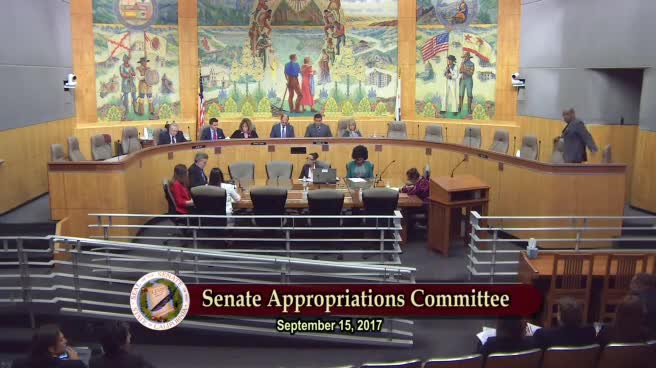 8MIN
Senate Standing Committee on Appropriations
 4MIN
Senate Floor
 24MIN
Senate Standing Committee on Governmental Organization
 36MIN