AB 1530: Electricity: distributed generation.
- Session Year: 2015-2016
- House: Assembly
- Latest Version Date: 2016-04-26
Under existing law, the Public Utilities Commission has regulatory authority over public utilities, including electrical corporations, as defined. Existing law authorizes the Public Utilities Commission to fix the rates and charges for every public utility, and requires that those rates and charges be just and reasonable. Existing law requires the Public Utilities Commission to require each electrical corporation under the operational control of the Independent System Operator as of January 1, 2001, to modify tariffs so that all customers that install new distributed energy resources, as defined, in accordance with specified criteria are served under rates, rules, and requirements identical to those of a customer within the same rate schedule that does not use distributed energy resources, and to withdraw any provisions in otherwise applicable tariffs that activate other tariffs, rates, or rules if a customer uses distributed energy resources. Existing law provides, notwithstanding these requirements, that a customer that installs new distributed energy resources not be exempted from (1) reasonable interconnection charges, (2) charges imposed pursuant to the Reliable Electric Service Investment Act, and (3) charges imposed to repay the Department of Water Resources for electricity procurement expenses incurred in response to the electricity crisis of 200001. Existing law requires the Public Utilities Commission, in establishing the rates applicable to customers that install new distributed energy resources, to create a firewall that segregates distribution cost recovery so that any net costs, taking into account the actual costs and benefits of distributed energy resources, proportional to each customer class, as determined by the Public Utilities Commission, resulting from the tariff modifications granted to members of each customer class may be recovered only from that class.
This bill would require the Public Utilities Commission, in consultation with the State Energy Resources Conservation and Development Commission and the State Air Resources Board, to promote the deployment of clean distributed energy resources, as defined, in order to provide a stable and reliable supply of electricity. The bill would require the Public Utilities Commission to prioritize deployment of smart grids, microgrids, and reliable energy resources that reduce emissions of greenhouse gases to promote specified benefits. The bill would, to the extent authorized by federal law, require the Public Utilities Commission, by July 1, 2016, 2017, to do both of the following for those electrical corporation customers of the states 3 largest electrical corporations that install clean distributed energy resources resources, as defined, after January 1, 2016: (1) require each electrical corporation those electrical corporations to collect all applicable nonbypassable charges fixed, implemented, administered, or imposed by the Public Utilities Commission based only on the actual metered consumption of electricity delivered to the customer through the electrical corporations transmission or distribution system, which charges are to be at the same rate per kilowatthour as paid by other customers that do not employ a clean distributed energy resource, and (2) calculate a reserve capacity for standby service, if applicable, based on the capacity needed by an the electrical corporation to serve a customers electrical demand during an outage of the clean distributed energy resource providing electric service for that customer. The bill would require each electrical corporation the states 3 largest electrical corporations to identify the total amount of nonbypassable charges that would be collected each year from customers served by clean distributed energy resources installed after January 1, 2016, based on gross consumption without any adjustment for the generation of the clean distributed energy resources. The bill would require that this total amount be fully recovered from customers in the same customer class as those customers served by clean distributed energy resources installed after January 1, 2016, and would prohibit any amount from being shifted to any other customer class. The bill would require a customer served by a clean distributed energy resource to provide relevant data to the Public Utilities Commission and the State Air Resources Board annually. The bill would provide that the facility is subject to onsite inspection to verify equipment operation and performance, including capacity, thermal output, and usage, to verify applicable criteria air pollutant and greenhouse gases emissions performance. The bill would require the Public Utilities Commission to suspend the eligibility of new customers to receive service pursuant to the rate program established pursuant to the bill on December 31, 2020.
Existing law requires the State Air Resources Board to adopt greenhouse gas emissions limits and emissions reduction measures by regulation to achieve the maximum technologically feasible and cost-effective reductions in greenhouse gas emissions in furtherance of achieving the statewide greenhouse gas emissions limit.
The bill would require the State Air Resources Board, in consultation with the State Energy Resources Conservation and Development Commission, to establish a schedule of annual greenhouse gas emissions reduction standards that certain facilities must meet, in addition to other criteria, to be included as a clean distributed energy resource for the purposes of the bill, not later than March 31, 2016. The bill would require the schedule to be updated every three years, with applicable standards for each intervening year.
Existing law requires the State Energy Resources Conservation and Development Commission, beginning November 1, 2003, and every 2 years thereafter, to adopt an integrated energy policy report which includes an overview of major energy trends and issues facing the state, including supply, demand, pricing, reliability, efficiency, and impacts on public health and safety, the economy, resources, and the environment.
The bill would require the State Energy Resources Conservation and Development Commission, in consultation with the Public Utilities Commission, to report on the impacts of the rate program established pursuant to the bill in the integrated energy policy report to be filed on or before November 1, 2017, and November 1, 2019.
Under existing law, a violation of the Public Utilities Act or any order, decision, rule, direction, demand, or requirement of the commission is a crime.
Because the provisions of this bill would be a part of the act and because a violation of an order or decision of the commission implementing its requirements would be a crime, the bill would impose a state-mandated local program by creating a new crime.
The California Constitution requires the state to reimburse local agencies and school districts for certain costs mandated by the state. Statutory provisions establish procedures for making that reimbursement.
This bill would provide that no reimbursement is required by this act for a specified reason.
Under existing law, the Public Utilities Commission has regulatory authority over public utilities, including electrical corporations, as defined. Existing law authorizes the Public Utilities Commission to fix the rates and charges for every public utility, and requires that those rates and charges be just and reasonable. Existing law requires the Public Utilities Commission to require each electrical corporation under the operational control of the Independent System Operator as of January 1, 2001, to modify tariffs so that all customers that install new distributed energy resources, as defined, in accordance with specified criteria are served under rates, rules, and requirements identical to those of a customer within the same rate schedule that does not use distributed energy resources, and to withdraw any provisions in otherwise applicable tariffs that activate other tariffs, rates, or rules if a customer uses distributed energy resources. Existing law provides, notwithstanding these requirements, that a customer that installs new distributed energy resources not be exempted from (1) reasonable interconnection charges, (2) charges imposed pursuant to the Reliable Electric Service Investment Act, and (3) charges imposed to repay the Department of Water Resources for electricity procurement expenses incurred in response to the electricity crisis of 200001. Existing law requires the Public Utilities Commission, in establishing the rates applicable to customers that install new distributed energy resources, to create a firewall that segregates distribution cost recovery so that any net costs, taking into account the actual costs and benefits of distributed energy resources, proportional to each customer class, as determined by the Public Utilities Commission, resulting from the tariff modifications granted to members of each customer class may be recovered only from that class.
This bill would require the Public Utilities Commission, in consultation with the State Energy Resources Conservation and Development Commission and the State Air Resources Board, to promote the deployment of clean distributed energy resources, as defined, in order to provide a stable and reliable supply of electricity. The bill would require the Public Utilities Commission to prioritize deployment of smart grids, microgrids, and reliable energy resources that reduce emissions of greenhouse gases to promote specified benefits. The bill would, to the extent authorized by federal law, require the Public Utilities Commission, by July 1, 2016, to do both of the following for those electrical corporation customers that install clean distributed energy resources after January 1, 2016: (1) require each electrical corporation to collect all applicable nonbypassable charges fixed, implemented, administered, or imposed by the Public Utilities Commission based only on the actual metered consumption of electricity delivered to the customer through the electrical corporations transmission or distribution system, which charges are to be at the same rate per kilowatthour as paid by other customers that do not employ a clean distributed energy resource, and (2) calculate a reserve capacity for standby service, if applicable, based on the capacity needed by an electrical corporation to serve a customers electrical demand during an outage of the clean distributed energy resource providing electric service for that customer. The bill would require each electrical corporation to identify the total amount of nonbypassable charges that would be collected each year from customers served by clean distributed energy resources installed after January 1, 2016, based on gross consumption without any adjustment for the generation of the clean distributed energy resources. The bill would require that this total amount be fully recovered from customers in the same customer class as those customers served by clean distributed energy resources installed after January 1, 2016, and would prohibit any amount from being shifted to any other customer class. The bill would require a customer served by a clean distributed energy resource to provide relevant data to the Public Utilities Commission and the State Air Resources Board annually. The bill would provide that the facility is subject to onsite inspection to verify equipment operation and performance, including capacity, thermal output, and usage, to verify applicable criteria air pollutant and greenhouse gases emissions performance. The bill would require the Public Utilities Commission to suspend the eligibility of new customers to receive service pursuant to the rate program established pursuant to the bill on December 31, 2020.
Existing law requires the State Air Resources Board to adopt greenhouse gas emissions limits and emissions reduction measures by regulation to achieve the maximum technologically feasible and cost-effective reductions in greenhouse gas emissions in furtherance of achieving the statewide greenhouse gas emissions limit.
The bill would require the State Air Resources Board, in consultation with the State Energy Resources Conservation and Development Commission, to establish a schedule of annual greenhouse gas emissions reduction standards that certain facilities must meet, in addition to other criteria, to be included as a clean distributed energy resource for the purposes of the bill, not later than March 31, 2016. The bill would require the schedule to be updated every three years, with applicable standards for each intervening year.
Existing law requires the State Energy Resources Conservation and Development Commission, beginning November 1, 2003, and every 2 years thereafter, to adopt an integrated energy policy report which includes an overview of major energy trends and issues facing the state, including supply, demand, pricing, reliability, efficiency, and impacts on public health and safety, the economy, resources, and the environment.
The bill would require the State Energy Resources Conservation and Development Commission, in consultation with the Public Utilities Commission, to report on the impacts of the rate program established pursuant to the bill in the integrated energy policy report to be filed on or before November 1, 2017, and November 1, 2019.
Under existing law, a violation of the Public Utilities Act or any order, decision, rule, direction, demand, or requirement of the commission is a crime.
Because the provisions of this bill would be a part of the act and because a violation of an order or decision of the commission implementing its requirements would be a crime, the bill would impose a state-mandated local program by creating a new crime.
The California Constitution requires the state to reimburse local agencies and school districts for certain costs mandated by the state. Statutory provisions establish procedures for making that reimbursement.
This bill would provide that no reimbursement is required by this act for a specified reason.
Existing law establishes the Department of Corrections and Rehabilitation to oversee the state prison system. Under existing law, the department is required to develop guidance policies relative to the release of veterans who are inmates with the intent to assist veterans who are inmates in pursuing claims for federal veterans benefits, or in establishing rights to any other privilege, preference, care, or compensation provided under federal or state law because of honorable service in the military.
Existing law authorizes a veterans service organization to volunteer to serve as a veterans service advocate at each facility that is under the jurisdiction of the department. Under existing law, the advocate is authorized to develop a veterans economic recidivism prevention plan for each inmate who is a veteran. Existing law defines veteran for these purposes as a person who has been discharged from the United States Army, United States Navy, United States Air Force, United States Marine Corps, United States Coast Guard, the Merchant Marine, or the American Red Cross.
This bill would revise the definition of veteran for the purposes described above by deleting the reference to the American Red Cross and including a person who has been discharged from the National Guard of any state.
(a)As used in this section, clean distributed energy resource means a facility that is located on the customers premises and generates electricity, or electricity and useful heat, where the electricity generated is used for a purpose described in paragraph (1) or (2) of subdivision (b) of Section 218, and that meets, as determined for each year of eligibility based on the then current criteria, either of the following requirements:
(1)It meets all of the following criteria:
(A)Meets or exceeds the greenhouse gas emissions reduction standards established pursuant to subdivision (b).
(A)Has emissions of greenhouse gases that do not exceed 379 kilograms of carbon dioxide, or its equivalent, per megawatthour, which is equal to the emissions rate eligibility threshold for the self-generation incentive program in effect on January 1, 2016.
(B)Complies with the oxides of nitrogen (NOx) emissions standards adopted by the State Air Resources Board pursuant to the distributed generation certification program requirements (17 Cal. Code Regs. 94203).
(C)Has a nameplate rated generation capacity of 15 megawatts or less.
(D)Is sized to meet the electrical demand of, or use the available waste heat of, the customer that will be served by the facility.
(2)It meets all of the following criteria:
(A)Is an eligible renewable energy resource, pursuant to the California Renewables Portfolio Standard Program (Article 16 (commencing with Section 399.11)).
(B)Has a nameplate rated generation capacity of 15 megawatts or less.
(C)Is sized to meet the electrical demand of the customer that will be served by the facility.
(D)Will not otherwise be addressed in the commissions implementation of Section 769 or 2827.1.
(b)(1)The State Air Resources Board, in consultation with the Energy Commission, shall establish a schedule of annual greenhouse gas emissions reduction standards for a clean distributed energy resource, for the purpose of paragraph (1) of subdivision (a), not later than March 31, 2016, and shall update the schedule every three years, with applicable standards for each intervening year.
(2)The greenhouse gas emissions reduction standards shall ensure that each eligible clean distributed energy resource, for the purpose of paragraph (1) of subdivision (a), reduces greenhouse gas emissions compared to the electrical grid resources, including renewable resources, that the clean distributed energy resource displaces, accounting for both procurement and operation of the electrical grid.
(c)(1)In order to promote a modern electrical grid that provides a stable and reliable supply of electricity, the commission, in consultation with the Energy Commission and State Air Resources Board, shall promote the deployment of clean distributed energy resources.
(2)The commission shall prioritize deployment of smart grids, microgrids, and reliable energy resources that reduce emissions of greenhouse gases to promote the following cobenefits:
(A)Deployment of innovative technologies in California communities, especially disadvantaged communities.
(B)Reduction of the use of water to generate electricity to assist with the drought.
(C)Assistance to the state in reaching its State Implementation Plan goals for clean air.
(d)
(b)To the extent authorized by federal law, by July 1, 2016, 2017, the commission shall require each electrical corporation the states three largest electrical corporations to do the following for customers served by clean distributed energy resources installed after January 1, 2016:
(1)Collect all applicable nonbypassable charges fixed, implemented, administered, or imposed by the commission based only on the actual metered consumption of electricity delivered to the customer through the electrical corporations transmission or distribution system. All charges shall be at the same rate per kilowatthour as paid by other customers that do not employ a clean distributed energy resource under the electrical corporations applicable rate schedule.
(2)Identify the total amount of nonbypassable charges that would be collected each year from customers served by clean distributed energy resources installed after January 1, 2016, based on gross consumption without any adjustment for the generation of the clean distributed energy resources. This total amount shall be fully recovered from customers in the same customer class as those customers served by clean distributed energy resources installed after January 1, 2016, and no amount may be shifted to any other customer class.
(3)(A)Calculate a reserve capacity for standby service, if applicable, based on the capacity needed by an electrical corporation to serve a customers electrical demand during an outage of the clean distributed energy resource providing electric service for that customer.
(B)Initial reserve capacity shall be established by the customer for a minimum of 12 months based on the clean distributed energy resource generation technologys historical operation, the number, size, and outage diversity of the clean distributed energy resource, and the annual average reduction of customer load that could occur during an outage.
(C)If after the initial 12-month period, the electrical corporation reasonably determines that the reserve capacity does not reflect the customers actual standby demand, averaged over the previous 12 months, the electrical corporation shall modify the reserve capacity once every 12 months to reflect the customers actual average annual reserve capacity based on the same criteria used to establish the initial reserve capacity. Calculation of actual average annual reserve capacity shall exclude the customers electrical demand served by the electrical corporation within 24 hours following an outage of the clean distributed energy resource resulting from any event on the electrical corporations transmission or distribution grid that is outside of the customers control that requires the customer to reduce onsite generation.
(e)
(c)A customer served by a clean distributed energy resource shall provide relevant data to the commission and the State Air Resources Board annually. The facility shall be subject to onsite inspection to verify equipment operation and performance, including capacity, thermal output, and usage, to verify applicable criteria for air pollutant and greenhouse gases emissions performance. Requests for relevant data shall occur no more than once per year.
(f)
(d)(1)The Energy Commission, in consultation with the commission, shall report on the impacts of this section in the integrated energy policy report to be filed on or before November 1, 2017, and November 1, 2019.
(2)The report to be submitted pursuant to this subdivision shall be submitted in compliance with Section 9795 of the Government Code.
(3)The requirement for submitting a report pursuant to this subdivision is inoperative on November 1, 2021, pursuant to Section 10231.5 of the Government Code.
(g)
(e)The commission shall suspend the eligibility of new customers to receive service pursuant to the rate program established pursuant to subdivision (d) (b) on December 31, 2020. Customers that installed clean distributed energy resources after January 1, 2016, that became operational prior to suspension of eligibility pursuant to this subdivision and continue to generate electricity from their clean distributed energy resources after suspension shall continue to participate in the rate program established pursuant to subdivision (d) (b) for the entire useful life of their clean distributed energy resource.
SEC. 2.No reimbursement is required by this act pursuant to Section 6 of Article XIIIB of the California Constitution because the only costs that may be incurred by a local agency or school district will be incurred because this act creates a new crime or infraction, eliminates a crime or infraction, or changes the penalty for a crime or infraction, within the meaning of Section 17556 of the Government Code, or changes the definition of a crime within the meaning of Section 6 of Article XIIIB of the California Constitution.
(a)As used in this section, clean distributed energy resource means a facility that is located on the customers premises and generates electricity, or electricity and useful heat, where the electricity generated is used for a purpose described in paragraph (1) or (2) of subdivision (b) of Section 218, and that meets, as determined for each year of eligibility based on the then current criteria, either of the following requirements:
(1)It meets all of the following criteria:
(A)Meets or exceeds the greenhouse gas emissions reduction standards established pursuant to subdivision (b).
(B)Complies with the oxides of nitrogen (NOx) emissions standards adopted by the State Air Resources Board pursuant to the distributed generation certification program requirements (17 Cal. Code Regs. 94203).
(C)Has a nameplate rated generation capacity of 15 megawatts or less.
(D)Is sized to meet the electrical demand of, or use the available waste heat of, the customer that will be served by the facility.
(2)It meets all of the following criteria:
(A)Is an eligible renewable energy resource, pursuant to the California Renewables Portfolio Standard Program (Article 16 (commencing with Section 399.11)).
(B)Has a nameplate rated generation capacity of 15 megawatts or less.
(C)Is sized to meet the electrical demand of the customer that will be served by the facility.
(D)Will not otherwise be addressed in the commissions implementation of Section 769 or 2827.1.
(b)(1)The State Air Resources Board, in consultation with the Energy Commission, shall establish a schedule of annual greenhouse gas emissions reduction standards for a clean distributed energy resource, for the purpose of paragraph (1) of subdivision (a), not later than March 31, 2016, and shall update the schedule every three years, with applicable standards for each intervening year.
(2)The greenhouse gas emissions reduction standards shall ensure that each eligible clean distributed energy resource, for the purpose of paragraph (1) of subdivision (a), reduces greenhouse gas emissions compared to the electrical grid resources, including renewable resources, that the clean distributed energy resource displaces, accounting for both procurement and operation of the electrical grid.
(c)(1)In order to promote a modern electrical grid that provides a stable and reliable supply of electricity, the commission, in consultation with the Energy Commission and State Air Resources Board, shall promote the deployment of clean distributed energy resources.
(2)The commission shall prioritize deployment of smart grids, microgrids, and reliable energy resources that reduce emissions of greenhouse gases to promote the following cobenefits:
(A)Deployment of innovative technologies in California communities, especially disadvantaged communities.
(B)Reduction of the use of water to generate electricity to assist with the drought.
(C)Assistance to the state in reaching its State Implementation Plan goals for clean air.
(d)To the extent authorized by federal law, by July 1, 2016, the commission shall require each electrical corporation to do the following for customers served by clean distributed energy resources installed after January 1, 2016:
(1)Collect all applicable nonbypassable charges fixed, implemented, administered, or imposed by the commission based only on the actual metered consumption of electricity delivered to the customer through the electrical corporations transmission or distribution system. All charges shall be at the same rate per kilowatthour as paid by other customers that do not employ a clean distributed energy resource under the electrical corporations applicable rate schedule.
(2)Identify the total amount of nonbypassable charges that would be collected each year from customers served by clean distributed energy resources installed after January 1, 2016, based on gross consumption without any adjustment for the generation of the clean distributed energy resources. This total amount shall be fully recovered from customers in the same customer class as those customers served by clean distributed energy resources installed after January 1, 2016, and no amount may be shifted to any other customer class.
(3)(A)Calculate a reserve capacity for standby service, if applicable, based on the capacity needed by an electrical corporation to serve a customers electrical demand during an outage of the clean distributed energy resource providing electric service for that customer.
(B)Initial reserve capacity shall be established by the customer for a minimum of 12 months based on the clean distributed energy resource generation technologys historical operation, the number, size, and outage diversity of the clean distributed energy resource, and the annual average reduction of customer load that could occur during an outage.
(C)If after the initial 12-month period, the electrical corporation reasonably determines that the reserve capacity does not reflect the customers actual standby demand, averaged over the previous 12 months, the electrical corporation shall modify the reserve capacity once every 12 months to reflect the customers actual average annual reserve capacity based on the same criteria used to establish the initial reserve capacity. Calculation of actual average annual reserve capacity shall exclude the customers electrical demand served by the electrical corporation within 24 hours following an outage of the clean distributed energy resource resulting from any event on the electrical corporations transmission or distribution grid that is outside of the customers control that requires the customer to reduce onsite generation.
(e)A customer served by a clean distributed energy resource shall provide relevant data to the commission and the State Air Resources Board annually. The facility shall be subject to onsite inspection to verify equipment operation and performance, including capacity, thermal output, and usage, to verify applicable criteria for air pollutant and greenhouse gases emissions performance. Requests for relevant data shall occur no more than once per year.
(f)(1)The Energy Commission, in consultation with the commission, shall report on the impacts of this section in the integrated energy policy report to be filed on or before November 1, 2017, and November 1, 2019.
(2)The report to be submitted pursuant to this subdivision shall be submitted in compliance with Section 9795 of the Government Code.
(3)The requirement for submitting a report pursuant to this subdivision is inoperative on November 1, 2021, pursuant to Section 10231.5 of the Government Code.
(g)The commission shall suspend the eligibility of new customers to receive service pursuant to the rate program established pursuant to subdivision (d) on December 31, 2020. Customers that installed clean distributed energy resources after January 1, 2016, that became operational prior to suspension of eligibility pursuant to this subdivision and continue to generate electricity from their clean distributed energy resources after suspension shall continue to participate in the rate program established pursuant to subdivision (d) for the entire useful life of their clean distributed energy resource.
SEC. 2.No reimbursement is required by this act pursuant to Section 6 of Article XIIIB of the California Constitution because the only costs that may be incurred by a local agency or school district will be incurred because this act creates a new crime or infraction, eliminates a crime or infraction, or changes the penalty for a crime or infraction, within the meaning of Section 17556 of the Government Code, or changes the definition of a crime within the meaning of Section 6 of Article XIIIB of the California Constitution.
SECTION 1.Section 2695.5 of the Penal Code is amended to read:2695.5.For purposes of this article, the following definitions shall apply:
(a)Advocate means a veterans service organization that is federally certified and has volunteered to serve as a veterans service advocate pursuant to this article.
(b)Veteran means a person who has been discharged from the United States Army, United States Navy, United States Air Force, United States Marine Corps, United States Coast Guard, the National Guard of any state, or the Merchant Marine.
For purposes of this article, the following definitions shall apply:
(a)Advocate means a veterans service organization that is federally certified and has volunteered to serve as a veterans service advocate pursuant to this article.
(b)Veteran means a person who has been discharged from the United States Army, United States Navy, United States Air Force, United States Marine Corps, United States Coast Guard, the National Guard of any state, or the Merchant Marine, or the American Red Cross. Marine.
|
Date
|
Status
|
|---|---|
| Jun 29, 2016 | In committee: Set, final hearing. Hearing canceled at the request of author. |
| Jun 14, 2016 | In committee: Set, second hearing. Hearing canceled at the request of author. |
| Jun 6, 2016 | In committee: Set, first hearing. Hearing canceled at the request of author. |
| Apr 26, 2016 | Read second time and amended. Re-referred to Com. on E.Q. |
| Apr 25, 2016 | From committee: Amend, and do pass as amended and re-refer to Com. on E.Q. (Ayes 6. Noes 4.) (April 19). |
| Jan 28, 2016 | Re-referred to Coms. on E., U., & C. and E.Q. |
| Sep 8, 2015 | Re-referred to Com. on RLS. pursuant to Senate Rule 29.10(c). |
| Sep 8, 2015 | Re-referred to Com. on RLS. pursuant to Senate Rule 29.10 (c). |
| Sep 8, 2015 | Read second time. Ordered to third reading. |
| Sep 4, 2015 | Read third time and amended. Ordered to second reading. |
| Sep 4, 2015 | Read second time. Ordered to third reading. |
| Sep 3, 2015 | Ordered to second reading. |
| Sep 3, 2015 | From inactive file. |
| Jul 9, 2015 | Ordered to inactive file at the request of Senator Nielsen. |
| Jul 9, 2015 | From Consent Calendar. |
| Jul 7, 2015 | Read second time. Ordered to Consent Calendar. |
| Jul 6, 2015 | From committee: Be placed on second reading file pursuant to Senate Rule 28.8 and ordered to consent calendar. |
| Jun 24, 2015 | From committee: Do pass and re-refer to Com. on APPR. with recommendation: To Consent Calendar. (Ayes 5. Noes 0.) (June 23). Re-referred to Com. on APPR. |
| May 28, 2015 | Referred to Com. on V.A. |
| May 14, 2015 | In Senate. Read first time. To Com. on RLS. for assignment. |
| May 14, 2015 | Read third time. Passed. Ordered to the Senate. (Ayes 78. Noes 0. Page 1451.) |
| May 14, 2015 | Read third time. Passed. Ordered to the Senate. |
| May 7, 2015 | Read second time. Ordered to Consent Calendar. |
| May 6, 2015 | From committee: Do pass. To Consent Calendar. (Ayes 17. Noes 0.) (May 6). |
| Apr 29, 2015 | From committee: Do pass and re-refer to Com. on APPR. (Ayes 9. Noes 0.) (April 28). Re-referred to Com. on APPR. |
| Mar 26, 2015 | Referred to Com. on V.A. |
| Mar 19, 2015 | From printer. May be heard in committee April 18. |
| Mar 18, 2015 | Read first time. To print. |
|
Date
|
Description
|
Location
|
Votes
|
|
|---|---|---|---|---|
| Apr 19, 2016 | Do pass as amended, but first amend, and re-refer to the Committee on [Environmental Quality] | Senate Standing Committee on Energy, Utilities and Communications |
Passed |
|
| Jun 23, 2015 | Do pass, but first be re-referred to the Committee on [Appropriations] with the recommendation: To Consent Calendar | Senate Standing Committee on Veterans Affairs |
Passed |
|
| May 14, 2015 | AB 1530 V. A. Consent Calendar Second Day Regular Session | Assembly Floor |
Passed |
|
| May 6, 2015 | Do pass. To Consent Calendar. | Assembly Standing Committee on Appropriations |
Passed |
|
| Apr 28, 2015 | Do pass and be re-referred to the Committee on [Appropriations] | Assembly Standing Committee on Veterans Affairs |
Passed |
This list shows positions taken on this bill by organizations on the date displayed, which is linked to the original source.
Positions by individuals are not included.
SENATE COMMITTEE ON ENVIRONMENTAL QUALITY
Senator Wieckowski, Chair
2015 - 2016 Regular
Bill No: AB 1530
Author: | Levine and Gordon | ||
Version: | 4/26/2016 | Hearing Date: | 6/29/2016 |
Urgency: | No | Fiscal: | Yes |
Consultant: | Rebecca Newhouse | ||
SUBJECT: Electricity: distributed generation.
ANALYSIS:
Existing law:
- Establishes certain costs to be recovered from customers of investor-owned utilities (IOUs) on a nonbypassable basis, such as public purpose programs including rate assistance for low-income customers, energy efficiency, and the Electric Program Investment Charges (EPIC), bond repayments, and nuclear decommission costs.
- Provides incentives for self-generation. (Public Utilities Code §379.6)
- Requires retail sellers of electricity to increase purchases of renewable energy such that at least 50% of retail sales are procured from renewable energy resources by December 31, 2030. (PUC §399.11 et seq.)
- Requires each IOU, by July 1, 2015, to submit to the California Public Utilities Commission (CPUC) a distribution resources plan proposal to identify optimal locations for the deployment of distributed resources. (PUC §769)
- Directs the California Air Resources Board (ARB) to adopt a certification program and uniform emission standards for electrical generation technologies, such as distributed generation systems, that are exempt from local air district permitting requirements. (Health and Safety Code §41514.9)
This bill:
- Establishes the category “clean distributed energy resource” (clean DER) to mean a facility of 15 megawatts (MW) or less, located on a customer’s premises that generates electricity, or electricity and useful heat, and sized to meet the customer’s onsite demand, and that meets, for each year of eligibility, one of the following criteria:
- A greenhouse gas (GHG) emissions standard equivalent to, or less than, 379 kilograms of CO2 equivalents per megawatt-hour (kgCO2e/MWh) and complies with oxides of nitrogen (NOx), carbon monoxide, and volatile organic compound emissions standards adopted by ARB, as specified.
- Is a renewable energy resource under the RPS and will not otherwise be addressed in the CPUC’s implementation of the distributed resource planning process or revision of the rules regarding net energy metering.
- Directs CPUC to require the three largest IOUs to:
- Collect nonbypassable charges from any customer served by clean DER based only on the actual metered consumption of electricity delivered to the customer through the IOU’s transmission or distribution grid, and prohibits shifting of costs to customers in a different customer class.
- Adjust reserve capacity for standby service for clean DER customers, as specified.
- Requires CPUC to suspend the eligibility of new customers to receive the above rate program on December 31, 2020.
- Requires the California Energy Resources Conservation and Development Commission (CEC), in consultation with the CPUC, to report on impacts of these provisions in the integrated energy policy report filed on or before November 1, 2017, and November 1, 2019.
Background
- Nonbypassable charges. Nonbypassable charges are fees that all customers pay to recover fixed charges or program costs of the IOU. CPUC, pursuant to statute, authorizes IOUs to recover certain fixed program costs from charges that are paid by all customers in an IOU service territory, regardless of the source of a given customer’s electricity. The largest component of nonbypassable charges affected is the public purpose program charge, which includes the California Alternative Rates for Energy program (CARE), which funds state-mandated low-income assistance, energy efficiency programs, and the electric program investment charge (EPIC), that funds energy technologies and research. Smaller components are the Department of Water Resources (DWR) bond charges, which recovers the cost of bonds issued to finance power purchased by DWR during the energy crisis, and nuclear decommissioning, which provides for the funds required for site restoration when the nuclear power plants are removed from service. These charges are volumetric, meaning they are based on the amount of electricity used by the customer, usually expressed in dollar per kilowatt-hour ($/KWh).
Exemptions. Generally, a customer or customer group may be granted an exemption from nonbypassable charges when the IOU did not incur costs related to the particular category of nonbypassable charge on behalf of that customer or customer group.
Some customer generation is exempt from nonbypassable charges through existing programs designed to encourage certain customer behavior, such as adoption of renewable technology. For example, customers who participate in the net energy-metering program (NEM) pay electric utility nonbypassable charges only on the electricity they receive from the grid. The NEM program allows a customer who installs small solar, wind, biogas and fuel cell generation facilities (up to 1MW) that serve all or a portion of onsite generation needs, to receive a financial credit for power generated by their onsite system and fed back to the utility. The credit is used to offset the customer’s electricity bill. NEM eligibility (and therefore exemption from nonbypassable charges) for fuel cells using fossil natural gas expires at the end of this year.
- Distributed generation. Distributed Generation (DG) generally refers to smaller-scale electricity generation on-site or generation located closer to population centers or other high demand areas. DG can be produced with renewable or non-renewable fuel sources; examples include small wind turbines, rooftop solar, internal combustion engines, gas turbines and fuel cells.
Traditional methods of electric generation and supply relies on centralized electricity production from a few large-scale generating stations located far from load centers, and distributing that electricity through an extensive transmission and distribution network. Systems based on DG employ numerous, small plants and can provide power onsite with little reliance on the distribution and transmission grid.
Renewable DG receives several types of incentives. In addition to bill credits for net electricity exported to the grid, NEM customers are exempt from nonbypassable charges, as noted above, and standby charges, costs associated with interconnection application fees, studies and distribution upgrades.
DG also receives incentive payments through the California Solar Initiative (limited to solar photovoltaic DG) and the Self-Generation Incentive Program (SGIP).
Self-Generation Incentive Program. SGIP was authorized by the legislature in 2000, and established by the CPUC in 2001 to reduce peak demand in response to the energy crisis. The program was modified by SB 412 (Kehoe, Chapter 182, Statutes of 2009) to include reduction of GHG emissions as a focus of the program, in addition to other goals of the program, including improving efficiency and reliability of the distribution and transmission system, and reducing peak demand and ratepayer costs. SB 412 directed the CPUC, in consultation with ARB, to identify distributed energy resources that contribute to greenhouse gas reduction goals and to set appropriate incentive levels to encourage their adoption. Pursuant to SB 412, CPUC set the GHG emissions level for eligible DG in 2011 at or below 379 kgCO2e/MWh. This value was based on the AB 32 Scoping Plan estimate of the average emissions of natural gas fired-electricity generation from 2002 to 2004 and adjusted downward by CPUC by 20% to account for the RPS (which has since increased to a 33% renewable energy procurement requirement by 2020, and a 50% procurement mandate by 2050), and adjusted for avoided line losses.
DG technologies provided incentives under SGIP include renewable technologies, such as wind and biogas-fueled generation, and non-renewable, natural gas-fueled electricity generation, including combined heat and power (CHP) fuel cells, electric-only fuel cells, gas turbines, internal combustion engines, and microturbines. CHP refers to the production of electricity and heat from a single fuel source and increases efficiencies of systems that run on natural gas by capturing waste heat for conversion of useful thermal energy.
SB 861 (Budget and Fiscal Review Committee, Chapter 35, Statutes of 2014) extended SGIP until 2021 and required CPUC to update, by July 2015, the GHG emissions factor for avoided GHG emissions based on ARB’s most recent data on GHG emissions from electricity sales in IOU service areas and estimates of GHG emissions over the useful life of the distributed generation technology.
In November of 2015, CPUC lowered the GHG emissions ceiling for DG eligible for SGIP incentives to a 10-year average emissions rate of 350 kgCO2e/MWh.
Since the start of the program, about $3.7 billion has been allocated for incentive payments to renewable and non-renewable DG. This year, over $77 million is authorized for SGIP incentives to eligible DG resources.
- Emissions impacts of distributed generation. The electricity sector and environmental impacts of DG are dependent on where the distributed generation is deployed in relation to the distribution system, how the technology operates (e.g., intermittent or baseload resource) and, for non-renewable technologies, the efficiency, type of fuel, and emissions specifications of DG compared to the characteristics of the electricity the distributed generation is displacing. As all these factors may vary greatly, estimating potential environmental impacts and benefits of this type of electrical generation is not a straightforward analysis.
For the SGIP program, CPUC contracts with a third-party consulting firm, Itron, to perform annual impact evaluations of the program to quantify the energy, demand, and environmental impacts. The report calculates emission impacts of the technologies under SGIP as the difference between the emissions generated by SGIP systems and baseline emissions that would have occurred in the absence of the program.
The April 2015 Itron Report assessed SGIP impacts from the beginning of the program until 2013, and found that after 2011 (at which point GHG emissions reductions became a goal of the program), there was a shift from a net increase in GHG emissions from non-renewable DG under the program, to a marginal net reduction in net GHG emissions in 2012, and increased GHG emissions reductions in 2013 (a GHG emissions reduction of 12,000 metric tons CO2e/MWh). These non-renewable SGIP projects include CHP fuel cells, electric-only fuel cells, gas turbines, internal combustion engines, and microturbines, operating on natural gas.
For comparison, renewable SGIP resources (wind and biogas-fueled DG) in 2013 were estimated to result in net GHG reductions of 150,000 metric tons of CO2e/MWh (3.5 times more GHG emission reductions than the non-renewable SGIP projects).
As expected, GHG emissions reductions vary substantially for different non-renewable distributed generation technologies. According to the report (which assigns a net GHG emissions reductions a negative “GHG impact” score), “CHP fuel cells and gas turbines have a higher emissions rate than the electrical power plants that they avoid...but are able to overcome this deficit by recovering useful heat for heating... and cooling...services. The result is a negative emissions impact...relative to the conventional energy services baseline. Electric-only fuel cells do not recover useful heat but have a lower emissions rate than the electric power plants they avoid.... Internal combustion engines and microturbines had high emissions rates and did not recover sufficient useful heat to achieve negative GHG impacts.”
Criteria air pollutant reductions. Like GHG emissions, criteria air pollutant emissions are proportional to the amount of fuel consumed for a specific technology. Depending on the type of technology, criteria air pollutant emissions from DG can vary greatly. For example, diesel generators (not included under SGIP or this bill) are one of the dirtier forms of distributed generation and have some of the most significant emissions of toxic and criteria air pollutants compared to other types of electricity generation. In contrast, fuel cells, which do not use a combustion process, have one of the lowest emissions levels of NOx and PM10 emissions for non-renewable electrical generation.
According to the April 2015 Impact Evaluation report, for non-renewable SGIP distributed generation, “All technologies supplied with non-renewable fuel decreased NOx and PM10 emissions. SO2 emissions from technologies supplied with non-renewable fuel were marginal. These results indicate that non- renewable SGIP technologies with high electrical efficiencies and low air pollutant emissions (e.g., fuel cells) generate fewer emissions than the conventional energy services baseline. In addition, SGIP technologies with lower electrical efficiencies but which recovered useful waste heat reduce criteria air pollutants overall.”
The report also notes, “The 2013 impacts evaluation marks the first attempt at quantifying the NOx, PM10, and SO2 impacts of the SGIP. While the analysis methodology presented here is sound, there is room for improvement. Emissions data from the California Air Resources Board and local air quality municipal districts should be leveraged to obtain more accurate estimates of emissions rates from distributed energy resources and boilers.”
- Local air district permitting and ARB certification. Air permitting requirements for DG vary throughout California due to regional differences in air quality and also depend on the type of DG technology. Air districts in regions designated as non-attainment under the federal and state Clean Air Acts may require distributed generation projects to install best-available control technology and to offset their emission of criteria pollutants. However, local air districts do not require air permits for DG that does not emit air pollution or whose emissions are below air district permitting thresholds, which vary depending on the air district.
To address regulatory gaps in local air district permitting of DG, SB 1298 (Bowen and Peace, Chapter 741, Statutes of 2000) directed ARB to develop an air pollution control certification program for distributed generation technologies that are exempt from local air permitting requirements by January 2003 and requires that those standards reflect the best performance achieved in practice by existing electrical generation technologies. The current regulation, amended in 2006, requires all DG running on fossil fuel to meet emissions standards for NOx, carbon monoxide, and volatile organic compounds (VOCs). The NOx standard is set at 0.07 lbs/MWh, approximately equivalent to a NOx emissions factor for a new, central-station baseload natural gas powerplant.
Comments
- Purpose of Bill. According to the author, “Clean onsite distributed energy resources allow for cleaner, lower cost, more reliable energy generation. On-site distributed generation technologies offer a clean energy choice that provides air quality benefits by reducing emissions of high criteria air pollutants and greenhouse gases. Clean DG reduces the need for energy generation that emits higher levels of greenhouse gases that contribute to climate change and higher levels of criteria air pollutants that contribute to smog formation. These technologies are primed to help California reach its clean energy goals. They are part of the solution, and are ready to be deployed now to meet the state’s growing demand while providing critical environmental, economic and social benefits.”
- Emissions impacts of non-renewable distributed generation. The environmental benefits of DG depend on a variety of factors, including technology, fuel type, as well as where and when the technology is dispatched. For zero-emission distributed generation, the analysis of GHG emissions and criteria air pollutant benefits is more straightforward. For the most part, any grid electricity displaced by these resources results in avoided GHG emissions and criteria air pollutants.
For non-renewable DG, the emissions impact depends on the emissions rate of the technology, and the type of generation the DG is displacing. In the short-term, this analysis of avoided GHG emissions looks at avoided resources on the margin that would have otherwise needed to operate to meet electricity needs. According to the CPUC, this short-term “operating margin effect” for displaced energy is likely some fraction of existing combined cycle natural gas power plants (with an average emissions factor of 382 kgCO2e/MWh) and simple cycle combustion turbines (also known as peaker plants, with average emissions of 544 kgCO2/MWh ).
In the long-term, the emissions impact of distributed generation would depend on the avoided resources that would otherwise need to be built to meet electricity needs. In general, due to the RPS requirement, these avoided resources will likely be some increasing fraction of renewable resources as well as newer, more efficient natural gas generation. Because of various scenarios, and the different types of non-renewable technologies, there is uncertainty in terms of the extent of avoided emissions with non-renewable DG.
Although the average emissions intensity of the electrical grid is not necessarily representative of the energy displaced by distributed generation, it is notable that PG&E and Southern California Edison have grid emissions intensities of 179 and 259 kgCO2e/MWh—both significantly lower than the emissions limit in AB 1530 (379 kgCO2e/MWh).
- Static GHG emissions standard based on outdated assumptions. AB 1530 defines distributed generation at or below a GHG emissions intensity of 379 kgCO2e/MWh as a “clean distributed energy resource” and exempts this type of generation from nonbypassable charges. According to the CPUC, the original SGIP standard of 379 kgCO2e/MWh established in 2011was based on average natural gas power plant emissions from 2002 to 2004 and adjusted downward by 20% to account for the RPS. The average power plants emissions data used to generate the emissions factor that currently establishes eligibility for clean DER in this bill is now over a decade old, and does not reflect the lower emission rate of newer, more modern gas-fired generation. Additionally, by 2014, the three largest IOUs had all procured over 20% of their RPS requirement (with San Diego Gas & Electric over 36%). As this standard is not based on current data, it appears to be somewhat arbitrary, and therefore does not ensure qualifying distributed generation is “clean.”
Additionally, although the bill sunsets eligibility for new DG to qualify for nonbypassable charge exemption under this bill, DG meeting the definition of clean DER and installed before December 31, 2020 (unless the sunset is extended or repealed), will be exempt from paying the nonbypassable charges for the entire useful life of the technology, which could be 10 to 20 years from now. At that point, the grid will likely be substantially cleaner. However, under this bill incentives will continue to be provided to what will effectively look like dirty generation relative to a grid made up of 50% or greater renewable energy resources.
- More than a reauthorization. Proponents of AB 1530 argue that the bill extends the “no use, no fee” policy that NEM customers, including fuel cells using natural gas, qualify for. Under the NEM tariff, DG customers only pay nonbypassable charges on electricity they receive from an IOU. NEM was recently extended for renewable DG (without the 1MW cap), but the eligibility for fossil natural gas fuel cell distributed generation sunsets at the end of this year. However, there are several notable differences between AB 1530 and a reauthorization of the nonbypassable charges exemption. Whereas the NEM policy limits non-renewable customer participation to natural gas fuel cells (until the end of 2016), under AB 1530, fuel cells, as well as other non-renewable DG technologies including gas turbines, internal combustion engines, and microturbines, may qualify. Additionally, the exemption from nonbypassable charges would apply for generation up to fifteen times the current eligibility limit for NEM fuel cell customers. This is a significant expansion (1MW can power 600 to 700 homes, whereas 15MW can power around 10,000 homes).
- RPS. Under the RPS, load-serving entities, including IOUs, are required to meet 50% of their load from renewable energy resources by December 31, 2030. Customer generation, itself exempt from RPS requirements, decreases the load of the load-serving entity, and ultimately reduces the renewable resource generation IOUs need to procure to meet the 50% RPS requirement. To the extent the exemption from nonbypassable charges results in a large number of customers that install clean DER at or near the 15MW limit, the corresponding reduction in electrical load may significantly reduce renewable energy procurement by IOUs.
- Commitments to natural gas. This bill captures both renewable and non-renewable “clean distributed energy resources,” but because renewable distributed generation can take advantage of other, potentially more generous incentives, the primary beneficiaries of this bill would be non-renewable technologies using fossil natural gas.
Methane (CH4) is the principal component of natural gas. Methane is 84 times more powerful as a global warming pollutant than CO2 on a 20-year time scale. Atmospheric methane concentrations have been increasing as a result of human activities related to agriculture, fossil fuel extraction and distribution, and waste generation and processing.
A growing body of evidence suggests that national and state estimates of methane emissions from the natural gas sector have been significantly underestimated. Studies suggest that U.S. methane emissions from all sources are likely anywhere from 25 to 75% higher than EPA estimates, and they note the discrepancy may in large part be due to a small number of very large leaks from the natural gas production and distribution system.
Additionally, several recent analyses of atmospheric measurements in state suggest that actual California methane emissions may be 30 to 70% higher than estimated in ARB’s emission inventory. The Short-Lived Climate Pollutant draft strategy notes that several efforts are underway at the CEC and ARB to improve emissions monitoring to help identify sources of fugitive methane emissions and reduce them, including from oil and gas operations. Although the state has worked to reduce fugitive methane emissions from various sources over recent years, including new efforts to reduce fugitive leaks from natural gas infrastructure in the state, 91% of the natural gas used in California is imported.
Providing incentives for distributed technologies requiring long-term natural gas contracts, although potentially more efficient than centralized natural gas powerplants, may run contrary to the RPS, and other policies, that are working to decarbonize the state’s electricity sector and meet ambitious climate goals.
- Amendment. As the bill was originally amended to address the issue of clean DER and nonbypassable charges at the end of last year, the dates in the bill determining the applicability of the nonbypassable and standby charge requirements in the bill for new clean DER customers should be pushed out a year. For example, the bill currently appears to operate retroactively, with the new nonbypassable and standby charge requirements of this bill applying to clean DER installed after January 1, 2016.
Related/Prior Legislation
AB 674 (Mullin, 2015) contained similar provisions to AB 1530. AB 674 was held on the Assembly Appropriations suspense file.
AB 2441 (Mullin, 2014) was similar to AB 1530. The bill was held in the Senate Rules Committee.
AB 2649 (Mullin, 2014) was similar to AB 1530, but was amended to a different subject matter and held on the Senate Appropriations Committee Suspense file.
AB 365 (Mullin, 2013) contained similar provisions to AB 1530. The bill was held in the Senate Rules Committee.
DOUBLE REFERRAL:
This measure was heard in Senate Energy, Utilities and Communications Committee on April 19, 2016, and passed out of committee with a vote of 6-4.
SOURCE:
TechNet
SUPPORT:
Association of California Water Agencies
Bloom Energy
Capstone
Caterpiller
DE Solutions
Doosan Fuel Cell America
EtaGen
LG
National Fuel Cell Research Center
NLine Energy, Inc.
Sierra Nevada Brewing Company
Silicon Valley Leadership Group
Solar Turbines
Tecogen
OPPOSITION:
California State Association of Electrical Workers
California State Pipe Trades Council
California Manufacturers and Technology Association
Coalition of California Utility Employees
Natural Resources Defense Council
Pacific Gas and Electric Company
San Diego Gas and Electric Company
San Francisco Public Utilities Commission
Sierra Club California
Southern California Edison
The Utility Reform Network
Western States Council of Sheet Metal Workers
ARGUMENTS IN SUPPORT:
Supporters state that AB 1530 extends existing
state law that expires at the end of this year that protects customers from having to
pay utility fees assessed on clean energy generated onsite by the customer.
Supporters note that without AB 1530, customers who choose to invest their own
capital to install clean, onsite electricity generation technologies will have to pay a
number of utility-imposed fees on electricity they generate and consume on-site.
They add that these charges would create an economic disincentive for customers
to deploy new, innovative and clean technologies that will benefit all Californians.
Supporters also state that on-site distributed generation technologies offer a clean
energy choice that provides air quality benefits by reducing emissions of high
criteria air pollutants and GHGs, and that clean DG reduces the need for energy
generation that emits higher levels of GHGs that contribute to climate change and
smog formation.
ARGUMENTS IN OPPOSITION:
Opponents say that AB 1530 creates
exemptions from nonbypassable charges, including those established to ensure
customers pay their fair share for public purpose programs such as low-income
ratepayer assistance, and energy efficiency, for customers who install non-
renewable, fossil fuel self-generation. The opponents argue that these exemptions
would result in an unfair cost shift from participating customers to non
-participating customers. Southern California Edison states the reliability,
infrastructure, and other ratepayer benefits purposed by the bill’s proponents are
questionable, and even if actualized, have no nexus to the exemptions being
sought. The California State Association of Electrical Workers, Coalition of
California Utility Employees, California State Pipe Trades Council and Western
States Council of Sheet Metal Workers also argue that AB 1530 not only conflicts
with the state’s energy policy of the last 15 years, which has been focused on
reducing reliance on fossil fuels, but is directly contrary to the 50% RPS
requirement and SB 350 (de León). The Natural Resources Defense Council opposes the bill, unless the bill is amended to reinstate a prior provision of the bill which required the emissions threshold to ratchet down over time, pursuant to the appropriate determination by the ARB.
*** END ***
SENATE COMMITTEE ON ENVIRONMENTAL QUALITY
Senator Wieckowski, Chair
2015 - 2016 Regular
Bill No: AB 1530
Author: | Levine and Gordon | ||
Version: | 4/26/2016 | Hearing Date: | 6/15/2016 |
Urgency: | No | Fiscal: | Yes |
Consultant: | Rebecca Newhouse | ||
SUBJECT: Electricity: distributed generation.
ANALYSIS:
Existing law:
- Establishes certain costs to be recovered from customers of investor-owned utilities (IOUs) on a nonbypassable basis, such as public purpose programs including rate assistance for low-income customers, energy efficiency, and the Electric Program Investment Charges (EPIC), bond repayments, and nuclear decommission costs.
- Provides incentives for self-generation. (Public Utilities Code §379.6)
- Requires retail sellers of electricity to increase purchases of renewable energy such that at least 50% of retail sales are procured from renewable energy resources by December 31, 2030. (PUC §399.11 et seq.)
- Requires each IOU, by July 1, 2015, to submit to the California Public Utilities Commission (CPUC) a distribution resources plan proposal to identify optimal locations for the deployment of distributed resources. (PUC §769)
- Directs the California Air Resources Board (ARB) to adopt a certification program and uniform emission standards for electrical generation technologies, such as distributed generation systems, that are exempt from local air district permitting requirements. (Health and Safety Code §41514.9)
This bill:
- Establishes the category “clean distributed energy resource” (clean DER) to mean a facility of 15 megawatts (MW) or less, located on a customer’s premises that generates electricity, or electricity and useful heat, and sized to meet the customer’s onsite demand, and that meets, for each year of eligibility, one of the following criteria:
- A greenhouse gas (GHG) emissions standard equivalent to, or less than, 379 kilograms of CO2 equivalents per megawatt-hour (kgCO2e/MWh) and complies with oxides of nitrogen (NOx), carbon monoxide, and volatile organic compound emissions standards adopted by ARB, as specified.
- Is a renewable energy resource under the RPS and will not otherwise be addressed in the CPUC’s implementation of the distributed resource planning process or revision of the rules regarding net energy metering.
- Directs CPUC to require the three largest IOUs to:
- Collect nonbypassable charges from any customer served by clean DER based only on the actual metered consumption of electricity delivered to the customer through the IOU’s transmission or distribution grid, and prohibits shifting of costs to customers in a different customer class.
- Adjust reserve capacity for standby service for clean DER customers, as specified.
- Requires CPUC to suspend the eligibility of new customers to receive the above rate program on December 31, 2020.
- Requires the California Energy Resources Conservation and Development Commission (CEC), in consultation with the CPUC, to report on impacts of these provisions in the integrated energy policy report filed on or before November 1, 2017, and November 1, 2019.
Background
- Nonbypassable charges. Nonbypassable charges are fees that all customers pay to recover fixed charges or program costs of the IOU. CPUC, pursuant to statute, authorizes IOUs to recover certain fixed program costs from charges that are paid by all customers in an IOU service territory, regardless of the source of a given customer’s electricity. The largest component of nonbypassable charges affected is the public purpose program charge, which includes the California Alternative Rates for Energy program (CARE), which funds state-mandated low-income assistance, energy efficiency programs, and the electric program investment charge (EPIC), that funds energy technologies and research. Smaller components are the Department of Water Resources (DWR) bond charges, which recovers the cost of bonds issued to finance power purchased by DWR during the energy crisis, and nuclear decommissioning, which provides for the funds required for site restoration when the nuclear power plants are removed from service. These charges are volumetric, meaning they are based on the amount of electricity used by the customer, usually expressed in dollar per kilowatt-hour ($/KWh).
Exemptions. Generally, a customer or customer group may be granted an exemption from nonbypassable charges when the IOU did not incur costs related to the particular category of nonbypassable charge on behalf of that customer or customer group.
Some customer generation is exempt from nonbypassable charges through existing programs designed to encourage certain customer behavior, such as adoption of renewable technology. For example, customers who participate in the net energy-metering program (NEM) pay electric utility nonbypassable charges only on the electricity they receive from the grid. The NEM program allows a customer who installs small solar, wind, biogas and fuel cell generation facilities (up to 1MW) that serve all or a portion of onsite generation needs, to receive a financial credit for power generated by their onsite system and fed back to the utility. The credit is used to offset the customer’s electricity bill. NEM eligibility (and therefore exemption from nonbypassable charges) for fuel cells using fossil natural gas expires at the end of this year.
- Distributed generation. Distributed Generation (DG) generally refers to smaller-scale electricity generation on-site or generation located closer to population centers or other high demand areas. DG can be produced with renewable or non-renewable fuel sources; examples include small wind turbines, rooftop solar, internal combustion engines, gas turbines and fuel cells.
Traditional methods of electric generation and supply relies on centralized electricity production from a few large-scale generating stations located far from load centers, and distributing that electricity through an extensive transmission and distribution network. Systems based on DG employ numerous, small plants and can provide power onsite with little reliance on the distribution and transmission grid.
Renewable DG receives several types of incentives. In addition to bill credits for net electricity exported to the grid, NEM customers are exempt from nonbypassable charges, as noted above, and standby charges, costs associated with interconnection application fees, studies and distribution upgrades.
DG also receives incentive payments through the California Solar Initiative (limited to solar photovoltaic DG) and the Self-Generation Incentive Program (SGIP).
Self-Generation Incentive Program. SGIP was authorized by the legislature in 2000, and established by the CPUC in 2001 to reduce peak demand in response to the energy crisis. The program was modified by SB 412 (Kehoe, Chapter 182, Statutes of 2009) to include reduction of GHG emissions as a focus of the program, in addition to other goals of the program, including improving efficiency and reliability of the distribution and transmission system, and reducing peak demand and ratepayer costs. SB 412 directed the CPUC, in consultation with ARB, to identify distributed energy resources that contribute to greenhouse gas reduction goals and to set appropriate incentive levels to encourage their adoption. Pursuant to SB 412, CPUC set the GHG emissions level for eligible DG in 2011 at or below 379 kgCO2e/MWh. This value was based on the AB 32 Scoping Plan estimate of the average emissions of natural gas fired-electricity generation from 2002 to 2004 and adjusted downward by CPUC by 20% to account for the RPS (which has since increased to a 33% renewable energy procurement requirement by 2020, and a 50% procurement mandate by 2050), and adjusted for avoided line losses.
DG technologies provided incentives under SGIP include renewable technologies, such as wind and biogas-fueled generation, and non-renewable, natural gas-fueled electricity generation, including combined heat and power (CHP) fuel cells, electric-only fuel cells, gas turbines, internal combustion engines, and microturbines. CHP refers to the production of electricity and heat from a single fuel source and increases efficiencies of systems that run on natural gas by capturing waste heat for conversion of useful thermal energy.
SB 861 (Budget and Fiscal Review Committee, Chapter 35, Statutes of 2014) extended SGIP until 2021 and required CPUC to update, by July 2015, the GHG emissions factor for avoided GHG emissions based on ARB’s most recent data on GHG emissions from electricity sales in IOU service areas and estimates of GHG emissions over the useful life of the distributed generation technology.
In November of 2015, CPUC lowered the GHG emissions ceiling for DG eligible for SGIP incentives to a 10-year average emissions rate of 350 kgCO2e/MWh.
Since the start of the program, about $3.7 billion has been allocated for incentive payments to renewable and non-renewable DG. This year, over $77 million is authorized for SGIP incentives to eligible DG resources.
- Emissions impacts of distributed generation. The electricity sector and environmental impacts of DG are dependent on where the distributed generation is deployed in relation to the distribution system, how the technology operates (e.g., intermittent or baseload resource) and, for non-renewable technologies, the efficiency, type of fuel, and emissions specifications of DG compared to the characteristics of the electricity the distributed generation is displacing. As all these factors may vary greatly, estimating potential environmental impacts and benefits of this type of electrical generation is not a straightforward analysis.
For the SGIP program, CPUC contracts with a third-party consulting firm, Itron, to perform annual impact evaluations of the program to quantify the energy, demand, and environmental impacts. The report calculates emission impacts of the technologies under SGIP as the difference between the emissions generated by SGIP systems and baseline emissions that would have occurred in the absence of the program.
The April 2015 Itron Report assessed SGIP impacts from the beginning of the program until 2013, and found that after 2011 (at which point GHG emissions reductions became a goal of the program), there was a shift from a net increase in GHG emissions from non-renewable DG under the program, to a marginal net reduction in net GHG emissions in 2012, and increased GHG emissions reductions in 2013 (a GHG emissions reduction of 12,000 metric tons CO2e/MWh). These non-renewable SGIP projects include CHP fuel cells, electric-only fuel cells, gas turbines, internal combustion engines, and microturbines, operating on natural gas.
For comparison, renewable SGIP resources (wind and biogas-fueled DG) in 2013 were estimated to result in net GHG reductions of 150,000 metric tons of CO2e/MWh (3.5 times more GHG emission reductions than the non-renewable SGIP projects).
As expected, GHG emissions reductions vary substantially for different non-renewable distributed generation technologies. According to the report (which assigns a net GHG emissions reductions a negative “GHG impact” score), “CHP fuel cells and gas turbines have a higher emissions rate than the electrical power plants that they avoid...but are able to overcome this deficit by recovering useful heat for heating... and cooling...services. The result is a negative emissions impact...relative to the conventional energy services baseline. Electric-only fuel cells do not recover useful heat but have a lower emissions rate than the electric power plants they avoid.... Internal combustion engines and microturbines had high emissions rates and did not recover sufficient useful heat to achieve negative GHG impacts.”
Criteria air pollutant reductions. Like GHG emissions, criteria air pollutant emissions are proportional to the amount of fuel consumed for a specific technology. Depending on the type of technology, criteria air pollutant emissions from DG can vary greatly. For example, diesel generators (not included under SGIP or this bill) are one of the dirtier forms of distributed generation and have some of the most significant emissions of toxic and criteria air pollutants compared to other types of electricity generation. In contrast, fuel cells, which do not use a combustion process, have one of the lowest emissions levels of NOx and PM10 emissions for non-renewable electrical generation.
According to the April 2015 Impact Evaluation report, for non-renewable SGIP distributed generation, “All technologies supplied with non-renewable fuel decreased NOx and PM10 emissions. SO2 emissions from technologies supplied with non-renewable fuel were marginal. These results indicate that non- renewable SGIP technologies with high electrical efficiencies and low air pollutant emissions (e.g., fuel cells) generate fewer emissions than the conventional energy services baseline. In addition, SGIP technologies with lower electrical efficiencies but which recovered useful waste heat reduce criteria air pollutants overall.”
The report also notes, “The 2013 impacts evaluation marks the first attempt at quantifying the NOx, PM10, and SO2 impacts of the SGIP. While the analysis methodology presented here is sound, there is room for improvement. Emissions data from the California Air Resources Board and local air quality municipal districts should be leveraged to obtain more accurate estimates of emissions rates from distributed energy resources and boilers.”
- Local air district permitting and ARB certification. Air permitting requirements for DG vary throughout California due to regional differences in air quality and also depend on the type of DG technology. Air districts in regions designated as non-attainment under the federal and state Clean Air Acts may require distributed generation projects to install best-available control technology and to offset their emission of criteria pollutants. However, local air districts do not require air permits for DG that does not emit air pollution or whose emissions are below air district permitting thresholds, which vary depending on the air district.
To address regulatory gaps in local air district permitting of DG, SB 1298 (Bowen and Peace, Chapter 741, Statutes of 2000) directed ARB to develop an air pollution control certification program for distributed generation technologies that are exempt from local air permitting requirements by January 2003 and requires that those standards reflect the best performance achieved in practice by existing electrical generation technologies. The current regulation, amended in 2006, requires all DG running on fossil fuel to meet emissions standards for NOx, carbon monoxide, and volatile organic compounds (VOCs). The NOx standard is set at 0.07 lbs/MWh, approximately equivalent to a NOx emissions factor for a new, central-station baseload natural gas powerplant.
Comments
- Purpose of Bill. According to the author, “Clean onsite distributed energy resources allow for cleaner, lower cost, more reliable energy generation. On-site distributed generation technologies offer a clean energy choice that provides air quality benefits by reducing emissions of high criteria air pollutants and greenhouse gases. Clean DG reduces the need for energy generation that emits higher levels of greenhouse gases that contribute to climate change and higher levels of criteria air pollutants that contribute to smog formation. These technologies are primed to help California reach its clean energy goals. They are part of the solution, and are ready to be deployed now to meet the state’s growing demand while providing critical environmental, economic and social benefits.”
- Emissions impacts of non-renewable distributed generation. The environmental benefits of DG depend on a variety of factors, including technology, fuel type, as well as where and when the technology is dispatched. For zero-emission distributed generation, the analysis of GHG emissions and criteria air pollutant benefits is more straightforward. For the most part, any grid electricity displaced by these resources results in avoided GHG emissions and criteria air pollutants.
For non-renewable DG, the emissions impact depends on the emissions rate of the technology, and the type of generation the DG is displacing. In the short-term, this analysis of avoided GHG emissions looks at avoided resources on the margin that would have otherwise needed to operate to meet electricity needs. According to the CPUC, this short-term “operating margin effect” for displaced energy is likely some fraction of existing combined cycle natural gas power plants (with an average emissions factor of 382 kgCO2e/MWh) and simple cycle combustion turbines (also known as peaker plants, with average emissions of 544 kgCO2/MWh ).
In the long-term, the emissions impact of distributed generation would depend on the avoided resources that would otherwise need to be built to meet electricity needs. In general, due to the RPS requirement, these avoided resources will likely be some increasing fraction of renewable resources as well as newer, more efficient natural gas generation. Because of various scenarios, and the different types of non-renewable technologies, there is uncertainty in terms of the extent of avoided emissions with non-renewable DG.
Although the average emissions intensity of the electrical grid is not necessarily representative of the energy displaced by distributed generation, it is notable that PG&E and Southern California Edison have grid emissions intensities of 179 and 259 kgCO2e/MWh—both significantly lower than the emissions limit in AB 1530 (379 kgCO2e/MWh).
- Static GHG emissions standard based on outdated assumptions. AB 1530 defines distributed generation at or below a GHG emissions intensity of 379 kgCO2e/MWh as a “clean distributed energy resource” and exempts this type of generation from nonbypassable charges. According to the CPUC, the original SGIP standard of 379 kgCO2e/MWh established in 2011was based on average natural gas power plant emissions from 2002 to 2004 and adjusted downward by 20% to account for the RPS. The average power plants emissions data used to generate the emissions factor that currently establishes eligibility for clean DER in this bill is now over a decade old, and does not reflect the lower emission rate of newer, more modern gas-fired generation. Additionally, by 2014, the three largest IOUs had all procured over 20% of their RPS requirement (with San Diego Gas & Electric over 36%). As this standard is not based on current data, it appears to be somewhat arbitrary, and therefore does not ensure qualifying distributed generation is “clean.”
Additionally, although the bill sunsets eligibility for new DG to qualify for nonbypassable charge exemption under this bill, DG meeting the definition of clean DER and installed before December 31, 2020 (unless the sunset is extended or repealed), will be exempt from paying the nonbypassable charges for the entire useful life of the technology, which could be 10 to 20 years from now. At that point, the grid will likely be substantially cleaner. However, under this bill incentives will continue to be provided to what will effectively look like dirty generation relative to a grid made up of 50% or greater renewable energy resources.
- More than a reauthorization. Proponents of AB 1530 argue that the bill extends the “no use, no fee” policy that NEM customers, including fuel cells using natural gas, qualify for. Under the NEM tariff, DG customers only pay nonbypassable charges on electricity they receive from an IOU. NEM was recently extended for renewable DG (without the 1MW cap), but the eligibility for fossil natural gas fuel cell distributed generation sunsets at the end of this year. However, there are several notable differences between AB 1530 and a reauthorization of the nonbypassable charges exemption. Whereas the NEM policy limits non-renewable customer participation to natural gas fuel cells (until the end of 2016), under AB 1530, fuel cells, as well as other non-renewable DG technologies including gas turbines, internal combustion engines, and microturbines, may qualify. Additionally, the exemption from nonbypassable charges would apply for generation up to fifteen times the current eligibility limit for NEM fuel cell customers. This is a significant expansion (1MW can power 600 to 700 homes, whereas 15MW can power around 10,000 homes).
- RPS. Under the RPS, load-serving entities, including IOUs, are required to meet 50% of their load from renewable energy resources by December 31, 2030. Customer generation, itself exempt from RPS requirements, decreases the load of the load-serving entity, and ultimately reduces the renewable resource generation IOUs need to procure to meet the 50% RPS requirement. To the extent the exemption from nonbypassable charges results in a large number of customers that install clean DER at or near the 15MW limit, the corresponding reduction in electrical load may significantly reduce renewable energy procurement by IOUs.
- Commitments to natural gas. This bill captures both renewable and non-renewable “clean distributed energy resources,” but because renewable distributed generation can take advantage of other, potentially more generous incentives, the primary beneficiaries of this bill would be non-renewable technologies using fossil natural gas.
Methane (CH4) is the principal component of natural gas. Methane is 84 times more powerful as a global warming pollutant than CO2 on a 20-year time scale. Atmospheric methane concentrations have been increasing as a result of human activities related to agriculture, fossil fuel extraction and distribution, and waste generation and processing.
A growing body of evidence suggests that national and state estimates of methane emissions from the natural gas sector have been significantly underestimated. Studies suggest that U.S. methane emissions from all sources are likely anywhere from 25 to 75% higher than EPA estimates, and they note the discrepancy may in large part be due to a small number of very large leaks from the natural gas production and distribution system.
Additionally, several recent analyses of atmospheric measurements in state suggest that actual California methane emissions may be 30 to 70% higher than estimated in ARB’s emission inventory. The Short-Lived Climate Pollutant draft strategy notes that several efforts are underway at the CEC and ARB to improve emissions monitoring to help identify sources of fugitive methane emissions and reduce them, including from oil and gas operations. Although the state has worked to reduce fugitive methane emissions from various sources over recent years, including new efforts to reduce fugitive leaks from natural gas infrastructure in the state, 91% of the natural gas used in California is imported.
Providing incentives for distributed technologies requiring long-term natural gas contracts, although potentially more efficient than centralized natural gas powerplants, may run contrary to the RPS, and other policies, that are working to decarbonize the state’s electricity sector and meet ambitious climate goals.
- Amendment. As the bill was originally amended to address the issue of clean DER and nonbypassable charges at the end of last year, the dates in the bill determining the applicability of the nonbypassable and standby charge requirements in the bill for new clean DER customers should be pushed out a year. For example, the bill currently appears to operate retroactively, with the new nonbypassable and standby charge requirements of this bill applying to clean DER installed after January 1, 2016.
Related/Prior Legislation
AB 674 (Mullin, 2015) contained similar provisions to AB 1530. AB 674 was held on the Assembly Appropriations suspense file.
AB 2441 (Mullin, 2014) was similar to AB 1530. The bill was held in the Senate Rules Committee.
AB 2649 (Mullin, 2014) was similar to AB 1530, but was amended to a different subject matter and held on the Senate Appropriations Committee Suspense file.
AB 365 (Mullin, 2013) contained similar provisions to AB 1530. The bill was held in the Senate Rules Committee.
DOUBLE REFERRAL:
This measure was heard in Senate Energy, Utilities and Communications Committee on April 19, 2016, and passed out of committee with a vote of 6-4.
SOURCE:
TechNet
SUPPORT:
Association of California Water Agencies
Bloom Energy
Capstone
Caterpiller
DE Solutions
Doosan Fuel Cell America
EtaGen
LG
National Fuel Cell Research Center
NLine Energy, Inc.
Sierra Nevada Brewing Company
Silicon Valley Leadership Group
Solar Turbines
Tecogen
OPPOSITION:
California State Association of Electrical Workers
California State Pipe Trades Council
California Manufacturers and Technology Association
Coalition of California Utility Employees
Natural Resources Defense Council
Pacific Gas and Electric Company
San Diego Gas and Electric Company
San Francisco Public Utilities Commission
Sierra Club California
Southern California Edison
The Utility Reform Network
Western States Council of Sheet Metal Workers
ARGUMENTS IN SUPPORT:
Supporters state that AB 1530 extends existing
state law that expires at the end of this year that protects customers from having to
pay utility fees assessed on clean energy generated onsite by the customer.
Supporters note that without AB 1530, customers who choose to invest their own
capital to install clean, onsite electricity generation technologies will have to pay a
number of utility-imposed fees on electricity they generate and consume on-site.
They add that these charges would create an economic disincentive for customers
to deploy new, innovative and clean technologies that will benefit all Californians.
Supporters also state that on-site distributed generation technologies offer a clean
energy choice that provides air quality benefits by reducing emissions of high
criteria air pollutants and GHGs, and that clean DG reduces the need for energy
generation that emits higher levels of GHGs that contribute to climate change and
smog formation.
ARGUMENTS IN OPPOSITION:
Opponents say that AB 1530 creates
exemptions from nonbypassable charges, including those established to ensure
customers pay their fair share for public purpose programs such as low-income
ratepayer assistance, and energy efficiency, for customers who install non-
renewable, fossil fuel self-generation. The opponents argue that these exemptions
would result in an unfair cost shift from participating customers to non
-participating customers. Southern California Edison states the reliability,
infrastructure, and other ratepayer benefits purposed by the bill’s proponents are
questionable, and even if actualized, have no nexus to the exemptions being
sought. The California State Association of Electrical Workers, Coalition of
California Utility Employees, California State Pipe Trades Council and Western
States Council of Sheet Metal Workers also argue that AB 1530 not only conflicts
with the state’s energy policy of the last 15 years, which has been focused on
reducing reliance on fossil fuels, but is directly contrary to the 50% RPS
requirement and SB 350 (de León). The Natural Resources Defense Council opposes the bill, unless the bill is amended to reinstate a prior provision of the bill which required the emissions threshold to ratchet down over time, pursuant to the appropriate determination by the ARB.
*** END ***
SENATE COMMITTEE ON ENERGY, UTILITIES AND COMMUNICATIONS
Senator Ben Hueso, Chair
2015 - 2016 Regular
Bill No: Hearing Date: 4/19/2016
Author: | |||
Version: | As Amended | ||
Urgency: | Fiscal: | ||
Consultant: | |||
SUBJECT:
DIGEST: This bill excuses from certain fixed charges, otherwise levied against all electricity used by customers of an electrical corporation, the electricity used by customers who use certain onsite generation technologies to produce that electricity.
ANALYSIS:
Existing law:
- Establishes the California Public Utilities Commission (CPUC) and authorizes it to fix the rates of public utilities, such as investor-owned electric utilities (IOUs) that provide electricity service. (California Constitution Article 12.)
- Establishes certain costs to be recovered customers of IOUs on a nonbypassable basis. (Public Resources Code §366.1(d)(1), Public Utilities Code §367 and Public Utilities Code §379)
- Makes certain exemptions to the requirement to pay nonbypassable charges. (Public Utilities Code §374)
- Provides incentives for self-generation. (Public Utilities Code §379.6)
- Directs the CPUC to require each IOU to identify a separate nonbypassable rate component to collect the revenues used to fund several public purpose programs – energy efficiency; public-interest research and development; and programs provided to low-income customers, such as targeted energy efficiency services and the California Alternative Rates for Energy (CARE) program. (Public Utilities Code §381)
- Requires retail sellers of electricity – IOUs, community choice aggregators (CCAs), and energy service providers (ESPs) – and publicly owned utilities (POU) to increase purchases of renewable energy such that at least 50 percent of retail sales are procured from renewable energy resources by December 31, 2030. This is known as the Renewable Portfolio Standard (RPS). (Public Utilities Code §399.11 et seq.)
- Requires each IOU, by July 1, 2015, to submit to the CPUC a distribution resources plan proposal to identify optimal locations for the deployment of distributed resources. (Public Utilities Code §769)
- Requires the CPUC to develop a standard contract or tariff, which may include net energy metering (NEM), for eligible customer-generators by December 31, 2015. (Public Resources Code §2827.1)
- Directs ARB to adopt a certification program and uniform emission standards for electrical generation technologies, such as distributed generation systems, that are exempt from local air district permitting requirements. (Health and Safety Code §41514.9)
This bill:
- Establishes the category “clean distributed energy resource” (clean DER) to mean a facility of 15 megawatts (MW) or less, located on a customer’s premises that generates electricity, or electricity and useful heat, and sized to meet the customer’s onsite demand, and that meets, each year of eligibility, either of the following criteria:
- Meets a greenhouse gas (GHG) emission reduction standard, to be adopted by ARB in consultation with the California Energy Commission (CEC), and complies with ARB’s nitrogen of oxides (NOx) regulatory standards for distributed generation.
- Is a renewable energy resource under the RPS and will not otherwise be addressed in the CPUC’s implementation of the distributed resource planning process or revision of the rules regarding NEM.
- Direct CPUC to require each IOU to collect nonbypassable charges from any customer served by clean DER based only on the actual metered consumption of electricity delivered to the customer through IOU’s transmission or distribution grid, and prohibits shifting of costs to customers in a different customer class.
- Ends on December 31, 2020, the ability of a customer to newly receive the rate treatment described in the preceding paragraph.
Background
CPUC levies nonbypassable charges to recover costs shared by all IOU customers. To provide electric service to their customers, the IOUs face certain fixed costs and program costs. These costs include:
- Power purchase costs that occurred prior to energy deregulation in 1996.
- Bonds issued to finance a portion of the historic cost of power purchased by the Department of Water Resources (DWR) to serve electric customers.
- Electricity generation acquired prior to 2003, as well as the costs of all generation resources acquired by the utilities since they resumed procurement for their customers in 2003.
- Funds required for site restoration when the IOUs’ nuclear power plants are removed from service.
- Statutorily mandated low income, energy efficiency and renewable generation programs.
Following the energy market crisis early in this century, some IOU customers were able to receive all or a portion of their electric service from a source other than the IOU. Generally, those alternative sources of electricity were either “Electric Service Providers” – a nonutility entity that provides electric service using the IOU’s transmission infrastructure – or an electric generation facility installed on the customer’s premises, the output to be used by the customer. This situation resulting in concerns over “cost shifting,” that is, the ability of customers who receive electricity service from a provider or source other than the IOU to avoid paying fixed and program costs for which all IOU customers had been responsible.
To avoid this cost shifting, the CPUC, acting according to statutory authority, has authorized the IOUs to recover certain fixed and program costs through a number of “nonbypassable” charges, meaning charges that are paid by all customers in an IOU service territory, regardless of the source of a given customer’s electricity. The nonbypassable charges approved by the CPUC are:
- Ongoing Competition Transition Charge: Recovers the cost of qualifying facilities and power purchase agreements executed prior to 1996 that are in excess of a market benchmark determined by the CPUC.
- DWR Bond Charge: Recovers the cost of bonds issued to finance a portion of the historic cost of power purchased by DWR to serve electric customers.
- Power Charge Indifference Adjustment (PCIA): Either a charge or credit, intended to ensure that customers who purchase electricity from nonutility suppliers pay their share of cost for generation acquired prior to 2003, as well as costs of all generation resources acquired by the utilities since they resumed procurement for their customers in January of 2003.
- Nuclear Decommissioning Charge: Provides the funds required for site restoration when the IOU’s nuclear power plants are removed from service.
- Public Purpose Program Charge: The source of funds for low income, energy efficiency and renewable generation programs.
It is therefore well-established state policy to require all IOU customers, including customers who install onsite electric generation facilities, to pay IOU fixed and program costs through NBCs. But, no matter how well established the policy, there are exceptions.
Exemptions from nonbypassable charges generally reflect the recognition that customers in the exempted class do not bear responsibility for the costs to be recovered through the nonbypassable charge. For example, customers who began receiving electric service from a provider other than an IOU before February 1, 2001, and through September 20, 2001, are exempt from paying the nonbypassable DWR bond charge. This is because such a customer was not responsible for the costs incurred by DWR during 2001.
However, other exemptions from nonbypassable charges are meant to encourage customer behavior, such as adoption of technology. For example, a customer of an IOU with an onsite electricity generation facility, such as rooftop solar panels, who participates in the NEM program pays nonbypassable charges only on the electricity the customer receives from the electric grid, but not on the electricity generated by the 1st MW of the onsite generation facility. This treatment of electricity generated by a NEM-eligible facility acts as a subsidy to encourage installation of such facilities because of their renewable attributes or their potential to reduce local emission or air pollutants.
Bill encourages installation of a new class of onsite electricity generation facility. In principal, this bill does two things. First, it creates a new class of distributed electricity generation, which this bill dubs “clean distributed energy resource,” or clean DER. Second, this bill encourages the installation of such distributed electricity generation by excusing customers who install clean DER from paying nonbypassable charges on electricity produced by the clean DER. The effect would be to shift the cost of investments and programs funded by the nonbypassable charges onto other customers in the same customer class who have not installed clean DER. The incentive effect would reinforce itself: customers within a class who have not installed clean DER will face increasingly greater costs for nonbypassable charges as the pool of customers on whom costs can be shifted shrinks.
Bill proponents – mainly fuel cell companies and makers of other distributed energy resources that hope to meet the bill’s definition of clean DER – contend it is in the public interest to encourage installation of clean DER because of the environmental benefits it can provide. In addition to this committee, AB 1530 is referred to the Senate Committee on Environmental Quality. Claims of environmental benefit are best considered by Environmental Quality. However, the purported environmental benefits of clean DER are the rationale for allowing the customers who install clean DER to bypass nonbypassable charges. This committee, therefore, needs to attempt to assess the purported environmental benefits of clean DER. Unfortunately, assessing those potential environmental benefits of clean DER is not entirely straightforward, though it is notable that no environmental organization, other than Audubon California, has expressed to the committee its support for bill.
According to this bill, an onsite generation facility must meet certain characteristics yearly to remain eligible as a clean DER. Specifically, clean DER must:
- Be located on the customer’s premises.
- Generate electricity alone or electricity and useful heat.
- Be used to generate electricity for use onsite.
- Have a nameplate rated generation capacity of 15 MW or less.
- Be sized to meet the electrical demand of, or use the available waste heat of, the customer.
Beyond these common criteria, this bill provides two distinct categories of clean DER. One category is familiar to the Legislature – a renewable energy resource eligible under the existing RPS program. The second category of clean DER is less familiar. That is because it is uniquely applicable to the provisions of this bill. In addition, the characteristics of this second category of clean DER are specific and complex. Those characteristics are:
- Complies with ARB’s regulatory NOx emissions standards for the distributed generation certification program.
- Meets or exceeds the GHG emissions reduction standards established by ARB, as required by this bill.
This analysis considers each characteristic of nonrenewable clean DER in turn.
ARB’s regulatory NOx emissions standards for the distributed generation certification program are set forth in Title 17, Section 94203 of the California Code of Regulations. This bill references this section of the regulatory code specifically. Strangely, this bill references the standard for only one emission, NOx. The regulation, however, addresses several additional types of emissions – carbon monoxide, volatile organic compounds and particulate matter. Should this committee vote to approve this measure, the author may want to amend this bill to state that nonrenewable clean DER must meet the entirety of Section 94203 of the California Code of Regulations.
Turning to the second characteristic of nonrenewable clean DER, this bill requires a facility to meet or exceed the GHG emissions reduction standards established by ARB, pursuant to this bill. To establish that GHG emissions reduction standard, this bill directs ARB, in consultation with the CEC, to ensure each clean DER reduces GHGs compared to electrical grid resources, including renewable resources, that the clean DER displaces, accounting for both procurement and displacement of the electrical grid. ARB is to complete this work by March 31, 2016, and update the schedule every three years, with standards for each intervening year.
So nonrenewable clean DER will be cleaner than the grid, and stay cleaner than the grid, which itself is getting cleaner by the year (or, by RPS compliance period, at least). The policy question for this committee, then, is whether the benefit of this “clean DER” is sufficient to justify burdening other customers with the cost of IOU investments and public purpose programs.
It is difficult to estimate the magnitude of the cost shift this bill would create, though it is likely to be minimal, at least at first. A customer with clean DER would pay no nonbypassable charges on the electricity generated by the clean DER. Each of the nonbypassable charges is a fraction of a penny per kilowatt hour.[1] For a large individual customer, the nonbypassable charges may total a significant dollar amount. However, the costs that would have been paid by that customer will be shifted to the other customers in the same customer class. Typically, there are many IOU customers in a given class without clean DER across which the costs of nonbypassable charges can be shifted. Typically, but not always. Pacific Corp, for example, is an IOU that has fewer than 75,000 customers in California. Should this committee vote to approve this measure, the author may want to amend this bill to limit its requirements to the three largest IOUs.
Class boundaries. As mentioned above, this bill explicitly restricts any cost shift caused by installation of clean DER to “the same customer class.” Similarly, it explicitly prohibits the shift of any amount to “any other customer class.”
According to CPUC staff, it understands this bill’s reference to “customer class” to mean a few, broad customer classes, such as residential, small commercial, medium commercial, large commercial and industrial. IOUs, however, have many customer “classes.” The meaning of “class” as used here matters. This is because the fewer the customers in a given class, the fewer customers there are to shoulder any cost shift resulting from this bill. It may be enough, for implementation purposes, that the staff of the CPUC seems to understand what the author means by “customer class.” Nonetheless, should this committee vote to approve this measure, the author may wish to amend this bill to better define what is meant by “customer class.”
Bill requires CPUC to promote the deployment of clean DER to unknown effect. In addition to the financial incentive for clean DER installation, this bill seeks to promote clean DER through the actions of state agencies. This bill generally directs the CPUC, in consultation with the CEC and ARB, to promote the deployment of clean DER. Specifically, this bill requires CPUC to prioritize deployment of smart grids, microgrids and reliable energy resources that reduce GHGs and provide specific “cobenefits.” It is not clear what the CPUC’s prioritization of deployment of smart grids, etc., would mean in practice. Staff of the CPUC also expressed uncertainty of the practical meaning of this requirement. In any case, the CPUC is actively pursuing regulatory actions related to distributed energy resources. And the CEC funds a variety of distributed energy demonstration projects. It is unclear what additional is to be gained by requiring the CPUC to promote the deployment of clean DER. Should this committee vote to approve this measure, the author may want to amend this bill to delete Public Resources Code 354(c) in its entirety.
Double-referred. Should this bill be approved by this committee, it has been referred to the Senate Committee on Environmental Quality.
Prior/Related Legislation
AB 327 (Perea, Chapter 611, Statutes of 2013) required IOUs to submit plans for deploying distributed energy resources to the CPUC.
AB 427 (Mullin, 2013) would have exempted bottoming cycle combined heat and power from nonbypassable charges. The bill failed to pass the Assembly Committee on Utilities and Commerce.
AB 365 (Mullin, 2013) was similar to AB 1530. The bill passed this committee on a vote of 7-2 but was held in Senate Committee on Appropriations.
FISCAL EFFECT: Appropriation: Fiscal Com.: Local:
SUPPORT:
TechNet (Source)
Audubon California
Bloom Energy
Capstone
Caterpillar
CenturyLink
DE Solutions
Doosan Fuel Cell America
Equinix
EtaGen
LG
n2 Integrated Energy Solutions
OHR Energy
Prime Healthcare Services
Silicon Valley Leadership Group
Solar Turbines
Tecogen
Techni-Cast Corp.
Verizon
Western Energy Systems
OPPOSITION:
California Manufacturers & Technology Association, unless amended
San Diego Gas & Electric Company
The Utility Reform Network
ARGUMENTS IN SUPPORT: According to the author:
Existing law allows IOUS to assess certain nonbypassable charges on electricity that is generated through clean distributed generation equipment and consumed onsite of a customer’s premise. Assessment of these nonbypassable charges on clean distributed generation that is generated and consumed onsite is equivalent to charging an additional 75-100 percent sales tax on the clean distributed generation equipment. These charges make the installation of clean distributed generation prohibitively expensive and economically infeasible for commercial and industrial customers in California. California is the only state among those with high electricity costs and RPS mandates (such as NY, MD, NJ, HI, VT, and CT) to allow utilities to assess nonbypassable charges on electricity produced and consumed onsite.
Assessing charges on electricity that is not drawn from the grid but produced on site has stifled the market for clean distributed generation, causing more and more reliance on large centralized power plants that produce harmful health and environmental impacts. Existing law does protect customers that generate onsite electricity using certain clean distributed generation technologies through a “No Use. No Fee.” policy that prohibits IOUs from assessing nonbypassable charges on the electricity generated onsite. However, this policy only applies to the certain types of clean distributed generation and is set to expire at the end of 2016. The expansive implementation of clean distributed generation is beneficial for grid reliability and resiliency, improves air quality, reduces GHG emissions, reduces energy lost in transmission, reduces impacts from transmission, and creates California jobs.
AB 1530 would continue the current “No Use. No Fee.” policy that prohibits IOUs from assessing nonbypassable charges on energy generated onsite by those certain clean distributed generation technologies and expands this policy by creating a technologically agnostic policy that allows other qualified clean distributed generation to be included. This bill would eliminate a barrier to investment in clean distributed generation by requiring customers with clean, onsite distributed generation technologies to pay all applicable utility fees based only on the electricity they purchase from the grid, but not on electricity they generate and consume onsite. By expanding the current one MW cap up to a 15 MW cap, the bill ensures that large energy users – e.g., data centers, hospitals, universities and college campuses, retail stores, hospitals and facilities and many others – can invest in clean onsite energy. AB 1530 promotes investment in distributed generation technologies that improve air quality and energy reliability and reduce California’s reliance on large centralized power plants.
ARGUMENTS IN OPPOSITION: Opponents, such as the IOUs, argue this bill unfairly shifts costs that are rightfully the responsibility of all ratepayers; erodes the base financial support for important public purpose programs; and violates the principles of the state’s clean energy laws by subsidizing electricity sources that are dirtier than preferred energy resources.
-- END --
For example, the nonbypassable charges levied by PG&E on its customers range from $0.00049 for the Nuclear Decommissioning charge to $0.013 for the Public Purpose Program charge. ↑
AB 1530
Page 4
|
Office of Senate Floor Analyses (916) 651-1520 Fax: (916) 327-4478 |
THIRD READING
Bill No: AB 1530
Author: Committee on Veterans Affairs
Introduced: 3/18/15
SENATE VETERAN AFFAIRS COMMITTEE: 5-0, 6/23/15
AYES: Nielsen, Hueso, Allen, Nguyen, Roth
SENATE APPROPRIATIONS COMMITTEE: Senate Rule 28.8
ASSEMBLY FLOOR: 78-0, 5/14/15 (Consent) - See last page for vote
SUBJECT: Veterans: service advocate: correctional facilities
DIGEST: This bill revises the definition of “veteran” within Article 6 of the Penal Code, which pertains to state prison inmates who have served in the United States Armed Forces.
Existing law:
Requires the California Department of Corrections and Rehabilitation (CDCR) to develop guidance policies relative to the release of veterans who are inmates with the intent to assist veterans who are inmates in pursuing claims for federal veterans’ benefits, or in establishing rights to any other privilege, preference, care, or compensation provided under federal or state law because of honorable service in the military.
Authorizes a veterans service organization to volunteer to serve as a veterans service advocate at each facility that is under the jurisdiction of CDCR.
Authorizes the advocate to develop a veterans economic recidivism prevention plan for each inmate who is a veteran.
Defines “veteran” for these purposes as a person who has been discharged from the United States Army, Navy, Air Force, Marine Corps, Coast Guard, Merchant Marine, or American Red Cross.
This bill revises the definition of “veteran” in Section 2695.5 of the Penal Code as follows:
Deletes the reference to the American Red Cross; and
Includes a person who has been discharged from any state’s National Guard.
Background
In popular usage, the term “veteran” commonly applies to any person who served with a military, naval, or air service branch of the United States Armed Forces. In technical and legal usage, the term “veteran” applies to those who have served on qualifying active duty (as specified by Title 10, United States Code) and whose discharge or release from active service was under conditions other than dishonorable.
Relevant federal law:
Limits the veterans’ benefits a veteran may receive while he/she is incarcerated for a felony, except provides a 60-day grace period where the incarcerated veteran may still receive full benefits. The withholding of benefits begins on the 61st day of incarceration.
States that an incarcerated veteran is entitled to full benefits while he or she is participating in a work-release program or is residing in a halfway house.
Allows the dependents of an incarcerated felon to receive an apportionment of the benefits to which the incarcerated veteran would have been entitled, unless the dependent is incarcerated for a felony.
Prohibits compensation on behalf of a veteran for any period during which he/she is a “fugitive felon,” as defined.
Restores withheld benefits if a conviction is overturned on appeal.
Relevant California law:
Contains provisions assisting California veterans with farm and home loan assistance, business enterprise opportunities, and educational assistance.
Requires CDCR to “conduct assessments of all inmates that include, but are not limited to, the inmate’s history of substance abuse, medical and mental health, education, family background, criminal activity, and social functioning. The assessments shall be used to place inmates in programs that will aid in reentry to society and that will most likely reduce the inmate’s chances of reoffending.”
In 2012, AB 2490 (Butler, Chapter 407) added the requirement that CDCR develop policies to assist veteran inmates in pursuing veteran's benefits. It also allowed CDCR to coordinate with the Department of Veterans Affairs (CalVet), county veterans services officers (CVSOs), or veterans service organizations (American Legion, Veterans of Foreign Wars, etc.) in developing the policies.
AB 2490 required CDCR to develop guidance policies relative to the release of veterans who are inmates. The policies must assist veterans, who are inmates pursuing claims for federal veteran’s benefits, or establishing rights to any other privilege, preference, care, or compensation which veterans are entitled under federal or state law. The bill states that CDCR, in developing the policies, may coordinate with CalVet, CVSOs or veterans service organizations.
Comments
The author’s intent is to assist former military members who are incarcerated as they may be eligible for benefits not available to those who have not undertaken military service. It has been the policy of this state to include the National Guard explicitly where appropriate to clarify that its members are included.
The American Red Cross is not a military organization, and current or former employment with this organization does not convey veteran status.
Related/Prior Legislation
AB 2263 (Bradford, Chapter 652, Statutes of 2014) (1) authorized a veterans service organization to volunteer to serve as a veterans service advocate at each facility under the jurisdiction of CDCR to assist veteran inmates with securing specified benefits upon their release and (2) defined “veteran” for this purpose.
AB 2490 (Butler, Chapter 407, Statutes of 2012) required CDCR to develop guidance policies assisting inmates, who are military veterans, in pursuing claims for legitimately earned federal veterans' benefits.
FISCAL EFFECT: Appropriation: No Fiscal Com.: Yes Local: No
AMVETS - Department of California
Jewish War Veterans
Military Officers Association of America - California Council of Chapters
Vietnam Veterans of American - California State Council
None received
ASSEMBLY FLOOR: 78-0, 5/14/15
AYES: Achadjian, Alejo, Travis Allen, Baker, Bigelow, Bloom, Bonilla, Bonta, Brough, Brown, Burke, Calderon, Campos, Chang, Chau, Chávez, Chiu, Chu, Cooley, Cooper, Dababneh, Dahle, Daly, Dodd, Eggman, Frazier, Beth Gaines, Gallagher, Cristina Garcia, Eduardo Garcia, Gatto, Gipson, Gomez, Gonzalez, Gordon, Gray, Grove, Hadley, Harper, Roger Hernández, Holden, Irwin, Jones, Jones-Sawyer, Kim, Lackey, Levine, Lopez, Low, Maienschein, Mathis, Mayes, McCarty, Melendez, Mullin, Nazarian, Obernolte, O'Donnell, Olsen, Patterson, Perea, Quirk, Rendon, Ridley-Thomas, Rodriguez, Salas, Santiago, Steinorth, Mark Stone, Thurmond, Ting, Wagner, Waldron, Weber, Wilk, Williams, Wood, Atkins
NO VOTE RECORDED: Linder, Medina
Prepared by: Wade Cooper Teasdale / V.A. / (916) 651-1503
9/4/15 17:32:34
**** END ****
AB 1530
Page 4
|
Office of Senate Floor Analyses (916) 651-1520 Fax: (916) 327-4478 |
THIRD READING
Bill No: AB 1530
Author: Committee on Veterans Affairs
Introduced: 3/18/15
SENATE VETERAN AFFAIRS COMMITTEE: 5-0, 6/23/15
AYES: Nielsen, Hueso, Allen, Nguyen, Roth
SENATE APPROPRIATIONS COMMITTEE: Senate Rule 28.8
ASSEMBLY FLOOR: 78-0, 5/14/15 (Consent) - See last page for vote
SUBJECT: Veterans: service advocate: correctional facilities
DIGEST: This bill revises the definition of “veteran” within Article 6 of the Penal Code, which pertains to state prison inmates who have served in the United States Armed Forces.
Existing law:
Requires the California Department of Corrections and Rehabilitation (CDCR) to develop guidance policies relative to the release of veterans who are inmates with the intent to assist veterans who are inmates in pursuing claims for federal veterans’ benefits, or in establishing rights to any other privilege, preference, care, or compensation provided under federal or state law because of honorable service in the military.
Authorizes a veterans service organization to volunteer to serve as a veterans service advocate at each facility that is under the jurisdiction of CDCR.
Authorizes the advocate to develop a veterans economic recidivism prevention plan for each inmate who is a veteran.
Defines “veteran” for these purposes as a person who has been discharged from the United States Army, Navy, Air Force, Marine Corps, Coast Guard, Merchant Marine, or American Red Cross.
This bill revises the definition of “veteran” in Section 2695.5 of the Penal Code as follows:
Deletes the reference to the American Red Cross; and
Includes a person who has been discharged from any state’s National Guard.
Background
In popular usage, the term “veteran” commonly applies to any person who served with a military, naval, or air service branch of the United States Armed Forces. In technical and legal usage, the term “veteran” applies to those who have served on qualifying active duty (as specified by Title 10, United States Code) and whose discharge or release from active service was under conditions other than dishonorable.
Relevant federal law:
Limits the veterans’ benefits a veteran may receive while he/she is incarcerated for a felony, except provides a 60-day grace period where the incarcerated veteran may still receive full benefits. The withholding of benefits begins on the 61st day of incarceration.
States that an incarcerated veteran is entitled to full benefits while he or she is participating in a work-release program or is residing in a halfway house.
Allows the dependents of an incarcerated felon to receive an apportionment of the benefits to which the incarcerated veteran would have been entitled, unless the dependent is incarcerated for a felony.
Prohibits compensation on behalf of a veteran for any period during which he/she is a “fugitive felon,” as defined.
Restores withheld benefits if a conviction is overturned on appeal.
Relevant California law:
Contains provisions assisting California veterans with farm and home loan assistance, business enterprise opportunities, and educational assistance.
Requires CDCR to “conduct assessments of all inmates that include, but are not limited to, the inmate’s history of substance abuse, medical and mental health, education, family background, criminal activity, and social functioning. The assessments shall be used to place inmates in programs that will aid in reentry to society and that will most likely reduce the inmate’s chances of reoffending.”
In 2012, AB 2490 (Butler, Chapter 407) added the requirement that CDCR develop policies to assist veteran inmates in pursuing veteran's benefits. It also allowed CDCR to coordinate with the Department of Veterans Affairs (CalVet), county veterans services officers (CVSOs), or veterans service organizations (American Legion, Veterans of Foreign Wars, etc.) in developing the policies.
AB 2490 required CDCR to develop guidance policies relative to the release of veterans who are inmates. The policies must assist veterans, who are inmates pursuing claims for federal veteran’s benefits, or establishing rights to any other privilege, preference, care, or compensation which veterans are entitled under federal or state law. The bill states that CDCR, in developing the policies, may coordinate with CalVet, CVSOs or veterans service organizations.
Comments
The author’s intent is to assist former military members who are incarcerated as they may be eligible for benefits not available to those who have not undertaken military service. It has been the policy of this state to include the National Guard explicitly where appropriate to clarify that its members are included.
The American Red Cross is not a military organization, and current or former employment with this organization does not convey veteran status.
Related/Prior Legislation
AB 2263 (Bradford, Chapter 652, Statutes of 2014) (1) authorized a veterans service organization to volunteer to serve as a veterans service advocate at each facility under the jurisdiction of CDCR to assist veteran inmates with securing specified benefits upon their release and (2) defined “veteran” for this purpose.
AB 2490 (Butler, Chapter 407, Statutes of 2012) required CDCR to develop guidance policies assisting inmates, who are military veterans, in pursuing claims for legitimately earned federal veterans' benefits.
FISCAL EFFECT: Appropriation: No Fiscal Com.: Yes Local: No
AMVETS - Department of California
Jewish War Veterans
Military Officers Association of America - California Council of Chapters
Vietnam Veterans of American - California State Council
None received
ASSEMBLY FLOOR: 78-0, 5/14/15
AYES: Achadjian, Alejo, Travis Allen, Baker, Bigelow, Bloom, Bonilla, Bonta, Brough, Brown, Burke, Calderon, Campos, Chang, Chau, Chávez, Chiu, Chu, Cooley, Cooper, Dababneh, Dahle, Daly, Dodd, Eggman, Frazier, Beth Gaines, Gallagher, Cristina Garcia, Eduardo Garcia, Gatto, Gipson, Gomez, Gonzalez, Gordon, Gray, Grove, Hadley, Harper, Roger Hernández, Holden, Irwin, Jones, Jones-Sawyer, Kim, Lackey, Levine, Lopez, Low, Maienschein, Mathis, Mayes, McCarty, Melendez, Mullin, Nazarian, Obernolte, O'Donnell, Olsen, Patterson, Perea, Quirk, Rendon, Ridley-Thomas, Rodriguez, Salas, Santiago, Steinorth, Mark Stone, Thurmond, Ting, Wagner, Waldron, Weber, Wilk, Williams, Wood, Atkins
NO VOTE RECORDED: Linder, Medina
Prepared by: Wade Cooper Teasdale / V.A. / (916) 651-1503
7/9/15 11:02:20
**** END ****
AB 1530
Page 4
|
Office of Senate Floor Analyses (916) 651-1520 Fax: (916) 327-4478 |
CONSENT
Bill No: AB 1530
Author: Committee on Veterans Affairs
Introduced: 3/18/15
SENATE VETERANS AFFAIRS COMMITTEE: 5-0, 6/23/15
AYES: Nielsen, Hueso, Allen, Nguyen, Roth
SENATE APPROPRIATIONS COMMITTEE: Senate Rule 28.8
ASSEMBLY FLOOR: 78-0, 5/14/15 (Consent) - See last page for vote
SUBJECT: Veterans: service advocate: correctional facilities
DIGEST: This bill revises the definition of “veteran” within Article 6 of the Penal Code, which pertains to state prison inmates who have served in the United States Armed Forces.
Existing law:
Requires the California Department of Corrections and Rehabilitation (CDCR) to develop guidance policies relative to the release of veterans who are inmates with the intent to assist veterans who are inmates in pursuing claims for federal veterans’ benefits, or in establishing rights to any other privilege, preference, care, or compensation provided under federal or state law because of honorable service in the military.
Authorizes a veterans service organization to volunteer to serve as a veterans service advocate at each facility that is under the jurisdiction of CDCR.
Authorizes the advocate to develop a veterans economic recidivism prevention plan for each inmate who is a veteran.
Defines “veteran” for these purposes as a person who has been discharged from the United States Army, Navy, Air Force, Marine Corps, Coast Guard, Merchant Marine, or American Red Cross.
This bill revises the definition of “veteran” in Section 2695.5 of the Penal Code as follows:
Deletes the reference to the American Red Cross; and
Includes a person who has been discharged from any state’s National Guard.
Background
In popular usage, the term “veteran” commonly applies to any person who served with a military, naval, or air service branch of the United States Armed Forces. In technical and legal usage, the term “veteran” applies to those who have served on qualifying active duty (as specified by Title 10, United States Code) and whose discharge or release from active service was under conditions other than dishonorable.
Relevant federal law:
Limits the veterans’ benefits a veteran may receive while he/she is incarcerated for a felony, except provides a 60-day grace period where the incarcerated veteran may still receive full benefits. The withholding of benefits begins on the 61st day of incarceration.
States that an incarcerated veteran is entitled to full benefits while he or she is participating in a work-release program or is residing in a halfway house.
Allows the dependents of an incarcerated felon to receive an apportionment of the benefits to which the incarcerated veteran would have been entitled, unless the dependent is incarcerated for a felony.
Prohibits compensation on behalf of a veteran for any period during which he/she is a “fugitive felon,” as defined.
Restores withheld benefits if a conviction is overturned on appeal.
Relevant California law:
Contains provisions assisting California veterans with farm and home loan assistance, business enterprise opportunities, and educational assistance.
Requires CDCR to “conduct assessments of all inmates that include, but are not limited to, the inmate’s history of substance abuse, medical and mental health, education, family background, criminal activity, and social functioning. The assessments shall be used to place inmates in programs that will aid in reentry to society and that will most likely reduce the inmate’s chances of reoffending.”
In 2012, AB 2490 (Butler, Chapter 407) added the requirement that CDCR develop policies to assist veteran inmates in pursuing veteran's benefits. It also allowed CDCR to coordinate with the Department of Veterans Affairs (CalVet), county veterans services officers (CVSOs), or veterans service organizations (American Legion, Veterans of Foreign Wars, etc.) in developing the policies.
AB 2490 required CDCR to develop guidance policies relative to the release of veterans who are inmates. The policies must assist veterans, who are inmates pursuing claims for federal veteran’s benefits, or establishing rights to any other privilege, preference, care, or compensation which veterans are entitled under federal or state law. The bill states that CDCR, in developing the policies, may coordinate with CalVet, CVSOs or veterans service organizations.
Comments
The author’s intent is to assist former military members who are incarcerated as they may be eligible for benefits not available to those who have not undertaken military service. It has been the policy of this state to include the National Guard explicitly where appropriate to clarify that its members are included.
The American Red Cross is not a military organization, and current or former employment with this organization does not convey veteran status.
Related/Prior Legislation
AB 2263 (Bradford, Chapter 652, Statutes of 2014) (1) authorized a veterans service organization to volunteer to serve as a veterans service advocate at each facility under the jurisdiction of CDCR to assist veteran inmates with securing specified benefits upon their release and (2) defined “veteran” for this purpose.
AB 2490 (Butler, Chapter 407, Statutes of 2012) required CDCR to develop guidance policies assisting inmates, who are military veterans, in pursuing claims for legitimately earned federal veterans' benefits.
FISCAL EFFECT: Appropriation: No Fiscal Com.: Yes Local: No
AMVETS - Department of California
Jewish War Veterans
Military Officers Association of America - California Council of Chapters
Vietnam Veterans of American - California State Council
ASSEMBLY FLOOR: 78-0, 5/14/15
AYES: Achadjian, Alejo, Travis Allen, Baker, Bigelow, Bloom, Bonilla, Bonta, Brough, Brown, Burke, Calderon, Campos, Chang, Chau, Chávez, Chiu, Chu, Cooley, Cooper, Dababneh, Dahle, Daly, Dodd, Eggman, Frazier, Beth Gaines, Gallagher, Cristina Garcia, Eduardo Garcia, Gatto, Gipson, Gomez, Gonzalez, Gordon, Gray, Grove, Hadley, Harper, Roger Hernández, Holden, Irwin, Jones, Jones-Sawyer, Kim, Lackey, Levine, Lopez, Low, Maienschein, Mathis, Mayes, McCarty, Melendez, Mullin, Nazarian, Obernolte, O'Donnell, Olsen, Patterson, Perea, Quirk, Rendon, Ridley-Thomas, Rodriguez, Salas, Santiago, Steinorth, Mark Stone, Thurmond, Ting, Wagner, Waldron, Weber, Wilk, Williams, Wood, Atkins
NO VOTE RECORDED: Linder, Medina
Prepared by: Wade Cooper Teasdale / V.A. / (916) 651-1503
7/8/15 15:48:32
**** END ****
AB 1530 (Committee on Veterans Affairs) Page 4 of 4
SENATE COMMITTEE ON VETERANS AFFAIRS
Senator Jim Nielsen, Chair
2015 - 2016 Regular
Bill No: AB 1530 Hearing Date: 6/23/15
Author: |
Committee on Veterans Affairs |
||
Version: |
3/18/15 Introduced |
||
Urgency: |
No |
Fiscal: |
Yes |
Consultant: |
Wade Cooper Teasdale |
||
Subject: Veterans: service advocate: correctional facilities.
DESCRIPTION
Summary:
Revises the definition of “veteran” within Article 6 of the Penal Code (PEN), pertaining to state prison inmates who served in the U.S. Armed Forces.
Existing law:
Requires the California Department of Corrections and Rehabilitation (CDCR) to develop guidance policies relative to the release of veterans who are inmates with the intent to assist veterans who are inmates in pursuing claims for federal veterans’ benefits, or in establishing rights to any other privilege, preference, care, or compensation provided under federal or state law because of honorable service in the military. [PEN § 2695; Military and Veterans Code (MVC) § 1840]
Authorizes a veterans service organization to volunteer to serve as a veterans service advocate at each facility that is under the jurisdiction of the department. (PEN § 2695.1)
Authorizes the advocate to develop a veterans economic recidivism prevention plan for each inmate who is a veteran. (PEN § 2695.2)
Defines “veteran” for these purposes as a person who has been discharged from the United States Army, United States Navy, United States Air Force, United States Marine Corps, United States Coast Guard, the Merchant Marine, or the American Red Cross. (PEN § 2695.5)
This bill:
Revises the definition of “veteran” in Section 2695.5 of the Penal Code as follows:
Deletes the reference to the American Red Cross;
Includes a person who has been discharged from the National Guard of any state.
BACKGROUND
In popular usage, the term “veteran” commonly applies to any person who served with a military, naval, or air service branch of the U.S. Armed Forces. In technical and legal usage, the term “veteran” applies to those who have served on qualifying active duty (as specified by Title 10 U.S. Code) and whose discharge or release from active service was under conditions other than dishonorable
Relevant federal law
Limits the veterans’ benefits a veteran may receive while he/she is incarcerated for a felony, except provides a 60-day grace period where the incarcerated veteran may still receive full benefits. The withholding of benefits begins on the 61st day of incarceration. (38 United States Code (U.S.C.) Section 5313, subd. (a)(1); 38 Code of Federal Regulations (C.F.R.) Section 3.666, subd. (a))
States that an incarcerated veteran is entitled to full benefits while he or she is participating in a work-release program or is residing in a halfway house. (38 U.S.C. Section 5313, subd. (a)(2).)
Allows the dependents of an incarcerated felon to receive an apportionment of the benefits to which the incarcerated veteran would have been entitled, unless the dependent is incarcerated for a felony. (38 U.S.C. Section 5313, subd. (b))
Prohibits compensation on behalf of a veteran for any period during which he/she is a “fugitive felon.” (38 U.S.C. Section 5313B; 38 C.F.R. Section 3.666, subd. (n))
Existing law defines a “fugitive felon” as a person who is a fugitive by reason of:
Avoiding prosecution, or custody or confinement after conviction, for an offense, or an attempt to commit an offense, which is a felony under the laws of the place from which the person flees; or
Violating a condition of probation or parole imposed for commission of a felony under Federal or State law. (38 U.S.C. Section 5313B, subd. (b))
Requires restoration of withheld benefits if a conviction is overturned on appeal. (38 C.F.R. Section 3.666, subd. (m))
Relevant California law
Contains a number of provisions aimed at assisting California veterans, such as farm and home loan assistance (Military and Veterans (MVC) Code Section 987.50 et seq.), business enterprise opportunities (MVC Sections 999 to 999.13), and educational assistance (MVC Section 981 et seq)
Requires CDCR to “conduct assessments of all inmates that include, but are not limited to, data regarding the inmate’s history of substance abuse, medical and mental health, education, family background, criminal activity, and social functioning. The assessments shall be used to place inmates in programs that will aid in their reentry to society and that will most likely reduce the inmate’s chances of reoffending.” (Penal Code Section 3020)
In 2012, AB 2490 added the requirement that CDCR develop policies to assist veteran inmates in pursuing veteran's benefits. It also allows CDCR to coordinate with the Department of Veterans Affairs (CalVet), county veterans services officers (CVSOs), or veterans service organizations (American Legion, Veterans of Foreign Wars, etc.) in developing the policies.
AB 2490 (2012) requires the Department of Corrections and Rehabilitation (CDCR) to develop guidance policies relative to the release of veterans who are inmates. This bill requires policies to be developed to assist veterans who are inmates pursuing claims for federal veteran’s benefits, or establishing rights to any other privilege, preference, care, or compensation which veterans are entitled under federal or state law. This bill states the CDCR, in developing the policies, may coordinate with the Department of Veterans Affairs and the county veterans service officer or veterans service organizations.
COMMENT
Committee analytical comments
In 2014, AB 2263 added Sections 2695.1, 2695.2, 2695.3, 2695.4, and 2695.5, the latter of which installed the following definition into existing law:
“Veteran” means a person who has been discharged from the United States Army, United States Navy, United States Air Force, United States Marine Corps, United States Coast Guard, the Merchant Marine, or the American Red Cross.
In popular usage, the term “veteran” commonly applies to any person who served with a military, naval, or air service branch of the U.S. Armed Forces. In technical and legal usage, the term “veteran” applies to those who have served on qualifying active duty (as specified by Title 10 U.S. Code) and whose discharge or release from active service was under conditions other than dishonorable.
The American Red Cross (ARC) is not a military organization, and current or former employment with the ARC does not convey veteran status.
The National Guard is a federally recognized military organization, which is a formal component of both the U.S. Army and U.S. Air Force; however, an individual Guard must be mobilized onto active duty (as specified by Title 10 of the U.S. Code) in order to qualify for federal and most state veterans benefits. The state does provide certain benefits to former Guard members if even they do not qualify for federal benefits.
It is the general intent of this bill to assist former military members who are incarcerated as they may be eligible for benefits not available to those who have not undertaken military service. It has been the policy of this state to include the National Guard explicitly where appropriate to clarify that its members are included.
Related/prior legislation
Assembly Bill 2263 (Bradford, Chapter 652, Statutes of 2014) (1) authorizes a veterans service organization to volunteer to serve as a veterans service advocate at each facility under the jurisdiction of the Department of Corrections and Rehabilitation (CDCR) to assist veteran inmates with securing specified benefits upon their release and (2) defines “veteran” for this purpose.
AB 2490 (Butler, Chapter 407, Statutes of 2012) requires CDCR to develop guidance policies assisting inmates, who are military veterans, in pursuing claims for legitimately earned federal veterans' benefits.
POSITIONS
Sponsor: Author
Support:
AMVETS - Department of California
Jewish War Veterans
Military Officers Association of America - California Council of Chapters
Vietnam Veterans of American - California State Council
Oppose: None received
-- END --
AB 1530
Page 1
Date of Hearing: May 6, 2015
ASSEMBLY COMMITTEE ON APPROPRIATIONS
Jimmy Gomez, Chair
AB 1530
(Committee on Veterans Affairs) – As Introduced March 18, 2015
Policy Committee: |
Veterans Affairs |
Vote: |
9 - 0 |
|
|
|
|
|
|
|
|
Urgency: No State Mandated Local Program: No Reimbursable: No
SUMMARY:
This bill revises the definition of “veteran”, as it pertains to veterans service organizations that volunteer to serve as a veterans service advocate at each facility under the jurisdiction of the California Department of Corrections (CDCR), by deleting the reference to the American Red Cross and including a person who has been discharged from the National Guard of any state.
FISCAL EFFECT:
Negligible costs.
COMMENTS:
Background and Purpose. Assembly Bill 2263 (Bradford) Chapter 652, Statutes of 2014, defined “veteran”, for purposes of providing assistance to veterans in state correctional facilities, to mean a person who has been discharged from the United States Army, United States Navy, United States Air Force, United States Marine Corps, United States Coast Guard, the Merchant Marine, or the American Red Cross. The term veteran commonly applies to a person who served in the active military, naval, or air service, and who was discharged or released therefrom under conditions other than dishonorable. The American Red Cross is not a military organization. The National Guard is a military organization.
It is the general intent of this bill to clarify that assistance to former military members who are incarcerated is a benefit not available to those who have not undertaken military service. It has been the policy of this state to include the National Guard explicitly where appropriate to clarify that its members are included.
Analysis Prepared by: Pedro Reyes / APPR. / (916) 319-2081
AB 1530
Page 2
Date of Hearing: April 28, 2015
ASSEMBLY COMMITTEE ON VETERANS AFFAIRS
Jacqui Irwin, Chair
AB 1530
(Committee on Veterans Affairs) – As Introduced March 18, 2015
SUBJECT: Veterans: service advocate: correctional facilities
SUMMARY: Revises the definition of “veteran” in Section 2695.5 of the Penal Code by deleting the reference to the American Red Cross and including a person who has been discharged from the National Guard of any state.
EXISTING LAW:
Establishes the Department of Corrections and Rehabilitation (CDCR) to oversee the state prison system.
Requires CDCR to develop guidance policies relative to the release of veterans who are inmates with the intent to assist veterans who are inmates in pursuing claims for federal veterans’ benefits, or in establishing rights to any other privilege, preference, care, or compensation provided under federal or state law because of honorable service in the military.
Authorizes a veterans service organization to volunteer to serve as a veterans service advocate at each facility that is under the jurisdiction of the department.
Authorizes the advocate to develop a veterans economic recidivism prevention plan for each inmate who is a veteran.
Defines “veteran” for these purposes as a person who has been discharged from the United States Army, United States Navy, United States Air Force, United States Marine Corps, United States Coast Guard, the Merchant Marine, or the American Red Cross.
FISCAL EFFECT: Unknown
COMMENTS: Assembly Bill 2263 (2014) added Sections 2695.1, 2695.2, 2695.3, 2695.4, and 2695.5 to the Penal Code, relating to veterans. Section 2695.5 applied the following definition: “Veteran” means a person who has been discharged from the United States Army, United States Navy, United States Air Force, United States Marine Corps, United States Coast Guard, the Merchant Marine, or the American Red Cross.
The term veteran commonly applies to a person who served in the active military, naval, or air service, and who was discharged or released therefrom under conditions other than dishonorable. The American Red Cross is not a military organization. The National Guard is a military organization.
It is the general intent of this bill to assist former military members who are incarcerated as they may be eligible for benefits not available to those who have not undertaken military service. It has been the policy of this state to include the National Guard explicitly where appropriate to clarify that its members are included.
REGISTERED SUPPORT / OPPOSITION:
Support
AMVETS, Department of California
Opposition
None on File.
Analysis Prepared by: John Spangler / V.A. / (916) 319-3550
Discussed in Hearing
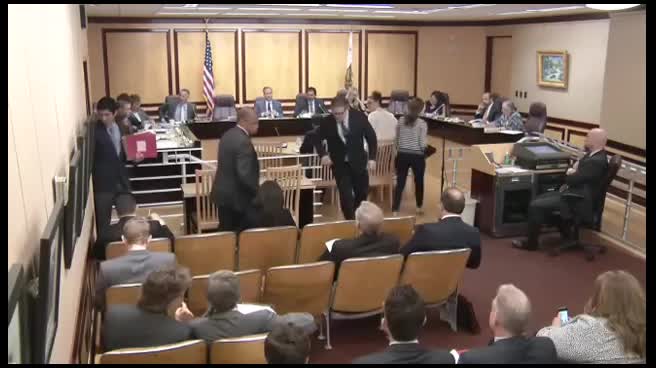 30MIN
Senate Standing Committee on Energy, Utilities and Communications


Bill Co-Author(s):






