AB 1380: Developmental services: regional center services.
- Session Year: 2017-2018
- House: Assembly
- Latest Version Date: 2017-06-29
Existing law, the Lanterman Developmental Disabilities Services Act, requires the State Department of Developmental Services to enter into contracts with private nonprofit corporations to operate regional centers for the provision of community services and supports for persons with developmental disabilities and their families. Existing law sets forth the duties of the regional centers, including, but not limited to, development of individual program plans, the purchase of needed services to implement the plan, and monitoring of the delivery of those services.
This bill would require all regional center contracts to include provisions requiring the regional center to develop a process by which all vendor contracts are reviewed at least once every 2 years and to require that the regional center take appropriate action to ensure that vendors comply with the contracts, up to and including terminating the vendorization if necessary.
The bill would also require each regional center to submit the findings of the vendor contract reviews to the department. The bill would require the department to submit a report to the Legislature describing in detail the outcomes of the reviews, including what steps are being taken by each regional center to ensure that vendors comply with contract requirements and how many, if any, contracts are terminated as a result of the reviews.
Existing law authorizes the provision of in-home respite care for regional center consumers and specifies training requirements for those providers.
This bill would require an employer to submit the fingerprints of a prospective in-home respite worker to the Department of Justice for a criminal background check prior to employment. The bill would prohibit employment of an in-home respite worker that has been convicted for, or incarcerated following conviction for, specified crimes, including fraud against a government health program or a serious or violent felony, as specified, and would authorize a consumer or an applicant to petition the State Department of Developmental Services for a waiver of, or to seek an exception from, as applicable, these provisions.
The bill would also require the State Department of Developmental Services to conduct an in-depth review of in-home respite provider rates by November 1, 2018, and to report the results of that review, on or before January 1, 2020, to the Legislature, as provided.
Existing law requires an entity that receives payments from one or more regional centers to contract with an independent accounting firm to obtain an independent audit or independent review report of its financial statements relating to payments made by regional centers.
This bill would specifically require the State Department of Developmental Services to collect in-home respite care vendors financial statements.
Existing law, the Lanterman Developmental Disabilities Services Act, requires the State Department of Developmental Services to enter into contracts with private nonprofit corporations to operate regional centers for the provision of community services and supports for persons with developmental disabilities and their families. Existing law sets forth the duties of the regional centers, including, but not limited to, development of individual program plans, the purchase of needed services to implement the plan, and monitoring of the delivery of those services.
This bill would require all regional center contracts to include provisions requiring the regional center to develop a process by which all vendor contracts are reviewed at least once every 2 years and to require that the regional center take appropriate action to ensure that vendors comply with the contracts, up to and including terminating the vendorization if necessary.
The bill would also require each regional center to submit the findings of the vendor contract reviews to the department. The bill would require the department to submit a report to the Legislature describing in detail the outcomes of the reviews, including what steps are being taken by each regional center to ensure that vendors comply with contract requirements and how many, if any, contracts are terminated as a result of the reviews.
Existing law authorizes the provision of in-home respite care for regional center consumers and specifies training requirements for those providers.
This bill would require an employer to submit the fingerprints of a prospective in-home respite worker to the Department of Justice for a criminal background check prior to employment. The bill would prohibit employment of an in-home respite worker that has been convicted for, or incarcerated following conviction for, specified crimes, including fraud against a government health program or a serious or violent felony, as specified, and would authorize a consumer or an applicant to petition the State Department of Developmental Services for a waiver of, or to seek an exception from, as applicable, these provisions.
The bill would also require the State Department of Developmental Services to conduct an in-depth review of in-home respite provider rates by November 1, 2019, 2018, and to report the results of that review, on or before January 1, 2020, to the Legislature, as provided.
Existing law requires an entity that receives payments from one or more regional centers to contract with an independent accounting firm to obtain an independent audit or independent review report of its financial statements relating to payments made by regional centers.
This bill would specifically require the State Department of Developmental Services to collect in-home respite care vendors financial statements.
Existing law, the Lanterman Developmental Disabilities Services Act, requires the State Department of Developmental Services to enter into contracts with private nonprofit corporations to operate regional centers for the provision of community services and supports for persons with developmental disabilities and their families. Existing law sets forth the duties of the regional centers, including, but not limited to, development of individual program plans, the purchase of needed services to implement the plan, and monitoring of the delivery of those services.
Existing law requires the regional center contracts and agreements with service providers in which rates are determined through negotiations between the regional center and the service providers to expressly require that not more than 15% of regional center funds be spent on administrative costs, as defined.This bill would require all regional center contracts to include provisions requiring the regional center to develop a process by which all vendor contracts are reviewed at least once every 2 years and to require that the regional center take appropriate action to ensure that vendors comply with the contracts, up to and including terminating the vendorization if necessary. The bill would require all regional center contracts or agreements with service providers that provide in-home respite services to expressly require that at least 85% of regional center funds be spent on direct service expenditures, as defined.
The bill would also require each regional center to submit the findings of the vendor contract reviews to the department. The bill would require the department to submit a report to the Legislature describing in detail the outcomes of the reviews, including what steps are being taken by each regional center to ensure that vendors comply with contract requirements and how many, if any, contracts are terminated as a result of the reviews.
Existing law authorizes the provision of in-home respite care for regional center consumers and specifies training requirements for those providers.
This bill would require an employer to submit the fingerprints of a prospective in-home respite worker to the Department of Justice for a criminal background check prior to employment. The bill would prohibit employment of an in-home respite worker that has been convicted for, or incarcerated following conviction for, specified crimes, including fraud against a government health program or a serious or violent felony, as specified, and would establish a method by which authorize a consumer or an applicant could apply to petition the department State Department of Developmental Services for a waiver from of, or to seek an exception from, as applicable, these provisions.
The bill would also require the department State Department of Developmental Services to conduct an in-depth review of in-home respite provider rates by November 1, 2019, and to report the results of that review, on or before January 1, 2020, to the Legislature, as provided.
Existing law, the Lanterman Developmental Disabilities Services Act, requires the State Department of Developmental Services to enter into contracts with private nonprofit corporations to operate regional centers for the provision of community services and supports for persons with developmental disabilities and their families. Existing law sets forth the duties of the regional centers, including, but not limited to, development of individual program plans, the purchase of needed services to implement the plan, and monitoring of the delivery of those services.
Existing law requires the regional center contracts and agreements with service providers in which rates are determined through negotiations between the regional center and the service providers to expressly require that not more than 15% of regional center funds be spent on administrative costs, as defined.
This bill would require all regional center contracts to include provisions requiring the regional center to develop a process by which all vendor contracts are reviewed at least once every 2 years and to require that the regional center take appropriate action to ensure that vendors comply with the contracts, up to and including terminating the vendorization if necessary. The bill would require all regional center contracts or agreements with service providers that provide in-home respite services to expressly require that at least 85% of regional center funds be spent on direct service expenditures, as defined.
The bill would also require each regional center to submit the findings of the vendor contract reviews to the department. The bill would require the department to submit a report to the Legislature describing in detail the outcomes of the reviews, including what steps are being taken by each regional center to ensure that vendors comply with contract requirements and how many, if any, contracts are terminated as a result of the reviews.
Existing law authorizes the provision of in-home respite care for regional center consumers and specifies training requirements for those providers.
This bill would require an employer to submit the fingerprints of a prospective in-home respite worker to the Department of Justice for a criminal background check prior to employment. The bill would prohibit employment of an in-home respite worker that has been convicted for, or incarcerated following conviction for, specified crimes, including fraud against a government health program or a serious or violent felony, as specified, and would establish a method by which a consumer or an applicant could apply to the department for a waiver from these provisions.
The bill would also require the department to conduct an in-depth review of in-home respite provider rates by November 1, 2019, and to report the results of that review, on or before January 1, 2020, to the Legislature, as provided.
Existing law, the Lanterman Developmental Disabilities Services Act, requires the State Department of Developmental Services to enter into contracts with private nonprofit corporations to operate regional centers for the provision of community services and supports for persons with developmental disabilities and their families. Existing law sets forth the duties of the regional centers, including, but not limited to, development of individual program plans, the purchase of needed services to implement the plan, and monitoring of the delivery of those services.
Existing law requires the regional center contracts and agreements with service providers in which rates are determined through negotiations between the regional center and the service providers to expressly require that not more than 15% of regional center funds be spent on administrative costs, as defined.
This bill would require all regional center contracts to include provisions requiring the regional center to develop a process by which all vendor contracts are reviewed at least once every 2 years and to require that the regional center take appropriate action to ensure that vendors comply with the contracts, up to and including terminating the vendorization if necessary. The bill would require all regional center contracts or agreements with service providers that provide in-home respite services to expressly require that at least 85% of regional center funds be spent on direct service expenditures, as defined.
Existing law authorizes the provision of in-home respite care for regional center consumers and specifies training requirements for those providers.
This bill would require an employer to submit the fingerprints of a prospective in-home respite worker to the Department of Justice for a criminal background check prior to employment. The bill would prohibit employment of an in-home respite worker that has been convicted for, or incarcerated following conviction for, specified crimes, including fraud against a government health program or a serious or violent felony, as specified, and would establish a method by which a consumer or an applicant could apply to the department for a waiver from these provisions.
The bill would also require the department to conduct an in-depth review of in-home respite provider rates by November 1, 2019, and to report the results of that review, on or before January 1, 2020, to the Legislature, as provided.
(a)The State Department of Developmental Services shall conduct an in-depth review of in-home respite provider rates by November 1, 2018. The review shall include all of the following:
(1)Obtain and analyze all vendors cost statements to determine the costs of providing services.
(2)Obtain and analyze information from vendors on the hourly wages they pay to respite workers and analyze this information to determine whether hourly rates are reasonable. workers.
(3)Using information from the cost statements, identify whether vendors temporary hourly rates should be converted to permanent rates.
(4)Obtain information describing how each provider allocated the rates, including information distinguishing between the amount allocated for full respite services and the amount allocated for employer of record services, and including the amount vendors allocated for administrative costs in 201516, direct care services in 201516, and all other costs.
(b)(1)On or before January 1, 2020, the department shall report the results of the review required pursuant to subdivision (a) to the Legislature, including a proposal on the extent to which legislative changes are needed to ensure that in-home hourly respite rates are appropriate.
(2)The report required pursuant to paragraph (1) shall be submitted in compliance with Section 9795 of the Government Code.
(c)This section shall remain in effect only until January 1, 2024, and as of that date is repealed.
SEC. 2.Section 4629.2 is added to the Welfare and Institutions Code, to read:4629.2.In addition to the requirements set forth in Section 4629, the State Department of Developmental Services contract with a regional center shall include both of the following:
(a)A requirement that the regional center develop a process by which all vendor contracts are reviewed at least once every two years. The outcome of those reviews shall be documented in the regional centers files.
(b)A requirement that the regional center take appropriate action to ensure that vendors comply with the contracts, up to and including terminating the vendorization if necessary.
(c)After reviewing the vendor contracts pursuant to subdivision (a), each regional center shall submit, within three months of the end of the biennial period, the findings of the reviews to the State Department of Developmental Services. Within three months of receiving the vendor contract reviews, the State Department of Developmental Services shall submit a report to the Legislature describing in detail the outcomes of the reviews, including what steps are being taken by each regional center to ensure that vendors comply with contract requirements, and how many, if any, contracts are terminated as a result of the reviews. The report shall be submitted in accordance with Section 9795 of the Government Code.
SEC. 3.Section 4686.1 is added to the Welfare and Institutions Code, to read:4686.1.(a)(1)Prior to employing an in-home respite worker, as defined in Section 4686, the employer shall submit the persons fingerprints to the Department of Justice for the purpose of obtaining criminal record information.
(2)The fingerprints submitted pursuant to paragraph (1) shall be on a card provided by the Department of Justice for the purpose of obtaining a set of fingerprints.
(3)Fingerprints may be taken by any local law enforcement officer or agency for purposes of paragraph (1).
(4)Within 30 calendar days of the receipt of the fingerprints, the Department of Justice shall notify the employer of the criminal record information, as provided in this subdivision. If no criminal record information has been recorded, the Department of Justice shall provide the employer with a statement of that fact as soon as possible, but not later than 30 calendar days from the date of receipt of the fingerprints. If new fingerprints are required for processing, the Department of Justice shall, as soon as possible, but not later than 30 calendar days from the date of receipt of the fingerprints, notify the employer that the fingerprints were illegible.
(5)The Department of Justice shall charge a fee to the employer to cover the reasonable costs of administering this section.
(6)It is the intent of the Legislature that the Department of Justice charge a fee to cover its reasonable costs in providing services in accordance with this section to comply with the 30-calendar-day requirement for provision to the department of the criminal record information, as contained in this subdivision.
(b)(1)If it is found that the person has ever been convicted of a violation or attempted violation of Section 243.4 of the Penal Code, a sex offense against a minor, or of any felony that requires registration pursuant to Section 290 of the Penal Code, or that the person has been convicted or incarcerated within the last 10 years as the result of committing a violation or attempted violation of Section 273a or 273d or of subdivision (a) or (b) of Section 368 of the Penal Code, or as the result of committing a theft, robbery, burglary, or any felony, the Department of Justice shall notify the employer of that fact.
(2)A person who, in the last 10 years, has been convicted for, or incarcerated following conviction for, fraud against a government health care or supportive services program shall not be hired as an in-home respite worker.
(3)A person who, in the last 10 years, has been convicted for, or incarcerated following conviction for, a violation of subdivision (a) of Section 273a or of Section 368 of the Penal Code, or similar violations in another jurisdiction, shall not be hired as an in-home respite worker.
(4)An employer may deny employment to a person who is the subject of a report under paragraph (1) when the report indicates that the person has committed any of the crimes identified in paragraph (1) that are not included in paragraph (2) or (3).
(5)This section does not require an employer to hire a person who is the subject of a report under paragraph (1) when the report indicates that the person has not committed any of the crimes indicated in paragraph (1).
(c)Subject to subdivision (d), an applicant who is subject to this section is not eligible to provide or receive payment for providing in-home respite services for 10 years following a conviction for, or incarceration following a conviction for, any of the following:
(1)A violent or serious felony, as specified in subdivision (c) of Section 667.5 and in subdivision (c) of Section 1192.7 of the Penal Code.
(2)A felony offense for which a person is required to register under subdivision (c) of Section 290 of the Penal Code. For purposes of this paragraph, the 10-year time period specified in this section shall commence with the date of conviction for, or incarceration following a conviction for, the underlying offense, and not the date of registration.
(3)A felony offense described in paragraph (2) of subdivision (c) of, or in paragraph (2) of subdivision (g) of, Section 10980.
(d)(1)Notwithstanding subdivision (c), an application shall not be denied under this section if the applicant has obtained a certificate of rehabilitation under Chapter 3.5 (commencing with Section 4852.01) of Title 6 of Part 3 of the Penal Code or if the information or accusation against him or her has been dismissed pursuant to Section 1203.4 of the Penal Code.
(2)A consumer who wishes to employ an in-home respite worker who would be prohibited pursuant to this section may petition the State Department of Developmental Services for an individual waiver through a process substantially similar to the process prescribed in subdivision (d) of Section 12305.87.
(3)An applicant who has been convicted of an offense specified in subdivision (b) or (c) may seek from the State Department of Developmental Services a general exception to the exclusion provided for in this section. The department shall use the process and factors prescribed in Section 12305.87 to make the determination whether to grant or deny the waiver.
(e)A regional center shall notify a consumer whose individual program plan includes in-home respite care that a criminal record check is available, and that the check can be performed by the Department of Justice.
SEC. 4.The State Department of Developmental Services shall collect in-home respite care vendors financial statements, as described in Section 4652.5 of the Welfare and Institutions Code.
(a)The State Department of Developmental Services shall conduct an in-depth review of in-home respite provider rates by November 1, 2019. 2018. The review shall include all of the following:
(1)Obtain and analyze all vendors cost statements to determine the costs of providing services and whether the vendors administrative costs are reasonable. services.
(2)Obtain information from vendors on the hourly wages they pay to respite workers and analyze this information to determine whether hourly rates are reasonable.
(3)Using information from the cost statements, identify whether vendors temporary hourly rates should be converted to permanent rates.
(4)Obtain information describing how each provider allocated the rates, including information distinguishing between the amount allocated for full respite services and the amount allocated for employer of record services, and including the amount vendors allocated for administrative costs in 201516, direct care services in 201516, and all other costs.
(b)(1)On or before January 1, 2020, the department shall report the results of the review required pursuant to subdivision (a) to the Legislature, including a proposal on the extent to which legislative changes are needed to ensure that in-home hourly respite rates are appropriate.
(2)The report required pursuant to paragraph (1) shall be submitted in compliance with Section 9795 of the Government Code.
(c)This section shall remain in effect only until January 1, 2024, and as of that date is repealed.
SEC. 2.Section 4629.2 is added to the Welfare and Institutions Code, to read:4629.2.In addition to the requirements set forth in Section 4629, the State Department of Developmental Services contract with a regional center shall include both of the following:
(a)A requirement that the regional center develop a process by which all vendor contracts are reviewed at least once every two years. The outcome of those reviews shall be documented in the regional centers files.
(b)A requirement that the regional center take appropriate action to ensure that vendors comply with the contracts, up to and including terminating the vendorization if necessary.
(c)After reviewing the vendor contracts pursuant to subdivision (a), each regional center shall submit, within three months of the end of the biennial period, the findings of the reviews to the State Department of Developmental Services. Within three months of receiving the vendor contract reviews, the State Department of Developmental Services shall submit a report to the Legislature describing in detail the outcomes of the reviews, including what steps are being taken by each regional center to ensure that vendors comply with contract requirements, and how many, if any, contracts are terminated as a result of the reviews. The report shall be submitted in accordance with Section 9795 of the Government Code.
SEC. 3.Section 4686.1 is added to the Welfare and Institutions Code, to read:4686.1.(a)(1)Prior to employing an in-home respite worker, as defined in Section 4686, the employer shall submit the persons fingerprints to the Department of Justice for the purpose of obtaining criminal record information.
(2)The fingerprints submitted pursuant to paragraph (1) shall be on a card provided by the Department of Justice for the purpose of obtaining a set of fingerprints.
(3)Fingerprints may be taken by any local law enforcement officer or agency for purposes of paragraph (1).
(4)Within 30 calendar days of the receipt of the fingerprints, the Department of Justice shall notify the employer of the criminal record information, as provided in this subdivision. If no criminal record information has been recorded, the Department of Justice shall provide the employer with a statement of that fact as soon as possible, but not later than 30 calendar days from the date of receipt of the fingerprints. If new fingerprints are required for processing, the Department of Justice shall, as soon as possible, but not later than 30 calendar days from the date of receipt of the fingerprints, notify the employer that the fingerprints were illegible.
(5)The Department of Justice shall charge a fee to the employer to cover the reasonable costs of administering this section.
(6)It is the intent of the Legislature that the Department of Justice charge a fee to cover its reasonable costs in providing services in accordance with this section to comply with the 30-calendar-day requirement for provision to the department of the criminal record information, as contained in this subdivision.
(b)(1)If it is found that the person has ever been convicted of a violation or attempted violation of Section 243.4 of the Penal Code, a sex offense against a minor, or of any felony that requires registration pursuant to Section 290 of the Penal Code, or that the person has been convicted or incarcerated within the last 10 years as the result of committing a violation or attempted violation of Section 273a or 273d or of subdivision (a) or (b) of Section 368 of the Penal Code, or as the result of committing a theft, robbery, burglary, or any felony, the Department of Justice shall notify the employer of that fact.
(2)A person who, in the last 10 years, has been convicted for, or incarcerated following conviction for, fraud against a government health care or supportive services program shall not be hired as an in-home respite worker.
(3)A person who, in the last 10 years, has been convicted for, or incarcerated following conviction for, a violation of subdivision (a) of Section 273a or of Section 368 of the Penal Code, or similar violations in another jurisdiction, shall not be hired as an in-home respite worker.
(4)An employer may deny employment to a person who is the subject of a report under paragraph (1) when the report indicates that the person has committed any of the crimes identified in paragraph (1) that are not included in paragraph (2) or (3).
(5)This section does not require an employer to hire a person who is the subject of a report under paragraph (1) when the report indicates that the person has not committed any of the crimes indicated in paragraph (1).
(c)Subject to subdivision (d), an applicant who is subject to this section is not eligible to provide or receive payment for providing in-home respite services for 10 years following a conviction for, or incarceration following a conviction for, any of the following:
(1)A violent or serious felony, as specified in subdivision (c) of Section 667.5 and in subdivision (c) of Section 1192.7 of the Penal Code.
(2)A felony offense for which a person is required to register under subdivision (c) of Section 290 of the Penal Code. For purposes of this paragraph, the 10-year time period specified in this section shall commence with the date of conviction for, or incarceration following a conviction for, the underlying offense, and not the date of registration.
(3)A felony offense described in paragraph (2) of subdivision (c) of, or in paragraph (2) of subdivision (g) of, Section 10980.
(d)(1)Notwithstanding subdivision (c), an application shall not be denied under this section if the applicant has obtained a certificate of rehabilitation under Chapter 3.5 (commencing with Section 4852.01) of Title 6 of Part 3 of the Penal Code or if the information or accusation against him or her has been dismissed pursuant to Section 1203.4 of the Penal Code.
(2)A consumer who wishes to employ an in-home respite worker who would be prohibited pursuant to this section may petition the State Department of Developmental Services for an individual waiver through a process substantially similar to the process prescribed in subdivision (d) of Section 12305.87.
(3)An applicant who has been convicted of an offense specified in subdivision (b) or (c) may seek from the State Department of Developmental Services a general exception to the exclusion provided for in this section. The department shall use the process and factors prescribed in Section 12305.87 to make the determination whether to grant or deny the waiver.
(e)A regional center shall notify a consumer whose individual program plan includes in-home respite care that a criminal record check is available, and that the check can be performed by the Department of Justice.
SEC. 4.The State Department of Developmental Services shall collect in-home respite care vendors financial statements, as described in Section 4652.5 of the Welfare and Institutions Code.
(a)The department State Department of Developmental Services shall conduct an in-depth review of in-home respite provider rates by November 1, 2019. The review shall include all of the following:
(1)Obtain and analyze all vendors cost statements to determine the costs of providing services and whether the vendors administrative costs are reasonable.
(2)Obtain information from vendors on the hourly wages they pay to respite workers and analyze this information to determine whether hourly rates are reasonable.
(3)Using information from the cost statements, identify whether vendors temporary hourly rates should be converted to permanent rates.
(b)(1)On or before January 1, 2020, the department shall report the results of the review required pursuant to subdivision (a) to the Legislature, including a proposal on the extent to which legislative changes are needed to ensure that in-home hourly respite rates are appropriate.
(2)The report required pursuant to paragraph (1) shall be submitted in compliance with Section 9795 of the Government Code.
(c)This section shall remain in effect only until January 1, 2024, and as of that date is repealed.
SEC. 2.Section 4629.2 is added to the Welfare and Institutions Code, to read:4629.2.In addition to the requirements set forth in Section 4629, the departments State Department of Developmental Services contract with a regional center shall include both of the following:
(a)A requirement that the regional center develop a process by which all vendor contracts are reviewed at least once every two years. The outcome of those reviews shall be documented in the regional centers files.
(b)A requirement that the regional center take appropriate action to ensure that vendors comply with the contracts, up to and including terminating the vendorization if necessary.
(c)After reviewing the vendor contracts pursuant to subdivision (a), each regional center shall submit, within three months of the end of the biennial period, the findings of the reviews to the State Department of Developmental Services. Within three months of receiving the vendor contract reviews, the State Department of Developmental Services shall submit a report to the Legislature describing in detail the outcomes of the reviews, including what steps are being taken by each regional center to ensure that vendors comply with contract requirements, and how many, if any, contracts are terminated as a result of the reviews. The report shall be submitted in accordance with Section 9795 of the Government Code.
SEC. 3.Section 4629.8 is added to the Welfare and Institutions Code, to read:4629.8.(a)For purposes of this section, the following definitions apply:(1)Administrative costs means all costs other than direct service expenditures, including all amounts actually paid and all accounts payable, as calculated in accordance with generally accepted accounting principles, including, but not limited to, all of the following:(A)Compensation and benefits, including federal, state, and local payroll taxes, workers compensation and unemployment insurance premiums, and recruiting, training, orientation, and background checks for managerial personnel whose primary purpose is the administrative management of the entity, including, but not limited to, directors and chief executive officers.(B)Compensation and benefits, including federal, state, and local payroll taxes, workers compensation and unemployment insurance premiums, and recruiting, training, orientation, and background checks for employees who perform administrative functions, including, but not limited to, payroll management, personnel functions, accounting, budgeting, and facility management.(C)Facility and occupancy costs directly associated with administrative functions.(D)Maintenance and repair.(E)Data processing and computer support services.(F)Contract and procurement activities, except those provided by a direct service employee.(G)Training directly associated with administrative functions.(H)Travel directly associated with administrative functions.(I)Licenses directly associated with administrative functions.(J)Taxes.(K)Interest.(L)Property insurance.(M)Personal liability insurance directly associated with administrative functions.(N)Depreciation.(O)General expenses, including, but not limited to, communication costs and supplies directly associated with administrative functions.(P)Consultants and professional services, including, but not limited to, accounting and legal services.(Q)Distributions to shareholders.(R)Advertising costs.(S)Conference, convention, and meeting costs.(T)Facility and office equipment costs, including, but not limited to, rent, lease, and mortgage payments, directly associated with administrative functions.(U)Transfers to a corporate parent or franchisor, including, but not limited to, franchise fees, fees for copyright or trademark usage, fees for advertising materials, royalty fees, or conference fees.(V)Other general operating and overhead costs.(2)Direct service expenditures means all amounts actually paid and all accounts payable, as calculated in accordance with generally accepted accounting principles, in the following categories:(A)Wages and benefits, including state, federal, and local payroll taxes, workers compensation and unemployment insurance premiums, and recruiting, training, orientation, and background checks for respite care aides.(B)Expenses substantially similar to those in subparagraph (A) that are directly related to the provision of in-home respite services.(b)Notwithstanding Section 4629.7 or any other law, all regional center contracts or agreements with service providers that provide in-home respite services shall expressly require that at least 85 percent of regional center funds be spent on direct service expenditures. Funds spent on direct service expenditures shall not include administrative costs.(c)Consistent with subdivision (b), service providers and contractors, upon request, shall provide regional centers with access to books, documents, papers, computerized data, source documents, consumer records, or other records pertaining to the service providers and contractors negotiated rates.SEC. 4.SEC. 3.Section 4686.1 is added to the Welfare and Institutions Code, to read:4686.1.(a)(1)Prior to employing an in-home respite worker, as defined in Section 4686, the employer shall submit the persons fingerprints to the Department of Justice for the purpose of obtaining criminal record information.
(2)The fingerprints submitted pursuant to paragraph (1) shall be on a card provided by the Department of Justice for the purpose of obtaining a set of fingerprints.
(3)Fingerprints may be taken by any local law enforcement officer or agency for purposes of paragraph (1).
(4)Within 30 calendar days of the receipt of the fingerprints, the Department of Justice shall notify the employer of the criminal record information, as provided in this subdivision. If no criminal record information has been recorded, the Department of Justice shall provide the employer with a statement of that fact as soon as possible, but not later than 30 calendar days from the date of receipt of the fingerprints. If new fingerprints are required for processing, the Department of Justice shall, as soon as possible, but not later than 30 calendar days from the date of receipt of the fingerprints, notify the employer that the fingerprints were illegible.
(5)The Department of Justice shall charge a fee to the employer to cover the reasonable costs of administering this section.
(6)It is the intent of the Legislature that the Department of Justice charge a fee to cover its reasonable costs in providing services in accordance with this section to comply with the 30-calendar-day requirement for provision to the department of the criminal record information, as contained in this subdivision.
(b)(1)If it is found that the person has ever been convicted of a violation or attempted violation of Section 243.4 of the Penal Code, a sex offense against a minor, or of any felony that requires registration pursuant to Section 290 of the Penal Code, or that the person has been convicted or incarcerated within the last 10 years as the result of committing a violation or attempted violation of Section 273a or 273d or of subdivision (a) or (b) of Section 368 of the Penal Code, or as the result of committing a theft, robbery, burglary, or any felony, the Department of Justice shall notify the employer of that fact.
(2)A person who, in the last 10 years, has been convicted for, or incarcerated following conviction for, fraud against a government health care or supportive services program shall not be hired as an in-home respite worker.
(3)A person who, in the last 10 years, has been convicted for, or incarcerated following conviction for, a violation of subdivision (a) of Section 273a or of Section 368 of the Penal Code, or similar violations in another jurisdiction, shall not be hired as an in-home respite worker.
(4)An employer may deny employment to a person who is the subject of a report under paragraph (1) when the report indicates that the person has committed any of the crimes identified in paragraph (1) that are not included in paragraph (2) or (3).
(5)Nothing in this section shall be construed to This section does not require an employer to hire a person who is the subject of a report under paragraph (1) when the report indicates that the person has not committed any of the crimes indicated in paragraph (1).
(c)Subject to subdivision (d), an applicant who is subject to this section shall not be is not eligible to provide or receive payment for providing in-home respite services for 10 years following a conviction for, or incarceration following a conviction for, any of the following:
(1)A violent or serious felony, as specified in subdivision (c) of Section 667.5 and in subdivision (c) of Section 1192.7 of the Penal Code.
(2)A felony offense for which a person is required to register under subdivision (c) of Section 290 of the Penal Code. For purposes of this paragraph, the 10-year time period specified in this section shall commence with the date of conviction for, or incarceration following a conviction for, the underlying offense, and not the date of registration.
(3)A felony offense described in paragraph (2) of subdivision (c) of, or in paragraph (2) of subdivision (g) of, Section 10980.
(d)(1)Notwithstanding subdivision (c), an application shall not be denied under this section if the applicant has obtained a certificate of rehabilitation under Chapter 3.5 (commencing with Section 4852.01) of Title 6 of Part 3 of the Penal Code or if the information or accusation against him or her has been dismissed pursuant to Section 1203.4 of the Penal Code.
(2)A consumer who wishes to employ an in-home respite worker who would be prohibited pursuant to this section may petition the department State Department of Developmental Services for an individual waiver through a process substantially similar to the process prescribed in subdivision (d) of Section 12305.87.
(3)An applicant who has been convicted of an offense specified in subdivision (b) or (c) may seek from the department State Department of Developmental Services a general exception to the exclusion provided for in this section. The department shall use the process and factors prescribed in Section 12305.87 to make the determination whether to grant or deny the waiver.
(e)A regional center shall notify a consumer whose individual program plan includes in-home respite care that a criminal record check is available, and that the check can be performed by the Department of Justice.
(a)The department shall conduct an in-depth review of in-home respite provider rates by November 1, 2019. The review shall include all of the following:
(1)Obtain and analyze all vendors cost statements to determine the costs of providing services and whether the vendors administrative costs are reasonable.
(2)Obtain information from vendors on the hourly wages they pay to respite workers and analyze this information to determine whether hourly rates are reasonable.
(3)Using information from the cost statements, identify whether vendors temporary hourly rates should be converted to permanent rates.
(b)(1)On or before January 1, 2020, the department shall report the results of the review required pursuant to subdivision (a) to the Legislature, including a proposal on the extent to which legislative changes are needed to ensure that in-home hourly respite rates are appropriate.
(2)The report required pursuant to paragraph (1) shall be submitted in compliance with Section 9795 of the Government Code.
This(c)This section shall remain in effect only until January 1, 2024, and as of that date is repealed.
SEC. 2.Section 4629.2 is added to the Welfare and Institutions Code, to read:4629.2.In addition to the requirements set forth in Section 4629, the departments contract with a regional center shall include both of the following:
(a)A requirement that the regional center develop a process by which all vendor contracts are reviewed at least once every two years. The outcome of those reviews shall be documented in the regional centers files.
(b)A requirement that the regional center take appropriate action to ensure that vendors comply with the contracts, up to and including terminating the vendorization if necessary.
(c)After reviewing the vendor contracts pursuant to subdivision (a), each regional center shall submit, within three months of the end of the biennial period, the findings of the reviews to the State Department of Developmental Services. Within three months of receiving the vendor contract reviews, the State Department of Developmental Services shall submit a report to the Legislature describing in detail the outcomes of the reviews, including what steps are being taken by each regional center to ensure that vendors comply with contract requirements, and how many, if any, contracts are terminated as a result of the reviews. The report shall be submitted in accordance with Section 9795 of the Government Code.
SEC. 3.Section 4629.8 is added to the Welfare and Institutions Code, to read:4629.8.(a)For purposes of this section, the following definitions apply:
(1)Administrative costs means all costs other than direct service expenditures, including all amounts actually paid and all accounts payable, as calculated in accordance with generally accepted accounting principles, including, but not limited to, all of the following:
(A)Compensation and benefits, including federal, state, and local payroll taxes, workers compensation and unemployment insurance premiums, and recruiting, training, orientation, and background checks for managerial personnel whose primary purpose is the administrative management of the entity, including, but not limited to, directors and chief executive officers.
(B)Compensation and benefits, including federal, state, and local payroll taxes, workers compensation and unemployment insurance premiums, and recruiting, training, orientation, and background checks for employees who perform administrative functions, including, but not limited to, payroll management, personnel functions, accounting, budgeting, and facility management.
(C)Facility and occupancy costs directly associated with administrative functions.
(D)Maintenance and repair.
(E)Data processing and computer support services.
(F)Contract and procurement activities, except those provided by a direct service employee.
(G)Training directly associated with administrative functions.
(H)Travel directly associated with administrative functions.
(I)Licenses directly associated with administrative functions.
(J)Taxes.
(K)Interest.
(L)Property insurance.
(M)Personal liability insurance directly associated with administrative functions.
(N)Depreciation.
(O)General expenses, including, but not limited to, communication costs and supplies directly associated with administrative functions.
(P)Consultants and professional services, including, but not limited to, accounting and legal services.
(Q)Distributions to shareholders.
(R)Advertising costs.
(S)Conference, convention, and meeting costs.
(T)Facility and office equipment costs, including, but not limited to, rent, lease, and mortgage payments, directly associated with administrative functions.
(U)Transfers to a corporate parent or franchisor, including, but not limited to, franchise fees, fees for copyright or trademark usage, fees for advertising materials, royalty fees, or conference fees.
(V)Other general operating and overhead costs.
(2)Direct service expenditures means all amounts actually paid and all accounts payable, as calculated in accordance with generally accepted accounting principles, in the following categories:
(A)Wages and benefits, including state, federal, and local payroll taxes, workers compensation and unemployment insurance premiums, and recruiting, training, orientation, and background checks for respite care aides.
(B)Expenses substantially similar to those in subparagraph (A) that are directly related to the provision of in-home respite services.
(b)Notwithstanding Section 4629.7 or any other law, all regional center contracts or agreements with service providers that provide in-home respite services shall expressly require that at least 85 percent of regional center funds be spent on direct service expenditures. Funds spent on direct service expenditures shall not include administrative costs.
(c)Consistent with subdivision (b), service providers and contractors, upon request, shall provide regional centers with access to books, documents, papers, computerized data, source documents, consumer records, or other records pertaining to the service providers and contractors negotiated rates.
SEC. 4.Section 4686.1 is added to the Welfare and Institutions Code, to read:4686.1.(a)(1)Prior to employing an in-home respite worker, as defined in Section 4686, the employer shall submit the persons fingerprints to the Department of Justice. Justice for the purpose of obtaining criminal record information.
(2)The fingerprints submitted pursuant to paragraph (1) shall be on a card provided by the Department of Justice for the purpose of obtaining a set of fingerprints.
(3)Fingerprints may be taken by any local law enforcement officer or agency for purposes of paragraph (1).
(4)Within 30 calendar days of the receipt of the fingerprints, the Department of Justice shall notify the employer of the criminal record information, as provided in this subdivision. If no criminal record information has been recorded, the Department of Justice shall provide the employer with a statement of that fact as soon as possible, but not later than 30 calendar days from the date of receipt of the fingerprints. If new fingerprints are required for processing, the Department of Justice shall, as soon as possible, but not later than 30 calendar days from the date of receipt of the fingerprints, notify the employer that the fingerprints were illegible.
(5)The Department of Justice shall charge a fee to the employer to cover the reasonable costs of administering this section.
(6)It is the intent of the Legislature that the Department of Justice charge a fee to cover its reasonable costs in providing services in accordance with this section to comply with the 30-calendar-day requirement for provision to the department of the criminal record information, as contained in this subdivision.
(b)(1)If it is found that the person has ever been convicted of a violation or attempted violation of Section 243.4 of the Penal Code, a sex offense against a minor, or of any felony that requires registration pursuant to Section 290 of the Penal Code, or that the person has been convicted or incarcerated within the last 10 years as the result of committing a violation or attempted violation of Section 273a or 273d or of subdivision (a) or (b) of Section 368 of the Penal Code, or as the result of committing a theft, robbery, burglary, or any felony, the Department of Justice shall notify the employer of that fact. If no criminal record information has been recorded, the Department of Justice shall provide the employer with a statement of that fact.
(2)A person who, in the last 10 years, has been convicted for, or incarcerated following conviction for, fraud against a government health care or supportive services program shall not be hired as an in-home respite worker.
(3)A person who, in the last 10 years, has been convicted for, or incarcerated following conviction for, a violation of subdivision (a) of Section 273a or of Section 368 of the Penal Code, or similar violations in another jurisdiction, shall not be hired as an in-home respite worker.
(4)An employer may deny employment to a person who is the subject of a report under paragraph (1) when the report indicates that the person has committed any of the crimes identified in paragraph (1) that are not included in paragraph (2) or (3).
(5)Nothing in this section shall be construed to require an employer to hire a person who is the subject of a report under paragraph (1) when the report indicates that the person has not committed any of the crimes indicated in paragraph (1).
(c)Subject to subdivision (d), an applicant subject to this section shall not be eligible to provide or receive payment for providing in-home respite services for 10 years following a conviction for, or incarceration following a conviction for, any of the following:
(1)A violent or serious felony, as specified in subdivision (c) of Section 667.5 and in subdivision (c) of Section 1192.7 of the Penal Code.
(2)A felony offense for which a person is required to register under subdivision (c) of Section 290 of the Penal Code. For purposes of this paragraph, the 10-year time period specified in this section shall commence with the date of conviction for, or incarceration following a conviction for, the underlying offense, and not the date of registration.
(3)A felony offense described in paragraph (2) of subdivision (c) of, or in paragraph (2) of subdivision (g) of, Section 10980.
(d)(1)Notwithstanding subdivision (c), an application shall not be denied under this section if the applicant has obtained a certificate of rehabilitation under Chapter 3.5 (commencing with Section 4852.01) of Title 6 of Part 3 of the Penal Code or if the information or accusation against him or her has been dismissed pursuant to Section 1203.4 of the Penal Code.
(2)A consumer who wishes to employ an in-home respite worker who would be prohibited pursuant to this section may petition the department for an individual waiver through a process substantially similar to the process prescribed in subdivision (d) of Section 12305.87.
(3)An applicant who has been convicted of an offense specified in subdivision (b) or (c) may seek from the department a general exception to the exclusion provided for in this section. The department shall use the process and factors prescribed in Section 12305.87 to make the determination whether to grant or deny the waiver.
(e)(1) Fingerprints shall be on a card provided by the Department of Justice for the purpose of obtaining a set of fingerprints. The employer shall submit the fingerprints to the Department of Justice. Within 30 calendar days of the receipt of the fingerprints, the Department of Justice shall notify the employer of the criminal record information, as provided in this subdivision. If no criminal record information has been recorded, the Department of Justice shall provide the employer with a statement of that fact as soon as possible, but not later than 30 calendar days from the date of receipt of the fingerprints. If new fingerprints are required for processing, the Department of Justice shall, as soon as possible, but not later than 30 calendar days from the date of receipt of the fingerprints, notify the employer that the fingerprints were illegible.(2)Fingerprints may be taken by any local law enforcement officer or agency for purposes of paragraph (1).(3)(e)A regional center shall notify a consumer whose individual program plan includes in-home respite care that a criminal record check is available, and that the check can be performed by the Department of Justice.
(f)(1)The Department of Justice shall charge a fee to the employer to cover the reasonable costs of administering this section.(2)It is the intent of the Legislature that the Department of Justice charge a fee to cover its reasonable costs in providing services in accordance with this section to comply with the 30-calendar-day requirement for provision to the department of the criminal record information, as contained in subdivision (e).(a)The department shall conduct an in-depth review of in-home respite provider rates by November 1, 2019. The review shall include all of the following:
(1)Obtain and analyze all vendors cost statements to determine the costs of providing services and whether the vendors administrative costs are reasonable.
(2)Obtain information from vendors on the hourly wages they pay to respite workers and analyze this information to determine whether hourly rates are reasonable.
(3)Using information from the cost statements, identify whether vendors temporary hourly rates should be converted to permanent rates.
(b)(1)On or before January 1, 2020, the department shall report the results of the review required pursuant to subdivision (a) to the Legislature, including a proposal on the extent to which legislative changes are needed to ensure that in-home hourly respite rates are appropriate.
(2)The report required pursuant to paragraph (1) shall be submitted in compliance with Section 9795 of the Government Code.
This section shall remain in effect only until January 1, 2024, and as of that date is repealed.
SEC. 2.Section 4629.2 is added to the Welfare and Institutions Code, to read:4629.2.In addition to the requirements set forth in Section 4629, the departments contract with a regional center shall include both of the following:
(a)A requirement that the regional center develop a process by which all vendor contracts are reviewed at least once every two years. The outcome of those reviews shall be documented in the regional centers files.
(b)A requirement that the regional center take appropriate action to ensure that vendors comply with the contracts, up to and including terminating the vendorization if necessary.
SEC. 3.Section 4629.8 is added to the Welfare and Institutions Code, to read:4629.8.(a)For purposes of this section, the following definitions apply:
(1)Administrative costs means all costs other than direct service expenditures, including all amounts actually paid and all accounts payable, as calculated in accordance with generally accepted accounting principles, including, but not limited to, all of the following:
(A)Compensation and benefits, including federal, state, and local payroll taxes, workers compensation and unemployment insurance premiums, and recruiting, training, orientation, and background checks for managerial personnel whose primary purpose is the administrative management of the entity, including, but not limited to, directors and chief executive officers.
(B)Compensation and benefits, including federal, state, and local payroll taxes, workers compensation and unemployment insurance premiums, and recruiting, training, orientation, and background checks for employees who perform administrative functions, including, but not limited to, payroll management, personnel functions, accounting, budgeting, and facility management.
(C)Facility and occupancy costs directly associated with administrative functions.
(D)Maintenance and repair.
(E)Data processing and computer support services.
(F)Contract and procurement activities, except those provided by a direct service employee.
(G)Training directly associated with administrative functions.
(H)Travel directly associated with administrative functions.
(I)Licenses directly associated with administrative functions.
(J)Taxes.
(K)Interest.
(L)Property insurance.
(M)Personal liability insurance directly associated with administrative functions.
(N)Depreciation.
(O)General expenses, including, but not limited to, communication costs and supplies directly associated with administrative functions.
(P)Consultants and professional services, including, but not limited to, accounting and legal services.
(Q)Distributions to shareholders.
(R)Advertising costs.
(S)Conference, convention, and meeting costs.
(T)Facility and office equipment costs, including, but not limited to, rent, lease, and mortgage payments, directly associated with administrative functions.
(U)Transfers to a corporate parent or franchisor, including, but not limited to, franchise fees, fees for copyright or trademark usage, fees for advertising materials, royalty fees, or conference fees.
(V)Other general operating and overhead costs.
(2)Direct service expenditures means all amounts actually paid and all accounts payable, as calculated in accordance with generally accepted accounting principles, in the following categories:
(A)Wages and benefits, including state, federal, and local payroll taxes, workers compensation and unemployment insurance premiums, and recruiting, training, orientation, and background checks for respite care aides.
(B)Expenses substantially similar to those in subparagraph (A) that are directly related to the provision of in-home respite services.
(b)Notwithstanding Section 4629.7 or any other law, all regional center contracts or agreements with service providers that provide in-home respite services shall expressly require that at least 85 percent of regional center funds be spent on direct service expenditures. Funds spent on direct service expenditures shall not include administrative costs.
(c)Consistent with subdivision (b), service providers and contractors, upon request, shall provide regional centers with access to books, documents, papers, computerized data, source documents, consumer records, or other records pertaining to the service providers and contractors negotiated rates.
SEC. 4.Section 4686.1 is added to the Welfare and Institutions Code, to read:4686.1.(a)Prior to employing an in-home respite worker, as defined in Section 4686, the employer shall submit the persons fingerprints to the Department of Justice.
(b)(1)If it is found that the person has ever been convicted of a violation or attempted violation of Section 243.4 of the Penal Code, a sex offense against a minor, or of any felony that requires registration pursuant to Section 290 of the Penal Code, or that the person has been convicted or incarcerated within the last 10 years as the result of committing a violation or attempted violation of Section 273a or 273d or of subdivision (a) or (b) of Section 368 of the Penal Code, or as the result of committing a theft, robbery, burglary, or any felony, the Department of Justice shall notify the employer of that fact. If no criminal record information has been recorded, the Department of Justice shall provide the employer with a statement of that fact.
(2)A person who, in the last 10 years, has been convicted for, or incarcerated following conviction for, fraud against a government health care or supportive services program shall not be hired as an in-home respite worker.
(3)A person who, in the last 10 years, has been convicted for, or incarcerated following conviction for, a violation of subdivision (a) of Section 273a or of Section 368 of the Penal Code, or similar violations in another jurisdiction, shall not be hired as an in-home respite worker.
(4)An employer may deny employment to a person who is the subject of a report under paragraph (1) when the report indicates that the person has committed any of the crimes identified in paragraph (1) that are not included in paragraph (2) or (3).
(5)Nothing in this section shall be construed to require an employer to hire a person who is the subject of a report under paragraph (1) when the report indicates that the person has not committed any of the crimes indicated in paragraph (1).
(c)Subject to subdivision (d), an applicant subject to this section shall not be eligible to provide or receive payment for providing in-home respite services for 10 years following a conviction for, or incarceration following a conviction for, any of the following:
(1)A violent or serious felony, as specified in subdivision (c) of Section 667.5 and in subdivision (c) of Section 1192.7 of the Penal Code.
(2)A felony offense for which a person is required to register under subdivision (c) of Section 290 of the Penal Code. For purposes of this paragraph, the 10-year time period specified in this section shall commence with the date of conviction for, or incarceration following a conviction for, the underlying offense, and not the date of registration.
(3)A felony offense described in paragraph (2) of subdivision (c) of, or in paragraph (2) of subdivision (g) of, Section 10980.
(d)(1)Notwithstanding subdivision (c), an application shall not be denied under this section if the applicant has obtained a certificate of rehabilitation under Chapter 3.5 (commencing with Section 4852.01) of Title 6 of Part 3 of the Penal Code or if the information or accusation against him or her has been dismissed pursuant to Section 1203.4 of the Penal Code.
(2)A consumer who wishes to employ an in-home respite worker who would be prohibited pursuant to this section may petition the department for an individual waiver through a process substantially similar to the process prescribed in subdivision (d) of Section 12305.87.
(3)An applicant who has been convicted of an offense specified in subdivision (b) or (c) may seek from the department a general exception to the exclusion provided for in this section. The department shall use the process and factors prescribed in Section 12305.87 to make the determination whether to grant or deny the waiver.
(e)(1) Fingerprints shall be on a card provided by the Department of Justice for the purpose of obtaining a set of fingerprints. The employer shall submit the fingerprints to the Department of Justice. Within 30 calendar days of the receipt of the fingerprints, the Department of Justice shall notify the employer of the criminal record information, as provided in this subdivision. If no criminal record information has been recorded, the Department of Justice shall provide the employer with a statement of that fact as soon as possible, but not later than 30 calendar days from the date of receipt of the fingerprints. If new fingerprints are required for processing, the Department of Justice shall, as soon as possible, but not later than 30 calendar days from the date of receipt of the fingerprints, notify the employer that the fingerprints were illegible.
(2)Fingerprints may be taken by any local law enforcement officer or agency for purposes of paragraph (1).
(3)A regional center shall notify a consumer whose individual program plan includes in-home respite care that a criminal record check is available, and that the check can be performed by the Department of Justice.
(f)(1)The Department of Justice shall charge a fee to the employer to cover the reasonable costs of administering this section.
(2)It is the intent of the Legislature that the Department of Justice charge a fee to cover its reasonable costs in providing services in accordance with this section to comply with the 30-calendar-day requirement for provision to the department of the criminal record information, as contained in subdivision (e).
|
Date
|
Status
|
|---|---|
| Sep 1, 2017 | In committee: Held under submission. |
| Aug 21, 2017 | In committee: Referred to APPR. suspense file. |
| Jul 12, 2017 | From committee: Do pass and re-refer to Com. on APPR. (Ayes 4. Noes 3.) (July 11). Re-referred to Com. on APPR. |
| Jun 29, 2017 | From committee chair, with author's amendments: Amend, and re-refer to committee. Read second time, amended, and re-referred to Com. on HUMAN S. |
| Jun 21, 2017 | In committee: Hearing postponed by committee. |
| Jun 20, 2017 | From committee chair, with author's amendments: Amend, and re-refer to committee. Read second time, amended, and re-referred to Com. on HUMAN S. |
| Jun 14, 2017 | Referred to Com. on HUMAN S. |
| Jun 1, 2017 | In Senate. Read first time. To Com. on RLS. for assignment. |
| May 31, 2017 | Read third time. Passed. Ordered to the Senate. (Ayes 46. Noes 23. Page 2004.) |
| May 30, 2017 | Read second time and amended. Ordered returned to second reading. |
| May 26, 2017 | From committee: Amend, and do pass as amended. (Ayes 12. Noes 4.) (May 26). |
| May 17, 2017 | In committee: Set, first hearing. Referred to APPR. suspense file. |
| May 3, 2017 | Re-referred to Com. on APPR. |
| May 2, 2017 | Read second time and amended. |
| May 1, 2017 | From committee: Amend, and do pass as amended and re-refer to Com. on APPR. (Ayes 5. Noes 1.) (April 25). |
| Apr 4, 2017 | In committee: Set, first hearing. Hearing canceled at the request of author. |
| Mar 13, 2017 | Referred to Com. on HUM. S. |
| Feb 19, 2017 | From printer. May be heard in committee March 21. |
| Feb 17, 2017 | Read first time. To print. |
|
Date
|
Description
|
Location
|
Votes
|
|
|---|---|---|---|---|
| Aug 21, 2017 | Placed on suspense file | Senate Standing Committee on Appropriations |
Passed |
|
| Jul 11, 2017 | Do pass, but first be re-referred to the Committee on [Appropriations] | Senate Standing Committee on Human Services |
Passed |
|
| May 31, 2017 | AB 1380 SANTIAGO Assembly Third Reading | Assembly Floor |
Passed |
|
| May 26, 2017 | Do pass as amended. | Assembly Standing Committee on Appropriations |
Passed |
|
| Apr 25, 2017 | Do pass as amended and be re-referred to the Committee on [Appropriations] | Assembly Standing Committee on Human Services |
Passed |
This list shows positions taken on this bill by organizations on the date displayed, which is linked to the original source.
Positions by individuals are not included.
SENATE COMMITTEE ON APPROPRIATIONS
Senator Ricardo Lara, Chair
2017 - 2018 Regular Session
AB 1380 (Santiago) - Developmental services: regional center services
Version: June 29, 2017 | Policy Vote: HUMAN S. 4 - 3 |
Urgency: No | Mandate: No |
Hearing Date: August 21, 2017 | Consultant: Brendan McCarthy |
This bill meets the criteria for referral to the Suspense File.
Bill Summary:
AB 1380 require the Department of Developmental Services to conduct a study of in-home respite provider rates. The bill would require regional centers to review all vendor contracts every two years. The bill would require a regional center vendor employing in-home respite workers to submit a criminal background check to the Department of Justice prior to employment.
Fiscal Impact:
- Anticipated one-time costs of about $1 million to $1.5 million for the Department of Developmental Services to conduct an in-depth review of in-home respite provider rates (General Fund). While the Department is currently required to conduct an overall review of regional center rates, the review required in this bill would be due to the Legislature before the currently required report and would require the development of more detailed information specific to in-home respite providers.
- Projected ongoing costs of about $750,000 per year for each regional center to compile information on their current reviews of vendor contracts and report that information to the Department of Developmental Services (General Fund). According to the Department, regional centers are already required under regulation to review their vendor contracts at least every two years. This bill would require regional centers to compile the results of those reviews and report them to the Department, which is not current practice.
- Likely ongoing costs of $150,000 to $300,000 per year for the Department of Developmental Services to compile the information on vendor contracts reported by regional centers, review that information, and report to the Legislature (General Fund).
- Projected ongoing cost pressure of about $600,000 per year to provide additional funding to regional center vendors to pay for background checks for new in-home respite workers (General Fund). Based on the number of existing consumers that are receiving in-home respite services, assuming that the requirement in the bill would only apply to newly hired workers after enactment of the bill, and assuming that turnover in this group of workers averages about 20% per year, annual costs to conduct Department of Justice background checks would be about $600,000 per year. Under the bill, the vendor would be required to pay for the cost of the background check. This analysis assumes that the employer would pay for both the Department of Justice fee to process the background check (about $30) and the fee charged by entities that scan an applicant’s fingerprints for transmittal to the Department of Justice (usually about $20). While current law does not provide for cost-based reimbursement for in-home respite services, there would be cost pressure on regional centers and the state to compensate vendors for this new, state-imposed cost.
- Projected ongoing costs of about $1 million per year for the Department of Developmental Services to process applications from regional center consumers or prospective in-home respite providers for waivers or exceptions from the prohibitions on serving as an in-home respite worker in the bill (General Fund).
Background:
California provides community-based services to approximately 250,000 persons with developmental disabilities and their families through a statewide system of 21 regional centers. Regional centers are private, nonprofit agencies under contract with the Department of Developmental Services for the provision of various services and supports to people with developmental disabilities. As a single point of entry, regional centers provide diagnostic and assessment services to determine eligibility; convene planning teams to develop an Individual Program Plan for each eligible consumer; and either provide or obtain from generic agencies appropriate services for each consumer in accordance with the Individual Program Plan.
In-home respite services are intended to provide temporary, nonmedical care and supervision to a regional center client, in his or her own home, in order to assist family members in maintaining the client at home, or to ensure the client's safety in the absence of family members. In California, there are a number of large agencies that hire or subcontract with in-home respite providers to provide direct care. There are 232 vendorized in-home respite providers who care for more than 50,000 consumers annually. Rates for in-home respite services originally were set by the Department of Developmental Services based on actual costs submitted, but have been capped at a maximum of $22 per hour, with some adjustments permitted for various factors.
Under current law, the Department of Developmental Services is required to conduct a rate study covering all of the services authorized by regional centers. The Department is required to provide that rate study to the Legislature by March 1, 2019.
Proposed Law:
AB 1380 require the Department of Developmental Services to conduct a study of in-home respite provider rates. The bill would require regional centers to review all vendor contracts every two years. The bill would require a regional center vendor employing in-home respite workers to submit a criminal background check to the Department of Justice prior to employment.
Specific provisions of the bill would:
- Require the Department to conduct an in-depth review of in-home respite provider rates, due by November 1, 2018, with detailed information to be analyzed for each provider;
- Require contracts between the Department and regional centers to include a requirement that regional centers review all vendor contracts at least every two years and that regional centers take appropriate action to ensure vendors comply with contract requirements;
- Require regional centers submit the results of the contract reviews to the Department;
- Require the Department to report to the Legislature on the outcomes of the reviews conducted by the regional centers;
- Prior to employing an in-home respite worker, require a regional center vendor to submit the worker’s fingerprints to the Department of Justice for a criminal background check;
- Require the vendor to pay for the cost of the background check;
- Prohibit applicants from being hired as an in-home respite worker for specified criminal convictions;
- Authorize a vendor to deny employment for other criminal convictions;
- Provide for a process for a regional center consumer or an applicant to apply to the Department of Developmental Services for an individual waiver or general exception to the prohibitions on employment.
Related Legislation:
AB 1400 (Santiago, 2015) was substantially similar to this bill. That bill was amended to address another issue.
Staff Comments:
The Bureau of State Audits reported in 2016 that the Department of Developmental Services cannot verify that rates paid to in-home respite providers are appropriate. The Bureau recommended that the state return to paying in-home respite vendors based on cost.
As noted above, there is no requirement in the bill or in current law that regional centers or the state provide additional funding to vendors for the costs they would incur under this bill. However, there would be cost pressure on the state to provide additional funding to pay for the costs that would be imposed by this bill. Otherwise, vendors may end up reducing services provided to consumers to offset the additional administrative costs imposed by the bill.
-- END --
SENATE COMMITTEE ON HUMAN SERVICES
Senator Wiener, Chair
2017 - 2018 Regular
Bill No: AB 1380
Author: | Santiago | ||
Version: | June 29, 2017 | Hearing Date: | July 11, 2017 |
Urgency: | No | Fiscal: | Yes |
Consultant: | Mareva Brown | ||
Subject: Developmental services: regional center services
SUMMARY
This bill requires regional center to develop a process by which all vendor contracts are reviewed at least once every two years, and requires the outcome of those reviews shall be documented in the regional center’s files. It additionally requires an employer to submit the fingerprints of a prospective in-home respite worker to the Department of Justice for a criminal background check prior to employment and prohibits employment as an in-home respite provider if an applicant has specified convictions. The bill also requires the Department of Developmental Services (DDS) to conduct an in-depth review of in-home respite provider rates, as specified, and report results to the Legislature.
ABSTRACT
Existing law:
- Establishes the Lanterman Developmental Disabilities Services Act, which states that California is responsible for providing an array of services and supports sufficiently complete to meet the needs and choices of each person with developmental disabilities, regardless of age or degree of disability, and at each stage of life and to support their integration into the mainstream life of the community. (WIC 4500, et al)
- Establishes a system of nonprofit regional centers, overseen by DDS, to provide fixed points of contact in the community for all persons with developmental disabilities and their families, to coordinate services and supports best suited to them throughout their lifetime. (WIC 4620)
- Establishes an Individual Program Plan (IPP) and defines that planning process as the vehicle to ensure that services and supports are customized to meet the needs of consumers who are served by regional centers. (WIC 4512)
- Requires a regional center shall secure services and supports that meet the needs of the consumer, as determined in the IPP, and to give highest preference to those which would allow minors with developmental disabilities to live with their families, adult persons with developmental disabilities to live as independently as possible in the community, and that allow all consumers to interact with persons without disabilities in positive, meaningful ways. (WIC 4648)
- Establishes a process for regional centers to “vendorize” service providers to serve consumers’ IPP-identified service needs based on the vendor’s qualifications and other requirements. (WIC 4648 (3) (a))
- Requires DDS to enter into contracts with regional centers, which include annual performance objectives that are designed to assist consumers to achieve life quality outcomes, develop services and supports identified as necessary to meet identified needs, including culturally and linguistically appropriate services and supports. (WIC 4629)
- Requires DDS by March 1, 2019, to submit a rate study to the Legislature addressing the sustainability, quality, and transparency of community-based services for individuals with developmental disabilities. Requires the study to include an assessment of the effectiveness of methods used to pay each category of provider. (WIC 4519.8.)
- Establishes a process for conducting background clearances for in-home supportive services workers, and for granting exemptions for providers if there are certain criminal convictions, or prohibiting hiring a caregiver with other specified criminal history. (WIC 12305.87)
This bill:
- Requires DDS to conduct an in-depth review of in-home respite provider rates by November 1, 2019, and sunsets this requirement on January 1, 2024. The review shall include all of the following:
- Obtain and analyze all vendors’ cost statements to determine the costs of providing services.
- Obtain and analyze information from vendors on the hourly wages they pay to respite workers.
- Using information from the cost statements, identify whether vendors’ temporary hourly rates should be converted to permanent rates.
- Obtain information describing how each provider allocated the rates, including information distinguishing between the amount allocated for full respite services and the amount allocated for employer of record services, and including the amount vendors allocated for administrative costs in 2015–16, direct care services in 2015–16, and all other costs.
- Requires DDS, by January 1, 2020, to report the results of the review to the Legislature, as specified, including a proposal on the extent to which legislative changes are needed to ensure that in-home hourly respite rates are appropriate.
- Requires that DDS include in its contracts with each regional center include both of the following:
- A requirement that the regional center develop a process by which all vendor contracts are reviewed at least once every two years, and that the outcome of those reviews are documented in the regional center’s files
- A requirement that the regional center take appropriate action to ensure that vendors comply with the contracts, up to and including terminating the vendorization if necessary.
- A requirement that each regional center within three months of the end of the biennial review period submit findings of the reviews to DDS, and that DDS submit a report to the Legislature describing outcomes of the reviews, as specified, including how many contracts are terminated as a result of the reviews.
- Requires that prior to employing an in-home respite worker, the employer shall submit the person’s fingerprints to the Department of Justice (DOJ), as specified, in order to obtain criminal record information, and requires DOJ to charge a fee to the employer to cover the reasonable costs of administering this section, as specified.
- Requires that within 30 calendar days of the receipt of the fingerprints, DOJ must notify the employer of the criminal record information, and requires that if no criminal record information has been recorded, DOJ shall provide the employer with a statement of that fact as soon as possible, but not later than 30 calendar days from the date of receipt of the fingerprints. Additionally requires that if new fingerprints are required for processing, the DOJ shall, as soon as possible, but not later than 30 calendar days from the date of receipt of the fingerprints, notify the employer that the fingerprints were illegible.
- Requires DOJ to notify the employer of any conviction or incarceration for a sex offense against a minor or any violation that requires sex registration, as specified, or if the applicant has been convicted or incarcerated within the last 10 years of specified crimes.
- Prohibits the hiring of a person as an in-home respite worker who has been convicted for or incarcerated within the last 10 years of fraud against a government health care or supportive services program. Additionally prohibits hiring a person who, in the last 10 years, has been convicted for, or incarcerated following conviction for, child or elder abuse, as specified, or for other specified crimes.
- Permits the hiring of an in-home respite worker with a criminal background providing that the conviction is not on the list of prohibited crimes, as specified.
- Prohibits an applicant from being eligible to provide or receive payment for providing in-home respite services for 10 years following a conviction for, or incarceration following a conviction for, any of the following:
- A violent or serious felony, as defined.
- A felony offense for which a person is required to register as a sex offender, as defined.
- A felony offense involving false or fraudulent means to obtain public aid, as specified.
- Prohibits denial of an application if the applicant has obtained a certificate of rehabilitation, as specified, or if the information or accusation against him or her has been dismissed, as defined.
- Permits a consumer who wishes to employ an in-home respite worker who would be prohibited pursuant to this section to petition DDS for an individual waiver through a process substantially similar to the process prescribed for exemptions through the California Department of Social Services’ Caregiver Background Check Bureau.
- Permits an applicant who has been convicted of specified offenses to seek from DDS a general exception to the exclusion provided for in this section. Requires DDS to use the process and factors defined in statute for In Home Supportive Services (IHSS) caregivers to determine whether to grant or deny the waiver.
- Requires a regional center to notify a consumer whose individual program plan includes in-home respite care that a criminal record check is available, and that it can be performed by the DOJ.
FISCAL IMPACT
An analysis by the Assembly Appropriations Committee identified possible onetime costs to DDS of approximately $1 million (General Fund) to conduct the rate study. Costs to the DOJ for fingerprinting are covered by a fee authorized in the bill. These costs would instead be borne by direct employers and in-home respite service provider agencies. The average cost for a background check is $50. There are approximately 50,000 consumers who receive in-home respite services.
BACKGROUND AND DISCUSSION
Purpose of the bill:
According to the author, while the in-home respite care delivery system provides individuals who have the greatest need with valuable services, current oversight of these services is in need of improvement. The author states that a recent state audit revealed “that rates for in-home respite services may not be appropriate.”
“AB 1380 will increase transparency and accountability in the in-home respite program,” the author states. DDS has not collected cost statements from in-home respite vendors since 2003, making it unclear whether reimbursement rates are appropriate, according to the author. “AB 1380 will elevate the standard of care for persons with developmental disabilities by implementing the recommendations of the State Auditor.”
The Lanterman Act
The Lanterman Developmental Disabilities Services Act establishes an entitlement to services and supports for Californians with developmental disabilities and sets up an extensive system to care for individuals who are living in their communities. A developmental disability is defined in statute as one that originates before the age of 18, continues, or can be expected to continue, indefinitely, and constitutes a substantial disability.
Approximately 310,000 children and adults with developmental disabilities are served in community-based programs and supported by state- and federally funded services that are coordinated by 21 local, nonprofit regional centers. Another 793 individuals are served in three state-run developmental centers and one smaller step-down facility, as of July 5. DDS is in the process of closing all three developmental centers by 2021, with the exception of the 211-bed forensic unit at Porterville Developmental Center.
The state’s 21 regional centers vary considerably in size and organization. Statewide, 62 percent of the regional center population is between ages 6 and 31 years old; about two-thirds of all consumers have an intellectual disability, one in three is diagnosed with autism or a related disorder, and 19 percent are identified as having severe behaviors, according to data reported by DDS. About three-quarters of consumers live in the home of a parent or guardian or in their own homes, according to DDS.
Regional centers provide the diagnosis and assess the eligibility of consumers, and help plan, access, coordinate and monitor the services and supports that are needed. Services for consumers are determined through an individual program plan (IPP).
Vendorization
To be eligible to provide services to a regional center client, a provider must become a vendor of those services in a specific regional center’s catchment area. According to the DDS website, vendorization is the process for identification, selection, and utilization of service providers based on the qualifications and other requirements necessary in order to provide the services. The vendorization process allows regional centers to verify that an applicant meets requirements and standards specified in regulations prior to a vendor providing services to a consumer. Vendorization does not obligate a regional center to purchase service from that vendor.
Within the vendor community, there are roughly 75 to 100 vendor codes, designed to identify criteria for providing specific types of services and to set rates for those services. More than 45,000 vendors provide services paid for by regional centers in California.
Provider rates
Current statute and regulations set requirements for the rates that regional centers can pay to vendors providing various services to consumers. There are different rates for different types of services, including the following:
- Rates set by DDS, which are included in statute or regulation, or can be set through cost estimates or rate schedules;
- Rates established by the DDS, which are set through a calculation of actual costs, and includes those rates for in-home respite services, which are the subject of this bill;
- Rates established by Medi-Cal, which require a regional center to pay no more than the Medi-Cal rate;
- Usual and customary rates, which align with the rates a business charges individuals who do not have developmental disabilities and are not served by regional centers, taxi services are an example.
- Rates set for transportation services to regional center clients; and
- Negotiated rates are set through negotiation between the regional center and the provider for services that do not fit within any of the other established rate structures. The maximum negotiated rate is capped at the regional center median rate for that service or the statewide median rate for that service, whichever is lower.
In-Home Respite services
In-home respite services are intended to provide temporary, nonmedical care and supervision to a regional center client, in his or her own home, in order to assist family members in maintaining the client at home, or to ensure the client's safety in the absence of family members, among other objectives. In California, there are a number of large agencies that hire or subcontract with in-home respite providers to provide direct care.
According to DDS, there are 232 vendored in-home respite providers who care for more than 50,000 consumers annually. Rates for in-home respite services originally were set by DDS based on actual costs submitted, but have been capped at a maximum of $22 per hour, with some adjustments permitted for various factors.
Employer of Record
In addition to respite agencies that provide direct care for consumers, a respite agency may serve the function of “employer of record” for consumers who hire their own respite caregivers. An example of this type of service may be used for a neighbor or relative who provides temporary or intermittent respite care for a consumer. This function was established by the state after federal regulators prohibited any further payments directly to respite caregivers from the regional center, instead requiring that payments be made to a vendored provider. The employer of record therefore is essentially administrative. It satisfies bookkeeping, payroll and tax requirements for the consumer and his or her selected respite provider. Many respite providers have employees in both categories.
Rate Study
AB 1X2 (Thurmond, Chapter 3, Statutes of 2016) requires DDS to submit a rate study to the appropriate fiscal and policy committees of the Legislature by March 1, 2019, addressing the sustainability, quality, and transparency of community-based services for individuals with developmental disabilities. The study must include, at minimum, an assessment of the effectiveness of the methods used to pay each category of community service provider, including whether the current method of ratesetting for a service category provides an adequate supply of providers in that category. It also includes a required assessment of whether there is a sufficient supply of providers to enable consumers throughout the state to have a choice of providers, depending upon the nature of the service.
The study also must provide a comparison of the estimated fiscal effects of alternative rate methodologies for each service provider category and identify how different rate methodologies can incentivize outcomes for consumers. State law additionally requires that the rate study include an evaluation of the number and type of service codes for regional center services, including, but not limited to, recommendations for simplifying and making service codes more reflective of the level and types of services provided.
Bureau of State Audits
The California State Auditor released a report in October 2016 reviewing the rates paid for in-home respite services[1] and concluded that DDS cannot verify that the rates it pays to respite vendors are appropriate. The audit report said that in fiscal year 2015–16, the state spent more than $221 million on in‑home respite services that the regional centers purchased for consumers, but found that DDS has chosen not to obtain and review information that could verify whether its hourly vendor payment rates for in‑home respite services are appropriate.
The Auditor noted that historically, DDS set temporary rates for in-home respite and other services, which were reviewed after the vendor had provided services long enough to demonstrate an actual cost. Then the rates were adjusted. This practice was discontinued during the Great Recession, when the state capped new provider rates at the statewide or comparable median. The Auditor recommended a return to the review of vendor cost statements to set rates accurately. “Although DDS will be undertaking a required rate study of all of its community‑based services in the future, we believe it should conduct a rate study focusing on in‑home respite services sooner given the uncertainty we found related to the appropriateness of vendors’ rates under this program,” the Auditor reported.
Related legislation:
AB 279 (Holden, 2017) provides DDS and regional centers with the statutory authority to adjust rates for providers who operate in regions where the local minimum wage is higher than the minimum wage provider for in state law. It is currently on the Assembly Floor.
AB 1 X2 (Thurmond, Chapter 3, Statutes of 2016) appropriated $287 million General Fund for increases to regional centers and community service providers in 2016- 17, and imposed reporting requirements to ensure proper allocation of funds and program accountability.
AB 1400 (Santiago, 2016) would have required entities contracting with regional centers that provide in-home respite services and that have an annual revenue attributable to in-home respite services provided to regional center consumers of at least $7 million dollars to expressly require that at least 85 percent of regional center funds be spent on direct service expenditures. The bill was amended into a different subject area.
COMMENTS
- The Administration is in the process of conducting a rate study of DDS vendors, which is due to the Legislature on March 1, 2019. Several requirements of this bill appear to overlap the premise of the rate study – including assessing the effectiveness of the methods used to pay providers. This bill focuses closely on in-home respite services, however.
The Auditor’s report suggested that since the rate study would not be concluded until 2019 that DDS should immediately undertake a study of the rate-setting method for in-home respite providers. As this issue is being addressed by this bill, the timelines for completion of both the rate study and the in-home respite review are much closer. The author may wish to consider permitting the two activities to be done jointly for those subjects that appear to overlap, with additional review of the subject areas in this bill that are unique.
- This bill requires DDS to review the DOJ criminal history of in-home respite providers and to consider and issue exemptions to the prohibition against providing care in specified circumstances. DDS does not currently have a process to do this function. However, CDSS in its Caregiver Background Check Bureau, is charged with reviewing criminal history information of a variety of caregivers, from IHSS workers, to child care providers, and others. The Bureau reviews, researchers and authorizes or denies exemptions of providers who request them, so the providers can work as caregivers.
The author may wish to permit the exemption review process to take place within CDSS’s existing bureau rather than creating a new and parallel function within DDS.
Arguments in Support:
The Service Employees International Union (SEIU), which is sponsoring this bill, writes that AB 1380 will increase transparency and accountability of the in-home respite program. “Respite care is a vital service that … allows consumers with developmental disabilities to remain at home with their loved ones and saves the state money by avoiding institutionalized care when possible.” SEIU also writes that it is important to conduct an in-depth review of respite rates and a determination of whether the rates are reasonable. “DDS has not collected cost statements from in-home respite vendors since 2003, making it unclear whether reimbursement rates are appropriate,” according to SEIU.
Arguments in Opposition: The Association of Regional Center Agencies (ARCA) writes that it opposes the bill because it adds cost on service providers and duplicates existing regulations. “First, the bill explicitly requires service providers to pay for these background checks – adding yet another unfunded mandate on providers. Additionally, these costs could be pushed onto either the potential respite worker or the family hiring them. As a corollary, many families need more than one respite worker due to scheduling needs, meaning that multiple background checks would have to be paid for in order to meet their staffing needs. Second, the biennial vendor contract review and enforcement requirement is duplicative of existing regulatory powers held by regional centers.”
PRIOR VOTES
Assembly Floor: | 46 - 23 |
Assembly Appropriations Committee: | 12 - 4 |
Assembly Human Services Committee: | 5 - 1 |
POSITIONS
Support:
SEIU California
Oppose:
Association of Regional Center Agencies (ARCA)
The California Chamber of Commerce
-- END --
“Department of Developmental Services It Cannot Verify That Vendor Rates for In-Home Respite Services Are Appropriate and That Regional Centers and Vendors Meet Applicable Requirements,” Bureau of State Audits, October 2016 ↑
ASSEMBLY THIRD READING
ATR Bill Id:
Author:(Santiago)
As Amended Ver:
Majority vote
Committee | Votes | Ayes | Noes |
Human Services | 5-1 | Rubio, Arambula, Reyes, Mark Stone, Gonzalez Fletcher | Choi |
Appropriations | 12-4 | Gonzalez Fletcher, Bloom, Bocanegra, Bonta, Calderon, McCarty, Quirk, Friedman, Eduardo Garcia, Gray, Muratsuchi, Reyes | Bigelow, Brough, Fong, Obernolte |
SUMMARY: Requires the Department of Developmental Services (DDS) to conduct a review and submit a report to the Legislature regarding specific information pertaining to in-home respite provider rates, requires DDS contracts with regional centers to include requirements that regional centers biennially review all vendor contracts in order to ensure contract compliance, requires DDS to submit a report to the Legislature detailing the outcomes of vendor contract reviews, and requires an employer, prior to employing an in-home respite worker, to submit a person's fingerprints to the Department of Justice (DOJ) for purposes of obtaining criminal record information. Specifically, this bill:
- Requires DDS to conduct a review of in-home respite provider rates by November 1, 2019, and requires the review to include all of the following, as specified:
- Acquisition and analysis of vendor cost statements;
- Acquisition and analysis of information from vendors regarding hourly wages paid to respite workers; and
- Identification of whether vendors' temporary hourly rates should be converted to permanent rates using information provided by cost statements.
- Requires DDS to report the results of the review to the Legislature by January 1, 2020, including a proposal of necessary Legislative changes to ensure the appropriateness of in-home hourly respite rates, as specified.
- Repeals, as of January 1, 2024, provisions of this bill related to DDS's review of and report on in-home respite provider rates.
- Requires DDS's contract with a regional center to include a requirement that:
- The regional center develop a process to review and document the outcomes of all vendor contracts at least once every two years, as specified; and
- The regional center take appropriate action in order to ensure that vendors comply with contracts, as specified.
- Requires, after reviewing vendor contracts, each regional center to submit within three months of the end of the biennial period the findings of the reviews to DDS, and further requires DDS, within three months of receiving the vendor contract reviews, to submit a report to the Legislature describing the outcome of the reviews, as specified.
- Requires that, prior to employing an in-home respite worker, as specified, an employer submit the person's fingerprints to the DOJ for the purpose of obtaining criminal record information.
- Requires the fingerprints to be on a card provided by the DOJ for the purpose of obtaining a set of fingerprints.
- Allows fingerprints to be taken by any local law enforcement officer or agency for the purpose of obtaining criminal record information.
- Requires the DOJ, within 30 calendar days of the receipt of the fingerprints, to notify the employer of the criminal record information, as specified.
- Requires the DOJ, in the event that no criminal record information has been recorded, to provide an employer with a statement of that fact as soon as possible, but not later than 30 days after the fingerprints are received.
- Requires DOJ to charge a fee to the employer to cover the reasonable costs of administering provisions of the bill relating to fingerprinting.
- Requires the DOJ to notify an employer if new fingerprints are required as soon as possible but no later than 30 days after fingerprints were received.
- States Legislative intent relating to the ability of DOJ to charge a fee related to fingerprinting in order to comply with the 30-calendar-day requirements specified under the provisions of this bill.
- Requires DOJ to notify the employer in the event that the person is found to be convicted of specified violations or attempted violations or if there is no criminal record information recorded.
- Prohibits a person from being hired as an in-home respite worker if they have been convicted in the last 10 years for, or incarcerated following conviction for fraud against a government health care or supportive services program, as specified.
- Prohibits a person from being hired as an in-home respite worker who, in the last 10 years, has been convicted for, or incarcerated following conviction for, certain crimes, as specified.
- Allows an employer to deny employment to a person under specified circumstances.
- Specifies that an employer is not required to hire a person who is the subject of a DOJ report described under the provisions of this bill when the report indicates that the person has not committed certain crimes, as specified.
- Prohibits an applicant form being eligible to provide or receive payment for providing in-home respite services for 10 years following a conviction for, or incarceration following a conviction for, certain crimes, as specified.
- Prohibits an application from being denied if an applicant has obtained a certificate of rehabilitation, as defined in current law, or if the information or accusation against him or her has been dismissed pursuant to current law.
- Allows a consumer who wishes to employ an individual who would otherwise be prohibited from providing in-home respite services under the provisions of this bill to petition DDS for an individual waiver as determined by a process substantially similar to processes in existing law.
- Allows an applicant who has been convicted of an offense described in the provisions of this bill to seek a general exception to the exclusion provided for by this bill from DDS and requires DDS to use existing processes and factors to determine whether to grant or deny the waiver, as specified.
- Requires a regional center to notify a consumer whose individualized program plan (IPP) includes in-home respite care that a criminal record check is available and may be conducted by DOJ.
EXISTING LAW:
- Establishes an entitlement to services for individuals with developmental disabilities under the Lanterman Developmental Disabilities Services Act (Lanterman Act). (Welfare and Institutions Code (WIC) 4500 et seq.)
- Grants all individuals with developmental disabilities, among all other rights and responsibilities established for any individual by the United States Constitution and laws and the California Constitution and laws, the right to treatment and habilitation services and supports in the least restrictive environment. (WIC 4502)
- Establishes a system of 21 nonprofit regional centers throughout the state to identify needs and coordinate services for eligible individuals with developmental disabilities and require DDS to contract with regional centers to provide case management services and arrange for or purchase services that meet the needs of individuals with developmental disabilities, as defined. (WIC 4620 et seq.)
- Requires the development of an IPP for each regional center consumer, which specifies services to be provided to the consumer, based on his or her individualized needs determination and preferences, and defines that planning process as the vehicle to ensure that services and supports are customized to meet the needs of consumers who are served by regional centers. (WIC 4512)
- Requires the DDS Director to develop program standards and establish, maintain, and revise, as necessary, an equitable process for setting state payment rates for in-home respite services purchased by regional centers from vendored providers. Further defines in-home respite services as intermittent or regularly scheduled temporary nonmedical care and supervision, provided in the client's own home, for a regional center client who resides with a family member. (WIC 4690.2 (a))
FISCAL EFFECT: According to the Assembly Appropriations Committee, this bill may result in the following costs:
- Onetime costs to DDS of approximately $1 million (General Fund) to conduct the rate study; and
- Costs to DOJ for fingerprinting are covered by a fee authorized in the bill. These costs would instead be borne by direct employers and in-home respite service provider agencies. The average cost for a background check is $50. There are approximately 50,000 consumers who receive in-home respite services.
COMMENTS:
In-home respite services: In-home respite services are intermittent or regularly scheduled temporary, nonmedical care and supervision provided to consumers in home who reside with family members in order to temporarily relieve family members from the constant demanding responsibility of caring for an individual with a developmental disability. In-home respite services are support services and typically include: assisting family members to enable a person with developmental disabilities to stay at home, providing appropriate care and supervision to protect the individual's safety in the absence of a family member, and attending to basic self-help needs and other activities that would ordinarily be performed by the family member.
California State Auditor report: In October 2016, the California State Auditor released a report in which it reviewed the rate-setting policies and oversight of the in-home respite program by DDS. The report reached conclusions related to three specific issues, specifically: the appropriateness of in-home respite hourly rates, administrative costs of vendors providing in-home respite services, and DDS oversight of regional centers and regional center oversight of vendors.
Hourly payment rates: According to the State Auditor, DDS has not assessed the appropriateness of the hourly rates it pays to vendors for the in-home respite service program in more than a decade. DDS cites changes in state law as its reason for no longer obtaining and reviewing cost statements of vendors to ensure whether or not the rates paid to vendors are appropriate. Depending on when a vendor began providing services, DDS pays that vendor one of two types of rates: a temporary hourly rate (temporary rate) or a permanent hourly payment rate (permanent rate). Traditionally, DDS would pay new vendors providing in-home respite services the temporary rate and eventually convert those vendors to the permanent rate once cost information was received and assessed by DDS on a biennial basis. However, due to changes in state law in 1998 and in 2003, DDS no longer requires vendors to submit cost statements and instead adjusts hourly rates based on rate adjustments approved by the Legislature and changes to the minimum wage or labor laws.
Oversight: The audit found that, while regional centers have adequate processes in place to vendorize and terminate vendorization as necessary, selected regional centers found that they could not adequately demonstrate whether they conduct biennial reviews as required to ensure vendors continue to satisfy vendorization requirements. While three of the reviewed regional centers claimed to have review processes in place, they could not adequately illustrate that reviews had been conducted. Conversely, the remaining two regional centers acknowledged that they do not conduct reviews of vendors.
Need for this bill: According to the author's office, "Respite care is a vital family support service that keeps individuals with developmental disabilities living at home. By investing in direct care and direct caregivers, [this bill] attempts to improve the consistency and continuity of respite services to family caregivers."
PRIOR LEGISLATION
AB 279 (Holden) of the current legislative session, provides DDS and regional centers with the statutory authority to adjust rates for providers who operate in regions where the local minimum wage is higher than the minimum wage provider for in state law. It is currently on the Assembly Floor.
AB 1 X2 (Thurmond), Chapter 3, Statutes of 2016, appropriated, among other things, $287 million General Fund for increases to regional centers and community service providers in 2016- 17, and imposed reporting requirements to ensure proper allocation of funds and program accountability.
AB 1400 (Santiago) of 2016, as heard in the Assembly Human Services Committee, was substantially similar to this bill and would have required entities contracting with regional centers that provide in-home respite services and that have an annual revenue attributable to in-home respite services provided to regional center consumers of at least $7 million dollars to expressly require that at least 85 percent of regional center funds be spent on direct service expenditures. The bill was substantially amended on June 20, 2016, and related to: Hazardous waste: facilities permitting. It died in the Senate Environmental Quality Committee.
SB 638 (Stone) of 2015, would have raised a variety of vendor rates, increased funding to regional centers for staffing and relaxed the percentage of funds that vendors may spend on administrative costs, based on various factors. Additionally, the bill would have required DDS to ensure that the rates permit the viability of certain residential facilities by establishing different rates for each facility size, as specified. This bill was held in the Senate Appropriations committee.
AB 1626 (Maienschein) of 2014, would have made increases to the supported employment rates and fees. It died in the Senate Appropriations Committee.
AB 954 (Maienschein) of 2013, would have made increases to the supported employment rates and fees. It died in the Assembly Appropriations Committee.
SB 74 (Budget and Fiscal Review Committee), Chapter 9, Statutes of 2011, requires all regional center contracts or agreements involving negotiated rates to expressly require that not more than 15% of regional center funds be spent on administrative costs.
Analysis Prepared by: Kelsy Castillo / HUM. S. / (916) 319-2089 FN: 0000903
Date of Hearing: May 17, 2017
ASSEMBLY COMMITTEE ON APPROPRIATIONS
Lorena Gonzalez Fletcher, Chair
ABPCA Bill Id:AB 1380
Author:(Santiago) – As Amended Ver:May 2, 2017
Policy Committee: | Human Services | Vote: | 5 - 1 |
|
| ||
|
|
Urgency: No State Mandated Local Program: No Reimbursable: No
SUMMARY:
This bill requires the Department of Developmental Services (DDS) to take various actions regarding in-home respite provider rates, and it contracts with regional centers Specifically, this bill:
- Requires DDS to conduct a review of in-home respite provider rates by November 1, 2019, as specified, and to report the results of the review to the Legislature by January 1, 2020, including a proposal of necessary Legislative changes to ensure the appropriateness of in-home hourly respite rates, as specified.
- Requires DDS’s contract with a regional center to include a requirement that the regional center develop a process to review and document the outcomes of all vendor contracts at least once every two years, and the regional center take appropriate action in order to ensure that vendors comply with contracts, as specified.
- Requires each regional center to submit the findings of the vendor contract reviews to DDS and requires DDS to submit a report to the Legislature describing in detail the outcomes of the reviews, including what steps are being taken by each regional center to ensure that vendors comply with contract requirements and how many, if any, contracts are terminated as a result of the reviews.
- Requires all regional center contracts or agreements with in-home respite service providers expressly require that at least 85% of regional center funds be spent on direct service expenditures, which exclude administrative costs, as specified.
- Requires that, prior to employing an in-home respite worker, an employer submit the person’s fingerprints to the DOJ.
- Requires DOJ to notify the employer if that the person is found to be convicted of specified violations or attempted violations or if there is no criminal record information recorded.
- Requires DOJ to charge a fee to the employer to cover the reasonable costs of administering provisions of the bill relating to fingerprinting.
FISCAL EFFECT:
- Ongoing costs to DDS of up to $230 million ($145 million GF) in FY 2017-18 and up to $515 million ($325 million GF) in FY 2018-19 for requiring 85% of the rate paid to in-home respite providers be spent on direct service expenditures. This is due to the impact on the non-direct service expenditures that will now be capped at 15%.
- Onetime costs to DDS of approximately $1 million (GF) to conduct the rate study.
- Costs to DOJ for fingerprinting are covered by a fee authorized in the bill. These costs would instead be borne by direct employers and in-home respite service provider agencies. The average cost for a background check is $50. There are approximately 50,000 consumers who receive in-home respite services.
COMMENTS:
- Purpose. In October 2016, the California State Auditor released an audit of the in-home respite services administered by DDS. The report reached conclusions regarding the appropriateness of in-home respite hourly rates, administrative costs of vendors providing in-home respite services, and DDS oversight of regional centers and regional center oversight of vendors. This bill implements some of the recommendations of the California State Auditor.
According to the author’s office, “Respite care is a vital family support service that keeps individuals with developmental disabilities living at home. By investing in direct care and direct caregivers, [this bill] attempts to improve the consistency and continuity of respite services to family caregivers.”
- In-home respite services. In-home respite services typically include assisting family members to enable a person with developmental disabilities to stay at home, providing appropriate care and supervision to protect the individual’s safety in the absence of a family member, and attending to basic self-help needs and other activities that would ordinarily be performed by the family member. In California, there are a number of large agencies that hire or subcontract with in-home respite providers to provide direct care, or that serve as the employer of record for in-home respite providers for situations in which a consumer selects and supervises his or her own caregiver. Rates for in-home respite services are set by DDS either through state regulations or cost statements and vary based on the employment model.
Currently, in-home respite expenditures are funded by a combination of General Fund and federal dollars as part of various federal programs and block grants. According to DDS, expenditures for in-home respite for FY 2017-18 are estimated to be $347 million. In FY 2016-17, DDS spent $315 million on in-home respite services for nearly 60,000 consumers.
- Regional center rates. Regional centers do not provide services directly to consumers, but instead, contract with and provide funding for providers to provide those services. The rates at which services are purchased vary depending on the type of service and the type of provider. A large portion of rates are set by DDS or are negotiated between a regional center and the provider. These rates are established based on a variety of factors, including historical cost statements, rate schedules, statutes, or regulations. Over time rate-setting methodologies have proven to be complex and attempts to control budgetary increases have resulted in rate restrictions and freezes.
Generally, vendors are able to request exemptions or changes to rates, and current law allows DDS to approve exemptions to rate freezes for the purpose of mitigating risks to consumer health and safety. According to DDS, between Fiscal Years 2013-14 and 2015-16, 89 health and safety waivers were approved. DDS may not adjust service provider rates without explicit statutory authority.
In June 2015, Governor Brown convened a special legislative session to examine health and human services issues, including sufficient funding and rate increases for community service providers serving individuals with disabilities. The Governor later signed into law AB 2x1 (Thurmond), Chapter 3, Statutes of 2016, which directly appropriated $287 million General Fund for various increases to regional centers and community service providers for 2016-17. The legislation also required DDS to submit a rate study to the Legislature no later than March 2019 addressing the sustainability, quality, and transparency of community-based services for individuals with developmental disabilities.
- Related Legislation. AB 279 (Holden) provides DDS and regional centers with the statutory authority to adjust rates for providers who operate in regions where the local minimum wage is higher than the minimum wage provider for in state law. It is pending on Suspense in this Committee.
- Prior Legislation. AB 2x1 (Thurmond), Chapter 3, Statutes of 2016, appropriated, among other things, $287 million General Fund for increases to regional centers and community service providers in 2016- 17, and imposed reporting requirements to ensure proper allocation of funds and program accountability.
AB 1400 (Santiago), of the 2015-16 Legislative Session, as heard in the Assembly Human Services Committee, was substantially similar to this bill and would have required entities contracting with regional centers that provide in-home respite services and that have an annual revenue attributable to in-home respite services provided to regional center consumers of at least $7 million dollars to expressly require that at least 85 percent of regional center funds be spent on direct service expenditures. This bill was amended to another topic and was held in the Senate Environmental Quality Committee.
Analysis Prepared by: Jennifer Swenson / APPR. / (916) 319-2081
Date of Hearing: April 25, 2017
ASSEMBLY COMMITTEE ON HUMAN SERVICES
Blanca Rubio, Chair
ABPCA Bill Id:AB 1380 (
Author:Santiago) – As Introduced Ver:February 17, 2017
SUBJECT: Developmental services: regional center services
SUMMARY: Requires the Department of Developmental Services (DDS) to conduct a review and submit a report to the Legislature regarding specific information pertaining to in-home respite provider rates, requires DDS contracts with regional centers to include requirements that regional centers biennially review all vendor contracts in order to ensure contract compliance, expressly requires that at least 85% of regional center funds be spent on direct service expenditures and may not include administrative costs, and requires an employer, prior to employing an in-home respite worker, to submit a person’s fingerprints to the Department of Justice (DOJ) for purposes of obtaining criminal record information.
Specifically, this bill:
- Requires DDS to conduct a review of in-home respite provider rates by November 1, 2019, and requires the review to include all of the following, as specified:
- Acquisition and analysis of vendor cost statements;
- Acquisition and analysis of information from vendors regarding hourly wages paid to respite workers; and
- Identification of whether vendors’ temporary hourly rates should be converted to permanent rates using information provided by cost statements.
- Requires DDS to report the results of the review to the Legislature by January 1, 2020, including a proposal of necessary Legislative changes to ensure the appropriateness of in-home hourly respite rates, as specified.
- Repeals, as of January 1, 2024, provisions of this bill related to DDS’s review of and report on in-home respite provider rates.
- Requires DDS’s contract with a regional center to include a requirement that:
- The regional center develop a process to review and document the outcomes of all vendor contracts at least once every two years, as specified; and
- The regional center take appropriate action in order to ensure that vendors comply with contracts, as specified.
- Defines “administrative costs” as all costs other than the direct service expenditures, as specified.
- Defines “direct service expenditures” as all amounts actually paid and all accounts payable, in certain categories, as specified.
- Requires all regional center contracts or agreements with in-home respite service providers expressly require that at least 85% of regional center funds be spent on direct service expenditures, which exclude administrative costs, as specified.
- Requires service providers and contractors to provide regional centers, upon request, with access to records pertaining to the negotiated rates of those providers and contractors, as specified.
- Requires that, prior to employing an in-home respite worker, as specified, an employer submit the person’s fingerprints to the DOJ.
- Requires DOJ to notify the employer in the event that the person is found to be convicted of specified violations or attempted violations or if there is no criminal record information recorded.
- Prohibits a person from being hired as an in-home respite worker if they have been convicted in the last 10 years for, or incarcerated following conviction for fraud against a government health care or supportive services program, as specified.
- Prohibits a person from being hired as an in-home respite worker who, in the last 10 years, has been convicted for, or incarcerated following conviction for, certain crimes, as specified.
- Allows an employer to deny employment to a person under specified circumstances.
- Specifies that an employer is not required to hire a person who is the subject of a DOJ report described under the provisions of this bill when the report indicates that the person has not committed certain crimes, as specified.
- Prohibits an applicant form being eligible to provide or receive payment for providing in-home respite services for 10 years following a conviction for, or incarceration following a conviction for, certain crimes, as specified.
- Prohibits an application from being denied if an applicant has obtained a certificate of rehabilitation, as defined in current law, or if the information or accusation against him or her has been dismissed pursuant to current law.
- Allows a consumer who wishes to employ an individual who would otherwise be prohibited from providing in-home respite services under the provisions of this bill to petition DDS for an individual waiver as determined by a process substantially similar to processes in existing law.
- Allows an applicant who has been convicted of an offense described in the provisions of this bill to seek a general exception to the exclusion provided for by this bill from DDS and requires DDS to use existing processes and factors to determine whether to grant or deny the waiver, as specified.
- Specifies that fingerprints must comply with the following requirements:
- Fingerprints must be on a card provided by DOJ for the purpose of obtaining a set of fingerprints;
- An employer must submit the fingerprints to DOJ;
- DOJ must notify an employer of the criminal record information specified in the provisions of this bill within 30 days of receiving the fingerprints;
- In the event that no criminal record information has been recorded, DOJ must provide an employer with a statement of that fact as soon as possible, but no later than 30 days after the fingerprints are received;
- DOJ must notify an employer if new fingerprints are required as soon as possible but no later than 30 days after fingerprints were received; and
- Fingerprints may be taken by any local law enforcement officer or agency, as specified.
- Requires a regional center to notify a consumer whose individualized program plan (IPP) includes in-home respite care that a criminal record check is available and may be conducted by DOJ.
- Requires DOJ to charge a fee to the employer to cover the reasonable costs of administering provisions of the bill relating to fingerprinting.
- States Legislative intent relating to the ability of DOJ to charge a fee related to fingerprinting in order to comply with the 30-calendar-day requirements specified under the provisions of this bill.
EXISTING LAW:
- Establishes an entitlement to services for individuals with developmental disabilities under the Lanterman Developmental Disabilities Services Act (Lanterman Act). (WIC 4500 et seq.)
- Grants all individuals with developmental disabilities, among all other rights and responsibilities established for any individual by the United States Constitution and laws and the California Constitution and laws, the right to treatment and habilitation services and supports in the least restrictive environment. (WIC 4502)
- Establishes a system of 21 nonprofit regional centers throughout the state to identify needs and coordinate services for eligible individuals with developmental disabilities and require DDS to contract with regional centers to provide case management services and arrange for or purchase services that meet the needs of individuals with developmental disabilities, as defined. (WIC 4620 et seq.)
- Requires the development of an IPP for each regional center consumer, which specifies services to be provided to the consumer, based on his or her individualized needs determination and preferences, and defines that planning process as the vehicle to ensure that services and supports are customized to meet the needs of consumers who are served by regional centers. (WIC 4512)
- Requires all regional center contracts or agreements with service providers in which rates are determined through negotiations between the regional center and the service provider to expressly require a 15% administrative cost cap for regional center funds spent by the providers. Stipulates that direct service expenditures are those costs immediately associated with the services to consumers being offered by the provider, and requires funds spent on direct services to not include any administrative costs, as defined. (WIC 4629.7 (a))
- Requires that all contracts between DDS and regional centers require a 15% administrative cost cap for all funds appropriated through a regional center’s operations budget. Requires that funds spent on direct services, as defined, do not include any administrative costs, as specified. (WIC 4629.7 (b))
- Requires the DDS Director to develop program standards and establish, maintain, and revise, as necessary, an equitable process for setting state payment rates for in-home respite services purchased by regional centers from vendored providers. Further defines in-home respite services as intermittent or regularly scheduled temporary nonmedical care and supervision, provided in the client’s own home, for a regional center client who resides with a family member. (WIC 4690.2 (a))
- Provides that, commencing July 1, 2014, in-home respite services agency providers with temporary payment rates set by DDS can seek unanticipated rate adjustments from DDS due to the impacts of the increased minimum wage, as specified. Requires that rate adjustment to be specific to increases in payroll costs only to the extent necessary to bring employee pay into compliance with the increased state minimum wage, and prohibits such a rate adjustment from being sought to provide a general wage enhancement to any employees paid above the increased minimum wage. (WIC 4691.6 (g))
FISCAL EFFECT: Unknown.
COMMENTS:
Developmental Services: In 1969, the Lanterman Developmental Disabilities Act established that individuals with developmental disabilities and their families have a right to receive the services and supports necessary in order to live independently in the community. The Lanterman Act outlines the rights of individuals with developmental disabilities, the rights of their families, how regional centers and service providers may help these individuals, and what services and supports individuals may obtain. “Developmental disability” is defined as a disability that originates before an individual reaches 18 years of age, is expected to continue indefinitely, and constitutes a significant disability for that individual. Such disabilities include: cerebral palsy, epilepsy, and autism spectrum disorder. The Lanterman Act also established California’s regional center system, which is a statewide network comprised of 21 regional centers that serve communities throughout the state. Regional centers are responsible for providing information to and helping coordinate services and supports for individuals with developmental disabilities and their families, but do not directly provide services to individuals.
Regional center vendors: Because regional centers do not directly provide services, their main function is to contract with and provide funding for providers in the area to provide services in the community to individuals with developmental disabilities. Prior to the provision of services, service providers undergo a “vendorization” process in which they apply for contracts that enable them to serve individuals with disabilities; the vendorization process allows regional centers to verify, prior to the provision of services to consumers, that an applicant meets specific requirements and standards required to best serve the needs of individuals. The vendorization process makes a provider eligible to provide services paid for by the regional centers, but does not guarantee the regional center will refer customers to the vendor.
Regional center rates: Current statute and regulations set forth rate requirements for regional center rates paid to vendors to facilitate service delivery to regional center consumers. Rates vary depending on the types of services, including the following:
- Rates set by DDS, which are included in statute or regulation, or can be set through cost estimates or rate schedules;
- Rates established by Medi-Cal for the same service, which require a regional center to pay no more than the Medi-Cal rate;
- Usual and customary rates, which align with the rates a particular business charges individuals who do not have developmental disabilities and are not served by regional centers;
- Rates set for transportation services to regional center clients; and
- Rates set through negotiation between the regional center and the provider (also known as “negotiated rates”), which are applied to services that do not fit within any of the other established rate structures and in which case the maximum rate is capped at the regional center median rate for that service or the statewide median rate for that service, whichever is lower.
Beginning in 2003-04, community-based day programs, in-home respite, supported living services, and transportation services provided by vendors were subjected to rate freezes. By 2008-09, all vendors with rates negotiated with regional centers were subjected to rate freezes. Additionally, beginning in 2008-09, median rates were implemented and an upper limit was placed on new service providers. Median rates prevented regional centers from negotiating rates that exceeded the statewide median rate or the regional center median rate for the service, whichever is lower. Between 2009 and 2011, provider payment reductions were implemented such that all vendors, with the exception of supported employment providers, experienced a reduction. Funding for provider payments was restored by 2013-14.
Current law does allow DDS to approve exemptions to rate freezes in order to mitigate risks posed to consumer health and safety. For fiscal years 2013-14 and 2015-16, 89 health and safety waivers were approved and 1,116 consumers were directly affected as a result of these approvals, according to DDS. However, DDS may not adjust service provider rates without explicit statutory authority.
In June 2015, Governor Brown convened a special legislative session to examine health and human services issues, including sufficient funding and rate increases for community service providers serving individuals with disabilities. The Governor later signed into law AB 2x1 (Thurmond), Chapter 3, Statutes of 2016, which directly appropriated $287 million General Fund for various increases to regional centers and community service providers for 2016-17. The legislation also required DDS to submit a rate study to the Legislature no later than March 2019 addressing the sustainability, quality, and transparency of community-based services for individuals with developmental disabilities.
In-home respite services: In-home respite services are intermittent or regularly scheduled temporary, nonmedical care and supervision provided to consumers in home who reside with family members in order to temporarily relieve family members from the constant demanding responsibility of caring for an individual with a developmental disability. In-home respite services are support services and typically include: assisting family members to enable a person with developmental disabilities to stay at home, providing appropriate care and supervision to protect the individual’s safety in the absence of a family member, and attending to basic self-help needs and other activities that would ordinarily be performed by the family member. In California, there are a number of large agencies that hire or subcontract with in-home respite providers to provide direct care, or that serve as the employer of record for in-home respite providers (primarily to help comply with employment law and payroll tax requirements) for situations in which a consumer selects and supervises his or her own caregiver. Rates for in-home respite services are set by DDS either through state regulations or cost statements and vary based on the employment model.
Currently, in-home respite expenditures are funded by a combination of General Fund and federal dollars as part of various federal programs and block grants. According to DDS, expenditures for in-home respite for fiscal year (FY) 2017-18 are estimated to be $347 million. In FY 2016-17, DDS spent $315 million on in-home respite services and nearly 60,000 consumers received in-home respite services at the end of FY 2015-16.
California State Auditor report: In October 2016, the California State Auditor released a report in which it reviewed the rate-setting policies and oversight of the in-home respite program by DDS. The report reached conclusions related to three specific issues, specifically: the appropriateness of in-home respite hourly rates, administrative costs of vendors providing in-home respite services, and DDS oversight of regional centers and regional center oversight of vendors.
Hourly payment rates: According to the State Auditor, DDS has not assessed the appropriateness of the hourly rates it pays to vendors for the in-home respite service program in more than a decade. DDS cites changes in state law as its reason for no longer obtaining and reviewing cost statements of vendors to ensure whether or not the rates paid to vendors are appropriate. Depending on when a vendor began providing services, DDS pays that vendor one of two types of rates: a temporary hourly rate (temporary rate) or a permanent hourly payment rate (permanent rate). Traditionally, DDS would pay new vendors providing in-home respite services the temporary rate and eventually convert those vendors to the permanent rate once cost information was received and assessed by DDS on a biennial basis. However, due to changes in state law in 1998 and in 2003, DDS no longer requires vendors to submit cost statements and instead adjusts hourly rates, be they temporary or permanent, based on rate adjustments approved by the Legislature and changes to the minimum wage or labor laws. The audit also found that many vendors receive the temporary rate, which is lower than the permanent rate. According to the audit, “Because DDS does not obtain and review vendors’ cost statements and has not done so for more than a decade, the public lacks assurance that the differences in temporary and permanent hourly rates are appropriate and reasonably reflect vendors’ costs.”
Administrative costs: Also discussed in the audit was the fact that in-home respite services, unlike certain other services provided by DDS, are not subject to an administrative cost cap of 15%. Specifically, four vendors that received over $7 million in revenue for providing in-home respite services during FY 2014-15 reported a wide variance in terms of their administrative costs. During that time, the statewide weighted average hourly payment rate increased from $17.76 to $21.21, or by more than 19%, while the respite workers’ hourly range increased from $9.80 to $11.14, or by roughly 13%. The vendors reported spending between 12% and 30% on administrative costs. The audit goes on to state, “Without a cap on administrative costs, however, the State runs the risk that vendors are spending unreasonable amounts on these types of expenses.”
Oversight: Finally, the audit found that, while regional centers have adequate processes in place to vendorize and terminate vendorization as necessary, selected regional centers found that they could not adequately demonstrate whether they conduct biennial reviews as required to ensure vendors continue to satisfy vendorization requirements. While three of the reviewed regional centers claimed to have review processes in place, they could not adequately illustrate that reviews had been conducted. Conversely, the remaining two regional centers acknowledged that they do not conduct reviews of vendors.
The audit also found that DDS performs limited monitoring of regional centers’ compliance with state and federal requirements applicable to in-home respite services. Current monitoring efforts consist solely of fiscal audits DDS is required to meet every two years; however for FY 2013-14 and FY 2014-15, DDS completed audits for only 14 of the 21 regional centers. With the exception of these audits, DDS performs no monitoring of in-home respite services, according to audit findings.
Need for this bill: According to the author’s office, “Respite care is a vital family support service that keeps individuals with developmental disabilities living at home. By investing in direct care and direct caregivers, [this bill] attempts to improve the consistency and continuity of respite services to family caregivers.”
Recommended committee amendments: In order to ensure oversight and accountability and to ensure clarity surrounding the process for obtaining criminal record information from DOJ, committee staff recommends the following amendments:
- On page 3 of the bill, after line 22, insert the following:
(b) Upon review of vendor contracts, each regional center shall submit the findings of their reviews pursuant to subdivision (a) within three months of the end of the biennial period to the Department of Developmental Services. Within three months of receiving the vendor contract reviews, the Department of Developmental Services shall submit a report to the Legislature detailing the outcomes of the reviews and what steps are being taken by each regional center to ensure vendors comply with contract requirements and how many, if any, contracts are terminated as a result of the reviews pursuant to subdivision (a).
- On page 4 of the bill, on line 20, insert the following:
16
SEC. 4. Section 4686.1 is added to the Welfare and Institutions
17
Code, to read:
18
4686.1. (a)(1) Prior to employing an in-home respite worker, as
19
defined in Section 4686, the employer shall submit the person’s
20
fingerprints to the Department of Justice for the purpose of obtaining criminal record information.
- The fingerprints shall be on a card provided by the Department of Justice for the purpose of obtaining a set of fingerprints.
- Fingerprints may be taken by any local law enforcement officer or agency for purposes of paragraph (1).
- Within 30 calendar days of the receipt of the fingerprints, the Department of Justice shall notify the employer of the criminal record information provided in subdivision (b) of this section. If no criminal record information has been recorded, the Department of Justice shall provide the employer with a statement of that fact as soon as possible, but not later than 30 calendar days from the date of receipt of the fingerprints. If new fingerprints are required for processing, the Department of Justice shall, as soon as possible, but not later than 30 calendar days from the date of receipt of the fingerprints, notify the employer that the fingerprints were illegible.
- The Department of Justice shall charge a fee to the employer to cover the reasonable costs of administering this section.
- It is the intent of the Legislature that the Department of Justice charge a fee to cover its reasonable costs in providing services in accordance with this section to comply with the 30-calendar-day requirement for provision to the department of the criminal record information, as contained in subdivision (a).
- On page 5 of the bill, on line 30, strike the following:
29
burglary, or any felony, the Department of Justice shall notify the
30
employer of that fact. If no criminal record information has been
31
recorded, the Department of Justice shall provide the employer
32
with a statement of that fact.
- On page 7 of the bill, delete lines 3-18, inclusive, and delete lines 23-30, inclusive:
1
12305.87 to make the determination whether to grant or deny the
2
waiver.
3
(e) (1) Fingerprints shall be on a card provided by the
4
Department of Justice for the purpose of obtaining a set of
5
fingerprints. The employer shall submit the fingerprints to the
6
Department of Justice. Within 30 calendar days of the receipt of
7
the fingerprints, the Department of Justice shall notify the employer
8
of the criminal record information, as provided in this subdivision.
9
If no criminal record information has been recorded, the
10
Department of Justice shall provide the employer with a statement
11
of that fact as soon as possible, but not later than 30 calendar days
12
from the date of receipt of the fingerprints. If new fingerprints are
13
required for processing, the Department of Justice shall, as soon
14
as possible, but not later than 30 calendar days from the date of
15
receipt of the fingerprints, notify the employer that the fingerprints
16
were illegible.
17
(2) Fingerprints may be taken by any local law enforcement
18
officer or agency for purposes of paragraph (1).
19
(3) (c)A regional center shall notify a consumer whose individual
20
program plan includes in-home respite care that a criminal record
21
check is available, and that the check can be performed by the
22
Department of Justice.
23
(f) (1) The Department of Justice shall charge a fee to the
24
employer to cover the reasonable costs of administering this
25
section.
26
(2) It is the intent of the Legislature that the Department of
27
Justice charge a fee to cover its reasonable costs in providing
28
services in accordance with this section to comply with the
29
30-calendar-day requirement for provision to the department of
30
the criminal record information, as contained in subdivision (e).
PRIOR LEGISLATION
AB 279 (Holden), 2017, provides DDS and regional centers with the statutory authority to adjust rates for providers who operate in regions where the local minimum wage is higher than the minimum wage provider for in state law. It is currently awaiting hearing in the Assembly Appropriations Committee.
AB 2x1 (Thurmond), Chapter 3, Statutes of 2016, appropriated, among other things, $287 million General Fund for increases to regional centers and community service providers in 2016- 17, and imposed reporting requirements to ensure proper allocation of funds and program accountability.
AB 1400 (Santiago), 2016, as heard in the Assembly Human Services Committee, was substantially similar to this bill and would have required entities contracting with regional centers that provide in-home respite services and that have an annual revenue attributable to in-home respite services provided to regional center consumers of at least $7 million dollars to expressly require that at least 85 percent of regional center funds be spent on direct service expenditures. The bill was substantially amended on June 20, 2016, and related to: Hazardous waste: facilities permitting. It died in the Senate Environmental Quality Committee.
SB 638 (Stone), 2015, would have raised a variety of vendor rates, increased funding to regional centers for staffing and relaxed the percentage of funds that vendors may spend on administrative costs, based on various factors. Additionally, the bill would have required DDS to ensure that the rates permit the viability of certain residential facilities by establishing different rates for each facility size, as specified. This bill was held in the Senate Appropriations committee.
AB 1626 (Maienschein), 2014, would have made increases to the supported employment rates and fees. It died in the Senate Appropriations Committee.
AB 954 (Maienschein), 2013, would have made increases to the supported employment rates and fees. It died in the Assembly Appropriations Committee.
SB 74 (Committee on Budget and Fiscal Review), Chapter 9, Statutes of 2011, requires all regional center contracts or agreements involving negotiated rates to expressly require that not more than 15% of regional center funds be spent on administrative costs.
REGISTERED SUPPORT / OPPOSITION:
Support
None on file.
Opposition
Accredited Respites Services
California Respite Association
CA Association of Health Services at Home
California Chamber of Commerce
Analysis Prepared by: Kelsy Castillo / HUM. S. / (916) 319-2089
Discussed in Hearing
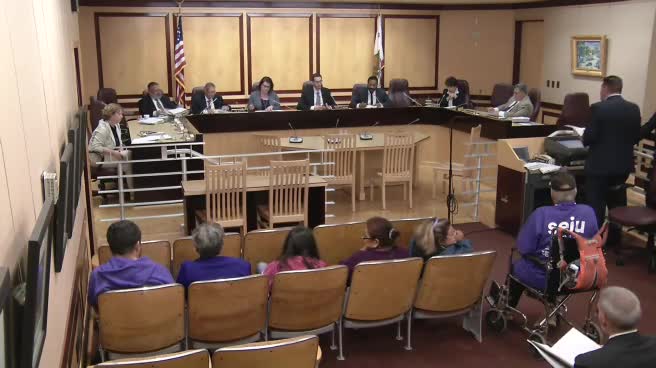 8MIN
Senate Standing Committee on Human Services
 1MIN
Assembly Floor
 1H
Assembly Standing Committee on Appropriations
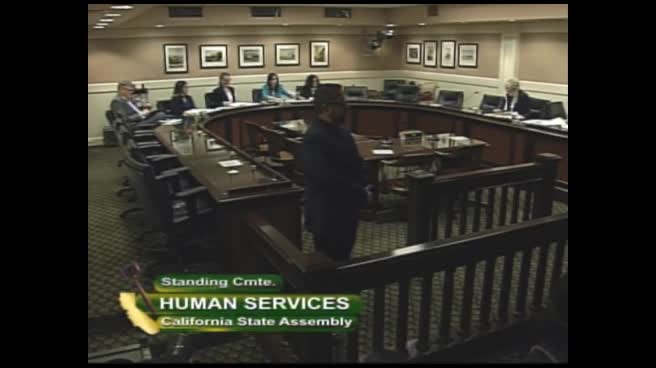 16MIN
Assembly Standing Committee on Human Services
Bill Author

Bill Co-Author(s):