AB 1419: Pesticides: penalties for violations: civil penalty.
- Session Year: 2017-2018
- House: Assembly
- Latest Version Date: 2018-01-10
Existing law provides that every person who violates a provision of law relating to pesticides, or any regulation issued pursuant thereto, is guilty of a misdemeanor. In lieu of seeking prosecution for a misdemeanor, existing law authorizes the Director of Pesticide Regulation to prosecute a violation civilly, as specified. In lieu of a civil prosecution by the director, existing law authorizes the county agricultural commissioner to levy a civil penalty against a person violating specified provisions of law relating to pest control operations, pesticides, pesticides and worker safety, use of restricted materials, use of an unregistered pesticide, carbon monoxide pest control devices, structural pest control devices, or regulations adopted pursuant to these provisions.
This bill would provide that, if the director determines that violations of those specified provisions have been committed in multiple jurisdictions, are not appropriate matters to be enforced by a county agricultural commissioner, or involve a priority investigation involving human or environmental health effects, as defined, or are not appropriate to be enforced by a county agricultural commissioner for specified reasons, the director may levy a civil penalty of up to $25,000 for each violation in accordance with specified procedural and other requirements, or may refer any of those violations to the proper enforcement agency, including the district attorney of the county in which the violations occurred or the Attorney General. The bill would apply only to violations that occur on or after January 1, 2019.
The bill would also make a conforming change. changes.
Existing law provides that every person who violates a provision of law relating to pesticides, or any regulation issued pursuant thereto, is guilty of a misdemeanor. In lieu of seeking prosecution for a misdemeanor, existing law authorizes the Director of Pesticide Regulation to prosecute a violation civilly, as specified. In lieu of a civil prosecution by the director, existing law authorizes the county agricultural commissioner to levy a civil penalty against a person violating specified provisions of law relating to pest control operations, pesticides, pesticides and worker safety, use of restricted materials, use of an unregistered pesticide, carbon monoxide pest control devices, structural pest control devices, or regulations adopted pursuant to these provisions.
This bill would provide that, if the director determines that violations of those specified provisions have been committed in multiple jurisdictions, are not appropriate matters to be enforced by a county agricultural commissioner, or involve a priority investigation involving human or environmental health effects, as defined, the director may levy a civil penalty of up to $25,000 for each violation in accordance with specified procedural and other requirements, or may refer any of those violations to the proper enforcement agency, including the district attorney of the county in which the violations occurred or the Attorney General. The bill would apply only to violations that occur on or after January 1, 2019.
The bill would also make a conforming change.
Existing law, until January 1, 2021, requires, among other things, an employer, to satisfy his or her responsibilities for medical supervision of his or her employees who regularly handle pesticides pursuant to specified regulation, to contract with a medical supervisor registered with the Office of Environmental Health Hazard Assessment (OEHHA). Existing law requires any laboratory that performs cholinesterase testing on human blood for the medical supervisor to electronically report specified information in its possession on every person tested to the Department of Pesticide Regulation. The department is required to share the information in an electronic format with OEHHA and the State Department of Public Health on an ongoing basis, as specified.The bill would extend the operation of these requirements until July 1, 2021, and would repeal the provisions as of January 1, 2022.Existing law, until January 1, 2021, requires, among other things, an employer, to satisfy his or her responsibilities for medical supervision of his or her employees who regularly handle pesticides pursuant to specified regulation, to contract with a medical supervisor registered with the Office of Environmental Health Hazard Assessment (OEHHA). Existing law requires any laboratory that performs cholinesterase testing on human blood for the medical supervisor to electronically report specified information in its possession on every person tested to the Department of Pesticide Regulation. The department is required to share the information in an electronic format with OEHHA and the State Department of Public Health on an ongoing basis, as specified.
The bill would extend the operation of these requirements until July 1, 2021, and would repeal the provisions as of January 1, 2022.
In lieu of seeking prosecution of any violation of this division as a misdemeanor, and the penalty prescribed in Section 12996, the director may prosecute civilly pursuant to Sections 12998 and 12999, or may levy civil penalties pursuant to Section 12999.4 or 12999.6, or the commissioner may levy civil penalties pursuant to Section 12999.5.
SEC. 2.Section 12997.5 of the Food and Agricultural Code is amended to read:12997.5.(a)In addition to any penalties paid in connection with an enforcement action taken pursuant to Sections 12996, 12997, 12999, and 12999.5, and 12999.6, any person who is found in violation of any provision of this division related to pesticides or any regulation related to pesticides adopted pursuant to this division that results in illness or injury requiring emergency medical transport or immediate medical treatment of any individual in a nonoccupational setting from any pesticide used in the production of an agricultural commodity, shall be liable to the individual harmed or to the medical provider for the immediate costs of uncompensated medical care from acute injuries and illnesses of the exposed individual.
(b)Any order issued in connection with a finding of a violation as described in subdivision (a) shall include the obligation to reimburse medical costs from acute illnesses and injuries of any individual requiring immediate medical treatment as a consequence of this violation to the injured individuals or their medical providers.
(c)Any person found in violation of this section shall submit to the director within 30 days of the final determination of liability, a written plan on how they will pay individuals and medical providers for the emergency medical transport and the immediate medical costs from acute medical injuries and illnesses of all individuals requiring immediate medical treatment as a consequence of the violation. A person alleged to have violated subdivision (a) may voluntarily submit a written plan pursuant to this section prior to the determination of liability. The contents of the voluntary plan shall not be held against the person in any action to determine whether the person violated those provisions.
(d)Any violation of this section shall be subject to the criminal and civil sanctions and penalties set forth in this division.
(e)Payment of emergency medical costs pursuant to this section shall not preclude an affected person from filing a civil action for injuries, illnesses, or costs related to the incident. Any damage award associated with a civil action related to the incident shall be reduced by the amount the plaintiff received from this section.
(f)Payment of emergency medical costs pursuant to this section shall not be held against the person in any action to determine whether the person violated those provisions.
(g)For any person who provides for the immediate reimbursement of medical costs for acute medical illnesses and injuries prior to a final determination by the department, the director or agricultural commissioner may reduce, by not more than 50 percent, the fines imposed pursuant to Section 12996.5. This reduction shall not limit the responsible partys financial obligation under this section. The department or agricultural commissioner shall attempt to complete the determination within 45 days of the incident.
SEC. 2.SEC. 3.Section 12999.6 is added to the Food and Agricultural Code, to read:12999.6.(a)The director may initiate and maintain enforcement actions for violations as described in subdivision (b) and levy the civil penalty described in subdivision (b), or may refer any of those violations to the proper enforcement agency, including the district attorney of the county in which the violations occurred or the Attorney General.
(b)If the director determines that violations of the statutes and implementing regulations set forth in Section 12999.5 have been committed in multiple jurisdictions, are not appropriate matters to be enforced by a commissioner, or involve a priority investigation involving human or environmental health effects, as defined in the 2005 Cooperative Agreement, or subsequent modifications to that agreement, among the Department of Pesticide Regulation, the California Agricultural Commissioners and Sealers Association, and the United States Environmental Protection Agency, Region 9, or are not appropriate to be enforced by a commissioner because the county lacks resources to pursue the violation, county enforcement would raise a conflict of interest, the violator is located outside of the county, or the county has determined that the violation is not appropriate to be enforced by the county, the director may take the appropriate action as authorized by subdivision (a). The director may levy a civil penalty of not more than twenty-five thousand dollars ($25,000) for each violation. The department may adopt regulations to enforce this section.
(c)Before a civil penalty is levied, the person charged with the violation shall be given a written notice of the proposed action, including the nature of the violation and the amount of the proposed penalty, and shall have the right to request a hearing within 20 days after receiving notice of the proposed action. A notice of the proposed action that is sent by certified mail to the last known address of the person charged shall be considered received even if delivery is refused or the notice is not accepted at that address. If a hearing is requested, notice of the time and place of the hearing shall be given at least 10 days before the date set for the hearing. Before the hearing, the person shall be given an opportunity to review the directors evidence. At the hearing, the person shall be given the opportunity to present evidence on his or her own behalf. If a hearing is not timely requested, the director may take the action proposed without a hearing.
(d)If the person against whom the director levied a civil penalty requested and appeared at a hearing, the person may seek judicial review of the directors decision within 30 days of the date of the decision pursuant to Section 1094.5 of the Code of Civil Procedure.
(e)After exhaustion of the review procedure provided in this section, the director, or his or her representative, may file a certified copy of a final decision of the director that directs the payment of a civil penalty and, if applicable, any order that denies a petition for writ of administrative mandamus, with the clerk of the superior court of any county. Judgment shall be entered immediately by the clerk in conformity with the decision or order. No fees shall be charged by the clerk of the superior court for the performance of any official service required in connection with the entry of judgment pursuant to this section. Pursuant to Section 6103 of the Government Code, the clerk of the superior court shall not charge a fee for the performance of any official service required in connection with the entry of judgment pursuant to this section.
(f)Any money recovered under this section shall be paid to the investigating commissioner to reimburse the cost of the investigation with the remainder going into the Department of Pesticide Regulation Fund for use by the department, upon appropriation, in administering this division and Division 6 (commencing with Section 11401).
(g)This section shall apply only to violations that occur on or after January 1, 2019.
In lieu of seeking prosecution of any violation of this division as a misdemeanor, and the penalty prescribed in Section 12996, the director may prosecute civilly pursuant to Sections 12998 and 12999, or may levy civil penalties pursuant to Section 12999.4 or 12999.6, or the commissioner may levy civil penalties pursuant to Section 12999.5.
SEC. 2.Section 12999.6 is added to the Food and Agricultural Code, to read:12999.6.(a)The director may initiate and maintain enforcement actions for violations as described in subdivision (b) and levy the civil penalty described in subdivision (b), or may refer any of those violations to the proper enforcement agency, including the district attorney of the county in which the violations occurred or the Attorney General.
(b)If the director determines that violations of the statutes and implementing regulations set forth in Section 12999.5 have been committed in multiple jurisdictions, are not appropriate matters to be enforced by a commissioner, or involve a priority investigation involving human or environmental health effects, as defined in the 2005 Cooperative Agreement, or subsequent modifications to that agreement, among the Department of Pesticide Regulation, the California Agricultural Commissioners and Sealers Association, and the United States Environmental Protection Agency, Region 9, the director may take the appropriate action as authorized by subdivision (a). The director may levy a civil penalty of not more than twenty-five thousand dollars ($25,000) for each violation. The department may adopt regulations to enforce this section.
(c)Before a civil penalty is levied, the person charged with the violation shall be given a written notice of the proposed action, including the nature of the violation and the amount of the proposed penalty, and shall have the right to request a hearing within 20 days after receiving notice of the proposed action. A notice of the proposed action that is sent by certified mail to the last known address of the person charged shall be considered received even if delivery is refused or the notice is not accepted at that address. If a hearing is requested, notice of the time and place of the hearing shall be given at least 10 days before the date set for the hearing. Before the hearing, the person shall be given an opportunity to review the directors evidence. At the hearing, the person shall be given the opportunity to present evidence on his or her own behalf. If a hearing is not timely requested, the director may take the action proposed without a hearing.
(d)If the person against whom the director levied a civil penalty requested and appeared at a hearing, the person may seek judicial review of the directors decision within 30 days of the date of the decision pursuant to Section 1094.5 of the Code of Civil Procedure.
(e)After exhaustion of the review procedure provided in this section, the director, or his or her representative, may file a certified copy of a final decision of the director that directs the payment of a civil penalty and, if applicable, any order that denies a petition for writ of administrative mandamus, with the clerk of the superior court of any county. Judgment shall be entered immediately by the clerk in conformity with the decision or order. No fees shall be charged by the clerk of the superior court for the performance of any official service required in connection with the entry of judgment pursuant to this section.
(f)Any money recovered under this section shall be paid to the investigating commissioner to reimburse the cost of the investigation with the remainder going into the Department of Pesticide Regulation Fund for use by the department, upon appropriation, in administering this division and Division 6 (commencing with Section 11401).
(g)This section shall apply only to violations that occur on or after January 1, 2019.
SECTION 1.Section 105206 of the Health and Safety Code is amended to read:105206.(a)In order for an employer to satisfy his or her responsibilities for medical supervision of his or her employees who regularly handle pesticides pursuant to Section 6728 of Title 3 of the California Code of Regulations, the employer shall contract with a medical supervisor registered with the Office of Environmental Health Hazard Assessment (OEHHA).(b)A laboratory that performs tests ordered by a medical supervisor shall report the information specified in subdivision (c) to the Department of Pesticide Regulation. Reports shall be submitted to the Department of Pesticide Regulation on, at a minimum, a monthly basis. For the purpose of meeting the requirements in subdivision (e), the reports shall be submitted via electronic media and formatted in a manner approved by the director. The Department of Pesticide Regulation shall share information from cholinesterase reports with the OEHHA and the State Department of Public Health on an ongoing basis, in an electronic format, for the purpose of meeting the requirements of subdivisions (f) and (g).(c)The laboratory shall report all of the following information in its possession in complying with subdivision (a):(1)The test results in International Units per milliliter of sample (IU/mL).(2)The purpose of the test, as indicated by the medical supervisor, as a cholinesterase test requested for an agricultural worker under medical supervision, and, if so, whether it is for a baseline, followup, or recovery test ordered to meet the requirements of Section 6728 of Title 3 of the California Code of Regulations or for the evaluation of suspected pesticide illness.(3)The name of the person tested.(4)The date of birth of the person tested.(5)The name, address, and telephone number of the medical supervisor who ordered the analysis.(6)The name, address, and telephone number of the laboratory.(7)The date that the sample was collected from the person and the date the result was reported.(8)Contact information for the person tested and his or her employer, if known and readily available.(d)The registered medical supervisor ordering a cholinesterase test for a person pursuant to subdivision (a) shall note in the test order the name of the medical supervisor and the purpose of the test, pursuant to paragraph (2) of subdivision (c), and ensure that the person tested and the employer receive a copy of the cholinesterase test results and any recommendations from the medical supervisor based upon those results within 14 days of the medical supervisors receipt of the results. The medical supervisor shall report any worker with cholinesterase depression indicating pesticide exposure to the local health officer pursuant to Section 105200.(e)All information reported pursuant to this section shall be confidential, as provided in Section 100330, except that the OEHHA, the Department of Pesticide Regulation, and the State Department of Public Health may share the information for the purpose of surveillance, case management, investigation, environmental remediation, or abatement with the appropriate county agricultural commissioner and local health officer.(f)The OEHHA shall establish a procedure for registering and deregistering medical supervisors for the purposes of outreach and training and may establish reasonable requirements for performance. The OEHHA shall review the cholinesterase test results and may provide an appropriate medical or toxicological consultation to the medical supervisor. In addition to the duties performed pursuant to Section 105210, the OEHHA, in consultation with the Department of Pesticide Regulation and the local health officer, may provide medical and toxicological consultation, as appropriate, to the county agricultural commissioner to address medical issues related to the investigation of cholinesterase inhibitor-related illness.(g)The Department of Pesticide Regulation and the OEHHA shall prepare and publicly post an update on the effectiveness of the medical supervision program and the utility of laboratory-based reporting of cholinesterase testing for illness surveillance and prevention by January 1, 2021.(h)This section shall become inoperative on July 1, 2021, and, as of January 1, 2022, is repealed.(a)In order for an employer to satisfy his or her responsibilities for medical supervision of his or her employees who regularly handle pesticides pursuant to Section 6728 of Title 3 of the California Code of Regulations, the employer shall contract with a medical supervisor registered with the Office of Environmental Health Hazard Assessment (OEHHA).
(b)A laboratory that performs tests ordered by a medical supervisor shall report the information specified in subdivision (c) to the Department of Pesticide Regulation. Reports shall be submitted to the Department of Pesticide Regulation on, at a minimum, a monthly basis. For the purpose of meeting the requirements in subdivision (e), the reports shall be submitted via electronic media and formatted in a manner approved by the director. The Department of Pesticide Regulation shall share information from cholinesterase reports with the Office of Environmental Health Hazard Assessment (OEHHA) OEHHA and the State Department of Public Health on an ongoing basis, in an electronic format, for the purpose of meeting the requirements of subdivisions (f) and (g).
(c)The laboratory shall report all of the following information in its possession in complying with subdivision (a):
(1)The test results in International Units per milliliter of sample (IU/mL).
(2)The purpose of the test, as indicated by the medical supervisor, as a cholinesterase test requested for an agricultural worker under medical supervision, and, if so, whether it is for a baseline, followup, or recovery test ordered to meet the requirements of Section 6728 of Title 3 of the California Code of Regulations or for the evaluation of suspected pesticide illness.
(3)The name of the person tested.
(4)The date of birth of the person tested.
(5)The name, address, and telephone number of the medical supervisor who ordered the analysis.
(6)The name, address, and telephone number of the laboratory.
(7)The date that the sample was collected from the person and the date the result was reported.
(8)Contact information for the person tested and his or her employer, if known and readily available.
(d)The registered medical supervisor ordering a cholinesterase test for a person pursuant to subdivision (a) shall note in the test order the name of the medical supervisor and the purpose of the test, pursuant to paragraph (2) of subdivision (c), and ensure that the person tested and the employer receive a copy of the cholinesterase test results and any recommendations from the medical supervisor based upon those results within 14 days of the medical supervisors receipt of the results. The medical supervisor shall report any worker with cholinesterase depression indicating pesticide exposure to the local health officer pursuant to Section 105200.
(e)All information reported pursuant to this section shall be confidential, as provided in Section 100330, except that the OEHHA, the Department of Pesticide Regulation, and the State Department of Public Health may share the information for the purpose of surveillance, case management, investigation, environmental remediation, or abatement with the appropriate county agricultural commissioner and local health officer.
(f)The OEHHA shall establish a procedure for registering and deregistering medical supervisors for the purposes of outreach and training and may establish reasonable requirements for performance. The OEHHA shall review the cholinesterase test results and may provide an appropriate medical or toxicological consultation to the medical supervisor. In addition to the duties performed pursuant to Section 105210, the OEHHA, in consultation with the Department of Pesticide Regulation and the local health officer, may provide medical and toxicological consultation, as appropriate, to the county agricultural commissioner to address medical issues related to the investigation of cholinesterase inhibitor-related illness.
(g)The Department of Pesticide Regulation and the OEHHA shall prepare and publicly post an update on the effectiveness of the medical supervision program and the utility of laboratory-based reporting of cholinesterase testing for illness surveillance and prevention by January 1, 2021.
(h)This section shall remain in effect only until January 1, 2021, and as of that date is repealed, unless a later enacted statute, that is enacted before January 1, 2021, deletes or extends that date.(h)This section shall become inoperative on July 1, 2021, and, as of January 1, 2022, is repealed.
|
Date
|
Status
|
|---|---|
| Jan 29, 2018 | Read third time. Refused passage. |
| Jan 22, 2018 | Read second time. Ordered to third reading. |
| Jan 18, 2018 | In committee: Set, first hearing. Referred to APPR. suspense file. |
| Jan 11, 2018 | Re-referred to Com. on APPR. |
| Jan 10, 2018 | Read second time and amended. |
| Jan 9, 2018 | From committee: Amend, and do pass as amended and re-refer to Com. on APPR. (Ayes 5. Noes 0.) (January 9). |
| Sep 14, 2017 | Re-referred to Com. on E.S. & T.M. |
| Sep 13, 2017 | From committee chair, with author's amendments: Amend, and re-refer to Com. on E.S. & T.M. Read second time and amended. |
| Apr 4, 2017 | In committee: Set, first hearing. Hearing canceled at the request of author. |
| Mar 13, 2017 | Referred to Com. on E.S. & T.M. |
| Feb 19, 2017 | From printer. May be heard in committee March 21. |
| Feb 17, 2017 | Read first time. To print. |
|
Date
|
Description
|
Location
|
Votes
|
|
|---|---|---|---|---|
| Jan 29, 2018 | AB 1419 QUIRK Assembly Third Reading | Assembly Floor |
Passed |
|
| Jan 18, 2018 | Do pass. | Assembly Standing Committee on Appropriations |
Passed |
|
| Jan 9, 2018 | Do pass as amended and be re-referred to the Committee on [Appropriations] | Assembly Standing Committee on Environmental Safety and Toxic Materials |
Passed |
This list shows positions taken on this bill by organizations on the date displayed, which is linked to the original source.
Positions by individuals are not included.
ASSEMBLY THIRD READING
ATR Bill Id:AB 1419
Author:(Quirk)
As Amended Ver:January 10, 2018
Majority vote
Committee | Votes | Ayes | Noes |
Environmental Safety | 5-0 | Quirk, Chen, Cristina Garcia, Holden, Muratsuchi | |
Appropriations | 12-4 | Gonzalez Fletcher, Bloom, Bonta, Calderon, Carrillo, Chau, Eggman, Friedman, Eduardo Garcia, Jones-Sawyer, Quirk, Reyes | Bigelow, Fong, Gallagher, Obernolte |
SUMMARY: Authorizes the Department of Pesticide Regulation (DPR) to initiate and maintain enforcement actions and to levy civil penalties for specified pesticide use violations. Specifically, this bill:
- Authorizes the director of DPR (director) to initiate and maintain enforcement actions for specified pesticide use violations and to levy a civil penalty of not more than $25,000 for each violation, or to refer any of those violations to the proper enforcement agency, including to the district attorney of the county in which the violations occurred or to the Attorney General.
- Authorizes the director to initiate and maintain enforcement actions and to levy civil penalties, if she or he determines that any of the following conditions apply to specified pesticide use violations:
- The violation was committed in multiple jurisdictions;
- The violation involved a priority investigation, as defined, involving human or environmental health effects; or,
- The violation is not appropriate to be enforced by a County Agricultural Commissioner (CAC) because the county lacks resources to pursue the violation, county enforcement would raise a conflict of interest, the violator is located outside of the county, or the county has determined that the violation is not appropriate to be enforced by the county.
- Provides for a notification, public hearing, and review process before the civil penalty authorized by the bill is levied.
- Specifies that the provisions of this bill shall apply only to violations that occur on or after January 1, 2019.
- Makes other conforming changes.
EXISTING LAW:
- Authorizes the CAC, in lieu of civil prosecution by the director, to levy a civil penalty of not more than $1,000 against a person violating specified provisions of law or regulations relating to, among other things, pest control operations, pesticides and worker safety, use of restricted materials, pesticide recommendations and usage requirements, carbon monoxide pest control devices, or structural pest control devices.
- Provides that any violation of the above specified statutes and regulations determined by the CAC to be a Class A violation as defined in the California Code of Regulations (i.e. a serious violation that caused a health, property, or environmental hazard) is subject to a fine of not more than $5,000 for each violation.
FISCAL EFFECT: According to the Assembly Appropriations Committee, enactment of this bill could result in increased revenue from civil penalties estimated to be up to $500,000 annually based on prior years' violations (this revenue will reimburse the county for the cost of the investigations with the remainder deposited in the Department of Pesticide Regulation Fund); absorbable costs for DPR to administer the civil penalty, provide notification, and conduct administrative hearings; and unknown costs for judicial review.
COMMENTS: Need for the bill: According to the author, "When pesticides are improperly applied, they can cause significant harm to people and the environment... Current penalty amounts for these serious violations are not adequate and warrant higher fines. In addition, cases involving serious violations are first argued at county administrative hearings and then frequently appealed to the Department of Pesticide Regulation (DPR) Director, and subsequently to the Superior Court. In each hearing, staff biologists with the County Agricultural Commission (CAC) argue the case. DPR, who has knowledgeable attorneys on staff, is not statutorily authorized to argue the case. DPR attorneys can only provide advice to the staff biologist handling the case. Lastly, when there is an incident that spans over multiple counties, the CACs ability to act may be limited. In these cases, it would be appropriate for DPR to intervene on behalf of the CACs."
Pesticide use enforcement authority: Pesticide use in California is controlled by federal, state, and local governmental entities. The United States Environmental Protection Agency (USEPA) sets minimum pesticide use standards and delegates pesticide enforcement regulatory authority to the states. State law designates DPR as the agency responsible for delivering an effective statewide pesticide regulatory program in California. The Legislature has also delegated local pesticide use enforcement to CACs. DPR describes that it works in partnership with the CACs on local pesticide programs. DPR maintains that while it currently has the authority to administratively enforce violations related to pesticide registration, sale, illegal residue, and licensing fraud, the local CACs maintain the statutory authority to administratively enforce pesticide use violations.
Changes under the bill: This bill will additionally authorize DPR to initiate and maintain enforcement actions, including levying a civil penalty of not more than $25,000 for each violation, in accordance with specified procedural and other requirements, for specified pesticide use violations. These violations include those that are committed in multiple jurisdictions; are not an appropriate matter to be enforced by a CAC for specified reasons; or, involve a priority investigation involving human or environmental health effects, as defined in the 2005 Cooperative Agreement among DPR, the California Agricultural Commissioners and Sealers Association, and the USEPA. Priority investigations include serious pesticide incidents, such as those causing death, serious injury, or illness, or any single injury or illness episode involving five or more persons; contamination of a drinking water supply affecting 10 or more households; contamination of land or soil resulting in 0.5 acre or more not usable for intended purposes for one year or more; non-target animal and wildlife mortality that exceeds specified levels; or, damage to any property, equipment, or livestock (including bees) that is estimated to represent a $20,000 loss, or 20% crop yield loss.
DPR states that from 2012-2017, there were 513 priority investigations reported. Ninety six of those investigations resulted in an enforcement action. Based on the average number of priority investigations resulting in an enforcement action from 2012-14, DPR anticipates that, should this bill be enacted, it could be involved in roughly 10-23 reported priority investigations per year.
Analysis Prepared by: Shannon McKinney / E.S. & T.M. / (916) 319-3965 FN: 0002550
Date of Hearing: January 9, 2018
ASSEMBLY COMMITTEE ON ENVIRONMENTAL SAFETY AND TOXIC MATERIALS
Bill Quirk, Chair
ABPCA Bill Id:AB 1419 (
Author:Quirk) – As Amended Ver:September 13, 2017
SUBJECT: Pesticides: penalties for violations: civil penalty
SUMMARY: Authorizes the Department of Pesticide Regulation (DPR) to initiate and maintain enforcement actions and to levy civil penalties for specified pesticide use violations. Specifically, this bill:
- Authorizes the director of DPR (director) to initiate and maintain enforcement actions for pesticide use violations specified in this bill and to levy the civil penalty described in this bill, or to refer any of those violations to the proper enforcement agency, including to the district attorney of the county in which the violations occurred or to the Attorney General.
- Authorizes the director to initiate and maintain enforcement actions and to levy civil penalties, including referral to the proper enforcement agencies, if she or he determines that any of the following conditions apply to violations of specified pesticide use statutes and implementing regulations:
- The violation was committed in multiple jurisdictions;
- The violation was not an appropriate matter to be enforced by a County Agricultural Commissioner (CAC); or,
- The violation involved a priority investigation involving human or environmental health effects, as defined in the 2005 Cooperative Agreement, or subsequent modifications to that agreement, among DPR, the California Agricultural Commissioners and Sealers Association, and the United States Environmental Protection Agency (USEPA), Region 9.
- Authorizes the director to levy a civil penalty of not more than $25,000 for each violation.
- Authorizes DPR to adopt regulations to enforce the provisions of this bill.
- Provides that before a civil penalty is levied, the person charged with the violation shall be given a written notice of the proposed action, including the nature of the violation and the amount of the proposed penalty, and that person shall have the right to request a hearing within 20 days after receiving notice of the proposed action.
- Provides that a notice of the proposed action that is sent by certified mail to the last known address of the person charged shall be considered received even if delivery is refused or the notice is not accepted at that address.
- Provides that, if a hearing is requested, notice of the time and place of the hearing shall be given at least 10 days before the date set for the hearing.
- Provides that before the hearing, the person shall be given an opportunity to review the director’s evidence.
- Provides that at the hearing, the person shall be given the opportunity to present evidence on his or her own behalf.
- Provides that if a hearing is not timely requested, the director may take the action proposed without a hearing.
- Provides that if the person against whom the director levied a civil penalty requested and appeared at a hearing, the person may seek judicial review, as specified, of the director’s decision within 30 days of the date of the decision.
- Authorizes the director, or his or her representative, after exhaustion of the review procedure provided in this bill, to file a certified copy of a final decision of the director that directs the payment of a civil penalty and, if applicable, any order that denies a petition for writ of administrative mandamus, with the clerk of the superior court of any county.
- Provides that judgment shall be entered immediately by the clerk in conformity with the decision or order.
- Prohibits fees from being charged by the clerk of the superior court for the performance of any official service required in connection with the entry of judgment pursuant to this bill.
- Requires that any money recovered under the provisions of this bill be paid to the investigating CAC to reimburse the cost of the investigation with the remainder going into the Department of Pesticide Regulation Fund for use by DPR, upon appropriation, to administer agricultural chemicals, livestock remedies, and commercial feeds (pesticides) law and pest control operations law.
- Specifies that the provisions of this bill shall apply only to violations that occur on or after January 1, 2019.
- Makes other conforming changes.
EXISTING LAW:
- Provides that in all cases where provisions of the Food and Agriculture Code (FAC) place joint responsibility for the enforcement of laws and regulations on the director and the CAC, the CAC shall be responsible for local administration of the [pesticide] enforcement program. Provides that the director shall be responsible for overall statewide enforcement and shall issue instructions and make recommendations to the CAC. (FAC § 2281)
- Provides that every person who violates any provision of the pesticides division of the FAC relating to pesticides, with a few exceptions, or any regulation issued pursuant to those provisions, is guilty of a misdemeanor and upon conviction shall be punished by a fine of not less than $500 nor more than $5,000, or by imprisonment of not more than six months, or by both the fine and imprisonment. Provides that upon a second or subsequent conviction of the same violation, a person shall be punished by a fine of not less than $1,000 nor more than $10,000, or by imprisonment of not more than six months, or by both the fine and imprisonment. Provides that each violation constitutes a separate offense. (FAC § 12996 (a))
- Provides that if the offense referenced above involves an intentional or negligent violation that created or reasonably could have created a hazard to human health or the environment, the convicted person shall be punished by imprisonment in a county jail not exceeding one year or in the state prison or by a fine of not less than $5,000 nor more than $50,000, or by both the fine and imprisonment. (FAC § 12996 (b))
- Provides that any person who is found in violation of any provision of the pesticides division of the FAC or any regulation related to pesticides that results in illness or injury requiring emergency medical transport or immediate medical treatment of any individual in a nonoccupational setting from any pesticide used in the production of an agricultural commodity, shall be liable to the individual harmed or to the medical provider for the immediate costs of uncompensated medical care from acute injuries and illnesses of the exposed individual. (FAC § 12997.5)
- Provides that any person who violates the pesticides division of the FAC relating to pesticides or structural pest control devices, or any regulation issued pursuant to those provisions, is liable civilly in an amount not less than $1,000 nor more than $10,000 for each violation. Provides that any person who commits a second or subsequent violation that is the same as or similar to a prior violation, or whose intentional violation resulted or reasonably could have resulted in the creation of a hazard to human health or the environment or in the disruption of the market of the crop or commodity involved, is liable civilly in an amount not less than $5,000 nor more than $25,000 for each violation. (FAC § 12998)
- Authorizes the director of DPR, in lieu of civil prosecution, to levy a civil penalty of not more than $5,000 for each violation against a person who violates specified sections of the FAC relating to, among other things, the Healthy Schools Act, structural pest control, pesticide sales, pesticide licensing fraud, and, pesticide registration. (FAC § 12999.4(a))
- Authorizes the CAC, in lieu of civil prosecution by the director, to levy a civil penalty of not more than $1,000 against a person violating specified provisions of law or regulations relating to, among other things, pest control operations, pesticides and worker safety, use of restricted materials, pesticide recommendations and usage requirements, carbon monoxide pest control devices, or structural pest control devices. (FAC § 12999.5 (a))
- Provides that any violation of the above specified statutes and regulations determined by the CAC to be a Class A violation as defined in the California Code of Regulations (i.e. a serious violation that caused a health, property, or environmental hazard) is subject to a fine of not more than $5,000 for each violation. (FAC § 12999.5 (a))
- Sets up a process of notice, hearing, and appeal that CACs must follow when levying a civil penalty against a person violating pesticide use law. (FAC § 12999.5 (b- f)
- Defines a Class A violation as one of the following: a violation that caused a health, property, or environmental hazard; a violation of a law or regulation that mitigates the risk of adverse health, property, or environmental effects, and the CAC determines specified aggravating circumstances support elevation to Class A; or, a violation of a lawful order of the CAC issued pursuant to specified sections of law. (3 Cal Code of Regulations 6130 (b)(1))
FISCAL EFFECT: Unknown.
COMMENTS:
Need for the bill: According to the author, "When pesticides are improperly applied, they can cause significant harm to people and the environment. Over the last several years, illegal uses of pesticides have caused numerous pesticide illnesses in farmworkers (working in adjacent fields), children (chlorine poisoning from swimming pool), and residents (multi-unit housing pest treatment). Current penalty amounts for these serious violations are not adequate and warrant higher fines. In addition, cases involving serious violations are first argued at county administrative hearings and then frequently appealed to the Department of Pesticide Regulation (DPR) Director, and subsequently to the Superior Court. In each hearing, staff biologists with the County Agricultural Commission (CAC) argue the case. DPR, who has knowledgeable attorneys on staff, is not statutorily authorized to argue the case. DPR attorneys can only provide advice to the staff biologist handling the case. Lastly, when there is an incident that spans over multiple counties, the CACs ability to act may be limited. In these cases, it would be appropriate for DPR to intervene on behalf of the CACs."
Pesticide use enforcement authority: Pesticide use in California is controlled by federal, state, and local governmental entities. The USEPA sets minimum pesticide use standards and delegates pesticide enforcement regulatory authority to the states. State law designates DPR as the agency responsible for delivering an effective statewide pesticide regulatory program in California. The Legislature has also delegated local pesticide use enforcement to County Agricultural Commissioners (CACs). DPR describes that it works in partnership with the CACs by planning and developing adequate county programs; evaluating the effectiveness of the local programs; and, ensuring that corrective actions are taken in areas needing improvement. CACs enforce state pesticide laws and regulations in agricultural, structural, and nonagricultural use settings in all 58 counties.
DPR maintains that while it currently has the authority to administratively enforce violations related to pesticide registration, sale, illegal residue, and licensing fraud, the local CACs maintain the statutory authority to administratively enforce pesticide use violations.
This bill will additionally authorize DPR to initiate and maintain enforcement actions, in accordance with specified procedural and other requirements, for specified pesticide use violations. These violations include those that are committed in multiple jurisdictions; that are not an appropriate matter to be enforced by a CAC; or, that involve a priority investigation involving human or environmental health effects, as defined in the 2005 Cooperative Agreement among DPR, the California Agricultural Commissioners and Sealers Association, and USEPA. Priority investigations include serious pesticide incidents, such as those causing death, serious injury, or illness, or any single injury or illness episode involving five or more persons; contamination of a drinking water supply affecting 10 or more households; contamination of land or soil resulting in 1/2 acre or more not usable for intended purposes for one year or more; non-target animal and wildlife mortality that exceeds specified levels; or, damage to any property, equipment, or livestock (including bees) that is estimated to represent a $20,000 loss, or 20% crop yield loss.
Civil pesticide use violation penalty authority: Since the mid-1980s, CACs have held the statutory authority to levy civil penalties, with a $500 cap, against a person violating pesticide use provisions of the FAC. In 1989, the Legislature raised the maximum civil penalty amount that a CAC could levy for pesticide use violations to $1,000. Then in 2000, SB 1970 (Costa, Chapter 806, Statutes of 2000) authorized DPR to administratively enforce specified, more serious pesticide use violations with a penalty of up to $5,000 per violation. The $5,000 penalty cap was a five-fold increase over the penalty amount CACs could levy at the time. In 2002, the Governor signed AB 947 (Jackson, Chapter 457, Statutes of 2002) into law to raise the maximum civil penalty per violation that a CAC could levy for a pesticide use violation to $5,000, which created an equal penalty limit to that granted to DPR for more serious violations. It appears that because the CACs and DPR could, at the time, levy equal penalties for pesticide use violations, the Legislature allowed the FAC provisions that authorized DPR to levy civil penalties for pesticide use violations to sunset.
This bill would reinstate the sunsetted FAC provisions that granted DPR discretionary authority to administratively enforce specified, typically serious pesticide use violations, but with a penalty cap higher than those authorized by SB 1970 (Costa, Chapter 806, Statutes of 2000). This bill sets the maximum penalty per violation that DPR can levy for specified violations at $25,000, which is, as it was in SB 1970, five times the penalty that CACs can levy.
Criminal prosecution for pesticide use violations: Statute delineates penalty amounts and terms of imprisonment for criminal violations of pesticide law. For example, for an offense that involves an intentional or negligent violation that created or reasonably could have created a hazard to human health or the environment, the convicted person may be punished by imprisonment in a county jail not exceeding one year or in the state prison or by a fine of not less than $5,000 nor more than $50,000, or by both the fine and imprisonment. The CACs and DPR do not have the authority to bring criminal actions.
Recent priority investigations: As mentioned above, priority investigations, as defined in the 2005 Cooperative Agreement, include serious pesticide incidents that cause impacts such as death, serious injury, or illness; contamination of drinking water supplies, air, or land; non-target animal and wildlife mortality; or property damage. This bill authorizes DPR to impose a civil penalty for pesticide use violations that involve a priority investigation involving human health or environmental health effects.
DPR compiled the following table of priority investigations from 2012-2017, which helps provide a better understanding of the potential scope of the bill.
Year | Human (accidental exposures) | Human (self harm, intentional ingestion) | Other (report of loss, wildlife, environmental) | Total | Total resulting in enforcement actions |
2012 | 49 | 20 | 8 | 77 | 21 |
2013 | 40 | 15 | 8 | 63 | 21 |
2014 | 72 | 39 | 14 | 125 | 26 |
2015 | 63 | 15 | 11 | 89 | 18* |
2016 | 60 | 6 | 15 | 81 | 9* |
2017 | 50 | 10 | 18 | 78 | 1* |
* Includes investigations with pending enforcement actions. Because the 2 year statute of limitation for many of these cases has not expired, more enforcement actions may ultimately be taken for violations occurring in 2015 – 2017.
DPR states that from 2012-2017, there were 513 priority investigations reported. Ninety six of those investigations resulted in an enforcement action. Based on the average number of priority investigations resulting in an enforcement action from 2012-14, DPR anticipates that, should this bill be enacted, it could be involved in roughly 10-23 reported priority investigations per year.
Arguments in support: DPR writes, "This bill is intended to strengthen the State’s pesticide enforcement program in order to better protect the public and the environment… DPR works in partnership with the county agricultural commissioners (CACs) who carry out and enforce federal and state pesticide laws and regulations at the local level. CACs issue site-specific local permits for the use of restricted materials, conduct on-site application inspections, administer full pesticide use reporting, conduct worker safety inspections, and investigate pesticide incidents. Currently, the maximum fine that can be levied against pesticide use violations is $5,000 per incident. Pesticide use enforcement is a critical part of DPR’s regulatory program. For incidents that result in human illness or significant environmental damage, the $5,000 maximum fine is not always adequate, and a higher maximum fine would be more appropriate… Assembly Bill 1419 would allow DPR the authority to work with the CAC to take appropriate enforcement action against individuals or companies who violate pesticide use laws. By increasing the maximum penalty amount to $25,000 per violation, we will be able to better assure Californians that the pesticide applications made in California are being done in a safe and responsible manner.”
Breast Cancer Prevention Partners, Environmental Working Group, and Pesticide Action Network North America write in support, "The problems of pesticide drift affecting California communities are ongoing, real and preventable. At least four significant, documented pesticide drift incidents this past summer affected over 100 farmworkers, with pesticides traveling over 1⁄2 mile in one case. This legislation will deter future violations by giving DPR stronger and more comprehensive enforcement authority."
Arguments in opposition: The opponents write in a joint letter, "We understand that Section 2 [of the bill] was previously in statute that expired January 2006. While we support reinstating the law as previously written, there are two changes we cannot support as written and would like to offer alternative language… The first change would be to remove the comma after the word jurisdictions in line 2 of (b)... There was no comma in the original statute and the addition of the comma creates a greatly expanded authority for the DPR Director to choose when they believe it is appropriate to usurp the local agricultural commissioner on a vast array of pesticide decisions… Reinserting the comma would limit the director’s authority to violations committed in multiple jurisdictions which would conform to original intent of the law. The second change would be to restore the civil penalty authority that was in the original statute, which was $5,000… There were 4 priority agricultural violations in 2016 and 1 in 2017. While no violation is the goal, it is important to keep in mind that millions of individual applications occur each year. Additionally, we believe the current enforcement response structure which is applied statewide and was carefully reviewed before being put into regulation in 2010 gives wide latitude to impose penalties commensurate with the classification and intent. Under current law, the authority exists to pursue both criminal and civil penalties."
Committee amendments: The Committee may wish to consider amending the bill as follows:
- Make technical changes to ensure statutory consistency. Therefore, amend the bill as follows:
FAC § 12999.6 (e) After exhaustion of the review procedure provided in this section, the director, or his or her representative, may file a certified copy of a final decision of the director that directs the payment of a civil penalty and, if applicable, any order that denies a petition for writ of administrative mandamus, with the clerk of the superior court of any county. Judgment shall be entered immediately by the clerk in conformity with the decision or order. No fees shall be charged by the clerk of the superior court for the performance of any official service required in connection with the entry of judgment pursuant to this section. Pursuant to Section 6103 of the Government Code, the clerk of the superior court shall not charge a fee for the performance of any official service required in connection with the entry of judgment pursuant to this section.
- Include the new provisions in the bill in existing statute related to medical transport or medical treatment as a result of pesticide illness or injury. Therefore, amend the bill as follows:
FAC § 12997.5 (a) In addition to any penalties paid in connection with an enforcement action taken pursuant to Sections 12996, 12997, 12999, and 12999.5 and 12999.6, any person who is found in violation of any provision of this division related to pesticides or any regulation related to pesticides adopted pursuant to this division that results in illness or injury requiring emergency medical transport or immediate medical treatment of any individual in a nonoccupational setting from any pesticide used in the production of an agricultural commodity, shall be liable to the individual harmed or to the medical provider for the immediate costs of uncompensated medical care from acute injuries and illnesses of the exposed individual.
REGISTERED SUPPORT / OPPOSITION:
Support
California Department of Pesticide Regulation (sponsor)
Breast Cancer Prevention Partners
California Rural Legal Assistance Foundation (CRLAF)
Environmental Working Group
Pesticide Action Network (PAN) North America
Opposition
Agricultural Council of California
California Farm Bureau Federation
Western Growers Association
Western Plant Health Association
Analysis Prepared by: Shannon McKinney / E.S. & T.M. /
Date of Hearing: January 18, 2018
ASSEMBLY COMMITTEE ON APPROPRIATIONS
Lorena Gonzalez Fletcher, Chair
ABPCA Bill Id:AB 1419
Author:(Quirk) – As Amended Ver:January 10, 2018
Policy Committee: | Environmental Safety and Toxic Materials | Vote: | 5 - 0 |
|
| ||
|
|
Urgency: No State Mandated Local Program: No Reimbursable: No
SUMMARY:
This bill authorizes the Director of the Department of Pesticide Regulation (DPR) to levy a civil penalty of up to $25,000 for each specified pesticide use violation that occurs on or after January 1, 2019. Specifically this bill:
- Authorizes the Director to initiate and maintain enforcement actions, levy civil penalties, or refer any of violations to the proper enforcement agency, including the district attorney of the county in which the violations occurred or the Attorney General, if she or he determines any of the following conditions apply:
- The violation was committed in multiple jurisdictions.
- The violation involved a priority investigation involving human or environmental health effects, as specified.
- The violation was not an appropriate matter to be enforced by a County Agricultural Commissioner (CAC) because the county lacks resources, enforcement would raise a conflict of interest or is inappropriate for the county, or the violator is located outside the county.
- Provides for due process through the written notification of violations administrative hearings, and judicial review and sets specified timelines.
- Requires the penalty revenue received from an investigating CAC to reimburse the cost of the investigation with the remainder going into the Department of Pesticide Regulation Fund for use by DPR, upon appropriation, to administer agricultural chemicals, livestock remedies, and commercial feeds (pesticides) law and pest control operations law.
- Authorizes DPR to adopt regulations to enforce the provisions of this bill.
FISCAL EFFECT:
- Increased revenue from civil penalties estimated to be up to $500,000 annually based on prior years’ violations. This revenue will reimburse the cost of county investigations with the remainder deposited in the Department of Pesticide Regulation Fund.
- Absorbable costs for DPR to administer the civil penalty, provide notification, and conduct administrative hearings.
- Unknown costs for judicial review.
COMMENTS:
- Rationale. Since the mid-1980s, CACs have held the statutory authority to levy civil penalties, with a $500 cap, against a person violating pesticide use provisions of the law. In 1989, the Legislature raised the maximum civil penalty amount that a CAC could levy for pesticide use violations to $1,000.
In 2000, SB 1970 (Costa, Chapter 806, Statutes of 2000) authorized DPR to administratively enforce specified, more serious pesticide use violations with a penalty of up to $5,000 per violation. The $5,000 penalty cap was a five-fold increase over the penalty amount CACs could levy at the time.
In 2002, the Governor signed AB 947 (Jackson, Chapter 457, Statutes of 2002) into law to raise the maximum civil penalty per violation that a CAC could levy for a pesticide use violation to $5,000, which created an equal penalty limit to that granted to DPR for more serious violations. It appears that because the CACs and DPR could, at the time, levy equal penalties for pesticide use violations, the Legislature allowed the provisions that authorized DPR to levy civil penalties for pesticide use violations to sunset.
This bill would reinstate the sunsetted provisions that granted DPR discretionary authority to administratively enforce specified, typically serious pesticide use violations, but with a penalty cap higher than those authorized by SB 1970 (Costa, Chapter 806, Statutes of 2000). This bill sets the maximum penalty per violation that DPR can levy for specified violations at $25,000, which is, as it was in SB 1970, five times the penalty that CACs can levy.
- Background. Pesticide use in California is controlled by federal, state, and local governmental entities. The US Environmental Protection Agency (USEPA) sets minimum pesticide use standards and delegates pesticide enforcement regulatory authority to the states. State law designates DPR as the agency responsible for delivering an effective statewide pesticide regulatory program in California. The Legislature has also delegated local pesticide use enforcement to County Agricultural Commissioners (CACs). DPR describes that it works in partnership with the CACs by planning and developing adequate county programs; evaluating the effectiveness of the local programs; and, ensuring that corrective actions are taken in areas needing improvement. CACs enforce state pesticide laws and regulations in agricultural, structural, and nonagricultural use settings in all 58 counties.
DPR maintains that while it currently has the authority to administratively enforce violations related to pesticide registration, sale, illegal residue, and licensing fraud, the local CACs maintain the statutory authority to administratively enforce pesticide use violations.
Analysis Prepared by: Jennifer Galehouse / APPR. / (916) 319-2081
Date of Hearing: January 9, 2018
ASSEMBLY COMMITTEE ON ENVIRONMENTAL SAFETY AND TOXIC MATERIALS
Bill Quirk, Chair
ABPCA Bill Id:AB 1419 (
Author:Quirk) – As Amended Ver:September 13, 2017
SUBJECT: Pesticides: penalties for violations: civil penalty
SUMMARY: Authorizes the Department of Pesticide Regulation (DPR) to initiate and maintain enforcement actions and to levy civil penalties for specified pesticide use violations. Specifically, this bill:
- Authorizes the director of DPR (director) to initiate and maintain enforcement actions for pesticide use violations specified in this bill and to levy the civil penalty described in this bill, or to refer any of those violations to the proper enforcement agency, including to the district attorney of the county in which the violations occurred or to the Attorney General.
- Authorizes the director to initiate and maintain enforcement actions and to levy civil penalties, including referral to the proper enforcement agencies, if she or he determines that any of the following conditions apply to violations of specified pesticide use statutes and implementing regulations:
- The violation was committed in multiple jurisdictions;
- The violation was not an appropriate matter to be enforced by a County Agricultural Commissioner (CAC); or,
- The violation involved a priority investigation involving human or environmental health effects, as defined in the 2005 Cooperative Agreement, or subsequent modifications to that agreement, among DPR, the California Agricultural Commissioners and Sealers Association, and the United States Environmental Protection Agency (USEPA), Region 9.
- Authorizes the director to levy a civil penalty of not more than $25,000 for each violation.
- Authorizes DPR to adopt regulations to enforce the provisions of this bill.
- Provides that before a civil penalty is levied, the person charged with the violation shall be given a written notice of the proposed action, including the nature of the violation and the amount of the proposed penalty, and that person shall have the right to request a hearing within 20 days after receiving notice of the proposed action.
- Provides that a notice of the proposed action that is sent by certified mail to the last known address of the person charged shall be considered received even if delivery is refused or the notice is not accepted at that address.
- Provides that, if a hearing is requested, notice of the time and place of the hearing shall be given at least 10 days before the date set for the hearing.
- Provides that before the hearing, the person shall be given an opportunity to review the director’s evidence.
- Provides that at the hearing, the person shall be given the opportunity to present evidence on his or her own behalf.
- Provides that if a hearing is not timely requested, the director may take the action proposed without a hearing.
- Provides that if the person against whom the director levied a civil penalty requested and appeared at a hearing, the person may seek judicial review, as specified, of the director’s decision within 30 days of the date of the decision.
- Authorizes the director, or his or her representative, after exhaustion of the review procedure provided in this bill, to file a certified copy of a final decision of the director that directs the payment of a civil penalty and, if applicable, any order that denies a petition for writ of administrative mandamus, with the clerk of the superior court of any county.
- Provides that judgment shall be entered immediately by the clerk in conformity with the decision or order.
- Prohibits fees from being charged by the clerk of the superior court for the performance of any official service required in connection with the entry of judgment pursuant to this bill.
- Requires that any money recovered under the provisions of this bill be paid to the investigating CAC to reimburse the cost of the investigation with the remainder going into the Department of Pesticide Regulation Fund for use by DPR, upon appropriation, to administer agricultural chemicals, livestock remedies, and commercial feeds (pesticides) law and pest control operations law.
- Specifies that the provisions of this bill shall apply only to violations that occur on or after January 1, 2019.
- Makes other conforming changes.
EXISTING LAW:
- Provides that in all cases where provisions of the Food and Agriculture Code (FAC) place joint responsibility for the enforcement of laws and regulations on the director and the CAC, the CAC shall be responsible for local administration of the [pesticide] enforcement program. Provides that the director shall be responsible for overall statewide enforcement and shall issue instructions and make recommendations to the CAC. (FAC § 2281)
- Provides that every person who violates any provision of the pesticides division of the FAC relating to pesticides, with a few exceptions, or any regulation issued pursuant to those provisions, is guilty of a misdemeanor and upon conviction shall be punished by a fine of not less than $500 nor more than $5,000, or by imprisonment of not more than six months, or by both the fine and imprisonment. Provides that upon a second or subsequent conviction of the same violation, a person shall be punished by a fine of not less than $1,000 nor more than $10,000, or by imprisonment of not more than six months, or by both the fine and imprisonment. Provides that each violation constitutes a separate offense. (FAC § 12996 (a))
- Provides that if the offense referenced above involves an intentional or negligent violation that created or reasonably could have created a hazard to human health or the environment, the convicted person shall be punished by imprisonment in a county jail not exceeding one year or in the state prison or by a fine of not less than $5,000 nor more than $50,000, or by both the fine and imprisonment. (FAC § 12996 (b))
- Provides that any person who is found in violation of any provision of the pesticides division of the FAC or any regulation related to pesticides that results in illness or injury requiring emergency medical transport or immediate medical treatment of any individual in a nonoccupational setting from any pesticide used in the production of an agricultural commodity, shall be liable to the individual harmed or to the medical provider for the immediate costs of uncompensated medical care from acute injuries and illnesses of the exposed individual. (FAC § 12997.5)
- Provides that any person who violates the pesticides division of the FAC relating to pesticides or structural pest control devices, or any regulation issued pursuant to those provisions, is liable civilly in an amount not less than $1,000 nor more than $10,000 for each violation. Provides that any person who commits a second or subsequent violation that is the same as or similar to a prior violation, or whose intentional violation resulted or reasonably could have resulted in the creation of a hazard to human health or the environment or in the disruption of the market of the crop or commodity involved, is liable civilly in an amount not less than $5,000 nor more than $25,000 for each violation. (FAC § 12998)
- Authorizes the director of DPR, in lieu of civil prosecution, to levy a civil penalty of not more than $5,000 for each violation against a person who violates specified sections of the FAC relating to, among other things, the Healthy Schools Act, structural pest control, pesticide sales, pesticide licensing fraud, and, pesticide registration. (FAC § 12999.4(a))
- Authorizes the CAC, in lieu of civil prosecution by the director, to levy a civil penalty of not more than $1,000 against a person violating specified provisions of law or regulations relating to, among other things, pest control operations, pesticides and worker safety, use of restricted materials, pesticide recommendations and usage requirements, carbon monoxide pest control devices, or structural pest control devices. (FAC § 12999.5 (a))
- Provides that any violation of the above specified statutes and regulations determined by the CAC to be a Class A violation as defined in the California Code of Regulations (i.e. a serious violation that caused a health, property, or environmental hazard) is subject to a fine of not more than $5,000 for each violation. (FAC § 12999.5 (a))
- Sets up a process of notice, hearing, and appeal that CACs must follow when levying a civil penalty against a person violating pesticide use law. (FAC § 12999.5 (b- f)
- Defines a Class A violation as one of the following: a violation that caused a health, property, or environmental hazard; a violation of a law or regulation that mitigates the risk of adverse health, property, or environmental effects, and the CAC determines specified aggravating circumstances support elevation to Class A; or, a violation of a lawful order of the CAC issued pursuant to specified sections of law. (3 Cal Code of Regulations 6130 (b)(1))
FISCAL EFFECT: Unknown.
COMMENTS:
Need for the bill: According to the author, "When pesticides are improperly applied, they can cause significant harm to people and the environment. Over the last several years, illegal uses of pesticides have caused numerous pesticide illnesses in farmworkers (working in adjacent fields), children (chlorine poisoning from swimming pool), and residents (multi-unit housing pest treatment). Current penalty amounts for these serious violations are not adequate and warrant higher fines. In addition, cases involving serious violations are first argued at county administrative hearings and then frequently appealed to the Department of Pesticide Regulation (DPR) Director, and subsequently to the Superior Court. In each hearing, staff biologists with the County Agricultural Commission (CAC) argue the case. DPR, who has knowledgeable attorneys on staff, is not statutorily authorized to argue the case. DPR attorneys can only provide advice to the staff biologist handling the case. Lastly, when there is an incident that spans over multiple counties, the CACs ability to act may be limited. In these cases, it would be appropriate for DPR to intervene on behalf of the CACs."
Pesticide use enforcement authority: Pesticide use in California is controlled by federal, state, and local governmental entities. The USEPA sets minimum pesticide use standards and delegates pesticide enforcement regulatory authority to the states. State law designates DPR as the agency responsible for delivering an effective statewide pesticide regulatory program in California. The Legislature has also delegated local pesticide use enforcement to County Agricultural Commissioners (CACs). DPR describes that it works in partnership with the CACs by planning and developing adequate county programs; evaluating the effectiveness of the local programs; and, ensuring that corrective actions are taken in areas needing improvement. CACs enforce state pesticide laws and regulations in agricultural, structural, and nonagricultural use settings in all 58 counties.
DPR maintains that while it currently has the authority to administratively enforce violations related to pesticide registration, sale, illegal residue, and licensing fraud, the local CACs maintain the statutory authority to administratively enforce pesticide use violations.
This bill will additionally authorize DPR to initiate and maintain enforcement actions, in accordance with specified procedural and other requirements, for specified pesticide use violations. These violations include those that are committed in multiple jurisdictions; that are not an appropriate matter to be enforced by a CAC; or, that involve a priority investigation involving human or environmental health effects, as defined in the 2005 Cooperative Agreement among DPR, the California Agricultural Commissioners and Sealers Association, and USEPA. Priority investigations include serious pesticide incidents, such as those causing death, serious injury, or illness, or any single injury or illness episode involving five or more persons; contamination of a drinking water supply affecting 10 or more households; contamination of land or soil resulting in 1/2 acre or more not usable for intended purposes for one year or more; non-target animal and wildlife mortality that exceeds specified levels; or, damage to any property, equipment, or livestock (including bees) that is estimated to represent a $20,000 loss, or 20% crop yield loss.
Civil pesticide use violation penalty authority: Since the mid-1980s, CACs have held the statutory authority to levy civil penalties, with a $500 cap, against a person violating pesticide use provisions of the FAC. In 1989, the Legislature raised the maximum civil penalty amount that a CAC could levy for pesticide use violations to $1,000. Then in 2000, SB 1970 (Costa, Chapter 806, Statutes of 2000) authorized DPR to administratively enforce specified, more serious pesticide use violations with a penalty of up to $5,000 per violation. The $5,000 penalty cap was a five-fold increase over the penalty amount CACs could levy at the time. In 2002, the Governor signed AB 947 (Jackson, Chapter 457, Statutes of 2002) into law to raise the maximum civil penalty per violation that a CAC could levy for a pesticide use violation to $5,000, which created an equal penalty limit to that granted to DPR for more serious violations. It appears that because the CACs and DPR could, at the time, levy equal penalties for pesticide use violations, the Legislature allowed the FAC provisions that authorized DPR to levy civil penalties for pesticide use violations to sunset.
This bill would reinstate the sunsetted FAC provisions that granted DPR discretionary authority to administratively enforce specified, typically serious pesticide use violations, but with a penalty cap higher than those authorized by SB 1970 (Costa, Chapter 806, Statutes of 2000). This bill sets the maximum penalty per violation that DPR can levy for specified violations at $25,000, which is, as it was in SB 1970, five times the penalty that CACs can levy.
Criminal prosecution for pesticide use violations: Statute delineates penalty amounts and terms of imprisonment for criminal violations of pesticide law. For example, for an offense that involves an intentional or negligent violation that created or reasonably could have created a hazard to human health or the environment, the convicted person may be punished by imprisonment in a county jail not exceeding one year or in the state prison or by a fine of not less than $5,000 nor more than $50,000, or by both the fine and imprisonment. The CACs and DPR do not have the authority to bring criminal actions. Criminal prosecution requires referral to the Attorney General or district attorney, and requires substantial staff time and financial resources. The Attorney General or district attorney may decline to take the case. While this bill does not impact current statute regarding criminal prosecution, it would authorize DPR to directly levy civil penalties of up to $25,000 in specific, mainly serious, pesticide use violation cases.
Recent priority investigations: As mentioned above, priority investigations, as defined in the 2005 Cooperative Agreement, include serious pesticide incidents that cause impacts such as death, serious injury, or illness; contamination of drinking water supplies, air, or land; non-target animal and wildlife mortality; or property damage. This bill authorizes DPR to impose a civil penalty for pesticide use violations that involve a priority investigation involving human health or environmental health effects.
DPR compiled the following table of priority investigations from 2012-2017, which helps provide a better understanding of the potential scope of the bill.
Year | Human (accidental exposures) | Human (self harm, intentional ingestion) | Other (report of loss, wildlife, environmental) | Total | Total resulting in enforcement actions |
2012 | 49 | 20 | 8 | 77 | 21 |
2013 | 40 | 15 | 8 | 63 | 21 |
2014 | 72 | 39 | 14 | 125 | 26 |
2015 | 63 | 15 | 11 | 89 | 18* |
2016 | 60 | 6 | 15 | 81 | 9* |
2017 | 50 | 10 | 18 | 78 | 1* |
* Includes investigations with pending enforcement actions. Because the 2 year statute of limitation for many of these cases has not expired, more enforcement actions may ultimately be taken for violations occurring in 2015 – 2017.
DPR reports that from 2012-2017, there were 513 priority investigations reported. Ninety six of those investigations resulted in an enforcement action. Based on the average number of priority inventifgations resulting in an enforcement action from 2012-14, DPR anticipates that, should this bill be enacted, it could be involved in roughly 10-23 reported priority investigations per year.
Arguments in support: DPR writes, "This bill is intended to strengthen the State’s pesticide enforcement program in order to better protect the public and the environment… DPR works in partnership with the county agricultural commissioners (CACs) who carry out and enforce federal and state pesticide laws and regulations at the local level. CACs issue site-specific local permits for the use of restricted materials, conduct on-site application inspections, administer full pesticide use reporting, conduct worker safety inspections, and investigate pesticide incidents. Currently, the maximum fine that can be levied against pesticide use violations is $5,000 per incident. Pesticide use enforcement is a critical part of DPR’s regulatory program. For incidents that result in human illness or significant environmental damage, the $5,000 maximum fine is not always adequate, and a higher maximum fine would be more appropriate… Assembly Bill 1419 would allow DPR the authority to work with the CAC to take appropriate enforcement action against individuals or companies who violate pesticide use laws. By increasing the maximum penalty amount to $25,000 per violation, we will be able to better assure Californians that the pesticide applications made in California are being done in a safe and responsible manner.”
Breast Cancer Prevention Partners, Environmental Working Group, and Pesticide Action Network North America write in support, "The problems of pesticide drift affecting California communities are ongoing, real and preventable. At least four significant, documented pesticide drift incidents this past summer affected over 100 farmworkers, with pesticides traveling over 1⁄2 mile in one case. This legislation will deter future violations by giving DPR stronger and more comprehensive enforcement authority."
Arguments in opposition: The opponents write in a joint letter, "We understand that Section 2 [of the bill] was previously in statute that expired January 2006. While we support reinstating the law as previously written, there are two changes we cannot support as written and would like to offer alternative language… The first change would be to remove the comma after the word jurisdictions in line 2 of (b)... There was no comma in the original statute and the addition of the comma creates a greatly expanded authority for the DPR Director to choose when they believe it is appropriate to usurp the local agricultural commissioner on a vast array of pesticide decisions… Reinserting the comma would limit the director’s authority to violations committed in multiple jurisdictions which would conform to original intent of the law. The second change would be to restore the civil penalty authority that was in the original statute, which was $5,000… There were 4 priority agricultural violations in 2016 and 1 in 2017. While no violation is the goal, it is important to keep in mind that millions of individual applications occur each year. Additionally, we believe the current enforcement response structure which is applied statewide and was carefully reviewed before being put into regulation in 2010 gives wide latitude to impose penalties commensurate with the classification and intent. Under current law, the authority exists to pursue both criminal and civil penalties."
Committee amendments: The Committee may wish to consider amending the bill as follows:
- Make technical changes to ensure statutory consistency. Therefore, amend the bill as follows:
FAC § 12999.6 (e) After exhaustion of the review procedure provided in this section, the director, or his or her representative, may file a certified copy of a final decision of the director that directs the payment of a civil penalty and, if applicable, any order that denies a petition for writ of administrative mandamus, with the clerk of the superior court of any county. Judgment shall be entered immediately by the clerk in conformity with the decision or order. No fees shall be charged by the clerk of the superior court for the performance of any official service required in connection with the entry of judgment pursuant to this section. Pursuant to Section 6103 of the Government Code, the clerk of the superior court shall not charge a fee for the performance of any official service required in connection with the entry of judgment pursuant to this section.
- Include the new provisions in the bill in existing statute related to medical transport or medical treatment as a result of pesticide illness or injury. Therefore, amend the bill as follows:
FAC § 12997.5 (a) In addition to any penalties paid in connection with an enforcement action taken pursuant to Sections 12996, 12997, 12999, and 12999.5 and 12999.6, any person who is found in violation of any provision of this division related to pesticides or any regulation related to pesticides adopted pursuant to this division that results in illness or injury requiring emergency medical transport or immediate medical treatment of any individual in a nonoccupational setting from any pesticide used in the production of an agricultural commodity, shall be liable to the individual harmed or to the medical provider for the immediate costs of uncompensated medical care from acute injuries and illnesses of the exposed individual.
REGISTERED SUPPORT / OPPOSITION:
Support
California Department of Pesticide Regulation (sponsor)
Breast Cancer Prevention Partners
California Rural Legal Assistance Foundation (CRLAF)
Environmental Working Group
Pesticide Action Network (PAN) North America
Opposition
Agricultural Council of California
California Farm Bureau Federation
Western Growers Association
Western Plant Health Association
Analysis Prepared by: Shannon McKinney / E.S. & T.M. /
Discussed in Hearing
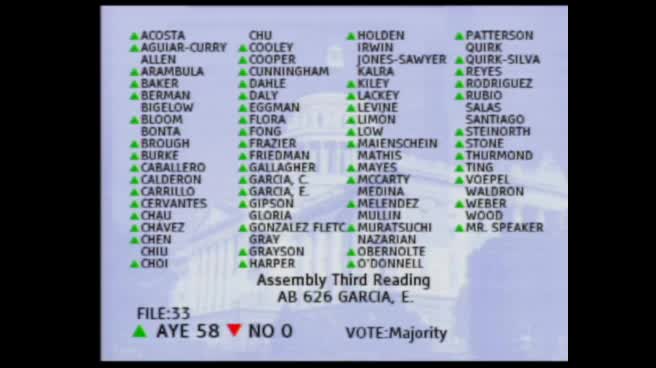 4MIN
Assembly Floor
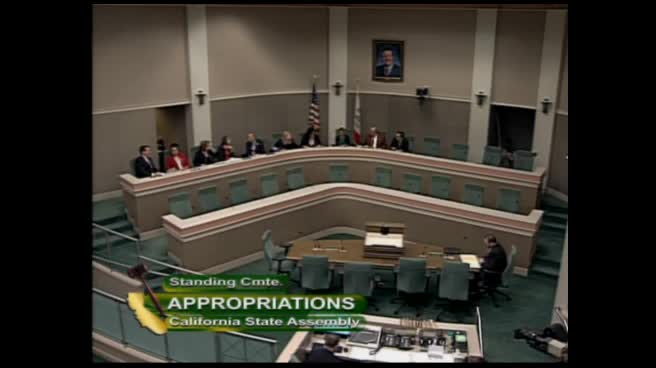 21MIN
Assembly Standing Committee on Appropriations
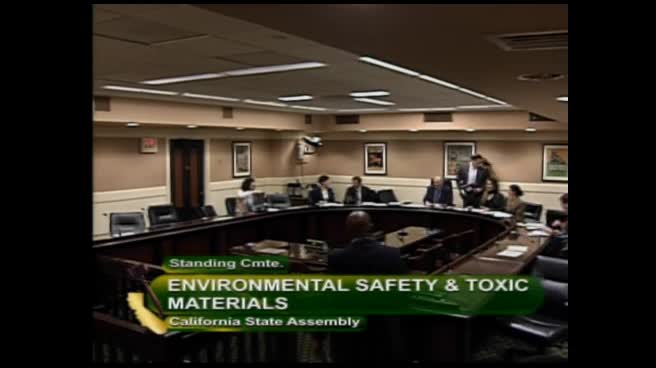 25MIN
Assembly Standing Committee on Environmental Safety and Toxic Materials
Bill Author

Bill Co-Author(s):