AB 1435: The College Athlete Protection Act.
- Session Year: 2017-2018
- House: Assembly
- Latest Version Date: 2018-06-04
Existing law provides for a system of postsecondary education in this state. This system includes the University of California, administered by the Regents of the University of California, the California State University, administered by the Trustees of the California State University, the California Community Colleges, administered by the Board of Governors of the California Community Colleges, and independent institutions of higher education. Existing law further provides a Student Athlete Bill of Rights.
This bill would establish the College Athlete Protection Act, Program, until January 1, 2023, under the administration of the College Athlete Protection Commission, a panel, which would be established by the bill, for the protection of college or university athletes participating in intercollegiate athletic programs offered by institutions of higher education located in California. The bill would require the State Department of Education to hire and set compensation for a director of the College Athlete Protection Program and hire additional staff to assist in the implementation of the program. The act would charge the commission panel with specified duties related to the protection of these athletes and would subject individuals institutions of higher education and their personnel who commit violations of the act to penalties, which may include civil penalties or a temporary or permanent prohibition from employment at institutions of higher education, pursuant to regulations to be adopted by the commission. panel. The bill would make the provisions of the College Athlete Protection Act severable.
This bill would require institutions of higher education located in California with an intercollegiate athletic program affiliated with the National Collegiate Athletic Association in 2016 to annually pay regulatory fees, as determined by the commission panel pursuant to prescribed requirements, to be deposited in the College Athlete Protection Act Fund, which this bill would establish, to be appropriated by the Legislature to the commission panel for the purposes of the College Athlete Protection Act. Program.
Existing law provides for a system of postsecondary education in this state. This system includes the University of California, administered by the Regents of the University of California, the California State University, administered by the Trustees of the California State University, the California Community Colleges, administered by the Board of Governors of the California Community Colleges, and independent institutions of higher education. Existing law further provides a Student Athlete Bill of Rights.
This bill would establish the College Athlete Protection Act, until January 1, 2023, under the administration of the College Athlete Protection Commission, which would be established by the bill, for the protection of college or university athletes participating in intercollegiate athletic programs offered by institutions of higher education located in California. The act would charge the commission with specified duties related to the protection of these athletes and would subject individuals who commit violations of the act to penalties, which may include civil penalties or a temporary or permanent prohibition from employment at institutions of higher education, pursuant to regulations to be adopted by the commission. The bill would make the provisions of the College Athlete Protection Act severable.
This bill would require institutions of higher education located in California with an intercollegiate athletic program affiliated with the National Collegiate Athletic Association in 2016 to annually pay regulatory fees, as determined by the commission pursuant to prescribed requirements, to be deposited in the College Athlete Protection Act Fund, which this bill would establish, to be appropriated by the Legislature to the commission for the purposes of the College Athlete Protection Act.
Existing law provides for a system of postsecondary education in this state. This system includes the University of California, administered by the Regents of the University of California, the California State University, administered by the Trustees of the California State University, the California Community Colleges, administered by the Board of Governors of the California Community Colleges, and independent institutions of higher education. Existing law further provides a Student Athlete Bill of Rights.
This bill would establish the College Athlete Protection Act Act, until January 1, 2023, under the administration of the Athlete Protection Commission, which would be establish established by the bill, for the protection of college or university athletes participating in intercollegiate athletic programs offered by institutions of higher education located in California. The act would charge the commission with specified duties related to the protection of these athletes and would subject individuals who commit violations of the act to penalties, which may include civil liability penalties or a temporary or permanent prohibition from employment at institutions of higher education, pursuant to regulations to be adopted by the commission. The bill would make the provisions of the College Athlete Protection Act severable.
This bill would require an athletic conference, as defined, and an institution of higher education located in California with an intercollegiate athletic program that does not belong to an athletic conference to institutions of higher education located in California with an intercollegiate athletic program affiliated with the National Collegiate Athletic Association in 2016 to annually pay regulatory fees, as determined by the commission, commission pursuant to prescribed requirements, to be deposited in the Athlete Protection Act Fund, which this bill would establish. The bill would continuously appropriate the moneys in the fund establish, to be appropriated by the Legislature to the commission for the purposes of the College Athlete Protect Protection Act.
Existing law provides for a system of postsecondary education in this state. This system includes the University of California, administered by the Regents of the University of California, the California State University, administered by the Trustees of the California State University, the California Community Colleges, administered by the Board of Governors of the California Community Colleges, and independent institutions of higher education. Existing law further provides a Student Athlete Bill of Rights.
This bill would establish the Athlete Protection Act under the administration of the Athlete Protection Commission, which would be establish by the bill, for the protection of college or university athletes participating in intercollegiate athletic programs offered by institutions of higher education located in California. The act would charge the commission with specified duties related to the protection of these athletes and would subject individuals who commit violations of the act to penalties, which may include civil liability or a temporary or permanent prohibition from employment at institutions of higher education, pursuant to regulations to be adopted by the commission. The bill would make the provisions of the Athlete Protection Act severable.
This bill would require an athletic conference, as defined, and an institution of higher education located in California with an intercollegiate athletic program that does not belong to an athletic conference to pay regulatory fees, as determined by the commission, to be deposited in the Athlete Protection Act Fund, which this bill would establish. The bill would continuously appropriate the moneys in the fund to the commission for the purposes of the Athlete Protect Act.
This chapter shall be known, and may be cited, as the College Athlete Protection Act.
2.Findings67394.1.The Legislature finds and declares all of the following:
(a)Maximizing safety, transparency, and a quality education for intercollegiate athletes should be a priority for intercollegiate sports programs, conferences, and associations, and the state.
(b)Chronic traumatic encephalopathy (CTE), a serious and degenerative neurological disease, is linked to playing contact sports, including field hockey, football, ice hockey, lacrosse, soccer, and wrestling.
(c)Athletic governing authorities, including the California Community College Athletic Association (CCCAA), the National Association of Intercollegiate Athletics (NAIA), the National Collegiate Athletic Association (NCAA), the National Christian College Athletic Association (NCCAA), and the state need to work together to establish the best comprehensive standards to protect college athletes from serious injuries.
(d)Athletic conferences and athletic associations should adopt comprehensive best practices to reduce the risk of CTE, hazards associated with the misuse of prescription painkillers, and other serious injuries.
(e)Intercollegiate sports programs, including coaches and team medical staff, should collaborate together for the benefit of a college athletes overall well-being.
(f)A college athlete faces intense pressure to return to play when he or she is injured. A proper oversight system and return-to-play protocols designed to ensure college athlete safety provides protection for both athletes and athletic programs.
(g)Student sexual abuse is an important issue on college campuses, as evidenced by the United States Department of Educations Office of Civil Rights investigating claims of student sexual abuse at 120 campuses. At least 10 of the colleges investigated are located in California. Creating an independent state authority with the ability to address college athlete abuse, including supporting a police inquiry and conducting an independent investigation, will help ensure perpetrators of college athlete abuse are identified and held accountable.
(h)A 2015 study conducted by the National Collegiate Athletic Association (NCAA) shows that college athletes in Division I, Division II, and Division III NCAA athletic programs report increased time commitments to their collegiate sports, with football, baseball, and softball college athletes documenting nearly 40 hours per week or more of in-season time commitments.
(i)A lack of uniform safeguards will continue to subject college athletes to higher risks of poor graduation rates, serious injury, and death.
3.Definitions67394.2.For the purposes of this chapter, the following terms have the following meanings:
(a)Athletic association means an association of athletic conferences or institutions of higher education.
(b)Athletic conference means an entity comprised of institutions of higher education that is a member of an athletic association.
(c)Athletic program means an intercollegiate athletic program at an institution of higher education. Club and intramural programs are excluded.
(d)College athlete means a college or university student who participates in an athletic program.
(e)Commission means the College Athlete Protection Commission established pursuant to Section 67394.3.(f)(e)Institution of higher education means, notwithstanding Section 67400, a campus of the University of California, the California State University, a four-year private university or independent institution of higher education located in California, or a public or private two-year college located in California that maintains an athletic program.
(g)(f)NCAA means the National Collegiate Athletic Association.
(g)Panel means the panel, established pursuant to Section 67394.3, to administer the program.
(h)Personnel means one or more representatives of an athletic association, an athletic conference, or an institution of higher education, including an athletic program employee, coach, assistant, or affiliated health care professional.4.College Athlete Protection Commission Program67394.3.(a)The College Athlete Protection Commission Program is hereby established as an independent entity within the Department of Consumer Affairs a program in the State Department of Education for the administration of this act.
(b)(1)The members of the commission College Athlete Protection Program shall be administered by a panel. Members of the panel shall be appointed as follows:
(A)Three members appointed by the Governor.
(B)Four members appointed by the Speaker of the Assembly.
(C)Four members appointed by the President pro Tempore of the Senate. Senate Committee on Rules.
(2)(A)The commission panel members appointed pursuant to paragraph (1) shall be part-time positions. One member shall be appointed by majority vote of the members to serve as chairperson of the commission. panel. All of the following areas of expertise, with no two members having the same expertise, shall be considered when appointing members:
(i)Sports medicine.
(ii)Traumatic brain injury in contact sports.
(iii)Athletic strength and conditioning training.
(iv)Athlete abuse.
(v)College academic advising.
(vi)College athletics governance and reform.
(vii)Sports economics.
(viii)Athlete protection advocacy by a former female college athlete.
(ix)Athlete protection advocacy by a former male college athlete.
(B)The commission State Department of Education shall hire and set compensation for, by majority vote of its members, an executive for a College Athlete Protection Program director. The executive director shall be a full-time position. The executive director department shall hire additional commission staff to assist him or her and the commission during his or her term of office. implement the requirements of this chapter.
(C)Each commission panel member and the executive program director hired pursuant to subparagraph (B) shall be appointed to serve a four-year term of office, with no term limits. The A panel member and the executive program director may be reappointed to his or her position, or a new position, pursuant to this subdivision.
(D)No appointee pursuant to this subdivision shall A panel member appointee or the program director shall not have served as personnel within the one year immediately preceding his or her appointment.
(E)Personnel Current personnel are not eligible to serve on the commission. panel or as the program director.
(F)Each member of the commission shall receive per diem and expenses as provided in Section 103 of the Business and Professions Code.(3)The diversity of California, including its gender diversity, shall be considered when appointing commission panel members.
67394.4.(a)The commission panel shall have all of the following duties:
(1)Gather input from relevant stakeholders to establish, and disseminate to every athletic association, athletic conference, and institution of higher education, both of the following:
(A)Best practices to minimize injuries and ensure transparency of injury treatment options.
(B)Up-to-date information about pivotal sports-related health risks.
(2)Develop policy guidelines and mandates. These guidelines and mandates, at minimum, shall ensure that all of the following occurs:
(A)Medical records for all treatments of a college athlete by personnel in the course of the college athletes participation in an athletic program shall be maintained for a period of 10 years after the college athlete leaves the program and shall be timely provided to him or her upon request.
(B)There is transparency on college athlete protections and the prevention of deceptive or fraudulent business practices that harm college athletes.
(3)Conduct surveys of college athletes and personnel.
(4)Perform compliance inspections as determined by the commission. panel.
(5)Exercise subpoena power, if necessary, to obtain information necessary to carry out its duties under this chapter.
(6)Hold quarterly meetings.
(7)Distribute, commencing in 2021, on or before January 1 of each year, an annual report to each institution of higher education, athletic conference, and athletic association and to the Legislature, pursuant to Section 9795 of the Government Code, regarding the state of college athlete protections under this chapter.
(8)Determine which of its guidelines, materials, and other information may benefit high school athletes, high school sports programs, and the California Interscholastic Federation, and make them available and easily accessible to the public.
(9)Consider collaborative and cost-reduction efforts with other states, local governments, intercollegiate sports conferences, and associations that are not comprised of at least one institution of higher education, and higher education institutions with intercollegiate sports programs that are not located in California to improve the treatment of intercollegiate athletes in other states.
(10)Create advisory boards, as needed, comprised of unpaid volunteer individuals and organizations with expertise relevant to the implementation of this chapter. The University of California and the California State University may have at least one representative, with expertise, from their respective segments serve on each advisory board established pursuant to this paragraph.
(11)Use fees with legislative approval from the College Athlete Protection Act Fund, established in subdivision (e) of Section 67394.7, to execute its duties under this chapter.
(12)Develop processes for it to receive, track, and investigate complaints regarding suspected violations of this chapter.
(13)Issue penalties pursuant to Section 67394.6 and remedies for violations of this chapter, and pass all relevant information regarding its investigations to the appropriate athletic conferences.
(b)The commission panel shall adopt regulations to implement this chapter.
5.College Athlete Protections67394.5.(a)Individuals, including college athletes or other students, who report suspected violations of this chapter shall have whistleblower protection. Personnel who retaliate against these individuals shall be subject to penalties pursuant to Section 67394.6.
(b)Personnel who knowingly provide false information or attempt to obstruct an investigation by the commission panel of a violation of this chapter shall be subject to penalties pursuant to Section 67394.6.
(c)Personnel who reduce or cancel the athletic participation or eligibility of, impose a financial penalty or penalties on, or otherwise retaliate against, a college athlete, an institution of higher education, an athletic conference, or an athletic association, or other personnel for complying with this chapter shall be subject to penalties pursuant to Section 67394.6.
(d)(1)By January 1, 2020, personnel shall be deemed mandated reporters required to report each instance of reasonably suspected violations of this chapter to the commission. panel. Personnel failing to comply with mandated reporting requirements shall be subject to penalties pursuant to Section 67394.6.
(2)All reports of suspected violations of this chapter before the commission panel commences its initial operations shall be made to the Department of Justice and directly forwarded by the department to the commission program director, hired pursuant to subparagraph (B) of paragraph (2) of subdivision (b) of Section 67394.3, once it the panel commences its initial operations.
(e)(1)By January 1, 2020, each institution of higher education, athletic conference, and athletic association shall comply with all of the following:
(A)Inform its personnel of their responsibilities and college athlete protections established by or pursuant to this chapter.
(B)Inform college athletes of their rights and protections under this chapter, including all guidelines and mandates adopted by the commission panel pursuant to paragraph (2) of subdivision (a) of Section 67394.4, if any, and inform them of their right to report suspected violations of this chapter to a mandated reporter of their choice pursuant to subdivision (d), the Department of Justice, or the commission panel once it commences its initial operations.
(C)Designate at least one employee to oversee compliance with this chapter and to serve as a point of contact for the commission. panel.
(2)Each institution of higher education, athletic conference, and athletic association shall annually inform its personnel and college athletes pursuant to subparagraphs (A) and (B) of paragraph (1) before the start of each academic year.
67394.6.(a)In addition to any other remedy or penalty authorized under existing law, an individual institution of higher education, or its personnel, or both who commits commit a violation of this chapter shall be subject to penalties established pursuant to regulations adopted by the commission. panel. Penalties may include any, or any combination, including all, of the following:
(1)Civil penalties.
(2)Temporary or permanent prohibition from employment at institutions of higher education.
(3)Other penalties imposed by the commission. panel.
(b)The commission panel shall consider all of the following factors when establishing penalties for a violation of this chapter:
(1)The number and duration of violations.
(2)Whether the violation was the result of an intentional or negligent action.
(3)The nature and extent of harm caused by the violation.
6.Financial Provisions67394.7.(a)Institutions of higher education with athletic programs that were members of the NCAA in 2016 shall pay annual fees, in an amount determined by the commission panel pursuant to subdivision (b), to cover the reasonable regulatory costs of this chapter, not to exceed four million dollars ($4,000,000) in aggregate total, to be deposited into the Athlete Protection Act Fund established in subdivision (e). The panel may increase the aggregate total to account for inflation.
(b)The commission panel shall base the annual fees described in subdivision (a) on the number of college athletes and full-time employee coaches reported in the 201516 most recently published United States Department of Educations Equity in Athletics Disclosure report. The commission panel shall establish the annual fees pursuant to all of the following requirements: requirements and may adjust these fees, without exceeding the aggregate maximum determined pursuant to subdivision (a).
(1)Athletic programs with 1 to 6.99, inclusive, full-time employee coaches shall each pay annually up to a maximum of two thousand five hundred dollars ($2,500).
(2)Athletic programs with 7 to 14.99, inclusive, full-time employee coaches shall each pay annually up to a maximum of five thousand dollars ($5,000).
(1)(3)Athletic programs of the same athletic conference with a combined average of 250 to 349, inclusive, college athletes and with 15 to 29, 29.99, inclusive, full-time employee coaches shall each pay annually up to a maximum of fifteen twelve thousand dollars ($15,000). ($12,000).
(2)(4)Athletic programs of the same athletic conference with a combined average of 350 to 449, inclusive, college athletes and with 30 to 44, 44.99, inclusive, full-time employee coaches shall each pay annually up to a maximum of seventy-five sixty thousand dollars ($75,000). ($60,000).
(3)(5)Athletic programs of the same athletic conference with a combined average of 450 to 549, inclusive, college athletes and with 45 to 59, 59.99, inclusive, full-time employee coaches shall each pay annually up to a maximum of one hundred eighty thousand dollars ($100,000). ($80,000).
(4)(6)Athletic programs of the same athletic conference with a combined average of 550 or more total college athletes and with 60 or more full-time employee coaches shall each pay annually up to a maximum of seven six hundred fifty thousand dollars ($750,000). ($600,000).
(5)(7)Notwithstanding paragraphs (1) to (4), (6), inclusive, two-year institutions of higher education with one or more full-time employee coaches shall each pay annually up to a maximum of one thousand dollars ($1,000).
(c)An institution of higher education with athletic programs and teams in more than one athletic conference shall be counted as a member of the athletic conference to which the majority of its college athletes belong. If an athletic program is not affiliated with an athletic conference, the program shall be treated as an independent athletic conference, with its number of college athlete participants and coaches being treated as its combined conference numbers, for purposes of determining the amount of its annual fees.(d)For the purposes of this section, a coach shall be a full-time employee of the institution.(e)(c)The College Athlete Protection Act Fund is hereby established in the State Treasury under the administration of the State Treasurers Public Finance Division. Treasury. Fees received pursuant to subdivision (a) shall be deposited in the fund and appropriated by the Legislature to the commission panel for the purposes of this chapter.
7.Miscellaneous67394.8.(a)The provisions of this chapter are severable. If any provision of this chapter or its application is held invalid, that invalidity shall not affect other provisions or applications that can be given effect without the invalid provision or application.
(b)This chapter shall remain in effect only until January 1, 2023, and as of that date is repealed.
This chapter shall be known, and may be cited, as the College Athlete Protection Act.
2.Findings67394.1.The Legislature finds and declares all of the following:
(a)Maximizing safety, transparency, and a quality education for intercollegiate athletes should be a priority for intercollegiate sports programs, conferences, and associations, and the state.
(b)Chronic traumatic encephalopathy (CTE), a serious and degenerative neurological disease, is linked to playing contact sports, including field hockey, football, ice hockey, lacrosse, soccer, and wrestling.
(c)Athletic governing authorities, including the California Community College Athletic Association (CCCAA), the National Association of Intercollegiate Athletics (NAIA), the National Collegiate Athletic Association (NCAA), the National Christian College Athletic Association (NCCAA), and the state need to work together to establish the best comprehensive standards to protect student college athletes from serious injuries.
(d)Athletic conferences and athletic associations should adopt comprehensive best practices to reduce the risk of CTE, hazards associated with the misuse of prescription painkillers, and other serious injuries.
(e)Intercollegiate sports programs, including coaches and team medical staff, should collaborate together for the benefit of a student college athletes overall well-being.
(f)A student college athlete faces intense pressure to return to play when he or she is injured. A proper oversight system and return-to-play protocols designed to ensure student college athlete safety provides protection for both athletes and athletic programs.
(g)Student sexual abuse is an important issue on college campuses, as evidenced by the United States Department of Educations Office of Civil Rights investigating claims of student sexual abuse at 120 campuses. At least 10 of the colleges investigated are located in California. Creating an independent state authority with the ability to address student college athlete abuse, including supporting a police inquiry and conducting an independent investigation, will help ensure perpetrators of student college athlete abuse are identified and held accountable.
(h)A 2015 study conducted by the National Collegiate Athletic Association (NCAA) shows that student college athletes in Division I, Division II, and Division III NCAA athletic programs report increased time commitments to their collegiate sports, with football, baseball, and softball student college athletes documenting nearly 40 hours per week or more of in-season time commitments.
(i)A lack of uniform safeguards will continue to subject college athletes to higher risks of poor graduation rates, serious injury, and death.
3.Definitions67394.2.For the purposes of this chapter, the following terms have the following meanings:
(a)Athletic association means an association of athletic conferences or institutions of higher education.
(b)Athletic conference means an entity comprised of institutions of higher education that is a member of an athletic association.
(c)Athletic program means an intercollegiate athletic program at an institution of higher education. Club and intramural programs are excluded.
(d)College athlete means a college or university student who participates in an athletic program.
(e)Commission means the College Athlete Protection Commission established pursuant to Section 67394.3.
(f)Institution of higher education means, notwithstanding Section 67400, a campus of the University of California, the California State University, a four-year private university or independent institution of higher education located in California, or a public or private two-year college located in California that maintains an athletic program.
(g)NCAA means the National Collegiate Athletic Association.
(h)Personnel means one or more representatives of an athletic association, an athletic conference, or an institution of higher education, including an athletic program employee, coach, assistant, or affiliated health care professional.
4.College Athlete Protection Commission67394.3.(a)The College Athlete Protection Commission is hereby established as an independent entity within the Department of Consumer Affairs for the administration of this act.
(b)(1)The members of the commission shall be appointed as follows:
(A)Three members appointed by the Governor.
(B)Four members appointed by the Speaker of the Assembly.
(C)Four members appointed by the President pro Tempore of the Senate.
(2)(A)The commission members appointed pursuant to paragraph (1) shall be part-time positions. One member shall be appointed by majority vote of the members to serve as chairperson of the commission. All of the following areas of expertise, with no two members having the same expertise, shall be considered when appointing members:
(i)Sports medicine.
(ii)Traumatic brain injury in contact sports.
(iii)Athletic strength and conditioning training.
(iv)Athlete abuse.
(v)College academic advising.
(vi)College athletics governance and reform.
(vii)Sports economics.
(viii)Athlete protection advocacy by a former female college athlete.
(ix)Athlete protection advocacy by a former male college athlete.
(B)The commission shall hire and set compensation for, by majority vote of its members, an executive director. The executive director shall be a full-time position. The executive director shall hire additional commission staff to assist him or her and the commission during his or her term of office.
(C)Each commission member and the executive director shall be appointed to serve a four-year term of office, with no term limits. The member and the executive director may be reappointed to his or her position, or a new position, pursuant to this subdivision.
(D)No appointee pursuant to this subdivision shall have served as personnel within the one year immediately preceding his or her appointment.
(E)Personnel are not eligible to serve on the commission.
(F)Each member of the commission shall receive per diem and expenses as provided in Section 103 of the Business and Professions Code.
(3)The diversity of California, including its gender diversity, shall be considered when appointing commission members.
67394.4.(a)The commission shall have all of the following duties:
(1)Gather input from relevant stakeholders to establish, and disseminate to every athletic association, athletic conference, and institution of higher education, both of the following:
(A)Best practices to minimize injuries and ensure transparency of injury treatment options.
(B)Up-to-date information about pivotal sports-related health risks.
(2)Develop policy guidelines and mandates. These guidelines and mandates, at minimum, shall ensure that all of the following occurs:
(A)Medical records for all treatments of a student college athlete by personnel in the course of the student college athletes participation in an athletic program shall be maintained for a period of 10 years after the student college athlete leaves the program and shall be timely provided to him or her upon request.
(B)There is transparency on college athlete protections and the prevention of deceptive or fraudulent business practices that harm college athletes.
(3)Conduct surveys of college athletes and personnel.
(4)Perform compliance inspections as determined by the commission.
(5)Exercise subpoena power, if necessary, to obtain information necessary to carry out its duties under this chapter.
(6)Hold quarterly meetings.
(7)Distribute, commencing in 2021, on or before January 1 of each year, an annual report to each institution of higher education, athletic conference, and athletic association and to the Legislature, pursuant to Section 9795 of the Government Code, regarding the state of college athlete protections under this chapter.
(8)Determine which of its guidelines, materials, and other information may benefit high school athletes, high school sports programs, and the California Interscholastic Federation, and make them available and easily accessible to the public.
(9)Consider collaborative and cost-reduction efforts with other states, intercollegiate sports conferences, and associations that are not comprised of at least one institution of higher education, and higher education institutions with intercollegiate sports programs that are not located in California to improve the treatment of intercollegiate athletes in other states.
(10)Create advisory boards, as needed, comprised of unpaid volunteer individuals and organizations with expertise relevant to the implementation of this chapter.
(11)Use fees with legislative approval from the College Athlete Protection Act Fund, established in subdivision (e) of Section 67394.7, to execute its duties under this chapter.
(12)Develop processes for it to receive, track, and investigate complaints regarding suspected violations of this chapter.
(13)Issue penalties pursuant to Section 67394.6 and remedies for violations of this chapter, and pass all relevant information regarding its investigations to the appropriate athletic conferences.
(b)Until the commission receives fees pursuant to Section 67394.7, the commission shall only have the power to perform its functions under this chapter that do not incur costs to the commission.(c)(b)The commission shall adopt regulations to implement this chapter.
5.College Athlete Protections67394.5.(a)Individuals, including college athletes or other students, who report suspected violations of this chapter shall have whistleblower protection. Personnel who retaliate against these individuals shall be subject to penalties pursuant to Section 67394.6.
(b)Personnel who knowingly provide false information or attempt to obstruct an investigation by the commission of a violation of this chapter shall be subject to penalties pursuant to Section 67394.6.
(c)Personnel who reduce or cancel the athletic participation or eligibility of, impose a financial penalty or penalties on, or otherwise retaliate against, a college athlete, an institution of higher education, an athletic conference, or an athletic association, or other personnel for complying with this chapter shall be subject to penalties pursuant to Section 67394.6.
(d)(1)By January 1, 2020, personnel shall be deemed mandated reporters required to report each instance of reasonably suspected violations of this chapter to the commission. Personnel failing to comply with mandated reporting requirements shall be subject to penalties pursuant to Section 67394.6.
(2)All reports of suspected violations of this chapter before the commission commences its initial operations shall be made to the Department of Justice and directly forwarded by the department to the commission once it commences its initial operations.
(e)(1)By January 1, 2020, each institution of higher education, athletic conference, and athletic association shall comply with all of the following:
(A)Inform its personnel of their responsibilities and college athlete protections established by or pursuant to this chapter.
(B)Inform college athletes of their rights and protections under this chapter, including all guidelines and mandates adopted by the commission pursuant to paragraph (2) of subdivision (a) of Section 67394.4, if any, and inform them of their right to report suspected violations of this chapter to a mandated reporter of their choice pursuant to subdivision (d), the Department of Justice, or the commission once it commences its initial operations.
(C)Designate at least one employee to oversee compliance with this chapter and to serve as a point of contact for the commission.
(2)Each institution of higher education, athletic conference, and athletic association shall annually inform its personnel and college athletes pursuant to subparagraphs (A) and (B) of paragraph (1) before the start of each academic year.
67394.6.(a)In addition to any other remedy or penalty authorized under existing law, an individual who commits a violation of this chapter shall be subject to penalties established pursuant to regulations adopted by the commission. Penalties may include any, or any combination, including all, of the following:
(1)Civil penalties.
(2)Temporary or permanent prohibition from employment at institutions of higher education.
(3)Other penalties imposed by the commission.
(b)The commission shall consider all of the following factors when establishing penalties for a violation of this chapter:
(1)The number and duration of violations.
(2)Whether the violation was the result of an intentional or negligent action.
(3)The nature and extent of harm caused by the violation.
6.Financial Provisions67394.7.(a)Institutions of higher education with athletic programs that were members of the NCAA in 2016 shall pay annual fees, in an amount determined by the commission pursuant to subdivision (b), to cover the reasonable regulatory costs of this chapter, not to exceed four million dollars ($4,000,000) in total, to be deposited into the Athlete Protection Act Fund established in subdivision (e).
(b)The commission shall base the annual fees described in subdivision (a) on the number of college athletes and coaches reported in the 201516 United States Department of Educations Equity in Athletics Disclosure report. The commission shall establish the annual fees pursuant to all of the following requirements:
(1)Athletic programs of the same athletic conference with a combined average of 250 to 349, inclusive, student college athletes and 15 to 29, inclusive, coaches shall each pay annually up to a maximum of fifteen thousand dollars ($15,000).
(2)Athletic programs of the same athletic conference with a combined average of 350 to 449, inclusive, student college athletes and 30 to 44, inclusive, coaches shall each pay annually up to a maximum of seventy-five thousand dollars ($75,000).
(3)Athletic programs of the same athletic conference with a combined average of 450 to 549, inclusive, student college athletes and 45 to 59, inclusive, coaches shall each pay annually up to a maximum of one hundred thousand dollars ($100,000).
(4)Athletic programs of the same athletic conference with a combined average of 550 or more total student college athletes and 60 or more coaches shall each pay annually up to a maximum of seven hundred fifty thousand dollars ($750,000).
(5)Notwithstanding paragraphs (1) to (4), inclusive, two-year institutions of higher education with one or more coaches shall each pay annually up to a maximum of one thousand dollars ($1,000).
(c)An institution of higher education with athletic programs and teams in more than one athletic conference shall be counted as a member of the athletic conference to which the majority of its college athletes belong. If an athletic program is not affiliated with an athletic conference, the program shall be treated as an independent athletic conference, with its number of student college athlete participants and coaches being treated as its combined conference numbers, for purposes of determining the amount of its annual fees.
(d)For the purposes of this section, a coach shall be a full-time employee of the institution.
(e)The College Athlete Protection Act Fund is hereby established in the State Treasury under the administration of the State Treasurers Public Finance Division. Fees received pursuant to subdivision (a) shall be deposited in the fund and appropriated by the Legislature to the commission for the purposes of this chapter.
7.Miscellaneous67394.8.(a)The provisions of this chapter are severable. If any provision of this chapter or its application is held invalid, that invalidity shall not affect other provisions or applications that can be given effect without the invalid provision or application.
(b)This chapter shall remain in effect only until January 1, 2023, and as of that date is repealed.
This chapter shall be known, and may be cited, as the College Athlete Protection Act.
2.Findings67394.1.The Legislature finds and declares all of the following:
(a)Maximizing safety, transparency, and a quality education for intercollegiate athletes should be a priority for intercollegiate sports programs, conferences, and associations. associations, and the state.
(b)The National Football League admits that chronic Chronic traumatic encephalopathy (CTE), a serious and degenerative neurological disease, is linked to playing football; and college football players are at risk. contact sports, including field hockey, football, ice hockey, lacrosse, soccer, and wrestling.
(c)The National Collegiate Athletic Association (NCAA) was originally founded to protect intercollegiate athletes, but now it denies that it has a duty to protect them, refuses to mandate comprehensive best practices regarding CTE and other serious injuries, and fails to enact remedies when made aware of athlete abuse.(c)Athletic governing authorities, including the California Community College Athletic Association (CCCAA), the National Association of Intercollegiate Athletics (NAIA), the National Collegiate Athletic Association (NCAA), the National Christian College Athletic Association (NCCAA), and the state need to work together to establish the best comprehensive standards to protect student athletes from serious injuries.
(d)Athletic conferences and athletic associations fail to adopt and enforce should adopt comprehensive best practices to reduce the risk of CTE, hazards associated with the misuse of prescription pain killers, painkillers, and other serious injuries.
(e)Intercollegiate sports programs, including coaches and team medical staff, have a conflict of interest that can result in pressuring athletes to compete with serious injuries and in life-threatening situations. should collaborate together for the benefit of a student athletes overall well-being.
(f)Coaches often pressure trainers to return concussed players to the same game in which they are concussed, and almost one-half of athletic trainers surveyed report doing so.(g)Intercollegiate athletes can be threatened with retaliation if they resist or report a coachs demand for them to play with a serious injury or confront an athletic staffs abusive behavior.(h)Colleges often mishandle investigations of abuse, as evidenced by the United States Department of Educations Office of Civil Rights investigations of over 120 colleges for mishandling claims of student sexual abuse. More than 10 of the colleges investigated are located in California.(i)Intercollegiate athletes participating in sports with current and historically low graduation rates spend 40 hours or more per week for their sports.(j)Athletic conferences have among the worst academic gaps between regular students and baseball, basketball, and football players competing in Division I of the NCAA.(f)A student athlete faces intense pressure to return to play when he or she is injured. A proper oversight system and return-to-play protocols designed to ensure student athlete safety provides protection for both athletes and athletic programs.
(g)Student sexual abuse is an important issue on college campuses, as evidenced by the United States Department of Educations Office of Civil Rights investigating claims of student sexual abuse at 120 campuses. At least 10 of the colleges investigated are located in California. Creating an independent state authority with the ability to address student athlete abuse, including supporting a police inquiry and conducting an independent investigation, will help ensure perpetrators of student athlete abuse are identified and held accountable.
(h)A 2015 study conducted by the National Collegiate Athletic Association (NCAA) shows that student athletes in Division I, Division II, and Division III NCAA athletic programs report increased time commitments to their collegiate sports, with football, baseball, and softball student athletes documenting nearly 40 hours per week or more of in-season time commitments.
(k)(i)A lack of uniform safeguards will continue to subject college athletes to higher risks of poor graduation rates, serious injury, and death.
3.Definitions67394.2.For the purposes of this chapter, the following terms have the following meanings:
(a)Athletic association means an association of athletic conferences or institutions of higher education.
(b)Athletic conference means an entity comprised of institutions of higher education that is a member of an athletic association.
(c)Athletic program means an intercollegiate athletic program at an institution of higher education. Club and intramural programs are excluded.
(d)College athlete means a college or university student that who participates in an athletic program.
(e)Commission means the Athlete Protection Commission established pursuant to Section 67394.3.
(f)Institution of higher education means, notwithstanding Section 67400, a campus of the University of California, the California State University, a four-year private university or independent institution of higher education located in California, or a public or private two-year college located in California that maintains an athletic program.
(g)NCAA means the National Collegiate Athletic Association.
(g)(h)Personnel means one or more representatives of an athletic association, an athletic conference, or an institution of higher education who is an athletics education, including an athletic program employee, coach, assistant, or affiliated health care professional. Personnel also includes intercollegiate athletics stakeholders contracted with an athletic association, an athletic conference, or an institution of higher education. professional.
4.Athlete Protection Commission67394.3.(a)The Athlete Protection Commission is hereby established for the administration of this act.
(b)(1)The members of the commission shall be appointed as follows:
(A)Three members appointed by the Governor.
(B)Three Four members appointed by the Speaker of the Assembly.
(C)Three Four members appointed by the President pro Tempore of the Senate.
(2)(A)The commission members appointed pursuant to paragraph (1) shall be part-time positions. One member shall be appointed by majority vote of the members to serve as chair chairperson of the commission. There shall be one member appointed with expertise for each of the following areas: All of the following areas of expertise, with no two members having the same expertise, shall be considered when appointing members:
(i)Sports medicine.
(ii)Traumatic brain injury in contact sports.
(iii)Athletic strength and conditioning training.
(iv)Athlete abuse.
(v)College academic advising.
(vi)College athletics governance and reform.
(vii)Sports economics.
(viii)Athlete protection advocacy. The member appointed pursuant to this clause shall be advocacy by a former female college athlete.
(ix)Athlete protection advocacy. The member appointed pursuant to this clause shall be advocacy by a former male college athlete.
(B)The commission shall appoint, hire and set compensation for, by majority vote of its members, an executive director. The executive director shall be a full-time position. The executive director shall appoint hire additional commission staff to assist him or her and the commission during his or her term of office.
(C)Each commission member and the executive director shall be appointed to serve a four-year term of office, with no term limits. The member and the executive director may be reappointed to his or her position, or a new position, pursuant to this subdivision.
(D)No appointee pursuant to this subdivision shall have served as personnel within the 10 years one year immediately preceding his or her appointment.
(E)Personnel are not eligible to serve on the commission.
(F)Each member of the commission shall receive per diem and expenses as provided in Section 103 of the Business and Professions Code.
(3)The diversity of California, including its gender diversity, shall be considered when appointing commission members.
67394.4.(a)The commission shall have all of the following duties:
(1)Gather input from relevant stakeholders to establish, and disseminate to every athletic association, athletic conference, and institution of higher education, both of the following:
(A)Best practices to minimize injuries and ensure transparency of injury treatment options.
(B)Up-to-date information about pivotal sports-related health risks.
(2)Develop policy guidelines and mandates. These guidelines and mandates, at minimum, shall ensure that all of the following occurs:
(A)Every institution of higher education maintains accurate medical records for each of its college athletes, and provides the athlete with access to his or her medical records.(B)Every college athlete receives adequate time to study, has freedom to pursue an academic major or majors of his or her choice without pressure, and completes one or more postsecondary degree programs.(A)Medical records for all treatments of a student athlete by personnel in the course of the student athletes participation in an athletic program shall be maintained for a period of 10 years after the student athlete leaves the program and shall be timely provided to him or her upon request.
(C)(B)There is transparency on college athlete protections and the prevention of deceptive or fraudulent business practices that harm college athletes.
(3)Conduct surveys of college athletes and personnel.
(4)Perform compliance inspections as determined by the commission.
(5)Exercise subpoena power, if necessary, to obtain useful information necessary to carry out its duties under this chapter.
(6)Hold quarterly meetings.
(7)Distribute, commencing in 2019, 2021, on or before January 1 of each year, an annual report to each institution of higher education, athletic conference, and athletic association and to the Legislature, pursuant to Section 9795 of the Government Code, regarding the state of college athlete protections under this chapter.
(8)Determine which of its guidelines, materials, and other information may benefit high school athletes, high school sports programs, and the California Interscholastic Federation, and make them available and easily accessible to the public.
(9)Consider collaborative and cost-reduction efforts with other states, intercollegiate sports conferences conferences, and associations that are not comprised of at least one institution of higher education, and higher education institutions with intercollegiate sports programs that are not located in California to improve the treatment of intercollegiate athletes in other states.
(10)Create advisory boards, as needed, comprised of unpaid volunteer individuals and organizations with expertise relevant to the implementation of this chapter.
(11)Use fees continuously appropriated to it with legislative approval from the Athlete Protection Act Fund, established in subdivision (b) (e) of Section 67394.7, to execute its duties under this chapter.
(12)Develop processes for it to receive, track, and investigate complaints regarding suspected violations of this chapter.
(13)Issue penalties pursuant to Section 67394.6 and remedies for violations of this chapter. chapter, and pass all relevant information regarding its investigations to the appropriate athletic conferences.
(b)Until the commission receives fees pursuant to Section 67394.7, the commission shall only have the power to perform its functions under this chapter that do not incur costs to the commission.
(c)The commission shall adopt regulations to implement this chapter.
5.College Athlete Protections67394.5.(a)Individuals, including college athletes or other students, who report suspected violations of this chapter shall have whistleblower protection. Personnel who retaliate against these individuals shall be subject to penalties pursuant to Section 67394.6.
(b)Personnel who knowingly provide false information or attempt to obstruct an investigation by the commission of a violation of this chapter shall be subject to penalties pursuant to Section 67394.6.
(c)Personnel that reduces or cancels who reduce or cancel the athletic participation or eligibility of, imposes impose a financial penalty or penalties on, or otherwise retaliates retaliate against, a college athlete, an institution of higher education, an athletic conference, or an athletic association, or other personnel for complying with this chapter shall be subject to penalties pursuant to Section 67394.6.
(d)(1)By February 15, 2018, January 1, 2020, personnel shall be deemed mandated reporters required to report each instance of reasonably suspected violations of this chapter to the commission. Personnel failing to comply with mandated reporting requirements shall be subject to penalties pursuant to Section 67394.6.
(2)All reports of suspected violations of this chapter before the commission commences its initial operations shall be made to the Department of Justice and directly forwarded by the department to the commission once it commences its initial operations.
(e)(1)By February 15, 2018, January 1, 2020, each institution of higher education, athletic conference, and athletic association shall comply with all of the following:
(A)Inform their its personnel of their responsibilities and college athlete protections established by or pursuant to this chapter.
(B)Inform college athletes of their rights and protections under this chapter, including all guidelines and mandates adopted by the commission pursuant to paragraph (2) of subdivision (a) of Section 67394.4, if any, and inform them of their right to report suspected violations of this chapter to a mandated reporter of their choice pursuant to subdivision (d), the Department of Justice, or the commission once it commences its initial operations.
(C)Designate at least one employee to oversee compliance with this chapter and to serve as a point of contact for the commission.
(2)Each institution of higher education, athletic conference, and athletic association shall annually inform their its personnel and college athletes pursuant to subparagraphs (A) and (B) of paragraph (1) before the start of each academic year.
67394.6.(a)An In addition to any other remedy or penalty authorized under existing law, an individual who commits a violation of this chapter shall be subject to penalties established pursuant to regulations adopted by the commission. Penalties may include any, or any combination, including all, of the following:
(1)Civil liability. penalties.
(2)Temporary or permanent prohibition from employment at institutions of higher education.
(3)Other penalties imposed by the commission.
(b)Contracts entered into on or after January 1, 2018, that would provide any form of compensation to an individual who is under suspension or termination of his or her employment for violation of this chapter are void.(b)The commission shall consider all of the following factors when establishing penalties for a violation of this chapter:
(1)The number and duration of violations.
(2)Whether the violation was the result of an intentional or negligent action.
(3)The nature and extent of harm caused by the violation.
6.Financial Provisions67394.7.(a)(1)An athletic conference and an institution of higher education with an athletic program that does not belong to an athletic conference shall pay annual fees, in an amount determined by the commission to cover the reasonable regulatory costs of this chapter, to be deposited in the Athlete Protection Act Fund established in subdivision (b).(2)To the greatest extent feasible, the fees assessed pursuant to this section shall not be paid with new or increased student fees. An athletic conference or institution of higher education that refuses to pay the fees, or uses accounting maneuvers in an attempt to avoid paying the fees, shall be in violation of this chapter and shall be subject to penalties pursuant to Section 67394.6.(b)The67394.7.(a)Institutions of higher education with athletic programs that were members of the NCAA in 2016 shall pay annual fees, in an amount determined by the commission pursuant to subdivision (b), to cover the reasonable regulatory costs of this chapter, not to exceed four million dollars ($4,000,000) in total, to be deposited into the Athlete Protection Act Fund established in subdivision (e).
(b)The commission shall base the annual fees described in subdivision (a) on the number of college athletes and coaches reported in the 201516 United States Department of Educations Equity in Athletics Disclosure report. The commission shall establish the annual fees pursuant to all of the following requirements:
(1)Athletic programs of the same athletic conference with a combined average of 250 to 349, inclusive, student athletes and 15 to 29, inclusive, coaches shall each pay annually up to a maximum of fifteen thousand dollars ($15,000).
(2)Athletic programs of the same athletic conference with a combined average of 350 to 449, inclusive, student athletes and 30 to 44, inclusive, coaches shall each pay annually up to a maximum of seventy-five thousand dollars ($75,000).
(3)Athletic programs of the same athletic conference with a combined average of 450 to 549, inclusive, student athletes and 45 to 59, inclusive, coaches shall each pay annually up to a maximum of one hundred thousand dollars ($100,000).
(4)Athletic programs of the same athletic conference with a combined average of 550 or more total student athletes and 60 or more coaches shall each pay annually up to a maximum of seven hundred fifty thousand dollars ($750,000).
(c)An institution of higher education with athletic programs and teams in more than one athletic conference shall be counted as a member of the athletic conference to which the majority of its college athletes belong. If an athletic program is not affiliated with an athletic conference, the program shall be treated as an independent athletic conference, with its number of student athlete participants and coaches being treated as its combined conference numbers, for purposes of determining the amount of its annual fees.
(d)For the purposes of this section, a coach shall be a full-time employee of the institution.
(e)The Athlete Protection Act Fund is hereby established in the State Treasury under the administration of the State Treasurers Public Finance Division. Fees received pursuant to subdivision (a) shall be deposited in the fund and continuously appropriated by the Legislature to the commission for the purposes of this chapter.
7.Miscellaneous67394.8.(a)The provisions of this chapter are severable. If any provision of this chapter or its application is held invalid, that invalidity shall not affect other provisions or applications that can be given effect without the invalid provision or application.
(b)This chapter shall remain in effect only until January 1, 2023, and as of that date is repealed.
This chapter shall be known, and may be cited, as the Athlete Protection Act.
2.Findings67394.1.The Legislature finds and declares all of the following:
(a)Maximizing safety, transparency, and a quality education for intercollegiate athletes should be a priority for intercollegiate sports programs, conferences, and associations.
(b)The National Football League admits that chronic traumatic encephalopathy (CTE), a serious and degenerative neurological disease, is linked to playing football; and college football players are at risk.
(c)The National Collegiate Athletic Association (NCAA) was originally founded to protect intercollegiate athletes, but now it denies that it has a duty to protect them, refuses to mandate comprehensive best practices regarding CTE and other serious injuries, and fails to enact remedies when made aware of athlete abuse.
(d)Athletic conferences and athletic associations fail to adopt and enforce comprehensive best practices to reduce the risk of CTE, hazards associated with the misuse of prescription pain killers, and other serious injuries.
(e)Intercollegiate sports programs, including coaches and team medical staff, have a conflict of interest that can result in pressuring athletes to compete with serious injuries and in life-threatening situations.
(f)Coaches often pressure trainers to return concussed players to the same game in which they are concussed, and almost one-half of athletic trainers surveyed report doing so.
(g)Intercollegiate athletes can be threatened with retaliation if they resist or report a coachs demand for them to play with a serious injury or confront an athletic staffs abusive behavior.
(h)Colleges often mishandle investigations of abuse, as evidenced by the United States Department of Educations Office of Civil Rights investigations of over 120 colleges for mishandling claims of student sexual abuse. More than 10 of the colleges investigated are located in California.
(i)Intercollegiate athletes participating in sports with current and historically low graduation rates spend 40 hours or more per week for their sports.
(j)Athletic conferences have among the worst academic gaps between regular students and baseball, basketball, and football players competing in Division I of the NCAA.
(k)A lack of safeguards will continue to subject college athletes to higher risks of poor graduation rates, serious injury, and death.
3.Definitions67394.2.For the purposes of this chapter, the following terms have the following meanings:
(a)Athletic association means an association of athletic conferences or institutions of higher education.
(b)Athletic conference means an entity comprised of institutions of higher education that is a member of an athletic association.
(c)Athletic program means an intercollegiate athletic program at an institution of higher education. Club and intramural programs are excluded.
(d)College athlete means a college or university student that participates in an athletic program.
(e)Commission means the Athlete Protection Commission established pursuant to Section 67394.3.
(f)Institution of higher education means, notwithstanding Section 67400, a campus of the University of California, the California State University, a four-year private university or independent institution of higher education located in California, or a public or private two-year college located in California that maintains an athletic program.
(g)Personnel means one or more representatives of an athletic association, an athletic conference, or an institution of higher education who is an athletics employee, coach, assistant, or affiliated health care professional. Personnel also includes intercollegiate athletics stakeholders contracted with an athletic association, an athletic conference, or an institution of higher education.
4.Athlete Protection Commission67394.3.(a)The Athlete Protection Commission is hereby established for the administration of this act.
(b)(1)The members of the commission shall be appointed as follows:
(A)Three members appointed by the Governor.
(B)Three members appointed by the Speaker of the Assembly.
(C)Three members appointed by the President pro Tempore of the Senate.
(2)(A)The commission members appointed pursuant to paragraph (1) shall be part-time positions. One member shall be appointed by majority vote of the members to serve as chair of the commission. There shall be one member appointed with expertise for each of the following areas:
(i)Sports medicine.
(ii)Traumatic brain injury in contact sports.
(iii)Athletic strength and conditioning training.
(iv)Athlete abuse.
(v)College academic advising.
(vi)College athletics governance and reform.
(vii)Sports economics.
(viii)Athlete protection advocacy. The member appointed pursuant to this clause shall be a former female college athlete.
(ix)Athlete protection advocacy. The member appointed pursuant to this clause shall be a former male college athlete.
(B)The commission shall appoint, by majority vote of its members, an executive director. The executive director shall be a full-time position. The executive director shall appoint commission staff to assist him or her and the commission during his or her term of office.
(C)Each commission member and the executive director shall be appointed to serve a four-year term of office, with no term limits. The member and the executive director may be reappointed to his or her position, or a new position, pursuant to this subdivision.
(D)No appointee pursuant to this subdivision shall have served as personnel within the 10 years immediately preceding his or her appointment.
67394.4.(a)The commission shall have all of the following duties:
(1)Gather input from relevant stakeholders to establish, and disseminate to every athletic association, athletic conference, and institution of higher education, both of the following:
(A)Best practices to minimize injuries and ensure transparency of injury treatment options.
(B)Up-to-date information about pivotal sports-related health risks.
(2)Develop policy guidelines and mandates. These guidelines and mandates, at minimum, shall ensure that all of the following occurs:
(A)Every institution of higher education maintains accurate medical records for each of its college athletes, and provides the athlete with access to his or her medical records.
(B)Every college athlete receives adequate time to study, has freedom to pursue an academic major or majors of his or her choice without pressure, and completes one or more postsecondary degree programs.
(C)There is transparency on college athlete protections and the prevention of deceptive or fraudulent business practices that harm college athletes.
(3)Conduct surveys of college athletes and personnel.
(4)Perform compliance inspections as determined by the commission.
(5)Exercise subpoena power, if necessary, to obtain useful information to carry out its duties under this chapter.
(6)Hold quarterly meetings.
(7)Distribute, commencing in 2019, on or before January 1 of each year, an annual report to each institution of higher education, athletic conference, and athletic association and to the Legislature, pursuant to Section 9795 of the Government Code, regarding the state of college athlete protections under this chapter.
(8)Determine which of its guidelines, materials, and other information may benefit high school athletes, high school sports programs, and the California Interscholastic Federation, and make them available and easily accessible to the public.
(9)Consider collaborative and cost-reduction efforts with other states, intercollegiate sports conferences and associations that are not comprised of at least one institution of higher education, and higher education institutions with intercollegiate sports programs that are not located in California to improve the treatment of intercollegiate athletes in other states.
(10)Create advisory boards, as needed, comprised of individuals and organizations with expertise relevant to the implementation of this chapter.
(11)Use fees continuously appropriated to it from the Athlete Protection Act Fund, established in subdivision (b) of Section 67394.7, to execute its duties under this chapter.
(12)Develop processes for it to receive, track, and investigate complaints regarding suspected violations of this chapter.
(13)Issue penalties pursuant to Section 67394.6 and remedies for violations of this chapter.
(b)Until the commission receives fees pursuant to Section 67394.7, the commission shall only have the power to perform its functions under this chapter that do not incur costs to the commission.
(c)The commission shall adopt regulations to implement this chapter.
5.College Athlete Protections67394.5.(a)Individuals, including college athletes or other students, who report suspected violations of this chapter shall have whistleblower protection. Personnel who retaliate against these individuals shall be subject to penalties pursuant to Section 67394.6.
(b)Personnel who knowingly provide false information or attempt to obstruct an investigation by the commission of a violation of this chapter shall be subject to penalties pursuant to Section 67394.6.
(c)Personnel that reduces or cancels the athletic participation or eligibility of, imposes a financial penalty or penalties on, or otherwise retaliates against, a college athlete, an institution of higher education, an athletic conference, or an athletic association, or other personnel for complying with this chapter shall be subject to penalties pursuant to Section 67394.6.
(d)(1)By February 15, 2018, personnel shall be deemed mandated reporters required to report each instance of reasonably suspected violations of this chapter to the commission. Personnel failing to comply with mandated reporting requirements shall be subject to penalties pursuant to Section 67394.6.
(2)All reports of suspected violations of this chapter before the commission commences its initial operations shall be made to the Department of Justice and directly forwarded by the department to the commission once it commences its initial operations.
(e)(1)By February 15, 2018, each institution of higher education, athletic conference, and athletic association shall comply with all of the following:
(A)Inform their personnel of their responsibilities and college athlete protections established by or pursuant to this chapter.
(B)Inform college athletes of their rights and protections under this chapter, including all guidelines and mandates adopted by the commission pursuant to paragraph (2) of subdivision (a) of Section 67394.4, if any, and inform them of their right to report suspected violations of this chapter to a mandated reporter of their choice pursuant to subdivision (d), the Department of Justice, or the commission once it commences its initial operations.
(C)Designate at least one employee to oversee compliance with this chapter and to serve as a point of contact for the commission.
(2)Each institution of higher education, athletic conference, and athletic association shall annually inform their personnel and college athletes pursuant to subparagraphs (A) and (B) of paragraph (1) before the start of each academic year.
67394.6.(a)An individual who commits a violation of this chapter shall be subject to penalties established pursuant to regulations adopted by the commission. Penalties may include any, or any combination, including all, of the following:
(1)Civil liability.
(2)Temporary or permanent prohibition from employment at institutions of higher education.
(3)Other penalties imposed by the commission.
(b)Contracts entered into on or after January 1, 2018, that would provide any form of compensation to an individual who is under suspension or termination of his or her employment for violation of this chapter are void.
6.Financial Provisions67394.7.(a)(1)An athletic conference and an institution of higher education with an athletic program that does not belong to an athletic conference shall pay annual fees, in an amount determined by the commission to cover the reasonable regulatory costs of this chapter, to be deposited in the Athlete Protection Act Fund established in subdivision (b).
(2)To the greatest extent feasible, the fees assessed pursuant to this section shall not be paid with new or increased student fees. An athletic conference or institution of higher education that refuses to pay the fees, or uses accounting maneuvers in an attempt to avoid paying the fees, shall be in violation of this chapter and shall be subject to penalties pursuant to Section 67394.6.
(b)The Athlete Protection Act Fund is hereby established in the State Treasury under the administration of the State Treasurers Public Finance Division. Fees received pursuant to subdivision (a) shall be deposited in the fund and continuously appropriated to the commission for the purposes of this chapter.
7.Miscellaneous67394.8.The provisions of this chapter are severable. If any provision of this chapter or its application is held invalid, that invalidity shall not affect other provisions or applications that can be given effect without the invalid provision or application.
|
Date
|
Status
|
|---|---|
| Jun 27, 2018 | In committee: Set, first hearing. Hearing canceled at the request of author. |
| Jun 6, 2018 | Withdrawn from committee. |
| Jun 4, 2018 | From committee chair, with author's amendments: Amend, and re-refer to committee. Read second time, amended, and re-referred to Com. on B., P. & E.D. |
| Jun 29, 2017 | In committee: Set, first hearing. Hearing canceled at the request of author. |
| Jun 20, 2017 | In committee: Hearing postponed by committee. |
| Jun 14, 2017 | Referred to Coms. on B., P. & E.D. and ED. |
| Jun 1, 2017 | In Senate. Read first time. To Com. on RLS. for assignment. |
| May 31, 2017 | Read third time. Passed. Ordered to the Senate. (Ayes 51. Noes 23. Page 1972.) |
| May 30, 2017 | Read second time and amended. Ordered returned to second reading. |
| May 26, 2017 | From committee: Amend, and do pass as amended. (Ayes 12. Noes 4.) (May 26). |
| May 10, 2017 | In committee: Set, first hearing. Referred to APPR. suspense file. |
| May 2, 2017 | Re-referred to Com. on APPR. |
| May 1, 2017 | From committee chair, with author's amendments: Amend, and re-refer to Com. on APPR. Read second time and amended. |
| Apr 26, 2017 | From committee: Do pass and re-refer to Com. on APPR. (Ayes 9. Noes 3.) (April 25). Re-referred to Com. on APPR. |
| Apr 18, 2017 | From committee: Do pass and re-refer to Com. on HIGHER ED. (Ayes 5. Noes 2.) (April 18). Re-referred to Com. on HIGHER ED. |
| Mar 13, 2017 | Referred to Coms. on A.,E.,S.,T., & I.M. and HIGHER ED. |
| Feb 19, 2017 | From printer. May be heard in committee March 21. |
| Feb 17, 2017 | Read first time. To print. |
|
Date
|
Description
|
Location
|
Votes
|
|
|---|---|---|---|---|
| May 31, 2017 | AB 1435 GONZALEZ FLETCHER Assembly Third Reading | Assembly Floor |
Passed |
|
| May 26, 2017 | Do pass as amended. | Assembly Standing Committee on Appropriations |
Passed |
|
| Apr 25, 2017 | Do pass and be re-referred to the Committee on [Appropriations] | Assembly Standing Committee on Higher Education |
Passed |
|
| Apr 18, 2017 | Do pass and be re-referred to the Committee on [Higher Education] | Assembly Standing Committee on Arts, Entertainment, Sports, Tourism, and Internet Media |
Passed |
This list shows positions taken on this bill by organizations on the date displayed, which is linked to the original source.
Positions by individuals are not included.
SENATE COMMITTEE ON EDUCATION
Senator Benjamin Allen, Chair
2017 - 2018 Regular
Bill No: Hearing Date: June 27, 2018
Author: | Gonzalez Fletcher | ||
Version: |
| ||
Urgency: | Fiscal: | ||
Consultant: | |||
Subject: .
SUMMARY
This bill establishes an appointed panel within the California Department of Education to create and distribute to every institution of higher education (IHE) with an intercollegiate athletic program best practices to minimize injuries, develop guidelines and mandates, perform compliance inspections, exercise subpoena power, investigate complaints, and issue penalties. This bill requires every IHE with an intercollegiate athletic program to pay an annual fee for the administration and activities of this panel.
BACKGROUND
Existing law:
Student Athlete Bill of Rights
- Applies the requirements in # 2-8 only to a higher education institution receiving income of more than $10 million annually through media rights (contracts with television networks), and requires the institution to rely exclusively on this revenue to cover the costs of these requirements. (Education Code § 67452)
Equivalent scholarship
- Requires the postsecondary education institution, if a student athlete's athletic scholarship is not renewed due to incapacitating injury or illness resulting from participation in the athletic program, to provide an equivalent scholarship, that when combined with the previous athletic scholarship, provides the student with up to five academic years or until the student completes his academic degree, whichever comes first. A student's temporary leave of absence shall not count against the five-year limit. (EC § 67452)
- Requires an athletic program with a six-year graduation success rate, disaggregated by each team, of less than 60 percent, to provide a student athlete in good standing who has exhausted their athletic scholarship with an equivalent scholarship for up to one year. (EC § 67452)
Financial and life skills workshop
- Requires each athletic program to conduct a financial and life skills workshop, as specified, for all first-year and third-year student athletes. (EC § 67452)
Transfer
- Requires an athletic program to respond within seven business days to a student athlete's written request to transfer. (EC § 67452)
Health insurance premiums and deductible
- Stipulates that an athletic program, unless the student athlete declines, is responsible for paying the health insurance premiums of a student athlete whose household income does not exceed the level of Cal Grant A recipients, for insurance covering claims resulting from the student's participation in the athletic program. (EC § 67453)
- Stipulates that an athletic program is responsible for paying the insurance deductible amount applicable to a student who suffers injury resulting from participation in the athletic program, and if the student requires ongoing medical treatment, the program is to provide, for at least two years after the student's graduation or separation from the institution, either necessary medical treatment or health insurance covering the injury and resulting deductibles. (EC § 67453)
Guidelines
- Requires the athletic program to adopt and implement guidelines to prevent, assess and treat sports-related concussions and dehydration. (EC § 67453)
General provisions related to student athletes (separate from the Student Athlete Bill of Rights)
- Requires California postsecondary educational institutions that offer athletic scholarships to provide specific information on its website, such as the National Collegiate Athletic Association (NCAA) policy on scholarship duration, the most recent cost of attendance, and the policy on athletically related medical expenses. (EC § 67365)
- Prohibits any person from giving, offering, promising or attempting to give money or other items of value to a student athlete or member of the athlete's immediate family to induce, encourage or reward a student athlete's application, enrollment or attendance at a public or private institution of higher education (IHE) to participate in intercollegiate sporting activities. Some exceptions may be granted in accordance with NCAA rules. Existing law subjects a person who violates these rules to a civil penalty of up to $10,000, or three times the amount given, offered or promised, whichever is greater. (EC § 67360)
- Prohibits student athletes and members of their immediate family from soliciting or accepting money or other items of value as an inducement, encouragement or reward, subject to the same exceptions and penalty listed above. Existing law subjects a person who violates these rules to a civil penalty of up to $1,000 or an amount equal to the amount accepted by the student athlete or family member, whichever is greater. (EC § 67361)
Background on athletic conferences
Student athletics are governed by many different sanctioning bodies with different rules. The major sanctioning organizations include the National Collegiate Athletic Association (NCAA), the National Association of Intercollegiate Athletics (NAIA), the National Junior College Athletic Association (NJCAA), the California Community College Athletic Association, the and National Christian College Athletic Association (NCCAA). Even within these major sanctioning bodies, rules differ. For instance, the NCAA rules governing Division I, II and III institutions of higher education are not necessarily the same across divisions.
According to the National Collegiate Athletic Association’s (NCAA) website, “NCAA full scholarships cover tuition and fees, room, board and course-related books. Most student-athletes who receive athletic scholarships receive an amount covering a portion of these costs. Division I schools may provide student-athletes with multiyear scholarships. Additionally, Division I schools may pay for student-athletes to finish their bachelor's or master's degrees after they finish playing NCAA sports. If a school plans to reduce or not renew a student-athlete’s aid, the school must notify the student-athlete in writing by July 1 and provide an opportunity to appeal. In most cases, coaches decide who receives a scholarship, the scholarship amount and whether it will be renewed.”
“NCAA bylaws require that member institutions verify student-athletes have insurance coverage for athletically related injuries, with limits up to the deductible of the National Collegiate Athletic Association (NCAA) Catastrophic Injury Insurance Program (currently $90,000), before they can practice or play. Members are permitted to provide that coverage, but they are not required to do so. Coverage can be provided through the school, a parent/guardian policy or a policy student-athletes have on their own. If coverage by some source is not in place, the student-athlete cannot practice or play. The NCAA provides all student-athletes at all active member institutions coverage under the catastrophic program. This program provides $20 million in lifetime benefits to student-athletes who become totally disabled while practicing or playing. These benefits include medical expenses as well as disability benefits. An injured student-athlete is eligible to receive medical benefits after the policy deductible (currently $90,000) is met.”
According to the Pac-12 Conference’s website, rules adopted in 2014, which apply to all Pac-12 student-athletes across all sports, include:
- Athletic scholarships are guaranteed for four years for student-athletes in all sports.
- Student-athletes who leave school before graduating can use the remainder of their educational expenses later to earn their degrees.
- Medical expenses for student-athletes who are injured during their college athletic careers are covered for up to four years after a student-athlete leaves the institution.
- Student-athletes who transfer between Pac-12 institutions are able to receive athletic scholarships immediately.
ANALYSIS
This bill establishes, until January 1, 2023, the College Athlete Protection Program as a program in the California Department of Education (CDE) for the administration of the provisions of this bill, as follows:
Whistleblower protections, obstruction, and retaliation
- Provides that individuals, including college athletes or other students, who report suspected violations of this bill to have whistleblower protection, and provides that personnel who retaliate against these individuals are subject to penalties, as provided in # 25-26.
- Provides that personnel who knowingly provide false information or attempt to obstruct an investigation by the panel (see # 6) are subject to penalties, as provided in # 25-26.
- Provides that personnel who reduce or cancel the athletic participation or eligibility of, impose a financial penalty on, or otherwise retaliate against a college athlete, institution, association, conference, or other personnel for complying with this bill are subject to penalties, as provided in # 25-26.
Creates new mandate to report abuse of college athletes
- Requires personnel to be deemed mandated reporters, by January 1, 2020, who are required to report each instance of reasonably suspected violations of this bill to the panel.
- Provides that personnel who fail to comply with mandated reporting requirements are subject to penalties, as provided in # 25-26.
Panel
- Establishes an 11 member panel to administer the College Athlete Protection Program, and requires the member of the panel to be appointed as follows:
- Three members appointed by the Governor.
- Four members appointed by the Speaker of the Assembly.
- Four members appointed by the Senate Rules Committee.
- Three members appointed by the Governor.
- Requires the members of the panel to be part-time positions, and requires one member to be appointed by a majority vote of the members to serve as chairperson of the panel. This bill requires that all of the following areas of expertise be considered when appointing members, with no two members having the same expertise:
- Sports medicine.
- Traumatic brain injury in contact sports.
- Athletic strength and conditioning training.
- Athlete abuse.
- College academic advising.
- College athletics governance and reform.
- Sports economics.
- Athlete protection advocacy by a former college athlete (one male and one female).
- Sports medicine.
- Requires the California Department of Education (CDE) to hire and set compensation for a College Athlete Protection Program director. This bill requires the director to be a full-time position, and requires the CDE to hire additional staff to implement the requirements of this bill.
- Prohibits a panel member or program director from currently serving, or having served as personnel (for an athletic association, athletic conference, or specified positions in an institution of higher education) within the one year immediately preceding the appointment.
- Provides that each panel member and the program director are to serve a four-year term of office, with no term limits. This bill authorizes a panel member and the program director to be reappointed to his or her position, or a new position.
- Requires the diversity of California, including its gender diversity, to be considered when appointing panel members.
Duties of the panel
- Gather input from relevant stakeholders to establish, and disseminate to every athletic association, athletic conference, and institution of higher education, both of the following:
- Best practices to minimize injuries and ensure transparency of injury treatment options.
- Up-to-date information about pivotal sports-related health risks.
- Best practices to minimize injuries and ensure transparency of injury treatment options.
- Develop policy guidelines and mandates that, at a minimum, ensure that both of the following occurs:
- Medical records for all treatments of a college athlete by personnel in the course of the college athlete’s participation in an athletic program be maintained for 10 years after the college athlete leaves the program and be timely provided to him or her upon request.
- There is transparency on college athlete protections and the prevention of deceptive or fraudulent business practices that harm college athletes.
- Medical records for all treatments of a college athlete by personnel in the course of the college athlete’s participation in an athletic program be maintained for 10 years after the college athlete leaves the program and be timely provided to him or her upon request.
- Conduct surveys of college athletes and personnel.
- Perform compliance inspections, as determined by the panel.
- Exercise subpoena power, if necessary, to obtain information necessary to carry out its duties.
- Hold quarterly meetings.
- Distribute an annual report, beginning January 1, 2021, to each institution of higher education, athletic conference, athletic association, and the Legislature regarding the state of college athlete protections.
- Determine which of its guidelines, materials, and other information may benefit high school athletes, high school sports programs, and the California Interscholastic Federation, and make them available and easily accessible to the public.
- Consider collaborative and cost-reduction efforts with other states, local governments, intercollegiate sports conferences, and associations to improve the treatment of intercollegiate athletes in other states.
- Create advisory boards, as needed, comprised of unpaid volunteer individuals and organizations with expertise relevant to the implementation of this bill, and specifically authorizes the University of California and California State University to have at least one representative (with expertise) serve on each advisory board that is established.
- Use fees with legislative approval from the College Athlete Protection Act Fund (see # 27-30) to execute its duties.
- Develop processes for it to receive, track, and investigate complaints regarding suspected violations of the provisions of this bill.
- Adopt regulations to implement the provisions of this bill.
Submission of complaints to the Department of Justice
- Requires all reports of suspected violations to be made to the Department of Justice before the panel begins its initial operations, and to the College Athlete Protection Program director once the panel begins its initial operations.
Penalties imposed by the panel
- Requires an institution of higher education (IHE) or its personnel, or both, who commit a violation of this bill to be subject to penalties established by regulations adopted by the panel, in addition to any other remedy or penalty authorized under existing law. This bill authorizes penalties to include any, or any combination, including all of the following:
- Civil penalties.
- Temporary or permanent prohibition from employment at institutions of higher education.
- Other penalties imposed by the panel.
- Civil penalties.
- Requires the panel to consider all of the following factors when establishing penalties:
- The number and duration of violations.
- Whether the violation was the result of an intentional or negligent action.
- The nature and extent of harm caused by the violation.
- The number and duration of violations.
Fees paid by IHEs to support the work of the panel
- Establishes the College Athlete Protection Act Fund in the State Treasury, and requires fees received pursuant to this bill to be deposited in the fund and appropriated by the Legislature to the panel.
- Requires IHEs with athletic programs that were members of the National Collegiate Athletic Association (NCAA) in 2016 to pay annual fees, in an amount determined by the panel, to cover the reasonable regulatory costs.
- Caps the annual aggregate total fees from exceeding $4 million, yet authorizes the panel to increase the aggregate total to account for inflation. This bill provides that the fees are to be deposited into the College Athlete Protection Act Fund.
- Requires the panel to base the annual fees on the number of full-time employee coaches reported in the most recently published United States Department of Education’s Equity in Athletics Disclosure report. This bill requires the panel to establish the annual fee pursuant to all of the following requirements and authorizes the panel to adjust these fees, without exceeding the aggregate maximum allowed:
- Athletic programs with 1 to 6.99 full-time employee coaches are each to annually pay up to $2,500.
- Athletic programs with 7 to 14.99 full-time employee coaches are each to pay up to $5,000.
- Athletic programs with 15 to 29.99 full-time employee coaches are each to annually pay up to $12,000.
- Athletic programs with 30 to 44.99 full-time employee coaches are each to annually pay up to $60,000.
- Athletic programs with 45 to 59.99 full-time employee coaches are each to annually pay up to $80,000.
- Athletic programs with 60 or more full-time employee coaches are each to annually pay up to $600,000.
- Two-year institutions of higher education (IHEs) with at least one full-time employee coach are each to annually pay up to $1,000.
- Athletic programs with 1 to 6.99 full-time employee coaches are each to annually pay up to $2,500.
Requirements for IHEs, athletic conferences, and associations
- Requires each IHE, athletic conference, and athletic association, by January 1, 2020, to comply with all of the following:
- Inform its personnel of their responsibilities and college athlete protections.
- Inform college athletes of their rights and protections, including all guidelines and mandates adopted by the panel, and inform them of their right to report suspected violations to a mandated reporter, the Department of Justice, or the panel once it begins its initial operations.
- Designate at least one employee to oversee compliance with this bill and to serve as a point of contact for the panel.
- Inform its personnel of their responsibilities and college athlete protections.
- Requires each IHE, athletic conference, and athletic association to annually inform its personnel and college athletes before the start of each academic year.
Miscellaneous
- Sunsets the provisions of this bill on January 1, 2023.
- Includes the following definitions:
- “Athletic association” as an association of athletic conferences or IHEs.
- “Athletic conference” as an entity comprised of IHEs that is a member of an athletic association.
- “Athletic program” as an intercollegiate athletic program at an institution of higher education (IHE), and excludes club and intramural programs.
- “College athlete” as a college or university student who participates in an athletic program.
- “Institution of higher education” as a campus of the University of California, the California State University, a four-year private university or independent IHE located in California, or a public or private two-year college located in California that maintains an athletic program.
- “NCAA” as the National Collegiate Athletic Association.
- “Panel” as the panel established by this bill.
- “Personnel” as one or more representatives of an athletic association, an athletic conference, or IHE, including an athletic program employee, coach, assistant, or affiliated healthcare professional.
- “Athletic association” as an association of athletic conferences or IHEs.
- Includes a severability clause: if any provision or its application is held invalid, that invalidity shall not affect other provisions or applications that can be given effect without the invalid provision or application.
- States legislative findings and declarations relative to maximizing safety, transparency, and a quality education for intercollegiate athletes.
STAFF COMMENTS
- Need for the bill. According to the author, “Currently, college athletes are subject to serious health and safety risks and other player abuse due to a lack of thorough best practice guidelines and enforcement. While the Student Athlete Bill of rights established a number of guidelines to prevent, assess, and treat sports-related injuries it failed to address player abuse and a wide array of sports-related medical issues. Importantly, current law does not include a mechanism to prevent or receive reports of violations, monitor compliance, or enact remedies for sports-related health and safety and academic issues. Furthermore, athletic conferences and athletic associations do not enforce best practices for protecting comprehensive health and safety. Despite various policies adopted by the NCAA over the years, the NCAA currently claims to lack a mechanism to enforce concussion legislation among its member colleges.”
- Applicability. This bill applies to all public and private four-year or two-year IHEs located in California that maintain an athletic program.
- Panel. This bill establishes an appointed panel within the California Department of Education to create and distribute to every IHE with an intercollegiate athletic program best practices to minimize injuries, develop guidelines and mandates, perform compliance inspections, exercise subpoena power, investigate complaints, and issue penalties.
Where should the panel be housed?
The California Department of Education (CDE) has no authority to regulate or monitor any aspect of intercollegiate athletics. The CDE is not an appropriate entity to house the panel established by this bill. Should the panel be housed within the Executive Branch? Should the Governor appoint the College Athlete Protection Program director?
Expertise of the panel members
This bill requires that several specified areas of expertise be considered when appointing members to the panel, and provides that no two members are to have the same expertise. However, this bill does not actually require the members of the panel to have any of the specified expertise. Should this bill specifically require each member of the panel to hold expertise in one of the specified areas, with no two members having the same area of expertise?
This bill does not provide for personnel of any institution of higher education (IHE) to be included as a member of the panel. Should the 11 member panel membership include at least a minimal representation from IHEs? It is sufficient to allow representatives of IHEs to participate in each advisory board that the panel may establish?
Appeal process
This bill does not provide for an appeal process. If the panel were housed within the Executive Branch, could this issue be resolved?
Penalties
This bill authorizes the panel to impose penalties upon IHEs or its personnel, including civil penalties, temporary or permanent prohibition from employment at IHEs, or other penalties as determined by the panel. Is it appropriate for an appointed panel of individuals who may not be trained in adjudicating complaints of violations of law and impose potentially serious penalties? If the panel were housed within the Executive Branch, could this issue be resolved?
The panel is specifically authorized to temporarily or permanently prohibit an individual from employment at an IHE. Many athletic personnel, such as coaches, are faculty or have a contract with the employing IHE. It is unclear how an appointed panel can have authority over employment decisions of IHEs. Instead, should the panel be authorized to recommend to the employing IHE that the individual be temporarily or permanently prohibited from being employed?
Advisory boards
This bill provides that one of the panel’s duties is to create advisory boards, and specifically authorizes the University of California and California State University to have at least one representative (with expertise) serve on each advisory board that is established. While this bill does not prohibit the inclusion of other IHEs, should this bill specifically authorize other institutions of higher education (IHEs), such as private IHEs and California Community Colleges, to be represented on each advisory board?
Regulations
This bill requires the panel to adopt regulations to implement the provisions of this bill. Is it appropriate for an appointed panel to adopt regulations? If this panel remains housed within the California Department of Education (CDE), it would be more appropriate for the panel to propose regulations to the CDE, the CDE recommend regulations to the State Board of Education (SBE), and the adopt SBE adopt regulations. If the panel were housed within the Executive Branch, could this issue be resolved? - Fee on IHEs. This bill establishes the College Athlete Protection Act Fund within the State Treasury, requires IHEs to pay a fee to be deposited in the Fund, and requires the funds to be appropriated by the Legislature to the panel. This bill requires the panel to set the fees to each IHE based on the number of full-time employee coaches. Should the fees also be based on the amount of funds generated by media rights, to ensure that IHEs with several coaches but low athletically-related revenues do not pay fees beyond their ability? Rather than imposing a fee, should ticket sales for athletics events be taxed?
- Mandated reporters. This bill requires IHE personnel to be deemed mandated reporters who are required to report each instance of reasonably suspected violations of this bill to the panel. Is it appropriate to extend mandated reporter laws to adults, and only to college athletes? It is appropriate to require IHE personnel, under threat of penalties including termination, to report any violation of this bill, which ranges from cancelling an athletes eligibility or scholarship to failing to inform its personnel of their responsibilities?
- California Community Colleges (CCCs). This bill applies to CCCs as well as to large universities with high-caliber athletic programs. According to the CCCs, community colleges do not offer athletic scholarships, their athletic programs serve as a student success (engagement and persistence) tool, and have operating costs that are well below what some large universities pay to participate in a football tournament, for example. While community colleges serve student athletes that deserve protection, is it appropriate to apply the provisions of this bill to the California Community Colleges?
- Affects athletics conferences and associations. This bill imposes requirements on athletic conferences and associations, such as designating at least one employee to oversee compliance with this bill and to serve as a point of contact for the panel. It is unclear how one state’s laws can impose requirements on multi-state athletic conferences and associations.
- Technical amendments. The provisions of this bill should be placed in the Education Code next to the Student Athlete Bill of Rights.
The definition of and references to “college athlete” should be changed to “college student athlete.”
It should be clarified that maintenance of medical records is to comply with the federal Health Insurance Portability and Accountability Act and the federal Family Education Rights and Privacy Act.
The reference to hours per week in time commitments, in Legislative findings and declarations, should be to 20 hours, rather than to 40 hours. - Fiscal impact. According to the Assembly Appropriations Committee, this bill imposes the following costs (staff notes that this bill has been significantly amended since this fiscal analysis was completed):
- Based on expenditures of boards and commissions that perform similar functions, annual costs in the range of $2 million, up to the $4 million limit seem reasonable. (This bill no longer establishes a commission, but rather establishes a panel within the California Department of Education.)
- There is unknown potential penalty revenue, depending on violations.
- To the extent the Commission (now a panel) is successful at ensuring greater health and safety precautions are adopted and implemented for approximately 58,000 athletes annually, the Commission's activities could potentially prevent injury and associated short- and long-term health care and societal costs, an unknown amount of which would be borne by the state.
- Based on expenditures of boards and commissions that perform similar functions, annual costs in the range of $2 million, up to the $4 million limit seem reasonable. (This bill no longer establishes a commission, but rather establishes a panel within the California Department of Education.)
- Related legislation. AB 2220 (Bonta, 2018) extends portions of the existing Student Athlete Bill of Rights to apply to additional institutions of higher education (IHE) that provide athletic scholarships for college student athletes; provides an additional year of eligibility for an equivalent scholarship (for students who have been injured); and, requires IHEs to designate one person to receive complaints, and requires IHEs to investigate and provide a remedy within 60 days. AB 2220 is scheduled to be heard by this Committee on June 27.
AB 2747 (Holden, 2018) requires all campuses of the University of California, California State University, or any four-year private university located in California that maintain an intercollegiate athletic program to prepare, provide and post a notice with specified rights afforded to student athletes, prohibits these institutions of higher education from retaliating against a student athlete for making a complaint in good faith, and authorizes the establishment of a degree completion fund. AB 2747 was passed by this Committee on June 20, and is pending in the Assembly Appropriations Committee.
SUPPORT
National College Players Association (sponsor)
Consumer Attorneys of California
OPPOSITION
Allan Hancock Joint Community College District
Association of Independent California Colleges and Universities
Azusa Pacific University
Biola University
California Baptist University
California Community College Athletic Association
California State University
College of the Canyons
Community College League of California
Dominican University of California
Fresno Pacific University
Los Rios Community College District
Loyola Marymount University
Pepperdine University
Point Loma Nazarene University
Santa Clara University
Simpson University
Stanford University
University of California
University of San Diego
University of Southern California
University of the Pacific
William Jessup University
-- END --
ASSEMBLY THIRD READING
ATR Bill Id:AB 1435
Author:(Gonzalez Fletcher)
As Amended Ver:May 30, 2017
Majority vote
Committee | Votes | Ayes | Noes |
Arts | 5-2 | Chu, Chiu, Friedman, Medina, Nazarian | Waldron, Acosta |
Higher Education | 9-3 | Medina, Arambula, Bloom, Irwin, Levine, Low, Quirk-Silva, Santiago, Weber | Baker, Choi, Kiley |
Appropriations | 12-4 | Gonzalez Fletcher, Bloom, Bocanegra, Bonta, Calderon, McCarty, Quirk, Friedman, Gallagher, Eduardo Garcia, Gray, Reyes | Bigelow, Brough, Fong, Obernolte |
SUMMARY: Would establish within the Department of Consumer Affairs, the College Athlete Protection Act under the administration of the College Athlete Protection Commission, which would be establish by the bill, for the protection of college or university athletes participating in intercollegiate athletic programs offered by institutions of higher education located in California. Specifically, this bill:
- Establishes the College Athlete Protection Commission as an independent entity within the Department of Consumer Affairs.
- Provides that members of the commission are appointed to four year terms as follows:
- Three members appointed by the Governor.
- Four members appointed by the Speaker of the Assembly.
- Four members appointed by the President pro Tempore of the Senate.
- Declares that the appointed members should reflect the diversity of California, including gender.
- States that the commission members should include areas of the following expertise, with no two members having the same expertise.
- Sports medicine.
- Traumatic brain injury in contact sports.
- Athletic strength and conditioning training.
- Athlete abuse.
- College academic advising.
- College athletics governance and reform.
- Sports economics.
- Athlete protection advocacy. The member appointed pursuant to this clause shall be a former female college athlete.
- Athlete protection advocacy. The member appointed pursuant to this clause shall be a former male college athlete.
- Two members of the public.
- Prohibits current personnel, as defined, and persons who served as personnel within the one year immediately preceding his or her appointment from serving on the commission.
- Provides that the commission shall have all of the following duties:
- Gather input from relevant stakeholders to establish, and disseminate to every athletic association, athletic conference, and institution of higher education, both of the following:
- Best practices to minimize injuries and ensure transparency of injury treatment options.
- Up-to-date information about pivotal sports-related health risks.
- Develop policy guidelines and mandates. These guidelines and mandates, at minimum, shall ensure that all of the following occurs:
- Medical records of any treatment by personnel of the higher education institution provided to a student athlete in the course of their participation in the athletic program shall be maintained for a period of 10 years after the student leaves the athletic program and shall be timely provided to the student athlete upon request.
- There is transparency on college athlete protections and the prevention of deceptive or fraudulent business practices that harm college athletes.
- Conduct surveys of college athletes and personnel.
- Perform compliance inspections as determined by the commission.
- Exercise subpoena power, if necessary, to obtain information necessary to carry out its duties under this chapter.
- Hold quarterly meetings.
- Distribute, commencing in 2021, on or before January 1 of each year, an annual report to each institution of higher education, athletic conference, and athletic association and to the Legislature, pursuant to Section 9795 of the Government Code, regarding the state of college athlete protections under this chapter.
- Gather input from relevant stakeholders to establish, and disseminate to every athletic association, athletic conference, and institution of higher education, both of the following:
Determine which of its guidelines, materials, and other information may benefit high school athletes, high school sports programs, and the California Interscholastic Federation, and make them available and easily accessible to the public.
- Consider collaborative and cost-reduction efforts with other states, intercollegiate sports conferences and associations that are not comprised of at least one institution of higher education, and higher education institutions with intercollegiate sports programs that are not located in California to improve the treatment of intercollegiate athletes in other states.
- Create advisory boards, as needed, comprised of unpaid volunteer individuals and organizations with expertise relevant to the implementation of this chapter.
- Use fees appropriated by the Legislature from the College Athlete Protection Act Fund to execute its duties under this chapter.
- Develop processes for it to receive, track, and investigate complaints regarding suspected violations of this chapter.
- Issue penalties and remedies for violations of this chapter, and pass any relevant information regarding their investigations to the appropriate athletic conferences.
- Establish penalties for violations of this chapter, as described.
- Further requires the commission to adopt regulations to implement this chapter.
- Declares that individuals who report suspected violations of this chapter shall have whistleblower protection.
- States those personnel who knowingly provide false information or attempt to obstruct an investigation by the commission of a violation of this chapter shall be subject to penalties.
- Would make knowingly providing false information, attempting to obstruct an investigation, or retaliation, as specified, a violation of this Chapter.
- Deems, by January 1, 2020, personnel as mandated reporters required to report each instance of reasonably suspected violations of this chapter to the commission, as provided.
- Requires that all reports of suspected violations of this chapter made before the commission commences its initial operations shall be made to the Department of Justice, as specified.
- States that, by January 1, 2020, each institution of higher education, athletic conference, and athletic association shall comply with all of the following:
- Inform their personnel of their responsibilities and college athlete protections established by or pursuant to this chapter.
- Inform college athletes of their rights and protections under this chapter, as specified.
- Designate at least one employee to oversee compliance with this chapter and to serve as a point of contact for the commission.
- Establishes the College Athlete Protection Act Fund in the State Treasury, and provides that fees received into the fund, as specified, shall be expended upon appropriation by the Legislature to the commission for the purposes of this chapter.
- Requires all IHEs with an athletic program that were members of the National Collegiate Athletic Association (NCAA) in 2016 to pay annual fees, in an amount determined by the commission to cover the reasonable regulatory costs of this chapter, not to exceed $4 million dollars annually, to be deposited in the Fund established by the chapter for use in carrying out the purposes of the chapter, as specified.
- Requires, notwithstanding the above, two year institutions of higher education with one or more coaches shall each pay annually up to a maximum of $1,000.
- Contains the following definitions:
- "Athletic association" means an association of athletic conferences or institutions of higher education.
- "Athletic conference" means an entity comprised of institutions of higher education that is a member of an athletic association.
- "Athletic program" means an intercollegiate athletic program at an institution of higher education. Club and intramural programs are excluded.
- "College athlete" means a college or university student that participates in an athletic program.
- "Commission" means the Athlete Protection Commission established pursuant to Section 67394.3.
- "Institution of higher education" means, notwithstanding Section 67400, a campus of the University of California, the California State University, a four-year private university or independent institution of higher education located in California, or a public or private two-year college located in California that maintains an athletic program.
- "Personnel" means one or more representatives of an athletic association, an athletic conference, or an institution of higher education including an athletic
sprogram employee, coach, assistant, or affiliated health care professional.
- Makes various declaration and findings.
- Declares that the provisions of this chapter shall sunset after December 31, 2022.
FISCAL EFFECT:
According the Assembly Appropriations Committee based on expenditures of boards and commissions that perform similar functions, annual costs in the range of $2 million, up to the $4 million limit seem reasonable.
There is unknown potential penalty revenue, depending on violations.
To the extent the Commission is successful at ensuring greater health and safety precautions are adopted and implemented for approximately 58,000 athletes annually, the Commission's activities could potentially prevent injury and associated short- and long-term health care and societal costs, an unknown amount of which would be borne by the state.
COMMENTS:
According to supporters, California college athletes face unnecessary health and safety risks due to the lack of best practices requirements to prevent serious injury and death. "It is important to maintain safeguards and ensure compliance when it comes to traumatic brain injury, heat stroke, misuse of pain medications, and other high-risk areas associated with college athletics. In addition, the state should act to help prevent and properly address players' mistreatment and abuse," states Timothy M. Nevius, former NCAA Enforcement Department employee. He adds, "For five years I worked in the NCAA enforcement department where I was responsible for investigating and prosecuting violations of NCAA legislation. During that time I received information regarding athlete mistreatment that often went unaddressed. Reports included academic fraud, grossly exceeding practice time limitations, required participation in practice outside the presence of training staff, and a variety of related concerns. I received reports that demonstrated failures of leadership by the coaches, athletics staff, and university administrators, who often ignored permitted, or sometimes encouraged these problems, and frequently failed to take action to correct or prevent situations that put athletes at risk."
While individual actions and human error can have tragic results, supporters claim that, "A bill like this will help with keeping the powers that be accountable and can prevent accidents that have resulted in lost lives and lawsuits from happening, which inevitably will save a lot of people time and heartache in the end. Additionally, it's important to remember that we are talking about lives in this equitation of player safety. We have moved on from the ages when players once played with helmets with no face masks, but it's hard to say that the rules and regulations have also progressed in the same nature over time. If accountability, trustworthiness, loyalty, education, representation and morals and values like this are what coaches/administration/universities are impressing upon young student athletes than it is only right that these same powers are held to the same standards. It's only fair." – Mike Manuel, alumnus and former Division 1 football player for the University of California, Berkeley, teammate, fraternity brother, lifetime friend of Ted Agu.
Opposition has a concern of the IHE with the potential for conflicting regulatory demands created by advent of the new Commission. On this point The California State University states, "First, the bill creates an additional bureaucratic layer and duplicates the work already required of institutions by the NCAA, and grants a body with programs. This is a particular concern since there has been significant change in the governance of intercollegiate athletics and the science related to NCAA student-athlete health and safety in the last decade. It is also unclear how the rules and regulations adopted by this body would interact with the NCAA, a significant concern since any conflict with NCAA rules could make a campus ineligible to participate."
Another outstanding issue raised is that the IHE do not believe it will be possible for the Commission to require a single set of standards that would apply to all types of institutions in the same. The Community College League of California finds this of particular concern, writing the committee to say, "our programs are structured very differently from other programs within the state. A commission with significant oversight and regulatory powers that treated all athletic programs as the same would put our institutions ability to offer collegiate athletics at risk. A community college will likely not have the same resources as a four-year institution to both implement the mandates promulgated by the commission and fund the commission's operations. For example, the majority of our athletic budgets are under $500,000 a year; by law community colleges are prohibited from providing scholarships to their athletes and our institutions are restricted in their ability to recruit prospective athletes from outside of their district service areas. Our head coaches are typically tenured professors who have met minimum academic qualifications to teach in their subject area and are teaching a full load of classes in addition to their coaching responsibilities."
Please see the policy committee analysis for a full discussion of the measure.
Analysis Prepared by: Dana Mitchell / A.,E.,S.,T., & I.M. / (916) 319-3450 FN: 0000652
Date of Hearing: May 10, 2017
ASSEMBLY COMMITTEE ON APPROPRIATIONS
Lorena Gonzalez Fletcher, Chair
ABPCA Bill Id:AB 1435
Author:(Gonzalez Fletcher) – As Amended Ver:May 1, 2017
Policy Committee: | Arts, Entertainment, Sports, Tourism, and Internet Media | Vote: | 5 - 2 |
Higher Education | 9 - 3 |
Urgency: No State Mandated Local Program: No Reimbursable: No
SUMMARY:
This bill, the College Athlete Protection Act, creates an 11-member state Athlete Protection Commission (Commission) to oversee athlete health and safety within collegiate athletic programs. Specifically, this bill, among other provisions:
- Charges the Commission to protect college athletes by executing the following duties, among others: developing policy guidelines and mandates; conducting surveys of college athletes and personnel; performing compliance inspections; exercising subpoena power, if necessary; distributing information and reports; collecting and investigating complaints; and issuing penalties for violations.
- Allows the Commission to charge fees to support its activities, and stipulates a fee structure whereby institutions of higher education with athletic programs that were members of the NCAA in 2016 are charged graduated fees depending on the number of student athletes, not to exceed a total of $4 million.
- Deems, by January 1, 2020, athletic program personnel as "mandated reporters" of suspected violations, and grants persons reporting suspected violations whistleblower protections.
- Provides that the commission may only have the power to perform functions under this chapter that do not incur costs, until the commission receives fee revenue.
- Sunsets provisions on December 31, 2022.
FISCAL EFFECT:
- Based on expenditures of boards and commissions that perform similar functions, annual costs in the range of $2 million, up to the $4 million limit seem reasonable. Costs would likely be higher in the first 2-3 years due to start-up costs, then could go down as the Commission's activities become routinized, depending on compliance. Start-up costs would include information technology system development, hiring and training, promulgation of regulations and standards, and development of processes and procedures.
This bill provides the Commission fairly expansive authority over college athletic programs, and also allows for complaint investigation and enforcement. Under the bill, activities undertaken by the Commission could range from expert review and development of sports-related health risk guidelines, to surveys of policies and practices of 180 athletic programs, to complaint investigation and enforcement, penalty assessment, and appeals hearings. Costs could vary based on a number of factors – for example, costs would be lower if compliance with guidelines and mandates were high; if the Commission chose to synthesize or standardize existing guidelines rather than creating their own; if few athletes lodged complaints, and if "safe harbor" guidelines were established and used. Major cost drivers would be information technology costs for automated data collection (or manual costs for the same), robustness of enforcement, methodology and frequency of surveys, frequency and level of expert review of guidelines and related updates, and number of complaints.
- Unknown potential penalty revenue, depending on violations.
- To the extent the Commission is successful at ensuring greater health and safety precautions are adopted and implemented for approximately 58,000 athletes annually, the Commission's activities could potentially prevent injury and associated short- and long-term health care and societal costs, an unknown amount of which would be borne by the state. For instance, research demonstrates significant negative long-term outcomes associated with repetitive brain trauma, including memory loss, confusion, impaired judgment, impulse control problems, aggression, depression, and, eventually, progressive dementia. Although it is difficult to compare the various protocols being used today to hypothetical guidelines enforced by the Commission, it stands to reason that a higher level of scrutiny and standardization with the goal of athlete protection at the forefront would likely result in some noticeable improvement in athlete health and safety outcomes.
COMMENTS:
- Purpose. This bill is intended to create and enforce a higher level of protection for student athletes, whom the author indicates are inadequately protected by limited enforcement of voluntary guidelines. According to supporters, California college athletes face unnecessary health and safety risks due to the lack of best practices requirements to prevent serious injury and death. This bill is sponsored by the National College Players Association.
- Background. Student athletics are governed by many different sanctioning bodies with different rules. The welfare of these student-athletes is overseen by a variety of athletic sanctioning bodies, whose rules and oversight ability differ depending on the size, location and course offering of the various institutions of higher education. This bill would create a first-of-its-kind commission specifically charged with protecting athletes.
- Support. Various associations representing college and professional athletes, non-profits, the United Steelworkers, and numerous individuals, former athletes and parents support this bill, emphasizing the importance of establishing a state commission to ensure compliance with mandatory health and safety guidelines. A former NCAA Enforcement Department employee in support of the bill indicates he received reports of athlete mistreatment that often went unaddressed in his prior occupation; reports included academic fraud, grossly exceeding practice time limitations, required participation in practice outside the presence of training staff, and a variety of related concerns.
- Opposition. Public and private colleges oppose this bill, objecting to the broad reach of the Commission, the fees established by the bill, the specific exclusion of individuals with expertise that have worked in college athletics within the last year, the lack of an appeals process, duplication of efforts, and the discretion to impose penalties.
- Staff Comments. With respect to Commission resource needs, the author may wish to consider whether housing the Commission within another state administrative entity could be more efficient than creating a stand-alone commission. For instance, the Bureau of Private Postsecondary Education and the State Athletic Commission are both housed within the Department of Consumer Affairs (DCA). Being housed within DCA allows for efficiency with respect to some shared administrative resources, including both a Division of Investigation and a Consumer and Client Services Division. The Division of Investigation investigates and enforces the laws administered by client agencies, employing peace officers to provide investigative services. The Consumer and Client Services Division provides policy direction, legal assistance, review of legislation, information technology, accounting, budgets, personnel, and other administrative functions. This division also serves as the primary press office for DCA and develops consumer alerts, fact sheets, and internet postings designed to raise awareness of consumer issues among consumers, the news media, and other stakeholders.
Establishing a fee collection system will result in some minor administrative costs. However, the bill prohibits the Commission from performing functions that incur costs, until the commission receives fee revenue. Some minor adjustment to the language is necessary to resolve this chicken-and-egg situation.
Analysis Prepared by: Lisa Murawski / APPR. / (916) 319-2081
Date of Hearing: April 25, 2017
ASSEMBLY COMMITTEE ON HIGHER EDUCATION
Jose Medina, Chair
ABPCA Bill Id:AB 1435 (
Author:Gonzalez Fletcher) – As Introduced Ver:February 17, 2017
SUBJECT: The Athlete Protection Act
SUMMARY: Establishes the College Athlete Protection Act under the administration of the College Athlete Protection Commission, which would be established by the bill, for the protection of college or university athletes participating in intercollegiate athletic programs offered by institutions of higher education located in California. Specifically, as proposed to be amended, this bill:
- Establishes the College Athlete Protection Commission with members appointed to four year terms as follows:
- Three members appointed by the Governor;
- Four members appointed by the Speaker of the Assembly; and,
- Four members appointed by the President pro Tempore of the Senate.
- Declares that the appointed members should reflect the diversity of California, including gender.
- States that the commission members should include areas of the following expertise, with no two members having the same expertise:
- Sports medicine;
- Traumatic brain injury in contact sports;
- Athletic strength and conditioning training;
- Athlete abuse;
- College academic advising;
- College athletics governance and reform;
- Sports economics;
- Athlete protection advocacy, specifying that there shall be one male and one female former college athlete appointed pursuant to this clause;
- Two members of the public.
- Prohibits current personnel, as defined, and persons who served as personnel within the one year immediately preceding his or her appointment from serving on the commission.
- Provides that the commission shall have all of the following duties:
- Gather input from relevant stakeholders to establish, and disseminate to every athletic association, athletic conference, and institution of higher education, both of the following:
- Best practices to minimize injuries and ensure transparency of injury treatment options; and,
- Up-to-date information about pivotal sports-related health risks.
- Develop policy guidelines and mandates that, at minimum, shall ensure that all of the following occurs:
- Medical records of any treatment by personnel of the higher education institution provided to a student athlete in the course of their participation in the athletic program shall be maintained for a period of 10 years after the student leaves the athletic program and shall be timely provided to the student athlete upon request;
- There is transparency on college athlete protections and the prevention of deceptive or fraudulent business practices that harm college athletes;
- Conduct surveys of college athletes and personnel;
- Perform compliance inspections as determined by the commission;
- Exercise subpoena power, if necessary, to obtain information necessary to carry out its duties under this chapter;
- Hold quarterly meetings;
- Distribute, commencing in 2021, on or before January 1 of each year, an annual report to each institution of higher education, athletic conference, and athletic association and to the Legislature, pursuant to Section 9795 of the Government Code, regarding the state of college athlete protections under this chapter;
- Determine which of its guidelines, materials, and other information may benefit high school athletes, high school sports programs, and the California Interscholastic Federation, and make them available and easily accessible to the public;
- Consider collaborative and cost-reduction efforts with other states, intercollegiate sports conferences and associations that are not comprised of at least one institution of higher education, and higher education institutions with intercollegiate sports programs that are not located in California to improve the treatment of intercollegiate athletes in other states;
- Create advisory boards, as needed, comprised of unpaid volunteer individuals and organizations with expertise relevant to the implementation of this chapter;
- Use fees appropriated by the Legislature from the College Athlete Protection Act Fund to execute its duties under this chapter;
- Develop processes for it to receive, track, and investigate complaints regarding suspected violations of this chapter;
- Issue penalties and remedies for violations of this chapter, and pass any relevant information regarding their investigations to the appropriate athletic conferences;
- States that, until the commission receives fees from the Institutions of Higher Education (IHE), the commission shall only have the power to perform its functions under this chapter that do not incur costs to the commission;
- Establish penalties for violations of this chapter, as described; and,
- Further requires the commission to adopt regulations to implement this chapter.
- Declares that individuals who report suspected violations of this chapter shall have whistleblower protection.
- States those personnel who knowingly provide false information or attempt to obstruct an investigation by the commission of a violation of this chapter shall be subject to penalties.
- Makes knowingly providing false information, attempting to obstruct an investigation, or retaliation, as specified, a violation of this chapter.
- Deems, by January 1, 2020, personnel as mandated reporters required to report each instance of reasonably suspected violations of this chapter to the commission, as provided.
- Requires that all reports of suspected violations of this chapter made before the commission commences its initial operations shall be made to the Department of Justice, as specified.
- States that, by January 1, 2020, each institution of higher education, athletic conference, and athletic association shall comply with all of the following:
- Inform their personnel of their responsibilities and college athlete protections established by or pursuant to this chapter;
- Inform college athletes of their rights and protections under this chapter, as specified; and,
- Designate at least one employee to oversee compliance with this chapter and to serve as a point of contact for the commission.
- Establishes the College Athlete Protection Act Fund in the State Treasury, and provides that fees received into the fund, as specified, shall be expended upon appropriation by the Legislature to the commission for the purposes of this chapter.
- Requires all IHEs with an athletic program that were members of the National Collegiate Athletic Association (NCAA) in 2016 to pay annual fees, in an amount determined by the commission to cover the reasonable regulatory costs of this chapter, not to exceed $4 million dollars annually, to be deposited in the Fund established by the chapter for use in carrying out the purposes of the chapter, as specified.
- Contains the following definitions:
- “Athletic association” means an association of athletic conferences or institutions of higher education;
- “Athletic conference” means an entity comprised of institutions of higher education that is a member of an athletic association;
- “Athletic program” means an intercollegiate athletic program at an institution of higher education. Club and intramural programs are excluded;
- “College athlete” means a college or university student that participates in an athletic program;
- “Commission” means the Athlete Protection Commission established pursuant to Section 67394.3;
- “Institution of higher education” means, notwithstanding Section 67400, a campus of the University of California, the California State University, a four-year private university or independent institution of higher education located in California, or a public or private two-year college located in California that maintains an athletic program; and,
- “Personnel” means one or more representatives of an athletic association, an athletic conference, or an institution of higher education including an athletics program employee, coach, assistant, or affiliated health care professional.
- Makes various declaration and findings.
- Declares that the provisions of this chapter shall sunset on December 31, 2022.
EXISTING LAW:
- Prohibits any person from giving, offering, promising or attempting to give money or other item of value to a student athlete or member of the athlete's immediate family to induce, encourage or reward a student athlete's application, enrollment or attendance at a public or private institution of higher education (IHE) to participate in intercollegiate sporting activities. (Education Code Section 67360)
- Requires California postsecondary educational institutions that offer athletic scholarships to provide specific information on its Web site, such as the costs of attendance that are prohibited from inclusion in a full grant-in-aid athletic scholarship, National Collegiate Athletic Association policy on scholarship duration, the most recent cost of attendance, the institution’s policy on athletically related medical expenses, and athletic release information. (EC Section 67365)
Student Athlete Bill of Rights (SABR)
- Applies the following to an IHE that receives, as an average, at least $10 million in annual income from media rights for intercollegiate athletics. (EC Section 67452)
- Requires an IHE, if an athletic program does not renew an athletic scholarship of a student athlete who suffers an incapacitating injury or illness resulting from participating in the athletic program and is determined to be medically ineligible, to provide an equivalent scholarship as specified. (EC Section 67452)
- Requires an athletic program to provide an equivalent scholarship to a student athlete who was on an athletic scholarship and is in good standing but has exhausted his or her athletic eligibility, for up to one year. (EC Section 67452)
- Requires each athletic program to be responsible for paying the premiums of each of its student athletes whose household has an income and asset level at or below the level for Cal Grant A recipients for insurance covering claims resulting from their participation in the athletic program. (EC Section 67453)
- Requires an athletic program to be responsible for paying the insurance deductible for a claim of any student athlete who suffers an injury resulting from participation in the athletic program. (EC Section 67453)
- Requires an athletic program, if a student suffers an injury resulting from participation in the athletic program that requires ongoing medical treatment, to provide for at least two years following the student’s graduation or separation from the IHE either the necessary medical treatment or health insurance that covers the injury and resulting deductibles. (EC Section 67453)
FISCAL EFFECT: Unknown
COMMENTS: Purpose. According to the author, “…AB 1435 would establish a commission that would gather input from relevant stakeholders to establish, and disseminate to every athletic association, athletic conference, and institution of higher education best practices guidelines and mandates regarding athlete health and safety, player abuse, and academic achievement. In addition, it would designate athletic personnel as mandated reporters of suspected violations of best practice mandates and player abuse. Mandated reporters would also be granted whistleblower protection.
Background. California's student athlete bill of rights only applies to 4 universities. The protections for California student athletes contained in the SABR (discussed in the Existing Law section above) are limited to universities that receive, as an average, at least $10 million in annual income from media rights for intercollegiate athletics. Based on annual revenues from media rights, the Student Athlete Bill of Rights currently only applies to four institutions of higher education: the University of California (UC) at Berkeley and Los Angeles, Stanford University, and the University of Southern California (USC).
Student athletics are governed by many different sanctioning bodies with different rules. In California, we have at last count 58,000 student athletes competing at the collegiate level. The welfare of these student-athletes are overseen by a variety of athletic sanctioning bodies, whose rules and oversight ability differ depending on the size, location and course offering of the various institutions of higher education.
The major sanctioning organizations include the National Collegiate Athletic Association (NCAA), the National Association of Intercollegiate Athletics (NAIA), the National Junior College Athletic Association (NJCAA), the California Community College Athletic Association, the and National Christian College Athletic Association (NCCAA). Even within these major sanctioning bodies, rules differ. For instance, the NCAA rules governing Division I, II and III institutions of higher education are not necessarily the same across divisions.
National Collegiate Athletic Association and Pac-12 Conference rules. According to the National Collegiate Athletic Association’s (NCAA) Web site, “NCAA full scholarships cover tuition and fees, room, board and course-related books. Most student-athletes who receive athletic scholarships receive an amount covering a portion of these costs. Division I schools may provide student-athletes with multiyear scholarships. Additionally, Division I schools may pay for student-athletes to finish their bachelor's or master's degrees after they finish playing NCAA sports. If a school plans to reduce or not renew a student-athlete’s aid, the school must notify the student-athlete in writing by July 1 and provide an opportunity to appeal. In most cases, coaches decide who receives a scholarship, the scholarship amount and whether it will be renewed.”
“NCAA bylaws require that member institutions verify student-athletes have insurance coverage for athletically related injuries, with limits up to the deductible of the National Collegiate Athletic Association (NCAA) Catastrophic Injury Insurance Program (currently $90,000), before they can practice or play. Members are permitted to provide that coverage, but they are not required to do so. Coverage can be provided through the school, a parent/guardian policy or a policy student-athletes have on their own. If coverage by some source is not in place, the student-athlete cannot practice or play. The NCAA provides all student-athletes at all active member institutions coverage under the catastrophic program. This program provides $20 million in lifetime benefits to student-athletes who become totally disabled while practicing or playing. These benefits include medical expenses as well as disability benefits. An injured student-athlete is eligible to receive medical benefits after the policy deductible (currently $90,000) is met.”
According to the Pac-12 Conference’s Web site, rules adopted in 2014, which apply to all Pac-12 student-athletes across all sports, include:
- Athletic scholarships are guaranteed for four years for student-athletes in all sports.
- Student-athletes who leave school before graduating can use the remainder of their educational expenses later to earn their degrees.
- Medical expenses for student-athletes who are injured during their college athletic careers are covered for up to four years after a student-athlete leaves the institution.
- Student-athletes who transfer between Pac-12 institutions are able to receive athletic scholarships immediately.
- Student-athletes are represented in the Conference governance structure.
Arguments in support. According to supporters, California college athletes face unnecessary health and safety risks due to the lack of best practices requirements to prevent serious injury and death. "It is important to maintain safeguards and ensure compliance when it comes to traumatic brain injury, heat stroke, misuse of pain medications, and other high-risk areas associated with college athletics. In addition, the state should act to help prevent and properly address players' mistreatment and abuse," states Timothy M. Nevius, former NCAA Enforcement Department employee. He adds, "For five years I worked in the NCAA enforcement department where I was responsible for investigating and prosecuting violations of NCAA legislation. During that time I received information regarding athlete mistreatment that often went unaddressed. Reports included academic fraud, grossly exceeding practice time limitations, required participation in practice outside the presence of training staff, and a variety of related concerns. I received reports that demonstrated failures of leadership by the coaches, athletics staff, and university administrators, who often ignored, permitted, or sometimes encouraged these problems, and frequently failed to take action to correct or prevent situations that put athletes at risk.”
The issue is one of guidelines verses safety mandates, according to the United Steelworkers. “The NCAA and other athletic associations have many safety guidelines, but they are voluntary. Athletic personnel are free to ignore best health and safety practices, which leave college athletes in California vulnerable to preventable injury or death." They add, “It is important to establish a state commission to establish safeguards and ensure compliance when it comes to traumatic brain injury, heat stroke, misuse of pain medications and other high-risk areas associated with college athletics.”
According to the bill's sponsor, the National College Players Association, tragedy is what gave rise to this proposal. “Last year, UC Berkeley admitted negligence in the death of football player Ted Agu, who had sickle cell trait. In the summer of 2016, Fresno State football player Shane Gama succumbed to heatstroke in 102 degree weather at 1pm wearing dark clothes without an emergency ice tub available – factors that do not coincide with NATA best practice guidelines to prevent heat illness. In a deposition statement published in 2015 by Vice Sports, the University of Southern California team doctor admitted to using the controversial pain medicine Torydol in a manner against FDA warnings because he did not agree with them. USC football player Armond Armstead suffered a heart attack after abiding by the doctor’s off-label use of Torydol. It is worth noting that five college athletes died from the misuse of prescription medicine in 2011 alone.”
Arguments in opposition. Higher education institutions expressed concerns with the provisions of AB 1435 as introduced, and maintain concerns with the language as proposed to be amended. The California State University (CSU) writes that, “…AB 1435 creates a commission that duplicates the roles and functions of the National Collegiate Athletic Association (NCAA) and would have very limited collegiate athletics experience or collegiate institutional knowledge. The commission would be granted broad powers and authority to develop and implement guidelines, mandates and sanctions for college athletics in California. Additionally, the commission would be authorized to assess fees on institutions to support these efforts.”
The University of California (UC) notes that “…we are concerned that the proposed members
appointed to the Commission will not have the necessary expertise to meet its charge. The proposed Commission specifically excludes individuals with expertise that have worked in college athletics within the last year. It is unclear how the appointees envisioned in the bill would help protect student-athletes if the Commission fails to include individuals that are currently working in the field. We are also concerned about the Commission accessing records protected under the federal Health Insurance Portability and Accountability Act (HIPAA) and Family Educational Rights and Privacy Act (FERPA).”
The Association of Independent California Colleges and Universities (AICCU) believes, “…The powers of this new Commission are wide-ranging, with duties that include oversight
of health and safety, academic performance, practice time, and sexual assault. This would
be duplicative and perhaps conflicting with other organizations, such as the Federal Office
of Civil Rights and the NCAA, which have oversight of these subject areas.”
Stanford University notes the lack of an appeals process, writing, “…policy decisions and guidelines created by the commission could be arbitrary since the bill doesn’t contain any appeal or review process. The bill would also give the Commission unprecedented discretion to impose penalties of any size without providing clear legislative guidance on what the mandates are for the higher education sector. In most regulatory settings, the legislature sets the specific duties and penalties.”
Policy considerations. This bill was previously heard in the Assembly Committee on Arts, Entertainment, Sports, Tourism, and Internet Media. The legislation was considered “as proposed to be amended” – those same proposed amendments are being considered in Assembly Higher Education. The amendments accomplish the following:
- Findings and declarations. The tone and content of the legislative findings and declarations has been reworked to present a foundation for the legislation and guidance for the commission created by its terms.
- Insertion of a sunset date; the bill's provisions will sunset in 2022.
- Delayed implementation dates; provide a rolling implementation, with institutions given until 2020 for initial compliance, and until 2021 for the first reports to the legislature.
- Definition of "personnel" was limited, striking the provision which included stakeholders, contractors, conference employees and employees of IHE.
- Cap placed on ability of commission to raise and spend funds, at $4 million, and expenditures will be subject to annual legislative appropriation, not continuously appropriated.
- Clarifies that commission members may not be current IHE employees, and may not have served as athletic personnel for one (1) year prior to appointment, rather than ten (10) in the original draft.
- Requirement for IHE to maintain medical records has been clarified to refer to records of treatment, medication or services provided by personnel to the student in the course of their participation in the athletic program, and caps the IHE maintenance of health records requirement at 10 years.
- Allows the commission to share relevant information gathered in the course of any investigation with the appropriate conference.
- Limits exercise of subpoena powers to when necessary to obtain needed information, and no longer allows issuance for "useful" information.
- Narrows penalties the commission may establish to strike "civil liability" and instead provides that the bill's penalties are in addition to any other remedy available at law.
- Provides guidance to the commission as they create and then implement their penalty system to require they must consider the number and duration of violations; whether the violation was the result of intentional or negligent actions, and; the nature and extent of harm caused by the violation.
- Creates a fee structure so that the schools can reasonably anticipate their obligations and may budget accordingly.
Suggested further amendments as the bill moves forward. The amendments under consideration provide for a delayed implementation date for the IHE to comply with the mandates established by the commission, which states they must begin compliance in 2020. However, the language does not contain any date for the commission to establish those mandates. Rather, they are allowed to delay action until fees accrue in the College Athlete Protection Act Fund, sufficient to cover their activities. This could inadvertently create a situation where the IHEs could be subject to penalty for failure to act, but with no commission guidance for them to act on.
Moving forward, the author and stakeholders should establish a reasonable time for the commission to establish initial mandates and protocols, and adjust the implementation, reporting and sunset provisions accordingly.
In addition, the author may wish to clarify the intent regarding the two public members of the commission, and determine whether they may or may not have overlapping expertise with the members in the prescribed commission positions.
Related legislation.
- AB 735 (Ridley-Thomas), Chapter 220, Statutes of 2016, removed the sunset from the SABR.
- SB 1525 (Padilla), Chapter 625, Statutes of 2012, created the original SABR discussed as "Existing Law" above.
- AB 1743 (Campos), Chapter 16, Statutes of 2012, clarified that the online scholarship disclosures required of a California postsecondary educational institution only apply to institutions that offer athletic scholarships to "student athletes".
- AB 2079 (Torlakson), Chapter 592, Statutes of 2010, provided that all California postsecondary educational institutions that offer athletic scholarships are required to provide specified scholarship information on their websites.
- AB 95 (Torlakson) of 2008-09, would have required athletic recruiters to provide student athletes with specified information relating to the college athletic program within one week of initiating personal contact with the student athlete for purposes of athletic recruiting.
- SB 193 (Murray, ) of 2002-03, held in the Assembly Higher Education Committee, would have prohibited California institutions of higher education from participating in any organizations that regulates student athletic scholarships, including the NCAA.
REGISTERED SUPPORT / OPPOSITION:
Support
College Athletes Players Association
College Athletes Rights and Empowerment-Faculty Coalition co-founders
National College Players Association (Sponsor)
NFL Players Association
One Hit Away
The Los Angeles Stentorians
United Steelworkers
Former NCAA Associate Director of Enforcement Timothy Nevius
Ronald S. Katz, Chair Emeritus of the Institute of Sports Law and Ethics at University of Pacific
Numerous individuals, former athletes and parents
Opposition
Association of Independent California Colleges and Universities
California State University
Stanford University
University of California
University of Southern California
Analysis Prepared by: Kevin J. Powers / HIGHER ED. / (916) 319-3960
Date of Hearing: April 18, 2017
ASSEMBLY COMMITTEE ON ARTS, ENTERTAINMENT, SPORTS, TOURISM, AND INTERNET MEDIA
Kansen Chu, Chair
ABPCA Bill Id:AB 1435 (
Author:Gonzalez Fletcher) – As Introduced Ver:February 17, 2017
AS PROPOSED TO BE AMENDED IN COMMITTEE
SUBJECT: The College Athlete Protection Act.
SUMMARY: Would establish the College Athlete Protection Act under the administration of the College Athlete Protection Commission, which would be establish by the bill, for the protection of college or university athletes participating in intercollegiate athletic programs offered by institutions of higher education located in California. Specifically, this bill:
- Establishes the College Athlete Protection Commission with members appointed to four year terms as follows:
- Three members appointed by the Governor.
- Four members appointed by the Speaker of the Assembly.
- Four members appointed by the President pro Tempore of the Senate.
- Declares that the appointed members should reflect the diversity of California, including gender.
- States that the commission members should include areas of the following expertise, with no two members having the same expertise.
- Sports medicine.
- Traumatic brain injury in contact sports.
- Athletic strength and conditioning training.
- Athlete abuse.
- College academic advising.
- College athletics governance and reform.
- Sports economics.
- Athlete protection advocacy. The member appointed pursuant to this clause shall be a former female college athlete.
- Athlete protection advocacy. The member appointed pursuant to this clause shall be a former male college athlete.
- Two members of the public.
- Prohibits current personnel, as defined, and persons who served as personnel within the 1 year immediately preceding his or her appointment from serving on the commission.
- Provides that the commission shall have all of the following duties:
- Gather input from relevant stakeholders to establish, and disseminate to every athletic association, athletic conference, and institution of higher education, both of the following:
- Best practices to minimize injuries and ensure transparency of injury treatment options.
- Up-to-date information about pivotal sports-related health risks.
- Develop policy guidelines and mandates. These guidelines and mandates, at minimum, shall ensure that all of the following occurs:
- Medical records of any treatment by personnel of the higher education institution provided to a student athlete in the course of their participation in the athletic program shall be maintained for a period of 10 years after the student leaves the athletic program and shall be timely provided to the student athlete upon request.
- There is transparency on college athlete protections and the prevention of deceptive or fraudulent business practices that harm college athletes.
- Conduct surveys of college athletes and personnel.
- Perform compliance inspections as determined by the commission.
- Exercise subpoena power, if necessary, to obtain information necessary to carry out its duties under this chapter.
- Hold quarterly meetings.
- Distribute, commencing in 2021, on or before January 1 of each year, an annual report to each institution of higher education, athletic conference, and athletic association and to the Legislature, pursuant to Section 9795 of the Government Code, regarding the state of college athlete protections under this chapter.
- Gather input from relevant stakeholders to establish, and disseminate to every athletic association, athletic conference, and institution of higher education, both of the following:
Determine which of its guidelines, materials, and other information may benefit high school athletes, high school sports programs, and the California Interscholastic Federation, and make them available and easily accessible to the public.
- Consider collaborative and cost-reduction efforts with other states, intercollegiate sports conferences and associations that are not comprised of at least one institution of higher education, and higher education institutions with intercollegiate sports programs that are not located in California to improve the treatment of intercollegiate athletes in other states.
- Create advisory boards, as needed, comprised of unpaid volunteer individuals and organizations with expertise relevant to the implementation of this chapter.
- Use fees appropriated by the Legislature from the College Athlete Protection Act Fund to execute its duties under this chapter.
- Develop processes for it to receive, track, and investigate complaints regarding suspected violations of this chapter.
- Issue penalties and remedies for violations of this chapter, and pass any relevant information regarding their investigations to the appropriate athletic conferences.
- States that, until the commission receives fees from the Institutions of Higher Education (IHE), the commission shall only have the power to perform its functions under this chapter that do not incur costs to the commission.
- Establish penalties for violations of this chapter, as described.
- Further requires the commission to adopt regulations to implement this chapter.
- Declares that individuals who report suspected violations of this chapter shall have whistleblower protection.
- States those personnel who knowingly provide false information or attempt to obstruct an investigation by the commission of a violation of this chapter shall be subject to penalties.
- Would make knowingly providing false information, attempting to obstruct an investigation, or retaliation, as specified, a violation of this Chapter.
- Deems, by January 1, 2020, personnel as mandated reporters required to report each instance of reasonably suspected violations of this chapter to the commission, as provided.
- Requires that all reports of suspected violations of this chapter made before the commission commences its initial operations shall be made to the Department of Justice, as specified.
- States that, by January 1, 2020, each institution of higher education, athletic conference, and athletic association shall comply with all of the following:
- Inform their personnel of their responsibilities and college athlete protections established by or pursuant to this chapter.
- Inform college athletes of their rights and protections under this chapter, as specified.
- Designate at least one employee to oversee compliance with this chapter and to serve as a point of contact for the commission.
- Establishes the College Athlete Protection Act Fund in the State Treasury, and provides that fees received into the fund, as specified, shall be expended upon appropriation by the Legislature to the commission for the purposes of this chapter.
- Requires all IHEs with an athletic program that were members of the National Collegiate Athletic Association (NCAA) in 2016 to pay annual fees, in an amount determined by the commission to cover the reasonable regulatory costs of this chapter, not to exceed $4 million dollars annually, to be deposited in the Fund established by the chapter for use in carrying out the purposes of the chapter, as specified.
- Contains the following definitions:
- “Athletic association” means an association of athletic conferences or institutions of higher education.
- “Athletic conference” means an entity comprised of institutions of higher education that is a member of an athletic association.
- “Athletic program” means an intercollegiate athletic program at an institution of higher education. Club and intramural programs are excluded.
- “College athlete” means a college or university student that participates in an athletic program.
- “Commission” means the Athlete Protection Commission established pursuant to Section 67394.3.
- “Institution of higher education” means, notwithstanding Section 67400, a campus of the University of California, the California State University, a four-year private university or independent institution of higher education located in California, or a public or private two-year college located in California that maintains an athletic program.
- “Personnel” means one or more representatives of an athletic association, an athletic conference, or an institution of higher education including an athletic
sprogram employee, coach, assistant, or affiliated health care professional.
- Makes various declaration and findings.
- Declares that the provisions of this chapter shall sunset after December 31, 2022.
EXISTING LAW:
Existing law:
- Prohibits any person from giving, offering, promising or attempting to give money or other item of value to a student athlete or member of the athlete's immediate family to induce, encourage or reward a student athlete's application, enrollment or attendance at a public or private institution of higher education (IHE) to participate in intercollegiate sporting activities. (Education Code § 67360)
- Requires California postsecondary educational institutions that offer athletic scholarships to provide specific information on its Web site, such as the costs of attendance that are prohibited from inclusion in a full grant-in-aid athletic scholarship, National Collegiate Athletic Association policy on scholarship duration, the most recent cost of attendance, the institution’s policy on athletically related medical expenses, and athletic release information. (EC § 67365)
Student Athlete Bill of Rights
- Applies the following to an IHE that receives, as an average, at least $10 million in annual income from media rights for intercollegiate athletics. (EC § 67452)
- Requires an IHE, if an athletic program does not renew an athletic scholarship of a student athlete who suffers an incapacitating injury or illness resulting from participating in the athletic program and is determined to be medically ineligible, to provide an equivalent scholarship as specified. (EC § 67452)
- Requires an athletic program to provide an equivalent scholarship to a student athlete who was on an athletic scholarship and is in good standing but has exhausted his or her athletic eligibility, for up to one year. (EC § 67452)
- Requires each athletic program to be responsible for paying the premiums of each of its student athletes whose household has an income and asset level at or below the level for Cal Grant A recipients for insurance covering claims resulting from their participation in the athletic program. (EC § 67453)
- Requires an athletic program to be responsible for paying the insurance deductible for a claim of any student athlete who suffers an injury resulting from participation in the athletic program. (EC § 67453)
- Requires an athletic program, if a student suffers an injury resulting from participation in the athletic program that requires ongoing medical treatment, to provide for at least two years following the student’s graduation or separation from the institution of higher education (IHE) either the necessary medical treatment or health insurance that covers the injury and resulting deductibles. (EC § 67453)
FISCAL EFFECT: Unknown. The Legislative Counsel has keyed this measure as fiscal.
COMMENTS:
- Support. According to supporters, California college athletes face unnecessary health and safety risks due to the lack of best practices requirements to prevent serious injury and death. "It is important to maintain safeguards and ensure compliance when it comes to traumatic brain injury, heat stroke, misuse of pain medications, and other high-risk areas associated with college athletics. In addition, the state should act to help prevent and properly address players' mistreatment and abuse," states Timothy M. Nevius, former NCAA Enforcement Department employee. He adds, "For five years I worked in the NCAA enforcement department where I was responsible for investigating and prosecuting violations of NCAA legislation. During that time I received information regarding athlete mistreatment that often went unaddressed. Reports included academic fraud, grossly exceeding practice time limitations, required participation in practice outside the presence of training staff, and a variety of related concerns. I received reports that demonstrated failures of leadership by the coaches, athletics staff, and university administrators, who often ignored permitted, or sometimes encouraged these problems, and frequently failed to take action to correct or prevent situations that put athletes at risk.”
The issue is one of guidelines verses safety mandates, according to the United Steelworkers. “The NCAA and other athletic associations have many safety guidelines, but they are voluntary. Athletic personnel are free to ignore best health and safety practices, which leave college athletes in California vulnerable to preventable injury or death." They add, “It is important to establish a state commission to establish safeguards and ensure compliance when it comes to traumatic brain injury, heat stroke, misuse of pain medications and other high-risk areas associated with college athletics.”
According to the bill's sponsor, the National College Players Association, tragedy is what gave rise to this proposal. “Last year, UC Berkeley admitted negligence in the death of football player Ted Agu, who had sickle cell trait. In the summer of 2016, Fresno State football player Shane Gama succumbed to heatstroke in 102 degree weather at 1pm wearing dark clothes without an emergency ice tub available – factors that do not coincide with NATA best practice guidelines to prevent heat illness. In a deposition statement published in 2015 by Vice Sports, the University of Southern California team doctor admitted to using the controversial pain medicine Torydol in a manner against FDA warnings because he did not agree with them. USC football player Armond Armstead suffered a heart attack after abiding by the doctor’s off-label use of Torydol. It is worth noting that five college athletes died from the misuse of prescription medicine in 2011 alone.”
While individual actions and human error can have tragic results, supporters claim that, “A bill like this will help with keeping the powers that be accountable and can prevent accidents that have resulted in lost lives and lawsuits from happening, which inevitably will save a lot of people time and heartache in the end. Additionally, it’s important to remember that we are talking about lives in this equitation of player safety. We have moved on from the ages when players once played with helmets with no face masks, but it’s hard to say that the rules and regulations have also progressed in the same nature over time. If accountability, trustworthiness, loyalty, education, representation and morals and values like this are what coaches/administration/universities are impressing upon young student athletes than it is only right that these same powers are held to the same standards. It’s only fair.” – Mike Manuel, alumnus and former Division 1 football player for the University of California, Berkeley, teammate, fraternity brother, lifetime friend of Ted Agu.
- Opposition to prior version: amendments seem to address most opposition concerns. Prior to hearing AB 1435, committee and author's staff met with stakeholders to hear their concerns regarding the introduced version of the measure. At that meeting many of the issues raised in the opposition letters received by the committee were brought forward. The author has agreed to address the issues raised by the opposition, and with very little exception the bill now being offered has addressed their concerns.
The letter from the University of Southern California typifies the concerns expressed by the IHE to the original draft of the bill. They begin by stating their "long-standing policy of supporting the academic and medical well-being of their student athletes," and go on to list, "several concerns with AB 1435 relating to governance structure, oversight, and civil liabilities. A summary of our concerns is outlined below" (further summarized by committee): Commission structure; including lack of appeals process from Commission decisions and prohibition against appointment of commissioners who have worked in college athletics in the past 10 years, Commission oversight; including potential NCAA and OCR regulatory conflicts and lack of sunset provision for the Commission as is typical of other commissions, Implementation date; USC doesn't believe that 2018 is a realistic start date for such a complex proposal, and finally, Civil Liability; personnel is defined broadly, and includes contract personnel. In addition, they express concern that the penalties under the bill could deny a person employment for the slightest of infraction from any position in any university or college.
The major areas the bill will be amended include:
- Findings and declarations. The tone and content of the legislative findings and declarations has been reworked to present a foundation for the legislation and guidance for the commission created by its terms.
- Insertion of a sunset date; the bill's provisions will sunset in 2022.
- Delayed implementation dates; provide a rolling implementation, with institutions given until 2020 for initial compliance, and until 2021 for the first reports to the legislature.
- Definition of "personnel" was limited, striking the provision which included stakeholders, contractors, conference employees and employees of IHE.
- Cap placed on ability of commission to raise and spend funds, at $4 million, and expenditures will be subject to annual legislative appropriation, not continuously appropriated.
- Clarifies that commission members may not be current IHE employees, and may not have served as athletic personnel for one (1) year prior to appointment, rather than ten (10) in the original draft.
- Requirement for IHE to maintain medical records has been clarified to refer to records of treatment, medication or services provided by personnel to the student in the course of their participation in the athletic program, and caps the IHE maintenance of health records requirement at 10 years.
- Allows the commission to share relevant information gathered in the course of any investigation with the appropriate conference.
- Limits exercise of subpoena powers to when necessary to obtain needed information, and no longer allows issuance for "useful" information.
- Narrows penalties the commission may establish to strike "civil liability" and instead provides that the bill's penalties are in addition to any other remedy available at law.
- Provides guidance to the commission as they create and then implement their penalty system to require they must consider the number and duration of violations; whether the violation was the result of intentional or negligent actions, and; the nature and extent of harm caused by the violation.
- Creates a fee structure so that the schools can reasonably anticipate their obligations and may budget accordingly.
- Outstanding opposition issues include potential for duplicative regulations and fears that one-size-fits-all Commission regulations will be impossible to implement across divisions and segments.
A shared concern of the IHE is the potential for conflicting regulatory demands created by advent of the new Commission. On this point The California State University states, “First, the bill creates an additional bureaucratic layer and duplicates the work already required of institutions by the NCAA, and grants a body with programs. This is a particular concern since there has been significant change in the governance of intercollegiate athletics and the science related to NCAA student-athlete health and safety in the last decade. It is also unclear how the rules and regulations adopted by this body would interact with the NCAA, a significant concern since any conflict with NCAA rules could make a campus ineligible to participate.”
Another outstanding issue raised is that the IHE do not believe it will be possible for the Commission to require a single set of standards that would apply to all types of institutions in the same. The Community College League of California finds this of particular concern, writing the committee to say, “our programs are structured very differently from other programs within the state. A commission with significant oversight and regulatory powers that treated all athletic programs as the same would put our institutions ability to offer collegiate athletics at risk. A community college will likely not have the same resources as a four-year institution to both implement the mandates promulgated by the commission and fund the commission’s operations. For example, the majority of our athletic budgets are under $500,000 a year; by law community colleges are prohibited from providing scholarships to their athletes and our institutions are restricted in their ability to recruit prospective athletes from outside of their district service areas. Our head coaches are typically tenured professors who have met minimum academic qualifications to teach in their subject area and are teaching a full load of classes in addition to their coaching responsibilities.”
One last point is brought up by the University of California, which is the feeling amongst the IHE that they are being unfairly cast as bad guys by this legislation. They wish the committee to know that, “The University of California takes very seriously its responsibility to support student-athletes in both their academic and athletic endeavors. Athletic programs at the UC serve as a standard of excellence across the country. We are committed to keeping our student-athletes safe. The University remains on the cutting edge of better understanding athletic injuries, including concussions. It is simply not the case that higher education institutions are failing to address the risks associated with athletic injuries. As an example, UCLA is one of four institutions currently participating with the NCAA and the Department of Defense on a comprehensive study of concussions and head trauma. The study has already gathered more than 25 million data points and ultimately intends to include more than 37,000 students and military members.
“The University takes additional steps to ensure the safety and success of its student-athletes –both on and off the field. This includes ensuring that campuses identify recruits who may need academic support once they are admitted, as well as requiring students who are having academic challenges to meet the counselors who are trained to work with student-athletes. In an effort to alleviate some of the time demands of athletic travel and practice, student-athletes receive priority class registration and athletic programs are diligent in limiting practice maximums to those implemented by the NCAA.”
- Background.
- California's student athlete bill of rights only applies to 4 universities. The protections for California student athletes contained in the SABR (discussed in the Existing Law section above) are limited to universities that receive, as an average, at least $10 million in annual income from media rights for intercollegiate athletics. Based on annual revenues from media rights, the Student Athlete Bill of Rights currently only applies to four institutions of higher education: the University of California at Berkeley and Los Angeles, Stanford University, and the University of Southern California.
- Student athletics are governed by many different sanctioning bodies with different rules. According to Wikipedia, "Unlike in the rest of the world, in the United States today, many college sports are extremely popular on both regional and national scales, in many cases competing with professional championships for prime broadcast and print coverage, and for the top athletes. The average university will sponsor at least twenty different sports and offer a wide variety of intramural sports as well. In total, there are approximately 400,000 men and women student-athletes that participate in sanctioned athletics each year." In California, we have at last count 58,000 student athletes competing at the collegiate level.
The welfare of these student-athletes are overseen by a variety of athletic sanctioning bodies, whose rules and oversight ability differ depending on the size, location and course offering of the various institutions of higher education. The major sanctioning organizations include the National Collegiate Athletic Association (NCAA), the National Association of Intercollegiate Athletics (NAIA), the National Junior College Athletic Association (NJCAA), the California Community College Athletic Association, the National Christian College Athletic Association or NCCAA, and the National Association of Intercollegiate Athletics or NAIA. Even within these major sanctioning bodies, rules differ. For instance, the NCAA rules governing Division I, II and III institutions of higher education are not necessarily the same across divisions.
- National Collegiate Athletic Association and Pac-12 Conference rules. According to the National Collegiate Athletic Association’s (NCAA) Web site, “NCAA full scholarships cover tuition and fees, room, board and course-related books. Most student-athletes who receive athletic scholarships receive an amount covering a portion of these costs. Division I schools may provide student-athletes with multiyear scholarships. Additionally, Division I schools may pay for student-athletes to finish their bachelor's or master's degrees after they finish playing NCAA sports. If a school plans to reduce or not renew a student-athlete’s aid, the school must notify the student-athlete in writing by July 1 and provide an opportunity to appeal. In most cases, coaches decide who receives a scholarship, the scholarship amount and whether it will be renewed.”
“NCAA bylaws require that member institutions verify student-athletes have insurance coverage for athletically related injuries, with limits up to the deductible of the National Collegiate Athletic Association (NCAA) Catastrophic Injury Insurance Program (currently $90,000), before they can practice or play. Members are permitted to provide that coverage, but they are not required to do so. Coverage can be provided through the school, a parent/guardian policy or a policy student-athletes have on their own. If coverage by some source is not in place, the student-athlete cannot practice or play. The NCAA provides all student-athletes at all active member institutions coverage under the catastrophic program. This program provides $20 million in lifetime benefits to student-athletes who become totally disabled while practicing or playing. These benefits include medical expenses as well as disability benefits. An injured student-athlete is eligible to receive medical benefits after the policy deductible (currently $90,000) is met.”
According to the Pac-12 Conference’s Web site, rules adopted in 2014, which apply to all Pac-12 student-athletes across all sports, include:
- Athletic scholarships are guaranteed for four years for student-athletes in all sports.
- Student-athletes who leave school before graduating can use the remainder of their educational expenses later to earn their degrees.
- Medical expenses for student-athletes who are injured during their college athletic careers are covered for up to four years after a student-athlete leaves the institution.
- Student-athletes who transfer between Pac-12 institutions are able to receive athletic scholarships immediately.
- Student-athletes are represented in the Conference governance structure.
- Suggested further amendments as the bill moves forward. The amendments under consideration provide for a delayed implementation date for the IHE to comply with the mandates established by the commission, which states they must begin compliance in 2020. However, the language does not contain any date for the commission to establish those mandates. Rather, they are allowed to delay action until fees accrue in the College Athlete Protection Act Fund, sufficient to cover their activities. This could inadvertently create a situation where the IHEs could be subject to penalty for failure to act, but with no commission guidance for them to act on. As the bill moves forward, the author and stakeholders should establish a reasonable time for the commission to establish initial mandates and protocols, and adjust the implementation, reporting and sunset provisions accordingly.
In addition, the author may wish to clarify her intent regarding the two public members of the commission, to state whether they may or may not have overlapping expertise with the members in the prescribed commission positions.
- Double-referral. Should this bill pass out of this committee, it will be re-referred to the Assembly Committee on Higher Education.
- Prior related legislation.
- AB 735 (Ridley-Thomas), Chapter 220, Statutes of 2016, removed the sunset form the SABR.
- SB 1525 (Padilla), Chapter 625, Statutes of 2012, created the original SABR discussed as "Existing Law" above.
- AB 1743 (Campos), Chapter 16, Statutes of 2012, clarified that the online scholarship disclosures required of a California postsecondary educational institution only apply to institutions that offer athletic scholarships to "student athletes".
- AB 2079 (Torlakson-Davis), Chapter 592, Statutes of 2010 provided that all California postsecondary educational institutions that offer athletic scholarships are required to provide specified scholarship information on their websites.
- AB 95 (Torlakson) of 2008-09, would have required athletic recruiters to provide student athletes with specified information relating to the college athletic program within one week of initiating personal contact with the student athlete for purposes of athletic recruiting. Status: Filed with the Chief Clerk pursuant to Joint Rule 56. Died pursuant to Art. IV, Sec.10(c) of the Constitution.
- SB 193 (Murray) of 2002-03, would have prohibited California institutions of higher education from participating in any organizations that regulates student athletic scholarships, including the NCAA. Status: Held in the Assembly Higher Education Committee.
REGISTERED SUPPORT / OPPOSITION:
Support
College Athletes Players Association
College Athletes Rights and Empowerment-Faculty Coalition co-founders
National College Players Association (Sponsor)
NFL Players Association
One Hit Away
The Los Angeles Stentorians
United Steelworkers
Former NCAA Associate Director of Enforcement Timothy Nevius
Ronald S. Katz, Chair Emeritus of the Institute of Sports Law and Ethics at University of Pacific
Numerous individuals, former athletes and parents
Opposition
No opposition has been filed for the version under consideration
Opposition to prior version
Association of Independent California Colleges and Universities
Community College League of California
The California State University
University of California
University of Southern California
Analysis Prepared by: Dana Mitchell / A.,E.,S.,T., & I.M. / (916) 319-3450
Discussed in Hearing
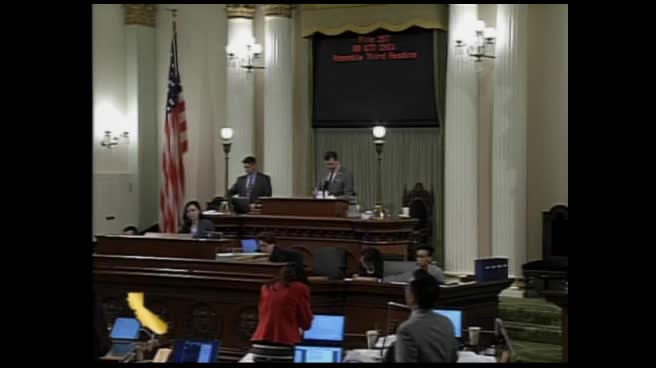 5MIN
Assembly Floor
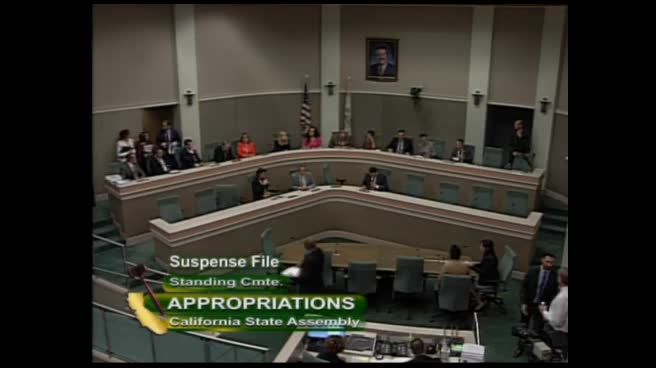 1H
Assembly Standing Committee on Appropriations
 20MIN
Assembly Standing Committee on Higher Education
 21MIN
Assembly Standing Committee on Arts, Entertainment, Sports, Tourism, and Internet Media
Bill Author

Bill Co-Author(s):