AB 1436: Board of Behavioral Sciences: licensees: suicide prevention training.
- Session Year: 2017-2018
- House: Assembly
- Latest Version Date: 2018-09-19
Existing law, the Licensed Marriage and Family Therapist Act, the Educational Psychologist Practice Act, the Clinical Social Worker Practice Act, and the Licensed Professional Clinical Counselor Act, provides for the licensure and regulation of marriage and family therapists, educational psychologists, clinical social workers, and professional clinical counselors, respectively, by the Board of Behavioral Sciences. Existing law requires a person applying for licensure as a marriage and family therapist, educational psychologist, clinical social worker, or professional clinical counselor to complete specified coursework and training, requires licensees to complete specified continuing education requirements, and requires a licensee on inactive status to complete certain continuing education requirements as a condition of having his or her license reactivated.
This bill, on or after January 1, 2021, would require an applicant for licensure as a marriage and family therapist, an educational psychologist, a clinical social worker, or a professional clinical counselor to complete a minimum of 6 hours of coursework or applied experience under supervision in suicide risk assessment and intervention. The bill would require, as a one-time requirement, a licensed marriage and family therapist, educational psychologist, clinical social worker, or professional clinical counselor to have completed this suicide risk assessment and intervention training requirement prior to the time of his or her first renewal after January 1, 2021. The bill would also require an applicant for reactivation or for reinstatement to an active license status on or after January 1, 2021, to have completed this suicide risk assessment and intervention training requirement. The bill would require that proof of compliance with requirements be certified under penalty of perjury and be retained for submission to the board upon request. By expanding the crime of perjury, the bill would impose a state-mandated local program.
The California Constitution requires the state to reimburse local agencies and school districts for certain costs mandated by the state. Statutory provisions establish procedures for making that reimbursement.
This bill would provide that no reimbursement is required by this act for a specified reason.
Existing law, the Licensed Marriage and Family Therapist Act, the Educational Psychologist Practice Act, the Clinical Social Worker Practice Act, and the Licensed Professional Clinical Counselor Act, provides for the licensure and regulation of marriage and family therapists, educational psychologists, clinical social workers, and professional clinical counselors, respectively, by the Board of Behavioral Sciences. Existing law requires a person applying for licensure as a marriage and family therapist, educational psychologist, clinical social worker, or professional clinical counselor to complete specified coursework and training, requires licensees to complete specified continuing education requirements, and requires a licensee on inactive status to complete certain continuing education requirements as a condition of having his or her license reactivated.
This bill, on or after January 1, 2021, would require an applicant for licensure as a marriage and family therapist, an educational psychologist, a clinical social worker, or a professional clinical counselor to complete a minimum of 6 hours of coursework or applied experience under supervision in suicide risk assessment and intervention. The bill would require, on or after January 1, 2021, as a one-time requirement, a licensed marriage and family therapist, educational psychologist, clinical social worker, or professional clinical counselor to have completed this suicide risk assessment and intervention training requirement prior to the time of his or her first renewal. renewal after January 1, 2021. The bill would also require, on or after January 1, 2021, a person applying require an applicant for reactivation or for reinstatement to an active license status on or after January 1, 2021, to have completed this suicide risk assessment and intervention training requirement. The bill would require that proof of compliance with requirements be certified under penalty of perjury and be retained for submission to the board upon request. By expanding the crime of perjury, the bill would impose a state-mandated local program.
The California Constitution requires the state to reimburse local agencies and school districts for certain costs mandated by the state. Statutory provisions establish procedures for making that reimbursement.
This bill would provide that no reimbursement is required by this act for a specified reason.
Existing law, the Licensed Marriage and Family Therapist Act, the Educational Psychologist Practice Act, the Clinical Social Worker Practice Act, and the Licensed Professional Clinical Counselor Act, provides for the licensure and regulation of marriage and family therapists, educational psychologists, clinical social workers, and professional clinical counselors, respectively, by the Board of Behavioral Sciences. Existing law requires a person applying for licensure as a marriage and family therapist, educational psychologist, clinical social worker, or professional clinical counselor to complete specified coursework and training, requires licensees to complete specified continuing education requirements, and requires a licensee on inactive status to complete certain continuing education requirements as a condition of having his or her license reactivated.
This bill, on or after January 1, 2021, would require an applicant for licensure as a marriage and family therapist, an educational psychologist, a clinical social worker, or a professional clinical counselor to complete a minimum of 6 hours of coursework or applied experience under supervision in suicide risk assessment and intervention. The bill would require, on or after January 1, 2021, as a one-time requirement, a licensed marriage and family therapist, educational psychologist, clinical social worker, or professional clinical counselor to have completed this suicide risk assessment and intervention training requirement prior to the time of his or her first renewal. The bill would also require, on or after January 1, 2021, a person applying for reactivation or for reinstatement to have completed this suicide risk assessment and intervention training requirement. The bill would require that proof of compliance with requirements be certified under penalty of perjury and be retained for submission to the board upon request. By expanding the crime of perjury, the bill would impose a state-mandated local program.
The California Constitution requires the state to reimburse local agencies and school districts for certain costs mandated by the state. Statutory provisions establish procedures for making that reimbursement.
This bill would provide that no reimbursement is required by this act for a specified reason.
Existing law authorizes the board of supervisors of a county, by resolution adopted by a 4/5 vote of its members, to determine that specified activities relating to streets are of general county interest and that county aid shall be extended therefore.This bill would instead authorize the board of supervisors of a county to adopt this resolution by a 3/5 vote of its members and would make nonsubstantive changes to this law.Existing law authorizes the board of supervisors of a county, by resolution adopted by a 4/5 vote of its members, to determine that specified activities relating to streets are of general county interest and that county aid shall be extended therefore.
This bill would make nonsubstantive changes to this law. instead authorize the board of supervisors of a county to adopt this resolution by a 3/5 vote of its members and would make nonsubstantive changes to this law.
Existing law authorizes the board of supervisors of a county, by resolution adopted by a 4/5 vote of its members, to determine that specified activities are of general county interest and that county aid shall be extended therefore.
This bill would make nonsubstantive changes to this law.
(a)On or after January 1, 2021, an applicant for licensure as a marriage and family therapist shall show, as part of the application, that he or she has completed a minimum of six hours of coursework or applied experience under supervision in suicide risk assessment and intervention. This requirement shall be met in one of the following ways:
(1)Obtained as part of his or her qualifying graduate degree program. To satisfy this requirement, the applicant shall submit to the board a written certification from the registrar or training director of the educational institution or program from which the applicant graduated stating that the coursework required by this section is included within the institutions curriculum required for graduation at the time the applicant graduated, or within the coursework that was completed by the applicant.
(2)Obtained as part of his or her applied experience. Applied experience can be met in any of the following settings: practicum or associateship that meets the requirement of this chapter, formal postdoctoral placement that meets the requirements of Section 2911, or other qualifying supervised experience. To satisfy this requirement, the applicant shall submit to the board a written certification from the director of training for the program or primary supervisor where the qualifying experience has occurred stating that the training required by this section is included within the applied experience.
(3)By taking a continuing education course that meets the requirements of Section 4980.54. To satisfy this requirement, the applicant shall submit to the board a certification of completion.
(b)As a one-time requirement, a licensee prior to the time of his or her first renewal after January 1, 2021, or an applicant for reactivation or reinstatement to an active license status on or after January 1, 2021, shall have completed a minimum of six hours of coursework or applied experience under supervision in suicide risk assessment and intervention, using one of the methods specified in subdivision (a).
(c)Proof of compliance with this section shall be certified under penalty of perjury that he or she is in compliance with this section and shall be retained for submission to the board upon request.
SEC. 2.Section 4989.23 is added to the Business and Professions Code, to read:4989.23.(a)On or after January 1, 2021, an applicant for licensure as an educational psychologist shall show, as part of the application, that he or she has completed a minimum of six hours of coursework or applied experience under supervision in suicide risk assessment and intervention. This requirement shall be met in one of the following ways:
(1)Obtained as part of his or her qualifying graduate degree program. To satisfy this requirement, the applicant shall submit to the board a written certification from the registrar or training director of the educational institution or program from which the applicant graduated stating that the coursework required by this section is included within the institutions curriculum required for graduation at the time the applicant graduated, or within the coursework that was completed by the applicant.
(2)Obtained as part of his or her applied experience. Applied experience can be met in any of the following settings: practicum, supervised experience gained pursuant to Section 4989.20, formal postdoctoral placement that meets the requirements of Section 2911, or other qualifying supervised experience. To satisfy this requirement, the applicant shall submit to the board a written certification from the director of training for the program or primary supervisor where the qualifying experience has occurred stating that the training required by this section is included within the applied experience.
(3)By taking a continuing education course that meets the requirements of Section 4989.34. To satisfy this requirement, the applicant shall submit to the board a certification of completion.
(b)As a one-time requirement, a licensee prior to the time of his or her first renewal after January 1, 2021, or an applicant for reactivation or reinstatement to an active license status on or after January 1, 2021, shall have completed a minimum of six hours of coursework or applied experience under supervision in suicide risk assessment and intervention, using one of the methods specified in subdivision (a).
(c)Proof of compliance with this section shall be certified under penalty of perjury that he or she is in compliance with this section and shall be retained for submission to the board upon request.
SEC. 3.Section 4996.27 is added to the Business and Professions Code, to read:4996.27.(a)On or after January 1, 2021, an applicant for licensure as a clinical social worker shall show, as part of the application, that he or she has completed a minimum of six hours of coursework or applied experience under supervision in suicide risk assessment and intervention. This requirement shall be met in one of the following ways:
(1)Obtained as part of his or her qualifying graduate degree program. To satisfy this requirement, the applicant shall submit to the board a written certification from the registrar or training director of the educational institution or program from which the applicant graduated stating that the coursework required by this section is included within the institutions curriculum required for graduation at the time the applicant graduated, or within the coursework that was completed by the applicant.
(2)Obtained as part of his or her applied experience. Applied experience can be met in any of the following settings: practicum or associateship that meets the requirement of this chapter, formal postdoctoral placement that meets the requirements of Section 2911, or other qualifying supervised experience. To satisfy this requirement, the applicant shall submit to the board a written certification from the director of training for the program or primary supervisor where the qualifying experience has occurred stating that the training required by this section is included within the applied experience.
(3)By taking a continuing education course that meets the requirements of Section 4996.22. To satisfy this requirement, the applicant shall submit to the board a certification of completion.
(b)As a one-time requirement, a licensee prior to the time of his or her first renewal after January 1, 2021, or an applicant for reactivation or reinstatement to an active license status on or after January 1, 2021, shall have completed a minimum of six hours of coursework or applied experience under supervision in suicide risk assessment and intervention, using one of the methods specified in subdivision (a).
(c)Proof of compliance with this section shall be certified under penalty of perjury that he or she is in compliance with this section and shall be retained for submission to the board upon request.
SEC. 4.Section 4999.66 is added to the Business and Professions Code, to read:4999.66.(a)On or after January 1, 2021, an applicant for licensure as a professional clinical counselor shall show, as part of the application, that he or she has completed a minimum of six hours of coursework or applied experience under supervision in suicide risk assessment and intervention. This requirement shall be met in one of the following ways:
(1)Obtained as part of his or her qualifying graduate degree program. To satisfy this requirement, the applicant shall submit to the board a written certification from the registrar or training director of the educational institution or program from which the applicant graduated stating that the coursework required by this section is included within the institutions curriculum required for graduation at the time the applicant graduated, or within the coursework that was completed by the applicant.
(2)Obtained as part of his or her applied experience. Applied experience can be met in any of the following settings: practicum or associateship that meets the requirement of this chapter, formal postdoctoral placement that meets the requirements of Section 2911, or other qualifying supervised experience. To satisfy this requirement, the applicant shall submit to the board a written certification from the director of training for the program or primary supervisor where the qualifying experience has occurred stating that the training required by this section is included within the applied experience.
(3)By taking a continuing education course that meets the requirements of Section 4999.76. To satisfy this requirement, the applicant shall submit to the board a certification of completion.
(b)As a one-time requirement, a licensee prior to the time of his or her first renewal after January 1, 2021, or an applicant for reactivation or reinstatement to an active license status on or after January 1, 2021, shall have completed a minimum of six hours of coursework or applied experience under supervision in suicide risk assessment and intervention, using one of the methods specified in subdivision (a).
(c)Proof of compliance with this section shall be certified under penalty of perjury that he or she is in compliance with this section and shall be retained for submission to the board upon request.
SEC. 5.No reimbursement is required by this act pursuant to Section 6 of Article XIIIB of the California Constitution because the only costs that may be incurred by a local agency or school district will be incurred because this act creates a new crime or infraction, eliminates a crime or infraction, or changes the penalty for a crime or infraction, within the meaning of Section 17556 of the Government Code, or changes the definition of a crime within the meaning of Section 6 of Article XIIIB of the California Constitution.
(a)On or after January 1, 2021, an applicant for licensure as a marriage and family therapist shall show, as part of the application, that he or she has completed a minimum of six hours of coursework or applied experience under supervision in suicide risk assessment and intervention. This requirement shall be met in one of the following ways:
(1)Obtained as part of his or her qualifying graduate degree program. To satisfy this requirement, the applicant shall submit to the board a written certification from the registrar or training director of the educational institution or program from which the applicant graduated stating that the coursework required by this section is included within the institutions curriculum required for graduation at the time the applicant graduated, or within the coursework that was completed by the applicant.
(2)Obtained as part of his or her applied experience. Applied experience can be met in any of the following settings: practicum or associateship that meets the requirement of this chapter, formal postdoctoral placement that meets the requirements of Section 2911, or other qualifying supervised experience. To satisfy this requirement, the applicant shall submit to the board a written certification from the director of training for the program or primary supervisor where the qualifying experience has occurred stating that the training required by this section is included within the applied experience.
(3)By taking a continuing education course that meets the requirements of Section 4980.54. To satisfy this requirement, the applicant shall submit to the board a certification of completion.
(b)On or after January 1, 2021, as As a one-time requirement, a licensee prior to the time of his or her first renewal, renewal after January 1, 2021, or an applicant for reactivation or reinstatement to an active license status, status on or after January 1, 2021, shall have completed a minimum of six hours of coursework or applied experience under supervision in suicide risk assessment and intervention, using one of the methods specified in subdivision (a).
(c)Proof of compliance with this section shall be certified under penalty of perjury that he or she is in compliance with this section and shall be retained for submission to the board upon request.
SEC. 2.Section 4989.23 is added to the Business and Professions Code, to read:4989.23.(a)On or after January 1, 2021, an applicant for licensure as an educational psychologist shall show, as part of the application, that he or she has completed a minimum of six hours of coursework or applied experience under supervision in suicide risk assessment and intervention. This requirement shall be met in one of the following ways:
(1)Obtained as part of his or her qualifying graduate degree program. To satisfy this requirement, the applicant shall submit to the board a written certification from the registrar or training director of the educational institution or program from which the applicant graduated stating that the coursework required by this section is included within the institutions curriculum required for graduation at the time the applicant graduated, or within the coursework that was completed by the applicant.
(2)Obtained as part of his or her applied experience. Applied experience can be met in any of the following settings: practicum, supervised experience gained pursuant to Section 4989.20, formal postdoctoral placement that meets the requirements of Section 2911, or other qualifying supervised experience. To satisfy this requirement, the applicant shall submit to the board a written certification from the director of training for the program or primary supervisor where the qualifying experience has occurred stating that the training required by this section is included within the applied experience.
(3)By taking a continuing education course that meets the requirements of Section 4989.34. To satisfy this requirement, the applicant shall submit to the board a certification of completion.
(b)On or after January 1, 2021, as As a one-time requirement, a licensee prior to the time of his or her first renewal, renewal after January 1, 2021, or an applicant for reactivation or reinstatement to an active license status, status on or after January 1, 2021, shall have completed a minimum of six hours of coursework or applied experience under supervision in suicide risk assessment and intervention, using one of the methods specified in subdivision (a).
(c)Proof of compliance with this section shall be certified under penalty of perjury that he or she is in compliance with this section and shall be retained for submission to the board upon request.
SEC. 3.Section 4996.27 is added to the Business and Professions Code, to read:4996.27.(a)On or after January 1, 2021, an applicant for licensure as a clinical social worker shall show, as part of the application, that he or she has completed a minimum of six hours of coursework or applied experience under supervision in suicide risk assessment and intervention. This requirement shall be met in one of the following ways:
(1)Obtained as part of his or her qualifying graduate degree program. To satisfy this requirement, the applicant shall submit to the board a written certification from the registrar or training director of the educational institution or program from which the applicant graduated stating that the coursework required by this section is included within the institutions curriculum required for graduation at the time the applicant graduated, or within the coursework that was completed by the applicant.
(2)Obtained as part of his or her applied experience. Applied experience can be met in any of the following settings: practicum or associateship that meets the requirement of this chapter, formal postdoctoral placement that meets the requirements of Section 2911, or other qualifying supervised experience. To satisfy this requirement, the applicant shall submit to the board a written certification from the director of training for the program or primary supervisor where the qualifying experience has occurred stating that the training required by this section is included within the applied experience.
(3)By taking a continuing education course that meets the requirements of Section 4996.22. To satisfy this requirement, the applicant shall submit to the board a certification of completion.
(b)On or after January 1, 2021, as As a one-time requirement, a licensee prior to the time of his or her first renewal, renewal after January 1, 2021, or an applicant for reactivation or reinstatement to an active license status, status on or after January 1, 2021, shall have completed a minimum of six hours of coursework or applied experience under supervision in suicide risk assessment and intervention, using one of the methods specified in subdivision (a).
(c)Proof of compliance with this section shall be certified under penalty of perjury that he or she is in compliance with this section and shall be retained for submission to the board upon request.
SEC. 4.Section 4999.66 is added to the Business and Professions Code, to read:4999.66.(a)On or after January 1, 2021, an applicant for licensure as a professional clinical counselor shall show, as part of the application, that he or she has completed a minimum of six hours of coursework or applied experience under supervision in suicide risk assessment and intervention. This requirement shall be met in one of the following ways:
(1)Obtained as part of his or her qualifying graduate degree program. To satisfy this requirement, the applicant shall submit to the board a written certification from the registrar or training director of the educational institution or program from which the applicant graduated stating that the coursework required by this section is included within the institutions curriculum required for graduation at the time the applicant graduated, or within the coursework that was completed by the applicant.
(2)Obtained as part of his or her applied experience. Applied experience can be met in any of the following settings: practicum or associateship that meets the requirement of this chapter, formal postdoctoral placement that meets the requirements of Section 2911, or other qualifying supervised experience. To satisfy this requirement, the applicant shall submit to the board a written certification from the director of training for the program or primary supervisor where the qualifying experience has occurred stating that the training required by this section is included within the applied experience.
(3)By taking a continuing education course that meets the requirements of Section 4999.76. To satisfy this requirement, the applicant shall submit to the board a certification of completion.
(b)On or after January 1, 2021, as As a one-time requirement, a licensee prior to the time of his or her first renewal, renewal after January 1, 2021, or an applicant for reactivation or reinstatement to an active license status, status on or after January 1, 2021, shall have completed a minimum of six hours of coursework or applied experience under supervision in suicide risk assessment and intervention, using one of the methods specified in subdivision (a).
(c)Proof of compliance with this section shall be certified under penalty of perjury that he or she is in compliance with this section and shall be retained for submission to the board upon request.
SEC. 5.No reimbursement is required by this act pursuant to Section 6 of Article XIIIB of the California Constitution because the only costs that may be incurred by a local agency or school district will be incurred because this act creates a new crime or infraction, eliminates a crime or infraction, or changes the penalty for a crime or infraction, within the meaning of Section 17556 of the Government Code, or changes the definition of a crime within the meaning of Section 6 of Article XIIIB of the California Constitution.
(a)On or after January 1, 2021, an applicant for licensure as a marriage and family therapist shall show, as part of the application, that he or she has completed a minimum of six hours of coursework or applied experience under supervision in suicide risk assessment and intervention. This requirement shall be met in one of the following ways:
(1)Obtained as part of his or her qualifying graduate degree program. To satisfy this requirement, the applicant shall submit to the board a written certification from the registrar or training director of the educational institution or program from which the applicant graduated stating that the coursework required by this section is included within the institutions curriculum required for graduation at the time the applicant graduated, or within the coursework that was completed by the applicant.
(2)Obtained as part of his or her applied experience. Applied experience can be met in any of the following settings: practicum or associateship that meets the requirement of this chapter, formal postdoctoral placement that meets the requirements of Section 2911, or other qualifying supervised experience. To satisfy this requirement, the applicant shall submit to the board a written certification from the director of training for the program or primary supervisor where the qualifying experience has occurred stating that the training required by this section is included within the applied experience.
(3)By taking a continuing education course that meets the requirements of Section 4980.54. To satisfy this requirement, the applicant shall submit to the board a certification of completion.
(b)On or after January 1, 2021, as a one-time requirement, a licensee prior to the time of his or her first renewal after the operative date of this section, renewal, or an applicant for reactivation or reinstatement to an active license status, shall have completed a minimum of six hours of coursework or applied experience under supervision in suicide risk assessment and intervention, using one of the methods specified in subdivision (a).
(c)Proof of compliance with this section shall be certified under penalty of perjury that he or she is in compliance with this section and shall be retained for submission to the board upon request.
SEC. 2.Section 4989.23 is added to the Business and Professions Code, to read:4989.23.(a)On or after January 1, 2021, an applicant for licensure as an educational psychologist shall show, as part of the application, that he or she has completed a minimum of six hours of coursework or applied experience under supervision in suicide risk assessment and intervention. This requirement shall be met in one of the following ways:
(1)Obtained as part of his or her qualifying graduate degree program. To satisfy this requirement, the applicant shall submit to the board a written certification from the registrar or training director of the educational institution or program from which the applicant graduated stating that the coursework required by this section is included within the institutions curriculum required for graduation at the time the applicant graduated, or within the coursework that was completed by the applicant.
(2)Obtained as part of his or her applied experience. Applied experience can be met in any of the following settings: practicum, supervised experience gained pursuant to Section 4989.20, formal postdoctoral placement that meets the requirements of Section 2911, or other qualifying supervised experience. To satisfy this requirement, the applicant shall submit to the board a written certification from the director of training for the program or primary supervisor where the qualifying experience has occurred stating that the training required by this section is included within the applied experience.
(3)By taking a continuing education course that meets the requirements of Section 4989.34. To satisfy this requirement, the applicant shall submit to the board a certification of completion.
(b)On or after January 1, 2021, as a one-time requirement, a licensee prior to the time of his or her first renewal after the operative date of this section, renewal, or an applicant for reactivation or reinstatement to an active license status, shall have completed a minimum of six hours of coursework or applied experience under supervision in suicide risk assessment and intervention, using one of the methods specified in subdivision (a).
(c)Proof of compliance with this section shall be certified under penalty of perjury that he or she is in compliance with this section and shall be retained for submission to the board upon request.
SEC. 3.Section 4996.27 is added to the Business and Professions Code, to read:4996.27.(a)On or after January 1, 2021, an applicant for licensure as a clinical social worker shall show, as part of the application, that he or she has completed a minimum of six hours of coursework or applied experience under supervision in suicide risk assessment and intervention. This requirement shall be met in one of the following ways:
(1)Obtained as part of his or her qualifying graduate degree program. To satisfy this requirement, the applicant shall submit to the board a written certification from the registrar or training director of the educational institution or program from which the applicant graduated stating that the coursework required by this section is included within the institutions curriculum required for graduation at the time the applicant graduated, or within the coursework that was completed by the applicant.
(2)Obtained as part of his or her applied experience. Applied experience can be met in any of the following settings: practicum or associateship that meets the requirement of this chapter, formal postdoctoral placement that meets the requirements of Section 2911, or other qualifying supervised experience. To satisfy this requirement, the applicant shall submit to the board a written certification from the director of training for the program or primary supervisor where the qualifying experience has occurred stating that the training required by this section is included within the applied experience.
(3)By taking a continuing education course that meets the requirements of Section 4996.22. To satisfy this requirement, the applicant shall submit to the board a certification of completion.
(b)On or after January 1, 2021, as a one-time requirement, a licensee prior to the time of his or her first renewal after the operative date of this section, renewal, or an applicant for reactivation or reinstatement to an active license status, shall have completed a minimum of six hours of coursework or applied experience under supervision in suicide risk assessment and intervention, using one of the methods specified in subdivision (a).
(c)Proof of compliance with this section shall be certified under penalty of perjury that he or she is in compliance with this section and shall be retained for submission to the board upon request.
SEC. 4.Section 4999.66 is added to the Business and Professions Code, to read:4999.66.(a)On or after January 1, 2021, an applicant for licensure as a professional clinical counselor shall show, as part of the application, that he or she has completed a minimum of six hours of coursework or applied experience under supervision in suicide risk assessment and intervention. This requirement shall be met in one of the following ways:
(1)Obtained as part of his or her qualifying graduate degree program. To satisfy this requirement, the applicant shall submit to the board a written certification from the registrar or training director of the educational institution or program from which the applicant graduated stating that the coursework required by this section is included within the institutions curriculum required for graduation at the time the applicant graduated, or within the coursework that was completed by the applicant.
(2)Obtained as part of his or her applied experience. Applied experience can be met in any of the following settings: practicum or associateship that meets the requirement of this chapter, formal postdoctoral placement that meets the requirements of Section 2911, or other qualifying supervised experience. To satisfy this requirement, the applicant shall submit to the board a written certification from the director of training for the program or primary supervisor where the qualifying experience has occurred stating that the training required by this section is included within the applied experience.
(3)By taking a continuing education course that meets the requirements of Section 4999.76. To satisfy this requirement, the applicant shall submit to the board a certification of completion.
(b)On or after January 1, 2021, as a one-time requirement, a licensee prior to the time of his or her first renewal after the operative date of this section, renewal, or an applicant for reactivation or reinstatement to an active license status, shall have completed a minimum of six hours of coursework or applied experience under supervision in suicide risk assessment and intervention, using one of the methods specified in subdivision (a).
(c)Proof of compliance with this section shall be certified under penalty of perjury that he or she is in compliance with this section and shall be retained for submission to the board upon request.
SEC. 5.No reimbursement is required by this act pursuant to Section 6 of Article XIIIB of the California Constitution because the only costs that may be incurred by a local agency or school district will be incurred because this act creates a new crime or infraction, eliminates a crime or infraction, or changes the penalty for a crime or infraction, within the meaning of Section 17556 of the Government Code, or changes the definition of a crime within the meaning of Section 6 of Article XIIIB of the California Constitution.
(a)On or after January 1, 2021, an applicant for licensure as a marriage and family therapist shall show, as part of the application, that he or she has completed a minimum of six hours of coursework or applied experience under supervision in suicide risk assessment and intervention. This requirement shall be met in one of the following ways:
(1)Obtained as part of his or her qualifying graduate degree program. To satisfy this requirement, the applicant shall submit to the board a written certification from the registrar or training director of the educational institution or program from which the applicant graduated stating that the coursework required by this section is included within the institutions curriculum required for graduation at the time the applicant graduated, or within the coursework that was completed by the applicant.
(2)Obtained as part of his or her applied experience. Applied experience can be met in any of the following settings: practicum, internship, or formal postdoctoral placement practicum or associateship that meets the requirement of this chapter, formal postdoctoral placement that meets the requirements of Section 2911, or other qualifying supervised professional experience. To satisfy this requirement, the applicant shall submit to the board a written certification from the director of training for the program or primary supervisor where the qualifying experience has occurred stating that the training required by this section is included within the applied experience.
(3)By taking a continuing education course that meets the requirements of Section 4980.54. To satisfy this requirement, the applicant shall submit to the board a certification of completion.
(b)On or after January 1, 2021, as a one-time requirement, a licensee prior to the time of his or her first renewal after the operative date of this section, or an applicant for reactivation or reinstatement to an active license status, shall have completed a minimum of six hours of coursework or applied experience under supervision in suicide risk assessment and intervention, as using one of the methods specified in subdivision (a).
(c)Proof of compliance with this section shall be certified under penalty of perjury that he or she is in compliance with this section and shall be retained for submission to the board upon request.
SEC. 2.Section 4989.23 is added to the Business and Professions Code, to read:4989.23.(a)On or after January 1, 2021, an applicant for licensure as an educational psychologist shall show, as part of the application, that he or she has completed a minimum of six hours of coursework or applied experience under supervision in suicide risk assessment and intervention. This requirement shall be met in one of the following ways:
(1)Obtained as part of his or her qualifying graduate degree program. To satisfy this requirement, the applicant shall submit to the board a written certification from the registrar or training director of the educational institution or program from which the applicant graduated stating that the coursework required by this section is included within the institutions curriculum required for graduation at the time the applicant graduated, or within the coursework that was completed by the applicant.
(2)Obtained as part of his or her applied experience. Applied experience can be met in any of the following settings: practicum, internship, or formal postdoctoral placement that meets the requirement of this chapter, supervised experience gained pursuant to Section 4989.20, formal postdoctoral placement that meets the requirements of Section 2911, or other qualifying supervised professional experience. To satisfy this requirement, the applicant shall submit to the board a written certification from the director of training for the program or primary supervisor where the qualifying experience has occurred stating that the training required by this section is included within the applied experience.
(3)By taking a continuing education course that meets the requirements of Section 4989.34. To satisfy this requirement, the applicant shall submit to the board a certification of completion.
(b)On or after January 1, 2021, as a one-time requirement, a licensee prior to the time of his or her first renewal after the operative date of this section, or an applicant for reactivation or reinstatement to an active license status, shall have completed a minimum of six hours of coursework or applied experience under supervision in suicide risk assessment and intervention, as using one of the methods specified in subdivision (a).
(c)Proof of compliance with this section shall be certified under penalty of perjury that he or she is in compliance with this section and shall be retained for submission to the board upon request.
SEC. 3.Section 4996.27 is added to the Business and Professions Code, to read:4996.27.(a)On or after January 1, 2021, an applicant for licensure as a clinical social worker shall show, as part of the application, that he or she has completed a minimum of six hours of coursework or applied experience under supervision in suicide risk assessment and intervention. This requirement shall be met in one of the following ways:
(1)Obtained as part of his or her qualifying graduate degree program. To satisfy this requirement, the applicant shall submit to the board a written certification from the registrar or training director of the educational institution or program from which the applicant graduated stating that the coursework required by this section is included within the institutions curriculum required for graduation at the time the applicant graduated, or within the coursework that was completed by the applicant.
(2)Obtained as part of his or her applied experience. Applied experience can be met in any of the following settings: practicum, internship, or formal postdoctoral placement practicum or associateship that meets the requirement of this chapter, formal postdoctoral placement that meets the requirements of Section 2911, or other qualifying supervised professional experience. To satisfy this requirement, the applicant shall submit to the board a written certification from the director of training for the program or primary supervisor where the qualifying experience has occurred stating that the training required by this section is included within the applied experience.
(3)By taking a continuing education course that meets the requirements of Section 4996.22. To satisfy this requirement, the applicant shall submit to the board a certification of completion.
(b)On or after January 1, 2021, as a one-time requirement, a licensee prior to the time of his or her first renewal after the operative date of this section, or an applicant for reactivation or reinstatement to an active license status, shall have completed a minimum of six hours of coursework or applied experience under supervision in suicide risk assessment and intervention, as using one of the methods specified in subdivision (a).
(c)Proof of compliance with this section shall be certified under penalty of perjury that he or she is in compliance with this section and shall be retained for submission to the board upon request.
SEC. 4.Section 4999.66 is added to the Business and Professions Code, to read:4999.66.(a)On or after January 1, 2021, an applicant for licensure as a professional clinical counselor shall show, as part of the application, that he or she has completed a minimum of six hours of coursework or applied experience under supervision in suicide risk assessment and intervention. This requirement shall be met in one of the following ways:
(1)Obtained as part of his or her qualifying graduate degree program. To satisfy this requirement, the applicant shall submit to the board a written certification from the registrar or training director of the educational institution or program from which the applicant graduated stating that the coursework required by this section is included within the institutions curriculum required for graduation at the time the applicant graduated, or within the coursework that was completed by the applicant.
(2)Obtained as part of his or her applied experience. Applied experience can be met in any of the following settings: practicum, internship, or formal postdoctoral placement practicum or associateship that meets the requirement of this chapter, formal postdoctoral placement that meets the requirements of Section 2911, or other qualifying supervised professional experience. To satisfy this requirement, the applicant shall submit to the board a written certification from the director of training for the program or primary supervisor where the qualifying experience has occurred stating that the training required by this section is included within the applied experience.
(3)By taking a continuing education course that meets the requirements of Section 4999.76. To satisfy this requirement, the applicant shall submit to the board a certification of completion.
(b)On or after January 1, 2021, as a one-time requirement, a licensee prior to the time of his or her first renewal after the operative date of this section, or an applicant for reactivation or reinstatement to an active license status, shall have completed a minimum of six hours of coursework or applied experience under supervision in suicide risk assessment and intervention, as using one of the methods specified in subdivision (a).
(c)Proof of compliance with this section shall be certified under penalty of perjury that he or she is in compliance with this section and shall be retained for submission to the board upon request.
SEC. 5.No reimbursement is required by this act pursuant to Section 6 of Article XIIIB of the California Constitution because the only costs that may be incurred by a local agency or school district will be incurred because this act creates a new crime or infraction, eliminates a crime or infraction, or changes the penalty for a crime or infraction, within the meaning of Section 17556 of the Government Code, or changes the definition of a crime within the meaning of Section 6 of Article XIIIB of the California Constitution.
(a)On or after January 1, 2021, an applicant for licensure as a marriage and family therapist shall show, as part of the application, that he or she has completed a minimum of six hours of coursework or applied experience under supervision in suicide risk assessment and intervention. This requirement shall be met in one of the following ways:
(1)Obtained as part of his or her qualifying graduate degree program. To satisfy this requirement, the applicant shall submit to the board a written certification from the registrar or training director of the educational institution or program from which the applicant graduated stating that the coursework required by this section is included within the institutions curriculum required for graduation at the time the applicant graduated, or within the coursework that was completed by the applicant.
(2)Obtained as part of his or her applied experience. Applied experience can be met in any of the following settings: practicum, internship, or formal postdoctoral placement that meets the requirement of this chapter, or other qualifying supervised professional experience. To satisfy this requirement, the applicant shall submit to the board a written certification from the director of training for the program or primary supervisor where the qualifying experience has occurred stating that the training required by this section is included within the applied experience.
(3)By taking a continuing education course that meets the requirements of Section 4980.54. To satisfy this requirement, the applicant shall submit to the board a certification of completion.
(b)On or after January 1, 2021, as a one-time requirement, a licensee prior to the time of his or her first renewal after the operative date of this section, or an applicant for reactivation or reinstatement to an active license status, shall have completed a minimum of six hours of coursework or applied experience under supervision in suicide risk assessment and intervention, as specified in subdivision (a).
(c)Proof of compliance with this section shall be certified under penalty of perjury that he or she is in compliance with this section and shall be retained for submission to the board upon request.
SEC. 2.Section 4989.23 is added to the Business and Professions Code, to read:4989.23.(a)On or after January 1, 2021, an applicant for licensure as an educational psychologist shall show, as part of the application, that he or she has completed a minimum of six hours of coursework or applied experience under supervision in suicide risk assessment and intervention. This requirement shall be met in one of the following ways:
(1)Obtained as part of his or her qualifying graduate degree program. To satisfy this requirement, the applicant shall submit to the board a written certification from the registrar or training director of the educational institution or program from which the applicant graduated stating that the coursework required by this section is included within the institutions curriculum required for graduation at the time the applicant graduated, or within the coursework that was completed by the applicant.
(2)Obtained as part of his or her applied experience. Applied experience can be met in any of the following settings: practicum, internship, or formal postdoctoral placement that meets the requirement of this chapter, or other qualifying supervised professional experience. To satisfy this requirement, the applicant shall submit to the board a written certification from the director of training for the program or primary supervisor where the qualifying experience has occurred stating that the training required by this section is included within the applied experience.
(3)By taking a continuing education course that meets the requirements of Section 4989.34. To satisfy this requirement, the applicant shall submit to the board a certification of completion.
(b)On or after January 1, 2021, as a one-time requirement, a licensee prior to the time of his or her first renewal after the operative date of this section, or an applicant for reactivation or reinstatement to an active license status, shall have completed a minimum of six hours of coursework or applied experience under supervision in suicide risk assessment and intervention, as specified in subdivision (a).
(c)Proof of compliance with this section shall be certified under penalty of perjury that he or she is in compliance with this section and shall be retained for submission to the board upon request.
SEC. 3.Section 4996.27 is added to the Business and Professions Code, to read:4996.27.(a)On or after January 1, 2021, an applicant for licensure as a clinical social worker shall show, as part of the application, that he or she has completed a minimum of six hours of coursework or applied experience under supervision in suicide risk assessment and intervention. This requirement shall be met in one of the following ways:
(1)Obtained as part of his or her qualifying graduate degree program. To satisfy this requirement, the applicant shall submit to the board a written certification from the registrar or training director of the educational institution or program from which the applicant graduated stating that the coursework required by this section is included within the institutions curriculum required for graduation at the time the applicant graduated, or within the coursework that was completed by the applicant.
(2)Obtained as part of his or her applied experience. Applied experience can be met in any of the following settings: practicum, internship, or formal postdoctoral placement that meets the requirement of this chapter, or other qualifying supervised professional experience. To satisfy this requirement, the applicant shall submit to the board a written certification from the director of training for the program or primary supervisor where the qualifying experience has occurred stating that the training required by this section is included within the applied experience.
(3)By taking a continuing education course that meets the requirements of Section 4996.22. To satisfy this requirement, the applicant shall submit to the board a certification of completion.
(b)On or after January 1, 2021, as a one-time requirement, a licensee prior to the time of his or her first renewal after the operative date of this section, or an applicant for reactivation or reinstatement to an active license status, shall have completed a minimum of six hours of coursework or applied experience under supervision in suicide risk assessment and intervention, as specified in subdivision (a).
(c)Proof of compliance with this section shall be certified under penalty of perjury that he or she is in compliance with this section and shall be retained for submission to the board upon request.
SEC. 4.Section 4999.66 is added to the Business and Professions Code, to read:4999.66.(a)On or after January 1, 2021, an applicant for licensure as a professional clinical counselor shall show, as part of the application, that he or she has completed a minimum of six hours of coursework or applied experience under supervision in suicide risk assessment and intervention. This requirement shall be met in one of the following ways:
(1)Obtained as part of his or her qualifying graduate degree program. To satisfy this requirement, the applicant shall submit to the board a written certification from the registrar or training director of the educational institution or program from which the applicant graduated stating that the coursework required by this section is included within the institutions curriculum required for graduation at the time the applicant graduated, or within the coursework that was completed by the applicant.
(2)Obtained as part of his or her applied experience. Applied experience can be met in any of the following settings: practicum, internship, or formal postdoctoral placement that meets the requirement of this chapter, or other qualifying supervised professional experience. To satisfy this requirement, the applicant shall submit to the board a written certification from the director of training for the program or primary supervisor where the qualifying experience has occurred stating that the training required by this section is included within the applied experience.
(3)By taking a continuing education course that meets the requirements of Section 4999.76. To satisfy this requirement, the applicant shall submit to the board a certification of completion.
(b)On or after January 1, 2021, as a one-time requirement, a licensee prior to the time of his or her first renewal after the operative date of this section, or an applicant for reactivation or reinstatement to an active license status, shall have completed a minimum of six hours of coursework or applied experience under supervision in suicide risk assessment and intervention, as specified in subdivision (a).
(c)Proof of compliance with this section shall be certified under penalty of perjury that he or she is in compliance with this section and shall be retained for submission to the board upon request.
SEC. 5.No reimbursement is required by this act pursuant to Section 6 of Article XIIIB of the California Constitution because the only costs that may be incurred by a local agency or school district will be incurred because this act creates a new crime or infraction, eliminates a crime or infraction, or changes the penalty for a crime or infraction, within the meaning of Section 17556 of the Government Code, or changes the definition of a crime within the meaning of Section 6 of Article XIIIB of the California Constitution.
SECTION 1.Section 1680 of the Streets and Highways Code is amended to read:1680.The board of supervisors of a county may, by a resolution adopted by a three-fifths vote of its members, determine that any of the following activities are of general county interest and that county aid shall be extended therefor:(a)The laying out, opening, construction, improvement, maintenance, repair, or altering of all or any part of a street within a city or extending along or across the boundary of a city.(b)The establishing, modifying, or changing the grade of a street.(c)The separation of the grades of two or more streets that intersect.(d)The separation of the grade of a street from the grade of a steam, electric, or street railroad crossing the street.(e)The construction of the necessary pavements, curbs, culverts, bridges, tunnels, subways, viaducts, drainage facilities, or structures incident to or a part of the street.(f)The acquisition of real property or interest in real property, rights of way, or other property necessary for the purposes mentioned in this section.The board of supervisors of a county may, by a resolution adopted by a four-fifths three-fifths vote of its members, determine that any of the following activities are of general county interest and that county aid shall be extended therefor:
(a)The laying out, opening, construction, improvement, maintenance, repair, or altering of all or any part of a street within a city or extending along or across the boundary of a city.
(b)The establishing, modifying, or changing the grade of a street.
(c)The separation of the grades of two or more streets that intersect.
(d)The separation of the grade of a street from the grade of a steam, electric, or street railroad crossing the street.
(e)The construction of the necessary pavements, curbs, culverts, bridges, tunnels, subways, viaducts, drainage facilities, or structures incident to or a part of the street.
(f)The acquisition of real property or interest in real property, rights of way, or other property necessary for the purposes mentioned in this section.
The board of supervisors of any a county may, by a resolution adopted by a four-fifths vote of its members, determine that any of the following activities are of general county interest and that county aid shall be extended therefor:
(a)The laying out, opening, construction, improvement, maintenance, repair, or altering of all or any part of any a street within a city or extending along or across the boundary of a city.
(b)The establishing, modifying modifying, or changing the grade of any such a street.
(c)The separation of the grades of any two or more such streets which that intersect.
(d)The separation of the grade of any such a street from the grade of any a steam, electric electric, or street railroad crossing such the street.
(e)The construction of the necessary pavements, curbs, culverts, bridges, tunnels, subways, viaducts, drainage facilities facilities, or structures incident to or a part of such the street.
(f)The acquisition of any real property or interest therein, in real property, rights of way way, or other property necessary for any of the purposes mentioned in this section.
|
Date
|
Status
|
|---|---|
| Sep 19, 2018 | Chaptered by Secretary of State - Chapter 527, Statutes of 2018. |
| Sep 19, 2018 | Approved by the Governor. |
| Sep 6, 2018 | Enrolled and presented to the Governor at 3 p.m. |
| Aug 29, 2018 | Senate amendments concurred in. To Engrossing and Enrolling. |
| Aug 28, 2018 | From committee: That the Senate amendments be concurred in. (Ayes 15. Noes 2.) (August 28). |
| Aug 23, 2018 | Re-referred to Com. on B. & P. pursuant to Assembly Rule 77.2. |
| Aug 20, 2018 | In Assembly. Concurrence in Senate amendments pending. May be considered on or after August 22 pursuant to Assembly Rule 77. |
| Aug 20, 2018 | Read third time. Passed. Ordered to the Assembly. |
| Aug 7, 2018 | Read second time. Ordered to third reading. |
| Aug 6, 2018 | From committee: Be ordered to second reading pursuant to Senate Rule 28.8. |
| Jun 20, 2018 | Read second time and amended. Re-referred to Com. on APPR. |
| Jun 19, 2018 | From committee: Amend, and do pass as amended and re-refer to Com. on APPR. (Ayes 9. Noes 0.) (June 18). |
| Jun 13, 2018 | From committee chair, with author's amendments: Amend, and re-refer to committee. Read second time, amended, and re-referred to Com. on B., P. & E.D. |
| Jun 4, 2018 | From committee chair, with author's amendments: Amend, and re-refer to committee. Read second time, amended, and re-referred to Com. on B., P. & E.D. |
| May 30, 2018 | Re-referred to Com. on B., P. & E.D. |
| May 25, 2018 | Withdrawn from committee. |
| Apr 23, 2018 | From committee chair, with author's amendments: Amend, and re-refer to committee. Read second time, amended, and re-referred to Com. on GOV. & F. |
| Jun 26, 2017 | In committee: Set, second hearing. Hearing canceled at the request of author. |
| Jun 20, 2017 | In committee: Set, first hearing. Hearing canceled at the request of author. |
| Jun 1, 2017 | Referred to Com. on GOV. & F. |
| May 22, 2017 | In Senate. Read first time. To Com. on RLS. for assignment. |
| May 22, 2017 | Read third time. Passed. Ordered to the Senate. (Ayes 44. Noes 28. Page 1654.) |
| May 15, 2017 | Read second time. Ordered to third reading. |
| May 11, 2017 | From committee: Do pass. (Ayes 5. Noes 3.) (May 10). |
| Mar 29, 2017 | Re-referred to Com. on L. GOV. |
| Mar 28, 2017 | From committee chair, with author's amendments: Amend, and re-refer to Com. on L. GOV. Read second time and amended. |
| Mar 27, 2017 | Referred to Com. on L. GOV. |
| Feb 19, 2017 | From printer. May be heard in committee March 21. |
| Feb 17, 2017 | Read first time. To print. |
|
Date
|
Description
|
Location
|
Votes
|
|
|---|---|---|---|---|
| Aug 29, 2018 | AB 1436 LEVINE Concurrence in Senate Amendments | Assembly Floor |
Passed |
|
| Aug 28, 2018 | With recommendation: That Senate amendments be concurred in. | Assembly Standing Committee on Business and Professions |
Passed |
|
| Aug 20, 2018 | Assembly 3rd Reading AB1436 Levine et al. By Hill | Senate Floor |
Passed |
|
| Jun 18, 2018 | Do pass as amended, but first amend, and re-refer to the Committee on [Appropriations] | Senate Standing Committee on Business, Professions and Economic Development |
Passed |
|
| May 22, 2017 | AB 1436 LEVINE Assembly Third Reading | Assembly Floor |
Passed |
|
| May 10, 2017 | Do pass. | Assembly Standing Committee on Local Government |
Passed |
This list shows positions taken on this bill by organizations on the date displayed, which is linked to the original source.
Positions by individuals are not included.
CONCURRENCE IN SENATE AMENDMENTS
CSA2 Bill Id:AB 1436
Author:(Levine)
As Amended Ver:June 20, 2018
Majority vote
ASSEMBLY: | 44-28 | (May 22, 2017) | SENATE: | 39-0 | (August 20, 2018) |
COMMITTEE VOTE: | 15-2 | (August 28, 2018) | RECOMMENDATION: | concur |
(B. & P.)
Original Committee Reference: B. & P.
SUMMARY: Requires, commencing January 1, 2021, an applicant for licensure with the Board of Behavioral Sciences (BBS) as a licensed marriage and family therapist (LMFT), licensed educational psychologist (LEP), licensed clinical social worker (LCSW), or licensed professional clinical counselor (LPCC) to show that the applicant has completed a minimum of six hours of coursework or specified supervised experience in suicide risk assessment and intervention. Specifically, this bill:
- Requires, on or after January 1, 2021, an applicant for licensure as an LMFT, LEP, LCSW, or LPCC to show, as part of the application, that the applicant has completed a minimum of six hours of coursework or applied experience under supervision in suicide risk assessment and intervention.
- Requires an applicant to prove the coursework or supervised experience in one of the following ways:
- Obtain the coursework as part of the applicant's qualifying graduate degree program and submit to the BBS a written certification from the registrar or training director of the educational institution or program, as specified.
- Obtain the coursework as part of the applicant's applied experience as follows:
- Complete a practicum or associateship that meets the requirement of the practice act, formal postdoctoral placement, or other qualifying supervised experience and submit to the BBS a written certification from the director of training for the program or primary supervisor, as specified.
- Complete a continuing education course and submit to the BBS a certification of completion.
- Establishes a one-time requirement on a) first-time license renewals, on or after January 1, 2021, and b) an applicant for reactivation or reinstatement to an active license status on or after January 1, 2021, to have completed a minimum of six hours of coursework or applied experience under supervision in suicide risk assessment and intervention, using one of the methods specified.
- Requires proof of compliance to be certified under penalty of perjury.
The Senate amendments deleted the language voted out of the Assembly and inserted the current contents.
FISCAL EFFECT: According to the Senate Appropriations Committee, pursuant to Senate Rule 28.8, no significant state costs.
COMMENTS:
Purpose. This bill is sponsored by the Steinberg Institute. According to the author, "[e]very day across America, an average of 123 people die by suicide, making it the 10th leading cause of death…. It's an epidemic we must confront with every tool at our disposal. Research shows that three-quarters of those who die by suicide had contact with a primary care provider in the year before their death; and that about a third of them had contact with a mental health professional. The stunning reality is that many of the health professionals in the best position to intervene with someone in crisis are not trained in suicide prevention…. Research shows that effective training in suicide prevention has a marked difference in outcomes. Multiple studies have pinpointed intervention strategies with a clear track record at saving lives. Effective treatment options exist. But we need more professionals trained in how to use them."
Background. This bill is a follow-up to AB 2198 (Levine) of 2014, which would have required a psychologist, marriage and family therapist, educational psychologist, professional clinical counselor, and clinical social worker who began graduate study on or after January 1, 2016, to complete a minimum of 15 contact hours of coursework in suicide assessment, treatment, and management before he or she may be issued a license. AB 2198 was vetoed by Governor Brown, stating: "California has an extensive regulatory scheme that aims to ensure that California physicians, psychologists and counselors are skilled in the healing arts to which they have committed their lives. Rather than further legislating in this field, I would ask our licensing boards to evaluate the issues which this bill raises and take whatever actions are needed."
Subsequently, the Board of Psychology conducted a multi-year review of suicide prevention training for psychologists. The review included two surveys of doctoral programs, pre- and post-doctoral internship and practicum programs, and a review of licensure requirements in 2015-2016. The survey indicated that while most students and trainees were receiving some level of education or training in suicide risk assessment and intervention, close to 3% of student respondents were not receiving training in risk assessment and close to 7% were not receiving training in suicide intervention. There were also variances in the amount of education and training being provided to psychologists and applicants.
After conducting the survey, the Board of Psychology concluded that additional suicide prevention training was necessary and sponsored AB 89 (Levine), Chapter 182, Statutes of 2018, which requires an applicant for licensure as a psychologist to show completion of at least six hours of coursework or applied experience in suicide risk assessment and intervention after January 1, 2020. This bill is a continuation of those efforts and expands the requirements to BBS licensees.
Analysis Prepared by: Robert Sumner / B. & P. / (916) 319-3301 FN: 0005082
Date of Hearing: August 28, 2018
ASSEMBLY COMMITTEE ON BUSINESS AND PROFESSIONS
Evan Low, Chair
ABPCA Bill Id:AB 1436
Author:(Levine) – As Amended Ver:June 20, 2018
Note: this bill was referred to this Committee pursuant to Assembly Rule 77.2. The Committee may recommend that the Assembly concur in the Senate amendments, recommend that the Assembly not concur in the Senate amendments, or hold the bill in the Committee.
SUBJECT: Board of Behavioral Sciences: licensees: suicide prevention training.
SUMMARY: Requires, commencing January 1, 2021, an applicant for licensure with the Board of Behavioral Sciences (Board) as a licensed marriage and family therapist (LMFT), licensed educational psychologist (LEP), licensed clinical social worker (LCSW), or licensed professional clinical counselor (LPCC) to show that the applicant has completed a minimum of six hours of coursework or specified supervised experience in suicide risk assessment and intervention.
THE SENATE AMENDMENTS: Deleted the language voted out of the Assembly and replaced it with its current contents.
EXISTING LAW:
- Establishes the Board of Behavioral Sciences (Board) within the Department of Consumer Affairs. (Business and Professions Code (BPC) § 4990 et seq.)
- Provides for the licensure of LMFTs by the Board following completion of required hours of supervised experience as a registered associate, as specified. (BPC § 4980 et seq.)
- Provides for the licensure of LCSWs by the Board following completion of required hours of supervised experience as a registered associate, as specified. (BPC § 4996 et seq.)
- Provides for the licensure of LPCCs by the Board following completion of required hours of supervised experience as a registered associate, as specified. (BPC § 4999.30 et seq.)
- Requires the Board to consider substantially equivalent experience obtained outside of California in lieu of requirements for LMFT, LCSW, and LPPC licensure. (BPC § 4980.72; BPC § 4996.17; BPC § 4999.60)
- Waives the supervised experience hours requirement for LCSW licensure applicants with at least four years of equivalent experience as a licensee in another state. (BPC § 4996.17)
- Requires all LMFT and LPPC licensure applicants with education outside of California to complete an 18-hour California law and ethics course prior to registration as an associate. (BPC § 4980.79; BPC § 499.63)
- Provides that an LCSW licensure applicant must pass the California law and ethics exam to renew registration as an associate. (BPC § 4996.28)
- Provides for the renewal of an associate registration for an LMFT, LCSW, or LPCC licensure application prior to its expiration. (BPC § 4984.01; BPC § 4996.28; BPC § 4999.100)
- Requires a registered associate applying for LMFT, LCSW, or LPCC licensure to obtain a passing score on a state law and ethics examination prior to registration renewal, and authorizes that registration to be renewed a maximum of 5 times. (BPC § 4984.01; BPC § 4996.28; BPC § 4999.100)
THIS BILL:
- Requires, on or after January 1, 2021, an applicant for licensure as an LMFT, LEP, LCSW, or LPCC to show that the applicant has completed a minimum of six hours of coursework or applied supervision experience in suicide risk assessment and intervention.
- Requires an applicant to prove the coursework or supervised experience in one of the following ways:
- Obtain the coursework as part of the applicant’s qualifying graduate degree program and submit to the Board a written certification from the registrar or training director of the educational institution or program, as specified.
- Obtain the coursework as part of the applicant’s applied experience as follows:
- Complete a practicum or associateship that meets the requirement of the practice act, formal postdoctoral placement, or other qualifying supervised experience and submit to the Board a written certification from the director of training for the program or primary supervisor, as specified.
- Complete a continuing education course and submit a certification of completion.
- Establishes a one-time requirement, on or after January 1, 2021, on (1) first-time license renewals and (2) an applicant for reactivation or reinstatement to an active license status to have completed a minimum of six hours of coursework or applied experience under supervision in suicide risk assessment and intervention, using one of the methods specified.
- Requires proof of compliance to be certified under penalty of perjury.
FISCAL EFFECT: Pursuant to Senate Rule 28.8, negligible state costs.
COMMENTS:
Purpose. This bill is sponsored by the Steinberg Institute. According to the author:
AB 1436 will ensure all mental health professionals have the tools they need to assess, treat, and refer suicidal individuals. As a result, this bill will help decrease the growing number of suicides in California and save lives. Every day across America, an average of 123 people die by suicide, making it the 10th leading cause of death. Even as death rates from cancer and heart disease have declined, suicide rates have climbed for more than a decade. In California, we lose someone to suicide about every two hours. For young people in our state ages 10-24, it is the second leading cause of death.
It’s an epidemic we must confront with every tool at our disposal. Research shows that three-quarters of those who die by suicide had contact with a primary care provider in the year before their death; and that about a third of them had contact with a mental health professional. The stunning reality is that many of the health professionals in the best position to intervene with someone in crisis are not trained in suicide prevention.
A recent report from the American Association of Suicidology found that only about half of psychology training programs include instruction in how to identify patients at risk of suicide, bring them through the crisis and impart the coping skills needed to help them manage their condition going forward. The statistics are even more dismal for training programs for social workers, marriage and family therapists and educational counselors.
Research shows that effective training in suicide prevention has a marked difference in outcomes. Multiple studies have pinpointed intervention strategies with a clear track record at saving lives. Effective treatment options exist. But we need more professionals trained in how to use them.
Background. This bill is a follow-up to AB 2198 (Levine) of 2014, which would have required a psychologist, marriage and family therapist, educational psychologist, professional clinical counselor, and clinical social worker who began graduate study on or after January 1, 2016, to complete a minimum of 15 contact hours of coursework in suicide assessment, treatment, and management before he or she may be issued a license. The bill was vetoed by Governor Brown, stating: “California has an extensive regulatory scheme that aims to ensure that California physicians, psychologists and counselors are skilled in the healing arts to which they have committed their lives. Rather than further legislating in this field, I would ask our licensing boards to evaluate the issues which this bill raises and take whatever actions are needed.”
Subsequently, the Board of Psychology conducted a multi-year review of suicide prevention training for psychologists. The review included two surveys of doctoral programs, pre- and post-doctoral internship and practicum programs, and a review of licensure requirements in 2015-2016. The survey indicated that while most students and trainees were receiving some level of education or training in suicide risk assessment and intervention, close to 3% of student respondents were not receiving training in risk assessment and close to 7% were not receiving training in suicide intervention. There were also variances in the amount of education and training being provided to psychologists and applicants.
After conducting the survey, the Board of Psychology concluded that additional suicide prevention training was necessary and sponsored AB 89 (Levine), Chapter 182, Statutes of 2018, which requires an applicant for licensure as a psychologist to show completion of at least six hours of coursework or applied experience in suicide risk assessment and intervention after January 1, 2020. This bill is a continuation of those efforts and expands the requirements to Board licensees.
Current Related Legislation. AB 93 (Medina) revises and recasts supervised experience requirements for applicants as an LMFT, LCSW, and LPCC, as specified; updates the requirements for supervisors of trainees, associates, and applicants; updates the requirements for trainees, associates, and applicants who are under supervision, as specified, and makes other technical and conforming changes. This bill is awaiting signature on the Governor’s desk.
AB 456 (Thurmond) authorizes an applicant for registration with the Board as an Associate Clinical Social Worker (ACSW) to acquire supervised experience hours within 90 days of obtaining a qualified degree as long as the Board receives the application, as specified.
AB 2117 (Arambula) makes clarifications and technical changes to the licensing process for LMFTs, LCSWs, and LPCCs and seeks to increase consistency in licensing requirements across these three professions. This bill is awaiting signature on the Governor’s desk.
Prior Related Legislation. AB 89 (Levine, Chapter 182, Statutes of 2018) required an applicant for licensure as a psychologist to show completion of at least six hours of coursework or applied experience in suicide risk assessment and intervention after January 1, 2020.
AB 2198 (Levine) of 2014 would have require a psychologist, LMFT, educational psychologist, LPCC, and LCSW who began graduate study on or after January 1, 2016, to complete a minimum of 15 contact hours of coursework in suicide assessment, treatment, and management before he or she may be issued a license. This bill was vetoed by the Governor.
REGISTERED SUPPORT:
None on file.
REGISTERED OPPOSITION:
None on file.
Analysis Prepared by: Robert Sumner / B. & P. / (916) 319-3301
Vincent Chee / B. & P. / (916) 319-3301
CONCURRENCE IN SENATE AMENDMENTS
CSA1 Bill Id:AB 1436
Author:(Levine)
As Amended Ver:June 20, 2018
Majority vote
ASSEMBLY: | 44-28 | (May 22, 2017) | SENATE: | 39-0 | (August 20, 2018) |
Original Committee Reference: B. & P.
SUMMARY: Requires, commencing January 1, 2021, an applicant for licensure with the Board of Behavioral Sciences (BBS) as a licensed marriage and family therapist (LMFT), licensed educational psychologist (LEP), licensed clinical social worker (LCSW), or licensed professional clinical counselor (LPCC) to show that the applicant has completed a minimum of six hours of coursework or specified supervised experience in suicide risk assessment and intervention. Specifically, this bill:
- Requires, on or after January 1, 2021, an applicant for licensure as an LMFT, LEP, LCSW, or LPCC to show, as part of the application, that the applicant has completed a minimum of six hours of coursework or applied experience under supervision in suicide risk assessment and intervention.
- Requires an applicant to prove the coursework or supervised experience in one of the following ways:
- Obtain the coursework as part of the applicant's qualifying graduate degree program and submit to the BBS a written certification from the registrar or training director of the educational institution or program, as specified.
- Obtain the coursework as part of the applicant's applied experience as follows:
- Complete a practicum or associateship that meets the requirement of the practice act, formal postdoctoral placement, or other qualifying supervised experience and submit to the BBS a written certification from the director of training for the program or primary supervisor, as specified.
- Complete a continuing education course and submit to the BBS a certification of completion.
- Establishes a one-time requirement on (1) first-time license renewals, on or after January 1, 2021, and (2) an applicant for reactivation or reinstatement to an active license status on or after January 1, 2021, to have completed a minimum of six hours of coursework or applied experience under supervision in suicide risk assessment and intervention, using one of the methods specified.
- Requires proof of compliance to be certified under penalty of perjury.
The Senate amendments deleted the language voted out of the Assembly and inserted the current contents.
FISCAL EFFECT: According to the Senate Appropriations Committee, pursuant to Senate Rule 28.8, no significant state costs anticipated.
COMMENTS:
Purpose. This bill is sponsored by the Steinberg Institute. According to the author, "[e]very day across America, an average of 123 people die by suicide, making it the 10th leading cause of death…. It's an epidemic we must confront with every tool at our disposal. Research shows that three-quarters of those who die by suicide had contact with a primary care provider in the year before their death; and that about a third of them had contact with a mental health professional. The stunning reality is that many of the health professionals in the best position to intervene with someone in crisis are not trained in suicide prevention…. Research shows that effective training in suicide prevention has a marked difference in outcomes. Multiple studies have pinpointed intervention strategies with a clear track record at saving lives. Effective treatment options exist. But we need more professionals trained in how to use them."
Background. This bill is a follow-up to AB 2198 (Levine) of 2014, which would have required a psychologist, marriage and family therapist, educational psychologist, professional clinical counselor, and clinical social worker who began graduate study on or after January 1, 2016, to complete a minimum of 15 contact hours of coursework in suicide assessment, treatment, and management before he or she may be issued a license. The bill was vetoed by Governor Brown, stating: "California has an extensive regulatory scheme that aims to ensure that California physicians, psychologists and counselors are skilled in the healing arts to which they have committed their lives. Rather than further legislating in this field, I would ask our licensing boards to evaluate the issues which this bill raises and take whatever actions are needed."
Subsequently, the Board of Psychology conducted a multi-year review of suicide prevention training for psychologists. The review included two surveys of doctoral programs, pre- and post-doctoral internship and practicum programs, and a review of licensure requirements in 2015-2016. The survey indicated that while most students and trainees were receiving some level of education or training in suicide risk assessment and intervention, close to 3% of student respondents were not receiving training in risk assessment and close to 7% were not receiving training in suicide intervention. There were also variances in the amount of education and training being provided to psychologists and applicants.
After conducting the survey, the Board of Psychology concluded that additional suicide prevention training was necessary and sponsored AB 89 (Levine), Chapter 182, Statutes of 2018, which requires an applicant for licensure as a psychologist to show completion of at least six hours of coursework or applied experience in suicide risk assessment and intervention after January 1, 2020. This bill is a continuation of those efforts and expands the requirements to BBS licensees.
Analysis Prepared by: Vincent Chee / B. & P. / (916) 319-3301 FN: 0004470
Office of Senate Floor Analyses (916) 651-1520 Fax: (916) 327-4478 | AB |
THIRD READING
Bill No: AB 1436
:
SENATE BUS., PROF. & ECON. DEV. COMMITTEE: 9-0, 6/18/18
AYES: Hill, Fuller, Allen, Dodd, Galgiani, Glazer, Hernandez, Pan, Wilk
SENATE APPROPRIATIONS COMMITTEE: Senate Rule 28.8
ASSEMBLY FLOOR: 44-28, 5/22/17 - See last page for vote
DIGEST:
This bill requires, on or after January 1, 2021, an applicant for licensure as a marriage and family therapist, educational psychologist, clinical social worker, or professional clinical counselor to show, as part of the application, that he or she has completed a minimum of six hours of coursework or applied experience under supervision in suicide risk assessment and intervention.
Existing law:
- Establishes the Board of Behavioral Sciences (BBS) within the Department of Consumer Affairs (DCA) to administer the Marriage and Family Therapist (MFT) Act, the Educational Psychologist (EP) Practice Act, the Clinical Social Worker (CSW) Practice Act, and the Licensed Professional Clinical Counselor (PCC) Act. (Business and Professions Code (BPC) § 4990.12)
- Defines the practice of educational psychology as the performance of any of the following professional functions pertaining to academic learning processes or the educational system or both: (BPC § 4989.14)
- Educational evaluation.
- Diagnosis of psychological disorders related to academic learning processes.
- Administration of diagnostic tests related to academic learning processes including tests of academic ability, learning patterns, achievement, motivation, and personality factors.
- Interpretation of diagnostic tests related to academic learning processes, including tests of academic ability, learning patterns, achievement, motivation, and personality factors.
- Providing psychological counseling for individuals, groups, and families.
- Consultation with other educators and parents on issues of social development and behavioral and academic difficulties.
- Conducting psychoeducational assessments for the purposes of identifying special needs.
- Developing treatment programs and strategies to address problems of adjustment.
- Coordinating intervention strategies for management of individual crises.
- Defines the practice of professional clinical counseling to mean the application of counseling interventions and psychotherapeutic techniques to identify and remediate cognitive, mental, and emotional issues, including personal growth, adjustment to disability, crisis intervention, and psychosocial and environmental problems, and the use, application, and integration of required coursework and training. (BPC § 4999.20)
- Defines the practice of clinical social work as a service in which a special knowledge of social resources, human capabilities, and the part that unconscious motivation plays in determining behavior, is directed at helping people to achieve more adequate, satisfying, and productive social adjustments. (BPC § 4996.9)
- Defines the practice of marriage and family therapy to mean that service performed with individuals, couples, or groups wherein interpersonal relationships are examined for the purpose of achieving more adequate, satisfying, and productive marriage and family adjustments. This practice includes relationship and premarriage counseling. (BPC § 4980.02)
- Establishes the Board of Psychology (BOP) in DCA to administer the Psychology Licensing Law. (BPC § 2900)
- Requires an applicant for licensure as a psychologist to show completion of at least six hours of coursework or applied experience in suicide risk assessment and intervention after January 1, 2020. (BPC § 2915.4)
This bill:
- Requires, on or after January 1, 2021, an applicant for licensure as an MFT, EP, CSW, or PCC to show, as part of the application, that he or she has completed a minimum of six hours of coursework or applied experience under supervision in suicide risk assessment and intervention. This requirement shall be met in one of the following ways:
- Obtained as part of his or her qualifying graduate degree program. To satisfy this requirement, the applicant shall submit to the board a written certification from the registrar or training director of the educational institution or program from which the applicant graduated stating that the coursework required by this bill is included within the institution’s curriculum required for graduation at the time the applicant graduated, or within the coursework that was completed by the applicant.
- Obtained as part of his or her applied experience. Applied experience can be met in any of the following settings:
- Practicum or associateship that meets the requirement of the practice act, formal postdoctoral placement, or other qualifying supervised experience. To satisfy this requirement, the applicant shall submit to the BBS a written certification from the director of training for the program or primary supervisor where the qualifying experience has occurred stating that the training required by this bill is included within the applied experience.
- By taking a continuing education course and submitting to the BBS a certification of completion.
- Requires, as a one-time requirement, a licensee prior to the time of his or her first renewal on or after January 1, 2021, or an applicant for reactivation or reinstatement to an active license status, to have completed a minimum of six hours of coursework or applied experience under supervision in suicide risk assessment and intervention, using one of the methods specified.
- Requires proof of compliance to be certified under penalty of perjury that he or she is in compliance with this section and shall be retained for submission to the BBS upon request.
Background
According to the author’s office, “Every day across America, an average of 123 people die by suicide, making it the 10th leading cause of death. Even as death rates from cancer and heart disease have declined, suicide rates have climbed for more than a decade. In California, we lose someone to suicide about every two hours. For young people in our state ages 10-24, it is the second leading cause of death.
“It’s an epidemic we must confront with every tool at our disposal. Research shows that three-quarters of those who die by suicide had contact with a primary care provider in the year before their death; and that about a third of them had contact with a mental health professional. The stunning reality is that many of the health professionals in the best position to intervene with someone in crisis are not trained in suicide prevention.
“A recent report from the American Association of Suicidology found that only about half of psychology training programs include instruction in how to identify patients at risk of suicide, bring them through the crisis and impart the coping skills needed to help them manage their condition going forward. The statistics are even more dismal for training programs for social workers, marriage and family therapists and educational counselors.
“Research shows that effective training in suicide prevention has a marked difference in outcomes. Multiple studies have pinpointed intervention strategies with a clear track record at saving lives. Effective treatment options exist. But we need more professionals trained in how to use them.”
Legislative history. The author of this bill first attempted to ensure adequate suicide prevention training with AB 2198 (Levine, 2014). The bill would have required a psychologist, marriage and family therapist, educational psychologist, professional clinical counselor, and clinical social worker who began graduate study on or after January 1, 2016, to complete a minimum of 15 contact hours of coursework in suicide assessment, treatment, and management before he or she may be issued a license. The bill was vetoed by Governor Brown who cited hesitation to exacerbate California’s burdensome regulatory system as his basis for the veto, stating: “California has an extensive regulatory scheme that aims to ensure that California physicians, psychologists and counselors are skilled in the healing arts to which they have committed their lives. Rather than further legislating in this field, I would ask our licensing boards to evaluate the issues which this bill raises and take whatever actions are needed.”
With this directive, the BOP -- which opposed AB 2198 -- conducted a multi-year review of suicide prevention training for psychologists. The review included two surveys of doctoral programs, pre- and post-doctoral internship and practicum programs, and a review of licensure requirements in 2015-2016. The survey indicated that while most students and trainees were receiving some level of education or training in suicide risk assessment and intervention, almost 3% of all students were not receiving training in risk assessment and over 7% were not receiving training in suicide intervention. There were also variances in the amount of education and training being provided to psychologists and applicants.
After conducting this survey, the BOP came to the conclusion that additional suicide prevention training was necessary and sponsored AB 89 (Levine, Chapter 182, Statutes of 2018), which requires an applicant for licensure as a psychologist to show completion of at least six hours of coursework or applied experience in suicide risk assessment and intervention after January 1, 2020. This bill is a continuation of those efforts and expands the requirements to BBS licensees.
FISCAL EFFECT: Appropriation: Fiscal Com.: Local:
Steinberg Institute (source)
American Foundation for Suicide Prevention
Bay Area Clinical Associates
Board of Behavioral Sciences
California Association for Licensed Professional Clinical Counselors
California Behavioral Health Planning Council
California Catholic Conference
California Department of Education
Chicago School of Professional Psychology
Children’s Health Council
Didi Hirsch Mental Health Services
Disability Rights California
Inter-Agency Council on Child Abuse and Neglect
Law Foundation of Silicon Valley
Licensed Professional Clinical Counselors
Lucile Packard Children’s Hospital Stanford
Santa Clara County Office of Education
The Trevor Project
None received
ARGUMENTS IN SUPPORT: The Steinberg Institute writes, “We are proud sponsors of AB 1436 (Levine) [which] would require marriage and family therapists, educational psychologists, clinical social workers and professional clinical counselors to receive suicide prevention training in suicide assessment, treatment and management. Every day across America, an average of 123 people die by suicide, making it the 10th leading cause of death. Even as death rates from cancer and heart disease have declined, suicide rates have climbed for more than a decade. In California, we lose someone to suicide about every two hours. For young people in our state ages 10-24, it is the second leading cause of death. It’s an epidemic we must confront with every tool at our disposal. Research shows that three-quarters of those who die by suicide had contact with a primary care provider in the year before their death; and that about a third of them had contact with a mental health professional. The stunning reality is that many of the health professionals in best position to intervene with someone in crisis are not trained in suicide prevention.
Last year, we were proud to sponsor AB 89 (Levine, Chapter 182) which requires all applicants for licensure as a psychologist with the Board of Psychology to complete a minimum of six hours of coursework and/or applied experience in suicide risk assessment and intervention. We are proud to partner again with Assemblymember Levine to sponsor AB 1436 which builds off that legislation and ensures that all mental health professions receive the training they need.”
ASSEMBLY FLOOR: 44-28, 5/22/17
AYES: Aguiar-Curry, Berman, Bloom, Bocanegra, Burke, Caballero, Calderon, Chau, Chiu, Chu, Cooper, Dababneh, Eggman, Frazier, Friedman, Cristina Garcia, Eduardo Garcia, Gipson, Gloria, Gomez, Gonzalez Fletcher, Grayson, Holden, Jones-Sawyer, Kalra, Levine, Limón, Low, McCarty, Medina, Mullin, O'Donnell, Quirk, Reyes, Ridley-Thomas, Rodriguez, Rubio, Santiago, Mark Stone, Thurmond, Ting, Weber, Wood, Rendon
NOES: Acosta, Travis Allen, Baker, Bigelow, Brough, Cervantes, Chávez, Choi, Cooley, Cunningham, Dahle, Flora, Fong, Harper, Irwin, Kiley, Lackey, Maienschein, Mathis, Mayes, Melendez, Obernolte, Patterson, Quirk-Silva, Salas, Steinorth, Voepel, Waldron
NO VOTE RECORDED: Arambula, Bonta, Chen, Daly, Gallagher, Gray, Muratsuchi, Nazarian
8/9/18 9:40:00
**** END ****
SENATE COMMITTEE ON
BUSINESS, PROFESSIONS AND ECONOMIC DEVELOPMENT
Senator Jerry Hill, Chair
2017 - 2018 Regular
Bill No: Hearing Date: June 18, 2018
Author: | |||
Version: | June 13, 2018 | ||
Urgency: | No | Fiscal: | Yes |
Consultant: | Sarah Huchel | ||
Subject:
SUMMARY:
Requires, on or after January 1, 2021, an applicant for licensure as a marriage and family therapist, educational psychologist, clinical social worker, or professional clinical counselor to show, as part of the application, that he or she has completed a minimum of six hours of coursework or applied experience under supervision in suicide risk assessment and intervention.
Existing law:
- Establishes the Board of Behavioral Sciences (BBS) within the Department of Consumer Affairs (DCA) to administer the Marriage and Family Therapist (MFT) Act, the Educational Psychologist (EP) Practice Act, the Clinical Social Worker (CSW) Practice Act, and the Licensed Professional Clinical Counselor (PCC) Act. (Business and Professions Code (BPC) § 4990.12)
- Defines the practice of educational psychology as the performance of any of the following professional functions pertaining to academic learning processes or the educational system or both: (BPC § 4989.14)
- Educational evaluation.
- Diagnosis of psychological disorders related to academic learning processes.
- Administration of diagnostic tests related to academic learning processes including tests of academic ability, learning patterns, achievement, motivation, and personality factors.
- Interpretation of diagnostic tests related to academic learning processes, including tests of academic ability, learning patterns, achievement, motivation, and personality factors.
- Providing psychological counseling for individuals, groups, and families.
- Consultation with other educators and parents on issues of social development and behavioral and academic difficulties.
- Conducting psychoeducational assessments for the purposes of identifying special needs.
- Developing treatment programs and strategies to address problems of adjustment.
- Coordinating intervention strategies for management of individual crises.
- Defines the practice of professional clinical counseling to mean the application of counseling interventions and psychotherapeutic techniques to identify and remediate cognitive, mental, and emotional issues, including personal growth, adjustment to disability, crisis intervention, and psychosocial and environmental problems, and the use, application, and integration of required coursework and training.
(BPC § 4999.20) - Defines the practice of clinical social work as a service in which a special knowledge of social resources, human capabilities, and the part that unconscious motivation plays in determining behavior, is directed at helping people to achieve more adequate, satisfying, and productive social adjustments. (BPC § 4996.9)
- Defines the practice of marriage and family therapy to mean that service performed with individuals, couples, or groups wherein interpersonal relationships are examined for the purpose of achieving more adequate, satisfying, and productive marriage and family adjustments. This practice includes relationship and premarriage counseling. (BPC § 4980.02)
- Establishes the Board of Psychology (BOP) in DCA to administer the Psychology Licensing Law. (BPC § 2900)
- Requires an applicant for licensure as a psychologist to show completion of at least six hours of coursework or applied experience in suicide risk assessment and intervention after January 1, 2020. (BPC § 2915.4)
This bill:
- Requires, on or after January 1, 2021, an applicant for licensure as a MFT, EP, CSW, or PCC to show, as part of the application, that he or she has completed a minimum of six hours of coursework or applied experience under supervision in suicide risk assessment and intervention. This requirement shall be met in one of the following ways:
- Obtained as part of his or her qualifying graduate degree program. To satisfy this requirement, the applicant shall submit to the board a written certification from the registrar or training director of the educational institution or program from which the applicant graduated stating that the coursework required by this bill is included within the institution’s curriculum required for graduation at the time the applicant graduated, or within the coursework that was completed by the applicant.
- Obtained as part of his or her applied experience. Applied experience can be met in any of the following settings:
- Practicum or associateship that meets the requirement of the practice act, formal postdoctoral placement, or other qualifying supervised experience.
To satisfy this requirement, the applicant shall submit to the BBS a written certification from the director of training for the program or primary supervisor where the qualifying experience has occurred stating that the training required by this bill is included within the applied experience. - By taking a continuing education (CE) course and submitting to the BBS a certification of completion.
- Practicum or associateship that meets the requirement of the practice act, formal postdoctoral placement, or other qualifying supervised experience.
- Requires, as a one-time requirement, a licensee prior to the time of his or her first renewal on or after January 1, 2021, or an applicant for reactivation or reinstatement to an active license status, to have completed a minimum of six hours of coursework or applied experience under supervision in suicide risk assessment and intervention, using one of the methods specified.
- Requires proof of compliance to be certified under penalty of perjury that he or she is in compliance with this section and shall be retained for submission to the BBS upon request.
FISCAL EFFECT:
This bill is keyed fiscal by the Legislative Counsel. This bill pertained to a different subject when previously analyzed by the Assembly Appropriations Committee.
COMMENTS:
- Purpose. This bill is sponsored by the Steinberg Institute. According to the Author’s office, “Last year, Governor Brown signed AB 89 (Levine, Chapter 182, Statutes of 2018) which requires all applicants for licensure as a psychologist with the Board of Psychology to complete a minimum of six hours of coursework and/or applied experience in suicide- risk assessment and intervention. This bill will build off that legislation and ensure that all mental health professionals receive the training they need.
“There are also numerous training requirements and continuing education requirements placed on these respective professions, but nothing specific to suicide or suicide assessment, treatment, and management.”
- Background. According to the Author’s office, “Every day across America, an average of 123 people die by suicide, making it the 10th leading cause of death. Even as death rates from cancer and heart disease have declined, suicide rates have climbed for more than a decade. In California, we lose someone to suicide about every two hours. For young people in our state ages 10-24, it is the second leading cause of death.
“It’s an epidemic we must confront with every tool at our disposal. Research shows that three-quarters of those who die by suicide had contact with a primary care provider in the year before their death; and that about a third of them had contact with a mental health professional. The stunning reality is that many of the health professionals in the best position to intervene with someone in crisis are not trained in suicide prevention.
“A recent report from the American Association of Suicidology found that only about half of psychology training programs include instruction in how to identify patients at risk of suicide, bring them through the crisis and impart the coping skills needed to help them manage their condition going forward. The statistics are even more dismal for training programs for social workers, marriage and family therapists and educational counselors.
“Research shows that effective training in suicide prevention has a marked difference in outcomes. Multiple studies have pinpointed intervention strategies with a clear track record at saving lives. Effective treatment options exist. But we need more professionals trained in how to use them.”
- Legislative History. The Author of this bill first attempted to ensure adequate suicide prevention training with AB 2198 (Levine, 2014). This bill would have required a psychologist, marriage and family therapist, educational psychologist, professional clinical counselor, and clinical social worker who began graduate study on or after January 1, 2016, to complete a minimum of 15 contact hours of coursework in suicide assessment, treatment, and management before he or she may be issued a license. This bill was vetoed by Governor Brown who cited hesitation to exacerbate California’s burdensome regulatory system as his basis for the veto, stating: “California has an extensive regulatory scheme that aims to ensure that California physicians, psychologists and counselors are skilled in the healing arts to which they have committed their lives. Rather than further legislating in this field, I would ask our licensing boards to evaluate the issues which this bill raises and take whatever actions are needed.”
With this directive, the BOP -- which opposed AB 2198 -- conducted a multi-year review of suicide prevention training for psychologists. The review included two surveys of doctoral programs, pre- and post-doctoral internship and practicum programs, and a review of licensure requirements in 2015-2016. The survey indicated that while most students and trainees were receiving some level of education or training in suicide risk assessment and intervention, almost 3% of all students were not receiving training in risk assessment and over 7% were not receiving training in suicide intervention. There were also variances in the amount of education and training being provided to psychologists and applicants.
After conducting this survey, the BOP came to the conclusion that additional suicide prevention training was necessary and sponsored AB 89 (Levine, Chapter 182, Statutes of 2018), which requires an applicant for licensure as a psychologist to show completion of at least six hours of coursework or applied experience in suicide risk assessment and intervention after January 1, 2020. This bill is a continuation of those efforts and expands the requirements to BBS licensees.
- Related Legislation this Session. AB 2296 (Waldron) of 2018 maintains parity between LPCCs, LCSWs, LMFTs in selected code sections by ensuring a reference to one includes a reference to all three, as specified; revises education requirements for LPCC licensure and makes technical changes. (Status: This bill is pending in the Senate Business, Professions, and Economic Development Committee.)
AB 93 (Medina) of 2017 expands, clarifies, and standardizes supervisory requirements across LMFT, LPCC, and LCSW practice acts. (Status: This bill is pending in the Senate Appropriations Committee.)
AB 456 (Thurmond) of 2017 amends the requirement that an applicant must register with the BBS as an associate clinical social worker (ACSW) prior to obtaining experience towards licensure, prohibits the applicant from being employed or volunteering in a private practice until he or she has been registered as an ACSW, and reduces the number of supervised experience hours necessary for licensure. (Status: This bill is pending in the Senate Appropriations Committee.)
- Previous Related Legislation. AB 89 (Levine, Chapter 182, Statutes of 2018) requires an applicant for licensure as a psychologist to show completion of at least six hours of coursework or applied experience in suicide risk assessment and intervention after January 1, 2020.
AB 2198 (Levine, 2014). This bill would have required a psychologist, marriage and family therapist, educational psychologist, professional clinical counselor, and clinical social worker who began graduate study on or after January 1, 2016, to complete a minimum of 15 contact hours of coursework in suicide assessment, treatment, and management before he or she may be issued a license. This bill would have also required applicants for license renewal who graduated prior to the January 1, 2016 cut-off date to six-hour continuing education course in suicide assessment, treatment, and management in order to renew his or her license. (Status: This bill was vetoed by the Governor.)
- Arguments in Support. The Steinberg Institute writes, “We are proud sponsors of AB 1436 (Levine) [which] would require marriage and family therapists, educational psychologists, clinical social workers and professional clinical counselors to receive suicide prevention training in suicide assessment, treatment and management. Every day across America, an average of 123 people die by suicide, making it the 10th leading cause of death. Even as death rates from cancer and heart disease have declined, suicide rates have climbed for more than a decade. In California, we lose someone to suicide about every two hours. For young people in our state ages 10-24, it is the second leading cause of death. It’s an epidemic we must confront with every tool at our disposal. Research shows that three-quarters of those who die by suicide had contact with a primary care provider in the year before their death; and that about a third of them had contact with a mental health professional. The stunning reality is that many of the health professionals in best position to intervene with someone in crisis are not trained in suicide prevention.
Last year, we were proud to sponsor AB 89 (Levine, Chapter 182) which requires all applicants for licensure as a psychologist with the Board of Psychology to complete a minimum of six hours of coursework and/or applied experience in suicide risk assessment and intervention. We are proud to partner again with Assemblymember Levine to sponsor AB 1436 which builds off that legislation and ensures that all mental health professions receive the training they need.”
- Suggested Technical Amendment. For purposes of clarity, the Committee may wish adopt the following amendment throughout each section of the bill:
(b) On or after January 1, 2021, aAs a one-time requirement, a licensee prior to the time of his or her first renewal after January 1, 2021, or an applicant for reactivation or reinstatement to an active license status on or after January 1, 2021, shall have completed a minimum of six hours of coursework or applied experience under supervision in suicide risk assessment and intervention, using one of the methods specified in subdivision (a).
SUPPORT AND OPPOSITION:
Support:
Steinberg Institute (Sponsor)
American Foundation for Suicide Prevention
Board of Behavioral Sciences
California Behavioral Health Planning Council
Chicago School of Professional Psychology
Disability Rights California
Law Foundation of Silicon Valley
Licensed Professional Clinical Counselors
Lucile Packard Children’s Hospital Stanford
Opposition:
None on file as of June 13, 2018
-- END --
SENATE COMMITTEE ON GOVERNANCE AND FINANCE
Senator Mike McGuire, Chair
2017 - 2018 Regular
Bill No: | AB 1436 | Hearing Date: | 6/28/17 |
Author: | Levine | Tax Levy: | No |
Version: | 3/28/17 | Fiscal: | No |
Consultant: | Favorini-Csorba | ||
County highways
Lowers the vote requirement by which a county board of supervisors can provide county aid for the improvement or maintenance of streets within a city.
Background
State law allows counties to partner with cities on the construction and maintenance of streets and highways in various ways (Chapter 29, Statutes of 1935). A county may determine that certain activities relating to a street within a city are of general county interest and may provide county aid for those activities by adopting a resolution with four-fifths vote of its members. Allowable activities include construction, improvement, repair and maintenance of any part of any street within a city or across the boundary of a city, changing the grade of any street, the construction of curbs, bridges, tunnels, and drainage facilities that are part of a street, and the acquisition of any real property necessary for any of the purposes above. The resolution must specify the proposed new or existing street or portion of street, the general nature of the improvement proposed, the nature of the aid to be furnished by the county, and any funds from which the aid is to be paid. A county may provide aid in one or more of the following ways:
- Contribute money;
- Acquire and deliver material;
- Furnish labor or engineering services;
- Loan its road building machinery; and,
- Contribute money to repay bonds previously issued to fund roadwork.
A city that receives aid must use it for the activities described in the resolution and return any portion of unused aid. The author wants to make it easier for counties to extend aid to cities for the maintenance of their streets.
Proposed Law
Assembly Bill 1436 lowers the threshold, from four-fifths to three-fifths, by which a county board of supervisors may adopt a resolution to determine that specified activities relating to the construction, improvement, or maintenance of a street within a city are of general county interest and to provide county aid. AB 1436 also makes technical changes.
State Revenue Impact
No estimate.
Comments
1. Purpose of the bill. California’s system of roads depends on seamless transitions between county highways and city streets. But the statutes that allow counties to extend aid to cities for the construction and maintenance of city streets—where it is in the general interest of the county—still require a four-fifths vote by the board of supervisors. Most of these statutes date back to 1935, even though Californians are driving more miles than ever before. AB 1436 modernizes this section of code by removing an unnecessary barrier to collaboration between cities and counties on transportation issues. By requiring a three-fifths vote instead of a four-fifths vote, it ensures that California’s transportation infrastructure will be efficiently developed and maintained.
2. Tyranny of the majority. Supermajority voting thresholds are required in cases where additional protection of voter interests is required. AB 1436 eliminates the supermajority requirement in current law for extending county aid to city streets. It would allow a county to fund construction and maintenance of city streets—for which the county has no responsibility—with a majority plus one vote. Does funding city streets at the expense of county taxpayers deserve to retain a heightened level of scrutiny?
Assembly Actions
Assembly Local Government Committee: 5-3
Assembly Floor: 44-28
Support and Opposition
(6/22/17)
Support: Unknown.
Opposition: Howard Jarvis Taxpayers Association.
-- END --
SENATE COMMITTEE ON GOVERNANCE AND FINANCE
Senator Mike McGuire, Chair
2017 - 2018 Regular
Bill No: | AB 1436 | Hearing Date: | 6/21/17 |
Author: | Levine | Tax Levy: | No |
Version: | 3/28/17 | Fiscal: | No |
Consultant: | Favorini-Csorba | ||
County highways
Lowers the vote requirement by which a county board of supervisors can provide county aid for the improvement or maintenance of streets within a city.
Background
State law allows counties to partner with cities on the construction and maintenance of streets and highways in various ways (Chapter 29, Statutes of 1935). A county may determine that certain activities relating to a street within a city are of general county interest and may provide county aid for those activities by adopting a resolution with four-fifths vote of its members. Allowable activities include construction, improvement, repair and maintenance of any part of any street within a city or across the boundary of a city, changing the grade of any street, the construction of curbs, bridges, tunnels, and drainage facilities that are part of a street, and the acquisition of any real property necessary for any of the purposes above. The resolution must specify the proposed new or existing street or portion of street, the general nature of the improvement proposed, the nature of the aid to be furnished by the county, and any funds from which the aid is to be paid. A county may provide aid in one or more of the following ways:
- Contribute money;
- Acquire and deliver material;
- Furnish labor or engineering services;
- Loan its road building machinery; and,
- Contribute money to repay bonds previously issued to fund roadwork.
A city that receives aid must use it for the activities described in the resolution and return any portion of unused aid. The author wants to make it easier for counties to extend aid to cities for the maintenance of their streets.
Proposed Law
Assembly Bill 1436 lowers the threshold, from four-fifths to three-fifths, by which a county board of supervisors may adopt a resolution to determine that specified activities relating to the construction, improvement, or maintenance of a street within a city are of general county interest and to provide county aid. AB 1436 also makes technical changes.
State Revenue Impact
No estimate.
Comments
1. Purpose of the bill. California’s system of roads depends on seamless transitions between county highways and city streets. But the statutes that allow counties to extend aid to cities for the construction and maintenance of city streets—where it is in the general interest of the county—still require a four-fifths vote by the board of supervisors. Most of these statutes date back to 1935, even though Californians are driving more miles than ever before. AB 1436 modernizes this section of code by removing an unnecessary barrier to collaboration between cities and counties on transportation issues. By requiring a three-fifths vote instead of a four-fifths vote, it ensures that California’s transportation infrastructure will be efficiently developed and maintained.
2. Tyranny of the majority. Supermajority voting thresholds are required in cases where additional protection of voter interests is required. AB 1436 eliminates the supermajority requirement in current law for extending county aid to city streets. It would allow a county to fund construction and maintenance of city streets—for which the county has no responsibility—with a majority plus one vote. Does funding city streets at the expense of county taxpayers deserve to retain a heightened level of scrutiny?
Assembly Actions
Assembly Local Government Committee: 5-3
Assembly Floor: 44-28
Support and Opposition
(6/15/17)
Support: Unknown.
Opposition: Howard Jarvis Taxpayers Association.
-- END --
ASSEMBLY THIRD READING
ATR Bill Id:AB 1436
Author:(Levine)
As Amended Ver:March 28, 2017
Majority vote
Committee | Votes | Ayes | Noes |
Local Government | 5-3 | Aguiar-Curry, Bloom, Caballero, Gonzalez Fletcher, Grayson | Waldron, Lackey, Voepel |
SUMMARY: Authorizes a county board of supervisors to adopt a resolution, by a majority vote instead of a four-fifths vote, to provide county aid for the improvement or maintenance of streets within a city. Specifically, this bill:
- Lowers the threshold, from four-fifths to three-fifths, by which a county board of supervisors may adopt a resolution to determine that specified activities relating to the construction, improvement, or maintenance of a street within a city are of general county interest and to provide county aid.
- Makes technical changes.
EXISTING LAW:
- Authorizes the board of supervisors of any county, by a resolution adopted by four-fifths vote of the board, to determine that any of the following activities are of general county interest and that county aid shall be extended:
- The laying out, opening, construction, improvement, maintenance, repair, or altering of all or any part of any street within a city or extending along or across the boundary of a city;
- The establishing, modifying or changing the grade of any such street;
- The separation of the grades of any two or more such streets which intersect;
- The separation of the grade of any such street from the grade of any stream, electric or street railroad crossing such street;
- The construction of the necessary pavements, curbs, culverts, bridges, tunnels, subways, viaducts, drainage facilities or structures incident to or part of such street; and,
- The acquisition of any real property or interest therein, rights of way or other property necessary for any of the purposes mentioned above.
- Requires a resolution pursuant to 1), above, to specify the proposed new or existing street or portion of street, the general nature of the improvement proposed, the nature of the aid to be furnished by the county, and any funds from which the aid is to be paid.
- Authorizes the county to give aid, in accordance with a resolution adopted pursuant to 1), above, by contributing money, acquiring and delivering material, furnishing labor or engineering services, loaning road building machinery, or paying or contributing money to be used for the payment of interest upon, or for the payment or redemption of bonds, the proceeds of which have been used for, or which have been issued in payment for work, as specified.
- Authorizes the legislative body of a city, when it determines that it is necessary for the more efficient construction or repair of streets and roads within the city, to contract with the county board of supervisors for the rental, by the city, of the county's equipment for the maintenance, construction, or repair of such streets and roads, or for the maintenance, construction, or repair of such streets and roads by the county.
- Makes legislative findings that the improvement and maintenance of all city streets is of general county interest. Authorizes the board of supervisors of any county to, by resolution adopted by four-fifths of its members, determine that county aid shall be extended for the improvement or maintenance of streets within a city or extending along or across the boundary of a city.
FISCAL EFFECT: None
COMMENTS:
- Existing Law and Bill Summary. Existing law authorizes a county board of supervisors to determine that specified activities relating to a street within a city are of general county interest and to provide county aid by adopting a resolution with four-fifths vote of its members. These activities include construction, improvement, repair and maintenance of any part of any street within a city or across the boundary of a city, changing the grade of any street, the construction of curbs, bridges, tunnels, and drainage facilities that are part of a street, and the acquisition of any real property necessary for any of the purposes above. This bill lowers the threshold of the vote required by a county board of supervisors to adopt a resolution, from four-fifths to three-fifths, to determine county interest and provide county aid for specified construction, improvement, or maintenance to any city street. This bill is author-sponsored.
- Author's Statement. According to the author, "AB 1436 improves efficiency in transportation spending and improves public safety by removing an unnecessary requirement for a super majority vote for certain transportation projects at the local level."
- Policy Consideration. For consistency purposes, the author may wish to also lower the four-fifths threshold in additional sections of existing law that authorize any county by a resolution adopted by four-fifths of its members to determine that county aid shall be extended for the improvement or maintenance of streets within a city or extending along or across the boundary of a city.
Analysis Prepared by: Misa Lennox / L. GOV. / (916) 319-3958 FN: 0000340
Date of Hearing: May 10, 2017
ASSEMBLY COMMITTEE ON LOCAL GOVERNMENT
Cecilia Aguiar-Curry, Chair
ABPCA Bill Id:AB 1436 (
Author:Levine) – As Amended Ver:March 28, 2017
SUBJECT: County highways.
SUMMARY: Authorizes a county board of supervisors to adopt a resolution, by a majority vote instead of a four-fifths vote, to provide county aid for the improvement or maintenance of streets within a city. Specifically, this bill:
- Lowers the threshold, from four-fifths to three-fifths, by which a county board of supervisors may adopt a resolution to determine that specified activities relating to the construction, improvement, or maintenance of a street within a city are of general county interest and to provide county aid.
- Makes technical changes.
EXISTING LAW:
- Authorizes a board of supervisors to lay out, acquire, construct, and maintain any section or portion of any street or highways within the county as a freeway or expressway and may make any existing street or highway a freeway or expressway.
- Authorizes the board of supervisors of any county, by a resolution adopted by four-fifths vote of the board, to determine that any of the following activities are of general county interest and that county aid shall be extended:
- The laying out, opening, construction, improvement, maintenance, repair, or altering of all or any part of any street within a city or extending along or across the boundary of a city;
- The establishing, modifying or changing the grade of any such street;
- The separation of the grades of any two or more such streets which intersect;
- The separation of the grade of any such street from the grade of any stream, electric or street railroad crossing such street;
- The construction of the necessary pavements, curbs, culverts, bridges, tunnels, subways, viaducts, drainage facilities or structures incident to or part of such street; and,
- The acquisition of any real property or interest therein, rights of way or other property necessary for any of the purposes mentioned above.
- Requires a resolution pursuant to 2), above, to specify the proposed new or existing street or portion of street, the general nature of the improvement proposed, the nature of the aid to be furnished by the county, and any funds from which the aid is to be paid.
- Authorizes the county to give aid, in accordance with a resolution adopted pursuant to 2), above, in one or more of the following ways:
- Contribute money;
- Acquire and deliver material;
- Furnish labor or engineering services;
- Loan its road building machinery; and,
- Pay or contribute money to be used for the payment of interest upon, or for the payment or redemption of bonds, the proceeds of which have been used for, or which have been issued in payment for work, as specified.
- Specifies the funds that the expense of aid may be provided from.
- Requires the city to use all aid which it receives for the activities described in the resolution and to return any portion of aid which is not used.
- Authorizes the legislative body of a city, when it determines that it is necessary for the more efficient construction or repair of streets and roads within the city, to contract with the county board of supervisors for the rental, by the city, of the county's equipment for the maintenance, construction, or repair of such streets and roads, or for the maintenance, construction, or repair of such streets and roads by the county.
- Makes legislative findings that the improvement and maintenance of all city streets is of general county interest. Authorizes the board of supervisors of any county to, by resolution adopted by four-fifths of its members, determine that county aid shall be extended for the improvement or maintenance of streets within a city or extending along or across the boundary of a city.
- Requires the resolution to specify the general nature of the improvement and maintenance proposed, the nature of the aid to be furnished by the county, and any funds from which the aid is to be paid. Provides that the resolution does not need to specify the streets to be improved or maintained within such city, but may in general terms specify the general character of the work proposed, as specified. Provides that the provisions described in 8), and 9), above, are an alternative procedure.
FISCAL EFFECT: None
COMMENTS:
- Existing Law and Bill Summary. Existing law authorizes a county board of supervisors to determine that specified activities relating to a street within a city are of general county interest and to provide county aid by adopting a resolution with four-fifths vote of its members. These activities include construction, improvement, repair and maintenance of any part of any street within a city or across the boundary of a city, changing the grade of any street, the construction of curbs, bridges, tunnels, and drainage facilities that are part of a street, and the acquisition of any real property necessary for any of the purposes above. This bill lowers the threshold of the vote required by a county board of supervisors to adopt a resolution, from four-fifths to three-fifths, to determine county interest and provide county aid for specified construction, improvement, or maintenance to any city street. This bill is author-sponsored.
- Author's Statement. According to the author, "AB 1436 improves efficiency in transportation spending and improves public safety by removing an unnecessary requirement for a super majority vote for certain transportation projects at the local level."
- Policy Consideration. For consistency purposes, the author may wish to also lower the four-fifths threshold in additional sections of existing law that authorize any county by a resolution adopted by four-fifths of its members to determine that county aid shall be extended for the improvement or maintenance of streets within a city or extending along or across the boundary of a city.
- Arguments in Support. None on file.
- Arguments in Opposition. None on file.
REGISTERED SUPPORT / OPPOSITION:
Support
None on file
Opposition
None on file
Analysis Prepared by: Misa Lennox / L. GOV. / (916) 319-3958
Discussed in Hearing
 2MIN
Assembly Floor
 6MIN
Assembly Standing Committee on Business and Professions
 2MIN
Senate Floor
 6MIN
Senate Standing Committee on Business, Professions and Economic Development
 55SEC
Assembly Floor
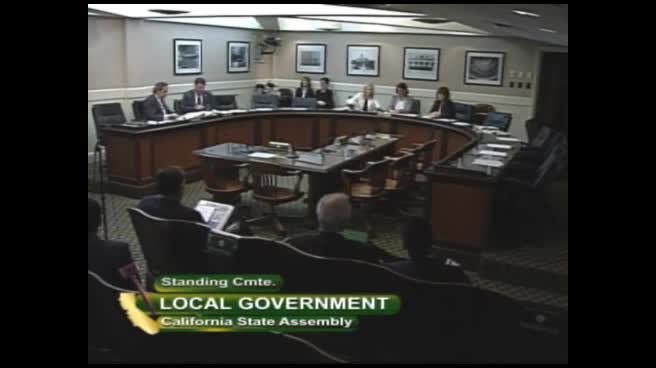 2MIN
Assembly Standing Committee on Local Government
Bill Author


