AB 1448: Elderly Parole Program.
- Session Year: 2017-2018
- House: Assembly
- Latest Version Date: 2017-10-11
Existing law requires the Board of Parole Hearings to meet with an inmate during the 6th year prior to the inmates minimum eligible parole release date to document the inmates activities and conduct pertinent to parole eligibility. Existing law, the Victims Bill of Rights Act of 2008: Marsys Law, as added by Proposition 9 at the November 4, 2008, statewide general election, requires the panel, or the board if sitting en banc, to set a release date at the meeting, unless it determines that consideration of the public and victims safety requires a more lengthy period of incarceration, and that a parole date cannot be fixed at the meeting. Existing law requires the board to schedule the next parole consideration hearing 15, 10, 7, 5, or 3 years after any hearing at which parole is denied. Existing law allows the board to advance a hearing set pursuant to these provisions to an earlier date when a change in circumstances or new information establishes a reasonable likelihood that consideration of the public and victims safety does not require an additional period of incarceration.
This bill would establish the Elderly Parole Program, for the purpose of reviewing the parole suitability of inmates who are 60 years of age or older and who have served a minimum of 25 years of continuous incarceration, as defined, on their sentence. When considering the release of an inmate who meets this criteria, the bill would require the board to consider whether age, time served, and diminished physical condition, if any, have reduced the elderly inmates risk for future violence. The bill would also require the Board of Parole Hearings to consider whether an inmate will qualify for the program when determining the prisoners next parole suitability hearing. If the inmate is found suitable for parole under the Elderly Parole Program, the bill would require the board to release the individual on parole, as specified. The bill would exempt from Elderly Parole Program eligibility a person who was sentenced pursuant to the Three Strikes Law, a person who was sentenced to life in prison without the possibility of parole or death, and a person who was convicted of the first-degree murder of a peace officer or a person who had been a peace officer, as provided. The bill would make conforming changes.
This bill would incorporate additional changes to Section 3041 of the Penal Code proposed by AB 1408 to be operative only if this bill and AB 1408 are enacted and this bill is enacted last.
Existing law requires the Board of Parole Hearings to meet with an inmate during the 6th year prior to the inmates minimum eligible parole release date to document the inmates activities and conduct pertinent to parole eligibility. Existing law, the Victims Bill of Rights Act of 2008: Marsys Law, as added by Proposition 9 at the November 4, 2008, statewide general election, requires the panel, or the board if sitting en banc, to set a release date at the meeting, unless it determines that consideration of the public and victims safety requires a more lengthy period of incarceration, and that a parole date cannot be fixed at the meeting. Existing law requires the board to schedule the next parole consideration hearing 15, 10, 7, 5, or 3 years after any hearing at which parole is denied. Existing law allows the board to advance a hearing set pursuant to these provisions to an earlier date when a change in circumstances or new information establishes a reasonable likelihood that consideration of the public and victims safety does not require an additional period of incarceration.
This bill would establish the Elderly Parole Program, for prisoners the purpose of reviewing the parole suitability of inmates who are 60 years of age or older and who have served a minimum of 25 years of continuous incarceration, as defined, on their sentence. When considering the release of an inmate who meets this criteria, the bill would require the board to consider whether age, time served, and diminished physical condition, if any, have reduced the elderly prisoners inmates risk for future violence. The bill would also require the Board of Parole Hearings to consider whether a prisoner an inmate will qualify for the program when determining the prisoners next parole suitability hearing. If the prisoner inmate is found suitable for parole under the Elderly Parole Program, the bill would require the board to release the individual on parole, as specified. The bill would exempt from Elderly Parole Program eligibility a person who was sentenced pursuant to the Three Strikes Law, a person who was sentenced to life in prison without the possibility of parole or death, and a person who was convicted of the first-degree murder of a peace officer or a person who had been a peace officer, as provided. The bill would make conforming changes.
Existing law requires the Board of Parole Hearings to meet with an inmate during the 6th year prior to the inmates minimum eligible parole release date to document the inmates activities and conduct pertinent to parole eligibility. Existing law, the Victims Bill of Rights Act of 2008: Marsys Law, as added by Proposition 9 at the November 4, 2008, statewide general election, requires the panel, or the board if sitting en banc, to set a release date at the meeting, unless it determines that consideration of the public and victims safety requires a more lengthy period of incarceration, and that a parole date cannot be fixed at the meeting. Existing law requires the board to schedule the next parole consideration hearing 15, 10, 7, 5, or 3 years after any hearing at which parole is denied. Existing law allows the board to advance a hearing set pursuant to these provisions to an earlier date when a change in circumstances or new information establishes a reasonable likelihood that consideration of the public and victims safety does not require an additional period of incarceration.
This bill would establish the Elderly Parole Program, for prisoners who are 60 years of age or older and who have served a minimum of 25 years of their sentence. When considering the release of an inmate who meets this criteria, the bill would require the board to consider whether age, time served, and diminished physical condition, if any, have reduced the elderly prisoners risk for future violence. The bill would also require the Board of Parole Hearings to consider whether a prisoner will qualify for the program when determining the prisoners next parole suitability hearing. If the prisoner is found suitable for parole under the Elderly Parole Program, the bill would require the board to release the individual on parole, as specified. The bill would exempt from Elderly Parole Program eligibility a person who was sentenced pursuant to the Three Strikes Law, a person who was sentenced to life in prison without the possibility of parole or death, and a person who was convicted of the first-degree murder of a peace officer or a person who had been a peace officer, as provided.
Existing law requires the Board of Parole Hearings to meet with an inmate during the 6th year prior to the inmates minimum eligible parole release date to document the inmates activities and conduct pertinent to parole eligibility. Existing law, the Victims Bill of Rights Act of 2008: Marsys Law, as added by Proposition 9 at the November 4, 2008, statewide general election, requires the panel, or the board if sitting en banc, to set a release date at the meeting, unless it determines that consideration of the public and victims safety requires a more lengthy period of incarceration, and that a parole date cannot be fixed at the meeting. Existing law requires the board to schedule the next parole consideration hearing 15, 10, 7, 5, or 3 years after any hearing at which parole is denied. Existing law allows the board to advance a hearing set pursuant to these provisions to an earlier date when a change in circumstances or new information establishes a reasonable likelihood that consideration of the public and victims safety does not require an additional period of incarceration.
This bill would establish the Elderly Parole Program, for prisoners who are 60 years of age or older and who have served a minimum of 25 years of their sentence. When considering the release of an inmate who meets this criteria, the bill would require the board to consider whether age, time served, and diminished physical condition, if any, have reduced the elderly prisoners risk for future violence. The bill would also require the Board of Parole Hearings to consider whether a prisoner will qualify for the program when determining the prisoners next parole suitability hearing. If the prisoner is found suitable for parole under the Elderly Parole Program, the bill would require the board to release the individual on parole, as specified.
Existing law permits a defendant to withdraw his or her plea of guilty or plea of nolo contendere and enter a plea of not guilty if he or she has fulfilled the conditions of probation for the entire period of probation, has been discharged prior to the termination of the period of probation, has been convicted of a misdemeanor and not granted probation and has fully complied with and performed the sentence of the court, or has been sentenced to a county jail for a felony, or if a court, in its discretion and the interests of justice, determines that a defendant should be granted this or other specified relief. In either case, existing law releases the defendant from all penalties and disabilities resulting from the offense of which he or she has been convicted. Existing law makes this relief unavailable if the defendant has committed any one of specified offenses.This bill would make technical, nonsubstantive changes to those provisions.Existing law permits a defendant to withdraw his or her plea of guilty or plea of nolo contendere and enter a plea of not guilty if he or she has fulfilled the conditions of probation for the entire period of probation, has been discharged prior to the termination of the period of probation, has been convicted of a misdemeanor and not granted probation and has fully complied with and performed the sentence of the court, or has been sentenced to a county jail for a felony, or if a court, in its discretion and the interests of justice, determines that a defendant should be granted this or other specified relief. In either case, existing law releases the defendant from all penalties and disabilities resulting from the offense of which he or she has been convicted. Existing law makes this relief unavailable if the defendant has committed any one of specified offenses.
This bill would make technical, nonsubstantive changes to those provisions.
(a)(1)In the case of any inmate sentenced pursuant to any law, other than Chapter 4.5 (commencing with Section 1170) of Title 7 of Part 2, the Board of Parole Hearings shall meet with each inmate during the sixth year before the inmates minimum eligible parole date for the purposes of reviewing and documenting the inmates activities and conduct pertinent to parole eligibility. During this consultation, the board shall provide the inmate information about the parole hearing process, legal factors relevant to his or her suitability or unsuitability for parole, and individualized recommendations for the inmate regarding his or her work assignments, rehabilitative programs, and institutional behavior. Within 30 days following the consultation, the board shall issue its positive and negative findings and recommendations to the inmate in writing.
(2)One year before the inmates minimum eligible parole date a panel of two or more commissioners or deputy commissioners shall again meet with the inmate and shall normally grant parole as provided in Section 3041.5. No more than one member of the panel shall be a deputy commissioner.
(3)In the event of a tie vote, the matter shall be referred for an en banc review of the record that was before the panel that rendered the tie vote. Upon en banc review, the board shall vote to either grant or deny parole and render a statement of decision. The en banc review shall be conducted pursuant to subdivision (e).
(4)Upon a grant of parole, the inmate shall be released subject to all applicable review periods. However, an inmate shall not be released before reaching his or her minimum eligible parole date as set pursuant to Section 3046 unless the inmate is eligible for earlier release pursuant to his or her youth offender parole eligibility date or elderly parole eligible date.
(5)At least one commissioner of the panel shall have been present at the last preceding meeting, unless it is not feasible to do so or where the last preceding meeting was the initial meeting. Any person on the hearing panel may request review of any decision regarding parole for an en banc hearing by the board. In case of a review, a majority vote in favor of parole by the board members participating in an en banc review is required to grant parole to any inmate.
(b)(1)The panel or the board, sitting en banc, shall grant parole to an inmate unless it determines that the gravity of the current convicted offense or offenses, or the timing and gravity of current or past convicted offense or offenses, is such that consideration of the public safety requires a more lengthy period of incarceration for this individual.
(2)After July 30, 2001, any decision of the parole panel finding an inmate suitable for parole shall become final within 120 days of the date of the hearing. During that period, the board may review the panels decision. The panels decision shall become final pursuant to this subdivision unless the board finds that the panel made an error of law, or that the panels decision was based on an error of fact, or that new information should be presented to the board, any of which when corrected or considered by the board has a substantial likelihood of resulting in a substantially different decision upon a rehearing. In making this determination, the board shall consult with the commissioners who conducted the parole consideration hearing.
(3)A decision of a panel shall not be disapproved and referred for rehearing except by a majority vote of the board, sitting en banc, following a public meeting.
(c)For the purpose of reviewing the suitability for parole of those inmates eligible for parole under prior law at a date earlier than that calculated under Section 1170.2, the board shall appoint panels of at least two persons to meet annually with each inmate until the time the person is released pursuant to proceedings or reaches the expiration of his or her term as calculated under Section 1170.2.
(d)It is the intent of the Legislature that, during times when there is no backlog of inmates awaiting parole hearings, life parole consideration hearings, or life rescission hearings, hearings will be conducted by a panel of three or more members, the majority of whom shall be commissioners. The board shall report monthly on the number of cases where an inmate has not received a completed initial or subsequent parole consideration hearing within 30 days of the hearing date required by subdivision (a) of Section 3041.5 or paragraph (2) of subdivision (b) of Section 3041.5, unless the inmate has waived the right to those timeframes. That report shall be considered the backlog of cases for purposes of this section, and shall include information on the progress toward eliminating the backlog, and on the number of inmates who have waived their right to the above timeframes. The report shall be made public at a regularly scheduled meeting of the board and a written report shall be made available to the public and transmitted to the Legislature quarterly.
(e)For purposes of this section, an en banc review by the board means a review conducted by a majority of commissioners holding office on the date the matter is heard by the board. An en banc review shall be conducted in compliance with the following:
(1)The commissioners conducting the review shall consider the entire record of the hearing that resulted in the tie vote.
(2)The review shall be limited to the record of the hearing. The record shall consist of the transcript or audiotape of the hearing, written or electronically recorded statements actually considered by the panel that produced the tie vote, and any other material actually considered by the panel. New evidence or comments shall not be considered in the en banc proceeding.
(3)The board shall separately state reasons for its decision to grant or deny parole.
(4)A commissioner who was involved in the tie vote shall be recused from consideration of the matter in the en banc review.
SEC. 1.1.Section 3041 of the Penal Code is amended to read:3041.(a)(1)In the case of any inmate sentenced pursuant to any law, other than Chapter 4.5 (commencing with Section 1170) of Title 7 of Part 2, the Board of Parole Hearings shall meet with each inmate during the sixth year before the inmates minimum eligible parole date for the purposes of reviewing and documenting the inmates activities and conduct pertinent to parole eligibility. During this consultation, the board shall provide the inmate information about the parole hearing process, legal factors relevant to his or her suitability or unsuitability for parole, and individualized recommendations for the inmate regarding his or her work assignments, rehabilitative programs, and institutional behavior. Within 30 days following the consultation, the board shall issue its positive and negative findings and recommendations to the inmate in writing.
(2)One year before the inmates minimum eligible parole date a panel of two or more commissioners or deputy commissioners shall again meet with the inmate and shall normally grant parole as provided in Section 3041.5. No more than one member of the panel shall be a deputy commissioner.
(3)In the event of a tie vote, the matter shall be referred for an en banc review of the record that was before the panel that rendered the tie vote. Upon en banc review, the board shall vote to either grant or deny parole and render a statement of decision. The en banc review shall be conducted pursuant to subdivision (e).
(4)Upon a grant of parole, the inmate shall be released subject to all applicable review periods. However, an inmate shall not be released before reaching his or her minimum eligible parole date as set pursuant to Section 3046 unless the inmate is eligible for earlier release pursuant to his or her youth offender parole eligibility date or elderly parole eligible date.
(5)At least one commissioner of the panel shall have been present at the last preceding meeting, unless it is not feasible to do so or where the last preceding meeting was the initial meeting. Any person on the hearing panel may request review of any decision regarding parole for an en banc hearing by the board. In case of a review, a majority vote in favor of parole by the board members participating in an en banc review is required to grant parole to any inmate.
(b)(1)The panel or the board, sitting en banc, shall grant parole to an inmate unless it determines that the gravity of the current convicted offense or offenses, or the timing and gravity of current or past convicted offense or offenses, is such that consideration of the public safety requires a more lengthy period of incarceration for this individual. The panel or the board, sitting en banc, shall consider the entire criminal history of the inmate, including all current or past convicted offenses, in making this determination.
(2)After July 30, 2001, any decision of the parole panel finding an inmate suitable for parole shall become final within 120 days of the date of the hearing. During that period, the board may review the panels decision. The panels decision shall become final pursuant to this subdivision unless the board finds that the panel made an error of law, or that the panels decision was based on an error of fact, or that new information should be presented to the board, any of which when corrected or considered by the board has a substantial likelihood of resulting in a substantially different decision upon a rehearing. In making this determination, the board shall consult with the commissioners who conducted the parole consideration hearing.
(3)A decision of a panel shall not be disapproved and referred for rehearing except by a majority vote of the board, sitting en banc, following a public meeting.
(c)For the purpose of reviewing the suitability for parole of those inmates eligible for parole under prior law at a date earlier than that calculated under Section 1170.2, the board shall appoint panels of at least two persons to meet annually with each inmate until the time the person is released pursuant to proceedings or reaches the expiration of his or her term as calculated under Section 1170.2.
(d)It is the intent of the Legislature that, during times when there is no backlog of inmates awaiting parole hearings, life parole consideration hearings, or life rescission hearings, hearings will be conducted by a panel of three or more members, the majority of whom shall be commissioners. The board shall report monthly on the number of cases where an inmate has not received a completed initial or subsequent parole consideration hearing within 30 days of the hearing date required by subdivision (a) of Section 3041.5 or paragraph (2) of subdivision (b) of Section 3041.5, unless the inmate has waived the right to those timeframes. That report shall be considered the backlog of cases for purposes of this section, and shall include information on the progress toward eliminating the backlog, and on the number of inmates who have waived their right to the above timeframes. The report shall be made public at a regularly scheduled meeting of the board and a written report shall be made available to the public and transmitted to the Legislature quarterly.
(e)For purposes of this section, an en banc review by the board means a review conducted by a majority of commissioners holding office on the date the matter is heard by the board. An en banc review shall be conducted in compliance with the following:
(1)The commissioners conducting the review shall consider the entire record of the hearing that resulted in the tie vote.
(2)The review shall be limited to the record of the hearing. The record shall consist of the transcript or audiotape of the hearing, written or electronically recorded statements actually considered by the panel that produced the tie vote, and any other material actually considered by the panel. New evidence or comments shall not be considered in the en banc proceeding.
(3)The board shall separately state reasons for its decision to grant or deny parole.
(4)A commissioner who was involved in the tie vote shall be recused from consideration of the matter in the en banc review.
SEC. 2.Section 3046 of the Penal Code is amended to read:3046.(a)An inmate imprisoned under a life sentence shall not be paroled until he or she has served the greater of the following:
(1)A term of at least seven calendar years.
(2)A term as established pursuant to any other law that establishes a minimum term or minimum period of confinement under a life sentence before eligibility for parole.
(b)If two or more life sentences are ordered to run consecutively to each other pursuant to Section 669, an inmate so imprisoned shall not be paroled until he or she has served the term specified in subdivision (a) on each of the life sentences that are ordered to run consecutively.
(c)Notwithstanding subdivisions (a) and (b), an inmate found suitable for parole pursuant to a youth offender parole hearing as described in Section 3051 or an elderly parole hearing as described in Section 3055 shall be paroled regardless of the manner in which the board set release dates pursuant to subdivision (a) of Section 3041, subject to subdivision (b) of Section 3041 and Sections 3041.1 and 3041.2, as applicable.
(d)The Board of Parole Hearings shall, in considering a parole for an inmate, consider all statements and recommendations which may have been submitted by the judge, district attorney, and sheriff, pursuant to Section 1203.01, or in response to notices given under Section 3042, and recommendations of other persons interested in the granting or denying of parole. The board shall enter on its order granting or denying parole to these inmates, the fact that the statements and recommendations have been considered by it.
SEC. 3.Section 3055 is added to the Penal Code, to read:3055.(a)The Elderly Parole Program is hereby established, to be administered by the Board of Parole Hearing, for purposes of reviewing the parole suitability of any inmate who is 60 years of age or older and has served a minimum of 25 years of continuous incarceration on his or her current sentence, serving either a determinate or indeterminate sentence.
(b)(1)For purposes of this code, the term elderly parole eligible date means the date on which an inmate who qualifies as an elderly offender is eligible for release from prison.
(2)For purposes of this section, incarceration means detention in a city or county jail, local juvenile facility, a mental health facility, a Division of Juvenile Justice facility, or a Department of Corrections and Rehabilitation facility.
(c)When considering the release of an inmate specified by subdivision (a) pursuant to Section 3041, the board shall give special consideration to whether age, time served, and diminished physical condition, if any, have reduced the elderly inmates risk for future violence.
(d)When scheduling a parole suitability hearing date pursuant to subdivision (b) of Section 3041.5 or when considering a request for an advance hearing pursuant to subdivision (d) of Section 3041.5, the board shall consider whether the inmate meets or will meet the criteria specified in subdivision (a).
(e)An individual who is subject to this section shall meet with the board pursuant to subdivision (a) of Section 3041. If an inmate is found suitable for parole under the Elderly Parole Program, the board shall release the individual on parole as provided in Section 3041.
(f)If parole is not granted, the board shall set the time for a subsequent elderly parole hearing in accordance with paragraph (3) of subdivision (b) of Section 3041.5. No subsequent elderly parole hearing shall be necessary if the offender is released pursuant to other statutory provisions prior to the date of the subsequent hearing.
(g)This section shall not apply to cases in which sentencing occurs pursuant to Section 1170.12, subdivisions (b) to (i), inclusive, of Section 667, or in which an individual was sentenced to life in prison without the possibility of parole or death.
(h)This section does not apply if the person was convicted of first-degree murder if the victim was a peace officer, as defined in Section 830.1, 830.2, 830.3, 830.31, 830.32, 830.33, 830.34, 830.35, 830.36, 830.37, 830.4, 830.5, 830.6, 830.10, 830.11, or 830.12, who was killed while engaged in the performance of his or her duties, and the individual knew, or reasonably should have known, that the victim was a peace officer engaged in the performance of his or her duties, or the victim was a peace officer or a former peace officer under any of the above-enumerated sections, and was intentionally killed in retaliation for the performance of his or her official duties.
(i)This section does not alter the rights of victims at parole hearings.
SEC. 4.Section 1.1 of this bill incorporates amendments to Section 3041 of the Penal Code proposed by both this bill and Assembly Bill 1408. That section shall only become operative if (1) both bills are enacted and become effective on or before January 1, 2018, (2) each bill amends Section 3041 of the Penal Code, and (3) this bill is enacted after Assembly Bill 1408, in which case Section 1 of this bill shall not become operative.
(a)(1)In the case of any inmate sentenced pursuant to any law, other than Chapter 4.5 (commencing with Section 1170) of Title 7 of Part 2, the Board of Parole Hearings shall meet with each inmate during the sixth year before the inmates minimum eligible parole date for the purposes of reviewing and documenting the inmates activities and conduct pertinent to parole eligibility. During this consultation, the board shall provide the inmate information about the parole hearing process, legal factors relevant to his or her suitability or unsuitability for parole, and individualized recommendations for the inmate regarding his or her work assignments, rehabilitative programs, and institutional behavior. Within 30 days following the consultation, the board shall issue its positive and negative findings and recommendations to the inmate in writing.
(2)One year before the inmates minimum eligible parole date a panel of two or more commissioners or deputy commissioners shall again meet with the inmate and shall normally grant parole as provided in Section 3041.5. No more than one member of the panel shall be a deputy commissioner.
(3)In the event of a tie vote, the matter shall be referred for an en banc review of the record that was before the panel that rendered the tie vote. Upon en banc review, the board shall vote to either grant or deny parole and render a statement of decision. The en banc review shall be conducted pursuant to subdivision (e).
(4)Upon a grant of parole, the inmate shall be released subject to all applicable review periods. However, an inmate shall not be released before reaching his or her minimum eligible parole date as set pursuant to Section 3046 unless the inmate is eligible for earlier release pursuant to his or her youth offender parole eligibility date or elderly parole eligible date.
(5)At least one commissioner of the panel shall have been present at the last preceding meeting, unless it is not feasible to do so or where the last preceding meeting was the initial meeting. Any person on the hearing panel may request review of any decision regarding parole for an en banc hearing by the board. In case of a review, a majority vote in favor of parole by the board members participating in an en banc review is required to grant parole to any inmate.
(b)(1)The panel or the board, sitting en banc, shall grant parole to an inmate unless it determines that the gravity of the current convicted offense or offenses, or the timing and gravity of current or past convicted offense or offenses, is such that consideration of the public safety requires a more lengthy period of incarceration for this individual.
(2)After July 30, 2001, any decision of the parole panel finding an inmate suitable for parole shall become final within 120 days of the date of the hearing. During that period, the board may review the panels decision. The panels decision shall become final pursuant to this subdivision unless the board finds that the panel made an error of law, or that the panels decision was based on an error of fact, or that new information should be presented to the board, any of which when corrected or considered by the board has a substantial likelihood of resulting in a substantially different decision upon a rehearing. In making this determination, the board shall consult with the commissioners who conducted the parole consideration hearing.
(3)A decision of a panel shall not be disapproved and referred for rehearing except by a majority vote of the board, sitting en banc, following a public meeting.
(c)For the purpose of reviewing the suitability for parole of those inmates eligible for parole under prior law at a date earlier than that calculated under Section 1170.2, the board shall appoint panels of at least two persons to meet annually with each inmate until the time the person is released pursuant to proceedings or reaches the expiration of his or her term as calculated under Section 1170.2.
(d)It is the intent of the Legislature that, during times when there is no backlog of inmates awaiting parole hearings, life parole consideration hearings, or life rescission hearings, hearings will be conducted by a panel of three or more members, the majority of whom shall be commissioners. The board shall report monthly on the number of cases where an inmate has not received a completed initial or subsequent parole consideration hearing within 30 days of the hearing date required by subdivision (a) of Section 3041.5 or paragraph (2) of subdivision (b) of Section 3041.5, unless the inmate has waived the right to those timeframes. That report shall be considered the backlog of cases for purposes of this section, and shall include information on the progress toward eliminating the backlog, and on the number of inmates who have waived their right to the above timeframes. The report shall be made public at a regularly scheduled meeting of the board and a written report shall be made available to the public and transmitted to the Legislature quarterly.
(e)For purposes of this section, an en banc review by the board means a review conducted by a majority of commissioners holding office on the date the matter is heard by the board. An en banc review shall be conducted in compliance with the following:
(1)The commissioners conducting the review shall consider the entire record of the hearing that resulted in the tie vote.
(2)The review shall be limited to the record of the hearing. The record shall consist of the transcript or audiotape of the hearing, written or electronically recorded statements actually considered by the panel that produced the tie vote, and any other material actually considered by the panel. New evidence or comments shall not be considered in the en banc proceeding.
(3)The board shall separately state reasons for its decision to grant or deny parole.
(4)A commissioner who was involved in the tie vote shall be recused from consideration of the matter in the en banc review.
SEC. 1.1.Section 3041 of the Penal Code is amended to read:3041.(a)(1)In the case of any inmate sentenced pursuant to any law, other than Chapter 4.5 (commencing with Section 1170) of Title 7 of Part 2, the Board of Parole Hearings shall meet with each inmate during the sixth year before the inmates minimum eligible parole date for the purposes of reviewing and documenting the inmates activities and conduct pertinent to parole eligibility. During this consultation, the board shall provide the inmate information about the parole hearing process, legal factors relevant to his or her suitability or unsuitability for parole, and individualized recommendations for the inmate regarding his or her work assignments, rehabilitative programs, and institutional behavior. Within 30 days following the consultation, the board shall issue its positive and negative findings and recommendations to the inmate in writing.
(2)One year before the inmates minimum eligible parole date a panel of two or more commissioners or deputy commissioners shall again meet with the inmate and shall normally grant parole as provided in Section 3041.5. No more than one member of the panel shall be a deputy commissioner.
(3)In the event of a tie vote, the matter shall be referred for an en banc review of the record that was before the panel that rendered the tie vote. Upon en banc review, the board shall vote to either grant or deny parole and render a statement of decision. The en banc review shall be conducted pursuant to subdivision (e).
(4)Upon a grant of parole, the inmate shall be released subject to all applicable review periods. However, an inmate shall not be released before reaching his or her minimum eligible parole date as set pursuant to Section 3046 unless the inmate is eligible for earlier release pursuant to his or her youth offender parole eligibility date or elderly parole eligible date.
(5)At least one commissioner of the panel shall have been present at the last preceding meeting, unless it is not feasible to do so or where the last preceding meeting was the initial meeting. Any person on the hearing panel may request review of any decision regarding parole for an en banc hearing by the board. In case of a review, a majority vote in favor of parole by the board members participating in an en banc review is required to grant parole to any inmate.
(b)(1)The panel or the board, sitting en banc, shall grant parole to an inmate unless it determines that the gravity of the current convicted offense or offenses, or the timing and gravity of current or past convicted offense or offenses, is such that consideration of the public safety requires a more lengthy period of incarceration for this individual. The panel or the board, sitting en banc, shall consider the entire criminal history of the inmate, including all current or past convicted offenses, in making this determination.
(2)After July 30, 2001, any decision of the parole panel finding an inmate suitable for parole shall become final within 120 days of the date of the hearing. During that period, the board may review the panels decision. The panels decision shall become final pursuant to this subdivision unless the board finds that the panel made an error of law, or that the panels decision was based on an error of fact, or that new information should be presented to the board, any of which when corrected or considered by the board has a substantial likelihood of resulting in a substantially different decision upon a rehearing. In making this determination, the board shall consult with the commissioners who conducted the parole consideration hearing.
(3)A decision of a panel shall not be disapproved and referred for rehearing except by a majority vote of the board, sitting en banc, following a public meeting.
(c)For the purpose of reviewing the suitability for parole of those inmates eligible for parole under prior law at a date earlier than that calculated under Section 1170.2, the board shall appoint panels of at least two persons to meet annually with each inmate until the time the person is released pursuant to proceedings or reaches the expiration of his or her term as calculated under Section 1170.2.
(d)It is the intent of the Legislature that, during times when there is no backlog of inmates awaiting parole hearings, life parole consideration hearings, or life rescission hearings, hearings will be conducted by a panel of three or more members, the majority of whom shall be commissioners. The board shall report monthly on the number of cases where an inmate has not received a completed initial or subsequent parole consideration hearing within 30 days of the hearing date required by subdivision (a) of Section 3041.5 or paragraph (2) of subdivision (b) of Section 3041.5, unless the inmate has waived the right to those timeframes. That report shall be considered the backlog of cases for purposes of this section, and shall include information on the progress toward eliminating the backlog, and on the number of inmates who have waived their right to the above timeframes. The report shall be made public at a regularly scheduled meeting of the board and a written report shall be made available to the public and transmitted to the Legislature quarterly.
(e)For purposes of this section, an en banc review by the board means a review conducted by a majority of commissioners holding office on the date the matter is heard by the board. An en banc review shall be conducted in compliance with the following:
(1)The commissioners conducting the review shall consider the entire record of the hearing that resulted in the tie vote.
(2)The review shall be limited to the record of the hearing. The record shall consist of the transcript or audiotape of the hearing, written or electronically recorded statements actually considered by the panel that produced the tie vote, and any other material actually considered by the panel. New evidence or comments shall not be considered in the en banc proceeding.
(3)The board shall separately state reasons for its decision to grant or deny parole.
(4)A commissioner who was involved in the tie vote shall be recused from consideration of the matter in the en banc review.
SEC. 2.Section 3046 of the Penal Code is amended to read:3046.(a)An inmate imprisoned under a life sentence shall not be paroled until he or she has served the greater of the following:
(1)A term of at least seven calendar years.
(2)A term as established pursuant to any other law that establishes a minimum term or minimum period of confinement under a life sentence before eligibility for parole.
(b)If two or more life sentences are ordered to run consecutively to each other pursuant to Section 669, an inmate so imprisoned shall not be paroled until he or she has served the term specified in subdivision (a) on each of the life sentences that are ordered to run consecutively.
(c)Notwithstanding subdivisions (a) and (b), an inmate found suitable for parole pursuant to a youth offender parole hearing as described in Section 3051 or an elderly parole hearing as described in Section 3055 shall be paroled regardless of the manner in which the board set release dates pursuant to subdivision (a) of Section 3041, subject to subdivision (b) of Section 3041 and Sections 3041.1 and 3041.2, as applicable.
(d)The Board of Parole Hearings shall, in considering a parole for an inmate, consider all statements and recommendations which may have been submitted by the judge, district attorney, and sheriff, pursuant to Section 1203.01, or in response to notices given under Section 3042, and recommendations of other persons interested in the granting or denying of parole. The board shall enter on its order granting or denying parole to these inmates, the fact that the statements and recommendations have been considered by it.
SEC. 3.Section 3055 is added to the Penal Code, to read:3055.(a)The Elderly Parole Program is hereby established, to be administered by the Board of Parole Hearing, for purposes of reviewing the parole suitability of any inmate who is 60 years of age or older and has served a minimum of 25 years of continuous incarceration on his or her current sentence, serving either a determinate or indeterminate sentence.
(b)(1)For purposes of this code, the term elderly eligible parole parole eligible date means the date on which an inmate who qualifies as an elderly offender is eligible for release from prison.
(2)For purposes of this section, incarceration means detention in a city or county jail, local juvenile facility, a mental health facility, a Division of Juvenile Justice facility, or a Department of Corrections and Rehabilitation facility.
(c)When considering the release of an inmate specified by subdivision (a) pursuant to Section 3041, the board shall give special consideration to whether age, time served, and diminished physical condition, if any, have reduced the elderly inmates risk for future violence.
(d)When scheduling a parole suitability hearing date pursuant to subdivision (b) of Section 3041.5 or when considering a request for an advance hearing pursuant to subdivision (d) of Section 3041.5, the board shall consider whether the inmate meets or will meet the criteria specified in subdivision (a).
(e)An individual who is subject to this section shall meet with the board pursuant to subdivision (a) of Section 3041. If an inmate is found suitable for parole under the Elderly Parole Program, the board shall release the individual on parole as provided in Section 3041.
(f)If parole is not granted, the board shall set the time for a subsequent elderly parole hearing in accordance with paragraph (3) of subdivision (b) of Section 3041.5. No subsequent elderly parole hearing shall be necessary if the offender is released pursuant to other statutory provisions prior to the date of the subsequent hearing.
(g)This section shall not apply to cases in which sentencing occurs pursuant to Section 1170.12, subdivisions (b) to (i), inclusive, of Section 667, or in which an individual was sentenced to life in prison without the possibility of parole or death.
(h)This section does not apply if the person was convicted of first-degree murder if the victim was a peace officer, as defined in Section 830.1, 830.2, 830.3, 830.31, 830.32, 830.33, 830.34, 830.35, 830.36, 830.37, 830.4, 830.5, 830.6, 830.10, 830.11, or 830.12, who was killed while engaged in the performance of his or her duties, and the individual knew, or reasonably should have known, that the victim was a peace officer engaged in the performance of his or her duties, or the victim was a peace officer or a former peace officer under any of the above-enumerated sections, and was intentionally killed in retaliation for the performance of his or her official duties.
(i)This section does not alter the rights of victims at parole hearings.
SEC. 4.Section 1.1 of this bill incorporates amendments to Section 3041 of the Penal Code proposed by both this bill and Assembly Bill 1408. That section shall only become operative if (1) both bills are enacted and become effective on or before January 1, 2018, (2) each bill amends Section 3041 of the Penal Code, and (3) this bill is enacted after Assembly Bill 1408, in which case Section 1 of this bill shall not become operative.
(a)(1)In the case of any inmate sentenced pursuant to any law, other than Chapter 4.5 (commencing with Section 1170) of Title 7 of Part 2, the Board of Parole Hearings shall meet with each inmate during the sixth year before the inmates minimum eligible parole date for the purposes of reviewing and documenting the inmates activities and conduct pertinent to parole eligibility. During this consultation, the board shall provide the inmate information about the parole hearing process, legal factors relevant to his or her suitability or unsuitability for parole, and individualized recommendations for the inmate regarding his or her work assignments, rehabilitative programs, and institutional behavior. Within 30 days following the consultation, the board shall issue its positive and negative findings and recommendations to the inmate in writing.
(2)One year before the inmates minimum eligible parole date a panel of two or more commissioners or deputy commissioners shall again meet with the inmate and shall normally grant parole as provided in Section 3041.5. No more than one member of the panel shall be a deputy commissioner.
(3)In the event of a tie vote, the matter shall be referred for an en banc review of the record that was before the panel that rendered the tie vote. Upon en banc review, the board shall vote to either grant or deny parole and render a statement of decision. The en banc review shall be conducted pursuant to subdivision (e).
(4)Upon a grant of parole, the inmate shall be released subject to all applicable review periods. However, an inmate shall not be released before reaching his or her minimum eligible parole date as set pursuant to Section 3046 unless the inmate is eligible for earlier release pursuant to his or her youth offender parole eligibility date. date or elderly parole eligible date.
(5)At least one commissioner of the panel shall have been present at the last preceding meeting, unless it is not feasible to do so or where the last preceding meeting was the initial meeting. Any person on the hearing panel may request review of any decision regarding parole for an en banc hearing by the board. In case of a review, a majority vote in favor of parole by the board members participating in an en banc review is required to grant parole to any inmate.
(b)(1)The panel or the board, sitting en banc, shall grant parole to an inmate unless it determines that the gravity of the current convicted offense or offenses, or the timing and gravity of current or past convicted offense or offenses, is such that consideration of the public safety requires a more lengthy period of incarceration for this individual.
(2)After July 30, 2001, any decision of the parole panel finding an inmate suitable for parole shall become final within 120 days of the date of the hearing. During that period, the board may review the panels decision. The panels decision shall become final pursuant to this subdivision unless the board finds that the panel made an error of law, or that the panels decision was based on an error of fact, or that new information should be presented to the board, any of which when corrected or considered by the board has a substantial likelihood of resulting in a substantially different decision upon a rehearing. In making this determination, the board shall consult with the commissioners who conducted the parole consideration hearing.
(3)A decision of a panel shall not be disapproved and referred for rehearing except by a majority vote of the board, sitting en banc, following a public meeting.
(c)For the purpose of reviewing the suitability for parole of those inmates eligible for parole under prior law at a date earlier than that calculated under Section 1170.2, the board shall appoint panels of at least two persons to meet annually with each inmate until the time the person is released pursuant to proceedings or reaches the expiration of his or her term as calculated under Section 1170.2.
(d)It is the intent of the Legislature that, during times when there is no backlog of inmates awaiting parole hearings, life parole consideration hearings, or life rescission hearings, hearings will be conducted by a panel of three or more members, the majority of whom shall be commissioners. The board shall report monthly on the number of cases where an inmate has not received a completed initial or subsequent parole consideration hearing within 30 days of the hearing date required by subdivision (a) of Section 3041.5 or paragraph (2) of subdivision (b) of Section 3041.5, unless the inmate has waived the right to those timeframes. That report shall be considered the backlog of cases for purposes of this section, and shall include information on the progress toward eliminating the backlog, and on the number of inmates who have waived their right to the above timeframes. The report shall be made public at a regularly scheduled meeting of the board and a written report shall be made available to the public and transmitted to the Legislature quarterly.
(e)For purposes of this section, an en banc review by the board means a review conducted by a majority of commissioners holding office on the date the matter is heard by the board. An en banc review shall be conducted in compliance with the following:
(1)The commissioners conducting the review shall consider the entire record of the hearing that resulted in the tie vote.
(2)The review shall be limited to the record of the hearing. The record shall consist of the transcript or audiotape of the hearing, written or electronically recorded statements actually considered by the panel that produced the tie vote, and any other material actually considered by the panel. New evidence or comments shall not be considered in the en banc proceeding.
(3)The board shall separately state reasons for its decision to grant or deny parole.
(4)A commissioner who was involved in the tie vote shall be recused from consideration of the matter in the en banc review.
SEC. 2.Section 3046 of the Penal Code is amended to read:3046.(a)An inmate imprisoned under a life sentence shall not be paroled until he or she has served the greater of the following:
(1)A term of at least seven calendar years.
(2)A term as established pursuant to any other law that establishes a minimum term or minimum period of confinement under a life sentence before eligibility for parole.
(b)If two or more life sentences are ordered to run consecutively to each other pursuant to Section 669, an inmate so imprisoned shall not be paroled until he or she has served the term specified in subdivision (a) on each of the life sentences that are ordered to run consecutively.
(c)Notwithstanding subdivisions (a) and (b), an inmate found suitable for parole pursuant to a youth offender parole hearing as described in Section 3051 or an elderly parole hearing as described in Section 3055 shall be paroled regardless of the manner in which the board set release dates pursuant to subdivision (a) of Section 3041, subject to subdivision (b) of Section 3041 and Sections 3041.1 and 3041.2, as applicable.
(d)The Board of Parole Hearings shall, in considering a parole for an inmate, consider all statements and recommendations which may have been submitted by the judge, district attorney, and sheriff, pursuant to Section 1203.01, or in response to notices given under Section 3042, and recommendations of other persons interested in the granting or denying of parole. The board shall enter on its order granting or denying parole to these inmates, the fact that the statements and recommendations have been considered by it.
SECTION 1.SEC. 3.Section 3055 is added to the Penal Code, to read:3055.(a)The Elderly Parole Program is hereby established, to be administered by the Board of Parole Hearings. Hearing, for purposes of reviewing the parole suitability of any inmate who is 60 years of age or older and has served a minimum of 25 years of continuous incarceration on his or her current sentence, serving either a determinate or indeterminate sentence.
(b)A prisoner shall be considered for parole under the Elderly Parole Program if he or she meets both of the following conditions:
(1)The prisoner is 60 years of age or older.
(2)The prisoner has served a minimum of 25 years of continued incarceration on his or her current sentence, serving either a determinate or indeterminate sentence.
(b)(1)For purposes of this code, the term elderly eligible parole date means the date on which an inmate who qualifies as an elderly offender is eligible for release from prison.
(2)For purposes of this section, incarceration means detention in a city or county jail, local juvenile facility, a mental health facility, a Division of Juvenile Justice facility, or a Department of Corrections and Rehabilitation facility.
(c)When considering the release of a prisoner an inmate specified by subdivision (b) (a) pursuant to Section 3041, the board shall give special consideration to whether age, time served, and diminished physical condition, if any, have reduced the elderly prisoners inmates risk for future violence.
(d)When scheduling a parole suitability hearing date pursuant to subdivision (b) of Section 3041.5 or when considering a request for an advance hearing pursuant to subdivision (d) of Section 3041.5, the board shall consider whether the prisoner inmate meets or will meet the criteria specified in subdivision (b). (a).
(e)If the prisoner An individual who is subject to this section shall meet with the board pursuant to subdivision (a) of Section 3041. If an inmate is found suitable for parole under the Elderly Parole Program, the board shall release the individual on parole as provided in Section 3041.
(f)If parole is not granted, the board shall set the time for a subsequent elderly parole hearing in accordance with paragraph (3) of subdivision (b) of Section 3041.5. No subsequent elderly parole hearing shall be necessary if the offender is released pursuant to other statutory provisions prior to the date of the subsequent hearing.
(f)(g)This section shall not apply to cases in which sentencing occurs pursuant to Section 1170.12, subdivisions (b) to (i), inclusive, of Section 667, or in which an individual was sentenced to life in prison without the possibility of parole or death.
(g)(h)This section does not apply if the person was convicted of first-degree murder if the victim was a peace officer, as defined in Section 830.1, 830.2, 830.3, 830.31, 830.32, 830.33, 830.34, 830.35, 830.36, 830.37, 830.4, 830.5, 830.6, 830.10, 830.11, or 830.12, who was killed while engaged in the performance of his or her duties, and the individual knew, or reasonably should have known, that the victim was a peace officer engaged in the performance of his or her duties, or the victim was a peace officer or a former peace officer under any of the above-enumerated sections, and was intentionally killed in retaliation for the performance of his or her official duties.
(i)This section does not alter the rights of victims at parole hearings.
(a)The Elderly Parole Program is hereby established, to be administered by the Board of Parole Hearings.
(b)A prisoner shall be considered for parole under the Elderly Parole Program if he or she meets both of the following conditions:
(1)The prisoner is 60 years of age or older.
(2)The prisoner has served a minimum of 25 years of continued incarceration on his or her current sentence, serving either a determinate or indeterminate sentence.
(c)When considering the release of a prisoner specified by subdivision (b) pursuant to Section 3041, the board shall give special consideration to whether age, time served, and diminished physical condition, if any, have reduced the elderly prisoners risk for future violence.
(d)When scheduling a parole suitability hearing date pursuant to subdivision (b) of Section 3041.5 or when considering a request for an advance hearing pursuant to subdivision (d) of Section 3041.5, the board shall consider whether the prisoner meets or will meet the criteria specified in subdivision (b).
(e)If the prisoner is found suitable for parole under the Elderly Parole Program, the board shall release the individual on parole as provided in Section 3041.
(f)This section shall not apply to cases in which sentencing occurs pursuant to Section 1170.12, subdivisions (b) to (i), inclusive, of Section 667, or in which an individual was sentenced to life in prison without the possibility of parole or death.
(g)This section does not apply if the person was convicted of first-degree murder if the victim was a peace officer, as defined in Section 830.1, 830.2, 830.3, 830.31, 830.32, 830.33, 830.34, 830.35, 830.36, 830.37, 830.4, 830.5, 830.6, 830.10, 830.11, or 830.12, who was killed while engaged in the performance of his or her duties, and the individual knew, or reasonably should have known, that the victim was a peace officer engaged in the performance of his or her duties, or the victim was a peace officer or a former peace officer under any of the above-enumerated sections, and was intentionally killed in retaliation for the performance of his or her official duties.
(a)The Elderly Parole Program is hereby established, to be administered by the Board of Parole Hearings.
(b)A prisoner shall be considered for parole under the Elderly Parole Program if he or she meets both of the following conditions:
(1)The prisoner is 60 years of age or older.
(2)The prisoner has served a minimum of 25 years of continued incarceration on his or her current sentence, serving either a determinate or indeterminate sentence.
(c)When considering the release of a prisoner specified by subdivision (b) pursuant to Section 3041, the board shall give special consideration to whether age, time served, and diminished physical condition, if any, have reduced the elderly prisoners risk for future violence.
(d)When scheduling a parole suitability hearing date pursuant to subdivision (b) of Section 3041.5 or when considering a request for an advance hearing pursuant to subdivision (d) of Section 3041.5, the board shall consider whether the prisoner meets or will meet the criteria specified in subdivision (b).
(e)If the prisoner is found suitable for parole under the Elderly Parole Program, the board shall release the individual on parole as provided in Section 3041.
(f)This section shall not apply to cases in which sentencing occurs pursuant to Section 1170.12, subdivisions (b) to (i), inclusive, of Section 667, or in which an individual was sentenced to life in prison without the possibility of parole or death.
SECTION 1.Section 1203.4 of the Penal Code is amended to read:1203.4.(a)(1)If a defendant has fulfilled the conditions of probation for the entire period of probation, or has been discharged prior to the termination of the period of probation, or if a court, in its discretion and the interests of justice, determines that a defendant should be granted the relief available under this section, the defendant shall, at any time after the termination of the period of probation, be permitted by the court to withdraw his or her plea of guilty or plea of nolo contendere and enter a plea of not guilty if he or she is not serving a sentence for any offense, on probation for any offense, or charged with the commission of any offense. If the defendant has been convicted after a plea of not guilty, the court shall set aside the verdict of guilty. In either case, the court shall thereupon dismiss the accusations or information against the defendant and, except as otherwise provided in this section, he or she is released from all penalties and disabilities resulting from the offense of which he or she has been convicted, except as provided in Section 13555 of the Vehicle Code. The probationer shall be informed, in his or her probation papers, of this right and privilege and his or her right, if any, to petition for a certificate of rehabilitation and pardon. The probationer may make the application and change of plea in person or by attorney, or by the probation officer authorized in writing. However, in a subsequent prosecution of the defendant for any other offense, the prior conviction may be pleaded and proved and shall have the same effect as if probation had not been granted or the accusation or information dismissed. The order shall state, and the probationer shall be informed, that the order does not relieve him or her of the obligation to disclose the conviction in response to a direct question contained in a questionnaire or application for public office, for licensure by a state or local agency, or for contracting with the California State Lottery Commission.(2)Dismissal of an accusation or information pursuant to this section does not permit a person to own, possess, or have in his or her custody or control a firearm or prevent his or her conviction under Chapter 2 (commencing with Section 29800) of Division 9 of Title 4 of Part 6.(3)Dismissal of an accusation or information underlying a conviction pursuant to this section does not permit a person prohibited from holding public office as a result of that conviction to hold public office.(b)Subdivision (a) of this section does not apply to a misdemeanor that is within the provisions of Section 42002.1 of the Vehicle Code, to a violation of subdivision (c) of Section 286, Section 288, subdivision (c) of Section 288a, Section 288.5, subdivision (j) of Section 289, Section 311.1, 311.2, 311.3, or 311.11, or a felony conviction pursuant to subdivision (d) of Section 261.5, or to an infraction.(c)(1)Except as provided in paragraph (2), subdivision (a) does not apply to a person who receives a notice to appear or is otherwise charged with a violation of an offense described in subdivisions (a) to (e), inclusive, of Section 12810 of the Vehicle Code.(2)If a defendant who was convicted of a violation listed in paragraph (1) petitions the court, the court in its discretion and in the interests of justice, may order the relief provided pursuant to subdivision (a) to that defendant.(d)A person who petitions for a change of plea or setting aside of a verdict under this section may be required to reimburse the court for the actual costs of services rendered, whether or not the petition is granted and the records are sealed or expunged, at a rate to be determined by the court not to exceed one hundred fifty dollars ($150), and to reimburse the county for the actual costs of services rendered, whether or not the petition is granted and the records are sealed or expunged, at a rate to be determined by the county board of supervisors not to exceed one hundred fifty dollars ($150), and to reimburse a city for the actual costs of services rendered, whether or not the petition is granted and the records are sealed or expunged, at a rate to be determined by the city council not to exceed one hundred fifty dollars ($150). Ability to make this reimbursement shall be determined by the court using the standards set forth in paragraph (2) of subdivision (g) of Section 987.8 and shall not be a prerequisite to a persons eligibility under this section. The court may order reimbursement in any case in which the petitioner appears to have the ability to pay, without undue hardship, all or any portion of the costs for services established pursuant to this subdivision.(e)(1)Relief shall not be granted under this section unless the prosecuting attorney has been given 15 days notice of the petition for relief. The probation officer shall notify the prosecuting attorney when a petition is filed, pursuant to this section.(2)It shall be presumed that the prosecuting attorney has received notice if proof of service is filed with the court.(f)If, after receiving notice pursuant to subdivision (e), the prosecuting attorney fails to appear and object to a petition for dismissal, the prosecuting attorney may not move to set aside or otherwise appeal the grant of that petition.(g)Notwithstanding the above provisions or any other law, the Governor shall have the right to pardon a person convicted of a violation of subdivision (c) of Section 286, Section 288, subdivision (c) of Section 288a, Section 288.5, or subdivision (j) of Section 289, if there are extraordinary circumstances.(a)(1)In any case in which If a defendant has fulfilled the conditions of probation for the entire period of probation, or has been discharged prior to the termination of the period of probation, or in any other case in which if a court, in its discretion and the interests of justice, determines that a defendant should be granted the relief available under this section, the defendant shall, at any time after the termination of the period of probation, if he or she is not then serving a sentence for any offense, on probation for any offense, or charged with the commission of any offense, be permitted by the court to withdraw his or her plea of guilty or plea of nolo contendere and enter a plea of not guilty; or, if he or she guilty if he or she is not serving a sentence for any offense, on probation for any offense, or charged with the commission of any offense. If the defendant has been convicted after a plea of not guilty, the court shall set aside the verdict of guilty; and, in guilty. In either case, the court shall thereupon dismiss the accusations or information against the defendant and except as noted below, he or she shall thereafter be and, except as otherwise provided in this section, he or she is released from all penalties and disabilities resulting from the offense of which he or she has been convicted, except as provided in Section 13555 of the Vehicle Code. The probationer shall be informed, in his or her probation papers, of this right and privilege and his or her right, if any, to petition for a certificate of rehabilitation and pardon. The probationer may make the application and change of plea in person or by attorney, or by the probation officer authorized in writing. However, in any a subsequent prosecution of the defendant for any other offense, the prior conviction may be pleaded and proved and shall have the same effect as if probation had not been granted or the accusation or information dismissed. The order shall state, and the probationer shall be informed, that the order does not relieve him or her of the obligation to disclose the conviction in response to any a direct question contained in any a questionnaire or application for public office, for licensure by any a state or local agency, or for contracting with the California State Lottery Commission.
(2)Dismissal of an accusation or information pursuant to this section does not permit a person to own, possess, or have in his or her custody or control any a firearm or prevent his or her conviction under Chapter 2 (commencing with Section 29800) of Division 9 of Title 4 of Part 6.
(3)Dismissal of an accusation or information underlying a conviction pursuant to this section does not permit a person prohibited from holding public office as a result of that conviction to hold public office.
(4)This subdivision shall apply to all applications for relief under this section which are filed on or after November 23, 1970.
(b)Subdivision (a) of this section does not apply to any a misdemeanor that is within the provisions of Section 42002.1 of the Vehicle Code, to any a violation of subdivision (c) of Section 286, Section 288, subdivision (c) of Section 288a, Section 288.5, subdivision (j) of Section 289, Section 311.1, 311.2, 311.3, or 311.11, or any a felony conviction pursuant to subdivision (d) of Section 261.5, or to any an infraction.
(c)(1)Except as provided in paragraph (2), subdivision (a) does not apply to a person who receives a notice to appear or is otherwise charged with a violation of an offense described in subdivisions (a) to (e), inclusive, of Section 12810 of the Vehicle Code.
(2)If a defendant who was convicted of a violation listed in paragraph (1) petitions the court, the court in its discretion and in the interests of justice, may order the relief provided pursuant to subdivision (a) to that defendant.
(d)A person who petitions for a change of plea or setting aside of a verdict under this section may be required to reimburse the court for the actual costs of services rendered, whether or not the petition is granted and the records are sealed or expunged, at a rate to be determined by the court not to exceed one hundred fifty dollars ($150), and to reimburse the county for the actual costs of services rendered, whether or not the petition is granted and the records are sealed or expunged, at a rate to be determined by the county board of supervisors not to exceed one hundred fifty dollars ($150), and to reimburse any a city for the actual costs of services rendered, whether or not the petition is granted and the records are sealed or expunged, at a rate to be determined by the city council not to exceed one hundred fifty dollars ($150). Ability to make this reimbursement shall be determined by the court using the standards set forth in paragraph (2) of subdivision (g) of Section 987.8 and shall not be a prerequisite to a persons eligibility under this section. The court may order reimbursement in any case in which the petitioner appears to have the ability to pay, without undue hardship, all or any portion of the costs for services established pursuant to this subdivision.
(e)(1)Relief shall not be granted under this section unless the prosecuting attorney has been given 15 days notice of the petition for relief. The probation officer shall notify the prosecuting attorney when a petition is filed, pursuant to this section.
(2)It shall be presumed that the prosecuting attorney has received notice if proof of service is filed with the court.
(f)If, after receiving notice pursuant to subdivision (e), the prosecuting attorney fails to appear and object to a petition for dismissal, the prosecuting attorney may not move to set aside or otherwise appeal the grant of that petition.
(g)Notwithstanding the above provisions or any other provision of law, the Governor shall have the right to pardon a person convicted of a violation of subdivision (c) of Section 286, Section 288, subdivision (c) of Section 288a, Section 288.5, or subdivision (j) of Section 289, if there are extraordinary circumstances.
|
Date
|
Status
|
|---|---|
| Oct 11, 2017 | Chaptered by Secretary of State - Chapter 676, Statutes of 2017. |
| Oct 11, 2017 | Approved by the Governor. |
| Sep 21, 2017 | Enrolled and presented to the Governor at 3:30 p.m. |
| Sep 13, 2017 | Senate amendments concurred in. To Engrossing and Enrolling. |
| Sep 11, 2017 | In Assembly. Concurrence in Senate amendments pending. May be considered on or after September 13 pursuant to Assembly Rule 77. |
| Sep 11, 2017 | Read third time. Passed. Ordered to the Assembly. |
| Sep 7, 2017 | Read second time. Ordered to third reading. |
| Sep 6, 2017 | Read third time and amended. Ordered to second reading. |
| Aug 22, 2017 | Read second time. Ordered to third reading. |
| Aug 21, 2017 | From committee: Be ordered to second reading pursuant to Senate Rule 28.8. |
| Jul 12, 2017 | From committee: Do pass and re-refer to Com. on APPR. (Ayes 4. Noes 2.) (July 11). Re-referred to Com. on APPR. |
| Jun 14, 2017 | Referred to Com. on PUB. S. |
| Jun 5, 2017 | In Senate. Read first time. To Com. on RLS. for assignment. |
| Jun 1, 2017 | Read third time. Passed. Ordered to the Senate. (Ayes 41. Noes 33. Page 2069.) |
| May 30, 2017 | Read third time and amended. Ordered to third reading. (Page 1775.) |
| May 22, 2017 | Read second time. Ordered to third reading. |
| May 18, 2017 | Read second time and amended. Ordered returned to second reading. |
| May 17, 2017 | From committee: Amend, and do pass as amended. (Ayes 10. Noes 6.) (May 17). |
| May 10, 2017 | In committee: Hearing postponed by committee. |
| Apr 19, 2017 | From committee: Do pass and re-refer to Com. on APPR. (Ayes 5. Noes 2.) (April 18). Re-referred to Com. on APPR. |
| Mar 29, 2017 | Re-referred to Com. on PUB. S. |
| Mar 28, 2017 | From committee chair, with author's amendments: Amend, and re-refer to Com. on PUB. S. Read second time and amended. |
| Mar 27, 2017 | Referred to Com. on PUB. S. |
| Feb 19, 2017 | From printer. May be heard in committee March 21. |
| Feb 17, 2017 | Read first time. To print. |
|
Date
|
Description
|
Location
|
Votes
|
|
|---|---|---|---|---|
| Sep 13, 2017 | AB 1448 WEBER Concurrence in Senate Amendments | Assembly Floor |
Passed |
|
| Sep 11, 2017 | Assembly 3rd Reading AB1448 Weber By Skinner | Senate Floor |
Passed |
|
| Jul 11, 2017 | Do pass, but first be re-referred to the Committee on [Appropriations] | Senate Standing Committee on Public Safety |
Passed |
|
| Jun 1, 2017 | AB 1448 WEBER Assembly Third Reading | Assembly Floor |
Passed |
|
| May 17, 2017 | Do pass as amended. | Assembly Standing Committee on Appropriations |
Passed |
|
| Apr 18, 2017 | Do pass and be re-referred to the Committee on [Appropriations] | Assembly Standing Committee on Public Safety |
Passed |
This list shows positions taken on this bill by organizations on the date displayed, which is linked to the original source.
Positions by individuals are not included.
CONCURRENCE IN SENATE AMENDMENTS
CSA1 Bill Id:AB 1448
Author:(Weber)
As Amended Ver:September 6, 2017
Majority vote
ASSEMBLY: | 41-33 | (June 1, 2017) | SENATE: | 21-13 | (September 11, 2017) |
Original Committee Reference: PUB. S.
SUMMARY: Codifies the Elderly Parole Program, to be administered by the Board of Parole Hearings (BPH).
The Senate amendments double joints this bill with AB 1408 (Calderon) of the current legislative session to avoid chaptering issues.
EXISTING LAW:
- Provides that in the case of any inmate sentenced to an indeterminate sentence the Board of Parole Hearings (the Board) shall meet with each inmate during the sixth year prior to the inmate's eligible parole release date for the purposes of reviewing and documenting the inmates activities and conduct pertinent to both parole eligibility and to the granting and withholding of post -conviction credit.
- States that one year prior to the inmates minimum eligible parole release date a panel of two or more commissioners or deputy commissioners shall meet with the inmate and shall normally set a parole release date.
- States that the release date shall be sent in a manner that will provide uniform terms for offenses of similar gravity and magnitude with respect to their threat to the public, and that will comply with the sentencing rules that the Judicial Council may issue and any sentencing information relevant to the setting of the parole release dates. The Board shall establish criteria for the setting of parole release dates and in doing so shall consider the number of victims of crime for which the inmate was sentenced and other factors in mitigation or aggravation of the crime.
- Provides that one year prior to the inmate's minimum eligible parole release date a panel of two or more commissioners or deputy commissioners shall again meet with the inmate, hall except as provided, normally set a parole release date, as specified.
- Provides if the Secretary of the Department of Corrections and Rehabilitation (CDCR), Board of Parole Hearings (BPH), or both determine that a prisoner has six months or less to live; that the conditions under which the prisoner would be released do not pose a threat to public safety and that the prisoner is permanently medically incapacitated, the Secretary of CDCR or BPH may recommend to the court that the prisoner's sentence be recalled (compassionate release).
- Exempts from compassionate release a prisoner sentenced to death or a term of life without the possibility of parole (LWOP).
- Requires any recommendation for recall submitted to the court by the CDCR Secretary or BPH to include one or more medical evaluations, a postrelease plan, and findings of the prisoner's eligibility.
- Requires the court to hold a hearing within 10 days of receipt of a positive recommendation by BPH or the secretary of CDCR for a prisoner's sentence to be recalled.
- States if the court grants the recall and resentencing application, the prisoner shall be released within 48 hours of receipt of the court order, unless a longer time period is agreed to by the inmate.
- Establishes the medical parole program whereby any prisoner who the head physician of the institution where the prisoner is located determines is permanently medically incapacitated with a medical condition that renders him or her permanently unable to perform activities of basic daily living, and results in the prisoner requiring 24-hour care, and that incapacitation did not exist at the time of sentencing, shall be granted medical parole if BPH determines that the conditions under which the prisoner would be released would not reasonably pose a threat to public safety.
- States that medical parole shall not apply to any prisoner sentenced to death or LWOP or to any inmate who is serving a sentence for which medical parole is prohibited by any initiative statute.
- States that when a physician employed by CDCR who is the primary care provider for an inmate identifies an inmate that he or she believes meets the medical criteria for medical parole, the primary care physician shall recommend to the head physician of the institution where the prisoner is located that the prisoner be referred to the BPH for consideration for medical parole. Within 30 days of receiving that recommendation, if the head physician of the institution concurs in the recommendation of the primary care physician, he or she shall refer the matter to BPH using a standardized form and format developed by the department, and if the head physician of the institution does not concur in the recommendation, he or she shall provide the primary care physician with a written explanation of the reasons for denying the referral.
- Allows the prisoner or his or her family member or designee to independently request consideration for medical parole by contacting the head physician at the prison or CDCR. Within 30 days of receiving the request, the head physician of the institution shall, in consultation with the prisoner's primary care physician, make a determination regarding whether the prisoner meets the criteria for medical parole as specified and, if the head physician of the institution determines that the prisoner satisfies the criteria, he or she shall refer the matter to BPH using a standardized form and format developed by CDCR. If the head physician of the institution does not concur in the recommendation, he or she shall provide the prisoner or his or her family member or designee with a written explanation of the reasons for denying the application.
- Requires CDCR to complete parole plans for inmates referred to BPH for medical parole consideration. The parole plans shall include, but not be limited to, the inmate's plan for residency and medical care.
- Provides, notwithstanding any other law, that medical parole hearings shall be conducted by two-person panels consisting of at least one commissioner. In the event of a tie vote, the matter shall be referred to the full board for a decision. Medical parole hearings may be heard in absentia.
- Requires BPH, upon receiving a recommendation from the head physician of the institution where a prisoner is located for the prisoner to be granted medical parole, to make an independent judgment regarding whether the conditions under which the inmate would be released pose a reasonable threat to public safety, and make written findings related thereto.
- Authorizes the board or the Division of Adult Parole Operations to impose any reasonable conditions on prisoners subject to medical parole supervision, including, but not limited to, the requirement that the parolee submit to electronic monitoring. As a further condition of medical parole, the parolee may be required to submit to an examination by a physician selected by the board for the purpose of diagnosing the parolee's current medical condition. In the event such an examination takes place, a report of the examination and diagnosis shall be submitted to the board by the examining physician. If the board determines, based on that medical examination, that the person's medical condition has improved to the extent that the person no longer qualifies for medical parole, the board shall return the person to the custody of the department.
- Requires CDCR, at the time a prisoner is placed on medical parole supervision, to ensure that the prisoner has applied for any federal entitlement programs for which the prisoner is eligible, and has in his or her possession a discharge medical summary, full medical records, parole medications, and all property belonging to the prisoner that was under the control of the department. Any additional records shall be sent to the prisoner's forwarding address after release to health care-related parole supervision.
- Requires CDCR to give notice at least 30 days' notice, or as soon as feasible, to the county of commitment, and the proposed county of release if applicable, of any medical parole hearing or any medical parole release.
AS PASSED BY THE ASSEMBLY, this bill:
- Provided that the Elderly Parole Program is hereby established, to be administered by the BPH.
- Required a prisoner to be considered for parole under the Elderly Parole Program if he or she meets both of the following conditions:
- The prisoner is 60 years of age or older; and,
- The prisoner has served a minimum of 25 years of continued incarceration on his or her current sentence, serving either a determinate or indeterminate sentence.
- Provided that when considering the release of a prisoner by the panel or board sitting en banc, the board shall give special consideration to whether age, time served, and diminished physical condition, if any, have reduced the elderly prisoner's risk of future violence.
- Stated that when scheduling a parole suitability hearing or when considering a request for an advance hearing, the board shall consider whether the prisoner meets the above age and continuous incarceration requirement.
- Provided that if the prisoner is found suitable for parole under the Elderly Parole Program, the board shall release the individual on parole, as specified.
- Prohibited a prisoner from being paroled who has been sentenced under the "Three Strikes" Law, who has been sentenced to life in prison without the possibility of parole or death, and a person who has been convicted of the first degree murder of a peace officer or a former peace officer.
- Stated that this bill does not alter the rights of victims at parole hearings.
- Stated that an individual eligible for an elderly parole hearing shall meet with the parole board as specified by existing law.
- Specified that if parole is not granted at an elderly parole hearing, the parole board shall set the time for a subsequent elderly parole hearing as specified by existing law.
- Specified that "elderly eligible parole date" is the date on which an inmate who qualifies as an elderly offender is eligible for release from prison.
- Defined, for purposes of this bill, "incarceration" as detention in a city or county jail, local juvenile facility, a mental health facility, a Division of Juvenile Justice facility, or a Department of Corrections and Rehabilitation facility.
- Made conforming changes.
FISCAL EFFECT: According to the Assembly Appropriations Committee, minimal fiscal impact on the California Department of Corrections and Rehabilitation (CDCR) to alter the current elderly parole program to make it consistent with the more narrow eligibility requirements of this bill, and also to continue this program beyond the expiration of the court order. Costs will be offset by the savings associated with the early release of elderly inmates who are found suitable for parole.
From February 11, 2014 through March 31, 2017, 491 inmates were granted elderly parole, an average of 163 inmates per year. The per capita cost for fiscal year (FY) 2015/16 was $69,488; the projected per capita cost for FY 2016/17 is $72,830; the projected per capita cost for FY 2017/18 is $75,560.
COMMENTS: According to the author, "The number of elderly prisoners in California state prisons will continue to increase exponentially if measures are not implemented and codified to ensure parole hearings. According to CDCR, as of February 28, 2017:
- 22,449 inmates are age 50 years and older
- 7,010 inmates are age 60 years and older
- 2,291 inmates are age 59 and older and have served at least 24 years as of February 28, 2017
"These numbers exclude inmates sentenced to life without the possibility of parole, death, and those serving a 3rd strike
"Costs associated with geriatric medical needs begin to accumulate at 50 years of age, given that there is an overwhelming consensus that the age of 50 constitutes a point when prisoners are considered elderly. In 2010, the LAO estimated from other state projections that incarcerating elderly offenders costs two to three times more than for the general prison population. In 2010, the average cost of incarcerating an inmate was approximately $51,000.
"There is a lower risk of recidivism among elderly prisoners, according to CDCR statistics. In 2015, CDCR reported that only 31.1% of persons who were 60 years of age and older, returned to prison after three years from being released from prison compared to the state average of 44.6% for all formerly incarcerated individuals. Recidivism rates for persons 50 to 54, inclusive, years of age and 55 to 59, inclusive, years of age after one year from being released from prison were 39.4% and 34.6%, respectively.
"AB 1448 seeks to codify what CDCR is currently implementing for the elderly incarcerated individuals. This bill is fiscally smart and based on research as well as a compassionate response to individuals that have served at least 25 years."
Analysis Prepared by: Gregory Pagan / PUB. S. / (916) 319-3744 FN: 0002053
Office of Senate Floor Analyses (916) 651-1520 Fax: (916) 327-4478 | AB |
THIRD READING
Bill No: AB 1448
: in Senate
SENATE PUBLIC SAFETY COMMITTEE: 4-2, 7/11/17
AYES: Skinner, Bradford, Mitchell, Wiener
NOES: Anderson, Stone
NO VOTE RECORDED: Jackson
SENATE APPROPRIATIONS COMMITTEE: Senate Rule 28.8
ASSEMBLY FLOOR: 41-33, 6/1/17 - See last page for vote
DIGEST:
This bill codifies the current Elderly Parole Program which is administered by the Board of Parole Hearings (Board).
Senate Floor Amendments of 9/6/17 make technical changes and add double-jointing language to address potential chaptering issues between this bill and AB 1408 (Calderon).
Existing law:
- Provides that in the case of any inmate sentenced to an indeterminate sentence the Board shall meet with each inmate during the sixth year prior to the inmate’s eligible parole release date for the purposes of reviewing and documenting the inmates activities and conduct pertinent to both parole eligibility and to the granting and withholding of postconviction credit. (Penal Code § 3041(a))
- Provides that one year prior to the inmates minimum eligible parole release date a panel of two or more commissioners or deputy commissioners shall meet with the inmate and shall normally set a parole release date. (Penal Code § 3041(a))
- Provides that the release date shall be sent in a manner that will provide uniform terms for offenses of similar gravity and magnitude with respect to their threat to the public, and that will comply with the sentencing rules that the Judicial Council may issue and any sentencing information relevant to the setting of the parole release dates. The Board shall establish criteria for the setting of parole release dates and in doing so shall consider the number of victims of crime for which the inmate was sentenced and other factors in mitigation or aggravation of the crime. (Penal Code § 3041 (a))
- Provides that one year prior to the inmate’s minimum eligible parole release date a panel of two or more commissioners or deputy commissioners shall again meet with the inmate, hall except as provided, normally set a parole release date as provided in Section 3041.5. (Penal Code § 3041(a))
- Provides, pursuant to the Three-judge Court order filed February 10, 2014, the California Department Correction and Rehabilitation must “[f]inalize and implement a new parole process whereby inmates who are 60 years of age or older and have served a minimum of twenty-five years of their sentence will be referred to the Board of Parole Hearings to determine suitability for parole.” (February 10, 2014 Order, 2:90-cv-0520 LKK DAD PC, 3-Judge Court, Coleman v. Brown, Plata v. Brown)
This bill:
- Provides that the Elderly Parole Program is hereby established, to be administered by the Board.
- Requires a prisoner to be considered for parole under the Elderly Parole Program if he or she meets both of the following conditions:
- The prisoner is 60 years of age or older; and,
- The prisoner has served a minimum of 25 years of continued incarceration on his or her current sentence, serving either a determinate or indeterminate sentence.
- The prisoner is 60 years of age or older; and,
- Provides that when considering the release of a prisoner by the panel or board sitting en banc, the board shall give special consideration to whether age, time served, and diminished physical condition, if any, have reduced the elderly prisoner's risk of future violence.
- States that when scheduling a parole suitability hearing or when considering a request for an advance hearing, the board shall consider whether the prisoner meets the above age and continuous incarceration requirement.
- Provides that if the prisoner is found suitable for parole under the Elderly Parole Program, the board shall release the individual on parole, as specified.
- Prohibits a prisoner from being paroled who has been sentenced under the "Three Strikes" Law, or who has been sentenced to life in prison without the possibility of parole or death.
Background
In Coleman v. Brown, Plata v. Brown in which the plaintiffs are seeking a reduction in the California prison population, the Three-Judge Court Order of February 10, 2014 required CDCR to create an “elderly parole” program in which prisoners who have reached the age of 60 and served 25 years will be considered for parole. The elderly parole hearings began on October 1, 2014. CDCR’s February 2015 status report in response to the February 10, 2014 court order states the progress of the elderly parole program stating:
Parole process for inmates 60 years of age or older having served at least 25 years: The Board continues to schedule eligible inmates for hearings who were not already in the Board’s hearing cycle, including inmates sentenced to determinate terms. The Board has scheduled 549 hearings for inmates eligible for elderly parole, resulting in 115 grants, 247 denials, and 26 stipulations to unsuitability. The remaining 159 scheduled cases were waived by the inmate, postponed, continued, or cancelled. .”(Defendants’ February 2015 Status Report In Response To February 10, 2014 Order, 2:90-cv-00520 KJM DAD PC, 3-Judge Court, Coleman v. Brown, Plata v. Brown).
The age 60 was determined because there is a significant reduction in crimes committed by those over 60. According to felony arrest and CDCR admissions data by age:
In California, individuals age 60 or over were responsible for the lowest percentage of all felony arrests of all age groups in 2012, with the exception of children under the age of 10. Individuals age 60 or over were responsible for 1.9% of all felony arrests.
While the data shows that there are still 32,980 felony arrests of people 50-59 years of age those numbers drop 7,454 at age 60. (http://www.cdcr.ca.gov/BOPH/docs/Policy/2012_California_Arrest_and_CDCR_Admissions_Data_by_Age_Final.pdf)
This bill codifies the existing elderly parole program.
FISCAL EFFECT: Appropriation: Fiscal Com.: Local:
American Civil Liberties Union
Alliance for Boys and Men of Color
Anti-Recidivism Coalition
California Attorneys for Criminal Justice
California Catholic Conference
Center on Juvenile and Criminal Justice
California Public Defenders Association
Over a dozen individuals
Association of Deputy District Attorneys
Association for Los Angeles Deputy Sheriffs
California Association of Code Enforcement Officers
California College and University Police Chiefs Association
California Correctional Supervisors Organization
California District Attorneys Association
California Narcotic Officers Association
California Police Chiefs Association
California State Sheriffs’ Association
Crime Victims United of California
Los Angeles County District Attorney’s Office
Los Angeles County Probation Officers Union AFSCEME Local 685
Los Angeles County Professional Peace Officers Association
Los Angeles Police Protective League
Riverside Sheriffs’ Association
ARGUMENTS IN SUPPORT: According to the California Catholic Conference:
In 2013, California was ordered to reduce its prison population to 137% of design capacity by 2016, owing to overcrowding concerns. In 2014 the court directed the California Department of Corrections and Rehabilitation (CDCR) to implement a new parole process whereby incarcerated are referred to the Board of Parole Hearings (BPH)to determine suitability for parole. Under the program, incarcerated elders who would qualify for a parole hearing after serving after serving a certain number of years may become eligible may become eligible for an earlier review hearing if they meet certain age and time requirements. AB 1844 ensures the program continues in the future as a practical and sustainable means of reducing California's prison population.
The number of elderly prisoners in California state prisons will continue to increase exponentially. In 2013, the CDCR reported a population of prisoners 50 years of age and older as 27,580 and the population of 55 years of age and older as 14,856. Cost associated with geriatric medical needs begins to accumulate at 50 years of age. In 2010, it was estimated that incarcerating elderly offenders costs two to three times more than for the general prison population. In 2010,the average cost of incarcerating an inmate was approximately $51,000.
ARGUMENTS IN OPPOSITION: According to the California District Attorneys Association:
AB 1448 would codify an Elderly Parole Program, allowing earlier parole consideration for individuals who are 60 years old and have served at least 25 years of their current sentence.
We acknowledge that this program currently exists under the February 10, 2014 federal court order, and has been implemented since October 1, 2014. The purpose of this program and other measures ordered by the court, was to reduce California's prison population to less than 137% of design capacity. That has been done. In fact, CDCR met the court-ordered population cap more than a year early. With the recent passage of Proposition 57, it is unlikely that California will find itself exceeding the population cap set by the court.
AB 1448 seeks to put this early release program in statute, so that it will continue to exist after the court-order (and the programs it imposed) is lifted. We believe that it is unnecessary considering the much broader parole provisions of Proposition 57, it is unlikely that California will find itself exceeding the population cap set by the court.
Over the last decade, we've seen a steady erosion of constitutional principles of truth in sentencing, and Marsy's Law, at the expense of accountability and public safety. AB 1448 continues this troubling trend.
ASSEMBLY FLOOR: 41-33, 6/1/17
AYES: Aguiar-Curry, Berman, Bloom, Bocanegra, Bonta, Burke, Calderon, Chau, Chávez, Chiu, Chu, Daly, Eggman, Friedman, Cristina Garcia, Eduardo Garcia, Gipson, Gloria, Gonzalez Fletcher, Grayson, Holden, Jones-Sawyer, Kalra, Levine, Limón, Low, McCarty, Medina, Mullin, Nazarian, Quirk, Reyes, Ridley-Thomas, Rubio, Santiago, Mark Stone, Thurmond, Ting, Weber, Wood, Rendon
NOES: Acosta, Travis Allen, Arambula, Baker, Bigelow, Brough, Caballero, Cervantes, Chen, Cooley, Cunningham, Dababneh, Dahle, Flora, Fong, Frazier, Gallagher, Gray, Harper, Irwin, Kiley, Lackey, Maienschein, Mathis, Mayes, Melendez, Obernolte, Patterson, Quirk-Silva, Salas, Steinorth, Voepel, Waldron
NO VOTE RECORDED: Choi, Cooper, Gomez, Muratsuchi, O'Donnell, Rodriguez
9/8/17 20:44:55
**** END ****
Office of Senate Floor Analyses (916) 651-1520 Fax: (916) 327-4478 | AB |
THIRD READING
Bill No: AB 1448
:
SENATE PUBLIC SAFETY COMMITTEE: 4-2, 7/11/17
AYES: Skinner, Bradford, Mitchell, Wiener
NOES: Anderson, Stone
NO VOTE RECORDED: Jackson
SENATE APPROPRIATIONS COMMITTEE: Senate Rule 28.8
ASSEMBLY FLOOR: 41-33, 6/1/17 - See last page for vote
DIGEST:
This bill codifies the current Elderly Parole Program which is administered by the Board of Parole Hearings (Board).
Existing law:
- Provides that in the case of any inmate sentenced to an indeterminate sentence the Board shall meet with each inmate during the sixth year prior to the inmate’s eligible parole release date for the purposes of reviewing and documenting the inmates activities and conduct pertinent to both parole eligibility and to the granting and withholding of postconviction credit. (Penal Code § 3041(a))
- Provides that one year prior to the inmates minimum eligible parole release date a panel of two or more commissioners or deputy commissioners shall meet with the inmate and shall normally set a parole release date. (Penal Code § 3041(a))
- Provides that the release date shall be sent in a manner that will provide uniform terms for offenses of similar gravity and magnitude with respect to their threat to the public, and that will comply with the sentencing rules that the Judicial Council may issue and any sentencing information relevant to the setting of the parole release dates. The Board shall establish criteria for the setting of parole release dates and in doing so shall consider the number of victims of crime for which the inmate was sentenced and other factors in mitigation or aggravation of the crime. (Penal Code § 3041 (a))
- Provides that one year prior to the inmate’s minimum eligible parole release date a panel of two or more commissioners or deputy commissioners shall again meet with the inmate, hall except as provided, normally set a parole release date as provided in Section 3041.5. (Penal Code § 3041(a))
- Provides, pursuant to the Three-judge Court order filed February 10, 2014, the California Department Correction and Rehabilitation must “[f]inalize and implement a new parole process whereby inmates who are 60 years of age or older and have served a minimum of twenty-five years of their sentence will be referred to the Board of Parole Hearings to determine suitability for parole.” (February 10, 2014 Order, 2:90-cv-0520 LKK DAD PC, 3-Judge Court, Coleman v. Brown, Plata v. Brown)
This bill:
- Provides that the Elderly Parole Program is hereby established, to be administered by the Board.
- Requires a prisoner to be considered for parole under the Elderly Parole Program if he or she meets both of the following conditions:
- The prisoner is 60 years of age or older; and,
- The prisoner has served a minimum of 25 years of continued incarceration on his or her current sentence, serving either a determinate or indeterminate sentence.
- The prisoner is 60 years of age or older; and,
- Provides that when considering the release of a prisoner by the panel or board sitting en banc, the board shall give special consideration to whether age, time served, and diminished physical condition, if any, have reduced the elderly prisoner's risk of future violence.
- States that when scheduling a parole suitability hearing or when considering a request for an advance hearing, the board shall consider whether the prisoner meets the above age and continuous incarceration requirement.
- Provides that if the prisoner is found suitable for parole under the Elderly Parole Program, the board shall release the individual on parole, as specified.
- Prohibits a prisoner from being paroled who has been sentenced under the "Three Strikes" Law, or who has been sentenced to life in prison without the possibility of parole or death.
Background
In Coleman v. Brown, Plata v. Brown in which the plaintiffs are seeking a reduction in the California prison population, the Three-Judge Court Order of February 10, 2014 required CDCR to create an “elderly parole” program in which prisoners who have reached the age of 60 and served 25 years will be considered for parole. The elderly parole hearings began on October 1, 2014. CDCR’s February 2015 status report in response to the February 10, 2014 court order states the progress of the elderly parole program stating:
Parole process for inmates 60 years of age or older having served at least 25 years: The Board continues to schedule eligible inmates for hearings who were not already in the Board’s hearing cycle, including inmates sentenced to determinate terms. The Board has scheduled 549 hearings for inmates eligible for elderly parole, resulting in 115 grants, 247 denials, and 26 stipulations to unsuitability. The remaining 159 scheduled cases were waived by the inmate, postponed, continued, or cancelled. .”(Defendants’ February 2015 Status Report In Response To February 10, 2014 Order, 2:90-cv-00520 KJM DAD PC, 3-Judge Court, Coleman v. Brown, Plata v. Brown).
The age 60 was determined because there is a significant reduction in crimes committed by those over 60. According to felony arrest and CDCR admissions data by age:
In California, individuals age 60 or over were responsible for the lowest percentage of all felony arrests of all age groups in 2012, with the exception of children under the age of 10. Individuals age 60 or over were responsible for 1.9% of all felony arrests.
While the data shows that there are still 32,980 felony arrests of people 50-59 years of age those numbers drop 7,454 at age 60. (http://www.cdcr.ca.gov/BOPH/docs/Policy/2012_California_Arrest_and_CDCR_Admissions_Data_by_Age_Final.pdf)
This bill codifies the existing elderly parole program.
FISCAL EFFECT: Appropriation: Fiscal Com.: Local:
American Civil Liberties Union
Alliance for Boys and Men of Color
Anti-Recidivism Coalition
California Attorneys for Criminal Justice
California Catholic Conference
Center on Juvenile and Criminal Justice
California Public Defenders Association
Over a dozen individuals
OPPOSITION: (Verified 8/23/17)
Association of Deputy District Attorneys
Association for Los Angeles Deputy Sheriffs
California Association of Code Enforcement Officers
California College and University Police Chiefs Association
California Correctional Supervisors Organization
California District Attorneys Association
California Narcotic Officers Association
California Police Chiefs Association
California State Sheriffs’ Association
Crime Victims United of California
Los Angeles County District Attorney’s Office
Los Angeles County Probation Officers Union AFSCEME Local 685
Los Angeles County Professional Peace Officers Association
Los Angeles Police Protective League
Riverside Sheriffs’ Association
ARGUMENTS IN SUPPORT: According to the California Catholic Conference:
In 2013, California was ordered to reduce its prison population to 137% of design capacity by 2016, owing to overcrowding concerns. In 2014 the court directed the California Department of Corrections and Rehabilitation (CDCR) to implement a new parole process whereby incarcerated are referred to the Board of Parole Hearings (BPH)to determine suitability for parole. Under the program, incarcerated elders who would qualify for a parole hearing after serving after serving a certain number of years may become eligible may become eligible for an earlier review hearing if they meet certain age and time requirements. AB 1844 ensures the program continues in the future as a practical and sustainable means of reducing California's prison population.
The number of elderly prisoners in California state prisons will continue to increase exponentially. In 2013, the CDCR reported a population of prisoners 50 years of age and older as 27,580 and the population of 55 years of age and older as 14,856. Cost associated with geriatric medical needs begins to accumulate at 50 years of age. In 2010, it was estimated that incarcerating elderly offenders costs two to three times more than for the general prison population. In 2010,the average cost of incarcerating an inmate was approximately $51,000.
ARGUMENTS IN OPPOSITION: According to the California District Attorneys Association:
AB 1448 would codify an Elderly Parole Program, allowing earlier parole consideration for individuals who are 60 years old and have served at least 25 years of their current sentence.
We acknowledge that this program currently exists under the February 10, 2014 federal court order, and has been implemented since October 1, 2014. The purpose of this program and other measures ordered by the court, was to reduce California's prison population to less than 137% of design capacity. That has been done. In fact, CDCR met the court-ordered population cap more than a year early. With the recent passage of Proposition 57, it is unlikely that California will find itself exceeding the population cap set by the court.
AB 1448 seeks to put this early release program in statute, so that it will continue to exist after the court-order (and the programs it imposed) is lifted. We believe that it is unnecessary considering the much broader parole provisions of Proposition 57, it is unlikely that California will find itself exceeding the population cap set by the court.
Over the last decade, we've seen a steady erosion of constitutional principles of truth in sentencing, and Marsy's Law, at the expense of accountability and public safety. AB 1448 continues this troubling trend.
ASSEMBLY FLOOR: 41-33, 6/1/17
AYES: Aguiar-Curry, Berman, Bloom, Bocanegra, Bonta, Burke, Calderon, Chau, Chávez, Chiu, Chu, Daly, Eggman, Friedman, Cristina Garcia, Eduardo Garcia, Gipson, Gloria, Gonzalez Fletcher, Grayson, Holden, Jones-Sawyer, Kalra, Levine, Limón, Low, McCarty, Medina, Mullin, Nazarian, Quirk, Reyes, Ridley-Thomas, Rubio, Santiago, Mark Stone, Thurmond, Ting, Weber, Wood, Rendon
NOES: Acosta, Travis Allen, Arambula, Baker, Bigelow, Brough, Caballero, Cervantes, Chen, Cooley, Cunningham, Dababneh, Dahle, Flora, Fong, Frazier, Gallagher, Gray, Harper, Irwin, Kiley, Lackey, Maienschein, Mathis, Mayes, Melendez, Obernolte, Patterson, Quirk-Silva, Salas, Steinorth, Voepel, Waldron
NO VOTE RECORDED: Choi, Cooper, Gomez, Muratsuchi, O'Donnell, Rodriguez
Prepared by: Mary Kennedy / PUB. S. /
8/24/17 13:57:25
**** END ****
SENATE COMMITTEE ON PUBLIC SAFETY
Senator Nancy Skinner, Chair
2017 - 2018 Regular
Bill No: AB 1448 Hearing Date: July 11, 2017
Author: | Weber | ||
Version: | May 30, 2017 | ||
Urgency: | No | Fiscal: | Yes |
Consultant: | MK | ||
Subject: Elderly Parole Program
HISTORY
Source: Author
Prior Legislation: SB 244 (Liu) held Senate Appropriations 2015
Support: American Civil Liberties Union; Alliance for Boys and Men of Color; Anti-Recidivism Coalition; California Attorneys for Criminal Justice; California Catholic Conference; Center on Juvenile and Criminal Justice; California Public Defenders Association; over a dozen individuals
Opposition: Association of Deputy District Attorneys; Association for Los Angeles Deputy Sheriffs; California Association of Code Enforcement Officers; California College and University Police Chiefs Association; California Correctional Supervisors Organization; California District Attorneys Association; California Narcotic Officers Association; California Police Chiefs Association; California State Sheriffs’ Association; Crime Victims United of California; Los Angeles County Probation Officers Union AFSCEME Local 685; Los Angeles County Professional Peace Officers Association; Los Angeles Police Protective League;
Riverside Sheriffs’ Association
Assembly Floor Vote: 41 - 33
PURPOSE
The purpose of this bill is to codify the Elderly Parole Program, to be administered by the Board of Parole Hearings (BPH).
Existing law provides that in the case of any inmate sentenced to an indeterminate sentence the Board of Parole Hearings (the Board) shall meet with each inmate during the sixth year prior to the inmate’s eligible parole release date for the purposes of reviewing and documenting the inmates activities and conduct pertinent to both parole eligibility and to the granting and withholding of postconviction credit. (Penal Code § 3041(a))
Existing law provides that one year prior to the inmates minimum eligible parole release date a panel of two or more commissioners or deputy commissioners shall meet with the inmate and shall normally set a parole release date. (Penal Code § 3041(a))
Existing law provides that the release date shall be sent in a manner that will provide uniform terms for offenses of similar gravity and magnitude with respect to their threat to the public, and that will comply with the sentencing rules that the Judicial Council may issue and any sentencing information relevant to the setting of the parole release dates. The Board shall establish criteria for the setting of parole release dates and in doing so shall consider the number of victims of crime for which the inmate was sentenced and other factors in mitigation or aggravation of the crime. (Penal Code § 3041 (a))
Existing law provides that one year prior to the inmate’s minimum eligible parole release date a panel of two or more commissioners or deputy commissioners shall again meet with the inmate, hall except as provided, normally set a parole release date as provided in Section 3041.5. (Penal Code § 3041(a))
According to the Three-judge Court order filed February 10, 2014 the CDCR must “[f]inalize and implement a new parole process whereby inmates who are 60 years of age or older and have served a minimum of twenty-five years of their sentence will be referred to the Board of Parole Hearings to determine suitability for parole.” (February 10, 2014 Order, 2:90-cv-0520 LKK DAD PC, 3-Judge Court, Coleman v. Brown, Plata v. Brown)
This bill provides that the Elderly Parole Program is hereby established, to be administered by the BPH.
This bill requires a prisoner to be considered for parole under the Elderly Parole Program if he or she meets both of the following conditions:
- The prisoner is 60 years of age or older; and,
- The prisoner has served a minimum of 25 years of continued incarceration on his or her current sentence, serving either a determinate or indeterminate sentence.
- The prisoner is 60 years of age or older; and,
This bill provides that when considering the release of a prisoner by the panel or board sitting en banc, the board shall give special consideration to whether age, time served, and diminished physical condition, if any, have reduced the elderly prisoner's risk of future violence.
This bill states that when scheduling a parole suitability hearing or when considering a request for an advance hearing, the board shall consider whether the prisoner meets the above age and continuous incarceration requirement.
This bill provides that if the prisoner is found suitable for parole under the Elderly Parole Program, the board shall release the individual on parole, as specified.
This bill prohibits a prisoner from being paroled who has been sentenced under the "Three Strikes" Law, or who has been sentenced to life in prison without the possibility of parole or death.
COMMENTS
1. Need for This Bill
According to the author:
Costs associated with geriatric medical needs begin to accumulate at 50 years of age, given that there is an overwhelming consensus that the age of 50 constitutes a point when prisoners are considered elderly. In 2010, the LAO estimated from other state projections that incarcerating elderly offenders costs two to three times more than for the general prison population. In 2010, the average cost of incarcerating an inmate was approximately $51,000.
Following Plata/Coleman v. Brown (2013), California was ordered to reduce its prison population to 137.5% of design capacity by 2016, owing to overcrowding concerns. On February 10, 2014, the court directed the California Department of Corrections and Rehabilitation (CDCR) to implement a new parole process whereby elderly prisoners are referred to the BPH to determine suitability for parole. Governor Brown, along with the CDCR, subsequently implemented the Elderly Parole Program as part of the state’s long-standing plan to decrease prison over-crowding. This program was applied to suitability hearings scheduled after October 1, 2014.
Under the existing program, elderly prisoners who would qualify for a parole hearing after serving a certain number of years may become eligible for an earlier review hearing if they meet certain age and time served requirements. Currently, elderly prisoners who are 60 years and older, and who have been incarcerated for at least 25 years, are referred to the BPH for a review hearing. Elderly prisoners sentenced to death or life without the possibility of parole are not eligible to receive a hearing, or to be granted parole, under this program.
Parole hearing decisions for elderly prisoners who qualify under the existing program are currently made in the same manner as for all other people eligible for parole hearings. The BPH may deny parole if a determination is made that the release would constitute an unreasonable risk of danger to public safety.
From February 11, 2014 through April 30, 2017, the Board has held 1,966 hearings for inmates eligible for elderly parole, resulting in 505 grants, 1,311 denials, 150 stipulations to unsuitability, and there currently are no split votes that require further review by the full Board. An additional 893 hearings were scheduled during this time period but were waived, postponed, continued, or cancelled.
There is a lower risk of recidivism among elderly prisoners, according to CDCR statistics. In 2015, CDCR reported that only 31.1 percent of persons who were 60 years of age and older, returned to prison after three years from being released from prison compared to the state average of 44.6 percent for all formerly incarcerated individuals. Recidivism rates for persons 50 to 54, inclusive, years of age and 55 to 59, inclusive, years of age after one year from being released from prison were 39.4 and 34.6 percent, respectively.
Assembly Bill 1448 codifies the existing Elderly Parole Program implemented by the Brown Administration following the prison overcrowding class action case Plata/Coleman v. Brown (2013). The bill sets the age and time served requirements for receiving a parole review hearing to allow people who are 60 years of age and older, and who have been incarcerated for at least 25 years on their current sentence, to be reviewed by the Board of Parole Hearings (BPH) under the elder parole review guidelines
2. Elderly Parole
In Coleman v. Brown, Plata v. Brown in which the plaintiffs are seeking a reduction in the California prison population, the Three-Judge Court Order of February 10, 2014 required CDCR to create an “elderly parole” program in which prisoners who have reached the age of 60 and served 25 years will be considered for parole. The elderly parole hearings began on October 1, 2014. CDCR’s February 2015 status report in response to the February 10, 2014 court order states the progress of the elderly parole program stating:
Parole process for inmates 60 years of age or older having served at least 25 years: The Board continues to schedule eligible inmates for hearings who were not already in the Board’s hearing cycle, including inmates sentenced to determinate terms. The Board has scheduled 549 hearings for inmates eligible for elderly parole, resulting in 115 grants, 247 denials, and 26 stipulations to unsuitability. The remaining 159 scheduled cases were waived by the inmate, postponed, continued, or cancelled. .”(Defendants’ February 2015 Status Report In Response To February 10, 2014 Order, 2:90-cv-00520 KJM DAD PC, 3-Judge Court, Coleman v. Brown, Plata v. Brown).
The age 60 was determined because there is a significant reduction in crimes committed by those over 60. According to felony arrest and CDCR admissions data by age:
In California, individuals age 60 or over were responsible for the lowest percentage of all felony arrests of all age groups in 2012, with the exception of children under the age of 10. Individuals age 60 or over were responsible for 1.9% of all felony arrests.
While the data shows that there are still 32,980 felony arrests of people 50-59 years of age those numbers drop 7,454 at age 60. (http://www.cdcr.ca.gov/BOPH/docs/Policy/2012_California_Arrest_and_CDCR_Admissions_Data_by_Age_Final.pdf)
This bill codifies the existing elderly parole program.
3. Argument in Support
According to the California Catholic Conference:
In 2013, California was ordered to reduce its prison population to 137% of design capacity by 2016, owing to overcrowding concerns. In 2014 the court directed the California Department of Corrections and Rehabilitation (CDCR) to implement a new parole process whereby incarcerated are referred to the Board of Parole Hearings (BPH)to determine suitability for parole. Under the program, incarcerated elders who would qualify for a parole hearing after serving after serving a certain number of years may become eligible may become eligible for an earlier review hearing if they meet certain age and time requirements. AB 1844 ensures the program continues in the future as a practical and sustainable means of reducing California's prison population.
The number of elderly prisoners in California state prisons will continue to increase exponentially. In 2013, the CDCR reported a population of prisoners 50 years of age and older as 27,580 and the population of 55 years of age and older as 14,856. Cost associated with geriatric medical needs begins to accumulate at 50 years of age. In 2010, it was estimated that incarcerating elderly offenders costs two to three times more than for the general prison population. In 2010,the average cost of incarcerating an inmate was approximately $51,000.
4. Argument in Opposition
According to the California District Attorneys Association:
AB 1448 would codify an Elderly Parole Program, allowing earlier parole consideration for individuals who are 60 years old and have served at least 25 years of their current sentence.
We acknowledge that this program currently exists under the February 10, 2014 federal court order, and has been implemented since October 1, 2014. The purpose of this program and other measures ordered by the court, was to reduce California's prison population to less than 137% of design capacity. That has been done. In fact, CDCR met the court-ordered population cap more than a year early. With the recent passage of Proposition 57, it is unlikely that California will find itself exceeding the population cap set by the court.
AB 1448 seeks to put this early release program in statute, so that it will continue to exist after the court-order (and the programs it imposed) is lifted. We believe that it is unnecessary considering the much broader parole provisions of Proposition 57, it is unlikely that California will find itself exceeding the population cap set by the court.
Over the last decade, we've seen a steady erosion of constitutional principles of truth in sentencing, and Marsy's Law, at the expense of accountability and public safety. AB 1448 continues this troubling trend.
-- END –
ASSEMBLY THIRD READING
ATR Bill Id:AB 1448
Author:(Weber)
As Amended Ver:May 30, 2017
Majority vote
Committee | Votes | Ayes | Noes |
Public Safety | 5-2 | Jones-Sawyer, Gonzalez Fletcher, Quirk, Rubio, Santiago | Lackey, Flora |
Appropriations | 10-6 | Gonzalez Fletcher, Bloom, Levine, Bonta, Calderon, Quirk, Eggman, Thurmond, Eduardo Garcia, Reyes | Bigelow, Brough, Fong, Gallagher, Gray, Obernolte |
SUMMARY: Codifies the Elderly Parole Program, to be administered by the Board of Parole Hearings (BPH). Specifically, this bill:
- Provides that the Elderly Parole Program is hereby established, to be administered by the BPH.
- Requires a prisoner to be considered for parole under the Elderly Parole Program if he or she meets both of the following conditions:
- The prisoner is 60 years of age or older; and,
- The prisoner has served a minimum of 25 years of continued incarceration on his or her current sentence, serving either a determinate or indeterminate sentence.
- Provides that when considering the release of a prisoner by the panel or board sitting en banc, the board shall give special consideration to whether age, time served, and diminished physical condition, if any, have reduced the elderly prisoner's risk of future violence.
- States that when scheduling a parole suitability hearing or when considering a request for an advance hearing, the board shall consider whether the prisoner meets the above age and continuous incarceration requirement.
- Provides that if the prisoner is found suitable for parole under the Elderly Parole Program, the board shall release the individual on parole, as specified.
- Prohibits a prisoner from being paroled who has been sentenced under the "Three Strikes" Law, who has been sentenced to life in prison without the possibility of parole or death, and a person who has been convicted of the first degree murder of a peace officer or a former peace officer.
- States that this bill does not alter the rights of victims at parole hearings.
- States that an individual eligible for an elderly parole hearing shall meet with the parole board as specified by existing law.
- Specifies that if parole is not granted at an elderly parole hearing, the parole board shall set the time for a subsequent elderly parole hearing as specified by existing law.
- Specifies that "elderly eligible parole date" is the date on which an inmate who qualifies as an elderly offender is eligible for release from prison.
- Defines, for purposes of this bill, "incarceration" as detention in a city or county jail, local juvenile facility, a mental health facility, a Division of Juvenile Justice facility, or a Department of Corrections and Rehabilitation facility.
- Makes conforming changes.
EXISTING LAW:
- Provides that in the case of any inmate sentenced to an indeterminate sentence the Board of Parole Hearings (the Board) shall meet with each inmate during the sixth year prior to the inmate's eligible parole release date for the purposes of reviewing and documenting the inmates activities and conduct pertinent to both parole eligibility and to the granting and withholding of post -conviction credit.
- States that one year prior to the inmates minimum eligible parole release date a panel of two or more commissioners or deputy commissioners shall meet with the inmate and shall normally set a parole release date.
- States that the release date shall be sent in a manner that will provide uniform terms for offenses of similar gravity and magnitude with respect to their threat to the public, and that will comply with the sentencing rules that the Judicial Council may issue and any sentencing information relevant to the setting of the parole release dates. The Board shall establish criteria for the setting of parole release dates and in doing so shall consider the number of victims of crime for which the inmate was sentenced and other factors in mitigation or aggravation of the crime.
- Provides that one year prior to the inmate's minimum eligible parole release date a panel of two or more commissioners or deputy commissioners shall again meet with the inmate, hall except as provided, normally set a parole release date, as specified.
- Provides if the Secretary of the Department of Corrections and Rehabilitation (CDCR), Board of Parole Hearings (BPH), or both determine that a prisoner has six months or less to live; that the conditions under which the prisoner would be released do not pose a threat to public safety and that the prisoner is permanently medically incapacitated, the Secretary of CDCR or BPH may recommend to the court that the prisoner's sentence be recalled (compassionate release).
- Exempts from compassionate release a prisoner sentenced to death or a term of life without the possibility of parole (LWOP).
- Requires any recommendation for recall submitted to the court by the CDCR Secretary or BPH to include one or more medical evaluations, a postrelease plan, and findings of the prisoner's eligibility.
- Requires the court to hold a hearing within 10 days of receipt of a positive recommendation by BPH or the secretary of CDCR for a prisoner's sentence to be recalled.
- States if the court grants the recall and resentencing application, the prisoner shall be released within 48 hours of receipt of the court order, unless a longer time period is agreed to by the inmate.
- Establishes the medical parole program whereby any prisoner who the head physician of the institution where the prisoner is located determines is permanently medically incapacitated with a medical condition that renders him or her permanently unable to perform activities of basic daily living, and results in the prisoner requiring 24-hour care, and that incapacitation did not exist at the time of sentencing, shall be granted medical parole if BPH determines that the conditions under which the prisoner would be released would not reasonably pose a threat to public safety.
- States that medical parole shall not apply to any prisoner sentenced to death or LWOP or to any inmate who is serving a sentence for which medical parole is prohibited by any initiative statute.
- States that when a physician employed by CDCR who is the primary care provider for an inmate identifies an inmate that he or she believes meets the medical criteria for medical parole, the primary care physician shall recommend to the head physician of the institution where the prisoner is located that the prisoner be referred to the BPH for consideration for medical parole. Within 30 days of receiving that recommendation, if the head physician of the institution concurs in the recommendation of the primary care physician, he or she shall refer the matter to BPH using a standardized form and format developed by the department, and if the head physician of the institution does not concur in the recommendation, he or she shall provide the primary care physician with a written explanation of the reasons for denying the referral.
- Allows the prisoner or his or her family member or designee to independently request consideration for medical parole by contacting the head physician at the prison or CDCR. Within 30 days of receiving the request, the head physician of the institution shall, in consultation with the prisoner's primary care physician, make a determination regarding whether the prisoner meets the criteria for medical parole as specified and, if the head physician of the institution determines that the prisoner satisfies the criteria, he or she shall refer the matter to BPH using a standardized form and format developed by CDCR. If the head physician of the institution does not concur in the recommendation, he or she shall provide the prisoner or his or her family member or designee with a written explanation of the reasons for denying the application.
- Requires CDCR to complete parole plans for inmates referred to BPH for medical parole consideration. The parole plans shall include, but not be limited to, the inmate's plan for residency and medical care.
- Provides, notwithstanding any other law, that medical parole hearings shall be conducted by two-person panels consisting of at least one commissioner. In the event of a tie vote, the matter shall be referred to the full board for a decision. Medical parole hearings may be heard in absentia.
- Requires BPH, upon receiving a recommendation from the head physician of the institution where a prisoner is located for the prisoner to be granted medical parole, to make an independent judgment regarding whether the conditions under which the inmate would be released pose a reasonable threat to public safety, and make written findings related thereto.
- Authorizes the board or the Division of Adult Parole Operations to impose any reasonable conditions on prisoners subject to medical parole supervision, including, but not limited to, the requirement that the parolee submit to electronic monitoring. As a further condition of medical parole, the parolee may be required to submit to an examination by a physician selected by the board for the purpose of diagnosing the parolee's current medical condition. In the event such an examination takes place, a report of the examination and diagnosis shall be submitted to the board by the examining physician. If the board determines, based on that medical examination, that the person's medical condition has improved to the extent that the person no longer qualifies for medical parole, the board shall return the person to the custody of the department.
- Requires CDCR, at the time a prisoner is placed on medical parole supervision, to ensure that the prisoner has applied for any federal entitlement programs for which the prisoner is eligible, and has in his or her possession a discharge medical summary, full medical records, parole medications, and all property belonging to the prisoner that was under the control of the department. Any additional records shall be sent to the prisoner's forwarding address after release to health care-related parole supervision.
- Requires CDCR to give notice at least 30 days' notice, or as soon as feasible, to the county of commitment, and the proposed county of release if applicable, of any medical parole hearing or any medical parole release.
FISCAL EFFECT: According to the Assembly Appropriations Committee, minimal fiscal impact on the California Department of Corrections and Rehabilitation (CDCR) to alter the current elderly parole program to make it consistent with the more narrow eligibility requirements of this bill, and also to continue this program beyond the expiration of the court order. Costs will be offset by the savings associated with the early release of elderly inmates who are found suitable for parole.
From February 11, 2014 through March 31, 2017, 491 inmates were granted elderly parole, an average of 163 inmates per year. The per capita cost for fiscal year (FY) 2015/16 was $69,488; the projected per capita cost for FY 2016/17 is $72,830; the projected per capita cost for FY 2017/18 is $75,560.
COMMENTS: According to the author, "The number of elderly prisoners in California state prisons will continue to increase exponentially if measures are not implemented and codified to ensure parole hearings. According to CDCR, as of February 28, 2017:
- 22,449 inmates are age 50 years and older
- 7,010 inmates are age 60 years and older
- 2,291 inmates are age 59 and older and have served at least 24 years as of February 28, 2017
"These numbers exclude inmates sentenced to life without the possibility of parole, death, and those serving a 3rd strike
"Costs associated with geriatric medical needs begin to accumulate at 50 years of age, given that there is an overwhelming consensus that the age of 50 constitutes a point when prisoners are considered elderly. In 2010, the LAO estimated from other state projections that incarcerating elderly offenders costs two to three times more than for the general prison population. In 2010, the average cost of incarcerating an inmate was approximately $51,000.
"There is a lower risk of recidivism among elderly prisoners, according to CDCR statistics. In 2015, CDCR reported that only 31.1 percent of persons who were 60 years of age and older, returned to prison after three years from being released from prison compared to the state average of 44.6 percent for all formerly incarcerated individuals. Recidivism rates for persons 50 to 54, inclusive, years of age and 55 to 59, inclusive, years of age after one year from being released from prison were 39.4 and 34.6 percent, respectively.
"AB 1448 seeks to codify what CDCR is currently implementing for the elderly incarcerated individuals. This bill is fiscally smart and based on research as well as a compassionate response to individuals that have served at least 25 years."
Analysis Prepared by: Gregory Pagan / PUB. S. / (916) 319-3744 FN: 0000839
ASSEMBLY THIRD READING
ATR Bill Id:AB 1448
Author:(Weber)
As Amended Ver:May 18, 2017
Majority vote
Committee | Votes | Ayes | Noes |
Public Safety | 5-2 | Jones-Sawyer, Gonzalez Fletcher, Quirk, Rubio, Santiago | Lackey, Flora |
Appropriations | 10-6 | Gonzalez Fletcher, Bloom, Levine, Bonta, Calderon, Quirk, Eggman, Thurmond, Eduardo Garcia, Reyes | Bigelow, Brough, Fong, Gallagher, Gray, Obernolte |
SUMMARY: Codifies the Elderly Parole Program, to be administered by the Board of Parole Hearings (BPH). Specifically, this bill:
- Provides that the Elderly Parole Program is hereby established, to be administered by the BPH.
- Requires a prisoner to be considered for parole under the Elderly Parole Program if he or she meets both of the following conditions:
- The prisoner is 60 years of age or older; and,
- The prisoner has served a minimum of 25 years of continued incarceration on his or her current sentence, serving either a determinate or indeterminate sentence.
- Provides that when considering the release of a prisoner by the panel or board sitting en banc, the board shall give special consideration to whether age, time served, and diminished physical condition, if any, have reduced the elderly prisoner's risk of future violence.
- States that when scheduling a parole suitability hearing or when considering a request for an advance hearing, the board shall consider whether the prisoner meets the above age and continuous incarceration requirement.
- Provides that if the prisoner is found suitable for parole under the Elderly Parole Program, the board shall release the individual on parole, as specified.
- Prohibits a prisoner from being paroled who has been sentenced under the "Three Strikes" Law, who has been sentenced to life in prison without the possibility of parole or death, and a person who has been convicted of the first degree murder of a peace officer or a former peace officer.
EXISTING LAW:
- Provides that in the case of any inmate sentenced to an indeterminate sentence the Board of Parole Hearings (the Board) shall meet with each inmate during the sixth year prior to the inmate's eligible parole release date for the purposes of reviewing and documenting the inmates activities and conduct pertinent to both parole eligibility and to the granting and withholding of post -conviction credit.
- States that one year prior to the inmates minimum eligible parole release date a panel of two or more commissioners or deputy commissioners shall meet with the inmate and shall normally set a parole release date.
- States that the release date shall be sent in a manner that will provide uniform terms for offenses of similar gravity and magnitude with respect to their threat to the public, and that will comply with the sentencing rules that the Judicial Council may issue and any sentencing information relevant to the setting of the parole release dates. The Board shall establish criteria for the setting of parole release dates and in doing so shall consider the number of victims of crime for which the inmate was sentenced and other factors in mitigation or aggravation of the crime.
- Provides that one year prior to the inmate's minimum eligible parole release date a panel of two or more commissioners or deputy commissioners shall again meet with the inmate, hall except as provided, normally set a parole release date, as specified.
- Provides if the Secretary of the Department of Corrections and Rehabilitation (CDCR), Board of Parole Hearings (BPH), or both determine that a prisoner has six months or less to live; that the conditions under which the prisoner would be released do not pose a threat to public safety and that the prisoner is permanently medically incapacitated, the Secretary of CDCR or BPH may recommend to the court that the prisoner's sentence be recalled (compassionate release).
- Exempts from compassionate release a prisoner sentenced to death or a term of life without the possibility of parole (LWOP).
- Requires any recommendation for recall submitted to the court by the CDCR Secretary or BPH to include one or more medical evaluations, a postrelease plan, and findings of the prisoner's eligibility.
- Requires the court to hold a hearing within 10 days of receipt of a positive recommendation by BPH or the secretary of CDCR for a prisoner's sentence to be recalled.
- States if the court grants the recall and resentencing application, the prisoner shall be released within 48 hours of receipt of the court order, unless a longer time period is agreed to by the inmate.
- Establishes the medical parole program whereby any prisoner who the head physician of the institution where the prisoner is located determines is permanently medically incapacitated with a medical condition that renders him or her permanently unable to perform activities of basic daily living, and results in the prisoner requiring 24-hour care, and that incapacitation did not exist at the time of sentencing, shall be granted medical parole if BPH determines that the conditions under which the prisoner would be released would not reasonably pose a threat to public safety.
- States that medical parole shall not apply to any prisoner sentenced to death or LWOP or to any inmate who is serving a sentence for which medical parole is prohibited by any initiative statute.
- States that when a physician employed by CDCR who is the primary care provider for an inmate identifies an inmate that he or she believes meets the medical criteria for medical parole, the primary care physician shall recommend to the head physician of the institution where the prisoner is located that the prisoner be referred to the BPH for consideration for medical parole. Within 30 days of receiving that recommendation, if the head physician of the institution concurs in the recommendation of the primary care physician, he or she shall refer the matter to BPH using a standardized form and format developed by the department, and if the head physician of the institution does not concur in the recommendation, he or she shall provide the primary care physician with a written explanation of the reasons for denying the referral.
- Allows the prisoner or his or her family member or designee to independently request consideration for medical parole by contacting the head physician at the prison or CDCR. Within 30 days of receiving the request, the head physician of the institution shall, in consultation with the prisoner's primary care physician, make a determination regarding whether the prisoner meets the criteria for medical parole as specified and, if the head physician of the institution determines that the prisoner satisfies the criteria, he or she shall refer the matter to BPH using a standardized form and format developed by CDCR. If the head physician of the institution does not concur in the recommendation, he or she shall provide the prisoner or his or her family member or designee with a written explanation of the reasons for denying the application.
- Requires CDCR to complete parole plans for inmates referred to BPH for medical parole consideration. The parole plans shall include, but not be limited to, the inmate's plan for residency and medical care.
- Provides, notwithstanding any other law, that medical parole hearings shall be conducted by two-person panels consisting of at least one commissioner. In the event of a tie vote, the matter shall be referred to the full board for a decision. Medical parole hearings may be heard in absentia.
- Requires BPH, upon receiving a recommendation from the head physician of the institution where a prisoner is located for the prisoner to be granted medical parole, to make an independent judgment regarding whether the conditions under which the inmate would be released pose a reasonable threat to public safety, and make written findings related thereto.
- Authorizes the board or the Division of Adult Parole Operations to impose any reasonable conditions on prisoners subject to medical parole supervision, including, but not limited to, the requirement that the parolee submit to electronic monitoring. As a further condition of medical parole, the parolee may be required to submit to an examination by a physician selected by the board for the purpose of diagnosing the parolee's current medical condition. In the event such an examination takes place, a report of the examination and diagnosis shall be submitted to the board by the examining physician. If the board determines, based on that medical examination, that the person's medical condition has improved to the extent that the person no longer qualifies for medical parole, the board shall return the person to the custody of the department.
- Requires CDCR, at the time a prisoner is placed on medical parole supervision, to ensure that the prisoner has applied for any federal entitlement programs for which the prisoner is eligible, and has in his or her possession a discharge medical summary, full medical records, parole medications, and all property belonging to the prisoner that was under the control of the department. Any additional records shall be sent to the prisoner's forwarding address after release to health care-related parole supervision.
- Requires CDCR to give notice at least 30 days' notice, or as soon as feasible, to the county of commitment, and the proposed county of release if applicable, of any medical parole hearing or any medical parole release.
FISCAL EFFECT: According to the Assembly Appropriations Committee, minimal fiscal impact on the CDCR to alter the current elderly parole program to make it consistent with the more narrow eligibility requirements of this bill, and also to continue this program beyond the expiration of the court order. Costs will be offset by the savings associated with the early release of elderly inmates who are found suitable for parole.
From February 11, 2014 through March 31, 2017, 491 inmates were granted elderly parole, an average of 163 inmates per year. The per capita cost for fiscal year (FY) 2015/16 was $69,488; the projected per capita cost for FY 2016/17 is $72,830; the projected per capita cost for FY 2017/18 is $75,560.
COMMENTS: According to the author, "The number of elderly prisoners in California state prisons will continue to increase exponentially if measures are not implemented and codified to ensure parole hearings. According to CDCR, as of February 28, 2017:
- 22,449 inmates are age 50 years and older
- 7,010 inmates are age 60 years and older
- 2,291 inmates are age 59 and older and have served at least 24 years as of February 28, 2017
"These numbers exclude inmates sentenced to life without the possibility of parole, death, and those serving a 3rd strike.
"Costs associated with geriatric medical needs begin to accumulate at 50 years of age, given that there is an overwhelming consensus that the age of 50 constitutes a point when prisoners are considered elderly. In 2010, the LAO [Legislative analyst's Office] estimated from other state projections that incarcerating elderly offenders costs two to three times more than for the general prison population. In 2010, the average cost of incarcerating an inmate was approximately $51,000.
"There is a lower risk of recidivism among elderly prisoners, according to CDCR statistics. In 2015, CDCR reported that only 31.1% of persons who were 60 years of age and older, returned to prison after three years from being released from prison compared to the state average of 44.6% for all formerly incarcerated individuals. Recidivism rates for persons 50 to 54, inclusive, years of age and 55 to 59, inclusive, years of age after one year from being released from prison were 39.4% and 34.6%, respectively.
"AB 1448 seeks to codify what CDCR is currently implementing for the elderly incarcerated individuals. This bill is fiscally smart and based on research as well as a compassionate response to individuals that have served at least 25 years."
Analysis Prepared by: Gregory Pagan / PUB. S. / (916) 319-3744 FN: 0000483
Date of Hearing: May 17, 2017
ASSEMBLY COMMITTEE ON APPROPRIATIONS
Lorena Gonzalez Fletcher, Chair
ABPCA Bill Id:AB 1448
Author:(Weber) – As Amended Ver:March 28, 2017
Policy Committee: | Public Safety | Vote: | 5 - 2 |
|
| ||
|
|
Urgency: No State Mandated Local Program: No Reimbursable: No
SUMMARY:
This bill, with some exceptions, effectively codifies the Elderly Parole Program administered by the Board of Parole Hearings (BPH) . This bill prohibits a prisoner from being paroled who has been sentenced under the "Three Strikes" Law, or who has been sentenced to life in prison without the possibility of parole or death.
FISCAL EFFECT:
Minimal fiscal impact on the California Department of Corrections and Rehabilitation (CDCR) to alter the current elderly parole program to make it consistent with the more narrow eligibility requirements of this bill, and also to continue this program beyond the expiration of the court order. Costs will be offset by the savings associated with the early release of elderly inmates who are found suitable for parole.
From February 11, 2014 through March 31, 2017, 491 inmates were granted elderly parole, an average of 163 inmates per year. The per capita cost for fiscal year (FY) 2015/16 was $69,488; the projected per capita cost for FY 2016/17 is $72,830; the projected per capita cost for FY 2017/18 is $75,560.
COMMENTS:
- Background and Purpose: The Three-Judge Court, in its February 10, 2014 order granting a two-year extension to reduce the in-state adult inmate population to 137.5% of design capacity, ordered the CDCR to implement several population reduction measures, including finalizing and implementing an Elderly Parole Program, whereby inmates who are 60 years of age or older and have served at least 25 years on their current sentence will be referred to the BPH to determine suitability for parole. The BPH implemented the program on October 1, 2014.
From 2014 through March 31, 2015, the BPH held 577 hearings for inmates eligible for elderly parole, resulting in 166 grants, 371 denials, 38 stipulations to unsuitability, and 2 split votes that required referral to the full Board. An additional 211 hearings were scheduled during this time period but were waived, postponed, continued, or cancelled.
CDCR reported that only 31.1% of persons who were 60 years of age and older, returned to prison after three years from being released from prison compared to the state average of 44.6% for all formerly incarcerated individuals.
The author states, “AB 1448 seeks to codify what CDCR is currently implementing for the elderly incarcerated individuals. This bill is fiscally smart and based on research as well as a compassionate response to individuals that have served at least 25 years."
- Support. In support, the Catholic Conference points out, "The number of elderly prisoners in California state prisons will continue to increase exponentially. In 2013, the CDCR reported a population of prisoners 50 years of age and older as 27,580 and the population of 55 years of age and older as 14,856. Cost associated with geriatric medical needs begins to accumulate at 50 years of age.”
- Opposition. In opposition, the California District Attorneys Association, indicate that the purpose of the current program, and other measures ordered by the court, was to reduce California's prison population to less than 137% of design capacity. CDCR has achieved this goal; therefore, there is no need to put the early release program in statute. AB 1448 will allow the program to exist after the court-order (and the programs it imposed) is lifted.
- Prior Legislation. SB 224 (Liu), of the 2013-14 Legislative Session, would have codified the court-ordered Elderly Parole Program, to be administered by the BPH, and would have made inmates 50 years of age or older, who have been incarcerated for 15 years eligible for parole. SB 224 was ordered to the Inactive File on the Senate Floor.
SB 6 (Galgiani), Chapter 886, Statutes of 2016, makes an individual who killed a peace officer ineligible for compassionate release or medical parole.
- Staff Comments. To maintain consistency with the provision of SB 6, the Committee may consider adding the following amendment:
“(g) This section does not apply if the person was convicted of first-degree murder if the victim was a peace officer, as defined in Section 830.1, 830.2, 830.3, 830.31, 830.32, 830.33, 830.34, 830.35, 830.36, 830.37, 830.4, 830.5, 830.6, 830.10, 830.11, or 830.12, who was killed while engaged in the performance of his or her duties, and the individual knew, or reasonably should have known, that the victim was a peace officer engaged in the performance of his or her duties, or the victim was a peace officer or a former peace officer under any of the above-enumerated sections, and was intentionally killed in retaliation for the performance of his or her official duties.”
Analysis Prepared by: Pedro Reyes / APPR. / (916) 319-2081
Date of Hearing: May 10, 2017
ASSEMBLY COMMITTEE ON APPROPRIATIONS
Lorena Gonzalez Fletcher, Chair
ABPCA Bill Id:AB 1448
Author:(Weber) – As Amended Ver:March 28, 2017
Policy Committee: | Public Safety | Vote: | 5 - 2 |
|
| ||
|
|
Urgency: No State Mandated Local Program: No Reimbursable: No
SUMMARY:
This bill, with some exceptions, effectively codifies the Elderly Parole Program administered by the Board of Parole Hearings (BPH) . This bill prohibits a prisoner from being paroled who has been sentenced under the "Three Strikes" Law, or who has been sentenced to life in prison without the possibility of parole or death.
FISCAL EFFECT:
Minimal fiscal impact on the California Department of Corrections and Rehabilitation (CDCR) to alter the current elderly parole program to make it consistent with the more narrow eligibility requirements of this bill, and also to continue this program beyond the expiration of the court order. Costs will be offset by the savings associated with the early release of elderly inmates who are found suitable for parole.
From February 11, 2014 through March 31, 2017, 491 inmates were granted elderly parole, an average of 163 inmates per year. The per capita costs for fiscal year (FY) 2015/16 was $69,488; the projected per capita costs for FY 2016/17 is $72,830; the projected per capita costs for FY 2017/18 is $75,560.
COMMENTS:
- Background and Purpose: The Three-Judge Court, in its February 10, 2014 order granting a two-year extension to reduce the in-state adult inmate population to 137.5% of design capacity, ordered the CDCR to implement several population reduction measures, including finalizing and implementing an Elderly Parole Program, whereby inmates who are 60 years of age or older and have served at least 25 years on their current sentence will be referred to the BPH to determine suitability for parole. The BPH implemented the program on October 1, 2014.
From 2014 through March 31, 2015, the BPH held 577 hearings for inmates eligible for elderly parole, resulting in 166 grants, 371 denials, 38 stipulations to unsuitability, and 2 split votes that required referral to the full Board. An additional 211 hearings were scheduled during this time period but were waived, postponed, continued, or cancelled.
CDCR reported that only 31.1% of persons who were 60 years of age and older, returned to prison after three years from being released from prison compared to the state average of 44.6% for all formerly incarcerated individuals.
The author states, “AB 1448 seeks to codify what CDCR is currently implementing for the elderly incarcerated individuals. This bill is fiscally smart and based on research as well as a compassionate response to individuals that have served at least 25 years."
- Support. In support, the Catholic Conference points out, "The number of elderly prisoners in California state prisons will continue to increase exponentially. In 2013, the CDCR reported a population of prisoners 50 years of age and older as 27,580 and the population of 55 years of age and older as 14,856. Cost associated with geriatric medical needs begins to accumulate at 50 years of age.”
- Opposition. In opposition, the California District Attorneys Association, indicate that the purpose of the current program, and other measures ordered by the court, was to reduce California's prison population to less than 137% of design capacity. CDCR has achieved this goal; therefore, there is no need to put the early release program in statute. AB 1448 will allow the program to exist after the court-order (and the programs it imposed) is lifted.
- Prior Legislation: SB 224 (Liu) would have codified the court-ordered Elderly Parole Program, to be administered by the BPH, and would have made inmates 50 years of age or older, who have been incarcerated for 15 years eligible for parole. SB 224 was ordered to the Inactive File on the Senate Floor.
Analysis Prepared by: Pedro Reyes / APPR. / (916) 319-2081
Date of Hearing:
Chief Counsel: Gregory Pagan
ASSEMBLY COMMITTEE ON PUBLIC SAFETY
Reginald Byron Jones-Sawyer, Sr., Chair
ABPCA Bill Id:AB 1448
Author:(Weber) – As Amended Ver:March 28, 2017
SUMMARY:
Codifies the Elderly Parole Program, to be administered by the Board of Parole Hearings (BPH). Specifically, this bill:
- Provides that the Elderly Parole Program is hereby established, to be administered by the BPH.
- Requires a prisoner to be considered for parole under the Elderly Parole Program if he or she meets both of the following conditions:
- The prisoner is 60 years of age or older; and,
- The prisoner has served a minimum of 25 years of continued incarceration on his or her current sentence, serving either a determinate or indeterminate sentence.
- The prisoner is 60 years of age or older; and,
- Provides that when considering the release of a prisoner by the panel or board sitting en banc, the board shall give special consideration to whether age, time served, and diminished physical condition, if any, have reduced the elderly prisoner's risk of future violence.
- States that when scheduling a parole suitability hearing or when considering a request for an advance hearing, the board shall consider whether the prisoner meets the above age and continuous incarceration requirement.
- Provides that if the prisoner is found suitable for parole under the Elderly Parole Program, the board shall release the individual on parole, as specified.
- Prohibits a prisoner from being paroled who has been sentenced under the "Three Strikes" Law, or who has been sentenced to life in prison without the possibility of parole or death.
EXISTING LAW:
- Provides that in the case of any inmate sentenced to an indeterminate sentence the Board of Parole Hearings (the Board) shall meet with each inmate during the sixth year prior to the inmate’s eligible parole release date for the purposes of reviewing and documenting the inmates activities and conduct pertinent to both parole eligibility and to the granting and withholding of post -conviction credit. (Pen. Code, § 3041, subd. (a).)
- States that one year prior to the inmates minimum eligible parole release date a panel of two or more commissioners or deputy commissioners shall meet with the inmate and shall normally set a parole release date. (Pen. Code, § 3041, subd. (a).)
- States that the release date shall be sent in a manner that will provide uniform terms for offenses of similar gravity and magnitude with respect to their threat to the public, and that will comply with the sentencing rules that the Judicial Council may issue and any sentencing information relevant to the setting of the parole release dates. The Board shall establish criteria for the setting of parole release dates and in doing so shall consider the number of victims of crime for which the inmate was sentenced and other factors in mitigation or aggravation of the crime. (Pen. Code, § 3041, subd. (a).)
- Provides that one year prior to the inmate’s minimum eligible parole release date a panel of two or more commissioners or deputy commissioners shall again meet with the inmate, hall except as provided, normally set a parole release date, as specified. (Pen. Code, § 3041, subd. (a).)
- Provides if the Secretary of the Department of Corrections and Rehabilitation (CDCR), Board of Parole Hearings (BPH), or both determine that a prisoner has six months or less to live; that the conditions under which the prisoner would be released do not pose a threat to public safety and that the prisoner is permanently medically incapacitated, the Secretary of CDCR or BPH may recommend to the court that the prisoner’s sentence be recalled (compassionate release). (Pen. Code, § 1170, subd. (e)(1) & (2).)
- Exempts from compassionate release a prisoner sentenced to death or a term of life without the possibility of parole (LWOP). (Pen. Code, § 1170, subd. (e)(2)(C).)
- Requires any recommendation for recall submitted to the court by the CDCR Secretary or BPH to include one or more medical evaluations, a postrelease plan, and findings of the prisoner's eligibility. (Pen. Code, § 1170, subd. (e)(7).)
- Requires the court to hold a hearing within 10 days of receipt of a positive recommendation by BPH or the secretary of CDCR for a prisoner's sentence to be recalled. (Pen. Code, § 1170, subd. (e)(3).)
- States if the court grants the recall and resentencing application, the prisoner shall be released within 48 hours of receipt of the court order, unless a longer time period is agreed to by the inmate. (Pen. Code, § 1170, subd. (e)(9).)
- Establishes the medical parole program whereby any prisoner who the head physician of the institution where the prisoner is located determines is permanently medically incapacitated with a medical condition that renders him or her permanently unable to perform activities of basic daily living, and results in the prisoner requiring 24-hour care, and that incapacitation did not exist at the time of sentencing, shall be granted medical parole if BPH determines that the conditions under which the prisoner would be released would not reasonably pose a threat to public safety. (Pen. Code, § 3550, subd. (a).)
- States that medical parole shall not apply to any prisoner sentenced to death or LWOP or to any inmate who is serving a sentence for which medical parole is prohibited by any initiative statute. (Pen. Code, § 3550, subd. (b).)
- States that when a physician employed by CDCR who is the primary care provider for an inmate identifies an inmate that he or she believes meets the medical criteria for medical parole, the primary care physician shall recommend to the head physician of the institution where the prisoner is located that the prisoner be referred to the BPH for consideration for medical parole. Within 30 days of receiving that recommendation, if the head physician of the institution concurs in the recommendation of the primary care physician, he or she shall refer the matter to BPH using a standardized form and format developed by the department, and if the head physician of the institution does not concur in the recommendation, he or she shall provide the primary care physician with a written explanation of the reasons for denying the referral. (Pen. Code, § 3550, subd. (c).)
- Allows the prisoner or his or her family member or designee to independently request consideration for medical parole by contacting the head physician at the prison or CDCR. Within 30 days of receiving the request, the head physician of the institution shall, in consultation with the prisoner’s primary care physician, make a determination regarding whether the prisoner meets the criteria for medical parole as specified and, if the head physician of the institution determines that the prisoner satisfies the criteria, he or she shall refer the matter to BPH using a standardized form and format developed by CDCR. If the head physician of the institution does not concur in the recommendation, he or she shall provide the prisoner or his or her family member or designee with a written explanation of the reasons for denying the application. (Pen. Code, § 3550, subd. (d).)
- Requires CDCR to complete parole plans for inmates referred to BPH for medical parole consideration. The parole plans shall include, but not be limited to, the inmate’s plan for residency and medical care. (Pen. Code, § 3550, subd. (e).)
- Provides, notwithstanding any other law, that medical parole hearings shall be conducted by two-person panels consisting of at least one commissioner. In the event of a tie vote, the matter shall be referred to the full board for a decision. Medical parole hearings may be heard in absentia. (Pen. Code, § 3550, subd. (f).)
- Requires BPH, upon receiving a recommendation from the head physician of the institution where a prisoner is located for the prisoner to be granted medical parole, to make an independent judgment regarding whether the conditions under which the inmate would be released pose a reasonable threat to public safety, and make written findings related thereto. (Pen. Code, § 3550, subd. (g).)
- Authorizes the board or the Division of Adult Parole Operations to impose any reasonable conditions on prisoners subject to medical parole supervision, including, but not limited to, the requirement that the parolee submit to electronic monitoring. As a further condition of medical parole, the parolee may be required to submit to an examination by a physician selected by the board for the purpose of diagnosing the parolee’s current medical condition. In the event such an examination takes place, a report of the examination and diagnosis shall be submitted to the board by the examining physician. If the board determines, based on that medical examination, that the person’s medical condition has improved to the extent that the person no longer qualifies for medical parole, the board shall return the person to the custody of the department. (Pen. Code, § 3550, subd. (h).)
- Requires CDCR, at the time a prisoner is placed on medical parole supervision, to ensure that the prisoner has applied for any federal entitlement programs for which the prisoner is eligible, and has in his or her possession a discharge medical summary, full medical records, parole medications, and all property belonging to the prisoner that was under the control of the department. Any additional records shall be sent to the prisoner’s forwarding address after release to health care-related parole supervision. (Pen. Code, § 3550, subd. (i).)
- Requires CDCR to give notice at least 30 days' notice, or as soon as feasible, to the county of commitment, and the proposed county of release if applicable, of any medical parole hearing or any medical parole release. (Pen. Code, § 3550, subd. (k).)
FISCAL EFFECT:
Unknown
COMMENTS:
- Author's Statement: According to the author, "The number of elderly prisoners in California state prisons will continue to increase exponentially if measures are not implemented and codified to ensure parole hearings. According to CDCR, as of February 28, 2017:
- 22,449 inmates are age 50 years and older
- 7,010 inmates are age 60 years and older
- 2,291 inmates are age 59 and older and have served at least 24 years as of February 28, 2017
"These numbers exclude inmates sentenced to life without the possibility of parole, death, and those serving a 3rd strike
"Costs associated with geriatric medical needs begin to accumulate at 50 years of age, given that there is an overwhelming consensus that the age of 50 constitutes a point when prisoners are considered elderly. In 2010, the LAO estimated from other state projections that incarcerating elderly offenders costs two to three times more than for the general prison population. In 2010, the average cost of incarcerating an inmate was approximately $51,000.
"There is a lower risk of recidivism among elderly prisoners, according to CDCR statistics. In 2015, CDCR reported that only 31.1 percent of persons who were 60 years of age and older, returned to prison after three years from being released from prison compared to the state average of 44.6 percent for all formerly incarcerated individuals. Recidivism rates for persons 50 to 54, inclusive, years of age and 55 to 59, inclusive, years of age after one year from being released from prison were 39.4 and 34.6 percent, respectively.
"AB 1448 seeks to codify what CDCR is currently implementing for the elderly incarcerated individuals. This bill is fiscally smart and based on research as well as a compassionate response to individuals that have served at least 25 years."
- Background: The Three-Judge Court, in its February 10, 2014, order granting a two-year extension to reduce the in-state adult inmate population to 137.5 percent of design capacity, ordered the CDCR to implement several population reduction measures, including finalizing and implementing an Elderly Parole Program, whereby inmates who are 60 years of age or older and have served at least 25 years on their current sentence will be referred to the BPH to determine suitability for parole. The BPH implemented the program on October 1, 2014.
According to the CDCR report, April 2015 Status and Benchmark Report to the Three-Judge Court, “The Board continues to schedule eligible inmates for hearings who were not already in the Board’s hearing cycle, including inmates sentenced to determinate terms. From February 11, 2014 through March 31, 2015, the Board has held 577 hearings for inmates eligible for elderly parole, resulting in 166 grants, 371 denials, 38 stipulations to unsuitability, and 2 split votes that required referral to the full Board. An additional 211 hearings were scheduled during this time period but were waived, postponed, continued, or cancelled.”
- Argument in Support: According to the Catholic Conference, "In 2013, California was ordered to reduce its prison population to 137% of design capacity by 2016, owing to overcrowding concerns. In 2014 the court directed the California Department of Corrections and Rehabilitation (CDCR) to implement a new parole process whereby incarcerated are referred to the Board of Parole Hearings (BPH)to determine suitability for parole. Under the program, incarcerated elders who would qualify for a parole hearing after serving after serving a certain number of years may become eligible may become eligible for an earlier review hearing if they meet certain age and time requirements. AB 1844 ensures the program continues in the future as a practical and sustainable means of reducing California's prison population.
"The number of elderly prisoners in California state prisons will continue to increase exponentially. In 2013, the CDCR reported a population of prisoners 50 years of age and older as 27,580 and the population of 55 years of age and older as 14,856. Cost associated with geriatric medical needs begins to accumulate at 50 years of age. In 2010, it was estimated that incarcerating elderly offenders costs two to three times more than for the general prison population. In 2010,the average cost of incarcerating an inmate was approximately $51,000. - Argument in Opposition: According to the California District Attorneys Association, "AB 1448 would codify an Elderly Parole Program, allowing earlier parole consideration for individuals who are 60 years old and have served at least 25 years of their current sentence.
"We acknowledge that this program currently exists under the February 10, 2014 federal court order, and has been implemented since October 1, 2014. The purpose of this program and other measures ordered by the court, was to reduce California's prison population to less than 137% of design capacity. That has been done. In fact, CDCR met the court-ordered population cap more than a year early. With the recent passage of Proposition 57, it is unlikely that California will find itself exceeding the population cap set by the court.
"AB 1448 seeks to put this early release program in statute, so that it will continue to exist after the court-order (and the programs it imposed) is lifted. We believe that it is unnecessary considering the much broader parole provisions of Proposition 57, it is unlikely that California will find itself exceeding the population cap set by the court.
"Over the last decade, we've seen a steady erosion of constitutional principles of truth in sentencing, and Marsy's Law, at the expense of accountability and public safety. AB 1448 continues this troubling trend." - Prior Legislation: SB 224 (Liu) would have codified the court-ordered Elderly Parole Program, to be administered by the BPH, and would have made inmates 50 years of age or older, who have been incarcerated for 15 years eligible for parole. SB 224 was ordered to the Inactive File on the Senate Floor.
REGISTERED SUPPORT / OPPOSITION:
Support
California Catholic Conference
American Civil Liberties Union
Alliance for Boys and Men of Color
California Attorneys for Criminal Justice
Center on Juvenile and Criminal Justice
California Public Defenders Association
Anti-Recidivism Coalition
Courage Campaign, California
Opposition
California District Attorneys Association
California State Sheriffs' Association
Analysis Prepared by:
Gregory Pagan / PUB. S. /
Discussed in Hearing
 4MIN
Assembly Floor
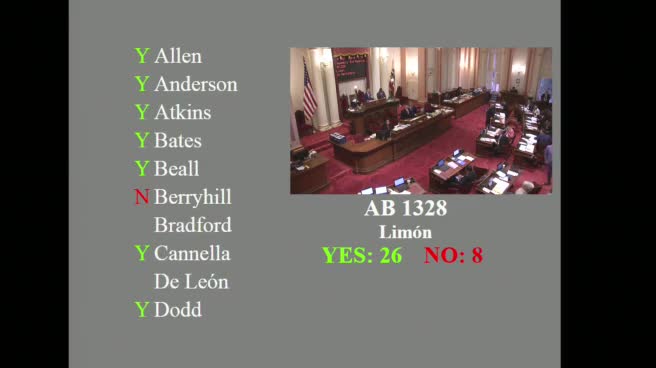 10MIN
Senate Floor
 26MIN
Senate Standing Committee on Public Safety
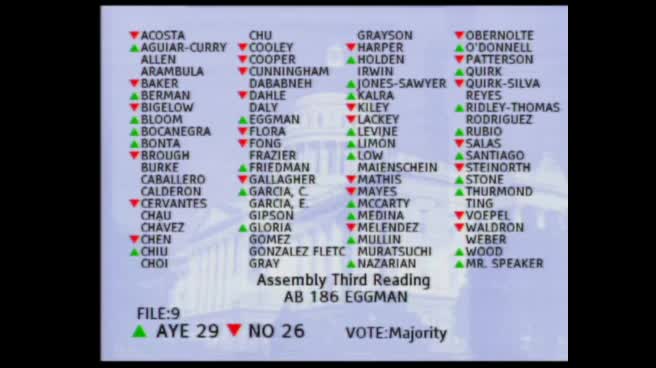 14MIN
Assembly Floor
 2MIN
Assembly Standing Committee on Appropriations
 22MIN
Assembly Standing Committee on Public Safety
Bill Author

Bill Co-Author(s):