AB 1546: Vital records.
- Session Year: 2015-2016
- House: Assembly
- Latest Version Date: 2016-09-09
Existing law requires the State Registrar to administer the registration of births, deaths, fetal deaths, and marriages. Existing law requires the State Registrar to arrange and permanently preserve the certificates in a systematic manner and to prepare and maintain a comprehensive and continuous index of all certificates registered. Existing law requires that specified birth, death, and marriage record indices prepared or maintained by local registrars and county recorders be kept confidential. Existing law requires, notwithstanding these provisions, local registrars and county recorders to release, when requested, their comprehensive birth, death, and nonconfidential marriage record indices to the State Registrar.
This bill would additionally authorize the local registrar to release birth and death record indices to the county recorder within its jurisdiction for purposes of the preparation or maintenance of the indices of the county recorder. The bill would extend application of specified access restrictions applicable to confidential portions of certificates of live birth to confidential birth record indices.
Existing law prescribes specified personal information to be included on birth, death, and marriage certificates. Under existing law, a certified copy of a birth or death record may only be supplied by the State Registrar, local registrar, or county recorder to an authorized person, as defined, who submits a statement sworn under penalty of perjury that the applicant is an authorized person. Existing law also requires that each certified copy of a birth, death, or marriage record contain specified information and be printed on sensitized security paper with specified security features, including, among others, intaglio print.
This bill would authorize the State Registrar to suspend the use of any security feature if necessary to enable the State Registrar, local registrar, county recorder, or county clerk to supply an applicant with a certified copy of a birth, death, or marriage record. The bill would authorize the State Department of Public Health to implement this provision through all-county letters or similar instructions, as specified.
Existing law requires the State Registrar to appoint a Vital Records Protection Advisory Committee to study and make recommendations to protect individual privacy, inhibit identity theft, and prevent fraud involving birth, death, and marriage certificates while providing needed access to the information contained in those records by persons seeking it for a legitimate purpose.
This bill would require the State Registrar, in consultation with the County Recorders Association of California and other stakeholders, to study all security features for paper used to print a vital record, or alternative security features that are equal to or better than those that are currently mandated. The bill would require the State Registrar to submit a report to the Legislature, on or before January 1, 2018, that contains the findings of that study and legislative recommendations pertaining to those findings.
This bill would declare that it is to take effect immediately as an urgency statute.
Existing law requires the State Registrar to administer the registration of births, deaths, fetal deaths, and marriages. Existing law requires the State Registrar to arrange and permanently preserve the certificates in a systematic manner and to prepare and maintain a comprehensive and continuous index of all certificates registered. Existing law requires that specified birth, death, and marriage record indices prepared or maintained by local registrars and county recorders be kept confidential. Existing law requires, notwithstanding these provisions, local registrars and county recorders to release, when requested, their comprehensive birth and death birth, death, and nonconfidential marriage record indices to the State Registrar.
This bill would additionally authorize the local registrar to release those indices birth and death record indices to the county recorder within its jurisdiction for purposes of the preparation or maintenance of the indices of the county recorder.
Existing law prescribes specified personal information to be included on birth, death, and marriage certificates. Under existing law, a certified copy of a birth or death record may only be supplied by the State Registrar, local registrar, or county recorder to an authorized person, as defined, who submits a statement sworn under penalty of perjury that the applicant is an authorized person. Existing law also requires that each certified copy of a birth, death, or marriage record contain specified information and be printed on sensitized security paper with specified security features, including, among others, intaglio print.
This bill would authorize the State Registrar to suspend the use of any security feature if necessary to enable the State Registrar, local registrar, county recorder, or county clerk to supply an applicant with a certified copy of a birth, death, or marriage record.
Existing law requires the State Registrar to appoint a Vital Records Protection Advisory Committee to study and make recommendations to protect individual privacy, inhibit identity theft, and prevent fraud involving birth, death, and marriage certificates while providing needed access to the information contained in those records by persons seeking it for a legitimate purpose.
This bill would require the State Registrar, in consultation with the County Recorders Association of California and other stakeholders, to study all security features for paper used to print a vital record, or alternative security features that are equal to or better than those that are currently mandated. The bill would require the State Registrar to submit a report to the Legislature, on or before January 1, 2018, that contains the findings of that study and legislative recommendations pertaining to those findings.
This bill would declare that it is to take effect immediately as an urgency statute.
Existing law requires the State Registrar to administer the registration of births, deaths, fetal deaths, and marriages. Existing law requires the State Registrar to arrange and permanently preserve the certificates in a systematic manner and to prepare and maintain a comprehensive and continuous index of all certificates registered. Existing law requires that specified birth, death, and marriage record indices prepared or maintained by local registrars and county recorders be kept confidential. Existing law requires, notwithstanding these provisions, local registrars and county recorders to release, when requested, their comprehensive birth and death record indices to the State Registrar.
This bill would additionally authorize the local registrar to release those indices to the county recorder within its jurisdiction for purposes of the preparation or maintenance of the indices of the county recorder.
Existing law prescribes specified personal information to be included on birth, death, and marriage certificates. Under existing law, a certified copy of a birth or death record may only be supplied by the State Registrar, local registrar, or county recorder to an authorized person, as defined, who submits a statement sworn under penalty of perjury that the applicant is an authorized person. Existing law also requires that each certified copy of a birth, death, or marriage record contain specified information and be printed on sensitized security paper with specified security features, including, among others, intaglio print.
This bill would authorize the State Registrar to suspend the use of any security feature if necessary to enable the State Registrar, local registrar, county recorder, or county clerk to supply an applicant with a certified copy of a birth, death, or marriage record.
Existing law requires the State Registrar to appoint a Vital Records Protection Advisory Committee to study and make recommendations to protect individual privacy, inhibit identity theft, and prevent fraud involving birth, death, and marriage certificates while providing needed access to the information contained in those records by persons seeking it for a legitimate purpose.
This bill would require the State Registrar, in consultation with the County Recorders Association of California and other stakeholders, to study all security features for paper used to print a vital record, or alternative security features that are equal to or better than those that are currently mandated. The bill would require the State Registrar to submit a report to the Legislature, on or before January 1, 2018, that contains the findings of that study and legislative recommendations pertaining to those findings.
This bill would declare that it is to take effect immediately as an urgency statute.
Existing law prescribes specified personal information to be included on birth, death, and marriage certificates. Under existing law, a certified copy of a birth or death record may only be supplied by the State Registrar, local registrar, or county recorder to an authorized person, as defined, who submits a statement sworn under penalty of perjury that the applicant is an authorized person. Existing law also requires that each certified copy of a birth, death, or marriage record contain specified information and be printed on sensitized security paper with specified features, including, among others, intaglio print.
This bill would authorize a certified copy of a birth, death, or marriage record to include a feature other than intaglio print that provides equal or greater security protection than intaglio print.
Existing law requires the State Registrar to appoint a Vital Records Protection Advisory Committee to study and make recommendations to protect individual privacy, inhibit identity theft, and prevent fraud involving birth, death, and marriage certificates while providing needed access to the information contained in those records by persons seeking it for a legitimate purpose.
This bill would require the State Registrar, in consultation with the County Recorders Association of California and other stakeholders, to study the feasibility of the continued use of intaglio print and the implementation of different all security features for paper used to print a vital record. record, or alternative security features that are equal to or better than those that are currently mandated. The bill would require the State Registrar to submit a report to the Legislature, on or before January 1, 2017, 2018, that contains the findings of that study and legislative recommendations pertaining to those findings.
This bill would declare that it is to take effect immediately as an urgency statute.
Existing law prescribes specified personal information to be included on birth, death, and marriage certificates. Under existing law, a certified copy of a birth or death record may only be supplied by the State Registrar, local registrar, or county recorder to an authorized person, as defined, who submits a statement sworn under penalty of perjury that the applicant is an authorized person. Existing law also requires that each certified copy of a birth, death, or marriage record contain specified information and be printed on sensitized security paper with specified features, including, among others, intaglio print.
This bill would authorize a certified copy of a birth, death, or marriage record to include a feature other than intaglio print that provides equal or greater security protection than intaglio print.
Existing law requires the State Registrar to appoint a Vital Records Protection Advisory Committee to study and make recommendations to protect individual privacy, inhibit identity theft, and prevent fraud involving birth, death, and marriage certificates while providing needed access to the information contained in those records by persons seeking it for a legitimate purpose.
This bill would require the State Registrar, in consultation with the County Recorders Association of California and other stakeholders, to study the feasibility of the continued use of intaglio print and the implementation of different security features for paper used to print a vital record. The bill would require the State Registrar to submit a report to the Legislature, on or before January 1, 2017, that contains the findings of that study and legislative recommendations pertaining to those findings.
This bill would declare that it is to take effect immediately as an urgency statute.
(a)(1)The State Registrar shall arrange and permanently preserve the certificates in a systematic manner and shall prepare and maintain comprehensive and continuous indices of all certificates registered.
(2)The birth, death, and marriage record indices prepared pursuant to paragraph (1) and all comprehensive birth, death, and marriage record indices prepared or maintained by local registrars and county recorders shall be kept confidential and shall be exempt from disclosure under the California Public Records Act (Chapter 3.5 (commencing with Section 6250) of Division 7 of Title 1 of the Government Code).
(3)Notwithstanding paragraph (2), the State Registrar, at his or her discretion, may release comprehensive birth, death, and nonconfidential marriage record indices to a government agency. The comprehensive birth record indices released to the county recorder shall be subject to the same restrictions applicable to the confidential portion of a certificate of live birth, as specified in Section 102430. Local registrars and county recorders, when requested, shall release their comprehensive birth, death, and marriage record indices to the State Registrar. Local registrars may release their comprehensive birth and death record indices to the county recorder within its jurisdiction for purposes of the preparation or maintenance of the indices of the county recorder. A government agency that obtains indices pursuant to this paragraph shall not sell or release the index or a portion of its contents to another person, except as necessary for official government business, and shall not post the indices or any portion of the indices on the Internet.
(b)(1)The State Registrar shall prepare and maintain separate noncomprehensive indices of all California birth, death, and nonconfidential marriage records for public release.
(2)For purposes of this section, noncomprehensive birth record indices for public release shall be comprised of first, middle, and last name, sex, date of birth, and place of birth.
(3)For purposes of this section, noncomprehensive death record indices for public release shall be comprised of first, middle, and last name, sex, date of birth, place of birth, place of death, date of death, and fathers last name.
(4)For purposes of this section, noncomprehensive nonconfidential marriage record indices for public release shall be comprised of the name of each party to the marriage and the date of marriage.
(5)Requesters of the birth, death, or nonconfidential marriage record indices prepared pursuant to this subdivision shall provide proof of identity, complete a form, and sign the form under penalty of perjury. The form shall include all of the following:
(A)The proposed use of the birth, death, or nonconfidential marriage record indices.
(B)A disclaimer crediting analyses, interpretations, or conclusions reached regarding the birth, death, or nonconfidential marriage record indices to the author and not to the State Department of Public Health.
(C)Assurance that technical descriptions of the birth, death, or nonconfidential marriage record indices are consistent with those provided by the State Department of Public Health.
(D)Assurance that the requester shall not sell, assign, or otherwise transfer the birth, death, or nonconfidential marriage record indices.
(E)Assurance that the requester shall not use the birth or death record indices for fraudulent purposes.
(6)Birth, death, and nonconfidential marriage record indices obtained pursuant to this subdivision, and any portion thereof, shall not be used for fraudulent purposes.
(c)(1)The State Registrar shall prepare and maintain separate noncomprehensive indices of all California birth, death, and nonconfidential marriage records for purposes of law enforcement or preventing fraud.
(2)For purposes of this section, noncomprehensive birth record indices for the purpose of preventing fraud shall be comprised of first, middle, and last name, sex, date of birth, place of birth, and mothers maiden name.
(3)For purposes of this section, noncomprehensive death record indices for the purpose of preventing fraud shall be comprised of first, middle, and last name, place of death, mothers maiden name, sex, social security number, date of birth, place of birth, date of death, and fathers last name.
(4)For purposes of this section, noncomprehensive nonconfidential marriage record indices for the purpose of preventing fraud shall be comprised of the name of each party to the marriage and the date of marriage.
(5)The birth, death, and nonconfidential marriage record indices prepared pursuant to this subdivision shall be made available to financial institutions, as defined in Section 6827(4)(A) and (B) of Title 15 of the United States Code, its representatives or contractors, consumer credit reporting agencies, as defined in subdivision (d) of Section 1785.3 of the Civil Code, its representatives or contractors, those entities providing information services for purposes of law enforcement or preventing fraud, officers of the court for the sole purpose of verifying a death, and to persons or entities acting on behalf of law enforcement agencies or the court, or pursuant to a court order.
(6)The birth, death, and nonconfidential marriage record indices prepared pursuant to this subdivision may be released to a government agency.
(7)Requesters of the birth, death, or nonconfidential marriage record indices prepared pursuant to this subdivision shall provide proof of identity, complete a form, and sign the form under penalty of perjury. The form shall include all of the following:
(A)An agreement not to release or allow public access to the birth, death, or nonconfidential marriage record indices, and an agreement not to post the indices on the Internet, except as permitted by this subdivision.
(B)The proposed use of the birth, death, or nonconfidential marriage record indices.
(C)The names of all persons within the organization, if applicable, who will have access to the birth, death, or nonconfidential marriage record indices.
(D) A disclaimer crediting analyses, interpretations, or conclusions reached regarding the birth, death, or nonconfidential marriage record indices to the author and not to the State Department of Public Health.
(E)Assurance that technical descriptions of the birth, death, or nonconfidential marriage record indices are consistent with those provided by the State Department of Public Health.
(F)Assurance that the requester shall not sell, assign, or otherwise transfer the birth, death, or nonconfidential marriage record indices, except as permitted by this subdivision.
(G)Assurance that the requester shall not use the birth, death, or nonconfidential marriage record indices for fraudulent purposes.
(8)(A)Birth, death, and nonconfidential marriage record indices, and any portion thereof, obtained pursuant to this section, shall not be used for fraudulent purposes and shall not be posted on the Internet.
(B)Notwithstanding subparagraph (A), individual information contained in birth, death, and nonconfidential marriage record indices may be posted on the Internet if all of the following requirements are met:
(i)The individual information is posted on an Internet Web site that is protected by a password.
(ii)The individual information is posted on an Internet Web site that is available to subscribers only for a fee.
(iii)The individual information is not posted for public display.
(iv)The individual information is available to subscribers pursuant to a contractual agreement.
(v)The individual information is posted for purposes of law enforcement or preventing fraud.
(d)Mail-in requests from nongovernmental agencies for birth, death, and nonconfidential marriage record indices requested pursuant to subdivisions (b) and (c) shall include a notarized statement attesting to the identity of the requester.
(e)Noncomprehensive birth, death, and nonconfidential marriage record indices pursuant to subdivisions (b) and (c) shall be updated annually.
(f)Birth, death, and nonconfidential marriage record indices provided pursuant to this section shall be made available subject to cost recovery provisions of the California Public Records Act (Chapter 3.5 (commencing with Section 6250) of Division 7 of Title 1 of the Government Code).
(g)Noncomprehensive birth, death, and nonconfidential marriage record indices created by local registrars or county recorders shall be subject to the conditions for release required by this section.
(h)A person or entity that obtains a birth, death, or nonconfidential marriage record index, or any portion thereof, from a requester who has obtained the index in accordance with paragraph (7) of subdivision (c) shall not sell, assign, or otherwise transfer that index, or any portion thereof, to a third party.
(i)Paragraphs (2) and (3) of subdivision (a) and subdivisions (b) to (h), inclusive, shall be implemented only to the extent that funds for these purposes are appropriated by the Legislature in the annual Budget Act or other statute.
SEC. 2.Section 103526.5 of the Health and Safety Code is amended to read:103526.5.(a)Each certified copy of a birth, death, or marriage record issued pursuant to Section 103525 shall include the date issued, the name of the issuing officer, the signature of the issuing officer, whether that is the State Registrar, local registrar, county recorder, or county clerk, or an authorized facsimile thereof, and the seal of the issuing office.
(b)All certified copies of birth, death, and marriage records issued pursuant to Section 103525 shall be printed on chemically sensitized security paper that measures 81/2 inches by 11 inches and that has the following features:
(1)Intaglio print.
(2)Latent image.
(3)Fluorescent, consecutive numbering with matching barcode.
(4)Microprint line.
(5)Prismatic printing.
(6)Watermark.
(7)Void pantograph.
(8)Fluorescent security threads.
(9)Fluorescent fibers.
(10)Any other security features deemed necessary by the State Registrar.
(c)(1)The State Registrar may suspend the use of any security feature described in subdivision (b) if necessary to enable the State Registrar, local registrar, county recorder, or county clerk to supply an applicant with a certified copy of a birth, death, or marriage record issued pursuant to Section 103525.
(2)Notwithstanding the rulemaking provisions of the Administrative Procedure Act (Chapter 3.5 (commencing with Section 11340) of Part 1 of Division 3 of Title 2 of the Government Code), the department may implement this subdivision through all-county letters or similar instructions from the State Registrar without taking regulatory action.
(d)The State Registrar, local registrars, county recorders, and county clerks shall take precautions to ensure that uniform and consistent standards are used statewide to safeguard the security paper described in subdivision (b), including, but not limited to, the following measures:
(1)Security paper shall be maintained under secure conditions so as not to be accessible to the public.
(2)A log shall be kept of all visitors allowed in the area where security paper is stored.
(3)All spoilage shall be accounted for and subsequently destroyed by shredding on the premises.
SEC. 3.Section 103526.6 is added to the Health and Safety Code, to read:103526.6.(a)The State Registrar, in consultation with the County Recorders Association of California and other stakeholders, shall study all security features for paper used to print a vital record pursuant to Section 103525, or alternative security features that are equal to or better than those that are currently mandated.
(b)(1)On or before January 1, 2018, the State Registrar shall submit to the Legislature a report that contains the findings of the study conducted pursuant to subdivision (a) and legislative recommendations pertaining to those findings.
(2)A report submitted to the Legislature pursuant to this subdivision shall be submitted in compliance with Section 9795 of the Government Code.
SEC. 4.This act is an urgency statute necessary for the immediate preservation of the public peace, health, or safety within the meaning of Article IV of the Constitution and shall go into immediate effect. The facts constituting the necessity are:
In order for the State Registrar to allow individuals access to their vital records and to conduct a study regarding all security features for paper used to print a vital record, or alternative security features that are equal to or better than those that are currently mandated, as soon as possible, and to ensure timely reporting of the findings of that study to the Legislature, it is necessary that this act take effect immediately.
(a)(1)The State Registrar shall arrange and permanently preserve the certificates in a systematic manner and shall prepare and maintain comprehensive and continuous indices of all certificates registered.
(2)The birth, death, and marriage record indices prepared pursuant to paragraph (1) and all comprehensive birth, death, and marriage record indices prepared or maintained by local registrars and county recorders shall be kept confidential and shall be exempt from disclosure under the California Public Records Act (Chapter 3.5 (commencing with Section 6250) of Division 7 of Title 1 of the Government Code).
(3)Notwithstanding paragraph (2), the State Registrar, at his or her discretion, may release comprehensive birth, death, and nonconfidential marriage record indices to a government agency. The comprehensive birth record indices released to the county recorder shall be subject to the same restrictions applicable to the confidential portion of a certificate of live birth, as specified in Section 102430.Local registrars and county recorders, when requested, shall release their comprehensive birth, death, and marriage record indices to the State Registrar. Local registrars may release their comprehensive birth and death record indices to the county recorder within its jurisdiction for purposes of the preparation or maintenance of the indices of the county recorder. A government agency that obtains indices pursuant to this paragraph shall not sell or release the index or a portion of its contents to another person, except as necessary for official government business, and shall not post the indices or any portion of the indices on the Internet.
(b)(1)The State Registrar shall prepare and maintain separate noncomprehensive indices of all California birth, death, and nonconfidential marriage records for public release.
(2)For purposes of this section, noncomprehensive birth record indices for public release shall be comprised of first, middle, and last name, sex, date of birth, and place of birth.
(3)For purposes of this section, noncomprehensive death record indices for public release shall be comprised of first, middle, and last name, sex, date of birth, place of birth, place of death, date of death, and fathers last name.
(4)For purposes of this section, noncomprehensive nonconfidential marriage record indices for public release shall be comprised of the name of each party to the marriage and the date of marriage.
(5)Requesters of the birth, death, or nonconfidential marriage record indices prepared pursuant to this subdivision shall provide proof of identity, complete a form, and sign the form under penalty of perjury. The form shall include all of the following:
(A)The proposed use of the birth, death, or nonconfidential marriage record indices.
(B)A disclaimer crediting analyses, interpretations, or conclusions reached regarding the birth, death, or nonconfidential marriage record indices to the author and not to the State Department of Public Health.
(C)Assurance that technical descriptions of the birth, death, or nonconfidential marriage record indices are consistent with those provided by the State Department of Public Health.
(D)Assurance that the requester shall not sell, assign, or otherwise transfer the birth, death, or nonconfidential marriage record indices.
(E)Assurance that the requester shall not use the birth or death record indices for fraudulent purposes.
(6)Birth, death, and nonconfidential marriage record indices obtained pursuant to this subdivision, and any portion thereof, shall not be used for fraudulent purposes.
(c)(1)The State Registrar shall prepare and maintain separate noncomprehensive indices of all California birth, death, and nonconfidential marriage records for purposes of law enforcement or preventing fraud.
(2)For purposes of this section, noncomprehensive birth record indices for the purpose of preventing fraud shall be comprised of first, middle, and last name, sex, date of birth, place of birth, and mothers maiden name.
(3)For purposes of this section, noncomprehensive death record indices for the purpose of preventing fraud shall be comprised of first, middle, and last name, place of death, mothers maiden name, sex, social security number, date of birth, place of birth, date of death, and fathers last name.
(4)For purposes of this section, noncomprehensive nonconfidential marriage record indices for the purpose of preventing fraud shall be comprised of the name of each party to the marriage and the date of marriage.
(5)The birth, death, and nonconfidential marriage record indices prepared pursuant to this subdivision shall be made available to financial institutions, as defined in Section 6827(4)(A) and (B) of Title 15 of the United States Code, its representatives or contractors, consumer credit reporting agencies, as defined in subdivision (d) of Section 1785.3 of the Civil Code, its representatives or contractors, those entities providing information services for purposes of law enforcement or preventing fraud, officers of the court for the sole purpose of verifying a death, and to persons or entities acting on behalf of law enforcement agencies or the court, or pursuant to a court order.
(6)The birth, death, and nonconfidential marriage record indices prepared pursuant to this subdivision may be released to a government agency.
(7)Requesters of the birth, death, or nonconfidential marriage record indices prepared pursuant to this subdivision shall provide proof of identity, complete a form, and sign the form under penalty of perjury. The form shall include all of the following:
(A)An agreement not to release or allow public access to the birth, death, or nonconfidential marriage record indices, and an agreement not to post the indices on the Internet, except as permitted by this subdivision.
(B)The proposed use of the birth, death, or nonconfidential marriage record indices.
(C)The names of all persons within the organization, if applicable, who will have access to the birth, death, or nonconfidential marriage record indices.
(D) A disclaimer crediting analyses, interpretations, or conclusions reached regarding the birth, death, or nonconfidential marriage record indices to the author and not to the State Department of Public Health.
(E)Assurance that technical descriptions of the birth, death, or nonconfidential marriage record indices are consistent with those provided by the State Department of Public Health.
(F)Assurance that the requester shall not sell, assign, or otherwise transfer the birth, death, or nonconfidential marriage record indices, except as permitted by this subdivision.
(G)Assurance that the requester shall not use the birth, death, or nonconfidential marriage record indices for fraudulent purposes.
(8)(A)Birth, death, and nonconfidential marriage record indices, and any portion thereof, obtained pursuant to this section, shall not be used for fraudulent purposes and shall not be posted on the Internet.
(B)Notwithstanding subparagraph (A), individual information contained in birth, death, and nonconfidential marriage record indices may be posted on the Internet if all of the following requirements are met:
(i)The individual information is posted on an Internet Web site that is protected by a password.
(ii)The individual information is posted on an Internet Web site that is available to subscribers only for a fee.
(iii)The individual information is not posted for public display.
(iv)The individual information is available to subscribers pursuant to a contractual agreement.
(v)The individual information is posted for purposes of law enforcement or preventing fraud.
(d)Mail-in requests from nongovernmental agencies for birth, death, and nonconfidential marriage record indices requested pursuant to subdivisions (b) and (c) shall include a notarized statement attesting to the identity of the requester.
(e)Noncomprehensive birth, death, and nonconfidential marriage record indices pursuant to subdivisions (b) and (c) shall be updated annually.
(f)Birth, death, and nonconfidential marriage record indices provided pursuant to this section shall be made available subject to cost recovery provisions of the California Public Records Act (Chapter 3.5 (commencing with Section 6250) of Division 7 of Title 1 of the Government Code).
(g)Noncomprehensive birth, death, and nonconfidential marriage record indices created by local registrars or county recorders shall be subject to the conditions for release required by this section.
(h)A person or entity that obtains a birth, death, or nonconfidential marriage record index, or any portion thereof, from a requester who has obtained the index in accordance with paragraph (7) of subdivision (c) shall not sell, assign, or otherwise transfer that index, or any portion thereof, to a third party.
(i)Paragraphs (2) and (3) of subdivision (a) and subdivisions (b) to (h), inclusive, shall be implemented only to the extent that funds for these purposes are appropriated by the Legislature in the annual Budget Act or other statute.
SEC. 2.Section 103526.5 of the Health and Safety Code is amended to read:103526.5.(a)Each certified copy of a birth, death, or marriage record issued pursuant to Section 103525 shall include the date issued, the name of the issuing officer, the signature of the issuing officer, whether that is the State Registrar, local registrar, county recorder, or county clerk, or an authorized facsimile thereof, and the seal of the issuing office.
(b)All certified copies of birth, death, and marriage records issued pursuant to Section 103525 shall be printed on chemically sensitized security paper that measures 81/2 inches by 11 inches and that has the following features:
(1)Intaglio print.
(2)Latent image.
(3)Fluorescent, consecutive numbering with matching barcode.
(4)Microprint line.
(5)Prismatic printing.
(6)Watermark.
(7)Void pantograph.
(8)Fluorescent security threads.
(9)Fluorescent fibers.
(10)Any other security features deemed necessary by the State Registrar.
(c)(1)The State Registrar may suspend the use of any security feature described in subdivision (b) if necessary to enable the State Registrar, local registrar, county recorder, or county clerk to supply an applicant with a certified copy of a birth, death, or marriage record issued pursuant to Section 103525.
(2)Notwithstanding the rulemaking provisions of the Administrative Procedure Act (Chapter 3.5 (commencing with Section 11340) of Part 1 of Division 3 of Title 2 of the Government Code), the department may implement this subdivision through all-county letters or similar instructions from the State Registrar without taking regulatory action.
(d)The State Registrar, local registrars, county recorders, and county clerks shall take precautions to ensure that uniform and consistent standards are used statewide to safeguard the security paper described in subdivision (b), including, but not limited to, the following measures:
(1)Security paper shall be maintained under secure conditions so as not to be accessible to the public.
(2)A log shall be kept of all visitors allowed in the area where security paper is stored.
(3)All spoilage shall be accounted for and subsequently destroyed by shredding on the premises.
SEC. 3.Section 103526.6 is added to the Health and Safety Code, to read:103526.6.(a)The State Registrar, in consultation with the County Recorders Association of California and other stakeholders, shall study all security features for paper used to print a vital record pursuant to Section 103525, or alternative security features that are equal to or better than those that are currently mandated.
(b)(1)On or before January 1, 2018, the State Registrar shall submit to the Legislature a report that contains the findings of the study conducted pursuant to subdivision (a) and legislative recommendations pertaining to those findings.
(2)A report submitted to the Legislature pursuant to this subdivision shall be submitted in compliance with Section 9795 of the Government Code.
SEC. 4.This act is an urgency statute necessary for the immediate preservation of the public peace, health, or safety within the meaning of Article IV of the Constitution and shall go into immediate effect. The facts constituting the necessity are:
In order for the State Registrar to allow individuals access to their vital records and to conduct a study regarding all security features for paper used to print a vital record, or alternative security features that are equal to or better than those that are currently mandated, as soon as possible, and to ensure timely reporting of the findings of that study to the Legislature, it is necessary that this act take effect immediately.
(a)(1)The State Registrar shall arrange and permanently preserve the certificates in a systematic manner and shall prepare and maintain comprehensive and continuous indices of all certificates registered.
(2)The birth, death, and marriage record indices prepared pursuant to paragraph (1) and all comprehensive birth, death, and marriage record indices prepared or maintained by local registrars and county recorders shall be kept confidential and shall be exempt from disclosure under the California Public Records Act (Chapter 3.5 (commencing with Section 6250) of Division 7 of Title 1 of the Government Code).
(3)Notwithstanding paragraph (2), the State Registrar, at his or her discretion, may release comprehensive birth, death, and nonconfidential marriage record indices to a government agency. Local registrars and county recorders, when requested, shall release their comprehensive birth, death, and marriage record indices to the State Registrar. Local registrars may release their comprehensive birth, death, and marriage birth and death record indices to the county recorder within its jurisdiction for purposes of the preparation or maintenance of the indices of the county recorder. A government agency that obtains indices pursuant to this paragraph shall not sell or release the index or a portion of its contents to another person, except as necessary for official government business, and shall not post the indices or any portion of the indices on the Internet.
(b)(1)The State Registrar shall prepare and maintain separate noncomprehensive indices of all California birth, death, and nonconfidential marriage records for public release.
(2)For purposes of this section, noncomprehensive birth record indices for public release shall be comprised of first, middle, and last name, sex, date of birth, and place of birth.
(3)For purposes of this section, noncomprehensive death record indices for public release shall be comprised of first, middle, and last name, sex, date of birth, place of birth, place of death, date of death, and fathers last name.
(4)For purposes of this section, noncomprehensive nonconfidential marriage record indices for public release shall be comprised of the name of each party to the marriage and the date of marriage.
(5)Requesters of the birth, death, or nonconfidential marriage record indices prepared pursuant to this subdivision shall provide proof of identity, complete a form, and sign the form under penalty of perjury. The form shall include all of the following:
(A)The proposed use of the birth, death, or nonconfidential marriage record indices.
(B)A disclaimer crediting analyses, interpretations, or conclusions reached regarding the birth, death, or nonconfidential marriage record indices to the author and not to the State Department of Public Health.
(C)Assurance that technical descriptions of the birth, death, or nonconfidential marriage record indices are consistent with those provided by the State Department of Public Health.
(D)Assurance that the requester shall not sell, assign, or otherwise transfer the birth, death, or nonconfidential marriage record indices.
(E)Assurance that the requester shall not use the birth or death record indices for fraudulent purposes.
(6)Birth, death, and nonconfidential marriage record indices obtained pursuant to this subdivision, and any portion thereof, shall not be used for fraudulent purposes.
(c)(1)The State Registrar shall prepare and maintain separate noncomprehensive indices of all California birth, death, and nonconfidential marriage records for purposes of law enforcement or preventing fraud.
(2)For purposes of this section, noncomprehensive birth record indices for the purpose of preventing fraud shall be comprised of first, middle, and last name, sex, date of birth, place of birth, and mothers maiden name.
(3)For purposes of this section, noncomprehensive death record indices for the purpose of preventing fraud shall be comprised of first, middle, and last name, place of death, mothers maiden name, sex, social security number, date of birth, place of birth, date of death, and fathers last name.
(4)For purposes of this section, noncomprehensive nonconfidential marriage record indices for the purpose of preventing fraud shall be comprised of the name of each party to the marriage and the date of marriage.
(5)The birth, death, and nonconfidential marriage record indices prepared pursuant to this subdivision shall be made available to financial institutions, as defined in Section 6827(4)(A) and (B) of Title 15 of the United States Code, its representatives or contractors, consumer credit reporting agencies, as defined in subdivision (d) of Section 1785.3 of the Civil Code, its representatives or contractors, those entities providing information services for purposes of law enforcement or preventing fraud, officers of the court for the sole purpose of verifying a death, and to persons or entities acting on behalf of law enforcement agencies or the court, or pursuant to a court order.
(6)The birth, death, and nonconfidential marriage record indices prepared pursuant to this subdivision may be released to a government agency.
(7)Requesters of the birth, death, or nonconfidential marriage record indices prepared pursuant to this subdivision shall provide proof of identity, complete a form, and sign the form under penalty of perjury. The form shall include all of the following:
(A)An agreement not to release or allow public access to the birth, death, or nonconfidential marriage record indices, and an agreement not to post the indices on the Internet, except as permitted by this subdivision.
(B)The proposed use of the birth, death, or nonconfidential marriage record indices.
(C)The names of all persons within the organization, if applicable, who will have access to the birth, death, or nonconfidential marriage record indices.
(D) A disclaimer crediting analyses, interpretations, or conclusions reached regarding the birth, death, or nonconfidential marriage record indices to the author and not to the State Department of Public Health.
(E)Assurance that technical descriptions of the birth, death, or nonconfidential marriage record indices are consistent with those provided by the State Department of Public Health.
(F)Assurance that the requester shall not sell, assign, or otherwise transfer the birth, death, or nonconfidential marriage record indices, except as permitted by this subdivision.
(G)Assurance that the requester shall not use the birth, death, or nonconfidential marriage record indices for fraudulent purposes.
(8)(A)Birth, death, and nonconfidential marriage record indices, and any portion thereof, obtained pursuant to this section, shall not be used for fraudulent purposes and shall not be posted on the Internet.
(B)Notwithstanding subparagraph (A), individual information contained in birth, death, and nonconfidential marriage record indices may be posted on the Internet if all of the following requirements are met:
(i)The individual information is posted on an Internet Web site that is protected by a password.
(ii)The individual information is posted on an Internet Web site that is available to subscribers only for a fee.
(iii)The individual information is not posted for public display.
(iv)The individual information is available to subscribers pursuant to a contractual agreement.
(v)The individual information is posted for purposes of law enforcement or preventing fraud.
(d)Mail-in requests from nongovernmental agencies for birth, death, and nonconfidential marriage record indices requested pursuant to subdivisions (b) and (c) shall include a notarized statement attesting to the identity of the requester.
(e)Noncomprehensive birth, death, and nonconfidential marriage record indices pursuant to subdivisions (b) and (c) shall be updated annually.
(f)Birth, death, and nonconfidential marriage record indices provided pursuant to this section shall be made available subject to cost recovery provisions of the California Public Records Act (Chapter 3.5 (commencing with Section 6250) of Division 7 of Title 1 of the Government Code).
(g)Noncomprehensive birth, death, and nonconfidential marriage record indices created by local registrars or county recorders shall be subject to the conditions for release required by this section.
(h)A person or entity that obtains a birth, death, or nonconfidential marriage record index, or any portion thereof, from a requester who has obtained the index in accordance with paragraph (7) of subdivision (c) shall not sell, assign, or otherwise transfer that index, or any portion thereof, to a third party.
(i)Paragraphs (2) and (3) of subdivision (a) and subdivisions (b) to (h), inclusive, shall be implemented only to the extent that funds for these purposes are appropriated by the Legislature in the annual Budget Act or other statute.
SEC. 2.Section 103526.5 of the Health and Safety Code is amended to read:103526.5.(a)Each certified copy of a birth, death, or marriage record issued pursuant to Section 103525 shall include the date issued, the name of the issuing officer, the signature of the issuing officer, whether that is the State Registrar, local registrar, county recorder, or county clerk, or an authorized facsimile thereof, and the seal of the issuing office.
(b)All certified copies of birth, death, and marriage records issued pursuant to Section 103525 shall be printed on chemically sensitized security paper that measures 81/2 inches by 11 inches and that has the following features:
(1)Intaglio print.
(2)Latent image.
(3)Fluorescent, consecutive numbering with matching barcode.
(4)Microprint line.
(5)Prismatic printing.
(6)Watermark.
(7)Void pantograph.
(8)Fluorescent security threads.
(9)Fluorescent fibers.
(10)Any other security features deemed necessary by the State Registrar.
(c)The State Registrar may suspend the use of any security feature described in subdivision (b) if necessary to enable the State Registrar, local registrar, county recorder, or county clerk to supply an applicant with a certified copy of a birth, death, or marriage record issued pursuant to Section 103525.
(d)The State Registrar, local registrars, county recorders, and county clerks shall take precautions to ensure that uniform and consistent standards are used statewide to safeguard the security paper described in subdivision (b), including, but not limited to, the following measures:
(1)Security paper shall be maintained under secure conditions so as not to be accessible to the public.
(2)A log shall be kept of all visitors allowed in the area where security paper is stored.
(3)All spoilage shall be accounted for and subsequently destroyed by shredding on the premises.
SEC. 3.Section 103526.6 is added to the Health and Safety Code, to read:103526.6.(a)The State Registrar, in consultation with the County Recorders Association of California and other stakeholders, shall study all security features for paper used to print a vital record pursuant to Section 103525, or alternative security features that are equal to or better than those that are currently mandated.
(b)(1)On or before January 1, 2018, the State Registrar shall submit to the Legislature a report that contains the findings of the study conducted pursuant to subdivision (a) and legislative recommendations pertaining to those findings.
(2)A report submitted to the Legislature pursuant to this subdivision shall be submitted in compliance with Section 9795 of the Government Code.
SEC. 4.This act is an urgency statute necessary for the immediate preservation of the public peace, health, or safety within the meaning of Article IV of the Constitution and shall go into immediate effect. The facts constituting the necessity are:
In order for the State Registrar to allow individuals access to their vital records and to conduct a study regarding all security features for paper used to print a vital record, or alternative security features that are equal to or better than those that are currently mandated, as soon as possible, and to ensure timely reporting of the findings of that study to the Legislature, it is necessary that this act take effect immediately.
(a)(1)The State Registrar shall arrange and permanently preserve the certificates in a systematic manner and shall prepare and maintain comprehensive and continuous indices of all certificates registered.
(2)The birth, death, and marriage record indices prepared pursuant to paragraph (1) and all comprehensive birth, death, and marriage record indices prepared or maintained by local registrars and county recorders shall be kept confidential and shall be exempt from disclosure under the California Public Records Act (Chapter 3.5 (commencing with Section 6250) of Division 7 of Title 1 of the Government Code).
(3)Notwithstanding paragraph (2), the State Registrar, at his or her discretion, may release comprehensive birth, death, and nonconfidential marriage record indices to a government agency. Local registrars and county recorders, when requested, shall release their comprehensive birth, death, and marriage record indices to the State Registrar. Local registrars may release their comprehensive birth, death, and marriage record indices to the county recorder within its jurisdiction for purposes of the preparation or maintenance of the indices of the county recorder. A government agency that obtains indices pursuant to this paragraph shall not sell or release the index or a portion of its contents to another person person, except as necessary for official government business business, and shall not post the indices or any portion thereof of the indices on the Internet.
(b)(1)The State Registrar shall prepare and maintain separate noncomprehensive indices of all California birth, death, and nonconfidential marriage records for public release.
(2)For purposes of this section, noncomprehensive birth record indices for public release shall be comprised of first, middle, and last name, sex, date of birth, and place of birth.
(3)For purposes of this section, noncomprehensive death record indices for public release shall be comprised of first, middle, and last name, sex, date of birth, place of birth, place of death, date of death, and fathers last name.
(4)For purposes of this section, noncomprehensive nonconfidential marriage record indices for public release shall be comprised of the name of each party to the marriage and the date of marriage.
(5)Requesters of the birth, death, or nonconfidential marriage record indices prepared pursuant to this subdivision shall provide proof of identity, complete a form, and sign the form under penalty of perjury. The form shall include all of the following:
(A)The proposed use of the birth, death, or nonconfidential marriage record indices.
(B)A disclaimer crediting analyses, interpretations, or conclusions reached regarding the birth, death, or nonconfidential marriage record indices to the author and not to the State Department of Public Health.
(C)Assurance that technical descriptions of the birth, death, or nonconfidential marriage record indices are consistent with those provided by the State Department of Public Health.
(D)Assurance that the requester shall not sell, assign, or otherwise transfer the birth, death, or nonconfidential marriage record indices.
(E)Assurance that the requester shall not use the birth or death record indices for fraudulent purposes.
(6)Birth, death, and nonconfidential marriage record indices obtained pursuant to this subdivision, and any portion thereof, shall not be used for fraudulent purposes.
(c)(1)The State Registrar shall prepare and maintain separate noncomprehensive indices of all California birth, death, and nonconfidential marriage records for purposes of law enforcement or preventing fraud.
(2)For purposes of this section, noncomprehensive birth record indices for the purpose of preventing fraud shall be comprised of first, middle, and last name, sex, date of birth, place of birth, and mothers maiden name.
(3)For purposes of this section, noncomprehensive death record indices for the purpose of preventing fraud shall be comprised of first, middle, and last name, place of death, mothers maiden name, sex, social security number, date of birth, place of birth, date of death, and fathers last name.
(4)For purposes of this section, noncomprehensive nonconfidential marriage record indices for the purpose of preventing fraud shall be comprised of the name of each party to the marriage and the date of marriage.
(5)The birth, death, and nonconfidential marriage record indices prepared pursuant to this subdivision shall be made available to financial institutions, as defined in Section 6827(4)(A) and (B) of Title 15 of the United States Code, its representatives or contractors, consumer credit reporting agencies, as defined in subdivision (d) of Section 1785.3 of the Civil Code, its representatives or contractors, those entities providing information services for purposes of law enforcement or preventing fraud, officers of the court for the sole purpose of verifying a death, and to persons or entities acting on behalf of law enforcement agencies or the court, or pursuant to a court order.
(6)The birth, death, and nonconfidential marriage record indices prepared pursuant to this subdivision may be released to a government agency.
(7)Requesters of the birth, death, or nonconfidential marriage record indices prepared pursuant to this subdivision shall provide proof of identity, complete a form, and sign the form under penalty of perjury. The form shall include all of the following:
(A)An agreement not to release or allow public access to the birth, death, or nonconfidential marriage record indices, and an agreement not to post the indices on the Internet, except as permitted by this subdivision.
(B)The proposed use of the birth, death, or nonconfidential marriage record indices.
(C)The names of all persons within the organization, if applicable, who will have access to the birth, death, or nonconfidential marriage record indices.
(D) A disclaimer crediting analyses, interpretations, or conclusions reached regarding the birth, death, or nonconfidential marriage record indices to the author and not to the State Department of Public Health.
(E)Assurance that technical descriptions of the birth, death, or nonconfidential marriage record indices are consistent with those provided by the State Department of Public Health.
(F)Assurance that the requester shall not sell, assign, or otherwise transfer the birth, death, or nonconfidential marriage record indices, except as permitted by this subdivision.
(G)Assurance that the requester shall not use the birth, death, or nonconfidential marriage record indices for fraudulent purposes.
(8)(A)Birth, death, and nonconfidential marriage record indices, and any portion thereof, obtained pursuant to this section, shall not be used for fraudulent purposes and shall not be posted on the Internet.
(B)Notwithstanding subparagraph (A), individual information contained in birth, death, and nonconfidential marriage record indices may be posted on the Internet if all of the following requirements are met:
(i)The individual information is posted on an Internet Web site that is protected by a password.
(ii)The individual information is posted on an Internet Web site that is available to subscribers only for a fee.
(iii)The individual information is not posted for public display.
(iv)The individual information is available to subscribers pursuant to a contractual agreement.
(v)The individual information is posted for purposes of law enforcement or preventing fraud.
(d)Mail-in requests from nongovernmental agencies for birth, death, and nonconfidential marriage record indices requested pursuant to subdivisions (b) and (c) shall include a notarized statement attesting to the identity of the requester.
(e)Noncomprehensive birth, death, and nonconfidential marriage record indices pursuant to subdivisions (b) and (c) shall be updated annually.
(f)Birth, death, and nonconfidential marriage record indices provided pursuant to this section shall be made available subject to cost recovery provisions of the California Public Records Act (Chapter 3.5 (commencing with Section 6250) of Division 7 of Title 1 of the Government Code).
(g)Noncomprehensive birth, death, and nonconfidential marriage record indices created by local registrars or county recorders shall be subject to the conditions for release required by this section.
(h)A person or entity that obtains a birth, death, or nonconfidential marriage record index, or any portion thereof, from a requester who has obtained the index in accordance with paragraph (7) of subdivision (c) shall not sell, assign, or otherwise transfer that index, or any portion thereof, to a third party.
(i)Paragraphs (2) and (3) of subdivision (a) and subdivisions (b) to (h), inclusive, shall be implemented only to the extent that funds for these purposes are appropriated by the Legislature in the annual Budget Act or other statute.
SEC. 2.Section 103526.5 of the Health and Safety Code is amended to read:103526.5.(a)Each certified copy of a birth, death, or marriage record issued pursuant to Section 103525 shall include the date issued, the name of the issuing officer, the signature of the issuing officer, whether that is the State Registrar, local registrar, county recorder, or county clerk, or an authorized facsimile thereof, and the seal of the issuing office.
(b)All certified copies of birth, death, and marriage records issued pursuant to Section 103525 shall be printed on chemically sensitized security paper that measures 81/2 inches by 11 inches and that has the following features:
(1)Intaglio print.
(2)Latent image.
(3)Fluorescent, consecutive numbering with matching barcode.
(4)Microprint line.
(5)Prismatic printing.
(6)Watermark.
(7)Void pantograph.
(8)Fluorescent security threads.
(9)Fluorescent fibers.
(10)Any other security features deemed necessary by the State Registrar.
(c)The State Registrar may suspend the use of any security feature described in subdivision (b) if necessary to enable the State Registrar, local registrar, county recorder, or county clerk to supply an applicant with a certified copy of a birth, death, or marriage record issued pursuant to Section 103525.
(c)
(d)The State Registrar, local registrars, county recorders, and county clerks shall take precautions to ensure that uniform and consistent standards are used statewide to safeguard the security paper described in subdivision (b), including, but not limited to, the following measures:
(1)Security paper shall be maintained under secure conditions so as not to be accessible to the public.
(2)A log shall be kept of all visitors allowed in the area where security paper is stored.
(3)All spoilage shall be accounted for and subsequently destroyed by shredding on the premises.
SECTION 1.SEC. 3.Section 103526.6 is added to the Health and Safety Code, to read:103526.6.(a)The State Registrar, in consultation with the County Recorders Association of California and other stakeholders, shall study all security features for paper used to print a vital record pursuant to Section 103525, or alternative security features that are equal to or better than those that are currently mandated.
(b)(1)On or before January 1, 2018, the State Registrar shall submit to the Legislature a report that contains the findings of the study conducted pursuant to subdivision (a) and legislative recommendations pertaining to those findings.
(2)A report submitted to the Legislature pursuant to this subdivision shall be submitted in compliance with Section 9795 of the Government Code.
SEC. 2.SEC. 4.This act is an urgency statute necessary for the immediate preservation of the public peace, health, or safety within the meaning of Article IV of the Constitution and shall go into immediate effect. The facts constituting the necessity are:
In order for the State Registrar to allow individuals access to their vital records and to conduct a study regarding all security features for paper used to print a vital record, or alternative security features that are equal to or better than those that are currently mandated, as soon as possible, and to ensure timely reporting of the findings of that study to the Legislature, it is necessary that this act take effect immediately.
(a)Each certified copy of a birth, death, or marriage record issued pursuant to Section 103525 shall include the date issued, the name of the issuing officer, the signature of the issuing officer, whether that is the State Registrar, local registrar, county recorder, or county clerk, or an authorized facsimile thereof, and the seal of the issuing office.
(b)All certified copies of birth, death, and marriage records issued pursuant to Section 103525 shall be printed on chemically sensitized security paper that measures 81/2 inches by 11 inches and that has the following features:
(1)Intaglio print, or another feature that provides equal or greater security protection.
(2)Latent image.
(3)Fluorescent, consecutive numbering with matching barcode.
(4)Microprint line.
(5)Prismatic printing.
(6)Watermark.
(7)Void pantograph.
(8)Fluorescent security threads.
(9)Fluorescent fibers.
(10)Any other security features deemed necessary by the State Registrar.
(c)The State Registrar, local registrars, county recorders, and county clerks shall take precautions to ensure that uniform and consistent standards are used statewide to safeguard the security paper described in subdivision (b), including, but not limited to, the following measures:
(1)Security paper shall be maintained under secure conditions so as not to be accessible to the public.
(2)A log shall be kept of all visitors allowed in the area where security paper is stored.
(3)All spoilage shall be accounted for and subsequently destroyed by shredding on the premises.
SEC. 2.SECTION 1.Section 103526.6 is added to the Health and Safety Code, to read:103526.6.(a)The State Registrar, in consultation with the County Recorders Association of California and other stakeholders, shall study the feasibility of the continued use of intaglio print and the implementation of other all security features for paper used to print a vital record pursuant to Section 103525. 103525, or alternative security features that are equal to or better than those that are currently mandated.
(b)(1)On or before January 1, 2017, 2018, the State Registrar shall submit to the Legislature a report that contains the findings of the study conducted pursuant to subdivision (a) and legislative recommendations pertaining to those findings.
(2)A report submitted to the Legislature pursuant to this subdivision shall be submitted in compliance with Section 9795 of the Government Code.
SEC. 3.SEC. 2.This act is an urgency statute necessary for the immediate preservation of the public peace, health, or safety within the meaning of Article IV of the Constitution and shall go into immediate effect. The facts constituting the necessity are:
In order for the State Registrar to conduct a study regarding the feasibility of continued use of intaglio print and the implementation of other all security features for paper used to print a vital record record, or alternative security features that are equal to or better than those that are currently mandated, as soon as possible, and to ensure timely reporting of the findings of that study to the Legislature, it is necessary that this act take effect immediately.
(a)Each certified copy of a birth, death, or marriage record issued pursuant to Section 103525 shall include the date issued, the name of the issuing officer, the signature of the issuing officer, whether that is the State Registrar, local registrar, county recorder, or county clerk, or an authorized facsimile thereof, and the seal of the issuing office.
(b)All certified copies of birth, death, and marriage records issued pursuant to Section 103525 shall be printed on chemically sensitized security paper that measures 81/2 inches by 11 inches and that has the following features:
(1)Intaglio print. print, or another feature that provides equal or greater security protection.
(2)Latent image.
(3)Fluorescent, consecutive numbering with matching barcode.
(4)Microprint line.
(5)Prismatic printing.
(6)Watermark.
(7)Void pantograph.
(8)Fluorescent security threads.
(9)Fluorescent fibers.
(10)Any other security features deemed necessary by the State Registrar.
(c)The State Registrar, local registrars, county recorders, and county clerks shall take precautions to ensure that uniform and consistent standards are used statewide to safeguard the security paper described in subdivision (b), including, but not limited to, the following measures:
(1)Security paper shall be maintained under secure conditions so as not to be accessible to the public.
(2)A log shall be kept of all visitors allowed in the area where security paper is stored.
(3)All spoilage shall be accounted for and subsequently destroyed by shredding on the premises.
SEC. 2.Section 103526.6 is added to the Health and Safety Code, to read:103526.6.(a)The State Registrar, in consultation with the County Recorders Association of California and other stakeholders, shall study the feasibility of the continued use of intaglio print and the implementation of other security features for paper used to print a vital record pursuant to Section 103525.
(b)(1)On or before January 1, 2017, the State Registrar shall submit to the Legislature a report that contains the findings of the study conducted pursuant to subdivision (a) and legislative recommendations pertaining to those findings.
(2)A report submitted to the Legislature pursuant to this subdivision shall be submitted in compliance with Section 9795 of the Government Code.
SEC. 3.This act is an urgency statute necessary for the immediate preservation of the public peace, health, or safety within the meaning of Article IV of the Constitution and shall go into immediate effect. The facts constituting the necessity are:
In order for the State Registrar to conduct a study regarding the feasibility of continued use of intaglio print and the implementation of other security features for paper used to print a vital record as soon as possible, and to ensure timely reporting of the findings of that study to the Legislature, it is necessary that this act take effect immediately.
|
Date
|
Status
|
|---|---|
| Sep 9, 2016 | Chaptered by Secretary of State - Chapter 255, Statutes of 2016. |
| Sep 9, 2016 | Approved by the Governor. |
| Aug 31, 2016 | Enrolled and presented to the Governor at 4 p.m. |
| Aug 29, 2016 | Enrolled measure version corrected. |
| Aug 22, 2016 | Senate amendments concurred in. To Engrossing and Enrolling. (Ayes 77. Noes 0. Page 6053.). |
| Aug 22, 2016 | Senate amendments concurred in. To Engrossing and Enrolling. |
| Aug 16, 2016 | Read third time. Urgency clause adopted. Passed. Ordered to the Assembly. (Ayes 39. Noes 0. Page 5030.). |
| Aug 16, 2016 | Read third time. Urgency clause adopted. Passed. Ordered to the Assembly. (Ayes 39. Noes 0.). |
| Aug 16, 2016 | In Assembly. Concurrence in Senate amendments pending. May be considered on or after August 18 pursuant to Assembly Rule 77. |
| Aug 16, 2016 | Read third time. Urgency clause adopted. Passed. Ordered to the Assembly. |
| Jun 28, 2016 | Read second time. Ordered to third reading. |
| Jun 27, 2016 | From committee: Be placed on second reading file pursuant to Senate Rule 28.8. |
| Jun 21, 2016 | Read second time and amended. Re-referred to Com. on APPR. |
| Jun 21, 2016 | From committee chair, with author's amendments: Amend, and re-refer to committee. Read second time, amended, and re-referred to Com. on APPR. |
| Jun 20, 2016 | From committee: Amend, and do pass as amended and re-refer to Com. on APPR. (Ayes 9. Noes 0.) (June 15). |
| Jun 8, 2016 | In committee: Hearing postponed by committee. |
| Jun 6, 2016 | In committee: Set, first hearing. Hearing canceled at the request of author. |
| Apr 14, 2016 | From committee chair, with author's amendments: Amend, and re-refer to committee. Read second time, amended, and re-referred to Com. on HEALTH. |
| Apr 4, 2016 | Re-referred to Com. on HEALTH. |
| Mar 29, 2016 | From committee chair, with author's amendments: Amend, and re-refer to committee. Read second time, amended, and re-referred to Com. on RLS. |
| Feb 4, 2016 | Referred to Com. on RLS. |
| Jan 27, 2016 | In Senate. Read first time. To Com. on RLS. for assignment. |
| Jan 27, 2016 | Read third time. Urgency clause adopted. Passed. Ordered to the Senate. (Ayes 79. Noes 0. Page 3501.). |
| Jan 21, 2016 | Read second time. Ordered to third reading. |
| Jan 21, 2016 | From committee: Do pass. (Ayes 17. Noes 0.) (January 21). |
| Jan 21, 2016 | In committee: Set, first hearing. Referred to APPR. suspense file. |
| Jan 13, 2016 | From committee: Do pass and re-refer to Com. on APPR. (Ayes 19. Noes 0.) (January 12). Re-referred to Com. on APPR. |
| Jan 11, 2016 | Re-referred to Com. on HEALTH. |
| Jan 7, 2016 | From committee chair, with author's amendments: Amend, and re-refer to Com. on HEALTH. Read second time and amended. |
| Dec 9, 2015 | Referred to Com. on HEALTH. |
| Sep 10, 2015 | From printer. May be heard in committee October 10. |
| Sep 9, 2015 | (Introduced pursuant to Joint Rule 54) |
| Sep 9, 2015 | Read first time. To print. |
|
Date
|
Description
|
Location
|
Votes
|
|
|---|---|---|---|---|
| Aug 22, 2016 | AB 1546 OLSEN Concurrence in Senate Amendments | Assembly Floor |
Passed |
|
| Aug 16, 2016 | Assembly 3rd Reading AB1546 Olsen By Allen Urgency Clause | Senate Floor |
Passed |
|
| Jun 15, 2016 | Do pass as amended, but first amend, and re-refer to the Committee on [Appropriations] | Senate Standing Committee on Health |
Passed |
|
| Jan 27, 2016 | AB 1546 OLSEN Third Reading Urgency | Assembly Floor |
Passed |
|
| Jan 21, 2016 | Do pass. | Assembly Standing Committee on Appropriations |
Passed |
|
| Jan 12, 2016 | Do pass and be re-referred to the Committee on [Appropriations] | Assembly Standing Committee on Health |
Passed |
This list shows positions taken on this bill by organizations on the date displayed, which is linked to the original source.
Positions by individuals are not included.
CONCURRENCE IN SENATE AMENDMENTS
CSA1 Bill Id:AB 1546
Author:(Olsen)
As Amended Ver:June 21, 2016
2/3 vote. Urgency
ASSEMBLY: |
| (January 27, 2016) | SENATE: | 39-0 | (August 16, 2016) |
(Vote not relevant)
Original Committee Reference: HEALTH
SUMMARY: Authorizes the release of comprehensive birth, death and nonconfidential marriage record indices to the county recorder pursuant to existing limitations; permits the Department of Public Health (DPH) to suspend the use of security features of a certified copy of a birth, death, or marriage record, as specified, through all-county letters, or similar instructions; and required the State Registrar to study all security features of paper used to print vital records and requires a report to be submitted to the Legislature on or before January 1, 2018.
The Senate amendments authorize the release of comprehensive birth and nonconfidential record indices to the county recorder and permit DPH to suspend the use of security features on specified vital records, as specified.
EXISTING LAW:
- Requires the Director of the DPH, acting as State Registrar, to administer the registration of births, deaths, fetal deaths, and marriages. Requires the Office of Vital Records within DPH to maintain a system for the registration and a permanent central registry with a comprehensive and continuous index for all birth, death, fetal death, marriage and dissolution certificates registered for vital events which occur in California.
- Requires confidentiality of vital records, and authorizes the release vital record indices to a government agency pursuant to specified confidentiality requirements. Requires DPH to maintain an accurate record of all persons who are given access to the confidential portion of certificates, as specified.
- Requires that each certified copy of a birth, death, or marriage record contain specified information and be printed on sensitized security paper with specified security features.
FISCAL EFFECT: According to the Senate Appropriations Committee, pursuant to Senate Rule 28.8, negligible state costs.
COMMENTS: According to the author, vital records are required to be used in a myriad of important tasks, such as proving identity and managing estates, so it is essential that Californians have access to copies of their documents. However, the fact that our state's security paper relies solely on one company is an enormous risk. This bill will call upon the State Registrar to study the feasibility of our state's vital record security measures. To ensure that county offices can continue to provide citizens with vital records, this bill will authorize the State Registrar to suspend security features in an emergency. This bill also allows a local health registrar to share vital records data with its local recorder for the purposes of creating and maintaining an index of issued certificates, and delivering these important documents quickly and securely to the public. This bill will bring California's vital records into the 21st century and ensure that our constituents can receive their most precious documents.
The Assembly version of this bill required the State Registrar to study the security features required to print vital records and submit its findings to the Legislature on or before January 1, 2018. This bill was subsequently amended in the Senate to clarify that the release of birth, death, and confidential marriage indices to the county recorder comply with existing confidentiality requirements and authorize the DPH to suspend the use of the security features in the printing of vital records through all-county letters or similar instructions.
This bill was substantially amended in the Senate, in which the subject matter was not heard in an Assembly policy committee this legislative session.
Analysis Prepared by: Rosielyn Pulmano / HEALTH / (916) 319-2097 FN: 0003663
Office of Senate Floor Analyses (916) 651-1520 Fax: (916) 327-4478 | AB |
THIRD READING
Bill No: AB 1546
:
SENATE HEALTH COMMITTEE: 9-0, 6/15/16
AYES: Hernandez, Nguyen, Hall, Mitchell, Monning, Nielsen, Pan, Roth, Wolk
SENATE APPROPRIATIONS COMMITTEE: Senate Rule 28.8
ASSEMBLY FLOOR: 79-0, 1/27/16 - See last page for vote
SOURCE: California State Association of Counties
County Recorders’ Association of California
DIGEST: This bill permits local registrars to release vital record indices to the county recorder within its jurisdiction, as specified. Permits the Department of Public Health (DPH) to suspend the use of any security feature required under existing law if necessary to supply an applicant with a certified copy of a birth, death, or marriage record. Requires DPH, in consultation with the County Recorders’ Association of California and other stakeholders, to study all security features for paper used to print vital records, and to submit a report to the Legislature.
Existing law:
- Requires the Director of the DPH, acting as the State Registrar, to administer the registration of births, deaths, fetal deaths, and marriages.
- Establishes the Office of Vital Records within DPH to maintain a uniform system for registration and a permanent central registry with a comprehensive and continuous index for all birth, death, fetal death, marriage and dissolution certificates registered for vital events which occur in California.
- Requires that specified birth, death, and marriage record indices prepared or maintained by local registrars and county recorders be kept confidential. Permits the State Registrar, at his or her discretion, to release vital record indices to a government agency. Requires, notwithstanding this requirement, local registrars and county recorders to release, when requested, vital record indices to the State Registrar.
- Requires that each certified copy of a birth, death, or marriage record contain specified information and be printed on sensitized security paper with specified security features, including: intaglio print; latent image; fluorescent, consecutive numbering with matching barcode; microprint line; prismatic printing; watermark; void pantograph, fluorescent security threads; fluorescent fibers; and, any other security features deemed necessary by the State Registrar.
This bill:
- Permits local registrars to release their comprehensive birth and death record indices to the county recorder within its jurisdiction for purposes of the preparation or maintenance of the indices of the county recorder. Requires indices released to the county recorder to be subject to the same restrictions applicable to the confidential portion of a certificate of live birth.
- Permits DPH to suspend the use of any security feature described in 4) of existing law above if necessary to enable the department, a local registrar, county recorder, or county clerk to supply an applicant with a certified copy of a birth, death, or marriage record. Permits DPH to implement this provision through all-county letters or similar instructions from the State Registrar without taking regulatory action.
- Requires DPH, in consultation with the County Recorders’ Association of California and other stakeholders, to study all security features for paper used to print vital records, or alternative security features that are equal to or better than those that are currently mandated. Requires DPH, on or before January 1, 2018, to submit to the Legislature a report that contains the findings of the study and legislative recommendations pertaining to those findings, as specified.
- Contains an urgency clause that will make this bill effective upon enactment.
Background
The Office of Vital Records within DPH is charged with maintaining a uniform system for registration and a permanent central registry with a comprehensive and continuous index for all birth, death, fetal death, marriage, and dissolution certificates registered for vital events which occur in California, which are over one million events each year. Certified copies of vital records are available from DPH, 58 county recorders, and 61 local health jurisdictions. According to DPH, it maintains, and can provide, birth and death records from 1905 to the present. For marriage records, DPH maintains and can provide those from 1946 to the present, with some years excluded. At the local level, birth and death records for current-year events and one year prior are available from the county health department; records for all years are maintained by the county recorder. Public marriage records may be obtained from the county recorder; confidential marriage records are available only through the county clerk of the county where the license was issued.
Printing of vital records. California statute requires vital records to be printed on chemically sensitized security paper containing nine specific security features [as specified in 4) of “Existing law” above]. In early 2015, DPH and local jurisdictions were aware of only one company (Sekuworks) in the U.S. that manufactured paper which met the security requirement for vital records, specifically, intaglio printing. "Intaglio printing" is a security feature in which the image is incised into a surface, and the incised line or sunken area holds the ink. In June 2015, Sekuworks unexpectedly shut down operations. Local jurisdictions and DPH were unable to immediately find another company within the U.S. capable of printing suitably secure paper. However, paper with appropriate security features was purchased for these purposes from a Canadian company, Canadian Bank Note. However, later that month, VeriTrack, Inc. announced it had purchased the security label and vital documents production equipment, including intaglio printing, formerly owned by Sekuworks, and was able to begin producing custom intaglio printed documents and labels, anti-counterfeit and tamper-indicating labels, tapes and seals in October 2015. According to DPH, all jurisdictions either out or in short supply received supplies of banknote security paper in October and November 2015 from either Canadian Bank Note or VeriTrack. While the shortage of banknote security has been mitigated, it has raised concerns among the sponsors of this bill, the California State Association of Counties and the County Recorders’ Association of California, that reliance on a very small number of companies for the state's security paper could pose a serious future risk.
Comments
Author’s statement. According to the author, vital records are required to be used in a myriad of important tasks, such as proving identity and managing estates, so it is essential that Californians have access to copies of their documents. However, the fact that our state’s security paper relies solely on one company is an enormous risk. AB 1546 will call upon the State Registrar to study the feasibility of our state’s vital record security measures. To ensure that county offices can continue to provide citizens with vital records, this bill will authorize the State Registrar to suspend security features in an emergency. AB 1546 also allows a local health registrar to share vital records data with its local recorder for the purposes of creating and maintaining an index of issued certificates, and delivering these important documents quickly and securely to the public. AB 1546 will bring California’s vital records into the 21st century and ensure that our constituents can receive their most precious documents.
FISCAL EFFECT: Appropriation: Fiscal Com.: Local:
California State Association of Counties (co-source)
County Recorders’ Association of California (co-source)
California Association of Clerks and Election Officials
County Health Executives Association of California
Health Officers Association of California
Orange County Board of Supervisors
Rural County Representatives of California
OPPOSITION: (Verified 6/29/16)
None received
ARGUMENTS IN SUPPORT: The California Association of Clerks and Election Officials writes that when the lone company capable of supplying paper with intaglio print closed its doors, California counties discovered the vulnerability that exists in attempting to comply with the current requirements. The California State Association of Counties writes that California is only one of two states which require intaglio printing, and when Sekuworks closed, the counties were left with declining amounts of secure paper and limited options for purchasing more. The County Recorders’ Association of California state that the sudden closure of the only business in the U.S. to produce Intaglio print paper left California’s local governments scrambling to produce vital records paper that meets the state’s mandated security standards, and the delay in identifying a vendor to provide the certificate paper resulted in some counties having to limit the number of certificates that customers could purchase. The Rural County Representatives of California writes that while counties have been able to secure temporary resolution, this bill will help to provide a permanent solution to this problem. The Health Officers Association of California writes that though the shortage has been resolved, this disruption of services exposed a vulnerability in California’s vital records system, and relying on one company to produce these security papers is a tremendous risk.
ASSEMBLY FLOOR: 79-0, 1/27/16
AYES: Achadjian, Alejo, Travis Allen, Baker, Bigelow, Bloom, Bonilla, Bonta, Brough, Brown, Burke, Calderon, Campos, Chang, Chau, Chávez, Chiu, Chu, Cooley, Cooper, Dababneh, Dahle, Daly, Dodd, Eggman, Frazier, Beth Gaines, Gallagher, Cristina Garcia, Eduardo Garcia, Gatto, Gipson, Gomez, Gonzalez, Gordon, Gray, Grove, Hadley, Harper, Roger Hernández, Holden, Irwin, Jones, Jones-Sawyer, Kim, Lackey, Levine, Linder, Lopez, Low, Maienschein, Mathis, Mayes, McCarty, Medina, Melendez, Mullin, Nazarian, Obernolte, O'Donnell, Olsen, Patterson, Quirk, Rendon, Ridley-Thomas, Rodriguez, Salas, Santiago, Steinorth, Mark Stone, Thurmond, Ting, Wagner, Waldron, Weber, Wilk, Williams, Wood, Atkins
8/15/16 9:47:21
**** END ****
SENATE COMMITTEE ON HEALTH
Senator Ed Hernandez, O.D., Chair
BILL NO: AB 1546
AUTHOR: | Olsen | ||
VERSION: | April 14, 2016 | ||
HEARING DATE: | June 15, 2016 | ||
CONSULTANT: | Melanie Moreno | ||
SUBJECT: Vital records
SUMMARY:
- Permits local registrars to release vital record indices to the county recorder within its jurisdiction for purposes of the preparation or maintenance of the indices of the county recorder. Permits the Department of Public Health (DPH) to suspend the use of any security feature required under existing law if necessary to supply an applicant with a certified copy of a birth, death, or marriage record. Requires DPH, in consultation with the County Recorders’ Association of California and other stakeholders, to study all security features for paper used to print vital records, and to submit a report to the Legislature.
Existing law:
- Requires the Director of the DPH, acting as the State Registrar, to administer the registration of births, deaths, fetal deaths, and marriages.
- Establishes the Office of Vital Records within DPH to maintain a uniform system for registration and a permanent central registry with a comprehensive and continuous index for all birth, death, fetal death, marriage and dissolution certificates registered for vital events which occur in California.
- Requires that specified birth, death, and marriage record indices prepared or maintained by local registrars and county recorders be kept confidential. Permits the State Registrar, at his or her discretion, to release vital record indices to a government agency. Requires, notwithstanding this requirement, local registrars and county recorders to release, when requested, vital record indices to the State Registrar.
- Requires that each certified copy of a birth, death, or marriage record contain specified information and be printed on sensitized security paper with specified security features, including: intaglio print; latent image; fluorescent, consecutive numbering with matching barcode; microprint line; prismatic printing; watermark; void pantograph, fluorescent security threads; fluorescent fibers; and, any other security features deemed necessary by the State Registrar.
This bill:
- Permits local registrars to release their comprehensive birth and death record indices to the county recorder within its jurisdiction for purposes of the preparation or maintenance of the indices of the county recorder.
- Permits DPH to suspend the use of any security feature described in 4) of existing law above if necessary to enable the department, a local registrar, county recorder, or county clerk to supply an applicant with a certified copy of a birth, death, or marriage record.
- Requires DPH, in consultation with the County Recorders’ Association of California and other stakeholders, to study all security features for paper used to print vital records, or alternative security features that are equal to or better than those that are currently mandated. Requires DPH, on or before January 1, 2018, to submit to the Legislature a report that contains the findings of the study and legislative recommendations pertaining to those findings, as specified.
- Contains an urgency clause that will make this bill effective upon enactment.
FISCAL EFFECT:
According to the Assembly Appropriations Committee, minor and absorbable costs to DPH to complete the report (Health Statistics fund).
PRIOR VOTES:
Assembly Floor: | 79 - 0 |
Assembly Appropriations Committee: | 17 - 0 |
Assembly Health Committee: | 19 - 0 |
COMMENTS:
- Author’s statement. According to the author, vital records are required to be used in a myriad of important tasks, such as proving identity and managing estates, so it is essential that Californians have access to copies of their documents. However, the fact that our state’s security paper relies solely on one company is an enormous risk. AB 1546 will call upon the State Registrar to study the feasibility of our state’s vital record security measures. To ensure that county offices can continue to provide citizens with vital records, this bill will authorize the State Registrar to suspend security features in an emergency. AB 1546 also allows a local health registrar to share vital records data with its local recorder for the purposes of creating and maintaining an index of issued certificates, and delivering these important documents quickly and securely to the public. AB 1546 will bring California’s vital records into the 21st century and ensure that our constituents can receive their most precious documents.
- Background. The Office of Vital Records within DPH is charged with maintaining a uniform system for registration and a permanent central registry with a comprehensive and continuous index for all birth, death, fetal death, marriage, and dissolution certificates registered for vital events which occur in California, which are over one million events each year. Certified copies of vital records are available from DPH, 58 county recorders, and 61 local health jurisdictions. According to DPH, it maintains, and can provide, birth and death records from 1905 to the present. For marriage records, DPH maintains and can provide those from 1946 to the present, with some years excluded. At the local level, birth and death records for current-year events and one year prior are available from the county health department; records for all years are maintained by the county recorder. Public marriage records may be obtained from the county recorder; confidential marriage records are available only through the county clerk of the county where the license was issued.
- Printing of vital records. California statute requires vital records to be printed on chemically sensitized security paper containing nine specific security features [as specified in 4) of “Existing law” above]. In early 2015, DPH and local jurisdictions were aware of only one company (Sekuworks) in the U.S. that manufactured paper which met the security requirement for vital records, specifically, intaglio printing. "Intaglio printing" is a security feature in which the image is incised into a surface, and the incised line or sunken area holds the ink. In June 2015 Sekuworks unexpectedly shut down operations. Local jurisdictions and DPH were unable to immediately find another company within the U.S. capable of printing suitably secure paper. However, paper with appropriate security features was purchased for these purposes from a Canadian company, Canadian Bank Note. However, later that month, VeriTrack, Inc. announced it had purchased the security label and vital documents production equipment, including intaglio printing, formerly owned by Sekuworks, and was able to begin producing custom intaglio printed documents and labels, anti-counterfeit & tamper-indicating labels, tapes & seals in October 2015. According to DPH, all jurisdictions either out or in short supply received supplies of banknote security paper in October and November 2015 from either Canadian Bank Note or VeriTrack. While the shortage of banknote security has been mitigated, it has raised concerns among the sponsors of this bill, the California State Association of Counties and the County Recorders Association of California, that reliance on a very small number of companies for the state's security paper could pose a serious future risk.
- Related legislation. AB 1238 (Linder), permits, if a request for a certified copy of a birth, death, or marriage record is made electronically, an official to accept an electronic acknowledgment verifying the identity of the requestor using a remote identity proofing process to ensure the requester is an authorized person. AB 1238 was held on the Assembly Appropriations Committee suspense file.
- Support. The California Association of Clerks and Election Officials writes that when the lone company capable of supplying paper with intaglio print closed its doors, California counties discovered the vulnerability that exists in attempting to comply with the current requirements. The California State Association of Counties writes that California is only one of two states which require intaglio printing, and when Sekuworks closed, the counties were left with declining amounts of secure paper and limited options for purchasing more. The County Recorders’ Association of California state that the sudden closure of the only business in the U.S. to produce Intaglio print paper left California’s local governments scrambling to produce vital records paper that meets the state’s mandated security standards, and the delay in identifying a vendor to provide the certificate paper resulted in some counties having to limit the number of certificates that customers could purchase. The Rural County Representatives of California writes that while counties have been able to secure temporary resolution, this bill would help to provide a permanent solution to this problem. The Health Officers Association of California writes that though the shortage has been resolved, this disruption of services exposed a vulnerability in California’s vital records system, and relying on one company to produce these security papers is a tremendous risk.
- Oppose unless amended. DPH writes that this bill includes an urgency clause to ensure individuals have access to their vital records in an emergency banknotes shortage; however, the original basis for the declaration or urgency statute has been alleviated, and the jurisdictions in California that were impacted by the banknote paper shortage have since received supplies of banknote. DPH requests two amendments, described below, to permit them to act quickly in unforeseen banknote shortage circumstances and to remove conflicts with privacy protections around vital records in existing law.
- Policy comment. It is unclear whether DPH would use the authority to suspend one or more of the vital records that are issued. If DPH did allow for the suspension of a security feature, the lack of a uniform document format during that time could result in a person’s vital record being deemed unacceptable to agencies that require them for services. The author may consider, if California is one of only a few states to still require intaglio print, and there is only one U.S. manufacturer that makes paper with it, just deleting that requirement from the law.
- Amendments. The author has requested that the Committee approve the following amendments to address concerns raised by DPH:
- This bill permits local registrars to release comprehensive birth and death record indices directly to county recorders, however currently law permits DPH to release these indices to government agencies for official government business, and provides privacy protections. According to DPH, this provision of this bill conflicts with privacy protections found in existing law, which restrict access to the confidential portion of the birth certificate and confidential electronic birth parent linkage data contained in the comprehensive birth index data file. On page 3 beginning on line 15, insert:
The comprehensive birth indices released to the county recorder shall be subject to the same restrictions as the confidential portion of a birth certificate in Section 102430.
- This bill provides DPH the authority to suspend the use of any security feature to ensure that they, local registrars, county recorders and county clerks are able to provide uninterrupted supply of certified copies to individuals in case of a shortage. DPH is neutral on the intent of this provision, but points out that as currently drafted, DPH would be required to seek emergency regulations to exercise the proposed authority, which could take up to two years to enact, making it uncertain if the provision would ever be utilized. DPH suggests an amendment to permit implementation this provision administratively, by means of All County Letter . On page 7, line 23, insert:
(d) Notwithstanding the rulemaking provisions of the Administrative Procedure Act (Chapter 3.5 (commencing with Section 11340) of Part 1 of Division 3 of Title 2 of the Government Code), the department may implement and administer this section through an all-county letter or similar instructions from the Director or State Registrar without taking regulatory action.
SUPPORT AND OPPOSITION:
Support: California State Association of Counties (cosponsor)
County Recorders Association of California (cosponsor)
California Association of Clerks and Election Officials
County Health Executives Association of California
County Recorders’ Association of California
Health Officers Association of California
Orange County Board of Supervisors
Rural County Representatives of California
Oppose: California Department of Public Health (unless amended)
-- END -
ASSEMBLY THIRD READING
ATR Bill Id:AB 1546
Author:(Olsen)
As Amended Ver:January 7, 2016
2/3 vote. Urgency
Committee | Votes | Ayes | Noes |
Health | 19-0 | Bonta, Maienschein, Bonilla, Burke, Chávez, Chiu, Gomez, Gonzalez, Roger Hernández, Lackey, Nazarian, Patterson, Ridley-Thomas, Rodriguez, Santiago, Steinorth, Thurmond, Waldron, Wood | |
Appropriations | 17-0 | Gomez, Bigelow, Bloom, Bonilla, Bonta, Calderon, Chang, Daly, Eggman, Gallagher, Eduardo Garcia, Holden, Jones, Quirk, Wagner, Weber, Wood |
|
SUMMARY: Requires the State Registrar, in consultation with the County Recorders' Association of California and other stakeholders, to study the security features for paper used to print vital records, or alternative security features that are equal to or better than those currently mandated. Requires the State Registrar to report its findings and recommendations to the Legislature by January 1, 2018. Contains an urgency clause to ensure that the provisions of this bill go into immediate effect upon enactment.
EXISTING LAW:
- Requires that each certified copy of a birth, death, or marriage record contain specified information and be printed on sensitized security paper with specified security features, including:
- Intaglio print;
- Latent image;
- Fluorescent, consecutive numbering with matching barcode;
- Microprint line;
- Prismatic printing;
- Watermark;
- Void pantograph,
- Fluorescent security threads;
- Fluorescent fibers; and,
- Any other security features deemed necessary by the State Registrar.
FISCAL EFFECT: According to the Assembly Appropriations Committee, minor and absorbable costs to the California Department of Public Health to complete the report (Health Statistics fund).
COMMENTS: Official copies of vital records are required for myriad of important tasks, such as proving identity and managing estates. According to the author, the recent shortage of secure paper for printing vital records caused some counties to set limits on how many documents one can receive, which is problematic for cases like estate matters that require multiple copies of the same document. The author asserts that this bill is needed for the state to study long-term alternatives to the current security requirements for vital records, in order to provide counties with a variety of options they can rely on well into the future.
California statute requires vital records to be printed on chemically sensitized security paper containing nine specific security features (as specified in 3 a) through i) above under existing law). At the start of 2015, due to mergers and acquisitions of various bank note companies, only one company (Sekuworks) in the United States manufactured paper that met the security requirement for vital records, specifically, intaglio printing. "Intaglio printing" is a security feature in which the image is incised into a surface, and the incised line or sunken area holds the ink. In September 2015 Sekuworks suddenly closed. Local governments and the State Registrar were unable to find another company within the United States capable of printing suitably secure paper, creating a potential shortage of very important documents. The paper with appropriate security features was instead purchased from a Canadian company, Canadian Bank Note. Ultimately, VeriTrack Inc. purchased Sekuworks and was able to continue printing operations. According to the State Registrar, all counties either previously out or in short supply have received recent supplies of appropriate paper from either Canadian Bank Note or VeriTrack.
While the recent immediate shortage has been alleviated, it has raised concerns that reliance on a very small number of companies for the state's security paper could pose a serious future risk. Certified copies of vital records are required for numerous personal, financial, and business transactions. A shortage of paper could have serious ramifications on these activities.
The California Association of Clerks and Election Officials writes in support that when the lone company capable of supplying paper with intaglio print closed its doors, California counties discovered the vulnerability that exists in attempting to comply with the current requirements. Supporters generally state that the security requirements in statute have not been reviewed recently and in light of technological changes the time for a review of the security measures has come.
There is no known opposition to this bill.
Analysis Prepared by: Dharia McGrew / HEALTH / (916) 319-2097 FN: 0002574
Date of Hearing: January 21, 2016
ASSEMBLY COMMITTEE ON APPROPRIATIONS
Jimmy Gomez, Chair
ABPCA Bill Id:AB 1546
Author:(Olsen) – As Amended Ver:January 7, 2016
Policy Committee: | Health | Vote: | 19 - 0 |
|
| ||
|
|
Urgency: Yes State Mandated Local Program: No Reimbursable: No
SUMMARY:
This bill requires State Registrar, in consultation with the County Recorders’ Association of California and other stakeholders, to study all security features for paper used to print a vital record pursuant to requirements in existing law, or alternative security features that are equal to or better than those that are currently mandated.
It also contains an urgency clause.
FISCAL EFFECT:
Minor and absorbable costs to the California Department of Public Health (CDPH) to complete the report (Health Statistics fund).
COMMENTS:
- Purpose. This bill is intended to ensure California's vital records use appropriate security features. Given recent events, the author suggests it is prudent to assess the state's security requirements.
- Background. Both the state and counties issue certified copies of vital records, including birth, death, and marriage certificates. Current law mandates certified copies contain certain security features. One mandated feature is a type of printing called "Intaglio printing," which uses special paper. In 2015, the only U.S. supplier of this special paper suddenly went out of business, leading to shortages of paper and rationing by some counties of certified copies of vital records. A previous version of this bill suspended the requirement for Intaglio printing on an urgency basis to deal with this problem. Although the acute situation has since been resolved by locating new suppliers, the situation exposed that the state's vital records system was vulnerable to such disruptions, and that it would potentially be beneficial to assess the security features used in California against other available technologies.
- Urgency. Though it seems reasonable to require a study, the urgency of the study seems unclear.
Analysis Prepared by: Lisa Murawski / APPR. / (916) 319-2081
Date of Hearing: January 12, 2016
ASSEMBLY COMMITTEE ON HEALTH
Rob Bonta, Chair
ABPCA Bill Id:AB 1546 (
Author:Olsen) – As Amended Ver:January 7, 2016
SUBJECT: Vital records.
SUMMARY: Requires the State Registrar, in consultation with the County Recorders’ Association of California and other stakeholders, to study the security features for paper used to print vital records, or alternative security features that are equal to or better than those currently mandated. Requires the State Registrar to report its findings and recommendations to the Legislature by January 1, 2018. Contains an urgency clause to ensure that the provisions of this bill go into immediate effect upon enactment.
EXISTING LAW:
- Requires the State Registrar (the Director of the Department of Public Health (DPH)), a local registrar, or a county recorder, upon payment of a required fee, to supply applicants a certified copy of birth, fetal death, death, marriage, or divorce records.
- Establishes the Office of Vital Records within DPH to maintain a uniform system for registration and a permanent central registry with a comprehensive and continuous index for all birth, death, fetal death, marriage and dissolution certificates registered for vital events which occur in California
- Requires that each certified copy of a birth, death, or marriage record contain specified information and be printed on sensitized security paper with specified security features, including,
- Intaglio print;
- Latent image;
- Fluorescent, consecutive numbering with matching barcode;
- Microprint line;
- Prismatic printing;
- Watermark;
- Void pantograph,
- Fluorescent security threads;
- Fluorescent fibers; and,
- Any other security features deemed necessary by the State Registrar.
FISCAL EFFECT: This bill has not been analyzed by a fiscal committee.
COMMENTS:
- PURPOSE OF THIS BILL. Official copies of vital records are required for myriad of important tasks, such as proving identity and managing estates. According to the author, the recent shortage of secure paper for printing vital records caused some counties to set limits on how many documents one can receive, which is problematic for cases like estate matters that require multiple copies of the same document. The author asserts that this bill is needed for the state to study long-term alternatives to the current security requirements for vital records, in order to provide counties with a variety of options they can rely on well into the future.
- BACKGROUND. California statute requires vital records to be printed on chemically sensitized security paper containing nine specific security features (as specified in 3a through i above under existing law). At the start of 2015, due to mergers and acquisitions of various bank note companies, only one company (Sekuworks) in the United States manufactured paper that met the security requirement for vital records, specifically, intaglio printing. "Intaglio printing" is a security feature in which the image is incised into a surface, and the incised line or sunken area holds the ink. In September 2015 Sekuworks suddenly closed. Local governments and the State Registrar were unable to find another company within the U.S. capable of printing suitably secure paper, creating a potential shortage of very important documents. The paper with appropriate security features was instead purchased from a Canadian company, Canadian Bank Note. Ultimately, VeriTrack Inc. purchased Sekuworks and was able to continue printing operations. According to the State Registrar, all counties either previously out or in short supply have received recent supplies of appropriate paper from either Canadian Bank Note or VeriTrack.
While the recent immediate shortage has been alleviated, it has raised concerns that reliance on a very small number of companies for the state's security paper could pose a serious future risk. Certified copies of vital records are required for numerous personal, financial, and business transactions. A shortage of paper could have serious ramifications on these activities.
- SUPPORT. The California Association of Clerks and Election Officials writes in support that when the lone company capable of supplying paper with intaglio print closed its doors, California counties discovered the vulnerability that exists in attempting to comply with the current requirements. Supporters generally state that the security requirements in statute have not been reviewed recently and in light of technological changes the time for a review of the security measures has come.
- RELATED LEGISLATION. AB 1238 (Linder) allows individuals to request certified copies of vital records through electronic submission. AB 1238 is set to be heard in this Committee on January 12, 2016.
- POLICY COMMENT. While the urgent situation that caused the introduction of this bill has been resolved, there is potential that a shortage or other problem may occur in the future. Jurisdictions within the state may find themselves in a dire shortage of appropriately secure paper before the State Registrar completes the report required in this bill. The author may wish to consider amendments that give the Registrar authority to suspend one or more security features, such as intaglio print, in the event of extreme paper shortage until such time that suitable alternative security measures can be identified by the study done pursuant to this bill.
REGISTERED SUPPORT / OPPOSITION:
Support
California State Association of Counties (cosponsor)
County Recorders Association of California (cosponsor)
California Association of Clerks and Election Officials.
Rural County Representatives of California
Opposition
None on file.
Analysis Prepared by: Dharia McGrew / HEALTH / (916) 319-2097
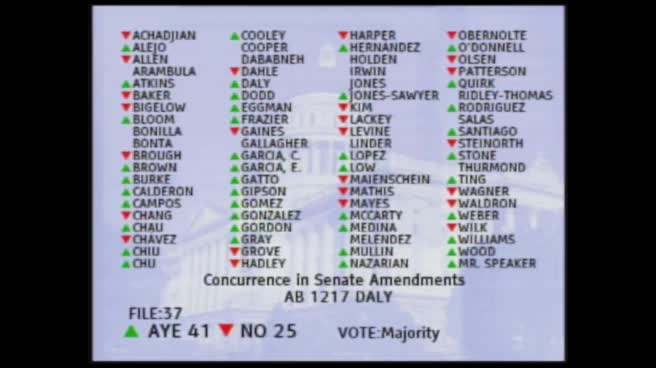
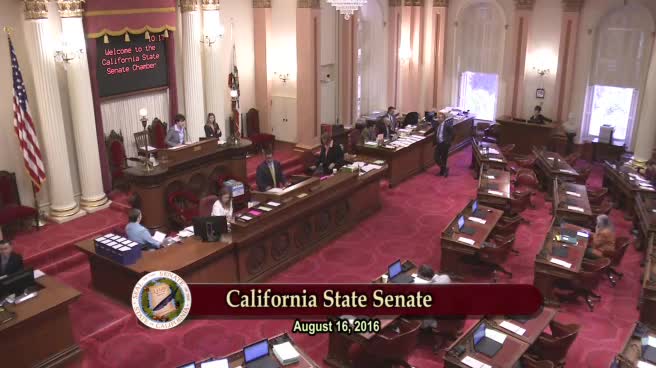
Bill Author