AB 152: Board of State and Community Corrections: recidivism.
- Session Year: 2017-2018
- House: Assembly
- Latest Version Date: 2017-01-11
Existing law requires the Board of State and Community Corrections to collect and maintain available information and data about state and community correctional policies, practices, capacities, and needs, as specified. Existing law also requires the board, in consultation with the Administrative Office of the Courts, the Chief Probation Officers of California, and the California State Sheriffs Association, to collect and analyze data regarding local plans implementing the 2011 public safety realignment.
This bill would require the board, in consultation with the Administrative Office of the Courts, the California District Attorneys Association, the California State Association of Counties, the California State Sheriffs Association, and the Chief Probation Officers of California, to collect and analyze data regarding recidivism rates of all persons who receive a felony sentence punishable by imprisonment in county jail or who are placed on postrelease community supervision. The bill would also require the board to make this data available on the boards Internet Web site.
(a)It shall be the duty of the The Board of State and Community Corrections to shall collect and maintain available information and data about state and community correctional policies, practices, capacities, and needs, including, but not limited to, prevention, intervention, suppression, supervision, and incapacitation, as they relate to both adult corrections, juvenile justice, and gang problems. The board shall seek to collect and make publicly available up-to-date data and information reflecting the impact of state and community correctional, juvenile justice, and gang-related policies and practices enacted in the state, as well as information and data concerning promising and evidence-based practices from other jurisdictions.
(b)Consistent with subdivision (c) of Section 6024, the board shall also:
(1)Develop recommendations for the improvement of criminal justice and delinquency and gang prevention activity throughout the state.
(2)Identify, promote, and provide technical assistance relating to evidence-based programs, practices, and promising and innovative projects consistent with the mission of the board.
(3)Develop definitions of key terms, including, but not limited to, recidivism, average daily population, treatment program completion rates, and any other terms deemed relevant in order to facilitate consistency in local data collection, evaluation, and implementation of evidence-based practices, promising evidence-based practices, and evidence-based programs. In developing these definitions, the board shall consult with the following stakeholders and experts:
(A)A county supervisor or county administrative officer, selected after conferring with the California State Association of Counties.
(B)A county sheriff, selected after conferring with the California State Sheriffs Association.
(C)A chief probation officer, selected after conferring with the Chief Probation Officers of California.
(D)A district attorney, selected after conferring with the California District Attorneys Association.
(E)A public defender, selected after conferring with the California Public Defenders Association.
(F)The Secretary of the Department of Corrections and Rehabilitation.
(G)A representative from the Administrative Office of the Courts.
(H)A representative from a nonpartisan, nonprofit policy institute with experience and involvement in research and data relating to Californias criminal justice system.
(I)A representative from a nonprofit agency providing comprehensive reentry services.
(4)Receive and disburse federal funds, and perform all necessary and appropriate services in the performance of its duties as established by federal acts.
(5)Develop comprehensive, unified, and orderly procedures to ensure that applications for grants are processed fairly, efficiently, and in a manner consistent with the mission of the board.
(6)Identify delinquency and gang intervention and prevention grants that have the same or similar program purpose, are allocated to the same entities, serve the same target populations, and have the same desired outcomes for the purpose of consolidating grant funds and programs and moving toward a unified single delinquency intervention and prevention grant application process in adherence with all applicable federal guidelines and mandates.
(7)Cooperate with and render technical assistance to the Legislature, state agencies, units of general local government, combinations of those units, or other public or private agencies, organizations, or institutions in matters relating to criminal justice and delinquency prevention.
(8)Develop incentives for units of local government to develop comprehensive regional partnerships whereby adjacent jurisdictions pool grant funds in order to deliver services, such as job training and employment opportunities, to a broader target population, including at-risk youth, and maximize the impact of state funds at the local level.
(9)Conduct evaluation studies of the programs and activities assisted by the federal acts.
(10)Identify and evaluate state, local, and federal gang and youth violence suppression, intervention, and prevention programs and strategies, along with funding for those efforts. The board shall assess and make recommendations for the coordination of the states programs, strategies, and funding that address gang and youth violence in a manner that maximizes the effectiveness and coordination of those programs, strategies, and resources. By January 1, 2014, the board shall develop funding allocation policies to ensure that within three years no less than 70 percent of funding for gang and youth violence suppression, intervention, and prevention programs and strategies is used in programs that utilize promising and proven evidence-based principles and practices. The board shall communicate with local agencies and programs in an effort to promote the best evidence-based principles and practices for addressing gang and youth violence through suppression, intervention, and prevention.
(11)The board shall collect from each county the plan submitted pursuant to Section 1230.1 within two months of adoption by the county boards of supervisors. Commencing January 1, 2013, and annually thereafter, the board shall collect and analyze available data regarding the implementation of the local plans and other outcome-based measures, as defined by the board in consultation with the Administrative Office of the Courts, the Chief Probation Officers of California, and the California State Sheriffs Association. By July 1, 2013, and annually thereafter, the board shall provide to the Governor and the Legislature a report on the implementation of the plans described above.
(12)Commencing on and after July 1, 2012, the board, in consultation with the Administrative Office of the Courts, the California State Association of Counties, the California State Sheriffs Association, and the Chief Probation Officers of California, shall support the development and implementation of first phase baseline and ongoing data collection instruments to reflect the local impact of Chapter 15 of the Statutes of 2011, specifically related to dispositions for felony offenders and postrelease community supervision. The board shall make any data collected pursuant to this paragraph available on the boards Internet Web site. It is the intent of the Legislature that the board promote collaboration and the reduction of duplication of data collection and reporting efforts where possible.
(13)Commencing on and after July 1, 2018, the board, in consultation with the Administrative Office of the Courts, the California District Attorneys Association, the California State Association of Counties, the California State Sheriffs Association, and the Chief Probation Officers of California, shall collect and analyze data regarding recidivism rates of all persons who receive a sentence pursuant to paragraph (2) or (5) of subdivision (h) of Section 1170 or who are placed on postrelease community supervision on or after July 1, 2018. The data shall include, as it becomes available, recidivism rates for these offenders one, two, and three years after their release in the community. The board shall make any data collected pursuant to this paragraph available on the boards Internet Web site on a quarterly basis beginning on September 1, 2019. As used in this paragraph, the term recidivism means the conviction for a new felony or misdemeanor offense that was committed within three years after release from custody or committed within three years of placement on supervision for a previous criminal conviction.
(c)The board may do either of the following:
(1)Collect, evaluate, publish, and disseminate statistics and other information on the condition and progress of criminal justice in the state.
(2)Perform other functions and duties as required by federal acts, rules, regulations, or guidelines in acting as the administrative office of the state planning agency for distribution of federal grants.
(d)Nothing in this chapter shall be construed to include, in the provisions set forth in this section, funds already designated to the Local Revenue Fund 2011 pursuant to Section 30025 of the Government Code.
|
Date
|
Status
|
|---|---|
| Feb 1, 2018 | From committee: Filed with the Chief Clerk pursuant to Joint Rule 56. |
| Jan 31, 2018 | Died pursuant to Art. IV, Sec. 10(c) of the Constitution. |
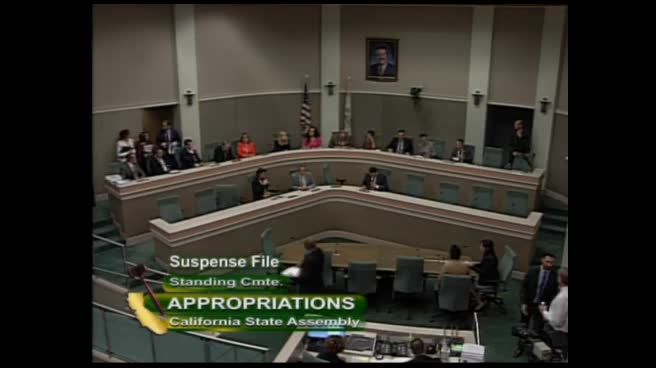
| May 26, 2017 | In committee: Held under submission. |
| Apr 5, 2017 | In committee: Set, first hearing. Referred to APPR. suspense file. |
| Mar 1, 2017 | From committee: Do pass and re-refer to Com. on APPR. with recommendation: To Consent Calendar. (Ayes 7. Noes 0.) (February 28). Re-referred to Com. on APPR. |
| Feb 13, 2017 | In committee: Hearing postponed by committee. |
| Jan 19, 2017 | Referred to Com. on PUB. S. |
| Jan 12, 2017 | From printer. May be heard in committee February 11. |
| Jan 11, 2017 | Read first time. To print. |
|
Date
|
Description
|
Location
|
Votes
|
|
|---|---|---|---|---|
| Feb 28, 2017 | Do pass and be re-referred to the Committee on [Appropriations] with recommendation: To Consent Calendar | Assembly Standing Committee on Public Safety |
Passed |
This list shows positions taken on this bill by organizations on the date displayed, which is linked to the original source.
Positions by individuals are not included.
Date of Hearing: April 5, 2017
ASSEMBLY COMMITTEE ON APPROPRIATIONS
Lorena Gonzalez Fletcher, Chair
ABPCA Bill Id:AB 152
Author:(Gallagher) – As Introduced Ver:January 11, 2017
Policy Committee: | Public Safety | Vote: | 7 - 0 |
Urgency: No State Mandated Local Program: No Reimbursable: No
SUMMARY:
This bill, beginning July 1, 2018, requires the Board of State and Community Corrections (BSCC), in consultation with specified stakeholders – courts, sheriffs, counties, probation - to collect and analyze data regarding recidivism rates of offenders sentenced and released under realignment. This bill also requires the data collection and analysis to include one, two, and three-year recidivism rates. BSCC is required post the data online quarterly beginning September 1, 2019.
FISCAL EFFECT:
- Annual increased GF staffing costs, likely in the range of $300,000 for 2.5 personnel-year equivalents, to collect, track, analyze, and post data relating to thousands of offenders. Collecting the required data will be challenging, as it will require considerable cooperation with local law enforcement. Furthermore, there may be significant additional information technology costs required to implement this bill.
- As written, this bill does not require counties to collect and submit new data to the BSCC. Under Proposition 30, the state is required to provide funding to local governments if it imposes a higher level of service on a local agency for a realigned program. To the extent the state does not provide funding to cover the cost, local governments are not required to provide the higher level of service. If the data collection was a requirement on counties, this bill would increase the level of services for a realigned program and require state funding for counties.
COMMENTS:
- Background. The mission of BSCC includes providing statewide leadership, coordination, and technical assistance to promote effective state and local efforts and partnerships in California's adult and juvenile criminal justice system. BSCC is charged with collecting and maintaining available information and data about state and community correctional policies, practices, capacities, and needs, including, but not limited to, prevention, intervention, suppression, supervision, and incapacitation.
- Purpose. According to the author, "It is imperative that we track the recidivism rates of offenders who, before realignment, would have served their sentence in prison, but now serve those sentences in county jails or [are] being released early. This is important data that is necessary to evaluate the effects of realignment on public safety in our communities and the
effectiveness of rehabilitation programs… Collecting and reporting recidivism data is an essential part of evaluating the success of realignment and in identifying any need for changes.”
- Prior Legislation:
AB 602 (Gallagher), of the 2013-2014 Legislative Session, and AB 1870 (Gallagher), of the 2015-2016 Legislative Session, are substantially similar bills and both were held on this committee’s Suspense File.
AB 2521 (Hagman), of the 2013-2014 Legislative Session, another similar bill, was held on the Senate Appropriations Suspense File.
AB 1050 (Dickinson), Chapter 270, Statutes of 2013, requires BSCC, in consultation with certain individuals who represent or are selected after conferring with specified stakeholders, to develop definitions of key terms, which include, but are not limited to, "recidivism," "average daily population," "treatment program completion rates," and any other terms deemed relevant in order to facilitate consistency in local data collection, evaluation, and implementation of evidence-based practices, promising evidence-based practices, and evidence-based programs.
Analysis Prepared by: Pedro Reyes / APPR. / 916-319-2081
Date of Hearing:
Chief Counsel: Gregory Pagan
ASSEMBLY COMMITTEE ON PUBLIC SAFETY
Reginald Byron Jones-Sawyer, Sr., Chair
ABPCA Bill Id:AB 152
Author:(Gallagher) – As Introduced Ver:January 11, 2017
SUMMARY:
Requires the Board of State and Community Corrections (BSCC) to collect and analyze data regarding recidivism rates of all persons who receive a felony sentence or who are placed on postrelease community supervision (PRCS), as specified. Specifically, this bill:
- Requires, commencing on and after July 1, 2018, BSCC, in consultation with the Administrative Office of the Courts, the California State Association of Counties, the California State Sheriffs’ Association, the California District Attorneys Association, and the Chief Probation Officers of California, to collect and analyze data regarding recidivism rates of all persons who receive a felony sentence punishably by imprisonment in county jail or who are placed on PRCS on or after July 1, 2018.
- Mandates that the data shall include, as it becomes available, recidivism rates for these offenders one, two, and three years after their release in the community.
- States that BSCC shall make any data collected pursuant to this paragraph available on the board’s Internet Web site on a quarterly basis beginning on September 1, 2019.
EXISTING LAW:
- Establishes, commencing July 1, 2012, BSCC and states that all references to the Board of Corrections or the Corrections Standards Authority shall refer to BSCC. (Pen. Code, § 6024, subd. (a).)
- States that the mission of BSCC shall include providing statewide leadership, coordination, and technical assistance to promote effective state and local efforts and partnerships in California’s adult and juvenile criminal justice system, including addressing gang problems. This mission shall reflect the principle of aligning fiscal policy and correctional practices, including, but not limited to prevention, intervention, suppression, supervision, and incapacitation, to promote a justice investment strategy that fits each county and is consistent with the integrated statewide goal of improved public safety through cost-effective, promising, and evidence-based strategies for managing criminal justice populations. (Pen. Code, § 6024, subd. (b).)
- Provides that it shall be the duty of BSCC to collect and maintain available information and data about state and community correctional policies, practices, capacities, and needs, including, but not limited to, prevention, intervention, suppression, supervision, and incapacitation, as they relate to both adult corrections, juvenile justice, and gang problems. The board shall seek to collect and make publicly available up-to-date data and information reflecting the impact of state and community correctional, juvenile justice, and gang-related policies and practices enacted in the state, as well as information and data concerning promising and evidence-based practices from other jurisdictions. (Pen. Code, § 6027, subd. (a).)
- Requires, commencing on and after July 1, 2012, BSCC, in consultation with the Administrative Office of the Courts, the California State Association of Counties, the California State Sheriffs’ Association, and the Chief Probation Officers of California, shall support the development and implementation of first phase baseline and ongoing data collection instruments to reflect the local impact of Public Safety Realignment, specifically related to dispositions for felony offenders and postrelease community supervision. The board shall make any data collected pursuant to this paragraph available on the board’s Internet Web site. It is the intent of the Legislature that the board promotes collaboration and the reduction of duplication of data collection and reporting efforts where possible. (Pen. Code, § 6027, subd. (b)(12).)
- Authorizes BSCC to do either of the following:
- Collect, evaluate, publish, and disseminate statistics and other information on the condition and progress of criminal justice in the state; or,
- Perform other functions and duties as required by federal acts, rules, regulations, or guidelines in acting as the administrative office of the state planning agency for distribution of federal grants. (Pen. Code, § 6027, subd. (c).)
- Collect, evaluate, publish, and disseminate statistics and other information on the condition and progress of criminal justice in the state; or,
FISCAL EFFECT:
Unknown
COMMENTS:
- Author's Statement: According to the author, "It is imperative that we track the recidivism rates of offenders who, before realignment, would have served their sentence in prison, but now serve those sentences in county jails or being released early. This is important data that is necessary to evaluate the effects of realignment on public safety in our communities and the effectiveness of rehabilitation programs.
"This bill builds on AB 1050 (Dickinson 2013) which required the Board of State and Community Corrections to develop a common definition of the term ‘recidivism.; AB 602 requires the Board, after July 1, 2016, to report the recidivism rates of those either sentenced under, or receiving post-release community supervision under the public safety realignment law. Consistent with the Department of Corrections and Rehabilitation’s data for parolees, it would require this to be reported for those 1, 2, and 3 years after release. Collecting and reporting recidivism data is an essential part of evaluating the success of realignment and in identifying any need for changes.” - Background: BSCC was established, commencing July 1, 2012, by SB 92 (Committee on Budget and Fiscal Review), Chapter 36, Statutes of 2011. "From 2005 through 2012, BSCC was the Correction Standards Authority, a division of CDCR. Prior to that it was the Board of Corrections, an independent state department. The BSCC is responsible for administering various criminal justice grant programs and ensuring compliance with state and federal standards in the operation of local correctional facilities. It is also responsible for providing technical assistance to local authorities and collecting data related to the outcomes of criminal justice policies and practices." (LAO, The 2013-14 Budget: The Governor's Criminal Justice Proposals, p. 44 (Feb. 15, 2013).)
"In creating BSCC, the Legislature added two responsibilities to the board’s core mission: (1) assisting local entities to adopt best practices to improve criminal justice outcomes and (2) collecting and analyzing data related to criminal justice outcomes in the state." (Id. at pp. 44-45.) - Effect of Realignment on Crime Rates: A fact sheet recently released by Public Policy Institute of California (PPIC) on the state's crime rates for 2013 shows that there was an overall decrease in violent crime and property crime rates. Specifically, the violent crime rate dropped by 6.5% in 2013, to a 46-year low of 397 per 100,000 residents. As for property crimes, after a noticeable uptick in 2012, the 2013 rate of 2,665 per 100,000 residents is down 3.9% from 2012 and close to the 50-year low of 2,594 reached in 2011. The fact sheet noted that crime rates vary by region and by category. While some regions did experience increased crime rates, "41 of the state’s 58 counties—including 14 of the 15 largest—saw decreases in their violent crime rates in 2013" and "some of the state's largest counties saw substantial decreases in property crime rates in 2013. Orange and Fresno Counties both observed double-digit drops (10% and 13.2% respectively), while the property crime rate in Sacramento County decreased by 9.4%." (Lofstrom and Martin, Crime Trends in California, PPIC (Nov. 2014) <http://www.ppic.org/main/publication_show.asp?i=1036> [as of Mar. 27, 2015].)
- Prior Legislation:
- AB 1870 (Gallagher) of the 2015-16 Legislative Session, would have required, commencing July 1, 2018, BSCC, in consultation with specified stakeholders, to collect and analyze data regarding recidivism rates of all persons who are sentenced and released on or after July 1, 2018, pursuant to 2011 realignment, as specified. This bill would have required the data to be posted quarterly on the BSCC website beginning September 1, 2019. AB 1870 was held on the Assembly Committee on Appropriations' Suspense File.
- AB 602 (Gallagher), of the 2013-14 Legislative Session, would have required, commencing July 1, 2016, BSCC, in consultation with specified stakeholders, to collect and analyze data regarding recidivism rates of all persons who are sentenced and released on or after July 1, 2016, pursuant to 2011 realignment, as specified. This bill would have required the data to be posted quarterly on the BSCC website beginning September 1, 2017. AB 602 was held on the Assembly Committee on Appropriations' Suspense File.
- AB 2521 (Hagman), of the 2013-14 Legislative Session, would have required, commencing July 1, 2015, BSCC, in consultation with specified stakeholders, to collect and analyze data regarding recidivism rates of all persons who are sentenced and released on or after July 1, 2015, pursuant to 2011 realignment, as specified. This bill would have required the data to be posted quarterly on the BSCC website beginning September 1, 2016. AB 2521 was held on the Senate Committee on Appropriations' Suspense File.
- AB 1050 (Dickinson), Chapter 270, Statutes of 2013, requires BSCC, in consultation with certain individuals that represent or are selected after conferring with specified stakeholders, to develop definitions of key terms, which include, but are not limited to, "recidivism," "average daily population," "treatment program completion rates," and any other terms deemed relevant in order to facilitate consistency in local data collection, evaluation, and implementation of evidence-based practices, promising evidence-based practices, and evidence-based programs.
- AB 526 (Dickinson), Chapter 850, Statutes of 2012, requires BSCC to identify and consolidate gang intervention and delinquency prevention programs and grants and focus funding on evidenced-based practices.
- SB 92 (Budget and Fiscal Review Committee), Chapter 36, Statutes of 2011, starting July 1, 2012, eliminates the Corrections Standards Authority, and assigns its former duties to the newly created 12-member BSCC and assigns additional duties, as provided.
- AB 1870 (Gallagher) of the 2015-16 Legislative Session, would have required, commencing July 1, 2018, BSCC, in consultation with specified stakeholders, to collect and analyze data regarding recidivism rates of all persons who are sentenced and released on or after July 1, 2018, pursuant to 2011 realignment, as specified. This bill would have required the data to be posted quarterly on the BSCC website beginning September 1, 2019. AB 1870 was held on the Assembly Committee on Appropriations' Suspense File.
REGISTERED SUPPORT / OPPOSITION:
Support
Peace Officers Research Association of California
Opposition
None
Analysis Prepared by:
Gregory Pagan / PUB. S. / (916) 319-3744
Discussed in Hearing
 1H
Assembly Standing Committee on Appropriations
Bill Author

Bill Co-Author(s):
