AB 1542: Violent felonies: video recording.
- Session Year: 2017-2018
- House: Assembly
- Latest Version Date: 2017-10-11
Existing law provides, for many criminal offenses, 3 possible terms of punishment. Existing law authorizes a court, in sentencing a person convicted of such a crime, to select the appropriate term which, in its sound discretion, best serves the interests of justice. Existing law allows the court to consider, in choosing an appropriate punishment, the record of the case, specified reports received by the court, and specified statements in aggravation or mitigation.
This bill would authorize the court to consider that a defendant convicted of a specified violent felony willfully recorded a video of the commission of the violent felony with the intent to encourage or facilitate the offense as a factor in aggravation in sentencing that defendant.
Existing law, as amended by Proposition 21 as approved by the voters at the March 7, 2000, statewide primary election and by Proposition 83 of the November 7, 2006, statewide general election, classifies certain felonies as violent felonies for purposes of various provisions of the Penal Code. Existing law generally imposes an additional one-year term for a felony and a 3-year term for a violent felony for each prior separate prison term served for a felony or a violent felony, respectively.
This bill would make it unlawful for a person who commits a violent felony, either directly or as an aider or abettor, to willfully record a video, or conspire with another person to record a video, of the commission of the violent felony. The bill would make a violation of this provision punishable by a one-year enhancement, to be served in addition and consecutive to the penalty prescribed for the underlying violent felony.By creating a new penalty enhancement, this bill would impose a state-mandated local program.The California Constitution requires the state to reimburse local agencies and school districts for certain costs mandated by the state. Statutory provisions establish procedures for making that reimbursement.This bill would provide that no reimbursement is required by this act for a specified reason.Existing law, as amended by Proposition 21 as approved by the voters at the March 7, 2000, statewide primary election and by Proposition 83 of the November 7, 2006, statewide general election, classifies certain felonies as violent felonies for purposes of various provisions of the Penal Code. Existing law generally imposes an additional one-year term for a felony and a 3-year term for a violent felony for each prior separate prison term served for a felony or a violent felony, respectively.
This bill would make it unlawful, in the commission of a unlawful for a person who commits a violent felony, either directly or as an aider or abettor, to willfully record a video, or conspire with another person to record a video, of the commission of the violent felony. The bill would make a violation of this provision punishable by a one-year enhancement, to be served in addition and consecutive to the penalty prescribed for the underlying violent felony.
Under existing law, all persons concerned in the commission of a crime, whether they directly commit the act constituting the offense, or aid and abet in its commission, or, not being present, have advised and encouraged its commission, are principals in any crime so committed.This bill would make it unlawful to willfully record a video of the commission of a violent felony pursuant to a conspiracy with the perpetrator of the violent felony to record the video, with the intent to encourage the commission of the underlying violent felony. The bill would make a violation of this provision a felony, punishable by a fine not exceeding $5,000, or by imprisonment for 16 months, or 2 or 3 years, or by both that fine and imprisonment. The bill would authorize the submission of that video by the person recording the video to a law enforcement agency at the first reasonable opportunity to be considered as evidence that the person lacked the intent to encourage the commission of the underlying violent felony.By increasing the penalty for an existing crime and creating a new crime, creating a new penalty enhancement, this bill would impose a state-mandated local program.
The California Constitution requires the state to reimburse local agencies and school districts for certain costs mandated by the state. Statutory provisions establish procedures for making that reimbursement.
This bill would provide that no reimbursement is required by this act for a specified reason.
Existing law, as amended by Proposition 21 as approved by the voters at the March 7, 2000, statewide primary election and by Proposition 83 of the November 7, 2006, statewide general election, classifies certain felonies as violent felonies for purposes of various provisions of the Penal Code. Existing law generally imposes an additional one-year term for a felony and a 3-year term for a violent felony for each prior separate prison term served for a felony or a violent felony, respectively.
This bill would make it unlawful, in the commission of a violent felony, to willfully record a video, or conspire with another person to record a video, of the commission of the violent felony. The bill would make a violation of this provision punishable by a one-year enhancement, to be served in addition and consecutive to the penalty prescribed for the underlying violent felony.
Under existing law, all persons concerned in the commission of a crime, whether they directly commit the act constituting the offense, or aid and abet in its commission, or, not being present, have advised and encouraged its commission, are principals in any crime so committed.
This bill would make it unlawful to willfully record a video of the commission of a violent felony pursuant to a conspiracy with the perpetrator of the violent felony to record the video, with the intent to encourage the commission of the underlying violent felony. The bill would make a violation of this provision a felony, punishable by a fine not exceeding $5,000, or by imprisonment for 16 months, or 2 or 3 years, or by both that fine and imprisonment. The bill would authorize the submission of that video by the person recording the video to a law enforcement agency at the first reasonable opportunity to be considered as evidence that the person lacked the intent to encourage the commission of the underlying violent felony.
By increasing the penalty for an existing crime and creating a new crime, this bill would impose a state-mandated local program.
The California Constitution requires the state to reimburse local agencies and school districts for certain costs mandated by the state. Statutory provisions establish procedures for making that reimbursement.
This bill would provide that no reimbursement is required by this act for a specified reason.
In sentencing a person convicted of a violent felony listed in subdivision (c) of Section 667.5, the court may consider, as a factor in aggravation, that the defendant willfully recorded a video of the commission of the violent felony with the intent to encourage or facilitate the offense.
In sentencing a person convicted of a violent felony listed in subdivision (c) of Section 667.5, the court may consider, as a factor in aggravation, that the defendant willfully recorded a video of the commission of the violent felony with the intent to encourage or facilitate the offense.
In sentencing a person convicted of a violent felony listed in subdivision (c) of Section 667.5, the court may consider, as a factor in aggravation, that the defendant willfully recorded a video of the commission of the violent felony with the intent to encourage or facilitate the offense.
SECTION 1.Section 667.95 is added to the Penal Code, to read:667.95.(a)It is unlawful for a person who commits a violent felony, either directly or as an aider or abettor, to willfully record a video, or conspire with another person to record a video, of the commission of the violent felony. A violation of this subdivision is punishable by a one-year enhancement, to be served in addition and consecutive to the penalty prescribed for the underlying violent felony. (b)An enhancement imposed by this section does not preclude prosecution or the imposition of penalties under any other law.(c)For purposes of this section, a violent felony is any felony listed in subdivision (c) of Section 667.5.SEC. 2.No reimbursement is required by this act pursuant to Section 6 of Article XIIIB of the California Constitution because the only costs that may be incurred by a local agency or school district will be incurred because this act creates a new crime or infraction, eliminates a crime or infraction, or changes the penalty for a crime or infraction, within the meaning of Section 17556 of the Government Code, or changes the definition of a crime within the meaning of Section 6 of Article XIIIB of the California Constitution.(a)It is unlawful, in the commission of unlawful for a person who commits a violent felony, either directly or as an aider or abettor, to willfully record a video, or conspire with another person to record a video, of the commission of the violent felony. A violation of this subdivision is punishable by a one-year enhancement, to be served in addition and consecutive to the penalty prescribed for the underlying violent felony.
(b)(1)It is unlawful to willfully record a video of the commission of a violent felony pursuant to a conspiracy with the perpetrator of the violent felony to record the video, with the intent to encourage the commission of the underlying violent felony. A violation of this paragraph is a felony, punishable by a fine not exceeding five thousand dollars ($5,000), or by imprisonment pursuant to subdivision (h) of Section 1170, or by both that fine and imprisonment.(2)Submission of the video described in paragraph (1) by the person recording the video to a law enforcement agency at the first reasonable opportunity may be considered as evidence that the person lacked the intent to encourage the commission of the underlying violent felony.(c)(1)A conviction or(b)An enhancement imposed by this section does not preclude prosecution or the imposition of penalties under any other law.
(2)A person shall not be subject to penalties under both subdivisions (a) and (b).(d)(c)For purposes of this section, a violent felony is any felony listed in subdivision (c) of Section 667.5.
SEC. 2.No reimbursement is required by this act pursuant to Section 6 of Article XIIIB of the California Constitution because the only costs that may be incurred by a local agency or school district will be incurred because this act creates a new crime or infraction, eliminates a crime or infraction, or changes the penalty for a crime or infraction, within the meaning of Section 17556 of the Government Code, or changes the definition of a crime within the meaning of Section 6 of Article XIIIB of the California Constitution.
(a)It is unlawful, in the commission of a violent felony, to willfully record a video, or conspire with another person to record a video, of the commission of the violent felony. A violation of this subdivision is punishable by a one-year enhancement, to be served in addition and consecutive to the penalty prescribed for the underlying violent felony.
(b)(1)It is unlawful to willfully record a video of the commission of a violent felony pursuant to a conspiracy with the perpetrator of the violent felony to record the video, with the intent to encourage the commission of the underlying violent felony. A violation of this paragraph is a felony, punishable by a fine not exceeding five thousand dollars ($5,000), or by imprisonment pursuant to subdivision (h) of Section 1170, or by both that fine and imprisonment.
(2)Submission of the video described in paragraph (1) by the person recording the video to a law enforcement agency at the first reasonable opportunity may be considered as evidence that the person lacked the intent to encourage the commission of the underlying violent felony.
(c)(1)A conviction or enhancement imposed by this section does not preclude prosecution or the imposition of penalties under any other law.
(2)A person shall not be subject to penalties under both subdivisions (a) and (b).
(d)For purposes of this section, a violent felony is any felony listed in subdivision (c) of Section 667.5.
SEC. 2.No reimbursement is required by this act pursuant to Section 6 of Article XIIIB of the California Constitution because the only costs that may be incurred by a local agency or school district will be incurred because this act creates a new crime or infraction, eliminates a crime or infraction, or changes the penalty for a crime or infraction, within the meaning of Section 17556 of the Government Code, or changes the definition of a crime within the meaning of Section 6 of Article XIIIB of the California Constitution.
|
Date
|
Status
|
|---|---|
| Oct 11, 2017 | Chaptered by Secretary of State - Chapter 668, Statutes of 2017. |
| Oct 11, 2017 | Approved by the Governor. |
| Sep 21, 2017 | Enrolled and presented to the Governor at 3:30 p.m. |
| Sep 13, 2017 | Assembly Rule 77(a) suspended. |
| Sep 12, 2017 | In Assembly. Concurrence in Senate amendments pending. May be considered on or after September 14 pursuant to Assembly Rule 77. |
| Sep 11, 2017 | Read third time. Passed. Ordered to the Assembly. |
| Sep 5, 2017 | Read second time. Ordered to third reading. |
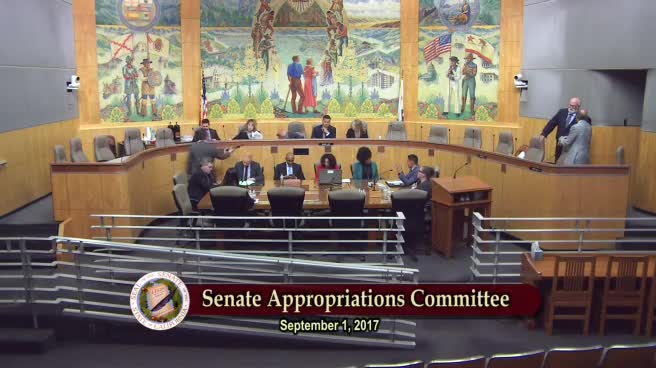
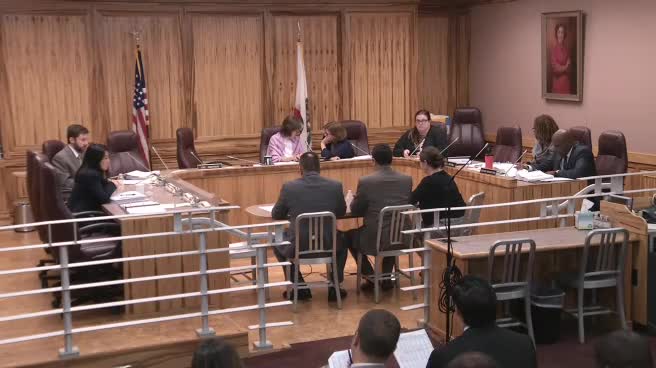
| Sep 1, 2017 | From committee: Amend, and do pass as amended. (Ayes 7. Noes 0.) (September 1). |
| Aug 21, 2017 | In committee: Referred to APPR. suspense file. |
| Jul 12, 2017 | From committee: Do pass and re-refer to Com. on APPR. (Ayes 5. Noes 0.) (July 11). Re-referred to Com. on APPR. |
| Jun 14, 2017 | Referred to Com. on PUB. S. |
| Jun 1, 2017 | In Senate. Read first time. To Com. on RLS. for assignment. |
| May 31, 2017 | Read third time. Passed. Ordered to the Senate. (Ayes 76. Noes 1. Page 1921.) |
| May 30, 2017 | Read second time. Ordered to third reading. |
| May 26, 2017 | From committee: Do pass. (Ayes 16. Noes 1.) (May 26). |
| May 17, 2017 | In committee: Set, first hearing. Referred to APPR. suspense file. |
| May 2, 2017 | Re-referred to Com. on APPR. |
| May 1, 2017 | Read second time and amended. |
| Apr 27, 2017 | From committee: Amend, and do pass as amended and re-refer to Com. on APPR. (Ayes 6. Noes 1.) (April 25). |
| Apr 18, 2017 | In committee: Set, first hearing. Hearing canceled at the request of author. |
| Mar 16, 2017 | Referred to Com. on PUB. S. |
| Feb 19, 2017 | From printer. May be heard in committee March 21. |
| Feb 17, 2017 | Read first time. To print. |
|
Date
|
Description
|
Location
|
Votes
|
|
|---|---|---|---|---|
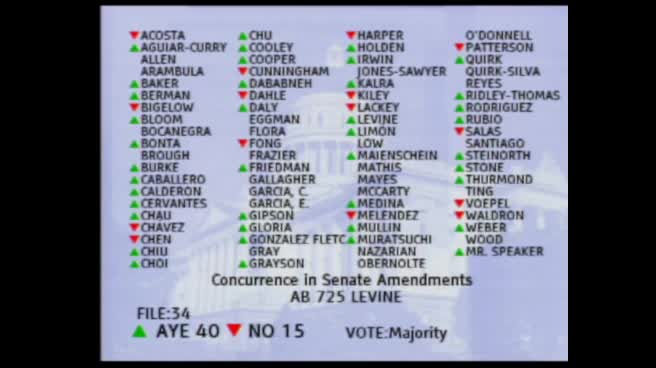
| Sep 13, 2017 | AB 1542 DABABNEH Concurrence in Senate Amendments | Assembly Floor |
Passed |
|
| Sep 11, 2017 | Assembly 3rd Reading AB1542 Dababneh et al. By Wiener | Senate Floor |
Passed |
|
| Sep 1, 2017 | Do pass as amended | Senate Standing Committee on Appropriations |
Passed |
|
| Aug 21, 2017 | Placed on suspense file | Senate Standing Committee on Appropriations |
Passed |
|
| Jul 11, 2017 | Do pass, but first be re-referred to the Committee on [Appropriations] | Senate Standing Committee on Public Safety |
Passed |
|
| May 31, 2017 | AB 1542 DABABNEH Assembly Third Reading | Assembly Floor |
Passed |
|
| May 26, 2017 | Do pass. | Assembly Standing Committee on Appropriations |
Passed |
|
| Apr 25, 2017 | Do pass as amended and be re-referred to the Committee on [Appropriations] | Assembly Standing Committee on Public Safety |
Passed |
This list shows positions taken on this bill by organizations on the date displayed, which is linked to the original source.
Positions by individuals are not included.
CONCURRENCE IN SENATE AMENDMENTS
CSA1 Bill Id:AB 1542
Author:(Dababneh)
As Amended Ver:September 1, 2017
Majority vote
ASSEMBLY: | 76-1 | (May 31, 2017) | SENATE: | 39-0 | (September 11, 2017) |
Original Committee Reference: PUB. S.
SUMMARY: Allows the court to consider the recording of a commission of a violent felony as a factor in aggravation for sentencing purposes.
The Senate amendments delete the one-year enhancement for recording the commission of a violent felony and instead authorize this fact to be considered as a factor in aggravation for purposes of sentencing.
EXISTING LAW:
- Provides that all persons concerned in the commission of a crime, whether it be a felony or misdemeanor, and whether they directly commit the act constituting the offense, or aid and abet in its commission, or, not being present, have advised and encouraged its commission, are principals in any crime so committed.
- Defines conspiracy as two or more persons conspiring to commit any crime, together with proof of the commission of an overt act by one or more of the parties to such agreement in furtherance of the agreement.
- Defines a "violent felony" as any of the following:
- Murder or voluntary manslaughter;
- Mayhem;
- Rape or spousal rape accomplished by means of force or threats of retaliation;
- Sodomy by force or fear of immediate bodily injury on the victim or another person;
- Oral copulation by force or fear of immediate bodily injury on the victim or another person;
- Lewd acts on a child under the age of 14 years, as defined;
- Any felony punishable by death or imprisonment in the state prison for life;
- Any felony in which the defendant inflicts great bodily injury on any person other than an accomplice, or any felony in which the defendant has used a firearm, as specified;
- Any robbery;
- Arson of a structure, forest land, or property that causes great bodily injury;
- Arson that causes an inhabited structure or property to burn;
- Sexual penetration accomplished against the victim's will by means of force, menace or fear of immediate bodily injury on the victim or another person;
- Attempted murder;
- Explosion or attempted explosion of a destructive device with the intent to commit murder;
- Explosion or ignition of any destructive device or any explosive which causes bodily injury to any person;
- Explosion of a destructive device which causes death or great bodily injury;
- Kidnapping;
- Assault with intent to commit mayhem, rape, sodomy or oral copulation;
- Continuous sexual abuse of a child;
- Carjacking, as defined;
- Rape or penetration of genital or anal openings by a foreign object;
- Felony extortion;
- Threats to victims or witnesses, as specified;
- First degree burglary, as defined, where it is proved that another person other than an accomplice, was present in the residence during the burglary;
- Use of a firearm during the commission of specified crimes; and,
- Possession, development, production, and transfers of weapons of mass destruction.
- Prohibits hidden video recordings in private places.
- Makes it a crime to record or eavesdrop on any confidential communication without the consent of all parties to the conversation.
AS PASSED BY THE ASSEMBLY, this bill:
- Made it unlawful for a person who commits a violent felony, either directly or as an aider and abettor, to willfully record a video, or conspire with another person to record a video, of the commission of the violent felony.
- Punished this conduct as a one-year enhancement to be served consecutively to the penalty for the underlying violent felony.
- Stated that a true finding on the enhancement does not preclude prosecution or punishment under any other law.
- Defined a "violent felony" as one listed in Penal Code section 667.5, subdivision (b).
FISCAL EFFECT: According to the Senate Appropriations Committee, no state fiscal impact.
COMMENTS: According to the author, "Assembly Bill 1542 (Dababneh), also known as Jordan's Law will deter social media motivated attacks – violent crimes where the perpetrator commits the crime for the purpose of videotaping and distributing on social media to gain attention and notoriety."
Analysis Prepared by: Sandy Uribe / PUB. S. / (916) 319-3744 FN: 0001857
Office of Senate Floor Analyses (916) 651-1520 Fax: (916) 327-4478 | AB |
THIRD READING
Bill No: AB 1542
Amended: 9/1/17 in Senate
SENATE PUBLIC SAFETY COMMITTEE: 5-0, 7/11/17
AYES: Skinner, Anderson, Jackson, Stone, Wiener
NO VOTE RECORDED: Bradford, Mitchell
SENATE APPROPRIATIONS COMMITTEE: 7-0, 9/1/17
AYES: Lara, Bates, Beall, Bradford, Hill, Nielsen, Wiener
ASSEMBLY FLOOR: 76-1, 5/31/17 - See last page for vote
DIGEST:
This bill authorizes a court, in any case where a defendant has been convicted of a violent felony, to consider as a factor in aggravation that the defendant willfully recorded a video of the commission of the violent felony with the intent to encourage or facilitate the offense.
Existing law:
- Defines "violent felony" to include the following:
- Murder or voluntary manslaughter;
- Mayhem;
- Rape or spousal rape accomplished by means of force or threats of retaliation;
- Sodomy by force or fear of immediate bodily injury on the victim or another person;
- Oral copulation by force or fear of immediate bodily injury on the victim or another person;
- Lewd acts on a child under the age of 14 years, as defined;
- Any felony punishable by death or imprisonment in the state prison for life;
- Any felony in which the defendant inflicts great bodily injury on any person other than an accomplice, or any felony in which the defendant has used a firearm, as specified;
- Any robbery;
- Arson of a structure, forest land, or property that causes great bodily injury;
- Arson that causes an inhabited structure or property to burn;
- Sexual penetration accomplished against the victim's will by means of force, menace or fear of immediate bodily injury on the victim or another person;
- Attempted murder;
- Explosion or attempted explosion of a destructive device with the intent to commit murder;
- Explosion or ignition of any destructive device or any explosive which causes bodily injury to any person;
- Explosion of a destructive device which causes death or great bodily injury;
- Kidnapping;
- Assault with intent to commit mayhem, rape, sodomy or oral copulation;
- Continuous sexual abuse of a child;
- Carjacking, as defined;
- Rape or penetration of genital or anal openings by a foreign object;
- Felony extortion;
- Threats to victims or witnesses, as specified;
- First degree burglary, as defined, where it is proved that another person other than an accomplice, was present in the residence during the burglary;
- Use of a firearm during the commission of specified crimes; and,
- Possession, development, production, and transfers of weapons of mass destruction.
(Pen. Code, § 667.5, subd. (c).)
- Imposes a three-year sentence enhancement for each prior separate prison term served by the defendant if the prior offense was a violent felony and the new offense is a violent felony. (Pen. Code, § 667.5, subd. (a).)
- Provides that all persons concerned in the commission of a crime, whether it be a felony or misdemeanor, and whether they directly commit the act constituting the offense, or aid and abet in its commission, or, not being present, have advised and encouraged its commission, are principals in any crime so committed. (Pen. Code, § 31.)
- Defines conspiracy as two or more persons conspiring to commit any crime, together with proof of the commission of an overt act by one or more of the parties to such agreement in furtherance of the agreement. (Pen. Code, §§ 182, subd. (a)(1), & 184.)
- Makes it a crime to record or eavesdrop on any confidential communication without the consent of all parties to the conversation. (Pen. Code § 632, subd. (a).)
This bill states that in any case where a defendant has been convicted of a violent felony listed in subdivision (c) of Section 667.5 of the Penal Code, the court may consider as a factor in aggravation that the defendant willfully recorded a video of the commission of the violent felony with the intent to encourage or facilitate the offense.
FISCAL EFFECT: Appropriation: Fiscal Com.: No Local: No
According to the Senate Appropriations Committee, this bill has no state fiscal impact.
Association of Deputy District Attorneys
California Association of Code Enforcement Officers
California Association of Highway Patrolmen
California College and University Police Chiefs Association
California Narcotic Officers Association
Crime Victims United
Los Angeles County Professional Peace Officers Association
Los Angeles County Sheriff’s Department
Los Angeles Deputy Sheriffs
Los Angeles Police Protective League
Orange County District Attorney’s Office
Peace Officers Research Association of California
Riverside Sheriffs Association
California Attorneys for Criminal Justice
California Public Defenders Association
ASSEMBLY FLOOR: 76-1, 5/31/17
AYES: Acosta, Aguiar-Curry, Travis Allen, Arambula, Baker, Berman, Bigelow, Bloom, Bocanegra, Bonta, Brough, Burke, Caballero, Calderon, Cervantes, Chau, Chávez, Chen, Chiu, Chu, Cooley, Cooper, Cunningham, Dababneh, Dahle, Daly, Flora, Fong, Frazier, Friedman, Gallagher, Cristina Garcia, Eduardo Garcia, Gipson, Gloria, Gomez, Gonzalez Fletcher, Gray, Grayson, Harper, Holden, Irwin, Jones-Sawyer, Kalra, Kiley, Lackey, Levine, Limón, Low, Maienschein, Mathis, Mayes, McCarty, Medina, Mullin, Muratsuchi, Nazarian, Obernolte, O'Donnell, Patterson, Quirk-Silva, Reyes, Ridley-Thomas, Rodriguez, Rubio, Salas, Santiago, Steinorth, Mark Stone, Thurmond, Ting, Voepel, Waldron, Weber, Wood, Rendon
NOES: Quirk
NO VOTE RECORDED: Choi, Eggman, Melendez
9/5/17 9:41:46
**** END ****
SENATE COMMITTEE ON
Senator Ricardo Lara, Chair
2017 - 2018 Regular Session
AB 1542 (Dababneh) - Violent felonies: video recording
Version: | Policy Vote: |
Urgency: | Mandate: No |
Hearing Date: | Consultant: |
Bill Summary:
AB 1542 would allow the court to consider as a factor in aggravation in determining the sentence of a person convicted of a violent felony, as specified, that the defendant willfully recorded a video of the commission of the violent felony with the intent to encourage or facilitate the offense.
*********** ANALYSIS ADDENDUM – SUSPENSE FILE ***********
The following information is revised to reflect amendments
adopted by the committee on September 1, 2017
Fiscal Impact:
No state fiscal impact.
Author Amendments:
Strike the contents of the bill and insert factor in aggravation language.
-- END --
SENATE COMMITTEE ON
Senator Ricardo Lara, Chair
2017 - 2018 Regular Session
AB 1542 (Dababneh) - Violent felonies: video recording
Version: | Policy Vote: |
Urgency: | Mandate: |
Hearing Date: | Consultant: |
This bill meets the criteria for referral to the Suspense File.
Bill Summary:
AB 1542 would add a consecutive one-year prison-term enhancement for a person who commits a violent felony to willfully record the crime.
Fiscal Impact:
Unknown, potential increase in state costs (General Fund) for longer commitments to state prison that otherwise would have ended earlier. The 2017-18 per capita cost to house a person in a state prison is $75,560 annually; the marginal rate per inmate is between $10,000 and $12,000 annually. The cost for a contract prison bed is about $29,000 annually.
Background:
Violent felonies, as specified in this bill, include some of the most serious crimes. As such, these offenses impose years-long sentences that must be served in state prison, rather than county jail.
Under existing law, there are a variety of ways that a person can get an increased or enhanced sentence. If the crime implicates the Three Strikes Law because it is an enumerated “violent felony” or “serious felony,” the defendant’s sentence can be increased substantially. Any new felony, if the person has a prior “strike,” is enhanced by doubling the underlying term. If the person has served a prior term in prison, an additional one to three years may be added. Also, there is an existing sentencing enhancement for a person who commits any felony in which he or she personally inflicts great bodily injury[1] and infliction of great bodily injury is not an element of the underlying offense. This enhancement can add three to six years to the term of imprisonment depending on the circumstances. Any felony that is enhanced with the great-bodily-injury enhancement is a “strike” for the direct perpetrator of the crime.
Separate from enhancements, a person may get a higher term of imprisonment based on the factual circumstances of his or her case. A person sentenced for a felony typically faces a sentencing triad, which proffers a lower, middle, and higher period of incarceration. Where three terms are specified, the court is free to choose any of the three terms, using valid discretion and stating the reasons for the term selected. “[T]he sentencing judge may consider circumstances in aggravation or mitigation, and any other factor reasonably related to the sentencing decision. The relevant circumstances may be obtained from the case record, the probation officer’s report, other reports and statements properly received, statements in aggravation or mitigation, and any evidence introduced at the sentencing hearing.” (Cal. Rules of Court, rule 4.420(b), see also Pen. Code, § 1170, subd. (b).) The Rules of Court provides lists of both aggravating factors and mitigating factors. In each category there are factors relating to the crime and factors relating to the defendant. If a court determines that the higher term is appropriate due to a factor in aggravation, the court may sentence the defendant to the highest of the three terms specified in statute.
Two factors in aggravation relevant to this bill are if (1) the crime involved great violence, great bodily harm, threat of great bodily harm, or other acts disclosing a high degree of cruelty, viciousness, or callousness and (2) the defendant induced others to participate in the commission of the crime or occupied a position of leadership or dominance of other participants in its commission. While there are enumerated factors that the court may consider, the court is also authorized to consider any other factor in aggravation to order the highest term of imprisonment, including recording the offense.
Existing law provides that a person who aids and abets another in the commission of a crime is a principal and is just as culpable as the offender. An aider and abettor is a person who, acting with knowledge of the unlawful purpose of the perpetrator and the intent or purpose of committing, encouraging, or facilitating the commission of the offense by act or advice, aids, promotes, encourages or instigates the commission of the crime. A defendant may be held criminally responsible as an accomplice not only for the crime he or she intended to aid and abet (the target crime) but also for any other crime that is the natural and probable consequence of the target crime. In general, however, neither presence at the scene of a crime nor knowledge of, but failure to prevent it, is sufficient to establish aiding and abetting its commission.
Proposed Law:
This bill would increase the term of incarceration by one year for a person who commits a violent felony, as specified, either directly or as an aider or abettor, to willfully record a video, or who conspires with another person to record a video, of the commission of the violent felony.
Related Legislation:
SB 784 (Galgiani, 2017) would allow the court to impose a fine for intentionally distributing or making accessible to another person an image or recording of a person who is fully or partially undressed, as specified. SB 784 is pending on the Assembly Floor.
Staff Comments:
The fiscal impact of this bill cannot be known with certainty, as the actual impact will be dependent on numerous factors, including, but not limited to, judicial and prosecutorial discretion, the criminal history of the defendant, and the factors unique to each case. In 2016, approximately 9,500 people were admitted to state prison for a violent felony conviction. If 1 percent of those individuals were sentenced with the enhancement of committing a violent felony to record it, state incarceration costs of this bill would be in the millions of dollars annually.
California is subject to a federal court order to reduce its in-state adult institution population to 137.5 percent of design capacity. The state has undertaken efforts to implement a durable remedy to reduce and avoid prison overcrowding. As of July 12, 2017, 118,899 inmates were housed in the state’s thirty-four adult institutions, 6,570 were housed in in-state contract beds, and 4,410 inmates were housed in out-of-state facilities. As of June 15, 2017, the state’s prison population was approximately 135.3 percent of design capacity if the 2,376 infill beds activated at Mule Creek State Prison and Richard J. Donovan Correctional Facility are counted at 137.5 percent. The state would be at approximately 136.7 percent of design capacity if the 2,376 infill beds are counted at 100 percent of capacity. By increasing the term of incarceration, this bill could result in an increase in the inmate population in state institutions.
-- END --
Great bodily injury is defined as a significant or substantial physical injury. The injury does not have to lead to permanent, prolonged, or protracted disfigurement, impairment, or loss of bodily function. ↑
SENATE COMMITTEE ON PUBLIC SAFETY
Senator Nancy Skinner, Chair
2017 - 2018 Regular
Bill No: AB 1542 Hearing Date: July 11, 2017
Author: | Dababneh | ||
Version: | May 1, 2017 | ||
Urgency: | No | Fiscal: | Yes |
Consultant: | SC | ||
Subject: Violent Felonies: Video Recording
HISTORY
Source: Author
Prior Legislation: None
Support: Association of Deputy District Attorneys; California Association of Code Enforcement Officers; California Association of Highway Patrolmen; California College and University Police Chiefs Association; California Narcotic Officers Association; Crime Victims United; Los Angeles County Professional Peace Officers Association; Los Angeles County Sheriff’s Department; Los Angeles Deputy Sheriffs; Los Angeles Police Protective League; Peace Officers Research Association of California; Orange County District Attorney’s Office; Riverside Sheriffs Association
Opposition: California Attorneys for Criminal Justice; California Public Defenders Association
Assembly Floor Vote: 76 - 1
PURPOSE
The purpose of this bill is to create a one-year state prison enhancement for recording the commission of a violent felony.
Existing law defines "violent felony" to include the following:
- Murder or voluntary manslaughter;
- Mayhem;
- Rape or spousal rape accomplished by means of force or threats of retaliation;
- Sodomy by force or fear of immediate bodily injury on the victim or another person;
- Oral copulation by force or fear of immediate bodily injury on the victim or another person;
- Lewd acts on a child under the age of 14 years, as defined;
- Any felony punishable by death or imprisonment in the state prison for life;
- Any felony in which the defendant inflicts great bodily injury on any person other than an accomplice, or any felony in which the defendant has used a firearm, as specified;
- Any robbery;
- Arson of a structure, forest land, or property that causes great bodily injury;
- Arson that causes an inhabited structure or property to burn;
- Sexual penetration accomplished against the victim's will by means of force, menace or fear of immediate bodily injury on the victim or another person;
- Attempted murder;
- Explosion or attempted explosion of a destructive device with the intent to commit murder;
- Explosion or ignition of any destructive device or any explosive which causes bodily injury to any person;
- Explosion of a destructive device which causes death or great bodily injury;
- Kidnapping;
- Assault with intent to commit mayhem, rape, sodomy or oral copulation;
- Continuous sexual abuse of a child;
- Carjacking, as defined;
- Rape or penetration of genital or anal openings by a foreign object;
- Felony extortion;
- Threats to victims or witnesses, as specified;
- First degree burglary, as defined, where it is proved that another person other than an accomplice, was present in the residence during the burglary;
- Use of a firearm during the commission of specified crimes; and,
- Possession, development, production, and transfers of weapons of mass destruction.
(Pen. Code, § 667.5, subd. (c).)
Existing law imposes a three-year sentence enhancement for each prior separate prison term served by the defendant if the prior offense was a violent felony and the new offense is a violent felony. (Pen. Code, § 667.5, subd. (a).)
Existing law imposes a one-year sentence enhancement
Existing law provides that all persons concerned in the commission of a crime, whether it be a felony or misdemeanor, and whether they directly commit the act constituting the offense, or aid and abet in its commission, or, not being present, have advised and encouraged its commission, are principals in any crime so committed. (Pen. Code, § 31.)
Existing law defines conspiracy as two or more persons conspiring to commit any crime, together with proof of the commission of an overt act by one or more of the parties to such agreement in furtherance of the agreement. (Pen. Code, §§ 182, subd. (a)(1), & 184.)
Existing law makes it a crime to record or eavesdrop on any confidential communication without the consent of all parties to the conversation. (Pen. Code § 632, subd. (a).)
This bill creates a one-year state prison enhancement for any person who commits a violent felony, either directly or as an aider or abettor, to willfully record a video, or conspire with another person to record a video, of the commission of the violent felony.
This bill requires the additional year to be served consecutive to the penalty prescribed for the underlying violent felony.
This bill clarifies that the enhancement created by this bill does not preclude prosecution or the imposition of penalties under any other law.
This bill states that for purposes of this section, a violent felony is any felony listed in subdivision (c) of Penal Code section 667.5.
COMMENTS
1. Need for This Bill
According to the author:
Assembly Bill 1542 (Dababneh), also known as Jordan’s Law, will prevent social media motivated attacks – violent crimes where the perpetrator commits the crime for the purpose of videotaping and distributing on social media to gain attention and notoriety.
Technology, specifically the ability to film with smartphones and immediately share those videos with thousands of people, has brought great change to our social interactions. While many of these technological changes have improved our lives, we are clearly seeing a rise in violent crime for the purposes of videotaping and sharing on social media. Though no official statistics are kept on social media motivated attacks, our office has observed exponential, year-to-year growth in their frequency through analysis of media reports. Unfortunately, California’s Penal Code has not kept up with this troubling and tragic emerging trend associated with social media.
AB 1542, Jordan’s Law, will deter social media motivated attacks by increasing the sentence for a violent felony if the attacker, or an aider and abettor, videotapes the attack.
2. Aiding and Abetting
Penal Code section 31 provides that one who aids and abets another in the commission of a crime is a principal and is just as culpable as the offender. An aider and abettor is a person who, acting with (1) knowledge of the unlawful purpose of the perpetrator and (2) the intent or purpose of committing, encouraging, or facilitating the commission of the offense, (3) by act or advice aids, promotes, encourages or instigates the commission of the crime. (People v. Beeman (1984) 35 Cal.3d 547, 561.) A defendant may be held criminally responsible as an accomplice not only for the crime he or she intended to aid and abet (the target crime), but also for any other crime that is the “natural and probable consequence” of the target crime. (People v. Croy (1985) 41 Cal.3d 1, 12, fn. 5.)
However, in general neither presence at the scene of a crime nor knowledge of, but failure to prevent it, is sufficient to establish aiding and abetting its commission. (People v. Campbell (1994) 25 Cal.App.4th 402, 409; People v. Durham (1969) 70 Cal.2d 171, 181; People v. Terry (1970) 2 Cal.3d 362, 401-402.)
Because some social-media-motivated crimes one person commits the actual physical act while another records it, this bill specifies that both the direct perpetrator as well as the person filming the crime can be subject to the enhancement for recording the commission of a violent crime.
3. Conspiracy
“The doctrine of conspiracy plays a dual role in criminal law. First, conspiracy is a substantive offense in itself—‘an agreement between two or more persons that they will commit an unlawful object (or achieve a lawful object by unlawful means), and in furtherance of the agreement, have committed one overt act toward the achievement of their objective.’ [Citations.] Second, proof of a conspiracy serves to impose criminal liability on all conspirators for crimes committed in furtherance of the conspiracy.” (People v. Salcedo (1994) 30 Cal.App.4th 209, 215.) This latter concept is known as uncharged conspiracy theory of liability.
Pursuant to an uncharged theory of liability, both parties would be subject to the recording enhancement if they conspired to film the violent crime.
4. Convictions for Violent Crimes Already Impose Substantial Penalties
This bill creates a one-year state prison enhancement for any person who records the commission of a violent felony, either as the direct perpetrator, or as an aider and abetter or conspirator of the offense. The additional year must be served consecutive to the sentence for the underlying crime.
Violent felonies, enumerated in Penal Code section 667.5, include some of the most serious crimes. As such, these offenses impose years-long sentences that must be served in state prison, rather than county jail.
Under existing law, there are a variety of ways that a person can get an increased or enhanced sentence. If the crime implicates the Three Strikes Law because it is an enumerated “violent felony” or “serious felony,” the person’s sentence can be increased substantially. Any new felony, if the person has a prior “strike,” is enhanced by doubling the underlying term. (Pen. Code, §§ 667, subd. (e)(1), 1170.12, subd. (c)(1).) If the person has a prior prison term, an additional one to three years may apply. (Pen. Code, § 667.5, subds. (a) & (b).) There is also an existing sentencing enhancement for a person who commits any felony in which he or she personally inflicts great bodily injury and infliction of great bodily injury is not an element of the underlying offense, which is defined as “a significant or substantial physical injury.” (Pen. Code, § 12022.7, subd. (f).) This does not require the victim to suffer “permanent,” “prolonged,” or “protracted” disfigurement, impairment, or loss of bodily function. (People v. Escobar (1992) 3 Cal.4th 740.) This enhancement can add three to six years to the term of imprisonment depending on the circumstances. (Pen. Code, § 12022.7, subds. (a)-(e).) Any felony that is enhanced with the great bodily injury enhancement becomes a strike. (Pen. Code, 667.5, subd. (c)(8).) This enhancement would only apply to the direct perpetrator of the crime.
Separate from enhancements, a person may get a higher term of imprisonment based on the factual circumstances of his or her case. A person sentenced for a felony typically faces a sentencing triad, meaning there are three possible terms specified by statute. (Pen. Code, § 1170.) Where three terms are specified, the court is free to choose any of the three terms, using valid discretion. The judge must still state reasons for the term selected. (Pen. Code, § 1170, subd. (b); see also Cal. Rules of Court, rules 4.406(b)(4), 4.420(e).) “[T]he sentencing judge may consider circumstances in aggravation or mitigation, and any other factor reasonably related to the sentencing decision. The relevant circumstances may be obtained from the case record, the probation officer’s report, other reports and statements properly received, statements in aggravation or mitigation, and any evidence introduced at the sentencing hearing.” (Cal. Rules of Court, rule 4.420(b), see also Pen. Code, § 1170, subd. (b).) The Rules of Court provides lists of both aggravating factors and mitigating factors. In each category there are factors relating to the crime and factors relating to the defendant. (See Cal. Rules of Court, rule 4.421 and rule 4.423.)
If a court determines that the higher term is appropriate due to a factor in aggravation, the court can sentence the defendant to the highest of the three terms specified in statute.
Of the enumerated factors in aggravation, there are at least two that could apply to situations this bill attempts to cover: the crime involved great violence, great bodily harm, threat of great bodily harm, or other acts disclosing a high degree of cruelty, viciousness, or callousness (Cal. Rules of Court, rule 4.421, subd. (a)(1)); or the defendant induced others to participate in the commission of the crime or occupied a position of leadership or dominance of other participants in its commission (Cal. Rules of Court, rule 4.421, subd. (a)(1)). While there are enumerated factors that the court may consider, the court is also authorized to consider any other factor in aggravation to order the highest term of imprisonment. This could include recording the offense.
5. Ongoing Concerns over Prison Overcrowding
On February 10, 2014, the federal court ordered California to reduce its in-state adult institution population to 137.5% of design capacity by February 28, 2016, as follows:
- 143% of design bed capacity by June 30, 2014;
- 141.5% of design bed capacity by February 28, 2015; and,
- 137.5% of design bed capacity by February 28, 2016.
The court also ordered California to implement the following population reduction measures in its prisons:
- Increase prospective credit earnings for non‑violent second‑strike inmates as well as minimum custody inmates.
- Allow non‑violent second‑strike inmates who have reached 50 percent of their total sentence to be referred to the Board of Parole Hearings (BPH) for parole consideration.
- Release inmates who have been granted parole by BPH but have future parole dates.
- Expand the CDCR’s medical parole program.
- Allow inmates age 60 and over who have served at least 25 years of incarceration to be considered for parole.
- Increase its use of reentry services and alternative custody programs.
(Opinion Re: Order Granting in Part and Denying in Part Defendants’ Request For Extension of December 31, 2013 Deadline, NO. 2:90-cv-0520 LKK DAD (PC), 3-Judge Court, Coleman v. Brown, Plata v. Brown (2-10-14).) Following the implementation of these measures along with the passage of Proposition 47, approved by California voters in November 2014, California met the federal court’s population cap in December 2015. (Defendants’ December 2015 Status Report in Response to February 10, 2014 Order, 2:90-cv-00520 KJM DAD PC, 3-Judge Court, Coleman v. Brown, Plata v. Brown.) The administration’s most recent status report states that as “of December 14, 2016, 114,031 inmates were housed in the State’s 34 adult institutions” which amounts to approximately 135.3% of design capacity, and 4,704 inmates were housed in out-of-state facilities. (Defendants’ December 2016 Status Report in Response to February 10, 2014 Order, 2:90-cv-00520 KJM DAD PC, 3-Judge Court, Coleman v. Brown, Plata v. Brown (fn. omitted).)
While significant gains have been made in reducing the prison population, the state must stabilize these advances and demonstrate to the federal court that California has in place the “durable solution” to prison overcrowding “consistently demanded” by the court. (Opinion Re: Order Granting in Part and Denying in Part Defendants’ Request For Extension of December 31, 2013 Deadline, NO. 2:90-cv-0520 LKK DAD (PC), 3-Judge Court, Coleman v. Brown, Plata v. Brown (2-10-14).
This bill creates a new one-year enhancement that must be served in state prison because the underlying offense must be served in state prison. Existing law contains a variety of enhancements that can be used to increase the amount of time a defendant will serve. Enhancements can range from adding a specified number of years to a person’s sentence, or doubling a person’s sentence or even converting a determinate sentence into a life sentence. Multiple enhancements can be imposed in a single case to significantly increase the person’s sentence.
Although the state is currently in compliance with the court-ordered population cap, creating new enhancements will increase the length of time that an inmate must serve in prison and reverse the progress made in reducing the state prison population. This is contrary to the court's order for a durable solution to prison overcrowding.
6. Social Media Assists in Investigation and Prosecution of Crimes
This bill creates an enhanced penalty for those who, while committing a violent felony either directly, or as an aider and abetter or conspirator, records the commission of the crime. While these types of videos may be distributed or posted online by the perpetrator to gain notoriety, they can also serve as evidence for law enforcement. It is estimated that more than 80 percent of law enforcement agencies use social media to investigate crimes:
Law enforcement agencies across the nation are using social media to identify, detect and solve crimes. According to a recent survey by LexisNexis Risk Solutions of more than 1,200 law enforcement professionals with federal, state, and local agencies. 83% of the respondents are using social media, particularly Facebook and YouTube, to further their investigations. More than two-thirds (67%) of respondents believe that social media helps solve crimes more quickly.
(See < https://blog.x1discovery.com/2012/11/16/5-case-studies-of-social-media-evidence-in-criminal-investigations/> citing Role of Social Media in Law Enforcement Significant and Growing, LexisNexis Risk Solutions (2012) [as of June 30, 2017].) Videos shared on social media, which are often times posted by the perpetrators of the crimes themselves, have led to quicker investigation of those crimes or in some instances the discovery of crimes that have already been committed.
This bill could lead to fewer people recording these crimes, or fewer people posting these crimes on social media. Consequently, could this bill have the effect of taking away an important tool in the investigation and prosecution of these crimes?
7. Argument in Support
According to the Orange County District Attorney:
With the widespread use of social media, a troubling trend has emerged. Some individuals are committing violent crimes for the purposes of videotaping and sharing on social media. The unprovoked assault on high school student Jordan Peisner in your district is a tragic example of why new laws are needed. He was viciously attacked by another teen while an associate videotaped the crime….
AB 1542 would address this gap in accountability for those who commit violent crimes to share and boast about on social media.
8. Argument in Opposition
The California Attorneys for Criminal Justice writes in opposition to this bill:
This measure creates a new criminal enhancement surrounding the recording of violent felonies either directly or as an aider or abettor. This lengthens the length of time for the existing felonies which may underlie the recording.
AB 1542 is one such potential law that does not add to the quality of life in
California. There is no evidence of any epidemic of felonies being committed for the purpose of filming. In creating a new enhancement, an already strained criminal justice system will be further strained. Additionally, if passing this bill did somehow have the intended effect of discouraging filming, it actually removes a potential source of evidence which could be used to convict criminals of the actual underlying crimes.
California voters have more than once in the last several elections made it clear that they favor de-institutionalization. (Los Angeles Times, “California's prison spending is out of whack” (January 14, 2016), found at
http://www.latimes.com/opinion/editorials/la-ed-de-incarceration-dividend20160114-story.html.) . . .
-- END –
ASSEMBLY THIRD READING
ATR Bill Id:AB 1542
Author:(Dababneh)
As Amended Ver:May 1, 2017
Majority vote
Committee | Votes | Ayes | Noes |
Public Safety | 6-1 | Jones-Sawyer, Lackey, Flora, Gonzalez Fletcher, Rubio, Santiago | Quirk |
Appropriations | 16-1 | Gonzalez Fletcher, Bigelow, Bloom, Bocanegra, Bonta, Brough, Calderon, McCarty, Fong, Friedman, Gallagher, Eduardo Garcia, Gray, Muratsuchi, Obernolte, Reyes | Quirk |
SUMMARY: Creates a one-year enhancement for recording the commission of a violent felony. Specifically, this bill:
- Makes it unlawful for a person who commits a violent felony, either directly or as an aider and abettor, to willfully record a video, or conspire with another person to record a video, of the commission of the violent felony.
- Punishes this conduct as a one-year enhancement to be served consecutively to the penalty for the underlying violent felony.
- States that a true finding on the enhancement does not preclude prosecution or punishment under any other law.
- Defines a "violent felony" as one listed in Penal Code section 667.5, subdivision (b).
EXISTING LAW:
- Provides that all persons concerned in the commission of a crime, whether it be a felony or misdemeanor, and whether they directly commit the act constituting the offense, or aid and abet in its commission, or, not being present, have advised and encouraged its commission, are principals in any crime so committed.
- Defines conspiracy as two or more persons conspiring to commit any crime, together with proof of the commission of an overt act by one or more of the parties to such agreement in furtherance of the agreement.
- Defines a "violent felony" as any of the following:
- Murder or voluntary manslaughter;
- Mayhem;
- Rape or spousal rape accomplished by means of force or threats of retaliation;
- Sodomy by force or fear of immediate bodily injury on the victim or another person;
- Oral copulation by force or fear of immediate bodily injury on the victim or another person;
- Lewd acts on a child under the age of 14 years, as defined;
- Any felony punishable by death or imprisonment in the state prison for life;
- Any felony in which the defendant inflicts great bodily injury on any person other than an accomplice, or any felony in which the defendant has used a firearm, as specified;
- Any robbery;
- Arson of a structure, forest land, or property that causes great bodily injury;
- Arson that causes an inhabited structure or property to burn;
- Sexual penetration accomplished against the victim's will by means of force, menace or fear of immediate bodily injury on the victim or another person;
- Attempted murder;
- Explosion or attempted explosion of a destructive device with the intent to commit murder;
- Explosion or ignition of any destructive device or any explosive which causes bodily injury to any person;
- Explosion of a destructive device which causes death or great bodily injury;
- Kidnapping;
- Assault with intent to commit mayhem, rape, sodomy or oral copulation;
- Continuous sexual abuse of a child;
- Carjacking, as defined;
- Rape or penetration of genital or anal openings by a foreign object;
- Felony extortion;
- Threats to victims or witnesses, as specified;
- First degree burglary, as defined, where it is proved that another person other than an accomplice, was present in the residence during the burglary;
- Use of a firearm during the commission of specified crimes; and,
- Possession, development, production, and transfers of weapons of mass destruction.
- Prohibits hidden video recordings in private places.
- Makes it a crime to record or eavesdrop on any confidential communication without the consent of all parties to the conversation.
FISCAL EFFECT:
According to the Assembly Appropriations Committee:
- According to the California Department of Corrections and Rehabilitation (CDCR), the annual cost of a contract bed is approximately $29,000, but projected per capita costs, in a state facility, for fiscal year (FY) 2016/17 is almost $73,000 and the projected per capita costs for FY 2017/18 is almost $76,000. If 10 individuals per year are sentenced to state prison with the additional enhancement, the annual cost to CDCR will range from $290,000 to $730,000.
- Unknown nonreimbursable local costs for incarcerations, offset to a degree by fee revenue.
COMMENTS: According to the author, "Assembly Bill 1542 (Dababneh), also known as Jordan's Law will deter social media motivated attacks – violent crimes where the perpetrator commits the crime for the purpose of videotaping and distributing on social media to gain attention and notoriety."
Analysis Prepared by: Sandy Uribe / PUB. S. / (916) 319-3744 FN: 0000585
Date of Hearing: May 17, 2017
ASSEMBLY COMMITTEE ON APPROPRIATIONS
Lorena Gonzalez Fletcher, Chair
ABPCA Bill Id:AB 1542
Author:(Dababneh) – As Amended Ver:May 1, 2017
Policy Committee: | Public Safety | Vote: | 6 - 1 |
|
|
Urgency: No State Mandated Local Program: Yes Reimbursable: No
SUMMARY:
This bill makes it unlawful for a person who commits a violent felony, as defined, either directly or as an aider and abettor, to willfully record a video, or conspire with another person to record a video, of the commission of the violent felony. This bill punishes this conduct as a one-year enhancement to be served, in state prison or county jail, consecutively to the penalty for the underlying violent felony.
FISCAL EFFECT:
According to the California Department of Corrections and Rehabilitation (CDCR), the annual cost of a contract bed is approximately $29,000, but projected per capita costs, in a state facility, for fiscal year FY 2016/17 is almost $73,000 and the projected per capita costs for FY 2017/18 is almost $76,000. If ten individuals per year are sentenced to state prison with the additional enhancement, the annual cost to CDCR will range from $290,000 to $730,000.
Unknown nonreimbursable local costs for incarcerations, offset to a degree by fee revenue.
COMMENT
- Purpose. According to the author, “Assembly Bill 1542 (Dababneh), also known as Jordan’s Law will deter social media motivated attacks – violent crimes where the perpetrator commits the crime for the purpose of videotaping and distributing on social media to gain attention and notoriety. The author notes as an example, the crime committed against Jordan Peisner, a Los Angeles teenager who was assaulted outside a fast food restaurant by one teenager while another recorded the incident and posted it to Snapchat.
- Background. Under current law, all persons concerned in the commission of a crime, whether it be a felony or misdemeanor, and whether they directly commit the act constituting the offense, or aid and abet in its commission, or, not being present, have advised and encouraged its commission, are principals in any crime so committed.
In general neither presence at the scene of a crime nor knowledge of, but failure to prevent it, is sufficient to establish aiding and abetting its commission. In recognition that in some social-media-motivated crimes, one person commits the actual physical act while another records it, AB 1542 specifies that both the direct perpetrator as well as the person filming the crime can be subject to the enhancement for recording the commission of a violent crime.
Current law defines violent felony to include various crimes, including:
- Murder or voluntary manslaughter, or attempted murder;
- Mayhem;
- Rape or spousal rape accomplished by means of force or threats of retaliation;
- Sodomy by force or fear of immediate bodily injury on the victim or another person;
- Oral copulation by force or fear of immediate bodily injury on the victim or another person, or lewd acts on a child under the age of 14 years, as defined;
- Any felony punishable by death or imprisonment in the state prison for life;
- Any felony in which the defendant inflicts great bodily injury on any person other than an accomplice, or any felony in which the defendant has used a firearm, as specified;
- Any robbery;
- Arson of a structure, forest land, or property that causes great bodily injury, or arson that causes an inhabited structure or property to burn;
- Sexual penetration accomplished against the victim's will by means of force, menace or fear of immediate bodily injury on the victim or another person;
- Explosion or attempted explosion of a destructive device with the intent to commit murder or which causes bodily injury or death to any person, or possession, development, production, and transfers of weapons of mass destruction;
- Kidnapping or carjacking;
- Assault with intent to commit mayhem, rape, sodomy or oral copulation;
- Continuous sexual abuse of a child;
- Rape or penetration of genital or anal openings by a foreign object;
- Felony extortion; or threats to victims or witnesses, as specified;
- First degree burglary, as defined, where it is proved that another person other than an accomplice, was present in the residence during the burglary; and
- Use of a firearm during the commission of specified crimes.
- Support. According to the Orange County District Attorney, with the widespread use of social media, some individuals are committing violent crimes for the purposes of videotaping and sharing on social media. This bill addresses that gap in accountability for those who engage in this troubling trend.
- Opposition. In opposition, the California Public Defenders Association argues AB 1542 is redundant and not needed, under existing law an aider and abettor is culpable and can be charged with and convicted with the underlying crime. The Association also is concerned that AB 1542 has the potential to sweep up in its net news photographers and civilians who are lawfully videotaping police misconduct.
- Related Legislation: SB 784 (Galgiani) makes it a crime to intentionally distribute or disseminate, or to make available or viewable, including through publication or posting through electronic media, any image obtained by means of a secret recording. SB 784 is pending hearing in the Senate Appropriations Committee.
Analysis Prepared by: Pedro Reyes / APPR. / (916) 319-2081
Date of Hearing:
Counsel: Sandra Uribe
ASSEMBLY COMMITTEE ON PUBLIC SAFETY
Reginald Byron Jones-Sawyer, Sr., Chair
ABPCA Bill Id:
Author:() – As Introduced Ver:
As Proposed to be Amended in Committee
SUMMARY:
Creates a one-year enhancement for recording the commission of a violent felony. Specifically, this bill:
- Makes it unlawful for a person who commits a violent felony, either directly or as an aider and abettor, to willfully record a video, or conspire with another person to record a video, of the commission of the violent felony.
- Punishes this conduct as a one-year enhancement to be served consecutively to the penalty for the underlying violent felony.
- States that a true finding on the enhancement does not preclude prosecution or punishment under any other law.
- Defines a “violent felony” as one listed in Penal Code section 667.5, subdivision (b).
EXISTING LAW:
- Provides that all persons concerned in the commission of a crime, whether it be a felony or misdemeanor, and whether they directly commit the act constituting the offense, or aid and abet in its commission, or, not being present, have advised and encouraged its commission, are principals in any crime so committed. (Pen. Code, § 31.)
- Defines conspiracy as two or more persons conspiring to commit any crime, together with proof of the commission of an overt act by one or more of the parties to such agreement in furtherance of the agreement. (Pen. Code, §§ 182, subd. (a)(1), & 184.)
- Defines a "violent felony" as any of the following:
- Murder or voluntary manslaughter;
- Mayhem;
- Rape or spousal rape accomplished by means of force or threats of retaliation;
- Sodomy by force or fear of immediate bodily injury on the victim or another person;
- Oral copulation by force or fear of immediate bodily injury on the victim or another person;
- Lewd acts on a child under the age of 14 years, as defined;
- Any felony punishable by death or imprisonment in the state prison for life;
- Any felony in which the defendant inflicts great bodily injury on any person other than an accomplice, or any felony in which the defendant has used a firearm, as specified;
- Any robbery;
- Arson of a structure, forest land, or property that causes great bodily injury;
- Arson that causes an inhabited structure or property to burn;
- Sexual penetration accomplished against the victim's will by means of force, menace or fear of immediate bodily injury on the victim or another person;
- Attempted murder;
- Explosion or attempted explosion of a destructive device with the intent to commit murder;
- Explosion or ignition of any destructive device or any explosive which causes bodily injury to any person;
- Explosion of a destructive device which causes death or great bodily injury;
- Kidnapping;
- Assault with intent to commit mayhem, rape, sodomy or oral copulation;
- Continuous sexual abuse of a child;
- Carjacking, as defined;
- Rape or penetration of genital or anal openings by a foreign object;
- Felony extortion;
- Threats to victims or witnesses, as specified;
- First degree burglary, as defined, where it is proved that another person other than an accomplice, was present in the residence during the burglary;
- Use of a firearm during the commission of specified crimes; and,
- Possession, development, production, and transfers of weapons of mass destruction. (Pen. Code § 667.5(c).)
- Murder or voluntary manslaughter;
- Prohibits hidden video recordings in private places. (Pen. Code, § 647, subd. (j).)
- Makes it a crime to record or eavesdrop on any confidential communication without the consent of all parties to the conversation. (Pen. Code § 632, subd. (a).)
FISCAL EFFECT:
Unknown
COMMENTS:
- Author's Statement: According to the author, “Assembly Bill 1542 (Dababneh), also known as Jordan’s Law will deter social media motivated attacks – violent crimes where the perpetrator commits the crime for the purpose of videotaping and distributing on social media to gain attention and notoriety.”
- Need for This Bill: According to the background provided by the author, the need for this bill arises from the emerging trend in committing a violent crime for the purpose of videotaping and sharing on social media. The author notes as an example the crime committed against Jordan Peisner, a Los Angeles teenager who was assaulted outside a fast food restaurant by one teenager while another recorded the incident and posted it to Snapchat. (B. Gazzar, Sucker-punched West Hills Teen Visits ‘The Doctors’ to Discuss Violent Attack, Los Angeles Daily News, Feb. 6, 2017, < http://www.dailynews.com/arts-and-entertainment/20170206/sucker-punched-west-hills-teen-visits-the-doctors-to-discuss-violent-attack>.)
Ray Surette, a Professor in the Department of Criminal Justice at the University of Central Florida, has labeled the emerging trend as “performance crimes.” “The core elements of contemporary performance crimes are that they are created for distribution via social media and involve both willing and unwilling performers. Performance crime can be of two types. The first is a sort of ‘informed consent’ performance where the actors are aware of the production (sometimes recording or filming it themselves) and at least tacitly support its subsequent distribution — in this sense a crime performer is ‘behaving for the camera’ similar to an actor in a play. The second involves an uninformed, unwitting performance produced without performer knowledge or acquiescence — here a person is being recorded in a production similar to a nature documentary. Social media have caused performances of both types to explode.”
Professor Surette posits that, “The growth of performance crime is [] tied to the celebrity culture that emerged in the 20th century when celebrities became a focus of public interest and becoming a celebrity a career goal. Feeding off of this celebrity culture, social media has resulted in offenders posting pre-crime confessions, videos of themselves committing offences, and post-crime footage holding evidence and bragging about their criminal acts. In the process, these enthusiastic crime performers often generate evidence used for their conviction. Social media-based performance crime waves include activities such as ghost riding, and the knockout game.… The over-sharing that lies at the core of self-incriminating performances is an extension of the significance that social media have come to play culturally. It is better to get your performance out there and be known than to be unknown in a celebrity culture, even if criminality is required.” (See How Social Media is Changing the Way People Commit Crimes and Police Fight Them, R. Surrette, Jan. 28, 2016, <.http://blogs.lse.ac.uk/usappblog/2016/01/28/how-social-media-is-changing-the-way-people-commit-crimes-and-police-fight-them/>.) - Aiding and Abetting: Penal Code section 31 provides that one who aids and abets another in the commission of a crime is a principal and is just as culpable as the offender. An aider and abettor is a person who, acting with (1) knowledge of the unlawful purpose of the perpetrator and (2) the intent or purpose of committing, encouraging, or facilitating the commission of the offense, (3) by act or advice aids, promotes, encourages or instigates the commission of the crime. (People v. Beeman (1984) 35 Cal.3d 547, 561.) A defendant may be held criminally responsible as an accomplice not only for the crime he or she intended to aid and abet (the target crime), but also for any other crime that is the “natural and probable consequence” of the target crime. (People v. Croy (1985) 41 Cal.3d 1, 12, fn. 5.)
However, in general neither presence at the scene of a crime nor knowledge of, but failure to prevent it, is sufficient to establish aiding and abetting its commission. (People v. Campbell (1994) 25 Cal.App.4th 402, 409; People v. Durham (1969) 70 Cal.2d 171, 181; People v. Terry (1970) 2 Cal.3d 362, 401-402.)
In recognition that in some social-media-motivated crimes one person commits the actual physical act while another records it, this bill specifies that both the direct perpetrator as well as the person filming the crime can be subject to the enhancement for recording the commission of a violent crime. - Conspiracy: “The doctrine of conspiracy plays a dual role in criminal law. First, conspiracy is a substantive offense in itself—‘an agreement between two or more persons that they will commit an unlawful object (or achieve a lawful object by unlawful means), and in furtherance of the agreement, have committed one overt act toward the achievement of their objective.’ [Citations.] Second, proof of a conspiracy serves to impose criminal liability on all conspirators for crimes committed in furtherance of the conspiracy.” (People v. Salcedo (1994) 30 Cal.App.4th 209, 215.) This latter concept is known as uncharged conspiracy theory of liability.
Pursuant to an uncharged theory of liability, both parties would be subject to the recording enhancement if they conspired to film the violent crime. - Argument in Support: According to the Orange County District Attorney, “With the widespread use of social media, a troubling trend has emerged. Some individuals are committing violent crimes for the purposes of videotaping and sharing on social media. The unprovoked assault on high school student Jordan Peisner in your district is a tragic example of why new laws are needed. He was viciously attacked by another teen while an associate videotaped the crime….
“AB 1542 would address this gap in accountability for those who commit violent crimes to share and boast about on social media.” - Argument in Opposition: According to the California Public Defenders Association, “AB 1542 would create Penal Code section 667.95 to create a one year enhancement for videotaping a violent felony while committing the felony or conspiring with someone else to videotape the felony in addition to the punishment for the underlying felony. Also, AB 1542 would create a separate felony for videotaping a violent felony with the intent to encourage the commission of the underlying felony.
“Under existing law, an aider and abettor is culpable and can be charged with and convicted of the underlying felony. California Judicial Council Jury Instruction #400 Aiding and Abetting: General Principles states ‘A person may be guilty of a crime in two ways. One, he or she may have directly committed the crime. I will call that person the perpetrator. Two, he or she may have aided and abetted a perpetrator, who directly committed the crime. A person is guilty of a crime whether he or she committed it personally or aided and abetted the perpetrator.’ Furthermore, California Judicial Council Jury Instruction #401 states in relevant part ‘…Someone aids and abets a crime if he or she knows of the perpetrator's unlawful purpose and he or she specifically intends to, and does in fact, aid, facilitate, promote, encourage, or instigate the perpetrator's commission of that crime.’
“AB 1542 is redundant and not needed. While we empathize and understand the well-intentioned outrage regarding the crime which inspired this proposed legislation, the behavior is already criminalized under California law. Another criminal statute is not needed.
“Moreover, AB 1542 has the potential to sweep up in its ambit news photographers and civilians who are lawfully videotaping police misconduct. If the police arrest individuals who are resisting unlawful police conduct and charge them with Penal Code section 245(c), assault on a peace officer with means likely to produce great bodily injury, then the news photographers or civilians who videotape the interaction could be charged with proposed Penal Code section 667.95 unless they turn their video over to the police.
“AB 1542 seeks to address a larger social issue with yet another criminal law. The content of what can be posted on the internet is being discussed in most Western democracies. Policy makers on the national and international level are debating whether YouTube and Facebook have an obligation to screen and remove violent videos and content produced by extremist groups and others from their sites. Currently, using technology developed to remove copyrighted material, YouTube and Facebook are moving to block or take down extremist content from their websites. (Exclusive: Google, Facebook quietly move toward automatic blocking of extremist videos, Joseph Memm & Dustin Volz, Reuters, June 25, 2016 (available online at http://www.reuters.com/article/us-internet-extremism-video-exclusive-idUSKCN0ZB00M).)” - Related Legislation: SB 784 (Galgiani) makes it a crime to intentionally distribute or disseminate, or to make available or viewable, including through publication or posting through electronic media, any image obtained by means of a secret recording. SB 784 is pending hearing in the Senate Public Safety Committee.
REGISTERED SUPPORT / OPPOSITION:
Support
Association for Los Angeles Deputy Sheriffs
Association of Deputy District Attorneys
California Association of Code Enforcement Officers
California Association of Highway Patrolmen
California College and University Police Chiefs Association
California Narcotic Officers Association
Crime Victims United of California
Los Angeles County Professional Peace Officers Association
Los Angeles County Sheriff’s Department
Los Angeles Police Protective League
Orange County District Attorney
Peace Officers Research Association of California
Riverside Sheriffs’ Association
Opposition
California Attorneys for Criminal Justice
California Public Defenders Association
Analysis Prepared by:
Sandy Uribe / PUB. S. /
Discussed in Hearing
 1MIN
Assembly Floor
 4MIN
Senate Floor
 1H
Senate Standing Committee on Appropriations
 10MIN
Senate Standing Committee on Public Safety
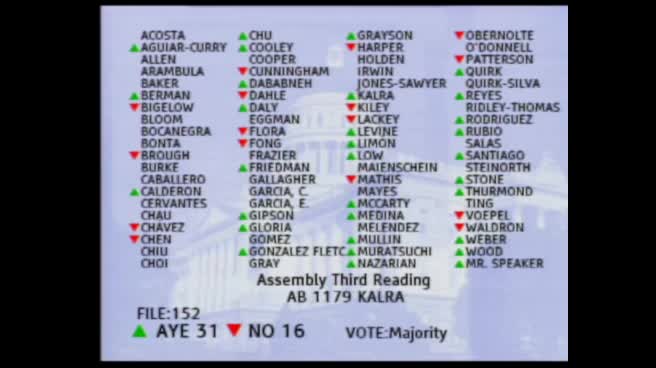 5MIN
Assembly Floor
 1H
Assembly Standing Committee on Appropriations
 40MIN
Assembly Standing Committee on Public Safety
Bill Author