AB 155: Pupil instruction: model curriculum: media literacy.
- Session Year: 2017-2018
- House: Assembly
- Latest Version Date: 2017-05-02
Existing law requires the adopted course of study for grades 7 to 12, inclusive, to include, among other subjects, English, the social sciences, science, and mathematics. Existing law establishes the Instructional Quality Commission and requires the commission to, among other things, recommend curriculum frameworks to the State Board of Education.
This bill would require the Instructional Quality Commission to develop, and the state board to adopt, revised curriculum standards and frameworks for English language arts, mathematics, history-social science, and science that incorporate civic online reasoning, reject, or modify, a model curriculum for pupils in kindergarten and in grades 1 to 12, inclusive, on media literacy, as defined.
The bill, following the adoption by the state board of the model curriculum in media literacy in accordance with a specified timeline, would require the Superintendent of Public Instruction to post the model curriculum on its Internet Web site for use on a voluntary basis by educators. The bill, subject to the enactment of an appropriation for this purpose in the annual Budget Act or another statute, would also require the Superintendent to create an online professional development module that instructs educators on the use of the model curriculum and make this module available at no cost on its Internet Web site for voluntary use by educators. The bill, beginning in the school year immediately following adoption of the model curriculum on media literacy by the state board, would encourage local educational agencies and charter schools to use the model curriculum to provide instruction in media literacy.
Existing law requires the adopted course of study for grades 7 to 12, inclusive, to include, among other subjects, English, the social sciences, science, and mathematics. Existing law establishes the Instructional Quality Commission and requires the commission to, among other things, recommend curriculum frameworks to the State Board of Education.
This bill would require the Instructional Quality Commission to develop, and the state board to adopt, revised curriculum standards and frameworks for English language arts, mathematics, history-social science, and science that incorporate civic online reasoning, as defined.
(a)The Legislature finds and declares all of the following:
(1)Media and technology have become pervasive in all areas of our lives.
(2)While media and technology have great promise for learning, young people need support and education to learn how to make sound judgments when navigating the digital world.
(3)Pupils must learn how to safely, ethically, responsibly, and effectively use a variety of media.
(4)Schools can play a critical role by educating, empowering, and engaging pupils with best practices around media use.
(5)Educators are now faced with new, and at times overwhelming, challenges, such as those related to privacy, digital footprints, cyberbullying, and sexting.
(6)Pupils are sometimes confronted with Internet sources pretending to be something they are not. With so much information shared on the Internet, it can be difficult for pupils to tell the difference between real news and fake news.
(7)Ordinary people once relied on publishers, editors, and subject matter experts to vet the information they consumed, but information shared on the Internet is disseminated rapidly and often without editorial oversight, making it easier for fake news to reach a large audience.
(8)A recent study has shown that the inability to distinguish between real news and fake news is particularly pronounced among young people.
(9)Young people tend to accept information as presented, even without supporting evidence or citations, and rarely ask where it came from or try to verify it.
(10)Young people also struggle to tell the difference between native advertising, an increasingly common type of advertising that tries to sell or promote a product while posing as a news article, and real news stories.
(11)The inability of young people to distinguish between real news and fake news makes them less informed about important civic issues and poses a direct threat to our democracy.
(b)Therefore, it is the intent of this act to provide resources to educators for the purpose of media literacy among California pupils.
SEC. 2.Section 51226.8 is added to the Education Code, to read:51226.8.(a)The Instructional Quality Commission shall develop, and the state board shall adopt, reject, or modify, a model curriculum for pupils in kindergarten and in grades 1 to 12, inclusive, in media literacy, for voluntary use by educators. The curriculum shall incorporate evidence-based and applied instructional practices for developing media literacy skills, and shall identify the ways in which the model curriculum aligns with, and is supportive of, the Common Core state standards.
(b)The model curriculum shall address safe and strategic uses of online and other media resources, and shall provide instruction on how to apply critical thinking skills when consuming or producing media in any form. The model curriculum shall address, but not necessarily be limited to, the instruction of pupils in how to accomplish all of the following:
(1)Safely and responsibly use media.
(2)Analyze media content in a critical way.
(3)Evaluate the quality and credibility of media content.
(4)Integrate or apply media literacy skills in other content areas.
(5)Produce media in a variety of forms.
(c)Content relating to the ability of pupils to analyze and evaluate media shall address the ability of pupils to think critically about information found on Internet Web sites. Specifically, the model curriculum shall instruct pupils on how to accomplish all of the following:
(1)Judge the credibility and quality of information found on Internet Web sites, including social media Web sites.
(2)Identify credible sources online.
(3)Identify the source of charts or pictures shared on social media platforms.
(4)Determine whether an article is a news story or a sponsored post.
(5)Distinguish between news stories and opinion columns.
(6)Verify claims made in articles on online Web sites or social media platforms.
(7)Evaluate evidence in articles on online sites or in social media platforms to determine the trustworthiness of a source.
(d)The model curriculum in media literacy shall provide model lessons and activities for each grade level, and identify supporting instructional materials for use in its implementation.
(e)In developing the model curriculum in media literacy, the Instructional Quality Commission shall convene an advisory group composed of experts in analyzing content leading to media literacy education. A majority of this group shall be current public school elementary or secondary classroom teachers who have a professional teaching credential that is valid under state law and who have experience or expertise in media literacy education.
(f)The Instructional Quality Commission shall hold a minimum of two public hearings in order for the public to provide input on the model curriculum. The public hearings and meetings required by this subdivision shall be held pursuant to the Bagley-Keene Open Meeting Act (Article 9 (commencing with Section 11120) of Chapter 1 of Part 1 of Division 3 of Title 2 of the Government Code).
(g)On or before December 31, 2020, the Instructional Quality Commission shall submit to the state board the media literacy curriculum.
(h)On or before March 31, 2021, the state board shall adopt, reject, or modify the model curriculum in media literacy submitted by the Instructional Quality Commission, at a public meeting held after the submission of the media literacy curriculum pursuant to subdivision (g).
(i)If the state board modifies the model curriculum in media literacy submitted by the Instructional Quality Commission, the state board shall explain, in writing, the reasons for the modifications to the Governor and the appropriate fiscal and policy committees of the Legislature.
(j)If the state board modifies the model curriculum, the state board shall, in a meeting conducted pursuant to the Bagley-Keene Open Meeting Act (Article 9 (commencing with Section 11120) of Chapter 1 of Part 1 of Division 3 of Title 2 of the Government Code), provide written reasons for its revisions. The state board shall not adopt the model curriculum at the same meeting at which it provides its written reasons, but, instead, shall adopt these revisions at a subsequent meeting conducted no later than July 31, 2021.
(k)If the state board rejects the model curriculum, the state board shall transmit, to the Superintendent, the Governor, and the appropriate policy and fiscal committees of the Legislature, a specific written explanation of the reasons for the rejection of the model curriculum presented by the Superintendent.
(l)Following the adoption by the state board of the model curriculum in media literacy, the Superintendent shall post the curriculum on its Internet Web site for use on a voluntary basis by educators.
(m)Subject to the enactment of an appropriation for this purpose in the Budget Act or another statute, the Superintendent shall create an online professional development module that instructs educators on the use of the model curriculum in media literacy, and shall make this module available at no cost on its Internet Web site for voluntary use by educators.
(n)Beginning in the school year following the adoption by the state board of the model curriculum in media literacy, local educational agencies and charter schools are encouraged to use the model curriculum to provide instruction in media literacy.
(o)For purposes of this section, media literacy means the ability to access, analyze, evaluate, develop, produce, and interpret media, and involves a diverse set of foundational skills related to current technology and social media use and includes the norms of appropriate, responsible, and healthy behavior.
SECTION 1.The Legislature finds and declares all of the following:(a)For every challenge facing this nation, there are numerous Internet sources pretending to be something they are not. With so much information shared on the Internet, it can be difficult to tell the difference between real news and fake news.(b)Ordinary people once relied on publishers, editors, and subject matter experts to vet the information they consumed, but information shared on the Internet is disseminated rapidly and often without editorial oversight, making it easier for fake news to reach a large audience.(c)A recent study has shown that the inability to distinguish between real news and fake news is particularly pronounced among young people.(d)Young people tend to accept information as presented, even without supporting evidence or citations, and rarely ask where it came from or try to verify it.(e)Young people also struggle to tell the difference between native advertising, an increasingly common type of advertising that tries to sell or promote a product while posing as a news article, and real news stories.(f)The inability of young people to distinguish between real news and fake news makes them less informed about important civic issues and poses a direct threat to our democracy.SEC. 2.Section 51226.8 is added to the Education Code, to read:51226.8.(a)The Instructional Quality Commission shall develop, and the state board shall adopt, revised curriculum standards and frameworks for English language arts, mathematics, history-social science, and science that incorporate civic online reasoning.(b)For purposes of this section, civic online reasoning means the ability to judge the credibility and quality of information found on Internet Web sites, including social media.The Legislature finds and declares all of the following:
(a)For every challenge facing this nation, there are numerous Internet sources pretending to be something they are not. With so much information shared on the Internet, it can be difficult to tell the difference between real news and fake news.
(b)Ordinary people once relied on publishers, editors, and subject matter experts to vet the information they consumed, but information shared on the Internet is disseminated rapidly and often without editorial oversight, making it easier for fake news to reach a large audience.
(c)A recent study has shown that the inability to distinguish between real news and fake news is particularly pronounced among young people.
(d)Young people tend to accept information as presented, even without supporting evidence or citations, and rarely ask where it came from or try to verify it.
(e)Young people also struggle to tell the difference between native advertising, an increasingly common type of advertising that tries to sell or promote a product while posing as a news article, and real news stories.
(f)The inability of young people to distinguish between real news and fake news makes them less informed about important civic issues and poses a direct threat to our democracy.
SEC. 2.Section 51226.8 is added to the Education Code, to read:51226.8.(a)The Instructional Quality Commission shall develop, and the state board shall adopt, revised curriculum standards and frameworks for English language arts, mathematics, history-social science, and science that incorporate civic online reasoning.
(b)For purposes of this section, civic online reasoning means the ability to judge the credibility and quality of information found on Internet Web sites, including social media.
|
Date
|
Status
|
|---|---|
| Feb 1, 2018 | From committee: Filed with the Chief Clerk pursuant to Joint Rule 56. |
| Jan 31, 2018 | Died pursuant to Art. IV, Sec. 10(c) of the Constitution. |
| May 26, 2017 | In committee: Held under submission. |
| May 17, 2017 | In committee: Set, first hearing. Referred to APPR. suspense file. |
| May 3, 2017 | Re-referred to Com. on APPR. |
| May 2, 2017 | Read second time and amended. |
| May 1, 2017 | From committee: Amend, and do pass as amended and re-refer to Com. on APPR. (Ayes 7. Noes 0.) (April 19). |
| Apr 26, 2017 | In committee: Hearing postponed by committee. |
| Jan 30, 2017 | Referred to Com. on ED. |
| Jan 12, 2017 | From printer. May be heard in committee February 11. |
| Jan 11, 2017 | Read first time. To print. |
|
Date
|
Description
|
Location
|
Votes
|
|
|---|---|---|---|---|
| Apr 19, 2017 | Do pass as amended and be re-referred to the Committee on [Appropriations] | Assembly Standing Committee on Education |
Passed |
This list shows positions taken on this bill by organizations on the date displayed, which is linked to the original source.
Positions by individuals are not included.
Date of Hearing:
ASSEMBLY COMMITTEE ON APPROPRIATIONS
Lorena Gonzalez Fletcher, Chair
ABPCA Bill Id:AB 155
Author:(Gomez) – As Amended Ver:May 2, 2017
Policy Committee: | Education | Vote: | 7 - 0 |
Urgency: No State Mandated Local Program: No Reimbursable: No
SUMMARY:
This bill requires the Instructional Quality Commission (IQC) to develop a model curriculum in media literacy, and requires the California Department of Education (CDE) to develop an online professional development module to support the model curriculum. Specifically, this bill:
- Requires the IQC to develop, and the State Board of Education (SBE) to adopt, reject, or modify, a model curriculum for pupils in grades Kindergarten to 12th grade, inclusive, in media literacy, for voluntary use by educators.
- Requires the IQC, in developing the model curriculum in media literacy, to convene an advisory group comprised of experts in media literacy education.
- Requires, on or before December 31, 2020, the IQC to submit to the SBE the media literacy curriculum, and for the SBE to adopt, reject, or modify the model curriculum in media literacy, at a subsequent public meeting by March 31, 2021.
- Requires, subject to an appropriation, the CDE to create an online professional development module which instructs educators on the use of the model curriculum, and make this module available at no cost on its website for voluntary use by educators.
- Encourages the adoption of the model curriculum in media literacy by local educational agencies and charter schools.
FISCAL EFFECT:
Developing a model curriculum and an online professional development module will require workload from two CDE Divisions. To develop the curriculum CDE estimates $788,230 General Fund costs. The estimate assumes the advisory group is voluntary and will not be compensated for their time. To develop the professional development online module CDE estimates $173,561 in CDE administrative costs. The development of the professional development module is subject to an appropriation in the budget act.
COMMENTS:
- Background and Purpose. State law establishes the IQC (formerly called the Curriculum Development and Supplemental Materials Commission) as an advisory body to the SBE on matters related to curriculum, instructional materials, and content standards. California’s public school curriculum is based on content standards in various subjects, including English-Language Arts, Mathematics, Science, History-Social Science, Physical Education, English Language Development, Career Technical Education, Health Education, World Languages, and Visual and Performing Arts. New standards are developed by the IQC through a public process, and are adopted by the SBE. California has developed model curricula on a variety of topics, including the life of Cesar Chavez, human rights and genocide, and most recently, ethnic studies.
The author states, “The existence of fake news stories on the internet makes it difficult for the public to discern what the facts of current issues and events are. A recent study by Stanford University has shown that the inability to distinguish fake news from real news is particularly pronounced amongst young people. The inability to distinguish real news from fabricated stories makes people less informed about important civic issues. AB 155 addresses this issue by directing the Instructional Quality Commission to develop a K-12 model curriculum on media literacy. The model curriculum will be another tool for educators to use to help students develop the necessary skills to evaluate and challenge claims made on the internet and social media platforms.”
- Related and prior legislation. AB 838 (Levine) requires that the Instructional Quality Commission (IQC) develop a model curriculum on the 2016 presidential election, for voluntary use in secondary government courses. The bill will be heard in this Committee today.
AB 738 (Limon) requires the development of a model curriculum in Native American studies, and requires school districts which elect to offer one course in Native American studies to make the course available in at least one year during a student’s enrollment in grades 9-12. The bill is currently in this Committee on Suspense.
AB 2016 (Alejo), Chapter 327, Statues of 2016, requires the development of a model curriculum in ethnic studies, and requires school districts which elect to offer one course in ethnic studies to make the course available in at least one year during a student’s enrollment in grades 9-12.
Analysis Prepared by: Daisy Gonzales / APPR. / (916) 319-2081
Date of Hearing: April 19, 2017
ASSEMBLY COMMITTEE ON EDUCATION
Patrick O'Donnell, Chair
ABPCA Bill Id:AB 155 (
Author:Gomez) – As Introduced Ver:January 11, 2017
AS PROPOSED TO BE AMENDED
SUBJECT: Pupil instruction: civic online reasoning
SUMMARY: Requires the Instructional Quality Commission (IQC) to develop a model curriculum in media literacy, and requires the California Department of Education (CDE) to develop an online professional development module to support the model curriculum. Specifically, this bill:
- Makes findings and declarations relative to the importance of media literacy.
- Requires the IQC to develop, and the State Board of Education (SBE) to adopt, reject, or modify, a model curriculum for pupils in grades Kindergarten to 12th grade, inclusive, in media literacy, for voluntary use by educators.
- Requires the model curriculum to address safe and strategic uses of online and other media resources and provide instruction on how to apply critical-thinking skills when consuming or producing media in any form.
- Requires the model curriculum to incorporate evidence-based and applied instructional practices for developing media literacy skills, and shall identify the ways in which the model curriculum aligns with, and is supportive of, the Common Core State Standards.
- Requires the model curriculum to address, but not be limited to, the instruction of pupils in how to:
- safely and responsibly use media
- analyze media content in a critical way
- evaluate the quality and credibility of media content
- integrate or apply media literacy skills in other content areas
- produce media in a variety of forms
- Requires that content relating to the ability of students to analyze and evaluate media address the ability of pupils to think critically about information found on Internet web sites, specifically requiring that the model curriculum instruct pupils on how to:
- judge the credibility and quality of information found on Internet web sites, including on social media websites
- identify credible sources online
- identify the source of charts or pictures shared on social media platforms
- determine whether an article is a news story or a sponsored post
- distinguish between news stories and opinion columns
- verify claims made in articles on online web sites or social media platforms
- evaluate evidence in articles on online sites or in social media platforms to determine the trustworthiness of a source
- Requires the model curriculum in media literacy to provide model lessons and activities for each grade level, and identify supporting instructional materials for use in its implementation.
- Requires the IQC, in developing the model curriculum in media literacy, to convene an advisory group comprised of experts in media literacy education. Requires that a majority of this group be current public school elementary or secondary classroom teachers who have a professional teaching credential that is valid under state law and who have experience or expertise in media literacy education.
- Requires the IQC to hold a minimum of two public hearings in order for the public to provide input on the model curriculum, held pursuant to the Bagley-Keene Open Meeting Act.
- Requires, on or before December 31, 2020, the IQC to submit to the SBE the media literacy curriculum.
- Requires, on or before March 31, 2021, the SBE to adopt, reject, or modify the model curriculum in media literacy, at a subsequent public meeting.
- Requires that, if the SBE modifies the model curriculum in media literacy, the SBE explain, in writing, the reasons for the modifications to the Governor and the appropriate fiscal and policy committees of the Legislature, and provide written reasons for the modifications, and adopt the model curriculum at a separate meeting, no later than July 31, 2021.
- Requires that, if the SBE rejects the model curriculum, it transmit to the Superintendent of Public Instruction (SPI), the Governor, and the appropriate policy and fiscal committees of the Legislature a specific written explanation of the reasons for the rejection of the model curriculum.
- Following the adoption of the model curriculum in media literacy, the SPI to post the curriculum on its website for use on a voluntary basis by educators.
- Requires, subject to an appropriation, the CDE to create an online professional development module which instructs educators on the use of the model curriculum, and make this module available at no cost on its website for voluntary use by educators.
- Encourages, beginning in the school year following the adoption of the model curriculum in media literacy, local educational agencies and charter schools to use the curriculum to provide instruction in media literacy.
- Defines, for the purposes of this act, "media literacy" as the ability to access, analyze, evaluate, develop, produce, and interpret media, and involves a diverse set of foundational skills related to current technology and social media use and includes the norms of appropriate, responsible, and healthy behavior.
EXISTING LAW:
- Requires the development of model curricula in human rights and genocide, the life of Cesar Chavez, and ethnic studies.
- Requires the ethnic studies model curriculum to be developed with participation from faculty of ethnic studies programs at universities and colleges with ethnic studies programs and a group of representatives of LEAs.
- Requires that the ethnic studies model curriculum be written as a guide to allow school districts to adapt their courses to reflect the student demographics in their communities, and include examples of courses offered by LEAs that have been approved as meeting A-G admissions requirements including, to the extent possible, course outlines for those courses.
- Requires that, by December 31, 2019, the IQC to submit the ethnic studies model curriculum to the SBE for adoption, and the SBE to adopt the model curriculum by March 31, 2020.
- Requires the IQC to provide a minimum of 45 days for public comment before submitting the ethnic studies model curriculum to the SBE.
- Requires a school district or charter school that elects to offer a course of study in ethnic studies pursuant to this subdivision to offer the course as an elective in the social sciences or English language arts and to make the course available in at least one year during a student’s enrollment in grades 9 to 12.
- States the intent of the Legislature that local educational agencies submit course outlines for ethnic studies for approval as A-G courses. (EC 51226.7)
FISCAL EFFECT: Unknown
COMMENTS:
Need for the bill. The author states, “The existence of fake news stories on the internet makes it difficult for the public to discern what the facts of current issues and events are.
A recent study by Stanford University has shown that the inability to distinguish fake news from real news is particularly pronounced amongst young people. The inability to distinguish real news from fabricated stories makes people less informed about important civic issues.
AB 155 addresses this issue by directing the Instructional Quality Commission to develop a K-12 model curriculum on media literacy. The model curriculum will be another tool for educators to use to help students develop the necessary skills to evaluate and challenge claims made on the internet and social media platforms.”
Curriculum, standards, frameworks, and model curricula. California’s public school curriculum is based on content standards in various subjects, including English-Language Arts, Mathematics, Science, History-Social Science, Physical Education, English Language Development, Career Technical Education, Health Education, World Languages, and Visual and Performing Arts. These standards are developed by the IQC through a public process, and are adopted by the SBE.
These standards form the basis of California’s curriculum frameworks. The frameworks guide the implementation of these standards, and are used to establish criteria for the evaluation of instructional materials for state adoption for grades kindergarten through grade eight. They also guide district selection of instructional materials for grades nine through twelve.
In addition to developing standards in the above subject areas, the SPI is sometimes directed by law to develop model curricula on different topics, such as those on the life of Cesar Chavez, human rights and genocide, and ethnic studies, for voluntary use by educators.
What is media literacy? According to the National Association for Media Literacy Education, media literacy is the ability to access, analyze, evaluate and create media in a variety of forms. The Center for Media Literacy offers another definition: “Media literacy empowers people to be both critical thinkers and creative producers of an increasingly wide range of messages using image, language, and sound. It is the skillful application of literacy skills to media and technology messages.”
What does media literacy education look like? Three examples of media literacy lessons which were developed for different grades are shown below:
Through the Media Smarts curriculum (in use in Canada) students in Kindergarten to third grade can learn how to identify advertising through a lesson titled “Can you spot the ad?” with the objective of teaching students about the concept of branded content, and differences between branded and non-branded images and videos in online and offline contexts.
Through the Cyber Civics curriculum for middle school students, students learn the difference between “consuming” and “producing” media, how to read and create visual media and become less susceptible to visual manipulations, receive safety training related to the consequences of “sexting,” and learn how misinformation can spread via the Internet and social media and even find its way into the news.
Through the Facing History and Ourselves media literacy unit titled “Facing Ferguson: News Literacy in a Digital Age,” high school students investigate the choices and challenges facing journalists as they report on a story, explore the impact of social media on the traditional news cycle and understand the role it can play in influencing public opinion and the press, develop critical thinking and news literacy skills to help students find reliable information to make decisions, take action, and responsibly share news through social media, and consider their role as citizens in a democracy and their responsibilities as civic participants and citizen watchdogs.
Information literacy in California Model School Library standards. The California Model School Library Standards for California Schools, adopted by the SBE in 2011, incorporate “information literacy” skills, in which students “learn to access, evaluate, use, and integrate information and ideas found in print, media, and digital resources, enabling them to function in a knowledge-based economy and technologically oriented society.” “Information” is defined broadly to include words (whether printed or spoken), visual images (including photographs and artwork), and music.
The standards are organized into four concepts (accessing, evaluating, using, and integrating information) which contain standards spanning all of the grades. In the area of evaluating information, students are expected to be able to determine the relevance of information; assess the comprehensiveness, currency, credibility, authority, and accuracy of resources; and consider the need for additional information.
The state’s content standards for English Language Arts students also include at least one reference to media literacy. In grades 9 -12 students are expected to learn to “Integrate multiple sources of information presented in diverse media or formats (e.g., visually, quantitatively, orally) evaluating the credibility and accuracy of each source.”
The model curriculum proposed by this bill would serve as a resource for educators wishing to focus on media literacy instruction, at any grade level. It would also bring more focus to media literacy as an important set of skills for students to acquire.
Media literacy legislation in other states. According to the organization Media Literacy Now, a number of states have or are in the process of adopting legislation to address the education of students in media literacy, digital citizenship, internet safety. They include: Arizona, New Mexico, Massachusetts, Connecticut, New York, Rhode Island, Washington, New Jersey, Utah, Florida, Ohio, Illinois. States are adopting a variety of strategies, from incorporating media literacy content into state health or safety curricula, to creating elective courses, to making digital citizenship instruction a responsibility of school librarians.
Related and prior legislation. SB 135 (Dodd) of this Session would require the IQC to develop, and the SBE to adopt, modify, or revise, a model curriculum in media literacy for social sciences for grades 1 to 12, require the SBE, in the next revision of the curriculum framework in social sciences, to integrate media literacy into the social sciences curriculum, and require the CDE to make a list resources and materials on media literacy available on its website.
SB 203 (Jackson) of this Session would require the CDE to identify best practices and recommendations for instruction in digital citizenship, Internet safety, and media literacy, and requires, beginning in the 2019–20 school year, school districts to annually review their policies and on those topics.
AB 738 (Limon) of this Session requires the development of a model curriculum in Native American studies, and requires school districts which elect to offer one course in Native American studies to make the course available in at least one year during a student’s enrollment in grades 9-12.
AB 2016 (Alejo) Chapter 327, Statues of 2016 requires the development of a model curriculum in ethnic studies, and requires school districts which elect to offer one course in ethnic studies to make the course available in at least one year during a student’s enrollment in grades 9-12.
REGISTERED SUPPORT / OPPOSITION:
Support
None on file
Opposition
None on file
Analysis Prepared by: Tanya Lieberman / ED. / (916) 319-2087
Discussed in Hearing
 1H
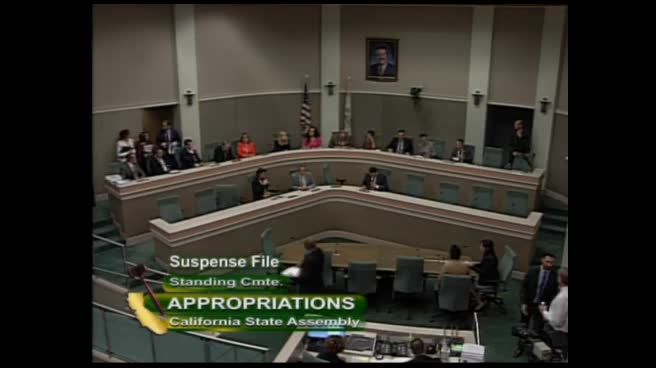
Assembly Standing Committee on Appropriations
 8MIN
Assembly Standing Committee on Education
Bill Author
Bill Co-Author(s):