AB 1553: Economic development: Capital Access Loan Program.
- Session Year: 2017-2018
- House: Assembly
- Latest Version Date: 2017-10-10
Existing law establishes the Capital Access Loan Program to assist small businesses in financing the costs of complying with environmental mandates and the remediation of contamination on their properties, as specified. Existing law establishes within the program the California Americans with Disabilities Small Business Capital Access Loan Program (ADA program) to assist small businesses in financing the costs of projects that alter or retrofit existing small business facilities to comply with the federal Americans with Disabilities Act. Existing law requires moneys in the ADA program fund, which is continuously appropriated, to be used for contributions in support of qualified loans, costs to educate the small business community and participating lenders about the program, and administrative expenditures, as specified. Existing law, for the purposes of the ADA program, defines a small business as a business that has less than $1,000,000 in total gross annual income and meets other requirements. Under existing law, the California Pollution Control Financing Authority administers these programs and is authorized to establish small business assistance funds for certain purposes, including, among others, funding the programs.
This bill would authorize the use of moneys in the ADA program fund for direct payments to borrowers enrolling loans. The ADA program, as specified, would require the authority to adopt related regulations and would allow small business assistance funds to include nonreimbursable payments made directly to borrowers in furtherance of the ADA program, as specified, administered by the authority as part of the Capital Access Loan Program. This bill would expand the definition of small business for the purposes of the ADA program to include businesses with less than $5,000,000 in total gross annual income, thereby expanding the types of businesses that qualify for funding under the ADA program. By expanding the authorized uses of moneys in a continuously appropriated fund, the bill would make an appropriation. The bill would rename the ADA program the California Americans with Disabilities Act Small Business Capital Access Loan Program.
Existing law establishes the Capital Access Loan Program to assist small businesses in financing the costs of complying with environmental mandates and the remediation of contamination on their properties, as specified. Existing law establishes within the program the California Americans with Disabilities Small Business Capital Access Loan Program (ADA program) to assist small businesses in financing the costs of projects that alter or retrofit existing small business facilities to comply with the federal Americans with Disabilities Act. Existing law requires moneys in the ADA program fund, which is continuously appropriated, to be used for contributions in support of qualified loans, costs to educate the small business community and participating lenders about the program, and administrative expenditures, as specified. Existing law, for the purposes of the ADA program, defines a small business as a business that has less than $1,000,000 in total gross annual income and meets other requirements. Under existing law, the California Pollution Control Financing Authority administers these programs and is authorized to establish small business assistance funds for certain purposes, including, among others, funding the programs.
This bill would authorize the use of moneys in the ADA program fund for direct payments to borrowers enrolling loans the ADA program, as specified, would require the authority to adopt related regulations, and would allow small business assistance funds to include nonreimbursable payments made directly to borrowers in furtherance of the ADA program, as specified, administered by the authority as part of the Capital Access Loan Program. This bill would expand the definition of small business for the purposes of the ADA program to include businesses with less than $5,000,000 in total gross annual income, thereby expanding the types of businesses that qualify for funding under the ADA program. By expanding the authorized uses of moneys in a continuously appropriated fund, the bill would make an appropriation. The bill would rename the ADA program the California Americans with Disabilities Act Small Business Capital Access Loan Program.
Existing law establishes the Capital Access Loan Program to assist small businesses in financing the costs of complying with environmental mandates and the remediation of contamination on their properties, as specified. Existing law establishes within the program the California Americans with Disabilities Act Small Business Capital Access Loan Program (ADA program) to assist small businesses in financing the costs of projects that alter or retrofit existing small business facilities to comply with the federal Americans with Disabilities Act. Existing law requires moneys in the ADA program fund, which is continuously appropriated, to be used for contributions in support of qualified loans, costs to educate the small business community and participating lenders about the program, and administrative expenditures, as specified. Under existing law, the California Pollution Control Financing Authority administers these programs and is authorized to establish small business assistance funds for certain purposes, including, among others, funding the programs.
This bill would authorize the use of moneys in the ADA program fund for direct payments to borrowers enrolling loans the ADA program, as specified, would require the authority to adopt related regulations, and would allow small business assistance funds to include nonreimbursable payments made directly to borrowers in furtherance of the ADA Program, program, as specified, administered by the authority as part of the Capital Access Loan Program. By expanding the authorized uses of moneys in a continuously appropriated fund, the bill would make an appropriation. The bill would rename the ADA program the California Americans with Disabilities Act Small Business Capital Access Loan Program.
Existing law establishes the Capital Access Loan Program to assist small businesses in financing the costs of complying with environmental mandates and the remediation of contamination on their properties, as specified. Existing law establishes within the program the California Americans with Disabilities Act Small Business Capital Access Loan Program (ADA program) to assist small businesses in financing the costs of projects that alter or retrofit existing small business facilities to comply with the federal Americans with Disabilities Act. Existing law requires moneys in the ADA program fund, which is continuously appropriated, to be used for contributions in support of qualified loans, costs to educate the small business community and participating lenders about the program, and administrative expenditures, as specified. Under existing law, the California Pollution Control Financing Authority administers these programs and is authorized to establish small business assistance funds for certain purposes, including, among others, funding the programs.
This bill would authorize the use of moneys in the ADA program fund for direct payments to participating financial institutions or borrowers to provide incentives to participate in enrolling loans the ADA program, as specified, would require the authority to adopt related regulations, and would allow small business assistance funds to include contributions and nonreimbursable payments made directly to borrowers or participating financial institutions in furtherance of the ADA program or other programs the ADA Program, as specified, administered by the authority as part of the Capital Access Loan Program. By expanding the authorized uses of moneys in a continuously appropriated fund, the bill would make an appropriation.
Existing law establishes the Capital Access Loan Program to assist small businesses in financing the costs of complying with environmental mandates and the remediation of contamination on their properties, as specified. Existing law establishes within the program the California Americans with Disabilities Act Small Business Capital Access Loan Program (ADA program) to assist small businesses in financing the costs of projects that alter or retrofit existing small business facilities to comply with the federal Americans with Disabilities Act. Existing law requires moneys in the ADA program fund, which is continuously appropriated, to be used for contributions in support of qualified loans, costs to educate the small business community and participating lenders about the program, and administrative expenditures, as specified. Under existing law, the California Pollution Control Financing Authority administers these programs and is authorized to establish small business assistance funds for certain purposes, including, among others, funding the programs.
This bill would authorize the use of moneys in the ADA program fund for payments to participating financial institutions or borrowers to provide incentives to participate in the ADA program, as specified, would require the authority to adopt related regulations, and would allow small business assistance funds to include contributions and nonreimbursable payments made directly to borrowers or participating financial institutions in furtherance of the ADA program or other programs administered by the authority as part of the Capital Access Loan Program. By expanding the authorized uses of moneys in a continuously appropriated fund, the bill would make an appropriation.
The California Pollution Control Financing Authority Act establishes the California Pollution Control Financing Authority, with specified powers and duties, and authorizes the authority to approve financing for projects or pollution control facilities to prevent or reduce environmental pollution.This bill would make a nonsubstantive change to the act.The California Pollution Control Financing Authority Act establishes the California Pollution Control Financing Authority, with specified powers and duties, and authorizes the authority to approve financing for projects or pollution control facilities to prevent or reduce environmental pollution.
This bill would make a nonsubstantive change to the act.
(a)(1)Subject to any prior contractual obligations to any of its bondholders, the authority may establish one or more small business assistance funds in order to do any of the following:
(A)Assist small businesses to achieve financing of pollution control facilities.
(B)Assist with the financing of the costs of, among other things, assessment, remedial planning and reporting, technical assistance, cleanup, remediation, and development of brownfield sites, and with other similar or related costs, by providing loans pursuant to subdivision (h) of Section 44526.
(C)Fund a capital access program for small businesses pursuant to Article 8 (commencing with Section 44559), including nonreimbursable payments made directly to borrowers in furtherance of the program described in Section 44559.13.
(2)For the purpose of establishing and maintaining small business assistance funds as it determines to be necessary or desirable to secure its bonds or any issuance thereof or for other authorized purposes, the authority, pursuant to its contracts with participating parties, may levy fees or other charges on, or require deposits from, participating parties receiving financing for a project under this division. The total amount of these fees, charges, and deposits with respect to a single issue of bonds shall not exceed 3 percent of the principal amount of that issue of bonds.
(3)Before levying any fees or charges or requiring deposits, the authority shall adopt regulations for the operation of the small business assistance funds, the amounts and any payment schedule for the fees, charges, or deposits, eligibility standards for small businesses desiring to use or benefit from the small business assistance funds, and any other matters the authority determines to be necessary for the establishment and maintenance of small business assistance funds. The regulations may provide for differential fees from participating parties based upon the size of a project financed by the authority or other factors determined to be relevant by the authority, and the regulations may restrict any benefits to those eligible small businesses specified in the regulations.
(4)The authority may transfer any funds available to it or set aside for its administrative expenses to any small business assistance fund established under this section.
(b)(1)The forms of financial assistance that the authority may provide under this section include, but are not limited to, all of the following:
(A)Payments to reduce, but not eliminate, the interest rate on loans.
(B)Payments of part or all of the cost of acquiring letters of credit.
(C)Payments of part or all of the cost of acquiring insurance.
(D)Payments of part or all of the cost of acquiring guarantees.
(E)Payments of part or all of the cost of acquiring other forms of credit support.
(F)Payments of part or all of the authoritys expenses in issuing revenue bonds or providing other assistance.
(G)Nonreimbursable payments made directly to borrowers in furtherance of the program described in Section 44559.13 and administered pursuant to Article 8 (commencing with Section 44559).
(2)The authority may also pledge any small business assistance fund, on an individual or pooled basis, to repay, directly or indirectly, the principal of, or interest or premium on, any issue of bonds of the authority or any loan made or acquired pursuant to this section.
(3)The authority may also use moneys in a small business assistance fund to assist in the financing of the costs of assessment of, remedial planning and reporting for, technical assistance for, and the cleanup, remediation, or development of, brownfield sites, and of other similar or related costs, by providing loans, pursuant to, and under the terms permitted by, subdivision (h) of Section 44526.
(4)In addition to other purposes set forth in this section, the authority may use moneys in a small business assistance fund to make or acquire loans or guarantee commercial loans to participating parties eligible for assistance from those funds.
(5)Any moneys repaid or returned to the authority in connection with or as a result of any loan or financial assistance made pursuant to this section shall be deposited in the small business assistance fund from which the loan or assistance was originally provided.
(6)The authority may contract with qualified financial institutions, including, but not limited to, banks, investment and mortgage bankers, insurance companies, sureties, and guarantors, to provide any necessary assistance in the granting of credit for these purposes.
(c)Each small business assistance fund established pursuant to this section shall be deposited in a special account that the Controller shall create. Notwithstanding any other law, and subject to any requirements of federal tax law or regulations relative to maintaining the tax-exempt status of the obligations of the authority, all interest or other gains earned by investment or deposit of money in the special account pursuant to any provision of Part 2 (commencing with Section 16300) of Division 4 of Title 2 of the Government Code or pursuant to any other provision of law shall be credited to, and deposited in, the account.
(d)In carrying out this section, the authority shall participate with the air pollution control districts and air quality management districts in providing financial assistance in its lending programs.
SEC. 2.Section 44559.13 of the Health and Safety Code is amended to read:44559.13.(a)It is the intent of the Legislature in this act to create and fund the California Americans with Disabilities Act Small Business Capital Access Loan Program to assist small businesses in complying with the Americans with Disabilities Act. It is not the intent of the Legislature to assist the physical expansion of small businesses that includes modifications that comply with the Americans with Disabilities Act. The program shall be administered by the California Pollution Control Financing Authority and follow the terms and conditions for the Capital Access Loan Program for Small Businesses in this article with the additional program requirements specified under this section.
(b)For purposes of this section, unless the context requires otherwise, the following words and terms shall have the following meanings:
(1)Americans with Disabilities Act means the federal Americans with Disabilities Act of 1990 (42 U.S.C. Sec. 12101 et seq.) and amendments thereto.
(2)California Americans with Disabilities Act Small Business Capital Access Loan Program Fund or fund means a fund established and administered by the authority pursuant to Sections 44548 and 44549 to be used for purposes of this program.
(3)Eligible cost means and includes all or any part of the price of construction, purchase price of real or personal property, the price of demolishing or removing any buildings or structures, the price of all machinery and equipment, the amount of financing charges and interest before, during, and for a period not to exceed the later of one year or one year following completion of construction, as determined by the authority, the price of insurance during construction, the amount of funding or financing noncapital expenses, the amount of reserves for principal and interest and for extensions, enlargements, additions, replacements, renovations, and improvements, the price of engineering, financial, and legal services and other service contracts, the price of plans, specifications, studies, surveys, estimates, administrative expenses, and any other expenses of funding or financing, that are necessary and allocable to the eligible project, and shall not include costs not directly related to physical alterations necessary for compliance with the Americans with Disabilities Act.
(4)Eligible project means the physical alterations or retrofits to an existing small business facility of less than 10,000 square feet necessary to ensure that facility is in compliance with the Americans with Disabilities Act, and the financing necessary to pay eligible costs of the project.
(5)Qualified loan means a loan or portion of a loan as defined in subdivision (j) of Section 44559.1, where the proceeds of the loan or portion of the loan are limited to the eligible costs for an eligible project under this program, and where the loan or portion of the loan does not exceed fifty thousand dollars ($50,000).
(6)Small business or qualified business means a business referred to in subdivisions (i) and (m) of Section 44559.1, that meets the following additional criteria:
(A)Fifteen or fewer full-time equivalent employees.
(B)Less than five million dollars ($5,000,000) in total gross annual income from all sources.
(C)Does not provide overnight accommodations.
(c)(1)The California Americans with Disabilities Act Small Business Capital Access Loan Program Fund is established in the State Treasury for, and shall be administered by the authority pursuant to Sections 44548 and 44549 for, this program. Notwithstanding Section 13340 of the Government Code, all money in the fund is continuously appropriated to the authority for carrying out the purposes of this section. The authority may divide the fund into separate accounts. All moneys accruing to the authority pursuant to this section from any source shall be deposited into the fund.
(2)All moneys in the fund derived from any source shall be held in trust for the life of this program, subject to the program expenditures and costs of administering this section, as follows:
(A)Program expenditures shall include all of the following:
(i)Contributions paid by the authority in support of qualified loans.
(ii)Payments made to borrowers enrolling loans to participate in the program, to the extent that moneys other than the initial appropriation are deposited into the fund by the authority and are authorized for that use pursuant to paragraph (3) of subdivision (d).
(iii)Reasonable costs to educate the small business community and participating lenders about the program, including travel within the state.
(B)Administrative expenditures shall be limited to 5 percent of the initial appropriation plus 5 percent of all moneys recaptured, and shall include all of the following:
(i)Personnel costs.
(ii)Service and vending contracts necessary to carry out the program.
(iii)Other reasonable direct and indirect administrative costs.
(3)The authority may direct the Treasurer to invest moneys in the fund that are not required for its current needs in the eligible securities specified in Section 16430 of the Government Code as the authority shall designate. The authority may direct the Treasurer to deposit moneys in interest-bearing accounts in state or national banks or other financial institutions having principal offices located in the state. The authority may alternatively require the transfer of moneys in the fund to the Surplus Money Investment Fund for investment pursuant to Article 4 (commencing with Section 16470) of Chapter 3 of Part 2 of Division 4 of Title 2 of the Government Code. All interest or other increment resulting from an investment or deposit shall be deposited into the fund, notwithstanding Section 16305.7 of the Government Code. Moneys in the fund shall not be subject to transfer to any other fund pursuant to any provision of Part 2 (commencing with Section 16300) of Division 4 of Title 2 of the Government Code, excepting the Surplus Money Investment Fund.
(d)The authority shall adopt regulations pursuant to subdivision (c) of Section 44520 to implement the program, including provisions specific to this program as described in this section and further including provisions to:
(1)Establish a new loss reserve account for each participating lender enrolling loans in this program.
(2)Obtain a certification from each participating lender and small business upon enrollment of a qualified loan that the proceeds of the loan will be used for the eligible costs of an eligible project.
(3)Contribute an additional incentive from the fund for each loan enrolled for a qualified business located in a severely affected community, or make nonreimbursable payments from other moneys to participating borrowers to offset all or a portion of the reasonable costs of architectural inspections obtained from a person who is certified as an access specialist pursuant to the program described in Section 4459.5 of the Government Code.
(4)Restrict the enrollment of a qualified loan in any other Capital Access Loan Program for small business offered by the authority as long as funds are available for this program.
(5)Limit the term of loss coverage for each qualified loan to no more than five years.
(6)Recapture from the loss reserve account the authoritys contribution for each enrolled loan upon the maturation of such loan or after five years from the date of enrollment, whichever happens first, to be deposited in the fund and applied to future program and administrative expenditures.
(a)(1)Subject to any prior contractual obligations to any of its bondholders, the authority may establish one or more small business assistance funds in order to do any of the following:
(A)Assist small businesses to achieve financing of pollution control facilities.
(B)Assist with the financing of the costs of, among other things, assessment, remedial planning and reporting, technical assistance, cleanup, remediation, and development of brownfield sites, and with other similar or related costs, by providing loans pursuant to subdivision (h) of Section 44526.
(C)Fund a capital access program for small businesses pursuant to Article 8 (commencing with Section 44559), including nonreimbursable payments made directly to borrowers in furtherance of the program described in Section 44559.13.
(2)For the purpose of establishing and maintaining small business assistance funds as it determines to be necessary or desirable to secure its bonds or any issuance thereof or for other authorized purposes, the authority, pursuant to its contracts with participating parties, may levy fees or other charges on, or require deposits from, participating parties receiving financing for a project under this division. The total amount of these fees, charges, and deposits with respect to a single issue of bonds shall not exceed 3 percent of the principal amount of that issue of bonds.
(3)Before levying any fees or charges or requiring deposits, the authority shall adopt regulations for the operation of the small business assistance funds, the amounts and any payment schedule for the fees, charges, or deposits, eligibility standards for small businesses desiring to use or benefit from the small business assistance funds, and any other matters the authority determines to be necessary for the establishment and maintenance of small business assistance funds. The regulations may provide for differential fees from participating parties based upon the size of a project financed by the authority or other factors determined to be relevant by the authority, and the regulations may restrict any benefits to those eligible small businesses specified in the regulations.
(4)The authority may transfer any funds available to it or set aside for its administrative expenses to any small business assistance fund established under this section.
(b)(1)The forms of financial assistance that the authority may provide under this section include, but are not limited to, all of the following:
(A)Payments to reduce, but not eliminate, the interest rate on loans.
(B)Payments of part or all of the cost of acquiring letters of credit.
(C)Payments of part or all of the cost of acquiring insurance.
(D)Payments of part or all of the cost of acquiring guarantees.
(E)Payments of part or all of the cost of acquiring other forms of credit support.
(F)Payments of part or all of the authoritys expenses in issuing revenue bonds or providing other assistance.
(G)Nonreimbursable payments made directly to borrowers in furtherance of the program described in Section 44559.13 and administered pursuant to Article 8 (commencing with Section 44559).
(2)The authority may also pledge any small business assistance fund, on an individual or pooled basis, to repay, directly or indirectly, the principal of, or interest or premium on, any issue of bonds of the authority or any loan made or acquired pursuant to this section.
(3)The authority may also use moneys in a small business assistance fund to assist in the financing of the costs of assessment of, remedial planning and reporting for, technical assistance for, and the cleanup, remediation, or development of, brownfield sites, and of other similar or related costs, by providing loans, pursuant to, and under the terms permitted by, subdivision (h) of Section 44526.
(4)In addition to other purposes set forth in this section, the authority may use moneys in a small business assistance fund to make or acquire loans or guarantee commercial loans to participating parties eligible for assistance from those funds.
(5)Any moneys repaid or returned to the authority in connection with or as a result of any loan or financial assistance made pursuant to this section shall be deposited in the small business assistance fund from which the loan or assistance was originally provided.
(6)The authority may contract with qualified financial institutions, including, but not limited to, banks, investment and mortgage bankers, insurance companies, sureties, and guarantors, to provide any necessary assistance in the granting of credit for these purposes.
(c)Each small business assistance fund established pursuant to this section shall be deposited in a special account that the Controller shall create. Notwithstanding any other law, and subject to any requirements of federal tax law or regulations relative to maintaining the tax-exempt status of the obligations of the authority, all interest or other gains earned by investment or deposit of money in the special account pursuant to any provision of Part 2 (commencing with Section 16300) of Division 4 of Title 2 of the Government Code or pursuant to any other provision of law shall be credited to, and deposited in, the account.
(d)In carrying out this section, the authority shall participate with the air pollution control districts and air quality management districts in providing financial assistance in its lending programs.
SEC. 2.Section 44559.13 of the Health and Safety Code is amended to read:44559.13.(a)It is the intent of the Legislature in this act to create and fund the California Americans with Disabilities Act Small Business Capital Access Loan Program to assist small businesses in complying with the Americans with Disabilities Act. It is not the intent of the Legislature to assist the physical expansion of small businesses that includes modifications that comply with the Americans with Disabilities Act. The program shall be administered by the California Pollution Control Financing Authority and follow the terms and conditions for the Capital Access Loan Program for Small Businesses in this article with the additional program requirements specified under this section.
(b)For purposes of this section, unless the context requires otherwise, the following words and terms shall have the following meanings:
(1)Americans with Disabilities Act means the federal Americans with Disabilities Act of 1990 (42 U.S.C. Sec. 12101 et seq.) and amendments thereto.
(2)California Americans with Disabilities Act Small Business Capital Access Loan Program Fund or fund means a fund established and administered by the authority pursuant to Sections 44548 and 44549 to be used for purposes of this program.
(3)Eligible cost means and includes all or any part of the price of construction, purchase price of real or personal property, the price of demolishing or removing any buildings or structures, the price of all machinery and equipment, the amount of financing charges and interest before, during, and for a period not to exceed the later of one year or one year following completion of construction, as determined by the authority, the price of insurance during construction, the amount of funding or financing noncapital expenses, the amount of reserves for principal and interest and for extensions, enlargements, additions, replacements, renovations, and improvements, the price of engineering, financial, and legal services and other service contracts, the price of plans, specifications, studies, surveys, estimates, administrative expenses, and any other expenses of funding or financing, that are necessary and allocable to the eligible project, and shall not include costs not directly related to physical alterations necessary for compliance with the Americans with Disabilities Act.
(4)Eligible project means the physical alterations or retrofits to an existing small business facility of less than 10,000 square feet necessary to ensure that facility is in compliance with the Americans with Disabilities Act, and the financing necessary to pay eligible costs of the project.
(5)Qualified loan means a loan or portion of a loan as defined in subdivision (j) of Section 44559.1, where the proceeds of the loan or portion of the loan are limited to the eligible costs for an eligible project under this program, and where the loan or portion of the loan does not exceed fifty thousand dollars ($50,000).
(6)Small business or qualified business means a business referred to in subdivisions (i) and (m) of Section 44559.1, that meets the following additional criteria:
(A)Fifteen or fewer full-time equivalent employees.
(B)Less than one million dollars ($1,000,000) five million dollars ($5,000,000) in total gross annual income from all sources.
(C)Does not provide overnight accommodations.
(c)(1)The California Americans with Disabilities Act Small Business Capital Access Loan Program Fund is established in the State Treasury for, and shall be administered by the authority pursuant to Sections 44548 and 44549 for, this program. Notwithstanding Section 13340 of the Government Code, all money in the fund is continuously appropriated to the authority for carrying out the purposes of this section. The authority may divide the fund into separate accounts. All moneys accruing to the authority pursuant to this section from any source shall be deposited into the fund.
(2)All moneys in the fund derived from any source shall be held in trust for the life of this program, subject to the program expenditures and costs of administering this section, as follows:
(A)Program expenditures shall include all of the following:
(i)Contributions paid by the authority in support of qualified loans.
(ii)Payments made to borrowers enrolling loans to participate in the program, to the extent that moneys other than the initial appropriation are deposited into the fund by the authority and are authorized for that use pursuant to paragraph (3) of subdivision (d).
(iii)Reasonable costs to educate the small business community and participating lenders about the program, including travel within the state.
(B)Administrative expenditures shall be limited to 5 percent of the initial appropriation plus 5 percent of all moneys recaptured, and shall include all of the following:
(i)Personnel costs.
(ii)Service and vending contracts necessary to carry out the program.
(iii)Other reasonable direct and indirect administrative costs.
(3)The authority may direct the Treasurer to invest moneys in the fund that are not required for its current needs in the eligible securities specified in Section 16430 of the Government Code as the authority shall designate. The authority may direct the Treasurer to deposit moneys in interest-bearing accounts in state or national banks or other financial institutions having principal offices located in the state. The authority may alternatively require the transfer of moneys in the fund to the Surplus Money Investment Fund for investment pursuant to Article 4 (commencing with Section 16470) of Chapter 3 of Part 2 of Division 4 of Title 2 of the Government Code. All interest or other increment resulting from an investment or deposit shall be deposited into the fund, notwithstanding Section 16305.7 of the Government Code. Moneys in the fund shall not be subject to transfer to any other fund pursuant to any provision of Part 2 (commencing with Section 16300) of Division 4 of Title 2 of the Government Code, excepting the Surplus Money Investment Fund.
(d)The authority shall adopt regulations pursuant to subdivision (c) of Section 44520 to implement the program, including provisions specific to this program as described in this section and further including provisions to:
(1)Establish a new loss reserve account for each participating lender enrolling loans in this program.
(2)Obtain a certification from each participating lender and small business upon enrollment of a qualified loan that the proceeds of the loan will be used for the eligible costs of an eligible project.
(3)Contribute an additional incentive from the fund for each loan enrolled for a qualified business located in a severely affected community, or make nonreimbursable payments from other moneys to participating borrowers to offset all or a portion of the reasonable costs of architectural inspections obtained from a person who is certified as an access specialist pursuant to the program described in Section 4459.5 of the Government Code.
(4)Restrict the enrollment of a qualified loan in any other Capital Access Loan Program for small business offered by the authority as long as funds are available for this program.
(5)Limit the term of loss coverage for each qualified loan to no more than five years.
(6)Recapture from the loss reserve account the authoritys contribution for each enrolled loan upon the maturation of such loan or after five years from the date of enrollment, whichever happens first, to be deposited in the fund and applied to future program and administrative expenditures.
(a)(1)Subject to any prior contractual obligations to any of its bondholders, the authority may establish one or more small business assistance funds in order to do any of the following:
(A)Assist small businesses to achieve financing of pollution control facilities.
(B)Assist with the financing of the costs of, among other things, assessment, remedial planning and reporting, technical assistance, cleanup, remediation, and development of brownfield sites, and with other similar or related costs, by providing loans pursuant to subdivision (h) of Section 44526.
(C)Fund a capital access program for small businesses pursuant to Article 8 (commencing with Section 44559), including nonreimbursable payments made directly to borrowers in furtherance of the program described in Section 44559.13.
(2)For the purpose of establishing and maintaining small business assistance funds as it determines to be necessary or desirable to secure its bonds or any issuance thereof or for other authorized purposes, the authority, pursuant to its contracts with participating parties, may levy fees or other charges on, or require deposits from, participating parties receiving financing for a project under this division. The total amount of these fees, charges, and deposits with respect to a single issue of bonds shall not exceed 3 percent of the principal amount of that issue of bonds.
(3)Prior to Before levying any fees or charges or requiring deposits, the authority shall adopt regulations for the operation of the small business assistance funds, the amounts and any payment schedule for the fees, charges, or deposits, eligibility standards for small businesses desiring to use or benefit from the small business assistance funds, and any other matters the authority determines to be necessary for the establishment and maintenance of small business assistance funds. The regulations may provide for differential fees from participating parties based upon the size of a project financed by the authority or other factors determined to be relevant by the authority, and the regulations may restrict any benefits to those eligible small businesses specified in the regulations.
(4)The authority may transfer any funds available to it or set aside for its administrative expenses to any small business assistance fund established under this section.
(b)(1)The forms of financial assistance that the authority may provide under this section include, but are not limited to to, all of the following:
(A)Payments to reduce, but not eliminate, the interest rate on loans.
(B)Payments of part or all of the cost of acquiring letters of credit.
(C)Payments of part or all of the cost of acquiring insurance.
(D)Payments of part or all of the cost of acquiring guarantees.
(E)Payments of part or all of the cost of acquiring other forms of credit support.
(F)Payments of part or all of the authoritys expenses in issuing revenue bonds or providing other assistance.
(G)Nonreimbursable payments made directly to borrowers in furtherance of the program described in Section 44559.13 and administered pursuant to Article 8 (commencing with Section 44559).
(2)The authority may also pledge any small business assistance fund, on an individual or pooled basis, to repay, directly or indirectly, the principal of, or interest or premium on, any issue of bonds of the authority or any loan made or acquired pursuant to this section.
(3)The authority may also use moneys in a small business assistance fund to assist in the financing of the costs of assessment of, remedial planning and reporting for, technical assistance for, and the cleanup, remediation, or development of, brownfield sites, and of other similar or related costs, by providing loans, pursuant to, and under the terms permitted by, subdivision (h) of Section 44526.
(4)In addition to other purposes set forth in this section, the authority may use moneys in a small business assistance fund to make or acquire loans or guarantee commercial loans to participating parties eligible for assistance from those funds.
(5)Any moneys repaid or returned to the authority in connection with or as a result of any loan or financial assistance made pursuant to this section shall be deposited in the small business assistance fund from which the loan or assistance was originally provided.
(6)The authority may contract with qualified financial institutions, including, but not limited to, banks, investment and mortgage bankers, insurance companies, sureties, and guarantors, to provide any necessary assistance in the granting of credit for these purposes.
(c)Each small business assistance fund established pursuant to this section shall be deposited in a special account that the Controller shall create. Notwithstanding any other provision of law, and subject to any requirements of federal tax law or regulations relative to maintaining the tax-exempt status of the obligations of the authority, all interest or other gains earned by investment or deposit of money in the special account pursuant to any provision of Part 2 (commencing with Section 16300) of Division 4 of Title 2 of the Government Code or pursuant to any other provision of law shall be credited to, and deposited in, the account.
(d)In carrying out this section, the authority shall participate with the air pollution control districts and air quality management districts in providing financial assistance in its lending programs.
SEC. 2.Section 44559.13 of the Health and Safety Code is amended to read:44559.13.(a)It is the intent of the Legislature in this act to create and fund the California Americans with Disabilities Act Small Business Capital Access Loan Program to assist small businesses in complying with the Americans with Disabilities Act. It is not the intent of the Legislature to assist the physical expansion of small businesses that includes modifications that comply with the Americans with Disabilities Act. The program shall be administered by the California Pollution Control Financing Authority and follow the terms and conditions for the Capital Access Loan Program for Small Businesses in this article with the additional program requirements specified under this section.
(b)For purposes of this section, unless the context requires otherwise, the following words and terms shall have the following meanings:
(1)Americans with Disabilities Act means the federal Americans with Disabilities Act of 1990 (42 U.S.C. Sec. 12101 et seq.) and amendments thereto.
(2)California Americans with Disabilities Act Small Business Capital Access Loan Program Fund or fund means a fund established and administered by the authority pursuant to Sections 44548 and 44549 to be used for purposes of this program.
(3)Eligible cost means and includes all or any part of the price of construction, purchase price of real or personal property, the price of demolishing or removing any buildings or structures, the price of all machinery and equipment, the amount of financing charges and interest prior to, before, during, and for a period not to exceed the later of one year or one year following completion of construction, as determined by the authority, the price of insurance during construction, the amount of funding or financing noncapital expenses, the amount of reserves for principal and interest and for extensions, enlargements, additions, replacements, renovations, and improvements, the price of engineering, financial, and legal services and other service contracts, the price of plans, specifications, studies, surveys, estimates, administrative expenses, and any other expenses of funding or financing, that are necessary and allocable to the eligible project, and shall not include costs not directly related to physical alterations necessary for compliance with the Americans with Disabilities Act.
(4)Eligible project means the physical alterations or retrofits to an existing small business facility of less than 10,000 square feet necessary to ensure that facility is in compliance with the Americans with Disabilities Act, and the financing necessary to pay eligible costs of the project.
(5)Qualified loan means a loan or portion of a loan as defined in subdivision (j) of Section 44559.1, where the proceeds of the loan or portion of the loan are limited to the eligible costs for an eligible project under this program, and where the loan or portion of the loan does not exceed fifty thousand dollars ($50,000).
(6)Small business or qualified business means a business referred to in subdivisions (i) and (m) of Section 44559.1, that meets the following additional criteria:
(A)Fifteen or fewer full-time equivalent employees.
(B)Less than one million dollars ($1,000,000) in total gross annual income from all sources.
(C)Does not provide overnight accommodations.
(c)(1)The California Americans with Disabilities Act Small Business Capital Access Loan Program Fund is established in the State Treasury for, and shall be administered by the authority pursuant to Sections 44548 and 44549 for, this program. Notwithstanding Section 13340 of the Government Code, all money in the fund is continuously appropriated to the authority for carrying out the purposes of this section. The authority may divide the fund into separate accounts. All moneys accruing to the authority pursuant to this section from any source shall be deposited into the fund.
(2)All moneys in the fund derived from any source shall be held in trust for the life of this program, subject to the program expenditures and costs of administering this section, as follows:
(A)Program expenditures shall include all of the following:
(i)Contributions paid by the authority in support of qualified loans.
(ii)Payments made to borrowers enrolling loans to participate in the program, to the extent that moneys other than the initial appropriation are deposited into the fund by the authority and are authorized for that use pursuant to paragraph (3) of subdivision (d).
(iii)Reasonable costs to educate the small business community and participating lenders about the program, including travel within the state.
(B)Administrative expenditures shall be limited to 5 percent of the initial appropriation plus 5 percent of all moneys recaptured, and shall include all of the following:
(i)Personnel costs.
(ii)Service and vending contracts necessary to carry out the program.
(iii)Other reasonable direct and indirect administrative costs.
(3)The authority may direct the Treasurer to invest moneys in the fund that are not required for its current needs in the eligible securities specified in Section 16430 of the Government Code as the authority shall designate. The authority may direct the Treasurer to deposit moneys in interest-bearing accounts in state or national banks or other financial institutions having principal offices located in the state. The authority may alternatively require the transfer of moneys in the fund to the Surplus Money Investment Fund for investment pursuant to Article 4 (commencing with Section 16470) of Chapter 3 of Part 2 of Division 4 of Title 2 of the Government Code. All interest or other increment resulting from an investment or deposit shall be deposited into the fund, notwithstanding Section 16305.7 of the Government Code. Moneys in the fund shall not be subject to transfer to any other fund pursuant to any provision of Part 2 (commencing with Section 16300) of Division 4 of Title 2 of the Government Code, excepting the Surplus Money Investment Fund.
(d)The authority shall adopt regulations pursuant to subdivision (c) of Section 44520 to implement the program, including provisions specific to this program as described in this section and further including provisions to:
(1)Establish a new loss reserve account for each participating lender enrolling loans in this program.
(2)Obtain a certification from each participating lender and small business upon enrollment of a qualified loan that the proceeds of the loan will be used for the eligible costs of an eligible project.
(3)Contribute an additional incentive from the fund for each loan enrolled for a qualified business located in a severely affected community, or make nonreimbursable payments from other moneys to participating borrowers to offset all or a portion of the reasonable costs of architectural inspections obtained from a person who is certified as an access specialist pursuant to the program described in Section 4459.5 of the Government Code.
(4)Restrict the enrollment of a qualified loan in any other Capital Access Loan Program for small business offered by the authority as long as funds are available for this program.
(5)Limit the term of loss coverage for each qualified loan to no more than five years.
(6)Recapture from the loss reserve account the authoritys contribution for each enrolled loan upon the maturation of such loan or after five years from the date of enrollment, whichever happens first, to be deposited in the fund and applied to future program and administrative expenditures.
(a)(1)Subject to any prior contractual obligations to any of its bondholders, the authority may establish one or more small business assistance funds in order to do any of the following:
(A)Assist small businesses to achieve financing of pollution control facilities.
(B)Assist with the financing of the costs of, among other things, assessment, remedial planning and reporting, technical assistance, cleanup, remediation, and development of brownfield sites, and with other similar or related costs, by providing loans pursuant to subdivision (h) of Section 44526.
(C)Fund a capital access program for small businesses pursuant to Article 8 (commencing with Section 44559), including contributions and nonreimbursable payments made directly to borrowers or participating financial institutions in furtherance of the program. program described in Section 44559.13.
(2)For the purpose of establishing and maintaining small business assistance funds as it determines to be necessary or desirable to secure its bonds or any issuance thereof or for other authorized purposes, the authority, pursuant to its contracts with participating parties, may levy fees or other charges on, or require deposits from, participating parties receiving financing for a project under this division. The total amount of these fees, charges, and deposits with respect to a single issue of bonds shall not exceed 3 percent of the principal amount of that issue of bonds.
(3)Prior to levying any fees or charges or requiring deposits, the authority shall adopt regulations for the operation of the small business assistance funds, the amounts and any payment schedule for the fees, charges, or deposits, eligibility standards for small businesses desiring to use or benefit from the small business assistance funds, and any other matters the authority determines to be necessary for the establishment and maintenance of small business assistance funds. The regulations may provide for differential fees from participating parties based upon the size of a project financed by the authority or other factors determined to be relevant by the authority, and the regulations may restrict any benefits to those eligible small businesses specified in the regulations.
(4)The authority may transfer any funds available to it or set aside for its administrative expenses to any small business assistance fund established under this section.
(b)(1)The forms of financial assistance that the authority may provide under this section include, but are not limited to all of the following:
(A)Payments to reduce, but not eliminate, the interest rate on loans.
(B)Payments of part or all of the cost of acquiring letters of credit.
(C)Payments of part or all of the cost of acquiring insurance.
(D)Payments of part or all of the cost of acquiring guarantees.
(E)Payments of part or all of the cost of acquiring other forms of credit support.
(F)Payments of part or all of the authoritys expenses in issuing revenue bonds or providing other assistance.
(G)Contributions and nonreimbursable Nonreimbursable payments made directly to borrowers or participating financial institutions in furtherance of programs the program described in Section 44559.13 and administered pursuant to Article 8 (commencing with Section 44559).
(2)The authority may also pledge any small business assistance fund, on an individual or pooled basis, to repay, directly or indirectly, the principal of, or interest or premium on, any issue of bonds of the authority or any loan made or acquired pursuant to this section.
(3)The authority may also use moneys in a small business assistance fund to assist in the financing of the costs of assessment of, remedial planning and reporting for, technical assistance for, and the cleanup, remediation, or development of, brownfield sites, and of other similar or related costs, by providing loans, pursuant to, and under the terms permitted by, subdivision (h) of Section 44526.
(4)In addition to other purposes set forth in this section, the authority may use moneys in a small business assistance fund to make or acquire loans or guarantee commercial loans to participating parties eligible for assistance from those funds.
(5)Any moneys repaid or returned to the authority in connection with or as a result of any loan or financial assistance made pursuant to this section shall be deposited in the small business assistance fund from which the loan or assistance was originally provided.
(6)The authority may contract with qualified financial institutions, including, but not limited to, banks, investment and mortgage bankers, insurance companies, sureties, and guarantors, to provide any necessary assistance in the granting of credit for these purposes.
(c)Each small business assistance fund established pursuant to this section shall be deposited in a special account that the Controller shall create. Notwithstanding any other provision of law, and subject to any requirements of federal tax law or regulations relative to maintaining the tax-exempt status of the obligations of the authority, all interest or other gains earned by investment or deposit of money in the special account pursuant to any provision of Part 2 (commencing with Section 16300) of Division 4 of Title 2 of the Government Code or pursuant to any other provision of law shall be credited to, and deposited in, the account.
(d)In carrying out this section, the authority shall participate with the air pollution control districts and air quality management districts in providing financial assistance in its lending programs.
SEC. 2.Section 44559.13 of the Health and Safety Code is amended to read:44559.13.(a)It is the intent of the Legislature in this act to create and fund the California Americans with Disabilities Act Small Business Capital Access Loan Program to assist small businesses in complying with the Americans with Disabilities Act. It is not the intent of the Legislature to assist the physical expansion of small businesses that includes modifications that comply with the Americans with Disabilities Act. The program shall be administered by the California Pollution Control Financing Authority and follow the terms and conditions for the Capital Access Loan Program for Small Businesses in this article with the additional program requirements specified under this section.
(b)For purposes of this section, unless the context requires otherwise, the following words and terms shall have the following meanings:
(1)Americans with Disabilities Act means the federal Americans with Disabilities Act of 1990 (42 U.S.C. Sec. 12101 et seq.) and amendments thereto.
(2)California Americans with Disabilities Act Small Business Capital Access Loan Program Fund or fund means a fund established and administered by the authority pursuant to Sections 44548 and 44549 to be used for purposes of this program.
(3)Eligible cost means and includes all or any part of the price of construction, purchase price of real or personal property, the price of demolishing or removing any buildings or structures, the price of all machinery and equipment, the amount of financing charges and interest prior to, during, and for a period not to exceed the later of one year or one year following completion of construction, as determined by the authority, the price of insurance during construction, the amount of funding or financing noncapital expenses, the amount of reserves for principal and interest and for extensions, enlargements, additions, replacements, renovations, and improvements, the price of engineering, financial, and legal services and other service contracts, the price of plans, specifications, studies, surveys, estimates, administrative expenses, and any other expenses of funding or financing, that are necessary and allocable to the eligible project, and shall not include costs not directly related to physical alterations necessary for compliance with the Americans with Disabilities Act.
(4)Eligible project means the physical alterations or retrofits to an existing small business facility of less than 10,000 square feet necessary to ensure that facility is in compliance with the Americans with Disabilities Act, and the financing necessary to pay eligible costs of the project.
(5)Qualified loan means a loan or portion of a loan as defined in subdivision (j) of Section 44559.1, where the proceeds of the loan or portion of the loan are limited to the eligible costs for an eligible project under this program, and where the loan or portion of the loan does not exceed fifty thousand dollars ($50,000).
(6)Small business or qualified business means a business referred to in subdivisions (i) and (m) of Section 44559.1, that meets the following additional criteria:
(A)Fifteen or fewer full-time equivalent employees.
(B)Less than one million dollars ($1,000,000) in total gross annual income from all sources.
(C)Does not provide overnight accommodations.
(c)(1)The California Americans with Disabilities Act Small Business Capital Access Loan Program Fund is established in the State Treasury for, and shall be administered by the authority pursuant to Sections 44548 and 44549 for, this program. Notwithstanding Section 13340 of the Government Code, all money in the fund is continuously appropriated to the authority for carrying out the purposes of this section. The authority may divide the fund into separate accounts. All moneys accruing to the authority pursuant to this section from any source shall be deposited into the fund.
(2)All moneys in the fund derived from any source shall be held in trust for the life of this program, subject to the program expenditures and costs of administering this section, as follows:
(A)Program expenditures shall include all of the following:
(i)Contributions paid by the authority in support of qualified loans.
(ii)Payments made to participating financial institutions or borrowers to provide incentives enrolling loans to participate in the program, to the extent that moneys other than the initial appropriation are deposited into the fund by the authority and are authorized for that use. use pursuant to paragraph (3) of subdivision (d).
(iii)Reasonable costs to educate the small business community and participating lenders about the program, including travel within the state.
(B)Administrative expenditures shall be limited to 5 percent of the initial appropriation plus 5 percent of all moneys recaptured, and shall include all of the following:
(i)Personnel costs.
(ii)Service and vending contracts necessary to carry out the program.
(iii)Other reasonable direct and indirect administrative costs.
(3)The authority may direct the Treasurer to invest moneys in the fund that are not required for its current needs in the eligible securities specified in Section 16430 of the Government Code as the authority shall designate. The authority may direct the Treasurer to deposit moneys in interest-bearing accounts in state or national banks or other financial institutions having principal offices located in the state. The authority may alternatively require the transfer of moneys in the fund to the Surplus Money Investment Fund for investment pursuant to Article 4 (commencing with Section 16470) of Chapter 3 of Part 2 of Division 4 of Title 2 of the Government Code. All interest or other increment resulting from an investment or deposit shall be deposited into the fund, notwithstanding Section 16305.7 of the Government Code. Moneys in the fund shall not be subject to transfer to any other fund pursuant to any provision of Part 2 (commencing with Section 16300) of Division 4 of Title 2 of the Government Code, excepting the Surplus Money Investment Fund.
(d)The authority shall adopt regulations pursuant to subdivision (c) of Section 44520 to implement the program, including provisions specific to this program as described in this section and further including provisions to:
(1)Establish a new loss reserve account for each participating lender enrolling loans in this program.
(2)Obtain a certification from each participating lender and small business upon enrollment of a qualified loan that the proceeds of the loan will be used for the eligible costs of an eligible project.
(3)Contribute an additional incentive from the fund for each loan enrolled for a qualified business located in a severely affected community, or make nonreimbursable payments from other moneys to provide direct incentives to participating borrowers or participating financial institutions to participate in the program. to offset all or a portion of the reasonable costs of architectural inspections obtained from a person who is certified as an access specialist pursuant to the program described in Section 4459.5 of the Government Code.
(4)Restrict the enrollment of a qualified loan in any other Capital Access Loan Program for small business offered by the authority as long as funds are available for this program.
(5)Limit the term of loss coverage for each qualified loan to no more than five years.
(6)Recapture from the loss reserve account the authoritys contribution for each enrolled loan upon the maturation of such loan or after five years from the date of enrollment, whichever happens first, to be deposited in the fund and applied to future program and administrative expenditures.
(a)(1)Subject to any prior contractual obligations to any of its bondholders, the authority may establish one or more small business assistance funds in order to do any of the following:
(A)Assist small businesses to achieve financing of pollution control facilities.
(B)Assist with the financing of the costs of, among other things, assessment, remedial planning and reporting, technical assistance, cleanup, remediation, and development of brownfield sites, and with other similar or related costs, by providing loans pursuant to subdivision (h) of Section 44526.
(C)Fund a capital access program for small businesses pursuant to Article 8 (commencing with Section 44559). 44559), including contributions and nonreimbursable payments made directly to borrowers or participating financial institutions in furtherance of the program.
(2)For the purpose of establishing and maintaining small business assistance funds as it determines to be necessary or desirable to secure its bonds or any issuance thereof or for other authorized purposes, the authority, pursuant to its contracts with participating parties, may levy fees or other charges on, or require deposits from, participating parties receiving financing for a project under this division. The total amount of these fees, charges, and deposits with respect to a single issue of bonds shall not exceed 3 percent of the principal amount of that issue of bonds.
(3)Prior to levying any fees or charges or requiring deposits, the authority shall adopt regulations for the operation of the small business assistance funds, the amounts and any payment schedule for the fees, charges, or deposits, eligibility standards for small businesses desiring to use or benefit from the small business assistance funds, and any other matters the authority determines to be necessary for the establishment and maintenance of small business assistance funds. The regulations may provide for differential fees from participating parties based upon the size of a project financed by the authority or other factors determined to be relevant by the authority, and the regulations may restrict any benefits to those eligible small businesses specified in the regulations.
(4)The authority may transfer any funds available to it or set aside for its administrative expenses to any small business assistance fund established under this section.
(b)(1)The forms of financial assistance that the authority may provide under this section include, but are not limited to all of the following:
(A)Payments to reduce, but not eliminate, the interest rate on loans.
(B)Payments of part or all of the cost of acquiring letters of credit.
(C)Payments of part or all of the cost of acquiring insurance.
(D)Payments of part or all of the cost of acquiring guarantees.
(E)Payments of part or all of the cost of acquiring other forms of credit support.
(F)Payments of part or all of the authoritys expenses in issuing revenue bonds or providing other assistance.
(G)Contributions and nonreimbursable payments made directly to borrowers or participating financial institutions in furtherance of programs administered pursuant to Article 8 (commencing with Section 44559).
(2)The authority may also pledge any small business assistance fund, on an individual or pooled basis, to repay, directly or indirectly, the principal of, or interest or premium on, any issue of bonds of the authority or any loan made or acquired pursuant to this section.
(3)The authority may also use moneys in a small business assistance fund to assist in the financing of the costs of assessment of, remedial planning and reporting for, technical assistance for, and the cleanup, remediation remediation, or development of, brownfield sites, and of other similar or related costs, by providing loans, pursuant to, and under the terms permitted by, subdivision (h) of Section 44526.
(4)In addition to other purposes set forth in this section, the authority may use moneys in a small business assistance fund to make or acquire loans or guarantee commercial loans to participating parties eligible for assistance from those funds.
(5)Any moneys repaid or returned to the authority in connection with or as a result of any loan or financial assistance made pursuant to this section shall be deposited in the small business assistance fund from which the loan or assistance was originally provided.
(6)The authority may contract with qualified financial institutions, including, but not limited to, banks, investment and mortgage bankers, insurance companies, sureties, and guarantors, to provide any necessary assistance in the granting of credit for these purposes.
(c)Each small business assistance fund established pursuant to this section shall be deposited in a special account that the Controller shall create. Notwithstanding any other provision of law, and subject to any requirements of federal tax law or regulations relative to maintaining the tax-exempt status of the obligations of the authority, all interest or other gains earned by investment or deposit of money in the special account pursuant to any provision of Part 2 (commencing with Section 16300) of Division 4 of Title 2 of the Government Code or pursuant to any other provision of law shall be credited to, and deposited in, the account.
(d)In carrying out this section, the authority shall participate with the air pollution control districts and air quality management districts in providing financial assistance in its lending programs.
SEC. 2.Section 44559.13 of the Health and Safety Code is amended to read:44559.13.(a)It is the intent of the Legislature in this act to create and fund the California Americans with Disabilities Act Small Business Capital Access Loan Program to assist small businesses in complying with the Americans with Disabilities Act. It is not the intent of the Legislature to assist the physical expansion of small businesses that includes modifications that comply with the Americans with Disabilities Act. The program shall be administered by the California Pollution Control Financing Authority and follow the terms and conditions for the Capital Access Loan Program for Small Businesses in this article with the additional program requirements specified under this section.
(b)For purposes of this section, unless the context requires otherwise, the following words and terms shall have the following meanings:
(1)Americans with Disabilities Act means the federal Americans with Disabilities Act of 1990 (42 U.S.C. Sec. 12101 et seq.) and amendments thereto.
(2)California Americans with Disabilities Act Small Business Capital Access Loan Program Fund or fund means a fund established and administered by the authority pursuant to Sections 44548 and 44549 to be used for purposes of this program.
(3)Eligible cost means and includes all or any part of the price of construction, purchase price of real or personal property, the price of demolishing or removing any buildings or structures, the price of all machinery and equipment, the amount of financing charges and interest prior to, during, and for a period not to exceed the later of one year or one year following completion of construction, as determined by the authority, the price of insurance during construction, the amount of funding or financing noncapital expenses, the amount of reserves for principal and interest and for extensions, enlargements, additions, replacements, renovations, and improvements, the price of engineering, financial, and legal services and other service contracts, the price of plans, specifications, studies, surveys, estimates, administrative expenses, and any other expenses of funding or financing, that are necessary and allocable to the eligible project, and shall not include costs not directly related to physical alterations necessary for compliance with the Americans with Disabilities Act.
(4)Eligible project means the physical alterations or retrofits to an existing small business facility of less than 10,000 square feet necessary to ensure that facility is in compliance with the Americans with Disabilities Act, and the financing necessary to pay eligible costs of the project.
(5)Qualified loan means a loan or portion of a loan as defined in subdivision (j) of Section 44559.1, where the proceeds of the loan or portion of the loan are limited to the eligible costs for an eligible project under this program, and where the loan or portion of the loan does not exceed fifty thousand dollars ($50,000).
(6)Small business or qualified business means a business referred to in subdivisions (i) and (m) of Section 44559.1, that meets the following additional criteria:
(A)Fifteen or fewer full-time equivalent employees.
(B)Less than one million dollars ($1,000,000) in total gross annual income from all sources.
(C)Does not provide overnight accommodations.
(c)(1)The California Americans with Disabilities Act Small Business Capital Access Loan Program Fund is established in the State Treasury for, and shall be administered by the authority pursuant to Sections 44548 and 44549 for, this program. Notwithstanding Section 13340 of the Government Code, all money in the fund is continuously appropriated to the authority for carrying out the purposes of this section. The authority may divide the fund into separate accounts. All moneys accruing to the authority pursuant to this section from any source shall be deposited into the fund.
(2)All moneys in the fund derived from any source shall be held in trust for the life of this program, subject to the program expenditures and costs of administering this section, as follows:
(A)Program expenditures shall include both all of the following:
(i)Contributions paid by the authority in support of qualified loans.
(ii)Payments made to participating financial institutions or borrowers to provide incentives to participate in the program, to the extent that moneys other than the initial appropriation are deposited into the fund and are authorized for that use.
(ii)(iii)Reasonable costs to educate the small business community and participating lenders about the program, including travel within the state.
(B)Administrative expenditures shall be limited to 5 percent of the initial appropriation plus 5 percent of all moneys recaptured, and shall include all of the following:
(i)Personnel costs.
(ii)Service and vending contracts necessary to carry out the program.
(iii)Other reasonable direct and indirect administrative costs.
(3)The authority may direct the Treasurer to invest moneys in the fund that are not required for its current needs in the eligible securities specified in Section 16430 of the Government Code as the authority shall designate. The authority may direct the Treasurer to deposit moneys in interest-bearing accounts in state or national banks or other financial institutions having principal offices located in the state. The authority may alternatively require the transfer of moneys in the fund to the Surplus Money Investment Fund for investment pursuant to Article 4 (commencing with Section 16470) of Chapter 3 of Part 2 of Division 4 of Title 2 of the Government Code. All interest or other increment resulting from an investment or deposit shall be deposited into the fund, notwithstanding Section 16305.7 of the Government Code. Moneys in the fund shall not be subject to transfer to any other fund pursuant to any provision of Part 2 (commencing with Section 16300) of Division 4 of Title 2 of the Government Code, excepting the Surplus Money Investment Fund.
(d)The authority shall adopt regulations pursuant to subdivision (c) of Section 44520 to implement the program, including provisions specific to this program as described in this section and further including provisions to:
(1)Establish a new loss reserve account for each participating lender enrolling loans in this program.
(2)Obtain a certification from each participating lender and small business upon enrollment of a qualified loan that the proceeds of the loan will be used for the eligible costs of an eligible project.
(3)Contribute an additional incentive from the fund for each loan enrolled for a qualified business located in a severely affected community. community, or make nonreimbursable payments from other moneys to provide direct incentives to borrowers or participating financial institutions to participate in the program.
(4)Restrict the enrollment of a qualified loan in any other Capital Access Loan Program for small business offered by the authority as long as funds are available for this program.
(5)Limit the term of loss coverage for each qualified loan to no more than five years.
(6)Recapture from the loss reserve account the authoritys contribution for each enrolled loan upon the maturation of such loan or after five years from the date of enrollment, whichever happens first, to be deposited in the fund and applied to future program and administrative expenditures.
SECTION 1.Section 44502 of the Health and Safety Code is amended to read:44502.It is the purpose of this division to carry out and make effective the findings of the Legislature and to that end to do all of the following, to the mutual benefit of the people of the state and to protect their health and welfare:(a)To provide industry within the state, irrespective of company size, with an alternative method of financing in providing, acquiring, enlarging, or installing facilities for establishing pollution control, providing supplies of clean water, and producing energy from alternative or renewable sources, that are needed to accomplish the purposes of this division.(b)To assist any economically distressed counties and cities to develop and implement growth policies and programs that reduce pollution hazards and the degradation of the environment or promote infill development.(c)To assist with the financing of the costs of assessment, remedial planning and reporting, technical assistance, and the cleanup, remediation, or development of brownfield sites, or other similar or related costs.It is the purpose of this division to carry out and make effective the findings of the Legislature and to that end to do all of the following, to the mutual benefit of the people of the state and to protect their health and welfare:
(a)To provide industry within the state, irrespective of company size, with an alternative method of financing in providing, acquiring, enlarging, or installing facilities for establishing pollution control, providing supplies of clean water, and producing energy from alternative or renewable sources, that are needed to accomplish the purposes of this division.
(b)To assist any economically distressed counties and cities to develop and implement growth policies and programs that reduce pollution hazards and the degradation of the environment or promote infill development.
(c)To assist with the financing of the costs of assessment, remedial planning and reporting, technical assistance, and the cleanup, remediation, or development of brownfield sites, or other similar or related costs.
|
Date
|
Status
|
|---|---|
| Oct 10, 2017 | Chaptered by Secretary of State - Chapter 644, Statutes of 2017. |
| Oct 10, 2017 | Approved by the Governor. |
| Sep 21, 2017 | Enrolled and presented to the Governor at 3:30 p.m. |
| Sep 13, 2017 | Assembly Rule 77(a) suspended. |
| Sep 12, 2017 | In Assembly. Concurrence in Senate amendments pending. May be considered on or after September 14 pursuant to Assembly Rule 77. |
| Sep 11, 2017 | Read third time. Passed. Ordered to the Assembly. |
| Sep 5, 2017 | Read second time. Ordered to third reading. |
| Sep 1, 2017 | From committee: Do pass. (Ayes 7. Noes 0.) (September 1). |
| Jul 17, 2017 | In committee: Referred to APPR. suspense file. |
| Jul 3, 2017 | From committee: Do pass and re-refer to Com. on APPR. with recommendation: To Consent Calendar. (Ayes 6. Noes 0.) (July 3). Re-referred to Com. on APPR. |
| Jun 27, 2017 | From committee chair, with author's amendments: Amend, and re-refer to committee. Read second time, amended, and re-referred to Com. on B., P. & E.D. |
| Jun 15, 2017 | From committee chair, with author's amendments: Amend, and re-refer to committee. Read second time, amended, and re-referred to Com. on B., P. & E.D. |
| Jun 14, 2017 | Referred to Com. on B., P. & E.D. |
| Jun 1, 2017 | In Senate. Read first time. To Com. on RLS. for assignment. |
| May 31, 2017 | Read third time. Passed. Ordered to the Senate. (Ayes 76. Noes 0. Page 1985.) |
| May 30, 2017 | Read second time. Ordered to third reading. |
| May 26, 2017 | From committee: Amend, and do pass as amended. (Ayes 16. Noes 0.) (May 26). |
| May 10, 2017 | In committee: Set, first hearing. Referred to APPR. suspense file. |
| Apr 25, 2017 | From committee: Do pass and re-refer to Com. on APPR. (Ayes 10. Noes 0.) (April 24). Re-referred to Com. on APPR. |
| Apr 4, 2017 | In committee: Hearing postponed by committee. |
| Apr 3, 2017 | Re-referred to Com. on B. & F. |
| Mar 30, 2017 | Referred to Com. on B. & F. |
| Feb 19, 2017 | From printer. May be heard in committee March 21. |
| Feb 17, 2017 | Read first time. To print. |
|
Date
|
Description
|
Location
|
Votes
|
|
|---|---|---|---|---|
| Sep 13, 2017 | AB 1553 CERVANTES Concurrence in Senate Amendments | Assembly Floor |
Passed |
|
| Sep 11, 2017 | Assembly 3rd Reading AB1553 Cervantes et al. By Mitchell | Senate Floor |
Passed |
|
| Sep 1, 2017 | Do pass | Senate Standing Committee on Appropriations |
Passed |
|
| Jul 17, 2017 | Placed on suspense file | Senate Standing Committee on Appropriations |
Passed |
|
| Jul 3, 2017 | Do pass, but first be re-referred to the Committee on [Appropriations] with the recommendation: To Consent Calendar | Senate Standing Committee on Business, Professions and Economic Development |
Passed |
|
| May 31, 2017 | AB 1553 GOMEZ Assembly Third Reading | Assembly Floor |
Passed |
|
| May 26, 2017 | Do pass as amended. | Assembly Standing Committee on Appropriations |
Passed |
|
| Apr 24, 2017 | Do pass and be re-referred to the Committee on [Appropriations] | Assembly Standing Committee on Banking and Finance |
Passed |
This list shows positions taken on this bill by organizations on the date displayed, which is linked to the original source.
Positions by individuals are not included.
CONCURRENCE IN SENATE AMENDMENTS
CSA1 Bill Id:AB 1553
Author:(Cervantes and Gomez)
As Amended Ver:June 27, 2017
2/3 vote
ASSEMBLY: | 76-0 | (May 31, 2017) | SENATE: | 40-0 | (September 11, 2017) |
Original Committee Reference: B. & F.
SUMMARY: Makes changes to the capital access program for small business as specified. Specifically, this bill:
- Authorizes the use of moneys in the California Americans with Disabilities Act Small Business Capital Access Loan Program (ADA program) fund for payments to participating financial institutions or borrowers to provide incentives to participate in the ADA program, as specified.
- Requires the appropriate authority to adopt related regulations, as specified.
- Allows small business assistance funds to include contributions and nonreimbursable payments made directly to borrowers or participating programs administered by the California Pollution Control Financing Authority (CPCFA) as part of the California Capital Access Loan Program (CalCAP).
The Senate amendments:
- Make several non-substantive technical amendments.
- Renames the ADA program within CalCAP the California Americans with Disabilities Act Small Business Capital Access Loan Program.
- Expands the definition of small business for the purposes of the ADA program to include businesses with less than $5 million in total gross annual income, thereby expanding the types of businesses that qualify for funding under the ADA program.
EXISTING LAW: Provides for CalCAP, administered by the CPCFA (Health and Safety Code Section 44559 et seq.). Authorizes the CPCFA to contract with eligible financial institutions; requires the CPCFA to establish a loan loss reserve account for each financial institution with which the CPCFA enters into a contract; requires participating borrowers, participating financial institutions, and the CPCFA to pay specified amounts into a financial institution's loan loss reserve account when that institution makes a qualified loan to a qualified borrower, as specified; and caps the amount that may be deposited by any single participating financial institution into any individual loan loss reserve account over a three-year period, in connection with any single borrower or any group of borrowers among which a common enterprise exists, at $100,000.
FISCAL EFFECT: According to the Senate Appropriations Committee, this bill would result in annual costs to the CPCFA, minimally in the hundreds of thousands of dollars (Small Business Assistance Fund) to reimburse small businesses for a certified access specialist (CASp) inspection. While the bill does not define specific incentives that would be eligible, CPCFA staff indicate that one potential incentive would be to reimburse the cost of conducting a CASp inspection to assist small businesses that may want to apply for a loan under the Capital Access Loan Program for Small Businesses (CalCAP/ADA) program, but cannot afford the cost of the inspection necessary to determine the modifications necessary to bring their business into compliance with ADA accessibility requirements. As an illustration, costs would be about $375,000 annually if CPCFA were to reimburse 250 businesses at $1,500 each.
Additionally, CPCFA could provide other assistance under the provisions of this bill. Any resulting costs and cost pressures would be unknown.
COMMENTS: CalCAP was authorized in 1994, to help small businesses obtain loans for which they would otherwise be ineligible. Originally, CalCAP included only one program. Over the years, five other programs were added to CalCAP, including the Collateral Support Program, Air Resources Board On-Road Heavy-Duty Vehicle Air Quality Loan Program, Electric Vehicle Charging Station Financing Program, Americans with Disabilities Act Financing Program, and California Seismic Safety Financing Program (http://www.treasurer.ca.gov/cpcfa/calcap/index.asp).
Prior to 2010, CalCAP was funded through the sale of bonds issued by the CPCFA. In 2010, the program was augmented with a $6 million infusion of General Fund money (AB 1632 (John A. Pérez), Chapter 731, Statutes of 2010) and $84 million in federal funds, via the State Small Business Credit Initiative in the Small Business Jobs Act of 2010. CalCAP for Small Business and the Collateral Support Program shared in the $84 million in federal funds ($19.5 million for CalCAP and $64.5 million for the Collateral Support Program). The other programs have been funded separately through the State Budget and other state programs.
Analysis Prepared by: William Herms / B. & F. / (916) 319-3081 FN: 0001763
Office of Senate Floor Analyses (916) 651-1520 Fax: (916) 327-4478 | AB |
THIRD READING
Bill No: AB 1553
:
SENATE BUS., PROF. & ECON. DEV. COMMITTEE: 6-0, 7/3/17
AYES: Hill, Dodd, Galgiani, Newman, Pan, Wilk
NO VOTE RECORDED: Fuller, Glazer, Hernandez
SENATE APPROPRIATIONS COMMITTEE: 7-0, 9/1/17
AYES: Lara, Bates, Beall, Bradford, Hill, Nielsen, Wiener
ASSEMBLY FLOOR: 76-0, 5/31/17 - See last page for vote
DIGEST:
This bill makes changes to the California Americans with Disabilities Act Small Business Capital Access Loan Program (Small Business ADA Program) designed to improve participation and better target the specific kinds of small businesses intended to benefit from the Small Business ADA Program.
ANALYSIS: Existing federal law provides, under the Americans with Disabilities Act (ADA), that no individual shall be discriminated against on the basis of disability in the full and equal enjoyment of the goods, services, facilities, privileges, advantages, or accommodations of any place of public accommodation by any person who owns, leases, or leases to, or operates a place of public accommodation. (42 U.S.C. § 12182.)
Existing state law:
- The Unruh Civil Rights Act (Unruh Act) provides that all persons, regardless of sex, race, color, religion, ancestry, national origin, disability or medical condition, are entitled to the full and equal accommodations, advantages, facilities, privileges, or services in all business establishments of every kind whatsoever. A violation of the ADA also constitutes a violation of the Unruh Act. A violation of this section subjects a person to actual damages incurred by an injured party, treble actual damages but not less than $4,000, and any attorney’s fees as the court may determine to be proper. (Civil Code (Civ) § 51 et seq.)
- Provides that individuals with disabilities or medical conditions have the same right as the general public to the full and free use of the streets, highways, sidewalks, walkways, public buildings, medical facilities, including hospitals, clinics and physicians’ offices, public facilities and other public places. It also provides that a violation of an individual’s rights under the ADA constitutes a violation of state law. (Civ § 54.)
- Provides that individuals with disabilities shall be entitled to full and equal access to public accommodations, subject only to the conditions and limitations established by law, or state or federal regulation, and applicable alike to all persons. It further provides that individuals with disabilities shall be entitled to full and equal access to all housing accommodations offered for rent or lease, subject to conditions and limitations established by law. (Civ § 54.1)
- Provides that a violation of the ADA also constitutes a violation of Civ § 54.1. A violation of Section 54.1 subjects a person to actual damages, plus treble actual damages but not less than $1,000, and attorney’s fees as the court deems proper. (Civ § 55)
- Establishes the California Commission on Disability Access (Commission), an independent state agency composed of 19 members, with general responsibility for monitoring disability access compliance in California, and with authority to make recommendations to the Legislature for necessary changes in order to facilitate implementation of state and federal laws on disability access.
(Government Code § 8299 et seq.) - Requires the Commission to use its funding, as appropriate, to provide information about preventing or minimizing compliance problems among California businesses, and recommending programs to enable persons with disabilities to obtain full and equal access to public facilities. (GC § 8299.05.)
- Makes it a priority for the Commission to provide educational resources to promote and facilitate disability access compliance. (GC § 8299.06.)
- Establishes GO-Biz within the Governor's Office for the purpose of serving as the lead state entity for economic strategy and marketing of California on issues relating to business development, private sector investment and economic growth. GO-Biz also serves as the administrative oversight for the Office of the Small Business Advocate. (GC §§ 12096 – 12098.5)
- Enacts the Small Business Financial Assistance Act of 2013 and establishes the Small Business Finance Center within the Infrastructure and Economic Development Bank (IBank) within GO-Biz, to promote economic revitalization, enable future development, and encourage a healthy climate for jobs in California. (GC §§ 63088-63089.98)
- Establishes the California Pollution Control Financing Authority Act (CPCFA Act) with the purpose of providing industry within the state with an alternative method of financing pollution control facilities, assisting economically distressed counties and cities in developing policies and programs that reduce pollution hazards and the degradation of the environment or promote infill development and assisting with the financing of the costs related to brownfield sites, or other similar or related costs. (Health and Safety Code (HSC) § 44502)
- Establishes the Capital Access Loan Program for Small Businesses (CalCAP) which encourages banks and other financial institutions to make loans to small businesses that have difficulty obtaining financing.
(HSC §§ 44559 - 44559.12) - Establishes the Small Business ADA Program, administered by the California Pollution Control Financing Agency (CPFCA), subject to the terms and conditions for CalCAP, to assist small businesses in complying with the ADA. Specifies that it is not the intent of the Legislature to assist the physical expansion of small businesses that includes modifications that comply with the ADA. Defines “Small business” or “qualified business” for purposes of the Small Business ADA Program as a business that has fewer than 15 full-time equivalent employees, less than $1 million dollars in total gross annual income from all sources and does not provide overnight accommodations. Establishes the Small Business ADA Program Fund (Fund) in the State Treasury to be administered by CPCFA and provides a continuous appropriation for carrying out the purposes of the Small Business ADA Program. (HSC § 44559.13.)
This bill:
- Authorizes CPCFA to utilize Small Business Assistance Fund monies to offset all or a portion of the reasonable costs of architectural inspections obtained from a person who is certified as an access specialist.
- Amends the definition of “Small business” or “qualified business” for purposes of the Small Business ADA Program as a business with less than $5 million dollars in total gross annual income from all sources.
Background
In 2015, AB 1230 (Gomez, Chapter 787, Statutes of 2015) established Small Business ADA Program for small businesses to access loans through CalCAP within the Treasurer’s Office, which insures loans that are made by participating financial institutions to small businesses. The legislation was introduced in response to concerns about the large number of businesses that endure predatory lawsuits over ADA compliance, lawsuits which can effectively close businesses and create a greater burden on the disabled community that seeks to be served by local business. The Small Business ADA Program was intended to help small businesses that continue to be challenged in acquiring sufficient capital for proactive facility upgrades, retrofits, and other improvements to ensure they are complying with the ADA. The program was also intended to expand access to financing resources and financial institutions for small businesses seeking the necessary capital required to retrofit and make alterations to their facility in order to maintain ADA compliance.
The Treasurer’s Office identified certain implementation challenges following the enactment of AB 1230. Specifically:
- The Small Business ADA Program was designed to be a lending program to assist very small businesses be more accessible to their customers. Currently, small businesses are required to obtain a Certified Access Specialist (CASp) Report, prior to obtaining a Small Business ADA Program loan. A CASp is a professional who has passed an examination and has been certified as having specialized knowledge of the applicability of state and federal construction-related accessibility standards. A CASp will know which standards apply to a borrower's property based on the age of their facility and its history of improvements. The report is designed to ensure that the loan proceeds are being used for tenant improvements necessary for ADA compliance.
- Depending on the type of facility, accessibility experts advising CPCFA report that the cost of a quality CASp Report can range from $1,000 to $2,000. CPCFA has access to funds that may be utilized to reimburse business owners for this expense, when coupled with participation in the Small Business ADA Program. The changes in this bill authorize CPCFA to utilize its existing Small Business Assistance Fund monies to provide direct payments to small businesses to cover certain costs of obtaining a CASp Report, thereby potentially increasing Small Business ADA Program participation.
- The current Small Business ADA Program framework establishes a threshold of under $1 million in total gross annual income from all sources determined that the current threshold for small businesses to qualify for loans. This was modeled after the CalCAP Small Business Loan Program. In determining eligibility, the Treasurer’s Office analyzed data for participants in that program and determined that only a very small number would qualify for a loan under the Small Business ADA Program and that the $1 million threshold may actually be too low to assist even very small businesses. The changes in this bill would increase the threshold to $5 million to assist more eligible small businesses in maintaining ADA compliance and avoiding costly lawsuits.
FISCAL EFFECT: Appropriation: Fiscal Com.: Local:
According to the Senate Committee on Appropriations, this bill would result in annual costs minimally in the hundreds of thousands of to reimburse small businesses for a certified access specialist inspection as well as unknown costs and cost pressures for CPFCA to provide other assistance to small businesses.
California State Treasurer John Chiang
None received
ASSEMBLY FLOOR: 76-0, 5/31/17
AYES: Acosta, Aguiar-Curry, Travis Allen, Arambula, Baker, Berman, Bigelow, Bloom, Bocanegra, Bonta, Brough, Burke, Caballero, Calderon, Cervantes, Chau, Chávez, Chiu, Chu, Cooley, Cooper, Cunningham, Dababneh, Dahle, Daly, Flora, Fong, Frazier, Friedman, Gallagher, Cristina Garcia, Eduardo Garcia, Gipson, Gloria, Gomez, Gonzalez Fletcher, Gray, Grayson, Harper, Holden, Irwin, Jones-Sawyer, Kalra, Kiley, Lackey, Levine, Limón, Low, Maienschein, Mathis, Mayes, McCarty, Medina, Mullin, Muratsuchi, Nazarian, Obernolte, O'Donnell, Patterson, Quirk, Quirk-Silva, Reyes, Ridley-Thomas, Rodriguez, Rubio, Salas, Santiago, Steinorth, Mark Stone, Thurmond, Ting, Voepel, Waldron, Weber, Wood, Rendon
NO VOTE RECORDED: Chen, Choi, Eggman, Melendez
9/3/17 17:49:02
**** END ****
SENATE COMMITTEE ON
Senator Ricardo Lara, Chair
2017 - 2018 Regular Session
AB 1553 (Cervantes) - Economic development: Capital Access Loan Program
Version: | Policy Vote: |
Urgency: | Mandate: |
Hearing Date: | Consultant: |
This bill meets the criteria for referral to the Suspense File.
Bill Summary:
AB 1553 would make changes to the California Americans with Disabilities Act Small Business Capital Access Loan Program (Small Business ADA Program) designed (1) to improve participation, and (2) better target the specific types of small businesses intended to benefit from the Small Business ADA Program.
Fiscal Impact:
This bill would result in annual costs to the California Pollution Control Financing Authority (CPCFA), minimally in the hundreds of thousands of dollars (Small Business Assistance Fund) to reimburse small businesses for a certified access specialist (CASp) inspection. While the bill does not define specific incentives that would be eligible, CPCFA staff indicate that one potential incentive would be to reimburse the cost of conducting a CASp inspection to assist small businesses that may want to apply for a loan under the Capital Access Loan Program for Small Businesses (CalCAP/ADA) program, but cannot afford the cost of the inspection necessary to determine the modifications necessary to bring their business into compliance with ADA accessibility requirements. As an illustration, costs would be about $375,000 annually if CPCFA were to reimburse 250 businesses at $1,500 each.
Additionally, CFCFA could provide other assistance under the provisions of this bill. Any resulting costs and cost pressures would be unknown.
Background:
In 2015, AB 1230 (Gomez) established the Small Business ADA Program for small businesses to access loans through CalCAP within the Treasurer’s Office (STO), which insures loans that are made by participating financial institutions to small businesses. The legislation was introduced in response to concerns about the large number of businesses that endure predatory lawsuits over ADA compliance, lawsuits which can effectively close businesses and create a greater burden on the disabled community that seeks to be served by local business. The Small Business ADA Program was intended to help small businesses that continue to be challenged in acquiring sufficient capital for proactive facility upgrades, retrofits, and other improvements to ensure they are complying with the ADA. The program was also intended to expand access to financing resources and financial institutions for small businesses seeking the necessary capital required to retrofit and make alterations to their facility in order to maintain ADA compliance.
Historically, CalCAP was funded from small business assistance fees collected from bond issuance, but the Legislature appropriated $6 million to the program from the General Fund in 2010. More recently, CalCAP has grown significantly due to federal funding.
STO has identified certain implementation challenges following the enactment of AB 1230. Specifically:
- The Small Business ADA Program was designed to be a lending program to assist very small businesses be more accessible to their customers. Currently, small businesses are required to obtain a Certified Access Specialist (CASp) Report, prior to obtaining a Small Business ADA Program loan. A CASp is a professional who has passed an examination and has been certified as having specialized knowledge of the applicability of state and federal construction-related accessibility standards. A CASp will know which standards apply to a borrower's property based on the age of their facility and its history of improvements. The report is designed to ensure that the loan proceeds are being used for tenant improvements necessary for ADA compliance.
- Depending on the type of facility, accessibility experts advising CPCFA report that the cost of a quality CASp Report can range from $1,000 to $2,000. CPCFA has access to funds that may be utilized to reimburse business owners for this expense, when coupled with participation in the Small Business ADA Program. The changes in this bill would authorize CPCFA to utilize its existing Small Business Assistance Fund monies to provide direct payments to small businesses to cover certain costs of obtaining a CASp Report, thereby potentially increasing Small Business ADA Program participation.
- The current Small Business ADA Program framework establishes a threshold of under $1 million in total gross annual income from all sources determined that the current threshold for small businesses to qualify for loans. This was modeled after the CalCAP Small Business Loan Program. In determining eligibility, STO analyzed data for participants in that program and determined that only a very small number would qualify for a loan under the Small Business ADA Program and that the $1 million threshold may actually be too low to assist even very small businesses. The changes in this bill would increase the threshold to $5 million to assist more eligible small businesses in maintaining ADA compliance and avoiding costly lawsuits.
Proposed Law:
This bill would do the following:
- Authorize CPCFA to utilize Small Business Assistance Fund monies to offset all or a portion of the reasonable costs of architectural inspections obtained from a person who is certified as an access specialist.
- Amend the definition of “Small business” or “qualified business” for purposes of the Small Business ADA Program as a business with less than $5 million dollars in total gross annual income from all sources.
Related Legislation:
AB 1393 (Burke, 2015) would have expanded the authority and program focus of the CPCFA from providing financial assistance to address the control and remediation of pollution and the capital access challenges of small businesses to offering unlimited types of financial products to an expansive list of public and private entities, as specified. The bill was held under submission on the Suspense File of this Committee.
-- END --
SENATE COMMITTEE ON
BUSINESS, PROFESSIONS AND ECONOMIC DEVELOPMENT
Senator Jerry Hill, Chair
2017 - 2018 Regular
Bill No: AB 1553 Hearing Date: July 3, 2017
Author: | Cervantes | ||
Version: |
| ||
Urgency: | Fiscal: | ||
Consultant: | |||
Subject: Economic development: Capital Access Loan Program
SUMMARY: Makes changes to the California Americans with Disabilities Act Small Business Capital Access Loan Program (Small Business ADA Program) designed to improve participation and better target the specific kinds of small businesses intended to benefit from the Small Business ADA Program.
Existing law:
- Pursuant to federal law, under the Americans with Disabilities Act (ADA), provides that no individual shall be discriminated against on the basis of disability in the full and equal enjoyment of the goods, services, facilities, privileges, advantages, or accommodations of any place of public accommodation by any person who owns, leases, or leases to, or operates a place of public accommodation.
(42 U.S.C. § 12182.) - The Unruh Civil Rights Act (Unruh Act) provides that all persons, regardless of sex, race, color, religion, ancestry, national origin, disability or medical condition, are entitled to the full and equal accommodations, advantages, facilities, privileges, or services in all business establishments of every kind whatsoever. A violation of the ADA also constitutes a violation of the Unruh Act. A violation of this section subjects a person to actual damages incurred by an injured party, treble actual damages but not less than $4,000, and any attorney’s fees as the court may determine to be proper. (Civil Code (Civ) § 51 et seq.)
- Provides that individuals with disabilities or medical conditions have the same right as the general public to the full and free use of the streets, highways, sidewalks, walkways, public buildings, medical facilities, including hospitals, clinics and physicians’ offices, public facilities and other public places. It also provides that a violation of an individual’s rights under the ADA constitutes a violation of state law. (Civ § 54.)
- Provides that individuals with disabilities shall be entitled to full and equal access to public accommodations, subject only to the conditions and limitations established by law, or state or federal regulation, and applicable alike to all persons. It further provides that individuals with disabilities shall be entitled to full and equal access to all housing accommodations offered for rent or lease, subject to conditions and limitations established by law. (Civ § 54.1)
- Provides that a violation of the ADA also constitutes a violation of Civ § 54.1. A violation of Section 54.1 subjects a person to actual damages, plus treble actual damages but not less than $1,000, and attorney’s fees as the court deems proper. (Civ § 55)
- Establishes the California Commission on Disability Access (Commission), an independent state agency composed of 19 members, with general responsibility for monitoring disability access compliance in California, and with authority to make recommendations to the Legislature for necessary changes in order to facilitate implementation of state and federal laws on disability access.
(Government Code § 8299 et seq.) - Requires the Commission to use its funding, as appropriate, to provide information about preventing or minimizing compliance problems among California businesses, and recommending programs to enable persons with disabilities to obtain full and equal access to public facilities. (GC § 8299.05.)
- Makes it a priority for the Commission to provide educational resources to promote and facilitate disability access compliance. (GC § 8299.06.)
- Establishes GO-Biz within the Governor's Office for the purpose of serving as the lead state entity for economic strategy and marketing of California on issues relating to business development, private sector investment and economic growth. GO-Biz also serves as the administrative oversight for the Office of the Small Business Advocate. (GC §§ 12096 – 12098.5)
- Enacts the Small Business Financial Assistance Act of 2013 and establishes the Small Business Finance Center within the Infrastructure and Economic Development Bank (IBank) within GO-Biz, to promote economic revitalization, enable future development, and encourage a healthy climate for jobs in California. I-Bank for the purpose of assisting businesses seeking capital resources not otherwise available in the private markets including: (GC §§ 63088-63089.98)
- Loan guarantees and other credit enhancements;
- Direct loans and other debt instruments;
- Disaster loan guarantees; and
- Surety bond guarantees.
- Establishes the California Pollution Control Financing Authority Act (CPCFA Act) with the purpose of providing industry within the state, irrespective of company size, with an alternative method of financing in providing, acquiring, enlarging, or installing facilities for establishing pollution control, providing supplies of clean water, and producing energy from alternative or renewable sources, that are needed to accomplish the purposes of this division; to assist economically distressed counties and cities to develop and implement growth policies and programs that reduce pollution hazards and the degradation of the environment or promote infill development and; to assist with the financing of the costs of assessment, remedial planning and reporting, technical assistance, and the cleanup, remediation, or development of brownfield sites, or other similar or related costs.
(Health and Safety Code (HSC) § 44502) - Establishes the Capital Access Loan Program for Small Businesses (CalCAP) which encourages banks and other financial institutions to make loans to small businesses that have difficulty obtaining financing. (HSC §§ 44559 - 44559.12)
- Establishes the Small Business ADA Program, administered by the CPFCA, subject to the terms and conditions for CalCAP, to assist small businesses in complying with the ADA. Specifies that it is not the intent of the Legislature to assist the physical expansion of small businesses that includes modifications that comply with the ADA. Defines “Small business” or “qualified business” for purposes of the Small Business ADA Program as a business that has fewer than 15 full-time equivalent employees, less than $1 million dollars in total gross annual income from all sources and does not provide overnight accommodations. Establishes the Small Business ADA Program Fund (Fund) in the State Treasury to be administered by CPCFA and provides a continuous appropriation for carrying out the purposes of the Small Business ADA Program. (HSC § 44559.13.)
This bill:
- Authorizes CPCFA to utilize Small Business Assistance Fund monies to offset all or a portion of the reasonable costs of architectural inspections obtained from a person who is certified as an access specialist.
- Amends the definition of “Small business” or “qualified business” for purposes of the Small Business ADA Program as a business with less than $5 million dollars in total gross annual income from all sources.
FISCAL EFFECT: This bill is keyed fiscal by Legislative Counsel. According to the Assembly Committee on Appropriations analysis dated May 10, 2017, the bill will result in costs to CPCFA in the hundreds of thousands of dollars annually, from the Small Business Assistance Fund to reimburse small businesses for CASp reports. According to the analysis, while the bill does not define specific incentives that would be eligible, CPCFA staff indicate that one potential incentive would be to reimburse the cost of conducting a CASp inspection to assist small businesses that may want to apply for a loan under Small Business ADA program, but cannot afford the cost of the inspection necessary to determine the modifications necessary to bring their business into compliance ADA accessibility requirements. For example, costs would be about
$500,000 annually if CPCFA were to reimburse 250 businesses at $2,000 each. The analysis notes that there are unknown costs and cost pressures to CFCFA related to other potential incentives it may provide for the Small Business ADA program under the provisions in this bill.
COMMENTS:
- Purpose. The Author is the Sponsor of this bill. According to the Author, the changes in this bill are designed to quickly assist very small businesses in obtaining loans to ensure ADA compliance.
- Background. In 2015, AB 1230 (Gomez, Chapter 787, Statutes of 2015) established Small Business ADA Program for small businesses to access loans through CalCAP within the Treasurer’s Office, which insures loans that are made by participating financial institutions to small businesses. The legislation was introduced in response to concerns about the large number of businesses that endure predatory lawsuits over ADA compliance, lawsuits which can effectively close businesses and create a greater burden on the disabled community that seeks to be served by local business. The Small Business ADA Program was intended to help small businesses that continue to be challenged in acquiring sufficient capital for proactive facility upgrades, retrofits, and other improvements to ensure they are complying with the ADA. The program was also intended to expand access to financing resources and financial institutions for small businesses seeking the necessary capital required to retrofit and make alterations to their facility in order to maintain ADA compliance.
The Treasurer’s Office identified certain implementation challenges following the enactment of AB 1230. Specifically:
- The Small Business ADA Program was designed to be a lending program to assist very small businesses be more accessible to their customers. Currently, small businesses are required to obtain a Certified Access Specialist (CASp) Report, prior to obtaining a Small Business ADA Program loan. A CASp is a professional who has passed an examination and has been certified as having specialized knowledge of the applicability of state and federal construction-related accessibility standards. A CASp will know which standards apply to a borrower's property based on the age of their facility and its history of improvements. The report is designed to ensure that the loan proceeds are being used for tenant improvements necessary for ADA compliance.
- Depending on the type of facility, accessibility experts advising CPCFA report that the cost of a quality CASp Report can range from $1,000 to $2,000. CPCFA has access to funds that may be utilized to reimburse business owners for this expense, when coupled with participation in the Small Business ADA Program. The changes in this bill authorize CPCFA to utilize its existing Small Business Assistance Fund monies to provide direct payments to small businesses to cover certain costs of obtaining a CASp Report, thereby potentially increasing Small Business ADA Program participation.
- The current Small Business ADA Program framework establishes a threshold of under $1 million in total gross annual income from all sources determined that the current threshold for small businesses to qualify for loans. This was modeled after the CalCAP Small Business Loan Program. In determining eligibility, the Treasurer’s Office analyzed data for participants in that program and determined that only a very small number would qualify for a loan under the Small Business ADA Program and that the $1 million threshold may actually be too low to assist even very small businesses. The changes in this bill would increase the threshold to $5 million to assist more eligible small businesses in maintaining ADA compliance and avoiding costly lawsuits.
- California Pollution Control Financing Agency (CPCFA) and California Capital Access Program (CalCAP). Founded in 1972, and housed in the State Treasurer's Office, CPCFA provides financial assistance for participating parties seeking to build pollution control facilities. CPCFA's board is comprised of the State Treasurer, the State Controller, and the Director of Finance. CPCFA administers the “CalReUSE” program to assist in the rejuvenation and development of brownfield sites by issuing low-interest loans up to $500,000; the Rate Reduction Bond Program, which allows joint powers agencies to issue bonds to finance publicly owned utility projects secured by utility property; conduit bond programs, whereby CPCFA issues bonds, and lends the proceeds to both large and small businesses to acquire, construct, or install pollution control, waste disposal, and resource recovery facilities; a loan loss reserve program funded by the Air Resources Board (ARB) to assist owners and operators of small fleets of heavy-duty diesel trucks achieve early compliance with ARB's Statewide Truck and Bus Regulation designed to reduce diesel particulate matter emission. Additionally, CPCFA provides finance incentives to both lenders and borrowers for the purchase and installation of electric vehicle charging stations at California businesses, by providing rebates to borrowers who participate, and may provide lenders with up to 100 percent coverage on certain loan defaults.
CPCFA also administers the CalCAP, which insures loans made by participating financial institutions to small businesses. CalCAP is a form of loan portfolio insurance which may provide up to 100 percent coverage on certain loan defaults. Each lender is entirely liable for its loan losses; however, those losses can be reimbursed from each lender's loan loss reserve account. The loss reserve accounts are built through contributions made by the borrower, lender, and CPCFA.
Historically, CalCAP was funded from small business assistance fees collected from its bond issuance, but the Legislature appropriated $6 million from the GF to the program in 2010. In recent years, CalCAP has grown significantly due to federal funding: CPCFA received $27.8 million in 2011, the same amount again in 2013, and expects a third transfer of the same amount in 2015. In 2014, CalCAP recruited 10 new lenders to participate in the various programs, and 43 lenders enrolled loans. CalCAP lenders enrolled 3,491 loans totaling $247 million in 2014, an increase of about 8 percent in the number of loans and 20 percent in the amount of money loaned compared with 2013.
In October 2010, Congress passed and the President signed the Small Business Jobs Act which, among other things, created the State Small Business Credit Initiative (SSBCI), which is authorized to expend up to $1.5 billion for state sponsored small business finance programs. Over the life of the program, every federal dollar must be matched by $10 private sector dollars. California uses its moneys to capitalize the Small Business Loan Guarantee Program (SBLGP) administered through the IBank and CalCAP.
- Prior Related Legislation. Multiple Legislative efforts have been pursued over the years aimed at encouraging compliance with ADA but also curbing frivolous ADA lawsuits.
AB 1169 (Gomez) of 2016 was almost identical to this bill. (Status: The bill was never heard with this language in a policy committee of the Legislature due to deadlines.)
SB 67 (Galgiani) of 2015 would have exempted a small business from statutory damage liability in connection with a construction-related accessibility claim and extends the period for correcting construction-related violations that are the basis of a claim from 60 days to 120 days of being served with the complaint, for purposes of reducing a defendant’s minimum statutory damage liability to $1,000. (Status: The bill was never heard before a policy committee of the Legislature.)
AB 1342 (Steinorth) of 2015 would have appropriated $120,000 from the GF to the Commission to provide funding to establish two permanent outreach coordinator positions and enacts other measures intended to promote disability access compliance. (Status: The bill was vetoed by Governor Brown who indicated in his veto message that the establishment of the positions proposed by the bill is more appropriately addressed in the annual budget process.)
AB 1393 (Burke) of 2015 would have expanded the authority and program focus of the CPCFA from providing financial assistance to address the control and remediation of pollution and the capital access challenges of small businesses to offering unlimited types of financial products to an expansive list of public and private entities, as specified. (Status: The bill was held in the Senate Committee on Appropriations.)
SB 1186 (Steinberg, Chapter 383, Statutes of 2012) enacted a comprehensive package of disability litigation reforms.
AB 901 (V. Manuel Pérez, Chapter 483, Statutes of 2011) expanded the definition of financial institutions eligible to participate in CalCAP and increased CalCAP reporting requirements.
AB 981 (Hueso, Chapter 484, Statues of 2011) provided additional incentives within CalCAP to encourage lenders to lend to small businesses.
AB 1632 (Blumenfield, Chapter 731, Statutes of 2010) transferred a total of $32.4 million from the GF to the California Small Business Expansion Fund, CalCAP, and the California Economic Development Fund to support small businesses and facilitate matching funds that would ensure a full complement of federal funding for these programs.
SB 1608 (Corbett, Chapter 549, Statutes of 2008) established the Commission and enacted various other reforms intended to increase voluntary compliance with longstanding state and federal laws requiring access to the disabled in any place of public accommodation.
SUPPORT AND OPPOSITION:
Support:
California State Treasurer John Chiang
Opposition:
None on file as of June 27, 2017.
-- END --
ASSEMBLY THIRD READING
ATR Bill Id:
Author:(Gomez)
As Amended Ver:May 26, 2017
2/3 vote
Committee | Votes | Ayes | Noes |
Banking | 10-0 | Dababneh, Burke, Cervantes, Grayson, Limón, Melendez, Ridley-Thomas, Steinorth, Mark Stone, Weber | |
Appropriations | 16-0 | Gonzalez Fletcher, Bigelow, Bloom, Bocanegra, Bonta, Brough, Calderon, McCarty, Quirk, Fong, Friedman, Gallagher, Eduardo Garcia, Gray, Muratsuchi, Reyes |
|
SUMMARY: Makes changes to the capital access program for small business as specified. Specifically, this bill:
- Authorizes the use of moneys in the California Americans with Disabilities Act Small Business Capital Access Loan Program (ADA program) fund for payments to borrowers to provide incentives to participate in the ADA program, as specified.
- Requires the appropriate authority to adopt related regulations, as specified.
- Allows small business assistance funds to include nonreimbursable payments made directly to borrowers administered by the authority as part of the California Capital Access Loan Program (CalCAP).
- Limits only certified access specialist (CASp) inspection reimbursements.
EXISTING LAW:
- Provides for CalCAP, administered by the authority (Health and Safety Code Section 44559 et seq.). Authorizes the authority to contract with eligible financial institutions; requires the authority to establish a loan loss reserve account for each financial institution with which the authority enters into a contract; requires participating borrowers, participating financial institutions, and the authority to pay specified amounts into a financial institution's loan loss reserve account when that institution makes a qualified loan to a qualified borrower, as specified; and caps the amount that may be deposited by any single participating financial institution into any individual loan loss reserve account over a three-year period, in connection with any single borrower or any group of borrowers among which a common enterprise exists, at $100,000.
- Provides that all moneys in a loan loss reserve account are the exclusive property of and solely controlled by the authority. (Health and Safety Code Section 44559.3)
FISCAL EFFECT: According to the Assembly Appropriations Committee, costs to the California Pollution Control Financing Authority (CPCFA) in the hundreds of thousands of dollars annually (from the Small Business Assistance Fund) to reimburse small businesses for a CASp inspection. While the bill does not define specific incentives that would be eligible, CPCFA staff indicate that one potential incentive would be to reimburse the cost of conducting a CASp inspection to assist small businesses that may want to apply for a loan under the CalCAP/ADA program, but cannot afford the cost of the inspection necessary to determine the modifications necessary to bring their business into compliance with Americans with Disabilities Act accessibility requirements. For example, costs would be about $500,000 annually if CPCFA were to reimburse 250 businesses at $2,000 each.
COMMENTS: CalCAP was authorized in 1994, to help small businesses obtain loans for which they would otherwise be ineligible. Originally, CalCAP included only one program. Over the years, five other programs were added to CalCAP, including the Collateral Support Program, Air Resources Board On-Road Heavy-Duty Vehicle Air Quality Loan Program, Electric Vehicle Charging Station Financing Program, Americans with Disabilities Act Financing Program, and California Seismic Safety Financing Program (http://www.treasurer.ca.gov/cpcfa/calcap/index.asp).
Prior to 2010, CalCAP was funded through the sale of bonds issued by the authority. In 2010, the program was augmented with a $6 million infusion of General Fund money (AB 1632 (John A. Pérez), Chapter 731, Statutes of 2010) and $84 million in federal funds, via the State Small Business Credit Initiative in the Small Business Jobs Act of 2010. CalCAP for Small Business and the Collateral Support Program shared in the $84 million in federal funds ($19.5 million for CalCAP and $64.5 million for the Collateral Support Program). The other programs have been funded separately through the State Budget and other state programs.
Analysis Prepared by: William Herms / B. & F. / (916) 319-3081 FN: 0000854
Date of Hearing: May 10, 2017
ASSEMBLY COMMITTEE ON APPROPRIATIONS
Lorena Gonzalez Fletcher, Chair
ABPCA Bill Id:AB 1553
Author:(Gomez) – As Amended Ver:March 30, 2017
Policy Committee: | Banking and Finance | Vote: | 10 - 0 |
|
| ||
|
|
Urgency: No State Mandated Local Program: No Reimbursable: No
SUMMARY:
This bill authorizes the use of monies in the Small Business Assistance Fund to provide direct incentives to borrowers or financial institutions to participate in the California Americans with Disabilities Small Business Capital Access Loan Program (CalCAP/ADA) that is administered by the California Pollution Control Financing Authority (CPCFA) in the State Treasurer’s Office.
FISCAL EFFECT:
- Costs to CPCFA in the hundreds of thousands of dollars annually (from the Small Business Assistance Fund) to reimburse small businesses for a certified access specialist (CASp) inspection. While the bill does not define specific incentives that would be eligible, CPCFA staff indicate that one potential incentive would be to reimburse the cost of conducting a CASp inspection to assist small businesses that may want to apply for a loan under the CalCAP/ADA program, but cannot afford the cost of the inspection necessary to determine the modifications necessary to bring their business into compliance with Americans with Disabilities Act (ADA) accessibility requirements. For example, costs would be about $500,000 annually if CPCFA were to reimburse 250 businesses at $2,000 each.
- Unknown costs and cost pressures to CFCFA related to other potential incentives it may provide for the program under the provisions on this bill.
COMMENTS:
- Background and Purpose. The CalCAP/ADA program provides loans to small businesses so that they can make modifications to their business in order to comply with ADA accessibility requirements. According to the author, “The CalCAP/ADA finance program introduced by AB 1230 (Gomez), Chapter 787, Statutes of 2015-16, expanded access to financing resources to financial institutions for small businesses seeking the necessary capital required to retrofit and make alterations to their facility in order to maintain ADA compliance. Since then, only 3 lenders have enrolled in the program and to-date, there are no enrolled loans as part of the program. The current program lacks participation from financial institutions and the small businesses that it was intended to help. This bill will seek to increase participation in the CalCAP/ADA finance program.”
- Related Legislation. AB 1379 (Thurmond), of the 2017-18 Legislative Session, which is also in this committee, increases the fee charged on local business licenses or building permits for the CASp program from one dollar to four dollars between January 1, 2018 and December 31, 2023. AB 1379 also provides that 90 percent of the revenue from the fee at the higher rate will be distributed to the local jurisdiction to increase CASp services.
Analysis Prepared by: Jessica Peters / APPR. / (916) 319-2081
Date of Hearing: April 24, 2017
ASSEMBLY COMMITTEE ON BANKING AND FINANCE
Matthew Dababneh, Chair
ABPCA Bill Id:AB 1553 (
Author:Gomez) – As Amended Ver:March 30, 2017
SUBJECT: Economic development: Capital Access Loan Program
SUMMARY: Makes changes to the capital access program for small business as specified. Specifically, this bill:
- Authorizes the use of moneys in the California Americans with Disabilities Act Small Business Capital Access Loan Program (ADA program) fund for payments to participating financial institutions or borrowers to provide incentives to participate in the ADA program, as specified.
- Requires the appropriate authority to adopt related regulations, as specified.
- Allows small business assistance funds to include contributions and nonreimbursable payments made directly to borrowers or participation programs administered by the authority as part of the California Capital Access Loan Program (CalCAP).
EXISTING LAW: Provides for CalCAP, administered by the authority (Health and Safety Code Section 44559 et seq.). Authorizes the authority to contract with eligible financial institutions; requires the authority to establish a loan loss reserve account for each financial institution with which the authority enters into a contract; requires participating borrowers, participating financial institutions, and the authority to pay specified amounts into a financial institution’s loan loss reserve account when that institution makes a qualified loan to a qualified borrower, as specified; and caps the amount that may be deposited by any single participating financial institution into any individual loan loss reserve account over a three-year period, in connection with any single borrower or any group of borrowers among which a common enterprise exists, at $100,000.
Provides that all moneys in a loan loss reserve account are the exclusive property of and solely controlled by the authority (Health and Safety Code Section 44559.3)
FISCAL EFFECT: Unknown
COMMENTS: CalCAP was authorized in 1994, to help small businesses obtain loans for which they would otherwise be ineligible. Originally, CalCAP included only one program. Over the years, five other programs were added to CalCAP, including the Collateral Support Program, Air Resources Board On-Road Heavy-Duty Vehicle Air Quality Loan Program, Electric Vehicle Charging Station Financing Program, Americans with Disabilities Act Financing Program, and California Seismic Safety Financing Program (http://www.treasurer.ca.gov/cpcfa/calcap/index.asp).
Prior to 2010, CalCAP was funded through the sale of bonds issued by the authority. In 2010, the program was augmented with a $6 million infusion of General Fund money (AB 1632, John A. Pérez, Chapter 731, Statutes of 2010) and $84 million in federal funds, via the State Small Business Credit Initiative in the Small Business Jobs Act of 2010. CalCAP for Small Business and the Collateral Support Program shared in the $84 million in federal funds ($19.5 million for CalCAP and $64.5 million for the Collateral Support Program). The other programs have been funded separately through the State Budget and other state programs.
REGISTERED SUPPORT / OPPOSITION:
Support
The Office of the California State Treasurer, John Chiang
Opposition
None on file
Analysis Prepared by: William Herms / B. & F. / (916) 319-3081
Discussed in Hearing
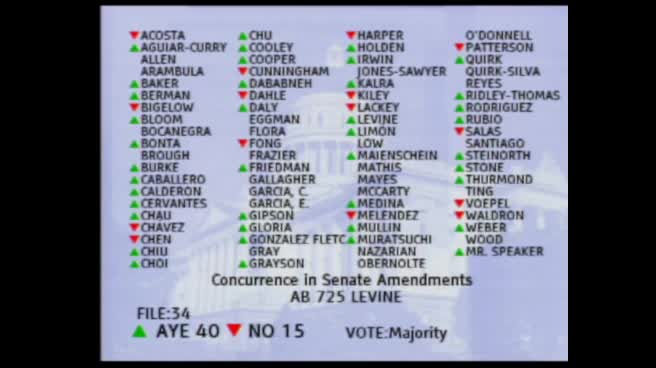 1MIN
Assembly Floor
 2MIN
Senate Floor
 1H
Senate Standing Committee on Appropriations
 1MIN
Assembly Floor
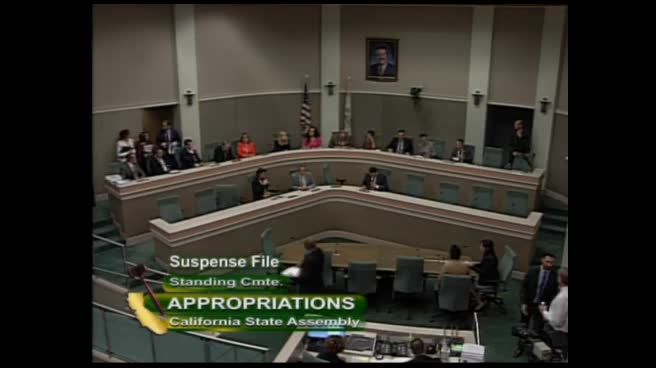 1H
Assembly Standing Committee on Appropriations
 7MIN
Assembly Standing Committee on Banking and Finance

Bill Co-Author(s):