AB 1566: Sales and use taxes: underpayments: overpayments.
- Session Year: 2017-2018
- House: Assembly
- Latest Version Date: 2017-04-06
Existing sales and use tax laws impose taxes on retailers measured by the gross receipts from the sale of tangible personal property sold at retail in this state, or on the storage, use, or other consumption in this state of tangible personal property purchased from a retailer for storage, use, or other consumption in this state, and provides various exemptions from those taxes. Existing law requires that any amount collected or paid in excess of what is due under that law is required to be credited by the State Board of Equalization against any other amounts due and payable from the person from whom the excess amount was collected or by whom it was paid, and the balance refunded to the person, as provided.
This bill, notwithstanding any other law, would authorize require the board, on and after January 1, 2018, and before January 1, 2023, to credit and set off setoff underpayment of taxes barred by the statute of limitations, provided a specified condition is met, in one quarter against an overpayment of taxes in another quarter within the same calendar year, if both the set off and overpayment occurred during the same period put at issue by the taxpayers claim to refund. The bill, under the same conditions, also authorizes would also require the board, on and after January 1, 2018, and before January 1, 2023, to credit and set off overpayment of taxes barred by the statute of limitations in one quarter against an underpayment of taxes in another quarter within the same calendar year, if both the set off setoff and overpayment occurred during the same period put at issue by the taxpayers claim for refund. On or before January 1, 2021, the bill would require the board to submit a specified report to the Legislature relating to these requirements.
Existing sales and use tax laws impose taxes on retailers measured by the gross receipts from the sale of tangible personal property sold at retail in this state, or on the storage, use, or other consumption in this state of tangible personal property purchased from a retailer for storage, use, or other consumption in this state, and provides various exemptions from those taxes. Existing law requires that any amount collected or paid in excess of what is due under that law is required to be credited by the State Board of Equalization against any other amounts due and payable from the person from whom the excess amount was collected or by whom it was paid, and the balance refunded to the person, as provided.
This bill, notwithstanding any other law, would authorize the board, on and after January 1, 2018, to credit and set off underpayment of taxes barred by the statute of limitations, provided a specified condition is met, in one quarter against an overpayment of taxes in another quarter within the same calendar year, if both the set off and overpayment occurred during the same period put at issue by the taxpayers claim to refund. The bill, under the same conditions, also authorizes the board, on and after January 1, 2018, to credit and set off overpayment of taxes barred by the statute of limitations in one quarter against an underpayment of taxes in another quarter within the same calendar year, if both the set off and overpayment occurred during the same period put at issue by the taxpayers claim for refund.
(a)If the board determines that any amount, penalty, or interest has been paid more than once or has been erroneously or illegally collected or computed, the board shall set forth that fact in the records of the board and shall certify the amount collected in excess of the amount legally due and the person from whom it was collected or by whom paid. The excess amount collected or paid shall be credited by the board on any amounts then due and payable from the person from whom the excess amount was collected or by whom it was paid under this part, and the balance shall be refunded to the person, or his or her successors, administrators, or executors, if a determination by the board is made in any of the following cases:
(1)Any amount of tax, interest, or penalty was not required to be paid.
(2)Any amount of prepayment of sales tax, interest, or penalty paid pursuant to Article 1.5 (commencing with Section 6480) of Chapter 5 was not required to be paid.
(3)Any amount that is approved as a settlement pursuant to Section 7093.5.
Any overpayment of the use tax by a purchaser to a retailer who is required to collect the tax and who gives the purchaser a receipt therefor pursuant to Article 1 (commencing with Section 6201) of Chapter 3 shall be credited or refunded by the state to the purchaser. Any proposed determination by the board pursuant to this section with respect to an amount in excess of fifty thousand dollars ($50,000) shall be available as a public record for at least 10 days prior to the effective date of that determination.
(b)(1)Notwithstanding any other law, on and after January 1, 2018, and before January 1, 2023, the board may shall credit and set off underpayment of taxes barred by the statute of limitations in one quarter against an overpayment of taxes in another quarter within the same calendar year, so long as both the set off setoff and overpayment occurred during the same calendar year put at issue by the taxpayers claim to refund. In the alternative, on and after January 1, 2018, and before January 1, 2023, the board may shall also credit and set off overpayment of taxes barred by the statute of limitations in one quarter against an underpayment of taxes in another quarter within the same calendar year, so long as both the set off setoff and overpayment occurred during the same calendar year put at issue by the taxpayers claim for refund. If a taxpayer can establish both the transaction in which there was an overpayment and the corresponding offset adjustment, then those provisions within this article relating to refund and the statute of limitations do not apply.
(2)Paragraph (1) shall apply only if a claim for refund for the quarter in which there is an underpayment or overpayment of tax is not barred by the statute of limitations on January 1, 2018.
(3)(A)On or before January 1, 2021, the board shall submit a report to the Legislature that includes all of the following:
(i)The number of taxpayers in each calendar year receiving the benefit of a credit for an overpayment of taxes barred by the statute of limitations pursuant to this subdivision, along with the aggregate value of all such credits.
(ii)The number of taxpayers in each calendar year where an underpayment of taxes barred by the statute of limitations was credited and set off by an overpayment pursuant to this subdivision, along with the aggregate value of all such underpayments.
(iii)The net fiscal impact in each fiscal year to the General Fund of the credit and offset provisions provided by this subdivision.
(B)(i)A report to the Legislature pursuant to this paragraph shall be submitted in compliance with Section 9795 of the Government Code.
(ii)This paragraph shall become inoperative on January 1, 2025 pursuant to Section 10231.5 of the Government Code.
(a)If the board determines that any amount, penalty, or interest has been paid more than once or has been erroneously or illegally collected or computed, the board shall set forth that fact in the records of the board and shall certify the amount collected in excess of the amount legally due and the person from whom it was collected or by whom paid. The excess amount collected or paid shall be credited by the board on any amounts then due and payable from the person from whom the excess amount was collected or by whom it was paid under this part, and the balance shall be refunded to the person, or his or her successors, administrators, or executors, if a determination by the board is made in any of the following cases:
(a)(1)Any amount of tax, interest, or penalty was not required to be paid.
(b)(2)Any amount of prepayment of sales tax, interest, or penalty paid pursuant to Article 1.5 (commencing with Section 6480) of Chapter 5 was not required to be paid.
(c)(3)Any amount that is approved as a settlement pursuant to Section 7093.5.
Any overpayment of the use tax by a purchaser to a retailer who is required to collect the tax and who gives the purchaser a receipt therefor pursuant to Article 1 (commencing with Section 6201) of Chapter 3 shall be credited or refunded by the state to the purchaser. Any proposed determination by the board pursuant to this section with respect to an amount in excess of fifty thousand dollars ($50,000) shall be available as a public record for at least 10 days prior to the effective date of that determination.
(b)(1)Notwithstanding any other law, on and after January 1, 2018, the board may credit and set off underpayment of taxes barred by the statute of limitations in one quarter against an overpayment of taxes in another quarter within the same calendar year, so long as both the set off and overpayment occurred during the same calendar year put at issue by the taxpayers claim to refund. In the alternative, on and after January 1, 2018, the board may also credit and set off overpayment of taxes barred by the statute of limitations in one quarter against an underpayment of taxes in another quarter within the same calendar year, so long as both the set off and overpayment occurred during the same calendar year put at issue by the taxpayers claim for refund. If a taxpayer can establish both the transaction in which there was an overpayment and the corresponding offset adjustment, then those provisions within this article relating to refund and the statute of limitations do not apply.
(2)Paragraph (1) shall apply only if a claim for refund for the quarter in which there is an underpayment or overpayment of tax is not barred by the statute of limitations on January 1, 2018.
|
Date
|
Status
|
|---|---|
| Feb 1, 2018 | From committee: Filed with the Chief Clerk pursuant to Joint Rule 56. |
| Jan 31, 2018 | Died pursuant to Art. IV, Sec. 10(c) of the Constitution. |
| May 26, 2017 | In committee: Held under submission. |
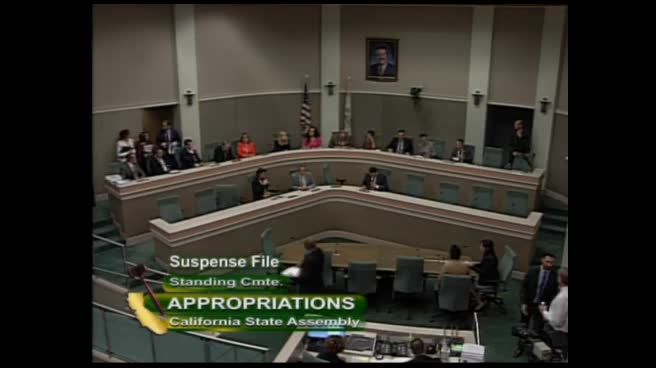
| Apr 26, 2017 | In committee: Set, first hearing. Referred to APPR. suspense file. |
| Apr 17, 2017 | Re-referred to Com. on APPR. |
| Apr 6, 2017 | Read second time and amended. |
| Apr 5, 2017 | From committee: Amend, and do pass as amended and re-refer to Com. on APPR. (Ayes 10. Noes 0.) (April 3). |
| Mar 16, 2017 | Referred to Com. on REV. & TAX. |
| Feb 19, 2017 | From printer. May be heard in committee March 21. |
| Feb 17, 2017 | Read first time. To print. |
|
Date
|
Description
|
Location
|
Votes
|
|
|---|---|---|---|---|
| Apr 3, 2017 | Do pass as amended and be re-referred to the Committee on [Appropriations] | Assembly Standing Committee on Revenue and Taxation |
Passed |
This list shows positions taken on this bill by organizations on the date displayed, which is linked to the original source.
Positions by individuals are not included.
Date of Hearing: April 26, 2017
ASSEMBLY COMMITTEE ON APPROPRIATIONS
Lorena Gonzalez Fletcher, Chair
ABPCA Bill Id:AB 1566
Author:(Irwin) – As Amended Ver:April 6, 2017
Policy Committee: | Revenue and Taxation | Vote: | 10 - 0 |
Urgency: No State Mandated Local Program: No Reimbursable: No
SUMMARY:
This bill allows the Board of Equalization (BOE) to apply overpayments or underpayments of sales and use taxes that are otherwise barred by the statute of limitations against overpayments or underpayments in different periods that are within the same calendar year. BOE can make these adjustments on or after January 1, 2018, and before January 1, 2023, and BOE must report to the Legislature by January 1, 2021 on the number of taxpayers affected and the revenue impact of these adjustments.
FISCAL EFFECT:
- Minor administrative costs to the BOE to administer the proposed overpayment and underpayment adjustment process. The number of cases this new process will address is likely to be minimal. Moreover, to the extent that this process reduces the number of appeals, there could be minor cost savings as well.
- Potentially significant loss of tax and penalty revenue. The expected number of cases that this process will address is likely very small, but these cases could have significant revenue implications for the state. For instance, the specific case that is the inspiration for this bill (see Comment #2) involved an assessment of unpaid tax of over $380,000 that could not be adjusted by an overpayment of a similar amount because of rules around the statute of limitations. Moreover, this bill may have unintended consequences on the decisions that taxpayers make when paying their taxes or pursuing refunds. This uncertainty on tax collections will be explored by a report to the Legislature, as required by this bill.
- Minor costs to develop statistics and a report to be submitted to the Legislature.
COMMENTS:
- Purpose. According to the author’s office, AB 1566 is a practical measure that supports businesses that may have inadvertently paid the wrong amount in taxes in a given quarter. This would allow these businesses to avoid a difficult appeals process.
- Background. AB 1566 applies to a specific case that came before the BOE in 2016. In this case, a taxpayer incorrectly reported taxable sales of nearly $4 million on its first and second quarter 2009 returns and timely paid the tax, but then soon discovered that the sales were nontaxable. Rather than filing a refund claim, the taxpayer instead credited the overpayment on its third quarter 2009 tax return. Upon being audited three years later, the BOE disallowed the claimed credit since the overpayment of the tax was beyond the statute of limitations but the credited tax in the third quarter of 2009 was still within the statute of limitations. The amount of assessed tax owed was more than $380,000.
- Potential impacts of AB 1566. AB 1566 addresses the frustrating and burdensome experience of at least one taxpayer by allowing BOE to simply apply previous underpayments or overpayments of taxes to other tax payments in the same calendar year. In these rare cases, the timing is such that one improper payment of tax liability is beyond the statute of limitations while the other is not, and this bill would make it so taxpayers would no longer need to go through the lengthy appeals process in order to rectify the situation.
However, it is unclear what the long-term impact of this newly proposed underpayment and overpayment process will be. For instance, a taxpayer may be cautious to file a refund claim if they know that any tax liabilities from earlier periods in the year could be applied to an overpayment, even if those earlier periods are beyond the statute of limitations. In other words, AB 1566 could either benefit a taxpayer or hurt a taxpayer by leaving open the opportunity to apply a tax payment history that would otherwise not be authorized.
Analysis Prepared by: Luke Reidenbach / APPR. / (916) 319-2081
Date of Hearing: April 3, 2017
ASSEMBLY COMMITTEE ON REVENUE AND TAXATION
Sebastian Ridley-Thomas, Chair
ABPCA Bill Id:AB 1566 (
Author:Irwin) – As Introduced Ver:February 17, 2017
Majority vote. Fiscal committee.
SUBJECT: Sales and use taxes: underpayments: overpayments
SUMMARY: Authorizes the State Board of Equalization (BOE) to apply over- and underpayments of sales and use taxes that are otherwise barred by the statute of limitations against under- and overpayments in different periods as long as the periods are within the same calendar year. Specifically, this bill:
- Authorizes the BOE, on and after January 1, 2018, to credit and set off tax underpayments barred by the statute of limitations in one quarter against an overpayment of taxes in another quarter within the same calendar year, so long as both the set off and overpayment occurred during the same calendar year put at issue by the taxpayer's claim to refund.
- Provides that, in the alternative, the BOE may also credit and set off tax overpayments barred by the statute of limitations in one quarter against an underpayment of taxes in another quarter within the same calendar year, so long as both the set off and overpayment occurred during the same calendar year put at issue by the taxpayer's claim for refund.
- Provides that if a taxpayer can establish both the transaction in which there was an overpayment and the corresponding offset adjustment, then those provisions relating to refund and the statute of limitations do not apply.
- Specifies that this bill's provisions shall apply only if a claim for refund for the quarter in which there is an underpayment or overpayment of tax is not barred by the statute of limitations on January 1, 2018.
EXISTING LAW:
- Imposes a sales tax on retailers for the privilege of selling tangible personal property (TPP), absent a specific exemption. The tax is based upon the retailer's gross receipts from TPP sales in this state.
- Imposes a complimentary use tax on the storage, use, or other consumption of TPP purchased out-of-state and brought into California. The use tax is imposed on the purchaser; and unless the purchaser pays the use tax to an out-of-state retailer registered to collect California's use tax, the purchaser remains liable for the tax. The use tax is set at the same rate as the state's sales tax and must generally be remitted to the BOE.
- Requires that any amount collected or paid in excess of what is due under the Sales and Use Tax Law must be credited by the BOE against any other amounts due and payable from the person from whom the excess amount was collected or by whom it was paid, and the balance refunded to the person, as provided.
FISCAL EFFECT: The BOE notes that the fiscal effect of this bill is unknown.
COMMENTS:
- The author has provided the following statement in support of this bill:
AB 1566 would allow the BOE to credit an under-/over-payment in a given quarter to efficiently resolve a payment discrepancy as long as the quarters being offset fall within the same calendar year [. . . ]. For example, a small business owner would be able to counterbalance an overpayment in Q1 of 2018 with an underpayment in Q3 [of] 2018 as long as the business meets the specified requirements.
AB 1566 is a practical measure that would support small businesses that may have inadvertently paid the wrong amount in taxes for a given quarter as opposed to going through the difficult appeals process. AB 1566 creates a less burdensome method that will ultimately benefit small businesses and taxpayers.
- This bill is sponsored by BOE Member Fiona Ma, who notes the following:
BOE tax filing procedures can be extremely complex, and occasionally small business owners make honest mistakes when paying their taxes. The BOE hears many cases where this happens. In one instance a small business accidentally collected sales taxes from a client [in] Quarter 1 of the fiscal year. After discovering they collected from the wrong client, the taxpayer refunded the client's money and attempted to correct the discrepancy by claiming a "self-help" deduction in Quarter 3. Although the taxpayer was able to fix the imbalance, his business was audited and the "self-help" claim was rejected because he did not follow established claim procedures. When this case appeared before the BOE, [t]he BOE Members voted in favor of the taxpayer, but it took seven full years and countless resources to reach a conclusion. Unfortunately, not all small businesses can afford to expend the time and resources to go through the appeals process.
- The BOE notes the following in its staff analysis of this bill:
- Effect of the bill: "Authorizes the BOE to credit and set off within the same calendar year (1) tax underpayments barred by the statute of limitations in one quarter against a tax overpayment in another quarter, so long as the set off and overpayment occurred during the same calendar year put at issue by the taxpayer's refund claim, and (2) tax overpayments barred by the statute of limitations in one quarter against a tax underpayment in another quarter, so long as both the set off and overpayment occurred during the same calendar year put at issue by the taxpayer's refund claim, as specified."
- The bill relates to a specific case that came before the BOE Members: "This bill relates to a tax appeal heard by the BOE Members on August 30, 2016, and to similar, previous appeals. In the 2016 case, the taxpayer erroneously reported taxable sales of nearly $4 million on its first and second quarter 2009 returns and timely paid the tax. Shortly thereafter, the taxpayer discovered that the sales were nontaxable sales for resale and claimed credit for the overpayment on its third quarter 2009 return. However, the taxpayer did not file a refund claim.
“When the BOE audited the taxpayer three years later, the BOE auditor disallowed the credit claimed (even though a legitimate tax overpayment had occurred) since the taxpayer failed to file a refund claim for the overpayment. The third quarter 2009 was still within the statute of limitations for assessing the tax, but the time had expired for filing a timely refund claim for 2009's first two quarters. Therefore, the auditor assessed the applicable tax (over $380,000), plus interest."
- Would the interest on underpayments apply? "If a taxpayer filed a valid refund claim and an underpayment in an earlier period is discovered which set off the overpayment, it's unclear whether the applicable interest related to the underpayment (currently 7%), would be added. If so, it appears it would not be includable in the offset – as the bill's language only refers to "tax underpayments" for purposes of the offset. Therefore, if interest on the underpayment applies, it appears the taxpayer could still be liable for the interest remaining on the underpayment. The bill should clarify this issue consistent with the author's intent."
- Would this bill inhibit a taxpayer's willingness to file a refund claim or encourage taxpayers to claim more prior period adjustments? "Knowing that any tax liabilities from earlier periods in the year could be applied to an overpayment, some taxpayers may be hesitant to pursue refund claims. In general, taxpayers' accounts are subject to audits in three-year intervals. An audit that discloses an overpayment in the latter part of the audit's first year records would prompt an auditor's review of earlier periods in that calendar year for a potential offset, since once a refund is claimed, the taxpayer's records for the calendar year's earlier periods (ordinarily not within the audit period) would become open to examination. A taxpayer may withdraw a refund claim, however, should the audit reveal an offsetting underpayment in the earlier period. Alternatively, this bill may encourage taxpayers to claim more prior period adjustments on subsequent returns."
- The bill's language is inconsistent with the Sales and Use Tax Law generally and confusing in some areas: "As the bill progresses, staff will work with the author's office to clarify verbiage used in the bill. For example, on page 3, lines 5 and 21, the bill refers to the "statute of limitations." The statute of limitations is set out in Section 6902 and should be referenced accordingly.
“The verbiage ‘the transaction in which there was an overpayment’ on page 3, line 15 is confusing and should be clarified. Also, proposed paragraph (2) seeks to clarify the time in which these provisions apply. However, the language could be interpreted to mean that the provisions won't apply in the future when a claim for refund is barred by the limitations period on January 1, 2018. For example, by January 1, 2018, every quarter in 2023 would be outside the limitations period."
- Should fiscal year filers also be given the same benefit? "The bill's provisions may potentially discriminate against a taxpayer on a fiscal year reporting basis."
- Committee staff comments:
- An overview of existing law governing overpayments and underpayments: Existing law provides a specific refund claim remedy to taxpayers that have made a tax, interest, or penalty overpayment to the BOE. The law requires taxpayers to file a refund claim within a specified period to recover any amounts overpaid. Any such claim must be in writing and state the specific grounds upon which the claim is based. Moreover, taxpayers are prohibited from deducting prior period overpayments on subsequently filed tax returns.
Generally, the statute of limitations period in which a valid claim for refund may be filed is as follows:
- Three years from the return due date for the period in which the taxpayer made the claimed overpayment;
- Six months from the claimed overpayment date; or,
- Six months from the date a determination (i.e., billing) became final. (See Revenue and Taxation Code (R&TC) Section 6902.)
In the case of underpayments, existing law generally requires the BOE to mail a deficiency determination notice (i.e., billing) within three years after the last day of the calendar month following the quarterly period for which the amount is proposed to be determined or within three years after the return is filed, whichever period expires later. In cases where the taxpayer fails to file a return, the BOE must mail its determination notice within eight years after the last day of the calendar month following the quarterly period for which the amount is proposed to be determined. (R&TC Section 6487.)
- How did we get here? This bill apparently traces its origins to a case that came before the BOE in August 2016. Specifically, the case of Solvay USA, Inc. involved a chemical retailer. During the first and second quarters of 2009, Solvay collected sales tax reimbursement of $382,437.87 from its customer Chevron Corporation on sales[1] of $3,922,441, and reported tax of that amount on its returns. Solvay later discovered that its sales to Chevron were not subject to tax. Thus, when Solvay filed its sales and use tax return for the third quarter of 2009, it reduced the amount of tax due by $382,437.87 and increased its claimed deductions accordingly.
Based on its review of these transactions, the BOE's Business Tax and Fee Department (Department) concluded that Solvay had overpaid its tax liability for the first and second quarters of 2009 by $382,437.87. Nevertheless, the Department disallowed the claimed deduction because such "self-help deductions" do not follow the refund process established by statute. Specifically, Solvay made the overpayments at issue with its regularly filed returns for the first and second quarters of 2009. To obtain a refund for those overpayments, Solvay was required to file a timely claim for refund in writing, stating the specific grounds upon which the claim was based. As discussed above, to be timely, a refund claim must be filed within six months of the date of payment or within three years from the last day of the month following the quarter for which the tax was overpaid. Therefore, the last day to file a timely refund claim was April 30, 2012 for the first quarter of 2009, and July 31, 2012, for the second quarter of 2009. Solvay, however, never filed a claim for refund, but instead simply adjusted the amount of tax paid for the third quarter return for 2009.
In the Appeals Division Board Hearing Summary (Hearing Summary) prepared in this case, BOE staff noted:
The statutes explicitly describe the specific procedure for requesting a refund of overpaid tax. Petitioner's "self-help" remedy of silently netting the overpayments of tax for 1Q09 and 2Q09 from the amount of tax due for 3Q09 does not meet the statutory requirements. Further, since petitioner made the adjustments on the 3Q09 return without stating any basis for the credit it claimed, the Department was not notified of the claimed credit and thus did not review the basis for the credits taken, as it would have if a claim for refund had been filed, as required by law. Thus, the deduction claimed on the 3Q09 return cannot be considered a timely claim for refund, and the claim for refund petitioner did file (on May 9, 2014, with its petition for redetermination) was filed long after the expiration of the statute of limitations.
The Hearing Summary did note that the BOE currently allows time-barred claims for refund to be offset against timely deficiency determinations, and the BOE allows time-barred deficiency determinations to be offset against timely claims for refund, under both statutory authority and the case of Sprint Communications Company v. State Board of Equalization (1995) 40 Cal.App.4th 1254 (Sprint). In Sprint, a taxpayer filed a timely claim for refund, and the court allowed the BOE to offset an otherwise time-barred deficiency arising from the same period that was the subject of the claim. (Sprint, 40 Cal.App.4th at 1260.) The Court of Appeal reasoned that "[A] refund case throws open the taxpayer's entire tax liability for the period in question [citation], and the [BOE] may raise issues unrelated to the basis or theory on which the taxpayer is seeking a refund in order to defeat the claim." (Id.) The Hearing Summary noted that the BOE has long applied these principles equally in favor of taxpayers by allowing time-barred claims for refund to be offset against timely deficiency determinations for the same period, using Sprint as indirect authority for the practice.
The Hearing Summary concluded, however, that Sprint could not be applied to provide equitable relief to Solvay. Specifically, the Hearing Summary noted:
In our Supplemental [Decision and Recommendation], we noted the relevance of Sprint in that claimant's time-barred self-help deductions could be offset against a timely deficiency determination for the same period; however, claimant's time-barred self-help deductions arise from a period prior to the timely deficiency determination. Therefore, Sprint is inapplicable and claimant's time-barred self-help deductions cannot be offset against the deficiency determination.
Despite the analysis set forth above, when the case finally came before the BOE on appeal, the BOE Members sided with the taxpayer and, by a 4-to-1 vote, ordered that the taxpayer's petition be granted and that "the tax be re-determined accordingly."
- What would this bill do? This bill appears at least partially directed to cases like Solvay. Specifically, this bill would authorize the BOE to credit and set off overpayments of taxes barred by the statute of limitations in one quarter against an underpayment of taxes in another quarter within the same calendar year, so long as both the set off and overpayment occurred during the same calendar year put at issue by the taxpayer's claim for refund.
A hypothetical example may be useful in explaining how this proposal might work. Imagine a retailer that reported and paid sales taxes in each quarter of 2010. Further imagine that the retailer significantly overpaid sales tax in the first quarter of 2010. Under existing law, the retailer would have to file a written claim for refund no later than April 30, 2013. Imagine, however, that no such refund was ever filed and the retailer instead took a statutorily unauthorized "self-help" deduction in the second quarter of 2010. Further imagine that, several years later, the BOE audits the taxpayer for the three-year period beginning the second quarter of 2010 through the second quarter of 2013. As part of this audit, the BOE uncovers the improper self-help deduction in the second quarter of 2010 and issues a timely deficiency determination. Under existing statute, the BOE would not be able to "credit" the overpayment made in the first quarter of 2010 against the deficiency in the second quarter because the first quarter of 2010 is barred by the statute of limitations. Under this bill, it would appear that the BOE could credit the overpayment made in the first quarter of 2010 to the subsequent deficiency because they occurred in the same calendar year. It is not entirely clear to Committee staff whether the bill's present language would actually grant the BOE this authority because this bill requires both the set off and overpayment to occur during the same calendar year put at issue by the taxpayer's claim for refund. This bill, however, makes no reference to a calendar year being put at issue by a BOE notice of deficiency.
- What's good for the goose: It should be noted that while this bill may assist taxpayers whose claims for refund are otherwise barred by the applicable statute of limitations, it also operates in the reverse. Specifically, this bill also authorizes the BOE to credit and set-off tax underpayments barred by the statute of limitations in one quarter against an overpayment of taxes in another quarter within the same calendar year, so long as both the set off and overpayment occurred during the same calendar year put at issue by the taxpayer's claim for refund. Again, a hypothetical example may prove useful in explaining how this provision might work.
Imagine, once again, a retailer that collected and reported sales tax in each quarter of 2010. The retailer significantly underreported tax in the first quarter and overpaid taxes in the second. Under existing law, the BOE would have to send a deficiency determination notice by April 30, 2013 or would be barred from collecting the underpayment. (This would be true even if the retailer waited until mid-July of 2013 to file a timely claim for refund for the overpayments made in the second quarter of 2010.) Under this bill, the BOE would apparently have the authority to apply the time-barred underpayment from the first quarter of 2010 to the refund claim for the second quarter because they occurred in the same calendar year. As the BOE notes in its staff analysis of this bill, such a provision may have a chilling effect on taxpayers seeking a refund.
- The endless battle between "may" and "shall": This bill provides that the BOE may credit and set off over- and underpayments. It is unclear to Committee staff why this bill apparently grants such discretionary authority to the BOE. As currently drafted, the BOE could choose to only apply the provisions in a manner helpful to taxpayers. Conversely, the BOE could choose to apply the authority to only increase General Fund revenues. Or, as a third alternative, the BOE could apply the authority in an ad hoc manner. It would seem that if this "offsetting" mechanism represents sound policy, it should be mandatory to ensure consistent and evenhanded application.
- Unclear language: As noted in the BOE staff analysis, it is somewhat difficult to understand the full intent and implications of this bill given the rather confusing and inconsistent verbiage used. Committee staff will work with the author's office to address these ambiguities as this bill progresses through the legislative process.
REGISTERED SUPPORT / OPPOSITION:
Support
BOE Member Fiona Ma (Sponsor)
Greater Los Angeles African American Chamber of Commerce
Opposition
None on file
Analysis Prepared by: M. David Ruff / REV. & TAX. / (916) 319-2098
The sales involved Solvay's regeneration of sulfuric acid for Chevron in Chevron's tanks. ↑
Discussed in Hearing
 1H
Assembly Standing Committee on Appropriations
 13MIN
Assembly Standing Committee on Revenue and Taxation
Bill Author

Bill Co-Author(s):