AB 1575: Professional cosmetics: labeling requirements.
- Session Year: 2017-2018
- House: Assembly
- Latest Version Date: 2017-07-10
(1)The Sherman Food, Drug, and Cosmetic Law, among other things, regulates the labeling of cosmetics and authorizes the State Department of Public Health to require a cosmetic label to list ingredients under specified circumstances. The law generally defines the term cosmetic as an article, or its components, intended to be applied to the human body, or any part of the human body, for cleansing, beautifying, promoting attractiveness, or altering the appearance. The law makes a violation of its provisions a crime.
This bill would require a professional cosmetic manufactured on or after July 1, 2019, for sale to a professional for use in this state to declare its ingredients on the container label by having the content of the container label comply with the requirements in the same manner as required for a cosmetic that is regulated by in this state to have a label affixed on the container that satisfies all of the labeling requirements required for any other cosmetic pursuant to specific federal laws. By expanding the requirements of this law, the bill would expand the scope of a crime, and thus would impose a state-mandated local program. The bill would define terms for its purposes and make legislative findings in support of its provisions.
(2)The California Constitution requires the state to reimburse local agencies and school districts for certain costs mandated by the state. Statutory provisions establish procedures for making that reimbursement.
This bill would provide that no reimbursement is required by this act for a specified reason.
(1)The Sherman Food, Drug, and Cosmetic Law, among other things, regulates the labeling of cosmetics and authorizes the State Department of Public Health to require a cosmetic label to list ingredients under specified circumstances. The law generally defines the term cosmetic as an article, or its components, intended to be applied to the human body, or any part of the human body, for cleansing, beautifying, promoting attractiveness, or altering the appearance. The law makes a violation of its provisions a crime.
This bill would require a professional cosmetic manufactured on or after July 1, 2019, for sale to a professional for use in this state to declare its ingredients on the container label using a specified terminology and being listed in order of weight. by having the content of the container label comply with the requirements in the same manner as required for a cosmetic that is regulated by specific federal laws. By expanding the requirements of this law, the bill would expand the scope of a crime, and thus would impose a state-mandated local program. The bill would define terms for its purposes and make legislative findings in support of its provisions.
(2)The California Constitution requires the state to reimburse local agencies and school districts for certain costs mandated by the state. Statutory provisions establish procedures for making that reimbursement.
This bill would provide that no reimbursement is required by this act for a specified reason.
(1)The Sherman Food, Drug, and Cosmetic Law, among other things, regulates the labeling of cosmetics and authorizes the State Department of Public Health to require a cosmetic label to list ingredients under specified circumstances. The law generally defines the term cosmetic as an article, or its components, intended to be applied to the human body, or any part of the human body, for cleansing, beautifying, promoting attractiveness, or altering the appearance. The law makes a violation of its provisions a crime.
This bill would require a professional cosmetic manufactured on or after July 1, 2019, for sale to a professional for use in this state to declare its ingredients on the container label using a specified terminology and being listed in order of weight. By expanding the requirements of this law, the bill would expand the scope of a crime, and thus would impose a state-mandated local program. The bill would define terms for its purposes and make legislative findings in support of its provisions.
(2)The California Constitution requires the state to reimburse local agencies and school districts for certain costs mandated by the state. Statutory provisions establish procedures for making that reimbursement.
This bill would provide that no reimbursement is required by this act for a specified reason.
(1)The Sherman Food, Drug, and Cosmetic Law, among other things, regulates the labeling of cosmetics and authorizes the State Department of Public Health to require a cosmetic label to list ingredients under specified circumstances. The law generally defines the term cosmetic as an article, or its components, intended to be applied to the human body, or any part of the human body, for cleansing, beautifying, promoting attractiveness, or altering the appearance. The law makes a violation of its provisions a crime.
This bill would require, on and after January 1, 2019, a manufacturer of require a professional cosmetic sold or manufactured on or after July 1, 2019, for sale to a professional for use in this state to declare the its ingredients on the container label by the common or usual name of each ingredient, using a specified terminology and being listed in order of weight. The bill would also require a manufacturer with an Internet Web site to state the Internet address on the container label and further require the manufacturer to state the ingredients on its Internet Web site in a specified manner. By expanding the requirements of this law, the bill would expand the scope of a crime, and thus would impose a state-mandated local program. The bill would define terms for its purposes and make legislative findings in support of its provisions.
(2)The California Constitution requires the state to reimburse local agencies and school districts for certain costs mandated by the state. Statutory provisions establish procedures for making that reimbursement.
This bill would provide that no reimbursement is required by this act for a specified reason.
(1)The Sherman Food, Drug, and Cosmetic Law, among other things, regulates the labeling of cosmetics and authorizes the State Department of Public Health to require a cosmetic label to list ingredients under specified circumstances. The law generally defines the term cosmetic as an article, or its components, intended to be applied to the human body, or any part of the human body, for cleansing, beautifying, promoting attractiveness, or altering the appearance. The law makes a violation of its provisions a crime.
This bill would require, on and after January 1, 2019, a manufacturer of a professional cosmetic sold or manufactured in this state to declare the ingredients on the container label by the common or usual name of each ingredient, listed in order of weight, and would require a manufacturer to provide a statement on the label regarding the ingredients, if they are specified hazardous chemicals. weight. The bill would also require a manufacturer with an Internet Web site to state the Internet address on the container label and further require the manufacturer to state the ingredients on its Internet Web site in a specified manner. By expanding the requirements of this law, the bill would expand the scope of a crime, and thus would impose a state-mandated local program.
(2)The California Constitution requires the state to reimburse local agencies and school districts for certain costs mandated by the state. Statutory provisions establish procedures for making that reimbursement.
This bill would provide that no reimbursement is required by this act for a specified reason.
(1)The Sherman Food, Drug, and Cosmetic Law, among other things, regulates the labeling of cosmetics and authorizes the State Department of Public Health to require a cosmetic label to list ingredients under specified circumstances. The law generally defines the term cosmetic as an article, or its components, intended to be applied to the human body, or any part of the human body, for cleansing, beautifying, promoting attractiveness, or altering the appearance. The law makes a violation of its provisions a crime.
This bill would require, on and after January 1, 2019, a manufacturer of a professional cosmetic sold or manufactured in this state to declare the ingredients on the container label the ingredients by the common or usual name of each ingredient, listed in order of weight, and a statement would require a manufacturer to provide a statement on the label regarding the ingredients, if they are specified hazardous chemicals. The bill would also require the a manufacturer with an Internet Web site to state the address on the container label its Internet Web site address and further require the manufacturer to state the ingredients on its Internet Web site the ingredients in a specified manner. By expanding the requirements of this law, the bill would expand the scope of a crime, and thus would impose a state-mandated local program. The bill would also provide civil penalties, of not less than $10,000 or $25,000 per day for a violation of the law relating to cosmetics and professional cosmetics, as specified. The bill would make legislative findings in support of its provisions.
(2)The California Constitution requires the state to reimburse local agencies and school districts for certain costs mandated by the state. Statutory provisions establish procedures for making that reimbursement.
This bill would provide that no reimbursement is required by this act for a specified reason.
(1)The Sherman Food, Drug, and Cosmetic Law, among other things, regulates the labeling of cosmetics and authorizes the State Department of Public Health to require a cosmetic label to list ingredients under specified circumstances. The law generally defines the term cosmetic as an article, or its components, intended to be applied to the human body, or any part of the human body, for cleansing, beautifying, promoting attractiveness, or altering the appearance. The law makes a violation of its provisions a crime.
This bill would require, on and after January 1, 2019, a manufacturer of a professional cosmetic sold or manufactured in this state to declare on the container label the ingredients by the common or usual name of each ingredient, listed in order of weight, and a statement regarding the ingredients, if they are specified hazardous chemicals. The bill would also require the manufacturer to state on the container label its Internet Web site address and further require the manufacturer to state on its Internet Web site the ingredients in a specified manner. By expanding the requirements of this law, the bill would expand the scope of a crime, and thus would impose a state-mandated local program. The bill would also provide civil penalties, of not less than $10,000 or $25,000 per day for a violation of the law relating to cosmetics and professional cosmetics, as specified. The bill would make legislative findings in support of its provisions.
(2)The California Constitution requires the state to reimburse local agencies and school districts for certain costs mandated by the state. Statutory provisions establish procedures for making that reimbursement.
This bill would provide that no reimbursement is required by this act for a specified reason.
Existing law provides for various state programs and services for the purpose of attracting and retaining businesses in the state, including the Office of Small Business Advocate and the Governors Office of Business and Economic Development.This bill would state the intent of the Legislature to enact legislation to promote and assist small businesses.Existing law provides for various state programs and services for the purpose of attracting and retaining businesses in the state, including the Office of Small Business Advocate and the Governors Office of Business and Economic Development.
This bill would state the intent of the Legislature to enact legislation to promote and assist small businesses.
The Legislature finds and declares all of the following:
(a)According to the State Board of Barbering and Cosmetology, there are over 129,000 licensed manicurists, and almost 53,000 licensed salon businesses, many of which provide manicure services. There are over 312,000 licensed cosmetologists who are licensed to provide nail and hair services.
(b)Most cosmetologists and manicurists are of reproductive age and, therefore, are particularly vulnerable to chemical exposures.
(c)It is estimated that as many as 59 to 80 percent of manicurists in California are Vietnamese immigrants, many with limited English skills.
(d)Existing federal law does not regulate professional cosmetics in the same manner as cosmetics sold to consumers. Information on the ingredients in professional salon products is essential to ensuring that workers and owners can make safer product choices and take steps to protect themselves and their customers against harmful exposures.
SEC. 2.Section 110371 is added to the Health and Safety Code, to read:110371.(a)A professional cosmetic manufactured on or after July 1, 2019, for sale to a professional for use in this state shall declare its ingredients on the container label by having the content of the container label comply with the requirements in the same manner as required for a cosmetic that is regulated by in this state shall have a label affixed on the container that satisfies all of the labeling requirements required for any other cosmetic pursuant to the Federal Food, Drug, and Cosmetic Act (21 U.S.C. Sec. 301, et seq.), and the federal Fair Packaging and Labeling Act (15 U.S.C. Sec. 1451, et seq.).
(b)The following definitions shall apply to this section:
(1)Ingredient has the same meaning as in Section 111791.5.
(2)Professional means a person that has been granted a license by the State Board of Barbering and Cosmetology to practice in the field of cosmetology, nail care, barbering, or esthetics.
(3)Professional cosmetic means a cosmetic product as it is defined in Section 109900 that is intended or marketed to be used only by a professional on account of a specific ingredient, increased concentration of an ingredient, or other quality that requires safe handling, or is otherwise used by a professional.
SEC. 3.No reimbursement is required by this act pursuant to Section 6 of Article XIIIB of the California Constitution because the only costs that may be incurred by a local agency or school district will be incurred because this act creates a new crime or infraction, eliminates a crime or infraction, or changes the penalty for a crime or infraction, within the meaning of Section 17556 of the Government Code, or changes the definition of a crime within the meaning of Section 6 of Article XIIIB of the California Constitution.
The Legislature finds and declares all of the following:
(a)According to the State Board of Barbering and Cosmetology, there are over 129,000 licensed manicurists, and almost 53,000 licensed salon businesses, many of which provide manicure services. There are over 312,000 licensed cosmetologists who are licensed to provide nail and hair services.
(b)Most cosmetologists and manicurists are of reproductive age and, therefore, are particularly vulnerable to chemical exposures.
(c)It is estimated that as many as 59 to 80 percent of manicurists in California are Vietnamese immigrants, many with limited English skills.
(d)Existing federal law does not regulate professional cosmetics in the same manner as cosmetics sold to consumers. Information on the ingredients in professional salon products is essential to ensuring that workers and owners can make safer product choices and take steps to protect themselves and their customers against harmful exposures.
SEC. 2.Section 110371 is added to the Health and Safety Code, to read:110371.(a)A professional cosmetic manufactured on or after July 1, 2019, for sale to a professional for use in this state shall declare its ingredients on the container label by the International Nomenclature Cosmetic Ingredient term of each ingredient and list the ingredients in descending order of predominance by weight. An ingredient present at a concentration of not more than 1 percent may be listed without respect to descending order of predominance following ingredients listed by weight. having the content of the container label comply with the requirements in the same manner as required for a cosmetic that is regulated by the Federal Food, Drug, and Cosmetic Act (21 U.S.C. Sec. 301, et seq.), and the federal Fair Packaging and Labeling Act (15 U.S.C. Sec. 1451, et seq.).
(b)The following definitions shall apply to this section:
(1)Ingredient has the same meaning as in Section 111791.5.
(2)Professional means a person that has been granted a license by the State Board of Barbering and Cosmetology to practice in the field of cosmetology, nail care, barbering, or esthetics.
(3)Professional cosmetic means a cosmetic product as it is defined in Section 109900 that is intended or marketed to be used only by a professional on account of a specific ingredient, increased concentration of an ingredient, or other quality that requires safe handling, or is otherwise used by a professional.
SEC. 3.No reimbursement is required by this act pursuant to Section 6 of Article XIIIB of the California Constitution because the only costs that may be incurred by a local agency or school district will be incurred because this act creates a new crime or infraction, eliminates a crime or infraction, or changes the penalty for a crime or infraction, within the meaning of Section 17556 of the Government Code, or changes the definition of a crime within the meaning of Section 6 of Article XIIIB of the California Constitution.
The Legislature finds and declares all of the following:
(a)According to the State Board of Barbering and Cosmetology, there are over 129,000 licensed manicurists, and almost 53,000 licensed salon businesses, many of which provide manicure services. There are over 312,000 licensed cosmetologists who are licensed to provide nail and hair services.
(b)Most cosmetologists and manicurists are of reproductive age, and age and, therefore, are particularly vulnerable to chemical exposures.
(c)It is estimated that as many as 59 to 80 percent of manicurists in California are Vietnamese immigrants, many with limited English skills.
(d)Existing federal law does not regulate professional cosmetics in the same manner as cosmetics sold to consumers. Information on the ingredients in professional salon products is essential to ensuring that workers and owners can make safer product choices and take steps to protect themselves and their customers against harmful exposures.
SEC. 2.Section 110371 is added to the Health and Safety Code, to read:110371.(a)A professional cosmetic manufactured on or after July 1, 2019, for sale to a professional for use in this state shall declare its ingredients on the container label by the International Nomenclature Cosmetic Ingredient term of each ingredient and list the ingredients in descending order by of predominance by weight. An ingredient present at a concentration of not more than 1 percent may be listed without respect to descending order of predominance following ingredients listed by weight.
(b)The following definitions shall apply to this section:
(1)Ingredient means the same as the term is described has the same meaning as in Section 111791.5.
(2)Professional means a person that has been granted a license by the State Board of Barbering and Cosmetology to practice in the field of cosmetology, nail care, barbering, or esthetics.
(3)Professional cosmetic means a cosmetic product as it is defined in Section 109900 that is intended or marketed to be used only by a professional on account of a specific ingredient, increased concentration of an ingredient, or other quality that requires safe handling, or is otherwise used by a professional.
SEC. 3.No reimbursement is required by this act pursuant to Section 6 of Article XIIIB of the California Constitution because the only costs that may be incurred by a local agency or school district will be incurred because this act creates a new crime or infraction, eliminates a crime or infraction, or changes the penalty for a crime or infraction, within the meaning of Section 17556 of the Government Code, or changes the definition of a crime within the meaning of Section 6 of Article XIIIB of the California Constitution.
The Legislature finds and declares all of the following:
(a)According to the State Board of Barbering and Cosmetology, there are over 129,000 licensed manicurists, and almost 53,000 licensed salon businesses, many of which provide manicure services. There are over 312,000 licensed cosmetologists who are licensed to provide nail and hair services.
(b)On a daily basis, for long hours, salon professionals handle beauty care products containing a multitude of chemicals known or suspected to cause both acute harm, including, among others, headaches, rashes, nausea, and breathing difficulty, and chronic harm, including, among others, miscarriages, birth defects, cancer, and respiratory illness.
(c)The International Agency for Research on Cancer lists occupational exposures as a hairdresser or barber as a probable carcinogen.
(d)
(b)Most cosmetologists and manicurists are of reproductive age, and therefore, are particularly vulnerable to chemical exposures.
(e)
(c)It is estimated that as many as 59 to 80 percent of manicurists in California are Vietnamese immigrants, many with limited English skills.
(f)Many chemicals in professional cosmetics can cause serious harm and include, but are not limited to, all of the following:
(1)Dibutyl phthalate (DBP) (nail polish, bases, and top coats) is a female and male reproductive toxicant and a developmental toxicant linked to birth defects.
(2)Diethyl phthalate (fragranced shampoos and conditioners) can cause reproductive and developmental harm, particularly for boys and men, and decreases pulmonary function.
(3)Formaldehyde or methylene glycol (nail polish, bases, hardener, and top coats, keratin hair straightening treatments, and products that use formaldehyde-releasing compounds, such as preservatives) is a carcinogen known to cause respiratory harm and allergic dermatitis, may be linked to reproductive harm, and irritates the eyes, nose, throat, and skin.
(4)Sodium hydroxide or lye (hair relaxers and hair removers) is extremely corrosive and can cause pain, redness, burns, eye damage, and blistering and result in permanent scarring and hair loss.
(5)Titanium dioxide (nail polish) is a carcinogen.
(6)Toluene (nail polish, bases, and top coats, fingernail glue and thinners, wig glue, and hairpiece bonding) is a neurological and developmental toxicant that can cause headaches, dizziness, nausea, symptoms similar to drunkenness, and loss of short-term memory and may contribute to spontaneous abortions or other harm to unborn children.
(g)Chemicals in professional cosmetics can also be harmful to salon customers. Endocrine-disrupting chemicals can cause harm at very low levels of exposure.
(h)
(d)Existing federal law does not regulate professional cosmetics in the same manner as nonprofessional cosmetics. cosmetics sold to consumers. Information on the ingredients in professional salon products is essential to ensuring that workers and owners can make safer product choices and take steps to protect themselves and their customers against harmful exposures.
SEC. 2.Section 110371 is added to the Health and Safety Code, to read:110371.(a)Notwithstanding Section 110340, on and after January 1, 2019, a manufacturer of a A professional cosmetic sold, including, but not limited to, sold via the Internet, or manufactured on or after July 1, 2019, for sale to a professional for use in this state shall do all of the following:
(1)Declare the declare its ingredients on the container label by the common or usual name International Nomenclature Cosmetic Ingredient term of each ingredient and list the ingredients in order of decreasing descending order by predominance by weight. An ingredient present at a concentration of not more than 1 percent may be listed without respect to descending order of predominance following other ingredients and contaminant of concern. ingredients listed by weight.
(2)Provide its Internet Web site address on the container label with a statement directing product users to the manufacturers Internet Web site, and post on its Internet Web site the ingredients in a standard format that is readable in an electronic format. This paragraph does not apply to manufacturers that do not have an Internet Web site.
(b)The following definitions shall apply to this section:
(1)Ingredient means a chemical that has a functional or technical effect on the product, including coloring agents, but not including fragrance. the same as the term is described in Section 111791.5.
(2)Professional means a person that has been granted a license by a state board, legal agency, or legal authority the State Board of Barbering and Cosmetology to practice in the field of cosmetology, nail care, barbering, or esthetics.
(3)Professional cosmetic means a cosmetic product as it is defined in Section 109900 that is intended or marketed to be used only by a professional on account of a specific ingredient, increased concentration of an ingredient, or other quality that requires safe handling, or is otherwise used by a professional.
SEC. 3.No reimbursement is required by this act pursuant to Section 6 of Article XIIIB of the California Constitution because the only costs that may be incurred by a local agency or school district will be incurred because this act creates a new crime or infraction, eliminates a crime or infraction, or changes the penalty for a crime or infraction, within the meaning of Section 17556 of the Government Code, or changes the definition of a crime within the meaning of Section 6 of Article XIIIB of the California Constitution.
The Legislature finds and declares all of the following:
(a)According to the State Board of Barbering and Cosmetology, there are over 129,000 licensed manicurists, and almost 53,000 licensed salon businesses, many of which provide manicure services. There are over 312,000 licensed cosmetologists who are licensed to provide nail and hair services.
(b)On a daily basis, for long hours, salon professionals handle beauty care products containing a multitude of chemicals known or suspected to cause both acute harm, including, among others, headaches, rashes, nausea, and breathing difficulty, and chronic harm, including, among others, miscarriages, birth defects, cancer, and respiratory illness.
(c)The International Agency for Research on Cancer lists occupational exposures as a hairdresser or barber as a probable carcinogen.
(d)Most cosmetologists and manicurists are of reproductive age, and therefore, are particularly vulnerable to chemical exposures.
(e)It is estimated that as many as 59 to 80 percent of manicurists in California are Vietnamese immigrants, many with limited English skills.
(f)Many chemicals in professional cosmetics can cause serious harm and include, but are not limited to, all of the following:
(1)Dibutyl phthalate (DBP) (nail polish, bases, and top coats) is a female and male reproductive toxicant and a developmental toxicant linked to birth defects.
(2)Diethyl phthalate (fragranced shampoos and conditioners) can cause reproductive and developmental harm, particularly for boys and men, and decreases pulmonary function.
(3)Formaldehyde or methylene glycol (nail polish, bases, hardener, and top coats, keratin hair straightening treatments, and products that use formaldehyde-releasing compounds, such as preservatives) is a carcinogen known to cause respiratory harm and allergic dermatitis, may be linked to reproductive harm, and irritates the eyes, nose, throat, and skin.
(4)Sodium hydroxide or lye (hair relaxers and hair removers) is extremely corrosive and can cause pain, redness, burns, eye damage, and blistering and result in permanent scarring and hair loss.
(5)Titanium dioxide (nail polish) is a carcinogen.
(6)Toluene (nail polish, bases, and top coats, fingernail glue and thinners, wig glue, and hairpiece bonding) is a neurological and developmental toxicant that can cause headaches, dizziness, nausea, symptoms similar to drunkenness, and loss of short-term memory and may contribute to spontaneous abortions or other harm to unborn children.
(g)Chemicals in professional cosmetics can also be harmful to salon customers. Endocrine-disrupting chemicals can cause harm at very low levels of exposure.
(h)Existing federal law does not regulate professional cosmetics in the same manner as nonprofessional cosmetics. Information on the ingredients in professional salon products is essential to ensuring that workers and owners can make safer product choices and take steps to protect themselves and their customers against harmful exposures.
SEC. 2.Section 110371 is added to the Health and Safety Code, to read:110371.(a)Notwithstanding Section 110340, on and after January 1, 2019, a manufacturer of a professional cosmetic sold, including, but not limited to, sold via the Internet, or manufactured in this state shall do all of the following:
(1)Declare the ingredients on the container label by the common or usual name of each ingredient and list in order of decreasing predominance by weight. An ingredient present at a concentration of not more than 1 percent may be listed without respect to order of predominance following other ingredients and contaminant of concern.
(2)Provide its Internet Web site address on the container label with a statement directing product users to the manufacturers Internet Web site, and post on its Internet Web site the ingredients in a standard format that is readable in an electronic format. This paragraph does not apply to manufacturers that do not have an Internet Web site.
(b)If one or more of the ingredients in the professional cosmetic are hazardous chemicals and are listed in the California Environmental Protection Agency Department of Toxic Substances Control (DTSC) Candidate Chemical lists, the manufacturer shall provide the following statement on the container label: Some of these chemical ingredients may be harmful to your health. Go to the DTSC Candidate Chemical Web site at dtsc.ca.gov/SCP/CandidateChemicals.cfm for more information.(c)(b)The following definitions shall apply to this section:
(1)Ingredient means a chemical that has a functional or technical effect on the product, including coloring agents, but not including fragrance.
(2)Professional means a person that has been granted a license by a state board, legal agency, or legal authority to practice in the field of cosmetology, nail care, barbering, or esthetics.
(3)Professional cosmetic means a cosmetic product as it is defined in Section 109900 that is intended or marketed to be used only by a professional on account of a specific ingredient, increased concentration of an ingredient, or other quality that requires safe handling, or is otherwise used by a professional.
SEC. 3.No reimbursement is required by this act pursuant to Section 6 of Article XIIIB of the California Constitution because the only costs that may be incurred by a local agency or school district will be incurred because this act creates a new crime or infraction, eliminates a crime or infraction, or changes the penalty for a crime or infraction, within the meaning of Section 17556 of the Government Code, or changes the definition of a crime within the meaning of Section 6 of Article XIIIB of the California Constitution.
REVISIONS: HeadingLine 2.The Legislature finds and declares all of the following:
(a)According to the State Board of Barbering and Cosmetology, there are over 129,000 licensed manicurists, and almost 53,000 licensed salon businesses, many of which provide manicure services. There are over 312,000 licensed cosmetologists who are licensed to provide nail and hair services.
(b)On a daily basis, for long hours, salon professionals handle beauty care products containing a multitude of chemicals known or suspected to cause both acute harm, including, among others, headaches, rashes, nausea, and breathing difficulty, and chronic harm, including, among others, miscarriages, birth defects, cancer, and respiratory illness.
(c)The International Agency for Research on Cancer lists occupational exposures as a hairdresser or barber as a probable carcinogen.
(d)Most cosmetologists and manicurists are of reproductive age, and therefore, are particularly vulnerable to chemical exposures.
(e)It is estimated that as many as 59 to 80 percent of manicurists in California are Vietnamese immigrants, many with limited English skills.
(f)Many chemicals in professional cosmetics can cause serious harm and include, but are not limited to, all of the following:
(1)Dibutyl phthalate (DBP) (nail polish, bases, and top coats) is a female and male reproductive toxicant and a developmental toxicant linked to birth defects.
(2)Diethyl phthalate (fragranced shampoos and conditioners) can cause reproductive and developmental harm, particularly for boys and men, and decreases pulmonary function.
(3)Formaldehyde or methylene glycol (nail polish, bases, hardener, and top coats, keratin hair straightening treatments, and products that use formaldehyde-releasing compounds, such as preservatives) is a carcinogen known to cause respiratory harm and allergic dermatitis, may be linked to reproductive harm, and irritates the eyes, nose, throat, and skin.
(4)Sodium hydroxide or lye (hair relaxers and hair removers) is extremely corrosive and can cause pain, redness, burns, eye damage, and blistering and result in permanent scarring and hair loss.
(5)Titanium dioxide (nail polish) is a carcinogen.
(6)Toluene (nail polish, bases, and top coats, fingernail glue and thinners, wig glue, and hairpiece bonding) is a neurological and developmental toxicant that can cause headaches, dizziness, nausea, symptoms similar to drunkenness, and loss of short-term memory and may contribute to spontaneous abortions or other harm to unborn children.
(g)Chemicals in professional cosmetics can also be harmful to salon customers. Endocrine-disrupting chemicals can cause harm at very low levels of exposure.
(h)Existing federal law does not regulate professional cosmetics in the same manner as nonprofessional cosmetics. Information on the ingredients in professional salon products is essential to ensuring that workers and owners can make safer product choices and take steps to protect themselves and their customers against harmful exposures.
SEC. 2.Section 110371 is added to the Health and Safety Code, to read:110371.(a)On Notwithstanding Section 110340, on and after January 1, 2019, a manufacturer of a professional cosmetic sold, including, but not limited to, sold by via the Internet, or manufactured in this state shall do all of the following:
(1)Declare the ingredients on the container label by the common or usual name of each ingredient and list in order of decreasing predominance by weight. An ingredient present at a concentration of not more than 1 percent may be listed without respect to order of predominance following other ingredients and contaminant of concern.
(2)Provide its Internet Web site address on the container label with a statement directing product users to the manufacturers Internet Web site, and post on its Internet Web site the ingredients in a standard format that is readable in an electronic format. This paragraph does not apply to manufacturers that do not have an Internet Web site.
(b)If one or more of the ingredients in the professional cosmetic are hazardous chemicals and are listed in the California Environmental Protection Agency Department of Toxic Substances Control (DTSC) Candidate Chemical lists, the manufacturer shall provide the following statement on the container label: Some of these chemical ingredients may be harmful to your health. Go to the DTSC Candidate Chemical Web site at dtsc.ca.gov.SCP/CandidateChemicals.cfm dtsc.ca.gov/SCP/CandidateChemicals.cfm for more information.
(c)The following definitions shall apply to this section and Section 11856: section:
(1)Ingredient means a chemical that has a functional or technical effect on the product, including coloring agents, but not including fragrance.
(2)Professional means a person that has been granted a license by a state board, legal agency, or legal authority to practice in the field of cosmetology, nail care, barbering, or esthetics.
(3)Professional cosmetic means a cosmetic product as it is defined in Section 109900 that is intended or marketed to be used only by a professional on account of a specific ingredient, increased concentration of an ingredient, or other quality that requires safe handling, or is otherwise used by a professional.
SEC. 3.Section 111856 is added to the Health and Safety Code, to read:111856.(a)If any person violates any provision of this part in relation to professional cosmetics, or any regulation adopted pursuant to this part related to professional cosmetics, the department shall assess a civil penalty against that person as provided by this section. Penalties related to cosmetics collected pursuant to this section shall be paid to the Department of Public Health and available upon appropriation by the Legislature. The department shall recover all costs and fees and all reasonable costs incurred by the department in investigation and administrative enforcement of this part related to professional cosmetics.(b)For violations of this part in relation to professional cosmetics, the penalty shall be in an amount not less than ten thousand dollars ($10,000) per day, unless the penalty is for a violation of Section 111825, in which case the penalty may be in an amount not less than twenty-five thousand dollars ($25,000) per day. Each day a violation continues shall be considered a separate violation.(c)If, after examination of a possible violation and the facts surrounding that possible violation, the department concludes that a violation has occurred, the department may issue a complaint to the person charged with the violation. The complaint shall allege the acts or failures to act that constitute the basis for the violation and the amount of the penalty. The complaint shall be served by personal service or by certified mail and shall inform the person so served of the right to a hearing.(d)Any person served with a complaint pursuant to subdivision (c) may, within 20 days after service of the complaint, request a hearing by filing with the department a notice of defense. A notice of defense is deemed to have been filed within the 20-day period if it is postmarked within the 20-day period. If a hearing is requested by the person, it shall be conducted within 90 days after the receipt by the department of the notice of defense. If no notice of defense is filed within 20 days after service of the complaint, the department shall issue an order setting the penalty as proposed in the complaint unless the department and the person have entered into a settlement agreement, in which case the department shall issue an order setting the penalty in the amount specified in the settlement agreement. When the person has not filed a notice of defense or where the department and the person have entered into a settlement agreement, the order shall not be subject to review by any court or agency.(e)Any hearing required under this section shall be conducted pursuant to the procedures specified in Section 100171, except to the extent they are inconsistent with the specific requirements of this section.(f)Orders setting civil penalties under this section shall become effective and final upon issuance thereof, and payment shall be made within 30 days of issuance. A copy of the order shall be served by personal service or by certified mail upon the person served with the complaint.(g)Within 30 days after service of a copy of a decision issued by the director after a hearing, any person so served may file with the superior court a petition for writ of mandate for review of the decision. Any person who fails to file the petition within this 30-day period may not challenge the reasonableness or validity of the decision or order of the director in any judicial proceeding brought to enforce the decision or order or for other remedies. Section 1094.5 of the Code of Civil Procedure shall govern any proceedings conducted pursuant to this subdivision. In all proceedings pursuant to this subdivision, the court shall uphold the decision of the director if the decision is based upon substantial evidence in the whole record. The filing of a petition for writ of mandate shall not stay any corrective action required pursuant to this part or the accrual of any penalties assessed pursuant to this section. This subdivision does not prohibit the court from granting any appropriate relief within its jurisdiction.(h)The remedies under this section are in addition to, and do not supersede, or limit, any and all other remedies, civil or criminal.SEC. 4.SEC. 3.No reimbursement is required by this act pursuant to Section 6 of Article XIIIB of the California Constitution because the only costs that may be incurred by a local agency or school district will be incurred because this act creates a new crime or infraction, eliminates a crime or infraction, or changes the penalty for a crime or infraction, within the meaning of Section 17556 of the Government Code, or changes the definition of a crime within the meaning of Section 6 of Article XIIIB of the California Constitution.
The Legislature finds and declares all of the following:
(a)According to the State Board of Barbering and Cosmetology, there are over 129,000 licensed manicurists, and almost 53,000 licensed salon businesses, many of which provide manicure services. There are over 312,000 licensed cosmetologists who are licensed to provide nail and hair services.
(b)On a daily basis, for long hours, salon professionals handle beauty care products containing a multitude of chemicals known or suspected to cause both acute harm, including, among others, headaches, rashes, nausea, and breathing difficulty, and chronic harm, including, among others, miscarriages, birth defects, cancer, and respiratory illness.
(c)The International Agency for Research on Cancer lists occupational exposures as a hairdresser or barber as a probable carcinogen.
(d)Most cosmetologists and manicurists are of reproductive age, and therefore, are particularly vulnerable to chemical exposures.
(e)It is estimated that as many as 59 to 80 percent of manicurists in California are Vietnamese immigrants, many with limited English skills.
(f)Many chemicals in professional cosmetics can cause serious harm and include, but are not limited to, all of the following:
(1)Dibutyl phthalate (DBP) (nail polish, bases, and top coats) is a female and male reproductive toxicant and a developmental toxicant linked to birth defects.
(2)Diethyl phthalate (fragranced shampoos and conditioners) can cause reproductive and developmental harm, particularly for boys and men, and decreases pulmonary function.
(3)Formaldehyde or methylene glycol (nail polish, bases, hardener, and top coats, keratin hair straightening treatments, and products that use formaldehyde-releasing compounds, such as preservatives) is a carcinogen known to cause respiratory harm and allergic dermatitis, may be linked to reproductive harm, and irritates the eyes, nose, throat, and skin.
(4)Sodium hydroxide or lye (hair relaxers and hair removers) is extremely corrosive and can cause pain, redness, burns, eye damage, and blistering and result in permanent scarring and hair loss.
(5)Titanium dioxide (nail polish) is a carcinogen.
(6)Toluene (nail polish, bases, and top coats, fingernail glue and thinners, wig glue, and hairpiece bonding) is a neurological and developmental toxicant that can cause headaches, dizziness, nausea, symptoms similar to drunkenness, and loss of short-term memory and may contribute to spontaneous abortions or other harm to unborn children.
(g)Chemicals in professional cosmetics can also be harmful to salon customers. Endocrine-disrupting chemicals can cause harm at very low levels of exposure.
(h)Existing federal law does not regulate professional cosmetics in the same manner as nonprofessional cosmetics. Information on the ingredients in professional salon products is essential to ensuring that workers and owners can make safer product choices and take steps to protect themselves and their customers against harmful exposures.
SEC. 2.Section 110371 is added to the Health and Safety Code, to read:110371.(a)On after January 1, 2019, a manufacturer of a professional cosmetic sold, including, but not limited to, sold by the Internet, or manufactured in this state shall do all of the following:
(1)Declare the ingredients on the container label by the common or usual name of each ingredient and list in order of decreasing predominance by weight. An ingredient present at a concentration of not more than 1 percent may be listed without respect to order of predominance following other ingredients and contaminant of concern.
(2)Provide its Internet Web site address on the container label with a statement directing product users to the manufacturers Internet Web site, and post on its Internet Web site the ingredients in a standard format that is readable in an electronic format.
(b)If one or more of the ingredients in the professional cosmetic are hazardous chemicals and are listed in the California Environmental Protection Agency Department of Toxic Substances Control (DTSC) Candidate Chemical lists, the manufacturer shall provide the following statement on the container label: Some of these chemical ingredients may be harmful to your health. Go to the DTSC Candidate Chemical Web site at dtsc.ca.gov.SCP/CandidateChemicals.cfm for more information.
(c)The following definitions shall apply to this section and Section 11856:
(1)Ingredient means a chemical that has a functional or technical effect on the product, including coloring agents, but not including fragrance.
(2)Professional means a person that has been granted a license by a state board, legal agency, or legal authority to practice in the field of cosmetology, nail care, barbering, or esthetics.
(3)Professional cosmetic means a cosmetic product as it is defined in Section 109900 that is intended or marketed to be used only by a professional on account of a specific ingredient, increased concentration of an ingredient, or other quality that requires safe handling, or is otherwise used by a professional.
SEC. 3.Section 111856 is added to the Health and Safety Code, to read:111856.(a)If any person violates any provision of this part in relation to professional cosmetics, or any regulation adopted pursuant to this part related to professional cosmetics, the department shall assess a civil penalty against that person as provided by this section. Penalties related to cosmetics collected pursuant to this section shall be paid to the Department of Public Health and available upon appropriation by the Legislature. The department shall recover all costs and fees and all reasonable costs incurred by the department in investigation and administrative enforcement of this part related to professional cosmetics.
(b)For violations of this part in relation to professional cosmetics, the penalty shall be in an amount not less than ten thousand dollars ($10,000) per day, unless the penalty is for a violation of Section 111825, in which case the penalty may be in an amount not less than twenty-five thousand dollars ($25,000) per day. Each day a violation continues shall be considered a separate violation.
(c)If, after examination of a possible violation and the facts surrounding that possible violation, the department concludes that a violation has occurred, the department may issue a complaint to the person charged with the violation. The complaint shall allege the acts or failures to act that constitute the basis for the violation and the amount of the penalty. The complaint shall be served by personal service or by certified mail and shall inform the person so served of the right to a hearing.
(d)Any person served with a complaint pursuant to subdivision (c) may, within 20 days after service of the complaint, request a hearing by filing with the department a notice of defense. A notice of defense is deemed to have been filed within the 20-day period if it is postmarked within the 20-day period. If a hearing is requested by the person, it shall be conducted within 90 days after the receipt by the department of the notice of defense. If no notice of defense is filed within 20 days after service of the complaint, the department shall issue an order setting the penalty as proposed in the complaint unless the department and the person have entered into a settlement agreement, in which case the department shall issue an order setting the penalty in the amount specified in the settlement agreement. When the person has not filed a notice of defense or where the department and the person have entered into a settlement agreement, the order shall not be subject to review by any court or agency.
(e)Any hearing required under this section shall be conducted pursuant to the procedures specified in Section 100171, except to the extent they are inconsistent with the specific requirements of this section.
(f)Orders setting civil penalties under this section shall become effective and final upon issuance thereof, and payment shall be made within 30 days of issuance. A copy of the order shall be served by personal service or by certified mail upon the person served with the complaint.
(g)Within 30 days after service of a copy of a decision issued by the director after a hearing, any person so served may file with the superior court a petition for writ of mandate for review of the decision. Any person who fails to file the petition within this 30-day period may not challenge the reasonableness or validity of the decision or order of the director in any judicial proceeding brought to enforce the decision or order or for other remedies. Section 1094.5 of the Code of Civil Procedure shall govern any proceedings conducted pursuant to this subdivision. In all proceedings pursuant to this subdivision, the court shall uphold the decision of the director if the decision is based upon substantial evidence in the whole record. The filing of a petition for writ of mandate shall not stay any corrective action required pursuant to this part or the accrual of any penalties assessed pursuant to this section. This subdivision does not prohibit the court from granting any appropriate relief within its jurisdiction.
(h)The remedies under this section are in addition to, and do not supersede, or limit, any and all other remedies, civil or criminal.
SEC. 4.No reimbursement is required by this act pursuant to Section 6 of Article XIIIB of the California Constitution because the only costs that may be incurred by a local agency or school district will be incurred because this act creates a new crime or infraction, eliminates a crime or infraction, or changes the penalty for a crime or infraction, within the meaning of Section 17556 of the Government Code, or changes the definition of a crime within the meaning of Section 6 of Article XIIIB of the California Constitution.
SECTION 1.It is the intent of the Legislature to enact legislation to promote and assist small businesses.It is the intent of the Legislature to enact legislation to promote and assist small businesses.
|
Date
|
Status
|
|---|---|
| Sep 1, 2017 | In committee: Held under submission. |
| Aug 21, 2017 | In committee: Referred to APPR. suspense file. |
| Jul 13, 2017 | From committee: Do pass and re-refer to Com. on APPR. (Ayes 8. Noes 0.) (July 12). Re-referred to Com. on APPR. |
| Jul 10, 2017 | Read second time and amended. Re-referred to Com. on HEALTH. |
| Jul 6, 2017 | From committee: Amend, and do pass as amended and re-refer to Com. on HEALTH. (Ayes 6. Noes 0.) (July 5). |
| Jun 26, 2017 | From committee chair, with author's amendments: Amend, and re-refer to committee. Read second time, amended, and re-referred to Com. on EQ. |
| Jun 21, 2017 | From committee chair, with author's amendments: Amend, and re-refer to committee. Read second time, amended, and re-referred to Com. on EQ. |
| Jun 14, 2017 | Referred to Coms. on EQ. and HEALTH. |
| Jun 5, 2017 | In Senate. Read first time. To Com. on RLS. for assignment. |
| Jun 1, 2017 | Read third time. Passed. Ordered to the Senate. (Ayes 51. Noes 21. Page 2060.) |
| May 30, 2017 | Read third time and amended. Ordered to third reading. (Page 1852.) |
| May 26, 2017 | Coauthors revised. |
| May 10, 2017 | In committee: Set, first hearing. Referred to APPR. suspense file. |
| May 1, 2017 | Re-referred to Com. on APPR. |
| Apr 27, 2017 | Read second time and amended. |
| Apr 26, 2017 | From committee: Amend, and do pass as amended and re-refer to Com. on APPR. (Ayes 4. Noes 2.) (April 25). |
| Apr 24, 2017 | Re-referred to Com. on E.S. & T.M. |
| Apr 20, 2017 | From committee chair, with author's amendments: Amend, and re-refer to Com. on E.S. & T.M. Read second time and amended. |
| Apr 19, 2017 | From committee: Do pass and re-refer to Com. on E.S. & T.M. (Ayes 10. Noes 3.) (April 18). Re-referred to Com. on E.S. & T.M. |
| Apr 3, 2017 | Re-referred to Com. on HEALTH. |
| Mar 30, 2017 | From committee chair, with author's amendments: Amend, and re-refer to Com. on HEALTH. Read second time and amended. |
| Mar 30, 2017 | Referred to Coms. on HEALTH and E.S. & T.M. |
| Feb 19, 2017 | From printer. May be heard in committee March 21. |
| Feb 17, 2017 | Read first time. To print. |
|
Date
|
Description
|
Location
|
Votes
|
|
|---|---|---|---|---|
| Aug 21, 2017 | Placed on suspense file | Senate Standing Committee on Appropriations |
Passed |
|
| Jul 12, 2017 | Do pass, but first be re-referred to the Committee on [Appropriations] | Senate Standing Committee on Health |
Passed |
|
| Jul 5, 2017 | Do pass as amended, but first amend, and re-refer to the Committee on [Health] | Senate Standing Committee on Environmental Quality |
Passed |
|
| Jun 1, 2017 | AB 1575 KALRA Assembly Third Reading | Assembly Floor |
Passed |
|
| May 26, 2017 | Do pass. | Assembly Standing Committee on Appropriations |
Passed |
|
| Apr 25, 2017 | Do pass as amended and be re-referred to the Committee on [Appropriations] | Assembly Standing Committee on Environmental Safety and Toxic Materials |
Passed |
|
| Apr 18, 2017 | Do pass and be re-referred to the Committee on [Environmental Safety and Toxic Materials] | Assembly Standing Committee on Health |
Passed |
This list shows positions taken on this bill by organizations on the date displayed, which is linked to the original source.
Positions by individuals are not included.
SENATE COMMITTEE ON
Senator Ricardo Lara, Chair
2017 - 2018 Regular Session
AB 1575 (Kalra) - Professional cosmetics: labeling requirements
Version: | Policy Vote: |
Urgency: | Mandate: |
Hearing Date: | Consultant: |
This bill meets the criteria for referral to the Suspense File.
Bill Summary:
- AB 1575 requires that all professional cosmetics manufactured on or after July 1, 2019, for sale in California have a label affixed on the container that satisfies all of the labeling requirements required for any other cosmetic pursuant to the Federal Food, Drug, and Cosmetic Act, and the federal Fair Packaging and Labeling Act.
Fiscal Impact:
Estimated staff costs to California Department of Public Health (CDPH) of $300,000 (General Fund) for the first 1-2 years, and potentially lower costs in future years if compliance is high.
Background:
The Food and Drug Branch within CDPH regulates food, drugs, medical devices, cosmetics, and certain other consumer goods under the Sherman Food and Drug Act. The Act addresses the packaging, labeling, and advertising of consumer goods. CDPH is authorized to take a range of enforcement actions under the Act. Existing federal law requires disclosure of ingredients on retail cosmetics, but not on those sold to salon professionals. California Division of Occupational Safety and Health's (CalOSHA) requires Safety Data Sheets to be provided for products containing hazardous substances, but supporters of this bill indicate salon workers, generally independent contractors, have difficulty accessing the sheets, and also indicate the sheets do not include all ingredients, only those that are known to be toxic.
Proposed Law:
This bill:
- Makes findings and declarations.
- Requires that all professional cosmetic manufactured on or after July 1, 2019, for sale in this California to have a label affixed on the container that satisfies all of the labeling requirements required for any other cosmetic pursuant to the Federal Food, Drug, and Cosmetic Act, and the federal Fair Packaging and Labeling Act.
- Defines terms for the purposes of the bill.
Related Legislation:
SB 258 (Lara, 2017) requires cleaning product manufacturers to disclose specified information about the chemicals contained in the products on the product label. The bill applies to all cleaning products manufactured or sold in the state on or after January 1, 2018. SB 258 is set to be heard in the Assembly Committee on Environmental Safety and Toxic Materials on July 11, 2017.
AB 2125 (Chiu, Chapter 564, Statutes of 2016) requires the Department of Toxic Substances Control to publish guidelines for cities, counties, and cities and counties to voluntarily implement local healthy nail salon recognition (HNSR) programs.
SB 977 (Yee, 2012) would have raised fines for mislabeling of nail polishes from $1,000 to $2,000. Governor Brown vetoed this bill stating that it did not make sense to focus on one product.
Staff Comments:
State mandate not reimbursable. This bill constitutes a state mandate. However, under the California Constitution, cost associated with the following are not reimbursable (1) legislation defining a new crime or changing an existing definition of a crime; (2) mandates on local agencies or school districts because have the authority to levy service charges, fees, or assessments sufficient to pay for the program or level of service mandated; or (3) legislative mandates requested by the local affected agency.
-- END --
SENATE COMMITTEE ON HEALTH
Senator Ed Hernandez, O.D., Chair
BILL NO: AB 1575
AUTHOR: | Kalra | ||
VERSION: | July 10, 2017 | ||
HEARING DATE: | July 12, 2017 | ||
CONSULTANT: | Bao Nguyen | ||
SUBJECT: Professional cosmetics: labeling requirements
SUMMARY:
Requires a professional cosmetic manufactured on or after July 1, 2019, for sale to a professional for use in California to declare its ingredients on the container on a label on the container in the same manner as required for cosmetics under federal Food, Drug & Cosmetic Act and federal Fair Packaging and Labeling Act.
Existing federal law:
- Pursuant to the Food, Drug & Cosmetic Act (FD&C Act):
- Defines “cosmetics” as “articles intended to be rubbed, poured, sprinkled, or sprayed on, introduced into, or otherwise applied to the human body...for cleansing, beautifying, promoting attractiveness, or altering the appearance.” Among the products included in this definition are skin moisturizers, perfumes, lipsticks, fingernail polishes, eye and facial makeup preparations, cleansing shampoos, permanent waves, hair colors, and deodorants, as well as any substance intended for use as a component of a cosmetic product;
- Requires cosmetics produced or distributed for retail sale to consumers for their personal care to bear an ingredient declaration; and
- Provide that ingredients intended for fragrance or flavor may be listed as “fragrance” or “flavor” rather than by individual ingredient.
- Pursuant to the Fair Packaging and Labeling Act (FPLA), requires each package of household “consumer commodities” to bear a label on which there is a statement identifying the commodity, e.g., detergent, sponges, etc.; the name and place of business of the manufacturer, packer, or distributor; and, the net quantity of contents in terms of weight, measure, or numerical count.
Existing state law:
- Pursuant to the California Sherman Food, Drug, and Cosmetic Law (Sherman Act), requires the California Department of Public Health (CDPH), to regulate various products. States that California regulation of cosmetics are those that have been adopted by the federal government pursuant to FPLA. Permits CDPH to adopt additional regulations.
- Pursuant to the California Safe Cosmetics Act of 2005 (CSCA), creates the Safe Cosmetics Program (CSCP), requiring the manufacturer of any cosmetic product subject to regulation under the FDCA and FPLA to provide CDPH with a complete and accurate list of its cosmetic products that are sold in the state and that contain any ingredient that is a chemical identified as causing cancer or reproductive toxicity.
This bill:
- Requires a professional cosmetic manufactured on or after July 1, 2019, for sale in California to have a label affixed on the container that satisfies all of the label requirements required for any other cosmetic, pursuant to the FD&C Act and the federal Fair Packaging and Labeling Act.
- Defines the following terms for purposes of this bill:
- “Ingredient” to mean the same as the term is defined in federal regulations, as specified;
- “Professional” to mean a person that has been granted a license by the State Board of Barbering and Cosmetology to practice in the field of cosmetology, nail care, barbering, or esthetics; and
- “Professional cosmetic” to mean a cosmetic product as specified that is intended or marketed to be used only by a professional on account of a specific ingredient, increased concentration of an ingredient, or other quality that requires safe handling, or is otherwise used by a professional.
FISCAL EFFECT:
According to the Assembly Committee on Appropriations, the estimated staff costs to CDPH are in the range of $300,000 GF for the first 1-2 years, and potentially lower costs in future years if compliance is high.
PRIOR VOTES:
Assembly Floor: | 51 - 21 |
Assembly Appropriations Committee: | 11 - 5 |
Assembly Health Committee: | 10 - 3 |
COMMENTS:
- Author’s statement. According to the author, this bill will require manufacturers to list all ingredients on the labels of professional cosmetic products, except for those protected by trade secrets, to provide open information for consumers, salon workers, and the general public. It is important to note that under current law, professional cosmetic products; those used in salons on a daily basis, are not required to be labeled. This bill would simply apply the existing industry labeling requirement for retail cosmetic products to commercial products. While retail cosmetic products are sold to the public for lifestyle consumption, professional cosmetic products are used by salon workers for upwards of 8 hours per day, resulting in many cases of acute to severe health symptoms. This bill gives salon workers and consumers the ability to view ingredients in an open way that is already standardized across our food, home products, and retail cosmetics. In discussions with both the proponents and opponents, I have taken a technical amendment in the Senate, which would align the label contents to that of the federal Fair Packaging and Labeling Act. This amendment removes all major opposition.
- Cosmetic Labeling. Under current federal law, cosmetics produced or distributed for retail sale to consumers for their personal care are required to bear an ingredient declaration. The FP&L Act states that it is against federal law for a cosmetic to contain any ingredients that makes the product harmful when consumers use it according to directions on the label, or in the customary or expected way. This applies even if there is not a regulation that specifically prohibits or restricts the use of the ingredients in cosmetics.
The Food and Drug Administration (FDA) states that since the FP&L Act applies only to consumer commodities and their packages as defined, cosmetic ingredient declarations are required only on the label of the outer container of cosmetics customarily sold at retail or used in the performance of services conducted within the households. It does not apply, for example, to products used at professional establishments or samples distributed free of charge, unless these products are sold to consumers at the professional establishment or workplaces for their consumption at home. The Safety Data Sheet (SDS, formerly MSDS) explains the health risks of the product and lists precautions for worker protection. It must provide information about hazardous ingredients in the product, how users can be exposed to the ingredients, health and safety risks to users, and precautions for safely using and storing the product. The SDS is required for products containing hazardous materials at concentrations of one percent or higher, but this information is not required on the product container.
At minimum, professional-use nail salon products currently must provide the following information: 1) the name and address of the product manufacturer or distributor; 2) an identity statement explaining the type and use of the product through use of name, descriptor, or illustration; 3) facts about the product, such as directions for safe use if a product could be unsafe if used incorrectly; and 4) all necessary warning and caution statements.
- Hazardous ingredient reporting. The California Safe Cosmetics Act of 2005 established the California Safe Cosmetics Program (CSCP), where manufacturers of cosmetics are required to report any products that contain ingredients known or suspected to cause cancer, birth defects, or other reproductive harm. CSCP collects this data and makes it available online to the public. Since the launch of the online program in 2009, a total of 77 unique ingredients that are carcinogens or developmental or reproductive toxins have been reported in over 57,313 products by 481 companies. 63% of the reported products were makeup, 13% were nail products, 8% skin care products, and 6% sun-related products. However, CDPH states that not all companies are complying with the reporting requirements and that the extent of non-compliance is difficult to assess.
- Chemical hazards in nail salons. The U.S. Occupational Safety and Health Administration (OSHA) has published information on its website about the chemical hazards found in nail salons and the products used there, and provides suggestions to prevent exposures and protect the workers’ health. Workers may breathe in harmful vapors, dusks and mists, get the product on their skin or in their eyes, or swallow the product if is accidentally transferred to food. OSHA warns that these exposures can add up, especially when many products are used at the same time, day after day, or when there is poor ventilation in the salon. It lists a dozen potentially hazardous chemicals commonly found in nail products and advises workers to read the product label and SDSs as well as the manufacturer’s directions for proper use.
- Related legislation. SB 258 (Lara, 2017) requires cleaning product manufacturers to disclose specified information about the chemicals contained in the products on the product label. The bill applies to all cleaning products manufactured or sold in the state on or after January 1, 2018. SB 258 is set to be heard in the Assembly Committee on Environmental Safety and Toxic Materials on July 11, 2017.
- Prior legislation. AB 2125 (Chiu, Chapter 564, Statutes of 2016) requires the Department of Toxic Substances Control to publish guidelines for cities, counties, and cities and counties to voluntarily implement local healthy nail salon recognition (HNSR) programs.
SB 977 (Yee of 2012) would have raised fines for mislabeling of nail polishes from $1,000 to $2,000. Governor Brown vetoed this bill stating that it did not make sense to focus on one product.
AB 237 (Galgiani of 2011) and AB 595 (Dymally of 2007) would have required cosmetic product manufacturers that do not comply with the U.S. Food and Drug Administration (FDA) Voluntary Cosmetic Reporting Program (VCRP) to provide to CDPH the same kind of information disclosed through the VCRP. AB 237 was held on the Assembly Appropriations Committee suspense file, and AB 595 was held on the Senate Appropriations Committee suspense file.
SB 1712 (Migden of 2008) would have required a manufacturer of lipstick sold in this state to provide evidence to DPH that the lipstick contains no more than an unavoidable trace of lead. SB 1712 died in the Assembly Health Committee.
AB 2689 (Tran of 2007) would have established the Vietnamese Nail Worker Information Act, requiring manufacturers and certain other persons that sell or use professional use-only nail care products to prepare, translate and provide material safety data sheets in the Vietnamese language to purchasers of the products as well as licensed professional nail care employees upon request. AB 2689 was held on suspense in the Assembly Committee on Appropriations.
SB 484 (Migden, Chapter 729, Statutes of 2005) establishes the Safe Cosmetics Act of 2005 and requires cosmetics sold within the state that contain ingredients known or suspected to cause cancer, birth defects, or other reproductive harm.
AB 908 (Chu of 2005) would have prohibited a person or entity from manufacturing, selling, or distributing in commerce any cosmetic that contains any of two specified phthalates, and would have defined a cosmetic as misbranded if sold by an internet website where the list of ingredients in the cosmetic is not easily viewable before the purchase. AB 908 failed passage in the Assembly Health Committee.
AB 2012 (Chu of 2004) would have required, by January 1, 2006, the manufacturer of any cosmetic or personal care product subject to regulation by the FDA and manufactured, processed, or distributed in commerce in the state to notify OEHHA of any ingredient in its product that is a chemical identified as causing cancer or reproductive toxicity, as specified. AB 2012 failed passage in the Assembly Health Committee.
AB 2025 (Chu of 2004) would have required the manufacturer of any cosmetic or personal care product sold in California to submit to the California Office of Environmental Health Hazard Assessment (OEHHA) a list of ingredients contained in the product, including the name of each ingredient for purposes of fragrance or flavoring and the name of each ingredient identified by the phrase “and other ingredients.” AB 2025 would have banned a cosmetic or personal care product that contains a chemical known to cause cancer or reproductive toxicity unless OEHHA issued a safe use determination on that product. AB 2025 was not heard in the Assembly Health Committee at the request of the author.
- Support. The supporters of this bill state that beauty professionals in the California have the right to know what chemicals they are being exposed to. Salon workers can absorb chemicals through their skin and breathe them in as fumes build up in the air of the salon over the course of the workday. Currently, products marketed to and used by beauty professionals, many of whom are women of color, are unlabeled, under-regulated, and often unhealthy. Manufacturers currently list ingredients on the labels of cosmetics sold at the retail level, which is good for the people who sell, buy, and use those products. Yet, chemical ingredients in professional cosmetics do not have to be listed on product labels. This lack of transparency hampers beauty professionals’ ability to make informed decisions about the products they use and how to protect their health.
SUPPORT AND OPPOSITION:
Support: California Healthy nail Salon Collaborative (sponsor)
Black Women for Wellness (sponsor)
Women’s Voices for the Earth (sponsor)
ACCESS
ACT for Women and Girls
Adhikaar
Alameda Health Consortium
American Congress of Obstetricians and Gynecologists
American Medical Women's Association
American Sustainable Business Council
Asian Americans for Community Involvement
Asian Health Services
AAAJ-CA
AAAJ-LA
Beauty Counter
Brandeis University
Breast Cancer Action
Breast Cancer Prevention Partners
California Coalition for Clean Air
California Labor Federation
California Latinas for Reproductive Justice
California League of Conservation Voters
California Latinas for Reproductive Justice
California Pan Ethnic Health Network
California Product Stewardship Council
California School Boards Association
Campaign for Safe Cosmetics
Cancer Prevention Institute of California
City & County of San Francisco
Clean Water Action California
Consumer Federation of California
Environmental Working Group
Friends of the Earth
If| When| How
Immigrant Resettlement and Cultural Center
Korean Resource Center
Latino Coalition for a Healthy California
Local Hazardous Waste Management Program - King County
Marin Asian Advocacy Project
Mothering Justice
National Center for Health Research
National Employment Law Project
Natural Resources Defense Council
OCA – East Bay
OCA – Greater Los Angeles
Physicians for Social Responsibility- Bay Area
Physicians for Social Responsibility- Los Angeles
PIVOT
Politics Beauty
Positive Women's Network
Prevention Institute
Restaurant Opportunity Center of LA
SEARAC
Silent Spring Institute
Women's Foundation of California
Worksafe
Oppose: None received.
-- END --
SENATE COMMITTEE ON ENVIRONMENTAL QUALITY
Senator Wieckowski, Chair
2017 - 2018 Regular
Bill No: AB 1575
Author: | Kalra | ||
Version: | 6/26/2017 | Hearing Date: | 7/5/2017 |
Urgency: | No | Fiscal: | Yes |
Consultant: | Rachel Machi Wagoner | ||
SUBJECT: Professional cosmetics: labeling requirements.
ANALYSIS:
Existing federal law:
- Pursuant to the federal Food, Drug & Cosmetic Act (FD&C Act):
- Defines “cosmetics” as “articles intended to be rubbed, poured, sprinkled, or sprayed on, introduced into, or otherwise applied to the human body...for cleansing, beautifying, promoting attractiveness, or altering the appearance” [FD&C Act, §201(i)]. Among the products included in this definition are skin moisturizers, perfumes, lipsticks, fingernail polishes, eye and facial makeup preparations, cleansing shampoos, permanent waves, hair colors, and deodorants, as well as any substance intended for use as a component of a cosmetic product.
- Requires cosmetics produced or distributed for retail sale to consumers for their personal care to bear an ingredient declaration.
- Provide that ingredients intended for fragrance or flavor may be listed as “fragrance” or “flavor” rather than by individual ingredient.
- Pursuant to the federal Fair Packaging and Labeling Act (FPLA), requires each package of household “consumer commodities” to bear a label on which there is a statement identifying the commodity, e.g., detergent, sponges, etc.; the name and place of business of the manufacturer, packer, or distributor; and, the net quantity of contents in terms of weight, measure, or numerical count.
- Pursuant to the Toxic Substances Control Act (TSCA) requires the United States Environmental Protection Agency (US EPA) to regulate chemicals sold in the United States and to collect data on chemicals in order to evaluate, assess, mitigate, and control risks that may be posed by their manufacture, processing, and use.
Existing state law:
- Pursuant to the California Sherman Food, Drug, and Cosmetic Law (Sherman Act), requires the California Department of Public Health (DPH), to regulate various products. States that California regulation of cosmetics are those that have been adopted by the federal government pursuant to FPLA. Permits DPH to adopt additional regulations.
- Pursuant to the California Safe Cosmetics Act of 2005 (CSCA), creates the Safe Cosmetics Program (CSCP), requiring the manufacturer of any cosmetic product subject to regulation under the FDCA and FPLA to provide DPH with a complete and accurate list of its cosmetic products that are sold in the state and that contain any ingredient that is a chemical identified as causing cancer or reproductive toxicity.
This bill:
- Requires a professional cosmetic manufactured on or after July 1, 2019, for sale to a professional for use in this state to declare its ingredients on the container on a label on the container in the same manner as required for cosmetics under FD&C Act and FPLA.
- Defines the following terms for purposes of this bill:
- “Ingredient” to mean the same as the term is defined in Federal regulations, as specified.
- “Professional” to mean a person that has been granted a license by the State Board of Barbering and Cosmetology to practice in the field of cosmetology, nail care, barbering, or esthetics.
- “Professional cosmetic” to mean a cosmetic product as specified that is intended or marketed to be used only by a professional on account of a specific ingredient, increased concentration of an ingredient, or other quality that requires safe handling, or is otherwise used by a professional.
Background
- Federal Cosmetic Labeling Requirements. Cosmetics produced or distributed for retail sale to consumers for their personal care are required to bear an ingredient declaration.
Cosmetics not customarily distributed for retail sale, e.g., hair preparations or make-up products used by professionals on customers at their establishments and skin cleansing or emollient creams used by persons at their places of work, are exempt from this requirement provided these products are not also sold to consumers at professional establishments or workplaces for their consumption at home.
The ingredient declaration must be conspicuous so that it is likely to be read at the time of purchase. It may appear on any information panel of the package, i.e., the folding carton, box wrapping if the immediate container is so packaged, and may also appear on a firmly affixed tag, tape or card. The letters must not be less than 1/16 of an inch in height. If the total package surface available to bear labeling is less than 12 square inches, the letters must not be less than 1/32 of an inch in height. Off-package ingredient labeling is permitted if the cosmetic is held in tightly compartmented trays or racks, it is not enclosed in a folding carton, and the package surface area is less than 12 square inches.
The ingredients must be declared in descending order of predominance. Color additives and ingredients present at one percent or less may be declared without regard for predominance. The ingredients must be identified by the names established or adopted by regulation; those accepted by the FDA as exempt from public disclosure may be stated as “and other ingredients”.
Cosmetics which are also drugs must first identify the drug ingredient(s) as “active ingredient(s)” before listing the cosmetic ingredients.
All label statements required by regulation must be in the English language and must be placed on the label or labeling with such prominence and conspicuousness that they are readily noticed and understood by consumers under customary conditions of purchase.
Cosmetics which may be hazardous to consumers when misused must bear appropriate label warnings and adequate directions for safe use. The statements must be prominent and conspicuous. Some cosmetics must bear label warnings or cautions prescribed by regulation. Cosmetics in self-pressurized containers (aerosol products), feminine deodorant sprays, and children’s bubble bath products are examples of products requiring such statements.
The FD&C Act does not require that cosmetic manufacturers or marketers test their products for safety. However, according to the federal Food and Drug Administration website, FDA “strongly urges cosmetic manufacturers to conduct whatever toxicological or other tests are appropriate to substantiate the safety of their cosmetics. If the safety of a cosmetic is not adequately substantiated, the product may be considered misbranded and may be subject to regulatory action unless the label bears the following statement: Warning--The safety of this product has not been determined.”
- Why is Disclosure Important and the Enactment of the California Safe Cosmetics Act? CSCA, SB 484 (Migden, Chapter 729, Statutes of 2005) requires cosmetics sold within the state that contain ingredients known or suspected to cause cancer, birth defects, or other reproductive harm to be disclosed to DPH. Ingredients that are claimed trade secrets need only be identified as trade secreted ingredients.
The Act applies to all manufacturers, packers, and/or distributors listed on cosmetic product labels. Companies with reportable ingredients in their products must submit information to the CSCP if the company:
- Has annual aggregate sales of cosmetic products of one million dollars or more, and
- Has sold cosmetic products in California on or after January 1, 2007.
Products that do not contain ingredients linked to cancer or reproductive or developmental harm are not required to be reported and will not be found in the CSCP database.
In addition, products may fall under the two exemptions described above (annual sales less than one million dollars, or not selling in California since 2006).
Products containing ingredients that may cause other potential health impacts, such as asthma, allergies, or hormone disruption, are not required to be reported.
Since the launch of the online reporting system on June 15, 2009 to December 17, 2015, 77 unique ingredients that are carcinogens or developmental or reproductive toxicants have been reported in over 57,313 total products by 481 companies. The fifth most common ingredient that has been reported as a carcinogen or a developmental or reproductive toxicant is listed as a trade secret.
The majority of products reported (63%) were makeup products, followed by nail products and skin care. There were 33 baby care products reported contained carcinogens or developmental or reproductive toxicants including lead and formaldehyde.
Additionally there is more that is not known. 1) Not all products containing carcinogens or developmental or reproductive toxicants can be found in the database due to companies’ failing to fully report. The extent of noncompliance is difficult to assess because there is no mandatory registration system or other source to indicate the total number of cosmetics companies or products and whether the products should be reported. 2) As mentioned above, ingredients that potentially cause other negative health impacts, such endocrine system disruption, are not required to be disclosed.
- Retail verses Professional Cosmetic Labeling Requirements. The federal law and regulation regarding the labeling of cosmetics is limited to retail cosmetics intended for personal use. There is no labeling requirement for professional cosmetics. The Safety Data Sheet (SDS, formerly MSDS) is required to disclose some hazards, but the information is on the product container.
Comments
- Purpose of Bill. According to the author,
“AB 1575 elevates the labeling standard of professional cosmetic products to that of retail cosmetic products.
Products marketed to and used by beauty professionals, many of whom are women of color, are not labelled, under-regulated, and often unhealthy. In California, the beauty salon industry represents a significant small business sector. According to the State Board of Barbering and Cosmetology (BBC), there are approximately 52,000 businesses licensed by the BBC to provide nail, hair, barber, and other beauty services. There are almost 129,000 licensed manicurists in the state; over 312,500 cosmetologists are licensed to provide nail and hair services.
On a daily basis, for long hours, nail and hair salon professionals handle beauty care products containing potentially harmful chemicals. Many are known or suspected to cause cancer, allergies, respiratory, neurological and reproductive harm. For instance:
- Formaldehyde or methylene glycol, in hair straighteners, nail polish, bases, nail hardener and top coats, and products that use formaldehyde releasing compounds such as preservatives, is a carcinogen, is known to cause respiratory harm and allergic dermatitis, may be linked to reproductive harm, and irritates the eyes, nose, throat and skin.
- Toluene (nail polish, bases and top coats, fingernail glue and thinners) is a neurological and a developmental toxicant that can cause headaches, dizziness, nausea, symptoms similar to drunkenness, and loss of short-term memory and may contribute to spontaneous abortions or other harm to unborn children.
- Triphenyl phosphate (TPhP) is a suspected endocrine disruptor and is a concern at low doses. Can be absorbed through the nails or skin. Many manufacturers are using this chemical as a substitute for dibutyl phthalate, a reproductive/development toxicant, that’s used as a plasticizer in nail products.
By requiring manufacturers to list ingredients on the labels of all professional cosmetic products, individuals and the beauty salon industry can take steps to avoid or limit exposure to hazardous chemicals. Such actions can lead to improved working environments and prevent the prevalence of adverse health impacts associated with these hazardous chemicals.”
- Parity. Amendments taken on June 26 intend to align the labeling requirements on professional cosmetics with those required for retail cosmetics under federal law and regulations, with one difference, which is to require for professional cosmetics that the label be affixed to the container.
However, the language is not clear: “…having the content of the container label comply with the requirements in the same manner as required for a cosmetic that is regulated by the federal…”
An amendment is needed to rewrite this sentence to clarify what the labeling requirements are.
- Clarity.
- The bill states that “a professional cosmetic manufactured on or after July 1, 2019 for sale to a professional for use in the state shall declare it ingredients.”
Does it matter to whom it is sold or is it more appropriate to specify that it is a professional cosmetic sold for use in California?”
It may be appropriate to reword that sentence as stated above.
- The bill specifies that the ingredients be declared on the container label. However, the bill does not define container.
The bill should be amended to define “container” for the requirements of this bill.
Related/Prior Legislation
SB 258 (Lara, 2017) requires cleaning product manufacturers to disclose specified information about the chemicals contained in the products on the product label. The bill applies to all cleaning products manufactured or sold in the state on or after January 1, 2018. SB 258 is set to be heard in the Assembly Committee on Environmental Safety and Toxic Materials on July 11, 2017.
AB 2125 (Chiu, Chapter 564, Statutes of 2016) requires the Department of Toxic Substances Control to publish guidelines for cities, counties, and cities and counties to voluntarily implement local healthy nail salon recognition (HNSR) programs.
SB 977 (Yee, 2012) would have raised fines for mislabeling of nail polishes from $1,000 to $2,000. Governor Brown vetoed this bill stating that it did not make sense to focus on one product.
SB 484 (Migden, Chapter 729, Statutes of 2005) requires cosmetics sold within the state that contain ingredients known or suspected to cause cancer, birth defects, or other reproductive harm.
DOUBLE REFERRAL:
If this measure is approved by the Senate Environmental Quality Committee, the do pass motion must include the action to re-refer the bill to the Senate Health Committee.
SOURCE:
California Healthy Nail Salon Collaborative
Black Women for Wellness
Women’s Voices for the Earth
SUPPORT:
ACCESS Women’s Health Justice
ACT for Women and Girls
Adhikaar
Alameda Health Consortium
American Congress of Obstetricians and Gynecologists
American Medical Women's Association
American Sustainable Business Council
Asian Americans Advancing Justice - CA
Asian Americans Advancing Justice - LA
Asian Americans for Community Involvement
Asian Health Services
Beauty Counter
Brandeis University
Breast Cancer Action
Breast Cancer Prevention Partners
California Coalition for Clean Air
California Labor Federation
California Latinas for Reproductive Justice
California Latinas for Reproductive Justice
California League of Conservation Voters
California Pan Ethnic Health Network
California Product Stewardship Council
California School Boards Association
Campaign for Safe Cosmetics
Cancer Prevention Institute of California
City & County of San Francisco
Clean Water Action California
Consumer Federation of California
Environmental Working Group
Friends of the Earth
If| When| How
Immigrant Resettlement and Cultural Center
Korean Resource Center
Latino Coalition for a Healthy California
Local Hazardous Waste Management Program - King County
Marin Asian Advocacy Project
Mothering Justice
National Center for Health Research
National Employment Law Project
Natural Resources Defense Council
Organization of Chinese Americans – East Bay
Organization of Chinese Americans – Greater Los Angeles
Physicians for Social Responsibility- Bay Area
Physicians for Social Responsibility- Los Angeles
Politics Beauty
Positive Women’s Network
Prevention Institute
Progressive Vietnamese American Organization
Restaurant Opportunity Center of LA
Silent Spring Institute
Southeast Asian Resource Action Center
Women's Foundation of California
Worksafe
OPPOSITION:
None received
-- END --
ASSEMBLY THIRD READING
ATR Bill Id:AB 1575
Author:(Kalra)
As Amended Ver:May 30, 2017
Majority vote
Committee | Votes | Ayes | Noes |
Health | 10-3 | Wood, Maienschein, Bonta, Limón, McCarty, Nazarian, Rodriguez, Santiago, Thurmond, Waldron | Burke, Gallagher, Patterson |
Environmental Safety | 4-2 | Quirk, Cristina Garcia, Friedman, Holden | Dahle, Chen |
Appropriations | 11-5 | Gonzalez Fletcher, Bloom, Bocanegra, Bonta, Calderon, McCarty, Quirk, Friedman, Eduardo Garcia, Muratsuchi, Reyes | Bigelow, Brough, Fong, Gallagher, Obernolte |
SUMMARY: Requires cosmetic manufacturers to list the ingredients on the labels of professional cosmetics and on their Web sites. Specifically, this bill:
- Requires a professional cosmetic manufactured on or after July 1, 2019, for sale to a professional for use in this state to declare its ingredients on the container label by the International Nomenclature Cosmetic Ingredient term of each ingredient, as specified.
- Defines the following terms for purposes of this bill:
- "Ingredient" to mean the same as the term is defined in Federal regulations, as specified;
- "Professional" to mean a person that has been granted a license by the State Board of Barbering and Cosmetology to practice in the field of cosmetology, nail care, barbering, or esthetics; and,
- "Professional cosmetic" to mean a cosmetic product as specified that is intended or marketed to be used only by a professional on account of a specific ingredient, increased concentration of an ingredient, or other quality that requires safe handling, or is otherwise used by a professional.
- Includes findings and declarations that many chemicals in professional cosmetics can cause serious harm to cosmetologists and manicurists who are often of reproductive age and therefore particularly vulnerable.
FISCAL EFFECT: According to the Assembly Appropriations Committee, estimated staff costs to the Department of Public Health (DPH) in the range of $300,000 General Fund for the first one to two years, and potentially lower costs in future years if compliance is high.
COMMENTS: According to the author, products marketed to and used by beauty professionals, many of whom are women of color, are not labelled, under-regulated, and often unhealthy. In California, the beauty salon industry represents a significant small business sector. According to the State Board of Barbering and Cosmetology (BBC), there are approximately 52,000 businesses licensed by the BBC to provide nail, hair, barber, and other beauty services. There are almost 129,000 licensed manicurists in the state; and, over 312,500 cosmetologists are licensed to provide nail and hair services.
The author states that nail and hair salon professionals handle beauty care products containing potentially harmful chemicals on a daily basis and for long hours. Many chemicals in these products are known or suspected to cause cancer, allergies, respiratory, neurological and reproductive harm. Chemical ingredients in professional cosmetics do not have to be listed on product labels unlike retail cosmetics which are required to disclose ingredients under federal law. This lack of transparency hampers beauty professionals' and establishment owners' ability to make informed choices about the products they use and how to protect their health. It also obstructs their ability to inform customers about ingredients used in these products. Ensuring that all professional cosmetics have ingredient labels will support local, voluntary Healthy Nail Salon Recognition programs enacted in 2016.
The federal Food, Drug, and Cosmetics Act regulates certain aspects of cosmetic products. The regulations requiring the declaration of cosmetic ingredients were published under the authority of the federal Fair Packaging and Labeling Act (FPLA). FPLA applies only to "consumer commodities" which includes cosmetics, but only when they are customarily produced or distributed through retail sales for use by individuals for purposes of personal care. California law states that federal regulations adopted under the FPLA "shall be the regulations of this state," although DPH may when necessary, prescribe labeling regulations whether or not they are in accord with the FPLA. Thus far, DPH has not enacted California specific regulations.
The California Safe Cosmetics Act of 2005 requires cosmetic manufacturers to disclose to DPH all products containing ingredients known or suspected to cause cancer, birth defects, or other reproductive toxicity as determined by the authoritative scientific bodies cited in California Health and Safety Code Section 111791.5. Ingredient reporting started in 2009 and, in 2014 California Safe Cosmetics Program launched its online searchable database, which provides the public with access to the information reported by cosmetics manufacturers, packers, and distributors. Users can search the database by product name, type of product, brand or company name.
Analysis Prepared by: John Gilman / HEALTH / (916) 319-2097 FN: 0000918
Date of Hearing: May 10, 2017
ASSEMBLY COMMITTEE ON APPROPRIATIONS
Lorena Gonzalez Fletcher, Chair
ABPCA Bill Id:AB 1575
Author:(Kalra) – As Amended Ver:April 27, 2017
Policy Committee: | Health | Vote: | 10 - 3 |
Environmental Safety and Toxic Materials | 4 - 2 | ||
|
|
Urgency: No State Mandated Local Program: Yes Reimbursable: No
SUMMARY:
This bill requires a manufacturer of a professional cosmetic sold or manufactured in the state to label ingredients. Specifically, this bill:
- Requires an ingredient label on the container, as specified.
- Requires manufacturers to provide a web site address on the container label with a statement directing product users to the manufacturer’s web site.
- Requires manufacturers to post on their web site the ingredients in a standard format that is readable in an electronic format.
FISCAL EFFECT:
Estimated staff costs to California Department of Public Health (CDPH) in the range of $300,000 GF for the first 1-2 years, and potentially lower costs in future years if compliance is high.
COMMENTS:
- Purpose. The author states nail and hair salon professionals handle beauty products containing potentially harmful chemicals. This bill intends to protect these professionals, who are disproportionately women of color, and of child-bearing age, from exposures to potentially hazardous chemicals. The author notes a lack of transparency hampers beauty professionals’ and establishment owners’ ability to make informed choices about the products they use and to inform their customers about product ingredients.
- Background. The Food and Drug Branch within CDPH regulates food, drugs, medical devices, cosmetics, and certain other consumer goods under the Sherman Food and Drug Act. The Act addresses the packaging, labeling, and advertising of consumer goods. CDPH is authorized to take a range of enforcement actions under the Act. Existing federal law requires disclosure of ingredients on retail cosmetics, but not on those sold to salon professionals. California Division of Occupational Safety and Health's (CalOSHA) requires Safety Data Sheets to be provided for products containing hazardous substances, but supporters of this bill indicate salon workers, generally independent contractors, have difficulty accessing the sheets, and also indicate the sheets do not include all ingredients, only those that are known to be toxic.
- Support. A long list of environmental, womens' health, and consumer advocacy organizations support this bill. It has four co-sponsors: Black Women for Wellness, Californians for a Healthy and Green Economy, the California Healthy Nail Salon Collaborative, and Women’s Voices for Earth. Supporters argue California’s beauty professionals have the right to know what chemicals they are being exposed to while on the job. They argue that products marketed to and used by beauty professionals are under-regulated and often unlabeled, despite being unhealthy.
- Opposition. Personal Care Products Council (PCPC) states in opposition to this bill that it imposes unworkable, state-specific labeling requirements on global brands and that it is unnecessary given the fact this information and much more is already disclosed via federally mandated Safety Data Sheets (SDS). PCPC state that SDSs already come in a uniform format and include the following information: identification, hazard identification, composition/information on ingredients, first-aid measures, handling and storage precautions, exposure controls/personal protection, physical and chemical properties, stability and reactivity, toxicological information, ecological information, and disposal considerations. PCPC argues that this bill is also duplicative of current efforts of the Department of Toxic Substances Control through their review of nail products under its Green Chemistry initiative.
- Related Legislation.
SB 258 (Lara) requires a manufacturer of a cleaning product manufactured or sold in California on or after July 1, 2018, to disclose each ingredient contained in the product on the product label. SB 258 is pending in the Senate Appropriations Committee.
AB 708 (Jones Sawyer, 2016). This bill would have required a manufacturer of a designated consumer product manufactured after July 1, 2016, for retail sale in California, to disclose each ingredient contained in the product on the product label, and on the manufacturer's website. AB 708 failed passage on the Assembly floor.
Analysis Prepared by: Lisa Murawski / APPR. / (916) 319-2081
Date of Hearing: April 18, 2017
ASSEMBLY COMMITTEE ON HEALTH
Jim Wood, Chair
ABPCA Bill Id:AB 1575
Author:(Kalra) – As Amended Ver:March 30, 2017
SUBJECT: Professional cosmetics: labeling requirements.
SUMMARY: Requires cosmetic manufacturers to list the ingredients on the labels of professional cosmetics and on their Websites and to provide notice on the label if any ingredient is a toxic substance, as specified. Provides for enhanced civil monetary penalties. Specifically, this bill:
- Requires a manufacturer of a professional cosmetic sold or manufactured in California on or after January 1, 2019, to do both of the following:
- Declare the ingredients on the container label by the common or usual name of each ingredient, as specified; and,
- Provide its Website address on the container label and post on its Internet Website the ingredients in a standard format that is readable in an electronic format.
- Declare the ingredients on the container label by the common or usual name of each ingredient, as specified; and,
- Requires the manufacturer to provide a specific statement on the container label, and to include reference to the California Environmental Protection Agency, Department of Toxic Substances Control (DTSC) Candidate Chemical Website, if one or more of the ingredients are hazardous chemicals and are listed in the DTSC Candidate Chemical lists.
- Defines the following terms for purposes of this bill:
- “Ingredient” to mean a chemical that has a functional or technical effect on the product, including coloring agents, but not including fragrance;
- “Professional” to mean a person that has been granted a license by a state board, legal agency, or legal authority to practice in the field of cosmetology, nail care, barbering, or esthetics; and,
- “Professional cosmetic” to mean a cosmetic product as specified that is intended or marketed to be used only by a professional on account of a specific ingredient, increased concentration of an ingredient, or other quality that requires safe handling, or is otherwise used by a professional.
- “Ingredient” to mean a chemical that has a functional or technical effect on the product, including coloring agents, but not including fragrance;
- Requires the Department of Health (DPH), for any violation of this bill or any regulation adopted pursuant to it, to assess a civil penalty. Provides that DPH is to recover all costs and fees incurred by DPH in investigating and enforcing this bill.
- Provides civil penalties of not less than $10,000 or $25,000 per day for a violation of the provisions of this bill, as specified. Provides specified rights of appeal. States that the remedies under this bill are in addition to, and do not supersede, or limit, any and all other remedies, civil or criminal.
- Includes findings and declarations that many chemicals in professional cosmetics can cause serious harm to cosmetologists and manicurists who are often of reproductive age and therefore particularly vulnerable.
EXISTING LAW:
- Regulates, under the federal Food, Drug, and Cosmetics Act (FDCA) and the federal Fair Packaging and Labeling Act (FPLA) the labeling of non-professional cosmetics sold at retail.
- Establishes the California Sherman Food, Drug, and Cosmetic Law (Sherman Act), administered by DPH, to regulate various products. States that California regulation of cosmetics are those that have been adopted by the federal government pursuant to FPLA. Permits DPH to adopt additional regulations.
- Requires, under the California Safe Cosmetics Act of 2005 (CSCA), which created the Safe Cosmetics Program (CSCP), the manufacturer of any cosmetic product subject to regulation under the FDCA and FPLA to provide DPH with a complete and accurate list of its cosmetic products that are sold in the state and that contain any ingredient that is a chemical identified as causing cancer or reproductive toxicity.
- Makes violations of the Sherman Act generally subject to the following:
- Criminal penalties or imprisonment for not more than one year or a fine of $1000 or both; and,
- Civil penalties not to exceed $1,000 per day, unless a criminal penalty pursuant to 4)a) above has been enforced, in which case the civil penalty may be in an amount not to exceed $10,000 per day.
FISCAL EFFECT: This bill has not yet been analyzed by a fiscal committee.
COMMENTS:
- PURPOSE OF THIS BILL. According to the author, products marketed to and used by beauty professionals, many of whom are women of color, are not labelled, under-regulated, and often unhealthy. In California, the beauty salon industry represents a significant small business sector. According to the State Board of Barbering and Cosmetology (BBC), there are approximately 52,000 businesses licensed by the BBC to provide nail, hair, barber, and other beauty services. There are almost 129,000 licensed manicurists in the state; and, over 312,500 cosmetologists are licensed to provide nail and hair services.
The author states that nail and hair salon professionals handle beauty care products containing potentially harmful chemicals on a daily basis and for long hours. Many chemicals in these products are known or suspected to cause cancer, allergies, respiratory, neurological and reproductive harm. Chemical ingredients in professional cosmetics do not have to be listed on product labels unlike retail cosmetics which are required to disclose ingredients under federal law. This lack of transparency hampers beauty professionals’ and establishment owners’ ability to make informed choices about the products they use and how to protect their health. It also obstructs their ability to inform customers about ingredients used in these products. Ensuring that all professional cosmetics have ingredient labels will support local, voluntary Healthy Nail Salon Recognition (HNSR) programs enacted in 2016.
- BACKGROUND. FDCA regulates certain aspects of cosmetic products. The regulations requiring the declaration of cosmetic ingredients were published under the authority of FPLA. FPLA applies only to “consumer commodities” which includes cosmetics, but only when they are customarily produced or distributed through retail sales for use by individuals for purposes of personal care. On its Website, the federal Food and Drug Administration (FDA) makes it clear that the federal labeling law does not apply to professional cosmetics unless they are customarily also sold at retail. California law states that federal regulations adopted under the FPLA “shall be the regulations of this state,” although DPH may when necessary, prescribe labeling regulations whether or not they are in accord with the FPLA. Thus far, DPH has not enacted California specific regulations.
The California Safe Cosmetics Act of 2005 requires cosmetic manufacturers to disclose to DPH all products containing ingredients known or suspected to cause cancer, birth defects, or other reproductive toxicity as determined by the authoritative scientific bodies cited in California Health and Safety Code Section 111791.5. These bodies are: a) the California Office of Environmental Health Hazard Assessment (Proposition 65 List of Chemicals Known to Cause Cancer or Reproductive Toxicity); b) U.S. Environmental Protection Agency; c) National Toxicology Program (NTP) Office of Health Assessment and Translation (formerly Center for the Evaluation of Risks to Human Reproduction); d) NTP’s Report on Carcinogens; and, e) the International Agency for Research on Cancer (IARC). Ingredient reporting started in 2009 and, in 2014, CSCP launched its online searchable database, which provides the public with access to the information reported by cosmetics manufacturers, packers, and distributors. Users can search the database by product name, type of product, brand or company name.
The CSCP Website contains a note to consumers that states: “Not all of these chemicals are found in cosmetic products. Also, note that the likelihood of a cosmetic product leading to cancer or reproductive harm depends on many factors, including but not limited to the amount and type of exposure to chemicals in the product. The chemicals are listed here because of findings from research on the chemicals and not on cosmetic products.”
a) CSCP Report, “Cosmetics Containing Ingredients Linked to Cancer or
Reproductive Harm; Data Reported to CSCP 2009-2015.” In 2016, DPH published its first CSCP report which included the following key findings:
- Seventy-seven unique ingredients have been reported in over 57,000 products by almost 500 companies;
- The majority of products reported (63%) were makeup. Nail products comprised 13%; skin care products 8%; and, unrelated products 6%;
- Titanium dioxide, a common ingredient in pigmented products, is by far the most frequently reported ingredient (83%), followed by the anti-aging ingredient retinol/retinyl esters (5.7%), the surfactant cocamide diethanolamine (2.2%), and the preservative butylated hydroxyanisole (1.8%);
- Titanium dioxide was listed by the IARC as a possible human carcinogen based on sufficient evidence of lung cancer in rats that inhaled airborne particles of titanium dioxide;
- Heavy metals (lead, arsenic, cadmium, mercury) are among the hazardous ingredients that have been reported in cosmetics products;
- Not all companies are complying with reporting requirements. However, the extent of noncompliance is difficult to assess;
- Fourteen companies asked to have reportable ingredients publicly listed as a “trade secret;” and,
- Some cosmetics companies have reported removing ingredients from products since they began reporting to CSCP, although CSCP has not verified the reason for removal. Among companies reporting data to CSCP, 151 companies have removed at least one chemical from a total of 1,784 products.
- Nail Products. Nail Products include artificial nails, basecoats and topcoats, cuticle softeners, nail creams and lotions, nail decorations, nail polish and enamels, polish and enamel removers, ultraviolet light (UV) gel polishes, and other nail products. Most commonly reported ingredients in nail products were:
Top Ingredients Reported | Number of Products Found | Percentage of Total |
Titanium Dioxide | 7,563 | 87% |
Carbon Black | 403 | 4.6% |
Retinol/Retinyl Esters | 290 | 3.3% |
Carbon Black (Airborne) | 111 | 1.3% |
Silica | 57 | 0.7% |
Butylated Hydroxyanisole | 50 | 0.6% |
Toluene | 48 | 0.6% |
Formaldehyde (Gas) | 38 | 0.4% |
Trade Secret | 57 | 0.7% |
Other/Not Reported | - - | 0.8% |
Total | 8,617 | 100% |
- Enforcement of Penalties under the Sherman Act. In response to questions to DPH from the Committee regarding the frequency that DPH enforces the criminal and civil penalties of the Sherman Act, DPH reports that for calendar years 2015 and 2016, a total of 71criminal and civil cases were enforced by DPH’s Food, Drug, and Medical Device programs under the Sherman Act (Health and Safety Code Sections 111825 and 111855). Regulatory enforcement actions other than criminal and civil penalty cases totaled 291 for that same 2-year period.
- SUPPORT. Supporters of this bill argue that products marketed to and used by beauty professionals, many of whom are women of color, are under-regulated and often unlabeled despite being unhealthy. Currently, manufacturers must list ingredients on the labels of cosmetics sold for personal use at the retail level, but chemical ingredients in professional cosmetics do not have to be listed on product labels. This lack of transparency hampers beauty professionals’ ability to make informed choices about the products they use and how to protect their health. It also obstructs their ability to inform customers, who are sometimes girls as young as 3 or 4 years of age, about ingredients used in these products. Supporters argue that California’s beauty professionals have the right-to-know what chemicals they are being exposed to while on-the-job.
- OPPOSITION. Personal Care Products Council (PCPC) states in opposition to this bill that is imposes unworkable, state-specific labeling requirements on global brands and that it is unnecessary given the fact this information and much more is already disclosed via federally mandated Safety Data Sheets (SDS). PCPC state that SDSs already come in a uniform format and include the following information: identification, hazard identification, composition/information on ingredients; first-aid measures, handling and storage precautions, exposure controls/personal protection, physical and chemical properties, stability and reactivity, toxicological information, ecological information and disposal considerations. PCPC argues that this bill is also duplicative of current efforts of the DTSC through their review of nail products under its Green Chemistry initiative.
- RELATED LEGISLATION. SB 258 (Lara) requires a manufacturer of a cleaning product that is manufactured or sold in the state to disclose ingredients or contaminants of concern contained in and health impact information related to the cleaning product on the product label and on the manufacturer’s Internet Website. SB 258 passed the Senate Committee on Environmental Quality and is now pending in Senate Labor and Industrial Relations Committee.
- PREVIOUS LEGISLATION.
- AB 2125 (Chiu), Chapter 564, Statutes of 2016, requires DTSC, by January 1, 2018, to publish guidelines for HNSR programs voluntarily implemented by local cities and counties. Specifies criteria for the guidelines and requires the DTSC to promote the HNSR guidelines and consult with the Division of Occupational Safety and Health, DPH, and the BBC in developing the guidelines.
- AB 708 (Jones-Sawyer) of 2015 would have required the manufacturer of a cleaning product manufactured after January 1, 2017, for retail sale in California, to disclose a full list of the product ingredients on the manufacturer's Website, as specified, and required the manufacturer to include a specified statement regarding any ingredient found on the list of candidate chemicals. AB 708 failed passage on the Assembly floor.
- SB 977 (Yee) of 2012 would have subjected a manufacturer of nail polish that violates provisions of existing law governing misbranded cosmetics, if convicted, to a maximum fine of $2,000 and/or imprisonment for one year in the county jail. AB 977 was vetoed by the Governor.
- SB 484 (Migden), Chapter 729 of 2005, establishes CSCA of 2005.
- AB 2125 (Chiu), Chapter 564, Statutes of 2016, requires DTSC, by January 1, 2018, to publish guidelines for HNSR programs voluntarily implemented by local cities and counties. Specifies criteria for the guidelines and requires the DTSC to promote the HNSR guidelines and consult with the Division of Occupational Safety and Health, DPH, and the BBC in developing the guidelines.
- comments.
- The penalties proposed in this bill far exceed existing penalties under the Sherman Act. At a minimum on page 5 of the bill, lines 13 and 16, delete “not less than” and replace with “not to exceed”. The committee may want to consider whether maximum civil fines of $10,000 and $25,000 in this bill (versus $1,000 and $10,000 in existing law) are appropriate.
- The author proposes the following technical amendments to this bill:
- On page 4, line 16, following the period, insert: “This paragraph shall not apply to manufacturers that do not have a website.”
- On page 4, line 24 should read: dtsc.ca.gov/SCP/CandidateChemicals.cfm for more information.”
- On page 4, line 16, following the period, insert: “This paragraph shall not apply to manufacturers that do not have a website.”
- On page 4, line 26, delete “11856” and replace with “111856”
- On page 4, line 3, insert the following after (a): “Notwithstanding section 113040,” in order to be clear that any federal law or regulation that exempts professional cosmetics will not apply to this bill.
- The CSCA defines ingredient in section 111951.5 to have “the same meaning as that term is defined in subdivision (e) of Section 700.3 of Part 700 of Chapter 1 of Title 21 of the Code of Federal Regulations and does not include any incidental ingredient as defined in subdivision (l) of Section 701.3 of Part 701 of Chapter 1 of Title 21 of the Code of Federal Regulations.” Should this be the definition of ingredient in this bill?
- The penalties proposed in this bill far exceed existing penalties under the Sherman Act. At a minimum on page 5 of the bill, lines 13 and 16, delete “not less than” and replace with “not to exceed”. The committee may want to consider whether maximum civil fines of $10,000 and $25,000 in this bill (versus $1,000 and $10,000 in existing law) are appropriate.
- DOUBLE REFERRAL. This bill has been double referred; upon passage of this Committee, it will be heard by the Assembly Committee on Environmental Safety and Toxic Materials.
REGISTERED SUPPORT / OPPOSITION:
Support
Black Women for Wellness (cosponsor)
Californians for a Healthy and Green Economy (cosponsor)
California Healthy Nail Salon Collaborative (cosponsor)
Women’s Voices for Earth (cosponsor)
Access Women’s Health Justice
ACT for Women and Girls
Adhikaar
American Medical Women’s Association
American Sustainable Business Council
Asian Americans Advancing Justice
Brandeis University
Breast Cancer Action
Breast Cancer Prevention Partners
California Latinas for Reproductive Justice
California Product Stewardship Council
Campaign for Safe Cosmetics
Clean Water Action
Coalition for Clean Air
Consumer Federation of California
Environmental Working Group
Friends of the Earth
Immigrant Resettlement & Cultural Center
Korean Resource Center
Latino Coalition for a Healthy California
Local Hazardous Waste Management Program
Marin Asian Advocacy Project
National Center for Health Research
National Employment Law Project
Physicians for Social Responsibility – Los Angeles
Physicians for Social Responsibility, San Francisco and Bay Area Chapter
Politics Beauty, Inc.
Positive Women’s Network
Southeast Asia Resource Action Center
The Progressive Vietnamese American Organization (PIVOT)
Women’s Foundation of California
Worksafe
Opposition
Personal Care Products Council
Analysis Prepared by: John Gilman / HEALTH / (916) 319-2097
Date of Hearing: April 25, 2017
ASSEMBLY COMMITTEE ON ENVIRONMENTAL SAFETY AND TOXIC MATERIALS
Bill Quirk, Chair
ABPCA Bill Id:AB 1575 (
Author:Kalra) – As Amended Ver:April 20, 2017
SUBJECT: Professional cosmetics: labeling requirements
SUMMARY: Requires ingredient disclosure on professional cosmetics. Specifically, this bill:
- Requires, on or after January 1, 2019, a manufacturer of a professional cosmetic sold or manufactured in this state to do all of the following:
- Declare the ingredients on the container label by the common or usual name of each ingredient and list in order of decreasing predominance by weight; and,
- Provides its Internet Web site address on the container label with a statement directing product users to the manufacturer’s Internet Web site, and post on its Internet Web site the ingredients in a standard format that is readable in an electronic format. Excludes manufacturers without a website from this requirement.
- Requires the manufacturer, if one or more of the ingredients in the professional cosmetic are hazardous chemicals and are listed in the California Environmental Protection Agency (CalEPA) Department of Toxic Substances Control (DTSC) Candidate Chemical lists, to provide the following statement on the container label: "Some of these chemical ingredients may be harmful to your health. Go to the DTSC Candidate Chemical Web site at dtsc.ca.gov.SCP/CandidateChemicals.cfm for more information."
- Defines "ingredient" as a chemical that has a functional or technical effect on the product, including coloring agents, but not including fragrance.
- Defines "professional" as a person that has been granted a license by a state board, legal agency, or legal authority to practice in the field of cosmetology, nail care, barbering, or esthetics.
- Defines "professional cosmetic" as a cosmetic product that is intended or marketed to be used only by a professional on account of a specific ingredient, increased concentration of an ingredient, or other quality that requires safe handling, or is otherwise used by a professional.
EXISTING LAW:
- Considers, pursuant to the Sherman, Food Drug & Cosmetic Act (Sherman Act):
- Any cosmetic to be adulterated if it bears or contains any poisonous or deleterious substance that may render it injurious to users under the conditions of use prescribed in the labeling or advertisement of the cosmetic, or under conditions of use as are customary or usual. (Health & Safety Code (HSC) § 111670)
- Any cosmetic misbranded if its package form does not bear a label containing all of the following information: the name and place of business of the manufacturer, packer, or distributor; and, an accurate statement of the quantity of the contents in terms of weight, measure, or numerical count. (HSC § 111740)
- Requires, pursuant to the Safe Consumer Cosmetic Act (Cosmetics Act), a manufacturers of a cosmetic subject to regulation by the federal Food and Drug Administration to submit to (California Department of Public Health (CDPH) a list of its cosmetic products sold in California that contain any ingredient that is a chemical identified as causing cancer or reproductive toxicity. (HSC § 111792)
- Requires, pursuant to the federal Food, Drug & Cosmetic Act (FD&C Act), cosmetics produced or distributed for retail sale to consumers for their personal care to bear an ingredient declaration. (21 Code of Federal Regulations (CFR) 701.3)
- Requires, pursuant to the federal Fair Packaging and Labeling Act , each package of household "consumer commodities" to bear a label on which there is a statement identifying the commodity, e.g., detergent, sponges, etc.; the name and place of business of the manufacturer, packer, or distributor; and, the net quantity of contents in terms of weight, measure, or numerical count. (16 CFR Parts 500, 501, 502, 503)
- Establishes the Toxic Substances Control Act (TSCA) which granted the Federal Environmental Protection Agency the authority to create a regulatory framework to collect data on chemicals in order to evaluate, assess, mitigate, and control risks that may be posed by their manufacture, processing, and use. (15 United States Code § 2601 et seq.)
FISCAL EFFECT: Unknown.
COMMENTS:
Need for the bill: According to the author:
"According to the State Board of Barbering and Cosmetology, there are more than 129,000 licensed manicurists, and almost 53,000 licensed salon businesses, many of which provide manicure services. There are more than 312,000 licensed cosmetologists who are licensed to provide nail and hair services.
On a daily basis, for long hours, nail and hair salon professionals handle beauty care products containing potentially harmful chemicals. Many are known or suspected to cause cancer, allergies, respiratory, neurological and reproductive harm. Most cosmetologists and manicurists are of reproductive age, and therefore, are particularly vulnerable to chemical exposures.
Chemical ingredients in professional cosmetics do not have to be listed on product labels. This is in stark contrast to federal law which does require that retail cosmetics have ingredients listed on the label. This lack of transparency hampers beauty professionals’ and establishment owners’ ability to make informed choices about the products they use and how to protect their health. It also obstructs their ability to inform customers about ingredients used in these products. Moreover, it leaves those who suffer an allergic or other negative reaction in the dark when it comes to figuring out the culprit and the antidote to such a reaction.
Ensuring that all professional cosmetics have ingredient labels will support local, voluntary Healthy Nail Salon Recognition Programs (HNSRPs)."
Cosmetic products are most heavily used by women of childbearing age, increasing the likelihood of exposing mothers, fetuses, and nursing children to substances that can cause cancer and reproductive toxicity. Chemicals in professional cosmetics can also be harmful to salon customers.
Some potentially hazardous chemicals, the types of products they can be found in, and how they can affect a worker include:
- Acetone (nail polish remover): headaches; dizziness; and, irritated eyes, skin, and throat.
- Acetonitrile (fingernail glue remover): irritated nose and throat; breathing problems; nausea, vomiting; weakness; and, exhaustion.
- Butyl acetate (nail polish, nail polish remover): headaches; and, irritated eyes, skin, nose, mouth, and throat.
- Dibutyl Phthalate (DPB) (nail polish): nausea; irritated eyes, skin, nose, mouth, and throat. Long-term exposures to high concentrations may cause other serious effects.
- Ethyl Acetate (nail polish, nail polish remover, fingernail glue): irritated eyes, stomach, skin, nose, mouth, and throat; high levels can cause fatigue.
- Ethyl methacrylate (EMA) (artificial nail liquid): asthma; irritated eyes, skin, nose, and mouth; difficulty concentrating. Exposures while pregnant may affect fetus.
- Formaldehyde (nail polish): difficulty breathing, including coughing, asthma-like attacks, and wheezing; allergic reactions; irritated eyes, skin, and throat. Formaldehyde is also a known carcinogen on California's Proposition 65 list.
- Isopropyl Acetate (nail polish, nail polish remover): sleepiness; irritated eyes, nose, and throat.
- Methacrylic Acid (nail primer): skin burns; irritated eyes, skin, nose, mouth, and throat. At higher concentrations, this chemical can cause difficulty breathing.
- Methylene glycol (hair straighteners, nail polish): respiratory harm; allergic dermatitis; reproductive toxicant; and, irritated eyes, nose, throat, and skin.
- Quaternary ammonium compounds (disinfectant): irritated skin and nose; may cause asthma.
- Sodium hydroxide (lye) (used in various cosmetics): corrosive; causes pain, redness, burns, and blistering; can result in permanent scarring; causes eye damage; and, has also been linked to uterine fibroids.
- Toluene (nail polish, fingernail glue): dry or cracked skins; headaches; dizziness; and, numbness; irritated eyes, nose, throat, and lungs; damage to liver and kidneys; and, harm to unborn children during pregnant.
- Triphenyl phosphate (TPhP) (plasticizer in nail products): suspected endocrine disruptor.
Toluene, Formaldehyde, and DPB are sometimes referred to in the industry as the "toxic trio."
In 2016, CDPH published "Cosmetics Containing Ingredients Linked to Cancer or Reproductive Harm; Data Reported to CSCP 2009-2015," which found:
- Seventy-seven unique ingredients have been reported in more than 57,000 products by almost 500 companies;
- The majority of products reported (63%) were makeup. Nail products comprised 13%; skin care products 8%; and, unrelated products 6%;
- Titanium dioxide, a common ingredient in pigmented products, is by far the most frequently reported ingredient (83%), followed by the anti-aging ingredient retinol/retinyl esters (5.7%), the surfactant cocamide diethanolamine (2.2%), and the preservative butylated hydroxyanisole (1.8%);
- Titanium dioxide was listed by the International Agency for Research on Cancer as a possible human carcinogen based on sufficient evidence of lung cancer in rats that inhaled airborne particles of titanium dioxide;
- Heavy metals (lead, arsenic, cadmium, mercury) are among the hazardous ingredients that have been reported in cosmetics products;
- Not all companies are complying with reporting requirements. However, the extent of noncompliance is difficult to assess;
- Fourteen companies asked to have reportable ingredients publicly listed as a "trade secret;" and,
- Some cosmetics companies have reported removing ingredients from products since they began reporting pursuant to the Cosmetics Act, although CDPH has not verified the reason for removal. Among companies reporting data, 151 companies have removed at least one chemical from a total of 1,784 products.
According to the United States Department of Labor, "Working in a nail salon exposes workers to many different chemicals each day. These exposures can "add up," especially when many products are being used at the same time, the products are used day after day, or when there is poor ventilation in the salon. When this happens, workers can get sick. Many nail salon workers also work long hours, which adds to the amount of time they may be exposed to chemicals. These types of exposures may make workers sick immediately or cause effects over time."
Disclosing ingredients: Many employers can get information from product Safety Data Sheets (SDS). The California Division of Occupational Safety and Health's (CalOSHA) Hazard Communication Standard requires product manufacturers to provide salon owners with an SDS for each product used in the salon that may contain a hazardous chemical at 1% or more (or at 0.1% or more for chemicals that may cause cancer) or that could be released into the air above limits set by CalOSHA or the American Conference of Governmental Industrial Hygienists. The SDS explains the health risks of the product and lists precautions for worker protection. In general, the SDS must provide information about the hazards of chemicals in the product.
The challenge is that employees may request SDSs from their employer, but they are difficult to obtain and do not necessarily have all the ingredients listed. Additionally, many workers are characterized as "independent contractors" and therefore do not have the same rights under occupational safety and health law as "employees" to demand those from the salon owner.
Requiring ingredients to be listed directly on a product's label would be more efficient for providing salon workers product information, but disclosure requirements have been long fraught with opposition from the manufacturing and chemical industries. Those stakeholders have argued on past legislative ingredient disclosure bills that consumers will be confused by long chemical names; that listing chemical names can scare consumers away from a product; and that disclosure publicizes trade secret formulas and intellectual property.
Accurate disclosure, however, is critical to knowing what is in a product, and what impacts that product can have on a professional using the product based on those ingredients.
A 2012 study conducted by the Department of Toxic Substances Control (DTSC), "Summary of Data and Findings from Testing of Nail Products Collected from the San Francisco Bay Area,"
revealed that numerous nail care products sampled in the San Francisco Bay Area displayed toxic-free claims that were not supported by laboratory testing. DTSC scientists discovered that despite claims to be free of one or more of the "toxic-trio" ingredients - toluene, formaldehyde and DBP - some nail care products sold in Northern California contain high levels of toluene and DBP. The study provided a snapshot of whether potentially harmful chemicals could be found in available products.
Federal cosmetic regulatory requirements: Neither the federal Food and Drug Administration (FDA) nor CDPH require premarket safety testing, review, or approval of cosmetic products.
Under the FD&C Act (21 U.S.C. Sec. 301), cosmetics and their ingredients are not required to be approved before they are sold to the public and the FDA does not have the authority to require manufacturers to file health and safety data on cosmetic ingredients or to order a recall of a dangerous cosmetic product.
As it relates to labeling, cosmetics marketed in the United States, whether manufactured here or imported from abroad, must be in compliance with the provisions of the federal FD&C Act and the Fair Packaging and Labeling Act.
Cosmetics produced or distributed for retail sale to consumers for personal use are required to have an ingredient declaration (21 CFR 701.3). Professional cosmetics, such as hair preparation products, make-up products, skin cleansing or emollient creams used by persons at their places of work, are exempt from this requirement provided these products are not also sold to consumers at professional establishments or workplaces for their consumption at home. In other words, the FD&C Act does not require any ingredient labeling on cosmetic products sold for commercial use, thereby denying any information on ingredients to beauty care workers.
The FD&C Act requires ingredients to be identified by the names established or adopted by regulation; those accepted by the FDA as exempt from public disclosure may be stated as "and other ingredients" (21 CFR 701.3(a)). The FD&C Act exempts chemicals used as fragrances or flavoring from being identified as ingredients on the labels of cosmetic products. In recognition of that exemption, AB 1575 would not require any ingredients inside the parenthetical "fragrance" to be disclosed.
State cosmetic regulatory requirements: California has several laws governing cosmetic regulation:
California's Cosmetics Act (SB 484 (Migden), Chapter 729, Statutes of 2005) requires that for all cosmetic products sold in California, the manufacturer, packer, and/or distributor named on the product label shall provide CDPH a list of all cosmetic products that contain any ingredients known or suspected to cause cancer, birth defects, or other reproductive harm. CDPH maintains an active, searchable database on its website available to the public which organizes all of the data collected from manufacturers under the Cosmetics Act. Anyone can search the database for a type of product; a specific product name; or, a brand or company name to get more information.
The challenge with the ingredients being disclosed to the state and not directly to the consumers is that there is a general lack of knowledge about the existence of the database, and it is unknown how widely it is used or helpful to consumers and employers and anyone else interested in ascertaining the toxicity of a cosmetic product. In addition, the database includes some carcinogenic and reproductive toxicants, but not all ingredients that could cause harm, such as skin and respiratory irritants. It is also unknown how much overlap there is with the cosmetics represented in the database and those covered under this bill.
The Sherman Act, administered by CDPH, establishes specific labeling requirements consistent with federal labeling requirements, and considers any cosmetic to be "adulterated if it bears or contains any poisonous or deleterious substance that may render it injurious to users."
It is unclear how CDPH defines "poisonous" and "deleterious" and "injurious." Generally the terms are used in reference to a substance that causes injury, illness, or death and something that is damaging or harmful. In theory, any cosmetic that contains one of the ingredients on the Candidate Chemical list– depending on dosage and how and how much is applied per the label’s instructions – could be considered "adulterated" under the Sherman Act, if enforced.
Lastly, California's "Green Chemistry" law (AB 1879 (Feuer and Huffman), Chapter 559, Statutes of 2008) authorizes and requires DTSC to adopt regulations to establish a process to identify and prioritize chemicals in consumer products and to establish a process for evaluating chemicals of concern in consumer products and their potential alternatives. Those regulations, the Safer Consumer Product regulations, are intended to evaluate certain chemicals within consumer products that are known to be of concern and for DTSC to provide input and make recommendations for safer alternatives.
DTSC developed an informational list of Candidate Chemicals based on 23 established authoritative lists, including, but not limited to, Proposition 65, the United States Environmental Protection Agency’s Integrated Risk Information System, and the European Commission's candidate list of Substances of Very High Concern. A Candidate Chemical must appear on one or more of these lists and must exhibit a hazard trait and/or environmental or toxicological endpoint.
AB 1575 requires the manufacturer to disclose the ingredients of the product on the product label and on the manufacturer's website, and if one or more of the ingredients in the professional cosmetic are listed on DTSC's Candidate Chemical lists, requires the manufacturer to provide the following statement on the container label: "Some of these chemical ingredients may be harmful to your health. Go to the DTSC Candidate Chemical Web site at dtsc.ca.gov.SCP/CandidateChemicals.cfm for more information."
Who is covered under the bill?: What is unclear is how many professional cosmetic manufacturers would be covered under this bill. According to the California Safe Cosmetics Program, there are 592 cosmetic manufacturers selling cosmetic products in California, which is based on information from the FDA's voluntary cosmetic registration system. Because the registration system is voluntary, there are likely to be more than are registered.
CDPH does not know the universe of how many manufacturers are required to comply with the Cosmetics Act. There are 488 reporting manufacturers covering 51,000 products, but there is no way of confirming all the manufacturers that should be complying and how many are actually submitting information. That is because manufacturers can claim federal trade secret status, which prevents disclosure in CDPH's database; also, CDPH lacks enforcement authority, so it cannot follow up on manufacturers who fail to submit their ingredient information.
Establishing consistency: Cosmetics sold at the retail level are required to be labeled with ingredients, while cosmetic sold to professionals are not. However, there are some manufacturers who make both retail and professional-grade cosmetics. For example, OPI nail polish is sold to both retail consumers and professional salons. There are likely more examples.
The author may wish to consider requiring the labeling requirements of this bill to be consistent with those for retail products. While requiring a unique disclosure about ingredients on the Candidate Chemical list for professional cosmetics may enhance consumer awareness about a product, it deviates from the current requirements for retail product's labeling requirements. This can frustrate manufacturers of both retail and professional cosmetics that would have to comply with different mandates, and create an inconsistent standard for the same product that is simply sold in different contexts.
Healthy Nail Salon Recognition (HNSR) Program: AB 2125 (Chiu, Chapter 564, Statutes of 2016) created the HNSP by requiring DTSC, by January 1, 2018, to publish guidelines for HNSR programs voluntarily implemented by local cities and counties.
In 2010, San Francisco became the first city in the country to create a formal voluntary recognition program for salons which do not use products containing specific toxic chemicals. Created by a City ordinance, the voluntary HNSR Program is administered by the San Francisco Department of the Environment. Since 2010, Alameda, San Mateo, and Santa Clara counties and the city of Santa Monica have adopted and are implementing voluntary recognition programs that encourage salons to use less toxic nail polishes and other products. Nail salons are also required to improve ventilation and participate in trainings on best safety and health practices.
Arguably, AB 1575 would further the HNSR programs by providing critical information to salon workers about the safety of products used, which would enable those professionals using the products, and their salon managers/owners, to take steps to make their working environment safer.
Given the presence of substances in cosmetic products that cause cancer and reproductive toxicity, the heavy use of these products by women of childbearing age, the significant exposure to these products in occupational settings such as nail and beauty salons, the adverse impacts of these substances on human health, the inadequate information about the presence of these substances in products or the extent of their impacts, and the availability of alternatives to the use of these substances, it is in the best interest of professionals cosmetic consumers to have ingredient disclosure on the products they use.
Technical amendment: To address concerns about consistency between what is required for retail cosmetic products and what this bill would require for professional cosmetic products, the Committee may wish to consider striking subdivision (b) of Sec. 110371 that requires any ingredients listed on DTSC's candidate chemical list to be acknowledged with inclusion DTSC's website to the list.
Related legislation:
SB 258 (Lara, 2017). This bill requires a manufacturer of a cleaning product manufactured or sold in California on or after July 1, 2018, to disclose each ingredient contained in the product on the product label. It is pending in the Senate Labor and Industrial Relations Committee.
AB 708 (Jones Sawyer, 2016). This bill would have required a manufacturer of a designated consumer product manufactured after July 1, 2016, for retail sale in California, to disclose each ingredient contained in the product on the product label, and on the manufacturer's website. It failed on the Assembly floor.
AB 2125 (Chu, 2016). Requires DTSC to publish guidelines for cities, counties, and cities and counties to voluntarily implement local HNSR programs. Allows the guidelines to include, but not be limited to, specified criteria, such as the potential for exposure of nail salon workers and customers to chemicals. Chapter 564, Statutes of 2016.
SB 1019 (Leno, 2014). Requires labels on upholstered furniture to indicate if the product contains chemical flame retardants. Chapter 862, Statutes of 2014.
SB 928 (Simitian, 2010). This bill would have required manufacturers to disclosure the chemical content of specified types of cleaning products sold in California. It was held in the Assembly Appropriations Committee.
REGISTERED SUPPORT / OPPOSITION:
Support
ACCESS Women's Health Justice
ACT for Women and Girls
Adhikaar
Alameda Health Consortium
American Medical Women's Association
American Sustainable Business Council
Asian Americans Advancing Justice Los Angeles
Asian Americans Advancing Justice California
Asian Health Services
Black Women for Wellness
Brandeis University
Breast Cancer Action
Breast Cancer Prevention Partners
California Healthy Nail Salon Collaborative
California Labor Federation
California Latinas for Reproductive Justice
California League of Conservation Voters
California Product Stewardship Council
Campaign for Safe Cosmetics
Cancer Prevention Institute of California
Clean Water Action Coalition
Coalition for Clean Air
Consumer Federation of California
Environmental Working Group
Friends of the Earth
If/When/How
Immigrant Resettlement & Cultural Center, Inc.
Korean Resource Center
Latino Coalition for a Healthy California
Local Hazardous Waste Management Program, King County (Washington State)
Marin Asian Advocacy Project of MarinLink
Mothering Justice
National Center for Health Research
National Employment Law Project
OCA East Bay
Physicians for Social Responsibility, Los Angeles
Physicians for Social Responsibility, San Francisco Bay Area
Politics Beauty, Inc.
Positive Women's Network
Progressive Vietnamese American Organization
Restaurant Opportunities Center of Los Angeles
Silent Spring Institute
Southeast Asia Resource Action Center
Women's Foundation of California
Women's Voices for the Earth
Worksafe
Opposition
American Chemistry Council
Association of Food, Beverage and Consumer Product Companies
California Chamber of Commerce
California Manufacturers and Technology Association
Personal Care Products Council
Analysis Prepared by: Paige Brokaw / E.S. & T.M. /
Discussed in Hearing
 3MIN
Senate Standing Committee on Health
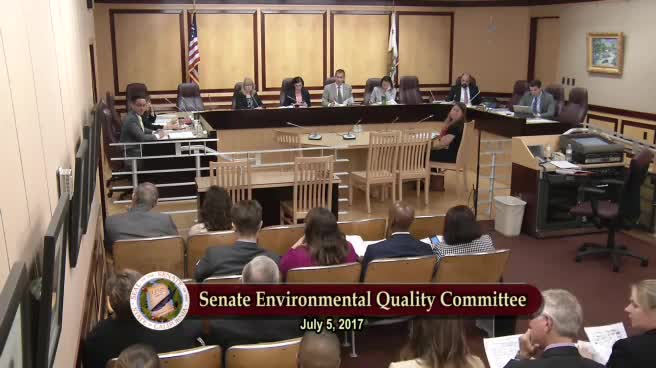 12MIN
Senate Standing Committee on Environmental Quality
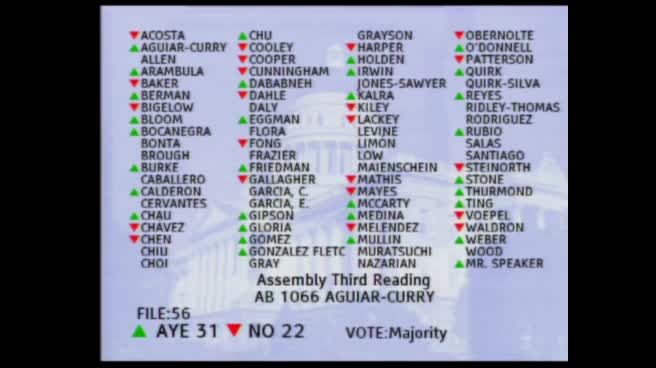 2MIN
Assembly Floor
 1MIN
Assembly Floor
 1H
Assembly Standing Committee on Appropriations
 24MIN
Assembly Standing Committee on Environmental Safety and Toxic Materials
 28MIN
Assembly Standing Committee on Health
Bill Author


