AB 1596: Property taxation: base year value transfers.
- Session Year: 2017-2018
- House: Assembly
- Latest Version Date: 2018-04-18
The California Constitution and existing property tax law authorize a person who is either severely disabled or over 55 years of age to transfer the base year value, as defined, of property that is eligible for the homeowners property tax exemption to a replacement dwelling that is of equal or lesser value located within the same county as the property from which the base year value is transferred, and if a county ordinance so providing has been adopted, to a replacement dwelling that is located in a different county.
This bill, on or after January 1, 2019, would expand this authorization to transfer the base year value of an original property to a person who is the parent or legal guardian of a severely and permanently disabled child and resides with the child.
By changing the manner in which local assessors assess property for property taxation purposes, this bill would impose a state-mandated local program.
The California Constitution requires the state to reimburse local agencies and school districts for certain costs mandated by the state. Statutory provisions establish procedures for making that reimbursement.
This bill would provide that, if the Commission on State Mandates determines that the bill contains costs mandated by the state, reimbursement for those costs shall be made pursuant to the statutory provisions noted above.
Existing law requires the state to reimburse local agencies annually for certain property tax revenues lost as a result of any exemption or classification of property for purposes of ad valorem property taxation.
This bill would provide that, notwithstanding those provisions, no appropriation is made and the state shall not reimburse local agencies for property tax revenues lost by them pursuant to the bill.
This bill would take effect immediately as a tax levy but would become operative only if Assembly Constitutional Amendment 12 of the 201718 Regular Session is approved by the voters.
Existing law requires a city council or board of supervisors, prior to the adoption of a resolution to form an enhanced infrastructure district and infrastructure financing plan, to establish a public financing authority, defined as the governing board of the enhanced infrastructure financing authority, comprised of members of the legislative body of the participating entities and of the public. Existing law authorizes a public financing authority, by majority vote, to initiate proceedings to issue bonds for the purchase, construction, expansion, or rehabilitation of public capital facilities or other specified projects of communitywide significance by adopting a resolution stating its intent to issue the bonds. Existing law requires the clerk of the public financing authority to publish the resolution once a day for at least 7 successive days in a newspaper published in the city or county at least 6 days a week, or at least once a week for 2 successive weeks in a newspaper published in the city or county less than 6 days a week.This bill also would require the clerk to also publish the resolution on the Internet Web site of the public financing authority, if it has one. Because the bill would require local officials to perform additional duties, the bill would impose a state-mandated local program.The California Constitution requires the state to reimburse local agencies and school districts for certain costs mandated by the state. Statutory provisions establish procedures for making that reimbursement.This bill would provide that, if the Commission on State Mandates determines that the bill contains costs mandated by the state, reimbursement for those costs shall be made pursuant to the statutory provisions noted above.Existing law requires a city council or board of supervisors, prior to the adoption of a resolution to form an enhanced infrastructure district and infrastructure financing plan, to establish a public financing authority, defined as the governing board of the enhanced infrastructure financing authority, comprised of members of the legislative body of the participating entities and of the public. Existing law authorizes a public financing authority, by majority vote, to initiate proceedings to issue bonds for the purchase, construction, expansion, or rehabilitation of public capital facilities or other specified projects of communitywide significance by adopting a resolution stating its intent to issue the bonds. Existing law requires the clerk of the public financing authority to publish the resolution once a day for at least 7 successive days in a newspaper published in the city or county at least 6 days a week, or at least once a week for 2 successive weeks in a newspaper published in the city or county less than 6 days a week.
This bill also would require the clerk to also publish the resolution on the Internet Web site of the public financing authority, if it has one. Because the bill would require local officials to perform additional duties, the bill would impose a state-mandated local program.
The California Constitution requires the state to reimburse local agencies and school districts for certain costs mandated by the state. Statutory provisions establish procedures for making that reimbursement.
This bill would provide that, if the Commission on State Mandates determines that the bill contains costs mandated by the state, reimbursement for those costs shall be made pursuant to the statutory provisions noted above.
(a)(1)Notwithstanding any other law, pursuant to subdivision (a) of Section 2 of Article XIIIA of the California Constitution, any person over 55 years of age, any severely and permanently disabled person, or any person who is the parent or legal guardian of a severely and permanently disabled child and resides with the child, who resides in property that is eligible for the homeowners exemption under subdivision (k) of Section 3 of Article XIII of the California Constitution and Section 218 may transfer, subject to the conditions and limitations provided in this section, the base year value of that property to any replacement dwelling of equal or lesser value that is located within the same county and is purchased or newly constructed by that person as his or her principal residence within two years of the sale by that person of the original property, provided that the base year value of the original property shall not be transferred to the replacement dwelling until the original property is sold.
(2)Notwithstanding the limitation in paragraph (1) requiring that the original property and the replacement dwelling be located in the same county, this limitation shall not apply in any county in which the county board of supervisors, after consultation with local affected agencies within the boundaries of the county, adopts an ordinance making the provisions of paragraph (1) also applicable to situations in which replacement dwellings are located in that county and the original properties are located in another county within this state. The authorization contained in this paragraph shall be applicable in a county only if the ordinance adopted by the board of supervisors complies with all of the following requirements:
(A)It is adopted only after consultation between the board of supervisors and all other local affected agencies within the countys boundaries.
(B)It requires that all claims for transfers of base year value from original property located in another county be granted if the claims meet the applicable requirements of both subdivision (a) of Section 2 of Article XIIIA of the California Constitution and this section.
(C)It requires that all base year valuations of original property located in another county and determined by its assessor be accepted in connection with the granting of claims for transfers of base year value.
(D)It provides that its provisions are operative for a period of not less than five years.
(E)The ordinance specifies the date on and after which its provisions shall be applicable. However, the date specified shall not be earlier than November 9, 1988. The specified applicable date may be a date earlier than the date the county adopts the ordinance.
(b)In addition to meeting the requirements of subdivision (a), any person claiming the property tax relief provided by this section shall be eligible for that relief only if the following conditions are met:
(1)The claimant is an owner and a resident of the original property either at the time of its sale, or at the time when the original property was substantially damaged or destroyed by misfortune or calamity, or within two years of the purchase or new construction of the replacement dwelling.
(2)The original property is eligible for the homeowners exemption, as the result of the claimants ownership and occupation of the property as his or her principal residence, either at the time of its sale, or at the time when the original property was substantially damaged or destroyed by misfortune or calamity, or within two years of the purchase or new construction of the replacement dwelling.
(3)At the time of the sale of the original property, the claimant or the claimants spouse who resides with the claimant is at least 55 years of age, is severely and permanently disabled, or is the parent or legal guardian of a severely and permanently disabled child and resides with the child.
(4)At the time of claiming the property tax relief provided by subdivision (a), the claimant is an owner of a replacement dwelling and occupies it as his or her principal place of residence and, as a result thereof, the property is currently eligible for the homeowners exemption or would be eligible for the exemption except that the property is already receiving the exemption because of an exemption claim filed by the previous owner.
(5)The original property of the claimant is sold by him or her within two years of the purchase or new construction of the replacement dwelling. For purposes of this paragraph, the purchase or new construction of the replacement dwelling includes the purchase of that portion of land on which the replacement building, structure, or other shelter constituting a place of abode of the claimant will be situated and that, pursuant to paragraph (3) of subdivision (g), constitutes a part of the replacement dwelling.
(6)Except as otherwise provided in paragraph (2) of subdivision (a), the replacement dwelling, including that portion of land on which it is situated that is specified in paragraph (5), is located entirely within the same county as the claimants original property.
(7)The claimant has not previously been granted, as a claimant, the property tax relief provided by this section, except that this paragraph shall not apply to any person who becomes severely and permanently disabled subsequent to being granted, as a claimant, the property tax relief provided by this section for any person over the age of 55 years. In order to prevent duplication of claims under this section within this state, county assessors shall report quarterly to the State Board of Equalization that information from claims filed in accordance with subdivision (f) and from county records as is specified by the board necessary to identify fully all claims under this section allowed by assessors and all claimants who have thereby received relief. The board may specify that the information include all or a part of the names and social security numbers of claimants and their spouses and the identity and location of the replacement dwelling to which the claim applies. The information may be required in the form of data processing media or other media and in a format that is compatible with the recordkeeping processes of the counties and the auditing procedures of the state.
(c)The property tax relief provided by this section shall be available if the original property or the replacement dwelling, or both, of the claimant includes, but is not limited to, either of the following:
(1)A unit or lot within a cooperative housing corporation, a community apartment project, a condominium project, or a planned unit development. If the unit or lot constitutes the original property of the claimant, the assessor shall transfer to the claimants replacement dwelling only the base year value of the claimants unit or lot and his or her share in any common area reserved as an appurtenance of that unit or lot. If the unit or lot constitutes the replacement dwelling of the claimant, the assessor shall transfer the base year value of the claimants original property only to the unit or lot of the claimant and any share of the claimant in any common area reserved as an appurtenance of that unit or lot.
(2)A manufactured home or a manufactured home and any land owned by the claimant on which the manufactured home is situated. For purposes of this paragraph, land owned by the claimant includes a pro rata interest in a resident-owned mobilehome park that is assessed pursuant to subdivision (b) of Section 62.1.
(A)If the manufactured home or the manufactured home and the land on which it is situated constitutes the claimants original property, the assessor shall transfer to the claimants replacement dwelling either the base year value of the manufactured home or the base year value of the manufactured home and the land on which it is situated, as appropriate. If the manufactured home dwelling that constitutes the original property of the claimant includes an interest in a resident-owned mobilehome park, the assessor shall transfer to the claimants replacement dwelling the base year value of the claimants manufactured home and his or her pro rata portion of the real property of the park. No transfer of base year value shall be made by the assessor of that portion of land that does not constitute a part of the original property, as provided in paragraph (4) of subdivision (g).
(B)If the manufactured home or the manufactured home and the land on which it is situated constitutes the claimants replacement dwelling, the assessor shall transfer the base year value of the claimants original property either to the manufactured home or the manufactured home and the land on which it is situated, as appropriate. If the manufactured home dwelling that constitutes the replacement dwelling of the claimant includes an interest in a resident-owned mobilehome park, the assessor shall transfer the base year value of the claimants original property to the manufactured home of the claimant and his or her pro rata portion of the park. No transfer of base year value shall be made by the assessor to that portion of land that does not constitute a part of the replacement dwelling, as provided in paragraph (3) of subdivision (g).
This subdivision shall be subject to the limitations specified in subdivision (d).
(d)The property tax relief provided by this section shall be available to a claimant who is the coowner of the original property, as a joint tenant, a tenant in common, a community property owner, or a present beneficiary of a trust subject to the following limitations:
(1)If a single replacement dwelling is purchased or newly constructed by all of the coowners and each coowner retains an interest in the replacement dwelling, the claimant shall be eligible under this section whether or not any or all of the remaining coowners would otherwise be eligible claimants.
(2)If two or more replacement dwellings are separately purchased or newly constructed by two or more coowners and more than one coowner would otherwise be an eligible claimant, only one coowner shall be eligible under this section. These coowners shall determine by mutual agreement which one of them shall be deemed eligible.
(3)If two or more replacement dwellings are separately purchased or newly constructed by two coowners who held the original property as community property, only the coowner who has attained 55 years of age, is severely and permanently disabled, or is the parent or legal guardian of a severely and permanently disabled child and resides with the child, shall be eligible under this section. If both spouses are over 55 years of age, they shall determine by mutual agreement which one of them is eligible.
In the case of coowners whose original property is a multiunit dwelling, the limitations imposed by paragraphs (2) and (3) shall only apply to coowners who occupied the same dwelling unit within the original property at the time specified in paragraph (2) of subdivision (b).
(e)Upon the sale of original property, the assessor shall determine a new base year value for that property in accordance with subdivision (a) of Section 2 of Article XIIIA of the California Constitution and Section 110.1, whether or not a replacement dwelling is subsequently purchased or newly constructed by the former owner or owners of the original property.
This section shall not apply unless the transfer of the original property is a change in ownership that either (1) subjects that property to reappraisal at its current fair market value in accordance with Section 110.1 or 5803 or (2) results in a base year value determined in accordance with this section, Section 69, or Section 69.3 because the property qualifies under this section, Section 69, or Section 69.3 as a replacement dwelling or property.
(f)(1)A claimant shall not be eligible for the property tax relief provided by this section unless the claimant provides to the assessor, on a form that shall be designed by the State Board of Equalization and that the assessor shall make available upon request, the following information:
(A)The name and social security number of each claimant and of any spouse of the claimant who is a record owner of the replacement dwelling.
(B)Proof that the claimant or the claimants spouse who resided on the original property with the claimant was, at the time of its sale, at least 55 years of age, severely and permanently disabled, disabled, or was the parent or legal guardian of a severely and permanently disabled child and resided with the child. Proof of severe and permanent disability shall be considered a certification, signed by a licensed physician and surgeon of appropriate specialty, attesting to the claimants severely and permanently disabled condition or the childs severely and permanently disabled condition. In the absence of available proof that a person is over 55 years of age, the claimant shall certify under penalty of perjury that the age requirement is met. In the case of a severely and permanently disabled claimant either of the following shall be submitted:
(i)A certification, signed by a licensed physician or surgeon of appropriate specialty that identifies specific reasons why the disability necessitates a move to the replacement dwelling and the disability-related requirements, including any locational requirements, of a replacement dwelling. The claimant shall substantiate that the replacement dwelling meets disability-related requirements so identified and that the primary reason for the move to the replacement dwelling is to satisfy those requirements. If the claimant, or the claimants spouse or guardian, so declares under penalty of perjury, it shall be rebuttably presumed that the primary purpose of the move to the replacement dwelling is to satisfy identified disability-related requirements.
(ii)The claimants substantiation that the primary purpose of the move to the replacement dwelling is to alleviate financial burdens caused by the disability. If the claimant, or the claimants spouse or guardian, so declares under penalty of perjury, it shall be rebuttably presumed that the primary purpose of the move is to alleviate the financial burdens caused by the disability.
(C)The address and, if known, the assessors parcel number of the original property.
(D)The date of the claimants sale of the original property and the date of the claimants purchase or new construction of a replacement dwelling.
(E)A statement by the claimant that he or she occupied the replacement dwelling as his or her principal place of residence on the date of the filing of his or her claim.
(F)Any claim under this section shall be filed within three years of the date the replacement dwelling was purchased or the new construction of the replacement dwelling was completed subject to subdivision (k) or (m).
(2)A claim for transfer of base year value under this section that is filed after the expiration of the filing period set forth in subparagraph (F) of paragraph (1) shall be considered by the assessor, subject to all of the following conditions:
(A)Any base year value transfer granted pursuant to that claim shall apply commencing with the lien date of the assessment year in which the claim is filed.
(B)The full cash value of the replacement property in the assessment year described in subparagraph (A) shall be the base year value of the real property in the assessment year in which the base year value was transferred, factored to the assessment year described in subparagraph (A) for both of the following:
(i)Inflation as annually determined in accordance with paragraph (1) of subdivision (a) of Section 51.
(ii)Any subsequent new construction occurring with respect to the subject real property that does not qualify for property tax relief pursuant to the criteria set forth in subparagraphs (A) and (B) of paragraph (4) of subdivision (h).
(g)For purposes of this section:
(1)Person over the age of 55 years means any person or the spouse of any person who has attained the age of 55 years or older at the time of the sale of the original property.
(2)Base year value of the original property means its base year value, as determined in accordance with Section 110.1, with the adjustments permitted by subdivision (b) of Section 2 of Article XIIIA of the California Constitution and subdivision (f) of Section 110.1, determined as of the date immediately prior to the date that the original property is sold by the claimant, or in the case where the original property has been substantially damaged or destroyed by misfortune or calamity and the owner does not rebuild on the original property, determined as of the date immediately prior to the misfortune or calamity.
If the replacement dwelling is purchased or newly constructed after the transfer of the original property, base year value of the original property also includes any inflation factor adjustments permitted by subdivision (f) of Section 110.1 for the period subsequent to the sale of the original property. The base year or years used to compute the base year value of the original property shall be deemed to be the base year or years of any property to which that base year value is transferred pursuant to this section.
(3)Replacement dwelling means a building, structure, or other shelter constituting a place of abode, whether real property or personal property, that is owned and occupied by a claimant as his or her principal place of residence, and any land owned by the claimant on which the building, structure, or other shelter is situated. For purposes of this paragraph, land constituting a part of a replacement dwelling includes only that area of reasonable size that is used as a site for a residence, and land owned by the claimant includes land for which the claimant either holds a leasehold interest described in subdivision (c) of Section 61 or a land purchase contract. Each unit of a multiunit dwelling shall be considered a separate replacement dwelling. For purposes of this paragraph, area of reasonable size that is used as a site for a residence includes all land if any nonresidential uses of the property are only incidental to the use of the property as a residential site. For purposes of this paragraph, land owned by the claimant includes an ownership interest in a resident-owned mobilehome park that is assessed pursuant to subdivision (b) of Section 62.1.
(4)Original property means a building, structure, or other shelter constituting a place of abode, whether real property or personal property, that is owned and occupied by a claimant as his or her principal place of residence, and any land owned by the claimant on which the building, structure, or other shelter is situated. For purposes of this paragraph, land constituting a part of the original property includes only that area of reasonable size that is used as a site for a residence, and land owned by the claimant includes land for which the claimant either holds a leasehold interest described in subdivision (c) of Section 61 or a land purchase contract. Each unit of a multiunit dwelling shall be considered a separate original property. For purposes of this paragraph, area of reasonable size that is used as a site for a residence includes all land if any nonresidential uses of the property are only incidental to the use of the property as a residential site. For purposes of this paragraph, land owned by the claimant includes an ownership interest in a resident-owned mobilehome park that is assessed pursuant to subdivision (b) of Section 62.1.
(5)Equal or lesser value means that the amount of the full cash value of a replacement dwelling does not exceed one of the following:
(A)One hundred percent of the amount of the full cash value of the original property if the replacement dwelling is purchased or newly constructed prior to the date of the sale of the original property.
(B)One hundred and five percent of the amount of the full cash value of the original property if the replacement dwelling is purchased or newly constructed within the first year following the date of the sale of the original property.
(C)One hundred and ten percent of the amount of the full cash value of the original property if the replacement dwelling is purchased or newly constructed within the second year following the date of the sale of the original property.
For the purposes of this paragraph, except as otherwise provided in paragraph (4) of subdivision (h), if the replacement dwelling is, in part, purchased and, in part, newly constructed, the date the replacement dwelling is purchased or newly constructed is the date of purchase or the date of completion of construction, whichever is later.
(6)Full cash value of the replacement dwelling means its full cash value, determined in accordance with Section 110.1, as of the date on which it was purchased or new construction was completed, and after the purchase or the completion of new construction.
(7)Full cash value of the original property means, either:
(A)Its new base year value, determined in accordance with subdivision (e), without the application of subdivision (h) of Section 2 of Article XIIIA of the California Constitution, plus the adjustments permitted by subdivision (b) of Section 2 of Article XIIIA and subdivision (f) of Section 110.1 for the period from the date of its sale by the claimant to the date on which the replacement property was purchased or new construction was completed.
(B)In the case where the original property has been substantially damaged or destroyed by misfortune or calamity and the owner does not rebuild on the original property, its full cash value, as determined in accordance with Section 110, immediately prior to its substantial damage or destruction by misfortune or calamity, as determined by the county assessor of the county in which the property is located, without the application of subdivision (h) of Section 2 of Article XIIIA of the California Constitution, plus the adjustments permitted by subdivision (b) of Section 2 of Article XIIIA of the California Constitution and subdivision (f) of Section 110.1, for the period from the date of its sale by the claimant to the date on which the replacement property was purchased or new construction was completed.
(8)Sale means any change in ownership of the original property for consideration.
(9)Claimant means any person claiming the property tax relief provided by this section. If a spouse of that person is a record owner of the replacement dwelling, the spouse is also a claimant for purposes of determining whether in any future claim filed by the spouse under this section the condition of eligibility specified in paragraph (7) of subdivision (b) has been met.
(10)Property that is eligible for the homeowners exemption includes property that is the principal place of residence of its owner and is entitled to exemption pursuant to Section 205.5.
(11)Person means any individual, but does not include any firm, partnership, association, corporation, company, or other legal entity or organization of any kind. Person includes an individual who is the present beneficiary of a trust.
(12)Severely and permanently disabled means any person described in subdivision (b) of Section 74.3.
(13)For the purposes of this section, property is substantially damaged or destroyed by misfortune or calamity if either the land or the improvements sustain physical damage amounting to more than 50 percent of either the lands or the improvements full cash value immediately prior to the misfortune or calamity. Damage includes a diminution in the value of property as a result of restricted access to the property where the restricted access was caused by the misfortune or calamity and is permanent in nature.
(h)(1)Upon the timely filing of a claim described in subparagraph (F) of paragraph (1) of subdivision (f), the assessor shall adjust the new base year value of the replacement dwelling in conformity with this section. This adjustment shall be made as of the latest of the following dates:
(A)The date the original property is sold.
(B)The date the replacement dwelling is purchased.
(C)The date the new construction of the replacement dwelling is completed.
(2)Any taxes that were levied on the replacement dwelling prior to the filing of the claim on the basis of the replacement dwellings new base year value, and any allowable annual adjustments thereto, shall be canceled or refunded to the claimant to the extent that the taxes exceed the amount that would be due when determined on the basis of the adjusted new base year value.
(3)Notwithstanding Section 75.10, Chapter 3.5 (commencing with Section 75) shall be utilized for purposes of implementing this subdivision, including adjustments of the new base year value of replacement dwellings acquired prior to the sale of the original property.
(4)In the case where a claim under this section has been timely filed and granted, and new construction is performed upon the replacement dwelling subsequent to the transfer of base year value, the property tax relief provided by this section also shall apply to the replacement dwelling, as improved, and thus there shall be no reassessment upon completion of the new construction if both of the following conditions are met:
(A)The new construction is completed within two years of the date of the sale of the original property and the owner notifies the assessor in writing of completion of the new construction within six months after completion.
(B)The fair market value of the new construction on the date of completion, plus the full cash value of the replacement dwelling on the date of acquisition, is not more than the full cash value of the original property as determined pursuant to paragraph (7) of subdivision (g) for purposes of granting the original claim.
(i)Any claimant may rescind a claim for the property tax relief provided by this section and shall not be considered to have received that relief for purposes of paragraph (7) of subdivision (b), and the assessor shall grant the rescission, if a written notice of rescission is delivered to the office of the assessor as follows:
(1)A written notice of rescission signed by the original filing claimant or claimants is delivered to the office of the assessor in which the original claim was filed.
(2)(A)Except as otherwise provided in this paragraph, the notice of rescission is delivered to the office of the assessor before the date that the county first issues, as a result of relief granted under this section, a refund check for property taxes imposed upon the replacement dwelling. If granting relief will not result in a refund of property taxes, then the notice shall be delivered before payment is first made of any property taxes, or any portion thereof, imposed upon the replacement dwelling consistent with relief granted under this section. If payment of the taxes is not made, then notice shall be delivered before the first date that those property taxes, or any portion thereof, imposed upon the replacement dwelling, consistent with relief granted under this section, are delinquent.
(B)Notwithstanding any other provision in this division, any time the notice of rescission is delivered to the office of the assessor within six years after relief was granted, provided that the replacement property has been vacated as the claimants principal place of residence within 90 days after the original claim was filed, regardless of whether the property continues to receive the homeowners exemption. If the rescission increases the base year value of a property, or the homeowners exemption has been incorrectly allowed, appropriate escape assessments or supplemental assessments, including interest as provided in Section 506, shall be imposed. The limitations periods for any escape assessments or supplemental assessments shall not commence until July 1 of the assessment year in which the notice of rescission is delivered to the office of the assessor.
(3)The notice is accompanied by the payment of a fee as the assessor may require, provided that the fee shall not exceed an amount reasonably related to the estimated cost of processing a rescission claim, including both direct costs and developmental and indirect costs, such as costs for overhead, personnel, supplies, materials, office space, and computers.
(j)(1)With respect to the transfer of base year value of original properties to replacement dwellings located in the same county, this section, except as provided in paragraph (3) or (4), shall apply to any replacement dwelling that is purchased or newly constructed on or after November 6, 1986.
(2)With respect to the transfer of base year value of original properties to replacement dwellings located in different counties, except as provided in paragraph (4), this section shall apply to any replacement dwelling that is purchased or newly constructed on or after the date specified in accordance with subparagraph (E) of paragraph (2) of subdivision (a) in the ordinance of the county in which the replacement dwelling is located, but shall not apply to any replacement dwelling which was purchased or newly constructed before November 9, 1988.
(3)With respect to the transfer of base year value by a severely and permanently disabled person, this section shall apply only to replacement dwellings that are purchased or newly constructed on or after June 6, 1990.
(4)The amendments made to subdivision (e) by the act adding this paragraph shall apply only to replacement dwellings under Section 69 that are acquired or newly constructed on or after October 20, 1991, and shall apply commencing with the 199192 fiscal year.
(k)(1)In the case in which a county adopts an ordinance pursuant to paragraph (2) of subdivision (a) that establishes an applicable date which is more than three years prior to the date of adoption of the ordinance, those potential claimants who purchased or constructed replacement dwellings more than three years prior to the date of adoption of the ordinance and who would, therefore, be precluded from filing a timely claim, shall be deemed to have timely filed a claim if the claim is filed within three years after the date that the ordinance is adopted. This paragraph may not be construed as a waiver of any other requirement of this section.
(2)In the case in which a county assessor corrects a base year value to reflect a pro rata change in ownership of a resident-owned mobilehome park that occurred between January 1, 1989, and January 1, 2002, pursuant to paragraph (4) of subdivision (b) of Section 62.1, those claimants who purchased or constructed replacement dwellings more than three years prior to the correction and who would, therefore, be precluded from filing a timely claim, shall be deemed to have timely filed a claim if the claim is filed within three years of the date of notice of the correction of the base year value to reflect the pro rata change in ownership. This paragraph may not be construed as a waiver of any other requirement of this section.
(3)This subdivision does not apply to a claimant who has transferred his or her replacement dwelling prior to filing a claim.
(4)The property tax relief provided by this section, but filed under this subdivision, shall apply prospectively only, commencing with the lien date of the assessment year in which the claim is filed. There shall be no refund or cancellation of taxes prior to the date that the claim is filed.
(l)No escape assessment may be levied if a transfer of base year value under this section has been erroneously granted by the assessor pursuant to an expired ordinance authorizing intercounty transfers of base year value.
(m)(1)The amendments made to subdivisions (b) and (g) of this section by Chapter 613 of the Statutes of 2001 shall apply:
(A)With respect to the transfer of base year value of original properties to replacement dwellings located in the same county, to any replacement dwelling that is purchased or newly constructed on or after November 6, 1986.
(B)With respect to the transfer of base year value of original properties to replacement dwellings located in different counties, to any replacement dwelling that is purchased or newly constructed on or after the date specified in accordance with subparagraph (E) of paragraph (2) of subdivision (a) in the ordinance of the county in which the replacement dwelling is located, but not to any replacement dwelling that was purchased or newly constructed before November 9, 1988.
(C)With respect to the transfer of base year value by a severely and permanently disabled person, to replacement dwellings that are purchased or newly constructed on or after June 6, 1990.
(2)The property tax relief provided by this section in accordance with this subdivision shall apply prospectively only commencing with the lien date of the assessment year in which the claim is filed. There shall be no refund or cancellation of taxes prior to the date that the claim is filed.
(n)A claim filed under this section is not a public document and is not subject to public inspection, except that a claim shall be available for inspection by the claimant or the claimants spouse, the claimants or the claimants spouses legal representative, the trustee of a trust in which the claimant or the claimants spouse is a present beneficiary, and the executor or administrator of the claimants or the claimants spouses estate.
(o)The amendments made to this section by the act adding this subdivision shall apply commencing with the lien date for the 201213 fiscal year.
(p)The amendments made to this section by the act adding this subdivision shall apply commencing with the lien date for the 201920 fiscal year.
SEC. 2.If the Commission on State Mandates determines that this act contains costs mandated by the state, reimbursement to local agencies and school districts for those costs shall be made pursuant to Part 7 (commencing with Section 17500) of Division 4 of Title 2 of the Government Code.
SEC. 3.Notwithstanding Section 2229 of the Revenue and Taxation Code, no appropriation is made by this act and the state shall not reimburse any local agency for any property tax revenues lost by it pursuant to this act.
SEC. 4.This act provides for a tax levy within the meaning of Article IV of the California Constitution and shall go into immediate effect. However, the provisions of this act shall become operative only if Assembly Constitutional Amendment 12 of the 201718 Regular Session is approved by the voters and, in that event, shall become operative on January 1, 2019.
(a)(1)Notwithstanding any other provision of law, pursuant to subdivision (a) of Section 2 of Article XIIIA of the California Constitution, any person over the age of 55 years, or 55 years of age, any severely and permanently disabled person, or any person who is the parent or legal guardian of a severely and permanently disabled child and resides with the child, who resides in property that is eligible for the homeowners exemption under subdivision (k) of Section 3 of Article XIII of the California Constitution and Section 218 may transfer, subject to the conditions and limitations provided in this section, the base year value of that property to any replacement dwelling of equal or lesser value that is located within the same county and is purchased or newly constructed by that person as his or her principal residence within two years of the sale by that person of the original property, provided that the base year value of the original property shall not be transferred to the replacement dwelling until the original property is sold.
(2)Notwithstanding the limitation in paragraph (1) requiring that the original property and the replacement dwelling be located in the same county, this limitation shall not apply in any county in which the county board of supervisors, after consultation with local affected agencies within the boundaries of the county, adopts an ordinance making the provisions of paragraph (1) also applicable to situations in which replacement dwellings are located in that county and the original properties are located in another county within this state. The authorization contained in this paragraph shall be applicable in a county only if the ordinance adopted by the board of supervisors complies with all of the following requirements:
(A)It is adopted only after consultation between the board of supervisors and all other local affected agencies within the countys boundaries.
(B)It requires that all claims for transfers of base year value from original property located in another county be granted if the claims meet the applicable requirements of both subdivision (a) of Section 2 of Article XIIIA of the California Constitution and this section.
(C)It requires that all base year valuations of original property located in another county and determined by its assessor be accepted in connection with the granting of claims for transfers of base year value.
(D)It provides that its provisions are operative for a period of not less than five years.
(E)The ordinance specifies the date on and after which its provisions shall be applicable. However, the date specified shall not be earlier than November 9, 1988. The specified applicable date may be a date earlier than the date the county adopts the ordinance.
(b)In addition to meeting the requirements of subdivision (a), any person claiming the property tax relief provided by this section shall be eligible for that relief only if the following conditions are met:
(1)The claimant is an owner and a resident of the original property either at the time of its sale, or at the time when the original property was substantially damaged or destroyed by misfortune or calamity, or within two years of the purchase or new construction of the replacement dwelling.
(2)The original property is eligible for the homeowners exemption, as the result of the claimants ownership and occupation of the property as his or her principal residence, either at the time of its sale, or at the time when the original property was substantially damaged or destroyed by misfortune or calamity, or within two years of the purchase or new construction of the replacement dwelling.
(3)At the time of the sale of the original property, the claimant or the claimants spouse who resides with the claimant is at least 55 years of age, or is severely and permanently disabled. disabled, or is the parent or legal guardian of a severely and permanently disabled child and resides with the child.
(4)At the time of claiming the property tax relief provided by subdivision (a), the claimant is an owner of a replacement dwelling and occupies it as his or her principal place of residence and, as a result thereof, the property is currently eligible for the homeowners exemption or would be eligible for the exemption except that the property is already receiving the exemption because of an exemption claim filed by the previous owner.
(5)The original property of the claimant is sold by him or her within two years of the purchase or new construction of the replacement dwelling. For purposes of this paragraph, the purchase or new construction of the replacement dwelling includes the purchase of that portion of land on which the replacement building, structure, or other shelter constituting a place of abode of the claimant will be situated and that, pursuant to paragraph (3) of subdivision (g), constitutes a part of the replacement dwelling.
(6)Except as otherwise provided in paragraph (2) of subdivision (a), the replacement dwelling, including that portion of land on which it is situated that is specified in paragraph (5), is located entirely within the same county as the claimants original property.
(7)The claimant has not previously been granted, as a claimant, the property tax relief provided by this section, except that this paragraph shall not apply to any person who becomes severely and permanently disabled subsequent to being granted, as a claimant, the property tax relief provided by this section for any person over the age of 55 years. In order to prevent duplication of claims under this section within this state, county assessors shall report quarterly to the State Board of Equalization that information from claims filed in accordance with subdivision (f) and from county records as is specified by the board necessary to identify fully all claims under this section allowed by assessors and all claimants who have thereby received relief. The board may specify that the information include all or a part of the names and social security numbers of claimants and their spouses and the identity and location of the replacement dwelling to which the claim applies. The information may be required in the form of data processing media or other media and in a format that is compatible with the recordkeeping processes of the counties and the auditing procedures of the state.
(c)The property tax relief provided by this section shall be available if the original property or the replacement dwelling, or both, of the claimant includes, but is not limited to, either of the following:
(1)A unit or lot within a cooperative housing corporation, a community apartment project, a condominium project, or a planned unit development. If the unit or lot constitutes the original property of the claimant, the assessor shall transfer to the claimants replacement dwelling only the base year value of the claimants unit or lot and his or her share in any common area reserved as an appurtenance of that unit or lot. If the unit or lot constitutes the replacement dwelling of the claimant, the assessor shall transfer the base year value of the claimants original property only to the unit or lot of the claimant and any share of the claimant in any common area reserved as an appurtenance of that unit or lot.
(2)A manufactured home or a manufactured home and any land owned by the claimant on which the manufactured home is situated. For purposes of this paragraph, land owned by the claimant includes a pro rata interest in a resident-owned mobilehome park that is assessed pursuant to subdivision (b) of Section 62.1.
(A)If the manufactured home or the manufactured home and the land on which it is situated constitutes the claimants original property, the assessor shall transfer to the claimants replacement dwelling either the base year value of the manufactured home or the base year value of the manufactured home and the land on which it is situated, as appropriate. If the manufactured home dwelling that constitutes the original property of the claimant includes an interest in a resident-owned mobilehome park, the assessor shall transfer to the claimants replacement dwelling the base year value of the claimants manufactured home and his or her pro rata portion of the real property of the park. No transfer of base year value shall be made by the assessor of that portion of land that does not constitute a part of the original property, as provided in paragraph (4) of subdivision (g).
(B)If the manufactured home or the manufactured home and the land on which it is situated constitutes the claimants replacement dwelling, the assessor shall transfer the base year value of the claimants original property either to the manufactured home or the manufactured home and the land on which it is situated, as appropriate. If the manufactured home dwelling that constitutes the replacement dwelling of the claimant includes an interest in a resident-owned mobilehome park, the assessor shall transfer the base year value of the claimants original property to the manufactured home of the claimant and his or her pro rata portion of the park. No transfer of base year value shall be made by the assessor to that portion of land that does not constitute a part of the replacement dwelling, as provided in paragraph (3) of subdivision (g).
This subdivision shall be subject to the limitations specified in subdivision (d).
(d)The property tax relief provided by this section shall be available to a claimant who is the coowner of the original property, as a joint tenant, a tenant in common, a community property owner, or a present beneficiary of a trust subject to the following limitations:
(1)If a single replacement dwelling is purchased or newly constructed by all of the coowners and each coowner retains an interest in the replacement dwelling, the claimant shall be eligible under this section whether or not any or all of the remaining coowners would otherwise be eligible claimants.
(2)If two or more replacement dwellings are separately purchased or newly constructed by two or more coowners and more than one coowner would otherwise be an eligible claimant, only one coowner shall be eligible under this section. These coowners shall determine by mutual agreement which one of them shall be deemed eligible.
(3)If two or more replacement dwellings are separately purchased or newly constructed by two coowners who held the original property as community property, only the coowner who has attained the age of 55 years, or 55 years of age, is severely and permanently disabled, or is the parent or legal guardian of a severely and permanently disabled child and resides with the child, shall be eligible under this section. If both spouses are over 55 years of age, they shall determine by mutual agreement which one of them is eligible.
In the case of coowners whose original property is a multiunit dwelling, the limitations imposed by paragraphs (2) and (3) shall only apply to coowners who occupied the same dwelling unit within the original property at the time specified in paragraph (2) of subdivision (b).
(e)Upon the sale of original property, the assessor shall determine a new base year value for that property in accordance with subdivision (a) of Section 2 of Article XIIIA of the California Constitution and Section 110.1, whether or not a replacement dwelling is subsequently purchased or newly constructed by the former owner or owners of the original property.
This section shall not apply unless the transfer of the original property is a change in ownership that either (1) subjects that property to reappraisal at its current fair market value in accordance with Section 110.1 or 5803 or (2) results in a base year value determined in accordance with this section, Section 69, or Section 69.3 because the property qualifies under this section, Section 69, or Section 69.3 as a replacement dwelling or property.
(f)(1)A claimant shall not be eligible for the property tax relief provided by this section unless the claimant provides to the assessor, on a form that shall be designed by the State Board of Equalization and that the assessor shall make available upon request, the following information:
(A)The name and social security number of each claimant and of any spouse of the claimant who is a record owner of the replacement dwelling.
(B)Proof that the claimant or the claimants spouse who resided on the original property with the claimant was, at the time of its sale, at least 55 years of age, or severely and permanently disabled, disabled, or was the parent or legal guardian of a severely and permanently disabled. disabled child and resided with the child. Proof of severe and permanent disability shall be considered a certification, signed by a licensed physician and surgeon of appropriate specialty, attesting to the claimants severely and permanently disabled condition or the childs severely and permanently disabled condition. In the absence of available proof that a person is over 55 years of age, the claimant shall certify under penalty of perjury that the age requirement is met. In the case of a severely and permanently disabled claimant either of the following shall be submitted:
(i)A certification, signed by a licensed physician or surgeon of appropriate specialty that identifies specific reasons why the disability necessitates a move to the replacement dwelling and the disability-related requirements, including any locational requirements, of a replacement dwelling. The claimant shall substantiate that the replacement dwelling meets disability-related requirements so identified and that the primary reason for the move to the replacement dwelling is to satisfy those requirements. If the claimant, or the claimants spouse or guardian, so declares under penalty of perjury, it shall be rebuttably presumed that the primary purpose of the move to the replacement dwelling is to satisfy identified disability-related requirements.
(ii)The claimants substantiation that the primary purpose of the move to the replacement dwelling is to alleviate financial burdens caused by the disability. If the claimant, or the claimants spouse or guardian, so declares under penalty of perjury, it shall be rebuttably presumed that the primary purpose of the move is to alleviate the financial burdens caused by the disability.
(C)The address and, if known, the assessors parcel number of the original property.
(D)The date of the claimants sale of the original property and the date of the claimants purchase or new construction of a replacement dwelling.
(E)A statement by the claimant that he or she occupied the replacement dwelling as his or her principal place of residence on the date of the filing of his or her claim.
(F)Any claim under this section shall be filed within three years of the date the replacement dwelling was purchased or the new construction of the replacement dwelling was completed subject to subdivision (k) or (m).
(2)A claim for transfer of base year value under this section that is filed after the expiration of the filing period set forth in subparagraph (F) of paragraph (1) shall be considered by the assessor, subject to all of the following conditions:
(A)Any base year value transfer granted pursuant to that claim shall apply commencing with the lien date of the assessment year in which the claim is filed.
(B)The full cash value of the replacement property in the assessment year described in subparagraph (A) shall be the base year value of the real property in the assessment year in which the base year value was transferred, factored to the assessment year described in subparagraph (A) for both of the following:
(i)Inflation as annually determined in accordance with paragraph (1) of subdivision (a) of Section 51.
(ii)Any subsequent new construction occurring with respect to the subject real property that does not qualify for property tax relief pursuant to the criteria set forth in subparagraphs (A) and (B) of paragraph (4) of subdivision (h).
(g)For purposes of this section:
(1)Person over the age of 55 years means any person or the spouse of any person who has attained the age of 55 years or older at the time of the sale of the original property.
(2)Base year value of the original property means its base year value, as determined in accordance with Section 110.1, with the adjustments permitted by subdivision (b) of Section 2 of Article XIIIA of the California Constitution and subdivision (f) of Section 110.1, determined as of the date immediately prior to the date that the original property is sold by the claimant, or in the case where the original property has been substantially damaged or destroyed by misfortune or calamity and the owner does not rebuild on the original property, determined as of the date immediately prior to the misfortune or calamity.
If the replacement dwelling is purchased or newly constructed after the transfer of the original property, base year value of the original property also includes any inflation factor adjustments permitted by subdivision (f) of Section 110.1 for the period subsequent to the sale of the original property. The base year or years used to compute the base year value of the original property shall be deemed to be the base year or years of any property to which that base year value is transferred pursuant to this section.
(3)Replacement dwelling means a building, structure, or other shelter constituting a place of abode, whether real property or personal property, that is owned and occupied by a claimant as his or her principal place of residence, and any land owned by the claimant on which the building, structure, or other shelter is situated. For purposes of this paragraph, land constituting a part of a replacement dwelling includes only that area of reasonable size that is used as a site for a residence, and land owned by the claimant includes land for which the claimant either holds a leasehold interest described in subdivision (c) of Section 61 or a land purchase contract. Each unit of a multiunit dwelling shall be considered a separate replacement dwelling. For purposes of this paragraph, area of reasonable size that is used as a site for a residence includes all land if any nonresidential uses of the property are only incidental to the use of the property as a residential site. For purposes of this paragraph, land owned by the claimant includes an ownership interest in a resident-owned mobilehome park that is assessed pursuant to subdivision (b) of Section 62.1.
(4)Original property means a building, structure, or other shelter constituting a place of abode, whether real property or personal property, that is owned and occupied by a claimant as his or her principal place of residence, and any land owned by the claimant on which the building, structure, or other shelter is situated. For purposes of this paragraph, land constituting a part of the original property includes only that area of reasonable size that is used as a site for a residence, and land owned by the claimant includes land for which the claimant either holds a leasehold interest described in subdivision (c) of Section 61 or a land purchase contract. Each unit of a multiunit dwelling shall be considered a separate original property. For purposes of this paragraph, area of reasonable size that is used as a site for a residence includes all land if any nonresidential uses of the property are only incidental to the use of the property as a residential site. For purposes of this paragraph, land owned by the claimant includes an ownership interest in a resident-owned mobilehome park that is assessed pursuant to subdivision (b) of Section 62.1.
(5)Equal or lesser value means that the amount of the full cash value of a replacement dwelling does not exceed one of the following:
(A)One hundred percent of the amount of the full cash value of the original property if the replacement dwelling is purchased or newly constructed prior to the date of the sale of the original property.
(B)One hundred and five percent of the amount of the full cash value of the original property if the replacement dwelling is purchased or newly constructed within the first year following the date of the sale of the original property.
(C)One hundred and ten percent of the amount of the full cash value of the original property if the replacement dwelling is purchased or newly constructed within the second year following the date of the sale of the original property.
For the purposes of this paragraph, except as otherwise provided in paragraph (4) of subdivision (h), if the replacement dwelling is, in part, purchased and, in part, newly constructed, the date the replacement dwelling is purchased or newly constructed is the date of purchase or the date of completion of construction, whichever is later.
(6)Full cash value of the replacement dwelling means its full cash value, determined in accordance with Section 110.1, as of the date on which it was purchased or new construction was completed, and after the purchase or the completion of new construction.
(7)Full cash value of the original property means, either:
(A)Its new base year value, determined in accordance with subdivision (e), without the application of subdivision (h) of Section 2 of Article XIIIA of the California Constitution, plus the adjustments permitted by subdivision (b) of Section 2 of Article XIIIA and subdivision (f) of Section 110.1 for the period from the date of its sale by the claimant to the date on which the replacement property was purchased or new construction was completed.
(B)In the case where the original property has been substantially damaged or destroyed by misfortune or calamity and the owner does not rebuild on the original property, its full cash value, as determined in accordance with Section 110, immediately prior to its substantial damage or destruction by misfortune or calamity, as determined by the county assessor of the county in which the property is located, without the application of subdivision (h) of Section 2 of Article XIIIA of the California Constitution, plus the adjustments permitted by subdivision (b) of Section 2 of Article XIIIA of the California Constitution and subdivision (f) of Section 110.1, for the period from the date of its sale by the claimant to the date on which the replacement property was purchased or new construction was completed.
(8)Sale means any change in ownership of the original property for consideration.
(9)Claimant means any person claiming the property tax relief provided by this section. If a spouse of that person is a record owner of the replacement dwelling, the spouse is also a claimant for purposes of determining whether in any future claim filed by the spouse under this section the condition of eligibility specified in paragraph (7) of subdivision (b) has been met.
(10)Property that is eligible for the homeowners exemption includes property that is the principal place of residence of its owner and is entitled to exemption pursuant to Section 205.5.
(11)Person means any individual, but does not include any firm, partnership, association, corporation, company, or other legal entity or organization of any kind. Person includes an individual who is the present beneficiary of a trust.
(12)Severely and permanently disabled means any person described in subdivision (b) of Section 74.3.
(13)For the purposes of this section, property is substantially damaged or destroyed by misfortune or calamity if either the land or the improvements sustain physical damage amounting to more than 50 percent of either the lands or the improvements full cash value immediately prior to the misfortune or calamity. Damage includes a diminution in the value of property as a result of restricted access to the property where the restricted access was caused by the misfortune or calamity and is permanent in nature.
(h)(1)Upon the timely filing of a claim described in subparagraph (F) of paragraph (1) of subdivision (f), the assessor shall adjust the new base year value of the replacement dwelling in conformity with this section. This adjustment shall be made as of the latest of the following dates:
(A)The date the original property is sold.
(B)The date the replacement dwelling is purchased.
(C)The date the new construction of the replacement dwelling is completed.
(2)Any taxes that were levied on the replacement dwelling prior to the filing of the claim on the basis of the replacement dwellings new base year value, and any allowable annual adjustments thereto, shall be canceled or refunded to the claimant to the extent that the taxes exceed the amount that would be due when determined on the basis of the adjusted new base year value.
(3)Notwithstanding Section 75.10, Chapter 3.5 (commencing with Section 75) shall be utilized for purposes of implementing this subdivision, including adjustments of the new base year value of replacement dwellings acquired prior to the sale of the original property.
(4)In the case where a claim under this section has been timely filed and granted, and new construction is performed upon the replacement dwelling subsequent to the transfer of base year value, the property tax relief provided by this section also shall apply to the replacement dwelling, as improved, and thus there shall be no reassessment upon completion of the new construction if both of the following conditions are met:
(A)The new construction is completed within two years of the date of the sale of the original property and the owner notifies the assessor in writing of completion of the new construction within six months after completion.
(B)The fair market value of the new construction on the date of completion, plus the full cash value of the replacement dwelling on the date of acquisition, is not more than the full cash value of the original property as determined pursuant to paragraph (7) of subdivision (g) for purposes of granting the original claim.
(i)Any claimant may rescind a claim for the property tax relief provided by this section and shall not be considered to have received that relief for purposes of paragraph (7) of subdivision (b), and the assessor shall grant the rescission, if a written notice of rescission is delivered to the office of the assessor as follows:
(1)A written notice of rescission signed by the original filing claimant or claimants is delivered to the office of the assessor in which the original claim was filed.
(2)(A)Except as otherwise provided in this paragraph, the notice of rescission is delivered to the office of the assessor before the date that the county first issues, as a result of relief granted under this section, a refund check for property taxes imposed upon the replacement dwelling. If granting relief will not result in a refund of property taxes, then the notice shall be delivered before payment is first made of any property taxes, or any portion thereof, imposed upon the replacement dwelling consistent with relief granted under this section. If payment of the taxes is not made, then notice shall be delivered before the first date that those property taxes, or any portion thereof, imposed upon the replacement dwelling, consistent with relief granted under this section, are delinquent.
(B)Notwithstanding any other provision in this division, any time the notice of rescission is delivered to the office of the assessor within six years after relief was granted, provided that the replacement property has been vacated as the claimants principal place of residence within 90 days after the original claim was filed, regardless of whether the property continues to receive the homeowners exemption. If the rescission increases the base year value of a property, or the homeowners exemption has been incorrectly allowed, appropriate escape assessments or supplemental assessments, including interest as provided in Section 506, shall be imposed. The limitations periods for any escape assessments or supplemental assessments shall not commence until July 1 of the assessment year in which the notice of rescission is delivered to the office of the assessor.
(3)The notice is accompanied by the payment of a fee as the assessor may require, provided that the fee shall not exceed an amount reasonably related to the estimated cost of processing a rescission claim, including both direct costs and developmental and indirect costs, such as costs for overhead, personnel, supplies, materials, office space, and computers.
(j)(1)With respect to the transfer of base year value of original properties to replacement dwellings located in the same county, this section, except as provided in paragraph (3) or (4), shall apply to any replacement dwelling that is purchased or newly constructed on or after November 6, 1986.
(2)With respect to the transfer of base year value of original properties to replacement dwellings located in different counties, except as provided in paragraph (4), this section shall apply to any replacement dwelling that is purchased or newly constructed on or after the date specified in accordance with subparagraph (E) of paragraph (2) of subdivision (a) in the ordinance of the county in which the replacement dwelling is located, but shall not apply to any replacement dwelling which was purchased or newly constructed before November 9, 1988.
(3)With respect to the transfer of base year value by a severely and permanently disabled person, this section shall apply only to replacement dwellings that are purchased or newly constructed on or after June 6, 1990.
(4)The amendments made to subdivision (e) by the act adding this paragraph shall apply only to replacement dwellings under Section 69 that are acquired or newly constructed on or after October 20, 1991, and shall apply commencing with the 199192 fiscal year.
(k)(1)In the case in which a county adopts an ordinance pursuant to paragraph (2) of subdivision (a) that establishes an applicable date which is more than three years prior to the date of adoption of the ordinance, those potential claimants who purchased or constructed replacement dwellings more than three years prior to the date of adoption of the ordinance and who would, therefore, be precluded from filing a timely claim, shall be deemed to have timely filed a claim if the claim is filed within three years after the date that the ordinance is adopted. This paragraph may not be construed as a waiver of any other requirement of this section.
(2)In the case in which a county assessor corrects a base year value to reflect a pro rata change in ownership of a resident-owned mobilehome park that occurred between January 1, 1989, and January 1, 2002, pursuant to paragraph (4) of subdivision (b) of Section 62.1, those claimants who purchased or constructed replacement dwellings more than three years prior to the correction and who would, therefore, be precluded from filing a timely claim, shall be deemed to have timely filed a claim if the claim is filed within three years of the date of notice of the correction of the base year value to reflect the pro rata change in ownership. This paragraph may not be construed as a waiver of any other requirement of this section.
(3)This subdivision does not apply to a claimant who has transferred his or her replacement dwelling prior to filing a claim.
(4)The property tax relief provided by this section, but filed under this subdivision, shall apply prospectively only, commencing with the lien date of the assessment year in which the claim is filed. There shall be no refund or cancellation of taxes prior to the date that the claim is filed.
(l)No escape assessment may be levied if a transfer of base year value under this section has been erroneously granted by the assessor pursuant to an expired ordinance authorizing intercounty transfers of base year value.
(m)(1)The amendments made to subdivisions (b) and (g) of this section by Chapter 613 of the Statutes of 2001 shall apply:
(A)With respect to the transfer of base year value of original properties to replacement dwellings located in the same county, to any replacement dwelling that is purchased or newly constructed on or after November 6, 1986.
(B)With respect to the transfer of base year value of original properties to replacement dwellings located in different counties, to any replacement dwelling that is purchased or newly constructed on or after the date specified in accordance with subparagraph (E) of paragraph (2) of subdivision (a) in the ordinance of the county in which the replacement dwelling is located, but not to any replacement dwelling that was purchased or newly constructed before November 9, 1988.
(C)With respect to the transfer of base year value by a severely and permanently disabled person, to replacement dwellings that are purchased or newly constructed on or after June 6, 1990.
(2)The property tax relief provided by this section in accordance with this subdivision shall apply prospectively only commencing with the lien date of the assessment year in which the claim is filed. There shall be no refund or cancellation of taxes prior to the date that the claim is filed.
(n)A claim filed under this section is not a public document and is not subject to public inspection, except that a claim shall be available for inspection by the claimant or the claimants spouse, the claimants or the claimants spouses legal representative, the trustee of a trust in which the claimant or the claimants spouse is a present beneficiary, and the executor or administrator of the claimants or the claimants spouses estate.
(o)The amendments made to this section by the act adding this subdivision shall apply commencing with the lien date for the 201213 fiscal year.
(p)The amendments made to this section by the act adding this subdivision shall apply commencing with the lien date for the 201920 fiscal year.
SEC. 2.If the Commission on State Mandates determines that this act contains costs mandated by the state, reimbursement to local agencies and school districts for those costs shall be made pursuant to Part 7 (commencing with Section 17500) of Division 4 of Title 2 of the Government Code.
SEC. 3.Notwithstanding Section 2229 of the Revenue and Taxation Code, no appropriation is made by this act and the state shall not reimburse any local agency for any property tax revenues lost by it pursuant to this act.
SEC. 4.This act provides for a tax levy within the meaning of Article IV of the California Constitution and shall go into immediate effect. However, the provisions of this act shall become operative only if Assembly Constitutional Amendment 12 of the 201718 Regular Session is approved by the voters and, in that event, shall become operative on January 1, 2019.
SECTION 1.Section 53398.79 of the Government Code is amended to read:53398.79.The clerk of the public financing authority shall publish the resolution adopted pursuant to Section 53398.77 once a day for at least seven successive days in a newspaper published in the city or county at least six days a week, or at least once a week for two successive weeks in a newspaper published in the city or county less than six days a week, as well as on the Internet Web site of the public financing authority, if it has one.If there are no newspapers meeting these criteria, the resolution shall be posted in three public places within the territory of the district for two succeeding weeks.SEC. 2.If the Commission on State Mandates determines that this act contains costs mandated by the state, reimbursement to local agencies and school districts for those costs shall be made pursuant to Part 7 (commencing with Section 17500) of Division 4 of Title 2 of the Government Code.The clerk of the public financing authority shall publish the resolution adopted pursuant to Section 53398.77 once a day for at least seven successive days in a newspaper published in the city or county at least six days a week, or at least once a week for two successive weeks in a newspaper published in the city or county less than six days a week. week, as well as on the Internet Web site of the public financing authority, if it has one.
If there are no newspapers meeting these criteria, the resolution shall be posted in three public places within the territory of the district for two succeeding weeks.
SEC. 2.If the Commission on State Mandates determines that this act contains costs mandated by the state, reimbursement to local agencies and school districts for those costs shall be made pursuant to Part 7 (commencing with Section 17500) of Division 4 of Title 2 of the Government Code.
|
Date
|
Status
|
|---|---|
| Aug 22, 2018 | Ordered to inactive file at the request of Senator Hernandez. |
| Jun 26, 2018 | Read second time. Ordered to third reading. |
| Jun 25, 2018 | From committee: Be ordered to second reading pursuant to Senate Rule 28.8. |
| Apr 18, 2018 | Read second time and amended. Re-referred to Com. on APPR. |
| Apr 17, 2018 | From committee: Amend, and do pass as amended and re-refer to Com. on APPR. (Ayes 6. Noes 0.) (April 11). |
| Apr 4, 2018 | Referred to Com. on GOV. & F. |
| Jan 29, 2018 | In Senate. Read first time. To Com. on RLS. for assignment. |
| Jan 29, 2018 | Read third time. Passed. Ordered to the Senate. |
| Jan 22, 2018 | Read second time. Ordered to Consent Calendar. |
| Jan 18, 2018 | From committee: Do pass. To Consent Calendar. (Ayes 17. Noes 0.) (January 18). |
| Jan 9, 2018 | From committee: Do pass and re-refer to Com. on APPR. (Ayes 10. Noes 0.) (January 8). Re-referred to Com. on APPR. |
| Jan 3, 2018 | From committee chair, with author's amendments: Amend, and re-refer to Com. on L. GOV. Read second time and amended. |
| Mar 16, 2017 | Referred to Com. on L. GOV. |
| Feb 19, 2017 | From printer. May be heard in committee March 21. |
| Feb 17, 2017 | Read first time. To print. |
|
Date
|
Description
|
Location
|
Votes
|
|
|---|---|---|---|---|
| Apr 11, 2018 | Do pass as amended, but first amend, and re-refer to the Committee on [Appropriations] | Senate Standing Committee on Governance and Finance |
Passed |
|
| Jan 29, 2018 | AB 1596 GLORIA Consent Calendar Second Day Regular Session | Assembly Floor |
Passed |
|
| Jan 18, 2018 | Do pass. To Consent Calendar. | Assembly Standing Committee on Appropriations |
Passed |
|
| Jan 8, 2018 | Do pass and be re-referred to the Committee on [Appropriations] | Assembly Standing Committee on Revenue and Taxation |
Passed |
This list shows positions taken on this bill by organizations on the date displayed, which is linked to the original source.
Positions by individuals are not included.
Office of Senate Floor Analyses (916) 651-1520 Fax: (916) 327-4478 | AB |
THIRD READING
Bill No: AB 1596
:
SENATE GOVERNANCE & FIN. COMMITTEE: 6-0, 4/11/18
AYES: McGuire, Nguyen, Beall, Hernandez, Hertzberg, Moorlach
NO VOTE RECORDED: Lara
SENATE APPROPRIATIONS COMMITTEE: Senate Rule 28.8
ASSEMBLY FLOOR: 75-0, 1/29/18 (Consent) - See last page for vote
DIGEST:
This bill changes state law to allow parents or legal guardians of severely and permanently disabled children to claim a base year value transfer.
Existing law:
- Provides that all property is taxable at the same percentage of fair market value unless explicitly exempted by the Constitution or federal law (California Constitution, Article XIII).
- Limits the maximum amount of any ad valorem tax on real property at 1% of full cash value, and directs assessors to only reappraise property when newly constructed, or when ownership changes (California Constitution, Article XIIIA).
- Allows a change in ownership exclusions for homeowners over the age of 55 and disabled persons regardless of age to transfer their home’s base year values to a replacement home of equal or lesser value within the same county (Proposition 60, 1988, and Proposition 110, 1990), or to homes in counties that adopt ordinances allowing the transfer (Proposition 90, 1990).
- Limits base year value transfers for properties eligible for the homeowners’ exemption, requires taxpayers to file a claim with the assessor, and provides that taxpayers may only transfer base year values once, except for taxpayers who claim the benefit first as a person 55 years of age or older, and subsequently become disabled (SB 1692, Petris, Chapter 897, Statutes of 1996).
- Requires taxpayers claiming a transfer to prove that they are either 55 years or older or severely and permanently disabled at the time of sale. Disabled taxpayers must supply a certification from a physician of appropriate specialty that attests to the severe or permanent disability. Additionally, the taxpayer must as part of the claim either:
- Include in the certification from the physician an identification of the specific reasons why the disability necessitates a move to the replacement dwelling and the disability-related requirements, including any locational requirements, of a replacement dwelling. The taxpayer must also substantiate that the replacement dwelling meets the identified disability-related requirements, and that the primary reason for the move to the replacement dwelling is to satisfy those requirements; or
- Substantiate that the primary purpose of the move to the replacement dwelling is to alleviate financial burdens caused by the disability.
- Provides that if the disabled taxpayer declares under penalty of perjury either substantiation above is true, a rebuttable presumption exists that they meet the law’s requirements.
This bill:
- Allows parents or legal guardians of severely and permanently disabled children to claim a base year value transfer, so long as they reside with the disabled child.
- Applies beginning on the lien date for the 2019-2020 fiscal year (January 1st, 2019).
- Provides that it takes effect only if voters approve ACA 12 (Gloria, 2018).
Background
Case law generally allows a minor child to own real property or an interest therein, but may not convey or make contracts relating to real property. As a result, taxpayers who are parents or legal guardians of severely or permanently disabled minor children are not currently eligible for base year value transfers, unless they form a trust benefitting the child, and add the trust to the property’s title. Parents of severely or permanently disabled adult children may add the child onto title as a joint tenant, and thereby become eligible for a base year value transfer.
State law defines the term as “any person who has a physical disability or impairment, whether from birth or by reason of accident or disease, that results in a functional limitation as to employment or substantially limits one or more major life activities of that person, and that has been diagnosed as permanently affecting the person's ability to function, including, but not limited to, any disability or impairment that affects sight, speech, hearing, or the use of any limbs.” Mental disabilities do not qualify unless they manifest in a physical impairment that meets the above definition.
FISCAL EFFECT: Appropriation: Fiscal Com.: Local:
Board of Equalization Chair George Runner
California Assessors Association
California Association of Realtors
Howard Jarvis Taxpayers Association
State Board of Equalization
OPPOSITION: (Verified 6/26/18)
None received
ARGUMENTS IN SUPPORT: According to the author, “AB 1596 will extend the current definition of transferring “base year value” to include homeowners with severely and permanently disabled children. Veterans returning home face many challenges because of the severe and permanent disabilities they suffer from war. Many are no longer able to live in their parent’s house and either need costly home improvements to suit their limitations or to move into a new home altogether. The property tax relief afforded under AB 1596 would significantly help those families caring for children who are permanently and severely disabled.”
ASSEMBLY FLOOR: 75-0, 1/29/18
AYES: Acosta, Aguiar-Curry, Travis Allen, Arambula, Baker, Berman, Bigelow, Bloom, Bonta, Brough, Burke, Caballero, Calderon, Carrillo, Cervantes, Chau, Chávez, Chen, Chiu, Choi, Chu, Cooley, Cooper, Cunningham, Dahle, Daly, Eggman, Flora, Fong, Frazier, Friedman, Cristina Garcia, Eduardo Garcia, Gipson, Gloria, Gonzalez Fletcher, Gray, Grayson, Harper, Holden, Irwin, Jones-Sawyer, Kalra, Kiley, Lackey, Levine, Limón, Low, Maienschein, Mathis, Mayes, Medina, Melendez, Mullin, Muratsuchi, Nazarian, Obernolte, O'Donnell, Patterson, Quirk, Quirk-Silva, Reyes, Rodriguez, Rubio, Salas, Santiago, Steinorth, Mark Stone, Thurmond, Ting, Voepel, Waldron, Weber, Wood, Rendon
NO VOTE RECORDED: Gallagher, McCarty
6/27/18 14:41:11
**** END ****
SENATE COMMITTEE ON GOVERNANCE AND FINANCE
Senator Mike McGuire, Chair
2017 - 2018 Regular
Bill No: | AB 1596 | Hearing Date: | 4/11/18 |
Author: | Gloria | Tax Levy: | Yes |
Version: | 1/3/18 | Fiscal: | Yes |
Consultant: | Grinnell | ||
Property taxation: base year value transfers.
Changes state law to allow parents or legal guardians of severely and permanently disabled children to claim a base year value transfer.
Background
Article XIII of the California Constitution provides that all property is taxable unless explicitly exempted by the Constitution or federal law. The Constitution limits the maximum amount of any ad valorem tax on real property at 1% of full cash value, and directs assessors to only reappraise property when newly constructed, or when ownership changes (Proposition 13, 1978).
Voters subsequently approved change in ownership exclusions to allow homeowners over the age of 55 and disabled persons (regardless of age) to transfer their home’s base year values to a replacement home of equal or lesser value within the same county (Proposition 60, 1988, and Proposition 110, 1990), or to homes in counties that adopt ordinances allowing the transfer (Proposition 90, 1990). Eleven counties currently allow these out-of-county transfers (Alameda, El Dorado, Los Angeles, Orange, Riverside, San Bernardino, San Diego, San Mateo, Santa Clara, Tuolumne, and Ventura). Base year value transfers allow taxpayers to continue to pay property taxes at the factored base year value of their previous home, and not on the cash value of their newly purchased home, often resulting in tax savings.
While the Constitution allows for base year value transfers, the Legislature provides the specific eligibility requirements in statute. Taxpayers must be owners and residents of both the original and replacement dwelling, file a claim with the assessor, and can only transfer base year values once. Taxpayers can only transfer base year values between properties for which they claim the homeowners’ exemption. Taxpayers claiming a transfer must prove that they are either 55 years or older or severely and permanently disabled at the time of sale. Disabled taxpayers must supply a certification from a physician of appropriate specialty that attests to the severe or permanent disability. Additionally, the taxpayer must as part of the claim either:
- Include in the certification from the physician an identification of the specific reasons why the disability necessitates a move to the replacement dwelling and the disability-related requirements, including any locational requirements, of a replacement dwelling. The taxpayer must also substantiate that the replacement dwelling meets the identified disability-related requirements, and that the primary reason for the move to the replacement dwelling is to satisfy those requirements; or
- Substantiate that the primary purpose of the move to the replacement dwelling is to alleviate financial burdens caused by the disability.
If the disabled taxpayer declares under penalty of perjury that either of the above is true, the law provides a rebuttable presumption that they meet the law’s requirements.
Case law generally allows a minor child to own real property or an interest therein, but may not convey or make contracts relating to real property. As a result, taxpayers who are parents or legal guardians of severely or permanently disabled minor children are not currently eligible for base year value transfers, unless they form a trust benefitting the child, and add the trust to the property’s title. Parents of severely or permanently disabled adult children may add the child onto title as a joint tenant, and thereby become eligible for a base year value transfer. The author wants to explicitly allow parents or legal guardians of severely and permanently disabled children to claim a base year value transfer.
Proposed Law
Assembly Bill 1596 allows parents or legal guardians of severely and permanently disabled children to claim a base year value transfer. The parents or legal guardians must reside with the child to claim the transfer. The bill’s change would apply beginning on the lien date for the 2019-2020 fiscal year (January 1st, 2019), and would only take effect if Assembly Constitutional Amendment 12 (Gloria) is also approved.
State Revenue Impact
According to the State Board of Equalization (BOE), "If approved, this constitutional amendment (ACA 12) would reduce property tax revenues at the basic 1% tax rate by $1,180 per claim granted."
Comments
1. Purpose of the bill. According to the author, “AB 1596 will extend the current definition of transferring “base year value” to include homeowners with severely and permanently disabled children. Veterans returning home face many challenges because of the severe and permanent disabilities they suffer from war. Many are no longer able to live in their parent’s house and either need costly home improvements to suit their limitations or to move into a new home altogether. The property tax relief afforded under AB 1596 would significantly help those families caring for children who are permanently and severely disabled.”
2. Expands tax benefit. According to BOE, AB 1596’s change is expected to be small, based on information from county assessors. However, the measure expands a current tax benefit, which will reduce property tax revenues. As a result, the state and affected local agencies may have to reduce spending or increase taxes to match the amount of foregone revenue.
3. BOE and assessors. In 1850, the Legislature first directed county assessors to tax property; however, assessors in different counties often applied different tax rates and methods of assessment. The California Constitution of 1879 created BOE to equalize rates and assessment practices among counties. State law requires assessors to report quarterly to BOE to track base year value transfers, thereby ensuring that taxpayers are not filing multiple claims for benefits when they are not eligible.
4. What does severely and permanently disabled mean? State law defines the term as “any person who has a physical disability or impairment, whether from birth or by reason of accident or disease, that results in a functional limitation as to employment or substantially limits one or more major life activities of that person, and that has been diagnosed as permanently affecting the person's ability to function, including, but not limited to, any disability or impairment that affects sight, speech, hearing, or the use of any limbs.” Mental disabilities do not qualify unless they manifest in a physical impairment that meets the above definition.
5. Do it again. Last year, the Committee unanimously approved AB 1165 (Gloria), which is identical to this bill. The author subsequently amended the measure for another purpose.
6. Companionship. AB 1596 conforms state law implementing base year value transfers to ACA 12’s change to the California Constitution allowing the parents or legal guardians of a severely and permanently disabled child who reside with that child to claim a base year value transfer. The Committee will also hear ACA 12 at its April 11th hearing.
7. Mandate. The California Constitution requires the state to reimburse local governments for the costs of new or expanded state mandated local programs. Because AB 1596 changes the manner in which assessors administer base year value transfers, Legislative Counsel says that it imposes a new state mandate. The measure states that should the Commission on State Mandates determine that the bill imposes a reimbursable mandate, reimbursement must be made pursuant to existing statutory provisions. Additionally, the bill provides that the state shall not reimburse local agencies for any property tax revenue losses resulting from its expanded welfare exemption.
8. Technical. BOE and Committee staff recommends striking “disabled” on P. 8, L. 23.
Assembly Actions
Assembly Rules Committee: 9-0
Assembly Revenue and Taxation Committee: 9-0
Assembly Appropriations Committee: 16-0
Assembly Floor: 76-0
Support and Opposition
(4/6/17)
Support: BOE Chair George Runner; California Assessors Association; California Association of Realtors; Howard Jarvis Taxpayers Association.
Opposition: Unknown.
-- END --
Date of Hearing: January 18, 2018
ASSEMBLY COMMITTEE ON APPROPRIATIONS
Lorena Gonzalez Fletcher, Chair
ABPCA Bill Id:AB 1596
Author:(Gloria) – As Amended Ver:January 3, 2018
Policy Committee: | Revenue and Taxation | Vote: | 10 - 0 |
Urgency: No State Mandated Local Program: Yes Reimbursable: No
SUMMARY:
This bill expands an existing property tax relief program that allows an eligible person to transfer the base year value of the principal residence to a replacement dwelling, as provided, to include a person who has a severely and permanently disabled child. The provisions of this bill become operative if Assembly Constitutional Amendment (ACA) 12, of the 2017-18 Legislative Session, is approved by the voters.
FISCAL EFFECT:
Modest property tax revenue loss. While this bill will increase the number of eligible households that can qualify for a base year value transfer, the number of newly eligible households is not expected to be significant. For example, as of 2017, about 2,000 of the 5.1 million homeowners in California had benefitted from a disability-based transfer.
COMMENTS:
- Background. Adopted in June 1978, Proposition 13 was designed to provide property tax relief by limiting the assessment and taxing powers of state and local governments. As a general rule, Proposition 13 limits any tax on real property to 1% of its assessed value, measured as the appraisal value when the home is purchased, constructed, or undergoes a change in ownership. The assessed value is then adjusted annually by the lesser of either the rate of inflation or 2%. As a result, a homeowner who holds on to her home for a long period of time has a much lower property tax bill than someone who just recently purchased a home, even if the fair market values of both homes are similar.
One exception to the rule that a home’s value is reassessed upon a change in ownership is the “base year value” transfer program, which has gradually expanded in scope after a series of ballot initiatives. As a result of Proposition 60 (1986), Proposition 90 (1988), and Proposition 110 (1990), a disabled homeowner or a homeowner aged 55 or older may elect a once-in-a-lifetime transfer of the base year value of the homeowner's principal residence to a replacement residence of equal or lesser value within the same county, or in certain other counties if they accept such a transfer. The base year value transfer allows the homeowner to continue paying property taxes at the amount and rate of growth of the previous residence and not the fair market value of the new residence.
- Purpose. AB 1596 extends the benefit of a base year value transfer to any person with a severely and permanently disabled child who resides in the home. The intent of this bill is to assist a family caring for a child who is severely and permanently disabled by allowing the family to sell their home and build or buy a new one to accommodate their child's needs.
- Recent legislation. AB 1165 (Gloria), of the 2017-18 Legislative Session, was identical to this bill. AB 1165 was gut-and-amended in the Senate. ACA 12, the companion legislation to this bill, is currently pending in the Senate Committee on Governance and Finance.
Analysis Prepared by: Luke Reidenbach / APPR. / (916) 319-2081
Date of Hearing: January 8, 2018
ASSEMBLY COMMITTEE ON REVENUE AND TAXATION
Autumn R. Burke, Chair
ABPCA Bill Id:AB 1596 (
Author:Gloria) – As Amended Ver:January 3, 2018
Majority vote. Tax levy. Fiscal committee.
SUBJECT: Property taxation: base year value transfers
SUMMARY: Expands the existing property tax relief provision that allows an eligible person to transfer the base year value of his or her principal residence to a replacement dwelling, as provided, to include a person who is the parent or legal guardian of a severely and permanently disabled child and resides with the child ("Qualified Parent"). Specifically, this bill:
- Provides that a Qualified Parent residing in property eligible for the homeowners' exemption, as defined, may transfer, as specified, the base year value of that property to any replacement dwelling of equal or lesser value that:
- Is located within the same county or a county that allows an out-of-county transfer; and,
- Is purchased or newly constructed by that person as his or her principal residence within two years of the sale of the original property.
- Provides that this bill's provisions shall apply beginning with the lien date for the 2019-20 fiscal year.
- Provides that if the Commission on State Mandates determines that this bill contains costs mandated by the state, reimbursement to local agencies and school districts for those costs shall be made, as specified.
- Provides that, notwithstanding existing law, no appropriation is made by this bill and the state shall not reimburse any local agency for any property tax revenues lost by it pursuant to this bill.
- Takes effect immediately as a tax levy. However, the provisions of this bill shall become operative only if Assembly Constitutional Amendment (ACA) 12 of the 2017–18 Regular Session is approved by the voters and, in that event, shall become operative on January 1, 2019.
EXISTING LAW:
- Provides that all property is taxable, unless otherwise provided by the California Constitution or federal laws. (Section 1(a), Article XIII, California Constitution.)
- Limits ad valorem taxes on real property generally to 1% of the full cash value of that property. (Section 1(a), Article XIII A, California Constitution (Proposition 13).)
- Requires real property to be reassessed to its current fair market value whenever a "change in ownership" occurs. (California Constitution, Article XIII A, Section 2; Revenue and Taxation Code (R&TC) Sections 60 – 69.5).
- Allows property owners over 55 years of age and disabled persons a once-in-a-lifetime opportunity to transfer the base year value of their principle residence, within two years from the sale of the original residence, to a replacement home of equal or lesser value within the same county, or to a replacement home in counties that have adopted ordinances allowing the transfer, provided certain conditions are met and the county assessor is properly notified.
FISCAL EFFECT: Unknown
COMMENTS:
- Author’s Statement: According to the author, “AB 1596 will extend the current definition of transferring ‘base year value’ to include homeowners with severely and permanently disabled children. Veterans returning home face many challenges because of the severe and permanent disabilities they suffer from war. Many are no longer able to live in their parent's house and either need costly home improvements to suit their limitations or to move into a new home altogether. The property tax relief afforded under AB 1596 would significantly help those families caring for children who are permanently and severely disabled.”
- Committee Staff Comments:
- Proposition 13: Much of the law pertaining to property taxation is prescribed by Articles XIII and XIII A (commonly known as "Proposition 13") of the California Constitution. Proposition 13 was added to the California Constitution in June 1978 and was most recently amended by Proposition 26 in 2010. Proposition 13 was designed to provide real property tax relief by imposing a set of interlocking limitations upon the assessment and taxing powers of state and local governments.
Section 1 of Article XIII A states that, as a general rule, the maximum amount of any ad valorem tax on real property may not exceed 1% of the property's full cash value, as adjusted for the lesser of inflation or 2% per year. The term "full cash value" means the "county assessor's valuation of real property as shown on the 1975-1976 tax bill" or, thereafter, "the appraised value of real property when purchased, newly constructed, or a change in ownership has occurred after the 1975 assessment" (emphasis added). (California Constitution, Article XIII A, Sections 1 and 2.) In other words, the California Constitution requires that real property be reassessed to its current fair market value whenever a "change in ownership" occurs.
- Base Year Value Transfers: California's Constitution contains provisions allowing a homeowner over the age of 55 or a homeowner who is a disabled person a once-in-a-lifetime opportunity to transfer the base year value in his or her principal residence to a replacement home of equal or lesser value within the same county or to a replacement home in a county that has adopted an ordinance allowing the transfer, provided certain conditions are met and the county assessor is properly notified. Base year transfers allow homeowners to continue paying property taxes at the amount and rate of growth of their previous homes and prevent reassessments of their newly purchased or constructed homes to full market value.
Thus, subject to certain conditions, the California Constitution and implementing statutes allow a severely and permanently disabled homeowner to sell his or her home, buy or build a new one, and transfer the base year value to the replacement dwelling. To qualify, the move must be necessary to meet disability requirements and the new home must be of equal or lesser value and located in the same county or another county that offers this property tax benefit. In addition, the claimant must provide certain information to the assessor, including proof of severe and permanent disability.
- Disabled children: BOE has opined that[1] a minor may obtain the benefit of a base year value transfer indirectly if a guardianship or trust is created for the minor and the minor has received the title to both the original and replacement homes. A minor may not convey or make contracts relating to real property even though he or she may own real property or an interest therein. Nonetheless, if a guardian or trustee is appointed to sell real property owned by a minor, the benefits of a base year value transfer may be obtained indirectly through a guardianship or trust. In other words, a disabled child must qualify as a claimant and must be on title in order to transfer the base year value. The act of adding the minor child on title to the original property can be excluded from a change in ownership under the parent-child exclusion. However, adding a minor child to a home's legal title may be a lengthy, complicated and costly legal process. As explained in the BOE analysis of prior legislation, an adult child can be added to the title of both homes to qualify for the transfer. However, issues unrelated to property tax may make adding a disabled adult child to the home's title infeasible.
- What does this bill do? This bill would extend the benefit of a base year value transfer to any person with a severely and permanently disabled child who resides in the home. The intent of this bill is to assist a family caring for a child who is severely and permanently disabled by allowing the family to sell his/her home and build or buy a new one to accommodate his/her child's needs. To that end, this bill allows a parent to claim directly the benefit of the base-year value transfer without adding the child's name to title.
- Related legislation: ACA 12 (Gloria), a companion measure to this bill, would authorize the Legislature to provide for a transfer of base year value of property to a replacement dwelling for persons who have a severely disabled child. Because the base year value transfer relief was created by constitutional amendments, a new constitutional amendment is required to expand the scope of the relief to include disabled children. ACA 12 is pending hearing by the Senate Committee on Governance and Finance.
REGISTERED SUPPORT / OPPOSITION:
Support
None on file
Opposition
None on file
Analysis Prepared by: M. David Ruff / REV. & TAX. / (916) 319-2098
Property Tax Annotation 200.0076, State Board of Equalization. ↑
Discussed in Hearing
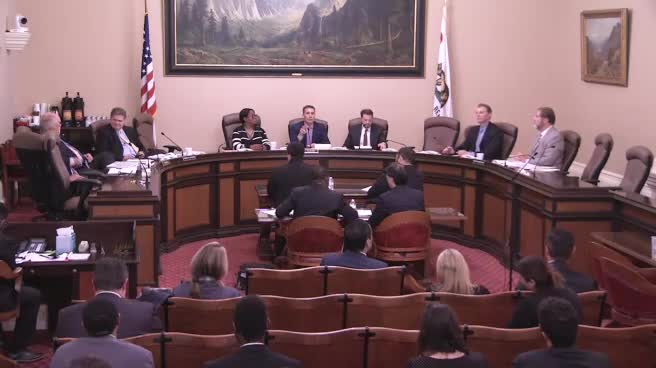 2MIN
Senate Standing Committee on Governance and Finance
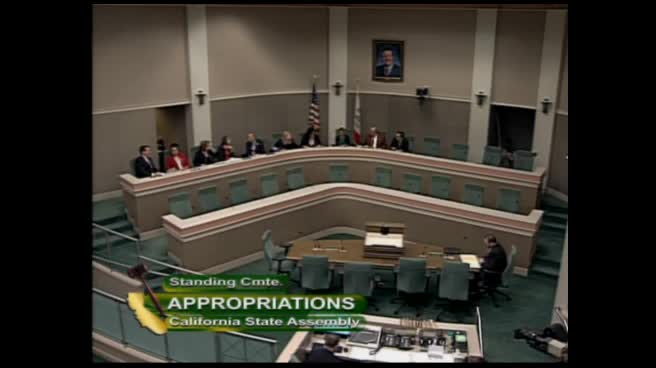 21MIN
Assembly Standing Committee on Appropriations
Bill Author

Bill Co-Author(s):