AB 1606: Tribal gaming: compact ratification.
- Session Year: 2017-2018
- House: Assembly
- Latest Version Date: 2017-10-03
Existing federal law, the Indian Gaming Regulatory Act of 1988, provides for the negotiation and execution of tribal-state gaming compacts for the purpose of authorizing certain types of gaming on Indian lands within a state. The California Constitution authorizes the Governor to negotiate and conclude tribal-state gaming compacts, subject to ratification by the Legislature. Existing law expressly ratifies a number of tribal-state gaming compacts, and amendments of tribal-state gaming compacts, between the State of California and specified Indian tribes.
The California Environmental Quality Act (CEQA) requires a lead agency to prepare, or cause to be prepared, and certify the completion of, an environmental impact report on a project, as defined, that it proposes to carry out or approve that may have a significant effect on the environment, as defined, or to adopt a negative declaration if it finds that the project will not have that effect.
This bill would ratify the tribal-state gaming compact entered into between the State of California and the Wilton Rancheria, executed on July 19, 2017. The bill would provide that, in deference to tribal sovereignty, certain actions related to that compact are not projects for purposes of CEQA.
This bill would declare that it is to take effect immediately as an urgency statute.
Existing law, the Control, Regulate and Tax Adult Use of Marijuana Act (AUMA), enacted by the voters at the November 8, 2016, statewide general election, regulates the cultivation, distribution, and use of marijuana for nonmedical purposes by people 21 years of age and older. AUMA prohibits the sale of marijuana or marijuana products unless a representative sample of the marijuana or marijuana product has been tested by a certified testing service to determine specified facts, including whether the chemical profile of the sample conforms to the label and whether the presence of contaminants exceeds specified levels. Existing law requires destruction of harvested batches whose testing samples indicate noncompliance with health and safety standards promulgated by the State Department of Public Health, unless remedial measures can bring the marijuana or marijuana products into compliance.This bill would additionally require the certified testing service to test for uniform disbursement of cannabinoids throughout the product and the accuracy of the labeled dosage.AUMA authorizes the Legislature to amend, by a 2/3 vote, certain provisions of the act, provided that the amendments are consistent with and further the purposes and intent of the act.This bill would declare that its provisions further specified purposes and the intent of the act.Existing law, the Control, Regulate and Tax Adult Use of Marijuana Act (AUMA), enacted by the voters at the November 8, 2016, statewide general election, regulates the cultivation, distribution, and use of marijuana for nonmedical purposes by people 21 years of age and older. AUMA prohibits the sale of marijuana or marijuana products unless a representative sample of the marijuana or marijuana product has been tested by a certified testing service to determine specified facts, including whether the chemical profile of the sample conforms to the label and whether the presence of contaminants exceeds specified levels. Existing law requires destruction of harvested batches whose testing samples indicate noncompliance with health and safety standards promulgated by the State Department of Public Health, unless remedial measures can bring the marijuana or marijuana products into compliance.
This bill would additionally require the certified testing service to test for uniform disbursement of cannabinoids throughout the product and the accuracy of the labeled dosage within 15%. dosage.
AUMA authorizes the Legislature to amend, by a 2/3 vote, certain provisions of the act, provided that the amendments are consistent with and further the purposes and intent of the act.
This bill would declare that its provisions further specified purposes and the intent of the act.
Existing law, the Control, Regulate and Tax Adult Use of Marijuana Act (AUMA), enacted by the voters at the November 8, 2016, statewide general election, regulates the cultivation, distribution, and use of marijuana for nonmedical purposes by people 21 years of age and older. AUMA places restrictions on edible marijuana products, including that the packaging be resealable, child resistant, and not made attractive to children. AUMA prohibits the sale of marijuana or marijuana products unless a representative sample of the marijuana or marijuana product has been tested by a certified testing service to determine specified facts, including whether the chemical profile of the sample conforms to the label and whether the presence of contaminants exceeds specified levels. Existing law requires destruction of harvested batches whose testing samples indicate noncompliance with health and safety standards promulgated by the State Department of Public Health, unless remedial measures can bring the marijuana or marijuana products into compliance.
This bill would state the intent of the Legislature to enact legislation, consistent with AUMA, that would establish quality standards for edible marijuana products. additionally require the certified testing service to test for uniform disbursement of cannabinoids throughout the product and the accuracy of the labeled dosage within 15%.
AUMA authorizes the Legislature to amend, by a 2/3 vote, certain provisions of the act, provided that the amendments are consistent with and further the purposes and intent of the act.
This bill would declare that its provisions further specified purposes and the intent of the act.
Existing law, the Control, Regulate and Tax Adult Use of Marijuana Act (AUMA), enacted by the voters at the November 8, 2016, statewide general election, regulates the cultivation, distribution, and use of marijuana for nonmedical purposes by people 21 years of age and older. AUMA places restrictions on edible marijuana products, including that the packaging be resealable, child resistant, and not made attractive to children.
This bill would state the intent of the Legislature to enact legislation, consistent with AUMA, that would establish quality standards for edible marijuana products.
(a)The tribal-state gaming compact entered into in accordance with the federal Indian Gaming Regulatory Act of 1988 (18 U.S.C. Secs. 1166 to 1168, inclusive, and 25 U.S.C. Sec. 2701 et seq.) between the State of California and the Wilton Rancheria, executed on July 19, 2017, is hereby ratified.
(b)(1)In deference to tribal sovereignty, none of the following shall be deemed a project for purposes of the California Environmental Quality Act (Division 13 (commencing with Section 21000) of the Public Resources Code):
(A)The execution of an amendment to the tribal-state gaming compact ratified by this section.
(B)The execution of the tribal-state gaming compact ratified by this section.
(C)The execution of an intergovernmental agreement between a tribe and a county or city government negotiated pursuant to the express authority of, or as expressly referenced in, the tribal-state gaming compact ratified by this section.
(D)The execution of an intergovernmental agreement between a tribe and the Department of Transportation, or other state agency, negotiated pursuant to the express authority of, or as expressly referenced in, the tribal-state gaming compact ratified by this section.
(E)The on-reservation impacts of compliance with the terms of the tribal-state gaming compact ratified by this section.
(F)The sale of compact assets, as defined in subdivision (a) of Section 63048.6, or the creation of the special purpose trust established pursuant to Section 63048.65.
(2)Except as expressly provided in this section, this subdivision does not exempt a city, county, or city and county, or the Department of Transportation, or any state agency or local jurisdiction, from the requirements of the California Environmental Quality Act.
SEC. 2.This act is an urgency statute necessary for the immediate preservation of the public peace, health, or safety within the meaning of Article IV of the California Constitution and shall go into immediate effect. The facts constituting the necessity are:
In order to enhance, at the earliest possible time, the economic development, long-term stability, and self-sufficiency of the Wilton Rancheria, and to protect the interests of the tribe and its members, the surrounding community, and the California public, it is necessary for this act to take effect immediately.
SECTION 1.Section 26101 of the Business and Professions Code is amended to read:26101.(a)Except as otherwise provided by law, marijuana and marijuana products shall not be sold pursuant to a license provided for under this division unless a representative sample of the marijuana or marijuana product has been tested by a certified testing service to determine all of the following:(1)Whether the chemical profile of the sample conforms to the labeled content of compounds, including, but not limited to, all of the following:(A)Tetrahydrocannabinol (THC).(B)Tetrahydrocannabinolic Acid (THCA).(C)Cannabidiol (CBD).(D)Cannabidiolic Acid (CBDA).(E)The terpenes described in the most current version of the cannabis inflorescence monograph published by the American Herbal Pharmacopoeia.(F)Cannabigerol (CBG).(G)Cannabinol (CBN).(2)That the presence of contaminants does not exceed the levels in the most current version of the American Herbal Pharmacopoeia monograph. For purposes of this paragraph, contaminants include, but are not limited to, all of the following:(A)Residual solvent or processing chemicals, including explosive gases, such as butane, propane, O2 or H2, and poisons, toxins, or carcinogens, such as Methanol, Isopropyl Alcohol, Methylene Chloride, Acetone, Benzene, Toluene, and Tri-chloro-ethylene.(B)Foreign material, including, but not limited to, hair, insects, or similar or related adulterant.(C)Microbiological impurity, including total aerobic microbial count, total yeast mold count, P. aeruginosa, aspergillus spp., s. aureus, aflatoxin B1, B2, G1, or G2, or ochratoxin A.(3)Uniform disbursement of cannabinoids throughout a marijuana product.(4)Accuracy of the labeled dosage.(b)Residual levels of volatile organic compounds shall satisfy standards of the cannabis inflorescence monograph set by the United States Pharmacopeia (U.S.P. Chapter 467).(c)The testing required by paragraph (a) shall be performed in a manner consistent with general requirements for the competence of testing and calibrations activities, including sampling, using standard methods established by the International Organization for Standardization, specifically ISO/IEC 17020 and ISO/IEC 17025 to test marijuana and marijuana products that are approved by an accrediting body that is a signatory to the International Laboratory Accreditation Cooperation Mutual Recognition Agreement.(d)Any presale inspection, testing transfer, or transportation of marijuana products pursuant to this section shall conform to a specified chain of custody protocol and any other requirements imposed under this division.SEC. 2.The Legislature finds and declares that this act is consistent with, and furthers the purposes of, the Control, Regulate and Tax Adult Use of Marijuana Act.(a)Except as otherwise provided by law, no marijuana or marijuana and marijuana products may shall not be sold pursuant to a license provided for under this division unless a representative sample of the marijuana or marijuana product has been tested by a certified testing service to determine all of the following:
(1)Whether the chemical profile of the sample conforms to the labeled content of compounds, including, but not limited to, all of the following:
(A)Tetrahydrocannabinol (THC).
(B)Tetrahydrocannabinolic Acid (THCA).
(C)Cannabidiol (CBD).
(D)Cannabidiolic Acid (CBDA).
(E)The terpenes described in the most current version of the cannabis inflorescence monograph published by the American Herbal Pharmacopoeia.
(F)Cannabigerol (CBG).
(G)Cannabinol (CBN).
(2)That the presence of contaminants does not exceed the levels in the most current version of the American Herbal Pharmacopoeia monograph. For purposes of this paragraph, contaminants includes, but is include, but are not limited to, all of the following:
(A)Residual solvent or processing chemicals, including explosive gases, such as Butane, butane, propane, O2 or H2, and poisons, toxins, or carcinogens, such as Methanol, Isopropyl Alcohol, Methylene Chloride, Acetone, Benzene, Toluene, and Tri-chloro-ethylene.
(B)Foreign material, including, but not limited to, hair, insects, or similar or related adulterant.
(C)Microbiological impurity, including total aerobic microbial count, total yeast mold count, P. aeruginosa, aspergillus spp., s. aureus, aflatoxin B1, B2, G1, or G2, or ochratoxin A.
(3)Uniform disbursement of cannabinoids throughout a marijuana product.
(4)Accuracy of the labeled dosage, within 15 percent. dosage.
(b)Residual levels of volatile organic compounds shall satisfy standards of the cannabis inflorescence monograph set by the United States Pharmacopeia (U.S.P. Chapter 467).
(c)The testing required by paragraph (a) shall be performed in a manner consistent with general requirements for the competence of testing and calibrations activities, including sampling, using standard methods established by the International Organization for Standardization, specifically ISO/IEC 17020 and ISO/IEC 17025 to test marijuana and marijuana products that are approved by an accrediting body that is a signatory to the International Laboratory Accreditation Cooperation Mutual Recognition Agreement.
(d)Any pre-sale presale inspection, testing transfer, or transportation of marijuana products pursuant to this section shall conform to a specified chain of custody protocol and any other requirements imposed under this division.
SEC. 2.The Legislature finds and declares that this act is consistent with, and furthers the purposes of, the Control, Regulate and Tax Adult Use of Marijuana Act.
(a)Except as otherwise provided by law, no marijuana or marijuana products may be sold pursuant to a license provided for under this division unless a representative sample of such the marijuana or marijuana product has been tested by a certified testing service to determine: determine all of the following:
(1)Whether the chemical profile of the sample conforms to the labeled content of compounds, including, but not limited to, all of the following:
(A)Tetrahydrocannabinol (THC).
(B)Tetrahydrocannabinolic Acid (THCA).
(C)Cannabidiol (CBD).
(D)Cannabidiolic Acid (CBDA).
(E)The terpenes described in the most current version of the cannabis inflorescence monograph published by the American Herbal Pharmacopoeia.
(F)Cannabigerol (CBG).
(G)Cannabinol (CBN).
(2)That the presence of contaminants does not exceed the levels in the most current version of the American Herbal Pharmacopoeia monograph. For purposes of this paragraph, contaminants includes, but is not limited to, all of the following:
(A)Residual solvent or processing chemicals, including explosive gases, such as Butane, propane, O2 or H2, and poisons, toxins, or carcinogens, such as Methanol, Isopropyl Alcohol, Methylene Chloride, Acetone, Benzene, Toluene, and Tri-chloro-ethylene.
(B)Foreign material, including, but not limited to, hair, insects, or similar or related adulterant.
(C)Microbiological impurity, including total aerobic microbial count, total yeast mold count, P. aeruginosa, aspergillus spp., s. aureus, aflatoxin B1, B2, G1, or G2, or ochratoxin A.
(3)Uniform disbursement of cannabinoids throughout a marijuana product.
(4)Accuracy of the labeled dosage, within 15 percent.
(b)Residual levels of volatile organic compounds shall satisfy standards of the cannabis inflorescence monograph set by the United States Pharmacopeia (U.S.P. Chapter 467).
(c)The testing required by paragraph (a) shall be performed in a manner consistent with general requirements for the competence of testing and calibrations activities, including sampling, using standard methods established by the International Organization for Standardization, specifically ISO/IEC 17020 and ISO/IEC 17025 to test marijuana and marijuana products that are approved by an accrediting body that is a signatory to the International Laboratory Accreditation Cooperation Mutual Recognition Agreement.
(d)Any pre-sale inspection, testing transfer, or transportation of marijuana products pursuant to this section shall conform to a specified chain of custody protocol and any other requirements imposed under this division.
SEC. 2.The Legislature finds and declares that this act is consistent with, and furthers the purposes of, the Control, Regulate and Tax Adult Use of Marijuana Act.
SECTION 1.Edible marijuana products constitute a growing share of the marijuana marketplace. Consistent with the passage of Proposition 64 at the November 8, 2016, statewide general election, it is the intent of the Legislature to enact legislation that would establish quality standards for edible marijuana products.Edible marijuana products constitute a growing share of the marijuana marketplace. Consistent with the passage of Proposition 64 at the November 8, 2016, statewide general election, it is the intent of the Legislature to enact legislation that would establish quality standards for edible marijuana products.
|
Date
|
Status
|
|---|---|
| Oct 3, 2017 | Chaptered by Secretary of State - Chapter 453, Statutes of 2017. |
| Oct 3, 2017 | Approved by the Governor. |
| Sep 7, 2017 | Enrolled and presented to the Governor at 3 p.m. |
| Aug 31, 2017 | Urgency clause adopted. Senate amendments concurred in. To Engrossing and Enrolling. |
| Aug 24, 2017 | In Assembly. Concurrence in Senate amendments pending. May be considered on or after August 26 pursuant to Assembly Rule 77. |
| Aug 24, 2017 | Read third time. Urgency clause adopted. Passed. Ordered to the Assembly. |
| Aug 23, 2017 | Read second time. Ordered to third reading. |
| Aug 22, 2017 | Withdrawn from committee. |
| Aug 21, 2017 | Withdrawn from committee. |
| Jul 20, 2017 | From committee chair, with author's amendments: Amend, and re-refer to committee. Read second time, amended, and re-referred to Com. on B., P. & E.D. |
| Jul 6, 2017 | In committee: Set, first hearing. Hearing canceled at the request of author. |
| Jun 8, 2017 | Referred to Com. on B., P. & E.D. |
| May 30, 2017 | In Senate. Read first time. To Com. on RLS. for assignment. |
| May 30, 2017 | Read third time. Passed. Ordered to the Senate. (Ayes 75. Noes 0. Page 1801.) |
| May 25, 2017 | Read second time. Ordered to third reading. |
| May 24, 2017 | From committee: Do pass. (Ayes 17. Noes 0.) (May 24). |
| Apr 26, 2017 | From committee: Do pass and re-refer to Com. on APPR. (Ayes 15. Noes 0.) (April 25). Re-referred to Com. on APPR. |
| Apr 24, 2017 | Re-referred to Com. on B. & P. |
| Apr 20, 2017 | Read second time and amended. |
| Apr 19, 2017 | From committee: Amend, and do pass as amended and re-refer to Com. on B. & P. (Ayes 13. Noes 1.) (April 18). |
| Apr 5, 2017 | Re-referred to Com. on HEALTH. |
| Apr 4, 2017 | From committee chair, with author's amendments: Amend, and re-refer to Com. on HEALTH. Read second time and amended. |
| Apr 3, 2017 | Referred to Coms. on HEALTH and B. & P. |
| Feb 19, 2017 | From printer. May be heard in committee March 21. |
| Feb 17, 2017 | Read first time. To print. |
|
Date
|
Description
|
Location
|
Votes
|
|
|---|---|---|---|---|
| Aug 31, 2017 | AB 1606 COOPER Concurrence - Urgency Added | Assembly Floor |
Passed |
|
| Aug 24, 2017 | Assembly 3rd Reading AB1606 Cooper et al. By Galgiani Urgency Clause | Senate Floor |
Passed |
|
| May 30, 2017 | AB 1606 COOPER Assembly Third Reading | Assembly Floor |
Passed |
|
| May 24, 2017 | Do pass. | Assembly Standing Committee on Appropriations |
Passed |
|
| Apr 25, 2017 | Do pass and be re-referred to the Committee on [Appropriations] | Assembly Standing Committee on Business and Professions |
Passed |
|
| Apr 18, 2017 | Do pass as amended and be re-referred to the Committee on [Business and Professions] | Assembly Standing Committee on Health |
Passed |
This list shows positions taken on this bill by organizations on the date displayed, which is linked to the original source.
Positions by individuals are not included.
CONCURRENCE IN SENATE AMENDMENTS
CSA1 Bill Id:AB 1606
Author:(Cooper)
As Amended Ver:July 20, 2017
2/3 vote. Urgency
ASSEMBLY: |
| (May 30, 2017) | SENATE: | 38-0 | (August 24, 2017) |
(Vote not relevant)
Original Committee Reference: Health.
SUMMARY: Ratifies a tribal-state gaming compact (Compact) entered into between the State of California and the Wilton Rancheria (Tribe) executed on July 19, 2017. Additionally, this bill provides that, in deference to tribal sovereignty, certain actions are not deemed projects for purposes of the California Environmental Quality Act (CEQA); and, stipulates, except as expressly provided, that none of the provisions shall be construed to exempt a city, county, or city and county, or the Department of Transportation from CEQA requirements.
The Senate amendments delete the Assembly version of this bill, and instead:
- Ratify the Compact entered into between the State of California and the Wilton Rancheria executed on July 19, 2017.
- Authorize the Tribe to operate a maximum of 2,500 gaming devices (slot machines) at no more than two gaming facilities located on eligible Indian lands held in trust (as legally described in the January 2017 Record of Decision) for the Tribe, located within the boundaries of the Tribe's reservation (Appendix A) located in the City of Elk Grove, County of Sacramento, State of California.
- Include provisions that would prohibit the Tribe from conducting gaming under this Compact if the decision to place the 36-acre parcel into trust is reversed and requires the parties to enter into negotiations to amend the Compact if the local land use restrictions are held to be enforceable. (Compact Sections 4.2. and 15.4.)
- State the Tribe has agreed to pay the State its pro rata share of costs the State incurs for the performance of its duties under this Compact, as specified.
- Provide a framework for fair cost reimbursement and mitigation from revenues from the gaming devices operated pursuant to this Compact with local jurisdictions. Specifically, from its payments (6% of its Net Win from the operation of gaming devices in excess of 350) to the Revenue Sharing Trust Fund (RSTF) or the Tribal Nation Grant Fund (TNGF), the Tribe may take annual credits of up to 60% for infrastructure improvements that in part benefit local and county residents, fire, law enforcement, public transit, education, tourism, and other services including investments in renewable energy projects, water treatment or conservation projects and payments to support capital improvements and operating expenses for facilities within California that provide health care services to tribal members and other members of the local community. During the first SEVEN years in which gaming activities occur the Tribe shall have no obligation to pay any amount to the state gaming agency for deposit into the RSTF or the TNGF.
- This Compact: a) provides a regulatory framework that respects the role of the tribal gaming agency as the primary regulator while also ensuring that state gaming regulators fulfill their responsibilities; b) requires the Tribe to conduct its gaming activities pursuant to an internal control system that implements minimum internal controls that are no less stringent than those in federal regulations; c) requires the Tribe to adopt a Tribal Labor Relations Ordinance, as specified; and, d) contains provisions to protect the health and safety of patrons, guests, and employees.
- Provide that, in deference to tribal sovereignty, certain actions are not deemed projects for purposes of the California Environmental Quality Act (CEQA); and, stipulate, except as expressly provided, that none of the provisions shall be construed to exempt a city, county, or city and county, or the Department of Transportation from CEQA requirements.
- Provide once effective, this Compact shall be in full force and effect for 25 years following the effective date.
- Contain an urgency clause, allowing this bill to take effect immediately upon enactment.
EXISTING LAW:
- Provides, under the Indian Gaming Regulatory Act (IGRA), for the negotiation and conclusion of compacts between federally recognized Indian tribes and the State for the purpose of conducting Class III gaming activities on Indian lands within a State as a means of promoting tribal economic development, self-sufficiency, and strong tribal governments.
- Authorizes expressly a number of tribal-state gaming compacts between the State of California and specified Indian tribes.
- Authorizes the conduct of Class III gaming activities to the extent such activities are permitted by state law, a gaming compact has been concluded by a federally recognized tribe and the State, and the compact has been approved by the Secretary of the Interior.
- Limits the operation of Class III gaming activities to Indian lands acquired on or before October 17, 1988. Provides for certain exceptions to conduct gaming activities on Indian lands acquired after October 17, 1988.
- Defines Indian lands to mean all lands within the limits of any Indian reservation, and any lands title to which is either held in trust by the United States (U.S.) for the benefit of any Indian tribe, or individual, or held by any Indian tribe or individual subject to restriction by the U.S. against alienation and over which an Indian tribe exercises governmental power.
- Requires the State to negotiate to conclude a compact in good faith with an Indian tribe having jurisdiction over the Indian lands upon which the Class III gaming activity is to be conducted. Provides the U.S. district courts with jurisdiction over any cause of action initiated by a tribal government alleging that the State failed to negotiate in good faith to conclude a compact. Prescribes the remedy, mediation supervised by the courts, if it is found that the State failed to negotiate in good faith to conclude a compact.
- Authorizes the Governor, under the California Constitution, to negotiate and conclude compacts, subject to ratification by the Legislature.
FISCAL EFFECT: Unknown
COMMENTS: On August 29, 2017, the Assembly Governmental Organization Committee held an informational hearing on the tribal gaming compact entered into between the State of California and Wilton Rancheria.
Brief History and Background:
According to information provided by the Tribe, the Wilton Rancheria is a federally recognized Indian tribe listed in the Federal Register. The Tribe is located within the geographical boundaries of the County of Sacramento, with its tribal headquarters in Elk Grove and consisting of over 750 tribal members.
Members of Wilton Rancheria are descendants of the Plains and Sierra Miwok who lived in the Sacramento Valley. For millennia, the Tribe's Miwok ancestors hunted, fished and foraged across a large swath of the Sacramento Valley, from the American River drainage to Yosemite and the Western slopes of the Sierra to the California Delta.
In 1927, the United States acquired land in trust for the Tribe near the Town of Wilton in Sacramento County and formally established a reservation there, known as the Me-Wuk Indian Community of the Wilton Rancheria, on which tribal members lived as a community despite great adversity.
In 1958, as part of the federal policy designed to assimilate the nation's Indians, the United States Congress enacted the Rancheria Act, Public Law 85-671, authorizing the termination of federal trust responsibilities to forty-one California Indian tribes, including the Wilton Rancheria tribe.
The Tribe was restored to its federal recognition, including rights to a mandatory land-into-trust acquisition pursuant to a court approved Stipulation for Entry of Judgment on June 8, 2009. Wilton Miwok Rancheria and Dorothy Andrews v Salazar (C-07-02681) and Me-Wuk Indian Community of the Wilton Rancheria v. Salazar (C-07-05706) (N.D. Calif., June 8, 2009).
The Tribe's application for 36 acres to be placed into trust was approved on January 19, 2017. The Bureau of Indian Affairs accepted the grant of the parcel to the United States, in trust for the Tribe, on February 10, 2017. The current Acting Assistant Secretary – Indian Affairs upheld the decision to place the land into trust on July 13, 2017.
In June of 2011, the City of Elk Grove, the County of Sacramento, and the Tribe entered into a Memorandum of Understanding (2011 Agreement) under which the Tribe is to consult with the City and County as to any land to be taken into trust that is within the City and/or County, and to negotiate with the City and County for mitigation of off-site impacts concerning the development of such land.
The Tribe has partnered with Boyd Gaming Corporation and is planning to build the Wilton Rancheria Resort and Casino Project on the vacant mall site in Elk Grove. According to the Tribe, some of the benefits of the project include 1,600 constructions jobs, 1,750 full time employees, and 3,000 direct and indirect jobs. The completed casino, hotel and convention center will eventually employ 2,000 people.
The Tribe has a MOU and Intergovernmental Agreement dated June 14, 2016 with the County of Sacramento (Sacramento County MOU) and has committed to pay over $2.4 million annually to the County, providing a substantial benefit to the local community for social services, roadway improvements, and community benefits.
In addition, the Tribe has entered into a MOU dated September 29, 2016 with the City of Elk Grove (Elk Grove MOU) and has committed to pay over $14.5 million in one-time payments to the City and $5 million annually to the City, providing a substantial benefit to the local community for Police services, roadway maintenance and improvements, local schools, non-profits, and community benefits.
The Compact's preamble notes the State understands that the Tribe has spent considerable resources and incurred significant pre-development costs in connection with efforts to develop its casino and hotel project, and otherwise transition from being a tribe receiving Revenue Sharing Trust Fund monies to ultimately generating revenue to provide essential programs for tribal members, making investments in the local community and contributing to the RSTF.
The Compact's preamble declares that the State and the Tribe recognize that the exclusive rights that the Tribe will enjoy under this Compact will create a unique opportunity for the Tribe to operate a gaming facility in an economic environment free of competition from the operation of slot machines and banked card games on non-Indian lands in California and that this unique economic environment is of great value to the Tribe.
Lastly, the Compact's preamble states the Tribe is committed to improving the environment, education status, and the health, safety and general welfare of its members and local residents.
Key Provisions of the Compact:
Scope of Class III Gaming Authorized: The Tribe is authorized to operate up to 2,500 gaming devices (slot machines), banking or percentage card games, and any devices or games that are authorized under state law to the California State Lottery, provided that the Tribe will not offer such games through use of the Internet unless others in the state are permitted to do so under state and federal law. The Tribe shall not be prohibited from offering Class II gaming or precluded from negotiating a separate compact governing the conduct of off-track wagering at the Tribe's gaming facility. The Tribe shall not engage in Class III Gaming that is not expressly authorized in the Compact.
Authorized Gaming Facility: The Tribe may establish and operate not more than two (2) gaming facilities and engage in Class III Gaming only on eligible Indian lands held in trust for the Tribe located within the boundaries of the Tribe's reservation and trust lands as those boundaries exist as of the execution date of this Compact and on which Class III gaming may lawfully be conducted under IGRA, as legally described in the January 2017 Record of Decision, "Trust Acquisition of 35.92 +/- acres in the City of Elk Grove, California, for the Wilton Rancheria" (Attachment III) and incorporated herein at Appendix A.
Exclusivity: Provides that in the event the exclusive right of Indian tribes to operate Class III gaming in California pursuant to the California Constitution is lost and other non-Indian entities are able to engage in Class III gaming the Tribe shall have the right to terminate this Compact, in which case the Tribe will lose the right to operate Class III gaming authorized by this Compact; or continue under this Compact, as defined.
Tribal Ownership, Management, and Control of Gaming Operation: The gaming operation authorized under this Compact shall be owned solely by the Tribe.
Payments to the RSTF or the TNGF: In recognition of the predevelopment expenses incurred by the Tribe, the needs of the Tribe's citizens, the existence of binding and enforceable intergovernmental agreements with the City and the County providing for mitigation and other investments in the local community, and the limited amount of time that the Tribe has received RSTF distributions as a non -gaming tribe, during the first SEVEN years in which gaming activities occur the Tribe shall have no obligation to pay any amount to the state gaming agency for deposit into the RSTF or the TNGF.
After the first SEVEN years in which gaming activities occur, if the Tribe operates more than 350 gaming devices at any time in a given calendar year, it shall, thereafter, including that calendar year, pay to the state gaming agency, for deposit into the RSTF or the TNGF, 6% of its Net Win from the operation of gaming devices in excess of 350, commencing on the first day of the first calendar quarter of the eighth calendar year in which gaming activities occur, as described.
"Net Win" means drop from gaming devices, plus the redemption value of expired tickets, less fills, less payouts, less that portion of the gaming operation's payments to a third-party wide-area progressive jackpot system provider that is contributed only to the progressive jackpot amount.
Credits Applied to the RSTF or the TNGF: The State agrees to provide the Tribe with annual credits for up to 60% of the payments otherwise due to be paid into the RSTF or TNGF for the following purposes:
- Cost of services provided by the Tribe or payments by the Tribe to the County, the City, state agency, local jurisdictions and non-profit and civic organizations operating facilities or providing services within the County for fire, emergency medical services, law enforcement, public transit, road improvements, education, tourism, and other services and infrastructure improvements intended to serve off-reservation needs of local residents or the environment. Such payments shall be subject to approval by the State and at least 20% of the annual credits must be utilized for the above stated purposes;
- Payments by the Tribe to reimburse the City of Elk Grove or the County of Sacramento for any loss of property tax revenues, sales tax revenues to the City that would otherwise be due for retail sales at the Tribe's gaming facility or transient occupancy tax at the Tribe's hotel if it were not located on Indian lands. Such reimbursement shall be subject to approval by the City and County.
- Non-gaming related capital investments and economic development projects by the Tribe on or off tribal trust lands that provide mutual benefits to the Tribe and the State because, for instance, they have particular cultural, social or environmental value, or diversify the sources of revenue for the Tribe’s general fund.
- Payments to support operating expenses and capital improvements for non-tribal governmental agencies or facilities operating within the County of Sacramento.
- Investments by the Tribe and any funds paid to the State in renewable energy projects that, in part, serve the gaming facility or any improvements incorporating renewable energy technology on real property owned by the tribe, or its members, and lineal descendants, and projects that incorporate charging stations for electric or other zero emission vehicles that are available to patrons and employees of the gaming facility, and the Tribe, its members and lineal descendants.
- Cost and payments to support capital improvements, the purchase of property, and operating expenses for facilities within California that provide health care services to tribal members, Indians, and non-Indians.
- Cost and payments to support capital improvements, the purchase of property, and operating expenses for facilities located within California that provide educational services to tribal members, Indians, and non-Indians.
- Investments by the Tribe and any funds paid to the State for water treatment or conservation projects.
- Costs and payments made to support the preservation of historical buildings, landmarks or objects within California that have cultural significance to the Tribe and for providing general welfare benefits for, among other things, educational, healthcare, cultural or vocational purposes, to other Native Americans in the community.
- Costs associated with improving the protection of wildlife and habitat, increasing tourism, establishing or improving highways, roadways, hiking trails, walkways and bike lanes, and other beautification efforts in the community.
- Payment of $2 million to the City of Elk Grove for the purpose of improvement or construction of City community facilities as provided in the Elk Grove MOU.
- Annual payments of $400,000 to reimburse the Elk Grove Unified School District for the loss of tax revenue as provided in the Elk Grove MOU.
- Annual payments of $100,000 to charitable organizations or other organizations, which enhance the City of Elk Grove and the City residents' quality of life as provided in the Elk Grove MOU
If in any year during the term of this Compact, the Tribe is unable to take the full 60% credit and all carry-forward credits have been exhausted, the Tribe may request, and the State shall agree to, a reopening of negotiations relating to these allocations.
The Compact specifies that, in no event shall the state's general fund be obligated to make up any shortfall in the RSTF or the TNGF or to pay any unpaid claims connected therewith. It provides that the obligations of the California Gambling Control Commission (CGCC) related to the RSTF and TNGF under any Class III gaming compact, non-gaming and limited-gaming tribes are not third-party beneficiaries of this Compact and shall have no right to seek any judicial order compelling disbursement of any RSTF or TNGF monies to them.
Payments to the Special Distribution Fund: The Tribe shall pay to the State, on a pro rata basis, the costs the State incurs for the performance of all its duties under this Compact, as established by the monies appropriated in the annual Budget Act for the performance of their duties under the Class III Gaming Compacts each fiscal year for the CGCC, the California Department of Justice (DOJ), the Office of Problem Gambling, and State designated agencies in connection with the implementation and administration of Class III gaming compacts. The Tribe's pro rata share of the State's costs in any given year this Compact is in effect may not be increased more than 5% per year and shall be calculated using the following equation: "The maximum number of gaming devices operated in the gaming facility during the previous State fiscal year as determined by the State Gaming Agency, divided by the maximum number of gaming devices operated by all federally recognized tribes in California pursuant to tribal-state Class III gaming compacts during the previous State fiscal year, multiplied by the Appropriation, equals the Tribe's pro rata share."
Cost Reimbursement and Mitigation to Local Governments: The Tribe shall maintain existing agreements or enter into new agreements with local jurisdictions or state agencies, as appropriate, for such undertakings and services that mitigate the impacts of the gaming facility, as defined, and thereby benefit the gaming facility, the Tribe, or other affected jurisdictions. Intergovernmental agreements are necessary and appropriate for some, but not all, of the credits specified within section 5.3. The Tribe has the discretion, within the parameters of Section 5.3 and subject to State approval, to determine how to appropriate funds in a manner consistent with available credits. Copies of all agreements to be credited shall be provided to the State, as specified. The agreements with local jurisdictions or state agencies, as appropriate, are distinct from those agreements associated with a specific project and required by Section 11.0 (Off-Reservation Environmental and Economic Impacts).
Pursuant to a MOU between Wilton and Elk Grove, the Tribe has agreed to provide $129.56 million in financial commitments over the first 20 years the agreement including:
- $14.5 million for roadway infrastructure, community facilities, and police equipment;
- $34.52 million to the Elk Grove Police Department;
- $57.53 million to the Elk Grove General Fund;
- $9.2 million to the Elk Grove School District;
- $11.5 million to roadway maintenance and improvements;
- $2.3 million for non-profit community organizations in Elk Grove.
Pursuant to a MOU between Wilton and Sacramento County, the Tribe has agreed to provide $56.38 million in financial commitments over the first 20 years the agreement including:
- $46.02 million to the County's General Fund;
- $4.6 million for county road improvements;
- $1.15 million for county problem gambling programs;
- $2.3 million for county drug and alcohol programs;
- $2.3 for county domestic violence prevention programs.
Additional Compact Components:
Gaming Ordinance and Regulations: All gaming activities conducted under this Compact shall, at a minimum, comply with 1) a gaming ordinance duly adopted by the Tribe and approved in accordance with IGRA, 2) all rules, regulations, procedures, specifications, and standards duly adopted by the National Indian Gaming Commission (NIGC), the Tribal Gaming Agency, and the State Gaming Agency, and 3) the provisions of this Compact, as specified.
Licensing Requirements and Procedures: All persons in any way connected with the gaming operation or gaming facility who are required to be licensed or to submit to a background investigation under IGRA, and any others required to be licensed under this Compact, including, without limitation, all gaming employees, gaming resource suppliers, financial sources, and any other person having a significant influence over the gaming operation, must be licensed by the Tribal Gaming Agency and cannot have had any determination of suitability denied or revoked by the CGCC. In addition, every gaming employee must obtain, and thereafter maintain current, a valid tribal gaming license, as specified.
Minimum Internal Control Standards (MICS): Requires the Tribe to conduct its gaming activities pursuant to an internal control system that implements MICS that are no less stringent than specified MICS of the NIGC. It requires gaming to operate pursuant to a written internal control system that reasonably assures that assets are safeguarded and accountability over assets is maintained, liabilities are properly recorded and contingent liabilities are properly disclosed, financial records are accurate and reliable, transactions are performed in accordance with the Tribe's authorization. The Tribe is required to provide to the CGCC, upon written request, a copy of the independent certified public accountant agreed-upon procedures report conducted annually for submission to the NIGC pursuant to federal law. This report verifies that the gaming operation is in compliance with the NIGC's minimum internal control standards.
Patron Disputes: A patron who makes an oral or written complaint to personnel of the gaming operation over the play or operation of any game within five days of the play or operation at issue shall be notified in writing of the patron's right to request in writing, within five days of the gaming operation's written notification to the patron of that right, resolution of the dispute by the Tribal Gaming Agency or through a three-member tribal claims commission consisting of a representative of the tribal government and at least one non-tribal commissioner. The decision shall be issued within 15 days of the patron's request. If dissatisfied with the resolution, or no decision is rendered within 15 days of submission, the patron may seek resolution in either the Tribe's tribal court system, once a tribal court system is established, or before a three-member tribal claims commission. Any party dissatisfied with the award of the arbitrator may at the party’s election invoke the JAMS Optional Arbitration Appeal Procedure. The cost and expenses of arbitration shall be initially borne equally by the Tribe and the patron but the JAMS arbitrator shall award to the prevailing party its costs and expenses (but no attorney fees). The Tribe consents to the jurisdiction of the tribal court, tribal claims commission, JAMS Optional Appeal Procedure and any action to enforce their judgments or the obligations in this section.
Public and Workplace Liability: Requires the Tribe to obtain and maintain a commercial general liability insurance policy which provides coverage of no less than $10 million and adopt a Tort Liability Ordinance stipulating that California tort law governs claims. Also, provides that California tort law shall apply to specified claims if the Tribe fails to adopt a Tort Liability Ordinance.
The Tribe must consent to jurisdiction in the Tribe's tribal court system, once a tribal court system is established, or before a three-member tribal claims commission. Any party dissatisfied with the award of the tribal venue may invoke the JAMS Optional Arbitration Appeal Procedure. The appeal will be based solely on the record developed in the tribal court or tribal claims commission proceedings. Factual determinations will not be set aside if supported by substantial evidence. The cost and expenses of arbitration shall be initially borne equally by the parties but the JAMS arbitrator shall award to the prevailing party its costs and expenses (but no attorney fees). The Tribe consents to the jurisdiction of the tribal court, tribal claims commission, JAMS Optional Appeal Procedure and any action to enforce their judgments or the obligations, as defined.
Environmental Protections: The Tribe must prepare a Tribal Environmental Impact Report (TEIR) and negotiate mitigation of any off-reservation impacts, including an evaluation of energy efficiency, prior to initiating the development of a project for a facility. The Compact provides procedures regarding the (1) Notice of Preparation of Draft TEIR, (2) Notice of Completion of Draft TEIR, and (3) Issuance of Final TEIR. The Tribe's failure to prepare an adequate TEIR when required may warrant an injunction where appropriate. Before commencement of a Project, and no later than the issuance of the final TEIR, the Tribe shall negotiate an intergovernmental agreement with the California Department of Transportation if state roads are impacted. A binding agreement must also be negotiated with Sacramento County to, amongst other things, provide for the timely mitigation of any significant effect on the off-reservation environment. This includes provisions relating to compensation for law enforcement, fire protection, emergency medical services and any other public services to be provided by the County to the Tribe as a consequence of the project.
Health and Safety Standards: The Tribe has agreed to comply with federal water quality and safe drinking water standards applicable in California. The Tribe has agreed to adopt and comply with tribal health standards for food and beverage handling that is no less stringent than State public health standards. The Tribe must also adopt and comply with federal and state laws forbidding harassment, including sexual harassment, discrimination and retaliation. In addition, the Tribe must maintain a $3 million insurance policy for these purposes and adopt an ordinance that includes a dispute resolution process.
Building Codes and Fire Safety: In order to assure the protection of the health and safety of all gaming facility patrons, guests, and employees, the Tribe shall adopt and shall maintain throughout the term of this Compact, an ordinance that requires any covered gaming facility construction to meet or exceed the applicable codes. Gaming facility construction, expansion, improvement, modification or renovation must also comply with the federal Americans with Disabilities Act.
Emergency Services Accessibility: The Tribe must make reasonable provisions for adequate emergency fire, medical, and related relief and disaster services for patrons and employees.
Enhanced Audit and Compliance Review Procedures: In addition to providing for an annual independent audit, the Compact allows the state to conduct its own annual audit and compact compliance review of the gaming operation, gaming facility, and gaming activities to ensure compliance with all provisions of this compact.
Inspection and Testing of Slot Machines: Gaming devices will have to be tested, approved and certified by an independent gaming test laboratory or state governmental gaming test laboratory to ensure they are being operated according to specified technical standards. Also, requires the Tribal Gaming Agency to maintain adequate records that demonstrate compliance with software and hardware specifications. The state gaming agency would be authorized to annually conduct up to four random inspections of slot machines in operation to confirm that the slot machines are operating in conformance with these standards.
Labor Provisions: The Compact provides that the gaming activities authorized by this Compact may only commence after the Tribe has adopted an ordinance identical to the Tribal Labor Relations Ordinance (TRLO) provided for in Appendix C of the Compact, and the gaming activities may only continue as long as the Tribe maintains the ordinance. If the Tribe employs 250 or more persons in a tribal casino facility, then the provisions of the TLRO become effective. The TLRO provides for a secret ballot election. The TLRO provides for union neutrality. The Tribe will not oppose union but can advocate the benefits of working for the Tribe. A union must issue a Notice of Intent or Organize (NOIO). For a period of 365 days following delivery of a NOIO, the union shall not engage in strikes, picketing, boycotts, attack websites, or other economic activity at or in relation to the tribal casino or related facility. During the 365 days after the Tribe received the NOIO, the union must collect dated and signed authorization cards and complete the secret ballot election. Failure to complete the secret ballot election within 365 days shall preclude the union from delivering another NOIO for a period of 730 days.
After the certification that 30% of the employees have expressed an interest in the union, a notice of election shall be issues and the election shall be concluded within 30 calendar days thereafter. Secret ballot elections shall be held at workplace and at least one neutral location. Employee may mail ballots so long as received by election day. Union representation requires an affirmative vote of 50% plus one of all votes cast.
Mediation for any collective bargaining agreement impasse shall be resolved exclusively through the binding dispute resolution by three members of the Tribal Labor Panel, consisting of ten arbitrators appointed by a mutual selection of the parties. However, if arbitrator schedules cannot be coordinated within 30 days of submission, a single arbitrator shall decide the dispute. The arbitrators will generally follow the American Arbitration Association's procedural rules relating to labor dispute resolution.
Workers' Compensation: The Tribe agrees to participate in the state's workers' compensation program with respect to employees at the casino. All disputes arising from the workers' compensation laws shall be heard by the State Workers' Compensation Appeals Board pursuant to the California Labor Code. In lieu of participating in the State’s workers' compensation system, the Tribe may create and maintain a system that provides redress for employee work-related injuries through requiring insurance or self-insurance, which system must include a scope of coverage, provision of up to $10,000 in medical treatment for an alleged injury until the date that liability for the claim is accepted or rejected. Furthermore, the Tribe agrees that it will participate in the state's unemployment compensation program for providing benefits and unemployment compensation disability benefits to employees at the casino. The Tribe shall withhold all taxes due to the state, except for Tribal members living on the Tribe's reservation, and forward such amounts to the state.
Prohibitions Regarding Minors: The Tribe shall prohibit persons under the age of 21 years from being present in any room or area in which gaming activities are being conducted unless the person is en-route to a non-gaming area of the gaming facility, or is employed at the gaming facility in a capacity other than as a gaming employee. If the Tribe permits the consumption of alcoholic beverages in the gaming facility, the Tribe shall prohibit persons under the age of 21 years from purchasing, consuming, or possessing alcoholic beverages. The Tribe shall also prohibit persons under the age of 21 years from being present in any room or area in which alcoholic beverages may be consumed, except to the extent permitted by the Department of Alcoholic Beverage Control for other commercial establishments serving alcoholic beverages.
Problem Gambling: The gaming operation must establish a program, approved by the Tribal Gaming Agency, to mitigate pathological and problem gaming by implementing specified measures.
Tobacco Provisions: The Tribe agrees to provide a non-smoking area in the gaming facility and to utilize a ventilation system throughout the gaming facility that exhausts tobacco smoke to the extent reasonably feasible under state-of-the-art technology existing as of the date of the construction or significant renovation of the gaming facility, and further agrees not to offer or sell tobacco products, including but not limited to smokeless tobacco products or e-cigarettes, to anyone younger than the minimum age specified in state law to legally purchase tobacco products.
Amendment by Agreement: The terms and conditions of this Compact may be amended at any time by the mutual and written agreement of both parties, provided that each party voluntarily consents to such negotiations in writing. Any amendments to this Compact shall be deemed to supersede, supplant and extinguish all previous understandings and agreements on the subject.
Effective Date: The Compact shall not be effective unless and until all of the following have occurred: (a) the Compact is ratified by statute in accordance with state law and, (b) notice of approval or constructive approval is published in the Federal Register. Once effective, this Compact shall be in full force and effect until 25 years (2042) following the effective date.
Additional Background Information:
Compact Ratification: The State Constitution, as amended by Proposition 1A of March 2000, permits Indian tribes to conduct and operate slot machines, lottery games, and banked and percentage card games on Indian land. These gambling activities could only occur if:
- The Governor and an Indian tribe reach agreement on a compact;
- The Legislature approves the compact, and
- The federal government approves the compact.
The Governor is the designated State officer responsible for negotiating and executing, on behalf of the State, Tribal-State gaming compacts with federally recognized Indian tribes located within the State of California. Following completion of negotiations, the Governor shall submit a copy of any executed Tribal-State compact to both houses of the Legislature for ratification and shall submit a copy of the executed compact to the Secretary of State. The compact provides that it shall not be presented to the Legislature for a ratification vote until the Tribe has provided the written proof and will provide written proof to the Governor the tribal governing body has ratified it.
The Federal Indian Gaming Regulatory Act (IGRA) of 1988: In 1988, Congress enacted the IGRA to provide a statutory basis for the operation and regulation of gaming on Indian lands. IGRA provides that an Indian tribe may conduct gaming activity on Indian lands if the activity "is not specifically prohibited by federal law and is conducted within a State which does not prohibit such gaming activity."
IGRA distinguishes between three classes of gaming (Class I, Class II, and Class III) and provides for different forms of regulation for each class. Class I gaming includes "social games" for minor prizes or "traditional forms of Indian gaming." Class II gaming is defined to include bingo and card games that are explicitly authorized by the laws of the state, or that are not explicitly prohibited by the laws of the state and are played at any location in the State, so long as the card games are played in conformity with those laws and regulations. Class III gaming includes such things as slot machines, casino games and banked card games such as black jack and baccarat. Class III gaming may only be conducted under terms of a compact negotiated between an Indian tribe and a State.
IGRA was enacted against a legal background in which Indian tribes and individuals generally are exempt from state taxation within their own territory. IGRA provides that with the exception of assessments permitted under the statute, to defray the State's costs of regulating gaming activity, IGRA shall not be interpreted as conferring upon a State authority to impose any tax, fee, charge, or other assessment upon an Indian tribe to engage in Class III activity. Nor may a State refuse to enter into negotiations based on the lack of authority to impose such a tax, fee, charge, or other assessment.
When a tribe requests negotiations for a Class III compact, IGRA requires the State to negotiate with the Indian tribe in good faith. IGRA provides a comprehensive process to prevent an impasse in compact negotiations, which is triggered when a tribe files suit alleging that the State has refused to negotiate or has failed to negotiate in good faith.
Rincon Decision: In 2004, the Rincon Band of Mission Indians sued the State in federal court after negotiations for a new gambling agreement with then-Governor Schwarzenegger came to a standstill. The Tribe believed the Governor was violating federal law by insisting that tribes pay money into the state's General Fund in exchange for more slot machines.
In July 2011, the United States Supreme Court declined to review a Ninth Circuit Court's decision that ruled the state could not require the Rincon Band tribe to pay a percentage of slot machine revenue into California's General Fund for more gaming devices. The Ninth Circuit had affirmed a lower court decision that the new financial concessions were nothing more than a state tax on tribal casino revenues, which is prohibited by IGRA. The court concluded that a "non-negotiable, mandatory payment of 10% of net win into the State treasury for unrestricted use yields public revenue and is [therefore] a tax and that the court was therefore required to consider the State's demand as evidence of bad faith under IGRA's statutes."
The Rincon decision has changed the dynamics of tribal-state compact negotiations in California.
Special Distribution Fund: Existing law creates the SDF in the State Treasury for the receipt of revenue contributions made by tribal governments pursuant to the terms of the 1999 model Tribal-State Gaming compacts and authorizes the Legislature to appropriate money from the SDF for the following purposes: 1) grants for programs designed to address gambling addiction; 2) grants for the support of state and local government agencies impacted by tribal government gaming; 3) compensation for regulatory costs incurred by CGCC and the DOJ in connection with the implementation and administration of compacts; 4) payment of shortfalls that may occur in the Indian Gaming RSTF; 5) disbursements for the purpose of implementing the terms of tribal labor relations ordinances promulgated in accordance with the terms of the 1999 compacts; and, 6) any other purpose specified by law. The distribution formula "sunsets" on January 1, 2021.
Revenue Sharing Trust Fund: Existing law also creates in the State Treasury the RSTF for the receipt and deposit of moneys derived from gaming device license fees that are paid into the RSTF pursuant to the terms of specified tribal-state gaming compacts for the purpose of making distributions to non-compacted tribes (e.g., federally-recognized non-gaming and tribes that operate casinos with fewer than 350 slot machines). Revenue in the RSTF is available to CGCC, upon appropriation by the Legislature, for making distributions of $1.1 million annually to non-compact tribes. The RSTF was created as part of the 1999 compacts, which, in conjunction with the passage of Proposition 1A (2000), created gaming compacts with approximately 60 California tribes. Non-compact tribes are considered third-party beneficiaries of the 1999 compacts.
Tribal Nation Grant Fund: The TNGF was created in the Graton Rancheria compact (AB 517 (Hall), Chapter 12, Statutes of 2012), as a new destination for gaming revenue for distribution of funds to non-gaming and limited-gaming tribes, upon application of such tribes for purposes related to effective self-governance, self-determined community, and economic development. The fund is designed to be fluid and payments are intended to be made to non-gaming tribes on a "need" basis, upon application by non-gaming tribes. The TNGF currently does not receive funding.
The Land-to-Trust Debate: The Wilton Rancheria's land-to-trust process is not without controversy. The 35.9 acres of land near Highway 99 and Kammerer Road in south Elk Grove is the site of an abandoned "ghost mall" shopping complex. The Tribe states the resort and casino will be a major economic driver for the southern Sacramento County region, creating thousands of jobs, new business opportunities, and long-lasting benefits for the community. The Tribe has agreed to invest $186 million in the first 20 years of the project with the City of Elk Grove and Sacramento County to support police, schools, roads and other services. The Elk Grove project will create the second-largest convention center in Sacramento County, as well as a luxury hotel, fine-dining options and concert venues. In addition to a long-term investment in the community, the project will enable to Tribe to invest in medical care, housing and educational opportunities for its members. The Tribe states, this is why dozens of leading organizations – business, labor, police, environmental, religious, governmental and other groups – strongly support the project.
Opponents to the project have objected to this parcel of land being given trust-status for the purpose of building a casino resort facility. The land is located some 5.6 miles from the historic Wilton Rancheria, which was stripped of its trust status by the federal Rancheria Act of 1958. Opponents claim that the Elk Grove site was chosen by the Tribe for its restored lands because the 35.9 acres off Highway 99 is more economically advantageous for casino purposes than the historic Rancheria site, hence the use of the term "reservation shopping". Additionally, opponents claim they were never afforded an opportunity to embrace or reject the placement of a casino in their community and the federal Bureau of Indian Affairs (BIA) did not follow federal laws and regulations. The Tribe states that the entire greater Elk Grove region constitutes its ancestral lands so any site within the area is appropriate for taking into trust as its restored lands.
Additionally, opponents have filed petitions and appeals in federal court to have Wilton's land-to-trust declaration repealed. In January 2017, opponents filed a federal complaint and emergency motion for a temporary restraining order seeking to enjoin the Department from acquiring land into trust for the Tribe. The federal court denied the request for a temporary restraining order, finding that there was no emergency basis for the relief sought.
On January 19, 2017, the BIA issued a Record of Decision (ROD) announcing its intent to acquire approximately 35.92 acres of land in trust for the Tribe, for gaming and other purposes. In February 2017, the U.S. Department of the Interior officially placed 35.9 acres into a trust for the Tribe.
On July 13, 2017, the Interior Board of Indian Appeals rejected an administrative appeal by opponents claiming that the process was not legal relating to how the land was taken into trust. On July 19, 2017, Governor Jerry Brown announced that he had signed a tribal-state gaming compact between the State of California and the Tribe. However, the dismissal compelled the opponents' (Stand Up For California! and three Elk Grove residents), to file an amended federal court challenge (United States District Court for the District of Columbia) on August 10, 2017, for declaratory and injunctive relief challenging the land-into-trust decision. The plaintiffs are asking the Court to unwind the various steps taken by the federal officials and to change the status of the trust land. Among the details of the challenge is that federal officials denied proper notice and the opportunity for Elk Grove residents to review and comment on the proposed casino property, failed to consider significant new information relative to the environmental review, and failed to properly analyze the secretary's authority under the Indian Reorganization Act.
In addition, on November 23, 2016, plaintiffs filed a state court action in Sacramento County against the City of Elk Grove in relation to a Development Agreement between the City of Elk Grove and Elk Grove Town Center, aka the Howard Hughes Corporation. On December 22, 2016, Sacramento County Court denied ex parte request for injunctive relief. In June 2017, the petitioners filed a second state court action premised on the same facts, but requesting relief under the Public Records Act and the Brown Act. In August 2017, the court issued an advanced order before a formal judgment dismissing the suit
Prior legislation: SB 404 (De León), Chapter 229, Statutes of 2016, ratified the tribal-state gaming compact entered into between the State of California and the Viejas Band of Kumeyaay Indians, executed on June 22, 2016.
SB 187 (Hall), Chapter 306, Statutes of 2016, ratified the tribal-state gaming compact entered into between the State of California and the Jamul Indian Village, executed August 4, 2016.
SB 1313 (Hall), Chapter 310, Statutes of 2016, ratified the tribal-state gaming compact entered into between the State of California and the Yocha Dehe Wintun Nation, executed on August 4, 2016.
AB 2915 (Garcia), Chapter 240, Statutes of 216, ratified an amendment to the 2006 tribal state gaming compact entered into between the State of California and the Agua Caliente Band of Cahuilla Indians, executed on August 4, 2016.
AB 2358 (Gonzalez), Chapter 298, Statutes 2016, ratified the tribal-state gaming compact entered into between the State of California and the Pechanga Band of Luiseno Indians, executed August 4, 2016.
AB 1977 (Wood), Chapter 296, Statutes of 2016, ratified the first amendment to the 2006 tribal-state gaming compact entered into between the State of California and the Yurok Tribe, executed August 4, 2016.
AB 1767 (Bigelow), Chapter 291, Statutes 2016, ratified first amendment to the 2015 tribal-state gaming compact entered into between the State of California and the Jackson Rancheria Band of Miwuk Indians, executed on June 22, 2016.
AB 1282 (Gray), Chapter 287, Statutes 2016, ratified the tribal-state gaming compact entered into between the State of California and the Buena Vista Rancheria of Me-Wuk Indians, executed on June 28, 2016.
AB 629 (Gonzalez), Chapter 160, Statutes 2016, ratified the tribal-state gaming compact entered into between the State of California and the Pala Band of Mission Indians, executed on May 6, 2016.
AB 466 (Brown), Chapter 285, Statutes of 2016, ratified an amendment to the 2006 tribal-state gaming compact entered into between the State of California and the San Manuel Band of Mission Indians, executed on August 16, 2016.
AB 291 (Atkins), Chapter 284, Statutes of 2016, ratified the tribal-state gaming compact entered into between the State of California and the Barona Band of Mission Indians, executed on June 22, 2016.
AB 795 (Atkins), Chapter 520, Statutes of 2015, ratified the tribal-state gaming compact entered into between the State of California and the Sycuan Band of Kumeyaay Nation, executed on September 2, 2015.
AB 1540 (Gray), Chapter 531, Statutes of 2015, ratified the tribal-state gaming compact entered into between the State of California and the Santa Ynez Band of Chumash Indians, executed on August 26, 2015.
AB 315 (Bigelow), Chapter 512, Statutes of 2015, ratified the amended and restated tribal-state gaming compact entered into between the State of California and the United Auburn Indian Community, executed on August 14, 2015.
AB 475 (Bigelow), Chapter 8, Statutes of 2015, ratified the tribal-state gaming compact entered into between the State of California and Jackson Rancheria Band of Miwuk Indians, executed on February 1, 2015.
SB 1356 (De León), Chapter 314, Statutes of 2014, ratified the amendment to the tribal-state gaming compact entered into between the State of California and the Viejas Band of Kumeyaay Indians, executed on August 12, 2014.
SB 1224 (Correa), Chapter 300, Statutes of 2014, ratified the tribal-state gaming compact entered into between the State of California and the Karuk Tribe, executed on December 4, 2013.
AB 1245 (V. Manuel Pérez), Chapter 462, Statutes of 2013, ratified the tribal-state gaming compact entered into between the State of California and the Ramona Band of Cahuilla Indians located in Riverside County, executed on June 10, 2013.
AB 277 (Hall), Chapter 51, Statutes of 2013, ratified two new compacts entered into between the State of California and the following tribes: North Fork Rancheria, executed on August 31, 2012 and the Wiyot Tribe, executed on March 20, 2013.
AB 1267 (Hall), Chapter 6, Statutes of 2013, ratified the amended tribal-state gaming compact entered into between the State of California and the Shingle Springs Band of Miwok Indians, executed on November 15, 2012.
SB 668 (Fuller), Chapter 67, Statutes of 2013, ratified the tribal-state gaming compact entered into between the State of California and the Fort Independence Indian Community of Paiute Indians, executed on February 28, 2013.
AB 517 (Hall), Chapter 12, Statutes of 2012, ratified the tribal-state gaming compact entered into between the State of California and the Federated Indians of Graton Rancheria of Sonoma County, executed on March 27, 2012.
AB 787 (Chesbro), Chapter 340, Statutes of 2012, ratified the amendment to the tribal-state gaming compact entered into between the State of California and the Coyote Valley Band of Pomo Indians, executed on July 25, 2012.
AB 1418 (Hall), Chapter 412, Statutes of 2011, repealed those provisions ratifying the tribal-state gaming compact entered into between the State of California and Pinoleville Pomo Nation, executed on March 9, 2009 and instead ratified the tribal-state gaming compact entered into between the State of California and the Pinoleville Pomo Nation, executed on August 8, 2011. Ratification of this revised compact authorized the Tribe to operate up to 900 slot machines with up to 15% of the casino's net win from the slots designated for local communities, gambling mitigation and regulation, instead of requiring revenue contributions be made to the General Fund as provided by the 2009 compact.
AB 1020 (Chesbro), Chapter 27, Statutes of 2011, repealed the ratification of the tribal-state gaming compact entered into between the State of California and the Habematolel Pomo of Upper Lake, executed on September 2, 2009, and instead ratified a new tribal-state gaming compact entered into between the State of California and the Habematolel Pomo of Upper Lake, executed on March 17, 2011. Ratification of this revised compact authorized the Tribe to operate up to 750 slot machines with up to 15% of the net-win from those gaming devices being paid to the SDF and the RSTF, instead of requiring revenue contributions be made to the General Fund as provided by the 2009 compact.
SB 89 (Budget Committee), Chapter 1, Statutes of 2010, ratified the tribal-state gaming compact entered into between the State of California and the Habematolel Pomo of Upper Lake, executed on September 2, 2009.
AB 122 (Coto), Chapter 3, Statutes of 2009, ratified the tribal-state gaming compact entered into between the State of California and the Pinoleville Pomo Nation, executed on March 10, 2009.
AB 3072 (Price), Chapter 334, Statutes of 2008, ratified the first amendment to a tribal-state gaming compact entered into between the State of California and the Shingle Springs Band of Miwok Indians, executed on June 30, 2008.
SB 106 (Wiggins), Chapter 37, Statutes of 2007, ratified a new compact between the State of California and the Yurok Tribe of the Yurok Reservation (Yurok).
SB 174 (Ducheny), Chapter 39, Statutes of 2007, ratified the first compact amendment to the compact between the State of California and Sycuan.
SB 175 (Ducheny), Chapter 38, Statutes of 2007, ratified the first compact amendment to the compact between the State of California and Morongo.
SB 903 (Padilla), Chapter 40, Statutes of 2007, ratified the first compact amendment to the compact between the State of California and Pechanga.
SB 941 (Padilla), Chapter 226, Statutes of 2007, ratified the first compact amendment to the compact between the State of California and San Manuel.
SB 957 (Torlakson), Chapter 41, Statutes of 2007, ratified the first compact amendment to the compact between the State of California and Agua Caliente.
SB 470 (Ducheny), Chapter 527, Statutes of 2006, ratified the first amendment to the compact between the State and the Quechan Tribe of the Fort Yuma Reservation (Quechan).
SB 1117 (Burton), Chapter 856, Statutes of 2004, ratified two new and two amended compacts entered into between the State and the following tribes: Coyote Valley Band of Pomo Indians (new compact); Fort Mojave Indian Tribe (new compact); Buena Vista Rancheria of Me-Wuk Indians (amended compact); and, Ewiiaapaayp Band of Kumeyaay Indians (amended compact).
AB 687 (Nuñez), Chapter 91, Statutes of 2004, ratified amendments to five compacts entered into between the State and the following tribes: Pala Band of Mission Indians; Pauma Band of Luiseno Mission Indians of the Pauma and Yuima Reservation; Rumsey Band of Wintun Indians; United Auburn Indian Communities; and, Viejas Group of Kumeyaay Indians. Also, provided for the issuance of bonds in an amount not to exceed $1.5 billion by the California Infrastructure and Economic Development Bank and required the net proceeds of the sale of the compact assets to be deposited in the Traffic Congestion Relief Fund and the Transportation Deferred Investment Fund.
SB 930 (Burton), Chapter 802, Statutes of 2003, ratified a compact between the State of California and the Torres-Martinez Desert Cahuilla Indians.
SB 411 (Ducheny), Chapter 790, Statutes of 2003, ratified compacts between the State of California and the La Posta Band of Diegueno Mission Indians and the Santa Ysabel Band of Diegueno Mission Indians in San Diego County.
Proposition 1A (Adopted by the People of California on March 7, 2000) modified the prohibition against casinos and lotteries in the California Constitution to authorize the Governor to negotiate compacts, subject to legislative ratification, for the operation of slot machines, lottery games, and banking and percentage card games by federally recognized Indian tribes on Indian lands in California, in accordance with federal law. Authorized slot machines, lottery games, and banking and percentage card games to be conducted and operated on Indian lands subject to the compacts.
AB 1385 (Battin), Chapter 874, Statutes of 1999, designated the Governor as the state officer responsible for negotiating and executing compacts between the state and federally recognized Indian tribes located in the state. Also, ratified 57 compacts and created two special funds in the State Treasury (SDF and RSTF), as specified.
Proposition 5 (Adopted by the People of California on November 3, 1998) specified the terms and conditions of mandatory compacts between the State and tribal governments for class III gambling on Indian lands; amended California law to allow slot machines and banked card games at tribal casinos; provided for contributions to trust funds benefiting non-gaming tribes, statewide emergency medical care programs, and programs benefiting communities near tribes; and, allowed tribes to retain a monopoly on authorized gambling. Proposition 5 was found to be unconstitutional because it amended a provision of the Government Code and did not amend the Constitution. The proposition was invalidated in its entirety, save the final sentence of Government Code Section 98005, containing the state's consent to federal suits brought by California tribes pursuant to IGRA.
SB 287 (Burton), Chapter 409, Statutes of 1998, ratified 11 compacts negotiated between the State of California and Indian tribes that permitted class III video gaming devices on tribal lands and established a process for ratifying other compacts.
Analysis Prepared by: Eric Johnson / G.O. / (916) 319-2531 FN: 0001522
Office of Senate Floor Analyses (916) 651-1520 Fax: (916) 327-4478 | AB |
THIRD READING
Bill No: AB 1606
:
ASSEMBLY FLOOR: Not relevant
NOTE: On August 22, 2017, the Senate Governmental Organization Committee held an informational hearing on the tribal gaming compact entered into between the State of California and Wilton Rancheria.
DIGEST:
This bill ratifies the tribal-state gaming compact (Compact) entered into between the State of California and the Wilton Rancheria (hereafter “Tribe”) executed on July 19, 2017.
Existing law:
- Provides, under the Indian Gaming Regulatory Act (IGRA), for the negotiation and conclusion of compacts between federally recognized Indian tribes and the State for the purpose of conducting Class III gaming activities on Indian lands within a State as a means of promoting tribal economic development, self-sufficiency, and strong tribal governments.
- Authorizes expressly a number of tribal-state gaming compacts between the State of California and specified Indian tribes.
- Authorizes the conduct of Class III gaming activities to the extent such activities are permitted by state law, a gaming compact has been concluded by a federally recognized tribe and the State, and the compact has been approved by the Secretary of the Interior.
- Limits the operation of Class III gaming activities to Indian lands acquired on or before October 17, 1988. Provides for certain exceptions to conduct gaming activities on Indian lands acquired after October 17, 1988.
- Defines “Indian lands” to mean all lands within the limits of any Indian reservation, and any lands title to which is either held in trust by the United States for the benefit of any Indian tribe, or individual, or held by any Indian tribe or individual subject to restriction by the U.S. against alienation and over which an Indian tribe exercises governmental power.
- Requires the State to negotiate to conclude a compact in good faith with an Indian tribe having jurisdiction over the Indian lands upon which the Class III gaming activity is to be conducted. Provides the U.S. district courts with jurisdiction over any cause of action initiated by a tribal government alleging that the State failed to negotiate in good faith to conclude a compact. Prescribes the remedy, mediation supervised by the courts, if it is found that the State failed to negotiate in good faith to conclude a compact.
- Authorizes the Governor, under the California Constitution, to negotiate and conclude compacts, subject to ratification by the Legislature.
This bill:
- Ratifies the Compact between the State of California and Wilton Rancheria executed on July 19, 2017.
- Provides that in deference to tribal sovereignty, certain actions are not deemed projects for purposes of the California Environmental Quality Act (CEQA).
- Stipulates, except as expressly provided, that none of the provisions shall be construed to exempt a city, county, or city, and county, or the Department of Transportation from CEQA requirements.
- Contains an urgency clause.
Background
The Compact authorizes the Tribe to operate a maximum of 2,500 slot machines at no more than two gaming facilities located on eligible Indian lands held in trust for the Tribe, and located within the boundaries of the Tribe’s Reservation in the City of Elk Grove.
The Compact includes provisions that would prohibit the Tribe from gaming if the decision to place the 36-acre parcel into trust is reversed and requires the parties to enter into negotiations to amend the compact if the local land use restrictions are held to be enforceable.
The Tribe has agreed to pay the State its pro rata share of costs the State incurs for the performance of its duties under the Compact as well as 6% of its net win from the operation of slot machines in excess of 350 slot machines to be shared with tribes that are not gaming or that otherwise are not substantially benefiting from gaming. Additionally, the Compact provides a framework for the sharing of gaming revenue with the City of Elk Grove, the County of Sacramento, and other local jurisdictions.
Specifically, from its payments to the Revenue Sharing Trust Fund (RSTF) or the Tribal Nation Grant Fund (TNGF), the Tribe may take annual credits of up to 60% for infrastructure improvements that in part benefit city and county residents, fire, law enforcement, public transit, education, tourism, and other services including investments in renewable energy and conservation projects, as well as, payments to support capital improvements or operating expenses for facilities that provide health care services to tribal members and other members of the local community. In addition, credits may be applied for costs associated with improving the protection of wildlife and habitat, improving roadways, hiking trails, walkways and bike lanes, and other beautification efforts in the community.
In recognition of the pre-development expenses incurred by the Tribe, the needs of the Tribe’s citizens and the existence of a binding and enforceable intergovernmental agreement with the City of Elk Grove and County of Sacramento, providing for mitigation and other investments in the local community (e.g., fire equipment and personnel, road improvements), the Compact defers the Tribe's contributions to the RSTF/TNGF for the first seven years.
Furthermore, the Compact: provides a regulatory framework that respects the role of the tribal gaming agency as the primary regulator while also ensuring that state gaming regulators fulfill their responsibilities; requires the Tribe to conduct its gaming activities pursuant to an internal control system that implements minimum internal controls that are no less stringent than those in federal regulations; requires the Tribe to adopt a Tribal Labor Relations Ordinance, as specified; and, contains provisions to protect the health and safety of patrons, guests, and employees.
According to the Governor’s Office, certain terms of the Compact related to licensing, compliance enforcement, mitigation of off-reservation gaming impacts and protections for patrons and employees are consistent with recent compacts.
The Compact’s preamble notes that the Tribe entered into a Memorandum of Understanding (2011 Agreement) with the City of Elk Grove and the County of Sacramento on June 11, 2011, under which the Tribe is to consult with the City and County as to any land to be taken into trust that is within the City and/or County, and to negotiate with the City and County for mitigation of off-site impacts concerning the development of such land.
The Compact’s preamble states that under the 2011 Agreement, the City of Elk Grove, the County of Sacramento, and the Tribe established a process to determine and enforce mitigation measures for proposed off-trust tribal land environmental, social, and economic impacts and to provide a framework for future agreements for development of specific projects on lands to be taken into trust for the Tribe.
The Compact’s preamble also states that the Tribe entered into a Memorandum of Understanding and Intergovernmental Agreement dated June 14, 2016, with the County of Sacramento (Sacramento MOU) and has committed to pay over $2,400,000 annually to the County, providing a substantial benefit to the local community for social services, roadway improvements, and community benefits.
The Compact’s preamble also states that the Tribe has entered into a Memorandum of Understanding dated September 29, 2016, with the City of Elk Grove (Elk Grove MOU) and has committed to pay over $14,500,000 in one-time payments to the City and $5,000,000 annually to the City, providing a substantial benefit to the local community for Police services, roadway maintenance and improvements, local schools, non-profits, and community benefits,
Additionally, the Compact’s preamble states that in consideration of the exclusive rights enjoyed by the Tribe to engage in the gaming activities and to operate the number of gaming devices as specified in the Compact, and the other meaningful concessions offered by the State in good faith negotiations, and pursuant to the IGRA, the Tribe restates its commitment to provide to the State, on a sovereign-to-sovereign basis, and to local jurisdictions, fair cost reimbursement and mitigation from revenues derived from the gaming devices operated pursuant to this Compact.
Brief History of Wilton Rancheria. Wilton Rancheria is a federally-recognized Indian tribe located within the geographical boundaries of the County of Sacramento. The Tribe’s headquarters is located in the City of Elk Grove and consist of over 750 tribal members.
According to information provided by the Tribe, members of Wilton Rancheria are descendants of the Plains and Sierra Miwok who lived in the Sacramento Valley. For millennia, the Tribe’s Miwok ancestors hunted, fished and foraged across a large swath of the Sacramento Valley, from the American River drainage to Yosemite and the Western slopes of the Sierra to the California Delta.
While federal recognition was granted to the Tribe in 1928, the 1958 Rancheria Act terminated many California tribes, including Wilton Rancheria. The long-term impact of termination has dramatically impacted members of the Tribe. According to the Tribe, its members are facing a 62% unemployment rate, 38% are without health insurance, and the median annual income is $20,000.
The Tribe ultimately regained federal tribal status in 2009 but did not have any land in trust. However, as a restored tribe, Wilton Rancheria was entitled to restore trust lands. The Tribe’s application for 36-acres to be placed into trust was approved on January 19, 2017. The Bureau of Indian Affairs accepted the grant of the parcel to the United States, in trust for the Tribe, on February 10, 2017. The current Acting Assistant Secretary of Indian Affairs upheld the decision to place the land into trust on July 13, 2017.
The Tribe has partnered with Boyd Gaming and is planning on building the Wilton Rancheria Resort and Casino Project on the vacant mall site in the City of Elk Grove. According to the Tribe, some of the benefits of the project include 1,600 constructions jobs, 1,750 full time employees, and 3,000 direct and indirect jobs.
The Tribe has entered into a MOU with the City of Elk Grove which will provide approximately $130 million over the first 20 years for services for the local community including, among other payments, $34.5 million to the Elk Grove Police Department, $57.5 million to the Elk Grove General Fund, and $14.5 million for roadway infrastructure, community, facilities, and police equipment.
In addition, the Tribe has also entered into an MOU with County of Sacramento that will provide approximately $56 million over the first 20 years of the agreement for services for the local community including, among other payments, $46 million to the County’s General Fund, and $4.6 million for Sacramento County Road Improvements. In all, the Tribe will pay over $186 million over the first 20 years of the project to the City of Elk Grove and County of Sacramento to support police, schools, and other services.
KEY PROVISIONS OF THE COMPACT:
Scope of Class III Gaming Authorized. The Tribe is authorized to operate up to 2,500 gaming devices, banking or percentage card games, and any devices or games that are authorized under state law to the California State Lottery, provided that the Tribe will not offer such games through use of the Internet unless others in the state not affiliated with or licensed by the California State Lottery are permitted to do so under state and federal law. The Tribe shall not engage in Class III Gaming that is not expressly authorized in the Compact.
Authorized Gaming Facility. The Tribe may establish and operate no more than two gaming facilities and engage in Class III gaming only on eligible Indian lands held in trust for the Tribe, located within the boundaries of the Tribe’s reservation and trust lands as those boundaries exist as of the execution date of the Compact.
Payments to the Special Distribution Fund (SDF). The Tribe shall pay to the State, on a pro rata basis, the costs the State incurs for the performance of all its duties under the Compact, as established by the monies appropriated in the annual Budget Act for the performance of their duties under the Class III Gaming Compacts each fiscal year for the California Gambling Control Commission (CGCC), the California Department of Justice (DOJ), the Office of Problem Gambling, and State designated agencies in connection with the implementation and administration of Class III gaming compacts. The Tribe’s pro rata share of the State’s costs in any given year the Compact is in effect may not be increased more than 5% per year and shall be calculated using the following equation: “The maximum number of gaming devices operated in the gaming facility during the previous State fiscal year as determined by the State Gaming Agency, divided by the maximum number of gaming devices operated by all federally recognized tribes in California pursuant to tribal-state Class III gaming compacts during the previous State fiscal year, multiplied by the Appropriation, equals the Tribe’s pro rata share.”
Payments to the RSTF or the TNGF. If the Tribe operates more than 350 gaming devices at any time in a given calendar year, it shall thereafter, including in that calendar year, pay to the CGCC, for deposit into the RSTF or the TNGF, 6% of its “net win” from the operation of gaming devices in excess of 350.
“Net win” is defined as the drop from gaming devices, plus the redemption value of expired tickets, less fills, less payouts, less that portion of the gaming operation’s payment to a third-party wide-area progressive jackpot system provider that is contributed only to the progressive jackpot amount. Generally, the difference between patron wagers and the payouts made on winning wagers.
In recognition of the pre-development expenses incurred by the Tribe, the needs of the Tribe’s citizens and the existence of a binding and enforceable intergovernmental agreement with the City of Elk Grove and the County of Sacramento, providing for mitigation and other investments in the local community (e.g., fire equipment and personnel, road improvements), the Compact defers the Tribe's contributions to the RSTF/TNGF for the first seven years.
Credits Applied to the RSTF or the TNGF. The State agrees to provide the Tribe with annual credits for up to 60% of the payments otherwise due to be paid into the RSTF or TNGF for the following:
- Cost of services provided by the Tribe or payments by the Tribe to the County, the City, state agency, local jurisdictions and non-profit and civic organizations operating facilities or providing services within the County for fire, emergency medical services, law enforcement, public transit, road improvements, education, tourism, and other services and infrastructure improvements intended to serve off-reservation needs of local residents or the environment. Such payments shall be subject to approval by the State and at least 20% of the annual credits must be utilized for the above stated purposes;
- Payments by the Tribe to reimburse the City of Elk Grove or the County of Sacramento for any loss of property tax revenues, sales tax revenues to the City that would otherwise be due for retail sales at the Tribe’s Gaming Facility or transient occupancy tax at the Tribe’s hotel if it were not located on Indian lands. Such reimbursement shall be subject to approval by the City and County;
- Non-gaming related capital investments and economic development projects by the Tribe on or off tribal trust lands that provide mutual benefits to the Tribe and the State because, for instance, they have particular cultural, social or environmental value, or diversify the sources of revenue for the Tribe’s general fund;
- Payments to support operating expenses and capital improvements for non-tribal governmental agencies or facilities operating within the County of Sacramento;
- Investments by the Tribe and any funds paid to the State in renewable energy projects that, in part, serve the gaming facility or any improvements incorporating renewable energy technology on real property owned by the tribe, or its members, and lineal descendants, and projects that incorporate charging stations for electric or other zero emission vehicles that are available to patrons and employees of the gaming facility, and the Tribe, its members and lineal descendants;
- Cost and payments to support capital improvements, the purchase of property, and operating expenses for facilities within California that provide health care services to tribal members, Indians, and non-Indians;
- Cost and payments to support capital improvements, the purchase of property, and operating expenses for facilities located within California that provide educational services to tribal members, Indians, and non-Indians;
- Investments by the Tribe and any funds paid to the State for water treatment or conservation projects;
- Costs and payments made to support the preservation of historical buildings, landmarks or objects within California that have cultural significance to the Tribe and for providing general welfare benefits for, among other things, educational, healthcare, cultural or vocational purposes, to other Native Americans in the community;
- Costs associated with improving the protection of wildlife and habitat, increasing tourism, establishing or improving highways, roadways, hiking trails, walkways and bike lanes, and other beautification efforts in the community.
- Payment of $2,000,000 to the City of Elk Grove for the purpose of improvement or construction of City community facilities as provided in the Elk Grove MOU.
- Annual payments of $400,000 to reimburse the Elk Grove Unified School District for the loss of tax revenue as provided in the Elk Grove MOU.
- Annual payments of $100,000 to charitable organizations or other organizations, which enhance the City of Elk Grove and the City residents’ quality of life as provided in the Elk Grove MOU
All excess authorized credits that cannot be applied in any one year because they would exceed the 60% shall carry forward to all following years until completely exhausted.
ADDITIONAL COMPACT COMPONENTS:
Prohibitions Regarding Minors. The Tribe shall prohibit persons under the age 21 years from being present in any room or area in which gaming activities are being conducted unless the person is en route to a non-gaming area of the gaming facility, or is employed at the gaming facility in a capacity other than as a gaming employee.
Licensing Requirements and Procedures. All persons in any way connected with the gaming operation or gaming facility who are required to be licensed or to submit to a background investigation under IGRA, and any others required to be licensed under the Compact, including, without limitation, all gaming employees, gaming resource suppliers, financial sources, and any other person having a significant influence over the gaming operation, must be licensed by the Tribal Gaming Agency and cannot have had any determination of suitability denied or revoked by the CGCC. Also, every gaming employee must obtain, and thereafter maintain current, a valid tribal gaming license, as specified.
Inspection and Testing of Gaming Devices. Gaming devices will have to be tested, approved and certified by an independent gaming test laboratory or state governmental gaming test laboratory to ensure they are being operated according to specified technical standards. Also, requires the Tribal Gaming Agency to maintain adequate records that demonstrate compliance with software and hardware specifications. The State Gaming Agency would be authorized to annually conduct up to four random inspections of gaming devices in operation to confirm that the devices are operating in conformance with these standards.
Minimum Internal Control Standards (MICS). The Tribe must conduct its gaming activities pursuant to an internal control system that implements MICS that are no less stringent than those contained in the MICS of the federal National Indian Gaming Commission (NIGC) standards, as specified. It requires gaming to operate pursuant to a written internal control system that reasonably assures that assets are safeguarded and accountability over assets is maintained; liabilities are properly recorded and contingent liabilities are properly disclosed; financial records are accurate and reliable; transactions are performed in accordance with the Tribal Gaming Agency’s authorization; access to assets is permitted only in accordance with the Tribal Gaming Agency’s approved procedures; recorded accountability for assets is compared with actual assets; and, functions, duties, and responsibilities are appropriately segregated and performed by qualified personnel. The Tribe is required to provide the CGCC, upon written request, a copy of the independent certified public accountant agreed-upon procedures report conducted annually for submission to the NIGC pursuant to federal law. This report verifies that the gaming operation is in compliance with the NIGC’s MICS.
Problem Gambling. The gaming operation must establish a program, approved by the Tribal Gaming Agency, to mitigate pathological and problem gaming by implementing specified measures.
Environmental Protections. The Tribe is required to prepare a comprehensive and adequate tribal environmental impact report (TEIR), analyzing the potentially significant off-reservation environmental impacts of the project. The TEIR is required to provide detailed information about the significant effects on the environment that the project is likely to have and shall include a detailed statement of specified information. The Compact provides procedures regarding the Notice of Preparation of Draft TEIR, Notice of Completion of Draft TEIR, and Issuance of Final TEIR. Before the commencement of the project, and no later than the issuance of the final TEIR to the County and the city, the Tribe shall offer to commence government-to-government negotiations with the County and the City, and upon the County’s and the City’s acceptance of the Tribe’s offer, shall negotiate with the County and the City on a government-to-government basis and shall enter into enforceable written agreements on specified matter.
Public and Workplace Liability. The Tribe is required to obtain and maintain a commercial general liability insurance policy which provides coverage of no less than $10 million and adopt a Tort Liability Ordinance stipulating that California tort law governs claims. Also, provides that California tort law shall apply to specified claims if the Tribe fails to adopt a Tort Liability Ordinance.
Enhanced Audit and Compliance Review Procedures. In addition to providing for an annual independent audit, the Compact allows the state to conduct its own annual audit and compact compliance review of the gaming operation, gaming facility, and gaming activities to ensure compliance with all provisions of the compact.
Compliance Enforcement. It is the responsibility of the Tribal Gaming Agency to conduct on-site gaming regulation and control in order to enforce the terms of the Compact, IGRA, NIGC gaming regulations, state gaming agency regulations, and the gaming ordinance, to protect the integrity of gaming activities and the gaming operation for honesty and fairness, and to maintain the confidence of patrons that tribal governmental gaming in California meets the highest standards of fairness and internal controls. To meet those responsibilities, the tribal gaming agency shall promulgate rules and regulations for these purposes.
Tobacco Provisions. The Tribe agrees to provide a non-smoking area in the gaming facility and to utilize a ventilation system throughout the gaming facility that exhausts tobacco smoke to the extent reasonably feasible under state-of-the-art technology existing as of the date of the construction or significant renovation of the gaming facility, and further agrees not to offer or sell tobacco products, including but not limited to smokeless tobacco products or e-cigarettes, to anyone younger than the minimum age specified in state law to legally purchase tobacco products.
Alcohol Provisions. The Compact makes it explicit that the purchase, sale, and service of alcoholic beverages shall be subject to state law – the Alcoholic Beverage Control Act.
Problem Gambling. The gaming operation must establish a program, approved by the Tribal Gaming Agency, to mitigate pathological and problem gaming by implementing specified measures.
Labor Provisions. The Compact provides that the gaming activities authorized by the Compact may only commence after the Tribe has adopted an ordinance identical to the Tribal Labor Relations Ordinance (TLRO), referenced as Appendix C of the Compact, and the gaming activities may only continue as long as the Tribe maintains the ordinance. If the Tribe employs 250 or more persons in a tribal casino facility, then the provisions of the TLRO become effective. The TLRO provides for a secret ballot election and union neutrality. The Tribe will not oppose a union organization but can advocate the benefits of working for the Tribe. A labor union must issue a Notice of Intent or Organize (NOIO). For a period of 365 days following delivery of a NOIO, the union shall not engage in strikes, picketing, boycotts, attack websites, or other economic activity at or in relation to the tribal casino or related facility. During the 365 days after the Tribe receives the NOIO, the union must collect dated and signed authorization cards and complete the secret ballot election. Failure to complete the secret ballot election within 365 days shall preclude the union from delivering another NOIO for a period of 730 days. After the certification that 30% of the eligible employees in a bargaining unit have expressed an interest in the union, a notice of election shall be issued and the election shall be concluded within 30 calendar days thereafter. Employees may mail in ballots provided they are received by election day. Union representation requires an affirmative vote of 50% plus one of all votes cast.
Workers’ Compensation. The Tribe agrees to participate in the State’s workers’ compensation program with respect to employees at the casino. All disputes arising from the workers’ compensation laws shall be heard by the State Workers’ Compensation Appeals Board pursuant to the California Labor Code. The Tribe acknowledges the jurisdiction of the Board in such manners. In lieu of participation in the State’s system, the Tribe may create and maintain a system through self-insurance, which includes specified provisions, including hearings before an independent tribunal. Furthermore, the Tribe agrees that it will participate in the State’s unemployment compensation program for providing benefits and unemployment compensation disability benefits to employees at the casino. The Tribe shall withhold all taxes due to the State, except for Tribal members living on the Tribe’s reservation, and forward such amounts to the State.
Health and Safety Standards. The Tribe has agreed to adopt and comply with tribal health standards for food and beverage handling that consistent with the State’s public health standards. Also, the Tribe has agreed to comply with federal water quality and safe drinking water standards applicable in California. The Tribe must also adopt and comply with federal and state laws forbidding harassment, including sexual harassment, discrimination, and retaliation. Furthermore, the Tribe must maintain a $3 million insurance policy for these purposes and adopt an ordinance that includes a dispute resolution process.
Building Codes and Fire Safety. In order to assure the protection of the health and safety of all gaming facility patrons, guests, and employees, the Tribe shall adopt and shall maintain throughout the term of the Compact, an ordinance that requires any covered gaming facility construction to meet or exceed the applicable codes. Gaming facility construction, expansion, improvement, modification or renovation must also comply with the federal Americans with Disabilities Act.
Emergency Services Accessibility and Possession of Firearms. The Tribe must make reasonable provisions for adequate emergency fire, medical, and related relief and disaster services for patrons and employees. Also, the compact prohibits the possession of firearms by any person in the gaming facility at all times except for federal, state, or local law enforcement personnel, or tribal law enforcement or security personnel, as authorized.
Effective Date. The Compact shall not be effective unless and until all of the following have occurred: The Compact is ratified by statute in accordance with state law and Notice of approval or constructive approval is published in the Federal Register. Once effective, the Compact shall be in full force and effect for 25 years following the effective date. The compact specifies that the Tribe and the State have agreed that if local land use restrictions are determined to be enforceable against the United States and the Tribe by a court of competent jurisdictions in a final, non-appealable determinations, the Tribe and the State agree to enter into good-faith negotiations pursuant to IGRA to amend this Compact to address that circumstance.
ADDITIONAL BACKGROUND INFORMATION:
Indian Gaming Regulatory Act. In 1988, Congress enacted IGRA to provide a statutory basis for the operation and regulation of gaming on Indian lands. IGRA provides that an Indian tribe may conduct gaming activity on Indian lands if the activity “is not specifically prohibited by federal law and is conducted within a State which does not prohibit such gaming activity.”
IGRA distinguishes between three classes of gaming (Class I, Class II, and Class III) and provides for different forms of regulation for each class. Class I gaming includes “social games” for minor prizes or “traditional forms of Indian gaming.” Class II gaming is defined to include bingo and card games that are explicitly authorized by the laws of the state, or that are not explicitly prohibited by the laws of the state and are played at any location in the State, so long as the card games are played in conformity with those laws and regulations. Class III gaming includes such things as slot machines, casino games, and banked card games such as black jack and baccarat. Class III gaming may only be conducted under terms of a compact negotiated between an Indian tribe and a State.
IGRA was enacted against a legal background in which Indian tribes and individuals generally are exempt from state taxation within their own territory. IGRA provides that with the exception of assessments permitted under the statute, to defray the State’s costs of regulating gaming activity, IGRA shall not be interpreted as conferring upon a State authority to impose any tax, fee, charge, or other assessment upon an Indian tribe to engage in Class III activity. Nor may a State refuse to enter into negotiations based on the lack of authority to impose such a tax, fee, charge, or other assessment.
When a tribe requests negotiations for a Class III compact, IGRA requires the State to negotiate with the Indian tribe in good faith. IGRA provides a comprehensive process to prevent an impasse in compact negotiations, which is triggered when a tribe files suit alleging that the State has refused to negotiate or has failed to negotiate in good faith.
Before 2000, the California Constitution prohibited Class III gaming. In 2000, California voters approved Proposition 1A, which had been proposed by the Governor and passed by the Legislature. Proposition 1A amended the California Constitution to permit the State to negotiate compacts with federally recognized Indian tribes for certain Class III gaming activities. Because non-Indian parties were still forbidden from operating gaming facilities, Proposition 1A granted Indian tribes a “constitutionally protected monopoly on most types of Class III games in California.”
Special Distribution Fund. Existing law creates the SDF in the State Treasury for the receipt of revenue contributions made by tribal governments pursuant to the terms of the 1999 model Tribal-State Gaming Compacts and authorizes the Legislature to appropriate money from the SDF for the following purposes: grants for programs designed to address gambling addiction; grants for the support of state and local government agencies impacted by tribal government gaming; compensation for regulatory costs incurred by the CGCC and DOJ in connection with the implementation and administration of compacts; payment of shortfalls that may occur in the RSTF; disbursements for the purpose of implementing the terms of tribal labor relations ordinances promulgated in accordance with the terms of the 1999 compacts; and, any other purpose specified by law. (Pursuant to compact renegotiations that took place with several of the larger gaming tribes during the Schwarzenegger administration, revenue from those tribes is directed into the state General Fund, instead of the SDF.)
Current law establishes a method of calculating the distribution of appropriations from the SDF for grants to local government agencies impacted by tribal gaming. This method includes a requirement that the State Controller, in consultation with the CGCC, deposit funds into County Tribal Casino Accounts and Individual Tribal Casino Accounts based upon a process that takes into consideration whether the county has tribes that pay, or do not pay, into the SDF.
Revenue Sharing Trust Fund. Existing law creates in the State Treasury the RSTF for the receipt and deposit of moneys derived from gaming device license fees that are paid into the RSTF pursuant to the terms of specified tribal-state gaming compacts for the purpose of making distributions to non-compacted California tribes (e.g., federally-recognized non-gaming tribes and tribes that operate casinos with fewer than 350 slot machines). Revenue in the RSTF is available to CGCC, upon appropriation by the Legislature, for making distributions of $1.1 million annually to non-compact tribes. The RSTF was created as part of the 1999 compacts, which, in conjunction with the passage of Proposition 1A, created gaming compacts with approximately 60 California tribes. Non-compact tribes are considered third-party beneficiaries of the 1999 compacts.
Tribal Nation Grant Fund. This particular fund (referenced in recent compacts) was created to complement the RSTF and provides for the distribution of funds to non-gaming tribes, upon application of such tribes for purposes related to effective self-governance, self-determined community, and economic development. Payments from this fund are intended to be made to non-gaming tribes on a “need” basis, upon application. Payments from the TNGF are expected to begin in 2018.
Related/Prior Legislation
SB 187 (Hall, Chapter 306, Statutes of 2016) ratified the tribal-state gaming compact entered into between the State of California and the Jamul Indian Village, executed August 4, 2016.
SB 404 (De León, Chapter 229, Statutes of 2016) ratified the tribal-state gaming compact entered into between the State of California and the Viejas Band of Kumeyaay Indians, executed on June 22, 2016.
SB 1313 (Hall, Chapter 310, Statutes of 2016) ratified the tribal-state gaming compact entered into between the State of California and the Yocha Dehe Wintun Nation, executed on August 4, 2016.
AB 2915 (Garcia, Chapter 240, Statutes of 216) ratified an amendment to the 2006 tribal state gaming compact entered into between the State of California and the Agua Caliente Band of Cahuilla Indians, executed on August 4, 2016.
AB 2358 (Gonzalez, Chapter 298, Statutes 2016) ratified the tribal-state gaming compact entered into between the State of California and the Pechanga Band of Luiseno Indians, executed August 4, 2016.
AB 1977 (Wood, Chapter 296, Statutes of 2016) ratified the first amendment to the 2006 tribal-state gaming compact entered into between the State of California and the Yurok Tribe, executed August 4, 2016.
AB 1767 (Bigelow, Chapter 291, Statutes 2016) ratified first amendment to the 2015 tribal-state gaming compact entered into between the State of California and the Jackson Rancheria Band of Miwuk Indians, executed on June 22, 2016.
AB 1282 (Gray, Chapter 287, Statutes 2016) ratified the tribal-state gaming compact entered into between the State of California and the Buena Vista Rancheria of Me-Wuk Indians, executed on June 28, 2016.
AB 629 (Gonzalez, Chapter 160, Statutes 2016) ratified the tribal-state gaming compact entered into between the State of California and the Pala Band of Mission Indians, executed on May 6, 2016.
AB 466 (Brown, Chapter 285, Statutes of 2016) ratified an amendment to the 2006 tribal-state gaming compact entered into between the State of California and the San Manuel Band of Mission Indians, executed on August 16, 2016.
AB 291 (Atkins, Chapter 284, Statutes of 2016) ratified the tribal-state gaming compact entered into between the State of California and the Barona Band of Mission Indians, executed on June 22, 2016.
AB 795 (Atkins, Chapter 520, Statutes of 2015) ratified the tribal-state gaming compact entered into between the State of California and the Sycuan Band of Kumeyaay Nation, executed on September 2, 2015.
AB 1540 (Gray, Chapter 531, Statutes of 2015) ratified the tribal-state gaming compact entered into between the State of California and the Santa Ynez Band of Chumash Indians, executed on August 26, 2015.
AB 315 (Bigelow, Chapter 512, Statutes of 2015) ratified the amended and restated tribal-state gaming compact entered into between the State of California and the United Auburn Indian Community, executed on August 14, 2015.
AB 475 (Bigelow, Chapter 8, Statutes of 2015) ratified the tribal-state gaming compact entered into between the State of California and Jackson Rancheria Band of Miwuk Indians, executed on February 1, 2015.
SB 1356 (De León, Chapter 314, Statutes of 2014) ratified the amendment to the tribal-state gaming compact entered into between the State of California and the Viejas Band of Kumeyaay Indians, executed on August 12, 2014.
SB 1224 (Correa, Chapter 300, Statutes of 2014) ratified the tribal-state gaming compact entered into between the State of California and the Karuk Tribe, executed on December 4, 2013.
FISCAL EFFECT: Appropriation: Fiscal Com.: Local:
American Sheet Metal Partition Co, Inc.
Associated Plumbing & Contractors of Sacramento, Inc.
Associated Subcontractors Alliance of Sacramento
Bob Raker Crusader Fence Co., Inc.
Brown Construction, Inc.
California Asian Pacific Islander Chamber of Commerce
California Hispanic Chambers of Commerce
California Lodging Industry Association
California Nations Indian Gaming Association
De Vere’s Irish Pub
DesCor Builders
Elk Grove Chamber of Commerce
Elk Grove Police Officers Association
Environmental Council of Sacramento
Fite Development Company
Independent Lodging Industry Association
OBSERVER Media Group
Old Town Foundation of Elk Grove
Painting and Decorating Contractor’s Association of Sacramento
Placer County Contractors Association & Builders Exchange
Porter Law Group
Sacramento Black Chamber of Commerce
Sacramento Region Business Association
Sacramento Regional Builders Exchange
Sacramento-Sierra’s Building & Construction Trades Council
Sacramento SMACNA
Silva Stowell Architect, LLP
Stafford, King, Wiese Architects
State Building and Construction Trades Council, AFL-CIO
Surety Solutions Insurance Services, Inc.
Swinerton Builders
United Pastors of Sacramento
Western Contract
Various individuals
OPPOSITION: (Verified 8/22/17)
Artichoke Joe’s
One individual
8/24/17 9:18:09
**** END ****
ASSEMBLY THIRD READING
ATR Bill Id:AB 1606
Author:(Cooper)
As Amended Ver:April 20, 2017
2/3 vote
Committee | Votes | Ayes | Noes |
Health | 13-1 | Wood, Maienschein, Bonta, Burke, Gallagher, Limón, McCarty, Nazarian, Quirk-Silva, Rodriguez, Santiago, Thurmond, Waldron | Patterson |
Business & Professions | 15-0 | Low, Arambula, Baker, Bloom, Chiu, Cunningham, Dahle, Eggman, Gipson, Grayson, Holden, Irwin, Mullin, Steinorth, Ting | |
Appropriations | 17-0 | Gonzalez Fletcher, Bigelow, Bloom, Bocanegra, Bonta, Brough, Gloria, Chau, Quirk, Fong, Friedman, Gallagher, Eduardo Garcia, Jones-Sawyer, Muratsuchi, Obernolte, Reyes |
|
SUMMARY: Requires a certified testing service, in addition to tests required under existing law, to determine, using a representative sample, the uniform disbursement of cannabinoids throughout a marijuana product and the accuracy of the labeled dosage. Finds and declares that this bill is consistent with, and furthers the purposes of the Control, Regulate, and Tax Adult Use of Marijuana Act (AUMA).
FISCAL EFFECT: According to the Assembly Appropriations Committee, any costs to the California Department of Public Health (DPH) are expected to be minor and absorbable (Marijuana Control Fund).
COMMENTS: According to the author, last year's passage of Proposition 64 opens a new chapter for the marijuana-infused edibles industry, but a lack of standards ensuring accurate labeling and consistent potency currently presents unnecessary safety risks for consumers. Heeding the lessons of others states, California needs a clear statutory and regulatory framework to ensure marijuana products are accurately labeled for dosage and deliver reliable, consistent potency. From the first serving of an edible marijuana product to the last, each serving should deliver the same dosage, which should be accurately indicated on the label. In addition, whether the product was manufactured one week before it is ingested, or six months before, the potency of the product should remain the same, so that it's labeling remains accurate. This bill requires that manufacturers meet these basic standards in order to safeguard the health and safety of consumers. This bill is intended to support the regulations being developed that are focused on the safety of cannabis-infused products.
AUMA requires DPH to license marijuana manufacturers and testing laboratories. Licenses for manufacturing are issued either as Level 1 (for sites that manufacture marijuana products using nonvolatile solvents, or no solvents) and Level 2 (for sites that manufacture using volatile solvents). Prior to the sale of any marijuana or marijuana products, a representative sample must be tested by a certified testing service to determine the following: 1) whether the chemical profile of the sample conforms to the labeled content of the compounds, as specified; and, 2) that the presence of contaminants does not exceed the levels in the most current version of the American Herbal Pharmacopoeia monograph, as specified. A certificate of analysis is issued for each sample lot. This bill would add two new requirements to the representative sample to include uniform disbursement of cannabinoids throughout a marijuana product and the accuracy of the labelled dosage, within 15%.
AUMA also requires, among other requirements, that marijuana products that are produced and sold must have a standardized dosage of cannabinoids not to exceed 10 milligrams of Tetrahydrocannabinol (THC) per serving; and, homogenized to ensure uniform disbursement of cannabinoids throughout the product. The label, among other requirements, must also list the active ingredients, the amount of THC and cannabidiol per serving, and servings per package.
With the passage of AUMA, many inconsistencies were created between implementation of the Medical Cannabis Regulation and Safety Act (MCRSA) and AUMA. The Governor, through proposed budget trailer bill language (TBL), is recommending several proposals to address the differences between MCRSA and AUMA. Among other provisions, the TBL provides for: 1) maintenance of local autonomy of zoning and planning decisions while providing state regulators with local compliance information; 2) adoption of AUMA's vertical integrated licensing structure for both adult use and medicinal cannabis licensees; 3) maintenance of AUMA's open distribution model allowing for a business to hold multiple licenses; 4) limitations on the number of Type 3 (medium size) cultivation licenses consistent with MCRSA; 5) amendment of AUMA to include the same environmental protection requirements as MCRSA; and, 6) moving licensure of testing laboratories from the DPH to the Bureau. Specifically, this TBL also states that a cannabis product is misbranded if its labeling is false or misleading in any particular, or its labeling or packaging does not conform to existing law requirements or any other labeling or packaging requirements, as specified.
Analysis Prepared by: Rosielyn Pulmano / HEALTH / (916) 319-2097 FN: 0000495
Date of Hearing: May 24, 2017
ASSEMBLY COMMITTEE ON APPROPRIATIONS
Lorena Gonzalez Fletcher, Chair
ABPCA Bill Id:AB 1606
Author:(Cooper) – As Amended Ver:April 20, 2017
Policy Committee: | Health | Vote: | 13 - 1 |
Business and Professions | 15 - 0 | ||
|
|
Urgency: No State Mandated Local Program: No Reimbursable: No
SUMMARY:
This bill adds a requirement to test edible cannabis products for uniform disbursement of cannabinoids and the accuracy of the labeled dosage.
FISCAL EFFECT:
Any costs to the California Department of Public Health (CDPH) are expected to be minor and absorbable (Marijuana Control Fund).
COMMENTS:
- Purpose. According to the author, California needs a clear statutory and regulatory framework to ensure marijuana products are accurately labeled for dosage and deliver reliable, consistent potency.
- Background. Pursuant to voter propositions, medical and non-medical use of marijuana (also called cannabis) is now legal in the state. Beginning on January 1, 2018, the state is to issue licenses for cultivation, manufacturing, retail sale, transportation, storage, delivery and testing of medical and non-medical marijuana. CDPH regulates cannabis manufacturing, including packaging and labeling.
Existing law requires cannabis and cannabis products to be tested, and requires the chemical composition of the product to conform to the labeled contents. Additionally, products must be tested to ensure that the presence of contaminants does not exceed specified levels. There is currently no requirement for even disbursement of cannabinoids, the active ingredient in cannabis.
- Related Legislation. A large number of (over 40) cannabis-related bills have been introduced this year, focused on safety, labeling standards, labor issues, reconciliation of medical and non-medical cannabis, and more. In addition, the administration has proposed trailer bill language to implement one regulatory structure for all cannabis activities across California to maximize public and consumer safety.
Analysis Prepared by: Lisa Murawski / APPR. / (916) 319-2081
Date of Hearing:
ASSEMBLY COMMITTEE ON BUSINESS AND PROFESSIONS
Evan Low, Chair
ABPCA Bill Id:AB 1606
Author:Cooper – As Amended Ver:April 20, 2017
NOTE: This bill is double-referred, having been previously heard by the Assembly Committee on Health on April 19, 2017 and approved on a 13-1 vote.
SUBJECT: Edible marijuana products.
SUMMARY: Adds a requirement to test edible marijuana products for uniform disbursement of cannabinoids and the accuracy of the labeled dosage, within 15 percent.
EXISTING LAW:
- Establishes the Bureau of Marijuana Control, also referred to as the Bureau of Medical Cannabis Regulation (Bureau), under the Department of Consumer Affairs (DCA), to establish a comprehensive system to control and regulate the cultivation, distribution, transport, storage, manufacturing, processing, and sale of cannabis products. (Business and Professions Code (BPC) Section 26000 et seq.; BPC Section 19302)
- Requires that marijuana and marijuana products be accurate in their chemical composition to the label, including: Tetrahydrocannabinol (THC), Tetrahydrocannabinolic Acid (THCA), Cannabidiol (CBD), Cannabidiolic Acid (CBDA), terpenes described in the most current version of the cannabis inflorescence monograph published by the American Herbal Pharmacopoeia, Cannabigerol (CBG), and Cannabinol (CBN). (BPC Section 26101(1))
- Additionally, products must be tested to ensure that the presence of contaminants does not exceed the levels in the most current version of the American Herbal Pharmacopoeia monograph, including, but not limited, to the following: Residual solvent or processing chemicals, including explosive gases, such as Butane, propane, O2 or H2, and poisons, toxins, or carcinogens, such as Methanol, Isopropyl Alcohol, Methylene Chloride, Acetone, Benzene, Toluene, and Tri-chloro-ethylene, foreign material, including, but not limited to, hair, insects, or similar or related adulterant, microbiological impurity, including total aerobic microbial count, total yeast mold count, P. aeruginosa, aspergillus spp., s. aureus, aflatoxin B1, B2, G1, or G2, or ochratoxin A. Also specifies testing standards and that all inspections, transfers, and transportation shall meet a prescribed chain of custody. (BPC Section 26101 (2))
THIS BILL:
- Requires that cannabis products be tested for uniform disbursement of cannabinoids throughout the product and accuracy of the labeled dosage.
FISCAL EFFECT: Unknown. This bill is keyed fiscal by the Legislative Counsel.
COMMENTS:
Purpose. This bill is sponsored by Made by Science. According to the author “Last year’s passage of Proposition 64 opens a new chapter for the marijuana-infused edibles industry, but a lack of standards ensuring accurate labeling and consistent potency currently presents unnecessary safety risks for consumers. Heeding the lessons of others states, California needs a clear statutory and regulatory framework to ensure marijuana products are accurately labeled for dosage and deliver reliable, consistent potency. From the first serving of an edible marijuana product to the last, each serving should deliver the same dosage, which should be accurately indicated on the label. In addition, whether the product was manufactured one week before its ingested, or six months before its ingested, the potency of the product should remain the same, so that it’s labeling remains accurate. AB 1606 will require that manufacturers meet these basic standards in order to safeguard the health and safety of consumers. AB 1606 is intended to support the regulations being developed that are focused on the safety of cannabis-infused products.”
Background. This bill adds an additional requirement to existing law for the testing of cannabis edibles. Under the provisions of this bill, edible cannabis products will be tested for uniformity of cannabinoids and dosage.
History of Legal Cannabis in California - In 1996, California voters passed Proposition 215, legalizing the use of medical cannabis (MC) in the state. In October 2015, nearly 20 years after the authorization of the use of MC, Governor Jerry Brown signed into law a trio of bills [AB 243 (Wood), Chapter 688, Statutes of 2015, AB 266 (Bonta, Cooley, Jones-Sawyer, Lackey, and Wood), Chapter 689, Statutes of 2015, and SB 643 (McGuire), Chapter 719, Statutes of 2015] collectively known as the Medical Cannabis Regulation and Safety Act (MCRSA). MCRSA established the state's first regulatory framework for MC. In 2016, the voters of California passed Proposition 64, the Adult Use of Marijuana Act (AUMA), to legalize the recreational use of cannabis in the state by 2018.
As of 2016, 28 states, the District of Columbia, and Guam allow MC programs. Though California was the first to authorize the medical use of cannabis, it was the only state that allowed cannabis use without a robust state regulatory framework until passage of MCRSA. States with MC laws generally have a form of patient registry, which may provide some protection against arrest for possession up to a certain amount of cannabis for personal medicinal use. A limited number of states restrict MC usage to products with low to zero THC and high CBD concentrations, in an effort to more strictly limit the use of THC due to its known psychoactive effects. To date, eight states, Alaska, Colorado, Oregon, Washington, California, Nevada, Massachusetts, Maine, and the District of Columbia have legalized recreational cannabis.
The authors of AUMA sought to make use of much of the regulatory structure and authorities set out by MCRSA while making a few notable changes to the structure being implemented. In addition, the AUMA approved by the voters adopted the January 1, 2018 deadline for state implementation of recreational cannabis in addition to the regulations required in MCRSA that are scheduled to take effect on the same date. The same agencies as under MCRSA remain responsible for implementing regulations for adult use.
Under AUMA, the Department of Consumer Affairs (DCA), continues to serve as the lead regulatory agency for all cannabis, both medical and non-medical, and renames the existing Bureau of Medical Cannabis Regulation as the Bureau of Marijuana Control. AUMA includes 19 different license types compared to the 17 in MCRSA and authorizes DCA (and the Bureau) the exclusive authority to create and regulate a license for transportation of cannabis.
While the language of AUMA allows for modifications to the law by majority vote of the legislature, any legislative changes inconsistent with the original intent of the law may require voter approval.
Sample Testing & Labelling Requirements. AUMA requires DPH to license marijuana manufacturers and testing laboratories. Licenses for manufacturing are issued either as Level 1 (for sites that manufacture marijuana products using nonvolatile solvents, or no solvents) and Level 2 (for sites that manufacture using volatile solvents).
Prior to the sale of any marijuana or marijuana products, a representative sample must be tested by a certified testing service to determine the following: 1) whether the chemical profile of the sample conforms to the labeled content of the compounds, as specified; and, i2) that the presence of contaminants does not exceed the levels in the most current version of the American Herbal Pharmacopoeia monograph, as specified. A certificate of analysis is issued for each sample lot.
AUMA also requiresthat marijuana products that are produced and sold must have a standardized dosage of cannabinoids not to exceed ten milligrams THC per serving; and, homogenized to ensure uniform disbursement of cannabinoids throughout the product. The label, among other requirements, must also list the active ingredients, the amount of THC and CBD per serving, and servings per package.
Consideration in Health Committee This bill passed out of the Assembly Committee on Health with 13 Aye votes, 1 No vote, and 1 no vote recorded. While under consideration by the Health Committee, this bill was amended to strike a requirement that a dosage be within 15 percent of its labeled dosage. This provision was considered to be in conflict with current law that requires that dosage must not exceed 10 milligrams THC per serving.
Current Related Legislation. AB 64 (Bonta, Cooley, Jones-Sawyer, Lackey, Wood) of the current legislative session, seeks to reconcile a number of differences between MCRSA and AUMA to provide clarity in regulation and enforcement of both medical and recreational cannabis. STATUS: This bill was passed by the Assembly Committee on Business and Professions on April 18, 2017 and is pending in the Committee on Appropriations.
AB 175 (Chau) requires a manufacturer, prior to introducing an edible marijuana product into commerce in California, to submit the packaging and labeling to the Bureau for approval and would require the Bureau to determine whether the packaging and labeling are in compliance with the requirements of prescribed provisions of AUMA, including the requirements that the packaging be child resistant and not attractive to children. AB 175 is pending in Assembly Health Committee. STATUS: This bill was passed by the Assembly Committee on Business and Professions on April 18, 2017 and is pending in the Committee on Appropriations.
AB 823 (Chau) requires each single serving of an edible marijuana product to be stamped, marked, or otherwise imprinted directly on the product with a universal symbol, as specified. This bill specifies the required size and visibility of the universal symbol. AB 823 is pending in Assembly Health Committee. STATUS: This bill was passed by the Assembly Committee on Health on March 27, 2017.
SB 794 (Stern) requires each single serving of an edible marijuana product to be stamped, marked, or otherwise imprinted directly on the product with a universal symbol, as specified. Requires edible marijuana products to be sold in packaging that is tamper-proof, child resistant, and, if the product contains more than one serving, resealable. STATUS: This bill was referred to the Senate Committee on Business, Professions, and Economic Development and was set for hearing on April 24, 2017.
ARGUMENTS IN SUPPORT:
County Behavioral Health Directors Association writes “We believe this legislation will help protect the public from potential negative consequences of consuming edible marijuana products.”
ARGUMENTS IN OPPOSITION:
None on file
REGISTERED SUPPORT:
Made by Science (sponsor)
County Behavioral Health Directors Association
REGISTERED OPPOSITION:
None on file
Analysis Prepared by: Jimmy Fremgen / B. & P. / 916-319-3301
Date of Hearing: April 18, 2017
ASSEMBLY COMMITTEE ON HEALTH
Jim Wood, Chair
ABPCA Bill Id:AB 1606
Author:(Cooper) – As Amended Ver:April 4, 2017
SUBJECT: Edible marijuana products.
SUMMARY: Requires a certified testing service, in addition to tests required under existing law, to determine, using a representative sample, the uniform disbursement of cannabinoids throughout a marijuana product and the accuracy of the labeled dosage, within 15%. Finds and declares that this bill is consistent with, and furthers the purposes of the Control, Regulate, and Tax Adult Use of Marijuana Act (AUMA).
EXISTING LAW:
- Establishes Proposition 215, referred to as the Compassionate Care Act, which legalized the possession and cultivation of marijuana for personal medical use upon recommendation of a physician and ensures that patients and their primary caregivers are not subject to criminal prosecution or sanction. Creates within the Department of Public Health (DPH), a voluntary Medical Marijuana Identification Card (MMIC) program for the registration of patients using medical marijuana and their primary caregivers.
- Enacts the Medical Cannabis Regulation and Safety Act (MCRSA) to regulate numerous aspects of medical cannabis in California, including cultivation, transportation, storage, testing, labelling, manufacture and sale codified pursuant to AB 243 (Wood), Chapter 688, Statutes of 2015; AB 266 (Bonta), Chapter 689, Statutes of 2015; and, SB 643 (McGuire), Chapter 719, Statutes of 2015.
- Establishes within the Department of Consumer Affairs the Bureau of Medical Cannabis Regulation (Bureau) for the licensure and regulation of medical cannabis.
- Establishes, through the voter initiative process, Proposition 64 or AUMA which permits adults 21 years of age or older to legally grow, possess, and use cannabis for non-medical purposes, as specified. Authorizes, beginning January 1, 2018, the sale and distribution of cannabis through a regulated business.
- Specifies packaging and labeling requirements for marijuana and marijuana products, including listing of pharmacologically active ingredients such as Tetrahydrocannabinol (THC), cannabidiol (CBD), and other cannabinoid content, the THC and other cannabinoid amount in milligrams per serving, servings per package, and the THC and other CBD amount in milligrams for the package total.
- Requires DPH to establish compliance and quality assurance standards related to manufacturing and testing of marijuana and marijuana products; establish production and labeling standards for all marijuana products; establish sanitation standards for the preparation, storage, handling, and sale of marijuana products; and, administer the licensing and enforcement aspects of marijuana and marijuana product manufacturing.
- Requires DPH to develop procedures to do the following:
- Ensure that testing of marijuana and marijuana products occurs prior to distribution to retailers;
- Specify how often licensees shall test marijuana and marijuana products, and who bears the costs for those testing, as specified; and,
- Require destruction of harvested batches whose testing samples indicate noncompliance with health and safety standards, unless remedial measures can bring the marijuana or marijuana products into compliance with quality assurance standards, as specified.
FISCAL EFFECT: This bill has not yet been analyzed by a fiscal committee.
COMMENTS:
- PURPOSE OF THIS BILL. According to the author, last year’s passage of Proposition 64 opens a new chapter for the marijuana-infused edibles industry, but a lack of standards ensuring accurate labeling and consistent potency currently presents unnecessary safety risks for consumers. Heeding the lessons of others states, California needs a clear statutory and regulatory framework to ensure marijuana products are accurately labeled for dosage and deliver reliable, consistent potency. From the first serving of an edible marijuana product to the last, each serving should deliver the same dosage, which should be accurately indicated on the label. In addition, whether the product was manufactured one week before it is ingested, or six months before, the potency of the product should remain the same, so that it’s labeling remains accurate. This bill requires that manufacturers meet these basic standards in order to safeguard the health and safety of consumers. This bill is intended to support the regulations being developed that are focused on the safety of cannabis-infused products.
- BACKGROUND.
- Sample Testing & Labelling Requirements. AUMA requires DPH to license marijuana manufacturers and testing laboratories. Licenses for manufacturing are issued either as Level 1 (for sites that manufacture marijuana products using nonvolatile solvents, or no solvents) and Level 2 (for sites that manufacture using volatile solvents).
Prior to the sale of any marijuana or marijuana products, a representative sample must be tested by a certified testing service to determine the following: i) whether the chemical profile of the sample conforms to the labeled content of the compounds, as specified; and, ii) that the presence of contaminants does not exceed the levels in the most current version of the American Herbal Pharmacopoeia monograph, as specified. A certificate of analysis is issued for each sample lot. This bill would add two new requirements to the representative sample to include uniform disbursement of cannabinoids throughout a marijuana product and the accuracy of the labelled dosage, within 15%.
AUMA also requires, among other requirements, that marijuana products that are produced and sold must have a standardized dosage of cannabinoids not to exceed ten (10) milligrams THC per serving; and, homogenized to ensure uniform disbursement of cannabinoids throughout the product. The label, among other requirements, must also list the active ingredients, the amount of THC and CBD per serving, and servings per package. - Journal of the American Medical Association (JAMA) article. In justifying the need for this bill, the author cites a JAMA article entitled Cannabinoid Dose and Label Accuracy in Edible Medical Cannabis Products which analyzed and tested edible cannabis products from three major metropolitan areas (San Francisco, Los Angeles, and Seattle) to determine dose variability to highlight the importance of accurate product labeling. Since THC and CBD are the chemical components that could have therapeutic benefit, the testing involved these two chemicals. Products were considered accurately labelled if the measured THC and cannabidiol content was within 10% of the labelled values. Of the 75 products purchased, 17% were accurately labeled, 23% were underlabeled, and 60% were overlabeled with respect to THC content. The JAMA article concluded that accurate labelling is important because products containing negligible amounts of THC will not produce the desired medical benefit and products containing significantly more THC than labeled could place patients at risk of experiencing adverse effects.
- Governor’s Budget Trailer Proposal. With the passage of AUMA, many inconsistencies were created between implementation of MCRSA and AUMA. The Governor, through proposed budget trailer bill language (TBL), is recommending several proposals to address the differences between MCRSA and AUMA. Among other provisions, the TBL provides for: i) maintenance of local autonomy of zoning and planning decisions while providing state regulators with local compliance information; ii) adoption of AUMA’s vertical integrated licensing structure for both adult use and medicinal cannabis licensees; iii) maintenance of AUMA’s open distribution model allowing for a business to hold multiple licenses; iv) limitations on the number of Type 3 (medium size) cultivation licenses consistent with MCRSA; v) amendment of AUMA to include the same environmental protection requirements as MCRSA; and, vi) moving licensure of testing laboratories from the DPH to the Bureau. Specifically, this TBL also states that a cannabis product is misbranded if its labeling is false or misleading in any particular, or its labeling or packaging does not conform to existing law requirements or any other labeling or packaging requirements, as specified.
- Sample Testing & Labelling Requirements. AUMA requires DPH to license marijuana manufacturers and testing laboratories. Licenses for manufacturing are issued either as Level 1 (for sites that manufacture marijuana products using nonvolatile solvents, or no solvents) and Level 2 (for sites that manufacture using volatile solvents).
- RELATED LEGISLATION.
- AB 175 (Chau) requires a manufacturer, prior to introducing an edible marijuana product into commerce in California, to submit the packaging and labeling to the Bureau for approval and would require the Bureau to determine whether the packaging and labeling are in compliance with the requirements of prescribed provisions of AUMA, including the requirements that the packaging be child resistant and not attractive to children. AB 175 is pending in Assembly Health Committee.
- AB 823 (Chau) requires each single serving of an edible marijuana product to be stamped, marked, or otherwise imprinted directly on the product with a universal symbol, as specified. This bill specifies the required size and visibility of the universal symbol. AB 823 is pending in Assembly Health Committee.
- SB 794 (Stern) requires each single serving of an edible marijuana product to be stamped, marked, or otherwise imprinted directly on the product with a universal symbol, as specified. Requires edible marijuana products to be sold in packaging that is tamper-proof, child resistant, and, if the product contains more than one serving, resealable. SB 794 is pending in the Senate Business, Professions and Economic Development Committee.
- DOUBLE-REFERRAL. This bill is double referred; upon passage of this Committee, it will be referred to the Assembly Business and Professions Committee.
- POLICY COMMENT. As drafted, this bill would require that the representative sample determine the accuracy of the labeled dosage, within 15%. It is unclear if this means that the content of the dosage could have a margin of error of within 15%. This provision could be inconsistent with current requirements that the standardized dosage of cannabinoids must not exceed ten (10) milligrams THC per serving; and existing labelling requirements, including new language contained in the Governor’s proposed TBL. As such, the Committee may wish to delete reference to the 15%.
REGISTERED SUPPORT / OPPOSITION:
Support
Made by Science (sponsor)
Opposition
None on file.
Analysis Prepared by: Rosielyn Pulmano & Judith Babcock / HEALTH / (916) 319-2097
Discussed in Hearing
 3MIN
Assembly Floor
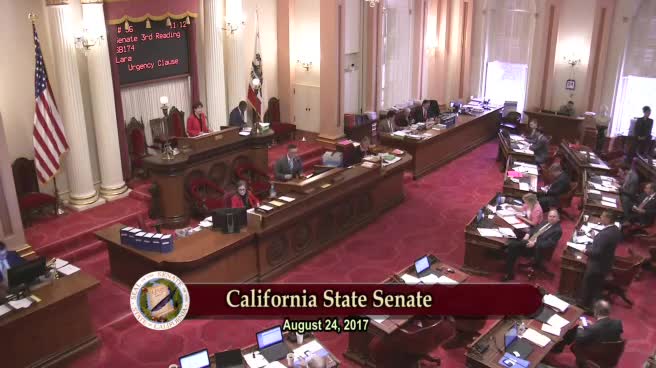 7MIN
Senate Floor
 1MIN
Assembly Floor
 1MIN
Assembly Standing Committee on Appropriations
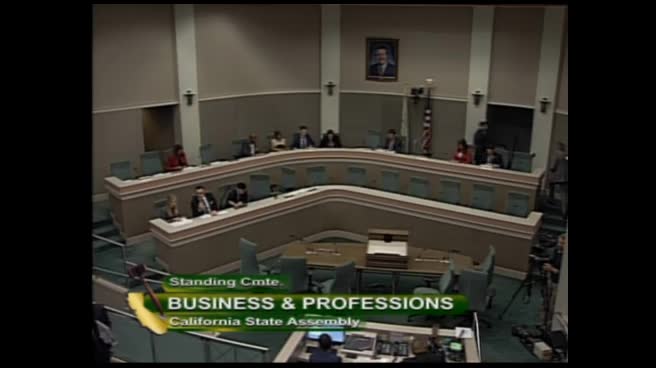 4MIN
Assembly Standing Committee on Business and Professions
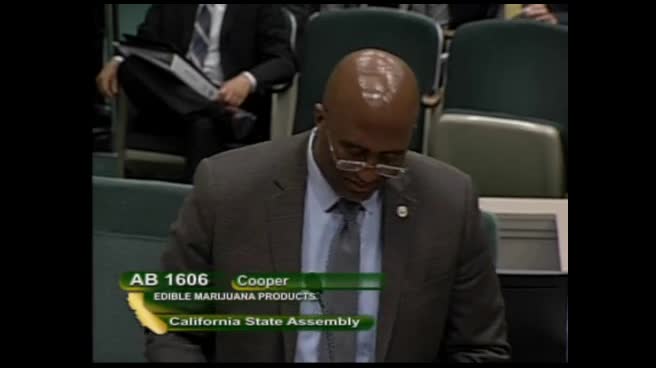 5MIN
Assembly Standing Committee on Health
Bill Author
Bill Co-Author(s):
