AB 1620: Political Reform Act of 1974: postgovernment employment.
- Session Year: 2017-2018
- House: Assembly
- Latest Version Date: 2017-10-14
The Milton Marks Postgovernment Employment Restrictions Act of 1990 prohibits a Member of the Legislature, for a period of one year after leaving office, from acting as a compensated agent or attorney for, or otherwise representing, any other person by making appearances before, or communications with, the Legislature or its committees, present Members, or officers or employees, if the appearance or communication is made for the purpose of influencing legislative action.
The bill would extend the time period for these prohibitions for a Member of the Legislature who resigns from office by providing that the period commences with the effective date of the resignation and concludes one year after the adjournment sine die of the session in which the resignation occurred.
Because a violation of the act is punishable as a misdemeanor, this bill would impose a state-mandated local program.
The California Constitution requires the state to reimburse local agencies and school districts for certain costs mandated by the state. Statutory provisions establish procedures for making that reimbursement.
This bill would provide that no reimbursement is required by this act for a specified reason.
The Political Reform Act of 1974, an initiative measure, provides that the Legislature may amend the act to further the acts purposes upon a 2/3 vote of each house of the Legislature and compliance with specified procedural requirements.
This bill would declare that it furthers the purposes of the act.
The Milton Marks Postgovernment Employment Restrictions Act of 1990 prohibits a Member of the Legislature, for a period of one year after leaving office, from acting as a compensated agent or attorney for, or otherwise representing, any other person by making appearances before, or communications with, the Legislature or its committees, present Members, or officers or employees, if the appearance or communication is made for the purpose of influencing legislative action.
The bill would extend the time period for these prohibitions for a Member of the Legislature who resigns from office by providing that the period commences with the effective date of the resignation and concludes one year after the last day in the 2nd year adjournment sine die of the session in which the resignation occurred for each house to pass bills. occurred.
Because a violation of the act is punishable as a misdemeanor, this bill would impose a state-mandated local program.
The California Constitution requires the state to reimburse local agencies and school districts for certain costs mandated by the state. Statutory provisions establish procedures for making that reimbursement.
This bill would provide that no reimbursement is required by this act for a specified reason.
The Political Reform Act of 1974, an initiative measure, provides that the Legislature may amend the act to further the acts purposes upon a 2/3 vote of each house of the Legislature and compliance with specified procedural requirements.
This bill would declare that it furthers the purposes of the act.
The Milton Marks Postgovernment Employment Restrictions Act of 1990 prohibits a Member of the Legislature, for a period of one year after leaving office, from acting as a compensated agent or attorney for, or otherwise representing, any other person by making appearances before, or communications with, the Legislature or its committees, present Members, or officers or employees, if the appearance or communication is made for the purpose of influencing legislative action.
The bill would extend the time period for these prohibitions for a Member of the Legislature who resigns from office by providing that the period commences with the effective date of the resignation and concludes one year after the final date of the term to which the officer was elected. last day in the 2nd year of the session in which the resignation occurred for each house to pass bills.
Because a violation of the act is punishable as a misdemeanor, this bill would impose a state-mandated local program.
The California Constitution requires the state to reimburse local agencies and school districts for certain costs mandated by the state. Statutory provisions establish procedures for making that reimbursement.
This bill would provide that no reimbursement is required by this act for a specified reason.
The Political Reform Act of 1974, an initiative measure, provides that the Legislature may amend the act to further the acts purposes upon a 2/3 vote of each house of the Legislature and compliance with specified procedural requirements.
This bill would declare that it furthers the purposes of the act.
The Milton Marks Postgovernment Employment Restrictions Act of 1990 prohibits a Member of the Legislature, for a period of one year after leaving office, from acting as a compensated agent or attorney for, or otherwise representing, any other person by making appearances before before, or communications with, with the Legislature or its committees, present Members, or officers or employees, if the appearance or communication is made for the purpose of influencing legislative action.
The bill would additionally prohibit a Member from engaging in the above-described post legislative employment activities before the Governor or any officer or employee thereof. The bill would also extend the time period for these prohibitions for a Member of the Legislature who resigns from office by providing that the period commences with the effective date of the resignation and concludes one year after the final date of the term to which the officer was elected.
Because a violation of the act is punishable as a misdemeanor, this bill would impose a state-mandated local program.
The California Constitution requires the state to reimburse local agencies and school districts for certain costs mandated by the state. Statutory provisions establish procedures for making that reimbursement.
This bill would provide that no reimbursement is required by this act for a specified reason.
The Political Reform Act of 1974, an initiative measure, provides that the Legislature may amend the act to further the acts purposes upon a 2/3 vote of each house of the Legislature and compliance with specified procedural requirements.
This bill would declare that it furthers the purposes of the act.
The Milton Marks Postgovernment Employment Restrictions Act of 1990 prohibits a Member of the Legislature, for a period of one year after leaving office, from acting as a compensated agent or attorney for, or otherwise representing, any other person by making appearances before or communications with, with the Legislature or its committees, present Members, or officers or employees, if the appearance or communication is made for the purpose of influencing legislative action.
The bill would additionally prohibit a Member from engaging in the above-described post legislative employment activities before the Governor or any officer or employee thereof. The bill would also extend the time period for these prohibitions for a Member of the Legislature who resigns from office by providing that the period commences with the effective date of the resignation and concludes one year after the final date of the term to which the officer was elected.
Because a violation of the act is punishable as a misdemeanor, this bill would impose a state-mandated local program.
The California Constitution requires the state to reimburse local agencies and school districts for certain costs mandated by the state. Statutory provisions establish procedures for making that reimbursement.
This bill would provide that no reimbursement is required by this act for a specified reason.
The Political Reform Act of 1974, an initiative measure, provides that the Legislature may amend the act to further the acts purposes upon a 2/3 vote of each house of the Legislature and compliance with specified procedural requirements.
This bill would declare that it furthers the purposes of the act.
Existing law prohibits a Member of the Legislature, legislative employee, state elective or appointive officer, or judge or justice from having an interest, engaging in a business, transaction, or professional activity, or incurring an obligation that substantially conflicts with the proper discharge or his or her duties in the public interest and of his or her responsibilities under the law. Under existing law, a person subject to this prohibition has a substantial conflict if he or she has reason to believe or expect that he or she will derive a direct monetary gain or suffer a direct monetary loss by reason of his or her official activity.This bill would make nonsubstantive changes to the latter provision.Existing law prohibits a Member of the Legislature, legislative employee, state elective or appointive officer, or judge or justice from having an interest, engaging in a business, transaction, or professional activity, or incurring an obligation that substantially conflicts with the proper discharge or his or her duties in the public interest and of his or her responsibilities under the law. Under existing law, a person subject to this prohibition has a substantial conflict if he or she has reason to believe or expect that he or she will derive a direct monetary gain or suffer a direct monetary loss by reason of his or her official activity.
This bill would make nonsubstantive changes to the latter provision.
(a)This section shall be known, and may be cited, as the Milton Marks Postgovernment Employment Restrictions Act of 1990.
(b)(1)Except as provided in paragraph (2), a Member of the Legislature, for a period of one year after leaving office, shall not, for compensation, act as agent or attorney for, or otherwise represent, any other person by making any formal or informal appearance, or by making any oral or written communication, before the Legislature, any committee or subcommittee thereof, any present Member of the Legislature, or any officer or employee thereof, if the appearance or communication is made for the purpose of influencing legislative action.
(2)A Member of the Legislature who resigns from office, for a period commencing with the effective date of the resignation and concluding one year after the adjournment sine die of the session in which the resignation occurred, shall not, for compensation, act as agent or attorney for, or otherwise represent, any other person by making any formal or informal appearance, or by making any oral or written communication, before the Legislature, any committee or subcommittee thereof, any present Member of the Legislature, or any officer or employee thereof, if the appearance or communication is made for the purpose of influencing legislative action.
(c)An elected state officer, other than a Member of the Legislature, for a period of one year after leaving office, shall not, for compensation, act as agent or attorney for, or otherwise represent, any other person by making any formal or informal appearance, or by making any oral or written communication, before any state administrative agency, or any officer or employee thereof, if the appearance or communication is for the purpose of influencing administrative action, or influencing any action or proceeding involving the issuance, amendment, awarding, or revocation of a permit, license, grant, or contract, or the sale or purchase of goods or property. For purposes of this subdivision, an appearance before a state administrative agency does not include an appearance in a court of law, before an administrative law judge, or before the Workers Compensation Appeals Board.
(d)(1)A designated employee of a state administrative agency, any officer, employee, or consultant of a state administrative agency who holds a position that entails the making, or participation in the making, of decisions that may foreseeably have a material effect on any financial interest, and a member of a state administrative agency, for a period of one year after leaving office or employment, shall not, for compensation, act as agent or attorney for, or otherwise represent, any other person, by making any formal or informal appearance, or by making any oral or written communication, before any state administrative agency, or officer or employee thereof, for which he or she worked or represented during the 12 months before leaving office or employment, if the appearance or communication is made for the purpose of influencing administrative or legislative action, or influencing any action or proceeding involving the issuance, amendment, awarding, or revocation of a permit, license, grant, or contract, or the sale or purchase of goods or property. For purposes of this paragraph, an appearance before a state administrative agency does not include an appearance in a court of law, before an administrative law judge, or before the Workers Compensation Appeals Board. The prohibition of this paragraph only applies to designated employees employed by a state administrative agency on or after January 7, 1991.
(2)For purposes of paragraph (1), a state administrative agency of a designated employee of the Governors office includes any state administrative agency subject to the direction and control of the Governor.
(e)The prohibitions contained in subdivisions (b), (c), and (d) do not apply to any individual subject to this section who is or becomes either of the following:
(1)An officer or employee of another state agency, board, or commission if the appearance or communication is for the purpose of influencing legislative or administrative action on behalf of the state agency, board, or commission.
(2)An official holding an elective office of a local government agency if the appearance or communication is for the purpose of influencing legislative or administrative action on behalf of the local government agency.
SEC. 2.No reimbursement is required by this act pursuant to Section 6 of Article XIIIB of the California Constitution because the only costs that may be incurred by a local agency or school district will be incurred because this act creates a new crime or infraction, eliminates a crime or infraction, or changes the penalty for a crime or infraction, within the meaning of Section 17556 of the Government Code, or changes the definition of a crime within the meaning of Section 6 of Article XIIIB of the California Constitution.
SEC. 3.The Legislature finds and declares that this bill furthers the purposes of the Political Reform Act of 1974 within the meaning of subdivision (a) of Section 81012 of the Government Code.
(a)This section shall be known, and may be cited, as the Milton Marks Postgovernment Employment Restrictions Act of 1990.
(b)(1)Except as provided in paragraph (2), a Member of the Legislature, for a period of one year after leaving office, shall not, for compensation, act as agent or attorney for, or otherwise represent, any other person by making any formal or informal appearance, or by making any oral or written communication, before the Legislature, any committee or subcommittee thereof, any present Member of the Legislature, or any officer or employee thereof, if the appearance or communication is made for the purpose of influencing legislative action.
(2)A Member of the Legislature who resigns from office, for a period commencing with the effective date of the resignation and concluding one year after the last day in the second year of the adjournment sine die of the session in which the resignation occurred for each house to pass bills occurred, shall not, for compensation, act as agent or attorney for, or otherwise represent, any other person by making any formal or informal appearance, or by making any oral or written communication, before the Legislature, any committee or subcommittee thereof, any present Member of the Legislature, or any officer or employee thereof, if the appearance or communication is made for the purpose of influencing legislative action.
(c)An elected state officer, other than a Member of the Legislature, for a period of one year after leaving office, shall not, for compensation, act as agent or attorney for, or otherwise represent, any other person by making any formal or informal appearance, or by making any oral or written communication, before any state administrative agency, or any officer or employee thereof, if the appearance or communication is for the purpose of influencing administrative action, or influencing any action or proceeding involving the issuance, amendment, awarding, or revocation of a permit, license, grant, or contract, or the sale or purchase of goods or property. For purposes of this subdivision, an appearance before a state administrative agency does not include an appearance in a court of law, before an administrative law judge, or before the Workers Compensation Appeals Board.
(d)(1)A designated employee of a state administrative agency, any officer, employee, or consultant of a state administrative agency who holds a position that entails the making, or participation in the making, of decisions that may foreseeably have a material effect on any financial interest, and a member of a state administrative agency, for a period of one year after leaving office or employment, shall not, for compensation, act as agent or attorney for, or otherwise represent, any other person, by making any formal or informal appearance, or by making any oral or written communication, before any state administrative agency, or officer or employee thereof, for which he or she worked or represented during the 12 months before leaving office or employment, if the appearance or communication is made for the purpose of influencing administrative or legislative action, or influencing any action or proceeding involving the issuance, amendment, awarding, or revocation of a permit, license, grant, or contract, or the sale or purchase of goods or property. For purposes of this paragraph, an appearance before a state administrative agency does not include an appearance in a court of law, before an administrative law judge, or before the Workers Compensation Appeals Board. The prohibition of this paragraph only applies to designated employees employed by a state administrative agency on or after January 7, 1991.
(2)For purposes of paragraph (1), a state administrative agency of a designated employee of the Governors office includes any state administrative agency subject to the direction and control of the Governor.
(e)The prohibitions contained in subdivisions (b), (c), and (d) do not apply to any individual subject to this section who is or becomes either of the following:
(1)An officer or employee of another state agency, board, or commission if the appearance or communication is for the purpose of influencing legislative or administrative action on behalf of the state agency, board, or commission.
(2)An official holding an elective office of a local government agency if the appearance or communication is for the purpose of influencing legislative or administrative action on behalf of the local government agency.
SEC. 2.No reimbursement is required by this act pursuant to Section 6 of Article XIIIB of the California Constitution because the only costs that may be incurred by a local agency or school district will be incurred because this act creates a new crime or infraction, eliminates a crime or infraction, or changes the penalty for a crime or infraction, within the meaning of Section 17556 of the Government Code, or changes the definition of a crime within the meaning of Section 6 of Article XIIIB of the California Constitution.
SEC. 3.The Legislature finds and declares that this bill furthers the purposes of the Political Reform Act of 1974 within the meaning of subdivision (a) of Section 81012 of the Government Code.
(a)This section shall be known, and may be cited, as the Milton Marks Postgovernment Employment Restrictions Act of 1990.
(b)(1)Except as provided in paragraph (2), a Member of the Legislature, for a period of one year after leaving office, shall not, for compensation, act as agent or attorney for, or otherwise represent, any other person by making any formal or informal appearance, or by making any oral or written communication, before the Legislature, any committee or subcommittee thereof, any present Member of the Legislature, or any officer or employee thereof, if the appearance or communication is made for the purpose of influencing legislative action.
(2)A Member of the Legislature who resigns from office, for a period commencing with the effective date of the resignation and concluding one year after the final date of the term to which the officer was elected, last day in the second year of the session in which the resignation occurred for each house to pass bills shall not, for compensation, act as agent or attorney for, or otherwise represent, any other person by making any formal or informal appearance, or by making any oral or written communication, before the Legislature, any committee or subcommittee thereof, any present Member of the Legislature, or any officer or employee thereof, if the appearance or communication is made for the purpose of influencing legislative action.
(c)An elected state officer, other than a Member of the Legislature, for a period of one year after leaving office, shall not, for compensation, act as agent or attorney for, or otherwise represent, any other person by making any formal or informal appearance, or by making any oral or written communication, before any state administrative agency, or any officer or employee thereof, if the appearance or communication is for the purpose of influencing administrative action, or influencing any action or proceeding involving the issuance, amendment, awarding, or revocation of a permit, license, grant, or contract, or the sale or purchase of goods or property. For purposes of this subdivision, an appearance before a state administrative agency does not include an appearance in a court of law, before an administrative law judge, or before the Workers Compensation Appeals Board.
(d)(1)A designated employee of a state administrative agency, any officer, employee, or consultant of a state administrative agency who holds a position that entails the making, or participation in the making, of decisions that may foreseeably have a material effect on any financial interest, and a member of a state administrative agency, for a period of one year after leaving office or employment, shall not, for compensation, act as agent or attorney for, or otherwise represent, any other person, by making any formal or informal appearance, or by making any oral or written communication, before any state administrative agency, or officer or employee thereof, for which he or she worked or represented during the 12 months before leaving office or employment, if the appearance or communication is made for the purpose of influencing administrative or legislative action, or influencing any action or proceeding involving the issuance, amendment, awarding, or revocation of a permit, license, grant, or contract, or the sale or purchase of goods or property. For purposes of this paragraph, an appearance before a state administrative agency does not include an appearance in a court of law, before an administrative law judge, or before the Workers Compensation Appeals Board. The prohibition of this paragraph only applies to designated employees employed by a state administrative agency on or after January 7, 1991.
(2)For purposes of paragraph (1), a state administrative agency of a designated employee of the Governors office includes any state administrative agency subject to the direction and control of the Governor.
(e)The prohibitions contained in subdivisions (b), (c), and (d) do not apply to any individual subject to this section who is or becomes either of the following:
(1)An officer or employee of another state agency, board, or commission if the appearance or communication is for the purpose of influencing legislative or administrative action on behalf of the state agency, board, or commission.
(2)An official holding an elective office of a local government agency if the appearance or communication is for the purpose of influencing legislative or administrative action on behalf of the local government agency.
SEC. 2.No reimbursement is required by this act pursuant to Section 6 of Article XIIIB of the California Constitution because the only costs that may be incurred by a local agency or school district will be incurred because this act creates a new crime or infraction, eliminates a crime or infraction, or changes the penalty for a crime or infraction, within the meaning of Section 17556 of the Government Code, or changes the definition of a crime within the meaning of Section 6 of Article XIIIB of the California Constitution.
SEC. 3.The Legislature finds and declares that this bill furthers the purposes of the Political Reform Act of 1974 within the meaning of subdivision (a) of Section 81012 of the Government Code.
(a)This section shall be known, and may be cited, as the Milton Marks Postgovernment Employment Restrictions Act of 1990.
(b)(1)Except as provided in paragraph (2), a Member of the Legislature, for a period of one year after leaving office, shall not, for compensation, act as agent or attorney for, or otherwise represent, any other person by making any formal or informal appearance, or by making any oral or written communication, before the Legislature, any committee or subcommittee thereof, any present Member of the Legislature or the Governor, Legislature, or any officer or employee thereof, if the appearance or communication is made for the purpose of influencing legislative action.
(2)A Member of the Legislature who resigns from office, for a period commencing with the effective date of the resignation and concluding one year after the final date of the term to which the officer was elected, shall not, for compensation, act as agent or attorney for, or otherwise represent, any other person by making any formal or informal appearance, or by making any oral or written communication, before the Legislature, any committee or subcommittee thereof, any present Member of the Legislature or the Governor, Legislature, or any officer or employee thereof, if the appearance or communication is made for the purpose of influencing legislative action.
(c)An elected state officer, other than a Member of the Legislature, for a period of one year after leaving office, shall not, for compensation, act as agent or attorney for, or otherwise represent, any other person by making any formal or informal appearance, or by making any oral or written communication, before any state administrative agency, or any officer or employee thereof, if the appearance or communication is for the purpose of influencing administrative action, or influencing any action or proceeding involving the issuance, amendment, awarding, or revocation of a permit, license, grant, or contract, or the sale or purchase of goods or property. For purposes of this subdivision, an appearance before a state administrative agency does not include an appearance in a court of law, before an administrative law judge, or before the Workers Compensation Appeals Board.
(d)(1)A designated employee of a state administrative agency, any officer, employee, or consultant of a state administrative agency who holds a position which that entails the making, or participation in the making, of decisions which that may foreseeable foreseeably have a material effect on any financial interest, and a member of a state administrative agency, for a period of one year after leaving office or employment, shall not, for compensation, act as agent or attorney for, or otherwise represent, any other person, by making any formal or informal appearance, or by making any oral or written communication, before any state administrative agency, or officer or employee thereof, for which he or she worked or represented during the 12 months before leaving office or employment, if the appearance or communication is made for the purpose of influencing administrative or legislative action, or influencing any action or proceeding involving the issuance, amendment, awarding, or revocation of a permit, license, grant, or contract, or the sale or purchase of goods or property. For purposes of this paragraph, an appearance before a state administrative agency does not include an appearance in a court of law, before an administrative law judge, or before the Workers Compensation Appeals Board. The prohibition of this paragraph only applies to designated employees employed by a state administrative agency on or after January 7, 1991.
(2)For purposes of paragraph (1), a state administrative agency of a designated employee of the Governors office includes any state administrative agency subject to the direction and control of the Governor.
(e)The prohibitions contained in subdivisions (b), (c), and (d) do not apply to any individual subject to this section who is or becomes either of the following:
(1)An officer or employee of another state agency, board, or commission if the appearance or communication is for the purpose of influencing legislative or administrative action on behalf of the state agency, board, or commission.
(2)An official holding an elective office of a local government agency if the appearance or communication is for the purpose of influencing legislative or administrative action on behalf of the local government agency.
SEC. 2.No reimbursement is required by this act pursuant to Section 6 of Article XIIIB of the California Constitution because the only costs that may be incurred by a local agency or school district will be incurred because this act creates a new crime or infraction, eliminates a crime or infraction, or changes the penalty for a crime or infraction, within the meaning of Section 17556 of the Government Code, or changes the definition of a crime within the meaning of Section 6 of Article XIIIB of the California Constitution.
SEC. 3.The Legislature finds and declares that this bill furthers the purposes of the Political Reform Act of 1974 within the meaning of subdivision (a) of Section 81012 of the Government Code.
(a)This section shall be known, and may be cited, as the Milton Marks Postgovernment Employment Restrictions Act of 1990.
(b)No (1)Except as provided in paragraph (2), a Member of the Legislature, for a period of one year after leaving office, shall, shall not, for compensation, act as agent or attorney for, or otherwise represent, any other person by making any formal or informal appearance, or by making any oral or written communication, before the Legislature, any committee or subcommittee thereof, any present Member of the Legislature, Legislature or the Governor, or any officer or employee thereof, if the appearance or communication is made for the purpose of influencing legislative action.
(2)A Member of the Legislature who resigns from office, for a period commencing with the effective date of the resignation and concluding one year after the final date of the term to which the officer was elected, shall not, for compensation, act as agent or attorney for, or otherwise represent, any other person by making any formal or informal appearance, or by making any oral or written communication, before the Legislature, any committee or subcommittee thereof, any present Member of the Legislature or the Governor, or any officer or employee thereof, if the appearance or communication is made for the purpose of influencing legislative action.
(c)No An elected state officer, other than a Member of the Legislature, for a period of one year after leaving office, shall, shall not, for compensation, act as agent or attorney for, or otherwise represent, any other person by making any formal or informal appearance, or by making any oral or written communication, before any state administrative agency, or any officer or employee thereof, if the appearance or communication is for the purpose of influencing administrative action, or influencing any action or proceeding involving the issuance, amendment, awarding, or revocation of a permit, license, grant, or contract, or the sale or purchase of goods or property. For purposes of this subdivision, an appearance before a state administrative agency does not include an appearance in a court of law, before an administrative law judge, or before the Workers Compensation Appeals Board.
(d)(1)No A designated employee of a state administrative agency, any officer, employee, or consultant of a state administrative agency who holds a position which entails the making, or participation in the making, of decisions which may foreseeablyforeseeable have a material effect on any financial interest, and no a member of a state administrative agency, for a period of one year after leaving office or employment, shall, shall not, for compensation, act as agent or attorney for, or otherwise represent, any other person, by making any formal or informal appearance, or by making any oral or written communication, before any state administrative agency, or officer or employee thereof, for which he or she worked or represented during the 12 months before leaving office or employment, if the appearance or communication is made for the purpose of influencing administrative or legislative action, or influencing any action or proceeding involving the issuance, amendment, awarding, or revocation of a permit, license, grant, or contract, or the sale or purchase of goods or property. For purposes of this paragraph, an appearance before a state administrative agency does not include an appearance in a court of law, before an administrative law judge, or before the Workers Compensation Appeals Board. The prohibition of this paragraph shall only apply applies to designated employees employed by a state administrative agency on or after January 7, 1991.
(2)For purposes of paragraph (1), a state administrative agency of a designated employee of the Governors office includes any state administrative agency subject to the direction and control of the Governor.
(e)The prohibitions contained in subdivisions (b), (c), and (d) shall do not apply to any individual subject to this section who is or becomes any either of the following:
(1)An officer or employee of another state agency, board, or commission if the appearance or communication is for the purpose of influencing legislative or administrative action on behalf of the state agency, board, or commission.
(2)An official holding an elective office of a local government agency if the appearance or communication is for the purpose of influencing legislative or administrative action on behalf of the local government agency.
(f)This section shall become operative on January 1, 1991, but only if Senate Constitutional Amendment No. 32 of the 198990 Regular Session is approved by the voters. With respect to Members of the Legislature whose current term of office on January 1, 1991, began in December 1988, this section shall not apply until January 1, 1993.SEC. 2.No reimbursement is required by this act pursuant to Section 6 of Article XIIIB of the California Constitution because the only costs that may be incurred by a local agency or school district will be incurred because this act creates a new crime or infraction, eliminates a crime or infraction, or changes the penalty for a crime or infraction, within the meaning of Section 17556 of the Government Code, or changes the definition of a crime within the meaning of Section 6 of Article XIIIB of the California Constitution.
SEC. 3.The Legislature finds and declares that this bill furthers the purposes of the Political Reform Act of 1974 within the meaning of subdivision (a) of Section 81012 of the Government Code.
SECTION 1.Section 8921 of the Government Code is amended to read:8921.A person subject to this article has an interest that is in substantial conflict with the proper discharge of his or her duties in the public interest and of his or her responsibilities as prescribed in the laws of this state or a personal interest, arising from any situation, within the scope of this article, if he or she has reason to believe or expect that he or she will derive a direct monetary gain or suffer a direct monetary loss by reason of his or her official activity. He or she does not have an interest that is in substantial conflict with the proper discharge of his or her duties in the public interest and of his or her responsibilities as prescribed in the laws of this state or a personal interest, arising from any situation, within the scope of this article, if any benefit or detriment accrues to him or her as a member of a business, profession, occupation, or group to no greater extent than any other member of that business, profession, occupation, or group.A person subject to this article has an interest which that is in substantial conflict with the proper discharge of his or her duties in the public interest and of his or her responsibilities as prescribed in the laws of this state or a personal interest, arising from any situation, within the scope of this article, if he or she has reason to believe or expect that he or she will derive a direct monetary gain or suffer a direct monetary loss, as the case may be, loss by reason of his or her official activity. He or she does not have an interest which that is in substantial conflict with the proper discharge of his or her duties in the public interest and of his or her responsibilities as prescribed in the laws of this state or a personal interest, arising from any situation, within the scope of this article, if any benefit or detriment accrues to him or her as a member of a business, profession, occupation, or group to no greater extent than any other member of that business, profession, occupation, or group.
|
Date
|
Status
|
|---|---|
| Oct 14, 2017 | Chaptered by Secretary of State - Chapter 800, Statutes of 2017. |
| Oct 14, 2017 | Approved by the Governor. |
| Sep 19, 2017 | Enrolled and presented to the Governor at 3 p.m. |
| Sep 11, 2017 | Senate amendments concurred in. To Engrossing and Enrolling. |
| Sep 7, 2017 | In Assembly. Concurrence in Senate amendments pending. May be considered on or after September 9 pursuant to Assembly Rule 77. |
| Sep 7, 2017 | Read third time. Passed. Ordered to the Assembly. |
| Aug 29, 2017 | Read second time. Ordered to third reading. |
| Aug 28, 2017 | From committee: Be ordered to second reading pursuant to Senate Rule 28.8. |
| Aug 21, 2017 | In committee: Hearing postponed by committee. |
| Aug 21, 2017 | From committee chair, with author's amendments: Amend, and re-refer to committee. Read second time, amended, and re-referred to Com. on APPR. |
| Jul 3, 2017 | In committee: Set, first hearing. Hearing canceled at the request of author. |
| Jun 21, 2017 | From committee: Do pass and re-refer to Com. on APPR. (Ayes 5. Noes 0.) (June 20). Re-referred to Com. on APPR. |
| Jun 13, 2017 | From committee chair, with author's amendments: Amend, and re-refer to committee. Read second time, amended, and re-referred to Com. on E. & C.A. |
| Jun 1, 2017 | Referred to Com. on E. & C.A. |
| May 18, 2017 | In Senate. Read first time. To Com. on RLS. for assignment. |
| May 18, 2017 | Read third time. Passed. Ordered to the Senate. (Ayes 69. Noes 0. Page 1620.) |
| May 11, 2017 | Read second time. Ordered to Consent Calendar. |
| May 10, 2017 | From committee: Do pass. To Consent Calendar. (Ayes 17. Noes 0.) (May 10). |
| May 3, 2017 | Re-referred to Com. on APPR. |
| May 2, 2017 | Read second time and amended. |
| May 1, 2017 | From committee: Amend, and do pass as amended and re-refer to Com. on APPR. with recommendation: To Consent Calendar. (Ayes 7. Noes 0.) (April 26). |
| Mar 29, 2017 | Re-referred to Com. on E. & R. |
| Mar 28, 2017 | From committee chair, with author's amendments: Amend, and re-refer to Com. on E. & R. Read second time and amended. |
| Mar 27, 2017 | Referred to Com. on E. & R. |
| Feb 19, 2017 | From printer. May be heard in committee March 21. |
| Feb 17, 2017 | Read first time. To print. |
|
Date
|
Description
|
Location
|
Votes
|
|
|---|---|---|---|---|
| Sep 11, 2017 | AB 1620 DABABNEH Concurrence in Senate Amendments | Assembly Floor |
Passed |
|
| Sep 7, 2017 | Assembly 3rd Reading AB1620 Dababneh et al. By Morrell | Senate Floor |
Passed |
|
| Jun 20, 2017 | Do pass, but first be re-referred to the Committee on [Appropriations] | Senate Standing Committee on Elections and Constitutional Amendments |
Passed |
|
| May 18, 2017 | AB 1620 DABABNEH Consent Calendar Second Day Regular Session | Assembly Floor |
Passed |
|
| May 10, 2017 | Do pass. To Consent Calendar. | Assembly Standing Committee on Appropriations |
Passed |
|
| Apr 26, 2017 | Do pass as amended, and be re-referred to the Committee on [Appropriations] with recommendation: To Consent Calendar | Assembly Standing Committee on Elections and Redistricting |
Passed |
This list shows positions taken on this bill by organizations on the date displayed, which is linked to the original source.
Positions by individuals are not included.
CONCURRENCE IN SENATE AMENDMENTS
CSA1 Bill Id:AB 1620
Author:(Dababneh)
As Amended Ver:August 21, 2017
2/3 vote
ASSEMBLY: | 69-0 | (May 18, 2017) | SENATE: | 40-0 | (September 7, 2017) |
Original Committee Reference: E. & R.
SUMMARY: Extends the length of the "revolving door" ban when a member of the Legislature resigns from office so that it remains in effect until a year has passed since the end of the legislative session in which the member resigns. Specifically, this bill:
- Provides that when a member of the Legislature resigns from office, the existing prohibition against that member appearing before or communicating with the Legislature as a compensated representative of another person for the purpose of influencing legislative action applies from the time the member resigns until a year after the adjournment sine die of the session in which the resignation occurred, instead of applying for a period of one year after the person leaves office, as is the case under existing law.
- Makes corresponding and technical changes.
The Senate amendments provide that the revolving door ban for a member of the Legislature who resigns from office ends one year after the adjournment of session in which the resignation occurred, instead of apply for a period of one year after the end of the term to which the person was elected, as was proposed by the Assembly version of the bill.
FISCAL EFFECT: According to the Senate Appropriations Committee, pursuant to Senate Rule 28.8, negligible state costs.
COMMENTS: According to the author, "Currently, the Political Reform Act [PRA] has instituted a one-year ban on legislators from the time they resign from having direct communication with their former agency in an attempt to influence decisions. This generally serves to prevent former legislators from taking advantage of their relationships with former colleagues for the benefit of a private company…
The PRA restricts the post-governmental activities of certain former public officials, including members of the Legislature. These restrictions are commonly known as a "revolving door ban." Specifically, members of the Legislature are prohibited, for one year after leaving the Legislature, from representing any other person by appearing before or communicating with, for compensation, the Legislature, any committee or subcommittee thereof, any legislator, or any officer or employee of the Legislature, if the appearance or communication is made for the purpose of influencing legislative action. The one-year ban generally serves to prevent former legislators from taking advantage of their relationships with former colleagues and subordinates for the benefit of third parties by prohibiting former legislators from having direct communications with the Legislature in an attempt to influence decisions.
Since the 2001-2002 Legislative Session, there have been 33 instances in which a member of the Legislature resigned from office before the completion of his or her term. More than 84% of the resignations were the result of members being elected to other public offices by the voters (26 cases) or being appointed by the Governor to fill vacancies in other elective offices (two cases). In the five cases where a member of the Legislature resigned for a reason other than assuming another public office, one resigned after a criminal conviction, one resigned amid press reports about comments he made regarding an alleged relationship with a lobbyist, and three resigned from office and subsequently accepted governmental relations jobs with private organizations.
SB 679 (Morrell) of the current legislative session, which is pending in the Assembly, proposes to extend the existing revolving door ban to two years after leaving office for members of the Legislature who resign from office.
California voters passed an initiative, Proposition 9, in 1974 that created the Fair Political Practices Commission and codified significant restrictions and prohibitions on candidates, officeholders, and lobbyists. That initiative is commonly known as the PRA. Amendments to the PRA that are not submitted to the voters, such as those contained in this bill, must further the purposes of the initiative and require a two-thirds vote of both houses of the Legislature.
As approved by the Assembly, this bill proposed to extend the length of the revolving door ban when a member of the Legislature resigns from office so that it would remain in effect until a year after the end of the term to which the member was elected. The Senate amendments changed the end date of the revolving door ban when a member resigns to a year after the end of the legislative session in which the resignation occurred. Because Assembly terms last only for a single legislative session, the Senate amendments will have no effect with respect to a member of the Assembly who resigns from office before the completion of his or her term. For a Senator who resigns from office during the first two years of his or her four-year term, however, the Senate amendments would result in a revolving door ban that is two years shorter than it would have been under the Assembly-approved version of the bill. This bill, as amended in the Senate, is generally consistent with Assembly actions.
Analysis Prepared by: Ethan Jones / E. & R. / (916) 319-2094 FN: 0001486
Office of Senate Floor Analyses (916) 651-1520 Fax: (916) 327-4478 | AB |
THIRD READING
Bill No: AB 1620
:
SENATE ELECTIONS & C.A. COMMITTEE: 5-0, 6/20/17
AYES: Stern, Anderson, Allen, Hertzberg, Leyva
SENATE APPROPRIATIONS COMMITTEE: Senate Rule 28.8
ASSEMBLY FLOOR: 69-0, 5/18/17 (Consent) - See last page for vote
DIGEST:
This bill provides that if a Member of the Legislature resigns from office, his or her “revolving door” prohibition will commence with the effective date of the resignation and continue until one year after adjournment sine die of the legislative session during which he or she resigned.
Existing law:
- Prohibits a Member of the Legislature, for a period of one year after leaving office, from acting as a compensated agent or attorney for, or otherwise representing, any other person by making appearances before or communications with the Legislature if the appearance or communication is made for the purpose of influencing legislative action.
- Defines “legislative action” as the drafting, introduction, consideration, modification, enactment or defeat of any bill, resolution, amendment, report, nomination or other matter by the Legislature or by either house or any committee, subcommittee, joint or select committee thereof, or by a Member or employee of the Legislature acting in his official capacity. “Legislative action” also means the action of the Governor in approving or vetoing any bill.
- Prohibits an elected state officer, other than a Member of the Legislature, for a period of one year after leaving office, from acting as a compensated agent or attorney for, or otherwise representing any other person by making any formal or informal appearance, or by making any oral or written communication before any state administrative agency if the appearance or communication is for the purpose of influencing specified administrative actions.
- Provides that the above prohibitions do not apply to any individual who is or becomes any of the following:
- An officer or employee of another state agency, board, or commission if the appearance or communication is for the purpose of influencing legislative or administrative action on behalf of the state agency, board, or commission.
- An official holding an elective office of a local government agency if the appearance or communication is for the purpose of influencing legislative or administrative action on behalf of the local government agency.
- Prohibits a state or local public official from making, participating in making, or using his or her official position to influence, any governmental decision directly relating to any person or other entity with whom he or she is negotiating, or has any arrangement concerning, prospective employment.
This bill:
- Provides that if a Member of the Legislature resigns from office, his or her “revolving door” prohibition will commence with the effective date of the resignation and continue until one year after adjournment sine die of the legislative session during which he or she resigned.
- Makes other technical, nonsubstantive changes.
Background
"Revolving door" prohibitions are intended to address situations whereby former elected officers and other officials return to represent clients who have business before, or are seeking to influence policy decisions made by, their former agencies. In many of these instances, the former official may be lobbying his or her former subordinates or peers who may feel inordinate pressure to be accommodating.
Do you have to be an actual lobbyist? Existing law generally defines “lobbyist” as any individual who receives $2,000 or more in economic consideration in a calendar month, other than reimbursement for reasonable travel expenses, or whose principal duties as an employee are, to communicate directly or through his or her agents with any elective state official, agency official, or legislative official for the purpose of influencing legislative or administrative action.
Regulations promulgated by the Fair Political Practices Commission further define non-contract lobbyists as individuals who spend one-third or more of their time, in any calendar month, for which they receive compensation from his or her employer, engaging in direct communication, other than administrative testimony, with one or more qualifying officials for the purpose of influencing legislative or administrative action.
The existing revolving door prohibitions apply whether or not the former elected state officeholder qualifies as a "lobbyist" under this current definition.
Resignations from the California Legislature. Between 2001 and 2016, there were 32 instances in which a Member of the Legislature resigned from office before the completion of his or her term. Of those 32 resignations, 28 resulted in a special election being held to fill the resulting vacancy (in the other four cases, the resignation happened close enough to the end of the Member's term that a special election was not held, and the seat was left vacant for the remainder of the term instead).
Most of the resignations were the result of Members being elected to other public offices by the voters (25 cases) or being appointed by the Governor to fill vacancies in other elective offices (two cases). In the five cases where a Member of the Legislature resigned for a reason other than assuming another public office, one resigned after a criminal conviction, one resigned amid press reports about comments he made regarding an alleged relationship with a lobbyist, and three resigned from office and subsequently accepted governmental relations jobs with private organizations.
Comments
- According to the author, Californians elect candidates that they feel will protect, serve and work on behalf of their interests and well-being. It is then the job of the candidate, once elected into office, to fulfill those obligations. Candidates run knowing full and well the term length they are expected to complete. When an elected official resigns mid-term to take a governmental relations position for a private industry, they not only ruin the public’s confidence and trust of elected officials but also pass the huge costs of a special election on to constituents that they’ve essentially abandoned.
Currently, the Political Reform Act has instituted a one-year ban on legislators from the time they resign from having direct communication with the State Capitol as an attempt to influence decisions. This generally serves to prevent former legislators from taking advantage of their relationships with former colleagues for the benefit of the private company they now work for. However, this one-year ban hasn’t halted the practice of leaving mid-term to ultimately pursue a governmental relations job.
When a member of the Legislature leaves office mid-term, it triggers a costly special election. These can cost anywhere from $500,000 to $1,000,000 depending on the county.
This bill proposes to extend the length of the ban so that the ban would begin on the day a legislator resigns and continue until one year after adjournment sine die of the legislative session during which he or she resigned. Therefore, the length of the term would be extended based on when during the two year session the elected official decides to resign early. This is intended to discourage elected officials from leaving mid-term by lengthening the time before they can participate in certain types of influential communications/activities.
By providing this type of extension this bill seeks to halt situations that ultimately trigger a special election to be paid for by the county and eliminate the burden placed on constituents who elected and trusted this individual in the first place. This bill instead seeks to have these legislators resign at a time where a special election could be called to coincide with a pre-planned legislative election; therefore, saving county taxpayers a substantial amount of money.
Related/Prior Legislation
SB 679 (Morrell, 2017), which is pending in the Assembly Appropriations Committee, provides that if a Member of the Legislature resigns from office, his or her “revolving door” prohibition will be two years, commencing with the effective date of the resignation.
SB 976 (Vidak of 2016) was approved by the Senate Elections and Constitutional Amendments Committee and the Senate Appropriations Committee but was then referred to the Senate Rules Committee where it was held. SB 976 would have extended the revolving door prohibition for a Member of the Legislature who resigns from office to two years commencing with the effective date of the resignation.
ACA 9 (Gomez of 2016), which was dropped by the author while it was pending in the Assembly Elections and Redistricting Committee, would have, among other things, prohibited a Member of the Legislature who vacates his or her seat prior to the expiration of the term of office for other than personal medical reasons from being permitted to lobby, for compensation before the Legislature until 12 months have passed from the date his or her term of office would have expired.
FISCAL EFFECT: Appropriation: Fiscal Com.: Local:
California Clean Money Campaign
OPPOSITION: (Verified 8/28/17)
None received
ASSEMBLY FLOOR: 69-0, 5/18/17
AYES: Acosta, Travis Allen, Arambula, Baker, Berman, Bigelow, Bloom, Bocanegra, Bonta, Brough, Burke, Caballero, Cervantes, Chávez, Chen, Chiu, Choi, Chu, Cooley, Cooper, Cunningham, Dababneh, Dahle, Daly, Eggman, Flora, Fong, Gallagher, Cristina Garcia, Eduardo Garcia, Gomez, Gonzalez Fletcher, Gray, Grayson, Harper, Irwin, Jones-Sawyer, Kalra, Kiley, Lackey, Levine, Limón, Low, Maienschein, Mathis, Mayes, McCarty, Medina, Melendez, Muratsuchi, Nazarian, Obernolte, O'Donnell, Patterson, Quirk, Quirk-Silva, Reyes, Ridley-Thomas, Rodriguez, Rubio, Salas, Steinorth, Mark Stone, Thurmond, Ting, Voepel, Waldron, Weber, Wood
NO VOTE RECORDED: Aguiar-Curry, Calderon, Chau, Frazier, Friedman, Gipson, Gloria, Holden, Mullin, Santiago, Rendon
8/29/17 15:04:21
**** END ****
SENATE COMMITTEE ON
ELECTIONS AND CONSTITUTIONAL AMENDMENTS
Senator Henry Stern, Chair
2017 - 2018 Regular
Bill No: 1620 Hearing Date: 6/20/17
Author: | Dababneh | ||
Version: |
| ||
Urgency: | Fiscal: | ||
Consultant: | |||
Subject:
DIGEST
This bill provides that if a Member of the Legislature resigns from office, his or her “revolving door” prohibition will commence with the effective date of the resignation and continue until one year after the last day of the second year of the legislative session during which he or she resigned.
ANALYSIS
Existing law:
- Prohibits a Member of the Legislature, for a period of one year after leaving office, from acting as a compensated agent or attorney for, or otherwise representing, any other person by making appearances before or communications with the Legislature if the appearance or communication is made for the purpose of influencing legislative action.
- Defines “legislative action” as the drafting, introduction, consideration, modification, enactment or defeat of any bill, resolution, amendment, report, nomination or other matter by the Legislature or by either house or any committee, subcommittee, joint or select committee thereof, or by a Member or employee of the Legislature acting in his official capacity. “Legislative action” also means the action of the Governor in approving or vetoing any bill.
- Prohibits an elected state officer, other than a Member of the Legislature, for a period of one year after leaving office, from acting as a compensated agent or attorney for, or otherwise representing any other person by making any formal or informal appearance, or by making any oral or written communication before any state administrative agency if the appearance or communication is for the purpose of influencing specified administrative actions.
- Provides that the above prohibitions do not apply to any individual who is or becomes any of the following:
- An officer or employee of another state agency, board, or commission if the appearance or communication is for the purpose of influencing legislative or administrative action on behalf of the state agency, board, or commission.
- An official holding an elective office of a local government agency if the appearance or communication is for the purpose of influencing legislative or administrative action on behalf of the local government agency.
- Prohibits a state or local public official from making, participating in making, or using his or her official position to influence, any governmental decision directly relating to any person or other entity with whom he or she is negotiating, or has any arrangement concerning, prospective employment.
This bill:
- Provides that if a Member of the Legislature resigns from office, his or her “revolving door” prohibition will commence with the effective date of the resignation and continue until one year after the last day of the second year of the legislative session during which he or she resigned.
- Makes other technical, nonsubstantive changes.
BACKGROUND
"Revolving door" prohibitions are intended to address situations whereby former elected officers and other officials return to represent clients who have business before, or are seeking to influence policy decisions made by, their former agencies. In many of these instances, the former official may be lobbying his or her former subordinates or peers who may feel inordinate pressure to be accommodating.
Do you have to be an actual lobbyist? Existing law generally defines “lobbyist” as any individual who receives $2,000 or more in economic consideration in a calendar month, other than reimbursement for reasonable travel expenses, or whose principal duties as an employee are, to communicate directly or through his or her agents with any elective state official, agency official, or legislative official for the purpose of influencing legislative or administrative action.
Regulations promulgated by the Fair Political Practices Commission further define non-contract lobbyists as individuals who spend one-third or more of their time, in any calendar month, for which they receive compensation from his or her employer, engaging in direct communication, other than administrative testimony, with one or more qualifying officials for the purpose of influencing legislative or administrative action.
The existing revolving door prohibitions apply whether or not the former elected state officeholder qualifies as a "lobbyist" under this current definition.
Resignations from the California Legislature. Between 2001 and 2016, there were 32 instances in which a Member of the Legislature resigned from office before the completion of his or her term. Of those 32 resignations, 28 resulted in a special election being held to fill the resulting vacancy (in the other four cases, the resignation happened close enough to the end of the Member's term that a special election was not held, and the seat was left vacant for the remainder of the term instead).
Most of the resignations were the result of Members being elected to other public offices by the voters (25 cases) or being appointed by the Governor to fill vacancies in other elective offices (two cases). In the five cases where a Member of the Legislature resigned for a reason other than assuming another public office, one resigned after a criminal conviction, one resigned amid press reports about comments he made regarding an alleged relationship with a lobbyist, and three resigned from office and subsequently accepted governmental relations jobs with private organizations.
COMMENTS
- According to the author: Californians elect candidates that they feel will protect, serve and work on behalf of their interests and well-being. It is then the job of the candidate, once elected into office, to fulfill those obligations. Candidates run knowing full and well the term length they are expected to complete. When an elected official resigns mid-term to take a governmental relations position for a private industry, they not only ruin the public’s confidence and trust of elected officials but also pass the huge costs of a special election on to constituents that they’ve essentially abandoned.
Currently, the Political Reform Act has instituted a one-year ban on legislators from the time they resign from having direct communication with the State Capitol as an attempt to influence decisions. This generally serves to prevent former legislators from taking advantage of their relationships with former colleagues for the benefit of the private company they now work for. However, this one-year ban hasn’t halted the practice of leaving mid-term to ultimately pursue a governmental relations job.
When a member of the Legislature leaves office mid-term, it triggers a costly special election. These can cost anywhere from $500,000 to $1,000,000 depending on the county.
This bill proposes to extend the length of the ban so that the ban would begin on the day a legislator resigns and continue until one-year after the last day in the 2nd year of session (in which the resignation occurred) for each house to pass bills. Therefore, the length of the term would be extended based on when during the two year session the elected official decides to resign early. This is intended to discourage elected officials from leaving mid-term by lengthening the time before they can participate in certain types of influential communications/activities.
By providing this type of extension this bill seeks to halt situations that ultimately trigger a special election to be paid for by the county and eliminate the burden placed on constituents who elected and trusted this individual in the first place. This bill instead seeks to have these legislators resign at a time where a special election could be called to coincide with a pre-planned legislative election; therefore, saving county taxpayers a substantial amount of money.
- Fraternal Twin Bills? SB 679 (Morrell), which is pending in the Assembly Elections and Redistricting Committee, is very similar to this bill except instead of extending the revolving door ban from the resignation to a year following the end of session as this bill requires, it provides that the ban is in effect for two years following the resignation. Either approach would ensure that no former member of the Legislature would be able to legally lobby the Legislature at any time within the same two-year legislative session during which he or she resigned. However, AB 1620 could provide for a shorter or longer ban than SB 679 depending on the effective date of the resignation. For instance, if a member resigned prior to the half-way point in the session, the ban would be longer under AB 1620 but if the resignation occurs after the half-way point the total length of the ban would be shorter that the two years provided in SB 679.
Staff has suggested that the two authors work together to reconcile the minor differences in their bills.
RELATED/PRIOR LEGISLATION
SB 679 (Morrell), which is pending in the Assembly Elections and Redistricting Committee, provides that if a Member of the Legislature resigns from office, his or her “revolving door” prohibition will be two years, commencing with the effective date of the resignation.
SB 976 (Vidak, 2016) was approved by the Senate Elections and Constitutional Amendments Committee and the Senate Appropriations Committee but was then referred to the Senate Rules Committee where it was held. SB 976 would have extended the revolving door prohibition for a Member of the Legislature who resigns from office to two years commencing with the effective date of the resignation.
ACA 9 (Gomez, 2016), which was dropped by the author while it was pending in the Assembly Elections and Redistricting Committee, would have, among other things, prohibited a Member of the Legislature who vacates his or her seat prior to the expiration of the term of office for other than personal medical reasons from being permitted to lobby, for compensation before the Legislature until 12 months have passed from the date his or her term of office would have expired.
PRIOR ACTION
Assembly Floor: | 69 - 0 |
Assembly Appropriations Committee: | 17 - 0 |
Assembly Committee: | 7 - 0 |
POSITIONS
Sponsor: Author
Support: None received
Oppose: None received
-- END --
Date of Hearing: May 10, 2017
ASSEMBLY COMMITTEE ON APPROPRIATIONS
Lorena Gonzalez Fletcher, Chair
ABPCA Bill Id:AB 1620
Author:(Dababneh) – As Amended Ver:May 2, 2017
Policy Committee: | Elections and Redistricting | Vote: | 7 - 0 |
|
| ||
|
|
Urgency: No State Mandated Local Program: Yes Reimbursable: No
SUMMARY:
This bill extends the length of the "revolving door" ban when a member of the Legislature resigns from office so that it remains in effect until a year has passed since the end of the term to which the person was elected. Specifically, this bill provides that when a member of the Legislature resigns from office, the existing prohibition against that member appearing before or communicating with the Legislature as a compensated representative of another person for the purpose of influencing legislative action applies from the time the member resigns until a year after the final date of the term of office to which the person was elected, instead of applying for a period of one year after the person leaves office, as is the case under existing law. Because a violation of the ban constitutes a misdemeanor, this bill would expand that crime.
FISCAL EFFECT:
Potential nonreimbursable local incarceration costs, potentially offset by fine revenue.
COMMENTS:
- Background. Existing law prohibits a member of the Legislature, for a period of one year after leaving office, from acting as a compensated agent or attorney for, or otherwise representing, any other person by making appearances before or communications with the Legislature if the appearance or communication is made for the purpose of influencing legislative action.
- Purpose. According to the author, “Currently, the Political Reform Act has instituted a one-year ban on legislators from the time they resign from having direct communication with their former agency in an attempt to influence decisions. This generally serves to prevent former legislators from taking advantage of their relationships with former colleagues for the benefit of a private company. However, this one-year ban hasn't halted the practice of leaving mid-term to ultimately pursue a governmental relations job.”
Analysis Prepared by: Jessica Peters / APPR. / (916) 319-2081
Date of Hearing: April 26, 2017
ASSEMBLY COMMITTEE ON ELECTIONS AND REDISTRICTING
Marc Berman, Chair
ABPCA Bill Id:AB 1620 (
Author:Dababneh) – As Amended Ver:March 28, 2017
AS PROPOSED TO BE AMENDED
SUBJECT: Political Reform Act of 1974: postgovernment employment.
SUMMARY: Extends the length of the "revolving door" ban when a member of the Legislature resigns from office so that it remains in effect until a year has passed since the end of the term to which the person was elected. Specifically, this bill:
- Provides that when a member of the Legislature resigns from office, the existing prohibition against that member appearing before or communicating with the Legislature as a compensated representative of another person for the purpose of influencing legislative action applies from the time the member resigns until a year after the final date of the term of office to which the person was elected, instead of applying for a period of one year after the person leaves office, as is the case under existing law.
- Makes corresponding and technical changes.
EXISTING LAW:
- Creates the Fair Political Practices Commission (FPPC), and makes it responsible for the impartial, effective administration and implementation of the Political Reform Act (PRA).
- Prohibits a member of the Legislature, for a period of one year after leaving office, from acting as a compensated agent or attorney for, or otherwise representing, any other person by making appearances before or communications with the Legislature if the appearance or communication is made for the purpose of influencing legislative action.
- Defines "legislative action," for the purpose of the restrictions on post-legislative employment activities by former members of the Legislature, to mean the drafting, introduction, consideration, modification, enactment or defeat of any bill, resolution, amendment, report, nomination or other matter by the Legislature or by either house or any committee, subcommittee, joint or select committee thereof, or by a member or employee of the Legislature acting in his official capacity. Provides that "legislative action" also includes the action of the Governor in approving or vetoing any bill.
- Prohibits an elected state officer, other than a member of the Legislature, for a period of one year after leaving office, from acting as a compensated agent or attorney for, or otherwise representing any other person by making any formal or informal appearance, or by making any oral or written communication before any state administrative agency if the appearance or communication is for the purpose of influencing specified administrative actions.
- Provides that the above prohibitions do not apply to any individual who is or becomes any of the following:
- An officer or employee of another state agency, board, or commission if the appearance or communication is for the purpose of influencing legislative or administrative action on behalf of the state agency, board, or commission; or,
- An official holding an elective office of a local government agency if the appearance or communication is for the purpose of influencing legislative or administrative action on behalf of the local government agency.
- An officer or employee of another state agency, board, or commission if the appearance or communication is for the purpose of influencing legislative or administrative action on behalf of the state agency, board, or commission; or,
- Prohibits a state or local public official from making, participating in making, or using his or her official position to influence, any governmental decision directly relating to any person or other entity with whom he or she is negotiating, or has any arrangement concerning, prospective employment.
FISCAL EFFECT: Unknown. State-mandated local program; contains a crimes and infractions disclaimer.
COMMENTS:
- Author's Amendments: After the committee's deadline for pre-committee author's amendments, the author proposed amendments to narrow the scope of this bill by eliminating provisions that would have expanded the Legislative revolving door ban to include communications with the Governor. This analysis reflects those proposed author's amendments. The proposed author's amendments are as follows:
On page 2, line 13, strike out "Legislature or the Governor," and insert "Legislature,"
On page 3, lines 10-11, strike out "Legislature or the Governor," and insert "Legislature," - Purpose of the Bill: According to the author:
It is the job of elected officials to serve California's residents. These people elect candidates they feel will protect, serve and work for their interests and well-being and they expect them to serve the entire term. When an elected official resigns mid-term to take a governmental relations position for a private industry, they not only ruin the public's confidence and trust of elected officials but also pass the huge costs of a special election on to those that they've essentially abandoned.
Currently, the Political Reform Act has instituted a one-year ban on legislators from the time they resign from having direct communication with their former agency in an attempt to influence decisions. This generally serves to prevent former legislators from taking advantage of their relationships with former colleagues for the benefit of a private company.
However, this one-year ban hasn't halted the practice of leaving mid-term to ultimately pursue a governmental relations job. When a member of the Legislature leaves office mid-term, it triggers a costly special election. These can cost anywhere from $500,000 to $1,000,000 depending on the county.
This bill proposes a lobbying ban that would be the remainder of the term plus one year. This is intended to discourage elected officials from leaving mid-term, which triggers a special election to be paid for by the county and ultimately putting the burden on those who elected and trusted this individual in the first place.
- Revolving Door Restrictions: The PRA restricts the post-governmental activities of certain former public officials, including members of the Legislature. These restrictions are commonly known as a "revolving door ban." Specifically, members of the Legislature are prohibited, for one year after leaving the Legislature, from representing any other person by appearing before or communicating with, for compensation, the Legislature, any committee or subcommittee thereof, any legislator, or any officer or employee of the Legislature, if the appearance or communication is made for the purpose of influencing legislative action. The one-year ban generally serves to prevent former legislators from taking advantage of their relationships with former colleagues and subordinates for the benefit of third parties by prohibiting former legislators from having direct communications with the Legislature in an attempt to influence decisions. This one-year ban applies regardless of whether a former legislator is registered as a lobbyist; even if a former legislator does not qualify as a lobbyist under the PRA, that person nonetheless can violate the revolving door ban by making appearances or communications before the Legislature in the year after the person leaves office.
At the same time, however, the one-year ban does not prohibit a former legislator from providing strategic advice to others about business before the Legislature in the year after the person leaves office, as long as the former legislator does not appear before or directly contact the Legislature. - Resignations from the California Legislature: Since the 2001-2002 Legislative Session, there have been 32 instances in which a member of the Legislature resigned from office before the completion of his or her term. Of those 32 resignations, 28 resulted in a special election being held to fill the resulting vacancy (in the other four cases, the resignation occurred close enough to the end of the member's term that a special election was not held, and the seat was left vacant for the remainder of the term instead). More than 84% of the resignations were the result of members being elected to other public offices by the voters (25 cases) or being appointed by the Governor to fill vacancies in other elective offices (two cases). In the five cases where a member of the Legislature resigned for a reason other than assuming another public office, one resigned after a criminal conviction, one resigned amid press reports about comments he made regarding an alleged relationship with a lobbyist, and three resigned from office and subsequently accepted governmental relations jobs with private organizations.
- Will This Bill Achieve Its Goal? The author states that the purpose of this bill is to discourage elected officials from leaving office before the completion of their terms in order to take governmental relations jobs with private industry. As stated above, since 2001, only three sitting legislators resigned from office and subsequently accepted governmental relations jobs with private organizations – most of the members who resigned did so in order to serve in other elective offices. Furthermore, none of the three former legislators who resigned from office and subsequently accepted governmental relations jobs have registered as lobbyists, which may be an indication that those individuals are not engaged in communications or appearances that are covered by the revolving door ban (though, as detailed above, the revolving door ban applies even in situations where a person is not registered as a lobbyist). Given that relatively few members of the Legislature have resigned to take governmental relations jobs with private industry, and the fact that none of those former members subsequently engaged in a level of lobbying activity sufficient to require them to register as lobbyists, the degree to which this bill will serve to discourage resignations from the Legislature is unclear.
- Technical Amendment: In order to correct a drafting error, committee staff recommends the following technical amendment:
On page 3, line 33, strike out "foreseeable" and insert "foreseeably". - Related and Previous Legislation: SB 679 (Morrell) proposes to extend the existing revolving door ban to two years after leaving office for members of the Legislature who resign from office. SB 679 is pending in the Senate Appropriations Committee.
SB 976 (Vidak) of 2016 was similar to SB 679. SB 976 was approved by the Senate Elections & Constitutional Amendments Committee, but was then referred to the Senate Rules Committee where it was held.
AB 2284 (Patterson) of 2016 would have required a legislator who resigned before the completion of his or her term to use surplus campaign funds to pay for any resulting special election, among other provisions. AB 2284 failed passage in this committee on a 2-3 vote.
ACA 9 (Gomez) of 2016 would have would have prohibited a legislator who vacated his or her seat prior to the expiration of the term of office for reasons other than personal medical reasons from being permitted to lobby for compensation before the Legislature until 12 months had passed from the date his or her term of office would have expired, among other provisions. Those provisions subsequently were amended out of ACA 9, and it was never heard in committee. - Political Reform Act of 1974: California voters passed an initiative, Proposition 9, in 1974 that created the FPPC and codified significant restrictions and prohibitions on candidates, officeholders, and lobbyists. That initiative is commonly known as the PRA. Amendments to the PRA that are not submitted to the voters, such as those contained in this bill, must further the purposes of the initiative and require a two-thirds vote of both houses of the Legislature.
REGISTERED SUPPORT / OPPOSITION:
Support
None on file.
Opposition
None on file.
Analysis Prepared by: Ethan Jones / E. & R. / (916) 319-2094
Discussed in Hearing
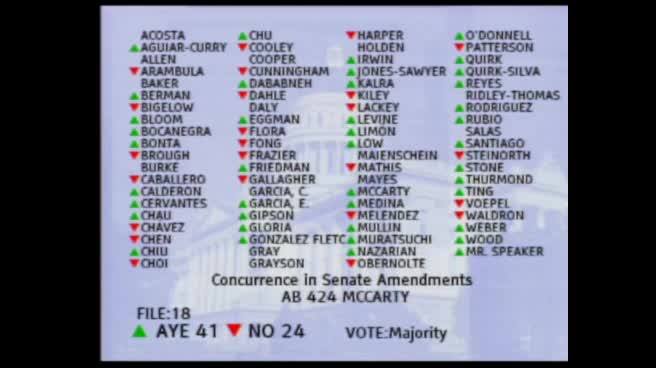 1MIN
Assembly Floor
 3MIN
Senate Floor
 6MIN
Senate Standing Committee on Elections and Constitutional Amendments
Bill Author