AB 1645: Hydrogen fluoride: report.
- Session Year: 2017-2018
- House: Assembly
- Latest Version Date: 2018-01-03
(1)Existing law establishes the South Coast Air Quality Management District vested with the authority to regulate air emissions from stationary sources located in the South Coast Air Basin.
This bill would require the south coast district, no later than January 1, 2020, to submit a specified report to the Legislature on hydrogen fluoride and modified hydrogen fluoride at specified refineries. By adding to the duties of the south coast district, this bill would impose a state-mandated local program.
(2)The California Constitution requires the state to reimburse local agencies and school districts for certain costs mandated by the state. Statutory provisions establish procedures for making that reimbursement.
This bill would provide that, if the Commission on State Mandates determines that the bill contains costs mandated by the state, reimbursement for those costs shall be made pursuant to the statutory provisions noted above.
(1)Existing law generally regulates the management of hazardous waste. A violation of the hazardous waste control laws is a crime.This bill would require a refinery that, at any time, handles, maintains, or stores more than 250 gallons of hydrogen fluoride, including hydrofluoric acid and modified hydrofluoric acid, to, if possible, convert to a known, significantly less hazardous substitute by January 1, 2020. If that conversion is not possible and the refinery is located within 2 miles of a residential dwelling, the bill would require the refinery to cease handling, maintaining, or storing hydrogen fluoride, including hydrofluoric acid and modified hydrofluoric acid, by January 1, 2020. Because a violation of these requirements would be a crime, the bill would impose a state-mandated local program.(2)The California Constitution requires the state to reimburse local agencies and school districts for certain costs mandated by the state. Statutory provisions establish procedures for making that reimbursement.This bill would provide that no reimbursement is required by this act for a specified reason.(1)Existing law generally regulates the management of hazardous waste. A violation of the hazardous waste control laws is a crime.
This bill would require a business refinery that, at any time, handles, maintains, or stores more than 250 gallons of hydrogen fluoride or fluoride, including hydrofluoric acid and modified hydrofluoric acid, to, if possible, convert to a known, significantly less hazardous substitute by January 1, 2020. If that conversion is not possible and the business refinery is located within 2 miles of a residential dwelling, the bill would require the business refinery to cease handling, maintaining, or storing hydrogen fluoride and fluoride, including hydrofluoric acid and modified hydrofluoric acid, by January 1, 2020. Because a violation of these requirements would be a crime, the bill would impose a state-mandated local program.
(2)The California Constitution requires the state to reimburse local agencies and school districts for certain costs mandated by the state. Statutory provisions establish procedures for making that reimbursement.
This bill would provide that no reimbursement is required by this act for a specified reason.
(1)Existing law generally regulates the management of hazardous waste. A violation of the hazardous waste control laws is a crime.
This bill would require a business that, at any time, handles, maintains, or stores more than 250 gallons of hydrogen fluoride or hydrofluoric acid to, if possible, convert to a known, significantly less hazardous substitute by January 1, 2020. If that conversion is not possible and the business is located within 2 miles of a residential dwelling, the bill would require the business to cease handling, maintaining, or storing hydrogen fluoride and hydrofluoric acid by January 1, 2020. Because a violation of these requirements would be a crime, the bill would impose a state-mandated local program.
(2)The California Constitution requires the state to reimburse local agencies and school districts for certain costs mandated by the state. Statutory provisions establish procedures for making that reimbursement.
This bill would provide that no reimbursement is required by this act for a specified reason.
Existing law requires that, unless the provision or the context otherwise requires, specified definitions, rules of construction, and other general provisions govern the construction of the Public Utilities Code.This bill would make a nonsubstantive change to that provision.Existing law requires that, unless the provision or the context otherwise requires, specified definitions, rules of construction, and other general provisions govern the construction of the Public Utilities Code.
This bill would make a nonsubstantive change to that provision.
(a)No later than January 1, 2020, the south coast district shall submit a report to the Legislature that contains both of the following:
(1)A study of hydrogen fluoride and modified hydrogen fluoride, viable alternatives to hydrogen fluoride and modified hydrogen fluoride, and the potential economic impact of removing or retaining hydrogen fluoride and modified hydrogen fluoride in the two refineries located within the boundaries of the south coast district.
(2)A safety comparison of hydrogen fluoride and modified hydrogen fluoride to sulfuric acid, ionic liquid, and solid acid catalyst alkylation.
(b)(1)A report to be submitted pursuant to subdivision (a) shall be submitted in compliance with Section 9795 of the Government Code.
(2)Pursuant to Section 10231.5 of the Government Code, this section is repealed on January 1, 2024.
SEC. 2.If the Commission on State Mandates determines that this act contains costs mandated by the state, reimbursement to local agencies and school districts for those costs shall be made pursuant to Part 7 (commencing with Section 17500) of Division 4 of Title 2 of the Government Code.
SECTION 1.(a)The Legislature finds and declares all of the following:(1)Modified hydrofluoric acid, a solution of hydrogen fluoride and a vapor suppressant additive, is used by two refineries in California to manufacture high octane fuel.(2)According to the United States Chemical Safety Board, Hydrofluoric acid is one of the most hazardous and deadly chemicals used in petroleum refining.(3)In February 2015, an explosion at the Exxon Mobil Torrance refinery blanketed nearby neighborhoods with catalyst dust and felt like a 1.7 magnitude earthquake. The explosion barely missed the Torrance refinerys modified hydrofluoric acid settler tank.(4)Investigations have shown that since 1979 there have been more than 80 incidents at the Torrance refinery involving hydrofluoric acid.(5)According to the federal Centers for Disease Control and Prevention, Hydrogen fluoride gas, even at low levels, can irritate the eyes, nose, and respiratory tract. Breathing in hydrogen fluoride at high levels or in combination with skin contact can cause death from an irregular heartbeat or from fluid buildup in the lungs.(6)People who survive after being severely injured by breathing in hydrogen fluoride may suffer lingering chronic lung disease or prolonged or permanent visual defects, blindness, or the total destruction of the eye.(7)Residents in southern California have tried to ban the use of hydrofluoric acid at refineries for more than 25 years.(8)Previous attempts to ban hydrofluoric acid at refineries in California have ended in litigation. Notably, in 1991, Ultramar, the then-operator of the Wilmington refinery sued the South Coast Air Quality Management District after the district adopted a rule phasing out the use of hydrofluoric acid.(9)Today, 616,000 residents in California live within 3.5 miles of refineries that combined store more than 60,000 lbs of modified hydrofluoric acid.(10)Article I of the California Constitution declares, All people are by nature free and independent and have inalienable rights. Among these are enjoying and defending life and liberty, acquiring, possessing, and protecting property, and pursuing and obtaining safety, happiness, and privacy.(11)The lives and health of people residing within the refineries official EPA worst case scenario modified hydrofluoric acid risk zones are in danger from a significant accidental release of modified hydrofluoric acid.(b)It is the intent of the Legislature to balance the needs of public safety with preserving refinery jobs.SEC. 2.Article 11.3 (commencing with Section 25240) is added to Chapter 6.5 of Division 20 of the Health and Safety Code, to read:11.3.Hydrogen Fluoride25240.(a)A refinery that, at any time, handles, maintains, or stores more than 250 gallons of hydrogen fluoride, including hydrofluoric acid and modified hydrofluoric acid, shall, if possible, convert to a known, significantly less hazardous substitute by January 1, 2020.(b)If it is not possible for a refinery to convert to a known, significantly less hazardous substitute, as specified in subdivision (a), and the refinery is located within two miles of a residential dwelling, the refinery shall cease handling, maintaining, or storing hydrogen fluoride, including hydrofluoric acid and modified hydrofluoric acid, by January 1, 2020.SEC. 3.No reimbursement is required by this act pursuant to Section 6 of Article XIIIB of the California Constitution because the only costs that may be incurred by a local agency or school district will be incurred because this act creates a new crime or infraction, eliminates a crime or infraction, or changes the penalty for a crime or infraction, within the meaning of Section 17556 of the Government Code, or changes the definition of a crime within the meaning of Section 6 of Article XIIIB of the California Constitution.(a)The Legislature finds and declares all of the following:
(1)Modified hydrofluoric acid, a solution of hydrogen fluoride and water, a vapor suppressant additive, is used by two refineries in California to manufacture high octane fuel.
(2)According to the United States Chemical Safety Board, Hydrofluoric acid is one of the most hazardous and deadly chemicals used in petroleum refining.
(3)In February 2015, an explosion at the Exxon Mobil Torrance refinery blanketed nearby neighborhoods with catalyst dust and felt like a 1.7 magnitude earthquake. The explosion barely missed the Torrance refinerys storage of modified hydrofluoric acid. acid settler tank.
(4)Investigations have shown that since 1979 there have been more than 80 incidents at the Torrance refinery involving hydrofluoric acid.
(5)According to the federal Centers for Disease Control and Prevention, Hydrogen fluoride gas, even at low levels, can irritate the eyes, nose, and respiratory tract. Breathing in hydrogen fluoride at high levels or in combination with skin contact can cause death from an irregular heartbeat or from fluid buildup in the lungs.
(6)People who survive after being severely injured by breathing in hydrogen fluoride may suffer lingering chronic lung disease or prolonged or permanent visual defects, blindness, or the total destruction of the eye.
(7)Residents in southern California have tried to ban the use of hydrofluoric acid at refineries for more than 25 years.
(8)Previous attempts to ban hydrofluoric acid at refineries in California have ended in litigation. Notably, in 1991, Ultramar, the then-operator of the Wilmington refinery sued the South Coast Air Quality Management District after the district adopted a rule phasing out the use of hydrofluoric acid.
(9)Today, 616,000 residents in California live within 3.5 miles of refineries that combined store more than 60,000 lbs of modified hydrofluoric acid.
(10)Article I of the California Constitution declares, All people are by nature free and independent and have inalienable rights. Among these are enjoying and defending life and liberty, acquiring, possessing, and protecting property, and pursuing and obtaining safety, happiness, and privacy.
(11)Even in its modified form, hydrofluoric acid could kill more than 500,000 Californians at any moment, causing a threat to property and safety.(11)The lives and health of people residing within the refineries official EPA worst case scenario modified hydrofluoric acid risk zones are in danger from a significant accidental release of modified hydrofluoric acid.
(b)It is the intent of the Legislature to balance the needs of public safety with preserving refinery jobs.
SEC. 2.Article 11.3 (commencing with Section 25240) is added to Chapter 6.5 of Division 20 of the Health and Safety Code, to read:11.3.Hydrogen Fluoride25240.(a)A business refinery that, at any time, handles, maintains, or stores more than 250 gallons of hydrogen fluoride, including hydrofluoric acid and modified hydrofluoric acid, shall, if possible, convert to a known, significantly less hazardous substitute by January 1, 2020.
(b)If it is not possible for a business refinery to convert to a known, significantly less hazardous substitute, as specified in subdivision (a), and the business refinery is located within two miles of a residential dwelling, the business refinery shall cease handling, maintaining, or storing hydrogen fluoride and fluoride, including hydrofluoric acid and modified hydrofluoric acid, by January 1, 2020.
SEC. 3.No reimbursement is required by this act pursuant to Section 6 of Article XIIIB of the California Constitution because the only costs that may be incurred by a local agency or school district will be incurred because this act creates a new crime or infraction, eliminates a crime or infraction, or changes the penalty for a crime or infraction, within the meaning of Section 17556 of the Government Code, or changes the definition of a crime within the meaning of Section 6 of Article XIIIB of the California Constitution.
(a)The Legislature finds and declares all of the following:
(1)Modified hydrofluoric acid, a solution of hydrogen fluoride and water, is used by two refineries in California to manufacture high octane fuel.
(2)According to the United States Chemical Safety Board, Hydrofluoric acid is one of the most hazardous and deadly chemicals used in petroleum refining.
(3)In February 2015, an explosion at the Exxon Mobil Torrance refinery blanketed nearby neighborhoods with catalyst dust and felt like a 1.7 magnitude earthquake. The explosion barely missed the Torrance refinerys storage of modified hydrofluoric acid.
(4)Investigations have shown that since 1979 there have been more than 80 incidents at the Torrance refinery involving hydrofluoric acid.
(5)According to the federal Centers for Disease Control and Prevention, Hydrogen fluoride gas, even at low levels, can irritate the eyes, nose, and respiratory tract. Breathing in hydrogen fluoride at high levels or in combination with skin contact can cause death from an irregular heartbeat or from fluid buildup in the lungs.
(6)People who survive after being severely injured by breathing in hydrogen fluoride may suffer lingering chronic lung disease or prolonged or permanent visual defects, blindness, or the total destruction of the eye.
(7)Residents in southern California have tried to ban the use of hydrofluoric acid at refineries for more than 25 years.
(8)Previous attempts to ban hydrofluoric acid at refineries in California have ended in litigation. Notably, in 1991, Ultramar, the then-operator of the Wilmington refinery sued the South Coast Air Quality Management District after the district adopted a rule phasing out the use of hydrofluoric acid.
(9)Today, 616,000 residents in California live within 3.5 miles of refineries that combined store more than 60,000 lbs of modified hydrofluoric acid.
(10)Article I of the California Constitution declares, All people are by nature free and independent and have inalienable rights. Among these are enjoying and defending life and liberty, acquiring, possessing, and protecting property, and pursuing and obtaining safety, happiness, and privacy.
(11)Even in its modified form, hydrofluoric acid could kill more than 500,000 Californians at any moment, causing a threat to property and safety.
(b)It is the intent of the Legislature to balance the needs of public safety with preserving refinery jobs.
SEC. 2.Article 11.3 (commencing with Section 25240) is added to Chapter 6.5 of Division 20 of the Health and Safety Code, to read:11.3.Hydrogen Fluoride25240.(a)A business that, at any time, handles, maintains, or stores more than 250 gallons of hydrogen fluoride, including hydrofluoric acid, shall, if possible, convert to a known, significantly less hazardous substitute by January 1, 2020.
(b)If it is not possible for a business to convert to a known, significantly less hazardous substitute, as specified in subdivision (a), and the business is located within two miles of a residential dwelling, the business shall cease handling, maintaining, or storing hydrogen fluoride and hydrofluoric acid by January 1, 2020.
SEC. 3.No reimbursement is required by this act pursuant to Section 6 of Article XIIIB of the California Constitution because the only costs that may be incurred by a local agency or school district will be incurred because this act creates a new crime or infraction, eliminates a crime or infraction, or changes the penalty for a crime or infraction, within the meaning of Section 17556 of the Government Code, or changes the definition of a crime within the meaning of Section 6 of Article XIIIB of the California Constitution.
SECTION 1.Section 5 of the Public Utilities Code is amended to read:5.Unless the provision or the context requires otherwise, the definitions, rules of construction, and other general provisions contained in Sections 1 to 22, inclusive, and the definitions in the Public Utilities Act (Chapter 1 (commencing with Section 201) of Part 1 of Division 1), shall govern the construction of this code.Unless the provision or the context otherwise requires, requires otherwise, the definitions, rules of construction, and other general provisions contained in Sections 1 to 22, inclusive, and the definitions in the Public Utilities Act (Chapter 1 (commencing with Section 201) of Part 1 of Division 1), shall govern the construction of this code.
|
Date
|
Status
|
|---|---|
| Feb 1, 2018 | From committee: Filed with the Chief Clerk pursuant to Joint Rule 56. |
| Jan 31, 2018 | Died pursuant to Art. IV, Sec. 10(c) of the Constitution. |
| Jan 8, 2018 | In committee: Set, first hearing. Hearing canceled at the request of author. |
| Jan 3, 2018 | From committee chair, with author's amendments: Amend, and re-refer to Com. on E.S. & T.M. Read second time and amended. |
| Apr 25, 2017 | In committee: Testimony taken. Hearing postponed by committee. |
| Apr 18, 2017 | Re-referred to Com. on E.S. & T.M. |
| Apr 17, 2017 | From committee chair, with author's amendments: Amend, and re-refer to Com. on E.S. & T.M. Read second time and amended. |
| Mar 29, 2017 | Re-referred to Com. on E.S. & T.M. |
| Mar 28, 2017 | From committee chair, with author's amendments: Amend, and re-refer to Com. on E.S. & T.M. Read second time and amended. |
| Mar 27, 2017 | Referred to Com. on E.S. & T.M. |
| Feb 19, 2017 | From printer. May be heard in committee March 21. |
| Feb 17, 2017 | Read first time. To print. |
This list shows positions taken on this bill by organizations on the date displayed, which is linked to the original source.
Positions by individuals are not included.
Date of Hearing: April 25, 2017
ASSEMBLY COMMITTEE ON ENVIRONMENTAL SAFETY AND TOXIC MATERIALS
Bill Quirk, Chair
ABPCA Bill Id:AB 1645 (
Author:Muratsuchi) – As Amended Ver:April 17, 2017
SUBJECT: Hydrogen fluoride: notice of use: substitution
SUMMARY: Requires a refinery that handles, stores, or maintains more than 250 gallons of hydrogen fluoride to, if possible, convert to a known, significantly less hazardous substitute by January 1, 2020. Specifically, this bill:
1) Requires any refinery that, at any time, handles, maintains, or stores more than 250 gallons of hydrogen fluoride, including hydrofluoric acid and modified hydrofluoric acid, to, if possible, convert to a known, and significantly less hazardous substitute by January 1, 2020.
2) Prohibits a refinery that is located within 2 miles of a residential dwelling to cease handling, maintaining, or storing hydrogen fluoride, hydrofluoric acid, and modified hydrofluoric acid by January 1, 2020, if it is not possible for the refinery to convert to a known, significantly less hazardous substitute for hydrogen fluoride, hydrofluoric acid, and modified hydrofluoric acid.
EXISTING LAW:
1) Requires the Department of Toxic Substances Control (DTSC) to regulate the management of hazardous waste in California. (Health and Safety Code (HSC) § 25100 et. seq.)
2) Requires DTSC to adopt regulations that establish a process for evaluating chemicals of concern in consumer products, and their potential alternatives, to determine how best to limit exposure or to reduce the level of hazard posed by a chemical of concern. (HSC § 25253)
FISCAL EFFECT: Unknown.
COMMENTS:
Need for the bill: According to the author, "In 1991, the South Coast Air Quality Management District (SCAQMD) adopted Rule 1410 in order to minimize the possibility of harm to the public due to an accidental release of hydrogen fluoride (HF). Rule 1410 banned the use of HF after 1998 at refineries within the SCAQMD jurisdiction and immediately put into place safeguards and measures to protect the public. However, the rule was successfully challenged and blocked by the courts in 1992, due to a lack of public notice.
Two years ago, an explosion at the Torrance refinery injured four workers and damaged equipment, forcing a shutdown of the refinery and raising the concerns of residents living in the surrounding area. AB 1645 was introduced at the request of the community in the South Bay and will restrict the use of Hydrofluoric Acid in California."
Hydrofluoric acid (HF): HF is an extremely hazardous material. Human contact with this acid can lead to severe burns of the skin or lungs (if inhaled), and death can result from significant exposure if not immediately and adequately treated. HF is a chemical compound used in petroleum alkylation. The petroleum alkylation process, produces alkylate, which is used for high octane gasoline for “anti-knock” properties. Upon contact with moisture, HF converts to hydrofluoric acid, which is highly corrosive and toxic. Upon release, the acid vaporizes and forms a toxic cloud that can travel close to the ground with potentially lethal concentrations.
Hyrdofluoric Acid Alkylation/Modified Hydrofluoric Acid Alkylation: HF alkylation was developed in the 1940’s and practiced worldwide for the manufacture of high octane alkylate for use in gasoline blending. There are a total of 48 HF alkylation units installed at refineries in the United States. Modified Hydrofluoric Acid (MHF) alkylation was developed as a safety enhancement for existing hydrofluoric acid alkylation units. Through the use of an additive, the volatility of HF is suppressed which increases the safety of these units and reduces the offsite impact from a potential leak. There are currently four units in the United States that employ MHF. Only two refineries in California use HF or MHF, they are the Torrance Refining Company in Torrance and the Valero Wilmington Refinery in Wilmington.
Alternatives to HF: In 2016, the SCAQMD released a study, by Norton Engineering Consultants, that reviewed and evaluated commercially available options for replacing current HF alkylation units. The study found that, "Sulfuric Acid Alkylation and Solid Acid Alkylation are the two options that have shown enough commercial development to support the conversion of an existing HF Alkylation Unit, although Solid Acid Alkylation technology is still in the early phases of commercial implementation, with less than one year of runtime achieved on a single operating plant in China (other units are currently in design). Sulfuric Acid Alkylation is a well-established technology with many years of operating experience and established technology providers. Changing an alkylation unit from HF to sulfuric acid will greatly reduce the potential for an acid vapor cloud to be formed upon release to the atmosphere. However, there will be a significant increase in acid transportation by rail or roadway to bring concentrated sulfuric acid into the refinery, and remove spent acid for off-site regeneration. Based on an extensive literature review and discussions with technology providers, there is no known reference for an HF or MHF Alkylation unit that has been converted to Sulfuric Acid Alkylation. The conversion of a HF or MHF to Sulfuric Acid or Solid Acid Alkylation unit will be an expensive undertaking, with an estimate for total installed cost in the $100 million range."
SCAQMD Rule 1410: In 1991, the SCAQMD Governing Board adopted Rule 1410 to phase out HF by January 1, 1998, with interim control measures. Ultramar Refinery (Valero) filed a lawsuit challenging the SCAQMD’s authority to adopt the rule and compliance with the California Environmental Quality Act (CEQA). The SCAQMD’s authority to adopt the rule was upheld. A procedural error in circulating the CEQA document resulted in the court invalidating the Rule. The Rule was not further pursued because Mobile Refinery (Torrance Refinery) entered into a court consent decree that required the phase out of HF by 1997, but permitted the refinery to commit to modified HF by December 31, 1994, only if demonstrated that it would not form a dense vapor cloud upon release.
New action on SCAQMD Rule 1410: On, April 1, 2017, the SCAQMD’s Refinery Committee held an investigative hearing to help inform the SCAQMD’s effort to reduce air pollution and improve safety at the Torrance refinery. The SCAQMD announced it will develop or amend three refinery regulations this year to reduce air pollution in the region, specifically the regulations would: provide additional requirements to reduce planned and unplanned flaring; add requirements for refineries to monitor air quality at their fence line and/or in the nearby community to better assess potential exposure; and, add a requirement for the two refineries that use modified hydrofluoric acid to phase out the highly toxic chemical. The SCAQMD held a workgroup meeting on proposed Rule 1410, hydrogen fluoride storage, and use at petroleum refineries, on April 19, 2017. The target goal is for the SCAQMD to have proposed Rule 1410 before its Governing Board by December 2017.
Green Chemistry: The California legislature passed the Green Chemistry Law in 2008. The law authorizes and requires DTSC to adopt regulations to identify and prioritize chemicals in consumer products. When ingredient toxicity is considered in the product development stage, concerns can be addressed more effectively. This approach results in safer ingredients and designs, and provides opportunities for California industry to once again demonstrate its innovative spirit by making safer products that meet consumer demand throughout the world. In compliance with the Green Chemistry Law, DTSC adopted the Safer Consumer Products regulations on October 1, 2013. The goals of the regulatory program are to: reduce toxic chemicals in consumer products; create new business opportunities in the emerging safer consumer products industry; and, help consumers and businesses identify what is in the products they buy for their families and customers.
Balancing the production from a petroleum refinery with hazards associated with operating a facility is a complex undertaking. The Legislature has taken an interest in finding safer alternatives to toxic ingredients with the passage of the Green Chemistry Law. AB 1645 seeks to enhance the safety of communities near refineries by requiring petroleum refineries to use a safer alternative to HF.
Related legislation:
AB 1759 (Bonta, 2016). Would have required businesses that use HF to use safer alternatives and would have required specific notification requirements for facilities within a specified zone of the business using HF. The bill was held in the Assembly Natural Resources Committee.
REGISTERED SUPPORT / OPPOSITION:
Support
Action Now
American Veterans (AMVETS)
Apostolic Faith Center
California Communities Against Toxics
California Kids IAQ
California Safe Schools
Coalition For A Safe Environment
Community Dreams
Del Amo Action Committee
EMERGE
NAACP- San Pedro-Wilmington Branch # 1069
San Pedro & Peninsula Homeowners Coalition
Sierra Club California
Society For Positive Action
St. Philomena Social Justice Ministry
Torrance Refinery Action Alliance
Wilmington Improvement Network
Five individuals
Opposition
American Chemistry Council
California Chamber of Commerce
California Independent Oil Marketers Association
California Independent Petroleum Association
California Manufacturers & Technology Association
California State Association of Electrical Workers
California State Pipe Trades Council
Chemical Industry Council of California
Industrial Environmental Association
International Brotherhood of Boilermakers
National Association of Chemical Distributors
State Building and Construction Trades Council, AFL-CIO
Western States Petroleum Association
Analysis Prepared by: Josh Tooker / E.S. & T.M. /
Discussed in Hearing
 22MIN
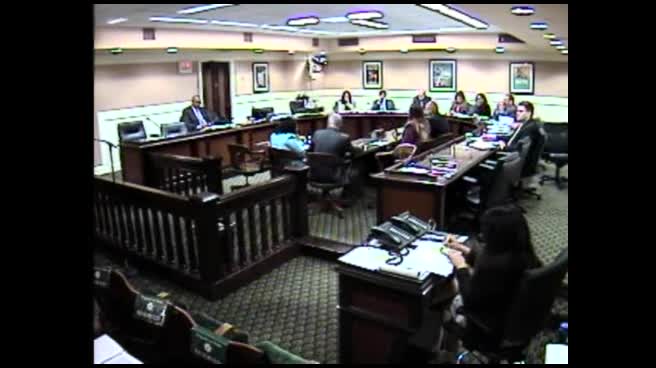
Assembly Standing Committee on Environmental Safety and Toxic Materials
Bill Author

Bill Co-Author(s):