AB 1663: Group homes: immigrant children.
- Session Year: 2017-2018
- House: Assembly
- Latest Version Date: 2018-06-25
Existing law, the California Community Care Facilities Act, provides for the licensure and regulation of community care facilities, including group homes, by the State Department of Social Services. Existing law subjects every licensed community care facility, except as specified, to unannounced inspections by the department, and authorizes the department to inspect these facilities as often as necessary to ensure the quality of care provided. A violation of this act is a misdemeanor.
Existing law requires the State Department of Social Services, subject to the availability of funding, to contract with qualified nonprofit legal services organizations to provide legal services to unaccompanied undocumented minors, as defined, who are transferred to the care and custody of the federal Office of Refugee Resettlement and who are present in this state.
This bill would require a group home with children who are under the custody of the federal Office of Refugee Resettlement, to, among other things, report the number of children under the custody of the federal Office of Refugee Resettlement who are placed in the group home and their length of stay and arrange a meeting for those children to meet with a qualified organization that has received a certain grant to provide legal services to unaccompanied undocumented minors if the child is an unaccompanied undocumented minor, as defined. The bill would require a county child welfare department to meet with each child under the custody of the federal Office of Refugee Resettlement who is placed in a group home to assess the well-being of the child and to offer mental health services to the child, and would require the department to inspect group homes with those children at least once each quarter to ensure compliance with the act and the quality of care provided. Because the failure of a group home to comply with these provisions would be a misdemeanor, and the bill would impose new requirements on county officials, the bill would impose a state-mandated local program.
The California Constitution requires the state to reimburse local agencies and school districts for certain costs mandated by the state. Statutory provisions establish procedures for making that reimbursement.
This bill would provide that no reimbursement is required by this act for a specified reason.
The Lead-Acid Battery Recycling Act of 2016 prohibits a person from disposing, or attempting to dispose, of a lead-acid battery at a solid waste facility or on or in any land, surface waters, watercourses, or marine waters, but authorizes a person to dispose of a lead-acid battery at certain locations. The act requires a manufacturer battery fee of $1 on and after April 1, 2017, until March 31, 2022, and $2 on and after April 1, 2022, to be imposed on a manufacturer of lead-acid batteries for each lead-acid battery it sells at retail to a person in California, or that it sells to a dealer, wholesaler, distributor, or other person for retail sale in California. The act requires the manufacturer battery fee to be paid to the California Department of Tax and Fee Administration and requires dealers and manufacturers of lead-acid batteries to register with the department. The act defines manufacturer for these purposes.This bill would authorize a person who manufactures a lead-acid battery and is not subject to the jurisdiction of the state to agree in writing with the importer, as defined, of that lead-acid battery to pay the manufacturer battery fee on behalf of the importer. The bill would exempt an importer who has an agreement of this type with a manufacturer, and who meets other specified requirements, from the requirement to register with the department. The bill would require the department, on or before January 1, 2020, to submit to the Legislature a report that includes, among other things, any regulations or policies adopted by the department for purposes of ensuring compliance with the registration, returns, reporting, payments, audits, refunds, or collection requirements related to the manufacturer battery fee.The act requires manufacturer battery fees remitted pursuant to these provisions to be credited against amounts owed by the manufacturer to the state under a judgment or determination of liability under specific hazardous materials provisions or any other law for removal, remediation, or other response costs relating to a release of a hazardous substance from a lead-acid battery recycling facility.This bill would additionally require that manufacturer battery fees remitted pursuant to these provisions be credited to the account of the manufacturer remitting those fees. The bill would require that a person who agrees in writing to pay the manufacturer battery fee on behalf of an importer be credited for a payment of the manufacturer battery fee only if certain conditions are met, including that the person provide to the purchaser of a lead-acid battery a statement that includes specified information on the invoice, contract, or other record documenting the transaction. The bill would relieve a purchaser of a lead-acid battery who receives that statement in a timely manner, and any subsequent purchaser of that battery, from liability for the manufacturer battery fee that would otherwise be imposed on the sale of that battery, provided that the manufacturer remits payment of the manufacturer battery fee to the state for the sale of that battery. The bill would authorize an importer who has paid the manufacturer battery fee and who receives an untimely statement that the fee has been paid for that battery to file a claim for a refund of any overpaid fees.The bill would authorize the department to disclose the name, address, account number, and account status of a person registered with the department to pay the manufacturer battery fee. The bill would provide that account status does not include the amount of the manufacturer battery fee paid by any person.The act imposes a California battery fee on a person for specified types of replacement lead-acid batteries purchased from a dealer.This bill would provide, if a new motor vehicle dealer sells or leases to a person a used vehicle into which the new motor vehicle dealer has incorporated a replacement lead-acid battery, that the California battery fee does not apply to the person with regard to that replacement lead-acid battery.The Lead-Acid Battery Recycling Act of 2016 prohibits a person from disposing, or attempting to dispose, of a lead-acid battery at a solid waste facility or on or in any land, surface waters, watercourses, or marine waters, but authorizes a person to dispose of a lead-acid battery at certain locations. Existing law, The act requires a manufacturer battery fee of $1 on and after April 1, 2017, until March 31, 2022, requires a manufacturer battery fee of $1 and $2 on and after April 1, 2022, to be imposed on a manufacturer of lead-acid batteries for each lead-acid battery it sells at retail to a person in California, or that it sells to a dealer, wholesaler, distributor, or other person for retail sale in California. Existing law The act requires the manufacturer battery fee to be paid to the State Board of Equalization. Existing law California Department of Tax and Fee Administration and requires dealers and manufacturers of lead-acid batteries to register with the department. The act defines manufacturer for these purposes.
This bill would authorize a person who manufacturers manufactures a lead-acid battery and is not subject to the jurisdiction of the state to agree in writing with the importer, as defined, of that lead-acid battery to pay the manufacturer battery fee on behalf of the importer. The bill would exempt an importer who has an agreement of this type with a manufacturer, and who meets other specified requirements, from the requirement to register with the department. The bill would require the department, on or before January 1, 2020, to submit to the Legislature a report that includes, among other things, any regulations or policies adopted by the department for purposes of ensuring compliance with the registration, returns, reporting, payments, audits, refunds, or collection requirements related to the manufacturer battery fee.
Existing lawThe act requires manufacturer battery fees remitted pursuant to these provisions to be credited against amounts owed by the manufacturer to the state under a judgment or determination of liability under specific hazardous materials provisions or any other law for removal, remediation, or other response costs relating to a release of a hazardous substance from a lead-acid battery recycling facility.
This bill would additionally require that manufacturer battery fees remitted pursuant to these provisions be credited to the account of the manufacturer remitting those fees. The bill would require that a person who agrees in writing to pay the manufacturer battery fee on behalf of an importer be credited for a payment of the manufacturer battery fee only if certain conditions are met, including that the person provide to the purchaser of a lead-acid battery a statement that includes specified information on the invoice, contract, or other record documenting the transaction. The bill would require that relieve a purchaser of a lead-acid battery who receives that statement in a timely manner, and any subsequent purchaser of that battery, be relieved from liability for the manufacturer battery fee that would otherwise be imposed on the sale of that battery, provided that the manufacturer remits payment of the manufacturer battery fee to the state for the sale of that battery. The bill would authorize an importer who has paid the manufacturer battery fee and who receives an untimely statement that the fee has been paid for that battery to file a claim for a refund of any overpaid fees.
The bill would, notwithstanding specified law, would authorize the board department to disclose the name, address, account number, and account status of a person registered with the board department to pay the manufacturer battery fee. The bill would provide that account status does not include the amount of the manufacturer battery fee paid by any person.
The act imposes a California battery fee on a person for specified types of replacement lead-acid batteries purchased from a dealer.
This bill would provide, if a new motor vehicle dealer sells or leases to a person a used vehicle into which the new motor vehicle dealer has incorporated a replacement lead-acid battery, that the California battery fee does not apply to the person with regard to that replacement lead-acid battery.
Existing law prohibits a person from disposing, or attempting to dispose, of a lead-acid battery at a solid waste facility or on or in any land, surface waters, watercourses, or marine waters, but authorizes a person to dispose of a lead-acid battery at certain locations. Existing law, on and after April 1, 2017, until March 31, 2022, requires a manufacturer battery fee of $1 to be imposed on a manufacturer of lead-acid batteries for each lead-acid battery it sells at retail to a person in California, or that it sells to a dealer, wholesaler, distributor, or other person for retail sale in California. Existing law requires the manufacturer battery fee to be paid to the State Board of Equalization. Existing law defines manufacturer for these purposes.
This bill would amend the definition of manufacturer to also include the person who manufactures the lead-acid battery, who is not a retailer engaged in business in this state, as defined, and who voluntarily elects to pay the manufacturer battery fee on behalf of another person, as specified.This bill would authorize a person who manufacturers a lead-acid battery and is not subject to the jurisdiction of the state to agree in writing with the importer, as defined, of that lead-acid battery to pay the manufacturer battery fee on behalf of the importer.
Existing law requires manufacturer battery fees remitted pursuant to these provisions to be credited against amounts owed by the manufacturer to the state under a judgment or determination of liability under specific hazardous materials provisions or any other law for removal, remediation, or other response costs relating to a release of a hazardous substance from a lead-acid battery recycling facility.
This bill would additionally require that manufacturer battery fees remitted pursuant to these provisions be credited to the account of the manufacturer remitting those fees. The bill would require that a person who meets the definition of manufacturer added by this bill agrees in writing to pay the manufacturer battery fee on behalf of an importer be credited for a payment of the manufacturer battery fee only if certain conditions are met, including that the person provide to the purchaser of a lead-acid battery a statement that includes specified information on the invoice, contract, or other record documenting the transaction. The bill would require that a purchaser of a lead-acid battery who receives that statement in a timely manner, and any subsequent purchaser of that battery, be relieved from liability for the manufacturer battery fee that would otherwise be imposed on the sale of that battery. battery, provided that the manufacturer remits payment of the manufacturer battery fee to the state for the sale of that battery. The bill would authorize a person an importer who pays has paid the manufacturer battery fee and who receives an untimely statement that the fee has been paid for that battery to file a claim for a refund of any overpaid fees pursuant to specified law. fees.
The bill would, notwithstanding specified law, authorize the board to disclose the name, address, account number, and account status of a person registered with the board to pay the manufacturer battery fee. The bill would provide that account status does not include the amount of the manufacturer battery fee paid by any person.
Existing law prohibits a person from disposing, or attempting to dispose, of a lead-acid battery at a solid waste facility or on or in any land, surface waters, watercourses, or marine waters, but authorizes a person to dispose of a lead-acid battery at certain locations. Existing law, on and after April 1, 2017, until March 31, 2022, requires a manufacturer battery fee of $1 to be imposed on a manufacturer of lead-acid batteries for each lead-acid battery it sells at retail to a person in California, or that it sells to a dealer, wholesaler, distributor, or other person for retail sale in California. Existing law requires the manufacturer battery fee to be paid to the State Board of Equalization. Existing law defines manufacturer for these purposes.
This bill would amend the definition of manufacturer to also include the person who manufactures the lead-acid battery, who is not a retailer engaged in business in this state, as defined, and who voluntarily elects to pay the manufacturer battery fee on behalf of another person, as specified.
Existing law requires manufacturer battery fees remitted pursuant to these provisions to be credited against amounts owed by the manufacturer to the state under a judgment or determination of liability under specific hazardous materials provisions or any other law for removal, remediation, or other response costs relating to a release of a hazardous substance from a lead-acid battery recycling facility.
This bill would additionally require that manufacturer battery fees remitted pursuant to these provisions be credited to the account of the manufacturer remitting those fees. The bill would require that a person who meets the definition of manufacturer added by this bill be credited for a payment of the manufacturer battery fee only if certain conditions are met, including that the person provide to the purchaser of a lead-acid battery a statement that includes specified information on the invoice, contract, or other record documenting the transaction. The bill would require that a purchaser of a lead-acid battery who receives that statement in a timely manner, and any subsequent purchaser of that battery, be relieved from liability for the manufacturer battery fee that would otherwise be imposed on the sale of that battery. The bill would authorize a person who pays the manufacturer battery fee and who receives an untimely statement to file a claim for a refund of any overpaid fees pursuant to specified law.
The bill would, notwithstanding specified law, authorize the board to disclose the name, address, account number, and account status of a person registered with the board to pay the manufacturer battery fee. The bill would provide that account status does not include the amount of the manufacturer battery fee paid by any person.
Existing law generally gives responsibility for the control of air pollution from vehicular sources to the State Air Resources Board and from all other sources to local and regional authorities, as provided. Existing law defines various terms for these purposes.This bill would correct an obsolete reference.Existing law generally gives responsibility for the control of air pollution from vehicular sources to the State Air Resources Board and from all other sources to local and regional authorities, as provided. Existing law defines various terms for these purposes.
This bill would correct an obsolete reference.
(a)A group home with children who are under the custody of the federal Office of Refugee Resettlement shall do all of the following:
(1)Report both of the following to the department on a quarterly basis:
(A)The number of children under the custody of the federal Office of Refugee Resettlement who are placed in the group home.
(B)The length of stay for children under the custody of the federal Office of Refugee Resettlement.
(2)Arrange a meeting for each child under the custody of the federal Office of Refugee Resettlement to meet with a qualified organization that has received a grant to provide legal services to unaccompanied undocumented minors pursuant to Chapter 5.6 (commencing with Section 13300) of Part 3 of Division 9 of the Welfare and Institutions Code if the child is an unaccompanied undocumented minor, as defined in Section 13300 of the Welfare and Institutions Code.
(3)Provide access to the county child welfare department to meet with children under the custody of the federal Office of Refugee Resettlement, so that the children may be assessed and offered mental health services.
(b)A county child welfare department shall meet with each child under the custody of the federal Office of Refugee Resettlement who is placed in a group home to assess the well-being of the child and to offer mental health services to the child.
SEC. 2.Section 1534.6 is added to the Health and Safety Code, to read:1534.6.At least once each quarter, the department shall inspect a group home with children who are under the custody of the federal Office of Refugee Resettlement to ensure compliance with this chapter and the quality of care provided.
SEC. 3.To the extent that this act has an overall effect of increasing the costs already borne by a local agency for programs or levels of service mandated by the 2011 Realignment Legislation within the meaning of Section 36 of Article XIII of the California Constitution, it shall apply to local agencies only to the extent that the state provides annual funding for the cost increase. Any new program or higher level of service provided by a local agency pursuant to this act above the level for which funding has been provided shall not require a subvention of funds by the state or otherwise be subject to Section 6 of Article XIIIB of the California Constitution.
With regard to certain other costs that may be incurred by a local agency or school district, no reimbursement is required by this act pursuant to Section 6 of Article XIIIB of the California Constitution because, in that regard, this act creates a new crime or infraction, eliminates a crime or infraction, or changes the penalty for a crime or infraction, within the meaning of Section 17556 of the Government Code, or changes the definition of a crime within the meaning of Section 6 of Article XIIIB of the California Constitution.
All matter omitted in this version of the bill appears in the bill as amended in the Assembly, January 22, 2018. (JR11)For purposes of this article, the following definitions shall apply:
(a)Board means State Board of Equalization. the California Department of Tax and Fee Administration.
(b)Business means any person, as defined in subdivision (j), (k), except a natural person or a city, county, city and county, district, commission, the state, or any department, agency, or political subdivision of any of those, or an interstate body or, to the extent permitted by law, the United States and its agencies and instrumentalities.
(c)California battery fee means the fee imposed pursuant to Section 25215.25.
(d)Dealer means every a person who engages in the retail sale of replacement lead-acid batteries directly to persons in California. Dealer includes a manufacturer of a new lead-acid battery that sells at retail that lead-acid battery directly to a person through any means, including, but not limited to, a transaction conducted through a sales outlet, catalog, or Internet Web site or any other similar electronic means.
(e)Importer means a person described in paragraph (2) of subdivision (h).
(f)Lead-acid battery means any a battery weighing over five kilograms that is primarily composed of both lead and sulfuric acid, whether sulfuric acid is in liquid, solid, or gel state, with a capacity of six volts or more that is used for any of the following purposes:
(1)As a starting battery that is designed to deliver a high burst of energy to an internal combustion engine until it starts.
(2)As a motive power battery that is designed to provide the source of power for propulsion or operation of a vehicle, including a watercraft.
(3)As a stationary storage or standby battery that is designed to be used in systems where the battery acts as either electrical storage for electricity generation equipment or a source of emergency power, or otherwise serves as a backup in case of failure or interruption in the flow of power from the primary source.
(4)As a source of auxiliary power to support the electrical systems in a vehicle, as defined in Section 670 of the Vehicle Code, including a vehicle as defined in Section 36000 of the Vehicle Code, or an aircraft.
(g)Lead-acid battery recycling facility means any a site at which lead-acid batteries are or have been disassembled for the purpose of making components available for reclamation to produce elemental lead or lead alloys or at which lead-acid batteries or their components, or both, are or have been reclaimed to produce elemental lead or lead alloys.
(h)Manufacturer means either of the following:
(1)The person who manufactures the lead-acid battery and who sells, offers for sale, or distributes the lead-acid battery in the state.
(2)(A)If there is no person described in paragraph (1) that is subject to the jurisdiction of the state, the manufacturer is the person who imports the lead-acid battery into the state for sale or distribution.
(B)For purposes of this article, a person is subject to the jurisdiction of the state with respect to a lead-acid battery if the person is a retailer engaged in business in this state. For purposes of this subparagraph, a person shall be considered to be engaged in business in this state if the person is a retailer engaged in business in this state, state, as defined in subdivision (c) of Section 6203 of the Revenue and Taxation Code, with respect to that lead-acid battery. battery, or if the person has a substantial nexus with this state for purposes of the commerce clause of the United States Constitution.
(i)Manufacturer battery fee means the fee imposed pursuant to Section 25215.35.
(j)Owner or operator has the same meaning given in Section 9601(20) of Title 42 of the United States Code and any person that previously met that definition or is the legal successor to a person that meets the definition or previously met the definition.
(k)Person means an individual, trust, firm, joint stock company, business concern, corporation, including, but not limited to, a government corporation, partnership, limited liability company, or association. Person also includes any city, county, city and county, district, commission, the state, or any department, agency, or political subdivision of any of those, interstate body, and the United States and its agencies and instrumentalities to the extent permitted by law.
(l)Remedial action has the same meaning as in Section 25322.
(m)Removal has the same meaning as in Section 25323.
(n)Replacement lead-acid battery means a new lead-acid battery that is sold at retail subsequent to the original sale or lease of the equipment or vehicle in which the lead-acid battery is intended to be used. Replacement lead-acid battery does not include a spent, discarded, refurbished, reconditioned, rebuilt, or reused lead-acid battery.
(o)Response action has the same meaning as in Section 25323.3.
(p)(1)A retail sale or a sale at retail has the same meaning as defined in Section 6007 of the Revenue and Taxation Code.
(2)Retail sale does not include any of the following:(2)The following shall not be considered a retail sale or a sale at retail for purposes of this article:
(A)The sale of a battery for which a California battery fee has previously been paid.
(B)The sale of a replacement lead-acid battery that is temporarily stored or used in California for the sole purpose of preparing the replacement lead-acid battery for use thereafter solely outside of the state and that is subsequently transported outside the state and thereafter used solely outside of the state.
(C)The sale of a battery for incorporation into new equipment for subsequent resale.
(D)The replacement of a lead-acid battery pursuant to a warranty or a vehicle service contract described under Section 12800 of the Insurance Code.
(E)The sale of any battery intended for use with or contained within a medical device, as defined in the federal Federal Food, Drug, and Cosmetic Act (21 U.S.C. Sec. 321(h)) as that definition may be amended.
(q)Used lead-acid battery means a lead-acid battery no longer fully capable of providing the power for which it was designed or that a person no longer wants for any other reason.
(r)Wholesaler means any a person who purchases a lead-acid battery from a manufacturer for the purpose of selling the lead-acid battery to a dealer, high-volume customer, or to a person for incorporation into new equipment for resale.
SEC. 2.Section 25215.2 of the Health and Safety Code is amended to read:25215.2.(a)A dealer shall accept from persons a person at the point of transfer a used lead-acid battery of a type listed in paragraph (1), (2), or (4) of subdivision (f) of Section 25215.1, but shall not be required to accept from any person more than six used lead-acid batteries per day. A dealer shall not charge any a fee to receive a used lead-acid battery.
(b)On and after April 1, 2017, a dealer shall charge to each a person who purchases a replacement lead-acid battery of a type listed in paragraph (1), (2), or (4) of subdivision (f) of Section 25215.1 and who does not simultaneously provide the dealer with a used lead-acid battery of the same type and size a refundable deposit for each such battery purchased. The dealer shall display the amount of the deposit separately on the receipt provided to the purchaser. The dealer shall refund the deposit to that person if, within 45 days of the sale of the replacement lead-acid battery, the person presents to the dealer a used lead-acid battery of the same type and size. A dealer may require the person to provide a receipt documenting the payment of the deposit before refunding any deposit. A dealer may keep any lead-acid battery deposit moneys that are not properly claimed within 45 days after the date of sale of the replacement lead-acid battery, not including any sales tax reimbursement charged to the consumer. Sales tax reimbursement charged to the consumer on the amount of the deposit shall be remitted to the board. California Department of Tax and Fee Administration.
(c)A dealer shall post a written notice that is clearly visible in the public sales area of the establishment, or include on the purchasers receipt, the following language:
This dealer is required by law to charge a nonrefundable $1 California battery fee and a refundable deposit for each lead-acid battery purchased. A credit of the same amount as the refundable deposit will be issued if a used lead-acid battery is returned at the time of purchase or up to 45 days later along with this dealers receipt. |
(d)The department shall provide notice of an alleged violation of subdivision (c) to any person alleged to be in violation of that subdivision no less than 60 days before the issuance of an order or filing an action imposing a civil penalty pursuant to subdivision (b) of Section 25189.2. If the person corrects the alleged violation before the order is issued or the action is filed the department shall not impose the civil penalty.
(e)Subdivision (c) does not apply to any of the following:
(1)A person whose ordinary course of business does not include the sale of lead-acid batteries.
(2)A person that does not sell lead-acid batteries directly to consumers, such as over-the-counter, but instead removes nonfunctional or damaged batteries and installs new lead-acid batteries as a part of an automotive repair dealer service.
(3)A business that removes lead-acid batteries and installs new lead-acid batteries as a part of roadside services. Roadside services, for purposes of this paragraph, means the services performed upon a motor vehicle for the purpose of transporting the vehicle or to permit it to be operated under its own power, by or on behalf of a motor club holding a certificate of authority pursuant to Chapter 2 (commencing with Section 12160) of Part 5 of Division 2 of the Insurance Code.
(f)Except as authorized by this article, a dealer shall not collect a refundable deposit for a lead-acid battery from a person.
SEC. 3.Section 25215.25 of the Health and Safety Code is amended to read:25215.25.(a)(1)On and after April 1, 2017, until March 31, 2022, a A California battery fee of one dollar ($1) shall be imposed on a person for each replacement lead-acid battery of a type listed in paragraph (1), (2), or (4) of subdivision (f) of Section 25215.1 purchased from a dealer. dealer, except as specified in subdivision (c). On and after April 1, 2017, until March 31, 2022, the amount of the fee shall be one dollar ($1). On and after April 1, 2022, the amount of the fee shall be two dollars ($2).
(2)Except for sales to businesses, the dealer shall charge a person the amount of the California battery fee as a charge that is separate from, and not included in, any other fee, charge, or other amount paid by the person.
(3)The dealer shall collect the California battery fee at the time of sale and may retain 11/2 percent of the fee as reimbursement for any costs associated with the collection of the fee. The remainder of the California battery fee collected by the dealer shall be paid to the board California Department of Tax and Fee Administration in a manner and form prescribed by the board California Department of Tax and Fee Administration and at the time the return is required to be filed, as specified in Section 25215.47.
(4)All moneys collected or required to be collected by a dealer pursuant to this section that are not properly remitted to the board California Department of Tax and Fee Administration pursuant to paragraph (3) shall be deemed to be a debt owed to the state by the dealer.
(5)A person who purchases a replacement lead-acid battery in this state is liable for the California battery fee until that fee has been paid to the board, California Department of Tax and Fee Administration, except that payment to a dealer registered under this article is sufficient to relieve the person from further liability of the fee.
(6)All moneys remitted to the board California Department of Tax and Fee Administration pursuant to this subdivision shall be expended in accordance with Section 25215.5.
(b)(1)Except for sales to businesses, the California battery fee imposed pursuant to subdivision (a) shall be separately stated by the dealer on the invoice given to a person at the time of sale. Any other fee charged by the dealer related to the lead-acid battery purchase, including any deposit charged, credited, or both, pursuant to Section 25215.2, shall be identified separately from the California battery fee.
(2)If a person purchases more than one lead-acid battery in a single transaction, and is therefore imposed more than one California lead-acid battery fee in that transaction, the dealer shall not be required to individually list on the invoice each California lead-acid battery fee imposed, but may instead condense the fees to a single-line item.
(c)If a new motor vehicle dealer sells or leases to a person a used vehicle into which the new motor vehicle dealer has incorporated a replacement lead-acid battery, the California battery fee imposed by paragraph (1) of subdivision (a) shall not apply to the person with regard to that replacement lead-acid battery. For purposes of this subdivision, new motor vehicle dealer has the same meaning as is specified in Section 426 of the Vehicle Code, and used vehicle has the same meaning as is specified in Section 665 of the Vehicle Code.
SEC. 4.Section 25215.3 is added to the Health and Safety Code, to read:25215.3.(a)A person who manufacturers manufactures a lead-acid battery and is not subject to the jurisdiction of the state may agree in writing with the importer of that lead-acid battery to pay the manufacturer battery fee imposed pursuant to Section 25215.35 on behalf of the importer.
(b)A person who pays the manufacturer battery fee on behalf of an importer pursuant to subdivision (a) shall be credited, pursuant to Section 25215.56, for that payment, if the person does all of the following:
(1)The person submits to the jurisdiction of the state for purposes of the fees imposed under this article and registers with the board California Department of Tax and Fee Administration to pay and remit the manufacturer battery fee.
(2)The person provides to the purchaser a statement on the invoice, contract, or other record documenting the transaction that includes the following information:
(A)The persons manufacturer account number with the board. California Department of Tax and Fee Administration.
(B)An identification of the lead-acid battery or batteries sold that will be subject to the manufacturer battery fee.
(C)A statement that the person will pay the manufacturer battery fee to the state on behalf of the importer.
(3)The person retains records sufficient to document that the lead-acid battery for which the person has agreed to pay the manufacturer battery fee was delivered for retail sale in California, the identity of the purchaser of that battery, and that the statement required by paragraph (2) was provided to the purchaser of the battery in a timely manner pursuant to subdivision (c). The person shall retain these records for a period of no less than three four years and shall make the records reasonably available to the board California Department of Tax and Fee Administration upon request.
(c)(1)A purchaser of a lead-acid battery who receives a timely statement from a manufacturer pursuant to paragraph (2) of subdivision (b), and any subsequent purchaser of that battery, shall be relieved from any obligation imposed pursuant to Section 25215.35 on the sale of that battery, provided that the manufacturer remits payment of the manufacturer battery fee to the state for the sale of that battery. A statement shall be considered timely if it is issued before the manufacturer bills the purchaser for the lead-acid battery, within the manufacturers normal billing and payment cycle, before delivery of the battery to the purchaser, or before the date on which a return would be due pursuant to Section 25215.47.
(2)An importer who has paid the manufacturer battery fee for a lead-acid battery and who subsequently receives an untimely statement that the fee has been paid for that battery may file a claim for a refund for any overpaid fees as provided in Article 3 (commencing with Section 55081) of Chapter 3 of, and Article 1 (commencing with Section 55221) of Chapter 5 of, Part 30 of Division 2 of the Revenue and Taxation Code.
(d)(1)On or before January 1, 2020, the California Department of Tax and Fee Administration shall submit to the Legislature a report relating to persons who have paid the manufacturer battery fee on behalf of an importer pursuant to subdivision (a). The report shall include, but is not limited to, all of the following information:
(A)Any regulations or policies adopted by the California Department of Tax and Fee Administration for purposes of ensuring compliance with the registration, returns, reporting, payments, audits, refunds, or collection requirements related to the manufacturer battery fee.
(B)The revenue impact as determined by the revenues paid or collected compared to the estimated revenue amount calculated by the Senate Committee on Appropriations in its analysis of the fiscal impact of Assembly Bill 2153 (Chapter 666 of the Statutes of 2016), adjusted as deemed appropriate by the California Department of Tax and Fee Administration to account for differences in reporting periods and to account for exemptions or exclusions that were not previously accounted for in that analysis or that were enacted after January 1, 2018.
(C)The fiscal impact of the manufacturer battery fee, including costs required to ensure compliance, costs related to audits, refunds, and administering regulations, and estimated cost savings.
(2)A report required to be submitted pursuant to this subdivision shall be submitted in compliance with Section 9795 of the Government Code.
(3)Pursuant to Section 10231.5 of the Government Code, the requirement for submitting a report pursuant to this subdivision is inoperative on January 1, 2024.
SEC. 5.Section 25215.45 of the Health and Safety Code is amended to read:25215.45.(a)(1)Except as provided in paragraph (2), the lead-acid battery fees imposed pursuant to Sections 25215.25 and 25215.35 shall be collected by the board California Department of Tax and Fee Administration in accordance with the Fee Collection Procedures Law (Part 30 (commencing with Section 55001) of Division 2 of the Revenue and Taxation Code). For the purposes of this section, the reference to feepayer shall include a dealer and manufacturer.
(2)Notwithstanding the petition for redetermination and claim for refund provisions of the Fee Collection Procedures Law (Article 3 (commencing with Section 55081) of Chapter 3 of, and Article 1 (commencing with Section 55221) of Chapter 5 of, Part 30 of Division 2 of the Revenue and Taxation Code), the board California Department of Tax and Fee Administration shall not do either of the following:
(A)Accept or consider any petition for redetermination of fees determined under this article if the petition is founded upon the grounds that a battery is or is not a lead-acid battery, as defined in Section 25215.1. The board California Department of Tax and Fee Administration shall forward to the department any petition for redetermination that is based on those grounds.
(B)Accept or consider a claim for refund of fees paid pursuant to this article, if the claim for refund is founded upon the grounds that a battery is or is not a lead-acid battery, as defined in Section 25215.1. The board California Department of Tax and Fee Administration shall forward to the department any claim for refund that is based on these grounds.
(b)The following persons shall register with the board: California Department of Tax and Fee Administration:
(1)A dealer of lead-acid batteries.
(2)(A)A manufacturer of lead-acid batteries. batteries, unless subparagraph (B) applies.
(B)A person is not required to register with the California Department of Tax and Fee Administration as a manufacturer of lead-acid batteries if the person has an agreement or agreements pursuant to Section 25215.3 with a manufacturer or manufacturers of lead-acid batteries pursuant to which the manufacturer or manufacturers agree to pay the manufacturer battery fee on behalf of the person and the agreement or agreements apply to all lead-acid batteries sold by the person. A person exempt from registration pursuant to this subparagraph shall comply with any other applicable requirements that may be prescribed by the California Department of Tax and Fee Administration.
SEC. 5.SEC. 6.Section 25215.48 is added to the Health and Safety Code, to read:25215.48.Notwithstanding subdivision (b) of Section 55381 of the Revenue and Taxation Code, the board California Department of Tax and Fee Administration may disclose the name, address, account number, and account status of a person registered with the board California Department of Tax and Fee Administration to pay the manufacturer battery fee. Account status shall not include the amount of the manufacturer battery fee paid by any person.
SEC. 6.SEC. 7.Section 25215.56 of the Health and Safety Code is amended to read:25215.56.(a)Any manufacturer battery fees remitted pursuant to this article shall, subject to subdivision (b) of Section 25215.3, be credited to the account of the manufacturer remitting those fees to the board California Department of Tax and Fee Administration and shall be credited against amounts owed by the manufacturer to the state pursuant to a judgment or determination of liability under Chapter 6.8 (commencing with Section 25300) or any other law for removal, remediation, or other response costs relating to a release of a hazardous substance from a lead-acid battery recycling facility. A manufacturer shall not seek more than one credit for the same fee amount. This subdivision does not apply to any manufacturer who is also an owner or operator of a lead-acid battery recycling facility in California.
(b)The amount paid by a manufacturer for a manufacturer battery fee shall be considered to reduce the manufacturers share of liability in the allocation or apportionment of costs among potentially responsible parties in a contribution action brought by a private party related to a release of hazardous substances from a lead-acid battery recycling facility. This subdivision does not apply to any manufacturer who is also an owner or operator or a former owner or operator of a lead-acid battery recycling facility in California where a release occurred.
(c)This article does not create a private cause of action. Nothing in this article shall be construed to affect, expand, alter, or limit any requirements, duties, rights, or remedies under other law, or limit the state or any other party from bringing any cause of action that may exist under any law.
For purposes of this article, the following definitions shall apply:
(a)Board means State Board of Equalization.
(b)Business means any person, as defined in subdivision (j), except a natural person or a city, county, city and county, district, commission, the state, or any department, agency, or political subdivision of any of those, or an interstate body or, to the extent permitted by law, the United States and its agencies and instrumentalities.
(c)California battery fee means the fee imposed pursuant to Section 25215.25.
(d)Dealer means every person who engages in the retail sale of replacement lead-acid batteries directly to persons in California. Dealer includes a manufacturer of a new lead-acid battery that sells at retail that lead-acid battery directly to a person through any means, including, but not limited to, a transaction conducted through a sales outlet, catalog, or Internet Web site or any other similar electronic means.
(e)Importer means a person described in paragraph (2) of subdivision (h).
(e)(f)Lead-acid battery means any battery weighing over five kilograms that is primarily composed of both lead and sulfuric acid, whether sulfuric acid is in liquid, solid, or gel state, with a capacity of six volts or more that is used for any of the following purposes:
(1)As a starting battery that is designed to deliver a high burst of energy to an internal combustion engine until it starts.
(2)As a motive power battery that is designed to provide the source of power for propulsion or operation of a vehicle, including a watercraft.
(3)As a stationary storage or standby battery that is designed to be used in systems where the battery acts as either electrical storage for electricity generation equipment or a source of emergency power, or otherwise serves as a backup in case of failure or interruption in the flow of power from the primary source.
(4)As a source of auxiliary power to support the electrical systems in a vehicle, as defined in Section 670 of the Vehicle Code, including a vehicle as defined in Section 36000 of the Vehicle Code, or an aircraft.
(f)(g)Lead-acid battery recycling facility means any site at which lead-acid batteries are or have been disassembled for the purpose of making components available for reclamation to produce elemental lead or lead alloys or at which lead-acid batteries or their components, or both, are or have been reclaimed to produce elemental lead or lead alloys.
(g)(h)Manufacturer means any either of the following:
(1)The person who manufactures the lead-acid battery and who sells, offers for sale, or distributes the lead-acid battery in the state.
(2)(A)The person who manufactures the lead-acid battery, who is not a retailer engaged in business in this state pursuant to subdivision (c) of Section 6203 of the Revenue and Taxation Code, and who voluntarily elects to pay the manufacturer battery fee imposed pursuant to Section 25215.35 on behalf of a person described in paragraph (3).(B)A person described in subparagraph (A) is subject to the jurisdiction of the state, and the manufacturer battery fee imposed pursuant to Section 25215.35 constitutes a liability on that person owed to the state.(3)(2)(A)If there is no person described in paragraph (1) or (2) that is subject to the jurisdiction of the state, the manufacturer is the person who imports the lead-acid battery into the state for sale or distribution.
(B)For purposes of this article, a person is subject to the jurisdiction of the state with respect to a lead-acid battery if the person is a retailer engaged in business in this state, as defined in subdivision (c) of Section 6203 of the Revenue and Taxation Code, with respect to that lead-acid battery.
(h)(i)Manufacturer battery fee means the fee imposed pursuant to Section 25215.35.
(i)(j)Owner or operator has the same meaning given in Section 9601(20) of Title 42 of the United States Code and any person that previously met that definition or is the legal successor to a person that meets the definition or previously met the definition.
(j)(k)Person means an individual, trust, firm, joint stock company, business concern, corporation, including, but not limited to, a government corporation, partnership, limited liability company, or association. Person also includes any city, county, city and county, district, commission, the state, or any department, agency, or political subdivision of any of those, interstate body, and the United States and its agencies and instrumentalities to the extent permitted by law.
(k)(l)Remedial action has the same meaning as in Section 25322.
(l)(m)Removal has the same meaning as in Section 25323.
(m)(n)Replacement lead-acid battery means a new lead-acid battery that is sold at retail subsequent to the original sale or lease of the equipment or vehicle in which the lead-acid battery is intended to be used. Replacement lead-acid battery does not include a spent, discarded, refurbished, reconditioned, rebuilt, or reused lead-acid battery.
(n)(o)Response action has the same meaning as in Section 25323.3.
(o)(p)(1)A retail sale or a sale at retail has the same meaning as defined in Section 6007 of the Revenue and Taxation Code.
(2)Retail sale does not include any of the following:
(A)The sale of a battery for which a California battery fee has previously been paid.
(B)The sale of a replacement lead-acid battery that is temporarily stored or used in California for the sole purpose of preparing the replacement lead-acid battery for use thereafter solely outside of the state and that is subsequently transported outside the state and thereafter used solely outside of the state.
(C)The sale of a battery for incorporation into new equipment for subsequent resale.
(D)The replacement of a lead-acid battery pursuant to a warranty or a vehicle service contract described under Section 12800 of the Insurance Code.
(E)The sale of any battery intended for use with or contained within a medical device, as defined in the federal Food, Drug, and Cosmetic Act (21 U.S.C. 321(h)) as that definition may be amended.
(p)(q)Used lead-acid battery means a lead-acid battery no longer fully capable of providing the power for which it was designed or that a person no longer wants for any other reason.
(q)(r)Wholesaler means any person who purchases a lead-acid battery from a manufacturer for the purpose of selling the lead-acid battery to a dealer, high-volume customer, or to a person for incorporation into new equipment for resale.
SEC. 2.Section 25215.2 of the Health and Safety Code is amended to read:25215.2.(a)A dealer shall accept from persons at the point of transfer a used lead-acid battery of a type listed in paragraph (1), (2), or (4) of subdivision (e) (f) of Section 25215.1, but shall not be required to accept from any person more than six used lead-acid batteries per day. A dealer shall not charge any fee to receive a used lead-acid battery.
(b)On and after April 1, 2017, a dealer shall charge to each person who purchases a replacement lead-acid battery of a type listed in paragraph (1), (2), or (4) of subdivision (e) (f) of Section 25215.1 and who does not simultaneously provide the dealer with a used lead-acid battery of the same type and size a refundable deposit for each such battery purchased. The dealer shall display the amount of the deposit separately on the receipt provided to the purchaser. The dealer shall refund the deposit to that person if, within 45 days of the sale of the replacement lead-acid battery, the person presents to the dealer a used lead-acid battery of the same type and size. A dealer may require the person to provide a receipt documenting the payment of the deposit before refunding any deposit. A dealer may keep any lead-acid battery deposit moneys that are not properly claimed within 45 days after the date of sale of the replacement lead-acid battery, not including any sales tax reimbursement charged to the consumer. Sales tax reimbursement charged to the consumer on the amount of the deposit shall be remitted to the board.
(c)A dealer shall post a written notice that is clearly visible in the public sales area of the establishment, or include on the purchasers receipt, the following language:
This dealer is required by law to charge a nonrefundable $1 California battery fee and a refundable deposit for each lead-acid battery purchased. A credit of the same amount as the refundable deposit will be issued if a used lead-acid battery is returned at the time of purchase or up to 45 days later along with this dealers receipt. |
(d)The department shall provide notice of an alleged violation of subdivision (c) to any person alleged to be in violation of that subdivision no less than 60 days before the issuance of an order or filing an action imposing a civil penalty pursuant to subdivision (b) of Section 25189.2. If the person corrects the alleged violation before the order is issued or the action is filed the department shall not impose the civil penalty.
(e)Subdivision (c) does not apply to any of the following:
(1)A person whose ordinary course of business does not include the sale of lead-acid batteries.
(2)A person that does not sell lead-acid batteries directly to consumers, such as over-the-counter, but instead removes nonfunctional or damaged batteries and installs new lead-acid batteries as a part of an automotive repair dealer service.
(3)A business that removes lead-acid batteries and installs new lead-acid batteries as a part of roadside services. Roadside services, for purposes of this paragraph, means the services performed upon a motor vehicle for the purpose of transporting the vehicle or to permit it to be operated under its own power, by or on behalf of a motor club holding a certificate of authority pursuant to Chapter 2 (commencing with Section 12160) of Part 5 of Division 2 of the Insurance Code.
(f)Except as authorized by this article, a dealer shall not collect a refundable deposit for a lead-acid battery from a person.
SEC. 3.Section 25215.25 of the Health and Safety Code is amended to read:25215.25.(a)(1)On and after April 1, 2017, until March 31, 2022, a California battery fee of one dollar ($1) shall be imposed on a person for each replacement lead-acid battery of a type listed in paragraph (1), (2), or (4) of subdivision (e) (f) of Section 25215.1 purchased from a dealer. On and after April 1, 2022, the amount of the fee shall be two dollars ($2).
(2)Except for sales to businesses, the dealer shall charge a person the amount of the California battery fee as a charge that is separate from, and not included in, any other fee, charge, or other amount paid by the person.
(3)The dealer shall collect the California battery fee at the time of sale and may retain 11/2 percent of the fee as reimbursement for any costs associated with the collection of the fee. The remainder of the California battery fee collected by the dealer shall be paid to the board in a manner and form prescribed by the board and at the time the return is required to be filed, as specified in Section 25215.47.
(4)All moneys required to be collected by a dealer pursuant to this section that are not properly remitted to the board pursuant to paragraph (3) shall be deemed to be a debt owed to the state by the dealer.
(5)A person who purchases a replacement lead-acid battery in this state is liable for the California battery fee until that fee has been paid to the board, except that payment to a dealer registered under this article is sufficient to relieve the person from further liability of the fee.
(6)All moneys remitted to the board pursuant to this subdivision shall be expended in accordance with Section 25215.5.
(b)(1)Except for sales to businesses, the California battery fee imposed pursuant to subdivision (a) shall be separately stated by the dealer on the invoice given to a person at the time of sale. Any other fee charged by the dealer related to the lead-acid battery purchase, including any deposit charged, credited, or both, pursuant to Section 25215.2, shall be identified separately from the California battery fee.
(2)If a person purchases more than one lead-acid battery in a single transaction, and is therefore imposed more than one California lead-acid battery fee in that transaction, the dealer shall not be required to individually list on the invoice each California lead-acid battery fee imposed, but may instead condense the fees to a single-line item.
SEC. 2.SEC. 4.Section 25215.3 is added to the Health and Safety Code, to read:25215.3.(a)A person who manufacturers a lead-acid battery and is not subject to the jurisdiction of the state may agree in writing with the importer of that lead-acid battery to pay the manufacturer battery fee imposed pursuant to Section 25215.35 on behalf of the importer.
(b)A person described in paragraph (2) of subdivision (g) of Section 25215.1 who pays the manufacturer battery fee on behalf of an importer pursuant to subdivision (a) shall be credited, pursuant to Section 25215.56, for a payment of the manufacturer battery fee on behalf of a person described in paragraph (3) of subdivision (g) of Section 25215.1, that payment, if the person does all of the following:
(1)The person submits to the jurisdiction of the state for purposes of the fees imposed under this article and registers with the board to pay and remit the manufacturer battery fee.
(2)The person provides to the purchaser a statement on the invoice, contract, or other record documenting the transaction that includes the following information:
(A)The persons manufacturer account number with the board.
(B)An identification of the lead-acid battery or batteries sold that are will be subject to the manufacturer battery fee.
(C)A statement that the person has paid or will pay the manufacturer battery fee to the state. state on behalf of the importer.
(3)The person retains records sufficient to document that the lead-acid battery for which the person has elected agreed to pay the manufacturer battery fee was delivered for retail sale in California, the identity of the purchaser of that battery, and that the statement required by paragraph (2) was provided to the purchaser of the battery in a timely manner pursuant to subdivision (b). (c). The person shall retain these records for a period of no less than three years and shall make the records reasonably available to the board upon request.
(b)(c)(1)A purchaser of a lead-acid battery who receives a timely statement from a manufacturer pursuant to paragraph (2) of subdivision (a), (b), and any subsequent purchaser of that battery, shall be relieved from liability for the manufacturer battery fee that would otherwise be imposed any obligation imposed pursuant to Section 25215.35 on the sale of that battery. battery, provided that the manufacturer remits payment of the manufacturer battery fee to the state for the sale of that battery. A statement shall be considered timely if it is issued before the manufacturer bills the purchaser for the lead-acid battery, within the manufacturers normal billing and payment cycle, before delivery of the battery to the purchaser, or before the date on which a return would be due pursuant to Section 25215.47.
(2)A person, not including a person described in paragraph (2) of subdivision (g) of Section 25215.1, An importer who has paid the manufacturer battery fee for a lead-acid battery and who subsequently receives an untimely statement that the fee has already been paid for that battery may file a claim for a refund for any overpaid fees as provided in Article 3 (commencing with Section 55081) of Chapter 3 of, and Article 1 (commencing with Section 55221) of Chapter 5 of, Part 30 of Division 2 of the Revenue and Taxation Code.
SEC. 3.SEC. 5.Section 25215.48 is added to the Health and Safety Code, to read:25215.48.Notwithstanding subdivision (b) of Section 55381 of the Revenue and Taxation Code, the board may disclose the name, address, account number, and account status of a person registered with the board to pay the manufacturer battery fee. Account status shall not include the amount of the manufacturer battery fee paid by any person.
SEC. 4.SEC. 6.Section 25215.56 of the Health and Safety Code is amended to read:25215.56.(a)Any manufacturer battery fees remitted pursuant to this article shall, subject to subdivision (a) (b) of Section 25215.3, be credited to the account of the manufacturer remitting those fees to the board and shall be credited against amounts owed by the manufacturer to the state pursuant to a judgment or determination of liability under Chapter 6.8 (commencing with Section 25300) or any other law for removal, remediation, or other response costs relating to a release of a hazardous substance from a lead-acid battery recycling facility. A manufacturer shall not seek more than one credit for the same fee amount. This subdivision does not apply to any manufacturer who is also an owner or operator of a lead-acid battery recycling facility in California.
(b)The amount paid by a manufacturer for a manufacturer battery fee shall be considered to reduce the manufacturers share of liability in the allocation or apportionment of costs among potentially responsible parties in a contribution action brought by a private party related to a release of hazardous substances from a lead-acid battery recycling facility. This subdivision does not apply to any manufacturer who is also an owner or operator or a former owner or operator of a lead-acid battery recycling facility in California where a release occurred.
(c)This article does not create a private cause of action. Nothing in this article shall be construed to affect, expand, alter, or limit any requirements, duties, rights, or remedies under other law, or limit the state or any other party from bringing any cause of action that may exist under any law.
For purposes of this article, the following definitions shall apply:
(a)Board means State Board of Equalization.
(b)Business means any person, as defined in subdivision (j), except a natural person or a city, county, city and county, district, commission, the state, or any department, agency, or political subdivision of any of those, or an interstate body or, to the extent permitted by law, the United States and its agencies and instrumentalities.
(c)California battery fee means the fee imposed pursuant to Section 25215.25.
(d)Dealer means every person who engages in the retail sale of replacement lead-acid batteries directly to persons in California. Dealer includes a manufacturer of a new lead-acid battery that sells at retail that lead-acid battery directly to a person through any means, including, but not limited to, a transaction conducted through a sales outlet, catalog, or Internet Web site or any other similar electronic means.
(e)Lead-acid battery means any battery weighing over five kilograms that is primarily composed of both lead and sulfuric acid, whether sulfuric acid is in liquid, solid, or gel state, with a capacity of six volts or more that is used for any of the following purposes:
(1)As a starting battery that is designed to deliver a high burst of energy to an internal combustion engine until it starts.
(2)As a motive power battery that is designed to provide the source of power for propulsion or operation of a vehicle, including a watercraft.
(3)As a stationary storage or standby battery that is designed to be used in systems where the battery acts as either electrical storage for electricity generation equipment or a source of emergency power, or otherwise serves as a backup in case of failure or interruption in the flow of power from the primary source.
(4)As a source of auxiliary power to support the electrical systems in a vehicle, as defined in Section 670 of the Vehicle Code, including a vehicle as defined in Section 36000 of the Vehicle Code, or an aircraft.
(f)Lead-acid battery recycling facility means any site at which lead-acid batteries are or have been disassembled for the purpose of making components available for reclamation to produce elemental lead or lead alloys or at which lead-acid batteries or their components, or both, are or have been reclaimed to produce elemental lead or lead alloys.
(g)Manufacturer means either any of the following:
(1)The person who manufactures the lead-acid battery and who sells, offers for sale, or distributes the lead-acid battery in the state.
(2)(A)The person who manufactures the lead-acid battery, who is not a retailer engaged in business in this state pursuant to subdivision (c) of Section 6203 of the Revenue and Taxation Code, and who voluntarily elects to pay the manufacturer battery fee imposed pursuant to Section 25215.35 on behalf of a person described in paragraph (3).
(B)A person described in subparagraph (A) is subject to the jurisdiction of the state, and the manufacturer battery fee imposed pursuant to Section 25215.35 constitutes a liability on that person owed to the state.
(2)(3)If there is no person described in paragraph (1) or (2) that is subject to the jurisdiction of the state, the manufacturer is the person who imports the lead-acid battery into the state for sale or distribution.
(h)Manufacturer battery fee means the fee imposed pursuant to Section 25215.35.
(i)Owner or operator has the same meaning given in Section 9601(20) of Title 42 of the United States Code and any person that previously met that definition or is the legal successor to a person that meets the definition or previously met the definition.
(j)Person means an individual, trust, firm, joint stock company, business concern, corporation, including, but not limited to, a government corporation, partnership, limited liability company, or association. Person also includes any city, county, city and county, district, commission, the state, or any department, agency, or political subdivision of any of those, interstate body, and the United States and its agencies and instrumentalities to the extent permitted by law.
(k)Remedial action has the same meaning as in Section 25322.
(l)Removal has the same meaning as in Section 25323.
(m)Replacement lead-acid battery means a new lead-acid battery that is sold at retail subsequent to the original sale or lease of the equipment or vehicle in which the lead-acid battery is intended to be used. Replacement lead-acid battery does not include a spent, discarded, refurbished, reconditioned, rebuilt, or reused lead-acid battery.
(n)Response action has the same meaning as in Section 25323.3.
(o)(1)A retail sale or a sale at retail has the same meaning as defined in Section 6007 of the Revenue and Taxation Code.
(2)Retail sale does not include any of the following:
(A)The sale of a battery for which a California battery fee has previously been paid.
(B)The sale of a replacement lead-acid battery that is temporarily stored or used in California for the sole purpose of preparing the replacement lead-acid battery for use thereafter solely outside of the state and that is subsequently transported outside the state and thereafter used solely outside of the state.
(C)The sale of a battery for incorporation into new equipment for subsequent resale.
(D)The replacement of a lead-acid battery pursuant to a warranty or a vehicle service contract described under Section 12800 of the Insurance Code.
(E)The sale of any battery intended for use with or contained within a medical device, as defined in the federal Food, Drug, and Cosmetic Act (21 U.S.C. 321(h)) as that definition may be amended.
(p)Used lead-acid battery means a lead-acid battery no longer fully capable of providing the power for which it was designed or that a person no longer wants for any other reason.
(q)Wholesaler means any person who purchases a lead-acid battery from a manufacturer for the purpose of selling the lead-acid battery to a dealer, high-volume customer, or to a person for incorporation into new equipment for resale.
SEC. 2.Section 25215.3 is added to the Health and Safety Code, to read:25215.3.(a)A person described in paragraph (2) of subdivision (g) of Section 25215.1 shall be credited, pursuant to Section 25215.56, for a payment of the manufacturer battery fee on behalf of a person described in paragraph (3) of subdivision (g) of Section 25215.1, if the person does all of the following:
(1)The person submits to the jurisdiction of the state for purposes of the fees imposed under this article and registers with the board to pay and remit the manufacturer battery fee.
(2)The person provides to the purchaser a statement on the invoice, contract, or other record documenting the transaction that includes the following information:
(A)The persons manufacturer account number with the board.
(B)An identification of the lead-acid battery or batteries sold that are subject to the manufacturer battery fee.
(C)A statement that the person has paid or will pay the manufacturer battery fee to the state.
(3)The person retains records sufficient to document that the lead-acid battery for which the person has elected to pay the manufacturer battery fee was delivered for retail sale in California, the identity of the purchaser of that battery, and that the statement required by paragraph (2) was provided to the purchaser of the battery in a timely manner pursuant to subdivision (b). The person shall retain these records for a period of no less than three years and shall make the records reasonably available to the board upon request.
(b)(1)A purchaser of a lead-acid battery who receives a timely statement from a manufacturer pursuant to paragraph (2) of subdivision (a), and any subsequent purchaser of that battery, shall be relieved from liability for the manufacturer battery fee that would otherwise be imposed on the sale of that battery. A statement shall be considered timely if it is issued before the manufacturer bills the purchaser for the lead-acid battery, within the manufacturers normal billing and payment cycle, before delivery of the battery to the purchaser, or before the date on which a return would be due pursuant to Section 25215.47.
(2)A person, not including a person described in paragraph (2) of subdivision (g) of Section 25215.1, who has paid the manufacturer battery fee for a lead-acid battery and who subsequently receives an untimely statement that the fee has already been paid for that battery may file a claim for a refund for any overpaid fees as provided in Article 3 (commencing with Section 55081) of Chapter 3 of, and Article 1 (commencing with Section 55221) of Chapter 5 of, Part 30 of Division 2 of the Revenue and Taxation Code.
SEC. 3.Section 25215.48 is added to the Health and Safety Code, to read:25215.48.Notwithstanding subdivision (b) of Section 55381 of the Revenue and Taxation Code, the board may disclose the name, address, account number, and account status of a person registered with the board to pay the manufacturer battery fee. Account status shall not include the amount of the manufacturer battery fee paid by any person.
SEC. 4.Section 25215.56 of the Health and Safety Code is amended to read:25215.56.(a)Any manufacturer battery fees paid remitted pursuant to this article shall, subject to subdivision (a) of Section 25215.3, be credited to the account of the manufacturer remitting those fees to the board and shall be credited against amounts owed by the manufacturer to the state pursuant to a judgment or determination of liability under Chapter 6.8 (commencing with Section 25300) or any other law for removal, remediation, or other response costs relating to a release of a hazardous substance from a lead-acid battery recycling facility. A manufacturer shall not seek more than one credit for the same fee amount. This subdivision does not apply to any manufacturer who is also an owner or operator of a lead-acid battery recycling facility in California.
(b)The amount paid by a manufacturer for a manufacturer battery fee shall be considered to reduce the manufacturers share of liability in the allocation or apportionment of costs among potentially responsible parties in a contribution action brought by a private party related to a release of hazardous substances from a lead-acid battery recycling facility. This subdivision does not apply to any manufacturer who is also an owner or operator or a former owner or operator of a lead-acid battery recycling facility in California where a release occurred.
(c)This article does not create a private cause of action. Nothing in this article shall be construed to affect, expand, alter, or limit any requirements, duties, rights, or remedies under other law, or limit the state or any other party from bringing any cause of action that may exist under any law.
SECTION 1.Section 39021.5 of the Health and Safety Code is amended to read:39021.5.Components of emissions control systems are those parts included in the state boards Emissions Warranty Parts List, dated December 14, 1978, referenced in subdivision (c) of Section 2036 of Title 13 of the California Code of Regulations.Components of emissions control systems are those parts included in the state boards Emissions Warranty Parts List, dated December 14, 1978, referenced in subdivision (c) of Section 2036 of Title 13 of the California Administrative Code. Code of Regulations.
|
Date
|
Status
|
|---|---|
| Jun 26, 2018 | Withdrawn from committee. |
| Jun 25, 2018 | From committee chair, with author's amendments: Amend, and re-refer to committee. Read second time, amended, and re-referred to Com. on EQ. |
| Jun 20, 2018 | In committee: Set, first hearing. Hearing canceled at the request of author. |
| Jun 7, 2018 | Referred to Coms. on EQ. and GOV. & F. |
| Jan 29, 2018 | In Senate. Read first time. To Com. on RLS. for assignment. |
| Jan 29, 2018 | Read third time. Passed. Ordered to the Senate. |
| Jan 23, 2018 | Read second time. Ordered to third reading. |
| Jan 22, 2018 | Read second time and amended. Ordered returned to second reading. |
| Jan 18, 2018 | From committee: Amend, and do pass as amended. (Ayes 13. Noes 0.) (January 18). |
| May 26, 2017 | In committee: Hearing postponed by committee. |
| May 10, 2017 | In committee: Set, first hearing. Referred to APPR. suspense file. |
| Apr 26, 2017 | From committee: Do pass and re-refer to Com. on APPR. (Ayes 5. Noes 0.) (April 25). Re-referred to Com. on APPR. |
| Apr 19, 2017 | Re-referred to Com. on E.S. & T.M. |
| Apr 18, 2017 | From committee chair, with author's amendments: Amend, and re-refer to Com. on E.S. & T.M. Read second time and amended. |
| Apr 6, 2017 | From committee: Be re-referred to Com. on E.S. & T.M. Re-referred. (Ayes 9. Noes 0.) (April 6). Re-referred to Com. on E.S. & T.M. |
| Mar 30, 2017 | Re-referred to Com. on RLS. pursuant to Assembly Rule 96. |
| Mar 29, 2017 | Re-referred to Com. on NAT. RES. |
| Mar 28, 2017 | From committee chair, with author's amendments: Amend, and re-refer to Com. on NAT. RES. Read second time and amended. |
| Mar 16, 2017 | Referred to Com. on NAT. RES. |
| Feb 19, 2017 | From printer. May be heard in committee March 21. |
| Feb 17, 2017 | Read first time. To print. |
|
Date
|
Description
|
Location
|
Votes
|
|
|---|---|---|---|---|
| Jan 29, 2018 | AB 1663 GARCIA, C. Assembly Third Reading | Assembly Floor |
Passed |
|
| Jan 18, 2018 | Do pass as amended. | Assembly Standing Committee on Appropriations |
Passed |
|
| Apr 25, 2017 | Do pass and be re-referred to the Committee on [Appropriations] | Assembly Standing Committee on Environmental Safety and Toxic Materials |
Passed |
|
| Apr 6, 2017 | Be re-referred to the Committee on [Environmental Safety and Toxic Materials] | Assembly Standing Committee on Rules |
Passed |
This list shows positions taken on this bill by organizations on the date displayed, which is linked to the original source.
Positions by individuals are not included.
SENATE COMMITTEE ON ENVIRONMENTAL QUALITY
Senator Wieckowski, Chair
2017 - 2018 Regular
Bill No: AB 1663
Author: | Cristina Garcia | ||
Version: | 1/22/2018 | Hearing Date: | 6/20/18 |
Urgency: | No | Fiscal: | Yes |
Consultant: | Rachel Machi Wagoner | ||
SUBJECT: Lead-acid batteries
ANALYSIS:
Existing law: Under the Lead-Acid Battery Recycling Act of 2016 (Act):
- Requires manufacturers of lead-acid batteries to collect a refundable deposit on the sale of new batteries, depending on the weight of the new lead-acid batteries sold if a used battery is not exchanged for the new battery.
- Requires a lead-acid battery manufacturer to charge a non-refundable $1 California Battery Fee on each lead-acid battery sold to a person buying a replacement lead-acid battery, except as specified.
- Requires a lead-acid battery manufacturer to collect the California Battery Fee at the time of sale and authorizes the manufacturer to retain 1.5% of the fee as reimbursement for any costs associated with the collection of the fee. Requires the remainder of the fee be remitted to the California Department of Tax and Fee Administration (department).
- Requires each manufacturer to remit to the department a $1 Manufacturer Battery Fee for each lead-acid battery sold at retail to a person in California.
- Requires all California Battery Fee and Manufacturer Battery Fee revenues be remitted to the department for administration of the fee and the remainder to be deposited into the Lead-Acid Battery Cleanup Fund.
- Requires the balance of a judgment against any manufacturer who has remitted any amount of Manufacturer Battery Fees to be reduced by the amount the manufacturer has remitted to the state.
This bill: Amends the Act related to an out-of-state lead-acid battery manufacturer's financial responsibilities. Specifically, this bill:
- Authorizes a person who manufacturers a lead-acid battery and is not subject to the jurisdiction of the state and who agrees in writing with the importer of that lead-acid battery to pay the manufacturer battery fee imposed on behalf of the importer.
- Exempts an importer who has an agreement of this type with a manufacturer, and who meets other specified requirements, from the requirement to register with the department. The bill would require the department, on or before January 1, 2020, to submit to the Legislature a report that includes, among other things, any regulations or policies adopted by the department for purposes of ensuring compliance with the registration, returns, reporting, payments, audits, refunds, or collection requirements related to the manufacturer battery fee.
- Requires that manufacturer battery fees remitted pursuant to these provisions be credited to the account of the manufacturer remitting those fees.
- Requires that a person who agrees in writing to pay the manufacturer battery fee on behalf of an importer be credited for a payment of the manufacturer battery fee only if certain conditions are met, including that the person provide to the purchaser of a lead-acid battery a statement that includes specified information on the invoice, contract, or other record documenting the transaction.
- Relieves a purchaser of a lead-acid battery who receives that statement in a timely manner, and any subsequent purchaser of that battery, from liability for the manufacturer battery fee that would otherwise be imposed on the sale of that battery, provided that the manufacturer remits payment of the manufacturer battery fee to the state for the sale of that battery.
- Authorizes an importer who has paid the manufacturer battery fee and who receives an untimely statement that the fee has been paid for that battery to file a claim for a refund of any overpaid fees.
- Authorizes the department to disclose the name, address, account number, and account status of a person registered with the department to pay the manufacturer battery fee.
- Provides that account status does not include the amount of the manufacturer battery fee paid by any person.
- Provides, if a new motor vehicle dealer sells or leases to a person a used vehicle into which the new motor vehicle dealer has incorporated a replacement lead-acid battery, that the California battery fee does not apply to the person with regard to that replacement lead-acid battery.
Background
- Background on the Act: The monies paid annually pursuant to the Act are estimated to exceed $16 million and will be deposited into the Lead-Acid Battery Cleanup Fund (Fund). The Fund is a dedicated source to pay for clean-up of the Exide battery recycling site in Vernon, California, and at other contaminated sites. The Act also provides that manufacturers paying the fee receive a one-time credit equal to the amount each has paid against any future judgement of legal responsibility for a share of those clean-up costs.
Specifically, beginning and after April 1, 2017, and until April 1, 2022, a $1 fee is imposed on a manufacturer for each lead-acid battery sold at retail to a person in California, or that is sold to a dealer, wholesaler, distributor, or other person for retail sale in California. The manufacturer is required to remit the fees to the department at the time the return is required to be filed.
Any manufacturer battery fees paid are credited against amounts owed by the manufacturer to the state pursuant to a judgment or determination of liability or any other law for removal, remediation, or other response costs related to a lead-acid battery recycling facility hazardous waste release. A manufacturer is limited to one credit for the same fee amount.
Comments
- Purpose of Bill. According to the author,
“In 2016 AB 2153 was signed in to law by Governor Brown(Chapter 666, Statutes of 2016) this law reallocate a fee already imposed on all car batteries to fund the cleanup of contamination caused by lead acid batteries throughout the state. At the point of sale, $1 from the consumers’ deposit will go to the cleanup fund. Manufacturers will also pay a $1 fee on all batteries sold in the state. This measure will bring relief to these affected communities and ensure solutions to a major long-term problem.
Since the bill was signed in to law the California Department of Tax and Fee Administration (CDTFA) has been working on regulations to implement the fee collection. Three technical problems were identified that this bill attempts to fix.
AB 1663 will clarify that out of state Manufacturers can elect to register with the CDTFA to pay a $1 fee on all batteries sold in the state. This bill will also allow the CDTFA to post who is a registered manufacture on their webpage, this is similar to other fee programs that the CDTFA administers. It also clarifies that the consumer fee shall not apply to any person when a replacement lead-acid battery is included in any used vehicle sold or leased by a new motor vehicle dealer.”
- Who’s on First? This bill adds new provisions, which allow a lead-acid battery manufacturer not subject to the jurisdiction of the state to enter into a written agreement with the California importer of that lead-acid battery to pay the manufacturer battery fee on behalf of the importer. That out-of-state manufacturer that enters into a written agreement with the importer and who pays the manufacturer battery fee on behalf of the importer will be credited against amounts owed to the state pursuant to a judgment or determination of liability, or any other law for removal, remediation, or other response costs related to hazardous substance release from a lead-acid battery recycling facility. The out-of-state manufacturer will then be credited for that payment if specified conditions are met.
The lead-acid battery purchaser, and any subsequent purchaser of that battery, that receives a timely statement from an out-of-state manufacturer is relieved from any obligation related to the manufacturer battery fee on the sales of that battery, provided the out-of-state manufacturer remits payment of the manufacturer fee to the state for the sale of that battery. Importers that have paid the manufacturer battery fee and then subsequently received an untimely statement from the out-of-state manufacturer may file a claim for refund for overpaid fees.
The bill amends the Act to allow an out-of-state manufacturer to be credited for manufacturer battery fees paid to the state on behalf of the importer. The credits are used toward a judgment or determination of liability, or any other law for removal, remediation, or other response costs of lead-acid battery recycling facility hazardous waste releases.
This bill creates a complex shell game of fee responsibility, liability credits, refunds, disclosure and reporting that ultimately makes it impossible for the California Department of Tax and Fee Administration (formerly the Board of Equalization) to track, hold accountable and enforce the provisions of the Act.
The committee may wish to ask whether or not creating a complex set off obstacles for the state to overcome in order to enforce the Act is to the benefit of California and its affected residents or simply the out-of-state manufacturers?
- For Who’s Benefit? AB 1663 allows for manufacturers to elect to submit to the jurisdiction of the state, when it is in their best interest, for the purposes of paying the manufacturer fee in place of an importer (who is required to pay the battery fee under current law). It is not possible for the state of California to assert authority for California tax law over out-of-state businesses. The act of simply electing to submit to the state’s jurisdiction does not give the state enforcement authority of California law against an out-of-state business.
It is not at all clear what possible benefit would be gained by California and Californians impacted by lead-acid battery contamination by this amendment.
The bill allows out- of -state manufacturers, who may be liable as a responsible party for contamination in California, to make a decision to remit the fee on behalf of an importer in exchange for the liability credit afforded under the Act. This appears to allow a manufacturer to choose the most beneficial compliance with state law as opposed to the statute providing what is best for California and its residents.
- Used Car Exemption. The bill provides that if a new motor vehicle dealer sells or leases to a person a used vehicle into which the new motor vehicle dealer has incorporated a replacement lead-acid battery, that the California battery fee does not apply to the person with regard to that replacement lead-acid battery. Then who is paying this fee? It is not clear. Again, how does this bill further the intent of the Act by providing an exemption from it?
Related/Prior Legislation
AB 2153 (C. Garcia, Chapter 666, Statutes of 2016) establishes the Lead-Acid Battery Recycling Act of 2016 and creates new fees on lead-acid batteries to fund lead contamination cleanup.
DOUBLE REFERRAL:
If this measure is approved by the Senate Environmental Quality Committee, the do pass motion must include the action to re-refer the bill to the Senate Governance and Finance Committee.
SOURCE:
Author
SUPPORT:
California New Car Dealers Association
OPPOSITION:
None received
-- END --
ASSEMBLY THIRD READING
ATR Bill Id:AB 1663
Author:(Cristina Garcia)
As Amended Ver:8
Majority vote
Committee | Votes | Ayes | Noes |
Environmental Safety | 5-0 | Quirk, Dahle, Cristina Garcia, Friedman, Holden | |
Appropriations | 13-0 | Gonzalez Fletcher, Bloom, Bonta, Calderon, Carrillo, Chau, Eggman, Friedman, Eduardo Garcia, Jones-Sawyer, Obernolte, Quirk, Reyes |
SUMMARY: Amends The Lead-Acid Battery Recycling Act of 2016 (AB 2153 (Cristina Garcia), Chapter 666, Statutes of 2016) to clarify provisions related to an out-of-state lead-acid battery manufacturer's financial responsibilities. Specifically, this bill:
- Modifies the definition of "manufacturer" under the Lead-Acid Battery Recycling Act of 2016 (Act) to include a person who sells, offers for sale, or distributes the lead-acid battery in the state, and a person who imports the lead-acid battery into the state for sale or distribution. Subjects that person to the jurisdiction of the state with respect to a lead-acid battery if the person is a retailer engaged in business in this state.
- Authorizes a person who manufacturers a lead-acid battery and is not subject to the jurisdiction of the state and who agrees in writing with the importer of that lead-acid battery to pay the manufacturer battery fee imposed on behalf of the importer.
- Establishes obligations for a person who pays the manufacturer battery fee on behalf of an importer to be credited for that payment.
- Relieves a purchaser of a lead-acid battery who receives a timely statement from a manufacturer, and any subsequent purchaser of that battery, from specified obligations on the sale of that battery, provided that the manufacturer remits payment of the manufacturer battery fee to the state for the sale of that battery.
- States that if a new motor vehicle dealer sells or leases to a person a used vehicle into which the new motor vehicle dealer has incorporated a replacement lead-acid battery, the battery fee shall not apply with regard to the replacement battery.
- Increases the amount of time a person who manufactures a lead-acid battery to retain records on the battery fee from three years to four years.
- Requires any manufacturer battery fees remitted pursuant to the Act to be credited to the account of the manufacturer remitting those fees to the California Department of Tax and Fee Administration (DTFA) and shall be credited against amounts owed by the manufacturer to the state pursuant to a judgment or determination of liability or any other law for removal, remediation, or other response costs relating to a release of a hazardous substance from a lead-acid battery recycling facility.
- Requires DTFA, on or before January 1, 2020, to report to the Legislature relating to persons who have paid the manufacturer battery fee on behalf of an importer. Requires the report to include the following information: any regulations or policies adopted by DTFA for the purposes of ensuring compliance with registration, returns, reporting, payments, audits, refunds, or collection requirements; the revenue impact; and, the fiscal impact of the manufacturer battery fee. Sunsets the reporting requirement on January 1, 2024.
- States that a person is not required to register with DTFA as a manufacturer of a lead-acid battery if the person has an agreement(s) with a manufacturer of lead-acid batteries who agrees to pay the fee on behalf of the person and the agreement(s) applies to all lead-acid batteries sold by the person.
FISCAL EFFECT: According to the Assembly Appropriations Committee, unknown, significant one-time and ongoing DTFA administrative costs to audit refund requests, issue notices to importers for non-compliant out-of-state manufacturers, create regulations and policies regarding importer and out-of-state manufacturer agreements, and expand audit responsibility for batteries sold to wholesalers in other states that are ultimately imported to California.
Any costs to DTFA take away from funds available to pay for cleaning up contaminated sites.
COMMENTS: Background on the Act: The monies paid annually pursuant to the Act are estimated to exceed $16 million and will be deposited into the Lead-Acid Battery Cleanup Fund (Fund). The Fund is a dedicated source to pay for clean-up of the Exide battery recycling site in Vernon, California, if the responsible party is unwilling or unable to pay, and at other contaminated sites. The Act also provides that manufacturers paying the fee receive a one-time credit equal to the amount each has paid against any future judgement of legal responsibility for a share of those clean-up costs.
Specifically, beginning and after April 1, 2017, and until April 1, 2022, a $1 fee is imposed on a manufacturer for each lead-acid battery sold at retail to a person in California, or that is sold to a dealer, wholesaler, distributor, or other person for retail sale in California. The manufacturer is required to remit the fees to the DTFA at the time the return is required to be filed.
Any manufacturer battery fees paid are credited against amounts owed by the manufacturer to the state pursuant to a judgment or determination of liability or any other law for removal, remediation, or other response costs related to a lead-acid battery recycling facility. A manufacturer is limited to one credit for the same fee amount.
The vast majority of lead-acid battery manufacturers are located out of state. There are four lead-acid battery manufacturers in California, while roughly 85% of all lead-acid batteries are made outside California.
The intent of this bill is to ensure the manufacturer fee is paid for each lead-acid battery sold in California. In order to do that, the Act needs to clarify how the DTFA can have jurisdiction over an out-of-state entity that is selling lead-acid batteries in California subject to the Act.
Proposed changes to the Act: This bill modifies current law under the Act to state that a manufacturer includes the person who imports the lead-acid battery into this state, and with respect to a lead-acid battery, that a person is subject to the jurisdiction of the state if that person is a retailer engaged in business in this state.
Since an out-of-state manufacturer conducting transactions wholly outside this state would not be subject to this state's taxing authority, this bill creates a mechanism that allows the California importer to agree in writing with the out-of-state manufacturer to pay the manufacturer battery fee for those batteries imported in this state on behalf of the importer. This bill keeps intact the manufacturer and importer's ultimate responsibility for registration, reporting, and payment of the manufacturer battery fee.
Analysis Prepared by: Paige Brokaw / E.S. & T.M. / (916) 319-3965 FN: 0002549
Date of Hearing: May 10, 2017
ASSEMBLY COMMITTEE ON APPROPRIATIONS
Lorena Gonzalez Fletcher, Chair
ABPCA Bill Id:AB 1663
Author:(Cristina Garcia) – As Amended Ver:April 18, 2017
Policy Committee: | Environmental Safety and Toxic Materials | Vote: | 5-0 |
| |||
|
|
Urgency: No State Mandated Local Program: No Reimbursable: No
SUMMARY:
This bill allows an out-of-state lead-acid battery manufacturer, not subject to the $1 battery fee, to pay the fee on behalf of an importer and claim the associated credits to offset potential hazardous waste liability.
FISCAL EFFECT:
Unknown, significant one-time and ongoing Board of Equalization (BOE) administrative costs to audit refund requests, issue notices to importers for non-compliant out-of-state manufacturers, create regulations and policies regarding importer and out-of-state manufacturer agreements, and expand audit responsibility for batteries sold to wholesalers in other states that are ultimately imported to California.
Any costs to BOE take away from funds available to pay for cleaning up contaminated sites.
COMMENTS:
- Purpose. The purpose of this bill is to allow out-of -state manufacturers not engaged in retail sales in California and, in some cases, conducting sales with wholesalers of lead -acid batteries wholly outside this state, to receive the credits against potential future liability by paying the manufacturer battery fee for those batteries that are imported into this state.
- Background. The monies paid annually pursuant to the Lead-Acid Battery Cleanup Act (Act) are estimated to exceed $16 million and will be deposited into the Lead-Acid Battery Cleanup Fund (Fund). The Fund is a dedicated source to pay for clean-up of the Exide battery recycling site in Vernon, California, and at other contaminated sites. The Act also provides that manufacturers paying the fee receive a one-time credit equal to the amount each has paid against any future judgement of legal responsibility for a share of those clean-up costs.
Specifically, beginning and after April 1, 2017, and until April 1, 2022, a $1 fee is imposed on a manufacturer for each lead-acid battery sold at retail to a person in California, or that is sold to a dealer, wholesaler, distributor, or other person for retail sale in California. The manufacturer is required to remit the fees to the BOE at the time the return is required to be filed.
Any manufacturer battery fees paid are credited against amounts owed by the manufacturer to the state pursuant to a judgment or determination of liability or any other law for removal, remediation, or other response costs related to a lead-acid battery recycling facility hazardous waste release. A manufacturer is limited to one credit for the same fee amount.
The vast majority of lead-acid battery manufacturers are located out of state. There are four lead-acid battery manufacturers in California, while roughly 85% of all lead-acid batteries are made outside California.
Since an out-of -state manufacturer conducting transactions wholly outside this state is not subject to this state’s taxing authority, this bill creates a mechanism that allows an out-of -state manufacturer to pay the manufacturer battery fee on behalf of the importer. The bill keeps intact the California-based manufacturer and importer’s ultimate responsibility for registration, reporting, and payment of the manufacturer battery fee.
Analysis Prepared by: Jennifer Galehouse / APPR. / (916) 319-2081
Date of Hearing: April 25, 2017
ASSEMBLY COMMITTEE ON ENVIRONMENTAL SAFETY AND TOXIC MATERIALS
Bill Quirk, Chair
ABPCA Bill Id:AB 1663 (
Author:Cristina Garcia) – As Amended Ver:April 18, 2017
SUBJECT: Lead-acid batteries
SUMMARY: Amends The Lead-Acid Battery Recycling Act of 2016 (AB 2153, Chapter 666, Statutes of 2016) to clarify provisions related to an out-of-state lead-acid battery manufacturer's financial responsibilities. Specifically, this bill:
- Modifies the definition of "manufacturer" under the Lead-Acid Battery Recycling Act of 2016 (Act) to include a manufacturer, if a there is not a person who manufactures the lead-acid battery and who sells, offers for sale, or distributes the lead-acid battery in the state, who imports the lead-acid battery into the state for sale or distribution. Subjects that person to the jurisdiction of the state with respect to a lead-acid battery if the person is a retailer engaged in business in this state.
- Authorizes a person who manufacturers a lead-acid battery and is not subject to the jurisdiction of the state and who agrees in writing with the importer of that lead-acid battery to pay the manufacturer battery fee imposed on behalf of the importer.
- Authorizes a person who manufacturers lead-acid batteries and who pays the manufacturer battery fee on behalf of an importer to be credited for that payment if the person does all of the following:
- The person submits to the jurisdiction of the state for purposes of the fees imposed under this article and registers with the Board of Equalization (BOE) to pay and remit the manufacturer battery fee; and,
- The person provides to the purchaser a statement on the invoice, contract, or other record documenting the transaction that includes the following information:
- The person’s manufacturer account number with the BOE;
- An identification of the lead-acid battery or batteries sold that will be subject to the manufacturer battery fee; and,
- A statement that the person will pay the manufacturer battery fee to the state on behalf of the importer.
- The person retains records sufficient to document that the lead-acid battery for which the person has elected to pay the manufacturer battery fee was delivered for retail sale in California; the identity of the purchaser of that battery; and, that the statement was provided to the purchaser of the battery in a timely manner. Requires the person to retain these records for a period of no less than three years and to make the records reasonably available to the BOE upon request.
- Relieves a purchaser of a lead-acid battery who receives a timely statement from a manufacturer, and any subsequent purchaser of that battery, from afore described obligations on the sale of that battery, provided that the manufacturer remits payment of the manufacturer battery fee to the state for the sale of that battery. Requires a statement to be considered timely if it is issued before the manufacturer bills the purchaser for the lead-acid battery, within the manufacturer’s normal billing and payment cycle, before delivery of the battery to the purchaser, or before the date on which a return would be due.
- Authorizes an importer who has paid the manufacturer battery fee for a lead-acid battery and who subsequently receives an untimely statement that the fee has been paid for that battery to file a claim for a refund for any overpaid fees.
- Authorizes the BOE to disclose the name, address, account number, and account status of a person registered with the BOE to pay the manufacturer battery fee.
- Requires any manufacturer battery fees remitted pursuant to the Act to be credited to the account of the manufacturer remitting those fees to the BOE and shall be credited against amounts owed by the manufacturer to the state pursuant to a judgment or determination of liability or any other law for removal, remediation, or other response costs relating to a release of a hazardous substance from a lead-acid battery recycling facility.
EXISTING LAW:
Pursuant to the Act:
- Requires manufacturers of lead-acid batteries to collect a refundable deposit on the sale of new batteries, depending on the weight of the new lead-acid batteries sold if a used battery is not exchanged for the new battery.
- Requires a lead-acid battery manufacturers to charge a non-refundable $1 California Battery Fee on each lead-acid battery sold to a person buying a replacement lead-acid battery, except as specified.
- Requires a lead-acid battery manufacturer to collect the California Battery Fee at the time of sale and authorizes the manufacturer to retain 1.5% of the fee as reimbursement for any costs associated with the collection of the fee. Requires the remainder of the fee be remitted to the BOE.
- Requires each manufacturer to remit to the BOE a $1 Manufacturer Battery Fee for each lead-acid battery sold at retail to a person in California.
- Requires all California Battery Fee and Manufacturer Battery Fee revenues be remitted to the BOE for administration of the fee and the remainder to be deposited into the Lead-Acid Battery Cleanup Fund.
- Requires the balance of a judgment against any manufacturer who has remitted any amount of Manufacturer Battery Fees to be reduced by the amount the manufacturer has remitted to the state.
FISCAL EFFECT: Unknown.
COMMENTS:
Need for the bill: According to the author,
"Last year AB 2153 was signed in to law by Governor Brown (Chapter 666, Statutes of 2016) , [which] reallocates a fee already imposed on all car batteries to fund the cleanup of contamination caused by lead-acid batteries throughout the state. At the point of sale, $1 from the consumers’ deposit will go to the cleanup fund. Manufacturers will also pay a $1 fee on all batteries sold in the state. This measure will bring relief to these affected communities and ensure solutions to a major long-term problem.
Since the bill was signed in to law the Board of Equalization (BOE) has been working on regulations to implement the fee collection. Two technical problems were identified that this bill attempts to fix.
AB 1663 will clarify that out of state manufacturers can elect to register with the BOE to pay a $1 fee on all batteries sold in the state. This bill will also allow the BOE to post who is a registered manufacture on their webpage, this is similar to other fee programs that the BOE administers."
Background on the Act: The monies paid annually pursuant to the Act are estimated to exceed $16 million and will be deposited into the Lead-Acid Battery Cleanup Fund (Fund). The Fund is a dedicated source to pay for clean-up of the Exide battery recycling site in Vernon, California, and at other contaminated sites. The Act also provides that manufacturers paying the fee receive a one-time credit equal to the amount each has paid against any future judgement of legal responsibility for a share of those clean-up costs.
Specifically, beginning and after April 1, 2017, and until April 1, 2022, a $1 fee is imposed on a manufacturer for each lead-acid battery sold at retail to a person in California, or that is sold to a dealer, wholesaler, distributor, or other person for retail sale in California. The manufacturer is required to remit the fees to the BOE at the time the return is required to be filed.
Any manufacturer battery fees paid are credited against amounts owed by the manufacturer to the state pursuant to a judgment or determination of liability or any other law for removal, remediation, or other response costs related to a lead-acid battery recycling facility hazardous waste release. A manufacturer is limited to one credit for the same fee amount.
The vast majority of lead-acid battery manufacturers are located out of state. There are four lead-acid battery manufacturers in California, while roughly 85% of all lead-acid batteries are made outside California.
The intent of AB 1663 is to ensure the manufacturer fee is paid for each lead-acid battery sold in California. In order to do that, the Act needs to clarify how the BOE can have jurisdiction over an out-of-state entity that is selling lead-acid batteries in California subject to the Act.
Proposed changes to the Act: This bill modifies current law under the Act to state that a manufacturer includes the person who imports the lead-acid battery into this state, and with respect to a lead-acid battery, that a person is subject to the jurisdiction of the state if that person is a retailer engaged in business in this state.
This bill adds new provisions, which allow a lead-acid battery manufacturer not subject to the jurisdiction of the state to enter into a written agreement with the California importer of that lead-acid battery to pay the manufacturer battery fee on behalf of the importer. That out-of-state manufacturer that enters into a written agreement with the importer and who pays the manufacturer battery fee on behalf of the importer will be credited against amounts owed to the state pursuant to a judgment or determination of liability, or any other law for removal, remediation, or other response costs related to hazardous substance release from a lead-acid battery recycling facility. The out-of-state manufacturer will then be credited for that payment if specified conditions are met.
The lead-acid battery purchaser, and any subsequent purchaser of that battery, that receives a timely statement from an out-of-state manufacturer is relieved from any obligation related to the manufacturer battery fee on the sales of that battery, provided the out-of-state manufacturer remits payment of the manufacturer fee to the state for the sale of that battery. Importers that have paid the manufacturer battery fee and then subsequently received an untimely statement from the out-of-state manufacturer may file a claim for refund for overpaid fees.
The bill amends the Act to allow an out of state manufacturer to be credited for manufacturer battery fees paid to the BOE on behalf of the importer. The credits are used toward a judgment or determination of liability, or any other law for removal, remediation, or other response costs of lead-acid battery recycling facility hazardous waste releases.
Since an out-of-state manufacturer conducting transactions wholly outside this state would not be subject to this state’s taxing authority, AB 1663 creates a mechanism that allows the California importer to agree in writing with the out-of-state manufacturer to pay the manufacturer battery fee for those batteries imported in this state on behalf of the importer. The bill keeps intact the manufacturer and importer’s ultimate responsibility for registration, reporting, and payment of the manufacturer battery fee.
Where the bill states that a "purchaser" is obligated to pay the manufacturer fee until the manufacturer remits it, it doesn’t appear that the author intends to include a consumer purchasing a replacement battery. The author may wish to consider correcting that provision to clarify that it is the "importer" in that context.
Allowing another person to pay a tax or fee for another person is not unique: The BOE administers more than 30 different tax and fee programs and has experienced unique industry compliance issues that have necessitated allowing another person the ability to pay the tax or fee for another person. There have been other instances in which a clear policy issue has required a change in statute or regulation to allow another person to pay a tax or fee for another.
In the case of the Underground Storage Tank (UST) fee, an operator of a gas station can pay the UST fee for the owner of the tanks (generally the owner of the property, since the tanks are underground). In that program there were instances in which the owner of the tanks/property was responsible for payment, but had no knowledge of their responsibility, or had a lease agreement specifying the operator was responsible for payment of all taxes and fees.
BOE administration of the fee: The BOE wants to ensure that the importer, subject to the manufacturer battery fee, is still required to register with the BOE, even if the importer enters into an agreement with an out-of-state manufacturer, and the importer is ultimately liable for the manufacturer battery fee. If the out-of-state manufacturer fails to report or pay the manufacturer battery fee, then the liability is on the importer.
The author may wish to work with the BOE on technical amendments to strengthen the language to ensure due process is provided to the importer.
Policy question: By deleting the word "already" regarding fees paid, this might allow an out-of-state manufacturer to issue an untimely statement to the importer, and then allow that importer to seek a refund from the BOE for fees paid. This could apply retroactively. The author may wish to clarify the intent of that amendment and correct or clarify that provision.
Arguments in support: According to Battery Council International (BCI), "AB 1663 includes critical clean up language to carry out the intent of AB 2153 that all manufacturers are able to pay the $1 on every lead-acid battery sold in California. AB 1663 allows for manufacturers to elect to submit to the jurisdiction of the state for the purposes of paying the manufacturer fee. BCI has worked closely with the California Board of Equalization (BOE) and the author’s office to address questions raised by the BOE. As a result, we support amendments worked through with BOE and proposed by the author’s office to clarify the current version of the bill."
REGISTERED SUPPORT / OPPOSITION:
Support
Battery Council International
Opposition
None on file.
Analysis Prepared by: Paige Brokaw / E.S. & T.M. /
Discussed in Hearing
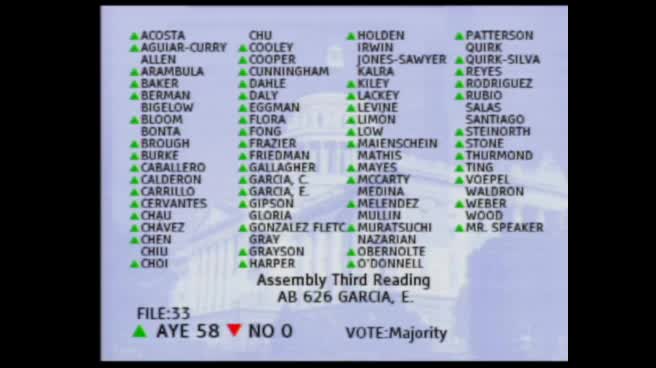 1MIN
Assembly Floor
 21MIN
Assembly Standing Committee on Appropriations
 1H
Assembly Standing Committee on Appropriations
 4MIN
Assembly Standing Committee on Environmental Safety and Toxic Materials
Bill Author

Bill Co-Author(s):