AB 1668: Water management planning.
- Session Year: 2017-2018
- House: Assembly
- Latest Version Date: 2018-05-31
(1)Existing law requires the state to achieve a 20% reduction in urban per capita water use in California by December 31, 2020. Existing law requires each urban retail water supplier to develop urban water use targets and an interim urban water use target, as specified.
This bill would require the State Water Resources Control Board, in coordination with the Department of Water Resources, to adopt long-term standards for the efficient use of water, as provided, and performance measures for commercial, industrial, and institutional water use on or before June 30, 2022. The bill would require the department, in coordination with the board, to conduct necessary studies and investigations and make recommendations, no later than October 1, 2021, for purposes of these standards and performance measures. The bill would require the department, in coordination with the board, to conduct necessary studies and investigations and would authorize the department and the board to jointly recommend to the Legislature a standard for indoor residential water use. The bill, until January 1, 2025, would establish 55 gallons per capita daily as the standard for indoor residential water use, beginning January 1, 2025, would establish the greater of 52.5 gallons per capita daily or a standard recommended by the department and the board as the standard for indoor residential water use, and beginning January 1, 2030, would establish the greater of 50 gallons per capita daily or a standard recommended by the department and the board as the standard for indoor residential water use. The bill would impose civil liability for a violation of an order or regulation issued pursuant to these provisions, as specified.
The bill would require the department, in consultation with the board, to propose to the Governor and the Legislature, by January 1, 2020, recommendations and guidance relating to the development and implementation of countywide drought and water shortage contingency plans to address the planning needs of small water suppliers and rural communities, as provided. The bill would require the department, in consultation with the board and other relevant state and local agencies and stakeholders, to use available data to identify small water suppliers and rural communities that may be at risk of drought and water shortage vulnerability, no later than January 1, 2020, and would require the department to notify counties and groundwater sustainability agencies of those suppliers or communities.
(2)Existing law establishes procedures for reconsideration and amendment of specified decisions and orders of the board. Existing law authorizes any party aggrieved by a specified decision or order of the board to file, not later than 30 days from the date of final board action, a petition for writ of mandate for judicial review of the decision or order.
This bill would apply these procedures to decisions and orders of the board issued pursuant to the provisions described in paragraph (1), including existing provisions and those added by this bill.
(3)Existing law requires an agricultural water supplier to submit an annual report to the department that summarizes aggregated farm-gate delivery data using best professional practices.
This bill would require the annual report for the prior year to be submitted to the department by April 1 of each year, as provided, and to be organized by groundwater basin or subbasin within the service area of the agricultural water supplier, if applicable.
(4)Existing law requires an agricultural water supplier to prepare and adopt an agricultural water management plan with specified components on or before December 31, 2012, and to update those plans on or before December 31, 2015, and on or before December 31 every 5 years thereafter. Existing law requires the agricultural water supplier to submit copies of its plan to specified entities no later than 30 days after the adoption of the plan, and requires the department to prepare and submit to the Legislature, on or before December 31 in the years ending in 6 and one, a report summarizing the status of the plans.
This bill would revise the components of the plan and additionally require a plan to include an annual water budget based on the quantification of all inflow and outflow components for the service area of the agricultural water supplier and a drought plan describing the actions of the agricultural water supplier for drought preparedness and management of water supplies and allocations during drought conditions.
The bill would require an agricultural water supplier to update its agricultural water management plan on or before April 1, 2021, and thereafter on or before April 1 in the years ending in 6 and one. The bill would require an agricultural water supplier to submit its plan to the department no later than 30 days after the adoption of the plan. The bill would require the department to review an agricultural water management plan and notify an agricultural water supplier if the department determines that it is noncompliant, as provided. The bill would authorize the department, if it has not received a plan or determined that the plan submitted is noncompliant, to contract with certain entities to prepare or complete a plan on behalf of the agricultural water supplier.
The bill would require an agricultural water supplier to submit copies of its plan to specified entities no later than 30 days after the departments review of the plan. The bill would require the department to submit its report summarizing the status of the plans to the Legislature on or before April 30 in the years ending in 7 and 2.
(5)This bill would make its operation contingent on the enactment of SB 606 of the 201718 Regular Session.
(1)Existing law requires the state to achieve a 20% reduction in urban per capita water use in California by December 31, 2020. Existing law requires each urban retail water supplier to develop urban water use targets and an interim urban water use target, as specified.
This bill would require the State Water Resources Control Board, in coordination with the Department of Water Resources, to adopt long-term standards for the efficient use of water, as provided, and performance measures for commercial, industrial, and institutional water use on or before June 30, 2021. 2022. The bill would require the department, in coordination with the board, to conduct necessary studies and investigations and make recommendations, no later than October 1, 2020, 2021, for purposes of these standards and performance measures. The bill would require the department, in coordination with the board, to conduct necessary studies and investigations and would authorize the department and the board to jointly recommend to the Legislature a standard for indoor residential water use. The bill, until January 1, 2025, would establish 55 gallons per capita daily as the standard for indoor residential water use, beginning January 1, 2025, would establish the greater of 52.5 gallons per capita daily or a standard recommended by the department and the board as the standard for indoor residential water use, and beginning January 1, 2030, would establish the greater of 50 gallons per capita daily or a standard recommended by the department and the board as the standard for indoor residential water use. The bill would require the department, in coordination with the board, to conduct necessary studies and investigations to jointly recommend to the Legislature a standard for indoor residential water use that more appropriately reflects best practices. The bill would impose civil liability for a violation of an order or regulation issued pursuant to these provisions, as specified.
The bill would require the department, in consultation with the board, to propose to the Governor and the Legislature, by January 1, 2019, 2020, recommendations and guidance relating to the development and implementation of countywide drought and water shortage contingency plans to address the planning needs of small water suppliers and rural communities, as provided. The bill would require the department, in consultation with the board and other relevant state and local agencies and stakeholders, to use available data to identify small water suppliers and rural communities that may be at risk of drought and water shortage vulnerability, no later than January 1, 2019, 2020, and would require the department to notify counties and groundwater sustainability agencies of those suppliers or communities.
(2)Existing law establishes procedures for reconsideration and amendment of specified decisions and orders of the board. Existing law authorizes any party aggrieved by a specified decision or order of the board to file, not later than 30 days from the date of final board action, a petition for writ of mandate for judicial review of the decision or order.
This bill would apply these procedures to decisions and orders of the board issued pursuant to the provisions described in paragraph (1), including existing provisions and those added by this bill.
(3)Existing law requires an agricultural water supplier to submit an annual report to the department that summarizes aggregated farm-gate delivery data using best professional practices.
This bill would require the annual report for the prior year to be submitted to the department by April 1 of each year, as provided, and to be organized by groundwater basin or subbasin within the service area of the agricultural water supplier, if applicable.
(4)Existing law requires an agricultural water supplier to prepare and adopt an agricultural water management plan with specified components on or before December 31, 2012, and to update those plans on or before December 31, 2015, and on or before December 31 every 5 years thereafter. Existing law requires the agricultural water supplier to submit copies of its plan to specified entities no later than 30 days after the adoption of the plan, and requires the department to prepare and submit to the Legislature, on or before December 31 in the years ending in 6 and one, a report summarizing the status of the plans.
This bill would revise the components of the plan and additionally require a plan to include an annual water budget based on the quantification of all inflow and outflow components for the service area of the agricultural water supplier and a drought plan describing the actions of the agricultural water supplier for drought preparedness and management of water supplies and allocations during drought conditions.
The bill would require an agricultural water supplier to update its agricultural water management plan on or before April 1, 2021, and thereafter on or before April 1 in the years ending in 6 and one. The bill would require an agricultural water supplier to submit its plan to the department no later than 30 days after the adoption of the plan. The bill would require the department to review an agricultural water management plan and notify an agricultural water supplier if the department determines that it is noncompliant, as provided. The bill would authorize the department, if it has not received a plan or determined that the plan submitted is noncompliant, to contract with certain entities to prepare or complete a plan on behalf of the agricultural water supplier.
The bill would require an agricultural water supplier to submit copies of its plan to specified entities no later than 30 days after the departments review of the plan. The bill would require the department to submit its report summarizing the status of the plans to the Legislature on or before April 30 in the years ending in 7 and 2.
(5)This bill would make its operation contingent on the enactment of SB 606 of the 2017-18 201718 Regular Session.
(1)Existing law requires the state to achieve a 20% reduction in urban per capita water use in California by December 31, 2020. Existing law requires each urban retail water supplier to develop urban water use targets and an interim urban water use target, as specified.
This bill would require the State Water Resources Control Board, in coordination with the Department of Water Resources, to adopt long-term standards for the efficient use of water, as provided, and performance measures for commercial, industrial, and institutional water use on or before June 30, 2021. The bill would require the department, in coordination with the board, to conduct necessary studies and investigations and make recommendations, no later than October 1, 2020, for purposes of these standards and performance measures. The bill, until January 1, 2025, would establish 55 gallons per capita daily as the standard for indoor residential water use, beginning January 1, 2025, would establish 52.5 gallons per capita daily as the standard for indoor residential water use, and beginning January 1, 2030, would establish 50 gallons per capita daily as the standard for indoor residential water use. The bill would require the department, in coordination with the board, to conduct necessary studies and investigations to jointly recommend to the Legislature a standard for indoor residential water use that more appropriately reflects best practices. The bill would impose civil liability for a violation of an order or regulation issued pursuant to these provisions, as specified.
The bill would require the department, in consultation with the board, to propose to the Governor and the Legislature, by January 1, 2019, recommendations and guidance relating to the development and implementation of countywide drought and water shortage contingency plans to address the planning needs of small water suppliers and rural communities, as provided. The bill would require the department, in consultation with the board and other relevant state and local agencies and stakeholders, to use available data to identify small water suppliers and rural communities that may be at risk of drought and water shortage vulnerability, no later than January 1, 2019, and would require the department to notify counties and groundwater sustainability agencies of those suppliers or communities.
(2)Existing law establishes procedures for reconsideration and amendment of specified decisions and orders of the board. Existing law authorizes any party aggrieved by a specified decision or order of the board to file, not later than 30 days from the date of final board action, a petition for writ of mandate for judicial review of the decision or order.
This bill would apply these procedures to decisions and orders of the board issued pursuant to the provisions described in paragraph (1), including existing provisions and those added by this bill.
(3)Existing law requires an agricultural water supplier to submit an annual report to the department that summarizes aggregated farm-gate delivery data using best professional practices.
This bill would require the annual report for the prior year to be submitted to the department by April 1 of each year, as provided, and to be organized by groundwater basin or subbasin within the service area of the agricultural water supplier, if applicable.
(4)Existing law requires an agricultural water supplier to prepare and adopt an agricultural water management plan with specified components on or before December 31, 2012, and to update those plans on or before December 31, 2015, and on or before December 31 every 5 years thereafter. Existing law requires the agricultural water supplier to submit copies of its plan to specified entities no later than 30 days after the adoption of the plan, and requires the department to prepare and submit to the Legislature, on or before December 31 in the years ending in 6 and one, a report summarizing the status of the plans.
This bill would revise the components of the plan and additionally require a plan to include an annual water budget based on the quantification of all inflow and outflow components for the service area of the agricultural water supplier and a drought plan describing the actions of the agricultural water supplier for drought preparedness and management of water supplies and allocations during drought conditions.
The bill would require an agricultural water supplier to update its agricultural water management plan on or before April 1, 2021, and thereafter on or before April 1 in the years ending in 6 and one. The bill would require an agricultural water supplier to submit its plan to the department no later than 30 days after the adoption of the plan. The bill would require the department to review an agricultural water management plan and notify an agricultural water supplier if the department determines that it is noncompliant, as provided. The bill would authorize the department, if it has not received a plan or determined that the plan submitted is noncompliant, to contract with certain entities to prepare or complete a plan on behalf of the agricultural water supplier.
The bill would require an agricultural water supplier to submit copies of its plan to specified entities no later than 30 days after the departments review of the plan. The bill would require the department to submit its report summarizing the status of the plans to the Legislature on or before April 30 in the years ending in 7 and 2.
(5)This bill would make its operation contingent on the enactment of SB 606 of the 2017-18 Regular Session.
(1)Existing law requires the state to achieve a 20% reduction in urban per capita water use in California by December 31, 2020. Existing law requires each urban retail water supplier to develop urban water use targets and an interim urban water use target, as specified.
This bill would require the State Water Resources Control Board, in coordination with the Department of Water Resources, to adopt long-term standards for the efficient use of water, as provided, and performance measures for commercial, industrial, and institutional water use on or before June 30, 2021. The bill would require the department, in coordination with the board, to conduct necessary studies and investigations and make recommendations, no later than October 1, 2020, for purposes of these standards and performance measures. The bill, until January 1, 2025, would establish 55 gallons per capita daily as the standard for indoor residential water use and, use, beginning January 1, 2025, would establish 50 52.5 gallons per capita daily as the standard for indoor residential water use. use, and beginning January 1, 2030, would establish 50 gallons per capita daily as the standard for indoor residential water use. The bill would authorize require the department, in coordination with the board, to conduct necessary studies and investigations to jointly recommend to the Legislature a standard for indoor residential water use that more appropriately reflects best practices. The bill would impose civil liability for a violation of an order or regulation issued pursuant to these provisions, as specified.
The bill would require an urban retail water supplier to calculate an urban water use objective no later than July 1, 2022, and by July 1 every year thereafter, and its actual urban water use by those same dates. The bill would require an urban retail water supplier to submit a report to the department for these purposes by those dates. The bill would authorize the board to issue information orders, written notices, and conservation orders to an urban retail water supplier that does not meet its urban water use objective, as specified.The bill would impose civil liability for a violation of an order or regulation issued pursuant to these provisions, as specified. The bill would also authorize the board to issue a regulation or informational order requiring a wholesale water supplier, urban retail water supplier, or distributor of a public water supply to provide a monthly report relating to water production, water use, or water conservation.The bill would require the department, in consultation with the board, to propose to the Governor and the Legislature, by January 1, 2019, recommendations and guidance relating to the development and implementation of countywide drought and water shortage contingency plans to address the planning needs of small water suppliers and rural communities, as provided. The bill would require the department, in consultation with the board and other relevant state and local agencies and stakeholders, to use available data to identify small water suppliers and rural communities that may be at risk of drought and water shortage vulnerability, no later than January 1, 2019, and would require the department to notify counties and groundwater sustainability agencies of those suppliers or communities.
(2)Existing law establishes procedures for reconsideration and amendment of specified decisions and orders of the board. Existing law authorizes any party aggrieved by a specified decision or order of the board to file, not later than 30 days from the date of final board action, a petition for writ of mandate for judicial review of the decision or order.
This bill would apply these procedures to decisions and orders of the board issued pursuant to the provisions described in paragraph (1), including existing provisions and those added by this bill.
(3)Existing law, the Urban Water Management Planning Act, requires every public and private urban water supplier that directly or indirectly provides water for municipal purposes to prepare and adopt an urban water management plan. The act requires an urban water supplier to update its plan once every 5 years on or before December 31 in years ending in 5 and zero, except the act requires the submission of a 2020 plan update by July 1, 2021. The act requires an urban water management plan, among other things, to describe the reliability of the water supply and vulnerability to seasonal or climatic shortage, to the extent practicable, and provide data for an average, single-dry, and multiple-dry water years. The act requires that an urban water management plan provide an urban water shortage contingency analysis that includes, among other things, an estimate of the minimum water supply available during each of the next 3 water years based on the driest 3-year historic sequence for the agencys water supply.This bill would revise and recast these provisions. The bill would require an urban water management plan to be updated on or before July 1, in years ending in 6 and one, incorporating updated and new information from the 5 years preceding the plan update. The bill would require each plan to include a simple lay description of specified information to provide a general understanding of the agencys plan. The bill would require an urban water management plan to contain a drought risk assessment, as defined, that examines water shortage risks for a drought lasting the next 5 or more consecutive years.The bill would require an urban water supplier to prepare, adopt, and periodically review a water shortage contingency plan, as prescribed, and as part of its urban water management plan. The bill would require a water shortage contingency plan to consist of certain elements, including, among other things, annual water supply and demand assessment procedures, standard water shortage levels, shortage response actions, and communication protocols and procedures. The bill would require an urban water supplier to make the water shortage contingency plan available to its customers and any city or county within which it provides water supplies no later than 30 days after adoption.The bill would require an urban water supplier to conduct an annual water supply and demand assessment and submit an annual water shortage assessment report to the department with information for anticipated shortage, triggered shortage response actions, compliance and enforcement actions, and communication actions consistent with the suppliers water shortage contingency plan by June 1 of each year. The bill would require an urban water supplier to follow, where feasible and appropriate, the procedures and implement determined shortage response actions in its water shortage contingency plan.(4)The act requires an urban water supplier to submit copies of its urban water management plan and copies of amendments or changes to the plan to certain entities, including the department, no later that 30 days after adoption, as prescribed. The act requires the department to prepare and submit a report summarizing the status of plans adopted pursuant to the act to the Legislature on or before July 1, 2022, for the 2020 plan, and on or before December 31 in the years ending in 6 and one thereafter, and to provide a copy of the report to each urban water supplier that has submitted its plan to the department.This bill would require an urban water supplier, if it revises its water shortage contingency plan, to submit to the department a copy of its water shortage contingency plan no later than 30 days after adoption. The bill would require an urban water supplier regulated by the Public Utilities Commission to include its most recent urban water management plan and water shortage contingency plan as part of its general rate case filings.The bill would require the department to prepare and submit the report about plans adopted pursuant to the act to the Legislature on or before July 1 in the years ending in 7 and 2. The bill would require the department to prepare and submit to the board, on or before June 1 of each year, a report summarizing the submitted water supply and demand assessment results along with appropriate reported water shortage conditions developed by the department and information regarding various shortage response actions implemented as a result of water supply and demand assessments, as prescribed.(5)Existing law makes an urban water supplier that does not prepare, adopt, and submit its urban water management plan to the department as prescribed ineligible to receive certain water grant and loan funding.This bill would instead make an urban water supplier ineligible to receive any water grant or loan unless the urban water supplier complies with the requirements relating to urban water management plans.(6)Existing law authorizes the governing body of a distributor of a public water supply to declare a water shortage emergency condition to prevail within the area served by the distributor whenever it finds and determines that the ordinary demands and requirements of water consumers cannot be satisfied without depleting the water supply of the distributor to the extent that there would be insufficient water for human consumption, sanitation, and fire protection.This bill would instead require the governing body of a distributor of a public water supply to declare a water shortage emergency condition whenever it finds and determines the above-described circumstances. The bill would require an urban water supplier to coordinate with any city or county within which it provides water supply services for a possible proclamation of a local emergency.(7)(3)Existing law requires an agricultural water supplier to submit an annual report to the department that summarizes aggregated farm-gate delivery data using best professional practices.
This bill would require the annual report for the prior year to be submitted to the department by April 1 of each year, as provided, and to be organized by groundwater basin or subbasin within the service area of the agricultural water supplier, if applicable.
(8)(4)Existing law requires an agricultural water supplier to prepare and adopt an agricultural water management plan with specified components on or before December 31, 2012, and to update those plans on or before December 31, 2015, and on or before December 31 every 5 years thereafter. Existing law requires the agricultural water supplier to submit copies of its plan to specified entities no later than 30 days after the adoption of the plan, and requires the department to prepare and submit to the Legislature, on or before December 31 in the years ending in 6 and one, a report summarizing the status of the plans.
This bill would revise the components of the plan and additionally require a plan to include an annual water budget based on the quantification of all inflow and outflow components for the service area of the agricultural water supplier and a drought plan describing the actions of the agricultural water supplier for drought preparedness and management of water supplies and allocations during drought conditions.
The bill would require an agricultural water supplier to update its agricultural water management plan on or before April 1, 2021, and thereafter on or before April 1 in the years ending in 6 and one. The bill would require an agricultural water supplier to submit its plan to the department no later than 30 days after the adoption of the plan. The bill would require the department to review an agricultural water management plan and notify an agricultural water supplier if the department determines that it is noncompliant, as provided. The bill would authorize the department, if it has not received a plan or determined that the plan submitted is noncompliant, to contract with certain entities to prepare or complete a plan on behalf of the agricultural water supplier.
The bill would require an agricultural water supplier to submit copies of its plan to specified entities no later than 30 days after the departments review of the plan. The bill would require the department to submit its report summarizing the status of the plans to the Legislature on or before April 30 in the years ending in 7 and 2.
(5)This bill would make its operation contingent on the enactment of SB 606 of the 2017-18 Regular Session.
(1)Existing law requires the state to achieve a 20% reduction in urban per capita water use in California by December 31, 2020. Existing law requires each urban retail water supplier to develop urban water use targets and an interim urban water use target, as specified.
This bill would require the State Water Resources Control Board, in coordination with the Department of Water Resources, to adopt long-term standards for the efficient use of water, as provided, and performance measures for commercial, industrial, and institutional water use on or before June 30, 2021. The bill would require the department, in coordination with the board, to conduct necessary studies and investigations and make recommendations, no later than October 1, 2020, for purposes of these standards and performance measures. The bill bill, until January 1, 2025, would establish an unspecified number of gallons 55 gallons per capita daily as the initial standard for daily per capita indoor residential water use, and use and, beginning January 1, 2025, would establish 50 gallons per capita daily as the standard for indoor residential water use. The bill would authorize the department, in coordination with the board, to conduct necessary studies and investigations to jointly recommend to the Legislature a standard for indoor residential water use that more appropriately reflects best practices.
The bill would require an urban retail water supplier to calculate an urban water use objective no later than July 1, 2022, and by July 1 every year thereafter, and its actual urban water use by those same dates. The bill would require an urban retail water supplier to submit a report to the department for these purposes by those dates. The bill would authorize the board to issue information orders, written notices, and conservation orders to an urban retail water supplier that does not meet its urban water use objective, as specified.
The bill would impose civil liability for a violation of an order or regulation issued pursuant to these provisions, as specified. The bill would also authorize the board to issue a regulation or informational order requiring a wholesale water supplier, urban retail water supplier, or distributor of a public water supply to provide a monthly report relating to water production, water use, or water conservation.
The bill would require the department department, in consultation with the board, to propose to the Governor and the Legislature, by January 1, 2019, recommendations and guidance relating to the development and implementation of countywide drought and water shortage contingency plans to address the planning needs of small water suppliers and rural communities, as provided. The bill would require the department, in consultation with the board and other relevant state and local agencies and stakeholders, to use available data to identify small water suppliers and rural communities that may be at risk of drought and water shortage vulnerability, no later than January 1, 2019, and would require the department to notify counties and groundwater sustainability agencies of those suppliers or communities.
(2)Existing law establishes procedures for reconsideration and amendment of specified decisions and orders of the board. Existing law authorizes any party aggrieved by a specified decision or order of the board to file, not later than 30 days from the date of final board action, a petition for writ of mandate for judicial review of the decision or order.
This bill would apply these procedures to decisions and orders of the board issued pursuant to the provisions described in paragraph (1), including existing provisions and those added by this bill.
(3)Existing law, the Urban Water Management Planning Act, requires every public and private urban water supplier that directly or indirectly provides water for municipal purposes to prepare and adopt an urban water management plan and plan. The act requires an urban water supplier to update its plan once every 5 years on or before December 31 in years ending in 5 and zero, except as specified. Existing law defines urban water supplier to mean a supplier, either publicly or privately owned, providing water for municipal purposes either directly or indirectly to more than 3,000 customers or supplying more than 3,000 acre-feet of water annually.
Existing law the act requires the submission of a 2020 plan update by July 1, 2021. The act requires an urban water management plan, among other things, to describe the reliability of the water supply and vulnerability to seasonal or climatic shortage, to the extent practicable, and provide data for an average, single-dry, and multiple-dry water years. Existing law The act requires that an urban water management plan provide an urban water shortage contingency analysis that includes, among other things, an estimate of the minimum water supply available during each of the following next 3 water years based on the driest 3-year historic sequence for the agencys water supply.
This bill would revise and recast these provisions. The bill would require an urban water management plan to be updated on or before July 1, in years ending in 6 and one, incorporating updated and new information from the 5 years preceding the plan update. The bill would require each plan to include a simple lay description of specified information to provide a general understanding of the agencys plan. The bill would require an urban water management plan to contain a drought risk assessment, as defined, that examines water shortage risks for a drought lasting the next 5 or more consecutive years.
The bill would require an urban water supplier to prepare, adopt, and periodically review a water shortage contingency plan, as prescribed, and as part of its urban water management plan. The bill would require a water shortage contingency plan to consist of certain elements, including, among other things, annual water supply and demand assessment procedures, standard water shortage levels, shortage response actions, and communication protocols and procedures. The bill would require an urban water supplier to make the water shortage contingency plan available to its customers and any city or county within which it provides water supplies no later than 30 days after adoption.
The bill would require an urban water supplier to conduct an annual water supply and demand assessment and submit an annual water shortage assessment report to the department with information for anticipated shortage, triggered shortage response actions, compliance and enforcement actions, and communication actions consistent with the suppliers water shortage contingency plan by June 1 of each year. The bill would require an urban water supplier to follow, where feasible and appropriate, the procedures and implement determined shortage response actions in its water shortage contingency plan. The bill would also authorize the department to update a certain guidebook, as specified.
(4)Existing law The act requires an urban water supplier to submit copies of its urban water management plan and copies of amendments or changes to the plan to certain entities, including the department, no later that 30 days after adoption, as prescribed. Existing law The act requires the department to prepare and submit to the Legislature, on or before December 31, in the years ending in 6 and one, a report summarizing the status of plans adopted pursuant to the act to the Legislature on or before July 1, 2022, for the 2020 plan, and on or before December 31 in the years ending in 6 and one thereafter, and to provide a copy of the report to each urban water supplier that has submitted its plan to the department.
This bill would require an urban water supplier, if it revises its water shortage contingency plan, to submit to the department a copy of its water shortage contingency plan no later than 30 days after adoption. The bill would require an urban water supplier regulated by the Public Utilities Commission to include its most recent urban water management plan and water shortage contingency plan as part of its general rate case filings.
The bill would require the department to prepare and submit the report about plans adopted pursuant to the act to the Legislature on or before July 1 in the years ending in 7 and 2. The bill would require the department to prepare and submit to the board, on or before June 1 of each year, a report summarizing the submitted water supply and demand assessment results along with appropriate reported water shortage conditions developed by the department and information regarding various shortage response actions implemented as a result of water supply and demand assessments, as prescribed.
(5)Existing law makes an urban water supplier that does not prepare, adopt, and submit its urban water management plan to the department as prescribed ineligible to receive certain water grant and loan funding.
This bill would instead make an urban water supplier ineligible to receive any water grant or loan unless the urban water supplier complies with the requirements relating to urban water management plans.
(6)Existing law authorizes the governing body of a distributor of a public water supply to declare a water shortage emergency condition to prevail within the area served by the distributor whenever it finds and determines that the ordinary demands and requirements of water consumers cannot be satisfied without depleting the water supply of the distributor to the extent that there would be insufficient water for human consumption, sanitation, and fire protection.
This bill would instead require the governing body of a distributor of a public water supply to declare a water shortage emergency condition whenever it finds and determines the above-described circumstances. The bill would require an urban water supplier to coordinate with any city or county within which it provides water supply services for a possible proclamation of a local emergency.
(7)Existing law requires an agricultural water supplier to submit an annual report to the department that summarizes aggregated farm-gate delivery data using best professional practices.
This bill would require the annual report for the prior year to be submitted to the department by April 1 of each year, as provided, and to be organized by groundwater basin or subbasin within the service area of the agricultural water supplier, if applicable.
(8)Existing law requires an agricultural water supplier to prepare and adopt an agricultural water management plan with specified components on or before December 31, 2012, and to update those plans on or before December 31, 2015, and on or before December 31 every 5 years thereafter. Existing law requires the agricultural water supplier to submit copies of its plan to specified entities no later than 30 days after the adoption of the plan, and requires the department to prepare and submit to the Legislature, on or before December 31 in the years ending in 6 and one, a report summarizing the status of the plans.
This bill would revise the components of the plan and additionally require a plan to include an annual water budget based on the quantification of all inflow and outflow components for the service area of the agricultural water supplier and a drought plan describing the actions of the agricultural water supplier for drought preparedness and management of water supplies and allocations during drought conditions.
The bill would require an agricultural water supplier to update its agricultural water management plan on or before April 1, 2021, and thereafter on or before April 1 in the years ending in 6 and one. The bill would require an agricultural water supplier to submit its plan to the department no later than 30 days after the adoption of the plan. The bill would require the department to review an agricultural water management plan and notify an agricultural water supplier if the department determines that it is noncompliant, as provided. The bill would authorize the department, if it has not received a plan or determined that the plan submitted is noncompliant, to contract with certain entities to prepare or complete a plan on behalf of the agricultural water supplier.
The bill would require an agricultural water supplier to submit copies of its plan to specified entities no later than 30 days after the departments review of the plan. The bill would require the department to submit its report summarizing the status of the plans to the Legislature on or before April 30 in the years ending in 7 and 2.
(1)Existing law requires the state to achieve a 20% reduction in urban per capita water use in California by December 31, 2020. Existing law requires each urban retail water supplier to develop urban water use targets and an interim urban water use target, as specified.
This bill would require the State Water Resources Control Board, in coordination with the Department of Water Resources, to adopt long-term standards for the efficient use of water, as provided, and performance measures for commercial, industrial, and institutional water use on or before June 30, 2021. The bill would require the department, in coordination with the board, to conduct necessary studies and investigations and make recommendations, no later than October 1, 2020, for purposes of these standards and performance measures. The bill would establish an unspecified number of gallons as the initial standard for daily per capita indoor residential water use, and would authorize the department, in coordination with the board, to conduct necessary studies and investigations to recommend to the Legislature a standard for indoor residential water use that more appropriately reflects best practices.
The bill would require an urban retail water supplier to calculate an urban water use objective no later than July 1, 2022, and by July 1 every year thereafter, and its actual urban water use by those same dates. The bill would require an urban retail water supplier to submit a report to the department for these purposes by those dates. The bill would authorize the board to issue information orders, written notices, and conservation orders to an urban retail water supplier that does not meet its urban water use objective, as specified.
The bill would impose civil liability for a violation of an order or regulation issued pursuant to these provisions, as specified. The bill would also authorize the board to issue a regulation or informational order requiring a distributor of a public water supply to provide a monthly report relating to water production, water use, or water conservation.
The bill would require the department to propose to the Governor and the Legislature, by January 1, 2019, recommendations and guidance relating to the development and implementation of countywide drought and water shortage contingency plans to address the planning needs of small water suppliers and rural communities, as provided.
(2)Existing law establishes procedures for reconsideration and amendment of specified decisions and orders of the board. Existing law authorizes any party aggrieved by a specified decision or order of the board to file, not later than 30 days from the date of final board action, a petition for writ of mandate for judicial review of the decision or order.
This bill would apply these procedures to decisions and orders of the board issued pursuant to the provisions described in paragraph (1), including existing provisions and those added by this bill.
(3)Existing law, the Urban Water Management Planning Act, requires every public and private urban water supplier that directly or indirectly provides water for municipal purposes to prepare and adopt an urban water management plan and to update its plan once every 5 years on or before December 31 in years ending in 5 and zero, except as specified. Existing law defines urban water supplier to mean a supplier, either publicly or privately owned, providing water for municipal purposes either directly or indirectly to more than 3,000 customers or supplying more than 3,000 acre-feet of water annually.
Existing law requires an urban water management plan, among other things, to describe the reliability of the water supply and vulnerability to seasonal or climatic shortage, to the extent practicable, and provide data for an average, single-dry, and multiple-dry water years. Existing law requires that an urban water management plan provide an urban water shortage contingency analysis that includes, among other things, an estimate of the minimum water supply available during each of the following 3 water years based on the driest 3-year historic sequence for the agencys water supply.
This bill would revise and recast these provisions. The bill would require an urban water management plan to be updated on or before July 1, in years ending in 6 and one, incorporating updated and new information from the 5 years preceding the plan update. The bill would require each plan to include a simple lay description of specified information to provide a general understanding of the agencys plan. The bill would require an urban water management plan to contain a drought risk assessment, as defined, that examines water shortage risks for a drought lasting the next 5 or more consecutive years.
The bill would require an urban water supplier to prepare, adopt, and periodically review a water shortage contingency plan, as prescribed, and as part of its urban water management plan. The bill would require a water shortage contingency plan to consist of certain elements, including, among other things, annual water supply and demand assessment procedures, standard water shortage levels, shortage response actions, and communication protocols and procedures. The bill would require an urban water supplier to make the water shortage contingency plan available to its customers and any city or county within which it provides water supplies no later than 30 days after adoption.
The bill would require an urban water supplier to conduct an annual water supply and demand assessment and submit an annual water shortage assessment report to the department with information for anticipated shortage, triggered shortage response actions, compliance and enforcement actions, and communication actions consistent with the suppliers water shortage contingency plan by June 1 of each year. The bill would require an urban water supplier to follow, where feasible and appropriate, the procedures and implement determined shortage response actions in its water shortage contingency plan. The bill would also authorize the department to update a certain guidebook, as specified.
(4)Existing law requires an urban water supplier to submit copies of its urban water management plan and copies of amendments or changes to the plan to certain entities, including the department, as prescribed. Existing law requires the department to prepare and submit to the Legislature, on or before December 31, in the years ending in 6 and one, a report summarizing the status of plans adopted pursuant to the act and to provide a copy of the report to each urban water supplier that has submitted its plan to the department.
This bill would require an urban water supplier, if it revises its water shortage contingency plan, to submit to the department a copy of its water shortage contingency plan no later than 30 days after adoption. The bill would require an urban water supplier regulated by the Public Utilities Commission to include its most recent urban water management plan and water shortage contingency plan as part of its general rate case filings.
The bill would require the department to prepare and submit the report about plans adopted pursuant to the act to the Legislature on or before July 1 in the years ending in 7 and 2. The bill would require the department to prepare and submit to the board, on or before June 1 of each year, a report summarizing the submitted water supply and demand assessment results along with appropriate reported water shortage conditions developed by the department and information regarding various shortage response actions implemented as a result of water supply and demand assessments, as prescribed.
(5)Existing law makes an urban water supplier that does not prepare, adopt, and submit its urban water management plan to the department as prescribed ineligible to receive certain water grant and loan funding.
This bill would instead make an urban water supplier ineligible to receive any water grant or loan unless the urban water supplier complies with the requirements relating to urban water management plans.
(6)Existing law authorizes the governing body of a distributor of a public water supply to declare a water shortage emergency condition to prevail within the area served by the distributor whenever it finds and determines that the ordinary demands and requirements of water consumers cannot be satisfied without depleting the water supply of the distributor to the extent that there would be insufficient water for human consumption, sanitation, and fire protection.
This bill would instead require the governing body of a distributor of a public water supply to declare a water shortage emergency condition whenever it finds and determines the above-described circumstances. The bill would require an urban water supplier to coordinate with any city or county within which it provides water supply services for a possible proclamation of a local emergency.
(7)Existing law requires an agricultural water supplier to submit an annual report to the department that summarizes aggregated farm-gate delivery data using best professional practices.
This bill would require the annual report for the prior year to be submitted to the department by April 1 of each year, as provided, and to be organized by groundwater basin or subbasin within the service area of the agricultural water supplier, if applicable.
(8)Existing law requires an agricultural water supplier to prepare and adopt an agricultural water management plan with specified components on or before December 31, 2012, and to update those plans on or before December 31, 2015, and on or before December 31 every 5 years thereafter. Existing law requires the agricultural water supplier to submit copies of its plan to specified entities no later than 30 days after the adoption of the plan, and requires the department to prepare and submit to the Legislature, on or before December 31 in the years ending in 6 and one, a report summarizing the status of the plans.
This bill would revise the components of the plan and additionally require a plan to include an annual water budget based on the quantification of all inflow and outflow components for the service area of the agricultural water supplier and a drought plan describing the actions of the agricultural water supplier for drought preparedness and management of water supplies and allocations during drought conditions.
The bill would require an agricultural water supplier to update its agricultural water management plan on or before April 1, 2021, and thereafter on or before April 1 in the years ending in 6 and one. The bill would require an agricultural water supplier to submit its plan to the department no later than 30 days after the adoption of the plan. The bill would require the department to review an agricultural water management plan and notify an agricultural water supplier if the department determines that it is noncompliant, as provided. The bill would authorize the department, if it has not received a plan or determined that the plan submitted is noncompliant, to contract with certain entities to prepare or complete a plan on behalf of the agricultural water supplier.
The bill would require an agricultural water supplier to submit copies of its plan to specified entities no later than 30 days after the departments review of the plan. The bill would require the department to submit its report summarizing the status of the plans to the Legislature on or before April 30 in the years ending in 7 and 2.
Existing law requires the state to achieve a 20% reduction in urban per capita water use in California by December 31, 2020. Existing law requires agricultural water suppliers to prepare and adopt agricultural water management plans with specified components on or before December 31, 2012, and to update those plans on or before December 31, 2015, and on or before December 31 every 5 years thereafter. Existing law sets forth various findings and declarations related to water conservation.This bill would state the intent of the Legislature to enact legislation necessary to help make water conservation a California way of life.Existing law requires the state to achieve a 20% reduction in urban per capita water use in California by December 31, 2020. Existing law requires agricultural water suppliers to prepare and adopt agricultural water management plans with specified components on or before December 31, 2012, and to update those plans on or before December 31, 2015, and on or before December 31 every 5 years thereafter. Existing law sets forth various findings and declarations related to water conservation.
This bill would state the intent of the Legislature to enact legislation necessary to help make water conservation a California way of life.
(1)Existing law, the Urban Water Management Planning Act, requires every public and private urban water supplier that directly or indirectly provides water for municipal purposes either directly or indirectly to more than 3,000 customers or supplying more than 3,000 acre-feet of water annually to prepare and adopt an urban water management plan and to update its plan once every 5 years on or before December 31 in years ending in 5 and zero, except as specified.This bill would require an urban water management plan to be updated on or before July 1, in years ending in 6 and one, incorporating updated and new information from the 5 years preceding the plan update.(2)Existing law requires an urban water management plan, among other things, to describe the reliability of the water supply and vulnerability to seasonal or climatic shortage, to the extent practicable, and provide data for an average, single-dry, and multiple-dry water years. This bill would require an urban water management plan to contain a drought risk assessment that examines water shortage risks for a drought lasting the next 5 or more consecutive years and, if an urban water supplier finds that a shorter multiple dry year period would more severely impact its water supplies, would also require the shorter period to be used. The bill would require the Department of Water Resources, by July 1, 2018, to establish guidelines for the development of small water supplier and rural community water shortage management plans. The bill would require the department to define the roles and responsibilities of the appropriate rural county agency in developing the water shortage management plans and outline the components required in the water shortage management plans in the guidelines. The bill would require the department to create a decisionmaking support tool that includes certain information relating to domestic wells, state small water systems, and small public water systems. The bill would require the department to make the tool available to local agencies for drought planning and other planning purposes. By imposing new duties on counties, this bill would impose a state-mandated local program. (3)Existing law requires that an urban water management plan provide an urban water shortage contingency analysis, that includes, among other things, an estimate of the minimum water supply available during each of the following 3 water years based on the driest 3-year historic sequence for the agencys water supply.This bill would require an urban water supplier to prepare, adopt, and periodically review a water shortage contingency plan, as prescribed, and as part of its urban water management plan. The bill would require a water shortage contingency plan to consist of certain elements that are within the authority of the urban water supplier, including, among other things, annual water supply and demand assessment procedures, standard water shortage levels, shortage response actions, and communication protocols and procedures. The bill would require an urban water supplier to make the water shortage contingency plan available to its customers and any city or county within which it provides water supplies no later than 30 days after adoption. The bill would require an urban water supplier to conduct an annual water supply and demand assessment and submit an annual water shortage assessment report to the department with information for anticipated shortage, triggered shortage response actions, compliance and enforcement actions, and communication actions consistent with the suppliers water shortage contingency plan by June 1 of each year. The bill would require an urban water supplier to follow the procedures and implement determined shortage response actions in its water shortage contingency plan or reasonable alternative actions provided that descriptions of the alternative actions are submitted with the annual water shortage assessments. The bill would authorize the department to update a certain guidebook, as specified.(4)Existing law requires an urban water supplier to submit copies of its urban water management plan and copies of amendments or changes to the plan to certain entities, including the Department of Water Resources, as prescribed. Existing law makes an urban water supplier that does not prepare, adopt, and submit its urban water management plan to the department as prescribed ineligible to receive certain funding. This bill would extend these provisions to apply to a water shortage contingency plan. The bill would require an urban water supplier regulated by the Public Utilities Commission to include its most recent urban water management plan and water shortage contingency plan as part of its general rate case filings.(5)Existing law requires the department to prepare and submit to the Legislature, on or before December 31, in the years ending in 6 and 1, a report summarizing the status of plans adopted pursuant to the act and to provide a copy of the report to each urban water supplier that has submitted its plan to the department. This bill would instead require the department to prepare and submit the report about plans adopted pursuant to the act to the Legislature on or before July 1, in the years ending in 7 and 2. The bill would require the department to prepare and submit to the State Water Resources Control Board, on or before July 1 of each year, a report summarizing the submitted water supply and demand assessment results along with appropriate reported water shortage conditions developed by the department and information regarding various shortage response actions implemented as a result of water supply and demand assessments, as prescribed.The bill would also require an urban water management plan and water shortage contingency plan submitted to the department on or after January 1, 2020, to be reviewed by the department for completeness, internal consistency, and conformity to specified requirements.(6)Existing law requires any actions or proceedings to attack, review, set aside, void, or annul the acts or decisions of an urban water supplier on the grounds of noncompliance with urban water management planning requirements to be commenced in accordance with specified procedures. Existing law requires any action or proceeding alleging that an urban water management plan, or action taken pursuant to the plan, is noncompliant to be commenced within 90 days after filing of the plan or the taking of that action.This bill would extend these provisions to apply to a water shortage contingency plan. The bill would also require any action or proceeding alleging that an urban water management plan or water shortage contingency plan, or action taken pursuant to either plan, is noncompliant to be commenced within 90 days after filing of the plan or the taking of that action.(7)Existing law authorizes the governing body of a distributor of a public water supply to declare a water shortage emergency condition to prevail within the area served by the distributor whenever it finds and determines that the ordinary demands and requirements of water consumers cannot be satisfied without depleting the water supply of the distributor to the extent that there would be insufficient water for human consumption, sanitation, and fire protection.This bill would instead require the governing body of a distributor of a public water supply to declare a water shortage emergency condition whenever it finds and determines the above-described circumstances exist. The bill would require an urban water supplier to coordinate with any city or county within which it provides water supply services for a possible proclamation of a local emergency.(8)The California Constitution requires the state to reimburse local agencies and school districts for certain costs mandated by the state. Statutory provisions establish procedures for making that reimbursement.This bill would provide that, if the Commission on State Mandates determines that the bill contains costs mandated by the state, reimbursement for those costs shall be made pursuant to the statutory provisions noted above.(1)Existing law, the Urban Water Management Planning Act, requires every public and private urban water supplier that directly or indirectly provides water for municipal purposes either directly or indirectly to more than 3,000 customers or supplying more than 3,000 acre-feet of water annually to prepare and adopt an urban water management plan and to update its plan once every 5 years on or before December 31 in years ending in 5 and zero, except as specified.
This bill would require an urban water management plan to be updated on or before July 1, in years ending in 6 and one, incorporating updated and new information from the 5 years preceding the plan update.
(2)Existing law requires an urban water management plan, among other things, to describe the reliability of the water supply and vulnerability to seasonal or climatic shortage, to the extent practicable, and provide data for an average, single-dry, and multiple-dry water years.
This bill would require an urban water management plan to contain a drought risk assessment that examines water shortage risks for a drought lasting the next 5 or more consecutive years. years and, if an urban water supplier finds that a shorter multiple dry year period would more severely impact its water supplies, would also require the shorter period to be used. The bill would require the Department of Water Resources, by July 1, 2018, to establish guidelines for the development of small water supplier and rural community water shortage management plans. The bill would require the department to define the roles and responsibilities of the appropriate rural county agency in developing the water shortage management plans and outline the components required in the water shortage management plans in the guidelines. The bill would require the department to create a decisionmaking support tool that includes certain information relating to domestic wells, state small water systems, and small public water systems. The bill would require the department to make the tool available to local agencies for drought planning and other planning purposes. By imposing new duties on counties, this bill would impose a state-mandated local program.
(3)Existing law requires that an urban water management plan provide an urban water shortage contingency analysis, that includes, among other things, an estimate of the minimum water supply available during each of the following 3 water years based on the driest 3-year historic sequence for the agencys water supply.
This bill would require an urban water supplier to prepare, adopt, and periodically review a water shortage contingency plan, as prescribed, and as part of its urban water management plan. The bill would require a water shortage contingency plan to consist of certain elements that are within the authority of the urban water supplier, including, among other things, annual water budget forecast supply and demand assessment procedures, standard water shortage levels, shortage response actions, and communication protocols and procedures. The bill would require an urban water supplier to make the water shortage contingency plan available to its customers and any city or county within which it provides water supplies no later than 30 days after adoption. The bill would require an urban water supplier to conduct an annual water budget forecast supply and demand assessment and submit an annual water shortage assessment report to the department with information for anticipated shortage, triggered shortage response actions, compliance and enforcement actions, and communication actions consistent with the suppliers water shortage contingency plan by the 10th day of May June 1 of each year. The bill would require an urban water supplier to adhere to follow the procedures and implement determined shortage response actions in its water shortage contingency plan in drought and water shortage conditions. or reasonable alternative actions provided that descriptions of the alternative actions are submitted with the annual water shortage assessments. The bill would authorize the department to update a certain guidebook, as specified.
(4)Existing law requires an urban water supplier to submit copies of its urban water management plan and copies of amendments or changes to the plan to certain entities, including the Department of Water Resources, as prescribed. Existing law makes an urban water supplier that does not prepare, adopt, and submit its urban water management plan to the department as prescribed ineligible to receive certain funding.
This bill would extend these provisions to apply to a water shortage contingency plan. The bill would require an urban water supplier regulated by the Public Utilities Commission to include its most recent urban water management plan and water shortage contingency plan as part of its general rate case filings.
(5)Existing law requires the department to prepare and submit to the Legislature, on or before December 31, in the years ending in 6 and 1, a report summarizing the status of plans adopted pursuant to the act and to provide a copy of the report to each urban water supplier that has submitted its plan to the department.
This bill would instead require the department to prepare and submit the report about plans adopted pursuant to the act to the Legislature on or before July 1, in the years ending in 7 and 2. The bill would require the department to prepare and submit to the State Water Resources Control Board, on or before June July 1 of each year, a report summarizing the submitted water budget forecast supply and demand assessment results along with appropriate reported water shortage conditions developed by the department and information regarding various shortage response actions implemented as a result of water budget forecast supply and demand assessments, as prescribed, for the board to determine if noncompliance enforcement is necessary. prescribed.
The bill would also require an urban water management plan and water shortage contingency plan submitted to the department on or after January 1, 2020, to be reviewed by the department for completeness, internal consistency, and conformity to specified requirements.
(6)Existing law requires any actions or proceedings to attack, review, set aside, void, or annul the acts or decisions of an urban water supplier on the grounds of noncompliance with urban water management planning requirements to be commenced in accordance with specified procedures. Existing law requires any action or proceeding alleging that an urban water management plan, or action taken pursuant to the plan, is noncompliant to be commenced within 90 days after filing of the plan or the taking of that action.
This bill would extend these provisions to apply to a water shortage contingency plan. The bill would also require any action or proceeding alleging that an urban water management plan or water shortage contingency plan, or action taken pursuant to either plan, is noncompliant to be commenced within one year 90 days after filing of the plan or the taking of that action.
(7)Existing law authorizes the governing body of a distributor of a public water supply to declare a water shortage emergency condition to prevail within the area served by the distributor whenever it finds and determines that the ordinary demands and requirements of water consumers cannot be satisfied without depleting the water supply of the distributor to the extent that there would be insufficient water for human consumption, sanitation, and fire protection.
This bill would instead require the governing body of a distributor of a public water supply to declare a water shortage emergency condition whenever it finds and determines the above-described circumstances or upon determining a water shortage of 40% or greater exists. The bill would require an urban water supplier to declare a water shortage emergency if either a water shortage of 40% or greater is determined to exist or in the event that a severe catastrophic interruption of the urban water suppliers water supply has occurred. exist. The bill would require an urban water supplier to coordinate with any city or county within which it provides water supply services for a possible proclamation of a local emergency.
(8)The California Constitution requires the state to reimburse local agencies and school districts for certain costs mandated by the state. Statutory provisions establish procedures for making that reimbursement.
This bill would provide that, if the Commission on State Mandates determines that the bill contains costs mandated by the state, reimbursement for those costs shall be made pursuant to the statutory provisions noted above.
(1)Existing law, the Urban Water Management Planning Act, requires every public and private urban water supplier that directly or indirectly provides water for municipal purposes to prepare and adopt an urban water management plan and to update its plan once every 5 years on or before December 31 in years ending in 5 and zero, except as specified.
This bill would require an urban water management plan to be updated on or before July 1, in years ending in 6 and one, incorporating updated and new information from the 5 years preceding the plan update.
(2)Existing law requires an urban water management plan, among other things, to describe the reliability of the water supply and vulnerability to seasonal or climatic shortage, to the extent practicable, and provide data for an average, single-dry, and multiple-dry water years.
This bill would require an urban water management plan to contain a drought risk assessment that examines water shortage risks for a drought lasting the next 5 or more consecutive years.
(3)Existing law requires that an urban water management plan provide an urban water shortage contingency analysis, that includes, among other things, an estimate of the minimum water supply available during each of the following 3 water years based on the driest 3-year historic sequence for the agencys water supply.
This bill would require an urban water supplier to prepare, adopt, and periodically review a water shortage contingency plan, as prescribed, and as part of its urban water management plan. The bill would require a water shortage contingency plan to consist of certain elements that are within the authority of the urban water supplier, including, among other things, annual water budget forecast procedures, standard water shortage levels, shortage response actions, and communication protocols and procedures. The bill would require an urban water supplier to make the water shortage contingency plan available to its customers and any city or county within which it provides water supplies no later than 30 days after adoption. The bill would require an urban water supplier to conduct an annual water budget forecast and submit an annual water shortage assessment report to the department with information for anticipated shortage, triggered shortage response actions, compliance and enforcement actions, and communication actions consistent with the suppliers water shortage contingency plan by the 10th day of May of each year. The bill would require an urban water supplier to adhere to the procedures and implement determined shortage response actions in its water shortage contingency plan in drought and water shortage conditions. The bill would authorize the department to update a certain guidebook, as specified.
(4)Existing law requires an urban water supplier to submit copies of its urban water management plan and copies of amendments or changes to the plan to certain entities, including the Department of Water Resources, as prescribed. Existing law makes an urban water supplier that does not prepare, adopt, and submit its urban water management plan to the department as prescribed ineligible to receive certain funding.
This bill would extend these provisions to apply to a water shortage contingency plan. The bill would require an urban water supplier regulated by the Public Utilities Commission to include its most recent urban water management plan and water shortage contingency plan as part of its general rate case filings.
(5)Existing law requires the department to prepare and submit to the Legislature, on or before December 31, in the years ending in 6 and 1, a report summarizing the status of plans adopted pursuant to the act and to provide a copy of the report to each urban water supplier that has submitted its plan to the department.
This bill would instead require the department to prepare and submit the report about plans adopted pursuant to the act to the Legislature on or before July 1, in the years ending in 7 and 2. The bill would require the department to prepare and submit to the State Water Resources Control Board, on or before June 1 of each year, a report summarizing the submitted water budget forecast results along with appropriate reported water shortage conditions developed by the department and information regarding various shortage response actions implemented as a result of water budget forecast assessments, as prescribed, for the board to determine if noncompliance enforcement is necessary.
The bill would also require an urban water management plan and water shortage contingency plan submitted to the department on or after January 1, 2020, to be reviewed by the department for completeness, internal consistency, and conformity to specified requirements.
(6)Existing law requires any actions or proceedings to attack, review, set aside, void, or annul the acts or decisions of an urban water supplier on the grounds of noncompliance with urban water management planning requirements to be commenced in accordance with specified procedures. Existing law requires any action or proceeding alleging that an urban water management plan, or action taken pursuant to the plan, is noncompliant to be commenced within 90 days after filing of the plan or the taking of that action.
This bill would extend these provisions to apply to a water shortage contingency plan. The bill would also require any action or proceeding alleging that an urban water management plan or water shortage contingency plan, or action taken pursuant to either plan, is noncompliant to be commenced within one year after filing of the plan or the taking of that action.
(7)Existing law authorizes the governing body of a distributor of a public water supply to declare a water shortage emergency condition to prevail within the area served by the distributor whenever it finds and determines that the ordinary demands and requirements of water consumers cannot be satisfied without depleting the water supply of the distributor to the extent that there would be insufficient water for human consumption, sanitation, and fire protection.
This bill would instead require the governing body of a distributor of a public water supply to declare a water shortage emergency condition whenever it finds and determines the above-described circumstances or upon determining a water shortage of 40% or greater exists. The bill would require an urban water supplier to declare a water shortage emergency if either a water shortage of 40% or greater is determined to exist or in the event that a severe catastrophic interruption of the urban water suppliers water supply has occurred. The bill would require an urban water supplier to coordinate with any city or county within which it provides water supply services for a possible proclamation of a local emergency.
Existing law requires the state to achieve a 20% reduction in urban per capita water use on or before December 31, 2020, and to make incremental progress toward that state target by reducing urban per capita water use by at least 10% on or before December 31, 2015.Executive Order B-37-16, among other things, requires the Department of Water Resources to work with the State Water Resources Control Board to develop new water use targets as a part of a permanent framework for urban water agencies.This bill would require the state board, on or before July 1, 2018, in consultation with the department and other appropriate state agencies, to adopt water conservation guidelines that are consistent with a specified report issued in response to Executive Order B-37-16.Existing law requires the state to achieve a 20% reduction in urban per capita water use on or before December 31, 2020, and to make incremental progress toward that state target by reducing urban per capita water use by at least 10% on or before December 31, 2015.
Executive Order B-37-16, among other things, requires the Department of Water Resources to work with the State Water Resources Control Board to develop new water use targets as a part of a permanent framework for urban water agencies.
This bill would require the state board, on or before July 1, 2018, in consultation with the department and other appropriate state agencies, to adopt water conservation guidelines that are consistent with a specified report issued in response to Executive Order B-37-16.
(a)(1)An agricultural water supplier shall submit an annual report to the department that summarizes aggregated farm-gate delivery data, on a monthly or bimonthly basis, using best professional practices. The annual report for the prior year shall be submitted to the department by April 1 of each year. The annual report shall be organized by basin, as defined in Section 10721, within the service area of the agricultural water supplier, if applicable.
(2)The report, and any amendments to the report, submitted to the department pursuant to this subdivision shall be submitted electronically and shall include any standardized forms, tables, or displays specified by the department.
(3)The department shall post all reports on its Internet Web site in a manner that allows for comparisons across water suppliers. The department shall make the reports available for public viewing in a timely manner after it receives them.
(b)Nothing in this article shall be construed to require the implementation of water measurement programs or practices that are not locally cost effective.
(c)It is the intent of the Legislature that the requirements of this section shall complement and not affect the scope of authority granted to the department or the board by provisions of law other than this article.
SEC. 2.Section 1120 of the Water Code is amended to read:1120.This chapter applies to any decision or order issued under this part or Section 275, Part 2 (commencing with Section 1200), Part 2 (commencing with Section 10500) of Division 6, Part 2.55 (commencing with Section 10608) of Division 6, or Chapter 11 (commencing with Section 10735) of Part 2.74 of Division 6, Article 7 (commencing with Section 13550) of Chapter 7 of Division 7, or the public trust doctrine.
SEC. 3.Section 1846.5 is added to the Water Code, to read:1846.5.(a)An urban retail water supplier who commits any of the violations identified in subdivision (b) may be liable in an amount not to exceed the following, as applicable:
(1)If the violation occurs in a critically dry year immediately preceded by two or more consecutive below normal, dry, or critically dry years or during a period for which the Governor has issued a proclamation of a state of emergency under the California Emergency Services Act (Chapter 7 (commencing with Section 8550) of Division 1 of Title 2 of the Government Code) based on drought conditions, ten thousand dollars ($10,000) for each day in which the violation occurs.
(2)For all violations other than those described in paragraph (1), one thousand dollars ($1,000) for each day in which the violation occurs.
(b)Liability pursuant to this section may be imposed for any of the following violations:
(1)Violation of an order issued under Chapter 9 (commencing with Section 10609) of Part 2.55 of Division 6.
(2)Violation of a regulation issued under Chapter 9 (commencing with Section 10609) of Part 2.55 of Division 6, if the violation occurs after November 1, 2027.
(c)Civil liability may be imposed by the superior court. The Attorney General, upon the request of the board, shall petition the superior court to impose, assess, and recover those sums.
(d)Civil liability may be imposed administratively by the board pursuant to Section 1055.
SEC. 4.Section 10608.12 of the Water Code is amended to read:10608.12.Unless the context otherwise requires, the following definitions govern the construction of this part:
(a)Agricultural water supplier means a water supplier, either publicly or privately owned, providing water to 10,000 or more irrigated acres, excluding recycled water. Agricultural water supplier includes a supplier or contractor for water, regardless of the basis of right, that distributes or sells water for ultimate resale to customers. Agricultural water supplier does not include the department.
(b)Base daily per capita water use means any of the following:
(1)The urban retail water suppliers estimate of its average gross water use, reported in gallons per capita per day and calculated over a continuous 10-year period ending no earlier than December 31, 2004, and no later than December 31, 2010.
(2)For an urban retail water supplier that meets at least 10 percent of its 2008 measured retail water demand through recycled water that is delivered within the service area of an urban retail water supplier or its urban wholesale water supplier, the urban retail water supplier may extend the calculation described in paragraph (1) up to an additional five years to a maximum of a continuous 15-year period ending no earlier than December 31, 2004, and no later than December 31, 2010.
(3)For the purposes of Section 10608.22, the urban retail water suppliers estimate of its average gross water use, reported in gallons per capita per day and calculated over a continuous five-year period ending no earlier than December 31, 2007, and no later than December 31, 2010.
(c)Baseline commercial, industrial, and institutional water use means an urban retail water suppliers base daily per capita water use for commercial, industrial, and institutional users.
(d)CII water use means water used by commercial water users, industrial water users, institutional water users, and large landscape water users.
(e)Commercial water user means a water user that provides or distributes a product or service.
(f)Compliance daily per capita water use means the gross water use during the final year of the reporting period, reported in gallons per capita per day.
(g)Disadvantaged community means a community with an annual median household income that is less than 80 percent of the statewide annual median household income.
(h)Gross water use means the total volume of water, whether treated or untreated, entering the distribution system of an urban retail water supplier, excluding all of the following:
(1)Recycled water that is delivered within the service area of an urban retail water supplier or its urban wholesale water supplier.
(2)The net volume of water that the urban retail water supplier places into long-term storage.
(3)The volume of water the urban retail water supplier conveys for use by another urban water supplier.
(4)The volume of water delivered for agricultural use, except as otherwise provided in subdivision (f) of Section 10608.24.
(i)Industrial water user means a water user that is primarily a manufacturer or processor of materials as defined by the North American Industry Classification System code sectors 31 to 33, inclusive, or an entity that is a water user primarily engaged in research and development.
(j)Institutional water user means a water user dedicated to public service. This type of user includes, among other users, higher education institutions, schools, courts, churches, hospitals, government facilities, and nonprofit research institutions.
(k)Interim urban water use target means the midpoint between the urban retail water suppliers base daily per capita water use and the urban retail water suppliers urban water use target for 2020.
(l)Large landscape means a nonresidential landscape as described in the performance measures for CII water use adopted pursuant to Section 10609.10.
(m)Locally cost effective means that the present value of the local benefits of implementing an agricultural efficiency water management practice is greater than or equal to the present value of the local cost of implementing that measure.
(n)Performance measures means actions to be taken by urban retail water suppliers that will result in increased water use efficiency by CII water users. Performance measures may include, but are not limited to, educating CII water users on best management practices, conducting water use audits, and preparing water management plans. Performance measures do not include process water.
(o)Potable reuse means direct potable reuse, indirect potable reuse for groundwater recharge, and reservoir water augmentation as those terms are defined in Section 13561.
(p)Process water means water used by industrial water users for producing a product or product content or water used for research and development. Process water includes, but is not limited to, continuous manufacturing processes, and water used for testing, cleaning, and maintaining equipment. Water used to cool machinery or buildings used in the manufacturing process or necessary to maintain product quality or chemical characteristics for product manufacturing or control rooms, data centers, laboratories, clean rooms, and other industrial facility units that are integral to the manufacturing or research and development process is process water. Water used in the manufacturing process that is necessary for complying with local, state, and federal health and safety laws, and is not incidental water, is process water. Process water does not mean incidental water uses.
(q)Recycled water means recycled water, as defined in subdivision (n) of Section 13050.
(r)Regional water resources management means sources of supply resulting from watershed-based planning for sustainable local water reliability or any of the following alternative sources of water:
(1)The capture and reuse of stormwater or rainwater.
(2)The use of recycled water.
(3)The desalination of brackish groundwater.
(4)The conjunctive use of surface water and groundwater in a manner that is consistent with the safe yield of the groundwater basin.
(s)Reporting period means the years for which an urban retail water supplier reports compliance with the urban water use targets.
(t)Urban retail water supplier means a water supplier, either publicly or privately owned, that directly provides potable municipal water to more than 3,000 end users or that supplies more than 3,000 acre-feet of potable water annually at retail for municipal purposes.
(u)Urban water use objective means an estimate of aggregate efficient water use for the previous year based on adopted water use efficiency standards and local service area characteristics for that year, as described in Section 10609.20.
(v)Urban water use target means the urban retail water suppliers targeted future daily per capita water use.
(w)Urban wholesale water supplier, means a water supplier, either publicly or privately owned, that provides more than 3,000 acre-feet of water annually at wholesale for potable municipal purposes.
SEC. 5.Section 10608.20 of the Water Code is amended to read:10608.20.(a)(1)Each urban retail water supplier shall develop urban water use targets and an interim urban water use target by July 1, 2011. Urban retail water suppliers may elect to determine and report progress toward achieving these targets on an individual or regional basis, as provided in subdivision (a) of Section 10608.28, and may determine the targets on a fiscal year or calendar year basis.
(2)It is the intent of the Legislature that the urban water use targets described in paragraph (1) cumulatively result in a 20-percent reduction from the baseline daily per capita water use by December 31, 2020.
(b)An urban retail water supplier shall adopt one of the following methods for determining its urban water use target pursuant to subdivision (a):
(1)Eighty percent of the urban retail water suppliers baseline per capita daily water use.
(2)The per capita daily water use that is estimated using the sum of the following performance standards:
(A)For indoor residential water use, 55 gallons per capita daily water use as a provisional standard. Upon completion of the departments 2016 report to the Legislature pursuant to Section 10608.42, this standard may be adjusted by the Legislature by statute.
(B)For landscape irrigated through dedicated or residential meters or connections, water efficiency equivalent to the standards of the Model Water Efficient Landscape Ordinance set forth in Chapter 2.7 (commencing with Section 490) of Division 2 of Title 23 of the California Code of Regulations, as in effect the later of the year of the landscapes installation or 1992. An urban retail water supplier using the approach specified in this subparagraph shall use satellite imagery, site visits, or other best available technology to develop an accurate estimate of landscaped areas.
(C)For commercial, industrial, and institutional uses, a 10-percent reduction in water use from the baseline commercial, industrial, and institutional water use by 2020.
(3)Ninety-five percent of the applicable state hydrologic region target, as set forth in the states draft 20x2020 Water Conservation Plan (dated April 30, 2009). If the service area of an urban water supplier includes more than one hydrologic region, the supplier shall apportion its service area to each region based on population or area.
(4)A method that shall be identified and developed by the department, through a public process, and reported to the Legislature no later than December 31, 2010. The method developed by the department shall identify per capita targets that cumulatively result in a statewide 20-percent reduction in urban daily per capita water use by December 31, 2020. In developing urban daily per capita water use targets, the department shall do all of the following:
(A)Consider climatic differences within the state.
(B)Consider population density differences within the state.
(C)Provide flexibility to communities and regions in meeting the targets.
(D)Consider different levels of per capita water use according to plant water needs in different regions.
(E)Consider different levels of commercial, industrial, and institutional water use in different regions of the state.
(F)Avoid placing an undue hardship on communities that have implemented conservation measures or taken actions to keep per capita water use low.
(c)If the department adopts a regulation pursuant to paragraph (4) of subdivision (b) that results in a requirement that an urban retail water supplier achieve a reduction in daily per capita water use that is greater than 20 percent by December 31, 2020, an urban retail water supplier that adopted the method described in paragraph (4) of subdivision (b) may limit its urban water use target to a reduction of not more than 20 percent by December 31, 2020, by adopting the method described in paragraph (1) of subdivision (b).
(d)The department shall update the method described in paragraph (4) of subdivision (b) and report to the Legislature by December 31, 2014. An urban retail water supplier that adopted the method described in paragraph (4) of subdivision (b) may adopt a new urban daily per capita water use target pursuant to this updated method.
(e)An urban retail water supplier shall include in its urban water management plan due in 2010 pursuant to Part 2.6 (commencing with Section 10610) the baseline daily per capita water use, urban water use target, interim urban water use target, and compliance daily per capita water use, along with the bases for determining those estimates, including references to supporting data.
(f)When calculating per capita values for the purposes of this chapter, an urban retail water supplier shall determine population using federal, state, and local population reports and projections.
(g)An urban retail water supplier may update its 2020 urban water use target in its 2015 urban water management plan required pursuant to Part 2.6 (commencing with Section 10610).
(h)(1)The department, through a public process and in consultation with the California Urban Water Conservation Council, shall develop technical methodologies and criteria for the consistent implementation of this part, including, but not limited to, both of the following:
(A)Methodologies for calculating base daily per capita water use, baseline commercial, industrial, and institutional water use, compliance daily per capita water use, gross water use, service area population, indoor residential water use, and landscaped area water use.
(B)Criteria for adjustments pursuant to subdivisions (d) and (e) of Section 10608.24.
(2)The department shall post the methodologies and criteria developed pursuant to this subdivision on its Internet Web site, and make written copies available, by October 1, 2010. An urban retail water supplier shall use the methods developed by the department in compliance with this part.
(i)(1)The department shall adopt regulations for implementation of the provisions relating to process water in accordance with Section 10608.12, subdivision (e) of Section 10608.24, and subdivision (d) of Section 10608.26.
(2)The initial adoption of a regulation authorized by this subdivision is deemed to address an emergency, for purposes of Sections 11346.1 and 11349.6 of the Government Code, and the department is hereby exempted for that purpose from the requirements of subdivision (b) of Section 11346.1 of the Government Code. After the initial adoption of an emergency regulation pursuant to this subdivision, the department shall not request approval from the Office of Administrative Law to readopt the regulation as an emergency regulation pursuant to Section 11346.1 of the Government Code.
(j)(1)An urban retail water supplier is granted an extension to July 1, 2011, for adoption of an urban water management plan pursuant to Part 2.6 (commencing with Section 10610) due in 2010 to allow the use of technical methodologies developed by the department pursuant to paragraph (4) of subdivision (b) and subdivision (h). An urban retail water supplier that adopts an urban water management plan due in 2010 that does not use the methodologies developed by the department pursuant to subdivision (h) shall amend the plan by July 1, 2011, to comply with this part.
(2)An urban wholesale water supplier whose urban water management plan prepared pursuant to Part 2.6 (commencing with Section 10610) was due and not submitted in 2010 is granted an extension to July 1, 2011, to permit coordination between an urban wholesale water supplier and urban retail water suppliers.
SEC. 6.Section 10608.48 of the Water Code is amended to read:10608.48.(a)On or before July 31, 2012, an agricultural water supplier shall implement efficient water management practices pursuant to subdivisions (b) and (c).
(b)Agricultural water suppliers shall implement both of the following critical efficient management practices:
(1)Measure the volume of water delivered to customers with sufficient accuracy to comply with subdivision (a) of Section 531.10 and to implement paragraph (2).
(2)Adopt a pricing structure for water customers based at least in part on quantity delivered.
(c)Agricultural water suppliers shall implement additional efficient management practices, including, but not limited to, practices to accomplish all of the following, if the measures are locally cost effective and technically feasible:
(1)Facilitate alternative land use for lands with exceptionally high water duties or whose irrigation contributes to significant problems, including drainage.
(2)Facilitate use of available recycled water that otherwise would not be used beneficially, meets all health and safety criteria, and does not harm crops or soils.
(3)Facilitate the financing of capital improvements for on-farm irrigation systems.
(4)Implement an incentive pricing structure that promotes one or more of the following goals:
(A)More efficient water use at the farm level.
(B)Conjunctive use of groundwater.
(C)Appropriate increase of groundwater recharge.
(D)Reduction in problem drainage.
(E)Improved management of environmental resources.
(F)Effective management of all water sources throughout the year by adjusting seasonal pricing structures based on current conditions.
(5)Expand line or pipe distribution systems, and construct regulatory reservoirs to increase distribution system flexibility and capacity, decrease maintenance, and reduce seepage.
(6)Increase flexibility in water ordering by, and delivery to, water customers within operational limits.
(7)Construct and operate supplier spill and tailwater recovery systems.
(8)Increase planned conjunctive use of surface water and groundwater within the supplier service area.
(9)Automate canal control structures.
(10)Facilitate or promote customer pump testing and evaluation.
(11)Designate a water conservation coordinator who will develop and implement the water management plan and prepare progress reports.
(12)Provide for the availability of water management services to water users. These services may include, but are not limited to, all of the following:
(A)On-farm irrigation and drainage system evaluations.
(B)Normal year and real-time irrigation scheduling and crop evapotranspiration information.
(C)Surface water, groundwater, and drainage water quantity and quality data.
(D)Agricultural water management educational programs and materials for farmers, staff, and the public.
(13)Evaluate the policies of agencies that provide the supplier with water to identify the potential for institutional changes to allow more flexible water deliveries and storage.
(14)Evaluate and improve the efficiencies of the suppliers pumps.
(d)Agricultural water suppliers shall include in the agricultural water management plans required pursuant to Part 2.8 (commencing with Section 10800) a report on which efficient water management practices have been implemented and are planned to be implemented, an estimate of the water use efficiency improvements that have occurred since the last report, and an estimate of the water use efficiency improvements estimated to occur five and 10 years in the future. If an agricultural water supplier determines that an efficient water management practice is not locally cost effective or technically feasible, the supplier shall submit information documenting that determination.
(e)The department shall require information about the implementation of efficient water management practices to be reported using a standardized form developed pursuant to Section 10608.52.
(f)An agricultural water supplier may meet the requirements of subdivisions (d) and (e) by submitting to the department a water conservation plan submitted to the United States Bureau of Reclamation that meets the requirements described in Section 10828.
(g)On or before December 31, 2013, December 31, 2016, and December 31, 2021, the department, in consultation with the board, shall submit to the Legislature a report on the agricultural efficient water management practices that have been implemented and are planned to be implemented and an assessment of the manner in which the implementation of those efficient water management practices has affected and will affect agricultural operations, including estimated water use efficiency improvements, if any.
(h)The department may update the efficient water management practices required pursuant to subdivision (c), in consultation with the Agricultural Water Management Council, the United States Bureau of Reclamation, and the board. All efficient water management practices for agricultural water use pursuant to this chapter shall be adopted or revised by the department only after the department conducts public hearings to allow participation of the diverse geographical areas and interests of the state.
(i)(1)The department shall adopt regulations that provide for a range of options that agricultural water suppliers may use or implement to comply with the measurement requirement in paragraph (1) of subdivision (b).
(2)The initial adoption of a regulation authorized by this subdivision is deemed to address an emergency, for purposes of Sections 11346.1 and 11349.6 of the Government Code, and the department is hereby exempted for that purpose from the requirements of subdivision (b) of Section 11346.1 of the Government Code. After the initial adoption of an emergency regulation pursuant to this subdivision, the department shall not request approval from the Office of Administrative Law to readopt the regulation as an emergency regulation pursuant to Section 11346.1 of the Government Code.
SEC. 7.Chapter 9 (commencing with Section 10609) is added to Part 2.55 of Division 6 of the Water Code, to read:9.Urban Water Use Objectives and Water Use Reporting10609.(a)The Legislature finds and declares that this chapter establishes a method to estimate the aggregate amount of water that would have been delivered the previous year by an urban retail water supplier if all that water had been used efficiently. This estimated aggregate water use is the urban retail water suppliers urban water use objective. The method is based on water use efficiency standards and local service area characteristics for that year. By comparing the amount of water actually used in the previous year with the urban water use objective, local urban water suppliers will be in a better position to help eliminate unnecessary use of water; that is, water used in excess of that needed to accomplish the intended beneficial use.
(b)The Legislature further finds and declares all of the following:
(1)This chapter establishes standards and practices for the following water uses:
(A)Indoor residential use.
(B)Outdoor residential use.
(C)CII water use.
(D)Water losses.
(E)Other unique local uses and situations that can have a material effect on an urban water suppliers total water use.
(2)This chapter further does all of the following:
(A)Establishes a method to calculate each urban water use objective.
(B)Considers recycled water quality in establishing efficient irrigation standards.
(C)Requires the department to provide or otherwise identify data regarding the unique local conditions to support the calculation of an urban water use objective.
(D)Provides for the use of alternative sources of data if alternative sources are shown to be as accurate as, or more accurate than, the data provided by the department.
(E)Requires annual reporting of the previous years water use with the urban water use objective.
(F)Provides a bonus incentive for the amount of potable recycled water used the previous year when comparing the previous years water use with the urban water use objective, of up to 10 percent of the urban water use objective.
(3)This chapter requires the department and the board to solicit broad public participation from stakeholders and other interested persons in the development of the standards and the adoption of regulations pursuant to this chapter.
(4)This chapter preserves the Legislatures authority over long-term water use efficiency target setting and ensures appropriate legislative oversight of the implementation of this chapter by doing all of the following:
(A)Requiring the Legislative Analyst to conduct a review of the implementation of this act, including compliance with the adopted standards and regulations, accuracy of the data, use of alternate data, and other issues the Legislative Analyst deems appropriate.
(B)Stating legislative intent that the director of the department and the chairperson of the board appear before the appropriate Senate and Assembly policy committees to report on progress in implementing this chapter.
(C)Providing one-time-only authority to the department and board to adopt water use efficiency standards, except as explicitly provided in this chapter. Authorization to update the standards shall require separate legislation.
(c)It is the intent of the Legislature that the following principles apply to the development and implementation of long-term standards and urban water use objectives:
(1)Local urban retail water suppliers should have primary responsibility for meeting standards-based water use targets, and they shall retain the flexibility to develop their water supply portfolios, design and implement water conservation strategies, educate their customers, and enforce their rules.
(2)Long-term standards and urban water use objectives should advance the states goals to mitigate and adapt to climate change.
(3)Long-term standards and urban water use objectives should acknowledge the shade, air quality, and heat-island reduction benefits provided to communities by trees through the support of water-efficient irrigation practices that keep trees healthy.
(4)The state should identify opportunities for streamlined reporting, eliminate redundant data submissions, and incentivize open access to data collected by urban and agricultural water suppliers.
10609.2.(a)The board, in coordination with the department, shall adopt long-term standards for the efficient use of water pursuant to this chapter on or before June 30, 2022.
(b)Standards shall be adopted for all of the following:
(1)Outdoor residential water use.
(2)Outdoor irrigation of landscape areas with dedicated irrigation meters in connection with CII water use.
(3)A volume for water loss.
(c)When adopting the standards under this section, the board shall consider the policies of this chapter and the proposed efficiency standards effects on local wastewater management, developed and natural parklands, and urban tree health. The standards and potential effects shall be identified by May 30, 2022. The board shall allow for public comment on potential effects identified by the board under this subdivision.
(d)The long-term standards shall be set at a level designed so that the water use objectives, together with other demands excluded from the long-term standards such as CII indoor water use and CII outdoor water use not connected to a dedicated landscape meter, would exceed the statewide conservation targets required pursuant to Chapter 3 (commencing with Section 10608.16).
(e)The board, in coordination with the department, shall adopt by regulation variances recommended by the department pursuant to Section 10609.14 and guidelines and methodologies pertaining to the calculation of an urban retail water suppliers urban water use objective recommended by the department pursuant to Section 10609.16.
10609.4.(a)(1)Until January 1, 2025, the standard for indoor residential water use shall be 55 gallons per capita daily.
(2)Beginning January 1, 2025, and until January 1, 2030, the standard for indoor residential water use shall be the greater of 52.5 gallons per capita daily or a standard recommended pursuant to subdivision (b).
(3)Beginning January 1, 2030, the standard for indoor residential water use shall be the greater of 50 gallons per capita daily or a standard recommended pursuant to subdivision (b).
(b)(1)The department, in coordination with the board, shall conduct necessary studies and investigations and may jointly recommend to the Legislature a standard for indoor residential water use that more appropriately reflects best practices for indoor residential water use than the standard described in subdivision (a). A report on the results of the studies and investigations shall be made to the chairpersons of the relevant policy committees of each house of the Legislature by January 1, 2021, and shall include information necessary to support the recommended standard, if there is one. The studies and investigations shall also include an analysis of the benefits and impacts of how the changing standard for indoor residential water use will impact water and wastewater management, including potable water usage, wastewater, recycling and reuse systems, infrastructure, operations, and supplies.
(2)The studies, investigations, and report described in paragraph (1) shall include collaboration with, and input from, a broad group of stakeholders, including, but not limited to, environmental groups, experts in indoor plumbing, and water, wastewater, and recycled water agencies.
10609.6.(a)(1)The department, in coordination with the board, shall conduct necessary studies and investigations and recommend, no later than October 1, 2021, standards for outdoor residential use for adoption by the board in accordance with this chapter.
(2)(A)The standards shall incorporate the principles of the model water efficient landscape ordinance adopted by the department pursuant to the Water Conservation in Landscaping Act (Article 10.8 (commencing with Section 65591) of Chapter 3 of Division 1 of Title 7 of the Government Code).
(B)The standards shall apply to irrigable lands.
(C)The standards shall include provisions for swimming pools, spas, and other water features. Ornamental water features that are artificially supplied with water, including ponds, lakes, waterfalls, and fountains, shall be analyzed separately from swimming pools and spas.
(b)The department shall, by January 1, 2021, provide each urban retail water supplier with data regarding the area of residential irrigable lands in a manner that can reasonably be applied to the standards adopted pursuant to this section.
(c)The department shall not recommend standards pursuant to this section until it has conducted pilot projects or studies, or some combination of the two, to ensure that the data provided to local agencies are reasonably accurate for the datas intended uses, taking into consideration Californias diverse landscapes and community characteristics.
10609.8.(a)The department, in coordination with the board, shall conduct necessary studies and investigations and recommend, no later than October 1, 2021, standards for outdoor irrigation of landscape areas with dedicated irrigation meters or other means of calculating outdoor irrigation use in connection with CII water use for adoption by the board in accordance with this chapter.
(b)The standards shall incorporate the principles of the model water efficient landscape ordinance adopted by the department pursuant to the Water Conservation in Landscaping Act (Article 10.8 (commencing with Section 65591) of Chapter 3 of Division 1 of Title 7 of the Government Code).
(c)The standards shall include an exclusion for water for commercial agricultural use meeting the definition of subdivision (b) of Section 51201 of the Government Code.
10609.9.For purposes of Sections 10609.6 and 10609.8, principles of the model water efficient landscape ordinance means those provisions of the model water efficient landscape ordinance applicable to the establishment or determination of the amount of water necessary to efficiently irrigate both new and existing landscapes. These provisions include, but are not limited to, all of the following:
(a)Evapotranspiration adjustment factors, as applicable.
(b)Landscape area.
(c)Maximum applied water allowance.
(d)Reference evapotranspiration.
(e)Special landscape areas, including provisions governing evapotranspiration adjustment factors for different types of water used for irrigating the landscape.
10609.10.(a)The department, in coordination with the board, shall conduct necessary studies and investigations and recommend, no later than October 1, 2021, performance measures for CII water use for adoption by the board in accordance with this chapter.
(b)Prior to recommending performance measures for CII water use, the department shall solicit broad public participation from stakeholders and other interested persons relating to all of the following:
(1)Recommendations for a CII water use classification system for California that address significant uses of water.
(2)Recommendations for setting minimum size thresholds for converting mixed CII meters to dedicated irrigation meters, and evaluation of, and recommendations for, technologies that could be used in lieu of requiring dedicated irrigation meters.
(3)Recommendations for CII water use best management practices, which may include, but are not limited to, water audits and water management plans for those CII customers that exceed a recommended size, volume of water use, or other threshold.
(c)Recommendations of appropriate performance measures for CII water use shall be consistent with the October 21, 2013, report to the Legislature by the Commercial, Industrial, and Institutional Task Force entitled Water Use Best Management Practices, including the technical and financial feasibility recommendations provided in that report, and shall support the economic productivity of Californias commercial, industrial, and institutional sectors.
(d)(1)The board, in coordination with the department, shall adopt performance measures for CII water use on or before June 30, 2022.
(2)Each urban retail water supplier shall implement the performance measures adopted by the board pursuant to paragraph (1).
10609.12.The standards for water loss for urban retail water suppliers shall be the standards adopted by the board pursuant to subdivision (i) of Section 10608.34.
10609.14.(a)The department, in coordination with the board, shall conduct necessary studies and investigations and, no later than October 1, 2021, recommend for adoption by the board in accordance with this chapter appropriate variances for unique uses that can have a material effect on an urban retail water suppliers urban water use objective.
(b)Appropriate variances may include, but are not limited to, allowances for the following:
(1)Significant use of evaporative coolers.
(2)Significant populations of horses and other livestock.
(3)Significant fluctuations in seasonal populations.
(4)Significant landscaped areas irrigated with recycled water having high levels of total dissolved solids.
(5)Significant use of water for soil compaction and dust control.
(6)Significant use of water to supplement ponds and lakes to sustain wildlife.
(7)Significant use of water to irrigate vegetation for fire protection.
(8)Significant use of water for commercial or noncommercial agricultural use.
(c)The department, in recommending variances for adoption by the board, shall also recommend a threshold of significance for each recommended variance.
(d)Before including any specific variance in calculating an urban retail water suppliers water use objective, the urban retail water supplier shall request and receive approval by the board for the inclusion of that variance.
(e)The board shall post on its Internet Web site all of the following:
(1)A list of all urban retail water suppliers with approved variances.
(2)The specific variance or variances approved for each urban retail water supplier.
(3)The data supporting approval of each variance.
10609.15.To help streamline water data reporting, the department and the board shall do all of the following:
(a)Identify urban water reporting requirements shared by both agencies, and post on each agencys Internet Web site how the data is used for planning, regulatory, or other purposes.
(b)Analyze opportunities for more efficient publication of urban water reporting requirements within each agency, and analyze how each agency can integrate various data sets in a publicly accessible location, identify priority actions, and implement priority actions identified in the analysis.
(c)Make appropriate data pertaining to the urban water reporting requirements that are collected by either agency available to the public according to the principles and requirements of the Open and Transparent Water Data Act (Part 4.9 (commencing with Section 12400)).
10609.16.The department, in coordination with the board, shall conduct necessary studies and investigations and recommend, no later than October 1, 2021, guidelines and methodologies for the board to adopt that identify how an urban retail water supplier calculates its urban water use objective. The guidelines and methodologies shall address, as necessary, all of the following:
(a)Determining the irrigable lands within the urban retail water suppliers service area.
(b)Updating and revising methodologies described pursuant to subparagraph (A) of paragraph (1) of subdivision (h) of Section 10608.20, as appropriate, including methodologies for calculating the population in an urban retail water suppliers service area.
(c)Using landscape area data provided by the department or alternative data.
(d)Incorporating precipitation data and climate data into estimates of a urban retail water suppliers outdoor irrigation budget for its urban water use objective.
(e)Estimating changes in outdoor landscape area and population, and calculating the urban water use objective, for years when updated landscape imagery is not available from the department.
(f)Determining acceptable levels of accuracy for the supporting data, the urban water use objective, and compliance with the urban water use objective.
10609.18.The department and the board shall solicit broad public participation from stakeholders and other interested persons in the development of the standards and the adoption of regulations pursuant to this chapter. The board shall hold at least one public meeting before taking any action on any standard or variance recommended by the department.
SEC. 8.Chapter 10 (commencing with Section 10609.40) is added to Part 2.55 of Division 6 of the Water Code, to read:10.Countywide Drought and Water Shortage Contingency Plans10609.40.The Legislature finds and declares both of the following:
(a)Small water suppliers and rural communities are often not covered by established water shortage planning requirements. Currently, most counties do not address water shortages or do so minimally in their general plan or the local hazard mitigation plan.
(b)The state should provide guidance to improve drought planning for small water suppliers and rural communities.
10609.42.(a)No later than January 1, 2020, the department, in consultation with the board and other relevant state and local agencies and stakeholders, shall use available data to identify small water suppliers and rural communities that may be at risk of drought and water shortage vulnerability. The department shall notify counties and groundwater sustainability agencies of those suppliers or communities that may be at risk within its jurisdiction, and may make the information publicly accessible on its Internet Web site.
(b)The department shall, in consultation with the board, by January 1, 2020, propose to the Governor and the Legislature recommendations and guidance relating to the development and implementation of countywide drought and water shortage contingency plans to address the planning needs of small water suppliers and rural communities. The department shall recommend how these plans can be included in county local hazard mitigation plans or otherwise integrated with complementary existing planning processes. The guidance from the department shall outline goals of the countywide drought and water shortage contingency plans and recommend components including, but not limited to, all of the following:
(1)Assessment of drought vulnerability.
(2)Actions to reduce drought vulnerability.
(3)Response, financing, and local communication and outreach planning efforts that may be implemented in times of drought.
(4)Data needs and reporting.
(5)Roles and responsibilities of interested parties and coordination with other relevant water management planning efforts.
(c)In formulating the proposal, the department shall utilize a public process involving state agencies, cities, counties, small communities, small water suppliers, and other stakeholders.
SEC. 9.Section 10801 of the Water Code is amended to read:10801.The Legislature finds and declares all of the following:
(a)The waters of the state are a limited and renewable resource.
(b)The California Constitution requires that water in the state be used in a reasonable and beneficial manner.
(c)The efficient use of agricultural water supplies is of great statewide concern.
(d)There is a great amount of reuse of delivered water, both inside and outside the water service areas of agricultural water suppliers.
(e)Significant noncrop beneficial uses are associated with agricultural water use, including the preservation and enhancement of fish and wildlife resources.
(f)Significant opportunities exist in some areas, through improved irrigation water management, to conserve water or to reduce the quantity of highly saline or toxic drainage water.
(g)Changes in water management practices should be carefully planned and implemented to minimize adverse effects on other beneficial uses currently being served.
(h)Agricultural water suppliers that receive water from the federal Central Valley Project are required by federal law to prepare and implement water conservation plans.
(i)Agricultural water users applying for a permit to appropriate water from the board are required to prepare and implement water conservation plans.
SEC. 10.Section 10802 of the Water Code is amended to read:10802.The Legislature finds and declares that all of the following are the policies of the state:
(a)The efficient use of water shall be pursued actively to protect both the people of the state and the states water resources.
(b)The efficient use of agricultural water supplies shall be an important criterion in public decisions with regard to water.
(c)Agricultural water suppliers shall be required to prepare water management plans to achieve greater efficiency in the use of water.
SEC. 11.Section 10814 of the Water Code is amended to read:10814.Person has the same meaning as defined in Section 10614.
SEC. 12.Section 10817 of the Water Code is amended to read:10817.Water use efficiency means the efficient management of water resources for beneficial uses, preventing waste, or accomplishing additional benefits with the same amount of water.
SEC. 13.Section 10820 of the Water Code is amended to read:10820.(a)(1)Except as provided in paragraph (2), an agricultural water supplier shall prepare and adopt an agricultural water management plan in the manner set forth in this chapter on or before December 31, 2012, and shall update that plan on December 31, 2015.
(2)(A)The agricultural water management plan shall be updated on or before April 1, 2021, and thereafter on or before April 1 in the years ending in six and one. The plan shall satisfy the requirements of Section 10826.
(B)An agricultural water supplier shall submit its plan to the department no later than 30 days after the adoption of the plan. The plan shall be submitted electronically and shall include any standardized forms, tables, or displays specified by the department.
(b)(1)The department shall review each plan that is due pursuant to paragraph (2) of subdivision (a). The department may coordinate its review with the Department of Food and Agriculture and the board.
(2)The department shall notify an agricultural water supplier that it is not in compliance with this part if the department determines that actions are required to comply with the requirements of this part or if a supplier fails to update a plan as provided in paragraph (2) of subdivision (a). The department shall identify the specific deficiencies and the supplier shall have 120 days to remedy an identified deficiency. The department may provide additional time to remedy a deficiency if it finds that a supplier is making substantial progress toward remedying the deficiency. An agricultural water supplier that fails to submit corrective actions or a completed plan shall not be in compliance with this part.
(3)If the department has not received a plan or the department has determined that the plan submitted does not comply with the requirements of this part, and a revised plan has not been submitted, the department may undertake the following actions:
(A)Contract with a state academic institution or qualified entity to prepare or complete an agricultural water management plan on behalf of the supplier. The costs and expenses related to preparation or completion of a plan, including the costs of the contract and contract administration, shall be recoverable by the department from the supplier.
(B)If a supplier does not provide data necessary for the preparation or completion of a plan to the department or the contracting entity as determined by the department in accordance with subparagraph (A), the department may assess a fine of one thousand dollars ($1,000) per day, not to exceed twenty-five thousand dollars ($25,000), until data is made available.
(4)(A)A plan prepared or completed pursuant to paragraph (3) shall be deemed the adopted plan for the supplier.
(B)Any action to challenge or invalidate the adequacy of the plan prepared or completed pursuant to paragraph (3) shall be brought against the supplier for whom the plan was prepared.
(c)Every supplier that becomes an agricultural water supplier after December 31, 2012, shall prepare and adopt an agricultural water management plan within one year after the date it has become an agricultural water supplier.
(d)A water supplier that indirectly provides water to customers for agricultural purposes shall not prepare a plan pursuant to this part without the consent of each agricultural water supplier that directly provides that water to its customers.
SEC. 14.Section 10825 of the Water Code is amended to read:10825.(a)It is the intent of the Legislature in enacting this part to allow levels of water management planning commensurate with the numbers of customers served and the volume of water supplied.
(b)This part does not require the implementation of water use efficiency programs or practices that are not locally cost effective.
SEC. 15.Section 10826 of the Water Code is amended to read:10826.An agricultural water management plan shall be adopted in accordance with this chapter. The plan shall do all of the following:
(a)Describe the agricultural water supplier and the service area, including all of the following:
(1)Size of the service area.
(2)Location of the service area and its water management facilities.
(3)Terrain and soils.
(4)Climate.
(5)Operating rules and regulations.
(6)Water delivery measurements or calculations.
(7)Water rate schedules and billing.
(8)Water shortage allocation policies.
(b)Describe the quantity and quality of water resources of the agricultural water supplier, including all of the following:
(1)Surface water supply.
(2)Groundwater supply.
(3)Other water supplies, including recycled water.
(4)Source water quality monitoring practices.
(5)Water uses within the agricultural water suppliers service area, including all of the following:
(A)Agricultural.
(B)Environmental.
(C)Recreational.
(D)Municipal and industrial.
(E)Groundwater recharge, including estimated flows from deep percolation from irrigation and seepage.
(c)Include an annual water budget based on the quantification of all inflow and outflow components for the service area of the agricultural water supplier. Components of inflow shall include surface inflow, groundwater pumping in the service area, and effective precipitation. Components of outflow shall include surface outflow, deep percolation, and evapotranspiration. An agricultural water supplier shall report the annual water budget on a water-year basis. The department shall provide tools and resources to assist agricultural water suppliers in developing and quantifying components necessary to develop a water budget.
(d)Include an analysis, based on available information, of the effect of climate change on future water supplies.
(e)Describe previous water management activities.
(f)Identify water management objectives based on the water budget to improve water system efficiency or to meet other water management objectives. The agricultural water supplier shall identify, prioritize, and implement actions to reduce water loss, improve water system management, and meet other water management objectives identified in the plan.
(g)Include in the plan information regarding efficient water management practices required pursuant to Section 10608.48.
(h)Quantify the efficiency of agricultural water use within the service area of the agricultural water supplier using the appropriate method or methods from among the four water use efficiency quantification methods developed by the department in the May 8, 2012, report to the Legislature entitled A Proposed Methodology for Quantifying the Efficiency of Agricultural Water Use. The agricultural water supplier shall account for all water uses, including crop water use, agronomic water use, environmental water use, and recoverable surface flows.
SEC. 16.Section 10826.2 is added to the Water Code, to read:10826.2.As part of its agricultural water management plan, each agricultural water supplier shall develop a drought plan for periods of limited water supply describing the actions of the agricultural water supplier for drought preparedness and management of water supplies and allocations during drought conditions. The drought plan shall contain both of the following:
(a)Resilience planning, including all of the following:
(1)Data, indicators, and information needed to determine the water supply availability and levels of drought severity.
(2)Analyses and identification of potential vulnerability to drought.
(3)A description of the opportunities and constraints for improving drought resilience planning, including all of the following:
(A)The availability of new technology or information.
(B)The ability of the agricultural water supplier to obtain or use additional water supplies during drought conditions.
(C)A description of other actions planned for implementation to improve drought resilience.
(b)Drought response planning, including all of the following:
(1)Policies and a process for declaring a water shortage and for implementing water shortage allocations and related response actions.
(2)Methods and procedures for the enforcement or appeal of, or exemption from, triggered shortage response actions.
(3)Methods and procedures for monitoring and evaluation of the effectiveness of the drought plan.
(4)Communication protocols and procedures to inform and coordinate customers, the public, interested parties, and local, regional, and state government.
(5)A description of the potential impacts on the revenues, financial condition, and planned expenditures of the agricultural water supplier during drought conditions that reduce water allocations, and proposed measures to overcome those impacts, including reserve-level policies.
SEC. 17.Section 10843 of the Water Code is amended to read:10843.(a)An agricultural water supplier shall submit to the entities identified in subdivision (b) a copy of its plan no later than 30 days after review of the plan pursuant to subdivision (b) of Section 10820.
(b)An agricultural water supplier shall submit a copy of its plan to each of the following entities:
(1)The department.
(2)Any city, county, or city and county within which the agricultural water supplier provides water supplies.
(3)Any groundwater management entity within which jurisdiction the agricultural water supplier extracts or provides water supplies.
(4)The California State Library.
SEC. 18.Section 10845 of the Water Code is amended to read:10845.(a)The department shall prepare and submit to the Legislature, on or before April 30, 2022, and thereafter in the years ending in seven and years ending in two, a report summarizing the status of the plans adopted pursuant to this part.
(b)The report prepared by the department shall identify the outstanding elements of any plan adopted pursuant to this part. The report shall include an evaluation of the effectiveness of this part in promoting efficient agricultural water management practices and recommendations relating to proposed changes to this part, as appropriate.
(c)The department shall provide a copy of the report to each agricultural water supplier that has submitted its plan to the department. The department shall also prepare reports and provide data for any legislative hearing designed to consider the effectiveness of plans submitted pursuant to this part.
(d)This section does not authorize the department, in preparing the report, to approve, disapprove, or critique individual plans submitted pursuant to this part.
SEC. 19.Section 10910 of the Water Code is amended to read:10910.(a)Any city or county that determines that a project, as defined in Section 10912, is subject to the California Environmental Quality Act (Division 13 (commencing with Section 21000) of the Public Resources Code) under Section 21080 of the Public Resources Code shall comply with this part.
(b)The city or county, at the time that it determines whether an environmental impact report, a negative declaration, or a mitigated negative declaration is required for any project subject to the California Environmental Quality Act pursuant to Section 21080.1 of the Public Resources Code, shall identify any water system whose service area includes the project site and any water system adjacent to the project site that is, or may become as a result of supplying water to the project identified pursuant to this subdivision, a public water system, as defined in Section 10912, that may supply water for the project. If the city or county is not able to identify any public water system that may supply water for the project, the city or county shall prepare the water assessment required by this part after consulting with any entity serving domestic water supplies whose service area includes the project site, the local agency formation commission, and any public water system adjacent to the project site.
(c)(1)The city or county, at the time it makes the determination required under Section 21080.1 of the Public Resources Code, shall request each public water system identified pursuant to subdivision (b) to determine whether the projected water demand associated with a proposed project was included as part of the most recently adopted urban water management plan adopted pursuant to Part 2.6 (commencing with Section 10610).
(2)If the projected water demand associated with the proposed project was accounted for in the most recently adopted urban water management plan, the public water system may incorporate the requested information from the urban water management plan in preparing the elements of the assessment required to comply with subdivisions (d), (e), (f), and (g).
(3)If the projected water demand associated with the proposed project was not accounted for in the most recently adopted urban water management plan, or the public water system has no urban water management plan, the water supply assessment for the project shall include a discussion with regard to whether the public water systems total projected water supplies available during normal, single dry, and multiple dry water years during a 20-year projection will meet the projected water demand associated with the proposed project, in addition to the public water systems existing and planned future uses, including agricultural and manufacturing uses.
(4)If the city or county is required to comply with this part pursuant to subdivision (b), the water supply assessment for the project shall include a discussion with regard to whether the total projected water supplies, determined to be available by the city or county for the project during normal, single dry, and multiple dry water years during a 20-year projection, will meet the projected water demand associated with the proposed project, in addition to existing and planned future uses, including agricultural and manufacturing uses.
(d)(1)The assessment required by this section shall include an identification of any existing water supply entitlements, water rights, or water service contracts relevant to the identified water supply for the proposed project, and a description of the quantities of water received in prior years by the public water system, or the city or county if either is required to comply with this part pursuant to subdivision (b), under the existing water supply entitlements, water rights, or water service contracts.
(2)An identification of existing water supply entitlements, water rights, or water service contracts held by the public water system, or the city or county if either is required to comply with this part pursuant to subdivision (b), shall be demonstrated by providing information related to all of the following:
(A)Written contracts or other proof of entitlement to an identified water supply.
(B)Copies of a capital outlay program for financing the delivery of a water supply that has been adopted by the public water system.
(C)Federal, state, and local permits for construction of necessary infrastructure associated with delivering the water supply.
(D)Any necessary regulatory approvals that are required in order to be able to convey or deliver the water supply.
(e)If no water has been received in prior years by the public water system, or the city or county if either is required to comply with this part pursuant to subdivision (b), under the existing water supply entitlements, water rights, or water service contracts, the public water system, or the city or county if either is required to comply with this part pursuant to subdivision (b), shall also include in its water supply assessment pursuant to subdivision (c), an identification of the other public water systems or water service contractholders that receive a water supply or have existing water supply entitlements, water rights, or water service contracts, to the same source of water as the public water system, or the city or county if either is required to comply with this part pursuant to subdivision (b), has identified as a source of water supply within its water supply assessments.
(f)If a water supply for a proposed project includes groundwater, the following additional information shall be included in the water supply assessment:
(1)A review of any information contained in the urban water management plan relevant to the identified water supply for the proposed project.
(2)(A)A description of any groundwater basin or basins from which the proposed project will be supplied.
(B)For those basins for which a court or the board has adjudicated the rights to pump groundwater, a copy of the order or decree adopted by the court or the board and a description of the amount of groundwater the public water system, or the city or county if either is required to comply with this part pursuant to subdivision (b), has the legal right to pump under the order or decree.
(C)For a basin that has not been adjudicated that is a basin designated as high- or medium-priority pursuant to Section 10722.4, information regarding the following:
(i)Whether the department has identified the basin as being subject to critical conditions of overdraft pursuant to Section 12924.
(ii)If a groundwater sustainability agency has adopted a groundwater sustainability plan or has an approved alternative, a copy of that alternative or plan.
(D)For a basin that has not been adjudicated that is a basin designated as low- or very low priority pursuant to Section 10722.4, information as to whether the department has identified the basin or basins as overdrafted or has projected that the basin will become overdrafted if present management conditions continue, in the most current bulletin of the department that characterizes the condition of the groundwater basin, and a detailed description by the public water system, or the city or county if either is required to comply with this part pursuant to subdivision (b), of the efforts being undertaken in the basin or basins to eliminate the long-term overdraft condition.
(3)A detailed description and analysis of the amount and location of groundwater pumped by the public water system, or the city or county if either is required to comply with this part pursuant to subdivision (b), for the past five years from any groundwater basin from which the proposed project will be supplied. The description and analysis shall be based on information that is reasonably available, including, but not limited to, historic use records.
(4)A detailed description and analysis of the amount and location of groundwater that is projected to be pumped by the public water system, or the city or county if either is required to comply with this part pursuant to subdivision (b), from any basin from which the proposed project will be supplied. The description and analysis shall be based on information that is reasonably available, including, but not limited to, historic use records.
(5)An analysis of the sufficiency of the groundwater from the basin or basins from which the proposed project will be supplied to meet the projected water demand associated with the proposed project. A water supply assessment shall not be required to include the information required by this paragraph if the public water system determines, as part of the review required by paragraph (1), that the sufficiency of groundwater necessary to meet the initial and projected water demand associated with the project was addressed in the description and analysis required by subparagraph (D) of paragraph (4) of subdivision (b) of Section 10631.
(g)(1)Subject to paragraph (2), the governing body of each public water system shall submit the assessment to the city or county not later than 90 days from the date on which the request was received. The governing body of each public water system, or the city or county if either is required to comply with this act pursuant to subdivision (b), shall approve the assessment prepared pursuant to this section at a regular or special meeting.
(2)Prior to the expiration of the 90-day period, if the public water system intends to request an extension of time to prepare and adopt the assessment, the public water system shall meet with the city or county to request an extension of time, which shall not exceed 30 days, to prepare and adopt the assessment.
(3)If the public water system fails to request an extension of time, or fails to submit the assessment notwithstanding the extension of time granted pursuant to paragraph (2), the city or county may seek a writ of mandamus to compel the governing body of the public water system to comply with the requirements of this part relating to the submission of the water supply assessment.
(h)Notwithstanding any other provision of this part, if a project has been the subject of a water supply assessment that complies with the requirements of this part, no additional water supply assessment shall be required for subsequent projects that were part of a larger project for which a water supply assessment was completed and that has complied with the requirements of this part and for which the public water system, or the city or county if either is required to comply with this part pursuant to subdivision (b), has concluded that its water supplies are sufficient to meet the projected water demand associated with the proposed project, in addition to the existing and planned future uses, including, but not limited to, agricultural and industrial uses, unless one or more of the following changes occurs:
(1)Changes in the project that result in a substantial increase in water demand for the project.
(2)Changes in the circumstances or conditions substantially affecting the ability of the public water system, or the city or county if either is required to comply with this part pursuant to subdivision (b), to provide a sufficient supply of water for the project.
(3)Significant new information becomes available that was not known and could not have been known at the time when the assessment was prepared.
(i)For the purposes of this section, hauled water is not considered as a source of water.
SEC. 20.This act shall become operative only if Senate Bill 606 of the 201718 Regular Session is enacted and becomes effective.
(a)(1)An agricultural water supplier shall submit an annual report to the department that summarizes aggregated farm-gate delivery data, on a monthly or bimonthly basis, using best professional practices. The annual report for the prior year shall be submitted to the department by April 1 of each year. The annual report shall be organized by basin, as defined in Section 10721, within the service area of the agricultural water supplier, if applicable.
(2)The report, and any amendments to the report, submitted to the department pursuant to this subdivision shall be submitted electronically and shall include any standardized forms, tables, or displays specified by the department.
(3)The department shall post all reports on its Internet Web site in a manner that allows for comparisons across water suppliers. The department shall make the reports available for public viewing in a timely manner after it receives them.
(b)Nothing in this article shall be construed to require the implementation of water measurement programs or practices that are not locally cost effective.
(c)It is the intent of the Legislature that the requirements of this section shall complement and not affect the scope of authority granted to the department or the board by provisions of law other than this article.
SEC. 2.Section 1120 of the Water Code is amended to read:1120.This chapter applies to any decision or order issued under this part or Section 275, Part 2 (commencing with Section 1200), Part 2 (commencing with Section 10500) of Division 6, Part 2.55 (commencing with Section 10608) of Division 6, or Chapter 11 (commencing with Section 10735) of Part 2.74 of Division 6, Article 7 (commencing with Section 13550) of Chapter 7 of Division 7, or the public trust doctrine.
SEC. 3.Section 1846.5 is added to the Water Code, to read:1846.5.(a)An urban retail water supplier who commits any of the violations identified in subdivision (b) may be liable in an amount not to exceed the following, as applicable:
(1)If the violation occurs in a critically dry year immediately preceded by two or more consecutive below normal, dry, or critically dry years or during a period for which the Governor has issued a proclamation of a state of emergency under the California Emergency Services Act (Chapter 7 (commencing with Section 8550) of Division 1 of Title 2 of the Government Code) based on drought conditions, ten thousand dollars ($10,000) for each day in which the violation occurs.
(2)For all violations other than those described in paragraph (1), one thousand dollars ($1,000) for each day in which the violation occurs.
(b)Liability pursuant to this section may be imposed for any of the following violations:
(1)Violation of an order issued under Chapter 9 (commencing with Section 10609) of Part 2.55 of Division 6.
(2)Violation of a regulation issued under Chapter 9 (commencing with Section 10609) of Part 2.55 of Division 6, if the violation occurs after November 1, 2027.
(c)Civil liability may be imposed by the superior court. The Attorney General, upon the request of the board, shall petition the superior court to impose, assess, and recover those sums.
(d)Civil liability may be imposed administratively by the board pursuant to Section 1055.
SEC. 4.Section 10608.12 of the Water Code is amended to read:10608.12.Unless the context otherwise requires, the following definitions govern the construction of this part:
(a)Agricultural water supplier means a water supplier, either publicly or privately owned, providing water to 10,000 or more irrigated acres, excluding recycled water. Agricultural water supplier includes a supplier or contractor for water, regardless of the basis of right, that distributes or sells water for ultimate resale to customers. Agricultural water supplier does not include the department.
(b)Base daily per capita water use means any of the following:
(1)The urban retail water suppliers estimate of its average gross water use, reported in gallons per capita per day and calculated over a continuous 10-year period ending no earlier than December 31, 2004, and no later than December 31, 2010.
(2)For an urban retail water supplier that meets at least 10 percent of its 2008 measured retail water demand through recycled water that is delivered within the service area of an urban retail water supplier or its urban wholesale water supplier, the urban retail water supplier may extend the calculation described in paragraph (1) up to an additional five years to a maximum of a continuous 15-year period ending no earlier than December 31, 2004, and no later than December 31, 2010.
(3)For the purposes of Section 10608.22, the urban retail water suppliers estimate of its average gross water use, reported in gallons per capita per day and calculated over a continuous five-year period ending no earlier than December 31, 2007, and no later than December 31, 2010.
(c)Baseline commercial, industrial, and institutional water use means an urban retail water suppliers base daily per capita water use for commercial, industrial, and institutional users.
(d)CII water use means water used by commercial water users, industrial water users, institutional water users, and large landscape water users.
(e)Commercial water user means a water user that provides or distributes a product or service.
(f)Compliance daily per capita water use means the gross water use during the final year of the reporting period, reported in gallons per capita per day.
(g)Disadvantaged community means a community with an annual median household income that is less than 80 percent of the statewide annual median household income.
(h)Gross water use means the total volume of water, whether treated or untreated, entering the distribution system of an urban retail water supplier, excluding all of the following:
(1)Recycled water that is delivered within the service area of an urban retail water supplier or its urban wholesale water supplier.
(2)The net volume of water that the urban retail water supplier places into long-term storage.
(3)The volume of water the urban retail water supplier conveys for use by another urban water supplier.
(4)The volume of water delivered for agricultural use, except as otherwise provided in subdivision (f) of Section 10608.24.
(i)Industrial water user means a water user that is primarily a manufacturer or processor of materials as defined by the North American Industry Classification System code sectors 31 to 33, inclusive, or an entity that is a water user primarily engaged in research and development.
(j)Institutional water user means a water user dedicated to public service. This type of user includes, among other users, higher education institutions, schools, courts, churches, hospitals, government facilities, and nonprofit research institutions.
(k)Interim urban water use target means the midpoint between the urban retail water suppliers base daily per capita water use and the urban retail water suppliers urban water use target for 2020.
(l)Large landscape means a nonresidential landscape as described in the performance measures for CII water use adopted pursuant to Section 10609.10.
(m)Locally cost effective means that the present value of the local benefits of implementing an agricultural efficiency water management practice is greater than or equal to the present value of the local cost of implementing that measure.
(n)Performance measures means actions to be taken by urban retail water suppliers that will result in increased water use efficiency by CII water users. Performance measures may include, but are not limited to, educating CII water users on best management practices, conducting water use audits, and preparing water management plans. Performance measures do not include process water.
(o)Potable reuse means direct potable reuse, indirect potable reuse for groundwater recharge, and reservoir water augmentation as those terms are defined in Section 13561.
(p)Process water means water used by industrial water users for producing a product or product content or water used for research and development. Process water includes, but is not limited to, continuous manufacturing processes, and water used for testing, cleaning, and maintaining equipment. Water used to cool machinery or buildings used in the manufacturing process or necessary to maintain product quality or chemical characteristics for product manufacturing or control rooms, data centers, laboratories, clean rooms, and other industrial facility units that are integral to the manufacturing or research and development process is process water. Water used in the manufacturing process that is necessary for complying with local, state, and federal health and safety laws, and is not incidental water, is process water. Process water does not mean incidental water uses.
(q)Recycled water means recycled water, as defined in subdivision (n) of Section 13050.
(r)Regional water resources management means sources of supply resulting from watershed-based planning for sustainable local water reliability or any of the following alternative sources of water:
(1)The capture and reuse of stormwater or rainwater.
(2)The use of recycled water.
(3)The desalination of brackish groundwater.
(4)The conjunctive use of surface water and groundwater in a manner that is consistent with the safe yield of the groundwater basin.
(s)Reporting period means the years for which an urban retail water supplier reports compliance with the urban water use targets.
(t)Urban retail water supplier means a water supplier, either publicly or privately owned, that directly provides potable municipal water to more than 3,000 end users or that supplies more than 3,000 acre-feet of potable water annually at retail for municipal purposes.
(u)Urban water use objective means an estimate of aggregate efficient water use for the previous year based on adopted water use efficiency standards and local service area characteristics for that year, as described in Section 10609.20.
(v)Urban water use target means the urban retail water suppliers targeted future daily per capita water use.
(w)Urban wholesale water supplier, means a water supplier, either publicly or privately owned, that provides more than 3,000 acre-feet of water annually at wholesale for potable municipal purposes.
SEC. 5.Section 10608.20 of the Water Code is amended to read:10608.20.(a)(1)Each urban retail water supplier shall develop urban water use targets and an interim urban water use target by July 1, 2011. Urban retail water suppliers may elect to determine and report progress toward achieving these targets on an individual or regional basis, as provided in subdivision (a) of Section 10608.28, and may determine the targets on a fiscal year or calendar year basis.
(2)It is the intent of the Legislature that the urban water use targets described in paragraph (1) cumulatively result in a 20-percent reduction from the baseline daily per capita water use by December 31, 2020.
(b)An urban retail water supplier shall adopt one of the following methods for determining its urban water use target pursuant to subdivision (a):
(1)Eighty percent of the urban retail water suppliers baseline per capita daily water use.
(2)The per capita daily water use that is estimated using the sum of the following performance standards:
(A)For indoor residential water use, 55 gallons per capita daily water use as a provisional standard. Upon completion of the departments 2016 report to the Legislature pursuant to Section 10608.42, this standard may be adjusted by the Legislature by statute.
(B)For landscape irrigated through dedicated or residential meters or connections, water efficiency equivalent to the standards of the Model Water Efficient Landscape Ordinance set forth in Chapter 2.7 (commencing with Section 490) of Division 2 of Title 23 of the California Code of Regulations, as in effect the later of the year of the landscapes installation or 1992. An urban retail water supplier using the approach specified in this subparagraph shall use satellite imagery, site visits, or other best available technology to develop an accurate estimate of landscaped areas.
(C)For commercial, industrial, and institutional uses, a 10-percent reduction in water use from the baseline commercial, industrial, and institutional water use by 2020.
(3)Ninety-five percent of the applicable state hydrologic region target, as set forth in the states draft 20x2020 Water Conservation Plan (dated April 30, 2009). If the service area of an urban water supplier includes more than one hydrologic region, the supplier shall apportion its service area to each region based on population or area.
(4)A method that shall be identified and developed by the department, through a public process, and reported to the Legislature no later than December 31, 2010. The method developed by the department shall identify per capita targets that cumulatively result in a statewide 20-percent reduction in urban daily per capita water use by December 31, 2020. In developing urban daily per capita water use targets, the department shall do all of the following:
(A)Consider climatic differences within the state.
(B)Consider population density differences within the state.
(C)Provide flexibility to communities and regions in meeting the targets.
(D)Consider different levels of per capita water use according to plant water needs in different regions.
(E)Consider different levels of commercial, industrial, and institutional water use in different regions of the state.
(F)Avoid placing an undue hardship on communities that have implemented conservation measures or taken actions to keep per capita water use low.
(c)If the department adopts a regulation pursuant to paragraph (4) of subdivision (b) that results in a requirement that an urban retail water supplier achieve a reduction in daily per capita water use that is greater than 20 percent by December 31, 2020, an urban retail water supplier that adopted the method described in paragraph (4) of subdivision (b) may limit its urban water use target to a reduction of not more than 20 percent by December 31, 2020, by adopting the method described in paragraph (1) of subdivision (b).
(d)The department shall update the method described in paragraph (4) of subdivision (b) and report to the Legislature by December 31, 2014. An urban retail water supplier that adopted the method described in paragraph (4) of subdivision (b) may adopt a new urban daily per capita water use target pursuant to this updated method.
(e)An urban retail water supplier shall include in its urban water management plan due in 2010 pursuant to Part 2.6 (commencing with Section 10610) the baseline daily per capita water use, urban water use target, interim urban water use target, and compliance daily per capita water use, along with the bases for determining those estimates, including references to supporting data.
(f)When calculating per capita values for the purposes of this chapter, an urban retail water supplier shall determine population using federal, state, and local population reports and projections.
(g)An urban retail water supplier may update its 2020 urban water use target in its 2015 urban water management plan required pursuant to Part 2.6 (commencing with Section 10610).
(h)(1)The department, through a public process and in consultation with the California Urban Water Conservation Council, shall develop technical methodologies and criteria for the consistent implementation of this part, including, but not limited to, both of the following:
(A)Methodologies for calculating base daily per capita water use, baseline commercial, industrial, and institutional water use, compliance daily per capita water use, gross water use, service area population, indoor residential water use, and landscaped area water use.
(B)Criteria for adjustments pursuant to subdivisions (d) and (e) of Section 10608.24.
(2)The department shall post the methodologies and criteria developed pursuant to this subdivision on its Internet Web site, and make written copies available, by October 1, 2010. An urban retail water supplier shall use the methods developed by the department in compliance with this part.
(i)(1)The department shall adopt regulations for implementation of the provisions relating to process water in accordance with Section 10608.12, subdivision (e) of Section 10608.24, and subdivision (d) of Section 10608.26.
(2)The initial adoption of a regulation authorized by this subdivision is deemed to address an emergency, for purposes of Sections 11346.1 and 11349.6 of the Government Code, and the department is hereby exempted for that purpose from the requirements of subdivision (b) of Section 11346.1 of the Government Code. After the initial adoption of an emergency regulation pursuant to this subdivision, the department shall not request approval from the Office of Administrative Law to readopt the regulation as an emergency regulation pursuant to Section 11346.1 of the Government Code.
(j)(1)An urban retail water supplier is granted an extension to July 1, 2011, for adoption of an urban water management plan pursuant to Part 2.6 (commencing with Section 10610) due in 2010 to allow the use of technical methodologies developed by the department pursuant to paragraph (4) of subdivision (b) and subdivision (h). An urban retail water supplier that adopts an urban water management plan due in 2010 that does not use the methodologies developed by the department pursuant to subdivision (h) shall amend the plan by July 1, 2011, to comply with this part.
(2)An urban wholesale water supplier whose urban water management plan prepared pursuant to Part 2.6 (commencing with Section 10610) was due and not submitted in 2010 is granted an extension to July 1, 2011, to permit coordination between an urban wholesale water supplier and urban retail water suppliers.
SEC. 6.Section 10608.48 of the Water Code is amended to read:10608.48.(a)On or before July 31, 2012, an agricultural water supplier shall implement efficient water management practices pursuant to subdivisions (b) and (c).
(b)Agricultural water suppliers shall implement both of the following critical efficient management practices:
(1)Measure the volume of water delivered to customers with sufficient accuracy to comply with subdivision (a) of Section 531.10 and to implement paragraph (2).
(2)Adopt a pricing structure for water customers based at least in part on quantity delivered.
(c)Agricultural water suppliers shall implement additional efficient management practices, including, but not limited to, practices to accomplish all of the following, if the measures are locally cost effective and technically feasible:
(1)Facilitate alternative land use for lands with exceptionally high water duties or whose irrigation contributes to significant problems, including drainage.
(2)Facilitate use of available recycled water that otherwise would not be used beneficially, meets all health and safety criteria, and does not harm crops or soils.
(3)Facilitate the financing of capital improvements for on-farm irrigation systems.
(4)Implement an incentive pricing structure that promotes one or more of the following goals:
(A)More efficient water use at the farm level.
(B)Conjunctive use of groundwater.
(C)Appropriate increase of groundwater recharge.
(D)Reduction in problem drainage.
(E)Improved management of environmental resources.
(F)Effective management of all water sources throughout the year by adjusting seasonal pricing structures based on current conditions.
(5)Expand line or pipe distribution systems, and construct regulatory reservoirs to increase distribution system flexibility and capacity, decrease maintenance, and reduce seepage.
(6)Increase flexibility in water ordering by, and delivery to, water customers within operational limits.
(7)Construct and operate supplier spill and tailwater recovery systems.
(8)Increase planned conjunctive use of surface water and groundwater within the supplier service area.
(9)Automate canal control structures.
(10)Facilitate or promote customer pump testing and evaluation.
(11)Designate a water conservation coordinator who will develop and implement the water management plan and prepare progress reports.
(12)Provide for the availability of water management services to water users. These services may include, but are not limited to, all of the following:
(A)On-farm irrigation and drainage system evaluations.
(B)Normal year and real-time irrigation scheduling and crop evapotranspiration information.
(C)Surface water, groundwater, and drainage water quantity and quality data.
(D)Agricultural water management educational programs and materials for farmers, staff, and the public.
(13)Evaluate the policies of agencies that provide the supplier with water to identify the potential for institutional changes to allow more flexible water deliveries and storage.
(14)Evaluate and improve the efficiencies of the suppliers pumps.
(d)Agricultural water suppliers shall include in the agricultural water management plans required pursuant to Part 2.8 (commencing with Section 10800) a report on which efficient water management practices have been implemented and are planned to be implemented, an estimate of the water use efficiency improvements that have occurred since the last report, and an estimate of the water use efficiency improvements estimated to occur five and 10 years in the future. If an agricultural water supplier determines that an efficient water management practice is not locally cost effective or technically feasible, the supplier shall submit information documenting that determination.
(e)The department shall require information about the implementation of efficient water management practices to be reported using a standardized form developed pursuant to Section 10608.52.
(f)An agricultural water supplier may meet the requirements of subdivisions (d) and (e) by submitting to the department a water conservation plan submitted to the United States Bureau of Reclamation that meets the requirements described in Section 10828.
(g)On or before December 31, 2013, December 31, 2016, and December 31, 2021, the department, in consultation with the board, shall submit to the Legislature a report on the agricultural efficient water management practices that have been implemented and are planned to be implemented and an assessment of the manner in which the implementation of those efficient water management practices has affected and will affect agricultural operations, including estimated water use efficiency improvements, if any.
(h)The department may update the efficient water management practices required pursuant to subdivision (c), in consultation with the Agricultural Water Management Council, the United States Bureau of Reclamation, and the board. All efficient water management practices for agricultural water use pursuant to this chapter shall be adopted or revised by the department only after the department conducts public hearings to allow participation of the diverse geographical areas and interests of the state.
(i)(1)The department shall adopt regulations that provide for a range of options that agricultural water suppliers may use or implement to comply with the measurement requirement in paragraph (1) of subdivision (b).
(2)The initial adoption of a regulation authorized by this subdivision is deemed to address an emergency, for purposes of Sections 11346.1 and 11349.6 of the Government Code, and the department is hereby exempted for that purpose from the requirements of subdivision (b) of Section 11346.1 of the Government Code. After the initial adoption of an emergency regulation pursuant to this subdivision, the department shall not request approval from the Office of Administrative Law to readopt the regulation as an emergency regulation pursuant to Section 11346.1 of the Government Code.
SEC. 7.Chapter 9 (commencing with Section 10609) is added to Part 2.55 of Division 6 of the Water Code, to read:9.Urban Water Use Objectives and Water Use Reporting10609.(a)The Legislature finds and declares that this chapter establishes a method to estimate the aggregate amount of water that would have been delivered the previous year by an urban retail water supplier if all that water had been used efficiently. This estimated aggregate water use is the urban retail water suppliers urban water use objective. The method is based on water use efficiency standards and local service area characteristics for that year. By comparing the amount of water actually used in the previous year with the urban water use objective, local urban water suppliers will be in a better position to help eliminate unnecessary use of water; that is, water used in excess of that needed to accomplish the intended beneficial use.
(b)The Legislature further finds and declares all of the following:
(1)This chapter establishes standards and practices for the following water uses:
(A)Indoor residential use.
(B)Outdoor residential use.
(C)CII water use.
(D)Water losses.
(E)Other unique local uses and situations that can have a material effect on an urban water suppliers total water use.
(2)This chapter further does all of the following:
(A)Establishes a method to calculate each urban water use objective.
(B)Considers recycled water quality in establishing efficient irrigation standards.
(C)Requires the department to provide or otherwise identify data regarding the unique local conditions to support the calculation of an urban water use objective.
(D)Provides for the use of alternative sources of data if alternative sources are shown to be as accurate as, or more accurate than, the data provided by the department.
(E)Requires annual reporting of the previous years water use with the urban water use objective.
(F)Provides a bonus incentive for the amount of potable recycled water used the previous year when comparing the previous years water use with the urban water use objective, of up to 10 percent of the urban water use objective.
(3)This chapter requires the department and the board to solicit broad public participation from stakeholders and other interested persons in the development of the standards and the adoption of regulations pursuant to this chapter.
(4)This chapter preserves the Legislatures authority over long-term water use efficiency target setting and ensures appropriate legislative oversight of the implementation of this chapter by doing all of the following:
(A)Requiring the Legislative Analyst to conduct a review of the implementation of this act, including compliance with the adopted standards and regulations, accuracy of the data, use of alternate data, and other issues the Legislative Analyst deems appropriate.
(B)Stating legislative intent that the director of the department and the chairperson of the board appear before the appropriate Senate and Assembly policy committees to report on progress in implementing this chapter.
(C)Providing one-time-only authority to the department and board to adopt water use efficiency standards, except as explicitly provided in this chapter. Authorization to update the standards shall require separate legislation.
(c)It is the intent of the Legislature that the following principles apply to the development and implementation of long-term standards and urban water use objectives:
(1)Local urban retail water suppliers should have primary responsibility for meeting standards-based water use targets, and they shall retain the flexibility to develop their water supply portfolios, design and implement water conservation strategies, educate their customers, and enforce their rules.
(2)Long-term standards and urban water use objectives should advance the states goals to mitigate and adapt to climate change.
(3)Long-term standards and urban water use objectives should acknowledge the shade, air quality, and heat-island reduction benefits provided to communities by trees through the support of water-efficient irrigation practices that keep trees healthy.
(4)The state should identify opportunities for streamlined reporting, eliminate redundant data submissions, and incentivize open access to data collected by urban and agricultural water suppliers.
10609.2.(a)The board, in coordination with the department, shall adopt long-term standards for the efficient use of water pursuant to this chapter on or before June 30, 2022.
(b)Standards shall be adopted for all of the following:
(1)Outdoor residential water use.
(2)Outdoor irrigation of landscape areas with dedicated irrigation meters in connection with CII water use.
(3)A volume for water loss.
(c)When adopting the standards under this section, the board shall consider the policies of this chapter and the proposed efficiency standards effects on local wastewater management, developed and natural parklands, and urban tree health. The standards and potential effects shall be identified by May 30, 2022. The board shall allow for public comment on potential effects identified by the board under this subdivision.
(d)The long-term standards shall be set at a level designed so that together with the standard for indoor residential water use, the standards together the water use objectives, together with other demands excluded from the long-term standards such as CII indoor water use and CII outdoor water use not connected to a dedicated landscape meter, would exceed the statewide conservation targets required pursuant to Chapter 3 (commencing with Section 10608.16).
(e)The board, in coordination with the department, shall adopt by regulation variances recommended by the department pursuant to Section 10609.14 and guidelines and methodologies pertaining to the calculation of an urban retail water suppliers urban water use objective recommended by the department pursuant to Section 10609.16.
10609.4.(a)(1)Until January 1, 2025, the standard for indoor residential water use shall be 55 gallons per capita daily.
(2)Beginning January 1, 2025, and until January 1, 2030, the standard for indoor residential water use shall be the greater of 52.5 gallons per capita daily or a standard recommended pursuant to subdivision (b).
(3)Beginning January 1, 2030, the standard for indoor residential water use shall be the greater of 50 gallons per capita daily or a standard recommended pursuant to subdivision (b).
(b)(1)The department, in coordination with the board, shall conduct necessary studies and investigations and may jointly recommend to the Legislature a standard for indoor residential water use that more appropriately reflects best practices for indoor residential water use than the standard described in subdivision (a). A report on the results of the studies and investigations shall be made to the chairpersons of the relevant policy committees of each house of the Legislature by January 1, 2021, and shall include information necessary to support the recommended standard, if there is one. The studies and investigations shall also include an analysis of the benefits and impacts of how the changing standard for indoor residential water use will impact water and wastewater management, including potable water usage, wastewater, recycling and reuse systems, infrastructure, operations, and supplies.
(2)The studies, investigations, and report described in paragraph (1) shall include collaboration with, and input from, a broad group of stakeholders, including, but not limited to, environmental groups, experts in indoor plumbing, and water, wastewater, and recycled water agencies.
10609.6.(a)(1)The department, in coordination with the board, shall conduct necessary studies and investigations and recommend, no later than October 1, 2021, standards for outdoor residential use for adoption by the board in accordance with this chapter.
(2)(A)The standards shall incorporate the principles of the model water efficient landscape ordinance adopted by the department pursuant to the Water Conservation in Landscaping Act (Article 10.8 (commencing with Section 65591) of Chapter 3 of Division 1 of Title 7 of the Government Code).
(B)The standards shall apply to irrigable lands.
(C)The standards shall include provisions for swimming pools, spas, and other water features. Ornamental water features that are artificially supplied with water, including ponds, lakes, waterfalls, and fountains, shall be analyzed separately from swimming pools and spas.
(b)The department shall, by January 1, 2021, provide each urban retail water supplier with data regarding the area of residential irrigable lands in a manner that can reasonably be applied to the standards adopted pursuant to this section.
(c)The department shall not recommend standards pursuant to this section until it has conducted pilot projects or studies, or some combination of the two, to ensure that the data provided to local agencies are reasonably accurate for the datas intended uses, taking into consideration Californias diverse landscapes and community characteristics.
10609.8.(a)The department, in coordination with the board, shall conduct necessary studies and investigations and recommend, no later than October 1, 2021, standards for outdoor irrigation of landscape areas with dedicated irrigation meters or other means of calculating outdoor irrigation use in connection with CII water use for adoption by the board in accordance with this chapter.
(b)The standards shall incorporate the principles of the model water efficient landscape ordinance adopted by the department pursuant to the Water Conservation in Landscaping Act (Article 10.8 (commencing with Section 65591) of Chapter 3 of Division 1 of Title 7 of the Government Code).
(c)The standards shall include an exclusion for water for commercial agricultural use meeting the definition of subdivision (b) of Section 51201 of the Government Code.
10609.9.For purposes of Sections 10609.6 and 10609.8, principles of the model water efficient landscape ordinance means those provisions of the model water efficient landscape ordinance applicable to the establishment or determination of the amount of water necessary to efficiently irrigate a landscape. both new and existing landscapes. These provisions include, but are not limited to, all of the following:
(a)Evapotranspiration adjustment factors, as applicable.
(b)Landscape area.
(c)Maximum applied water allowance.
(d)Reference evapotranspiration.
(e)Special landscape areas, including the type provisions governing evapotranspiration adjustment factors for different types of water used for irrigating the landscape.
10609.10.(a)The department, in coordination with the board, shall conduct necessary studies and investigations and recommend, no later than October 1, 2021, performance measures for CII water use for adoption by the board in accordance with this chapter.
(b)Prior to recommending performance measures for CII water use, the department shall solicit broad public participation from stakeholders and other interested persons relating to all of the following:
(1)Recommendations for a CII water use classification system for California that address significant uses of water.
(2)Recommendations for setting minimum size thresholds for converting mixed CII meters to dedicated irrigation meters, and evaluation of, and recommendations for, technologies that could be used in lieu of requiring dedicated irrigation meters.
(3)Recommendations for CII water use best management practices, which may include, but are not limited to, water audits and water management plans for those CII customers that exceed a recommended size, volume of water use, or other threshold.
(c)Recommendations of appropriate performance measures for CII water use shall consider be consistent with the October 21, 2013, report to the Legislature by the Commercial, Industrial, and Institutional Task Force entitled Water Use Best Management Practices, including the technical and financial feasibility recommendations provided in that report, and shall support the economic productivity of Californias commercial, industrial, and institutional sectors.
(d)(1)The board, in coordination with the department, shall adopt performance measures for CII water use on or before June 30, 2022.
(2)Each urban retail water supplier shall implement the performance measures adopted by the board pursuant to paragraph (1).
10609.12.The standards for water loss for urban retail water suppliers shall be the standards adopted by the board pursuant to subdivision (i) of Section 10608.34.
10609.14.(a)The department, in coordination with the board, shall conduct necessary studies and investigations and, no later than October 1, 2021, recommend for adoption by the board in accordance with this chapter appropriate variances for unique uses that can have a material effect on an urban retail water suppliers urban water use objective.
(b)Appropriate variances may include, but are not limited to, allowances for the following:
(1)Significant use of evaporative coolers.
(2)Significant populations of horses and other livestock.
(3)Significant fluctuations in seasonal populations.
(4)Significant landscaped areas irrigated with recycled water having high levels of total dissolved solids.
(5)Significant use of water for soil compaction and dust control.
(6)Significant use of water to supplement ponds and lakes to sustain wildlife.
(7)Significant use of water to irrigate vegetation for fire protection.
(8)Significant use of water for commercial or noncommercial agricultural use.
(c)The department, in recommending variances for adoption by the board, shall also recommend a threshold of significance for each recommended variance.
(d)Before including any specific variance in calculating an urban retail water suppliers water use objective, the urban retail water supplier shall request and receive approval by the board for the inclusion of that variance.
(e)The board shall post on its Internet Web site all of the following:
(1)A list of all urban retail water suppliers with approved variances.
(2)The specific variance or variances approved for each urban retail water supplier.
(3)The data supporting approval of each variance.
10609.15.To help streamline water data reporting, the department and the board shall do all of the following:
(a)Identify urban water reporting requirements shared by both agencies, and post on each agencys Internet Web site how the data is used for planning, regulatory, or other purposes.
(b)Analyze opportunities for more efficient publication of urban water reporting requirements within each agency, and analyze how each agency can integrate various data sets in a publicly accessible location, identify priority actions, and implement priority actions identified in the analysis.
(c)Make appropriate data pertaining to the urban water reporting requirements that are collected by either agency available to the public according to the principles and requirements of the Open and Transparent Water Data Act (Part 4.9 (commencing with Section 12400)).
10609.16.The department, in coordination with the board, shall conduct necessary studies and investigations and recommend, no later than October 1, 2021, guidelines and methodologies for the board to adopt that identify how an urban retail water supplier calculates its urban water use objective. The guidelines and methodologies shall address, as necessary, all of the following:
(a)Determining the irrigable lands within the urban retail water suppliers service area.
(b)Updating and revising methodologies described pursuant to subparagraph (A) of paragraph (1) of subdivision (h) of Section 10608.20, as appropriate, including methodologies for calculating the population in an urban retail water suppliers service area.
(c)Using landscape area data provided by the department or alternative data.
(d)Incorporating precipitation data and climate data into estimates of a urban retail water suppliers outdoor irrigation budget for its urban water use objective.
(e)Estimating changes in outdoor landscape area and population, and calculating the urban water use objective, for years when updated landscape imagery is not available from the department.
(f)Determining acceptable levels of accuracy for the supporting data, the urban water use objective, and compliance with the urban water use objective.
10609.18.The department and the board shall solicit broad public participation from stakeholders and other interested persons in the development of the standards and the adoption of regulations pursuant to this chapter. The board shall hold at least one public meeting before taking any action on any standard or variance recommended by the department.
SEC. 8.Chapter 10 (commencing with Section 10609.40) is added to Part 2.55 of Division 6 of the Water Code, to read:10.Countywide Drought and Water Shortage Contingency Plans10609.40.The Legislature finds and declares both of the following:
(a)Small water suppliers and rural communities are often not covered by established water shortage planning requirements. Currently, most counties do not address water shortages or do so minimally in their general plan or the local hazard mitigation plan.
(b)The state should provide guidance to improve drought planning for small water suppliers and rural communities.
10609.42.(a)No later than January 1, 2020, the department, in consultation with the board and other relevant state and local agencies and stakeholders, shall use available data to identify small water suppliers and rural communities that may be at risk of drought and water shortage vulnerability. The department shall notify counties and groundwater sustainability agencies of those suppliers or communities that may be at risk within its jurisdiction, and may make the information publicly accessible on its Internet Web site.
(b)The department shall, in consultation with the board, by January 1, 2020, propose to the Governor and the Legislature recommendations and guidance relating to the development and implementation of countywide drought and water shortage contingency plans to address the planning needs of small water suppliers and rural communities. The department shall recommend how these plans can be included in county local hazard mitigation plans or otherwise integrated with complementary existing planning processes. The guidance from the department shall outline goals of the countywide drought and water shortage contingency plans and recommend components including, but not limited to, all of the following:
(1)Assessment of drought vulnerability.
(2)Actions to reduce drought vulnerability.
(3)Response, financing, and local communication and outreach planning efforts that may be implemented in times of drought.
(4)Data needs and reporting.
(5)Roles and responsibilities of interested parties and coordination with other relevant water management planning efforts.
(c)In formulating the proposal, the department shall utilize a public process involving state agencies, cities, counties, small communities, small water suppliers, and other stakeholders.
SEC. 9.Section 10801 of the Water Code is amended to read:10801.The Legislature finds and declares all of the following:
(a)The waters of the state are a limited and renewable resource.
(b)The California Constitution requires that water in the state be used in a reasonable and beneficial manner.
(c)The efficient use of agricultural water supplies is of great statewide concern.
(d)There is a great amount of reuse of delivered water, both inside and outside the water service areas of agricultural water suppliers.
(e)Significant noncrop beneficial uses are associated with agricultural water use, including the preservation and enhancement of fish and wildlife resources.
(f)Significant opportunities exist in some areas, through improved irrigation water management, to conserve water or to reduce the quantity of highly saline or toxic drainage water.
(g)Changes in water management practices should be carefully planned and implemented to minimize adverse effects on other beneficial uses currently being served.
(h)Agricultural water suppliers that receive water from the federal Central Valley Project are required by federal law to prepare and implement water conservation plans.
(i)Agricultural water users applying for a permit to appropriate water from the board are required to prepare and implement water conservation plans.
SEC. 10.Section 10802 of the Water Code is amended to read:10802.The Legislature finds and declares that all of the following are the policies of the state:
(a)The efficient use of water shall be pursued actively to protect both the people of the state and the states water resources.
(b)The efficient use of agricultural water supplies shall be an important criterion in public decisions with regard to water.
(c)Agricultural water suppliers shall be required to prepare water management plans to achieve greater efficiency in the use of water.
SEC. 11.Section 10814 of the Water Code is amended to read:10814.Person has the same meaning as defined in Section 10614.
SEC. 12.Section 10817 of the Water Code is amended to read:10817.Water use efficiency means the efficient management of water resources for beneficial uses, preventing waste, or accomplishing additional benefits with the same amount of water.
SEC. 13.Section 10820 of the Water Code is amended to read:10820.(a)(1)Except as provided in paragraph (2), an agricultural water supplier shall prepare and adopt an agricultural water management plan in the manner set forth in this chapter on or before December 31, 2012, and shall update that plan on December 31, 2015.
(2)(A)The agricultural water management plan shall be updated on or before April 1, 2021, and thereafter on or before April 1 in the years ending in six and one. The plan shall satisfy the requirements of Section 10826.
(B)An agricultural water supplier shall submit its plan to the department no later than 30 days after the adoption of the plan. The plan shall be submitted electronically and shall include any standardized forms, tables, or displays specified by the department.
(b)(1)The department shall review each plan that is due pursuant to paragraph (2) of subdivision (a). The department may coordinate its review with the Department of Food and Agriculture and the board.
(2)The department shall notify an agricultural water supplier that it is not in compliance with this part if the department determines that actions are required to comply with the requirements of this part or if a supplier fails to update a plan as provided in paragraph (2) of subdivision (a). The department shall identify the specific deficiencies and the supplier shall have 120 days to remedy an identified deficiency. The department may provide additional time to remedy a deficiency if it finds that a supplier is making substantial progress toward remedying the deficiency. An agricultural water supplier that fails to submit corrective actions or a completed plan shall not be in compliance with this part.
(3)If the department has not received a plan or the department has determined that the plan submitted does not comply with the requirements of this part, and a revised plan has not been submitted, the department may undertake the following actions:
(A)Contract with a state academic institution or qualified entity to prepare or complete an agricultural water management plan on behalf of the supplier. The costs and expenses related to preparation or completion of a plan, including the costs of the contract and contract administration, shall be recoverable by the department from the supplier.
(B)If a supplier does not provide data necessary for the preparation or completion of a plan to the department or the contracting entity as determined by the department in accordance with subparagraph (A), the department may assess a fine of one thousand dollars ($1,000) per day, not to exceed twenty-five thousand dollars ($25,000), until data is made available.
(4)(A)A plan prepared or completed pursuant to paragraph (3) shall be deemed the adopted plan for the supplier.
(B)Any action to challenge or invalidate the adequacy of the plan prepared or completed pursuant to paragraph (3) shall be brought against the supplier for whom the plan was prepared.
(c)Every supplier that becomes an agricultural water supplier after December 31, 2012, shall prepare and adopt an agricultural water management plan within one year after the date it has become an agricultural water supplier.
(d)A water supplier that indirectly provides water to customers for agricultural purposes shall not prepare a plan pursuant to this part without the consent of each agricultural water supplier that directly provides that water to its customers.
SEC. 14.Section 10825 of the Water Code is amended to read:10825.(a)It is the intent of the Legislature in enacting this part to allow levels of water management planning commensurate with the numbers of customers served and the volume of water supplied.
(b)This part does not require the implementation of water use efficiency programs or practices that are not locally cost effective.
SEC. 15.Section 10826 of the Water Code is amended to read:10826.An agricultural water management plan shall be adopted in accordance with this chapter. The plan shall do all of the following:
(a)Describe the agricultural water supplier and the service area, including all of the following:
(1)Size of the service area.
(2)Location of the service area and its water management facilities.
(3)Terrain and soils.
(4)Climate.
(5)Operating rules and regulations.
(6)Water delivery measurements or calculations.
(7)Water rate schedules and billing.
(8)Water shortage allocation policies.
(b)Describe the quantity and quality of water resources of the agricultural water supplier, including all of the following:
(1)Surface water supply.
(2)Groundwater supply.
(3)Other water supplies, including recycled water.
(4)Source water quality monitoring practices.
(5)Water uses within the agricultural water suppliers service area, including all of the following:
(A)Agricultural.
(B)Environmental.
(C)Recreational.
(D)Municipal and industrial.
(E)Groundwater recharge, including estimated flows from deep percolation from irrigation and seepage.
(c)Include an annual water budget based on the quantification of all inflow and outflow components for the service area of the agricultural water supplier. Components of inflow shall include surface inflow, groundwater pumping in the service area, and effective precipitation. Components of outflow shall include surface outflow, deep percolation, and evapotranspiration. An agricultural water supplier shall report the annual water budget on a water-year basis. The department shall provide tools and resources to assist agricultural water suppliers in developing and quantifying components necessary to develop a water budget.
(d)Include an analysis, based on available information, of the effect of climate change on future water supplies.
(e)Describe previous water management activities.
(f)Identify water management objectives based on the water budget to improve water system efficiency or to meet other water management objectives. The agricultural water supplier shall identify, prioritize, and implement actions to reduce water loss, improve water system management, and meet other water management objectives identified in the plan.
(g)Include in the plan information regarding efficient water management practices required pursuant to Section 10608.48.
(h)Quantify the efficiency of agricultural water use within the service area of the agricultural water supplier using the appropriate method or methods from among the four water use efficiency quantification methods developed by the department in the May 8, 2012, report to the Legislature entitled A Proposed Methodology for Quantifying the Efficiency of Agricultural Water Use. The agricultural water supplier shall account for all water uses, including crop water use, agronomic water use, environmental water use, and recoverable surface flows.
SEC. 16.Section 10826.2 is added to the Water Code, to read:10826.2.As part of its agricultural water management plan, each agricultural water supplier shall develop a drought plan for periods of limited water supply describing the actions of the agricultural water supplier for drought preparedness and management of water supplies and allocations during drought conditions. The drought plan shall contain both of the following:
(a)Resilience planning, including all of the following:
(1)Data, indicators, and information needed to determine the water supply availability and levels of drought severity.
(2)Analyses and identification of potential vulnerability to drought.
(3)A description of the opportunities and constraints for improving drought resilience planning, including all of the following:
(A)The availability of new technology or information.
(B)The ability of the agricultural water supplier to obtain or use additional water supplies during drought conditions.
(C)A description of other actions planned for implementation to improve drought resilience.
(b)Drought response planning, including all of the following:
(1)Policies and a process for declaring a water shortage and for implementing water shortage allocations and related response actions.
(2)Methods and procedures for the enforcement or appeal of, or exemption from, triggered shortage response actions.
(3)Methods and procedures for monitoring and evaluation of the effectiveness of the drought plan.
(4)Communication protocols and procedures to inform and coordinate customers, the public, interested parties, and local, regional, and state government.
(5)A description of the potential impacts on the revenues, financial condition, and planned expenditures of the agricultural water supplier during drought conditions that reduce water allocations, and proposed measures to overcome those impacts, including reserve-level policies.
SEC. 17.Section 10843 of the Water Code is amended to read:10843.(a)An agricultural water supplier shall submit to the entities identified in subdivision (b) a copy of its plan no later than 30 days after review of the plan pursuant to subdivision (b) of Section 10820.
(b)An agricultural water supplier shall submit a copy of its plan to each of the following entities:
(1)The department.
(2)Any city, county, or city and county within which the agricultural water supplier provides water supplies.
(3)Any groundwater management entity within which jurisdiction the agricultural water supplier extracts or provides water supplies.
(4)The California State Library.
SEC. 18.Section 10845 of the Water Code is amended to read:10845.(a)The department shall prepare and submit to the Legislature, on or before April 30, 2022, and thereafter in the years ending in seven and years ending in two, a report summarizing the status of the plans adopted pursuant to this part.
(b)The report prepared by the department shall identify the outstanding elements of any plan adopted pursuant to this part. The report shall include an evaluation of the effectiveness of this part in promoting efficient agricultural water management practices and recommendations relating to proposed changes to this part, as appropriate.
(c)The department shall provide a copy of the report to each agricultural water supplier that has submitted its plan to the department. The department shall also prepare reports and provide data for any legislative hearing designed to consider the effectiveness of plans submitted pursuant to this part.
(d)This section does not authorize the department, in preparing the report, to approve, disapprove, or critique individual plans submitted pursuant to this part.
SEC. 19.Section 10910 of the Water Code is amended to read:10910.(a)Any city or county that determines that a project, as defined in Section 10912, is subject to the California Environmental Quality Act (Division 13 (commencing with Section 21000) of the Public Resources Code) under Section 21080 of the Public Resources Code shall comply with this part.
(b)The city or county, at the time that it determines whether an environmental impact report, a negative declaration, or a mitigated negative declaration is required for any project subject to the California Environmental Quality Act pursuant to Section 21080.1 of the Public Resources Code, shall identify any water system whose service area includes the project site and any water system adjacent to the project site that is, or may become as a result of supplying water to the project identified pursuant to this subdivision, a public water system, as defined in Section 10912, that may supply water for the project. If the city or county is not able to identify any public water system that may supply water for the project, the city or county shall prepare the water assessment required by this part after consulting with any entity serving domestic water supplies whose service area includes the project site, the local agency formation commission, and any public water system adjacent to the project site.
(c)(1)The city or county, at the time it makes the determination required under Section 21080.1 of the Public Resources Code, shall request each public water system identified pursuant to subdivision (b) to determine whether the projected water demand associated with a proposed project was included as part of the most recently adopted urban water management plan adopted pursuant to Part 2.6 (commencing with Section 10610).
(2)If the projected water demand associated with the proposed project was accounted for in the most recently adopted urban water management plan, the public water system may incorporate the requested information from the urban water management plan in preparing the elements of the assessment required to comply with subdivisions (d), (e), (f), and (g).
(3)If the projected water demand associated with the proposed project was not accounted for in the most recently adopted urban water management plan, or the public water system has no urban water management plan, the water supply assessment for the project shall include a discussion with regard to whether the public water systems total projected water supplies available during normal, single dry, and multiple dry water years during a 20-year projection will meet the projected water demand associated with the proposed project, in addition to the public water systems existing and planned future uses, including agricultural and manufacturing uses.
(4)If the city or county is required to comply with this part pursuant to subdivision (b), the water supply assessment for the project shall include a discussion with regard to whether the total projected water supplies, determined to be available by the city or county for the project during normal, single dry, and multiple dry water years during a 20-year projection, will meet the projected water demand associated with the proposed project, in addition to existing and planned future uses, including agricultural and manufacturing uses.
(d)(1)The assessment required by this section shall include an identification of any existing water supply entitlements, water rights, or water service contracts relevant to the identified water supply for the proposed project, and a description of the quantities of water received in prior years by the public water system, or the city or county if either is required to comply with this part pursuant to subdivision (b), under the existing water supply entitlements, water rights, or water service contracts.
(2)An identification of existing water supply entitlements, water rights, or water service contracts held by the public water system, or the city or county if either is required to comply with this part pursuant to subdivision (b), shall be demonstrated by providing information related to all of the following:
(A)Written contracts or other proof of entitlement to an identified water supply.
(B)Copies of a capital outlay program for financing the delivery of a water supply that has been adopted by the public water system.
(C)Federal, state, and local permits for construction of necessary infrastructure associated with delivering the water supply.
(D)Any necessary regulatory approvals that are required in order to be able to convey or deliver the water supply.
(e)If no water has been received in prior years by the public water system, or the city or county if either is required to comply with this part pursuant to subdivision (b), under the existing water supply entitlements, water rights, or water service contracts, the public water system, or the city or county if either is required to comply with this part pursuant to subdivision (b), shall also include in its water supply assessment pursuant to subdivision (c), an identification of the other public water systems or water service contractholders that receive a water supply or have existing water supply entitlements, water rights, or water service contracts, to the same source of water as the public water system, or the city or county if either is required to comply with this part pursuant to subdivision (b), has identified as a source of water supply within its water supply assessments.
(f)If a water supply for a proposed project includes groundwater, the following additional information shall be included in the water supply assessment:
(1)A review of any information contained in the urban water management plan relevant to the identified water supply for the proposed project.
(2)(A)A description of any groundwater basin or basins from which the proposed project will be supplied.
(B)For those basins for which a court or the board has adjudicated the rights to pump groundwater, a copy of the order or decree adopted by the court or the board and a description of the amount of groundwater the public water system, or the city or county if either is required to comply with this part pursuant to subdivision (b), has the legal right to pump under the order or decree.
(C)For a basin that has not been adjudicated that is a basin designated as high- or medium-priority pursuant to Section 10722.4, information regarding the following:
(i)Whether the department has identified the basin as being subject to critical conditions of overdraft pursuant to Section 12924.
(ii)If a groundwater sustainability agency has adopted a groundwater sustainability plan or has an approved alternative, a copy of that alternative or plan.
(D)For a basin that has not been adjudicated that is a basin designated as low- or very low priority pursuant to Section 10722.4, information as to whether the department has identified the basin or basins as overdrafted or has projected that the basin will become overdrafted if present management conditions continue, in the most current bulletin of the department that characterizes the condition of the groundwater basin, and a detailed description by the public water system, or the city or county if either is required to comply with this part pursuant to subdivision (b), of the efforts being undertaken in the basin or basins to eliminate the long-term overdraft condition.
(3)A detailed description and analysis of the amount and location of groundwater pumped by the public water system, or the city or county if either is required to comply with this part pursuant to subdivision (b), for the past five years from any groundwater basin from which the proposed project will be supplied. The description and analysis shall be based on information that is reasonably available, including, but not limited to, historic use records.
(4)A detailed description and analysis of the amount and location of groundwater that is projected to be pumped by the public water system, or the city or county if either is required to comply with this part pursuant to subdivision (b), from any basin from which the proposed project will be supplied. The description and analysis shall be based on information that is reasonably available, including, but not limited to, historic use records.
(5)An analysis of the sufficiency of the groundwater from the basin or basins from which the proposed project will be supplied to meet the projected water demand associated with the proposed project. A water supply assessment shall not be required to include the information required by this paragraph if the public water system determines, as part of the review required by paragraph (1), that the sufficiency of groundwater necessary to meet the initial and projected water demand associated with the project was addressed in the description and analysis required by subparagraph (D) of paragraph (4) of subdivision (b) of Section 10631.
(g)(1)Subject to paragraph (2), the governing body of each public water system shall submit the assessment to the city or county not later than 90 days from the date on which the request was received. The governing body of each public water system, or the city or county if either is required to comply with this act pursuant to subdivision (b), shall approve the assessment prepared pursuant to this section at a regular or special meeting.
(2)Prior to the expiration of the 90-day period, if the public water system intends to request an extension of time to prepare and adopt the assessment, the public water system shall meet with the city or county to request an extension of time, which shall not exceed 30 days, to prepare and adopt the assessment.
(3)If the public water system fails to request an extension of time, or fails to submit the assessment notwithstanding the extension of time granted pursuant to paragraph (2), the city or county may seek a writ of mandamus to compel the governing body of the public water system to comply with the requirements of this part relating to the submission of the water supply assessment.
(h)Notwithstanding any other provision of this part, if a project has been the subject of a water supply assessment that complies with the requirements of this part, no additional water supply assessment shall be required for subsequent projects that were part of a larger project for which a water supply assessment was completed and that has complied with the requirements of this part and for which the public water system, or the city or county if either is required to comply with this part pursuant to subdivision (b), has concluded that its water supplies are sufficient to meet the projected water demand associated with the proposed project, in addition to the existing and planned future uses, including, but not limited to, agricultural and industrial uses, unless one or more of the following changes occurs:
(1)Changes in the project that result in a substantial increase in water demand for the project.
(2)Changes in the circumstances or conditions substantially affecting the ability of the public water system, or the city or county if either is required to comply with this part pursuant to subdivision (b), to provide a sufficient supply of water for the project.
(3)Significant new information becomes available that was not known and could not have been known at the time when the assessment was prepared.
(i)For the purposes of this section, hauled water is not considered as a source of water.
SEC. 20.This act shall become operative only if Senate Bill 606 of the 201718 Regular Session is enacted and becomes effective.
(a)(1)An agricultural water supplier shall submit an annual report to the department that summarizes aggregated farm-gate delivery data, on a monthly or bimonthly basis, using best professional practices. The annual report for the prior year shall be submitted to the department by April 1 of each year. The annual report shall be organized by basin, as defined in Section 10721, within the service area of the agricultural water supplier, if applicable.
(2)The report, and any amendments to the report, submitted to the department pursuant to this subdivision shall be submitted electronically and shall include any standardized forms, tables, or displays specified by the department.
(3)The department shall post all reports on its Internet Web site in a manner that allows for comparisons across water suppliers. The department shall make the reports available for public viewing in a timely manner after it receives them.
(b)Nothing in this article shall be construed to require the implementation of water measurement programs or practices that are not locally cost effective.
(c)It is the intent of the Legislature that the requirements of this section shall complement and not affect the scope of authority granted to the department or the board by provisions of law other than this article.
SEC. 2.Section 1120 of the Water Code is amended to read:1120.This chapter applies to any decision or order issued under this part or Section 275, Part 2 (commencing with Section 1200), Part 2 (commencing with Section 10500) of Division 6, Part 2.55 (commencing with Section 10608) of Division 6, or Chapter 11 (commencing with Section 10735) of Part 2.74 of Division 6, Article 7 (commencing with Section 13550) of Chapter 7 of Division 7, or the public trust doctrine.
SEC. 3.Section 1846.5 is added to the Water Code, to read:1846.5.(a)An urban retail water supplier who commits any of the violations identified in subdivision (b) may be liable in an amount not to exceed the following, as applicable:
(1)If the violation occurs in a critically dry year immediately preceded by two or more consecutive below normal, dry, or critically dry years or during a period for which the Governor has issued a proclamation of a state of emergency under the California Emergency Services Act (Chapter 7 (commencing with Section 8550) of Division 1 of Title 2 of the Government Code) based on drought conditions, ten thousand dollars ($10,000) for each day in which the violation occurs.
(2)For all violations other than those described in paragraph (1), one thousand dollars ($1,000) for each day in which the violation occurs.
(b)Liability pursuant to this section may be imposed for any of the following violations:
(1)Violation of an order issued under Chapter 9 (commencing with Section 10609) of Part 2.55 of Division 6.
(2)Violation of a regulation issued under Chapter 9 (commencing with Section 10609) of Part 2.55 of Division 6, if the violation occurs after July 1, 2026. November 1, 2027.
(c)Civil liability may be imposed by the superior court. The Attorney General, upon the request of the board, shall petition the superior court to impose, assess, and recover those sums.
(d)Civil liability may be imposed administratively by the board pursuant to Section 1055.
SEC. 4.Section 10608.12 of the Water Code is amended to read:10608.12.Unless the context otherwise requires, the following definitions govern the construction of this part:
(a)Agricultural water supplier means a water supplier, either publicly or privately owned, providing water to 10,000 or more irrigated acres, excluding recycled water. Agricultural water supplier includes a supplier or contractor for water, regardless of the basis of right, that distributes or sells water for ultimate resale to customers. Agricultural water supplier does not include the department.
(b)Base daily per capita water use means any of the following:
(1)The urban retail water suppliers estimate of its average gross water use, reported in gallons per capita per day and calculated over a continuous 10-year period ending no earlier than December 31, 2004, and no later than December 31, 2010.
(2)For an urban retail water supplier that meets at least 10 percent of its 2008 measured retail water demand through recycled water that is delivered within the service area of an urban retail water supplier or its urban wholesale water supplier, the urban retail water supplier may extend the calculation described in paragraph (1) up to an additional five years to a maximum of a continuous 15-year period ending no earlier than December 31, 2004, and no later than December 31, 2010.
(3)For the purposes of Section 10608.22, the urban retail water suppliers estimate of its average gross water use, reported in gallons per capita per day and calculated over a continuous five-year period ending no earlier than December 31, 2007, and no later than December 31, 2010.
(c)Baseline commercial, industrial, and institutional water use means an urban retail water suppliers base daily per capita water use for commercial, industrial, and institutional users.
(d)CII water use means water used by commercial water users, industrial water users, institutional water users, and large landscape water users.
(e)Commercial water user means a water user that provides or distributes a product or service.
(f)Compliance daily per capita water use means the gross water use during the final year of the reporting period, reported in gallons per capita per day.
(g)Disadvantaged community means a community with an annual median household income that is less than 80 percent of the statewide annual median household income.
(h)Gross water use means the total volume of water, whether treated or untreated, entering the distribution system of an urban retail water supplier, excluding all of the following:
(1)Recycled water that is delivered within the service area of an urban retail water supplier or its urban wholesale water supplier.
(2)The net volume of water that the urban retail water supplier places into long-term storage.
(3)The volume of water the urban retail water supplier conveys for use by another urban water supplier.
(4)The volume of water delivered for agricultural use, except as otherwise provided in subdivision (f) of Section 10608.24.
(i)Industrial water user means a water user that is primarily a manufacturer or processor of materials as defined by the North American Industry Classification System code sectors 31 to 33, inclusive, or an entity that is a water user primarily engaged in research and development.
(j)Institutional water user means a water user dedicated to public service. This type of user includes, among other users, higher education institutions, schools, courts, churches, hospitals, government facilities, and nonprofit research institutions.
(k)Interim urban water use target means the midpoint between the urban retail water suppliers base daily per capita water use and the urban retail water suppliers urban water use target for 2020.
(l)Large landscape means a nonresidential landscape as described in the performance measures for CII water use adopted pursuant to Section 10609.10.
(m)Locally cost effective means that the present value of the local benefits of implementing an agricultural efficiency water management practice is greater than or equal to the present value of the local cost of implementing that measure.
(n)Performance measures means actions to be taken by urban retail water suppliers that will result in increased water use efficiency by CII water users. Performance measures may include, but are not limited to, educating CII water users on best management practices, conducting water use audits, and preparing water management plans. Performance measures do not include process water.
(o)Potable reuse means direct potable reuse, indirect potable reuse for groundwater recharge, and reservoir water augmentation as those terms are defined in Section 13561.
(o)(p)Process water means water used by industrial water users for producing a product or product content or water used for research and development. Process water includes, but is not limited to, continuous manufacturing processes, and water used for testing, cleaning, and maintaining equipment. Water used to cool machinery or buildings used in the manufacturing process or necessary to maintain product quality or chemical characteristics for product manufacturing or control rooms, data centers, laboratories, clean rooms, and other industrial facility units that are integral to the manufacturing or research and development process is process water. Water used in the manufacturing process that is necessary for complying with local, state, and federal health and safety laws, and is not incidental water, is process water. Process water does not mean incidental water uses.
(p)(q)Recycled water means recycled water, as defined in subdivision (n) of Section 13050.
(q)(r)Regional water resources management means sources of supply resulting from watershed-based planning for sustainable local water reliability or any of the following alternative sources of water:
(1)The capture and reuse of stormwater or rainwater.
(2)The use of recycled water.
(3)The desalination of brackish groundwater.
(4)The conjunctive use of surface water and groundwater in a manner that is consistent with the safe yield of the groundwater basin.
(r)(s)Reporting period means the years for which an urban retail water supplier reports compliance with the urban water use targets.
(s)(t)Urban retail water supplier means a water supplier, either publicly or privately owned, that directly provides potable municipal water to more than 3,000 end users or that supplies more than 3,000 acre-feet of potable water annually at retail for municipal purposes.
(t)(u)Urban water use objective means an estimate of aggregate efficient water use for the previous year based on adopted water use efficiency standards and local service area characteristics for that year, as described in Section 10609.20.
(u)(v)Urban water use target means the urban retail water suppliers targeted future daily per capita water use.
(v)(w)Urban wholesale water supplier, means a water supplier, either publicly or privately owned, that provides more than 3,000 acre-feet of water annually at wholesale for potable municipal purposes.
SEC. 5.Section 10608.20 of the Water Code is amended to read:10608.20.(a)(1)Each urban retail water supplier shall develop urban water use targets and an interim urban water use target by July 1, 2011. Urban retail water suppliers may elect to determine and report progress toward achieving these targets on an individual or regional basis, as provided in subdivision (a) of Section 10608.28, and may determine the targets on a fiscal year or calendar year basis.
(2)It is the intent of the Legislature that the urban water use targets described in paragraph (1) cumulatively result in a 20-percent reduction from the baseline daily per capita water use by December 31, 2020.
(b)An urban retail water supplier shall adopt one of the following methods for determining its urban water use target pursuant to subdivision (a):
(1)Eighty percent of the urban retail water suppliers baseline per capita daily water use.
(2)The per capita daily water use that is estimated using the sum of the following performance standards:
(A)For indoor residential water use, 55 gallons per capita daily water use as a provisional standard. Upon completion of the departments 2016 report to the Legislature pursuant to Section 10608.42, this standard may be adjusted by the Legislature by statute.
(B)For landscape irrigated through dedicated or residential meters or connections, water efficiency equivalent to the standards of the Model Water Efficient Landscape Ordinance set forth in Chapter 2.7 (commencing with Section 490) of Division 2 of Title 23 of the California Code of Regulations, as in effect the later of the year of the landscapes installation or 1992. An urban retail water supplier using the approach specified in this subparagraph shall use satellite imagery, site visits, or other best available technology to develop an accurate estimate of landscaped areas.
(C)For commercial, industrial, and institutional uses, a 10-percent reduction in water use from the baseline commercial, industrial, and institutional water use by 2020.
(3)Ninety-five percent of the applicable state hydrologic region target, as set forth in the states draft 20x2020 Water Conservation Plan (dated April 30, 2009). If the service area of an urban water supplier includes more than one hydrologic region, the supplier shall apportion its service area to each region based on population or area.
(4)A method that shall be identified and developed by the department, through a public process, and reported to the Legislature no later than December 31, 2010. The method developed by the department shall identify per capita targets that cumulatively result in a statewide 20-percent reduction in urban daily per capita water use by December 31, 2020. In developing urban daily per capita water use targets, the department shall do all of the following:
(A)Consider climatic differences within the state.
(B)Consider population density differences within the state.
(C)Provide flexibility to communities and regions in meeting the targets.
(D)Consider different levels of per capita water use according to plant water needs in different regions.
(E)Consider different levels of commercial, industrial, and institutional water use in different regions of the state.
(F)Avoid placing an undue hardship on communities that have implemented conservation measures or taken actions to keep per capita water use low.
(c)If the department adopts a regulation pursuant to paragraph (4) of subdivision (b) that results in a requirement that an urban retail water supplier achieve a reduction in daily per capita water use that is greater than 20 percent by December 31, 2020, an urban retail water supplier that adopted the method described in paragraph (4) of subdivision (b) may limit its urban water use target to a reduction of not more than 20 percent by December 31, 2020, by adopting the method described in paragraph (1) of subdivision (b).
(d)The department shall update the method described in paragraph (4) of subdivision (b) and report to the Legislature by December 31, 2014. An urban retail water supplier that adopted the method described in paragraph (4) of subdivision (b) may adopt a new urban daily per capita water use target pursuant to this updated method.
(e)An urban retail water supplier shall include in its urban water management plan due in 2010 pursuant to Part 2.6 (commencing with Section 10610) the baseline daily per capita water use, urban water use target, interim urban water use target, and compliance daily per capita water use, along with the bases for determining those estimates, including references to supporting data.
(f)When calculating per capita values for the purposes of this chapter, an urban retail water supplier shall determine population using federal, state, and local population reports and projections.
(g)An urban retail water supplier may update its 2020 urban water use target in its 2015 urban water management plan required pursuant to Part 2.6 (commencing with Section 10610).
(h)(1)The department, through a public process and in consultation with the California Urban Water Conservation Council, shall develop technical methodologies and criteria for the consistent implementation of this part, including, but not limited to, both of the following:
(A)Methodologies for calculating base daily per capita water use, baseline commercial, industrial, and institutional water use, compliance daily per capita water use, gross water use, service area population, indoor residential water use, and landscaped area water use.
(B)Criteria for adjustments pursuant to subdivisions (d) and (e) of Section 10608.24.
(2)The department shall post the methodologies and criteria developed pursuant to this subdivision on its Internet Web site, and make written copies available, by October 1, 2010. An urban retail water supplier shall use the methods developed by the department in compliance with this part.
(i)(1)The department shall adopt regulations for implementation of the provisions relating to process water in accordance with Section 10608.12, subdivision (e) of Section 10608.24, and subdivision (d) of Section 10608.26.
(2)The initial adoption of a regulation authorized by this subdivision is deemed to address an emergency, for purposes of Sections 11346.1 and 11349.6 of the Government Code, and the department is hereby exempted for that purpose from the requirements of subdivision (b) of Section 11346.1 of the Government Code. After the initial adoption of an emergency regulation pursuant to this subdivision, the department shall not request approval from the Office of Administrative Law to readopt the regulation as an emergency regulation pursuant to Section 11346.1 of the Government Code.
(j)(1)An urban retail water supplier is granted an extension to July 1, 2011, for adoption of an urban water management plan pursuant to Part 2.6 (commencing with Section 10610) due in 2010 to allow the use of technical methodologies developed by the department pursuant to paragraph (4) of subdivision (b) and subdivision (h). An urban retail water supplier that adopts an urban water management plan due in 2010 that does not use the methodologies developed by the department pursuant to subdivision (h) shall amend the plan by July 1, 2011, to comply with this part.
(2)An urban wholesale water supplier whose urban water management plan prepared pursuant to Part 2.6 (commencing with Section 10610) was due and not submitted in 2010 is granted an extension to July 1, 2011, to permit coordination between an urban wholesale water supplier and urban retail water suppliers.
SEC. 6.Section 10608.48 of the Water Code is amended to read:10608.48.(a)On or before July 31, 2012, an agricultural water supplier shall implement efficient water management practices pursuant to subdivisions (b) and (c).
(b)Agricultural water suppliers shall implement both of the following critical efficient management practices:
(1)Measure the volume of water delivered to customers with sufficient accuracy to comply with subdivision (a) of Section 531.10 and to implement paragraph (2).
(2)Adopt a pricing structure for water customers based at least in part on quantity delivered.
(c)Agricultural water suppliers shall implement additional efficient management practices, including, but not limited to, practices to accomplish all of the following, if the measures are locally cost effective and technically feasible:
(1)Facilitate alternative land use for lands with exceptionally high water duties or whose irrigation contributes to significant problems, including drainage.
(2)Facilitate use of available recycled water that otherwise would not be used beneficially, meets all health and safety criteria, and does not harm crops or soils.
(3)Facilitate the financing of capital improvements for on-farm irrigation systems.
(4)Implement an incentive pricing structure that promotes one or more of the following goals:
(A)More efficient water use at the farm level.
(B)Conjunctive use of groundwater.
(C)Appropriate increase of groundwater recharge.
(D)Reduction in problem drainage.
(E)Improved management of environmental resources.
(F)Effective management of all water sources throughout the year by adjusting seasonal pricing structures based on current conditions.
(5)Expand line or pipe distribution systems, and construct regulatory reservoirs to increase distribution system flexibility and capacity, decrease maintenance, and reduce seepage.
(6)Increase flexibility in water ordering by, and delivery to, water customers within operational limits.
(7)Construct and operate supplier spill and tailwater recovery systems.
(8)Increase planned conjunctive use of surface water and groundwater within the supplier service area.
(9)Automate canal control structures.
(10)Facilitate or promote customer pump testing and evaluation.
(11)Designate a water conservation coordinator who will develop and implement the water management plan and prepare progress reports.
(12)Provide for the availability of water management services to water users. These services may include, but are not limited to, all of the following:
(A)On-farm irrigation and drainage system evaluations.
(B)Normal year and real-time irrigation scheduling and crop evapotranspiration information.
(C)Surface water, groundwater, and drainage water quantity and quality data.
(D)Agricultural water management educational programs and materials for farmers, staff, and the public.
(13)Evaluate the policies of agencies that provide the supplier with water to identify the potential for institutional changes to allow more flexible water deliveries and storage.
(14)Evaluate and improve the efficiencies of the suppliers pumps.
(d)Agricultural water suppliers shall include in the agricultural water management plans required pursuant to Part 2.8 (commencing with Section 10800) a report on which efficient water management practices have been implemented and are planned to be implemented, an estimate of the water use efficiency improvements that have occurred since the last report, and an estimate of the water use efficiency improvements estimated to occur five and 10 years in the future. If an agricultural water supplier determines that an efficient water management practice is not locally cost effective or technically feasible, the supplier shall submit information documenting that determination.
(e)The department shall require information about the implementation of efficient water management practices to be reported using a standardized form developed pursuant to Section 10608.52.
(f)An agricultural water supplier may meet the requirements of subdivisions (d) and (e) by submitting to the department a water conservation plan submitted to the United States Bureau of Reclamation that meets the requirements described in Section 10828.
(g)On or before December 31, 2013, December 31, 2016, and December 31, 2021, the department, in consultation with the board, shall submit to the Legislature a report on the agricultural efficient water management practices that have been implemented and are planned to be implemented and an assessment of the manner in which the implementation of those efficient water management practices has affected and will affect agricultural operations, including estimated water use efficiency improvements, if any.
(h)The department may update the efficient water management practices required pursuant to subdivision (c), in consultation with the Agricultural Water Management Council, the United States Bureau of Reclamation, and the board. All efficient water management practices for agricultural water use pursuant to this chapter shall be adopted or revised by the department only after the department conducts public hearings to allow participation of the diverse geographical areas and interests of the state.
(i)(1)The department shall adopt regulations that provide for a range of options that agricultural water suppliers may use or implement to comply with the measurement requirement in paragraph (1) of subdivision (b).
(2)The initial adoption of a regulation authorized by this subdivision is deemed to address an emergency, for purposes of Sections 11346.1 and 11349.6 of the Government Code, and the department is hereby exempted for that purpose from the requirements of subdivision (b) of Section 11346.1 of the Government Code. After the initial adoption of an emergency regulation pursuant to this subdivision, the department shall not request approval from the Office of Administrative Law to readopt the regulation as an emergency regulation pursuant to Section 11346.1 of the Government Code.
SEC. 7.Chapter 9 (commencing with Section 10609) is added to Part 2.55 of Division 6 of the Water Code, to read:9.Urban Water Use Objectives and Water Use Reporting10609.(a)The Legislature finds and declares that this chapter establishes a method to estimate the aggregate amount of water that would have been delivered the previous year by an urban retail water supplier if all that water had been used efficiently. This estimated aggregate water use is the urban retail water suppliers urban water use objective. The method is based on water use efficiency standards and local service area characteristics for that year. By comparing the amount of water actually used in the previous year with the urban water use objective, local urban water suppliers will be in a better position to help eliminate unnecessary use of water; that is, water used in excess of that needed to accomplish the intended beneficial use.
(b)The Legislature further finds and declares all of the following:
(1)This chapter establishes standards and practices for the following water uses:
(A)Indoor residential use.
(B)Outdoor residential use.
(C)CII water use.
(D)Water losses.
(E)Other unique local uses and situations that can have a material effect on an urban water suppliers total water use.
(2)This chapter further does all of the following:
(A)Establishes a method to calculate each urban water use objective.
(B)Considers recycled water quality in establishing efficient irrigation standards.
(C)Requires the department to provide or otherwise identify data regarding the unique local conditions to support the calculation of an urban water use objective.
(D)Provides for the use of alternative sources of data if alternative sources are shown to be as accurate as, or more accurate than, the data provided by the department.
(E)Requires annual reporting of the previous years water use with the urban water use objective.
(F)Provides a credit bonus incentive for the amount of potable recycled water used the previous year when comparing the previous years water use with the urban water use objective, of up to 10 percent of the urban water use objective.
(3)This chapter requires the department and the board to solicit broad public participation from stakeholders and other interested persons in the development of the standards and the adoption of regulations pursuant to this chapter.
(4)This chapter preserves the Legislatures authority over long-term water use efficiency target setting and ensures appropriate legislative oversight of the implementation of this chapter by doing all of the following:
(A)Requiring the Legislative Analyst to conduct a review of the implementation of this act, including compliance with the adopted standards and regulations, accuracy of the data, use of alternate data, and other issues the Legislative Analyst deems appropriate.
(B)Stating legislative intent that the director of the department and the chairperson of the board appear before the appropriate Senate and Assembly policy committees to report on progress in implementing this chapter.
(C)Providing one-time-only authority to the department and board to adopt water use efficiency standards, except as explicitly provided in this chapter. Authorization to update the standards shall require separate legislation.
(c)It is the intent of the Legislature that the following principles apply to the development and implementation of long-term standards and urban water use objectives:
(1)Local urban retail water suppliers should have primary responsibility for meeting standards-based water use targets, and they shall retain the flexibility to develop their water supply portfolios, design and implement water conservation strategies, educate their customers, and enforce their rules.
(2)Long-term standards and urban water use objectives should advance the states goals to mitigate and adapt to climate change.
(3)Long-term standards and urban water use objectives should acknowledge the shade, air quality, and heat-island reduction benefits provided to communities by trees through the support of water-efficient irrigation practices that keep trees healthy.
(4)The state should identify opportunities for streamlined reporting, eliminate redundant data submissions, and incentivize open access to data collected by urban and agricultural water suppliers.
10609.2.(a)The board, in coordination with the department, shall adopt long-term standards for the efficient use of water pursuant to this chapter on or before June 30, 2021. 2022.
(b)Standards shall be adopted for all of the following:
(1)Outdoor residential water use.
(2)Outdoor irrigation of landscape areas with dedicated irrigation meters in connection with CII water use.
(3)A volume for water loss.
(c)When adopting the standards under this section, the board shall consider the policies of this chapter and the proposed efficiency standards effects on local wastewater management, developed and natural parklands, and urban tree health. The standards and potential effects shall be identified by May 30, 2021. 2022. The board shall allow for public comment on potential effects identified by the board under this subdivision.
(d)The long-term standards shall be set at a level designed so that together with the standard for indoor residential water use, the standards together would exceed the statewide conservation targets required pursuant to Chapter 3 (commencing with Section 10608.16).
(e)The board, in coordination with the department, may shall adopt by regulation variances recommended by the department pursuant to Section 10609.14 and guidelines and methodologies pertaining to the calculation of an urban retail water suppliers urban water use objective recommended by the department pursuant to Section 10609.16.
10609.4.(a)(1)Until January 1, 2025, the standard for indoor residential water use shall be 55 gallons per capita daily.
(2)Beginning January 1, 2025, and until January 1, 2030, the standard for indoor residential water use shall be the greater of 52.5 gallons per capita daily. daily or a standard recommended pursuant to subdivision (b).
(3)Beginning January 1, 2030, the standard for indoor residential water use shall be the greater of 50 gallons per capita daily. daily or a standard recommended pursuant to subdivision (b).
(b)(1)The department, in coordination with the board, shall conduct necessary studies and investigations to and may jointly recommend to the Legislature a standard for indoor residential water use that more appropriately reflects best practices for indoor residential water use than the standard described in subdivision (a). A recommendation pursuant to this subdivision, if there is one, A report on the results of the studies and investigations shall be made to the chairpersons of the relevant policy committees of each house of the Legislature by January 1, 2020, 2021, and shall include information necessary to support the recommended standard. standard, if there is one. The studies and investigations shall also include an analysis of the benefits and impacts of how the changing standard for indoor residential water use will impact water and wastewater management, including potable water usage, wastewater, recycling and reuse systems, infrastructure, operations, and supplies.
(2)The studies, investigations, and report described in paragraph (1) shall include collaboration with, and input from, a broad group of stakeholders, including, but not limited to, environmental groups, experts in indoor plumbing, and water, wastewater, and recycled water agencies.
10609.6.(a)(1)The department, in coordination with the board, shall conduct necessary studies and investigations and recommend, no later than October 1, 2020, 2021, standards for outdoor residential use for adoption by the board in accordance with this chapter.
(2)(A)The standards shall incorporate the principles of the model water efficient landscape ordinance adopted by the department pursuant to the Water Conservation in Landscaping Act (Article 10.8 (commencing with Section 65591) of Chapter 3 of Division 1 of Title 7 of the Government Code).
(B)The standards shall apply to irrigable lands.
(C)The standards shall include provisions for swimming pools, spas, and other water features. Ornamental water features that are artificially supplied with water, including ponds, lakes, waterfalls, and fountains, shall be analyzed separately from swimming pools and spas.
(b)The department shall, by January 1, 2020, 2021, provide each urban retail water supplier with data regarding the area of residential irrigable lands in a manner that can reasonably be applied to the standards adopted pursuant to this section.
(c)The department shall not recommend standards pursuant to this section until it has conducted pilot projects or studies, or some combination of the two, to ensure that the data provided to local agencies are reasonably accurate for the datas intended uses, taking into consideration Californias diverse landscapes and community characteristics.
10609.8.(a)The department, in coordination with the board, shall conduct necessary studies and investigations and recommend, no later than October 1, 2020, 2021, standards for outdoor irrigation of landscape areas with dedicated irrigation meters or other means of calculating outdoor irrigation use in connection with CII water use for adoption by the board in accordance with this chapter.
(b)The standards shall incorporate the principles of the model water efficient landscape ordinance adopted by the department pursuant to the Water Conservation in Landscaping Act (Article 10.8 (commencing with Section 65591) of Chapter 3 of Division 1 of Title 7 of the Government Code).
(c)The standards shall include an exclusion for water for commercial agricultural use meeting the definition of subdivision (b) of Section 51201 of the Government Code.
10609.9.For purposes of Sections 10609.6 and 10609.8, principles of the model water efficient landscape ordinance means those provisions of the model water efficient landscape ordinance applicable to the establishment or determination of the amount of water necessary to efficiently irrigate a landscape. These provisions include, but are not limited to, all of the following:
(a)Evapotranspiration adjustment factors, as applicable.
(b)Landscape area.
(c)Maximum applied water allowance.
(d)Reference evapotranspiration.
(e)Special landscape areas, including the type of water used for irrigating the landscape.
10609.10.(a)The department, in coordination with the board, shall conduct necessary studies and investigations and recommend, no later than October 1, 2020, 2021, performance measures for CII water use for adoption by the board in accordance with this chapter.
(b)Prior to recommending performance measures for CII water use, the department shall solicit broad public participation from stakeholders and other interested persons relating to all of the following:
(1)Recommendations for a CII water use classification system for California that address significant uses of water.
(2)Recommendations for setting minimum size thresholds for converting mixed CII meters to dedicated irrigation meters, and evaluation of, and recommendations for, technologies that could be used in lieu of requiring dedicated irrigation meters.
(3)Recommendations for CII water use best management practices, including, which may include, but are not limited to, water audits and water management plans for those CII customers that exceed a recommended size, volume of water use, or other threshold.
(c)Recommendations of appropriate performance measures for CII water use shall consider the October 21, 2013, report to the Legislature by the Commercial, Industrial, and Institutional Task Force entitled Water Use Best Management Practices, and shall support the economic productivity of Californias commercial, industrial, and institutional sectors.
(d)(1)The board, in coordination with the department, shall adopt performance measures for CII water use on or before June 30, 2021. 2022.
(2)Each urban retail water supplier shall implement the performance measures adopted by the board pursuant to paragraph (1).
10609.12.The standards for water loss for urban retail water suppliers shall be the standards adopted by the board pursuant to subdivision (i) of Section 10608.34.
10609.14.(a)The department, in coordination with the board, shall conduct necessary studies and investigations and, no later than October 1, 2020, 2021, recommend for adoption by the board in accordance with this chapter appropriate variances for unique uses that can have a material effect on an urban retail water suppliers urban water use objective.
(b)Appropriate variances may include, but are not limited to, allowances for the following:
(1)Significant use of evaporative coolers.
(2)Significant populations of horses and other livestock.
(3)Significant fluctuations in seasonal populations.
(4)Significant landscaped areas irrigated with recycled water having high levels of total dissolved solids.
(5)Significant use of water for soil compaction and dust control.
(6)Significant use of water to supplement ponds and lakes to sustain wildlife.
(7)Significant use of water to irrigate vegetation for fire protection.
(8)Significant use of water for commercial or noncommercial agricultural use.
(c)The department, in recommending variances for adoption by the board, shall also recommend a threshold of significance for each recommended variance.
(d)Before including any specific variance in calculating an urban retail water suppliers water use objective, the urban retail water supplier shall request and receive approval by the board for the inclusion of that variance.
(e)The board shall post on its Internet Web site all of the following:
(1)A list of all urban retail water suppliers with approved variances.
(2)The specific variance or variances approved for each urban retail water supplier.
(3)The data supporting approval of each variance.
10609.15.To help streamline water data reporting, the department and the board shall do all of the following:
(a)Identify urban water reporting requirements shared by both agencies, and post on each agencys Internet Web site how the data is used for planning, regulatory, or other purposes.
(b)Analyze opportunities for more efficient publication of urban water reporting requirements within each agency, and analyze how each agency can integrate various data sets in a publicly accessible location, identify priority actions, and implement priority actions identified in the analysis.
(c)Make appropriate data pertaining to the urban water reporting requirements that are collected by either agency available to the public according to the principles and requirements of the Open and Transparent Water Data Act (Part 4.9 (commencing with Section 12400)).
10609.16.The department, in coordination with the board, shall conduct necessary studies and investigations and recommend, no later than October 1, 2020, 2021, guidelines and methodologies for the board to adopt that identify how an urban retail water supplier calculates its urban water use objective. The guidelines and methodologies shall address, as necessary, all of the following:
(a)Determining the irrigable lands within the urban retail water suppliers service area.
(b)Updating and revising methodologies described pursuant to subparagraph (A) of paragraph (1) of subdivision (h) of Section 10608.20, as appropriate, including methodologies for calculating the population in an urban retail water suppliers service area.
(c)Using landscape area data provided by the department or alternative data.
(d)Incorporating precipitation data and climate data into estimates of a urban retail water suppliers outdoor irrigation budget for its urban water use objective.
(e)Estimating changes in outdoor landscape area and population, and calculating the urban water use objective, for years when updated landscape imagery is not available from the department.
(f)Determining acceptable levels of accuracy for the supporting data and data, the urban water use objective. objective, and compliance with the urban water use objective.
10609.18.The department and the board shall solicit broad public participation from stakeholders and other interested persons in the development of the standards and the adoption of regulations pursuant to this chapter. The board shall hold at least one public meeting before taking any action on any standard or variance recommended by the department.
SEC. 8.Chapter 10 (commencing with Section 10609.40) is added to Part 2.55 of Division 6 of the Water Code, to read:10.Countywide Drought and Water Shortage Contingency Plans10609.40.The Legislature finds and declares both of the following:
(a)Small water suppliers and rural communities are not covered by established water shortage planning requirements. Currently, most counties do not address water shortages or do so minimally in their general plan or the local hazard mitigation plan.
(b)The state should provide guidance to improve drought planning for small water suppliers and rural communities.
10609.42.(a)No later than January 1, 2019, 2020, the department, in consultation with the board and other relevant state and local agencies and stakeholders, shall use available data to identify small water suppliers and rural communities that may be at risk of drought and water shortage vulnerability. The department shall notify counties and groundwater sustainability agencies of those suppliers or communities that may be at risk within its jurisdiction, and may make the information publicly accessible on its Internet Web site.
(b)The department shall, in consultation with the board, by January 1, 2019, 2020, propose to the Governor and the Legislature recommendations and guidance relating to the development and implementation of countywide drought and water shortage contingency plans to address the planning needs of small water suppliers and rural communities. The department shall recommend how these plans can be included in county local hazard mitigation plans or otherwise integrated with complementary existing planning processes. The guidance from the department shall outline goals of the countywide drought and water shortage contingency plans and recommend components including, but not limited to, all of the following:
(1)Assessment of drought vulnerability.
(2)Actions to reduce drought vulnerability.
(3)Response, financing, and local communication and outreach planning efforts that may be implemented in times of drought.
(4)Data needs and reporting.
(5)Roles and responsibilities of interested parties and coordination with other relevant water management planning efforts.
(c)In formulating the proposal, the department shall utilize a public process involving state agencies, cities, counties, small communities, small water suppliers, and other stakeholders.
SEC. 9.Section 10801 of the Water Code is amended to read:10801.The Legislature finds and declares all of the following:
(a)The waters of the state are a limited and renewable resource.
(b)The California Constitution requires that water in the state be used in a reasonable and beneficial manner.
(c)The efficient use of agricultural water supplies is of great statewide concern.
(d)There is a great amount of reuse of delivered water, both inside and outside the water service areas of agricultural water suppliers.
(e)Significant noncrop beneficial uses are associated with agricultural water use, including the preservation and enhancement of fish and wildlife resources.
(f)Significant opportunities exist in some areas, through improved irrigation water management, to conserve water or to reduce the quantity of highly saline or toxic drainage water.
(g)Changes in water management practices should be carefully planned and implemented to minimize adverse effects on other beneficial uses currently being served.
(h)Agricultural water suppliers that receive water from the federal Central Valley Project are required by federal law to prepare and implement water conservation plans.
(i)Agricultural water users applying for a permit to appropriate water from the board are required to prepare and implement water conservation plans.
SEC. 10.Section 10802 of the Water Code is amended to read:10802.The Legislature finds and declares that all of the following are the policies of the state:
(a)The efficient use of water shall be pursued actively to protect both the people of the state and the states water resources.
(b)The efficient use of agricultural water supplies shall be an important criterion in public decisions with regard to water.
(c)Agricultural water suppliers shall be required to prepare water management plans to achieve greater efficiency in the use of water.
SEC. 11.Section 10814 of the Water Code is amended to read:10814.Person has the same meaning as defined in Section 10614.
SEC. 12.Section 10817 of the Water Code is amended to read:10817.Water use efficiency means the efficient management of water resources for beneficial uses, preventing waste, or accomplishing additional benefits with the same amount of water.
SEC. 13.Section 10820 of the Water Code is amended to read:10820.(a)(1)Except as provided in paragraph (2), an agricultural water supplier shall prepare and adopt an agricultural water management plan in the manner set forth in this chapter on or before December 31, 2012, and shall update that plan on December 31, 2015.
(2)(A)The agricultural water management plan shall be updated on or before April 1, 2021, and thereafter on or before April 1 in the years ending in six and one. The plan shall satisfy the requirements of Section 10826.
(B)An agricultural water supplier shall submit its plan to the department no later than 30 days after the adoption of the plan. The plan shall be submitted electronically and shall include any standardized forms, tables, or displays specified by the department.
(b)(1)The department shall review each plan that is due pursuant to paragraph (2) of subdivision (a). The department may coordinate its review with the Department of Food and Agriculture and the board.
(2)The department shall notify an agricultural water supplier that it is not in compliance with this part if the department determines that actions are required to comply with the requirements of this part or if a supplier fails to update a plan as provided in paragraph (2) of subdivision (a). The department shall identify the specific deficiencies and the supplier shall have 120 days to remedy an identified deficiency. The department may provide additional time to remedy a deficiency if it finds that a supplier is making substantial progress toward remedying the deficiency. An agricultural water supplier that fails to submit corrective actions or a completed plan shall not be in compliance with this part.
(3)If the department has not received a plan or the department has determined that the plan submitted does not comply with the requirements of this part, and a revised plan has not been submitted, the department may undertake the following actions:
(A)Contract with a state academic institution or qualified entity to prepare or complete an agricultural water management plan on behalf of the supplier. The costs and expenses related to preparation or completion of a plan, including the costs of the contract and contract administration, shall be recoverable by the department from the supplier.
(B)If a supplier does not provide data necessary for the preparation or completion of a plan to the department or the contracting entity as determined by the department in accordance with subparagraph (A), the department may assess a fine of one thousand dollars ($1,000) per day, not to exceed twenty-five thousand dollars ($25,000), until data is made available.
(4)(A)A plan prepared or completed pursuant to paragraph (3) shall be deemed the adopted plan for the supplier.
(B)Any action to challenge or invalidate the adequacy of the plan prepared or completed pursuant to paragraph (3) shall be brought against the supplier for whom the plan was prepared.
(c)Every supplier that becomes an agricultural water supplier after December 31, 2012, shall prepare and adopt an agricultural water management plan within one year after the date it has become an agricultural water supplier.
(d)A water supplier that indirectly provides water to customers for agricultural purposes shall not prepare a plan pursuant to this part without the consent of each agricultural water supplier that directly provides that water to its customers.
SEC. 14.Section 10825 of the Water Code is amended to read:10825.(a)It is the intent of the Legislature in enacting this part to allow levels of water management planning commensurate with the numbers of customers served and the volume of water supplied.
(b)This part does not require the implementation of water use efficiency programs or practices that are not locally cost effective.
SEC. 15.Section 10826 of the Water Code is amended to read:10826.An agricultural water management plan shall be adopted in accordance with this chapter. The plan shall do all of the following:
(a)Describe the agricultural water supplier and the service area, including all of the following:
(1)Size of the service area.
(2)Location of the service area and its water management facilities.
(3)Terrain and soils.
(4)Climate.
(5)Operating rules and regulations.
(6)Water delivery measurements or calculations.
(7)Water rate schedules and billing.
(8)Water shortage allocation policies.
(b)Describe the quantity and quality of water resources of the agricultural water supplier, including all of the following:
(1)Surface water supply.
(2)Groundwater supply.
(3)Other water supplies, including recycled water.
(4)Source water quality monitoring practices.
(5)Water uses within the agricultural water suppliers service area, including all of the following:
(A)Agricultural.
(B)Environmental.
(C)Recreational.
(D)Municipal and industrial.
(E)Groundwater recharge, including estimated flows from deep percolation from irrigation and seepage.
(c)Include an annual water budget based on the quantification of all inflow and outflow components for the service area of the agricultural water supplier. Components of inflow shall include surface inflow, groundwater pumping in the service area, and effective precipitation. Components of outflow shall include surface outflow, deep percolation, and evapotranspiration. An agricultural water supplier shall report the annual water budget on a water-year basis. The department shall provide tools and resources to assist agricultural water suppliers in developing and quantifying components necessary to develop a water budget.
(d)Include an analysis, based on available information, of the effect of climate change on future water supplies.
(e)Describe previous water management activities.
(f)Identify water management objectives based on the water budget to improve water system efficiency or to meet other water management objectives. The agricultural water supplier shall identify, prioritize, and implement actions to reduce water loss, improve water system management, and meet other water management objectives identified in the plan.
(g)Include in the plan information regarding efficient water management practices required pursuant to Section 10608.48.
(h)Quantify the efficiency of agricultural water use within the service area of the agricultural water supplier using the appropriate method or methods from among the four water use efficiency quantification methods developed by the department in the May 8, 2012, report to the Legislature entitled A Proposed Methodology for Quantifying the Efficiency of Agricultural Water Use. The agricultural water supplier shall account for all water uses, including crop water use, agronomic water use, environmental water use, and recoverable surface flows.
SEC. 16.Section 10826.2 is added to the Water Code, to read:10826.2.As part of its agricultural water management plan, each agricultural water supplier shall develop a drought plan for periods of limited water supply describing the actions of the agricultural water supplier for drought preparedness and management of water supplies and allocations during drought conditions. The drought plan shall contain both of the following:
(a)Resilience planning, including all of the following:
(1)Data, indicators, and information needed to determine the water supply availability and levels of drought severity.
(2)Analyses and identification of potential vulnerability to drought.
(3)A description of the opportunities and constraints for improving drought resilience planning, including all of the following:
(A)The availability of new technology or information.
(B)The ability of the agricultural water supplier to obtain or use additional water supplies during drought conditions.
(C)A description of other actions planned for implementation to improve drought resilience.
(b)Drought response planning, including all of the following:
(1)Policies and a process for declaring a water shortage and for implementing water shortage allocations and related response actions.
(2)Methods and procedures for the enforcement or appeal of, or exemption from, triggered shortage response actions.
(3)Methods and procedures for monitoring and evaluation of the effectiveness of the drought plan.
(4)Communication protocols and procedures to inform and coordinate customers, the public, interested parties, and local, regional, and state government.
(5)A description of the potential impacts on the revenues, financial condition, and planned expenditures of the agricultural water supplier during drought conditions that reduce water allocations, and proposed measures to overcome those impacts, including reserve-level policies.
SEC. 17.Section 10843 of the Water Code is amended to read:10843.(a)An agricultural water supplier shall submit to the entities identified in subdivision (b) a copy of its plan no later than 30 days after review of the plan pursuant to subdivision (b) of Section 10820.
(b)An agricultural water supplier shall submit a copy of its plan to each of the following entities:
(1)The department.
(2)Any city, county, or city and county within which the agricultural water supplier provides water supplies.
(3)Any groundwater management entity within which jurisdiction the agricultural water supplier extracts or provides water supplies.
(4)The California State Library.
SEC. 18.Section 10845 of the Water Code is amended to read:10845.(a)The department shall prepare and submit to the Legislature, on or before April 30, 2022, and thereafter in the years ending in seven and years ending in two, a report summarizing the status of the plans adopted pursuant to this part.
(b)The report prepared by the department shall identify the outstanding elements of any plan adopted pursuant to this part. The report shall include an evaluation of the effectiveness of this part in promoting efficient agricultural water management practices and recommendations relating to proposed changes to this part, as appropriate.
(c)The department shall provide a copy of the report to each agricultural water supplier that has submitted its plan to the department. The department shall also prepare reports and provide data for any legislative hearing designed to consider the effectiveness of plans submitted pursuant to this part.
(d)This section does not authorize the department, in preparing the report, to approve, disapprove, or critique individual plans submitted pursuant to this part.
SEC. 19.Section 10910 of the Water Code is amended to read:10910.(a)Any city or county that determines that a project, as defined in Section 10912, is subject to the California Environmental Quality Act (Division 13 (commencing with Section 21000) of the Public Resources Code) under Section 21080 of the Public Resources Code shall comply with this part.
(b)The city or county, at the time that it determines whether an environmental impact report, a negative declaration, or a mitigated negative declaration is required for any project subject to the California Environmental Quality Act pursuant to Section 21080.1 of the Public Resources Code, shall identify any water system whose service area includes the project site and any water system adjacent to the project site that is, or may become as a result of supplying water to the project identified pursuant to this subdivision, a public water system, as defined in Section 10912, that may supply water for the project. If the city or county is not able to identify any public water system that may supply water for the project, the city or county shall prepare the water assessment required by this part after consulting with any entity serving domestic water supplies whose service area includes the project site, the local agency formation commission, and any public water system adjacent to the project site.
(c)(1)The city or county, at the time it makes the determination required under Section 21080.1 of the Public Resources Code, shall request each public water system identified pursuant to subdivision (b) to determine whether the projected water demand associated with a proposed project was included as part of the most recently adopted urban water management plan adopted pursuant to Part 2.6 (commencing with Section 10610).
(2)If the projected water demand associated with the proposed project was accounted for in the most recently adopted urban water management plan, the public water system may incorporate the requested information from the urban water management plan in preparing the elements of the assessment required to comply with subdivisions (d), (e), (f), and (g).
(3)If the projected water demand associated with the proposed project was not accounted for in the most recently adopted urban water management plan, or the public water system has no urban water management plan, the water supply assessment for the project shall include a discussion with regard to whether the public water systems total projected water supplies available during normal, single dry, and multiple dry water years during a 20-year projection will meet the projected water demand associated with the proposed project, in addition to the public water systems existing and planned future uses, including agricultural and manufacturing uses.
(4)If the city or county is required to comply with this part pursuant to subdivision (b), the water supply assessment for the project shall include a discussion with regard to whether the total projected water supplies, determined to be available by the city or county for the project during normal, single dry, and multiple dry water years during a 20-year projection, will meet the projected water demand associated with the proposed project, in addition to existing and planned future uses, including agricultural and manufacturing uses.
(d)(1)The assessment required by this section shall include an identification of any existing water supply entitlements, water rights, or water service contracts relevant to the identified water supply for the proposed project, and a description of the quantities of water received in prior years by the public water system, or the city or county if either is required to comply with this part pursuant to subdivision (b), under the existing water supply entitlements, water rights, or water service contracts.
(2)An identification of existing water supply entitlements, water rights, or water service contracts held by the public water system, or the city or county if either is required to comply with this part pursuant to subdivision (b), shall be demonstrated by providing information related to all of the following:
(A)Written contracts or other proof of entitlement to an identified water supply.
(B)Copies of a capital outlay program for financing the delivery of a water supply that has been adopted by the public water system.
(C)Federal, state, and local permits for construction of necessary infrastructure associated with delivering the water supply.
(D)Any necessary regulatory approvals that are required in order to be able to convey or deliver the water supply.
(e)If no water has been received in prior years by the public water system, or the city or county if either is required to comply with this part pursuant to subdivision (b), under the existing water supply entitlements, water rights, or water service contracts, the public water system, or the city or county if either is required to comply with this part pursuant to subdivision (b), shall also include in its water supply assessment pursuant to subdivision (c), an identification of the other public water systems or water service contractholders that receive a water supply or have existing water supply entitlements, water rights, or water service contracts, to the same source of water as the public water system, or the city or county if either is required to comply with this part pursuant to subdivision (b), has identified as a source of water supply within its water supply assessments.
(f)If a water supply for a proposed project includes groundwater, the following additional information shall be included in the water supply assessment:
(1)A review of any information contained in the urban water management plan relevant to the identified water supply for the proposed project.
(2)(A)A description of any groundwater basin or basins from which the proposed project will be supplied.
(B)For those basins for which a court or the board has adjudicated the rights to pump groundwater, a copy of the order or decree adopted by the court or the board and a description of the amount of groundwater the public water system, or the city or county if either is required to comply with this part pursuant to subdivision (b), has the legal right to pump under the order or decree.
(C)For a basin that has not been adjudicated that is a basin designated as high- or medium-priority pursuant to Section 10722.4, information regarding the following:
(i)Whether the department has identified the basin as being subject to critical conditions of overdraft pursuant to Section 12924.
(ii)If a groundwater sustainability agency has adopted a groundwater sustainability plan or has an approved alternative, a copy of that alternative or plan.
(D)For a basin that has not been adjudicated that is a basin designated as low- or very low priority pursuant to Section 10722.4, information as to whether the department has identified the basin or basins as overdrafted or has projected that the basin will become overdrafted if present management conditions continue, in the most current bulletin of the department that characterizes the condition of the groundwater basin, and a detailed description by the public water system, or the city or county if either is required to comply with this part pursuant to subdivision (b), of the efforts being undertaken in the basin or basins to eliminate the long-term overdraft condition.
(3)A detailed description and analysis of the amount and location of groundwater pumped by the public water system, or the city or county if either is required to comply with this part pursuant to subdivision (b), for the past five years from any groundwater basin from which the proposed project will be supplied. The description and analysis shall be based on information that is reasonably available, including, but not limited to, historic use records.
(4)A detailed description and analysis of the amount and location of groundwater that is projected to be pumped by the public water system, or the city or county if either is required to comply with this part pursuant to subdivision (b), from any basin from which the proposed project will be supplied. The description and analysis shall be based on information that is reasonably available, including, but not limited to, historic use records.
(5)An analysis of the sufficiency of the groundwater from the basin or basins from which the proposed project will be supplied to meet the projected water demand associated with the proposed project. A water supply assessment shall not be required to include the information required by this paragraph if the public water system determines, as part of the review required by paragraph (1), that the sufficiency of groundwater necessary to meet the initial and projected water demand associated with the project was addressed in the description and analysis required by subparagraph (D) of paragraph (4) of subdivision (b) of Section 10631.
(g)(1)Subject to paragraph (2), the governing body of each public water system shall submit the assessment to the city or county not later than 90 days from the date on which the request was received. The governing body of each public water system, or the city or county if either is required to comply with this act pursuant to subdivision (b), shall approve the assessment prepared pursuant to this section at a regular or special meeting.
(2)Prior to the expiration of the 90-day period, if the public water system intends to request an extension of time to prepare and adopt the assessment, the public water system shall meet with the city or county to request an extension of time, which shall not exceed 30 days, to prepare and adopt the assessment.
(3)If the public water system fails to request an extension of time, or fails to submit the assessment notwithstanding the extension of time granted pursuant to paragraph (2), the city or county may seek a writ of mandamus to compel the governing body of the public water system to comply with the requirements of this part relating to the submission of the water supply assessment.
(h)Notwithstanding any other provision of this part, if a project has been the subject of a water supply assessment that complies with the requirements of this part, no additional water supply assessment shall be required for subsequent projects that were part of a larger project for which a water supply assessment was completed and that has complied with the requirements of this part and for which the public water system, or the city or county if either is required to comply with this part pursuant to subdivision (b), has concluded that its water supplies are sufficient to meet the projected water demand associated with the proposed project, in addition to the existing and planned future uses, including, but not limited to, agricultural and industrial uses, unless one or more of the following changes occurs:
(1)Changes in the project that result in a substantial increase in water demand for the project.
(2)Changes in the circumstances or conditions substantially affecting the ability of the public water system, or the city or county if either is required to comply with this part pursuant to subdivision (b), to provide a sufficient supply of water for the project.
(3)Significant new information becomes available that was not known and could not have been known at the time when the assessment was prepared.
(i)For the purposes of this section, hauled water is not considered as a source of water.
SEC. 20.This act shall become operative only if Senate Bill 606 of the 201718 Regular Session is enacted and becomes effective.
(a)(1)An agricultural water supplier shall submit an annual report to the department that summarizes aggregated farm-gate delivery data, on a monthly or bimonthly basis, using best professional practices. The annual report for the prior year shall be submitted to the department by April 1 of each year. The annual report shall be organized by basin, as defined in Section 10721, within the service area of the agricultural water supplier, if applicable.
(2)The report, and any amendments to the report, submitted to the department pursuant to this subdivision shall be submitted electronically and shall include any standardized forms, tables, or displays specified by the department.
(3)The department shall post all reports on its Internet Web site in a manner that allows for comparisons across water suppliers. The department shall make the reports available for public viewing in a timely manner after it receives them.
(b)Nothing in this article shall be construed to require the implementation of water measurement programs or practices that are not locally cost effective.
(c)It is the intent of the Legislature that the requirements of this section shall complement and not affect the scope of authority granted to the department or the board by provisions of law other than this article.
SEC. 2.Section 1120 of the Water Code is amended to read:1120.This chapter applies to any decision or order issued under this part or Section 275, Part 2 (commencing with Section 1200), Part 2 (commencing with Section 10500) of Division 6, Part 2.55 (commencing with Section 10608) of Division 6, or Chapter 11 (commencing with Section 10735) of Part 2.74 of Division 6, Article 7 (commencing with Section 13550) of Chapter 7 of Division 7, or the public trust doctrine.
SEC. 3.Section 1846.5 is added to the Water Code, to read:1846.5.(a)An urban retail water supplier who commits any of the violations identified in subdivision (b) may be liable in an amount not to exceed the following, as applicable:
(1)If the violation occurs in a critically dry year immediately preceded by two or more consecutive below normal, dry, or critically dry years or during a period for which the Governor has issued a proclamation of a state of emergency under the California Emergency Services Act (Chapter 7 (commencing with Section 8550) of Division 1 of Title 2 of the Government Code) based on drought conditions, ten thousand dollars ($10,000) for each day in which the violation occurs.
(2)For all violations other than those described in paragraph (1), one thousand dollars ($1,000) for each day in which the violation occurs.
(b)Liability pursuant to this section may be imposed for any of the following violations:
(1)Violation of an order issued under Chapter 9 (commencing with Section 10609) of Part 2.55 of Division 6.
(2)Violation of a regulation issued under Chapter 9 (commencing with Section 10609) of Part 2.55 of Division 6, if the violation occurs after July 1, 2026.
(c)Civil liability may be imposed by the superior court. The Attorney General, upon the request of the board, shall petition the superior court to impose, assess, and recover those sums.
(d)Civil liability may be imposed administratively by the board pursuant to Section 1055.
SEC. 4.Section 10608.12 of the Water Code is amended to read:10608.12.Unless the context otherwise requires, the following definitions govern the construction of this part:
(a)Agricultural water supplier means a water supplier, either publicly or privately owned, providing water to 10,000 or more irrigated acres, excluding recycled water. Agricultural water supplier includes a supplier or contractor for water, regardless of the basis of right, that distributes or sells water for ultimate resale to customers. Agricultural water supplier does not include the department.
(b)Base daily per capita water use means any of the following:
(1)The urban retail water suppliers estimate of its average gross water use, reported in gallons per capita per day and calculated over a continuous 10-year period ending no earlier than December 31, 2004, and no later than December 31, 2010.
(2)For an urban retail water supplier that meets at least 10 percent of its 2008 measured retail water demand through recycled water that is delivered within the service area of an urban retail water supplier or its urban wholesale water supplier, the urban retail water supplier may extend the calculation described in paragraph (1) up to an additional five years to a maximum of a continuous 15-year period ending no earlier than December 31, 2004, and no later than December 31, 2010.
(3)For the purposes of Section 10608.22, the urban retail water suppliers estimate of its average gross water use, reported in gallons per capita per day and calculated over a continuous five-year period ending no earlier than December 31, 2007, and no later than December 31, 2010.
(c)Baseline commercial, industrial, and institutional water use means an urban retail water suppliers base daily per capita water use for commercial, industrial, and institutional users.
(d)CII water use means water used by commercial water users, industrial water users, institutional water users, and large landscape water users.
(e)Commercial water user means a water user that provides or distributes a product or service.
(f)Compliance daily per capita water use means the gross water use during the final year of the reporting period, reported in gallons per capita per day.
(g)Disadvantaged community means a community with an annual median household income that is less than 80 percent of the statewide annual median household income.
(h)Gross water use means the total volume of water, whether treated or untreated, entering the distribution system of an urban retail water supplier, excluding all of the following:
(1)Recycled water that is delivered within the service area of an urban retail water supplier or its urban wholesale water supplier.
(2)The net volume of water that the urban retail water supplier places into long-term storage.
(3)The volume of water the urban retail water supplier conveys for use by another urban water supplier.
(4)The volume of water delivered for agricultural use, except as otherwise provided in subdivision (f) of Section 10608.24.
(i)Industrial water user means a water user that is primarily a manufacturer or processor of materials as defined by the North American Industry Classification System code sectors 31 to 33, inclusive, or an entity that is a water user primarily engaged in research and development.
(j)Institutional water user means a water user dedicated to public service. This type of user includes, among other users, higher education institutions, schools, courts, churches, hospitals, government facilities, and nonprofit research institutions.
(k)Interim urban water use target means the midpoint between the urban retail water suppliers base daily per capita water use and the urban retail water suppliers urban water use target for 2020.
(l)Large landscape means a nonresidential landscape as described in the performance measures for CII water use adopted pursuant to Section 10609.10.
(m)Locally cost effective means that the present value of the local benefits of implementing an agricultural efficiency water management practice is greater than or equal to the present value of the local cost of implementing that measure.
(n)Performance measures means actions to be taken by urban retail water suppliers that will result in increased water use efficiency by CII water users. Performance measures include, but are not limited to, educating CII water users on best management practices, conducting water use audits, and preparing water management plans. Performance measures do not include process water.
(o)Process water means water used by industrial water users for producing a product or product content or water used for research and development. Process water includes, but is not limited to, continuous manufacturing processes, and water used for testing, cleaning, and maintaining equipment. Water used to cool machinery or buildings used in the manufacturing process or necessary to maintain product quality or chemical characteristics for product manufacturing or control rooms, data centers, laboratories, clean rooms, and other industrial facility units that are integral to the manufacturing or research and development process is process water. Water used in the manufacturing process that is necessary for complying with local, state, and federal health and safety laws, and is not incidental water, is process water. Process water does not mean incidental water uses.
(p)Recycled water means recycled water, as defined in subdivision (n) of Section 13050.
(q)Regional water resources management means sources of supply resulting from watershed-based planning for sustainable local water reliability or any of the following alternative sources of water:
(1)The capture and reuse of stormwater or rainwater.
(2)The use of recycled water.
(3)The desalination of brackish groundwater.
(4)The conjunctive use of surface water and groundwater in a manner that is consistent with the safe yield of the groundwater basin.
(r)Reporting period means the years for which an urban retail water supplier reports compliance with the urban water use targets.
(s)Urban retail water supplier means a water supplier, either publicly or privately owned, that directly provides potable municipal water to more than 3,000 end users or that supplies more than 3,000 acre-feet of potable water annually at retail for municipal purposes.
(t)Urban water use objective means an estimate of aggregate efficient water use for the previous year based on adopted water use efficiency standards and local service area characteristics for that year, as described in Section 10609.20.
(u)Urban water use target means the urban retail water suppliers targeted future daily per capita water use.
(v)Urban wholesale water supplier, means a water supplier, either publicly or privately owned, that provides more than 3,000 acre-feet of water annually at wholesale for potable municipal purposes.
SEC. 5.Section 10608.20 of the Water Code is amended to read:10608.20.(a)(1)Each urban retail water supplier shall develop urban water use targets and an interim urban water use target by July 1, 2011. Urban retail water suppliers may elect to determine and report progress toward achieving these targets on an individual or regional basis, as provided in subdivision (a) of Section 10608.28, and may determine the targets on a fiscal year or calendar year basis.
(2)It is the intent of the Legislature that the urban water use targets described in paragraph (1) cumulatively result in a 20-percent reduction from the baseline daily per capita water use by December 31, 2020.
(b)An urban retail water supplier shall adopt one of the following methods for determining its urban water use target pursuant to subdivision (a):
(1)Eighty percent of the urban retail water suppliers baseline per capita daily water use.
(2)The per capita daily water use that is estimated using the sum of the following performance standards:
(A)For indoor residential water use, 55 gallons per capita daily water use as a provisional standard. Upon completion of the departments 2016 report to the Legislature pursuant to Section 10608.42, this standard may be adjusted by the Legislature by statute.
(B)For landscape irrigated through dedicated or residential meters or connections, water efficiency equivalent to the standards of the Model Water Efficient Landscape Ordinance set forth in Chapter 2.7 (commencing with Section 490) of Division 2 of Title 23 of the California Code of Regulations, as in effect the later of the year of the landscapes installation or 1992. An urban retail water supplier using the approach specified in this subparagraph shall use satellite imagery, site visits, or other best available technology to develop an accurate estimate of landscaped areas.
(C)For commercial, industrial, and institutional uses, a 10-percent reduction in water use from the baseline commercial, industrial, and institutional water use by 2020.
(3)Ninety-five percent of the applicable state hydrologic region target, as set forth in the states draft 20x2020 Water Conservation Plan (dated April 30, 2009). If the service area of an urban water supplier includes more than one hydrologic region, the supplier shall apportion its service area to each region based on population or area.
(4)A method that shall be identified and developed by the department, through a public process, and reported to the Legislature no later than December 31, 2010. The method developed by the department shall identify per capita targets that cumulatively result in a statewide 20-percent reduction in urban daily per capita water use by December 31, 2020. In developing urban daily per capita water use targets, the department shall do all of the following:
(A)Consider climatic differences within the state.
(B)Consider population density differences within the state.
(C)Provide flexibility to communities and regions in meeting the targets.
(D)Consider different levels of per capita water use according to plant water needs in different regions.
(E)Consider different levels of commercial, industrial, and institutional water use in different regions of the state.
(F)Avoid placing an undue hardship on communities that have implemented conservation measures or taken actions to keep per capita water use low.
(c)If the department adopts a regulation pursuant to paragraph (4) of subdivision (b) that results in a requirement that an urban retail water supplier achieve a reduction in daily per capita water use that is greater than 20 percent by December 31, 2020, an urban retail water supplier that adopted the method described in paragraph (4) of subdivision (b) may limit its urban water use target to a reduction of not more than 20 percent by December 31, 2020, by adopting the method described in paragraph (1) of subdivision (b).
(d)The department shall update the method described in paragraph (4) of subdivision (b) and report to the Legislature by December 31, 2014. An urban retail water supplier that adopted the method described in paragraph (4) of subdivision (b) may adopt a new urban daily per capita water use target pursuant to this updated method.
(e)An urban retail water supplier shall include in its urban water management plan due in 2010 pursuant to Part 2.6 (commencing with Section 10610) the baseline daily per capita water use, urban water use target, interim urban water use target, and compliance daily per capita water use, along with the bases for determining those estimates, including references to supporting data.
(f)When calculating per capita values for the purposes of this chapter, an urban retail water supplier shall determine population using federal, state, and local population reports and projections.
(g)An urban retail water supplier may update its 2020 urban water use target in its 2015 urban water management plan required pursuant to Part 2.6 (commencing with Section 10610).
(h)(1)The department, through a public process and in consultation with the California Urban Water Conservation Council, shall develop technical methodologies and criteria for the consistent implementation of this part, including, but not limited to, both of the following:
(A)Methodologies for calculating base daily per capita water use, baseline commercial, industrial, and institutional water use, compliance daily per capita water use, gross water use, service area population, indoor residential water use, and landscaped area water use.
(B)Criteria for adjustments pursuant to subdivisions (d) and (e) of Section 10608.24.
(2)The department shall post the methodologies and criteria developed pursuant to this subdivision on its Internet Web site, and make written copies available, by October 1, 2010. An urban retail water supplier shall use the methods developed by the department in compliance with this part.
(i)(1)The department shall adopt regulations for implementation of the provisions relating to process water in accordance with Section 10608.12, subdivision (e) of Section 10608.24, and subdivision (d) of Section 10608.26.
(2)The initial adoption of a regulation authorized by this subdivision is deemed to address an emergency, for purposes of Sections 11346.1 and 11349.6 of the Government Code, and the department is hereby exempted for that purpose from the requirements of subdivision (b) of Section 11346.1 of the Government Code. After the initial adoption of an emergency regulation pursuant to this subdivision, the department shall not request approval from the Office of Administrative Law to readopt the regulation as an emergency regulation pursuant to Section 11346.1 of the Government Code.
(j)(1)An urban retail water supplier is granted an extension to July 1, 2011, for adoption of an urban water management plan pursuant to Part 2.6 (commencing with Section 10610) due in 2010 to allow the use of technical methodologies developed by the department pursuant to paragraph (4) of subdivision (b) and subdivision (h). An urban retail water supplier that adopts an urban water management plan due in 2010 that does not use the methodologies developed by the department pursuant to subdivision (h) shall amend the plan by July 1, 2011, to comply with this part.
(2)An urban wholesale water supplier whose urban water management plan prepared pursuant to Part 2.6 (commencing with Section 10610) was due and not submitted in 2010 is granted an extension to July 1, 2011, to permit coordination between an urban wholesale water supplier and urban retail water suppliers.
SEC. 6.Section 10608.48 of the Water Code is amended to read:10608.48.(a)On or before July 31, 2012, an agricultural water supplier shall implement efficient water management practices pursuant to subdivisions (b) and (c).
(b)Agricultural water suppliers shall implement both of the following critical efficient management practices:
(1)Measure the volume of water delivered to customers with sufficient accuracy to comply with subdivision (a) of Section 531.10 and to implement paragraph (2).
(2)Adopt a pricing structure for water customers based at least in part on quantity delivered.
(c)Agricultural water suppliers shall implement additional efficient management practices, including, but not limited to, practices to accomplish all of the following, if the measures are locally cost effective and technically feasible:
(1)Facilitate alternative land use for lands with exceptionally high water duties or whose irrigation contributes to significant problems, including drainage.
(2)Facilitate use of available recycled water that otherwise would not be used beneficially, meets all health and safety criteria, and does not harm crops or soils.
(3)Facilitate the financing of capital improvements for on-farm irrigation systems.
(4)Implement an incentive pricing structure that promotes one or more of the following goals:
(A)More efficient water use at the farm level.
(B)Conjunctive use of groundwater.
(C)Appropriate increase of groundwater recharge.
(D)Reduction in problem drainage.
(E)Improved management of environmental resources.
(F)Effective management of all water sources throughout the year by adjusting seasonal pricing structures based on current conditions.
(5)Expand line or pipe distribution systems, and construct regulatory reservoirs to increase distribution system flexibility and capacity, decrease maintenance, and reduce seepage.
(6)Increase flexibility in water ordering by, and delivery to, water customers within operational limits.
(7)Construct and operate supplier spill and tailwater recovery systems.
(8)Increase planned conjunctive use of surface water and groundwater within the supplier service area.
(9)Automate canal control structures.
(10)Facilitate or promote customer pump testing and evaluation.
(11)Designate a water conservation coordinator who will develop and implement the water management plan and prepare progress reports.
(12)Provide for the availability of water management services to water users. These services may include, but are not limited to, all of the following:
(A)On-farm irrigation and drainage system evaluations.
(B)Normal year and real-time irrigation scheduling and crop evapotranspiration information.
(C)Surface water, groundwater, and drainage water quantity and quality data.
(D)Agricultural water management educational programs and materials for farmers, staff, and the public.
(13)Evaluate the policies of agencies that provide the supplier with water to identify the potential for institutional changes to allow more flexible water deliveries and storage.
(14)Evaluate and improve the efficiencies of the suppliers pumps.
(d)Agricultural water suppliers shall include in the agricultural water management plans required pursuant to Part 2.8 (commencing with Section 10800) a report on which efficient water management practices have been implemented and are planned to be implemented, an estimate of the water use efficiency improvements that have occurred since the last report, and an estimate of the water use efficiency improvements estimated to occur five and 10 years in the future. If an agricultural water supplier determines that an efficient water management practice is not locally cost effective or technically feasible, the supplier shall submit information documenting that determination.
(e)The department shall require information about the implementation of efficient water management practices to be reported using a standardized form developed pursuant to Section 10608.52.
(f)An agricultural water supplier may meet the requirements of subdivisions (d) and (e) by submitting to the department a water conservation plan submitted to the United States Bureau of Reclamation that meets the requirements described in Section 10828.
(g)On or before December 31, 2013, December 31, 2016, and December 31, 2021, the department, in consultation with the board, shall submit to the Legislature a report on the agricultural efficient water management practices that have been implemented and are planned to be implemented and an assessment of the manner in which the implementation of those efficient water management practices has affected and will affect agricultural operations, including estimated water use efficiency improvements, if any.
(h)The department may update the efficient water management practices required pursuant to subdivision (c), in consultation with the Agricultural Water Management Council, the United States Bureau of Reclamation, and the board. All efficient water management practices for agricultural water use pursuant to this chapter shall be adopted or revised by the department only after the department conducts public hearings to allow participation of the diverse geographical areas and interests of the state.
(i)(1)The department shall adopt regulations that provide for a range of options that agricultural water suppliers may use or implement to comply with the measurement requirement in paragraph (1) of subdivision (b).
(2)The initial adoption of a regulation authorized by this subdivision is deemed to address an emergency, for purposes of Sections 11346.1 and 11349.6 of the Government Code, and the department is hereby exempted for that purpose from the requirements of subdivision (b) of Section 11346.1 of the Government Code. After the initial adoption of an emergency regulation pursuant to this subdivision, the department shall not request approval from the Office of Administrative Law to readopt the regulation as an emergency regulation pursuant to Section 11346.1 of the Government Code.
SEC. 7.Chapter 9 (commencing with Section 10609) is added to Part 2.55 of Division 6 of the Water Code, to read:9.Urban Water Use Objectives and Water Use Reporting10609.(a)The Legislature finds and declares that this chapter establishes a method to estimate the aggregate amount of water that would have been delivered the previous year by an urban retail water supplier if all that water had been used efficiently. This estimated aggregate water use is the urban retail water suppliers urban water use objective. The method is based on water use efficiency standards and local service area characteristics for that year. By comparing the amount of water actually used in the previous year with the urban water use objective, local urban water suppliers will be in a better position to help eliminate unnecessary use of water; that is, water used in excess of that needed to accomplish the intended beneficial use.
(b)The Legislature further finds and declares all of the following:
(1)This chapter establishes standards and practices for the following water uses:
(A)Indoor residential use.
(B)Outdoor residential use.
(C)CII water use.
(D)Water losses.
(E)Other unique local uses and situations that can have a material effect on an urban water suppliers total water use.
(2)This chapter further does all of the following:
(A)Establishes a method to calculate each urban water use objective.
(B)Considers recycled water quality in establishing efficient irrigation standards.
(C)Requires the department to provide or otherwise identify data regarding the unique local conditions to support the calculation of an urban water use objective.
(D)Provides for the use of alternative sources of data if alternative sources are shown to be as accurate as, or more accurate than, the data provided by the department.
(E)Requires annual reporting of the previous years water use with the urban water use objective.
(F)Provides a credit for the amount of potable recycled water used the previous year when comparing the previous years water use with the urban water use objective, of up to 10 percent of the urban water use objective.
(3)This chapter requires the department and the board to solicit broad public participation from stakeholders and other interested persons in the development of the standards and the adoption of regulations pursuant to this chapter.
(4)This chapter preserves the Legislatures authority over long-term water use efficiency target setting and ensures appropriate legislative oversight of the implementation of this chapter by doing all of the following:
(A)Requiring the Legislative Analyst to conduct a review of the implementation of this act, including compliance with the adopted standards and regulations, accuracy of the data, use of alternate data, and other issues the Legislative Analyst deems appropriate.
(B)Stating legislative intent that the director of the department and the chairperson of the board appear before the appropriate Senate and Assembly policy committees to report on progress in implementing this chapter.
(C)Providing one-time-only authority to the department and board to adopt water use efficiency standards, except as explicitly provided in this chapter. Authorization to update the standards shall require separate legislation.
(c)It is the intent of the Legislature that the following principles apply to the development and implementation of long-term standards and urban water use objectives:
(1)Local urban retail water suppliers should have primary responsibility for meeting standards-based water use targets, and they shall retain the flexibility to develop their water supply portfolios, design and implement water conservation strategies, educate their customers, and enforce their rules.
(2)Long-term standards and urban water use objectives should advance the states goals to mitigate and adapt to climate change.
(3)Long-term standards and urban water use objectives should acknowledge the shade, air quality, and heat-island reduction benefits provided to communities by trees through the support of water-efficient irrigation practices that keep trees healthy.
(4)The state should identify opportunities for streamlined reporting, eliminate redundant data submissions, and incentivize open access to data collected by urban and agricultural water suppliers.
10609.2.(a)The board, in coordination with the department, shall adopt long-term standards for the efficient use of water pursuant to this chapter on or before June 30, 2021.
(b)Standards shall be adopted for all of the following:
(1)Outdoor residential water use.
(2)Outdoor irrigation of landscape areas with dedicated irrigation meters in connection with CII water use.
(3)A volume for water loss.
(c)When adopting the standards under this section, the board shall consider the policies of this chapter and the proposed efficiency standards effects on local wastewater management, developed and natural parklands, and urban tree health. The standards and potential effects shall be identified by May 30, 2021. The board shall allow for public comment on potential effects identified by the board under this subdivision.
(c)(d)The long-term standards shall be set at a level designed so that together with the standard for indoor residential water use, the standards together would exceed the statewide conservation targets required pursuant to Chapter 3 (commencing with Section 10608.16).
(d)(e)The board, in coordination with the department, may adopt by regulation variances recommended by the department pursuant to Section 10609.14 and guidelines and methodologies pertaining to the calculation of an urban retail water suppliers urban water use objective recommended by the department pursuant to Section 10609.16.
10609.4.(a)(1)Until January 1, 2025, the standard for indoor residential water use shall be 55 gallons per capita daily.
(2)Beginning January 1, 2025, and until January 1, 2030, the standard for indoor residential water use shall be 52.5 gallons per capita daily.
(3)Beginning January 1, 2030, the standard for indoor residential water use shall be 50 gallons per capita daily.
(b)The department, in coordination with the board, shall conduct necessary studies and investigations to jointly recommend to the Legislature a standard for indoor residential water use that more appropriately reflects best practices for indoor residential water use than the standard described in subdivision (a). A recommendation pursuant to this subdivision, if there is one, shall be made to the chairpersons of the relevant policy committees of each house of the Legislature by January 1, 2020, and shall include information necessary to support the recommended standard.
10609.6.(a)(1)The department, in coordination with the board, shall conduct necessary studies and investigations and recommend, no later than October 1, 2020, standards for outdoor residential use for adoption by the board in accordance with this chapter.
(2)(A)The standards shall incorporate the principles of the model water efficient landscape ordinance adopted by the department pursuant to the Water Conservation in Landscaping Act (Article 10.8 (commencing with Section 65591) of Chapter 3 of Division 1 of Title 7 of the Government Code).
(B)The standards shall apply to irrigable lands.
(C)The standards shall include provisions for swimming pools, spas, and other water features. Ornamental water features that are artificially supplied with water, including ponds, lakes, waterfalls, and fountains, shall be analyzed separately from swimming pools and spas.
(b)The department shall, by January 1, 2020, provide each urban retail water supplier with data regarding the area of residential irrigable lands in a manner that can reasonably be applied to the standards adopted pursuant to this section.
(c)The department shall not recommend standards pursuant to this section until it has conducted pilot projects or studies, or some combination of the two, to ensure that the data provided to local agencies are reasonably accurate for the datas intended uses, taking into consideration Californias diverse landscapes and community characteristics.
10609.8.(a)The department, in coordination with the board, shall conduct necessary studies and investigations and recommend, no later than October 1, 2020, standards for outdoor irrigation of landscape areas with dedicated irrigation meters or other means of calculating outdoor irrigation use in connection with CII water use for adoption by the board in accordance with this chapter.
(b)The standards shall incorporate the principles of the model water efficient landscape ordinance adopted by the department pursuant to the Water Conservation in Landscaping Act (Article 10.8 (commencing with Section 65591) of Chapter 3 of Division 1 of Title 7 of the Government Code).
(c)The standards shall include an exclusion for water for commercial agricultural use meeting the definition of subdivision (b) of Section 51201 of the Government Code.
10609.10.(a)The department, in coordination with the board, shall conduct necessary studies and investigations and recommend, no later than October 1, 2020, performance measures for CII water use for adoption by the board in accordance with this chapter.
(b)Prior to recommending performance measures for CII water use, the department shall solicit broad public participation from stakeholders and other interested persons relating to all of the following:
(1)Recommendations for a CII water use classification system for California that address significant uses of water.
(2)Recommendations for setting minimum size thresholds for converting mixed CII meters to dedicated irrigation meters, and evaluation of, and recommendations for, technologies that could be used in lieu of requiring dedicated irrigation meters.
(3)Recommendations for CII water use best management practices, including, but not limited to, water audits and water management plans for those CII customers that exceed a recommended size, volume of water use, or other threshold.
(c)Recommendations of appropriate performance measures for CII water use shall consider the October 21, 2013, report to the Legislature by the Commercial, Industrial, and Institutional Task Force entitled Water Use Best Management Practices, and shall support the economic productivity of Californias commercial, industrial, and institutional sectors.
(d)(1)The board, in coordination with the department, shall adopt performance measures for CII water use on or before June 30, 2021.
(2)Each urban retail water supplier shall implement the performance measures adopted by the board pursuant to paragraph (1).
10609.12.The standards for water loss for urban retail water suppliers shall be the standards adopted by the board pursuant to subdivision (i) of Section 10608.34.
10609.14.(a)The department, in coordination with the board, shall conduct necessary studies and investigations and, no later than October 1, 2020, recommend for adoption by the board in accordance with this chapter appropriate variances for unique uses that can have a material effect on an urban retail water suppliers urban water use objective.
(b)Appropriate variances may include, but are not limited to, allowances for the following:
(1)Significant use of evaporative coolers.
(2)Significant populations of horses and other livestock.
(3)Significant fluctuations in seasonal populations.
(4)Significant landscaped areas irrigated with recycled water having high levels of total dissolved solids.
(5)Significant use of water for soil compaction and dust control.
(6)Significant use of water to supplement ponds and lakes to sustain wildlife.
(7)Significant use of water to irrigate vegetation for fire protection.
(8)Significant use of water for commercial or noncommercial agricultural use.
10609.16.The department, in coordination with the board, shall conduct necessary studies and investigations and recommend, no later than October 1, 2020, guidelines and methodologies for the board to adopt that identify how an urban retail water supplier calculates its urban water use objective. The guidelines and methodologies shall address, as necessary, all of the following:
(a)Determining the irrigable lands within the urban retail water suppliers service area.
(b)Updating and revising methodologies described pursuant to subparagraph (A) of paragraph (1) of subdivision (h) of Section 10608.20, as appropriate, including methodologies for calculating the population in an urban retail water suppliers service area.
(c)Using landscape area data provided by the department or alternative data.
(d)Incorporating precipitation data and climate data into estimates of a urban retail water suppliers outdoor irrigation budget for its urban water use objective.
(e)Estimating changes in outdoor landscape area and population, and calculating the urban water use objective, for years when updated landscape imagery is not available from the department.
(f)Determining acceptable levels of accuracy for the supporting data and the urban water use objective.
10609.18.The department and the board shall solicit broad public participation from stakeholders and other interested persons in the development of the standards and the adoption of regulations pursuant to this chapter. The board shall hold at least one public meeting before taking any action on any standard or variance recommended by the department.
SEC. 8.Chapter 10 (commencing with Section 10609.40) is added to Part 2.55 of Division 6 of the Water Code, to read:10.Countywide Drought and Water Shortage Contingency Plans10609.40.The Legislature finds and declares both of the following:
(a)Small water suppliers and rural communities are not covered by established water shortage planning requirements. Currently, most counties do not address water shortages or do so minimally in their general plan or the local hazard mitigation plan.
(b)The state should provide guidance to improve drought planning for small water suppliers and rural communities.
10609.42.(a)No later than January 1, 2019, the department, in consultation with the board and other relevant state and local agencies and stakeholders, shall use available data to identify small water suppliers and rural communities that may be at risk of drought and water shortage vulnerability. The department shall notify counties and groundwater sustainability agencies of those suppliers or communities that may be at risk within its jurisdiction, and may make the information publicly accessible on its Internet Web site.
(b)The department shall, in consultation with the board, by January 1, 2019, propose to the Governor and the Legislature recommendations and guidance relating to the development and implementation of countywide drought and water shortage contingency plans to address the planning needs of small water suppliers and rural communities. The department shall recommend how these plans can be included in county local hazard mitigation plans or otherwise integrated with complementary existing planning processes. The guidance from the department shall outline goals of the countywide drought and water shortage contingency plans and recommend components including, but not limited to, all of the following:
(1)Assessment of drought vulnerability.
(2)Actions to reduce drought vulnerability.
(3)Response, financing, and local communication and outreach planning efforts that may be implemented in times of drought.
(4)Data needs and reporting.
(5)Roles and responsibilities of interested parties and coordination with other relevant water management planning efforts.
(c)In formulating the proposal, the department shall utilize a public process involving state agencies, cities, counties, small communities, small water suppliers, and other stakeholders.
SEC. 9.Section 10801 of the Water Code is amended to read:10801.The Legislature finds and declares all of the following:
(a)The waters of the state are a limited and renewable resource.
(b)The California Constitution requires that water in the state be used in a reasonable and beneficial manner.
(c)The efficient use of agricultural water supplies is of great statewide concern.
(d)There is a great amount of reuse of delivered water, both inside and outside the water service areas of agricultural water suppliers.
(e)Significant noncrop beneficial uses are associated with agricultural water use, including the preservation and enhancement of fish and wildlife resources.
(f)Significant opportunities exist in some areas, through improved irrigation water management, to conserve water or to reduce the quantity of highly saline or toxic drainage water.
(g)Changes in water management practices should be carefully planned and implemented to minimize adverse effects on other beneficial uses currently being served.
(h)Agricultural water suppliers that receive water from the federal Central Valley Project are required by federal law to prepare and implement water conservation plans.
(i)Agricultural water users applying for a permit to appropriate water from the board are required to prepare and implement water conservation plans.
SEC. 10.Section 10802 of the Water Code is amended to read:10802.The Legislature finds and declares that all of the following are the policies of the state:
(a)The efficient use of water shall be pursued actively to protect both the people of the state and the states water resources.
(b)The efficient use of agricultural water supplies shall be an important criterion in public decisions with regard to water.
(c)Agricultural water suppliers shall be required to prepare water management plans to achieve greater efficiency in the use of water.
SEC. 11.Section 10814 of the Water Code is amended to read:10814.Person has the same meaning as defined in Section 10614.
SEC. 12.Section 10817 of the Water Code is amended to read:10817.Water use efficiency means the efficient management of water resources for beneficial uses, preventing waste, or accomplishing additional benefits with the same amount of water.
SEC. 13.Section 10820 of the Water Code is amended to read:10820.(a)(1)Except as provided in paragraph (2), an agricultural water supplier shall prepare and adopt an agricultural water management plan in the manner set forth in this chapter on or before December 31, 2012, and shall update that plan on December 31, 2015.
(2)(A)The agricultural water management plan shall be updated on or before April 1, 2021, and thereafter on or before April 1 in the years ending in six and one. The plan shall satisfy the requirements of Section 10826.
(B)An agricultural water supplier shall submit its plan to the department no later than 30 days after the adoption of the plan. The plan shall be submitted electronically and shall include any standardized forms, tables, or displays specified by the department.
(b)(1)The department shall review each plan that is due pursuant to paragraph (2) of subdivision (a). The department may coordinate its review with the Department of Food and Agriculture and the board.
(2)The department shall notify an agricultural water supplier that it is not in compliance with this part if the department determines that actions are required to comply with the requirements of this part or if a supplier fails to update a plan as provided in paragraph (2) of subdivision (a). The department shall identify the specific deficiencies and the supplier shall have 120 days to remedy an identified deficiency. The department may provide additional time to remedy a deficiency if it finds that a supplier is making substantial progress toward remedying the deficiency. An agricultural water supplier that fails to submit corrective actions or a completed plan shall not be in compliance with this part.
(3)If the department has not received a plan or the department has determined that the plan submitted does not comply with the requirements of this part, and a revised plan has not been submitted, the department may undertake the following actions:
(A)Contract with a state academic institution or qualified entity to prepare or complete an agricultural water management plan on behalf of the supplier. The costs and expenses related to preparation or completion of a plan, including the costs of the contract and contract administration, shall be recoverable by the department from the supplier.
(B)If a supplier does not provide data necessary for the preparation or completion of a plan to the department or the contracting entity as determined by the department in accordance with subparagraph (A), the department may assess a fine of one thousand dollars ($1,000) per day, not to exceed twenty-five thousand dollars ($25,000), until data is made available.
(4)(A)A plan prepared or completed pursuant to paragraph (3) shall be deemed the adopted plan for the supplier.
(B)Any action to challenge or invalidate the adequacy of the plan prepared or completed pursuant to paragraph (3) shall be brought against the supplier for whom the plan was prepared.
(c)Every supplier that becomes an agricultural water supplier after December 31, 2012, shall prepare and adopt an agricultural water management plan within one year after the date it has become an agricultural water supplier.
(d)A water supplier that indirectly provides water to customers for agricultural purposes shall not prepare a plan pursuant to this part without the consent of each agricultural water supplier that directly provides that water to its customers.
SEC. 14.Section 10825 of the Water Code is amended to read:10825.(a)It is the intent of the Legislature in enacting this part to allow levels of water management planning commensurate with the numbers of customers served and the volume of water supplied.
(b)This part does not require the implementation of water use efficiency programs or practices that are not locally cost effective.
SEC. 15.Section 10826 of the Water Code is amended to read:10826.An agricultural water management plan shall be adopted in accordance with this chapter. The plan shall do all of the following:
(a)Describe the agricultural water supplier and the service area, including all of the following:
(1)Size of the service area.
(2)Location of the service area and its water management facilities.
(3)Terrain and soils.
(4)Climate.
(5)Operating rules and regulations.
(6)Water delivery measurements or calculations.
(7)Water rate schedules and billing.
(8)Water shortage allocation policies.
(b)Describe the quantity and quality of water resources of the agricultural water supplier, including all of the following:
(1)Surface water supply.
(2)Groundwater supply.
(3)Other water supplies, including recycled water.
(4)Source water quality monitoring practices.
(5)Water uses within the agricultural water suppliers service area, including all of the following:
(A)Agricultural.
(B)Environmental.
(C)Recreational.
(D)Municipal and industrial.
(E)Groundwater recharge, including estimated flows from deep percolation from irrigation and seepage.
(c)Include an annual water budget based on the quantification of all inflow and outflow components for the service area of the agricultural water supplier. Components of inflow shall include surface inflow, groundwater pumping in the service area, and effective precipitation. Components of outflow shall include surface outflow, deep percolation, and evapotranspiration. An agricultural water supplier shall report the annual water budget on a water-year basis. The department shall provide tools and resources to assist agricultural water suppliers in developing and quantifying components necessary to develop a water budget.
(d)Include an analysis, based on available information, of the effect of climate change on future water supplies.
(e)Describe previous water management activities.
(f)Identify water management objectives based on the water budget to improve water system efficiency or to meet other water management objectives. The agricultural water supplier shall identify, prioritize, and implement actions to reduce water loss, improve water system management, and meet other water management objectives identified in the plan.
(g)Include in the plan information regarding efficient water management practices required pursuant to Section 10608.48.
(h)Quantify the efficiency of agricultural water use within the service area of the agricultural water supplier using the appropriate method or methods from among the four water use efficiency quantification methods developed by the department in the May 8, 2012, report to the Legislature entitled A Proposed Methodology for Quantifying the Efficiency of Agricultural Water Use. The agricultural water supplier shall account for all water uses, including crop water use, agronomic water use, environmental water use, and recoverable surface flows.
SEC. 16.Section 10826.2 is added to the Water Code, to read:10826.2.As part of its agricultural water management plan, each agricultural water supplier shall develop a drought plan for periods of limited water supply describing the actions of the agricultural water supplier for drought preparedness and management of water supplies and allocations during drought conditions. The drought plan shall contain both of the following:
(a)Resilience planning, including all of the following:
(1)Data, indicators, and information needed to determine the water supply availability and levels of drought severity.
(2)Analyses and identification of potential vulnerability to drought.
(3)A description of the opportunities and constraints for improving drought resilience planning, including all of the following:
(A)The availability of new technology or information.
(B)The ability of the agricultural water supplier to obtain or use additional water supplies during drought conditions.
(C)A description of other actions planned for implementation to improve drought resilience.
(b)Drought response planning, including all of the following:
(1)Policies and a process for declaring a water shortage and for implementing water shortage allocations and related response actions.
(2)Methods and procedures for the enforcement or appeal of, or exemption from, triggered shortage response actions.
(3)Methods and procedures for monitoring and evaluation of the effectiveness of the drought plan.
(4)Communication protocols and procedures to inform and coordinate customers, the public, interested parties, and local, regional, and state government.
(5)A description of the potential impacts on the revenues, financial condition, and planned expenditures of the agricultural water supplier during drought conditions that reduce water allocations, and proposed measures to overcome those impacts, including reserve-level policies.
SEC. 17.Section 10843 of the Water Code is amended to read:10843.(a)An agricultural water supplier shall submit to the entities identified in subdivision (b) a copy of its plan no later than 30 days after review of the plan pursuant to subdivision (b) of Section 10820.
(b)An agricultural water supplier shall submit a copy of its plan to each of the following entities:
(1)The department.
(2)Any city, county, or city and county within which the agricultural water supplier provides water supplies.
(3)Any groundwater management entity within which jurisdiction the agricultural water supplier extracts or provides water supplies.
(4)The California State Library.
SEC. 18.Section 10845 of the Water Code is amended to read:10845.(a)The department shall prepare and submit to the Legislature, on or before April 30, 2022, and thereafter in the years ending in seven and years ending in two, a report summarizing the status of the plans adopted pursuant to this part.
(b)The report prepared by the department shall identify the outstanding elements of any plan adopted pursuant to this part. The report shall include an evaluation of the effectiveness of this part in promoting efficient agricultural water management practices and recommendations relating to proposed changes to this part, as appropriate.
(c)The department shall provide a copy of the report to each agricultural water supplier that has submitted its plan to the department. The department shall also prepare reports and provide data for any legislative hearing designed to consider the effectiveness of plans submitted pursuant to this part.
(d)This section does not authorize the department, in preparing the report, to approve, disapprove, or critique individual plans submitted pursuant to this part.
SEC. 19.Section 10910 of the Water Code is amended to read:10910.(a)Any city or county that determines that a project, as defined in Section 10912, is subject to the California Environmental Quality Act (Division 13 (commencing with Section 21000) of the Public Resources Code) under Section 21080 of the Public Resources Code shall comply with this part.
(b)The city or county, at the time that it determines whether an environmental impact report, a negative declaration, or a mitigated negative declaration is required for any project subject to the California Environmental Quality Act pursuant to Section 21080.1 of the Public Resources Code, shall identify any water system whose service area includes the project site and any water system adjacent to the project site that is, or may become as a result of supplying water to the project identified pursuant to this subdivision, a public water system, as defined in Section 10912, that may supply water for the project. If the city or county is not able to identify any public water system that may supply water for the project, the city or county shall prepare the water assessment required by this part after consulting with any entity serving domestic water supplies whose service area includes the project site, the local agency formation commission, and any public water system adjacent to the project site.
(c)(1)The city or county, at the time it makes the determination required under Section 21080.1 of the Public Resources Code, shall request each public water system identified pursuant to subdivision (b) to determine whether the projected water demand associated with a proposed project was included as part of the most recently adopted urban water management plan adopted pursuant to Part 2.6 (commencing with Section 10610).
(2)If the projected water demand associated with the proposed project was accounted for in the most recently adopted urban water management plan, the public water system may incorporate the requested information from the urban water management plan in preparing the elements of the assessment required to comply with subdivisions (d), (e), (f), and (g).
(3)If the projected water demand associated with the proposed project was not accounted for in the most recently adopted urban water management plan, or the public water system has no urban water management plan, the water supply assessment for the project shall include a discussion with regard to whether the public water systems total projected water supplies available during normal, single dry, and multiple dry water years during a 20-year projection will meet the projected water demand associated with the proposed project, in addition to the public water systems existing and planned future uses, including agricultural and manufacturing uses.
(4)If the city or county is required to comply with this part pursuant to subdivision (b), the water supply assessment for the project shall include a discussion with regard to whether the total projected water supplies, determined to be available by the city or county for the project during normal, single dry, and multiple dry water years during a 20-year projection, will meet the projected water demand associated with the proposed project, in addition to existing and planned future uses, including agricultural and manufacturing uses.
(d)(1)The assessment required by this section shall include an identification of any existing water supply entitlements, water rights, or water service contracts relevant to the identified water supply for the proposed project, and a description of the quantities of water received in prior years by the public water system, or the city or county if either is required to comply with this part pursuant to subdivision (b), under the existing water supply entitlements, water rights, or water service contracts.
(2)An identification of existing water supply entitlements, water rights, or water service contracts held by the public water system, or the city or county if either is required to comply with this part pursuant to subdivision (b), shall be demonstrated by providing information related to all of the following:
(A)Written contracts or other proof of entitlement to an identified water supply.
(B)Copies of a capital outlay program for financing the delivery of a water supply that has been adopted by the public water system.
(C)Federal, state, and local permits for construction of necessary infrastructure associated with delivering the water supply.
(D)Any necessary regulatory approvals that are required in order to be able to convey or deliver the water supply.
(e)If no water has been received in prior years by the public water system, or the city or county if either is required to comply with this part pursuant to subdivision (b), under the existing water supply entitlements, water rights, or water service contracts, the public water system, or the city or county if either is required to comply with this part pursuant to subdivision (b), shall also include in its water supply assessment pursuant to subdivision (c), an identification of the other public water systems or water service contractholders that receive a water supply or have existing water supply entitlements, water rights, or water service contracts, to the same source of water as the public water system, or the city or county if either is required to comply with this part pursuant to subdivision (b), has identified as a source of water supply within its water supply assessments.
(f)If a water supply for a proposed project includes groundwater, the following additional information shall be included in the water supply assessment:
(1)A review of any information contained in the urban water management plan relevant to the identified water supply for the proposed project.
(2)(A)A description of any groundwater basin or basins from which the proposed project will be supplied.
(B)For those basins for which a court or the board has adjudicated the rights to pump groundwater, a copy of the order or decree adopted by the court or the board and a description of the amount of groundwater the public water system, or the city or county if either is required to comply with this part pursuant to subdivision (b), has the legal right to pump under the order or decree.
(C)For a basin that has not been adjudicated that is a basin designated as high- or medium-priority pursuant to Section 10722.4, information regarding the following:
(i)Whether the department has identified the basin as being subject to critical conditions of overdraft pursuant to Section 12924.
(ii)If a groundwater sustainability agency has adopted a groundwater sustainability plan or has an approved alternative, a copy of that alternative or plan.
(D)For a basin that has not been adjudicated that is a basin designated as low- or very low priority pursuant to Section 10722.4, information as to whether the department has identified the basin or basins as overdrafted or has projected that the basin will become overdrafted if present management conditions continue, in the most current bulletin of the department that characterizes the condition of the groundwater basin, and a detailed description by the public water system, or the city or county if either is required to comply with this part pursuant to subdivision (b), of the efforts being undertaken in the basin or basins to eliminate the long-term overdraft condition.
(3)A detailed description and analysis of the amount and location of groundwater pumped by the public water system, or the city or county if either is required to comply with this part pursuant to subdivision (b), for the past five years from any groundwater basin from which the proposed project will be supplied. The description and analysis shall be based on information that is reasonably available, including, but not limited to, historic use records.
(4)A detailed description and analysis of the amount and location of groundwater that is projected to be pumped by the public water system, or the city or county if either is required to comply with this part pursuant to subdivision (b), from any basin from which the proposed project will be supplied. The description and analysis shall be based on information that is reasonably available, including, but not limited to, historic use records.
(5)An analysis of the sufficiency of the groundwater from the basin or basins from which the proposed project will be supplied to meet the projected water demand associated with the proposed project. A water supply assessment shall not be required to include the information required by this paragraph if the public water system determines, as part of the review required by paragraph (1), that the sufficiency of groundwater necessary to meet the initial and projected water demand associated with the project was addressed in the description and analysis required by subparagraph (D) of paragraph (4) of subdivision (b) of Section 10631.
(g)(1)Subject to paragraph (2), the governing body of each public water system shall submit the assessment to the city or county not later than 90 days from the date on which the request was received. The governing body of each public water system, or the city or county if either is required to comply with this act pursuant to subdivision (b), shall approve the assessment prepared pursuant to this section at a regular or special meeting.
(2)Prior to the expiration of the 90-day period, if the public water system intends to request an extension of time to prepare and adopt the assessment, the public water system shall meet with the city or county to request an extension of time, which shall not exceed 30 days, to prepare and adopt the assessment.
(3)If the public water system fails to request an extension of time, or fails to submit the assessment notwithstanding the extension of time granted pursuant to paragraph (2), the city or county may seek a writ of mandamus to compel the governing body of the public water system to comply with the requirements of this part relating to the submission of the water supply assessment.
(h)Notwithstanding any other provision of this part, if a project has been the subject of a water supply assessment that complies with the requirements of this part, no additional water supply assessment shall be required for subsequent projects that were part of a larger project for which a water supply assessment was completed and that has complied with the requirements of this part and for which the public water system, or the city or county if either is required to comply with this part pursuant to subdivision (b), has concluded that its water supplies are sufficient to meet the projected water demand associated with the proposed project, in addition to the existing and planned future uses, including, but not limited to, agricultural and industrial uses, unless one or more of the following changes occurs:
(1)Changes in the project that result in a substantial increase in water demand for the project.
(2)Changes in the circumstances or conditions substantially affecting the ability of the public water system, or the city or county if either is required to comply with this part pursuant to subdivision (b), to provide a sufficient supply of water for the project.
(3)Significant new information becomes available that was not known and could not have been known at the time when the assessment was prepared.
(i)For the purposes of this section, hauled water is not considered as a source of water.
SEC. 20.This act shall become operative only if Senate Bill 606 of the 201718 Regular Session is enacted and becomes effective.
(a)(1)An agricultural water supplier shall submit an annual report to the department that summarizes aggregated farm-gate delivery data, on a monthly or bimonthly basis, using best professional practices. The annual report for the prior year shall be submitted to the department by April 1 of each year. The annual report shall be organized by basin, as defined in Section 10721, within the service area of the agricultural water supplier, if applicable.
(2)The report, and any amendments to the report, submitted to the department pursuant to this subdivision shall be submitted electronically and shall include any standardized forms, tables, or displays specified by the department.
(3)The department shall post all reports on its Internet Web site in a manner that allows for comparisons across water suppliers. The department shall make the reports available for public viewing in a timely manner after it receives them.
(b)Nothing in this article shall be construed to require the implementation of water measurement programs or practices that are not locally cost effective.
(c)It is the intent of the Legislature that the requirements of this section shall complement and not affect the scope of authority granted to the department or the board by provisions of law other than this article.
SEC. 4.Section 1058.5 of the Water Code is amended to read:1058.5.(a)This section applies to any emergency regulation adopted by the board for which the board makes both of the following findings:(1)The emergency regulation is adopted to prevent the waste, unreasonable use, unreasonable method of use, or unreasonable method of diversion, of water, to promote water recycling or water conservation, to require curtailment of diversions when water is not available under the diverters priority of right, or in furtherance of any of the foregoing, to require reporting of diversion or use or the preparation of monitoring reports.(2)The emergency regulation is adopted in response to conditions which exist, or are threatened, in a critically dry year immediately preceded by two or more consecutive below normal, dry, or critically dry years or during a period for which the Governor has issued a proclamation of a state of emergency under the California Emergency Services Act (Chapter 7 (commencing with Section 8550) of Division 1 of Title 2 of the Government Code) based on drought conditions.(b)Notwithstanding Sections 11346.1 and 11349.6 of the Government Code, any findings of emergency adopted by the board, in connection with the adoption of an emergency regulation under this section, are not subject to review by the Office of Administrative Law.(c)An emergency regulation adopted by the board under this section may remain in effect for up to one year, as determined by the board, and is deemed repealed immediately upon a finding by the board that due to changed conditions it is no longer necessary for the regulation to remain in effect. An emergency regulation adopted by the board under this section may be renewed if the board determines that the conditions specified in paragraph (2) of subdivision (a) are still in effect.(d)In addition to any other applicable civil or criminal penalties, any person or entity who violates a regulation adopted by the board pursuant to this section is guilty of an infraction punishable by a fine of up to five hundred dollars ($500) for each day in which the violation occurs.(e)(1)Notwithstanding subdivision (b) of Section 1551 or subdivision (e) of Section 1848, a civil liability imposed under Chapter 12 (commencing with Section 1825) of Part 2 of Division 2 by the board or a court for a violation of an emergency conservation regulation adopted pursuant to this section shall be deposited, and separately accounted for, in the Water Rights Fund. Funds deposited in accordance with this subdivision shall be available, upon appropriation, for water conservation activities and programs.(2)For purposes of this subdivision, an emergency conservation regulation means an emergency regulation that requires an end user of water, a water retailer, or a water wholesaler to conserve water or report to the board on water conservation. Water conservation includes restrictions or limitations on particular uses of water or a reduction in the amount of water used or served, but does not include curtailment of diversions when water is not available under the diverters priority of right or reporting requirements related to curtailments.SEC. 5.SEC. 2.Section 1120 of the Water Code is amended to read:1120.This chapter applies to any decision or order issued under this part or Section 275, Part 2 (commencing with Section 1200), Part 2 (commencing with Section 10500) of Division 6, Part 2.55 (commencing with Section 10608) of Division 6, or Chapter 11 (commencing with Section 10735) of Part 2.74 of Division 6, Article 7 (commencing with Section 13550) of Chapter 7 of Division 7, or the public trust doctrine.
SEC. 6.SEC. 3.Section 1846.5 is added to the Water Code, to read:1846.5.(a)A person or entity An urban retail water supplier who commits any of the violations identified in subdivision (b) may be liable in an amount not to exceed the following, as applicable:
(1)If the violation occurs in a critically dry year immediately preceded by two or more consecutive below normal, dry, or critically dry years or during a period for which the Governor has issued a proclamation of a state of emergency under the California Emergency Services Act (Chapter 7 (commencing with Section 8550) of Division 1 of Title 2 of the Government Code) based on drought conditions, ten thousand dollars ($10,000) for each day in which the violation occurs.
(2)For all violations other than those described in paragraph (1), one thousand dollars ($1,000) for each day in which the violation occurs.
(b)Liability pursuant to this section may be imposed for any of the following violations:
(1)Violation of an order issued under Chapter 9 (commencing with Section 10609) of Part 2.55 of Division 6.
(2)Violation of a regulation issued under Chapter 9 (commencing with Section 10609) of Part 2.55 of Division 6, if the violation occurs after July 1, 2026.
(c)Civil liability may be imposed by the superior court. The Attorney General, upon the request of the board, shall petition the superior court to impose, assess, and recover those sums.
(d)Civil liability may be imposed administratively by the board pursuant to Section 1055.
SEC. 7.SEC. 4.Section 10608.12 of the Water Code is amended to read:10608.12.Unless the context otherwise requires, the following definitions govern the construction of this part:
(a)Agricultural water supplier means a water supplier, either publicly or privately owned, providing water to 10,000 or more irrigated acres, excluding recycled water. Agricultural water supplier includes a supplier or contractor for water, regardless of the basis of right, that distributes or sells water for ultimate resale to customers. Agricultural water supplier does not include the department.
(b)Base daily per capita water use means any of the following:
(1)The urban retail water suppliers estimate of its average gross water use, reported in gallons per capita per day and calculated over a continuous 10-year period ending no earlier than December 31, 2004, and no later than December 31, 2010.
(2)For an urban retail water supplier that meets at least 10 percent of its 2008 measured retail water demand through recycled water that is delivered within the service area of an urban retail water supplier or its urban wholesale water supplier, the urban retail water supplier may extend the calculation described in paragraph (1) up to an additional five years to a maximum of a continuous 15-year period ending no earlier than December 31, 2004, and no later than December 31, 2010.
(3)For the purposes of Section 10608.22, the urban retail water suppliers estimate of its average gross water use, reported in gallons per capita per day and calculated over a continuous five-year period ending no earlier than December 31, 2007, and no later than December 31, 2010.
(c)Baseline commercial, industrial, and institutional water use means an urban retail water suppliers base daily per capita water use for commercial, industrial, and institutional users.
(d)CII water use means water used by commercial water users, industrial water users, institutional water users, and large landscape water users.
(e)Commercial water user means a water user that provides or distributes a product or service.
(f)Compliance daily per capita water use means the gross water use during the final year of the reporting period, reported in gallons per capita per day.
(g)Disadvantaged community means a community with an annual median household income that is less than 80 percent of the statewide annual median household income.
(h)Gross water use means the total volume of water, whether treated or untreated, entering the distribution system of an urban retail water supplier, excluding all of the following:
(1)Recycled water that is delivered within the service area of an urban retail water supplier or its urban wholesale water supplier.
(2)The net volume of water that the urban retail water supplier places into long-term storage.
(3)The volume of water the urban retail water supplier conveys for use by another urban water supplier.
(4)The volume of water delivered for agricultural use, except as otherwise provided in subdivision (f) of Section 10608.24.
(i)Industrial water user means a water user that is primarily a manufacturer or processor of materials as defined by the North American Industry Classification System code sectors 31 to 33, inclusive, or an entity that is a water user primarily engaged in research and development.
(j)Institutional water user means a water user dedicated to public service. This type of user includes, among other users, higher education institutions, schools, courts, churches, hospitals, government facilities, and nonprofit research institutions.
(k)Interim urban water use target means the midpoint between the urban retail water suppliers base daily per capita water use and the urban retail water suppliers urban water use target for 2020.
(l)Large landscape means a nonresidential landscape as described in the performance measures for CII water use adopted pursuant to Section 10609.10.
(m)Locally cost effective means that the present value of the local benefits of implementing an agricultural efficiency water management practice is greater than or equal to the present value of the local cost of implementing that measure.
(n)Performance measures means actions to be taken by urban retail water suppliers that will result in increased water use efficiency by CII water users. Performance measures include include, but are not limited to, educating CII water users on best management practices, conducting water use audits, and preparing water management plans. Performance measures do not include process water.
(o)Process water means water used by industrial water users for producing a product or product content or water used for research and development. Process water includes, but is not limited to, continuous manufacturing processes, and water used for testing, cleaning, and maintaining equipment. Water used to cool machinery or buildings used in the manufacturing process or necessary to maintain product quality or chemical characteristics for product manufacturing or control rooms, data centers, laboratories, clean rooms, and other industrial facility units that are integral to the manufacturing or research and development process is process water. Water used in the manufacturing process that is necessary for complying with local, state, and federal health and safety laws, and is not incidental water, is process water. Process water does not mean incidental water uses.
(p)Recycled water means recycled water, as defined in subdivision (n) of Section 13050.
(q)Regional water resources management means sources of supply resulting from watershed-based planning for sustainable local water reliability or any of the following alternative sources of water:
(1)The capture and reuse of stormwater or rainwater.
(2)The use of recycled water.
(3)The desalination of brackish groundwater.
(4)The conjunctive use of surface water and groundwater in a manner that is consistent with the safe yield of the groundwater basin.
(r)Reporting period means the years for which an urban retail water supplier reports compliance with the urban water use targets.
(s)Urban retail water supplier means a water supplier, either publicly or privately owned, that directly provides potable municipal water to more than 3,000 end users or that supplies more than 3,000 acre-feet of potable water annually at retail for municipal purposes.
(t)Urban water use objective means an estimate of aggregate efficient water use for the previous year based on adopted water use efficiency standards and local service area characteristics for that year, as described in Section 10609.20.
(u)Urban water use target means the urban retail water suppliers targeted future daily per capita water use.
(v)Urban wholesale water supplier, means a water supplier, either publicly or privately owned, that provides more than 3,000 acre-feet of water annually at wholesale for potable municipal purposes.
SEC. 8.SEC. 5.Section 10608.20 of the Water Code is amended to read:10608.20.(a)(1)Each urban retail water supplier shall develop urban water use targets and an interim urban water use target by July 1, 2011. Urban retail water suppliers may elect to determine and report progress toward achieving these targets on an individual or regional basis, as provided in subdivision (a) of Section 10608.28, and may determine the targets on a fiscal year or calendar year basis.
(2)It is the intent of the Legislature that the urban water use targets described in paragraph (1) cumulatively result in a 20-percent reduction from the baseline daily per capita water use by December 31, 2020.
(b)An urban retail water supplier shall adopt one of the following methods for determining its urban water use target pursuant to subdivision (a):
(1)Eighty percent of the urban retail water suppliers baseline per capita daily water use.
(2)The per capita daily water use that is estimated using the sum of the following performance standards:
(A)For indoor residential water use, 55 gallons per capita daily water use as a provisional standard. Upon completion of the departments 2016 report to the Legislature pursuant to Section 10608.42, this standard may be adjusted by the Legislature by statute.
(B)For landscape irrigated through dedicated or residential meters or connections, water efficiency equivalent to the standards of the Model Water Efficient Landscape Ordinance set forth in Chapter 2.7 (commencing with Section 490) of Division 2 of Title 23 of the California Code of Regulations, as in effect the later of the year of the landscapes installation or 1992. An urban retail water supplier using the approach specified in this subparagraph shall use satellite imagery, site visits, or other best available technology to develop an accurate estimate of landscaped areas.
(C)For commercial, industrial, and institutional uses, a 10-percent reduction in water use from the baseline commercial, industrial, and institutional water use by 2020.
(3)Ninety-five percent of the applicable state hydrologic region target, as set forth in the states draft 20x2020 Water Conservation Plan (dated April 30, 2009). If the service area of an urban water supplier includes more than one hydrologic region, the supplier shall apportion its service area to each region based on population or area.
(4)A method that shall be identified and developed by the department, through a public process, and reported to the Legislature no later than December 31, 2010. The method developed by the department shall identify per capita targets that cumulatively result in a statewide 20-percent reduction in urban daily per capita water use by December 31, 2020. In developing urban daily per capita water use targets, the department shall do all of the following:
(A)Consider climatic differences within the state.
(B)Consider population density differences within the state.
(C)Provide flexibility to communities and regions in meeting the targets.
(D)Consider different levels of per capita water use according to plant water needs in different regions.
(E)Consider different levels of commercial, industrial, and institutional water use in different regions of the state.
(F)Avoid placing an undue hardship on communities that have implemented conservation measures or taken actions to keep per capita water use low.
(c)If the department adopts a regulation pursuant to paragraph (4) of subdivision (b) that results in a requirement that an urban retail water supplier achieve a reduction in daily per capita water use that is greater than 20 percent by December 31, 2020, an urban retail water supplier that adopted the method described in paragraph (4) of subdivision (b) may limit its urban water use target to a reduction of not more than 20 percent by December 31, 2020, by adopting the method described in paragraph (1) of subdivision (b).
(d)The department shall update the method described in paragraph (4) of subdivision (b) and report to the Legislature by December 31, 2014. An urban retail water supplier that adopted the method described in paragraph (4) of subdivision (b) may adopt a new urban daily per capita water use target pursuant to this updated method.
(e)An urban retail water supplier shall include in its urban water management plan due in 2010 pursuant to Part 2.6 (commencing with Section 10610) the baseline daily per capita water use, urban water use target, interim urban water use target, and compliance daily per capita water use, along with the bases for determining those estimates, including references to supporting data.
(f)When calculating per capita values for the purposes of this chapter, an urban retail water supplier shall determine population using federal, state, and local population reports and projections.
(g)An urban retail water supplier may update its 2020 urban water use target in its 2015 urban water management plan required pursuant to Part 2.6 (commencing with Section 10610).
(h)(1)The department, through a public process and in consultation with the California Urban Water Conservation Council, shall develop technical methodologies and criteria for the consistent implementation of this part, including, but not limited to, both of the following:
(A)Methodologies for calculating base daily per capita water use, baseline commercial, industrial, and institutional water use, compliance daily per capita water use, gross water use, service area population, indoor residential water use, and landscaped area water use.
(B)Criteria for adjustments pursuant to subdivisions (d) and (e) of Section 10608.24.
(2)The department shall post the methodologies and criteria developed pursuant to this subdivision on its Internet Web site, and make written copies available, by October 1, 2010. An urban retail water supplier shall use the methods developed by the department in compliance with this part.
(i)(1)The department shall adopt regulations for implementation of the provisions relating to process water in accordance with Section 10608.12, subdivision (e) of Section 10608.24, and subdivision (d) of Section 10608.26.
(2)The initial adoption of a regulation authorized by this subdivision is deemed to address an emergency, for purposes of Sections 11346.1 and 11349.6 of the Government Code, and the department is hereby exempted for that purpose from the requirements of subdivision (b) of Section 11346.1 of the Government Code. After the initial adoption of an emergency regulation pursuant to this subdivision, the department shall not request approval from the Office of Administrative Law to readopt the regulation as an emergency regulation pursuant to Section 11346.1 of the Government Code.
(j)(1)An urban retail water supplier is granted an extension to July 1, 2011, for adoption of an urban water management plan pursuant to Part 2.6 (commencing with Section 10610) due in 2010 to allow the use of technical methodologies developed by the department pursuant to paragraph (4) of subdivision (b) and subdivision (h). An urban retail water supplier that adopts an urban water management plan due in 2010 that does not use the methodologies developed by the department pursuant to subdivision (h) shall amend the plan by July 1, 2011, to comply with this part.
(2)An urban wholesale water supplier whose urban water management plan prepared pursuant to Part 2.6 (commencing with Section 10610) was due and not submitted in 2010 is granted an extension to July 1, 2011, to permit coordination between an urban wholesale water supplier and urban retail water suppliers.
SEC. 9.Section 10608.35 is added to the Water Code, to read:10608.35.(a)The department, in coordination with the board, shall conduct necessary studies and investigations and make a recommendation to the Legislature, by January 1, 2019, on the feasibility of developing and enacting water loss reporting requirements for urban wholesale water suppliers.(b)The studies and investigations shall include an evaluation of the suitability of applying the processes and requirements of Section 10608.34 to urban wholesale water suppliers.(c)In conducting necessary studies and investigations and developing its recommendation, the department shall solicit broad public participation from stakeholders and other interested persons.SEC. 10.SEC. 6.Section 10608.48 of the Water Code is amended to read:10608.48.(a)On or before July 31, 2012, an agricultural water supplier shall implement efficient water management practices pursuant to subdivisions (b) and (c).
(b)Agricultural water suppliers shall implement both of the following critical efficient management practices:
(1)Measure the volume of water delivered to customers with sufficient accuracy to comply with subdivision (a) of Section 531.10 and to implement paragraph (2).
(2)Adopt a pricing structure for water customers based at least in part on quantity delivered.
(c)Agricultural water suppliers shall implement additional efficient management practices, including, but not limited to, practices to accomplish all of the following, if the measures are locally cost effective and technically feasible:
(1)Facilitate alternative land use for lands with exceptionally high water duties or whose irrigation contributes to significant problems, including drainage.
(2)Facilitate use of available recycled water that otherwise would not be used beneficially, meets all health and safety criteria, and does not harm crops or soils.
(3)Facilitate the financing of capital improvements for on-farm irrigation systems.
(4)Implement an incentive pricing structure that promotes one or more of the following goals:
(A)More efficient water use at the farm level.
(B)Conjunctive use of groundwater.
(C)Appropriate increase of groundwater recharge.
(D)Reduction in problem drainage.
(E)Improved management of environmental resources.
(F)Effective management of all water sources throughout the year by adjusting seasonal pricing structures based on current conditions.
(5)Expand line or pipe distribution systems, and construct regulatory reservoirs to increase distribution system flexibility and capacity, decrease maintenance, and reduce seepage.
(6)Increase flexibility in water ordering by, and delivery to, water customers within operational limits.
(7)Construct and operate supplier spill and tailwater recovery systems.
(8)Increase planned conjunctive use of surface water and groundwater within the supplier service area.
(9)Automate canal control structures.
(10)Facilitate or promote customer pump testing and evaluation.
(11)Designate a water conservation coordinator who will develop and implement the water management plan and prepare progress reports.
(12)Provide for the availability of water management services to water users. These services may include, but are not limited to, all of the following:
(A)On-farm irrigation and drainage system evaluations.
(B)Normal year and real-time irrigation scheduling and crop evapotranspiration information.
(C)Surface water, groundwater, and drainage water quantity and quality data.
(D)Agricultural water management educational programs and materials for farmers, staff, and the public.
(13)Evaluate the policies of agencies that provide the supplier with water to identify the potential for institutional changes to allow more flexible water deliveries and storage.
(14)Evaluate and improve the efficiencies of the suppliers pumps.
(d)Agricultural water suppliers shall include in the agricultural water management plans required pursuant to Part 2.8 (commencing with Section 10800) a report on which efficient water management practices have been implemented and are planned to be implemented, an estimate of the water use efficiency improvements that have occurred since the last report, and an estimate of the water use efficiency improvements estimated to occur five and 10 years in the future. If an agricultural water supplier determines that an efficient water management practice is not locally cost effective or technically feasible, the supplier shall submit information documenting that determination.
(e)The department shall require information about the implementation of efficient water management practices to be reported using a standardized form developed pursuant to Section 10608.52.
(f)An agricultural water supplier may meet the requirements of subdivisions (d) and (e) by submitting to the department a water conservation plan submitted to the United States Bureau of Reclamation that meets the requirements described in Section 10828.
(g)On or before December 31, 2013, December 31, 2016, and December 31, 2021, the department, in consultation with the board, shall submit to the Legislature a report on the agricultural efficient water management practices that have been implemented and are planned to be implemented and an assessment of the manner in which the implementation of those efficient water management practices has affected and will affect agricultural operations, including estimated water use efficiency improvements, if any.
(h)The department may update the efficient water management practices required pursuant to subdivision (c), in consultation with the Agricultural Water Management Council, the United States Bureau of Reclamation, and the board. All efficient water management practices for agricultural water use pursuant to this chapter shall be adopted or revised by the department only after the department conducts public hearings to allow participation of the diverse geographical areas and interests of the state.
(i)(1)The department shall adopt regulations that provide for a range of options that agricultural water suppliers may use or implement to comply with the measurement requirement in paragraph (1) of subdivision (b).
(2)The initial adoption of a regulation authorized by this subdivision is deemed to address an emergency, for purposes of Sections 11346.1 and 11349.6 of the Government Code, and the department is hereby exempted for that purpose from the requirements of subdivision (b) of Section 11346.1 of the Government Code. After the initial adoption of an emergency regulation pursuant to this subdivision, the department shall not request approval from the Office of Administrative Law to readopt the regulation as an emergency regulation pursuant to Section 11346.1 of the Government Code.
SEC. 11.SEC. 7.Chapter 9 (commencing with Section 10609) is added to Part 2.55 of Division 6 of the Water Code, to read:9.Urban Water Use Objectives and Water Use Reporting10609.(a)The Legislature finds and declares that this chapter establishes a method to estimate the aggregate amount of water that would have been delivered the previous year by an urban retail water supplier if all that water had been used efficiently. This estimated aggregate water use is the urban retail water suppliers urban water use objective. The method is based on water use efficiency standards and local service area characteristics for that year. By comparing the amount of water actually used in the previous year with the urban water use objective, local urban water suppliers will be in a better position to help eliminate unnecessary use of water; that is, water used in excess of that needed to accomplish the intended beneficial use.
(b)The Legislature further finds and declares all of the following:
(1)This chapter establishes standards and practices for the following water uses:
(A)Indoor residential use.
(B)Outdoor residential use.
(C)CII water use.
(D)Water losses.
(E)Other unique local uses and situations that can have a material effect on an urban water suppliers total water use.
(2)This chapter further does all of the following:
(A)Establishes a method to calculate each urban water use objective.
(B)Considers recycled water quality in establishing efficient irrigation standards.
(C)Requires the department to provide or otherwise identify data regarding the unique local conditions to support the calculation of an urban water use objective.
(D)Provides for the use of alternative sources of data if alternative sources are shown to be as accurate as, or more accurate than, the data provided by the department.
(E)Requires annual reporting of the previous years water use with the urban water use objective.
(F)Provides a credit for a portion of the amount of potable recycled water used the previous year when comparing the previous years water use with the urban water use objective. objective, of up to 10 percent of the urban water use objective.
(3)This chapter requires the department and the board to solicit broad public participation from stakeholders and other interested persons in the development of the standards and the adoption of regulations pursuant to this chapter.
(4)This chapter preserves the Legislatures authority over long-term water use efficiency target setting and ensures appropriate legislative oversight of the implementation of this chapter by doing all of the following:
(A)Requiring the Legislative Analyst to conduct a review of the implementation of this act, including compliance with the adopted standards and regulations, accuracy of the data, use of alternate data, and other issues the Legislative Analyst deems appropriate.
(B)Stating legislative intent that the director of the department and the chairperson of the board appear before the appropriate Senate and Assembly policy committees to report on progress in implementing this chapter.
(C)Providing one-time-only authority to the department and board to adopt water use efficiency standards, except as explicitly provided in this chapter. Authorization to update the standards shall require separate legislation.
(c)It is the intent of the Legislature that the following principles apply to the development and implementation of long-term standards and urban water use objectives:
(1)Local urban retail water suppliers should have primary responsibility for meeting standards-based water use targets, and they shall retain the flexibility to develop their water supply portfolios, design and implement water conservation strategies, educate their customers, and enforce their rules.
(2)Long-term standards and urban water use objectives should advance the states goals to mitigate and adapt to climate change.
(3)Long-term standards and urban water use objectives should acknowledge the shade, air quality, and heat-island reduction benefits provided to communities by trees through the support of water-efficient irrigation practices that keep trees healthy.
(4)The state should identify opportunities for streamlined reporting, eliminate redundant data submissions, and incentivize open access to data collected by urban and agricultural water suppliers.
10609.2.(a)The board, in coordination with the department, shall adopt long-term standards for the efficient use of water pursuant to this chapter on or before June 30, 2021.
(b)Standards shall be adopted for all of the following:
(1)Outdoor residential water use.
(2)Outdoor irrigation of landscape areas with dedicated irrigation meters in connection with CII water use.
(3)A volume for water loss.
(c)The long-term standards shall be set at a level designed so that together with the standard for indoor residential water use, the standards together would exceed the statewide conservation targets required pursuant to Chapter 3 (commencing with Section 10608.16).
(d)The board, in coordination with the department, may adopt by regulation variances recommended by the department pursuant to Section 10609.14 and guidelines and methodologies pertaining to the calculation of an urban retail water suppliers urban water use objective recommended by the department pursuant to Section 10609.16.
10609.4.(a)(1)Until January 1, 2025, the standard for indoor residential water use shall be 55 gallons per capita daily.
(2)Beginning January 1, 2025, and until January 1, 2030, the standard for indoor residential water use shall be 50 52.5 gallons per capita daily.
(3)Beginning January 1, 2030, the standard for indoor residential water use shall be 50 gallons per capita daily.
(b)The department, in coordination with the board, may shall conduct necessary studies and investigations to jointly recommend to the Legislature a standard for indoor residential water use that more appropriately reflects best practices for indoor residential water use than the standard described in subdivision (a). A recommendation pursuant to this subdivision, if there is one, shall be made to the chairpersons of the relevant policy committees of each house of the Legislature by January 1, 2020, and shall include information necessary to support the recommended standard.
10609.6.(a)(1)The department, in coordination with the board, shall conduct necessary studies and investigations and recommend, no later than October 1, 2020, standards for outdoor residential use for adoption by the board in accordance with this chapter.
(2)(A)The standards shall incorporate the relevant principles of the model water efficient landscape ordinance adopted by the department pursuant to the Water Conservation in Landscaping Act (Article 10.8 (commencing with Section 65591) of Chapter 3 of Division 1 of Title 7 of the Government Code).
(B)The standards shall apply to irrigable lands.
(C)The standards shall include provisions for swimming pools, spas, and other water features. Ornamental water features that are artificially supplied with water, including ponds, lakes, waterfalls, and fountains, shall be analyzed separately from swimming pools and spas.
(b)The department shall, by January 1, 2020, provide each urban retail water supplier with data regarding the area of residential irrigable lands in a manner that can reasonably be applied to the standards adopted pursuant to this section.
(c)The department shall not recommend standards pursuant to this section until it has conducted pilot projects or studies, or some combination of the two, to ensure that the data provided to local agencies are reasonably accurate for the datas intended uses. uses, taking into consideration Californias diverse landscapes and community characteristics.
10609.8.(a)The department, in coordination with the board, shall conduct necessary studies and investigations and recommend, no later than October 1, 2020, standards for outdoor irrigation of landscape areas with dedicated irrigation meters or other means of calculating outdoor irrigation use in connection with CII water use for adoption by the board in accordance with this chapter.
(b)The standards shall incorporate the relevant principles of the model water efficient landscape ordinance adopted by the department pursuant to the Water Conservation in Landscaping Act (Article 10.8 (commencing with Section 65591) of Chapter 3 of Division 1 of Title 7 of the Government Code).
(c)The standards shall include an exclusion for water for commercial agricultural use meeting the definition of subdivision (b) of Section 51201 of the Government Code.
10609.10.(a)The department, in coordination with the board, shall conduct necessary studies and investigations and recommend, no later than October 1, 2020, performance measures for CII water use for adoption by the board in accordance with this chapter.
(b)Prior to recommending performance measures for CII water use, the department shall solicit broad public participation from stakeholders and other interested persons relating to all of the following:
(1)Recommendations for a CII water use classification system for California. California that address significant uses of water.
(2)Recommendations for setting minimum size thresholds for converting mixed CII meters to dedicated irrigation meters, and evaluation of, and recommendations for, technologies that could be used in lieu of requiring dedicated irrigation meters.
(3)Recommendations for CII water use best management practices, including, but not limited to, water audits and water management plans for those CII customers that exceed a recommended size, volume of water use, or other threshold.
(c)Recommendations of appropriate performance measures for CII water use shall consider the October 21, 2013, report to the Legislature by the Commercial, Industrial, and Institutional Task Force entitled Water Use Best Management Practices, and shall support the economic productivity of Californias commercial, industrial, and institutional sectors.
(d)(1)The board, in coordination with the department, shall adopt performance measures for CII water use on or before June 30, 2021.
(2)Each urban retail water supplier shall implement the performance measures adopted by the board pursuant to paragraph (1).
10609.12.The standards for water loss for urban retail water suppliers shall be the standards adopted by the board pursuant to subdivision (i) of Section 10608.34.
10609.14.(a)The department, in coordination with the board, shall conduct necessary studies and investigations and, no later than October 1, 2020, recommend for adoption by the board in accordance with this chapter appropriate variances for unique uses that can have a material effect on an urban retail water suppliers urban water use objective.
(b)Appropriate variances may include, but are not limited to, allowances for the following:
(1)Significant use of evaporative coolers.
(2)Significant populations of horses and other livestock.
(3)Significant fluctuations in seasonal populations.
(4)Significant landscaped areas irrigated with recycled water having high levels of total dissolved solids.
(5)Significant use of water for soil compaction and dust control.
(6)Significant use of water to supplement ponds and lakes to sustain wildlife.
(7)Significant use of water to irrigate vegetation for fire protection.
(8)Significant use of water for commercial or noncommercial agricultural use.
10609.16.The department, in coordination with the board, shall conduct necessary studies and investigations and recommend, no later than October 1, 2020, guidelines and methodologies for the board to adopt that identify how an urban retail water supplier calculates its urban water use objective. The guidelines and methodologies shall address, as necessary, all of the following:
(a)Determining the irrigable lands within the urban retail water suppliers service area.
(b)Updating and revising methodologies described pursuant to subparagraph (A) of paragraph (1) of subdivision (h) of Section 10608.20, as appropriate, including methodologies for calculating the population in an urban retail water suppliers service area.
(c)Using landscape area data provided by the department or alternative data.
(d)Incorporating precipitation data and climate data into estimates of a urban retail water suppliers outdoor irrigation budget for its urban water use objective.
(e)Estimating changes in outdoor landscape area and population, and calculating the urban water use objective, for years when updated landscape imagery is not available from the department.
(f)Determining acceptable levels of accuracy for the supporting data and the urban water use objective.
10609.18.The department and the board shall solicit broad public participation from stakeholders and other interested persons in the development of the standards and the adoption of regulations pursuant to this chapter. The board shall hold at least one public meeting before taking any action on any standard or variance recommended by the department.
10609.20.(a)Each urban retail water supplier shall calculate its urban water use objective no later than July 1, 2022, and by July 1 every year thereafter.(b)The calculation shall be based on the urban retail water suppliers water use conditions for the previous calendar year.(c)Each urban water suppliers urban water use objective shall be composed of the following:(1)Aggregate estimated efficient indoor residential water use.(2)Aggregate estimated efficient outdoor residential water use.(3)Aggregate estimated efficient outdoor irrigation of landscape areas with dedicated irrigation meters or equivalent technology in connection with CII water use.(4)Aggregate estimated efficient water losses.(5)Aggregate estimated water use in accordance with variances, as appropriate.(d)An urban retail water supplier that delivers recycled water may adjust its urban water use objective by a credit calculated pursuant to this subdivision.(1)The water use objective credit shall be the urban water use objective multiplied by a water use credit factor.(2)The water use credit factor for 2021 shall be 10 percent.(3)Beginning January 1, 2022, the water use credit factor for each subsequent year shall be 1 percentage point less than the credit factor for the previous year, until January 1, 2031, after which the credit factor shall reach and stay zero.(e)(1)The calculation of the urban water use objective shall be made using landscape area and other data provided by the department and pursuant to the standards, guidelines, and methodologies adopted by the board.(2)Notwithstanding paragraph (1), an urban retail water supplier may use alternative data in calculating the urban water use objective if the supplier demonstrates to the department that the alternative data are equivalent, or superior, in quality and accuracy to the data provided by the department. The department may provide technical assistance to an urban retail water supplier in evaluating whether the alternative data are appropriate for use in calculating the suppliers urban water use objective.10609.22.(a)An urban retail water supplier shall calculate its actual urban water use no later than July 1, 2022, and by July 1 every year thereafter.(b)The calculation shall be based on the urban retail water suppliers water use for the previous calendar year.(c)Each urban water suppliers urban water use shall be composed of the following:(1)Aggregate residential water use.(2)Aggregate outdoor irrigation of landscape areas with dedicated irrigation meters in connection with CII water use.(3)Aggregate water losses.10609.24.(a)An urban retail water supplier shall submit a report to the department no later than July 1, 2022, and by July 1 every year thereafter. The report shall include all of the following:(1)The urban water use objective calculated pursuant to Section 10609.20 along with relevant supporting data.(2)The actual urban water use calculated pursuant to Section 10609.22 along with relevant supporting data.(3)Documentation of the implementation of the performance measures for CII water use.(4)A description of the progress made towards meeting the urban water use objective.(b)The department shall post the reports and information on its Internet Web site.(c)The board may issue an information order or conservation order to, or impose civil liability on, an entity or individual for failure to submit a report required by this section.10609.26.(a)(1)On and after July 1, 2022, the board may issue informational orders pertaining to water production, water use, and water conservation to an urban retail water supplier that does not meet its urban water use objective required by this chapter. Informational orders are intended to obtain information on supplier activities, water production, and conservation efforts in order to identify technical assistance needs and assist urban water suppliers in meeting their urban water use objectives.(2)In determining whether to issue an informational order, the board shall consider the degree to which the urban retail water supplier is not meeting its urban water use objective, information provided in the report required by Section 10609.24, and actions the urban retail water supplier has implemented or will implement in order to help meet the urban water use objective.(3)The board shall share information received pursuant to this subdivision with the department.(4)An urban water supplier may request technical assistance from the department. The technical assistance may, to the extent available, include guidance documents, tools, and data.(b)On and after July 1, 2023, the board may issue a written notice to an urban retail water supplier that does not meet its urban water use objective required by this chapter. The written notice may warn the urban retail water supplier that it is not meeting its urban water use objective described in Section 10609.20 and is not making adequate progress in meeting the urban water use objective, and may request that the urban retail water supplier address areas of concern in its next annual report required by Section 10609.24. In deciding whether to issue a written notice, the board may consider whether the urban retail water supplier has received an informational order, the degree to which the urban retail water supplier is not meeting its urban water use objective, information provided in the report required by Section 10609.24, and actions the urban retail water supplier has implemented or will implement in order to help meet its urban water use objective.(c)(1)On and after July 1, 2024, the board may issue a conservation order to an urban retail water supplier that does not meet its urban water use objective. A conservation order may consist of, but is not limited to, referral to the department for technical assistance, requirements for education and outreach, requirements for local enforcement, and other efforts to assist urban retail water suppliers in meeting their urban water use objective.(2)In issuing a conservation order, the board shall identify specific deficiencies in an urban retail water suppliers progress towards meeting its urban water use objective, and identify specific actions to address the deficiencies.(3)The board may request that the department provide an urban retail water supplier with technical assistance to support the urban retail water suppliers actions to remedy the deficiencies.(d)A conservation order issued in accordance with this chapter shall not curtail or otherwise limit the exercise of a water right.10609.28.The board may issue a regulation or informational order requiring a wholesale water supplier, an urban retail water supplier, or a distributor of a public water supply, as that term is used in Section 350, to provide a monthly report relating to water production, water use, or water conservation.10609.30.On or before January 10, 2023, the Legislative Analyst shall provide to the appropriate policy committees of both houses of the Legislature and the public a report evaluating the implementation of urban water conservation standards and water use reporting pursuant to this chapter. The board and the department shall provide the Legislative Analyst with the available data to complete this report.(a)The report shall describe all of the following:(1)The rate at which urban retail water users are complying with the standards, and factors that might facilitate or impede their compliance.(2)The accuracy of the data and estimates being used to calculate urban water use objectives.(3)Indications of the economic impacts, if any, of the implementation of this chapter on urban water suppliers and urban water users, including CII water users.(4)The early indications of how implementing this chapter might impact the efficiency of statewide urban water use.(5)Recommendations, if any, for improving statewide urban water use efficiency and the standards and practices described in this chapter.(6)Any other issues the Legislative Analyst deems appropriate.10609.32.It is the intent of the Legislature that the chairperson of the board and the director of the department appear before the appropriate policy committees of both houses of the Legislature on or around January 1, 2025, and report on the implementation of urban water conservation standards and water use reporting pursuant to this chapter. It is the intent of the Legislature that the topics to be covered include all of the following:(a)The rate at which urban retail water suppliers are complying with the standards, and factors that might facilitate or impede their compliance.(b)What enforcement actions have been taken, if any.(c)The accuracy of the data and estimates being used to calculate urban water use objectives.(d)Indications of the economic impacts, if any, of the implementation of this chapter on urban water suppliers and urban water users, including CII water users.(e)An assessment of how implementing this chapter is affecting the efficiency of statewide urban water use.10609.34.Notwithstanding Section 15300.2 of Title 14 of the California Code of Regulations, an action of the board taken under this chapter shall be deemed to be a Class 8 action, within the meaning of Section 15308 of Title 14 of the California Code of Regulations, provided that the action does not involve relaxation of existing water conservation or water use standards.10609.36.(a)Nothing in this chapter shall be construed to determine or alter water rights. Sections 1010 and 1011 apply to water conserved through implementation of this chapter.(b)Nothing in this chapter shall be construed to authorize the board to update or revise water use efficiency standards authorized by this chapter except as explicitly provided in this chapter. Authorization to update the standards beyond that explicitly provided in this chapter shall require separate legislation.SEC. 12.SEC. 8.Chapter 10 (commencing with Section 10609.40) is added to Part 2.55 of Division 6 of the Water Code, to read:10.Countywide Drought and Water Shortage Contingency Plans10609.40.The Legislature finds and declares both of the following:
(a)Small water suppliers and rural communities are not covered by established water shortage planning requirements. Currently, most counties do not address water shortages or do so minimally in their general plan or the local hazard mitigation plan.
(b)The state should provide guidance to improve drought planning for small water suppliers and rural communities.
10609.42.(a)No later than January 1, 2019, the department, in consultation with the board and other relevant state and local agencies and stakeholders, shall use available data to identify small water suppliers and rural communities that may be at risk of drought and water shortage vulnerability. The department shall notify counties and groundwater sustainability agencies of those suppliers or communities that may be at risk within its jurisdiction, and may make the information publicly accessible on its Internet Web site.
(b)The department shall, in consultation with the board, by January 1, 2019, propose to the Governor and the Legislature recommendations and guidance relating to the development and implementation of countywide drought and water shortage contingency plans to address the planning needs of small water suppliers and rural communities. The department shall recommend how these plans can be included in county local hazard mitigation plans or otherwise integrated with complementary existing planning processes. The guidance from the department shall outline goals of the countywide drought and water shortage contingency plans and recommend components including, but not limited to, all of the following:
(1)Assessment of drought vulnerability.
(2)Actions to reduce drought vulnerability.
(3)Response, financing, and local communication and outreach planning efforts that may be implemented in times of drought.
(4)Data needs and reporting.
(5)Roles and responsibilities of interested parties and coordination with other relevant water management planning efforts.
(c)In formulating the proposal, the department shall utilize a public process involving state agencies, cities, counties, small communities, small water suppliers, and other stakeholders.
SEC. 13.Section 10610.2 of the Water Code is amended to read:10610.2.(a)The Legislature finds and declares all of the following:(1)The waters of the state are a limited and renewable resource subject to ever-increasing demands.(2)The conservation and efficient use of urban water supplies are of statewide concern; however, the planning for that use and the implementation of those plans can best be accomplished at the local level.(3)A long-term, reliable supply of water is essential to protect the productivity of Californias businesses and economic climate, and increasing long-term water conservation among Californians, improving water use efficiency within the states communities and agricultural production, and strengthening local and regional drought planning are critical to Californias resilience to drought and climate change.(4)As part of its long-range planning activities, every urban water supplier should make every effort to ensure the appropriate level of reliability in its water service sufficient to meet the needs of its various categories of customers during normal, dry, and multiple dry water years now and into the foreseeable future, and every urban water supplier should collaborate closely with local land-use authorities to ensure water demand forecasts are consistent with current land-use planning.(5)Public health issues have been raised over a number of contaminants that have been identified in certain local and imported water supplies.(6)Implementing effective water management strategies, including groundwater storage projects and recycled water projects, may require specific water quality and salinity targets for meeting groundwater basins water quality objectives and promoting beneficial use of recycled water.(7)Water quality regulations are becoming an increasingly important factor in water agencies selection of raw water sources, treatment alternatives, and modifications to existing treatment facilities.(8)Changes in drinking water quality standards may also impact the usefulness of water supplies and may ultimately impact supply reliability.(9)The quality of source supplies can have a significant impact on water management strategies and supply reliability.(b)This part is intended to provide assistance to water agencies in carrying out their long-term resource planning responsibilities to ensure adequate water supplies to meet existing and future demands for water.SEC. 14.Section 10610.4 of the Water Code is amended to read:10610.4.The Legislature finds and declares that it is the policy of the state as follows:(a)The management of urban water demands and efficient use of water shall be actively pursued to protect both the people of the state and their water resources.(b)The management of urban water demands and efficient use of urban water supplies shall be a guiding criterion in public decisions.(c)Urban water suppliers shall be required to develop water management plans to achieve the efficient use of available supplies and strengthen local drought planning.SEC. 15.Section 10612 of the Water Code is amended and renumbered to read:10611.3.Customer means a purchaser of water from a water supplier who uses the water for municipal purposes, including residential, commercial, governmental, and industrial uses.SEC. 16.Section 10612 is added to the Water Code, to read:10612.Drought risk assessment means a method that examines water shortage risks based on the driest five-year historic sequence for the agencys water supply, as described in subdivision (b) of Section 10635.SEC. 17.Section 10617.5 is added to the Water Code, to read:10617.5.Water shortage contingency plan means a document that incorporates the provisions detailed in subdivision (a) of Section 10632 and is subsequently adopted by an urban water supplier pursuant to this article.SEC. 18.Section 10618 is added to the Water Code, to read:10618.Water supply and demand assessment means a method that looks at current year and one or more dry year supplies and demands for determining water shortage risks, as described in Section 10632.1.SEC. 19.Section 10620 of the Water Code is amended to read:10620.(a)Every urban water supplier shall prepare and adopt an urban water management plan in the manner set forth in Article 3 (commencing with Section 10640).(b)Every person that becomes an urban water supplier shall adopt an urban water management plan within one year after it has become an urban water supplier.(c)An urban water supplier indirectly providing water shall not include planning elements in its water management plan as provided in Article 2 (commencing with Section 10630) that would be applicable to urban water suppliers or public agencies directly providing water, or to their customers, without the consent of those suppliers or public agencies.(d)(1)An urban water supplier may satisfy the requirements of this part by participation in areawide, regional, watershed, or basinwide urban water management planning where those plans will reduce preparation costs and contribute to the achievement of conservation, efficient water use, and improved local drought resilience.(2)Notwithstanding paragraph (1), each urban water supplier shall develop its own water shortage contingency plan, but an urban water supplier may incorporate, collaborate, and otherwise share information with other urban water suppliers or other governing entities participating in an area-wide, regional, watershed, or basin-wide urban water management plan, an agricultural management plan, or groundwater sustainability plan development.(3)Each urban water supplier shall coordinate the preparation of its plan with other appropriate agencies in the area, including other water suppliers that share a common source, water management agencies, and relevant public agencies, to the extent practicable.(e)The urban water supplier may prepare the plan with its own staff, by contract, or in cooperation with other governmental agencies.(f)An urban water supplier shall describe in the plan water management tools and options used by that entity that will maximize resources and minimize the need to import water from other regions.SEC. 20.Section 10621 of the Water Code is amended to read:10621.(a)Each urban water supplier shall update its plan at least once every five years on or before July 1, in years ending in six and one, incorporating updated and new information from the five years preceding each update.(b)Every urban water supplier required to prepare a plan pursuant to this part shall, at least 60 days before the public hearing on the plan required by Section 10642, notify any city or county within which the supplier provides water supplies that the urban water supplier will be reviewing the plan and considering amendments or changes to the plan. The urban water supplier may consult with, and obtain comments from, any city or county that receives notice pursuant to this subdivision.(c)An urban water supplier regulated by the Public Utilities Commission shall include its most recent plan and water shortage contingency plan as part of the suppliers general rate case filings.(d)The amendments to, or changes in, the plan shall be adopted and filed in the manner set forth in Article 3 (commencing with Section 10640).(e)Each urban water supplier shall update and submit its 2015 plan to the department by July 1, 2016.(f)(1)Each urban water supplier shall update and submit its 2020 plan to the department by July 1, 2021.(2)By January 1, 2023, each urban retail water supplier shall adopt and submit to the department a supplement to the adopted 2020 plan that includes information required pursuant to subparagraph (B) of paragraph (1) of subdivision (e) of Section 10631.SEC. 21.Section 10630 of the Water Code is amended to read:10630.It is the intention of the Legislature, in enacting this part, to permit levels of water management planning commensurate with the numbers of customers served and the volume of water supplied, while accounting for impacts from climate change.SEC. 22.Section 10630.5 is added to the Water Code, to read:10630.5.Each plan shall include a simple lay description of how much water the agency has on a reliable basis, how much it needs for the foreseeable future, what the agencys strategy is for meeting its water needs, the challenges facing the agency, and any other information necessary to provide a general understanding of the agencys plan.SEC. 23.Section 10631 of the Water Code is amended to read:10631.A plan shall be adopted in accordance with this chapter that shall do all of the following:(a)Describe the service area of the supplier, including current and projected population, climate, and other social, economic, and demographic factors affecting the suppliers water management planning. The projected population estimates shall be based upon data from the state, regional, or local service agency population projections within the service area of the urban water supplier and shall be in five-year increments to 20 years or as far as data is available. The description shall include the current and projected land uses within the existing or anticipated service area affecting the suppliers water management planning. Urban water suppliers shall coordinate with local or regional land use authorities to determine the most appropriate land use information, including, where appropriate, land use information obtained from local or regional land use authorities, as developed pursuant to Article 5 (commencing with Section 65300) of Chapter 3 of Division 1 of Title 7 of the Government Code.(b)Identify and quantify, to the extent practicable, the existing and planned sources of water available to the supplier over the same five-year increments described in subdivision (a), providing supporting and related information, including all of the following:(1)A detailed discussion of anticipated supply availability under a normal water year, single dry year, and droughts lasting at least five years, as well as more frequent and severe periods of drought, as described in the drought risk assessment. For each source of water supply, consider any information pertinent to the reliability analysis conducted pursuant to Section 10635, including changes in supply due to climate change.(2)When multiple sources of water supply are identified, a description of the management of each supply in correlation with the other identified supplies.(3)For any planned sources of water supply, a description of the measures that are being undertaken to acquire and develop those water supplies.(4)If groundwater is identified as an existing or planned source of water available to the supplier, all of the following information:(A)The current version of any groundwater sustainability plan or alternative adopted pursuant to Part 2.74 (commencing with Section 10720), any groundwater management plan adopted by the urban water supplier, including plans adopted pursuant to Part 2.75 (commencing with Section 10750), or any other specific authorization for groundwater management for basins underlying the urban water suppliers service area.(B)A description of any groundwater basin or basins from which the urban water supplier pumps groundwater. For basins that a court or the board has adjudicated the rights to pump groundwater, a copy of the order or decree adopted by the court or the board and a description of the amount of groundwater the urban water supplier has the legal right to pump under the order or decree. For a basin that has not been adjudicated, information as to whether the department has identified the basin as a high- or medium-priority basin in the most current official departmental bulletin that characterizes the condition of the groundwater basin, and a detailed description of the efforts being undertaken by the urban water supplier to coordinate with groundwater sustainability agencies or groundwater management agencies listed in subdivision (c) of Section 10723 to maintain or achieve sustainable groundwater conditions in accordance with a groundwater sustainability plan or alternative adopted pursuant to Part 2.74 (commencing with Section 10720).(C)A detailed description and analysis of the location, amount, and sufficiency of groundwater pumped by the urban water supplier for the past five years. The description and analysis shall be based on information that is reasonably available, including, but not limited to, historic use records.(D)A detailed description and analysis of the amount and location of groundwater that is projected to be pumped by the urban water supplier. The description and analysis shall be based on information that is reasonably available, including, but not limited to, historic use records.(c)Describe the opportunities for exchanges or transfers of water on a short-term or long-term basis.(d)(1)For an urban retail water supplier, quantify, to the extent records are available, past and current water use, over the same five-year increments described in subdivision (a), and projected water use, based upon information developed pursuant to subdivision (a), identifying the uses among water use sectors, including, but not necessarily limited to, all of the following:(A)Single-family residential.(B)Multifamily.(C)Commercial.(D)Industrial.(E)Institutional and governmental.(F)Landscape.(G)Sales to other agencies.(H)Saline water intrusion barriers, groundwater recharge, or conjunctive use, or any combination thereof.(I)Agricultural.(J)Distribution system water loss.(2)The water use projections shall be in the same five-year increments described in subdivision (a).(3)(A)The distribution system water loss shall be quantified for each of the five years preceding the plan update, in accordance with rules adopted pursuant to Section 10608.34.(B)The distribution system water loss quantification shall be reported in accordance with a worksheet approved or developed by the department through a public process. The water loss quantification worksheet shall be based on the water system balance methodology developed by the American Water Works Association.(C)In the plan due July 1, 2021, and in each update thereafter, data shall be included to show whether the urban retail water supplier met the distribution loss standards enacted by the board pursuant to Section 10608.34.(4)(A)Water use projections, where available, shall display and account for the water savings estimated to result from adopted codes, standards, ordinances, or transportation and land use plans identified by the urban water supplier, as applicable to the service area.(B)To the extent that an urban water supplier reports the information described in subparagraph (A), an urban water supplier shall do both of the following:(i)Provide citations of the various codes, standards, ordinances, or transportation and land use plans utilized in making the projections.(ii)Indicate the extent that the water use projections consider savings from codes, standards, ordinances, or transportation and land use plans. Water use projections that do not account for these water savings shall be noted of that fact.(e)Provide a description of the suppliers water demand management measures. This description shall include all of the following:(1)(A)For an urban retail water supplier, as defined in Section 10608.12, a narrative description that addresses the nature and extent of each water demand management measure implemented over the past five years. The narrative shall describe the water demand management measures that the supplier plans to implement to achieve its water use targets pursuant to Section 10608.20.(B)For the supplement required of urban retail water suppliers by paragraph (2) of subdivision (f) of Section 10621, a narrative that describes the water demand management measures that the supplier plans to implement to achieve its urban water use objective by January 1, 2026, pursuant to Chapter 9 (commencing with Section 10609) of Part 2.55. (C)The narrative pursuant to this paragraph shall include descriptions of the following water demand management measures:(i)Water waste prevention ordinances.(ii)Metering.(iii)Conservation pricing.(iv)Public education and outreach.(v)Programs to assess and manage distribution system real loss.(vi)Water conservation program coordination and staffing support.(vii)Other demand management measures that have a significant impact on water use as measured in gallons per capita per day, including innovative measures, if implemented.(2)For an urban wholesale water supplier, as defined in Section 10608.12, a narrative description of the items in clauses (ii), (iv), (vi), and (vii) of subparagraph (C) of paragraph (1), and a narrative description of its distribution system asset management and wholesale supplier assistance programs.(f)Include a description of all water supply projects and water supply programs that may be undertaken by the urban water supplier to meet the total projected water use, as established pursuant to subdivision (a) of Section 10635. The urban water supplier shall include a detailed description of expected future projects and programs that the urban water supplier may implement to increase the amount of the water supply available to the urban water supplier in normal and single-dry water years and for a period of drought lasting five or more consecutive water years. The description shall identify specific projects and include a description of the increase in water supply that is expected to be available from each project. The description shall include an estimate with regard to the implementation timeline for each project or program.(g)Describe the opportunities for development of desalinated water, including, but not limited to, ocean water, brackish water, and groundwater, as a long-term supply.(h)An urban water supplier that relies upon a wholesale agency for a source of water shall provide the wholesale agency with water use projections from that agency for that source of water in five-year increments to 20 years or as far as data is available. The wholesale agency shall provide information to the urban water supplier for inclusion in the urban water suppliers plan that identifies and quantifies, to the extent practicable, the existing and planned sources of water as required by subdivision (b), available from the wholesale agency to the urban water supplier over the same five-year increments, and during various water-year types in accordance with subdivision (f). An urban water supplier may rely upon water supply information provided by the wholesale agency in fulfilling the plan informational requirements of subdivisions (b) and (f).SEC. 24.Section 10631.2 of the Water Code is amended to read:10631.2.(a)In addition to the requirements of Section 10631, an urban water management plan shall include any of the following information that the urban water supplier can readily obtain:(1)An estimate of the amount of energy used to extract or divert water supplies.(2)An estimate of the amount of energy used to convey water supplies to the water treatment plants or distribution systems.(3)An estimate of the amount of energy used to treat water supplies.(4)An estimate of the amount of energy used to distribute water supplies through its distribution systems.(5)An estimate of the amount of energy used for treated water supplies in comparison to the amount used for nontreated water supplies.(6)An estimate of the amount of energy used to place water into or withdraw from storage.(7)Any other energy-related information the urban water supplier deems appropriate.(b)The department shall include in its guidance for the preparation of urban water management plans a methodology for the voluntary calculation or estimation of the energy intensity of urban water systems. The department may consider studies and calculations conducted by the Public Utilities Commission in developing the methodology.(c)The Legislature finds and declares that energy use is only one factor in water supply planning and shall not be considered independently of other factors.SEC. 25.Section 10631.7 of the Water Code is repealed.SEC. 26.Section 10632 of the Water Code is repealed.SEC. 27.Section 10632 is added to the Water Code, to read:10632.(a)Every urban water supplier shall prepare and adopt a water shortage contingency plan as part of its urban water management plan that consists of each of the following elements:(1)The analysis of water supply reliability conducted pursuant to Section 10635.(2)The procedures used in conducting an annual water supply and demand assessment that include, at a minimum, both of the following:(A)The written decisionmaking process that an urban water supplier will use each year to determine its water supply reliability.(B)The key data inputs and assessment methodology used to evaluate the urban water suppliers water supply reliability for the current year and one or more dry years, including all of the following:(i)Current year unconstrained demand, considering weather, growth, and other influencing factors, such as policies to manage current supplies to meet demand objectives in future years, as applicable.(ii)Current year available supply, considering hydrological and regulatory conditions in the current year and one or more dry years.(iii)Existing infrastructure capabilities and plausible constraints.(iv)A defined set of locally applicable evaluation criteria that are consistently relied upon for each annual water supply and demand assessment.(v)A description and quantification of each source of water supply.(3)(A)Six standard water shortage levels corresponding to progressive ranges of up to 10, 20, 30, 40, and 50 percent shortages and greater than 50 percent shortage. Urban water suppliers shall define these shortage levels based on the suppliers water supply conditions, including percentage reductions in water supply, changes in groundwater levels, changes in surface elevation or level of subsidence, or other changes in hydrological or other local conditions indicative of the water supply available for use. Shortage levels shall also apply to catastrophic interruption of water supplies, including, but not limited to, a regional power outage, an earthquake, and other potential emergency events.(B)An urban water supplier with an existing water shortage contingency plan that uses different water shortage levels may comply with the requirement in subparagraph (A) by developing and including a cross-reference relating its existing categories to the six standard water shortage levels.(4)Shortage response actions that align with the defined shortage levels and include, at a minimum, all of the following:(A)Locally appropriate supply augmentation actions.(B)Locally appropriate demand reduction actions to adequately respond to shortages.(C)Locally appropriate operational changes.(D)Additional, mandatory prohibitions against specific water use practices that are in addition to state-mandated prohibitions and appropriate to the local conditions.(E)For each action, an estimate of the extent to which the gap between supplies and demand will be reduced by implementation of the action.(5)Communication protocols and procedures to inform customers, the public, interested parties, and local, regional, and state governments, regarding, at a minimum, all of the following:(A)Any current or predicted shortages as determined by the annual water supply and demand assessment described pursuant to Section 10632.1.(B)Any shortage response actions triggered or anticipated to be triggered by the annual water supply and demand assessment described pursuant to Section 10632.1.(C)Any other relevant communications.(6)For an urban retail water supplier, customer compliance, enforcement, appeal, and exemption procedures for triggered shortage response actions as determined pursuant to Section 10632.2.(7)(A)A description of the legal authorities that empower the urban water supplier to implement and enforce its shortage response actions specified in paragraph (4) that may include, but are not limited to, statutory authorities, ordinances, resolutions, and contract provisions.(B)A statement that an urban water supplier shall declare a water shortage emergency in accordance with Chapter 3 (commencing with Section 350) of Division 1.(C)A statement that an urban water supplier shall coordinate with any city or county within which it provides water supply services for the possible proclamation of a local emergency, as defined in Section 8558 of the Government Code.(8)A description of the financial consequences of, and responses for, drought conditions, including, but not limited to, all of the following:(A)A description of potential revenue reductions and expense increases associated with activated shortage response actions described in paragraph (4).(B)A description of mitigation actions needed to address revenue reductions and expense increases associated with activated shortage response actions described in paragraph (4).(C)A description of the cost of compliance with Chapter 3.3 (commencing with Section 365) of Division 1.(9)For an urban retail water supplier, monitoring and reporting requirements and procedures that ensure appropriate data is collected, tracked, and analyzed for purposes of monitoring customer compliance and to meet state reporting requirements.(10)Reevaluation and improvement procedures for systematically monitoring and evaluating the functionality of the water shortage contingency plan in order to ensure shortage risk tolerance is adequate and appropriate water shortage mitigation strategies are implemented as needed.(b)For purposes of developing the water shortage contingency plan pursuant to subdivision (a), an urban water supplier shall analyze and define water features that are artificially supplied with water, including ponds, lakes, waterfalls, and fountains, separately from swimming pools and spas, as defined in subdivision (a) of Section 115921 of the Health and Safety Code.(c)The urban water supplier shall make available the water shortage contingency plan prepared pursuant to this article to its customers and any city or county within which it provides water supplies no later than 30 days after adoption of the water shortage contingency plan.SEC. 28.Section 10632.1 is added to the Water Code, to read:10632.1.An urban water supplier shall conduct an annual water supply and demand assessment pursuant to subdivision (a) of Section 10632 and, on or before June 1 of each year, submit an annual water shortage assessment report to the department with information for anticipated shortage, triggered shortage response actions, compliance and enforcement actions, and communication actions consistent with the suppliers water shortage contingency plan. An urban water supplier that relies on imported water from the State Water Project or the Bureau of Reclamation shall submit its annual water supply and demand assessment within 14 days of receiving its final allocations, or by June 1 of each year, whichever is later.SEC. 29.Section 10632.2 is added to the Water Code, to read:10632.2.An urban water supplier shall follow, where feasible and appropriate, the prescribed procedures and implement determined shortage response actions in its water shortage contingency plan, as identified in subdivision (a) of Section 10632, or reasonable alternative actions, provided that descriptions of the alternative actions are submitted with the annual water shortage assessment report pursuant to Section 10632.1. Nothing in this section prohibits an urban water supplier from taking actions not specified in its water shortage contingency plan, if needed, without having to formally amend its urban water management plan or water shortage contingency plan.SEC. 30.Section 10632.3 is added to the Water Code, to read:10632.3.It is the intent of the Legislature that, upon proclamation by the Governor of a state of emergency under the California Emergency Services Act (Chapter 7 (commencing with Section 8550) of Division 1 of Title 2 of the Government Code) based on drought conditions, the board defer to implementation of locally adopted water shortage contingency plans to the extent practicable.SEC. 31.Section 10635 of the Water Code is amended to read:10635.(a)Every urban water supplier shall include, as part of its urban water management plan, an assessment of the reliability of its water service to its customers during normal, dry, and multiple dry water years. This water supply and demand assessment shall compare the total water supply sources available to the water supplier with the long-term total projected water use over the next 20 years, in five-year increments, for a normal water year, a single dry water year, and a drought lasting five or more consecutive water years. The water service reliability assessment shall be based upon the information compiled pursuant to Section 10631, including available data from state, regional, or local agency population projections within the service area of the urban water supplier.(b)Every urban water supplier shall include, as part of its urban water management plan, a drought risk assessment for its water service to its customers as part of information considered in developing the demand management measures and water supply projects and programs to be included in the urban water management plan. The urban water supplier may conduct an interim update or updates to this drought risk assessment within the five-year cycle of its urban water management plan update. The drought risk assessment shall include each of the following:(1)A description of the data, methodology, and basis for one or more supply shortage conditions that are necessary to conduct a drought risk assessment for a drought period that lasts five or more consecutive water years, starting from the year following when the assessment is conducted.(2)A determination of the reliability of each source of supply under a variety of water shortage conditions. This may include a determination that a particular source of water supply is fully reliable under most, if not all, conditions.(3)A comparison of the total water supply sources available to the water supplier with the total projected water use for the drought period.(4)Considerations of the historical drought hydrology, plausible changes on projected supplies and demands under climate change conditions, anticipated regulatory changes, and other locally applicable criteria.(c)The urban water supplier shall provide that portion of its urban water management plan prepared pursuant to this article to any city or county within which it provides water supplies no later than 60 days after the submission of its urban water management plan.(d)Nothing in this article is intended to create a right or entitlement to water service or any specific level of water service.(e)Nothing in this article is intended to change existing law concerning an urban water suppliers obligation to provide water service to its existing customers or to any potential future customers.SEC. 32.Section 10640 of the Water Code is amended to read:10640.(a)Every urban water supplier required to prepare a plan pursuant to this part shall prepare its plan pursuant to Article 2 (commencing with Section 10630). The supplier shall likewise periodically review the plan as required by Section 10621, and any amendments or changes required as a result of that review shall be adopted pursuant to this article.(b)Every urban water supplier required to prepare a water shortage contingency plan shall prepare a water shortage contingency plan pursuant to Section 10632. The supplier shall likewise periodically review the water shortage contingency plan as required by paragraph (10) of subdivision (a) of Section 10632 and any amendments or changes required as a result of that review shall be adopted pursuant to this article.SEC. 33.Section 10641 of the Water Code is amended to read:10641.An urban water supplier required to prepare a plan or a water shortage contingency plan may consult with, and obtain comments from, any public agency or state agency or any person who has special expertise with respect to water demand management methods and techniques.SEC. 34.Section 10642 of the Water Code is amended to read:10642.Each urban water supplier shall encourage the active involvement of diverse social, cultural, and economic elements of the population within the service area prior to and during the preparation of both the plan and the water shortage contingency plan. Prior to adopting either, the urban water supplier shall make both the plan and the water shortage contingency plan available for public inspection and shall hold a public hearing or hearings thereon. Prior to any of these hearings, notice of the time and place of the hearing shall be published within the jurisdiction of the publicly owned water supplier pursuant to Section 6066 of the Government Code. The urban water supplier shall provide notice of the time and place of a hearing to any city or county within which the supplier provides water supplies. Notices by a local public agency pursuant to this section shall be provided pursuant to Chapter 17.5 (commencing with Section 7290) of Division 7 of Title 1 of the Government Code. A privately owned water supplier shall provide an equivalent notice within its service area. After the hearing or hearings, the plan or water shortage contingency plan shall be adopted as prepared or as modified after the hearing or hearings.SEC. 35.Section 10644 of the Water Code is amended to read:10644.(a)(1)An urban water supplier shall submit to the department, the California State Library, and any city or county within which the supplier provides water supplies a copy of its plan no later than 30 days after adoption. Copies of amendments or changes to the plans shall be submitted to the department, the California State Library, and any city or county within which the supplier provides water supplies within 30 days after adoption.(2)The plan, or amendments to the plan, submitted to the department pursuant to paragraph (1) shall be submitted electronically and shall include any standardized forms, tables, or displays specified by the department.(b)If an urban water supplier revises its water shortage contingency plan, the supplier shall submit to the department a copy of its water shortage contingency plan prepared pursuant to subdivision (a) of Section 10632 no later than 30 days after adoption, in accordance with protocols for submission and using electronic reporting tools developed by the department.(c)(1)(A)Notwithstanding Section 10231.5 of the Government Code, the department shall prepare and submit to the Legislature, on or before July 1, in the years ending in seven and two, a report summarizing the status of the plans and water shortage contingency plans adopted pursuant to this part. The report prepared by the department shall identify the exemplary elements of the individual plans and water shortage contingency plans. The department shall provide a copy of the report to each urban water supplier that has submitted its plan and water shortage contingency plan to the department. The department shall also prepare reports and provide data for any legislative hearings designed to consider the effectiveness of plans and water shortage contingency plans submitted pursuant to this part.(B)The department shall prepare and submit to the board, on or before September 30 of each year, a report summarizing the submitted water supply and demand assessment results along with appropriate reported water shortage conditions and the regional and statewide analysis of water supply conditions developed by the department. As part of the report, the department shall provide a summary and, as appropriate, urban water supplier specific information regarding various shortage response actions implemented as a result of annual supplier-specific water supply and demand assessments performed pursuant to Section 10632.1.(C)The department shall submit the report to the Legislature for the 2015 plans by July 1, 2017, and the report to the Legislature for the 2020 plans and water shortage contingency plans by July 1, 2022.(2)A report to be submitted pursuant to subparagraph (A) of paragraph (1) shall be submitted in compliance with Section 9795 of the Government Code.(d)The department shall make available to the public the standard the department will use to identify exemplary water demand management measures.SEC. 36.Section 10645 of the Water Code is amended to read:10645.(a)Not later than 30 days after filing a copy of its plan with the department, the urban water supplier and the department shall make the plan available for public review during normal business hours.(b)Not later than 30 days after filing a copy of its water shortage contingency plan with the department, the urban water supplier and the department shall make the plan available for public review during normal business hours.SEC. 37.Section 10650 of the Water Code is amended to read:10650.Any actions or proceedings, other than actions by the board, to attack, review, set aside, void, or annul the acts or decisions of an urban water supplier on the grounds of noncompliance with this part shall be commenced as follows:(a)An action or proceeding alleging failure to adopt a plan or a water shortage contingency plan shall be commenced within 18 months after that adoption is required by this part.(b)Any action or proceeding alleging that a plan or water shortage contingency plan, or action taken pursuant to either, does not comply with this part shall be commenced within 90 days after filing of the plan or water shortage contingency plan or an amendment to either pursuant to Section 10644 or the taking of that action.SEC. 38.Section 10651 of the Water Code is amended to read:10651.In any action or proceeding to attack, review, set aside, void, or annul a plan or a water shortage contingency plan, or an action taken pursuant to either by an urban water supplier on the grounds of noncompliance with this part, the inquiry shall extend only to whether there was a prejudicial abuse of discretion. Abuse of discretion is established if the supplier has not proceeded in a manner required by law or if the action by the water supplier is not supported by substantial evidence.SEC. 39.Section 10653 of the Water Code is amended to read:10653.The adoption of a plan shall satisfy any requirements of state law, regulation, or order, including those of the board and the Public Utilities Commission, for the preparation of water management plans, water shortage contingency plans, or conservation plans; provided, that if the board or the Public Utilities Commission requires additional information concerning water conservation, drought response measures, or financial conditions to implement its existing authority, nothing in this part shall be deemed to limit the board or the commission in obtaining that information. The requirements of this part shall be satisfied by any urban water demand management plan that complies with analogous federal laws or regulations after the effective date of this part, and which substantially meets the requirements of this part, or by any existing urban water management plan which includes the contents of a plan required under this part.SEC. 40.Section 10654 of the Water Code is amended to read:10654.An urban water supplier may recover in its rates the costs incurred in preparing its urban water management plan and its water shortage contingency plan and implementing the reasonable water conservation measures included in either.SEC. 41.Section 10656 of the Water Code is amended to read:10656.An urban water supplier is not eligible for a water grant or loan awarded or administered by the state unless the urban water supplier complies with this part.SEC. 42.Section 10657 is added to the Water Code, to read:10657.The department may adopt regulations regarding the definitions of water, water use, and reporting periods, and may adopt any other regulations deemed necessary or desirable to implement this part. In developing regulations pursuant to this section, the department shall solicit broad public participation from stakeholders and other interested persons.SEC. 43.SEC. 9.Section 10801 of the Water Code is amended to read:10801.The Legislature finds and declares all of the following:
(a)The waters of the state are a limited and renewable resource.
(b)The California Constitution requires that water in the state be used in a reasonable and beneficial manner.
(c)The efficient use of agricultural water supplies is of great statewide concern.
(d)There is a great amount of reuse of delivered water, both inside and outside the water service areas of agricultural water suppliers.
(e)Significant noncrop beneficial uses are associated with agricultural water use, including the preservation and enhancement of fish and wildlife resources.
(f)Significant opportunities exist in some areas, through improved irrigation water management, to conserve water or to reduce the quantity of highly saline or toxic drainage water.
(g)Changes in water management practices should be carefully planned and implemented to minimize adverse effects on other beneficial uses currently being served.
(h)Agricultural water suppliers that receive water from the federal Central Valley Project are required by federal law to prepare and implement water conservation plans.
(i)Agricultural water users applying for a permit to appropriate water from the board are required to prepare and implement water conservation plans.
SEC. 44.SEC. 10.Section 10802 of the Water Code is amended to read:10802.The Legislature finds and declares that all of the following are the policies of the state:
(a)The efficient use of water shall be pursued actively to protect both the people of the state and the states water resources.
(b)The efficient use of agricultural water supplies shall be an important criterion in public decisions with regard to water.
(c)Agricultural water suppliers shall be required to prepare water management plans to achieve greater efficiency in the use of water.
SEC. 45.SEC. 11.Section 10814 of the Water Code is amended to read:10814.Person has the same meaning as defined in Section 10614.
SEC. 46.SEC. 12.Section 10817 of the Water Code is amended to read:10817.Water use efficiency means the efficient management of water resources for beneficial uses, preventing waste, or accomplishing additional benefits with the same amount of water.
SEC. 47.SEC. 13.Section 10820 of the Water Code is amended to read:10820.(a)(1)Except as provided in paragraph (2), an agricultural water supplier shall prepare and adopt an agricultural water management plan in the manner set forth in this chapter on or before December 31, 2012, and shall update that plan on December 31, 2015.
(2)(A)The agricultural water management plan shall be updated on or before April 1, 2021, and thereafter on or before April 1 in the years ending in six and one. The plan shall satisfy the requirements of Section 10826.
(B)An agricultural water supplier shall submit its plan to the department no later than 30 days after the adoption of the plan. The plan shall be submitted electronically and shall include any standardized forms, tables, or displays specified by the department.
(b)(1)The department shall review each plan that is due pursuant to paragraph (2) of subdivision (a). The department may coordinate its review with the Department of Food and Agriculture and the board.
(2)The department shall notify an agricultural water supplier that it is not in compliance with this part if the department determines that actions are required to comply with the requirements of this part or if a supplier fails to update a plan as provided in paragraph (2) of subdivision (a). The department shall identify the specific deficiencies and the supplier shall have 120 days to remedy an identified deficiency. The department may provide additional time to remedy a deficiency if it finds that a supplier is making substantial progress toward remedying the deficiency. An agricultural water supplier that fails to submit corrective actions or a completed plan shall not be in compliance with this part.
(3)If the department has not received a plan or the department has determined that the plan submitted does not comply with the requirements of this part, and a revised plan has not been submitted, the department may undertake the following actions:
(A)Contract with a state academic institution or qualified entity to prepare or complete an agricultural water management plan on behalf of the supplier. The costs and expenses related to preparation or completion of a plan, including the costs of the contract and contract administration, shall be recoverable by the department from the supplier.
(B)If a supplier does not provide data necessary for the preparation or completion of a plan to the department or the contracting entity as determined by the department in accordance with subparagraph (A), the department may assess a fine of one thousand dollars ($1,000) per day, not to exceed twenty-five thousand dollars ($25,000), until data is made available.
(4)(A)A plan prepared or completed pursuant to paragraph (3) shall be deemed the adopted plan for the supplier.
(B)Any action to challenge or invalidate the adequacy of the plan prepared or completed pursuant to paragraph (3) shall be brought against the supplier for whom the plan was prepared.
(c)Every supplier that becomes an agricultural water supplier after December 31, 2012, shall prepare and adopt an agricultural water management plan within one year after the date it has become an agricultural water supplier.
(d)A water supplier that indirectly provides water to customers for agricultural purposes shall not prepare a plan pursuant to this part without the consent of each agricultural water supplier that directly provides that water to its customers.
SEC. 48.SEC. 14.Section 10825 of the Water Code is amended to read:10825.(a)It is the intent of the Legislature in enacting this part to allow levels of water management planning commensurate with the numbers of customers served and the volume of water supplied.
(b)This part does not require the implementation of water use efficiency programs or practices that are not locally cost effective.
SEC. 49.SEC. 15.Section 10826 of the Water Code is amended to read:10826.An agricultural water management plan shall be adopted in accordance with this chapter. The plan shall do all of the following:
(a)Describe the agricultural water supplier and the service area, including all of the following:
(1)Size of the service area.
(2)Location of the service area and its water management facilities.
(3)Terrain and soils.
(4)Climate.
(5)Operating rules and regulations.
(6)Water delivery measurements or calculations.
(7)Water rate schedules and billing.
(8)Water shortage allocation policies.
(b)Describe the quantity and quality of water resources of the agricultural water supplier, including all of the following:
(1)Surface water supply.
(2)Groundwater supply.
(3)Other water supplies, including recycled water.
(4)Source water quality monitoring practices.
(5)Water uses within the agricultural water suppliers service area, including all of the following:
(A)Agricultural.
(B)Environmental.
(C)Recreational.
(D)Municipal and industrial.
(E)Groundwater recharge, including estimated flows from deep percolation from irrigation and seepage.
(c)Include an annual water budget based on the quantification of all inflow and outflow components for the service area of the agricultural water supplier. Components of inflow shall include surface inflow, groundwater pumping in the service area, and effective precipitation. Components of outflow shall include surface outflow, deep percolation, and evapotranspiration. An agricultural water supplier shall report the annual water budget on a water-year basis. The department shall provide tools and resources to assist agricultural water suppliers in developing and quantifying components necessary to develop a water budget.
(d)Include an analysis, based on available information, of the effect of climate change on future water supplies.
(e)Describe previous water management activities.
(f)Identify water management objectives based on the water budget to improve water system efficiency or to meet other water management objectives. The agricultural water supplier shall identify, prioritize, and implement actions to reduce water loss, improve water system management, and meet other water management objectives identified in the plan.
(g)Include in the plan information regarding efficient water management practices required pursuant to Section 10608.48.
(h)Quantify the efficiency of agricultural water use within the service area of the agricultural water supplier using the appropriate method or methods from among the four water use efficiency quantification methods developed by the department in the May 8, 2012, report to the Legislature entitled A Proposed Methodology for Quantifying the Efficiency of Agricultural Water Use. The agricultural water supplier shall account for all water uses, including crop water use, agronomic water use, environmental water use, and recoverable surface flows.
SEC. 50.SEC. 16.Section 10826.2 is added to the Water Code, to read:10826.2.As part of its agricultural water management plan, each agricultural water supplier shall develop a drought plan for periods of limited water supply describing the actions of the agricultural water supplier for drought preparedness and management of water supplies and allocations during drought conditions. The drought plan shall contain both of the following:
(a)Resilience planning, including all of the following:
(1)Data, indicators, and information needed to determine the water supply availability and levels of drought severity.
(2)Analyses and identification of potential vulnerability to drought.
(3)A description of the opportunities and constraints for improving drought resilience planning, including all of the following:
(A)The availability of new technology or information.
(B)The ability of the agricultural water supplier to obtain or use additional water supplies during drought conditions.
(C)A description of other actions planned for implementation to improve drought resilience.
(b)Drought response planning, including all of the following:
(1)Policies and a process for declaring a water shortage and for implementing water shortage allocations and related response actions.
(2)Methods and procedures for the enforcement or appeal of, or exemption from, triggered shortage response actions.
(3)Methods and procedures for monitoring and evaluation of the effectiveness of the drought plan.
(4)Communication protocols and procedures to inform and coordinate customers, the public, interested parties, and local, regional, and state government.
(5)A description of the potential impacts on the revenues, financial condition, and planned expenditures of the agricultural water supplier during drought conditions that reduce water allocations, and proposed measures to overcome those impacts, including reserve-level policies.
SEC. 51.SEC. 17.Section 10843 of the Water Code is amended to read:10843.(a)An agricultural water supplier shall submit to the entities identified in subdivision (b) a copy of its plan no later than 30 days after review of the plan pursuant to subdivision (b) of Section 10820.
(b)An agricultural water supplier shall submit a copy of its plan to each of the following entities:
(1)The department.
(2)Any city, county, or city and county within which the agricultural water supplier provides water supplies.
(3)Any groundwater management entity within which jurisdiction the agricultural water supplier extracts or provides water supplies.
(4)The California State Library.
SEC. 52.SEC. 18.Section 10845 of the Water Code is amended to read:10845.(a)The department shall prepare and submit to the Legislature, on or before April 30, 2022, and thereafter in the years ending in seven and years ending in two, a report summarizing the status of the plans adopted pursuant to this part.
(b)The report prepared by the department shall identify the outstanding elements of any plan adopted pursuant to this part. The report shall include an evaluation of the effectiveness of this part in promoting efficient agricultural water management practices and recommendations relating to proposed changes to this part, as appropriate.
(c)The department shall provide a copy of the report to each agricultural water supplier that has submitted its plan to the department. The department shall also prepare reports and provide data for any legislative hearing designed to consider the effectiveness of plans submitted pursuant to this part.
(d)This section does not authorize the department, in preparing the report, to approve, disapprove, or critique individual plans submitted pursuant to this part.
SEC. 53.SEC. 19.Section 10910 of the Water Code is amended to read:10910.(a)Any city or county that determines that a project, as defined in Section 10912, is subject to the California Environmental Quality Act (Division 13 (commencing with Section 21000) of the Public Resources Code) under Section 21080 of the Public Resources Code shall comply with this part.
(b)The city or county, at the time that it determines whether an environmental impact report, a negative declaration, or a mitigated negative declaration is required for any project subject to the California Environmental Quality Act pursuant to Section 21080.1 of the Public Resources Code, shall identify any water system whose service area includes the project site and any water system adjacent to the project site that is, or may become as a result of supplying water to the project identified pursuant to this subdivision, a public water system, as defined in Section 10912, that may supply water for the project. If the city or county is not able to identify any public water system that may supply water for the project, the city or county shall prepare the water assessment required by this part after consulting with any entity serving domestic water supplies whose service area includes the project site, the local agency formation commission, and any public water system adjacent to the project site.
(c)(1)The city or county, at the time it makes the determination required under Section 21080.1 of the Public Resources Code, shall request each public water system identified pursuant to subdivision (b) to determine whether the projected water demand associated with a proposed project was included as part of the most recently adopted urban water management plan adopted pursuant to Part 2.6 (commencing with Section 10610).
(2)If the projected water demand associated with the proposed project was accounted for in the most recently adopted urban water management plan, the public water system may incorporate the requested information from the urban water management plan in preparing the elements of the assessment required to comply with subdivisions (d), (e), (f), and (g).
(3)If the projected water demand associated with the proposed project was not accounted for in the most recently adopted urban water management plan, or the public water system has no urban water management plan, the water supply assessment for the project shall include a discussion with regard to whether the public water systems total projected water supplies available during normal, single dry, and multiple dry water years during a 20-year projection will meet the projected water demand associated with the proposed project, in addition to the public water systems existing and planned future uses, including agricultural and manufacturing uses.
(4)If the city or county is required to comply with this part pursuant to subdivision (b), the water supply assessment for the project shall include a discussion with regard to whether the total projected water supplies, determined to be available by the city or county for the project during normal, single dry, and multiple dry water years during a 20-year projection, will meet the projected water demand associated with the proposed project, in addition to existing and planned future uses, including agricultural and manufacturing uses.
(d)(1)The assessment required by this section shall include an identification of any existing water supply entitlements, water rights, or water service contracts relevant to the identified water supply for the proposed project, and a description of the quantities of water received in prior years by the public water system, or the city or county if either is required to comply with this part pursuant to subdivision (b), under the existing water supply entitlements, water rights, or water service contracts.
(2)An identification of existing water supply entitlements, water rights, or water service contracts held by the public water system, or the city or county if either is required to comply with this part pursuant to subdivision (b), shall be demonstrated by providing information related to all of the following:
(A)Written contracts or other proof of entitlement to an identified water supply.
(B)Copies of a capital outlay program for financing the delivery of a water supply that has been adopted by the public water system.
(C)Federal, state, and local permits for construction of necessary infrastructure associated with delivering the water supply.
(D)Any necessary regulatory approvals that are required in order to be able to convey or deliver the water supply.
(e)If no water has been received in prior years by the public water system, or the city or county if either is required to comply with this part pursuant to subdivision (b), under the existing water supply entitlements, water rights, or water service contracts, the public water system, or the city or county if either is required to comply with this part pursuant to subdivision (b), shall also include in its water supply assessment pursuant to subdivision (c), an identification of the other public water systems or water service contractholders that receive a water supply or have existing water supply entitlements, water rights, or water service contracts, to the same source of water as the public water system, or the city or county if either is required to comply with this part pursuant to subdivision (b), has identified as a source of water supply within its water supply assessments.
(f)If a water supply for a proposed project includes groundwater, the following additional information shall be included in the water supply assessment:
(1)A review of any information contained in the urban water management plan relevant to the identified water supply for the proposed project.
(2)(A)A description of any groundwater basin or basins from which the proposed project will be supplied.
(B)For those basins for which a court or the board has adjudicated the rights to pump groundwater, a copy of the order or decree adopted by the court or the board and a description of the amount of groundwater the public water system, or the city or county if either is required to comply with this part pursuant to subdivision (b), has the legal right to pump under the order or decree.
(C)For a basin that has not been adjudicated that is a basin designated as high- or medium-priority pursuant to Section 10722.4, information regarding the following:
(i)Whether the department has identified the basin as being subject to critical conditions of overdraft pursuant to Section 12924.
(ii)If a groundwater sustainability agency has adopted a groundwater sustainability plan or has an approved alternative, a copy of that alternative or plan.
(D)For a basin that has not been adjudicated that is a basin designated as low- or very low priority pursuant to Section 10722.4, information as to whether the department has identified the basin or basins as overdrafted or has projected that the basin will become overdrafted if present management conditions continue, in the most current bulletin of the department that characterizes the condition of the groundwater basin, and a detailed description by the public water system, or the city or county if either is required to comply with this part pursuant to subdivision (b), of the efforts being undertaken in the basin or basins to eliminate the long-term overdraft condition.
(3)A detailed description and analysis of the amount and location of groundwater pumped by the public water system, or the city or county if either is required to comply with this part pursuant to subdivision (b), for the past five years from any groundwater basin from which the proposed project will be supplied. The description and analysis shall be based on information that is reasonably available, including, but not limited to, historic use records.
(4)A detailed description and analysis of the amount and location of groundwater that is projected to be pumped by the public water system, or the city or county if either is required to comply with this part pursuant to subdivision (b), from any basin from which the proposed project will be supplied. The description and analysis shall be based on information that is reasonably available, including, but not limited to, historic use records.
(5)An analysis of the sufficiency of the groundwater from the basin or basins from which the proposed project will be supplied to meet the projected water demand associated with the proposed project. A water supply assessment shall not be required to include the information required by this paragraph if the public water system determines, as part of the review required by paragraph (1), that the sufficiency of groundwater necessary to meet the initial and projected water demand associated with the project was addressed in the description and analysis required by subparagraph (D) of paragraph (4) of subdivision (b) of Section 10631.
(g)(1)Subject to paragraph (2), the governing body of each public water system shall submit the assessment to the city or county not later than 90 days from the date on which the request was received. The governing body of each public water system, or the city or county if either is required to comply with this act pursuant to subdivision (b), shall approve the assessment prepared pursuant to this section at a regular or special meeting.
(2)Prior to the expiration of the 90-day period, if the public water system intends to request an extension of time to prepare and adopt the assessment, the public water system shall meet with the city or county to request an extension of time, which shall not exceed 30 days, to prepare and adopt the assessment.
(3)If the public water system fails to request an extension of time, or fails to submit the assessment notwithstanding the extension of time granted pursuant to paragraph (2), the city or county may seek a writ of mandamus to compel the governing body of the public water system to comply with the requirements of this part relating to the submission of the water supply assessment.
(h)Notwithstanding any other provision of this part, if a project has been the subject of a water supply assessment that complies with the requirements of this part, no additional water supply assessment shall be required for subsequent projects that were part of a larger project for which a water supply assessment was completed and that has complied with the requirements of this part and for which the public water system, or the city or county if either is required to comply with this part pursuant to subdivision (b), has concluded that its water supplies are sufficient to meet the projected water demand associated with the proposed project, in addition to the existing and planned future uses, including, but not limited to, agricultural and industrial uses, unless one or more of the following changes occurs:
(1)Changes in the project that result in a substantial increase in water demand for the project.
(2)Changes in the circumstances or conditions substantially affecting the ability of the public water system, or the city or county if either is required to comply with this part pursuant to subdivision (b), to provide a sufficient supply of water for the project.
(3)Significant new information becomes available that was not known and could not have been known at the time when the assessment was prepared.
(i)For the purposes of this section, hauled water is not considered as a source of water.
SEC. 20.This act shall become operative only if Senate Bill 606 of the 201718 Regular Session is enacted and becomes effective.
The governing body of a distributor of a public water supply, whether publicly or privately owned and including a mutual water company, shall declare a water shortage emergency condition to prevail within the area served by such distributor whenever it finds and determines that the ordinary demands and requirements of water consumers cannot be satisfied without depleting the water supply of the distributor to the extent that there would be insufficient water for human consumption, sanitation, and fire protection.
SEC. 2.Section 377 of the Water Code is amended to read:377.(a)From and after the publication or posting of any ordinance or resolution pursuant to Section 376, a violation of a requirement of a water conservation program adopted pursuant to Section 376 is a misdemeanor. A person convicted under this subdivision shall be punished by imprisonment in the county jail for not more than 30 days, or by a fine not exceeding one thousand dollars ($1,000), or by both.
(b)A court or public entity may hold a person civilly liable in an amount not to exceed ten thousand dollars ($10,000) for a violation of any of the following:
(1)An ordinance or resolution adopted pursuant to Section 376.
(2)A regulation adopted by the board under Section 1058.5 or Chapter 9 (commencing with Section 10609) of Part 2.55 of Division 6, unless the board regulation provides that it cannot be enforced under this section or provides for a lesser applicable maximum penalty.
(c)Commencing on the 31st day after the public entity notified a person of a violation described in subdivision (b), the person additionally may be civilly liable in an amount not to exceed ten thousand dollars ($10,000) plus five hundred dollars ($500) for each additional day on which the violation continues.
(d)Remedies prescribed in this section are cumulative and not alternative, except that no liability shall be recoverable under this section for any violation of paragraph (2) of subdivision (b) if the board has filed a complaint pursuant to Section 1846 alleging the same violation.
(e)A public entity may administratively impose the civil liability described in subdivisions (b) and (c) after providing notice and an opportunity for a hearing. The public entity shall initiate a proceeding under this subdivision by a complaint issued pursuant to Section 377.5. The public entity shall issue the complaint at least 30 days before the hearing on the complaint and the complaint shall state the basis for the proposed civil liability order.
(f)(1)In determining the amount of civil liability to assess, a court or public entity shall take into consideration all relevant circumstances, including, but not limited to, the nature and persistence of the violation, the extent of the harm caused by the violation, the length of time over which the violation occurs, and any corrective action taken by the violator.
(2)The civil liability calculated pursuant to paragraph (1) for the first violation of subdivision (b) by a residential water user shall not exceed one thousand dollars ($1,000) except in extraordinary situations where the court or public entity finds all of the following:
(A)The residential user had actual notice of the requirement found to be violated.
(B)The conduct was intentional.
(C)The amount of water involved was substantial.
(g)Civil liability imposed pursuant to this section shall be paid to the public entity and expended solely for the purposes of this chapter.
(h)An order setting administrative civil liability shall become effective and final upon issuance of the order and payment shall be made. Judicial review of any final order shall be pursuant to Section 1094.5 of the Code of Civil Procedure.
(i)In addition to the remedies prescribed in this section, a public entity may enforce water use limitations established by an ordinance or resolution adopted pursuant to this chapter, or as otherwise authorized by law, by a volumetric penalty in an amount established by the public entity.
SEC. 3.Section 531.10 of the Water Code is amended to read:531.10.(a)(1)An agricultural water supplier shall submit an annual report to the department that summarizes aggregated farm-gate delivery data, on a monthly or bimonthly basis, using best professional practices. The annual report for the prior year shall be submitted to the department by April 1 of each year. The annual report shall be organized by basin, as defined in Section 10721, within the service area of the agricultural water supplier, if applicable.
(2)The report, and any amendments to the report, submitted to the department pursuant to this subdivision shall be submitted electronically and shall include any standardized forms, tables, or displays specified by the department.
(3)The department shall post all reports on its Internet Web site in a manner that allows for comparisons across water suppliers. The department shall make the reports available for public viewing in a timely manner after it receives them.
(b)Nothing in this article shall be construed to require the implementation of water measurement programs or practices that are not locally cost effective.
(c)It is the intent of the Legislature that the requirements of this section shall complement and not affect the scope of authority granted to the department or the board by provisions of law other than this article.
SEC. 4.Section 1058.5 of the Water Code is amended to read:1058.5.(a)This section applies to any emergency regulation adopted by the board for which the board makes both of the following findings:
(1)The emergency regulation is adopted to prevent the waste, unreasonable use, unreasonable method of use, or unreasonable method of diversion, of water, to promote water recycling or water conservation, to require curtailment of diversions when water is not available under the diverters priority of right, or in furtherance of any of the foregoing, to require reporting of diversion or use or the preparation of monitoring reports.
(2)The emergency regulation is adopted in response to conditions which exist, or are threatened, in a critically dry year immediately preceded by two or more consecutive below normal, dry, or critically dry years or during a period for which the Governor has issued a proclamation of a state of emergency under the California Emergency Services Act (Chapter 7 (commencing with Section 8550) of Division 1 of Title 2 of the Government Code) based on drought conditions.
(b)Notwithstanding Sections 11346.1 and 11349.6 of the Government Code, any findings of emergency adopted by the board, in connection with the adoption of an emergency regulation under this section, are not subject to review by the Office of Administrative Law.
(c)An emergency regulation adopted by the board under this section may remain in effect for up to one year, as determined by the board, and is deemed repealed immediately upon a finding by the board that due to changed conditions it is no longer necessary for the regulation to remain in effect. An emergency regulation adopted by the board under this section may be renewed if the board determines that the conditions specified in paragraph (2) of subdivision (a) are still in effect.
(d)In addition to any other applicable civil or criminal penalties, any person or entity who violates a regulation adopted by the board pursuant to this section is guilty of an infraction punishable by a fine of up to five hundred dollars ($500) for each day in which the violation occurs.
(e)(1)Notwithstanding subdivision (b) of Section 1551 or subdivision (e) of Section 1848, a civil liability imposed under Chapter 12 (commencing with Section 1825) of Part 2 of Division 2 by the board or a court for a violation of an emergency conservation regulation adopted pursuant to this section shall be deposited, and separately accounted for, in the Water Rights Fund. Funds deposited in accordance with this subdivision shall be available, upon appropriation, for water conservation activities and programs.
(2)For purposes of this subdivision, an emergency conservation regulation means an emergency regulation that requires an end user of water, a water retailer, or a water wholesaler to conserve water or report to the board on water conservation. Water conservation includes restrictions or limitations on particular uses of water or a reduction in the amount of water used or served, but does not include curtailment of diversions when water is not available under the diverters priority of right or reporting requirements related to curtailments.
SEC. 5.Section 1120 of the Water Code is amended to read:1120.This chapter applies to any decision or order issued under this part or Section 275, Part 2 (commencing with Section 1200), Part 2 (commencing with Section 10500) of Division 6, Part 2.55 (commencing with Section 10608) of Division 6, or Chapter 11 (commencing with Section 10735) of Part 2.74 of Division 6, Article 7 (commencing with Section 13550) of Chapter 7 of Division 7, or the public trust doctrine.
SEC. 6.Section 1846.5 is added to the Water Code, to read:1846.5.(a)A person or entity who commits any of the violations identified in subdivision (b) may be liable in an amount not to exceed the following, as applicable:
(1)If the violation occurs in a critically dry year immediately preceded by two or more consecutive below normal, dry, or critically dry years or during a period for which the Governor has issued a proclamation of a state of emergency under the California Emergency Services Act (Chapter 7 (commencing with Section 8550) of Division 1 of Title 2 of the Government Code) based on drought conditions, ten thousand dollars ($10,000) for each day in which the violation occurs.
(2)For all violations other than those described in paragraph (1), one thousand dollars ($1,000) for each day in which the violation occurs.
(b)Liability pursuant to this section may be imposed for any of the following violations:
(1)Violation of an order issued under Chapter 9 (commencing with Section 10609) of Part 2.55 of Division 6.
(2)Violation of a regulation issued under Chapter 9 (commencing with Section 10609) of Part 2.55 of Division 6, if the violation occurs after July 1, 2026.
(c)Civil liability may be imposed by the superior court. The Attorney General, upon the request of the board, shall petition the superior court to impose, assess, and recover those sums.
(d)Civil liability may be imposed administratively by the board pursuant to Section 1055.
SEC. 7.Section 10608.12 of the Water Code is amended to read:10608.12.Unless the context otherwise requires, the following definitions govern the construction of this part:
(a)Agricultural water supplier means a water supplier, either publicly or privately owned, providing water to 10,000 or more irrigated acres, excluding recycled water. Agricultural water supplier includes a supplier or contractor for water, regardless of the basis of right, that distributes or sells water for ultimate resale to customers. Agricultural water supplier does not include the department.
(b)Base daily per capita water use means any of the following:
(1)The urban retail water suppliers estimate of its average gross water use, reported in gallons per capita per day and calculated over a continuous 10-year period ending no earlier than December 31, 2004, and no later than December 31, 2010.
(2)For an urban retail water supplier that meets at least 10 percent of its 2008 measured retail water demand through recycled water that is delivered within the service area of an urban retail water supplier or its urban wholesale water supplier, the urban retail water supplier may extend the calculation described in paragraph (1) up to an additional five years to a maximum of a continuous 15-year period ending no earlier than December 31, 2004, and no later than December 31, 2010.
(3)For the purposes of Section 10608.22, the urban retail water suppliers estimate of its average gross water use, reported in gallons per capita per day and calculated over a continuous five-year period ending no earlier than December 31, 2007, and no later than December 31, 2010.
(c)Baseline commercial, industrial, and institutional water use means an urban retail water suppliers base daily per capita water use for commercial, industrial, and institutional users.
(d)CII water use means water used by commercial water users, industrial water users, institutional water users, and large landscape water users.
(e)Commercial water user means a water user that provides or distributes a product or service.
(f)Compliance daily per capita water use means the gross water use during the final year of the reporting period, reported in gallons per capita per day.
(g)Disadvantaged community means a community with an annual median household income that is less than 80 percent of the statewide annual median household income.
(h)Gross water use means the total volume of water, whether treated or untreated, entering the distribution system of an urban retail water supplier, excluding all of the following:
(1)Recycled water that is delivered within the service area of an urban retail water supplier or its urban wholesale water supplier.
(2)The net volume of water that the urban retail water supplier places into long-term storage.
(3)The volume of water the urban retail water supplier conveys for use by another urban water supplier.
(4)The volume of water delivered for agricultural use, except as otherwise provided in subdivision (f) of Section 10608.24.
(i)Industrial water user means a water user that is primarily a manufacturer or processor of materials as defined by the North American Industry Classification System code sectors 31 to 33, inclusive, or an entity that is a water user primarily engaged in research and development.
(j)Institutional water user means a water user dedicated to public service. This type of user includes, among other users, higher education institutions, schools, courts, churches, hospitals, government facilities, and nonprofit research institutions.
(k)Interim urban water use target means the midpoint between the urban retail water suppliers base daily per capita water use and the urban retail water suppliers urban water use target for 2020.
(l)Large landscape means a nonresidential landscape as described in the performance measures for CII water use adopted pursuant to Section 10609.10.
(m)Locally cost effective means that the present value of the local benefits of implementing an agricultural efficiency water management practice is greater than or equal to the present value of the local cost of implementing that measure.
(n)Performance measures means actions to be taken by urban retail water suppliers that will result in increased water use efficiency by CII water users. Performance measures include educating CII water users on best management practices, conducting water use audits, and preparing water management plans. Performance measures do not include process water.
(n)(o)Process water means water used by industrial water users for producing a product or product content or water used for research and development, including, but development. Process water includes, but is not limited to, continuous manufacturing processes, and water used for testing testing, cleaning, and maintaining equipment used in producing a product or product content, and water used in combined heat and power facilities used in producing a product or product content. equipment. Water used to cool machinery or buildings used in the manufacturing process or necessary to maintain product quality or chemical characteristics for product manufacturing or control rooms, data centers, laboratories, clean rooms, and other industrial facility units that are integral to the manufacturing or research and development process is process water. Water used in the manufacturing process that is necessary for complying with local, state, and federal health and safety laws, and is not incidental water, is process water. Process water does not mean incidental water uses not related to the production of a product or product content, including, but not limited to, water used for restrooms, landscaping, air conditioning, heating, kitchens, and laundry. uses.
(o)(p)Recycled water means recycled water, as defined in subdivision (n) of Section 13050.
(p)(q)Regional water resources management means sources of supply resulting from watershed-based planning for sustainable local water reliability or any of the following alternative sources of water:
(1)The capture and reuse of stormwater or rainwater.
(2)The use of recycled water.
(3)The desalination of brackish groundwater.
(4)The conjunctive use of surface water and groundwater in a manner that is consistent with the safe yield of the groundwater basin.
(q)(r)Reporting period means the years for which an urban retail water supplier reports compliance with the urban water use targets.
(r)(s)Urban retail water supplier means a water supplier, either publicly or privately owned, that directly provides potable municipal water to more than 3,000 end users or that supplies more than 3,000 acre-feet of potable water annually at retail for municipal purposes.
(s)(t)Urban water use objective means an estimate of aggregate efficient water use for the previous year based on adopted water use efficiency standards and local service area characteristics for that year, as described in Section 10609.20.
(t)(u)Urban water use target means the urban retail water suppliers targeted future daily per capita water use.
(u)(v)Urban wholesale water supplier, means a water supplier, either publicly or privately owned, that provides more than 3,000 acre-feet of water annually at wholesale for potable municipal purposes.
SEC. 8.Section 10608.20 of the Water Code is amended to read:10608.20.(a)(1)Each urban retail water supplier shall develop urban water use targets and an interim urban water use target by July 1, 2011. Urban retail water suppliers may elect to determine and report progress toward achieving these targets on an individual or regional basis, as provided in subdivision (a) of Section 10608.28, and may determine the targets on a fiscal year or calendar year basis.
(2)It is the intent of the Legislature that the urban water use targets described in paragraph (1) cumulatively result in a 20-percent reduction from the baseline daily per capita water use by December 31, 2020.
(b)An urban retail water supplier shall adopt one of the following methods for determining its urban water use target pursuant to subdivision (a):
(1)Eighty percent of the urban retail water suppliers baseline per capita daily water use.
(2)The per capita daily water use that is estimated using the sum of the following performance standards:
(A)For indoor residential water use, 55 gallons per capita daily water use as a provisional standard. Upon completion of the departments 2016 report to the Legislature pursuant to Section 10608.42, this standard may be adjusted by the Legislature by statute.
(B)For landscape irrigated through dedicated or residential meters or connections, water efficiency equivalent to the standards of the Model Water Efficient Landscape Ordinance set forth in Chapter 2.7 (commencing with Section 490) of Division 2 of Title 23 of the California Code of Regulations, as in effect the later of the year of the landscapes installation or 1992. An urban retail water supplier using the approach specified in this subparagraph shall use satellite imagery, site visits, or other best available technology to develop an accurate estimate of landscaped areas.
(C)For commercial, industrial, and institutional uses, a 10-percent reduction in water use from the baseline commercial, industrial, and institutional water use by 2020.
(3)Ninety-five percent of the applicable state hydrologic region target, as set forth in the states draft 20x2020 Water Conservation Plan (dated April 30, 2009). If the service area of an urban water supplier includes more than one hydrologic region, the supplier shall apportion its service area to each region based on population or area.
(4)A method that shall be identified and developed by the department, through a public process, and reported to the Legislature no later than December 31, 2010. The method developed by the department shall identify per capita targets that cumulatively result in a statewide 20-percent reduction in urban daily per capita water use by December 31, 2020. In developing urban daily per capita water use targets, the department shall do all of the following:
(A)Consider climatic differences within the state.
(B)Consider population density differences within the state.
(C)Provide flexibility to communities and regions in meeting the targets.
(D)Consider different levels of per capita water use according to plant water needs in different regions.
(E)Consider different levels of commercial, industrial, and institutional water use in different regions of the state.
(F)Avoid placing an undue hardship on communities that have implemented conservation measures or taken actions to keep per capita water use low.
(c)If the department adopts a regulation pursuant to paragraph (4) of subdivision (b) that results in a requirement that an urban retail water supplier achieve a reduction in daily per capita water use that is greater than 20 percent by December 31, 2020, an urban retail water supplier that adopted the method described in paragraph (4) of subdivision (b) may limit its urban water use target to a reduction of not more than 20 percent by December 31, 2020, by adopting the method described in paragraph (1) of subdivision (b).
(d)The department shall update the method described in paragraph (4) of subdivision (b) and report to the Legislature by December 31, 2014. An urban retail water supplier that adopted the method described in paragraph (4) of subdivision (b) may adopt a new urban daily per capita water use target pursuant to this updated method.
(e)An urban retail water supplier shall include in its urban water management plan due in 2010 pursuant to Part 2.6 (commencing with Section 10610) the baseline daily per capita water use, urban water use target, interim urban water use target, and compliance daily per capita water use, along with the bases for determining those estimates, including references to supporting data.
(f)When calculating per capita values for the purposes of this chapter, an urban retail water supplier shall determine population using federal, state, and local population reports and projections.
(g)An urban retail water supplier may update its 2020 urban water use target in its 2015 urban water management plan required pursuant to Part 2.6 (commencing with Section 10610).
(h)(1)The department, through a public process and in consultation with the California Urban Water Conservation Council, shall develop technical methodologies and criteria for the consistent implementation of this part, including, but not limited to, both of the following:
(A)Methodologies for calculating base daily per capita water use, baseline commercial, industrial, and institutional water use, compliance daily per capita water use, gross water use, service area population, indoor residential water use, and landscaped area water use.
(B)Criteria for adjustments pursuant to subdivisions (d) and (e) of Section 10608.24.
(2)The department shall post the methodologies and criteria developed pursuant to this subdivision on its Internet Web site, and make written copies available, by October 1, 2010. An urban retail water supplier shall use the methods developed by the department in compliance with this part.
(i)(1)The department shall adopt regulations for implementation of the provisions relating to process water in accordance with Section 10608.12, subdivision (e) of Section 10608.24, and subdivision (d) of Section 10608.26.
(2)The initial adoption of a regulation authorized by this subdivision is deemed to address an emergency, for purposes of Sections 11346.1 and 11349.6 of the Government Code, and the department is hereby exempted for that purpose from the requirements of subdivision (b) of Section 11346.1 of the Government Code. After the initial adoption of an emergency regulation pursuant to this subdivision, the department shall not request approval from the Office of Administrative Law to readopt the regulation as an emergency regulation pursuant to Section 11346.1 of the Government Code.
(j)(1)An urban retail water supplier is granted an extension to July 1, 2011, for adoption of an urban water management plan pursuant to Part 2.6 (commencing with Section 10610) due in 2010 to allow the use of technical methodologies developed by the department pursuant to paragraph (4) of subdivision (b) and subdivision (h). An urban retail water supplier that adopts an urban water management plan due in 2010 that does not use the methodologies developed by the department pursuant to subdivision (h) shall amend the plan by July 1, 2011, to comply with this part.
(2)An urban wholesale water supplier whose urban water management plan prepared pursuant to Part 2.6 (commencing with Section 10610) was due and not submitted in 2010 is granted an extension to July 1, 2011, to permit coordination between an urban wholesale water supplier and urban retail water suppliers.
SEC. 9.Section 10608.35 is added to the Water Code, to read:10608.35.(a)The department, in coordination with the board, shall conduct necessary studies and investigations and make a recommendation to the Legislature, by January 1, 2019, on the feasibility of developing and enacting water loss reporting requirements for urban wholesale water suppliers.
(b)The studies and investigations shall include an evaluation of the suitability of applying the processes and requirements of Section 10608.34 to urban wholesale water suppliers.
(c)In conducting necessary studies and investigations and developing its recommendation, the department shall solicit broad public participation from stakeholders and other interested persons.
SEC. 10.Section 10608.48 of the Water Code is amended to read:10608.48.(a)On or before July 31, 2012, an agricultural water supplier shall implement efficient water management practices pursuant to subdivisions (b) and (c).
(b)Agricultural water suppliers shall implement both of the following critical efficient management practices:
(1)Measure the volume of water delivered to customers with sufficient accuracy to comply with subdivision (a) of Section 531.10 and to implement paragraph (2).
(2)Adopt a pricing structure for water customers based at least in part on quantity delivered.
(c)Agricultural water suppliers shall implement additional efficient management practices, including, but not limited to, practices to accomplish all of the following, if the measures are locally cost effective and technically feasible:
(1)Facilitate alternative land use for lands with exceptionally high water duties or whose irrigation contributes to significant problems, including drainage.
(2)Facilitate use of available recycled water that otherwise would not be used beneficially, meets all health and safety criteria, and does not harm crops or soils.
(3)Facilitate the financing of capital improvements for on-farm irrigation systems.
(4)Implement an incentive pricing structure that promotes one or more of the following goals:
(A)More efficient water use at the farm level.
(B)Conjunctive use of groundwater.
(C)Appropriate increase of groundwater recharge.
(D)Reduction in problem drainage.
(E)Improved management of environmental resources.
(F)Effective management of all water sources throughout the year by adjusting seasonal pricing structures based on current conditions.
(5)Expand line or pipe distribution systems, and construct regulatory reservoirs to increase distribution system flexibility and capacity, decrease maintenance, and reduce seepage.
(6)Increase flexibility in water ordering by, and delivery to, water customers within operational limits.
(7)Construct and operate supplier spill and tailwater recovery systems.
(8)Increase planned conjunctive use of surface water and groundwater within the supplier service area.
(9)Automate canal control structures.
(10)Facilitate or promote customer pump testing and evaluation.
(11)Designate a water conservation coordinator who will develop and implement the water management plan and prepare progress reports.
(12)Provide for the availability of water management services to water users. These services may include, but are not limited to, all of the following:
(A)On-farm irrigation and drainage system evaluations.
(B)Normal year and real-time irrigation scheduling and crop evapotranspiration information.
(C)Surface water, groundwater, and drainage water quantity and quality data.
(D)Agricultural water management educational programs and materials for farmers, staff, and the public.
(13)Evaluate the policies of agencies that provide the supplier with water to identify the potential for institutional changes to allow more flexible water deliveries and storage.
(14)Evaluate and improve the efficiencies of the suppliers pumps.
(d)Agricultural water suppliers shall include in the agricultural water management plans required pursuant to Part 2.8 (commencing with Section 10800) a report on which efficient water management practices have been implemented and are planned to be implemented, an estimate of the water use efficiency improvements that have occurred since the last report, and an estimate of the water use efficiency improvements estimated to occur five and 10 years in the future. If an agricultural water supplier determines that an efficient water management practice is not locally cost effective or technically feasible, the supplier shall submit information documenting that determination.
(e)The department shall require information about the implementation of efficient water management practices to be reported using a standardized form developed pursuant to Section 10608.52.
(f)An agricultural water supplier may meet the requirements of subdivisions (d) and (e) by submitting to the department a water conservation plan submitted to the United States Bureau of Reclamation that meets the requirements described in Section 10828.
(g)On or before December 31, 2013, December 31, 2016, and December 31, 2021, the department, in consultation with the board, shall submit to the Legislature a report on the agricultural efficient water management practices that have been implemented and are planned to be implemented and an assessment of the manner in which the implementation of those efficient water management practices has affected and will affect agricultural operations, including estimated water use efficiency improvements, if any.
(h)The department may update the efficient water management practices required pursuant to subdivision (c), in consultation with the Agricultural Water Management Council, the United States Bureau of Reclamation, and the board. All efficient water management practices for agricultural water use pursuant to this chapter shall be adopted or revised by the department only after the department conducts public hearings to allow participation of the diverse geographical areas and interests of the state.
(i)(1)The department shall adopt regulations that provide for a range of options that agricultural water suppliers may use or implement to comply with the measurement requirement in paragraph (1) of subdivision (b).
(2)The initial adoption of a regulation authorized by this subdivision is deemed to address an emergency, for purposes of Sections 11346.1 and 11349.6 of the Government Code, and the department is hereby exempted for that purpose from the requirements of subdivision (b) of Section 11346.1 of the Government Code. After the initial adoption of an emergency regulation pursuant to this subdivision, the department shall not request approval from the Office of Administrative Law to readopt the regulation as an emergency regulation pursuant to Section 11346.1 of the Government Code.
SEC. 11.Chapter 9 (commencing with Section 10609) is added to Part 2.55 of Division 6 of the Water Code, to read:9.Urban Water Use Objectives and Water Use Reporting10609.(a)The Legislature finds and declares that this chapter establishes a method to estimate the aggregate amount of water that would have been delivered the previous year by an urban retail water supplier if all that water had been used efficiently. This estimated aggregate water use is the urban retail water suppliers urban water use objective. The method is based on water use efficiency standards and local service area characteristics for that year. By comparing the amount of water actually used in the previous year with the urban water use objective, local urban water suppliers will be in a better position to help eliminate unnecessary use of water; that is, water used in excess of that needed to accomplish the intended beneficial use.
(b)The Legislature further finds and declares all of the following:
(1)This chapter establishes standards and practices for the following water uses:
(A)Indoor residential use.
(B)Outdoor residential use.
(C)CII water use.
(D)Water losses.
(E)Other unique local uses and situations that can have a material effect on an urban water suppliers total water use.
(2)This chapter further does all of the following:
(A)Establishes a method to calculate each urban water use objective.
(B)Considers recycled water quality in establishing efficient irrigation standards.
(C)Requires the department to provide or otherwise identify data regarding the unique local conditions to support the calculation of an urban water use objective.
(D)Provides for the use of alternative sources of data if alternative sources are shown to be as accurate as, or more accurate than, the data provided by the department.
(E)Requires annual reporting of the previous years water use with the urban water use objective.
(F)Provides a credit for a portion of the amount of potable recycled water used the previous year when comparing the previous years water use with the urban water use objective.
(3)This chapter requires the department and the board to solicit broad public participation from stakeholders and other interested persons in the development of the standards and the adoption of regulations pursuant to this chapter.
(4)This chapter preserves the Legislatures authority over long-term water use efficiency target setting and ensures appropriate legislative oversight of the implementation of this chapter by doing all of the following:
(A)Requiring the Legislative Analyst to conduct a review of the implementation of this act, including compliance with the adopted standards and regulations, accuracy of the data, use of alternate data, and other issues the Legislative Analyst deems appropriate.
(B)Stating legislative intent that the director of the department and the chairperson of the board appear before the appropriate Senate and Assembly policy committees to report on progress in implementing this chapter.
(C)Providing one-time-only authority to the department and board to adopt water use efficiency standards, except as explicitly provided in this chapter. Authorization to update the standards shall require separate legislation.
(c)It is the intent of the Legislature that the following principles apply to the development and implementation of long-term standards and urban water use objectives:
(1)Local urban water suppliers should have primary responsibility for meeting standards-based water use targets, and they shall retain the flexibility to develop their water supply portfolios, design and implement water conservation strategies, educate their customers, and enforce their rules.
(2)Long-term standards and urban water use objectives should advance the states goals to mitigate and adapt to climate change.
(3)Long-term standards and urban water use objectives should acknowledge the shade, air quality, and heat-island reduction benefits provided to communities by trees through the support of water-efficient irrigation practices that keep trees healthy.
(4)The state should identify opportunities for streamlined reporting, eliminate redundant data submissions, and incentivize open access to data collected by urban and agricultural water suppliers.
10609.2.(a)The board, in coordination with the department, shall adopt long-term standards for the efficient use of water pursuant to this chapter on or before June 30, 2021.
(b)Standards shall be adopted for all of the following:
(1)Outdoor residential water use.
(2)Outdoor irrigation of landscape areas with dedicated irrigation meters in connection with CII water use.
(3)A volume for water loss.
(c)The long-term standards shall be set at a level designed to meet so that together with the standard for indoor residential water use, the standards together would exceed the statewide conservation targets required pursuant to Chapter 3 (commencing with Section 10608.16).
(d)The board, in coordination with the department, may adopt by regulation variances recommended by the department pursuant to Section 10609.14 and guidelines and methodologies pertaining to the calculation of an urban water suppliers urban water use objective recommended by the department pursuant to Section 10609.16.
10609.4.(a)The (1)Until January 1, 2025, the standard for indoor residential water use shall be ____ 55 gallons per capita daily.
(2)Beginning January 1, 2025, the standard for indoor residential water use shall be 50 gallons per capita daily.
(b)The department, in coordination with the board, may conduct necessary studies and investigations to jointly recommend to the Legislature a standard for indoor residential water use that more appropriately reflects best practices for indoor residential water use than the standard described in subdivision (a). A recommendation pursuant to this subdivision, if there is one, shall be made to the chairpersons of the relevant policy committees of each house of the Legislature by January 1, 2020, and shall include information necessary to support the recommended standard.
10609.6.(a)(1)The department, in coordination with the board, shall conduct necessary studies and investigations and recommend, no later than October 1, 2020, standards for outdoor residential use for adoption by the board in accordance with this chapter.
(2)(A)The standards shall incorporate the relevant principles of the model water efficient landscape ordinance adopted by the department pursuant to the Water Conservation in Landscaping Act (Article 10.8 (commencing with Section 65591) of Chapter 3 of Division 1 of Title 7 of the Government Code).
(B)The standards shall apply to irrigable lands.
(C)The standards shall include provisions for swimming pools, spas, and other water features.
(b)The department shall, by January 1, 2020, provide each urban retail water supplier with data regarding the area of residential irrigable lands in a manner that can reasonably be applied to the standards adopted pursuant to this section.
(c)The department shall not recommend standards pursuant to this section until it has conducted pilot projects or studies, or some combination of the two, to ensure that the data provided to local agencies are reasonably accurate for the datas intended uses.
10609.8.(a)The department, in coordination with the board, shall conduct necessary studies and investigations and recommend, no later than October 1, 2020, standards for outdoor irrigation of landscape areas with dedicated irrigation meters or other means of calculating outdoor irrigation use in connection with CII water use for adoption by the board in accordance with this chapter.
(b)The standards shall incorporate the relevant principles of the model water efficient landscape ordinance adopted by the department pursuant to the Water Conservation in Landscaping Act (Article 10.8 (commencing with Section 65591) of Chapter 3 of Division 1 of Title 7 of the Government Code).
(c)The standards shall include an exclusion for water for commercial agricultural use meeting the definition of subdivision (b) of Section 51201 of the Government Code.
10609.10.(a)The department, in coordination with the board, shall conduct necessary studies and investigations and recommend, no later than October 1, 2020, performance measures for CII water use for adoption by the board in accordance with this chapter.
(b)Prior to recommending performance measures for CII water use, the department shall solicit broad public participation from stakeholders and other interested persons relating to all of the following:
(1)Recommendations for a CII water use classification system for California.
(2)Recommendations for setting minimum size thresholds for converting mixed CII meters to dedicated irrigation meters, and evaluation of, and recommendations for, technologies that could be used in lieu of requiring dedicated irrigation meters.
(3)Recommendations for CII water use best management practices, including, but not limited to, water audits and water management plans for those CII customers that exceed a recommended size, volume of water use, or other threshold.
(c)Recommendations of appropriate performance measures for CII water use shall consider the October 21, 2013, report to the Legislature by the Commercial, Industrial, and Institutional Task Force entitled Water Use Best Management Practices, and shall support the economic productivity of Californias commercial, industrial, and institutional sectors.
(d)(1)The board, in coordination with the department, shall adopt performance measures for CII water use on or before June 30, 2021.
(2)Each urban retail water supplier shall implement the performance measures adopted by the board pursuant to paragraph (1).
10609.12.The standards for water loss for urban retail water suppliers shall be the standards adopted by the board pursuant to subdivision (i) of Section 10608.34.
10609.14.(a)The department, in coordination with the board, shall conduct necessary studies and investigations and, no later than October 1, 2020, recommend for adoption by the board in accordance with this chapter appropriate variances for unique uses that can have a material effect on an urban retail water suppliers urban water use objective.
(b)Appropriate variances may include, but are not limited to, allowances for the following:
(1)Significant use of evaporative coolers.
(2)Significant populations of horses and other livestock.
(3)Significant fluctuations in seasonal populations.
(4)Significant landscaped areas irrigated with recycled water having high levels of total dissolved solids.
10609.16.The department, in coordination with the board, shall conduct necessary studies and investigations and recommend, no later than October 1, 2020, guidelines and methodologies for the board to adopt that identify how an urban retail water supplier calculates its urban water use objective. The guidelines and methodologies shall address, as necessary, all of the following:
(a)Determining the irrigable lands within the urban retail water suppliers service area.
(b)Updating and revising methodologies described pursuant to subparagraph (A) of paragraph (1) of subdivision (h) of Section 10608.20, as appropriate, including methodologies for calculating the population in an urban retail water suppliers service area.
(c)Using landscape area data provided by the department or alternative data.
(d)Incorporating precipitation data and climate data into estimates of a urban retail water suppliers outdoor irrigation budget for its urban water use objective.
(e)Estimating changes in outdoor landscape area and population, and calculating the urban water use objective, for years when updated landscape imagery is not available from the department.
(f)Determining acceptable levels of accuracy for the supporting data and the urban water use objective.
10609.18.The department and the board shall solicit broad public participation from stakeholders and other interested persons in the development of the standards and the adoption of regulations pursuant to this chapter.
10609.20.(a)Each urban retail water supplier shall calculate its urban water use objective no later than July 1, 2022, and by July 1 every year thereafter.
(b)The calculation shall be based on the urban retail water suppliers water use conditions for the previous calendar year.
(c)Each urban water suppliers urban water use objective shall be composed of the following:
(1)Aggregate estimated efficient indoor residential water use.
(2)Aggregate estimated efficient outdoor residential water use.
(3)Aggregate estimated efficient outdoor irrigation of landscape areas with dedicated irrigation meters or equivalent technology in connection with CII water use.
(4)Aggregate estimated efficient water losses.
(5)Aggregate estimated water use in accordance with variances, as appropriate.
(d)An urban retail water supplier that delivers recycled water may adjust its urban water use objective by a credit calculated pursuant to this subdivision.
(1)The water use objective credit shall be the urban water use objective multiplied by a water use credit factor.
(2)The water use credit factor for 2021 shall be 10 percent.
(3)Beginning January 1, 2022, the water use credit factor for each subsequent year shall be 1 percentage point less than the credit factor for the previous year, until January 1, 2031, after which the credit factor shall reach and stay zero.
(d)(e)(1)The calculation of the urban water use objective shall be made using landscape area and other data provided by the department and pursuant to the standards, guidelines, and methodologies adopted by the board.
(2)Notwithstanding paragraph (1), an urban retail water supplier may use alternative data in calculating the urban water use objective if the supplier demonstrates to the department that the alternative data are equivalent, or superior, in quality and accuracy to the data provided by the department. The department may provide technical assistance to an urban retail water supplier in evaluating whether the alternative data are appropriate for use in calculating the suppliers urban water use objective.
10609.22.(a)An urban retail water supplier shall calculate its actual urban water use no later than July 1, 2022, and by July 1 every year thereafter.
(b)The calculation shall be based on the urban retail water suppliers water use for the previous calendar year.
(c)Each urban water suppliers urban water use shall be composed of the following:
(1)Aggregate residential water use.
(2)Aggregate outdoor irrigation of landscape areas with dedicated irrigation meters in connection with CII water use.
(3)Aggregate water losses.
(d)Urban retail water suppliers that deliver potable reuse water may reduce the calculation of their actual urban water use by a credit calculated pursuant to this subdivision.(1)The water use credit shall be the amount of delivered potable reuse water multiplied by a credit factor.(2)The water use credit factor for 2021 shall be 10 percent.(3)The water use credit factor for each subsequent year shall be one percentage point less than the credit factor for the previous year, until January 1, 2031, after which no credit factor shall apply.10609.24.(a)An urban retail water supplier shall submit a report to the department no later than July 1, 2022, and by July 1 every year thereafter. The report shall include all of the following:
(1)The urban water use objective calculated pursuant to Section 10609.20 along with relevant supporting data.
(2)The actual urban water use calculated pursuant to Section 10609.22 along with relevant supporting data.
(3)Documentation of the implementation of the performance measures for CII water use.
(4)A description of the progress made towards meeting the urban water use objective.
(b)The department shall post the reports and information on its Internet Web site.
(c)The board may issue an information order or conservation order to, or impose civil liability on, an entity or individual for failure to submit a report required by this section.
10609.26.(a)(1)On and after July 1, 2022, the board may issue informational orders pertaining to water production, water use, and water conservation to an urban retail water supplier that does not meet its urban water use objective required by this chapter. Informational orders are intended to obtain information on supplier activities, water production, and conservation efforts in order to identify technical assistance needs and assist urban water suppliers in meeting their urban water use objectives.
(2)In determining whether to issue an informational order, the board shall consider the degree to which the urban retail water supplier is not meeting its urban water use objective, information provided in the report required by Section 10609.24, and actions the urban retail water supplier has implemented or will implement in order to help meet the urban water use objective.
(3)The board shall share information received pursuant to this subdivision with the department.
(4)An urban water supplier may request technical assistance from the department. The technical assistance may, to the extent available, include guidance documents, tools, and data.
(b)On and after July 1, 2023, the board may issue a written notice to an urban retail water supplier that does not meet its urban water use objective required by this chapter. The written notice may warn the urban retail water supplier that it is not meeting its urban water use objective described in Section 10609.20 and is not making adequate progress in meeting the urban water use objective, and may request that the urban retail water supplier address areas of concern in its next annual report required by Section 10609.24. In deciding whether to issue a written notice, the board may consider whether the urban retail water supplier has received an informational order, the degree to which the urban retail water supplier is not meeting its urban water use objective, information provided in the report required by Section 10609.24, and actions the urban retail water supplier has implemented or will implement in order to help meet its urban water use objective.
(c)(1)On and after July 1, 2024, the board may issue a conservation order to an urban retail water supplier that does not meet its urban water use objective. A conservation order may consist of, but is not limited to, referral to the department for technical assistance, requirements for education and outreach, requirements for local enforcement, and other efforts to assist urban retail water suppliers in meeting their urban water use objective.
(2)In issuing a conservation order, the board shall identify specific deficiencies in an urban retail water suppliers progress towards meeting its urban water use objective, and identify specific actions to address the deficiencies.
(3)The board may request that the department provide an urban retail water supplier with technical assistance to support the urban retail water suppliers actions to remedy the deficiencies.
(d)A conservation order issued in accordance with this chapter shall not curtail or otherwise limit the exercise of a water right.
10609.28.The board may issue a regulation or informational order requiring a wholesale water supplier, an urban retail water supplier, or a distributor of a public water supply, as that term is used in Section 350, to provide a monthly report relating to water production, water use, or water conservation.
10609.30.On or before January 10, 2023, the Legislative Analyst shall provide to the appropriate policy committees of both houses of the Legislature and the public a report evaluating the implementation of urban water conservation standards and water use reporting pursuant to this chapter. The board and the department shall provide the Legislative Analyst with the available data to complete this report.
(a)The report shall describe all of the following:
(1)The rate at which urban retail water users are complying with the standards, and factors that might facilitate or impede their compliance.
(2)The accuracy of the data and estimates being used to calculate urban water use objectives.
(3)Indications of the economic impacts, if any, of the implementation of this chapter on urban water suppliers and urban water users, including CII water users.
(4)The early indications of how implementing this chapter might impact the efficiency of statewide urban water use.
(5)Recommendations, if any, for improving statewide urban water use efficiency and the standards and practices described in this chapter.
(6)Any other issues the Legislative Analyst deems appropriate.
10609.32.It is the intent of the Legislature that the chairperson of the board and the director of the department appear before the appropriate policy committees of both houses of the Legislature on or around January 1, 2025, and report on the implementation of urban water conservation standards and water use reporting pursuant to this chapter. It is the intent of the Legislature that the topics to be covered include all of the following:
(a)The rate at which urban retail water users suppliers are complying with the standards, and factors that might facilitate or impede their compliance.
(b)What enforcement actions have been taken, if any.
(c)The accuracy of the data and estimates being used to calculate urban water use objectives.
(d)Indications of the economic impacts, if any, of the implementation of this chapter on urban water suppliers and urban water users, including CII water users.
(e)An assessment of how implementing this chapter is affecting the efficiency of statewide urban water use.
10609.34.Notwithstanding Section 15300.2 of Title 14 of the California Code of Regulations, an action of the board taken under this chapter shall be deemed to be a Class 8 action, within the meaning of Section 15308 of Title 14 of the California Code of Regulations, provided that the action does not involve relaxation of existing water conservation or water use standards.
10609.36.(a)Nothing in this chapter shall be construed to determine or alter water rights. Sections 1010 and 1011 apply to water conserved through implementation of this chapter.
(b)Nothing in this chapter shall be construed to authorize the board to update or revise water use efficiency standards authorized by this chapter except as explicitly provided in this chapter. Authorization to update the standards beyond that explicitly provided in this chapter shall require separate legislation.
SEC. 12.Chapter 10 (commencing with Section 10609.40) is added to Part 2.55 of Division 6 of the Water Code, to read:10.Countywide Drought and Water Shortage Contingency Plans10609.40.The Legislature finds and declares both of the following:
(a)Small water suppliers and rural communities are not covered by established water shortage planning requirements. Currently, most counties do not address water shortages or do so minimally in their general plan or the local hazard mitigation plan.
(b)The state should provide guidance to improve drought planning for small water suppliers and rural communities.
10609.42.(a)The No later than January 1, 2019, the department, in consultation with the board and other relevant state and local agencies and stakeholders, shall use available data to identify small water suppliers and rural communities that may be at risk of drought and water shortage vulnerability. The department shall notify counties and groundwater sustainability agencies of those suppliers or communities that may be at risk within its jurisdiction, and may make the information publicly accessible on its Internet Web site.
(b)The department shall, in consultation with the board, by January 1, 2019, propose to the Governor and the Legislature recommendations and guidance relating to the development and implementation of countywide drought and water shortage contingency plans to address the planning needs of small water suppliers and rural communities. The department shall recommend how these plans can be included in county local hazard mitigation plans or otherwise integrated with complementary existing planning processes. The guidance from the department shall outline goals of the countywide drought and water shortage contingency plans and recommend components including, but not limited to, all of the following:
(1)Assessment of drought vulnerability.
(2)Actions to reduce drought vulnerability.
(3)Response, financing, and local communication and outreach planning efforts that may be implemented in times of drought.
(4)Data needs and reporting.
(5)Roles and responsibilities of interested parties and coordination with other relevant water management planning efforts.
(b)(c)In formulating the proposal, the department shall utilize a public process involving state agencies, cities, counties, small communities, small water suppliers, and other stakeholders.
SEC. 13.Section 10610.2 of the Water Code is amended to read:10610.2.(a)The Legislature finds and declares all of the following:
(1)The waters of the state are a limited and renewable resource subject to ever-increasing demands.
(2)The conservation and efficient use of urban water supplies are of statewide concern; however, the planning for that use and the implementation of those plans can best be accomplished at the local level.
(3)A long-term, reliable supply of water is essential to protect the productivity of Californias businesses and economic climate, and increasing long-term water conservation among Californians, improving water use efficiency within the states communities and agricultural production, and strengthening local and regional drought planning are critical to Californias resilience to drought and climate change.
(4)As part of its long-range planning activities, every urban water supplier should make every effort to ensure the appropriate level of reliability in its water service sufficient to meet the needs of its various categories of customers during normal, dry, and multiple dry water years now and into the foreseeable future, and every urban water supplier should actively engage collaborate closely with local land-use authorities to ensure water demand forecasts are consistent with current land-use planning.
(5)Public health issues have been raised over a number of contaminants that have been identified in certain local and imported water supplies.
(6)Implementing effective water management strategies, including groundwater storage projects and recycled water projects, may require specific water quality and salinity targets for meeting groundwater basins water quality objectives and promoting beneficial use of recycled water.
(7)Water quality regulations are becoming an increasingly important factor in water agencies selection of raw water sources, treatment alternatives, and modifications to existing treatment facilities.
(8)Changes in drinking water quality standards may also impact the usefulness of water supplies and may ultimately impact supply reliability.
(9)The quality of source supplies can have a significant impact on water management strategies and supply reliability.
(b)This part is intended to provide assistance to water agencies in carrying out their long-term resource planning responsibilities to ensure adequate water supplies to meet existing and future demands for water.
SEC. 14.Section 10610.4 of the Water Code is amended to read:10610.4.The Legislature finds and declares that it is the policy of the state as follows:
(a)The management of urban water demands and efficient use of water shall be actively pursued to protect both the people of the state and their water resources.
(b)The management of urban water demands and efficient use of urban water supplies shall be a guiding criterion in public decisions.
(c)Urban water suppliers shall be required to develop water management plans to achieve the efficient use of available supplies and strengthen local drought planning.
SEC. 15.Section 10612 of the Water Code is amended and renumbered to read:10611.3.Customer means a purchaser of water from a water supplier who uses the water for municipal purposes, including residential, commercial, governmental, and industrial uses.
SEC. 16.Section 10612 is added to the Water Code, to read:10612.Drought risk assessment means a method that examines water shortage risks based on the driest five-year historic sequence for the agencys water supply, as described in subdivision (b) of Section 10635.
SEC. 17.Section 10617.5 is added to the Water Code, to read:10617.5.Water shortage contingency plan means a document that incorporates the provisions detailed in subdivision (a) of Section 10632 and is subsequently adopted by an urban water supplier pursuant to this article.
SEC. 18.Section 10618 is added to the Water Code, to read:10618.Water supply and demand assessment means a method that looks at current year and one or more dry year supplies and demands for determining water shortage risks, as described in Section 10632.1.
SEC. 19.Section 10620 of the Water Code is amended to read:10620.(a)Every urban water supplier shall prepare and adopt an urban water management plan in the manner set forth in Article 3 (commencing with Section 10640).
(b)Every person that becomes an urban water supplier shall adopt an urban water management plan within one year after it has become an urban water supplier.
(c)An urban water supplier indirectly providing water shall not include planning elements in its water management plan as provided in Article 2 (commencing with Section 10630) that would be applicable to urban water suppliers or public agencies directly providing water, or to their customers, without the consent of those suppliers or public agencies.
(d)(1)An urban water supplier may satisfy the requirements of this part by participation in areawide, regional, watershed, or basinwide urban water management planning where those plans will reduce preparation costs and contribute to the achievement of conservation, efficient water use, and improved local drought resilience.
(2)Notwithstanding paragraph (1), each urban water supplier shall develop its own water shortage contingency plan, but an urban water supplier may incorporate, collaborate, and otherwise share information with other urban water suppliers or other governing entities participating in an area-wide, regional, watershed, or basin-wide urban water management plan, an agricultural management plan, or groundwater sustainability plan development.
(3)Each urban water supplier shall coordinate the preparation of its plan with other appropriate agencies in the area, including other water suppliers that share a common source, water management agencies, and relevant public agencies, to the extent practicable.
(e)The urban water supplier may prepare the plan with its own staff, by contract, or in cooperation with other governmental agencies.
(f)An urban water supplier shall describe in the plan water management tools and options used by that entity that will maximize resources and minimize the need to import water from other regions.
SEC. 20.Section 10621 of the Water Code is amended to read:10621.(a)Each urban water supplier shall update its plan at least once every five years on or before July 1, in years ending in six and one, incorporating updated and new information from the five years preceding each update.
(b)Every urban water supplier required to prepare a plan pursuant to this part shall, at least 60 days before the public hearing on the plan required by Section 10642, notify any city or county within which the supplier provides water supplies that the urban water supplier will be reviewing the plan and considering amendments or changes to the plan. The urban water supplier may consult with, and obtain comments from, any city or county that receives notice pursuant to this subdivision.
(c)An urban water supplier regulated by the Public Utilities Commission shall include its most recent plan and water shortage contingency plan as part of the suppliers general rate case filings.
(d)The amendments to, or changes in, the plan shall be adopted and filed in the manner set forth in Article 3 (commencing with Section 10640).
(e)Each urban water supplier shall update and submit its 2015 plan to the department by July 1, 2016.
(f)(1)Each urban water supplier shall update and submit its 2020 plan to the department by July 1, 2021.
(2)By January 1, 2023, each urban retail water supplier shall adopt and submit to the department a supplement to the adopted 2020 plan that includes information required pursuant to subparagraph (B) of paragraph (1) of subdivision (e) of Section 10631.
SEC. 21.Section 10630 of the Water Code is amended to read:10630.It is the intention of the Legislature, in enacting this part, to permit levels of water management planning commensurate with the numbers of customers served and the volume of water supplied, while accounting for impacts from climate change.
SEC. 22.Section 10630.5 is added to the Water Code, to read:10630.5.Each plan shall include a simple lay description of how much water the agency has on a reliable basis, how much it needs for the foreseeable future, what the agencys strategy is for meeting its water needs, the challenges facing the agency, and any other information necessary to provide a general understanding of the agencys plan.
SEC. 23.Section 10631 of the Water Code is amended to read:10631.A plan shall be adopted in accordance with this chapter that shall do all of the following:
(a)Describe the service area of the supplier, including current and projected population, climate, and other social, economic, and demographic factors affecting the suppliers water management planning. The projected population estimates shall be based upon data from the state, regional, or local service agency population projections within the service area of the urban water supplier and shall be in five-year increments to 20 years or as far as data is available. The description shall include the current and projected land uses within the existing or anticipated service area affecting the suppliers water management planning. Urban water suppliers shall coordinate with local or regional land use authorities to determine the best source of most appropriate land use information, including, where appropriate, land use information obtained from local or regional land use authorities, as developed pursuant to Article 5 (commencing with Section 65300) of Chapter 3 of Division 1 of Title 7 of the Government Code.
(b)Identify and quantify, to the extent practicable, the existing and planned sources of water available to the supplier over the same five-year increments described in subdivision (a), providing supporting and related information, including all of the following:
(1)A detailed discussion of anticipated supply availability under a normal water year, single dry year, and droughts lasting at least five years, as well as more frequent and severe periods of drought, as described in the drought risk assessment. For each source of water supply, consider any information pertinent to the reliability analysis conducted pursuant to Section 10635, including changes in supply due to climate change.
(2)When multiple sources of water supply are identified, a description of the management of each supply in correlation with the other identified supplies.
(3)For any planned sources of water supply, a description of the measures that are being undertaken to acquire and develop those water supplies.
(4)If groundwater is identified as an existing or planned source of water available to the supplier, all of the following information:
(A)The current version of any groundwater sustainability plan or alternative adopted pursuant to Part 2.74 (commencing with Section 10720), any groundwater management plan adopted by the urban water supplier, including plans adopted pursuant to Part 2.75 (commencing with Section 10750), or any other specific authorization for groundwater management for basins underlying the urban water suppliers service area.
(B)A description of any groundwater basin or basins from which the urban water supplier pumps groundwater. For basins that a court or the board has adjudicated the rights to pump groundwater, a copy of the order or decree adopted by the court or the board and a description of the amount of groundwater the urban water supplier has the legal right to pump under the order or decree. For a basin that has not been adjudicated, information as to whether the department has identified the basin as a high- or medium-priority basin in the most current official departmental bulletin that characterizes the condition of the groundwater basin, and a detailed description of the efforts being undertaken by the urban water supplier to coordinate with groundwater sustainability agencies or groundwater management agencies listed in subdivision (c) of Section 10723 to maintain or achieve sustainable groundwater conditions in accordance with a groundwater sustainability plan or alternative adopted pursuant to Part 2.74 (commencing with Section 10720).
(C)A detailed description and analysis of the location, amount, and sufficiency of groundwater pumped by the urban water supplier for the past five years. The description and analysis shall be based on information that is reasonably available, including, but not limited to, historic use records.
(D)A detailed description and analysis of the amount and location of groundwater that is projected to be pumped by the urban water supplier. The description and analysis shall be based on information that is reasonably available, including, but not limited to, historic use records.
(c)Describe the opportunities for exchanges or transfers of water on a short-term or long-term basis.
(d)(1)For an urban retail water supplier, quantify, to the extent records are available, past and current water use, over the same five-year increments described in subdivision (a), and projected water use, based upon information developed pursuant to subdivision (a), identifying the uses among water use sectors, including, but not necessarily limited to, all of the following:
(A)Single-family residential.
(B)Multifamily.
(C)Commercial.
(D)Industrial.
(E)Institutional and governmental.
(F)Landscape.
(G)Sales to other agencies.
(H)Saline water intrusion barriers, groundwater recharge, or conjunctive use, or any combination thereof.
(I)Agricultural.
(J)Distribution system water loss.
(2)The water use projections shall be in the same five-year increments described in subdivision (a).
(3)(A)The distribution system water loss shall be quantified for each of the five years preceding the plan update, in accordance with rules adopted pursuant to Section 10608.34.
(B)The distribution system water loss quantification shall be reported in accordance with a worksheet approved or developed by the department through a public process. The water loss quantification worksheet shall be based on the water system balance methodology developed by the American Water Works Association.
(C)In the plan due July 1, 2021, and in each update thereafter, data shall be included to show whether the urban retail water supplier met the distribution loss standards enacted by the board pursuant to Section 10608.34.
(4)(A)Water use projections, where available, shall display and account for the water savings estimated to result from adopted codes, standards, ordinances, or transportation and land use plans identified by the urban water supplier, as applicable to the service area.
(B)To the extent that an urban water supplier reports the information described in subparagraph (A), an urban water supplier shall do both of the following:
(i)Provide citations of the various codes, standards, ordinances, or transportation and land use plans utilized in making the projections.
(ii)Indicate the extent that the water use projections consider savings from codes, standards, ordinances, or transportation and land use plans. Water use projections that do not account for these water savings shall be noted of that fact.
(e)Provide a description of the suppliers water demand management measures. This description shall include all of the following:
(1)(A)For an urban retail water supplier, as defined in Section 10608.12, a narrative description that addresses the nature and extent of each water demand management measure implemented over the past five years. The narrative shall describe the water demand management measures that the supplier plans to implement to achieve its water use targets pursuant to Section 10608.20.
(B)For the supplement required of urban retail water suppliers by paragraph (2) of subdivision (f) of Section 10621, a narrative that describes the water demand management measures that the supplier plans to implement to achieve its urban water use objective by January 1, 2026, pursuant to Chapter 9 (commencing with Section 10609) of Part 2.55.
(C)The narrative pursuant to this paragraph shall include descriptions of the following water demand management measures:
(i)Water waste prevention ordinances.
(ii)Metering.
(iii)Conservation pricing.
(iv)Public education and outreach.
(v)Programs to assess and manage distribution system real loss.
(vi)Water conservation program coordination and staffing support.
(vii)Other demand management measures that have a significant impact on water use as measured in gallons per capita per day, including innovative measures, if implemented.
(2)For an urban wholesale water supplier, as defined in Section 10608.12, a narrative description of the items in clauses (ii), (iv), (vi), and (vii) of subparagraph (C) of paragraph (1), and a narrative description of its distribution system asset management and wholesale supplier assistance programs.
(f)Include a description of all water supply projects and water supply programs that may be undertaken by the urban water supplier to meet the total projected water use, as established pursuant to subdivision (a) of Section 10635. The urban water supplier shall include a detailed description of expected future projects and programs that the urban water supplier may implement to increase the amount of the water supply available to the urban water supplier in normal and single-dry water years and for a period of drought lasting five or more consecutive water years. The description shall identify specific projects and include a description of the increase in water supply that is expected to be available from each project. The description shall include an estimate with regard to the implementation timeline for each project or program.
(g)Describe the opportunities for development of desalinated water, including, but not limited to, ocean water, brackish water, and groundwater, as a long-term supply.
(h)An urban water supplier that relies upon a wholesale agency for a source of water shall provide the wholesale agency with water use projections from that agency for that source of water in five-year increments to 20 years or as far as data is available. The wholesale agency shall provide information to the urban water supplier for inclusion in the urban water suppliers plan that identifies and quantifies, to the extent practicable, the existing and planned sources of water as required by subdivision (b), available from the wholesale agency to the urban water supplier over the same five-year increments, and during various water-year types in accordance with subdivision (f). An urban water supplier may rely upon water supply information provided by the wholesale agency in fulfilling the plan informational requirements of subdivisions (b) and (f).
SEC. 24.Section 10631.2 of the Water Code is amended to read:10631.2.(a)In addition to the requirements of Section 10631, an urban water management plan shall include any of the following information that the urban water supplier can readily obtain:
(1)An estimate of the amount of energy used to extract or divert water supplies.
(2)An estimate of the amount of energy used to convey water supplies to the water treatment plants or distribution systems.
(3)An estimate of the amount of energy used to treat water supplies.
(4)An estimate of the amount of energy used to distribute water supplies through its distribution systems.
(5)An estimate of the amount of energy used for treated water supplies in comparison to the amount used for nontreated water supplies.
(6)An estimate of the amount of energy used to place water into or withdraw from storage.
(7)Any other energy-related information the urban water supplier deems appropriate.
(b)The department shall include in its guidance for the preparation of urban water management plans a methodology for the voluntary calculation or estimation of the energy intensity of urban water systems. The department may consider studies and calculations conducted by the Public Utilities Commission in developing the methodology.
(c)The Legislature finds and declares that energy use is only one factor in water supply planning and shall not be considered independently of other factors.
SEC. 25.Section 10631.7 of the Water Code is repealed.SEC. 26.Section 10632 of the Water Code is repealed.SEC. 27.Section 10632 is added to the Water Code, to read:10632.(a)Every urban water supplier shall prepare and adopt a water shortage contingency plan as part of its urban water management plan that consists of each of the following elements:
(1)The analysis of water supply reliability conducted pursuant to Section 10635.
(2)The procedures used in conducting an annual water supply and demand assessment that include, at a minimum, both of the following:
(A)The written decisionmaking process that an urban water supplier will use each year to determine its water supply reliability.
(B)The key data inputs and assessment methodology used to evaluate the urban water suppliers water supply reliability for the current year and one or more dry years, including all of the following:
(i)Current year unconstrained demand, considering weather, growth, and other influencing factors, such as policies to manage current supplies to meet demand objectives in future years, as applicable.
(ii)Current year available supply, considering hydrological and regulatory conditions in the current year and one or more dry years.
(iii)Existing infrastructure capabilities and plausible constraints.
(iv)A defined set of locally applicable evaluation criteria that are consistently relied upon for each annual water supply and demand assessment.
(v)A description and quantification of each source of water supply.
(3)(A)Six standard water shortage levels corresponding to progressive ranges of up to 10, 20, 30, 40, and 50 percent shortages and greater than 50 percent shortage. Urban water suppliers shall define these shortage levels based on the suppliers water supply conditions, including percentage reductions in water supply, changes in groundwater levels, changes in surface elevation or level of subsidence, or other changes in hydrological or other local conditions indicative of the water supply available for use. Shortage levels shall also apply to catastrophic interruption of water supplies, including, but not limited to, a regional power outage, an earthquake, and other potential emergency events.
(B)An urban water supplier with an existing water shortage contingency plan that uses different water shortage levels may comply with the requirement in subparagraph (A) by developing and including a cross-reference relating its existing categories to the six standard water shortage levels.
(4)Shortage response actions that align with the defined shortage levels and include, at a minimum, all of the following:
(A)Locally appropriate supply augmentation actions.
(B)Locally appropriate demand reduction actions to adequately respond to shortages.
(C)Locally appropriate operational changes.
(D)Additional, mandatory prohibitions against specific water use practices that are in addition to state-mandated prohibitions and appropriate to the local conditions.
(E)For each action, an estimate of the extent to which the gap between supplies and demand will be reduced by implementation of the action.
(5)Communication protocols and procedures to inform customers, the public, interested parties, and local, regional, and state governments, regarding, at a minimum, all of the following:
(A)Any current or predicted shortages as determined by the annual water supply and demand assessment described pursuant to Section 10632.1.
(B)Any shortage response actions triggered or anticipated to be triggered by the annual water supply and demand assessment described pursuant to Section 10632.1.
(C)Any other relevant communications.
(6)For an urban retail water supplier, customer compliance, enforcement, appeal, and exemption procedures for triggered shortage response actions as determined pursuant to Section 10632.2.
(7)(A)A description of the legal authorities that empower the urban water supplier to implement and enforce its shortage response actions specified in paragraph (4) that may include, but are not limited to, statutory authorities, ordinances, resolutions, and contract provisions.
(B)An A statement that an urban water supplier shall declare a water shortage emergency in accordance with Chapter 3 (commencing with Section 350) of Division 1.
(C)An A statement that an urban water supplier shall coordinate with any city or county within which it provides water supply services for the possible proclamation of a local emergency, as defined in Section 8558 of the Government Code.
(8)A description of the financial consequences of, and responses for, drought conditions, including, but not limited to, all of the following:
(A)A description of potential revenue reductions and expense increases associated with activated shortage response actions described in paragraph (4).
(B)A description of mitigation actions needed to address revenue reductions and expense increases associated with activated shortage response actions described in paragraph (4).
(C)A description of the cost of compliance with Chapter 3.3 (commencing with Section 365) of Division 1.
(9)For an urban retail water supplier, monitoring and reporting requirements and procedures that ensure appropriate data is collected, tracked, and analyzed for purposes of monitoring customer compliance and to meet state reporting requirements.
(10)Reevaluation and improvement procedures for systematically monitoring and evaluating the functionality of the water shortage contingency plan in order to ensure shortage risk tolerance is adequate and appropriate water shortage mitigation strategies are implemented as needed.
(b)For purposes of developing the water shortage contingency plan pursuant to subdivision (a), an urban water supplier shall analyze and define water features that are artificially supplied with water, including ponds, lakes, waterfalls, and fountains, separately from swimming pools and spas, as defined in subdivision (a) of Section 115921 of the Health and Safety Code.
(c)The urban water supplier shall make available the water shortage contingency plan prepared pursuant to this article to its customers and any city or county within which it provides water supplies no later than 30 days after adoption of the water shortage contingency plan.
SEC. 28.Section 10632.1 is added to the Water Code, to read:10632.1.An urban water supplier shall conduct an annual water supply and demand assessment pursuant to subdivision (a) of Section 10632 and, on or before June 1 of each year, submit an annual water shortage assessment report to the department with information for anticipated shortage, triggered shortage response actions, compliance and enforcement actions, and communication actions consistent with the suppliers water shortage contingency plan. An urban water supplier that relies on imported water from the State Water Project or the Bureau of Reclamation shall submit its annual water supply and demand assessment within 14 days of receiving its final allocations, or by June 1 of each year, whichever is later.
SEC. 29.Section 10632.2 is added to the Water Code, to read:10632.2.An urban water supplier shall follow, where feasible and appropriate, the prescribed procedures and implement determined shortage response actions in its water shortage contingency plan, as identified in subdivision (a) of Section 10632, or reasonable alternative actions, provided that descriptions of the alternative actions are submitted with the annual water shortage assessment report pursuant to Section 10632.1. Nothing in this section prohibits an urban water supplier from taking actions not specified in its water shortage contingency plan, if needed, without having to formally amend its urban water management plan or water shortage contingency plan.
SEC. 30.Section 10632.3 is added to the Water Code, to read:10632.3.It is the intent of the Legislature that, upon proclamation by the Governor of a state of emergency under the California Emergency Services Act (Chapter 7 (commencing with Section 8550) of Division 1 of Title 2 of the Government Code) based on drought conditions, the board defer to implementation of locally adopted water shortage contingency plans to the extent practicable.
SEC. 31.Section 10632.4 is added to the Water Code, to read:10632.4.The department may update the Urban Water Management Guidebook to include and further clarify, where necessary, the requirements contained in subdivision (a) of Section 10632.SEC. 32.SEC. 31.Section 10635 of the Water Code is amended to read:10635.(a)Every urban water supplier shall include, as part of its urban water management plan, an assessment of the reliability of its water service to its customers during normal, dry, and multiple dry water years. This water supply and demand assessment shall compare the total water supply sources available to the water supplier with the long-term total projected water use over the next 20 years, in five-year increments, for a normal water year, a single dry water year, and a drought lasting five or more consecutive water years. The water service reliability assessment shall be based upon the information compiled pursuant to Section 10631, including available data from state, regional, or local agency population projections within the service area of the urban water supplier.
(b)Every urban water supplier shall include, as part of its urban water management plan, a drought risk assessment for its water service to its customers as part of information considered in developing the demand management measures and water supply projects and programs to be included in the urban water management plan. The urban water supplier may conduct an interim update or updates to this drought risk assessment within the five-year cycle of its urban water management plan update. The drought risk assessment shall include each of the following:
(1)A description of the data, methodology, and basis for one or more supply shortage conditions that are necessary to conduct a drought risk assessment for a drought period that lasts five or more consecutive water years, starting from the year following when the assessment is conducted.
(2)A determination of the reliability of each source of supply under a variety of water shortage conditions. This may include a determination that a particular source of water supply is fully reliable under most, if not all, conditions.
(3)A comparison of the total water supply sources available to the water supplier with the total projected water use for the drought period.
(4)Considerations of the historical drought hydrology, plausible changes on projected supplies and demands under climate change conditions, anticipated regulatory changes, and other locally applicable criteria.
(c)The urban water supplier shall provide that portion of its urban water management plan prepared pursuant to this article to any city or county within which it provides water supplies no later than 60 days after the submission of its urban water management plan.
(d)Nothing in this article is intended to create a right or entitlement to water service or any specific level of water service.
(e)Nothing in this article is intended to change existing law concerning an urban water suppliers obligation to provide water service to its existing customers or to any potential future customers.
SEC. 33.SEC. 32.Section 10640 of the Water Code is amended to read:10640.(a)Every urban water supplier required to prepare a plan pursuant to this part shall prepare its plan pursuant to Article 2 (commencing with Section 10630). The supplier shall likewise periodically review the plan as required by Section 10621, and any amendments or changes required as a result of that review shall be adopted pursuant to this article.
(b)Every urban water supplier required to prepare a water shortage contingency plan shall prepare a water shortage contingency plan pursuant to Section 10632. The supplier shall likewise periodically review the water shortage contingency plan as required by paragraph (10) of subdivision (a) of Section 10632 and any amendments or changes required as a result of that review shall be adopted pursuant to this article.
SEC. 34.SEC. 33.Section 10641 of the Water Code is amended to read:10641.An urban water supplier required to prepare a plan or a water shortage contingency plan may consult with, and obtain comments from, any public agency or state agency or any person who has special expertise with respect to water demand management methods and techniques.
SEC. 35.SEC. 34.Section 10642 of the Water Code is amended to read:10642.Each urban water supplier shall encourage the active involvement of diverse social, cultural, and economic elements of the population within the service area prior to and during the preparation of both the plan and the water shortage contingency plan. Prior to adopting either, the urban water supplier shall make both the plan and the water shortage contingency plan available for public inspection and shall hold a public hearing or hearings thereon. Prior to any of these hearings, notice of the time and place of the hearing shall be published within the jurisdiction of the publicly owned water supplier pursuant to Section 6066 of the Government Code. The urban water supplier shall provide notice of the time and place of a hearing to any city or county within which the supplier provides water supplies. Notices by a local public agency pursuant to this section shall be provided pursuant to Chapter 17.5 (commencing with Section 7290) of Division 7 of Title 1 of the Government Code. A privately owned water supplier shall provide an equivalent notice within its service area. After the hearing or hearings, the plan or water shortage contingency plan shall be adopted as prepared or as modified after the hearing or hearings.
SEC. 36.SEC. 35.Section 10644 of the Water Code is amended to read:10644.(a)(1)An urban water supplier shall submit to the department, the California State Library, and any city or county within which the supplier provides water supplies a copy of its plan no later than 30 days after adoption. Copies of amendments or changes to the plans shall be submitted to the department, the California State Library, and any city or county within which the supplier provides water supplies within 30 days after adoption.
(2)The plan, or amendments to the plan, submitted to the department pursuant to paragraph (1) shall be submitted electronically and shall include any standardized forms, tables, or displays specified by the department.
(b)If an urban water supplier revises its water shortage contingency plan, the supplier shall submit to the department a copy of its water shortage contingency plan prepared pursuant to subdivision (a) of Section 10632 no later than 30 days after adoption, in accordance with protocols for submission and using electronic reporting tools developed by the department.
(c)(1)(A)Notwithstanding Section 10231.5 of the Government Code, the department shall prepare and submit to the Legislature, on or before July 1, in the years ending in seven and two, a report summarizing the status of the plans and water shortage contingency plans adopted pursuant to this part. The report prepared by the department shall identify the exemplary elements of the individual plans and water shortage contingency plans. The department shall provide a copy of the report to each urban water supplier that has submitted its plan and water shortage contingency plan to the department. The department shall also prepare reports and provide data for any legislative hearings designed to consider the effectiveness of plans and water shortage contingency plans submitted pursuant to this part.
(B)The department shall prepare and submit to the board, on or before September 30 of each year, a report summarizing the submitted water supply and demand assessment results along with appropriate reported water shortage conditions and the regional and statewide analysis of water supply conditions developed by the department. As part of the report, the department shall provide a summary and, as appropriate, urban water supplier specific information regarding various shortage response actions implemented as a result of annual supplier-specific water supply and demand assessments performed pursuant to Section 10632.1.
(C)The department shall submit the report to the Legislature for the 2015 plans by July 1, 2017, and the report to the Legislature for the 2020 plans and water shortage contingency plans by July 1, 2022.
(2)A report to be submitted pursuant to subparagraph (A) of paragraph (1) shall be submitted in compliance with Section 9795 of the Government Code.
(d)The department shall make available to the public the standard the department will use to identify exemplary water demand management measures.
SEC. 37.SEC. 36.Section 10645 of the Water Code is amended to read:10645.(a)Not later than 30 days after filing a copy of its plan with the department, the urban water supplier and the department shall make the plan available for public review during normal business hours.
(b)Not later than 30 days after filing a copy of its water shortage contingency plan with the department, the urban water supplier and the department shall make the plan available for public review during normal business hours.
SEC. 38.SEC. 37.Section 10650 of the Water Code is amended to read:10650.Any actions or proceedings, other than actions by the board, to attack, review, set aside, void, or annul the acts or decisions of an urban water supplier on the grounds of noncompliance with this part shall be commenced as follows:
(a)An action or proceeding alleging failure to adopt a plan or a water shortage contingency plan shall be commenced within 18 months after that adoption is required by this part.
(b)Any action or proceeding alleging that a plan or water shortage contingency plan, or action taken pursuant to either, does not comply with this part shall be commenced within 90 days after filing of the plan or water shortage contingency plan or an amendment to either pursuant to Section 10644 or the taking of that action.
SEC. 39.SEC. 38.Section 10651 of the Water Code is amended to read:10651.In any action or proceeding to attack, review, set aside, void, or annul a plan or a water shortage contingency plan, or an action taken pursuant to either by an urban water supplier on the grounds of noncompliance with this part, the inquiry shall extend only to whether there was a prejudicial abuse of discretion. Abuse of discretion is established if the supplier has not proceeded in a manner required by law or if the action by the water supplier is not supported by substantial evidence.
SEC. 40.SEC. 39.Section 10653 of the Water Code is amended to read:10653.The adoption of a plan shall satisfy any requirements of state law, regulation, or order, including those of the board and the Public Utilities Commission, for the preparation of water management plans, water shortage contingency plans, or conservation plans; provided, that if the board or the Public Utilities Commission requires additional information concerning water conservation, drought response measures, or financial conditions to implement its existing authority, nothing in this part shall be deemed to limit the board or the commission in obtaining that information. The requirements of this part shall be satisfied by any urban water demand management plan that complies with analogous federal laws or regulations after the effective date of this part, and which substantially meets the requirements of this part, or by any existing urban water management plan which includes the contents of a plan required under this part.
SEC. 41.SEC. 40.Section 10654 of the Water Code is amended to read:10654.An urban water supplier may recover in its rates the costs incurred in preparing its urban water management plan and its water shortage contingency plan and implementing the reasonable water conservation measures included in either.
SEC. 42.SEC. 41.Section 10656 of the Water Code is amended to read:10656.An urban water supplier is not eligible for a water grant or loan awarded or administered by the state unless the urban water supplier complies with this part.
SEC. 43.SEC. 42.Section 10657 is added to the Water Code, to read:10657.The department may adopt regulations regarding the definitions of water, water use, and reporting periods, and may adopt any other regulations deemed necessary or desirable to implement this part. In developing regulations pursuant to this section, the department shall solicit broad public participation from stakeholders and other interested persons.
SEC. 44.SEC. 43.Section 10801 of the Water Code is amended to read:10801.The Legislature finds and declares all of the following:
(a)The waters of the state are a limited and renewable resource.
(b)The California Constitution requires that water in the state be used in a reasonable and beneficial manner.
(c)The efficient use of agricultural water supplies is of great statewide concern.
(d)There is a great amount of reuse of delivered water, both inside and outside the water service areas of agricultural water suppliers.
(e)Significant noncrop beneficial uses are associated with agricultural water use, including the preservation and enhancement of fish and wildlife resources.
(f)Significant opportunities exist in some areas, through improved irrigation water management, to conserve water or to reduce the quantity of highly saline or toxic drainage water.
(g)Changes in water management practices should be carefully planned and implemented to minimize adverse effects on other beneficial uses currently being served.
(h)Agricultural water suppliers that receive water from the federal Central Valley Project are required by federal law to prepare and implement water conservation plans.
(i)Agricultural water users applying for a permit to appropriate water from the board are required to prepare and implement water conservation plans.
SEC. 45.SEC. 44.Section 10802 of the Water Code is amended to read:10802.The Legislature finds and declares that all of the following are the policies of the state:
(a)The efficient use of water shall be pursued actively to protect both the people of the state and the states water resources.
(b)The efficient use of agricultural water supplies shall be an important criterion in public decisions with regard to water.
(c)Agricultural water suppliers shall be required to prepare water management plans to achieve greater efficiency in the use of water.
SEC. 46.SEC. 45.Section 10814 of the Water Code is amended to read:10814.Person has the same meaning as defined in Section 10614.
SEC. 47.SEC. 46.Section 10817 of the Water Code is amended to read:10817.Water use efficiency means the efficient management of water resources for beneficial uses, preventing waste, or accomplishing additional benefits with the same amount of water.
SEC. 48.SEC. 47.Section 10820 of the Water Code is amended to read:10820.(a)(1)Except as provided in paragraph (2), an agricultural water supplier shall prepare and adopt an agricultural water management plan in the manner set forth in this chapter on or before December 31, 2012, and shall update that plan on December 31, 2015.
(2)(A)The agricultural water management plan shall be updated on or before April 1, 2021, and thereafter on or before April 1 in the years ending in six and one. The plan shall satisfy the requirements of Section 10826.
(B)An agricultural water supplier shall submit its plan to the department no later than 30 days after the adoption of the plan. The plan shall be submitted electronically and shall include any standardized forms, tables, or displays specified by the department.
(b)(1)The department shall review each plan that is due pursuant to paragraph (2) of subdivision (a). The department may coordinate its review with the Department of Food and Agriculture and the board.
(2)The department shall notify an agricultural water supplier that it is not in compliance with this part if the department determines that actions are required to comply with the requirements of this part or if a supplier fails to update a plan as provided in paragraph (2) of subdivision (a). The department shall identify the specific deficiencies and the supplier shall have 120 days to remedy an identified deficiency. The department may provide additional time to remedy a deficiency if it finds that a supplier is making substantial progress toward remedying the deficiency. An agricultural water supplier that fails to submit corrective actions or a completed plan shall not be in compliance with this part.
(3)If the department has not received a plan or the department has determined that the plan submitted does not comply with the requirements of this part, and a revised plan has not been submitted, the department may undertake the following actions:
(A)Contract with a state academic institution or qualified entity to prepare or complete an agricultural water management plan on behalf of the supplier. The costs and expenses related to preparation or completion of a plan, including the costs of the contract and contract administration, shall be recoverable by the department from the supplier.
(B)If a supplier does not provide data necessary for the preparation or completion of a plan to the department or the contracting entity as determined by the department in accordance with subparagraph (A), the department may assess a fine of one thousand dollars ($1,000) per day, not to exceed twenty-five thousand dollars ($25,000), until data is made available.
(4)(A)A plan prepared or completed pursuant to paragraph (3) shall be deemed the adopted plan for the supplier.
(B)Any action to challenge or invalidate the adequacy of the plan prepared or completed pursuant to paragraph (3) shall be brought against the supplier for whom the plan was prepared.
(c)Every supplier that becomes an agricultural water supplier after December 31, 2012, shall prepare and adopt an agricultural water management plan within one year after the date it has become an agricultural water supplier.
(d)A water supplier that indirectly provides water to customers for agricultural purposes shall not prepare a plan pursuant to this part without the consent of each agricultural water supplier that directly provides that water to its customers.
SEC. 49.SEC. 48.Section 10825 of the Water Code is amended to read:10825.(a)It is the intent of the Legislature in enacting this part to allow levels of water management planning commensurate with the numbers of customers served and the volume of water supplied.
(b)This part does not require the implementation of water use efficiency programs or practices that are not locally cost effective.
SEC. 50.SEC. 49.Section 10826 of the Water Code is amended to read:10826.An agricultural water management plan shall be adopted in accordance with this chapter. The plan shall do all of the following:
(a)Describe the agricultural water supplier and the service area, including all of the following:
(1)Size of the service area.
(2)Location of the service area and its water management facilities.
(3)Terrain and soils.
(4)Climate.
(5)Operating rules and regulations.
(6)Water delivery measurements or calculations.
(7)Water rate schedules and billing.
(8)Water shortage allocation policies.
(b)Describe the quantity and quality of water resources of the agricultural water supplier, including all of the following:
(1)Surface water supply.
(2)Groundwater supply.
(3)Other water supplies, including recycled water.
(4)Source water quality monitoring practices.
(5)Water uses within the agricultural water suppliers service area, including all of the following:
(A)Agricultural.
(B)Environmental.
(C)Recreational.
(D)Municipal and industrial.
(E)Groundwater recharge, including estimated flows from deep percolation from irrigation and seepage.
(c)Include an annual water budget based on the quantification of all inflow and outflow components for the service area of the agricultural water supplier. Components of inflow shall include surface inflow, groundwater pumping in the service area, and effective precipitation. Components of outflow shall include surface outflow, deep percolation, and evapotranspiration. An agricultural water supplier shall report the annual water budget on a water-year basis. The department shall provide tools and resources to assist agricultural water suppliers in developing and quantifying components necessary to develop a water budget.
(d)Include an analysis, based on available information, of the effect of climate change on future water supplies.
(e)Describe previous water management activities.
(f)Identify water management objectives based on the water budget to improve water system efficiency or to meet other water management objectives. The agricultural water supplier shall identify, prioritize, and implement actions to reduce water loss, improve water system management, and meet other water management objectives identified in the plan.
(g)Include in the plan information regarding efficient water management practices required pursuant to Section 10608.48.
(h)Quantify the efficiency of agricultural water use within the service area of the agricultural water supplier using the appropriate method or methods from among the four water use efficiency quantification methods developed by the department in the May 8, 2012, report to the Legislature entitled A Proposed Methodology for Quantifying the Efficiency of Agricultural Water Use. The agricultural water supplier shall account for all water uses, including crop water use, agronomic water use, environmental water use, and recoverable surface flows.
SEC. 51.SEC. 50.Section 10826.2 is added to the Water Code, to read:10826.2.As part of its agricultural water management plan, each agricultural water supplier shall develop a drought plan for periods of limited water supply describing the actions of the agricultural water supplier for drought preparedness and management of water supplies and allocations during drought conditions. The drought plan shall contain both of the following:
(a)Resilience planning, including all of the following:
(1)Data, indicators, and information needed to determine the water supply availability and levels of drought severity.
(2)Analyses and identification of potential vulnerability to drought.
(3)A description of the opportunities and constraints for improving drought resilience planning, including all of the following:
(A)The availability of new technology or information.
(B)The ability of the agricultural water supplier to obtain or use additional water supplies during drought conditions.
(C)A description of other actions planned for implementation to improve drought resilience.
(b)Drought response planning, including all of the following:
(1)Policies and a process for declaring a water shortage and for implementing water shortage allocations and related response actions.
(2)Methods and procedures for the enforcement or appeal of, or exemption from, triggered shortage response actions.
(3)Methods and procedures for monitoring and evaluation of the effectiveness of the drought plan.
(4)Communication protocols and procedures to inform and coordinate customers, the public, interested parties, and local, regional, and state government.
(5)A description of the potential impacts on the revenues, financial condition, and planned expenditures of the agricultural water supplier during drought conditions that reduce water allocations, and proposed measures to overcome those impacts, including reserve-level policies.
SEC. 52.SEC. 51.Section 10843 of the Water Code is amended to read:10843.(a)An agricultural water supplier shall submit to the entities identified in subdivision (b) a copy of its plan no later than 30 days after review of the plan pursuant to subdivision (b) of Section 10820.
(b)An agricultural water supplier shall submit a copy of its plan to each of the following entities:
(1)The department.
(2)Any city, county, or city and county within which the agricultural water supplier provides water supplies.
(3)Any groundwater management entity within which jurisdiction the agricultural water supplier extracts or provides water supplies.
(4)The California State Library.
SEC. 53.SEC. 52.Section 10845 of the Water Code is amended to read:10845.(a)The department shall prepare and submit to the Legislature, on or before April 30, 2022, and thereafter in the years ending in seven and years ending in two, a report summarizing the status of the plans adopted pursuant to this part.
(b)The report prepared by the department shall identify the outstanding elements of any plan adopted pursuant to this part. The report shall include an evaluation of the effectiveness of this part in promoting efficient agricultural water management practices and recommendations relating to proposed changes to this part, as appropriate.
(c)The department shall provide a copy of the report to each agricultural water supplier that has submitted its plan to the department. The department shall also prepare reports and provide data for any legislative hearing designed to consider the effectiveness of plans submitted pursuant to this part.
(d)This section does not authorize the department, in preparing the report, to approve, disapprove, or critique individual plans submitted pursuant to this part.
SEC. 54.SEC. 53.Section 10910 of the Water Code is amended to read:10910.(a)Any city or county that determines that a project, as defined in Section 10912, is subject to the California Environmental Quality Act (Division 13 (commencing with Section 21000) of the Public Resources Code) under Section 21080 of the Public Resources Code shall comply with this part.
(b)The city or county, at the time that it determines whether an environmental impact report, a negative declaration, or a mitigated negative declaration is required for any project subject to the California Environmental Quality Act pursuant to Section 21080.1 of the Public Resources Code, shall identify any water system whose service area includes the project site and any water system adjacent to the project site that is, or may become as a result of supplying water to the project identified pursuant to this subdivision, a public water system, as defined in Section 10912, that may supply water for the project. If the city or county is not able to identify any public water system that may supply water for the project, the city or county shall prepare the water assessment required by this part after consulting with any entity serving domestic water supplies whose service area includes the project site, the local agency formation commission, and any public water system adjacent to the project site.
(c)(1)The city or county, at the time it makes the determination required under Section 21080.1 of the Public Resources Code, shall request each public water system identified pursuant to subdivision (b) to determine whether the projected water demand associated with a proposed project was included as part of the most recently adopted urban water management plan adopted pursuant to Part 2.6 (commencing with Section 10610).
(2)If the projected water demand associated with the proposed project was accounted for in the most recently adopted urban water management plan, the public water system may incorporate the requested information from the urban water management plan in preparing the elements of the assessment required to comply with subdivisions (d), (e), (f), and (g).
(3)If the projected water demand associated with the proposed project was not accounted for in the most recently adopted urban water management plan, or the public water system has no urban water management plan, the water supply assessment for the project shall include a discussion with regard to whether the public water systems total projected water supplies available during normal, single dry, and multiple dry water years during a 20-year projection will meet the projected water demand associated with the proposed project, in addition to the public water systems existing and planned future uses, including agricultural and manufacturing uses.
(4)If the city or county is required to comply with this part pursuant to subdivision (b), the water supply assessment for the project shall include a discussion with regard to whether the total projected water supplies, determined to be available by the city or county for the project during normal, single dry, and multiple dry water years during a 20-year projection, will meet the projected water demand associated with the proposed project, in addition to existing and planned future uses, including agricultural and manufacturing uses.
(d)(1)The assessment required by this section shall include an identification of any existing water supply entitlements, water rights, or water service contracts relevant to the identified water supply for the proposed project, and a description of the quantities of water received in prior years by the public water system, or the city or county if either is required to comply with this part pursuant to subdivision (b), under the existing water supply entitlements, water rights, or water service contracts.
(2)An identification of existing water supply entitlements, water rights, or water service contracts held by the public water system, or the city or county if either is required to comply with this part pursuant to subdivision (b), shall be demonstrated by providing information related to all of the following:
(A)Written contracts or other proof of entitlement to an identified water supply.
(B)Copies of a capital outlay program for financing the delivery of a water supply that has been adopted by the public water system.
(C)Federal, state, and local permits for construction of necessary infrastructure associated with delivering the water supply.
(D)Any necessary regulatory approvals that are required in order to be able to convey or deliver the water supply.
(e)If no water has been received in prior years by the public water system, or the city or county if either is required to comply with this part pursuant to subdivision (b), under the existing water supply entitlements, water rights, or water service contracts, the public water system, or the city or county if either is required to comply with this part pursuant to subdivision (b), shall also include in its water supply assessment pursuant to subdivision (c), an identification of the other public water systems or water service contractholders that receive a water supply or have existing water supply entitlements, water rights, or water service contracts, to the same source of water as the public water system, or the city or county if either is required to comply with this part pursuant to subdivision (b), has identified as a source of water supply within its water supply assessments.
(f)If a water supply for a proposed project includes groundwater, the following additional information shall be included in the water supply assessment:
(1)A review of any information contained in the urban water management plan relevant to the identified water supply for the proposed project.
(2)(A)A description of any groundwater basin or basins from which the proposed project will be supplied.
(B)For those basins for which a court or the board has adjudicated the rights to pump groundwater, a copy of the order or decree adopted by the court or the board and a description of the amount of groundwater the public water system, or the city or county if either is required to comply with this part pursuant to subdivision (b), has the legal right to pump under the order or decree.
(C)For a basin that has not been adjudicated that is a basin designated as high- or medium-priority pursuant to Section 10722.4, information regarding the following:
(i)Whether the department has identified the basin as being subject to critical conditions of overdraft pursuant to Section 12924.
(ii)If a groundwater sustainability agency has adopted a groundwater sustainability plan or has an approved alternative, a copy of that alternative or plan.
(D)For a basin that has not been adjudicated that is a basin designated as low- or very low priority pursuant to Section 10722.4, information as to whether the department has identified the basin or basins as overdrafted or has projected that the basin will become overdrafted if present management conditions continue, in the most current bulletin of the department that characterizes the condition of the groundwater basin, and a detailed description by the public water system, or the city or county if either is required to comply with this part pursuant to subdivision (b), of the efforts being undertaken in the basin or basins to eliminate the long-term overdraft condition.
(3)A detailed description and analysis of the amount and location of groundwater pumped by the public water system, or the city or county if either is required to comply with this part pursuant to subdivision (b), for the past five years from any groundwater basin from which the proposed project will be supplied. The description and analysis shall be based on information that is reasonably available, including, but not limited to, historic use records.
(4)A detailed description and analysis of the amount and location of groundwater that is projected to be pumped by the public water system, or the city or county if either is required to comply with this part pursuant to subdivision (b), from any basin from which the proposed project will be supplied. The description and analysis shall be based on information that is reasonably available, including, but not limited to, historic use records.
(5)An analysis of the sufficiency of the groundwater from the basin or basins from which the proposed project will be supplied to meet the projected water demand associated with the proposed project. A water supply assessment shall not be required to include the information required by this paragraph if the public water system determines, as part of the review required by paragraph (1), that the sufficiency of groundwater necessary to meet the initial and projected water demand associated with the project was addressed in the description and analysis required by subparagraph (D) of paragraph (4) of subdivision (b) of Section 10631.
(g)(1)Subject to paragraph (2), the governing body of each public water system shall submit the assessment to the city or county not later than 90 days from the date on which the request was received. The governing body of each public water system, or the city or county if either is required to comply with this act pursuant to subdivision (b), shall approve the assessment prepared pursuant to this section at a regular or special meeting.
(2)Prior to the expiration of the 90-day period, if the public water system intends to request an extension of time to prepare and adopt the assessment, the public water system shall meet with the city or county to request an extension of time, which shall not exceed 30 days, to prepare and adopt the assessment.
(3)If the public water system fails to request an extension of time, or fails to submit the assessment notwithstanding the extension of time granted pursuant to paragraph (2), the city or county may seek a writ of mandamus to compel the governing body of the public water system to comply with the requirements of this part relating to the submission of the water supply assessment.
(h)Notwithstanding any other provision of this part, if a project has been the subject of a water supply assessment that complies with the requirements of this part, no additional water supply assessment shall be required for subsequent projects that were part of a larger project for which a water supply assessment was completed and that has complied with the requirements of this part and for which the public water system, or the city or county if either is required to comply with this part pursuant to subdivision (b), has concluded that its water supplies are sufficient to meet the projected water demand associated with the proposed project, in addition to the existing and planned future uses, including, but not limited to, agricultural and industrial uses, unless one or more of the following changes occurs:
(1)Changes in the project that result in a substantial increase in water demand for the project.
(2)Changes in the circumstances or conditions substantially affecting the ability of the public water system, or the city or county if either is required to comply with this part pursuant to subdivision (b), to provide a sufficient supply of water for the project.
(3)Significant new information becomes available that was not known and could not have been known at the time when the assessment was prepared.
(i)For the purposes of this section, hauled water is not considered as a source of water.
The governing body of a distributor of a public water supply, whether publicly or privately owned and including a mutual water company, may shall declare a water shortage emergency condition to prevail within the area served by such distributor whenever it finds and determines that the ordinary demands and requirements of water consumers cannot be satisfied without depleting the water supply of the distributor to the extent that there would be insufficient water for human consumption, sanitation, and fire protection.
SEC. 2.Section 377 of the Water Code is amended to read:377.(a)From and after the publication or posting of any ordinance or resolution pursuant to Section 376, a violation of a requirement of a water conservation program adopted pursuant to Section 376 is a misdemeanor. A person convicted under this subdivision shall be punished by imprisonment in the county jail for not more than 30 days, or by a fine not exceeding one thousand dollars ($1,000), or by both.
(b)A court or public entity may hold a person civilly liable in an amount not to exceed ten thousand dollars ($10,000) for a violation of any of the following:
(1)An ordinance or resolution adopted pursuant to Section 376.
(2)An emergency A regulation adopted by the board under Section 1058.5, 1058.5 or Chapter 9 (commencing with Section 10609) of Part 2.55 of Division 6, unless the board regulation provides that it cannot be enforced under this section. section or provides for a lesser applicable maximum penalty.
(c)Commencing on the 31st day after the public entity notified a person of a violation described in subdivision (b), the person additionally may be civilly liable in an amount not to exceed ten thousand dollars ($10,000) plus five hundred dollars ($500) for each additional day on which the violation continues.
(d)Remedies prescribed in this section are cumulative and not alternative, except that no liability shall be recoverable under this section for any violation of paragraph (2) of subdivision (b) if the board has filed a complaint pursuant to Section 1846 alleging the same violation.
(e)A public entity may administratively impose the civil liability described in subdivisions (b) and (c) after providing notice and an opportunity for a hearing. The public entity shall initiate a proceeding under this subdivision by a complaint issued pursuant to Section 377.5. The public entity shall issue the complaint at least 30 days before the hearing on the complaint and the complaint shall state the basis for the proposed civil liability order.
(f)(1)In determining the amount of civil liability to assess, a court or public entity shall take into consideration all relevant circumstances, including, but not limited to, the nature and persistence of the violation, the extent of the harm caused by the violation, the length of time over which the violation occurs, and any corrective action taken by the violator.
(2)The civil liability calculated pursuant to paragraph (1) for the first violation of subdivision (b) by a residential water user shall not exceed one thousand dollars ($1,000) except in extraordinary situations where the court or public entity finds all of the following:
(A)The residential user had actual notice of the requirement found to be violated.
(B)The conduct was intentional.
(C)The amount of water involved was substantial.
(g)Civil liability imposed pursuant to this section shall be paid to the public entity and expended solely for the purposes of this chapter.
(h)An order setting administrative civil liability shall become effective and final upon issuance of the order and payment shall be made. Judicial review of any final order shall be pursuant to Section 1094.5 of the Code of Civil Procedure.
(i)In addition to the remedies prescribed in this section, a public entity may enforce water use limitations established by an ordinance or resolution adopted pursuant to this chapter, or as otherwise authorized by law, by a volumetric penalty in an amount established by the public entity.
SEC. 3.Section 531.10 of the Water Code is amended to read:531.10.(a)(1)An agricultural water supplier shall submit an annual report to the department that summarizes aggregated farm-gate delivery data, on a monthly or bimonthly basis, using best professional practices. The annual report for the prior year shall be submitted to the department by April 1 of each year. The annual report shall be organized by basin, as defined in Section 10721, within the service area of the agricultural water supplier, if applicable.
(2)The report, and any amendments to the report, submitted to the department pursuant to this subdivision shall be submitted electronically and shall include any standardized forms, tables, or displays specified by the department.
(3)The department shall post all reports on its Internet Web site in a manner that allows for comparisons across water suppliers. The department shall make the reports available for public viewing in a timely manner after it receives them.
(b)Nothing in this article shall be construed to require the implementation of water measurement programs or practices that are not locally cost effective.
(c)It is the intent of the Legislature that the requirements of this section shall complement and not affect the scope of authority granted to the department or the board by provisions of law other than this article.
SEC. 4.Section 1058.5 of the Water Code is amended to read:1058.5.(a)This section applies to any emergency regulation adopted by the board for which the board makes both of the following findings:
(1)The emergency regulation is adopted to prevent the waste, unreasonable use, unreasonable method of use, or unreasonable method of diversion, of water, to promote water recycling or water conservation, to require curtailment of diversions when water is not available under the diverters priority of right, or in furtherance of any of the foregoing, to require reporting of diversion or use or the preparation of monitoring reports.
(2)The emergency regulation is adopted in response to conditions which exist, or are threatened, in a critically dry year immediately preceded by two or more consecutive below normal, dry, or critically dry years or during a period for which the Governor has issued a proclamation of a state of emergency under the California Emergency Services Act (Chapter 7 (commencing with Section 8550) of Division 1 of Title 2 of the Government Code) based on drought conditions.
(b)Notwithstanding Sections 11346.1 and 11349.6 of the Government Code, any findings of emergency adopted by the board, in connection with the adoption of an emergency regulation under this section, are not subject to review by the Office of Administrative Law.
(c)An emergency regulation adopted by the board under this section may remain in effect for up to 270 days, one year, as determined by the board, and is deemed repealed immediately upon a finding by the board that due to changed conditions it is no longer necessary for the regulation to remain in effect. An emergency regulation adopted by the board under this section may be renewed if the board determines that the conditions specified in paragraph (2) of subdivision (a) are still in effect.
(d)In addition to any other applicable civil or criminal penalties, any person or entity who violates a regulation adopted by the board pursuant to this section is guilty of an infraction punishable by a fine of up to five hundred dollars ($500) for each day in which the violation occurs.
(e)(1)Notwithstanding subdivision (b) of Section 1551 or subdivision (e) of Section 1848, a civil liability imposed under Chapter 12 (commencing with Section 1825) of Part 2 of Division 2 by the board or a court for a violation of an emergency conservation regulation adopted pursuant to this section shall be deposited, and separately accounted for, in the Water Rights Fund. Funds deposited in accordance with this subdivision shall be available, upon appropriation, for water conservation activities and programs.
(2)For purposes of this subdivision, an emergency conservation regulation means an emergency regulation that requires an end user of water, a water retailer, or a water wholesaler to conserve water or report to the board on water conservation. Water conservation includes restrictions or limitations on particular uses of water or a reduction in the amount of water used or served, but does not include curtailment of diversions when water is not available under the diverters priority of right or reporting requirements related to curtailments.
SEC. 5.Section 1120 of the Water Code is amended to read:1120.This chapter applies to any decision or order issued under this part or Section 275, Part 2 (commencing with Section 1200), Part 2 (commencing with Section 10500) of Division 6, Part 2.55 (commencing with Section 10608) of Division 6, or Chapter 11 (commencing with Section 10735) of Part 2.74 of Division 6, Article 7 (commencing with Section 13550) of Chapter 7 of Division 7, or the public trust doctrine.
SEC. 6.Section 1846.5 is added to the Water Code, to read:1846.5.(a)A person or entity who commits any of the violations identified in subdivision (b) may be liable in an amount not to exceed the following, as applicable:
(1)If the violation occurs in a critically dry year immediately preceded by two or more consecutive below normal, dry, or critically dry years or during a period for which the Governor has issued a proclamation of a state of emergency under the California Emergency Services Act (Chapter 7 (commencing with Section 8550) of Division 1 of Title 2 of the Government Code) based on drought conditions, ten thousand dollars ($10,000) for each day in which the violation occurs.
(2)For all violations other than those described in paragraph (1), one thousand dollars ($1,000) for each day in which the violation occurs.
(b)Liability pursuant to this section may be imposed for any of the following violations:
(1)Violation of an order issued under Chapter 9 (commencing with Section 10609) of Part 2.55 of Division 6.
(2)Violation of a regulation issued under Chapter 9 (commencing with Section 10609) of Part 2.55 of Division 6, if the violation occurs after July 1, 2026.
(c)Civil liability may be imposed by the superior court. The Attorney General, upon the request of the board, shall petition the superior court to impose, assess, and recover those sums.
(d)Civil liability may be imposed administratively by the board pursuant to Section 1055.
SEC. 7.Section 10608.12 of the Water Code is amended to read:10608.12.Unless the context otherwise requires, the following definitions govern the construction of this part:
(a)Agricultural water supplier means a water supplier, either publicly or privately owned, providing water to 10,000 or more irrigated acres, excluding recycled water. Agricultural water supplier includes a supplier or contractor for water, regardless of the basis of right, that distributes or sells water for ultimate resale to customers. Agricultural water supplier does not include the department.
(b)Base daily per capita water use means any of the following:
(1)The urban retail water suppliers estimate of its average gross water use, reported in gallons per capita per day and calculated over a continuous 10-year period ending no earlier than December 31, 2004, and no later than December 31, 2010.
(2)For an urban retail water supplier that meets at least 10 percent of its 2008 measured retail water demand through recycled water that is delivered within the service area of an urban retail water supplier or its urban wholesale water supplier, the urban retail water supplier may extend the calculation described in paragraph (1) up to an additional five years to a maximum of a continuous 15-year period ending no earlier than December 31, 2004, and no later than December 31, 2010.
(3)For the purposes of Section 10608.22, the urban retail water suppliers estimate of its average gross water use, reported in gallons per capita per day and calculated over a continuous five-year period ending no earlier than December 31, 2007, and no later than December 31, 2010.
(c)Baseline commercial, industrial, and institutional water use means an urban retail water suppliers base daily per capita water use for commercial, industrial, and institutional users.
(d)CII water use means water used by commercial water users, industrial water users, institutional water users, and large landscape water users.
(d)(e)Commercial water user means a water user that provides or distributes a product or service.
(e)(f)Compliance daily per capita water use means the gross water use during the final year of the reporting period, reported in gallons per capita per day.
(f)(g)Disadvantaged community means a community with an annual median household income that is less than 80 percent of the statewide annual median household income.
(g)(h)Gross water use means the total volume of water, whether treated or untreated, entering the distribution system of an urban retail water supplier, excluding all of the following:
(1)Recycled water that is delivered within the service area of an urban retail water supplier or its urban wholesale water supplier.
(2)The net volume of water that the urban retail water supplier places into long-term storage.
(3)The volume of water the urban retail water supplier conveys for use by another urban water supplier.
(4)The volume of water delivered for agricultural use, except as otherwise provided in subdivision (f) of Section 10608.24.
(h)(i)Industrial water user means a water user that is primarily a manufacturer or processor of materials as defined by the North American Industry Classification System code sectors 31 to 33, inclusive, or an entity that is a water user primarily engaged in research and development.
(i)(j)Institutional water user means a water user dedicated to public service. This type of user includes, among other users, higher education institutions, schools, courts, churches, hospitals, government facilities, and nonprofit research institutions.
(j)(k)Interim urban water use target means the midpoint between the urban retail water suppliers base daily per capita water use and the urban retail water suppliers urban water use target for 2020.
(l)Large landscape means a nonresidential landscape as described in the performance measures for CII water use adopted pursuant to Section 10609.10.
(k)(m)Locally cost effective means that the present value of the local benefits of implementing an agricultural efficiency water management practice is greater than or equal to the present value of the local cost of implementing that measure.
(l)(n)Process water means water used for producing a product or product content or water used for research and development, including, but not limited to, continuous manufacturing processes, water used for testing and maintaining equipment used in producing a product or product content, and water used in combined heat and power facilities used in producing a product or product content. Process water does not mean incidental water uses not related to the production of a product or product content, including, but not limited to, water used for restrooms, landscaping, air conditioning, heating, kitchens, and laundry.
(m)(o)Recycled water means recycled water, as defined in subdivision (n) of Section 13050, that is used to offset potable demand, including recycled water supplied for direct use and indirect potable reuse, that meets the following requirements, where applicable: 13050.
(1)For groundwater recharge, including recharge through spreading basins, water supplies that are all of the following:(A)Metered.(B)Developed through planned investment by the urban water supplier or a wastewater treatment agency.(C)Treated to a minimum tertiary level.(D)Delivered within the service area of an urban retail water supplier or its urban wholesale water supplier that helps an urban retail water supplier meet its urban water use target.(2)For reservoir augmentation, water supplies that meet the criteria of paragraph (1) and are conveyed through a distribution system constructed specifically for recycled water.(n)(p)Regional water resources management means sources of supply resulting from watershed-based planning for sustainable local water reliability or any of the following alternative sources of water:
(1)The capture and reuse of stormwater or rainwater.
(2)The use of recycled water.
(3)The desalination of brackish groundwater.
(4)The conjunctive use of surface water and groundwater in a manner that is consistent with the safe yield of the groundwater basin.
(o)(q)Reporting period means the years for which an urban retail water supplier reports compliance with the urban water use targets.
(p)(r)Urban retail water supplier means a water supplier, either publicly or privately owned, that directly provides potable municipal water to more than 3,000 end users or that supplies more than 3,000 acre-feet of potable water annually at retail for municipal purposes.
(s)Urban water use objective means an estimate of aggregate efficient water use for the previous year based on adopted water use efficiency standards and local service area characteristics for that year, as described in Section 10609.20.
(q)(t)Urban water use target means the urban retail water suppliers targeted future daily per capita water use.
(r)(u)Urban wholesale water supplier, means a water supplier, either publicly or privately owned, that provides more than 3,000 acre-feet of water annually at wholesale for potable municipal purposes.
SEC. 8.Section 10608.20 of the Water Code is amended to read:10608.20.(a)(1)Each urban retail water supplier shall develop urban water use targets and an interim urban water use target by July 1, 2011. Urban retail water suppliers may elect to determine and report progress toward achieving these targets on an individual or regional basis, as provided in subdivision (a) of Section 10608.28, and may determine the targets on a fiscal year or calendar year basis.
(2)It is the intent of the Legislature that the urban water use targets described in paragraph (1) cumulatively result in a 20-percent reduction from the baseline daily per capita water use by December 31, 2020.
(b)An urban retail water supplier shall adopt one of the following methods for determining its urban water use target pursuant to subdivision (a):
(1)Eighty percent of the urban retail water suppliers baseline per capita daily water use.
(2)The per capita daily water use that is estimated using the sum of the following performance standards:
(A)For indoor residential water use, 55 gallons per capita daily water use as a provisional standard. Upon completion of the departments 2016 report to the Legislature pursuant to Section 10608.42, this standard may be adjusted by the Legislature by statute.
(B)For landscape irrigated through dedicated or residential meters or connections, water efficiency equivalent to the standards of the Model Water Efficient Landscape Ordinance set forth in Chapter 2.7 (commencing with Section 490) of Division 2 of Title 23 of the California Code of Regulations, as in effect the later of the year of the landscapes installation or 1992. An urban retail water supplier using the approach specified in this subparagraph shall use satellite imagery, site visits, or other best available technology to develop an accurate estimate of landscaped areas.
(C)For commercial, industrial, and institutional uses, a 10-percent reduction in water use from the baseline commercial, industrial, and institutional water use by 2020.
(3)Ninety-five percent of the applicable state hydrologic region target, as set forth in the states draft 20x2020 Water Conservation Plan (dated April 30, 2009). If the service area of an urban water supplier includes more than one hydrologic region, the supplier shall apportion its service area to each region based on population or area.
(4)A method that shall be identified and developed by the department, through a public process, and reported to the Legislature no later than December 31, 2010. The method developed by the department shall identify per capita targets that cumulatively result in a statewide 20-percent reduction in urban daily per capita water use by December 31, 2020. In developing urban daily per capita water use targets, the department shall do all of the following:
(A)Consider climatic differences within the state.
(B)Consider population density differences within the state.
(C)Provide flexibility to communities and regions in meeting the targets.
(D)Consider different levels of per capita water use according to plant water needs in different regions.
(E)Consider different levels of commercial, industrial, and institutional water use in different regions of the state.
(F)Avoid placing an undue hardship on communities that have implemented conservation measures or taken actions to keep per capita water use low.
(c)If the department adopts a regulation pursuant to paragraph (4) of subdivision (b) that results in a requirement that an urban retail water supplier achieve a reduction in daily per capita water use that is greater than 20 percent by December 31, 2020, an urban retail water supplier that adopted the method described in paragraph (4) of subdivision (b) may limit its urban water use target to a reduction of not more than 20 percent by December 31, 2020, by adopting the method described in paragraph (1) of subdivision (b).
(d)The department shall update the method described in paragraph (4) of subdivision (b) and report to the Legislature by December 31, 2014. An urban retail water supplier that adopted the method described in paragraph (4) of subdivision (b) may adopt a new urban daily per capita water use target pursuant to this updated method.
(e)An urban retail water supplier shall include in its urban water management plan due in 2010 pursuant to Part 2.6 (commencing with Section 10610) the baseline daily per capita water use, urban water use target, interim urban water use target, and compliance daily per capita water use, along with the bases for determining those estimates, including references to supporting data.
(f)When calculating per capita values for the purposes of this chapter, an urban retail water supplier shall determine population using federal, state, and local population reports and projections.
(g)An urban retail water supplier may update its 2020 urban water use target in its 2015 urban water management plan required pursuant to Part 2.6 (commencing with Section 10610).
(h)(1)The department, through a public process and in consultation with the California Urban Water Conservation Council, shall develop technical methodologies and criteria for the consistent implementation of this part, including, but not limited to, both of the following:
(A)Methodologies for calculating base daily per capita water use, baseline commercial, industrial, and institutional water use, compliance daily per capita water use, gross water use, service area population, indoor residential water use, and landscaped area water use.
(B)Criteria for adjustments pursuant to subdivisions (d) and (e) of Section 10608.24.
(2)The department shall post the methodologies and criteria developed pursuant to this subdivision on its Internet Web site, and make written copies available, by October 1, 2010. An urban retail water supplier shall use the methods developed by the department in compliance with this part.
(i)(1)The department shall adopt regulations for implementation of the provisions relating to process water in accordance with subdivision (l) of Section 10608.12, subdivision (e) of Section 10608.24, and subdivision (d) of Section 10608.26.
(2)The initial adoption of a regulation authorized by this subdivision is deemed to address an emergency, for purposes of Sections 11346.1 and 11349.6 of the Government Code, and the department is hereby exempted for that purpose from the requirements of subdivision (b) of Section 11346.1 of the Government Code. After the initial adoption of an emergency regulation pursuant to this subdivision, the department shall not request approval from the Office of Administrative Law to readopt the regulation as an emergency regulation pursuant to Section 11346.1 of the Government Code.
(j)(1)An urban retail water supplier is granted an extension to July 1, 2011, for adoption of an urban water management plan pursuant to Part 2.6 (commencing with Section 10610) due in 2010 to allow the use of technical methodologies developed by the department pursuant to paragraph (4) of subdivision (b) and subdivision (h). An urban retail water supplier that adopts an urban water management plan due in 2010 that does not use the methodologies developed by the department pursuant to subdivision (h) shall amend the plan by July 1, 2011, to comply with this part.
(2)An urban wholesale water supplier whose urban water management plan prepared pursuant to Part 2.6 (commencing with Section 10610) was due and not submitted in 2010 is granted an extension to July 1, 2011, to permit coordination between an urban wholesale water supplier and urban retail water suppliers.
SEC. 9.Section 10608.35 is added to the Water Code, to read:10608.35.(a)The department, in coordination with the board, shall conduct necessary studies and investigations and make a recommendation to the Legislature, by January 1, 2019, on the feasibility of developing and enacting water loss reporting requirements for urban wholesale water suppliers.
(b)The studies and investigations shall include an evaluation of the suitability of applying the processes and requirements of Section 10608.34 to urban wholesale water suppliers.
(c)In conducting necessary studies and investigations and developing its recommendation, the department shall solicit broad public participation from stakeholders and other interested persons.
SEC. 10.Section 10608.48 of the Water Code is amended to read:10608.48.(a)On or before July 31, 2012, an agricultural water supplier shall implement efficient water management practices pursuant to subdivisions (b) and (c).
(b)Agricultural water suppliers shall implement all both of the following critical efficient management practices:
(1)Measure the volume of water delivered to customers with sufficient accuracy to comply with subdivision (a) of Section 531.10 and to implement paragraph (2).
(2)Adopt a pricing structure for water customers based at least in part on quantity delivered.
(c)Agricultural water suppliers shall implement additional efficient management practices, including, but not limited to, practices to accomplish all of the following, if the measures are locally cost effective and technically feasible:
(1)Facilitate alternative land use for lands with exceptionally high water duties or whose irrigation contributes to significant problems, including drainage.
(2)Facilitate use of available recycled water that otherwise would not be used beneficially, meets all health and safety criteria, and does not harm crops or soils.
(3)Facilitate the financing of capital improvements for on-farm irrigation systems.
(4)Implement an incentive pricing structure that promotes one or more of the following goals:
(A)More efficient water use at the farm level.
(B)Conjunctive use of groundwater.
(C)Appropriate increase of groundwater recharge.
(D)Reduction in problem drainage.
(E)Improved management of environmental resources.
(F)Effective management of all water sources throughout the year by adjusting seasonal pricing structures based on current conditions.
(5)Expand line or pipe distribution systems, and construct regulatory reservoirs to increase distribution system flexibility and capacity, decrease maintenance, and reduce seepage.
(6)Increase flexibility in water ordering by, and delivery to, water customers within operational limits.
(7)Construct and operate supplier spill and tailwater recovery systems.
(8)Increase planned conjunctive use of surface water and groundwater within the supplier service area.
(9)Automate canal control structures.
(10)Facilitate or promote customer pump testing and evaluation.
(11)Designate a water conservation coordinator who will develop and implement the water management plan and prepare progress reports.
(12)Provide for the availability of water management services to water users. These services may include, but are not limited to, all of the following:
(A)On-farm irrigation and drainage system evaluations.
(B)Normal year and real-time irrigation scheduling and crop evapotranspiration information.
(C)Surface water, groundwater, and drainage water quantity and quality data.
(D)Agricultural water management educational programs and materials for farmers, staff, and the public.
(13)Evaluate the policies of agencies that provide the supplier with water to identify the potential for institutional changes to allow more flexible water deliveries and storage.
(14)Evaluate and improve the efficiencies of the suppliers pumps.
(d)Agricultural water suppliers shall include in the agricultural water management plans required pursuant to Part 2.8 (commencing with Section 10800) a report on which efficient water management practices have been implemented and are planned to be implemented, an estimate of the water use efficiency improvements that have occurred since the last report, and an estimate of the water use efficiency improvements estimated to occur five and 10 years in the future. If an agricultural water supplier determines that an efficient water management practice is not locally cost effective or technically feasible, the supplier shall submit information documenting that determination.
(e)The data shall department shall require information about the implementation of efficient water management practices to be reported using a standardized form developed pursuant to Section 10608.52.
(f)An agricultural water supplier may meet the requirements of subdivisions (d) and (e) by submitting to the department a water conservation plan submitted to the United States Bureau of Reclamation that meets the requirements described in Section 10828.
(g)On or before December 31, 2013, December 31, 2016, and December 31, 2021, the department, in consultation with the board, shall submit to the Legislature a report on the agricultural efficient water management practices that have been implemented and are planned to be implemented and an assessment of the manner in which the implementation of those efficient water management practices has affected and will affect agricultural operations, including estimated water use efficiency improvements, if any.
(h)The department may update the efficient water management practices required pursuant to subdivision (c), in consultation with the Agricultural Water Management Council, the United States Bureau of Reclamation, and the board. All efficient water management practices for agricultural water use pursuant to this chapter shall be adopted or revised by the department only after the department conducts public hearings to allow participation of the diverse geographical areas and interests of the state.
(i)(1)The department shall adopt regulations that provide for a range of options that agricultural water suppliers may use or implement to comply with the measurement requirement in paragraph (1) of subdivision (b).
(2)The initial adoption of a regulation authorized by this subdivision is deemed to address an emergency, for purposes of Sections 11346.1 and 11349.6 of the Government Code, and the department is hereby exempted for that purpose from the requirements of subdivision (b) of Section 11346.1 of the Government Code. After the initial adoption of an emergency regulation pursuant to this subdivision, the department shall not request approval from the Office of Administrative Law to readopt the regulation as an emergency regulation pursuant to Section 11346.1 of the Government Code.
SEC. 11.Chapter 9 (commencing with Section 10609) is added to Part 2.55 of Division 6 of the Water Code, to read:9.Urban Water Use Objectives and Water Use Reporting10609.(a)The Legislature finds and declares that this chapter establishes a method to estimate the aggregate amount of water that would have been delivered the previous year by an urban retail water supplier if all that water had been used efficiently. This estimated aggregate water use is the urban retail water suppliers urban water use objective. The method is based on water use efficiency standards and local service area characteristics for that year. By comparing the amount of water actually used in the previous year with the urban water use objective, local urban water suppliers will be in a better position to help eliminate unnecessary use of water; that is, water used in excess of that needed to accomplish the intended beneficial use.
(b)The Legislature further finds and declares all of the following:
(1)This chapter establishes standards and practices for the following water uses:
(A)Indoor residential use.
(B)Outdoor residential use.
(C)CII water use.
(D)Water losses.
(E)Other unique local uses and situations that can have a material effect on an urban water suppliers total water use.
(2)This chapter further does all of the following:
(A)Establishes a method to calculate each urban water use objective.
(B)Considers recycled water quality in establishing efficient irrigation standards.
(C)Requires the department to provide or otherwise identify data regarding the unique local conditions to support the calculation of an urban water use objective.
(D)Provides for the use of alternative sources of data if alternative sources are shown to be as accurate as, or more accurate than, the data provided by the department.
(E)Requires annual reporting of the previous years water use with the urban water use objective.
(F)Provides a credit for a portion of the amount of potable recycled water used the previous year when comparing the previous years water use with the urban water use objective.
(3)This chapter requires the department and the board to solicit broad public participation from stakeholders and other interested persons in the development of the standards and the adoption of regulations pursuant to this chapter.
(4)This chapter preserves the Legislatures authority over long-term water use efficiency target setting and ensures appropriate legislative oversight of the implementation of this chapter by doing all of the following:
(A)Requiring the Legislative Analyst to conduct a review of the implementation of this act, including compliance with the adopted standards and regulations, accuracy of the data, use of alternate data, and other issues the Legislative Analyst deems appropriate.
(B)Stating legislative intent that the director of the department and the chairperson of the board appear before the appropriate Senate and Assembly policy committees to report on progress in implementing this chapter.
(C)Providing one-time-only authority to the department and board to adopt water use efficiency standards, except as explicitly provided in this chapter. Authorization to update the standards shall require separate legislation.
(c)It is the intent of the Legislature that the following principles apply to the development and implementation of long-term standards and urban water use objectives:
(1)Local urban water suppliers should have primary responsibility for meeting standards-based water use targets, and they shall retain the flexibility to develop their water supply portfolios, design and implement water conservation strategies, educate their customers, and enforce their rules.
(2)Long-term standards and urban water use objectives should advance the states goals to mitigate and adapt to climate change.
(3)Long-term standards and urban water use objectives should acknowledge the shade, air quality, and heat-island reduction benefits provided to communities by trees through the support of water-efficient irrigation practices that keep trees healthy.
(4)The state should identify opportunities for streamlined reporting, eliminate redundant data submissions, and incentivize open access to data collected by urban and agricultural water suppliers.
10609.2.(a)The board, in coordination with the department, shall adopt long-term standards for the efficient use of water pursuant to this chapter on or before June 30, 2021.
(b)Standards shall be adopted for all of the following:
(1)Outdoor residential water use.
(2)Outdoor irrigation of landscape areas with dedicated irrigation meters in connection with CII water use.
(3)A volume for water loss.
(c)The long-term standards shall be set at a level designed to meet the statewide conservation targets required pursuant to Chapter 3 (commencing with Section 10608.16).
(d)The board, in coordination with the department, may adopt by regulation variances recommended by the department pursuant to Section 10609.14 and guidelines and methodologies pertaining to the calculation of an urban water suppliers urban water use objective recommended by the department pursuant to Section 10609.16.
10609.4.(a)The standard for indoor residential water use shall be ____ gallons per capita daily.
(b)The department, in coordination with the board, may conduct necessary studies and investigations to recommend to the Legislature a standard for indoor residential water use that more appropriately reflects best practices for indoor residential water use than the standard described in subdivision (a). A recommendation pursuant to this subdivision, if there is one, shall be made to the chairpersons of the relevant policy committees of each house of the Legislature by January 1, 2020, and shall include information necessary to support the recommended standard.
10609.6.(a)(1)The department, in coordination with the board, shall conduct necessary studies and investigations and recommend, no later than October 1, 2020, standards for outdoor residential use for adoption by the board in accordance with this chapter.
(2)(A)The standards shall incorporate the relevant principles of the model water efficient landscape ordinance adopted by the department pursuant to the Water Conservation in Landscaping Act (Article 10.8 (commencing with Section 65591) of Chapter 3 of Division 1 of Title 7 of the Government Code).
(B)The standards shall apply to irrigable lands.
(C)The standards shall include provisions for swimming pools, spas, and other water features.
(b)The department shall, by January 1, 2020, provide each urban retail water supplier with data regarding the area of residential irrigable lands in a manner that can reasonably be applied to the standards adopted pursuant to this section.
(c)The department shall not recommend standards pursuant to this section until it has conducted pilot projects or studies, or some combination of the two, to ensure that the data provided to local agencies are reasonably accurate for the datas intended uses.
10609.8.(a)The department, in coordination with the board, shall conduct necessary studies and investigations and recommend, no later than October 1, 2020, standards for outdoor irrigation of landscape areas with dedicated irrigation meters in connection with CII water use for adoption by the board in accordance with this chapter.
(b)The standards shall incorporate the relevant principles of the model water efficient landscape ordinance adopted by the department pursuant to the Water Conservation in Landscaping Act (Article 10.8 (commencing with Section 65591) of Chapter 3 of Division 1 of Title 7 of the Government Code).
(c)The standards shall include an exclusion for water for commercial agricultural use meeting the definition of subdivision (b) of Section 51201 of the Government Code.
10609.10.(a)The department, in coordination with the board, shall conduct necessary studies and investigations and recommend, no later than October 1, 2020, performance measures for CII water use for adoption by the board in accordance with this chapter.
(b)Prior to recommending performance measures for CII water use, the department shall solicit broad public participation from stakeholders and other interested persons relating to all of the following:
(1)Recommendations for a CII water use classification system for California.
(2)Recommendations for setting minimum size thresholds for converting mixed CII meters to dedicated irrigation meters, and evaluation of, and recommendations for, technologies that could be used in lieu of requiring dedicated irrigation meters.
(3)Recommendations for CII water use best management practices, including, but not limited to, water audits and water management plans for those CII customers that exceed a recommended size, volume of water use, or other threshold.
(c)Recommendations of appropriate performance measures for CII water use shall consider the October 21, 2013, report to the Legislature by the Commercial, Industrial, and Institutional Task Force entitled Water Use Best Management Practices, and shall support the economic productivity of Californias commercial, industrial, and institutional sectors.
(d)(1)The board, in coordination with the department, shall adopt performance measures for CII water use on or before June 30, 2021.
(2)Each urban retail water supplier shall implement the performance measures adopted by the board pursuant to paragraph (1).
10609.12.The standards for water loss for urban retail water suppliers shall be the standards adopted by the board pursuant to subdivision (i) of Section 10608.34.
10609.14.(a)The department, in coordination with the board, shall conduct necessary studies and investigations and, no later than October 1, 2020, recommend for adoption by the board in accordance with this chapter appropriate variances for unique uses that can have a material effect on an urban retail water suppliers urban water use objective.
(b)Appropriate variances may include, but are not limited to, allowances for the following:
(1)Significant use of evaporative coolers.
(2)Significant populations of horses and other livestock.
(3)Significant fluctuations in seasonal populations.
(4)Significant landscaped areas irrigated with recycled water having high levels of total dissolved solids.
10609.16.The department, in coordination with the board, shall conduct necessary studies and investigations and recommend, no later than October 1, 2020, guidelines and methodologies for the board to adopt that identify how an urban retail water supplier calculates its urban water use objective. The guidelines and methodologies shall address, as necessary, all of the following:
(a)Determining the irrigable lands within the urban retail water suppliers service area.
(b)Updating and revising methodologies described pursuant to subparagraph (A) of paragraph (1) of subdivision (h) of Section 10608.20, as appropriate, including methodologies for calculating the population in an urban retail water suppliers service area.
(c)Using landscape area data provided by the department or alternative data.
(d)Incorporating precipitation data and climate data into estimates of a urban retail water suppliers outdoor irrigation budget for its urban water use objective.
(e)Estimating changes in outdoor landscape area and population, and calculating the urban water use objective, for years when updated landscape imagery is not available from the department.
(f)Determining acceptable levels of accuracy for the supporting data and the urban water use objective.
10609.18.The department and the board shall solicit broad public participation from stakeholders and other interested persons in the development of the standards and the adoption of regulations pursuant to this chapter.
10609.20.(a)Each urban retail water supplier shall calculate its urban water use objective no later than July 1, 2022, and by July 1 every year thereafter.
(b)The calculation shall be based on the urban retail water suppliers water use conditions for the previous calendar year.
(c)Each urban water suppliers urban water use objective shall be composed of the following:
(1)Aggregate estimated efficient indoor residential water use.
(2)Aggregate estimated efficient outdoor residential water use.
(3)Aggregate estimated efficient outdoor irrigation of landscape areas with dedicated irrigation meters in connection with CII water use.
(4)Aggregate estimated efficient water losses.
(5)Aggregate estimated water use in accordance with variances, as appropriate.
(d)(1)The calculation of the urban water use objective shall be made using landscape area and other data provided by the department and pursuant to the standards, guidelines, and methodologies adopted by the board.
(2)Notwithstanding paragraph (1), an urban retail water supplier may use alternative data in calculating the urban water use objective if the supplier demonstrates that the alternative data are equivalent, or superior, in quality and accuracy to the data provided by the department. The department may provide technical assistance to an urban retail water supplier in evaluating whether the alternative data are appropriate for use in calculating the suppliers urban water use objective.
10609.22.(a)An urban retail water supplier shall calculate its actual urban water use no later than July 1, 2022, and by July 1 every year thereafter.
(b)The calculation shall be based on the urban retail water suppliers water use for the previous calendar year.
(c)Each urban water suppliers urban water use shall be composed of the following:
(1)Aggregate residential water use.
(2)Aggregate outdoor irrigation of landscape areas with dedicated irrigation meters in connection with CII water use.
(3)Aggregate water losses.
(d)Urban retail water suppliers that deliver potable reuse water may reduce the calculation of their actual urban water use by a credit calculated pursuant to this subdivision.
(1)The water use credit shall be the amount of delivered potable reuse water multiplied by a credit factor.
(2)The water use credit factor for 2021 shall be 10 percent.
(3)The water use credit factor for each subsequent year shall be one percentage point less than the credit factor for the previous year, until January 1, 2031, after which no credit factor shall apply.
10609.24.(a)An urban retail water supplier shall submit a report to the department no later than July 1, 2022, and by July 1 every year thereafter. The report shall include all of the following:
(1)The urban water use objective calculated pursuant to Section 10609.20 along with relevant supporting data.
(2)The actual urban water use calculated pursuant to Section 10609.22 along with relevant supporting data.
(3)Documentation of the implementation of the performance measures for CII water use.
(4)A description of the progress made towards meeting the urban water use objective.
(b)The department shall post the reports and information on its Internet Web site.
(c)The board may issue an information order or conservation order to, or impose civil liability on, an entity or individual for failure to submit a report required by this section.
10609.26.(a)(1)On and after July 1, 2022, the board may issue informational orders pertaining to water production, water use, and water conservation to an urban retail water supplier that does not meet its urban water use objective required by this chapter. Informational orders are intended to obtain information on supplier activities, water production, and conservation efforts in order to identify technical assistance needs and assist urban water suppliers in meeting their urban water use objectives.
(2)In determining whether to issue an informational order, the board shall consider the degree to which the urban retail water supplier is not meeting its urban water use objective, information provided in the report required by Section 10609.24, and actions the urban retail water supplier has implemented or will implement in order to help meet the urban water use objective.
(3)The board shall share information received pursuant to this subdivision with the department.
(4)An urban water supplier may request technical assistance from the department. The technical assistance may, to the extent available, include guidance documents, tools, and data.
(b)On and after July 1, 2023, the board may issue a written notice to an urban retail water supplier that does not meet its urban water use objective required by this chapter. The written notice may warn the urban retail water supplier that it is not meeting its urban water use objective described in Section 10609.20 and is not making adequate progress in meeting the urban water use objective, and may request that the urban retail water supplier address areas of concern in its next annual report required by Section 10609.24. In deciding whether to issue a written notice, the board may consider whether the urban retail water supplier has received an informational order, the degree to which the urban retail water supplier is not meeting its urban water use objective, information provided in the report required by Section 10609.24, and actions the urban retail water supplier has implemented or will implement in order to help meet its urban water use objective.
(c)(1)On and after July 1, 2024, the board may issue a conservation order to an urban retail water supplier that does not meet its urban water use objective. A conservation order may consist of, but is not limited to, referral to the department for technical assistance, requirements for education and outreach, requirements for local enforcement, and other efforts to assist urban retail water suppliers in meeting their urban water use objective.
(2)In issuing a conservation order, the board shall identify specific deficiencies in an urban retail water suppliers progress towards meeting its urban water use objective, and identify specific actions to address the deficiencies.
(3)The board may request that the department provide an urban retail water supplier with technical assistance to support the urban retail water suppliers actions to remedy the deficiencies.
10609.28.The board may issue a regulation or informational order requiring a distributor of a public water supply, as that term is used in Section 350, to provide a monthly report relating to water production, water use, or water conservation.
10609.30.On or before January 10, 2023, the Legislative Analyst shall provide to the appropriate policy committees of both houses of the Legislature and the public a report evaluating the implementation of urban water conservation standards and water use reporting pursuant to this chapter. The board and the department shall provide the Legislative Analyst with the available data to complete this report.
(a)The report shall describe all of the following:
(1)The rate at which urban retail water users are complying with the standards, and factors that might facilitate or impede their compliance.
(2)The accuracy of the data and estimates being used to calculate urban water use objectives.
(3)Indications of the economic impacts, if any, of the implementation of this chapter on urban water users, including CII water users.
(4)The early indications of how implementing this chapter might impact the efficiency of statewide urban water use.
(5)Recommendations, if any, for improving statewide urban water use efficiency and the standards and practices described in this chapter.
(6)Any other issues the Legislative Analyst deems appropriate.
10609.32.It is the intent of the Legislature that the chairperson of the board and the director of the department appear before the appropriate policy committees of both houses of the Legislature on or around January 1, 2025, and report on the implementation of urban water conservation standards and water use reporting pursuant to this chapter. It is the intent of the Legislature that the topics to be covered include all of the following:
(a)The rate at which urban retail water users are complying with the standards, and factors that might facilitate or impede their compliance.
(b)What enforcement actions have been taken, if any.
(c)The accuracy of the data and estimates being used to calculate urban water use objectives.
(d)Indications of the economic impacts, if any, of the implementation of this chapter on urban water users, including CII water users.
(e)An assessment of how implementing this chapter is affecting the efficiency of statewide urban water use.
10609.34.Notwithstanding Section 15300.2 of Title 14 of the California Code of Regulations, an action of the board taken under this chapter shall be deemed to be a Class 8 action, within the meaning of Section 15308 of Title 14 of the California Code of Regulations, provided that the action does not involve relaxation of existing water conservation or water use standards.
10609.36.(a)Nothing in this chapter shall be construed to determine or alter water rights. Sections 1010 and 1011 apply to water conserved through implementation of this chapter.
(b)Nothing in this chapter shall be construed to authorize the board to update or revise water use efficiency standards authorized by this chapter except as explicitly provided in this chapter. Authorization to update the standards beyond that explicitly provided in this chapter shall require separate legislation.
SEC. 12.Chapter 10 (commencing with Section 10609.40) is added to Part 2.55 of Division 6 of the Water Code, to read:10.Countywide Drought and Water Shortage Contingency Plans10609.40.The Legislature finds and declares both of the following:
(a)Small water suppliers and rural communities are not covered by established water shortage planning requirements. Currently, most counties do not address water shortages or do so minimally in their general plan or the local hazard mitigation plan.
(b)The state should provide guidance to improve drought planning for small water suppliers and rural communities.
10609.42.(a)The department shall, by January 1, 2019, propose to the Governor and the Legislature recommendations and guidance relating to the development and implementation of countywide drought and water shortage contingency plans to address the planning needs of small water suppliers and rural communities. The department shall recommend how these plans can be included in county local hazard mitigation plans or otherwise integrated with complementary existing planning processes. The guidance from the department shall outline goals of the countywide drought and water shortage contingency plans and recommend components including, but not limited to, all of the following:
(1)Assessment of drought vulnerability.
(2)Actions to reduce drought vulnerability.
(3)Response, financing, and local communication and outreach planning efforts that may be implemented in times of drought.
(4)Data needs and reporting.
(5)Roles and responsibilities of interested parties and coordination with other relevant water management planning efforts.
(b)In formulating the proposal, the department shall utilize a public process involving state agencies, cities, counties, small communities, small water suppliers, and other stakeholders.
SEC. 13.Section 10610.2 of the Water Code is amended to read:10610.2.(a)The Legislature finds and declares all of the following:
(1)The waters of the state are a limited and renewable resource subject to ever-increasing demands.
(2)The conservation and efficient use of urban water supplies are of statewide concern; however, the planning for that use and the implementation of those plans can best be accomplished at the local level.
(3)A long-term, reliable supply of water is essential to protect the productivity of Californias businesses and economic climate. climate, and increasing long-term water conservation among Californians, improving water use efficiency within the states communities and agricultural production, and strengthening local and regional drought planning are critical to Californias resilience to drought and climate change.
(4)As part of its long-range planning activities, every urban water supplier should make every effort to ensure the appropriate level of reliability in its water service sufficient to meet the needs of its various categories of customers during normal, dry, and multiple dry water years. years now and into the foreseeable future, and every urban water supplier should actively engage local land-use authorities to ensure water demand forecasts are consistent with current land-use planning.
(5)Public health issues have been raised over a number of contaminants that have been identified in certain local and imported water supplies.
(6)Implementing effective water management strategies, including groundwater storage projects and recycled water projects, may require specific water quality and salinity targets for meeting groundwater basins water quality objectives and promoting beneficial use of recycled water.
(7)Water quality regulations are becoming an increasingly important factor in water agencies selection of raw water sources, treatment alternatives, and modifications to existing treatment facilities.
(8)Changes in drinking water quality standards may also impact the usefulness of water supplies and may ultimately impact supply reliability.
(9)The quality of source supplies can have a significant impact on water management strategies and supply reliability.
(b)This part is intended to provide assistance to water agencies in carrying out their long-term resource planning responsibilities to ensure adequate water supplies to meet existing and future demands for water.
SEC. 14.Section 10610.4 of the Water Code is amended to read:10610.4.The Legislature finds and declares that it is the policy of the state as follows:
(a)The management of urban water demands and efficient use of water shall be actively pursued to protect both the people of the state and their water resources.
(b)The management of urban water demands and efficient use of urban water supplies shall be a guiding criterion in public decisions.
(c)Urban water suppliers shall be required to develop water management plans to actively pursue achieve the efficient use of available supplies. supplies and strengthen local drought planning.
SEC. 15.Section 10612 of the Water Code is amended and renumbered to read:10612.10611.3.Customer means a purchaser of water from a water supplier who uses the water for municipal purposes, including residential, commercial, governmental, and industrial uses.
SEC. 16.Section 10612 is added to the Water Code, to read:10612.Drought risk assessment means a method that examines water shortage risks based on the driest five-year historic sequence for the agencys water supply, as described in subdivision (b) of Section 10635.
SEC. 17.Section 10617.5 is added to the Water Code, to read:10617.5.Water shortage contingency plan means a document that incorporates the provisions detailed in subdivision (a) of Section 10632 and is subsequently adopted by an urban water supplier pursuant to this article.
SEC. 18.Section 10618 is added to the Water Code, to read:10618.Water supply and demand assessment means a method that looks at current year and one or more dry year supplies and demands for determining water shortage risks, as described in Section 10632.1.
SEC. 19.Section 10620 of the Water Code is amended to read:10620.(a)Every urban water supplier shall prepare and adopt an urban water management plan in the manner set forth in Article 3 (commencing with Section 10640).
(b)Every person that becomes an urban water supplier shall adopt an urban water management plan within one year after it has become an urban water supplier.
(c)An urban water supplier indirectly providing water shall not include planning elements in its water management plan as provided in Article 2 (commencing with Section 10630) that would be applicable to urban water suppliers or public agencies directly providing water, or to their customers, without the consent of those suppliers or public agencies.
(d)(1)An urban water supplier may satisfy the requirements of this part by participation in areawide, regional, watershed, or basinwide urban water management planning where those plans will reduce preparation costs and contribute to the achievement of conservation and conservation, efficient water use. use, and improved local drought resilience.
(2)Notwithstanding paragraph (1), each urban water supplier shall develop its own water shortage contingency plan, but an urban water supplier may incorporate, collaborate, and otherwise share information with other urban water suppliers or other governing entities participating in an area-wide, regional, watershed, or basin-wide urban water management plan, an agricultural management plan, or groundwater sustainability plan development.
(2)(3)Each urban water supplier shall coordinate the preparation of its plan with other appropriate agencies in the area, including other water suppliers that share a common source, water management agencies, and relevant public agencies, to the extent practicable.
(e)The urban water supplier may prepare the plan with its own staff, by contract, or in cooperation with other governmental agencies.
(f)An urban water supplier shall describe in the plan water management tools and options used by that entity that will maximize resources and minimize the need to import water from other regions.
SEC. 20.Section 10621 of the Water Code is amended to read:10621.(a)Each urban water supplier shall update its plan at least once every five years on or before December 31, July 1, in years ending in five and zero, except as provided in subdivisions (d) and (e). six and one, incorporating updated and new information from the five years preceding each update.
(b)Every urban water supplier required to prepare a plan pursuant to this part shall, at least 60 days before the public hearing on the plan required by Section 10642, notify any city or county within which the supplier provides water supplies that the urban water supplier will be reviewing the plan and considering amendments or changes to the plan. The urban water supplier may consult with, and obtain comments from, any city or county that receives notice pursuant to this subdivision.
(c)An urban water supplier regulated by the Public Utilities Commission shall include its most recent plan and water shortage contingency plan as part of the suppliers general rate case filings.
(c)(d)The amendments to, or changes in, the plan shall be adopted and filed in the manner set forth in Article 3 (commencing with Section 10640).
(d)(e)Each urban water supplier shall update and submit its 2015 plan to the department by July 1, 2016.
(e)(f)(1)Each urban water supplier shall update and submit its 2020 plan to the department by July 1, 2021.
(2)By January 1, 2023, each urban water supplier shall adopt and submit to the department a supplement to the adopted 2020 plan that includes information required pursuant to subparagraph (B) of paragraph (1) of subdivision (e) of Section 10631.
SEC. 21.Section 10630 of the Water Code is amended to read:10630.It is the intention of the Legislature, in enacting this part, to permit levels of water management planning commensurate with the numbers of customers served and the volume of water supplied. supplied, while accounting for impacts from climate change.
SEC. 22.Section 10630.5 is added to the Water Code, to read:10630.5.Each plan shall include a simple lay description of how much water the agency has on a reliable basis, how much it needs for the foreseeable future, what the agencys strategy is for meeting its water needs, the challenges facing the agency, and any other information necessary to provide a general understanding of the agencys plan.
SEC. 23.Section 10631 of the Water Code is amended to read:10631.A plan shall be adopted in accordance with this chapter that shall do all of the following:
(a)Describe the service area of the supplier, including current and projected population, climate, and other social, economic, and demographic factors affecting the suppliers water management planning. The projected population estimates shall be based upon data from the state, regional, or local service agency population projections within the service area of the urban water supplier and shall be in five-year increments to 20 years or as far as data is available. The description shall include the current and projected land uses within the existing or anticipated service area affecting the suppliers water management planning. Urban water suppliers shall coordinate with local or regional land use authorities to determine the best source of land use information, including, where appropriate, land use information obtained from local or regional land use authorities, as developed pursuant to Article 5 (commencing with Section 65300) of Chapter 3 of Division 1 of Title 7 of the Government Code.
(b)Identify and quantify, to the extent practicable, the existing and planned sources of water available to the supplier over the same five-year increments described in subdivision (a). If groundwater is identified as an existing or planned source of water available to the supplier, all of the following information shall be included in the plan: (a), providing supporting and related information, including all of the following:
(1)A copy of(1)A detailed discussion of anticipated supply availability under a normal water year, single dry year, and droughts lasting at least five years, as well as more frequent and severe periods of drought, as described in the drought risk assessment. For each source of water supply, consider any information pertinent to the reliability analysis conducted pursuant to Section 10635, including changes in supply due to climate change.
(2)When multiple sources of water supply are identified, a description of the management of each supply in correlation with the other identified supplies.
(3)For any planned sources of water supply, a description of the measures that are being undertaken to acquire and develop those water supplies.
(4)If groundwater is identified as an existing or planned source of water available to the supplier, all of the following information:
(A)The current version of any groundwater sustainability plan or alternative adopted pursuant to Part 2.74 (commencing with Section 10720), any groundwater management plan adopted by the urban water supplier, including plans adopted pursuant to Part 2.75 (commencing with Section 10750), or any other specific authorization for groundwater management. management for basins underlying the urban water suppliers service area.
(2)(B)A description of any groundwater basin or basins from which the urban water supplier pumps groundwater. For basins that a court or the board has adjudicated the rights to pump groundwater, a copy of the order or decree adopted by the court or the board and a description of the amount of groundwater the urban water supplier has the legal right to pump under the order or decree. For basins that have a basin that has not been adjudicated, information as to whether the department has identified the basin or basins as overdrafted or has projected that the basin will become overdrafted if present management conditions continue, as a high- or medium-priority basin in the most current official departmental bulletin that characterizes the condition of the groundwater basin, and a detailed description of the efforts being undertaken by the urban water supplier to eliminate the long-term overdraft condition. coordinate with groundwater sustainability agencies or groundwater management agencies listed in subdivision (c) of Section 10723 to maintain or achieve sustainable groundwater conditions in accordance with a groundwater sustainability plan or alternative adopted pursuant to Part 2.74 (commencing with Section 10720).
(3)(C)A detailed description and analysis of the location, amount, and sufficiency of groundwater pumped by the urban water supplier for the past five years. The description and analysis shall be based on information that is reasonably available, including, but not limited to, historic use records.
(4)(D)A detailed description and analysis of the amount and location of groundwater that is projected to be pumped by the urban water supplier. The description and analysis shall be based on information that is reasonably available, including, but not limited to, historic use records.
(c)(1)Describe the reliability of the water supply and vulnerability to seasonal or climatic shortage, to the extent practicable, and provide data for each of the following:(A)An average water year.(B)A single-dry water year.(C)Multiple-dry water years.(2)For any water source that may not be available at a consistent level of use, given specific legal, environmental, water quality, or climatic factors, describe plans to supplement or replace that source with alternative sources or water demand management measures, to the extent practicable.(d)(c)Describe the opportunities for exchanges or transfers of water on a short-term or long-term basis.
(e)(d)(1)Quantify, For an urban retail water supplier, quantify, to the extent records are available, past and current water use, over the same five-year increments described in subdivision (a), and projected water use, use, based upon information developed pursuant to subdivision (a), identifying the uses among water use sectors, including, but not necessarily limited to, all of the following uses: following:
(A)Single-family residential.
(B)Multifamily.
(C)Commercial.
(D)Industrial.
(E)Institutional and governmental.
(F)Landscape.
(G)Sales to other agencies.
(H)Saline water intrusion barriers, groundwater recharge, or conjunctive use, or any combination thereof.
(I)Agricultural.
(J)Distribution system water loss.
(2)The water use projections shall be in the same five-year increments described in subdivision (a).
(3)(A)For the 2015 urban water management plan update, the distribution system water loss shall be quantified for the most recent 12-month period available. For all subsequent updates, the The distribution system water loss shall be quantified for each of the five years preceding the plan update. update, in accordance with rules adopted pursuant to Section 10608.34.
(B)The distribution system water loss quantification shall be reported in accordance with a worksheet approved or developed by the department through a public process. The water loss quantification worksheet shall be based on the water system balance methodology developed by the American Water Works Association.
(C)In the plan due July 1, 2021, and in each update thereafter, data shall be included to show whether the urban retail water supplier met the distribution loss standards enacted by the board pursuant to Section 10608.34.
(4)(A)If available and applicable to an urban water supplier, water use projections may Water use projections, where available, shall display and account for the water savings estimated to result from adopted codes, standards, ordinances, or transportation and land use plans identified by the urban water supplier, as applicable to the service area.
(B)To the extent that an urban water supplier reports the information described in subparagraph (A), an urban water supplier shall do both of the following:
(i)Provide citations of the various codes, standards, ordinances, or transportation and land use plans utilized in making the projections.
(ii)Indicate the extent that the water use projections consider savings from codes, standards, ordinances, or transportation and land use plans. Water use projections that do not account for these water savings shall be noted of that fact.
(f)(e)Provide a description of the suppliers water demand management measures. This description shall include all of the following:
(1)(A)For an urban retail water supplier, as defined in Section 10608.12, a narrative description that addresses the nature and extent of each water demand management measure implemented over the past five years. The narrative shall describe the water demand management measures that the supplier plans to implement to achieve its water use targets pursuant to Section 10608.20.
(B)For the supplement required by paragraph (2) of subdivision (f) of Section 10621, a narrative that describes the water demand management measures that the supplier plans to implement to achieve its urban water use objective pursuant to Chapter 9 (commencing with Section 10609) of Part 2.55.
(B)(C)The narrative pursuant to this paragraph shall include descriptions of the following water demand management measures:
(i)Water waste prevention ordinances.
(ii)Metering.
(iii)Conservation pricing.
(iv)Public education and outreach.
(v)Programs to assess and manage distribution system real loss.
(vi)Water conservation program coordination and staffing support.
(vii)Other demand management measures that have a significant impact on water use as measured in gallons per capita per day, including innovative measures, if implemented.
(2)For an urban wholesale water supplier, as defined in Section 10608.12, a narrative description of the items in clauses (ii), (iv), (vi), and (vii) of subparagraph (B) (C) of paragraph (1), and a narrative description of its distribution system asset management and wholesale supplier assistance programs.
(g)(f)Include a description of all water supply projects and water supply programs that may be undertaken by the urban water supplier to meet the total projected water use, as established pursuant to subdivision (a) of Section 10635. The urban water supplier shall include a detailed description of expected future projects and programs that the urban water supplier may implement to increase the amount of the water supply available to the urban water supplier in average, single-dry, and multiple-dry water years. normal and single-dry water years and for a period of drought lasting five or more consecutive water years. The description shall identify specific projects and include a description of the increase in water supply that is expected to be available from each project. The description shall include an estimate with regard to the implementation timeline for each project or program.
(h)(g)Describe the opportunities for development of desalinated water, including, but not limited to, ocean water, brackish water, and groundwater, as a long-term supply.
(i)For purposes of this part, urban water suppliers that are members of the California Urban Water Conservation Council shall be deemed in compliance with the requirements of subdivision (f) by complying with all the provisions of the Memorandum of Understanding Regarding Urban Water Conservation in California, dated December 10, 2008, as it may be amended, and by submitting the annual reports required by Section 6.2 of that memorandum.(j)(h)An urban water supplier that relies upon a wholesale agency for a source of water shall provide the wholesale agency with water use projections from that agency for that source of water in five-year increments to 20 years or as far as data is available. The wholesale agency shall provide information to the urban water supplier for inclusion in the urban water suppliers plan that identifies and quantifies, to the extent practicable, the existing and planned sources of water as required by subdivision (b), available from the wholesale agency to the urban water supplier over the same five-year increments, and during various water-year types in accordance with subdivision (c). (f). An urban water supplier may rely upon water supply information provided by the wholesale agency in fulfilling the plan informational requirements of subdivisions (b) and (c). (f).
SEC. 24.Section 10631.2 of the Water Code is amended to read:10631.2.(a)In addition to the requirements of Section 10631, an urban water management plan may, but is not required to, shall include any of the following information: information that the urban water supplier can readily obtain:
(1)An estimate of the amount of energy used to extract or divert water supplies.
(2)An estimate of the amount of energy used to convey water supplies to the water treatment plants or distribution systems.
(3)An estimate of the amount of energy used to treat water supplies.
(4)An estimate of the amount of energy used to distribute water supplies through its distribution systems.
(5)An estimate of the amount of energy used for treated water supplies in comparison to the amount used for nontreated water supplies.
(6)An estimate of the amount of energy used to place water into or withdraw from storage.
(7)Any other energy-related information the urban water supplier deems appropriate.
(b)The department shall include in its guidance for the preparation of urban water management plans a methodology for the voluntary calculation or estimation of the energy intensity of urban water systems. The department may consider studies and calculations conducted by the Public Utilities Commission in developing the methodology.
(c)The Legislature finds and declares that energy use is only one factor in water supply planning and shall not be considered independently of other factors.
SEC. 25.Section 10631.7 of the Water Code is repealed.10631.7.The department, in consultation with the California Urban Water Conservation Council, shall convene an independent technical panel to provide information and recommendations to the department and the Legislature on new demand management measures, technologies, and approaches. The panel shall consist of no more than seven members, who shall be selected by the department to reflect a balanced representation of experts. The panel shall have at least one, but no more than two, representatives from each of the following: retail water suppliers, environmental organizations, the business community, wholesale water suppliers, and academia. The panel shall be convened by January 1, 2009, and shall report to the Legislature no later than January 1, 2010, and every five years thereafter. The department shall review the panel report and include in the final report to the Legislature the departments recommendations and comments regarding the panel process and the panels recommendations.SEC. 26.Section 10632 of the Water Code is repealed.10632.(a)The plan shall provide an urban water shortage contingency analysis that includes each of the following elements that are within the authority of the urban water supplier:(1)Stages of action to be undertaken by the urban water supplier in response to water supply shortages, including up to a 50 percent reduction in water supply, and an outline of specific water supply conditions that are applicable to each stage.(2)An estimate of the minimum water supply available during each of the next three water years based on the driest three-year historic sequence for the agencys water supply.(3)Actions to be undertaken by the urban water supplier to prepare for, and implement during, a catastrophic interruption of water supplies including, but not limited to, a regional power outage, an earthquake, or other disaster.(4)Additional, mandatory prohibitions against specific water use practices during water shortages, including, but not limited to, prohibiting the use of potable water for street cleaning.(5)Consumption reduction methods in the most restrictive stages. Each urban water supplier may use any type of consumption reduction methods in its water shortage contingency analysis that would reduce water use, are appropriate for its area, and have the ability to achieve a water use reduction consistent with up to a 50 percent reduction in water supply.(6)Penalties or charges for excessive use, where applicable.(7)An analysis of the impacts of each of the actions and conditions described in paragraphs (1) to (6), inclusive, on the revenues and expenditures of the urban water supplier, and proposed measures to overcome those impacts, such as the development of reserves and rate adjustments.(8)A draft water shortage contingency resolution or ordinance.(9)A mechanism for determining actual reductions in water use pursuant to the urban water shortage contingency analysis.(b)Commencing with the urban water management plan update due July 1, 2016, for purposes of developing the water shortage contingency analysis pursuant to subdivision (a), the urban water supplier shall analyze and define water features that are artificially supplied with water, including ponds, lakes, waterfalls, and fountains, separately from swimming pools and spas, as defined in subdivision (a) of Section 115921 of the Health and Safety Code.SEC. 27.Section 10632 is added to the Water Code, to read:10632.(a)Every urban water supplier shall prepare and adopt a water shortage contingency plan as part of its urban water management plan that consists of each of the following elements:
(1)The analysis of water supply reliability conducted pursuant to Section 10635.
(2)The procedures used in conducting an annual water supply and demand assessment that include, at a minimum, both of the following:
(A)The written decisionmaking process that an urban water supplier will use each year to determine its water supply reliability.
(B)The key data inputs and assessment methodology used to evaluate the urban water suppliers water supply reliability for the current year and one or more dry years, including all of the following:
(i)Current year unconstrained demand, considering weather, growth, and other influencing factors, such as policies to manage current supplies to meet demand objectives in future years, as applicable.
(ii)Current year available supply, considering hydrological and regulatory conditions in the current year and one or more dry years.
(iii)Existing infrastructure capabilities and plausible constraints.
(iv)A defined set of locally applicable evaluation criteria that are consistently relied upon for each annual water supply and demand assessment.
(v)A description and quantification of each source of water supply.
(3)(A)Six standard water shortage levels corresponding to progressive ranges of up to 10, 20, 30, 40, and 50 percent shortages and greater than 50 percent shortage. Urban water suppliers shall define these shortage levels based on the suppliers water supply conditions, including percentage reductions in water supply, changes in groundwater levels, changes in surface elevation or level of subsidence, or other changes in hydrological or other local conditions indicative of the water supply available for use. Shortage levels shall also apply to catastrophic interruption of water supplies, including, but not limited to, a regional power outage, an earthquake, and other potential emergency events.
(B)An urban water supplier with an existing water shortage contingency plan that uses different water shortage levels may comply with the requirement in subparagraph (A) by developing and including a cross-reference relating its existing categories to the six standard water shortage levels.
(4)Shortage response actions that align with the defined shortage levels and include, at a minimum, all of the following:
(A)Locally appropriate supply augmentation actions.
(B)Locally appropriate demand reduction actions to adequately respond to shortages.
(C)Locally appropriate operational changes.
(D)Additional, mandatory prohibitions against specific water use practices that are in addition to state-mandated prohibitions and appropriate to the local conditions.
(E)For each action, an estimate of the extent to which the gap between supplies and demand will be reduced by implementation of the action.
(5)Communication protocols and procedures to inform customers, the public, interested parties, and local, regional, and state governments, regarding, at a minimum, all of the following:
(A)Any current or predicted shortages as determined by the annual water supply and demand assessment described pursuant to Section 10632.1.
(B)Any shortage response actions triggered or anticipated to be triggered by the annual water supply and demand assessment described pursuant to Section 10632.1.
(C)Any other relevant communications.
(6)For an urban retail water supplier, customer compliance, enforcement, appeal, and exemption procedures for triggered shortage response actions as determined pursuant to Section 10632.2.
(7)(A)A description of the legal authorities that empower the urban water supplier to implement and enforce its shortage response actions specified in paragraph (4) that may include, but are not limited to, statutory authorities, ordinances, resolutions, and contract provisions.
(B)An urban water supplier shall declare a water shortage emergency in accordance with Chapter 3 (commencing with Section 350) of Division 1.
(C)An urban water supplier shall coordinate with any city or county within which it provides water supply services for the possible proclamation of a local emergency, as defined in Section 8558 of the Government Code.
(8)A description of the financial consequences of, and responses for, drought conditions, including, but not limited to, all of the following:
(A)A description of potential revenue reductions and expense increases associated with activated shortage response actions described in paragraph (4).
(B)A description of mitigation actions needed to address revenue reductions and expense increases associated with activated shortage response actions described in paragraph (4).
(C)A description of the cost of compliance with Chapter 3.3 (commencing with Section 365) of Division 1.
(9)For an urban retail water supplier, monitoring and reporting requirements and procedures that ensure appropriate data is collected, tracked, and analyzed for purposes of monitoring customer compliance and to meet state reporting requirements.
(10)Reevaluation and improvement procedures for systematically monitoring and evaluating the functionality of the water shortage contingency plan in order to ensure shortage risk tolerance is adequate and appropriate water shortage mitigation strategies are implemented as needed.
(b)For purposes of developing the water shortage contingency plan pursuant to subdivision (a), an urban water supplier shall analyze and define water features that are artificially supplied with water, including ponds, lakes, waterfalls, and fountains, separately from swimming pools and spas, as defined in subdivision (a) of Section 115921 of the Health and Safety Code.
(c)The urban water supplier shall make available the water shortage contingency plan prepared pursuant to this article to its customers and any city or county within which it provides water supplies no later than 30 days after adoption of the water shortage contingency plan.
SEC. 28.Section 10632.1 is added to the Water Code, to read:10632.1.An urban water supplier shall conduct an annual water supply and demand assessment pursuant to subdivision (a) of Section 10632 and, on or before June 1 of each year, submit an annual water shortage assessment report to the department with information for anticipated shortage, triggered shortage response actions, compliance and enforcement actions, and communication actions consistent with the suppliers water shortage contingency plan. An urban water supplier that relies on imported water from the State Water Project or the Bureau of Reclamation shall submit its annual water supply and demand assessment within 14 days of receiving its final allocations, or by June 1 of each year, whichever is later.
SEC. 29.Section 10632.2 is added to the Water Code, to read:10632.2.An urban water supplier shall follow, where feasible and appropriate, the prescribed procedures and implement determined shortage response actions in its water shortage contingency plan, as identified in subdivision (a) of Section 10632, or reasonable alternative actions, provided that descriptions of the alternative actions are submitted with the annual water shortage assessment report pursuant to Section 10632.1. Nothing in this section prohibits an urban water supplier from taking actions not specified in its water shortage contingency plan, if needed, without having to formally amend its urban water management plan or water shortage contingency plan.
SEC. 30.Section 10632.3 is added to the Water Code, to read:10632.3.It is the intent of the Legislature that, upon proclamation by the Governor of a state of emergency under the California Emergency Services Act (Chapter 7 (commencing with Section 8550) of Division 1 of Title 2 of the Government Code) based on drought conditions, the board defer to implementation of locally adopted water shortage contingency plans to the extent practicable.
SEC. 31.Section 10632.4 is added to the Water Code, to read:10632.4.The department may update the Urban Water Management Guidebook to include and further clarify, where necessary, the requirements contained in subdivision (a) of Section 10632.
SEC. 32.Section 10635 of the Water Code is amended to read:10635.(a)Every urban water supplier shall include, as part of its urban water management plan, an assessment of the reliability of its water service to its customers during normal, dry, and multiple dry water years. This water supply and demand assessment shall compare the total water supply sources available to the water supplier with the long-term total projected water use over the next 20 years, in five-year increments, for a normal water year, a single dry water year, and multiple dry water years. a drought lasting five or more consecutive water years. The water service reliability assessment shall be based upon the information compiled pursuant to Section 10631, including available data from state, regional, or local agency population projections within the service area of the urban water supplier.
(b)Every urban water supplier shall include, as part of its urban water management plan, a drought risk assessment for its water service to its customers as part of information considered in developing the demand management measures and water supply projects and programs to be included in the urban water management plan. The urban water supplier may conduct an interim update or updates to this drought risk assessment within the five-year cycle of its urban water management plan update. The drought risk assessment shall include each of the following:
(1)A description of the data, methodology, and basis for one or more supply shortage conditions that are necessary to conduct a drought risk assessment for a drought period that lasts five or more consecutive water years, starting from the year following when the assessment is conducted.
(2)A determination of the reliability of each source of supply under a variety of water shortage conditions. This may include a determination that a particular source of water supply is fully reliable under most, if not all, conditions.
(3)A comparison of the total water supply sources available to the water supplier with the total projected water use for the drought period.
(4)Considerations of the historical drought hydrology, plausible changes on projected supplies and demands under climate change conditions, anticipated regulatory changes, and other locally applicable criteria.
(b)(c)The urban water supplier shall provide that portion of its urban water management plan prepared pursuant to this article to any city or county within which it provides water supplies no later than 60 days after the submission of its urban water management plan.
(c)(d)Nothing in this article is intended to create a right or entitlement to water service or any specific level of water service.
(d)(e)Nothing in this article is intended to change existing law concerning an urban water suppliers obligation to provide water service to its existing customers or to any potential future customers.
SEC. 33.Section 10640 of the Water Code is amended to read:10640.(a)Every urban water supplier required to prepare a plan pursuant to this part shall prepare its plan pursuant to Article 2 (commencing with Section 10630). The supplier shall likewise periodically review the plan as required by Section 10621, and any amendments or changes required as a result of that review shall be adopted pursuant to this article.
The supplier shall likewise periodically review the plan as required by Section 10621, and any amendments or changes required as a result of that review shall be adopted pursuant to this article.(b)Every urban water supplier required to prepare a water shortage contingency plan shall prepare a water shortage contingency plan pursuant to Section 10632. The supplier shall likewise periodically review the water shortage contingency plan as required by paragraph (10) of subdivision (a) of Section 10632 and any amendments or changes required as a result of that review shall be adopted pursuant to this article.
SEC. 34.Section 10641 of the Water Code is amended to read:10641.An urban water supplier required to prepare a plan or a water shortage contingency plan may consult with, and obtain comments from, any public agency or state agency or any person who has special expertise with respect to water demand management methods and techniques.
SEC. 35.Section 10642 of the Water Code is amended to read:10642.Each urban water supplier shall encourage the active involvement of diverse social, cultural, and economic elements of the population within the service area prior to and during the preparation of the plan. both the plan and the water shortage contingency plan. Prior to adopting a plan, either, the urban water supplier shall make the plan both the plan and the water shortage contingency plan available for public inspection and shall hold a public hearing or hearings thereon. Prior to the hearing, any of these hearings, notice of the time and place of the hearing shall be published within the jurisdiction of the publicly owned water supplier pursuant to Section 6066 of the Government Code. The urban water supplier shall provide notice of the time and place of a hearing to any city or county within which the supplier provides water supplies. Notices by a local public agency pursuant to this section shall be provided pursuant to Chapter 17.5 (commencing with Section 7290) of Division 7 of Title 1 of the Government Code. A privately owned water supplier shall provide an equivalent notice within its service area. After the hearing, the hearing or hearings, the plan or water shortage contingency plan shall be adopted as prepared or as modified after the hearing. hearing or hearings.
SEC. 36.Section 10644 of the Water Code is amended to read:10644.(a)(1)An urban water supplier shall submit to the department, the California State Library, and any city or county within which the supplier provides water supplies a copy of its plan no later than 30 days after adoption. Copies of amendments or changes to the plans shall be submitted to the department, the California State Library, and any city or county within which the supplier provides water supplies within 30 days after adoption.
(2)The plan, or amendments to the plan, submitted to the department pursuant to paragraph (1) shall be submitted electronically and shall include any standardized forms, tables, or displays specified by the department.
(b)If an urban water supplier revises its water shortage contingency plan, the supplier shall submit to the department a copy of its water shortage contingency plan prepared pursuant to subdivision (a) of Section 10632 no later than 30 days after adoption, in accordance with protocols for submission and using electronic reporting tools developed by the department.
(b)(c)(1)(A)Notwithstanding Section 10231.5 of the Government Code, and except as provided in subparagraph (B), the department shall prepare and submit to the Legislature, on or before December 31, July 1, in the years ending in six and one, seven and two, a report summarizing the status of the plans and water shortage contingency plans adopted pursuant to this part. The report prepared by the department shall identify the exemplary elements of the individual plans and water shortage contingency plans. The department shall provide a copy of the report to each urban water supplier that has submitted its plan and water shortage contingency plan to the department. The department shall also prepare reports and provide data for any legislative hearings designed to consider the effectiveness of plans and water shortage contingency plans submitted pursuant to this part.
(B)The department shall prepare and submit to the board, on or before September 30 of each year, a report summarizing the submitted water supply and demand assessment results along with appropriate reported water shortage conditions and the regional and statewide analysis of water supply conditions developed by the department. As part of the report, the department shall provide a summary and, as appropriate, urban water supplier specific information regarding various shortage response actions implemented as a result of annual supplier-specific water supply and demand assessments performed pursuant to Section 10632.1.
(B)(C)The department shall submit the report to the Legislature for the 2015 plans by July 1, 2017, and the report to the Legislature for the 2020 plans and water shortage contingency plans by July 1, 2022.
(2)A report to be submitted pursuant to subparagraph (A) of paragraph (1) shall be submitted in compliance with Section 9795 of the Government Code.
(c)(1)For the purpose of identifying the exemplary elements of the individual plans, the department shall identify in the report water demand management measures adopted and implemented by specific urban water suppliers, and identified pursuant to Section 10631, that achieve water savings significantly above the levels established by the department to meet the requirements of Section 10631.5.(2)The department shall distribute to the panel convened pursuant to Section 10631.7 the results achieved by the implementation of those water demand management measures described in paragraph (1).(3)(d)The department shall make available to the public the standard the department will use to identify exemplary water demand management measures.
SEC. 37.Section 10645 of the Water Code is amended to read:10645.(a)Not later than 30 days after filing a copy of its plan with the department, the urban water supplier and the department shall make the plan available for public review during normal business hours.
(b)Not later than 30 days after filing a copy of its water shortage contingency plan with the department, the urban water supplier and the department shall make the plan available for public review during normal business hours.
SEC. 38.Section 10650 of the Water Code is amended to read:10650.Any actions or proceedings proceedings, other than actions by the board, to attack, review, set aside, void, or annul the acts or decisions of an urban water supplier on the grounds of noncompliance with this part shall be commenced as follows:
(a)An action or proceeding alleging failure to adopt a plan or a water shortage contingency plan shall be commenced within 18 months after that adoption is required by this part.
(b)Any action or proceeding alleging that a plan or water shortage contingency plan, or action taken pursuant to the plan, either, does not comply with this part shall be commenced within 90 days after filing of the plan or water shortage contingency plan or amendment thereto an amendment to either pursuant to Section 10644 or the taking of that action.
SEC. 39.Section 10651 of the Water Code is amended to read:10651.In any action or proceeding to attack, review, set aside, void, or annul a plan or a water shortage contingency plan, or an action taken pursuant to the plan either by an urban water supplier on the grounds of noncompliance with this part, the inquiry shall extend only to whether there was a prejudicial abuse of discretion. Abuse of discretion is established if the supplier has not proceeded in a manner required by law or if the action by the water supplier is not supported by substantial evidence.
SEC. 40.Section 10653 of the Water Code is amended to read:10653.The adoption of a plan shall satisfy any requirements of state law, regulation, or order, including those of the State Water Resources Control Board board and the Public Utilities Commission, for the preparation of water management plans plans, water shortage contingency plans, or conservation plans; provided, that if the State Water Resources Control Board board or the Public Utilities Commission requires additional information concerning water conservation conservation, drought response measures, or financial conditions to implement its existing authority, nothing in this part shall be deemed to limit the board or the commission in obtaining that information. The requirements of this part shall be satisfied by any urban water demand management plan prepared to meet that complies with analogous federal laws or regulations after the effective date of this part, and which substantially meets the requirements of this part, or by any existing urban water management plan which includes the contents of a plan required under this part.
SEC. 41.Section 10654 of the Water Code is amended to read:10654.An urban water supplier may recover in its rates the costs incurred in preparing its plan urban water management plan and its water shortage contingency plan and implementing the reasonable water conservation measures included in the plan. Any best water management practice that is included in the plan that is identified in the Memorandum of Understanding Regarding Urban Water Conservation in California is deemed to be reasonable for the purposes of this section. either.
SEC. 42.Section 10656 of the Water Code is amended to read:10656.An urban water supplier that does not prepare, adopt, and submit its urban water management plan to the department in accordance with this part, is ineligible to receive funding pursuant to Division 24 (commencing with Section 78500) or Division 26 (commencing with Section 79000), or receive drought assistance from the state until the urban water management plan is submitted pursuant to this article. is not eligible for a water grant or loan awarded or administered by the state unless the urban water supplier complies with this part.
SEC. 43.Section 10657 is added to the Water Code, to read:10657.The department may adopt regulations regarding the definitions of water, water use, and reporting periods, and may adopt any other regulations deemed necessary or desirable to implement this part. In developing regulations pursuant to this section, the department shall solicit broad public participation from stakeholders and other interested persons.
SEC. 44.Section 10801 of the Water Code is amended to read:10801.The Legislature finds and declares all of the following:
(a)The waters of the state are a limited and renewable resource.
(b)The California Constitution requires that water in the state be used in a reasonable and beneficial manner.
(c)Urban water districts are required to adopt water management plans. (d)(c)The conservation efficient use of agricultural water supplies is of great statewide concern.
(e)(d)There is a great amount of reuse of delivered water, both inside and outside the water service areas. areas of agricultural water suppliers.
(f)(e)Significant noncrop beneficial uses are associated with agricultural water use, including streamflows and wildlife habitat. the preservation and enhancement of fish and wildlife resources.
(g)(f)Significant opportunities exist in some areas, through improved irrigation water management, to conserve water or to reduce the quantity of highly saline or toxic drainage water.
(h)(g)Changes in water management practices should be carefully planned and implemented to minimize adverse effects on other beneficial uses currently being served.
(i)(h)Agricultural water suppliers that receive water from the federal Central Valley Project are required by federal law to prepare and implement water conservation plans.
(j)(i)Agricultural water users applying for a permit to appropriate water from the board are required to prepare and implement water conservation plans.
SEC. 45.Section 10802 of the Water Code is amended to read:10802.The Legislature finds and declares that all of the following are the policies of the state:
(a)The conservation efficient use of water shall be pursued actively to protect both the people of the state and the states water resources.
(b)The conservation efficient use of agricultural water supplies shall be an important criterion in public decisions with regard to water.
(c)Agricultural water suppliers shall be required to prepare water management plans to achieve conservation greater efficiency in the use of water.
SEC. 46.Section 10814 of the Water Code is amended to read:10814.Person means any individual, firm, association, organization, partnership, business, trust, corporation, company, public agency, or any agency of that entity. has the same meaning as defined in Section 10614.
SEC. 47.Section 10817 of the Water Code is amended to read:10817.Water conservation Water use efficiency means the efficient management of water resources for beneficial uses, preventing waste, or accomplishing additional benefits with the same amount of water.
SEC. 48.Section 10820 of the Water Code is amended to read:10820.(a)An (1)Except as provided in paragraph (2), an agricultural water supplier shall prepare and adopt an agricultural water management plan in the manner set forth in this chapter on or before December 31, 2012, and shall update that plan on December 31, 2015, and on or before December 31 every five years thereafter. 2015.
(2)(A)The agricultural water management plan shall be updated on or before April 1, 2021, and thereafter on or before April 1 in the years ending in six and one. The plan shall satisfy the requirements of Section 10826.
(B)An agricultural water supplier shall submit its plan to the department no later than 30 days after the adoption of the plan. The plan shall be submitted electronically and shall include any standardized forms, tables, or displays specified by the department.
(b)(1)The department shall review each plan that is due pursuant to paragraph (2) of subdivision (a). The department may coordinate its review with the Department of Food and Agriculture and the board.
(2)The department shall notify an agricultural water supplier that it is not in compliance with this part if the department determines that actions are required to comply with the requirements of this part or if a supplier fails to update a plan as provided in paragraph (2) of subdivision (a). The department shall identify the specific deficiencies and the supplier shall have 120 days to remedy an identified deficiency. The department may provide additional time to remedy a deficiency if it finds that a supplier is making substantial progress toward remedying the deficiency. An agricultural water supplier that fails to submit corrective actions or a completed plan shall not be in compliance with this part.
(3)If the department has not received a plan or the department has determined that the plan submitted does not comply with the requirements of this part, and a revised plan has not been submitted, the department may undertake the following actions:
(A)Contract with a state academic institution or qualified entity to prepare or complete an agricultural water management plan on behalf of the supplier. The costs and expenses related to preparation or completion of a plan, including the costs of the contract and contract administration, shall be recoverable by the department from the supplier.
(B)If a supplier does not provide data necessary for the preparation or completion of a plan to the department or the contracting entity as determined by the department in accordance with subparagraph (A), the department may assess a fine of one thousand dollars ($1,000) per day, not to exceed twenty-five thousand dollars ($25,000), until data is made available.
(4)(A)A plan prepared or completed pursuant to paragraph (3) shall be deemed the adopted plan for the supplier.
(B)Any action to challenge or invalidate the adequacy of the plan prepared or completed pursuant to paragraph (3) shall be brought against the supplier for whom the plan was prepared.
(b)(c)Every supplier that becomes an agricultural water supplier after December 31, 2012, shall prepare and adopt an agricultural water management plan within one year after the date it has become an agricultural water supplier.
(c)(d)A water supplier that indirectly provides water to customers for agricultural purposes shall not prepare a plan pursuant to this part without the consent of each agricultural water supplier that directly provides that water to its customers.
SEC. 49.Section 10825 of the Water Code is amended to read:10825.(a)It is the intent of the Legislature in enacting this part to allow levels of water management planning commensurate with the numbers of customers served and the volume of water supplied.
(b)This part does not require the implementation of water conservation use efficiency programs or practices that are not locally cost effective.
SEC. 50.Section 10826 of the Water Code is amended to read:10826.An agricultural water management plan shall be adopted in accordance with this chapter. The plan shall do all of the following:
(a)Describe the agricultural water supplier and the service area, including all of the following:
(1)Size of the service area.
(2)Location of the service area and its water management facilities.
(3)Terrain and soils.
(4)Climate.
(5)Operating rules and regulations.
(6)Water delivery measurements or calculations.
(7)Water rate schedules and billing.
(8)Water shortage allocation policies.
(b)Describe the quantity and quality of water resources of the agricultural water supplier, including all of the following:
(1)Surface water supply.
(2)Groundwater supply.
(3)Other water supplies. supplies, including recycled water.
(4)Source water quality monitoring practices.
(5)Water uses within the agricultural water suppliers service area, including all of the following:
(A)Agricultural.
(B)Environmental.
(C)Recreational.
(D)Municipal and industrial.
(E)Groundwater recharge. recharge, including estimated flows from deep percolation from irrigation and seepage.
(F)Transfers and exchanges.(G)Other water uses.(6)Drainage from the water suppliers service area.(7)Water accounting, including all of the following:(A)Quantifying the water suppliers water supplies.(B)Tabulating water uses.(C)Overall water budget.(8)Water supply reliability.(c)Include an annual water budget based on the quantification of all inflow and outflow components for the service area of the agricultural water supplier. Components of inflow shall include surface inflow, groundwater pumping in the service area, and effective precipitation. Components of outflow shall include surface outflow, deep percolation, and evapotranspiration. An agricultural water supplier shall report the annual water budget on a water-year basis. The department shall provide tools and resources to assist agricultural water suppliers in developing and quantifying components necessary to develop a water budget.
(c)(d)Include an analysis, based on available information, of the effect of climate change on future water supplies.
(d)(e)Describe previous water management activities.
(f)Identify water management objectives based on the water budget to improve water system efficiency or to meet other water management objectives. The agricultural water supplier shall identify, prioritize, and implement actions to reduce water loss, improve water system management, and meet other water management objectives identified in the plan.
(e)(g)Include in the plan the water use efficiency information regarding efficient water management practices required pursuant to Section 10608.48.
(h)Quantify the efficiency of agricultural water use within the service area of the agricultural water supplier using the appropriate method or methods from among the four water use efficiency quantification methods developed by the department in the May 8, 2012, report to the Legislature entitled A Proposed Methodology for Quantifying the Efficiency of Agricultural Water Use. The agricultural water supplier shall account for all water uses, including crop water use, agronomic water use, environmental water use, and recoverable surface flows.
SEC. 51.Section 10826.2 is added to the Water Code, to read:10826.2.As part of its agricultural water management plan, each agricultural water supplier shall develop a drought plan for periods of limited water supply describing the actions of the agricultural water supplier for drought preparedness and management of water supplies and allocations during drought conditions. The drought plan shall contain both of the following:
(a)Resilience planning, including all of the following:
(1)Data, indicators, and information needed to determine the water supply availability and levels of drought severity.
(2)Analyses and identification of potential vulnerability to drought.
(3)A description of the opportunities and constraints for improving drought resilience planning, including all of the following:
(A)The availability of new technology or information.
(B)The ability of the agricultural water supplier to obtain or use additional water supplies during drought conditions.
(C)A description of other actions planned for implementation to improve drought resilience.
(b)Drought response planning, including all of the following:
(1)Policies and a process for declaring a water shortage and for implementing water shortage allocations and related response actions.
(2)Methods and procedures for the enforcement or appeal of, or exemption from, triggered shortage response actions.
(3)Methods and procedures for monitoring and evaluation of the effectiveness of the drought plan.
(4)Communication protocols and procedures to inform and coordinate customers, the public, interested parties, and local, regional, and state government.
(5)A description of the potential impacts on the revenues, financial condition, and planned expenditures of the agricultural water supplier during drought conditions that reduce water allocations, and proposed measures to overcome those impacts, including reserve-level policies.
SEC. 52.Section 10843 of the Water Code is amended to read:10843.(a)An agricultural water supplier shall submit to the entities identified in subdivision (b) a copy of its plan no later than 30 days after the adoption of the plan. Copies of amendments or changes to the plans shall be submitted to the entities identified in subdivision (b) within 30 days after the adoption of the amendments or changes. review of the plan pursuant to subdivision (b) of Section 10820.
(b)An agricultural water supplier shall submit a copy of its plan and amendments or changes to the plan to each of the following entities:
(1)The department.
(2)Any city, county, or city and county within which the agricultural water supplier provides water supplies.
(3)Any groundwater management entity within which jurisdiction the agricultural water supplier extracts or provides water supplies.
(4)Any urban water supplier within which jurisdiction the agricultural water supplier provides water supplies.(5)Any city or county library within which jurisdiction the agricultural water supplier provides water supplies.(6)(4)The California State Library.
(7)Any local agency formation commission serving a county within which the agricultural water supplier provides water supplies.SEC. 53.Section 10845 of the Water Code is amended to read:10845.(a)The department shall prepare and submit to the Legislature, on or before December 31, 2013, April 30, 2022, and thereafter in the years ending in six seven and years ending in one, two, a report summarizing the status of the plans adopted pursuant to this part.
(b)The report prepared by the department shall identify the outstanding elements of any plan adopted pursuant to this part. The report shall include an evaluation of the effectiveness of this part in promoting efficient agricultural water management practices and recommendations relating to proposed changes to this part, as appropriate.
(c)The department shall provide a copy of the report to each agricultural water supplier that has submitted its plan to the department. The department shall also prepare reports and provide data for any legislative hearing designed to consider the effectiveness of plans submitted pursuant to this part.
(d)This section does not authorize the department, in preparing the report, to approve, disapprove, or critique individual plans submitted pursuant to this part.
SEC. 54.Section 10910 of the Water Code is amended to read:10910.(a)Any city or county that determines that a project, as defined in Section 10912, is subject to the California Environmental Quality Act (Division 13 (commencing with Section 21000) of the Public Resources Code) under Section 21080 of the Public Resources Code shall comply with this part.
(b)The city or county, at the time that it determines whether an environmental impact report, a negative declaration, or a mitigated negative declaration is required for any project subject to the California Environmental Quality Act pursuant to Section 21080.1 of the Public Resources Code, shall identify any water system whose service area includes the project site and any water system adjacent to the project site that is, or may become as a result of supplying water to the project identified pursuant to this subdivision, a public water system, as defined in Section 10912, that may supply water for the project. If the city or county is not able to identify any public water system that may supply water for the project, the city or county shall prepare the water assessment required by this part after consulting with any entity serving domestic water supplies whose service area includes the project site, the local agency formation commission, and any public water system adjacent to the project site.
(c)(1)The city or county, at the time it makes the determination required under Section 21080.1 of the Public Resources Code, shall request each public water system identified pursuant to subdivision (b) to determine whether the projected water demand associated with a proposed project was included as part of the most recently adopted urban water management plan adopted pursuant to Part 2.6 (commencing with Section 10610).
(2)If the projected water demand associated with the proposed project was accounted for in the most recently adopted urban water management plan, the public water system may incorporate the requested information from the urban water management plan in preparing the elements of the assessment required to comply with subdivisions (d), (e), (f), and (g).
(3)If the projected water demand associated with the proposed project was not accounted for in the most recently adopted urban water management plan, or the public water system has no urban water management plan, the water supply assessment for the project shall include a discussion with regard to whether the public water systems total projected water supplies available during normal, single dry, and multiple dry water years during a 20-year projection will meet the projected water demand associated with the proposed project, in addition to the public water systems existing and planned future uses, including agricultural and manufacturing uses.
(4)If the city or county is required to comply with this part pursuant to subdivision (b), the water supply assessment for the project shall include a discussion with regard to whether the total projected water supplies, determined to be available by the city or county for the project during normal, single dry, and multiple dry water years during a 20-year projection, will meet the projected water demand associated with the proposed project, in addition to existing and planned future uses, including agricultural and manufacturing uses.
(d)(1)The assessment required by this section shall include an identification of any existing water supply entitlements, water rights, or water service contracts relevant to the identified water supply for the proposed project, and a description of the quantities of water received in prior years by the public water system, or the city or county if either is required to comply with this part pursuant to subdivision (b), under the existing water supply entitlements, water rights, or water service contracts.
(2)An identification of existing water supply entitlements, water rights, or water service contracts held by the public water system, or the city or county if either is required to comply with this part pursuant to subdivision (b), shall be demonstrated by providing information related to all of the following:
(A)Written contracts or other proof of entitlement to an identified water supply.
(B)Copies of a capital outlay program for financing the delivery of a water supply that has been adopted by the public water system.
(C)Federal, state, and local permits for construction of necessary infrastructure associated with delivering the water supply.
(D)Any necessary regulatory approvals that are required in order to be able to convey or deliver the water supply.
(e)If no water has been received in prior years by the public water system, or the city or county if either is required to comply with this part pursuant to subdivision (b), under the existing water supply entitlements, water rights, or water service contracts, the public water system, or the city or county if either is required to comply with this part pursuant to subdivision (b), shall also include in its water supply assessment pursuant to subdivision (c), an identification of the other public water systems or water service contractholders that receive a water supply or have existing water supply entitlements, water rights, or water service contracts, to the same source of water as the public water system, or the city or county if either is required to comply with this part pursuant to subdivision (b), has identified as a source of water supply within its water supply assessments.
(f)If a water supply for a proposed project includes groundwater, the following additional information shall be included in the water supply assessment:
(1)A review of any information contained in the urban water management plan relevant to the identified water supply for the proposed project.
(2)(A)A description of any groundwater basin or basins from which the proposed project will be supplied.
(B)For those basins for which a court or the board has adjudicated the rights to pump groundwater, a copy of the order or decree adopted by the court or the board and a description of the amount of groundwater the public water system, or the city or county if either is required to comply with this part pursuant to subdivision (b), has the legal right to pump under the order or decree.
(C)For a basin that has not been adjudicated that is a basin designated as high- or medium-priority pursuant to Section 10722.4, information regarding the following:
(i)Whether the department has identified the basin as being subject to critical conditions of overdraft pursuant to Section 12924.
(ii)If a groundwater sustainability agency has adopted a groundwater sustainability plan or has an approved alternative, a copy of that alternative or plan.
(D)For a basin that has not been adjudicated that is a basin designated as low- or very low priority pursuant to Section 10722.4, information as to whether the department has identified the basin or basins as overdrafted or has projected that the basin will become overdrafted if present management conditions continue, in the most current bulletin of the department that characterizes the condition of the groundwater basin, and a detailed description by the public water system, or the city or county if either is required to comply with this part pursuant to subdivision (b), of the efforts being undertaken in the basin or basins to eliminate the long-term overdraft condition.
(3)A detailed description and analysis of the amount and location of groundwater pumped by the public water system, or the city or county if either is required to comply with this part pursuant to subdivision (b), for the past five years from any groundwater basin from which the proposed project will be supplied. The description and analysis shall be based on information that is reasonably available, including, but not limited to, historic use records.
(4)A detailed description and analysis of the amount and location of groundwater that is projected to be pumped by the public water system, or the city or county if either is required to comply with this part pursuant to subdivision (b), from any basin from which the proposed project will be supplied. The description and analysis shall be based on information that is reasonably available, including, but not limited to, historic use records.
(5)An analysis of the sufficiency of the groundwater from the basin or basins from which the proposed project will be supplied to meet the projected water demand associated with the proposed project. A water supply assessment shall not be required to include the information required by this paragraph if the public water system determines, as part of the review required by paragraph (1), that the sufficiency of groundwater necessary to meet the initial and projected water demand associated with the project was addressed in the description and analysis required by subparagraph (D) of paragraph (4) of subdivision (b) of Section 10631.
(g)(1)Subject to paragraph (2), the governing body of each public water system shall submit the assessment to the city or county not later than 90 days from the date on which the request was received. The governing body of each public water system, or the city or county if either is required to comply with this act pursuant to subdivision (b), shall approve the assessment prepared pursuant to this section at a regular or special meeting.
(2)Prior to the expiration of the 90-day period, if the public water system intends to request an extension of time to prepare and adopt the assessment, the public water system shall meet with the city or county to request an extension of time, which shall not exceed 30 days, to prepare and adopt the assessment.
(3)If the public water system fails to request an extension of time, or fails to submit the assessment notwithstanding the extension of time granted pursuant to paragraph (2), the city or county may seek a writ of mandamus to compel the governing body of the public water system to comply with the requirements of this part relating to the submission of the water supply assessment.
(h)Notwithstanding any other provision of this part, if a project has been the subject of a water supply assessment that complies with the requirements of this part, no additional water supply assessment shall be required for subsequent projects that were part of a larger project for which a water supply assessment was completed and that has complied with the requirements of this part and for which the public water system, or the city or county if either is required to comply with this part pursuant to subdivision (b), has concluded that its water supplies are sufficient to meet the projected water demand associated with the proposed project, in addition to the existing and planned future uses, including, but not limited to, agricultural and industrial uses, unless one or more of the following changes occurs:
(1)Changes in the project that result in a substantial increase in water demand for the project.
(2)Changes in the circumstances or conditions substantially affecting the ability of the public water system, or the city or county if either is required to comply with this part pursuant to subdivision (b), to provide a sufficient supply of water for the project.
(3)Significant new information becomes available that was not known and could not have been known at the time when the assessment was prepared.
(i)For the purposes of this section, hauled water is not considered as a source of water.
SECTION 1.It is the intent of the Legislature to enact legislation necessary to help make water conservation a California way of life.It is the intent of the Legislature to enact legislation necessary to help make water conservation a California way of life.
All matter omitted in this version of the bill appears in the bill as amended in the Senate, July 3, 2017. (JR11)The governing body of a distributor of a public water supply, whether publicly or privately owned and including a mutual water company, shall declare a water shortage emergency condition to prevail within the area served by such distributor whenever it finds and determines that the ordinary demands and requirements of water consumers cannot be satisfied without depleting the water supply of the distributor to the extent that there would be insufficient water for human consumption, sanitation, and fire protection or upon determining a water shortage level 4 or greater exists, as described in paragraph (2) of subdivision (a) of Section 10632. protection.
SEC. 2.Section 10610.2 of the Water Code is amended to read:10610.2.(a)The Legislature finds and declares all of the following:
(1)The waters of the state are a limited and renewable resource subject to ever-increasing demands.
(2)The conservation and efficient use of urban water supplies are of statewide concern; however, the planning for that use and the implementation of those plans can best be accomplished at the local level.
(3)A long-term, reliable supply of water is essential to protect the productivity of Californias businesses and economic climate and increasing long-term water conservation among Californians, improving water use efficiency within the states communities and agricultural production, and strengthening local and regional drought planning are critical to Californias resilience to drought and climate change.
(4)As part of its long-range planning activities, every urban water supplier should make every effort to ensure the appropriate level of reliability in its water service sufficient to meet the needs of its various categories of customers during normal, dry, and multiple dry water years now and into the foreseeable future and every urban water supplier should actively engage local land-use land use authorities to ensure water demand forecasts are consistent with current land-use land use planning.
(5)Public health issues have been raised over a number of contaminants that have been identified in certain local and imported water supplies.
(6)Implementing effective water management strategies, including groundwater storage projects and recycled water projects, may require specific water quality and salinity targets for meeting groundwater basins water quality objectives and promoting beneficial use of recycled water.
(7)Water quality regulations are becoming an increasingly important factor in water agencies selection of raw water sources, treatment alternatives, and modifications to existing treatment facilities.
(8)Changes in drinking water quality standards may also impact the usefulness of water supplies and may ultimately impact supply reliability.
(9)The quality of source supplies can have a significant impact on water management strategies and supply reliability.
(b)This part is intended to provide assistance to water agencies in carrying out their long-term resource planning responsibilities to ensure adequate water supplies to meet existing and future demands for water.
SEC. 3.Section 10610.4 of the Water Code is amended to read:10610.4.The Legislature finds and declares that it is the policy of the state as follows:
(a)The management of urban water demands and efficient use of water shall be actively pursued to protect both the people of the state and their water resources.
(b)The management of urban water demands and efficient use of urban water supplies shall be a guiding criterion in public decisions.
(c)Urban water suppliers shall be required to develop water management plans to achieve the efficient use of available supplies and strengthen local drought planning.
SEC. 4.Section 10612 of the Water Code is amended and renumbered to read:10611.3.Customer means a purchaser of water from a water supplier who uses the water for municipal purposes, including residential, commercial, governmental, and industrial uses.
SEC. 5.Section 10612 is added to the Water Code, to read:10612.Drought risk assessment means a method that examines water shortage risks for the next five or more consecutive years. years and, if an urban water supplier finds that a shorter multiple dry year period would more severely impact its water suppliers, the shorter period shall also be used.
SEC. 6.Section 10617 of the Water Code is amended and renumbered to read:10618.Urban water supplier means a supplier, either publicly or privately owned, providing water for municipal purposes either directly or indirectly to more than 3,000 customers or supplying more than 3,000 acre-feet of water annually. An urban water supplier includes a supplier or contractor for water, regardless of the basis of right, which distributes or sells for ultimate resale to customers. This part applies only to water supplied from public water systems subject to Chapter 4 (commencing with Section 116275) of Part 12 of Division 104 of the Health and Safety Code.
SEC. 7.Section 10617 is added to the Water Code, to read:10617.Water budget forecast supply and demand assessment means a method that looks at current year and one or more dry year supplies and demands for determining water shortage risks.
SEC. 8.Section 10617.5 is added to the Water Code, to read:10617.5.Water shortage contingency plan means a document that incorporates the provisions detailed in subdivision (a) of Section 10632 and is subsequently adopted by an urban water supplier pursuant to this article.
SEC. 9.Section 10620 of the Water Code is amended to read:10620.(a)Every urban water supplier shall prepare and adopt an urban water management plan in the manner set forth in Article 3 (commencing with Section 10640).
(b)Every person that becomes an urban water supplier shall adopt an urban water management plan within one year after it has become an urban water supplier.
(c)An urban water supplier indirectly providing water shall not include planning elements in its water management plan as provided in Article 2 (commencing with Section 10630) that would be applicable to urban water suppliers or public agencies directly providing water, or to their customers, without the consent of those suppliers or public agencies.
(d)(1)An urban water supplier may satisfy the requirements of this part by participation in areawide, regional, watershed, or basinwide urban water management planning where those plans will reduce preparation costs and contribute to the achievement of conservation, efficient water use, and improved local drought resilience.
(2)Notwithstanding paragraph (1), each urban water supplier shall develop its own water shortage contingency plan but an urban water supplier may incorporate, collaborate, and otherwise share information with other urban water suppliers or other governing entities participating in area-wide, areawide, regional, watershed, or basin-wide basinwide urban water management plan, agricultural management plan, or groundwater sustainability plan development.
(3)Each urban water supplier shall coordinate the preparation of its plan with other appropriate agencies in the area, including other water suppliers that share a common source, water management agencies, and relevant public agencies, to the extent practicable.
(e)The urban water supplier may prepare the plan with its own staff, by contract, or in cooperation with other governmental agencies.
(f)An urban water supplier shall describe in the plan water management tools and options used by that entity that will maximize resources and minimize the need to import water from other regions.
SEC. 10.Section 10621 of the Water Code is amended to read:10621.(a)Each urban water supplier shall update its plan at least once every five years on or before July 1, in years ending in six and one, incorporating updated and new information from the five years preceding each update.
(b)Every urban water supplier required to prepare a plan pursuant to this part shall, at least 60 days before the public hearing on the plan required by Section 10642, notify any city or county within which the supplier provides water supplies that the urban water supplier will be reviewing the plan and considering amendments or changes to the plan. The urban water supplier may consult with, and obtain comments from, any city or county that receives notice pursuant to this subdivision.
(c)An urban water supplier regulated by the Public Utilities Commission shall include its most recent plan and water shortage contingency plan as part of the suppliers general rate case filings.
(d)The amendments to, or changes in, the plan shall be adopted and filed in the manner set forth in Article 3 (commencing with Section 10640).
(e)Each urban water supplier shall update and submit its 2015 plan to the department by July 1, 2016.
(f)Each urban water supplier shall update and submit its 2020 plan to the department by July 1, 2021.
SEC. 11.Section 10630 of the Water Code is amended to read:10630.It is the intention of the Legislature, in enacting this part, to permit levels of water management planning commensurate with the numbers of customers served and the volume of water supplied, while accounting for impacts from climate change.
SEC. 12.Section 10631 of the Water Code is amended to read:10631.A plan shall be adopted in accordance with this chapter that shall do all of the following:
(a)Describe the service area of the supplier, including current and projected population, impacts from climate change, climate, impacts from climate change on local climate, and other social, economic, and demographic factors affecting the suppliers water management planning. The projected population estimates shall be based upon data from the state, regional, or local service agency population projections within the service area of the urban water supplier and shall be in five-year increments to 20 years or as far as data is available. The description shall include the current and projected land uses within the existing or anticipated service area affecting the suppliers water management planning. Land use information shall be obtained from local or regional land-use authorities, as developed pursuant to Article 5 (commencing with Section 65300) of Chapter 3 of Division 1 of Title 7 of the Government Code. An urban water supplier shall coordinate with local or regional land use authorities to determine the best source of land use information.
(b)Identify and quantify, to the extent practicable, the existing and planned sources of water available to the supplier over the same five-year increments described in subdivision (a), including all of the following:
(1)For each source of water supply, while considering any information pertinent to the reliability analysis conduct pursuant to Section 10635, provide a detailed discussion of anticipated supply availability under a normal water year, single dry year, and droughts lasting at least five years, as well as more frequent and severe periods of drought, as described in the drought risk assessment.
(2)When multiple sources of water supply are identified, describe the management of each supply in correlation with the other identified supplies.
(3)For any planned sources of water supply, describe the measures that are being undertaken to acquire and develop those water supplies.
(4)If groundwater is identified as an existing or planned source of water available to the supplier, all of the following information shall be included in the plan:
(A)A copy of For a groundwater basin underlying the service area of the urban water supplier, the current version of any groundwater sustainability plan or alternative adopted pursuant to Part 2.74 (commencing with Section 10720), any groundwater management plan adopted by the urban water supplier, including plans adopted pursuant to Part 2.75 (commencing with Section 10750), or any other specific authorization for groundwater management.
(B)A description of any groundwater basin or basins from which the urban water supplier pumps groundwater. For basins that a court or the board has adjudicated the rights to pump groundwater, a copy of the order or decree adopted by the court or the board and a description of the amount of groundwater the urban water supplier has the legal right to pump under the order or decree. For basins that have not been adjudicated, information as to whether the department has identified the basin or basins as a high- or medium-priority basin or has projected that the basin will become a high- or medium-priority basin pursuant to Sections 10722.4 and 10933 if present management conditions continue, in the most current official departmental bulletin that characterizes the condition of the groundwater basin, and a detailed description of the efforts being undertaken by the urban water supplier to coordinate with groundwater sustainability agencies or groundwater management agencies listed in subdivision (c) of Section 10723 to eliminate the undesirable results described in maintain or achieve sustainable groundwater conditions in accordance with a groundwater sustainability plan pursuant to Section 10727. 10727 or an alternative adopted pursuant to Part 2.74 (commencing with Section 10720).
(C)A detailed description and analysis of the location, amount, and sufficiency of groundwater pumped by the urban water supplier for the past five years. The description and analysis shall be based on information that is reasonably available, including, but not limited to, historic use records.
(D)A detailed description and analysis of the amount and location of groundwater that is projected to be pumped by the urban water supplier. The description and analysis shall be based on information that is reasonably available, including, but not limited to, historic use records.
(E)A copy of any pertinent groundwater sustainability plans for groundwater basins underlying the urban water suppliers service area.
(c)Describe the opportunities for exchanges or transfers of water on a short-term or long-term basis.
(d)(1)Quantify For an urban retail water supplier, quantify past and current water use, over the same five-year increments described in subdivision (a), and projected water use, based upon information developed pursuant to subdivision (a), identifying the uses among water use sectors, including, but not necessarily limited to, all of the following:
(A)Single-family residential.
(B)Multifamily.
(C)Commercial.
(D)Industrial.
(E)Institutional and governmental.
(F)Landscape.
(G)Sales to other agencies.
(H)Saline water intrusion barriers, groundwater recharge, or conjunctive use, or any combination thereof.
(I)Agricultural.
(J)Distribution system water loss.
(2)The water use projections shall be in the same five-year increments described in subdivision (a).
(3)(A)The distribution system water loss shall be quantified for each of the five years preceding the plan update in accordance with rules adopted pursuant to Section 10608.34.
(B)The distribution system water loss quantification shall be reported in accordance with a worksheet approved or developed by the department through a public process. The water loss quantification worksheet shall be based on the water system balance methodology developed by the American Water Works Association.
(C)After 2021, data to show whether the urban retail water supplier met the distribution loss standards enacted by the board pursuant to Section 10608.34.
(4)(A)Water use projections, where available, shall display and account for the water savings estimated to result from adopted codes, standards, ordinances, or transportation and land use plans identified by the urban water supplier, as applicable to the service area.
(B)To the extent that an urban water supplier reports the information described in subparagraph (A), an urban water supplier shall do both of the following:
(i)Provide citations of the various codes, standards, ordinances, or transportation and land use plans utilized in making the projections.
(ii)Indicate the extent that the water use projections consider savings from codes, standards, ordinances, or transportation and land use plans. Water use projections that do not account for these water savings shall be noted of that fact.
(e)Provide a description of the suppliers water demand management measures. This description shall include all of the following:
(1)(A)For an urban retail water supplier, as defined in Section 10608.12, a narrative description that addresses the nature and extent of each water demand management measure implemented over the past five years. The narrative shall describe the water demand management measures that the supplier plans to implement to achieve its water use targets pursuant to Section 10608.20 and any water use standards adopted by the board.
(B)The narrative pursuant to this paragraph shall include descriptions of the following water demand management measures:
(i)Water waste prevention ordinances.
(ii)Metering.
(iii)Conservation pricing.
(iv)Public education and outreach.
(v)Programs to assess and manage distribution system real loss.
(vi)Water conservation program coordination and staffing support.
(vii)Other demand management measures that have a significant impact on water use as measured in gallons per capita per day, including innovative measures, if implemented.
(2)For an urban wholesale water supplier, as defined in Section 10608.12, a narrative description of the items in clauses (ii), (iv), (vi), and (vii) of subparagraph (B) of paragraph (1), and a narrative description of its distribution system asset management and wholesale supplier assistance programs.
(f)Include a description of all water supply projects and water supply programs that may be undertaken by the urban water supplier to meet the total projected water use, as established pursuant to subdivision (a) of Section 10635. The urban water supplier shall include a detailed description of expected future projects and programs that the urban water supplier may implement to increase the amount of the water supply available to the urban water supplier in normal, single-dry, and for a period of drought lasting five or more consecutive water years. The description shall identify specific projects and include a description of the increase in water supply that is expected to be available from each project. The description shall include an estimate with regard to the implementation timeline for each project or program.
(g)Describe the opportunities for development of desalinated water, including, but not limited to, ocean water, brackish water, and groundwater, as a long-term supply.
(h)An urban water supplier that relies upon a wholesale agency for a source of water shall provide the wholesale agency with water use projections from that agency for that source of water in five-year increments to 20 years or as far as data is available. The wholesale agency shall provide information to the urban water supplier for inclusion in the urban water suppliers plan that identifies and quantifies, to the extent practicable, the existing and planned sources of water as required by subdivision (b), available from the wholesale agency to the urban water supplier over the same five-year increments, and during various water-year types in accordance with subdivision (f). An urban water supplier may rely upon water supply information provided by the wholesale agency in fulfilling the plan informational requirements of subdivisions (b) and (f).
SEC. 13.Section 10631.2 of the Water Code is amended to read:10631.2.(a)In addition to the requirements of Section 10631, an urban water management plan shall include any of the following information that the urban water supplier can readily obtain:
(1)An estimate of the amount of energy used to extract or divert water supplies.
(2)An estimate of the amount of energy used to convey water supplies to the water treatment plants or distribution systems.
(3)An estimate of the amount of energy used to treat water supplies.
(4)An estimate of the amount of energy used to distribute water supplies through its distribution systems.
(5)An estimate of the amount of energy used for treated water supplies in comparison to the amount used for nontreated water supplies.
(6)An estimate of the amount of energy used to place water into or withdraw from storage.
(7)Any other energy-related information the urban water supplier deems appropriate.
(b)The department shall include in its guidance for the preparation of urban water management plans a methodology for the voluntary calculation or estimation of the energy intensity of urban water systems. The department may consider studies and calculations conducted by the Public Utilities Commission in developing the methodology.
(c)Energy use is only one factor in water supply planning and shall not be considered independent of other factors.
SEC. 14.Section 10631.7 of the Water Code is repealed.SEC. 15.Section 10632 of the Water Code is repealed.SEC. 16.Section 10632 is added to the Water Code, to read:10632.(a)Every urban water supplier shall prepare and adopt a water shortage contingency plan as part of its urban water management plan that consists of each of the following elements:
(1)The procedures used in conducting an annual water budget forecast supply and demand assessment that include, at a minimum, both of the following:
(A)The written decisionmaking process that an urban water supplier will use each year to determine its water supply reliability.
(B)The key data inputs and assessment methodology used to evaluate the urban water suppliers water supply reliability for the current year and one or more dry years, including all of the following:
(i)Current year unconstrained demand, considering weather, growth, and other influencing factors, such as policies to manage current supplies to meet demand objectives in future years, as applicable.
(ii)Current year available supply, considering hydrological and regulatory conditions in the current year and one or more dry years. year.
(iii)Existing infrastructure capabilities and plausible constraints.
(iv)A defined set of locally applicable evaluation criteria that are consistently relied upon for each annual water budget forecast. supply and demand assessment.
(v)A description and quantification of each source of water supply. supply available in the current year.
(2)Six standard water shortage levels corresponding to progressive ranges of up to 10, 20, 30, 40, and 50 percent shortages and greater than 50 percent shortage. Shortage levels shall also apply to catastrophic interruption of water supplies, including, but not limited to, a regional power outage, an earthquake, and other potential emergency events.
(3)Shortage response actions that align with the defined shortage levels and shall include, at a minimum, all minimum and as appropriate, both of the following:
(A)Locally appropriate supply augmentation actions.(B)(A)Locally appropriate demand reduction actions to adequately respond to shortages.
(C)Locally appropriate operational changes.(D)(B)Additional, mandatory prohibitions prohibitions, as necessary, against specific water use practices that are in addition to state-mandated prohibitions.
(E)For each action, an estimate of the volume of water or percentage reduction in water use that will be achieved by implementation of the action.(4)Communication protocols and procedures to inform customers, the public, interested parties, and local, regional, and state governments, regarding, at a minimum, all of the following:
(A)Any current or predicted shortages as determined by the annual water budget forecast supply and demand assessment as determined pursuant to Section 10632.1.
(B)Any shortage response actions triggered or anticipated to be triggered by the annual water budget forecast supply and demand assessment as determined pursuant to Section 10632.1.
(C)Any other relevant communications.
(5)Customer For an urban retail water supplier, customer compliance, enforcement, appeal, and exemption procedures for triggered shortage response actions as determined pursuant to Section 10632.2.
(6)(A)A description of the legal authorities that empower the urban water supplier to implement and enforce its shortage response actions specified in paragraph (3) that may include, but are not limited to, statutory authorities, ordinances, resolutions, and contract provisions.
(B)An urban water supplier shall declare a water shortage emergency in accordance with Chapter 3 (commencing with Section 350) of Division 1 in the event of either of the following:(i)A water shortage level 4 or greater, as described in paragraph (2), is determined to exist.(ii)A severe catastrophic interruption of the water supply of the urban water supplier has occurred.(C)(B)An urban water supplier shall coordinate with any city or county within which it provides water supply services for the possible proclamation of a local emergency, as defined in Section 8558 of the Government Code.
(7)A description of the financial consequences of and responses for drought conditions, including, but not limited to, all of the following:
(A)A description of potential revenue reductions and expense increases associated with activated shortage response actions described in paragraph (3).
(B)A description of mitigation actions needed to address revenue reductions and expense increases associated with activated shortage response actions described in paragraph (3).
(C)A description of the cost of compliance with Chapter 3.3 (commencing with Section 365) of Division 1.
(8)Monitoring For an urban retail water supplier, monitoring and reporting requirements and procedures that ensure appropriate data is collected, tracked, and analyzed for purposes of monitoring customer compliance and to meet state reporting requirements.
(9)Reevaluation and improvement procedures for systematically monitoring and evaluating the functionality of the water shortage contingency plan in order to ensure shortage risk tolerance is adequate and appropriate water shortage mitigation strategies are implemented as needed.
(b)Commencing with the urban water management plan update due July 1, 2016, for purposes of developing the water shortage contingency plan pursuant to subdivision (a), the urban water supplier shall analyze and define water features that are artificially supplied with water, including ponds, lakes, waterfalls, and fountains, separately from swimming pools and spas, as defined in subdivision (a) of Section 115921 of the Health and Safety Code.
(c)The urban water supplier shall make available the water shortage contingency plan prepared pursuant to this article to its customers and any city or county within which it provides water supplies no later than 30 days after adoption of the water shortage contingency plan.
SEC. 17.Section 10632.1 is added to the Water Code, to read:10632.1.An urban water supplier shall conduct the annual water budget forecast supply and demand assessment pursuant to subdivision (a) of Section 10632 and, by the 10th day of May June 1 of each year, submit an annual water shortage assessment report to the department with information for anticipated shortage, triggered shortage response actions, compliance, and enforcement actions, and communication actions consistent with the suppliers water shortage contingency plan.
SEC. 18.Section 10632.2 is added to the Water Code, to read:10632.2.An urban water supplier shall adhere to follow, where feasible and appropriate, the prescribed procedures and implement determined shortage response actions in its water shortage contingency plan as identified in subdivision (a) of Section 10632 in drought and water shortage conditions. or reasonable alternative actions, provided that descriptions of the alternative actions are submitted with the annual water shortage assessments. Nothing in this section prevents an urban water supplier from taking actions not specified in its water shortage contingency plan, if needed, without having to formally amend its urban water management plan or water shortage contingency plan.
SEC. 19.Section 10632.3 is added to the Water Code, to read:10632.3.The department may update the Urban Water Management Guidebook to include and further clarify, where necessary, the requirements contained in subdivision (a) of Section 10632.
SEC. 20.Section 10635 of the Water Code is amended to read:10635.(a)Every urban water supplier shall include, as part of its urban water management plan, an assessment of the reliability of its water service to its customers during normal, dry, and multiple dry water years. This water supply and demand assessment shall compare the total water supply sources available to the water supplier with the long-term total projected water use over the next 20 years, in five-year increments, for a normal water year, a single dry water year, and a drought lasting five or more consecutive water years. years and, if an urban water supplier finds that a shorter multiple dry year period would more severely impact its water supplies, the shorter period shall also be used. The water service reliability assessment shall be based upon the information compiled pursuant to Section 10631, including available data from state, regional, or local agency population projections within the service area of the urban water supplier.
(b)Every urban water supplier shall include, as part of its urban water management plan, a drought risk assessment for its water service to its customers as part of information considered in developing the demand management measures and water supply projects and programs to be included in the urban water management plan. The urban water supplier may conduct an interim update or updates to this drought risk assessment within the five-year cycle of its urban water management plan update. The drought risk assessment shall satisfy the following requirements:
(1)A description of data, methodology, and basis for one or more supply shortage conditions to conduct a drought risk assessment for a drought period that lasts five or more consecutive years, and a shorter multiple dry year period would more severely impact its water supplies, if appropriate, starting from the year following when the assessment is conducted.
(2)A comparison of the total water supply sources available to the water supplier with the total projected water use for the drought period. Potable reuse, recycled water, and desalination are considered fully reliable.
(3)Considerations of the historical drought hydrology, plausible changes on projected supplies and demands under climate change conditions, anticipated regulatory changes, and other locally applicable criteria.
(c)The urban water supplier shall provide that portion of its urban water management plan prepared pursuant to this article to any city or county within which it provides water supplies no later than 60 days after the submission of its urban water management plan.
(d)Nothing in this article is intended to create a right or entitlement to water service or any specific level of water service.
(e)Nothing in this article is intended to change existing law concerning an urban water suppliers obligation to provide water service to its existing customers or to any potential future customers.
SEC. 21.Section 10640 of the Water Code is amended to read:10640.(a)Every urban water supplier required to prepare a plan pursuant to this part shall prepare its plan pursuant to Article 2 (commencing with Section 10630). The supplier shall likewise periodically review the plan as required by Section 10621, and any amendments or changes required as a result of that review shall be adopted pursuant to this article.
(b)Every urban water supplier required to prepare a water shortage contingency plan shall prepare a water shortage contingency plan pursuant to Section 10632. The supplier shall likewise periodically review the water shortage contingency plan as required by paragraph (9) of subdivision (a) of Section 10632 and any amendments or changes required as a result of that review shall be adopted pursuant to this article.
SEC. 22.Section 10641 of the Water Code is amended to read:10641.An urban water supplier required to prepare an urban water management plan or a water shortage contingency plan may consult with, and obtain comments from, any public agency or state agency or any person who has special expertise with respect to water demand management methods and techniques.
SEC. 23.Section 10642 of the Water Code is amended to read:10642.Each urban water supplier shall encourage the active involvement of diverse social, cultural, and economic elements of the population within the service area prior to and during the preparation of both the urban water management plan and the water shortage contingency plan. Prior to adopting either plan, the urban water supplier shall make both of the plans available for public inspection and shall hold a public hearing thereon. Prior to the hearing, notice of the time and place of hearing shall be published within the jurisdiction of the publicly owned water supplier pursuant to Section 6066 of the Government Code. The urban water supplier shall provide notice of the time and place of hearing to any city or county within which the supplier provides water supplies. Notices by a local public agency pursuant to this section shall be provided pursuant to Chapter 17.5 (commencing with Section 7290) of Division 7 of Title 1 of the Government Code. A privately owned water supplier shall provide an equivalent notice within its service area. After the hearing, the urban water management plan or water shortage contingency plan shall be adopted as prepared or as modified after the hearing.
SEC. 24.Section 10643.5 is added to the Water Code, to read:10643.5.An urban water management plan and water shortage contingency plan submitted to the department on or after January 1, 2020, shall be reviewed by the department for completeness, internal consistency, and conformity to the requirements of this part and of Part 2.55 (commencing with Section 10608).
SEC. 25.Section 10644 of the Water Code is amended to read:10644.(a)(1)An urban water supplier shall submit to the department, the California State Library, and any city or county within which the supplier provides water supplies a copy of its plan no later than 30 days after adoption. Copies of amendments or changes to the plans shall be submitted to the department, the California State Library, and any city or county within which the supplier provides water supplies within 30 days after adoption.
(2)The plan, or amendments to the plan, submitted to the department pursuant to paragraph (1) shall be submitted electronically and shall include any standardized forms, tables, or displays specified by the department.
(b)If an urban water supplier revises its water shortage contingency plan, the supplier shall submit to the department a copy of its revised water shortage contingency plan prepared pursuant to subdivision (a) of Section 10632 no later than 30 days after adoption, in accordance with protocols for submission and using electronic reporting tools developed by the department.
(c)The department shall prepare and submit to the board, on or before July 1, in the years ending in seven or two, a list of all urban water suppliers that have done any of the following:
(1)Submitted an urban water management plan and a water shortage contingency plan that have been accepted for filing.
(2)Submitted an urban water management plan and a water shortage contingency plan and one or both have been returned for revision and not accepted for filing.
(3)Submitted an urban water management plan and a water shortage contingency plan but the department failed to review one or both for completeness, internal consistency, and conformity to the requirements of this part and of Part 2.55 (commencing with Section 10608) pursuant to Section 10643.5.
(4)Failed to submit an urban water management plan and a water shortage contingency plan.
(d)(1)(A)Notwithstanding Section 10231.5 of the Government Code, the department shall prepare and submit to the Legislature, on or before July 1, in the years ending in seven and two, a report summarizing the status of the plans adopted pursuant to this part. The report prepared by the department shall identify the exemplary elements of the individual plans. The department shall provide a copy of the report to each urban water supplier that has submitted its plans to the department. The department shall also prepare reports and provide data for any legislative hearings designed to consider the effectiveness of plans submitted pursuant to this part.
(B)The department shall prepare and submit to the board, on or before June July 1 of each year, a report summarizing the submitted water budget forecast supply and demand assessment results along with appropriate reported water shortage conditions and the regional and statewide analysis of water supply conditions developed by the department. As part of the report, the department shall provide a summary and, as appropriate, urban water supplier specific information regarding various shortage response actions implemented as a result of annual supplier-specific water budget forecast supply and demand assessments performed pursuant to Section 10632.1. The report shall include enough information on the completeness and adequacy of the information submitted for the board to determine if noncompliance enforcement is necessary. submitted.
(C)The department shall submit the report to the Legislature for the 2015 plans by July 1, 2017, and the report to the Legislature for the 2020 plans by July 1, 2022.
(2)A report to be submitted pursuant to subparagraph (A) of paragraph (1) shall be submitted in compliance with Section 9795 of the Government Code.
(e)(1)For the purpose of identifying the exemplary elements of the individual plans, the department shall identify in the report water demand management measures adopted and implemented by specific urban water suppliers, and identified pursuant to Section 10631, that achieve water savings significantly above the levels established by the department to meet the requirements of Section 10631.5.
(2)The department shall distribute to the panel convened pursuant to Section 10631.7 the results achieved by the implementation of those water demand management measures described in paragraph (1).
(3)The department shall make available to the public the standard the department will use to identify exemplary water demand management measures.
SEC. 26.Section 10645 of the Water Code is amended to read:10645.(a)Not later than 30 days after filing a copy of its plan with the department, the urban water supplier and the department shall make the plan available for public review during normal business hours.
(b)Not later than 30 days after filing a copy of its water shortage contingency plan with the department, the urban water supplier and the department shall make the plan available for public review during normal business hours.
SEC. 27.Section 10650 of the Water Code is amended to read:10650.Any actions or proceedings, other than actions by the board, to attack, review, set aside, void, or annul the acts or decisions of an urban water supplier on the grounds of noncompliance with this part shall be commenced as follows:
(a)An action or proceeding alleging failure to adopt an urban water management plan or a water shortage contingency plan shall be commenced within 18 months after that adoption is required by this part.
(b)Any action or proceeding alleging that an urban water management plan or water shortage contingency plan, or action taken pursuant to either plan, does not comply with this part shall be commenced within one year 90 days after filing of the urban water management plan or water shortage contingency plan or an amendment to either plan pursuant to Section 10644 or the taking of that action.
SEC. 28.Section 10651 of the Water Code is amended to read:10651.In any action or proceeding to attack, review, set aside, void, or annul an urban water management plan or a water shortage contingency plan, or an action taken pursuant to either plan by an urban water supplier on the grounds of noncompliance with this part, the inquiry shall extend only to whether there was a prejudicial abuse of discretion. Abuse of discretion is established if the supplier has not proceeded in a manner required by law or if the action by the water supplier is not supported by substantial evidence.
SEC. 29.Section 10653 of the Water Code is amended to read:10653.The adoption of a plan shall satisfy any requirements of state law, regulation, or order, including those of the board and the Public Utilities Commission, for the preparation of water management plans, water shortage contingency plans, or conservation plans; provided, that if the board or the Public Utilities Commission requires additional information concerning water conservation, drought response measures, and financial information to implement its existing authority, nothing in this part shall be deemed to limit the board or the commission in obtaining that information. The requirements of this part shall be satisfied by any urban water demand management plan that complies with analogous federal laws or regulations after the effective date of this part, and which substantially meets the requirements of this part, or by any existing urban water management plan which includes the contents of a plan required under this part.
SEC. 30.Section 10654 of the Water Code is amended to read:10654.An urban water supplier may recover in its rates the costs incurred in preparing its urban water management plan and its water shortage contingency plan and implementing the reasonable water conservation measures included in either plan.
SEC. 31.Section 10656 of the Water Code is amended to read:10656.An urban water supplier that does not prepare, adopt, and submit its urban water management plan or its water shortage contingency plan to the department in accordance with this part, is ineligible to receive funding pursuant to Division 24 (commencing with Section 78500) or Division 26 (commencing with Section 79000), or receive drought assistance from the state until the urban water management plan or water shortage contingency plan is submitted pursuant to this article.
SEC. 32.Section 10657 is added to the Water Code, to read:10657.Nothing in this part alters or affects existing water rights or the full exercise of those rights.
SEC. 33.Part 2.65 (commencing with Section 10670) is added to Division 6 of the Water Code, to read:2.65.Small Water Supplier and Rural Community Water Management Planning10670.The following definitions govern the construction of this part:
(a)Small community water system has the same meaning as defined in subdivision (z) of Section 116275 of the Health and Safety Code.
(b)State small water system has the same meaning as defined in subdivision (n) of Section 116275 of the Health and Safety Code.
10672.By July 1, 2018, the department shall establish guidelines for the development of small water supplier and rural community water shortage management plans. In the guidelines, the department shall define the roles and responsibilities of the appropriate rural county agency in developing the water shortage management plans and outline the components required in the water shortage management plans, including, but not limited to, all of the following:
(a)Assessment of drought vulnerability to understand relative risks and prioritize actions.
(b)Proactive actions to reduce drought vulnerability when and where appropriate.
(c)Availability and readiness of appropriate responses for when drought impacts do occur, including financing, when and where appropriate. Appropriate responses for drought impacts shall include effective communication and outreach strategies to implement, when necessary.
10674.(a)The Legislature finds and declares that technical assistance for counties to effectively collect and analyze data is key to the success of improved drought planning for small water suppliers and rural communities.
(b)The department shall create a decisionmaking support tool, in addition to providing other technical assistance as the department may deem necessary, that includes, but is not limited to, all of the following:
(1)Data levels for domestic wells, state small water systems, and small community water systems locations.
(2)Well water levels.
(3)Domestic wells, state small water systems, and small community water systems water quality information.
(c)The department shall make the decisionmaking support tool available to local agencies for drought planning and other planning purposes, as appropriate.
SEC. 32.SEC. 34.Section 10814 of the Water Code is amended to read:10814.Person has the same meaning as defined in Section 10614.
SEC. 35.If the Commission on State Mandates determines that this act contains costs mandated by the state, reimbursement to local agencies and school districts for those costs shall be made pursuant to Part 7 (commencing with Section 17500) of Division 4 of Title 2 of the Government Code.
The governing body of a distributor of a public water supply, whether publicly or privately owned and including a mutual water company, may shall declare a water shortage emergency condition to prevail within the area served by such distributor whenever it finds and determines that the ordinary demands and requirements of water consumers cannot be satisfied without depleting the water supply of the distributor to the extent that there would be insufficient water for human consumption, sanitation, and fire protection. protection or upon determining a water shortage level 4 or greater exists, as described in paragraph (2) of subdivision (a) of Section 10632.
SEC. 2.Section 10610.2 of the Water Code is amended to read:10610.2.(a)The Legislature finds and declares all of the following:
(1)The waters of the state are a limited and renewable resource subject to ever-increasing demands.
(2)The conservation and efficient use of urban water supplies are of statewide concern; however, the planning for that use and the implementation of those plans can best be accomplished at the local level.
(3)A long-term, reliable supply of water is essential to protect the productivity of Californias businesses and economic climate. climate and increasing long-term water conservation among Californians, improving water use efficiency within the states communities and agricultural production, and strengthening local and regional drought planning are critical to Californias resilience to drought and climate change.
(4)As part of its long-range planning activities, every urban water supplier should make every effort to ensure the appropriate level of reliability in its water service sufficient to meet the needs of its various categories of customers during normal, dry, and multiple dry water years. years now and into the foreseeable future and every urban water supplier should actively engage local land-use authorities to ensure water demand forecasts are consistent with current land-use planning.
(5)Public health issues have been raised over a number of contaminants that have been identified in certain local and imported water supplies.
(6)Implementing effective water management strategies, including groundwater storage projects and recycled water projects, may require specific water quality and salinity targets for meeting groundwater basins water quality objectives and promoting beneficial use of recycled water.
(7)Water quality regulations are becoming an increasingly important factor in water agencies selection of raw water sources, treatment alternatives, and modifications to existing treatment facilities.
(8)Changes in drinking water quality standards may also impact the usefulness of water supplies and may ultimately impact supply reliability.
(9)The quality of source supplies can have a significant impact on water management strategies and supply reliability.
(b)This part is intended to provide assistance to water agencies in carrying out their long-term resource planning responsibilities to ensure adequate water supplies to meet existing and future demands for water.
SEC. 3.Section 10610.4 of the Water Code is amended to read:10610.4.The Legislature finds and declares that it is the policy of the state as follows:
(a)The management of urban water demands and efficient use of water shall be actively pursued to protect both the people of the state and their water resources.
(b)The management of urban water demands and efficient use of urban water supplies shall be a guiding criterion in public decisions.
(c)Urban water suppliers shall be required to develop water management plans to actively pursue achieve the efficient use of available supplies. supplies and strengthen local drought planning.
SEC. 4.Section 10612 of the Water Code is amended and renumbered to read:10612.10611.3.Customer means a purchaser of water from a water supplier who uses the water for municipal purposes, including residential, commercial, governmental, and industrial uses.
SEC. 5.Section 10612 is added to the Water Code, to read:10612.Drought risk assessment means a method that examines water shortage risks for the next five or more consecutive years.
SEC. 6.Section 10617 of the Water Code is amended and renumbered to read:10617.10618.Urban water supplier means a supplier, either publicly or privately owned, providing water for municipal purposes either directly or indirectly to more than 3,000 customers or supplying more than 3,000 acre-feet of water annually. An urban water supplier includes a supplier or contractor for water, regardless of the basis of right, which distributes or sells for ultimate resale to customers. This part applies only to water supplied from public water systems subject to Chapter 4 (commencing with Section 116275) of Part 12 of Division 104 of the Health and Safety Code.
SEC. 7.Section 10617 is added to the Water Code, to read:10617.Water budget forecast means a method that looks at current year and one or more dry year supplies and demands for determining water shortage risks.
SEC. 8.Section 10617.5 is added to the Water Code, to read:10617.5.Water shortage contingency plan means a document that incorporates the provisions detailed in subdivision (a) of Section 10632 and is subsequently adopted by an urban water supplier pursuant to this article.
SEC. 9.Section 10620 of the Water Code is amended to read:10620.(a)Every urban water supplier shall prepare and adopt an urban water management plan in the manner set forth in Article 3 (commencing with Section 10640).
(b)Every person that becomes an urban water supplier shall adopt an urban water management plan within one year after it has become an urban water supplier.
(c)An urban water supplier indirectly providing water shall not include planning elements in its water management plan as provided in Article 2 (commencing with Section 10630) that would be applicable to urban water suppliers or public agencies directly providing water, or to their customers, without the consent of those suppliers or public agencies.
(d)(1)An urban water supplier may satisfy the requirements of this part by participation in areawide, regional, watershed, or basinwide urban water management planning where those plans will reduce preparation costs and contribute to the achievement of conservation and conservation, efficient water use. use, and improved local drought resilience.
(2)Notwithstanding paragraph (1), each urban water supplier shall develop its own water shortage contingency plan but an urban water supplier may incorporate, collaborate, and otherwise share information with other urban water suppliers or other governing entities participating in area-wide, regional, watershed, or basin-wide urban water management plan, agricultural management plan, or groundwater sustainability plan development.
(2)(3)Each urban water supplier shall coordinate the preparation of its plan with other appropriate agencies in the area, including other water suppliers that share a common source, water management agencies, and relevant public agencies, to the extent practicable.
(e)The urban water supplier may prepare the plan with its own staff, by contract, or in cooperation with other governmental agencies.
(f)An urban water supplier shall describe in the plan water management tools and options used by that entity that will maximize resources and minimize the need to import water from other regions.
SEC. 10.Section 10621 of the Water Code is amended to read:10621.(a)Each urban water supplier shall update its plan at least once every five years on or before December 31, July 1, in years ending in five six and zero, except as provided in subdivisions (d) and (e). one, incorporating updated and new information from the five years preceding each update.
(b)Every urban water supplier required to prepare a plan pursuant to this part shall, at least 60 days before the public hearing on the plan required by Section 10642, notify any city or county within which the supplier provides water supplies that the urban water supplier will be reviewing the plan and considering amendments or changes to the plan. The urban water supplier may consult with, and obtain comments from, any city or county that receives notice pursuant to this subdivision.
(c)An urban water supplier regulated by the Public Utilities Commission shall include its most recent plan and water shortage contingency plan as part of the suppliers general rate case filings.
(c)(d)The amendments to, or changes in, the plan shall be adopted and filed in the manner set forth in Article 3 (commencing with Section 10640).
(d)(e)Each urban water supplier shall update and submit its 2015 plan to the department by July 1, 2016.
(e)(f)Each urban water supplier shall update and submit its 2020 plan to the department by July 1, 2021.
SEC. 11.Section 10630 of the Water Code is amended to read:10630.It is the intention of the Legislature, in enacting this part, to permit levels of water management planning commensurate with the numbers of customers served and the volume of water supplied. supplied, while accounting for impacts from climate change.
SEC. 12.Section 10631 of the Water Code is amended to read:10631.A plan shall be adopted in accordance with this chapter that shall do all of the following:
(a)Describe the service area of the supplier, including current and projected population, climate, impacts from climate change, and other social, economic, and demographic factors affecting the suppliers water management planning. The projected population estimates shall be based upon data from the state, regional, or local service agency population projections within the service area of the urban water supplier and shall be in five-year increments to 20 years or as far as data is available. The description shall include the current and projected land uses within the existing or anticipated service area affecting the suppliers water management planning. Land use information shall be obtained from local or regional land-use authorities, as developed pursuant to Article 5 (commencing with Section 65300) of Chapter 3 of Division 1 of Title 7 of the Government Code.
(b)Identify and quantify, to the extent practicable, the existing and planned sources of water available to the supplier over the same five-year increments described in subdivision (a). If groundwater is identified as an existing or planned source of water available to the supplier, (a), including all of the following information shall be included in the plan: following:
(1)For each source of water supply, while considering any information pertinent to the reliability analysis conduct pursuant to Section 10635, provide a detailed discussion of anticipated supply availability under a normal water year, single dry year, and droughts lasting at least five years, as well as more frequent and severe periods of drought, as described in the drought risk assessment.
(2)When multiple sources of water supply are identified, describe the management of each supply in correlation with the other identified supplies.
(3)For any planned sources of water supply, describe the measures that are being undertaken to acquire and develop those water supplies.
(4)If groundwater is identified as an existing or planned source of water available to the supplier, all of the following information shall be included in the plan:
(1)(A)A copy of any groundwater management plan adopted by the urban water supplier, including plans adopted pursuant to Part 2.75 (commencing with Section 10750), or any other specific authorization for groundwater management.
(2)(B)A description of any groundwater basin or basins from which the urban water supplier pumps groundwater. For basins that a court or the board has adjudicated the rights to pump groundwater, a copy of the order or decree adopted by the court or the board and a description of the amount of groundwater the urban water supplier has the legal right to pump under the order or decree. For basins that have not been adjudicated, information as to whether the department has identified the basin or basins as overdrafted a high- or medium-priority basin or has projected that the basin will become overdrafted a high- or medium-priority basin pursuant to Sections 10722.4 and 10933 if present management conditions continue, in the most current official departmental bulletin that characterizes the condition of the groundwater basin, and a detailed description of the efforts being undertaken by the urban water supplier to coordinate with groundwater sustainability agencies to eliminate the long-term overdraft condition. undesirable results described in a groundwater sustainability plan pursuant to Section 10727.
(3)(C)A detailed description and analysis of the location, amount, and sufficiency of groundwater pumped by the urban water supplier for the past five years. The description and analysis shall be based on information that is reasonably available, including, but not limited to, historic use records.
(4)(D)A detailed description and analysis of the amount and location of groundwater that is projected to be pumped by the urban water supplier. The description and analysis shall be based on information that is reasonably available, including, but not limited to, historic use records.
(c)(1)Describe the reliability of the water supply and vulnerability to seasonal or climatic shortage, to the extent practicable, and provide data for each of the following:(A)An average water year. (B)A single-dry water year. (C)Multiple-dry water years. (2)For any water source that may not be available at a consistent level of use, given specific legal, environmental, water quality, or climatic factors, describe plans to supplement or replace that source with alternative sources or water demand management measures, to the extent practicable.(E)A copy of any pertinent groundwater sustainability plans for groundwater basins underlying the urban water suppliers service area.
(d)(c)Describe the opportunities for exchanges or transfers of water on a short-term or long-term basis.
(e)(d)(1)Quantify, to the extent records are available, Quantify past and current water use, over the same five-year increments described in subdivision (a), and projected water use, based upon information developed pursuant to subdivision (a), identifying the uses among water use sectors, including, but not necessarily limited to, all of the following uses: following:
(A)Single-family residential.
(B)Multifamily.
(C)Commercial.
(D)Industrial.
(E)Institutional and governmental.
(F)Landscape.
(G)Sales to other agencies.
(H)Saline water intrusion barriers, groundwater recharge, or conjunctive use, or any combination thereof.
(I)Agricultural.
(J)Distribution system water loss.
(2)The water use projections shall be in the same five-year increments described in subdivision (a).
(3)(A)For the 2015 urban water management plan update, the The distribution system water loss shall be quantified for the most recent 12-month period available. For all subsequent updates, the distribution system water loss shall be quantified for each of the five years preceding the plan update. update in accordance with rules adopted pursuant to Section 10608.34.
(B)The distribution system water loss quantification shall be reported in accordance with a worksheet approved or developed by the department through a public process. The water loss quantification worksheet shall be based on the water system balance methodology developed by the American Water Works Association.
(C)After 2021, data to show whether the urban water supplier met the distribution loss standards enacted by the board pursuant to Section 10608.34.
(4)(A)If available and applicable to an urban water supplier, water Water use projections may projections, where available, shall display and account for the water savings estimated to result from adopted codes, standards, ordinances, or transportation and land use plans identified by the urban water supplier, as applicable to the service area.
(B)To the extent that an urban water supplier reports the information described in subparagraph (A), an urban water supplier shall do both of the following:
(i)Provide citations of the various codes, standards, ordinances, or transportation and land use plans utilized in making the projections.
(ii)Indicate the extent that the water use projections consider savings from codes, standards, ordinances, or transportation and land use plans. Water use projections that do not account for these water savings shall be noted of that fact.
(f)(e)Provide a description of the suppliers water demand management measures. This description shall include all of the following:
(1)(A)For an urban retail water supplier, as defined in Section 10608.12, a narrative description that addresses the nature and extent of each water demand management measure implemented over the past five years. The narrative shall describe the water demand management measures that the supplier plans to implement to achieve its water use targets pursuant to Section 10608.20. 10608.20 and any water use standards adopted by the board.
(B)The narrative pursuant to this paragraph shall include descriptions of the following water demand management measures:
(i)Water waste prevention ordinances.
(ii)Metering.
(iii)Conservation pricing.
(iv)Public education and outreach.
(v)Programs to assess and manage distribution system real loss.
(vi)Water conservation program coordination and staffing support.
(vii)Other demand management measures that have a significant impact on water use as measured in gallons per capita per day, including innovative measures, if implemented.
(2)For an urban wholesale water supplier, as defined in Section 10608.12, a narrative description of the items in clauses (ii), (iv), (vi), and (vii) of subparagraph (B) of paragraph (1), and a narrative description of its distribution system asset management and wholesale supplier assistance programs.
(g)(f)Include a description of all water supply projects and water supply programs that may be undertaken by the urban water supplier to meet the total projected water use, as established pursuant to subdivision (a) of Section 10635. The urban water supplier shall include a detailed description of expected future projects and programs that the urban water supplier may implement to increase the amount of the water supply available to the urban water supplier in average, normal, single-dry, and multiple-dry for a period of drought lasting five or more consecutive water years. The description shall identify specific projects and include a description of the increase in water supply that is expected to be available from each project. The description shall include an estimate with regard to the implementation timeline for each project or program.
(h)(g)Describe the opportunities for development of desalinated water, including, but not limited to, ocean water, brackish water, and groundwater, as a long-term supply.
(i)For purposes of this part, urban water suppliers that are members of the California Urban Water Conservation Council shall be deemed in compliance with the requirements of subdivision (f) by complying with all the provisions of the Memorandum of Understanding Regarding Urban Water Conservation in California, dated December 10, 2008, as it may be amended, and by submitting the annual reports required by Section 6.2 of that memorandum. (j)(h)An urban water supplier that relies upon a wholesale agency for a source of water shall provide the wholesale agency with water use projections from that agency for that source of water in five-year increments to 20 years or as far as data is available. The wholesale agency shall provide information to the urban water supplier for inclusion in the urban water suppliers plan that identifies and quantifies, to the extent practicable, the existing and planned sources of water as required by subdivision (b), available from the wholesale agency to the urban water supplier over the same five-year increments, and during various water-year types in accordance with subdivision (c). (f). An urban water supplier may rely upon water supply information provided by the wholesale agency in fulfilling the plan informational requirements of subdivisions (b) and (c). (f).
SEC. 13.Section 10631.2 of the Water Code is amended to read:10631.2.(a)In addition to the requirements of Section 10631, an urban water management plan may, but is not required to, shall include any of the following information: information that the urban water supplier can readily obtain:
(1)An estimate of the amount of energy used to extract or divert water supplies.
(2)An estimate of the amount of energy used to convey water supplies to the water treatment plants or distribution systems.
(3)An estimate of the amount of energy used to treat water supplies.
(4)An estimate of the amount of energy used to distribute water supplies through its distribution systems.
(5)An estimate of the amount of energy used for treated water supplies in comparison to the amount used for nontreated water supplies.
(6)An estimate of the amount of energy used to place water into or withdraw from storage.
(7)Any other energy-related information the urban water supplier deems appropriate.
(b)The department shall include in its guidance for the preparation of urban water management plans a methodology for the voluntary calculation or estimation of the energy intensity of urban water systems. The department may consider studies and calculations conducted by the Public Utilities Commission in developing the methodology.
SEC. 14.Section 10631.7 of the Water Code is repealed.10631.7.The department, in consultation with the California Urban Water Conservation Council, shall convene an independent technical panel to provide information and recommendations to the department and the Legislature on new demand management measures, technologies, and approaches. The panel shall consist of no more than seven members, who shall be selected by the department to reflect a balanced representation of experts. The panel shall have at least one, but no more than two, representatives from each of the following: retail water suppliers, environmental organizations, the business community, wholesale water suppliers, and academia. The panel shall be convened by January 1, 2009, and shall report to the Legislature no later than January 1, 2010, and every five years thereafter. The department shall review the panel report and include in the final report to the Legislature the departments recommendations and comments regarding the panel process and the panels recommendations.SEC. 15.Section 10632 of the Water Code is repealed.10632.(a)The plan shall provide an urban water shortage contingency analysis that includes each of the following elements that are within the authority of the urban water supplier:(1)Stages of action to be undertaken by the urban water supplier in response to water supply shortages, including up to a 50 percent reduction in water supply, and an outline of specific water supply conditions that are applicable to each stage.(2)An estimate of the minimum water supply available during each of the next three water years based on the driest three-year historic sequence for the agencys water supply.(3)Actions to be undertaken by the urban water supplier to prepare for, and implement during, a catastrophic interruption of water supplies including, but not limited to, a regional power outage, an earthquake, or other disaster.(4)Additional, mandatory prohibitions against specific water use practices during water shortages, including, but not limited to, prohibiting the use of potable water for street cleaning.(5)Consumption reduction methods in the most restrictive stages. Each urban water supplier may use any type of consumption reduction methods in its water shortage contingency analysis that would reduce water use, are appropriate for its area, and have the ability to achieve a water use reduction consistent with up to a 50 percent reduction in water supply.(6)Penalties or charges for excessive use, where applicable.(7)An analysis of the impacts of each of the actions and conditions described in paragraphs (1) to (6), inclusive, on the revenues and expenditures of the urban water supplier, and proposed measures to overcome those impacts, such as the development of reserves and rate adjustments.(8)A draft water shortage contingency resolution or ordinance.(9)A mechanism for determining actual reductions in water use pursuant to the urban water shortage contingency analysis.(b)Commencing with the urban water management plan update due July 1, 2016, for purposes of developing the water shortage contingency analysis pursuant to subdivision (a), the urban water supplier shall analyze and define water features that are artificially supplied with water, including ponds, lakes, waterfalls, and fountains, separately from swimming pools and spas, as defined in subdivision (a) of Section 115921 of the Health and Safety Code.SEC. 16.Section 10632 is added to the Water Code, to read:10632.(a)Every urban water supplier shall prepare and adopt a water shortage contingency plan as part of its urban water management plan that consists of each of the following elements:
(1)The procedures used in conducting an annual water budget forecast that include, at a minimum, both of the following:
(A)The written decisionmaking process that an urban water supplier will use each year to determine its water supply reliability.
(B)The key data inputs and assessment methodology used to evaluate the urban water suppliers water supply reliability for the current year and one or more dry years, including all of the following:
(i)Current year unconstrained demand, considering weather, growth, and other influencing factors, such as policies to manage current supplies to meet demand objectives in future years, as applicable.
(ii)Current year available supply, considering hydrological and regulatory conditions in the current year and one or more dry years.
(iii)Existing infrastructure capabilities and plausible constraints.
(iv)A defined set of locally applicable evaluation criteria that are consistently relied upon for each annual water budget forecast.
(v)A description and quantification of each source of water supply.
(2)Six standard water shortage levels corresponding to progressive ranges of up to 10, 20, 30, 40, and 50 percent shortages and greater than 50 percent shortage. Shortage levels shall also apply to catastrophic interruption of water supplies, including, but not limited to, a regional power outage, an earthquake, and other potential emergency events.
(3)Shortage response actions that align with the defined shortage levels and shall include, at a minimum, all of the following:
(A)Locally appropriate supply augmentation actions.
(B)Locally appropriate demand reduction actions to adequately respond to shortages.
(C)Locally appropriate operational changes.
(D)Additional, mandatory prohibitions against specific water use practices that are in addition to state-mandated prohibitions.
(E)For each action, an estimate of the volume of water or percentage reduction in water use that will be achieved by implementation of the action.
(4)Communication protocols and procedures to inform customers, the public, interested parties, and local, regional, and state governments, regarding, at a minimum, all of the following:
(A)Any current or predicted shortages as determined by the annual water budget forecast as determined pursuant to Section 10632.1.
(B)Any shortage response actions triggered or anticipated to be triggered by the annual water budget forecast as determined pursuant to Section 10632.1.
(C)Any other relevant communications.
(5)Customer compliance, enforcement, appeal, and exemption procedures for triggered shortage response actions as determined pursuant to Section 10632.2.
(6)(A)A description of the legal authorities that empower the urban water supplier to implement and enforce its shortage response actions specified in paragraph (3) that may include, but are not limited to, statutory authorities, ordinances, resolutions, and contract provisions.
(B)An urban water supplier shall declare a water shortage emergency in accordance with Chapter 3 (commencing with Section 350) of Division 1 in the event of either of the following:
(i)A water shortage level 4 or greater, as described in paragraph (2), is determined to exist.
(ii)A severe catastrophic interruption of the water supply of the urban water supplier has occurred.
(C)An urban water supplier shall coordinate with any city or county within which it provides water supply services for the possible proclamation of a local emergency, as defined in Section 8558 of the Government Code.
(7)A description of the financial consequences of and responses for drought conditions, including, but not limited to, all of the following:
(A)A description of potential revenue reductions and expense increases associated with activated shortage response actions described in paragraph (3).
(B)A description of mitigation actions needed to address revenue reductions and expense increases associated with activated shortage response actions described in paragraph (3).
(C)A description of the cost of compliance with Chapter 3.3 (commencing with Section 365) of Division 1.
(8)Monitoring and reporting requirements and procedures that ensure appropriate data is collected, tracked, and analyzed for purposes of monitoring customer compliance and to meet state reporting requirements.
(9)Reevaluation and improvement procedures for systematically monitoring and evaluating the functionality of the water shortage contingency plan in order to ensure shortage risk tolerance is adequate and appropriate water shortage mitigation strategies are implemented as needed.
(b)Commencing with the urban water management plan update due July 1, 2016, for purposes of developing the water shortage contingency plan pursuant to subdivision (a), the urban water supplier shall analyze and define water features that are artificially supplied with water, including ponds, lakes, waterfalls, and fountains, separately from swimming pools and spas, as defined in subdivision (a) of Section 115921 of the Health and Safety Code.
(c)The urban water supplier shall make available the water shortage contingency plan prepared pursuant to this article to its customers and any city or county within which it provides water supplies no later than 30 days after adoption of the water shortage contingency plan.
SEC. 17.Section 10632.1 is added to the Water Code, to read:10632.1.An urban water supplier shall conduct the annual water budget forecast pursuant to subdivision (a) of Section 10632 and, by the 10th day of May of each year, submit an annual water shortage assessment report to the department with information for anticipated shortage, triggered shortage response actions, compliance, and enforcement actions, and communication actions consistent with the suppliers water shortage contingency plan.
SEC. 18.Section 10632.2 is added to the Water Code, to read:10632.2.An urban water supplier shall adhere to the prescribed procedures and implement determined shortage response actions in its water shortage contingency plan as identified in subdivision (a) of Section 10632 in drought and water shortage conditions.
SEC. 19.Section 10632.3 is added to the Water Code, to read:10632.3.The department may update the Urban Water Management Guidebook to include and further clarify, where necessary, the requirements contained in subdivision (a) of Section 10632.
SEC. 20.Section 10635 of the Water Code is amended to read:10635.(a)Every urban water supplier shall include, as part of its urban water management plan, an assessment of the reliability of its water service to its customers during normal, dry, and multiple dry water years. This water supply and demand assessment shall compare the total water supply sources available to the water supplier with the long-term total projected water use over the next 20 years, in five-year increments, for a normal water year, a single dry water year, and multiple dry a drought lasting five or more consecutive water years. The water service reliability assessment shall be based upon the information compiled pursuant to Section 10631, including available data from state, regional, or local agency population projections within the service area of the urban water supplier.
(b)Every urban water supplier shall include, as part of its urban water management plan, a drought risk assessment for its water service to its customers as part of information considered in developing the demand management measures and water supply projects and programs to be included in the urban water management plan. The urban water supplier may conduct an interim update or updates to this drought risk assessment within the five-year cycle of its urban water management plan update. The drought risk assessment shall satisfy the following requirements:
(1)A description of data, methodology, and basis for one or more supply shortage conditions to conduct a drought risk assessment for a drought period that lasts five or more consecutive years, starting from the year following when the assessment is conducted.
(2)A comparison of the total water supply sources available to the water supplier with the total projected water use for the drought period. Potable reuse, recycled water, and desalination are considered fully reliable.
(3)Considerations of the historical drought hydrology, plausible changes on projected supplies and demands under climate change conditions, anticipated regulatory changes, and other locally applicable criteria.
(b)(c)The urban water supplier shall provide that portion of its urban water management plan prepared pursuant to this article to any city or county within which it provides water supplies no later than 60 days after the submission of its urban water management plan.
(c)(d)Nothing in this article is intended to create a right or entitlement to water service or any specific level of water service.
(d)(e)Nothing in this article is intended to change existing law concerning an urban water suppliers obligation to provide water service to its existing customers or to any potential future customers.
SEC. 21.Section 10640 of the Water Code is amended to read:10640.(a) Every urban water supplier required to prepare a plan pursuant to this part shall prepare its plan pursuant to Article 2 (commencing with Section 10630). The supplier shall likewise periodically review the plan as required by Section 10621, and any amendments or changes required as a result of that review shall be adopted pursuant to this article.
(b) Every urban water supplier required to prepare a water shortage contingency plan shall prepare a water shortage contingency plan pursuant to Section 10632. The supplier shall likewise periodically review the water shortage contingency plan as required by paragraph (9) of subdivision (a) of Section 10621, 10632 and any amendments or changes required as a result of that review shall be adopted pursuant to this article.
SEC. 22.Section 10641 of the Water Code is amended to read:10641.An urban water supplier required to prepare a an urban water management plan or a water shortage contingency plan may consult with, and obtain comments from, any public agency or state agency or any person who has special expertise with respect to water demand management methods and techniques.
SEC. 23.Section 10642 of the Water Code is amended to read:10642.Each urban water supplier shall encourage the active involvement of diverse social, cultural, and economic elements of the population within the service area prior to and during the preparation of both the urban water management plan and the water shortage contingency plan. Prior to adopting a either plan, the urban water supplier shall make both of the plan plans available for public inspection and shall hold a public hearing thereon. Prior to the hearing, notice of the time and place of hearing shall be published within the jurisdiction of the publicly owned water supplier pursuant to Section 6066 of the Government Code. The urban water supplier shall provide notice of the time and place of hearing to any city or county within which the supplier provides water supplies. Notices by a local public agency pursuant to this section shall be provided pursuant to Chapter 17.5 (commencing with Section 7290) of Division 7 of Title 1 of the Government Code. A privately owned water supplier shall provide an equivalent notice within its service area. After the hearing, the urban water management plan or water shortage contingency plan shall be adopted as prepared or as modified after the hearing.
SEC. 24.Section 10643.5 is added to the Water Code, to read:10643.5.An urban water management plan and water shortage contingency plan submitted to the department on or after January 1, 2020, shall be reviewed by the department for completeness, internal consistency, and conformity to the requirements of this part and of Part 2.55 (commencing with Section 10608).
SEC. 25.Section 10644 of the Water Code is amended to read:10644.(a)(1)An urban water supplier shall submit to the department, the California State Library, and any city or county within which the supplier provides water supplies a copy of its plan no later than 30 days after adoption. Copies of amendments or changes to the plans shall be submitted to the department, the California State Library, and any city or county within which the supplier provides water supplies within 30 days after adoption.
(2)The plan, or amendments to the plan, submitted to the department pursuant to paragraph (1) shall be submitted electronically and shall include any standardized forms, tables, or displays specified by the department.
(b)If an urban water supplier revises its water shortage contingency plan, the supplier shall submit to the department a copy of its water shortage contingency plan prepared pursuant to subdivision (a) of Section 10632 no later than 30 days after adoption, in accordance with protocols for submission and using electronic reporting tools developed by the department.
(b)(c)The department shall prepare and submit to the board, on or before July 1, in the years ending in seven or two, a list of all urban water suppliers that have done any of the following:
(1)Submitted an urban water management plan and a water shortage contingency plan that have been accepted for filing.
(2)Submitted an urban water management plan and a water shortage contingency plan and one or both have been returned for revision and not accepted for filing.
(3)Submitted an urban water management plan and a water shortage contingency plan but the department failed to review one or both for completeness, internal consistency, and conformity to the requirements of this part and of Part 2.55 (commencing with Section 10608) pursuant to Section 10643.5.
(4)Failed to submit an urban water management plan and a water shortage contingency plan.
(d)(1)(A)Notwithstanding Section 10231.5 of the Government Code, and except as provided in subparagraph (B), the department shall prepare and submit to the Legislature, on or before December 31, July 1, in the years ending in six seven and one, two, a report summarizing the status of the plans adopted pursuant to this part. The report prepared by the department shall identify the exemplary elements of the individual plans. The department shall provide a copy of the report to each urban water supplier that has submitted its plan plans to the department. The department shall also prepare reports and provide data for any legislative hearings designed to consider the effectiveness of plans submitted pursuant to this part.
(B)The department shall prepare and submit to the board, on or before June 1 of each year, a report summarizing the submitted water budget forecast results along with appropriate reported water shortage conditions and the regional and statewide analysis of water supply conditions developed by the department. As part of the report, the department shall provide a summary and, as appropriate, urban water supplier specific information regarding various shortage response actions implemented as a result of annual supplier-specific water budget forecast assessments performed pursuant to Section 10632.1. The report shall include enough information on the completeness and adequacy of the information submitted for the board to determine if noncompliance enforcement is necessary.
(B)(C)The department shall submit the report to the Legislature for the 2015 plans by July 1, 2017, and the report to the Legislature for the 2020 plans by July 1, 2022.
(2)A report to be submitted pursuant to subparagraph (A) of paragraph (1) shall be submitted in compliance with Section 9795 of the Government Code.
(c)(e)(1)For the purpose of identifying the exemplary elements of the individual plans, the department shall identify in the report water demand management measures adopted and implemented by specific urban water suppliers, and identified pursuant to Section 10631, that achieve water savings significantly above the levels established by the department to meet the requirements of Section 10631.5.
(2)The department shall distribute to the panel convened pursuant to Section 10631.7 the results achieved by the implementation of those water demand management measures described in paragraph (1).
(3)The department shall make available to the public the standard the department will use to identify exemplary water demand management measures.
SEC. 26.Section 10645 of the Water Code is amended to read:10645.(a) Not later than 30 days after filing a copy of its plan with the department, the urban water supplier and the department shall make the plan available for public review during normal business hours.
(b)Not later than 30 days after filing a copy of its water shortage contingency plan with the department, the urban water supplier and the department shall make the plan available for public review during normal business hours.
SEC. 27.Section 10650 of the Water Code is amended to read:10650.Any actions or proceedings proceedings, other than actions by the board, to attack, review, set aside, void, or annul the acts or decisions of an urban water supplier on the grounds of noncompliance with this part shall be commenced as follows:
(a)An action or proceeding alleging failure to adopt a an urban water management plan or a water shortage contingency plan shall be commenced within 18 months after that adoption is required by this part.
(b)Any action or proceeding alleging that a an urban water management plan or water shortage contingency plan, or action taken pursuant to the either plan, does not comply with this part shall be commenced within 90 days one year after filing of the urban water management plan or water shortage contingency plan or an amendment thereto to either plan pursuant to Section 10644 or the taking of that action.
SEC. 28.Section 10651 of the Water Code is amended to read:10651.In any action or proceeding to attack, review, set aside, void, or annul a an urban water management plan or a water shortage contingency plan, or an action taken pursuant to the either plan by an urban water supplier on the grounds of noncompliance with this part, the inquiry shall extend only to whether there was a prejudicial abuse of discretion. Abuse of discretion is established if the supplier has not proceeded in a manner required by law or if the action by the water supplier is not supported by substantial evidence.
SEC. 29.Section 10653 of the Water Code is amended to read:10653.The adoption of a plan shall satisfy any requirements of state law, regulation, or order, including those of the State Water Resources Control Board board and the Public Utilities Commission, for the preparation of water management plans plans, water shortage contingency plans, or conservation plans; provided, that if the State Water Resources Control Board board or the Public Utilities Commission requires additional information concerning water conservation conservation, drought response measures, and financial information to implement its existing authority, nothing in this part shall be deemed to limit the board or the commission in obtaining that information. The requirements of this part shall be satisfied by any urban water demand management plan prepared to meet that complies with analogous federal laws or regulations after the effective date of this part, and which substantially meets the requirements of this part, or by any existing urban water management plan which includes the contents of a plan required under this part.
SEC. 30.Section 10654 of the Water Code is amended to read:10654.An urban water supplier may recover in its rates the costs incurred in preparing its urban water management plan and its water shortage contingency plan and implementing the reasonable water conservation measures included in the either plan. Any best water management practice that is included in the plan that is identified in the Memorandum of Understanding Regarding Urban Water Conservation in California is deemed to be reasonable for the purposes of this section.
SEC. 31.Section 10656 of the Water Code is amended to read:10656.An urban water supplier that does not prepare, adopt, and submit its urban water management plan or its water shortage contingency plan to the department in accordance with this part, is ineligible to receive funding pursuant to Division 24 (commencing with Section 78500) or Division 26 (commencing with Section 79000), or receive drought assistance from the state until the urban water management plan or water shortage contingency plan is submitted pursuant to this article.
SEC. 32.Section 10814 of the Water Code is amended to read:10814.Person means any individual, firm, association, organization, partnership, business, trust, corporation, company, public agency, or any agency of that entity. has the same meaning as defined in Section 10614.
SECTION 1.Section 10608.51 is added to the Water Code, to read:10608.51.(a)On or before July 1, 2018, the board, in consultation with the department and other appropriate state agencies, shall adopt water conservation guidelines that are consistent with the framework described in Making Water Conservation a California Way of Life. (b)For purposes of this section, Making Water Conservation a California Way of Life, refers to the report prepared by the department, the state board, the Public Utilities Commission, the Department of Food and Agriculture, and the State Energy Resources Conservation and Development Commission in response to Executive Order B-37-16.(a)On or before July 1, 2018, the board, in consultation with the department and other appropriate state agencies, shall adopt water conservation guidelines that are consistent with the framework described in Making Water Conservation a California Way of Life.
(b)For purposes of this section, Making Water Conservation a California Way of Life, refers to the report prepared by the department, the state board, the Public Utilities Commission, the Department of Food and Agriculture, and the State Energy Resources Conservation and Development Commission in response to Executive Order B-37-16.
|
Date
|
Status
|
|---|---|
| May 31, 2018 | Chaptered by Secretary of State - Chapter 15, Statutes of 2018. |
| May 31, 2018 | Approved by the Governor. |
| May 22, 2018 | Enrolled and presented to the Governor at 3 p.m. |
| May 17, 2018 | Senate amendments concurred in. To Engrossing and Enrolling. |
| May 15, 2018 | In Assembly. Concurrence in Senate amendments pending. May be considered on or after May 17 pursuant to Assembly Rule 77. |
| May 14, 2018 | Read third time. Passed. Ordered to the Assembly. |
| May 10, 2018 | Withdrawn from committee. |
| May 3, 2018 | From committee chair, with author's amendments: Amend, and re-refer to committee. Read second time, amended, and re-referred to Com. on RLS. |
| Apr 4, 2018 | From committee chair, with author's amendments: Amend, and re-refer to committee. Read second time, amended, and re-referred to Com. on RLS. |
| Sep 15, 2017 | From committee: Do pass and re-refer to Com. on RLS. (Ayes 5. Noes 0.) (September 15). Re-referred to Com. on RLS. |
| Sep 8, 2017 | From committee chair, with author's amendments: Amend, and re-refer to committee. Read second time, amended, and re-referred to Com. on APPR. |
| Sep 6, 2017 | From committee chair, with author's amendments: Amend, and re-refer to committee. Read second time, amended, and re-referred to Com. on APPR. |
| Aug 31, 2017 | Joint Rules 61 and 62 suspended. (Ayes 27. Noes 11.) |
| Aug 29, 2017 | From committee chair, with author's amendments: Amend, and re-refer to committee. Read second time, amended, and re-referred to Com. on N.R. & W. |
| Aug 23, 2017 | Re-referred to Com. on RLS. |
| Aug 23, 2017 | Re-referred to Com. on N.R. & W. |
| Aug 23, 2017 | Withdrawn from committee. |
| Aug 21, 2017 | Withdrawn from committee. |
| Aug 21, 2017 | From committee chair, with author's amendments: Amend, and re-refer to committee. Read second time, amended, and re-referred to Com. on RLS. |
| Jul 17, 2017 | Withdrawn from committee. |
| Jul 12, 2017 | Read second time and amended. Re-referred to Com. on APPR. |
| Jul 11, 2017 | From committee: Amend, and do pass as amended and re-refer to Com. on APPR. (Ayes 7. Noes 0.) (July 11). |
| Jul 3, 2017 | From committee chair, with author's amendments: Amend, and re-refer to committee. Read second time, amended, and re-referred to Com. on N.R. & W. |
| Jun 14, 2017 | Referred to Com. on N.R. & W. |
| Jun 1, 2017 | In Senate. Read first time. To Com. on RLS. for assignment. |
| May 31, 2017 | Read third time. Passed. Ordered to the Senate. (Ayes 44. Noes 25. Page 1930.) |
| May 30, 2017 | Read second time. Ordered to third reading. |
| May 26, 2017 | From committee: Do pass. (Ayes 11. Noes 6.) (May 26). |
| May 10, 2017 | In committee: Set, first hearing. Referred to APPR. suspense file. |
| Apr 26, 2017 | From committee: Do pass and re-refer to Com. on APPR. (Ayes 10. Noes 5.) (April 25). Re-referred to Com. on APPR. |
| Apr 19, 2017 | Re-referred to Com. on W.,P., & W. |
| Apr 18, 2017 | From committee chair, with author's amendments: Amend, and re-refer to Com. on W.,P., & W. Read second time and amended. |
| Mar 16, 2017 | Referred to Com. on W.,P., & W. |
| Feb 19, 2017 | From printer. May be heard in committee March 21. |
| Feb 17, 2017 | Read first time. To print. |
|
Date
|
Description
|
Location
|
Votes
|
|
|---|---|---|---|---|
| May 17, 2018 | AB 1668 FRIEDMAN Concurrence in Senate Amendments | Assembly Floor |
Passed |
|
| May 14, 2018 | Assembly 3rd Reading AB1668 Friedman et al. By Hertzberg | Senate Floor |
Passed |
|
| Sep 15, 2017 | Do pass, but first be re-referred to the Committee on [Rules] | Senate Standing Committee on Appropriations |
Passed |
|
| Aug 31, 2017 | Do pass, but first be re-referred to the Committee on [Appropriations] | Senate Standing Committee on Natural Resources and Water |
Passed |
|
| Jul 11, 2017 | Do pass as amended, but first amend, and re-refer to the Committee on [Appropriations] | Senate Standing Committee on Natural Resources and Water |
Passed |
|
| May 31, 2017 | AB 1668 FRIEDMAN Assembly Third Reading | Assembly Floor |
Passed |
|
| May 26, 2017 | Do pass. | Assembly Standing Committee on Appropriations |
Passed |
|
| Apr 25, 2017 | Do pass and be re-referred to the Committee on [Appropriations] | Assembly Standing Committee on Water, Parks, and Wildlife |
Passed |
This list shows positions taken on this bill by organizations on the date displayed, which is linked to the original source.
Positions by individuals are not included.
CONCURRENCE IN SENATE AMENDMENTS
CSA1 Bill Id:AB 1668
Author:(Friedman)
As Amended Ver:May 3, 2018
Majority vote
ASSEMBLY: | 44-25 | (May 31, 2017) | SENATE: | 24-14 | (May 14, 2018) |
Original Committee Reference: W., P., & W.
SUMMARY: This bill only becomes operative if both it and SB 606 (Hertzberg) of the current legislative session are enacted. If both bills are enacted they would jointly create new long-term urban water use standards, as specified.
While both this bill and SB 606 must be enacted for either to take effect, this bill contains distinct provisions on agricultural water management planning and drought planning for small water suppliers and rural communities. Additionally, this bill contains several other provisions. Specifically, this bill:
- Jointly with SB 606, establishes authority for the State Water Resources Control Board (SWRCB) in coordination with the Department of Water Resources (DWR) to establish long-term urban water use efficiency standards by June 30, 2022. The standards are to, among other things, include:
- Requiring the long-term efficient water use standards to have a component for indoor residential water use, outdoor residential water use, outdoor irrigation of landscape areas with dedicated irrigation meters in connection with Commercial, Institutional, and Industrial (CII) water use, and a volume for water loss, as specified.
- Establishing an urban water use objective as the aggregate of the efficient water use components (indoor residential, outdoor residential, outdoor irrigation of CII on a dedicated meter, and water loss) based on previous year water use and reported annually.
- Requiring the DWR in coordination with the SWRCB to, no later than October 1, 2021, recommend guidelines and methodologies for calculating the urban water use objective. Provides that an urban retail water supplier that delivers potable reuse water, as defined, may receive a bonus incentive to use up to 10% additional water beyond what is established in their urban water use objective. Additionally, specifies operation of existing facilities that allow for an urban water supplier to receive a bonus incentive of up to 15%.
- Establishing an indoor water use standard of 55 gallons per capita daily (GPCD) until January 1, 2025. Beginning January 1, 2025, until January 1, 2030, establishes an indoor water use standard of 52.5 GPCD and beginning January 1, 2030, establishes an indoor water use standard of 50 GPCD. Establishes a process for the DWR in coordination with the SWRCB to jointly recommend to the Legislature a standard that more appropriately reflects best practices for indoor water use that is different from the standards established in this bill.
- Requiring the DWR in coordination with the SWRCB to conduct studies and investigations and recommend, no later than October 1, 2021, standards for outdoor residential use for adoption by the SWRCB. Requires the standards to incorporate the principles, as specified, of the model water efficient landscape ordinance. Requires the DWR to provide each urban retail water supplier with data that can reasonably be applied to the standard, and is sufficient to allow the urban retail water supplier to verify its accuracy at the parcel level. Authorizes an urban retail water supplier to use alternative data in calculating their outdoor water use standard if the water supplier demonstrates to the DWR that the alternative data are equivalent, or superior, to the data provided by the DWR.
- Requiring the DWR in coordination with the SWRCB to conduct studies and investigations and recommend no later than October 1, 2021, performance measures for CII water use for adoption by the SWRCB.
- Requiring the DWR in coordination with the SWRCB to adopt regulations for variances, as specified.
- Authorizing the SWRCB to issue information orders on and after July 1, 2024, written notices on and after July 1, 2025, and conservation orders on and after July 1, 2026, to an urban water supplier that does not meet its urban water use objective. Prohibits the conservation orders from requiring an urban water supplier to impose civil liability.
- Establishing liability of $1,000 per day for a violation of orders or regulations on the long-term standards after November 1, 2027. Increases the liability to $10,000 if there is a drought emergency declared by the Governor or during a critically dry year that is preceded by two or more below average rainfall years.
- Requiring the Legislative Analyst's Office (LAO) to, on or before January 10, 2024, provide a report, as specified, evaluating the implementation of the long-term standards. Specifies that it is the intent of the Legislature that the chairperson of the SWRCB and the director of the DWR appear before the Legislature on or around January 1, 2026, and report, as specified, on the implementation of the long-term standards.
- Specifying that nothing in the long-term urban water use efficiency standards shall be construed to determine or alter water rights.
- Prohibiting the SWRCB from updating or reviewing the water use efficiency standards unless there is authorization to update the standards in separate legislation.
- Distinct from SB 606, this bill, would revise Agricultural Water Management Planning, including to:
- Require Agricultural Water Management Plans (AWMPs) to quantify measures to increase the efficiency of agricultural water use efficiency, include an annual water budget, describe the agricultural water supplier's water management strategy with specified elements, and include a drought plan describing the actions of the agricultural water supplier for drought preparedness and management of water supplies and allocations during drought conditions.
- Require the DWR to provide tools and resources to assist an agricultural water supplier in developing and quantifying components necessary to develop a water budget.
- Require the DWR to submit its report summarizing and evaluating AWMPs to the Legislature on or before April 30 in years ending in seven and in years ending in two.
- Include numerous other provisions, including to:
- This bill, distinct from SB 606, would require the DWR to propose to the Governor and the Legislature, by January 1, 2020, recommendations and guidance regarding the development and implementation of countywide drought and water shortage contingency plans to address drought planning for small water suppliers and rural communities.
The Senate amendments delete the Assembly version of the bill, and instead:
- Require contingent enactment with SB 606.
- Add the provisions on long-term urban water use efficiency standards.
- Add the provisions on drought planning for small water suppliers and rural communities.
- Delete the provisions related to water shortage planning. Similar water shortage planning provisions are currently in SB 606.
- Add the provisions related to AWMPs that are similar to what was in AB 1667 (Friedman) as amended May 30, 2017.
EXSITING LAW:
- Declares that because of the conditions prevailing in this state, the general welfare requires that the water resources of the state be put to beneficial use to the fullest extent of which they are capable, and that the waste or unreasonable use or unreasonable method of use of water be prevented, and that the conservation of such waters is to be exercised with a view to the reasonable and beneficial use thereof in the interest of the people and for the public welfare.
- Empowers the Governor to proclaim a state of emergency, including a drought state of emergency. A state of emergency proclamation allows the Governor to make, amend, and rescind orders and regulations, which have the force and effect of law.
- Requires a 20% reduction in urban per capita water use on or before December 31, 2020.
- Requires each urban retail water supplier to develop an urban water use target based on one of the following methods:
- Water use of 80% of the urban retail water supplier's baseline per capita water use.
- A water budget based on indoor use, outdoor use, and commercial, industrial and institutional uses.
- Water use of 95% of the applicable state hydrologic region target.
- A method developed by the DWR.
- Defines "base daily per capita water use" as the average of gross water use over a period of time that is no longer than 15 continuous years and no shorter than five continuous years beginning no earlier than December 31, 1989, and ending no later than December 31, 2010. Establishes the standard period to be the 10 continuous years from December 31, 2004, through December 31, 2010. Allows five additional years for an urban water supplier that meets at least 10% of its 2008 retail demand through recycled water.
- Requires every urban water supplier to prepare and adopt an urban water management plan (UWMP). Requires the UWMP be updated at least once every five years. Requires UWMPs to describe the service area of the supplier, including, in five-year increments to 20 years, current and projected population, climate, and other demographic factors affecting the supplier's water management plan. Requires UWMPs to identify and quantify existing and planned sources of water available to the supplier, in five-year increments to 20 years.
- Requires the UWMPs provide an urban water shortage contingency analysis (WSCA). Requires the WSCA to include stages of action to be taken in response to water supply shortages, including up to a 50% reduction in water supply. Requires the WSCA to include an estimate of minimum water supply available during each of the next three water years based on the driest three-year historic sequence. Requires the WSCA to include mandatory prohibitions of water use.
- Requires agricultural water suppliers to adopt Agricultural Water Management Plans (AWMPs). Exempts agricultural water suppliers that provide water to less than 25,000 irrigated acres from the requirement to adopt AWMPs. Makes an agricultural water supplier who does not adopt an AWMP ineligible for a water grant or loan from the state.
- Requires the SWRCB to adopt rules requiring an urban retail water supplier to meet performance standards for the volume of water loss no later than July 1, 2020.
FISCAL EFFECT: According to the Senate Appropriations Committee:
- Approximately $300,000 annually (General Fund) to SWRCB for two staff positions to develop regulations, conduct necessary outreach about regulations, administer the program, and enforce new requirements.
- Approximately $10.6 million (General Fund) to DWR over five years for five full-time positions, contracting costs, and equipment necessary to develop the standards and performance measures, implement the reporting and compliance data management system, provide technical assistance, and develop recommendations.
COMMENTS: California experienced the worst drought on record from 2012-2016, with the first four years estimated to be the driest four-year period in the last 450 years. While the most recent drought was historic, current climate change models predict that severe drought will become a more common occurrence.
In January of 2014, the Governor issued an executive order declaring a drought state of emergency and requesting a voluntary 20% reduction in urban potable water use. For the first time in the state's history, the Governor issued an executive order in April of 2015, requiring the State Water Resources Control Board (SWRCB) implement mandatory restrictions to achieve a 25% statewide reduction in urban potable use, over 2013 levels of use. There are approximately 410 urban water suppliers that serve approximately 90% of the population of the state.
In May of 2015, the SWRCB adopted an emergency regulation placing each urban water supplier in a conservation tier ranging between 4% and 36%. In May of 2016, the SWRCB adopted an emergency regulation that replaced the percentage reduction requirement with a localized "stress test" requiring urban water suppliers to ensure a three-year supply of water to their customers under drought conditions. For the most part, all actions associated with the 2012-16 drought were ended when the Governor declared the drought emergency over on April 7, 2017.
The actions taken by the SWRCB in 2015 and 2016, were criticized by some, as not recognizing past efforts to use water more efficiently, supporting investments in drought resilient supply, and in some instances not being applied in a way that would produce water savings that could reasonably benefit other regions of the state. The 2016 "stress test" approach was also criticized as not being a meaningful enough step to prevent shortages should 2017 have become another dry year.
On May 9, 2016, Governor Brown signed Executive Order B-37-16 to "make water conservation a way of life" in California. Among other things, the executive order required the DWR to work with the SWRCB to develop a conservation framework. Since the executive order, five departments and agencies including the DWR and the SWRCB issued a final report on April 7, 2017, on "making water conservation a way of life" (framework).
There have been eight policy bills in the 2017-2018 session that have been related to proposals in the framework. Additionally, there has been a budget trailer bill related to the framework.
On April 25, 2017, the Assembly Water Parks and Wildlife Committee heard and passed seven bills related to the framework. On May 16, 2017, the Assembly formed a bipartisan 10 member water working group. The working group submitted a letter on June 7, 2017, to the administration requesting the administration pursue a policy bill that include principles which the working group had developed.
In response to the letter, the administration agreed to work through the legislative policy process.
This bill and SB 606 were amended with identical language on August 21, 2017. Subsequent amendments on August 29, 2017, September 6, 2017, in the first week of April 2018, and in the first week of May 2018 have refined the requirements in the long-term standards on indoor water use standards, bonus incentive for potable reuse water, the public process associated with the development of the long-term standard, and have split the policy while requiring contingent enactment between this bill and SB 606.
This bill, jointly with SB 606, will now provide authority for long-term standards for the efficient use of water, and expressly limit that authority to the 2021-26 UWMP planning cycle. The bills require the standard to be a water budget-based methodology. The standard is to include specific components on indoor residential water use, outdoor residential water use, outdoor irrigation of landscape areas with dedicated irrigation meters in connection with CII water use, and water loss through leaks. The bill establishes an ongoing 10% bonus incentive for potable reuse water delivered to users covered by the long-term standards. This would allow for an urban retail water provider to exceed their urban water use objective by up to 10%. Additionally, the bill would allow for urban retail water suppliers who operate existing facilities that are producing potable reuse water, as specified, by January 1, 2022 to be eligible for a 15% bonus incentive. The bills establish a water use objective to be the sum of the standard components as the benchmark by which urban water suppliers are measured to determine if they are meeting the standards.
The DWR and the SWRCB are required to solicit broad public participation from stakeholders in the development of the long-term standards. The bills require the inclusion of variances for water uses, and specify a process for the development and approval of variances. The bills further require that the development of data necessary for the development of the outdoor residential standards is reasonably accurate for compliance with the water use objective, and specify that the DWR shall provide data to urban water suppliers sufficient to allow its accuracy to be verified at the parcel level. The bills establish an enforcement mechanism for the standards of civil liability and provide the SWRCB with the authority to issue information notices, written notices, and conservation orders to urban water suppliers that do not meet their water use objective. The bills prohibit the SWRCB from requiring an urban water supplier to impose civil liability.
This bill makes substantive revisions to AWMPs by requiring them to have an annual water budget, water management objectives, and efficiency quantification.
This bill further develops a concept first introduced in AB 1667 on July 3, 2017, related to drought planning in rural communities. The purpose of the required rural drought planning recommendations by the DWR is to implement lessons learned from communities, such as East Porterville, and avoid rural communities experiencing protracted periods of time where they must rely on trucked or bottled water.
Analysis Prepared by: Ryan Ojakian / W., P., & W. / (916) 319-2096 FN: 0002917
Office of Senate Floor Analyses (916) 651-1520 Fax: (916) 327-4478 | AB |
THIRD READING
Bill No: AB 1668
:
SENATE NATURAL RES. & WATER COMMITTEE: 7-0, 7/11/17
AYES: Hertzberg, Allen, Atkins, Hueso, Jackson, Monning, Stern
NO VOTE RECORDED: Stone, Vidak
SENATE NATURAL RES. & WATER COMMITTEE: 5-2, 8/31/17
AYES: Hertzberg, Allen, Atkins, Jackson, Stern
NOES: Stone, Vidak
NO VOTE RECORDED: Hueso, Monning
SENATE APPROPRIATIONS COMMITTEE: 5-0, 9/15/17
AYES: Lara, Bates, Bradford, Hill, Nielsen
NO VOTE RECORDED: Beall, Wiener
ASSEMBLY FLOOR: 44-25, 5/31/17 - See last page for vote
DIGEST:
This bill requires the State Water Resources Control Board (board) and the Department of Water Resources (DWR) to adopt water efficiency regulations, outlines requirements for water suppliers, specifies penalties for violations, and makes technical, conforming changes.
Existing law:
- Declares in Article X, Section 2, of the California Constitution “that because of the conditions prevailing in this State the general welfare requires that the water resources of the State be put to beneficial use to the fullest extent of which they are capable, and that the waste or unreasonable use or unreasonable method of use of water be prevented …”
- Requires, per SBX7 7 (Steinberg, Chapter 4, Statutes of 2009, Seventh Extraordinary Session), one of the bills in the 2009 water package (sometimes known as the 20X2020 bill) the state to achieve 20% reduction in urban per capita water use by December 31, 2020. The bill provided four methods for urban water suppliers to meet the 20% reduction goal. Urban water suppliers were to report their progress in meeting the goal in their 2015 urban water management plans (UWMPs).
- Requires, per Agricultural Water Management Act, agricultural water suppliers with over 10,000 irrigated acres of land to produce an agricultural water management plan (AWMP) in years ending in 0 and 5. Agricultural water suppliers that provide water to less than 25,000 irrigated acres are exempt unless sufficient funding has specifically been provided to that water supplier for these purposes. Among other requirements, agricultural water management plans are required to describe and evaluate sources of supply, evaluate various efficient water management practices as specified in SBX7 7, and include a time schedule for implementation of the plan. An agricultural water supplier is not eligible for a water grant or loan awarded or administered by the state unless the supplier complies with this act.
This bill:
- Establishes urban water use objectives and water use reporting requirements, including:
- Establishes in statute an initial standard of 55 of gallons per capita daily (gpcd) for indoor residential water use. Beginning January 1, 2025, the standard would become 52.5 gpcd, and would further decline to 50 gpcd beginning January 1, 2030.
- Requires DWR to recommend, and the board to adopt, long-term standards for outdoor residential water use and commercial, industrial, and institutional (CII) landscape areas with dedicated irrigation meters that incorporate the principles of the model water efficient landscape ordinance by May 20, 2021.
- Requires DWR, by January 1, 2021, to provide each urban retail water supplier with data regarding the area of residential irrigable lands in a manner that can reasonably be applied to the standards adopted pursuant to this section. Further requires DWR, prior to recommending standards for outdoor residential water use, to conduct pilot projects or studies to ensure that the data provided to local agencies are reasonably accurate for the data’s intended uses.
- Requires DWR to recommend and the board to adopt performance measures for CII water use consistent with the October 21, 2013 report to the Legislature by the CII Task Force. The performance measures shall not include process water.
- Requires DWR, by October 1, 2021, to recommend and the board to adopt appropriate variances for unique uses that can have a material effect on an urban retail water supplier’s urban water use objective.
- Requires DWR and the board to analyze opportunities to streamline data reporting, including opportunities to integrate various data sets currently maintained by the two agencies.
- Authorizes the board, after November 1, 2027, to impose fines for violating regulations adopted to implement these provisions. The fines may be up to $1,000 for each day in which the violation occurs, unless the violation occurs during a critical water year of a multi-year drought or a governor declared drought emergency, in which case the fine could go to $10,000 per day of violation.
- Revises Agricultural Water Management Planning, including requiring AWMPs to quantify measures to increase the efficiency of agricultural water use efficiency, include an annual water budget, describe the agricultural water supplier’s water management strategy with specified elements, and include a drought plan describing the actions of the agricultural water supplier for drought preparedness and management of water supplies and allocations during drought conditions.
- Requires DWR, by January 1, 2020, and in consultation with the state board and other relevant state and local agencies and stakeholders, to identify small water suppliers and rural communities that may be at risk of drought and water shortage vulnerability. Further requires DWR to propose to the Governor and the Legislature, by January 1, 2020, recommendations and guidance regarding the development and use of countywide drought contingency plans to address drought planning for small water suppliers and rural communities.
- Adds and revises findings and declarations and statements of legislative intent regarding how this bill is to be implemented.
- Includes language making enactment of this bill contingent upon enactment of SB 606 (Hertzberg).
Background
- In May of 2016 Governor Edmund G. Brown Jr. signed Executive Order (B‐37‐16) (EO) that updated the drought emergency declaration, and directed state agencies to take specific additional actions designed to make water conservation a California way of life.
- Beginning in June 2016, the administration had a series of meetings and workshops with key interest groups to develop specific proposals for implementing the EO. In April 2017, the administration released a report titled “Making Water Conservation a California Way of Life: Implementing Executive Order B-37-16.” That report, often referred to as “the framework,” made specific recommendations for long‐term improvements to water supply management that support water conservation.
Also in April 2017, the administration released trailer bill language that purported to make the changes in law necessary to implement the recommendations in the framework. Ultimately, neither the Senate nor Assembly budget committees approved that language. However, the language in the trailer bill was subsequently amended into AB 1667 (Friedman) on July 3, 2017.
- On July 11, 2017, the Senate Natural Resources and Water Committee (SNRW) had a special order of business to hear four bills related to the administration’s proposed framework. These were AB 1323 (Weber), AB 1654 (Rubio), AB 1667 (Friedman), and AB 1668 (Friedman). The SNRW heard presentations from the administration and three authors on their objectives for their proposals. The chair then laid out a process for harmonizing the interests of the Senate, Assembly, administration, and the various interest groups.
During the summer break, staff from SNRW, the Assembly Water Parks and Wildlife Committee, and the authors’ offices worked with the administration and the various interest groups to develop an ultimate package. This bill and SB 606 (Hertzberg) became that two bill package.
The staff from SNRW, the Assembly Water Parks and Wildlife Committee, and the authors’ offices worked with the administration and the various interest groups to refine the bills over the fall break and well into this year.
Comments
Focus Now Solely On Efficiency, Not Conservation. There was much concern expressed regarding earlier bills that these bills were going to require reductions in potable or recycled water sales. Much of this concern stemmed from the use of the term “urban water use targets,” which the current water code defines in §10608.12(q) as “the urban retail water supplier’s targeted future daily per capita water use.”
This bill dropped the use of urban water use targets. Instead, it establishes an “urban water use objective,” which the new §10608.12(s) defines as “an estimate of aggregate efficient water use for the previous year based on adopted water use efficiency standards and local service area characteristics for that year, as described in Section 10609.20.”
The focus of this bill is now on efficient water use, not water conservation. Conforming changes were made throughout the bill.
Locals Now Clear Decision Makers. The bill makes clear that local urban water suppliers have primary responsibility for meeting standards-based water use targets, and they shall retain the flexibility to develop their water supply portfolios, design and implement water conservation strategies, educate their customers, and enforce their rules.
Role Of The Legislature. This bill preserves the Legislature’s authority over long-term water use efficiency target setting and ensures appropriate legislative oversight of the implementation of this chapter by doing all of the following:
- Sets the standard for indoor residential water use in statute.
- Requires the water loss standard to be the same as that required by SB 555 (Wolk, Chapter 679, Statutes of 2015).
- Ties the irrigation standards to the Model Water Efficient Landscape Ordinance (MWELO).
- Provides one-time-only authority to the department and board to adopt water use efficiency standards. Authorization to update the standards shall require separate legislation.
Outdoor Residential Water Use. There have been a lot of concerns raised with the data required to support establishing a water agency’s urban water use objective for outdoor residential water use. This bill, in conjunction with SB 606, addresses those concerns as follows:
- DWR is required, by January 1, 2021, to provide each urban retail water supplier with data regarding the area of residential irrigable lands in a manner that can reasonably be applied to the standards adopted pursuant to this section. The data are required to be at a level of detail sufficient to allow the urban water supplier to verify its accuracy at the parcel level.
- An urban retail water supplier may use alternative data in calculating the urban water use objective if the supplier demonstrates to DWR that the alternative data are equivalent, or superior, in quality and accuracy to the data provided by DWR.
- DWR is further prevented from recommending standards pursuant to this section until it has conducted pilot projects or studies, or some combination of the two, to ensure that the data provided to local agencies are reasonably accurate for the data’s intended uses.
No Cease and Desist. This bill no longer grants the board cease and desist authority.
Recycled Water Part I. There have been numerous, often conflicting, comments on how recycled water should be treated in establishing urban water use objectives. Among the issues raised was a concern that the bills may require the use of less recycled water, especially during periods of drought. This bill, in conjunction with SB 606, addresses that and other concerns about recycled water as follows:
- The bill no longer focuses on water conservation. Instead, its focus is on the efficient use of all water resources, including recycled water.
- Standards for outdoor irrigation of landscape areas with dedicated irrigation meters in connection with CII water use is based on MWELO – that is, it must be efficient per MWELO. However, there is also a provision for the adoption of variances for significant landscaped areas irrigated with recycled water having high levels of total dissolved solids.
- All other CII use of recycled water is excluded from the calculation of the urban water use objective.
- There is no water loss standard for non-potable water, including recycled water. It is excluded from the calculation of the urban water use objective.
Recycled Water Part II. There have been numerous, often conflicting, comments on how potable reuse water should be treated in establishing urban water use objectives. The most recent amendments to the companion bill, SB 606, provides that an urban retail water supplier that delivers water from a groundwater basin, reservoir, or other source that is augmented by potable reuse water may adjust its urban water use objective by a bonus incentive as follow:
- A water agency with a potable reuse project that meets the following criteria, shall have a bonus incentive of up to 15% of its urban water use objective:
- Certified environmental documents by 1/1/19.
- Producing and delivering potable reuse water by 1/1/22.
- Uses microfiltration and reverse osmosis technologies.
- A water agency with a potable reuse project that does not meet those criteria, shall have a bonus incentive of up to 10%.
FISCAL EFFECT: Appropriation: Fiscal Com.: Local:
According to the Senate Appropriations Committee:
- Approximately $300,000 annually (General Fund) to the board for two staff positions to develop regulations, conduct necessary outreach about regulations, administer the program, and enforce new requirements.
- Approximately $10.6 million (General Fund) to DWR over five years for five full-time positions, contracting costs, and equipment necessary to develop the standards and performance measures, implement the reporting and compliance data management system, provide technical assistance, and develop recommendations.
7th Generation Advisers
Apana
Association of Professional Landscape Designers
Audubon California
Bay Area Council
California American Water
California Coastal Protection Network
California League of Conservation Voters
California Municipal Utilities Association
California Professional Firefighters
California Water Association
California Water Service
Ceres
Clean Water Action
Clif Bar
Climate Resolve
Coastal Environmental Rights Foundation
Comite Civico del Valle
Community Water Center
Contra Costa Water District
E2
East Bay Municipal Utility District
El Monte, City of
Environment California
Environmental Habitats League
Environmental Justice Coalition for Water
Environmental Water Caucus
FLŌ
Friends of the River
Heal the Bay
Imagine H2O
Inland Empire Utilities Agency
Irvine Ranch Water District
Kohler Co.
Las Virgenes Municipal Water District
League of Women Voters of California
Levi Strauss & Co.
Long Beach Water Department
Los Angeles, City of
Lutheran Office of Public Policy
Metropolitan Water District of Southern California
Mujeres de la Tierra
Municipal Water District of Orange County
Natural Resources Defense Council
Nebia
Orange County Water District
Pacific Institute
Pacoima Beautiful
PepsiCo
Roseville, City of
Sacramento, City of
San Francisco Public Utilities Commission
Santa Clara Valley Water District
Seventh Generation
Sierra Nevada Brewing Co.
Silicon Valley Leadership Group
South Yuba River Citizens League
Southern California Watershed Alliance
Squaw Valley/Alpine Meadows
Surfrider Foundation
The Nature Conservancy
The North Face
The Otter Project
The River Project
Tree People
Trust for Public Land
Union of Concerned Scientists
Upper San Gabriel Valley Municipal Water District
Water Canary
WateReuse
Watersmart Software
Western Municipal Water District
Wexus
Wholly H2O
Alameda County Water District
Association of California Water Agencies
Bay Area Water Supply & Conservation Agency
Bella Vista Water District
Calaveras County Water District
CalDesal
California Coastkeeper Alliance
Camrosa Water District
Carmichael Water District
California Special Districts Association
Citrus Heights Water District
Coachella Valley Water District
Cucamonga Valley Water District
Desert Water Agency
Dublin San Ramon Services District
East Orange County Water District
El Dorado Irrigation District
El Toro Water District
Elk Grove Water District
Elsinore Valley Municipal Water District
Fair Oaks Water District
Fairfield, City of
Humboldt Bay Municipal Water District
Humboldt Baykeeper
Indian Wells Valley Water District
Inland Empire Waterkeeper
Kern County Water Agency
Klamath Riverkeeper
Laguna Beach County Water District
Lincoln, City of
Los Angeles Waterkeeper
Malaga County Water District
Mesa Water District
Monterey Coastkeeper
Monterey Peninsula Water Management District
Mountain Counties Water Resources Assoc.
Nevada Irrigation District
Olivenhain Municipal Water District
Orange County Business Council
Orange County Coastkeeper
Otay Water District
Padre Dam Municipal Water District
Paradise Irrigation District
Poway, City of
Redding, City of
Regional Water Authority
Rincon Del Diablo Municipal Water District
Rowland Water District
Rural County Representatives of California
Russian Riverkeeper
Sacramento County
Sacramento Metro Chamber
Sacramento Suburban Water District
San Diego Coastkeeper
San Diego County Water Authority
San Juan Water District
Santa Barbara Channelkeeper
Santa Margarita Water District
Santa Rosa, City of
Scotts Valley Water District
Serano Water District
Sierra Club California
Solono Irrigation District
South Feather Water & Power Agency
South Tahoe Public Utility District
Three Valleys Municipal Water District
Trabuco Canyon Water District
Tuolumne Utilities District
Valley Center Municipal Water District
Vista Irrigation District
Watsonville, City of
Yorba Linda Water District
Yuba City, City of
Yuba Riverkeeper
Zone 7 Water Agency
ARGUMENTS IN SUPPORT: According to the author, “Water powers California’s economy, sustains our communities, and nourishes our environment. But we can no longer take it for granted. California's water supply is under intense pressure from climate change, increasing population and aging infrastructure. The financial demands from communities around the state for additional water and wastewater infrastructure currently exceed the available state and federal budgetary resources. Thus, it is essential that all California communities use existing water supplies as efficiently as possible.”
“California needs a new framework for water use efficiency standards that is fair and flexible and addresses each of the concerns expressed by water suppliers regarding the state’s previous conservation efforts. The new standards should recognize that each community has unique water needs and savings potential, but require everyone to do their part to ensure there is enough water to go around. AB 1668 provides the State Water Resources Control Board with one time authority to establish long-term standards for 2026 urban water management plans.”
“Although agricultural water management regulations have been in effect for nearly a decade, compliance has been poor. AB 1668 modernizes the reporting process by adopting standard formats and electronic filing of plans and reports, requiring the addition of a drought plan that includes a resilience plan and a response plan and improves accountability for existing water conservation and planning practices.”
ARGUMENTS IN OPPOSITION: According to the California Coastkeeper Alliance, “The most recent amendments to AB 1668 (as amended 5/3/2018) and SB 606 (as proposed to be amended) increase a “bonus” for potable reuse projects from ten percent to fifteen percent. This would artificially raise the efficiency targets for a number of water districts who are constructing or operating potable reuse projects. While we strongly support the expanded use of water recycling, California simply cannot afford to waste any water, especially such a highly treated, expensive supply as recycled water. This increased potable reuse bonus comes on the heels of dozens of amendments that our coalition has accepted over the past eighteen months in order to make the legislation flexible and workable for water suppliers.”
“This latest amendment to increase the potable reuse bonus is unfair, unnecessary, and sets a poor precedent to allow exemptions for some suppliers to continue current practices instead of creating a fair, comprehensive framework. One of the biggest benefits of the new framework as initially crafted was that it would create a fair playing field for all communities by setting standards for water use that, along with population, land use, and climate, would be used to set customized water use targets. The bonus is unfair to communities who are unable to develop potable reuse projects because of cost or other constraints outside of their control. The legislation already includes provisions to account for local conditions in setting the use target, so this “bonus” would allow communities using potable recycled water to use more water than is reasonable, essentially codifying water waste. The increased bonus was developed to benefit a select group of large southern California cities, although not a single water supplier has provided data demonstrating a need for a recycled water ‘bonus.’”
“Despite our opposition to these bills in their final form, we hope to work with your offices on future reforms that secure a resilient and secure water future for our communities, environment, and economy.”
ASSEMBLY FLOOR: 44-25, 5/31/17
AYES: Berman, Bloom, Bocanegra, Bonta, Burke, Calderon, Cervantes, Chau, Chiu, Chu, Dababneh, Friedman, Cristina Garcia, Eduardo Garcia, Gipson, Gloria, Gomez, Gonzalez Fletcher, Holden, Irwin, Jones-Sawyer, Kalra, Levine, Limón, Low, McCarty, Mullin, Muratsuchi, Nazarian, O'Donnell, Quirk, Quirk-Silva, Reyes, Ridley-Thomas, Rodriguez, Rubio, Salas, Santiago, Mark Stone, Thurmond, Ting, Weber, Wood, Rendon
NOES: Acosta, Travis Allen, Arambula, Baker, Brough, Caballero, Chávez, Chen, Cooley, Cunningham, Flora, Fong, Gray, Harper, Kiley, Lackey, Maienschein, Mathis, Mayes, Medina, Obernolte, Patterson, Steinorth, Voepel, Waldron
NO VOTE RECORDED: Aguiar-Curry, Bigelow, Choi, Cooper, Dahle, Daly, Eggman, Frazier, Gallagher, Grayson, Melendez
5/11/18 12:41:49
**** END ****
SENATE COMMITTEE ON
Senator Ricardo Lara, Chair
2017 - 2018 Regular Session
AB 1668 (Friedman) - Water management planning
Version: | Policy Vote: |
Urgency: | Mandate: |
Hearing Date: September 15, 2017 | Consultant: |
This bill meets the criteria for referral to the Suspense File.
Bill Summary:
AB 1668 requires the State Water Resources Control Board (SWRCB) and the Department of Water Resources (DWR) to adopt water efficiency regulations, outlines requirements for water suppliers, specifies penalties for violations, and makes technical, conforming changes.
Fiscal Impact:
- Approximately $300,000 annually (General Fund) to SWRCB for two staff positions to develop regulations, conduct necessary outreach about regulations, administer the program, and enforce new requirements.
- Approximately $10.6 million (General Fund) to DWR over five years for five full-time positions, contracting costs, and equipment necessary to develop the standards and performance measures, implement the reporting and compliance data management system, provide technical assistance, and develop recommendations.
Background:
Current law. The California Constitution requires that state water resources are used for their highest and best possible and that state administrators prevent waste, unreasonable use, or unreasonable methods of use of water. SB7X 7 (Steinberg, Chapter 4, Statutes of 2009, 7th Extraordinary Session) requires a 20% reduction in urban per capita water use by December 31, 2020.
The Urban Water Management Act (Urban Act). The Urban Act requires urban water suppliers to produce an urban water management plan (urban plan) in years ending in 0 and 5 (except for 2015, where the deadline was extended to July 1, 2016). Among other requirements, urban plans must describe and evaluate supply sources, reasonable and practical efficient uses, reclamation, and demand management activities. Plans are also to include a water shortage contingency analysis, a strategy, and an implementation schedule. Failure to submit a plan to DWR renders an urban water supplier ineligible for Proposition 204 (1996) or Proposition 13 (2000) funds.
The Agricultural Water Management Act (Agricultural Act). The Agriculture Act requires agricultural water suppliers with more than 10,000 irrigated acres of land to produce an agricultural water management plan (agricultural plan) in years ending in 0 and 5. Agricultural water suppliers that provide water to less than 25,000 irrigated acres are exempt unless sufficient funding is provided to that water supplier to develop the plan. Among other requirements, agricultural plans must describe and evaluate supply sources and various efficient water management practices, as specified, in addition to an implementation schedule. An agricultural water supplier is not eligible for a water grant or loan awarded or administered by the state if out of compliance with the act.
Making Conservation a Way of Life. In May of 2016 Governor Edmund G. Brown Jr. signed Executive Order (B‐37‐16) (EO) that updated the drought emergency declaration, and directed state agencies to take specific additional actions designed to make water conservation a California way of life.
Beginning in June 2016, the administration held a series of meetings and workshops with stakeholders to develop specific proposals for implementing the EO. In April 2017, the administration released a report titled “Making Water Conservation a California Way of Life: Implementing Executive Order B-37-16.” That report, often referred to as “the framework,” made specific recommendations for long‐term improvements to water supply management to support water conservation.
Proposed Law:
Among other things, this bill:
- Authorizes the superior court or SWRCB to assess a $1,000 per day penalty assessment, or $10,000 per day for critically dry years, for an urban retail water supplier that violates a water conservation order or regulation, as specified.
- Requires the SWRCB, in coordination with the DWR and by June 30, 2021, to adopt standards that, combined with the standard for indoor residential water use, exceed the specified statewide declining conservation targets for:
- Long-term standards for outdoor residential water use.
- Outdoor irrigation with dedicated irrigation meters in connection with CII water use and adopt performance measures for CII water use.
- A volume for water loss.
- Requires the DWR, in coordination with the SWRCB, to conduct studies necessary to make any recommendations on the following by January 1, 2020:
- Guidelines and methodologies for the SWRCB to adopt that identify how an urban retail water supplier calculates its urban water use objective.
- Appropriate variances for unique uses that can have a material effect on an urban retail water supplier’s urban water use objective.
- Recommendations and guidance on countywide drought and water shortage contingency plans for small water suppliers and rural communities to the Governor and the Legislature by January 1, 2019.
- Adds the following agricultural water suppliers to report the annual water budget on a water-year basis aided by tools DWR:
- Water management objectives and the actions identify, prioritize, and implement actions to reduce water loss, improve water system management, and meet other water management objectives identified in the plan.
- Quantification of the efficiency of agricultural water use within the service area using the appropriate method from “A Proposed Methodology for Quantifying the Efficiency of Agricultural Water Use.”
- Requires the agricultural water plan:
- Is updated on or before April 1, 2021, and thereafter on or before April 1 in the years ending in six and one, and specifies other requirements.
- Requires agricultural water suppliers to report the annual water budget on a water-year basis aided by tools DWR is required to supply and adds the following:
- Water management objectives and the actions to reduce water loss, improve water system management, and meet other water management objectives identified in the plan.
- Quantification of the efficiency of agricultural water use within the service area using the appropriate method from “A Proposed Methodology for Quantifying the Efficiency of Agricultural Water Use.”
- Changes years in which DWR the report summarizing the status of the plans to years ending in 2 and 7.
- Makes the enactment of this bill contingent upon enactment of Senate Bill 606 (Skinner, 2017)
- Makes findings and declarations, defines or changes definitions, and makes conforming changes.
Related Legislation:
SB 606 (Skinner, 2017) provides various water management and efficiency standards and reporting requirements for urban water management planning. Pending hearing on the Assembly Floor.
Staff Comments:
DWR fiscal. DWR indicates that implementation of this bill will require five additional staff resulting in annual costs between $1.3 million and $5 million. Staffing needs will vary based on the workload associated with deadlines outlined in the bill.
-- END --
SENATE COMMITTEE ON NATURAL RESOURCES AND WATER
Senator Robert Hertzberg, Chair
2017 - 2018 Regular
Bill No: AB Hearing Date: August 31, 2017
Author: | Friedman | ||
Version: |
| ||
Urgency: | No | Fiscal: | Yes |
Consultant: | Dennis O'Connor | ||
Subject: Water management planning
Existing Law:
- Article X, Section 2, of the California Constitution declares “that because of the conditions prevailing in this State the general welfare requires that the water resources of the State be put to beneficial use to the fullest extent of which they are capable, and that the waste or unreasonable use or unreasonable method of use of water be prevented …”
- One of the bills in the 2009 water package was SBX7 7 (Steinberg). That bill, sometimes known as the 20X2020 bill, requires the state to achieve 20% reduction in urban per capita water use by December 31, 2020. The bill provided four methods for urban water suppliers to meet the 20% reduction goal. Urban water suppliers were to report their progress in meeting the goal in their 2015 urban water management plans (UWMPs).
SBX7 7 (Steinberg) also required agricultural water suppliers that provide water to 10,000 or more irrigated acres to adopt a volumetric water pricing system and to implement locally cost effective and technically feasible water use efficiency measures, as specified.
- The Urban Water Management Act requires urban water suppliers to produce an urban water management plan (UWMP) in years ending in 0 and 5 (except for 2015, where the deadline was extended to July 1, 2016). Among other requirements, urban water management plans are to describe and evaluate sources of supply, reasonable and practical efficient uses, reclamation, and demand management activities. Plans are also to include a water shortage contingency analysis, and a strategy and time schedule for implementation of the plan. An urban water supplier that does not prepare, adopt, and submit its urban water management plan to the Department of Water Resources (DWR) is ineligible to receive funding from Proposition 204 (1996) or Proposition 13 (2000).
- The Agricultural Water Management Act requires agricultural water suppliers with over 10,000 irrigated acres of land to produce an agricultural water management plan (AWMP) in years ending in 0 and 5. Agricultural water suppliers that provide water to less than 25,000 irrigated acres are exempt unless sufficient funding has specifically been provided to that water supplier for these purposes. Among other requirements, agricultural water management plans are required to describe and evaluate sources of supply, evaluate various efficient water management practices as specified in SBX7 7, and include a time schedule for implementation of the plan. An agricultural water supplier is not eligible for a water grant or loan awarded or administered by the state unless the supplier complies with this act.
Background:
- In May of 2016 Governor Edmund G. Brown Jr. signed Executive Order (B‐37‐16) (EO) that updated the drought emergency declaration, and directed state agencies to take specific additional actions designed to make water conservation a California way of life.
- Beginning in June 2016, the administration had a series of meetings and workshops with key interest groups to develop specific proposals for implementing the EO. In April 2017, the administration released a report titled “Making Water Conservation a California Way of Life: Implementing Executive Order B-37-16.” That report, often referred to as “the framework,” made specific recommendations for long‐term improvements to water supply management that support water conservation.
Also in April 2017, the administration released trailer bill language that purported to make the changes in law necessary to implement the recommendations in the framework. Ultimately, neither the Senate nor Assembly budget committees approved that language. However, the language in the trailer bill was subsequently amended into AB 1667 (Friedman) on July 3, 2017.
- On July 11, 2017, this committee had a special order of business to hear four bills related to the administration’s proposed framework. These were AB 1323 (Weber), AB 1654 (Rubio), AB 1667 (Friedman), and AB 1668 (Friedman). The committee heard presentations from the administration and three authors on their objectives for their proposals. The chair then laid out a process for harmonizing the interests of the Senate, Assembly, administration, and the various interest groups.
At the Chair’s direction, the committee heard public testimony on perspectives on the different proposals; he was not looking for support or opposition, but instead searching for insights. The chair also was concerned that some important issues might “fall through the cracks,” so he asked interest groups to send a letter to this committee and the chair of the Assembly Water Parks and Wildlife Committee listing their concerns. This committee then passed AB 1323 (Weber), stripped AB 1654 (Rubio) and AB 1668 (Friedman) to intent language, and held AB 1667 (Friedman) in committee without prejudice. During the summer break, staff from this committee, the Assembly Water Parks and Wildlife Committee, and the authors’ offices worked with the administration and the various interest groups to develop an ultimate package which is now back to committee.
PROPOSED LAW
This bill would:
- Establish urban water use objectives and water use reporting requirements, including:
- Establish in statute an initial standard of 55 of gallons per capita daily (gpcd) for indoor residential water use. Beginning January 1, 2025, the standard would become 50 gpcd.
- Require DWR to recommend, and the State Water Resources Control Board (board) to adopt, long-term standards for outdoor residential water use and commercial, industrial, and institutional (CII) landscape areas with dedicated irrigation meters that incorporate the relevant principles of the model water efficient landscape ordinance by May 20, 2021.
- Require DWR, by January 1, 2020, to provide each urban retail water supplier with data regarding the area of residential irrigable lands in a manner that can reasonably be applied to the standards adopted pursuant to this section.
- Require DWR, prior to recommending standards for outdoor residential water use, to conduct pilot projects or studies, or some combination of the two, to ensure that the data provided to local agencies are reasonably accurate for the data’s intended uses.
- Require DWR to recommend and the board to adopt performance measures for CII water use. The performance measures shall not include process water.
- Require an urban water supplier to calculate an urban water use objective for the previous calendar year by July 1 of each year, beginning July 1, 2022.
- Provide a credit for recycled water that starts at 10 percent of the urban water supplier’s water use objective and declines one percentage point a year until it reaches 0 percent in 2031.
- Authorizes an urban retail water supplier to use alternative data in calculating the urban water use objective if the water supplier demonstrates to DWR that the alternative data are equivalent, or superior, in quality and accuracy to the data provided by the department.
- Require an urban water supplier to submit an annual report to DWR that reports the urban water use objective and actual water use by July 1 of each year.
- Authorize the board to issue information orders, written notices, and conservation orders to an urban water supplier that does not meet its water use objective. Conservation orders are prohibited from curtailing or otherwise limiting the supplier’s exercise of water rights.
- Authorize the board, after July 1, 2026, to impose fines for violating regulations adopted to implement these provisions. The fines may be up to $1,000 for each day in which the violation occurs, unless the violation occurs during a critical water year of a multi-year drought or a governor declared drought emergency, in which case the fine could go to $10,000 per day of violation.
- Authorize the board to issue a regulation or informational order requiring a wholesale water supplier, and urban retail water supplier, or distributor of a public water supply to submit information relating to water production, water use, or water conservation.
- Require the Legislative Analyst’s Office, by January 10, 2023, to evaluate and report to the Legislature on the implementation of the urban water conservation standards and water use reporting established by this bill.
- State the Legislature’s intent that the chair of the board and director of DWR, on or about January 1, 2025, appear before the appropriate policy committees of both houses and report on the implementation of urban water conservation standards and water use reporting established by this bill.
- Revise Urban Water Management Planning, including:
- Require UWMPs to include a simple lay description of the reliability of its water supplies, the agency’s strategy for meeting its water needs, and other information necessary to provide a general understanding of the agency’s plan.
- Require UWMPs to contain a drought risk assessment that examines water shortage risks for a drought lasting the next 5 or more consecutive years.
- Require an urban water supplier to prepare, adopt, and periodically review a water shortage contingency plan as part of its UWMP.
- Require a water shortage contingency plan to include, among other things, annual water budget forecast procedures, standard water shortage levels, shortage response actions, and communication protocols and procedures.
- Require, as a part of the shortage contingency plan, a determination of the reliability of each source of supply under a variety of water shortage conditions. This may include a determination that a particular source of water supply is fully reliable under most, if not all, conditions.
- Require an urban water supplier to make the water shortage contingency plan available to its customers and any city or county within which it provides water supplies no later than 30 days after adoption.
- Require an urban water supplier to conduct a water supply and demand assessment and provide that information to DWR with information for anticipated shortage, triggered shortage response actions, compliance and enforcement actions, and communication actions consistent with the supplier’s water shortage contingency plan each May.
- Require the DWR to prepare and submit to the board, by June 1 of each year, a report summarizing the submitted water supply and demand assessment results along with appropriate reported water shortage conditions developed by DWR and information regarding various shortage response actions implemented as a result of water budget forecast assessments, as prescribed, for the board to determine if noncompliance enforcement is necessary.
- Make other changes regarding UWMPs to also apply to water shortage contingency plans.
- Revise the funding restrictions on non-compliant water agencies to match that which applies to AWMPs.
- Require, instead of authorize, the governing body of a distributor of a public water supply to declare a water shortage emergency condition to prevail within the area served by the distributor whenever it finds and determines that the ordinary demands and requirements of water consumers cannot be satisfied without depleting the water supply of the distributor to the extent that there would be insufficient water for human consumption, sanitation, and fire protection.
- Revise Agricultural Water Management Planning, including:
- Require AWMPs to quantify measures to increase the efficiency of agricultural water use efficiency, include an annual water budget, describe the agricultural water supplier’s water management strategy with specified elements, and include a drought plan describing the actions of the agricultural water supplier for drought preparedness and management of water supplies and allocations during drought conditions.
- Require DWR to provide tools and resources to assist an agricultural water supplier in developing and quantifying components necessary to develop a water budget.
- Require DWR to submit its report summarizing and evaluating AWMPs to the Legislature on or before April 30 in years ending in 7 and in years ending in 2.
- Include other miscellaneous provisions, including:
- Require agricultural water suppliers to submit their annual report that summarizes aggregated farm-gate delivery data to DWR by April 1 of each year, and to be organized by groundwater basin.
- Require DWR, by January 1, 2019, and in consultation with the state board and other relevant state and local agencies and stakeholders, to identify small water suppliers and rural communities that may be at risk of drought and water shortage vulnerability.
- Require DWR to propose to the Governor and the Legislature, by January 1, 2019, recommendations and guidance regarding the development and use of countywide drought contingency plans to address drought planning for small water suppliers and rural communities.
- Add and revise findings and declarations and statements of legislative intent regarding a number of issues, including:
- The purpose and content of the new chapter on urban water use objectives and water use reporting.
- The principles that shall apply to the development and implementation of long-term standards and urban water use objectives.
- That local urban water suppliers should have primary responsibility for meeting standards-based water use targets, and they shall retain the flexibility to develop their water supply portfolios, design and implement water conservation strategies, educate their customers, and enforce their rules.
- The need for countywide drought and water shortage contingency plans.
- That energy use is only one factor in water supply planning and shall not be considered independently of other factors.
- That, upon proclamation by the Governor of a state of emergency based on drought conditions, the board shall defer to implementation of locally adopted water shortage contingency plans to the extent practicable.
ARGUMENTS IN SUPPORT
According to the author, “Water powers California’s economy, sustains our communities, and nourishes our environment. But we can no longer take it for granted. California's water supply is under intense pressure from climate change, increasing population and aging infrastructure. The financial demands from communities around the state for additional water and wastewater infrastructure currently exceed the available state and federal budgetary resources. Thus, it is essential that all California communities use existing water supplies as efficiently as possible.”
“California needs a new framework for water use efficiency standards that is fair and flexible and addresses each of the concerns expressed by water suppliers regarding the state’s previous conservation efforts. The new standards should recognize that each community has unique water needs and savings potential, but require everyone to do their part to ensure there is enough water to go around. AB 1668 provides the State Water Resources Control Board with one time authority to establish long-term standards for 2026 urban water management plans.”
“During the past five years of unprecedented drought, it became clear that requirements under the existing urban water management plans were not adequate to deal with the longer and more intense droughts that California is experiencing. AB 1668 updates and revises the requirements for urban water management plans. It standardizes these plans to be more effective in responding to shortages in a timely manner, communicating conservation strategies and goals to customers, and mitigating impacts to financial stability.”
“Although agricultural water management regulations have been in effect for nearly a decade, compliance has been poor. AB 1668 modernizes the reporting process by adopting standard formats and electronic filing of plans and reports, requiring the addition of a drought plan that includes a resilience plan and a response plan and improves accountability for existing water conservation and planning practices.”
ARGUMENTS IN OPPOSITION
A coalition comprised largely of water agencies are “Oppose Unless Amended.” They acknowledge that AB 1668 includes several provisions consistent with the framework and its objectives of establishing new water use targets for urban retail water suppliers and enhancing drought planning, preparation, and reporting requirements. Nonetheless, they state that they remain far apart on several fundamental policy issues.
Those issues that were not at least partly addressed in the amendments of 8/29/17 include:
- AB 1668 provides only a limited and temporary credit for potable reuse. This provision does not adequately protect and encourage investments in recycled water and potable reuse. AB 1668 should be amended to provide full credit for potable reuse.
- AB 1668 includes a one‐time requirement for the Department of Water Resources to provide limited elements of the data needed for water suppliers to calculate the required annual water use objective. For urban water suppliers to be able to calculate the water use objective annually, as required by AB 1668, suppliers will need regularly updated data. AB 1668 should be amended to either remove the annual reporting requirement or ensure that water suppliers will be provided with the resources necessary to calculate accurate water use objectives.
- AB 1668 grants state agencies the discretion to decide whether to adopt variances from standards. AB 1668 should be amended to require the establishment of variances and implementation processes that account for unique local conditions as well as technical, economic, and administrative feasibility.
- AB 1668 grants state agencies expansive new enforcement powers, including the ability to require water suppliers to take punitive enforcement actions on their customers and the authority to deny state grant and loan funds for failure to meet an undefined standard of “compliance.” AB 1668 should be amended to shift the emphasis away from providing new punitive enforcement authorities to state agencies and toward technical assistance and information‐sharing, along with appropriate authorities to ensure that reporting, planning and other requirements are satisfied.
COMMENTS
Language Developed With Much Stakeholder Input. In response to the chair’s request for letters to ensure no issues fall through the cracks, this committee received letters listing signatures from 225 organizations raising 115 separate comments. (This is in addition to the letters from a similar number of organizations received in support or opposition to AB 1323 (Weber), AB 1654 (Rubio), AB 1667 (Friedman), and AB 1668 (Friedman) for our 7/11/17 hearing.) There was strong agreement on some issues, such as the need to protect water rights and opposition to authorizing the board to issue cease and desist orders. Other issues, such as the need for and calculation of a credit for recycled water, revealed an extensive range of perspectives.
Staff also held a number of meetings with key interest groups seeking feedback on various options for resolving different issues, including one meeting open to all interested parties that was attended by approximately 70-75 individuals.
This bill reflects the input from all those efforts.
Focus Now Solely On Efficiency, Not Conservation. There was much concern expressed regarding earlier bills that these bills were going to require reductions in potable or recycled water sales. Much of this concern stemmed from the use of the term “urban water use targets,” which the current water code defines in §10608.12(q) as “the urban retail water supplier’s targeted future daily per capita water use.”
This bill dropped the use of urban water use targets. Instead, it establishes an “urban water use objective,” which the new §10608.12(s) defines as “an estimate of aggregate efficient water use for the previous year based on adopted water use efficiency standards and local service area characteristics for that year, as described in Section 10609.20.”
The focus of this bill is now on efficient water use, not water conservation. Conforming changes were made throughout the bill.
Locals Now Clear Decision Makers. As noted above, the bill makes clear that local urban water suppliers have primary responsibility for meeting standards-based water use targets, and they shall retain the flexibility to develop their water supply portfolios, design and implement water conservation strategies, educate their customers, and enforce their rules.
Among the many provisions changed from earlier bills is the deletion of a requirement that urban water suppliers declare a water shortage emergency at a stage 4 water shortage. The bill also now makes clear that water agencies have the authority to determine of the reliability of each source of supply under a variety of water shortage conditions. This may include a determination that a particular source of water supply is fully reliable under most, if not all, conditions. Also, upon proclamation by the Governor of a state of emergency based on drought conditions, the board is to defer to implementation of locally adopted water shortage contingency plans to the extent practicable.
Role Of The Legislature. This bill preserves the Legislature’s authority over long-term water use efficiency target setting and ensures appropriate legislative oversight of the implementation of this chapter by doing all of the following:
- Sets the standard for indoor residential water use in statute.
- Requires the water loss standard to be the same as that required by SB 555 (Wolk).
- Ties the irrigation standards to the Model Water Efficient Landscape Ordinance (MWELO).
- Requires the Legislative Analyst to conduct a review of the implementation of this act, including compliance with the adopted standards and regulations, accuracy of the data, use of alternate data, and other issues the Legislative Analyst deems appropriate.
- State legislative intent that the director of the department and the chairperson of the board appear before the appropriate Senate and Assembly policy committees to report on progress in implementing this chapter.
- Providing one-time-only authority to the department and board to adopt water use efficiency standards, except as explicitly provided in this chapter. Authorization to update the standards shall require separate legislation.
Outdoor Residential Water Use. There have been a lot of concerns raised with the data required to support establishing a water agency’s urban water use objective for outdoor residential water use. This bill addresses those concerns as follows:
- DWR is required, by January 1, 2020, to provide each urban retail water supplier with data regarding the area of residential irrigable lands in a manner that can reasonably be applied to the standards adopted pursuant to this section.
- An urban retail water supplier may use alternative data in calculating the urban water use objective if the supplier demonstrates to DWR that the alternative data are equivalent, or superior, in quality and accuracy to the data provided by DWR.
- DWR is further prevented from recommending standards pursuant to this section until it has conducted pilot projects or studies, or some combination of the two, to ensure that the data provided to local agencies are reasonably accurate for the data’s intended uses.
Water Rights Protections. A number of concerns have also been raised about the potential for earlier bills to encroach on water rights. This bill addresses those issues as follows:
- It explicitly states that nothing regarding the establishment and implementation of the urban water use objectives shall be construed to determine or alter water rights. Sections 1010 and 1011 apply to water conserved through implementation of these objectives.
- It also provides that a conservation order issued by the board in accordance with these provisions shall not curtail or otherwise limit the exercise of water rights.
No Cease and Desist. Virtually every water agency and business interest that sent a letter to this committee in response to the chair’s request at the 7/11/17 hearing raised objections to providing the board cease and desist authority in enforcing the urban water use objectives. The committee received not one letter arguing in support of granting the board such authority. This bill does not grant the board cease and desist authority.
Recycled Water. There have been numerous, often conflicting, comments on how recycled water should be treated in establishing urban water use objectives. Among the issues raised was a concern that the bills may require the use of less recycled water, especially during periods of drought. This bill addresses that and other concerns about recycled water as follows:
- The bill no longer focuses on water conservation. Instead, its focus is on the efficient use of all water resources, including recycled water.
- Standards for outdoor irrigation of landscape areas with dedicated irrigation meters in connection with CII water use is based on MWELO – that is, it must be efficient per MWELO. However, there is also a provision for the adoption of variances for significant landscaped areas irrigated with recycled water having high levels of total dissolved solids.
- All other CII use of recycled water is excluded from the calculation of the urban water use objective.
- There is no water loss standard for non-potable water, including recycled water. It is excluded from the calculation of the urban water use objective.
- The calculation of a credit for recycled water use is initially 10% of the urban water use objective, reducing 1 percentage point a year for 10 years. That is, water use may (initially) be less than efficient by up to 10%.
- The drought risk assessments now require urban water agencies to determine the reliability of each source of supply under a variety of water shortage conditions. This may include a determination that a particular source of water supply, such as recycled water, is fully reliable under most, if not all, conditions.
- Water shortage contingency plans are to be based on the drought risk assessments, including the reliability of each source of supply. The bill states the intent of the Legislature that, upon proclamation by the Governor of a state of emergency based on drought conditions, the board defer to implementation of locally adopted water shortage contingency plans to the extent practicable.
That said, staff understands the author intends to amend the bill at its next opportunity to change the calculation of the credit as follows:
- A supplier shall receive a credit for the volume of its potable water reuse, on an acre-foot basis, to meet its objective.
- In no case shall a credit exceed ten percent of the supplier’s water use objective.
Related Bills:
AB 869 (Rubio) – recently amended to require long-term standards for urban water conservation and water use to include a credit equal to the volume of potable water reuse. In this committee as a 2-year bill.
AB 968 (Rubio) – would establish new 2025 water use efficiency requirements for urban retail water suppliers. Held in Assembly Appropriations Committee.
AB 1323 (Weber) – if a statute is not chaptered in the 2017–18 Regular Session that establishes water conservation targets and long-term drought contingency planning for urban water suppliers, this bill would require DWR to convene a stakeholder workgroup by February 1, 2018, to recommend new water use targets for urban water suppliers. In Senate Appropriations Committee on Suspense File.
AB 1654 (Rubio) – stripped to intent language by this committee on 7/11/17. In Senate Rules Committee.
AB 1667 (Friedman) – would require the board to adopt long-term standards for urban water conservation and water use by May 20, 2021; would revise the provisions governing urban water management plans; and would revise the provisions governing agricultural water management plans. Heard and held in this committee on 7/11/17.
AB 1669 (Friedman) – would require the board to adopt long-term standards for urban water conservation and water use by May 20, 2021. Held in Assembly Appropriations Committee.
SB 606 (Skinner & Hertzberg) – language is identical to this bill. In Assembly Appropriations Committee.
Where Are The Supporters? There are a number of groups with “Support if Amended” positions that are reviewing the amendments of 8/29/17 to see if those amendments address their issues. Staff expects that at least some of those groups will revise their positions to “Support.” Organizations that currently have a support if amended position are:
California Coastkeeper Alliance
Ca. League of Conservation Voters
CERES
City of Roseville
City of Sacramento
Climate Resolve
Community Water Center
Metropolitan Water District of So. Cal.
Natural Resources Defense Council
Pacific Institute
Placer County Water Authority
Chaptering Issues. This bill contains the same language as SB 606. Should both bills pass to the floor, chaptering amendments will be necessary.
SUGGESTED AMENDMENTS: None
SUPPORT:
East Bay Municipal Utility District
OPPOSITION:
Alameda County Water District
Association of California Water Agencies
Bay Area Water Supply & Conservation Agency
Bella Vista Water District
Calaveras County Water District
CalDesal
California Municipal Utilities Association
California Special Districts Association
California Water Association
Calleguas Municipal Water District
Citrus Heights Water District
City of Fairfield
City of Poway
City of Yuba City
County of Sacramento
Cucamonga Valley Water District
Desert Water Agency
Dublin San Ramon Services District
Eastern Municipal Water District
El Dorado Irrigation District
Elk Grove Water District
Elsinore Valley Municipal Water District
Humboldt Bay Municipal Water District
Irvine Ranch Water District
Laguna Beach County Water District
Mesa Water District
Mountain Counties Water Resources Assoc.
Olivenhain Municipal Water District
Orange County Water District
Otay Water District
Padre Dam Municipal Water District
Placer County Water Agency
City of Redding
Regional Water Authority
Rincon Del Diablo Municipal Water District
Rowland Water District
Rural County Representatives of California
Sacramento Suburban Water District
San Diego County Water Authority
San Francisco Public Utilities Commission
San Juan Water District
Santa Margarita Water District
Sierra Club California
Three Valleys Municipal Water District
Tuolumne Utilities District
Valley Center Municipal Water District
Western Municipal Water District
-- END --
SENATE COMMITTEE ON NATURAL RESOURCES AND WATER
Senator Robert Hertzberg, Chair
2017 - 2018 Regular
Bill No: AB 1668 Hearing Date: July 11, 2017
Author: | |||
Version: |
| ||
Urgency: | Fiscal: | ||
Consultant: | |||
Subject: Water management planning
BACKGROUND AND EXISTING LAW
- The Urban Water Management Act requires urban water suppliers to produce an urban water management plan (UWMP) in years ending in 0 and 5 (except for 2015, where the deadline was extended to July 1, 2016). Among other requirements, urban water management plans are to describe and evaluate sources of supply, reasonable and practical efficient uses, reclamation, and demand management activities. Plans are also to include a water shortage contingency analysis, and a strategy and time schedule for implementation of the plan. The act requires the Department of Water Resources (DWR), by July 1, 2017, to provide a report to the legislature summarizing and evaluating the UWMPs submitted in 2016.
- In May of 2016 Governor Edmund G. Brown Jr. signed Executive Order (B‐37‐16) (EO) that updated the drought emergency declaration, and directed state agencies to take specific additional actions. The EO contains four objectives and 13 items to be implemented by the State Agencies. They are, in brief:
- Use Water More Wisely
- The State Water Resources Control Board (Water Board) shall adjust emergency water conservation regulations through the end of January 2017 in recognition of the differing water supply conditions across the state.
- DWR shall work with the Water Board to develop new water use targets as part of a permanent framework for urban water agencies, as specified.
- DWR and the Water Board shall permanently require urban water suppliers to issue a monthly report on their water usage, amount of conservation achieved, and any enforcement efforts.
- Eliminate Water Waste
- The Water Board shall permanently prohibit practices that waste potable water.
- The Water Board and DWR shall direct actions to minimize water system leaks that waste large amounts of water.
- The Water Board and DWR shall direct urban and agricultural water suppliers to accelerate their data collection, improve water system management, and prioritize capital projects to reduce water waste.
- The California Energy Commission shall certify innovative water conservation and water loss detection and control technologies that also increase energy efficiency.
- Strengthen Local Drought Resilience
- DWR shall strengthen requirements for urban Water Shortage Contingency Plans, which urban water agencies are required to maintain.
- DWR shall consult with urban water suppliers, local governments, environmental groups, and other partners to update requirements for Water Shortage Contingency Plans.
- For areas not covered by a Water Shortage Contingency Plan, DWR shall work with counties to facilitate improved drought planning for small water suppliers and rural communities.
- Improve Agricultural Water Use Efficiency and Drought Planning
- DWR shall work with the California Department of Food and Agriculture (CDFA) to update existing requirements for Agricultural Water Management Plans to ensure that these plans identify and quantify measures to increase water efficiency in their service area and to adequately plan for periods of limited water supply.
- DWR shall permanently require the completion of Agricultural Water Management Plans by water suppliers with over 10,000 irrigated acres of land.
- DWR, together with the CDFA, shall consult with agricultural water suppliers, local governments, agricultural producers, environmental groups and other partners to update requirement for Agricultural Water Management Plans.
- Use Water More Wisely
- Beginning in June 2016, the administration had a series of meetings and workshops with key interest groups to develop specific proposals for implementing the EO. In April 2017, the administration released a report titled “Making Water Conservation a California Way of Life: Implementing Executive Order B-37-16.” That report, often referred to as “the framework,” makes specific recommendations for long‐term improvements to water supply management that support water conservation. The report divides its recommendations into two main categories and eight sub-categories, as follows:
- Directives Implemented Within Existing Authorities
- Emergency water conservation regulations for 2017.
- Monthly reporting and permanent prohibition of wasteful practices.
- Reduce water supplier leaks and water losses.
- Certification of innovative technologies for water conservation and energy efficiency.
- Recommendations that Require New and Expanded Authorities to Implement.
- New water use targets based on strengthened standards.
- Water shortage contingency plans.
- Drought planning for small water suppliers and rural communities.
- Agricultural water management plans.
- Directives Implemented Within Existing Authorities
The recommendations under b) are the subject of the various water conservation and planning bills.
PROPOSED LAW
This bill would:
- Change the date for updating and adopting UWMPs to July 1, in years ending in 6 and one. Also changes the date for DWR’s report to the legislature summarizing and evaluating the newly adopted to July 1, in the years ending in 7 and 2.
- Revise the necessary elements of an UWMP including making reporting of energy use mandatory instead of voluntary.
- Require an urban water management plan to contain a drought risk assessment that examines water shortage risks for a drought lasting the next 5 or more consecutive years. If an urban water supplier finds that a shorter multiple dry year period would more severely impact its water supplies, would also require the shorter period to be used.
- Require a water shortage contingency plan to include, among other things, annual water supply and demand assessment procedures, standard water shortage levels, shortage response actions, and communication protocols and procedures. Urban water suppliers are to make the water shortage contingency plan available to its customers and any city or county within which it provides water supplies no later than 30 days after adoption.
- Require an urban water supplier to conduct an annual water supply and demand assessment and submit an annual water shortage assessment report to the department with information for anticipated shortage, triggered shortage response actions, compliance and enforcement actions, and communication actions consistent with the supplier’s water shortage contingency plan by June 1 of each year.
- Require an urban water supplier to follow the procedures and implement determined shortage response actions in its water shortage contingency plan or reasonable alternative actions provided that descriptions of the alternative actions are submitted with the annual water shortage assessments.
- Require an urban water management plan and water shortage contingency plan submitted to DWR on or after January 1, 2020, to be reviewed by DWR for completeness, internal consistency, and conformity to specified requirements.
- Require DWR to prepare and submit to the State Water Board, by July 1 of each year, a report summarizing the submitted water supply and demand assessment results along with appropriate reported water shortage conditions developed by the department and information regarding various shortage response actions implemented as a result of water supply and demand assessments, as prescribed.
- Revise the requirements for distributing UWMPs to also include distributing copies of water shortage contingency plans.
- Require, instead of authorize, the governing body of a distributor of a public water supply to declare a water shortage emergency condition whenever it finds and determines that the ordinary demands and requirements of water consumers cannot be satisfied without depleting the water supply of the distributor to the extent that there would be insufficient water for human consumption, sanitation, and fire protection.
- Require DWR, by July 1, 2018, to establish guidelines for the development of small water supplier and rural community water shortage management plans. The guidelines are to define the roles and responsibilities of the appropriate rural county agency in developing the water shortage management plans, outline necessary components, and include a decision making support tools. By imposing new duties on counties, this bill would impose a state-mandated local program.
- Provide that, if the Commission on State Mandates determines that the bill contains costs mandated by the state, reimbursement for those costs shall be made pursuant to the statutory provisions noted above.
ARGUMENTS IN SUPPORT
According to the author, “During the past five years of unprecedented drought, it became clear that requirements under the existing urban water management plans were not adequate to deal with the longer and more intense droughts that California is experiencing. The current urban water management plan guidelines only require urban water suppliers to plan for 3-years of water shortage; in contrast the state’s recent drought included 5 consecutive dry years. In fact, nine out of the previous 10 years have been dry.”
“The Water Code currently requires urban water suppliers to include a water shortage contingency plan in its Urban Water Management Plan that describes the actions the supplier will take should a shortage occur. Unfortunately, the lack of consistency in the quality of these plans meant that they were not an adequate tool to deal with the current statewide emergency drought. In addition, some water suppliers experienced revenue shortfalls because they did not have adequate financial mechanisms in place to recover the fixed costs associated with water delivery.”
“AB 1668 directs the Department of Water Resources, in consultation with the State Water Resources Control Board, to set standardized requirements for urban water management plans. It standardizes these plans to be more effective in responding to shortages in a timely manner, communicating conservation strategies and goals to customers, and mitigating impacts to financial stability. Doing so will strengthen local drought resilience by improving the management of our water resources and the planning for periods of water shortage.”
ARGUMENTS IN OPPOSITION
Western Municipal Water District’s comments are typical. “AB 1668 establishes arbitrary shortage levels that do not correspond to our local hydrologic conditions. It would require extensive planning to address these levels, rather than shortage scenarios that relate to our water supply sources. AB 1668 also requires the Department of Water Resources to prepare an annual report to the State Water Resources Control Board on water shortage response actions taken by water suppliers, to allow the Board to ‘determine if noncompliance enforcement is necessary.’ Such ‘noncompliance enforcement’ is unclear at best (including the authority under which it would be conducted) and fails to reflect the existing situation in California. Local Water suppliers already have the obligation to provide reliable supplies to their customers, which they fulfill routinely, so enforcement provisions such as these are wholly unnecessary.”
“AB 1668 also establishes a requirement for water agencies to break down in detail the energy use of their various component systems, which is a unique burden that is not imposed on any other utility sector. Furthermore, AB 1668 imposes a requirement on a water supplier to declare a water shortage emergency when a ‘Shortage level 4 or greater exists,’ even though such a shortage level, as defined in a water supplier’s Water Shortage Contingency Plan, may not warrant such a declaration.”
COMMENTS
What Problem(s) Are We Solving? It’s not exactly clear. The Legislature has put in statute a number of requirements for reports that assess the effectiveness of various water planning efforts. These include a report by DWR, due July 1, 2017, summarizing and evaluating the UWMPs submitted in 2016. The report is also to assess progress towards achieving the 20X2020 goal. DWR has not produced that report. One purpose of the report is to identify problems with or potential improvements to the governing statutes for these plans. Without the reports, the Legislature has to rely on anecdotal evidence of problems with the statutes.
While we don’t know what problems we are trying to solve, we do know what the administration believes the solution is: It is the EO, amplified by the framework, as interpreted by their proposed trailer bill language. One challenge with the approach, so far, is that people look at the various aspects of the proposal and infer what problem must have triggered this solution. Unfortunately, people seem to be drawing different conclusions of what all is in the problem set. It is no wonder, then, that different groups have apparently disparate perspectives on what the appropriate legislative response is.
Purpose of UWMPs. The requirements for UWMPs have evolved over the years, from a simple planning document in the 1980s, to an evaluation of water available for new development in the early 2000s, to plans to meet 20X2020 standards in the 2010s. The plans have served a number of purposes over the years, but they have generally failed in two ways.
One, they tend to give a layperson a poor understanding of the overall condition of the agency – there rarely is a simple description of how much water the agency has on a reliable basis, how much it needs for the foreseeable future, what its plan is for meeting those needs, and other challenges facing the district. The other problem is that it is seemingly impossible to compare one UWMP to another. Virtually every cycle, someone tries to aggregate all the Metropolitan Water District of Southern California’s (MWD) member agencies’ UWMPs to compare to MWD’s UWMP. Staff has yet to hear of a truly successful effort.
DWR produces guidelines for producing UWMPs, and then mostly uses a check-off system to ensure UWMPs include all the necessary elements. Because DWR uses guidelines, instead of regulations, agencies have broad discretion in developing their UWMPs. If one of the evolving purposes of UWMPs is to allow comparison of one agency’s relative performance on, for example, drought planning to another’s, then greater consistency in data and presentation is necessary. This may mean that we shift from a guideline based direction for water agencies to a more regulatory like process.
Water Supply and Demand Assessment. The bill requires an urban water supplier to conduct an annual water supply and demand assessment and an annual report to the DWR on anticipated shortage, triggered shortage response actions, etc. While such information would undoubtable be helpful in the midst of a multi-year drought, it is not clear what utility it would have to the State in a normal or wet water year.
Drought Risk Assessment. The bill establishes a new requirement, that urban water agencies include in its UWMP a drought risk assessment for its water service. It is to be part of information considered in developing the demand management measures and water supply projects and programs to be included in the UWMP. While clearly some sort of analysis like this would be necessary to develop the UWMP, it is not clear why this must be in statute and why all agencies must do it as prescribed in the statute.
Water Shortage Contingency Plans. The bill completely revises the requirements for water shortage contingency plans. One of the more contentious parts of the revision has to do with shortage stages. Specifically, the bill requires six standard water shortage levels corresponding to progressive ranges of up to 10, 20, 30, 40, and 50 percent shortages and greater than 50 percent shortage.
Many water agencies have reasonably well functioning water shortage contingency plans, plans that do not have that specific breakdown of shortage levels. It is not clear why all agencies must use those specific categories. Nor is it clear whether agencies can continue to use their existing plans and simply provide a crosswalk to the new categories, or if they have to completely revise their plans to comply with these categories.
Additionally, the bill would require an urban water supplier to comply with revised and expanded requirements and actions in its water shortage contingency plan. While many of these revisions probably make sense, a critical evaluation of our recent experiences with the drought would be helpful. The Public Policy Institute of California recently released a report titled “Building Drought Resilience in California’s Cities and Suburbs.” Some of the findings in that report may be relevant to revising these requirements.
Compliance. Current law does not require DWR to evaluate UWMPs for completeness, consistency with the requirements under statutes, or functionality. This bill corrects this. But it does not provide consequences for not curing such deficiencies, beyond ineligibility for some state funding. (See below).
Penalties. Under current law, an urban water supplier that does not prepare, adopt, and submit its UWMP to DWR in accordance with the Urban Water Management Planning Act, is ineligible to receive funding from Proposition 204 (1996) or Proposition 13 (2000) bond acts. This should probably be revised to make such agencies ineligible for any state funding.
Drafting Errors. This bill includes a number of drafting errors, including incorrect cross-references, out of sequence definitions, questionable code placement, etc. Legislative Counsel did correct a number of the problems, but additional detail is warranted.
Related Bills
AB 869 (Rubio) – would exclude the curtailment of use of recycled water from the definition of conservation. In this committee, pulled by the author.
AB 968 (Rubio) – would establish new 2025 water use efficiency requirements for urban retail water suppliers. Held in Assembly Appropriations Committee.
AB 1323 (Weber) – if a statute is not chaptered in the 2017-18 Regular Session that establishes water conservation targets and long-term drought contingency planning for urban water suppliers, this bill would require DWR to convene a stakeholder workgroup by February 1, 2018, to recommend new water use targets for urban water suppliers.
AB 1654 (Rubio) – would revise the provisions governing urban water management plans. Set to be heard in this committee on 7/11/17.
AB 1667 (Friedman) – would require the Water Board to adopt long-term standards for urban water conservation and water use by May 20, 2021; would revise the provisions governing urban water management plans; and would revise the provisions governing agricultural water management plans. Set to be heard in this committee on 7/11/17.
AB 1668 (Friedman) – would revise the provisions governing urban water management plans. Set to be heard in this committee on 7/11/17.
AB 1669 (Friedman) – would require the Water Board to adopt long-term standards for urban water conservation and water use by May 20, 2021. Held in Assembly Appropriations Committee.
Plan To Move Forward. Assemblymembers Friedman and Rubio are each carrying bills that, between the two, seem to represent the opposite ends of the spectrum of ideas about how to implement the framework. As a first step towards developing a single proposal, the committee may wish to move AB 1654 (Rubio) and AB 1668 (Friedman) forward as shells, move AB 1323 (Weber) in its current form as a Plan B, and hold the rest of the bills.
SUGGESTED AMENDMENT: Delete existing language and replace with the following:
“It is the intent of the legislature to enact legislation necessary to help make water conservation a California way of life.”
SUPPORT
AltaSea at the Port of Los Angeles
American Rivers
Amigos de Los Rios
Association of Professional Landscape Designers
Audubon California
Califia Farms
California Coastal Protection Network
California Coastkeeper Alliance
California Greenworks
California League of Conservation Voters
Ceres
City of Santa Monica
Clean Water Action
Clif Bar
Climate Resolve
Coastal Environmental Rights Foundation
Community Hiking Club
Community Water Center
Defenders of Wildlife
Dignity Health
Endangered Habitats League
Environmental Coalition for Water Justice
Environmental Entrepreneurs
Environmental Water Caucus
Foothill Conservancy
Friends of the River
From Lot to Spot
Global Green USA
Golden West Women Flyfishers
Heal the Bay
KB Home
Kohler Co.
Leadership Counsel for Justice and Accountability
Levi Strauss & Co.
Los Angeles Waterkeeper
Mono Lake Committee
Mujeres de la Tierra
Natural Resources Defense Council
North Face
Pacific Institute
Pacoima Beautiful
PepsiCo
PolicyLink
Public Health Advocates
Pueblo Unido CDC
Rural Community Assistance Corporation
Russian Riverkeeper
San Diego Coastkeeper
Santa Barbara Channelkeeper
Self-Help Enterprises
Seventh Generation
Seventh Generation Advisors
Sierra Club California
Sierra Nevada Brewing Co.
Southern CA Watershed Alliance
Surfrider Foundation
Symantec Cooperation
SYRCL & Yuba River Waterkeeper
TreePeople
Trust for Public Lands
Tuolumne River Trust
Wholly H2O
Individual (1)
OPPOSITION
Association of California Water Agencies
California Municipal Utilities Association
City of Fairfield
City of Roseville
City of Sacramento
Elsinore Valley Municipal Water District
Orange County Business Council
Vista Irrigation District
Western Municipal Water District
-- END --
ASSEMBLY THIRD READING
ATR Bill Id:AB 1668
Author:(Friedman)
As Amended Ver:
Majority vote
Committee | Votes | Ayes | Noes |
Water | 10-5 | Eduardo Garcia, Chu, Friedman, Gloria, Bocanegra, Levine, Rubio, Salas, Thurmond, Wood | Gallagher, Bigelow, Choi, Harper, Mathis |
Appropriations | 11-6 | Gonzalez Fletcher, Bloom, Bocanegra, Bonta, Calderon, McCarty, Quirk, Friedman, Eduardo Garcia, Muratsuchi, Reyes | Bigelow, Brough, Fong, Gallagher, Gray, Obernolte |
SUMMARY: Creates a new drought response plan by making numerous changes to water supply planning and drought planning to incorporate climate change, enhance water supply analysis, and strengthen the enforceability of urban water management plans (UWMP) and drought contingency planning. Specifically, this bill:
- Eliminates existing urban water shortage contingency analysis (WSCA) that is part of an UWMP and replaces it with a newly defined water shortage contingency plan (WSCP). Defines a WSCP as a document that is part of an UWMP with specified elements.
- Defines a "water budget forecast" as a method that looks at current year and one or more dry year water supplies and demands for determining water shortage risks.
- Requires the WSCP to include a water budge forecast. Requires procedures used in conducting an annual water budget forecast to include a written decision making process used to determine water supply reliability, and the key data inputs and assessment methodology used.
- Requires, by the 10th day of May each year, submission of an annual water shortage assessment report based on the water budget forecast to the Department of Water Resources (DWR). Requires the DWR prepare and submit to the State Water Resources Control Board (SWRCB) a report summarizing the submitted water budget forecast results.
- Requires that the WSCP contain six standard shortage levels and specified minimum shortage response actions aligned with the defined shortage levels.
- Specifies conditions under which a water shortage is required to be declared.
- Requires each urban water supplier develop its own WSCP. Allows for regional collaboration and information sharing.
- Defines a "drought risk assessment" as a method that examines water shortage risks for five or more consecutive years.
- Requires a drought risk assessment to be included in an UWMP as part of information considered in developing demand management measures and water supply projects. Requires a drought risk assessment to provide the basis for the risk assessment, compare total water supply available with total projected water use, and consider plausible changes to the historical drought hydrology on projected supplies and demands under climate change and other criteria.
- Requires UWMPs to include a description of current and projected land uses affecting the urban water suppliers' water management planning.
- Requires additional information, as specified, in the UWMP on sources of water available.
- Requires UWMPs to include readily available information on energy use.
- Makes several changes to existing law to incorporate the new WSCP.
- Makes several changes to increase oversight on completeness of UWMPs and WSCPs.
- Changes required updates to UWMPs from December 31 in years ending in five and zero to July 1 in years ending in six and one.
EXISTING LAW:
- Defines an "urban water supplier" as a supplier, either publicly or privately owned, providing water for municipal purposes either directly or indirectly to more than 3,000 customers or supplying more than 3,000 acre-feet of water annually.
- Requires every urban water supplier to prepare and adopt an urban water management plan (UWMP). Requires the UWMP be updated at least once every five years on or before December 31, in years ending in five and zero.
- Makes an urban water supplier that does not prepare, adopt, and submit an UWMP, ineligible to receive drought assistance from the state until the UWMP is submitted.
- Requires UWMPs to include an assessment that describes the reliability of water supply to its customers and vulnerability to seasons or climatic shortage in an average water year, a single-dry water year, and multiple-dry water years.
- Requires the UWMPs provide an urban WSCA. Requires the WSCA to include stages of action to be taken in response to water supply shortages, including up to a 50% reduction in water supply.
- Requires the WSCA to include an estimate of minimum water supply available during each of the next three water years based on the driest three-year historic sequence. Requires the WSCA to include actions to be undertaken during a catastrophic interruption of water supplies. Requires the WSCA to include mandatory prohibitions of water use. Requires the WSCA to include consumption reduction methods to achieve a water use reduction consistent with up to a 50% reduction in water supply. Requires the WSCA to include an analysis of the impacts of the implementation of actions in the WSCA on revenues and expenditures of the water supplier.
- Requires the DWR to submit a report to the Legislature summarizing the status of adopted UWMPs by July 1, 2017, for UWMPs due in 2015.
- Requires every city and county to prepare and adopt a general plan containing seven mandatory elements.
FISCAL EFFECT: According to the Assembly Appropriations Committee:
- Increased DWR General Fund costs of $150,000 to update guidelines and an additional $150,000 to review, evaluate and report on plans received.
- SWRCB costs are absorbable within existing resources.
COMMENTS: California experienced the worst drought in modern times from 2012-2016, with the first four years having been estimated to be the driest four-year period in the last 450 years. While the most recent drought was historic, current climate change models predict that severe drought will become a more common occurrence in the future.
The drought had significant impacts on the environment, agricultural water supply, and urban water supply. The years 2014 and 2015 were two of the driest years on record. During the drought, the State Water Project and federal Central Valley Project, which supply water to more than 25 million Californians and 3 million acres of agricultural land, provided limited water deliveries with approximately 15% and zero deliveries, respectively, in 2015.
For the first time in the state’s history, the Governor issued an executive order in April of 2015, requiring the SWRCB to implement mandatory restrictions to achieve a 25% statewide reduction in urban potable use, over 2013 levels of use. There are approximately 410 urban water suppliers that serve approximately 90% of the population of the state.
In May of 2015, the SWRCB adopted an emergency regulation placing each urban water supplier in a conservation tier ranging between 4% and 36%. In May of 2016, the SWRCB adopted an emergency regulation that replaced the percentage reduction requirement with a localized "stress test" requiring urban water suppliers to ensure a three-year supply of water to their customers under drought conditions. The "stress test" requirement mandated monthly reporting by water suppliers to the SWRCB. For the most part, all actions associated with the 2012-2016 drought were ended when the Governor declared the drought emergency over on April 7, 2017.
The actions taken by the SWRCB in 2015 and 2016 were criticized by some as not recognizing past efforts to use water more efficiently, not supporting investments in drought resilient supply, and in some instances not being applied in a way that would produce water savings that could reasonably benefit other regions of the state. The 2016 "stress test" approach was also criticized as not being a meaningful enough step to prevent shortages should 2017 have become another dry year. There was widespread agreement that there could be a better approach moving forward for how the state prepares for and responds to future drought.
In May of 2016, the Governor issued an executive order on "Making Water Conservation a Way of Life." In broad terms the executive order initiated a public process of five state departments, notably the DWR and the SWRCB, to develop a conservation framework that would advance long-term water use efficiency and develop a meaningful drought response tool.
There is widespread agreement that progress must be made in the areas of long-term water use efficiency and drought response, but there is not yet consensus on the specific requirements that will best achieve progress in each area.
Currently, there are five policy bills and a budget trailer bill that directly relate to long-term efficiency and drought response. These "Making Water Conservation a Way of Life" bills take several different approaches to the development of long-term efficiency and drought response policy. Because long-term efficiency impacts what the future drought response will be, the two subjects are closely related but are addressed separately in the different bills. There is disagreement among the stakeholder community as to whether the policy should be heard through the legislative process or be addressed in a budget trailer bill. There is also disagreement over the extent to which the policies should be developed in legislation or through the regulatory process.
This bill is one approach, of several, to strengthen drought response. The general framework of all of the approaches to strengthen drought response is to require urban water suppliers to apply a more stringent test of reliability of water supply in UWMPs and create triggered stages of response to a projected or current water shortage. This bill closely aligns with the approach in the budget trailer bill on drought response.
This bill increases the required analysis on water supplies and the required detail of information to be included in UWMPs, WSCPs, as well as additional reporting to the DWR and the Public Utilities Commission (PUC). It creates newly required analysis of drought risk assessment, water budget forecasts, and replaces the WSCA with the WSCP.
The new WSCP, while still required to be part of UWMPs, appear to stand as separate detailed plans. The WSCP must include six shortage levels with commensurate response and requires triggering of the plan a under shortage level of four or higher. A level four response would likely be a drought condition response that is roughly similar to what was required in 2015.
The water budget forecasts that are part of a WSCP would be required to be reported annually to the DWR by May 10th each year. The water budget forecasts seem to be similar to what was required in the "stress test" monthly reporting required by the SWRCB in 2016. This level of reporting would likely result in any water shortage being reported to regulators before it could become severe. Additionally, this bill enhances the enforceability of UWMPs.
Analysis Prepared by: Ryan Ojakian / W., P., & W. / (916) 319-2096 FN: 0000596
Date of Hearing: May 10, 2017
ASSEMBLY COMMITTEE ON APPROPRIATIONS
Lorena Gonzalez Fletcher, Chair
ABPCA Bill Id:AB 1668
Author:(Friedman) – As Amended Ver:April 18, 2017
Policy Committee: | Water, Parks and Wildlife | Vote: | 10 - 5 |
|
| ||
|
|
Urgency: No State Mandated Local Program: No Reimbursable: No
SUMMARY:
This bill creates a new drought response plan by making numerous changes to water supply planning and drought planning to incorporate climate change, enhance water supply analysis, and strengthen the enforceability of urban water management plans (UWMP) and drought contingency planning. Specifically, this bill:
- Eliminates existing urban water shortage contingency analysis (WSCA) that is part of an UWMP and replaces it with a newly defined water shortage contingency plan (WSCP). Defines a WSCP as a document that is part of an UWMP with specified elements.
- Requires the WSCP to include a water budget forecast.
- Requires a drought risk assessment to be included in an UWMP as part of information considered in developing demand management measures and water supply projects.
- Requires a drought risk assessment to provide the basis for the risk assessment, compare total water supply available with total projected water use, and consider plausible changes to the historical drought hydrology on projected supplies and demands under climate change and other criteria.
FISCAL EFFECT:
- Increased DWR GF costs of $150,000 to update guidelines and an additional $150,000 to review, evaluate and report on plans received.
- SWRCB costs are absorbable within existing resources.
COMMENTS:
- Purpose. According to the author, "The Water Code currently requires urban water suppliers to include a water shortage contingency plan in its Urban Water Management Plan that describes the actions the supplier will take should a shortage occur. Unfortunately, the lack of consistency in the quality of these plans meant that they were not an adequate tool to deal with the current statewide emergency drought. In addition, some water suppliers experienced revenue shortfalls because they did not have adequate financial mechanisms in place to recover the fixed costs associated with water delivery."
- Background. California experienced the worst drought in modern times from 2012-2016, with the first four years having been estimated to be the driest four-year period in the last 450 years. While the most recent drought was historic, current climate change models predict that severe drought will become a more common occurrence in the future.
The drought had significant impacts on the environment, agricultural water supply, and urban water supply. The years 2014 and 2015 were two of the driest years on record. During the drought, the State Water Project and federal Central Valley Project, which supply water to more than 25 million Californians and 3 million acres of agricultural land, provided limited water deliveries with approximately 15% and zero deliveries respectively in 2015.
In January of 2014, the Governor issued an executive order declaring a drought state of emergency and requesting a voluntary 20% reduction in urban potable water use. For the first time in the state’s history, the Governor issued an executive order in April of 2015, requiring SWRC to implement mandatory restrictions to achieve a 25% statewide reduction in urban potable use, over 2013 levels of use. There are approximately 410 urban water suppliers that serve approximately 90% of the population of the state.
In May of 2015, SWRCB adopted an emergency regulation placing each urban water supplier in a conservation tier ranging between 4% and 36%. In May of 2016, SWRCB adopted an emergency regulation that replaced the percentage reduction requirement with a localized “stress test” requiring urban water suppliers to ensure a three-year supply of water to their customers under drought conditions. The “stress test” requirement mandated monthly reporting by water suppliers to the SWRCB. For the most part, all actions associated with the 2012-2106 drought were ended when the Governor declared the drought emergency over on April 7, 2017.
The actions taken by the SWRCB in 2015 and 2016 were criticized by some as not recognizing past efforts to use water more efficiently, not supporting investments in drought resilient supply, and in some instances not being applied in a way that would produce water savings that could reasonably benefit other regions of the state. The 2016 “stress test” approach was also criticized as not being a meaningful enough step to prevent shortages should 2017 have become another dry year. There was widespread agreement that there could be a better approach moving forward for how the state prepares for and responds to future drought.
In May of 2016, the Governor issued an executive order on “Making Water Conservation a Way of Life.” In broad terms the executive order initiated a public process of five state departments, notably the DWR and the SWRCB, to develop a conservation framework that would advance long-term water use efficiency and develop a meaningful drought response tool.
- Progressing but No Consensus. While there is widespread agreement that progress must be made in the areas of long-term water use efficiency and drought response, there is not yet consensus on the specific requirements that will best achieve progress in each area.
Currently, there are seven policy bills and a budget trailer bill that directly relate to long-term efficiency and drought response. These “Making Water Conservation a Way of Life” bills take several different approaches to the development of long-term efficiency and drought response policy. Because long-term efficiency impacts what the future drought response will be, the two subjects are closely related but are generally addressed separately in the different bills. There is disagreement among the stakeholder community as to whether the policy should be heard through the legislative process or be addressed in a budget trailer bill. There is also disagreement over the extent to which the policies should be developed in legislation or through the regulatory process.
This bill is one approach, of several, to strengthen drought response. The general framework of all of the approaches to strengthen drought response is to require urban water suppliers to apply a more stringent test of reliability of water supply in UWMPs and create triggered stages of response to a projected or current water shortage. With the latest amendments, this bill closely aligns with the approach in the budget trailer bill on drought response.
- Related Legislation. AB 1654 (Rubio) new drought response requirements for urban water suppliers. The bill is pending in this Committee.
Analysis Prepared by: Jennifer Galehouse / APPR. / (916) 319-2081
Date of Hearing: April 25, 2017
ASSEMBLY COMMITTEE ON WATER, PARKS, AND WILDLIFE
Eduardo Garcia, Chair
ABPCA Bill Id:AB 1668 (
Author:Friedman) – As Amended Ver:April 18, 2017
SUBJECT: Water conservation: guidelines
SUMMARY: Creates a new drought response plan by making numerous changes to water supply planning and drought planning to incorporate climate change, enhance water supply analysis, and strengthen the enforceability of urban water management plans (UWMP) and drought contingency planning. Specifically, this bill:
- Eliminates existing urban water shortage contingency analysis (WSCA) that is part of an UWMP and replaces it with a newly defined water shortage contingency plan (WSCP). Defines a WSCP as a document that is part of an UWMP with specified elements.
- Defines a “water budget forecast” as a method that looks at current year and one or more dry year water supplies and demands for determining water shortage risks.
- Requires the WSCP to include a water budge forecast. Requires procedures used in conducting an annual water budget forecast to include a written decision making process used to determine water supply reliability, and the key data inputs and assessment methodology used.
- Requires, by the 10th day of May each year, submission of an annual water shortage assessment report based on the water budget forecast to the department of water resources (DWR). Requires the DWR prepare and submit to the State Water Resources Control Board (SWRCB) a report summarizing the submitted water budget forecast results.
- Requires that the WSCP contain six standard shortage levels and specified minimum shortage response actions aligned with the defined shortage levels.
- Specifies conditions under which a water shortage is required to be declared.
- Requires each urban water supplier develop its own WSCP. Allows for regional collaboration and information sharing.
- Defines a “drought risk assessment” as a method that examines water shortage risks for five or more consecutive years.
- Requires a drought risk assessment to be included in an UWMP as part of information considered in developing demand management measures and water supply projects. Requires a drought risk assessment to provide the basis for the risk assessment, compare total water supply available with total projected water use, and consider plausible changes to the historical drought hydrology on projected supplies and demands under climate change and other criteria.
- Requires UWMPs to include a description of current and projected land uses affecting the urban water suppliers’ water management planning.
- Requires additional information, as specified, in the UWMP on sources of water available.
- Requires UWMPs to include readily available information on energy use.
- Makes several changes to existing law to incorporate the new WSCP.
- Makes several changes to increase oversight on completeness of UWMPs and WSCPs.
- Changes required updates to UWMPs from December 31 in years ending in five and zero to July 1 in years ending in six and one.
EXISTING LAW:
- Defines an “urban water supplier” as a supplier, either publicly or privately owned, providing water for municipal purposes either directly or indirectly to more than 3,000 customers or supplying more than 3,000 acre-feet of water annually.
- Requires every urban water supplier to prepare and adopt an UWMP. Requires the UWMP be updated at least once every five years on or before December 31, in years ending in five and zero.
- Does not apply the California Environmental Quality Act (CEQA) to the preparation and adoption of UWMPs. Allows an urban water supplier to recover in its rates the costs incurred from preparing an UWMP. Makes an urban water supplier that does not prepare, adopt, and submit an UWMP, ineligible to receive drought assistance from the state until the UWMP is submitted.
- Requires UWMPs to describe the service area of the supplier, including, in five-year increments to 20 years, current and projected population, climate, and other demographic factors affecting the supplier’s water management plan. Requires UWMPs to identify and quantify existing and planned sources of water available to the supplier, in five-year increments to 20 years.
- Requires UWMPs to include an assessment that describes the reliability of water supply to its customers including its vulnerability to seasons or climatic shortage in an average water year, a single-dry water year, and multiple-dry water years.
- Requires UWMPs to quantify past and current water use, and projected water use, by sector, as specified, in five-year increments to 20 years. Water use projections may account for water savings.
- Requires UWMPs to provide a description of the supplier’s demand management measures, as specified.
- Requires UWMPs to include a description of all water supply projects and water supply programs that may meet the total projected water use.
- Requires the UWMPs contain a WSCA. Requires the WSCA to include stages of action to be taken in response to water supply shortages, including up to a 50 percent reduction in water supply.
- Requires the WSCA to include an estimate of minimum water supply available during each of the next three water years based on the driest three-year historic sequence. Requires the WSCA to include actions to be undertaken during a catastrophic interruption of water supplies. Requires the WSCA to include mandatory prohibitions of water use. Requires the WSCA to include consumption reduction methods to achieve a water use reduction consistent with up to a 50 percent reduction in water supply. Requires the WSCA to include an analysis of the impacts of the implementation of actions in the WSCA on revenues and expenditures of the water supplier.
- Requires the DWR to submit a report to the Legislature summarizing the status of adopted UWMPs by July 1, 2017, for UWMPs due in 2015.
- Requires every city and county to prepare and adopt a general plan containing seven mandatory elements.
FISCAL EFFECT: Unknown.
COMMENTS:
Author’s Statement.
During the past couple years of unprecedented drought, it became clear that requirements under the existing urban water management plans were not adequate to deal with the longer and more intense droughts that California is experiencing. The current urban water management plan guidelines only require urban water suppliers to plan for 3-years of water shortage; in contrast the state’s recent drought included 5 consecutive dry years. In fact, nine out of the previous 10 years have been dry.
The Water Code currently requires urban water suppliers to include a water shortage contingency plan in its Urban Water Management Plan that describes the actions the supplier will take should a shortage occur. Unfortunately, the lack of consistency in the quality of these plans meant that they were not an adequate tool to deal with the current statewide emergency drought. In addition, some water suppliers experienced revenue shortfalls because they did not have adequate financial mechanisms in place to recover the fixed costs associated with water delivery.
Background. Water Shortage Response In the Recent Drought. California experienced the worst drought in modern times from 2012-2016, with the first four years having been estimated to be the driest four-year period in the last 450 years. While the most recent drought was historic, current climate change models predict that severe drought will become a more common occurrence in the future.
The drought had significant impacts on the environment, agricultural water supply, and urban water supply. 2014 and 2015 were two of the driest years on record. During the drought, the State Water Project and federal Central Valley Project, which supply water to more than 25 million Californians and 3 million acres of agricultural land, provided limited water deliveries with approximately 15 percent and zero deliveries respectively in 2015.
In January of 2014, the Governor issued an executive order declaring a drought state of emergency and requesting a voluntary 20% reduction in urban potable water use. For the first time in the state’s history, the Governor issued an executive order in April of 2015, requiring the State Water Resources Control Board (SWRCB) implement mandatory restrictions to achieve a 25% statewide reduction in urban potable use, over 2013 levels of use. There are approximately 410 urban water suppliers that serve approximately 90 percent of the population of the state.
In May of 2015, the SWRCB adopted an emergency regulation placing each urban water supplier in a conservation tier ranging between 4% and 36%. In May of 2016, the SWRCB adopted an emergency regulation that replaced the percentage reduction requirement with a localized “stress test” requiring urban water suppliers to ensure a three-year supply of water to their customers under drought conditions. The “stress test” requirement mandated monthly reporting by water suppliers to the SWRCB. For the most part, all actions associated with the 2012-2106 drought were ended when the Governor declared the drought emergency over on April 7, 2017.
Lessons Learned From the Drought. The response to the drought was unprecedented because the severity of the drought was unprecedented. It was evident, from the necessity to have an emergency response, that the water supply system was not as prepared as it needed to be for a drought of the severity experienced in 2012-2016. There is widespread agreement that the SWRCB having to step in on an emergency basis is not an ideal plan for drought response. There is also widespread recognition that climate change will cause the drought of 2012-2016 to become a more typical event in the future.
The actions taken by the SWRCB in 2015 and 2016, were criticized by some, as not recognizing past efforts to use water more efficiently, supporting investments in drought resilient supply, and in some instances not being applied in a way that would produce water savings that could reasonably benefit other regions of the state. The 2016 “stress test” approach was also criticized as not being a meaningful enough step to prevent shortages should 2017 have become another dry year. There was widespread agreement that there could be a better approach moving forward for how the state is prepared for and responds to future drought.
In May of 2016, the Governor issued an executive order on “making water conservation a way of life.” In broad terms the executive order initiated a public process of five state departments, notably the DWR and the SWRCB, to develop a conservation framework that would advance long-term water use efficiency and develop a meaningful drought response tool.
Specifically in relation to drought response, the May 2016 executive order required the DWR to strengthen the requirements for drought response. It required that a WSCA include adequate actions to respond to droughts lasting at least five years, and that the WSCA remain customized for local conditions while also allowing for them to be quickly utilized during drought.
Progressing but No Consensus. While there is widespread agreement that progress must be made in the areas of long-term water use efficiency and drought response, there is not yet consensus on the specific requirements that will best achieve progress in each area. As of this writing, there are seven policy bills and a budget trailer bill that directly relate to long-term efficiency and drought response. These “making water conservation a way of life” bills take several different approaches to the development of long-term efficiency and drought response policy. Because long-term efficiency impacts what future drought response will be, the two subjects are closely related but are generally addressed separately in the different bills. There is disagreement among the stakeholder community as to whether the policy should be heard through the legislative process or be addressed in a budget trailer bill. There is also disagreement over the extent to which the policies should be developed in legislation or through the regulatory process.
With the latest amendments, this bill closely aligns with the approach in the budget trailer bill on drought response. This bill is one approach, of several, to strengthen drought response. The general framework of all of the approaches to strengthen drought response is to require urban water suppliers to apply a more stringent test of reliability of water supply in UWMPs and create triggered stages of response to a projected or current water shortage. Beyond that general framework, this bill and the budget trailer bill differs from other approaches in several significant ways.
New and Detailed. This bill does not necessarily make significant changes to the general framework of the UWMPs, but it does dramatically increase required analysis on water supplies and the required detail of information to be included in UWMPs, WSCPs, as well as additional reporting to the DWR and the PUC. It creates newly required analysis of drought risk assessment, water budget forecasts, and replaces the WSCA with the WSCP.
The new WSCP, while still required to be part of UWMPs, appear to stand as separate detailed plans. The WSCP must include six shortage levels with commensurate response and requires triggering of the plan a under shortage level of four or higher. A level four response would likely be a drought condition response that is roughly similar to what was required in 2015. While UWMPs are required to be updated every five years, the water budget forecasts that are part of a WSCP would be required to be reported annually to the DWR by May 10th each year. The water budget forecasts seem to be similar to what was required in the “stress test” monthly reporting required by the SWRCB in 2016. This level of reporting would likely result in any water shortage being reported to regulators before it could become severe.
The new drought risk assessment process would likely affect how urban development will occur. This, when coupled with the new incorporation of land uses into UWMPs, would bring a new level of focus on the vulnerability of water supplies prior to there being any expansion of demand on those supplies. While this is certainly prudent, it is not clear how improved water use efficiency will be recognized within the drought risk assessments. Most urban parts of the state support larger economies and populations than they did 25 years ago, and they are doing so while using the same amount of water or less.
Additionally, this bill enhances the enforceability of UWMPs. The overall extent of changes would likely make every one of the approximately 410 urban water suppliers well prepared for a severe drought lasting at least five years. It is not entirely clear why UWMPs were not effective at preparing for the 2012-2016 drought. Some water suppliers provided UWMPs that would have met much of what this bill would require, many did not; that may be because many urban water suppliers did not have the resources to pay for that level of planning. This bill and the budget trailer bill do not address the issue of costs associated with the enhanced level of reporting they would require. It should be noted that in the 2012-2016 drought, the vast majority of urban water suppliers were able to take actions, in some cases, required through the Governor and SWRCB, that prevented them from running out of water supplies.
Prior and Related Legislation.
AB 1654 (Rubio), 2017, would create new drought response requirements for urban water suppliers. The bill will be heard in this committee on April 25, 2017.
AB 2661 (Khels), Chapter 355, Statutes of 1990, updated UWMPs to include a WSCA.
Supporting Arguments. Small water suppliers and rural communities are the most vulnerable to climate change impacts, which is critical given, periods of drought are the new normal in California. During the drought, people lost access to their human right to water due to dry domestic wells and increased contamination. This is unacceptable and is directly related to the lack of proactive drought planning that could have, otherwise, averted what turned into a health catastrophe and logistical nightmare, and also would have prevented enormous fiscal cost to the state. This bill seeks to ensure our most vulnerable communities are proactively preparing their water supplies to make sure we never have thousands of families without running water again due to a lack of sufficient drought planning. Many California water suppliers lacked the local supply reliability and/or financial mechanisms to be adequately prepared for the unprecedented drought. It is important that future planning efforts include uniform shortage stages to allow for consistency between water suppliers and improved communication while maintaining local flexibility in the actions each water supplier chooses for each stage. The DWR is well positioned to provide technical and financial assistance to suppliers and to review submitted plans for completeness, consistency, and conformity to the requirements. Additionally, the SWRCB is well positioned to take enforcement actions should a water supplier fail to submit a plan meeting all requirements. It is imperative that the state update requirements for water shortage contingency planning to help assure a resilient and secure water future.
REGISTERED SUPPORT / OPPOSITION:
Support
Ceres
Community Water Center
Leadership Counsel for Justice & Accountability
Rural Community Assistance Corporation
Self Help Enterprises
Opposition
Desert Water Agency
El Dorado Irrigation District
Analysis Prepared by: Ryan Ojakian / W., P., & W. /
Discussed in Hearing
 5MIN
Assembly Floor
 15MIN
Senate Floor
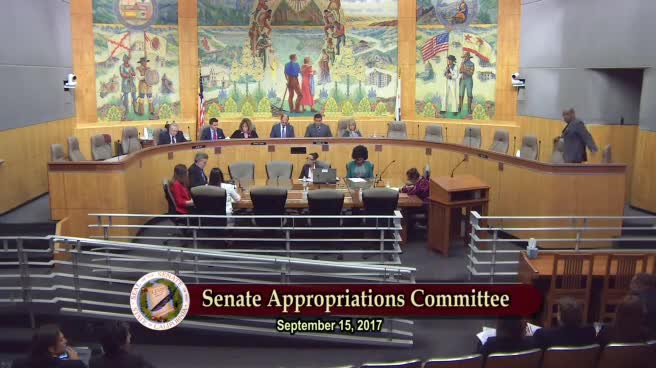 17MIN
Senate Standing Committee on Appropriations
 1H
Senate Standing Committee on Natural Resources and Water
 14MIN
Assembly Floor
 1H
Assembly Standing Committee on Appropriations
 15MIN
Assembly Standing Committee on Water, Parks, and Wildlife
Bill Author




