AB 171: Airport districts: temporary negotiable notes.
- Session Year: 2017-2018
- House: Assembly
- Latest Version Date: 2017-07-10
The California Airport District Act provides for the formation, organization, and operation of airport districts and authorizes airport districts to issue temporary negotiable notes at not more than 8% interest and not exceeding $500,000 in total amount outstanding. Existing law relating to the maximum rate on notes issued by a local agency generally provides that the rate may not exceed 12% per year. The act requires that any note proposed to be issued pursuant to the act with a term longer than 5 years not be issued until after a public hearing is conducted with respect to the issuance and a resolution is adopted approving the issuance, as specified.
The act also provides that these notes are general obligations of the district payable from revenues and taxes unless paid from other available funds of the district in the same manner as bonds of the district and that the maturity of the notes may not be later than 20 years from the date issued, and that the total aggregate amount of the notes outstanding at any one time may not exceed 2% of the assessed valuation of the taxable property in the district, or if the assessed valuation is not obtained, then 2% of the county auditors estimate of the assessed valuation of the taxable property of the district evidenced by the auditors certificate.
This bill would delete these latter provisions.
This bill would authorize the East Kern Airport District to issue these notes at a rate not greater than the maximum rate permitted by the law relating to notes issued by a local agency generally, and not exceeding $10,000,000 in total amount outstanding.The California Airport District Act provides for the formation, organization, and operation of airport districts and authorizes airport districts to issue temporary negotiable notes at not more than 8% interest and not exceeding $500,000 in total amount outstanding. Existing law relating to the maximum rate on notes issued by a local agency generally provides that the rate may not exceed 12% per year. The act requires that any note proposed to be issued pursuant to the act with a term longer than 5 years not be issued until after a public hearing is conducted with respect to the issuance and a resolution is adopted approving the issuance, as specified.
This bill would authorize the East Kern Airport District to issue these notes at a rate not greater than the maximum rate permitted by the law relating to notes issued by a local agency generally, and not exceeding $10,000,000 in total amount outstanding.
Existing law, the Medical Cannabis Regulation and Safety Act (MCRSA), authorizes a person who obtains both a state license under the MCRSA and the relevant local license to engage in commercial medical cannabis activity pursuant to those licenses, as specified. The act authorizes a licensing authority, as defined, to issue a state license to qualified applicants engaging in commerical cannabis activity, subject to certain procedures and requirements. A licensing authority may deny an application for a state license, or issue a conditional license, if certain conditions apply. That act also requires each licensing authority to prepare and submit to the Legislature an annual report on the authoritys activities, and to post the report on the authoritys Internet Web site. The licensing authority is required to include various information in that report, including, among others, the number of state licenses issued by that authority.This bill would also require a licensing authority to include in its annual report the number of conditional licenses issued.Existing law, the Medical Cannabis Regulation and Safety Act (MCRSA), authorizes a person who obtains both a state license under the MCRSA and the relevant local license to engage in commercial medical cannabis activity pursuant to those licenses, as specified. The act authorizes a licensing authority, as defined, to issue a state license to qualified applicants engaging in commerical cannabis activity, subject to certain procedures and requirements. A licensing authority may deny an application for a state license, or issue a conditional license, if certain conditions apply. That act also requires each licensing authority to prepare and submit to the Legislature an annual report on the authoritys activities, and to post the report on the authoritys Internet Web site. The licensing authority is required to include various information in that report, including, among others, the number of state licenses issued by that authority.
This bill would also require a licensing authority to include in its annual report the number of conditional licenses issued.
(a)The district may issue temporary negotiable notes bearing interest at a rate not exceeding 8 percent per annum. However, these notes shall be general obligations of the district payable from revenues and taxes, unless paid from other available funds of the district, in the same manner as bonds of the district. The maturity of the notes shall not be later than 20 years from the date thereof, and the total aggregate amount of the notes outstanding at any one time shall not exceed 2 percent of the assessed valuation of the taxable property in the district, or if the assessed valuation is not obtained, 2 percent of the county auditors estimate of the assessed valuation of the taxable property of the district evidenced by his or her certificate. The total aggregate amount of these notes outstanding at any one time shall further not exceed the sum of five hundred thousand dollars ($500,000).
(b)Any note proposed to be issued pursuant to subdivision (a) with a term longer than five years shall not be issued until after a public hearing is conducted with respect to the issuance and a resolution is adopted approving the issuance. At least 15 days prior to the public hearing, the board shall cause notice of the hearing to be published pursuant to Section 6061 of the Government Code in a newspaper published in the principal county. The resolution shall be subject to referendum pursuant to Section 9340 of the Elections Code and shall so provide. Within 15 days after adoption of the resolution of issuance, the board shall cause the resolution to be published at least once in a newspaper of general circulation published in the principal county, or if there is none, posted in at least three public places in the district.
SECTION 1.Section 22557.3 is added to the Public Utilities Code, to read:22557.3.(a)Notwithstanding Section 22557, the East Kern Airport District may issue temporary negotiable notes bearing interest at a rate not exceeding the maximum rate permitted pursuant to Section 53531 of the Government Code. These notes shall be general obligations of the district payable from revenues and taxes, unless paid from other available funds of the district, in the same manner as bonds of the district. The notes shall mature not later than 20 years from the date thereof, and the total aggregate amount of notes outstanding at any one time shall not exceed 2 percent of the assessed valuation of the taxable property in the district, or if the assessed valuation is not obtained, 2 percent of the county auditors estimate of the assessed valuation of the taxable property of the district evidenced by the auditors certificate. The total aggregate amount of notes outstanding at any one time shall further not exceed ten million dollars ($10,000,000).(b)Any note proposed to be issued pursuant to subdivision (a) with a term longer than five years shall not be issued until after a public hearing is conducted with respect to the issuance and a resolution is adopted approving the issuance. At least 15 days prior to the public hearing, the board shall cause notice of the hearing to be published pursuant to Section 6061 of the Government Code in a newspaper published in the principal county. The resolution is subject to referendum pursuant to Section 9340 of the Elections Code and shall so provide. Within 15 days after adoption of the resolution of issuance, the board shall cause the resolution to be published at least once in a newspaper of general circulation published in the principal county, or if there is none, posted in at least three public places in the district.(a)Notwithstanding Section 22557, the East Kern Airport District may issue temporary negotiable notes bearing interest at a rate not exceeding the maximum rate permitted pursuant to Section 53531 of the Government Code. These notes shall be general obligations of the district payable from revenues and taxes, unless paid from other available funds of the district, in the same manner as bonds of the district. The notes shall mature not later than 20 years from the date thereof, and the total aggregate amount of notes outstanding at any one time shall not exceed 2 percent of the assessed valuation of the taxable property in the district, or if the assessed valuation is not obtained, 2 percent of the county auditors estimate of the assessed valuation of the taxable property of the district evidenced by the auditors certificate. The total aggregate amount of notes outstanding at any one time shall further not exceed ten million dollars ($10,000,000).
(b)Any note proposed to be issued pursuant to subdivision (a) with a term longer than five years shall not be issued until after a public hearing is conducted with respect to the issuance and a resolution is adopted approving the issuance. At least 15 days prior to the public hearing, the board shall cause notice of the hearing to be published pursuant to Section 6061 of the Government Code in a newspaper published in the principal county. The resolution is subject to referendum pursuant to Section 9340 of the Elections Code and shall so provide. Within 15 days after adoption of the resolution of issuance, the board shall cause the resolution to be published at least once in a newspaper of general circulation published in the principal county, or if there is none, posted in at least three public places in the district.
SECTION 1.Section 19353 of the Business and Professions Code is amended to read:19353.Beginning on March 1, 2023, and on or before March 1 of each year thereafter, each licensing authority shall prepare and submit to the Legislature an annual report on the authoritys activities, in compliance with Section 9795 of the Government Code, and post the report on the authoritys Internet Web site. The report shall include, but not be limited to, the following information for the previous fiscal year:(a)The amount of funds allocated and spent by the licensing authority for medical cannabis licensing, enforcement, and administration.(b)The number of state licenses issued, including conditional licenses, renewed, denied, suspended, and revoked, by state license category.(c)The average time for processing state license applications, by state license category.(d)The number of appeals from the denial of state licenses or other disciplinary actions taken by the licensing authority and the average time spent on these appeals.(e)The number of complaints submitted by citizens or representatives of cities or counties regarding licensees, provided as both a comprehensive statewide number and by geographical region.(f)The number and type of enforcement activities conducted by the licensing authorities and by local law enforcement agencies in conjunction with the licensing authorities or the bureau.(g)The number, type, and amount of penalties, fines, and other disciplinary actions taken by the licensing authorities.Beginning on March 1, 2023, and on or before March 1 of each year thereafter, each licensing authority shall prepare and submit to the Legislature an annual report on the authoritys activities, in compliance with Section 9795 of the Government Code, and post the report on the authoritys Internet Web site. The report shall include, but not be limited to, the following information for the previous fiscal year:
(a)The amount of funds allocated and spent by the licensing authority for medical cannabis licensing, enforcement, and administration.
(b)The number of state licenses issued, including conditional licenses, renewed, denied, suspended, and revoked, by state license category.
(c)The average time for processing state license applications, by state license category.
(d)The number of appeals from the denial of state licenses or other disciplinary actions taken by the licensing authority and the average time spent on these appeals.
(e)The number of complaints submitted by citizens or representatives of cities or counties regarding licensees, provided as both a comprehensive statewide number and by geographical region.
(f)The number and type of enforcement activities conducted by the licensing authorities and by local law enforcement agencies in conjunction with the licensing authorities or the bureau.
(g)The number, type, and amount of penalties, fines, and other disciplinary actions taken by the licensing authorities.
|
Date
|
Status
|
|---|---|
| Aug 24, 2017 | Ordered to inactive file at the request of Senator Wilk. |
| Aug 21, 2017 | From Consent Calendar. |
| Aug 21, 2017 | Read second time. Ordered to Consent Calendar. |
| Jul 20, 2017 | From committee: Do pass. To Consent Calendar. (Ayes 7. Noes 0.) (July 19). |
| Jul 10, 2017 | From committee chair, with author's amendments: Amend, and re-refer to committee. Read second time, amended, and re-referred to Com. on GOV. & F. |
| Jun 1, 2017 | Re-referred to Com. on GOV. & F. |
| May 25, 2017 | From committee chair, with author's amendments: Amend, and re-refer to committee. Read second time, amended, and re-referred to Com. on RLS. |
| May 24, 2017 | Referred to Com. on RLS. |
| May 11, 2017 | In Senate. Read first time. To Com. on RLS. for assignment. |
| May 11, 2017 | Read third time. Passed. Ordered to the Senate. (Ayes 77. Noes 0. Page 1486.) |
| May 4, 2017 | Read second time. Ordered to Consent Calendar. |
| May 3, 2017 | From committee: Do pass. To Consent Calendar. (Ayes 16. Noes 0.) (May 3). |
| Apr 26, 2017 | From committee: Do pass and re-refer to Com. on APPR. with recommendation: To Consent Calendar. (Ayes 15. Noes 0.) (April 25). Re-referred to Com. on APPR. |
| Mar 27, 2017 | Referred to Com. on B. & P. |
| Jan 18, 2017 | From printer. May be heard in committee February 17. |
| Jan 17, 2017 | Read first time. To print. |
|
Date
|
Description
|
Location
|
Votes
|
|
|---|---|---|---|---|
| Jul 19, 2017 | Do pass and be ordered to the Consent Calendar | Senate Standing Committee on Governance and Finance |
Passed |
|
| May 11, 2017 | AB 171 LACKEY Consent Calendar Second Day Regular Session | Assembly Floor |
Passed |
|
| May 3, 2017 | Do pass. To Consent Calendar. | Assembly Standing Committee on Appropriations |
Passed |
|
| Apr 25, 2017 | Do pass and be re-referred to the Committee on [Appropriations] with recommendation: To Consent Calendar | Assembly Standing Committee on Business and Professions |
Passed |
This list shows positions taken on this bill by organizations on the date displayed, which is linked to the original source.
Positions by individuals are not included.
Office of Senate Floor Analyses (916) 651-1520 Fax: (916) 327-4478 | AB |
THIRD READING
Bill No: AB 171
:
SENATE GOVERNANCE & FIN. COMMITTEE: 7-0, 7/19/17
AYES: McGuire, Nguyen, Beall, Hernandez, Hertzberg, Lara, Moorlach
ASSEMBLY FLOOR: 77-0, 5/11/17 (Consent) - See last page for vote
DIGEST:
This bill alters the Airport District Act to preclude districts from using general revenues payable from taxes to secure repayment of temporary negotiable notes.
Existing law:
- Enacts the California Airport District Act, which provides for the formation of airport districts in the state to assist in the development of airports, spaceports, and air navigation facilities, led by five-member boards.
- Allows airport districts to issue temporary negotiable notes, limited to a maximum interest rate of 8% with a maximum maturity of 20 years, and a total aggregate amount of outstanding notes for each district of $500,000.
- States that temporary negotiable notes are general obligations of the district payable from revenues and taxes, unless secured by other funds, in the same manner as its bonds.
- Provides that airport district may pledge either general revenues derived from taxes to repay the notes, or enterprise revenues from a specific source.
- Requires the district to hold a public hearing before it adopts a referendable resolution approving the notes, which are essentially promises to repay loans from a district's future general revenues.
This bill:
- Repeals provisions of the Airport District Act that state that temporary negotiable notes are general obligations of the district payable from revenues and taxes in the same manner as the district’s bonds.
- Deletes the current cap on the amount of outstanding notes at 2% of the assessed valuation of the property of the district, or 2% of the auditor’s estimated value of the taxable property of the district.
FISCAL EFFECT: Appropriation: Fiscal Com.: Local:
None received
OPPOSITION: (Verified 8/22/17)
None received
ARGUMENTS IN SUPPORT: According to the author, “California’s airport districts serve communities large and small, from Big Bear to Monterey. Current law authorizes airport districts to issue temporary negotiable notes, similar to bank loans, and pledge general revenues from property taxes to repay them without voter approval. AB 171 deletes this pledge, thereby allowing only enterprise revenues to secure repayment.”
ASSEMBLY FLOOR: 77-0, 5/11/17
AYES: Acosta, Aguiar-Curry, Travis Allen, Arambula, Baker, Berman, Bigelow, Bloom, Bocanegra, Bonta, Brough, Burke, Caballero, Calderon, Cervantes, Chau, Chávez, Chen, Chiu, Choi, Chu, Cooley, Cooper, Cunningham, Dababneh, Daly, Eggman, Flora, Fong, Frazier, Friedman, Gallagher, Cristina Garcia, Eduardo Garcia, Gipson, Gloria, Gomez, Gonzalez Fletcher, Gray, Grayson, Harper, Holden, Irwin, Jones-Sawyer, Kalra, Kiley, Lackey, Levine, Limón, Low, Maienschein, Mathis, Mayes, McCarty, Medina, Melendez, Mullin, Muratsuchi, Nazarian, Obernolte, Quirk, Quirk-Silva, Reyes, Ridley-Thomas, Rodriguez, Rubio, Salas, Santiago, Steinorth, Mark Stone, Thurmond, Ting, Voepel, Waldron, Weber, Wood, Rendon
NO VOTE RECORDED: Dahle, O'Donnell, Patterson
8/23/17 11:07:29
**** END ****
SENATE COMMITTEE ON GOVERNANCE AND FINANCE
Senator Mike McGuire, Chair
2017 - 2018 Regular
Bill No: | AB 171 | Hearing Date: | 7/19/17 |
Author: | Lackey | Tax Levy: | No |
Version: | 7/10/17 Amended | Fiscal: | No |
Consultant: | Grinnell | ||
Airport districts: temporary negotiable notes
Alters the Airport District Act to preclude districts from using general revenues payable from taxes to secure repayment of temporary negotiable notes.
Background
The California Airport District Act provides for the formation of airport districts in the state to assist in the development of airports, spaceports, and air navigation facilities. Led by five-member boards, approximately ten airport districts operate in the state.
Currently, airport districts can issue temporary negotiable notes, limited to a maximum interest rate of 8% with a maximum maturity of 20 years, and a total aggregate amount of outstanding notes for each district of $500,000. The law states that these notes are general obligations of the district payable from revenues and taxes, unless secured by other funds, in the same manner as its bonds. Temporary negotiable notes are essentially promissory notes issued to a bank as part of a loan transaction. With the proceeds, the airport district can improve its infrastructure, often by constructing a project that produces lease payments or other revenues. Under current law, an airport district may pledge either general revenues derived from taxes to repay the notes, or enterprise revenues from a specific source.
Temporary negotiable notes are not part of the usual forms of debt issued by California public agencies. The California Debt and Investment Advisory Commission, which collects information from local agencies issuing debt, has neither information regarding an airport district or any other public agency issuing a temporary negotiable note.
While the statute does not require voter approval, a district must hold a public hearing before it adopts a referendable resolution approving the notes, which are essentially promises to repay loans from a district's future general revenues. While the Constitutional debt limit does not explicitly apply to airport districts, current law allows a district to issue a temporary negotiable note secured by general revenues and taxes without voter approval. The author wants to remove provisions of law allowing airport districts to pledge general revenues and taxes to repay temporary negotiable notes.
Proposed Law
Assembly Bill 171 repeals provisions of the Airport District Act that state that temporary negotiable notes are general obligations of the district payable from revenues and taxes in the same manner as the district’s bonds. The measure also deletes the current cap on the amount of outstanding notes at 2% of the assessed valuation of the property of the district, or 2% of the auditor’s estimated value of the taxable property of the district.
State Revenue Impact
No estimate.
Comments
1. Purpose of the bill. California’s airport districts serve communities large and small, from Big Bear to Monterey. Current law authorizes airport districts to issue temporary negotiable notes, similar to bank loans, and pledge general revenues from property taxes to repay them without voter approval. AB 171 deletes this pledge, thereby allowing only enterprise revenues to secure repayment.
2. Gut and Amend. As introduced and approved by the Assembly, AB 171 required licensing authorities under the Medical Cannabis Regulation and Safety Act to annually report the number of conditional licenses granted. The May 25th amendments deleted those provisions, and inserted language that allowed the East Kern Airport District to issue temporary negotiable notes up to $10 million. The July 10th amendments deleted those provisions, and inserted the current version of the bill.
Assembly Actions
Not relevant to this version of the bill.
Support and Opposition
(7/13/17)
Support: Unknown.
Opposition: Unknown.
-- END --
Date of Hearing: May 3, 2017
ASSEMBLY COMMITTEE ON APPROPRIATIONS
Lorena Gonzalez Fletcher, Chair
ABPCA Bill Id:AB 171
Author:(Lackey) – As Introduced Ver:January 17, 2017
Policy Committee: | Business and Professions | Vote: | 15 - 0 |
|
| ||
|
|
Urgency: No State Mandated Local Program: No Reimbursable: No
SUMMARY:
This bill adds conditional licenses to current annual reporting requirements about cannabis-related licensure activities.
FISCAL EFFECT:
Any state costs should be minor and absorbable (various fee-supported cannabis licensing special funds).
COMMENTS:
Purpose. According to the author, licensing authorities were given the ability to issue conditional licenses. Under current law, beginning on March 1, 2023, cannabis licensing authorities (the Bureau of Marijuana Control, Department of Food and Agriculture, and the California Department of Public Health) will begin reporting to the Legislature. The author indicates the Legislature would greatly benefit from also receiving reporting information about conditional licenses so it can determine how extensively they are being used and whether any policy changes are warranted.
Analysis Prepared by: Lisa Murawski / APPR. / (916) 319-2081
Date of Hearing: April 25, 2017
ASSEMBLY COMMITTEE ON BUSINESS AND PROFESSIONS
Evan Low, Chair
ABPCA Bill Id:AB 171
Author:(Lackey) – As Introduced Ver:January 17, 2017
SUBJECT: Medical Cannabis Regulation and Safety Act: licensure: reporting.
SUMMARY: Adds conditional licenses to the list of data that must be included in each licensing authority’s annual report to the Legislature.
EXISTING LAW:
- Establishes the Bureau under the Department of Consumer Affairs (DCA), to establish a comprehensive system to control and regulate the cultivation, distribution, transport, storage, manufacturing, processing, and sale of cannabis products. (Business and Professions Code (BPC) Section 26000 et seq.; BPC Section 19302)
- Requires licensing authorities to annually submit to the Legislature a report on the authorities’ activities and include: (Business and Professions Code (BPC) Section 19353)
- The amount of funds allocated and spent by the licensing authority for medical cannabis licensing, enforcement, and administration.
- The number of state licenses issued, renewed, denied, suspended, and revoked, by state license category.
- The average time for processing state license applications, by state license category.
- The number of appeals from the denial of state licenses or other disciplinary actions taken by the licensing authority and the average time spent on these appeals.
- The number of complaints submitted by citizens or representatives of cities or counties regarding licensees, provided as both a comprehensive statewide number and by geographical region.
- The number and type of enforcement activities conducted by the licensing authorities and by local law enforcement agencies in conjunction with the licensing authorities or the bureau.
- The number, type, and amount of penalties, fines, and other disciplinary actions taken by the licensing authorities.
THIS BILL:
- Would add conditional licenses to the items that must be disclosed by the licensing authority in its annual report.
FISCAL EFFECT: Unknown. This bill is keyed fiscal by the Legislative Counsel.
COMMENTS:
Purpose. This bill is author sponsored. According to the author, “In 2015, California enacted a series of bills known as Medical Cannabis Regulatory and Safety Act (MCRSA) to regulate medical marijuana. Beginning in 2023, each licensing authority implementing the MCRSA will begin submitting annual reports to the Legislature detailing their activities. AB 171 updates the reporting requirements for the licensing authorities to include information on the number of conditional state licenses issued, renewed, denied, suspended or revoked. Licensing authorities were given the ability to issue conditional licenses by SB 837, a budget trailer bill from 2016, as a policy tool for processing applicants as the state begins issuing licenses to medical cannabis operators beginning in 2018. The Legislature would greatly benefit from also receiving reporting information about conditional licenses so it can determine how extensively they are being used and whether any policy changes are warranted.”
Background. History of Legal Cannabis in California. In 1996, California voters passed Proposition 215, legalizing the use of medical cannabis (MC) in the state. In October 2015, nearly 20 years after the authorization of the use of MC, Governor Jerry Brown signed into law a trio of bills [AB 243 (Wood), Chapter 688, Statutes of 2015, AB 266 (Bonta, Cooley, Jones-Sawyer, Lackey, and Wood), Chapter 689, Statutes of 2015, and SB 643 (McGuire), Chapter 719, Statutes of 2015] collectively known as the Medical Cannabis Regulation and Safety Act (MCRSA). MCRSA established the state's first regulatory framework for MC. In 2016, the voters of California passed Proposition 64, the Adult Use of Marijuana Act (AUMA), to legalize the recreational use of cannabis in the state by 2018.
As of 2016, 28 states, the District of Columbia, and Guam allow MC programs. Though California was the first to authorize the medical use of cannabis, it was the only state that allowed cannabis use without a robust state regulatory framework until passage of MCRSA. States with MC laws generally have a form of patient registry, which may provide some protection against arrest for possession up to a certain amount of cannabis for personal medicinal use. A limited number of states restrict MC usage to products with low to zero THC and high CBD concentrations, in an effort to more strictly limit the use of THC due to its known psychoactive effects. To date, eight states, Alaska, Colorado, Oregon, Washington, California, Nevada, Massachusetts, Maine, and the District of Columbia have legalized recreational cannabis.
The authors of AUMA sought to make use of much of the regulatory structure and authorities set out by MCRSA while making a few notable changes to the structure being implemented. In addition, the AUMA approved by the voters adopted the January 1, 2018 deadline for state implementation of recreational cannabis in addition to the regulations required in MCRSA that are scheduled to take effect on the same date. The same agencies under MCRSA remain responsible for implementing regulations for adult use.
Under AUMA, the Department of Consumer Affairs (DCA), continues to serve as the lead regulatory agency for all cannabis, both medical and non-medical, and renames the existing Bureau of Medical Cannabis Regulation to the Bureau of Marijuana Control. AUMA includes 19 different license types compared to the 17 in MCRSA and authorizes DCA (and the Bureau) the exclusive authority to create and regulate a license for transportation of cannabis.
While the language of AUMA allows for modifications to the law by majority vote of the legislature, any legislative changes inconsistent with the original intent of the law may require voter approval. .
This bill only changes the reporting requirements under MCRSA and does not amend the AUMA, however, because AUMA references this code section, this change would apply to both medical and recreational cannabis. Accordingly, it does not require approval by the voters. As the state licensing entities have not begun to issue licenses under MCRSA, it is unclear how widely utilized conditional licenses will be. Collecting this data will assist regulators, the public, and the legislature to more clearly evaluate the licensing procedures at the various licensing authorities.
Current Related Legislation. AB 64 (Bonta, Cooley, Jones-Sawyer, Lackey, Wood) of the current Legislative Session seeks to reconcile a number of differences between MCRSA and AUMA to provide clarity in regulation and enforcement of both medical and recreational cannabis. STATUS: This bill was heard by the Assembly Committee on Business and Professions on April 18, 2017and referred to the Committee on Appropriations.
AB 420 (Wood) of the current Legislative Session requires a license number to be disclosed on all cannabis advertising. STATUS: This bill has been referred to the Assembly Committee on Business and Professions and will be heard on April 18, 2017.
Prior Related Legislation. AB 1575 (Bonta, Cooley, Jones-Sawyer, Lackey, Wood) of 2015 language on non-storefront dispensaries, corporate restructuring, and intellectual property. NOTE: This bill was held in the Senate Appropriations Committee.
ARGUMENTS IN SUPPORT:
City of Santa Monica: “AB 171 (Lackey) will ensure that the Legislature has relevant data about these conditional licenses to help inform policy decisions going forward. This bill aligns with the City of Santa Monica’s ongoing support for regulating the production, cultivation, distribution, licensure, and use of cannabis.”
ARGUMENTS IN OPPOSITION:
None on File
REGISTERED SUPPORT:
City of Santa Monica
REGISTERED OPPOSITION:
None on File
Analysis Prepared by: Jimmy Fremgen / B. & P. / 916-319-3301
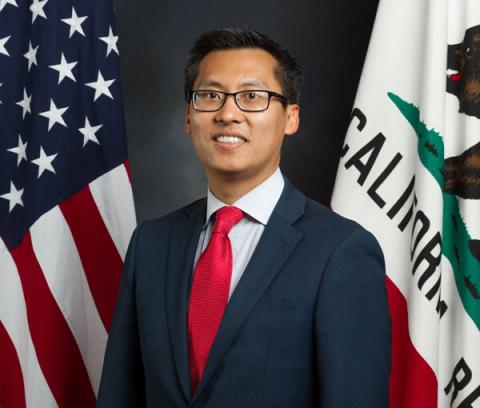

Bill Co-Author(s):