AB 1744: After school programs: substance use prevention: funding: cannabis revenue.
- Session Year: 2017-2018
- House: Assembly
- Latest Version Date: 2018-04-26
Existing law establishes the After School Education and Safety Program under which participating public schools receive grants to operate before and after school programs serving pupils in kindergarten or any of grades 1 to 9, inclusive. The After School Education and Safety Program requires each program component to consist of an education and literacy element and an educational enrichment element, as specified.
This bill would specifically authorize for inclusion within the education enrichment element pupil assistance youth development activities that promote healthy choices and behaviors in order to prevent and reduce substance use and improve school retention and performance.
Existing law establishes the 21st Century Community Learning Centers Program program and the 21st Century High School After School Safety and Enrichment for Teens Program, program, which provide for the allocation of grant funds by the State Department of Education for before or after school programs operating in accordance with specified program requirements. Existing law requires those programs to include an enrichment element.
This bill would specifically authorize for inclusion within the enrichment element pupil assistance youth development activities that promote healthy choices and behaviors in order to prevent and reduce substance use and improve school retention and performance.
The Control, Regulate and Tax Adult Use of Marijuana Act (AUMA), an initiative statute approved by the voters at the November 8, 2016, statewide general election as Proposition 64, among other things, requires the Controller, by July 15 of each fiscal year beginning in the 201819 fiscal year, to disburse 60% of the funds deposited in the California Cannabis Tax Fund during the prior fiscal year into the Youth Education, Prevention, Early Intervention and Treatment Account, to be disbursed by the Controller to the State Department of Health Care Services for programs for youth that are designed to educate about and to prevent substance use disorders and to prevent harm from substance use. AUMA authorizes the programs to include, but not be limited to, certain components, including grants to schools to develop and support student assistance programs, or other similar programs, designed to prevent and reduce substance use, and improve school retention and performance. AUMA requires the State Department of Health Care Services to enter into interagency agreements with the State Department of Public Health and the State Department of Education to implement and administer these programs.
This bill would state that the Legislature encourages schools that to establish a program pursuant to the After School Education and Safety Program, the 21st Century Community Learning Centers Program, program, or the 21st Century High School After School Safety and Enrichment for Teens Program program that is designed to educate about and prevent substance use disorders or to prevent harm from substance abuse to apply to receive funding abuse, as provided. The bill would require the State Department of Health Care Services to enter into interagency agreements with the State Department of Education to implement and administer these programs, pursuant to AUMA, and to allocate to schools funding from the Youth Education, Prevention, Early Intervention and Treatment Account established pursuant to AUMA. The bill would also amend provide in AUMA to specify that the State Department of Health Care Services, in determining which programs to be funded, may consider selecting, among other programs, programs established pursuant to the 21st Century High School After School Safety and Enrichment for Teens Program, program, the After School Education and Safety Program, and the 21st Century Community Learning Centers Program. program. The bill would also specify in AUMA that grants to schools to develop and support expanded learning programs, designed to prevent and reduce substance use, and improve school retention and performance, are part of the components that programs receiving funding under AUMA may include.
Existing law establishes the After School Education and Safety Program under which participating public schools receive grants to operate before and after school programs serving pupils in kindergarten or any of grades 1 to 9, inclusive. The After School Education and Safety Program requires each program component to consist of an education and literacy element and an educational enrichment element, as specified.
This bill would specifically authorize for inclusion within the education enrichment element pupil assistance to prevent and reduce substance use and improve school retention and performance.
Existing law establishes the 21st Century Community Learning Centers Program and the 21st Century High School After School Safety and Enrichment for Teens Program, which provide for the allocation of grant funds by the State Department of Education for before or after school programs operating in accordance with specified program requirements. Existing law requires those programs to include an enrichment element.
This bill would specifically authorize for inclusion within the enrichment element pupil assistance to prevent and reduce substance use and improve school retention and performance.
The Control, Regulate and Tax Adult Use of Marijuana Act (AUMA), an initiative statute approved by the voters at the November 8, 2016, statewide general election as Proposition 64, among other things, requires the Controller, by July 15 of each fiscal year beginning in the 201819 fiscal year, to disburse 60% of the funds deposited in the California Cannabis Tax Fund during the prior fiscal year into the Youth Education, Prevention, Early Intervention and Treatment Account, to be disbursed by the Controller to the State Department of Health Care Services for programs for youth that are designed to educate about and to prevent substance use disorders and to prevent harm from substance use.
This bill would state that the Legislature encourages schools that establish a program pursuant to the After School Education and Safety Program, the 21st Century Community Learning Centers Program, or the 21st Century High School After School Safety and Enrichment for Teens Program that is designed to educate about and prevent substance use disorders or to prevent harm from substance abuse to apply to receive funding from the Youth Education, Prevention, Early Intervention and Treatment Account established pursuant to AUMA. The bill would also amend AUMA to specify that the State Department of Health Care Services, in determining which programs to be funded, may consider selecting, among other programs, programs established pursuant to the 21st Century High School After School Safety and Enrichment for Teens Program, the After School Education and Safety Program, and the 21st Century Community Learning Centers Program.
The Legislature finds and declares all of the following:
(a)The After School Education and Safety Program (Article 22.5 (commencing with Section 8482) of Chapter 2 of Part 6 of Division 1 of Title 1 of the Education Code), the 21st Century Community Learning Centers Program program (Article 22.6 (commencing with Section 8484.7) of Chapter 2 of Part 6 of Division 1 of Title 1 of the Education Code), and the 21st Century High School After School Safety and Enrichment for Teens Program program (Article 19 (commencing with Section 8420) of Chapter 2 of Part 6 of Division 1 of Title 1 of the Education Code) provide after school programs to low-income public school pupils in order to maximize their retention in school, reduce dropout rates, improve academic performance, reduce substance use and abuse, and expand educational enrichment opportunities.
(b)Personal, family, and cultural dynamics often interfere with a pupils ability to achieve academically. These dynamics can include exposure to substance abuse in the home and the community.
(c)Absent appropriate intervention, a pupil who experiences substance abuse challenges in the home or the community is at increased risk of his or her own substance abuse.
(d)Youth who are unsupervised after school and during the summer are at greater risk of substance abuse.
(e)After school programs have been shown to reduce substance abuse, including through the development of protective or resiliency factors factors, such as school connectedness, self-control, self-confidence, and quality peer relationships.
(f)Because the After School Education and Safety Program, the 21st Century Community Learning Centers Program, program, and the 21st Century High School After School Safety and Enrichment for Teens Program program augment the regular schoolday and keep youth supervised during a time when they are at risk of substance abuse, these programs are uniquely positioned to provide alternatives to substance abuse and provide education and assistance to pupils about substance abuse, how it can affect their academic performance, and how to avoid substance abuse.
(g)In approving Proposition 64 at the November 8, 2016, statewide general election, the voters of California identified substance abuse pupil assistance programs in schools as a high priority for the allocation of tax revenue from the sale and cultivation of cannabis and cannabis products.
(h)The After School Education and Safety Program, the 21st Century Community Learning Centers Program, program, and the 21st Century High School After School Safety and Enrichment for Teens Program program represent ideal conduits for Proposition 64 tax revenues to realize the goals of preventing and reducing substance abuse among pupils and improving school retention and performance.
SEC. 2.Section 8421 of the Education Code is amended to read:8421.There is hereby established the 21st Century High School After School Safety and Enrichment for Teens program. The purpose of the program is to create incentives for establishing locally driven after school enrichment programs that partner schools and communities to provide academic support and safe, constructive alternatives for high school pupils in the hours after the regular schoolday, and that support college and career readiness.
(a)High school after school programs shall serve pupils in grades 9 to 12, inclusive.
(b)A high school after school program established pursuant to this article shall consist of the following two elements:
(1)(A)An academic assistance element that shall include, but need not be limited to, at least one of the following: tutoring, career exploration, homework assistance, or college preparation, including information about the Cal Grant Program established pursuant to Chapter 1.7 (commencing with Section 69430) of Part 42 of Division 5 of Title 3. The assistance shall be coordinated with the regular academic programs of the pupils.
(B)For purposes of this article, career exploration means activities that help pupils develop the knowledge and skills that are relevant to their career interests and reinforce academic content.
(2)An enrichment element that may include, but need not be limited to, community service, career and technical education, job readiness, opportunities for mentoring and tutoring younger pupils, service learning, arts, computer and technology training, physical fitness, recreation activities, and pupil assistance youth development activities that promote healthy choices and behaviors in order to prevent and reduce substance use and improve school retention and performance.
(c)A program shall operate for a minimum of 15 hours per week.
(d)An entity may operate programs on one or multiple sites. If an entity plans to operate programs at multiple sites, only one application is required.
(e)A program may operate on a schoolsite or on another site approved by the department during the grant application process. A program located off school grounds shall not be approved unless both of the following criteria are met:
(1)Safe transportation is available to transport participating pupils if necessary.
(2)The program is at least as available and accessible as similar programs conducted on schoolsites.
(f)Applicants for grants pursuant to this article shall ensure that all of the following requirements are fulfilled, if applicable:
(1)The application includes a description of the activities that will be available for pupils and lists the program hours.
(2)The application includes an estimate of the following:
(A)The number of pupils expected to attend the program on a regular basis.
(B)The average hours of attendance per pupil.
(C)The percentage of pupils expected to attend the program less than three days a week, three days a week, and more than three days a week, for each quarter or semester during the grant period.
(3)The application documents the commitments of each partner to operate a program at a location or locations that are safe and accessible to participating pupils.
(4)The application certifies that pupils were involved in the design of the program and describes the extent of that involvement.
(5)The application identifies federal, state, and local programs that will be combined or coordinated with the high school after school program for the most effective use of public resources, and describes a plan for implementing the high school after school program beyond federal grant funding.
(6)The application has been approved by the school district, or the charter school governing body, and the principal of each participating school for each schoolsite or other site.
(7)The application includes a certification that the applicant has complied with the requirement in subdivision (b) of Section 8422.
(8)The application includes a certification that each applicant or partner in the application agrees to do all of the following:
(A)Assume responsibility for the quality of the program.
(B)Follow all fiscal reporting and auditing standards required by the department.
(C)Provide the following information on participating pupils to the department:
(i)Schoolday attendance rates.
(ii)Program attendance.
(D)Acknowledge that program evaluations will be based upon the criteria in Section 8427.
(9)Certify that the applicant has complied with all federal requirements in preparing and submitting the application.
(g)The department shall not establish minimum attendance requirements for individual pupils.
(h)It is the intent of the Legislature that, to the extent possible, the department require applicants to submit the information required by this section in a short and concise manner.
SEC. 3.Section 8429 is added to the Education Code, to read:8429.(a)The Legislature encourages schools that to establish a program pursuant to this article that are is designed to educate about and prevent substance use disorders or to prevent harm from substance abuse to apply to receive funding through a broad array of academic and enrichment activities, including activities to prevent and reduce substance use, and improve school retention and performance.
(b)The State Department of Health Care Services shall enter into interagency agreements with the department, pursuant to paragraph (1) of subdivision (f) of Section 34019 of the Revenue and Taxation Code, to implement and administer the programs described in this section, and to allocate to schools funding from the Youth Education, Prevention, Early Intervention and Treatment Account established pursuant to paragraph (1) of subdivision (f) of Section 34019 of the Revenue and Taxation Code in accordance with conditions and requirements as may be established by the State Department of Health Care Services.
SEC. 4.Section 8482.3 of the Education Code is amended to read:8482.3.(a)The After School Education and Safety Program shall be established to serve pupils in kindergarten and grades 1 to 9, inclusive, at participating public elementary, middle, junior high, and charter schools. The grades to be served by the program at participating schools may be determined by local needs.
(b)A program may operate a before school component of a program, an after school component, or both the before and after school components of a program, on one or multiple schoolsites. If a program operates at multiple schoolsites, only one application shall be required for its establishment.
(c)(1)Each component of a program established pursuant to this article shall consist of the following two elements:
(A)An educational and literacy element in which tutoring or homework assistance is provided in one or more of the following areas: language arts, mathematics, history and social science, computer training, or science.
(B)An educational enrichment element that may include, but need not be limited to, fine arts, career technical education, recreation, physical fitness, prevention activities, and pupil assistance youth development activities that promote healthy choices and behaviors in order to prevent and reduce substance use and improve school retention and performance.
(2)Notwithstanding any other provision of this article, the majority of the time spent by a pupil who is in kindergarten or any of grades 1 to 9, inclusive, and who is participating in a career technical education element of a program established pursuant to this article shall be at a site that complies with Section 8484.6.
(d)(1)Applicants shall agree that snacks made available through a program shall conform to the nutrition standards in Article 2.5 (commencing with Section 49430) of Chapter 9 of Part 27 of Division 4 of Title 2.
(2)Applicants shall agree that meals made available through a program shall conform to the nutrition standards of the United States Department of Agricultures at-risk afterschool meal component of the Child and Adult Care Food Program (42 U.S.C. Sec. 1766).
(e)Applicants for programs established pursuant to this article may include any of the following:
(1)A local educational agency, including, but not limited to, a charter school, the California School for the Deaf (northern California), the California School for the Deaf (southern California), and the California School for the Blind.
(2)A city, county, or nonprofit organization in partnership with, and with the approval of, a local educational agency or agencies.
(f)Applicants for grants pursuant to this article shall ensure that each of the following requirements is fulfilled, if applicable:
(1)The application documents the commitments of each partner to operate a program on that site or sites.
(2)The application has been approved by the school district, or the charter school governing body, and the principal of each participating school for each schoolsite or other site.
(3)Each partner in the application agrees to share responsibility for the quality of the program.
(4)The application designates the public agency or local educational agency partner to act as the fiscal agent. The fiscal agent may be changed upon approval by the department if the new fiscal agent is a local educational agency or public agency partner. For purposes of this section, public agency means only a county board of supervisors or, if the city is incorporated or has a charter, a city council.
(5)Applicants agree to follow all fiscal reporting and auditing standards required by the department.
(6)Applicants agree to incorporate into the program both of the elements required pursuant to subdivision (c).
(7)Applicants agree to provide information to the department for the purpose of program evaluation pursuant to Section 8483.55.
(8)Applicants shall certify that program evaluations will be based upon Section 8484 and upon any requirements recommended by the Advisory Committee on Before and After School Programs and adopted by the state board, in compliance with subdivision (g) of Section 8482.4.
(9)The application states the targeted number of pupils to be served by the program.
(10)Applicants agree to provide the following information on participating pupils to the department:
(A)Schoolday attendance rates.
(B)Program attendance.
(g)(1)Grantees shall review their after school program plans every three years, including, but not limited to, all of the following:
(A)Program goals. A grantee may specify any new program goals that will apply to the following three years during the grant renewal process.
(B)Program content, including the elements identified in subdivision (c).
(C)Outcome measures selected from those identified in subdivision (a) of Section 8484 that the grantee will use for the next three years.
(D)Any other information requested by the department.
(E)If the program goals or outcome measures change as a result of this review, the grantee shall notify the department in a manner prescribed by the department.
(F)The grantee shall maintain documentation of the after school program plan for a minimum of five years.
(2)The department shall monitor this review as part of its onsite monitoring process.
SEC. 5.Section 8484.66 is added to the Education Code, to read:8484.66.(a)The Legislature encourages schools that to establish a program pursuant to this article with an educational enrichment element that is designed to educate about and prevent substance use disorders and to prevent harm from substance abuse to apply to receive funding through a broad array of academic and enrichment activities, including activities to prevent and reduce substance use, and improve school retention and performance.
(b) The State Department of Health Care Services shall enter into interagency agreements with the department, pursuant to paragraph (1) of subdivision (f) of Section 34019 of the Revenue and Taxation Code, to implement and administer the programs described in this section, and to allocate to schools funding from the Youth Education, Prevention, Early Intervention and Treatment Account established pursuant to paragraph (1) of subdivision (f) of Section 34019 of the Revenue and Taxation Code in accordance with conditions and requirements as may be established by the State Department of Health Care Services.
SEC. 6.Section 8484.76 is added to the Education Code, to read:8484.76.(a)The Legislature encourages schools that to establish a program pursuant to this article with an educational enrichment element that is designed to educate about and prevent substance use disorders and to prevent harm from substance abuse to apply to receive funding through a broad array of academic and enrichment activities, including activities to prevent and reduce substance use, and improve school retention and performance.
(b)The State Department of Health Care Services shall enter into interagency agreements with the department, pursuant to paragraph (1) of subdivision (f) of Section 34019 of the Revenue and Taxation Code, to implement and administer the programs described in this section, and to allocate to schools funding from the Youth Education, Prevention, Early Intervention and Treatment Account established pursuant to paragraph (1) of subdivision (f) of Section 34019 of the Revenue and Taxation Code in accordance with conditions and requirements as may be established by the State Department of Health Care Services.
SEC. 7.Section 34019 of the Revenue and Taxation Code is amended to read:34019.(a)Beginning with the 201718 fiscal year, the Department of Finance shall estimate revenues to be received pursuant to Sections 34011 and 34012 and provide those estimates to the Controller no later than June 15 of each year. The Controller shall use these estimates when disbursing funds pursuant to this section. Before any funds are disbursed pursuant to subdivisions (b), (c), (d), and (e) of this section, the Controller shall disburse from the Tax Fund to the appropriate account, without regard to fiscal year, the following:
(1)Reasonable costs incurred by the board for administering and collecting the taxes imposed by this part; provided, however, such costs shall not exceed 4 percent of tax revenues received.
(2)Reasonable costs incurred by the bureau, the Department of Consumer Affairs, the Department of Food and Agriculture, and the State Department of Public Health for implementing, administering, and enforcing Division 10 (commencing with Section 26000) of the Business and Professions Code to the extent those costs are not reimbursed pursuant to Section 26180 of the Business and Professions Code. This paragraph shall remain operative through the 202223 fiscal year.
(3)Reasonable costs incurred by the Department of Fish and Wildlife, the State Water Resources Control Board, and the Department of Pesticide Regulation for carrying out their respective duties under Division 10 (commencing with Section 26000) of the Business and Professions Code to the extent those costs are not otherwise reimbursed.
(4)Reasonable costs incurred by the Controller for performing duties imposed by the Control, Regulate and Tax Adult Use of Marijuana Act, including the audit required by Section 34020.
(5)Reasonable costs incurred by the Department of Finance for conducting the performance audit pursuant to Section 26191 of the Business and Professions Code.
(6)Reasonable costs incurred by the Legislative Analysts Office for performing duties imposed by Section 34017.
(7)Sufficient funds to reimburse the Division of Labor Standards Enforcement and the Division of Occupational Safety and Health within the Department of Industrial Relations and the Employment Development Department for the costs of applying and enforcing state labor laws to licensees under Division 10 (commencing with Section 26000) of the Business and Professions Code.
(b)The Controller shall next disburse the sum of ten million dollars ($10,000,000) to a public university or universities in California annually beginning with the 201819 fiscal year until the 202829 fiscal year to research and evaluate the implementation and effect of the Control, Regulate and Tax Adult Use of Marijuana Act, and shall, if appropriate, make recommendations to the Legislature and Governor regarding possible amendments to the Control, Regulate and Tax Adult Use of Marijuana Act. The recipients of these funds shall publish reports on their findings at a minimum of every two years and shall make the reports available to the public. The bureau shall select the universities to be funded. The research funded pursuant to this subdivision shall include but not necessarily be limited to:
(1)Impacts on public health, including health costs associated with cannabis use, as well as whether cannabis use is associated with an increase or decrease in use of alcohol or other drugs.
(2)The impact of treatment for maladaptive cannabis use and the effectiveness of different treatment programs.
(3)Public safety issues related to cannabis use, including studying the effectiveness of the packaging and labeling requirements and advertising and marketing restrictions contained in the act at preventing underage access to and use of cannabis and cannabis products, and studying the health-related effects among users of varying potency levels of cannabis and cannabis products.
(4) Cannabis use rates, maladaptive use rates for adults and youth, and diagnosis rates of cannabis-related substance use disorders.
(5) Cannabis market prices, illicit market prices, tax structures and rates, including an evaluation of how to best tax cannabis based on potency, and the structure and function of licensed cannabis businesses.
(6)Whether additional protections are needed to prevent unlawful monopolies or anti-competitive anticompetitive behavior from occurring in the adult-use cannabis industry and, if so, recommendations as to the most effective measures for preventing such behavior.
(7)The economic impacts in the private and public sectors, including, but not necessarily limited to, job creation, workplace safety, revenues, taxes generated for state and local budgets, and criminal justice impacts, including, but not necessarily limited to, impacts on law enforcement and public resources, short and long term consequences of involvement in the criminal justice system, and state and local government agency administrative costs and revenue.
(8)Whether the regulatory agencies tasked with implementing and enforcing the Control, Regulate and Tax Adult Use of Marijuana Act are doing so consistent with the purposes of the act, and whether different agencies might do so more effectively.
(9)Environmental issues related to cannabis production and the criminal prohibition of cannabis production.
(10)The geographic location, structure, and function of licensed cannabis businesses, and demographic data, including race, ethnicity, and gender, of license holders. licenseholders.
(11)The outcomes achieved by the changes in criminal penalties made under the Control, Regulate and Tax Adult Use of Marijuana Act for cannabis-related offenses, and the outcomes of the juvenile justice system, in particular, probation-based treatments and the frequency of up-charging illegal possession of cannabis or cannabis products to a more serious offense.
(c)The Controller shall next disburse the sum of three million dollars ($3,000,000) annually to the Department of the California Highway Patrol beginning with the 201819 fiscal year until the 202223 fiscal year to establish and adopt protocols to determine whether a driver is operating a vehicle while impaired, including impairment by the use of cannabis or cannabis products, and to establish and adopt protocols setting forth best practices to assist law enforcement agencies. The department may hire personnel to establish the protocols specified in this subdivision. In addition, the department may make grants to public and private research institutions for the purpose of developing technology for determining when a driver is operating a vehicle while impaired, including impairment by the use of cannabis or cannabis products.
(d)The Controller shall next disburse the sum of ten million dollars ($10,000,000) beginning with the 201819 fiscal year and increasing ten million dollars ($10,000,000) each fiscal year thereafter until the 202223 fiscal year, at which time the disbursement shall be fifty million dollars ($50,000,000) each year thereafter, to the Governors Office of Business and Economic Development, in consultation with the Labor and Workforce Development Agency and the State Department of Social Services, to administer a community reinvestments grants program to local health departments and at least 50 percent to qualified community-based nonprofit organizations to support job placement, mental health treatment, substance use disorder treatment, system navigation services, legal services to address barriers to reentry, and linkages to medical care for communities disproportionately affected by past federal and state drug policies. The office shall solicit input from community-based job skills, job placement, and legal service providers with relevant expertise as to the administration of the grants program. In addition, the office shall periodically evaluate the programs it is funding to determine the effectiveness of the programs, shall not spend more than 4 percent for administrative costs related to implementation, evaluation, and oversight of the programs, and shall award grants annually, beginning no later than January 1, 2020.
(e)The Controller shall next disburse the sum of two million dollars ($2,000,000) annually to the University of California San Diego Center for Medicinal Cannabis Research to further the objectives of the center, including the enhanced understanding of the efficacy and adverse effects of cannabis as a pharmacological agent.
(f)By July 15 of each fiscal year beginning in the 201819 fiscal year, the Controller shall, after disbursing funds pursuant to subdivisions (a), (b), (c), (d), and (e), disburse funds deposited in the Tax Fund during the prior fiscal year into sub-trust accounts, which are hereby created, as follows:
(1)Sixty percent shall be deposited in the Youth Education, Prevention, Early Intervention and Treatment Account, and disbursed by the Controller to the State Department of Health Care Services for programs for youth that are designed to educate about and to prevent substance use disorders and to prevent harm from substance use. The State Department of Health Care Services shall enter into interagency agreements with the State Department of Public Health and the State Department of Education to implement and administer these programs. The programs shall emphasize accurate education, effective prevention, early intervention, school retention, and timely treatment services for youth, their families families, and caregivers. In determining which programs to be funded, the State Department of Health Care Services may consider selecting, among other programs, programs established pursuant to the 21st Century High School After School Safety and Enrichment for Teens Program program (Article 19 (commencing with Section 8420) of Chapter 2 of Part 6 of Division 1 of Title 1 of the Education Code), the After School Education and Safety Program (Article 22.5 (commencing with Section 8482) of Chapter 2 of Part 6 of Division 1 of Title 1 of the Education Code), and the 21st Century Community Learning Centers Program program (Article 22.6 (commencing with Section 8484.7) of Chapter 2 of Part 6 of Division 1 of Title 1 of the Education Code) that meet the requirements specified in this paragraph and as otherwise determined by the State Department of Health Care Services. The programs may include, but are not limited to, the following components:
(A)Prevention and early intervention services including outreach, risk survey and education to youth, families, caregivers, schools, primary care health providers, behavioral health and substance use disorder service providers, community and faith-based organizations, fostercare foster care providers, juvenile and family courts, and others to recognize and reduce risks related to substance use, and the early signs of problematic use and of substance use disorders.
(B)Grants to schools to develop and support student assistance programs, expanded learning programs, or other similar programs, designed to prevent and reduce substance use, and improve school retention and performance, by supporting students who are at risk of dropping out of school and promoting alternatives to suspension or expulsion that focus on school retention, remediation, and professional care. Schools with higher than average dropout rates should be prioritized for grants.
(C)Grants to programs for outreach, education, and treatment for homeless youth and out-of-school youth with substance use disorders.
(D)Access and linkage to care provided by county behavioral health programs for youth, and their families families, and caregivers, who have a substance use disorder or who are at risk for developing a substance use disorder.
(E)Youth-focused substance use disorder treatment programs that are culturally and gender competent, trauma-informed, evidence-based and provide a continuum of care that includes screening and assessment (substance use disorder as well as mental health), early intervention, active treatment, family involvement, case management, overdose prevention, prevention of communicable diseases related to substance use, relapse management for substance use and other cooccurring behavioral health disorders, vocational services, literacy services, parenting classes, family therapy and counseling services, medication-assisted treatments, psychiatric medication medication, and psychotherapy. When indicated, referrals must be made to other providers.
(F)To the extent permitted by law and where indicated, interventions shall utilize a two-generation approach to addressing substance use disorders with the capacity to treat youth and adults together. This would include supporting the development of family-based interventions that address substance use disorders and related problems within the context of families, including parents, foster parents, caregivers caregivers, and all their children.
(G)Programs to assist individuals, as well as families and friends of drug using young people, to reduce the stigma associated with substance use including being diagnosed with a substance use disorder or seeking substance use disorder services. This includes peer-run outreach and education to reduce stigma, anti-stigma campaigns, and community recovery networks.
(H)Workforce training and wage structures that increase the hiring pool of behavioral health staff with substance use disorder prevention and treatment expertise. Provide expertise and provides ongoing education and coaching that increases substance use treatment providers core competencies competencies, and trains providers on promising and evidenced-based practices.
(I)Construction of community-based youth treatment facilities.
(J)The departments may contract with each county behavioral health program for the provision of services.
(K)Funds shall be allocated to counties based on demonstrated need, including the number of youth in the county, the prevalence of substance use disorders among adults, and confirmed through statistical data, validated assessments, or submitted reports prepared by the applicable county to demonstrate and validate need.
(L)The departments shall periodically evaluate the programs they are funding to determine the effectiveness of the programs.
(M)The departments may use up to 4 percent of the moneys allocated to the Youth Education, Prevention, Early Intervention and Treatment Account for administrative costs related to implementation, evaluation, and oversight of the programs.
(N)If the Department of Finance ever determines that funding pursuant to cannabis taxation exceeds demand for youth prevention and treatment services in the state, the departments shall provide a plan to the Department of Finance to provide treatment services to adults as well as youth using these funds.
(O)The departments shall solicit input from volunteer health organizations, physicians who treat addiction, treatment researchers, family therapy and counseling providers, and professional education associations with relevant expertise as to the administration of any grants made pursuant to this paragraph.
(2)Twenty percent shall be deposited in the Environmental Restoration and Protection Account, and disbursed by the Controller as follows:
(A)To the Department of Fish and Wildlife and the Department of Parks and Recreation for the cleanup, remediation, and restoration of environmental damage in watersheds affected by cannabis cultivation and related activities including, but not limited to, damage that occurred prior to enactment of this part, and to support local partnerships for this purpose. The Department of Fish and Wildlife and the Department of Parks and Recreation may distribute a portion of the funds they receive from the Environmental Restoration and Protection Account through grants for purposes specified in this paragraph.
(B)To the Department of Fish and Wildlife and the Department of Parks and Recreation for the stewardship and operation of state-owned wildlife habitat areas and state park units in a manner that discourages and prevents the illegal cultivation, production, sale, and use of cannabis and cannabis products on public lands, and to facilitate the investigation, enforcement, and prosecution of illegal cultivation, production, sale, and use of cannabis or cannabis products on public lands.
(C)To the Department of Fish and Wildlife to assist in funding the watershed enforcement program and multiagency taskforce established pursuant to subdivisions (b) and (c) of Section 12029 of the Fish and Game Code to facilitate the investigation, enforcement, and prosecution of these offenses and to ensure the reduction of adverse impacts of cannabis cultivation, production, sale, and use on fish and wildlife habitats throughout the state.
(D)For purposes of this paragraph, the Secretary of the Natural Resources Agency shall determine the allocation of revenues between the departments. During the first five years of implementation, first consideration should be given to funding purposes specified in subparagraph (A).
(E)Funds allocated pursuant to this paragraph shall be used to increase and enhance activities described in subparagraphs (A), (B), and (C), and not replace allocation of other funding for these purposes. Accordingly, annual General Fund appropriations to the Department of Fish and Wildlife and the Department of Parks and Recreation shall not be reduced below the levels provided in the Budget Act of 2014 (Chapter 25 of the Statutes of 2014).
(3)Twenty percent shall be deposited into the State and Local Government Law Enforcement Account and disbursed by the Controller as follows:
(A)To the Department of the California Highway Patrol for conducting training programs for detecting, testing testing, and enforcing laws against driving under the influence of alcohol and other drugs, including driving under the influence of cannabis. The department may hire personnel to conduct the training programs specified in this subparagraph.
(B)To the Department of the California Highway Patrol to fund internal California Highway Patrol programs and grants to qualified nonprofit organizations and local governments for education, prevention, and enforcement of laws related to driving under the influence of alcohol and other drugs, including cannabis; programs that help enforce traffic laws, educate the public in traffic safety, provide varied and effective means of reducing fatalities, injuries, and economic losses from collisions; and for the purchase of equipment related to enforcement of laws related to driving under the influence of alcohol and other drugs, including cannabis.
(C)To the Board of State and Community Corrections for making grants to local governments to assist with law enforcement, fire protection, or other local programs addressing public health and safety associated with the implementation of the Control, Regulate and Tax Adult Use of Marijuana Act. The board shall not make any grants to local governments which have banned the cultivation, including personal cultivation under paragraph (3) of subdivision (b) of Section 11362.2 of the Health and Safety Code, or retail sale of cannabis or cannabis products pursuant to Section 26200 of the Business and Professions Code or as otherwise provided by law.
(D)For purposes of this paragraph, the Department of Finance shall determine the allocation of revenues between the agencies; provided, however, beginning in the 202223 fiscal year the amount allocated pursuant to subparagraph (A) shall not be less than ten million dollars ($10,000,000) annually and the amount allocated pursuant to subparagraph (B) shall not be less than forty million dollars ($40,000,000) annually. In determining the amount to be allocated before the 202223 fiscal year pursuant to this paragraph, the Department of Finance shall give initial priority to subparagraph (A).
(g)Funds allocated pursuant to subdivision (f) shall be used to increase the funding of programs and purposes identified and shall not be used to replace allocation of other funding for these purposes.
(h)Effective July 1, 2028, the Legislature may amend this section by majority vote to further the purposes of the Control, Regulate and Tax Adult Use of Marijuana Act, including allocating funds to programs other than those specified in subdivisions (d) and (f). Any revisions pursuant to this subdivision shall not result in a reduction of funds to accounts established pursuant to subdivisions (d) and (f) in any subsequent year from the amount allocated to each account in the 202728 fiscal year. Prior to July 1, 2028, the Legislature may not change the allocations to programs specified in subdivisions (d) and (f).
The Legislature finds and declares all of the following:
(a)The After School Education and Safety Program (Article 22.5 (commencing with Section 8482) of Chapter 2 of Part 6 of Division 1 of Title 1 of the Education Code), the 21st Century Community Learning Centers Program (Article 22.6 (commencing with Section 8484.7) of Chapter 2 of Part 6 of Division 1 of Title 1 of the Education Code), and the 21st Century High School After School Safety and Enrichment for Teens Program (Article 19 (commencing with Section 8420) of Chapter 2 of Part 6 of Division 1 of Title 1 of the Education Code) provide after school programs to low-income public school pupils in order to maximize their retention in school, reduce dropout rates, improve academic performance, reduce substance use and abuse, and expand educational enrichment opportunities.
(b)Personal, family, and cultural dynamics often interfere with a pupils ability to achieve academically. These dynamics can include exposure to substance abuse in the home and the community.
(c)Absent appropriate intervention, a pupil who experiences substance abuse challenges in the home or the community is at increased risk of his or her own substance abuse.
(d)Youth who are unsupervised after school and during the summer are at greater risk of substance abuse.
(e)After school programs have been shown to reduce substance abuse, including through the development of protective or resiliency factors such as school connectedness, self-control, self-confidence, and quality peer relationships.
(f)Because the After School Education and Safety Program, the 21st Century Community Learning Centers Program, and the 21st Century High School After School Safety and Enrichment for Teens Program augment the regular schoolday and keep youth supervised during a time when they are at risk of substance abuse, these programs are uniquely positioned to provide alternatives to substance abuse and provide education and assistance to pupils about substance abuse, how it can affect their academic performance, and how to avoid substance abuse.
(g)In approving Proposition 64 at the November 8, 2016, statewide general election, the voters of California identified substance abuse pupil assistance programs in schools as a high priority for the allocation of tax revenue from the sale and cultivation of cannabis and cannabis products.
(h)The After School Education and Safety Program, the 21st Century Community Learning Centers Program, and the 21st Century High School After School Safety and Enrichment for Teens Program represent ideal conduits for Proposition 64 tax revenues to realize the goals of preventing and reducing substance abuse among pupils and improving school retention and performance.
SEC. 2.Section 8421 of the Education Code is amended to read:8421.There is hereby established the 21st Century High School After School Safety and Enrichment for Teens program. The purpose of the program is to create incentives for establishing locally driven after school enrichment programs that partner schools and communities to provide academic support and safe, constructive alternatives for high school pupils in the hours after the regular schoolday, and that support college and career readiness.
(a)High school after school programs shall serve pupils in grades 9 to 12, inclusive.
(b)A high school after school program established pursuant to this article shall consist of the following two elements:
(1)(A)An academic assistance element that shall include, but need not be limited to, at least one of the following: tutoring, career exploration, homework assistance, or college preparation, including information about the Cal Grant Program established pursuant to Chapter 1.7 (commencing with Section 69430) of Part 42 of Division 5 of Title 3. The assistance shall be coordinated with the regular academic programs of the pupils.
(B)For purposes of this article, career exploration means activities that help pupils develop the knowledge and skills that are relevant to their career interests and reinforce academic content.
(2)An enrichment element that may include, but need not be limited to, community service, career and technical education, job readiness, opportunities for mentoring and tutoring younger pupils, service learning, arts, computer and technology training, physical fitness, and recreation activities. recreation activities, and pupil assistance to prevent and reduce substance use and improve school retention and performance.
(c)A program shall operate for a minimum of 15 hours per week.
(d)An entity may operate programs on one or multiple sites. If an entity plans to operate programs at multiple sites, only one application is required.
(e)A program may operate on a schoolsite or on another site approved by the department during the grant application process. A program located off school grounds shall not be approved unless both of the following criteria are met:
(1)Safe transportation is available to transport participating pupils if necessary.
(2)The program is at least as available and accessible as similar programs conducted on schoolsites.
(f)Applicants for grants pursuant to this article shall ensure that all of the following requirements are fulfilled, if applicable:
(1)The application includes a description of the activities that will be available for pupils and lists the program hours.
(2)The application includes an estimate of the following:
(A)The number of pupils expected to attend the program on a regular basis.
(B)The average hours of attendance per pupil.
(C)The percentage of pupils expected to attend the program less than three days a week, three days a week, and more than three days a week, for each quarter or semester during the grant period.
(3)The application documents the commitments of each partner to operate a program at a location or locations that are safe and accessible to participating pupils.
(4)The application certifies that pupils were involved in the design of the program and describes the extent of that involvement.
(5)The application identifies federal, state, and local programs that will be combined or coordinated with the high school after school program for the most effective use of public resources, and describes a plan for implementing the high school after school program beyond federal grant funding.
(6)The application has been approved by the school district, or the charter school governing body, and the principal of each participating school for each schoolsite or other site.
(7)The application includes a certification that the applicant has complied with the requirement in subdivision (b) of Section 8422.
(8)The application includes a certification that each applicant or partner in the application agrees to do all of the following:
(A)Assume responsibility for the quality of the program.
(B)Follow all fiscal reporting and auditing standards required by the department.
(C)Provide the following information on participating pupils to the department:
(i)Schoolday attendance rates.
(ii)Program attendance.
(D)Acknowledge that program evaluations will be based upon the criteria in Section 8427.
(9)Certify that the applicant has complied with all federal requirements in preparing and submitting the application.
(g)The department shall not establish minimum attendance requirements for individual pupils.
(h)It is the intent of the Legislature that, to the extent possible, the department require applicants to submit the information required by this section in a short and concise manner.
SEC. 3.Section 8429 is added to the Education Code, to read:8429.The Legislature encourages schools that establish a program pursuant to this article that are designed to educate about and prevent substance use disorders or to prevent harm from substance abuse to apply to receive funding from the Youth Education, Prevention, Early Intervention and Treatment Account established pursuant to paragraph (1) of subdivision (f) of Section 34019 of the Revenue and Taxation Code in accordance with conditions and requirements as may be established by the State Department of Health Care Services.
SEC. 4.Section 8482.3 of the Education Code is amended to read:8482.3.(a)The After School Education and Safety Program shall be established to serve pupils in kindergarten and grades 1 to 9, inclusive, at participating public elementary, middle, junior high, and charter schools. The grades to be served by the program at participating schools may be determined by local needs.
(b)A program may operate a before school component of a program, an after school component, or both the before and after school components of a program, on one or multiple schoolsites. If a program operates at multiple schoolsites, only one application shall be required for its establishment.
(c)(1)Each component of a program established pursuant to this article shall consist of the following two elements:
(A)An educational and literacy element in which tutoring or homework assistance is provided in one or more of the following areas: language arts, mathematics, history and social science, computer training, or science.
(B)An educational enrichment element that may include, but need not be limited to, fine arts, career technical education, recreation, physical fitness, and prevention activities. activities, and pupil assistance to prevent and reduce substance use and improve school retention and performance.
(2)Notwithstanding any other provision of this article, the majority of the time spent by a pupil who is in kindergarten or any of grades 1 to 9, inclusive, and who is participating in a career technical education element of a program established pursuant to this article shall be at a site that complies with Section 8484.6.
(d)(1)Applicants shall agree that snacks made available through a program shall conform to the nutrition standards in Article 2.5 (commencing with Section 49430) of Chapter 9 of Part 27 of Division 4 of Title 2.
(2)Applicants shall agree that meals made available through a program shall conform to the nutrition standards of the United States Department of Agricultures at-risk afterschool meal component of the Child and Adult Care Food Program (42 U.S.C. Sec. 1766).
(e)Applicants for programs established pursuant to this article may include any of the following:
(1)A local educational agency, including, but not limited to, a charter school, the California School for the Deaf (northern California), the California School for the Deaf (southern California), and the California School for the Blind.
(2)A city, county, or nonprofit organization in partnership with, and with the approval of, a local educational agency or agencies.
(f)Applicants for grants pursuant to this article shall ensure that each of the following requirements is fulfilled, if applicable:
(1)The application documents the commitments of each partner to operate a program on that site or sites.
(2)The application has been approved by the school district, or the charter school governing body, and the principal of each participating school for each schoolsite or other site.
(3)Each partner in the application agrees to share responsibility for the quality of the program.
(4)The application designates the public agency or local educational agency partner to act as the fiscal agent. The fiscal agent may be changed upon approval by the department if the new fiscal agent is a local educational agency or public agency partner. For purposes of this section, public agency means only a county board of supervisors or, if the city is incorporated or has a charter, a city council.
(5)Applicants agree to follow all fiscal reporting and auditing standards required by the department.
(6)Applicants agree to incorporate into the program both of the elements required pursuant to subdivision (c).
(7)Applicants agree to provide information to the department for the purpose of program evaluation pursuant to Section 8483.55.
(8)Applicants shall certify that program evaluations will be based upon Section 8484 and upon any requirements recommended by the Advisory Committee on Before and After School Programs and adopted by the state board, in compliance with subdivision (g) of Section 8482.4.
(9)The application states the targeted number of pupils to be served by the program.
(10)Applicants agree to provide the following information on participating pupils to the department:
(A)Schoolday attendance rates.
(B)Program attendance.
(g)(1)Grantees shall review their after school program plans every three years, including, but not limited to, all of the following:
(A)Program goals. A grantee may specify any new program goals that will apply to the following three years during the grant renewal process.
(B)Program content, including the elements identified in subdivision (c).
(C)Outcome measures selected from those identified in subdivision (a) of Section 8484 that the grantee will use for the next three years.
(D)Any other information requested by the department.
(E)If the program goals or outcome measures change as a result of this review, the grantee shall notify the department in a manner prescribed by the department.
(F)The grantee shall maintain documentation of the after school program plan for a minimum of five years.
(2)The department shall monitor this review as part of its onsite monitoring process.
SEC. 5.Section 8484.66 is added to the Education Code, to read:8484.66.The Legislature encourages schools that establish a program pursuant to this article with an educational enrichment element that is designed to educate about and prevent substance use disorders and to prevent harm from substance abuse to apply to receive funding from the Youth Education, Prevention, Early Intervention and Treatment Account established pursuant to paragraph (1) of subdivision (f) of Section 34019 of the Revenue and Taxation Code in accordance with conditions and requirements as may be established by the State Department of Health Care Services.
SEC. 6.Section 8484.76 is added to the Education Code, to read:8484.76.The Legislature encourages schools that establish a program pursuant to this article with an educational enrichment element that is designed to educate about and prevent substance use disorders and to prevent harm from substance abuse to apply to receive funding from the Youth Education, Prevention, Early Intervention and Treatment Account established pursuant to paragraph (1) of subdivision (f) of Section 34019 of the Revenue and Taxation Code in accordance with conditions and requirements as may be established by the State Department of Health Care Services.
SEC. 7.Section 34019 of the Revenue and Taxation Code is amended to read:34019.(a)Beginning with the 201718 fiscal year, the Department of Finance shall estimate revenues to be received pursuant to Sections 34011 and 34012 and provide those estimates to the Controller no later than June 15 of each year. The Controller shall use these estimates when disbursing funds pursuant to this section. Before any funds are disbursed pursuant to subdivisions (b), (c), (d), and (e) of this section, the Controller shall disburse from the Tax Fund to the appropriate account, without regard to fiscal year, the following:
(1)Reasonable costs incurred by the board for administering and collecting the taxes imposed by this part; provided, however, such costs shall not exceed 4 percent of tax revenues received.
(2)Reasonable costs incurred by the bureau, the Department of Consumer Affairs, the Department of Food and Agriculture, and the State Department of Public Health for implementing, administering, and enforcing Division 10 (commencing with Section 26000) of the Business and Professions Code to the extent those costs are not reimbursed pursuant to Section 26180 of the Business and Professions Code. This paragraph shall remain operative through the 202223 fiscal year.
(3)Reasonable costs incurred by the Department of Fish and Wildlife, the State Water Resources Control Board, and the Department of Pesticide Regulation for carrying out their respective duties under Division 10 (commencing with Section 26000) of the Business and Professions Code to the extent those costs are not otherwise reimbursed.
(4)Reasonable costs incurred by the Controller for performing duties imposed by the Control, Regulate and Tax Adult Use of Marijuana Act, including the audit required by Section 34020.
(5)Reasonable costs incurred by the Department of Finance for conducting the performance audit pursuant to Section 26191 of the Business and Professions Code.
(6)Reasonable costs incurred by the Legislative Analysts Office for performing duties imposed by Section 34017.
(7)Sufficient funds to reimburse the Division of Labor Standards Enforcement and the Division of Occupational Safety and Health within the Department of Industrial Relations and the Employment Development Department for the costs of applying and enforcing state labor laws to licensees under Division 10 (commencing with Section 26000) of the Business and Professions Code.
(b)The Controller shall next disburse the sum of ten million dollars ($10,000,000) to a public university or universities in California annually beginning with the 201819 fiscal year until the 202829 fiscal year to research and evaluate the implementation and effect of the Control, Regulate and Tax Adult Use of Marijuana Act, and shall, if appropriate, make recommendations to the Legislature and Governor regarding possible amendments to the Control, Regulate and Tax Adult Use of Marijuana Act. The recipients of these funds shall publish reports on their findings at a minimum of every two years and shall make the reports available to the public. The bureau shall select the universities to be funded. The research funded pursuant to this subdivision shall include but not necessarily be limited to:
(1)Impacts on public health, including health costs associated with cannabis use, as well as whether cannabis use is associated with an increase or decrease in use of alcohol or other drugs.
(2)The impact of treatment for maladaptive cannabis use and the effectiveness of different treatment programs.
(3)Public safety issues related to cannabis use, including studying the effectiveness of the packaging and labeling requirements and advertising and marketing restrictions contained in the act at preventing underage access to and use of cannabis and cannabis products, and studying the health-related effects among users of varying potency levels of cannabis and cannabis products.
(4) Cannabis use rates, maladaptive use rates for adults and youth, and diagnosis rates of cannabis-related substance use disorders.
(5) Cannabis market prices, illicit market prices, tax structures and rates, including an evaluation of how to best tax cannabis based on potency, and the structure and function of licensed cannabis businesses.
(6)Whether additional protections are needed to prevent unlawful monopolies or anti-competitive behavior from occurring in the adult-use cannabis industry and, if so, recommendations as to the most effective measures for preventing such behavior.
(7)The economic impacts in the private and public sectors, including, but not necessarily limited to, job creation, workplace safety, revenues, taxes generated for state and local budgets, and criminal justice impacts, including, but not necessarily limited to, impacts on law enforcement and public resources, short and long term consequences of involvement in the criminal justice system, and state and local government agency administrative costs and revenue.
(8)Whether the regulatory agencies tasked with implementing and enforcing the Control, Regulate and Tax Adult Use of Marijuana Act are doing so consistent with the purposes of the act, and whether different agencies might do so more effectively.
(9)Environmental issues related to cannabis production and the criminal prohibition of cannabis production.
(10)The geographic location, structure, and function of licensed cannabis businesses, and demographic data, including race, ethnicity, and gender, of license holders.
(11)The outcomes achieved by the changes in criminal penalties made under the Control, Regulate and Tax Adult Use of Marijuana Act for cannabis-related offenses, and the outcomes of the juvenile justice system, in particular, probation-based treatments and the frequency of up-charging illegal possession of cannabis or cannabis products to a more serious offense.
(c)The Controller shall next disburse the sum of three million dollars ($3,000,000) annually to the Department of the California Highway Patrol beginning with the 201819 fiscal year until the 202223 fiscal year to establish and adopt protocols to determine whether a driver is operating a vehicle while impaired, including impairment by the use of cannabis or cannabis products, and to establish and adopt protocols setting forth best practices to assist law enforcement agencies. The department may hire personnel to establish the protocols specified in this subdivision. In addition, the department may make grants to public and private research institutions for the purpose of developing technology for determining when a driver is operating a vehicle while impaired, including impairment by the use of cannabis or cannabis products.
(d)The Controller shall next disburse the sum of ten million dollars ($10,000,000) beginning with the 201819 fiscal year and increasing ten million dollars ($10,000,000) each fiscal year thereafter until the 202223 fiscal year, at which time the disbursement shall be fifty million dollars ($50,000,000) each year thereafter, to the Governors Office of Business and Economic Development, in consultation with the Labor and Workforce Development Agency and the State Department of Social Services, to administer a community reinvestments grants program to local health departments and at least 50 percent to qualified community-based nonprofit organizations to support job placement, mental health treatment, substance use disorder treatment, system navigation services, legal services to address barriers to reentry, and linkages to medical care for communities disproportionately affected by past federal and state drug policies. The office shall solicit input from community-based job skills, job placement, and legal service providers with relevant expertise as to the administration of the grants program. In addition, the office shall periodically evaluate the programs it is funding to determine the effectiveness of the programs, shall not spend more than 4 percent for administrative costs related to implementation, evaluation, and oversight of the programs, and shall award grants annually, beginning no later than January 1, 2020.
(e)The Controller shall next disburse the sum of two million dollars ($2,000,000) annually to the University of California San Diego Center for Medicinal Cannabis Research to further the objectives of the center, including the enhanced understanding of the efficacy and adverse effects of cannabis as a pharmacological agent.
(f)By July 15 of each fiscal year beginning in the 201819 fiscal year, the Controller shall, after disbursing funds pursuant to subdivisions (a), (b), (c), (d), and (e), disburse funds deposited in the Tax Fund during the prior fiscal year into sub-trust accounts, which are hereby created, as follows:
(1)Sixty percent shall be deposited in the Youth Education, Prevention, Early Intervention and Treatment Account, and disbursed by the Controller to the State Department of Health Care Services for programs for youth that are designed to educate about and to prevent substance use disorders and to prevent harm from substance use. The State Department of Health Care Services shall enter into interagency agreements with the State Department of Public Health and the State Department of Education to implement and administer these programs. The programs shall emphasize accurate education, effective prevention, early intervention, school retention, and timely treatment services for youth, their families and caregivers. In determining which programs to be funded, the State Department of Health Care Services may consider selecting, among other programs, programs established pursuant to the 21st Century High School After School Safety and Enrichment for Teens Program (Article 19 (commencing with Section 8420) of Chapter 2 of Part 6 of Division 1 of Title 1 of the Education Code), the After School Education and Safety Program (Article 22.5 (commencing with Section 8482) of Chapter 2 of Part 6 of Division 1 of Title 1 of the Education Code), and the 21st Century Community Learning Centers Program (Article 22.6 (commencing with Section 8484.7) of Chapter 2 of Part 6 of Division 1 of Title 1 of the Education Code) that meet the requirements specified in this paragraph and as otherwise determined by the State Department of Health Care Services. The programs may include, but are not limited to, the following components:
(A)Prevention and early intervention services including outreach, risk survey and education to youth, families, caregivers, schools, primary care health providers, behavioral health and substance use disorder service providers, community and faith-based organizations, fostercare providers, juvenile and family courts, and others to recognize and reduce risks related to substance use, and the early signs of problematic use and of substance use disorders.
(B)Grants to schools to develop and support student assistance programs, or other similar programs, designed to prevent and reduce substance use, and improve school retention and performance, by supporting students who are at risk of dropping out of school and promoting alternatives to suspension or expulsion that focus on school retention, remediation, and professional care. Schools with higher than average dropout rates should be prioritized for grants.
(C)Grants to programs for outreach, education, and treatment for homeless youth and out-of-school youth with substance use disorders.
(D)Access and linkage to care provided by county behavioral health programs for youth, and their families and caregivers, who have a substance use disorder or who are at risk for developing a substance use disorder.
(E)Youth-focused substance use disorder treatment programs that are culturally and gender competent, trauma-informed, evidence-based and provide a continuum of care that includes screening and assessment (substance use disorder as well as mental health), early intervention, active treatment, family involvement, case management, overdose prevention, prevention of communicable diseases related to substance use, relapse management for substance use and other cooccurring behavioral health disorders, vocational services, literacy services, parenting classes, family therapy and counseling services, medication-assisted treatments, psychiatric medication and psychotherapy. When indicated, referrals must be made to other providers.
(F)To the extent permitted by law and where indicated, interventions shall utilize a two-generation approach to addressing substance use disorders with the capacity to treat youth and adults together. This would include supporting the development of family-based interventions that address substance use disorders and related problems within the context of families, including parents, foster parents, caregivers and all their children.
(G)Programs to assist individuals, as well as families and friends of drug using young people, to reduce the stigma associated with substance use including being diagnosed with a substance use disorder or seeking substance use disorder services. This includes peer-run outreach and education to reduce stigma, anti-stigma campaigns, and community recovery networks.
(H)Workforce training and wage structures that increase the hiring pool of behavioral health staff with substance use disorder prevention and treatment expertise. Provide ongoing education and coaching that increases substance use treatment providers core competencies and trains providers on promising and evidenced-based practices.
(I)Construction of community-based youth treatment facilities.
(J)The departments may contract with each county behavioral health program for the provision of services.
(K)Funds shall be allocated to counties based on demonstrated need, including the number of youth in the county, the prevalence of substance use disorders among adults, and confirmed through statistical data, validated assessments, or submitted reports prepared by the applicable county to demonstrate and validate need.
(L)The departments shall periodically evaluate the programs they are funding to determine the effectiveness of the programs.
(M)The departments may use up to 4 percent of the moneys allocated to the Youth Education, Prevention, Early Intervention and Treatment Account for administrative costs related to implementation, evaluation, and oversight of the programs.
(N)If the Department of Finance ever determines that funding pursuant to cannabis taxation exceeds demand for youth prevention and treatment services in the state, the departments shall provide a plan to the Department of Finance to provide treatment services to adults as well as youth using these funds.
(O)The departments shall solicit input from volunteer health organizations, physicians who treat addiction, treatment researchers, family therapy and counseling providers, and professional education associations with relevant expertise as to the administration of any grants made pursuant to this paragraph.
(2)Twenty percent shall be deposited in the Environmental Restoration and Protection Account, and disbursed by the Controller as follows:
(A)To the Department of Fish and Wildlife and the Department of Parks and Recreation for the cleanup, remediation, and restoration of environmental damage in watersheds affected by cannabis cultivation and related activities including, but not limited to, damage that occurred prior to enactment of this part, and to support local partnerships for this purpose. The Department of Fish and Wildlife and the Department of Parks and Recreation may distribute a portion of the funds they receive from the Environmental Restoration and Protection Account through grants for purposes specified in this paragraph.
(B)To the Department of Fish and Wildlife and the Department of Parks and Recreation for the stewardship and operation of state-owned wildlife habitat areas and state park units in a manner that discourages and prevents the illegal cultivation, production, sale, and use of cannabis and cannabis products on public lands, and to facilitate the investigation, enforcement, and prosecution of illegal cultivation, production, sale, and use of cannabis or cannabis products on public lands.
(C)To the Department of Fish and Wildlife to assist in funding the watershed enforcement program and multiagency taskforce established pursuant to subdivisions (b) and (c) of Section 12029 of the Fish and Game Code to facilitate the investigation, enforcement, and prosecution of these offenses and to ensure the reduction of adverse impacts of cannabis cultivation, production, sale, and use on fish and wildlife habitats throughout the state.
(D)For purposes of this paragraph, the Secretary of the Natural Resources Agency shall determine the allocation of revenues between the departments. During the first five years of implementation, first consideration should be given to funding purposes specified in subparagraph (A).
(E)Funds allocated pursuant to this paragraph shall be used to increase and enhance activities described in subparagraphs (A), (B), and (C), and not replace allocation of other funding for these purposes. Accordingly, annual General Fund appropriations to the Department of Fish and Wildlife and the Department of Parks and Recreation shall not be reduced below the levels provided in the Budget Act of 2014 (Chapter 25 of the Statutes of 2014).
(3)Twenty percent shall be deposited into the State and Local Government Law Enforcement Account and disbursed by the Controller as follows:
(A)To the Department of the California Highway Patrol for conducting training programs for detecting, testing and enforcing laws against driving under the influence of alcohol and other drugs, including driving under the influence of cannabis. The department may hire personnel to conduct the training programs specified in this subparagraph.
(B)To the Department of the California Highway Patrol to fund internal California Highway Patrol programs and grants to qualified nonprofit organizations and local governments for education, prevention, and enforcement of laws related to driving under the influence of alcohol and other drugs, including cannabis; programs that help enforce traffic laws, educate the public in traffic safety, provide varied and effective means of reducing fatalities, injuries, and economic losses from collisions; and for the purchase of equipment related to enforcement of laws related to driving under the influence of alcohol and other drugs, including cannabis.
(C)To the Board of State and Community Corrections for making grants to local governments to assist with law enforcement, fire protection, or other local programs addressing public health and safety associated with the implementation of the Control, Regulate and Tax Adult Use of Marijuana Act. The board shall not make any grants to local governments which have banned the cultivation, including personal cultivation under paragraph (3) of subdivision (b) of Section 11362.2 of the Health and Safety Code, or retail sale of cannabis or cannabis products pursuant to Section 26200 of the Business and Professions Code or as otherwise provided by law.
(D)For purposes of this paragraph, the Department of Finance shall determine the allocation of revenues between the agencies; provided, however, beginning in the 202223 fiscal year the amount allocated pursuant to subparagraph (A) shall not be less than ten million dollars ($10,000,000) annually and the amount allocated pursuant to subparagraph (B) shall not be less than forty million dollars ($40,000,000) annually. In determining the amount to be allocated before the 202223 fiscal year pursuant to this paragraph, the Department of Finance shall give initial priority to subparagraph (A).
(g)Funds allocated pursuant to subdivision (f) shall be used to increase the funding of programs and purposes identified and shall not be used to replace allocation of other funding for these purposes.
(h)Effective July 1, 2028, the Legislature may amend this section by majority vote to further the purposes of the Control, Regulate and Tax Adult Use of Marijuana Act, including allocating funds to programs other than those specified in subdivisions (d) and (f). Any revisions pursuant to this subdivision shall not result in a reduction of funds to accounts established pursuant to subdivisions (d) and (f) in any subsequent year from the amount allocated to each account in the 202728 fiscal year. Prior to July 1, 2028, the Legislature may not change the allocations to programs specified in subdivisions (d) and (f).
|
Date
|
Status
|
|---|---|
| Aug 16, 2018 | In committee: Held under submission. |
| Aug 6, 2018 | In committee: Referred to APPR. suspense file. |
| Jun 25, 2018 | In committee: Hearing postponed by committee. |
| Jun 21, 2018 | From committee: Do pass and re-refer to Com. on APPR. (Ayes 8. Noes 0.) (June 20). Re-referred to Com. on APPR. |
| Jun 13, 2018 | From committee: Do pass and re-refer to Com. on HEALTH. (Ayes 7. Noes 0.) (June 13). Re-referred to Com. on HEALTH. |
| May 30, 2018 | Referred to Coms. on ED. and HEALTH. |
| May 17, 2018 | In Senate. Read first time. To Com. on RLS. for assignment. |
| May 17, 2018 | Read third time. Passed. Ordered to the Senate. |
| May 10, 2018 | Read second time. Ordered to Consent Calendar. |
| May 9, 2018 | From committee: Do pass. To Consent Calendar. (Ayes 16. Noes 0.) (May 9). |
| Apr 30, 2018 | Re-referred to Com. on APPR. |
| Apr 26, 2018 | Read second time and amended. |
| Apr 25, 2018 | From committee: Amend, and do pass as amended and re-refer to Com. on APPR. (Ayes 15. Noes 0.) (April 24). |
| Apr 12, 2018 | From committee: Do pass and re-refer to Com. on HEALTH with recommendation: To Consent Calendar. (Ayes 7. Noes 0.) (April 11). Re-referred to Com. on HEALTH. |
| Mar 22, 2018 | Referred to Coms. on ED. and HEALTH. |
| Jan 4, 2018 | From printer. May be heard in committee February 3. |
| Jan 3, 2018 | Read first time. To print. |
|
Date
|
Description
|
Location
|
Votes
|
|
|---|---|---|---|---|
| Aug 6, 2018 | Placed on suspense file | Senate Standing Committee on Appropriations |
Passed |
|
| Jun 20, 2018 | Do pass, but first be re-referred to the Committee on [Appropriations] | Senate Standing Committee on Health |
Passed |
|
| Jun 13, 2018 | Do pass, but first be re-referred to the Committee on [Health] | Senate Standing Committee on Education |
Passed |
|
| May 17, 2018 | AB 1744 MCCARTY Consent Calendar Second Day Regular Session | Assembly Floor |
Passed |
|
| May 9, 2018 | Do pass. To Consent Calendar. | Assembly Standing Committee on Appropriations |
Passed |
|
| Apr 24, 2018 | Do pass as amended and be re-referred to the Committee on [Appropriations] | Assembly Standing Committee on Health |
Passed |
|
| Apr 11, 2018 | Do pass and be re-referred to the Committee on [Health] with recommendation: To Consent Calendar | Assembly Standing Committee on Education |
Passed |
This list shows positions taken on this bill by organizations on the date displayed, which is linked to the original source.
Positions by individuals are not included.
SENATE COMMITTEE ON APPROPRIATIONS
Senator Anthony Portantino, Chair
2017 - 2018 Regular Session
AB 1744 (McCarty) - After school programs: substance use prevention: funding: cannabis revenue
Version: April 26, 2018 | Policy Vote: ED. 7 - 0, HEALTH 8 - 0 |
Urgency: No | Mandate: No |
Hearing Date: August 6, 2018 | Consultant: Lenin Del Castillo |
This bill meets the criteria for referral to the Suspense File.
Bill Summary:
This bill encourages After School Education and Safety (ASES) programs, the 21st Century Community Learning Centers Program (21st CCLC), and the 21st Century High School After School Safety and Enrichment for Teens Program (ASSETs) to establish programs that are designed to educate about and prevent substance use disorders or to prevent harm from substance abuse. This bill also authorizes the Department of Health Care Services (DHCS) to consider selecting those programs for funding from the Control, Regulate and Tax Adult Use of Marijuana Act (Proposition 64).
Fiscal Impact:
- By specifying the after school programs for which DHCS may consider funding from the Youth Education, Prevention, Early Intervention and Treatment Account (YEPEITA), this bill could create unknown but significant cost pressure to increase funding for those programs. Additionally, it could provide preferential access to the funds relative to other youth programs that could be funded from that account. The DHCS indicates that YEPEITA funds are not yet available and it is unknown how much money will be available for allocation.
- The CDE anticipates additional unknown costs to administer any new programs that are established. A precise amount would depend on the interagency agreement with DHCS, what role CDE would have in administering the programs, how the grants would be awarded, and the total amount that would be available for disbursement from the YEPEITA. Proposition 64 allows departments to use up to four percent of the moneys allocated to the YEPEITA for administrative costs related to implementation, evaluation, and oversight of the programs.
Background:
Existing law establishes the ASES program through the 2002 voter-approved initiative, Proposition 49. The ASES program funds the establishment of local before and after school education and enrichment programs, which are created through partnerships between schools and local community resources to provide literacy, academic enrichment and safe constructive alternatives for students in kindergarten through ninth grade.
Existing law establishes the 21st CCLC contained within the federal No Child Left Behind Act of 2001 to complement the ASES program, and specifies that the requirements of the ASES program apply to the 21st CCLC program with specified exceptions.
Existing law establishes the 21st Century ASSETs Program to create incentives for establishing locally driven after school enrichment programs between schools and local community organizations serving pupils from grades nine through twelve.
Existing law establishes, effective January 1, 2018, a cannabis excise tax to be imposed upon purchasers of cannabis or cannabis products sold in this state at the rate of 15 percent of the average market price of any retail sale by a cannabis retailer. Existing law establishes the California Cannabis Tax Fund in the State Treasury consisting of all taxes, interest, penalties, and other amounts collected and paid to the board to carry out the purposes of the Control, Regulate and Tax Adult Use of Marijuana Act (AUWA) and all revenues deposited into the Tax Fund, together with interest or dividends earned by the fund, are to be expended only in accordance with the provisions of the Act. Existing law specifies that the funds in the California Cannabis Tax Fund are to be disbursed as follows:
- Reasonable costs incurred by various state agencies for carrying out specified duties associated with the Act.
- Ten million dollars to a public university or universities annually beginning in 2018-19 to 2028-29 to research the effect of the Control, Regulate and Tax Adult Use of Marijuana Act.
- Three million dollars annually from 2018-19 through 2022-23 to the California Highway Patrol to adopt protocols to determine whether a driver is operating a vehicle while impaired by the use of cannabis or cannabis products.
- Ten million dollars annually in 2018-19, increasing to fifty million dollars in 2022-23 and beyond to the Governor’s Office of Business and Economic Development to administer a community reinvestments grants program.
- Two million dollars annually to the University of California San Diego Center for Medicinal Cannabis Research.
- By July 15 of each year, beginning in 2018-19 after disbursing funds for the purposes described above, disburse 60 percent of the remaining funds into the Youth Education, Prevention, Early Intervention and Treatment Account to the DHCS for programs for youth designed to educate about and to prevent substance abuse disorders and to prevent harm from substance use. The law requires DHCS to enter into interagency agreements with the State Department of Public Health and the California Department of Education (CDE) to implement and administer these programs. Specifies that these programs may include, but are not limited to, prevention and early intervention services to recognize and reduce risks associated with substance use and the early signs of problematic use and of substance abuse disorders, grants to schools for student assistance programs designed to prevent and reduce substance abuse, and improve school retention and performance, by supporting students who are at risk of dropping out of school and promoting alternatives to suspension or expulsion, and grants to programs for outreach, education, and treatment for homeless youth and out-of-school youth with substance use disorders.
Proposed Law:
This bill adds youth development activities that promote healthy choices and behaviors in order to prevent and reduce substance use and improve school retention and performance to list of activities authorized as part of the enrichment element of an ASSETS program, and encourages schools to establish an ASSETS program that is designed to educate about and prevent substance use disorders or to prevent harm from substance abuse through a broad array of academic and enrichment activities, including activities to prevent and reduce substance use, and improve school retention and performance.
This bill requires the DHCS to enter into interagency agreements with CDE to implement and administer such ASSETs programs and to allocate to schools from the Youth Education, Prevention, Early Intervention and Treatment Account (YEPEITA) established pursuant to the Control, Regulate and Tax Adult Use of Marijuana Act (AUMA) in accordance with conditions and requirements as may be established by DHCS.
This bill encourages schools to establish an ASES program that is designed to educate about and prevent substance use disorders or to prevent harm from substance abuse through a broad array of academic and enrichment activities, including activities to prevent and reduce substance use, and improve school retention and performance, and requires the DHCS to enter into interagency agreements with CDE to implement and administer such ASES programs and to allocate to schools from the YEPEITA established pursuant to the AUMA in accordance with conditions and requirements as may be established by DHCS.
This bill encourages schools to establish a 21st CCLC program that is designed to educate about and prevent substance use disorders or to prevent harm from substance abuse through a broad array of academic and enrichment activities, including activities to prevent and reduce substance use, and improve school retention and performance, and requires the DHCS to enter into interagency agreements with CDE to implement and administer such 21st CCLC programs and to allocate to schools from the YEPEITA established pursuant to the AUMA in accordance with conditions and requirements as may be established by DHCS.
This bill authorizes the DHCS, in determining which programs to fund for youth that are designed to educate about and to prevent substance use disorders and to prevent harm from substance use, to consider selecting the ASES, ASSETS, and 21st CCLC programs.
-- END --
SENATE COMMITTEE ON HEALTH
Senator Dr. Richard Pan, Chair
BILL NO: AB 1744
AUTHOR: | McCarty | ||
VERSION: | April 26, 2018 | ||
HEARING DATE: | June 20, 2018 | ||
CONSULTANT: | Reyes Diaz | ||
SUBJECT: After school programs: substance use prevention: funding: cannabis revenue.
SUMMARY:
Permits the Department of Health Care Services (DHCS) to consider selecting specified before and/or after school programs to receive funds from the Youth Education, Prevention, Early Intervention and Treatment Account to target youth who have or are at risk of having a substance use disorder. Requires DHCS to enter into interagency agreements with the Department of Education to implement and administer programs for those purposes.
Existing law:
- Establishes the After School Education and Safety (ASES) Program to create incentives for establishing locally driven before and after school enrichment programs both during schooldays and summer, intersession, or vacation days that partner public schools and communities to provide academic and literacy support and safe, constructive alternatives for youth. Requires the program to include an educational enrichment element that may include such services as fine arts, career technical education, recreation, physical fitness, and prevention activities. [EDC §8482, et seq.]
- Establishes the 21st Century Community Learning Centers (21st CCLC) program contained within the federal No Child Left Behind Act of 2001 (Public Law 107-110) to provide year-round opportunities for expanded learning and to support local flexibility needed to implement federal 21st CCLC programs through after school grants, as specified. [EDC §8484.7, et seq.]
- Establishes the 21st Century High School After School Safety and Enrichment for Teens (ASSETs) program to create incentives for establishing locally driven after school enrichment programs that partner school and communities to provide academic support and safe, constructive alternatives for high school pupils in the hours after the regular schooldays, and that support college and career readiness. Requires a high school after-school program to include an enrichment element that may include services such as community service, career and technical education, arts, computer and technology training, physical fitness, and recreation activities. [EDC §8421, et seq.]
- Creates the Youth Education, Prevention, Early Intervention and Treatment Account (YEPEITA) pursuant to the 2016 ballot initiative, the Control, Regulate, and Tax Adult Use of Marijuana Act (AUMA), or Proposition 64, to be administered by DHCS for programs for youth that are designed to educate about and to prevent substance use disorders and to prevent harm from substance abuse. [RTC §34019]
This bill:
- Permits DHCS, in determining which programs to fund through the YEPEITA, to consider selecting, among other programs, programs established pursuant to ASES, 21st CCLC, and ASSETs that meet the requirements specified by the YEPEITA and as otherwise determined by DHCS. Adds expanded learning programs as a component of student assistance programs funded through grants received from the YEPEITA in existing law.
- Requires DHCS to enter into interagency agreements with the California Department of Education (CDE), pursuant to AUMA, to implement and administer programs under ASES, 21st CCLC, and ASSETs, and to allocate funds to schools from the YEPEITA in accordance with conditions and requirements as may be established by DHCS. States that the Legislature encourages schools to establish programs pursuant to ASES, 21st CCLC, and ASSETs to educate about and prevent substance use disorders (SUDs), as specified.
- Requires the ASES and ASSETs programs to include in the enrichment element components, required in existing law, youth development activities that promote healthy choices and behaviors in order to prevent and reduce substance use and improve school retention and performance.
- Makes technical, nonsubstantive changes.
- Makes legislative findings and declarations related to dynamics that interfere with a pupil’s ability to achieve academically, which include exposure to substance abuse in the home and the community; the effect of after school programs on reducing substance abuse; and, the high priority identified by voters in passing AUMA for substance abuse pupil assistance programs funded by tax revenue from the sale and cultivation of cannabis and cannabis products.
FISCAL EFFECT:
According to the Assembly Appropriations Committee, no fiscal effect on tax revenues. AB 1744 may change the distribution of tax revenues, to the extent after school programs would be more likely to receive funding than they are under current law. However, it would not change the overall amount of funding available.
PRIOR VOTES:
Assembly Floor: | 73 - 0 |
Assembly Appropriations Committee: | 16 - 0 |
Assembly Education Committee: | 7 - 0 |
COMMENTS:
- Author’s statement. According to the author, in November 2016, voters passed Proposition 64, which legalizes, regulates, and taxes the adult use of cannabis. The initiative is expected to generate up to $1 billion annually in tax revenue, with 60% of revenues dedicated to youth education, prevention, and treatment. The Yes on Proposition 64 ballot argument stated that Proposition 64 pays for itself and raises billions for after school programs that help kids stay in school. The Prop. 64 campaign clearly articulated its intent for after school programs to be a prime beneficiary of these new revenues, and it is critical that laws and regulations honor this intent. Even though voters were sold and promised that after school programs would receive Proposition 64 funds, there are no current statutory requirements, which is why AB 1744 is needed. Keeping kids supervised and providing youth with positive opportunities and mentoring relationships do and will reduce drug use and ensure better academic success in the classroom.
- ASES. According to CDE, ASES funds the establishment of local after school education and enrichment programs created through partnerships between school and local community resources to provide literacy, academic enrichment, and safe constructive alternatives for students in kindergarten through ninth grade. ASES provides an opportunity to merge school reform strategies with community resources, and involves collaboration among parents, youth, representatives from schools and governmental agencies, such as local law enforcement and local parks and recreation departments, and individuals from community-based organizations and the private sector. ASES is required to be aligned with, and not be a repeat of, the content of regular school day and other extended learning opportunities. Programs participating in ASES are required to submit annual student outcome data to CDE from local program evaluations. Data must include research-based indicators and measurable student outcomes for academic performance, attendance, and positive behavioral change. CDE considers the results of these evaluations when determining eligibility for three-year grant renewal.
- 21st CCLC/ASSETs. According to CDE, 21st CCLC/ASSETs is a state-administered, federally funded program that provides five-year grant funding to establish or expand before and after school programs that provide disadvantaged kindergarten through twelfth-grade students (particularly students who attend schools in need of improvement) with academic enrichment opportunities and supportive services to help the students meet state and local standards in core content areas. 21st CCLC/ASSETs establishes or expands activities that focus on improved academic achievement, enrichment services that reinforce and complement the academic program, and family literacy and related educational development services. Entities eligible to apply for funding include local educational agencies, cities, counties, community-based agencies, other public or private entities, or a consortium of two or more agencies, organizations, or entities. Programs are required to plan services through a collaborative process that includes parents, youth, and representatives of participating schools or local educational agencies, governmental agencies community organizations, and the private sector.
- AUMA. In November 2016, voters passed AUMA, which, among other things, allocates 60% of taxes on marijuana, by July 15 of each fiscal year beginning in 2018-19, to the YEPEITA to be administered by DHCS for programs for youth that are designed to educate about and to prevent substance use disorders and to prevent harm from substance abuse. AUMA requires DHCS to enter into interagency agreements with the Department of Public Health (DPH) and CDE to implement and administer programs that emphasize accurate education, effective prevention, early intervention, school retention, and timely treatment services for youth and their families and caregivers. Programs are permitted to include components such as:
- Prevention and early intervention services to recognize and reduce risk factors related to substance use and the early signs of problematic use and of substance use disorders;
- Grants to schools to develop and support student assistance programs to prevent and reduce substance use, improve school retention and performance, support students who are at risk of dropping out of school, and promote alternatives to suspension and expulsion;
- Grants to programs for outreach, education, and treatment for homeless youth and out-of-school youth with substance use disorders;
- Access and linkage to care provided by county behavioral health programs for youth and their families and caregivers who have SUDs or are at risk of developing an SUD; and,
- Youth-focused SUD programs that are culturally and gender competent, trauma-informed, evidence-based, and provide a continuum of care, as specified.
AUMA contains a provision that prohibits the Legislature, prior to July 1, 2028, from changing the allocation to DHCS from the YEPEITA from its stated purposes.
- Youth behavioral health incidence. According to the federal Substance Abuse and Mental Health Services Administration (SAMHSA), half of adult mental illness begins before the age of 14, and three-fourths before age 24. More than 40% of youth ages 13 to 17 have experienced a behavioral health problem by the time they reach seventh grade. In addition, suicide is the third leading cause of death among youth ages 15 to 24 after accidents and homicide. Compared with their peers, people within this age group with mental disorders are more likely to experience homelessness, be arrested, drop out of school, and be underemployed. Youth transitioning into adulthood have some of the highest rates of alcohol and substance abuse. SAMHSA states that rates of binge drinking (drinking five or more drinks on a single occasion) in 2014 were 28.5% for people ages 18 to 20 and 43.3% for people ages 21 to 25. SAMHSA states that an estimated 1.3 million U.S. adolescents ages 12 to 17 had an SUD in 2014 (5% of all adolescents). The 2014 rate of past-month illicit drug use was 3.4% among those ages 12 to 13, 7.9% among youth ages 14 to 15, and 16.5% among youth ages 16 to 17. SAMHSA states that the highest rate of current illicit drug use was among youth ages 18 to 20 (22.7%), with the next highest rate occurring among people ages 21 to 25 (21.5%). Adolescents and young adults also face challenges with mental health issues:
- In 2014, about one in ten youth ages 12 to 17 (11.4%) had a major depressive episode (MDE) in the past year. Among adolescents with MDE, 41.2% received treatment or counseling for depression in the past year;
- Combined 2010–2012 data from SAMHSA’s National Survey on Drug Use and Health indicate that one in five young adults ages 18 to 25 (18.7%) reported a mental illness in the past year and 3.9% were diagnosed with a serious mental illness; and,
- In 2014, 1.4% of adolescents had a co-occurring MDE and a substance use disorder.
A federal government Web site dedicated to youth facts, youth.gov, states that substance abuse and problematic patterns of substance use among youth can lead to problems at school, cause or aggravate physical and mental health-related issues, promote poor peer relationships, cause motor-vehicle accidents, and place stress on the family. They can also develop into lifelong issues such as substance dependence, chronic health problems, and social and financial consequences.
- Double referral. This bill was heard in the Senate Education Committee on June 13, 2018, and passed with a vote of 7-0.
- Prior legislation. AB 2328 (Nazarian of 2018) would have enacted the Youth Substance Use Disorder Treatment and Recovery Program Act of 2018 with funding to be provided in part by YEPEITA. AB 2328 was held on the Assembly Appropriations Committee suspense file.
AB 2471 (Thurmond of 2018) would have required the transfer of funds from the YEPEITA to CDE to establish a grant program that would allow schools to provide in-school support services to pupils. AB 2471 was held on the Assembly Appropriations Committee suspense file.
SB 191 (Beall of 2017) would have permitted a county or a qualified provider, as specified, and a local educational agency to enter into a partnership to create a program that targets pupils with mental health and substance use disorders. Stated legislative intent that funds from the YEPEITA be allocated for these purposes. SB 191 was held on the Senate Appropriations Committee suspense file.
AB 1135 (Wood of 2017) would have required DPH and CDE to establish an inclusive public stakeholder process to seek input from stakeholders to determine a disbursement formula for the funds provided to DHCS from the AUMA Fund. AB 1135 was held on the Assembly Appropriations Committee’s suspense file.
- Support. Supporters, largely comprising child advocates and educators, argue that the AUMA campaign clearly intended for after school programs to be a prime beneficiary of the new revenues from cannabis, and it is critical that laws and regulations honor this intent. Supporters state that California has a strong after school infrastructure, and publicly funded programs serve 485,000 K-12 students daily in 4,500 schools, which target the highest poverty communities from which over 80% of students qualify for free or reduced-priced meals. Supporters state that many programs have long waiting lists and 41% of low-income schools have no state or federally funded after school programs. Supporters further argue that research shows that youth drug use increases in the after school hours and that quality after school programs prevent and reduce drug use, juvenile crime, and school dropout by providing supervised alternative activities, safe spaces, and positive adult relationships. Supporters state that stagnant funding for after school programs threaten quality and access to successful programs that help prevent youth substance abuse. The American Academy of Pediatrics, California (AAP-CA), states that there are insufficient slots in state-sponsored preschool or early childhood programs. AAP-CA states that it is estimated at least 40,000 eligible four year olds and 130,000 eligible three year olds do not have access to preschool.
- Opposition. DHCS states that under current law it is responsible for allocating YEPEITA funds to state agencies, counties, and other organizations based on their needs by establishing specific criteria, and opposes this bill because it explicitly identifies specific programs in statute for preferential consideration of YEPEITA funding disbursements. DHCS states that such references imply that it should give preferential treatment to programs, regardless of verified need, and would circumvent the analysis process that it will undertake to determine what entities should be considered for YEPEITA funds. DHCS also argues it is in the planning and infrastructure phase regarding AUMA, and that the Department of Finance will also need to conduct a full fiscal year analysis before it can be determined how much funding will be available to fund all of the set-asides. Funding from YEPEITA is estimated to be made available in Fiscal Year 2019-20.
SUPPORT AND OPPOSITION:
Support: A World Fit For Kids!
After-School All-Stars, Los Angeles
American Academy of Pediatrics, California
arc After School & Experiential Education
Boys & Girls Club of Greater Redlands-Riverside
California Academy of Child and Adolescent Psychiatry
California AfterSchool Network
California Alliance of Boys & Girls Club
California Federation of Teachers
California Police Chiefs Association
California School Boards Association
California State Alliance of YMCAs
California State PTA
California Teaching Fellows Foundation
Central Valley Afterschool Foundation
City of Moreno Valley
Covina-Valley Unified School District
EduCare Foundation
Fight Crime: Invest in Kids
ICES Education
Jewish Community Center of San Francisco
LA’s BEST After School Enrichment Program
Los Angeles County Office of Education
Los Angeles Unified School District
Mendocino County Office of Education
Mission: Readiness
Moreno Valley Unified School District
Mountain View School District
Partnership for Children & Youth
Partnership for Los Angeles Schools
San Francisco Unified School District
State Superintendent of Public Instruction Tom Torlakson
The Children’s Initiative
Think Together
Youth Policy Institute
Oppose: Department of Health Care Services
-- END --
SENATE COMMITTEE ON EDUCATION
Senator Benjamin Allen, Chair
2017 - 2018 Regular
Bill No: Hearing Date: June 13, 2018
Author: | McCarty | ||
Version: |
| ||
Urgency: | Fiscal: | ||
Consultant: | |||
Subject: .
Note: This bill has been referred to the Committees on Education and Health. A "do pass" motion should include referral to the Committee on Health.
SUMMARY
This bill encourages After School Education and Safety (ASES) programs, the 21st Century Community Learning Centers Program (21st CCLC), and the 21st Century High School After School Safety and Enrichment for Teens Program (ASSETs) to establish programs that are designed to educate about and prevent substance use disorders or to prevent harm from substance abuse, requires the State Department of Health Care Services (DHCS) to enter into interagency agreements with the California Department of Education to administer those programs and allocate their funding; and specifically authorizes DHCS to consider selecting those programs for funding from the Control, Regulate and Tax Adult Use of Marijuana Act.
BACKGROUND
Existing law:
1) Establishes the ASES program through the 2002 voter-approved initiative, Proposition 49. The ASES program funds the establishment of local before and after school education and enrichment programs, which are created through partnerships between schools and local community resources to provide literacy, academic enrichment and safe constructive alternatives for students in kindergarten through ninth grade. (Education Code § 8482)
2) Establishes the 21st CCLC contained within the federal No Child Left Behind Act of 2001 to complement the ASES program, and specifies that the requirements of the ASES program apply to the 21st CCLC program with specified exceptions. (EC § 8484.7)
3) Establishes the 21st Century ASSETs Program to create incentives for establishing locally driven after school enrichment programs between schools and local community organizations serving pupils from grades nine through twelve. (EC § Section 8421)
4) Establishes effective January 1, 2018, a cannabis excise tax to be imposed upon purchasers of cannabis or cannabis products sold in this state at the rate of 15 percent of the average market price of any retail sale by a cannabis retailer. (Revenue and Taxation Code § 34011)
5) Establishes the California Cannabis Tax Fund in the State Treasury consisting of all taxes, interest, penalties, and other amounts collected and paid to the board to carry out the purposes of the Control, Regulate and Tax Adult Use of Marijuana Act (AUWA) and all revenues deposited into the Tax Fund, together with interest or dividends earned by the fund, are to be expended only in accordance with the provisions of the Act. (RTC § 34018)
6) Specifies that the Controller is to disburse funds in the California Cannabis Tax Fund as follows:
a) Reasonable costs incurred by various state agencies for carrying out specified duties associated with the Act.
b) Ten million dollars ($10,000,000) to a public university or universities annually beginning in 2018-19 to 2028-29 to research the effect of the Control, Regulate and Tax Adult Use of Marijuana Act.
c) Three million dollars ($3,000,000) annually from 2018-19 through 2022-23 to the California Highway Patrol to adopt protocols to determine whether a driver is operating a vehicle while impaired by the use of cannabis or cannabis products.
d) Ten million dollars ($10,000,000) annually in 2018-19, increasing to fifty million dollars ($50,000,000) in 2022-23 and beyond to the Governor’s Office of Business and Economic Development to administer a community reinvestments grants program.
e) Two million dollars ($2,000,000) annually to the University of California San Diego Center for Medicinal Cannabis Research.
f) By July 15 of each year, beginning in 2018-19 the Controller will, after disbursing funds for the purposes identified in (a) through (e) above, disburse 60 percent of the remaining funds into the Youth Education, Prevention, Early Intervention and Treatment Account to California Department of Health Care Services (DHCS) for programs for youth designed to educate about and to prevent substance abuse disorders and to prevent harm from substance use. Requires the DHCS to enter into interagency agreements with the State Department of Public Health and the California Department of Education to implement and administer these programs. Specifies that these programs may include, but are not limited to, the following:
i. Prevention and early intervention services to recognize and reduce risks associated with substance use and the early signs of problematic use and of substance abuse disorders.
ii. Grants to schools for student assistance programs designed to prevent and reduce substance abuse, and improve school retention and performance, by supporting students who are at risk of dropping out of school and promoting alternatives to suspension or expulsion.
iii. Grants to programs for outreach, education, and treatment for homeless youth and out-of-school youth with substance use disorders.
iv. Access and linkage to care provided by county behavioral health programs for youth who have, or are at risk of developing, a substance use disorder.
v. Youth-focused substance use disorder treatment programs, which utilize a two-generation approach with the capacity to treat youth and adults together.
vi. Programs to assist individuals, as well as families and friends, to reduce the stigma associated with substance use including seeking substance use disorder services. (RTC § 34019)
g) Specifies that the funds identified in (f) above may also be utilized for workforce training and wage structures to increase the hiring pool of behavioral health staff with substance use disorder prevention and treatment expertise, and for construction of community-based youth treatment facilities.
h) Specifies that the California Department of Health Care Services (DHCS) may contract with each county behavioral health program for the provision of services and that the funds identified in (f) above will be allocated to counties based on demonstrated need, including the number of youth in the county, and the prevalence of substance use disorders among adults.
ANALYSIS
This bill encourages After School Education and Safety (ASES) programs, the 21st Century Community Learning Centers Program (21st CCLC), and the 21st Century High School After School Safety and Enrichment for Teens Program (ASSETs) to establish programs that are designed to educate about and prevent substance use disorders or to prevent harm from substance abuse, requires the State DHCS to enter into interagency agreements with the California Department of Education to administer those programs and allocate their funding; and specifically authorizes DHCS to consider selecting those programs for funding from the Control, Regulate and Tax Adult Use of Marijuana Act. Specifically, this bill:
1) Expressly adds youth development activities that promote healthy choices and behaviors in order to prevent and reduce substance use and improve school retention and performance to list of activities authorized as part of the enrichment element of an ASSETS program.
2) Encourages schools to establish an ASSETS program that is designed to educate about and prevent substance use disorders or to prevent harm from substance abuse through a broad array of academic and enrichment activities, including activities to prevent and reduce substance use, and improve school retention and performance.
3) Requires the State Department of Health Care Services (DHCS) to enter into interagency agreements with California Department of Education (CDE) to implement and administer such 21st Century High School After School Safety and Enrichment for Teens (ASSETs) programs and to allocate to schools from the Youth Education, Prevention, Early Intervention and Treatment Account (YEPEITA) established pursuant to the Control, Regulate and Tax Adult Use of Marijuana Act (AUMA) in accordance with conditions and requirements as may be established by DHCS.
4) Encourages schools to establish an After School Education and Safety (ASES) program that is designed to educate about and prevent substance use disorders or to prevent harm from substance abuse through a broad array of academic and enrichment activities, including activities to prevent and reduce substance use, and improve school retention and performance.
5) Requires the DHCS to enter into interagency agreements with CDE to implement and administer such ASES programs and to allocate to schools from the YEPEITA established pursuant to the AUMA in accordance with conditions and requirements as may be established by DHCS.
6) Encourages schools to establish a 21st Century Community Learning Centers (21st CCLC) program that is designed to educate about and prevent substance use disorders or to prevent harm from substance abuse through a broad array of academic and enrichment activities, including activities to prevent and reduce substance use, and improve school retention and performance.
7) Requires the DHCS to enter into interagency agreements with CDE to implement and administer such 21st CCLC programs and to allocate to schools from the YEPEITA established pursuant to the AUMA in accordance with conditions and requirements as may be established by DHCS.
8) Authorizes the DHCS, in determining which programs to fund for youth that are designed to educate about and to prevent substance use disorders and to prevent harm from substance use, to consider selecting the ASES, ASSETS, and 21st CCLC programs identified above.
9) States Legislative finds and declarations relating to ASES, ASSETs, and 21st CCLC programs and the AUMA, including the following:
a) Because the ASES Program, the 21st CCLC program, and the 21st Century High School ASSESTs program augment the regular schoolday and keep youth supervised during a time when they are at risk of substance abuse, these programs are uniquely positioned to provide alternatives to substance abuse and provide education and assistance to pupils about substance abuse, how it can affect their academic performance, and how to avoid substance abuse.
b) In approving Proposition 64 at the November 8, 2016, statewide general election, the voters of California identified substance abuse pupil assistance programs in schools as a high priority for the allocation of tax revenue from the sale and cultivation of cannabis and cannabis products.
c) The After School Education and Safety (ASES) Program, the 21st Century Community Learning Centers (21st CCLC), and the ASSETS program represent ideal conduits for Proposition 64 tax revenues to realize the goals of preventing and reducing substance abuse among pupils and improving school retention and performance.
STAFF COMMENTS
- Need for the bill. According to the author, “In November of 2016, the voters passed Prop 64—the Control, Regulate and Tax Adult Use of Marijuana Act (AUMA) of 2016—which legalizes, regulates, and taxes the adult use of cannabis. The initiative is expected to generate up to $1 billion annually in tax revenue, with 60% of revenues dedicated to youth education, prevention, and treatment. The Yes on Prop. 64 ballot argument stated that Proposition, “64 pays for itself and raises billions for afterschool programs that help kids stay in school.”
The Prop 64 campaign clearly articulated its intent for after‐school programs to be a prime beneficiary of these new revenues and it is critical that laws and regulations honor this intent. Even though voters were sold and promised that after school programs would receive Prop 64 funds, there are no current assurances, which is why AB 1744 is needed.
Stagnant funding for after school programs threaten quality and access to successful programs that help prevent youth substance abuse and that voters were promised would be funded to ensure student access but the demand for these programs far exceeds funding and these programs are inadequately funded to ensure quality programs which are necessary to prevent substance abuse. Keeping kids supervised and providing youth with positive opportunities and mentoring relationships do and will reduce drug use and ensure better academic success in the classroom.”
2) Proposition 64 (AUMA). AUMA was passed by the voters in November 2016. As a result of the passage of Prop 64, adults, aged 21 years or older, are allowed to possess and use marijuana for recreational purposes. AUMA created two new taxes; a cultivation tax on marijuana plants and flowers and a 15 percent excise tax on the sale of all marijuana and marijuana products. AUMA also exempted from the California state sales tax, sales of medical marijuana or marijuana products. Revenues collected from the new state excise tax and the cultivation tax on growing marijuana will be deposited in a new state account, the California Marijuana Tax Fund (Fund). Certain fines on businesses or individuals who violate regulations created by AUMA would also be deposited into the Fund. Monies in the Fund will first be used to pay back certain state agencies for any marijuana regulatory costs not covered by license fees. A portion of the monies will then be allocated as follows:
a) Sixty percent to youth Education, Prevention, Early Intervention and Treatment Account for youth programs including substance use disorder education, prevention, and treatment.
b) Twenty percent to clean up and prevent environmental damage resulting from the illegal growing of marijuana.
c) Twenty percent for programs designed to reduce driving under the influence of alcohol, marijuana, and other drugs and a grant program designed to reduce any potential negative impacts on public health or safety resulting from the measure.
3) California’s expanded learning programs. The After School Education and Safety (ASES) Program are created through partnerships between schools and local community resources to provide literacy, academic enrichment and safe constructive alternatives for students in kindergarten through ninth grade. Funding is designed to: (1) maintain existing before and after school program funding; and (2) provide eligibility to all elementary and middle schools that submit quality applications throughout California. ASES programs must include an enrichment element must offer an array of additional services, programs, and activities that reinforce and complement the school’s academic program. Educational enrichment may include but is not limited to, positive youth development strategies, recreation and prevention activities. Such activities might involve the visual and performing arts, music, physical activity, health/nutrition promotion, and general recreation; career awareness and work preparation activities; community service-learning; and other youth development activities based on student needs and interests. Enrichment activities may be designed to enhance the core curriculum.
The 21st Century Community Learning Center (21st CCLC) programs are state-administered, federally funded program that provides five-year grant is a funding to establish or expand before-and after-school programs that provide disadvantaged kindergarten through twelfth-grade students with academic enrichment opportunities and supportive services to help the students meet state and local standards in core content areas. The purpose of the 21st CCLC programs, as described in federal statute, is to provide opportunities for communities to establish or expand activities that focus on improved academic achievement; enrichment services that reinforce and complement the academic program; and family literacy and related educational development services.
The 21st Century High School After School Safety and Enrichment for Teens program is a federal grant program that provides incentives for establishing before and after school enrichment programs that partner with schools and communities to provide academic support; safe, constructive alternatives for high school students; and assistance in meeting graduation requirements. Programs may operate after school, before school, weekends, summer, intersession, and vacation. Each program must consist of three elements: academic assistance, educational enrichment, and family literacy services.
4) Unmet need for expanded learning opportunities in California. According to a 2016-17 report, “State of the State of Expanded Learning in California” by the California After School Network, California has the largest expanded learning infrastructure in the nation. These programs support after school, summer, inter-session and before school programs at over 4,500 sites serving nearly 860,000 children annually with a daily capacity of 485,000. However, as noted by the author, “Over 2,900 low income schools, including over 1,000 elementary and middle schools, do not benefit from a state ASES or federally funded 21st CCLC after school program. In addition, more than a quarter (29%) of the state’s over 1.3 million English Learners attend schools that do not benefit from an ASES or 21st CCLC after school program. The most recent cohorts of ASES and 21st CCLC (including ASSETs – high school programs) funding illustrate a significant unmet need for Expanded Learning in California. In the most recent cohorts of ASES and 21st CCLC funding applicants requested over $143 million more funding than was available, leaving hundreds of thousands of students without the benefit of a quality expanded learning program.”
5) Related legislation. AB 2098 (McCarty and Thurmond, 2018) would, subject to an appropriation, establishes the After School Kids Code Grant Pilot Program, administered by the California Department of Education (CDE), to provide one-time grant funds to eligible After School Education and Safety (ASES) programs that focus on computer coding as part of their program curriculum. AB 2098 is scheduled to be heard by this committee on June 13, 2018.
AB 2622 (Dahle, 2018) would apply separate attendance requirements for funding for ASES programs that are located in an area that has a population density of less than 11 persons per square mile (very low-density areas) in certain instances authorize very low-density area ASES programs to close at 5 p.m. AB 2622 is pending in the Senate Appropriations Committee.
AB 2328 (Nazarian, 2018) enacts the Youth Substance Use Disorder Treatment and Recovery Program Act of 2018 with funding to be provided by the Youth Education, Prevention, Early Intervention and Treatment Account (YEPEITA). AB 2328 is pending in the Assembly Appropriations Committee on suspense file.
AB 2471 (Thurmond, 2018) would require the transfer of funds from the YEPEITA established through the passage of the Control, Regulate and Tax Adult Use of Marijuana Act to the CDE to establish a grant program which would allow schools to provide in-school support services to pupils. AB 2471 is pending in the Assembly Appropriations Committee on suspense file.
SUPPORT
State Superintendent of Public Instruction Tom Torlakson
arc After School & Experiential Education
After-School All-Stars, Los Angeles
American Academy of Pediatrics
A World Fit for Kids!
Boys & Girls Clubs of Greater Redlands-Riverside
California Academy of Child & Adolescent Psychiatry
California AfterSchool Network
California Alliance of Boys & Girls Clubs
California Federation of Teachers
California Police Chiefs Association, Inc.
California School Boards Association
California State Alliance of YMCAs
California State PTA
California Teaching Fellows Foundation
Central Valley Afterschool Foundation
City of Moreno Valley
Common Sense Kids Acton
Covina-Valley Unified School District
EduCare Foundation
Fight Crime: Invest in Kids
ICES Education, LLC
Jewish Community Center of San Francisco
LA’s BEST After School Enrichment Program
Long Beach Collectives Association
Los Angeles County Office of Education
Los Angeles Unified School District
Mendocino County Office of Education
Mission: Readiness
Mountain View School District
Oakland Unified School District
Partnership for Children & Youth
Partnership for Los Angeles Schools
San Francisco Unified School District
The Children’s Initiative
Think Together
Youth Policy Institute
WeDrop
OPPOSITION
None received
-- END --
Date of Hearing: May 9, 2018
ASSEMBLY COMMITTEE ON APPROPRIATIONS
Lorena Gonzalez Fletcher, Chair
ABPCA Bill Id:AB 1744
Author:(McCarty) – As Amended Ver:April 26, 2018
Policy Committee: | Education | Vote: | 7 - 0 |
Health | 15 - 0 | ||
|
|
Urgency: No State Mandated Local Program: No Reimbursable: No
SUMMARY: This bill specifically authorizes California Department of Health Care Services (DHCS) to consider after-school programs in allocating funds generated from an excise tax on the retail sale of cannabis for youth education, prevention and treatment efforts, and encourages schools offering specified after-school programs to apply for these funds.
FISCAL EFFECT:
No fiscal effect on tax revenues. This bill may change the distribution of tax revenues, to the extent after school programs would be more likely to receive funding than they are under current law. However, it would not change the overall amount of funding available.
COMMENTS:
- Purpose. According to the author, voters were told after school programs would benefit from Proposition 64 revenues, but there are not currently statutory requirements ensuring funding is allocated to after school programs.
- Proposition 64. Proposition 64—also known as the Control, Regulate and Tax Adult Use of Marijuana Act—was passed by voters in November 2016. It taxes the cultivation and consumption of cannabis. Tax revenue, as well as certain fine revenue, is to be deposited in a special fund. Sixty percent of the funds are to be allocated to the Youth Education, Prevention, Early Intervention and Treatment Account (Youth Account) for distribution by DHCS for youth programs which include information about substance use disorder, prevention, and treatment.
The amount of revenue to be generated by Proposition 64 is highly uncertain. However, in January 2018, the Department of Finance estimated this measure could generate additional state and local tax revenues in the 2017-18 fiscal year in the range of $200 million for use in the 2018-19 fiscal year, and revenues in the high hundreds of millions annually thereafter, beginning in 2018-19 fiscal year for use in the 2019-20 fiscal year. Using this estimate, about $2 million would be available in the Youth Account for use in 2018-19 fiscal year and about $350 million would be available in the Youth Account beginning in the 2019-20 fiscal year.
- Afterschool Programs. The state offers three primary afterschool programs: After School Education and Safety Programs (ASES), 21st Century Community Learning Centers (CLC), and 21st Century High School After School Safety and Enrichment for Teens Programs (ASSETs).
In the 2017-18 fiscal year, CDE provided $542 million Proposition 98 General Fund for ASES to provide after school enrichment programs for students in kindergarten through ninth grade. It also provided $15 million in federal CLC funding for before-and after-school enrichment programs for students in kindergarten through twelfth grade and $17 million in federal ASSETs funding for before school, after-school, and summer enrichment programs for students in high school.
- Related Legislation. AB 2471 (Thurmond), of this legislative session, requires the transfer of funds from the Youth Account to the California Department of Education to establish a grant program that allows schools to provide in-school support services to pupils. The bill is pending before this committee.
Analysis Prepared by: Natasha Collins / APPR. / (916) 319-2081
Date of Hearing: April 24, 2018
ASSEMBLY COMMITTEE ON HEALTH
Jim Wood, Chair
ABPCA Bill Id:AB 1744
Author:(McCarty) – As Introduced Ver:January 3, 2018
SUBJECT: After school programs: substance use prevention: funding: cannabis revenue.
SUMMARY: Authorizes the inclusion of pupil assistance to prevent and reduce substance use and improve school retention and performance within the “educational enrichment element” of the 21st Century High School After School Safety and Enrichment for Teens Program (21st CSETP), the After School Education and Safety Program (ASESP), and the 21st Century Community Learning Centers Program (CCLCP). Specifically, this bill:
- Authorizes the inclusion of pupil assistance to prevent and reduce substance use and improve school retention and performance within the educational enrichment element of the CSETP, the ASESP, and the CCLCP.
- Encourages schools that have established a program with an educational element designed to educate about and prevent substance use disorders, or to prevent harm from substance use.to apply to receive funding from the Youth Education Prevention Early Intervention and Treatment Account (YEPEITA) established under the Adult Use Marijuana Act (AUMA) in accordance with conditions and requirements established by the State Department of Health Care Services (DHCS).
- Authorizes DHCS, in determining which programs to be funded, to consider selecting, among other programs, programs established within the CSETP, the ASESP, and the CCLCP that meet the requirements specified and as otherwise determined by DHCS.
- Makes Legislative findings and declarations related to afterschool education, safety and enrichment programs.
EXISTING LAW:
- Establishes the ASESP under which participating public schools receive grants to operate before and after school programs serving pupils in kindergarten or any of grades first to ninth inclusive. Requires each program component to consist of an education and literacy element and an educational environment enrichment element, as specified.
- Establishes the CCLCP and the CSETP which provides for the allocation of grant funds by the State Department of Education (DOE) for before or after school programs operating in accordance with program requirements, one of which is that these programs include an enrichment element.
- Establishes, through the AUMA, the California Marijuana Tax Fund (Fund), for purposes of depositing taxes collected from the sale and cultivation of marijuana.
- Allocates, after other specified disbursements, 60% of the remaining Fund for YEPEITA, for programs for youth that are designed to educate about, and to prevent harm from, substance use disorders.
- Requires DHCS to enter into interagency agreements with the Department of Public Health (DPH) and the DOE to implement and administer these programs. Requires the programs to emphasize accurate education, effective prevention, early intervention, school retention, and timely treatment services for youth, their families, and caregivers. Allows the programs to include among many other types of programs, grants to schools to develop and support student assistance programs, or other similar programs, designed to prevent and reduce substance use, and improve school retention and performance, by supporting students who are at risk of dropping out of school and promoting alternatives to suspension or expulsion that focus on school retention, remediation, and professional care. Requires that schools with higher than average dropout rates be prioritized for grants. Specified additional requirements of AUMA related to the YEPEITA as follows:
- Requires that funds be allocated to counties based on demonstrated need, including the number of youth in the county, the prevalence of substance use disorders among adults, and confirmed through statistical data, validated assessments, or submitted reports prepared by the applicable county to demonstrate and validate need;
- Requires DPH, DOE, and DHCS to periodically evaluate the programs they are funding to determine the effectiveness of the programs.
- Permits DPH, DOE, and DHCS to use up to 4% of the moneys allocated to the YEPEITA for administrative costs related to implementation, evaluation, and oversight of the programs;
- Requires, if the Department of Finance (DOF) ever determines that funding pursuant to AUMA exceeds demand for youth prevention and treatment services in the state, DPH, DOE, and DHCS to provide a plan to the DOF to provide treatment services to adults using these funds; and,
- Requires DPH, DOE, and DHCS to solicit input from volunteer health organizations, physicians who treat addiction, treatment researchers, family therapy and counseling providers, and professional education associations with relevant expertise as to the administration of any grants.
FISCAL EFFECT: This bill has not yet been analyzed by a fiscal committee.
COMMENTS:
- PURPOSE OF THIS BILL. The author states that in November of 2016, the voters passed Proposition 64 which legalizes, regulates, and taxes the adult use of cannabis. The initiative is expected to generate up to $1 billion annually in tax revenue, with significant revenue dedicated to youth education, prevention, and treatment related to substance use disorders. The Yes on Prop 64 ballot argument stated that Prop 64 “pays for itself and raises billions for afterschool programs that help kids stay in school.” The Prop 64 campaign clearly articulated its intent for after-school programs to be a prime beneficiary of these new revenues and it is critical that laws and regulations honor this intent. Even though voters were sold and promised that after school programs would receive Prop 64 funds, there are no current statutory requirements, which is why this bill is needed. The author concludes, keeping kids supervised and providing youth with positive opportunities and mentoring relationships will reduce drug use and ensure better academic success in the classroom.
- BACKGROUND.
- High-Quality Afterschool Programs. Afterschool programs, or out-of-school time programs, became prominent in the late 1990’s. The CCLCP is an example of one such program. Created by the federal 1994 Improving America’s Schools Act, the program received limited funding until Congress appropriated $40 million for it in 1998. When the program pivoted to support afterschool programs, spending exploded and by 2002, the program’s appropriation was $1 billion. The 2016 federal budget request for CCLCP was $1.16 billion. An evaluation of after-school programs similar to those provided through CCLCP was conducted by the University of California - Irvine, the University of Wisconsin – Madison and Policy Studies Associates. Entitled “Outcomes Linked to High-Quality Afterschool Programs: Longitudinal Findings from the Study of Promising Afterschool Programs.” The study found that regular participation in high-quality afterschool programs is linked to significant gains in standardized test scores and student work habits as well as reductions in behavior problems among disadvantaged students. These gains help offset the negative impact of a lack of supervision after school. The two-year study followed almost 3,000 low-income, ethnically diverse elementary and middle school students from eight states in six major metropolitan centers and six smaller urban and rural locations. California was included in the study with five separate sites.
- Proposition 64 (AUMA). AUMA was passed by the voters in November 2016. As a result of the passage of Prop 64, adults, aged 21 years or older, are allowed to possess and use marijuana for recreational purposes. AUMA created two new taxes; a cultivation tax on marijuana plants and flowers and a 15% excise tax on the sale of all marijuana and marijuana products. AUMA also exempted from the California state sales tax, sales of medical marijuana or marijuana products. Revenues collected from the new state excise tax and the cultivation tax on growing marijuana will be deposited in a new state account, the Fund. Certain fines on businesses or individuals who violate regulations created by AUMA would also be deposited into the Fund. Monies in the Fund will first be used to pay back certain state agencies for any marijuana regulatory costs not covered by license fees. A portion of the monies will then be allocated as follows:
- Sixty percent for youth programs including substance use disorder education, prevention, and treatment;
- Twenty percent to clean up and prevent environmental damage resulting from the illegal growing of marijuana; and,
- Twenty percent for programs designed to reduce driving under the influence of alcohol, marijuana, and other drugs and a grant program designed to reduce any potential negative impacts on public health or safety resulting from the measure.
- SUPPORT. The Los Angeles Unified School District (LAUSD) states that California has a strong after school infrastructure with publicly funded programs that serve 485,000 K-12 students daily in 4500 schools. These programs target the highest poverty communities (80% of students in state-funded after school programs qualify for Free or Reduced Price Meals). Research shows that youth drug use increased in the after school hours and that quality after school programs prevent and reduce drug use, juvenile crime and school dropout by providing supervised alternatives activities, safe spaces and positive adult relations. According to LAUSD, this bill seeks to uphold Prop 64’s promise to California voters to increase funding for after school programs and prevent substance use among our children. The California Police Chiefs Association states that a study conducted by the Afterschool Alliance found that ”vandalism and stealing dropped by two-thirds, violent acts and carrying a concealed weapon fell by more than half, and arrests and being picked up by the police were cut in half” after 12 afterschool programs were established through the California Juvenile Crime Prevention Demonstration. This research, and others, shows that afterschool programs can help keep students off the streets and away from criminal activity.
- RELATED LEGISLATION.
- AB 2328 (Nazarian) enacts the Youth Substance Use Disorder Treatment and Recovery Program Act of 2018 with funding to be provided by YEPEITA. AB 2328 is pending in the Assembly Appropriations Committee on suspense file.
- AB 2471 (Thurmond) requires the transfer of funds from the YEPEITA established through the passage of the AUMA to the DOE to establish a grant program which would allow schools to provide in-school support services to pupils. AB 2471 is pending in the Assembly Health Committee and scheduled to be heard on April 24, 2018.
- SB 918 (Wiener) establishes the Office of Homeless Youth in the Department of Housing and Community Development with primary funding to come from YEPEITA. SB 918 is pending in the Senate Transportation and Housing Committee and is scheduled to be heard April 24, 2018.
- PREVIOUS LEGISLATION.
- AB 844 (Burke) of 2017, would have amended AUMA by requiring Go-Biz to give preference to applicants for grants to provide support system navigation services as described in AUMA. AB 844 was held on Senate Appropriations Committee’s suspense file.
- AB 1135 (Wood), of 2017, would have required DPH and DOE to establish an inclusive public stakeholder process to seek input from stakeholders to determine a disbursement formula for the funds provided to DHCS from the AUMA Fund. AB 1135 was held in the Assembly Appropriations Committee’s suspense file.
- TECHNICAL AMENDMENTS. The author intends to make conforming changes to align this bill with existing language in the Education Code and AUMA, including changing references to “pupil assistance” and replacing these terms with “youth development activities that promote healthy choices and behaviors in order” to prevent and reduce substance use and improve school retention and performance.
- DOUBLE REFERRAL. This bill has been double referred. It passed the Assembly Committee on Education with a vote of 7-0 on April 11, 2018.
REGISTERED SUPPORT / OPPOSITION:
Support
State Superintendent of Public Instruction- Tom Torlakson
A World Fit For Kids
After-School All-Stars, Los Angeles
Arc-After School & Experiential Education
Boys & Girls Clubs of Greater Redlands-Riverside
California AfterSchool Network
California Alliance of Boys & Girls Clubs
California District Attorneys Association
California Federation of Teachers
California Police Chiefs Association
California Schools Boards Association
California State Alliance of YMCAs
California Teaching Fellows Foundation
Central Valley Afterschool Foundation
City of Moreno Valley
Covina-Valley Unified School District
EduCare Foundation
Fight Crime: Invest in Kids
Heart of Los Angeles
ICES Education, LLC
Jewish Community Center of San Franciso
Joli Ann Leichtag Elementary School
LA’s BEST After School Enrichment Program
Los Angeles Unified School District
Mendocino County Office of Education
Mission: Readiness
Moreno Valley Unified School District
Mountain View School District
Partnership for Children & Youth
Partnership for Los Angeles Schools
Sacramento Chinese Community Service Center
San Francisco Unified School District
The Children’s Initiative
Think Together
Youth Policy Institute
Opposition
None on file.
Analysis Prepared by: Judith Babcock / HEALTH / (916) 319-2097
Date of Hearing: April 11, 2018
ASSEMBLY COMMITTEE ON EDUCATION
Patrick O'Donnell, Chair
ABPCA Bill Id:AB 1744 (
Author:McCarty) – As Introduced Ver:January 3, 2018
[Note: This bill is doubled referred to the Assembly Health Committee and will be heard by that Committee as it relates to issues under its jurisdiction.]
SUBJECT: After school programs: substance use prevention: funding: cannabis revenue
SUMMARY: Authorizes the California Department of Health Care Services (DHCS) to consider after school programs in allocating funds generated from an excise tax on the retail sale of cannabis for youth education, prevention and treatment efforts, and encourages schools offering specified afterschool programs to apply for these funds. Specifically, this bill:
- States findings and declarations as follows:
- The After School Education and Safety Program (ASES), the 21st Century Community Learning Centers Program (21st CCLC), and the 21st Century High School After School Safety and Enrichment for Teens Program (ASSETS) provide after school programs to low-income public school pupils in order to maximize their retention in school, reduce dropout rates, improve academic performance, reduce substance use and abuse, and expand educational enrichment opportunities.
- Personal, family, and cultural dynamics often interfere with a pupil’s ability to achieve academically. These dynamics can include exposure to substance abuse in the home and the community.
- Absent appropriate intervention, a pupil who experiences substance abuse challenges in the home or the community is at increased risk of his or her own substance abuse.
- Youth who are unsupervised after school and during the summer are at greater risk of substance abuse.
- After school programs have been shown to reduce substance abuse, including through the development of protective or resiliency factors such as school connectedness, self-control, self-confidence, and quality peer relationships.
- Because the ASES, 21st CCLC, and ASSETS programs augment the regular schoolday and keep youth supervised during a time when they are at risk of substance abuse, these programs are uniquely positioned to provide alternatives to substance abuse and provide education and assistance to pupils about substance abuse, how it can affect their academic performance, and how to avoid substance abuse.
- In approving Proposition 64 at the November 8, 2016, statewide general election, the voters of California identified substance abuse pupil assistance programs in schools as a high priority for the allocation of tax revenue from the sale and cultivation of cannabis and cannabis products.
- The ASES, 21st CCLC, and ASSETS programs represent ideal conduits for Proposition 64 tax revenues to realize the goals of preventing and reducing substance abuse among pupils and improving school retention and performance.
- Specifies that “pupil assistance to prevent and reduce substance use and improve school retention and performance” is a permissible enrichment element for the ASSETS program.
- Encourages schools offering ASSETS programs to apply to receive funding from the Youth Education, Prevention, Early Intervention and Treatment Account established through the passage of Proposition 64 in 2016.
- Specifies that “pupil assistance to prevent and reduce substance use and improve school retention and performance” is a permissible enrichment element for the ASES program.
- Encourages schools offering ASES programs to apply to receive funding from the Youth Education, Prevention, Early Intervention and Treatment Account established through the passage of Proposition 64 in 2016.
- Encourages schools offering 21st CCLC to apply to receive funding from the Youth Education, Prevention, Early Intervention and Treatment Account established through the passage of Proposition 64 in 2016.
- Authorizes DHCS in considering which programs to be funded through the Youth Education, Prevention, Early Intervention and Treatment Account, to consider selecting ASSETS, ASES, and 21st Century after school programs.
EXISTING LAW:
- Establishes the ASES program through the 2002 voter approved initiative, Proposition 49. The ASES program funds the establishment of local before and after school education and enrichment programs, which are created through partnerships between schools and local community resources to provide literacy, academic enrichment and safe constructive alternatives for students in kindergarten through ninth grade (EC 8482).
- Establishes the 21st CCLC contained within the federal No Child Left Behind Act of 2001 to complement the ASES program. Specifies that the requirements of the ASES program apply to the 21st CCLC program with specified exceptions (EC 8484.7).
- Establishes the 21st Century ASSETs Program to create incentives for establishing locally driven after school enrichment programs between schools and local community organizations serving pupils from grades nine through twelve (EC Section 8421).
- Establishes effective January 1, 2018, a cannabis excise tax to be imposed upon purchasers of cannabis or cannabis products sold in this state at the rate of 15 percent of the average market price of any retail sale by a cannabis retailer (Revenue & Tax Code (RTC) 34011).
- Establishes the California Cannabis Tax Fund in the State Treasury consisting of all taxes, interest, penalties, and other amounts collected and paid to the board to carry out the purposes of the Control, Regulate and Tax Adult Use of Marijuana Act and all revenues deposited into the Tax Fund, together with interest or dividends earned by the fund, are to be expended only in accordance with the provisions of the Act (RTC 34018).
- Specifies that the Controller is to disburse funds in the California Cannabis Tax Fund as follows (RTC 34019):
- Reasonable costs incurred by various state agencies for carrying out specified duties associated with the Act.
- Ten million dollars ($10,000,000) to a public university or universities annually beginning in 2018-19 to 2028-29 to research the effect of the Control, Regulate and Tax Adult Use of Marijuana Act.
- Three million dollars ($3,000,000) annually from 2018-19 through 2022-23 to the California Highway Patrol to adopt protocols to determine whether a driver is operating a vehicle while impaired by the use of cannabis or cannabis products.
- Ten million dollars ($10,000,000) annually in 2018-19, increasing to fifty million dollars ($50,000,000) in 2022-23 and beyond to the Governor’s Office of Business and Economic Development to administer a community reinvestments grants program.
- Two million dollars ($2,000,000) annually to the University of California San Diego Center for Medicinal Cannabis Research.
- By July 15 of each year, beginning in 2018-19 the Controller will, after disbursing funds for the purposes identified in (a) through (e) above, disburse 60 percent of the remaining funds into the Youth Education, Prevention, Early Intervention and Treatment Account to DHCS for programs for youth designed to educate about and to prevent substance abuse disorders and to prevent harm from substance use. Requires the DHCS to enter into interagency agreements with the State Department of Public Health (CDPH) and the California Department of Education (CDE) to implement and administer these programs. Specifies that these programs may include, but are not limited to, the following:
- Prevention and early intervention services to recognize and reduce risks associated with substance use and the early signs of problematic use and of substance abuse disorders.
- Grants to schools for student assistance programs designed to prevent and reduce substance abuse, and improve school retention and performance, by supporting students who are at risk of dropping out of school and promoting alternatives to suspension or expulsion.
- Grants to programs for outreach, education, and treatment for homeless youth and out-of-school youth with substance use disorders.
- Access and linkage to care provided by county behavioral health programs for youth who have, or are at risk of developing, a substance use disorder.
- Youth-focused substance use disorder treatment programs, which utilize a two-generation approach with the capacity to treat youth and adults together.
- Programs to assist individuals, as well as families and friends, to reduce the stigma associated with substance use including seeking substance use disorder services.
- Specifies that the funds identified in (f) above may also be utilized for workforce training and wage structures to increase the hiring pool of behavioral health staff with substance use disorder prevention and treatment expertise, and for construction of community-based youth treatment facilities.
- Specifies that the DHCS may contract with each county behavioral health program for the provision of services and that the funds identified in (f) above will be allocated to counties based on demonstrated need, including the number of youth in the county, and the prevalence of substance use disorders among adults.
FISCAL EFFECT: Unknown
COMMENTS: Need for the bill. According to the author,
“In November of 2016, the voters passed Proposition 64—the Control, Regulate and Tax Adult Use of Marijuana Act of 2016—which legalizes, regulates, and taxes the adult use of cannabis. The initiative is expected to generate up to $1 billion annually in tax revenue, with 60% of revenues dedicated to youth education, prevention, and treatment. The Yes on Proposition 64 ballot argument stated that Proposition, “64 pays for itself and raises billions for afterschool programs that help kids stay in school.”
The Proposition 64 campaign clearly articulated its intent for after‐school programs to be a prime beneficiary of these new revenues and it is critical that laws and regulations honor this intent. Even though voters were sold and promised that after school programs would receive Proposition 64 funds, there are no current assurances, which is why AB 1744 is needed.
Stagnant funding for after school programs threaten quality and access to successful programs that help prevent youth substance abuse and that voters were promised would be funded to ensure student access but the demand for these programs far exceeds funding and these programs are inadequately funded to ensure quality programs which are necessary to prevent substance abuse. Keeping kids supervised and providing youth with positive opportunities and mentoring relationships do and will reduce drug use and ensure better academic success in the classroom.”
Background. The CDE currently administers three expanded learning programs:
- The After School Education and Safety (ASES) Program is the result of the 2002 voter-approved initiative, Proposition 49. The ASES Program funds the establishment of local after school education and enrichment programs. These programs are created through partnerships between schools and local community resources to provide literacy, academic enrichment and safe constructive alternatives for students in kindergarten through ninth grade. Funding is designed to: (1) maintain existing before and after school program funding; and (2) provide eligibility to all elementary and middle schools that submit quality applications throughout California. The current funding level for the ASES program is $550 million or $8.16 per student per day.
The ASES program involves collaboration among parents, youth, representatives from schools and governmental agencies, such as local law enforcement and local parks and recreation departments, and individuals from community-based organizations and the private sector. Programs are created through partnerships between schools and local community resources to provide literacy, academic enrichment, and safe, constructive alternatives for students in grades K-9.
After school programs must consist of the two elements below and ASES program leaders work closely with school site principals and staff to integrate both elements with the school's curriculum, instruction, and learning support activities.
- An educational and literacy element must provide tutoring and/or homework assistance designed to help students meet state standards in one or more of the following core academic subjects: reading/language arts, mathematics, history and social studies, or science. A broad range of activities may be implemented based on local student needs and interests.
- The educational enrichment element must offer an array of additional services, programs, and activities that reinforce and complement the school’s academic program. Educational enrichment may include but is not limited to, positive youth development strategies, recreation and prevention activities. Such activities might involve the visual and performing arts, music, physical activity, health/nutrition promotion, and general recreation; career awareness and work preparation activities; community service-learning; and other youth development activities based on student needs and interests. Enrichment activities may be designed to enhance the core curriculum.
- 21st Century Community Learning Centers (21st CCLC) This state-administered, federally funded program provides five-year grant funding to establish or expand before-and after-school programs that provide disadvantaged kindergarten through twelfth-grade students with academic enrichment opportunities and supportive services to help the students meet state and local standards in core content areas.
The purpose of the 21st CCLC Program, as described in federal statute, is to provide opportunities for communities to establish or expand activities that focus on improved academic achievement; enrichment services that reinforce and complement the academic program; and family literacy and related educational development services.
- 21st Century High School After School Safety and Enrichment for Teens Program (ASSETs). The Every Student Succeeds Act (ESSA) was signed into law on December 10, 2015, taking effect in school year 2016–17 and providing funding for the ASSETs program. The ASSETs grant provides incentives for establishing before and after school enrichment programs that partner with schools and communities to provide academic support; safe, constructive alternatives for high school students; and assistance in meeting graduation requirements. Programs may operate after school, before school, weekends, summer, intersession, and vacation. Each program must consist of three elements: academic assistance, educational enrichment, and family literacy services. Any public or private organization is eligible to apply for an ASSETs grant including the following entities: LEAs; community-based organizations; Indian Tribes or Tribal Organizations; or consortia.
This state-administered, federally funded program provides five-year grant funding to establish or expand before school, after-school and summer programs that provide disadvantaged students academic enrichment opportunities and supportive services to help the students meet state and local standards in core content areas. The programs are created through partnerships between schools and local community resources, and must meet program compliance requirements. Under ESSA, priority will be given to applicants who intend to:
- Serve students who attend school-wide Title I schools implementing comprehensive support and improvement activities.
- Enroll students who may be at risk for academic failure, drop out, criminal or delinquent activities, or who may need positive role models, as well as their families.
- Submit a joint application from an LEA and a community-based organization or another public or private entity.
- Add or expand accessibility to high quality after school programs.
Unmet need for expanded learning opportunities in California. According to a 2016-17 report, “State of the State of Expanded Learning in California” by the California After School Network, California has the largest expanded learning infrastructure in the nation. These programs support after school, summer, inter-session and before school programs at over 4,500 sites serving nearly 860,000 children annually with a daily capacity of 485,000. These programs offer a range of supports and resources for underserved communities, which include year-round learning opportunities, STEM learning, nutrition education, increased physical activity, and social and emotional learning.
Over 2,900 low income schools, including over 1,000 elementary and middle schools, do not currently benefit from a state ASES or federally funded 21st CCLC after school program. In addition, more than a quarter of the state’s English Learners attend schools that do not benefit from an ASES or 21st CCLC after school program.
This report by the After School Network notes that California’s expanded learning system is at risk as a result of stagnant funding and increased operating costs due to rising costs of living and the increased state minimum wage. The federal CCLC program is limited to $7.50 per student per day, while the ASES grant was increased to $8.19 per student per day in 2017.
In 2016-17 approximately $541 million in state ASES grants were allocated to 4,200 elementary and middle school sites and approximately $130 million in federal 21st Century CCLC grants, including ASSETS grants, were provided to 745 school sites, including 288 high schools. Some programs receive both state and federal funding. Many more applicants requested funding than could be filled with the available funds.
Expanded learning programs serve high need students. Expanded learning programs in California are concentrated in high need schools as 81% of the students enrolled are eligible for free or reduced price meals, 31% are English learners, 2% are migrant students, 11% are special education students, 5% are homeless students, and 3% are students in foster care.
Research supports positive outcomes for high quality expanded learning programs, including reductions in drug use. Research suggests that regular attendance in expanded learning programs increases student achievement, attendance, and positive behaviors as well as closing of achievement gaps. A review of 68 studies on after school participation across the country found that high quality programs are associated with significant increases in academic performance, school attendance, as well as positive social behaviors and significant reductions in conduct problems and drug use. A 2012 study by The National Youth Violence Prevention Resource Center found that children who do not spend any time in after-school activities are 49 percent more likely to have used drugs.
Proposition 64, the marijuana legalization initiative statute establishes funding for youth education, prevention, early intervention and treatment. Proposition 64, as passed by voters in November of 2016, legalizes marijuana and imposes a 15% excise tax on the retail sale of cannabis and cannabis products. The initiative identifies specified uses of the funds generated, including programs for youth education, prevention, early intervention and treatment of substance use disorders. The Legislative Analyst’s Office estimated that this measure could generate additional state and local tax revenues in the range of high hundreds of millions of dollars to over $1 billion annually.
The Yes on Proposition 64 ballot argument in the official Secretary of State voter guide identified after-school programs as an example of programs the initiative would fund:
“Proposition 64 creates a safe, legal system for adult use of marijuana. It controls, regulates and taxes marijuana use, and has the nation's strictest protections for children. It provides billions for afterschool programs, job training, drug treatment, and cracking down on impaired driving. Fix our approach to marijuana.”
After-school programs were also prominently featured in campaign commercials. The ad “Revenue” stated “Proposition 64 generates a billion in new tax revenues for California to fund after-school programs and job training and placement initiatives, and the ad “Sense” states “64 taxes marijuana to fund priorities like after-school programs.”
This bill would authorize DHCS to consider ASSETS, ASES, and 21st Century CCLC programs for funding under the provisions of the measure and encourages schools offering these programs to apply to DHCS for funding.
Arguments in support. The Partnership for Children and Youth notes that California’s after-school programs are woefully underfunded as many programs having long waiting lists and 41 percent of schools serving a large proportion of low-income pupils have no state or federally funded after-school programs.
The American Academy of Pediatrics states that the majority of people with substance abuse problems begin abusing substances before they turn 18, and half of graduating seniors have tried an illegal drug at least once. It is essential that substance abuse education begin early and AB 1744 would help fund after school substance abuse education programs. This would help steer children away from substance abuse.
Other supporters note that AB 1744 would uphold the intent of Proposition 64 to use revenues from the sale of recreational marijuana to support high-quality after school programs.
Similar and prior legislation. AB 2471 (Thurmond) of this Session requires the transfer of funds from the Youth, Education, Prevention, Early Intervention and Treatment Account established through the passage of the Control, Regulate and Tax Adult Use of Marijuana Act to the California Department of Education (CDE) to establish a grant program which would allow schools to provide in-school support services to pupils. This bill is pending before this committee.
AB 2622 (Dahle) of this session amends operating and funding requirements for After School Education and Safety Program (ASES) operating at a schoolsite in an area that has a population density of less than 11 persons per square mile.
AB 2615 (Wood), Chapter 470, Statutes of 2016 makes a number of revisions to the 21st Century High School After School Safety and Enrichment for Teens program (ASSETs), the After School Education and Safety program (ASES), and the 21st Century Community Learning Centers (21st CCLC) program.
SB 1221 (Hancock), Chapter 370, Statutes of 2014 included provisions to assist small/rural programs, such as establishing a new minimum grant for ASES, and authorizing transportation funding for ASES programs in an extreme rural census tract.
AB 1426 (Cooper) of the 2015-16 Session, increases the per-student daily and weekly rates for the ASES program, and eliminates the requirement for the after school component of the program to operate at least until 6 p.m. on regular schooldays. This bill was held in Senate Appropriations.
REGISTERED SUPPORT / OPPOSITION:
Support
A World Fit For Kids!
After-School All-Stars, Los Angeles
After School & Experiential Education
American Academy of Pediatrics
Boys & Girls Clubs of Greater Redlands-Riverside
California AfterSchool Network
California Alliance of Boys & Girls Clubs
California Federation of Teachers
California School-Age Consortium
California State Alliance of YMCAs
California Teaching Fellows Foundation
Central Valley Afterschool Foundation
Children's Initiative
City of Moreno Valley
Common Sense Kids Action
Covina-Valley Unified School District
EduCare Foundation
Fight Crime: Invest n in Kids
ICES Education, LLC
Jewish Community Center of San Francisco
LA's Best After School Enrichment Program
Mendocino County Office of Education
Mission: Readiness
Moreno Valley Unified School District
Mountain View School District
Partnership For Children and Youth
Partnership for Los Angeles Schools
San Francisco Unified School District
State Superintendent of Public Instruction, Tom Torlakson
Think Together
Youth Policy Institute
Opposition
None on file
Analysis Prepared by: Debbie Look / ED. / (916) 319-2087
Discussed in Hearing
 1H
Senate Standing Committee on Appropriations
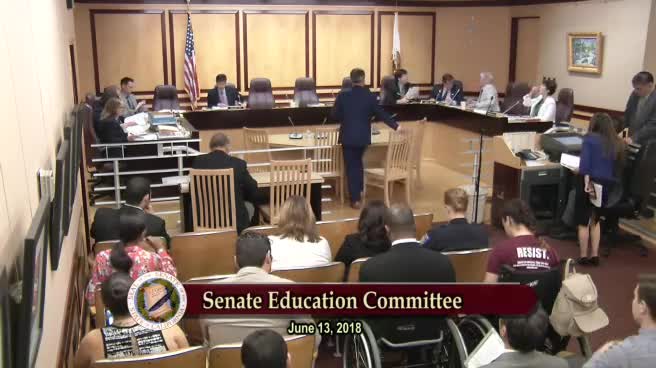 9MIN
Senate Standing Committee on Education
 10MIN
Assembly Standing Committee on Health
Bill Author

Bill Co-Author(s):