AB 1748: Property taxation: base year value transfer.
- Session Year: 2017-2018
- House: Assembly
- Latest Version Date: 2018-04-24
The California Constitution and existing property tax law authorize a person who is either severely disabled or over 55 years of age to transfer the base year value, as defined, of property that is eligible for the homeowners property tax exemption to a replacement dwelling that is of equal or lesser value located within the same county as the property from which the base year value is transferred, and if a county ordinance so providing has been adopted, to a replacement dwelling that is located in a different county.
This bill, on and after January 1, 2019, would instead require, subject to specified procedures, the base year value of property that is eligible for the homeowners exemption of any person, regardless of age or disability, to be transferred to any replacement dwelling, regardless of the value of the replacement property or whether the replacement property is located within the same county. The bill would prescribe the method of calculating the base year value of a replacement dwelling that is of lesser or greater value than the original property. The bill would deem a replacement dwelling to be of equal or lesser value if the amount of the full cash value of that replacement dwelling does not exceed specified amounts based on the date of the sale of the original property relative to the purchase or new construction of the replacement dwelling.
Existing law provides that a person claiming the property tax relief described above is eligible for that relief only if specified conditions are met, including that the claimant has not previously been granted, as a claimant, that property tax relief, except in the case of a person who becomes severely disabled subsequent to being granted, as a claimant, the property tax relief for a person over the age of 55 years.
This bill, on and after January 1, 2019, would instead only require that a person not have been previously granted the property tax relief described above if that person is not a person over the age of 55 years or a severely and permanently disabled person. The bill would specify that a person over the age of 55 years includes the spouse of a person who has attained the age of 55 years at the time of the sale of the original property.
Existing law defines full cash value of the replacement dwelling for purposes of this transfer of property tax base year value to mean the replacement dwellings full cash value, determined in accordance with a specified provision, as of the date on which the replacement dwelling was purchased or new construction was completed.
This bill would, on and after January 1, 2019, provide that full cash value of the replacement dwelling may also mean, in specified circumstances, the replacement dwellings full cash value, determined in accordance with a specified provision, as of the date on which the original property is sold.
By changing the manner in which local assessors assess property for property taxation purposes, this bill would impose a state-mandated local program.
The California Constitution requires the state to reimburse local agencies and school districts for certain costs mandated by the state. Statutory provisions establish procedures for making that reimbursement.
This bill would provide that, if the Commission on State Mandates determines that the bill contains costs mandated by the state, reimbursement for those costs shall be made pursuant to the statutory provisions noted above.
Existing law requires the state to reimburse local agencies annually for certain property tax revenues lost as a result of any exemption or classification of property for purposes of ad valorem property taxation.
This bill would provide that, notwithstanding those provisions, no appropriation is made and the state shall not reimburse local agencies for property tax revenues lost by them pursuant to the bill.
This bill would take effect immediately as a tax levy, but would become operative only if Assembly Constitutional Amendment ____ 20 of the 201718 Regular Session is approved by the voters.
The California Constitution and existing property tax law authorize a person who is either severely disabled or over 55 years of age to transfer the base year value, as defined, of property that is eligible for the homeowners property tax exemption to a replacement dwelling that is of equal or lesser value located within the same county as the property from which the base year value is transferred, and if a county ordinance so providing has been adopted, to a replacement dwelling that is located in a different county.
This bill, on and after January 1, 2019, would instead require, subject to specified procedures, the base year value of property that is eligible for the homeowners exemption of any person, regardless of age or disability, to be transferred to any replacement dwelling, regardless of the value of the replacement property or whether the replacement property is located within the same county. The bill would prescribe the method of calculating the base year value of a replacement dwelling that is of lesser or greater value than the original property.
Existing law provides that a person claiming the property tax relief described above is eligible for that relief only if specified conditions are met, including that the claimant has not previously been granted, as a claimant, that property tax relief, except in the case of a person who becomes severely disabled subsequent to being granted, as a claimant, the property tax relief for a person over the age of 55 years.
This bill, on and after January 1, 2019, would instead only require that a person not have been previously granted the property tax relief described above if that person is not a person over the age of 55 years or a severely and permanently disabled person. The bill would specify that a person over the age of 55 years includes the spouse of a person who has attained the age of 55 years at the time of the sale of the original property.
Existing law defines full cash value of the replacement dwelling for purposes of this transfer of property tax base year value to mean the replacement dwellings full cash value, determined in accordance with a specified provision, as of the date on which the replacement dwelling was purchased or new construction was completed.
This bill would, on and after January 1, 2019, provide that full cash value of the replacement dwelling may also mean, in specified circumstances, the replacement dwellings full cash value, determined in accordance with a specified provision, as of the date on which the original property is sold.
By changing the manner in which local assessors assess property for property taxation purposes, this bill would impose a state-mandated local program.
The California Constitution requires the state to reimburse local agencies and school districts for certain costs mandated by the state. Statutory provisions establish procedures for making that reimbursement.
This bill would provide that, if the Commission on State Mandates determines that the bill contains costs mandated by the state, reimbursement for those costs shall be made pursuant to the statutory provisions noted above.
Existing law requires the state to reimburse local agencies annually for certain property tax revenues lost as a result of any exemption or classification of property for purposes of ad valorem property taxation.
This bill would provide that, notwithstanding those provisions, no appropriation is made and the state shall not reimburse local agencies for property tax revenues lost by them pursuant to the bill.
This bill would take effect immediately as a tax levy, but would become operative only if Assembly Constitutional Amendment ____ of the 201718 Regular Session is approved by the voters.
(a)(1)Notwithstanding any other provision of law, pursuant to subdivision (a) of Section 2 of Article XIIIA of the California Constitution, any person over the age of 55 years, or any severely and permanently disabled person, who resides in property that is eligible for the homeowners exemption under subdivision (k) of Section 3 of Article XIII of the California Constitution and Section 218 may transfer, subject to the conditions and limitations provided in this section, the base year value of that property to any replacement dwelling of equal or lesser value that is located within the same county and is purchased or newly constructed by that person as his or her principal residence within two years of the sale by that person of the original property, provided that the base year value of the original property shall not be transferred to the replacement dwelling until the original property is sold.
(2)Notwithstanding the limitation in paragraph (1) requiring that the original property and the replacement dwelling be located in the same county, this limitation shall not apply in any county in which the county board of supervisors, after consultation with local affected agencies within the boundaries of the county, adopts an ordinance making the provisions of paragraph (1) also applicable to situations in which replacement dwellings are located in that county and the original properties are located in another county within this state. The authorization contained in this paragraph shall be applicable in a county only if the ordinance adopted by the board of supervisors complies with all of the following requirements:
(A)It is adopted only after consultation between the board of supervisors and all other local affected agencies within the countys boundaries.
(B)It requires that all claims for transfers of base year value from original property located in another county be granted if the claims meet the applicable requirements of both subdivision (a) of Section 2 of Article XIIIA of the California Constitution and this section.
(C)It requires that all base year valuations of original property located in another county and determined by its assessor be accepted in connection with the granting of claims for transfers of base year value.
(D)It provides that its provisions are operative for a period of not less than five years.
(E)The ordinance specifies the date on and after which its provisions shall be applicable. However, the date specified shall not be earlier than November 9, 1988. The specified applicable date may be a date earlier than the date the county adopts the ordinance.
(b)In addition to meeting the requirements of subdivision (a), any person claiming the property tax relief provided by this section shall be eligible for that relief only if the following conditions are met:
(1)The claimant is an owner and a resident of the original property either at the time of its sale, or at the time when the original property was substantially damaged or destroyed by misfortune or calamity, or within two years of the purchase or new construction of the replacement dwelling.
(2)The original property is eligible for the homeowners exemption, as the result of the claimants ownership and occupation of the property as his or her principal residence, either at the time of its sale, or at the time when the original property was substantially damaged or destroyed by misfortune or calamity, or within two years of the purchase or new construction of the replacement dwelling.
(3)At the time of the sale of the original property, the claimant or the claimants spouse who resides with the claimant is at least 55 years of age, or is severely and permanently disabled.
(4)At the time of claiming the property tax relief provided by subdivision (a), the claimant is an owner of a replacement dwelling and occupies it as his or her principal place of residence and, as a result thereof, the property is currently eligible for the homeowners exemption or would be eligible for the exemption except that the property is already receiving the exemption because of an exemption claim filed by the previous owner.
(5)The original property of the claimant is sold by him or her within two years of the purchase or new construction of the replacement dwelling. For purposes of this paragraph, the purchase or new construction of the replacement dwelling includes the purchase of that portion of land on which the replacement building, structure, or other shelter constituting a place of abode of the claimant will be situated and that, pursuant to paragraph (3) of subdivision (g), constitutes a part of the replacement dwelling.
(6)Except as otherwise provided in paragraph (2) of subdivision (a), the replacement dwelling, including that portion of land on which it is situated that is specified in paragraph (5), is located entirely within the same county as the claimants original property.
(7)The claimant has not previously been granted, as a claimant, the property tax relief provided by this section, except that this paragraph shall not apply to any person who becomes severely and permanently disabled subsequent to being granted, as a claimant, the property tax relief provided by this section for any person over the age of 55 years. In order to prevent duplication of claims under this section within this state, county assessors shall report quarterly to the State Board of Equalization that information from claims filed in accordance with subdivision (f) and from county records as is specified by the board necessary to identify fully all claims under this section allowed by assessors and all claimants who have thereby received relief. The board may specify that the information include all or a part of the names and social security numbers of claimants and their spouses and the identity and location of the replacement dwelling to which the claim applies. The information may be required in the form of data processing media or other media and in a format that is compatible with the recordkeeping processes of the counties and the auditing procedures of the state.
(c)The property tax relief provided by this section shall be available if the original property or the replacement dwelling, or both, of the claimant includes, but is not limited to, either of the following:
(1)A unit or lot within a cooperative housing corporation, a community apartment project, a condominium project, or a planned unit development. If the unit or lot constitutes the original property of the claimant, the assessor shall transfer to the claimants replacement dwelling only the base year value of the claimants unit or lot and his or her share in any common area reserved as an appurtenance of that unit or lot. If the unit or lot constitutes the replacement dwelling of the claimant, the assessor shall transfer the base year value of the claimants original property only to the unit or lot of the claimant and any share of the claimant in any common area reserved as an appurtenance of that unit or lot.
(2)A manufactured home or a manufactured home and any land owned by the claimant on which the manufactured home is situated. For purposes of this paragraph, land owned by the claimant includes a pro rata interest in a resident-owned mobilehome park that is assessed pursuant to subdivision (b) of Section 62.1.
(A)If the manufactured home or the manufactured home and the land on which it is situated constitutes the claimants original property, the assessor shall transfer to the claimants replacement dwelling either the base year value of the manufactured home or the base year value of the manufactured home and the land on which it is situated, as appropriate. If the manufactured home dwelling that constitutes the original property of the claimant includes an interest in a resident-owned mobilehome park, the assessor shall transfer to the claimants replacement dwelling the base year value of the claimants manufactured home and his or her pro rata portion of the real property of the park. No transfer of base year value shall be made by the assessor of that portion of land that does not constitute a part of the original property, as provided in paragraph (4) of subdivision (g).
(B)If the manufactured home or the manufactured home and the land on which it is situated constitutes the claimants replacement dwelling, the assessor shall transfer the base year value of the claimants original property either to the manufactured home or the manufactured home and the land on which it is situated, as appropriate. If the manufactured home dwelling that constitutes the replacement dwelling of the claimant includes an interest in a resident-owned mobilehome park, the assessor shall transfer the base year value of the claimants original property to the manufactured home of the claimant and his or her pro rata portion of the park. No transfer of base year value shall be made by the assessor to that portion of land that does not constitute a part of the replacement dwelling, as provided in paragraph (3) of subdivision (g).
This subdivision shall be subject to the limitations specified in subdivision (d).
(d)The property tax relief provided by this section shall be available to a claimant who is the coowner of the original property, as a joint tenant, a tenant in common, a community property owner, or a present beneficiary of a trust subject to the following limitations:
(1)If a single replacement dwelling is purchased or newly constructed by all of the coowners and each coowner retains an interest in the replacement dwelling, the claimant shall be eligible under this section whether or not any or all of the remaining coowners would otherwise be eligible claimants.
(2)If two or more replacement dwellings are separately purchased or newly constructed by two or more coowners and more than one coowner would otherwise be an eligible claimant, only one coowner shall be eligible under this section. These coowners shall determine by mutual agreement which one of them shall be deemed eligible.
(3)If two or more replacement dwellings are separately purchased or newly constructed by two coowners who held the original property as community property, only the coowner who has attained the age of 55 years, or is severely and permanently disabled, shall be eligible under this section. If both spouses are over 55 years of age, they shall determine by mutual agreement which one of them is eligible.
In the case of coowners whose original property is a multiunit dwelling, the limitations imposed by paragraphs (2) and (3) shall only apply to coowners who occupied the same dwelling unit within the original property at the time specified in paragraph (2) of subdivision (b).
(e)Upon the sale of original property, the assessor shall determine a new base year value for that property in accordance with subdivision (a) of Section 2 of Article XIIIA of the California Constitution and Section 110.1, whether or not a replacement dwelling is subsequently purchased or newly constructed by the former owner or owners of the original property.
This section shall not apply unless the transfer of the original property is a change in ownership that either (1) subjects that property to reappraisal at its current fair market value in accordance with Section 110.1 or 5803 or (2) results in a base year value determined in accordance with this section, Section 69, or Section 69.3 because the property qualifies under this section, Section 69, or Section 69.3 as a replacement dwelling or property.
(f)(1)A claimant shall not be eligible for the property tax relief provided by this section unless the claimant provides to the assessor, on a form that shall be designed by the State Board of Equalization and that the assessor shall make available upon request, the following information:
(A)The name and social security number of each claimant and of any spouse of the claimant who is a record owner of the replacement dwelling.
(B)Proof that the claimant or the claimants spouse who resided on the original property with the claimant was, at the time of its sale, at least 55 years of age, or severely and permanently disabled. Proof of severe and permanent disability shall be considered a certification, signed by a licensed physician and surgeon of appropriate specialty, attesting to the claimants severely and permanently disabled condition. In the absence of available proof that a person is over 55 years of age, the claimant shall certify under penalty of perjury that the age requirement is met. In the case of a severely and permanently disabled claimant either of the following shall be submitted:
(i)A certification, signed by a licensed physician or surgeon of appropriate specialty that identifies specific reasons why the disability necessitates a move to the replacement dwelling and the disability-related requirements, including any locational requirements, of a replacement dwelling. The claimant shall substantiate that the replacement dwelling meets disability-related requirements so identified and that the primary reason for the move to the replacement dwelling is to satisfy those requirements. If the claimant, or the claimants spouse or guardian, so declares under penalty of perjury, it shall be rebuttably presumed that the primary purpose of the move to the replacement dwelling is to satisfy identified disability-related requirements.
(ii)The claimants substantiation that the primary purpose of the move to the replacement dwelling is to alleviate financial burdens caused by the disability. If the claimant, or the claimants spouse or guardian, so declares under penalty of perjury, it shall be rebuttably presumed that the primary purpose of the move is to alleviate the financial burdens caused by the disability.
(C)The address and, if known, the assessors parcel number of the original property.
(D)The date of the claimants sale of the original property and the date of the claimants purchase or new construction of a replacement dwelling.
(E)A statement by the claimant that he or she occupied the replacement dwelling as his or her principal place of residence on the date of the filing of his or her claim.
(F)Any claim under this section shall be filed within three years of the date the replacement dwelling was purchased or the new construction of the replacement dwelling was completed subject to subdivision (k) or (m).
(2)A claim for transfer of base year value under this section that is filed after the expiration of the filing period set forth in subparagraph (F) of paragraph (1) shall be considered by the assessor, subject to all of the following conditions:
(A)Any base year value transfer granted pursuant to that claim shall apply commencing with the lien date of the assessment year in which the claim is filed.
(B)The full cash value of the replacement property in the assessment year described in subparagraph (A) shall be the base year value of the real property in the assessment year in which the base year value was transferred, factored to the assessment year described in subparagraph (A) for both of the following:
(i)Inflation as annually determined in accordance with paragraph (1) of subdivision (a) of Section 51.
(ii)Any subsequent new construction occurring with respect to the subject real property that does not qualify for property tax relief pursuant to the criteria set forth in subparagraphs (A) and (B) of paragraph (4) of subdivision (h).
(g)For purposes of this section:
(1)Person over the age of 55 years means any person or the spouse of any person who has attained the age of 55 years or older at the time of the sale of the original property.
(2)Base year value of the original property means its base year value, as determined in accordance with Section 110.1, with the adjustments permitted by subdivision (b) of Section 2 of Article XIIIA of the California Constitution and subdivision (f) of Section 110.1, determined as of the date immediately prior to the date that the original property is sold by the claimant, or in the case where the original property has been substantially damaged or destroyed by misfortune or calamity and the owner does not rebuild on the original property, determined as of the date immediately prior to the misfortune or calamity.
If the replacement dwelling is purchased or newly constructed after the transfer of the original property, base year value of the original property also includes any inflation factor adjustments permitted by subdivision (f) of Section 110.1 for the period subsequent to the sale of the original property. The base year or years used to compute the base year value of the original property shall be deemed to be the base year or years of any property to which that base year value is transferred pursuant to this section.
(3)Replacement dwelling means a building, structure, or other shelter constituting a place of abode, whether real property or personal property, that is owned and occupied by a claimant as his or her principal place of residence, and any land owned by the claimant on which the building, structure, or other shelter is situated. For purposes of this paragraph, land constituting a part of a replacement dwelling includes only that area of reasonable size that is used as a site for a residence, and land owned by the claimant includes land for which the claimant either holds a leasehold interest described in subdivision (c) of Section 61 or a land purchase contract. Each unit of a multiunit dwelling shall be considered a separate replacement dwelling. For purposes of this paragraph, area of reasonable size that is used as a site for a residence includes all land if any nonresidential uses of the property are only incidental to the use of the property as a residential site. For purposes of this paragraph, land owned by the claimant includes an ownership interest in a resident-owned mobilehome park that is assessed pursuant to subdivision (b) of Section 62.1.
(4)Original property means a building, structure, or other shelter constituting a place of abode, whether real property or personal property, that is owned and occupied by a claimant as his or her principal place of residence, and any land owned by the claimant on which the building, structure, or other shelter is situated. For purposes of this paragraph, land constituting a part of the original property includes only that area of reasonable size that is used as a site for a residence, and land owned by the claimant includes land for which the claimant either holds a leasehold interest described in subdivision (c) of Section 61 or a land purchase contract. Each unit of a multiunit dwelling shall be considered a separate original property. For purposes of this paragraph, area of reasonable size that is used as a site for a residence includes all land if any nonresidential uses of the property are only incidental to the use of the property as a residential site. For purposes of this paragraph, land owned by the claimant includes an ownership interest in a resident-owned mobilehome park that is assessed pursuant to subdivision (b) of Section 62.1.
(5)Equal or lesser value means that the amount of the full cash value of a replacement dwelling does not exceed one of the following:
(A)One hundred percent of the amount of the full cash value of the original property if the replacement dwelling is purchased or newly constructed prior to the date of the sale of the original property.
(B)One hundred and five percent of the amount of the full cash value of the original property if the replacement dwelling is purchased or newly constructed within the first year following the date of the sale of the original property.
(C)One hundred and ten percent of the amount of the full cash value of the original property if the replacement dwelling is purchased or newly constructed within the second year following the date of the sale of the original property.
For the purposes of this paragraph, except as otherwise provided in paragraph (4) of subdivision (h), if the replacement dwelling is, in part, purchased and, in part, newly constructed, the date the replacement dwelling is purchased or newly constructed is the date of purchase or the date of completion of construction, whichever is later.
(6)Full cash value of the replacement dwelling means its full cash value, determined in accordance with Section 110.1, as of the date on which it was purchased or new construction was completed, and after the purchase or the completion of new construction.
(7)Full cash value of the original property means, either:
(A)Its new base year value, determined in accordance with subdivision (e), without the application of subdivision (h) of Section 2 of Article XIIIA of the California Constitution, plus the adjustments permitted by subdivision (b) of Section 2 of Article XIIIA and subdivision (f) of Section 110.1 for the period from the date of its sale by the claimant to the date on which the replacement property was purchased or new construction was completed.
(B)In the case where the original property has been substantially damaged or destroyed by misfortune or calamity and the owner does not rebuild on the original property, its full cash value, as determined in accordance with Section 110, immediately prior to its substantial damage or destruction by misfortune or calamity, as determined by the county assessor of the county in which the property is located, without the application of subdivision (h) of Section 2 of Article XIIIA of the California Constitution, plus the adjustments permitted by subdivision (b) of Section 2 of Article XIIIA of the California Constitution and subdivision (f) of Section 110.1, for the period from the date of its sale by the claimant to the date on which the replacement property was purchased or new construction was completed.
(8)Sale means any change in ownership of the original property for consideration.
(9)Claimant means any person claiming the property tax relief provided by this section. If a spouse of that person is a record owner of the replacement dwelling, the spouse is also a claimant for purposes of determining whether in any future claim filed by the spouse under this section the condition of eligibility specified in paragraph (7) of subdivision (b) has been met.
(10)Property that is eligible for the homeowners exemption includes property that is the principal place of residence of its owner and is entitled to exemption pursuant to Section 205.5.
(11)Person means any individual, but does not include any firm, partnership, association, corporation, company, or other legal entity or organization of any kind. Person includes an individual who is the present beneficiary of a trust.
(12)Severely and permanently disabled means any person described in subdivision (b) of Section 74.3.
(13)For the purposes of this section, property is substantially damaged or destroyed by misfortune or calamity if either the land or the improvements sustain physical damage amounting to more than 50 percent of either the lands or the improvements full cash value immediately prior to the misfortune or calamity. Damage includes a diminution in the value of property as a result of restricted access to the property where the restricted access was caused by the misfortune or calamity and is permanent in nature.
(h)(1)Upon the timely filing of a claim described in subparagraph (F) of paragraph (1) of subdivision (f), the assessor shall adjust the new base year value of the replacement dwelling in conformity with this section. This adjustment shall be made as of the latest of the following dates:
(A)The date the original property is sold.
(B)The date the replacement dwelling is purchased.
(C)The date the new construction of the replacement dwelling is completed.
(2)Any taxes that were levied on the replacement dwelling prior to the filing of the claim on the basis of the replacement dwellings new base year value, and any allowable annual adjustments thereto, shall be canceled or refunded to the claimant to the extent that the taxes exceed the amount that would be due when determined on the basis of the adjusted new base year value.
(3)Notwithstanding Section 75.10, Chapter 3.5 (commencing with Section 75) shall be utilized for purposes of implementing this subdivision, including adjustments of the new base year value of replacement dwellings acquired prior to the sale of the original property.
(4)In the case where a claim under this section has been timely filed and granted, and new construction is performed upon the replacement dwelling subsequent to the transfer of base year value, the property tax relief provided by this section also shall apply to the replacement dwelling, as improved, and thus there shall be no reassessment upon completion of the new construction if both of the following conditions are met:
(A)The new construction is completed within two years of the date of the sale of the original property and the owner notifies the assessor in writing of completion of the new construction within six months after completion.
(B)The fair market value of the new construction on the date of completion, plus the full cash value of the replacement dwelling on the date of acquisition, is not more than the full cash value of the original property as determined pursuant to paragraph (7) of subdivision (g) for purposes of granting the original claim.
(i)Any claimant may rescind a claim for the property tax relief provided by this section and shall not be considered to have received that relief for purposes of paragraph (7) of subdivision (b), and the assessor shall grant the rescission, if a written notice of rescission is delivered to the office of the assessor as follows:
(1)A written notice of rescission signed by the original filing claimant or claimants is delivered to the office of the assessor in which the original claim was filed.
(2)(A)Except as otherwise provided in this paragraph, the notice of rescission is delivered to the office of the assessor before the date that the county first issues, as a result of relief granted under this section, a refund check for property taxes imposed upon the replacement dwelling. If granting relief will not result in a refund of property taxes, then the notice shall be delivered before payment is first made of any property taxes, or any portion thereof, imposed upon the replacement dwelling consistent with relief granted under this section. If payment of the taxes is not made, then notice shall be delivered before the first date that those property taxes, or any portion thereof, imposed upon the replacement dwelling, consistent with relief granted under this section, are delinquent.
(B)Notwithstanding any other provision in this division, any time the notice of rescission is delivered to the office of the assessor within six years after relief was granted, provided that the replacement property has been vacated as the claimants principal place of residence within 90 days after the original claim was filed, regardless of whether the property continues to receive the homeowners exemption. If the rescission increases the base year value of a property, or the homeowners exemption has been incorrectly allowed, appropriate escape assessments or supplemental assessments, including interest as provided in Section 506, shall be imposed. The limitations periods for any escape assessments or supplemental assessments shall not commence until July 1 of the assessment year in which the notice of rescission is delivered to the office of the assessor.
(3)The notice is accompanied by the payment of a fee as the assessor may require, provided that the fee shall not exceed an amount reasonably related to the estimated cost of processing a rescission claim, including both direct costs and developmental and indirect costs, such as costs for overhead, personnel, supplies, materials, office space, and computers.
(j)(1)With respect to the transfer of base year value of original properties to replacement dwellings located in the same county, this section, except as provided in paragraph (3) or (4), shall apply to any replacement dwelling that is purchased or newly constructed on or after November 6, 1986.
(2)With respect to the transfer of base year value of original properties to replacement dwellings located in different counties, except as provided in paragraph (4), this section shall apply to any replacement dwelling that is purchased or newly constructed on or after the date specified in accordance with subparagraph (E) of paragraph (2) of subdivision (a) in the ordinance of the county in which the replacement dwelling is located, but shall not apply to any replacement dwelling which was purchased or newly constructed before November 9, 1988.
(3)With respect to the transfer of base year value by a severely and permanently disabled person, this section shall apply only to replacement dwellings that are purchased or newly constructed on or after June 6, 1990.
(4)The amendments made to subdivision (e) by the act adding this paragraph shall apply only to replacement dwellings under Section 69 that are acquired or newly constructed on or after October 20, 1991, and shall apply commencing with the 199192 fiscal year.
(k)(1)In the case in which a county adopts an ordinance pursuant to paragraph (2) of subdivision (a) that establishes an applicable date which is more than three years prior to the date of adoption of the ordinance, those potential claimants who purchased or constructed replacement dwellings more than three years prior to the date of adoption of the ordinance and who would, therefore, be precluded from filing a timely claim, shall be deemed to have timely filed a claim if the claim is filed within three years after the date that the ordinance is adopted. This paragraph may not be construed as a waiver of any other requirement of this section.
(2)In the case in which a county assessor corrects a base year value to reflect a pro rata change in ownership of a resident-owned mobilehome park that occurred between January 1, 1989, and January 1, 2002, pursuant to paragraph (4) of subdivision (b) of Section 62.1, those claimants who purchased or constructed replacement dwellings more than three years prior to the correction and who would, therefore, be precluded from filing a timely claim, shall be deemed to have timely filed a claim if the claim is filed within three years of the date of notice of the correction of the base year value to reflect the pro rata change in ownership. This paragraph may not be construed as a waiver of any other requirement of this section.
(3)This subdivision does not apply to a claimant who has transferred his or her replacement dwelling prior to filing a claim.
(4)The property tax relief provided by this section, but filed under this subdivision, shall apply prospectively only, commencing with the lien date of the assessment year in which the claim is filed. There shall be no refund or cancellation of taxes prior to the date that the claim is filed.
(l)No escape assessment may be levied if a transfer of base year value under this section has been erroneously granted by the assessor pursuant to an expired ordinance authorizing intercounty transfers of base year value.
(m)(1)The amendments made to subdivisions (b) and (g) of this section by Chapter 613 of the Statutes of 2001 shall apply:
(A)With respect to the transfer of base year value of original properties to replacement dwellings located in the same county, to any replacement dwelling that is purchased or newly constructed on or after November 6, 1986.
(B)With respect to the transfer of base year value of original properties to replacement dwellings located in different counties, to any replacement dwelling that is purchased or newly constructed on or after the date specified in accordance with subparagraph (E) of paragraph (2) of subdivision (a) in the ordinance of the county in which the replacement dwelling is located, but not to any replacement dwelling that was purchased or newly constructed before November 9, 1988.
(C)With respect to the transfer of base year value by a severely and permanently disabled person, to replacement dwellings that are purchased or newly constructed on or after June 6, 1990.
(2)The property tax relief provided by this section in accordance with this subdivision shall apply prospectively only commencing with the lien date of the assessment year in which the claim is filed. There shall be no refund or cancellation of taxes prior to the date that the claim is filed.
(n)A claim filed under this section is not a public document and is not subject to public inspection, except that a claim shall be available for inspection by the claimant or the claimants spouse, the claimants or the claimants spouses legal representative, the trustee of a trust in which the claimant or the claimants spouse is a present beneficiary, and the executor or administrator of the claimants or the claimants spouses estate.
(o)The amendments made to this section by the act adding this subdivision shall apply commencing with the lien date for the 201213 fiscal year.
(p)This section shall remain in effect only until January 1, 2019, and as of that date is repealed.
SEC. 2.Section 69.5 is added to the Revenue and Taxation Code, to read:69.5.(a)(1) Notwithstanding any other law, pursuant to subdivision (a) of Section 2 of Article XIII A of the California Constitution, the base year value of property that is eligible for the homeowners exemption under subdivision (k) of Section 3 of Article XIII of the California Constitution and Section 218 of any person, regardless of age or disability, shall, subject to the procedures provided in this section, be transferred to any replacement dwelling, regardless of the value of the replacement dwelling or whether the replacement dwelling is located within the same county, that is purchased or newly constructed by that person as his or her principal residence within two years of the sale by that person of the original property, provided that the base year value of the original property shall not be transferred to the replacement dwelling until the original property is sold.
(2)For purposes of calculating the base year value of a replacement dwelling, the following shall apply:
(A)For any replacement dwelling of greater value and purchased or newly constructed by a person eligible to transfer the base year value of his or her original property within two years of the sale of the original property, the base year value of the replacement dwelling shall be calculated by adding the difference between the full cash value of the original property and the full cash value of the replacement dwelling to the base year value of the original property.
(B)For any replacement dwelling of equal or lesser value purchased or newly constructed by a person eligible to transfer the base year value of his or her original property within two years of the sale of the original property, the base year value of the replacement dwelling shall be calculated by dividing the base year value of the original property by the full cash value of the replacement property, and multiplying the result by the full cash value of the replacement dwelling.(B)A replacement dwelling shall be deemed to be of equal or lesser value if the amount of the full cash value of that replacement dwelling does not exceed the following:
(i)If the replacement dwelling is purchased or newly constructed prior to the date of the sale of the original property, 100 percent of the amount of the full cash value of the original property.
(ii)If the replacement dwelling is purchased or newly constructed within the first year following the date of the sale of the original property, 105 percent of the amount of the full cash value of the original property.
(iii)If the replacement dwelling is purchased or newly constructed within the second year following the date of the sale of the original property, 110 percent of the amount of the full cash value of the original property.
(b)In addition to meeting the requirements of subdivision (a), any person entitled to the property tax relief provided by this section shall be eligible for that relief only if the following conditions are met:
(1)The person is an owner and a resident of the original property either at the time of its sale, or at the time when the original property was substantially damaged or destroyed by misfortune or calamity, or within two years of the purchase or new construction of the replacement dwelling.
(2)The original property is eligible for the homeowners exemption as the result of the persons ownership and occupation of the property as his or her principal residence, either at the time of its sale, or at the time when the original property was substantially damaged or destroyed by misfortune or calamity, or within two years of the purchase or new construction of the replacement dwelling.
(3)At the time of filing for the property tax relief provided by subdivision (a), the person is an owner of a replacement dwelling and occupies it as his or her principal place of residence and, as a result thereof, the property is currently eligible for the homeowners exemption or would be eligible for the exemption except that the property is already receiving the exemption because of an exemption filed by the previous owner.
(4)The original property of the person is sold by him or her within two years of the purchase or new construction of the replacement dwelling. For purposes of this paragraph, the purchase or new construction of the replacement dwelling includes the purchase of that portion of land on which the replacement building, structure, or other shelter constituting a place of abode of the person will be situated and that, pursuant to paragraph (2) of subdivision (g), constitutes a part of the replacement dwelling.
(5)(A)If the person is not a person over the age of 55 years or a severely and permanently disabled person, the person has not previously been granted the property tax relief provided by this section.
(B)For purposes of this paragraph, the following definitions shall apply:
(i)Person over the age of 55 years means any person or the spouse of any person who has attained the age of 55 years or older at the time of the sale of the original property.
(ii)Severely and permanently disabled person means any person described in subdivision (b) of Section 74.3.
(c)(1) The property tax relief provided by this section shall be available if the original property or the replacement dwelling, or both, of the person includes, but is not limited to, either of the following:
(A)A unit or lot within a cooperative housing corporation, a community apartment project, a condominium project, or a planned unit development. If the unit or lot constitutes the original property of the person, the assessor shall transfer to the persons replacement dwelling only the base year value of the persons unit or lot and his or her share in any common area reserved as an appurtenance of that unit or lot. If the unit or lot constitutes the replacement dwelling of the person, the assessor shall transfer the base year value of the persons original property only to the unit or lot of the claimant and any share of the person in any common area reserved as an appurtenance of that unit or lot.
(B)A manufactured home or a manufactured home and any land owned by the person on which the manufactured home is situated. For purposes of this paragraph, land owned by the person includes a pro rata interest in a resident-owned mobilehome park that is assessed pursuant to subdivision (b) of Section 62.1.
(i)If the manufactured home or the manufactured home and the land on which it is situated constitutes the persons original property, the assessor shall transfer to the persons replacement dwelling either the base year value of the manufactured home or the base year value of the manufactured home and the land on which it is situated, as appropriate. If the manufactured home dwelling that constitutes the original property of the person includes an interest in a resident-owned mobilehome park, the assessor shall transfer to the persons replacement dwelling the base year value of the persons manufactured home and his or her pro rata portion of the real property of the park. No transfer of base year value shall be made by the assessor of that portion of land that does not constitute a part of the original property, as provided in paragraph (3) of subdivision (g).
(ii)If the manufactured home or the manufactured home and the land on which it is situated constitutes the claimants replacement dwelling, the assessor shall transfer the base year value of the claimants original property either to the manufactured home or the manufactured home and the land on which it is situated, as appropriate. If the manufactured home dwelling that constitutes the replacement dwelling of the claimant includes an interest in a resident-owned mobilehome park, the assessor shall transfer the base year value of the claimants original property to the manufactured home of the claimant and his or her pro rata portion of the park. No transfer of base year value shall be made by the assessor to that portion of land that does not constitute a part of the replacement dwelling, as provided in paragraph (2) of subdivision (g).
(2)This subdivision shall be subject to the limitations specified in subdivision (d).
(d)The property tax relief provided by this section shall be available to a person who is the coowner of the original property, as a joint tenant, a tenant in common, a community property owner, or a present beneficiary of a trust subject to the following limitations:
(1)If a single replacement dwelling is purchased or newly constructed by all of the coowners and each coowner retains an interest in the replacement dwelling, the person filing for the transfer of base year value shall be eligible under this section whether or not any or all of the remaining coowners would otherwise be eligible.
(2)If two or more replacement dwellings are separately purchased or newly constructed by two or more coowners and more than one coowner would otherwise be eligible to transfer the base year value pursuant to this section, all coowners shall have the base year value of the original property transferred to any replacement dwelling in proportion to their ownership interest in the original property. In the case of coowners whose original property is a multiunit dwelling, the limitations imposed by this paragraph shall only apply to coowners who occupied the same dwelling unit within the original property at the time specified in paragraph (2) of subdivision (b).
(e)Upon the sale of original property, the assessor shall determine a new base year value for that property in accordance with subdivision (a) of Section 2 of Article XIII A of the California Constitution and Section 110.1, whether or not a replacement dwelling is subsequently purchased or newly constructed by the former owner or owners of the original property. This section shall not apply unless the transfer of the original property is a change in ownership that either (1) subjects that property to reappraisal at its current fair market value in accordance with Section 110.1 or 5803 or (2) results in a base year value determined in accordance with this section, Section 69, or Section 69.3 because the property qualifies under this section, Section 69, or Section 69.3 as a replacement dwelling or property.
(f)(1)A person entitled the property tax relief provided by this section shall provide to the assessor, on a form that shall be designed by the State Board of Equalization and that the assessor shall make available upon purchase of the replacement dwelling at the time in which the replacement dwelling would ordinarily be subject to reappraisal at its current fair market value, the following information:
(A)The name and social security number of each person who resides at the property and who is eligible for the homeowners exemption.
(B)The address and, if known, the assessors parcel number of the original property.
(C)The date of the sale of the persons original property and the date of the purchase or new construction of a replacement dwelling.
(D)A statement by the person that he or she occupied the replacement dwelling as his or her principal place of residence on the date of the filing of his or her claim.
(2)The form required by this subdivision shall be filed within three years of the date the replacement dwelling was purchased or the new construction of the replacement dwelling was completed. Any form filed after the expiration of the filing period set forth in this paragraph shall be considered by the assessor, subject to all of the following conditions:
(A)Any base year value transfer granted pursuant to that filing shall apply commencing with the lien date of the assessment year in which the form is filed.
(B)The full cash value of the replacement property in the assessment year described in subparagraph (A) shall be the base year value of the real property in the assessment year in which the base year value was transferred, factored to the assessment year described in subparagraph (A) for both of the following:
(i)Inflation as annually determined in accordance with paragraph (1) of subdivision (a) of Section 51.
(ii)Any subsequent new construction occurring with respect to the subject real property that does not qualify for property tax relief pursuant to the criteria set forth in paragraph (4) of subdivision (h).
(g)For purposes of this section, the following definitions shall apply:
(1)(A)Base year value of the original property means its base year value, as determined in accordance with Section 110.1, with the adjustments permitted by subdivision (b) of Section 2 of Article XIII A of the California Constitution and subdivision (f) of Section 110.1, determined as of the date immediately prior to the date that the original property is sold by the claimant, or in the case where the original property has been substantially damaged or destroyed by misfortune or calamity and the owner does not rebuild on the original property, determined as of the date immediately prior to the misfortune or calamity.
(B)If the replacement dwelling is purchased or newly constructed after the transfer of the original property, base year value of the original property also includes any inflation factor adjustments permitted by subdivision (f) of Section 110.1 for the period subsequent to the sale of the original property. The base year or years used to compute the base year value of the original property shall be deemed to be the base year or years of any property to which that base year value is transferred pursuant to this section.
(2)Replacement dwelling means a building, structure, or other shelter constituting a place of abode, whether real property or personal property, that is owned and occupied by a person as his or her principal place of residence, and any land owned by the person on which the building, structure, or other shelter is situated. For purposes of this paragraph, land constituting a part of a replacement dwelling includes only that area of reasonable size that is used as a site for a residence, and land owned by the person includes land for which the person either holds a leasehold interest described in subdivision (c) of Section 61 or a land purchase contract. Each unit of a multiunit dwelling shall be considered a separate replacement dwelling. For purposes of this paragraph, area of reasonable size that is used as a site for a residence includes all land if any nonresidential uses of the property are only incidental to the use of the property as a residential site. For purposes of this paragraph, land owned by the person includes an ownership interest in a resident-owned mobilehome park that is assessed pursuant to subdivision (b) of Section 62.1.
(3)Original property means a building, structure, or other shelter constituting a place of abode, whether real property or personal property, that is owned and occupied by a person as his or her principal place of residence, and any land owned by the person on which the building, structure, or other shelter is situated. For purposes of this paragraph, land constituting a part of the original property includes only that area of reasonable size that is used as a site for a residence, and land owned by the person includes land for which the person either holds a leasehold interest described in subdivision (c) of Section 61 or a land purchase contract. Each unit of a multiunit dwelling shall be considered a separate original property. For purposes of this paragraph, area of reasonable size that is used as a site for a residence includes all land if any nonresidential uses of the property are only incidental to the use of the property as a residential site. For purposes of this paragraph, land owned by the person includes an ownership interest in a resident-owned mobilehome park that is assessed pursuant to subdivision (b) of Section 62.1.
(4)Full cash value of the replacement dwelling means either of the following:
(A)Its full cash value, determined in accordance with Section 110.1, as of the date on which it was purchased or new construction was completed, and after the purchase or the completion of new construction.
(B)In the case where the replacement dwelling is purchased or newly constructed prior to the date of the sale of the original property and the full cash value of the replacement dwelling as determined in accordance with subparagraph (A) exceeds its full cash value as determined in accordance with Section 110 as of the date the original property is sold, its full cash value means its full cash value as determined in accordance with Section 110 as of the date the original property is sold.
(5)Full cash value of the original property means, either:
(A)Its new base year value, determined in accordance with subdivision (e), without the application of subdivision (h) of Section 2 of Article XIII A of the California Constitution, plus the adjustments permitted by subdivision (b) of Section 2 of Article XIII A and subdivision (f) of Section 110.1 for the period from the date of its sale by the person to the date on which the replacement property was purchased or new construction was completed.
(B)In the case where the original property has been substantially damaged or destroyed by misfortune or calamity and the owner does not rebuild on the original property, its full cash value, as determined in accordance with Section 110, immediately prior to its substantial damage or destruction by misfortune or calamity, as determined by the county assessor of the county in which the property is located, without the application of subdivision (h) of Section 2 of Article XIII A of the California Constitution, plus the adjustments permitted by subdivision (b) of Section 2 of Article XIII A of the California Constitution and subdivision (f) of Section 110.1, for the period from the date of its sale by the person to the date on which the replacement property was purchased or new construction was completed.
(6)Sale means any change in ownership of the original property for consideration.
(7)Person means any individual, but not any firm, partnership, association, corporation, company, or other legal entity or organization of any kind, who files for the property tax relief provided by this section. Person includes an individual who is the present beneficiary of a trust.
(8)Property that is eligible for the homeowners exemption includes property that is the principal place of residence of its owner and is entitled to exemption pursuant to Section 205.5.
(9)Property is substantially damaged or destroyed by misfortune or calamity if either the land or the improvements sustain physical damage amounting to more than 50 percent of either the lands or the improvements full cash value immediately prior to the misfortune or calamity. Damage includes a diminution in the value of property as a result of restricted access to the property where the restricted access was caused by the misfortune or calamity and is permanent in nature.
(h)(1)Upon the timely filing of a form, as described in subdivision (f), the assessor shall adjust the new base year value of the replacement dwelling in conformity with this section. This adjustment shall be made as of the latest of the following dates:
(A)The date the original property is sold.
(B)The date the replacement dwelling is purchased.
(C)The date the new construction of the replacement dwelling is completed.
(2)Any taxes that were levied on the replacement dwelling prior to the filing for the property tax relief provided by this section on the basis of the replacement dwellings new base year value, and any allowable annual adjustments to that new base year value, shall be canceled or refunded to the person to the extent that the taxes exceed the amount that would be due when determined on the basis of the adjusted new base year value.
(3)Notwithstanding Section 75.10, Chapter 3.5 (commencing with Section 75) shall be utilized for purposes of implementing this subdivision, including adjustments of the new base year value of replacement dwellings acquired prior to the sale of the original property.
(4)In the case where a form under this section has been timely filed, and new construction is performed upon the replacement dwelling subsequent to the transfer of base year value, the property tax relief provided by this section also shall apply to the replacement dwelling, as improved, and thus there shall be no reassessment upon completion of the new construction if the new construction is completed within two years of the date of the sale of the original property and the owner notifies the assessor in writing of completion of the new construction within six months after completion.
(i)With respect to the transfer of the base year value of original properties to replacement dwellings, this section shall apply to any replacement dwelling that is purchased or newly constructed on or after January 1, 2019.
(j)A form filed under this section is not a public document and is not subject to public inspection, except that the form shall be available for inspection by the person or his or her spouse, the persons or his or her spouses legal representative, the trustee of a trust in which the person or his or her spouse is a present beneficiary, and the executor or administrator of the persons or his or her spouses estate.
(k)This section shall become operative on January 1, 2019.
SEC. 3.If the Commission on State Mandates determines that this act contains costs mandated by the state, reimbursement to local agencies and school districts for those costs shall be made pursuant to Part 7 (commencing with Section 17500) of Division 4 of Title 2 of the Government Code.
SEC. 4.Notwithstanding Section 2229 of the Revenue and Taxation Code, no appropriation is made by this act and the state shall not reimburse any local agency for any property tax revenues lost by it pursuant to this act.
SEC. 5.This act provides for a tax levy within the meaning of Article IV of the California Constitution and shall go into immediate effect. However, the provisions of this act shall become operative only if Assembly Constitutional Amendment ____ 20 of the 201718 Regular Session is approved by the voters and, in that event, shall become operative on January 1, 2019.
(a)(1)Notwithstanding any other provision of law, pursuant to subdivision (a) of Section 2 of Article XIIIA of the California Constitution, any person over the age of 55 years, or any severely and permanently disabled person, who resides in property that is eligible for the homeowners exemption under subdivision (k) of Section 3 of Article XIII of the California Constitution and Section 218 may transfer, subject to the conditions and limitations provided in this section, the base year value of that property to any replacement dwelling of equal or lesser value that is located within the same county and is purchased or newly constructed by that person as his or her principal residence within two years of the sale by that person of the original property, provided that the base year value of the original property shall not be transferred to the replacement dwelling until the original property is sold.
(2)Notwithstanding the limitation in paragraph (1) requiring that the original property and the replacement dwelling be located in the same county, this limitation shall not apply in any county in which the county board of supervisors, after consultation with local affected agencies within the boundaries of the county, adopts an ordinance making the provisions of paragraph (1) also applicable to situations in which replacement dwellings are located in that county and the original properties are located in another county within this state. The authorization contained in this paragraph shall be applicable in a county only if the ordinance adopted by the board of supervisors complies with all of the following requirements:
(A)It is adopted only after consultation between the board of supervisors and all other local affected agencies within the countys boundaries.
(B)It requires that all claims for transfers of base year value from original property located in another county be granted if the claims meet the applicable requirements of both subdivision (a) of Section 2 of Article XIIIA of the California Constitution and this section.
(C)It requires that all base year valuations of original property located in another county and determined by its assessor be accepted in connection with the granting of claims for transfers of base year value.
(D)It provides that its provisions are operative for a period of not less than five years.
(E)The ordinance specifies the date on and after which its provisions shall be applicable. However, the date specified shall not be earlier than November 9, 1988. The specified applicable date may be a date earlier than the date the county adopts the ordinance.
(b)In addition to meeting the requirements of subdivision (a), any person claiming the property tax relief provided by this section shall be eligible for that relief only if the following conditions are met:
(1)The claimant is an owner and a resident of the original property either at the time of its sale, or at the time when the original property was substantially damaged or destroyed by misfortune or calamity, or within two years of the purchase or new construction of the replacement dwelling.
(2)The original property is eligible for the homeowners exemption, as the result of the claimants ownership and occupation of the property as his or her principal residence, either at the time of its sale, or at the time when the original property was substantially damaged or destroyed by misfortune or calamity, or within two years of the purchase or new construction of the replacement dwelling.
(3)At the time of the sale of the original property, the claimant or the claimants spouse who resides with the claimant is at least 55 years of age, or is severely and permanently disabled.
(4)At the time of claiming the property tax relief provided by subdivision (a), the claimant is an owner of a replacement dwelling and occupies it as his or her principal place of residence and, as a result thereof, the property is currently eligible for the homeowners exemption or would be eligible for the exemption except that the property is already receiving the exemption because of an exemption claim filed by the previous owner.
(5)The original property of the claimant is sold by him or her within two years of the purchase or new construction of the replacement dwelling. For purposes of this paragraph, the purchase or new construction of the replacement dwelling includes the purchase of that portion of land on which the replacement building, structure, or other shelter constituting a place of abode of the claimant will be situated and that, pursuant to paragraph (3) of subdivision (g), constitutes a part of the replacement dwelling.
(6)Except as otherwise provided in paragraph (2) of subdivision (a), the replacement dwelling, including that portion of land on which it is situated that is specified in paragraph (5), is located entirely within the same county as the claimants original property.
(7)The claimant has not previously been granted, as a claimant, the property tax relief provided by this section, except that this paragraph shall not apply to any person who becomes severely and permanently disabled subsequent to being granted, as a claimant, the property tax relief provided by this section for any person over the age of 55 years. In order to prevent duplication of claims under this section within this state, county assessors shall report quarterly to the State Board of Equalization that information from claims filed in accordance with subdivision (f) and from county records as is specified by the board necessary to identify fully all claims under this section allowed by assessors and all claimants who have thereby received relief. The board may specify that the information include all or a part of the names and social security numbers of claimants and their spouses and the identity and location of the replacement dwelling to which the claim applies. The information may be required in the form of data processing media or other media and in a format that is compatible with the recordkeeping processes of the counties and the auditing procedures of the state.
(c)The property tax relief provided by this section shall be available if the original property or the replacement dwelling, or both, of the claimant includes, but is not limited to, either of the following:
(1)A unit or lot within a cooperative housing corporation, a community apartment project, a condominium project, or a planned unit development. If the unit or lot constitutes the original property of the claimant, the assessor shall transfer to the claimants replacement dwelling only the base year value of the claimants unit or lot and his or her share in any common area reserved as an appurtenance of that unit or lot. If the unit or lot constitutes the replacement dwelling of the claimant, the assessor shall transfer the base year value of the claimants original property only to the unit or lot of the claimant and any share of the claimant in any common area reserved as an appurtenance of that unit or lot.
(2)A manufactured home or a manufactured home and any land owned by the claimant on which the manufactured home is situated. For purposes of this paragraph, land owned by the claimant includes a pro rata interest in a resident-owned mobilehome park that is assessed pursuant to subdivision (b) of Section 62.1.
(A)If the manufactured home or the manufactured home and the land on which it is situated constitutes the claimants original property, the assessor shall transfer to the claimants replacement dwelling either the base year value of the manufactured home or the base year value of the manufactured home and the land on which it is situated, as appropriate. If the manufactured home dwelling that constitutes the original property of the claimant includes an interest in a resident-owned mobilehome park, the assessor shall transfer to the claimants replacement dwelling the base year value of the claimants manufactured home and his or her pro rata portion of the real property of the park. No transfer of base year value shall be made by the assessor of that portion of land that does not constitute a part of the original property, as provided in paragraph (4) of subdivision (g).
(B)If the manufactured home or the manufactured home and the land on which it is situated constitutes the claimants replacement dwelling, the assessor shall transfer the base year value of the claimants original property either to the manufactured home or the manufactured home and the land on which it is situated, as appropriate. If the manufactured home dwelling that constitutes the replacement dwelling of the claimant includes an interest in a resident-owned mobilehome park, the assessor shall transfer the base year value of the claimants original property to the manufactured home of the claimant and his or her pro rata portion of the park. No transfer of base year value shall be made by the assessor to that portion of land that does not constitute a part of the replacement dwelling, as provided in paragraph (3) of subdivision (g).
This subdivision shall be subject to the limitations specified in subdivision (d).
(d)The property tax relief provided by this section shall be available to a claimant who is the coowner of the original property, as a joint tenant, a tenant in common, a community property owner, or a present beneficiary of a trust subject to the following limitations:
(1)If a single replacement dwelling is purchased or newly constructed by all of the coowners and each coowner retains an interest in the replacement dwelling, the claimant shall be eligible under this section whether or not any or all of the remaining coowners would otherwise be eligible claimants.
(2)If two or more replacement dwellings are separately purchased or newly constructed by two or more coowners and more than one coowner would otherwise be an eligible claimant, only one coowner shall be eligible under this section. These coowners shall determine by mutual agreement which one of them shall be deemed eligible.
(3)If two or more replacement dwellings are separately purchased or newly constructed by two coowners who held the original property as community property, only the coowner who has attained the age of 55 years, or is severely and permanently disabled, shall be eligible under this section. If both spouses are over 55 years of age, they shall determine by mutual agreement which one of them is eligible.
In the case of coowners whose original property is a multiunit dwelling, the limitations imposed by paragraphs (2) and (3) shall only apply to coowners who occupied the same dwelling unit within the original property at the time specified in paragraph (2) of subdivision (b).
(e)Upon the sale of original property, the assessor shall determine a new base year value for that property in accordance with subdivision (a) of Section 2 of Article XIIIA of the California Constitution and Section 110.1, whether or not a replacement dwelling is subsequently purchased or newly constructed by the former owner or owners of the original property.
This section shall not apply unless the transfer of the original property is a change in ownership that either (1) subjects that property to reappraisal at its current fair market value in accordance with Section 110.1 or 5803 or (2) results in a base year value determined in accordance with this section, Section 69, or Section 69.3 because the property qualifies under this section, Section 69, or Section 69.3 as a replacement dwelling or property.
(f)(1)A claimant shall not be eligible for the property tax relief provided by this section unless the claimant provides to the assessor, on a form that shall be designed by the State Board of Equalization and that the assessor shall make available upon request, the following information:
(A)The name and social security number of each claimant and of any spouse of the claimant who is a record owner of the replacement dwelling.
(B)Proof that the claimant or the claimants spouse who resided on the original property with the claimant was, at the time of its sale, at least 55 years of age, or severely and permanently disabled. Proof of severe and permanent disability shall be considered a certification, signed by a licensed physician and surgeon of appropriate specialty, attesting to the claimants severely and permanently disabled condition. In the absence of available proof that a person is over 55 years of age, the claimant shall certify under penalty of perjury that the age requirement is met. In the case of a severely and permanently disabled claimant either of the following shall be submitted:
(i)A certification, signed by a licensed physician or surgeon of appropriate specialty that identifies specific reasons why the disability necessitates a move to the replacement dwelling and the disability-related requirements, including any locational requirements, of a replacement dwelling. The claimant shall substantiate that the replacement dwelling meets disability-related requirements so identified and that the primary reason for the move to the replacement dwelling is to satisfy those requirements. If the claimant, or the claimants spouse or guardian, so declares under penalty of perjury, it shall be rebuttably presumed that the primary purpose of the move to the replacement dwelling is to satisfy identified disability-related requirements.
(ii)The claimants substantiation that the primary purpose of the move to the replacement dwelling is to alleviate financial burdens caused by the disability. If the claimant, or the claimants spouse or guardian, so declares under penalty of perjury, it shall be rebuttably presumed that the primary purpose of the move is to alleviate the financial burdens caused by the disability.
(C)The address and, if known, the assessors parcel number of the original property.
(D)The date of the claimants sale of the original property and the date of the claimants purchase or new construction of a replacement dwelling.
(E)A statement by the claimant that he or she occupied the replacement dwelling as his or her principal place of residence on the date of the filing of his or her claim.
(F)Any claim under this section shall be filed within three years of the date the replacement dwelling was purchased or the new construction of the replacement dwelling was completed subject to subdivision (k) or (m).
(2)A claim for transfer of base year value under this section that is filed after the expiration of the filing period set forth in subparagraph (F) of paragraph (1) shall be considered by the assessor, subject to all of the following conditions:
(A)Any base year value transfer granted pursuant to that claim shall apply commencing with the lien date of the assessment year in which the claim is filed.
(B)The full cash value of the replacement property in the assessment year described in subparagraph (A) shall be the base year value of the real property in the assessment year in which the base year value was transferred, factored to the assessment year described in subparagraph (A) for both of the following:
(i)Inflation as annually determined in accordance with paragraph (1) of subdivision (a) of Section 51.
(ii)Any subsequent new construction occurring with respect to the subject real property that does not qualify for property tax relief pursuant to the criteria set forth in subparagraphs (A) and (B) of paragraph (4) of subdivision (h).
(g)For purposes of this section:
(1)Person over the age of 55 years means any person or the spouse of any person who has attained the age of 55 years or older at the time of the sale of the original property.
(2)Base year value of the original property means its base year value, as determined in accordance with Section 110.1, with the adjustments permitted by subdivision (b) of Section 2 of Article XIIIA of the California Constitution and subdivision (f) of Section 110.1, determined as of the date immediately prior to the date that the original property is sold by the claimant, or in the case where the original property has been substantially damaged or destroyed by misfortune or calamity and the owner does not rebuild on the original property, determined as of the date immediately prior to the misfortune or calamity.
If the replacement dwelling is purchased or newly constructed after the transfer of the original property, base year value of the original property also includes any inflation factor adjustments permitted by subdivision (f) of Section 110.1 for the period subsequent to the sale of the original property. The base year or years used to compute the base year value of the original property shall be deemed to be the base year or years of any property to which that base year value is transferred pursuant to this section.
(3)Replacement dwelling means a building, structure, or other shelter constituting a place of abode, whether real property or personal property, that is owned and occupied by a claimant as his or her principal place of residence, and any land owned by the claimant on which the building, structure, or other shelter is situated. For purposes of this paragraph, land constituting a part of a replacement dwelling includes only that area of reasonable size that is used as a site for a residence, and land owned by the claimant includes land for which the claimant either holds a leasehold interest described in subdivision (c) of Section 61 or a land purchase contract. Each unit of a multiunit dwelling shall be considered a separate replacement dwelling. For purposes of this paragraph, area of reasonable size that is used as a site for a residence includes all land if any nonresidential uses of the property are only incidental to the use of the property as a residential site. For purposes of this paragraph, land owned by the claimant includes an ownership interest in a resident-owned mobilehome park that is assessed pursuant to subdivision (b) of Section 62.1.
(4)Original property means a building, structure, or other shelter constituting a place of abode, whether real property or personal property, that is owned and occupied by a claimant as his or her principal place of residence, and any land owned by the claimant on which the building, structure, or other shelter is situated. For purposes of this paragraph, land constituting a part of the original property includes only that area of reasonable size that is used as a site for a residence, and land owned by the claimant includes land for which the claimant either holds a leasehold interest described in subdivision (c) of Section 61 or a land purchase contract. Each unit of a multiunit dwelling shall be considered a separate original property. For purposes of this paragraph, area of reasonable size that is used as a site for a residence includes all land if any nonresidential uses of the property are only incidental to the use of the property as a residential site. For purposes of this paragraph, land owned by the claimant includes an ownership interest in a resident-owned mobilehome park that is assessed pursuant to subdivision (b) of Section 62.1.
(5)Equal or lesser value means that the amount of the full cash value of a replacement dwelling does not exceed one of the following:
(A)One hundred percent of the amount of the full cash value of the original property if the replacement dwelling is purchased or newly constructed prior to the date of the sale of the original property.
(B)One hundred and five percent of the amount of the full cash value of the original property if the replacement dwelling is purchased or newly constructed within the first year following the date of the sale of the original property.
(C)One hundred and ten percent of the amount of the full cash value of the original property if the replacement dwelling is purchased or newly constructed within the second year following the date of the sale of the original property.
For the purposes of this paragraph, except as otherwise provided in paragraph (4) of subdivision (h), if the replacement dwelling is, in part, purchased and, in part, newly constructed, the date the replacement dwelling is purchased or newly constructed is the date of purchase or the date of completion of construction, whichever is later.
(6)Full cash value of the replacement dwelling means its full cash value, determined in accordance with Section 110.1, as of the date on which it was purchased or new construction was completed, and after the purchase or the completion of new construction.
(7)Full cash value of the original property means, either:
(A)Its new base year value, determined in accordance with subdivision (e), without the application of subdivision (h) of Section 2 of Article XIIIA of the California Constitution, plus the adjustments permitted by subdivision (b) of Section 2 of Article XIIIA and subdivision (f) of Section 110.1 for the period from the date of its sale by the claimant to the date on which the replacement property was purchased or new construction was completed.
(B)In the case where the original property has been substantially damaged or destroyed by misfortune or calamity and the owner does not rebuild on the original property, its full cash value, as determined in accordance with Section 110, immediately prior to its substantial damage or destruction by misfortune or calamity, as determined by the county assessor of the county in which the property is located, without the application of subdivision (h) of Section 2 of Article XIIIA of the California Constitution, plus the adjustments permitted by subdivision (b) of Section 2 of Article XIIIA of the California Constitution and subdivision (f) of Section 110.1, for the period from the date of its sale by the claimant to the date on which the replacement property was purchased or new construction was completed.
(8)Sale means any change in ownership of the original property for consideration.
(9)Claimant means any person claiming the property tax relief provided by this section. If a spouse of that person is a record owner of the replacement dwelling, the spouse is also a claimant for purposes of determining whether in any future claim filed by the spouse under this section the condition of eligibility specified in paragraph (7) of subdivision (b) has been met.
(10)Property that is eligible for the homeowners exemption includes property that is the principal place of residence of its owner and is entitled to exemption pursuant to Section 205.5.
(11)Person means any individual, but does not include any firm, partnership, association, corporation, company, or other legal entity or organization of any kind. Person includes an individual who is the present beneficiary of a trust.
(12)Severely and permanently disabled means any person described in subdivision (b) of Section 74.3.
(13)For the purposes of this section, property is substantially damaged or destroyed by misfortune or calamity if either the land or the improvements sustain physical damage amounting to more than 50 percent of either the lands or the improvements full cash value immediately prior to the misfortune or calamity. Damage includes a diminution in the value of property as a result of restricted access to the property where the restricted access was caused by the misfortune or calamity and is permanent in nature.
(h)(1)Upon the timely filing of a claim described in subparagraph (F) of paragraph (1) of subdivision (f), the assessor shall adjust the new base year value of the replacement dwelling in conformity with this section. This adjustment shall be made as of the latest of the following dates:
(A)The date the original property is sold.
(B)The date the replacement dwelling is purchased.
(C)The date the new construction of the replacement dwelling is completed.
(2)Any taxes that were levied on the replacement dwelling prior to the filing of the claim on the basis of the replacement dwellings new base year value, and any allowable annual adjustments thereto, shall be canceled or refunded to the claimant to the extent that the taxes exceed the amount that would be due when determined on the basis of the adjusted new base year value.
(3)Notwithstanding Section 75.10, Chapter 3.5 (commencing with Section 75) shall be utilized for purposes of implementing this subdivision, including adjustments of the new base year value of replacement dwellings acquired prior to the sale of the original property.
(4)In the case where a claim under this section has been timely filed and granted, and new construction is performed upon the replacement dwelling subsequent to the transfer of base year value, the property tax relief provided by this section also shall apply to the replacement dwelling, as improved, and thus there shall be no reassessment upon completion of the new construction if both of the following conditions are met:
(A)The new construction is completed within two years of the date of the sale of the original property and the owner notifies the assessor in writing of completion of the new construction within six months after completion.
(B)The fair market value of the new construction on the date of completion, plus the full cash value of the replacement dwelling on the date of acquisition, is not more than the full cash value of the original property as determined pursuant to paragraph (7) of subdivision (g) for purposes of granting the original claim.
(i)Any claimant may rescind a claim for the property tax relief provided by this section and shall not be considered to have received that relief for purposes of paragraph (7) of subdivision (b), and the assessor shall grant the rescission, if a written notice of rescission is delivered to the office of the assessor as follows:
(1)A written notice of rescission signed by the original filing claimant or claimants is delivered to the office of the assessor in which the original claim was filed.
(2)(A)Except as otherwise provided in this paragraph, the notice of rescission is delivered to the office of the assessor before the date that the county first issues, as a result of relief granted under this section, a refund check for property taxes imposed upon the replacement dwelling. If granting relief will not result in a refund of property taxes, then the notice shall be delivered before payment is first made of any property taxes, or any portion thereof, imposed upon the replacement dwelling consistent with relief granted under this section. If payment of the taxes is not made, then notice shall be delivered before the first date that those property taxes, or any portion thereof, imposed upon the replacement dwelling, consistent with relief granted under this section, are delinquent.
(B)Notwithstanding any other provision in this division, any time the notice of rescission is delivered to the office of the assessor within six years after relief was granted, provided that the replacement property has been vacated as the claimants principal place of residence within 90 days after the original claim was filed, regardless of whether the property continues to receive the homeowners exemption. If the rescission increases the base year value of a property, or the homeowners exemption has been incorrectly allowed, appropriate escape assessments or supplemental assessments, including interest as provided in Section 506, shall be imposed. The limitations periods for any escape assessments or supplemental assessments shall not commence until July 1 of the assessment year in which the notice of rescission is delivered to the office of the assessor.
(3)The notice is accompanied by the payment of a fee as the assessor may require, provided that the fee shall not exceed an amount reasonably related to the estimated cost of processing a rescission claim, including both direct costs and developmental and indirect costs, such as costs for overhead, personnel, supplies, materials, office space, and computers.
(j)(1)With respect to the transfer of base year value of original properties to replacement dwellings located in the same county, this section, except as provided in paragraph (3) or (4), shall apply to any replacement dwelling that is purchased or newly constructed on or after November 6, 1986.
(2)With respect to the transfer of base year value of original properties to replacement dwellings located in different counties, except as provided in paragraph (4), this section shall apply to any replacement dwelling that is purchased or newly constructed on or after the date specified in accordance with subparagraph (E) of paragraph (2) of subdivision (a) in the ordinance of the county in which the replacement dwelling is located, but shall not apply to any replacement dwelling which was purchased or newly constructed before November 9, 1988.
(3)With respect to the transfer of base year value by a severely and permanently disabled person, this section shall apply only to replacement dwellings that are purchased or newly constructed on or after June 6, 1990.
(4)The amendments made to subdivision (e) by the act adding this paragraph shall apply only to replacement dwellings under Section 69 that are acquired or newly constructed on or after October 20, 1991, and shall apply commencing with the 199192 fiscal year.
(k)(1)In the case in which a county adopts an ordinance pursuant to paragraph (2) of subdivision (a) that establishes an applicable date which is more than three years prior to the date of adoption of the ordinance, those potential claimants who purchased or constructed replacement dwellings more than three years prior to the date of adoption of the ordinance and who would, therefore, be precluded from filing a timely claim, shall be deemed to have timely filed a claim if the claim is filed within three years after the date that the ordinance is adopted. This paragraph may not be construed as a waiver of any other requirement of this section.
(2)In the case in which a county assessor corrects a base year value to reflect a pro rata change in ownership of a resident-owned mobilehome park that occurred between January 1, 1989, and January 1, 2002, pursuant to paragraph (4) of subdivision (b) of Section 62.1, those claimants who purchased or constructed replacement dwellings more than three years prior to the correction and who would, therefore, be precluded from filing a timely claim, shall be deemed to have timely filed a claim if the claim is filed within three years of the date of notice of the correction of the base year value to reflect the pro rata change in ownership. This paragraph may not be construed as a waiver of any other requirement of this section.
(3)This subdivision does not apply to a claimant who has transferred his or her replacement dwelling prior to filing a claim.
(4)The property tax relief provided by this section, but filed under this subdivision, shall apply prospectively only, commencing with the lien date of the assessment year in which the claim is filed. There shall be no refund or cancellation of taxes prior to the date that the claim is filed.
(l)No escape assessment may be levied if a transfer of base year value under this section has been erroneously granted by the assessor pursuant to an expired ordinance authorizing intercounty transfers of base year value.
(m)(1)The amendments made to subdivisions (b) and (g) of this section by Chapter 613 of the Statutes of 2001 shall apply:
(A)With respect to the transfer of base year value of original properties to replacement dwellings located in the same county, to any replacement dwelling that is purchased or newly constructed on or after November 6, 1986.
(B)With respect to the transfer of base year value of original properties to replacement dwellings located in different counties, to any replacement dwelling that is purchased or newly constructed on or after the date specified in accordance with subparagraph (E) of paragraph (2) of subdivision (a) in the ordinance of the county in which the replacement dwelling is located, but not to any replacement dwelling that was purchased or newly constructed before November 9, 1988.
(C)With respect to the transfer of base year value by a severely and permanently disabled person, to replacement dwellings that are purchased or newly constructed on or after June 6, 1990.
(2)The property tax relief provided by this section in accordance with this subdivision shall apply prospectively only commencing with the lien date of the assessment year in which the claim is filed. There shall be no refund or cancellation of taxes prior to the date that the claim is filed.
(n)A claim filed under this section is not a public document and is not subject to public inspection, except that a claim shall be available for inspection by the claimant or the claimants spouse, the claimants or the claimants spouses legal representative, the trustee of a trust in which the claimant or the claimants spouse is a present beneficiary, and the executor or administrator of the claimants or the claimants spouses estate.
(o)The amendments made to this section by the act adding this subdivision shall apply commencing with the lien date for the 201213 fiscal year.
(p)This section shall remain in effect only until January 1, 2019, and as of that date is repealed.
SEC. 2.Section 69.5 is added to the Revenue and Taxation Code, to read:69.5.(a)(1) Notwithstanding any other law, pursuant to subdivision (a) of Section 2 of Article XIII A of the California Constitution, the base year value of property that is eligible for the homeowners exemption under subdivision (k) of Section 3 of Article XIII of the California Constitution and Section 218 of any person, regardless of age or disability, shall, subject to the procedures provided in this section, be transferred to any replacement dwelling, regardless of the value of the replacement dwelling or whether the replacement dwelling is located within the same county, that is purchased or newly constructed by that person as his or her principal residence within two years of the sale by that person of the original property, provided that the base year value of the original property shall not be transferred to the replacement dwelling until the original property is sold.
(2)For purposes of calculating the base year value of a replacement dwelling, the following shall apply:
(A)For any replacement dwelling of greater value and purchased or newly constructed by a person eligible to transfer the base year value of his or her original property within two years of the sale of the original property, the base year value of the replacement dwelling shall be calculated by adding the difference between the full cash value of the original property and the full cash value of the replacement dwelling to the base year value of the original property.
(B)For any replacement dwelling of equal or lesser value purchased or newly constructed by a person eligible to transfer the base year value of his or her original property within two years of the sale of the original property, the base year value of the replacement dwelling shall be calculated by dividing the base year value of the original property by the full cash value of the replacement property, and multiplying the result by the full cash value of the replacement dwelling.
(b)In addition to meeting the requirements of subdivision (a), any person entitled to the property tax relief provided by this section shall be eligible for that relief only if the following conditions are met:
(1)The person is an owner and a resident of the original property either at the time of its sale, or at the time when the original property was substantially damaged or destroyed by misfortune or calamity, or within two years of the purchase or new construction of the replacement dwelling.
(2)The original property is eligible for the homeowners exemption as the result of the persons ownership and occupation of the property as his or her principal residence, either at the time of its sale, or at the time when the original property was substantially damaged or destroyed by misfortune or calamity, or within two years of the purchase or new construction of the replacement dwelling.
(3)At the time of filing for the property tax relief provided by subdivision (a), the person is an owner of a replacement dwelling and occupies it as his or her principal place of residence and, as a result thereof, the property is currently eligible for the homeowners exemption or would be eligible for the exemption except that the property is already receiving the exemption because of an exemption filed by the previous owner.
(4)The original property of the person is sold by him or her within two years of the purchase or new construction of the replacement dwelling. For purposes of this paragraph, the purchase or new construction of the replacement dwelling includes the purchase of that portion of land on which the replacement building, structure, or other shelter constituting a place of abode of the person will be situated and that, pursuant to paragraph (2) of subdivision (g), constitutes a part of the replacement dwelling.
(5)(A)If the person is not a person over the age of 55 years or a severely and permanently disabled person, the person has not previously been granted the property tax relief provided by this section.
(B)For purposes of this paragraph, the following definitions shall apply:
(i)Person over the age of 55 years means any person or the spouse of any person who has attained the age of 55 years or older at the time of the sale of the original property.
(ii)Severely and permanently disabled person means any person described in subdivision (b) of Section 74.3.
(c)(1) The property tax relief provided by this section shall be available if the original property or the replacement dwelling, or both, of the person includes, but is not limited to, either of the following:
(A)A unit or lot within a cooperative housing corporation, a community apartment project, a condominium project, or a planned unit development. If the unit or lot constitutes the original property of the person, the assessor shall transfer to the persons replacement dwelling only the base year value of the persons unit or lot and his or her share in any common area reserved as an appurtenance of that unit or lot. If the unit or lot constitutes the replacement dwelling of the person, the assessor shall transfer the base year value of the persons original property only to the unit or lot of the claimant and any share of the person in any common area reserved as an appurtenance of that unit or lot.
(B)A manufactured home or a manufactured home and any land owned by the person on which the manufactured home is situated. For purposes of this paragraph, land owned by the person includes a pro rata interest in a resident-owned mobilehome park that is assessed pursuant to subdivision (b) of Section 62.1.
(i)If the manufactured home or the manufactured home and the land on which it is situated constitutes the persons original property, the assessor shall transfer to the persons replacement dwelling either the base year value of the manufactured home or the base year value of the manufactured home and the land on which it is situated, as appropriate. If the manufactured home dwelling that constitutes the original property of the person includes an interest in a resident-owned mobilehome park, the assessor shall transfer to the persons replacement dwelling the base year value of the persons manufactured home and his or her pro rata portion of the real property of the park. No transfer of base year value shall be made by the assessor of that portion of land that does not constitute a part of the original property, as provided in paragraph (3) of subdivision (g).
(ii)If the manufactured home or the manufactured home and the land on which it is situated constitutes the claimants replacement dwelling, the assessor shall transfer the base year value of the claimants original property either to the manufactured home or the manufactured home and the land on which it is situated, as appropriate. If the manufactured home dwelling that constitutes the replacement dwelling of the claimant includes an interest in a resident-owned mobilehome park, the assessor shall transfer the base year value of the claimants original property to the manufactured home of the claimant and his or her pro rata portion of the park. No transfer of base year value shall be made by the assessor to that portion of land that does not constitute a part of the replacement dwelling, as provided in paragraph (2) of subdivision (g).
(2)This subdivision shall be subject to the limitations specified in subdivision (d).
(d)The property tax relief provided by this section shall be available to a person who is the coowner of the original property, as a joint tenant, a tenant in common, a community property owner, or a present beneficiary of a trust subject to the following limitations:
(1)If a single replacement dwelling is purchased or newly constructed by all of the coowners and each coowner retains an interest in the replacement dwelling, the person filing for the transfer of base year value shall be eligible under this section whether or not any or all of the remaining coowners would otherwise be eligible.
(2)If two or more replacement dwellings are separately purchased or newly constructed by two or more coowners and more than one coowner would otherwise be eligible to transfer the base year value pursuant to this section, all coowners shall have the base year value of the original property transferred to any replacement dwelling in proportion to their ownership interest in the original property. In the case of coowners whose original property is a multiunit dwelling, the limitations imposed by this paragraph shall only apply to coowners who occupied the same dwelling unit within the original property at the time specified in paragraph (2) of subdivision (b).
(e)Upon the sale of original property, the assessor shall determine a new base year value for that property in accordance with subdivision (a) of Section 2 of Article XIII A of the California Constitution and Section 110.1, whether or not a replacement dwelling is subsequently purchased or newly constructed by the former owner or owners of the original property. This section shall not apply unless the transfer of the original property is a change in ownership that either (1) subjects that property to reappraisal at its current fair market value in accordance with Section 110.1 or 5803 or (2) results in a base year value determined in accordance with this section, Section 69, or Section 69.3 because the property qualifies under this section, Section 69, or Section 69.3 as a replacement dwelling or property.
(f)(1)A person entitled the property tax relief provided by this section shall provide to the assessor, on a form that shall be designed by the State Board of Equalization and that the assessor shall make available upon purchase of the replacement dwelling at the time in which the replacement dwelling would ordinarily be subject to reappraisal at its current fair market value, the following information:
(A)The name and social security number of each person who resides at the property and who is eligible for the homeowners exemption.
(B)The address and, if known, the assessors parcel number of the original property.
(C)The date of the sale of the persons original property and the date of the purchase or new construction of a replacement dwelling.
(D)A statement by the person that he or she occupied the replacement dwelling as his or her principal place of residence on the date of the filing of his or her claim.
(2)The form required by this subdivision shall be filed within three years of the date the replacement dwelling was purchased or the new construction of the replacement dwelling was completed. Any form filed after the expiration of the filing period set forth in this paragraph shall be considered by the assessor, subject to all of the following conditions:
(A)Any base year value transfer granted pursuant to that filing shall apply commencing with the lien date of the assessment year in which the form is filed.
(B)The full cash value of the replacement property in the assessment year described in subparagraph (A) shall be the base year value of the real property in the assessment year in which the base year value was transferred, factored to the assessment year described in subparagraph (A) for both of the following:
(i)Inflation as annually determined in accordance with paragraph (1) of subdivision (a) of Section 51.
(ii)Any subsequent new construction occurring with respect to the subject real property that does not qualify for property tax relief pursuant to the criteria set forth in paragraph (4) of subdivision (h).
(g)For purposes of this section, the following definitions shall apply:
(1)(A)Base year value of the original property means its base year value, as determined in accordance with Section 110.1, with the adjustments permitted by subdivision (b) of Section 2 of Article XIII A of the California Constitution and subdivision (f) of Section 110.1, determined as of the date immediately prior to the date that the original property is sold by the claimant, or in the case where the original property has been substantially damaged or destroyed by misfortune or calamity and the owner does not rebuild on the original property, determined as of the date immediately prior to the misfortune or calamity.
(B)If the replacement dwelling is purchased or newly constructed after the transfer of the original property, base year value of the original property also includes any inflation factor adjustments permitted by subdivision (f) of Section 110.1 for the period subsequent to the sale of the original property. The base year or years used to compute the base year value of the original property shall be deemed to be the base year or years of any property to which that base year value is transferred pursuant to this section.
(2)Replacement dwelling means a building, structure, or other shelter constituting a place of abode, whether real property or personal property, that is owned and occupied by a person as his or her principal place of residence, and any land owned by the person on which the building, structure, or other shelter is situated. For purposes of this paragraph, land constituting a part of a replacement dwelling includes only that area of reasonable size that is used as a site for a residence, and land owned by the person includes land for which the person either holds a leasehold interest described in subdivision (c) of Section 61 or a land purchase contract. Each unit of a multiunit dwelling shall be considered a separate replacement dwelling. For purposes of this paragraph, area of reasonable size that is used as a site for a residence includes all land if any nonresidential uses of the property are only incidental to the use of the property as a residential site. For purposes of this paragraph, land owned by the person includes an ownership interest in a resident-owned mobilehome park that is assessed pursuant to subdivision (b) of Section 62.1.
(3)Original property means a building, structure, or other shelter constituting a place of abode, whether real property or personal property, that is owned and occupied by a person as his or her principal place of residence, and any land owned by the person on which the building, structure, or other shelter is situated. For purposes of this paragraph, land constituting a part of the original property includes only that area of reasonable size that is used as a site for a residence, and land owned by the person includes land for which the person either holds a leasehold interest described in subdivision (c) of Section 61 or a land purchase contract. Each unit of a multiunit dwelling shall be considered a separate original property. For purposes of this paragraph, area of reasonable size that is used as a site for a residence includes all land if any nonresidential uses of the property are only incidental to the use of the property as a residential site. For purposes of this paragraph, land owned by the person includes an ownership interest in a resident-owned mobilehome park that is assessed pursuant to subdivision (b) of Section 62.1.
(4)Full cash value of the replacement dwelling means either of the following:
(A)Its full cash value, determined in accordance with Section 110.1, as of the date on which it was purchased or new construction was completed, and after the purchase or the completion of new construction.
(B)In the case where the replacement dwelling is purchased or newly constructed prior to the date of the sale of the original property and the full cash value of the replacement dwelling as determined in accordance with subparagraph (A) exceeds its full cash value as determined in accordance with Section 110 as of the date the original property is sold, its full cash value means its full cash value as determined in accordance with Section 110 as of the date the original property is sold.
(5)Full cash value of the original property means, either:
(A)Its new base year value, determined in accordance with subdivision (e), without the application of subdivision (h) of Section 2 of Article XIII A of the California Constitution, plus the adjustments permitted by subdivision (b) of Section 2 of Article XIII A and subdivision (f) of Section 110.1 for the period from the date of its sale by the person to the date on which the replacement property was purchased or new construction was completed.
(B)In the case where the original property has been substantially damaged or destroyed by misfortune or calamity and the owner does not rebuild on the original property, its full cash value, as determined in accordance with Section 110, immediately prior to its substantial damage or destruction by misfortune or calamity, as determined by the county assessor of the county in which the property is located, without the application of subdivision (h) of Section 2 of Article XIII A of the California Constitution, plus the adjustments permitted by subdivision (b) of Section 2 of Article XIII A of the California Constitution and subdivision (f) of Section 110.1, for the period from the date of its sale by the person to the date on which the replacement property was purchased or new construction was completed.
(6)Sale means any change in ownership of the original property for consideration.
(7)Person means any individual, but not any firm, partnership, association, corporation, company, or other legal entity or organization of any kind, who files for the property tax relief provided by this section. Person includes an individual who is the present beneficiary of a trust.
(8)Property that is eligible for the homeowners exemption includes property that is the principal place of residence of its owner and is entitled to exemption pursuant to Section 205.5.
(9)Property is substantially damaged or destroyed by misfortune or calamity if either the land or the improvements sustain physical damage amounting to more than 50 percent of either the lands or the improvements full cash value immediately prior to the misfortune or calamity. Damage includes a diminution in the value of property as a result of restricted access to the property where the restricted access was caused by the misfortune or calamity and is permanent in nature.
(h)(1)Upon the timely filing of a form, as described in subdivision (f), the assessor shall adjust the new base year value of the replacement dwelling in conformity with this section. This adjustment shall be made as of the latest of the following dates:
(A)The date the original property is sold.
(B)The date the replacement dwelling is purchased.
(C)The date the new construction of the replacement dwelling is completed.
(2)Any taxes that were levied on the replacement dwelling prior to the filing for the property tax relief provided by this section on the basis of the replacement dwellings new base year value, and any allowable annual adjustments to that new base year value, shall be canceled or refunded to the person to the extent that the taxes exceed the amount that would be due when determined on the basis of the adjusted new base year value.
(3)Notwithstanding Section 75.10, Chapter 3.5 (commencing with Section 75) shall be utilized for purposes of implementing this subdivision, including adjustments of the new base year value of replacement dwellings acquired prior to the sale of the original property.
(4)In the case where a form under this section has been timely filed, and new construction is performed upon the replacement dwelling subsequent to the transfer of base year value, the property tax relief provided by this section also shall apply to the replacement dwelling, as improved, and thus there shall be no reassessment upon completion of the new construction if the new construction is completed within two years of the date of the sale of the original property and the owner notifies the assessor in writing of completion of the new construction within six months after completion
(i)With respect to the transfer of the base year value of original properties to replacement dwellings, this section shall apply to any replacement dwelling that is purchased or newly constructed on or after January 1, 2019.
(j)A form filed under this section is not a public document and is not subject to public inspection, except that the form shall be available for inspection by the person or his or her spouse, the persons or his or her spouses legal representative, the trustee of a trust in which the person or his or her spouse is a present beneficiary, and the executor or administrator of the persons or his or her spouses estate.
(k)This section shall become operative on January 1, 2019.
SEC. 3.If the Commission on State Mandates determines that this act contains costs mandated by the state, reimbursement to local agencies and school districts for those costs shall be made pursuant to Part 7 (commencing with Section 17500) of Division 4 of Title 2 of the Government Code.
SEC. 4.Notwithstanding Section 2229 of the Revenue and Taxation Code, no appropriation is made by this act and the state shall not reimburse any local agency for any property tax revenues lost by it pursuant to this act.
SEC. 5.This act provides for a tax levy within the meaning of Article IV of the California Constitution and shall go into immediate effect. However, the provisions of this act shall become operative only if Assembly Constitutional Amendment ____ of the 201718 Regular Session is approved by the voters and, in that event, shall become operative on January 1, 2019.
REVISIONS: HeadingLine 2.|
Date
|
Status
|
|---|---|
| May 14, 2018 | In committee: Set, second hearing. Failed passage. |
| May 7, 2018 | In committee: Hearing postponed by committee. |
| Apr 25, 2018 | Re-referred to Com. on REV. & TAX. |
| Apr 24, 2018 | From committee chair, with author's amendments: Amend, and re-refer to Com. on REV. & TAX. Read second time and amended. |
| Mar 12, 2018 | In committee: Set, first hearing. Hearing canceled at the request of author. |
| Feb 27, 2018 | Coauthors revised. |
| Jan 16, 2018 | Referred to Com. on REV. & TAX. |
| Jan 4, 2018 | From printer. May be heard in committee February 3. |
| Jan 3, 2018 | Read first time. To print. |
|
Date
|
Description
|
Location
|
Votes
|
|
|---|---|---|---|---|
| May 14, 2018 | Do pass and be re-referred to the Committee on [Appropriations] | Assembly Standing Committee on Revenue and Taxation |
Failed |
This list shows positions taken on this bill by organizations on the date displayed, which is linked to the original source.
Positions by individuals are not included.
Date of Hearing: May 14, 2018
ASSEMBLY COMMITTEE ON REVENUE AND TAXATION
Autumn R. Burke, Chairwoman
ABPCA Bill Id:AB 1748 (
Author:Steinorth) – As Amended Ver:April 24, 2018
Majority vote. Tax levy. Fiscal committee.
SUBJECT: Property taxation: base year value transfer
SUMMARY: Reduces or eliminates the property tax increase faced by existing California homeowners when buying a new home via a "base year value transfer", provided voters approve Assembly Constitutional Amendment (ACA) 20, a companion constitutional amendment. Specifically, this bill:
- Makes inoperative the existing base year value transfer law limited to persons 55 and older and disabled persons on January 1, 2019 and replaces it with a new law that expands base year value transfer availability to all homeowners for transfers occurring on or after January 1, 2019.
- Allows homeowners under 55 years of age a one-time transfer of their home's base year value (base year value transfer) to a new home anywhere in the state regardless of value.
- Allows homeowners 55 years or older an unlimited number of transfers.
- Eliminates county-optional participation for homeowners' with out-of-county transfers.
- Allows homebuyers to purchase a more expensive home, adding the market value differential between the homes to the transferred base year value.
- Eliminates a requirement for spouses (former spouses) to mutually agree who will take the property tax benefit, and instead allows each spouse to take a proportionate share.
- Applies to base year value transfers that occur on or after January 1, 2019.
- Becomes operative only if voters approve ACA 20 and, in that event, becomes operative on January 1, 2019.
EXISTING LAW:
- Provides that all property is taxable, unless otherwise provided by the California Constitution or federal laws. (Section 1(a), Article XIII, California Constitution.)
- Limits ad valorem taxes on real property to 1% of the full cash value of that property (Section 1(a), Article XIII A, California Constitution (Proposition 13).)
- Requires real property to be reassessed to its current fair market value whenever a "change in ownership" occurs, but creates exceptions to numerous transfers. (California Constitution, Article XIII A, Section 2; R&TC Sections 60 – 69.5.) The assessed value of the property established initially for property tax purposes is generally referred to as the "base year value", which is subject to annual increases for inflation, not to exceed 2%.
- Excludes from reassessment transfers of a principal residence and the first $1 million of the value of other real property between parents and their children.
- Allows property owners over 55 years of age and disabled persons a once-in-a-lifetime opportunity to transfer the base year value of their principal residence, within two years from the sale of the original residence, to a replacement home of equal or lesser value within the same county, or to a replacement home in counties that have adopted ordinances allowing the transfer, provided certain conditions are met and the county assessor is properly notified. Currently, 11 counties (Alameda, El Dorado (until November 7, 2018), Los Angeles, Orange, Riverside, San Bernardino, San Diego, San Mateo, Santa Clara, Tuolumne, and Ventura Counties) allow these out-of-county transfers. Base year transfers allow taxpayers to continue to pay property taxes at the amount and rate of growth of their previous home and prevent reassessments of their newly purchased homes to full market value.
- Provides that, if the replacement dwelling is purchased before the original property is sold, the taxpayer may transfer the base year value only if the replacement property is 100% or less of the original property's value.
FISCAL EFFECT: The State Board of Equalization (BOE) estimates that this bill would reduce property tax revenues at the basic 1% tax rate by $1.3 billion annually.
COMMENTS:
- The author has provided the following statement in support of this bill:
We need legislation that encourages movement in California. With so many roadblocks to building newly constructed homes, it's clear we should make the current housing stock more affordable and accessible.
AB 1748 will give flexibility to Californians, young and old. We will no longer leave our seniors stuck in housing that is too big for them or far away from their families. And we will provide our young families with the opportunity to invest in their future because I believe homeownership is the pathway to success for middle-class families.
- This bill is supported by the California Association of REALTORS® which, with respect to this bill's provisions for persons 55 and over, notes the following:
Allows Seniors to Purchase a Home of Any Price
Moving to a newer but smaller home may mean having to buy a home with a price greater than that for which they can sell their current residence.
Allows Seniors to Move Anywhere in the State
[S]ome senior homeowners may, for example, need to relocate to another part of the state for a second career. Or, they simply want to be nearer to their children or grandchildren.
Places No Limit on the Number of Senior Homeowner Transfers
People may live well into their 90s and the circumstances that may cause them to transfer their property tax base, for example, at age 55 may be very different than the circumstances they may face 30 or 40 years later. As we all know, "life" happens and may require relocating any number of times.
Conclusion
Passage of AB 1748 will help seniors move out of homes that are currently too large for them without an increase in property taxes. In addition, more homes will be added to the existing stock of affordable housing – this will be a great help to families just starting out.
- This bill is opposed by the Rural County Representatives of California (RCRC), which notes the following:
Related to removing the "equal or lesser value" requirement, the RCRC notes the express purpose of the 1986's Proposition 60 age-based benefit was "protecting older homeowners from huge tax increases when they choose to sell their large family homes and move into smaller residences." In each case of future expansion [through Propositions 90 and 110], the tax benefit has been carefully limited to achieve specific concrete public policy goals without undue fiscal impact. The core tenant of the existing policy – that the tax benefit is not intended for persons who are moving into (and can afford) more expensive homes – has remained constant. Expanding the benefit to all homeowners fundamentally alters the tax benefit purpose from one designed to target uniquely vulnerable populations (elderly, disabled) to a taxpayer-funded stimulus for the real estate market.
Related to eliminating the local-option, the RCRC states that this measure would substantially lower property tax revenues to counties and other local jurisdictions without any corresponding revenue source or any relief/elimination of any current county responsibilities. The RCRC notes that counties primarily rely on the property tax to fund county services, many of which are State-mandated.
- Committee Staff Comments:
- Proposition 13: Much of the law pertaining to property taxation is prescribed by Articles XIII and XIII A (commonly known as "Proposition 13") of the California Constitution. Proposition 13 was added to the California Constitution in June 1978 and was most recently amended by Proposition 26 in 2010. Proposition 13 was designed to provide real property tax relief by imposing a set of interlocking limitations upon the assessment and taxing powers of state and local governments. Section 1 of Article XIII A states that, as a general rule, the maximum amount of any ad valorem tax on real property may not exceed 1% of the property's full cash value, as adjusted for the lesser of inflation or 2% per year. The term "full cash value" means the "county assessor's valuation of real property as shown on the 1975-1976 tax bill" or, thereafter, "the appraised value of real property when purchased, newly constructed, or a change in ownership has occurred after the 1975 assessment" [California Constitution, Article XIII A, Sections 1 and 2]. In other words, the California Constitution requires that real property be reassessed to its current fair market value whenever a "change in ownership" occurs.
- Acquisition-value system: In an acquisition-value system, property taxes are based on the purchase price of the property, plus any allowed growth. Since market values increase, on average, at a faster rate than those allowed under the California Constitution, the current assessed value of property is presumed to be lower than its market value. If market values continue to outpace assessed value, property taxes for a newly purchased property will far exceed taxes for an identical property that has not been sold. All else being equal, residential property owners who have lived in their homes longer pay less in property taxes than those who have recently acquired property. The expense of operating local governments, therefore, disproportionately falls on newer homebuyers.
The acquisition-value system also causes a reduction in mobility; this phenomenon is known as a "moving penalty" or "lock-in effect." Specifically, the current tax system discourages a property owner from moving to a home that better meets his or her needs because moving to a new property triggers a reassessment to the full market value and, in some cases, substantially higher property taxes.
- Delaying a home purchase until after age 55: According to the Legislative Analyst's Office, "[s]ome research suggests that potential movers may be discouraged by the possibility of paying more property taxes. For example, homeowners 55 and older appear more likely to move in response to special rules allowing them to transfer their existing assessed value to a new home. California homeowners who were 55 years old were around 20 percent more likely to move in 2014 than 54 year old homeowners. This suggests that some homeowners who were interested in moving delayed doing so to avoid paying higher property taxes." The threat of higher property taxes lengthens the time a resident stays in a particular home.[1] Another study found that from 1970 to 2000, the average tenure length for owners and renters in California increased by 1.04 years and 0.79 years, respectively.[2]
- Response to moving penalties: In response to moving penalties, voters amended the California Constitution to allow homeowners over the age of 55[3] (Proposition 60) or homeowners who are disabled[4] (Proposition 110) a once-in-a-lifetime opportunity to transfer the base year value of their principal residence, within two years from the sale of the original residence, to a replacement home of equal or lesser value within the same county or to a replacement home in counties that have adopted ordinances allowing the transfer (Proposition 90).[5] Base year transfers allow homeowners to continue paying property taxes at the amount and rate of growth of their previous homes and prevent reassessments of their newly purchased or constructed homes to full market value.
- Assembly Constitutional Amendment 20 (Steinorth): Together, Propositions 60 and 90 allowed qualified homeowners age 55 or older to transfer the current assessed value of their original home to a replacement residence in another county, but only if the county in which the replacement home is located agrees to participate in the program. Disregarding a receiving county's participation in the current program and a person's age falls outside the bounds of Propositions 60 and 90. As such, ACA 20 has been introduced to authorize the provisions of this bill. ACA 20 specifies that a person, without regard to age, may transfer his/her base year value to a replacement property in a different county without the county having adopted an ordinance allowing for a transfer and without regard to the value of the replacement property. ACA 20 is pending referral by the Assembly Rules Committee.
- What does this bill do? If voters approve the companion constitutional amendment, this bill allows a homeowner of any age to move anywhere in California and take their Proposition 13 tax savings with them. For existing homeowners, this bill removes the consideration of the property tax savings loss from the homeowner's decision-making process to buy a new home. Specifically, this bill:
- Allows a home to be purchased anywhere in California;
- Lifts the age restriction to allow homeowners under age 55 a one-time-transfer;
- Allows homeowners age 55 and over an unlimited number of transfers; and,
- Allows a homeowner to buy a home of greater value.
- An example: To see how this bill works, consider the types of home purchases an individual might make over his/her lifetime and, after death, bequeath his/her home to a child:
Young couple purchases a small home. A young couple purchases their first home for $200,000. Because it is their first home, the assessed value is set at the home's purchase price: $200,000. (Base year value set.)
Couple has children, buys bigger home. Five years later, the home's assessed value increases to $220,000. The couple now has two children and has decided to purchase a larger home for $500,000. They sell their old home for $400,000. The assessed value of their new home will be $320,000: $220,000 (assessed value of their prior home) plus $100,000 ($500,000 [the new home's market value] minus $400,000 [the prior home's market value]). (One-time transfer under age 55.)
"Empty nesters" downsize. Twenty years later, the assessed value of this family's home increases to $475,000. The couple is now over the age of 55, and their children have moved out of the house. They decide to downsize, buying a condo for $800,000. They also sell their old home for $1 million. Under this bill, the assessed value of their new condo would be $475,000 (assessed value of their prior home). (Unlimited transfers over age 55.)
Grandparents move closer to grandkids. Five years later, the assessed value of this home increases to $525,000. The couple are now grandparents. They decide to move near their grandchildren, buying a home for $800,000. They sell their condo for $950,000. Under this bill, the assessed value of their new home would be $525,000 (assessed value of the condo). (Unlimited transfers over age 55.)
Widower moves near other child. Ten years later, the assessed value of this home increases to $640,000. One spouse has died. The surviving spouse decides to move across the state to be near another child, buying a condo for $1.2 million. The widower also sells the old home for $1.5 million. Under this bill, the condo is assessed at $640,000. (Unlimited transfers over age 55.)
Parent dies child inherits property. After death, the parent leaves the condo to the child who applies for the parent-child change in ownership exclusion. Under existing law, the condo will not be reassessed. (No property tax increase.)
- Erosion of the property tax base - local government impact: The property tax is the second largest source of tax revenue, about $60 billion in fiscal year 2016-17. For local governments, cities, counties, schools, and special districts (such as fire and library districts) the assessed value of property within their boundaries serves as the foundation of their tax base and their primary source of revenue. Homes are a core component of this tax base. This bill essentially "freezes" a portion of the residential property tax base on a statewide basis by allowing all current homeowners to take their Proposition 13 savings with them whenever they move.
- Introduces local government tax base uncertainty: With this bill, the assessed value of any home that sells depends not on its current market value, but on its buyer's unique situation. If the buyer is transferring a base year value from another home, then the assessed value will be based, either in part or in full, on the assessed value of the prior home from some other location in California. If the buyer is either a first-time homebuyer or new to California, the assessed value will be based on its market value. The unpredictability is heightened in the case of a transferred base year value because the new buyer's transferred value could be either higher or lower than the seller's assessed value. Fundamentally, the revenue impact of any home sale is indeterminable because both sides of the equation (the former assessed value and the new assessed value) are fact specific and variable.
- Statewide mandatory transfers: Currently, counties maintain control over whether or not they will accept out-of-county transfers and, thus, the resulting property tax revenue consequences for all the local governments in that county. Currently, 11 counties accept out-of-county transfers. This will drop to 10 counties in November 2018 as El Dorado County has declined to continue participating. Over the years, eight other counties stopped participating because of the revenue impact. This bill makes out-of-county transfers mandatory for every county. For those communities that will incur an overall inflow of transferred base year values that are lower than current assessed values, this puts financial pressure on those local governments to reduce or cut services or enact parcel taxes, other special taxes, or property-related charges and fees to fund necessary government services. These local governments may also turn to increasingly rely on other taxes, such as sales and use taxes, utility taxes, or hotel taxes.
- Passing Proposition 13 tax savings on through generations – the parent-child exclusion: The parent-child change in ownership exclusion (Proposition 58) can be combined with a subsequent base year value transfer (Proposition 60 or 90). Thus, with this bill, it is possible that the market value of a parent's home in 1975 can be passed down from generation to generation and from home to home anywhere in California. So long as the current property taxation system holds, a future descendant's property tax assessment could be keyed to the 1975 value of a home the family has long since sold. Lifelong base year value transfers coupled with the parent to child change in ownership exclusion fundamentally alters California's property tax system as it relates to homeowners. This exasperates the current disparity of property tax assessments of homes sitting side by side.
- Neighborhood preservation, continuity, and stability: In the United States Supreme Court's upholding of California's Proposition 13 (Nordlinger v. Hahn (1992) 505 U.S. 1), the Court noted that California had a "legitimate interest in local neighborhood preservation, continuity, and stability" with its property tax system. The Court also addressed claims that "the unfairness of Proposition 13 is made worse by its exemptions from reassessment for two special classes of new owners: persons aged 55 and older, who exchange principal residences, and children who acquire property from their parents." The decision noted that the Court "previously has declined to hold that narrow exemptions from a general scheme of taxation necessarily render the overall scheme invidiously discriminatory." This Committee may wish to consider how this bill dismantles the current narrow policy by allowing homeowners of all ages to move anywhere and port their tax savings to a home of any price.
- Market inefficiencies: The moving penalty causes several economic inefficiencies. First, homeowners are less responsive to changes in financial circumstances that could cause them to move to new locations, which may include changes in income, job opportunities, and family structure. Second, property owners may be more inclined to modify their current homes instead of moving to new homes, causing property owners to build up and add square footage instead of moving out.[6] Finally, some studies suggest that the longer tenure for homeowners forces younger households to delay the transition from renting to owning.[7]
The tax benefits provided by an acquisition-value system may also be capitalized into the purchase price of property. Capitalization occurs when the costs or benefits of acquiring an asset are included into the price of the asset. In other words, Proposition 13 has increased the amount that potential buyers are willing to pay for a property.[8] Since owning the property for a long period of time maximizes the net benefit of Proposition 13, those who change ownership less frequently will be most likely to pay more for the property, and those that purchase property more frequently may be pushed out of the market. As Professor Sexton has noted "the winners will be those with the lowest turnover rates and the losers will be those with the highest turnover rates.[9]"
- Multiple ways to get locked in: The cap on assessed growth in home values is not the only circumstance that creates moving penalties. Mortgage rates and employment may also reduce mobility.[10] If a property owner has a mortgage at a favorable interest rate, the owner may be reluctant to pay off the debt and borrow at the higher current rate. Doing so would have a cost that will affect the owner over the life of the mortgage. This is especially true in times of rising interest rates where individuals may decide to hold on to property longer than intended in order to save money.[11]
Studies have also shown that many individuals become locked-in to their jobs because of health benefits. The change in mobility from having employer-provided health care can be 25% lower than for those without employer provided health care.[12] When adding the fact that many individuals are working longer before retirement,[13] job security may be a much bigger factor in determining whether a person sells his/her current residence. In fact, according to the Legislative Analyst's Office Web site, the rationale for Proposition 60 was that it removed "a disincentive for senior citizens who no longer need family-sized dwellings or dwellings located near schools or places of employment to move to more suitable homes."[14] (Emphasis added.) In the end, a person's decision to sell depends on a wide range of factors, which may have nothing to do with property taxes. Therefore, allowing individuals to transfer their base year value may not have a large impact on turnover rates. Instead, allowing a base year value transfer may only reward those who would have moved irrespective of the ability to transfer the base year value.
- Making a problem worse: As explained above, the acquisition-value based system of Proposition 13 creates a number of market inefficiencies, including the moving penalty that this bill attempts to address. It is unclear to Committee staff if allowing a property owner to transfer his/her base year value properly addresses the problem. If the moving penalty creates a serious barrier for individuals, one way of solving the problem would be to simply do away with the acquisition-value system altogether and allow for valuations to be based on market value, eliminating the moving penalty and many of the other inefficiencies mentioned above, as well as the inherent unfairness faced by newer homeowners.
- Impact of portability statutes: Florida has attempted to address the moving penalty by allowing residents to port their "savings," the difference between the actual value and assessed value, to a new property.[15] Florida's "Save Our Home" (SOH) statute allows qualifying homeowners of any age to transfer up to $500,000 in savings to a new property as long as it occurs within two years of the sale of the property. This bill has no property tax saving portability cap.
A recent study analyzed Florida's SOH portability statute and looked at the potential impacts of a similar law in California. The study found that enacting portability laws in California similar to those in Florida would increase turnovers rates and shorten the time property is held by up to three years.[16] The study also found that the largest reductions in tenure would occur in areas where the savings are the greatest (e.g., San Francisco, Orange, San Mateo, Napa, Santa Barbara, Marin, Santa Cruz, and Santa Clara). In these areas, tenure would be reduced by one- and one-half to three years. In other words, the study found that the primary beneficiaries would be wealthier homeowners who reside in counties with higher property values. This study focused on very broad portability statutes, similar to this bill.[17]
- Related Legislation:
- AB 1596/ACA 12 (Gloria) would expand base year value transfer availability to homeowners that are the parent of a disabled child residing in the home. AB 1596 and ACA 12 are pending hearing by the Senate Appropriations Committee.
- AB 1322/ACA 7 (Bocanegra) would have made intercounty transfers mandatory for homeowners age 55 or older and disabled. AB 1322 was held on the Assembly Appropriations Committees' Suspense File.
- Prior Legislation:
- SB 378/SCA 9 (Beall), of the 2015-16 Legislative Session, would have allowed a person over the age of 55 to transfer a base year value to a home of greater value. SCA 9 was held in the Senate Elections and Constitutional Amendments Committee. SB 378 was held on the Senate Committee on Appropriations' Suspense file.
- AB 1172 (Bocanegra), of the 2013-14 Legislative Session, would have required all counties to accept intercounty transfers for homeowners age 65 and older. These provisions were deleted from AB 1172.
- SB 1415/SCA 31 (Walters), of the 2009-10 Legislative Session, would have required all counties to accept intercounty transfers for homeowners age 55 and older. SB 1415/SCA 31 were never heard and returned to the Secretary of the Senate
- SB 274/SCA 11 (Dutton), of the 2009-10 Legislative Session, would have allowed a person over the age of 55 to purchase a home of greater value and qualify for a transfer. SB 274 failed passage in the Senate Revenue and Taxation Committee.
- SB 1610/SCA 24 (Dutton), of the 2007-08 Legislative Session, would have allowed a person over the age of 55 to purchase a home of greater value and qualify for a transfer. SB 1610 was held in the Senate Revenue and Taxation Committee.
- Related Legislation:
REGISTERED SUPPORT / OPPOSITION:
Support
California Association of REALTORS®
Habitat for Humanity
Opposition
California Special Districts Association
California School Employees Association
California State Association of Counties
California Teachers Association
League of California Cities
Rural County Representative of California
Analysis Prepared by: Rose Marie Kinnee / REV. & TAX. / (916) 319-2098
Legislative Analyst's Office, September 2016, Common Claims About Proposition 13. ↑
Wasi, Nada and White, Michelle J., Property Tax Limitations and Mobility: The Lock-in Effect of California's Proposition 13, NBER Working Paper No. 11108, Feb., 2005. ↑
In 1986, the voters passed Proposition 60 that amended the Constitution to allow a person over the age of 55 to sell a principal residence and transfer its base year value to a replacement principal residence within the same county. ↑
In 1990, the voters passed Proposition 110 that amended the Constitution to extend these provisions to any severely and permanently disabled person regardless of age. ↑
In 1988, Proposition 90 was passed by the voters. That proposition amended the Constitution to extend the base year value transfer provisions to a replacement residence located in another county on a county-optional basis. ↑
Sexton, Terri A. and Sheffrin, Steven M, and O'Sullivan, Arthur, Proposition 13: Unintended Effects and Feasible Reform, National Tax Journal, 52.1 (1999). ↑
Property Tax Limitations and Mobility. ↑
Proposition 13: Unintended Effects and Feasible Reform. ↑
Id. ↑
Adrian R. Fleissig, Economic Impacts of Property Assessment Portability Law, California State University, Fullerton, August 9, 2016. ↑
The Federal Reserve recently raised interest rates in December 2016 and again in March 2017. Rates are expected to be increased an additional two more times before the end of the year and three times in 2018. Paul Davidson, The Fed raises interest rates again, saying 'economy is doing well,' USA Today, March 16, 2017. ↑
Brigitte C. Madrian, Employment-Based Health Insurance and Job Mobility: Is There Evidence of Job-Lock? Quarterly Journal of Economics, 109 (1994). ↑
Retirement age has steadily increased from age 59 in 2004 to age 62 in 2014, with many individuals expecting to retire at age 66. Rebecca Riffkin, Average U.S. Retirement Age Rises to 62, Gallup, April 28, 2014. ↑
California's Tax Expenditure Programs: Property Tax Programs, Legislative Analyst's Office, 1999. ↑
For example, if the assessed value of a home was $400,000 and the market value had increased to $600,000, the portable SOH benefits are $200,000. If the owner purchases another property at a higher value of $700,000, the property would be assessed at $500,000 because of the SOH benefits ($700,000 - $200,000). ↑
Economic Impacts of Property Assessment Portability Law ↑
Id. ↑
Discussed in Hearing
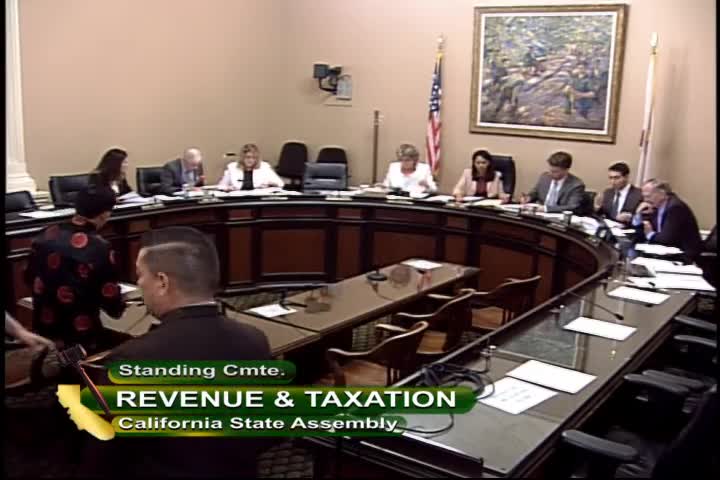 8MIN
Assembly Standing Committee on Revenue and Taxation
Bill Author

Bill Co-Author(s):