AB 1749: Workers’ compensation: off-duty peace officer.
- Session Year: 2017-2018
- House: Assembly
- Latest Version Date: 2018-09-23
Existing law establishes a workers compensation system, administered by the Administrative Director of the Division of Workers Compensation, to compensate an employee for injuries sustained in the course of his or her employment. Existing law requires workers compensation proceedings to commence within one year of specified dates and circumstances, including, among others, the date of injury.
Existing law provides that whenever any peace officer, as defined, is injured, dies, or is disabled from performing his or her duties as a peace officer by reason of engaging in the apprehension or attempted apprehension of law violators or suspected law violators, or protection or preservation of life or property, or the preservation of the peace anywhere in this state, including the local jurisdiction in which he or she is employed, but is not at the time acting under the immediate direction of his or her employer, the peace officer or his or her dependents, as the case may be, shall be accorded by his or her employer all of the same benefits, including the benefits that the peace officer or his or her dependents would have received had that peace officer been acting under the immediate direction of his or her employer. Existing law provides that any injury, disability, or death incurred under the circumstances described in this section shall be deemed to have arisen out of and been sustained in the course of employment for purposes of workers compensation and all other benefits.
This bill would state that an employer, at its discretion or in accordance with specified policies, is not precluded from accepting liability for compensation for an injury sustained by a peace officer by reason of engaging in the apprehension or attempted apprehension of law violators or suspected law violators, or protection or preservation of life or property, or the preservation of the peace, outside the state of California, but who was not at the time acting under the immediate direction of his or her employer, including any claims for injuries sustained by peace officers during the October 1, 2017, mass shooting in Las Vegas, Nevada, if the employer determines providing compensation serves its public purposes. The bill, for purposes of workers compensation claims filed for injuries sustained during the October 1, 2017, mass shooting in Las Vegas, Nevada, would deem the date of injury as the operative date of these provisions. The bill would provide that acceptance of liability shall not affect the determination of whether or not the peace officer acted within the scope of his or her employment for any other purpose.
Existing law establishes a workers compensation system, administered by the Administrative Director of the Division of Workers Compensation, to compensate an employee for injuries sustained in the course of his or her employment. Existing law requires workers compensation proceedings to commence within one year of specified dates and circumstances, including, among others, the date of injury.
Existing law provides that whenever any peace officer, as defined, is injured, dies, or is disabled from performing his or her duties as a peace officer by reason of engaging in the apprehension or attempted apprehension of law violators or suspected law violators, or protection or preservation of life or property, or the preservation of the peace anywhere in this state, including the local jurisdiction in which he or she is employed, but is not at the time acting under the immediate direction of his or her employer, the peace officer or his or her dependents, as the case may be, shall be accorded by his or her employer all of the same benefits, including the benefits that the peace officer or his or her dependents would have received had that peace officer been acting under the immediate direction of his or her employer. Existing law provides that any injury, disability, or death incurred under the circumstances described in this section shall be deemed to have arisen out of and been sustained in the course of employment for purposes of workers compensation and all other benefits.
This bill would state that an employer, at its discretion, discretion or in accordance with specified policies, is not precluded from accepting liability for compensation for an injury sustained by a peace officer while performing his or her duties as a peace officer by reason of engaging in the apprehension or attempted apprehension of law violators or suspected law violators, or protection or preservation of life or property, or the preservation of the peace, outside the state of California, but who was not at the time acting under the immediate direction of his or her employer, including any claims for injuries sustained by peace officers during the October 1, 2017, mass shooting in Las Vegas, Nevada. Nevada, if the employer determines providing compensation serves its public purposes. The bill, for purposes of workers compensation claims filed for injuries sustained during the October 1, 2017, mass shooting in Las Vegas, Nevada, would deem the date of injury as the operative date of these provisions. The bill would provide that acceptance of liability shall not affect the determination of whether or not the peace officer acted within the scope of his or her employment for any other purpose.
Existing law establishes a workers compensation system, administered by the Administrative Director of the Division of Workers Compensation, to compensate an employee for injuries sustained in the course of his or her employment. Existing law requires workers compensation proceedings to commence within one year of specified dates and circumstances, including, among others, the date of injury. Existing
Existing law provides that whenever any peace officer, as defined, is injured, dies, or is disabled from performing his or her duties as a peace officer by reason of engaging in the apprehension or attempted apprehension of law violators or suspected law violators, or protection or preservation of life or property, or the preservation of the peace anywhere in this state, including the local jurisdiction in which he or she is employed, but is not at the time acting under the immediate direction of his or her employer, he or his the peace officer or his or her dependents, as the case may be, shall be accorded by his or her employer all of the same benefits, including the benefits of this division, which he or they that the peace officer or his or her dependents would have received had that peace officer been acting under the immediate direction of his or her employer. Existing law provides that any injury, disability, or death incurred under the circumstances described in this section shall be deemed to have arisen out of and been sustained in the course of employment for purposes of workers compensation and all other benefits.
This bill would provide that whenever any peace officer is injured, dies, or is disabled from performing his duties as a peace officer by reason of engaging in the apprehension or attempted apprehension of law violators or suspected law violators within or out of the state, or protection or preservation of life or property within or out of the state, or the preservation of the peace anywhere in this state, but is not at the time acting under the immediate direction of his employer, he or his dependents shall be accorded by his employer all of the same benefits the peace officer or his dependants would have received had that peace officer been acting under the immediate direction of his employer. The bill would provide that this provision is declaratory of existing law.This bill would state that an employer, at its discretion, is not precluded from accepting liability for an injury sustained by a peace officer while performing his or her duties as a peace officer by reason of engaging in the apprehension or attempted apprehension of law violators or suspected law violators, or protection or preservation of life or property, or the preservation of the peace, outside the state of California, but who was not at the time acting under the immediate direction of his or her employer, including any claims for injuries sustained by peace officers during the October 1, 2017, mass shooting in Las Vegas, Nevada. The bill, for purposes of workers compensation claims filed for injuries sustained during the October 1, 2017, mass shooting in Las Vegas, Nevada, would deem the date of injury as the operative date of these provisions.
Existing law establishes a workers compensation system, administered by the Administrative Director of the Division of Workers Compensation, to compensate an employee for injuries sustained in the course of his or her employment. Existing law provides that whenever any peace officer, as defined, is injured, dies, or is disabled from performing his duties as a peace officer by reason of engaging in the apprehension or attempted apprehension of law violators or suspected law violators, or protection or preservation of life or property, or the preservation of the peace anywhere in this state, including the local jurisdiction in which he is employed, but is not at the time acting under the immediate direction of his employer, he or his dependents, as the case may be, shall be accorded by his employer all of the same benefits, including the benefits of this division, which he or they would have received had that peace officer been acting under the immediate direction of his employer. Existing law provides that any injury, disability, or death incurred under the circumstances described in this section shall be deemed to have arisen out of and been sustained in the course of employment for purposes of workers compensation and all other benefits.
This bill would provide that whenever any peace officer is injured, dies, or is disabled from performing his duties as a peace officer by reason of engaging in the apprehension or attempted apprehension of law violators or suspected law violators within or out of the state, or protection or preservation of life or property within or out of the state, or the preservation of the peace anywhere in this state, but is not at the time acting under the immediate direction of his employer, he or his dependents shall be accorded by his employer all of the same benefits the peace officer or his dependants would have received had that peace officer been acting under the immediate direction of his employer. The bill would provide that this provision is declaratory of existing law.
(a)Whenever any peace officer, as defined in Section 50920 of the Government Code, is injured, dies, or is disabled from performing his or her duties as a peace officer by reason of engaging in the apprehension or attempted apprehension of law violators or suspected law violators, or protection or preservation of life or property, or the preservation of the peace, anywhere in this state, including the local jurisdiction in which he or she is employed, but is not at the time acting under the immediate direction of his or her employer, the peace officer or his or her dependents, as the case may be, shall be accorded by the peace officers employer all of the same benefits, including the benefits of this division, that the peace officer or his or her dependents would have received had that peace officer been acting under the immediate direction of his or her employer. Any injury, disability, or death incurred under the circumstances described in this section shall be deemed to have arisen out of and been sustained in the course of employment for purposes of workers compensation and all other benefits.
(b)Nothing in this section shall be deemed to:
(1)Require the extension of any benefits to a peace officer who at the time of his or her injury, death, or disability is acting for compensation from one other than the city, county, city and county, judicial district, or town of his or her primary employment.
(2)Require the extension of any benefits to a peace officer employed by a city, county, city and county, judicial district, or town which by charter, ordinance, or departmental regulation, whether now in force or hereafter enacted or promulgated, expressly prohibits the activity giving rise to the injury, disability, or death.
(3)Enlarge or extend the authority of any peace officer to make an arrest; provided, however, that illegality of the arrest shall not affect the extension of benefits by reason of this act if the peace officer reasonably believed that the arrest was not illegal.
(4)Preclude an employer, at its discretion or in accordance with written policies adopted by resolution of the employers governing body, from accepting liability for compensation under this division for an injury sustained by a peace officer, as defined in Section 50920 of the Government Code, by reason of engaging in the apprehension or attempted apprehension of law violators or suspected law violators, or protection or preservation of life or property, or the preservation of the peace, outside the state of California, but who was not at the time acting under the immediate direction of his or her employer, including any claims for injuries sustained by peace officers during the October 1, 2017, mass shooting in Las Vegas, Nevada, if the employer determines that providing compensation serves the public purposes of the employer. For claims filed pursuant to this paragraph by peace officers for injuries sustained during the October 1, 2017, mass shooting in Las Vegas, Nevada, the date of injury for purposes of subdivision (a) of Section 5405 shall be deemed the operative date of the act adding this paragraph. Acceptance of liability under this subdivision shall not affect the determination of whether or not the peace officer acted within the scope of his or her employment for any other purpose.
(a)Whenever any peace officer, as defined in Section 50920 of the Government Code, is injured, dies, or is disabled from performing his or her duties as a peace officer by reason of engaging in the apprehension or attempted apprehension of law violators or suspected law violators, or protection or preservation of life or property, or the preservation of the peace, anywhere in this state, including the local jurisdiction in which he or she is employed, but is not at the time acting under the immediate direction of his or her employer, the peace officer or his or her dependents, as the case may be, shall be accorded by the peace officers employer all of the same benefits, including the benefits of this division, that the peace officer or his or her dependents would have received had that peace officer been acting under the immediate direction of his or her employer. Any injury, disability, or death incurred under the circumstances described in this section shall be deemed to have arisen out of and been sustained in the course of employment for purposes of workers compensation and all other benefits.
(b)Nothing in this section shall be deemed to:
(1)Require the extension of any benefits to a peace officer who at the time of his or her injury, death, or disability is acting for compensation from one other than the city, county, city and county, judicial district, or town of his or her primary employment.
(2)Require the extension of any benefits to a peace officer employed by a city, county, city and county, judicial district, or town which by charter, ordinance, or departmental regulation, whether now in force or hereafter enacted or promulgated, expressly prohibits the activity giving rise to the injury, disability, or death.
(3)Enlarge or extend the authority of any peace officer to make an arrest; provided, however, that illegality of the arrest shall not affect the extension of benefits by reason of this act if the peace officer reasonably believed that the arrest was not illegal.
(4)Preclude an employer, at its discretion, discretion or in accordance with written policies adopted by resolution of the employers governing body, from accepting liability for compensation under this division for an injury sustained by a peace officer, as defined in Section 50920 of the Government Code, while performing his or her duties as a peace officer by reason of engaging in the apprehension or attempted apprehension of law violators or suspected law violators, or protection or preservation of life or property, or the preservation of the peace, outside the state of California, but who was not at the time acting under the immediate direction of his or her employer, including any claims for injuries sustained by peace officers during the October 1, 2017, mass shooting in Las Vegas, Nevada. Nevada, if the employer determines that providing compensation serves the public purposes of the employer. For claims filed pursuant to this paragraph by peace officers for injuries sustained during the October 1, 2017, mass shooting in Las Vegas, Nevada, the date of injury for purposes of subdivision (a) of Section 5405 shall be deemed the operative date of the act adding this paragraph. Acceptance of liability under this subdivision shall not affect the determination of whether or not the peace officer acted within the scope of his or her employment for any other purpose.
(a)Whenever any peace officer, as defined in Section 50920 of the Government Code, is injured, dies, or is disabled from performing his or her duties as a peace officer by reason of engaging in the apprehension or attempted apprehension of law violators or suspected law violators, or protection or preservation of life or property, or the preservation of the peace peace, anywhere in this state, including the local jurisdiction in which he or she is employed, but is not at the time acting under the immediate direction of his or her employer, he or his the peace officer or his or her dependents, as the case may be, shall be accorded by his the peace officers employer all of the same benefits, including the benefits of this division, which he or they that the peace officer or his or her dependents would have received had that peace officer been acting under the immediate direction of his or her employer. Any injury, disability, or death incurred under the circumstances described in this section shall be deemed to have arisen out of and been sustained in the course of employment for purposes of workers compensation and all other benefits.
(b)Nothing in this section shall be deemed to:
(1)Require the extension of any benefits to a peace officer who at the time of his or her injury, death, or disability is acting for compensation from one other than the city, county, city and county, judicial district, or town of his or her primary employment.
(2)Require the extension of any benefits to a peace officer employed by a city, county, city and county, judicial district, or town which by charter, ordinance, or departmental regulation, whether now in force or hereafter enacted or promulgated, expressly prohibits the activity giving rise to the injury, disability, or death.
(3)Enlarge or extend the authority of any peace officer to make an arrest; provided, however, that illegality of the arrest shall not affect the extension of benefits by reason of this act if the peace officer reasonably believed that the arrest was not illegal.
(4)Preclude an employer, at its discretion, from accepting liability for an injury sustained by a peace officer, as defined in Section 50920 of the Government Code, while performing his or her duties as a peace officer by reason of engaging in the apprehension or attempted apprehension of law violators or suspected law violators, or protection or preservation of life or property, or the preservation of the peace, outside the state of California, but who was not at the time acting under the immediate direction of his or her employer, including any claims for injuries sustained by peace officers during the October 1, 2017, mass shooting in Las Vegas, Nevada. For claims filed pursuant to this paragraph by peace officers for injuries sustained during the October 1, 2017, mass shooting in Las Vegas, Nevada, the date of injury for purposes of subdivision (a) of Section 5405 shall be deemed the operative date of the act adding this paragraph.
(a)Whenever any peace officer, as defined in Section 50920 of the Government Code, is injured, dies, or is disabled from performing his duties as a peace officer by reason of engaging in the apprehension or attempted apprehension of law violators or suspected law violators within or out of the state, or protection or preservation of life or property within or out of the state, or the preservation of the peace anywhere in this state, including the local jurisdiction in which he is employed, but is not at the time acting under the immediate direction of his employer, he or his dependents, as the case may be, shall be accorded by his employer all of the same benefits, including the benefits of this division, which he or they would have received had that peace officer been acting under the immediate direction of his employer. Any injury, disability, or death incurred under the circumstances described in this section shall be deemed to have arisen out of and been sustained in the course of employment for purposes of workers compensation and all other benefits.
(b)Nothing in this section shall be deemed to:
(1)Require the extension of any benefits to a peace officer who at the time of his injury, death, or disability is acting for compensation from one other than the city, county, city and county, judicial district, or town of his primary employment.
(2)Require the extension of any benefits to a peace officer employed by a city, county, city and county, judicial district, or town which by charter, ordinance, or departmental regulation, whether now in force or hereafter enacted or promulgated, expressly prohibits the activity giving rise to the injury, disability, or death.
(3)Enlarge or extend the authority of any peace officer to make an arrest; provided, however, that illegality of the arrest shall not affect the extension of benefits by reason of this act if the peace officer reasonably believed that the arrest was not illegal.
SEC. 2.The amendments to Section 3600.2 of the Labor Code made by this act do not constitute a change in, but are declaratory of, existing law.
REVISIONS: HeadingLine 4.|
Date
|
Status
|
|---|---|
| Sep 23, 2018 | Chaptered by Secretary of State - Chapter 707, Statutes of 2018. |
| Sep 23, 2018 | Approved by the Governor. |
| Sep 6, 2018 | Enrolled and presented to the Governor at 3 p.m. |
| Aug 29, 2018 | Senate amendments concurred in. To Engrossing and Enrolling. |
| Aug 27, 2018 | In Assembly. Concurrence in Senate amendments pending. May be considered on or after August 29 pursuant to Assembly Rule 77. |
| Aug 27, 2018 | Read third time. Passed. Ordered to the Assembly. |
| Aug 21, 2018 | Read second time. Ordered to third reading. |
| Aug 20, 2018 | Read third time and amended. Ordered to second reading. |
| Aug 9, 2018 | Read second time. Ordered to third reading. |
| Aug 8, 2018 | Read third time and amended. Ordered to second reading. |
| Jul 2, 2018 | Read second time. Ordered to third reading. |
| Jun 28, 2018 | From committee: Do pass. (Ayes 4. Noes 0.) (June 27). |
| Apr 25, 2018 | Referred to Com. on L. & I.R. |
| Apr 12, 2018 | In Senate. Read first time. To Com. on RLS. for assignment. |
| Apr 12, 2018 | Read third time. Passed. Ordered to the Senate. |
| Apr 5, 2018 | Read second time. Ordered to third reading. |
| Apr 4, 2018 | Coauthors revised. |
| Jan 16, 2018 | Referred to Com. on INS. |
| Jan 4, 2018 | From printer. May be heard in committee February 3. |
| Jan 3, 2018 | Read first time. To print. |
|
Date
|
Description
|
Location
|
Votes
|
|
|---|---|---|---|---|
| Aug 29, 2018 | AB 1749 DALY Concurrence in Senate Amendments | Assembly Floor |
Passed |
|
| Aug 27, 2018 | Assembly 3rd Reading AB1749 Daly et al. By Bates | Senate Floor |
Passed |
|
| Jun 27, 2018 | Do pass | Senate Standing Committee on Labor and Industrial Relations |
Passed |
|
| Apr 12, 2018 | AB 1749 DALY Assembly Third Reading | Assembly Floor |
Passed |
|
| Apr 4, 2018 | Do pass. | Assembly Standing Committee on Insurance |
Passed |
This list shows positions taken on this bill by organizations on the date displayed, which is linked to the original source.
Positions by individuals are not included.
CONCURRENCE IN SENATE AMENDMENTS
CSA1 Bill Id:AB 1749
Author:(Daly)
As Amended Ver:August 20, 2018
Majority vote
ASSEMBLY: | 69-0 | (April 12, 2018) | SENATE: | 39-0 | (August 27, 2018) |
Original Committee Reference: INS.
SUMMARY: Clarifies that certain peace officers injured out of state while performing defined law enforcement duties are eligible to receive workers' compensation benefits, in the discretion of the employing agency.
The Senate amendments:
- Delete the mandate that the affected peace officers receive workers' compensation benefits.
- Delete the statement that the bill is declaratory of existing law.
- Clarify that an employing agency may, in its discretion, provide benefits to its employee peace officers if they are injured defending life or property, or in the course of arresting a suspect, out of state.
- Provide that the local agency may either exercise discretion in a particular case or adopt standardized procedures and policies.
- State that the provision of benefits under the bill's provisions do not affect a determination of whether the officer was acting within the course and scope of employment for any other purpose.
EXISTING LAW:
- Establishes a comprehensive system to provide workers' compensation benefits to employees who suffer injuries or conditions that arise out of or in the course of employment.
- Provides that the workers' compensation laws shall be liberally construed for the purpose of extending benefits to injured employees.
- Provides, in the Penal Code, that peace officers are authorized to perform the duties of a peace officer anywhere in the state, but does not contain any further limitation.
- Provides, in the Labor Code, that certain peace officers employed by cities or counties are protected by the workers' compensation laws when apprehending or attempting to apprehend suspects, or when protecting life or property, but does not contain any further limitation.
- Authorizes, as a matter of federal law, certain peace officers to carry their service weapons in any state, regardless of the laws of that state.
FISCAL EFFECT: Unknown
COMMENTS:
- Purpose. According to the author, the bill is intended to clarify what existing law already means – that a peace officer who performs his or her duty and responds to a dangerous situation and is injured as a result is eligible to receive workers' compensation benefits. Because the Orange County Board of Supervisors (and possibly other counties) concluded that the law does not allow these benefits because the injuries occurred out of state, the bill is intended to make sure similar decisions are not made in the future.
- Background. Several Orange County Sheriff's Deputies, as was their sworn duty, responded to the events and assisted local Police during the October 1, 2017 mass shooting in Las Vegas. Reportedly, there were officers from other California localities involved as well. Despite being on their "own time" and enjoying a concert, these deputies were carrying out their sworn duty, as required by Department policy. When a peace officer takes his or her oath of office, they agree to be "on duty 24/7" – they are not like regular employees whose job responsibilities cease at the end of a scheduled shift. With the privilege of being the armed protectors of the public, peace officers accept the obligation to perform the duties of their job when crime is occurring in their presence, even during their leisure time. This is precisely what the Deputy Sheriffs did on that horrific day in Las Vegas.
In the course of assisting injured victims, and moving in and out of the fire zone, four of these deputies sustained injuries, including one who suffered 2 gunshot wounds while attempting to assist another victim to safety. When the four injured deputies applied for workers' compensation benefits, the Orange County Board of Supervisors (Board) denied their claims, insisting that workers' compensation benefits are not available if the peace officers who are injured were performing their duties outside the borders of California. According to the Board, if the concert had been in San Francisco, the County would cover the workers' compensation benefits for deputies injured while performing these heroic actions; however, it was a Las Vegas event, so the deputies cannot covered.
- Federal law. In a series of enactments signed by Presidents Bush and Obama, beginning with the "Law Enforcement Officers' Safety Act" and culminating with provisions from the "National Defense Authorization Act," federal law has encouraged defined peace officers to be available when duty calls, and to that end allows peace officers to carry their service weapons across state lines, regardless of the laws of any particular state. Pursuant to these laws, the Orange County deputy sheriffs injured on October 1, 2017, in Las Vegas, Nevada, were properly and lawfully armed, and expected to perform the duties of a peace officer if conditions warranted.
- Orange County Sheriff's Department Policy. As is the case with all law enforcement agencies, the Orange County Sheriff maintains a set of written policies, including a code of ethics. Read as a whole, it is clear that these sworn officers are expected to act to protect life when life is being threatened in their presence. A couple of excerpts include:
Canons of Ethics, Standard 1.1. Peace officers shall recognize that the primary responsibility of their profession and of the individual officer is the protection of the people within the jurisdiction of the United States through upholding of their laws, the most important of which are the Constitution of the United States and State Constitutions and laws derived there from.
The Deputy may be called on to perform a wide variety of assignments under many different circumstances.
This policy provides for the safe and appropriate response to emergency and non-emergency situations whether dispatched by the Emergency Communication Bureau (ECB) or self-initiated in the field.
Thus, it is clear from both federal law and department policy that the officers in Las Vegas were expected as a matter of sworn duty to act in the role of a peace officer. However, it appears to be the position of the Board that, in doing so, the normal workers' compensation benefits payable for injuries that occur in the course of employment do not apply.
Analysis Prepared by: Mark Rakich / INS. / (916) 319-2086 FN: 0004938
Office of Senate Floor Analyses (916) 651-1520 Fax: (916) 327-4478 | AB |
THIRD READING
Bill No: AB 1749
Amended: 8/20/18 in Senate
SENATE LABOR & IND. REL. COMMITTEE: 4-0, 6/27/18
AYES: Lara, Stone, Jackson, Mitchell
NO VOTE RECORDED: Wieckowski
ASSEMBLY FLOOR: 69-0, 4/12/18 - See last page for vote
SUBJECT: Workers’ compensation: off-duty peace officer
SOURCE: Association of Orange County Sheriffs
DIGEST:
This bill states, explicitly, that nothing in law prevents a public employer from accepting liability for an injury to a peace officer while the peace officer is performing specified duties outside of California.
Senate Floor Amendments of 8/20/18 (1) provide that a public employer may accept liability at its discretion or in accordance with written policies adopted by resolution of the employer’s governing body; (2) provide that a public employer may accept liability for injuries suffered by peace officers during the October 1, 2017 mass shooting in Las Vegas, Nevada, if providing benefits serves the public purposes of the employer; and 3) provide that, acceptance of liability described above does not affect the determination of whether the peace officer acted within the scope of his or her employment for any other purpose.
Existing law:
- Establishes a workers’ compensation system that provides benefits to an employee who suffers from an injury or illness that arises out of and in the course of employment, irrespective of fault. This system requires all employers to secure payment of benefits by either securing the consent of the Department of Industrial Relations (DIR) to self-insure or by securing insurance against liability from an insurance company authorized by the state.
- Requires that, whenever any peace officer is injured, dies, or is disabled from performing his duties as a peace officer by reason of engaging in the apprehension or attempted apprehension of law violators or suspected law violators, or protection or preservation of life or property, or the preservation of the peace anywhere in this state, including the local jurisdiction in which he is employed, but is not at the time acting under the immediate direction of his employer, he or his dependents, must be eligible for all of the same workers’ compensation benefits as if he or she was under the direction of his or her employer. (Labor Code §3600.2)
- Extends the same requirements described above to local firefighters. (Labor Code §3600.4)
- Provides that medical, surgical, chiropractic, acupuncture, and hospital treatment, including nursing, medicines, medical and surgical supplies, crutches, and apparatuses, including orthotic and prosthetic devices and services, that is reasonably required to cure or relieve the injured worker from the effects of his or her injury shall be provided by the employer. (Labor Code §4600)
- Provides for the payment of indemnity benefits if the occupational injury causes temporary or permanent disability which prevents the worker from returning to his or her job. In the case of temporary disability payments, the benefit is two-thirds of the weekly loss in wages due to disability for up to 104 weeks within five years. (Labor Code §§4650, 4653, 4654 and 4656).
- Provides that certain public employees employed on a regular, full-time basis regardless of their period of service, who incur on the job injury or illness, are entitled to receive disability payment for up to one year. These employees include (a) city police officers; (b) city, county, or district firefighters; and (c) sheriffs. (Labor Code §4850)
- Provides that any patrol, state safety, state industrial, state peace officer/firefighter, or local safety member incapacitated for the performance of duty as the result of an industrial disability must be retired for disability, regardless of age or amount of service. The amount of the industrial disability pension is generally 50% of the officer’s highest consecutive 12-month or 36-month average monthly salary, tax exempt. (Government Code §21151)
This bill:
Provides, explicitly, that nothing in the law precludes a public employer from accepting liability, at its discretion or in accordance with written policies adopted by a public employer’s governing board, for an injury sustained by a peace officer while the peace officer is performing the duties of apprehending law violators or attempting to apprehend law violators, protecting life or property, or the preservation of peace outside of California and not under the direction of the peace officer’s employer.
Extends the provision described above to include any injuries suffered by peace officers during the October 1, 2017, mass shooting in Las Vegas, Nevada, if providing benefits serves the public purposes of the employer. This bill also requires that the date of injury for the October 1, 2017 mass shooting claims be the operative date of this bill.
- Provides that, acceptance of liability described above does not affect the determination of whether the peace officer acted within the scope of his or her employment for any other purpose.
Comments
On October 1, 2017, Stephan Paddock opened fire on a large crowd of concertgoers in Las Vegas, Nevada. The concertgoers were from throughout the country and Canada, enjoying a country music festival. Over a period of 10 minutes, Paddock fired 1,100 bullets into the crowd, killing 58 people and wounding 851 people. Thirty-five of the individuals who lost their life that day were from California.
An hour after the shooting began, Paddock took his own life. The motive for the mass shooting remains unknown.
During that terrible shooting, many individuals stepped up to assist the injured and dying, including military personnel, medical professionals, and untrained good Samaritans. According to press accounts, more than 200 California police officers were present at the concert. Present during their off-time at the concert enjoying the music, many of these officers assisted the injured victims that day. And several police officers were shot while assisting the victims.
Eventually, four Orange County deputies filed workers’ compensation claims, including a deputy who was shot twice. All of the claims were denied. As was noted in press accounts at the time, this is because the County’s counsel believes that existing law does not extend to out-of-state injuries. The Association of Orange County Deputy Sheriffs disputes this legal interpretation, arguing that coverage of out-of-state workplace injuries are actually covered by the law. At the time, several Orange County Supervisors called upon the state to clarify existing law to address this perceived ambiguity.
AB 1749 explicitly states that cities and counties may use their discretion to accept liability for out-of-state injuries that fall within a peace officer’s responsibilities.
Related/Prior Legislation
AB 44 (Reyes, Chapter 736, Statutes of 2017) required that advocacy services for injured workers who suffered an industrial injury due to an act of domestic terrorism.
FISCAL EFFECT: Appropriation: Fiscal Com.: Local:
Association of Orange County Sheriffs (source)
OPPOSITION: (Verified 8/21/18)
None received
ASSEMBLY FLOOR: 69-0, 4/12/18
AYES: Acosta, Aguiar-Curry, Travis Allen, Arambula, Baker, Berman, Bigelow, Bonta, Brough, Burke, Caballero, Calderon, Carrillo, Cervantes, Chau, Chávez, Chen, Chiu, Choi, Chu, Cooley, Cooper, Cunningham, Dahle, Daly, Eggman, Flora, Fong, Frazier, Friedman, Gallagher, Eduardo Garcia, Gipson, Gloria, Gonzalez Fletcher, Grayson, Harper, Holden, Irwin, Jones-Sawyer, Kalra, Kiley, Lackey, Levine, Maienschein, Mathis, Mayes, McCarty, Medina, Melendez, Muratsuchi, Nazarian, Obernolte, O'Donnell, Patterson, Quirk, Quirk-Silva, Reyes, Rodriguez, Rubio, Salas, Santiago, Mark Stone, Thurmond, Ting, Voepel, Waldron, Weber, Rendon
NO VOTE RECORDED: Bloom, Cristina Garcia, Gray, Limón, Low, Mullin, Steinorth, Wood
8/21/18 18:55:45
Office of Senate Floor Analyses (916) 651-1520 Fax: (916) 327-4478 | AB |
THIRD READING
Bill No: AB 1749
: in Senate
SENATE LABOR & IND. REL. COMMITTEE: 4-0, 6/27/18
AYES: Lara, Stone, Jackson, Mitchell
NO VOTE RECORDED: Wieckowski
ASSEMBLY FLOOR: 69-0, 4/12/18 - See last page for vote
SUBJECT: Workers’ compensation: off-duty peace officer
SOURCE: Association of Orange County Sheriffs
DIGEST:
This bill states, explicitly, that nothing in law prevents a public employer from accepting liability for an injury to a peace officer while the peace officer is performing specified duties outside of California.
Senate Floor Amendments of 8/8/18 (1) explicitly provide that nothing in the law precludes a public employer from accepting liability for an injury sustained by a peace officer while the peace officer is performing the duties of apprehending law violators, protecting life or property, or the preservation of peace outside of California and not under the direction of the peace officer’s employer; and (2) extends the provision described above to include any injuries suffered by peace officers during the October 1, 2017, mass shooting in Las Vegas, Nevada, and requires that the date of the injury for such claims be the operative date of this bill.
Existing law:
- Establishes a workers’ compensation system that provides benefits to an employee who suffers from an injury or illness that arises out of and in the course of employment, irrespective of fault. This system requires all employers to secure payment of benefits by either securing the consent of the Department of Industrial Relations (DIR) to self-insure or by securing insurance against liability from an insurance company authorized by the state.
- Requires that, whenever any peace officer is injured, dies, or is disabled from performing his duties as a peace officer by reason of engaging in the apprehension or attempted apprehension of law violators or suspected law violators, or protection or preservation of life or property, or the preservation of the peace anywhere in this state, including the local jurisdiction in which he is employed, but is not at the time acting under the immediate direction of his employer, he or his dependents, must be eligible for all of the same workers’ compensation benefits as if he or she was under the direction of his or her employer. (Labor Code §3600.2)
- Extends the same requirements described above to local firefighters. (Labor Code §3600.4)
- Provides that medical, surgical, chiropractic, acupuncture, and hospital treatment, including nursing, medicines, medical and surgical supplies, crutches, and apparatuses, including orthotic and prosthetic devices and services, that is reasonably required to cure or relieve the injured worker from the effects of his or her injury shall be provided by the employer. (Labor Code §4600)
- Provides for the payment of indemnity benefits if the occupational injury causes temporary or permanent disability which prevents the worker from returning to his or her job. In the case of temporary disability payments, the benefit is two-thirds of the weekly loss in wages due to disability for up to 104 weeks within five years. (Labor Code §§4650, 4653, 4654 and 4656).
- Provides that certain public employees employed on a regular, full-time basis regardless of their period of service, who incur on the job injury or illness, are entitled to receive disability payment for up to one year. These employees include (a) city police officers; (b) city, county, or district firefighters; and (c) sheriffs. (Labor Code §4850)
- Provides that any patrol, state safety, state industrial, state peace officer/firefighter, or local safety member incapacitated for the performance of duty as the result of an industrial disability must be retired for disability, regardless of age or amount of service. The amount of the industrial disability pension is generally 50% of the officer’s highest consecutive 12-month or 36-month average monthly salary, tax exempt. (Government Code §21151)
This bill:
Provides, explicitly, that nothing in the law precludes a public employer from accepting liability for an injury sustained by a peace officer while the peace officer is performing the duties of apprehending law violators or attempting to apprehend law violators, protecting life or property, or the preservation of peace outside of California and not under the direction of the peace officer’s employer.
Extends the provision described above to include any injuries suffered by peace officers during the October 1, 2017, mass shooting in Las Vegas, Nevada, and requires that the date of injury for such claims be the operative date of this bill.
Comments
On October 1, 2017, Stephan Paddock opened fire on a large crowd of concertgoers in Las Vegas, Nevada. The concertgoers were from throughout the country and Canada, enjoying a country music festival. Over a period of 10 minutes, Paddock fired 1,100 bullets into the crowd, killing 58 people and wounding 851 people. Thirty-five of the individuals who lost their life that day were from California.
An hour after the shooting began, Paddock took his own life. The motive for the mass shooting remains unknown.
During that terrible shooting, many individuals stepped up to assist the injured and dying, including military personnel, medical professionals, and untrained good Samaritans. According to press accounts, more than 200 California police officers were present at the concert. Present during their off-time at the concert enjoying the music, many of these officers assisted the injured victims that day. And several police officers were shot while assisting the victims.
Eventually, four Orange County deputies filed workers’ compensation claims, including a deputy who was shot twice. All of the claims were denied. As was noted in press accounts at the time, this is because the County’s counsel believes that existing law does not extend to out-of-state injuries. The Association of Orange County Deputy Sheriffs disputes this legal interpretation, arguing that coverage of out-of-state workplace injuries are actually covered by the law. At the time, several Orange County Supervisors called upon the state to clarify existing law to address this perceived ambiguity.
AB 1749 explicitly states that cities and counties may use their discretion to accept liability for out-of-state injuries that fall within a peace officer’s responsibilities.
Related/Prior Legislation
AB 44 (Reyes, Chapter 736, Statutes of 2017) required that advocacy services for injured workers who suffered an industrial injury due to an act of domestic terrorism.
FISCAL EFFECT: Appropriation: Fiscal Com.: Local:
Association of Orange County Sheriffs (source)
None received
ASSEMBLY FLOOR: 69-0, 4/12/18
AYES: Acosta, Aguiar-Curry, Travis Allen, Arambula, Baker, Berman, Bigelow, Bonta, Brough, Burke, Caballero, Calderon, Carrillo, Cervantes, Chau, Chávez, Chen, Chiu, Choi, Chu, Cooley, Cooper, Cunningham, Dahle, Daly, Eggman, Flora, Fong, Frazier, Friedman, Gallagher, Eduardo Garcia, Gipson, Gloria, Gonzalez Fletcher, Grayson, Harper, Holden, Irwin, Jones-Sawyer, Kalra, Kiley, Lackey, Levine, Maienschein, Mathis, Mayes, McCarty, Medina, Melendez, Muratsuchi, Nazarian, Obernolte, O'Donnell, Patterson, Quirk, Quirk-Silva, Reyes, Rodriguez, Rubio, Salas, Santiago, Mark Stone, Thurmond, Ting, Voepel, Waldron, Weber, Rendon
NO VOTE RECORDED: Bloom, Cristina Garcia, Gray, Limón, Low, Mullin, Steinorth, Wood
8/10/18 13:56:04
Office of Senate Floor Analyses (916) 651-1520 Fax: (916) 327-4478 | AB |
THIRD READING
Bill No: AB 1749
:
SENATE LABOR & IND. REL. COMMITTEE: 4-0, 6/27/18
AYES: Lara, Stone, Jackson, Mitchell
NO VOTE RECORDED: Wieckowski
ASSEMBLY FLOOR: 69-0, 4/12/18 - See last page for vote
SOURCE: Association of Orange County Sheriffs
DIGEST:
This bill extends workers’ compensation benefits to police officers who are injured outside of California and while on vacation if the injury is related to the apprehension of law violators or protection of life or property.
Existing law:
- Establishes a workers’ compensation system that provides benefits to an employee who suffers from an injury or illness that arises out of and in the course of employment, irrespective of fault. This system requires all employers to secure payment of benefits by either securing the consent of the Department of Industrial Relations (DIR) to self-insure or by securing insurance against liability from an insurance company authorized by the state.
- Requires that, whenever any peace officer is injured, dies, or is disabled from performing his duties as a peace officer by reason of engaging in the apprehension or attempted apprehension of law violators or suspected law violators, or protection or preservation of life or property, or the preservation of the peace anywhere in this state, including the local jurisdiction in which he is employed, but is not at the time acting under the immediate direction of his employer, he or his dependents, must be eligible for all of the same workers’ compensation benefits as if he or she was under the direction of his or her employer. (Labor Code §3600.2)
- Extends the same requirements described above to local firefighters. (Labor Code §3600.4)
- Provides that medical, surgical, chiropractic, acupuncture, and hospital treatment, including nursing, medicines, medical and surgical supplies, crutches, and apparatuses, including orthotic and prosthetic devices and services, that is reasonably required to cure or relieve the injured worker from the effects of his or her injury shall be provided by the employer. (Labor Code §4600)
- Provides for the payment of indemnity benefits if the occupational injury causes temporary or permanent disability which prevents the worker from returning to his or her job. In the case of temporary disability payments, the benefit is two-thirds of the weekly loss in wages due to disability for up to 104 weeks within five years. (Labor Code §§4650, 4653, 4654 and 4656).
- Provides that certain public employees employed on a regular, full-time basis regardless of their period of service, who incur on the job injury or illness, are entitled to receive disability payment for up to one year. These employees include (a) city police officers; (b) city, county, or district firefighters; and (c) sheriffs. (Labor Code §4850)
- Provides that any patrol, state safety, state industrial, state peace officer/firefighter, or local safety member incapacitated for the performance of duty as the result of an industrial disability must be retired for disability, regardless of age or amount of service. The amount of the industrial disability pension is generally 50% of the officer’s highest consecutive 12-month or 36-month average monthly salary, tax exempt. (Government Code §21151)
This bill:
- Expands the existing police office described above to include injuries to include injuries outside of California that are sustained in the apprehension or attempted apprehension of law violators or suspected law violators and the protection or preservation of life or property.
- Declares the provisions above to be declaratory of existing law.
Comments
- Senate Labor & Industrial Relations staff comments:
Is AB 1749 Existing Law?
As noted above, AB 1749 contains language that declares it existing law. The author and staff have put forward a masterful and brilliant legal analysis, which argues that the apparent exclusion of police officers injured out-of-state police is due to a drafting error involving commas. On its face, it is quite persuasive.
Unfortunately, this legal theory is not supported by the legislative record.
In 1980, Assemblyman J. Robert Hayes authored AB 2083, which created the relevant code sections which cover workers’ compensation and off-duty police officers and firefighters. In his letter to Governor Brown requesting a signature, the Assemblyman stated that this bill would delete a code section in Labor Code which conflicted with a Government Code section, and then bring this Government Code section in the Labor Code. In short, AB 2083 was about conforming two code sections, not changing the law. This legal interpretation was also shared by the internal analysis by the DIR to Governor Brown, which recommended a signature.
This interpretation of legislative intent is further bolstered by amendments that were taken in the Assembly. On March 4, 1980, the California State Bar Association (then represented by Ralph J. Simoni) wrote to the Assemblyman requesting clarifying amendments. Specifically, the State Bar was concerned that, as drafted, AB 2083 would overrule the recent decision in Petrocelli v. Workers’ Compensation Appeals Board, 45 Cal. App. 3d 635 (1975), which found that a police officer responding to a potential crime in a neighboring city was still eligible for workers’ compensation benefits. The State Bar asked for specific amendments that clarified that the bill was conforming Labor Code to Government Code and not overruling Petrocelli. The letter explicitly discusses Petrocelli and the need to ensure that workers’ compensation coverage for police officers extends from one California community to another California community.
On March 27, 1980, the General Counsel for the Assembly Committee on Finance, Insurance, and Commerce (Carlyle Brakensiek), drafted a letter to Legislative Counsel explicitly requesting the amendments from the State Bar. These amendments were later taken on May 1st, and are discussed as conforming amendments in the Assembly Floor analyses. Additional amendments taken in the Senate were of a technical nature.
In short, the legislative record is clear: AB 2083 (Hayes), Chapter 407, Statutes of 1980, simply conformed the law and upheld Petrocelli. There is no support in the record for the supposition that the Legislature intended to extend workers’ compensation coverage to out-of-state injuries suffered during vacation.
AB 1749, therefore, is not declaratory of existing law. AB 1749 changes the law by expanding workers’ compensation coverage to include police officers’ out-of-state injuries suffered during vacation.
Equitable Coverage and AB 1749
If AB 1749 is not declaring existing law, then does it cover those who need to be covered? If the idea behind the bill is that individuals who act to save lives and property or assist in the apprehension of individuals, then why just police officers? Why not emergency medical technicians, who provide CPR? Why not firefighters, who are more than capable of protecting lives and property and were covered by the original AB 2083 of 1980? Why not nurses and physicians who are trained to respond to medical crises and give medical treatment?
Nor is this theoretical: two firefighters from California (San Diego and San Bernardino) were shot while assisting victims during the 2017 Vegas Shooting.
As currently drafted, AB 1749 creates the perverse situation where an EMT or firefighter could be providing treatment right next to a California police officers at a mass casualty event outside of California, both be shot by the same bullet, and only the police officer would receive workers’ compensation benefits. If both workers are providing the same treatment, why are they treated differently?
AB 1749 Outside of the Vegas Shooting
In changing the law, AB 1749 creates new fiscal obligations for local governments. To the degree that the injury involved apprehending an individual or protecting life or property, this bill will now extend to all injuries that occur outside of California. But this won’t just be mass shootings and terror attacks: this would include all manner of injuries in all manner of situations and in all manner of locations. If an officer claims to have been injured in the line of duty in Mexico or Thailand, how would the local government determine if the injury was compensable? How would the local government determine the police officer’s sobriety during his or her vacation time?
If the vacation is outside of California for a long period of time, how would the local government maintain medical control of the claim? How would they address billing disputes from medical clinics if the documentation was poor or there was a language barrier? How would they address potential medical fraud if the medical provider is outside the authority of the United States?
FISCAL EFFECT: Appropriation: Fiscal Com.: Local:
Association of Orange County Sheriffs (source)
California Teamsters Public Affairs Council
Los Angeles Protective League
National Peace Officers and Fire Fighters Benefit Association
Riverside Sheriffs’ Association
California Association of Joint Powers Authorities
California Coalition on Workers’ Compensation
California Special Districts Association
California State Association of Counties
City of Torrance
League of California Cities
Rural Representatives of California
Urban Counties of California
ARGUMENTS IN SUPPORT: The Riverside Sheriffs’ Association, writing in support, argues the following:
The Riverside Sheriffs’ Association strongly supports AB 1749 which seeks to clarify existing law that peace officers are entitled to workers’ comp benefits when they are injured performing law enforcement duties.
This bill is in response to the Las Vegas mass shooting that took place last fall where 58 people were killed and more than 500 wounded. Numerous peace officers were injured during this attack and some have been denied workers comp coverage due to conflicting interpretations of the current, applicable workers’ comp statutes.
Among the survivors is Riverside County Deputy Jason McMillan, a hero who not only sprang into action when the shooting began, but immediately acted as a human shield to protect another. After putting his law enforcement training into action to protect another, Deputy McMillan was shot and is now paralyzed from the waist down. His workers’ comp claim has been denied by Riverside County….
The men and women of the Riverside Sheriffs’ Association are grateful to Assemblymember Daly for authoring this important legislation. AB 1749 will go a long way in helping Deputy
McMillan and the other injured peace officers who put themselves in harm’s way to protect and give aid to others. Our members respectfully request an AYE vote.
ARGUMENTS IN OPPOSITION: The California State Association of Counties, California Association of Joint Powers Authorities, California Coalition on Workers’ Compensation, and the California Special Districts Association, taking an “oppose unless amended” position, argue the following:
We fully recognize the brave acts displayed during the tragic Las Vegas shooting in October 2017 and your intent to help those who were harmed. However, as currently drafted, AB 1749 represents a major expansion of the workers’ compensation system. Furthermore, it may not fully serve those individuals who went above and beyond to saves lives and bring people out of harm’s way.
The California worker’s compensation system, at its core, is designed to provide support to individuals who are injured while carrying out their duties, arising out of the scope and course of their employment and under the direction or supervision of their employer. Given the nature of peace officers’ duties, existing law also extends workers’ compensation benefits to those who are off-duty and injured in their effort to protect of life or property, or in the apprehension of a suspect, within California.
AB 1749 would amend Labor Code Section 3600.2 to include coverage for California peace officers who are off-duty within or outside California at the time of their injury. This extension would also be applied retroactively. This is a massive expansion and could prove extremely problematic for several reasons, in addition to the direct cost pressures on public agencies. As such, we respectfully offer the following suggestions for your consideration. Otherwise, the consequences could easily undermine vital resources that public agency employers rely on for all services, safety and non-safety, as well as employee protections.
- Victims Funds: Californians injured in the Las Vegas shooting incident are eligible to seek support from the Nevada State Victims Fund and California may wish to consider creating an additional support fund with California-based resources to help victims and family members of victims cover medical costs, or in the most unfortunate incidences, funeral/memorial service expenses. This would be outside of the workers’ compensation system since there is a very limited nexus based on the situational circumstances and existing system structure.
- Gubernatorial Declaration: The need for peace officers to provide public safety services to their communities is unquestionable and constant. However, the constant need can blur the line for off-duty officers and have it take time away from rest, recovery, and well-earned respite. Should workers’ compensation be expanded in the manner that AB 1749 proposes, a formal designation in the most egregious circumstances would help ensure that off-duty officers, who choose to provide safety services and are injured in the course of that effort, are considered for benefits. An official gubernatorial declaration of a terrorist event from the state of the incident could provide the necessary litmus test.
- Geographic Limitations to Adjoining States: We believe there should be a stronger nexus between an injured California peace officer, the location of their employer agency, and the location of where the injury occurred. We would suggest that claims be limited to only adjoining states (Oregon, Arizona, Nevada) and only within the United States. As currently drafted, an injured peace officer could be anywhere in the United States or any foreign county and seek benefits for sustaining an injury while off-duty. In addition, the expansion to foreign counties and other states where there is less regional collaboration could make investigating claims an insurmountable challenge for the public safety agencies.
- Clarification of Activities: If the benefits for off-duty, out-of-state injured peace officers are to come from public agency resources, it must be clarified that the injuries resulting from acts of protecting life or property, or in the apprehension of a suspect, to mirror existing workers’ compensation statutes for in-state injuries.
We thank you in advance for your consideration of these potential changes but at the present we must remain respectfully “oppose unless amended.”
ASSEMBLY FLOOR: 69-0, 4/12/18
AYES: Acosta, Aguiar-Curry, Travis Allen, Arambula, Baker, Berman, Bigelow, Bonta, Brough, Burke, Caballero, Calderon, Carrillo, Cervantes, Chau, Chávez, Chen, Chiu, Choi, Chu, Cooley, Cooper, Cunningham, Dahle, Daly, Eggman, Flora, Fong, Frazier, Friedman, Gallagher, Eduardo Garcia, Gipson, Gloria, Gonzalez Fletcher, Grayson, Harper, Holden, Irwin, Jones-Sawyer, Kalra, Kiley, Lackey, Levine, Maienschein, Mathis, Mayes, McCarty, Medina, Melendez, Muratsuchi, Nazarian, Obernolte, O'Donnell, Patterson, Quirk, Quirk-Silva, Reyes, Rodriguez, Rubio, Salas, Santiago, Mark Stone, Thurmond, Ting, Voepel, Waldron, Weber, Rendon
NO VOTE RECORDED: Bloom, Cristina Garcia, Gray, Limón, Low, Mullin, Steinorth, Wood
8/1/18 11:27:31
**** END ****
SENATE COMMITTEE ON LABOR AND INDUSTRIAL RELATIONS
Senator Ricardo Lara, Chair
2017 - 2018 Regular
Bill No: AB 1749 Hearing Date: June 27, 2018
Author: | Daly | ||
Version: | January 3, 2018 | ||
Urgency: | No | Fiscal: | No |
Consultant: | Gideon L. Baum | ||
Subject: Workers’ compensation: off-duty peace officer
KEY ISSUE
Should the Legislature extend workers’ compensation benefits to police officers who are injured outside of California and while on vacation if the injury is related to the apprehension of law violators or protection of life or property?
ANALYSIS
Existing law:
- Establishes a workers’ compensation system that provides benefits to an employee who suffers from an injury or illness that arises out of and in the course of employment, irrespective of fault. This system requires all employers to secure payment of benefits by either securing the consent of the Department of Industrial Relations to self-insure or by securing insurance against liability from an insurance company authorized by the state.
- Requires that, whenever any peace officer is injured, dies, or is disabled from performing his duties as a peace officer by reason of engaging in the apprehension or attempted apprehension of law violators or suspected law violators, or protection or preservation of life or property, or the preservation of the peace anywhere in this state, including the local jurisdiction in which he is employed, but is not at the time acting under the immediate direction of his employer, he or his dependents, must be eligible for all of the same workers’ compensation benefits as if he or she was under the direction of his or her employer. (Labor Code §3600.2)
- Extends the same requirements described above to local firefighters.
(Labor Code §3600.4)
Existing law also:
- Provides that medical, surgical, chiropractic, acupuncture, and hospital treatment, including nursing, medicines, medical and surgical supplies, crutches, and apparatuses, including orthotic and prosthetic devices and services, that is reasonably required to cure or relieve the injured worker from the effects of his or her injury shall be provided by the employer. (Labor Code §4600)
- Provides for the payment of indemnity benefits if the occupational injury causes temporary or permanent disability which prevents the worker from returning to his or her job. In the case of temporary disability payments, the benefit is two-thirds of the weekly loss in wages due to disability for up to 104 weeks within 5 years.
(Labor Code §§4650, 4653, 4654 and 4656). - Existing law provides that certain public employees employed on a regular, full-time basis regardless of their period of service, who incur on the job injury or illness, are entitled to receive disability payment for up to one year. These employees include:
- City police officers;
- City, county, or district firefighters; and
- Sheriffs.
(Labor Code §4850)
- Provides that any patrol, state safety, state industrial, state peace officer/firefighter, or local safety member incapacitated for the performance of duty as the result of an industrial disability must be retired for disability, regardless of age or amount of service. The amount of the industrial disability pension is generally 50% of the officer’s highest consecutive 12-month or 36-month average monthly salary, tax exempt.
(Government Code §21151)
This bill:
- Expands the existing police office described above to include injuries to include injuries outside of California that are sustained in the apprehension or attempted apprehension of law violators or suspected law violators and the protection or preservation of life or property.
- Declares the provisions above to be declaratory of existing law.
COMMENTS
1. How We Got Here – AB 1749 and the 2017 Vegas Shooting:
On October 1, 2017, Stephan Paddock opened fire on a large crowd of concertgoers in Las Vegas, Nevada. The concertgoers were from throughout the country and Canada, enjoying a country music festival. Over a period of 10 minutes, Paddock fired 1,100 bullets into the crowd, killing 58 people and wounding 851 people. 35 of the individuals who lost their life that day were from California.
An hour after the shooting began, Paddock took his own life. The motive for the mass shooting remains unknown.
During that terrible shooting, many individuals stepped up to assist the injured and dying, including military personnel, medical professionals, and untrained good Samaritans. According to press accounts, more than 200 California police officers were present at the concert. Present during their off-time at the concert enjoying the music, many of these officers assisted the injured victims that day. And several police officers were shot while assisting the victims.
Eventually, 4 Orange County deputies filed workers’ compensation claims, including a deputy who was shot twice. All of the claims were denied. As was noted in press accounts at the time, this is because the County’s counsel believes that existing law does not extend to out-of-state injuries. The Association of Orange County Deputy Sheriffs (AOCDS) disputes this legal interpretation, arguing that coverage of out-of-state workplace injuries are actually covered by the law. At the time, several Orange County Supervisors called upon the state to clarify existing law to address this perceived ambiguity.
AB 1749 adhere existing law to the AOCDS’s legal interpretation, changing the law to cover out-of-state injuries are arguing that this is declaratory of existing law.
2. Staff Comments:
When Does AB 1749 Apply?
Looking at the discussion above and the plain reading of the bill, one might be tempted to say that AB 1749 applies “when a police officer is injured outside of California”. In actuality, this simple answer obscures the legal question raised by Orange County and the comprehensive and important protections for California’s injured workers that have existed for decades. In fact, certain types of out-of-state injuries are covered by the workers’ compensation system for all workers, not just police officers.
This is because there has been long-standing precedent that, if a worker signs a contract for employment in California, California’s workers’ compensation laws control. This is due to long-standing case law dating back to 1935 (see Bowen v. Workers’ Comp. Appeals Bd. (1999) 73 Cal.App.4th 15), and is not impacted by this bill. Therefore, if an employer sends an employee outside of California for work, and the employment contract was signed in California, that worker would be able to access California’s workers’ compensation law if he or she was injured on the job. That includes car chases, trainings, coordination meetings, and other work-related travel.
What AB 1749 does is extend California’s workers’ compensation law to peace officers who are outside of California on their own time. In these situations, the officers would be on vacation, there would be an event that they felt necessitated action, and then the local government would pay for any injury to the officer that would result.
Finally, it is also worth noting that it is solely within the employer’s discretion to decide if they will accept a workers’ compensation claim. If the employer accepts a claim, then the claim is accepted and will move through the system. Nothing prohibits an employer from accepting a claim and providing treatment. Any claim to the contrary is not supported by statute or case law.
Is AB 1749 Existing Law?
As noted above, AB 1749 contains language that declares it existing law. The author and staff have put forward a masterful and brilliant legal analysis, which argues that the apparent exclusion of police officers injured out-of-state police is due to a drafting error involving commas. On its face, it is quite persuasive.
Unfortunately, this legal theory is not supported by the Legislative record.
In 1980, Assemblyman J. Robert Hayes authored AB 2083, which created the relevant code sections which cover workers’ compensation and off-duty police officers and firefighters. In his letter to Governor Brown requesting a signature, the Assemblyman stated that this bill would delete a code section in Labor Code which conflicted with a Government Code section, and then bring this Government Code section in the Labor Code. In short, AB 2083 was about conforming two code sections, not changing the law. This legal interpretation was also shared by the internal analysis by the Department of Industrial Relations (DIR) to Governor Brown, which recommended a signature.
This interpretation of legislative intent is further bolstered by amendments that were taken in the Assembly. On March 4, 1980, the California State Bar Association (then represented by Ralph J. Simoni) wrote to the Assemblyman requesting clarifying amendments. Specifically, the State Bar was concerned that, as drafted, AB 2083 would overrule the recent decision in Petrocelli v. Workers’ Compensation Appeals Board, 45 Cal. App. 3d 635 (1975), which found that a police officer responding to a potential crime in a neighboring city was still eligible for workers’ compensation benefits. The State Bar asked for specific amendments that clarified that the bill was conforming Labor Code to Government Code and not overruling Petrocelli. The letter explicitly discusses Petrocelli and the need to ensure that workers’ compensation coverage for police officers extends from one California community to another California community.
On March 27, 1980, the General Counsel for the Assembly Committee on Finance, Insurance, and Commerce (Carlyle Brakensiek), drafted a letter to Legislative Counsel explicitly requesting the amendments from the State Bar. These amendments were later taken on May 1st, and are discussed as conforming amendments in the Assembly Floor analyses. Additional amendments taken in the Senate were of a technical nature.
In short, the legislative record is clear: AB 2083 (Hayes), Chapter 407, Statutes of 1980, simply conformed the law and upheld Petrocelli. There is no support in the record for the supposition that the Legislature intended to extend workers’ compensation coverage to out-of-state injuries suffered during vacation.
AB 1749, therefore, is not declaratory of existing law. AB 1749 changes the law by expanding workers’ compensation coverage to include police officers’ out-of-state injuries suffered during vacation.
Equitable Coverage and AB 1749
If AB 1749 is not declaring existing law, then does it cover those who need to be covered? If the idea behind the bill is that individuals who act to save lives and property or assist in the apprehension of individuals, then why just police officers? Why not emergency medical technicians, who provide CPR? Why not firefighters, who are more than capable of protecting lives and property and were covered by the original AB 2083 of 1980? Why not nurses and physicians who are trained to respond to medical crises and give medical treatment?
Nor is this theoretical: two firefighters from California (San Diego and San Bernardino) were shot while assisting victims during the 2017 Vegas Shooting.
As currently drafted, AB 1749 creates the perverse situation where an EMT or firefighter could be providing treatment right next to a California police officers at a mass casualty event outside of California, both be shot by the same bullet, and only the police officer would receive workers’ compensation benefits. If both workers are providing the same treatment, why are they treated differently?
AB 1749 Outside of the Vegas Shooting
In changing the law, AB 1749 creates new fiscal obligations for local governments. To the degree that the injury involved apprehending an individual or protecting life or property, this bill will now extend to all injuries that occur outside of California. But this won’t just be mass shootings and terror attacks: this would include all manner of injuries in all manner of situations and in all manner of locations. If an officer claims to have been injured in the line of duty in Mexico or Thailand, how would the local government determine if the injury was compensable? How would the local government determine the police officer’s sobriety during his or her vacation time?
If the vacation is outside of California for a long period of time, how would the local government maintain medical control of the claim? How would they address billing disputes from medical clinics if the documentation was poor or there was a language barrier? How would they address potential medical fraud if the medical provider is outside the authority of the United States?
Additional Factors for Local Governments
Another ancillary issue with AB 1749 is local government liability in the event that a police action goes wrong. If a local government is required to provide workers’ compensation coverage for an out-of-state police action involving an arrest or the like, the local government is likely accepting liability for suboptimal outcomes. As federal law allows sheriff deputies to carry their firearms outside of their home state, this can include fatalities. The Committee may wish to consider the practical reality of imposing this liability on local governments.
Additionally, AB 1749 will increase the frequency industrial disability retirements by police officers. This will place additional pressures on local pensions systems and CalPERS. Those cost pressures may have significant impacts on local and state finances in foreseeable future.
In short, AB 1749 presents significant challenges to local governments with few good options to address the new liabilities.
Potential Conceptual Amendments
As noted above, AB 1749 raises significant policy questions. In an attempt to address several of these policy questions, the Author and Committee may wish to consider the following conceptual amendments:
- Limiting the scope of AB 1749 to mass shooting or other terror events;
- Requiring that the relevant local government affirmatively accept the liability of AB 1749 either through a resolution of their local government or an explicit statement of responsibility in their procedures manual;
- Expanding the applicability of AB 1749 to similarly trained first responders, like firefighters and EMTs.
- Limiting the geographic scope of AB 1749 to neighboring states;
- Limiting local government indemnification for out-of-state incidences; and
- Removing the declaration of existing law, with an explicit proviso that it applies to peace officers injured during the 2017 Vegas Shooting.
If AB 1749 is approved by this Committee, the author may wish to consider these amendments as the bill moves through the Legislature.
3. Proponent Arguments:
The Riverside County Sheriffs’ Association, writing in support, argues the following:
“The Riverside Sheriffs’ Association strongly supports AB 1749 which seeks to clarify existing law that peace officers are entitled to workers’ comp benefits when they are injured performing law enforcement duties.
This bill is in response to the Las Vegas mass shooting that took place last fall where 58 people were killed and more than 500 wounded. Numerous peace officers were injured during this attack and some have been denied workers comp coverage due to conflicting interpretations of the current, applicable workers’ comp statutes.
Among the survivors is Riverside County Deputy Jason McMillan, a hero who not only sprang into action when the shooting began, but immediately acted as a human shield to protect another. After putting his law enforcement training into action to protect another, Deputy McMillan was shot and is now paralyzed from the waist down. His workers’ comp claim has been denied by Riverside County….
The men and women of the Riverside Sheriffs’ Association are grateful to Assemblymember Daly for authoring this important legislation. AB 1749 will go a long way in helping Deputy
McMillan and the other injured peace officers who put themselves in harm’s way to protect and give aid to others. Our members respectfully request an AYE vote.
4. Opponent Arguments:
The the California State Association of Counties (CSAC), California Association of Joint Powers Authorities (CAJPA), California Coalition on Workers’ Compensation (CCWC), and the California Special Districts Association (CSDA), taking an “oppose unless amended” position, argue the following:
“We fully recognize the brave acts displayed during the tragic Las Vegas shooting in October 2017 and your intent to help those who were harmed. However, as currently drafted, AB 1749 represents a major expansion of the workers’ compensation system. Furthermore, it may not fully serve those individuals who went above and beyond to saves lives and bring people out of harm’s way.
The California worker’s compensation system, at its core, is designed to provide support to individuals who are injured while carrying out their duties, arising out of the scope and course of their employment and under the direction or supervision of their employer. Given the nature of peace officers’ duties, existing law also extends workers’ compensation benefits to those who are off-duty and injured in their effort to protect of life or property, or in the apprehension of a suspect, within California.
AB 1749 would amend Labor Code Section 3600.2 to include coverage for California peace officers who are off-duty within or outside California at the time of their injury. This extension would also be applied retroactively. This is a massive expansion and could prove extremely problematic for several reasons, in addition to the direct cost pressures on public agencies. As such, we respectfully offer the following suggestions for your consideration. Otherwise, the consequences could easily undermine vital resources that public agency employers rely on for all services, safety and non-safety, as well as employee protections.
- Victims Funds: Californians injured in the Las Vegas shooting incident are eligible to seek support from the Nevada State Victims Fund and California may wish to consider creating an additional support fund with California-based resources to help victims and family members of victims cover medical costs, or in the most unfortunate incidences, funeral/memorial service expenses. This would be outside of the workers’ compensation system since there is a very limited nexus based on the situational circumstances and existing system structure.
- Gubernatorial Declaration: The need for peace officers to provide public safety services to their communities is unquestionable and constant. However, the constant need can blur the line for off-duty officers and have it take time away from rest, recovery, and well-earned respite. Should workers’ compensation be expanded in the manner that AB 1749 proposes, a formal designation in the most egregious circumstances would help ensure that off-duty officers, who choose to provide safety services and are injured in the course of that effort, are considered for benefits. An official gubernatorial declaration of a terrorist event from the state of the incident could provide the necessary litmus test.
- Geographic Limitations to Adjoining States: We believe there should be a stronger nexus between an injured California peace officer, the location of their employer agency, and the location of where the injury occurred. We would suggest that claims be limited to only adjoining states (Oregon, Arizona, Nevada) and only within the United States. As currently drafted, an injured peace officer could be anywhere in the United States or any foreign county and seek benefits for sustaining an injury while off-duty. In addition, the expansion to foreign counties and other states where there is less regional collaboration could make investigating claims an insurmountable challenge for the public safety agencies.
- Clarification of Activities: If the benefits for off-duty, out-of-state injured peace officers are to come from public agency resources, it must be clarified that the injuries resulting from acts of protecting life or property, or in the apprehension of a suspect, to mirror existing workers’ compensation statutes for in-state injuries.
We thank you in advance for your consideration of these potential changes but at the present we must remain respectfully “oppose unless amended.”
5. Prior Legislation:
AB 44 (Reyes), Chapter 736, Statutes of 2017, requires that advocacy services for injured workers who suffered an industrial injury due to an act of domestic terrorism.
SUPPORT
Association of Orange County Sheriffs’ (Sponsor)
California Teamsters Public Affairs Council
Los Angeles Protective League
National Peace Officers and Fire Fighters Benefit Association
Riverside Sheriffs’ Association
OPPOSITION
California Association of Joint Powers Authorities
California Coalition on Workers’ Compensation
California Special Districts Association
California State Association of Counties
League of California Cities
Rural Representatives of California
Urban Counties of California
-- END --
ASSEMBLY THIRD READING
ATR Bill Id:AB 1749
Author:(Daly)
As Introduced Ver:January 3, 2018
Majority vote
Committee | Votes | Ayes | Noes |
Insurance | 13-0 | Daly, Mayes, Bigelow, Caballero, Calderon, Chen, Chu, Cooley, Cooper, Frazier, Gipson, Grayson, Harper |
SUMMARY: Clarifies that certain peace officers injured out of state while performing defined law enforcement duties are entitled to workers' compensation benefits. Specifically, this bill:
- Provides that peace officers employed as deputy sheriffs by County Sheriffs or as police officers by a City, as defined in the Government Code, who are injured while performing the duties of a peace officer while engaged in the apprehension or attempted apprehension of law violators, or in the protection or preservation of life or property, are entitled to workers' compensation benefits regardless of whether the injury occurs within or out of the state.
- States that the amendments to the Labor Code contained in this bill do not constitute a change in, but are declaratory of, existing law.
EXISTING LAW:
- Establishes a comprehensive system to provide workers' compensation benefits to employees who suffer injuries or conditions that arise out of or in the course of employment.
- Provides that the workers' compensation laws shall be liberally construed for the purpose of extending benefits to injured employees.
- Provides, in the Penal Code, that peace officers are authorized to perform the duties of a peace officer anywhere in the state, but does not contain any further limitation.
- Provides, in the Labor Code, that certain peace officers employed by cities or counties are protected by the workers' compensation laws when apprehending or attempting to apprehend suspects, or when protecting life or property, but does not contain any further limitation.
- Authorizes, as a matter of federal law, certain peace officers to carry their service weapons in any state, regardless of the laws of that state.
FISCAL EFFECT: Unknown
COMMENTS:
- Purpose. According to the author, the bill is intended to clarify what existing law already means – that a peace officer who performs his or her duty and responds to a dangerous situation and is injured as a result is entitled to workers' compensation benefits. Because the Orange County Board of Supervisors (and possibly other counties) concluded that the law does not authorize these benefits because the injuries occurred out of state, the bill is intended to make sure similar decisions are not made in the future.
- Background. Several Orange County Sheriff's deputies, as was their sworn duty, responded to the events and assisted local Police during the October 1, 2017, mass shooting in Las Vegas. Reportedly, there were officers from other California localities involved as well. Despite being on their "own time" and enjoying a concert, these deputies were carrying out their sworn duty, as required by Department policy. When a peace officer takes his or her oath of office, they agree to be "on duty 24/7" – they are not like regular employees whose job responsibilities cease at the end of a scheduled shift. With the privilege of being the armed protectors of the public, peace officers accept the obligation to perform the duties of their job when crime is occurring in their presence, even during their leisure time. This is precisely what the Deputy Sheriffs did on that horrific day in Las Vegas.
In the course of assisting injured victims, and moving in and out of the fire zone, four of these deputies sustained injuries, including one who suffered two gunshot wounds while attempting to assist another victim to safety. When the four injured deputies applied for workers' compensation benefits, the Orange County Board of Supervisors (Board) denied their claims, insisting that workers' compensation benefits are available only if the peace officers who are injured were performing their duties within the borders of California. According to the Board, if the concert had been in San Francisco, the County would cover the workers' compensation benefits for deputies injured while performing these heroic actions; however, it was a Las Vegas event, so the deputies are not covered.
- Federal law. In a series of enactments signed by Presidents Bush and Obama, beginning with the "Law Enforcement Officers' Safety Act" and culminating with provisions from the "National Defense Authorization Act," federal law has encouraged defined peace officers to be available when duty calls, and to that end allows peace officers to carry their service weapons across state lines, regardless of the laws of any particular state. Pursuant to these laws, the Orange County deputy sheriffs injured on October 1, 2017, in Las Vegas, Nevada, were properly and lawfully armed, and expected to perform the duties of a peace officer if conditions warranted.
- Orange County Sheriff's Department Policy. As is the case with all law enforcement agencies, the Orange County Sheriff maintains a set of written policies, including a code of ethics. Read as a whole, it is clear that these sworn officers are expected to act to protect life when life is being threatened in their presence. A couple of excerpts include:
Canons of Ethics, Standard 1.1. Peace officers shall recognize that the primary responsibility of their profession and of the individual officer is the protection of the people within the jurisdiction of the United States through upholding of their laws, the most important of which are the Constitution of the United States and State Constitutions and laws derived there from.
The Deputy may be called on to perform a wide variety of assignments under many different circumstances.
This policy provides for the safe and appropriate response to emergency and non-emergency situations whether dispatched by the Emergency Communication Bureau (ECB) or self-initiated in the field.
Thus, it is clear from both federal law and department policy that the officers in Las Vegas were expected as a matter of sworn duty to act in the role of a peace officer. However, it appears to be the position of the Board that, in doing so, the normal workers' compensation benefits payable for injuries that occur in the course of employment do not apply. These officers were not mere "Good Samaritans." Rather, they were carrying out the oath that they took as a mandatory part of their job.
- Commas matter. Labor Code Section 3600.2 is the basis upon which the Orange County deputies filed their workers' compensation claims. That statute reads, in pertinent part, "Whenever any peace officer, as defined in Section 50920 of the Government Code, is injured, dies, or is disabled from performing his duties as a peace officer by reason of engaging in the apprehension or attempted apprehension of law violators or suspected law violators, or protection or preservation of life or property, or the preservation of the peace anywhere in this state". The limiting phrase – "in this state" – modifies only the third of the three active clauses that specify the conditions under which benefits are payable.
In contrast, Labor Code Section 3600.1, which applies to firefighters, and which was adopted in the same legislation as Section 3600.2, is structured differently. That statute reads, in pertinent part, "Whenever any firefighter of the state, as defined in Section 19886 of the Government Code, is injured, dies, or is disabled from performing his or her duties as a firefighter by reason of his or her proceeding to or engaging in a fire-suppression or rescue operation, or the protection or preservation of life or property, anywhere in this state,". The limiting clause is set off by a comma, clearly indicating that the limitation modifies each of the preceding active clauses.
The Legislature in 1980 would not have drafted related provisions of law, in the same bill, differently if there had not been an intent for the provisions to mean different things. Since the "in this state" limitation in Section 3600.2 on its face modifies only one clause, and since the related provision for firefighters is drafted differently, the bill's assertion that its clarification does not constitute a change in, but is declaratory of existing law, is sound. This is particularly true in light of the "liberal construction" rule. Since there is a reasonable interpretation of the statute that points toward granting benefits, the liberal construction rule demands that the statute be read in a manner so that those benefits are provided.
On this point, a number of organizations that represent counties, cities, and other special districts are opposed to the bill, reading current workers' compensation law as only applying to "off-duty" activities that occur within California. In this regard, they disagree with the bill's conclusion that its provisions do not constitute a change in, but are declaratory of, existing law. They characterize this as a "massive expansion" of governmental employers' obligations. In particular, border counties argue that its peace officers often live, shop, and recreate in adjacent states.
- Proposed limitations. Because the opposition believes the bill is NOT declaratory of existing law, but rather a major expansion, they propose a series of alternatives or limits on what they see as an overbroad bill.
- Creation of a non-workers' compensation-based Victim's Compensation Fund which, like a Nevada Fund available to those hurt in the attack, could provide assistance to victims.
- Limit out of state workers' compensation benefits to situations where some type of formal gubernatorial or similar declaration of emergency or terrorist event is issued.
- Limit application of the "out of state" rule to border states.
- Clarify that the bill does not apply to any law enforcement behavior, but is limited to cases where the peace officer is protecting life or property, or apprehending a suspect.
With respect to this last proposal, the opposition is concerned that peace officers might attempt to seek workers' compensation benefits on all of the bases upon which they could file a claim for injuries that occur in California. These, it is argued, could include off-duty workout injuries, or other injuries suffered while performing minor functions alleged to be law enforcement in nature. However, it is clear that, either in current law, or in the bill language, that the out of state coverage is specifically limited to just those two activities – protecting life or property, and apprehending a suspect.
With respect to a Victim's Fund proposal, it is unclear where funding would come from. Because the author believes the bill to be declaratory of existing law, the two other proposals suggested by opponents would constitute a take-away of these peace officers current rights. At a more fundamental level, however, the opposition arguments appear to suggest that the bargain between employers and employees – if you are doing your job, and you get hurt, workers' compensation benefits are the exclusive remedy for your injuries – should not apply simply because the duties occurred across a state line. That position is fundamentally at odds with the "grand bargain" that is the underpinning of the workers' compensation system.
Analysis Prepared by: Mark Rakich / INS. / (916) 319-2086 FN: 0002665
Date of Hearing: April 4, 2018
ASSEMBLY COMMITTEE ON INSURANCE
Tom Daly, Chair
ABPCA Bill Id:AB 1749 (
Author:Daly) – As Introduced Ver:January 3, 2018
SUBJECT: Workers’ compensation: off-duty peace officer
SUMMARY: Clarifies that certain peace officers injured out of state while performing defined law enforcement duties are entitled to workers’ compensation benefits. Specifically, this bill:
- Provides that peace officers, as defined in the Government Code, who are injured while performing the duties of a peace officer while engaged in the apprehension or attempted apprehension of law violators, or in the protection or preservation of life or property, are entitled to workers’ compensation benefits regardless of whether the injury occurs within or out of the state.
- States that the amendments to the Labor Code contained in the bill do not constitute a change in, but are declaratory of, existing law.
EXISTING LAW:
- Establishes a comprehensive system to provide workers’ compensation benefits to employees who suffer injuries or conditions that arise out of or in the course of employment.
- Provides that the workers’ compensation laws shall be liberally construed for the purpose of extending benefits to injured employees.
- Provides, in the Penal Code, that peace officers are authorized to perform the duties of a peace officer anywhere in the state, but does not contain any further limitation.
- Provides, in the Labor Code, that certain peace officers are protected by the workers’ compensation laws when apprehending or attempting to apprehend suspects, or when protecting life or property, but does not contain any further limitation.
- Authorizes, as a matter of federal law, certain peace officers to carry their service weapons in any state, regardless of the laws of that state.
FISCAL EFFECT: Undetermined
COMMENTS:
- Purpose. According to the author, the bill is intended to clarify what existing law already means – that a peace officer who performs his or her duty and responds to a dangerous situation and is injured as a result is entitled to workers’ compensation benefits. Because the Orange County Board of Supervisors (and possibly other counties) concluded that the law does not authorize these benefits because the injuries occurred out of state, the bill is intended to make sure similar decisions are not made in the future.
- Background. Several Orange County Sheriff’s Deputies, as was their sworn duty, responded to the events and assisted local Police during the October 1, 2017 mass shooting in Las Vegas. Reportedly, there were officers from other California localities involved as well. Despite being on their “own time” and enjoying a concert, these deputies were carrying out their sworn duty, as required by Department policy. When a peace officer takes his or her oath of office, they agree to be “on duty 24/7” – they are not like regular employees whose job responsibilities cease at the end of a scheduled shift. With the privilege of being the armed protectors of the public, peace officers accept the obligation to perform the duties of their job when crime is occurring in their presence, even during their leisure time. This is precisely what the Deputy Sheriffs did on that horrific day in Las Vegas.
In the course of assisting injured victims, and moving in and out of the fire zone, four of these deputies sustained injuries, including one who suffered 2 gunshot wounds while attempting to assist another victim to safety. When the four injured deputies applied for workers’ compensation benefits, the Orange County Board of Supervisors (Board) denied their claims, insisting that workers’ compensation benefits are available only if the peace officers who are injured were performing their duties within the borders of California. According to the Board, if the concert had been in San Francisco, the County would cover the workers’ compensation benefits for deputies injured while performing these heroic actions; however, it was a Las Vegas event, so the deputies are not covered. - Federal law. In a series of enactments signed by Presidents Bush and Obama, beginning with the “Law Enforcement Officers’ Safety Act” and culminating with provisions from the “National Defense Authorization Act,” federal law has encouraged defined peace officers to be available when duty calls, and to that end allows peace officers to carry their service weapons across state lines, regardless of the laws of any particular state. Pursuant to these laws, the Orange County deputy sheriffs injured on October 1, 2017, in Las Vegas, Nevada, were properly and lawfully armed, and expected to perform the duties of a peace officer if conditions warranted.
- Orange County Sheriff’s Department Policy. As is the case with all law enforcement agencies, the Orange County Sheriff maintains a set of written policies, including a code of ethics. Read as a whole, it is clear that these sworn officers are expected to act to protect life when life is being threatened in their presence. A couple of excerpts include:
Canons of Ethics, Standard 1.1. Peace officers shall recognize that the primary responsibility of their profession and of the individual officer is the protection of the people within the jurisdiction of the United States through upholding of their laws, the most important of which are the Constitution of the United States and State Constitutions and laws derived there from.
The Deputy may be called on to perform a wide variety of assignments under many different circumstances.
This policy provides for the safe and appropriate response to emergency and non-emergency situations whether dispatched by the Emergency Communication Bureau (ECB) or self-initiated in the field.
Thus, it is clear from both federal law and department policy that the officers in Las Vegas were expected as a matter of sworn duty to act in the role of a peace officer. However, it appears to be the position of the Board that, in doing so, the normal workers’ compensation benefits payable for injuries that occur in the course of employment do not apply. These officers were not mere “Good Samaritans.” Rather, they were carrying out the oath that they took as a mandatory part of their job. - Commas matter. Labor Code Section 3600.2 is the basis upon which the Orange County deputies filed their workers’ compensation claims. That statute reads, in pertinent part, “Whenever any peace officer, as defined in Section 50920 of the Government Code, is injured, dies, or is disabled from performing his duties as a peace officer by reason of engaging in the apprehension or attempted apprehension of law violators or suspected law violators, or protection or preservation of life or property, or the preservation of the peace anywhere in this state,”. The limiting phrase – “in this state” – modifies only the third of the three active clauses that specify the conditions under which benefits are payable.
In contrast, Labor Code Section 3600.1, which applies to firefighters, and which was adopted in the same legislation as Section 3600.2, is structured differently. That statute reads, in pertinent part, “Whenever any firefighter of the state, as defined in Section 19886 of the Government Code, is injured, dies, or is disabled from performing his or her duties as a firefighter by reason of his or her proceeding to or engaging in a fire-suppression or rescue operation, or the protection or preservation of life or property, anywhere in this state,”. The limiting clause is set off by a comma, clearly indicating that the limitation modifies each of the preceding active clauses.
The Legislature in 1980 would not have drafted related provisions of law, in the same bill, differently if there had not been an intent for the provisions to mean different things. Since the “in this state” limitation in Section 3600.2 on its face modifies only one clause, and since the related provision for firefighters is drafted differently, the bill’s assertion that its clarification does not constitute a change in, but is declaratory of existing law, is sound. This is particularly true in light of the “liberal construction” rule. Since there is a reasonable interpretation of the statute that points toward granting benefits, the liberal construction rule demands that the statute be read in a manner so that those benefits are provided.
On this point, a number of organizations that represent counties, cities, and other special districts are opposed to the bill, reading current workers’ compensation law as only applying to “off-duty” activities that occur within California. In this regard, they disagree with the bill’s conclusion that its provisions do not constitute a change in, but are declaratory of, existing law. They characterize this as a “massive expansion” of governmental employers’ obligations. In particular, border counties argue that its peace officers often live, shop, and recreate in adjacent states. - Proposed limitations. Because the opposition believes the bill is NOT declaratory of existing law, but rather a major expansion, they propose a series of alternatives or limits on what they see as an overbroad bill.
- Creation of a non-workers’ compensation-based Victim’s Compensation Fund which, like a Nevada Fund available to those hurt in the attack, could provide assistance to victims.
- Limit out of state workers’ compensation benefits to situations where some type of formal gubernatorial or similar declaration of emergency or terrorist event is issued.
- Limit application of the “out of state” rule to border states.
- Clarify that the bill does not apply to any law enforcement behavior, but is limited to cases where the peace officer is protecting life or property, or apprehending a suspect.
With respect to this last proposal, the opposition is concerned that peace officers might attempt to seek workers’ compensation benefits on all of the bases upon which they could file a claim for injuries that occur in California. These, it is argued, could include off-duty workout injuries, or other injuries suffered while performing minor functions alleged to be law enforcement in nature. However, it is clear that, either in current law, or in the bill language, that the out of state coverage is specifically limited to just those 2 activities – protecting life or property, and apprehending a suspect.
With respect to a Victim’s Fund proposal, it is unclear where funding would come from. Because the author believes the bill to be declaratory of existing law, the two other proposals suggested by opponents would constitute a take-away of these peace officers current rights. At a more fundamental level, however, the opposition arguments appear to suggest that the bargain between employers and employees – if you are doing your job, and you get hurt, workers’ compensation benefits are the exclusive remedy for your injuries -- should not apply simply because the duties occurred across a state line. That position is fundamentally at odds with the “grand bargain” that is the underpinning of the workers’ compensation system.
REGISTERED SUPPORT / OPPOSITION:
Support
Orange County Deputy Sheriffs’ Association, Sponsor
Association for Los Angeles Deputy Sheriffs
Association of Orange County Deputy Sheriffs (AOCDS)
California Statewide Law Enforcement Association (CSLEA)
Consumer Attorneys of California
Fraternal Order of Police (FOP)
Long Beach Police Officers Association (LBPOA)
Los Angeles County Professional Peace Officers Association
Los Angeles Deputy Sheriffs
Peace Officers Research Association of California (PORAC)
Sacramento County Deputy Sheriffs' Association (SCDSA)
Opposition
California Association of Joint Powers Authorities (CAJPA)
California Coalition on Workers’ Compensation (CCWC)
California League of California Cities
California Special Districts Association (CSDA)
California State Association of Counties (CSAC)
Rural County Representatives of California
Urban Counties of California
Analysis Prepared by: Mark Rakich / INS. / (916) 319-2086
Discussed in Hearing
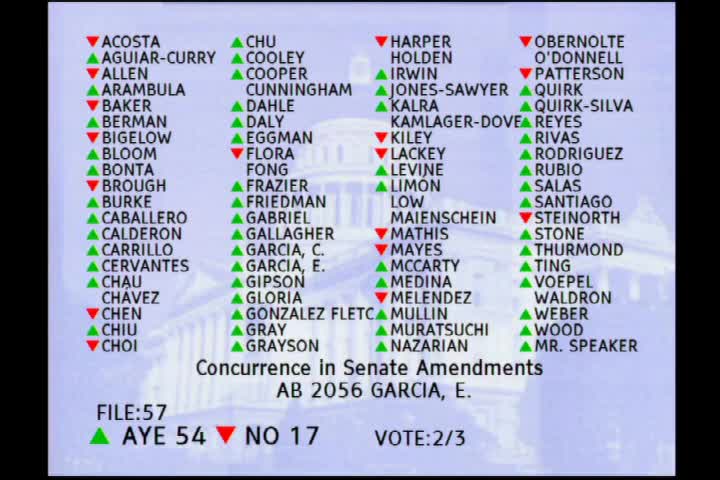 1MIN
Assembly Floor
 2MIN
Senate Floor
 6MIN
Assembly Floor
 19MIN
Assembly Standing Committee on Insurance
Bill Author










