AB 1762: State parks: visitors: animals: dogs.
- Session Year: 2017-2018
- House: Assembly
- Latest Version Date: 2018-09-29
Under existing law, the Department of Parks and Recreation administers and manages the state park system. Existing law permits visitors to bring animals into units of the state park system when the Director of Parks and Recreation determines that it is in the public interest, subject to certain conditions.
This bill would require the department to establish and maintain on its Internet Web site a comprehensive, up-to-date list of each unit with information on whether the unit or a portion of the unit allows dogs and additional specified information.
Under existing law, the Department of Parks and Recreation administers and manages the state park system. Existing law permits visitors to bring animals into units of the state park system when the Director of Parks and Recreation determines that it is in the public interest. Existing law prohibits an animal brought into a state park system unit from being allowed to pose a threat to public safety and welfare, create a public nuisance, or pose a threat to the natural or cultural resources of the unit or to the improvements at the unit. interest, subject to certain conditions.
This bill would permit visitors to bring dogs into units of the state park system or recreational areas of those units. The bill would require the director to develop fines, rules, and regulations to mitigate or prevent any behavior by those dogs that may pose a threat to public safety and welfare, create a public nuisance, or pose a threat to the natural or cultural resources of the unit or to the improvements at the unit. The bill would require the department to establish and maintain on its Internet Web site a comprehensive, up-to-date list of each unit with information on whether the unit or a portion of the unit allows dogs and additonal additional specified information. The bill would provide that these changes to this provision shall not be construed to limit access for persons with guide dogs, signal dogs, service dogs, or other service animals, or for riding animals, pack animals, or livestock, that was permitted before these changes or is permitted by any other law.
Under existing law, the Department of Parks and Recreation administers and manages the state park system. Existing law permits visitors to bring animals into units of the state park system when the Director of Parks and Recreation determines that it is in the public interest. Existing law prohibits an animal brought into a state park system unit from being allowed to pose a threat to public safety and welfare, create a public nuisance, or pose a threat to the natural or cultural resources of the unit or to the improvements at the unit.
This bill would permit visitors to bring animals dogs into units of the state park system or recreational areas of those units. The bill would require the director to develop fines, rules, and regulations to mitigate or prevent any behavior by those animals dogs that may pose a threat to public safety and welfare, create a public nuisance, or pose a threat to the natural or cultural resources of the unit or to the improvements at the unit. The bill would require the department to establish and maintain on its Internet Web site a comprehensive, up-to-date list of each unit with information on whether the unit or a portion of the unit allows dogs and additonal specified information. The bill would provide that these changes to this provision shall not be construed to limit access for persons with guide dogs, signal dogs, service dogs, or other service animals, or for riding animals, pack animals, or livestock, that was permitted before these changes or is permitted by any other law.
Under existing law, the Department of Parks and Recreation administers and manages the state park system. Existing law permits visitors to bring animals into units of the state park system when the Director of Parks and Recreation determines that it is in the public interest. Existing law prohibits an animal brought into a state park system unit from being allowed to pose a threat to public safety and welfare, create a public nuisance, or pose a threat to the natural or cultural resources of the unit or to the improvements at the unit.
This bill would permit visitors to bring animals into units of the state park system or recreational areas of those units, including hiking trails, unless limiting access to a unit or recreational area is the only means of preventing those animals from engaging in units. The bill would require the director to develop fines, rules, and regulations to mitigate or prevent any behavior by those animals that is likely to may pose a substantial threat to public safety and welfare, create a substantial public nuisance, or pose a substantial threat to the natural or cultural resources of the unit or to the improvements at the unit. The bill would require the department to rely on fines, fee authority, rules, and regulations, whenever available, to prevent these harms in lieu of limiting access pursuant to these provisions.
Under existing law, the Department of Parks and Recreation administers and manages the state park system. Existing law permits visitors to bring animals into units of the state park system when the Director of Parks and Recreation determines that it is in the public interest. Existing law prohibits an animal brought into a state park system unit from being allowed to pose a threat to public safety and welfare, create a public nuisance, or pose a threat to the natural or cultural resources of the unit or to the improvements at the unit.
This bill would permit visitors to bring animals into units of the state park system or recreational areas of those units, including hiking trails, unless limiting access to a unit or recreational area is the only means of preventing those animals from engaging in behavior that is likely to pose a substantial threat to public safety and welfare, create a substantial public nuisance, or pose a substantial threat to the natural or cultural resources of the unit or to the improvements at the unit. The bill would require the department to rely on fines, fee authority, rules, and regulations, whenever available, to prevent these harms in lieu of limiting access pursuant to these provisions.
(a)When it is determined by the director to be in the public interest, and subject to the fees, rules, and regulations of the department, visitors to units of the state park system may bring animals into those units.
(b)Any animal brought into a state park system unit pursuant to subdivision (a) shall be under the immediate control of the visitor or shall be confined, and under no circumstance shall the animal be permitted to do any of the following:
(1)Pose a threat to public safety and welfare.
(2)Create a public nuisance.
(3)Pose a threat to the natural or cultural resources of the unit or to the improvements at the unit.
(c)The department may require a person bringing an animal into a state park system unit pursuant to subdivision (a) to provide proof of appropriate immunizations and valid licenses.
(d)This section does not apply to dogs used to lawfully pursue game in season at units of the state park system where hunting is allowed.
(e)No later than July 1, 2020, the department shall establish and maintain on its Internet Web site a comprehensive, up-to-date list of each state park system unit with information on whether the unit or a portion of the unit allows dogs and additional information that may include, but is not limited to, the specific areas of the unit in which dogs are allowed and the total miles of trail in the unit that are open to dogs.
(a)When it is determined by the director to be in the public interest, and subject to the fees, rules, and regulations of the department, visitors to units of the state park system may bring animals into those units.
(b)Any animal brought into a state park system unit pursuant to subdivision (a) shall be under the immediate control of the visitor or shall be confined, and under no circumstance shall the animal be permitted to do any of the following:
(1)Pose a threat to public safety and welfare.
(2)Create a public nuisance.
(3)Pose a threat to the natural or cultural resources of the unit or to the improvements at the unit.
(c)The department may require a person bringing an animal into a state park system unit pursuant to subdivision (a) to provide proof of appropriate immunizations and valid licenses.
(d)This section does not apply to dogs used to lawfully pursue game in season at units of the state park system where hunting is allowed.
(e)No later than July 1, 2019, 2020, the department shall establish and maintain on its Internet Web site a comprehensive, up-to-date list of each state park system unit with information on whether the unit or a portion of the unit allows dogs and additional information that may include, but is not limited to, the specific areas of the unit in which dogs are allowed and the total miles of trail in the unit that are open to dogs.
(a)When it is determined by the director to be in the public interest, and subject to the fees, rules, and regulations of the department, visitors to units of the state park system may bring animals into those units.
(b)Any animal brought into a state park system unit pursuant to subdivision (a) shall be under the immediate control of the visitor or shall be confined, and under no circumstance shall the animal be permitted to do any of the following:
(1)Pose a threat to public safety and welfare.
(2)Create a public nuisance.
(3)Pose a threat to the natural or cultural resources of the unit or to the improvements at the unit.
(c)The department may require a person bringing an animal into a state park system unit pursuant to subdivision (a) to provide proof of appropriate immunizations and valid licenses.
(d)This section does not apply to dogs used to lawfully pursue game in season at units of the state park system where hunting is allowed.
(e)No later than July 1, 2019, the department shall establish and maintain on its Internet Web site a comprehensive, up-to-date list of each state park system unit with information on whether the unit or a portion of the unit allows dogs, a summary of the reasons why the unit or a portion of the unit is closed to dogs, if applicable, dogs and additional information that may include, but is not limited to, the specific areas of the unit in which dogs are allowed and the total miles of trail in the unit that are open to dogs.
(a)When it is determined by the director to be in the public interest, and subject to the fees, rules, and regulations of the department, visitors to units of the state park system may bring animals into those units.
(b)Any animal brought into a state park system unit pursuant to subdivision (a) shall be under the immediate control of the visitor or shall be confined, and under no circumstance shall the animal be permitted to do any of the following:
(1)Pose a threat to public safety and welfare.
(2)Create a public nuisance.
(3)Pose a threat to the natural or cultural resources of the unit or to the improvements at the unit.
(c)The department may require a person bringing an animal into a state park system unit pursuant to subdivision (a) to provide proof of appropriate immunizations and valid licenses.
(d)This section does not apply to dogs used to lawfully pursue game in season at units of the state park system where hunting is allowed.
(e)No later than July 1, 2019, the department shall establish and maintain on its Internet Web site a comprehensive, up-to-date list of each state park system unit with information on whether the unit or a portion of the unit allows dogs, a summary of the reasons why the unit or a portion of the unit is closed to dogs, if applicable, and additional information that may include, but is not limited to, the specific areas of the unit in which dogs are allowed and the total miles of trail in the unit that are open to dogs.
SECTION 1.Section 5008.1 of the Public Resources Code is amended to read:5008.1.(a)Visitors to units of the state park system may bring dogs into those units and into recreational areas of those units.(b)Any dog brought into a state park system unit pursuant to subdivision (a) shall be under the immediate control of the visitor or shall be confined.(c)The director shall develop fines, rules, and regulations to mitigate or prevent any behavior by a dog brought into a state park system unit pursuant to subdivision (a) that may do any of the following:(1)Pose a threat to public safety and welfare.(2)Create a public nuisance.(3)Pose a threat to the natural or cultural resources of the unit or to the improvements at the unit.(d)The department may require a person bringing a dog into a state park system unit pursuant to subdivision (a) to provide proof of appropriate immunizations and valid licenses.(e)(1)This section does not apply to dogs used to lawfully pursue game in season at units of the state park system where hunting is allowed.(2)Nothing in this section shall be construed to limit access to state park system units for persons with guide dogs, signal dogs, service dogs, or other service animals, or for riding animals, pack animals, or livestock, as permitted by this section, as this section read on December 31, 2018, or any other law.(f)No later than July 1, 2019, the department shall establish and maintain on its Internet Web site a comprehensive, up-to-date list of each state park system unit with information on whether the unit or a portion of the unit allows dogs, and additional information that may include, but is not limited to, the specific areas of a unit in which dogs are allowed and the total miles of trail in the unit that are open to dogs.(a)Visitors to units of the state park system may bring animals dogs into those units and into recreational areas of those units.
(b)Any animal dog brought into a state park system unit pursuant to subdivision (a) shall be under the immediate control of the visitor or shall be confined.
(c)The director shall develop fines, rules, and regulations to mitigate or prevent any behavior by an animal a dog brought into a state park system unit pursuant to subdivision (a) that may do any of the following:
(1)Pose a threat to public safety and welfare.
(2)Create a public nuisance.
(3)Pose a threat to the natural or cultural resources of the unit or to the improvements at the unit.
(d)The department may require a person bringing an animal a dog into a state park system unit pursuant to subdivision (a) to provide proof of appropriate immunizations and valid licenses.
(e)(1)This section does not apply to dogs used to lawfully pursue game in season at units of the state park system where hunting is allowed.
(2)Nothing in this section shall be construed to limit access to state park system units for persons with guide dogs, signal dogs, service dogs, or other service animals, or for riding animals, pack animals, or livestock, as permitted by this section, as this section read on December 31, 2018, or any other law.
(f)No later than July 1, 2019, the department shall establish and maintain on its Internet Web site a comprehensive, up-to-date list of each state park system unit with information on whether the unit or a portion of the unit allows dogs, and additional information that may include, but is not limited to, the specific areas of a unit in which dogs are allowed and the total miles of trail in the unit that are open to dogs.
(a)Visitors to units of the state park system may bring animals into those units and into recreational areas of those units, including hiking trails, unless limiting access to a unit or recreational area is the only means of preventing those animals from engaging in behavior that is likely to do any of the following: units.
(b)Any animal brought into a state park system unit pursuant to subdivision (a) shall be under the immediate control of the visitor or shall be confined.
(c)The director shall develop fines, rules, and regulations to mitigate or prevent any behavior by an animal brought into a state park system unit pursuant to subdivision (a) that may do any of the following:
(1)Pose a substantial threat to public safety and welfare.
(2)Create a substantial public nuisance.
(3)Pose a substantial threat to the natural or cultural resources of the unit or to the improvements at the unit.
(b)Any animal brought into a state park system unit pursuant to subdivision (a) shall be under the immediate control of the visitor or shall be confined.(c)The department shall rely on fines, fee authority, rules, and regulations, whenever available, to prevent the harms specified in subdivision (a) in lieu of limiting access pursuant to that subdivision.(d)The department may require a person bringing an animal into a state park system unit pursuant to subdivision (a) to provide proof of appropriate immunizations and valid licenses.
(e)This section does not apply to dogs used to lawfully pursue game in season at units of the state park system where hunting is allowed.
(a)When it is determined by the director to be in the public interest, and subject to the fees, rules, and regulations of the department, visitors Visitors to units of the state park system may bring animals into those units.
(b)Any animal brought into a state park system unit pursuant to subdivision (a) shall be under the immediate control of the visitor or shall be confined, and under no circumstance shall the animal be permitted to units and into recreational areas of those units, including hiking trails, unless limiting access to a unit or recreational area is the only means of preventing those animals from engaging in behavior that is likely to do any of the following:
(1)Pose a substantial threat to public safety and welfare.
(2)Create a substantial public nuisance.
(3)Pose a substantial threat to the natural or cultural resources of the unit or to the improvements at the unit.
(b)Any animal brought into a state park system unit pursuant to subdivision (a) shall be under the immediate control of the visitor or shall be confined.
(c)The department shall rely on fines, fee authority, rules, and regulations, whenever available, to prevent the harms specified in subdivision (a) in lieu of limiting access pursuant to that subdivision.
(c)(d)The department may require a person bringing an animal into a state park system unit pursuant to subdivision (a) to provide proof of appropriate immunizations and valid licenses.
(d)(e)This section does not apply to dogs used to lawfully pursue game in season at units of the state park system where hunting is allowed.
|
Date
|
Status
|
|---|---|
| Sep 29, 2018 | Chaptered by Secretary of State - Chapter 908, Statutes of 2018. |
| Sep 29, 2018 | Approved by the Governor. |
| Sep 6, 2018 | Enrolled and presented to the Governor at 3 p.m. |
| Aug 29, 2018 | Senate amendments concurred in. To Engrossing and Enrolling. |
| Aug 27, 2018 | In Assembly. Concurrence in Senate amendments pending. May be considered on or after August 29 pursuant to Assembly Rule 77. |
| Aug 27, 2018 | Read third time. Passed. Ordered to the Assembly. |
| Aug 22, 2018 | Read third time. Passed. Ordered to the Assembly. |
| Aug 21, 2018 | Read second time and amended. Ordered to third reading. |
| Aug 20, 2018 | From committee: Amend, and do pass as amended. (Ayes 7. Noes 0.) (August 16). |
| Aug 6, 2018 | In committee: Referred to APPR. suspense file. |
| Jul 2, 2018 | Read second time and amended. Re-referred to Com. on APPR. |
| Jun 28, 2018 | From committee: Amend, and do pass as amended and re-refer to Com. on APPR. with recommendation: To Consent Calendar. (Ayes 9. Noes 0.) (June 26). |
| Jun 7, 2018 | Referred to Com. on N.R. & W. |
| May 31, 2018 | In Senate. Read first time. To Com. on RLS. for assignment. |
| May 30, 2018 | Read third time. Passed. Ordered to the Senate. |
| May 29, 2018 | Read second time. Ordered to third reading. |
| May 25, 2018 | From committee: Amend, and do pass as amended. (Ayes 15. Noes 0.) (May 25). |
| Apr 18, 2018 | In committee: Set, first hearing. Referred to APPR. suspense file. |
| Apr 10, 2018 | From committee: Do pass and re-refer to Com. on APPR. (Ayes 13. Noes 0.) (April 10). Re-referred to Com. on APPR. |
| Apr 3, 2018 | Re-referred to Com. on W.,P., & W. |
| Apr 2, 2018 | From committee chair, with author's amendments: Amend, and re-refer to Com. on W.,P., & W. Read second time and amended. |
| Mar 19, 2018 | In committee: Set, first hearing. Hearing canceled at the request of author. |
| Mar 1, 2018 | Re-referred to Com. on W.,P., & W. |
| Feb 28, 2018 | From committee chair, with author's amendments: Amend, and re-refer to Com. on W.,P., & W. Read second time and amended. |
| Jan 16, 2018 | Referred to Com. on W.,P., & W. |
| Jan 5, 2018 | From printer. May be heard in committee February 4. |
| Jan 4, 2018 | Read first time. To print. |
|
Date
|
Description
|
Location
|
Votes
|
|
|---|---|---|---|---|
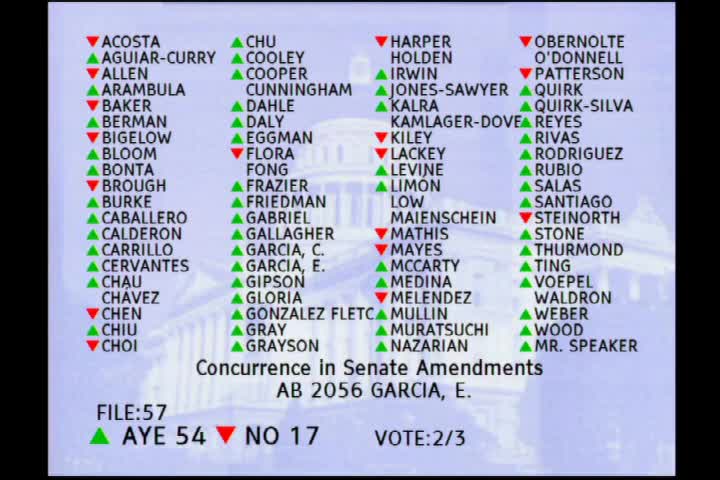
| Aug 29, 2018 | AB 1762 STEINORTH Concurrence in Senate Amendments | Assembly Floor |
Passed |
|
| Aug 27, 2018 | Assembly 3rd Reading AB1762 Steinorth et al. By Nguyen | Senate Floor |
Passed |
|
| Aug 22, 2018 | Assembly 3rd Reading AB1762 Steinorth et al. By Nguyen Reconsider | Senate Floor |
Passed |
|
| Aug 22, 2018 | Assembly 3rd Reading AB1762 Steinorth et al. By Nguyen | Senate Floor |
Passed |
|
| Aug 16, 2018 | Do pass as amended | Senate Standing Committee on Appropriations |
Passed |
|
| Aug 6, 2018 | Placed on suspense file | Senate Standing Committee on Appropriations |
Passed |
|
| Jun 26, 2018 | Do pass as amended, but first amend, and re-refer to the Committee on [Appropriations] with the recommendation: To Consent Calendar | Senate Standing Committee on Natural Resources and Water |
Passed |
|
| May 30, 2018 | AB 1762 STEINORTH Assembly Third Reading | Assembly Floor |
Passed |
|
| May 25, 2018 | Do pass as amended. | Assembly Standing Committee on Appropriations |
Passed |
|
| Apr 10, 2018 | Do pass and be re-referred to the Committee on [Appropriations] | Assembly Standing Committee on Water, Parks, and Wildlife |
Passed |
This list shows positions taken on this bill by organizations on the date displayed, which is linked to the original source.
Positions by individuals are not included.
CONCURRENCE IN SENATE AMENDMENTS
CSA1 Bill Id:AB 1762
Author:(Steinorth)
As Amended Ver:August 21, 2018
Majority vote
ASSEMBLY: | 78-0 | (May 25, 2018) | SENATE: | 39-0 | (August 27, 2018) |
Original Committee Reference: W., P., & W.
SUBJECT: State parks: visitors: animals: dogs
SUMMARY: Requires the Department of Parks and Recreation (DPR) to establish and maintain on its Internet Web site a comprehensive, up-to-date list of each state park unit with information on whether the unit or a portion of the unit allows dogs. Specifically, this bill:
- Requires the DPR to establish and maintain on its Internet Web site a comprehensive, up-to-date list of each state park system unit with the following information by July 1, 2020:
- Whether the unit or a portion of the unit allows dogs;
- Additional information that may include, but is not limited to, the specific areas of the unit in which dogs are allowed and the total miles of trail in the unit that are open to dogs.
The Senate amendments extend the deadline by one year to July 1, 2020, and remove the requirement that the list include a summary of the reasons why the unit or a portion of the unit is closed to dogs.
EXISTING LAW:
- Establishes the California State Park system and vests the DPR with control of the state park system and responsibility for administering, protecting, developing, and interpreting state parks for the use and enjoyment of the public.
- Permits visitors to bring animals into units of the state park system when the Director of the DPR determines that it is in the public interest.
- Prohibits an animal brought into a state park system unit from being allowed to pose a threat to public safety and welfare, create a public nuisance, or pose a threat to the natural or cultural resources of the unit or to the improvements at the unit.
- Allows the DPR to require a person bringing an animal into a state park system unit to provide proof of appropriate immunizations and valid licenses.
- Excludes the above requirements for dogs used to lawfully pursue game in season at units of the state park system where hunting is allowed.
FISCAL EFFECT: According to the Senate Appropriations Committee, amendments in the Senate have reduced the one-time implementation costs to the DPR to $50,000 (General Fund or special fund). There are ongoing annual costs of $35,000 to maintain the list online.
COMMENTS: Background and Purpose: This bill would make it easier for visitors to determine which parks or areas are dog friendly by requiring the DPR to keep its website updated with such information. Additional information may include, but is not limited to, the specific areas of a unit in which dogs are allowed and the total miles of trail in the unit that are open to dogs.
Currently, the DPR determines which portions of state park units permit dogs and recommends visitors call the park they plan to visit to determine if they can bring their dog. Dogs are allowed in most state parks in developed areas (e.g., parking lots, campsites). Dogs other than those assisting the disabled are generally prohibited from trails and beaches, unless posted to the contrary. Additionally, dogs are prohibited in other areas where the DPR posts the prohibition.
Analysis Prepared by: Keith Cialino / W., P., & W. / (916) 319-2096 FN: 0004580
Office of Senate Floor Analyses (916) 651-1520 Fax: (916) 327-4478 | AB |
THIRD READING
Bill No: AB 1762
:
SENATE NATURAL RES. & WATER COMMITTEE: 9-0, 6/26/18
AYES: Hertzberg, Stone, Allen, Hueso, Jackson, McGuire, Monning, Stern, Vidak
SENATE APPROPRIATIONS COMMITTEE: 7-0, 8/16/18
AYES: Portantino, Bates, Beall, Bradford, Hill, Nielsen, Wiener
ASSEMBLY FLOOR: 78-0, 5/30/18 - See last page for vote
DIGEST:
This bill requires the California Department of Parks and Recreation, no later than July 1, 2020, to establish and maintain on its Web site an up-to-date comprehensive list of areas that dogs are allowed within state parks.
Existing law:
- Establishes the California Department of Parks and Recreation (State Parks) to administer and manage the state park system for the use and enjoyment of the public.
- Permits visitors to bring dogs into units of the state park system when the State Parks determines that it is in the public interest.
- Dogs must be under the immediate control of the visitor and must not pose a threat to public safety, or natural or cultural resources of the park.
- State Parks may prohibit dogs from specific parks to protect sensitive habitats or endangered species.
- State Parks may require visitors bringing dogs into the park system to provide proof of appropriate immunizations and valid license.
This bill requires State Parks, no later than July 1, 2020, to establish and maintain on its Web site a comprehensive, up-to-date list of each park unit or areas of park units that allow dogs.
Background
State Parks manages 280 state park units, with over 340 miles of coastline, 970 miles of lake and river frontage, 15,000 campsites, and 4,500 miles of trails. California’s park system receives more than 67 million visitors annually.
Numerous scientific studies show the presence of dogs can result in direct and indirect impacts on natural resources, including displacing and harassing wildlife, disturbing nesting and breeding areas, spreading disease, and degrading water quality from pet waste.
Unless posted to the contrary, dogs are generally prohibited on trails, beaches, and wherever posted. These restrictions do not apply to dogs that assist the permanently disabled. Leashed dogs are generally allowed in campgrounds, picnic areas, parking areas, or roads. State Parks does not currently maintain a comprehensive list of which parks do or do not allow dogs. Visitors are advised to call ahead to a park they wish to visit, and inquire if dogs are allowed.
State Parks recently updated its Web site to include features and available services of each park unit. Visitors can search online for nearby parks that offer specified activities and better plan trips in advance using these online resources. Including information regarding dogs on the State Parks Web site would help dog owners better plan trips to state parks.
FISCAL EFFECT: Appropriation: Fiscal Com.: Local:
According to the Senate Appropriations Committee:
- Onetime cost of $50,000 (special fund or General Fund) to develop a comprehensive list of areas in which dogs are allowed throughout the state park system, and $35,000 ongoing to maintain a list online.
American Kennel Club
Social Compassion in Legislation
OPPOSITION: (Verified 8/16/18)
Department of Finance
ARGUMENTS IN SUPPORT: According to the author, “Many families find it difficult to visit California’s vast system of state parks simply because they are pet owners. Figuring out which state parks pets are allowed in and which areas of those parks pets can recreate in can be an impossible task. A significant number of pet-owners opt to skip California’s state parks and visit local, national, or private parks instead due to confusing and conflicting information available online…By providing a singular, concise list of where pets can recreate in our state parks, AB 1762 enables pet-owners to visit these parks with confidence and ease.”
ARGUMENTS IN OPPOSITION: According to the Department of Finance, “This bill would result in additional costs not included in the 2018-19 Budget Act. The Budget provides additional funding to improve the state park system, including repairing and maintaining aging infrastructure. Additional requirements imposed on [State] Parks would redirect limited resources away from these efforts. This bill would have limited benefits as dogs are generally permitted in most state parks if kept on leash. Park visitors are able to call staff in individual park units to receive up-to-date information on dog accessibility in a given park."
ASSEMBLY FLOOR: 78-0, 5/30/18
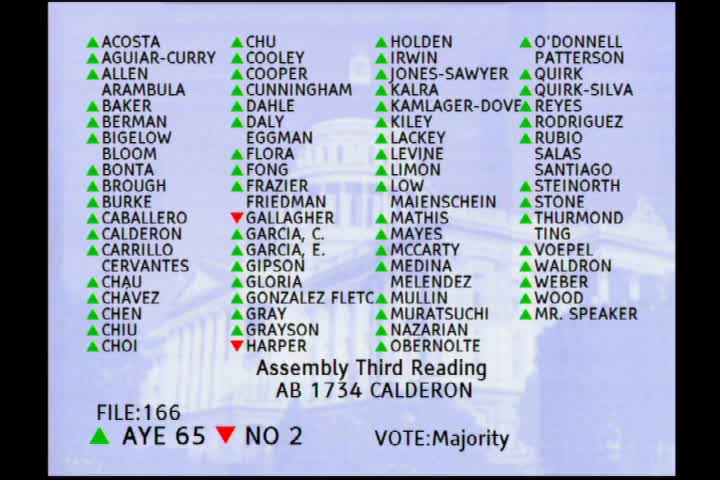
AYES: Acosta, Aguiar-Curry, Travis Allen, Arambula, Baker, Berman, Bigelow, Bloom, Bonta, Brough, Burke, Caballero, Calderon, Carrillo, Cervantes, Chau, Chávez, Chen, Chiu, Choi, Chu, Cooley, Cooper, Cunningham, Dahle, Daly, Eggman, Flora, Fong, Frazier, Friedman, Gallagher, Cristina Garcia, Eduardo Garcia, Gipson, Gloria, Gonzalez Fletcher, Gray, Grayson, Harper, Holden, Irwin, Jones-Sawyer, Kalra, Kamlager-Dove, Kiley, Lackey, Levine, Limón, Low, Maienschein, Mathis, Mayes, McCarty, Medina, Melendez, Mullin, Muratsuchi, Nazarian, Obernolte, O'Donnell, Patterson, Quirk, Quirk-Silva, Reyes, Rodriguez, Rubio, Salas, Santiago, Steinorth, Mark Stone, Thurmond, Ting, Voepel, Waldron, Weber, Wood, Rendon
8/21/18 18:55:45
SENATE COMMITTEE ON APPROPRIATIONS
Senator Anthony Portantino, Chair
2017 - 2018 Regular Session
AB 1762 (Steinorth) - State parks: visitors: animals: dogs
Version: July 2, 2018 | Policy Vote: N.R. & W. 9 - 0 |
Urgency: No | Mandate: No |
Hearing Date: August 16, 2018 | Consultant: Ashley Ames |
Bill Summary:
This bill would require the California Department of Parks and Recreation (CDPR) to establish and maintain a list of areas that dogs are allowed within state parks. CDPR would be required to post this list on its website.
*********** ANALYSIS ADDENDUM – SUSPENSE FILE ***********
The following information is revised to reflect amendments
adopted by the committee on August 16, 2018
Fiscal Impact:
- Onetime cost of $50,000 (special fund or General Fund) to develop a comprehensive list of areas in which dogs are allowed throughout the state park system, and $35,000 ongoing to maintain a list online.
Committee Amendments:
Extend by one year the deadline for DPR to establish on its website a comprehensive, up-to-date list of each park unit or areas of park units that allow dogs.
-- END --
SENATE COMMITTEE ON APPROPRIATIONS
Senator Anthony Portantino, Chair
2017 - 2018 Regular Session
AB 1762 (Steinorth) – State Parks: visitors: animals: dogs.
Version: July 2, 2018 | Policy Vote: N. R. & W. 9 - 0 |
Urgency: No | Mandate: No |
Hearing Date: August 6, 2018 | Consultant: Ashley Ames |
This bill meets the criteria for referral to the Suspense File.
Bill Summary:
This bill would require the California Department of Parks and Recreation (CDPR) to establish and maintain a list of areas that dogs are allowed within state parks. CDPR would be required to post this list on its website.
Fiscal Impact:
CDPR estimates a cost of $200,000 (special fund or General Fund) to develop a comprehensive list of areas in which dogs are allowed throughout the state park system, and $35,000 ongoing to maintain a list online.
Background:
Current law permits visitors to bring animals into units of the state park system when the Director of Parks and Recreation determines that it is in the public interest, subject to certain conditions.
Proposed Law: This bill would require CDPR, no later than July 1, 2019, to establish and maintain on its website a comprehensive, up-to-date list of each park unit or areas of park units that allow dogs.
Staff Comments: CDPR does not currently maintain a comprehensive list of areas in the state park system in which dogs are allowed. Therefore, some staff time is required to obtain and consolidate this information as well as develop online content.
Currently, leashed dogs are generally allowed in state park campgrounds, picnic areas, parking areas, or roads. However, unless posted to the contrary, dogs are generally prohibited on trails, beaches, and other areas of state parks. Some state parks do allow dogs in these areas, but this information is not readily available online. Visitors are advised to call ahead to a park they wish to visit and inquire if dogs are allowed. CDPR recently updated its website to include features and available services of each park unit. Visitors can search online for nearby parks that offer specified activities and better plan trips in advance using these online resources. Including information regarding dogs on the CDPR website would help dog owners locate parks where their pet is allowed or better plan trips to state parks.
-- END --
SENATE COMMITTEE ON NATURAL RESOURCES AND WATER
Senator Robert Hertzberg, Chair
2017 - 2018 Regular
Bill No: AB Hearing Date: June 26, 2018
Author: | Steinorth | ||
Version: | May 25, 2018 | ||
Urgency: | No | Fiscal: | Yes |
Consultant: | Teresa Feo | ||
Subject: State parks: visitors: animals: dogs
BACKGROUND AND EXISTING LAW
Existing law establishes the Department of Parks and Recreation (DPR) to administer and manage the state park system for the use and enjoyment of the public. The DPR manages 280 state park units, with over 340 miles of coastline, 970 miles of lake and river frontage, 15,000 campsites, and 4,500 miles of trails. California’s park system receives more than 67 million visitors annually.
Existing law permits visitors to bring dogs into units of the state park system when the Director of Parks and Recreation determines that it is in the public interest. Dogs must be under the immediate control of the visitor and must not pose a threat to public safety, or natural or cultural resources of the park. The DPR may prohibit dogs from specific parks to protect sensitive habitats or endangered species. Numerous scientific studies show the presence of dogs can result in direct and indirect impacts on natural resources, including displacing and harassing wildlife, disturbing nesting and breeding areas, spreading disease, and degrading water quality from pet waste. The DPR may require visitors bringing dogs into the park system to provide proof of appropriate immunizations and valid license.
PROPOSED LAW
This bill would require the Department of Parks and Recreation, no later than July 1, 2019, to establish and maintain on its Internet Web site a comprehensive, up-to-date list of each unit with information on whether the unit or a portion of the unit allows dogs and a summary of the reasons why the unit or portion of the unit is closed to dogs.
ARGUMENTS IN SUPPORT
According to the author, this bill “will make California’s state parks more easily accessible for pet-owners by creating a concise and up-to-date list of where pets are allowed in state parks.”
“Many families find it difficult to visit California’s vast system of state parks simply because they are pet owners. Figuring out which state parks pets are allowed in and which areas of those parks pets can recreate in can be an impossible task. A significant number of pet-owners opt to skip California’s state parks and visit local, national, or private parks instead due to confusing and conflicting information available online.”
This bill “provides a simple solution by requiring the Department of Parks and Recreation to establish and maintain a comprehensive, up-to-date list on its website of where dogs are allowed in each of their state parks.”
ARGUMENTS IN OPPOSITION
None received
COMMENTS
- Unless posted to the contrary, dogs are generally prohibited on trails, beaches, and wherever posted. These restrictions do not apply to dogs that assist the permanently disabled. Leashed dogs are generally allowed in campgrounds, picnic areas, parking areas, or roads. The DPR does not currently maintain a comprehensive list of which parks do or do not allow dogs. Visitors are advised to call ahead to a park they wish to visit, and inquire if dogs are allowed.
- Staff has discussed the bill with the author’s staff and proposes to remove the requirement that DPR provide a summary of reasons why each park is closed to dogs if applicable. The proposed amendment would avoid requiring DPR to conduct an impractical number of environmental impact reports, and, thus, greatly reduce the cost of the bill.
SUGGESTED AMENDMENTS
AMENDMENT 1
Page 2 Line 24: after “dogs,” delete “a summary of the reasons why the unit or a portion of the unit is closed to dogs, if applicable,”
SUPPORT
Social Compassion in Legislation
American Kennel Club
OPPOSITION
None Received
-- END --
ASSEMBLY THIRD READING
ATR Bill Id:AB 1762
Author:(Steinorth)
As Amended Ver:May 25, 2018
Majority vote
Committee | Votes | Ayes | Noes |
Water | 13-0 | Eduardo Garcia, Gallagher, Bigelow, Carrillo, Choi, Chu, Friedman, Gloria, Kalra, Levine, Mathis, Rubio, Salas | |
Appropriations | 15-0 | Gonzalez Fletcher, Bigelow, Bloom, Bonta, Calderon, Carrillo, Chau, Eggman, Fong, Friedman, Gallagher, Eduardo Garcia, Obernolte, Quirk, Reyes |
|
SUBJECT: State parks: visitors: animals: dogs
SUMMARY: Requires the Department of Parks and Recreation (DPR) to establish and maintain on its Internet Web site a comprehensive, up-to-date list of each state park unit with information on whether the unit or a portion of the unit allows dogs. Specifically, this bill:
- Requires the DPR to establish and maintain on its Internet Web site a comprehensive, up-to-date list of each state park system unit with the following information:
- Whether the unit or a portion of the unit allows dogs;
- A summary of the reasons why the unit or a portion of the unit is closed to dogs, if applicable; and
- Additional information that may include, but is not limited to, the specific areas of the unit in which dogs are allowed and the total miles of trail in the unit that are open to dogs.
EXISTING LAW:
- Establishes the California State Park system and vests the DPR with control of the state park system and responsibility for administering, protecting, developing, and interpreting state parks for the use and enjoyment of the public.
- Permits visitors to bring animals into units of the state park system when the Director of the DPR determines that it is in the public interest.
- Prohibits an animal brought into a state park system unit from being allowed to pose a threat to public safety and welfare, create a public nuisance, or pose a threat to the natural or cultural resources of the unit or to the improvements at the unit.
- Allows the DPR to require a person bringing an animal into a state park system unit to provide proof of appropriate immunizations and valid licenses.
- Excludes the above requirements for dogs used to lawfully pursue game in season at units of the state park system where hunting is allowed.
FISCAL EFFECT: According to the Assembly Appropriations Committee, there will be increased one-time implementation costs to the DPR of $100,000 (General Fund) to perform an inventory and review of existing practices and locations.
COMMENTS:
Background and Purpose: This bill makes it easier for visitors to determine which parks or areas are dog friendly by requiring the DPR to keep its website updated with such information. Additional information may include, but is not limited to, the specific areas of a unit in which dogs are allowed and the total miles of trail in the unit that are open to dogs.
Currently, the DPR determines which portions of state park units permit dogs and recommends visitors call the park they plan to visit to determine if they can bring their dog. Dogs are allowed in most state parks in developed areas (e.g., parking lots, campsites). Dogs other than those assisting the disabled are generally prohibited from trails and beaches, unless posted to the contrary. Additionally, dogs are prohibited in other areas where the DPR posts the prohibition.
Analysis Prepared by: Keith Cialino / W., P., & W. / (916) 319-2096 FN: 0003305
Date of Hearing: April 18, 2018
ASSEMBLY COMMITTEE ON APPROPRIATIONS
Lorena Gonzalez Fletcher, Chair
ABPCA Bill Id:AB 1762
Author:(Steinorth) – As Amended Ver:April 2, 2018
Policy Committee: | Committee on Water, Parks and Wildlife | Vote: | 13-0 |
|
| ||
|
|
Urgency: No State Mandated Local Program: No Reimbursable: No
SUMMARY:
This bill allows visitors to any unit or recreational area of the state park system to bring their dogs. Specifically, this bill:
- Requires the Director of the Department of Parks and Recreation (DPR) to develop fines, rules and regulations to mitigate or prevent dog behavior that would threaten public safety, create a public nuisance, or pose a threat to the natural or cultural resources of the park.
- Requires DPR to establish and maintain a comprehensive, up-to-date list on its internet website of park units with information on whether the unit or a portion of the unit allows dogs.
- Expressly maintains access for service animals permitted by law and expressly maintains current access and regulations regarding riding and pack animals and livestock.
FISCAL EFFECT:
- Increased one-time DPR implementation costs totaling an estimated $43.5 million GF for the following activities:
- $100,000 GF to perform an inventory and review of existing practices and locations. Currently, designations made at the district level are not reported to a central location, so there is no current information on dog use within the park system.
- $1 million one-time GF to perform a statewide programmatic environmental impact review (PEIR), including $700,000 GF in contracts for environmental consultants and $100,000 GF for one employee to oversee the contracts over three years. The PIER would analyze the environmental impacts of expanding dog access system wide and may be sufficient for use at some specific sites. For other locations that require site-specific environmental impact reports (EIRs), the EIR will be able to tier-off of the PIER, thus reducing costs.
- For site-specific EIRs, California Environmental Quality Act (CEQA) contracting costs are estimated to be approximately $100,000 to $300,000 GF one-time. Assuming half of the 280 park units require site-specific EIRs at the mid-range of $200,000 GF, and one staff person to manage each contract and the associated public process at a one-time costs of $100,000, this results in a total of $42 million GF.
- $400,000 one-time GF to develop regulations, including $60,000 GF in contracts and $340,000 GF in staff costs.
- Ongoing DPR annual enforcement costs of $100,000 GF per additional ranger, $47,500 annual GF per vehicle and another $10,000 annual GF for personal equipment.
Based on the Golden Gate National Recreation Area experience with opening its areas to dogs, according to DPR, dog visitation in parks is steady, or increases during what are otherwise low-visitation seasons, thus necessitating increased enforcement during traditionally slow times. Additionally, dog-related law enforcement contacts are highly contentious, so the National Park Service requires rangers to make these contacts in pairs rather than individually.
With this in mind, DPR estimates enforcement will require an additional 230 park rangers, 115 vehicles and 230 personal equipment units, for a total first year annual cost of $30,705,000 GF. Vehicle life is estimated to be from five to seven years, so annual costs will drop to approximately $25,300,000, beginning in the second year, and then start increasing as vehicles are replaced.
COMMENTS:
- Purpose. According to the author, the purpose of this bill is to make California’s state park pet policy more pet friendly.
- Background. Currently, DPR determines which portions of state park units permit dogs and recommends visitors call the park they plan to visit to determine if they can bring their dog. Unless posted to the contrary, dogs other than those assisting the disabled, are prohibited from trails and beaches. Additionally, dogs are prohibited in other areas where DPR posts the prohibition.
This bill makes it easier for visitors to determine which parks or areas are dog friendly by requiring DPR to keep its website updated with such information.
- Resource and User Group Conflicts. Numerous scientific studies show the presence of domestic animals can result in direct and indirect impacts on natural resources, including displacing and harassing wildlife, disturbing nesting and breeding areas, spreading disease, and degrading water quality from pet waste. According to DPR, environmental reviews are necessary to determine the areas where dogs should or should not be allowed, in order to limit wildlife and resource impacts.
Not all visitors to state parks bring their dogs or enjoy being around dogs. Concerns have been raised that visitors may be uncomfortable or feel threatened around a dog they do not know, especially large dogs. In addition, birding and equestrian activities may be disturbed by the presence of dogs.
This bill requires the DPR director to develop fines, rules, and regulations to mitigate or prevent dog behaviors that may result in resource and user group conflicts. Current citations for various animal violations in state parks can be $200 or more, and visitors with vicious, dangerous, noisy, or disturbing animals can be ejected from park units.
Analysis Prepared by: Jennifer Galehouse / APPR. / (916) 319-2081
Date of Hearing: April 10, 2018
ASSEMBLY COMMITTEE ON WATER, PARKS, AND WILDLIFE
Eduardo Garcia, Chair
ABPCA Bill Id:AB 1762 (
Author:Steinorth) – As Amended Ver:April 2, 2018
SUBJECT: State parks: visitors: animals: dogs
SUMMARY: Allows visitors to bring dogs into any unit of the state park system. Specifically, this bill:
- Permits visitors to bring dogs into units of the state park system or recreational areas of those units.
- Requires the Director of the Department of Parks and Recreation (DPR) to develop fines, rules, and regulations to mitigate or prevent any behavior by those dogs that may pose a threat to public safety and welfare, create a public nuisance, or pose a threat to the natural or cultural resources of the unit or to the improvements at the unit.
- Requires the DPR to establish and maintain on its Internet Web site a comprehensive, up-to-date list of each unit with information on whether the unit or a portion of the unit allows dogs.
- Maintains access for persons with guide dogs, signal dogs, service dogs, or other service animals, as permitted by law. Maintains current access and regulations regarding riding animals, pack animals, and livestock.
EXISTING LAW:
- Establishes the California State Park system and vests the DPR with control of the state park system and responsibility for administering, protecting, developing, and interpreting state parks for the use and enjoyment of the public.
- Permits visitors to bring animals into units of the state park system when the Director of the DPR determines that it is in the public interest.
- Prohibits an animal brought into a state park system unit from being allowed to pose a threat to public safety and welfare, create a public nuisance, or pose a threat to the natural or cultural resources of the unit or to the improvements at the unit
- Allows the DPR to require a person bringing an animal into a state park system unit to provide proof of appropriate immunizations and valid licenses.
- Excludes the above requirements for dogs used to lawfully pursue game in season at units of the state park system where hunting is allowed.
FISCAL EFFECT: Unknown
COMMENTS: Allows visitors to bring dogs into any unit of the state park system.
Author’s Statement:
AB 1762 would shift California’s State Park pet policy to become more pet friendly. Instead of a blanket ban on pets with a few exceptions, this bill would allow pets in to recreational areas (trails, campsites) of state parks and would authorize the Department of Parks and Recreation to regulate their presence. In more extreme circumstances, the Department will still be able to prohibit the presence of pets, but the vast majority of California State Park trails and recreation areas will be opened to pets with proper restrictions, allowing many more families to enjoy and support our state parks along with their four-legged family members.
Background: Dogs in State Parks. While dogs are allowed in some areas of the state park system, it can be difficult for pet owners to know where they can bring their dog. The DPR determines which portions of state park units permit dogs, and recommends that visitors call the park they plan to visit to determine if they can bring their dog. Unless posted to the contrary, dogs, other than those that assist the permanently disabled, are prohibited on trails, beaches, and wherever posted. Dogs are allowed in most state parks in developed areas (e.g., parking lots, campsites). The DPR does allow dogs on some beaches and trails that are within the state park system.
This bill opens access for visitors to bring dogs into any unit of the state park system. The bill does not change access or regulations for persons with guide dogs, signal dogs, service dogs, or other service animals. The bill does not change access or regulations regarding riding animals, pack animals, or livestock in state parks.
This bill also requires the DPR to maintain comprehensive, up-to-date information on its website about whether each state park unit or a portion of the unit allows dogs. Additional information may include, but is not limited to, the specific areas of a unit in which dogs are allowed and the total miles of trail in the unit that are open to dogs.
State Parks. The California state park system is the largest state park system in the continental United States, with 1.4 million acres spread over 280 units. The purpose of California state parks is to preserve outstanding natural, scenic, and cultural values, indigenous aquatic and terrestrial fauna and flora, and the most significant examples of ecological regions of California. Each state park is managed as a composite whole in order to restore, protect, and maintain its native environmental complexes to the extent compatible with the primary purpose for which the park was established. The mission of the DPR is to provide for the health, inspiration and education of the people of California by helping to preserve the state's extraordinary biological diversity, protecting its most valued natural and cultural resources, and creating opportunities for high-quality outdoor recreation.
State Park Units. This bill would allow visitors to bring dogs into any unit of the state park system or recreational areas of those units. The 280 state park units are classified into eight types of state park units by the State Park and Recreation Commission, as defined in the Public Resources Code:
- State recreation units, which include state recreation areas, underwater recreation areas, state beaches, and wayside campgrounds;
- Historical units;
- State seashores;
- State reserves, which include state natural reserves and state cultural reserves;
- State wildernesses;
- Natural preserves;
- Cultural preserves; and
- State marine managed areas.
Resource Conflicts. Numerous scientific studies show that the presence of domestic animals can result in direct and indirect impacts on natural resources, including displacing and harassing wildlife, disturbing nesting and breeding areas, spreading disease, and degrading water quality from pet waste. Dogs are a subspecies of wolves, and wildlife perceive dogs as predators. The same concern does not apply to horses, which have historically been allowed within the state park system. Due to the DPR’s resource protection mandate, environmental reviews may be necessary to determine the areas where dogs should, or should not, be allowed in order to limit wildlife and resource impacts.
User Group Conflicts. Not all visitors to state parks bring their dogs or enjoy being around dogs. Concerns have been raised that visitors may be uncomfortable or feel threatened around a dog they do not know, especially large dogs. In addition, birding and equestrian activities may be disturbed by the presence of dogs.
Enforcement. This bill requires the Director of the DPR to develop fines, rules, and regulations in order to mitigate or prevent dog behaviors that may result in resource and user group conflicts. Current citations for various animal violations in state parks can be $200 or more, and visitors with vicious, dangerous, noisy, or disturbing animals can be ejected from park units. Animals, including cats, cannot be turned loose in park units. All animals, other than grazing animals, must be under immediate physical control. When in permitted areas of state park units, dogs must be on a tended leash no more than 6 feet in length or confined in an enclosed vehicle, tent or pen. Permitting dogs in additional areas may result in more infractions and put a strain on enforcement capabilities. For example, some owners may not pick up after their dog, resulting in pet waste along trails, or might allow their dog off-leash.
Other States. In 49 other states, the law generally allows pets in most state parks, except where non-pet areas are designated. Non-pet area designations are more common on beaches than trails. For example, Oregon allows pets in nearly all state parks as long as they are physically restrained, including on trails, at tent sites, or in yurts and cabins. Some Oregon state parks have designated off-leash exercise areas. Pets are allowed off-leash at most beaches, but are not permitted on some beaches and trails, or are excluded at certain times of year, to protect wildlife.
In Washington, pets are allowed in most state parks, but must be under physical control at all times on a leash no more than eight feet long. Owners are responsible for cleaning up after their pets. Pets are not permitted on designated swimming beaches. Pets are not allowed inside vacation houses, but are permitted in designated yurts/cabins. Washington has the State Environmental Policy Act that identifies and analyzes environmental impacts associated with governmental decisions.
National Parks and Recreation Areas. In general, national parks allow pets in developed areas, in campgrounds, on some trails, and in some lodging facilities. Pets must be restrained either on a leash not exceeding 6 feet in length, caged, or crated at all times. Pets are not permitted in public buildings, public transportation vehicles, or locations designated as a swimming beach.
In 2002, Golden Gate National Recreation Area (GGNRA) embarked on an extensive planning process to determine the manner and extent of dog walking in appropriate areas of the park. The planning process was intended to provide a clear, enforceable dog management policy; preserve and protect natural and cultural resources and natural processes; provide a variety of visitor experiences; improve visitor and employee safety; reduce user conflicts; and maintain park resources and values for future generations. The Final Dog Management Plan/Final Environmental Impact Statement (FEIS) was released in December 2016. The National Park Service determined that the preferred alternative provides a variety of visitor experiences (including designated areas allowing on-leash dog walking or dog walking under voice and sight control, as well as areas with no dogs allowed), as well as protection of natural resources, cultural resources, and visitor safety. Following this multi-year process, GGNRA calls itself the “Most Dog-Friendly National Park.”
Liability. There may be concerns about liability with the introduction of dogs into additional areas of the state park system. Government Code Section 815 codifies the common law rule of governmental immunity and specifies that a public entity is not liable for injuries caused by its acts or omissions, unless liability is expressly provided for by another statute.
Prior and Related Legislation: None.
Supporting Arguments: Those in support argue that AB 1762 will make state parks more pet-friendly and allow families with pets to use these parks with some limited restrictions. This will reduce hardships on families that must find alternative places to travel or board their pet before visiting the California state parks.
REGISTERED SUPPORT / OPPOSITION:
Support
Social Compassion in Legislation
Opposition
None on file
Analysis Prepared by: Keith Cialino / W., P., & W. / (916) 319-2096
Date of Hearing: March 20, 2018
ASSEMBLY COMMITTEE ON WATER, PARKS, AND WILDLIFE
Eduardo Garcia, Chair
ABPCA Bill Id:AB 1762 (
Author:Steinorth) – As Amended Ver:February 28, 2018
SUBJECT: State parks: visitors: animals
SUMMARY: Allows visitors to bring animals into any unit of the state park system. Specifically, this bill:
- Would permit visitors to bring animals into units of the state park system or recreational areas of those units.
- Would require the Director of the Department of Parks and Recreation (DPR) to develop fines, rules, and regulations to mitigate or prevent any behavior by those animals that may pose a threat to public safety and welfare, create a public nuisance, or pose a threat to the natural or cultural resources of the unit or to the improvements at the unit.
EXISTING LAW:
- Establishes the California State Park system and vests the DPR with control of the state park system and responsibility for administering, protecting, developing, and interpreting state parks for the use and enjoyment of the public.
- Permits visitors to bring animals into units of the state park system when the Director of the DPR determines that it is in the public interest.
- Prohibits an animal brought into a state park system unit from being allowed to pose a threat to public safety and welfare, create a public nuisance, or pose a threat to the natural or cultural resources of the unit or to the improvements at the unit
- Allows the DPR to require a person bringing an animal into a state park system unit to provide proof of appropriate immunizations and valid licenses.
- Excludes the above requirements for dogs used to lawfully pursue game in season at units of the state park system where hunting is allowed.
FISCAL EFFECT: Unknown
COMMENTS: Allows visitors to bring animals into any unit of the state park system.
Author’s Statement:
AB 1762 would shift California’s State Park pet policy to become more pet friendly. Instead of a blanket ban on pets with a few exceptions, this bill would allow pets in to recreational areas (trails, campsites) of state parks and would authorize the Department of Parks and Recreation to regulate their presence. In more extreme circumstances, the Department will still be able to prohibit the presence of pets, but the vast majority of California State Park trails and recreation areas will be opened to pets with proper restrictions, allowing many more families to enjoy and support our state parks along with their four-legged family members.
Background: Animals in State Parks. While animals are allowed in some areas of the state park system, it can be difficult for pet owners to know where they can bring their animals. The DPR determines which portions of state park units permit animals, and recommends that visitors call the park they plan to visit to determine if they can bring their animals. Unless posted to the contrary, dogs, other than those that assist the permanently disabled, are prohibited on trails, beaches, and wherever posted. Dogs are allowed in most state parks in developed areas (e.g., parking lots, campsites). The DPR does allow dogs on some beaches and trails that are within the state park system.
Definition of Animal. The author’s stated intent is to allow “four-legged family members” to visit parks with their owners. However, the specific types of animals that visitors could bring are not defined in the current version of the bill.
State Parks. The California state park system is the largest state park system in the continental United States, with 1.4 million acres spread over 280 units. The purpose of California state parks is to preserve outstanding natural, scenic, and cultural values, indigenous aquatic and terrestrial fauna and flora, and the most significant examples of ecological regions of California. Each state park is managed as a composite whole in order to restore, protect, and maintain its native environmental complexes to the extent compatible with the primary purpose for which the park was established. The mission of the DPR is to provide for the health, inspiration and education of the people of California by helping to preserve the state's extraordinary biological diversity, protecting its most valued natural and cultural resources, and creating opportunities for high-quality outdoor recreation.
State Park Units. This bill would allow visitors to bring animals into any unit of the state park system or recreational areas of those units. The 280 state park units are classified into eight types of state park units by the State Park and Recreation Commission, as defined in the Public Resources Code:
- State recreation units, which include state recreation areas, underwater recreation areas, state beaches, and wayside campgrounds;
- Historical units;
- State seashores;
- State reserves, which include state natural reserves and state cultural reserves;
- State wildernesses;
- Natural preserves;
- Cultural preserves; and
- State marine managed areas.
Resource Conflicts. Numerous scientific studies show that the presence of domestic animals can result in direct and indirect impacts on natural resources, including displacing and harassing wildlife, disturbing nesting and breeding areas, spreading disease, and degrading water quality from pet waste. Dogs are a subspecies of wolves, and wildlife perceive dogs as predators. The same concern does not apply to horses, which have historically been allowed within the state park system. Due to the DPR’s resource protection mandate, environmental reviews may be necessary to determine the areas where animals should, or should not, be allowed in order to limit wildlife and resource impacts.
User Group Conflicts. Not all visitors to state parks have domestic animals or enjoy animals. Concerns have been raised that visitors may be uncomfortable or feel threatened around an animal they do not know, especially large dogs. In addition, birding and equestrian activities may be disturbed by the presence of domestic animals.
Enforcement. This bill requires the Director of the DPR to develop fines, rules, and regulations in order to mitigate or prevent animal behaviors that may result in resource and user group conflicts. Current citations for various animal violations in state parks can be $200 or more, and visitors with vicious, dangerous, noisy, or disturbing animals can be ejected from park units. Animals, including cats, cannot be turned loose in park units. All animals, other than grazing animals, must be under immediate physical control. When in permitted areas of state park units, dogs must be on a tended leash no more than 6 feet in length or confined in an enclosed vehicle, tent or pen. Permitting animals in additional areas may result in more infractions and put a strain on enforcement capabilities. For example, some owners may not pick up after their pet, resulting in pet waste along trails, or might allow their pet off-leash.
Other States. In 49 other states, the law generally allows pets in most state parks, except where non-pet areas are designated. Non-pet area designations are more common on beaches than trails. For example, Oregon allows pets in nearly all state parks as long as they are physically restrained, including on trails, at tent sites, or in yurts and cabins. Some Oregon state parks have designated off-leash exercise areas. Pets are allowed off-leash at most beaches, but are not permitted on some beaches and trails, or are excluded at certain times of year, to protect wildlife.
In Washington, pets are allowed in most state parks, but must be under physical control at all times on a leash no more than eight feet long. Owners are responsible for cleaning up after their pets. Pets are not permitted on designated swimming beaches. Pets are not allowed inside vacation houses, but are permitted in designated yurts/cabins. Washington has the State Environmental Policy Act that identifies and analyzes environmental impacts associated with governmental decisions.
National Parks and Recreation Areas. In general, national parks allow pets in developed areas, in campgrounds, on some trails, and in some lodging facilities. Pets must be restrained either on a leash not exceeding 6 feet in length, caged, or crated at all times. Pets are not permitted in public buildings, public transportation vehicles, or locations designated as a swimming beach.
In 2002, Golden Gate National Recreation Area (GGNRA) embarked on an extensive planning process to determine the manner and extent of dog walking in appropriate areas of the park. The planning process was intended to provide a clear, enforceable dog management policy; preserve and protect natural and cultural resources and natural processes; provide a variety of visitor experiences; improve visitor and employee safety; reduce user conflicts; and maintain park resources and values for future generations. The Final Dog Management Plan/Final Environmental Impact Statement (FEIS) was released in December 2016. The National Park Service determined that the preferred alternative provides a variety of visitor experiences (including designated areas allowing on-leash dog walking or dog walking under voice and sight control, as well as areas with no dogs allowed), as well as protection of natural resources, cultural resources, and visitor safety. Following this multi-year process, GGNRA calls itself the “Most Dog-Friendly National Park.”
Liability. There may be concerns about liability with the introduction of domestic animals into additional areas of the state park system. Government Code Section 815 codifies the common law rule of governmental immunity and specifies that a public entity is not liable for injuries caused by its acts or omissions, unless liability is expressly provided for by another statute.
Committee Amendments: The committee may wish to amend the bill to do the following:
- Limit the bill to pertain to dogs in state parks, while not changing regulations pertaining to service animals and historical uses by riding and pack animals. Suggested language:
SECTION 1. Section 5008.1 of the Public Resources Code is amended to read:
5008.1. (a) Visitors to units of the state park system may bring animals dogs into those units and into recreational areas of those units.
(b) Any animal dog brought into a state park system unit pursuant to subdivision (a) shall be under the immediate control of the visitor or shall be confined.
(c) The director shall develop fines, rules, and regulations to mitigate or prevent any behavior by an animal a dog brought into a state park system unit pursuant to subdivision (a) that may do any of the following:
(1) Pose a threat to public safety and welfare.
(2) Create a public nuisance.
(3) Pose a threat to the natural or cultural resources of the unit or to the improvements at the unit.
(d) The department may require a person bringing an animal a dog into a state park system unit pursuant to subdivision (a) to provide proof of appropriate immunizations and valid licenses.
(e) (1) This section does not apply to dogs used to lawfully pursue game in season at units of the state park system where hunting is allowed.
(2) Nothing in this section shall be construed to limit access to state park system units for persons with guide dogs, signal dogs, service dogs, or other service animals, or for riding animals, pack animals, or livestock, as permitted by this section, as this section read on December 31, 2018, or any other law.
- Require the DPR to maintain a comprehensive, up-to-date list of locations that do and do not allow animals on their website. Suggested language:
- No later than July 1, 2019, the department shall establish and maintain on its Internet Web site a comprehensive, up-to-date list of each state park system unit with information on whether the unit or a portion of the unit allows dogs, and additional information that may include, but is not limited to, the specific areas of a unit in which dogs are allowed and the total miles of trail in the unit that are open to dogs.
Prior and Related Legislation: None.
REGISTERED SUPPORT / OPPOSITION:
Support
None on file
Opposition
None on file
Analysis Prepared by: Keith Cialino / W., P., & W. / (916) 319-2096
Discussed in Hearing
 43SEC
Assembly Floor
 1MIN
Senate Floor
 1MIN
Senate Floor
 1H
Senate Standing Committee on Appropriations
 1MIN
Assembly Floor
 4MIN
Assembly Standing Committee on Water, Parks, and Wildlife
Bill Author

Bill Co-Author(s):