AB 1782: Surfing.
- Session Year: 2017-2018
- House: Assembly
- Latest Version Date: 2018-08-20
Existing law establishes the state flag and the states emblems, including, among other things, the golden poppy as the official state flower and the California redwood as the official state tree.
This bill would establish surfing as the official state sport.
Existing law establishes the state flag and the states emblems, including, among other things, the golden poppy as the official state flower and the California redwood as the official state tree.
This bill would establish surfing as the official state sport.
Existing law establishes the state flag and the states emblems, including, among other things, the golden poppy as the official state flower and the California redwood as the official state tree.
This bill would establish surfing as the official state sport.
Existing law establishes the state flag and the states emblems, including, among other things, the golden poppy as the official state flower and the California redwood as the official state tree.
This bill would establish surfing as the official state sport.
Existing law establishes the state flag and the states emblems, including, among other things, the golden poppy as the official state flower and the California redwood as the official state tree.
This bill would establish surfing as the official state sport.
Existing law establishes the state flag and the states emblems, including, among other things, the golden poppy as the official state flower and the California redwood as the official state tree.
This bill would establish surfing as the official state sport.
The Legislature finds and declares all of the following:
(a)Surfing is an iconic California sport.
(b)It is important to recognize that surfing traces its origins to the Polynesian people and was imported into California from indigenous Hawaii. Since its arrival in California, surfing has been embraced by the state and many Californians have made important contributions to the sport as we know it today.
(c)California is home to a number of world-famous surf breaks like Malibu, Trestles, Mavericks, Rincon, Steamer Lane, and Huntington, which are destinations for both domestic and international surfers. It is important to remember that Californias coastline is not only home to these surf breaks, but is also the ancestral homeland to indigenous peoples like the Chumash in Malibu, known as Humaliwu in the Chumash language, and Rincon, the Acjachemen in Trestles, known as Panhe in the Acjachemen language, the Amah Mutsun in Steamer Lane, the Ohlone in Mavericks, and the Acjachemen and Tongva shared territory in Huntington Beach, known as Lukupangma in the Tongva and Acjachemen language. These indigenous people continue to live in these ancestral homelands today and have embraced the sport of surfing in these areas.
(d)It is important to acknowledge that the Acjachemen were instrumental in saving Trestles from potential destruction by a proposed toll road in 2008, due to Panhes recognition as an ancient Acjachemen village site by the California Coastal Commission.
(e)Every year, California surf breaks host numerous domestic and international surf events, including the International Surf Festival in the Cities of Hermosa Beach, Manhattan Beach, Redondo Beach, and Torrance, the U.S. Open of Surfing in Huntington Beach, the Mavericks Big Wave Surf Contest in Half Moon Bay, and the Founders Cup of Surfing in Lemoore.
(f)California is home to the Surfers Hall of Fame, the International Surfing Museum, and the California Surf Museum.
(g)Californias coastline spans 1,100 miles and its beaches and coastal areas generate $1.15 trillion in economic activity annually.
(h)California is the heart of the surfboard building industry, which has innovated surfboard technology and pioneered sustainable manufacturing practices and techniques.
(i)The worlds first neoprene wetsuit, a modern staple of surfing, was invented in Californias San Francisco Bay area.
(j)California pioneered the science of surf forecasting at the University of Californias Scripps Institution of Oceanography. Surf forecasting allows surfers around the world to predict when and where to go surfing.
(k)Californias surfing culture is taking a national and global leadership role in promoting sustainability as a core value, while also placing a high value on environmental protection and stewardship, in order to preserve the ocean, waves, coastline, and wildlife that make the state such a unique place to surf, live, and visit.
SEC. 2.Section 424.7 is added to the Government Code, to read:424.7.Surfing is the official state sport.
The Legislature finds and declares all of the following:
(a)Surfing is an iconic California sport.
(b)It is important to recognize that surfing traces its origins to the Polynesian people and was imported into California from indigenous Hawaii. Since its arrival in California, surfing has been embraced by the state and many Californians have made important contributions to the sport as we know it today.
(c)California is home to a number of world-famous surf breaks like Malibu, Trestles, Mavericks, Rincon, Steamer Lane, and Huntington, which are destinations for both domestic and international surfers. It is important to remember that Californias coastline is not only home to these surf breaks, but is also the ancestral homeland to indigenous peoples like the Chumash in Malibu, known as Humaliwu in the Chumash language, and Rincon, the Acjachemen in Trestles, known as Panhe in the Acjachemen language, the Amah Mutsun in Steamer Lane, the Ohlone in Mavericks, and the Acjachemen and Tongva shared territory in Huntington Beach, known as Lukupangma in the Tongva and Acjachemen language. These indigenous people continue to live in these ancestral homelands today and have embraced the sport of surfing in these areas.
(d)It is important to acknowledge that the Acjachemen were instrumental in saving Trestles from potential destruction by a proposed toll road in 2008, due to Panhes recognition as an ancient Acjachemen village site by the California Coastal Commission.
(e)Every year, California surf breaks host numerous domestic and international surf events, including the International Surf Festival in the Cities of Hermosa Beach, Manhattan Beach, Redondo Beach, and Torrance, the U.S. Open of Surfing in Huntington Beach, and the Mavericks Big Wave Surf Contest in Half Moon Bay. Bay, and the Founders Cup of Surfing in Lemoore.
(f)California is home to the Surfers Hall of Fame, the International Surfing Museum, and the California Surf Museum.
(g)Californias coastline spans 1,100 miles and its beaches and coastal areas generate $1.15 trillion in economic activity annually.
(h)California is the heart of the surfboard building industry, which has innovated surfboard technology and pioneered sustainable manufacturing practices and techniques.
(i)The worlds first neoprene wetsuit, a modern staple of surfing, was invented in Californias San Francisco Bay area.
(j)California pioneered the science of surf forecasting at the University of Californias Scripps Institution of Oceanography. Surf forecasting allows surfers around the world to predict when and where to go surfing.
(k)Californias surfing culture is taking a national and global leadership role in promoting sustainability as a core value, while also placing a high value on environmental protection and stewardship, in order to preserve the ocean, waves, coastline, and wildlife that make the state such a unique place to surf, live, and visit.
SEC. 2.Section 424.7 is added to the Government Code, to read:424.7.Surfing is the official state sport.
The Legislature finds and declares all of the following:
(a)Surfing is an iconic California sport.
(b)It is important to recognize that surfing traces its origins to the Polynesian people and was imported into California from indigenous Hawaii. Since its arrival in California, surfing has been embraced by the state and many Californians have made important contributions to the sport as we know it today.
(c)California is home to a number of world-famous surf breaks like Malibu, Trestles, Mavericks, Rincon, Steamer Lane, and Huntington, which are destinations for both domestic and international surfers. It is important to remember that Californias coastline is not only home to these surf breaks, but was also historically occupied by coastal native nations, indigenous to California, and that these indigenous people continue to live in these ancestral homelands today and have embraced the sport of surfing in these areas. is also the ancestral homeland to indigenous peoples like the Chumash in Malibu, known as Humaliwu in the Chumash language, and Rincon, the Acjachemen in Trestles, known as Panhe in the Acjachemen language, the Amah Mutsun in Steamer Lane, the Ohlone in Mavericks, and the Acjachemen and Tongva shared territory in Huntington Beach, known as Lukupangma in the Tongva and Acjachemen language. These indigenous people continue to live in these ancestral homelands today and have embraced the sport of surfing in these areas.
(d)It is important to acknowledge that the Acjachemen were instrumental in saving Trestles from potential destruction by a proposed toll road in 2008, due to Panhes recognition as an ancient Acjachemen village site by the California Coastal Commission.
(d)(e)Every year, California surf breaks host numerous domestic and international surf events, including the International Surf Festival in the Cities of Hermosa Beach, Manhattan Beach, Redondo Beach, and Torrance, the U.S. Open of Surfing in Huntington Beach, and Mavericks Big Wave Surf Contest in Half Moon Bay.
(e)(f)California is home to the Surfers Hall of Fame, the International Surfing Museum, and the California Surf Museum.
(f)(g)Californias coastline spans 1,100 miles and its beaches and coastal areas generate $1.15 trillion in economic activity annually.
(g)(h)California is the heart of the surfboard building industry, which has innovated surfboard technology and pioneered sustainable manufacturing practices and techniques.
(h)(i)The worlds first neoprene wetsuit, a modern staple of surfing, was invented in Californias San Francisco Bay area.
(i)(j)California pioneered the science of surf forecasting at the University of Californias Scripps Institution of Oceanography. Surf forecasting allows surfers around the world to predict when and where to go surfing.
(k)Californias surfing culture is taking a national and global leadership role in promoting sustainability as a core value, while also placing a high value on environmental protection and stewardship, in order to preserve the ocean, waves, coastline, and wildlife that make the state such a unique place to surf, live, and visit.
SEC. 2.Section 424.7 is added to the Government Code, to read:424.7.Surfing is the official state sport.
The Legislature finds and declares all of the following:
(a)Surfing is an iconic California sport, and is home to a number of world-famous surf breaks like Malibu, Trestles, Mavericks, Rincon, Steamer Lane, and Huntington, which are destinations for both domestic and international surfers. sport.
(b)It is important to recognize that surfing traces its origins to the Polynesian people and was imported into California from indigenous Hawaii. Since its arrival in California, surfing has been embraced by the state and many Californians have made important contributions to the sport as we know it today.
(c)California is home to a number of world-famous surf breaks like Malibu, Trestles, Mavericks, Rincon, Steamer Lane, and Huntington, which are destinations for both domestic and international surfers. It is important to remember that Californias coastline is not only home to these surf breaks, but was also historically occupied by coastal native nations, indigenous to California, and that these indigenous people continue to live in these ancestral homelands today and have embraced the sport of surfing in these areas.
(b)(d)Every year, California surf breaks host numerous domestic and international surf events, including the International Surf Festival in the Cities of Hermosa Beach, Manhattan Beach, Redondo Beach, and Torrance, the U.S. Open of Surfing in Huntington Beach, and Mavericks Big Wave Surf Contest in Half Moon Bay.
(c)(e)California is home to the Surfers Hall of Fame, the International Surfing Museum, and the California Surf Museum.
(d)(f)Californias coastline spans 1,100 miles and its beaches and coastal areas generate $1.15 trillion in economic activity annually.
(g)California is the heart of the surfboard building industry, which has innovated surfboard technology and pioneered sustainable manufacturing practices and techniques.
(h)The world's first neoprene wetsuit, a modern staple of surfing, was invented in Californias San Francisco Bay area.
(i)California pioneered the science of surf forecasting at the University of Californias Scripps Institution of Oceanography. Surf forecasting allows surfers around the world to predict when and where to go surfing.
SEC. 2.Section 424.7 is added to the Government Code, to read:424.7.Surfing is the official state sport.
The Legislature finds and declares all of the following:
(a)Surfing is an iconic California sport, and is home to a number of world-famous surf breaks like Malibu, Trestles, Mavericks, Rincon, Steamer Lane, and Huntington, which are destinations for both domestic and international surfers.
(b)Every year, California surf breaks host numerous domestic and international surf events, including the International Surf Festival in the Cities of Hermosa Beach, Manhattan Beach, Redondo Beach, and Torrance, the U.S. Open of Surfing in Huntington Beach, and Mavericks Big Wave Surf Contest in Half Moon Bay.
(c)California is home to the Surfers Hall of Fame, the International Surfing Museum, and the California Surf Museum.
(d)Californias coastline spans 1,100 miles and its beaches and coastal areas generate $1.15 trillion in economic activity annually.
SEC. 2.Section 424.7 is added to the Government Code, to read:424.7.Surfing is the official state sport.
|
Date
|
Status
|
|---|---|
| Aug 20, 2018 | Chaptered by Secretary of State - Chapter 162, Statutes of 2018. |
| Aug 20, 2018 | Approved by the Governor. |
| Aug 9, 2018 | Enrolled and presented to the Governor at 11:30 a.m. |
| Aug 6, 2018 | Senate amendments concurred in. To Engrossing and Enrolling. |
| Jul 3, 2018 | In Assembly. Concurrence in Senate amendments pending. May be considered on or after July 5 pursuant to Assembly Rule 77. |
| Jul 2, 2018 | Read third time. Passed. Ordered to the Assembly. |
| Jun 27, 2018 | Read second time. Ordered to third reading. |
| Jun 26, 2018 | Read third time and amended. Ordered to second reading. |
| Jun 13, 2018 | Read second time. Ordered to third reading. |
| Jun 12, 2018 | From committee: Do pass. (Ayes 10. Noes 0.) (June 12). |
| May 24, 2018 | Referred to Com. on G.O. |
| May 15, 2018 | In Senate. Read first time. To Com. on RLS. for assignment. |
| May 14, 2018 | Read third time. Passed. Ordered to the Senate. |
| May 10, 2018 | Read third time and amended. Ordered to third reading. |
| May 7, 2018 | Read second time. Ordered to third reading. |
| May 3, 2018 | From committee: Do pass. (Ayes 18. Noes 0.) (May 2). |
| Apr 23, 2018 | Re-referred to Com. on G.O. |
| Apr 19, 2018 | From committee chair, with author's amendments: Amend, and re-refer to Com. on G.O. Read second time and amended. |
| Jan 22, 2018 | Referred to Com. on G.O. |
| Jan 9, 2018 | From printer. May be heard in committee February 8. |
| Jan 8, 2018 | Read first time. To print. |
|
Date
|
Description
|
Location
|
Votes
|
|
|---|---|---|---|---|
| Aug 6, 2018 | AB 1782 MURATSUCHI Concurrence in Senate Amendments | Assembly Floor |
Passed |
|
| Jul 2, 2018 | Assembly 3rd Reading AB1782 Muratsuchi et al. By Stern | Senate Floor |
Passed |
|
| Jun 12, 2018 | Do pass | Senate Standing Committee on Governmental Organization |
Passed |
|
| May 14, 2018 | AB 1782 MURATSUCHI Assembly Third Reading | Assembly Floor |
Passed |
|
| May 2, 2018 | Do pass. | Assembly Standing Committee on Governmental Organization |
Passed |
This list shows positions taken on this bill by organizations on the date displayed, which is linked to the original source.
Positions by individuals are not included.
CONCURRENCE IN SENATE AMENDMENTS
CSA1 Bill Id:AB 1782
Author:(Muratsuchi and Calderon)
As Amended Ver:June 26, 2018
Majority vote
ASSEMBLY: | 62-4 | (May 14, 2018) | SENATE: | 36-0 | (July 2, 2018) |
Original Committee Reference: G.O.
SUMMARY: This bill designates surfing as the official state sport and makes various declarations and findings supporting the designation.
The Senate amendments:
- Make additional findings and declarations.
- Add Coauthors
EXISTING LAW:
- Designates the following as official state insignia:
- State Flower – "Golden Poppy" (Added by SB 251 (Smith), Chapter 69, Statutes of 1903)
- State Bird – "California Valley Quail" (Added by AB 776 (Miller), Chapter 777, Statutes of 1931)
- State Tree – "California Redwood" includes both the coast redwood (Sequoia empervirens) and the Sierra big tree (Sequoia gigantea) – (Added by SB 958 (Fletcher), Chapter 134, Statutes of 1943; Amended by SB 1014 (Tenney), Chapter 1140, Statutes of 1953)
- State Theatre – "Pasadena Playhouse" (Added by Resolution ACR 17 (Eleanor Miller), Chapter 45, Statutes of 1937)
- State Fish – "California Golden Trout" (Added by Resolution ACR 52 (Erwin), Chapter 90, Statutes of 1947)
- State Song – "I Love You California" (Added by Resolution SCR 29 (Tenney), Chapter 87, Statutes of 1951)
- State Animal – "California Grizzly" (Added by SB 1014 (Tenney), Chapter 1140, Statutes of 1953)
- State Motto – "Eureka" (Added by AB 7 (Mills), Chapter 1237, Statutes of 1963)
- State Rock – "Serpentine" (Added by SB 265 (Gibson), Chapter 89, Statutes of 1965)
- State Mineral – "Native Gold" (Added by SB 265 (Gibson), Chapter 89, Statutes of 1965)
- State Nickname – "Golden State" (Added by SB 204 (Song), Chapter 66, Statutes of 1968)
- State Reptile – "Desert Tortoise" (Added by AB 1089 (Hayden), Chapter 683, Statutes of 1972)
- State Insect – "California Dogface Butterfly" (Added by AB 1843 (Maddy), Chapter 521, Statutes of 1972)
- State Fossil – "Sabre-Tooth Cat" (Added by AB 940 (Sieroty), Chapter 792, Statutes of 1973)
- State Historical Society – "California Historical Society" (Added by SB 63 (Mills), Chapter 52, Statutes of 1979)
- State Marine Mammal – "California Gray Whale" (Added by AB 258 (Badham), Chapter 328, Statutes of 1975)
- State Gemstone – "Benitoite" (Added by AB 2357 (Areias), Chapter 1365, Statutes of 1985)
- State Folk Dance – "Square Dance" (Added by SB 2460 (Kopp), Chapter 1645, Statutes of 1988)
- State Dance – "West Coast Swing" (Added by SB 2460 (Kopp), Chapter 1645, Statutes of 1988)
- State Prehistoric Artifact – "Chipped Stone Bear" (Added by SB 404 (Dills), Chapter 73, Statutes of 1991)
- State Marine Fish – "Garibaldi" (Added by AB 77 (Morrow), Chapter 948, Statutes of 1995)
- State Soil – "San Joaquin Soil" (Added by SB 389 (Monteith), Chapter 331, Statutes of 1997)
- State Fife and Drum Band – "California Consolidated Drum Band" (Added by SB 1318 (Polanco), Chapter 58, Statutes of 1997)
- State Tartan – "Based on the family tartan of the revered John Muir" (blue and green with red, gold, and blue seams) (Added by AB 614 (Thomson), Chapter 100, Statutes of 2001)
- State Gold Rush Ghost Town – "Town of Bodie" (Added by AB 1757 (Leslie), Chapter 365, Statutes of 2002)
- State Tall Ship – "Californian" (Added by AB 965 (Kehoe), Chapter 113, Statutes of 2003)
- State Grass – "Nassella Pulchra" – commonly referred to as "purple needlegrass" (Added by SB 1226 (Machado), Chapter 243, Statutes of 2004)
- State Silver Rush Ghost Town – "Calico" (Added by SB 906 (Ashburn), Chapter 90, Statutes of 2005)
- Official Marine Reptile – "Pacific Leatherback Sea Turtle" (Added by AB 1776 (Fong), Chapter 591, Statutes of 2012)
- State Amphibian – "California Red-Legged Frog" (Added by AB 2364 (V. Manuel Pérez), Chapter 77, Statutes of 2014)
- State Pet – "Shelter Pet" (Added by ACR 56 (Linder), Resolution Chapter 184, Statutes of 2015)
- State Lichen – "Lace Lichen" (Added by AB 1528 (Water, Parks, and Wildlife Committee), Chapter 113, Statutes of 2015)
- State fabric – "Denim" (Added by AB 501 (Levine), Chapter 873, Statutes of 2016)
- State Dinosaur – "Augustynolophus morrisi" (Added by AB 1540 (Bloom), Chapter 264, Statutes of 2017)
- State Nut – "Almond, walnut, pistachio, and pecan" (Added by AB 1067 (Gray), Chapter 49, Statutes of 2017)
FISCAL EFFECT: This bill is keyed non-fiscal by the Legislative Counsel.
COMMENTS:
Purpose of the bill: According to the author: "Surfing is an iconic California sport, and the state is home to a number of world-famous surf breaks like Malibu, Trestles, Mavericks, Rincon, Steamer Lane, Ocean Beach, and Huntington Beach, which are destinations for both domestic and international surfers. Every year, California hosts numerous domestic and international surf events, including the International Surf Festival, the U.S. Open of Surfing, and the Big Wave Surf Contest. California is also home to the Surfers' Hall of Fame, the International Surfing Museum, and the California Surf Museum.
The commercial surf board industry started in California in the 1950s. The science of wave forecasting was pioneered at the Scripps Institution of Oceanography at the University of California and allows surfers to predict when and where to go surfing all over the world. The invention of world's first neoprene wetsuit is attributed to a physicist at University of California (UC) Berkeley.
Due to the state's historic connection to the sport, culture, and industry; its unique coastal geography and legendary surf breaks; and as home to some of the biggest names in the sport, it is appropriate that we make surfing California's state sport."
The author declares, the United States is home to approximately 3.3 million surfers, who spend between $1.9 and $3.3 billion each year on local surf trips, and the surf industry, which is almost exclusively based in California, generates over $6 billion in United States annual retail sales. Additionally, a report published by the National Oceanographic and Atmospheric Administration (NOAA), indicated that California has the highest number of individuals who surf in the country.
Prior/Related Legislation: AB 1067 (Gray), Chapter 49, Statutes of 2017. Designated the "almond, walnut, pistachio, and pecan" the official State Nut.
AB 1540 (Bloom), Chapter 264, Statutes of 2017. Designated the "Augustynolophus morrisi" the official State Dinosaur.
AB 501 (Levine), Chapter 873, Statutes of 2016. Designated "Denim" as the official State Fabric.
AB 1528 (Committee on Water, Parks, and Wildlife), Chapter 113, Statutes of 2015. Among other things, declared "Lace Lichen" (Ramalina menziesii) the official State Lichen.
ACR 56 (Linder), Resolution Chapter184, Statutes of 2015. Declared a "shelter pet" as the official State Pet.
AB 2364 (V. Manuel Pérez), Chapter 77, Statutes of 2014. Designated the "California Red-Legged Frog" (Rana draytonii) as the official State Amphibian.
AB 1776 (Fong), Chapter 591, Statutes of 2012. Designated the Pacific Leatherback Sea Turtle as the official marine reptile of the State of California and established October 15 as Pacific Leatherback Sea Turtle Conservation Day.
SB 906 (Ashburn), Chapter 90, Statutes of 2005. Designated "Calico" in San Bernardino County as the official State Silver Rush Ghost Town.
SB 1226 (Machado), Chapter 243, Statutes of 2004. Designated "purple needlegrass," or Nassella Pulchra, as the official State Grass.
AB 965 (Kehoe), Chapter 113, Statutes of 2003. Established the "Californian" as the official State Tall Ship.
AB 1757 (Leslie), Chapter 365, Statutes of 2002. Designated "Bodie" as the official State Gold Rush Ghost Town.
Analysis Prepared by: Kenton Stanhope / G.O. / (916) 319-2531 FN: 0003672
Office of Senate Floor Analyses (916) 651-1520 Fax: (916) 327-4478 | AB |
THIRD READING
Bill No: AB 1782
:
SENATE GOVERNMENTAL ORG. COMMITTEE: 10-0, 6/12/18
AYES: Dodd, Wilk, Cannella, Gaines, Galgiani, Glazer, Hill, Hueso, Portantino, Vidak
NO VOTE RECORDED: Bradford, Lara
ASSEMBLY FLOOR: 62-4, 5/14/18 - See last page for vote
DIGEST:
This bill establishes surfing as the official state sport.
Senate Floor Amendments of 6/26/18 add a reference to the “Founders’ Cup of Surfing in Lemoore” to the findings and declarations, and add coauthors.
Existing law:
- Establishes the Bear Flag as the State Flag of California.
- Designates various animals and items as official state emblems.
This bill:
- Establishes surfing as the official state sport.
- Includes legislative findings and declarations pertaining to the cultural history of surfing, the role surfing plays in promoting environmental protection and stewardship, and the economic impact of surfing and the coastline in California.
Purpose of the bill. According to the author, “surfing is an iconic California sport, and the state is home to a number of world-famous surf breaks like Malibu, Trestles, Mavericks, Rincon, Steamer Lane, Ocean Beach, and Huntington Beach, which are destinations for both domestic and international surfers. Every year, California surf breaks host numerous domestic and international surf events, including the International Surf Festival, the U.S. Open of Surfing, and the Big Wave Surf Contest.”
Surfing and California. Surfing is one of the oldest practiced sports in the world, and one of the few sports that has created its own culture and lifestyle. The act of riding waves with a wooden board originated in Western Polynesia over three thousand years ago. It is believed that the first waves caught by surfers in California occurred in 1885, in Santa Cruz, when three Hawaiian princes crafted surfboards from local redwoods. In the early 1900s, George Freeth Jr., Duke Kahanamoku, and Jack London contributed significantly to the popularization of the sport in California.
Over the past century, California has provided great leaps and advancements in surfing technology that has enabled the sport to spread around the world. From lighter, more hydrodynamic boards, to wave forecasting, to wetsuits that expanded surfing into colder climates, much of that technology came from the military and aerospace research going on at the California Institute of Technology and throughout the California’s university system.
Additionally, California has been instrumental in the national and worldwide popularization of surfing and surf culture. Examples include the films Gidget and Beach Party, and the Beach Boys, a Southern California band that gained national prominence with a string of top-ten hits off their first album, Surfin’ Safari, which reflected the California youth culture and surfing, later dubbed the “California Sound.”
Today, California is home to a number of world-famous surf breaks up and down the coast from La Jolla to Leo Carrillo, and up to Pismo. California annually hosts numerous domestic and international surfing events, and is home to the Surfers’ Hall of Fame, the International Surfing Museum, and the California Surf Museum. In 2028, Los Angeles will host the Summer Olympics, which will feature surfing as a competitive event for the first time during the 2020 Olympics in Japan. Further inland, California recently hosted the World Surf League’s Founders’ Cup at the Surf Ranch in Lemoore, more than 100 miles from the nearest beach.
Surfing and the environment. Surfing is heavily dependent on a healthy environment, and as a result, the authors argue that California’s surfing culture has taken a national and global leadership role in promoting sustainability as a core value, while also emphasizing environmental protection and stewardship in order to preserve the ocean, waves, coastline, and wildlife that make the state such a unique place to surf, live, and visit.
The surf economy. California’s 1,100-mile coastline boasts the largest ocean economy in the nation with a gross state product of approximately $41.9 billion. Annually, surfers spend between $1.9 and $3.3 billion on local surf trips, and the surf industry, based almost exclusively in California, generates over $6 billion in United States annual retail sales.
Official state sports across the nation. A number of other states have adopted official state sports, activities, events, or exercises. Additionally, some states have differentiated between individual sports and team sports. Examples include dog mushing as the state sport of Alaska; ice hockey as the state sport of Minnesota; jousting as the state sport, lacrosse as the state team sport, and walking as the state exercise of Maryland; pack burro racing as the summer heritage sport of Colorado; and rodeo as the state sport of South Dakota, Texas, and Wyoming. If this bill becomes law, California would share surfing as a state sport with Hawaii, which also recognizes outrigger canoe paddling as the official state team sport.
Related/Prior Legislation
AB 1769 (Voepel, 2018) establishes the California Vaquero Horse as the official state horse. (Never heard in the Assembly Governmental Organization Committee)
AB 2439 (E. Garcia, 2018) establishes the Lesbian, Gay, Bisexual, and Transgender (LGBT) Veterans Memorial at Desert Memorial Park in Cathedral City as the official state LGBT veterans memorial. (Pending in the Senate Governmental Organization Committee)
AB 1067 (Gray, Chapter 49, Statutes of 2017) designated the almond (Prunus dulcis, Prunus amygdalus), walnut, pistachio, and pecan each as the official state nut.
AB 1540 (Bloom, Chapter 264, Statutes of 2017) designated the Augustynolophus morrisi as the official state dinosaur.
AB 501 (Levine, Chapter 873, Statutes of 2016) designated denim as the official state fabric.
FISCAL EFFECT: Appropriation: Fiscal Com.: Local:
Committee for Equity in Women’s Surfing
Firewire Surfboards
Greg Long, Big Wave World Champion
Honorable Lynn DeCoite, 13th District Representative, State of Hawaii
Hurley International
Nike, Inc.
Sustainable Surf
OPPOSITION: (Verified 6/27/18)
None received
ARGUMENTS IN SUPPORT: In support of the bill, Firewire Surfboards writes that, “[w]hile the sport of surfing began in Polynesian culture, California has embraced surfing and it is now a positive influence on the society and economy of State. California is home to a number of world-famous surf breaks like Malibu, Trestles, Mavericks, Rincon, Steamer Lane, Ocean Beach, and Huntington Beach. The business side of surf culture is largely based in California, and this is a key economic driver through large surf brands, surfboard builders, surfing competitions, and tourism.”
Additionally, Big Wave World Champion Greg Long states that “[d]ue to the state’s historic connection to the sport, culture, and industry; its unique coastal geography and legendary surf breaks; and as home to some of the biggest names in the sport, it is appropriate that we make surfing California’s state sport.”
ASSEMBLY FLOOR: 62-4, 5/14/18
AYES: Acosta, Aguiar-Curry, Travis Allen, Berman, Bloom, Bonta, Brough, Burke, Caballero, Calderon, Carrillo, Cervantes, Chau, Chávez, Chiu, Choi, Chu, Cooley, Cooper, Cunningham, Daly, Flora, Frazier, Friedman, Eduardo Garcia, Gipson, Gloria, Gonzalez Fletcher, Gray, Grayson, Harper, Holden, Irwin, Jones-Sawyer, Kalra, Lackey, Levine, Limón, Low, Maienschein, Mayes, McCarty, Medina, Mullin, Muratsuchi, O'Donnell, Quirk, Quirk-Silva, Reyes, Rodriguez, Rubio, Salas, Santiago, Steinorth, Mark Stone, Thurmond, Ting, Voepel, Waldron, Weber, Wood, Rendon
NOES: Baker, Mathis, Melendez, Obernolte
NO VOTE RECORDED: Arambula, Bigelow, Chen, Dahle, Eggman, Fong, Gallagher, Cristina Garcia, Kamlager-Dove, Kiley, Nazarian, Patterson
6/27/18 15:27:32
**** END ****
Office of Senate Floor Analyses (916) 651-1520 Fax: (916) 327-4478 | AB |
THIRD READING
Bill No: AB 1782
:
SENATE GOVERNMENTAL ORG. COMMITTEE: 10-0, 6/12/18
AYES: Dodd, Wilk, Cannella, Gaines, Galgiani, Glazer, Hill, Hueso, Portantino, Vidak
NO VOTE RECORDED: Bradford, Lara
ASSEMBLY FLOOR: 62-4, 5/14/18 - See last page for vote
DIGEST:
This bill establishes surfing as the official state sport.
Existing law:
- Establishes the Bear Flag as the State Flag of California.
- Designates various animals and items as official state emblems:
This bill:
- Establishes surfing as the official state sport.
- Includes legislative findings and declarations pertaining to the cultural history of surfing, the role surfing plays in promoting environmental protection and stewardship, and the economic impact of surfing and the coastline in California.
Background
Purpose of the bill. According to the author, “surfing is an iconic California sport, and the state is home to a number of world-famous surf breaks like Malibu, Trestles, Mavericks, Rincon, Steamer Lane, Ocean Beach, and Huntington Beach, which are destinations for both domestic and international surfers. Every year, California surf breaks host numerous domestic and international surf events, including the International Surf Festival, the U.S. Open of Surfing, and the Big Wave Surf Contest.”
Surfing and California. Surfing is one of the oldest practiced sports in the world, and one of the few sports that has created its own culture and lifestyle. The act of riding waves with a wooden board originated in Western Polynesia over three thousand years ago. It is believed that the first waves caught by surfers in California occurred in 1885, in Santa Cruz, when three Hawaiian princes crafted surfboards from local redwoods. In the early 1900s, George Freeth Jr., Duke Kahanamoku, and Jack London contributed significantly to the popularization of the sport in California.
Over the past century, California has provided great leaps and advancements in surfing technology that has enabled the sport to spread around the world. From lighter, more hydrodynamic boards, to wave forecasting, to wetsuits that expanded surfing into colder climates, much of that technology came from the military and aerospace research going on at the California Institute of Technology and throughout the California’s university system.
Additionally, California has been instrumental in the national and worldwide popularization of surfing and surf culture. Examples include the films Gidget and Beach Party, and the Beach Boys, a Southern California band that gained national prominence with a string of top-ten hits off their first album, Surfin’ Safari, which reflected the California youth culture and surfing, later dubbed the “California Sound.”
Today, California is home to a number of world-famous surf breaks up and down the coast from La Jolla to Leo Carrillo, and up to Pismo. California annually hosts numerous domestic and international surfing events, and is home to the Surfers’ Hall of Fame, the International Surfing Museum, and the California Surf Museum. In 2028, Los Angeles will host the Summer Olympics, which will feature surfing as a competitive event for the first time during the 2020 Olympics in Japan. Further inland, California recently hosted the World Surf League’s Founders’ Cup at the Surf Ranch in Lemoore, more than 100 miles from the nearest beach.
Surfing and the environment. Surfing is heavily dependent on a healthy environment, and as a result, the authors argue that California’s surfing culture has taken a national and global leadership role in promoting sustainability as a core value, while also emphasizing environmental protection and stewardship in order to preserve the ocean, waves, coastline, and wildlife that make the state such a unique place to surf, live, and visit.
The surf economy. California’s 1,100-mile coastline boasts the largest ocean economy in the nation with a gross state product of approximately $41.9 billion. Annually, surfers spend between $1.9 and $3.3 billion on local surf trips, and the surf industry, based almost exclusively in California, generates over $6 billion in United States annual retail sales.
Official state sports across the nation. A number of other states have adopted official state sports, activities, events, or exercises. Additionally, some states have differentiated between individual sports and team sports. Examples include dog mushing as the state sport of Alaska; ice hockey as the state sport of Minnesota; jousting as the state sport, lacrosse as the state team sport, and walking as the state exercise of Maryland; pack burro racing as the summer heritage sport of Colorado; and rodeo as the state sport of South Dakota, Texas, and Wyoming. If this bill becomes law, California would share surfing as a state sport with Hawaii, which also recognizes outrigger canoe paddling as the official state team sport.
Related/Prior Legislation
AB 1769 (Voepel, 2018) establishes the California Vaquero Horse as the official state horse. (Never heard in the Assembly Governmental Organization Committee)
AB 2439 (E. Garcia, 2018) establishes the Lesbian, Gay, Bisexual, and Transgender (LGBT) Veterans Memorial at Desert Memorial Park in Cathedral City as the official state LGBT veterans memorial. (Pending in the Senate Governmental Organization Committee)
AB 1067 (Gray, Chapter 49, Statutes of 2017) designated the almond (Prunus dulcis, Prunus amygdalus), walnut, pistachio, and pecan each as the official state nut.
AB 1540 (Bloom, Chapter 264, Statutes of 2017) designated the Augustynolophus morrisi as the official state dinosaur.
AB 501 (Levine, Chapter 873, Statutes of 2016) designated denim as the official state fabric.
FISCAL EFFECT: Appropriation: Fiscal Com.: Local:
Committee for Equity in Women’s Surfing
Firewire Surfboards
Greg Long, Big Wave World Champion
Honorable Lynn DeCoite, 13th District Representative, State of Hawaii
Hurley International
Nike, Inc.
Sustainable Surf
OPPOSITION: (Verified 6/12/18)
None received
ARGUMENTS IN SUPPORT: In support of the bill, Firewire Surfboards writes that, “[w]hile the sport of surfing began in Polynesian culture, California has embraced surfing and it is now a positive influence on the society and economy of State. California is home to a number of world-famous surf breaks like Malibu, Trestles, Mavericks, Rincon, Steamer Lane, Ocean Beach, and Huntington Beach. The business side of surf culture is largely based in California, and this is a key economic driver through large surf brands, surfboard builders, surfing competitions, and tourism.”
Additionally, Big Wave World Champion Greg Long states that “[d]ue to the state’s historic connection to the sport, culture, and industry; its unique coastal geography and legendary surf breaks; and as home to some of the biggest names in the sport, it is appropriate that we make surfing California’s state sport.”
ASSEMBLY FLOOR: 62-4, 5/14/18
AYES: Acosta, Aguiar-Curry, Travis Allen, Berman, Bloom, Bonta, Brough, Burke, Caballero, Calderon, Carrillo, Cervantes, Chau, Chávez, Chiu, Choi, Chu, Cooley, Cooper, Cunningham, Daly, Flora, Frazier, Friedman, Eduardo Garcia, Gipson, Gloria, Gonzalez Fletcher, Gray, Grayson, Harper, Holden, Irwin, Jones-Sawyer, Kalra, Lackey, Levine, Limón, Low, Maienschein, Mayes, McCarty, Medina, Mullin, Muratsuchi, O'Donnell, Quirk, Quirk-Silva, Reyes, Rodriguez, Rubio, Salas, Santiago, Steinorth, Mark Stone, Thurmond, Ting, Voepel, Waldron, Weber, Wood, Rendon
NOES: Baker, Mathis, Melendez, Obernolte
NO VOTE RECORDED: Arambula, Bigelow, Chen, Dahle, Eggman, Fong, Gallagher, Cristina Garcia, Kamlager-Dove, Kiley, Nazarian, Patterson
6/13/18 14:34:57
**** END ****
SENATE COMMITTEE ON GOVERNMENTAL ORGANIZATION
Senator Bill Dodd
Chair
2017 - 2018 Regular
Bill No: 1782 Hearing Date: 6/12/2018
Author: | , et al. | ||
Version: | 5/10/2018 Amended | ||
Urgency: | No | Fiscal: | No |
Consultant: | Brian Duke | ||
SUBJECT: Surfing
DIGEST: This bill establishes surfing as the official state sport.
ANALYSIS:
Existing law:
- Establishes the Bear Flag as the State Flag of California.
- Designates the following as official state emblems:
- “Eureka” as the official State Motto.
- “The Golden State” as the official State Nickname.
- The golden poppy (Eschscholzia californica) as the official State Flower.
- The West Coast Swing Dance as the official state dance.
- The Square Dance as the official state folk dance.
- “I Love You, California” as an official state song.
- The California redwood (Sequoia sempervirens, Sequoia gigantean) as the official state tree.
- The almond (Prunus dulcis, Prunus amygdalus), walnut, pistachio, and pecan as the official state nuts.
- The California desert tortoise (Gopherus agassizii) as the official state reptile.
- The Pacific leatherback sea turtle (Dermochelys coriacea) as the official state marine reptile.
- The California red-legged frog (Rana draytonii) as the official state amphibian.
- The California valley quail (Lophortyx californica) as the official bird and avifaunal emblem of the State.
- “The Californian” as the official state tall ship.
- Denim as the official state fabric.
- Blue and gold as the official state colors.
- The pattern and colors of a “sett” based on the family tartan of John Muir as the official State Tartan.
- The California dog-face butterfly (Zerene Eurydice) as the official State Insect.
- Lace lichen (Ramalina menziesii) as the official state lichen.
- The California Grizzly Bear (Ursus Californicus) as the official state animal.
- Native gold as the official State Mineral and mineralogic emblem.
- Serpentine as the official State Rock and lithologic emblem.
- Benitoite as the official state gemstone.
- The California gray whale (Eschrichtius robustus) as the official State Marine Mammal.
- The garibaldi (Hypsypops rubicundus) as the official state marine fish.
- The Augustynolophus morrisi as the official state dinosaur.
- The saber-toothed cat (Smilodon californicus) as the official state fossil.
- The Chipped Stone Bear (bear-shaped eccentric) as the official state prehistoric artifact.
- San Joaquin Soil as the official State Soil.
- Purple needlegrass, or Nassella pulchra, as the official State Grass.
- The California Historical Society as the official state historical society.
- The California State Military Museum and Resource Center as the official state military museum.
- Bodie as the official state gold rush ghost town.
- Calico as the official state silver rush ghost town.
- The California Vietnam Veterans Memorial as the official state Vietnam veterans war memorial.
This bill:
- Establishes surfing as the official state sport.
- Includes legislative findings and declarations pertaining to the cultural history of surfing, the role surfing plays in promoting environmental protection and stewardship, and the economic impact of surfing and the coastline in California.
Background
Purpose of the bill. According to the author, “surfing is an iconic California sport, and the state is home to a number of world-famous surf breaks like Malibu, Trestles, Mavericks, Rincon, Steamer Lane, Ocean Beach, and Huntington Beach, which are destinations for both domestic and international surfers. Every year, California surf breaks host numerous domestic and international surf events, including the International Surf Festival, the U.S. Open of Surfing, and the Big Wave Surf Contest.”
Further, the author argues that “California has also been home to important innovations and contributions to the sport. The commercial surf board industry started in California in the 1950s. Dr. Walter Munk, a professor at the Scripps Institution of Oceanography at the University of California, pioneered the science of wave forecasting, which has allowed surfers to predict when and where to go surfing all over the world. The invention of world's first neoprene wetsuit is attributed to Dr. Hugh Bradner, a physicist at UC Berkeley. Due to the state’s historic connection to the sport, culture, and industry; its unique coastal geography and legendary surf breaks; and as home to some of the biggest names in the sport, it is appropriate that AB 1782 declares surfing the state sport of California.”
History of surfing. Surfing is one of the oldest practiced sports in the world, and one of the few sports that has created its own culture and lifestyle. The act of riding waves with a wooden board originated in Western Polynesia over three thousand years ago. The first surfers were fishermen who discovered riding waves as an efficient method of getting to shore with their catch. The original Polynesian settlers to land in Hawaii were likely skilled in simple surfing, and after a few hundred years of riding the waves, the well-known Hawaiian form of the sport emerged.
Surfing and California. It is believed that the first waves caught by surfers in California occurred in 1885, in Santa Cruz, when three Hawaiian princes crafted surfboards from local redwoods. In the early 1900s, George Freeth Jr., Duke Kahanamoku, and Jack London contributed significantly to the popularization of the sport in California.
Freeth, often credited as the “Father of Modern Surfing,” helped to revive the lost art of surfing in Hawaii and popularize it in Southern California. In 1907, industrialist Henry E. Huntington saw Freeth surfing while on vacation in Hawaii and quickly convinced him to come with him to Redondo Beach. Once there, Freeth was advertised as “The Man Who Can Walk on Water,” and thousands of people came to watch his astounding feat.
Kahanamoku was an Olympic gold medal swimmer, actor, and surfing exhibitionist. During his time in Hollywood, Kahanamoku made connections with people who would eventually further publicize surfing. In June of 1925, Kahanamoku rescued eight men from a capsized fishing vessel off the Southern California coast utilizing his surf board to make quick trips back and forth to shore, leading to lifeguards across the nation using surfboards in their water rescues.
London arrived in Hawaii in 1907, already a famed author, and became enchanted when he witnessed local Hawaiian stand-up surfing at Waikiki. London learned to stand up and ride the waves himself, leading him to pen the essay “A Royal Sport,” which was originally published in the widely circulated magazine The Lady’s Home Companion, and later became a chapter in his book, The Cruise of the Snark. London’s status as a celebrity author helped to broadcast surfing across California and the mainland.
Over the past century, California has provided great leaps and advancements in surfing technology that has enabled the sport to spread around the world. From lighter, more hydrodynamic boards, to wave forecasting, to wetsuits that expanded surfing into colder climates, much of that technology came from the military and aerospace research going on at Caltech and throughout the California’s university system.
Additionally, California has been instrumental in the national and worldwide popularization of surfing and surf culture. Examples include Gidget, a 1959 film about a teenager’s initiation into the California surf culture which is often cited for bringing surfing to mainstream America; Beach Party, a 1963 film about an anthropologist secretly studying Southern California teenagers who hang out at the beach and use strange surfing jargon, which created the beach party film genre; and the Beach Boys, a Southern California band that gained national prominence in 1963 with a string of top-ten hits off their first album, Surfin’ Safari, which reflected the California youth culture and surfing, later dubbed the “California Sound.”
Today California is home to a number of world-famous surf breaks up and down the coast from La Jolla to Leo Carrillo, and up to Pismo. The authors state that it is important to remember a number of these surf breaks are also the ancestral homeland for indigenous peoples, including many who continue to live in these homelands and have embraced surfing in these areas. Additionally, California annually hosts numerous domestic and international surfing events, and is home to the Surfers’ Hall of Fame, the International Surfing Museum, and the California Surf Museum. In 2028, Los Angeles will host the Summer Olympics, which will feature surfing as a competitive event for the first time during the 2020 Olympics in Japan.
Further inland, California recently hosted the World Surf League’s Founders’ Cup at the Surf Ranch in Lemoore, more than 100 miles from the nearest beach. An estimated 5,000 attended the event and witnessed what a number of people in the surf industry have described as the perfect wave, a 700-yard long artificial wave created by a moving 100-ton hydrofoil in a man-made lagoon in the middle of California’s Central Valley.
Surfing and the environment. Surfing is heavily dependent on a healthy environment, and as a result, the authors argue that California’s surfing culture has taken a national and global leadership role in promoting sustainability as a core value, while also emphasizing environmental protection and stewardship in order to preserve the ocean, waves, coastline, and wildlife that make the state such a unique place to surf, live, and visit. One example includes International Surfing Day, which occurs annually in June, and is a day when surfers in California, and around the world, pause to participate in local beach cleanups. This has resulted in more than 20 million tons of trash removed from beaches over the last decade.
The surf economy. California’s 1,100 mile coastline boasts the largest ocean economy in the nation with a gross state product of approximately $41.9 billion. Annually, surfers spend between $1.9 and $3.3 billion on local surf trips, and the surf industry, based almost exclusively in California, generates over $6 billion in United States annual retail sales.
Official state sports across the nation. A number of other states have adopted official state sports, activities, events, or exercises. Additionally, some states have differentiated between individual sports and team sports. Examples include dog mushing as the state sport of Alaska; ice hockey as the state sport of Minnesota; jousting as the state sport, lacrosse as the state team sport, and walking as the state exercise of Maryland; pack burro racing as the summer heritage sport of Colorado; and rodeo as the state sport of South Dakota, Texas, and Wyoming. If this bill becomes law, California would share surfing as a state sport with Hawaii, which also recognizes outrigger canoe paddling as the official state team sport.
Prior/Related Legislation
AB 1769 (Voepel, 2018) establishes the California Vaquero Horse as the official state horse. (Never heard in the Assembly Governmental Organization Committee)
AB 2439 (E. Garcia, 2018) establishes the Lesbian, Gay, Bisexual, and Transgender (LGBT) Veterans Memorial at Desert Memorial Park in Cathedral City as the official state LGBT veterans memorial. (Pending in the Senate Governmental Organization Committee)
AB 1067 (Gray, Chapter 49, Statutes of 2017) designated the almond (Prunus dulcis, Prunus amygdalus), walnut, pistachio, and pecan each as the official state nut.
AB 1540 (Bloom, Chapter 264, Statutes of 2017) designated the Augustynolophus morrisi as the official state dinosaur.
SB 73 (Hueso, 2017) would have established the “San Salvador” as the official state ship of exploration. (Never heard in the Senate Governmental Organization Committee)
AB 501 (Levine, Chapter 873, Statutes of 2016) designated denim as the official state fabric.
AB 1528 (Committee on Water, Parks, and Wildlife, Chapter 113, Statutes of 2015) among other things, designated “Lace Lichen” (Ramalina menziesii) as the official State Lichen.
AB 2364 (V. Manuel Perez, Chapter 77, Statutes of 2014) designated the “California Red-Legged Frog” (Rana draytonii) as the official state amphibian.
AB 1289 (Cooley, Chapter 191, Statutes of 2013) established the California Vietnam Veterans Memorial as the official state Vietnam veterans war memorial.
AB 1776 (Fong, Chapter 591, Statutes of 2012) designated the Pacific Leatherback Sea Turtle as the official marine reptile of the State of California and established October 15 as Pacific Leatherback Sea Turtle Conservation Day.
AB 2470 (Nielson, 2012) would have recognized the Vietnam veterans sculpture located in the northern California Veterans Cemetery as the official state memorial for Vietnam veterans. (Never heard in the Assembly Veterans Affairs Committee)
SB 1253 (Migden, 2006) would have established “zinfandel” as the historic wine of California. (Vetoed by Governor Schwarzenegger)
FISCAL EFFECT: Appropriation: Fiscal Com.: Local:
SUPPORT:
Committee for Equity in Women’s Surfing
Firewire Surfboards
Greg Long, Big Wave World Champion
Honorable Lynn DeCoite, 13th District Representative, State of Hawaii
Hurley International
Nike, Inc.
Sustainable Surf
OPPOSITION:
None received
ARGUMENTS IN SUPPORT: In support of the bill, Firewire Surfboards writes that, “[w]hile the sport of surfing began in Polynesian culture, California has embraced surfing and it is now a positive influence on the society and economy of State. California is home to a number of world-famous surf breaks like Malibu, Trestles, Mavericks, Rincon, Steamer Lane, Ocean Beach, and Huntington Beach. The business side of surf culture is largely based in California, and this is a key economic driver through large surf brands, surfboard builders, surfing competitions, and tourism.”
Additionally, Big Wave World Champion Greg Long states that “[d]ue to the state’s historic connection to the sport, culture, and industry; its unique coastal geography and legendary surf breaks; and as home to some of the biggest names in the sport, it is appropriate that we make surfing California’s state sport.
ASSEMBLY THIRD READING
ATR Bill Id:AB 1782
Author:(Muratsuchi and Calderon)
As Amended Ver:May 10, 2018
Majority vote
Committee | Votes | Ayes | Noes |
Governmental Organization | 18-0 | Gray, Bigelow, Acosta, Aguiar-Curry, Berman, Bonta, Cooley, Cooper, Daly, Gipson, Gloria, Jones-Sawyer, Lackey, Levine, Low, Rubio, Salas, Waldron |
SUMMARY: This bill designates surfing as the official state sport and makes various declarations and findings supporting the designation.
EXISTING LAW:
- Designates the following as official state insignia:
- State Flower – "Golden Poppy" (Added by SB 251 (Smith), Chapter 69, Statutes of 1903)
- State Bird – "California Valley Quail" (Added by AB 776 (Miller), Chapter 777, Statutes of 1931)
- State Tree – "California Redwood" includes both the coast redwood (Sequoia empervirens) and the Sierra big tree (Sequoia gigantea) – (Added by SB 958 (Fletcher), Chapter 134, Statutes of 1943; Amended by SB 1014 (Tenney), Chapter 1140, Statutes of 1953)
- State Theatre – "Pasadena Playhouse" (Added by Resolution ACR 17 (Eleanor Miller), Chapter 45, Statutes of 1937)
- State Fish – "California Golden Trout" (Added by Resolution ACR 52 (Erwin), Chapter 90, Statutes of 1947)
- State Song – "I Love You California" (Added by Resolution SCR 29 (Tenney), Chapter 87, Statutes of 1951)
- State Animal – "California Grizzly" (Added by SB 1014 (Tenney), Chapter 1140, Statutes of 1953)
- State Motto – "Eureka" (Added by AB 7 (Mills), Chapter 1237, Statutes of 1963)
- State Rock – "Serpentine" (Added by SB 265 (Gibson), Chapter 89, Statutes of 1965)
- State Mineral – "Native Gold" (Added by SB 265 (Gibson), Chapter 89, Statutes of 1965)
- State Nickname – "Golden State" (Added by SB 204 (Song), Chapter 66, Statutes of 1968)
- State Reptile – "Desert Tortoise" (Added by AB 1089 (Hayden), Chapter 683, Statutes of 1972)
- State Insect – "California Dogface Butterfly" (Added by AB 1843 (Maddy), Chapter 521, Statutes of 1972)
- State Fossil – "Sabre-Tooth Cat" (Added by AB 940 (Sieroty), Chapter 792, Statutes of 1973)
- State Historical Society – "California Historical Society" (Added by SB 63 (Mills), Chapter 52, Statutes of 1979)
- State Marine Mammal – "California Gray Whale" (Added by AB 258 (Badham), Chapter 328, Statutes of 1975)
- State Gemstone – "Benitoite" (Added by AB 2357 (Areias), Chapter 1365, Statutes of 1985)
- State Folk Dance – "Square Dance" (Added by SB 2460 (Kopp), Chapter 1645, Statutes of 1988)
- State Dance – "West Coast Swing" (Added by SB 2460 (Kopp), Chapter 1645, Statutes of 1988)
- State Prehistoric Artifact – "Chipped Stone Bear" (Added by SB 404 (Dills), Chapter 73, Statutes of 1991)
- State Marine Fish – "Garibaldi" (Added by AB 77 (Morrow), Chapter 948, Statutes of 1995)
- State Soil – "San Joaquin Soil" (Added by SB 389 (Monteith), Chapter 331, Statutes of 1997)
- State Fife and Drum Band – "California Consolidated Drum Band" (Added by SB 1318 (Polanco), Chapter 58, Statutes of 1997)
- State Tartan – "Based on the family tartan of the revered John Muir" (blue and green with red, gold, and blue seams) (Added by AB 614 (Thomson), Chapter 100, Statutes of 2001)
- State Gold Rush Ghost Town – "Town of Bodie" (Added by AB 1757 (Leslie), Chapter 365, Statutes of 2002)
- State Tall Ship – "Californian" (Added by AB 965 (Kehoe), Chapter 113, Statutes of 2003)
- State Grass – "Nassella Pulchra" – commonly referred to as "purple needlegrass" (Added by SB 1226 (Machado), Chapter 243, Statutes of 2004)
- State Silver Rush Ghost Town – "Calico" (Added by SB 906 (Ashburn), Chapter 90, Statutes of 2005)
- Official Marine Reptile – "Pacific Leatherback Sea Turtle" (Added by AB 1776 (Fong), Chapter 591, Statutes of 2012)
- State Amphibian – "California Red-Legged Frog" (Added by AB 2364 (V. Manuel Pérez), Chapter 77, Statutes of 2014)
- State Pet – "Shelter Pet" (Added by ACR 56 (Linder), Resolution Chapter 184, Statutes of 2015)
- State Lichen – "Lace Lichen" (Added by AB 1528 (Water, Parks, and Wildlife Committee), Chapter 113, Statutes of 2015)
- State fabric – "Denim" (Added by AB 501 (Levine), Chapter 873, Statutes of 2016)
- State Dinosaur – "Augustynolophus morrisi" (Added by AB 1540 (Bloom), Chapter 264, Statutes of 2017)
- State Nut – "Almond, walnut, pistachio, and pecan" (Added by AB 1067 (Gray), Chapter 49, Statutes of 2017)
FISCAL EFFECT: This bill is keyed non-fiscal by the Legislative Counsel.
COMMENTS:
Purpose of the bill: According to the author: "Surfing is an iconic California sport, and the state is home to a number of world-famous surf breaks like Malibu, Trestles, Mavericks, Rincon, Steamer Lane, Ocean Beach, and Huntington Beach, which are destinations for both domestic and international surfers. Every year, California hosts numerous domestic and international surf events, including the International Surf Festival, the U.S. Open of Surfing, and the Big Wave Surf Contest. California is also home to the Surfers' Hall of Fame, the International Surfing Museum, and the California Surf Museum.
The commercial surf board industry started in California in the 1950s. The science of wave forecasting was pioneered at the Scripps Institution of Oceanography at the University of California and allows surfers to predict when and where to go surfing all over the world. The invention of world's first neoprene wetsuit is attributed to a physicist at University of California (UC) Berkeley.
Due to the state's historic connection to the sport, culture, and industry; its unique coastal geography and legendary surf breaks; and as home to some of the biggest names in the sport, it is appropriate that we make surfing California's state sport."
The author declares, the United States is home to approximately 3.3 million surfers, who spend between $1.9 and $3.3 billion each year on local surf trips, and the surf industry, which is almost exclusively based in California, generates over $6 billion in United States annual retail sales. Additionally, a report published by the National Oceanographic and Atmospheric Administration (NOAA), indicated that California has the highest number of individuals who surf in the country.
Prior/Related Legislation: AB 1067 (Gray), Chapter 49, Statutes of 2017. Designated the "almond, walnut, pistachio, and pecan" the official State Nut.
AB 1540 (Bloom), Chapter 264, Statutes of 2017. Designated the "Augustynolophus morrisi" the official State Dinosaur.
AB 501 (Levine), Chapter 873, Statutes of 2016. Designated "Denim" as the official State Fabric.
AB 1528 (Committee on Water, Parks, and Wildlife), Chapter 113, Statutes of 2015. Among other things, declared "Lace Lichen" (Ramalina menziesii) the official State Lichen.
ACR 56 (Linder), Resolution Chapter184, Statutes of 2015. Declared a "shelter pet" as the official State Pet.
AB 2364 (V. Manuel Pérez), Chapter 77, Statutes of 2014. Designated the "California Red-Legged Frog" (Rana draytonii) as the official State Amphibian.
AB 1776 (Fong), Chapter 591, Statutes of 2012. Designated the Pacific Leatherback Sea Turtle as the official marine reptile of the State of California and established October 15 as Pacific Leatherback Sea Turtle Conservation Day.
SB 906 (Ashburn), Chapter 90, Statutes of 2005. Designated "Calico" in San Bernardino County as the official State Silver Rush Ghost Town.
SB 1226 (Machado), Chapter 243, Statutes of 2004. Designated "purple needlegrass," or Nassella Pulchra, as the official State Grass.
AB 965 (Kehoe), Chapter 113, Statutes of 2003. Established the "Californian" as the official State Tall Ship.
AB 1757 (Leslie), Chapter 365, Statutes of 2002. Designated "Bodie" as the official State Gold Rush Ghost Town.
Analysis Prepared by: Kenton Stanhope / G.O. / (916) 319-2531 FN: 0002897
ASSEMBLY THIRD READING
ATR Bill Id:AB 1782
Author:(Muratsuchi and Calderon)
As Amended Ver:April 19, 2018
Majority vote
Committee | Votes | Ayes | Noes |
Governmental Organization | 18-0 | Gray, Bigelow, Acosta, Aguiar-Curry, Berman, Bonta, Cooley, Cooper, Daly, Gipson, Gloria, Jones-Sawyer, Lackey, Levine, Low, Rubio, Salas, Waldron |
SUMMARY: This bill designates surfing as the official state sport.
EXISTING LAW:
- Designates the following as official state insignia:
- State Flower – "Golden Poppy" (Added by SB 251 (Smith), Chapter 69, Statutes of 1903)
- State Bird – "California Valley Quail" (Added by AB 776 (Miller), Chapter 777, Statutes of 1931)
- State Tree – "California Redwood" includes both the coast redwood (Sequoia empervirens) and the Sierra big tree (Sequoia gigantea) – (Added by SB 958 (Fletcher), Chapter 134, Statutes of 1943; Amended by SB 1014 (Tenney), Chapter 1140, Statutes of 1953)
- State Theatre – "Pasadena Playhouse" (Added by Resolution ACR 17 (Eleanor Miller), Chapter 45, Statutes of 1937)
- State Fish – "California Golden Trout" (Added by Resolution ACR 52 (Erwin), Chapter 90, Statutes of 1947)
- State Song – "I Love You California" (Added by Resolution SCR 29 (Tenney), Chapter 87, Statutes of 1951)
- State Animal – "California Grizzly" (Added by SB 1014 (Tenney), Chapter 1140, Statutes of 1953)
- State Motto – "Eureka" (Added by AB 7 (Mills), Chapter 1237, Statutes of 1963)
- State Rock – "Serpentine" (Added by SB 265 (Gibson), Chapter 89, Statutes of 1965)
- State Mineral – "Native Gold" (Added by SB 265 (Gibson), Chapter 89, Statutes of 1965)
- State Nickname – "Golden State" (Added by SB 204 (Song), Chapter 66, Statutes of 1968)
- State Reptile – "Desert Tortoise" (Added by AB 1089 (Hayden), Chapter 683, Statutes of 1972)
- State Insect – "California Dogface Butterfly" (Added by AB 1843 (Maddy), Chapter 521, Statutes of 1972)
- State Fossil – "Sabre-Tooth Cat" (Added by AB 940 (Sieroty), Chapter 792, Statutes of 1973)
- State Historical Society – "California Historical Society" (Added by SB 63 (Mills), Chapter 52, Statutes of 1979)
- State Marine Mammal – "California Gray Whale" (Added by AB 258 (Badham), Chapter 328, Statutes of 1975)
- State Gemstone – "Benitoite" (Added by AB 2357 (Areias), Chapter 1365, Statutes of 1985)
- State Folk Dance – "Square Dance" (Added by SB 2460 (Kopp), Chapter 1645, Statutes of 1988)
- State Dance – "West Coast Swing" (Added by SB 2460 (Kopp), Chapter 1645, Statutes of 1988)
- State Prehistoric Artifact – "Chipped Stone Bear" (Added by SB 404 (Dills), Chapter 73, Statutes of 1991)
- State Marine Fish – "Garibaldi" (Added by AB 77 (Morrow), Chapter 948, Statutes of 1995)
- State Soil – "San Joaquin Soil" (Added by SB 389 (Monteith), Chapter 331, Statutes of 1997)
- State Fife and Drum Band – "California Consolidated Drum Band" (Added by SB 1318 (Polanco), Chapter 58, Statutes of 1997)
- State Tartan – "Based on the family tartan of the revered John Muir" (blue and green with red, gold, and blue seams) (Added by AB 614 (Thomson), Chapter 100, Statutes of 2001)
- State Gold Rush Ghost Town – "Town of Bodie" (Added by AB 1757 (Leslie), Chapter 365, Statutes of 2002)
- State Tall Ship – "Californian" (Added by AB 965 (Kehoe), Chapter 113, Statutes of 2003)
- State Grass – "Nassella Pulchra" – commonly referred to as "purple needlegrass" (Added by SB 1226 (Machado), Chapter 243, Statutes of 2004)
- State Silver Rush Ghost Town – "Calico" (Added by SB 906 (Ashburn), Chapter 90, Statutes of 2005)
- Official Marine Reptile – "Pacific Leatherback Sea Turtle" (Added by AB 1776 (Fong), Chapter 591, Statutes of 2012)
- State Amphibian – "California Red-Legged Frog" (Added by AB 2364 (V. Manuel Pérez), Chapter 77, Statutes of 2014)
- State Pet – "Shelter Pet" (Added by ACR 56 (Linder), Resolution Chapter 184, Statutes of 2015)
- State Lichen – "Lace Lichen" (Added by AB 1528 (Water, Parks, and Wildlife Committee), Chapter 113, Statutes of 2015)
- State fabric – "Denim" (Added by AB 501 (Levine), Chapter 873, Statutes of 2016)
- State Dinosaur – "Augustynolophus morrisi" (Added by AB 1540 (Bloom), Chapter 264, Statutes of 2017)
- State Nut – "Almond, walnut, pistachio, and pecan" (Added by AB 1067 (Gray), Chapter 49, Statutes of 2017)
FISCAL EFFECT: This bill is keyed non-fiscal by the Legislative Counsel.
COMMENTS:
Purpose of the bill: According to the author: "Surfing is an iconic California sport, and the state is home to a number of world-famous surf breaks like Malibu, Trestles, Mavericks, Rincon, Steamer Lane, Ocean Beach, and Huntington Beach, which are destinations for both domestic and international surfers. Every year, California hosts numerous domestic and international surf events, including the International Surf Festival, the United States Open of Surfing, and the Big Wave Surf Contest. California is also home to the Surfers' Hall of Fame, the International Surfing Museum, and the California Surf Museum.
The commercial surf board industry started in California in the 1950s. The science of wave forecasting was pioneered at the Scripps Institution of Oceanography at the University of California and allows surfers to predict when and where to go surfing all over the world. The invention of world's first neoprene wetsuit is attributed to a physicist at University of California (UC) Berkeley.
Due to the state's historic connection to the sport, culture, and industry; its unique coastal geography and legendary surf breaks; and as home to some of the biggest names in the sport, it is appropriate that we make surfing California's state sport."
The author declares, the United States is home to approximately 3.3 million surfers, who spend between $1.9 and $3.3 billion each year on local surf trips, and the surf industry, which is almost exclusively based in California, generates over $6 billion in United States annual retail sales. Additionally, a report published by the National Oceanographic and Atmospheric Administration (NOAA), indicated that California has the highest number of individuals who surf in the country.
Prior/Related Legislation: AB 1067 (Gray), Chapter 49, Statutes of 2017. Designated the "almond, walnut, pistachio, and pecan" the official State Nut.
AB 1540 (Bloom), Chapter 264, Statutes of 2017. Designated the "Augustynolophus morrisi" the official State Dinosaur.
AB 501 (Levine), Chapter 873, Statutes of 2016. Designated "Denim" as the official State Fabric.
AB 1528 (Committee on Water, Parks, and Wildlife), Chapter 113, Statutes of 2015. Among other things, declared "Lace Lichen" (Ramalina menziesii) the official State Lichen.
ACR 56 (Linder), Resolution Chapter184, Statutes of 2015. Declared a "shelter pet" as the official State Pet.
AB 2364 (V. Manuel Pérez), Chapter 77, Statutes of 2014. Designated the "California Red-Legged Frog" (Rana draytonii) as the official State Amphibian.
AB 1776 (Fong), Chapter 591, Statutes of 2012. Designated the Pacific Leatherback Sea Turtle as the official marine reptile of the State of California and established October 15 as Pacific Leatherback Sea Turtle Conservation Day.
SB 906 (Ashburn), Chapter 90, Statutes of 2005. Designated "Calico" in San Bernardino County as the official State Silver Rush Ghost Town.
SB 1226 (Machado), Chapter 243, Statutes of 2004. Designated "purple needlegrass," or Nassella Pulchra, as the official State Grass.
AB 965 (Kehoe), Chapter 113, Statutes of 2003. Established the "Californian" as the official State Tall Ship.
AB 1757 (Leslie), Chapter 365, Statutes of 2002. Designated "Bodie" as the official State Gold Rush Ghost Town.
Analysis Prepared by: Kenton Stanhope / G.O. / (916) 319-2531 FN: 0002804
Date of Hearing: May 2, 2018
ASSEMBLY COMMITTEE ON GOVERNMENTAL ORGANIZATION
Adam Gray, Chair
ABPCA Bill Id:AB 1782 (
Author:Muratsuchi) – As Amended Ver:April 19, 2018
SUBJECT: Surfing
SUMMARY: This bill designates surfing as the official state sport.
EXISTING LAW:
- Designates the following as official state insignia:
- State Flower – "Golden Poppy" (Added by Chapter 69, Statutes of 1903)
- State Bird – "California Valley Quail" (Added by Chapter 777, Statutes of 1931)
- State Tree – "California Redwood" includes both the coast redwood (Sequoia empervirens) and the Sierra big tree (Sequoia gigantea) – (Added by Chapter 134, Statutes of 1943; Amended by Chapter 1140, Statutes of 1953)
- State Theatre – "Pasadena Playhouse" (Added by Resolution Chapter 45, Statutes of 1937)
- State Fish – "California Golden Trout" (Added by Resolution Chapter 90, Statutes of 1947)
- State Song – "I Love You California" (Added by Resolution Chapter 87, Statutes of 1951)
- State Animal – "California Grizzly" (Added by Chapter 1140, Statutes of 1953)
- State Motto – "Eureka" (Added by Chapter 1237, Statutes of 1963)
- State Rock – "Serpentine" (Added by Chapter 89, Statutes of 1965)
- State Mineral – "Native Gold" (Added by Chapter 89, Statutes of 1965)
- State Nickname – "Golden State" (Added by Chapter 66, Statutes of 1968)
- State Reptile – "Desert Tortoise" (Added by Chapter 683, Statutes of 1972)
- State Insect – "California Dogface Butterfly" (Added by Chapter 521, Statutes of 1972)
- State Fossil – "Sabre-Tooth Cat" (Added by Chapter 792, Statutes of 1973)
- State Historical Society – "California Historical Society" (Added by Chapter 52, Statutes of 1979)
- State Marine Mammal – "California Gray Whale" (Added by Chapter 328, Statutes of 1975)
- State Gemstone – "Benitoite" (Added by Chapter 1365, Statutes of 1985)
- State Folk Dance – "Square Dance" (Added by Chapter 1645, Statutes of 1988)
- State Dance – "West Coast Swing" (Added by Chapter 1645, Statutes of 1988)
- State Prehistoric Artifact – "Chipped Stone Bear" (Added by Chapter 73, Statutes of 1991)
- State Marine Fish – "Garibaldi" (Added by Chapter 948, Statutes of 1995)
- State Soil – "San Joaquin Soil" (Added by Chapter 331, Statutes of 1997)
- State Fife and Drum Band – "California Consolidated Drum Band" (Added by Chapter 58, Statutes of 1997)
- State Tartan – "Based on the family tartan of the revered John Muir" (blue and green with red, gold, and blue seams) (Added by Chapter 100, Statutes of 2001)
- State Gold Rush Ghost Town – "Town of Bodie" (Added by Chapter 365, Statutes of 2002)
- State Tall Ship – "Californian" (Added by Chapter 113, Statutes of 2003)
- State Grass – "Nassella Pulchra" – commonly referred to as "purple needlegrass" (Added by Chapter 243, Statutes of 2004)
- State Silver Rush Ghost Town – "Calico" (Added by Chapter 90, Statutes of 2005)
- Official Marine Reptile – "Pacific Leatherback Sea Turtle" (Added by Chapter 591, Statutes of 2012)
- State Amphibian – "California Red-Legged Frog" (Added by Chapter 77, Statutes of 2014)
- State Pet – "Shelter Pet" (Added by Resolution Chapter 184, Statutes of 2015)
- State Lichen – "Lace Lichen" (Added by Chapter 113, Statutes of 2015)
- State fabric – “Denim” (Added by Chapter 873, Statutes of 2016)
- State Dinosaur – “Augustynolophus morrisi” (Added by Chapter 264, Statutes of 2017)
- State Nut – “Almond, walnut, pistachio, and pecan” (Added by Chapter 49, Statutes of 2017)
FISCAL EFFECT: This bill is keyed non-fiscal by Legislative Counsel.
COMMENTS:
Purpose of the bill: According to the author: “Surfing is an iconic California sport, and the state is home to a number of world-famous surf breaks like Malibu, Trestles, Mavericks, Rincon, Steamer Lane, Ocean Beach, and Huntington Beach, which are destinations for both domestic and international surfers. Every year, California hosts numerous domestic and international surf events, including the International Surf Festival, the U.S. Open of Surfing, and the Big Wave Surf Contest. California is also home to the Surfers’ Hall of Fame, the International Surfing Museum, and the California Surf Museum.
The commercial surf board industry started in California in the 1950s. The science of wave forecasting was pioneered at the Scripps Institution of Oceanography at the University of California and allows surfers to predict when and where to go surfing all over the world. The invention of world's first neoprene wetsuit is attributed to a physicist at UC Berkeley.
Due to the state’s historic connection to the sport, culture, and industry; its unique coastal geography and legendary surf breaks; and as home to some of the biggest names in the sport, it is appropriate that we make surfing California’s state sport.”
The author declares, the United States is home to approximately 3.3 million surfers, who spend between $1.9 and $3.3 billion each year on local surf trips, and the surf industry, which is almost exclusively based in California, generates over $6 billion in United States annual retail sales. Additionally, a report published by the National Oceanographic and Atmospheric Administration (NOAA), indicated that California has the highest number of individuals who surf in the country.
Prior/Related Legislation: AB 1067 (Gray), Chapter 49, Statutes of 2017. Designated the “almond, walnut, pistachio, and pecan” the official State Nut.
AB 1540 (Bloom), Chapter 264, Statutes of 2017. Designated the “Augustynolophus morrisi” the official State Dinosaur.
AB 501 (Levine), Chapter 873, Statutes of 2016. Designated “Denim” as the official State Fabric.
AB 1528 (Committee on Water, Parks, and Wildlife), Chapter 113, Statutes of 2015. Among other things, declared "Lace Lichen" (Ramalina menziesii) the official State Lichen.
ACR 56 (Linder), Resolution Chapter184, Statutes of 2015. Declared a "shelter pet" as the official State Pet.
AB 2364 (V. Manuel Pérez), Chapter 77, Statutes of 2014. Designated the "California Red-Legged Frog" (Rana draytonii) as the official State Amphibian.
AB 1776 (Fong), Chapter 591, Statutes of 2012. Designated the Pacific Leatherback Sea Turtle as the official marine reptile of the State of California and established October 15 as Pacific Leatherback Sea Turtle Conservation Day.
SB 906 (Ashburn), Chapter 90, Statutes of 2005. Designated "Calico" in San Bernardino County as the official State Silver Rush Ghost Town.
SB 1226 (Machado), Chapter 243, Statutes of 2004. Designated "purple needlegrass," or Nassella Pulchra, as the official State Grass.
AB 965 (Kehoe), Chapter 113, Statutes of 2003. Established the "Californian" as the official State Tall Ship.
AB 1757 (Leslie), Chapter 365, Statutes of 2002. Designated "Bodie" as the official State Gold Rush Ghost Town.
REGISTERED SUPPORT / OPPOSITION:
Support
Hurley International
Nike, Inc.
Representative Lynn DeCoite, District 13, Hawaii State Legilslature
Opposition
None on file
Analysis Prepared by: Kenton Stanhope / G.O. / (916) 319-2531
Discussed in Hearing
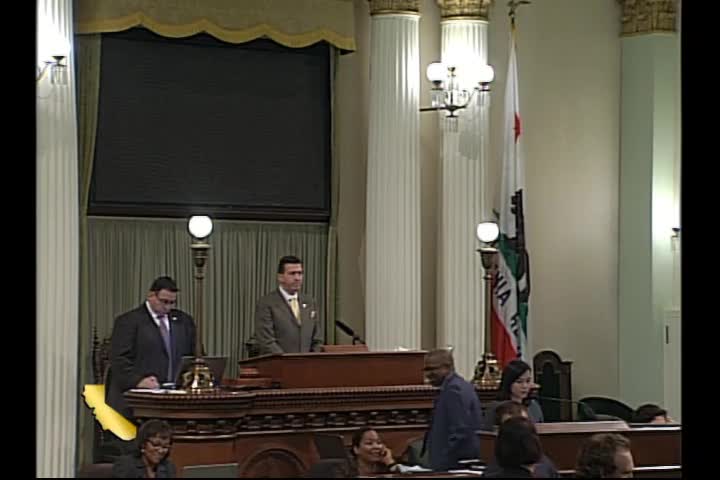 1MIN
Assembly Floor
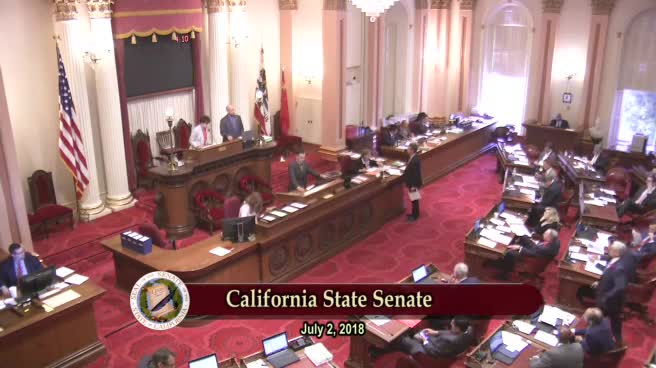 11MIN
Senate Floor
 8MIN
Senate Standing Committee on Governmental Organization
 12MIN
Assembly Floor
 2MIN
Assembly Floor
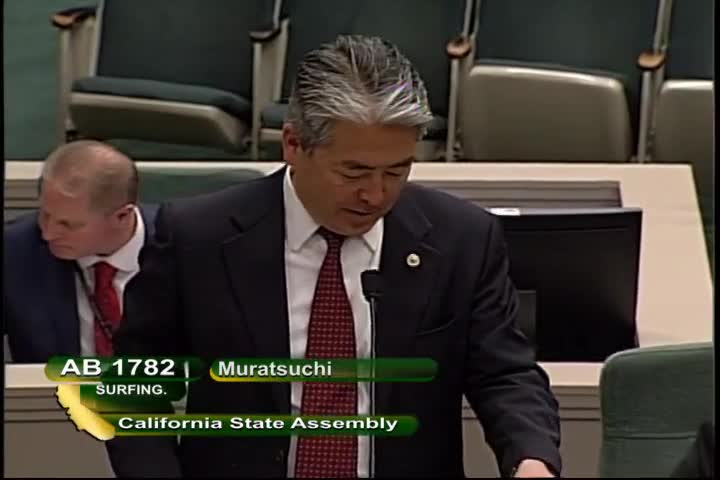 26MIN
Assembly Standing Committee on Governmental Organization


Bill Co-Author(s):