AB 1575: Medical cannabis.
- Session Year: 2015-2016
- House: Assembly
- Latest Version Date: 2016-08-01
(1)Existing law requires the classification of goods and services to conform to the classifications adopted by the United States Patent and Trademark Office.
This bill would, notwithstanding that provision, for purposes of those marks for which a certificate of registration is issued on or after January 1, 2017, authorize the use of specified marks related to medical cannabis goods and services that are lawfully in commerce in the state.
(1)
(2)Existing law, the Medical Marijuana Cannabis Regulation and Safety Act, establishes the licensing and regulation of medical marijuana cannabis by the Bureau of Medical Marijuana Cannabis Regulation. The act requires the Board of Equalization, in consultation with the Department of Food and Agriculture, in consultation with the bureau, to adopt a system track and trace program for reporting the movement of commercial cannabis and cannabis products. medical cannabis items throughout the distribution chain, as specified. The act defines various terms for these purposes.
This bill would rename the act as the Medical Cannabis Regulation and Safety Act and would rename the licensing authority the Bureau of Medical Cannabis Regulation and would change certain definitions and make the bureau, commencing January 1, 2023, subject to review by the appropriate policy committees of the Legislature. The bill would also require the State Board of Equalization, in conjunction with the Department of Business Oversight, to form an advisory group made up of representatives from financial institutions, nonbank financial service providers, the medical cannabis industry, law enforcement, and state and federal banking regulators to examine strategies such as integrated point-of-sale systems with state track and trace systems and other measures that will improve financial monitoring of medical cannabis businesses. The bill would require the board, in conjunction with the department, by July 1, 2017, to submit a report to the Legislature with recommendations that will improve financial monitoring of medical cannabis businesses. After the Bureau of Medical Cannabis Regulation posts a notice on its Internet Web site that the licensing authorities have commenced issuing licenses pursuant to the act, the bill would provide that a financial institution that provides financial services customarily provided by financial institutions to other entities to a current licensee under the act is exempt from any criminal law of the state, provided that the financial institution has verified the licensee has a valid license in good standing. The bill would authorize the bureau to provide information to a financial institution to verify the status of a licensee.
(2)
(3)Under the act, a city, county, or city and county is authorized to adopt an ordinance that establishes standards, requirements, and regulations for local licenses and permits for commercial marijuana activity that exceed statewide standards. The act, with certain exceptions, provides a city full power and authority to enforce the provisions of the act for facilities issued a state license that are located within the incorporated area of a city, if delegated by the state.
The bill would generally prohibit a city, county, or city and county from adopting an ordinance for packaging safety standards that exceeds statewide standards and would require the State Department of Public Health to establish uniform statewide packaging safety standards. The bill would authorize a city to contract in writing with the county in which it is located to arrange for the county to fulfill any regulatory functions relating to licensees within the city limits if the county agrees to assume such responsibility.
(3)
(4)Existing law requires a cultivator or manufacturer cultivator, manufacturer, and all licensees holding a producing dispensary license in addition to a cultivator or manufacturing license to send all medical marijuana cannabis and medical marijuana cannabis products cultivated and or manufactured to a distributor for presale quality assurance and inspection. inspection by a distributor and for batch testing by a testing laboratory prior to distribution to a dispensary. Under the act, all packaging and sealing of medical marijuana or medical marijuana products is required to be completed prior to their being transported or delivered to a licensee, qualified patient, or caregiver.
This bill would exempt a cultivator from the requirement of sending medical cannabis to a distributor for quality assurance and inspection if the medical cannabis is to be used, sold, or otherwise provided to a manufacturer for further manufacturing. The bill also would require the Bureau of Medical Cannabis Regulation to specify the manner in which medical cannabis and medical cannabis products meant for wholesale purposes are required to be packaged and sealed prior to transport, testing, quality assurance, quality control testing, or distribution. The bill would authorize the bureau to establish advertising, marketing, signage, and other labeling requirements and restrictions, as specified, and to place conditions on a license restricting advertising, marketing, and other promotion by the licensee. The bill would require, one year after the bureau posts a notice on its Internet Web site that the licensing authorities have commenced issuing licenses, that all advertisements for licensees include the valid state license number of the licensee. The bill would prohibit a licensee from displaying an advertisement that shows the consumption of medical cannabis while driving or operating machinery.
(4)
(5)The act generally establishes categories of licenses that may be issued and limits a licensee to holding a state license in up to 2 separate license categories. categories, except as specified. The act provides that, upon licensure, a business shall not be subject to that limitation in a jurisdiction that adopted a local ordinance, prior to July 1, 2015, allowing or requiring qualified businesses to cultivate, manufacture, and dispense medical marijuana or medical marijuana products, with all commercial marijuana activity being conducted by a single qualified business. The act repeals these provisions on January 1, 2026.
This bill would, instead, repeal only the latter provision effective January 1, 2026. would instead make the above provision regarding the exemption in a jurisdiction that adopted a local ordinance inoperative on January 1, 2026.
(5)The act specifically establishes a nursery license, to be issued by the Department of Food and Agriculture, for the cultivation of medical marijuana solely as a nursery, and authorizes a licensee with a nursery license to transport live plants.
This bill would specify that a licensee with a nursery license may transport live immature plants to a licensed facility, subject to specified tracking, security, and related requirements.
(6)The act specifically establishes a dispensary license, to be issued by the bureau, and requires a licensed dispensary to implement sufficient security measures, including, at a minimum, certain specified security measures, such as establishing limited access areas accessible only to authorized dispensary personnel. The act authorizes a dispensary to deliver in a city, county, or city and county that does not explicitly prohibit delivery by local ordinance. to both deter and prevent unauthorized entrance into areas containing medical cannabis or medical cannabis products and theft of medical cannabis or medical cannabis products at the dispensary, including, but not limited to, establishing limited access areas accessible only to authorized dispensary personnel.
This bill would require dispensaries to implement the additional security measure of requiring all medical cannabis and medical cannabis products used for display purposes, samples, or immediate sale to be stored out of reach of any individual who is not employed by the dispensary. The bill would require the bureau to establish specified regulations regarding delivery of medical cannabis and medical cannabis products by a dispensary and specified requirements for all dispensary employees who deliver medical cannabis or medical cannabis products.
(7)The act requires the State Department of Public Health to promulgate regulations governing the licensing of manufacturers.
This bill would require the department to establish minimum security requirements for the storage of medical cannabis products at the manufacturing site.
(7)
(8)The act prohibits a licensed testing laboratory from acquiring or receiving medical cannabis products except from a licensed facility licensee and prohibits a licensed testing laboratory from distributing, delivering, transferring, transporting, or dispensing medical cannabis or medical cannabis products, as specified.
This bill would instead prohibit a licensed testing laboratory from transferring or transporting medical cannabis or medical cannabis products except to from the licensed facility premises from which the medical cannabis or medical cannabis products were acquired or received.
(8)
(9)Under the act, each licensing authority is required to establish a scale of application, licensing, and renewal fees based on the cost of enforcing the act.
This bill would specify that these fees shall be in addition to, and shall not limit, any fees or taxes imposed by any city, county, or city and county in which the licensee operates.
(9)The act requires a licensed testing laboratory to analyze samples of medical marijuana or medical marijuana products according to either the most current version of the cannabis inflorescence monograph published by the American Herbal Pharmacopoeia or a scientifically valid methodology that, in the opinion of the accrediting body, is demonstrably equal or superior.
This bill would, instead, require a licensed testing laboratory to analyze samples in the final form in which the patient will consume the medical cannabis or medical cannabis product using a scientifically valid methodology approved by the accrediting body.
(10)Existing law authorizes the University of California to create the California Marijuana Research Program, the purpose of which is to develop and conduct studies intended to ascertain the general medical safety and efficacy of marijuana, and if found valuable, to develop medical guidelines for the appropriate administration and use of marijuana.
This bill would provide that it is not a violation of state law or any local ordinance or regulation for a business business, with a valid business licenses, or research institution that has state authorization to engage in the research of medical cannabis, medical cannabis products, or devices used for the medical use of cannabis or cannabis products, to possess, transport, purchase, or otherwise obtain from a licensee who is authorized to provide or deliver medical cannabis legally obtain, as specified, small amounts of medical cannabis or medical cannabis products to conduct research and development related to medical cannabis or medical cannabis products. The bill would require a business or research institution engaged in the research of medical cannabis to obtain written authorization from its local jurisdiction that it has met all requirements of the local ordinance to conduct research on medical cannabis, medical cannabis products, or devices used for the medical use of cannabis or cannabis products. The bill would provide that it is not a violation of state law for certain licensees a licensee to sell medical cannabis or medical cannabis products in an amount not to exceed 8 ounces per month to a business or research institution engaged in the research of medical cannabis if the business or research institution provides to the licensee a copy of the written authorization to conduct research within their its jurisdiction and a copy of the local ordinance, zoning variance, conditional use permit, or other authorization, and would require the licensee to keep on file that written authorization for at least 3 years and make it available upon request to local authorities for auditing purposes. The bill would require all medical cannabis or medical cannabis products subject to these provisions to be obtained from a licensee permitted to dispense or deliver the medical cannabis or medical cannabis product.
(11)Existing law imposes various civil penalties for a violation of specified provisions of law in connection with the production or cultivation of a controlled substance, including marijuana, on land under the management of specified state and federal agencies or within the ownership of a timberland production zone, as prescribed. Existing law also imposes various civil penalties for a violation of those specified provisions of law in connection with the production or cultivation of a controlled substance, including marijuana, on land that the person owns, leases, or otherwise uses or occupies with the consent of the landowner.
The bill would provide that activities that are in full compliance with the Medical Cannabis Regulation and Safety Act are not subject to the above-described civil penalties.
(12)
(11)The California Seed Law regulates seed sold in California, and prohibits a city, county, or district from adopting or enforcing an ordinance that regulates plants, crops, or seeds without the consent of the Secretary of Food and Agriculture.
This bill would provide that an ordinance that regulates cannabis or marijuana, or medical cannabis or medical marijuana, as defined, shall not require the consent of the secretary.
(13)
(12)Under existing law, collectives and cooperatives that qualified patients, persons with valid identification cards, and the designated primary caregivers of qualified patients and persons with identification cards, who associate within the state collectively or cooperatively in order to cultivate cannabis for medical purposes are not, solely on that basis, subject to certain criminal penalties, including unauthorized possession, cultivation, and transportation of marijuana. This exception for collectives and cooperatives expires one year after the Bureau of Medical Marijuana Cannabis Regulation posts a notice on its Internet Web site that the bureau has commenced issuing licenses pursuant to the act and existing law is repealed on the date the bureau issues a license.
This bill would, instead, provide that the above exception is repealed one year after the bureau posts its notice on its Internet Web site. The bill would also specify that a collective or cooperative subject to this exception may operate on a for-profit basis, a not-for-profit basis, or any combination thereof, but would provide the protections of the exception to for-profit collectives and cooperatives only if they have a valid Board of Equalization sellers permit and a valid local license, permit, or other authorization. The bill would also specify that a licensee under the act may operate on a for-profit basis, a not-for-profit basis, or any combination thereof. The bill would additionally provide that a collective or cooperative that cultivates cannabis and manufactures medical cannabis products is not, solely on that basis, subject to certain criminal penalties if specified requirements are met, including that the collective or cooperative is in possession of a valid sellers sellers permit issued by the State Board of Equalization.
The bill would provide that it is unlawful to display an advertisement, as defined, for qualified patients, persons with valid identification cards, and the designated primary caregivers of qualified patients and persons with identification cards, who associate within the state in order collectively or cooperatively to cultivate cannabis for medical purposes, without first verifying a valid Board of Equalization issued sellers permit. The bill would make a violation of that provision an infraction, punishable by a fine of $500. $500 for the first offense and $1,000 for each subsequent offense. By creating a new crime, the bill would impose a state-mandated local program. One year after the bureau posts the above-described notice on its Internet Web site, the bill would require all advertisements for licensees to include the valid state license number of the licensee, and would authorize the bureau to provide information to verify that a state license is active and in good standing for purposes of complying with this provision.
(14)
(13)Existing law provides that a qualified patient or a person with an identification card, a designated primary caregiver, and any individual who provides assistance to a qualified patient or a person with an identification card, or his or her designated primary caregiver, are not, solely on that basis, subject to certain criminal penalties, including unauthorized possession, cultivation, and transportation of marijuana. Existing law specifies that this provision does not authorize any individual or group to cultivate or distribute marijuana.
This bill would instead specify that this provision does not authorize any individual or group to cultivate or distribute cannabis in any manner other than set forth in the Medical Cannabis Regulation and Safety Act or in the Compassionate Use Act of 1996.
(15)This bill would also make technical, nonsubstantive changes to the provisions of the act, including changing the term marijuana to cannabis throughout.
(16)
(14)The California Constitution requires the state to reimburse local agencies and school districts for certain costs mandated by the state. Statutory provisions establish procedures for making that reimbursement.
This bill would provide that no reimbursement is required by this act for a specified reason.
(1)Existing law, the Medical Marijuana Regulation and Safety Act, establishes the licensing and regulation of medical marijuana by the Bureau of Medical Marijuana Regulation. The act requires the Board of Equalization, in consultation with the Department of Food and Agriculture, to adopt a system for reporting the movement of commercial cannabis and cannabis products.
This bill would rename the act as the Medical Cannabis Regulation and Safety Act and would rename the licensing authority the Bureau of Medical Cannabis Regulation and would make the bureau, commencing January 1, 2023, subject to review by the appropriate policy committees of the Legislature. The bill would also require the Board of Equalization, in conjunction with the Department of Business Oversight, to form an advisory group made up of representatives from financial institutions, nonbank financial service providers, the medical cannabis industry, law enforcement, and state and federal banking regulators to examine strategies such as integrated point-of-sale systems with state track and trace systems and other measures that will improve financial monitoring of medical cannabis businesses. The bill would require the board, in conjunction with the department, by July 1, 2017, to submit a report to the Legislature with recommendations that will improve financial monitoring of medical cannabis businesses. After the Bureau of Medical Cannabis Regulation posts a notice on its Internet Web site that the licensing authorities have commenced issuing licenses pursuant to the act, the bill would provide that a financial institution that provides financial services customarily provided by financial institutions to other entities to a current licensee under the act is exempt from any criminal law of the state, provided that the financial institution has verified the licensee has a valid license in good standing. The bill would authorize the bureau to provide information to a financial institution to verify the status of a licensee.
(2)Under the act, a city, county, or city and county is authorized to adopt an ordinance that establishes standards, requirements, and regulations for local licenses and permits for commercial marijuana activity that exceed statewide standards. The act, with certain exceptions, provides a city full power and authority to enforce the provisions of the act for facilities issued a state license that are located within the incorporated area of a city, if delegated by the state.
The bill would generally prohibit a city, county, or city and county from adopting an ordinance for packaging safety standards that exceeds statewide standards and would require the State Department of Public Health to establish uniform statewide packaging safety standards. The bill would authorize a city to contract in writing with the county in which it is located to arrange for the county to fulfill any regulatory functions relating to licensees within the city limits if the county agrees to assume such responsibility.
(3)Existing law requires a cultivator or manufacturer to send all medical marijuana and medical marijuana products cultivated and manufactured to a distributor for quality assurance and inspection. Under the act, all packaging and sealing of medical marijuana or medical marijuana products is required to be completed prior to their being transported or delivered to a licensee, qualified patient, or caregiver.
This bill would exempt a cultivator from the requirement of sending medical cannabis to a distributor for quality assurance and inspection if the medical cannabis is to be used, sold, or otherwise provided to a manufacturer for further manufacturing. The bill also would require the Bureau of Medical Cannabis Regulation to specify the manner in which medical cannabis and medical cannabis products meant for wholesale purposes are required to be packaged and sealed prior to transport, testing, quality assurance, quality control testing, or distribution.
(4)The act generally establishes categories of licenses that may be issued and limits a licensee to holding a state license in up to 2 separate license categories. The act provides that, upon licensure, a business shall not be subject to that limitation in a jurisdiction that adopted a local ordinance, prior to July 1, 2015, allowing or requiring qualified businesses to cultivate, manufacture, and dispense medical marijuana or medical marijuana products, with all commercial marijuana activity being conducted by a single qualified business. The act repeals these provisions on January 1, 2026.
This bill would, instead, repeal only the latter provision effective January 1, 2026.
(5)The act specifically establishes a nursery license, to be issued by the Department of Food and Agriculture, for the cultivation of medical marijuana solely as a nursery, and authorizes a licensee with a nursery license to transport live plants.
This bill would specify that a licensee with a nursery license may transport live immature plants to a licensed facility, subject to specified tracking, security, and related requirements.
(6)The act specifically establishes a dispensary license, to be issued by the bureau, and requires a licensed dispensary to implement sufficient security measures, including, at a minimum, certain specified security measures, such as establishing limited access areas accessible only to authorized dispensary personnel. The act authorizes a dispensary to deliver in a city, county, or city and county that does not explicitly prohibit delivery by local ordinance.
This bill would require dispensaries to implement the additional security measure of requiring all medical cannabis and medical cannabis products used for display purposes, samples, or immediate sale to be stored out of reach of any individual who is not employed by the dispensary. The bill would require the bureau to establish specified regulations regarding delivery of medical cannabis and medical cannabis products by a dispensary and specified requirements for all dispensary employees who deliver medical cannabis or medical cannabis products.
(7)The act prohibits a licensed testing laboratory from acquiring or receiving medical cannabis products except from a licensed facility and prohibits a licensed testing laboratory from distributing, delivering, transferring, transporting, or dispensing medical cannabis or medical cannabis products, as specified.
This bill would instead prohibit a licensed testing laboratory from transferring or transporting medical cannabis or medical cannabis products except to the licensed facility from which the medical cannabis or medical cannabis products were acquired or received.
(8)Under the act, each licensing authority is required to establish a scale of application, licensing, and renewal fees based on the cost of enforcing the act.
This bill would specify that these fees shall be in addition to, and shall not limit, any fees or taxes imposed by any city, county, or city and county in which the licensee operates.
(9)The act requires a licensed testing laboratory to analyze samples of medical marijuana or medical marijuana products according to either the most current version of the cannabis inflorescence monograph published by the American Herbal Pharmacopoeia or a scientifically valid methodology that, in the opinion of the accrediting body, is demonstrably equal or superior.
This bill would, instead, require a licensed testing laboratory to analyze samples in the final form in which the patient will consume the medical cannabis or medical cannabis product using a scientifically valid methodology approved by the accrediting body.
(10)Existing law authorizes the University of California to create the California Marijuana Research Program, the purpose of which is to develop and conduct studies intended to ascertain the general medical safety and efficacy of marijuana, and if found valuable, to develop medical guidelines for the appropriate administration and use of marijuana.
This bill would provide that it is not a violation of state law or any local ordinance or regulation for a business or research institution that has state authorization to engage in the research of medical cannabis, medical cannabis products, or devices used for the medical use of cannabis or cannabis products, to possess, transport, purchase, or otherwise obtain from a licensee who is authorized to provide or deliver medical cannabis small amounts of medical cannabis or medical cannabis products to conduct research and development related to medical cannabis or medical cannabis products. The bill would require a business or research institution engaged in the research of medical cannabis to obtain written authorization from its local jurisdiction that it has met all requirements of the local ordinance to conduct research on medical cannabis, medical cannabis products, or devices used for the medical use of cannabis or cannabis products. The bill would provide that it is not a violation of state law for certain licensees to sell medical cannabis or medical cannabis products in an amount not to exceed 8 ounces per month to a business or research institution engaged in the research of medical cannabis if the business or research institution provides to the licensee a copy of the written authorization to conduct research within their jurisdiction and a copy of the local ordinance, and would require the licensee to keep on file that written authorization for at least 3 years and make it available upon request to local authorities for auditing purposes.
(11)Existing law imposes various civil penalties for a violation of specified provisions of law in connection with the production or cultivation of a controlled substance, including marijuana, on land under the management of specified state and federal agencies or within the ownership of a timberland production zone, as prescribed. Existing law also imposes various civil penalties for a violation of those specified provisions of law in connection with the production or cultivation of a controlled substance, including marijuana, on land that the person owns, leases, or otherwise uses or occupies with the consent of the landowner.
The bill would provide that activities that are in full compliance with the Medical Cannabis Regulation and Safety Act are not subject to the above-described civil penalties.
(12)The California Seed Law regulates seed sold in California, and prohibits a city, county, or district from adopting or enforcing an ordinance that regulates plants, crops, or seeds without the consent of the Secretary of Food and Agriculture.
This bill would provide that an ordinance that regulates cannabis or marijuana, or medical cannabis or medical marijuana, as defined, shall not require the consent of the secretary.
(13)Under existing law, collectives and cooperatives that cultivate cannabis are not, solely on that basis, subject to certain criminal penalties, including unauthorized possession, cultivation, and transportation of marijuana. This exception for collectives and cooperatives expires one year after the Bureau of Medical Marijuana Regulation posts a notice on its Internet Web site that the bureau has commenced issuing licenses pursuant to the act and existing law is repealed on the date the bureau issues a license.
This bill would, instead, provide that the above exception is repealed one year after the bureau posts its notice on its Internet Web site. The bill would also specify that a collective or cooperative subject to this exception may operate on a for-profit basis, a not-for-profit basis, or any combination thereof, but would provide the protections of the exception to for-profit collectives and cooperatives only if they have a valid Board of Equalization sellers permit and a valid local license, permit, or other authorization. The bill would also specify that a licensee under the act may operate on a for-profit basis, a not-for-profit basis, or any combination thereof. The bill would additionally provide that a collective or cooperative that cultivates cannabis and manufactures medical cannabis products is not, solely on that basis, subject to certain criminal penalties if specified requirements are met, including that the collective or cooperative is in possession of a valid sellers permit issued by the State Board of Equalization.
The bill would provide that it is unlawful to display an advertisement, as defined, for qualified patients, persons with valid identification cards, and the designated primary caregivers of qualified patients and persons with identification cards, who associate within the state in order collectively or cooperatively to cultivate cannabis for medical purposes, without first verifying a valid Board of Equalization issued sellers permit. The bill would make a violation of that provision an infraction, punishable by a fine of $500. By creating a new crime, the bill would impose a state-mandated local program. One year after the bureau posts the above-described notice on its Internet Web site, the bill would require all advertisements for licensees to include the valid state license number of the licensee, and would authorize the bureau to provide information to verify that a state license is active and in good standing for purposes of complying with this provision.
(14)Existing law provides that a qualified patient or a person with an identification card, a designated primary caregiver, and any individual who provides assistance to a qualified patient or a person with an identification card, or his or her designated primary caregiver, are not, solely on that basis, subject to certain criminal penalties, including unauthorized possession, cultivation, and transportation of marijuana. Existing law specifies that this provision does not authorize any individual or group to cultivate or distribute marijuana.
This bill would instead specify that this provision does not authorize any individual or group to cultivate or distribute cannabis in any manner other than set forth in the Medical Cannabis Regulation and Safety Act or in the Compassionate Use Act of 1996.
(15)This bill would also make technical, nonsubstantive changes to the provisions of the act, including changing the term marijuana to cannabis throughout.
(16)The California Constitution requires the state to reimburse local agencies and school districts for certain costs mandated by the state. Statutory provisions establish procedures for making that reimbursement.
This bill would provide that no reimbursement is required by this act for a specified reason.
(1)Existing law, the Medical Marijuana Regulation and Safety Act, establishes the licensing and regulation of medical marijuana by the Bureau of Medical Marijuana Regulation. The act requires the Board of Equalization, in consultation with the Department of Food and Agriculture, to adopt a system for reporting the movement of commercial cannabis and cannabis products.
This bill would rename the act as the Medical Cannabis Regulation and Safety Act and would rename the licensing authority the Bureau of Medical Cannabis Regulation and would make the bureau, commencing January 1, 2023, subject to review by the appropriate policy committees of the Legislature. The bill would also require the Board of Equalization, in conjunction with the Department of Business Oversight, to form an advisory group made up of representatives from financial institutions, nonbank financial service providers, the medical cannabis industry, law enforcement, and state and federal banking regulators to examine strategies such as integrated point-of-sale systems with state track and trace systems and other measures that will improve financial monitoring of medical cannabis businesses. The bill would require the board, in conjunction with the department, by July 1, 2017, to submit a report to the Legislature with recommendations that will improve financial monitoring of medical cannabis businesses. After the Bureau of Medical Cannabis Regulation posts a notice on its Internet Web site that the licensing authorities have commenced issuing licenses pursuant to the act, the bill would provide that a financial institution that provides financial services customarily provided by financial institutions to other entities to a current licensee under the act is exempt from any criminal law of the state, provided that the financial institution has verified the licensee has a valid license in good standing. The bill would authorize the bureau to provide information to a financial institution to verify the status of a licensee.
(2)Under the act, a city, county, or city and county is authorized to adopt an ordinance that establishes standards, requirements, and regulations for local licenses and permits for commercial marijuana activity that exceed statewide standards. The act, with certain exceptions, provides a city full power and authority to enforce the provisions of the act for facilities issued a state license that are located within the incorporated area of a city, if delegated by the state.
The bill would generally prohibit a city, county, or city and county from adopting an ordinance for packaging safety standards that exceeds statewide standards and would require the State Department of Public Health to establish uniform statewide packaging safety standards. The bill would authorize a city to contract in writing with the county in which it is located to arrange for the county to fulfill any regulatory functions relating to licensees within the city limits if the county agrees to assume such responsibility.
(3)Existing law requires a cultivator or manufacturer to send all medical marijuana and medical marijuana products cultivated and manufactured to a distributor for quality assurance and inspection. Under the act, all packaging and sealing of medical marijuana or medical marijuana products is required to be completed prior to their being transported or delivered to a licensee, qualified patient, or caregiver.
This bill would exempt a cultivator from the requirement of sending medical cannabis to a distributor for quality assurance and inspection if the medical cannabis is to be used, sold, or otherwise provided to a manufacturer for further manufacturing. The bill also would require the Bureau of Medical Cannabis Regulation to specify the manner in which medical cannabis and medical cannabis products meant for wholesale purposes are required to be packaged and sealed prior to transport, testing, quality assurance, quality control testing, or distribution.
(4)The act generally establishes categories of licenses that may be issued and limits a licensee to holding a state license in up to 2 separate license categories. The act provides that, upon licensure, a business shall not be subject to that limitation in a jurisdiction that adopted a local ordinance, prior to July 1, 2015, allowing or requiring qualified businesses to cultivate, manufacture, and dispense medical marijuana or medical marijuana products, with all commercial marijuana activity being conducted by a single qualified business. The act repeals these provisions on January 1, 2026.
This bill would, instead, repeal only the latter provision effective January 1, 2026.
(5)The act specifically establishes a nursery license, to be issued by the Department of Food and Agriculture, for the cultivation of medical marijuana solely as a nursery, and authorizes a licensee with a nursery license to transport live plants.
This bill would specify that a licensee with a nursery license may transport live immature plants, plants to a licensed facility, subject to specified tracking, security, and related requirements.
(6)The act specifically establishes a dispensary license, to be issued by the bureau, and requires a licensed dispensary to implement sufficient security measures, including, at a minimum, certain specified security measures, such as establishing limited access areas accessible only to authorized dispensary personnel. The act authorizes a dispensary to deliver in a city, county, or city and county that does not explicitly prohibit delivery by local ordinance.
This bill would require dispensaries to implement the additional security measure of requiring all medical cannabis and medical cannabis products used for display purposes, samples, or immediate sale to be stored out of reach of any individual who is not employed by the dispensary. The bill would require the bureau to establish specified regulations regarding delivery of medical cannabis and medical cannabis products by a dispensary and specified requirements for all dispensary employees who deliver medical cannabis or medical cannabis products.
(7)The act prohibits a licensed testing laboratory from acquiring or receiving medical cannabis products except from a licensed facility and prohibits a licensed testing laboratory from distributing, delivering, transferring, transporting, or dispensing medical cannabis or medical cannabis products, as specified.
This bill would instead prohibit a licensed testing laboratory from transferring or transporting medical cannabis or medical cannabis products except to the licensed facility from which the medical cannabis or medical cannabis products were acquired or received.
(7)
(8)Under the act, each licensing authority is required to establish a scale of application, licensing, and renewal fees based on the cost of enforcing the act.
This bill would specify that these fees shall be in addition to, and shall not limit, any fees or taxes imposed by any city, county, or city and county in which the licensee operates.
(8)
(9)The act requires a licensed testing laboratory to analyze samples of medical marijuana or medical marijuana products according to either the most current version of the cannabis inflorescence monograph published by the American Herbal Pharmacopoeia or a scientifically valid methodology that, in the opinion of the accrediting body, is demonstrably equal or superior.
This bill would, instead, require a licensed testing laboratory to analyze samples in the final form in which the patient will consume the medical cannabis or medical cannabis product using a scientifically valid methodology approved by the accrediting body.
(9)
(10)Existing law authorizes the University of California to create the California Marijuana Research Program, the purpose of which is to develop and conduct studies intended to ascertain the general medical safety and efficacy of marijuana, and if found valuable, to develop medical guidelines for the appropriate administration and use of marijuana.
This bill would provide that it is not a violation of state law or any local ordinance or regulation for a business or research institution that has state authorization to engage in the research of medical cannabis, medical cannabis products, or devices used for the medical use of cannabis or cannabis products, to possess, transport, purchase, or otherwise obtain from a licensee who is authorized to provide or deliver medical cannabis small amounts of medical cannabis or medical cannabis products to conduct research and development related to medical cannabis or medical cannabis products. The bill would require a business or research institution engaged in the research of medical cannabis to obtain written authorization from its local jurisdiction that it has met all requirements of the local ordinance to conduct research on medical cannabis, medical cannabis products, or devices used for the medical use of cannabis or cannabis products. The bill would provide that it is not a violation of state law for certain licensees to sell medical cannabis or medical cannabis products in an amount not to exceed 8 ounces per month to a business or research institution engaged in the research of medical cannabis if the business or research institution provides to the licensee a copy of the written authorization to conduct research within their jurisdiction and a copy of the local ordinance, and would require the licensee to keep on file that written authorization for at least 3 years and make it available upon request to local authorities for auditing purposes.
(10)
(11)Existing law imposes various civil penalties for a violation of specified provisions of law in connection with the production or cultivation of a controlled substance, including marijuana, on land under the management of specified state and federal agencies or within the ownership of a timberland production zone, as prescribed. Existing law also imposes various civil penalties for a violation of those specified provisions of law in connection with the production or cultivation of a controlled substance, including marijuana, on land that the person owns, leases, or otherwise uses or occupies with the consent of the landowner.
The bill would provide that activities that are in full compliance with the Medical Cannabis Regulation and Safety Act are not subject to the above-described civil penalties.
(11)
(12)The California Seed Law regulates seed sold in California, and prohibits a city, county, or district from adopting or enforcing an ordinance that regulates plants, crops, or seeds without the consent of the Secretary of Food and Agriculture.
This bill would provide that an ordinance that regulates cannabis or marijuana, or medical cannabis or medical marijuana, as defined, shall not require the consent of the secretary.
(12)
(13)Under existing law, collectives and cooperatives that cultivate cannabis are not, solely on that basis, subject to certain criminal penalties, including unauthorized possession, cultivation, and transportation of marijuana. This exception for collectives and cooperatives expires one year after the Bureau of Medical Marijuana Regulation posts a notice on its Internet Web site that the bureau has commenced issuing licenses pursuant to the act and existing law is repealed on the date the bureau issues a license.
This bill would, instead, provide that the above exception is repealed one year after the bureau posts its notice on its Internet Web site. The bill would also specify that a collective or cooperative subject to this exception may operate on a for-profit basis, a not-for-profit basis, or any combination thereof, but would provide the protections of the exception to for-profit collectives and cooperatives only if they have a valid Board of Equalization sellers permit and a valid local license, permit, or other authorization. The bill would also specify that a licensee under the act may operate on a for-profit basis, a not-for-profit basis, or any combination thereof. The bill would additionally provide that a collective or cooperative that cultivates cannabis and manufactures medical cannabis products is not, solely on that basis, subject to certain criminal penalties if specified requirements are met, including that the collective or cooperative is in possession of a valid sellers permit issued by the State Board of Equalization.
The bill would provide that it is unlawful to display an advertisement, as defined, for qualified patients, persons with valid identification cards, and the designated primary caregivers of qualified patients and persons with identification cards, who associate within the state in order collectively or cooperatively to cultivate cannabis for medical purposes, without first verifying a valid Board of Equalization issued sellers permit. The bill would make a violation of that provision an infraction, punishable by a fine of $500. By creating a new crime, the bill would impose a state-mandated local program. One year after the bureau posts the above-described notice on its Internet Web site, the bill would require all advertisements for licensees to include the valid state license number of the licensee, and would authorize the bureau to provide information to verify that a state license is active and in good standing for purposes of complying with this provision.
(13)
(14)Existing law provides that a qualified patient or a person with an identification card, a designated primary caregiver, and any individual who provides assistance to a qualified patient or a person with an identification card, or his or her designated primary caregiver, are not, solely on that basis, subject to certain criminal penalties, including unauthorized possession, cultivation, and transportation of marijuana. Existing law specifies that this provision does not authorize any individual or group to cultivate or distribute marijuana.
This bill would instead specify that this provision does not authorize any individual or group to cultivate or distribute cannabis in any manner other than set forth in the Medical Cannabis Regulation and Safety Act or in the Compassionate Use Act of 1996.
(14)Existing law makes it a crime to transport, import into this state, sell, furnish, administer, or give away, or offers to transport, import into this state, sell, furnish, administer, or give away, or attempt to import into this state or transport, or to transport for sale between counties of the state any controlled substance, including marijuana.
This bill would except from these provisions any commercial cannabis activity by a holder of a state license who is in full compliance with the Medical Cannabis Regulation and Safety Act and all applicable local ordinances.
(15)This bill would also make technical, nonsubstantive changes to the provisions of the act, including changing the term marijuana to cannabis throughout.
(16)The California Constitution requires the state to reimburse local agencies and school districts for certain costs mandated by the state. Statutory provisions establish procedures for making that reimbursement.
This bill would provide that no reimbursement is required by this act for a specified reason.
(1)Existing law, the Medical Marijuana Regulation and Safety Act, establishes the licensing and regulation of medical marijuana by the Bureau of Medical Marijuana Regulation. The act requires the Board of Equalization, in consultation with the Department of Food and Agriculture, to adopt a system for reporting the movement of commercial cannabis and cannabis products.
This bill would rename the act as the Medical Cannabis Regulation and Safety Act and would rename the licensing authority the Bureau of Medical Cannabis Regulation and would make the bureau, commencing January 1, 2023, subject to review by the appropriate policy committees of the Legislature. The bill would also require the Board of Equalization Equalization, in conjunction with the Department of Business Oversight, to form an advisory group made up of representatives from financial institutions, nonbank financial service providers, the medical cannabis industry, law enforcement, and state and federal banking regulators to examine strategies such as integrated point-of-sale systems with state track and trace systems and other measures that will improve financial monitoring of medical cannabis businesses. The bill would require the board, in conjunction with the department, by July 1, 2017, to submit a report to the Legislature with proposed changes to state law or regulations recommendations that will improve financial monitoring of medical cannabis businesses and compliance with federal law. The bill would require the Department of Business Oversight to create an enhanced financial monitoring certification for entities licensed under the act that further enables them to comply with federal banking regulations and would authorize the Department of Business Oversight to charge a fee for this certification, as specified. businesses. After the Bureau of Medical Cannabis Regulation posts a notice on its Internet Web site that the licensing authorities have commenced issuing licenses pursuant to the act, the bill would provide that a financial institution that provides financial services customarily provided by financial institutions to other entities to a current licensee under the act is exempt from any criminal law of the state, provided that the financial institution has verified the licensee has a valid license in good standing. The bill would authorize the bureau to provide information to a financial institution to verify the status of a licensee.
(2)Under the act, a city, county, or city and county is authorized to adopt an ordinance that establishes standards, requirements, and regulations for local licenses and permits for commercial marijuana activity that exceed statewide standards.
The bill would generally prohibit a city, county, or city and county from adopting an ordinance for packaging safety standards that exceeds statewide standards and would require the State Department of Public Health to establish uniform statewide packaging safety standards.
(3)Existing law requires a cultivator or manufacturer to send all medical marijuana and medical marijuana products cultivated and manufactured to a distributor for quality assurance and inspection. Under the act, all packaging and sealing of medical marijuana or medical marijuana products is required to be completed prior to their being transported or delivered to a licensee, qualified patient, or caregiver.
This bill would exempt a cultivator from the requirement of sending medical cannabis to a distributor for quality assurance and inspection if the medical cannabis is to be used, sold, or otherwise provided to a manufacturer for further manufacturing. The bill also would require the Bureau of Medical Cannabis Regulation to specify the manner in which medical cannabis and medical cannabis products meant for wholesale purposes are required to be packaged and sealed prior to transport, testing, quality assurance, quality control testing, or distribution.
(4)The act generally establishes categories of licenses that may be issued and limits a licensee to holding a state license in up to 2 separate license categories. The act provides that, upon licensure, a business shall not be subject to that limitation in a jurisdiction that adopted a local ordinance, prior to July 1, 2015, allowing or requiring qualified businesses to cultivate, manufacture, and dispense medical marijuana or medical marijuana products, with all commercial marijuana activity being conducted by a single qualified business. The act repeals these provisions on January 1, 2026.
This bill would, instead, repeal only the latter provision effective January 1, 2026.
(5)The act specifically establishes a nursery license, to be issued by the Department of Food and Agriculture, for the cultivation of medical marijuana solely as a nursery, and authorizes a licensee with a nursery license to transport live plants.
This bill would specify that a licensee with a nursery license may transport live immature plants, subject to specified tracking, security, and related requirements.
(6)The act specifically establishes a dispensary license, to be issued by the bureau, and requires a licensed dispensary to implement sufficient security measures, including, at a minimum, certain specified security measures, such as establishing limited access areas accessible only to authorized dispensary personnel. The act authorizes a dispensary to deliver in a city, county, or city and county that does not explicitly prohibit delivery by local ordinance.
This bill would require dispensaries to implement the additional security measure of requiring all medical cannabis and medical cannabis products used for display purposes, samples, or immediate sale to be stored out of reach of any individual who is not employed by the dispensary. The bill would require the bureau to establish specified regulations regarding delivery of medical cannabis and medical cannabis products by a dispensary and specified requirements for all dispensary employees who deliver medical cannabis or medical cannabis products.
(7)Under the act, each licensing authority is required to establish a scale of application, licensing, and renewal fees based on the cost of enforcing the act.
This bill would specify that these fees shall be in addition to, and shall not limit, any fees or taxes imposed by any city, county, or city and county in which the licensee operates.
(8)The act requires a licensed testing laboratory to analyze samples of medical marijuana or medical marijuana products according to either the most current version of the cannabis inflorescence monograph published by the American Herbal Pharmacopoeia or a scientifically valid methodology that, in the opinion of the accrediting body, is demonstrably equal or superior.
This bill would, instead, require a licensed testing laboratory to analyze samples in the final form in which the patient will consume the medical cannabis or medical cannabis product using a scientifically valid methodology approved by the accrediting body.
(9)Existing law authorizes the University of California to create the California Marijuana Research Program, the purpose of which is to develop and conduct studies intended to ascertain the general medical safety and efficacy of marijuana, and if found valuable, to develop medical guidelines for the appropriate administration and use of marijuana.
This bill would provide that it is not a violation of state law or any local ordinance or regulation for a business or research institution that has state authorization to engage in the research of medical cannabis, medical cannabis products, or devices used for the medical use of cannabis or cannabis products, to possess, transport, purchase, or otherwise obtain from a licensee who is authorized to provide or deliver medical cannabis small amounts of medical cannabis or medical cannabis products to conduct research and development related to medical cannabis or medical cannabis products. The bill would require a business or research institution engaged in the research of medical cannabis to obtain written authorization from its local jurisdiction that it has met all requirements of the local ordinance to conduct research on medical cannabis, medical cannabis products, or devices used for the medical use of cannabis or cannabis products. The bill would provide that it is not a violation of state law for certain licensees to sell medical cannabis or medical cannabis products in an amount not to exceed 8 ounces per month to a business or research institution engaged in the research of medical cannabis if the business or research institution provides to the licensee a copy of the written authorization to conduct research within their jurisdiction and a copy of the local ordinance, and would require the licensee to keep on file that written authorization for at least 3 years and make it available upon request to local authorities for auditing purposes.
(10)Existing law imposes various civil penalties for a violation of specified provisions of law in connection with the production or cultivation of a controlled substance, including marijuana, on land under the management of specified state and federal agencies or within the ownership of a timberland production zone, as prescribed. Existing law also imposes various civil penalties for a violation of those specified provisions of law in connection with the production or cultivation of a controlled substance, including marijuana, on land that the person owns, leases, or otherwise uses or occupies with the consent of the landowner.
The bill would provide that activities that are in full compliance with the Medical Cannabis Regulation and Safety Act are not subject to the above-described civil penalties.
(11)The California Seed Law regulates seed sold in California, and prohibits a city, county, or district from adopting or enforcing an ordinance that regulates plants, crops, or seeds without the consent of the Secretary of Food and Agriculture.
This bill would provide that an ordinance that regulates cannabis or marijuana, or medical cannabis or medical marijuana, as defined, shall not require the consent of the secretary.
(12)Under existing law, collectives and cooperatives that cultivate cannabis are not, solely on that basis, subject to certain criminal penalties, including unauthorized possession, cultivation, and transportation of marijuana. This exception for collectives and cooperatives expires one year after the Bureau of Medical Marijuana Regulation posts a notice on its Internet Web site that the bureau has commenced issuing licenses pursuant to the act and existing law is repealed on the date the bureau issues a license.
This bill would, instead, provide that the above exception is repealed one year after the bureau posts its notice on its Internet Web site. The bill would also specify that a collective or cooperative subject to this exception may operate on a for-profit basis, a not-for-profit basis, or any combination thereof, but would provide the protections of the exception to for-profit collectives and cooperatives only if they have a valid Board of Equalization sellers permit and a valid local license, permit, or other authorization. The bill would also specify that a licensee under the act may operate on a for-profit basis, a not-for-profit basis, or any combination thereof.
The bill would provide that it is unlawful to display an advertisement, as defined, for qualified patients, persons with valid identification cards, and the designated primary caregivers of qualified patients and persons with identification cards, who associate within the state in order collectively or cooperatively to cultivate cannabis for medical purposes, without first verifying a valid Board of Equalization issued sellers permit. The bill would make a violation of that provision an infraction, punishable by a fine of $500. By creating a new crime, the bill would impose a state-mandated local program. One year after the bureau posts the above-described notice on its Internet Web site, the bill would require all advertisements for licensees to include the valid state license number of the licensee, and would authorize the bureau to provide information to verify that a state license is active and in good standing for purposes of complying with this provision.
(13)Existing law provides that a qualified patient or a person with an identification card, a designated primary caregiver, and any individual who provides assistance to a qualified patient or a person with an identification card, or his or her designated primary caregiver, are not, solely on that basis, subject to certain criminal penalties, including unauthorized possession, cultivation, and transportation of marijuana. Existing law specifies that this provision does not authorize any individual or group to cultivate or distribute marijuana.
This bill would instead specify that this provision does not authorize any individual or group to cultivate or distribute cannabis in any manner other than set forth in the Medical Cannabis Regulation and Safety Act or in the Compassionate Use Act of 1996.
(14)Existing law makes it a crime to transport, import into this state, sell, furnish, administer, or give away, or offers to transport, import into this state, sell, furnish, administer, or give away, or attempt to import into this state or transport, or to transport for sale between counties of the state any controlled substance, including marijuana.
This bill would except from these provisions any commercial cannabis activity by a holder of a state license who is in full compliance with the Medical Cannabis Regulation and Safety Act and all applicable local ordinances.
(15)This bill would also make technical, nonsubstantive changes to the provisions of the act, including changing the term marijuana to cannabis throughout.
(16)The California Constitution requires the state to reimburse local agencies and school districts for certain costs mandated by the state. Statutory provisions establish procedures for making that reimbursement.
This bill would provide that no reimbursement is required by this act for a specified reason.
(1)Existing law, the Medical Marijuana Regulation and Safety Act, establishes the licensing and regulation of medical marijuana. marijuana by the Bureau of Medical Marijuana Regulation. The act requires the Board of Equalization, in consultation with the Department of Food and Agriculture, to adopt a system for reporting the movement of commercial cannabis and cannabis products.
This bill would rename the act as the Medical Cannabis Regulation and Safety Act. Act and would rename the licensing authority the Bureau of Medical Cannabis Regulation and would make the bureau, commencing January 1, 2023, subject to review by the appropriate policy committees of the Legislature. The bill would also require the Board of Equalization to form an advisory group made up of representatives from financial institutions, the medical cannabis industry, law enforcement, and state and federal banking regulators to examine strategies such as integrated point-of-sale systems with state track and trace systems and other measures that will improve financial monitoring of medical cannabis businesses. The bill would require the board, by July 1, 2017, to submit a report to the Legislature with proposed changes to state law or regulations that will improve financial monitoring of medical cannabis businesses and compliance with federal law. The bill would require the Department of Business Oversight to create an enhanced financial monitoring certification for entities licensed under the act that further enables them to comply with federal banking regulations and would authorize the Department of Business Oversight to charge a fee for this certification, as specified. After the Bureau of Medical Cannabis Regulation posts a notice on its Internet Web site that the licensing authorities have commenced issuing licenses pursuant to the act, the bill would provide that a financial institution that provides financial services customarily provided by financial institutions to other entities to a current licensee under the act is exempt from any criminal law of the state, provided that the financial institution has verified the licensee has a valid license in good standing. The bill would authorize the bureau to provide information to a financial institution to verify the status of a licensee.
(2)Under the act, a city, county, or city and county is authorized to adopt an ordinance that establishes standards, requirements, and regulations for local licenses and permits for commercial marijuana activity that exceed statewide standards.
The bill would generally prohibit a city, county, or city and county from adopting an ordinance for packaging safety standards that exceeds statewide standards and would require the State Department of Public Health to establish uniform statewide packaging safety standards.
(3)Existing law requires a cultivator or manufacturer to send all medical marijuana and medical marijuana products cultivated and manufactured to a distributor for quality assurance and inspection. Under the act, all packaging and sealing of medical marijuana or medical marijuana products is required to be completed prior to their being transported or delivered to a licensee, qualified patient, or caregiver.
This bill would exempt a cultivator from the requirement of sending medical cannabis to a distributor for quality assurance and inspection if the medical cannabis is to be used, sold, or otherwise provided to a manufacturer for further manufacturing. The bill also would require the Bureau of Medical Cannabis Regulation to specify the manner in which medical cannabis and medical cannabis products meant for wholesale purposes are required to be packaged and sealed prior to transport, testing, quality assurance, quality control testing, or distribution.
(4)The act generally establishes categories of licenses that may be issued and limits a licensee to holding a state license in up to 2 separate license categories. The act provides that, upon licensure, a business shall not be subject to that limitation in a jurisdiction that adopted a local ordinance, prior to July 1, 2015, allowing or requiring qualified businesses to cultivate, manufacture, and dispense medical marijuana or medical marijuana products, with all commercial marijuana activity being conducted by a single qualified business. The act repeals these provisions on January 1, 2026.
This bill would, instead, repeal only the latter provision effective January 1, 2026.
(5)The act specifically establishes a nursery license, to be issued by the Department of Food and Agriculture, for the cultivation of medical marijuana solely as a nursery, and authorizes a licensee with a nursery license to transport live plants.
This bill would specify that a licensee with a nursery license may transport live immature plants, subject to specified tracking, security, and related requirements.
(6)The act specifically establishes a dispensary license, to be issued by the bureau, and requires a licensed dispensary to implement sufficient security measures, including, at a minimum, certain specified security measures, such as establishing limited access areas accessible only to authorized dispensary personnel. The act authorizes a dispensary to deliver in a city, county, or city and county that does not explicitly prohibit delivery by local ordinance.
This bill would require dispensaries to implement the additional security measure of requiring all medical cannabis and medical cannabis products used for display purposes, samples, or immediate sale to be stored out of reach of any individual who is not employed by the dispensary. The bill would require the bureau to establish specified regulations regarding delivery of medical cannabis and medical cannabis products by a dispensary and specified requirements for all dispensary employees who deliver medical cannabis or medical cannabis products.
(7)Under the act, each licensing authority is required to establish a scale of application, licensing, and renewal fees based on the cost of enforcing the act.
This bill would specify that these fees shall be in addition to, and shall not limit, any fees or taxes imposed by any city, county, or city and county in which the licensee operates.
(8)The act requires a licensed testing laboratory to analyze samples of medical marijuana or medical marijuana products according to either the most current version of the cannabis inflorescence monograph published by the American Herbal Pharmacopoeia or a scientifically valid methodology that, in the opinion of the accrediting body, is demonstrably equal or superior.
This bill would, instead, require a licensed testing laboratory to analyze samples in the final form in which the patient will consume the medical cannabis or medical cannabis product using a scientifically valid methodology approved by the accrediting body.
(9)Existing law authorizes the University of California to create the California Marijuana Research Program, the purpose of which is to develop and conduct studies intended to ascertain the general medical safety and efficacy of marijuana, and if found valuable, to develop medical guidelines for the appropriate administration and use of marijuana.
This bill would provide that it is not a violation of state law or any local ordinance or regulation for a business or research institution that has state authorization to engage in the research of medical cannabis, medical cannabis products, or devices used for the medical use of cannabis or cannabis products, to possess, transport, purchase, or otherwise obtain from a licensee who is authorized to provide or deliver medical cannabis small amounts of medical cannabis or medical cannabis products to conduct research and development related to medical cannabis or medical cannabis products. The bill would require a business or research institution engaged in the research of medical cannabis to obtain written authorization from its local jurisdiction that it has met all requirements of the local ordinance to conduct research on medical cannabis, medical cannabis products, or devices used for the medical use of cannabis or cannabis products. The bill would provide that it is not a violation of state law for certain licensees to sell medical cannabis or medical cannabis products in an amount not to exceed 8 ounces per month to a business or research institution engaged in the research of medical cannabis if the business or research institution provides to the licensee a copy of the written authorization to conduct research within their jurisdiction and a copy of the local ordinance, and would require the licensee to keep on file that written authorization for at least 3 years and make it available upon request to local authorities for auditing purposes.
(10)Existing law imposes various civil penalties for a violation of specified provisions of law in connection with the production or cultivation of a controlled substance, including marijuana, on land under the management of specified state and federal agencies or within the ownership of a timberland production zone, as prescribed. Existing law also imposes various civil penalties for a violation of those specified provisions of law in connection with the production or cultivation of a controlled substance, including marijuana, on land that the person owns, leases, or otherwise uses or occupies with the consent of the landowner.
The bill would provide that activities that are in full compliance with the Medical Cannabis Regulation and Safety Act are not subject to the above-described civil penalties.
(11)The California Seed Law regulates seed sold in California, and prohibits a city, county, or district from adopting or enforcing an ordinance that regulates plants, crops, or seeds without the consent of the Secretary of Food and Agriculture.
This bill would provide that an ordinance that regulates cannabis or marijuana, or medical cannabis or medical marijuana, as defined, shall not require the consent of the secretary.
(12)Under existing law, collectives and cooperatives that cultivate cannabis are not, solely on that basis, subject to certain criminal penalties, including unauthorized possession, cultivation, and transportation of marijuana. This exception for collectives and cooperatives expires one year after the Bureau of Medical Marijuana Regulation posts a notice on its Internet Web site that the bureau has commenced issuing licenses pursuant to the act and existing law is repealed on the date the bureau issues a license.
This bill would, instead, provide that the above exception is repealed one year after the bureau posts its notice on its Internet Web site. The bill would also specify that a collective or cooperative subject to this exception may operate on a for-profit basis, a not-for-profit basis, or any combination thereof. thereof, but would provide the protections of the exception to for-profit collectives and cooperatives only if they have a valid Board of Equalization sellers permit and a valid local license, permit, or other authorization. The bill would also specify that a licensee under the act may operate on a for-profit basis, a not-for-profit basis, or any combination thereof.
The bill would provide that it is unlawful to display an advertisement, as defined, for qualified patients, persons with valid identification cards, and the designated primary caregivers of qualified patients and persons with identification cards, who associate within the state in order collectively or cooperatively to cultivate cannabis for medical purposes, without first verifying a valid Board of Equalization issued sellers permit. The bill would make a violation of that provision an infraction, punishable by a fine of $500. By creating a new crime, the bill would impose a state-mandated local program. One year after the bureau posts the above-described notice on its Internet Web site, the bill would require all advertisements for licensees to include the valid state license number of the licensee, and would authorize the bureau to provide information to verify that a state license is active and in good standing for purposes of complying with this provision.
(13)Existing law provides that a qualified patient or a person with an identification card, a designated primary caregiver, and any individual who provides assistance to a qualified patient or a person with an identification card, or his or her designated primary caregiver, are not, solely on that basis, subject to certain criminal penalties, including unauthorized possession, cultivation, and transportation of marijuana. Existing law specifies that this provision does not authorize any individual or group to cultivate or distribute marijuana.
This bill would instead specify that this provision does not authorize any individual or group to cultivate or distribute cannabis in any manner other than set forth in the Medical Cannabis Regulation and Safety Act or in the Compassionate Use Act of 1996.
(14)Existing law makes it a crime to transport, import into this state, sell, furnish, administer, or give away, or offers to transport, import into this state, sell, furnish, administer, or give away, or attempt to import into this state or transport, or to transport for sale between counties of the state any controlled substance, including marijuana.
This bill would except from these provisions any commercial cannabis activity by a holder of a state license who is in full compliance with the Medical Cannabis Regulation and Safety Act and all applicable local ordinances.
(15)This bill would also make technical, nonsubstantive changes to the provisions of the act, including changing the term marijuana to cannabis throughout.
(16)The California Constitution requires the state to reimburse local agencies and school districts for certain costs mandated by the state. Statutory provisions establish procedures for making that reimbursement.
This bill would provide that no reimbursement is required by this act for a specified reason.
(1)Existing law, the Medical Marijuana Regulation and Safety Act, establishes the licensing and regulation of medical marijuana. The act requires the Board of Equalization, in consultation with the Department of Food and Agriculture, to adopt a system for reporting the movement of commercial cannabis and cannabis products.
This bill would rename the act as the Medical Cannabis Regulation and Safety Act. The bill would also require the Board of Equalization to form an advisory group made up of representatives from financial institutions, the medical cannabis industry, law enforcement, and state and federal banking regulators to examine strategies such as integrated point-of-sale systems with state track and trace systems and other measures that will improve financial monitoring of medical cannabis businesses. The bill would require the board, by July 1, 2017, to submit a report to the Legislature with proposed changes to state law or regulations that will improve financial monitoring of medical cannabis businesses and compliance with federal law. The bill would require the Department of Business Oversight to create an enhanced financial monitoring certification for entities licensed under the act that further enables them to comply with federal banking regulations and would authorize the Department of Business Oversight to charge a fee for this certification, as specified. After the Bureau of Medical Cannabis Regulation posts a notice on its Internet Web site that the licensing authorities have commenced issuing licenses pursuant to the act, the bill would provide that a financial institution that provides financial services customarily provided by financial institutions to other entities to a current licensee under the act is exempt from any criminal law of the state, provided that the financial institution has verified the licensee has a valid license in good standing. The bill would authorize the bureau to provide information to a financial institution to verify the status of a licensee.
(2)Under the act, a city, county, or city and county is authorized to adopt an ordinance that establishes standards, requirements, and regulations for local licenses and permits for commercial marijuana activity that exceed statewide standards.
The bill would generally prohibit a city, county, or city and county from adopting an ordinance for packaging safety standards that exceeds statewide standards and would require the State Department of Public Health to establish uniform statewide packaging safety standards.
(3)Existing law requires a cultivator or manufacturer to send all medical marijuana and medical marijuana products cultivated and manufactured to a distributor for quality assurance and inspection. Under the act, all packaging and sealing of medical marijuana or medical marijuana products is required to be completed prior to their being transported or delivered to a licensee, qualified patient, or caregiver.
This bill would exempt a cultivator from the requirement of sending medical cannabis to a distributor for quality assurance and inspection if the medical cannabis is to be used, sold, or otherwise provided to a manufacturer for further manufacturing. The bill also would require the Bureau of Medical Cannabis Regulation to specify the manner in which medical cannabis and medical cannabis products meant for wholesale purposes are required to be packaged and sealed prior to transport, testing, quality assurance, quality control testing, or distribution.
(4)The act generally establishes categories of licenses that may be issued and limits a licensee to holding a state license in up to 2 separate license categories. The act provides that, upon licensure, a business shall not be subject to that limitation in a jurisdiction that adopted a local ordinance, prior to July 1, 2015, allowing or requiring qualified businesses to cultivate, manufacture, and dispense medical marijuana or medical marijuana products, with all commercial marijuana activity being conducted by a single qualified business. The act repeals these provisions on January 1, 2026.
This bill would, instead, repeal only the latter provision effective January 1, 2026.
(5)The act specifically establishes a nursery license, to be issued by the Department of Food and Agriculture, for the cultivation of medical marijuana solely as a nursery, and authorizes a licensee with a nursery license to transport live plants.
This bill would specify that a licensee with a nursery license may transport live immature plants, subject to specified tracking, security, and related requirements.
(6)The act specifically establishes a dispensary license, to be issued by the bureau, and requires a licensed dispensary to implement sufficient security measures, including, at a minimum, certain specified security measures, such as establishing limited access areas accessible only to authorized dispensary personnel. The act authorizes a dispensary to deliver in a city, county, or city and county that does not explicitly prohibit delivery by local ordinance.
This bill would require dispensaries to implement the additional security measure of requiring all medical cannabis and medical cannabis products used for display purposes, samples, or immediate sale to be stored out of reach of any individual who is not employed by the dispensary. The bill would require the bureau to establish specified regulations regarding delivery of medical cannabis and medical cannabis products by a dispensary and specified requirements for all dispensary employees who deliver medical cannabis or medical cannabis products.
(7)Under the act, each licensing authority is required to establish a scale of application, licensing, and renewal fees based on the cost of enforcing the act.
This bill would specify that these fees shall be in addition to, and shall not limit, any fees or taxes imposed by any city, county, or city and county in which the licensee operates.
(8)The act requires a licensed testing laboratory to analyze samples of medical marijuana or medical marijuana products according to either the most current version of the cannabis inflorescence monograph published by the American Herbal Pharmacopoeia or a scientifically valid methodology that, in the opinion of the accrediting body, is demonstrably equal or superior.
This bill would, instead, require a licensed testing laboratory to analyze samples in the final form in which the patient will consume the medical cannabis or medical cannabis product using a scientifically valid methodology approved by the accrediting body.
(9)Existing law authorizes the University of California to create the California Marijuana Research Program, the purpose of which is to develop and conduct studies intended to ascertain the general medical safety and efficacy of marijuana, and if found valuable, to develop medical guidelines for the appropriate administration and use of marijuana.
This bill would provide that it is not a violation of state law or any local ordinance or regulation for a business or research institution that has state authorization to engage in the research of medical cannabis, medical cannabis products, or devices used for the medical use of cannabis or cannabis products, to possess, transport, purchase, or otherwise obtain from a licensee who is authorized to provide or deliver medical cannabis small amounts of medical cannabis or medical cannabis products to conduct research and development related to medical cannabis or medical cannabis products. The bill would require the bureau to promulgate regulations to establish minimum qualifications for state authorization to conduct research on medical cannabis and medical cannabis products and all related protocols, as specified. a business or research institution engaged in the research of medical cannabis to obtain written authorization from its local jurisdiction that it has met all requirements of the local ordinance to conduct research on medical cannabis, medical cannabis products, or devices used for the medical use of cannabis or cannabis products. The bill would provide that it is not a violation of state law for certain licensees to sell medical cannabis or medical cannabis products in an amount not to exceed 8 ounces per month to a business or research institution engaged in the research of medical cannabis if the business or research institution provides to the licensee a copy of the written authorization to conduct research within their jurisdiction and a copy of the local ordinance, and would require the licensee to keep on file that written authorization for at least 3 years and make it available upon request to local authorities for auditing purposes.
(10)Existing law imposes various civil penalties for a violation of specified provisions of law in connection with the production or cultivation of a controlled substance, including marijuana, on land under the management of specified state and federal agencies or within the ownership of a timberland production zone, as prescribed. Existing law also imposes various civil penalties for a violation of those specified provisions of law in connection with the production or cultivation of a controlled substance, including marijuana, on land that the person owns, leases, or otherwise uses or occupies with the consent of the landowner.
The bill would provide that activities that are in full compliance with the Medical Cannabis Regulation and Safety Act are not subject to the above-described civil penalties.
(11)The California Seed Law regulates seed sold in California, and prohibits a city, county, or district from adopting or enforcing an ordinance that regulates plants, crops, or seeds without the consent of the Secretary of Food and Agriculture.
This bill would provide that an ordinance that regulates cannabis or marijuana, or medical cannabis or medical marijuana, as defined, shall not require the consent of the secretary.
(11)
(12)Under existing law, collectives and cooperatives that cultivate cannabis are not, solely on that basis, subject to certain criminal penalties, including unauthorized possession, cultivation, and transportation of marijuana. This exception for collectives and cooperatives expires one year after the Bureau of Medical Marijuana Regulation posts a notice on its Internet Web site that the bureau has commenced issuing licenses pursuant to the act and existing law is repealed on the date the bureau issues a license.
This bill would, instead, provide that the above exception is repealed one year after the bureau posts its notice on its Internet Web site. The bill would also specify that a collective or cooperative subject to this exception may operate on a for-profit basis, a not-for-profit basis, or any combination thereof. The bill would also specify that a licensee under the act may operate on a for-profit basis, a not-for-profit basis, or any combination thereof.
The bill would provide that it is unlawful to display an advertisement, as defined, for qualified patients, persons with valid identification cards, and the designated primary caregivers of qualified patients and persons with identification cards, who associate within the state in order collectively or cooperatively to cultivate cannabis for medical purposes, without first verifying a valid Board of Equalization issued sellers permit. The bill would make a violation of that provision an infraction, punishable by a fine of $500. By creating a new crime, the bill would impose a state-mandated local program. One year after the bureau posts the above-described notice on its Internet Web site, the bill would require all advertisements for licensees to include the valid state license number of the licensee, and would authorize the bureau to provide information to verify that a state license is active and in good standing for purposes of complying with this provision.
(12)
(13)Existing law provides that a qualified patient or a person with an identification card, a designated primary caregiver, and any individual who provides assistance to a qualified patient or a person with an identification card, or his or her designated primary caregiver, are not, solely on that basis, subject to certain criminal penalties, including unauthorized possession, cultivation, and transportation of marijuana. Existing law specifies that this provision does not authorize any individual or group to cultivate or distribute marijuana.
This bill would instead specify that this provision does not authorize any individual or group to cultivate or distribute cannabis in any manner other than set forth in the Medical Cannabis Regulation and Safety Act or in the Compassionate Use Act of 1996.
(13)
(14)Existing law makes it a crime to transport, import into this state, sell, furnish, administer, or give away, or offers to transport, import into this state, sell, furnish, administer, or give away, or attempt to import into this state or transport, or to transport for sale between counties of the state any controlled substance, including marijuana.
This bill would except from these provisions any commercial cannabis activity by a holder of a state license who is in full compliance with the Medical Cannabis Regulation and Safety Act and all applicable local ordinances.
(14)
(15)This bill would also make technical, nonsubstantive changes to the provisions of the act, including changing the term marijuana to cannabis throughout.
(16)The California Constitution requires the state to reimburse local agencies and school districts for certain costs mandated by the state. Statutory provisions establish procedures for making that reimbursement.
This bill would provide that no reimbursement is required by this act for a specified reason.
(1)Existing law, the Medical Marijuana Regulation and Safety Act, establishes the licensing and regulation of medical marijuana. The act requires the Board of Equalization, in consultation with the Department of Food and Agriculture, to adopt a system for reporting the movement of commercial cannabis and cannabis products.
This bill would rename the act as the Medical Cannabis Regulation and Safety Act. The bill would also require the Board of Equalization to form an advisory group made up of representatives from financial institutions, the medical marijuana cannabis industry, and state and federal banking regulators to examine strategies, such as the use of automated kiosks for accepting cash payments, strategies such as integrated point-of-sale systems with state track and trace systems, systems and other measures that will improve financial monitoring of medical marijuana cannabis businesses. The bill would require the board, by July 1, 2017, to submit a report to the Legislature with proposed changes to state law or regulations that will improve financial monitoring of medical marijuana cannabis businesses and compliance with federal law. The bill would require the Department of Business Oversight to create an enhanced financial monitoring certification for entities licensed under the act that further enables them to comply with federal banking regulations and would authorize the Department of Business Oversight to charge a fee for this certification, as specified.
(2)Under the act, a city, county, or city and county is authorized to adopt an ordinance that establishes standards, requirements, and regulations for local licenses and permits for commercial marijuana activity that exceed statewide standards.
The bill would generally prohibit a city, county, or city and county from adopting an ordinance for packaging safety standards that exceeds statewide standards and would require the State Department of Public Health to establish uniform statewide packaging safety standards.
(3)Existing law requires a cultivator or manufacturer to send all medical marijuana and medical marijuana products cultivated and manufactured to a distributor for quality assurance and inspection. Under the act, all packaging and sealing of medical marijuana or medical marijuana products is required to be completed prior to their being transported or delivered to a licensee, qualified patient, or caregiver.
This bill would exempt a cultivator from the requirement of sending medical cannabis to a distributor for quality assurance and inspection if the medical cannabis is to be used, sold, or otherwise provided to a manufacturer for further manufacturing. The bill also would require the Bureau of Medical Marijuana Cannabis Regulation to specify the manner in which medical marijuana cannabis and medical marijuana cannabis products meant for wholesale purposes are required to be packaged and sealed prior to transport, testing, quality assurance, quality control testing, or distribution.
(4)The act generally establishes categories of licenses that may be issued and limits a licensee to holding a state license in up to 2 separate license categories. The act provides that, upon licensure, a business shall not be subject to that limitation in a jurisdiction that adopted a local ordinance, prior to July 1, 2015, allowing or requiring qualified businesses to cultivate, manufacture, and dispense medical marijuana or medical marijuana products, with all commercial marijuana activity being conducted by a single qualified business. The act repeals these provisions on January 1, 2026.
This bill would instead would, instead, repeal only the latter provision effective January 1, 2026.
(5)The act specifically establishes a nursery license, to be issued by the Department of Food and Agriculture, for the cultivation of medical marijuana solely as a nursery, and authorizes a licensee with a nursery license to transport live plants.
This bill would specify that a licensee with a nursery license may transport live immature plants, subject to specified tracking, security, and related requirements.
(6)The act specifically establishes a dispensary license, to be issued by the Department of Consumer Affairs, bureau, and requires a licensed dispensary to implement sufficient security measures, including, at a minimum, certain specified security measures, such as establishing limited access areas accessible only to authorized dispensary personnel. The act authorizes a dispensary to deliver in a city, county, or city and county that does not explicitly prohibit it delivery by local ordinance.
This bill would also establish a virtual dispensary license and would require dispensaries to implement the additional security measure of requiring all medical marijuana cannabis and medical marijuana cannabis products used for display purposes, samples, or immediate sale to be stored out of reach of any individual who is not employed by the dispensary. The bill would require the Bureau of Medical Marijuana Regulation bureau to establish specified regulations regarding delivery of medical marijuana cannabis and medical marijuana cannabis products by a dispensary and specified requirements for all dispensary employees who deliver medical marijuana cannabis or medical marijuana cannabis products.
(7)Under the act, each licensing authority is required to establish a scale of application, licensing, and renewal fees based on the cost of enforcing the act.
This bill would specify that these fees shall be in addition to, and shall not limit, any fees or taxes imposed by any city, county, or city and county in which the licensee operates.
(8)The act makes a license valid for 12 months from the date of issuance and requires that a license be renewed annually.
This bill would, notwithstanding that provision, authorize the Bureau of Medical Marijuana Regulation to issue temporary permits for business events.
(9)
(8)The act requires a licensed testing laboratory to analyze samples of medical marijuana or medical marijuana products according to either the most current version of the cannabis inflorescence monograph published by the American Herbal Pharmacopoeia or a scientifically valid methodology that, in the opinion of the accrediting body, is demonstrably equal or superior.
This bill would instead would, instead, require a licensed testing laboratory to analyze samples in the final form in which the patient will consume the medical marijuana cannabis or medical marijuana cannabis product using a scientifically valid methodology approved by the accrediting body.
(10)
(9)Existing law authorizes the University of California to create the California Marijuana Research Program, the purpose of which is to develop and conduct studies intended to ascertain the general medical safety and efficacy of marijuana, and if found valuable, to develop medical guidelines for the appropriate administration and use of marijuana.
This bill would provide that it is not a violation of state law or any local ordinance or regulation for a business or research institution engaged that has state authorization to engage in the research of medical marijuana, cannabis, medical marijuana cannabis products, or devices used for the medical use of marijuana cannabis or marijuana cannabis products, to possess, transport, purchase, or otherwise obtain small amounts of medical marijuana cannabis or medical marijuana cannabis products to conduct research and development related to medical marijuana cannabis or medical marijuana cannabis products. The bill would require the Bureau of Medical Marijuana Regulation bureau to issue a medical marijuana research permit. promulgate regulations to establish minimum qualifications for state authorization to conduct research on medical cannabis and medical cannabis products and all related protocols, as specified.
(11)
(10)Existing law imposes various civil penalties for a violation of specified provisions of law in connection with the production or cultivation of a controlled substance, including marijuana, on land under the management of specified state and federal agencies or within the ownership of a timberland production zone, as prescribed. Existing law also imposes various civil penalties for a violation of those specified provisions of law in connection with the production or cultivation of a controlled substance, including marijuana, on land that the person owns, leases, or otherwise uses or occupies with the consent of the landowner.
The bill would provide that activities that are in full compliance with the Medical Marijuana Cannabis Regulation and Safety Act are not subject to the above-described civil penalties.
(12)
(11)Under existing law, collectives and cooperatives that cultivate cannabis are not, solely on that basis, subject to certain criminal penalties, including unauthorized possession, cultivation, and transportation of marijuana. This exception for collectives and cooperatives expires one year after the Bureau of Medical Marijuana Regulation posts a notice on its Internet Web site that the bureau has commenced issuing licenses pursuant to the act and existing law is repealed on the date the bureau issues a license.
This bill would instead would, instead, provide that the above exception is repealed one year after the bureau posts its notice on its Internet Web site. The bill would also specify that a collective or cooperative subject to this exception may operate on a for-profit basis, a not-for-profit basis, or any combination thereof. The bill would also specify that a licensee under the act may operate on a for-profit basis, a not-for-profit basis, or any combination thereof.
(13)
(12)Existing law provides that a qualified patient or a person with an identification card, a designated primary caregiver, and any individual who provides assistance to a qualified patient or a person with an identification card, or his or her designated primary caregiver, are not, solely on that basis, subject to certain criminal penalties, including unauthorized possession, cultivation, and transportation of marijuana. Existing law specifies that this provision does not authorize any individual or group to cultivate or distribute marijuana.
This bill would instead specify that this provision does not authorize any individual or group to cultivate or distribute marijuana cannabis in any manner other than set forth in the Medical Marijuana Cannabis Regulation and Safety Act or in the Compassionate Use Act of 1996.
(14)
(13)Existing law makes it a crime to transport, import into this state, sell, furnish, administer, or give away, or offers to transport, import into this state, sell, furnish, administer, or give away, or attempt to import into this state or transport, or to transport for sale between counties of the state any controlled substance, including marijuana.
This bill would except from these provisions any commercial marijuana cannabis activity by a holder of a state license under who is in full compliance with the Medical Marijuana Cannabis Regulation and Safety Act. Act and all applicable local ordinances.
(15)
(14)This bill would also make technical, nonsubstantive changes to the provisions of the act. act, including changing the term marijuana to cannabis throughout.
(1)Existing law, the Medical Marijuana Regulation and Safety Act, establishes the licensing and regulation of medical marijuana. The act requires the Board of Equalization, in consultation with the Department of Food and Agriculture, to adopt a system for reporting the movement of commercial cannabis and cannabis products.
This bill would also require the Board of Equalization to form an advisory group made up of representatives from financial institutions, the medical marijuana industry, and state and federal banking regulators to examine strategies, such as the use of automated kiosks for accepting cash payments, integrated point-of-sale systems with state track and trace systems, and other measures that will improve financial monitoring of medical marijuana businesses. The bill would require the board, by July 1, 2017, to submit a report to the Legislature with proposed changes to state law or regulations that will improve financial monitoring of medical marijuana businesses and compliance with federal law.
(2)Under the act, a city, county, or city and county is authorized to adopt an ordinance that establishes standards, requirements, and regulations for local licenses and permits for commercial marijuana activity that exceed statewide standards.
The bill would generally prohibit a city, county, or city and county from adopting an ordinance for packaging safety standards that exceeds statewide standards and would require the State Department of Public Health to establish uniform statewide packaging safety standards.
(3)Under the act, all packaging and sealing of medical marijuana or medical marijuana products is required to be completed prior to their being transported or delivered to a licensee, qualified patient, or caregiver.
This bill would require the Bureau of Medical Marijuana Regulation to specify the manner in which medical marijuana and medical marijuana products meant for wholesale purposes are required to be packaged and sealed prior to transport, testing, quality assurance, quality control testing, or distribution.
(4)The act generally establishes categories of licenses that may be issued and limits a licensee to holding a state license in up to 2 separate license categories. The act provides that, upon licensure, a business shall not be subject to that limitation in a jurisdiction that adopted a local ordinance, prior to July 1, 2015, allowing or requiring qualified businesses to cultivate, manufacture, and dispense medical marijuana or medical marijuana products, with all commercial marijuana activity being conducted by a single qualified business. The act repeals these provisions on January 1, 2026.
This bill would instead repeal only the latter provision effective January 1, 2026.
(5)The act specifically establishes a nursery license, to be issued by the Department of Food and Agriculture, for the cultivation of medical marijuana solely as a nursery, and authorizes a licensee with a nursery license to transport live plants.
This bill would specify that a licensee with a nursery license may transport live immature plants, subject to specified tracking, security, and related requirements.
(6)The act specifically establishes a dispensary license, to be issued by the Department of Consumer Affairs, and requires a licensed dispensary to implement sufficient security measures, including, at a minimum, certain specified security measures, such as establishing limited access areas accessible only to authorized dispensary personnel. The act authorizes a dispensary to deliver in a city, county, or city and county that does not explicitly prohibit it by local ordinance.
This bill would also establish a virtual dispensary license and would require dispensaries to implement the additional security measure of requiring all medical marijuana and medical marijuana products used for display purposes, samples, or immediate sale to be stored out of reach of any individual who is not employed by the dispensary. The bill would require the Bureau of Medical Marijuana Regulation to establish specified regulations regarding delivery of medical marijuana and medical marijuana products by a dispensary and specified requirements for all dispensary employees who deliver medical marijuana or medical marijuana products.
(7)Under the act, each licensing authority is required to establish a scale of application, licensing, and renewal fees based on the cost of enforcing the act.
This bill would specify that these fees shall be in addition to, and shall not limit, any fees or taxes imposed by any city, county, or city and county in which the licensee operates.
(8)The act makes a license valid for 12 months from the date of issuance and requires that a license be renewed annually.
This bill would, notwithstanding that provision, authorize the Bureau of Medical Marijuana Regulation to issue temporary permits for business events.
(9)The act requires a licensed testing laboratory to analyze samples of medical marijuana or medical marijuana products according to either the most current version of the cannabis inflorescence monograph published by the American Herbal Pharmacopoeia or a scientifically valid methodology that, in the opinion of the accrediting body, is demonstrably equal or superior.
This bill would instead require a licensed testing laboratory to analyze samples in the final form in which the patient will consume the medical marijuana or medical marijuana product using a scientifically valid methodology approved by the accrediting body.
(10)Existing law authorizes the University of California to create the California Marijuana Research Program, the purpose of which is to develop and conduct studies intended to ascertain the general medical safety and efficacy of marijuana, and if found valuable, to develop medical guidelines for the appropriate administration and use of marijuana.
This bill would provide that it is not a violation of state law or any local ordinance or regulation for a business or research institution engaged in the research of medical marijuana, medical marijuana products, or devices used for the medical use of marijuana or marijuana products, to possess, transport, purchase, or otherwise obtain small amounts of medical marijuana or medical marijuana products to conduct research and development related to medical marijuana or medical marijuana products. The bill would require the Bureau of Medical Marijuana Regulation to issue a medical marijuana research permit.
(11)Existing law imposes various civil penalties for a violation of specified provisions of law in connection with the production or cultivation of a controlled substance, including marijuana, on land under the management of specified state and federal agencies or within the ownership of a timberland production zone, as prescribed. Existing law also imposes various civil penalties for a violation of those specified provisions of law in connection with the production or cultivation of a controlled substance, including marijuana, on land that the person owns, leases, or otherwise uses or occupies with the consent of the landowner.
The bill would provide that activities that are in compliance with the Medical Marijuana Regulation and Safety Act are not subject to the above-described civil penalties.
(12)Under existing law, collectives and cooperatives that cultivate cannabis are not, solely on that basis, subject to certain criminal penalties, including unauthorized possession, cultivation, and transportation of marijuana. This exception for collectives and cooperatives expires one year after the Bureau of Medical Marijuana Regulation posts a notice on its Internet Web site that the bureau has commenced issuing licenses pursuant to the act and existing law is repealed on the date the bureau issues a license.
This bill would instead provide that the above exception is repealed one year after the bureau posts its notice on its Internet Web site. The bill would also specify that a collective or cooperative subject to this exception may operate on a for-profit basis, a not-for-profit basis, or any combination thereof. The bill would also specify that a licensee under the act may operate on a for-profit basis, a not-for-profit basis, or any combination thereof.
(13)Existing law provides that a qualified patient or a person with an identification card, a designated primary caregiver, and any individual who provides assistance to a qualified patient or a person with an identification card, or his or her designated primary caregiver, are not, solely on that basis, subject to certain criminal penalties, including unauthorized possession, cultivation, and transportation of marijuana. Existing law specifies that this provision does not authorize any individual or group to cultivate or distribute marijuana.
This bill would instead specify that this provision does not authorize any individual or group to cultivate or distribute marijuana in any manner other than set forth in the Medical Marijuana Regulation and Safety Act or in the Compassionate Use Act of 1996.
(14)Existing law makes it a crime to transport, import into this state, sell, furnish, administer, or give away, or offers to transport, import into this state, sell, furnish, administer, or give away, or attempt to import into this state or transport, or to transport for sale between counties of the state any controlled substance, including marijuana.
This bill would except from these provisions any commercial marijuana activity by a holder of a state license under the Medical Marijuana Regulation and Safety Act.
(15)This bill would also make technical, nonsubstantive changes to the provisions of the act.
This act shall be known and may be cited as the Medical Cannabis Regulation and Safety Act.
SEC. 3.Section 19300.5 of the Business and Professions Code is amended to read:19300.5.For purposes of this chapter, the following definitions shall apply:
(a)Accrediting body means a nonprofit organization that requires conformance to ISO/IEC 17025 requirements and is a signatory to the International Laboratory Accreditation Cooperation Mutual Recognition Arrangement for Testing.
(b)Applicant, for purposes of Article 4 (commencing with Section 19319), means the following:
(1)(A)Owner or owners of a proposed facility.
(B)An owner means a person having an aggregate ownership interest, other than a security interest, lien, or encumbrance, of 5 percent or more in the licensee or who has the power to direct, or cause to be directed, the management or control of the licensee.
(2)If the applicant is a publicly traded company, owner means the chief executive officer, a member of the board of directors, or a person or entity with an aggregate ownership interest of 5 percent or more. If the applicant is a nonprofit entity, owner means both the chief executive officer and any member of the board of directors.
(c)Batch means a specific quantity of medical cannabis or medical cannabis product that is intended to have uniform character and quality, within specified limits, and is produced according to a single manufacturing order during the same cycle of manufacture.
(d)Bureau means the Bureau of Medical Cannabis Regulation within the Department of Consumer Affairs.
(e)Cannabinoid or phytocannabinoid means a chemical compound that is unique to and derived from cannabis.
(f)Cannabis or marijuana means all parts of the plant Cannabis sativa Linnaeus, Cannabis indica, or Cannabis ruderalis, whether growing or not; the seeds thereof; the resin, whether crude or purified, extracted from any part of the plant; and every compound, manufacture, salt, derivative, mixture, or preparation of the plant, its seeds, or resin. Cannabis or marijuana also means the separated resin, whether crude or purified, obtained from marijuana. Cannabis or marijuana also means marijuana as defined by Section 11018 of the Health and Safety Code as enacted by Chapter 1407 of the Statutes of 1972. Cannabis or marijuana does not include the mature stalks of the plant, fiber produced from the stalks, oil or cake made from the seeds of the plant, any other compound, manufacture, salt, derivative, mixture, or preparation of the mature stalks (except the resin extracted therefrom), fiber, oil, or cake, or the sterilized seed of the plant that is incapable of germination. For the purposes of this chapter, cannabis or marijuana does not mean industrial hemp as defined by Section 11018.5 of the Health and Safety Code.
(g)Cannabis concentrate or marijuana concentrate means manufactured cannabis that has undergone a process to concentrate the cannabinoid active ingredient, thereby increasing the products potency. An edible medical cannabis product is not considered food, as defined by Section 109935 of the Health and Safety Code, or a drug, as defined by Section 109925 of the Health and Safety Code.
(h)Caregiver or primary caregiver has the same meaning as that term is defined in Section 11362.7 of the Health and Safety Code.
(i)Certificate of accreditation means a certificate issued by an accrediting body to a licensed testing laboratory, entity, or site to be registered in the state.
(j)Chief means Chief of the Bureau of Medical Cannabis Regulation within the Department of Consumer Affairs.
(k)Commercial cannabis activity or commercial marijuana activity includes cultivation, possession, manufacture, processing, storing, laboratory testing, labeling, transporting, distribution, provision, donation, or sale of medical cannabis or a medical cannabis product, regardless of whether the activity is undertaken on a for-profit or nonprofit basis, or any combination thereof, and regardless of whether the activity is for compensation or is gratuitous, except as set forth in Section 19319, related to qualifying patients and primary caregivers.
(l)Cultivation means any activity involving the planting, growing, harvesting, drying, curing, grading, or trimming of cannabis.
(m)Cultivation site means a facility where medical cannabis is planted, grown, harvested, dried, cured, graded, or trimmed, or that does all or any combination of those activities, that is owned and operated by a person who holds a valid state license and a valid local license, permit, or other authorization.
(n)Cultivator means a person that conducts the planting, growing, harvesting, drying, curing, grading, or trimming of medical cannabis and that holds both a valid state license and a valid local license, permit, or other authorization.
(o)Delivery means the commercial transfer of medical cannabis or medical cannabis products from a dispensary, up to an amount determined by the bureau, to a primary caregiver or qualified patient as defined in Section 11362.7 of the Health and Safety Code, or a testing laboratory. Delivery also includes the use by a dispensary of any technology platform owned and controlled by the dispensary, or independently licensed under this chapter, that enables qualified patients or primary caregivers to arrange for or facilitate the commercial transfer by a licensed dispensary of medical cannabis or medical cannabis products.
(p)Dispensary means a commercial facility with a fixed location, whether or not there is direct access by customers, where medical cannabis or medical cannabis products are offered, either individually or in any combination, for retail sale, including an establishment that delivers, unless delivery is expressly prohibited by local ordinance, medical cannabis and medical cannabis products as part of a retail sale.
(q)Dispensing means any activity involving the retail sale of medical cannabis or medical cannabis products from a dispensary.
(r)Distribution means the procurement, sale, and transport of medical cannabis and medical cannabis products between entities licensed pursuant to this chapter.
(s)Distributor means a person licensed under this chapter to engage in the business of purchasing or taking custody of medical cannabis from a licensed cultivator, or medical cannabis products from a licensed manufacturer, for sale or transfer to a licensed dispensary and who holds a valid state license pursuant to this chapter and a valid local license, permit, or other authorization at the physical location of the distributor.
(t)Dried flower means all dead medical cannabis that has been harvested, dried, cured, or otherwise processed, excluding leaves and stems.
(u)Edible cannabis product or edible marijuana product means manufactured cannabis that is intended to be used, in whole or in part, for human consumption, including, but not limited to, chewing gum. An edible medical cannabis product is not considered food as defined by Section 109935 of the Health and Safety Code or a drug as defined by Section 109925 of the Health and Safety Code.
(v)Fund means the Medical Cannabis Regulation and Safety Act Fund established pursuant to Section 19351.
(w)Identification program means the universal identification certificate program for commercial medical cannabis activity authorized by this chapter.
(x)Labor peace agreement means an agreement between a licensee and a bona fide labor organization that, at a minimum, protects the states proprietary interests by prohibiting labor organizations and members from engaging in picketing, work stoppages, boycotts, and any other economic interference with the applicants business. This agreement means that the applicant has agreed not to disrupt efforts by the bona fide labor organization to communicate with, and attempt to organize and represent, the applicants employees. The agreement shall provide a bona fide labor organization access at reasonable times to areas in which the applicants employees work, for the purpose of meeting with employees to discuss their right to representation, employment rights under state law, and terms and conditions of employment. This type of agreement shall not mandate a particular method of election or certification of the bona fide labor organization.
(y)Licensee means a person issued a state license under this chapter to engage in commercial cannabis activity.
(z)Licensing authority means the state agency responsible for the issuance, renewal, or reinstatement of the license, or the state agency authorized to take disciplinary action against the licensee.
(aa)Live plants means living medical cannabis flowers and plants, including seeds, immature plants, and vegetative stage plants.
(ab)Lot means a batch, or a specifically identified portion of a batch, having uniform character and quality within specified limits. In the case of medical cannabis or a medical cannabis product produced by a continuous process, lot means a specifically identified amount produced in a unit of time or a quantity in a manner that ensures its having uniform character and quality within specified limits.
(ac)Manufactured medical cannabis or manufactured medical marijuana means raw cannabis that has undergone a process whereby the raw agricultural product has been transformed into a concentrate, an edible cannabis product, or a topical product.
(ad)Manufacturer means a person that conducts the production, preparation, propagation, or compounding of manufactured medical cannabis, as described in subdivision (ac), or medical cannabis products either directly or indirectly or by extraction methods, or independently by means of chemical synthesis or by a combination of extraction and chemical synthesis at a fixed location that packages or repackages medical cannabis or medical cannabis products or labels or relabels its container, that holds a valid state license pursuant to this chapter, and that holds a valid local license, permit, or other authorization.
(ae)Manufacturing site means a location that produces, prepares, propagates, or compounds manufactured medical cannabis or medical cannabis products, directly or indirectly, by extraction methods, independently by means of chemical synthesis, or by a combination of extraction and chemical synthesis, and is owned and operated by a person that holds a valid state license pursuant to this chapter and a valid local license, permit, or other authorization.
(af)Medical cannabis, medical cannabis product, cannabis product, medical marijuana, medical marijuana product, or marijuana product means a product containing cannabis, including, but not limited to, concentrates and extractions, intended to be sold for use by medical cannabis patients in California pursuant to the Compassionate Use Act of 1996 (Proposition 215), found at Section 11362.5 of the Health and Safety Code. For the purposes of this chapter, medical cannabis or medical marijuana does not include industrial hemp as defined by Section 81000 of the Food and Agricultural Code or Section 11018.5 of the Health and Safety Code.
(ag)Nursery means a licensee that produces only clones, immature plants, seeds, and other agricultural products used specifically for the planting, propagation, and cultivation of medical cannabis.
(ah)Permit, local license, or local permit means an official document granted by a local jurisdiction that specifically authorizes a person to conduct commercial cannabis activity in the local jurisdiction.
(ai)Person means an individual, firm, partnership, joint venture, association, corporation, limited liability company, estate, trust, business trust, receiver, syndicate, or any other group or combination acting as a unit and includes the plural as well as the singular number.
(aj)State license or license means a state license issued pursuant to this chapter.
(ak)Topical product means a product manufactured such that its final stage is in the form of a topical drug, as defined by the Center for Drug Evaluation and Research under the federal Food and Drug Administration. A topical product is not considered a drug as defined by Section 109925 of the Health and Safety Code.
(al)Testing laboratory means a facility, entity, or site in the state that offers or performs tests of medical cannabis or medical cannabis products and that is both of the following:
(1)Accredited by an accrediting body that is independent from all other persons involved in the medical cannabis industry in the state.
(2)Licensed pursuant to this chapter.
(am)Transport means the transfer of medical cannabis or medical cannabis products from the permitted business location of one licensee to the permitted business location of another licensee, for the purposes of conducting commercial cannabis activity authorized pursuant to this chapter.
(an)Transporter means a person issued a state license by the bureau to transport medical cannabis or medical cannabis products in an amount above a threshold determined by the bureau between facilities that have been issued a state license pursuant to this chapter.
SEC. 4.Section 19302 of the Business and Professions Code is amended to read:19302.(a)There is in the Department of Consumer Affairs the Bureau of Medical Cannabis Regulation, under the supervision and control of the director. The director shall administer and enforce the provisions of this chapter.
(b)Commencing January 1, 2023, the bureau shall be subject to review by the appropriate policy committees of the Legislature.
SEC. 5.Section 19302.1 of the Business and Professions Code is amended to read:19302.1.(a)The Governor shall appoint a chief of the bureau, subject to confirmation by the Senate, at a salary to be fixed and determined by the Director of Consumer Affairs with the approval of the Director of Finance. The chief shall serve under the direction and supervision of the Director of Consumer Affairs and at the pleasure of the Governor.
(b)Every power granted to or duty imposed upon the director under this chapter may be exercised or performed in the name of the director by a deputy or assistant director or by the chief, subject to conditions and limitations that the director may prescribe. In addition to every power granted or duty imposed with this chapter, the director shall have all other powers and duties generally applicable in relation to bureaus that are part of the Department of Consumer Affairs.
(c)The director may employ and appoint all employees necessary to properly administer the work of the bureau, in accordance with civil service laws and regulations.
(d)The Department of Consumer Affairs shall have the sole authority to create, issue, renew, discipline, suspend, or revoke licenses for the transportation, storage unrelated to manufacturing activities, distribution, and sale of medical cannabis within the state and to collect fees in connection with activities the bureau regulates. The bureau may create licenses in addition to those identified in this chapter that the bureau deems necessary to effectuate its duties under this chapter.
(e)The Department of Food and Agriculture shall administer the provisions of this chapter related to and associated with the cultivation of medical cannabis. The Department of Food and Agriculture may create, issue, and suspend or revoke cultivation licenses for violations of this chapter.
(f)The State Department of Public Health shall administer the provisions of this chapter related to and associated with the manufacturing and testing of medical cannabis. The State Department of Public Health may create, issue, and suspend or revoke manufacturing and testing licenses for a violation of this chapter. The State Department of Public Health shall seek and include feedback from the scientific community and cannabis testing industry when promulgating testing regulations. The State Department of Public Health shall review and update medical cannabis testing standards on an annual basis, incorporating new testing technology, such as DNA testing for contaminants.
SEC. 6.Section 19306 of the Business and Professions Code is amended to read:19306.(a)The bureau may convene an advisory committee to advise the bureau and licensing authorities on the development of standards and regulations pursuant to this chapter, including best practices and guidelines to ensure qualified patients have adequate access to medical cannabis and medical cannabis products. The advisory committee members shall be determined by the chief.
(b)The advisory committee members may include, but are not limited to, representatives of the medical cannabis industry, representatives of medical cannabis cultivators, appropriate local and state agencies, appropriate local and state law enforcement, physicians, environmental and public health experts, and medical cannabis patient advocates.
SEC. 7.Section 19310 of the Business and Professions Code is amended to read:19310.The licensing authority may, on its own motion at any time before a penalty assessment is placed into effect and without any further proceedings, review the penalty, but that review shall be limited to its reduction.
SECTION 1.Section 14235.5 is added to the Business and Professions Code, to read:14235.5.Notwithstanding Section 14235, for purposes of those marks for which a certificate of registration is issued on or after January 1, 2017, the following classifications may be used for marks related to medical cannabis goods and services that are lawfully in commerce in the State of California:
(a)500 for medical cannabis and medical cannabis products.
(b)501 for services related to medical cannabis and medical cannabis products.
SEC. 2.Section 19300.5 of the Business and Professions Code is amended to read:19300.5.For purposes of this chapter, the following definitions shall apply:
(a)Accrediting body means a nonprofit organization that requires conformance to ISO/IEC 17025 requirements and is a signatory to the International Laboratory Accreditation Cooperation Mutual Recognition Arrangement for Testing.
(b)Applicant, for purposes of Article 4 (commencing with Section 19320), includes the following:
(1)Owner or owners of the proposed premises, including all persons or entities having ownership interest other than a security interest, lien, or encumbrance on property that will be used by the premises.
(2)If the owner is an entity, owner includes within the entity each person participating in the direction, control, or management of, or having a financial interest in, the proposed premises.
(3)If the applicant is a publicly traded company, owner means the chief executive officer or any person or entity with an aggregate ownership interest of 5 percent or more.
(2)An owner means the chief executive officer, a member of the board of directors, a person having an aggregate ownership interest, other than a security interest, lien, or encumbrance, of 10 percent or more in the licensee, or a person who has the power to direct, or cause to be directed, the management or control of the licensee. The applicant shall disclose all persons having an aggregate ownership interest, other than a security interest, lien, or encumbrance, of 1 percent or more in the licensee, at the time of application.
(c)Batch means a specific quantity of homogeneous medical cannabis or medical cannabis product and is one of the following types:
(1)Harvest batch means a specifically identified quantity of dried flower or trim, leaves, and other cannabis plant matter that is uniform in strain, harvested at the same time, and, if applicable, cultivated using the same pesticides and other agricultural chemicals, and harvested at the same time.
(2)Manufactured cannabis batch means either:
(A)An amount of cannabis concentrate or extract produced in one production cycle using the same extraction methods and standard operating procedures, and is from the same harvest batch.
(B)An amount of a type of manufactured cannabis produced in one production cycle using the same formulation and standard operating procedures.
(d)Bureau means the Bureau of Medical Cannabis Regulation within the Department of Consumer Affairs.
(e)Cannabinoid or phytocannabinoid means a chemical compound that is unique to and derived from cannabis.
(f)Cannabis means all parts of the plant Cannabis sativa Linnaeus, Cannabis indica, or Cannabis ruderalis, whether growing or not; the seeds thereof; the resin, whether crude or purified, extracted from any part of the plant; and every compound, manufacture, salt, derivative, mixture, or preparation of the plant, its seeds, or resin. Cannabis also means the separated resin, whether crude or purified, obtained from cannabis. Cannabis also means marijuana as defined by Section 11018 of the Health and Safety Code as enacted by Chapter 1407 of the Statutes of 1972. Cannabis does not include the mature stalks of the plant, fiber produced from the stalks, oil or cake made from the seeds of the plant, any other compound, manufacture, salt, derivative, mixture, or preparation of the mature stalks (except the resin extracted therefrom), fiber, oil, or cake, or the sterilized seed of the plant which is incapable of germination. For the purpose of this chapter, cannabis does not mean industrial hemp as defined by Section 81000 of the Food and Agricultural Code or Section 11018.5 of the Health and Safety Code.
(g)Cannabis concentrate means manufactured cannabis that has undergone a process to concentrate one or more active cannabinoids, thereby increasing the products potency. Resin from granular trichomes from a cannabis plant is a concentrate for purposes of this chapter. A cannabis concentrate is not considered food, as defined by Section 109935 of the Health and Safety Code, or a drug, as defined by Section 109925 of the Health and Safety Code.
(h)Certificate of accreditation means a certificate issued by an accrediting body to a testing laboratory.
(i)Chief means Chief of the Bureau of Medical Cannabis Regulation within the Department of Consumer Affairs.
(j)Commercial cannabis activity includes cultivation, possession, manufacture, processing, storing, laboratory testing, labeling, transporting, distribution, donation, provision, delivery, or sale of medical cannabis or a medical cannabis product, regardless of whether the activity is undertaken on a for-profit or nonprofit basis, or any combination thereof, and regardless of whether the activity is for compensation or is gratuitous, except as set forth in Section 19319, related to qualifying patients and primary caregivers.
(k)Cultivation means any activity involving the planting, growing, harvesting, drying, curing, grading, or trimming of medical cannabis.
(l)Cultivation site means a location where medical cannabis is planted, grown, harvested, dried, cured, graded, or trimmed, or that does all or any combination of those activities.
(m)Cultivator means a person that conducts the planting, growing, harvesting, drying, curing, grading, or trimming of medical cannabis.
(m)
(n)Delivery means the commercial transfer of medical cannabis or medical cannabis products from a dispensary, up to an amount determined by the bureau bureau, to a primary caregiver or qualified patient as defined in Section 11362.7 of the Health and Safety Code, or a testing laboratory. Delivery also includes the use by a dispensary of any technology platform owned and controlled by the dispensary, or independently licensed under this chapter, that enables qualified patients or primary caregivers to arrange for or facilitate the commercial transfer by a licensed dispensary of medical cannabis or medical cannabis products.
(n)
(o)Dispensary means a premises with a fixed location, whether or not there is direct access by customers, where medical cannabis, cannabis or medical cannabis products, or devices for the use of medical cannabis or medical cannabis products are offered, either individually or in any combination, for retail sale, including an establishment that delivers, pursuant to Section 19340, medical cannabis and medical cannabis products as part of a retail sale.
(o)
(p)Dispensing means any activity involving the retail sale of medical cannabis or medical cannabis products from a dispensary.
(p)
(q)Distribution means the procurement, sale, and transport of medical cannabis and medical cannabis products between entities licensed pursuant to this chapter.
(q)
(r)Distributor means a person licensed under this chapter to engage in the business of purchasing or taking custody of medical cannabis from a licensed cultivator, or medical cannabis products from a licensed manufacturer, for sale or transfer to a licensed dispensary.
(r)
(s)Dried flower means all dead medical cannabis that has been harvested, dried, cured, or otherwise processed, excluding leaves and stems.
(s)
(t)Edible cannabis product means manufactured cannabis that is intended to be used, in whole or in part, for human consumption, including, but not limited to, chewing gum, but excluding products set forth in Division 15 (commencing with Section 32501) of the Food and Agricultural Code. An edible medical cannabis product is not considered food as defined by Section 109935 of the Health and Safety Code or a drug as defined by Section 109925 of the Health and Safety Code.
(t)
(u)Fund means the Medical Cannabis Regulation and Safety Act Fund established pursuant to Section 19351.
(u)
(v)Identification program means the universal identification certificate program for commercial medical cannabis activity authorized by this chapter.
(v)
(w)Labeling means any label or other written, printed, or graphic matter upon a medical cannabis product, or upon its container or wrapper, or that accompanies any medical cannabis product.
(w)
(x)Labor peace agreement means an agreement between a licensee and a bona fide labor organization that, at a minimum, protects the states proprietary interests by prohibiting labor organizations and members from engaging in picketing, work stoppages, boycotts, and any other economic interference with the applicants business. This agreement means that the applicant has agreed not to disrupt efforts by the bona fide labor organization to communicate with, and attempt to organize and represent, the applicants employees. The agreement shall provide a bona fide labor organization access at reasonable times to areas in which the applicants employees work, for the purpose of meeting with employees to discuss their right to representation, employment rights under state law, and terms and conditions of employment. This type of agreement shall not mandate a particular method of election or certification of the bona fide labor organization.
(x)
(y)Licensee means a person issued a state license under this chapter to engage in commercial cannabis activity.
(y)
(z)Licensing authority means the state agency responsible for the issuance, renewal, or reinstatement of the license.
(z)
(aa)Live plants means living medical cannabis flowers and plants, including seeds, immature plants, and vegetative stage plants.
(aa)
(ab)Local license, permit, or other authorization means an official document granted by a local jurisdiction that specifically authorizes a person to conduct commercial cannabis activity in the local jurisdiction.
(ab)
(ac)Lot means a batch or a specifically identified portion of a batch.
(ac)
(ad)Manufactured cannabis means raw cannabis that has undergone a process whereby the raw agricultural product has been transformed into a concentrate, an edible product, or a topical product.
(ad)
(ae)Manufacturer means a person that conducts the production, preparation, propagation, or compounding of manufactured medical cannabis, as described in subdivision (ae), or medical cannabis products either directly or indirectly or by extraction methods, or independently by means of chemical synthesis or by a combination of extraction and chemical synthesis at a fixed location that packages or repackages medical cannabis or medical cannabis products or labels or relabels its container.
(ae)
(af)Manufacturing site means the premises that produces, prepares, propagates, or compounds manufactured medical cannabis or medical cannabis products, directly or indirectly, by extraction methods, independently by means of chemical synthesis, or by a combination of extraction and chemical synthesis, and is owned and operated by a licensee for these activities.
(af)
(ag)Medical cannabis, medical cannabis product, or cannabis product means a product containing cannabis, including, but not limited to, concentrates and extractions, intended to be sold for use by medical cannabis patients in California pursuant to the Compassionate Use Act of 1996 (Proposition 215), found at Section 11362.5 of the Health and Safety Code. For the purposes of this chapter, medical cannabis does not include industrial hemp as defined by Section 81000 of the Food and Agricultural Code or Section 11018.5 of the Health and Safety Code.
(ag)
(ah)Nursery means a licensee that produces only clones, immature plants, seeds, and other agricultural products used specifically for the planting, propagation, and cultivation of medical cannabis.
(ah)
(ai)Person means an individual, firm, partnership, joint venture, association, corporation, limited liability company, estate, trust, business trust, receiver, syndicate, or any other group or combination acting as a unit and includes the plural as well as the singular number.
(ai)
(aj)Primary caregiver has the same meaning as that term is defined in Section 11362.7 of the Health and Safety Code.
(aj)
(ak)State license or license means a state license issued pursuant to this chapter.
(ak)
(al)Testing laboratory means the premises where tests are performed on medical cannabis or medical cannabis products and that holds a valid certificate of accreditation.
(al)
(am)Topical cannabis means a product manufactured such that its final stage is in the form of a topical drug, as defined by the Center for Drug Evaluation and Research under the federal Food and Drug Administration, and intended for external use. A topical cannabis product is not considered a drug as defined by Section 109925 of the Health and Safety Code.
(am)
(an)Transport means the transfer of medical cannabis or medical cannabis products from the permitted business location of one licensee to the permitted business location of another licensee, for the purposes of conducting commercial cannabis activity authorized pursuant to this chapter.
(an)
(ao)Transporter means a person who holds a license by the bureau to transport medical cannabis or medical cannabis products in an amount above a threshold determined by the bureau between licensees that have been issued a license pursuant to this chapter. licensees.
SEC. 3.Section 19302 of the Business and Professions Code is amended to read:19302.(a)There is in the Department of Consumer Affairs the Bureau of Medical Cannabis Regulation, under the supervision and control of the director. The director shall administer and enforce the provisions of this chapter related to the bureau.
(b)Commencing January 1, 2023, the bureau shall be subject to review by the appropriate policy committees of the Legislature.
SEC. 4.Section 19302.1 of the Business and Professions Code is amended to read:19302.1.(a)The Governor shall appoint a chief of the bureau, subject to confirmation by the Senate, at a salary to be fixed and determined by the Director of Consumer Affairs with the approval of the Director of Finance. The chief shall serve under the direction and supervision of the director and at the pleasure of the Governor.
(b)Every power granted to or duty imposed upon the Director of Consumer Affairs under this chapter may be exercised or performed in the name of the director by a deputy or assistant director or by the chief, subject to conditions and limitations that the director may prescribe. In addition to every power granted or duty imposed with this chapter, the director shall have all other powers and duties generally applicable in relation to bureaus that are part of the Department of Consumer Affairs.
(c)The Director of Consumer Affairs may employ and appoint all employees necessary to properly administer the work of the bureau, in accordance with civil service laws and regulations. The Governor may also appoint a deputy chief and an assistant chief counsel to the bureau. These positions shall hold office at the pleasure of the Governor.
(d)The Department of Consumer Affairs shall have the sole authority to create, issue, renew, discipline, suspend, or revoke licenses for the transportation, storage unrelated to manufacturing activities, testing, distribution, and sale of medical cannabis within the state and to collect fees in connection with activities the bureau regulates. The bureau shall have the authority to create licenses in addition to those identified in this chapter that the bureau deems necessary to effectuate its duties under this chapter. The State Department of Public Health shall seek and include feedback from the scientific community and cannabis testing industry when promulgating testing regulations. The State Department of Public Health shall review and update medical cannabis testing standards on an annual basis, incorporating new testing technology, such as DNA testing for contaminants.
(e)The Department of Food and Agriculture shall administer the provisions of this chapter related to and associated with the cultivation of medical cannabis and will serve as lead agency for the purpose of fulfilling the requirements of the California Environmental Quality Act (Division 13 (commencing with Section 21000) of the Public Resources Code). The Department of Food and Agriculture shall have the authority to create, issue, renew, discipline, suspend, or revoke licenses for the cultivation of medical cannabis and to collect fees in connection with activities it regulates. The Department of Food and Agriculture shall have the authority to create licenses in addition to those identified in this chapter that it deems necessary to effectuate its duties under this chapter.
(f)The State Department of Public Health shall administer the provisions of this chapter related to and associated with the manufacturing of medical cannabis. The State Department of Public Health shall have the authority to create, issue, renew, discipline, suspend, or revoke licenses for the manufacturing of medical cannabis and medical cannabis products and to collect fees in connection with activities it regulates. The State Department of Public Health shall have the authority to create licenses in addition to those identified in this chapter that it deems necessary to effectuate its duties under this chapter.
SEC. 8.SEC. 5.Section 19310.5 is added to the Business and Professions Code, to read:19310.5.(a)It is the intent of the Legislature to enact a statute that improves the medical cannabis industrys ability to comply with federal law and regulations that would allow improved access to banking services.
(b)(1)The State Board of Equalization, in conjunction with the Department of Business Oversight, shall form an advisory group made up of representatives from financial institutions, nonbank financial service providers, the medical cannabis industry, law enforcement, and federal banking regulators. By July 1, 2017, the board, in conjunction with the department, shall submit a report to the Legislature with recommendations from the advisory group that will improve financial monitoring of medical cannabis businesses.
(2)A report submitted pursuant to paragraph (1) shall be submitted in compliance with Section 9795 of the Government Code. The requirement for submitting a report imposed in paragraph (1) is inoperative on July 1, 2021, pursuant to Section 10231.5 of the Government Code.
(c)The advisory group shall examine strategies, such as the use of integrated point-of-sale systems with state track and trace systems and other measures that will improve financial monitoring of medical cannabis businesses.
SEC. 9.SEC. 6.Section 19316 of the Business and Professions Code is amended to read:19316.(a)(1)Pursuant to Section 7 of Article XI of the California Constitution, a city, county, or city and county may, except as described in paragraph (2), adopt ordinances that establish additional standards, requirements, and regulations for local licenses and permits for commercial cannabis activity. Standards, requirements, and regulations regarding health and safety, testing, security, and worker protections established by the state shall be the minimum standards for all licensees statewide.
(2)Packaging safety standards shall be uniform across the state and shall be established by the State Department of Public Health, in accordance with Section 19347.
(3)For purposes of this subdivision, packaging safety standards do not include packaging requirements related to appellations of origin or other branding or marketing materials.
(b)For facilities issued a state license that are located within the incorporated area of a city, the city shall have full power and authority to enforce this chapter and the regulations promulgated by the bureau or any licensing authority, if delegated by the state. Notwithstanding Sections 101375, 101400, and 101405 of the Health and Safety Code or any contract entered into pursuant thereto, or any other law, the city shall further assume complete responsibility for any regulatory function relating to those licensees within the city limits that would otherwise be performed by the county or any county officer or employee, including a county health officer, without liability, cost, or expense to the county. A city may contract in writing with the county in which it is located to arrange for the county to fulfill any regulatory functions relating to those licensees within the city limits if the county has agreed to assume such responsibility.
(c)Nothing in this chapter, or any regulations promulgated thereunder, shall be deemed to limit the authority or remedies of a city, county, or city and county under any provision of law, including, but not limited to, Section 7 of Article XI of the California Constitution.
SEC. 10.Section 19318 of the Business and Professions Code is repealed.SEC. 7.Section 19317 of the Business and Professions Code is amended to read:19317.(a)The Notwithstanding any other law, the actions of a licensee, its employees, and its agents that are (1) permitted pursuant to both a state license and a license or permit issued by the local jurisdiction following the requirements of the applicable local ordinances, and (2) conducted in accordance with the requirements of this chapter and regulations adopted pursuant to this chapter, are not unlawful under state law and shall not be an offense subject to arrest, prosecution, or other sanction under state law, or be subject to a civil fine or be a basis for seizure or forfeiture of assets under state law.
(b)The Notwithstanding any other law, actions of a person who, in good faith, allows his or her property to be used by a licensee, its employees, and its agents, as permitted pursuant to both a state license and a local license or permit following the requirements of the applicable local ordinances, are not unlawful under state law and shall not be an offense subject to arrest, prosecution, or other sanction under state law, or be subject to a civil fine or be a basis for seizure or forfeiture of assets under state law.
SEC. 11.SEC. 8.Section 19319.5 is added to the Business and Professions Code, to read:19319.5.(a)It is not a violation of this chapter or any other state law, for a business business, with a valid business license, or research institution engaged in the research of medical cannabis, medical cannabis products, or devices used for the medical use of cannabis or cannabis products, to possess, transport, purchase, or otherwise legally obtain from a licensee who is permitted to provide or deliver medical cannabis pursuant to subdivisions (n) and (o) of Section 19300.7, obtain, pursuant to this chapter, small amounts of medical cannabis or medical cannabis products, not to exceed eight ounces per month, as necessary to conduct research and development related to medical cannabis or medical cannabis products in a city, county, or city and county that expressly authorizes that activity by local ordinance. ordinance, zoning variance, conditional use permit, or any other express written authorization. A business or research institution engaged in the research of medical cannabis shall obtain written authorization from its local jurisdiction that the business or institution has met all requirements of the local ordinance jurisdiction to conduct research on medical cannabis, medical cannabis products, or devices used for the medical use of cannabis or cannabis products.
(b)(1)It is not a violation of this chapter or any other state law for a licensee, pursuant to subdivisions (n) and (o) of Section 19300.7, licensee to sell medical cannabis or medical cannabis products in an amount not to exceed eight ounces per month to a business or research institution engaged in the research of medical cannabis, if the business or research institution provides to the licensee a copy of the written authorization to conduct research within the businesss or institutions jurisdiction and a copy of the local ordinance. ordinance, zoning variance, conditional use permit, or any other express written authorization. The licensee shall keep on file that written authorization for at least three years and make it available upon request to local authorities for auditing purposes.
(2)Medical cannabis or medical cannabis products subject to this section shall only be obtained from a licensee who is permitted under this chapter to dispense or deliver medical cannabis or medical cannabis products.
(3)All medical cannabis and medical cannabis products purchased for research purposes shall be subject to all requirements of the track and trace program established pursuant to Section 19335.
(c)Notwithstanding subdivisions (a) and (b), it shall not be a violation of this chapter or any other state law for the California Marijuana Research Program authorized under Section 11362.9 of the Health and Safety Code to obtain medical cannabis or medical cannabis products from a licensee. All medical cannabis and medical cannabis products obtained under this subdivision shall be reported to the bureau and to the track and trace program established pursuant to Section 19335.
SEC. 12.Section 19320 of the Business and Professions Code, as added by Section 4 of Chapter 689 of the Statutes of 2015, is amended to read:19320.(a)Licensing authorities administering this chapter may issue state licenses only to qualified applicants engaging in commercial cannabis activity pursuant to this chapter. One year after the Bureau of Medical Cannabis Regulation posts a notice on its Internet Web site that the licensing authorities have commenced issuing licenses, no person shall engage in commercial cannabis activity without possessing both a state license and a local permit, license, or other authorization. An entity seeking licensure pursuant to this chapter shall obtain a local license, permit, or other authorization prior to applying for state licensure. State licensing entities shall not issue a license to any applicant that is unable to provide documentation confirming authorization to operate from the local government in which the applicant proposes to operate. A licensee shall not commence activity under the authority of a state license until the applicant has obtained, in addition to the state license, a license or permit from the local jurisdiction in which he or she proposes to operate, following the requirements of the applicable local ordinance.
(b)Revocation of a local license, permit, or other authorization shall terminate the ability of a medical cannabis business to operate within that local jurisdiction until the local jurisdiction reinstates or reissues the local license, permit, or other required authorization. Local authorities shall notify the bureau upon revocation of a local license. The bureau shall inform relevant licensing authorities.
(c)Revocation of a state license shall terminate the ability of a medical cannabis licensee to operate within California until the licensing authority reinstates or reissues the state license. Each licensee shall obtain a separate license for each location where it engages in commercial medical cannabis activity. However, transporters only need to obtain licenses for each physical location where the licensee conducts business while not in transport, or any equipment that is not currently transporting medical cannabis or medical cannabis products, permanently resides.
(d)In addition to the provisions of this chapter, local jurisdictions retain the power to assess fees and taxes, as applicable, on facilities that are licensed pursuant to this chapter and the business activities of those licensees.
(e)Nothing in this chapter shall be construed to supersede or limit state agencies, including the State Water Resources Control Board and Department of Fish and Wildlife, from establishing fees to support their medical cannabis regulatory programs.
SEC. 13.Section 19320 of the Business and Professions Code, as added by Section 8 of Chapter 719 of the Statutes of 2015, is amended to read:19320.(a)Licensing authorities administering this chapter may issue state licenses only to qualified applicants engaging in commercial cannabis activity pursuant to this chapter. One year after the Bureau of Medical Cannabis Regulation posts a notice on its Internet Web site that the licensing authorities have commenced issuing licenses, no person shall engage in commercial cannabis activity without possessing both a state license and a local permit, license, or other authorization. An entity seeking licensure pursuant to this chapter shall obtain a local license, permit, or other authorization prior to applying for state licensure. State licensing entities shall not issue a license to any applicant that is unable to provide documentation confirming authorization to operate from the local government in which the applicant proposes to operate. A licensee shall not commence activity under the authority of a state license until the applicant has obtained, in addition to the state license, a license or permit from the local jurisdiction in which he or she proposes to operate, following the requirements of the applicable local ordinance.
(b)Revocation of a local license, permit, or other authorization shall terminate the ability of a medical cannabis business to operate within that local jurisdiction until the local jurisdiction reinstates or reissues the local license, permit, or other required authorization. Local authorities shall notify the bureau upon revocation of a local license. The bureau shall inform relevant licensing authorities.
(c)Revocation of a state license shall terminate the ability of a medical cannabis licensee to operate within California until the licensing authority reinstates or reissues the state license. Each licensee shall obtain a separate license for each location where it engages in commercial medical cannabis activity. However, transporters only need to obtain licenses for each physical location where the licensee conducts business while not in transport, or any equipment that is not currently transporting medical cannabis or medical cannabis products, permanently resides.
(d)In addition to the provisions of this chapter, local jurisdictions retain the power to assess fees and taxes, as applicable, on facilities that are licensed pursuant to this chapter and the business activities of those licensees.
(e)Nothing in this chapter shall be construed to supersede or limit state agencies, including the State Water Resources Control Board and Department of Fish and Wildlife, from establishing fees to support their medical cannabis regulatory programs.
SEC. 14.Section 19321 of the Business and Professions Code is amended to read:19321.(a)The Department of Consumer Affairs, the Department of Food and Agriculture, and the State Department of Public Health shall promulgate regulations for implementation of their respective responsibilities in the administration of this chapter. The secretary or director of each licensing authority may prescribe, adopt, and enforce emergency regulations necessary to implement this chapter.
(b)A state license issued pursuant to this section shall be valid for 12 months from the date of issuance. The state license shall be renewed annually. Each licensing authority shall establish procedures for the renewal of a state license.
(c)Notwithstanding subdivision (a) of Section 19320, a facility or entity that is operating in compliance with local zoning ordinances and other state and local requirements on or before January 1, 2018, may continue its operations until its application for licensure is approved or denied pursuant to this chapter. In issuing licenses, the licensing authority shall prioritize a facility or entity that can demonstrate to the licensing authoritys satisfaction that it was in operation and in good standing with the local jurisdiction by January 1, 2016.
(d)Issuance of a state license or a determination of compliance with local law by the licensing authority shall in no way limit the ability of the City of Los Angeles to prosecute any person or entity for a violation of, or otherwise enforce, Proposition D, approved by the voters of the City of Los Angeles on the May 21, 2013, ballot for the city, or the citys zoning laws. Nor may issuance of a state license or determination of compliance with local law by the licensing authority be deemed to establish, or be relied upon, in determining satisfaction with the immunity requirements of Proposition D or local zoning law, in court or in any other context or forum.
SEC. 15.Section 19322 of the Business and Professions Code is amended to read:19322.(a)A person or entity shall not submit an application for a state license pursuant to this chapter unless that person or entity first receives a license, permit, or authorization specific to commercial cannabis activity from a local jurisdiction. An applicant for any type of state license issued pursuant to this chapter shall do all of the following:
(1)Electronically submit to the Department of Justice fingerprint images and related information required by the Department of Justice for the purpose of obtaining information as to the existence and content of a record of state or federal convictions and arrests, and information as to the existence and content of a record of state or federal convictions and arrests for which the Department of Justice establishes that the person is free on bail or on his or her own recognizance, pending trial or appeal.
(A)The Department of Justice shall provide a response to the licensing authority pursuant to paragraph (1) of subdivision (p) of Section 11105 of the Penal Code.
(B)The licensing authority shall request from the Department of Justice subsequent notification service, as provided pursuant to Section 11105.2 of the Penal Code, for applicants.
(C)The Department of Justice shall charge the applicant a fee sufficient to cover the reasonable cost of processing the requests described in this paragraph.
(2)Provide documentation issued by the local jurisdiction in which the proposed business is operating certifying that the applicant is or will be in compliance with all local ordinances and regulations.
(3)Provide evidence of the legal right to occupy and use the proposed location. For an applicant seeking a cultivator, distributor, manufacturing, or dispensary license, provide a statement from the owner of real property or their agent where the cultivation, distribution, manufacturing, or dispensing commercial medical cannabis activities will occur, as proof to demonstrate the landowner has acknowledged and consented to permit cultivation, distribution, manufacturing, or dispensary activities to be conducted on the property by the tenant applicant.
(4)If the application is for a cultivator or dispensary license, provide evidence that the proposed location is located beyond at least a 600-foot radius from a school, as required by Section 11362.768 of the Health and Safety Code.
(5)Provide a statement, signed by the applicant under penalty of perjury, that the information provided is complete, true, and accurate.
(6)(A)For an applicant with 20 or more employees, provide a statement that the applicant will enter into, or demonstrate that it has already entered into, and abide by the terms of a labor peace agreement.
(B)For the purposes of this paragraph, employee does not include a supervisor.
(C)For purposes of this paragraph, supervisor means an individual having authority, in the interest of the licensee, to hire, transfer, suspend, lay off, recall, promote, discharge, assign, reward, or discipline other employees, or responsibility to direct them or to adjust their grievances, or effectively to recommend such action, if, in connection with the foregoing, the exercise of that authority is not of a merely routine or clerical nature, but requires the use of independent judgment.
(7)Provide the applicants valid sellers permit number issued pursuant to Part 1 (commencing with Section 6001) of Division 2 of the Revenue and Taxation Code or indicate that the applicant is currently applying for a sellers permit.
(8)Provide any other information required by the licensing authority.
(9)For an applicant seeking a cultivation license, provide a statement declaring the applicant is an agricultural employer, as defined in the Alatorre-Zenovich-Dunlap-Berman Agricultural Labor Relations Act of 1975 (Part 3.5 (commencing with Section 1140) of Division 2 of the Labor Code), to the extent not prohibited by law.
(10)For an applicant seeking licensure as a testing laboratory, register with the State Department of Public Health and provide any information required by the State Department of Public Health.
(11)Pay all applicable fees required for licensure by the licensing authority.
(b)For applicants seeking licensure to cultivate, distribute, or manufacture medical cannabis or medical cannabis products, the application shall also include a detailed description of the applicants operating procedures for all of the following, as required by the licensing authority:
(1)Cultivation.
(2)Extraction and infusion methods.
(3)The transportation process.
(4)Inventory procedures.
(5)Quality control procedures.
SEC. 9.Section 19320 of the Business and Professions Code is amended to read:19320.(a)All commercial cannabis activity shall be conducted between licensees, except as otherwise provided in this chapter.
(b) Licensing authorities administering this chapter may issue state licenses only to qualified applicants engaging in commercial cannabis activity pursuant to this chapter. Upon the date of implementation of regulations by the licensing authority, One year after the Bureau of Medical Cannabis Regulation posts a notice on its Internet Web site that the licensing authorities have commenced issuing licenses, no person shall engage in commercial cannabis activity without possessing both a state license and a local permit, license, or other authorization. An entity seeking licensure pursuant to this chapter shall obtain a local license, permit, or other authorization prior to applying for state licensure. State licensing entities shall not issue a license to any applicant that is unable to provide documentation confirming authorization to operate from the local government in which the applicant proposes to operate. A licensee shall not commence activity under the authority of a state license until the applicant has obtained, in addition to the state license, a local license, permit, or other authorization from the local jurisdiction in which he or she proposes to operate, following the requirements of the applicable local ordinance.
(c)Each licensee shall obtain a separate license for each location where it engages in commercial medical cannabis activity. However, transporters only need to obtain licenses for each physical location where the licensee conducts business while not in transport or where any equipment that is not currently transporting medical cannabis or medical cannabis products permanently resides.
(d)Revocation of a local license, permit, or other authorization shall terminate the ability of a medical cannabis business to operate within that local jurisdiction until the local jurisdiction reinstates or reissues the local license, permit, or other authorization. Local authorities shall notify the bureau upon revocation of a local license, permit, or other authorization. The bureau shall inform relevant licensing authorities.
(e)Revocation of a state license shall terminate the ability of a medical cannabis licensee to operate within California until the licensing authority reinstates or reissues the state license.
(f)In addition to the provisions of this chapter, local jurisdictions retain the power to assess fees and taxes, as applicable, on facilities that are licensed pursuant to this chapter and the business activities of those licensees.
(g)Nothing in this chapter shall be construed to supersede or limit state agencies, including the Department of Food and Agriculture, the State Water Resources Control Board, and the Department of Fish and Wildlife, from establishing fees to support their medical cannabis regulatory programs.
SEC. 10.Section 19322 of the Business and Professions Code is amended to read:19322.(a)A person or entity shall not submit an application for a state license issued by a licensing authority pursuant to this chapter unless that person has received or entity first receives a license, permit, or authorization specific to commercial cannabis activity from the local jurisdiction. An applicant for any type of state license issued pursuant to this chapter shall do all of the following:
(1)Electronically submit to the Department of Justice fingerprint images and related information required by the Department of Justice for the purpose of obtaining information as to the existence and content of a record of state or federal convictions and arrests, and information as to the existence and content of a record of state or federal convictions and arrests for which the Department of Justice establishes that the person is free on bail or on his or her own recognizance, pending trial or appeal.
(A)The Department of Justice shall provide a response to the licensing authority pursuant to paragraph (1) of subdivision (p) of Section 11105 of the Penal Code.
(B)The licensing authority shall request from the Department of Justice subsequent notification service, as provided pursuant to Section 11105.2 of the Penal Code, for applicants.
(C)The Department of Justice shall charge the applicant a fee sufficient to cover the reasonable cost of processing the requests described in this paragraph.
(2)Provide documentation issued by the local jurisdiction in which the proposed business is operating certifying that the applicant is or will be in compliance with all local ordinances and regulations.
(3)Provide evidence of the legal right to occupy and use the proposed location. For an applicant seeking a cultivator, distributor, manufacturing, testing, transporter, or dispensary license, provide a statement from the owner of real property or their agent where the cultivation, distribution, manufacturing, testing, transport, or dispensing of commercial medical cannabis activities will occur, as proof to demonstrate the landowner has acknowledged and consented to permit cultivation, distribution, manufacturing, testing, transport, or dispensary activities to be conducted on the property by the tenant applicant.
(4)If the application is for a cultivator or a dispensary, provide evidence that the proposed location is located beyond at least a 600-foot radius from a school, as required by Section 11362.768 of the Health and Safety Code.
(5)Provide a statement, signed by the applicant under penalty of perjury, that the information provided is complete, true, and accurate.
(6)(A)For an applicant with 20 or more employees, provide a statement that the applicant will enter into, or demonstrate that it has already entered into, and abide by the terms of a labor peace agreement.
(B)For the purposes of this paragraph, employee does not include a supervisor.
(C)For purposes of this paragraph, supervisor means an individual having authority, in the interest of the licensee, to hire, transfer, suspend, lay off, recall, promote, discharge, assign, reward, or discipline other employees, or responsibility to direct them or to adjust their grievances, or effectively to recommend such action, if, in connection with the foregoing, the exercise of that authority is not of a merely routine or clerical nature, but requires the use of independent judgment.
(7)Provide the applicants valid sellers permit number issued pursuant to Part 1 (commencing with Section 6001) of Division 2 of the Revenue and Taxation Code or indicate that the applicant is currently applying for a sellers permit.
(8)Provide any other information required by the licensing authority.
(9)For an applicant seeking a cultivation license, provide a statement declaring the applicant is an agricultural employer, as defined in the Alatorre-Zenovich-Dunlap-Berman Agricultural Labor Relations Act of 1975 (Part 3.5 (commencing with Section 1140) of Division 2 of the Labor Code), to the extent not prohibited by law.
(10)Pay all applicable fees required for licensure by the licensing authority.
(11)Provide proof of a bond to cover the costs of destruction of medical cannabis or medical cannabis products if necessitated by a violation of licensing requirements.
(b)For applicants seeking licensure to cultivate, distribute, manufacture, test, or dispense medical cannabis or medical cannabis products, the application shall also include a detailed description of the applicants operating procedures for all of the following, as required by the licensing authority:
(1)Cultivation.
(2)Extraction and infusion methods.
(3)The transportation process.
(4)Inventory procedures.
(5)Quality control procedures.
(6)Security protocols.
SEC. 16.SEC. 11.Section 19322.5 is added to the Business and Professions Code, to read:19322.5.A licensee may operate as a for-profit business, as a not-for-profit entity, or as a combination of both.
SEC. 17.SEC. 12.The heading of Article 5 (commencing with Section 19326) of Chapter 3.5 of Division 8 of the Business and Professions Code is amended to read:5.Medical Cannabis RegulationSEC. 18.Section 19326 of the Business and Professions Code is amended to read:19326.(a)A person other than a transporter shall not transport medical cannabis or medical cannabis products from one licensee to another licensee, unless otherwise specified in this chapter.
(b)(1)A cultivator or a manufacturer shall send medical cannabis and medical cannabis products cultivated or manufactured to a distributor, as defined in Section 19300.5, for quality assurance and inspection by the distributor and for a batch testing by a testing laboratory prior to distribution to a dispensary, except as provided in paragraph (2). Those licensees holding a Type 10A license in addition to a cultivation license or a manufacturing license shall send medical cannabis and medical cannabis products to a distributor for presale inspection and for a batch testing by a testing laboratory prior to dispensing any product. The licensing authority shall fine a licensee who violates this subdivision in an amount determined by the licensing authority to be reasonable.
(2)A cultivator is not required to send medical cannabis to a distributor if the medical cannabis is to be used, sold, or otherwise distributed by methods approved pursuant to this chapter to a manufacturer for further manufacturing.
(c)(1)Upon receipt of medical cannabis or medical cannabis products from a cultivator or a manufacturer, the distributor shall first ensure a random sample of the medical cannabis or medical cannabis product is tested by a testing laboratory.
(2)Upon issuance of a certificate of analysis by the testing laboratory that the product is fit for manufacturing or retail, the cultivator or manufacturer shall send medical cannabis and medical cannabis products from the approved associated batch to the distributor. All medical cannabis and medical cannabis products shall then undergo a quality assurance review by the distributor prior to distribution to ensure the identity, quality, and content of the medical cannabis or medical cannabis product, and for tracking and taxation purposes by the state. Cultivators and manufacturers shall package or seal all medical cannabis and medical cannabis products in tamper-evident packaging and use a unique identifier, as prescribed by the Department of Food and Agriculture, for the purpose of identifying and tracking medical cannabis or medical cannabis products. Medical cannabis and medical cannabis products shall be labeled as required by Section 19347, except as otherwise specified in this chapter. All packaging and sealing shall be completed prior to medical cannabis or medical cannabis products being transported or delivered to a licensee, qualified patient, or caregiver, except as otherwise specified in this chapter. The bureau shall specify the manner in which medical cannabis and medical cannabis products meant for wholesale purposes shall be packaged and sealed prior to transport, testing, quality assurance, quality control testing, or distribution.
(3)This section does not limit the ability of a cultivator, manufacturer, or dispensary to directly enter into contracts with one another indicating the price and quantity of medical cannabis or medical cannabis products to be distributed. However, a distributor responsible for executing the contract is authorized to collect a fee for the services rendered, including, but not limited to, costs incurred by a testing laboratory, as well as applicable state or local taxes and fees.
(d)Medical cannabis and medical cannabis products shall be tested by a testing laboratory, prior to retail sale or dispensing, as follows:
(1)Medical cannabis from dried flower shall, at a minimum, be tested for concentration, pesticides, mold, and other contaminants.
(2)Medical cannabis extracts shall, at a minimum, be tested for concentration and purity of the product.
(3)This chapter shall not prohibit a licensee from performing on-site testing for the purposes of quality assurance of the product in conjunction with reasonable business operations. On-site testing by the licensee shall not be certified by the State Department of Public Health.
(e)All commercial cannabis activity shall be conducted between licensees.
(f)The bureau shall promulgate regulations relating to the amounts of each batch of medical cannabis or medical cannabis product that a cultivator or manufacturer is required to send to a distributor for inspection and a testing laboratory for testing. The regulations shall focus on reducing diversion, ensuring the quality of the product for the health and safety of patients, and allowing for efficiency in enforcement.
SEC. 19.Section 19328 of the Business and Professions Code is amended to read:19328.(a)Except as specified in paragraph (9), a licensee may only hold a state license in up to two separate license categories, as follows:
(1)Type 1, 1A, 1B, 2, 2A, or 2B licensees may also hold either a Type 6 or 7 state license.
(2)Type 6 or 7 licensees, or a combination thereof, may also hold either a Type 1, 1A, 1B, 2, 2A, or 2B state license.
(3)Type 6 or 7 licensees, or a combination thereof, may also hold a Type 10A state license.
(4)Type 10A licensees may also hold either a Type 6 or 7 state license, or a combination thereof.
(5)Type 1, 1A, 1B, 2, 2A, or 2B licensees, or a combination thereof, may also hold a Type 10A state license.
(6)Type 10A licensees may apply for Type 1, 1A, 1B, 2, 2A, or 2B state license, or a combination thereof.
(7)Type 11 licensees shall apply for a Type 12 state license, but shall not apply for any other type of state license.
(8)Type 12 licensees may apply for a Type 11 state license.
(9)A Type 10A licensee may apply for a Type 6 or 7 state license and hold a 1, 1A, 1B, 2, 2A, 2B, 3, 3A, 3B, 4 or combination thereof if, under the 1, 1A, 1B, 2, 2A, 2B, 3, 3A, 3B, 4 or combination of licenses thereof, no more than four acres of total canopy size of cultivation by the licensee is occurring throughout the state during the period that the respective licenses are valid. All cultivation pursuant to this section shall comply with local ordinances. By January 1, 2025, the bureau shall review the appropriateness of continuing licensure under this paragraph and shall report its recommendation for elimination or extension of these provisions to the Legislature.
(b)Except as provided in subdivision (a), a person or entity that holds a state license is prohibited from licensure for any other activity authorized under this chapter, and is prohibited from holding an ownership interest in real property, personal property, or other assets associated with or used in any other license category.
(c)(1)In a jurisdiction that adopted a local ordinance, prior to July 1, 2015, allowing or requiring qualified businesses to cultivate, manufacture, and dispense medical cannabis or medical cannabis products, with all commercial cannabis activity being conducted by a single qualified business, upon licensure that business shall not be subject to subdivision (a) if it meets all of the following conditions:
(A)The business was cultivating, manufacturing, and dispensing medical cannabis or medical cannabis products on July 1, 2015, and has continuously done so since that date.
(B)The business has been in full compliance with all applicable local ordinances at all times prior to licensure.
(C)The business is registered with the State Board of Equalization for tax purposes.
(2)A business licensed pursuant to paragraph (1) is not required to conduct all cultivation or manufacturing within the bounds of a single local jurisdiction, but all cultivation and manufacturing shall have commenced prior to July 1, 2015, and have been in full compliance with applicable local ordinances.
(d)This section shall remain in effect only until January 1, 2026, and as of that date is repealed.
SEC. 20.Section 19328 is added to the Business and Professions Code, to read:19328.(a)A licensee may only hold a state license in up to two separate license categories, as follows:
(1)Type 1, 1A, 1B, 2, 2A, or 2B licensees may also hold either a Type 6 or 7 state license.
(2)Type 6 or 7 licensees, or a combination thereof, may also hold either a Type 1, 1A, 1B, 2, 2A, or 2B state license.
(3)Type 6 or 7 licensees, or a combination thereof, may also hold a Type 10A state license.
(4)Type 10A licensees may also hold either a Type 6 or 7 state license, or a combination thereof.
(5)Type 1, 1A, 1B, 2, 2A, or 2B licensees, or a combination thereof, may also hold a Type 10A state license.
(6)Type 10A licensees may apply for Type 1, 1A, 1B, 2, 2A, or 2B state license, or a combination thereof.
(7)Type 11 licensees shall apply for a Type 12 state license, but shall not apply for any other type of state license.
(8)Type 12 licensees may apply for a Type 11 state license.
(9)A Type 10A licensee may apply for a Type 6 or 7 state license and hold a 1, 1A, 1B, 2, 2A, 2B, 3, 3A, 3B, 4 or combination thereof if, under the 1, 1A, 1B, 2, 2A, 2B, 3, 3A, 3B, 4 or combination of licenses thereof, no more than four acres of total canopy size of cultivation by the licensee is occurring throughout the state during the period that the respective licenses are valid. All cultivation pursuant to this section shall comply with local ordinances.
(b)Except as provided in subdivision (a), a person or entity that holds a state license is prohibited from licensure for any other activity authorized under this chapter, and is prohibited from holding an ownership interest in real property, personal property, or other assets associated with or used in any other license category.
(c)This section shall become operative on January 1, 2026.
SEC. 21.Section 19332 of the Business and Professions Code, as added by Section 1 of Chapter 688 of the Statutes of 2015, is amended to read:19332.(a)The Department of Food and Agriculture shall promulgate regulations governing the licensing of indoor and outdoor cultivation sites.
(b)The Department of Pesticide Regulation, in consultation with the Department of Food and Agriculture, shall develop standards for the use of pesticides in cultivation, and maximum tolerances for pesticides and other foreign object residue in harvested cannabis.
(c)The State Department of Public Health shall develop standards for the production and labeling of all edible medical cannabis products.
(d)The Department of Food and Agriculture, in consultation with the Department of Fish and Wildlife and the State Water Resources Control Board, shall ensure that individual and cumulative effects of water diversion and discharge associated with cultivation do not affect the instream flows needed for fish spawning, migration, and rearing, and the flows needed to maintain natural flow variability.
(e)The Department of Food and Agriculture shall have the authority necessary to implement the regulations it adopts pursuant to this chapter. The regulations shall do all of the following:
(1)Provide that weighing or measuring devices used in connection with the sale or distribution of medical cannabis are required to meet standards equivalent to Division 5 (commencing with Section 12001).
(2)Require that medical cannabis cultivation by licensees is conducted in accordance with state and local laws related to land conversion, grading, electricity usage, water usage, agricultural discharges, and similar matters. Nothing in this chapter, and no regulation adopted by the department, shall be construed to supersede or limit the authority of the State Water Resources Control Board, regional water quality control boards, or the Department of Fish and Wildlife to implement and enforce their statutory obligations or to adopt regulations to protect water quality, water supply, and natural resources.
(3)Establish procedures for the issuance and revocation of unique identifiers for activities associated with a medical cannabis cultivation license, pursuant to Article 8 (commencing with Section 19337). All medical cannabis shall be labeled with the unique identifier issued by the Department of Food and Agriculture.
(4)Prescribe standards, in consultation with the bureau, for the reporting of information as necessary related to unique identifiers, pursuant to Article 8 (commencing with Section 19337).
(f)The Department of Pesticide Regulation, in consultation with the State Water Resources Control Board, shall promulgate regulations that require that the application of pesticides or other pest control in connection with the indoor or outdoor cultivation of medical cannabis meets standards equivalent to Division 6 (commencing with Section 11401) of the Food and Agricultural Code and its implementing regulations.
(g)State cultivator license types issued by the Department of Food and Agriculture include:
(1)Type 1, or specialty outdoor, for outdoor cultivation using no artificial lighting of less than or equal to 5,000 square feet of total canopy size on one premises, or up to 50 mature plants on noncontiguous plots.
(2)Type 1A, or specialty indoor, for indoor cultivation using exclusively artificial lighting of less than or equal to 5,000 square feet of total canopy size on one premises.
(3)Type 1B, or specialty mixed-light, for cultivation using a combination of natural and supplemental artificial lighting at a maximum threshold to be determined by the licensing authority, of less than or equal to 5,000 square feet of total canopy size on one premises.
(4)Type 2, or small outdoor, for outdoor cultivation using no artificial lighting between 5,001 and 10,000 square feet, inclusive, of total canopy size on one premises.
(5)Type 2A, or small indoor, for indoor cultivation using exclusively artificial lighting between 5,001 and 10,000 square feet, inclusive, of total canopy size on one premises.
(6)Type 2B, or small mixed-light, for cultivation using a combination of natural and supplemental artificial lighting at a maximum threshold to be determined by the licensing authority, between 5,001 and 10,000 square feet, inclusive, of total canopy size on one premises.
(7)Type 3, or outdoor, for outdoor cultivation using no artificial lighting from 10,001 square feet to one acre, inclusive, of total canopy size on one premises. The Department of Food and Agriculture shall limit the number of licenses allowed of this type.
(8)Type 3A, or indoor, for indoor cultivation using exclusively artificial lighting between 10,001 and 22,000 square feet, inclusive, of total canopy size on one premises. The Department of Food and Agriculture shall limit the number of licenses allowed of this type.
(9)Type 3B, or mixed-light, for cultivation using a combination of natural and supplemental artificial lighting at a maximum threshold to be determined by the licensing authority, between 10,001 and 22,000 square feet, inclusive, of total canopy size on one premises. The Department of Food and Agriculture shall limit the number of licenses allowed of this type.
(10)Type 4, or nursery, for cultivation of medical cannabis solely as a nursery. A Type 4 licensee may transport live immature plants to a licensed facility, subject to the tracking, security, and related requirements in accordance with Article 7 (commencing with Section 19334), Article 7.5 (commencing with Section 19335), and Article 8 (commencing with Section 19337).
SEC. 22.Section 19332 of the Business and Professions Code, as added by Section 13 of Chapter 719 of the Statutes of 2015, is amended to read:19332.(a)The Department of Food and Agriculture shall promulgate regulations governing the licensing of indoor and outdoor cultivation sites.
(b)The Department of Pesticide Regulation, in consultation with the Department of Food and Agriculture, shall develop standards for the use of pesticides in cultivation, and maximum tolerances for pesticides and other foreign object residue in harvested cannabis.
(c)The State Department of Public Health shall develop standards for the production and labeling of all edible medical cannabis products.
(d)The Department of Food and Agriculture, in consultation with the Department of Fish and Wildlife and the State Water Resources Control Board, shall ensure that individual and cumulative effects of water diversion and discharge associated with cultivation do not affect the instream flows needed for fish spawning, migration, and rearing, and the flows needed to maintain natural flow variability.
(e)The Department of Food and Agriculture shall have the authority necessary to implement the regulations it adopts pursuant to this chapter. The regulations shall do all of the following:
(1)Provide that weighing or measuring devices used in connection with the sale or distribution of medical cannabis are required to meet standards equivalent to Division 5 (commencing with Section 12001).
(2)Require that medical cannabis cultivation by licensees is conducted in accordance with state and local laws related to land conversion, grading, electricity usage, water usage, agricultural discharges, and similar matters. Nothing in this chapter, and no regulation adopted by the department, shall be construed to supersede or limit the authority of the State Water Resources Control Board, regional water quality control boards, or the Department of Fish and Wildlife to implement and enforce their statutory obligations or to adopt regulations to protect water quality, water supply, and natural resources.
(3)Establish procedures for the issuance and revocation of unique identifiers for activities associated with a medical cannabis cultivation license, pursuant to Article 8 (commencing with Section 19337). All medical cannabis shall be labeled with the unique identifier issued by the Department of Food and Agriculture.
(4)Prescribe standards, in consultation with the bureau, for the reporting of information as necessary related to unique identifiers, pursuant to Article 8 (commencing with Section 19337).
(f)The Department of Pesticide Regulation, in consultation with the State Water Resources Control Board, shall promulgate regulations that require that the application of pesticides or other pest control in connection with the indoor or outdoor cultivation of medical cannabis meets standards equivalent to Division 6 (commencing with Section 11401) of the Food and Agricultural Code and its implementing regulations.
(g)State cultivator license types issued by the Department of Food and Agriculture include:
(1)Type 1, or specialty outdoor, for outdoor cultivation using no artificial lighting of less than or equal to 5,000 square feet of total canopy size on one premises, or up to 50 mature plants on noncontiguous plots.
(2)Type 1A, or specialty indoor, for indoor cultivation using exclusively artificial lighting of less than or equal to 5,000 square feet of total canopy size on one premises.
(3)Type 1B, or specialty mixed-light, for cultivation using a combination of natural and supplemental artificial lighting at a maximum threshold to be determined by the licensing authority, of less than or equal to 5,000 square feet of total canopy size on one premises.
(4)Type 2, or small outdoor, for outdoor cultivation using no artificial lighting between 5,001 and 10,000 square feet, inclusive, of total canopy size on one premises.
(5)Type 2A, or small indoor, for indoor cultivation using exclusively artificial lighting between 5,001 and 10,000 square feet, inclusive, of total canopy size on one premises.
(6)Type 2B, or small mixed-light, for cultivation using a combination of natural and supplemental artificial lighting at a maximum threshold to be determined by the licensing authority, between 5,001 and 10,000 square feet, inclusive, of total canopy size on one premises.
(7)Type 3, or outdoor, for outdoor cultivation using no artificial lighting from 10,001 square feet to one acre, inclusive, of total canopy size on one premises. The Department of Food and Agriculture shall limit the number of licenses allowed of this type.
(8)Type 3A, or indoor, for indoor cultivation using exclusively artificial lighting between 10,001 and 22,000 square feet, inclusive, of total canopy size on one premises. The Department of Food and Agriculture shall limit the number of licenses allowed of this type.
(9)Type 3B, or mixed-light, for cultivation using a combination of natural and supplemental artificial lighting at a maximum threshold to be determined by the licensing authority, between 10,001 and 22,000 square feet, inclusive, of total canopy size on one premises. The Department of Food and Agriculture shall limit the number of licenses allowed of this type.
(10)Type 4, or nursery, for cultivation of medical cannabis solely as a nursery. A Type 4 licensee may transport live immature plants to a licensed facility, subject to the tracking, security, and related requirements in accordance with Article 7 (commencing with Section 19334), Article 7.5 (commencing with Section 19335), and Article 8 (commencing with Section 19337).
SEC. 23.Section 19332.5 of the Business and Professions Code is amended to read:19332.5.(a)Not later than January 1, 2020, the Department of Food and Agriculture in conjunction with the bureau, shall make available a certified organic designation and organic certification program for medical cannabis, if permitted under federal law and the National Organic Program (Section 6517 of the federal Organic Foods Production Act of 1990 (7 U.S.C. Sec. 6501 et seq.)), and Article 7 (commencing with Section 110810) of Chapter 5 of Part 5 of Division 104 of the Health and Safety Code.
(b)The bureau may establish appellations of origin for medical cannabis grown in California.
(c)It is unlawful for medical cannabis to be marketed, labeled, or sold as grown in a California county when the medical cannabis was not grown in that county.
(d)It is unlawful to use the name of a California county in the labeling, marketing, or packaging of medical cannabis products unless the product was grown in that county.
SEC. 24.Section 19334 of the Business and Professions Code is amended to read:19334.(a)State licenses to be issued by the Department of Consumer Affairs are as follows:
(1)(A)Dispensary, as defined in this chapter.
(B)A dispensary may be one of the following:
(i)Storefront dispensary for licensees who have a brick and mortar dispensary with direct physical access for the public.
(ii)Nonstorefront dispensary for licensees who have a brick and mortar dispensary that does not have a storefront with direct physical access for the public.
(C)Any of the dispensaries listed in subparagraph (B) may deliver in a city, county, or city and county that does not expressly prohibit delivery by local ordinance.
(2)Distributor, or Type 11 licensee, for the distribution of medical cannabis and medical cannabis products from manufacturer to dispensary. A distributor shall hold a Type 12, or transporter, license and register each location where product is stored for the purposes of distribution. A distributor shall not hold a license in a cultivation, manufacturing, dispensing, or testing license category and shall not own, or have an ownership interest in, a facility licensed in those categories other than a security interest, lien, or encumbrance on property that is used by a licensee. A distributor shall be bonded and insured at a minimum level established by the licensing authority.
(3) Transporter or Type 12 licensee for transporters of medical cannabis or medical cannabis products between licensees. A transporter shall be bonded and insured at a minimum level established by the licensing authority.
(b)The bureau shall establish both of the following:
(1)Minimum security requirements for the commercial transportation and delivery of medical cannabis and medical cannabis products.
(2)Advertising, marketing, signage, and other labeling requirements and restrictions, including a prohibition on advertising, marketing, and other promotion of the medical cannabis or medical cannabis products provided by a person engaging in commercial cannabis activity but not in full compliance with this chapter.
(A)The bureau may provide information to verify a state license is active and in good standing for purposes of complying with this paragraph.
(B)One year after the bureau posts a notice on its Internet Web site that the licensing authorities have commenced issuing licenses pursuant to the Medical Cannabis Regulation and Safety Act, all advertisements for licensees under this chapter shall include the valid state license number of the licensee.
(c)A dispensary shall implement sufficient security measures to both deter and prevent unauthorized entrance into areas containing medical cannabis or medical cannabis products and theft of medical cannabis or medical cannabis products at the dispensary. These security measures shall include, but not be limited to, all of the following:
(1)Preventing individuals from remaining on the premises of the dispensary if they are not engaging in activity expressly related to the operations of the dispensary.
(2)Establishing limited access areas accessible only to authorized dispensary personnel.
(3)Storing all finished medical cannabis and medical cannabis products in a secured and locked room, safe, or vault, and in a manner as to prevent diversion, theft, and loss, except for limited amounts of cannabis used for display purposes, samples, or immediate sale.
(4)Requiring all medical cannabis and medical cannabis products used for display purposes, samples, or immediate sale to be stored out of reach of any individual who is not employed by the dispensary.
(d)A dispensary shall notify the licensing authority and the appropriate law enforcement authorities within 24 hours after discovering any of the following:
(1)Significant discrepancies identified during inventory. The level of significance shall be determined by the bureau.
(2)Diversion, theft, loss, or any criminal activity involving the dispensary or any agent or employee of the dispensary.
(3)The loss or unauthorized alteration of records related to cannabis, registered qualifying patients, primary caregivers, or dispensary employees or agents.
(4)Any other breach of security.
SEC. 25.Section 19335 of the Business and Professions Code is amended to read:19335.(a)The Department of Food and Agriculture, in consultation with the bureau, shall establish a track and trace program for reporting the movement of medical cannabis items throughout the distribution chain that utilizes a unique identifier pursuant to Section 11362.777 of the Health and Safety Code and secure packaging and is capable of providing information that captures, at a minimum, all of the following:
(1)The licensee receiving the product.
(2)The transaction date.
(3)The cultivator from which the product originates, including the associated unique identifier, pursuant to Section 11362.777 of the Health and Safety Code.
(b)(1)The Department of Food and Agriculture shall create an electronic database containing the electronic shipping manifests, which shall include, but not be limited to, the following information:
(A)The quantity, or weight, and variety of products shipped.
(B)The estimated times of departure and arrival.
(C)The quantity, or weight, and variety of products received.
(D)The actual time of departure and arrival.
(E)A categorization of the product.
(F)The license number and the unique identifier pursuant to Section 11362.777 of the Health and Safety Code issued by the licensing authority for all licensees involved in the shipping process, including cultivators, transporters, distributors, and dispensaries.
(2)(A)The database shall be designed to flag irregularities for all licensing authorities in this chapter to investigate. Notwithstanding Section 30, all licensing authorities pursuant to this chapter may access the database and share information related to licensees under this chapter, including social security and individual taxpayer identifications.
(B)The Department of Food and Agriculture shall immediately inform the bureau upon the finding of an irregularity or suspicious finding related to a licensee, applicant, or commercial cannabis activity for investigatory purposes.
(3)Licensing authorities and state and local agencies may, at any time, inspect shipments and request documentation for current inventory.
(4)The bureau shall have 24-hour access to the electronic database administered by the Department of Food and Agriculture.
(5)The Department of Food and Agriculture may enter into a memorandum of understanding with a licensing authority for data sharing purposes, as deemed necessary by the Department of Food and Agriculture.
(6)Information received and contained in records kept by the Department of Food and Agriculture or licensing authorities for the purposes of administering this section are confidential and shall not be disclosed pursuant to the California Public Records Act (Chapter 3.5 (commencing with Section 6250) of Division 7 of Title 1 of the Government Code), except as necessary for authorized employees of the State of California or any city, county, or city and county to perform official duties pursuant to this chapter or a local ordinance.
(7)Upon the request of a state or local law enforcement agency, licensing authorities shall allow access to or provide information contained within the database to assist law enforcement in their duties and responsibilities pursuant to this chapter.
SEC. 13.Section 19326 of the Business and Professions Code is amended to read:19326.(a)A person other than a transporter shall not transport medical cannabis or medical cannabis products from one licensee to another licensee, unless otherwise specified in this chapter.
(b)(1)All cultivators, manufacturers, and licensees holding a producing dispensary license in addition to a cultivation or manufacturing license shall send all medical cannabis and medical cannabis products cultivated or manufactured to a distributor, as defined in Section 19300.5, for presale quality assurance and inspection by a distributor and for a batch testing by a testing laboratory prior to distribution to a dispensary.
(2)Notwithstanding paragraph (1), a cultivator shall not be required to send medical cannabis to a distributor if the medical cannabis is to be used, sold, or otherwise distributed by methods approved pursuant to this chapter by a manufacturer for further manufacturing.
(c)(1)Upon receipt of medical cannabis or medical cannabis products from a cultivator, manufacturer, or a licensee holding a producing dispensary license in addition to a cultivation or a manufacturing license, the distributor shall first inspect the product to ensure the identity and quantity of the product and ensure a random sample of the medical cannabis or medical cannabis product is tested by a testing laboratory.
(2)Upon issuance of a certificate of analysis by the testing laboratory that the product is fit for dispensing dispensing, medical cannabis and medical cannabis products shall undergo a quality assurance review by the distributor prior to distribution to ensure the quantity and content of the medical cannabis or medical cannabis product, and for tracking and taxation purposes by the state. The bureau shall specify the manner in which medical cannabis and medical cannabis products meant for wholesale purposes shall be packaged and sealed prior to transport, testing, quality assurance, quality control testing, or distribution.
(3)This section does not limit the ability of licensed cultivators, manufacturers, and dispensaries to directly enter into contracts with one another indicating the price and quantity of medical cannabis or medical cannabis products to be distributed. However, a distributor responsible for executing the contract is authorized to collect a fee for the services rendered, including, but not limited to, costs incurred by a testing laboratory, as well as applicable state or local taxes and fees.
(d)Medical cannabis and medical cannabis products shall be tested by a licensed testing laboratory, prior to dispensing, pursuant to Section 19344.
(e)This chapter shall not prohibit a licensee from performing testing on the licensees premises for the purposes of quality assurance of the product in conjunction with reasonable business operations. On-site testing by the licensee shall not be certified by the Bureau of Medical Cannabis Regulation.
(f)The bureau shall promulgate regulations relating to the amounts of each batch of medical cannabis or medical cannabis product that a cultivator or manufacturer is required to send to a distributor for inspection and a testing laboratory for testing. The regulations shall focus on reducing diversion, ensuring the quality of the product for the health and safety of patients, and allowing for efficiency in enforcement.
SEC. 14.Section 19327.5 is added to the Business and Professions Code, to read:19327.5.(a)(1)The bureau may establish advertising, marketing, signage, and other labeling requirements and restrictions, including a prohibition on advertising, marketing, and other promotion of medical cannabis or medical cannabis products provided by a person engaging in commercial cannabis activity but not in full compliance with this chapter.
(2)The bureau may place conditions on a license restricting advertising, marketing, and other promotion by the licensee.
(b)(1)One year after the bureau posts a notice on its Internet Web site that the licensing authorities have commenced issuing licenses pursuant to the Medical Cannabis Regulation and Safety Act, all advertisements for licensees under this chapter shall include the valid state license number of the licensee.
(2)The bureau may provide information to verify a state license is active and in good standing for purposes of complying with this section.
(c)A licensee under this chapter shall not display an advertisement that shows the consumption of medical cannabis while driving or operating machinery.
SEC. 15.Section 19328 of the Business and Professions Code is amended to read:19328.(a)Except as provided in paragraphs (9) and (10), a licensee may only hold a state license in up to two separate license categories, as follows:
(1)Type 1, 1A, 1B, 2, 2A, or 2B licensees may also hold either a Type 6 or 7 state license.
(2)Type 6 or 7 licensees, or a combination thereof, may also hold either a Type 1, 1A, 1B, 2, 2A, or 2B state license.
(3)Type 6 or 7 licensees, or a combination thereof, may also hold a Type 10A state license.
(4)Type 10A licensees may also hold either a Type 6 or 7 state license, or a combination thereof.
(5)Type 1, 1A, 1B, 2, 2A, or 2B licensees, or a combination thereof, may also hold a Type 10A state license.
(6)Type 10A licensees may hold a Type 1, 1A, 1B, 2, 2A, or 2B state license, or a combination thereof.
(7)Type 11 licensees shall also hold a Type 12 state license, but shall not hold any other type of state license.
(8)Type 12 licensees may hold a Type 11 state license.
(9)A Type 10A licensee may hold a Type 6 or 7 state license and may also hold a 1, 1A, 1B, 2, 2A, 2B, 3, 3A, 3B, 4 or combination thereof if, under the 1, 1A, 1B, 2, 2A, 2B, 3, 3A, 3B, 4 or combination of licenses thereof, no more than four acres of total canopy size of cultivation by the licensee is occurring throughout the state during the period that the respective licenses are valid. All cultivation pursuant to this section shall comply with local ordinances. This paragraph shall become inoperative on January 1, 2026.
(10)All cultivators and manufacturers may hold a Type 12 transporter license. All cultivators and manufacturers who are issued Type 12 transporter licenses shall comply with the following:
(A)Cultivators shall only transport medical cannabis from a cultivation site to a manufacturer or a distributor.
(B)Manufacturers shall only transport medical cannabis and medical cannabis products as follows:
(i)Between a cultivation site and a manufacturing site.
(ii)Between a manufacturing site and a manufacturing site.
(iii)Between a manufacturing site and a distributor.
(b)Except as provided in subdivision (a), a person or entity that holds a state license is prohibited from licensure for any other activity authorized under this chapter, and is prohibited from holding an ownership interest in real property, personal property, or other assets associated with or used in any other license category.
(c)(1)In a jurisdiction that adopted a local ordinance, prior to July 1, 2015, requiring qualified businesses to cultivate, manufacture, and dispense medical cannabis or medical cannabis products, with all commercial cannabis activity being conducted by a single qualified business, upon licensure that business shall not be subject to subdivision (a) if it meets all of the following conditions:
(A)The business was cultivating, manufacturing, and dispensing medical cannabis or medical cannabis products on January 1, 2016, and has continuously done so since that date.
(B)The business has been in full compliance with all applicable local ordinances at all times prior to licensure.
(C)The business is registered with the State Board of Equalization for tax purposes.
(2)A business licensed pursuant to paragraph (1) is not required to conduct all cultivation or manufacturing within the bounds of a local jurisdiction, but all cultivation and manufacturing shall have commenced prior to January 1, 2016, and have been in full compliance with applicable local ordinances.
(d)
(3)This section subdivision shall remain in effect only until become inoperative on January 1, 2026, and as of that date is repealed. 2026.
SEC. 16.Section 19332 of the Business and Professions Code is amended to read:19332.(a)The Department of Food and Agriculture shall promulgate regulations governing the licensing of indoor and outdoor commercial cultivation sites.
(b)The Department of Pesticide Regulation shall develop guidelines for the use of pesticides in the cultivation of cannabis and residue in harvested cannabis.
(c)The Department of Food and Agriculture shall serve as the lead agency for purposes of the California Environmental Quality Act (Division 13 (commencing with Section 21000) of the Public Resources Code) related to the licensing of cannabis cultivation.
(d)Pursuant to Section 13149 of the Water Code, the State Water Resources Control Board, in consultation with the Department of Fish and Wildlife and the Department of Food and Agriculture, shall ensure that individual and cumulative effects of water diversion and discharge associated with cultivation of cannabis do not affect the instream flows needed for fish spawning, migration, and rearing, and the flows needed to maintain natural flow variability.
(e)The Department of Food and Agriculture shall have the authority necessary for the implementation of the regulations it adopts pursuant to this chapter. The regulations shall do all of the following:
(1)Provide that weighing or measuring devices used in connection with the sale or distribution of medical cannabis are required to meet standards equivalent to Division 5 (commencing with Section 12001).
(2)Require that medical cannabis cultivation by licensees is conducted in accordance with state and local laws. Nothing in this chapter, and no regulation adopted by the department, shall be construed to supersede or limit the authority of the State Water Resources Control Board, regional water quality control boards, or the Department of Fish and Wildlife to implement and enforce their statutory obligations or to adopt regulations to protect water quality, water supply, and natural resources.
(3)Establish procedures for the issuance and revocation of unique identifiers for activities associated with a medical cannabis cultivation license, pursuant to Article 8 (commencing with Section 19337). All medical cannabis shall be labeled with the unique identifier issued by the Department of Food and Agriculture.
(4)Prescribe standards, in consultation with the bureau, for the reporting of information as necessary related to unique identifiers, pursuant to Article 8 (commencing with Section 19337).
(f)The Department of Pesticide Regulation shall require that the application of pesticides or other pest control in connection with the indoor or outdoor cultivation of medical cannabis complies with Division 6 (commencing with Section 11401) of the Food and Agricultural Code and its implementing regulations.
(g)State cultivator license types issued by the Department of Food and Agriculture may include:
(1)Type 1, or specialty outdoor, for outdoor cultivation using no artificial lighting of less than or equal to 5,000 square feet of total canopy size on one premises, or up to 50 mature plants on noncontiguous plots.
(2)Type 1A, or specialty indoor, for indoor cultivation using exclusively artificial lighting of less than or equal to 5,000 square feet of total canopy size on one premises.
(3)Type 1B, or specialty mixed-light, for cultivation using a combination of natural and supplemental artificial lighting at a maximum threshold to be determined by the licensing authority, of less than or equal to 5,000 square feet of total canopy size on one premises.
(4)Type 2, or small outdoor, for outdoor cultivation using no artificial lighting between 5,001 and 10,000 square feet, inclusive, of total canopy size on one premises.
(5)Type 2A, or small indoor, for indoor cultivation using exclusively artificial lighting between 5,001 and 10,000 square feet, inclusive, of total canopy size on one premises.
(6)Type 2B, or small mixed-light, for cultivation using a combination of natural and supplemental artificial lighting at a maximum threshold to be determined by the licensing authority, between 5,001 and 10,000 square feet, inclusive, of total canopy size on one premises.
(7)Type 3, or outdoor, for outdoor cultivation using no artificial lighting from 10,001 square feet to one acre, inclusive, of total canopy size on one premises. The Department of Food and Agriculture shall limit the number of licenses allowed of this type.
(8)Type 3A, or indoor, for indoor cultivation using exclusively artificial lighting between 10,001 and 22,000 square feet, inclusive, of total canopy size on one premises. The Department of Food and Agriculture shall limit the number of licenses allowed of this type.
(9)Type 3B, or mixed-light, for cultivation using a combination of natural and supplemental artificial lighting at a maximum threshold to be determined by the licensing authority, between 10,001 and 22,000 square feet, inclusive, of total canopy size on one premises. The Department of Food and Agriculture shall limit the number of licenses allowed of this type.
(10)Type 4, or nursery, for cultivation of medical cannabis solely as a nursery. Type 4 licensees may transport live plants, if the licensee also holds a Type 12 transporter license issued pursuant to this chapter.
SEC. 17.Section 19334 of the Business and Professions Code is amended to read:19334.(a)State licenses to be issued by the Department of Consumer Affairs are as follows:
(1)(A)Dispensary, Type 10 license as defined in this chapter. This license shall allow for delivery pursuant to Section 19340.
(B)A dispensary may be one of the following:
(i)Storefront dispensary for licensees who have a brick and mortar dispensary with direct physical access for the public.
(ii)Nonstorefront dispensary for licensees who have a brick and mortar dispensary that does not have a storefront with direct physical access for the public.
(2)Distributor, Type 11 license for the distribution of medical cannabis and medical cannabis products from manufacturer to dispensary. A distributor licensee shall hold a Type 12 or transporter license. Each location where product is stored for the purposes of distribution must be individually licensed. A distributor licensee shall not hold a license in a cultivation, manufacturing, dispensing, or testing license category and shall not own, or have an ownership interest in, premises licensed in those categories other than a security interest, lien, or encumbrance on property that is used by a licensee. A distributor shall be bonded and insured at a minimum level established by the licensing authority.
(3)(A)Producing dispensary, Type 10A for dispensers who have no more than three licensed dispensary facilities and wish to hold either a cultivation or manufacturing license or both. This license shall allow for delivery where expressly authorized by local ordinance. Each dispensary must be individually licensed.
(B)A producing dispensary may be one of the following:
(i)Storefront producing dispensary for licensees who have a brick and mortar producing dispensary with direct physical access for the public.
(ii)Nonstorefront producing dispensary for licensees who have a brick and mortar producing dispensary that does not have a storefront with direct physical access for the public.
(4)Transport, Type 12 license for transporters of medical cannabis or medical cannabis products between licensees. A Type 12 licensee shall be bonded and insured at a minimum level established by the licensing authority.
(b)The bureau shall establish minimum security requirements for the commercial transportation, storage, and delivery of medical cannabis and medical cannabis products.
(c)The State Department of Public Health shall establish minimum security requirements for the storage of medical cannabis products at the manufacturing site.
(d)
(c)A licensed dispensary shall implement sufficient security measures to both deter and prevent unauthorized entrance into areas containing medical cannabis or medical cannabis products and theft of medical cannabis or medical cannabis products at the dispensary. These security measures shall include, but not be limited to, all of the following:
(1)Preventing individuals from remaining on the premises of the dispensary if they are not engaging in activity expressly related to the operations of the dispensary.
(2)Establishing limited access areas accessible only to authorized dispensary personnel.
(3)Storing all finished medical cannabis and medical cannabis products in a secured and locked room, safe, or vault, and in a manner as to prevent diversion, theft, and loss, except for limited amounts of cannabis used for display purposes, samples, or immediate sale.
(4)Requiring all medical cannabis and medical cannabis products used for display purposes, samples, or immediate sale to be stored out of reach of any individual who is not employed by the dispensary.
(e)
(d)A dispensary shall notify the licensing authority and the appropriate law enforcement authorities within 24 hours after discovering any of the following:
(1)Significant discrepancies identified during inventory. The level of significance shall be determined by the bureau.
(2)Diversion, theft, loss, or any criminal activity pertaining to the operation of the dispensary.
(3)Diversion, theft, loss, or any criminal activity by any agent or employee of the dispensary pertaining to the operation of the dispensary.
(4)The loss or unauthorized alteration of records related to medical cannabis or medical cannabis products, registered qualifying patients, primary caregivers, or dispensary employees or agents.
(5)Any other breach of security.
SEC. 26.SEC. 18.Section 19340 of the Business and Professions Code is amended to read:19340.(a)Deliveries, as defined in this chapter, can only be made by a dispensary and in a city, county, or city and county that does not explicitly prohibit it by local ordinance.
(b)Upon approval of the licensing authority, a licensed dispensary that delivers medical cannabis or medical cannabis products shall comply with both of the following:
(1)The city, county, or city and county in which the licensed dispensary is located, and in which each delivery is made, do not, by ordinance, explicitly prohibit delivery.
(2)All employees of a dispensary delivering medical cannabis or medical cannabis products shall carry a copy of the dispensarys current license authorizing those services with them during deliveries and the employees government-issued identification, and shall present that license and identification upon request to state and local law enforcement, employees of regulatory authorities, and other state and local agencies enforcing this chapter.
(c)A county shall have the authority to impose a tax, pursuant to Article 11 (commencing with Section 19348), on each delivery transaction completed by a licensee.
(d)During delivery, the licensee shall maintain a physical copy of the delivery request and shall make it available upon request of the licensing authority and law enforcement officers. The delivery request documentation shall comply with state and federal law regarding the protection of confidential medical information. all applicable privacy laws and regulations.
(e)The qualified patient or primary caregiver requesting the delivery shall maintain a copy of the delivery request and shall make it available, upon request, to the licensing authority and law enforcement officers.
(f)A local jurisdiction shall not prevent carriage of medical cannabis or medical cannabis products on public roads by a licensee acting in compliance with this chapter.
(g)The bureau shall establish the following regulations regarding the delivery of medical cannabis and medical cannabis products:
(1)Employee training standards that ensure qualified patients and primary caregivers have adequate information regarding the medical cannabis or medical cannabis products that a dispensary delivers, and to provide employees with information regarding state and federal laws and regulations.
(2)Protocols to provide qualified patients and primary caregivers with information regarding laws, regulations, and local ordinances relevant to providing medical cannabis or medical cannabis products to qualified patients and primary caregivers in the local jurisdiction in which the dispensary is located and the local jurisdiction in which the qualified patients and primary caregivers are located.
(3)A system for registering and maintaining the status of all delivery personnel of dispensaries, including protocols for suspending the registrations of individuals who move out of this state, who discontinue employment at a dispensary, or who are under suspension or inspection by a dispensary or local or state agencies. This system shall be made available to local and state law enforcement, qualified patients, primary caregivers, and any other entity deemed appropriate by the bureau. Any fees associated with registration of delivery personnel shall be set by the bureau and shall not exceed the reasonable amount necessary to cover the costs to regulate the delivery personnel and maintain the system.
(4)The operating hours for delivery.
(5)A requirement that any person who delivers medical cannabis or medical cannabis products be employed by or contract with only one dispensary at a time.
(6)Minimum requirements for patient information that is stored by each delivery operation, including, but not limited to, the contact information for the patient and, if applicable, his or her primary caregiver, the physicians recommendation, and the identification card issued pursuant to Article 2.5 (commencing with Section 11362.7) of Chapter 6 of Division 10 of the Health and Safety Code. All identifying information obtained about a qualified patient or primary caregiver shall be obtained and stored in compliance with the Confidentiality of Medical Information Act (Part 2.6 (commencing with Section 56) of Division 1 of the Civil Code) and all other confidential and must be maintained and disclosed pursuant to applicable privacy laws and regulations.
(h)The bureau shall establish requirements for all dispensary employees who deliver medical cannabis or medical cannabis products, including, but not limited to, the following:
(1)Possession of a valid drivers license issued by the Department of Motor Vehicles.
(2)Provide the bureau with a current address.
(3)Provide the bureau with necessary automobile and insurance information.
(4)Registration with the bureau.
SEC. 27.Section 19342 of the Business and Professions Code is amended to read:19342.(a)For the purposes of testing medical cannabis or medical cannabis products, licensees shall use a licensed testing laboratory that has adopted a standard operating procedure using methods consistent with general requirements for the competence of testing and calibration activities, including sampling, using standard methods established by the International Organization for Standardization, specifically ISO/IEC 17020 and ISO/IEC 17025 to test medical cannabis and medical cannabis products that are approved by an accrediting body that is a signatory to the International Laboratory Accreditation Cooperation Mutual Recognition Arrangement.
(b)An agent of a testing laboratory shall obtain samples according to a statistically valid sampling method for each lot.
(c)A testing laboratory shall analyze samples according to the following:
(1)In the final form which the patient will consume the medical cannabis or medical cannabis product, including moisture content and other attributes.
(2)A scientifically valid methodology approved by the accrediting body.
(d)If a test result falls outside the specifications authorized by law or regulation, the testing laboratory shall follow a standard operating procedure to confirm or refute the original result.
(e)A testing laboratory shall destroy the remains of the sample of medical cannabis or medical cannabis product upon completion of the analysis.
SEC. 28.Section 19344 of the Business and Professions Code is amended to read:19344.(a)A testing laboratory shall issue a certificate of analysis for each lot, with supporting data, to report both of the following:
(1)Whether the chemical profile of the lot conforms to the specifications of the lot for compounds, including, but not limited to, all of the following:
(A)Tetrahydrocannabinol (THC).
(B)Tetrahydrocannabinolic Acid (THCA).
(C)Cannabidiol (CBD).
(D)Cannabidiolic Acid (CBDA).
(E)The terpenes described in the most current version of the cannabis inflorescence monograph published by the American Herbal Pharmacopoeia.
(F)Cannabigerol (CBG).
(G)Cannabinol (CBN).
(H)Any other compounds required by the State Department of Public Health.
(2)That the presence of contaminants does not exceed the levels that are the lesser of either the most current version of the American Herbal Pharmacopoeia monograph or the State Department of Public Health. For purposes of this paragraph, contaminants include, but are not limited to, all of the following:
(A)Residual solvent or processing chemicals.
(B)Foreign material, including, but not limited to, hair, insects, or similar or related adulterant.
(C)Microbiological impurity, including total aerobic microbial count, total yeast mold count, P. aeruginosa, aspergillus spp., s. aureus, aflatoxin B1, B2, G1, or G2, or ochratoxin A.
(D)Whether the batch is within specification for odor and appearance.
(b)Residual levels of volatile organic compounds shall be below those set by the State Department of Public Health. The State Department of Public Health shall conduct periodic audits of the results of testing laboratories to verify their accuracy.
SEC. 29.Section 19345 of the Business and Professions Code is amended to read:19345.(a)Except as provided in this chapter, a licensed testing laboratory shall not acquire or receive medical cannabis or medical cannabis products except from a licensed facility in accordance with this chapter, and shall not transfer or transport medical cannabis or medical cannabis products, except to the licensed facility from which the medical cannabis or medical cannabis products were acquired or received. All transfer or transportation shall be performed pursuant to a specified chain of custody protocol.
(b)A licensed testing laboratory may receive and test samples of medical cannabis or medical cannabis products from a qualified patient or primary caregiver only if he or she presents his or her valid recommendation for cannabis for medical purposes from a physician. A licensed testing laboratory shall not certify samples from a qualified patient or caregiver for resale or transfer to another party or licensee. All tests performed by a licensed testing laboratory for a qualified patient or caregiver shall be recorded with the name of the qualified patient or caregiver and the amount of medical cannabis or medical cannabis product received.
(c)The State Department of Public Health shall develop procedures to ensure that testing of cannabis occurs prior to transport to dispensaries or any other business, specify how often licensees shall test cannabis and that the cost of testing shall be borne by the licensed cultivators, and require destruction of harvested batches whose testing samples indicate noncompliance with health and safety standards promulgated by the State Department of Public Health, unless remedial measures can bring the cannabis into compliance with quality assurance standards as promulgated by the State Department of Public Health.
(d)The State Department of Public Health shall establish a licensing fee, and laboratories shall pay a fee to be licensed. Licensing fees shall not exceed the reasonable regulatory cost of the licensing activities.
SEC. 30.Section 19347 of the Business and Professions Code is amended to read:19347.(a)Prior to delivery or sale at a dispensary, medical cannabis products shall be labeled and in a tamper-evident package. Labels and packages of medical cannabis products shall meet the following requirements:
(1)Medical cannabis packages and labels shall not be made to be attractive to children.
(2)All medical cannabis product labels shall include the following information, prominently displayed and in a clear and legible font:
(A)Manufacture date and source.
(B)The statement SCHEDULE I CONTROLLED SUBSTANCE.
(C)The statement KEEP OUT OF REACH OF CHILDREN AND ANIMALS in bold print.
(D)The statement FOR MEDICAL USE ONLY.
(E)The statement THE INTOXICATING EFFECTS OF THIS PRODUCT MAY BE DELAYED BY UP TO TWO HOURS.
(F)The statement THIS PRODUCT MAY IMPAIR THE ABILITY TO DRIVE OR OPERATE MACHINERY. PLEASE USE EXTREME CAUTION.
(G)For packages containing only dried flower, the net weight of medical cannabis in the package.
(H)A warning if nuts or other known allergens are used.
(I)List of pharmacologically active ingredients, including, but not limited to, tetrahydrocannabinol (THC), cannabidiol (CBD), and other cannabinoid content, the THC and other cannabinoid amount in milligrams per serving, servings per package, and the THC and other cannabinoid amount in milligrams for the package total.
(J)Clear indication, in bold type, that the product contains medical cannabis.
(K)Identification of the source and date of cultivation and manufacture.
(L)Any other requirement set by the State Department of Public Health.
(M)Information associated with the unique identifier issued by the Department of Food and Agriculture pursuant to Section 11362.777 of the Health and Safety Code.
(b)Only generic food names may be used to describe edible medical cannabis products, pursuant to regulations promulgated by the State Department of Public Health.
SEC. 31.Section 19350 of the Business and Professions Code is amended to read:19350.Each licensing authority shall establish a scale of application, licensing, and renewal fees, based upon the cost of enforcing this chapter, as follows:
(a)Each licensing authority shall charge each licensee a licensure and renewal fee, as applicable. The licensure and renewal fee shall be calculated to cover the costs of administering this chapter. The licensure fee may vary depending upon the varying costs associated with administering the various regulatory requirements of this chapter as they relate to the nature and scope of the different licensure activities, including, but not limited to, the track and trace program required pursuant to Section 19335, but shall not exceed the reasonable regulatory costs to the licensing authority.
(b)The total fees assessed pursuant to this chapter shall be set at an amount that will fairly and proportionately generate sufficient total revenue to fully cover the total costs of administering this chapter.
(c)All state license fees shall be set on a scaled basis by the licensing authority, dependent on the size of the business.
(d)The licensing authority shall deposit all fees collected pursuant to this chapter in a fee account specific to that licensing authority, to be established in the Medical Cannabis Regulation and Safety Act Fund. Moneys in the licensing authority fee accounts shall be used, upon appropriation of the Legislature, by the designated licensing authority for the administration of this chapter.
(e)The fees established by licensing authorities pursuant to this chapter shall be in addition to, and shall not limit, any fees or taxes imposed by a city, county, or city and county in which the licensee operates.
SEC. 32.Section 19351 of the Business and Professions Code is amended to read:19351.(a)The Medical Cannabis Regulation and Safety Act Fund is hereby established within the State Treasury. Moneys in the fund shall be available upon appropriation by the Legislature. Notwithstanding Section 16305.7 of the Government Code, the fund shall include any interest and dividends earned on the moneys in the fund.
(b)(1)Funds for the establishment and support of the regulatory activities pursuant to this chapter shall be advanced as a General Fund or special fund loan, and shall be repaid by the initial proceeds from fees collected pursuant to this chapter or any rule or regulation adopted pursuant to this chapter, by January 1, 2022. Should the initial proceeds from fees not be sufficient to repay the loan, moneys from the Medical Cannabis Fines and Penalties Account shall be made available to the bureau, by appropriation of the Legislature, to repay the loan.
(2)Funds advanced pursuant to this subdivision shall be appropriated to the bureau, which shall distribute the moneys to the appropriate licensing authorities, as necessary to implement the provisions of this chapter.
(3)The Director of Finance may provide an initial operating loan from the General Fund to the Medical Cannabis Regulation and Safety Act Fund that does not exceed ten million dollars ($10,000,000).
(c)Except as otherwise provided, all moneys collected pursuant to this chapter as a result of fines or penalties imposed under this chapter shall be deposited directly into the Medical Cannabis Fines and Penalties Account, which is hereby established within the fund, and shall be available, upon appropriation by the Legislature to the bureau, for the purposes of funding the enforcement grant program pursuant to subdivision (d).
(d)(1)The bureau shall establish a grant program to allocate moneys from the Medical Cannabis Fines and Penalties Account to state and local entities for the following purposes:
(A)To assist with medical cannabis regulation and the enforcement of this chapter and other state and local laws applicable to cannabis activities.
(B)For allocation to state and local agencies and law enforcement to remedy the environmental impacts of cannabis cultivation.
(2)The costs of the grant program under this subdivision shall, upon appropriation by the Legislature, be paid for with moneys in the Medical Cannabis Fines and Penalties Account.
(3)The grant program established by this subdivision shall only be implemented after the loan specified in subdivision (b) is repaid.
SEC. 33.Section 19360 of the Business and Professions Code is amended to read:19360.(a)A person engaging in commercial cannabis activity without a license and associated unique identifiers required by this chapter shall be subject to civil penalties of up to twice the amount of the license fee for each violation, and the licensing authority, state or local authority, or court may order the destruction of medical cannabis associated with that violation. Each day of operation shall constitute a separate violation of this section. All civil penalties imposed and collected pursuant to this section shall be deposited into the Medical Cannabis Fines and Penalties Account, established pursuant to Section 19351, except as provided in subdivision (b).
(b)If an action for civil penalties is brought against a licensee pursuant to this chapter by the Attorney General, the penalty collected shall be deposited into the Medical Cannabis Fines and Penalties Account. If the action is brought by a district attorney or county counsel, the penalty collected shall be paid to the treasurer of the county in which the judgment was entered. If the action is brought by a city attorney or city prosecutor, the penalty collected shall be paid to the treasurer of the city or city and county in which the judgment was entered. If the action is brought by a city attorney and is adjudicated in a superior court located in the unincorporated area or another city in the same county, the penalty shall be paid one-half to the treasurer of the city in which the complaining attorney has jurisdiction and one-half to the treasurer of the county in which the judgment is entered.
(c)Notwithstanding subdivision (a), criminal penalties shall continue to apply to an unlicensed person or entity engaging in commercial cannabis activity in violation of this chapter, including, but not limited to, those individuals covered under Section 11362.7 of the Health and Safety Code.
SEC. 34.Section 12025 of the Fish and Game Code is amended to read:12025.(a)In addition to any penalties imposed by any other law, a person found to have violated the code sections described in paragraphs (1) to (11), inclusive, in connection with the production or cultivation of a controlled substance on land under the management of the Department of Parks and Recreation, the Department of Fish and Wildlife, the Department of Forestry and Fire Protection, the State Lands Commission, a regional park district, the United States Forest Service, or the United States Bureau of Land Management, or within the respective ownership of a timberland production zone, as defined in Chapter 6.7 (commencing with Section 51100) of Part 1 of Division 1 of Title 5 of the Government Code, of more than 50,000 acres, or while trespassing on other public or private land in connection with the production or cultivation of a controlled substance, shall be liable for a civil penalty as follows:
(1)A person who violates Section 1602 in connection with the production or cultivation of a controlled substance is subject to a civil penalty of not more than ten thousand dollars ($10,000) for each violation.
(2)A person who violates Section 5650 in connection with the production or cultivation of a controlled substance is subject to a civil penalty of not more than forty thousand dollars ($40,000) for each violation.
(3)A person who violates Section 5652 in connection with the production or cultivation of a controlled substance is subject to a civil penalty of not more than forty thousand dollars ($40,000) for each violation.
(4)A person who violates subdivision (a) of Section 374.3 of the Penal Code in connection with the production or cultivation of a controlled substance is subject to a civil penalty of not more than forty thousand dollars ($40,000) for each violation.
(5)A person who violates paragraph (1) of subdivision (h) of Section 374.3 of the Penal Code in connection with the production or cultivation of a controlled substance is subject to a civil penalty of not more than forty thousand dollars ($40,000) for each violation.
(6)A person who violates subdivision (b) of Section 374.8 of the Penal Code in connection with the production or cultivation of a controlled substance is subject to a civil penalty of not more than forty thousand dollars ($40,000) for each violation.
(7)A person who violates Section 384a of the Penal Code in connection with the production or cultivation of a controlled substance is subject to a civil penalty of not more than ten thousand dollars ($10,000) for each violation.
(8)A person who violates subdivision (a) of Section 4571 of the Public Resources Code in connection with the production or cultivation of a controlled substance is subject to a civil penalty of not more than ten thousand dollars ($10,000) for each violation.
(9)A person who violates Section 4581 of the Public Resources Code in connection with the production or cultivation of a controlled substance is subject to a civil penalty of not more than ten thousand dollars ($10,000) for each violation.
(10)A person who violates Section 2000 in connection with the production or cultivation of a controlled substance is subject to a civil penalty of not more than ten thousand dollars ($10,000) for each violation.
(11)A person who violates Section 2002 in connection with the production or cultivation of a controlled substance is subject to a civil penalty of not more than ten thousand dollars ($10,000) for each violation.
(b)(1)In addition to any penalties imposed by any other law, a person found to have violated the code sections described in this subdivision in connection with the production or cultivation of a controlled substance on land that the person owns, leases, or otherwise uses or occupies with the consent of the landowner shall be liable for a civil penalty as follows:
(A)A person who violates Section 1602 in connection with the production or cultivation of a controlled substance is subject to a civil penalty of not more than eight thousand dollars ($8,000) for each violation.
(B)A person who violates Section 5650 in connection with the production or cultivation of a controlled substance is subject to a civil penalty of not more than twenty thousand dollars ($20,000) for each violation.
(C)A person who violates Section 5652 in connection with the production or cultivation of a controlled substance is subject to a civil penalty of not more than twenty thousand dollars ($20,000) for each violation.
(D)A person who violates subdivision (a) of Section 374.3 of the Penal Code in connection with the production or cultivation of a controlled substance is subject to a civil penalty of not more than twenty thousand dollars ($20,000) for each violation.
(E)A person who violates paragraph (1) of subdivision (h) of Section 374.3 of the Penal Code in connection with the production or cultivation of a controlled substance is subject to a civil penalty of not more than twenty thousand dollars ($20,000) for each violation.
(F)A person who violates subdivision (b) of Section 374.8 of the Penal Code in connection with the production or cultivation of a controlled substance is subject to a civil penalty of not more than twenty thousand dollars ($20,000) for each violation.
(G)A person who violates Section 384a of the Penal Code in connection with the production or cultivation of a controlled substance is subject to a civil penalty of not more than ten thousand dollars ($10,000) for each violation.
(H)A person who violates subdivision (a) of Section 4571 of the Public Resources Code in connection with the production or cultivation of a controlled substance is subject to a civil penalty of not more than eight thousand dollars ($8,000) for each violation.
(I)A person who violates Section 4581 of the Public Resources Code in connection with the production or cultivation of a controlled substance is subject to a civil penalty of not more than eight thousand dollars ($8,000) for each violation.
(J)A person who violates Section 2000 in connection with the production or cultivation of a controlled substance is subject to a civil penalty of not more than eight thousand dollars ($8,000) for each violation.
(K)A person who violates Section 2002 in connection with the production or cultivation of a controlled substance is subject to a civil penalty of not more than eight thousand dollars ($8,000) for each violation.
(2)Each day that a violation of a code section described in this subdivision occurs or continues to occur shall constitute a separate violation.
(c)The civil penalty imposed for each separate violation pursuant to this section is in addition to any other civil penalty imposed for another violation of this section, or any violation of any other law.
(d)All civil penalties imposed or collected by a court for a separate violation pursuant to this section shall not be considered to be fines or forfeitures, as described in Section 13003, and shall be apportioned in the following manner:
(1)Thirty percent shall be distributed to the county in which the violation was committed pursuant to Section 13003. The county board of supervisors shall first use any revenues from those penalties to reimburse the costs incurred by the district attorney or city attorney in investigating and prosecuting the violation.
(2)(A)Thirty percent shall be distributed to the investigating agency to be used to reimburse the cost of any investigation directly related to the violations described in this section.
(B)If the department receives reimbursement pursuant to this paragraph for activities funded pursuant to subdivision (f) of Section 4629.6 of the Public Resources Code, the reimbursement funds shall be deposited into the Timber Regulation and Forest Restoration Fund, created by Section 4629.3 of the Public Resources Code, if there is an unpaid balance for a loan authorized by subdivision (f) of Section 4629.6 of the Public Resources Code.
(3)Forty percent shall be deposited into the Timber Regulation and Forest Restoration Fund, created by Section 4629.3 of the Public Resources Code, and used for grants authorized pursuant to Section 4629.6 of the Public Resources Code that improve forest health by remediating former cannabis growing operations.
(e)Civil penalties authorized pursuant to this section may be imposed administratively by the department if all of the following occur:
(1)The chief deputy director or law enforcement division assistant chief in charge of cannabis-related enforcement issues a complaint to any person or entity on which an administrative civil penalty may be imposed pursuant to this section. The complaint shall allege the act or failure to act that constitutes a violation, any facts related to natural resources impacts, the provision of law authorizing the civil penalty to be imposed, and the proposed penalty amount.
(2)The complaint and order is served by personal notice or certified mail and informs the party served that the party may request a hearing not later than 20 days from the date of service. If a hearing is requested, it shall be scheduled before the director or his or her designee, which designee shall not be the chief deputy or assistant chief issuing the complaint and order. A request for a hearing shall contain a brief statement of the material facts the party claims support his or her contention that no administrative penalty should be imposed or that an administrative penalty of a lesser amount is warranted. A party served with a complaint pursuant to this subdivision waives his or her right to a hearing if a hearing is not requested within 20 days of service of the complaint, in which case the order imposing the administrative penalty shall become final.
(3)The director, or his or her designee, shall control the nature and order of hearing proceedings. Hearings shall be informal in nature, and need not be conducted according to the technical rules relating to evidence. The director or his or her designee shall issue a final order within 45 days of the close of the hearing. A copy of the final order shall be served by certified mail upon the party served with the complaint.
(4)A party may obtain review of the final order by filing a petition for a writ of mandate with the superior court within 30 days of the date of service of the final order. The administrative penalty shall be due and payable to the department within 60 days after the time to seek judicial review has expired, or, where the party did not request a hearing of the order, within 20 days after the order imposing an administrative penalty becomes final.
(5)The department may adopt regulations to implement this subdivision.
(f)All administrative penalties imposed or collected by the department for a separate violation pursuant to this section shall not be considered to be fines or forfeitures, as described in Section 13003, and shall be deposited into the Timber Regulation and Forest Restoration Fund, created by Section 4629.3 of the Public Resources Code, to repay any unpaid balance of a loan authorized by subdivision (f) of Section 4629.6 of the Public Resources Code. Any remaining funds from administrative penalties collected pursuant to this section shall be apportioned in the following manner:
(1)Fifty percent shall be deposited into the Timber Regulation and Forest Restoration Fund for grants authorized pursuant to subdivision (h) of Section 4629.6 of the Public Resources Code, with priority given to grants that improve forest health by remediating former cannabis growing operations.
(2)Fifty percent shall be deposited into the Fish and Game Preservation Fund.
(g)Any civil penalty imposed pursuant to this section for the violation of an offense described in paragraph (4), (5), or (6) of subdivision (a) or subparagraph (D), (E), or (F) of paragraph (1) of subdivision (b) for which the person was convicted shall be offset by the amount of any restitution ordered by a criminal court.
(h)For purposes of this section, controlled substance has the same meaning as defined in Section 11007 of the Health and Safety Code.
(i)This section does not apply to any activity in full compliance with the Medical Cannabis Regulation and Safety Act (Chapter 3.5 (commencing with Section 19300) of Division 8 of the Business and Professions Code).
SEC. 35.Section 12029 of the Fish and Game Code is amended to read:12029.(a)The Legislature finds and declares all of the following:
(1)The environmental impacts associated with cannabis cultivation have increased, and unlawful water diversions for cannabis irrigation have a detrimental effect on fish and wildlife and their habitat, which are held in trust by the state for the benefit of the people of the state.
(2)The remediation of existing cannabis cultivation sites is often complex and the permitting of these sites requires greater department staff time and personnel expenditures. The potential for cannabis cultivation sites to significantly impact the states fish and wildlife resources requires immediate action on the part of the departments lake and streambed alteration permitting staff.
(b)In order to address unlawful water diversions and other violations of the Fish and Game Code associated with cannabis cultivation, the department shall establish the watershed enforcement program to facilitate the investigation, enforcement, and prosecution of these offenses.
(c)The department, in coordination with the State Water Resources Control Board, shall establish a permanent multiagency task force to address the environmental impacts of cannabis cultivation. The multiagency task force, to the extent feasible and subject to available resources, shall expand its enforcement efforts on a statewide level to ensure the reduction of adverse impacts of cannabis cultivation on fish and wildlife and their habitats throughout the state.
(d)In order to facilitate the remediation and permitting of cannabis cultivation sites, the department shall adopt regulations to enhance the fees on medical-cannabis-cultivation-related activities subject to Section 1602 for cannabis cultivation sites that require remediation. The fee schedule established pursuant to this subdivision shall not exceed the fee limits in Section 1609.
SEC. 19.Section 19341 of the Business and Professions Code is amended to read:19341.The State Department of Public Health shall promulgate regulations governing the licensing of manufacturers. The State Department of Public Health shall establish minimum security requirements for the storage of medical cannabis products at the manufacturing site. The State Department of Public Health shall develop standards for the manufacturing and labeling of all manufactured medical cannabis products. Licenses to be issued are as follows:
(a)Manufacturing level 1, for manufacturing sites that produce medical cannabis products using nonvolatile solvents.
(b)Manufacturing level 2, for manufacturing sites that produce medical cannabis products using volatile solvents. The State Department of Public Health shall limit the number of licenses of this type.
SEC. 20.Section 19344 of the Business and Professions Code is amended to read:19344.(a)A testing laboratory shall issue a certificate of analysis for each lot, with supporting data, to report both of the following:
(1)Whether the chemical profile of the lot conforms to the specifications of the lot for compounds, including, but not limited to, all of the following, unless limited through regulation by the bureau:
(A)Tetrahydrocannabinol (THC).
(B)Tetrahydrocannabinolic Acid (THCA).
(C)Cannabidiol (CBD).
(D)Cannabidiolic Acid (CBDA).
(E)Terpenes required by the bureau in a regulation.
(F)Cannabigerol (CBG).
(G)Cannabinol (CBN).
(H)Any other compounds or contaminants required by the bureau.
(2)That the presence of contaminants does not exceed the levels set by the bureau. In setting the levels, the bureau shall consider the American Herbal Pharmacopoeia monograph, guidelines set by the Department of Pesticide Regulation pursuant to subdivision (b) of Section 19332, and any other relevant sources. sources, including, but not limited to:
(A)Residual solvent or processing chemicals.
(B)Foreign material, including, but not limited to, hair, insects, or similar or related adulterant.
(C)Microbiological impurities as identified by the bureau in regulation.
(b)Residual levels of volatile organic compounds shall be below the lesser of either the specifications set by the United States Pharmacopeia (U.S.P. Chapter 467) or those set by the bureau.
(c)The bureau shall conduct periodic audits of the results of testing laboratories to verify their accuracy.
SEC. 21.Section 19345 of the Business and Professions Code is amended to read:19345.(a)Except as provided in this chapter, a licensed testing laboratory shall not acquire or receive medical cannabis or medical cannabis products except from a licensee in accordance with this chapter, and shall not distribute, sell, deliver, transfer, transport, or dispense transfer or transport medical cannabis or medical cannabis products, from the licensed premises the medical cannabis or medical cannabis products were acquired or received. All transfer or transportation shall be performed pursuant to a specified chain of custody protocol.
(b)A licensed testing laboratory may receive and test samples of medical cannabis or medical cannabis products from a qualified patient or primary caregiver only if he or she presents his or her valid recommendation for cannabis for medical purposes from a physician. A licensed testing laboratory shall not certify samples from a qualified patient or caregiver for resale or transfer to another party or licensee. All tests performed by a licensed testing laboratory for a qualified patient or caregiver shall be recorded with the name of the qualified patient or caregiver and the amount of medical cannabis or medical cannabis product received.
(c)The bureau shall develop procedures related to all of the following:
(1)Ensuring that testing of medical cannabis and medical cannabis products occurs prior to delivery transport to dispensaries or any other business.
(2)Specifying how often licensees shall test medical cannabis and medical cannabis products.
(3)Requiring the destruction of harvested batches whose testing samples indicate noncompliance with health and safety standards required by state law, unless remedial measures can bring the medical cannabis or medical cannabis products into compliance with quality assurance standards as specified by state law.
(d)Cultivators and manufacturers shall pay all costs related to and associated with the testing of medical cannabis and medical cannabis products required by this chapter.
SEC. 22.Section 19350 of the Business and Professions Code is amended to read:19350.Each licensing authority shall establish a scale of application, licensing, and renewal fees, based upon the cost of enforcing this chapter, as follows:
(a)Each licensing authority shall charge each licensee a licensure and renewal fee, as applicable. The licensure and renewal fee shall be calculated to cover the costs of administering this chapter. The licensure fee may vary depending upon the varying costs associated with administering the various regulatory requirements of this chapter as they relate to the nature and scope of the different licensure activities, including, but not limited to, the track and trace program required pursuant to Section 19335, but shall not exceed the reasonable regulatory costs to the licensing authority.
(b)The total fees assessed pursuant to this chapter shall be set at an amount that will fairly and proportionately generate sufficient total revenue to fully cover the total costs of administering this chapter.
(c)All license fees shall be set on a scaled basis by the licensing authority, dependent on the size of the business. License fees shall cover the costs of administering the track and trace program managed by the Department of Food and Agriculture, as identified in Article 7.5 (commencing with Section 19335).
(d)The licensing authority shall deposit all fees collected in a fee account specific to that licensing authority, to be established in the Medical Cannabis Regulation and Safety Act Fund. Moneys in the licensing authority fee accounts shall be used, upon appropriation of the Legislature, by the designated licensing authority for the administration of this chapter.
(e)The fees established by licensing authorities pursuant to this chapter shall be in addition to, and shall not limit, any fees or taxes imposed by a city, county, or city and county in which the licensee operates.
SEC. 23.Section 19351 of the Business and Professions Code is amended to read:19351.(a)The Medical Cannabis Regulation and Safety Act Fund is hereby established within the State Treasury. Moneys in the fund shall be available upon appropriation by the Legislature. Notwithstanding Section 16305.7 of the Government Code, the fund shall include any interest and dividends earned on the moneys in the fund.
(b)(1)Funds for the establishment and support of the regulatory activities pursuant to this chapter shall be advanced as a General Fund or special fund loan, and shall be repaid by the initial proceeds from fees collected pursuant to this chapter or any rule or regulation adopted pursuant to this chapter, by January 1, 2022. Should the initial proceeds from fees not be sufficient to repay the loan, moneys from the Medical Cannabis Fines and Penalties Account shall be made available to the bureau, by appropriation of the Legislature, to repay the loan.
(2)Funds advanced pursuant to this subdivision shall be appropriated to the bureau, which shall distribute the moneys to the appropriate licensing authorities, as necessary to implement the provisions of this chapter.
(3)The Director of Finance may provide an initial operating loan from the General Fund to the Medical Cannabis Regulation and Safety Act Fund that does not exceed ten million dollars ($10,000,000).
(c)Except as otherwise provided, all moneys collected pursuant to this chapter as a result of fines or penalties imposed under this chapter shall be deposited directly into the Medical Cannabis Fines and Penalties Account, which is hereby established within the fund, and shall be available, upon appropriation by the Legislature to the bureau, for the purposes of funding the enforcement grant program pursuant to subdivision (d).
(d)(1)The bureau shall establish a grant program to allocate moneys from the Medical Cannabis Fines and Penalties Account to state and local entities for the following purposes:
(A)To assist with medical cannabis regulation and the enforcement of this chapter and other state and local laws applicable to cannabis activities.
(B)For allocation to state and local agencies and law enforcement to remedy the environmental impacts of cannabis cultivation.
(2)The costs of the grant program under this subdivision shall, upon appropriation by the Legislature, be paid for with moneys in the Medical Cannabis Fines and Penalties Account.
(3)The grant program established by this subdivision shall only be implemented after the loan specified in this section subdivision (b) is repaid.
SEC. 24.Section 19360 of the Business and Professions Code is amended to read:19360.(a)A person engaging in commercial cannabis activity without a license and associated unique identifiers required by this chapter shall be subject to civil penalties of up to twice the amount of the license fee for each violation, and the department, state or local authority, or court may order the destruction of medical cannabis associated with that violation. A violator shall be responsible for the cost of the destruction of medical cannabis associated with his or her violation, in addition to any amount covered by a bond required as a condition of licensure. Each day of operation shall constitute a separate violation of this section. All civil penalties imposed and collected pursuant to this section by a licensing authority shall be deposited into the Medical Cannabis Fines and Penalties Account established pursuant to Section 19351. 19351, except as provided in subdivision (b).
(b)If an action for civil penalties is brought against a licensee pursuant to this chapter by the Attorney General on behalf of the people, the penalty collected shall be deposited into the Medical Cannabis Fines and Penalties Account. If the action is brought by a district attorney or county counsel, the penalty collected shall be paid to the treasurer of the county in which the judgment was entered. If the action is brought by a city attorney or city prosecutor, the penalty collected shall be paid to the treasurer of the city or city and county in which the judgment was entered. If the action is brought by a city attorney and is adjudicated in a superior court located in the unincorporated area or another city in the same county, the penalty shall be paid one-half to the treasurer of the city in which the complaining attorney has jurisdiction and one-half to the treasurer of the county in which the judgment is entered.
(c)Notwithstanding subdivision (a), criminal penalties shall continue to apply to an unlicensed person or entity engaging in commercial cannabis activity in violation of this chapter, including, but not limited to, those individuals covered under Section 11362.7 of the Health and Safety Code.
SEC. 25.Section 12029 of the Fish and Game Code is amended to read:12029.(a)The Legislature finds and declares all of the following:
(1)The environmental impacts associated with cannabis cultivation have increased, and unlawful water diversions for cannabis irrigation have a detrimental effect on fish and wildlife and their habitat, which are held in trust by the state for the benefit of the people of the state.
(2)The remediation of existing cannabis cultivation sites is often complex and the permitting of these sites requires greater department staff time and personnel expenditures. The potential for cannabis cultivation sites to significantly impact the states fish and wildlife resources requires immediate action on the part of the departments lake and streambed alteration permitting staff.
(b)In order to address unlawful water diversions and other violations of the Fish and Game Code associated with cannabis cultivation, the department shall establish the watershed enforcement program to facilitate the investigation, enforcement, and prosecution of these offenses.
(c)The department, in coordination with the State Water Resources Control Board and the Department of Food and Agriculture, shall establish a permanent multiagency task force to address the environmental impacts of cannabis cultivation. The multiagency task force, to the extent feasible and subject to available resources, shall expand its enforcement efforts on a statewide level to ensure the reduction of adverse impacts of cannabis cultivation on fish and wildlife and their habitats throughout the state.
(d)In order to facilitate the remediation and permitting of cannabis cultivation sites, the department may adopt regulations to enhance the fees on any entity medical cannabis cultivation related activities subject to Section 1602 for cannabis cultivation sites that require remediation. The fee schedule established pursuant to this subdivision shall not exceed the fee limits in Section 1609.
SEC. 36.SEC. 26.Section 52334 of the Food and Agricultural Code is amended to read:52334.(a)Notwithstanding any other law, on and after January 1, 2015, a city, county, or district, including a charter city or county, shall not adopt or enforce an ordinance that regulates plants, crops, or seeds without the consent of the secretary. An ordinance enacted before January 1, 2015, shall be considered part of the comprehensive program of the department and shall be enforceable.
(b)An ordinance that regulates cannabis or marijuana as defined in subdivision (f) of Section 19300.5 of the Business and Professions Code, or medical cannabis or medical marijuana, as defined in subdivision (ag) of Section 19300.5 of the Business and Professions Code, shall not require the consent of the secretary.
SEC. 37.SEC. 27.Section 11362.765 of the Health and Safety Code is amended to read:11362.765.(a)Subject to the requirements of this article, the individuals specified in subdivision (b) shall not be subject, on that sole basis, to criminal liability under Section 11357, 11358, 11359, 11360, 11366, 11366.5, or 11570. However, nothing in this section shall authorize the individual to smoke or otherwise consume cannabis unless otherwise authorized by this article, nor shall anything in this section authorize any individual or group to cultivate or distribute cannabis in any manner other than as set forth in this article, the Medical Cannabis Regulation and Safety Act (Chapter 3.5 (commencing with Section 19300) of Division 8 of the Business and Professions Code), or as described in the Compassionate Use Act of 1996.
(b)Subdivision (a) shall apply to all of the following:
(1)A qualified patient or a person with an identification card who transports or processes cannabis for his or her own personal medical use.
(2)A designated primary caregiver who transports, processes, administers, delivers, or gives away cannabis for medical purposes, in amounts not exceeding those established in subdivision (a) of Section 11362.77, only to the qualified patient of the primary caregiver, or to the person with an identification card who has designated the individual as a primary caregiver.
(3)An individual who provides assistance to a qualified patient or a person with an identification card, or his or her designated primary caregiver, in administering medical cannabis to the qualified patient or person or acquiring the skills necessary to cultivate or administer cannabis for medical purposes to the qualified patient or person.
(c)A primary caregiver who receives compensation for actual expenses, including reasonable compensation incurred for services provided to an eligible qualified patient or person with an identification card to enable that person to use cannabis under this article, or for payment for out-of-pocket expenses incurred in providing those services, or both, shall not, on the sole basis of that fact, be subject to prosecution or punishment under Section 11359 or 11360.
SEC. 38.Section 11362.775 of the Health and Safety Code is amended to read:11362.775.(a)Subject to subdivision (d), qualified patients, persons with valid identification cards, and the designated primary caregivers of qualified patients and persons with identification cards, who associate within the State of California in order collectively or cooperatively to cultivate cannabis for medical purposes, shall not solely on the basis of that fact be subject to state criminal sanctions under Section 11357, 11358, 11359, 11360, 11366, 11366.5, or 11570. A collective or cooperative that operates pursuant to this section may operate for profit, not for profit, or any combination thereof. A collective or cooperative that operates for profit shall only retain the protections of this section if it possesses a valid, Board of Equalization-issued sellers permit and a valid local license, permit, or other authorization.
(b)(1)It is unlawful for qualified patients, persons with valid identification cards, and the designated primary caregivers of qualified patients and persons with identification cards, who associate within the state in order collectively or cooperatively to cultivate cannabis for medical purposes, to submit for placement an advertisement that fails to include in the text of the advertisement the collective or cooperatives valid State Board of Equalization issued sellers permit number.
(2)A violation of this subdivision is an infraction, punishable by a fine of five hundred dollars ($500).
(3)For purposes of this section, advertisement means a notice, announcement, or information in a public medium, including, but not limited to, television, Internet Web site, billboard, or printed publication, that promotes a location where medical cannabis is sold or dispensed or a service that is involved in the delivery of medical cannabis.
(c)A collective or cooperative that operates pursuant to this section and manufactures medical cannabis products shall not, solely on the basis of that fact, be subject to state criminal sanctions under Section 11379.6 if the collective or cooperative abides by all of the following requirements:
(1)Utilizes only nonvolatile solvents, as provided in the Medical Cannabis Regulation and Safety Act (Chapter 3.5 (commencing with Section 19300) of Division 8 of the Business and Professions Code) or any regulations adopted pursuant to that act.
(2)Is in possession of a valid sellers permit issued by the State Board of Equalization.
(3)Is in possession of a valid local license, permit, or other authorization specific to the manufacturing of medical cannabis products.
(4)For purposes of this subdivision, manufacturing includes compounding, converting, producing, deriving, processing, or preparing, either directly or indirectly by chemical extraction or independently by means of chemical synthesis, medical cannabis products.
(d)This section shall remain in effect only until one year after the Bureau of Medical Cannabis Regulation posts a notice on its Internet Web site that the licensing authorities have commenced issuing licenses pursuant to the Medical Cannabis Regulation and Safety Act (Chapter 3.5 (commencing with Section 19300) of Division 8 of the Business and Professions Code), and is repealed upon that date.
SEC. 39.Section 11362.777 of the Health and Safety Code is amended to read:11362.777.(a)The Department of Food and Agriculture shall establish a Medical Cannabis Cultivation Program to be administered by the secretary and, except as specified in subdivision (c), shall administer this section as it pertains to the cultivation of medical cannabis. For purposes of this section and Chapter 3.5 (commencing with Section 19300) of Division 8 of the Business and Professions Code, medical cannabis is an agricultural product.
(b)(1)A person or entity shall not cultivate medical cannabis without first obtaining both of the following:
(A)A license, permit, or other entitlement, specifically permitting cultivation pursuant to these provisions, from the city, county, or city and county in which the cultivation will occur.
(B)A state license issued by the department pursuant to this section.
(2)A person or entity shall not submit an application for a state license pursuant to this section unless that person or entity has received a license, permit, or other entitlement, specifically permitting cultivation pursuant to these provisions, from the city, county, or city and county in which the cultivation will occur.
(3)A person or entity shall not submit an application for a state license pursuant to this section if the proposed cultivation of cannabis will violate the provisions of a local ordinance or regulation, or if medical cannabis is prohibited by the city, county, or city and county in which the cultivation is proposed to occur, either expressly or otherwise under principles of permissive zoning.
(c)(1)Except as otherwise specified in this subdivision, and without limiting any other local regulation, a city, county, or city and county, through its current or future land use regulations or ordinance, may issue or deny a permit to cultivate medical cannabis pursuant to this section. A city, county, or city and county may inspect the intended cultivation site for suitability before issuing a permit. After the city, county, or city and county has approved a permit, the applicant shall apply for a state medical cannabis cultivation license from the department. A locally issued cultivation permit shall only become active upon licensing by the department and receiving final local approval. A person shall not cultivate medical cannabis before obtaining both a license or permit from the city, county, or city and county and a state medical cannabis cultivation license from the department.
(2)A city, county, or city and county that issues or denies conditional licenses to cultivate medical cannabis pursuant to this section shall notify the department in a manner prescribed by the secretary.
(3)A city, county, or city and countys locally issued conditional permit requirements must be at least as stringent as the departments state licensing requirements.
(d)(1)The secretary may prescribe, adopt, and enforce regulations relating to the implementation, administration, and enforcement of this section, including, but not limited to, applicant requirements, collections, reporting, refunds, and appeals.
(2)The secretary may prescribe, adopt, and enforce any emergency regulations as necessary to implement this section. An emergency regulation prescribed, adopted, or enforced pursuant to this section shall be adopted in accordance with Chapter 3.5 (commencing with Section 11340) of Part 1 of Division 3 of Title 2 of the Government Code, and, for purposes of that chapter, including Section 11349.6 of the Government Code, the adoption of the regulation is an emergency and shall be considered by the Office of Administrative Law as necessary for the immediate preservation of the public peace, health and safety, and general welfare.
(3)The secretary may enter into a cooperative agreement with a county agricultural commissioner to carry out the provisions of this section, including, but not limited to, administration, investigations, inspections, licensing and assistance pertaining to the cultivation of medical cannabis. Compensation under the cooperative agreement shall be paid from assessments and fees collected and deposited pursuant to this section and shall provide reimbursement to the county agricultural commissioner for associated costs.
(e)(1)The department, in consultation with, but not limited to, the Bureau of Medical Cannabis Regulation, the State Water Resources Control Board, and the Department of Fish and Wildlife, shall implement a unique identification program for medical cannabis. In implementing the program, the department shall consider issues, including, but not limited to, water use and environmental impacts. In implementing the program, the department shall ensure that:
(A)Individual and cumulative effects of water diversion and discharge associated with cultivation do not affect the instream flows needed for fish spawning, migration, and rearing, and the flows needed to maintain natural flow variability.
(B)Cultivation will not negatively impact springs, riparian wetlands, and aquatic habitats.
(2)The department shall establish a program for the identification of permitted medical cannabis plants at a cultivation site during the cultivation period. The unique identifier shall be attached at the base of each plant. A unique identifier, such as, but not limited to, a zip tie, shall be issued for each medical cannabis plant.
(A)Unique identifiers shall only be issued to those persons appropriately licensed by this section.
(B)Information associated with the assigned unique identifier and licensee shall be included in the trace and track program specified in Section 19335 of the Business and Professions Code.
(C)The department may charge a fee to cover the reasonable costs of issuing the unique identifier and monitoring, tracking, and inspecting each medical cannabis plant.
(3)The department shall take adequate steps to establish protections against fraudulent unique identifiers and limit illegal diversion of unique identifiers to unlicensed persons.
(f)(1)A city, county, or city and county that issues or denies licenses, permits, or other entitlements to cultivate medical cannabis pursuant to this section shall notify the department in a manner prescribed by the secretary.
(2)Unique identifiers and associated identifying information administered by a city, county, or city and county shall adhere to the requirements set by the department and be the equivalent to those administered by the department.
(g)This section does not apply to a qualified patient cultivating cannabis pursuant to Section 11362.5 if the area he or she uses to cultivate cannabis does not exceed 100 square feet and he or she cultivates cannabis for his or her personal medical use and does not sell, distribute, donate, or provide cannabis to any other person or entity. This section does not apply to a primary caregiver cultivating cannabis pursuant to Section 11362.5 if the area he or she uses to cultivate cannabis does not exceed 500 square feet and he or she cultivates cannabis exclusively for the personal medical use of no more than five specified qualified patients for whom he or she is the primary caregiver within the meaning of Section 11362.7 and does not receive remuneration for these activities, except for compensation provided in full compliance with subdivision (c) of Section 11362.765. For purposes of this section, the area used to cultivate cannabis shall be measured by the aggregate area of vegetative growth of live cannabis plants on the premises. Exemption from the requirements of this section does not limit or prevent a city, county, or city and county from exercising its police authority under Section 7 of Article XI of the California Constitution.
SEC. 28.Section 11362.775 of the Health and Safety Code is amended to read:11362.775.(a)Subject to subdivision (b), (d), qualified patients, persons with valid identification cards, and the designated primary caregivers of qualified patients and persons with identification cards, who associate within the State of California in order collectively or cooperatively to cultivate cannabis for medical purposes, shall not solely on the basis of that fact be subject to state criminal sanctions under Section 11357, 11358, 11359, 11360, 11366, 11366.5, or 11570. A collective or cooperative that operates pursuant to this section may operate for profit, not for profit, or any combination thereof. A collective or cooperative that operates for profit shall only retain the protections of this section if it possesses a valid, State Board of Equalization-issued sellers permit and a valid local license, permit, or other authorization.
(b)(1)It is unlawful for qualified patients, persons with valid identification cards, and the designated primary caregivers of qualified patients and persons with identification cards, who associate within the state in order collectively or cooperatively to cultivate cannabis for medical purposes, to submit for placement an advertisement that fails to include in the text of the advertisement the collectives or cooperatives valid State Board of Equalization-issued sellers permit number.
(2)A violation of this subdivision is an infraction, punishable by a fine of five hundred dollars ($500) for the first violation and one thousand dollars ($1,000) for each subsequent violation. Actions pursuant to this section may be brought by the Attorney General in the name of the people of the state, by a district attorney, by a city attorney, or by a city prosecutor in a city or city and county having a full-time prosecutor.
(3)For purposes of this section, advertisement means a notice, announcement, or information in a public medium, including, but not limited to, television, Internet Web site, billboard, or printed publication, that promotes a location where medical cannabis is sold or dispensed or a service that is involved in the delivery of medical cannabis.
(c)A collective or cooperative that operates pursuant to this section and manufactures medical cannabis products shall not, solely on the basis of that fact, be subject to state criminal sanctions under Section 11379.6 if the collective or cooperative abides by all of the following requirements:
(1)Utilizes only manufacturing processes that are either solventless or employ only nonflammable, nontoxic, food grade solvents as provided in the Medical Cannabis Regulation and Safety Act (Chapter 3.5 (commencing with Section 19300) of Division 8 of the Business and Professions Code) or pursuant to any regulations adopted pursuant to that act.
(2)Is in possession of a valid sellers permit issued by the State Board of Equalization.
(3)Is in possession of a valid local license, permit, or other authorization specific to the manufacturing of medical cannabis products.
(4)For purposes of this subdivision, manufacturing includes compounding, converting, producing, deriving, processing, or preparing, either directly or indirectly by chemical extraction or independently by means of chemical synthesis, medical cannabis products.
(b)
(d)This section shall remain in effect only until one year after the Bureau of Medical Cannabis Regulation posts a notice on its Internet Web site that the licensing authorities have commenced issuing licenses pursuant to the Medical Cannabis Regulation and Safety Act (Chapter 3.5 (commencing with Section 19300) of Division 8 of the Business and Professions Code).
(c)
(e)This section is repealed one year after the date upon which the notice is posted pursuant to subdivision (b). (d).
SEC. 29.Section 11362.777 of the Health and Safety Code is amended to read:11362.777.(a)The Department of Food and Agriculture shall establish a Medical Cannabis Cultivation Program to be administered by the secretary and, except as specified in subdivision (c), shall administer this section as it pertains to the commercial cultivation of medical cannabis. For purposes of this section and Chapter 3.5 (commencing with Section 19300) of Division 8 of the Business and Professions Code, medical cannabis is an agricultural product.
(b)(1)A person or entity shall not cultivate medical cannabis without first obtaining both of the following:
(A)A license, permit, or other entitlement, specifically permitting cultivation pursuant to these provisions, from the city, county, or city and county in which the cultivation will occur.
(B)A state license issued by the department pursuant to this section.
(2)A person or entity shall not submit an application for a state license pursuant to this section unless that person or entity has received a license, permit, or other entitlement, specifically permitting cultivation pursuant to these provisions, from the city, county, or city and county in which the cultivation will occur.
(3)A person or entity shall not submit an application for a state license pursuant to this section if the proposed cultivation of cannabis will violate the provisions of any local ordinance or regulation, or if medical cannabis is prohibited by the city, county, or city and county in which the cultivation is proposed to occur, either expressly or otherwise under principles of permissive zoning.
(c)(1)Except as otherwise specified in this subdivision, and without limiting any other local regulation, a city, county, or city and county, through its current or future land use regulations or ordinance, may issue or deny a permit to cultivate medical cannabis pursuant to this section. A city, county, or city and county may inspect the intended cultivation site for suitability before issuing a permit. After the city, county, or city and county has approved a permit, the applicant shall apply for a state medical cannabis cultivation license from the department. A locally issued cultivation permit shall only become active upon licensing by the department and receiving final local approval. A person shall not cultivate medical cannabis before obtaining both a permit a license, permit, or other authorization from the city, county, or city and county and a state medical cannabis cultivation license from the department.
(2)A city, county, or city and county that issues or denies conditional licenses to cultivate medical cannabis pursuant to this section shall notify the department in a manner prescribed by the secretary.
(3)A city, county, or city and countys locally issued conditional permit requirements must be at least as stringent as the departments state licensing requirements.
(d)(1)The secretary may prescribe, adopt, and enforce regulations relating to the implementation, administration, and enforcement of this part, section, including, but not limited to, applicant requirements, collections, reporting, refunds, and appeals.
(2)The secretary may prescribe, adopt, and enforce any emergency regulations as necessary to implement this part. section. Any emergency regulation prescribed, adopted, or enforced pursuant to this section shall be adopted in accordance with Chapter 3.5 (commencing with Section 11340) of Part 1 of Division 3 of Title 2 of the Government Code, and, for purposes of that chapter, including Section 11349.6 of the Government Code, the adoption of the regulation is an emergency and shall be considered by the Office of Administrative Law as necessary for the immediate preservation of the public peace, health and safety, and general welfare.
(3)The secretary may enter into a cooperative agreement with a county agricultural commissioner to carry out the provisions of this chapter, section, including, but not limited to, administration, investigations, inspections, licensing and assistance pertaining to the cultivation of medical cannabis. Compensation under the cooperative agreement shall be paid from assessments and fees collected and deposited pursuant to this chapter section and shall provide reimbursement to the county agricultural commissioner for associated costs.
(e)(1)The department, in consultation with, but not limited to, the Bureau of Medical Cannabis Regulation, the State Water Resources Control Board, and the Department of Fish and Wildlife, shall implement a unique identification program for medical cannabis. In implementing the program, the department shall consider issues, including, but not limited to, water use and environmental impacts. In implementing the program, the department shall ensure compliance with Section 19332.2 of the Business and Professions Code.
(2)The department shall establish a program for the identification of permitted medical cannabis plants at a cultivation site during the cultivation period. The unique identifier shall be attached at the base of each plant. A unique identifier, such as, but not limited to, a zip tie, shall be issued for each medical cannabis plant.
(A)Unique identifiers will only be issued to those persons appropriately licensed by this section.
(B)Information associated with the assigned unique identifier and licensee shall be included in the trace and track program specified in Section 19335 of the Business and Professions Code.
(C)The department may charge a fee to cover the reasonable costs of issuing the unique identifier and monitoring, tracking, and inspecting each medical cannabis plant.
(D)The department may promulgate regulations to implement this section.
(3)The department shall take adequate steps to establish protections against fraudulent unique identifiers and limit illegal diversion of unique identifiers to unlicensed persons.
(f)(1)A city, county, or city and county that issues or denies licenses, permits, or other entitlements to cultivate medical cannabis pursuant to this section shall notify the department in a manner prescribed by the secretary.
(2)Unique identifiers and associated identifying information administered by a city, county, or city and county shall adhere to the requirements set by the department and be the equivalent to those administered by the department.
(g)This section does not apply to a qualified patient cultivating cannabis pursuant to Section 11362.5 if the area he or she uses to cultivate cannabis does not exceed 100 square feet and he or she cultivates cannabis for his or her personal medical use and does not sell, distribute, donate, or provide cannabis to any other person or entity. This section does not apply to a primary caregiver cultivating cannabis pursuant to Section 11362.5 if the area he or she uses to cultivate cannabis does not exceed 500 square feet and he or she cultivates cannabis exclusively for the personal medical use of no more than five specified qualified patients for whom he or she is the primary caregiver within the meaning of Section 11362.7 and does not receive remuneration for these activities, except for compensation provided in full compliance with subdivision (c) of Section 11362.765. For purposes of this section, the area used to cultivate cannabis shall be measured by the aggregate area of vegetative growth of live cannabis plants on the premises. Exemption from the requirements of this section does not limit or prevent a city, county, or city and county from exercising its police authority under Section 7 of Article XI of the California Constitution.
SEC. 40.SEC. 30.No reimbursement is required by this act pursuant to Section 6 of Article XIIIB of the California Constitution because the only costs that may be incurred by a local agency or school district will be incurred because this act creates a new crime or infraction, eliminates a crime or infraction, or changes the penalty for a crime or infraction, within the meaning of Section 17556 of the Government Code, or changes the definition of a crime within the meaning of Section 6 of Article XIIIB of the California Constitution.
This act shall be known and may be cited as the Medical Cannabis Regulation and Safety Act.
SEC. 3.Section 19300.5 of the Business and Professions Code is amended to read:19300.5.For purposes of this chapter, the following definitions shall apply:
(a)Accrediting body means a nonprofit organization that requires conformance to ISO/IEC 17025 requirements and is a signatory to the International Laboratory Accreditation Cooperation Mutual Recognition Arrangement for Testing.
(b)Applicant, for purposes of Article 4 (commencing with Section 19319), means the following:
(1)(A)Owner or owners of a proposed facility.
(B)An owner means a person having an aggregate ownership interest, other than a security interest, lien, or encumbrance, of 5 percent or more in the licensee or who has the power to direct, or cause to be directed, the management or control of the licensee.
(2)If the applicant is a publicly traded company, owner means the chief executive officer, a member of the board of directors, or a person or entity with an aggregate ownership interest of 5 percent or more. If the applicant is a nonprofit entity, owner means both the chief executive officer and any member of the board of directors.
(c)Batch means a specific quantity of medical cannabis or medical cannabis product that is intended to have uniform character and quality, within specified limits, and is produced according to a single manufacturing order during the same cycle of manufacture.
(d)Bureau means the Bureau of Medical Cannabis Regulation within the Department of Consumer Affairs.
(e)Cannabinoid or phytocannabinoid means a chemical compound that is unique to and derived from cannabis.
(f)Cannabis or marijuana means all parts of the plant Cannabis sativa Linnaeus, Cannabis indica, or Cannabis ruderalis, whether growing or not; the seeds thereof; the resin, whether crude or purified, extracted from any part of the plant; and every compound, manufacture, salt, derivative, mixture, or preparation of the plant, its seeds, or resin. Cannabis or marijuana also means the separated resin, whether crude or purified, obtained from marijuana. Cannabis or marijuana also means marijuana as defined by Section 11018 of the Health and Safety Code as enacted by Chapter 1407 of the Statutes of 1972. Cannabis or marijuana does not include the mature stalks of the plant, fiber produced from the stalks, oil or cake made from the seeds of the plant, any other compound, manufacture, salt, derivative, mixture, or preparation of the mature stalks (except the resin extracted therefrom), fiber, oil, or cake, or the sterilized seed of the plant that is incapable of germination. For the purposes of this chapter, cannabis or marijuana does not mean industrial hemp as defined by Section 11018.5 of the Health and Safety Code.
(g)Cannabis concentrate or marijuana concentrate means manufactured cannabis that has undergone a process to concentrate the cannabinoid active ingredient, thereby increasing the products potency. An edible medical cannabis product is not considered food, as defined by Section 109935 of the Health and Safety Code, or a drug, as defined by Section 109925 of the Health and Safety Code.
(h)Caregiver or primary caregiver has the same meaning as that term is defined in Section 11362.7 of the Health and Safety Code.
(i)Certificate of accreditation means a certificate issued by an accrediting body to a licensed testing laboratory, entity, or site to be registered in the state.
(j)Chief means Chief of the Bureau of Medical Cannabis Regulation within the Department of Consumer Affairs.
(k)Commercial cannabis activity or commercial marijuana activity includes cultivation, possession, manufacture, processing, storing, laboratory testing, labeling, transporting, distribution, provision, donation, or sale of medical cannabis or a medical cannabis product, regardless of whether the activity is undertaken on a for-profit or nonprofit basis, or any combination thereof, and regardless of whether the activity is for compensation or is gratuitous, except as set forth in Section 19319, related to qualifying patients and primary caregivers.
(l)Cultivation means any activity involving the planting, growing, harvesting, drying, curing, grading, or trimming of cannabis.
(m)Cultivation site means a facility where medical cannabis is planted, grown, harvested, dried, cured, graded, or trimmed, or that does all or any combination of those activities, that is owned and operated by a person who holds a valid state license and a valid local license, permit, or other authorization.
(n)Cultivator means a person that conducts the planting, growing, harvesting, drying, curing, grading, or trimming of medical cannabis and that holds both a valid state license and a valid local license, permit, or other authorization.
(o)Delivery means the commercial transfer of medical cannabis or medical cannabis products from a dispensary, up to an amount determined by the bureau, to a primary caregiver or qualified patient as defined in Section 11362.7 of the Health and Safety Code, or a testing laboratory. Delivery also includes the use by a dispensary of any technology platform owned and controlled by the dispensary, or independently licensed under this chapter, that enables qualified patients or primary caregivers to arrange for or facilitate the commercial transfer by a licensed dispensary of medical cannabis or medical cannabis products.
(p)Dispensary means a commercial facility with a fixed location, whether or not there is direct access by customers, where medical cannabis or medical cannabis products are offered, either individually or in any combination, for retail sale, including an establishment that delivers, unless delivery is expressly prohibited by local ordinance, medical cannabis and medical cannabis products as part of a retail sale.
(q)Dispensing means any activity involving the retail sale of medical cannabis or medical cannabis products from a dispensary.
(r)Distribution means the procurement, sale, and transport of medical cannabis and medical cannabis products between entities licensed pursuant to this chapter.
(s)Distributor means a person licensed under this chapter to engage in the business of purchasing or taking custody of medical cannabis from a licensed cultivator, or medical cannabis products from a licensed manufacturer, for sale or transfer to a licensed dispensary and who holds a valid state license pursuant to this chapter and a valid local license, permit, or other authorization at the physical location of the distributor.
(t)Dried flower means all dead medical cannabis that has been harvested, dried, cured, or otherwise processed, excluding leaves and stems.
(u)Edible cannabis product or edible marijuana product means manufactured cannabis that is intended to be used, in whole or in part, for human consumption, including, but not limited to, chewing gum. An edible medical cannabis product is not considered food as defined by Section 109935 of the Health and Safety Code or a drug as defined by Section 109925 of the Health and Safety Code.
(v)Fund means the Medical Cannabis Regulation and Safety Act Fund established pursuant to Section 19351.
(w)Identification program means the universal identification certificate program for commercial medical cannabis activity authorized by this chapter.
(x)Labor peace agreement means an agreement between a licensee and a bona fide labor organization that, at a minimum, protects the states proprietary interests by prohibiting labor organizations and members from engaging in picketing, work stoppages, boycotts, and any other economic interference with the applicants business. This agreement means that the applicant has agreed not to disrupt efforts by the bona fide labor organization to communicate with, and attempt to organize and represent, the applicants employees. The agreement shall provide a bona fide labor organization access at reasonable times to areas in which the applicants employees work, for the purpose of meeting with employees to discuss their right to representation, employment rights under state law, and terms and conditions of employment. This type of agreement shall not mandate a particular method of election or certification of the bona fide labor organization.
(y)Licensee means a person issued a state license under this chapter to engage in commercial cannabis activity.
(z)Licensing authority means the state agency responsible for the issuance, renewal, or reinstatement of the license, or the state agency authorized to take disciplinary action against the licensee.
(aa)Live plants means living medical cannabis flowers and plants, including seeds, immature plants, and vegetative stage plants.
(ab)Lot means a batch, or a specifically identified portion of a batch, having uniform character and quality within specified limits. In the case of medical cannabis or a medical cannabis product produced by a continuous process, lot means a specifically identified amount produced in a unit of time or a quantity in a manner that ensures its having uniform character and quality within specified limits.
(ac)Manufactured medical cannabis or manufactured medical marijuana means raw cannabis that has undergone a process whereby the raw agricultural product has been transformed into a concentrate, an edible cannabis product, or a topical product.
(ad)Manufacturer means a person that conducts the production, preparation, propagation, or compounding of manufactured medical cannabis, as described in subdivision (ac), or medical cannabis products either directly or indirectly or by extraction methods, or independently by means of chemical synthesis or by a combination of extraction and chemical synthesis at a fixed location that packages or repackages medical cannabis or medical cannabis products or labels or relabels its container, that holds a valid state license pursuant to this chapter, and that holds a valid local license, permit, or other authorization.
(ae)Manufacturing site means a location that produces, prepares, propagates, or compounds manufactured medical cannabis or medical cannabis products, directly or indirectly, by extraction methods, independently by means of chemical synthesis, or by a combination of extraction and chemical synthesis, and is owned and operated by a person that holds a valid state license pursuant to this chapter and a valid local license, permit, or other authorization.
(af)Medical cannabis, medical cannabis product, cannabis product, medical marijuana, medical marijuana product, or marijuana product means a product containing cannabis, including, but not limited to, concentrates and extractions, intended to be sold for use by medical cannabis patients in California pursuant to the Compassionate Use Act of 1996 (Proposition 215), found at Section 11362.5 of the Health and Safety Code. For the purposes of this chapter, medical cannabis or medical marijuana does not include industrial hemp as defined by Section 81000 of the Food and Agricultural Code or Section 11018.5 of the Health and Safety Code.
(ag)Nursery means a licensee that produces only clones, immature plants, seeds, and other agricultural products used specifically for the planting, propagation, and cultivation of medical cannabis.
(ah)Permit, local license, or local permit means an official document granted by a local jurisdiction that specifically authorizes a person to conduct commercial cannabis activity in the local jurisdiction.
(ai)Person means an individual, firm, partnership, joint venture, association, corporation, limited liability company, estate, trust, business trust, receiver, syndicate, or any other group or combination acting as a unit and includes the plural as well as the singular number.
(aj)State license or license means a state license issued pursuant to this chapter.
(ak)Topical product means a product manufactured such that its final stage is in the form of a topical drug, as defined by the Center for Drug Evaluation and Research under the federal Food and Drug Administration. A topical product is not considered a drug as defined by Section 109925 of the Health and Safety Code.
(al)Testing laboratory means a facility, entity, or site in the state that offers or performs tests of medical cannabis or medical cannabis products and that is both of the following:
(1)Accredited by an accrediting body that is independent from all other persons involved in the medical cannabis industry in the state.
(2)Licensed pursuant to this chapter.
(am)Transport means the transfer of medical cannabis or medical cannabis products from the permitted business location of one licensee to the permitted business location of another licensee, for the purposes of conducting commercial cannabis activity authorized pursuant to this chapter.
(an)Transporter means a person issued a state license by the bureau to transport medical cannabis or medical cannabis products in an amount above a threshold determined by the bureau between facilities that have been issued a state license pursuant to this chapter.
SEC. 4.Section 19302 of the Business and Professions Code is amended to read:19302.(a)There is in the Department of Consumer Affairs the Bureau of Medical Cannabis Regulation, under the supervision and control of the director. The director shall administer and enforce the provisions of this chapter.
(b)Commencing January 1, 2023, the bureau shall be subject to review by the appropriate policy committees of the Legislature.
SEC. 5.Section 19302.1 of the Business and Professions Code is amended to read:19302.1.(a)The Governor shall appoint a chief of the bureau, subject to confirmation by the Senate, at a salary to be fixed and determined by the Director of Consumer Affairs with the approval of the Director of Finance. The chief shall serve under the direction and supervision of the Director of Consumer Affairs and at the pleasure of the Governor.
(b)Every power granted to or duty imposed upon the director under this chapter may be exercised or performed in the name of the director by a deputy or assistant director or by the chief, subject to conditions and limitations that the director may prescribe. In addition to every power granted or duty imposed with this chapter, the director shall have all other powers and duties generally applicable in relation to bureaus that are part of the Department of Consumer Affairs.
(c)The director may employ and appoint all employees necessary to properly administer the work of the bureau, in accordance with civil service laws and regulations.
(d)The Department of Consumer Affairs shall have the sole authority to create, issue, renew, discipline, suspend, or revoke licenses for the transportation, storage unrelated to manufacturing activities, distribution, and sale of medical cannabis within the state and to collect fees in connection with activities the bureau regulates. The bureau may create licenses in addition to those identified in this chapter that the bureau deems necessary to effectuate its duties under this chapter.
(e)The Department of Food and Agriculture shall administer the provisions of this chapter related to and associated with the cultivation of medical cannabis. The Department of Food and Agriculture may create, issue, and suspend or revoke cultivation licenses for violations of this chapter.
(f)The State Department of Public Health shall administer the provisions of this chapter related to and associated with the manufacturing and testing of medical cannabis. The State Department of Public Health may create, issue, and suspend or revoke manufacturing and testing licenses for a violation of this chapter. The State Department of Public Health shall seek and include feedback from the scientific community and cannabis testing industry when promulgating testing regulations. The State Department of Public Health shall review and update medical cannabis testing standards on an annual basis, incorporating new testing technology, such as DNA testing for contaminants.
SEC. 6.Section 19306 of the Business and Professions Code is amended to read:19306.(a)The bureau may convene an advisory committee to advise the bureau and licensing authorities on the development of standards and regulations pursuant to this chapter, including best practices and guidelines to ensure qualified patients have adequate access to medical cannabis and medical cannabis products. The advisory committee members shall be determined by the chief.
(b)The advisory committee members may include, but are not limited to, representatives of the medical cannabis industry, representatives of medical cannabis cultivators, appropriate local and state agencies, appropriate local and state law enforcement, physicians, environmental and public health experts, and medical cannabis patient advocates.
SEC. 7.Section 19310 of the Business and Professions Code is amended to read:19310.The licensing authority may, on its own motion at any time before a penalty assessment is placed into effect and without any further proceedings, review the penalty, but that review shall be limited to its reduction.
SEC. 8.Section 19310.5 is added to the Business and Professions Code, to read:19310.5.(a)It is the intent of the Legislature to enact a statute that improves the medical cannabis industrys ability to comply with federal law and regulations that would allow improved access to banking services.
(b)(1)The State Board of Equalization, in conjunction with the Department of Business Oversight, shall form an advisory group made up of representatives from financial institutions, nonbank financial service providers, the medical cannabis industry, law enforcement, and federal banking regulators. By July 1, 2017, the board, in conjunction with the department, shall submit a report to the Legislature with recommendations from the advisory group that will improve financial monitoring of medical cannabis businesses.
(2)A report submitted pursuant to paragraph (1) shall be submitted in compliance with Section 9795 of the Government Code. The requirement for submitting a report imposed in paragraph (1) is inoperative on July 1, 2021, pursuant to Section 10231.5 of the Government Code.
(c)The advisory group shall examine strategies, such as the use of integrated point-of-sale systems with state track and trace systems and other measures that will improve financial monitoring of medical cannabis businesses.
SEC. 9.Section 19316 of the Business and Professions Code is amended to read:19316.(a)(1)Pursuant to Section 7 of Article XI of the California Constitution, a city, county, or city and county may, except as described in paragraph (2), adopt ordinances that establish additional standards, requirements, and regulations for local licenses and permits for commercial cannabis activity. Standards, requirements, and regulations regarding health and safety, testing, security, and worker protections established by the state shall be the minimum standards for all licensees statewide.
(2)Packaging safety standards shall be uniform across the state and shall be established by the State Department of Public Health, in accordance with Section 19347.
(3)For purposes of this subdivision, packaging safety standards do not include packaging requirements related to appellations of origin or other branding or marketing materials.
(b)For facilities issued a state license that are located within the incorporated area of a city, the city shall have full power and authority to enforce this chapter and the regulations promulgated by the bureau or any licensing authority, if delegated by the state. Notwithstanding Sections 101375, 101400, and 101405 of the Health and Safety Code or any contract entered into pursuant thereto, or any other law, the city shall further assume complete responsibility for any regulatory function relating to those licensees within the city limits that would otherwise be performed by the county or any county officer or employee, including a county health officer, without liability, cost, or expense to the county. A city may contract in writing with the county in which it is located to arrange for the county to fulfill any regulatory functions relating to those licensees within the city limits if the county has agreed to assume such responsibility.
(c)Nothing in this chapter, or any regulations promulgated thereunder, shall be deemed to limit the authority or remedies of a city, county, or city and county under any provision of law, including, but not limited to, Section 7 of Article XI of the California Constitution.
SEC. 10.Section 19318 of the Business and Professions Code is repealed.SEC. 11.Section 19319.5 is added to the Business and Professions Code, to read:19319.5.(a)It is not a violation of this chapter or any other state law, for a business or research institution engaged in the research of medical cannabis, medical cannabis products, or devices used for the medical use of cannabis or cannabis products, to possess, transport, purchase, or otherwise legally obtain from a licensee who is permitted to provide or deliver medical cannabis pursuant to subdivisions (n) and (o) of Section 19300.7, small amounts of medical cannabis or medical cannabis products, not to exceed eight ounces per month, as necessary to conduct research and development related to medical cannabis or medical cannabis products in a city, county, or city and county that expressly authorizes that activity by local ordinance. A business or research institution engaged in the research of medical cannabis shall obtain written authorization from its local jurisdiction that the business or institution has met all requirements of the local ordinance to conduct research on medical cannabis, medical cannabis products, or devices used for the medical use of cannabis or cannabis products.
(b)It is not a violation of this chapter or any other state law for a licensee, pursuant to subdivisions (n) and (o) of Section 19300.7, to sell medical cannabis or medical cannabis products in an amount not to exceed eight ounces per month to a business or research institution engaged in the research of medical cannabis, if the business or research institution provides to the licensee a copy of the written authorization to conduct research within the businesss or institutions jurisdiction and a copy of the local ordinance. The licensee shall keep on file that written authorization for at least three years and make it available upon request to local authorities for auditing purposes.
SEC. 12.Section 19320 of the Business and Professions Code, as added by Section 4 of Chapter 689 of the Statutes of 2015, is amended to read:19320.(a)Licensing authorities administering this chapter may issue state licenses only to qualified applicants engaging in commercial cannabis activity pursuant to this chapter. One year after the Bureau of Medical Cannabis Regulation posts a notice on its Internet Web site that the licensing authorities have commenced issuing licenses, no person shall engage in commercial cannabis activity without possessing both a state license and a local permit, license, or other authorization. An entity seeking licensure pursuant to this chapter shall obtain a local license, permit, or other authorization prior to applying for state licensure. State licensing entities shall not issue a license to any applicant that is unable to provide documentation confirming authorization to operate from the local government in which the applicant proposes to operate. A licensee shall not commence activity under the authority of a state license until the applicant has obtained, in addition to the state license, a license or permit from the local jurisdiction in which he or she proposes to operate, following the requirements of the applicable local ordinance.
(b)Revocation of a local license, permit, or other authorization shall terminate the ability of a medical cannabis business to operate within that local jurisdiction until the local jurisdiction reinstates or reissues the local license, permit, or other required authorization. Local authorities shall notify the bureau upon revocation of a local license. The bureau shall inform relevant licensing authorities.
(c)Revocation of a state license shall terminate the ability of a medical cannabis licensee to operate within California until the licensing authority reinstates or reissues the state license. Each licensee shall obtain a separate license for each location where it engages in commercial medical cannabis activity. However, transporters only need to obtain licenses for each physical location where the licensee conducts business while not in transport, or any equipment that is not currently transporting medical cannabis or medical cannabis products, permanently resides.
(d)In addition to the provisions of this chapter, local jurisdictions retain the power to assess fees and taxes, as applicable, on facilities that are licensed pursuant to this chapter and the business activities of those licensees.
(e)Nothing in this chapter shall be construed to supersede or limit state agencies, including the State Water Resources Control Board and Department of Fish and Wildlife, from establishing fees to support their medical cannabis regulatory programs.
SEC. 13.Section 19320 of the Business and Professions Code, as added by Section 8 of Chapter 719 of the Statutes of 2015, is amended to read:19320.(a)Licensing authorities administering this chapter may issue state licenses only to qualified applicants engaging in commercial cannabis activity pursuant to this chapter. One year after the Bureau of Medical Cannabis Regulation posts a notice on its Internet Web site that the licensing authorities have commenced issuing licenses, no person shall engage in commercial cannabis activity without possessing both a state license and a local permit, license, or other authorization. An entity seeking licensure pursuant to this chapter shall obtain a local license, permit, or other authorization prior to applying for state licensure. State licensing entities shall not issue a license to any applicant that is unable to provide documentation confirming authorization to operate from the local government in which the applicant proposes to operate. A licensee shall not commence activity under the authority of a state license until the applicant has obtained, in addition to the state license, a license or permit from the local jurisdiction in which he or she proposes to operate, following the requirements of the applicable local ordinance.
(b)Revocation of a local license, permit, or other authorization shall terminate the ability of a medical cannabis business to operate within that local jurisdiction until the local jurisdiction reinstates or reissues the local license, permit, or other required authorization. Local authorities shall notify the bureau upon revocation of a local license. The bureau shall inform relevant licensing authorities.
(c)Revocation of a state license shall terminate the ability of a medical cannabis licensee to operate within California until the licensing authority reinstates or reissues the state license. Each licensee shall obtain a separate license for each location where it engages in commercial medical cannabis activity. However, transporters only need to obtain licenses for each physical location where the licensee conducts business while not in transport, or any equipment that is not currently transporting medical cannabis or medical cannabis products, permanently resides.
(d)In addition to the provisions of this chapter, local jurisdictions retain the power to assess fees and taxes, as applicable, on facilities that are licensed pursuant to this chapter and the business activities of those licensees.
(e)Nothing in this chapter shall be construed to supersede or limit state agencies, including the State Water Resources Control Board and Department of Fish and Wildlife, from establishing fees to support their medical cannabis regulatory programs.
SEC. 14.Section 19321 of the Business and Professions Code is amended to read:19321.(a)The Department of Consumer Affairs, the Department of Food and Agriculture, and the State Department of Public Health shall promulgate regulations for implementation of their respective responsibilities in the administration of this chapter. The secretary or director of each licensing authority may prescribe, adopt, and enforce emergency regulations necessary to implement this chapter.
(b)Except as described in subdivision (e), a A state license issued pursuant to this section shall be valid for 12 months from the date of issuance. The state license shall be renewed annually. Each licensing authority shall establish procedures for the renewal of a state license.
(c)Notwithstanding subdivision (a) of Section 19320, a facility or entity that is operating in compliance with local zoning ordinances and other state and local requirements on or before January 1, 2018, may continue its operations until its application for licensure is approved or denied pursuant to this chapter. In issuing licenses, the licensing authority shall prioritize a facility or entity that can demonstrate to the licensing authoritys satisfaction that it was in operation and in good standing with the local jurisdiction by January 1, 2016.
(d)Issuance of a state license or a determination of compliance with local law by the licensing authority shall in no way limit the ability of the City of Los Angeles to prosecute any person or entity for a violation of, or otherwise enforce, Proposition D, approved by the voters of the City of Los Angeles on the May 21, 2013, ballot for the city, or the citys zoning laws. Nor may issuance of a state license or determination of compliance with local law by the licensing authority be deemed to establish, or be relied upon, in determining satisfaction with the immunity requirements of Proposition D or local zoning law, in court or in any other context or forum.
SEC. 15.Section 19322 of the Business and Professions Code is amended to read:19322.(a)A person or entity shall not submit an application for a state license pursuant to this chapter unless that person or entity first receives a license, permit, or authorization specific to commercial cannabis activity from a local jurisdiction. An applicant for any type of state license issued pursuant to this chapter shall do all of the following:
(1)Electronically submit to the Department of Justice fingerprint images and related information required by the Department of Justice for the purpose of obtaining information as to the existence and content of a record of state or federal convictions and arrests, and information as to the existence and content of a record of state or federal convictions and arrests for which the Department of Justice establishes that the person is free on bail or on his or her own recognizance, pending trial or appeal.
(A)The Department of Justice shall provide a response to the licensing authority pursuant to paragraph (1) of subdivision (p) of Section 11105 of the Penal Code.
(B)The licensing authority shall request from the Department of Justice subsequent notification service, as provided pursuant to Section 11105.2 of the Penal Code, for applicants.
(C)The Department of Justice shall charge the applicant a fee sufficient to cover the reasonable cost of processing the requests described in this paragraph.
(2)Provide documentation issued by the local jurisdiction in which the proposed business is operating certifying that the applicant is or will be in compliance with all local ordinances and regulations.
(3)Provide evidence of the legal right to occupy and use the proposed location. For an applicant seeking a cultivator, distributor, manufacturing, or dispensary license, provide a statement from the owner of real property or their agent where the cultivation, distribution, manufacturing, or dispensing commercial medical cannabis activities will occur, as proof to demonstrate the landowner has acknowledged and consented to permit cultivation, distribution, manufacturing, or dispensary activities to be conducted on the property by the tenant applicant.
(4)If the application is for a cultivator or dispensary license, provide evidence that the proposed location is located beyond at least a 600-foot radius from a school, as required by Section 11362.768 of the Health and Safety Code.
(5)Provide a statement, signed by the applicant under penalty of perjury, that the information provided is complete, true, and accurate.
(6)(A)For an applicant with 20 or more employees, provide a statement that the applicant will enter into, or demonstrate that it has already entered into, and abide by the terms of a labor peace agreement.
(B)For the purposes of this paragraph, employee does not include a supervisor.
(C)For purposes of this paragraph, supervisor means an individual having authority, in the interest of the licensee, to hire, transfer, suspend, lay off, recall, promote, discharge, assign, reward, or discipline other employees, or responsibility to direct them or to adjust their grievances, or effectively to recommend such action, if, in connection with the foregoing, the exercise of that authority is not of a merely routine or clerical nature, but requires the use of independent judgment.
(7)Provide the applicants valid sellers permit number issued pursuant to Part 1 (commencing with Section 6001) of Division 2 of the Revenue and Taxation Code or indicate that the applicant is currently applying for a sellers permit.
(8)Provide any other information required by the licensing authority.
(9)For an applicant seeking a cultivation license, provide a statement declaring the applicant is an agricultural employer, as defined in the Alatorre-Zenovich-Dunlap-Berman Agricultural Labor Relations Act of 1975 (Part 3.5 (commencing with Section 1140) of Division 2 of the Labor Code), to the extent not prohibited by law.
(10)For an applicant seeking licensure as a testing laboratory, register with the State Department of Public Health and provide any information required by the State Department of Public Health.
(11)Pay all applicable fees required for licensure by the licensing authority.
(b)For applicants seeking licensure to cultivate, distribute, or manufacture medical cannabis or medical cannabis products, the application shall also include a detailed description of the applicants operating procedures for all of the following, as required by the licensing authority:
(1)Cultivation.
(2)Extraction and infusion methods.
(3)The transportation process.
(4)Inventory procedures.
(5)Quality control procedures.
SEC. 16.Section 19322.5 is added to the Business and Professions Code, to read:19322.5.A licensee may operate as a for-profit business, as a not-for-profit entity, or as a combination of both.
SEC. 17.The heading of Article 5 (commencing with Section 19326) of Chapter 3.5 of Division 8 of the Business and Professions Code is amended to read:5.Medical Cannabis RegulationSEC. 18.Section 19326 of the Business and Professions Code is amended to read:19326.(a)A person other than a transporter shall not transport medical cannabis or medical cannabis products from one licensee to another licensee, unless otherwise specified in this chapter.
(b)(1)A cultivator or a manufacturer shall send medical cannabis and medical cannabis products cultivated or manufactured to a distributor, as defined in Section 19300.5, for quality assurance and inspection by the distributor and for a batch testing by a testing laboratory prior to distribution to a dispensary, except as provided in paragraph (2). Those licensees holding a Type 10A license in addition to a cultivation license or a manufacturing license shall send medical cannabis and medical cannabis products to a distributor for presale inspection and for a batch testing by a testing laboratory prior to dispensing any product. The licensing authority shall fine a licensee who violates this subdivision in an amount determined by the licensing authority to be reasonable.
(2)A cultivator is not required to send medical cannabis to a distributor if the medical cannabis is to be used, sold, or otherwise distributed by methods approved pursuant to this chapter to a manufacturer for further manufacturing.
(c)(1)Upon receipt of medical cannabis or medical cannabis products from a cultivator or a manufacturer, the distributor shall first ensure a random sample of the medical cannabis or medical cannabis product is tested by a testing laboratory.
(2)Upon issuance of a certificate of analysis by the testing laboratory that the product is fit for manufacturing or retail, the cultivator or manufacturer shall send medical cannabis and medical cannabis products from the approved associated batch to the distributor. All medical cannabis and medical cannabis products shall then undergo a quality assurance review by the distributor prior to distribution to ensure the identity, quality, and content of the medical cannabis or medical cannabis product, and for tracking and taxation purposes by the state. Cultivators and manufacturers shall package or seal all medical cannabis and medical cannabis products in tamper-evident packaging and use a unique identifier, as prescribed by the Department of Food and Agriculture, for the purpose of identifying and tracking medical cannabis or medical cannabis products. Medical cannabis and medical cannabis products shall be labeled as required by Section 19347, except as otherwise specified in this chapter. All packaging and sealing shall be completed prior to medical cannabis or medical cannabis products being transported or delivered to a licensee, qualified patient, or caregiver, except as otherwise specified in this chapter. The bureau shall specify the manner in which medical cannabis and medical cannabis products meant for wholesale purposes shall be packaged and sealed prior to transport, testing, quality assurance, quality control testing, or distribution.
(3)This section does not limit the ability of a cultivator, manufacturer, or dispensary to directly enter into contracts with one another indicating the price and quantity of medical cannabis or medical cannabis products to be distributed. However, a distributor responsible for executing the contract is authorized to collect a fee for the services rendered, including, but not limited to, costs incurred by a testing laboratory, as well as applicable state or local taxes and fees.
(d)Medical cannabis and medical cannabis products shall be tested by a testing laboratory, prior to retail sale or dispensing, as follows:
(1)Medical cannabis from dried flower shall, at a minimum, be tested for concentration, pesticides, mold, and other contaminants.
(2)Medical cannabis extracts shall, at a minimum, be tested for concentration and purity of the product.
(3)This chapter shall not prohibit a licensee from performing on-site testing for the purposes of quality assurance of the product in conjunction with reasonable business operations. On-site testing by the licensee shall not be certified by the State Department of Public Health.
(e)All commercial cannabis activity shall be conducted between licensees.
(f)The bureau shall promulgate regulations relating to the amounts of each batch of medical cannabis or medical cannabis product that a cultivator or manufacturer is required to send to a distributor for inspection and a testing laboratory for testing. The regulations shall focus on reducing diversion, ensuring the quality of the product for the health and safety of patients, and allowing for efficiency in enforcement.
SEC. 19.Section 19328 of the Business and Professions Code is amended to read:19328.(a)Except as specified in paragraph (9), a licensee may only hold a state license in up to two separate license categories, as follows:
(1)Type 1, 1A, 1B, 2, 2A, or 2B licensees may also hold either a Type 6 or 7 state license.
(2)Type 6 or 7 licensees, or a combination thereof, may also hold either a Type 1, 1A, 1B, 2, 2A, or 2B state license.
(3)Type 6 or 7 licensees, or a combination thereof, may also hold a Type 10A state license.
(4)Type 10A licensees may also hold either a Type 6 or 7 state license, or a combination thereof.
(5)Type 1, 1A, 1B, 2, 2A, or 2B licensees, or a combination thereof, may also hold a Type 10A state license.
(6)Type 10A licensees may apply for Type 1, 1A, 1B, 2, 2A, or 2B state license, or a combination thereof.
(7)Type 11 licensees shall apply for a Type 12 state license, but shall not apply for any other type of state license.
(8)Type 12 licensees may apply for a Type 11 state license.
(9)A Type 10A licensee may apply for a Type 6 or 7 state license and hold a 1, 1A, 1B, 2, 2A, 2B, 3, 3A, 3B, 4 or combination thereof if, under the 1, 1A, 1B, 2, 2A, 2B, 3, 3A, 3B, 4 or combination of licenses thereof, no more than four acres of total canopy size of cultivation by the licensee is occurring throughout the state during the period that the respective licenses are valid. All cultivation pursuant to this section shall comply with local ordinances. By January 1, 2025, the bureau shall review the appropriateness of continuing licensure under this paragraph and shall report its recommendation for elimination or extension of these provisions to the Legislature.
(b)Except as provided in subdivision (a), a person or entity that holds a state license is prohibited from licensure for any other activity authorized under this chapter, and is prohibited from holding an ownership interest in real property, personal property, or other assets associated with or used in any other license category.
(c)(1)In a jurisdiction that adopted a local ordinance, prior to July 1, 2015, allowing or requiring qualified businesses to cultivate, manufacture, and dispense medical cannabis or medical cannabis products, with all commercial cannabis activity being conducted by a single qualified business, upon licensure that business shall not be subject to subdivision (a) if it meets all of the following conditions:
(A)The business was cultivating, manufacturing, and dispensing medical cannabis or medical cannabis products on July 1, 2015, and has continuously done so since that date.
(B)The business has been in full compliance with all applicable local ordinances at all times prior to licensure.
(C)The business is registered with the State Board of Equalization for tax purposes.
(2)A business licensed pursuant to paragraph (1) is not required to conduct all cultivation or manufacturing within the bounds of a single local jurisdiction, but all cultivation and manufacturing shall have commenced prior to July 1, 2015, and have been in full compliance with applicable local ordinances.
(d)This section shall remain in effect only until January 1, 2026, and as of that date is repealed.
SEC. 20.Section 19328 is added to the Business and Professions Code, to read:19328.(a)A licensee may only hold a state license in up to two separate license categories, as follows:
(1)Type 1, 1A, 1B, 2, 2A, or 2B licensees may also hold either a Type 6 or 7 state license.
(2)Type 6 or 7 licensees, or a combination thereof, may also hold either a Type 1, 1A, 1B, 2, 2A, or 2B state license.
(3)Type 6 or 7 licensees, or a combination thereof, may also hold a Type 10A state license.
(4)Type 10A licensees may also hold either a Type 6 or 7 state license, or a combination thereof.
(5)Type 1, 1A, 1B, 2, 2A, or 2B licensees, or a combination thereof, may also hold a Type 10A state license.
(6)Type 10A licensees may apply for Type 1, 1A, 1B, 2, 2A, or 2B state license, or a combination thereof.
(7)Type 11 licensees shall apply for a Type 12 state license, but shall not apply for any other type of state license.
(8)Type 12 licensees may apply for a Type 11 state license.
(9)A Type 10A licensee may apply for a Type 6 or 7 state license and hold a 1, 1A, 1B, 2, 2A, 2B, 3, 3A, 3B, 4 or combination thereof if, under the 1, 1A, 1B, 2, 2A, 2B, 3, 3A, 3B, 4 or combination of licenses thereof, no more than four acres of total canopy size of cultivation by the licensee is occurring throughout the state during the period that the respective licenses are valid. All cultivation pursuant to this section shall comply with local ordinances.
(b)Except as provided in subdivision (a), a person or entity that holds a state license is prohibited from licensure for any other activity authorized under this chapter, and is prohibited from holding an ownership interest in real property, personal property, or other assets associated with or used in any other license category.
(c)This section shall become operative on January 1, 2026.
SEC. 21.Section 19332 of the Business and Professions Code, as added by Section 1 of Chapter 688 of the Statutes of 2015, is amended to read:19332.(a)The Department of Food and Agriculture shall promulgate regulations governing the licensing of indoor and outdoor cultivation sites.
(b)The Department of Pesticide Regulation, in consultation with the Department of Food and Agriculture, shall develop standards for the use of pesticides in cultivation, and maximum tolerances for pesticides and other foreign object residue in harvested cannabis.
(c)The State Department of Public Health shall develop standards for the production and labeling of all edible medical cannabis products.
(d)The Department of Food and Agriculture, in consultation with the Department of Fish and Wildlife and the State Water Resources Control Board, shall ensure that individual and cumulative effects of water diversion and discharge associated with cultivation do not affect the instream flows needed for fish spawning, migration, and rearing, and the flows needed to maintain natural flow variability.
(e)The Department of Food and Agriculture shall have the authority necessary to implement the regulations it adopts pursuant to this chapter. The regulations shall do all of the following:
(1)Provide that weighing or measuring devices used in connection with the sale or distribution of medical cannabis are required to meet standards equivalent to Division 5 (commencing with Section 12001).
(2)Require that medical cannabis cultivation by licensees is conducted in accordance with state and local laws related to land conversion, grading, electricity usage, water usage, agricultural discharges, and similar matters. Nothing in this chapter, and no regulation adopted by the department, shall be construed to supersede or limit the authority of the State Water Resources Control Board, regional water quality control boards, or the Department of Fish and Wildlife to implement and enforce their statutory obligations or to adopt regulations to protect water quality, water supply, and natural resources.
(3)Establish procedures for the issuance and revocation of unique identifiers for activities associated with a medical cannabis cultivation license, pursuant to Article 8 (commencing with Section 19337). All medical cannabis shall be labeled with the unique identifier issued by the Department of Food and Agriculture.
(4)Prescribe standards, in consultation with the bureau, for the reporting of information as necessary related to unique identifiers, pursuant to Article 8 (commencing with Section 19337).
(f)The Department of Pesticide Regulation, in consultation with the State Water Resources Control Board, shall promulgate regulations that require that the application of pesticides or other pest control in connection with the indoor or outdoor cultivation of medical cannabis meets standards equivalent to Division 6 (commencing with Section 11401) of the Food and Agricultural Code and its implementing regulations.
(g)State cultivator license types issued by the Department of Food and Agriculture include:
(1)Type 1, or specialty outdoor, for outdoor cultivation using no artificial lighting of less than or equal to 5,000 square feet of total canopy size on one premises, or up to 50 mature plants on noncontiguous plots.
(2)Type 1A, or specialty indoor, for indoor cultivation using exclusively artificial lighting of less than or equal to 5,000 square feet of total canopy size on one premises.
(3)Type 1B, or specialty mixed-light, for cultivation using a combination of natural and supplemental artificial lighting at a maximum threshold to be determined by the licensing authority, of less than or equal to 5,000 square feet of total canopy size on one premises.
(4)Type 2, or small outdoor, for outdoor cultivation using no artificial lighting between 5,001 and 10,000 square feet, inclusive, of total canopy size on one premises.
(5)Type 2A, or small indoor, for indoor cultivation using exclusively artificial lighting between 5,001 and 10,000 square feet, inclusive, of total canopy size on one premises.
(6)Type 2B, or small mixed-light, for cultivation using a combination of natural and supplemental artificial lighting at a maximum threshold to be determined by the licensing authority, between 5,001 and 10,000 square feet, inclusive, of total canopy size on one premises.
(7)Type 3, or outdoor, for outdoor cultivation using no artificial lighting from 10,001 square feet to one acre, inclusive, of total canopy size on one premises. The Department of Food and Agriculture shall limit the number of licenses allowed of this type.
(8)Type 3A, or indoor, for indoor cultivation using exclusively artificial lighting between 10,001 and 22,000 square feet, inclusive, of total canopy size on one premises. The Department of Food and Agriculture shall limit the number of licenses allowed of this type.
(9)Type 3B, or mixed-light, for cultivation using a combination of natural and supplemental artificial lighting at a maximum threshold to be determined by the licensing authority, between 10,001 and 22,000 square feet, inclusive, of total canopy size on one premises. The Department of Food and Agriculture shall limit the number of licenses allowed of this type.
(10)Type 4, or nursery, for cultivation of medical cannabis solely as a nursery. A Type 4 licensee may transport live immature plants to a licensed facility, subject to the tracking, security, and related requirements in accordance with Article 7 (commencing with Section 19334), Article 7.5 (commencing with Section 19335), and Article 8 (commencing with Section 19337).
SEC. 22.Section 19332 of the Business and Professions Code, as added by Section 13 of Chapter 719 of the Statutes of 2015, is amended to read:19332.(a)The Department of Food and Agriculture shall promulgate regulations governing the licensing of indoor and outdoor cultivation sites.
(b)The Department of Pesticide Regulation, in consultation with the Department of Food and Agriculture, shall develop standards for the use of pesticides in cultivation, and maximum tolerances for pesticides and other foreign object residue in harvested cannabis.
(c)The State Department of Public Health shall develop standards for the production and labeling of all edible medical cannabis products.
(d)The Department of Food and Agriculture, in consultation with the Department of Fish and Wildlife and the State Water Resources Control Board, shall ensure that individual and cumulative effects of water diversion and discharge associated with cultivation do not affect the instream flows needed for fish spawning, migration, and rearing, and the flows needed to maintain natural flow variability.
(e)The Department of Food and Agriculture shall have the authority necessary to implement the regulations it adopts pursuant to this chapter. The regulations shall do all of the following:
(1)Provide that weighing or measuring devices used in connection with the sale or distribution of medical cannabis are required to meet standards equivalent to Division 5 (commencing with Section 12001).
(2)Require that medical cannabis cultivation by licensees is conducted in accordance with state and local laws related to land conversion, grading, electricity usage, water usage, agricultural discharges, and similar matters. Nothing in this chapter, and no regulation adopted by the department, shall be construed to supersede or limit the authority of the State Water Resources Control Board, regional water quality control boards, or the Department of Fish and Wildlife to implement and enforce their statutory obligations or to adopt regulations to protect water quality, water supply, and natural resources.
(3)Establish procedures for the issuance and revocation of unique identifiers for activities associated with a medical cannabis cultivation license, pursuant to Article 8 (commencing with Section 19337). All medical cannabis shall be labeled with the unique identifier issued by the Department of Food and Agriculture.
(4)Prescribe standards, in consultation with the bureau, for the reporting of information as necessary related to unique identifiers, pursuant to Article 8 (commencing with Section 19337).
(f)The Department of Pesticide Regulation, in consultation with the State Water Resources Control Board, shall promulgate regulations that require that the application of pesticides or other pest control in connection with the indoor or outdoor cultivation of medical cannabis meets standards equivalent to Division 6 (commencing with Section 11401) of the Food and Agricultural Code and its implementing regulations.
(g)State cultivator license types issued by the Department of Food and Agriculture include:
(1)Type 1, or specialty outdoor, for outdoor cultivation using no artificial lighting of less than or equal to 5,000 square feet of total canopy size on one premises, or up to 50 mature plants on noncontiguous plots.
(2)Type 1A, or specialty indoor, for indoor cultivation using exclusively artificial lighting of less than or equal to 5,000 square feet of total canopy size on one premises.
(3)Type 1B, or specialty mixed-light, for cultivation using a combination of natural and supplemental artificial lighting at a maximum threshold to be determined by the licensing authority, of less than or equal to 5,000 square feet of total canopy size on one premises.
(4)Type 2, or small outdoor, for outdoor cultivation using no artificial lighting between 5,001 and 10,000 square feet, inclusive, of total canopy size on one premises.
(5)Type 2A, or small indoor, for indoor cultivation using exclusively artificial lighting between 5,001 and 10,000 square feet, inclusive, of total canopy size on one premises.
(6)Type 2B, or small mixed-light, for cultivation using a combination of natural and supplemental artificial lighting at a maximum threshold to be determined by the licensing authority, between 5,001 and 10,000 square feet, inclusive, of total canopy size on one premises.
(7)Type 3, or outdoor, for outdoor cultivation using no artificial lighting from 10,001 square feet to one acre, inclusive, of total canopy size on one premises. The Department of Food and Agriculture shall limit the number of licenses allowed of this type.
(8)Type 3A, or indoor, for indoor cultivation using exclusively artificial lighting between 10,001 and 22,000 square feet, inclusive, of total canopy size on one premises. The Department of Food and Agriculture shall limit the number of licenses allowed of this type.
(9)Type 3B, or mixed-light, for cultivation using a combination of natural and supplemental artificial lighting at a maximum threshold to be determined by the licensing authority, between 10,001 and 22,000 square feet, inclusive, of total canopy size on one premises. The Department of Food and Agriculture shall limit the number of licenses allowed of this type.
(10)Type 4, or nursery, for cultivation of medical cannabis solely as a nursery. A Type 4 licensee may transport live immature plants to a licensed facility, subject to the tracking, security, and related requirements in accordance with Article 7 (commencing with Section 19334), Article 7.5 (commencing with Section 19335), and Article 8 (commencing with Section 19337).
SEC. 23.Section 19332.5 of the Business and Professions Code is amended to read:19332.5.(a)Not later than January 1, 2020, the Department of Food and Agriculture in conjunction with the bureau, shall make available a certified organic designation and organic certification program for medical cannabis, if permitted under federal law and the National Organic Program (Section 6517 of the federal Organic Foods Production Act of 1990 (7 U.S.C. Sec. 6501 et seq.)), and Article 7 (commencing with Section 110810) of Chapter 5 of Part 5 of Division 104 of the Health and Safety Code.
(b)The bureau may establish appellations of origin for medical cannabis grown in California.
(c)It is unlawful for medical cannabis to be marketed, labeled, or sold as grown in a California county when the medical cannabis was not grown in that county.
(d)It is unlawful to use the name of a California county in the labeling, marketing, or packaging of medical cannabis products unless the product was grown in that county.
SEC. 24.Section 19334 of the Business and Professions Code is amended to read:19334.(a)State licenses to be issued by the Department of Consumer Affairs are as follows:
(1)(A)Dispensary, as defined in this chapter.
(B)A dispensary may be one of the following:
(i)Storefront dispensary for licensees who have a brick and mortar dispensary with direct physical access for the public.
(ii)Nonstorefront dispensary for licensees who have a brick and mortar dispensary that does not have a storefront with direct physical access for the public.
(C)Any of the dispensaries listed in subparagraph (B) may deliver in a city, county, or city and county that does not expressly prohibit delivery by local ordinance.
(2)Distributor, or Type 11 licensee, for the distribution of medical cannabis and medical cannabis products from manufacturer to dispensary. A distributor shall hold a Type 12, or transporter, license and register each location where product is stored for the purposes of distribution. A distributor shall not hold a license in a cultivation, manufacturing, dispensing, or testing license category and shall not own, or have an ownership interest in, a facility licensed in those categories other than a security interest, lien, or encumbrance on property that is used by a licensee. A distributor shall be bonded and insured at a minimum level established by the licensing authority.
(3) Transporter or Type 12 licensee for transporters of medical cannabis or medical cannabis products between licensees. A transporter shall be bonded and insured at a minimum level established by the licensing authority.
(b)The bureau shall establish both of the following:
(1)Minimum security requirements for the commercial transportation and delivery of medical cannabis and medical cannabis products.
(2)Advertising, marketing, signage, and other labeling requirements and restrictions, including a prohibition on advertising, marketing, and other promotion of the medical cannabis or medical cannabis products provided by a person engaging in commercial cannabis activity but not in full compliance with this chapter.
(A)The bureau may provide information to verify a state license is active and in good standing for purposes of complying with this paragraph.
(B)One year after the bureau posts a notice on its Internet Web site that the licensing authorities have commenced issuing licenses pursuant to the Medical Cannabis Regulation and Safety Act, all advertisements for licensees under this chapter shall include the valid state license number of the licensee.
(c)A dispensary shall implement sufficient security measures to both deter and prevent unauthorized entrance into areas containing medical cannabis or medical cannabis products and theft of medical cannabis or medical cannabis products at the dispensary. These security measures shall include, but not be limited to, all of the following:
(1)Preventing individuals from remaining on the premises of the dispensary if they are not engaging in activity expressly related to the operations of the dispensary.
(2)Establishing limited access areas accessible only to authorized dispensary personnel.
(3)Storing all finished medical cannabis and medical cannabis products in a secured and locked room, safe, or vault, and in a manner as to prevent diversion, theft, and loss, except for limited amounts of cannabis used for display purposes, samples, or immediate sale.
(4)Requiring all medical cannabis and medical cannabis products used for display purposes, samples, or immediate sale to be stored out of reach of any individual who is not employed by the dispensary.
(d)A dispensary shall notify the licensing authority and the appropriate law enforcement authorities within 24 hours after discovering any of the following:
(1)Significant discrepancies identified during inventory. The level of significance shall be determined by the bureau.
(2)Diversion, theft, loss, or any criminal activity involving the dispensary or any agent or employee of the dispensary.
(3)The loss or unauthorized alteration of records related to cannabis, registered qualifying patients, primary caregivers, or dispensary employees or agents.
(4)Any other breach of security.
SEC. 25.Section 19335 of the Business and Professions Code is amended to read:19335.(a)The Department of Food and Agriculture, in consultation with the bureau, shall establish a track and trace program for reporting the movement of medical cannabis items throughout the distribution chain that utilizes a unique identifier pursuant to Section 11362.777 of the Health and Safety Code and secure packaging and is capable of providing information that captures, at a minimum, all of the following:
(1)The licensee receiving the product.
(2)The transaction date.
(3)The cultivator from which the product originates, including the associated unique identifier, pursuant to Section 11362.777 of the Health and Safety Code.
(b)(1)The Department of Food and Agriculture shall create an electronic database containing the electronic shipping manifests, which shall include, but not be limited to, the following information:
(A)The quantity, or weight, and variety of products shipped.
(B)The estimated times of departure and arrival.
(C)The quantity, or weight, and variety of products received.
(D)The actual time of departure and arrival.
(E)A categorization of the product.
(F)The license number and the unique identifier pursuant to Section 11362.777 of the Health and Safety Code issued by the licensing authority for all licensees involved in the shipping process, including cultivators, transporters, distributors, and dispensaries.
(2)(A)The database shall be designed to flag irregularities for all licensing authorities in this chapter to investigate. Notwithstanding Section 30, all licensing authorities pursuant to this chapter may access the database and share information related to licensees under this chapter, including social security and individual taxpayer identifications.
(B)The Department of Food and Agriculture shall immediately inform the bureau upon the finding of an irregularity or suspicious finding related to a licensee, applicant, or commercial cannabis activity for investigatory purposes.
(3)Licensing authorities and state and local agencies may, at any time, inspect shipments and request documentation for current inventory.
(4)The bureau shall have 24-hour access to the electronic database administered by the Department of Food and Agriculture.
(5)The Department of Food and Agriculture shall be authorized to may enter into memoranda of understandings a memorandum of understanding with a licensing authorities authority for data sharing purposes, as deemed necessary by the Department of Food and Agriculture.
(6)Information received and contained in records kept by the Department of Food and Agriculture or licensing authorities for the purposes of administering this section are confidential and shall not be disclosed pursuant to the California Public Records Act (Chapter 3.5 (commencing with Section 6250) of Division 7 of Title 1 of the Government Code), except as necessary for authorized employees of the State of California or any city, county, or city and county to perform official duties pursuant to this chapter or a local ordinance.
(7)Upon the request of a state or local law enforcement agency, licensing authorities shall allow access to or provide information contained within the database to assist law enforcement in their duties and responsibilities pursuant to this chapter.
SEC. 26.Section 19340 of the Business and Professions Code is amended to read:19340.(a)Deliveries, as defined in this chapter, can only be made by a dispensary and in a city, county, or city and county that does not explicitly prohibit it by local ordinance.
(b)Upon approval of the licensing authority, a licensed dispensary that delivers medical cannabis or medical cannabis products shall comply with both of the following:
(1)The city, county, or city and county in which the licensed dispensary is located, and in which each delivery is made, do not, by ordinance, explicitly prohibit delivery.
(2)All employees of a dispensary delivering medical cannabis or medical cannabis products shall carry a copy of the dispensarys current license authorizing those services with them during deliveries and the employees government-issued identification, and shall present that license and identification upon request to state and local law enforcement, employees of regulatory authorities, and other state and local agencies enforcing this chapter.
(c)A county shall have the authority to impose a tax, pursuant to Article 11 (commencing with Section 19348), on each delivery transaction completed by a licensee.
(d)During delivery, the licensee shall maintain a physical copy of the delivery request and shall make it available upon request of the licensing authority and law enforcement officers. The delivery request documentation shall comply with state and federal law regarding the protection of confidential medical information.
(e)The qualified patient or primary caregiver requesting the delivery shall maintain a copy of the delivery request and shall make it available, upon request, to the licensing authority and law enforcement officers.
(f)A local jurisdiction shall not prevent carriage of medical cannabis or medical cannabis products on public roads by a licensee acting in compliance with this chapter.
(g)The bureau shall establish the following regulations regarding the delivery of medical cannabis and medical cannabis products:
(1)Employee training standards that ensure qualified patients and primary caregivers have adequate information regarding the medical cannabis or medical cannabis products that a dispensary delivers, and to provide employees with information regarding state and federal laws and regulations.
(2)Protocols to provide qualified patients and primary caregivers with information regarding laws, regulations, and local ordinances relevant to providing medical cannabis or medical cannabis products to qualified patients and primary caregivers in the local jurisdiction in which the dispensary is located and the local jurisdiction in which the qualified patients and primary caregivers are located.
(3)A system for registering and maintaining the status of all delivery personnel of dispensaries, including protocols for suspending the registrations of individuals who move out of this state, who discontinue employment at a dispensary, or who are under suspension or inspection by a dispensary or local or state agencies. This system shall be made available to local and state law enforcement, qualified patients, primary caregivers, and any other entity deemed appropriate by the bureau. Any fees associated with registration of delivery personnel shall be set by the bureau and shall not exceed the reasonable amount necessary to cover the costs to regulate the delivery personnel and maintain the system.
(4)The operating hours for delivery.
(5)A requirement that any person who delivers medical cannabis or medical cannabis products be employed by or contract with only one dispensary at a time.
(6)Minimum requirements for patient information that is stored by each delivery operation, including, but not limited to, the contact information for the patient and, if applicable, his or her primary caregiver, the physicians recommendation, and the identification card issued pursuant to Article 2.5 (commencing with Section 11362.7) of Chapter 6 of Division 10 of the Health and Safety Code. All identifying information obtained about a qualified patient or primary caregiver shall be obtained and stored in compliance with the Confidentiality of Medical Information Act (Part 2.6 (commencing with Section 56) of Division 1 of the Civil Code) and all other privacy laws and regulations.
(h)The bureau shall establish requirements for all dispensary employees who deliver medical cannabis or medical cannabis products, including, but not limited to, the following:
(1)Possession of a valid drivers license issued by the Department of Motor Vehicles.
(2)Provide the bureau with a current address.
(3)Provide the bureau with necessary automobile and insurance information.
(4)Registration with the bureau.
SEC. 27.Section 19342 of the Business and Professions Code is amended to read:19342.(a)For the purposes of testing medical cannabis or medical cannabis products, licensees shall use a licensed testing laboratory that has adopted a standard operating procedure using methods consistent with general requirements for the competence of testing and calibration activities, including sampling, using standard methods established by the International Organization for Standardization, specifically ISO/IEC 17020 and ISO/IEC 17025 to test medical cannabis and medical cannabis products that are approved by an accrediting body that is a signatory to the International Laboratory Accreditation Cooperation Mutual Recognition Arrangement.
(b)An agent of a testing laboratory shall obtain samples according to a statistically valid sampling method for each lot.
(c)A testing laboratory shall analyze samples according to the following:
(1)In the final form which the patient will consume the medical cannabis or medical cannabis product, including moisture content and other attributes.
(2)A scientifically valid methodology approved by the accrediting body.
(d)If a test result falls outside the specifications authorized by law or regulation, the testing laboratory shall follow a standard operating procedure to confirm or refute the original result.
(e)A testing laboratory shall destroy the remains of the sample of medical cannabis or medical cannabis product upon completion of the analysis.
SEC. 28.Section 19344 of the Business and Professions Code is amended to read:19344.(a)A testing laboratory shall issue a certificate of analysis for each lot, with supporting data, to report both of the following:
(1)Whether the chemical profile of the lot conforms to the specifications of the lot for compounds, including, but not limited to, all of the following:
(A)Tetrahydrocannabinol (THC).
(B)Tetrahydrocannabinolic Acid (THCA).
(C)Cannabidiol (CBD).
(D)Cannabidiolic Acid (CBDA).
(E)The terpenes described in the most current version of the cannabis inflorescence monograph published by the American Herbal Pharmacopoeia.
(F)Cannabigerol (CBG).
(G)Cannabinol (CBN).
(H)Any other compounds required by the State Department of Public Health.
(2)That the presence of contaminants does not exceed the levels that are the lesser of either the most current version of the American Herbal Pharmacopoeia monograph or the State Department of Public Health. For purposes of this paragraph, contaminants include, but are not limited to, all of the following:
(A)Residual solvent or processing chemicals.
(B)Foreign material, including, but not limited to, hair, insects, or similar or related adulterant.
(C)Microbiological impurity, including total aerobic microbial count, total yeast mold count, P. aeruginosa, aspergillus spp., s. aureus, aflatoxin B1, B2, G1, or G2, or ochratoxin A.
(D)Whether the batch is within specification for odor and appearance.
(b)Residual levels of volatile organic compounds shall be below those set by the State Department of Public Health. The State Department of Public Health shall conduct periodic audits of the results of testing laboratories to verify their accuracy.
SEC. 29.Section 19345 of the Business and Professions Code is amended to read:19345.(a)Except as provided in this chapter, a licensed testing laboratory shall not acquire or receive medical cannabis or medical cannabis products except from a licensed facility in accordance with this chapter, and shall not transfer or transport medical cannabis or medical cannabis products, except to the licensed facility from which the medical cannabis or medical cannabis products were acquired or received. All transfer or transportation shall be performed pursuant to a specified chain of custody protocol.
(b)A licensed testing laboratory may receive and test samples of medical cannabis or medical cannabis products from a qualified patient or primary caregiver only if he or she presents his or her valid recommendation for cannabis for medical purposes from a physician. A licensed testing laboratory shall not certify samples from a qualified patient or caregiver for resale or transfer to another party or licensee. All tests performed by a licensed testing laboratory for a qualified patient or caregiver shall be recorded with the name of the qualified patient or caregiver and the amount of medical cannabis or medical cannabis product received.
(c)The State Department of Public Health shall develop procedures to ensure that testing of cannabis occurs prior to transport to dispensaries or any other business, specify how often licensees shall test cannabis and that the cost of testing shall be borne by the licensed cultivators, and require destruction of harvested batches whose testing samples indicate noncompliance with health and safety standards promulgated by the State Department of Public Health, unless remedial measures can bring the cannabis into compliance with quality assurance standards as promulgated by the State Department of Public Health.
(d)The State Department of Public Health shall establish a licensing fee, and laboratories shall pay a fee to be licensed. Licensing fees shall not exceed the reasonable regulatory cost of the licensing activities.
SEC. 30.Section 19347 of the Business and Professions Code is amended to read:19347.(a)Prior to delivery or sale at a dispensary, medical cannabis products shall be labeled and in a tamper-evident package. Labels and packages of medical cannabis products shall meet the following requirements:
(1)Medical cannabis packages and labels shall not be made to be attractive to children.
(2)All medical cannabis product labels shall include the following information, prominently displayed and in a clear and legible font:
(A)Manufacture date and source.
(B)The statement SCHEDULE I CONTROLLED SUBSTANCE.
(C)The statement KEEP OUT OF REACH OF CHILDREN AND ANIMALS in bold print.
(D)The statement FOR MEDICAL USE ONLY.
(E)The statement THE INTOXICATING EFFECTS OF THIS PRODUCT MAY BE DELAYED BY UP TO TWO HOURS.
(F)The statement THIS PRODUCT MAY IMPAIR THE ABILITY TO DRIVE OR OPERATE MACHINERY. PLEASE USE EXTREME CAUTION.
(G)For packages containing only dried flower, the net weight of medical cannabis in the package.
(H)A warning if nuts or other known allergens are used.
(I)List of pharmacologically active ingredients, including, but not limited to, tetrahydrocannabinol (THC), cannabidiol (CBD), and other cannabinoid content, the THC and other cannabinoid amount in milligrams per serving, servings per package, and the THC and other cannabinoid amount in milligrams for the package total.
(J)Clear indication, in bold type, that the product contains medical cannabis.
(K)Identification of the source and date of cultivation and manufacture.
(L)Any other requirement set by the State Department of Public Health.
(M)Information associated with the unique identifier issued by the Department of Food and Agriculture pursuant to Section 11362.777 of the Health and Safety Code.
(b)Only generic food names may be used to describe edible medical cannabis products, pursuant to regulations promulgated by the State Department of Public Health.
SEC. 31.Section 19350 of the Business and Professions Code is amended to read:19350.Each licensing authority shall establish a scale of application, licensing, and renewal fees, based upon the cost of enforcing this chapter, as follows:
(a)Each licensing authority shall charge each licensee a licensure and renewal fee, as applicable. The licensure and renewal fee shall be calculated to cover the costs of administering this chapter. The licensure fee may vary depending upon the varying costs associated with administering the various regulatory requirements of this chapter as they relate to the nature and scope of the different licensure activities, including, but not limited to, the track and trace program required pursuant to Section 19335, but shall not exceed the reasonable regulatory costs to the licensing authority.
(b)The total fees assessed pursuant to this chapter shall be set at an amount that will fairly and proportionately generate sufficient total revenue to fully cover the total costs of administering this chapter.
(c)All state license fees shall be set on a scaled basis by the licensing authority, dependent on the size of the business.
(d)The licensing authority shall deposit all fees collected pursuant to this chapter in a fee account specific to that licensing authority, to be established in the Medical Cannabis Regulation and Safety Act Fund. Moneys in the licensing authority fee accounts shall be used, upon appropriation of the Legislature, by the designated licensing authority for the administration of this chapter.
(e)The fees established by licensing authorities pursuant to this chapter shall be in addition to, and shall not limit, any fees or taxes imposed by a city, county, or city and county in which the licensee operates.
SEC. 32.Section 19351 of the Business and Professions Code is amended to read:19351.(a)The Medical Cannabis Regulation and Safety Act Fund is hereby established within the State Treasury. Moneys in the fund shall be available upon appropriation by the Legislature. Notwithstanding Section 16305.7 of the Government Code, the fund shall include any interest and dividends earned on the moneys in the fund.
(b)(1)Funds for the establishment and support of the regulatory activities pursuant to this chapter shall be advanced as a General Fund or special fund loan, and shall be repaid by the initial proceeds from fees collected pursuant to this chapter or any rule or regulation adopted pursuant to this chapter, by January 1, 2022. Should the initial proceeds from fees not be sufficient to repay the loan, moneys from the Medical Cannabis Fines and Penalties Account shall be made available to the bureau, by appropriation of the Legislature, to repay the loan.
(2)Funds advanced pursuant to this subdivision shall be appropriated to the bureau, which shall distribute the moneys to the appropriate licensing authorities, as necessary to implement the provisions of this chapter.
(3)The Director of Finance may provide an initial operating loan from the General Fund to the Medical Cannabis Regulation and Safety Act Fund that does not exceed ten million dollars ($10,000,000).
(c)Except as otherwise provided, all moneys collected pursuant to this chapter as a result of fines or penalties imposed under this chapter shall be deposited directly into the Medical Cannabis Fines and Penalties Account, which is hereby established within the fund, and shall be available, upon appropriation by the Legislature to the bureau, for the purposes of funding the enforcement grant program pursuant to subdivision (d).
(d)(1)The bureau shall establish a grant program to allocate moneys from the Medical Cannabis Fines and Penalties Account to state and local entities for the following purposes:
(A)To assist with medical cannabis regulation and the enforcement of this chapter and other state and local laws applicable to cannabis activities.
(B)For allocation to state and local agencies and law enforcement to remedy the environmental impacts of cannabis cultivation.
(2)The costs of the grant program under this subdivision shall, upon appropriation by the Legislature, be paid for with moneys in the Medical Cannabis Fines and Penalties Account.
(3)The grant program established by this subdivision shall only be implemented after the loan specified in subdivision (b) is repaid.
SEC. 33.Section 19360 of the Business and Professions Code is amended to read:19360.(a)A person engaging in commercial cannabis activity without a license and associated unique identifiers required by this chapter shall be subject to civil penalties of up to twice the amount of the license fee for each violation, and the licensing authority, state or local authority, or court may order the destruction of medical cannabis associated with that violation. Each day of operation shall constitute a separate violation of this section. All civil penalties imposed and collected pursuant to this section shall be deposited into the Medical Cannabis Fines and Penalties Account, established pursuant to Section 19351, except as provided in subdivision (b).
(b)If an action for civil penalties is brought against a licensee pursuant to this chapter by the Attorney General, the penalty collected shall be deposited into the Medical Cannabis Fines and Penalties Account. If the action is brought by a district attorney or county counsel, the penalty collected shall be paid to the treasurer of the county in which the judgment was entered. If the action is brought by a city attorney or city prosecutor, the penalty collected shall be paid to the treasurer of the city or city and county in which the judgment was entered. If the action is brought by a city attorney and is adjudicated in a superior court located in the unincorporated area or another city in the same county, the penalty shall be paid one-half to the treasurer of the city in which the complaining attorney has jurisdiction and one-half to the treasurer of the county in which the judgment is entered.
(c)Notwithstanding subdivision (a), criminal penalties shall continue to apply to an unlicensed person or entity engaging in commercial cannabis activity in violation of this chapter, including, but not limited to, those individuals covered under Section 11362.7 of the Health and Safety Code.
SEC. 34.Section 12025 of the Fish and Game Code is amended to read:12025.(a)In addition to any penalties imposed by any other law, a person found to have violated the code sections described in paragraphs (1) to (11), inclusive, in connection with the production or cultivation of a controlled substance on land under the management of the Department of Parks and Recreation, the Department of Fish and Wildlife, the Department of Forestry and Fire Protection, the State Lands Commission, a regional park district, the United States Forest Service, or the United States Bureau of Land Management, or within the respective ownership of a timberland production zone, as defined in Chapter 6.7 (commencing with Section 51100) of Part 1 of Division 1 of Title 5 of the Government Code, of more than 50,000 acres, or while trespassing on other public or private land in connection with the production or cultivation of a controlled substance, shall be liable for a civil penalty as follows:
(1)A person who violates Section 1602 in connection with the production or cultivation of a controlled substance is subject to a civil penalty of not more than ten thousand dollars ($10,000) for each violation.
(2)A person who violates Section 5650 in connection with the production or cultivation of a controlled substance is subject to a civil penalty of not more than forty thousand dollars ($40,000) for each violation.
(3)A person who violates Section 5652 in connection with the production or cultivation of a controlled substance is subject to a civil penalty of not more than forty thousand dollars ($40,000) for each violation.
(4)A person who violates subdivision (a) of Section 374.3 of the Penal Code in connection with the production or cultivation of a controlled substance is subject to a civil penalty of not more than forty thousand dollars ($40,000) for each violation.
(5)A person who violates paragraph (1) of subdivision (h) of Section 374.3 of the Penal Code in connection with the production or cultivation of a controlled substance is subject to a civil penalty of not more than forty thousand dollars ($40,000) for each violation.
(6)A person who violates subdivision (b) of Section 374.8 of the Penal Code in connection with the production or cultivation of a controlled substance is subject to a civil penalty of not more than forty thousand dollars ($40,000) for each violation.
(7)A person who violates Section 384a of the Penal Code in connection with the production or cultivation of a controlled substance is subject to a civil penalty of not more than ten thousand dollars ($10,000) for each violation.
(8)A person who violates subdivision (a) of Section 4571 of the Public Resources Code in connection with the production or cultivation of a controlled substance is subject to a civil penalty of not more than ten thousand dollars ($10,000) for each violation.
(9)A person who violates Section 4581 of the Public Resources Code in connection with the production or cultivation of a controlled substance is subject to a civil penalty of not more than ten thousand dollars ($10,000) for each violation.
(10)A person who violates Section 2000 in connection with the production or cultivation of a controlled substance is subject to a civil penalty of not more than ten thousand dollars ($10,000) for each violation.
(11)A person who violates Section 2002 in connection with the production or cultivation of a controlled substance is subject to a civil penalty of not more than ten thousand dollars ($10,000) for each violation.
(b)(1)In addition to any penalties imposed by any other law, a person found to have violated the code sections described in this subdivision in connection with the production or cultivation of a controlled substance on land that the person owns, leases, or otherwise uses or occupies with the consent of the landowner shall be liable for a civil penalty as follows:
(A)A person who violates Section 1602 in connection with the production or cultivation of a controlled substance is subject to a civil penalty of not more than eight thousand dollars ($8,000) for each violation.
(B)A person who violates Section 5650 in connection with the production or cultivation of a controlled substance is subject to a civil penalty of not more than twenty thousand dollars ($20,000) for each violation.
(C)A person who violates Section 5652 in connection with the production or cultivation of a controlled substance is subject to a civil penalty of not more than twenty thousand dollars ($20,000) for each violation.
(D)A person who violates subdivision (a) of Section 374.3 of the Penal Code in connection with the production or cultivation of a controlled substance is subject to a civil penalty of not more than twenty thousand dollars ($20,000) for each violation.
(E)A person who violates paragraph (1) of subdivision (h) of Section 374.3 of the Penal Code in connection with the production or cultivation of a controlled substance is subject to a civil penalty of not more than twenty thousand dollars ($20,000) for each violation.
(F)A person who violates subdivision (b) of Section 374.8 of the Penal Code in connection with the production or cultivation of a controlled substance is subject to a civil penalty of not more than twenty thousand dollars ($20,000) for each violation.
(G)A person who violates Section 384a of the Penal Code in connection with the production or cultivation of a controlled substance is subject to a civil penalty of not more than ten thousand dollars ($10,000) for each violation.
(H)A person who violates subdivision (a) of Section 4571 of the Public Resources Code in connection with the production or cultivation of a controlled substance is subject to a civil penalty of not more than eight thousand dollars ($8,000) for each violation.
(I)A person who violates Section 4581 of the Public Resources Code in connection with the production or cultivation of a controlled substance is subject to a civil penalty of not more than eight thousand dollars ($8,000) for each violation.
(J)A person who violates Section 2000 in connection with the production or cultivation of a controlled substance is subject to a civil penalty of not more than eight thousand dollars ($8,000) for each violation.
(K)A person who violates Section 2002 in connection with the production or cultivation of a controlled substance is subject to a civil penalty of not more than eight thousand dollars ($8,000) for each violation.
(2)Each day that a violation of a code section described in this subdivision occurs or continues to occur shall constitute a separate violation.
(c)The civil penalty imposed for each separate violation pursuant to this section is in addition to any other civil penalty imposed for another violation of this section, or any violation of any other law.
(d)All civil penalties imposed or collected by a court for a separate violation pursuant to this section shall not be considered to be fines or forfeitures, as described in Section 13003, and shall be apportioned in the following manner:
(1)Thirty percent shall be distributed to the county in which the violation was committed pursuant to Section 13003. The county board of supervisors shall first use any revenues from those penalties to reimburse the costs incurred by the district attorney or city attorney in investigating and prosecuting the violation.
(2)(A)Thirty percent shall be distributed to the investigating agency to be used to reimburse the cost of any investigation directly related to the violations described in this section.
(B)If the department receives reimbursement pursuant to this paragraph for activities funded pursuant to subdivision (f) of Section 4629.6 of the Public Resources Code, the reimbursement funds shall be deposited into the Timber Regulation and Forest Restoration Fund, created by Section 4629.3 of the Public Resources Code, if there is an unpaid balance for a loan authorized by subdivision (f) of Section 4629.6 of the Public Resources Code.
(3)Forty percent shall be deposited into the Timber Regulation and Forest Restoration Fund, created by Section 4629.3 of the Public Resources Code, and used for grants authorized pursuant to Section 4629.6 of the Public Resources Code that improve forest health by remediating former cannabis growing operations.
(e)Civil penalties authorized pursuant to this section may be imposed administratively by the department if all of the following occur:
(1)The chief deputy director or law enforcement division assistant chief in charge of cannabis-related enforcement issues a complaint to any person or entity on which an administrative civil penalty may be imposed pursuant to this section. The complaint shall allege the act or failure to act that constitutes a violation, any facts related to natural resources impacts, the provision of law authorizing the civil penalty to be imposed, and the proposed penalty amount.
(2)The complaint and order is served by personal notice or certified mail and informs the party served that the party may request a hearing not later than 20 days from the date of service. If a hearing is requested, it shall be scheduled before the director or his or her designee, which designee shall not be the chief deputy or assistant chief issuing the complaint and order. A request for a hearing shall contain a brief statement of the material facts the party claims support his or her contention that no administrative penalty should be imposed or that an administrative penalty of a lesser amount is warranted. A party served with a complaint pursuant to this subdivision waives his or her right to a hearing if a hearing is not requested within 20 days of service of the complaint, in which case the order imposing the administrative penalty shall become final.
(3)The director, or his or her designee, shall control the nature and order of hearing proceedings. Hearings shall be informal in nature, and need not be conducted according to the technical rules relating to evidence. The director or his or her designee shall issue a final order within 45 days of the close of the hearing. A copy of the final order shall be served by certified mail upon the party served with the complaint.
(4)A party may obtain review of the final order by filing a petition for a writ of mandate with the superior court within 30 days of the date of service of the final order. The administrative penalty shall be due and payable to the department within 60 days after the time to seek judicial review has expired, or, where the party did not request a hearing of the order, within 20 days after the order imposing an administrative penalty becomes final.
(5)The department may adopt regulations to implement this subdivision.
(f)All administrative penalties imposed or collected by the department for a separate violation pursuant to this section shall not be considered to be fines or forfeitures, as described in Section 13003, and shall be deposited into the Timber Regulation and Forest Restoration Fund, created by Section 4629.3 of the Public Resources Code, to repay any unpaid balance of a loan authorized by subdivision (f) of Section 4629.6 of the Public Resources Code. Any remaining funds from administrative penalties collected pursuant to this section shall be apportioned in the following manner:
(1)Fifty percent shall be deposited into the Timber Regulation and Forest Restoration Fund for grants authorized pursuant to subdivision (h) of Section 4629.6 of the Public Resources Code, with priority given to grants that improve forest health by remediating former cannabis growing operations.
(2)Fifty percent shall be deposited into the Fish and Game Preservation Fund.
(g)Any civil penalty imposed pursuant to this section for the violation of an offense described in paragraph (4), (5), or (6) of subdivision (a) or subparagraph (D), (E), or (F) of paragraph (1) of subdivision (b) for which the person was convicted shall be offset by the amount of any restitution ordered by a criminal court.
(h)For purposes of this section, controlled substance has the same meaning as defined in Section 11007 of the Health and Safety Code.
(i)This section does not apply to any activity in full compliance with the Medical Cannabis Regulation and Safety Act (Chapter 3.5 (commencing with Section 19300) of Division 8 of the Business and Professions Code).
SEC. 35.Section 12029 of the Fish and Game Code is amended to read:12029.(a)The Legislature finds and declares all of the following:
(1)The environmental impacts associated with cannabis cultivation have increased, and unlawful water diversions for cannabis irrigation have a detrimental effect on fish and wildlife and their habitat, which are held in trust by the state for the benefit of the people of the state.
(2)The remediation of existing cannabis cultivation sites is often complex and the permitting of these sites requires greater department staff time and personnel expenditures. The potential for cannabis cultivation sites to significantly impact the states fish and wildlife resources requires immediate action on the part of the departments lake and streambed alteration permitting staff.
(b)In order to address unlawful water diversions and other violations of the Fish and Game Code associated with cannabis cultivation, the department shall establish the watershed enforcement program to facilitate the investigation, enforcement, and prosecution of these offenses.
(c)The department, in coordination with the State Water Resources Control Board, shall establish a permanent multiagency task force to address the environmental impacts of cannabis cultivation. The multiagency task force, to the extent feasible and subject to available resources, shall expand its enforcement efforts on a statewide level to ensure the reduction of adverse impacts of cannabis cultivation on fish and wildlife and their habitats throughout the state.
(d)In order to facilitate the remediation and permitting of cannabis cultivation sites, the department shall adopt regulations to enhance the fees on medical-cannabis-cultivation-related activities subject to Section 1602 for cannabis cultivation sites that require remediation. The fee schedule established pursuant to this subdivision shall not exceed the fee limits in Section 1609.
SEC. 36.Section 52334 of the Food and Agricultural Code is amended to read:52334.(a)Notwithstanding any other law, on and after January 1, 2015, a city, county, or district, including a charter city or county, shall not adopt or enforce an ordinance that regulates plants, crops, or seeds without the consent of the secretary. An ordinance enacted before January 1, 2015, shall be considered part of the comprehensive program of the department and shall be enforceable.
(b)An ordinance that regulates cannabis or marijuana as defined in subdivision (f) of Section 19300.5 of the Business and Professions Code, or medical cannabis or medical marijuana, as defined in subdivision (ag) of Section 19300.5 of the Business and Professions Code, shall not require the consent of the secretary.
SEC. 37.Section 11362.765 of the Health and Safety Code is amended to read:11362.765.(a)Subject to the requirements of this article, the individuals specified in subdivision (b) shall not be subject, on that sole basis, to criminal liability under Section 11357, 11358, 11359, 11360, 11366, 11366.5, or 11570. However, nothing in this section shall authorize the individual to smoke or otherwise consume cannabis unless otherwise authorized by this article, nor shall anything in this section authorize any individual or group to cultivate or distribute cannabis in any manner other than as set forth in this article, the Medical Cannabis Regulation and Safety Act (Chapter 3.5 (commencing with Section 19300) of Division 8 of the Business and Professions Code), or as described in the Compassionate Use Act of 1996.
(b)Subdivision (a) shall apply to all of the following:
(1)A qualified patient or a person with an identification card who transports or processes cannabis for his or her own personal medical use.
(2)A designated primary caregiver who transports, processes, administers, delivers, or gives away cannabis for medical purposes, in amounts not exceeding those established in subdivision (a) of Section 11362.77, only to the qualified patient of the primary caregiver, or to the person with an identification card who has designated the individual as a primary caregiver.
(3)An individual who provides assistance to a qualified patient or a person with an identification card, or his or her designated primary caregiver, in administering medical cannabis to the qualified patient or person or acquiring the skills necessary to cultivate or administer cannabis for medical purposes to the qualified patient or person.
(c)A primary caregiver who receives compensation for actual expenses, including reasonable compensation incurred for services provided to an eligible qualified patient or person with an identification card to enable that person to use cannabis under this article, or for payment for out-of-pocket expenses incurred in providing those services, or both, shall not, on the sole basis of that fact, be subject to prosecution or punishment under Section 11359 or 11360.
SEC. 38.Section 11362.775 of the Health and Safety Code is amended to read:11362.775.(a)Subject to subdivision (d), qualified patients, persons with valid identification cards, and the designated primary caregivers of qualified patients and persons with identification cards, who associate within the State of California in order collectively or cooperatively to cultivate cannabis for medical purposes, shall not solely on the basis of that fact be subject to state criminal sanctions under Section 11357, 11358, 11359, 11360, 11366, 11366.5, or 11570. A collective or cooperative that operates pursuant to this section may operate for profit, not for profit, or any combination thereof. A collective or cooperative that operates for profit shall only retain the protections of this section if it possesses a valid, Board of Equalization-issued sellers permit and a valid local license, permit, or other authorization.
(b)(1)It is unlawful for qualified patients, persons with valid identification cards, and the designated primary caregivers of qualified patients and persons with identification cards, who associate within the state in order collectively or cooperatively to cultivate cannabis for medical purposes, to submit for placement an advertisement that fails to include in the text of the advertisement the collective or cooperatives valid State Board of Equalization issued sellers permit number.
(2)A violation of this subdivision is an infraction, punishable by a fine of five hundred dollars ($500).
(3)For purposes of this section, advertisement means a notice, announcement, or information in a public medium, including including, but not limited to, television, Internet Web site, billboard, or printed publication, that promotes a location where medical cannabis is sold or dispensed or a service that is involved in the delivery of medical cannabis.
(c)A collective or cooperative that operates pursuant to this section and manufactures medical cannabis products shall not, solely on the basis of that fact, be subject to state criminal sanctions under Section 11379.6 if the collective or cooperative abides by all of the following requirements:
(1)Utilizes only nonvolatile solvents, as provided in the Medical Cannabis Regulation and Safety Act (Chapter 3.5 (commencing with Section 19300) of Division 8 of the Business and Professions Code) or any regulations adopted pursuant to that act.
(2)Is in possession of a valid sellers permit issued by the State Board of Equalization.
(3)Is in possession of a valid local license, permit, or other authorization specific to the manufacturing of medical cannabis products.
(4)For purposes of this subdivision, manufacturing includes compounding, converting, producing, deriving, processing, or preparing, either directly or indirectly by chemical extraction or independently by means of chemical synthesis, medical cannabis products.
(d)This section shall remain in effect only until one year after the Bureau of Medical Cannabis Regulation posts a notice on its Internet Web site that the licensing authorities have commenced issuing licenses pursuant to the Medical Cannabis Regulation and Safety Act (Chapter 3.5 (commencing with Section 19300) of Division 8 of the Business and Professions Code), and is repealed upon that date.
SEC. 39.Section 11362.777 of the Health and Safety Code is amended to read:11362.777.(a)The Department of Food and Agriculture shall establish a Medical Cannabis Cultivation Program to be administered by the secretary and, except as specified in subdivision (c), shall administer this section as it pertains to the cultivation of medical cannabis. For purposes of this section and Chapter 3.5 (commencing with Section 19300) of Division 8 of the Business and Professions Code, medical cannabis is an agricultural product.
(b)(1)A person or entity shall not cultivate medical cannabis without first obtaining both of the following:
(A)A license, permit, or other entitlement, specifically permitting cultivation pursuant to these provisions, from the city, county, or city and county in which the cultivation will occur.
(B)A state license issued by the department pursuant to this section.
(2)A person or entity shall not submit an application for a state license pursuant to this section unless that person or entity has received a license, permit, or other entitlement, specifically permitting cultivation pursuant to these provisions, from the city, county, or city and county in which the cultivation will occur.
(3)A person or entity shall not submit an application for a state license pursuant to this section if the proposed cultivation of cannabis will violate the provisions of a local ordinance or regulation, or if medical cannabis is prohibited by the city, county, or city and county in which the cultivation is proposed to occur, either expressly or otherwise under principles of permissive zoning.
(c)(1)Except as otherwise specified in this subdivision, and without limiting any other local regulation, a city, county, or city and county, through its current or future land use regulations or ordinance, may issue or deny a permit to cultivate medical cannabis pursuant to this section. A city, county, or city and county may inspect the intended cultivation site for suitability before issuing a permit. After the city, county, or city and county has approved a permit, the applicant shall apply for a state medical cannabis cultivation license from the department. A locally issued cultivation permit shall only become active upon licensing by the department and receiving final local approval. A person shall not cultivate medical cannabis before obtaining both a license or permit from the city, county, or city and county and a state medical cannabis cultivation license from the department.
(2)A city, county, or city and county that issues or denies conditional licenses to cultivate medical cannabis pursuant to this section shall notify the department in a manner prescribed by the secretary.
(3)A city, county, or city and countys locally issued conditional permit requirements must be at least as stringent as the departments state licensing requirements.
(d)(1)The secretary may prescribe, adopt, and enforce regulations relating to the implementation, administration, and enforcement of this section, including, but not limited to, applicant requirements, collections, reporting, refunds, and appeals.
(2)The secretary may prescribe, adopt, and enforce any emergency regulations as necessary to implement this section. An emergency regulation prescribed, adopted, or enforced pursuant to this section shall be adopted in accordance with Chapter 3.5 (commencing with Section 11340) of Part 1 of Division 3 of Title 2 of the Government Code, and, for purposes of that chapter, including Section 11349.6 of the Government Code, the adoption of the regulation is an emergency and shall be considered by the Office of Administrative Law as necessary for the immediate preservation of the public peace, health and safety, and general welfare.
(3)The secretary may enter into a cooperative agreement with a county agricultural commissioner to carry out the provisions of this section, including, but not limited to, administration, investigations, inspections, licensing and assistance pertaining to the cultivation of medical cannabis. Compensation under the cooperative agreement shall be paid from assessments and fees collected and deposited pursuant to this section and shall provide reimbursement to the county agricultural commissioner for associated costs.
(e)(1)The department, in consultation with, but not limited to, the Bureau of Medical Cannabis Regulation, the State Water Resources Control Board, and the Department of Fish and Wildlife, shall implement a unique identification program for medical cannabis. In implementing the program, the department shall consider issues, including, but not limited to, water use and environmental impacts. In implementing the program, the department shall ensure that:
(A)Individual and cumulative effects of water diversion and discharge associated with cultivation do not affect the instream flows needed for fish spawning, migration, and rearing, and the flows needed to maintain natural flow variability.
(B)Cultivation will not negatively impact springs, riparian wetlands, and aquatic habitats.
(2)The department shall establish a program for the identification of permitted medical cannabis plants at a cultivation site during the cultivation period. The unique identifier shall be attached at the base of each plant. A unique identifier, such as, but not limited to, a zip tie, shall be issued for each medical cannabis plant.
(A)Unique identifiers shall only be issued to those persons appropriately licensed by this section.
(B)Information associated with the assigned unique identifier and licensee shall be included in the trace and track program specified in Section 19335 of the Business and Professions Code.
(C)The department may charge a fee to cover the reasonable costs of issuing the unique identifier and monitoring, tracking, and inspecting each medical cannabis plant.
(3)The department shall take adequate steps to establish protections against fraudulent unique identifiers and limit illegal diversion of unique identifiers to unlicensed persons.
(f)(1)A city, county, or city and county that issues or denies licenses, permits, or other entitlements to cultivate medical cannabis pursuant to this section shall notify the department in a manner prescribed by the secretary.
(2)Unique identifiers and associated identifying information administered by a city, county, or city and county shall adhere to the requirements set by the department and be the equivalent to those administered by the department.
(g)This section does not apply to a qualified patient cultivating cannabis pursuant to Section 11362.5 if the area he or she uses to cultivate cannabis does not exceed 100 square feet and he or she cultivates cannabis for his or her personal medical use and does not sell, distribute, donate, or provide cannabis to any other person or entity. This section does not apply to a primary caregiver cultivating cannabis pursuant to Section 11362.5 if the area he or she uses to cultivate cannabis does not exceed 500 square feet and he or she cultivates cannabis exclusively for the personal medical use of no more than five specified qualified patients for whom he or she is the primary caregiver within the meaning of Section 11362.7 and does not receive remuneration for these activities, except for compensation provided in full compliance with subdivision (c) of Section 11362.765. For purposes of this section, the area used to cultivate cannabis shall be measured by the aggregate area of vegetative growth of live cannabis plants on the premises. Exemption from the requirements of this section does not limit or prevent a city, county, or city and county from exercising its police authority under Section 7 of Article XI of the California Constitution.
SEC. 40.No reimbursement is required by this act pursuant to Section 6 of Article XIIIB of the California Constitution because the only costs that may be incurred by a local agency or school district will be incurred because this act creates a new crime or infraction, eliminates a crime or infraction, or changes the penalty for a crime or infraction, within the meaning of Section 17556 of the Government Code, or changes the definition of a crime within the meaning of Section 6 of Article XIIIB of the California Constitution.
This act shall be known and may be cited as the Medical Cannabis Regulation and Safety Act.
SEC. 3.Section 19300.5 of the Business and Professions Code is amended to read:19300.5.For purposes of this chapter, the following definitions shall apply:
(a)Accrediting body means a nonprofit organization that requires conformance to ISO/IEC 17025 requirements and is a signatory to the International Laboratory Accreditation Cooperation Mutual Recognition Arrangement for Testing.
(b)Applicant, for purposes of Article 4 (commencing with Section 19319), means the following:
(1)(A)Owner or owners of a proposed facility.
(B)An owner means a person having an aggregate ownership interest, other than a security interest, lien, or encumbrance, of 5 percent or more in the licensee or who has the power to direct, or cause to be directed, the management or control of the licensee.
(2)If the applicant is a publicly traded company, owner means the chief executive officer, a member of the board of directors, or a person or entity with an aggregate ownership interest of 5 percent or more. If the applicant is a nonprofit entity, owner means both the chief executive officer and any member of the board of directors.
(c)Batch means a specific quantity of medical cannabis or medical cannabis product that is intended to have uniform character and quality, within specified limits, and is produced according to a single manufacturing order during the same cycle of manufacture.
(d)Bureau means the Bureau of Medical Cannabis Regulation within the Department of Consumer Affairs.
(e)Cannabinoid or phytocannabinoid means a chemical compound that is unique to and derived from cannabis.
(f)Cannabis or marijuana means all parts of the plant Cannabis sativa Linnaeus, Cannabis indica, or Cannabis ruderalis, whether growing or not; the seeds thereof; the resin, whether crude or purified, extracted from any part of the plant; and every compound, manufacture, salt, derivative, mixture, or preparation of the plant, its seeds, or resin. Cannabis or marijuana also means the separated resin, whether crude or purified, obtained from marijuana. Cannabis or marijuana also means marijuana as defined by Section 11018 of the Health and Safety Code as enacted by Chapter 1407 of the Statutes of 1972. Cannabis or marijuana does not include the mature stalks of the plant, fiber produced from the stalks, oil or cake made from the seeds of the plant, any other compound, manufacture, salt, derivative, mixture, or preparation of the mature stalks (except the resin extracted therefrom), fiber, oil, or cake, or the sterilized seed of the plant that is incapable of germination. For the purposes of this chapter, cannabis or marijuana does not mean industrial hemp as defined by Section 11018.5 of the Health and Safety Code.
(g)Cannabis concentrate or marijuana concentrate means manufactured cannabis that has undergone a process to concentrate the cannabinoid active ingredient, thereby increasing the products potency. An edible medical cannabis product is not considered food, as defined by Section 109935 of the Health and Safety Code, or a drug, as defined by Section 109925 of the Health and Safety Code.
(h)Caregiver or primary caregiver has the same meaning as that term is defined in Section 11362.7 of the Health and Safety Code.
(i)Certificate of accreditation means a certificate issued by an accrediting body to a licensed testing laboratory, entity, or site to be registered in the state.
(j)Chief means Chief of the Bureau of Medical Cannabis Regulation within the Department of Consumer Affairs.
(k)Commercial cannabis activity or commercial marijuana activity includes cultivation, possession, manufacture, processing, storing, laboratory testing, labeling, transporting, distribution, provision, donation, or sale of medical cannabis or a medical cannabis product, regardless of whether the activity is undertaken on a for-profit or nonprofit basis, or any combination thereof, and regardless of whether the activity is for compensation or is gratuitous, except as set forth in Section 19319, related to qualifying patients and primary caregivers.
(l)Cultivation means any activity involving the planting, growing, harvesting, drying, curing, grading, or trimming of cannabis.
(m)Cultivation site means a facility where medical cannabis is planted, grown, harvested, dried, cured, graded, or trimmed, or that does all or any combination of those activities, that is owned and operated by a person who holds a valid state license and a valid local license, permit, or other authorization.
(n)Cultivator means a person that conducts the planting, growing, harvesting, drying, curing, grading, or trimming of medical cannabis and that holds both a valid state license and a valid local license, permit, or other authorization.
(o)Delivery means the commercial transfer of medical cannabis or medical cannabis products from a dispensary, up to an amount determined by the bureau, to a primary caregiver or qualified patient as defined in Section 11362.7 of the Health and Safety Code, or a testing laboratory. Delivery also includes the use by a dispensary of any technology platform owned and controlled by the dispensary, or independently licensed under this chapter, that enables qualified patients or primary caregivers to arrange for or facilitate the commercial transfer by a licensed dispensary of medical cannabis or medical cannabis products.
(p)Dispensary means a commercial facility with a fixed location, whether or not there is direct access by customers, where medical cannabis or medical cannabis products are offered, either individually or in any combination, for retail sale, including an establishment that delivers, unless delivery is expressly prohibited by local ordinance, medical cannabis and medical cannabis products as part of a retail sale.
(q)Dispensing means any activity involving the retail sale of medical cannabis or medical cannabis products from a dispensary.
(r)Distribution means the procurement, sale, and transport of medical cannabis and medical cannabis products between entities licensed pursuant to this chapter.
(s)Distributor means a person licensed under this chapter to engage in the business of purchasing or taking custody of medical cannabis from a licensed cultivator, or medical cannabis products from a licensed manufacturer, for sale or transfer to a licensed dispensary and who holds a valid state license pursuant to this chapter and a valid local license, permit, or other authorization at the physical location of the distributor.
(t)Dried flower means all dead medical cannabis that has been harvested, dried, cured, or otherwise processed, excluding leaves and stems.
(u)Edible cannabis product or edible marijuana product means manufactured cannabis that is intended to be used, in whole or in part, for human consumption, including, but not limited to, chewing gum. An edible medical cannabis product is not considered food as defined by Section 109935 of the Health and Safety Code or a drug as defined by Section 109925 of the Health and Safety Code.
(v)Fund means the Medical Cannabis Regulation and Safety Act Fund established pursuant to Section 19351.
(w)Identification program means the universal identification certificate program for commercial medical cannabis activity authorized by this chapter.
(x)Labor peace agreement means an agreement between a licensee and a bona fide labor organization that, at a minimum, protects the states proprietary interests by prohibiting labor organizations and members from engaging in picketing, work stoppages, boycotts, and any other economic interference with the applicants business. This agreement means that the applicant has agreed not to disrupt efforts by the bona fide labor organization to communicate with, and attempt to organize and represent, the applicants employees. The agreement shall provide a bona fide labor organization access at reasonable times to areas in which the applicants employees work, for the purpose of meeting with employees to discuss their right to representation, employment rights under state law, and terms and conditions of employment. This type of agreement shall not mandate a particular method of election or certification of the bona fide labor organization.
(y)Licensee means a person issued a state license under this chapter to engage in commercial cannabis activity.
(z)Licensing authority means the state agency responsible for the issuance, renewal, or reinstatement of the license, or the state agency authorized to take disciplinary action against the licensee.
(aa)Live plants means living medical cannabis flowers and plants, including seeds, immature plants, and vegetative stage plants.
(ab)Lot means a batch, or a specifically identified portion of a batch, having uniform character and quality within specified limits. In the case of medical cannabis or a medical cannabis product produced by a continuous process, lot means a specifically identified amount produced in a unit of time or a quantity in a manner that ensures its having uniform character and quality within specified limits.
(ac)Manufactured medical cannabis or manufactured medical marijuana means raw cannabis that has undergone a process whereby the raw agricultural product has been transformed into a concentrate, an edible cannabis product, or a topical product.
(ad)Manufacturer means a person that conducts the production, preparation, propagation, or compounding of manufactured medical cannabis, as described in subdivision (ac), or medical cannabis products either directly or indirectly or by extraction methods, or independently by means of chemical synthesis or by a combination of extraction and chemical synthesis at a fixed location that packages or repackages medical cannabis or medical cannabis products or labels or relabels its container, that holds a valid state license pursuant to this chapter, and that holds a valid local license, permit, or other authorization.
(ae)Manufacturing site means a location that produces, prepares, propagates, or compounds manufactured medical cannabis or medical cannabis products, directly or indirectly, by extraction methods, independently by means of chemical synthesis, or by a combination of extraction and chemical synthesis, and is owned and operated by a person that holds a valid state license pursuant to this chapter and a valid local license, permit, or other authorization.
(af)Medical cannabis, medical cannabis product, cannabis product, medical marijuana, medical marijuana product, or marijuana product means a product containing cannabis, including, but not limited to, concentrates and extractions, intended to be sold for use by medical cannabis patients in California pursuant to the Compassionate Use Act of 1996 (Proposition 215), found at Section 11362.5 of the Health and Safety Code. For the purposes of this chapter, medical cannabis or medical marijuana does not include industrial hemp as defined by Section 81000 of the Food and Agricultural Code or Section 11018.5 of the Health and Safety Code.
(ag)Nursery means a licensee that produces only clones, immature plants, seeds, and other agricultural products used specifically for the planting, propagation, and cultivation of medical cannabis.
(ah)Permit, local license, or local permit means an official document granted by a local jurisdiction that specifically authorizes a person to conduct commercial cannabis activity in the local jurisdiction.
(ai)Person means an individual, firm, partnership, joint venture, association, corporation, limited liability company, estate, trust, business trust, receiver, syndicate, or any other group or combination acting as a unit and includes the plural as well as the singular number.
(aj)State license or license means a state license issued pursuant to this chapter.
(ak)Topical product means a product manufactured such that its final stage is in the form of a topical drug, as defined by the Center for Drug Evaluation and Research under the federal Food and Drug Administration. A topical product is not considered a drug as defined by Section 109925 of the Health and Safety Code.
(al)Testing laboratory means a facility, entity, or site in the state that offers or performs tests of medical cannabis or medical cannabis products and that is both of the following:
(1)Accredited by an accrediting body that is independent from all other persons involved in the medical cannabis industry in the state.
(2)Registered with the State Department of Public Health. Licensed pursuant to this chapter.
(am)Transport means the transfer of medical cannabis or medical cannabis products from the permitted business location of one licensee to the permitted business location of another licensee, for the purposes of conducting commercial cannabis activity authorized pursuant to this chapter.
(an)Transporter means a person issued a state license by the bureau to transport medical cannabis or medical cannabis products in an amount above a threshold determined by the bureau between facilities that have been issued a state license pursuant to this chapter.
SEC. 4.Section 19302 of the Business and Professions Code is amended to read:19302.(a)There is in the Department of Consumer Affairs the Bureau of Medical Cannabis Regulation, under the supervision and control of the director. The director shall administer and enforce the provisions of this chapter.
(b)Commencing January 1, 2023, the bureau shall be subject to review by the appropriate policy committees of the Legislature.
SEC. 5.Section 19302.1 of the Business and Professions Code is amended to read:19302.1.(a)The Governor shall appoint a chief of the bureau, subject to confirmation by the Senate, at a salary to be fixed and determined by the Director of Consumer Affairs with the approval of the Director of Finance. The chief shall serve under the direction and supervision of the Director of Consumer Affairs and at the pleasure of the Governor.
(b)Every power granted to or duty imposed upon the director under this chapter may be exercised or performed in the name of the director by a deputy or assistant director or by the chief, subject to conditions and limitations that the director may prescribe. In addition to every power granted or duty imposed with this chapter, the director shall have all other powers and duties generally applicable in relation to bureaus that are part of the Department of Consumer Affairs.
(c)The director may employ and appoint all employees necessary to properly administer the work of the bureau, in accordance with civil service laws and regulations.
(d)The Department of Consumer Affairs shall have the sole authority to create, issue, renew, discipline, suspend, or revoke licenses for the transportation, storage unrelated to manufacturing activities, distribution, and sale of medical cannabis within the state and to collect fees in connection with activities the bureau regulates. The bureau may create licenses in addition to those identified in this chapter that the bureau deems necessary to effectuate its duties under this chapter.
(e)The Department of Food and Agriculture shall administer the provisions of this chapter related to and associated with the cultivation of medical cannabis. The Department of Food and Agriculture may create, issue, and suspend or revoke cultivation licenses for violations of this chapter.
(f)The State Department of Public Health shall administer the provisions of this chapter related to and associated with the manufacturing and testing of medical cannabis. The State Department of Public Health may create, issue, and suspend or revoke manufacturing and testing licenses for a violation of this chapter. The State Department of Public Health shall seek and include feedback from the scientific community and cannabis testing industry when promulgating testing regulations. The State Department of Public Health shall review and update medical cannabis testing standards on an annual basis, incorporating new testing technology, such as DNA testing for contaminants.
SEC. 6.Section 19306 of the Business and Professions Code is amended to read:19306.(a)The bureau may convene an advisory committee to advise the bureau and licensing authorities on the development of standards and regulations pursuant to this chapter, including best practices and guidelines to ensure qualified patients have adequate access to medical cannabis and medical cannabis products. The advisory committee members shall be determined by the chief.
(b)The advisory committee members may include, but are not limited to, representatives of the medical cannabis industry, representatives of medical cannabis cultivators, appropriate local and state agencies, appropriate local and state law enforcement, physicians, environmental and public health experts, and medical cannabis patient advocates.
SEC. 7.Section 19310 of the Business and Professions Code is amended to read:19310.The licensing authority may, on its own motion at any time before a penalty assessment is placed into effect and without any further proceedings, review the penalty, but that review shall be limited to its reduction.
SEC. 8.Section 19310.5 is added to the Business and Professions Code, to read:19310.5.(a)It is the intent of the Legislature to enact a statute that improves the medical cannabis industrys ability to comply with federal law and regulations that would allow improved access to banking services.
(b)(1)The State Board of Equalization, in conjunction with the Department of Business Oversight, shall form an advisory group made up of representatives from financial institutions, nonbank financial service providers, the medical cannabis industry, law enforcement, and federal banking regulators. By July 1, 2017, the board, in conjunction with the department, shall submit a report to the Legislature with recommendations from the advisory group that will improve financial monitoring of medical cannabis businesses.
(2)A report submitted pursuant to paragraph (1) shall be submitted in compliance with Section 9795 of the Government Code. The requirement for submitting a report imposed in paragraph (1) is inoperative on July 1, 2021, pursuant to Section 10231.5 of the Government Code.
(c)The advisory group shall examine strategies, such as the use of integrated point-of-sale systems with state track and trace systems and other measures that will improve financial monitoring of medical cannabis businesses.
SEC. 9.Section 19316 of the Business and Professions Code is amended to read:19316.(a)(1)Except as described in paragraph (2), and pursuant Pursuant to Section 7 of Article XI of the California Constitution, a city, county, or city and county may may, except as described in paragraph (2), adopt ordinances that establish additional standards, requirements, and regulations for local licenses and permits for commercial cannabis activity. Standards, requirements, and regulations regarding health and safety, testing, security, and worker protections established by the state shall be the minimum standards for all licensees statewide.
(2)Packaging safety standards shall be uniform across the state and shall be established by the State Department of Public Health. Health, in accordance with Section 19347.
(3)For purposes of this subdivision, packaging safety standards do not include packaging requirements related to appellations of origin or other branding or marketing materials.
(b)For facilities issued a state license that are located within the incorporated area of a city, the city shall have full power and authority to enforce this chapter and the regulations promulgated by the bureau or any licensing authority, if delegated by the state. Notwithstanding Sections 101375, 101400, and 101405 of the Health and Safety Code or any contract entered into pursuant thereto, or any other law, the city shall further assume complete responsibility for any regulatory function relating to those licensees within the city limits that would otherwise be performed by the county or any county officer or employee, including a county health officer, without liability, cost, or expense to the county. A city may contract in writing with the county in which it is located to arrange for the county to fulfill any regulatory functions relating to those licensees within the city limits if the county has agreed to assume such responsibility.
(c)Nothing in this chapter, or any regulations promulgated thereunder, shall be deemed to limit the authority or remedies of a city, county, or city and county under any provision of law, including, but not limited to, Section 7 of Article XI of the California Constitution.
SEC. 10.Section 19318 of the Business and Professions Code is repealed.SEC. 11.Section 19319.5 is added to the Business and Professions Code, to read:19319.5.(a)It is not a violation of this chapter or any other state law, for a business or research institution engaged in the research of medical cannabis, medical cannabis products, or devices used for the medical use of cannabis or cannabis products, to possess, transport, purchase, or otherwise legally obtain from a licensee who is permitted to provide or deliver medical cannabis pursuant to subdivisions (n) and (o) of Section 19300.7, small amounts of medical cannabis or medical cannabis products, not to exceed eight ounces per month, as necessary to conduct research and development related to medical cannabis or medical cannabis products in a city, county, or city and county that expressly authorizes that activity by local ordinance. A business or research institution engaged in the research of medical cannabis shall obtain written authorization from its local jurisdiction that the business or institution has met all requirements of the local ordinance to conduct research on medical cannabis, medical cannabis products, or devices used for the medical use of cannabis or cannabis products.
(b)It is not a violation of this chapter or any other state law for a licensee, pursuant to subdivisions (n) and (o) of Section 19300.7, to sell medical cannabis or medical cannabis products in an amount not to exceed eight ounces per month to a business or research institution engaged in the research of medical cannabis, if the business or research institution provides to the licensee a copy of the written authorization to conduct research within the businesss or institutions jurisdiction and a copy of the local ordinance. The licensee shall keep on file that written authorization for at least three years and make it available upon request to local authorities for auditing purposes.
SEC. 12.Section 19320 of the Business and Professions Code, as added by Section 4 of Chapter 689 of the Statutes of 2015, is amended to read:19320.(a)Licensing authorities administering this chapter may issue state licenses only to qualified applicants engaging in commercial cannabis activity pursuant to this chapter. One year after the Bureau of Medical Cannabis Regulation posts a notice on its Internet Web site that the licensing authorities have commenced issuing licenses, no person shall engage in commercial cannabis activity without possessing both a state license and a local permit, license, or other authorization. An entity seeking licensure pursuant to this chapter shall obtain a local license, permit, or other authorization prior to applying for state licensure. State licensing entities shall not issue a license to any applicant that is unable to provide documentation confirming authorization to operate from the local government in which the applicant proposes to operate. A licensee shall not commence activity under the authority of a state license until the applicant has obtained, in addition to the state license, a license or permit from the local jurisdiction in which he or she proposes to operate, following the requirements of the applicable local ordinance.
(b)Revocation of a local license, permit, or other authorization shall terminate the ability of a medical cannabis business to operate within that local jurisdiction until the local jurisdiction reinstates or reissues the local license, permit, or other required authorization. Local authorities shall notify the bureau upon revocation of a local license. The bureau shall inform relevant licensing authorities.
(c)Revocation of a state license shall terminate the ability of a medical cannabis licensee to operate within California until the licensing authority reinstates or reissues the state license. Each licensee shall obtain a separate license for each location where it engages in commercial medical cannabis activity. However, transporters only need to obtain licenses for each physical location where the licensee conducts business while not in transport, or any equipment that is not currently transporting medical cannabis or medical cannabis products, permanently resides.
(d)In addition to the provisions of this chapter, local jurisdictions retain the power to assess fees and taxes, as applicable, on facilities that are licensed pursuant to this chapter and the business activities of those licensees.
(e)Nothing in this chapter shall be construed to supersede or limit state agencies, including the State Water Resources Control Board and Department of Fish and Wildlife, from establishing fees to support their medical cannabis regulatory programs.
SEC. 13.Section 19320 of the Business and Professions Code, as added by Section 8 of Chapter 719 of the Statutes of 2015, is amended to read:19320.(a)Licensing authorities administering this chapter may issue state licenses only to qualified applicants engaging in commercial cannabis activity pursuant to this chapter. One year after the Bureau of Medical Cannabis Regulation posts a notice on its Internet Web site that the licensing authorities have commenced issuing licenses, no person shall engage in commercial cannabis activity without possessing both a state license and a local permit, license, or other authorization. An entity seeking licensure pursuant to this chapter shall obtain a local license, permit, or other authorization prior to applying for state licensure. State licensing entities shall not issue a license to any applicant that is unable to provide documentation confirming authorization to operate from the local government in which the applicant proposes to operate. A licensee shall not commence activity under the authority of a state license until the applicant has obtained, in addition to the state license, a license or permit from the local jurisdiction in which he or she proposes to operate, following the requirements of the applicable local ordinance.
(b)Revocation of a local license, permit, or other authorization shall terminate the ability of a medical cannabis business to operate within that local jurisdiction until the local jurisdiction reinstates or reissues the local license, permit, or other required authorization. Local authorities shall notify the bureau upon revocation of a local license. The bureau shall inform relevant licensing authorities.
(c)Revocation of a state license shall terminate the ability of a medical cannabis licensee to operate within California until the licensing authority reinstates or reissues the state license. Each licensee shall obtain a separate license for each location where it engages in commercial medical cannabis activity. However, transporters only need to obtain licenses for each physical location where the licensee conducts business while not in transport, or any equipment that is not currently transporting medical cannabis or medical cannabis products, permanently resides.
(d)In addition to the provisions of this chapter, local jurisdictions retain the power to assess fees and taxes, as applicable, on facilities that are licensed pursuant to this chapter and the business activities of those licensees.
(e)Nothing in this chapter shall be construed to supersede or limit state agencies, including the State Water Resources Control Board and Department of Fish and Wildlife, from establishing fees to support their medical cannabis regulatory programs.
SEC. 14.Section 19321 of the Business and Professions Code is amended to read:19321.(a)The Department of Consumer Affairs, the Department of Food and Agriculture, and the State Department of Public Health shall promulgate regulations for implementation of their respective responsibilities in the administration of this chapter. The secretary or director of each licensing authority may prescribe, adopt, and enforce emergency regulations necessary to implement this chapter.
(b)Except as described in subdivision (e), a state license issued pursuant to this section shall be valid for 12 months from the date of issuance. The state license shall be renewed annually. Each licensing authority shall establish procedures for the renewal of a state license.
(c)Notwithstanding subdivision (a) of Section 19320, a facility or entity that is operating in compliance with local zoning ordinances and other state and local requirements on or before January 1, 2018, may continue its operations until its application for licensure is approved or denied pursuant to this chapter. In issuing licenses, the licensing authority shall prioritize a facility or entity that can demonstrate to the licensing authoritys satisfaction that it was in operation and in good standing with the local jurisdiction by January 1, 2016.
(d)Issuance of a state license or a determination of compliance with local law by the licensing authority shall in no way limit the ability of the City of Los Angeles to prosecute any person or entity for a violation of, or otherwise enforce, Proposition D, approved by the voters of the City of Los Angeles on the May 21, 2013, ballot for the city, or the citys zoning laws. Nor may issuance of a state license or determination of compliance with local law by the licensing authority be deemed to establish, or be relied upon, in determining satisfaction with the immunity requirements of Proposition D or local zoning law, in court or in any other context or forum.
SEC. 15.Section 19322 of the Business and Professions Code is amended to read:19322.(a)A person or entity shall not submit an application for a state license pursuant to this chapter unless that person or entity first receives a license, permit, or authorization specific to commercial cannabis activity from a local jurisdiction. An applicant for any type of state license issued pursuant to this chapter shall do all of the following:
(1)Electronically submit to the Department of Justice fingerprint images and related information required by the Department of Justice for the purpose of obtaining information as to the existence and content of a record of state or federal convictions and arrests, and information as to the existence and content of a record of state or federal convictions and arrests for which the Department of Justice establishes that the person is free on bail or on his or her own recognizance, pending trial or appeal.
(A)The Department of Justice shall provide a response to the licensing authority pursuant to paragraph (1) of subdivision (p) of Section 11105 of the Penal Code.
(B)The licensing authority shall request from the Department of Justice subsequent notification service, as provided pursuant to Section 11105.2 of the Penal Code, for applicants.
(C)The Department of Justice shall charge the applicant a fee sufficient to cover the reasonable cost of processing the requests described in this paragraph.
(2)Provide documentation issued by the local jurisdiction in which the proposed business is operating certifying that the applicant is or will be in compliance with all local ordinances and regulations.
(3)Provide evidence of the legal right to occupy and use the proposed location. For an applicant seeking a cultivator, distributor, manufacturing, or dispensary license, provide a statement from the owner of real property or their agent where the cultivation, distribution, manufacturing, or dispensing commercial medical cannabis activities will occur, as proof to demonstrate the landowner has acknowledged and consented to permit cultivation, distribution, manufacturing, or dispensary activities to be conducted on the property by the tenant applicant.
(4)If the application is for a cultivator or dispensary license, provide evidence that the proposed location is located beyond at least a 600-foot radius from a school, as required by Section 11362.768 of the Health and Safety Code.
(5)Provide a statement, signed by the applicant under penalty of perjury, that the information provided is complete, true, and accurate.
(6)(A)For an applicant with 20 or more employees, provide a statement that the applicant will enter into, or demonstrate that it has already entered into, and abide by the terms of a labor peace agreement.
(B)For the purposes of this paragraph, employee does not include a supervisor.
(C)For purposes of this paragraph, supervisor means an individual having authority, in the interest of the licensee, to hire, transfer, suspend, lay off, recall, promote, discharge, assign, reward, or discipline other employees, or responsibility to direct them or to adjust their grievances, or effectively to recommend such action, if, in connection with the foregoing, the exercise of that authority is not of a merely routine or clerical nature, but requires the use of independent judgment.
(7)Provide the applicants valid sellers permit number issued pursuant to Part 1 (commencing with Section 6001) of Division 2 of the Revenue and Taxation Code or indicate that the applicant is currently applying for a sellers permit.
(8)Provide any other information required by the licensing authority.
(9)For an applicant seeking a cultivation license, provide a statement declaring the applicant is an agricultural employer, as defined in the Alatorre-Zenovich-Dunlap-Berman Agricultural Labor Relations Act of 1975 (Part 3.5 (commencing with Section 1140) of Division 2 of the Labor Code), to the extent not prohibited by law.
(10)For an applicant seeking licensure as a testing laboratory, register with the State Department of Public Health and provide any information required by the State Department of Public Health.
(11)Pay all applicable fees required for licensure by the licensing authority.
(b)For applicants seeking licensure to cultivate, distribute, or manufacture medical cannabis or medical cannabis products, the application shall also include a detailed description of the applicants operating procedures for all of the following, as required by the licensing authority:
(1)Cultivation.
(2)Extraction and infusion methods.
(3)The transportation process.
(4)Inventory procedures.
(5)Quality control procedures.
SEC. 16.Section 19322.5 is added to the Business and Professions Code, to read:19322.5.A licensee may operate as a for-profit business, as a not-for-profit entity, or as a combination of both.
SEC. 17.The heading of Article 5 (commencing with Section 19326) of Chapter 3.5 of Division 8 of the Business and Professions Code is amended to read:5.Medical Cannabis RegulationSEC. 18.Section 19326 of the Business and Professions Code is amended to read:19326.(a)A person other than a transporter shall not transport medical cannabis or medical cannabis products from one licensee to another licensee, unless otherwise specified in this chapter.
(b)(1)A cultivator or a manufacturer shall send medical cannabis and medical cannabis products cultivated or manufactured to a distributor, as defined in Section 19300.5, for quality assurance and inspection by the distributor and for a batch testing by a testing laboratory prior to distribution to a dispensary, except as provided in paragraph (2). Those licensees holding a Type 10A license in addition to a cultivation license or a manufacturing license shall send medical cannabis and medical cannabis products to a distributor for presale inspection and for a batch testing by a testing laboratory prior to dispensing any product. The licensing authority shall fine a licensee who violates this subdivision in an amount determined by the licensing authority to be reasonable.
(2)A cultivator is not required to send medical cannabis to a distributor if the medical cannabis is to be used, sold, or otherwise distributed by methods approved pursuant to this chapter to a manufacturer for further manufacturing.
(c)(1)Upon receipt of medical cannabis or medical cannabis products from a cultivator or a manufacturer, the distributor shall first ensure a random sample of the medical cannabis or medical cannabis product is tested by a testing laboratory.
(2)Upon issuance of a certificate of analysis by the testing laboratory that the product is fit for manufacturing or retail, the cultivator or manufacturer shall send medical cannabis and medical cannabis products from the approved associated batch to the distributor. All medical cannabis and medical cannabis products shall then undergo a quality assurance review by the distributor prior to distribution to ensure the identity, quality, and content of the medical cannabis or medical cannabis product, and for tracking and taxation purposes by the state. Cultivators and manufacturers shall package or seal all medical cannabis and medical cannabis products in tamper-evident packaging and use a unique identifier, as prescribed by the Department of Food and Agriculture, for the purpose of identifying and tracking medical cannabis or medical cannabis products. Medical cannabis and medical cannabis products shall be labeled as required by Section 19347, except as otherwise specified in this chapter. All packaging and sealing shall be completed prior to medical cannabis or medical cannabis products being transported or delivered to a licensee, qualified patient, or caregiver, except as otherwise specified in this chapter. The bureau shall specify the manner in which medical cannabis and medical cannabis products meant for wholesale purposes shall be packaged and sealed prior to transport, testing, quality assurance, quality control testing, or distribution.
(3)This section does not limit the ability of a cultivator, manufacturer, or dispensary to directly enter into contracts with one another indicating the price and quantity of medical cannabis or medical cannabis products to be distributed. However, a distributor responsible for executing the contract is authorized to collect a fee for the services rendered, including, but not limited to, costs incurred by a testing laboratory, as well as applicable state or local taxes and fees.
(d)Medical cannabis and medical cannabis products shall be tested by a testing laboratory, prior to retail sale or dispensing, as follows:
(1)Medical cannabis from dried flower shall, at a minimum, be tested for concentration, pesticides, mold, and other contaminants.
(2)Medical cannabis extracts shall, at a minimum, be tested for concentration and purity of the product.
(3)This chapter shall not prohibit a licensee from performing on-site testing for the purposes of quality assurance of the product in conjunction with reasonable business operations. On-site testing by the licensee shall not be certified by the State Department of Public Health.
(e)All commercial cannabis activity shall be conducted between licensees.
(f)The bureau shall promulgate regulations relating to the amounts of each batch of medical cannabis or medical cannabis product that a cultivator or manufacturer is required to send to a distributor for inspection and a testing laboratory for testing. The regulations shall focus on reducing diversion, ensuring the quality of the product for the health and safety of patients, and allowing for efficiency in enforcement.
SEC. 19.Section 19328 of the Business and Professions Code is amended to read:19328.(a)Except as specified in paragraph (9), a licensee may only hold a state license in up to two separate license categories, as follows:
(1)Type 1, 1A, 1B, 2, 2A, or 2B licensees may also hold either a Type 6 or 7 state license.
(2)Type 6 or 7 licensees, or a combination thereof, may also hold either a Type 1, 1A, 1B, 2, 2A, or 2B state license.
(3)Type 6 or 7 licensees, or a combination thereof, may also hold a Type 10A state license.
(4)Type 10A licensees may also hold either a Type 6 or 7 state license, or a combination thereof.
(5)Type 1, 1A, 1B, 2, 2A, or 2B licensees, or a combination thereof, may also hold a Type 10A state license.
(6)Type 10A licensees may apply for Type 1, 1A, 1B, 2, 2A, or 2B state license, or a combination thereof.
(7)Type 11 licensees shall apply for a Type 12 state license, but shall not apply for any other type of state license.
(8)Type 12 licensees may apply for a Type 11 state license.
(9)A Type 10A licensee may apply for a Type 6 or 7 state license and hold a 1, 1A, 1B, 2, 2A, 2B, 3, 3A, 3B, 4 or combination thereof if, under the 1, 1A, 1B, 2, 2A, 2B, 3, 3A, 3B, 4 or combination of licenses thereof, no more than four acres of total canopy size of cultivation by the licensee is occurring throughout the state during the period that the respective licenses are valid. All cultivation pursuant to this section shall comply with local ordinances. By January 1, 2025, the bureau shall review the appropriateness of continuing licensure under this paragraph and shall report its recommendation for elimination or extension of these provisions to the Legislature.
(b)Except as provided in subdivision (a), a person or entity that holds a state license is prohibited from licensure for any other activity authorized under this chapter, and is prohibited from holding an ownership interest in real property, personal property, or other assets associated with or used in any other license category.
(c)(1)In a jurisdiction that adopted a local ordinance, prior to July 1, 2015, allowing or requiring qualified businesses to cultivate, manufacture, and dispense medical cannabis or medical cannabis products, with all commercial cannabis activity being conducted by a single qualified business, upon licensure that business shall not be subject to subdivision (a) if it meets all of the following conditions:
(A)The business was cultivating, manufacturing, and dispensing medical cannabis or medical cannabis products on July 1, 2015, and has continuously done so since that date.
(B)The business has been in full compliance with all applicable local ordinances at all times prior to licensure.
(C)The business is registered with the State Board of Equalization for tax purposes.
(2)A business licensed pursuant to paragraph (1) is not required to conduct all cultivation or manufacturing within the bounds of a single local jurisdiction, but all cultivation and manufacturing shall have commenced prior to July 1, 2015, and have been in full compliance with applicable local ordinances.
(d)This section shall remain in effect only until January 1, 2026, and as of that date is repealed.
SEC. 20.Section 19328 is added to the Business and Professions Code, to read:19328.(a)A licensee may only hold a state license in up to two separate license categories, as follows:
(1)Type 1, 1A, 1B, 2, 2A, or 2B licensees may also hold either a Type 6 or 7 state license.
(2)Type 6 or 7 licensees, or a combination thereof, may also hold either a Type 1, 1A, 1B, 2, 2A, or 2B state license.
(3)Type 6 or 7 licensees, or a combination thereof, may also hold a Type 10A state license.
(4)Type 10A licensees may also hold either a Type 6 or 7 state license, or a combination thereof.
(5)Type 1, 1A, 1B, 2, 2A, or 2B licensees, or a combination thereof, may also hold a Type 10A state license.
(6)Type 10A licensees may apply for Type 1, 1A, 1B, 2, 2A, or 2B state license, or a combination thereof.
(7)Type 11 licensees shall apply for a Type 12 state license, but shall not apply for any other type of state license.
(8)Type 12 licensees may apply for a Type 11 state license.
(9)A Type 10A licensee may apply for a Type 6 or 7 state license and hold a 1, 1A, 1B, 2, 2A, 2B, 3, 3A, 3B, 4 or combination thereof if, under the 1, 1A, 1B, 2, 2A, 2B, 3, 3A, 3B, 4 or combination of licenses thereof, no more than four acres of total canopy size of cultivation by the licensee is occurring throughout the state during the period that the respective licenses are valid. All cultivation pursuant to this section shall comply with local ordinances.
(b)Except as provided in subdivision (a), a person or entity that holds a state license is prohibited from licensure for any other activity authorized under this chapter, and is prohibited from holding an ownership interest in real property, personal property, or other assets associated with or used in any other license category.
(c)This section shall become operative on January 1, 2026.
SEC. 21.Section 19332 of the Business and Professions Code, as added by Section 1 of Chapter 688 of the Statutes of 2015, is amended to read:19332.(a)The Department of Food and Agriculture shall promulgate regulations governing the licensing of indoor and outdoor cultivation sites.
(b)The Department of Pesticide Regulation, in consultation with the Department of Food and Agriculture, shall develop standards for the use of pesticides in cultivation, and maximum tolerances for pesticides and other foreign object residue in harvested cannabis.
(c)The State Department of Public Health shall develop standards for the production and labeling of all edible medical cannabis products.
(d)The Department of Food and Agriculture, in consultation with the Department of Fish and Wildlife and the State Water Resources Control Board, shall ensure that individual and cumulative effects of water diversion and discharge associated with cultivation do not affect the instream flows needed for fish spawning, migration, and rearing, and the flows needed to maintain natural flow variability.
(e)The Department of Food and Agriculture shall have the authority necessary to implement the regulations it adopts pursuant to this chapter. The regulations shall do all of the following:
(1)Provide that weighing or measuring devices used in connection with the sale or distribution of medical cannabis are required to meet standards equivalent to Division 5 (commencing with Section 12001).
(2)Require that medical cannabis cultivation by licensees is conducted in accordance with state and local laws related to land conversion, grading, electricity usage, water usage, agricultural discharges, and similar matters. Nothing in this chapter, and no regulation adopted by the department, shall be construed to supersede or limit the authority of the State Water Resources Control Board, regional water quality control boards, or the Department of Fish and Wildlife to implement and enforce their statutory obligations or to adopt regulations to protect water quality, water supply, and natural resources.
(3)Establish procedures for the issuance and revocation of unique identifiers for activities associated with a medical cannabis cultivation license, pursuant to Article 8 (commencing with Section 19337). All medical cannabis shall be labeled with the unique identifier issued by the Department of Food and Agriculture.
(4)Prescribe standards, in consultation with the bureau, for the reporting of information as necessary related to unique identifiers, pursuant to Article 8 (commencing with Section 19337).
(f)The Department of Pesticide Regulation, in consultation with the State Water Resources Control Board, shall promulgate regulations that require that the application of pesticides or other pest control in connection with the indoor or outdoor cultivation of medical cannabis meets standards equivalent to Division 6 (commencing with Section 11401) of the Food and Agricultural Code and its implementing regulations.
(g)State cultivator license types issued by the Department of Food and Agriculture include:
(1)Type 1, or specialty outdoor, for outdoor cultivation using no artificial lighting of less than or equal to 5,000 square feet of total canopy size on one premises, or up to 50 mature plants on noncontiguous plots.
(2)Type 1A, or specialty indoor, for indoor cultivation using exclusively artificial lighting of less than or equal to 5,000 square feet of total canopy size on one premises.
(3)Type 1B, or specialty mixed-light, for cultivation using a combination of natural and supplemental artificial lighting at a maximum threshold to be determined by the licensing authority, of less than or equal to 5,000 square feet of total canopy size on one premises.
(4)Type 2, or small outdoor, for outdoor cultivation using no artificial lighting between 5,001 and 10,000 square feet, inclusive, of total canopy size on one premises.
(5)Type 2A, or small indoor, for indoor cultivation using exclusively artificial lighting between 5,001 and 10,000 square feet, inclusive, of total canopy size on one premises.
(6)Type 2B, or small mixed-light, for cultivation using a combination of natural and supplemental artificial lighting at a maximum threshold to be determined by the licensing authority, between 5,001 and 10,000 square feet, inclusive, of total canopy size on one premises.
(7)Type 3, or outdoor, for outdoor cultivation using no artificial lighting from 10,001 square feet to one acre, inclusive, of total canopy size on one premises. The Department of Food and Agriculture shall limit the number of licenses allowed of this type.
(8)Type 3A, or indoor, for indoor cultivation using exclusively artificial lighting between 10,001 and 22,000 square feet, inclusive, of total canopy size on one premises. The Department of Food and Agriculture shall limit the number of licenses allowed of this type.
(9)Type 3B, or mixed-light, for cultivation using a combination of natural and supplemental artificial lighting at a maximum threshold to be determined by the licensing authority, between 10,001 and 22,000 square feet, inclusive, of total canopy size on one premises. The Department of Food and Agriculture shall limit the number of licenses allowed of this type.
(10)Type 4, or nursery, for cultivation of medical cannabis solely as a nursery. A Type 4 licensee may transport live immature plants, plants to a licensed facility, subject to the tracking, security, and related requirements in accordance with Article 7 (commencing with Section 19334), Article 7.5 (commencing with Section 19335), and Article 8 (commencing with Section 19337).
SEC. 22.Section 19332 of the Business and Professions Code, as added by Section 13 of Chapter 719 of the Statutes of 2015, is amended to read:19332.(a)The Department of Food and Agriculture shall promulgate regulations governing the licensing of indoor and outdoor cultivation sites.
(b)The Department of Pesticide Regulation, in consultation with the Department of Food and Agriculture, shall develop standards for the use of pesticides in cultivation, and maximum tolerances for pesticides and other foreign object residue in harvested cannabis.
(c)The State Department of Public Health shall develop standards for the production and labeling of all edible medical cannabis products.
(d)The Department of Food and Agriculture, in consultation with the Department of Fish and Wildlife and the State Water Resources Control Board, shall ensure that individual and cumulative effects of water diversion and discharge associated with cultivation do not affect the instream flows needed for fish spawning, migration, and rearing, and the flows needed to maintain natural flow variability.
(e)The Department of Food and Agriculture shall have the authority necessary to implement the regulations it adopts pursuant to this chapter. The regulations shall do all of the following:
(1)Provide that weighing or measuring devices used in connection with the sale or distribution of medical cannabis are required to meet standards equivalent to Division 5 (commencing with Section 12001).
(2)Require that medical cannabis cultivation by licensees is conducted in accordance with state and local laws related to land conversion, grading, electricity usage, water usage, agricultural discharges, and similar matters. Nothing in this chapter, and no regulation adopted by the department, shall be construed to supersede or limit the authority of the State Water Resources Control Board, regional water quality control boards, or the Department of Fish and Wildlife to implement and enforce their statutory obligations or to adopt regulations to protect water quality, water supply, and natural resources.
(3)Establish procedures for the issuance and revocation of unique identifiers for activities associated with a medical cannabis cultivation license, pursuant to Article 8 (commencing with Section 19337). All medical cannabis shall be labeled with the unique identifier issued by the Department of Food and Agriculture.
(4)Prescribe standards, in consultation with the bureau, for the reporting of information as necessary related to unique identifiers, pursuant to Article 8 (commencing with Section 19337).
(f)The Department of Pesticide Regulation, in consultation with the State Water Resources Control Board, shall promulgate regulations that require that the application of pesticides or other pest control in connection with the indoor or outdoor cultivation of medical cannabis meets standards equivalent to Division 6 (commencing with Section 11401) of the Food and Agricultural Code and its implementing regulations.
(g)State cultivator license types issued by the Department of Food and Agriculture include:
(1)Type 1, or specialty outdoor, for outdoor cultivation using no artificial lighting of less than or equal to 5,000 square feet of total canopy size on one premises, or up to 50 mature plants on noncontiguous plots.
(2)Type 1A, or specialty indoor, for indoor cultivation using exclusively artificial lighting of less than or equal to 5,000 square feet of total canopy size on one premises.
(3)Type 1B, or specialty mixed-light, for cultivation using a combination of natural and supplemental artificial lighting at a maximum threshold to be determined by the licensing authority, of less than or equal to 5,000 square feet of total canopy size on one premises.
(4)Type 2, or small outdoor, for outdoor cultivation using no artificial lighting between 5,001 and 10,000 square feet, inclusive, of total canopy size on one premises.
(5)Type 2A, or small indoor, for indoor cultivation using exclusively artificial lighting between 5,001 and 10,000 square feet, inclusive, of total canopy size on one premises.
(6)Type 2B, or small mixed-light, for cultivation using a combination of natural and supplemental artificial lighting at a maximum threshold to be determined by the licensing authority, between 5,001 and 10,000 square feet, inclusive, of total canopy size on one premises.
(7)Type 3, or outdoor, for outdoor cultivation using no artificial lighting from 10,001 square feet to one acre, inclusive, of total canopy size on one premises. The Department of Food and Agriculture shall limit the number of licenses allowed of this type.
(8)Type 3A, or indoor, for indoor cultivation using exclusively artificial lighting between 10,001 and 22,000 square feet, inclusive, of total canopy size on one premises. The Department of Food and Agriculture shall limit the number of licenses allowed of this type.
(9)Type 3B, or mixed-light, for cultivation using a combination of natural and supplemental artificial lighting at a maximum threshold to be determined by the licensing authority, between 10,001 and 22,000 square feet, inclusive, of total canopy size on one premises. The Department of Food and Agriculture shall limit the number of licenses allowed of this type.
(10)Type 4, or nursery, for cultivation of medical cannabis solely as a nursery. A Type 4 licensee may transport live immature plants, plants to a licensed facility, subject to the tracking, security, and related requirements in accordance with Article 7 (commencing with Section 19334), Article 7.5 (commencing with Section 19335), and Article 8 (commencing with Section 19337).
SEC. 23.Section 19332.5 of the Business and Professions Code is amended to read:19332.5.(a)Not later than January 1, 2020, the Department of Food and Agriculture in conjunction with the bureau, shall make available a certified organic designation and organic certification program for medical cannabis, if permitted under federal law and the National Organic Program (Section 6517 of the federal Organic Foods Production Act of 1990 (7 U.S.C. Sec. 6501 et seq.)), and Article 7 (commencing with Section 110810) of Chapter 5 of Part 5 of Division 104 of the Health and Safety Code.
(b)The bureau may establish appellations of origin for medical cannabis grown in California.
(c)It is unlawful for medical cannabis to be marketed, labeled, or sold as grown in a California county when the medical cannabis was not grown in that county.
(d)It is unlawful to use the name of a California county in the labeling, marketing, or packaging of medical cannabis products unless the product was grown in that county.
SEC. 24.Section 19334 of the Business and Professions Code is amended to read:19334.(a)State licenses to be issued by the Department of Consumer Affairs are as follows:
(1)(A)Dispensary, as defined in this chapter.
(B)A dispensary may be one of the following:
(i)Storefront dispensary for licensees who have a brick and mortar dispensary with direct physical access for the public.
(ii)Nonstorefront dispensary for licensees who have a brick and mortar dispensary that does not have a storefront with direct physical access for the public.
(iii)Special dispensary for licensees who have no more than three dispensary facilities.
(C)Any of the dispensaries listed in subparagraph (B) may deliver in a city, county, or city and county that does not expressly prohibit delivery by local ordinance.
(2)Distributor, or Type 11 licensee, for the distribution of medical cannabis and medical cannabis products from manufacturer to dispensary. A distributor shall hold a Type 12, or transporter, license and register each location where product is stored for the purposes of distribution. A distributor shall not hold a license in a cultivation, manufacturing, dispensing, or testing license category and shall not own, or have an ownership interest in, a facility licensed in those categories other than a security interest, lien, or encumbrance on property that is used by a licensee. A distributor shall be bonded and insured at a minimum level established by the licensing authority.
(3) Transporter or Type 12 licensee for transporters of medical cannabis or medical cannabis products between licensees. A transporter shall be bonded and insured at a minimum level established by the licensing authority.
(b)The bureau shall establish both of the following:
(1)Minimum security requirements for the commercial transportation and delivery of medical cannabis and medical cannabis products.
(2)Advertising, marketing, signage, and other labeling requirements and restrictions, including a prohibition on advertising, marketing, and other promotion of the medical cannabis or medical cannabis products provided by a person engaging in commercial cannabis activity but not in full compliance with this chapter.
(A)The bureau may provide information to verify a state license is active and in good standing for purposes of complying with this paragraph.
(B)One year after the bureau posts a notice on its Internet Web site that the licensing authorities have commenced issuing licenses pursuant to the Medical Marijuana Cannabis Regulation and Safety Act, all advertisements for licensees under this chapter shall include the valid state license number of the licensee.
(c)A dispensary shall implement sufficient security measures to both deter and prevent unauthorized entrance into areas containing medical cannabis or medical cannabis products and theft of medical cannabis or medical cannabis products at the dispensary. These security measures shall include, but not be limited to, all of the following:
(1)Preventing individuals from remaining on the premises of the dispensary if they are not engaging in activity expressly related to the operations of the dispensary.
(2)Establishing limited access areas accessible only to authorized dispensary personnel.
(3)Storing all finished medical cannabis and medical cannabis products in a secured and locked room, safe, or vault, and in a manner as to prevent diversion, theft, and loss, except for limited amounts of cannabis used for display purposes, samples, or immediate sale.
(4)Requiring all medical cannabis and medical cannabis products used for display purposes, samples, or immediate sale to be stored out of reach of any individual who is not employed by the dispensary.
(d)A dispensary shall notify the licensing authority and the appropriate law enforcement authorities within 24 hours after discovering any of the following:
(1)Significant discrepancies identified during inventory. The level of significance shall be determined by the bureau.
(2)Diversion, theft, loss, or any criminal activity involving the dispensary or any agent or employee of the dispensary.
(3)The loss or unauthorized alteration of records related to cannabis, registered qualifying patients, primary caregivers, or dispensary employees or agents.
(4)Any other breach of security.
SEC. 25.Section 19335 of the Business and Professions Code is amended to read:19335.(a)The Department of Food and Agriculture, in consultation with the bureau, shall establish a track and trace program for reporting the movement of medical cannabis items throughout the distribution chain that utilizes a unique identifier pursuant to Section 11362.777 of the Health and Safety Code and secure packaging and is capable of providing information that captures, at a minimum, all of the following:
(1)The licensee receiving the product.
(2)The transaction date.
(3)The cultivator from which the product originates, including the associated unique identifier, pursuant to Section 11362.777 of the Health and Safety Code.
(b)(1)The Department of Food and Agriculture shall create an electronic database containing the electronic shipping manifests, which shall include, but not be limited to, the following information:
(A)The quantity, or weight, and variety of products shipped.
(B)The estimated times of departure and arrival.
(C)The quantity, or weight, and variety of products received.
(D)The actual time of departure and arrival.
(E)A categorization of the product.
(F)The license number and the unique identifier pursuant to Section 11362.777 of the Health and Safety Code issued by the licensing authority for all licensees involved in the shipping process, including cultivators, transporters, distributors, and dispensaries.
(2)(A)The database shall be designed to flag irregularities for all licensing authorities in this chapter to investigate. Notwithstanding Section 30, all licensing authorities pursuant to this chapter may access the database and share information related to licensees under this chapter, including social security and individual taxpayer identifications.
(B)The Department of Food and Agriculture shall immediately inform the bureau upon the finding of an irregularity or suspicious finding related to a licensee, applicant, or commercial cannabis activity for investigatory purposes.
(3)Licensing authorities and state and local agencies may, at any time, inspect shipments and request documentation for current inventory.
(4)The bureau shall have 24-hour access to the electronic database administered by the Department of Food and Agriculture.
(5)The Department of Food and Agriculture shall be authorized to enter into memoranda of understandings with licensing authorities for data sharing purposes, as deemed necessary by the Department of Food and Agriculture.
(6)Information received and contained in records kept by the Department of Food and Agriculture or licensing authorities for the purposes of administering this section are confidential and shall not be disclosed pursuant to the California Public Records Act (Chapter 3.5 (commencing with Section 6250) of Division 7 of Title 1 of the Government Code), except as necessary for authorized employees of the State of California or any city, county, or city and county to perform official duties pursuant to this chapter or a local ordinance.
(7)Upon the request of a state or local law enforcement agency, licensing authorities shall allow access to or provide information contained within the database to assist law enforcement in their duties and responsibilities pursuant to this chapter.
SEC. 26.Section 19340 of the Business and Professions Code is amended to read:19340.(a)Deliveries, as defined in this chapter, can only be made by a dispensary and in a city, county, or city and county that does not explicitly prohibit it by local ordinance.
(b)Upon approval of the licensing authority, a licensed dispensary that delivers medical cannabis or medical cannabis products shall comply with both of the following:
(1)The city, county, or city and county in which the licensed dispensary is located, and in which each delivery is made, do not, by ordinance, explicitly prohibit delivery.
(2)All employees of a dispensary delivering medical cannabis or medical cannabis products shall carry a copy of the dispensarys current license authorizing those services with them during deliveries and the employees government-issued identification, and shall present that license and identification upon request to state and local law enforcement, employees of regulatory authorities, and other state and local agencies enforcing this chapter.
(c)A county shall have the authority to impose a tax, pursuant to Article 11 (commencing with Section 19348), on each delivery transaction completed by a licensee.
(d)During delivery, the licensee shall maintain a physical copy of the delivery request and shall make it available upon request of the licensing authority and law enforcement officers. The delivery request documentation shall comply with state and federal law regarding the protection of confidential medical information.
(e)The qualified patient or primary caregiver requesting the delivery shall maintain a copy of the delivery request and shall make it available, upon request, to the licensing authority and law enforcement officers.
(f)A local jurisdiction shall not prevent carriage of medical cannabis or medical cannabis products on public roads by a licensee acting in compliance with this chapter.
(g)The bureau shall establish the following regulations regarding the delivery of medical cannabis and medical cannabis products:
(1)Employee training standards that ensure qualified patients and primary caregivers have adequate information regarding the medical cannabis or medical cannabis products that a dispensary delivers, and to provide employees with information regarding state and federal laws and regulations.
(2)Protocols to provide qualified patients and primary caregivers with information regarding laws, regulations, and policies local ordinances relevant to providing medical cannabis or medical cannabis products to qualified patients and primary caregivers in the local jurisdiction in which the dispensary is located and the area in which the medical cannabis or medical cannabis products are being delivered. local jurisdiction in which the qualified patients and primary caregivers are located.
(3)A system for registering and maintaining the status of all delivery personnel of dispensaries, including protocols for suspending the registrations of individuals who move out of this state, who discontinue employment at a dispensary, or who are under suspension or inspection by a dispensary or local or state law enforcement. agencies. This system shall be made available to local and state law enforcement, qualified patients, primary caregivers, and any other entity deemed appropriate by the bureau. Any fees associated with registration of delivery personnel shall be set by the bureau and shall not exceed the reasonable amount necessary to cover the costs to regulate the delivery personnel and maintain the system.
(4)The operating hours for delivery.
(5)A requirement that each dispensary employee any person who delivers medical cannabis or medical cannabis products be employed by or contract with only one dispensary at a time.
(6)Minimum requirements for patient information that is stored by each delivery operation, including, but not limited to, the contact information for the patient and, if applicable, his or her primary caregiver, the physicians recommendation, and the identification card issued pursuant to Article 2.5 (commencing with Section 11362.7) of Chapter 6 of Division 10 of the Health and Safety Code. All identifying information obtained about a qualified patient or primary caregiver shall be obtained and stored in compliance with the Confidentiality of Medical Information Act (Part 2.6 (commencing with Section 56) of Division 1 of the Civil Code) and all other privacy laws and regulations.
(h)The bureau shall establish requirements for all dispensary employees who deliver medical cannabis or medical cannabis products, including, but not limited to, the following:
(1)Possession of a valid drivers license issued by the Department of Motor Vehicles.
(2)Provide the bureau with a current address.
(3)Provide the bureau with necessary automobile and insurance information.
(4)Registration with the bureau.
SEC. 27.Section 19342 of the Business and Professions Code is amended to read:19342.(a)For the purposes of testing medical cannabis or medical cannabis products, licensees shall use a licensed testing laboratory that has adopted a standard operating procedure using methods consistent with general requirements for the competence of testing and calibration activities, including sampling, using standard methods established by the International Organization for Standardization, specifically ISO/IEC 17020 and ISO/IEC 17025 to test medical cannabis and medical cannabis products that are approved by an accrediting body that is a signatory to the International Laboratory Accreditation Cooperation Mutual Recognition Arrangement.
(b)An agent of a testing laboratory shall obtain samples according to a statistically valid sampling method for each lot.
(c)A testing laboratory shall analyze samples according to the following:
(1)In the final form which the patient will consume the medical cannabis or medical cannabis product, including moisture content and other attributes.
(2)A scientifically valid methodology approved by the accrediting body.
(d)If a test result falls outside the specifications authorized by law or regulation, the testing laboratory shall follow a standard operating procedure to confirm or refute the original result.
(e)A testing laboratory shall destroy the remains of the sample of medical cannabis or medical cannabis product upon completion of the analysis.
SEC. 28.Section 19344 of the Business and Professions Code is amended to read:19344.(a)A testing laboratory shall issue a certificate of analysis for each lot, with supporting data, to report both of the following:
(1)Whether the chemical profile of the lot conforms to the specifications of the lot for compounds, including, but not limited to, all of the following:
(A)Tetrahydrocannabinol (THC).
(B)Tetrahydrocannabinolic Acid (THCA).
(C)Cannabidiol (CBD).
(D)Cannabidiolic Acid (CBDA).
(E)The terpenes described in the most current version of the cannabis inflorescence monograph published by the American Herbal Pharmacopoeia.
(F)Cannabigerol (CBG).
(G)Cannabinol (CBN).
(H)Any other compounds required by the State Department of Public Health.
(2)That the presence of contaminants does not exceed the levels that are the lesser of either the most current version of the American Herbal Pharmacopoeia monograph or the State Department of Public Health. For purposes of this paragraph, contaminants include, but are not limited to, all of the following:
(A)Residual solvent or processing chemicals.
(B)Foreign material, including, but not limited to, hair, insects, or similar or related adulterant.
(C)Microbiological impurity, including total aerobic microbial count, total yeast mold count, P. aeruginosa, aspergillus spp., s. aureus, aflatoxin B1, B2, G1, or G2, or ochratoxin A.
(D)Whether the batch is within specification for odor and appearance.
(b)Residual levels of volatile organic compounds shall be below those set by the State Department of Public Health. The State Department of Public Health shall conduct periodic audits of the results of testing laboratories to verify their accuracy.
SEC. 29.Section 19345 of the Business and Professions Code is amended to read:19345.(a)Except as provided in this chapter, a licensed testing laboratory shall not acquire or receive medical cannabis or medical cannabis products except from a licensed facility in accordance with this chapter, and shall not distribute, sell, deliver, transfer, transport, or dispense transfer or transport medical cannabis or medical cannabis products, except to the licensed facility from which the medical cannabis or medical cannabis products were acquired or received. All transfer or transportation shall be performed pursuant to a specified chain of custody protocol.
(b)A licensed testing laboratory may receive and test samples of medical cannabis or medical cannabis products from a qualified patient or primary caregiver only if he or she presents his or her valid recommendation for cannabis for medical purposes from a physician. A licensed testing laboratory shall not certify samples from a qualified patient or caregiver for resale or transfer to another party or licensee. All tests performed by a licensed testing laboratory for a qualified patient or caregiver shall be recorded with the name of the qualified patient or caregiver and the amount of medical cannabis or medical cannabis product received.
(c)The State Department of Public Health shall develop procedures to ensure that testing of cannabis occurs prior to delivery transport to dispensaries or any other business, specify how often licensees shall test cannabis and that the cost of testing shall be borne by the licensed cultivators, and require destruction of harvested batches whose testing samples indicate noncompliance with health and safety standards promulgated by the State Department of Public Health, unless remedial measures can bring the cannabis into compliance with quality assurance standards as promulgated by the State Department of Public Health.
(d)The State Department of Public Health shall establish a licensing fee, and laboratories shall pay a fee to be licensed. Licensing fees shall not exceed the reasonable regulatory cost of the licensing activities.
SEC. 29.SEC. 30.Section 19347 of the Business and Professions Code is amended to read:19347.(a)Prior to delivery or sale at a dispensary, medical cannabis products shall be labeled and in a tamper-evident package. Labels and packages of medical cannabis products shall meet the following requirements:
(1)Medical cannabis packages and labels shall not be made to be attractive to children.
(2)All medical cannabis product labels shall include the following information, prominently displayed and in a clear and legible font:
(A)Manufacture date and source.
(B)The statement SCHEDULE I CONTROLLED SUBSTANCE.
(C)The statement KEEP OUT OF REACH OF CHILDREN AND ANIMALS in bold print.
(D)The statement FOR MEDICAL USE ONLY.
(E)The statement THE INTOXICATING EFFECTS OF THIS PRODUCT MAY BE DELAYED BY UP TO TWO HOURS.
(F)The statement THIS PRODUCT MAY IMPAIR THE ABILITY TO DRIVE OR OPERATE MACHINERY. PLEASE USE EXTREME CAUTION.
(G)For packages containing only dried flower, the net weight of medical cannabis in the package.
(H)A warning if nuts or other known allergens are used.
(I)List of pharmacologically active ingredients, including, but not limited to, tetrahydrocannabinol (THC), cannabidiol (CBD), and other cannabinoid content, the THC and other cannabinoid amount in milligrams per serving, servings per package, and the THC and other cannabinoid amount in milligrams for the package total.
(J)Clear indication, in bold type, that the product contains medical cannabis.
(K)Identification of the source and date of cultivation and manufacture.
(L)Any other requirement set by the State Department of Public Health.
(M)Information associated with the unique identifier issued by the Department of Food and Agriculture pursuant to Section 11362.777 of the Health and Safety Code.
(b)Only generic food names may be used to describe edible medical cannabis products, pursuant to regulations promulgated by the State Department of Public Health.
SEC. 30.SEC. 31.Section 19350 of the Business and Professions Code is amended to read:19350.Each licensing authority shall establish a scale of application, licensing, and renewal fees, based upon the cost of enforcing this chapter, as follows:
(a)Each licensing authority shall charge each licensee a licensure and renewal fee, as applicable. The licensure and renewal fee shall be calculated to cover the costs of administering this chapter. The licensure fee may vary depending upon the varying costs associated with administering the various regulatory requirements of this chapter as they relate to the nature and scope of the different licensure activities, including, but not limited to, the track and trace program required pursuant to Section 19335, but shall not exceed the reasonable regulatory costs to the licensing authority.
(b)The total fees assessed pursuant to this chapter shall be set at an amount that will fairly and proportionately generate sufficient total revenue to fully cover the total costs of administering this chapter.
(c)All state license fees shall be set on a scaled basis by the licensing authority, dependent on the size of the business.
(d)The licensing authority shall deposit all fees collected pursuant to this chapter in a fee account specific to that licensing authority, to be established in the Medical Cannabis Regulation and Safety Act Fund. Moneys in the licensing authority fee accounts shall be used, upon appropriation of the Legislature, by the designated licensing authority for the administration of this chapter.
(e)The fees established by licensing authorities pursuant to this chapter shall be in addition to, and shall not limit, any fees or taxes imposed by a city, county, or city and county in which the licensee operates.
SEC. 31.SEC. 32.Section 19351 of the Business and Professions Code is amended to read:19351.(a)The Medical Cannabis Regulation and Safety Act Fund is hereby established within the State Treasury. Moneys in the fund shall be available upon appropriation by the Legislature. Notwithstanding Section 16305.7 of the Government Code, the fund shall include any interest and dividends earned on the moneys in the fund.
(b)(1)Funds for the establishment and support of the regulatory activities pursuant to this chapter shall be advanced as a General Fund or special fund loan, and shall be repaid by the initial proceeds from fees collected pursuant to this chapter or any rule or regulation adopted pursuant to this chapter, by January 1, 2022. Should the initial proceeds from fees not be sufficient to repay the loan, moneys from the Medical Cannabis Fines and Penalties Account shall be made available to the bureau, by appropriation of the Legislature, to repay the loan.
(2)Funds advanced pursuant to this subdivision shall be appropriated to the bureau, which shall distribute the moneys to the appropriate licensing authorities, as necessary to implement the provisions of this chapter.
(3)The Director of Finance may provide an initial operating loan from the General Fund to the Medical Cannabis Regulation and Safety Act Fund that does not exceed ten million dollars ($10,000,000).
(c)Except as otherwise provided, all moneys collected pursuant to this chapter as a result of fines or penalties imposed under this chapter shall be deposited directly into the Medical Cannabis Fines and Penalties Account, which is hereby established within the fund, and shall be available, upon appropriation by the Legislature to the bureau, for the purposes of funding the enforcement grant program pursuant to subdivision (d).
(d)(1)The bureau shall establish a grant program to allocate moneys from the Medical Cannabis Fines and Penalties Account to state and local entities for the following purposes:
(A)To assist with medical cannabis regulation and the enforcement of this chapter and other state and local laws applicable to cannabis activities.
(B)For allocation to state and local agencies and law enforcement to remedy the environmental impacts of cannabis cultivation.
(2)The costs of the grant program under this subdivision shall, upon appropriation by the Legislature, be paid for with moneys in the Medical Cannabis Fines and Penalties Account.
(3)The grant program established by this subdivision shall only be implemented after the loan specified in subdivision (b) is repaid.
SEC. 32.SEC. 33.Section 19360 of the Business and Professions Code is amended to read:19360.(a)A person engaging in commercial cannabis activity without a license and associated unique identifiers required by this chapter shall be subject to civil penalties of up to twice the amount of the license fee for each violation, and the licensing authority, state or local authority, or court may order the destruction of medical cannabis associated with that violation. Each day of operation shall constitute a separate violation of this section. All civil penalties imposed and collected pursuant to this section shall be deposited into the Medical Cannabis Fines and Penalties Account, established pursuant to Section 19351. 19351, except as provided in subdivision (b).
(b)If an action for civil penalties is brought against a licensee pursuant to this chapter by the Attorney General, the penalty collected shall be deposited into the Medical Cannabis Fines and Penalties Account. If the action is brought by a district attorney or county counsel, the penalty collected shall be paid to the treasurer of the county in which the judgment was entered. If the action is brought by a city attorney or city prosecutor, the penalty collected shall be paid to the treasurer of the city or city and county in which the judgment was entered. If the action is brought by a city attorney and is adjudicated in a superior court located in the unincorporated area or another city in the same county, the penalty shall be paid one-half to the treasurer of the city in which the complaining attorney has jurisdiction and one-half to the treasurer of the county in which the judgment is entered.
(c)Notwithstanding subdivision (a), criminal penalties shall continue to apply to an unlicensed person or entity engaging in commercial cannabis activity in violation of this chapter, including, but not limited to, those individuals covered under Section 11362.7 of the Health and Safety Code.
SEC. 33.SEC. 34.Section 12025 of the Fish and Game Code is amended to read:12025.(a)In addition to any penalties imposed by any other law, a person found to have violated the code sections described in paragraphs (1) to (11), inclusive, in connection with the production or cultivation of a controlled substance on land under the management of the Department of Parks and Recreation, the Department of Fish and Wildlife, the Department of Forestry and Fire Protection, the State Lands Commission, a regional park district, the United States Forest Service, or the United States Bureau of Land Management, or within the respective ownership of a timberland production zone, as defined in Chapter 6.7 (commencing with Section 51100) of Part 1 of Division 1 of Title 5 of the Government Code, of more than 50,000 acres, or while trespassing on other public or private land in connection with the production or cultivation of a controlled substance, shall be liable for a civil penalty as follows:
(1)A person who violates Section 1602 in connection with the production or cultivation of a controlled substance is subject to a civil penalty of not more than ten thousand dollars ($10,000) for each violation.
(2)A person who violates Section 5650 in connection with the production or cultivation of a controlled substance is subject to a civil penalty of not more than forty thousand dollars ($40,000) for each violation.
(3)A person who violates Section 5652 in connection with the production or cultivation of a controlled substance is subject to a civil penalty of not more than forty thousand dollars ($40,000) for each violation.
(4)A person who violates subdivision (a) of Section 374.3 of the Penal Code in connection with the production or cultivation of a controlled substance is subject to a civil penalty of not more than forty thousand dollars ($40,000) for each violation.
(5)A person who violates paragraph (1) of subdivision (h) of Section 374.3 of the Penal Code in connection with the production or cultivation of a controlled substance is subject to a civil penalty of not more than forty thousand dollars ($40,000) for each violation.
(6)A person who violates subdivision (b) of Section 374.8 of the Penal Code in connection with the production or cultivation of a controlled substance is subject to a civil penalty of not more than forty thousand dollars ($40,000) for each violation.
(7)A person who violates Section 384a of the Penal Code in connection with the production or cultivation of a controlled substance is subject to a civil penalty of not more than ten thousand dollars ($10,000) for each violation.
(8)A person who violates subdivision (a) of Section 4571 of the Public Resources Code in connection with the production or cultivation of a controlled substance is subject to a civil penalty of not more than ten thousand dollars ($10,000) for each violation.
(9)A person who violates Section 4581 of the Public Resources Code in connection with the production or cultivation of a controlled substance is subject to a civil penalty of not more than ten thousand dollars ($10,000) for each violation.
(10)A person who violates Section 2000 in connection with the production or cultivation of a controlled substance is subject to a civil penalty of not more than ten thousand dollars ($10,000) for each violation.
(11)A person who violates Section 2002 in connection with the production or cultivation of a controlled substance is subject to a civil penalty of not more than ten thousand dollars ($10,000) for each violation.
(b)(1)In addition to any penalties imposed by any other law, a person found to have violated the code sections described in this subdivision in connection with the production or cultivation of a controlled substance on land that the person owns, leases, or otherwise uses or occupies with the consent of the landowner shall be liable for a civil penalty as follows:
(A)A person who violates Section 1602 in connection with the production or cultivation of a controlled substance is subject to a civil penalty of not more than eight thousand dollars ($8,000) for each violation.
(B)A person who violates Section 5650 in connection with the production or cultivation of a controlled substance is subject to a civil penalty of not more than twenty thousand dollars ($20,000) for each violation.
(C)A person who violates Section 5652 in connection with the production or cultivation of a controlled substance is subject to a civil penalty of not more than twenty thousand dollars ($20,000) for each violation.
(D)A person who violates subdivision (a) of Section 374.3 of the Penal Code in connection with the production or cultivation of a controlled substance is subject to a civil penalty of not more than twenty thousand dollars ($20,000) for each violation.
(E)A person who violates paragraph (1) of subdivision (h) of Section 374.3 of the Penal Code in connection with the production or cultivation of a controlled substance is subject to a civil penalty of not more than twenty thousand dollars ($20,000) for each violation.
(F)A person who violates subdivision (b) of Section 374.8 of the Penal Code in connection with the production or cultivation of a controlled substance is subject to a civil penalty of not more than twenty thousand dollars ($20,000) for each violation.
(G)A person who violates Section 384a of the Penal Code in connection with the production or cultivation of a controlled substance is subject to a civil penalty of not more than ten thousand dollars ($10,000) for each violation.
(H)A person who violates subdivision (a) of Section 4571 of the Public Resources Code in connection with the production or cultivation of a controlled substance is subject to a civil penalty of not more than eight thousand dollars ($8,000) for each violation.
(I)A person who violates Section 4581 of the Public Resources Code in connection with the production or cultivation of a controlled substance is subject to a civil penalty of not more than eight thousand dollars ($8,000) for each violation.
(J)A person who violates Section 2000 in connection with the production or cultivation of a controlled substance is subject to a civil penalty of not more than eight thousand dollars ($8,000) for each violation.
(K)A person who violates Section 2002 in connection with the production or cultivation of a controlled substance is subject to a civil penalty of not more than eight thousand dollars ($8,000) for each violation.
(2)Each day that a violation of a code section described in this subdivision occurs or continues to occur shall constitute a separate violation.
(c)The civil penalty imposed for each separate violation pursuant to this section is in addition to any other civil penalty imposed for another violation of this section, or any violation of any other law.
(d)All civil penalties imposed or collected by a court for a separate violation pursuant to this section shall not be considered to be fines or forfeitures, as described in Section 13003, and shall be apportioned in the following manner:
(1)Thirty percent shall be distributed to the county in which the violation was committed pursuant to Section 13003. The county board of supervisors shall first use any revenues from those penalties to reimburse the costs incurred by the district attorney or city attorney in investigating and prosecuting the violation.
(2)(A)Thirty percent shall be distributed to the investigating agency to be used to reimburse the cost of any investigation directly related to the violations described in this section.
(B)If the department receives reimbursement pursuant to this paragraph for activities funded pursuant to subdivision (f) of Section 4629.6 of the Public Resources Code, the reimbursement funds shall be deposited into the Timber Regulation and Forest Restoration Fund, created by Section 4629.3 of the Public Resources Code, if there is an unpaid balance for a loan authorized by subdivision (f) of Section 4629.6 of the Public Resources Code.
(3)Forty percent shall be deposited into the Timber Regulation and Forest Restoration Fund, created by Section 4629.3 of the Public Resources Code, and used for grants authorized pursuant to Section 4629.6 of the Public Resources Code that improve forest health by remediating former cannabis growing operations.
(e)Civil penalties authorized pursuant to this section may be imposed administratively by the department if all of the following occur:
(1)The chief deputy director or law enforcement division assistant chief in charge of cannabis-related enforcement issues a complaint to any person or entity on which an administrative civil penalty may be imposed pursuant to this section. The complaint shall allege the act or failure to act that constitutes a violation, any facts related to natural resources impacts, the provision of law authorizing the civil penalty to be imposed, and the proposed penalty amount.
(2)The complaint and order is served by personal notice or certified mail and informs the party served that the party may request a hearing not later than 20 days from the date of service. If a hearing is requested, it shall be scheduled before the director or his or her designee, which designee shall not be the chief deputy or assistant chief issuing the complaint and order. A request for a hearing shall contain a brief statement of the material facts the party claims support his or her contention that no administrative penalty should be imposed or that an administrative penalty of a lesser amount is warranted. A party served with a complaint pursuant to this subdivision waives his or her right to a hearing if a hearing is not requested within 20 days of service of the complaint, in which case the order imposing the administrative penalty shall become final.
(3)The director, or his or her designee, shall control the nature and order of hearing proceedings. Hearings shall be informal in nature, and need not be conducted according to the technical rules relating to evidence. The director or his or her designee shall issue a final order within 45 days of the close of the hearing. A copy of the final order shall be served by certified mail upon the party served with the complaint.
(4)A party may obtain review of the final order by filing a petition for a writ of mandate with the superior court within 30 days of the date of service of the final order. The administrative penalty shall be due and payable to the department within 60 days after the time to seek judicial review has expired, or, where the party did not request a hearing of the order, within 20 days after the order imposing an administrative penalty becomes final.
(5)The department may adopt regulations to implement this subdivision.
(f)All administrative penalties imposed or collected by the department for a separate violation pursuant to this section shall not be considered to be fines or forfeitures, as described in Section 13003, and shall be deposited into the Timber Regulation and Forest Restoration Fund, created by Section 4629.3 of the Public Resources Code, to repay any unpaid balance of a loan authorized by subdivision (f) of Section 4629.6 of the Public Resources Code. Any remaining funds from administrative penalties collected pursuant to this section shall be apportioned in the following manner:
(1)Fifty percent shall be deposited into the Timber Regulation and Forest Restoration Fund for grants authorized pursuant to subdivision (h) of Section 4629.6 of the Public Resources Code, with priority given to grants that improve forest health by remediating former cannabis growing operations.
(2)Fifty percent shall be deposited into the Fish and Game Preservation Fund.
(g)Any civil penalty imposed pursuant to this section for the violation of an offense described in paragraph (4), (5), or (6) of subdivision (a) or subparagraph (D), (E), or (F) of paragraph (1) of subdivision (b) for which the person was convicted shall be offset by the amount of any restitution ordered by a criminal court.
(h)For purposes of this section, controlled substance has the same meaning as defined in Section 11007 of the Health and Safety Code.
(i)This section does not apply to any activity in full compliance with the Medical Cannabis Regulation and Safety Act (Chapter 3.5 (commencing with Section 19300) of Division 8 of the Business and Professions Code).
SEC. 34.SEC. 35.Section 12029 of the Fish and Game Code is amended to read:12029.(a)The Legislature finds and declares all of the following:
(1)The environmental impacts associated with cannabis cultivation have increased, and unlawful water diversions for cannabis irrigation have a detrimental effect on fish and wildlife and their habitat, which are held in trust by the state for the benefit of the people of the state.
(2)The remediation of existing cannabis cultivation sites is often complex and the permitting of these sites requires greater department staff time and personnel expenditures. The potential for cannabis cultivation sites to significantly impact the states fish and wildlife resources requires immediate action on the part of the departments lake and streambed alteration permitting staff.
(b)In order to address unlawful water diversions and other violations of the Fish and Game Code associated with cannabis cultivation, the department shall establish the watershed enforcement program to facilitate the investigation, enforcement, and prosecution of these offenses.
(c)The department, in coordination with the State Water Resources Control Board, shall establish a permanent multiagency task force to address the environmental impacts of cannabis cultivation. The multiagency task force, to the extent feasible and subject to available resources, shall expand its enforcement efforts on a statewide level to ensure the reduction of adverse impacts of cannabis cultivation on fish and wildlife and their habitats throughout the state.
(d)In order to facilitate the remediation and permitting of cannabis cultivation sites, the department shall adopt regulations to enhance the fees on medical-cannabis-cultivation-related activities subject to Section 1602 for cannabis cultivation sites that require remediation. The fee schedule established pursuant to this subdivision shall not exceed the fee limits in Section 1609.
SEC. 35.SEC. 36.Section 52334 of the Food and Agricultural Code is amended to read:52334.(a)Notwithstanding any other law, on and after January 1, 2015, a city, county, or district, including a charter city or county, shall not adopt or enforce an ordinance that regulates plants, crops, or seeds without the consent of the secretary. An ordinance enacted before January 1, 2015, shall be considered part of the comprehensive program of the department and shall be enforceable.
(b)An ordinance that regulates cannabis or marijuana as defined in subdivision (f) of Section 19300.5 of the Business and Professions Code, or medical cannabis or medical marijuana, as defined in subdivision (ag) of Section 19300.5 of the Business and Professions Code, shall not require the consent of the secretary.
SEC. 36.Section 11352 of the Health and Safety Code is amended to read:11352.(a)Except as otherwise provided in this division, every person who transports, imports into this state, sells, furnishes, administers, or gives away, or offers to transport, import into this state, sell, furnish, administer, or give away, or attempts to import into this state or transport (1) any controlled substance specified in subdivision (b), (c), or (e), or paragraph (1) of subdivision (f) of Section 11054, specified in paragraph (14), (15), or (20) of subdivision (d) of Section 11054, or specified in subdivision (b) or (c) of Section 11055, or specified in subdivision (h) of Section 11056, or (2) any controlled substance classified in Schedule III, IV, or V which is a narcotic drug, unless upon the written prescription of a physician, dentist, podiatrist, or veterinarian licensed to practice in this state, shall be punished by imprisonment pursuant to subdivision (h) of Section 1170 of the Penal Code for three, four, or five years.
(b)Notwithstanding the penalty provisions of subdivision (a), any person who transports a controlled substances specified in subdivision (a) within this state from one county to another noncontiguous county shall be punished by imprisonment pursuant to subdivision (h) of Section 1170 of the Penal Code for three, six, or nine years.
(c)For purposes of this section, transports means to transport for sale.
(d)This section does not preclude or limit the prosecution of an individual for aiding and abetting the commission of, or conspiring to commit, or acting as an accessory to, any act prohibited by this section.
(e)This section does not apply to commercial cannabis activity engaged in by a person or entity licensed pursuant to the Medical Cannabis Regulation and Safety Act (Chapter 3.5 (commencing with Section 19300) of Division 8 of the Business and Professions Code) and who is in full compliance with that act and all applicable local ordinances.
SEC. 37.Section 11362.765 of the Health and Safety Code is amended to read:11362.765.(a)Subject to the requirements of this article, the individuals specified in subdivision (b) shall not be subject, on that sole basis, to criminal liability under Section 11357, 11358, 11359, 11360, 11366, 11366.5, or 11570. However, nothing in this section shall authorize the individual to smoke or otherwise consume cannabis unless otherwise authorized by this article, nor shall anything in this section authorize any individual or group to cultivate or distribute cannabis in any manner other than as set forth in this article, the Medical Cannabis Regulation and Safety Act (Chapter 3.5 (commencing with Section 19300) of Division 8 of the Business and Professions Code), or as described in the Compassionate Use Act of 1996.
(b)Subdivision (a) shall apply to all of the following:
(1)A qualified patient or a person with an identification card who transports or processes cannabis for his or her own personal medical use.
(2)A designated primary caregiver who transports, processes, administers, delivers, or gives away cannabis for medical purposes, in amounts not exceeding those established in subdivision (a) of Section 11362.77, only to the qualified patient of the primary caregiver, or to the person with an identification card who has designated the individual as a primary caregiver.
(3)An individual who provides assistance to a qualified patient or a person with an identification card, or his or her designated primary caregiver, in administering medical cannabis to the qualified patient or person or acquiring the skills necessary to cultivate or administer cannabis for medical purposes to the qualified patient or person.
(c)A primary caregiver who receives compensation for actual expenses, including reasonable compensation incurred for services provided to an eligible qualified patient or person with an identification card to enable that person to use cannabis under this article, or for payment for out-of-pocket expenses incurred in providing those services, or both, shall not, on the sole basis of that fact, be subject to prosecution or punishment under Section 11359 or 11360.
SEC. 38.Section 11362.775 of the Health and Safety Code is amended to read:11362.775.(a)Subject to subdivision (b), (d), qualified patients, persons with valid identification cards, and the designated primary caregivers of qualified patients and persons with identification cards, who associate within the State of California in order collectively or cooperatively to cultivate cannabis for medical purposes, shall not solely on the basis of that fact be subject to state criminal sanctions under Section 11357, 11358, 11359, 11360, 11366, 11366.5, or 11570. A collective or cooperative that operates pursuant to this section may operate for profit, not for profit, or any combination thereof. A collective or cooperative that operates for profit shall only retain the protections of this section if it possesses a valid, Board of Equalization-issued sellers permit and a valid local license, permit, or other authorization.
(b)(1)It is unlawful to display an advertisement for qualified patients, persons with valid identification cards, and the designated primary caregivers of qualified patients and persons with identification cards, who associate within the state in order collectively or cooperatively to cultivate cannabis for medical purposes, without first verifying a to submit for placement an advertisement that fails to include in the text of the advertisement the collective or cooperatives valid State Board of Equalization issued sellers permit. permit number.
(2)A violation of this subdivision is an infraction, punishable by a fine of five hundred dollars ($500).
(3)For purposes of this section, advertisement means a notice, announcement, or information in a public medium, including but not limited to, television, Internet Web site, billboard, or printed publication, that promotes a location where medical cannabis is sold or dispensed or a service that is involved in the delivery of medical cannabis.
(c)A collective or cooperative that operates pursuant to this section and manufactures medical cannabis products shall not, solely on the basis of that fact, be subject to state criminal sanctions under Section 11379.6 if the collective or cooperative abides by all of the following requirements:
(1)Utilizes only nonvolatile solvents, as provided in the Medical Cannabis Regulation and Safety Act (Chapter 3.5 (commencing with Section 19300) of Division 8 of the Business and Professions Code) or any regulations adopted pursuant to that act.
(2)Is in possession of a valid sellers permit issued by the State Board of Equalization.
(3)Is in possession of a valid local license, permit, or other authorization specific to the manufacturing of medical cannabis products.
(4)For purposes of this subdivision, manufacturing includes compounding, converting, producing, deriving, processing, or preparing, either directly or indirectly by chemical extraction or independently by means of chemical synthesis, medical cannabis products.
(c)
(d)This section shall remain in effect only until one year after the Bureau of Medical Cannabis Regulation posts a notice on its Internet Web site that the licensing authorities have commenced issuing licenses pursuant to the Medical Cannabis Regulation and Safety Act (Chapter 3.5 (commencing with Section 19300) of Division 8 of the Business and Professions Code), and is repealed upon that date.
SEC. 39.Section 11362.777 of the Health and Safety Code is amended to read:11362.777.(a)The Department of Food and Agriculture shall establish a Medical Cannabis Cultivation Program to be administered by the secretary and, except as specified in subdivision (c), shall administer this section as it pertains to the cultivation of medical cannabis. For purposes of this section and Chapter 3.5 (commencing with Section 19300) of Division 8 of the Business and Professions Code, medical cannabis is an agricultural product.
(b)(1)A person or entity shall not cultivate medical cannabis without first obtaining both of the following:
(A)A license, permit, or other entitlement, specifically permitting cultivation pursuant to these provisions, from the city, county, or city and county in which the cultivation will occur.
(B)A state license issued by the department pursuant to this section.
(2)A person or entity shall not submit an application for a state license pursuant to this section unless that person or entity has received a license, permit, or other entitlement, specifically permitting cultivation pursuant to these provisions, from the city, county, or city and county in which the cultivation will occur.
(3)A person or entity shall not submit an application for a state license pursuant to this section if the proposed cultivation of cannabis will violate the provisions of a local ordinance or regulation, or if medical cannabis is prohibited by the city, county, or city and county in which the cultivation is proposed to occur, either expressly or otherwise under principles of permissive zoning.
(c)(1)Except as otherwise specified in this subdivision, and without limiting any other local regulation, a city, county, or city and county, through its current or future land use regulations or ordinance, may issue or deny a permit to cultivate medical cannabis pursuant to this section. A city, county, or city and county may inspect the intended cultivation site for suitability before issuing a permit. After the city, county, or city and county has approved a permit, the applicant shall apply for a state medical cannabis cultivation license from the department. A locally issued cultivation permit shall only become active upon licensing by the department and receiving final local approval. A person shall not cultivate medical cannabis before obtaining both a license or permit from the city, county, or city and county and a state medical cannabis cultivation license from the department.
(2)A city, county, or city and county that issues or denies conditional licenses to cultivate medical cannabis pursuant to this section shall notify the department in a manner prescribed by the secretary.
(3)A city, county, or city and countys locally issued conditional permit requirements must be at least as stringent as the departments state licensing requirements.
(d)(1)The secretary may prescribe, adopt, and enforce regulations relating to the implementation, administration, and enforcement of this section, including, but not limited to, applicant requirements, collections, reporting, refunds, and appeals.
(2)The secretary may prescribe, adopt, and enforce any emergency regulations as necessary to implement this section. An emergency regulation prescribed, adopted, or enforced pursuant to this section shall be adopted in accordance with Chapter 3.5 (commencing with Section 11340) of Part 1 of Division 3 of Title 2 of the Government Code, and, for purposes of that chapter, including Section 11349.6 of the Government Code, the adoption of the regulation is an emergency and shall be considered by the Office of Administrative Law as necessary for the immediate preservation of the public peace, health and safety, and general welfare.
(3)The secretary may enter into a cooperative agreement with a county agricultural commissioner to carry out the provisions of this section, including, but not limited to, administration, investigations, inspections, licensing and assistance pertaining to the cultivation of medical cannabis. Compensation under the cooperative agreement shall be paid from assessments and fees collected and deposited pursuant to this section and shall provide reimbursement to the county agricultural commissioner for associated costs.
(e)(1)The department, in consultation with, but not limited to, the Bureau of Medical Cannabis Regulation, the State Water Resources Control Board, and the Department of Fish and Wildlife, shall implement a unique identification program for medical cannabis. In implementing the program, the department shall consider issues, including, but not limited to, water use and environmental impacts. In implementing the program, the department shall ensure that:
(A)Individual and cumulative effects of water diversion and discharge associated with cultivation do not affect the instream flows needed for fish spawning, migration, and rearing, and the flows needed to maintain natural flow variability.
(B)Cultivation will not negatively impact springs, riparian wetlands, and aquatic habitats.
(2)The department shall establish a program for the identification of permitted medical cannabis plants at a cultivation site during the cultivation period. The unique identifier shall be attached at the base of each plant. A unique identifier, such as, but not limited to, a zip tie, shall be issued for each medical cannabis plant.
(A)Unique identifiers shall only be issued to those persons appropriately licensed by this section.
(B)Information associated with the assigned unique identifier and licensee shall be included in the trace and track program specified in Section 19335 of the Business and Professions Code.
(C)The department may charge a fee to cover the reasonable costs of issuing the unique identifier and monitoring, tracking, and inspecting each medical cannabis plant.
(3)The department shall take adequate steps to establish protections against fraudulent unique identifiers and limit illegal diversion of unique identifiers to unlicensed persons.
(f)(1)A city, county, or city and county that issues or denies licenses, permits, or other entitlements to cultivate medical cannabis pursuant to this section shall notify the department in a manner prescribed by the secretary.
(2)Unique identifiers and associated identifying information administered by a city, county, or city and county shall adhere to the requirements set by the department and be the equivalent to those administered by the department.
(g)This section does not apply to a qualified patient cultivating cannabis pursuant to Section 11362.5 if the area he or she uses to cultivate cannabis does not exceed 100 square feet and he or she cultivates cannabis for his or her personal medical use and does not sell, distribute, donate, or provide cannabis to any other person or entity. This section does not apply to a primary caregiver cultivating cannabis pursuant to Section 11362.5 if the area he or she uses to cultivate cannabis does not exceed 500 square feet and he or she cultivates cannabis exclusively for the personal medical use of no more than five specified qualified patients for whom he or she is the primary caregiver within the meaning of Section 11362.7 and does not receive remuneration for these activities, except for compensation provided in full compliance with subdivision (c) of Section 11362.765. For purposes of this section, the area used to cultivate cannabis shall be measured by the aggregate area of vegetative growth of live cannabis plants on the premises. Exemption from the requirements of this section does not limit or prevent a city, county, or city and county from exercising its police authority under Section 7 of Article XI of the California Constitution.
SEC. 40.Section 11379 of the Health and Safety Code is amended to read:11379.(a)Except as otherwise provided in subdivision (b) and in Article 7 (commencing with Section 4110) of Chapter 9 of Division 2 of the Business and Professions Code, every person who transports, imports into this state, sells, furnishes, administers, or gives away, or offers to transport, import into this state, sell, furnish, administer, or give away, or attempts to import into this state or transport any controlled substance which is (1) classified in Schedule III, IV, or V and which is not a narcotic drug, except subdivision (g) of Section 11056, (2) specified in subdivision (d) of Section 11054, except paragraphs (13), (14), (15), (20), (21), (22), and (23) of subdivision (d), (3) specified in paragraph (11) of subdivision (c) of Section 11056, (4) specified in paragraph (2) or (3) of subdivision (f) of Section 11054, or (5) specified in subdivision (d) or (e), except paragraph (3) of subdivision (e), or specified in subparagraph (A) of paragraph (1) of subdivision (f), of Section 11055, unless upon the prescription of a physician, dentist, podiatrist, or veterinarian, licensed to practice in this state, shall be punished by imprisonment pursuant to subdivision (h) of Section 1170 of the Penal Code for a period of two, three, or four years.
(b)Notwithstanding the penalty provisions of subdivision (a), any person who transports any controlled substances specified in subdivision (a) within this state from one county to another noncontiguous county shall be punished by imprisonment pursuant to subdivision (h) of Section 1170 of the Penal Code for three, six, or nine years.
(c)For purposes of this section, transports means to transport for sale.
(d)Nothing in this section is intended to preclude or limit prosecution under an aiding and abetting theory, accessory theory, or a conspiracy theory.
(e)This section does not apply to commercial cannabis activity engaged in by a person or entity licensed pursuant to the Medical Cannabis Regulation and Safety Act (Chapter 3.5 (commencing with Section 19300) of Division 8 of the Business and Professions Code) and who is in full compliance with that act and all applicable local ordinances.
SEC. 41.SEC. 40.No reimbursement is required by this act pursuant to Section 6 of Article XIIIB of the California Constitution because the only costs that may be incurred by a local agency or school district will be incurred because this act creates a new crime or infraction, eliminates a crime or infraction, or changes the penalty for a crime or infraction, within the meaning of Section 17556 of the Government Code, or changes the definition of a crime within the meaning of Section 6 of Article XIIIB of the California Constitution.
This act shall be known and may be cited as the Medical Cannabis Regulation and Safety Act.
SEC. 3.Section 19300.5 of the Business and Professions Code is amended to read:19300.5.For purposes of this chapter, the following definitions shall apply:
(a)Accrediting body means a nonprofit organization that requires conformance to ISO/IEC 17025 requirements and is a signatory to the International Laboratory Accreditation Cooperation Mutual Recognition Arrangement for Testing.
(b)Applicant, for purposes of Article 4 (commencing with Section 19319), means the following:
(1)(A)Owner or owners of a proposed facility.
(B)An owner means a person having an aggregate ownership interest, other than a security interest, lien, or encumbrance, of 5 percent or more in the licensee or who has the power to direct, or cause to be directed, the management or control of the licensee.
(2)If the applicant is a publicly traded company, owner means the chief executive officer, a member of the board of directors, or a person or entity with an aggregate ownership interest of 5 percent or more. If the applicant is a nonprofit entity, owner means both the chief executive officer and any member of the board of directors.
(c)Batch means a specific quantity of medical cannabis or medical cannabis product that is intended to have uniform character and quality, within specified limits, and is produced according to a single manufacturing order during the same cycle of manufacture.
(d)Bureau means the Bureau of Medical Cannabis Regulation within the Department of Consumer Affairs.
(e)Cannabinoid or phytocannabinoid means a chemical compound that is unique to and derived from cannabis.
(f)Cannabis or marijuana means all parts of the plant Cannabis sativa Linnaeus, Cannabis indica, or Cannabis ruderalis, whether growing or not; the seeds thereof; the resin, whether crude or purified, extracted from any part of the plant; and every compound, manufacture, salt, derivative, mixture, or preparation of the plant, its seeds, or resin. Cannabis or marijuana also means the separated resin, whether crude or purified, obtained from marijuana. Cannabis or marijuana also means marijuana as defined by Section 11018 of the Health and Safety Code as enacted by Chapter 1407 of the Statutes of 1972. Cannabis or marijuana does not include the mature stalks of the plant, fiber produced from the stalks, oil or cake made from the seeds of the plant, any other compound, manufacture, salt, derivative, mixture, or preparation of the mature stalks (except the resin extracted therefrom), fiber, oil, or cake, or the sterilized seed of the plant that is incapable of germination. For the purposes of this chapter, cannabis or marijuana does not mean industrial hemp as defined by Section 11018.5 of the Health and Safety Code.
(g)Cannabis concentrate or marijuana concentrate means manufactured cannabis that has undergone a process to concentrate the cannabinoid active ingredient, thereby increasing the products potency. An edible medical cannabis product is not considered food, as defined by Section 109935 of the Health and Safety Code, or a drug, as defined by Section 109925 of the Health and Safety Code.
(h)Caregiver or primary caregiver has the same meaning as that term is defined in Section 11362.7 of the Health and Safety Code.
(i)Certificate of accreditation means a certificate issued by an accrediting body to a licensed testing laboratory, entity, or site to be registered in the state.
(j)Chief means Chief of the Bureau of Medical Cannabis Regulation within the Department of Consumer Affairs.
(k)Commercial cannabis activity or commercial marijuana activity includes cultivation, possession, manufacture, processing, storing, laboratory testing, labeling, transporting, distribution, or sale of medical cannabis or a medical cannabis product, except as set forth in Section 19319, related to qualifying patients and primary caregivers.
(l)Cultivation means any activity involving the planting, growing, harvesting, drying, curing, grading, or trimming of cannabis.
(m)Cultivation site means a facility where medical cannabis is planted, grown, harvested, dried, cured, graded, or trimmed, or that does all or any combination of those activities, that is owned and operated by a person who holds a valid state license and a valid local license, permit, or other authorization.
(n)Cultivator means a person that conducts the planting, growing, harvesting, drying, curing, grading, or trimming of medical cannabis and that holds both a valid state license and a valid local license, permit, or other authorization.
(o)Delivery means the commercial transfer of medical cannabis or medical cannabis products from a dispensary, up to an amount determined by the bureau, to a primary caregiver or qualified patient as defined in Section 11362.7 of the Health and Safety Code, or a testing laboratory. Delivery also includes the use by a dispensary of any technology platform owned and controlled by the dispensary, or independently licensed under this chapter, that enables qualified patients or primary caregivers to arrange for or facilitate the commercial transfer by a licensed dispensary of medical cannabis or medical cannabis products.
(p)Dispensary means a commercial facility with a fixed location, whether or not there is direct access by customers, where medical cannabis or medical cannabis products are offered, either individually or in any combination, for retail sale, including an establishment that delivers, unless delivery is expressly prohibited by local ordinance, medical cannabis and medical cannabis products as part of a retail sale.
(q)Dispensing means any activity involving the retail sale of medical cannabis or medical cannabis products from a dispensary.
(r)Distribution means the procurement, sale, and transport of medical cannabis and medical cannabis products between entities licensed pursuant to this chapter.
(s)Distributor means a person licensed under this chapter to engage in the business of purchasing or taking custody of medical cannabis from a licensed cultivator, or medical cannabis products from a licensed manufacturer, for sale or transfer to a licensed dispensary and who holds a valid state license pursuant to this chapter and a valid local license, permit, or other authorization at the physical location of the distributor.
(t)Dried flower means all dead medical cannabis that has been harvested, dried, cured, or otherwise processed, excluding leaves and stems.
(u)Edible cannabis product or edible marijuana product means manufactured cannabis that is intended to be used, in whole or in part, for human consumption, including, but not limited to, chewing gum. An edible medical cannabis product is not considered food as defined by Section 109935 of the Health and Safety Code or a drug as defined by Section 109925 of the Health and Safety Code.
(v)Fund means the Medical Cannabis Regulation and Safety Act Fund established pursuant to Section 19351.
(w)Identification program means the universal identification certificate program for commercial medical cannabis activity authorized by this chapter.
(x)Labor peace agreement means an agreement between a licensee and a bona fide labor organization that, at a minimum, protects the states proprietary interests by prohibiting labor organizations and members from engaging in picketing, work stoppages, boycotts, and any other economic interference with the applicants business. This agreement means that the applicant has agreed not to disrupt efforts by the bona fide labor organization to communicate with, and attempt to organize and represent, the applicants employees. The agreement shall provide a bona fide labor organization access at reasonable times to areas in which the applicants employees work, for the purpose of meeting with employees to discuss their right to representation, employment rights under state law, and terms and conditions of employment. This type of agreement shall not mandate a particular method of election or certification of the bona fide labor organization.
(y)Licensee means a person issued a state license under this chapter to engage in commercial cannabis activity.
(z)Licensing authority means the state agency responsible for the issuance, renewal, or reinstatement of the license, or the state agency authorized to take disciplinary action against the licensee.
(aa)Live plants means living medical cannabis flowers and plants, including seeds, immature plants, and vegetative stage plants.
(ab)Lot means a batch, or a specifically identified portion of a batch, having uniform character and quality within specified limits. In the case of medical cannabis or a medical cannabis product produced by a continuous process, lot means a specifically identified amount produced in a unit of time or a quantity in a manner that ensures its having uniform character and quality within specified limits.
(ac)Manufactured medical cannabis or manufactured medical marijuana means raw cannabis that has undergone a process whereby the raw agricultural product has been transformed into a concentrate, an edible cannabis product, or a topical product.
(ad)Manufacturer means a person that conducts the production, preparation, propagation, or compounding of manufactured medical cannabis, as described in subdivision (ac), or medical cannabis products either directly or indirectly or by extraction methods, or independently by means of chemical synthesis or by a combination of extraction and chemical synthesis at a fixed location that packages or repackages medical cannabis or medical cannabis products or labels or relabels its container, that holds a valid state license pursuant to this chapter, and that holds a valid local license, permit, or other authorization.
(ae)Manufacturing site means a location that produces, prepares, propagates, or compounds manufactured medical cannabis or medical cannabis products, directly or indirectly, by extraction methods, independently by means of chemical synthesis, or by a combination of extraction and chemical synthesis, and is owned and operated by a person that holds a valid state license pursuant to this chapter and a valid local license, permit, or other authorization.
(af)Medical cannabis, medical cannabis product, cannabis product, medical marijuana, medical marijuana product, or marijuana product means a product containing cannabis, including, but not limited to, concentrates and extractions, intended to be sold for use by medical cannabis patients in California pursuant to the Compassionate Use Act of 1996 (Proposition 215), found at Section 11362.5 of the Health and Safety Code. For the purposes of this chapter, medical cannabis or medical marijuana does not include industrial hemp as defined by Section 81000 of the Food and Agricultural Code or Section 11018.5 of the Health and Safety Code.
(ag)Nursery means a licensee that produces only clones, immature plants, seeds, and other agricultural products used specifically for the planting, propagation, and cultivation of medical cannabis.
(ah)Permit, local license, or local permit means an official document granted by a local jurisdiction that specifically authorizes a person to conduct commercial cannabis activity in the local jurisdiction.
(ai)Person means an individual, firm, partnership, joint venture, association, corporation, limited liability company, estate, trust, business trust, receiver, syndicate, or any other group or combination acting as a unit and includes the plural as well as the singular number.
(aj)State license or license means a state license issued pursuant to this chapter.
(ak)Topical product means a product manufactured such that its final stage is in the form of a topical drug, as defined by the Center for Drug Evaluation and Research under the federal Food and Drug Administration. A topical product is not considered a drug as defined by Section 109925 of the Health and Safety Code.
(al)Testing laboratory means a facility, entity, or site in the state that offers or performs tests of medical cannabis or medical cannabis products and that is both of the following:
(1)Accredited by an accrediting body that is independent from all other persons involved in the medical cannabis industry in the state.
(2)Registered with the State Department of Public Health.
(am)Transport means the transfer of medical cannabis or medical cannabis products from the permitted business location of one licensee to the permitted business location of another licensee, for the purposes of conducting commercial cannabis activity authorized pursuant to this chapter.
(an)Transporter means a person issued a state license by the bureau to transport medical cannabis or medical cannabis products in an amount above a threshold determined by the bureau between facilities that have been issued a state license pursuant to this chapter.
SEC. 4.Section 19302 of the Business and Professions Code is amended to read:19302.(a)There is in the Department of Consumer Affairs the Bureau of Medical Cannabis Regulation, under the supervision and control of the director. The director shall administer and enforce the provisions of this chapter.
(b)Commencing January 1, 2023, the bureau shall be subject to review by the appropriate policy committees of the Legislature.
SEC. 5.Section 19302.1 of the Business and Professions Code is amended to read:19302.1.(a)The Governor shall appoint a chief of the bureau, subject to confirmation by the Senate, at a salary to be fixed and determined by the Director of Consumer Affairs with the approval of the Director of Finance. The chief shall serve under the direction and supervision of the Director of Consumer Affairs and at the pleasure of the Governor.
(b)Every power granted to or duty imposed upon the director under this chapter may be exercised or performed in the name of the director by a deputy or assistant director or by the chief, subject to conditions and limitations that the director may prescribe. In addition to every power granted or duty imposed with this chapter, the director shall have all other powers and duties generally applicable in relation to bureaus that are part of the Department of Consumer Affairs.
(c)The director may employ and appoint all employees necessary to properly administer the work of the bureau, in accordance with civil service laws and regulations.
(d)The Department of Consumer Affairs shall have the sole authority to create, issue, renew, discipline, suspend, or revoke licenses for the transportation, storage unrelated to manufacturing activities, distribution, and sale of medical cannabis within the state and to collect fees in connection with activities the bureau regulates. The bureau may create licenses in addition to those identified in this chapter that the bureau deems necessary to effectuate its duties under this chapter.
(e)The Department of Food and Agriculture shall administer the provisions of this chapter related to and associated with the cultivation of medical cannabis. The Department of Food and Agriculture may create, issue, and suspend or revoke cultivation licenses for violations of this chapter.
(f)The State Department of Public Health shall administer the provisions of this chapter related to and associated with the manufacturing and testing of medical cannabis. The State Department of Public Health may create, issue, and suspend or revoke manufacturing and testing licenses for a violation of this chapter. The State Department of Public Health shall seek and include feedback from the scientific community and cannabis testing industry when promulgating testing regulations. The State Department of Public Health shall review and update medical cannabis testing standards on an annual basis, incorporating new testing technology, such as DNA testing for contaminants.
SEC. 6.Section 19306 of the Business and Professions Code is amended to read:19306.(a)The bureau may convene an advisory committee to advise the bureau and licensing authorities on the development of standards and regulations pursuant to this chapter, including best practices and guidelines to ensure qualified patients have adequate access to medical cannabis and medical cannabis products. The advisory committee members shall be determined by the chief.
(b)The advisory committee members may include, but are not limited to, representatives of the medical cannabis industry, representatives of medical cannabis cultivators, appropriate local and state agencies, appropriate local and state law enforcement, physicians, environmental and public health experts, and medical cannabis patient advocates.
SEC. 7.Section 19310 of the Business and Professions Code is amended to read:19310.The licensing authority may, on its own motion at any time before a penalty assessment is placed into effect and without any further proceedings, review the penalty, but that review shall be limited to its reduction.
SEC. 8.Section 19310.5 is added to the Business and Professions Code, to read:19310.5.(a)It is the intent of the Legislature to enact a statute that improves the medical cannabis industrys ability to comply with federal law and regulations that would allow improved access to banking services.
(b)(1)The State Board of Equalization Equalization, in conjunction with the Department of Business Oversight, shall form an advisory group made up of representatives from financial institutions, nonbank financial service providers, the medical cannabis industry, law enforcement, and state and federal banking regulators. By July 1, 2017, the board board, in conjunction with the department, shall submit a report to the Legislature with proposed changes to state law or regulations recommendations from the advisory group that will improve financial monitoring of medical cannabis businesses and improve compliance with federal law. businesses.
(2)A report submitted pursuant to paragraph (1) shall be submitted in compliance with Section 9795 of the Government Code. The requirement for submitting a report imposed in paragraph (1) is inoperative on July 1, 2021, pursuant to Section 10231.5 of the Government Code.
(c)The advisory group shall examine strategies, such as the use of integrated point-of-sale systems with state track and trace systems and other measures that will improve financial monitoring of medical cannabis businesses.(d)(1)The Department of Business Oversight shall create an enhanced financial monitoring certification for entities licensed pursuant to this chapter that further enables those entities to comply with the federal banking regulations under the federal Bank Secrecy Act. The Department of Business Oversight shall consider including requirements to use electronic financial monitoring that enables real-time sales inventory tracking and other tools that allow a bank or credit union to readily access information they are required to monitor under the federal Bank Secrecy Act.
(2)The Department of Business Oversight may collect fees from applicants requesting the enhanced financial monitoring certification in an amount sufficient to fund the actual reasonable costs of implementing subdivision (d).
(3)After the Bureau of Medical Cannabis Regulation posts a notice on its Internet Web site that the licensing authorities have commenced issuing licenses pursuant to the Medical Cannabis Regulation and Safety Act, a financial institution that provides financial services customarily provided by financial institutions to other entities to a current licensee under the Medical Cannabis Regulation and Safety Act is exempt from any criminal law of this state, provided that the financial institution has verified the licensee has a valid license in good standing.
(4)The Bureau of Medical Cannabis Regulation may provide information to a financial institution to verify the status of a licensee.
SEC. 9.Section 19316 of the Business and Professions Code is amended to read:19316.(a)(1)Except as described in paragraph (2), and pursuant to Section 7 of Article XI of the California Constitution, a city, county, or city and county may adopt ordinances that establish additional standards, requirements, and regulations for local licenses and permits for commercial cannabis activity. Standards, requirements, and regulations regarding health and safety, testing, security, and worker protections established by the state shall be the minimum standards for all licensees statewide.
(2)Packaging safety standards shall be uniform across the state and shall be established by the State Department of Public Health.
(3)For purposes of this subdivision, packaging safety standards do not include packaging requirements related to appellations of origin or other branding or marketing materials.
(b)For facilities issued a state license that are located within the incorporated area of a city, the city shall have full power and authority to enforce this chapter and the regulations promulgated by the bureau or any licensing authority, if delegated by the state. Notwithstanding Sections 101375, 101400, and 101405 of the Health and Safety Code or any contract entered into pursuant thereto, or any other law, the city shall further assume complete responsibility for any regulatory function relating to those licensees within the city limits that would otherwise be performed by the county or any county officer or employee, including a county health officer, without liability, cost, or expense to the county.
(c)Nothing in this chapter, or any regulations promulgated thereunder, shall be deemed to limit the authority or remedies of a city, county, or city and county under any provision of law, including, but not limited to, Section 7 of Article XI of the California Constitution.
SEC. 10.Section 19318 of the Business and Professions Code is repealed.SEC. 11.Section 19319.5 is added to the Business and Professions Code, to read:19319.5.(a)It is not a violation of this chapter or any other state law, for a business or research institution engaged in the research of medical cannabis, medical cannabis products, or devices used for the medical use of cannabis or cannabis products, to possess, transport, purchase, or otherwise legally obtain from a licensee who is permitted to provide or deliver medical cannabis pursuant to subdivisions (n) and (o) of Section 19300.7, small amounts of medical cannabis or medical cannabis products, not to exceed eight ounces per month, as necessary to conduct research and development related to medical cannabis or medical cannabis products in a city, county, or city and county that expressly authorizes that activity by local ordinance. A business or research institution engaged in the research of medical cannabis shall obtain written authorization from its local jurisdiction that the business or institution has met all requirements of the local ordinance to conduct research on medical cannabis, medical cannabis products, or devices used for the medical use of cannabis or cannabis products.
(b)It is not a violation of this chapter or any other state law for a licensee, pursuant to subdivisions (n) and (o) of Section 19300.7, to sell medical cannabis or medical cannabis products in an amount not to exceed eight ounces per month to a business or research institution engaged in the research of medical cannabis, if the business or research institution provides to the licensee a copy of the written authorization to conduct research within the businesss or institutions jurisdiction and a copy of the local ordinance. The licensee shall keep on file that written authorization for at least three years and make it available upon request to local authorities for auditing purposes.
SEC. 12.Section 19320 of the Business and Professions Code, as added by Section 4 of Chapter 689 of the Statutes of 2015, is amended to read:19320.(a)Licensing authorities administering this chapter may issue state licenses only to qualified applicants engaging in commercial cannabis activity pursuant to this chapter. One year after the Bureau of Medical Cannabis Regulation posts a notice on its Internet Web site that the licensing authorities have commenced issuing licenses, no person shall engage in commercial cannabis activity without possessing both a state license and a local permit, license, or other authorization. An entity seeking licensure pursuant to this chapter shall obtain a local license, permit, or other authorization prior to applying for state licensure. State licensing entities shall not issue a license to any applicant that is unable to provide documentation confirming authorization to operate from the local government in which the applicant proposes to operate. A licensee shall not commence activity under the authority of a state license until the applicant has obtained, in addition to the state license, a license or permit from the local jurisdiction in which he or she proposes to operate, following the requirements of the applicable local ordinance.
(b)Revocation of a local license, permit, or other authorization shall terminate the ability of a medical cannabis business to operate within that local jurisdiction until the local jurisdiction reinstates or reissues the local license, permit, or other required authorization. Local authorities shall notify the bureau upon revocation of a local license. The bureau shall inform relevant licensing authorities.
(c)Revocation of a state license shall terminate the ability of a medical cannabis licensee to operate within California until the licensing authority reinstates or reissues the state license. Each licensee shall obtain a separate license for each location where it engages in commercial medical cannabis activity. However, transporters only need to obtain licenses for each physical location where the licensee conducts business while not in transport, or any equipment that is not currently transporting medical cannabis or medical cannabis products, permanently resides.
(d)In addition to the provisions of this chapter, local jurisdictions retain the power to assess fees and taxes, as applicable, on facilities that are licensed pursuant to this chapter and the business activities of those licensees.
(e)Nothing in this chapter shall be construed to supersede or limit state agencies, including the State Water Resources Control Board and Department of Fish and Wildlife, from establishing fees to support their medical cannabis regulatory programs.
SEC. 13.Section 19320 of the Business and Professions Code, as added by Section 8 of Chapter 719 of the Statutes of 2015, is amended to read:19320.(a)Licensing authorities administering this chapter may issue state licenses only to qualified applicants engaging in commercial cannabis activity pursuant to this chapter. One year after the Bureau of Medical Cannabis Regulation posts a notice on its Internet Web site that the licensing authorities have commenced issuing licenses, no person shall engage in commercial cannabis activity without possessing both a state license and a local permit, license, or other authorization. An entity seeking licensure pursuant to this chapter shall obtain a local license, permit, or other authorization prior to applying for state licensure. State licensing entities shall not issue a license to any applicant that is unable to provide documentation confirming authorization to operate from the local government in which the applicant proposes to operate. A licensee shall not commence activity under the authority of a state license until the applicant has obtained, in addition to the state license, a license or permit from the local jurisdiction in which he or she proposes to operate, following the requirements of the applicable local ordinance.
(b)Revocation of a local license, permit, or other authorization shall terminate the ability of a medical cannabis business to operate within that local jurisdiction until the local jurisdiction reinstates or reissues the local license, permit, or other required authorization. Local authorities shall notify the bureau upon revocation of a local license. The bureau shall inform relevant licensing authorities.
(c)Revocation of a state license shall terminate the ability of a medical cannabis licensee to operate within California until the licensing authority reinstates or reissues the state license. Each licensee shall obtain a separate license for each location where it engages in commercial medical cannabis activity. However, transporters only need to obtain licenses for each physical location where the licensee conducts business while not in transport, or any equipment that is not currently transporting medical cannabis or medical cannabis products, permanently resides.
(d)In addition to the provisions of this chapter, local jurisdictions retain the power to assess fees and taxes, as applicable, on facilities that are licensed pursuant to this chapter and the business activities of those licensees.
(e)Nothing in this chapter shall be construed to supersede or limit state agencies, including the State Water Resources Control Board and Department of Fish and Wildlife, from establishing fees to support their medical cannabis regulatory programs.
SEC. 14.Section 19321 of the Business and Professions Code is amended to read:19321.(a)The Department of Consumer Affairs, the Department of Food and Agriculture, and the State Department of Public Health shall promulgate regulations for implementation of their respective responsibilities in the administration of this chapter. The secretary or director of each licensing authority may prescribe, adopt, and enforce emergency regulations necessary to implement this chapter.
(b)Except as described in subdivision (e), a state license issued pursuant to this section shall be valid for 12 months from the date of issuance. The state license shall be renewed annually. Each licensing authority shall establish procedures for the renewal of a state license.
(c)Notwithstanding subdivision (a) of Section 19320, a facility or entity that is operating in compliance with local zoning ordinances and other state and local requirements on or before January 1, 2018, may continue its operations until its application for licensure is approved or denied pursuant to this chapter. In issuing licenses, the licensing authority shall prioritize a facility or entity that can demonstrate to the licensing authoritys satisfaction that it was in operation and in good standing with the local jurisdiction by January 1, 2016.
(d)Issuance of a state license or a determination of compliance with local law by the licensing authority shall in no way limit the ability of the City of Los Angeles to prosecute any person or entity for a violation of, or otherwise enforce, Proposition D, approved by the voters of the City of Los Angeles on the May 21, 2013, ballot for the city, or the citys zoning laws. Nor may issuance of a state license or determination of compliance with local law by the licensing authority be deemed to establish, or be relied upon, in determining satisfaction with the immunity requirements of Proposition D or local zoning law, in court or in any other context or forum.
SEC. 15.Section 19322 of the Business and Professions Code is amended to read:19322.(a)A person or entity shall not submit an application for a state license pursuant to this chapter unless that person or entity first receives a license, permit, or authorization from a local jurisdiction. An applicant for any type of state license issued pursuant to this chapter shall do all of the following:
(1)Electronically submit to the Department of Justice fingerprint images and related information required by the Department of Justice for the purpose of obtaining information as to the existence and content of a record of state or federal convictions and arrests, and information as to the existence and content of a record of state or federal convictions and arrests for which the Department of Justice establishes that the person is free on bail or on his or her own recognizance, pending trial or appeal.
(A)The Department of Justice shall provide a response to the licensing authority pursuant to paragraph (1) of subdivision (p) of Section 11105 of the Penal Code.
(B)The licensing authority shall request from the Department of Justice subsequent notification service, as provided pursuant to Section 11105.2 of the Penal Code, for applicants.
(C)The Department of Justice shall charge the applicant a fee sufficient to cover the reasonable cost of processing the requests described in this paragraph.
(2)Provide documentation issued by the local jurisdiction in which the proposed business is operating certifying that the applicant is or will be in compliance with all local ordinances and regulations.
(3)Provide evidence of the legal right to occupy and use the proposed location. For an applicant seeking a cultivator, distributor, manufacturing, or dispensary license, provide a statement from the owner of real property or their agent where the cultivation, distribution, manufacturing, or dispensing commercial medical cannabis activities will occur, as proof to demonstrate the landowner has acknowledged and consented to permit cultivation, distribution, manufacturing, or dispensary activities to be conducted on the property by the tenant applicant.
(4)If the application is for a cultivator or dispensary license, provide evidence that the proposed location is located beyond at least a 600-foot radius from a school, as required by Section 11362.768 of the Health and Safety Code.
(5)Provide a statement, signed by the applicant under penalty of perjury, that the information provided is complete, true, and accurate.
(6)(A)For an applicant with 20 or more employees, provide a statement that the applicant will enter into, or demonstrate that it has already entered into, and abide by the terms of a labor peace agreement.
(B)For the purposes of this paragraph, employee does not include a supervisor.
(C)For purposes of this paragraph, supervisor means an individual having authority, in the interest of the licensee, to hire, transfer, suspend, lay off, recall, promote, discharge, assign, reward, or discipline other employees, or responsibility to direct them or to adjust their grievances, or effectively to recommend such action, if, in connection with the foregoing, the exercise of that authority is not of a merely routine or clerical nature, but requires the use of independent judgment.
(7)Provide the applicants valid sellers permit number issued pursuant to Part 1 (commencing with Section 6001) of Division 2 of the Revenue and Taxation Code or indicate that the applicant is currently applying for a sellers permit.
(8)Provide any other information required by the licensing authority.
(9)For an applicant seeking a cultivation license, provide a statement declaring the applicant is an agricultural employer, as defined in the Alatorre-Zenovich-Dunlap-Berman Agricultural Labor Relations Act of 1975 (Part 3.5 (commencing with Section 1140) of Division 2 of the Labor Code), to the extent not prohibited by law.
(10)For an applicant seeking licensure as a testing laboratory, register with the State Department of Public Health and provide any information required by the State Department of Public Health.
(11)Pay all applicable fees required for licensure by the licensing authority.
(b)For applicants seeking licensure to cultivate, distribute, or manufacture medical cannabis or medical cannabis products, the application shall also include a detailed description of the applicants operating procedures for all of the following, as required by the licensing authority:
(1)Cultivation.
(2)Extraction and infusion methods.
(3)The transportation process.
(4)Inventory procedures.
(5)Quality control procedures.
SEC. 16.Section 19322.5 is added to the Business and Professions Code, to read:19322.5.A licensee may operate as a for-profit business, as a not-for-profit entity, or as a combination of both.
SEC. 17.The heading of Article 5 (commencing with Section 19326) of Chapter 3.5 of Division 8 of the Business and Professions Code is amended to read:5.Medical Cannabis RegulationSEC. 18.Section 19326 of the Business and Professions Code is amended to read:19326.(a)A person other than a transporter shall not transport medical cannabis or medical cannabis products from one licensee to another licensee, unless otherwise specified in this chapter.
(b)(1)A cultivator or a manufacturer shall send medical cannabis and medical cannabis products cultivated or manufactured to a distributor, as defined in Section 19300.5, for quality assurance and inspection by the distributor and for a batch testing by a testing laboratory prior to distribution to a dispensary, except as provided in paragraph (2). Those licensees holding a Type 10A license in addition to a cultivation license or a manufacturing license shall send medical cannabis and medical cannabis products to a distributor for presale inspection and for a batch testing by a testing laboratory prior to dispensing any product. The licensing authority shall fine a licensee who violates this subdivision in an amount determined by the licensing authority to be reasonable.
(2)A cultivator is not required to send medical cannabis to a distributor if the medical cannabis is to be used, sold, or otherwise distributed by methods approved pursuant to this chapter to a manufacturer for further manufacturing.
(c)(1)Upon receipt of medical cannabis or medical cannabis products from a cultivator or a manufacturer, the distributor shall first ensure a random sample of the medical cannabis or medical cannabis product is tested by a testing laboratory.
(2)Upon issuance of a certificate of analysis by the testing laboratory that the product is fit for manufacturing or retail, the cultivator or manufacturer shall send medical cannabis and medical cannabis products from the approved associated batch to the distributor. All medical cannabis and medical cannabis products shall then undergo a quality assurance review by the distributor prior to distribution to ensure the identity, quality, and content of the medical cannabis or medical cannabis product, and for tracking and taxation purposes by the state. Cultivators and manufacturers shall package or seal all medical cannabis and medical cannabis products in tamper-evident packaging and use a unique identifier, as prescribed by the Department of Food and Agriculture, for the purpose of identifying and tracking medical cannabis or medical cannabis products. Medical cannabis and medical cannabis products shall be labeled as required by Section 19347, except as otherwise specified in this chapter. All packaging and sealing shall be completed prior to medical cannabis or medical cannabis products being transported or delivered to a licensee, qualified patient, or caregiver, except as otherwise specified in this chapter. The bureau shall specify the manner in which medical cannabis and medical cannabis products meant for wholesale purposes shall be packaged and sealed prior to transport, testing, quality assurance, quality control testing, or distribution.
(3)This section does not limit the ability of a cultivator, manufacturer, or dispensary to directly enter into contracts with one another indicating the price and quantity of medical cannabis or medical cannabis products to be distributed. However, a distributor responsible for executing the contract is authorized to collect a fee for the services rendered, including, but not limited to, costs incurred by a testing laboratory, as well as applicable state or local taxes and fees.
(d)Medical cannabis and medical cannabis products shall be tested by a testing laboratory, prior to retail sale or dispensing, as follows:
(1)Medical cannabis from dried flower shall, at a minimum, be tested for concentration, pesticides, mold, and other contaminants.
(2)Medical cannabis extracts shall, at a minimum, be tested for concentration and purity of the product.
(3)This chapter shall not prohibit a licensee from performing on-site testing for the purposes of quality assurance of the product in conjunction with reasonable business operations. On-site testing by the licensee shall not be certified by the State Department of Public Health.
(e)All commercial cannabis activity shall be conducted between licensees.
(f)The bureau shall promulgate regulations relating to the amounts of each batch of medical cannabis or medical cannabis product that a cultivator or manufacturer is required to send to a distributor for inspection and a testing laboratory for testing. The regulations shall focus on reducing diversion, ensuring the quality of the product for the health and safety of patients, and allowing for efficiency in enforcement.
SEC. 19.Section 19328 of the Business and Professions Code is amended to read:19328.(a)Except as specified in paragraph (9), a licensee may only hold a state license in up to two separate license categories, as follows:
(1)Type 1, 1A, 1B, 2, 2A, or 2B licensees may also hold either a Type 6 or 7 state license.
(2)Type 6 or 7 licensees, or a combination thereof, may also hold either a Type 1, 1A, 1B, 2, 2A, or 2B state license.
(3)Type 6 or 7 licensees, or a combination thereof, may also hold a Type 10A state license.
(4)Type 10A licensees may also hold either a Type 6 or 7 state license, or a combination thereof.
(5)Type 1, 1A, 1B, 2, 2A, or 2B licensees, or a combination thereof, may also hold a Type 10A state license.
(6)Type 10A licensees may apply for Type 1, 1A, 1B, 2, 2A, or 2B state license, or a combination thereof.
(7)Type 11 licensees shall apply for a Type 12 state license, but shall not apply for any other type of state license.
(8)Type 12 licensees may apply for a Type 11 state license.
(9)A Type 10A licensee may apply for a Type 6 or 7 state license and hold a 1, 1A, 1B, 2, 2A, 2B, 3, 3A, 3B, 4 or combination thereof if, under the 1, 1A, 1B, 2, 2A, 2B, 3, 3A, 3B, 4 or combination of licenses thereof, no more than four acres of total canopy size of cultivation by the licensee is occurring throughout the state during the period that the respective licenses are valid. All cultivation pursuant to this section shall comply with local ordinances. By January 1, 2025, the bureau shall review the appropriateness of continuing licensure under this paragraph and shall report its recommendation for elimination or extension of these provisions to the Legislature.
(b)Except as provided in subdivision (a), a person or entity that holds a state license is prohibited from licensure for any other activity authorized under this chapter, and is prohibited from holding an ownership interest in real property, personal property, or other assets associated with or used in any other license category.
(c)(1)In a jurisdiction that adopted a local ordinance, prior to July 1, 2015, allowing or requiring qualified businesses to cultivate, manufacture, and dispense medical cannabis or medical cannabis products, with all commercial cannabis activity being conducted by a single qualified business, upon licensure that business shall not be subject to subdivision (a) if it meets all of the following conditions:
(A)The business was cultivating, manufacturing, and dispensing medical cannabis or medical cannabis products on July 1, 2015, and has continuously done so since that date.
(B)The business has been in full compliance with all applicable local ordinances at all times prior to licensure.
(C)The business is registered with the State Board of Equalization for tax purposes.
(2)A business licensed pursuant to paragraph (1) is not required to conduct all cultivation or manufacturing within the bounds of a single local jurisdiction, but all cultivation and manufacturing shall have commenced prior to July 1, 2015, and have been in full compliance with applicable local ordinances.
(d)This section shall remain in effect only until January 1, 2026, and as of that date is repealed.
SEC. 20.Section 19328 is added to the Business and Professions Code, to read:19328.(a)A licensee may only hold a state license in up to two separate license categories, as follows:
(1)Type 1, 1A, 1B, 2, 2A, or 2B licensees may also hold either a Type 6 or 7 state license.
(2)Type 6 or 7 licensees, or a combination thereof, may also hold either a Type 1, 1A, 1B, 2, 2A, or 2B state license.
(3)Type 6 or 7 licensees, or a combination thereof, may also hold a Type 10A state license.
(4)Type 10A licensees may also hold either a Type 6 or 7 state license, or a combination thereof.
(5)Type 1, 1A, 1B, 2, 2A, or 2B licensees, or a combination thereof, may also hold a Type 10A state license.
(6)Type 10A licensees may apply for Type 1, 1A, 1B, 2, 2A, or 2B state license, or a combination thereof.
(7)Type 11 licensees shall apply for a Type 12 state license, but shall not apply for any other type of state license.
(8)Type 12 licensees may apply for a Type 11 state license.
(9)A Type 10A licensee may apply for a Type 6 or 7 state license and hold a 1, 1A, 1B, 2, 2A, 2B, 3, 3A, 3B, 4 or combination thereof if, under the 1, 1A, 1B, 2, 2A, 2B, 3, 3A, 3B, 4 or combination of licenses thereof, no more than four acres of total canopy size of cultivation by the licensee is occurring throughout the state during the period that the respective licenses are valid. All cultivation pursuant to this section shall comply with local ordinances.
(b)Except as provided in subdivision (a), a person or entity that holds a state license is prohibited from licensure for any other activity authorized under this chapter, and is prohibited from holding an ownership interest in real property, personal property, or other assets associated with or used in any other license category.
(c)This section shall become operative on January 1, 2026.
SEC. 21.Section 19332 of the Business and Professions Code, as added by Section 1 of Chapter 688 of the Statutes of 2015, is amended to read:19332.(a)The Department of Food and Agriculture shall promulgate regulations governing the licensing of indoor and outdoor cultivation sites.
(b)The Department of Pesticide Regulation, in consultation with the Department of Food and Agriculture, shall develop standards for the use of pesticides in cultivation, and maximum tolerances for pesticides and other foreign object residue in harvested cannabis.
(c)The State Department of Public Health shall develop standards for the production and labeling of all edible medical cannabis products.
(d)The Department of Food and Agriculture, in consultation with the Department of Fish and Wildlife and the State Water Resources Control Board, shall ensure that individual and cumulative effects of water diversion and discharge associated with cultivation do not affect the instream flows needed for fish spawning, migration, and rearing, and the flows needed to maintain natural flow variability.
(e)The Department of Food and Agriculture shall have the authority necessary to implement the regulations it adopts pursuant to this chapter. The regulations shall do all of the following:
(1)Provide that weighing or measuring devices used in connection with the sale or distribution of medical cannabis are required to meet standards equivalent to Division 5 (commencing with Section 12001).
(2)Require that medical cannabis cultivation by licensees is conducted in accordance with state and local laws related to land conversion, grading, electricity usage, water usage, agricultural discharges, and similar matters. Nothing in this chapter, and no regulation adopted by the department, shall be construed to supersede or limit the authority of the State Water Resources Control Board, regional water quality control boards, or the Department of Fish and Wildlife to implement and enforce their statutory obligations or to adopt regulations to protect water quality, water supply, and natural resources.
(3)Establish procedures for the issuance and revocation of unique identifiers for activities associated with a medical cannabis cultivation license, pursuant to Article 8 (commencing with Section 19337). All medical cannabis shall be labeled with the unique identifier issued by the Department of Food and Agriculture.
(4)Prescribe standards, in consultation with the bureau, for the reporting of information as necessary related to unique identifiers, pursuant to Article 8 (commencing with Section 19337).
(f)The Department of Pesticide Regulation, in consultation with the State Water Resources Control Board, shall promulgate regulations that require that the application of pesticides or other pest control in connection with the indoor or outdoor cultivation of medical cannabis meets standards equivalent to Division 6 (commencing with Section 11401) of the Food and Agricultural Code and its implementing regulations.
(g)State cultivator license types issued by the Department of Food and Agriculture include:
(1)Type 1, or specialty outdoor, for outdoor cultivation using no artificial lighting of less than or equal to 5,000 square feet of total canopy size on one premises, or up to 50 mature plants on noncontiguous plots.
(2)Type 1A, or specialty indoor, for indoor cultivation using exclusively artificial lighting of less than or equal to 5,000 square feet of total canopy size on one premises.
(3)Type 1B, or specialty mixed-light, for cultivation using a combination of natural and supplemental artificial lighting at a maximum threshold to be determined by the licensing authority, of less than or equal to 5,000 square feet of total canopy size on one premises.
(4)Type 2, or small outdoor, for outdoor cultivation using no artificial lighting between 5,001 and 10,000 square feet, inclusive, of total canopy size on one premises.
(5)Type 2A, or small indoor, for indoor cultivation using exclusively artificial lighting between 5,001 and 10,000 square feet, inclusive, of total canopy size on one premises.
(6)Type 2B, or small mixed-light, for cultivation using a combination of natural and supplemental artificial lighting at a maximum threshold to be determined by the licensing authority, between 5,001 and 10,000 square feet, inclusive, of total canopy size on one premises.
(7)Type 3, or outdoor, for outdoor cultivation using no artificial lighting from 10,001 square feet to one acre, inclusive, of total canopy size on one premises. The Department of Food and Agriculture shall limit the number of licenses allowed of this type.
(8)Type 3A, or indoor, for indoor cultivation using exclusively artificial lighting between 10,001 and 22,000 square feet, inclusive, of total canopy size on one premises. The Department of Food and Agriculture shall limit the number of licenses allowed of this type.
(9)Type 3B, or mixed-light, for cultivation using a combination of natural and supplemental artificial lighting at a maximum threshold to be determined by the licensing authority, between 10,001 and 22,000 square feet, inclusive, of total canopy size on one premises. The Department of Food and Agriculture shall limit the number of licenses allowed of this type.
(10)Type 4, or nursery, for cultivation of medical cannabis solely as a nursery. A Type 4 licensee may transport live immature plants, subject to the tracking, security, and related requirements in accordance with Article 7 (commencing with Section 19334), Article 7.5 (commencing with Section 19335), and Article 8 (commencing with Section 19337).
SEC. 22.Section 19332 of the Business and Professions Code, as added by Section 13 of Chapter 719 of the Statutes of 2015, is amended to read:19332.(a)The Department of Food and Agriculture shall promulgate regulations governing the licensing of indoor and outdoor cultivation sites.
(b)The Department of Pesticide Regulation, in consultation with the Department of Food and Agriculture, shall develop standards for the use of pesticides in cultivation, and maximum tolerances for pesticides and other foreign object residue in harvested cannabis.
(c)The State Department of Public Health shall develop standards for the production and labeling of all edible medical cannabis products.
(d)The Department of Food and Agriculture, in consultation with the Department of Fish and Wildlife and the State Water Resources Control Board, shall ensure that individual and cumulative effects of water diversion and discharge associated with cultivation do not affect the instream flows needed for fish spawning, migration, and rearing, and the flows needed to maintain natural flow variability.
(e)The Department of Food and Agriculture shall have the authority necessary to implement the regulations it adopts pursuant to this chapter. The regulations shall do all of the following:
(1)Provide that weighing or measuring devices used in connection with the sale or distribution of medical cannabis are required to meet standards equivalent to Division 5 (commencing with Section 12001).
(2)Require that medical cannabis cultivation by licensees is conducted in accordance with state and local laws related to land conversion, grading, electricity usage, water usage, agricultural discharges, and similar matters. Nothing in this chapter, and no regulation adopted by the department, shall be construed to supersede or limit the authority of the State Water Resources Control Board, regional water quality control boards, or the Department of Fish and Wildlife to implement and enforce their statutory obligations or to adopt regulations to protect water quality, water supply, and natural resources.
(3)Establish procedures for the issuance and revocation of unique identifiers for activities associated with a medical cannabis cultivation license, pursuant to Article 8 (commencing with Section 19337). All medical cannabis shall be labeled with the unique identifier issued by the Department of Food and Agriculture.
(4)Prescribe standards, in consultation with the bureau, for the reporting of information as necessary related to unique identifiers, pursuant to Article 8 (commencing with Section 19337).
(f)The Department of Pesticide Regulation, in consultation with the State Water Resources Control Board, shall promulgate regulations that require that the application of pesticides or other pest control in connection with the indoor or outdoor cultivation of medical cannabis meets standards equivalent to Division 6 (commencing with Section 11401) of the Food and Agricultural Code and its implementing regulations.
(g)State cultivator license types issued by the Department of Food and Agriculture include:
(1)Type 1, or specialty outdoor, for outdoor cultivation using no artificial lighting of less than or equal to 5,000 square feet of total canopy size on one premises, or up to 50 mature plants on noncontiguous plots.
(2)Type 1A, or specialty indoor, for indoor cultivation using exclusively artificial lighting of less than or equal to 5,000 square feet of total canopy size on one premises.
(3)Type 1B, or specialty mixed-light, for cultivation using a combination of natural and supplemental artificial lighting at a maximum threshold to be determined by the licensing authority, of less than or equal to 5,000 square feet of total canopy size on one premises.
(4)Type 2, or small outdoor, for outdoor cultivation using no artificial lighting between 5,001 and 10,000 square feet, inclusive, of total canopy size on one premises.
(5)Type 2A, or small indoor, for indoor cultivation using exclusively artificial lighting between 5,001 and 10,000 square feet, inclusive, of total canopy size on one premises.
(6)Type 2B, or small mixed-light, for cultivation using a combination of natural and supplemental artificial lighting at a maximum threshold to be determined by the licensing authority, between 5,001 and 10,000 square feet, inclusive, of total canopy size on one premises.
(7)Type 3, or outdoor, for outdoor cultivation using no artificial lighting from 10,001 square feet to one acre, inclusive, of total canopy size on one premises. The Department of Food and Agriculture shall limit the number of licenses allowed of this type.
(8)Type 3A, or indoor, for indoor cultivation using exclusively artificial lighting between 10,001 and 22,000 square feet, inclusive, of total canopy size on one premises. The Department of Food and Agriculture shall limit the number of licenses allowed of this type.
(9)Type 3B, or mixed-light, for cultivation using a combination of natural and supplemental artificial lighting at a maximum threshold to be determined by the licensing authority, between 10,001 and 22,000 square feet, inclusive, of total canopy size on one premises. The Department of Food and Agriculture shall limit the number of licenses allowed of this type.
(10)Type 4, or nursery, for cultivation of medical cannabis solely as a nursery. A Type 4 licensee may transport live immature plants, subject to the tracking, security, and related requirements in accordance with Article 7 (commencing with Section 19334), Article 7.5 (commencing with Section 19335), and Article 8 (commencing with Section 19337).
SEC. 23.Section 19332.5 of the Business and Professions Code is amended to read:19332.5.(a)Not later than January 1, 2020, the Department of Food and Agriculture in conjunction with the bureau, shall make available a certified organic designation and organic certification program for medical cannabis, if permitted under federal law and the National Organic Program (Section 6517 of the federal Organic Foods Production Act of 1990 (7 U.S.C. Sec. 6501 et seq.)), and Article 7 (commencing with Section 110810) of Chapter 5 of Part 5 of Division 104 of the Health and Safety Code.
(b)The bureau may establish appellations of origin for medical cannabis grown in California.
(c)It is unlawful for medical cannabis to be marketed, labeled, or sold as grown in a California county when the medical cannabis was not grown in that county.
(d)It is unlawful to use the name of a California county in the labeling, marketing, or packaging of medical cannabis products unless the product was grown in that county.
SEC. 24.Section 19334 of the Business and Professions Code is amended to read:19334.(a)State licenses to be issued by the Department of Consumer Affairs are as follows:
(1)(A)Dispensary, as defined in this chapter.
(B)A dispensary may be one of the following:
(i)Storefront dispensary for licensees who have a dispensary with direct physical access for the public.
(ii)Nonstorefront dispensary for licensees who have a dispensary that does not have a storefront with direct physical access for the public.
(iii)Special dispensary for licensees who have no more than three dispensary facilities.
(C)Any of the dispensaries listed in subparagraph (B) may deliver in a city, county, or city and county that does not expressly prohibit delivery by local ordinance.
(2)Distributor, or Type 11 licensee, for the distribution of medical cannabis and medical cannabis products from manufacturer to dispensary. A distributor shall hold a Type 12, or transporter, license and register each location where product is stored for the purposes of distribution. A distributor shall not hold a license in a cultivation, manufacturing, dispensing, or testing license category and shall not own, or have an ownership interest in, a facility licensed in those categories other than a security interest, lien, or encumbrance on property that is used by a licensee. A distributor shall be bonded and insured at a minimum level established by the licensing authority.
(3) Transporter or Type 12 licensee for transporters of medical cannabis or medical cannabis products between licensees. A transporter shall be bonded and insured at a minimum level established by the licensing authority.
(b)The bureau shall establish both of the following:
(1)Minimum security requirements for the commercial transportation and delivery of medical cannabis and medical cannabis products.
(2)Advertising, marketing, signage, and other labeling requirements and restrictions, including a prohibition on advertising, marketing, and other promotion of the medical cannabis or medical cannabis products provided by a person not in full compliance with this chapter.
(A)The bureau may provide information to verify a state license is active and in good standing for purposes of complying with this paragraph.
(B)One year after the bureau posts a notice on its Internet Web site that the licensing authorities have commenced issuing licenses pursuant to the Medical Marijuana Regulation and Safety Act, all advertisements for licensees under this chapter shall include the valid state license number of the licensee.
(c)A dispensary shall implement sufficient security measures to both deter and prevent unauthorized entrance into areas containing medical cannabis or medical cannabis products and theft of medical cannabis or medical cannabis products at the dispensary. These security measures shall include, but not be limited to, all of the following:
(1)Preventing individuals from remaining on the premises of the dispensary if they are not engaging in activity expressly related to the operations of the dispensary.
(2)Establishing limited access areas accessible only to authorized dispensary personnel.
(3)Storing all finished medical cannabis and medical cannabis products in a secured and locked room, safe, or vault, and in a manner as to prevent diversion, theft, and loss, except for limited amounts of cannabis used for display purposes, samples, or immediate sale.
(4)Requiring all medical cannabis and medical cannabis products used for display purposes, samples, or immediate sale to be stored out of reach of any individual who is not employed by the dispensary.
(d)A dispensary shall notify the licensing authority and the appropriate law enforcement authorities within 24 hours after discovering any of the following:
(1)Significant discrepancies identified during inventory. The level of significance shall be determined by the bureau.
(2)Diversion, theft, loss, or any criminal activity involving the dispensary or any agent or employee of the dispensary.
(3)The loss or unauthorized alteration of records related to cannabis, registered qualifying patients, primary caregivers, or dispensary employees or agents.
(4)Any other breach of security.
SEC. 25.Section 19335 of the Business and Professions Code is amended to read:19335.(a)The Department of Food and Agriculture, in consultation with the bureau, shall establish a track and trace program for reporting the movement of medical cannabis items throughout the distribution chain that utilizes a unique identifier pursuant to Section 11362.777 of the Health and Safety Code and secure packaging and is capable of providing information that captures, at a minimum, all of the following:
(1)The licensee receiving the product.
(2)The transaction date.
(3)The cultivator from which the product originates, including the associated unique identifier, pursuant to Section 11362.777 of the Health and Safety Code.
(b)(1)The Department of Food and Agriculture shall create an electronic database containing the electronic shipping manifests, which shall include, but not be limited to, the following information:
(A)The quantity, or weight, and variety of products shipped.
(B)The estimated times of departure and arrival.
(C)The quantity, or weight, and variety of products received.
(D)The actual time of departure and arrival.
(E)A categorization of the product.
(F)The license number and the unique identifier pursuant to Section 11362.777 of the Health and Safety Code issued by the licensing authority for all licensees involved in the shipping process, including cultivators, transporters, distributors, and dispensaries.
(2)(A)The database shall be designed to flag irregularities for all licensing authorities in this chapter to investigate. Notwithstanding Section 30, all licensing authorities pursuant to this chapter may access the database and share information related to licensees under this chapter, including social security and individual taxpayer identifications.
(B)The Department of Food and Agriculture shall immediately inform the bureau upon the finding of an irregularity or suspicious finding related to a licensee, applicant, or commercial cannabis activity for investigatory purposes.
(3)Licensing authorities and state and local agencies may, at any time, inspect shipments and request documentation for current inventory.
(4)The bureau shall have 24-hour access to the electronic database administered by the Department of Food and Agriculture.
(5)The Department of Food and Agriculture shall be authorized to enter into memoranda of understandings with licensing authorities for data sharing purposes, as deemed necessary by the Department of Food and Agriculture.
(6)Information received and contained in records kept by the Department of Food and Agriculture or licensing authorities for the purposes of administering this section are confidential and shall not be disclosed pursuant to the California Public Records Act (Chapter 3.5 (commencing with Section 6250) of Division 7 of Title 1 of the Government Code), except as necessary for authorized employees of the State of California or any city, county, or city and county to perform official duties pursuant to this chapter or a local ordinance.
(7)Upon the request of a state or local law enforcement agency, licensing authorities shall allow access to or provide information contained within the database to assist law enforcement in their duties and responsibilities pursuant to this chapter.
SEC. 26.Section 19340 of the Business and Professions Code is amended to read:19340.(a)Deliveries, as defined in this chapter, can only be made by a dispensary and in a city, county, or city and county that does not explicitly prohibit it by local ordinance.
(b)Upon approval of the licensing authority, a licensed dispensary that delivers medical cannabis or medical cannabis products shall comply with both of the following:
(1)The city, county, or city and county in which the licensed dispensary is located, and in which each delivery is made, do not, by ordinance, explicitly prohibit delivery.
(2)All employees of a dispensary delivering medical cannabis or medical cannabis products shall carry a copy of the dispensarys current license authorizing those services with them during deliveries and the employees government-issued identification, and shall present that license and identification upon request to state and local law enforcement, employees of regulatory authorities, and other state and local agencies enforcing this chapter.
(c)A county shall have the authority to impose a tax, pursuant to Article 11 (commencing with Section 19348), on each delivery transaction completed by a licensee.
(d)During delivery, the licensee shall maintain a physical copy of the delivery request and shall make it available upon request of the licensing authority and law enforcement officers. The delivery request documentation shall comply with state and federal law regarding the protection of confidential medical information.
(e)The qualified patient or primary caregiver requesting the delivery shall maintain a copy of the delivery request and shall make it available, upon request, to the licensing authority and law enforcement officers.
(f)A local jurisdiction shall not prevent carriage of medical cannabis or medical cannabis products on public roads by a licensee acting in compliance with this chapter.
(g)The bureau shall establish the following regulations regarding the delivery of medical cannabis and medical cannabis products:
(1)Employee training standards that ensure qualified patients and primary caregivers have adequate information regarding the medical cannabis or medical cannabis products that a dispensary delivers, and to provide employees with information regarding state and federal laws and regulations.
(2)Protocols to provide qualified patients and primary caregivers with information regarding laws, regulations, and policies relevant to providing medical cannabis or medical cannabis products to qualified patients and primary caregivers in the local jurisdiction in which the dispensary is located and the area in which the medical cannabis or medical cannabis products are being delivered.
(3)A system for registering and maintaining the status of all delivery personnel of dispensaries, including protocols for suspending the registrations of individuals who move out of this state, who discontinue employment at a dispensary, or who are under suspension or inspection by a dispensary or local or state law enforcement. This system shall be made available to local and state law enforcement, qualified patients, primary caregivers, and any other entity deemed appropriate by the bureau. Any fees associated with registration of delivery personnel shall be set by the bureau and shall not exceed the reasonable amount necessary to cover the costs to regulate the delivery personnel and maintain the system.
(4)The operating hours for delivery.
(5)A requirement that each dispensary employee who delivers medical cannabis or medical cannabis products contract with only one dispensary at time.
(6)Minimum requirements for patient information that is stored by each delivery operation, including, but not limited to, the contact information for the patient and, if applicable, his or her primary caregiver, the physicians recommendation, and the identification card issued pursuant to Article 2.5 (commencing with Section 11362.7) of Chapter 6 of Division 10 of the Health and Safety Code. All identifying information obtained about a qualified patient or primary caregiver shall be obtained and stored in compliance with the Confidentiality of Medical Information Act (Part 2.6 (commencing with Section 56) of Division 1 of the Civil Code) and all other privacy laws and regulations.
(h)The bureau shall establish requirements for all dispensary employees who deliver medical cannabis or medical cannabis products, including, but not limited to, the following:
(1)Possession of a valid drivers license issued by the Department of Motor Vehicles.
(2)Provide the bureau with a current address.
(3)Provide the bureau with necessary automobile and insurance information.
(4)Registration with the bureau.
SEC. 27.Section 19342 of the Business and Professions Code is amended to read:19342.(a)For the purposes of testing medical cannabis or medical cannabis products, licensees shall use a licensed testing laboratory that has adopted a standard operating procedure using methods consistent with general requirements for the competence of testing and calibration activities, including sampling, using standard methods established by the International Organization for Standardization, specifically ISO/IEC 17020 and ISO/IEC 17025 to test medical cannabis and medical cannabis products that are approved by an accrediting body that is a signatory to the International Laboratory Accreditation Cooperation Mutual Recognition Arrangement.
(b)An agent of a testing laboratory shall obtain samples according to a statistically valid sampling method for each lot.
(c)A testing laboratory shall analyze samples according to the following:
(1)In the final form which the patient will consume the medical cannabis or medical cannabis product, including moisture content and other attributes.
(2)A scientifically valid methodology approved by the accrediting body.
(d)If a test result falls outside the specifications authorized by law or regulation, the testing laboratory shall follow a standard operating procedure to confirm or refute the original result.
(e)A testing laboratory shall destroy the remains of the sample of medical cannabis or medical cannabis product upon completion of the analysis.
SEC. 28.Section 19344 of the Business and Professions Code is amended to read:19344.(a)A testing laboratory shall issue a certificate of analysis for each lot, with supporting data, to report both of the following:
(1)Whether the chemical profile of the lot conforms to the specifications of the lot for compounds, including, but not limited to, all of the following:
(A)Tetrahydrocannabinol (THC).
(B)Tetrahydrocannabinolic Acid (THCA).
(C)Cannabidiol (CBD).
(D)Cannabidiolic Acid (CBDA).
(E)The terpenes described in the most current version of the cannabis inflorescence monograph published by the American Herbal Pharmacopoeia.
(F)Cannabigerol (CBG).
(G)Cannabinol (CBN).
(H)Any other compounds required by the State Department of Public Health.
(2)That the presence of contaminants does not exceed the levels that are the lesser of either the most current version of the American Herbal Pharmacopoeia monograph or the State Department of Public Health. For purposes of this paragraph, contaminants include, but are not limited to, all of the following:
(A)Residual solvent or processing chemicals.
(B)Foreign material, including, but not limited to, hair, insects, or similar or related adulterant.
(C)Microbiological impurity, including total aerobic microbial count, total yeast mold count, P. aeruginosa, aspergillus spp., s. aureus, aflatoxin B1, B2, G1, or G2, or ochratoxin A.
(D)Whether the batch is within specification for odor and appearance.
(b)Residual levels of volatile organic compounds shall be below those set by the State Department of Public Health. The State Department of Public Health shall conduct periodic audits of the results of testing laboratories to verify their accuracy.
SEC. 29.Section 19347 of the Business and Professions Code is amended to read:19347.(a)Prior to delivery or sale at a dispensary, medical cannabis products shall be labeled and in a tamper-evident package. Labels and packages of medical cannabis products shall meet the following requirements:
(1)Medical cannabis packages and labels shall not be made to be attractive to children.
(2)All medical cannabis product labels shall include the following information, prominently displayed and in a clear and legible font:
(A)Manufacture date and source.
(B)The statement SCHEDULE I CONTROLLED SUBSTANCE.
(C)The statement KEEP OUT OF REACH OF CHILDREN AND ANIMALS in bold print.
(D)The statement FOR MEDICAL USE ONLY.
(E)The statement THE INTOXICATING EFFECTS OF THIS PRODUCT MAY BE DELAYED BY UP TO TWO HOURS.
(F)The statement THIS PRODUCT MAY IMPAIR THE ABILITY TO DRIVE OR OPERATE MACHINERY. PLEASE USE EXTREME CAUTION.
(G)For packages containing only dried flower, the net weight of medical cannabis in the package.
(H)A warning if nuts or other known allergens are used.
(I)List of pharmacologically active ingredients, including, but not limited to, tetrahydrocannabinol (THC), cannabidiol (CBD), and other cannabinoid content, the THC and other cannabinoid amount in milligrams per serving, servings per package, and the THC and other cannabinoid amount in milligrams for the package total.
(J)Clear indication, in bold type, that the product contains medical cannabis.
(K)Identification of the source and date of cultivation and manufacture.
(L)Any other requirement set by the State Department of Public Health.
(M)Information associated with the unique identifier issued by the Department of Food and Agriculture pursuant to Section 11362.777 of the Health and Safety Code.
(b)Only generic food names may be used to describe edible medical cannabis products, pursuant to regulations promulgated by the State Department of Public Health.
SEC. 30.Section 19350 of the Business and Professions Code is amended to read:19350.Each licensing authority shall establish a scale of application, licensing, and renewal fees, based upon the cost of enforcing this chapter, as follows:
(a)Each licensing authority shall charge each licensee a licensure and renewal fee, as applicable. The licensure and renewal fee shall be calculated to cover the costs of administering this chapter. The licensure fee may vary depending upon the varying costs associated with administering the various regulatory requirements of this chapter as they relate to the nature and scope of the different licensure activities, including, but not limited to, the track and trace program required pursuant to Section 19335, but shall not exceed the reasonable regulatory costs to the licensing authority.
(b)The total fees assessed pursuant to this chapter shall be set at an amount that will fairly and proportionately generate sufficient total revenue to fully cover the total costs of administering this chapter.
(c)All state license fees shall be set on a scaled basis by the licensing authority, dependent on the size of the business.
(d)The licensing authority shall deposit all fees collected pursuant to this chapter in a fee account specific to that licensing authority, to be established in the Medical Cannabis Regulation and Safety Act Fund. Moneys in the licensing authority fee accounts shall be used, upon appropriation of the Legislature, by the designated licensing authority for the administration of this chapter.
(e)The fees established by licensing authorities pursuant to this chapter shall be in addition to, and shall not limit, any fees or taxes imposed by a city, county, or city and county in which the licensee operates.
SEC. 31.Section 19351 of the Business and Professions Code is amended to read:19351.(a)The Medical Cannabis Regulation and Safety Act Fund is hereby established within the State Treasury. Moneys in the fund shall be available upon appropriation by the Legislature. Notwithstanding Section 16305.7 of the Government Code, the fund shall include any interest and dividends earned on the moneys in the fund.
(b)(1)Funds for the establishment and support of the regulatory activities pursuant to this chapter shall be advanced as a General Fund or special fund loan, and shall be repaid by the initial proceeds from fees collected pursuant to this chapter or any rule or regulation adopted pursuant to this chapter, by January 1, 2022. Should the initial proceeds from fees not be sufficient to repay the loan, moneys from the Medical Cannabis Fines and Penalties Account shall be made available to the bureau, by appropriation of the Legislature, to repay the loan.
(2)Funds advanced pursuant to this subdivision shall be appropriated to the bureau, which shall distribute the moneys to the appropriate licensing authorities, as necessary to implement the provisions of this chapter.
(3)The Director of Finance may provide an initial operating loan from the General Fund to the Medical Cannabis Regulation and Safety Act Fund that does not exceed ten million dollars ($10,000,000).
(c)Except as otherwise provided, all moneys collected pursuant to this chapter as a result of fines or penalties imposed under this chapter shall be deposited directly into the Medical Cannabis Fines and Penalties Account, which is hereby established within the fund, and shall be available, upon appropriation by the Legislature to the bureau, for the purposes of funding the enforcement grant program pursuant to subdivision (d).
(d)(1)The bureau shall establish a grant program to allocate moneys from the Medical Cannabis Fines and Penalties Account to state and local entities for the following purposes:
(A)To assist with medical cannabis regulation and the enforcement of this chapter and other state and local laws applicable to cannabis activities.
(B)For allocation to state and local agencies and law enforcement to remedy the environmental impacts of cannabis cultivation.
(2)The costs of the grant program under this subdivision shall, upon appropriation by the Legislature, be paid for with moneys in the Medical Cannabis Fines and Penalties Account.
(3)The grant program established by this subdivision shall only be implemented after the loan specified in subdivision (b) is repaid.
SEC. 32.Section 19360 of the Business and Professions Code is amended to read:19360.(a)A person engaging in commercial cannabis activity without a license and associated unique identifiers required by this chapter shall be subject to civil penalties of up to twice the amount of the license fee for each violation, and the licensing authority, state or local authority, or court may order the destruction of medical cannabis associated with that violation. Each day of operation shall constitute a separate violation of this section. All civil penalties imposed and collected pursuant to this section shall be deposited into the Medical Cannabis Fines and Penalties Account, established pursuant to Section 19351.
(b)If an action for civil penalties is brought against a licensee pursuant to this chapter by the Attorney General, the penalty collected shall be deposited into the Medical Cannabis Fines and Penalties Account. If the action is brought by a district attorney or county counsel, the penalty collected shall be paid to the treasurer of the county in which the judgment was entered. If the action is brought by a city attorney or city prosecutor, the penalty collected shall be paid to the treasurer of the city or city and county in which the judgment was entered. If the action is brought by a city attorney and is adjudicated in a superior court located in the unincorporated area or another city in the same county, the penalty shall be paid one-half to the treasurer of the city in which the complaining attorney has jurisdiction and one-half to the treasurer of the county in which the judgment is entered.
(c)Notwithstanding subdivision (a), criminal penalties shall continue to apply to an unlicensed person or entity engaging in commercial cannabis activity in violation of this chapter, including, but not limited to, those individuals covered under Section 11362.7 of the Health and Safety Code.
SEC. 33.Section 12025 of the Fish and Game Code is amended to read:12025.(a)In addition to any penalties imposed by any other law, a person found to have violated the code sections described in paragraphs (1) to (11), inclusive, in connection with the production or cultivation of a controlled substance on land under the management of the Department of Parks and Recreation, the Department of Fish and Wildlife, the Department of Forestry and Fire Protection, the State Lands Commission, a regional park district, the United States Forest Service, or the United States Bureau of Land Management, or within the respective ownership of a timberland production zone, as defined in Chapter 6.7 (commencing with Section 51100) of Part 1 of Division 1 of Title 5 of the Government Code, of more than 50,000 acres, or while trespassing on other public or private land in connection with the production or cultivation of a controlled substance, shall be liable for a civil penalty as follows:
(1)A person who violates Section 1602 in connection with the production or cultivation of a controlled substance is subject to a civil penalty of not more than ten thousand dollars ($10,000) for each violation.
(2)A person who violates Section 5650 in connection with the production or cultivation of a controlled substance is subject to a civil penalty of not more than forty thousand dollars ($40,000) for each violation.
(3)A person who violates Section 5652 in connection with the production or cultivation of a controlled substance is subject to a civil penalty of not more than forty thousand dollars ($40,000) for each violation.
(4)A person who violates subdivision (a) of Section 374.3 of the Penal Code in connection with the production or cultivation of a controlled substance is subject to a civil penalty of not more than forty thousand dollars ($40,000) for each violation.
(5)A person who violates paragraph (1) of subdivision (h) of Section 374.3 of the Penal Code in connection with the production or cultivation of a controlled substance is subject to a civil penalty of not more than forty thousand dollars ($40,000) for each violation.
(6)A person who violates subdivision (b) of Section 374.8 of the Penal Code in connection with the production or cultivation of a controlled substance is subject to a civil penalty of not more than forty thousand dollars ($40,000) for each violation.
(7)A person who violates Section 384a of the Penal Code in connection with the production or cultivation of a controlled substance is subject to a civil penalty of not more than ten thousand dollars ($10,000) for each violation.
(8)A person who violates subdivision (a) of Section 4571 of the Public Resources Code in connection with the production or cultivation of a controlled substance is subject to a civil penalty of not more than ten thousand dollars ($10,000) for each violation.
(9)A person who violates Section 4581 of the Public Resources Code in connection with the production or cultivation of a controlled substance is subject to a civil penalty of not more than ten thousand dollars ($10,000) for each violation.
(10)A person who violates Section 2000 in connection with the production or cultivation of a controlled substance is subject to a civil penalty of not more than ten thousand dollars ($10,000) for each violation.
(11)A person who violates Section 2002 in connection with the production or cultivation of a controlled substance is subject to a civil penalty of not more than ten thousand dollars ($10,000) for each violation.
(b)(1)In addition to any penalties imposed by any other law, a person found to have violated the code sections described in this subdivision in connection with the production or cultivation of a controlled substance on land that the person owns, leases, or otherwise uses or occupies with the consent of the landowner shall be liable for a civil penalty as follows:
(A)A person who violates Section 1602 in connection with the production or cultivation of a controlled substance is subject to a civil penalty of not more than eight thousand dollars ($8,000) for each violation.
(B)A person who violates Section 5650 in connection with the production or cultivation of a controlled substance is subject to a civil penalty of not more than twenty thousand dollars ($20,000) for each violation.
(C)A person who violates Section 5652 in connection with the production or cultivation of a controlled substance is subject to a civil penalty of not more than twenty thousand dollars ($20,000) for each violation.
(D)A person who violates subdivision (a) of Section 374.3 of the Penal Code in connection with the production or cultivation of a controlled substance is subject to a civil penalty of not more than twenty thousand dollars ($20,000) for each violation.
(E)A person who violates paragraph (1) of subdivision (h) of Section 374.3 of the Penal Code in connection with the production or cultivation of a controlled substance is subject to a civil penalty of not more than twenty thousand dollars ($20,000) for each violation.
(F)A person who violates subdivision (b) of Section 374.8 of the Penal Code in connection with the production or cultivation of a controlled substance is subject to a civil penalty of not more than twenty thousand dollars ($20,000) for each violation.
(G)A person who violates Section 384a of the Penal Code in connection with the production or cultivation of a controlled substance is subject to a civil penalty of not more than ten thousand dollars ($10,000) for each violation.
(H)A person who violates subdivision (a) of Section 4571 of the Public Resources Code in connection with the production or cultivation of a controlled substance is subject to a civil penalty of not more than eight thousand dollars ($8,000) for each violation.
(I)A person who violates Section 4581 of the Public Resources Code in connection with the production or cultivation of a controlled substance is subject to a civil penalty of not more than eight thousand dollars ($8,000) for each violation.
(J)A person who violates Section 2000 in connection with the production or cultivation of a controlled substance is subject to a civil penalty of not more than eight thousand dollars ($8,000) for each violation.
(K)A person who violates Section 2002 in connection with the production or cultivation of a controlled substance is subject to a civil penalty of not more than eight thousand dollars ($8,000) for each violation.
(2)Each day that a violation of a code section described in this subdivision occurs or continues to occur shall constitute a separate violation.
(c)The civil penalty imposed for each separate violation pursuant to this section is in addition to any other civil penalty imposed for another violation of this section, or any violation of any other law.
(d)All civil penalties imposed or collected by a court for a separate violation pursuant to this section shall not be considered to be fines or forfeitures, as described in Section 13003, and shall be apportioned in the following manner:
(1)Thirty percent shall be distributed to the county in which the violation was committed pursuant to Section 13003. The county board of supervisors shall first use any revenues from those penalties to reimburse the costs incurred by the district attorney or city attorney in investigating and prosecuting the violation.
(2)(A)Thirty percent shall be distributed to the investigating agency to be used to reimburse the cost of any investigation directly related to the violations described in this section.
(B)If the department receives reimbursement pursuant to this paragraph for activities funded pursuant to subdivision (f) of Section 4629.6 of the Public Resources Code, the reimbursement funds shall be deposited into the Timber Regulation and Forest Restoration Fund, created by Section 4629.3 of the Public Resources Code, if there is an unpaid balance for a loan authorized by subdivision (f) of Section 4629.6 of the Public Resources Code.
(3)Forty percent shall be deposited into the Timber Regulation and Forest Restoration Fund, created by Section 4629.3 of the Public Resources Code, and used for grants authorized pursuant to Section 4629.6 of the Public Resources Code that improve forest health by remediating former cannabis growing operations.
(e)Civil penalties authorized pursuant to this section may be imposed administratively by the department if all of the following occur:
(1)The chief deputy director or law enforcement division assistant chief in charge of cannabis-related enforcement issues a complaint to any person or entity on which an administrative civil penalty may be imposed pursuant to this section. The complaint shall allege the act or failure to act that constitutes a violation, any facts related to natural resources impacts, the provision of law authorizing the civil penalty to be imposed, and the proposed penalty amount.
(2)The complaint and order is served by personal notice or certified mail and informs the party served that the party may request a hearing not later than 20 days from the date of service. If a hearing is requested, it shall be scheduled before the director or his or her designee, which designee shall not be the chief deputy or assistant chief issuing the complaint and order. A request for a hearing shall contain a brief statement of the material facts the party claims support his or her contention that no administrative penalty should be imposed or that an administrative penalty of a lesser amount is warranted. A party served with a complaint pursuant to this subdivision waives his or her right to a hearing if a hearing is not requested within 20 days of service of the complaint, in which case the order imposing the administrative penalty shall become final.
(3)The director, or his or her designee, shall control the nature and order of hearing proceedings. Hearings shall be informal in nature, and need not be conducted according to the technical rules relating to evidence. The director or his or her designee shall issue a final order within 45 days of the close of the hearing. A copy of the final order shall be served by certified mail upon the party served with the complaint.
(4)A party may obtain review of the final order by filing a petition for a writ of mandate with the superior court within 30 days of the date of service of the final order. The administrative penalty shall be due and payable to the department within 60 days after the time to seek judicial review has expired, or, where the party did not request a hearing of the order, within 20 days after the order imposing an administrative penalty becomes final.
(5)The department may adopt regulations to implement this subdivision.
(f)All administrative penalties imposed or collected by the department for a separate violation pursuant to this section shall not be considered to be fines or forfeitures, as described in Section 13003, and shall be deposited into the Timber Regulation and Forest Restoration Fund, created by Section 4629.3 of the Public Resources Code, to repay any unpaid balance of a loan authorized by subdivision (f) of Section 4629.6 of the Public Resources Code. Any remaining funds from administrative penalties collected pursuant to this section shall be apportioned in the following manner:
(1)Fifty percent shall be deposited into the Timber Regulation and Forest Restoration Fund for grants authorized pursuant to subdivision (h) of Section 4629.6 of the Public Resources Code, with priority given to grants that improve forest health by remediating former cannabis growing operations.
(2)Fifty percent shall be deposited into the Fish and Game Preservation Fund.
(g)Any civil penalty imposed pursuant to this section for the violation of an offense described in paragraph (4), (5), or (6) of subdivision (a) or subparagraph (D), (E), or (F) of paragraph (1) of subdivision (b) for which the person was convicted shall be offset by the amount of any restitution ordered by a criminal court.
(h)For purposes of this section, controlled substance has the same meaning as defined in Section 11007 of the Health and Safety Code.
(i)This section does not apply to any activity in full compliance with the Medical Cannabis Regulation and Safety Act (Chapter 3.5 (commencing with Section 19300) of Division 8 of the Business and Professions Code).
SEC. 34.Section 12029 of the Fish and Game Code is amended to read:12029.(a)The Legislature finds and declares all of the following:
(1)The environmental impacts associated with cannabis cultivation have increased, and unlawful water diversions for cannabis irrigation have a detrimental effect on fish and wildlife and their habitat, which are held in trust by the state for the benefit of the people of the state.
(2)The remediation of existing cannabis cultivation sites is often complex and the permitting of these sites requires greater department staff time and personnel expenditures. The potential for cannabis cultivation sites to significantly impact the states fish and wildlife resources requires immediate action on the part of the departments lake and streambed alteration permitting staff.
(b)In order to address unlawful water diversions and other violations of the Fish and Game Code associated with cannabis cultivation, the department shall establish the watershed enforcement program to facilitate the investigation, enforcement, and prosecution of these offenses.
(c)The department, in coordination with the State Water Resources Control Board, shall establish a permanent multiagency task force to address the environmental impacts of cannabis cultivation. The multiagency task force, to the extent feasible and subject to available resources, shall expand its enforcement efforts on a statewide level to ensure the reduction of adverse impacts of cannabis cultivation on fish and wildlife and their habitats throughout the state.
(d)In order to facilitate the remediation and permitting of cannabis cultivation sites, the department shall adopt regulations to enhance the fees on medical-cannabis-cultivation-related activities subject to Section 1602 for cannabis cultivation sites that require remediation. The fee schedule established pursuant to this subdivision shall not exceed the fee limits in Section 1609.
SEC. 35.Section 52334 of the Food and Agricultural Code is amended to read:52334.(a)Notwithstanding any other law, on and after January 1, 2015, a city, county, or district, including a charter city or county, shall not adopt or enforce an ordinance that regulates plants, crops, or seeds without the consent of the secretary. An ordinance enacted before January 1, 2015, shall be considered part of the comprehensive program of the department and shall be enforceable.
(b)An ordinance that regulates cannabis or marijuana as defined in subdivision (f) of Section 19300.5 of the Business and Professions Code, or medical cannabis or medical marijuana, as defined in subdivision (ag) of Section 19300.5 of the Business and Professions Code, shall not require the consent of the secretary.
SEC. 36.Section 11352 of the Health and Safety Code is amended to read:11352.(a)Except as otherwise provided in this division, every person who transports, imports into this state, sells, furnishes, administers, or gives away, or offers to transport, import into this state, sell, furnish, administer, or give away, or attempts to import into this state or transport (1) any controlled substance specified in subdivision (b), (c), or (e), or paragraph (1) of subdivision (f) of Section 11054, specified in paragraph (14), (15), or (20) of subdivision (d) of Section 11054, or specified in subdivision (b) or (c) of Section 11055, or specified in subdivision (h) of Section 11056, or (2) any controlled substance classified in Schedule III, IV, or V which is a narcotic drug, unless upon the written prescription of a physician, dentist, podiatrist, or veterinarian licensed to practice in this state, shall be punished by imprisonment pursuant to subdivision (h) of Section 1170 of the Penal Code for three, four, or five years.
(b)Notwithstanding the penalty provisions of subdivision (a), any person who transports a controlled substances specified in subdivision (a) within this state from one county to another noncontiguous county shall be punished by imprisonment pursuant to subdivision (h) of Section 1170 of the Penal Code for three, six, or nine years.
(c)For purposes of this section, transports means to transport for sale.
(d)This section does not preclude or limit the prosecution of an individual for aiding and abetting the commission of, or conspiring to commit, or acting as an accessory to, any act prohibited by this section.
(e)This section does not apply to commercial cannabis activity engaged in by a person or entity licensed pursuant to the Medical Cannabis Regulation and Safety Act (Chapter 3.5 (commencing with Section 19300) of Division 8 of the Business and Professions Code) and who is in full compliance with that act and all applicable local ordinances.
SEC. 37.Section 11362.765 of the Health and Safety Code is amended to read:11362.765.(a)Subject to the requirements of this article, the individuals specified in subdivision (b) shall not be subject, on that sole basis, to criminal liability under Section 11357, 11358, 11359, 11360, 11366, 11366.5, or 11570. However, nothing in this section shall authorize the individual to smoke or otherwise consume cannabis unless otherwise authorized by this article, nor shall anything in this section authorize any individual or group to cultivate or distribute cannabis in any manner other than as set forth in this article, the Medical Cannabis Regulation and Safety Act (Chapter 3.5 (commencing with Section 19300) of Division 8 of the Business and Professions Code), or as described in the Compassionate Use Act of 1996.
(b)Subdivision (a) shall apply to all of the following:
(1)A qualified patient or a person with an identification card who transports or processes cannabis for his or her own personal medical use.
(2)A designated primary caregiver who transports, processes, administers, delivers, or gives away cannabis for medical purposes, in amounts not exceeding those established in subdivision (a) of Section 11362.77, only to the qualified patient of the primary caregiver, or to the person with an identification card who has designated the individual as a primary caregiver.
(3)An individual who provides assistance to a qualified patient or a person with an identification card, or his or her designated primary caregiver, in administering medical cannabis to the qualified patient or person or acquiring the skills necessary to cultivate or administer cannabis for medical purposes to the qualified patient or person.
(c)A primary caregiver who receives compensation for actual expenses, including reasonable compensation incurred for services provided to an eligible qualified patient or person with an identification card to enable that person to use cannabis under this article, or for payment for out-of-pocket expenses incurred in providing those services, or both, shall not, on the sole basis of that fact, be subject to prosecution or punishment under Section 11359 or 11360.
SEC. 38.Section 11362.775 of the Health and Safety Code is amended to read:11362.775.(a)Subject to subdivision (b), qualified patients, persons with valid identification cards, and the designated primary caregivers of qualified patients and persons with identification cards, who associate within the State of California in order collectively or cooperatively to cultivate cannabis for medical purposes, shall not solely on the basis of that fact be subject to state criminal sanctions under Section 11357, 11358, 11359, 11360, 11366, 11366.5, or 11570. A collective or cooperative that operates pursuant to this section may operate for profit, not for profit, or any combination thereof. A collective or cooperative that operates for profit shall only retain the protections of this section if it possesses a valid, Board of Equalization-issued sellers permit and a valid local license, permit, or other authorization.
(b)(1)It is unlawful to display an advertisement for qualified patients, persons with valid identification cards, and the designated primary caregivers of qualified patients and persons with identification cards, who associate within the state in order collectively or cooperatively to cultivate cannabis for medical purposes, without first verifying a valid Board of Equalization issued sellers permit.
(2)A violation of this subdivision is an infraction, punishable by a fine of five hundred dollars ($500).
(3)For purposes of this section, advertisement means a notice, announcement, or information in a public medium, including but not limited to, television, Internet Web site, billboard, or printed publication, that promotes a location where medical cannabis is sold or dispensed or a service that is involved in the delivery of medical cannabis.
(c)This section shall remain in effect only until one year after the Bureau of Medical Cannabis Regulation posts a notice on its Internet Web site that the licensing authorities have commenced issuing licenses pursuant to the Medical Cannabis Regulation and Safety Act (Chapter 3.5 (commencing with Section 19300) of Division 8 of the Business and Professions Code), and is repealed upon that date.
SEC. 39.Section 11362.777 of the Health and Safety Code is amended to read:11362.777.(a)The Department of Food and Agriculture shall establish a Medical Cannabis Cultivation Program to be administered by the secretary and, except as specified in subdivision (c), shall administer this section as it pertains to the cultivation of medical cannabis. For purposes of this section and Chapter 3.5 (commencing with Section 19300) of Division 8 of the Business and Professions Code, medical cannabis is an agricultural product.
(b)(1)A person or entity shall not cultivate medical cannabis without first obtaining both of the following:
(A)A license, permit, or other entitlement, specifically permitting cultivation pursuant to these provisions, from the city, county, or city and county in which the cultivation will occur.
(B)A state license issued by the department pursuant to this section.
(2)A person or entity shall not submit an application for a state license pursuant to this section unless that person or entity has received a license, permit, or other entitlement, specifically permitting cultivation pursuant to these provisions, from the city, county, or city and county in which the cultivation will occur.
(3)A person or entity shall not submit an application for a state license pursuant to this section if the proposed cultivation of cannabis will violate the provisions of a local ordinance or regulation, or if medical cannabis is prohibited by the city, county, or city and county in which the cultivation is proposed to occur, either expressly or otherwise under principles of permissive zoning.
(c)(1)Except as otherwise specified in this subdivision, and without limiting any other local regulation, a city, county, or city and county, through its current or future land use regulations or ordinance, may issue or deny a permit to cultivate medical cannabis pursuant to this section. A city, county, or city and county may inspect the intended cultivation site for suitability before issuing a permit. After the city, county, or city and county has approved a permit, the applicant shall apply for a state medical cannabis cultivation license from the department. A locally issued cultivation permit shall only become active upon licensing by the department and receiving final local approval. A person shall not cultivate medical cannabis before obtaining both a license or permit from the city, county, or city and county and a state medical cannabis cultivation license from the department.
(2)A city, county, or city and county that issues or denies conditional licenses to cultivate medical cannabis pursuant to this section shall notify the department in a manner prescribed by the secretary.
(3)A city, county, or city and countys locally issued conditional permit requirements must be at least as stringent as the departments state licensing requirements.
(d)(1)The secretary may prescribe, adopt, and enforce regulations relating to the implementation, administration, and enforcement of this section, including, but not limited to, applicant requirements, collections, reporting, refunds, and appeals.
(2)The secretary may prescribe, adopt, and enforce any emergency regulations as necessary to implement this section. An emergency regulation prescribed, adopted, or enforced pursuant to this section shall be adopted in accordance with Chapter 3.5 (commencing with Section 11340) of Part 1 of Division 3 of Title 2 of the Government Code, and, for purposes of that chapter, including Section 11349.6 of the Government Code, the adoption of the regulation is an emergency and shall be considered by the Office of Administrative Law as necessary for the immediate preservation of the public peace, health and safety, and general welfare.
(3)The secretary may enter into a cooperative agreement with a county agricultural commissioner to carry out the provisions of this section, including, but not limited to, administration, investigations, inspections, licensing and assistance pertaining to the cultivation of medical cannabis. Compensation under the cooperative agreement shall be paid from assessments and fees collected and deposited pursuant to this section and shall provide reimbursement to the county agricultural commissioner for associated costs.
(e)(1)The department, in consultation with, but not limited to, the Bureau of Medical Cannabis Regulation, the State Water Resources Control Board, and the Department of Fish and Wildlife, shall implement a unique identification program for medical cannabis. In implementing the program, the department shall consider issues, including, but not limited to, water use and environmental impacts. In implementing the program, the department shall ensure that:
(A)Individual and cumulative effects of water diversion and discharge associated with cultivation do not affect the instream flows needed for fish spawning, migration, and rearing, and the flows needed to maintain natural flow variability.
(B)Cultivation will not negatively impact springs, riparian wetlands, and aquatic habitats.
(2)The department shall establish a program for the identification of permitted medical cannabis plants at a cultivation site during the cultivation period. The unique identifier shall be attached at the base of each plant. A unique identifier, such as, but not limited to, a zip tie, shall be issued for each medical cannabis plant.
(A)Unique identifiers shall only be issued to those persons appropriately licensed by this section.
(B)Information associated with the assigned unique identifier and licensee shall be included in the trace and track program specified in Section 19335 of the Business and Professions Code.
(C)The department may charge a fee to cover the reasonable costs of issuing the unique identifier and monitoring, tracking, and inspecting each medical cannabis plant.
(3)The department shall take adequate steps to establish protections against fraudulent unique identifiers and limit illegal diversion of unique identifiers to unlicensed persons.
(f)(1)A city, county, or city and county that issues or denies licenses, permits, or other entitlements to cultivate medical cannabis pursuant to this section shall notify the department in a manner prescribed by the secretary.
(2)Unique identifiers and associated identifying information administered by a city, county, or city and county shall adhere to the requirements set by the department and be the equivalent to those administered by the department.
(g)This section does not apply to a qualified patient cultivating cannabis pursuant to Section 11362.5 if the area he or she uses to cultivate cannabis does not exceed 100 square feet and he or she cultivates cannabis for his or her personal medical use and does not sell, distribute, donate, or provide cannabis to any other person or entity. This section does not apply to a primary caregiver cultivating cannabis pursuant to Section 11362.5 if the area he or she uses to cultivate cannabis does not exceed 500 square feet and he or she cultivates cannabis exclusively for the personal medical use of no more than five specified qualified patients for whom he or she is the primary caregiver within the meaning of Section 11362.7 and does not receive remuneration for these activities, except for compensation provided in full compliance with subdivision (c) of Section 11362.765. For purposes of this section, the area used to cultivate cannabis shall be measured by the aggregate area of vegetative growth of live cannabis plants on the premises. Exemption from the requirements of this section does not limit or prevent a city, county, or city and county from exercising its police authority under Section 7 of Article XI of the California Constitution.
SEC. 40.Section 11379 of the Health and Safety Code is amended to read:11379.(a)Except as otherwise provided in subdivision (b) and in Article 7 (commencing with Section 4110) of Chapter 9 of Division 2 of the Business and Professions Code, every person who transports, imports into this state, sells, furnishes, administers, or gives away, or offers to transport, import into this state, sell, furnish, administer, or give away, or attempts to import into this state or transport any controlled substance which is (1) classified in Schedule III, IV, or V and which is not a narcotic drug, except subdivision (g) of Section 11056, (2) specified in subdivision (d) of Section 11054, except paragraphs (13), (14), (15), (20), (21), (22), and (23) of subdivision (d), (3) specified in paragraph (11) of subdivision (c) of Section 11056, (4) specified in paragraph (2) or (3) of subdivision (f) of Section 11054, or (5) specified in subdivision (d) or (e), except paragraph (3) of subdivision (e), or specified in subparagraph (A) of paragraph (1) of subdivision (f), of Section 11055, unless upon the prescription of a physician, dentist, podiatrist, or veterinarian, licensed to practice in this state, shall be punished by imprisonment pursuant to subdivision (h) of Section 1170 of the Penal Code for a period of two, three, or four years.
(b)Notwithstanding the penalty provisions of subdivision (a), any person who transports any controlled substances specified in subdivision (a) within this state from one county to another noncontiguous county shall be punished by imprisonment pursuant to subdivision (h) of Section 1170 of the Penal Code for three, six, or nine years.
(c)For purposes of this section, transports means to transport for sale.
(d)Nothing in this section is intended to preclude or limit prosecution under an aiding and abetting theory, accessory theory, or a conspiracy theory.
(e)This section does not apply to commercial cannabis activity engaged in by a person or entity licensed pursuant to the Medical Cannabis Regulation and Safety Act (Chapter 3.5 (commencing with Section 19300) of Division 8 of the Business and Professions Code) and who is in full compliance with that act and all applicable local ordinances.
SEC. 41.No reimbursement is required by this act pursuant to Section 6 of Article XIIIB of the California Constitution because the only costs that may be incurred by a local agency or school district will be incurred because this act creates a new crime or infraction, eliminates a crime or infraction, or changes the penalty for a crime or infraction, within the meaning of Section 17556 of the Government Code, or changes the definition of a crime within the meaning of Section 6 of Article XIIIB of the California Constitution.
This act shall be known and may be cited as the Medical Cannabis Regulation and Safety Act.
SEC. 3.Section 19300.5 of the Business and Professions Code is amended to read:19300.5.For purposes of this chapter, the following definitions shall apply:
(a)Accrediting body means a nonprofit organization that requires conformance to ISO/IEC 17025 requirements and is a signatory to the International Laboratory Accreditation Cooperation Mutual Recognition Arrangement for Testing.
(b)Applicant, for purposes of Article 4 (commencing with Section 19319), means the following:
(1)(A)Owner or owners of a proposed facility.
(B)An owner means a person having an aggregate ownership interest, other than a security interest, lien, or encumbrance, of 5 percent or more in the licensee or who has the power to direct, or cause to be directed, the management or control of the licensee.
(2)If the applicant is a publicly traded company, owner means the chief executive officer, a member of the board of directors, or a person or entity with an aggregate ownership interest of 5 percent or more. If the applicant is a nonprofit entity, owner means both the chief executive officer and any member of the board of directors.
(c)Batch means a specific quantity of medical cannabis or medical cannabis product that is intended to have uniform character and quality, within specified limits, and is produced according to a single manufacturing order during the same cycle of manufacture.
(d)Bureau means the Bureau of Medical Cannabis Regulation within the Department of Consumer Affairs.
(e)Cannabinoid or phytocannabinoid means a chemical compound that is unique to and derived from cannabis.
(f)Cannabis or marijuana means all parts of the plant Cannabis sativa Linnaeus, Cannabis indica, or Cannabis ruderalis, whether growing or not; the seeds thereof; the resin, whether crude or purified, extracted from any part of the plant; and every compound, manufacture, salt, derivative, mixture, or preparation of the plant, its seeds, or resin. Cannabis or marijuana also means the separated resin, whether crude or purified, obtained from marijuana. Cannabis or marijuana also means marijuana as defined by Section 11018 of the Health and Safety Code as enacted by Chapter 1407 of the Statutes of 1972. Cannabis or marijuana does not include the mature stalks of the plant, fiber produced from the stalks, oil or cake made from the seeds of the plant, any other compound, manufacture, salt, derivative, mixture, or preparation of the mature stalks (except the resin extracted therefrom), fiber, oil, or cake, or the sterilized seed of the plant that is incapable of germination. For the purposes of this chapter, cannabis or marijuana does not mean industrial hemp as defined by Section 11018.5 of the Health and Safety Code.
(g)Cannabis concentrate or marijuana concentrate means manufactured cannabis that has undergone a process to concentrate the cannabinoid active ingredient, thereby increasing the products potency. An edible medical cannabis product is not considered food, as defined by Section 109935 of the Health and Safety Code, or a drug, as defined by Section 109925 of the Health and Safety Code.
(h)Caregiver or primary caregiver has the same meaning as that term is defined in Section 11362.7 of the Health and Safety Code.
(i)Certificate of accreditation means a certificate issued by an accrediting body to a licensed testing laboratory, entity, or site to be registered in the state.
(j)Chief means Chief of the Bureau of Medical Cannabis Regulation within the Department of Consumer Affairs.
(k)Commercial cannabis activity or commercial marijuana activity includes cultivation, possession, manufacture, processing, storing, laboratory testing, labeling, transporting, distribution, or sale of medical cannabis or a medical cannabis product, except as set forth in Section 19319, related to qualifying patients and primary caregivers.
(l)Cultivation means any activity involving the planting, growing, harvesting, drying, curing, grading, or trimming of cannabis.
(m)Cultivation site means a facility where medical cannabis is planted, grown, harvested, dried, cured, graded, or trimmed, or that does all or any combination of those activities, that is owned and operated by a person who holds a valid state license and a valid local license, permit, or other authorization.
(n)Cultivator means a person that conducts the planting, growing, harvesting, drying, curing, grading, or trimming of medical cannabis and that holds both a valid state license and a valid local license, permit, or other authorization.
(o)Delivery means the commercial transfer of medical cannabis or medical cannabis products from a dispensary, up to an amount determined by the bureau, to a primary caregiver or qualified patient as defined in Section 11362.7 of the Health and Safety Code, or a testing laboratory. Delivery also includes the use by a dispensary of any technology platform owned and controlled by the dispensary, or independently licensed under this chapter, that enables qualified patients or primary caregivers to arrange for or facilitate the commercial transfer by a licensed dispensary of medical cannabis or medical cannabis products.
(p)Dispensary means a commercial facility with a fixed location, whether or not there is direct access by customers, where medical cannabis or medical cannabis products are offered, either individually or in any combination, for retail sale, including an establishment that delivers, unless delivery is expressly prohibited by local ordinance, medical cannabis and medical cannabis products as part of a retail sale.
(q)Dispensing means any activity involving the retail sale of medical cannabis or medical cannabis products from a dispensary.
(r)Distribution means the procurement, sale, and transport of medical cannabis and medical cannabis products between entities licensed pursuant to this chapter.
(s)Distributor means a person licensed under this chapter to engage in the business of purchasing or taking custody of medical cannabis from a licensed cultivator, or medical cannabis products from a licensed manufacturer, for sale or transfer to a licensed dispensary and who holds a valid state license pursuant to this chapter and a valid local license, permit, or other authorization at the physical location of the distributor.
(t)Dried flower means all dead medical cannabis that has been harvested, dried, cured, or otherwise processed, excluding leaves and stems.
(u)Edible cannabis product or edible marijuana product means manufactured cannabis that is intended to be used, in whole or in part, for human consumption, including, but not limited to, chewing gum. An edible medical cannabis product is not considered food as defined by Section 109935 of the Health and Safety Code or a drug as defined by Section 109925 of the Health and Safety Code.
(v)Fund means the Medical Cannabis Regulation and Safety Act Fund established pursuant to Section 19351.
(w)Identification program means the universal identification certificate program for commercial medical cannabis activity authorized by this chapter.
(x)Labor peace agreement means an agreement between a licensee and a bona fide labor organization that, at a minimum, protects the states proprietary interests by prohibiting labor organizations and members from engaging in picketing, work stoppages, boycotts, and any other economic interference with the applicants business. This agreement means that the applicant has agreed not to disrupt efforts by the bona fide labor organization to communicate with, and attempt to organize and represent, the applicants employees. The agreement shall provide a bona fide labor organization access at reasonable times to areas in which the applicants employees work, for the purpose of meeting with employees to discuss their right to representation, employment rights under state law, and terms and conditions of employment. This type of agreement shall not mandate a particular method of election or certification of the bona fide labor organization.
(y)Licensee means a person issued a state license under this chapter to engage in commercial cannabis activity.
(z)Licensing authority means the state agency responsible for the issuance, renewal, or reinstatement of the license, or the state agency authorized to take disciplinary action against the licensee.
(aa)Live plants means living medical cannabis flowers and plants, including seeds, immature plants, and vegetative stage plants.
(ab)Lot means a batch, or a specifically identified portion of a batch, having uniform character and quality within specified limits. In the case of medical cannabis or a medical cannabis product produced by a continuous process, lot means a specifically identified amount produced in a unit of time or a quantity in a manner that ensures its having uniform character and quality within specified limits.
(ac)Manufactured cannabis or manufactured marijuana means raw cannabis that has undergone a process whereby the raw agricultural product has been transformed into a concentrate, an edible cannabis product, or a topical product.
(ad)Manufacturer means a person that conducts the production, preparation, propagation, or compounding of manufactured medical cannabis, as described in subdivision (ac), or medical cannabis products either directly or indirectly or by extraction methods, or independently by means of chemical synthesis or by a combination of extraction and chemical synthesis at a fixed location that packages or repackages medical cannabis or medical cannabis products or labels or relabels its container, that holds a valid state license pursuant to this chapter, and that holds a valid local license, permit, or other authorization.
(ae)Manufacturing site means a location that produces, prepares, propagates, or compounds manufactured medical cannabis or medical cannabis products, directly or indirectly, by extraction methods, independently by means of chemical synthesis, or by a combination of extraction and chemical synthesis, and is owned and operated by a person that holds a valid state license pursuant to this chapter and a valid local license, permit, or other authorization.
(af)Medical cannabis, medical cannabis product, cannabis product, medical marijuana, medical marijuana product, or marijuana product means a product containing cannabis, including, but not limited to, concentrates and extractions, intended to be sold for use by medical cannabis patients in California pursuant to the Compassionate Use Act of 1996 (Proposition 215), found at Section 11362.5 of the Health and Safety Code. For the purposes of this chapter, medical cannabis or medical marijuana does not include industrial hemp as defined by Section 81000 of the Food and Agricultural Code or Section 11018.5 of the Health and Safety Code.
(ag)Nursery means a licensee that produces only clones, immature plants, seeds, and other agricultural products used specifically for the planting, propagation, and cultivation of medical cannabis.
(ah)Permit, local license, or local permit means an official document granted by a local jurisdiction that specifically authorizes a person to conduct commercial cannabis activity in the local jurisdiction.
(ai)Person means an individual, firm, partnership, joint venture, association, corporation, limited liability company, estate, trust, business trust, receiver, syndicate, or any other group or combination acting as a unit and includes the plural as well as the singular number.
(aj)State license or license means a state license issued pursuant to this chapter.
(ak)Topical product means a product manufactured such that its final stage is in the form of a topical drug, as defined by the Center for Drug Evaluation and Research under the federal Food and Drug Administration. A topical product is not considered a drug as defined by Section 109925 of the Health and Safety Code.
(al)Testing laboratory means a facility, entity, or site in the state that offers or performs tests of medical cannabis or medical cannabis products and that is both of the following:
(1)Accredited by an accrediting body that is independent from all other persons involved in the medical cannabis industry in the state.
(2)Registered with the State Department of Public Health.
(am)Transport means the transfer of medical cannabis or medical cannabis products from the permitted business location of one licensee to the permitted business location of another licensee, for the purposes of conducting commercial cannabis activity authorized pursuant to this chapter.
(an)Transporter means a person issued a state license by the bureau to transport medical cannabis or medical cannabis products in an amount above a threshold determined by the bureau between facilities that have been issued a state license pursuant to this chapter.
SEC. 4.Section 19302 of the Business and Professions Code is amended to read:19302.(a)There is in the Department of Consumer Affairs the Bureau of Medical Cannabis Regulation, under the supervision and control of the director. The director shall administer and enforce the provisions of this chapter.
(b)Commencing January 1, 2023, the bureau shall be subject to review by the appropriate policy committees of the Legislature.
SEC. 5.Section 19302.1 of the Business and Professions Code is amended to read:19302.1.(a)The Governor shall appoint a chief of the bureau, subject to confirmation by the Senate, at a salary to be fixed and determined by the Director of Consumer Affairs with the approval of the Director of Finance. The chief shall serve under the direction and supervision of the Director of Consumer Affairs and at the pleasure of the Governor.
(b)Every power granted to or duty imposed upon the director under this chapter may be exercised or performed in the name of the director by a deputy or assistant director or by the chief, subject to conditions and limitations that the director may prescribe. In addition to every power granted or duty imposed with this chapter, the director shall have all other powers and duties generally applicable in relation to bureaus that are part of the Department of Consumer Affairs.
(c)The director may employ and appoint all employees necessary to properly administer the work of the bureau, in accordance with civil service laws and regulations.
(d)The Department of Consumer Affairs shall have the sole authority to create, issue, renew, discipline, suspend, or revoke licenses for the transportation, storage unrelated to manufacturing activities, distribution, and sale of medical cannabis within the state and to collect fees in connection with activities the bureau regulates. The bureau may create licenses in addition to those identified in this chapter that the bureau deems necessary to effectuate its duties under this chapter.
(e)The Department of Food and Agriculture shall administer the provisions of this chapter related to and associated with the cultivation of medical cannabis. The Department of Food and Agriculture may create, issue, and suspend or revoke cultivation licenses for violations of this chapter.
(f)The State Department of Public Health shall administer the provisions of this chapter related to and associated with the manufacturing and testing of medical cannabis. The State Department of Public Health may create, issue, and suspend or revoke manufacturing and testing licenses for a violation of this chapter. The State Department of Public Health shall seek and include feedback from the scientific community and cannabis testing industry when promulgating testing regulations. The State Department of Public Health shall review and update medical cannabis testing standards on an annual basis, incorporating new testing technology, such as DNA testing for contaminants.
SEC. 6.Section 19306 of the Business and Professions Code is amended to read:19306.(a)The bureau may convene an advisory committee to advise the bureau and licensing authorities on the development of standards and regulations pursuant to this chapter, including best practices and guidelines to ensure qualified patients have adequate access to medical cannabis and medical cannabis products. The advisory committee members shall be determined by the chief.
(b)The advisory committee members may include, but are not limited to, representatives of the medical cannabis industry, representatives of medical cannabis cultivators, appropriate local and state agencies, appropriate local and state law enforcement, physicians, environmental and public health experts, and medical cannabis patient advocates.
SEC. 7.Section 19310 of the Business and Professions Code is amended to read:19310.The licensing authority may, on its own motion at any time before a penalty assessment is placed into effect and without any further proceedings, review the penalty, but that review shall be limited to its reduction.
SEC. 8.Section 19310.5 is added to the Business and Professions Code, to read:19310.5.(a)It is the intent of the Legislature to enact a statute that improves the medical cannabis industrys ability to comply with federal law and regulations that would allow improved access to banking services.
(b)(1)The State Board of Equalization shall form an advisory group made up of representatives from financial institutions, the medical cannabis industry, law enforcement, and state and federal banking regulators. By July 1, 2017, the board shall submit a report to the Legislature with proposed changes to state law or regulations that will improve financial monitoring of medical cannabis businesses and improve compliance with federal law.
(2)A report submitted pursuant to paragraph (1) shall be submitted in compliance with Section 9795 of the Government Code. The requirement for submitting a report imposed in paragraph (1) is inoperative on July 1, 2021, pursuant to Section 10231.5 of the Government Code.
(c)The advisory group shall examine strategies, such as the use of integrated point-of-sale systems with state track and trace systems and other measures that will improve financial monitoring of medical cannabis businesses.
(d)(1)The Department of Business Oversight shall create an enhanced financial monitoring certification for entities licensed pursuant to this chapter that further enables those entities to comply with the federal banking regulations under the federal Bank Secrecy Act. The Department of Business Oversight shall consider including requirements to use electronic financial monitoring that enables real-time sales inventory tracking and other tools that allow a bank or credit union to readily access information they are required to monitor under the federal Bank Secrecy Act.
(2)The Department of Business Oversight may collect fees from applicants requesting the enhanced financial monitoring certification in an amount sufficient to fund the actual reasonable costs of implementing subdivision (d).
(3)After the Bureau of Medical Cannabis Regulation posts a notice on its Internet Web site that the licensing authorities have commenced issuing licenses pursuant to the Medical Cannabis Regulation and Safety Act, a financial institution that provides financial services customarily provided by financial institutions to other entities to a current licensee under the Medical Cannabis Regulation and Safety Act is exempt from any criminal law of this state, provided that the financial institution has verified the licensee has a valid license in good standing.
(4)The Bureau of Medical Cannabis Regulation may provide information to a financial institution to verify the status of a licensee.
SEC. 9.Section 19316 of the Business and Professions Code is amended to read:19316.(a)(1)Except as described in paragraph (2), and pursuant to Section 7 of Article XI of the California Constitution, a city, county, or city and county may adopt ordinances that establish additional standards, requirements, and regulations for local licenses and permits for commercial cannabis activity. Standards, requirements, and regulations regarding health and safety, testing, security, and worker protections established by the state shall be the minimum standards for all licensees statewide.
(2)Packaging safety standards shall be uniform across the state and shall be established by the State Department of Public Health.
(3)For purposes of this subdivision, packaging safety standards do not include packaging requirements related to appellations of origin or other branding or marketing materials.
(b)For facilities issued a state license that are located within the incorporated area of a city, the city shall have full power and authority to enforce this chapter and the regulations promulgated by the bureau or any licensing authority, if delegated by the state. Notwithstanding Sections 101375, 101400, and 101405 of the Health and Safety Code or any contract entered into pursuant thereto, or any other law, the city shall further assume complete responsibility for any regulatory function relating to those licensees within the city limits that would otherwise be performed by the county or any county officer or employee, including a county health officer, without liability, cost, or expense to the county.
(c)Nothing in this chapter, or any regulations promulgated thereunder, shall be deemed to limit the authority or remedies of a city, county, or city and county under any provision of law, including, but not limited to, Section 7 of Article XI of the California Constitution.
SEC. 10.Section 19318 of the Business and Professions Code is repealed.SEC. 11.Section 19319.5 is added to the Business and Professions Code, to read:19319.5.(a)It is not a violation of this chapter or any other state law, for a business or research institution engaged in the research of medical cannabis, medical cannabis products, or devices used for the medical use of cannabis or cannabis products, to possess, transport, purchase, or otherwise legally obtain from a licensee who is permitted to provide or deliver medical cannabis pursuant to subdivisions (n) and (o) of Section 19300.7, small amounts of medical cannabis or medical cannabis products, not to exceed eight ounces per month, as necessary to conduct research and development related to medical cannabis or medical cannabis products in a city, county, or city and county that expressly authorizes that activity by local ordinance. A business or research institution engaged in the research of medical cannabis shall obtain written authorization from its local jurisdiction that the business or institution has met all requirements of the local ordinance to conduct research on medical cannabis, medical cannabis products, or devices used for the medical use of cannabis or cannabis products.
(b)It is not a violation of this chapter or any other state law for a licensee, pursuant to subdivisions (n) and (o) of Section 19300.7, to sell medical cannabis or medical cannabis products in an amount not to exceed eight ounces per month to a business or research institution engaged in the research of medical cannabis, if the business or research institution provides to the licensee a copy of the written authorization to conduct research within the businesss or institutions jurisdiction and a copy of the local ordinance. The licensee shall keep on file that written authorization for at least three years and make it available upon request to local authorities for auditing purposes.
SEC. 12.Section 19320 of the Business and Professions Code, as added by Section 4 of Chapter 689 of the Statutes of 2015, is amended to read:19320.(a)Licensing authorities administering this chapter may issue state licenses only to qualified applicants engaging in commercial cannabis activity pursuant to this chapter. One year after the Bureau of Medical Marijuana Cannabis Regulation posts a notice on its Internet Web site that the licensing authorities have commenced issuing licenses, no person shall engage in commercial cannabis activity without possessing both a state license and a local permit, license, or other authorization. An entity seeking licensure pursuant to this chapter shall obtain a local license, permit, or other authorization prior to applying for state licensure. State licensing entities shall not issue a license to any applicant that is unable to provide documentation confirming authorization to operate from the local government in which the applicant proposes to operate. A licensee shall not commence activity under the authority of a state license until the applicant has obtained, in addition to the state license, a license or permit from the local jurisdiction in which he or she proposes to operate, following the requirements of the applicable local ordinance.
(b)Revocation of a local license, permit, or other authorization shall terminate the ability of a medical cannabis business to operate within that local jurisdiction until the local jurisdiction reinstates or reissues the local license, permit, or other required authorization. Local authorities shall notify the bureau upon revocation of a local license. The bureau shall inform relevant licensing authorities.
(c)Revocation of a state license shall terminate the ability of a medical cannabis licensee to operate within California until the licensing authority reinstates or reissues the state license. Each licensee shall obtain a separate license for each location where it engages in commercial medical cannabis activity. However, transporters only need to obtain licenses for each physical location where the licensee conducts business while not in transport, or any equipment that is not currently transporting medical cannabis or medical cannabis products, permanently resides.
(d)In addition to the provisions of this chapter, local jurisdictions retain the power to assess fees and taxes, as applicable, on facilities that are licensed pursuant to this chapter and the business activities of those licensees.
(e)Nothing in this chapter shall be construed to supersede or limit state agencies, including the State Water Resources Control Board and Department of Fish and Wildlife, from establishing fees to support their medical cannabis regulatory programs.
SEC. 13.Section 19320 of the Business and Professions Code, as added by Section 8 of Chapter 719 of the Statutes of 2015, is amended to read:19320.(a)Licensing authorities administering this chapter may issue state licenses only to qualified applicants engaging in commercial cannabis activity pursuant to this chapter. One year after the Bureau of Medical Marijuana Cannabis Regulation posts a notice on its Internet Web site that the licensing authorities have commenced issuing licenses, no person shall engage in commercial cannabis activity without possessing both a state license and a local permit, license, or other authorization. An entity seeking licensure pursuant to this chapter shall obtain a local license, permit, or other authorization prior to applying for state licensure. State licensing entities shall not issue a license to any applicant that is unable to provide documentation confirming authorization to operate from the local government in which the applicant proposes to operate. A licensee shall not commence activity under the authority of a state license until the applicant has obtained, in addition to the state license, a license or permit from the local jurisdiction in which he or she proposes to operate, following the requirements of the applicable local ordinance.
(b)Revocation of a local license, permit, or other authorization shall terminate the ability of a medical cannabis business to operate within that local jurisdiction until the local jurisdiction reinstates or reissues the local license, permit, or other required authorization. Local authorities shall notify the bureau upon revocation of a local license. The bureau shall inform relevant licensing authorities.
(c)Revocation of a state license shall terminate the ability of a medical cannabis licensee to operate within California until the licensing authority reinstates or reissues the state license. Each licensee shall obtain a separate license for each location where it engages in commercial medical cannabis activity. However, transporters only need to obtain licenses for each physical location where the licensee conducts business while not in transport, or any equipment that is not currently transporting medical cannabis or medical cannabis products, permanently resides.
(d)In addition to the provisions of this chapter, local jurisdictions retain the power to assess fees and taxes, as applicable, on facilities that are licensed pursuant to this chapter and the business activities of those licensees.
(e)Nothing in this chapter shall be construed to supersede or limit state agencies, including the State Water Resources Control Board and Department of Fish and Wildlife, from establishing fees to support their medical cannabis regulatory programs.
SEC. 14.Section 19321 of the Business and Professions Code is amended to read:19321.(a)The Department of Consumer Affairs, the Department of Food and Agriculture, and the State Department of Public Health shall promulgate regulations for implementation of their respective responsibilities in the administration of this chapter. The secretary or director of each licensing authority may prescribe, adopt, and enforce emergency regulations necessary to implement this chapter.
(b)Except as described in subdivision (e), a state license issued pursuant to this section shall be valid for 12 months from the date of issuance. The state license shall be renewed annually. Each licensing authority shall establish procedures for the renewal of a state license.
(c)Notwithstanding subdivision (a) of Section 19320, a facility or entity that is operating in compliance with local zoning ordinances and other state and local requirements on or before January 1, 2018, may continue its operations until its application for licensure is approved or denied pursuant to this chapter. In issuing licenses, the licensing authority shall prioritize a facility or entity that can demonstrate to the licensing authoritys satisfaction that it was in operation and in good standing with the local jurisdiction by January 1, 2016.
(d)Issuance of a state license or a determination of compliance with local law by the licensing authority shall in no way limit the ability of the City of Los Angeles to prosecute any person or entity for a violation of, or otherwise enforce, Proposition D, approved by the voters of the City of Los Angeles on the May 21, 2013, ballot for the city, or the citys zoning laws. Nor may issuance of a state license or determination of compliance with local law by the licensing authority be deemed to establish, or be relied upon, in determining satisfaction with the immunity requirements of Proposition D or local zoning law, in court or in any other context or forum.
SEC. 15.Section 19322 of the Business and Professions Code is amended to read:19322.(a)A person or entity shall not submit an application for a state license pursuant to this chapter unless that person or entity first receives a license, permit, or authorization from a local jurisdiction. An applicant for any type of state license issued pursuant to this chapter shall do all of the following:
(1)Electronically submit to the Department of Justice fingerprint images and related information required by the Department of Justice for the purpose of obtaining information as to the existence and content of a record of state or federal convictions and arrests, and information as to the existence and content of a record of state or federal convictions and arrests for which the Department of Justice establishes that the person is free on bail or on his or her own recognizance, pending trial or appeal.
(A)The Department of Justice shall provide a response to the licensing authority pursuant to paragraph (1) of subdivision (p) of Section 11105 of the Penal Code.
(B)The licensing authority shall request from the Department of Justice subsequent notification service, as provided pursuant to Section 11105.2 of the Penal Code, for applicants.
(C)The Department of Justice shall charge the applicant a fee sufficient to cover the reasonable cost of processing the requests described in this paragraph.
(2)Provide documentation issued by the local jurisdiction in which the proposed business is operating certifying that the applicant is or will be in compliance with all local ordinances and regulations.
(3)Provide evidence of the legal right to occupy and use the proposed location. For an applicant seeking a cultivator, distributor, manufacturing, or dispensary license, provide a statement from the owner of real property or their agent where the cultivation, distribution, manufacturing, or dispensing commercial medical cannabis activities will occur, as proof to demonstrate the landowner has acknowledged and consented to permit cultivation, distribution, manufacturing, or dispensary activities to be conducted on the property by the tenant applicant.
(4)If the application is for a cultivator or dispensary license, provide evidence that the proposed location is located beyond at least a 600-foot radius from a school, as required by Section 11362.768 of the Health and Safety Code.
(5)Provide a statement, signed by the applicant under penalty of perjury, that the information provided is complete, true, and accurate.
(6)(A)For an applicant with 20 or more employees, provide a statement that the applicant will enter into, or demonstrate that it has already entered into, and abide by the terms of a labor peace agreement.
(B)For the purposes of this paragraph, employee does not include a supervisor.
(C)For purposes of this paragraph, supervisor means an individual having authority, in the interest of the licensee, to hire, transfer, suspend, lay off, recall, promote, discharge, assign, reward, or discipline other employees, or responsibility to direct them or to adjust their grievances, or effectively to recommend such action, if, in connection with the foregoing, the exercise of that authority is not of a merely routine or clerical nature, but requires the use of independent judgment.
(7)Provide the applicants valid sellers permit number issued pursuant to Part 1 (commencing with Section 6001) of Division 2 of the Revenue and Taxation Code or indicate that the applicant is currently applying for a sellers permit.
(8)Provide any other information required by the licensing authority.
(9)For an applicant seeking a cultivation license, provide a statement declaring the applicant is an agricultural employer, as defined in the Alatorre-Zenovich-Dunlap-Berman Agricultural Labor Relations Act of 1975 (Part 3.5 (commencing with Section 1140) of Division 2 of the Labor Code), to the extent not prohibited by law.
(10)For an applicant seeking licensure as a testing laboratory, register with the State Department of Public Health and provide any information required by the State Department of Public Health.
(11)Pay all applicable fees required for licensure by the licensing authority.
(b)For applicants seeking licensure to cultivate, distribute, or manufacture medical cannabis or medical cannabis products, the application shall also include a detailed description of the applicants operating procedures for all of the following, as required by the licensing authority:
(1)Cultivation.
(2)Extraction and infusion methods.
(3)The transportation process.
(4)Inventory procedures.
(5)Quality control procedures.
SEC. 16.Section 19322.5 is added to the Business and Professions Code, to read:19322.5.A licensee may operate as a for-profit business, as a not-for-profit entity, or as a combination of both.
SEC. 17.The heading of Article 5 (commencing with Section 19326) of Chapter 3.5 of Division 8 of the Business and Professions Code is amended to read:5.Medical Cannabis RegulationSEC. 18.Section 19326 of the Business and Professions Code is amended to read:19326.(a)A person other than a transporter shall not transport medical cannabis or medical cannabis products from one licensee to another licensee, unless otherwise specified in this chapter.
(b)(1)A cultivator or a manufacturer shall send medical cannabis and medical cannabis products cultivated or manufactured to a distributor, as defined in Section 19300.5, for quality assurance and inspection by the distributor and for a batch testing by a testing laboratory prior to distribution to a dispensary, except as provided in paragraph (2). Those licensees holding a Type 10A license in addition to a cultivation license or a manufacturing license shall send medical cannabis and medical cannabis products to a distributor for presale inspection and for a batch testing by a testing laboratory prior to dispensing any product. The licensing authority shall fine a licensee who violates this subdivision in an amount determined by the licensing authority to be reasonable.
(2)A cultivator is not required to send medical cannabis to a distributor if the medical cannabis is to be used, sold, or otherwise distributed by methods approved pursuant to this chapter to a manufacturer for further manufacturing.
(c)(1)Upon receipt of medical cannabis or medical cannabis products from a cultivator or a manufacturer, the distributor shall first ensure a random sample of the medical cannabis or medical cannabis product is tested by a testing laboratory.
(2)Upon issuance of a certificate of analysis by the testing laboratory that the product is fit for manufacturing or retail, the cultivator or manufacturer shall send medical cannabis and medical cannabis products from the approved associated batch to the distributor. All medical cannabis and medical cannabis products shall then undergo a quality assurance review by the distributor prior to distribution to ensure the identity, quality, and content of the medical cannabis or medical cannabis product, and for tracking and taxation purposes by the state. Cultivators and manufacturers shall package or seal all medical cannabis and medical cannabis products in tamper-evident packaging and use a unique identifier, as prescribed by the Department of Food and Agriculture, for the purpose of identifying and tracking medical cannabis or medical cannabis products. Medical cannabis and medical cannabis products shall be labeled as required by Section 19347, except as otherwise specified in this chapter. All packaging and sealing shall be completed prior to medical cannabis or medical cannabis products being transported or delivered to a licensee, qualified patient, or caregiver, except as otherwise specified in this chapter. The bureau shall specify the manner in which medical cannabis and medical cannabis products meant for wholesale purposes shall be packaged and sealed prior to transport, testing, quality assurance, quality control testing, or distribution.
(3)This section does not limit the ability of a cultivator, manufacturer, or dispensary to directly enter into contracts with one another indicating the price and quantity of medical cannabis or medical cannabis products to be distributed. However, a distributor responsible for executing the contract is authorized to collect a fee for the services rendered, including, but not limited to, costs incurred by a testing laboratory, as well as applicable state or local taxes and fees.
(d)Medical cannabis and medical cannabis products shall be tested by a testing laboratory, prior to retail sale or dispensing, as follows:
(1)Medical cannabis from dried flower shall, at a minimum, be tested for concentration, pesticides, mold, and other contaminants.
(2)Medical cannabis extracts shall, at a minimum, be tested for concentration and purity of the product.
(3)This chapter shall not prohibit a licensee from performing on-site testing for the purposes of quality assurance of the product in conjunction with reasonable business operations. On-site testing by the licensee shall not be certified by the State Department of Public Health.
(e)All commercial cannabis activity shall be conducted between licensees.
(f)The bureau shall promulgate regulations relating to the amounts of each batch of medical cannabis or medical cannabis product that a cultivator or manufacturer is required to send to a distributor for inspection and a testing laboratory for testing. The regulations shall focus on reducing diversion, ensuring the quality of the product for the health and safety of patients, and allowing for efficiency in enforcement.
SEC. 19.Section 19328 of the Business and Professions Code is amended to read:19328.(a)Except as specified in paragraph (9), a licensee may only hold a state license in up to two separate license categories, as follows:
(1)Type 1, 1A, 1B, 2, 2A, or 2B licensees may also hold either a Type 6 or 7 state license.
(2)Type 6 or 7 licensees, or a combination thereof, may also hold either a Type 1, 1A, 1B, 2, 2A, or 2B state license.
(3)Type 6 or 7 licensees, or a combination thereof, may also hold a Type 10A state license.
(4)Type 10A licensees may also hold either a Type 6 or 7 state license, or a combination thereof.
(5)Type 1, 1A, 1B, 2, 2A, or 2B licensees, or a combination thereof, may also hold a Type 10A state license.
(6)Type 10A licensees may apply for Type 1, 1A, 1B, 2, 2A, or 2B state license, or a combination thereof.
(7)Type 11 licensees shall apply for a Type 12 state license, but shall not apply for any other type of state license.
(8)Type 12 licensees may apply for a Type 11 state license.
(9)A Type 10A licensee may apply for a Type 6 or 7 state license and hold a 1, 1A, 1B, 2, 2A, 2B, 3, 3A, 3B, 4 or combination thereof if, under the 1, 1A, 1B, 2, 2A, 2B, 3, 3A, 3B, 4 or combination of licenses thereof, no more than four acres of total canopy size of cultivation by the licensee is occurring throughout the state during the period that the respective licenses are valid. All cultivation pursuant to this section shall comply with local ordinances. By January 1, 2025, the bureau shall review the appropriateness of continuing licensure under this paragraph and shall report its recommendation for elimination or extension of these provisions to the Legislature.
(b)Except as provided in subdivision (a), a person or entity that holds a state license is prohibited from licensure for any other activity authorized under this chapter, and is prohibited from holding an ownership interest in real property, personal property, or other assets associated with or used in any other license category.
(c)(1)In a jurisdiction that adopted a local ordinance, prior to July 1, 2015, allowing or requiring qualified businesses to cultivate, manufacture, and dispense medical cannabis or medical cannabis products, with all commercial cannabis activity being conducted by a single qualified business, upon licensure that business shall not be subject to subdivision (a) if it meets all of the following conditions:
(A)The business was cultivating, manufacturing, and dispensing medical cannabis or medical cannabis products on July 1, 2015, and has continuously done so since that date.
(B)The business has been in full compliance with all applicable local ordinances at all times prior to licensure.
(C)The business is registered with the State Board of Equalization for tax purposes.
(2)A business licensed pursuant to paragraph (1) is not required to conduct all cultivation or manufacturing within the bounds of a single local jurisdiction, but all cultivation and manufacturing shall have commenced prior to July 1, 2015, and have been in full compliance with applicable local ordinances.
(d)This section shall remain in effect only until January 1, 2026, and as of that date is repealed.
SEC. 20.Section 19328 is added to the Business and Professions Code, to read:19328.(a)A licensee may only hold a state license in up to two separate license categories, as follows:
(1)Type 1, 1A, 1B, 2, 2A, or 2B licensees may also hold either a Type 6 or 7 state license.
(2)Type 6 or 7 licensees, or a combination thereof, may also hold either a Type 1, 1A, 1B, 2, 2A, or 2B state license.
(3)Type 6 or 7 licensees, or a combination thereof, may also hold a Type 10A state license.
(4)Type 10A licensees may also hold either a Type 6 or 7 state license, or a combination thereof.
(5)Type 1, 1A, 1B, 2, 2A, or 2B licensees, or a combination thereof, may also hold a Type 10A state license.
(6)Type 10A licensees may apply for Type 1, 1A, 1B, 2, 2A, or 2B state license, or a combination thereof.
(7)Type 11 licensees shall apply for a Type 12 state license, but shall not apply for any other type of state license.
(8)Type 12 licensees may apply for a Type 11 state license.
(9)A Type 10A licensee may apply for a Type 6 or 7 state license and hold a 1, 1A, 1B, 2, 2A, 2B, 3, 3A, 3B, 4 or combination thereof if, under the 1, 1A, 1B, 2, 2A, 2B, 3, 3A, 3B, 4 or combination of licenses thereof, no more than four acres of total canopy size of cultivation by the licensee is occurring throughout the state during the period that the respective licenses are valid. All cultivation pursuant to this section shall comply with local ordinances.
(b)Except as provided in subdivision (a), a person or entity that holds a state license is prohibited from licensure for any other activity authorized under this chapter, and is prohibited from holding an ownership interest in real property, personal property, or other assets associated with or used in any other license category.
(c)This section shall become operative on January 1, 2026.
SEC. 21.Section 19332 of the Business and Professions Code, as added by Section 1 of Chapter 688 of the Statutes of 2015, is amended to read:19332.(a)The Department of Food and Agriculture shall promulgate regulations governing the licensing of indoor and outdoor cultivation sites.
(b)The Department of Pesticide Regulation, in consultation with the Department of Food and Agriculture, shall develop standards for the use of pesticides in cultivation, and maximum tolerances for pesticides and other foreign object residue in harvested cannabis.
(c)The State Department of Public Health shall develop standards for the production and labeling of all edible medical cannabis products.
(d)The Department of Food and Agriculture, in consultation with the Department of Fish and Wildlife and the State Water Resources Control Board, shall ensure that individual and cumulative effects of water diversion and discharge associated with cultivation do not affect the instream flows needed for fish spawning, migration, and rearing, and the flows needed to maintain natural flow variability.
(e)The Department of Food and Agriculture shall have the authority necessary to implement the regulations it adopts pursuant to this chapter. The regulations shall do all of the following:
(1)Provide that weighing or measuring devices used in connection with the sale or distribution of medical cannabis are required to meet standards equivalent to Division 5 (commencing with Section 12001).
(2)Require that medical cannabis cultivation by licensees is conducted in accordance with state and local laws related to land conversion, grading, electricity usage, water usage, agricultural discharges, and similar matters. Nothing in this chapter, and no regulation adopted by the department, shall be construed to supersede or limit the authority of the State Water Resources Control Board, regional water quality control boards, or the Department of Fish and Wildlife to implement and enforce their statutory obligations or to adopt regulations to protect water quality, water supply, and natural resources.
(3)Establish procedures for the issuance and revocation of unique identifiers for activities associated with a medical cannabis cultivation license, pursuant to Article 8 (commencing with Section 19337). All medical cannabis shall be labeled with the unique identifier issued by the Department of Food and Agriculture.
(4)Prescribe standards, in consultation with the bureau, for the reporting of information as necessary related to unique identifiers, pursuant to Article 8 (commencing with Section 19337).
(f)The Department of Pesticide Regulation, in consultation with the State Water Resources Control Board, shall promulgate regulations that require that the application of pesticides or other pest control in connection with the indoor or outdoor cultivation of medical cannabis meets standards equivalent to Division 6 (commencing with Section 11401) of the Food and Agricultural Code and its implementing regulations.
(g)State cultivator license types issued by the Department of Food and Agriculture include:
(1)Type 1, or specialty outdoor, for outdoor cultivation using no artificial lighting of less than or equal to 5,000 square feet of total canopy size on one premises, or up to 50 mature plants on noncontiguous plots.
(2)Type 1A, or specialty indoor, for indoor cultivation using exclusively artificial lighting of less than or equal to 5,000 square feet of total canopy size on one premises.
(3)Type 1B, or specialty mixed-light, for cultivation using a combination of natural and supplemental artificial lighting at a maximum threshold to be determined by the licensing authority, of less than or equal to 5,000 square feet of total canopy size on one premises.
(4)Type 2, or small outdoor, for outdoor cultivation using no artificial lighting between 5,001 and 10,000 square feet, inclusive, of total canopy size on one premises.
(5)Type 2A, or small indoor, for indoor cultivation using exclusively artificial lighting between 5,001 and 10,000 square feet, inclusive, of total canopy size on one premises.
(6)Type 2B, or small mixed-light, for cultivation using a combination of natural and supplemental artificial lighting at a maximum threshold to be determined by the licensing authority, between 5,001 and 10,000 square feet, inclusive, of total canopy size on one premises.
(7)Type 3, or outdoor, for outdoor cultivation using no artificial lighting from 10,001 square feet to one acre, inclusive, of total canopy size on one premises. The Department of Food and Agriculture shall limit the number of licenses allowed of this type.
(8)Type 3A, or indoor, for indoor cultivation using exclusively artificial lighting between 10,001 and 22,000 square feet, inclusive, of total canopy size on one premises. The Department of Food and Agriculture shall limit the number of licenses allowed of this type.
(9)Type 3B, or mixed-light, for cultivation using a combination of natural and supplemental artificial lighting at a maximum threshold to be determined by the licensing authority, between 10,001 and 22,000 square feet, inclusive, of total canopy size on one premises. The Department of Food and Agriculture shall limit the number of licenses allowed of this type.
(10)Type 4, or nursery, for cultivation of medical cannabis solely as a nursery. A Type 4 licensee may transport live immature plants, subject to the tracking, security, and related requirements in accordance with Article 7 (commencing with Section 19334), Article 7.5 (commencing with Section 19335), and Article 8 (commencing with Section 19337).
SEC. 22.Section 19332 of the Business and Professions Code, as added by Section 13 of Chapter 719 of the Statutes of 2015, is amended to read:19332.(a)The Department of Food and Agriculture shall promulgate regulations governing the licensing of indoor and outdoor cultivation sites.
(b)The Department of Pesticide Regulation, in consultation with the Department of Food and Agriculture, shall develop standards for the use of pesticides in cultivation, and maximum tolerances for pesticides and other foreign object residue in harvested cannabis.
(c)The State Department of Public Health shall develop standards for the production and labeling of all edible medical cannabis products.
(d)The Department of Food and Agriculture, in consultation with the Department of Fish and Wildlife and the State Water Resources Control Board, shall ensure that individual and cumulative effects of water diversion and discharge associated with cultivation do not affect the instream flows needed for fish spawning, migration, and rearing, and the flows needed to maintain natural flow variability.
(e)The Department of Food and Agriculture shall have the authority necessary to implement the regulations it adopts pursuant to this chapter. The regulations shall do all of the following:
(1)Provide that weighing or measuring devices used in connection with the sale or distribution of medical cannabis are required to meet standards equivalent to Division 5 (commencing with Section 12001).
(2)Require that medical cannabis cultivation by licensees is conducted in accordance with state and local laws related to land conversion, grading, electricity usage, water usage, agricultural discharges, and similar matters. Nothing in this chapter, and no regulation adopted by the department, shall be construed to supersede or limit the authority of the State Water Resources Control Board, regional water quality control boards, or the Department of Fish and Wildlife to implement and enforce their statutory obligations or to adopt regulations to protect water quality, water supply, and natural resources.
(3)Establish procedures for the issuance and revocation of unique identifiers for activities associated with a medical cannabis cultivation license, pursuant to Article 8 (commencing with Section 19337). All medical cannabis shall be labeled with the unique identifier issued by the Department of Food and Agriculture.
(4)Prescribe standards, in consultation with the bureau, for the reporting of information as necessary related to unique identifiers, pursuant to Article 8 (commencing with Section 19337).
(f)The Department of Pesticide Regulation, in consultation with the State Water Resources Control Board, shall promulgate regulations that require that the application of pesticides or other pest control in connection with the indoor or outdoor cultivation of medical cannabis meets standards equivalent to Division 6 (commencing with Section 11401) of the Food and Agricultural Code and its implementing regulations.
(g)State cultivator license types issued by the Department of Food and Agriculture include:
(1)Type 1, or specialty outdoor, for outdoor cultivation using no artificial lighting of less than or equal to 5,000 square feet of total canopy size on one premises, or up to 50 mature plants on noncontiguous plots.
(2)Type 1A, or specialty indoor, for indoor cultivation using exclusively artificial lighting of less than or equal to 5,000 square feet of total canopy size on one premises.
(3)Type 1B, or specialty mixed-light, for cultivation using a combination of natural and supplemental artificial lighting at a maximum threshold to be determined by the licensing authority, of less than or equal to 5,000 square feet of total canopy size on one premises.
(4)Type 2, or small outdoor, for outdoor cultivation using no artificial lighting between 5,001 and 10,000 square feet, inclusive, of total canopy size on one premises.
(5)Type 2A, or small indoor, for indoor cultivation using exclusively artificial lighting between 5,001 and 10,000 square feet, inclusive, of total canopy size on one premises.
(6)Type 2B, or small mixed-light, for cultivation using a combination of natural and supplemental artificial lighting at a maximum threshold to be determined by the licensing authority, between 5,001 and 10,000 square feet, inclusive, of total canopy size on one premises.
(7)Type 3, or outdoor, for outdoor cultivation using no artificial lighting from 10,001 square feet to one acre, inclusive, of total canopy size on one premises. The Department of Food and Agriculture shall limit the number of licenses allowed of this type.
(8)Type 3A, or indoor, for indoor cultivation using exclusively artificial lighting between 10,001 and 22,000 square feet, inclusive, of total canopy size on one premises. The Department of Food and Agriculture shall limit the number of licenses allowed of this type.
(9)Type 3B, or mixed-light, for cultivation using a combination of natural and supplemental artificial lighting at a maximum threshold to be determined by the licensing authority, between 10,001 and 22,000 square feet, inclusive, of total canopy size on one premises. The Department of Food and Agriculture shall limit the number of licenses allowed of this type.
(10)Type 4, or nursery, for cultivation of medical cannabis solely as a nursery. A Type 4 licensee may transport live immature plants, subject to the tracking, security, and related requirements in accordance with Article 7 (commencing with Section 19334), Article 7.5 (commencing with Section 19335), and Article 8 (commencing with Section 19337).
SEC. 23.Section 19332.5 of the Business and Professions Code is amended to read:19332.5.(a)Not later than January 1, 2020, the Department of Food and Agriculture in conjunction with the bureau, shall make available a certified organic designation and organic certification program for medical cannabis, if permitted under federal law and the National Organic Program (Section 6517 of the federal Organic Foods Production Act of 1990 (7 U.S.C. Sec. 6501 et seq.)), and Article 7 (commencing with Section 110810) of Chapter 5 of Part 5 of Division 104 of the Health and Safety Code.
(b)The bureau may establish appellations of origin for medical cannabis grown in California.
(c)It is unlawful for medical cannabis to be marketed, labeled, or sold as grown in a California county when the medical cannabis was not grown in that county.
(d)It is unlawful to use the name of a California county in the labeling, marketing, or packaging of medical cannabis products unless the product was grown in that county.
SEC. 24.Section 19334 of the Business and Professions Code is amended to read:19334.(a)State licenses to be issued by the Department of Consumer Affairs are as follows:
(1)(A)Dispensary, as defined in this chapter.
(B)A dispensary may be one of the following:
(i)Storefront dispensary for licensees who have a dispensary with direct physical access for the public.
(ii)Nonstorefront dispensary for licensees who have a dispensary that does not have a storefront with direct physical access for the public.
(iii)Special dispensary for licensees who have no more than three dispensary facilities.
(C)Any of the dispensaries listed in subparagraph (B) may deliver in a city, county, or city and county that does not expressly prohibit delivery by local ordinance.
(2)Distributor, or Type 11 licensee, for the distribution of medical cannabis and medical cannabis products from manufacturer to dispensary. A distributor shall hold a Type 12, or transporter, license and register each location where product is stored for the purposes of distribution. A distributor shall not hold a license in a cultivation, manufacturing, dispensing, or testing license category and shall not own, or have an ownership interest in, a facility licensed in those categories other than a security interest, lien, or encumbrance on property that is used by a licensee. A distributor shall be bonded and insured at a minimum level established by the licensing authority.
(3) Transporter or Type 12 licensee for transporters of medical cannabis or medical cannabis products between licensees. A transporter shall be bonded and insured at a minimum level established by the licensing authority.
(b)The bureau shall establish both of the following:
(1)Minimum security requirements for the commercial transportation and delivery of medical cannabis and medical cannabis products.
(2)Advertising, marketing, signage, and other labeling requirements and restrictions, including a prohibition on advertising, marketing, and other promotion of the medical cannabis or medical cannabis products provided by a person not in full compliance with this chapter.
(A)The bureau may provide information to verify a state license is active and in good standing for purposes of complying with this paragraph.
(B)One year after the bureau posts a notice on its Internet Web site that the licensing authorities have commenced issuing licenses pursuant to the Medical Marijuana Regulation and Safety Act, all advertisements for licensees under this chapter shall include the valid state license number of the licensee.
(c)A dispensary shall implement sufficient security measures to both deter and prevent unauthorized entrance into areas containing medical cannabis or medical cannabis products and theft of medical cannabis or medical cannabis products at the dispensary. These security measures shall include, but not be limited to, all of the following:
(1)Preventing individuals from remaining on the premises of the dispensary if they are not engaging in activity expressly related to the operations of the dispensary.
(2)Establishing limited access areas accessible only to authorized dispensary personnel.
(3)Storing all finished medical cannabis and medical cannabis products in a secured and locked room, safe, or vault, and in a manner as to prevent diversion, theft, and loss, except for limited amounts of cannabis used for display purposes, samples, or immediate sale.
(4)Requiring all medical cannabis and medical cannabis products used for display purposes, samples, or immediate sale to be stored out of reach of any individual who is not employed by the dispensary.
(d)A dispensary shall notify the licensing authority and the appropriate law enforcement authorities within 24 hours after discovering any of the following:
(1)Significant discrepancies identified during inventory. The level of significance shall be determined by the bureau.
(2)Diversion, theft, loss, or any criminal activity involving the dispensary or any agent or employee of the dispensary.
(3)The loss or unauthorized alteration of records related to cannabis, registered qualifying patients, primary caregivers, or dispensary employees or agents.
(4)Any other breach of security.
SEC. 25.Section 19335 of the Business and Professions Code is amended to read:19335.(a)The Department of Food and Agriculture, in consultation with the bureau, shall establish a track and trace program for reporting the movement of medical cannabis items throughout the distribution chain that utilizes a unique identifier pursuant to Section 11362.777 of the Health and Safety Code and secure packaging and is capable of providing information that captures, at a minimum, all of the following:
(1)The licensee receiving the product.
(2)The transaction date.
(3)The cultivator from which the product originates, including the associated unique identifier, pursuant to Section 11362.777 of the Health and Safety Code.
(b)(1)The Department of Food and Agriculture shall create an electronic database containing the electronic shipping manifests, which shall include, but not be limited to, the following information:
(A)The quantity, or weight, and variety of products shipped.
(B)The estimated times of departure and arrival.
(C)The quantity, or weight, and variety of products received.
(D)The actual time of departure and arrival.
(E)A categorization of the product.
(F)The license number and the unique identifier pursuant to Section 11362.777 of the Health and Safety Code issued by the licensing authority for all licensees involved in the shipping process, including cultivators, transporters, distributors, and dispensaries.
(2)(A)The database shall be designed to flag irregularities for all licensing authorities in this chapter to investigate. Notwithstanding Section 30, all licensing authorities pursuant to this chapter may access the database and share information related to licensees under this chapter, including social security and individual taxpayer identifications.
(B)The Department of Food and Agriculture shall immediately inform the bureau upon the finding of an irregularity or suspicious finding related to a licensee, applicant, or commercial cannabis activity for investigatory purposes.
(3)Licensing authorities and state and local agencies may, at any time, inspect shipments and request documentation for current inventory.
(4)The bureau shall have 24-hour access to the electronic database administered by the Department of Food and Agriculture.
(5)The Department of Food and Agriculture shall be authorized to enter into memoranda of understandings with licensing authorities for data sharing purposes, as deemed necessary by the Department of Food and Agriculture.
(6)Information received and contained in records kept by the Department of Food and Agriculture or licensing authorities for the purposes of administering this section are confidential and shall not be disclosed pursuant to the California Public Records Act (Chapter 3.5 (commencing with Section 6250) of Division 7 of Title 1 of the Government Code), except as necessary for authorized employees of the State of California or any city, county, or city and county to perform official duties pursuant to this chapter or a local ordinance.
(7)Upon the request of a state or local law enforcement agency, licensing authorities shall allow access to or provide information contained within the database to assist law enforcement in their duties and responsibilities pursuant to this chapter.
SEC. 26.Section 19340 of the Business and Professions Code is amended to read:19340.(a)Deliveries, as defined in this chapter, can only be made by a dispensary and in a city, county, or city and county that does not explicitly prohibit it by local ordinance.
(b)Upon approval of the licensing authority, a licensed dispensary that delivers medical cannabis or medical cannabis products shall comply with both of the following:
(1)The city, county, or city and county in which the licensed dispensary is located, and in which each delivery is made, do not, by ordinance, explicitly prohibit delivery.
(2)All employees of a dispensary delivering medical cannabis or medical cannabis products shall carry a copy of the dispensarys current license authorizing those services with them during deliveries and the employees government-issued identification, and shall present that license and identification upon request to state and local law enforcement, employees of regulatory authorities, and other state and local agencies enforcing this chapter.
(c)A county shall have the authority to impose a tax, pursuant to Article 11 (commencing with Section 19348), on each delivery transaction completed by a licensee.
(d)During delivery, the licensee shall maintain a physical copy of the delivery request and shall make it available upon request of the licensing authority and law enforcement officers. The delivery request documentation shall comply with state and federal law regarding the protection of confidential medical information.
(e)The qualified patient or primary caregiver requesting the delivery shall maintain a copy of the delivery request and shall make it available, upon request, to the licensing authority and law enforcement officers.
(f)A local jurisdiction shall not prevent carriage of medical cannabis or medical cannabis products on public roads by a licensee acting in compliance with this chapter.
(g)The bureau shall establish the following regulations regarding the delivery of medical cannabis and medical cannabis products:
(1)Employee training standards that ensure qualified patients and primary caregivers have adequate information regarding the medical cannabis or medical cannabis products that a dispensary delivers, and to provide employees with information regarding state and federal laws and regulations.
(2)Protocols to provide qualified patients and primary caregivers with information regarding laws, regulations, and policies relevant to providing medical cannabis or medical cannabis products to qualified patients and primary caregivers in the local jurisdiction in which the dispensary is located and the area in which the medical cannabis or medical cannabis products are being delivered.
(3)A system for registering and maintaining the status of all delivery personnel of dispensaries, including protocols for suspending the registrations of individuals who move out of this state, who discontinue employment at a dispensary, or who are under suspension or inspection by a dispensary or local or state law enforcement. This system shall be made available to local and state law enforcement, qualified patients, primary caregivers, and any other entity deemed appropriate by the bureau. Any fees associated with registration of delivery personnel shall be set by the bureau and shall not exceed the reasonable amount necessary to cover the costs to regulate the delivery personnel and maintain the system.
(4)The operating hours for delivery.
(5)A requirement that each dispensary employee who delivers medical cannabis or medical cannabis products contract with only one dispensary at time.
(6)Minimum requirements for patient information that is stored by each delivery operation, including, but not limited to, the contact information for the patient and, if applicable, his or her primary caregiver, the physicians recommendation, and the identification card issued pursuant to Article 2.5 (commencing with Section 11362.7) of Chapter 6 of Division 10 of the Health and Safety Code. All identifying information obtained about a qualified patient or primary caregiver shall be obtained and stored in compliance with the Confidentiality of Medical Information Act (Part 2.6 (commencing with Section 56) of Division 1 of the Civil Code) and all other privacy laws and regulations.
(h)The bureau shall establish requirements for all dispensary employees who deliver medical cannabis or medical cannabis products, including, but not limited to, the following:
(1)Possession of a valid drivers license issued by the Department of Motor Vehicles.
(2)Provide the bureau with a current address.
(3)Provide the bureau with necessary automobile and insurance information.
(4)Registration with the bureau.
SEC. 27.Section 19342 of the Business and Professions Code is amended to read:19342.(a)For the purposes of testing medical cannabis or medical cannabis products, licensees shall use a licensed testing laboratory that has adopted a standard operating procedure using methods consistent with general requirements for the competence of testing and calibration activities, including sampling, using standard methods established by the International Organization for Standardization, specifically ISO/IEC 17020 and ISO/IEC 17025 to test medical cannabis and medical cannabis products that are approved by an accrediting body that is a signatory to the International Laboratory Accreditation Cooperation Mutual Recognition Arrangement.
(b)An agent of a testing laboratory shall obtain samples according to a statistically valid sampling method for each lot.
(c)A testing laboratory shall analyze samples according to the following:
(1)In the final form which the patient will consume the medical cannabis or medical cannabis product, including moisture content and other attributes.
(2)A scientifically valid methodology approved by the accrediting body.
(d)If a test result falls outside the specifications authorized by law or regulation, the testing laboratory shall follow a standard operating procedure to confirm or refute the original result.
(e)A testing laboratory shall destroy the remains of the sample of medical cannabis or medical cannabis product upon completion of the analysis.
SEC. 28.Section 19344 of the Business and Professions Code is amended to read:19344.(a)A testing laboratory shall issue a certificate of analysis for each lot, with supporting data, to report both of the following:
(1)Whether the chemical profile of the lot conforms to the specifications of the lot for compounds, including, but not limited to, all of the following:
(A)Tetrahydrocannabinol (THC).
(B)Tetrahydrocannabinolic Acid (THCA).
(C)Cannabidiol (CBD).
(D)Cannabidiolic Acid (CBDA).
(E)The terpenes described in the most current version of the cannabis inflorescence monograph published by the American Herbal Pharmacopoeia.
(F)Cannabigerol (CBG).
(G)Cannabinol (CBN).
(H)Any other compounds required by the State Department of Public Health.
(2)That the presence of contaminants does not exceed the levels that are the lesser of either the most current version of the American Herbal Pharmacopoeia monograph or the State Department of Public Health. For purposes of this paragraph, contaminants include, but are not limited to, all of the following:
(A)Residual solvent or processing chemicals.
(B)Foreign material, including, but not limited to, hair, insects, or similar or related adulterant.
(C)Microbiological impurity, including total aerobic microbial count, total yeast mold count, P. aeruginosa, aspergillus spp., s. aureus, aflatoxin B1, B2, G1, or G2, or ochratoxin A.
(D)Whether the batch is within specification for odor and appearance.
(b)Residual levels of volatile organic compounds shall be below those set by the State Department of Public Health. The State Department of Public Health shall conduct periodic audits of the results of testing laboratories to verify their accuracy.
SEC. 29.Section 19347 of the Business and Professions Code is amended to read:19347.(a)Prior to delivery or sale at a dispensary, medical cannabis products shall be labeled and in a tamper-evident package. Labels and packages of medical cannabis products shall meet the following requirements:
(1)Medical cannabis packages and labels shall not be made to be attractive to children.
(2)All medical cannabis product labels shall include the following information, prominently displayed and in a clear and legible font:
(A)Manufacture date and source.
(B)The statement SCHEDULE I CONTROLLED SUBSTANCE.
(C)The statement KEEP OUT OF REACH OF CHILDREN AND ANIMALS in bold print.
(D)The statement FOR MEDICAL USE ONLY.
(E)The statement THE INTOXICATING EFFECTS OF THIS PRODUCT MAY BE DELAYED BY UP TO TWO HOURS.
(F)The statement THIS PRODUCT MAY IMPAIR THE ABILITY TO DRIVE OR OPERATE MACHINERY. PLEASE USE EXTREME CAUTION.
(G)For packages containing only dried flower, the net weight of medical cannabis in the package.
(H)A warning if nuts or other known allergens are used.
(I)List of pharmacologically active ingredients, including, but not limited to, tetrahydrocannabinol (THC), cannabidiol (CBD), and other cannabinoid content, the THC and other cannabinoid amount in milligrams per serving, servings per package, and the THC and other cannabinoid amount in milligrams for the package total.
(J)Clear indication, in bold type, that the product contains medical cannabis.
(K)Identification of the source and date of cultivation and manufacture.
(L)Any other requirement set by the State Department of Public Health.
(M)Information associated with the unique identifier issued by the Department of Food and Agriculture pursuant to Section 11362.777 of the Health and Safety Code.
(b)Only generic food names may be used to describe edible medical cannabis products, pursuant to regulations promulgated by the State Department of Public Health.
SEC. 30.Section 19350 of the Business and Professions Code is amended to read:19350.Each licensing authority shall establish a scale of application, licensing, and renewal fees, based upon the cost of enforcing this chapter, as follows:
(a)Each licensing authority shall charge each licensee a licensure and renewal fee, as applicable. The licensure and renewal fee shall be calculated to cover the costs of administering this chapter. The licensure fee may vary depending upon the varying costs associated with administering the various regulatory requirements of this chapter as they relate to the nature and scope of the different licensure activities, including, but not limited to, the track and trace program required pursuant to Section 19335, but shall not exceed the reasonable regulatory costs to the licensing authority.
(b)The total fees assessed pursuant to this chapter shall be set at an amount that will fairly and proportionately generate sufficient total revenue to fully cover the total costs of administering this chapter.
(c)All state license fees shall be set on a scaled basis by the licensing authority, dependent on the size of the business.
(d)The licensing authority shall deposit all fees collected pursuant to this chapter in a fee account specific to that licensing authority, to be established in the Medical Cannabis Regulation and Safety Act Fund. Moneys in the licensing authority fee accounts shall be used, upon appropriation of the Legislature, by the designated licensing authority for the administration of this chapter.
(e)The fees established by licensing authorities pursuant to this chapter shall be in addition to, and shall not limit, any fees or taxes imposed by a city, county, or city and county in which the licensee operates.
SEC. 31.Section 19351 of the Business and Professions Code is amended to read:19351.(a)The Medical Cannabis Regulation and Safety Act Fund is hereby established within the State Treasury. Moneys in the fund shall be available upon appropriation by the Legislature. Notwithstanding Section 16305.7 of the Government Code, the fund shall include any interest and dividends earned on the moneys in the fund.
(b)(1)Funds for the establishment and support of the regulatory activities pursuant to this chapter shall be advanced as a General Fund or special fund loan, and shall be repaid by the initial proceeds from fees collected pursuant to this chapter or any rule or regulation adopted pursuant to this chapter, by January 1, 2022. Should the initial proceeds from fees not be sufficient to repay the loan, moneys from the Medical Cannabis Fines and Penalties Account shall be made available to the bureau, by appropriation of the Legislature, to repay the loan.
(2)Funds advanced pursuant to this subdivision shall be appropriated to the bureau, which shall distribute the moneys to the appropriate licensing authorities, as necessary to implement the provisions of this chapter.
(3)The Director of Finance may provide an initial operating loan from the General Fund to the Medical Cannabis Regulation and Safety Act Fund that does not exceed ten million dollars ($10,000,000).
(c)Except as otherwise provided, all moneys collected pursuant to this chapter as a result of fines or penalties imposed under this chapter shall be deposited directly into the Medical Cannabis Fines and Penalties Account, which is hereby established within the fund, and shall be available, upon appropriation by the Legislature to the bureau, for the purposes of funding the enforcement grant program pursuant to subdivision (d).
(d)(1)The bureau shall establish a grant program to allocate moneys from the Medical Cannabis Fines and Penalties Account to state and local entities for the following purposes:
(A)To assist with medical cannabis regulation and the enforcement of this chapter and other state and local laws applicable to cannabis activities.
(B)For allocation to state and local agencies and law enforcement to remedy the environmental impacts of cannabis cultivation.
(2)The costs of the grant program under this subdivision shall, upon appropriation by the Legislature, be paid for with moneys in the Medical Cannabis Fines and Penalties Account.
(3)The grant program established by this subdivision shall only be implemented after the loan specified in subdivision (b) is repaid.
SEC. 32.Section 19360 of the Business and Professions Code is amended to read:19360.(a)A person engaging in commercial cannabis activity without a license and associated unique identifiers required by this chapter shall be subject to civil penalties of up to twice the amount of the license fee for each violation, and the licensing authority, state or local authority, or court may order the destruction of medical cannabis associated with that violation. Each day of operation shall constitute a separate violation of this section. All civil penalties imposed and collected pursuant to this section shall be deposited into the Medical Cannabis Fines and Penalties Account, established pursuant to Section 19351.
(b)If an action for civil penalties is brought against a licensee pursuant to this chapter by the Attorney General, the penalty collected shall be deposited into the Medical Cannabis Fines and Penalties Account. If the action is brought by a district attorney or county counsel, the penalty collected shall be paid to the treasurer of the county in which the judgment was entered. If the action is brought by a city attorney or city prosecutor, the penalty collected shall be paid to the treasurer of the city or city and county in which the judgment was entered. If the action is brought by a city attorney and is adjudicated in a superior court located in the unincorporated area or another city in the same county, the penalty shall be paid one-half to the treasurer of the city in which the complaining attorney has jurisdiction and one-half to the treasurer of the county in which the judgment is entered.
(c)Notwithstanding subdivision (a), criminal penalties shall continue to apply to an unlicensed person or entity engaging in commercial cannabis activity in violation of this chapter, including, but not limited to, those individuals covered under Section 11362.7 of the Health and Safety Code.
SEC. 33.Section 12025 of the Fish and Game Code is amended to read:12025.(a)In addition to any penalties imposed by any other law, a person found to have violated the code sections described in paragraphs (1) to (11), inclusive, in connection with the production or cultivation of a controlled substance on land under the management of the Department of Parks and Recreation, the Department of Fish and Wildlife, the Department of Forestry and Fire Protection, the State Lands Commission, a regional park district, the United States Forest Service, or the United States Bureau of Land Management, or within the respective ownership of a timberland production zone, as defined in Chapter 6.7 (commencing with Section 51100) of Part 1 of Division 1 of Title 5 of the Government Code, of more than 50,000 acres, or while trespassing on other public or private land in connection with the production or cultivation of a controlled substance, shall be liable for a civil penalty as follows:
(1)A person who violates Section 1602 in connection with the production or cultivation of a controlled substance is subject to a civil penalty of not more than ten thousand dollars ($10,000) for each violation.
(2)A person who violates Section 5650 in connection with the production or cultivation of a controlled substance is subject to a civil penalty of not more than forty thousand dollars ($40,000) for each violation.
(3)A person who violates Section 5652 in connection with the production or cultivation of a controlled substance is subject to a civil penalty of not more than forty thousand dollars ($40,000) for each violation.
(4)A person who violates subdivision (a) of Section 374.3 of the Penal Code in connection with the production or cultivation of a controlled substance is subject to a civil penalty of not more than forty thousand dollars ($40,000) for each violation.
(5)A person who violates paragraph (1) of subdivision (h) of Section 374.3 of the Penal Code in connection with the production or cultivation of a controlled substance is subject to a civil penalty of not more than forty thousand dollars ($40,000) for each violation.
(6)A person who violates subdivision (b) of Section 374.8 of the Penal Code in connection with the production or cultivation of a controlled substance is subject to a civil penalty of not more than forty thousand dollars ($40,000) for each violation.
(7)A person who violates Section 384a of the Penal Code in connection with the production or cultivation of a controlled substance is subject to a civil penalty of not more than ten thousand dollars ($10,000) for each violation.
(8)A person who violates subdivision (a) of Section 4571 of the Public Resources Code in connection with the production or cultivation of a controlled substance is subject to a civil penalty of not more than ten thousand dollars ($10,000) for each violation.
(9)A person who violates Section 4581 of the Public Resources Code in connection with the production or cultivation of a controlled substance is subject to a civil penalty of not more than ten thousand dollars ($10,000) for each violation.
(10)A person who violates Section 2000 in connection with the production or cultivation of a controlled substance is subject to a civil penalty of not more than ten thousand dollars ($10,000) for each violation.
(11)A person who violates Section 2002 in connection with the production or cultivation of a controlled substance is subject to a civil penalty of not more than ten thousand dollars ($10,000) for each violation.
(b)(1)In addition to any penalties imposed by any other law, a person found to have violated the code sections described in this subdivision in connection with the production or cultivation of a controlled substance on land that the person owns, leases, or otherwise uses or occupies with the consent of the landowner shall be liable for a civil penalty as follows:
(A)A person who violates Section 1602 in connection with the production or cultivation of a controlled substance is subject to a civil penalty of not more than eight thousand dollars ($8,000) for each violation.
(B)A person who violates Section 5650 in connection with the production or cultivation of a controlled substance is subject to a civil penalty of not more than twenty thousand dollars ($20,000) for each violation.
(C)A person who violates Section 5652 in connection with the production or cultivation of a controlled substance is subject to a civil penalty of not more than twenty thousand dollars ($20,000) for each violation.
(D)A person who violates subdivision (a) of Section 374.3 of the Penal Code in connection with the production or cultivation of a controlled substance is subject to a civil penalty of not more than twenty thousand dollars ($20,000) for each violation.
(E)A person who violates paragraph (1) of subdivision (h) of Section 374.3 of the Penal Code in connection with the production or cultivation of a controlled substance is subject to a civil penalty of not more than twenty thousand dollars ($20,000) for each violation.
(F)A person who violates subdivision (b) of Section 374.8 of the Penal Code in connection with the production or cultivation of a controlled substance is subject to a civil penalty of not more than twenty thousand dollars ($20,000) for each violation.
(G)A person who violates Section 384a of the Penal Code in connection with the production or cultivation of a controlled substance is subject to a civil penalty of not more than ten thousand dollars ($10,000) for each violation.
(H)A person who violates subdivision (a) of Section 4571 of the Public Resources Code in connection with the production or cultivation of a controlled substance is subject to a civil penalty of not more than eight thousand dollars ($8,000) for each violation.
(I)A person who violates Section 4581 of the Public Resources Code in connection with the production or cultivation of a controlled substance is subject to a civil penalty of not more than eight thousand dollars ($8,000) for each violation.
(J)A person who violates Section 2000 in connection with the production or cultivation of a controlled substance is subject to a civil penalty of not more than eight thousand dollars ($8,000) for each violation.
(K)A person who violates Section 2002 in connection with the production or cultivation of a controlled substance is subject to a civil penalty of not more than eight thousand dollars ($8,000) for each violation.
(2)Each day that a violation of a code section described in this subdivision occurs or continues to occur shall constitute a separate violation.
(c)The civil penalty imposed for each separate violation pursuant to this section is in addition to any other civil penalty imposed for another violation of this section, or any violation of any other law.
(d)All civil penalties imposed or collected by a court for a separate violation pursuant to this section shall not be considered to be fines or forfeitures, as described in Section 13003, and shall be apportioned in the following manner:
(1)Thirty percent shall be distributed to the county in which the violation was committed pursuant to Section 13003. The county board of supervisors shall first use any revenues from those penalties to reimburse the costs incurred by the district attorney or city attorney in investigating and prosecuting the violation.
(2)(A)Thirty percent shall be distributed to the investigating agency to be used to reimburse the cost of any investigation directly related to the violations described in this section.
(B)If the department receives reimbursement pursuant to this paragraph for activities funded pursuant to subdivision (f) of Section 4629.6 of the Public Resources Code, the reimbursement funds shall be deposited into the Timber Regulation and Forest Restoration Fund, created by Section 4629.3 of the Public Resources Code, if there is an unpaid balance for a loan authorized by subdivision (f) of Section 4629.6 of the Public Resources Code.
(3)Forty percent shall be deposited into the Timber Regulation and Forest Restoration Fund, created by Section 4629.3 of the Public Resources Code, and used for grants authorized pursuant to Section 4629.6 of the Public Resources Code that improve forest health by remediating former cannabis growing operations.
(e)Civil penalties authorized pursuant to this section may be imposed administratively by the department if all of the following occur:
(1)The chief deputy director or law enforcement division assistant chief in charge of cannabis-related enforcement issues a complaint to any person or entity on which an administrative civil penalty may be imposed pursuant to this section. The complaint shall allege the act or failure to act that constitutes a violation, any facts related to natural resources impacts, the provision of law authorizing the civil penalty to be imposed, and the proposed penalty amount.
(2)The complaint and order is served by personal notice or certified mail and informs the party served that the party may request a hearing not later than 20 days from the date of service. If a hearing is requested, it shall be scheduled before the director or his or her designee, which designee shall not be the chief deputy or assistant chief issuing the complaint and order. A request for a hearing shall contain a brief statement of the material facts the party claims support his or her contention that no administrative penalty should be imposed or that an administrative penalty of a lesser amount is warranted. A party served with a complaint pursuant to this subdivision waives his or her right to a hearing if a hearing is not requested within 20 days of service of the complaint, in which case the order imposing the administrative penalty shall become final.
(3)The director, or his or her designee, shall control the nature and order of hearing proceedings. Hearings shall be informal in nature, and need not be conducted according to the technical rules relating to evidence. The director or his or her designee shall issue a final order within 45 days of the close of the hearing. A copy of the final order shall be served by certified mail upon the party served with the complaint.
(4)A party may obtain review of the final order by filing a petition for a writ of mandate with the superior court within 30 days of the date of service of the final order. The administrative penalty shall be due and payable to the department within 60 days after the time to seek judicial review has expired, or, where the party did not request a hearing of the order, within 20 days after the order imposing an administrative penalty becomes final.
(5)The department may adopt regulations to implement this subdivision.
(f)All administrative penalties imposed or collected by the department for a separate violation pursuant to this section shall not be considered to be fines or forfeitures, as described in Section 13003, and shall be deposited into the Timber Regulation and Forest Restoration Fund, created by Section 4629.3 of the Public Resources Code, to repay any unpaid balance of a loan authorized by subdivision (f) of Section 4629.6 of the Public Resources Code. Any remaining funds from administrative penalties collected pursuant to this section shall be apportioned in the following manner:
(1)Fifty percent shall be deposited into the Timber Regulation and Forest Restoration Fund for grants authorized pursuant to subdivision (h) of Section 4629.6 of the Public Resources Code, with priority given to grants that improve forest health by remediating former cannabis growing operations.
(2)Fifty percent shall be deposited into the Fish and Game Preservation Fund.
(g)Any civil penalty imposed pursuant to this section for the violation of an offense described in paragraph (4), (5), or (6) of subdivision (a) or subparagraph (D), (E), or (F) of paragraph (1) of subdivision (b) for which the person was convicted shall be offset by the amount of any restitution ordered by a criminal court.
(h)For purposes of this section, controlled substance has the same meaning as defined in Section 11007 of the Health and Safety Code.
(i)This section does not apply to any activity in full compliance with the Medical Cannabis Regulation and Safety Act (Chapter 3.5 (commencing with Section 19300) of Division 8 of the Business and Professions Code).
SEC. 34.Section 12029 of the Fish and Game Code is amended to read:12029.(a)The Legislature finds and declares all of the following:
(1)The environmental impacts associated with cannabis cultivation have increased, and unlawful water diversions for cannabis irrigation have a detrimental effect on fish and wildlife and their habitat, which are held in trust by the state for the benefit of the people of the state.
(2)The remediation of existing cannabis cultivation sites is often complex and the permitting of these sites requires greater department staff time and personnel expenditures. The potential for cannabis cultivation sites to significantly impact the states fish and wildlife resources requires immediate action on the part of the departments lake and streambed alteration permitting staff.
(b)In order to address unlawful water diversions and other violations of the Fish and Game Code associated with cannabis cultivation, the department shall establish the watershed enforcement program to facilitate the investigation, enforcement, and prosecution of these offenses.
(c)The department, in coordination with the State Water Resources Control Board, shall establish a permanent multiagency task force to address the environmental impacts of cannabis cultivation. The multiagency task force, to the extent feasible and subject to available resources, shall expand its enforcement efforts on a statewide level to ensure the reduction of adverse impacts of cannabis cultivation on fish and wildlife and their habitats throughout the state.
(d)In order to facilitate the remediation and permitting of cannabis cultivation sites, the department shall adopt regulations to enhance the fees on medical-cannabis-cultivation-related activities subject to Section 1602 for cannabis cultivation sites that require remediation. The fee schedule established pursuant to this subdivision shall not exceed the fee limits in Section 1609.
SEC. 35.Section 52334 of the Food and Agricultural Code is amended to read:52334.(a)Notwithstanding any other law, on and after January 1, 2015, a city, county, or district, including a charter city or county, shall not adopt or enforce an ordinance that regulates plants, crops, or seeds without the consent of the secretary. An ordinance enacted before January 1, 2015, shall be considered part of the comprehensive program of the department and shall be enforceable.
(b)An ordinance that regulates cannabis or marijuana as defined in subdivision (f) of Section 19300.5 of the Business and Professions Code, or medical cannabis or medical marijuana, as defined in subdivision (ag) of Section 19300.5 of the Business and Professions Code, shall not require the consent of the secretary.
SEC. 36.Section 11352 of the Health and Safety Code is amended to read:11352.(a)Except as otherwise provided in this division, every person who transports, imports into this state, sells, furnishes, administers, or gives away, or offers to transport, import into this state, sell, furnish, administer, or give away, or attempts to import into this state or transport (1) any controlled substance specified in subdivision (b), (c), or (e), or paragraph (1) of subdivision (f) of Section 11054, specified in paragraph (14), (15), or (20) of subdivision (d) of Section 11054, or specified in subdivision (b) or (c) of Section 11055, or specified in subdivision (h) of Section 11056, or (2) any controlled substance classified in Schedule III, IV, or V which is a narcotic drug, unless upon the written prescription of a physician, dentist, podiatrist, or veterinarian licensed to practice in this state, shall be punished by imprisonment pursuant to subdivision (h) of Section 1170 of the Penal Code for three, four, or five years.
(b)Notwithstanding the penalty provisions of subdivision (a), any person who transports a controlled substances specified in subdivision (a) within this state from one county to another noncontiguous county shall be punished by imprisonment pursuant to subdivision (h) of Section 1170 of the Penal Code for three, six, or nine years.
(c)For purposes of this section, transports means to transport for sale.
(d)This section does not preclude or limit the prosecution of an individual for aiding and abetting the commission of, or conspiring to commit, or acting as an accessory to, any act prohibited by this section.
(e)This section does not apply to commercial cannabis activity engaged in by a person or entity licensed pursuant to the Medical Cannabis Regulation and Safety Act (Chapter 3.5 (commencing with Section 19300) of Division 8 of the Business and Professions Code) and who is in full compliance with that act and all applicable local ordinances.
SEC. 37.Section 11362.765 of the Health and Safety Code is amended to read:11362.765.(a)Subject to the requirements of this article, the individuals specified in subdivision (b) shall not be subject, on that sole basis, to criminal liability under Section 11357, 11358, 11359, 11360, 11366, 11366.5, or 11570. However, nothing in this section shall authorize the individual to smoke or otherwise consume cannabis unless otherwise authorized by this article, nor shall anything in this section authorize any individual or group to cultivate or distribute cannabis in any manner other than as set forth in this article, the Medical Cannabis Regulation and Safety Act (Chapter 3.5 (commencing with Section 19300) of Division 8 of the Business and Professions Code), or as described in the Compassionate Use Act of 1996.
(b)Subdivision (a) shall apply to all of the following:
(1)A qualified patient or a person with an identification card who transports or processes cannabis for his or her own personal medical use.
(2)A designated primary caregiver who transports, processes, administers, delivers, or gives away cannabis for medical purposes, in amounts not exceeding those established in subdivision (a) of Section 11362.77, only to the qualified patient of the primary caregiver, or to the person with an identification card who has designated the individual as a primary caregiver.
(3)An individual who provides assistance to a qualified patient or a person with an identification card, or his or her designated primary caregiver, in administering medical cannabis to the qualified patient or person or acquiring the skills necessary to cultivate or administer cannabis for medical purposes to the qualified patient or person.
(c)A primary caregiver who receives compensation for actual expenses, including reasonable compensation incurred for services provided to an eligible qualified patient or person with an identification card to enable that person to use cannabis under this article, or for payment for out-of-pocket expenses incurred in providing those services, or both, shall not, on the sole basis of that fact, be subject to prosecution or punishment under Section 11359 or 11360.
SEC. 38.Section 11362.775 of the Health and Safety Code is amended to read:11362.775.(a)Subject to subdivision (b), qualified patients, persons with valid identification cards, and the designated primary caregivers of qualified patients and persons with identification cards, who associate within the State of California in order collectively or cooperatively to cultivate cannabis for medical purposes, shall not solely on the basis of that fact be subject to state criminal sanctions under Section 11357, 11358, 11359, 11360, 11366, 11366.5, or 11570. A collective or cooperative that operates pursuant to this section may operate for profit, not for profit, or any combination thereof. A collective or cooperative that operates for profit shall only retain the protections of this section if it possesses a valid, Board of Equalization-issued sellers permit and a valid local license, permit, or other authorization.
(b)(1)It is unlawful to display an advertisement for qualified patients, persons with valid identification cards, and the designated primary caregivers of qualified patients and persons with identification cards, who associate within the state in order collectively or cooperatively to cultivate cannabis for medical purposes, without first verifying a valid Board of Equalization issued sellers permit.
(2)A violation of this subdivision is an infraction, punishable by a fine of five hundred dollars ($500).
(3)For purposes of this section, advertisement means a notice, announcement announcement, or information in a public medium, including but not limited to, television, Internet Web site, billboard billboard, or printed publication, which that promotes a location where medical cannabis is sold or dispensed or a service that is involved in the delivery of medical cannabis.
(c)This section shall remain in effect only until one year after the Bureau of Medical Cannabis Regulation posts a notice on its Internet Web site that the licensing authorities have commenced issuing licenses pursuant to the Medical Cannabis Regulation and Safety Act (Chapter 3.5 (commencing with Section 19300) of Division 8 of the Business and Professions Code), and is repealed upon that date.
SEC. 39.Section 11362.777 of the Health and Safety Code is amended to read:11362.777.(a)The Department of Food and Agriculture shall establish a Medical Cannabis Cultivation Program to be administered by the secretary and, except as specified in subdivision (c), shall administer this section as it pertains to the cultivation of medical cannabis. For purposes of this section and Chapter 3.5 (commencing with Section 19300) of Division 8 of the Business and Professions Code, medical cannabis is an agricultural product.
(b)(1)A person or entity shall not cultivate medical cannabis without first obtaining both of the following:
(A)A license, permit, or other entitlement, specifically permitting cultivation pursuant to these provisions, from the city, county, or city and county in which the cultivation will occur.
(B)A state license issued by the department pursuant to this section.
(2)A person or entity shall not submit an application for a state license pursuant to this section unless that person or entity has received a license, permit, or other entitlement, specifically permitting cultivation pursuant to these provisions, from the city, county, or city and county in which the cultivation will occur.
(3)A person or entity shall not submit an application for a state license pursuant to this section if the proposed cultivation of cannabis will violate the provisions of a local ordinance or regulation, or if medical cannabis is prohibited by the city, county, or city and county in which the cultivation is proposed to occur, either expressly or otherwise under principles of permissive zoning.
(c)(1)Except as otherwise specified in this subdivision, and without limiting any other local regulation, a city, county, or city and county, through its current or future land use regulations or ordinance, may issue or deny a permit to cultivate medical cannabis pursuant to this section. A city, county, or city and county may inspect the intended cultivation site for suitability before issuing a permit. After the city, county, or city and county has approved a permit, the applicant shall apply for a state medical cannabis cultivation license from the department. A locally issued cultivation permit shall only become active upon licensing by the department and receiving final local approval. A person shall not cultivate medical cannabis before obtaining both a license or permit from the city, county, or city and county and a state medical cannabis cultivation license from the department.
(2)A city, county, or city and county that issues or denies conditional licenses to cultivate medical cannabis pursuant to this section shall notify the department in a manner prescribed by the secretary.
(3)A city, county, or city and countys locally issued conditional permit requirements must be at least as stringent as the departments state licensing requirements.
(d)(1)The secretary may prescribe, adopt, and enforce regulations relating to the implementation, administration, and enforcement of this section, including, but not limited to, applicant requirements, collections, reporting, refunds, and appeals.
(2)The secretary may prescribe, adopt, and enforce any emergency regulations as necessary to implement this section. An emergency regulation prescribed, adopted, or enforced pursuant to this section shall be adopted in accordance with Chapter 3.5 (commencing with Section 11340) of Part 1 of Division 3 of Title 2 of the Government Code, and, for purposes of that chapter, including Section 11349.6 of the Government Code, the adoption of the regulation is an emergency and shall be considered by the Office of Administrative Law as necessary for the immediate preservation of the public peace, health and safety, and general welfare.
(3)The secretary may enter into a cooperative agreement with a county agricultural commissioner to carry out the provisions of this section, including, but not limited to, administration, investigations, inspections, licensing and assistance pertaining to the cultivation of medical cannabis. Compensation under the cooperative agreement shall be paid from assessments and fees collected and deposited pursuant to this section and shall provide reimbursement to the county agricultural commissioner for associated costs.
(e)(1)The department, in consultation with, but not limited to, the Bureau of Medical Cannabis Regulation, the State Water Resources Control Board, and the Department of Fish and Wildlife, shall implement a unique identification program for medical cannabis. In implementing the program, the department shall consider issues, including, but not limited to, water use and environmental impacts. In implementing the program, the department shall ensure that:
(A)Individual and cumulative effects of water diversion and discharge associated with cultivation do not affect the instream flows needed for fish spawning, migration, and rearing, and the flows needed to maintain natural flow variability.
(B)Cultivation will not negatively impact springs, riparian wetlands, and aquatic habitats.
(2)The department shall establish a program for the identification of permitted medical cannabis plants at a cultivation site during the cultivation period. The unique identifier shall be attached at the base of each plant. A unique identifier, such as, but not limited to, a zip tie, shall be issued for each medical cannabis plant.
(A)Unique identifiers shall only be issued to those persons appropriately licensed by this section.
(B)Information associated with the assigned unique identifier and licensee shall be included in the trace and track program specified in Section 19335 of the Business and Professions Code.
(C)The department may charge a fee to cover the reasonable costs of issuing the unique identifier and monitoring, tracking, and inspecting each medical cannabis plant.
(3)The department shall take adequate steps to establish protections against fraudulent unique identifiers and limit illegal diversion of unique identifiers to unlicensed persons.
(f)(1)A city, county, or city and county that issues or denies licenses, permits, or other entitlements to cultivate medical cannabis pursuant to this section shall notify the department in a manner prescribed by the secretary.
(2)Unique identifiers and associated identifying information administered by a city, county, or city and county shall adhere to the requirements set by the department and be the equivalent to those administered by the department.
(g)This section does not apply to a qualified patient cultivating cannabis pursuant to Section 11362.5 if the area he or she uses to cultivate cannabis does not exceed 100 square feet and he or she cultivates cannabis for his or her personal medical use and does not sell, distribute, donate, or provide cannabis to any other person or entity. This section does not apply to a primary caregiver cultivating cannabis pursuant to Section 11362.5 if the area he or she uses to cultivate cannabis does not exceed 500 square feet and he or she cultivates cannabis exclusively for the personal medical use of no more than five specified qualified patients for whom he or she is the primary caregiver within the meaning of Section 11362.7 and does not receive remuneration for these activities, except for compensation provided in full compliance with subdivision (c) of Section 11362.765. For purposes of this section, the area used to cultivate cannabis shall be measured by the aggregate area of vegetative growth of live cannabis plants on the premises. Exemption from the requirements of this section does not limit or prevent a city, county, or city and county from exercising its police authority under Section 7 of Article XI of the California Constitution.
SEC. 40.Section 11379 of the Health and Safety Code is amended to read:11379.(a)Except as otherwise provided in subdivision (b) and in Article 7 (commencing with Section 4110) of Chapter 9 of Division 2 of the Business and Professions Code, every person who transports, imports into this state, sells, furnishes, administers, or gives away, or offers to transport, import into this state, sell, furnish, administer, or give away, or attempts to import into this state or transport any controlled substance which is (1) classified in Schedule III, IV, or V and which is not a narcotic drug, except subdivision (g) of Section 11056, (2) specified in subdivision (d) of Section 11054, except paragraphs (13), (14), (15), (20), (21), (22), and (23) of subdivision (d), (3) specified in paragraph (11) of subdivision (c) of Section 11056, (4) specified in paragraph (2) or (3) of subdivision (f) of Section 11054, or (5) specified in subdivision (d) or (e), except paragraph (3) of subdivision (e), or specified in subparagraph (A) of paragraph (1) of subdivision (f), of Section 11055, unless upon the prescription of a physician, dentist, podiatrist, or veterinarian, licensed to practice in this state, shall be punished by imprisonment pursuant to subdivision (h) of Section 1170 of the Penal Code for a period of two, three, or four years.
(b)Notwithstanding the penalty provisions of subdivision (a), any person who transports any controlled substances specified in subdivision (a) within this state from one county to another noncontiguous county shall be punished by imprisonment pursuant to subdivision (h) of Section 1170 of the Penal Code for three, six, or nine years.
(c)For purposes of this section, transports means to transport for sale.
(d)Nothing in this section is intended to preclude or limit prosecution under an aiding and abetting theory, accessory theory, or a conspiracy theory.
(e)This section does not apply to commercial cannabis activity engaged in by a person or entity licensed pursuant to the Medical Cannabis Regulation and Safety Act (Chapter 3.5 (commencing with Section 19300) of Division 8 of the Business and Professions Code) and who is in full compliance with that act and all applicable local ordinances.
SEC. 41.No reimbursement is required by this act pursuant to Section 6 of Article XIIIB of the California Constitution because the only costs that may be incurred by a local agency or school district will be incurred because this act creates a new crime or infraction, eliminates a crime or infraction, or changes the penalty for a crime or infraction, within the meaning of Section 17556 of the Government Code, or changes the definition of a crime within the meaning of Section 6 of Article XIIIB of the California Constitution.
This act shall be known and may be cited as the Medical Cannabis Regulation and Safety Act.
SEC. 3.Section 19300.5 of the Business and Professions Code is amended to read:19300.5.For purposes of this chapter, the following definitions shall apply:
(a)Accrediting body means a nonprofit organization that requires conformance to ISO/IEC 17025 requirements and is a signatory to the International Laboratory Accreditation Cooperation Mutual Recognition Arrangement for Testing.
(b)Applicant, for purposes of Article 4 (commencing with Section 19319), means the following:
(1)(A)Owner or owners of a proposed facility.
(B)An owner means a person having an aggregate ownership interest, other than a security interest, lien, or encumbrance, of 5 percent or more in the licensee or who has the power to direct, or cause to be directed, the management or control of the licensee.
(2)If the applicant is a publicly traded company, owner means the chief executive officer, a member of the board of directors, or a person or entity with an aggregate ownership interest of 5 percent or more. If the applicant is a nonprofit entity, owner means both the chief executive officer and any member of the board of directors.
(c)Batch means a specific quantity of medical cannabis or medical cannabis product that is intended to have uniform character and quality, within specified limits, and is produced according to a single manufacturing order during the same cycle of manufacture.
(d)Bureau means the Bureau of Medical Cannabis Regulation within the Department of Consumer Affairs.
(e)Cannabinoid or phytocannabinoid means a chemical compound that is unique to and derived from cannabis.
(f)Cannabis or marijuana means all parts of the plant Cannabis sativa Linnaeus, Cannabis indica, or Cannabis ruderalis, whether growing or not; the seeds thereof; the resin, whether crude or purified, extracted from any part of the plant; and every compound, manufacture, salt, derivative, mixture, or preparation of the plant, its seeds, or resin. Cannabis or marijuana also means the separated resin, whether crude or purified, obtained from marijuana. Cannabis or marijuana also means marijuana as defined by Section 11018 of the Health and Safety Code as enacted by Chapter 1407 of the Statutes of 1972. Cannabis or marijuana does not include the mature stalks of the plant, fiber produced from the stalks, oil or cake made from the seeds of the plant, any other compound, manufacture, salt, derivative, mixture, or preparation of the mature stalks (except the resin extracted therefrom), fiber, oil, or cake, or the sterilized seed of the plant that is incapable of germination. For the purposes of this chapter, cannabis or marijuana does not mean industrial hemp as defined by Section 11018.5 of the Health and Safety Code.
(g)Cannabis concentrate or marijuana concentrate means manufactured cannabis that has undergone a process to concentrate the cannabinoid active ingredient, thereby increasing the products potency. An edible medical cannabis product is not considered food, as defined by Section 109935 of the Health and Safety Code, or a drug, as defined by Section 109925 of the Health and Safety Code.
(h)Caregiver or primary caregiver has the same meaning as that term is defined in Section 11362.7 of the Health and Safety Code.
(i)Certificate of accreditation means a certificate issued by an accrediting body to a licensed testing laboratory, entity, or site to be registered in the state.
(j)Chief means Chief of the Bureau of Medical Cannabis Regulation within the Department of Consumer Affairs.
(k)Commercial cannabis activity or commercial marijuana activity includes cultivation, possession, manufacture, processing, storing, laboratory testing, labeling, transporting, distribution, or sale of medical cannabis or a medical cannabis product, except as set forth in Section 19319, related to qualifying patients and primary caregivers.
(l)Cultivation means any activity involving the planting, growing, harvesting, drying, curing, grading, or trimming of cannabis.
(m)Cultivation site means a facility where medical cannabis is planted, grown, harvested, dried, cured, graded, or trimmed, or that does all or any combination of those activities, that is owned and operated by a person who holds a valid state license and a valid local license, permit, or other authorization.
(n)Cultivator means a person that conducts the planting, growing, harvesting, drying, curing, grading, or trimming of medical cannabis and that holds both a valid state license and a valid local license, permit, or other authorization.
(o)Delivery means the commercial transfer of medical cannabis or medical cannabis products from a dispensary, up to an amount determined by the bureau, to a primary caregiver or qualified patient as defined in Section 11362.7 of the Health and Safety Code, or a testing laboratory. Delivery also includes the use by a dispensary of any technology platform owned and controlled by the dispensary, or independently licensed under this chapter, that enables qualified patients or primary caregivers to arrange for or facilitate the commercial transfer by a licensed dispensary of medical cannabis or medical cannabis products.
(p)Dispensary means a commercial facility with a fixed location, whether or not there is direct access by customers, where medical cannabis or medical cannabis products are offered, either individually or in any combination, for retail sale, including an establishment that delivers, unless delivery is expressly prohibited by local ordinance, medical cannabis and medical cannabis products as part of a retail sale.
(q)Dispensing means any activity involving the retail sale of medical cannabis or medical cannabis products from a dispensary.
(r)Distribution means the procurement, sale, and transport of medical cannabis and medical cannabis products between entities licensed pursuant to this chapter.
(s)Distributor means a person engaged licensed under this chapter to engage in the business of purchasing or taking custody of medical cannabis from a licensed cultivator, or medical cannabis products from a licensed manufacturer, for sale or transfer to a licensed dispensary and who holds a valid state license pursuant to this chapter and a valid local license, permit, or other authorization. authorization at the physical location of the distributor.
(t)Dried flower means all dead medical cannabis that has been harvested, dried, cured, or otherwise processed, excluding leaves and stems.
(u)Edible cannabis product or edible marijuana product means manufactured cannabis that is intended to be used, in whole or in part, for human consumption, including, but not limited to, chewing gum. An edible medical cannabis product is not considered food as defined by Section 109935 of the Health and Safety Code or a drug as defined by Section 109925 of the Health and Safety Code.
(v)Fund means the Medical Cannabis Regulation and Safety Act Fund established pursuant to Section 19351.
(w)Identification program means the universal identification certificate program for commercial medical cannabis activity authorized by this chapter.
(x)Labor peace agreement means an agreement between a licensee and a bona fide labor organization that, at a minimum, protects the states proprietary interests by prohibiting labor organizations and members from engaging in picketing, work stoppages, boycotts, and any other economic interference with the applicants business. This agreement means that the applicant has agreed not to disrupt efforts by the bona fide labor organization to communicate with, and attempt to organize and represent, the applicants employees. The agreement shall provide a bona fide labor organization access at reasonable times to areas in which the applicants employees work, for the purpose of meeting with employees to discuss their right to representation, employment rights under state law, and terms and conditions of employment. This type of agreement shall not mandate a particular method of election or certification of the bona fide labor organization.
(y)Licensee means a person issued a state license under this chapter to engage in commercial cannabis activity.
(z)Licensing authority means the state agency responsible for the issuance, renewal, or reinstatement of the license, or the state agency authorized to take disciplinary action against the licensee.
(aa)Live plants means living medical cannabis flowers and plants, including seeds, immature plants, and vegetative stage plants.
(ab)Lot means a batch, or a specifically identified portion of a batch, having uniform character and quality within specified limits. In the case of medical cannabis or a medical cannabis product produced by a continuous process, lot means a specifically identified amount produced in a unit of time or a quantity in a manner that ensures its having uniform character and quality within specified limits.
(ac)Manufactured cannabis or manufactured marijuana means raw cannabis that has undergone a process whereby the raw agricultural product has been transformed into a concentrate, an edible cannabis product, or a topical product.
(ad)Manufacturer means a person that conducts the production, preparation, propagation, or compounding of manufactured medical cannabis, as described in subdivision (ac), or medical cannabis products either directly or indirectly or by extraction methods, or independently by means of chemical synthesis or by a combination of extraction and chemical synthesis at a fixed location that packages or repackages medical cannabis or medical cannabis products or labels or relabels its container, that holds a valid state license pursuant to this chapter, and that holds a valid local license, permit, or other authorization.
(ae)Manufacturing site means a location that produces, prepares, propagates, or compounds manufactured medical cannabis or medical cannabis products, directly or indirectly, by extraction methods, independently by means of chemical synthesis, or by a combination of extraction and chemical synthesis, and is owned and operated by a person that holds a valid state license pursuant to this chapter and a valid local license, permit, or other authorization.
(af)Medical cannabis, medical cannabis product, cannabis product, medical marijuana, medical marijuana product, or marijuana product means a product containing cannabis, including, but not limited to, concentrates and extractions, intended to be sold for use by medical cannabis patients in California pursuant to the Compassionate Use Act of 1996 (Proposition 215), found at Section 11362.5 of the Health and Safety Code. For the purposes of this chapter, medical cannabis or medical marijuana does not include industrial hemp as defined by Section 81000 of the Food and Agricultural Code or Section 11018.5 of the Health and Safety Code.
(ag)Nursery means a licensee that produces only clones, immature plants, seeds, and other agricultural products used specifically for the planting, propagation, and cultivation of medical cannabis.
(ah)Permit, local license, or local permit means an official document granted by a local jurisdiction that specifically authorizes a person to conduct commercial cannabis activity in the local jurisdiction.
(ai)Person means an individual, firm, partnership, joint venture, association, corporation, limited liability company, estate, trust, business trust, receiver, syndicate, or any other group or combination acting as a unit and includes the plural as well as the singular number.
(aj)State license or license means a state license issued pursuant to this chapter.
(ak)Topical product means a product manufactured such that its final stage is in the form of a topical drug, as defined by the Center for Drug Evaluation and Research under the federal Food and Drug Administration. A topical product is not considered a drug as defined by Section 109925 of the Health and Safety Code.
(al)Testing laboratory means a facility, entity, or site in the state that offers or performs tests of medical cannabis or medical cannabis products and that is both of the following:
(1)Accredited by an accrediting body that is independent from all other persons involved in the medical cannabis industry in the state.
(2)Registered with the State Department of Public Health.
(am)Transport means the transfer of medical cannabis or medical cannabis products from the permitted business location of one licensee to the permitted business location of another licensee, for the purposes of conducting commercial cannabis activity authorized pursuant to this chapter.
(an)Transporter means a person issued a state license by the bureau to transport medical cannabis or medical cannabis products in an amount above a threshold determined by the bureau between facilities that have been issued a state license pursuant to this chapter.
SEC. 4.Section 19302 of the Business and Professions Code is amended to read:19302.There is in the Department of Consumer Affairs the Bureau of Medical Cannabis Regulation, under the supervision and control of the director. The director shall administer and enforce the provisions of this chapter.
SEC. 5.Section 19302.1 of the Business and Professions Code is amended to read:19302.1.(a)The Governor shall appoint a chief of the bureau, subject to confirmation by the Senate, at a salary to be fixed and determined by the Director of Consumer Affairs with the approval of the Director of Finance. The chief shall serve under the direction and supervision of the Director of Consumer Affairs and at the pleasure of the Governor.
(b)Every power granted to or duty imposed upon the director under this chapter may be exercised or performed in the name of the director by a deputy or assistant director or by the chief, subject to conditions and limitations that the director may prescribe. In addition to every power granted or duty imposed with this chapter, the director shall have all other powers and duties generally applicable in relation to bureaus that are part of the Department of Consumer Affairs.
(c)The director may employ and appoint all employees necessary to properly administer the work of the bureau, in accordance with civil service laws and regulations.
(d)The Department of Consumer Affairs shall have the sole authority to create, issue, renew, discipline, suspend, or revoke licenses for the transportation, storage unrelated to manufacturing activities, distribution, and sale of medical cannabis within the state and to collect fees in connection with activities the bureau regulates. The bureau may create licenses in addition to those identified in this chapter that the bureau deems necessary to effectuate its duties under this chapter.
(e)The Department of Food and Agriculture shall administer the provisions of this chapter related to and associated with the cultivation of medical cannabis. The Department of Food and Agriculture may create, issue, and suspend or revoke cultivation licenses for violations of this chapter.
(f)The State Department of Public Health shall administer the provisions of this chapter related to and associated with the manufacturing and testing of medical cannabis. The State Department of Public Health may create, issue, and suspend or revoke manufacturing and testing licenses for a violation of this chapter. The State Department of Public Health shall seek and include feedback from the scientific community and cannabis testing industry when promulgating testing regulations. The State Department of Public Health shall review and update medical cannabis testing standards on an annual basis, incorporating new testing technology, such as DNA testing for contaminants.
SEC. 6.Section 19306 of the Business and Professions Code is amended to read:19306.(a)The bureau may convene an advisory committee to advise the bureau and licensing authorities on the development of standards and regulations pursuant to this chapter, including best practices and guidelines to ensure qualified patients have adequate access to medical cannabis and medical cannabis products. The advisory committee members shall be determined by the chief.
(b)The advisory committee members may include, but are not limited to, representatives of the medical cannabis industry, representatives of medical cannabis cultivators, appropriate local and state agencies, appropriate local and state law enforcement, physicians, environmental and public health experts, and medical cannabis patient advocates.
SEC. 7.Section 19310 of the Business and Professions Code is amended to read:19310.The licensing authority may, on its own motion at any time before a penalty assessment is placed into effect and without any further proceedings, review the penalty, but that review shall be limited to its reduction.
SEC. 8.Section 19310.5 is added to the Business and Professions Code, to read:19310.5.(a)It is the intent of the Legislature to enact a statute that improves the medical cannabis industrys ability to comply with federal law and regulations that would allow improved access to banking services.
(b)(1)The State Board of Equalization shall form an advisory group made up of representatives from financial institutions, the medical cannabis industry, law enforcement, and state and federal banking regulators. By July 1, 2017, the board shall submit a report to the Legislature with proposed changes to state law or regulations that will improve financial monitoring of medical cannabis businesses and improve compliance with federal law.
(2)A report submitted pursuant to paragraph (1) shall be submitted in compliance with Section 9795 of the Government Code. The requirement for submitting a report imposed in paragraph (1) is inoperative on July 1, 2021, pursuant to Section 10231.5 of the Government Code.
(c)The advisory group shall examine strategies, such as the use of integrated point-of-sale systems with state track and trace systems and other measures that will improve financial monitoring of medical cannabis businesses.
(d)(1)The Department of Business Oversight shall create an enhanced financial monitoring certification for entities licensed pursuant to this chapter that further enables those entities to comply with the federal banking regulations under the federal Bank Secrecy Act. The Department of Business Oversight shall consider including requirements to use electronic financial monitoring that enables real-time sales inventory tracking and other tools that allow a bank or credit union to readily access information they are required to monitor under the federal Bank Secrecy Act.
(2)The Department of Business Oversight may collect fees from applicants requesting the enhanced financial monitoring certification in an amount sufficient to fund the actual reasonable costs of implementing subdivision (d).
(3)After the Bureau of Medical Cannabis Regulation posts a notice on its Internet Web site that the licensing authorities have commenced issuing licenses pursuant to the Medical Cannabis Regulation and Safety Act, a financial institution that provides financial services customarily provided by financial institutions to other entities to a current licensee under the Medical Cannabis Regulation and Safety Act is exempt from any criminal law of this state, provided that the financial institution has verified the licensee has a valid license in good standing.
(4)The Bureau of Medical Cannabis Regulation may provide information to a financial institution to verify the status of a licensee.
SEC. 9.Section 19316 of the Business and Professions Code is amended to read:19316.(a)(1)Except as described in paragraph (2), and pursuant to Section 7 of Article XI of the California Constitution, a city, county, or city and county may adopt ordinances that establish additional standards, requirements, and regulations for local licenses and permits for commercial cannabis activity. Standards, requirements, and regulations regarding health and safety, testing, security, and worker protections established by the state shall be the minimum standards for all licensees statewide.
(2)Packaging safety standards shall be uniform across the state and shall be established by the State Department of Public Health.
(3)For purposes of this subdivision, packaging safety standards do not include packaging requirements related to appellations of origin or other branding or marketing materials.
(b)For facilities issued a state license that are located within the incorporated area of a city, the city shall have full power and authority to enforce this chapter and the regulations promulgated by the bureau or any licensing authority, if delegated by the state. Notwithstanding Sections 101375, 101400, and 101405 of the Health and Safety Code or any contract entered into pursuant thereto, or any other law, the city shall further assume complete responsibility for any regulatory function relating to those licensees within the city limits that would otherwise be performed by the county or any county officer or employee, including a county health officer, without liability, cost, or expense to the county.
(c)Nothing in this chapter, or any regulations promulgated thereunder, shall be deemed to limit the authority or remedies of a city, county, or city and county under any provision of law, including, but not limited to, Section 7 of Article XI of the California Constitution.
SEC. 10.Section 19318 of the Business and Professions Code is repealed.SEC. 11.Section 19319.5 is added to the Business and Professions Code, to read:19319.5.(a)(1)It is not a violation of this chapter or any other state law, for a business or research institution engaged in the research of medical cannabis, medical cannabis products, or devices used for the medical use of cannabis or cannabis products, to possess, transport, purchase, or otherwise legally obtain, obtain from a licensee who is permitted to provide or deliver medical cannabis pursuant to this chapter, subdivisions (n) and (o) of Section 19300.7, small amounts of medical cannabis or medical cannabis products, as determined by the bureau but not to exceed eight ounces per month, as necessary to conduct research and development related to medical cannabis or medical cannabis products in a city, county, or city and county that expressly authorizes that activity by local ordinance. A business or research institution engaged in the research of medical cannabis shall obtain written authorization from its local jurisdiction that the business or institution has met all requirements of the local ordinance to conduct research on medical cannabis, medical cannabis products, or devices used for the medical use of cannabis or cannabis products.
(2)Medical cannabis or medical cannabis products subject to this section shall be obtained only from a licensee who is permitted to provide or deliver the medical cannabis or medical cannabis product. A business or research institution shall only obtain medical cannabis or medical cannabis products for research purposes pursuant to regulations established by the bureau pursuant to subdivision (b).
(b)The bureau shall promulgate regulations to establish minimum qualifications for state authorization to conduct research on medical cannabis or medical cannabis products and all related protocols. The regulations shall include, but not be limited to, the following:
(1)The requirement for all medical cannabis and medical cannabis products used for research purposes to be subject to all requirements of the states track and trace program established pursuant to this chapter.
(2)The requirement that all applicants pursuing state authorization for research on medical cannabis or medical cannabis products obtain permission to operate from the local jurisdiction in which the applicant intends to conduct the research. A person shall not conduct research on medical cannabis or medical cannabis products without approval from both the state and the local jurisdiction in which the research is being conducted.
(3)The maximum amount of medical cannabis and medical cannabis products that may be obtained per month for research purposes. In no case shall a person approved to conduct research on medical cannabis and medical cannabis products obtain more than eight ounces per month for research purposes.
(b)It is not a violation of this chapter or any other state law for a licensee, pursuant to subdivisions (n) and (o) of Section 19300.7, to sell medical cannabis or medical cannabis products in an amount not to exceed eight ounces per month to a business or research institution engaged in the research of medical cannabis, if the business or research institution provides to the licensee a copy of the written authorization to conduct research within the businesss or institutions jurisdiction and a copy of the local ordinance. The licensee shall keep on file that written authorization for at least three years and make it available upon request to local authorities for auditing purposes.
SEC. 12.Section 19320 of the Business and Professions Code, as added by Section 4 of Chapter 689 of the Statutes of 2015, is amended to read:19320.(a)Licensing authorities administering this chapter may issue state licenses only to qualified applicants engaging in commercial cannabis activity pursuant to this chapter. Upon the date of implementation of regulations by the licensing authority, One year after the Bureau of Medical Marijuana Cannabis Regulation posts a notice on its Internet Web site that the licensing authorities have commenced issuing licenses, no person shall engage in commercial cannabis activity without possessing both a state license and a local permit, license, or other authorization. An entity seeking licensure pursuant to this chapter shall obtain a local license, permit, or other authorization prior to applying for state licensure. State licensing entities shall not issue a license to any applicant that is unable to provide documentation confirming authorization to operate from the local government in which the applicant proposes to operate. A licensee shall not commence activity under the authority of a state license until the applicant has obtained, in addition to the state license, a license or permit from the local jurisdiction in which he or she proposes to operate, following the requirements of the applicable local ordinance.
(b)Revocation of a local license, permit, or other authorization shall terminate the ability of a medical cannabis business to operate within that local jurisdiction until the local jurisdiction reinstates or reissues the local license, permit, or other required authorization. Local authorities shall notify the bureau upon revocation of a local license. The bureau shall inform relevant licensing authorities.
(c)Revocation of a state license shall terminate the ability of a medical cannabis licensee to operate within California until the licensing authority reinstates or reissues the state license. Each licensee shall obtain a separate license for each location where it engages in commercial medical cannabis activity. However, transporters only need to obtain licenses for each physical location where the licensee conducts business while not in transport, or any equipment that is not currently transporting medical cannabis or medical cannabis products, permanently resides.
(d)In addition to the provisions of this chapter, local jurisdictions retain the power to assess fees and taxes, as applicable, on facilities that are licensed pursuant to this chapter and the business activities of those licensees.
(e)Nothing in this chapter shall be construed to supersede or limit state agencies, including the State Water Resources Control Board and Department of Fish and Wildlife, from establishing fees to support their medical cannabis regulatory programs.
SEC. 13.Section 19320 of the Business and Professions Code, as added by Section 8 of Chapter 719 of the Statutes of 2015, is amended to read:19320.(a)Licensing authorities administering this chapter may issue state licenses only to qualified applicants engaging in commercial cannabis activity pursuant to this chapter. Upon the date of implementation of regulations by the licensing authority, One year after the Bureau of Medical Marijuana Cannabis Regulation posts a notice on its Internet Web site that the licensing authorities have commenced issuing licenses, no person shall engage in commercial cannabis activity without possessing both a state license and a local permit, license, or other authorization. An entity seeking licensure pursuant to this chapter shall obtain a local license, permit, or other authorization prior to applying for state licensure. State licensing entities shall not issue a license to any applicant that is unable to provide documentation confirming authorization to operate from the local government in which the applicant proposes to operate. A licensee shall not commence activity under the authority of a state license until the applicant has obtained, in addition to the state license, a license or permit from the local jurisdiction in which he or she proposes to operate, following the requirements of the applicable local ordinance.
(b)Revocation of a local license, permit, or other authorization shall terminate the ability of a medical cannabis business to operate within that local jurisdiction until the local jurisdiction reinstates or reissues the local license, permit, or other required authorization. Local authorities shall notify the bureau upon revocation of a local license. The bureau shall inform relevant licensing authorities.
(c)Revocation of a state license shall terminate the ability of a medical cannabis licensee to operate within California until the licensing authority reinstates or reissues the state license. Each licensee shall obtain a separate license for each location where it engages in commercial medical cannabis activity. However, transporters only need to obtain licenses for each physical location where the licensee conducts business while not in transport, or any equipment that is not currently transporting medical cannabis or medical cannabis products, permanently resides.
(d)In addition to the provisions of this chapter, local jurisdictions retain the power to assess fees and taxes, as applicable, on facilities that are licensed pursuant to this chapter and the business activities of those licensees.
(e)Nothing in this chapter shall be construed to supersede or limit state agencies, including the State Water Resources Control Board and Department of Fish and Wildlife, from establishing fees to support their medical cannabis regulatory programs.
SEC. 12.SEC. 14.Section 19321 of the Business and Professions Code is amended to read:19321.(a)The Department of Consumer Affairs, the Department of Food and Agriculture, and the State Department of Public Health shall promulgate regulations for implementation of their respective responsibilities in the administration of this chapter. The secretary or director of each licensing authority may prescribe, adopt, and enforce emergency regulations necessary to implement this chapter.
(b)Except as described in subdivision (e), a state license issued pursuant to this section shall be valid for 12 months from the date of issuance. The state license shall be renewed annually. Each licensing authority shall establish procedures for the renewal of a state license.
(c)Notwithstanding subdivision (a) of Section 19320, a facility or entity that is operating in compliance with local zoning ordinances and other state and local requirements on or before January 1, 2018, may continue its operations until its application for licensure is approved or denied pursuant to this chapter. In issuing licenses, the licensing authority shall prioritize a facility or entity that can demonstrate to the licensing authoritys satisfaction that it was in operation and in good standing with the local jurisdiction by January 1, 2016.
(d)Issuance of a state license or a determination of compliance with local law by the licensing authority shall in no way limit the ability of the City of Los Angeles to prosecute any person or entity for a violation of, or otherwise enforce, Proposition D, approved by the voters of the City of Los Angeles on the May 21, 2013, ballot for the city, or the citys zoning laws. Nor may issuance of a state license or determination of compliance with local law by the licensing authority be deemed to establish, or be relied upon, in determining satisfaction with the immunity requirements of Proposition D or local zoning law, in court or in any other context or forum.
SEC. 13.SEC. 15.Section 19322 of the Business and Professions Code is amended to read:19322.(a)A person or entity shall not submit an application for a state license pursuant to this chapter unless that person or entity has received first receives a license, permit, or authorization from a local jurisdiction. An applicant for any type of state license issued pursuant to this chapter shall do all of the following:
(1)Electronically submit to the Department of Justice fingerprint images and related information required by the Department of Justice for the purpose of obtaining information as to the existence and content of a record of state or federal convictions and arrests, and information as to the existence and content of a record of state or federal convictions and arrests for which the Department of Justice establishes that the person is free on bail or on his or her own recognizance, pending trial or appeal.
(A)The Department of Justice shall provide a response to the licensing authority pursuant to paragraph (1) of subdivision (p) of Section 11105 of the Penal Code.
(B)The licensing authority shall request from the Department of Justice subsequent notification service, as provided pursuant to Section 11105.2 of the Penal Code, for applicants.
(C)The Department of Justice shall charge the applicant a fee sufficient to cover the reasonable cost of processing the requests described in this paragraph.
(2)Provide documentation issued by the local jurisdiction in which the proposed business is operating certifying that the applicant is or will be in compliance with all local ordinances and regulations.
(3)Provide evidence of the legal right to occupy and use the proposed location. For an applicant seeking a cultivator, distributor, manufacturing, or dispensary license, provide a statement from the owner of real property or their agent where the cultivation, distribution, manufacturing, or dispensing commercial medical cannabis activities will occur, as proof to demonstrate the landowner has acknowledged and consented to permit cultivation, distribution, manufacturing, or dispensary activities to be conducted on the property by the tenant applicant.
(4)If the application is for a cultivator or dispensary license, provide evidence that the proposed location is located beyond at least a 600-foot radius from a school, as required by Section 11362.768 of the Health and Safety Code.
(5)Provide a statement, signed by the applicant under penalty of perjury, that the information provided is complete, true, and accurate.
(6)(A)For an applicant with 20 or more employees, provide a statement that the applicant will enter into, or demonstrate that it has already entered into, and abide by the terms of a labor peace agreement.
(B)For the purposes of this paragraph, employee does not include a supervisor.
(C)For purposes of this paragraph, supervisor means an individual having authority, in the interest of the licensee, to hire, transfer, suspend, lay off, recall, promote, discharge, assign, reward, or discipline other employees, or responsibility to direct them or to adjust their grievances, or effectively to recommend such action, if, in connection with the foregoing, the exercise of that authority is not of a merely routine or clerical nature, but requires the use of independent judgment.
(7)Provide the applicants valid sellers permit number issued pursuant to Part 1 (commencing with Section 6001) of Division 2 of the Revenue and Taxation Code or indicate that the applicant is currently applying for a sellers permit.
(8)Provide any other information required by the licensing authority.
(9)For an applicant seeking a cultivation license, provide a statement declaring the applicant is an agricultural employer, as defined in the Alatorre-Zenovich-Dunlap-Berman Agricultural Labor Relations Act of 1975 (Part 3.5 (commencing with Section 1140) of Division 2 of the Labor Code), to the extent not prohibited by law.
(10)For an applicant seeking licensure as a testing laboratory, register with the State Department of Public Health and provide any information required by the State Department of Public Health.
(11)Pay all applicable fees required for licensure by the licensing authority.
(b)For applicants seeking licensure to cultivate, distribute, or manufacture medical cannabis or medical cannabis products, the application shall also include a detailed description of the applicants operating procedures for all of the following, as required by the licensing authority:
(1)Cultivation.
(2)Extraction and infusion methods.
(3)The transportation process.
(4)Inventory procedures.
(5)Quality control procedures.
SEC. 14.SEC. 16.Section 19322.5 is added to the Business and Professions Code, to read:19322.5.A licensee may operate as a for-profit business, as a not-for-profit entity, or as a combination of both.
SEC. 15.SEC. 17.The heading of Article 5 (commencing with Section 19326) of Chapter 3.5 of Division 8 of the Business and Professions Code is amended to read:5.Medical Cannabis RegulationSEC. 16.SEC. 18.Section 19326 of the Business and Professions Code is amended to read:19326.(a)A person other than a transporter shall not transport medical cannabis or medical cannabis products from one licensee to another licensee, unless otherwise specified in this chapter.
(b)(1)A cultivator or a manufacturer shall send medical cannabis and medical cannabis products cultivated or manufactured to a distributor, as defined in Section 19300.5, for quality assurance and inspection by the distributor and for a batch testing by a testing laboratory prior to distribution to a dispensary, except as provided in paragraph (2). Those licensees holding a Type 10A license in addition to a cultivation license or a manufacturing license shall send medical cannabis and medical cannabis products to a distributor for presale inspection and for a batch testing by a testing laboratory prior to dispensing any product. The licensing authority shall fine a licensee who violates this subdivision in an amount determined by the licensing authority to be reasonable.
(2)A cultivator is not required to send medical cannabis to a distributor if the medical cannabis is to be used, sold, or otherwise distributed by methods approved pursuant to this chapter to a manufacturer for further manufacturing.
(c)(1)Upon receipt of medical cannabis or medical cannabis products from a cultivator or a manufacturer, the distributor shall first ensure a random sample of the medical cannabis or medical cannabis product is tested by a testing laboratory.
(2)Upon issuance of a certificate of analysis by the testing laboratory that the product is fit for manufacturing or retail, the cultivator or manufacturer shall send medical cannabis and medical cannabis products from the approved associated batch to the distributor. All medical cannabis and medical cannabis products shall then undergo a quality assurance review by the distributor prior to distribution to ensure the identity, quality, and content of the medical cannabis or medical cannabis product, and for tracking and taxation purposes by the state. Cultivators and manufacturers shall package or seal all medical cannabis and medical cannabis products in tamper-evident packaging and use a unique identifier, as prescribed by the Department of Food and Agriculture, for the purpose of identifying and tracking medical cannabis or medical cannabis products. Medical cannabis and medical cannabis products shall be labeled as required by Section 19347, except as otherwise specified in this chapter. All packaging and sealing shall be completed prior to medical cannabis or medical cannabis products being transported or delivered to a licensee, qualified patient, or caregiver, except as otherwise specified in this chapter. The bureau shall specify the manner in which medical cannabis and medical cannabis products meant for wholesale purposes shall be packaged and sealed prior to transport, testing, quality assurance, quality control testing, or distribution.
(3)This section does not limit the ability of a cultivator, manufacturer, or dispensary to directly enter into contracts with one another indicating the price and quantity of medical cannabis or medical cannabis products to be distributed. However, a distributor responsible for executing the contract is authorized to collect a fee for the services rendered, including, but not limited to, costs incurred by a testing laboratory, as well as applicable state or local taxes and fees.
(d)Medical cannabis and medical cannabis products shall be tested by a testing laboratory, prior to retail sale or dispensing, as follows:
(1)Medical cannabis from dried flower shall, at a minimum, be tested for concentration, pesticides, mold, and other contaminants.
(2)Medical cannabis extracts shall, at a minimum, be tested for concentration and purity of the product.
(3)This chapter shall not prohibit a licensee from performing on-site testing for the purposes of quality assurance of the product in conjunction with reasonable business operations. On-site testing by the licensee shall not be certified by the State Department of Public Health.
(e)All commercial cannabis activity shall be conducted between licensees.
(f)The bureau shall promulgate regulations relating to the amounts of each batch of medical cannabis or medical cannabis product that a cultivator or manufacturer is required to send to a distributor for inspection and a testing laboratory for testing. The regulations shall focus on reducing diversion, ensuring the quality of the product for the health and safety of patients, and allowing for efficiency in enforcement.
SEC. 17.SEC. 19.Section 19328 of the Business and Professions Code is amended to read:19328.(a)Except as specified in paragraph (9), a licensee may only hold a state license in up to two separate license categories, as follows:
(1)Type 1, 1A, 1B, 2, 2A, or 2B licensees may also hold either a Type 6 or 7 state license.
(2)Type 6 or 7 licensees, or a combination thereof, may also hold either a Type 1, 1A, 1B, 2, 2A, or 2B state license.
(3)Type 6 or 7 licensees, or a combination thereof, may also hold a Type 10A state license.
(4)Type 10A licensees may also hold either a Type 6 or 7 state license, or a combination thereof.
(5)Type 1, 1A, 1B, 2, 2A, or 2B licensees, or a combination thereof, may also hold a Type 10A state license.
(6)Type 10A licensees may apply for Type 1, 1A, 1B, 2, 2A, or 2B state license, or a combination thereof.
(7)Type 11 licensees shall apply for a Type 12 state license, but shall not apply for any other type of state license.
(8)Type 12 licensees may apply for a Type 11 state license.
(9)A Type 10A licensee may apply for a Type 6 or 7 state license and hold a 1, 1A, 1B, 2, 2A, 2B, 3, 3A, 3B, 4 or combination thereof if, under the 1, 1A, 1B, 2, 2A, 2B, 3, 3A, 3B, 4 or combination of licenses thereof, no more than four acres of total canopy size of cultivation by the licensee is occurring throughout the state during the period that the respective licenses are valid. All cultivation pursuant to this section shall comply with local ordinances. By January 1, 2025, the bureau shall review the appropriateness of continuing licensure under this paragraph and shall report its recommendation for elimination or extension of these provisions to the Legislature.
(b)Except as provided in subdivision (a), a person or entity that holds a state license is prohibited from licensure for any other activity authorized under this chapter, and is prohibited from holding an ownership interest in real property, personal property, or other assets associated with or used in any other license category.
(c)(1)In a jurisdiction that adopted a local ordinance, prior to July 1, 2015, allowing or requiring qualified businesses to cultivate, manufacture, and dispense medical cannabis or medical cannabis products, with all commercial cannabis activity being conducted by a single qualified business, upon licensure that business shall not be subject to subdivision (a) if it meets all of the following conditions:
(A)The business was cultivating, manufacturing, and dispensing medical cannabis or medical cannabis products on July 1, 2015, and has continuously done so since that date.
(B)The business has been in full compliance with all applicable local ordinances at all times prior to licensure.
(C)The business is registered with the State Board of Equalization for tax purposes.
(2)A business licensed pursuant to paragraph (1) is not required to conduct all cultivation or manufacturing within the bounds of a single local jurisdiction, but all cultivation and manufacturing shall have commenced prior to July 1, 2015, and have been in full compliance with applicable local ordinances.
(d)This section shall remain in effect only until January 1, 2026, and as of that date is repealed.
SEC. 18.SEC. 20.Section 19328 is added to the Business and Professions Code, to read:19328.(a)A licensee may only hold a state license in up to two separate license categories, as follows:
(1)Type 1, 1A, 1B, 2, 2A, or 2B licensees may also hold either a Type 6 or 7 state license.
(2)Type 6 or 7 licensees, or a combination thereof, may also hold either a Type 1, 1A, 1B, 2, 2A, or 2B state license.
(3)Type 6 or 7 licensees, or a combination thereof, may also hold a Type 10A state license.
(4)Type 10A licensees may also hold either a Type 6 or 7 state license, or a combination thereof.
(5)Type 1, 1A, 1B, 2, 2A, or 2B licensees, or a combination thereof, may also hold a Type 10A state license.
(6)Type 10A licensees may apply for Type 1, 1A, 1B, 2, 2A, or 2B state license, or a combination thereof.
(7)Type 11 licensees shall apply for a Type 12 state license, but shall not apply for any other type of state license.
(8)Type 12 licensees may apply for a Type 11 state license.
(9)A Type 10A licensee may apply for a Type 6 or 7 state license and hold a 1, 1A, 1B, 2, 2A, 2B, 3, 3A, 3B, 4 or combination thereof if, under the 1, 1A, 1B, 2, 2A, 2B, 3, 3A, 3B, 4 or combination of licenses thereof, no more than four acres of total canopy size of cultivation by the licensee is occurring throughout the state during the period that the respective licenses are valid. All cultivation pursuant to this section shall comply with local ordinances.
(b)Except as provided in subdivision (a), a person or entity that holds a state license is prohibited from licensure for any other activity authorized under this chapter, and is prohibited from holding an ownership interest in real property, personal property, or other assets associated with or used in any other license category.
(c)This section shall become operative on January 1, 2026.
SEC. 19.SEC. 21.Section 19332 of the Business and Professions Code, as added by Section 1 of Chapter 688 of the Statutes of 2015, is amended to read:19332.(a)The Department of Food and Agriculture shall promulgate regulations governing the licensing of indoor and outdoor cultivation sites.
(b)The Department of Pesticide Regulation, in consultation with the Department of Food and Agriculture, shall develop standards for the use of pesticides in cultivation, and maximum tolerances for pesticides and other foreign object residue in harvested cannabis.
(c)The State Department of Public Health shall develop standards for the production and labeling of all edible medical cannabis products.
(d)The Department of Food and Agriculture, in consultation with the Department of Fish and Wildlife and the State Water Resources Control Board, shall ensure that individual and cumulative effects of water diversion and discharge associated with cultivation do not affect the instream flows needed for fish spawning, migration, and rearing, and the flows needed to maintain natural flow variability.
(e)The Department of Food and Agriculture shall have the authority necessary to implement the regulations it adopts pursuant to this chapter. The regulations shall do all of the following:
(1)Provide that weighing or measuring devices used in connection with the sale or distribution of medical cannabis are required to meet standards equivalent to Division 5 (commencing with Section 12001).
(2)Require that medical cannabis cultivation by licensees is conducted in accordance with state and local laws related to land conversion, grading, electricity usage, water usage, agricultural discharges, and similar matters. Nothing in this chapter, and no regulation adopted by the department, shall be construed to supersede or limit the authority of the State Water Resources Control Board, regional water quality control boards, or the Department of Fish and Wildlife to implement and enforce their statutory obligations or to adopt regulations to protect water quality, water supply, and natural resources.
(3)Establish procedures for the issuance and revocation of unique identifiers for activities associated with a medical cannabis cultivation license, pursuant to Article 8 (commencing with Section 19337). All medical cannabis shall be labeled with the unique identifier issued by the Department of Food and Agriculture.
(4)Prescribe standards, in consultation with the bureau, for the reporting of information as necessary related to unique identifiers, pursuant to Article 8 (commencing with Section 19337).
(f)The Department of Pesticide Regulation, in consultation with the State Water Resources Control Board, shall promulgate regulations that require that the application of pesticides or other pest control in connection with the indoor or outdoor cultivation of medical cannabis meets standards equivalent to Division 6 (commencing with Section 11401) of the Food and Agricultural Code and its implementing regulations.
(g)State cultivator license types issued by the Department of Food and Agriculture include:
(1)Type 1, or specialty outdoor, for outdoor cultivation using no artificial lighting of less than or equal to 5,000 square feet of total canopy size on one premises, or up to 50 mature plants on noncontiguous plots.
(2)Type 1A, or specialty indoor, for indoor cultivation using exclusively artificial lighting of less than or equal to 5,000 square feet of total canopy size on one premises.
(3)Type 1B, or specialty mixed-light, for cultivation using a combination of natural and supplemental artificial lighting at a maximum threshold to be determined by the licensing authority, of less than or equal to 5,000 square feet of total canopy size on one premises.
(4)Type 2, or small outdoor, for outdoor cultivation using no artificial lighting between 5,001 and 10,000 square feet, inclusive, of total canopy size on one premises.
(5)Type 2A, or small indoor, for indoor cultivation using exclusively artificial lighting between 5,001 and 10,000 square feet, inclusive, of total canopy size on one premises.
(6)Type 2B, or small mixed-light, for cultivation using a combination of natural and supplemental artificial lighting at a maximum threshold to be determined by the licensing authority, between 5,001 and 10,000 square feet, inclusive, of total canopy size on one premises.
(7)Type 3, or outdoor, for outdoor cultivation using no artificial lighting from 10,001 square feet to one acre, inclusive, of total canopy size on one premises. The Department of Food and Agriculture shall limit the number of licenses allowed of this type.
(8)Type 3A, or indoor, for indoor cultivation using exclusively artificial lighting between 10,001 and 22,000 square feet, inclusive, of total canopy size on one premises. The Department of Food and Agriculture shall limit the number of licenses allowed of this type.
(9)Type 3B, or mixed-light, for cultivation using a combination of natural and supplemental artificial lighting at a maximum threshold to be determined by the licensing authority, between 10,001 and 22,000 square feet, inclusive, of total canopy size on one premises. The Department of Food and Agriculture shall limit the number of licenses allowed of this type.
(10)Type 4, or nursery, for cultivation of medical cannabis solely as a nursery. A Type 4 licensee may transport live immature plants, subject to the tracking, security, and related requirements in accordance with Article 7 (commencing with Section 19334), Article 7.5 (commencing with Section 19335), and Article 8 (commencing with Section 19337).
SEC. 20.SEC. 22.Section 19332 of the Business and Professions Code, as added by Section 13 of Chapter 719 of the Statutes of 2015, is amended to read:19332.(a)The Department of Food and Agriculture shall promulgate regulations governing the licensing of indoor and outdoor cultivation sites.
(b)The Department of Pesticide Regulation, in consultation with the Department of Food and Agriculture, shall develop standards for the use of pesticides in cultivation, and maximum tolerances for pesticides and other foreign object residue in harvested cannabis.
(c)The State Department of Public Health shall develop standards for the production and labeling of all edible medical cannabis products.
(d)The Department of Food and Agriculture, in consultation with the Department of Fish and Wildlife and the State Water Resources Control Board, shall ensure that individual and cumulative effects of water diversion and discharge associated with cultivation do not affect the instream flows needed for fish spawning, migration, and rearing, and the flows needed to maintain natural flow variability.
(e)The Department of Food and Agriculture shall have the authority necessary to implement the regulations it adopts pursuant to this chapter. The regulations shall do all of the following:
(1)Provide that weighing or measuring devices used in connection with the sale or distribution of medical cannabis are required to meet standards equivalent to Division 5 (commencing with Section 12001).
(2)Require that medical cannabis cultivation by licensees is conducted in accordance with state and local laws related to land conversion, grading, electricity usage, water usage, agricultural discharges, and similar matters. Nothing in this chapter, and no regulation adopted by the department, shall be construed to supersede or limit the authority of the State Water Resources Control Board, regional water quality control boards, or the Department of Fish and Wildlife to implement and enforce their statutory obligations or to adopt regulations to protect water quality, water supply, and natural resources.
(3)Establish procedures for the issuance and revocation of unique identifiers for activities associated with a medical cannabis cultivation license, pursuant to Article 8 (commencing with Section 19337). All medical cannabis shall be labeled with the unique identifier issued by the Department of Food and Agriculture.
(4)Prescribe standards, in consultation with the bureau, for the reporting of information as necessary related to unique identifiers, pursuant to Article 8 (commencing with Section 19337).
(f)The Department of Pesticide Regulation, in consultation with the State Water Resources Control Board, shall promulgate regulations that require that the application of pesticides or other pest control in connection with the indoor or outdoor cultivation of medical cannabis meets standards equivalent to Division 6 (commencing with Section 11401) of the Food and Agricultural Code and its implementing regulations.
(g)State cultivator license types issued by the Department of Food and Agriculture include:
(1)Type 1, or specialty outdoor, for outdoor cultivation using no artificial lighting of less than or equal to 5,000 square feet of total canopy size on one premises, or up to 50 mature plants on noncontiguous plots.
(2)Type 1A, or specialty indoor, for indoor cultivation using exclusively artificial lighting of less than or equal to 5,000 square feet of total canopy size on one premises.
(3)Type 1B, or specialty mixed-light, for cultivation using a combination of natural and supplemental artificial lighting at a maximum threshold to be determined by the licensing authority, of less than or equal to 5,000 square feet of total canopy size on one premises.
(4)Type 2, or small outdoor, for outdoor cultivation using no artificial lighting between 5,001 and 10,000 square feet, inclusive, of total canopy size on one premises.
(5)Type 2A, or small indoor, for indoor cultivation using exclusively artificial lighting between 5,001 and 10,000 square feet, inclusive, of total canopy size on one premises.
(6)Type 2B, or small mixed-light, for cultivation using a combination of natural and supplemental artificial lighting at a maximum threshold to be determined by the licensing authority, between 5,001 and 10,000 square feet, inclusive, of total canopy size on one premises.
(7)Type 3, or outdoor, for outdoor cultivation using no artificial lighting from 10,001 square feet to one acre, inclusive, of total canopy size on one premises. The Department of Food and Agriculture shall limit the number of licenses allowed of this type.
(8)Type 3A, or indoor, for indoor cultivation using exclusively artificial lighting between 10,001 and 22,000 square feet, inclusive, of total canopy size on one premises. The Department of Food and Agriculture shall limit the number of licenses allowed of this type.
(9)Type 3B, or mixed-light, for cultivation using a combination of natural and supplemental artificial lighting at a maximum threshold to be determined by the licensing authority, between 10,001 and 22,000 square feet, inclusive, of total canopy size on one premises. The Department of Food and Agriculture shall limit the number of licenses allowed of this type.
(10)Type 4, or nursery, for cultivation of medical cannabis solely as a nursery. A Type 4 licensee may transport live immature plants, subject to the tracking, security, and related requirements in accordance with Article 7 (commencing with Section 19334), Article 7.5 (commencing with Section 19335), and Article 8 (commencing with Section 19337).
SEC. 21.SEC. 23.Section 19332.5 of the Business and Professions Code is amended to read:19332.5.(a)Not later than January 1, 2020, the Department of Food and Agriculture in conjunction with the bureau, shall make available a certified organic designation and organic certification program for medical cannabis, if permitted under federal law and the National Organic Program (Section 6517 of the federal Organic Foods Production Act of 1990 (7 U.S.C. Sec. 6501 et seq.)), and Article 7 (commencing with Section 110810) of Chapter 5 of Part 5 of Division 104 of the Health and Safety Code.
(b)The bureau may establish appellations of origin for medical cannabis grown in California.
(c)It is unlawful for medical cannabis to be marketed, labeled, or sold as grown in a California county when the medical cannabis was not grown in that county.
(d)It is unlawful to use the name of a California county in the labeling, marketing, or packaging of medical cannabis products unless the product was grown in that county.
SEC. 22.SEC. 24.Section 19334 of the Business and Professions Code is amended to read:19334.(a)State licenses to be issued by the Department of Consumer Affairs are as follows:
(1)(A)Dispensary, as defined in this chapter.
(B)A dispensary may be one of the following:
(i)Storefront dispensary for licensees who have a dispensary with direct physical access for the public.
(ii)Nonstorefront dispensary for licensees who have a dispensary that does not have a storefront with direct physical access for the public.
(iii)Special dispensary for licensees who have no more than three dispensary facilities.
(C)Any of the dispensaries listed in subparagraph (B) may deliver in a city, county, or city and county that does not expressly prohibit delivery by local ordinance.
(2)Distributor, or Type 11 licensee, for the distribution of medical cannabis and medical cannabis products from manufacturer to dispensary. A distributor shall hold a Type 12, or transporter, license and register each location where product is stored for the purposes of distribution. A distributor shall not hold a license in a cultivation, manufacturing, dispensing, or testing license category and shall not own, or have an ownership interest in, a facility licensed in those categories other than a security interest, lien, or encumbrance on property that is used by a licensee. A distributor shall be bonded and insured at a minimum level established by the licensing authority.
(3) Transporter or Type 12 licensee for transporters of medical cannabis or medical cannabis products between licensees. A transporter shall be bonded and insured at a minimum level established by the licensing authority.
(b)The bureau shall establish both of the following:
(1)Minimum security requirements for the commercial transportation and delivery of medical cannabis and medical cannabis products.
(2)Advertising, marketing, signage, and other labeling requirements and restrictions, including a prohibition on advertising, marketing, and other promotion of the medical cannabis or medical cannabis products provided by a person not in full compliance with this chapter.
(A)The bureau may provide information to verify a state license is active and in good standing for purposes of complying with this paragraph.
(B)One year after the bureau posts a notice on its Internet Web site that the licensing authorities have commenced issuing licenses pursuant to the Medical Marijuana Regulation and Safety Act, all advertisements for licensees under this chapter shall include the valid state license number of the licensee.
(c)A dispensary shall implement sufficient security measures to both deter and prevent unauthorized entrance into areas containing medical cannabis or medical cannabis products and theft of medical cannabis or medical cannabis products at the dispensary. These security measures shall include, but not be limited to, all of the following:
(1)Preventing individuals from remaining on the premises of the dispensary if they are not engaging in activity expressly related to the operations of the dispensary.
(2)Establishing limited access areas accessible only to authorized dispensary personnel.
(3)Storing all finished medical cannabis and medical cannabis products in a secured and locked room, safe, or vault, and in a manner as to prevent diversion, theft, and loss, except for limited amounts of cannabis used for display purposes, samples, or immediate sale.
(4)Requiring all medical cannabis and medical cannabis products used for display purposes, samples, or immediate sale to be stored out of reach of any individual who is not employed by the dispensary.
(d)A dispensary shall notify the licensing authority and the appropriate law enforcement authorities within 24 hours after discovering any of the following:
(1)Significant discrepancies identified during inventory. The level of significance shall be determined by the bureau.
(2)Diversion, theft, loss, or any criminal activity involving the dispensary or any agent or employee of the dispensary.
(3)The loss or unauthorized alteration of records related to cannabis, registered qualifying patients, primary caregivers, or dispensary employees or agents.
(4)Any other breach of security.
SEC. 23.SEC. 25.Section 19335 of the Business and Professions Code is amended to read:19335.(a)The Department of Food and Agriculture, in consultation with the bureau, shall establish a track and trace program for reporting the movement of medical cannabis items throughout the distribution chain that utilizes a unique identifier pursuant to Section 11362.777 of the Health and Safety Code and secure packaging and is capable of providing information that captures, at a minimum, all of the following:
(1)The licensee receiving the product.
(2)The transaction date.
(3)The cultivator from which the product originates, including the associated unique identifier, pursuant to Section 11362.777 of the Health and Safety Code.
(b)(1)The Department of Food and Agriculture shall create an electronic database containing the electronic shipping manifests, which shall include, but not be limited to, the following information:
(A)The quantity, or weight, and variety of products shipped.
(B)The estimated times of departure and arrival.
(C)The quantity, or weight, and variety of products received.
(D)The actual time of departure and arrival.
(E)A categorization of the product.
(F)The license number and the unique identifier pursuant to Section 11362.777 of the Health and Safety Code issued by the licensing authority for all licensees involved in the shipping process, including cultivators, transporters, distributors, and dispensaries.
(2)(A)The database shall be designed to flag irregularities for all licensing authorities in this chapter to investigate. Notwithstanding Section 30, all licensing authorities pursuant to this chapter may access the database and share information related to licensees under this chapter, including social security and individual taxpayer identifications.
(B)The Department of Food and Agriculture shall immediately inform the bureau upon the finding of an irregularity or suspicious finding related to a licensee, applicant, or commercial cannabis activity for investigatory purposes.
(3)Licensing authorities and state and local agencies may, at any time, inspect shipments and request documentation for current inventory.
(4)The bureau shall have 24-hour access to the electronic database administered by the Department of Food and Agriculture.
(5)The Department of Food and Agriculture shall be authorized to enter into memoranda of understandings with licensing authorities for data sharing purposes, as deemed necessary by the Department of Food and Agriculture.
(6)Information received and contained in records kept by the Department of Food and Agriculture or licensing authorities for the purposes of administering this section are confidential and shall not be disclosed pursuant to the California Public Records Act (Chapter 3.5 (commencing with Section 6250) of Division 7 of Title 1 of the Government Code), except as necessary for authorized employees of the State of California or any city, county, or city and county to perform official duties pursuant to this chapter or a local ordinance.
(7)Upon the request of a state or local law enforcement agency, licensing authorities shall allow access to or provide information contained within the database to assist law enforcement in their duties and responsibilities pursuant to this chapter.
SEC. 24.SEC. 26.Section 19340 of the Business and Professions Code is amended to read:19340.(a)Deliveries, as defined in this chapter, can only be made by a dispensary and in a city, county, or city and county that does not explicitly prohibit it by local ordinance.
(b)Upon approval of the licensing authority, a licensed dispensary that delivers medical cannabis or medical cannabis products shall comply with both of the following:
(1)The city, county, or city and county in which the licensed dispensary is located, and in which each delivery is made, do not, by ordinance, explicitly prohibit delivery.
(2)All employees of a dispensary delivering medical cannabis or medical cannabis products shall carry a copy of the dispensarys current license authorizing those services with them during deliveries and the employees government-issued identification, and shall present that license and identification upon request to state and local law enforcement, employees of regulatory authorities, and other state and local agencies enforcing this chapter.
(c)A county shall have the authority to impose a tax, pursuant to Article 11 (commencing with Section 19348), on each delivery transaction completed by a licensee.
(d)During delivery, the licensee shall maintain a physical copy of the delivery request and shall make it available upon request of the licensing authority and law enforcement officers. The delivery request documentation shall comply with state and federal law regarding the protection of confidential medical information.
(e)The qualified patient or primary caregiver requesting the delivery shall maintain a copy of the delivery request and shall make it available, upon request, to the licensing authority and law enforcement officers.
(f)A local jurisdiction shall not prevent carriage of medical cannabis or medical cannabis products on public roads by a licensee acting in compliance with this chapter.
(g)The bureau shall establish the following regulations regarding the delivery of medical cannabis and medical cannabis products:
(1)Employee training standards that ensure qualified patients and primary caregivers have adequate information regarding the medical cannabis or medical cannabis products that a dispensary delivers, and to provide employees with information regarding state and federal laws and regulations.
(2)Protocols to provide qualified patients and primary caregivers with information regarding laws, regulations, and policies relevant to providing medical cannabis or medical cannabis products to qualified patients and primary caregivers in the local jurisdiction in which the dispensary is located and the area in which the medical cannabis or medical cannabis products are being delivered.
(3)A system for registering and maintaining the status of all delivery personnel of dispensaries, including protocols for suspending the registrations of individuals who move out of this state, who discontinue employment at a dispensary, or who are under suspension or inspection by a dispensary or local or state law enforcement. This system shall be made available to local and state law enforcement, qualified patients, primary caregivers, and any other entity deemed appropriate by the bureau. Any fees associated with registration of delivery personnel shall be set by the bureau and shall not exceed the reasonable amount necessary to cover the costs to regulate the delivery personnel and maintain the system.
(4)The operating hours for delivery.
(5)A requirement that each dispensary employee who delivers medical cannabis or medical cannabis products contract with only one dispensary at time.
(6)Minimum requirements for patient information that is stored by each delivery operation, including, but not limited to, the contact information for the patient and, if applicable, his or her primary caregiver, the physicians recommendation, and the condition for which the medical cannabis or medical cannabis product is being recommended. the identification card issued pursuant to Article 2.5 (commencing with Section 11362.7) of Chapter 6 of Division 10 of the Health and Safety Code. All identifying information obtained about a qualified patient or primary caregiver shall be obtained and stored in compliance with the Confidentiality of Medical Information Act (Part 2.6 (commencing with Section 56) of Division 1 of the Civil Code) and all other privacy laws and regulations.
(h)The bureau shall establish requirements for all dispensary employees who deliver medical cannabis or medical cannabis products, including, but not limited to, the following:
(1)Possession of a valid drivers license issued by the Department of Motor Vehicles.
(2)Provide the bureau with a current address.
(3)Provide the bureau with necessary automobile and insurance information.
(4)Registration with the bureau.
SEC. 25.SEC. 27.Section 19342 of the Business and Professions Code is amended to read:19342.(a)For the purposes of testing medical cannabis or medical cannabis products, licensees shall use a licensed testing laboratory that has adopted a standard operating procedure using methods consistent with general requirements for the competence of testing and calibration activities, including sampling, using standard methods established by the International Organization for Standardization, specifically ISO/IEC 17020 and ISO/IEC 17025 to test medical cannabis and medical cannabis products that are approved by an accrediting body that is a signatory to the International Laboratory Accreditation Cooperation Mutual Recognition Arrangement.
(b)An agent of a testing laboratory shall obtain samples according to a statistically valid sampling method for each lot.
(c)A testing laboratory shall analyze samples according to the following:
(1)In the final form which the patient will consume the medical cannabis or medical cannabis product, including moisture content and other attributes.
(2)A scientifically valid methodology approved by the accrediting body.
(d)If a test result falls outside the specifications authorized by law or regulation, the testing laboratory shall follow a standard operating procedure to confirm or refute the original result.
(e)A testing laboratory shall destroy the remains of the sample of medical cannabis or medical cannabis product upon completion of the analysis.
SEC. 26.SEC. 28.Section 19344 of the Business and Professions Code is amended to read:19344.(a)A testing laboratory shall issue a certificate of analysis for each lot, with supporting data, to report both of the following:
(1)Whether the chemical profile of the lot conforms to the specifications of the lot for compounds, including, but not limited to, all of the following:
(A)Tetrahydrocannabinol (THC).
(B)Tetrahydrocannabinolic Acid (THCA).
(C)Cannabidiol (CBD).
(D)Cannabidiolic Acid (CBDA).
(E)The terpenes described in the most current version of the cannabis inflorescence monograph published by the American Herbal Pharmacopoeia.
(F)Cannabigerol (CBG).
(G)Cannabinol (CBN).
(H)Any other compounds required by the State Department of Public Health.
(2)That the presence of contaminants does not exceed the levels that are the lesser of either the most current version of the American Herbal Pharmacopoeia monograph or the State Department of Public Health. For purposes of this paragraph, contaminants includes, include, but is are not limited to, all of the following:
(A)Residual solvent or processing chemicals.
(B)Foreign material, including, but not limited to, hair, insects, or similar or related adulterant.
(C)Microbiological impurity, including total aerobic microbial count, total yeast mold count, P. aeruginosa, aspergillus spp., s. aureus, aflatoxin B1, B2, G1, or G2, or ochratoxin A.
(D)Whether the batch is within specification for odor and appearance.
(b)Residual levels of volatile organic compounds shall be below those set by the State Department of Public Health. The State Department of Public Health shall conduct periodic audits of the results of testing laboratories to verify their accuracy.
SEC. 27.SEC. 29.Section 19347 of the Business and Professions Code is amended to read:19347.(a)Prior to delivery or sale at a dispensary, medical cannabis products shall be labeled and in a tamper-evident package. Labels and packages of medical cannabis products shall meet the following requirements:
(1)Medical cannabis packages and labels shall not be made to be attractive to children.
(2)All medical cannabis product labels shall include the following information, prominently displayed and in a clear and legible font:
(A)Manufacture date and source.
(B)The statement SCHEDULE I CONTROLLED SUBSTANCE.
(C)The statement KEEP OUT OF REACH OF CHILDREN AND ANIMALS in bold print.
(D)The statement FOR MEDICAL USE ONLY.
(E)The statement THE INTOXICATING EFFECTS OF THIS PRODUCT MAY BE DELAYED BY UP TO TWO HOURS.
(F)The statement THIS PRODUCT MAY IMPAIR THE ABILITY TO DRIVE OR OPERATE MACHINERY. PLEASE USE EXTREME CAUTION.
(G)For packages containing only dried flower, the net weight of medical cannabis in the package.
(H)A warning if nuts or other known allergens are used.
(I)List of pharmacologically active ingredients, including, but not limited to, tetrahydrocannabinol (THC), cannabidiol (CBD), and other cannabinoid content, the THC and other cannabinoid amount in milligrams per serving, servings per package, and the THC and other cannabinoid amount in milligrams for the package total.
(J)Clear indication, in bold type, that the product contains medical cannabis.
(K)Identification of the source and date of cultivation and manufacture.
(L)Any other requirement set by the State Department of Public Health.
(M)Information associated with the unique identifier issued by the Department of Food and Agriculture pursuant to Section 11362.777 of the Health and Safety Code.
(b)Only generic food names may be used to describe edible medical cannabis products, pursuant to regulations promulgated by the State Department of Public Health.
SEC. 28.SEC. 30.Section 19350 of the Business and Professions Code is amended to read:19350.Each licensing authority shall establish a scale of application, licensing, and renewal fees, based upon the cost of enforcing this chapter, as follows:
(a)Each licensing authority shall charge each licensee a licensure and renewal fee, as applicable. The licensure and renewal fee shall be calculated to cover the costs of administering this chapter. The licensure fee may vary depending upon the varying costs associated with administering the various regulatory requirements of this chapter as they relate to the nature and scope of the different licensure activities, including, but not limited to, the track and trace program required pursuant to Section 19335, but shall not exceed the reasonable regulatory costs to the licensing authority.
(b)The total fees assessed pursuant to this chapter shall be set at an amount that will fairly and proportionately generate sufficient total revenue to fully cover the total costs of administering this chapter.
(c)All state license fees shall be set on a scaled basis by the licensing authority, dependent on the size of the business.
(d)The licensing authority shall deposit all fees collected pursuant to this chapter in a fee account specific to that licensing authority, to be established in the Medical Cannabis Regulation and Safety Act Fund. Moneys in the licensing authority fee accounts shall be used, upon appropriation of the Legislature, by the designated licensing authority for the administration of this chapter.
(e)The fees established by licensing authorities pursuant to this chapter shall be in addition to, and shall not limit, any fees or taxes imposed by a city, county, or city and county in which the licensee operates.
SEC. 29.SEC. 31.Section 19351 of the Business and Professions Code is amended to read:19351.(a)The Medical Cannabis Regulation and Safety Act Fund is hereby established within the State Treasury. Moneys in the fund shall be available upon appropriation by the Legislature. Notwithstanding Section 16305.7 of the Government Code, the fund shall include any interest and dividends earned on the moneys in the fund.
(b)(1)Funds for the establishment and support of the regulatory activities pursuant to this chapter shall be advanced as a General Fund or special fund loan, and shall be repaid by the initial proceeds from fees collected pursuant to this chapter or any rule or regulation adopted pursuant to this chapter, by January 1, 2022. Should the initial proceeds from fees not be sufficient to repay the loan, moneys from the Medical Cannabis Fines and Penalties Account shall be made available to the bureau, by appropriation of the Legislature, to repay the loan.
(2)Funds advanced pursuant to this subdivision shall be appropriated to the bureau, which shall distribute the moneys to the appropriate licensing authorities, as necessary to implement the provisions of this chapter.
(3)The Director of Finance may provide an initial operating loan from the General Fund to the Medical Cannabis Regulation and Safety Act Fund that does not exceed ten million dollars ($10,000,000).
(c)Except as otherwise provided, all moneys collected pursuant to this chapter as a result of fines or penalties imposed under this chapter shall be deposited directly into the Medical Cannabis Fines and Penalties Account, which is hereby established within the fund, and shall be available, upon appropriation by the Legislature to the bureau, for the purposes of funding the enforcement grant program pursuant to subdivision (d).
(d)(1)The bureau shall establish a grant program to allocate moneys from the Medical Cannabis Fines and Penalties Account to state and local entities for the following purposes:
(A)To assist with medical cannabis regulation and the enforcement of this chapter and other state and local laws applicable to cannabis activities.
(B)For allocation to state and local agencies and law enforcement to remedy the environmental impacts of cannabis cultivation.
(2)The costs of the grant program under this subdivision shall, upon appropriation by the Legislature, be paid for with moneys in the Medical Cannabis Fines and Penalties Account.
(3)The grant program established by this subdivision shall only be implemented after the loan specified in subdivision (b) is repaid.
SEC. 30.SEC. 32.Section 19360 of the Business and Professions Code is amended to read:19360.(a)A person engaging in commercial cannabis activity without a license and associated unique identifiers required by this chapter shall be subject to civil penalties of up to twice the amount of the license fee for each violation, and the licensing authority, state or local authority, or court may order the destruction of medical cannabis associated with that violation. Each day of operation shall constitute a separate violation of this section. All civil penalties imposed and collected pursuant to this section shall be deposited into the Medical Cannabis Fines and Penalties Account, established pursuant to Section 19351.
(b)If an action for civil penalties is brought against a licensee pursuant to this chapter by the Attorney General, the penalty collected shall be deposited into the Medical Cannabis Fines and Penalties Account. If the action is brought by a district attorney or county counsel, the penalty collected shall be paid to the treasurer of the county in which the judgment was entered. If the action is brought by a city attorney or city prosecutor, the penalty collected shall be paid to the treasurer of the city or city and county in which the judgment was entered. If the action is brought by a city attorney and is adjudicated in a superior court located in the unincorporated area or another city in the same county, the penalty shall be paid one-half to the treasurer of the city in which the complaining attorney has jurisdiction and one-half to the treasurer of the county in which the judgment is entered.
(c)Notwithstanding subdivision (a), criminal penalties shall continue to apply to an unlicensed person or entity engaging in commercial cannabis activity in violation of this chapter, including, but not limited to, those individuals covered under Section 11362.7 of the Health and Safety Code.
SEC. 31.SEC. 33.Section 12025 of the Fish and Game Code is amended to read:12025.(a)In addition to any penalties imposed by any other law, a person found to have violated the code sections described in paragraphs (1) to (11), inclusive, in connection with the production or cultivation of a controlled substance on land under the management of the Department of Parks and Recreation, the Department of Fish and Wildlife, the Department of Forestry and Fire Protection, the State Lands Commission, a regional park district, the United States Forest Service, or the United States Bureau of Land Management, or within the respective ownership of a timberland production zone, as defined in Chapter 6.7 (commencing with Section 51100) of Part 1 of Division 1 of Title 5 of the Government Code, of more than 50,000 acres, or while trespassing on other public or private land in connection with the production or cultivation of a controlled substance, shall be liable for a civil penalty as follows:
(1)A person who violates Section 1602 in connection with the production or cultivation of a controlled substance is subject to a civil penalty of not more than ten thousand dollars ($10,000) for each violation.
(2)A person who violates Section 5650 in connection with the production or cultivation of a controlled substance is subject to a civil penalty of not more than forty thousand dollars ($40,000) for each violation.
(3)A person who violates Section 5652 in connection with the production or cultivation of a controlled substance is subject to a civil penalty of not more than forty thousand dollars ($40,000) for each violation.
(4)A person who violates subdivision (a) of Section 374.3 of the Penal Code in connection with the production or cultivation of a controlled substance is subject to a civil penalty of not more than forty thousand dollars ($40,000) for each violation.
(5)A person who violates paragraph (1) of subdivision (h) of Section 374.3 of the Penal Code in connection with the production or cultivation of a controlled substance is subject to a civil penalty of not more than forty thousand dollars ($40,000) for each violation.
(6)A person who violates subdivision (b) of Section 374.8 of the Penal Code in connection with the production or cultivation of a controlled substance is subject to a civil penalty of not more than forty thousand dollars ($40,000) for each violation.
(7)A person who violates Section 384a of the Penal Code in connection with the production or cultivation of a controlled substance is subject to a civil penalty of not more than ten thousand dollars ($10,000) for each violation.
(8)A person who violates subdivision (a) of Section 4571 of the Public Resources Code in connection with the production or cultivation of a controlled substance is subject to a civil penalty of not more than ten thousand dollars ($10,000) for each violation.
(9)A person who violates Section 4581 of the Public Resources Code in connection with the production or cultivation of a controlled substance is subject to a civil penalty of not more than ten thousand dollars ($10,000) for each violation.
(10)A person who violates Section 2000 in connection with the production or cultivation of a controlled substance is subject to a civil penalty of not more than ten thousand dollars ($10,000) for each violation.
(11)A person who violates Section 2002 in connection with the production or cultivation of a controlled substance is subject to a civil penalty of not more than ten thousand dollars ($10,000) for each violation.
(b)(1)In addition to any penalties imposed by any other law, a person found to have violated the code sections described in this subdivision in connection with the production or cultivation of a controlled substance on land that the person owns, leases, or otherwise uses or occupies with the consent of the landowner shall be liable for a civil penalty as follows:
(A)A person who violates Section 1602 in connection with the production or cultivation of a controlled substance is subject to a civil penalty of not more than eight thousand dollars ($8,000) for each violation.
(B)A person who violates Section 5650 in connection with the production or cultivation of a controlled substance is subject to a civil penalty of not more than twenty thousand dollars ($20,000) for each violation.
(C)A person who violates Section 5652 in connection with the production or cultivation of a controlled substance is subject to a civil penalty of not more than twenty thousand dollars ($20,000) for each violation.
(D)A person who violates subdivision (a) of Section 374.3 of the Penal Code in connection with the production or cultivation of a controlled substance is subject to a civil penalty of not more than twenty thousand dollars ($20,000) for each violation.
(E)A person who violates paragraph (1) of subdivision (h) of Section 374.3 of the Penal Code in connection with the production or cultivation of a controlled substance is subject to a civil penalty of not more than twenty thousand dollars ($20,000) for each violation.
(F)A person who violates subdivision (b) of Section 374.8 of the Penal Code in connection with the production or cultivation of a controlled substance is subject to a civil penalty of not more than twenty thousand dollars ($20,000) for each violation.
(G)A person who violates Section 384a of the Penal Code in connection with the production or cultivation of a controlled substance is subject to a civil penalty of not more than ten thousand dollars ($10,000) for each violation.
(H)A person who violates subdivision (a) of Section 4571 of the Public Resources Code in connection with the production or cultivation of a controlled substance is subject to a civil penalty of not more than eight thousand dollars ($8,000) for each violation.
(I)A person who violates Section 4581 of the Public Resources Code in connection with the production or cultivation of a controlled substance is subject to a civil penalty of not more than eight thousand dollars ($8,000) for each violation.
(J)A person who violates Section 2000 in connection with the production or cultivation of a controlled substance is subject to a civil penalty of not more than eight thousand dollars ($8,000) for each violation.
(K)A person who violates Section 2002 in connection with the production or cultivation of a controlled substance is subject to a civil penalty of not more than eight thousand dollars ($8,000) for each violation.
(2)Each day that a violation of a code section described in this subdivision occurs or continues to occur shall constitute a separate violation.
(c)The civil penalty imposed for each separate violation pursuant to this section is in addition to any other civil penalty imposed for another violation of this section, or any violation of any other law.
(d)All civil penalties imposed or collected by a court for a separate violation pursuant to this section shall not be considered to be fines or forfeitures, as described in Section 13003, and shall be apportioned in the following manner:
(1)Thirty percent shall be distributed to the county in which the violation was committed pursuant to Section 13003. The county board of supervisors shall first use any revenues from those penalties to reimburse the costs incurred by the district attorney or city attorney in investigating and prosecuting the violation.
(2)(A)Thirty percent shall be distributed to the investigating agency to be used to reimburse the cost of any investigation directly related to the violations described in this section.
(B)If the department receives reimbursement pursuant to this paragraph for activities funded pursuant to subdivision (f) of Section 4629.6 of the Public Resources Code, the reimbursement funds shall be deposited into the Timber Regulation and Forest Restoration Fund, created by Section 4629.3 of the Public Resources Code, if there is an unpaid balance for a loan authorized by subdivision (f) of Section 4629.6 of the Public Resources Code.
(3)Forty percent shall be deposited into the Timber Regulation and Forest Restoration Fund, created by Section 4629.3 of the Public Resources Code, and used for grants authorized pursuant to Section 4629.6 of the Public Resources Code that improve forest health by remediating former cannabis growing operations.
(e)Civil penalties authorized pursuant to this section may be imposed administratively by the department if all of the following occur:
(1)The chief deputy director or law enforcement division assistant chief in charge of cannabis-related enforcement issues a complaint to any person or entity on which an administrative civil penalty may be imposed pursuant to this section. The complaint shall allege the act or failure to act that constitutes a violation, any facts related to natural resources impacts, the provision of law authorizing the civil penalty to be imposed, and the proposed penalty amount.
(2)The complaint and order is served by personal notice or certified mail and informs the party served that the party may request a hearing not later than 20 days from the date of service. If a hearing is requested, it shall be scheduled before the director or his or her designee, which designee shall not be the chief deputy or assistant chief issuing the complaint and order. A request for a hearing shall contain a brief statement of the material facts the party claims support his or her contention that no administrative penalty should be imposed or that an administrative penalty of a lesser amount is warranted. A party served with a complaint pursuant to this subdivision waives his or her right to a hearing if a hearing is not requested within 20 days of service of the complaint, in which case the order imposing the administrative penalty shall become final.
(3)The director, or his or her designee, shall control the nature and order of hearing proceedings. Hearings shall be informal in nature, and need not be conducted according to the technical rules relating to evidence. The director or his or her designee shall issue a final order within 45 days of the close of the hearing. A copy of the final order shall be served by certified mail upon the party served with the complaint.
(4)A party may obtain review of the final order by filing a petition for a writ of mandate with the superior court within 30 days of the date of service of the final order. The administrative penalty shall be due and payable to the department within 60 days after the time to seek judicial review has expired, or, where the party did not request a hearing of the order, within 20 days after the order imposing an administrative penalty becomes final.
(5)The department may adopt regulations to implement this subdivision.
(f)All administrative penalties imposed or collected by the department for a separate violation pursuant to this section shall not be considered to be fines or forfeitures, as described in Section 13003, and shall be deposited into the Timber Regulation and Forest Restoration Fund, created by Section 4629.3 of the Public Resources Code, to repay any unpaid balance of a loan authorized by subdivision (f) of Section 4629.6 of the Public Resources Code. Any remaining funds from administrative penalties collected pursuant to this section shall be apportioned in the following manner:
(1)Fifty percent shall be deposited into the Timber Regulation and Forest Restoration Fund for grants authorized pursuant to subdivision (h) of Section 4629.6 of the Public Resources Code, with priority given to grants that improve forest health by remediating former cannabis growing operations.
(2)Fifty percent shall be deposited into the Fish and Game Preservation Fund.
(g)Any civil penalty imposed pursuant to this section for the violation of an offense described in paragraph (4), (5), or (6) of subdivision (a) or subparagraph (D), (E), or (F) of paragraph (1) of subdivision (b) for which the person was convicted shall be offset by the amount of any restitution ordered by a criminal court.
(h)For purposes of this section, controlled substance has the same meaning as defined in Section 11007 of the Health and Safety Code.
(i)This section does not apply to any activity in full compliance with the Medical Cannabis Regulation and Safety Act (Chapter 3.5 (commencing with Section 19300) of Division 8 of the Business and Professions Code).
SEC. 32.SEC. 34.Section 12029 of the Fish and Game Code is amended to read:12029.(a)The Legislature finds and declares all of the following:
(1)The environmental impacts associated with cannabis cultivation have increased, and unlawful water diversions for cannabis irrigation have a detrimental effect on fish and wildlife and their habitat, which are held in trust by the state for the benefit of the people of the state.
(2)The remediation of existing cannabis cultivation sites is often complex and the permitting of these sites requires greater department staff time and personnel expenditures. The potential for cannabis cultivation sites to significantly impact the states fish and wildlife resources requires immediate action on the part of the departments lake and streambed alteration permitting staff.
(b)In order to address unlawful water diversions and other violations of the Fish and Game Code associated with cannabis cultivation, the department shall establish the watershed enforcement program to facilitate the investigation, enforcement, and prosecution of these offenses.
(c)The department, in coordination with the State Water Resources Control Board, shall establish a permanent multiagency task force to address the environmental impacts of cannabis cultivation. The multiagency task force, to the extent feasible and subject to available resources, shall expand its enforcement efforts on a statewide level to ensure the reduction of adverse impacts of cannabis cultivation on fish and wildlife and their habitats throughout the state.
(d)In order to facilitate the remediation and permitting of cannabis cultivation sites, the department shall adopt regulations to enhance the fees on medical-cannabis-cultivation-related activities subject to Section 1602 for cannabis cultivation sites that require remediation. The fee schedule established pursuant to this subdivision shall not exceed the fee limits in Section 1609.
SEC. 35.Section 52334 of the Food and Agricultural Code is amended to read:52334.(a)Notwithstanding any other law, on and after January 1, 2015, a city, county, or district, including a charter city or county, shall not adopt or enforce an ordinance that regulates plants, crops, or seeds without the consent of the secretary. An ordinance enacted before January 1, 2015, shall be considered part of the comprehensive program of the department and shall be enforceable.
(b)An ordinance that regulates cannabis or marijuana as defined in subdivision (f) of Section 19300.5 of the Business and Professions Code, or medical cannabis or medical marijuana, as defined in subdivision (ag) of Section 19300.5 of the Business and Professions Code, shall not require the consent of the secretary.
SEC. 33.SEC. 36.Section 11352 of the Health and Safety Code is amended to read:11352.(a)Except as otherwise provided in this division, every person who transports, imports into this state, sells, furnishes, administers, or gives away, or offers to transport, import into this state, sell, furnish, administer, or give away, or attempts to import into this state or transport (1) any controlled substance specified in subdivision (b), (c), or (e), or paragraph (1) of subdivision (f) of Section 11054, specified in paragraph (14), (15), or (20) of subdivision (d) of Section 11054, or specified in subdivision (b) or (c) of Section 11055, or specified in subdivision (h) of Section 11056, or (2) any controlled substance classified in Schedule III, IV, or V which is a narcotic drug, unless upon the written prescription of a physician, dentist, podiatrist, or veterinarian licensed to practice in this state, shall be punished by imprisonment pursuant to subdivision (h) of Section 1170 of the Penal Code for three, four, or five years.
(b)Notwithstanding the penalty provisions of subdivision (a), any person who transports a controlled substances specified in subdivision (a) within this state from one county to another noncontiguous county shall be punished by imprisonment pursuant to subdivision (h) of Section 1170 of the Penal Code for three, six, or nine years.
(c)For purposes of this section, transports means to transport for sale.
(d)This section does not preclude or limit the prosecution of an individual for aiding and abetting the commission of, or conspiring to commit, or acting as an accessory to, any act prohibited by this section.
(e)This section does not apply to commercial cannabis activity engaged in by a person or entity licensed pursuant to the Medical Cannabis Regulation and Safety Act (Chapter 3.5 (commencing with Section 19300) of Division 8 of the Business and Professions Code) and who is in full compliance with that act and all applicable local ordinances.
SEC. 34.SEC. 37.Section 11362.765 of the Health and Safety Code is amended to read:11362.765.(a)Subject to the requirements of this article, the individuals specified in subdivision (b) shall not be subject, on that sole basis, to criminal liability under Section 11357, 11358, 11359, 11360, 11366, 11366.5, or 11570. However, nothing in this section shall authorize the individual to smoke or otherwise consume cannabis unless otherwise authorized by this article, nor shall anything in this section authorize any individual or group to cultivate or distribute cannabis in any manner other than as set forth in this article, the Medical Cannabis Regulation and Safety Act (Chapter 3.5 (commencing with Section 19300) of Division 8 of the Business and Professions Code), or as described in the Compassionate Use Act of 1996.
(b)Subdivision (a) shall apply to all of the following:
(1)A qualified patient or a person with an identification card who transports or processes cannabis for his or her own personal medical use.
(2)A designated primary caregiver who transports, processes, administers, delivers, or gives away cannabis for medical purposes, in amounts not exceeding those established in subdivision (a) of Section 11362.77, only to the qualified patient of the primary caregiver, or to the person with an identification card who has designated the individual as a primary caregiver.
(3)An individual who provides assistance to a qualified patient or a person with an identification card, or his or her designated primary caregiver, in administering medical cannabis to the qualified patient or person or acquiring the skills necessary to cultivate or administer cannabis for medical purposes to the qualified patient or person.
(c)A primary caregiver who receives compensation for actual expenses, including reasonable compensation incurred for services provided to an eligible qualified patient or person with an identification card to enable that person to use cannabis under this article, or for payment for out-of-pocket expenses incurred in providing those services, or both, shall not, on the sole basis of that fact, be subject to prosecution or punishment under Section 11359 or 11360.
SEC. 35.SEC. 38.Section 11362.775 of the Health and Safety Code is amended to read:11362.775.(a)Subject to subdivision (b), qualified patients, persons with valid identification cards, and the designated primary caregivers of qualified patients and persons with identification cards, who associate within the State of California in order collectively or cooperatively to cultivate cannabis for medical purposes, shall not solely on the basis of that fact be subject to state criminal sanctions under Section 11357, 11358, 11359, 11360, 11366, 11366.5, or 11570. A collective or cooperative that operates pursuant to this section may operate for profit, not for profit, or any combination thereof.
(b)(1)It is unlawful to display an advertisement for qualified patients, persons with valid identification cards, and the designated primary caregivers of qualified patients and persons with identification cards, who associate within the state in order collectively or cooperatively to cultivate cannabis for medical purposes, without first verifying a valid Board of Equalization issued sellers permit.
(2)A violation of this subdivision is an infraction, punishable by a fine of five hundred dollars ($500).
(3)For purposes of this section, advertisement means a notice, announcement or information in a public medium, including but not limited to, television, Internet Web site, billboard or printed publication, which promotes a location where medical cannabis is sold or dispensed or service that is involved in the delivery of medical cannabis.
(b)
(c)This section shall remain in effect only until one year after the Bureau of Medical Cannabis Regulation posts a notice on its Internet Web site that the licensing authorities have commenced issuing licenses pursuant to the Medical Cannabis Regulation and Safety Act (Chapter 3.5 (commencing with Section 19300) of Division 8 of the Business and Professions Code), and is repealed upon that date.
SEC. 36.SEC. 39.Section 11362.777 of the Health and Safety Code is amended to read:11362.777.(a)The Department of Food and Agriculture shall establish a Medical Cannabis Cultivation Program to be administered by the secretary and, except as specified in subdivision (c), shall administer this section as it pertains to the cultivation of medical cannabis. For purposes of this section and Chapter 3.5 (commencing with Section 19300) of Division 8 of the Business and Professions Code, medical cannabis is an agricultural product.
(b)(1)A person or entity shall not cultivate medical cannabis without first obtaining both of the following:
(A)A license, permit, or other entitlement, specifically permitting cultivation pursuant to these provisions, from the city, county, or city and county in which the cultivation will occur.
(B)A state license issued by the department pursuant to this section.
(2)A person or entity shall not submit an application for a state license pursuant to this section unless that person or entity has received a license, permit, or other entitlement, specifically permitting cultivation pursuant to these provisions, from the city, county, or city and county in which the cultivation will occur.
(3)A person or entity shall not submit an application for a state license pursuant to this section if the proposed cultivation of cannabis will violate the provisions of a local ordinance or regulation, or if medical cannabis is prohibited by the city, county, or city and county in which the cultivation is proposed to occur, either expressly or otherwise under principles of permissive zoning.
(c)(1)Except as otherwise specified in this subdivision, and without limiting any other local regulation, a city, county, or city and county, through its current or future land use regulations or ordinance, may issue or deny a permit to cultivate medical cannabis pursuant to this section. A city, county, or city and county may inspect the intended cultivation site for suitability before issuing a permit. After the city, county, or city and county has approved a permit, the applicant shall apply for a state medical cannabis cultivation license from the department. A locally issued cultivation permit shall only become active upon licensing by the department and receiving final local approval. A person shall not cultivate medical cannabis before obtaining both a license or permit from the city, county, or city and county and a state medical cannabis cultivation license from the department.
(2)A city, county, or city and county that issues or denies conditional licenses to cultivate medical cannabis pursuant to this section shall notify the department in a manner prescribed by the secretary.
(3)A city, county, or city and countys locally issued conditional permit requirements must be at least as stringent as the departments state licensing requirements.
(d)(1)The secretary may prescribe, adopt, and enforce regulations relating to the implementation, administration, and enforcement of this section, including, but not limited to, applicant requirements, collections, reporting, refunds, and appeals.
(2)The secretary may prescribe, adopt, and enforce any emergency regulations as necessary to implement this section. An emergency regulation prescribed, adopted, or enforced pursuant to this section shall be adopted in accordance with Chapter 3.5 (commencing with Section 11340) of Part 1 of Division 3 of Title 2 of the Government Code, and, for purposes of that chapter, including Section 11349.6 of the Government Code, the adoption of the regulation is an emergency and shall be considered by the Office of Administrative Law as necessary for the immediate preservation of the public peace, health and safety, and general welfare.
(3)The secretary may enter into a cooperative agreement with a county agricultural commissioner to carry out the provisions of this section, including, but not limited to, administration, investigations, inspections, licensing and assistance pertaining to the cultivation of medical cannabis. Compensation under the cooperative agreement shall be paid from assessments and fees collected and deposited pursuant to this section and shall provide reimbursement to the county agricultural commissioner for associated costs.
(e)(1)The department, in consultation with, but not limited to, the Bureau of Medical Cannabis Regulation, the State Water Resources Control Board, and the Department of Fish and Wildlife, shall implement a unique identification program for medical cannabis. In implementing the program, the department shall consider issues, including, but not limited to, water use and environmental impacts. In implementing the program, the department shall ensure that:
(A)Individual and cumulative effects of water diversion and discharge associated with cultivation do not affect the instream flows needed for fish spawning, migration, and rearing, and the flows needed to maintain natural flow variability.
(B)Cultivation will not negatively impact springs, riparian wetlands, and aquatic habitats.
(2)The department shall establish a program for the identification of permitted medical cannabis plants at a cultivation site during the cultivation period. The unique identifier shall be attached at the base of each plant. A unique identifier, such as, but not limited to, a zip tie, shall be issued for each medical cannabis plant.
(A)Unique identifiers shall only be issued to those persons appropriately licensed by this section.
(B)Information associated with the assigned unique identifier and licensee shall be included in the trace and track program specified in Section 19335 of the Business and Professions Code.
(C)The department may charge a fee to cover the reasonable costs of issuing the unique identifier and monitoring, tracking, and inspecting each medical cannabis plant.
(3)The department shall take adequate steps to establish protections against fraudulent unique identifiers and limit illegal diversion of unique identifiers to unlicensed persons.
(f)(1)A city, county, or city and county that issues or denies licenses, permits, or other entitlements to cultivate medical cannabis pursuant to this section shall notify the department in a manner prescribed by the secretary.
(2)Unique identifiers and associated identifying information administered by a city, county, or city and county shall adhere to the requirements set by the department and be the equivalent to those administered by the department.
(g)This section does not apply to a qualified patient cultivating cannabis pursuant to Section 11362.5 if the area he or she uses to cultivate cannabis does not exceed 100 square feet and he or she cultivates cannabis for his or her personal medical use and does not sell, distribute, donate, or provide cannabis to any other person or entity. This section does not apply to a primary caregiver cultivating cannabis pursuant to Section 11362.5 if the area he or she uses to cultivate cannabis does not exceed 500 square feet and he or she cultivates cannabis exclusively for the personal medical use of no more than five specified qualified patients for whom he or she is the primary caregiver within the meaning of Section 11362.7 and does not receive remuneration for these activities, except for compensation provided in full compliance with subdivision (c) of Section 11362.765. For purposes of this section, the area used to cultivate cannabis shall be measured by the aggregate area of vegetative growth of live cannabis plants on the premises. Exemption from the requirements of this section does not limit or prevent a city, county, or city and county from exercising its police authority under Section 7 of Article XI of the California Constitution.
SEC. 37.SEC. 40.Section 11379 of the Health and Safety Code is amended to read:11379.(a)Except as otherwise provided in subdivision (b) and in Article 7 (commencing with Section 4110) of Chapter 9 of Division 2 of the Business and Professions Code, every person who transports, imports into this state, sells, furnishes, administers, or gives away, or offers to transport, import into this state, sell, furnish, administer, or give away, or attempts to import into this state or transport any controlled substance which is (1) classified in Schedule III, IV, or V and which is not a narcotic drug, except subdivision (g) of Section 11056, (2) specified in subdivision (d) of Section 11054, except paragraphs (13), (14), (15), (20), (21), (22), and (23) of subdivision (d), (3) specified in paragraph (11) of subdivision (c) of Section 11056, (4) specified in paragraph (2) or (3) of subdivision (f) of Section 11054, or (5) specified in subdivision (d) or (e), except paragraph (3) of subdivision (e), or specified in subparagraph (A) of paragraph (1) of subdivision (f), of Section 11055, unless upon the prescription of a physician, dentist, podiatrist, or veterinarian, licensed to practice in this state, shall be punished by imprisonment pursuant to subdivision (h) of Section 1170 of the Penal Code for a period of two, three, or four years.
(b)Notwithstanding the penalty provisions of subdivision (a), any person who transports any controlled substances specified in subdivision (a) within this state from one county to another noncontiguous county shall be punished by imprisonment pursuant to subdivision (h) of Section 1170 of the Penal Code for three, six, or nine years.
(c)For purposes of this section, transports means to transport for sale.
(d)Nothing in this section is intended to preclude or limit prosecution under an aiding and abetting theory, accessory theory, or a conspiracy theory.
(e)This section does not apply to commercial cannabis activity engaged in by a person or entity licensed pursuant to the Medical Cannabis Regulation and Safety Act (Chapter 3.5 (commencing with Section 19300) of Division 8 of the Business and Professions Code) and who is in full compliance with that act and all applicable local ordinances.
SEC. 41.No reimbursement is required by this act pursuant to Section 6 of Article XIIIB of the California Constitution because the only costs that may be incurred by a local agency or school district will be incurred because this act creates a new crime or infraction, eliminates a crime or infraction, or changes the penalty for a crime or infraction, within the meaning of Section 17556 of the Government Code, or changes the definition of a crime within the meaning of Section 6 of Article XIIIB of the California Constitution.
This act shall be known and may be cited as the Medical Marijuana Cannabis Regulation and Safety Act.
SECTION 1.SEC. 3.Section 19300.5 of the Business and Professions Code is amended to read:19300.5.For purposes of this chapter, the following definitions shall apply:
(a)Accrediting body means a nonprofit organization that requires conformance to ISO/IEC 17025 requirements and is a signatory to the International Laboratory Accreditation Cooperation Mutual Recognition Arrangement for Testing.
(b)Applicant, for purposes of Article 4 (commencing with Section 19319), means the following:
(1)(A)Owner or owners of a proposed facility.
(B)An owner means any a person having an aggregate ownership interest, other than a security interest, lien, or encumbrance, of 5 percent or more in the licensee and or who has the power to direct, or cause to be directed, the management or control of the licensee.
(2)If the applicant is a publicly traded company, owner means the chief executive officer, any a member of the board of directors, or any a person or entity with an aggregate ownership interest of 5 percent or more. If the applicant is a nonprofit entity, owner means both the chief executive officer and any member of the board of directors.
(c)Batch means a specific quantity of medical marijuana cannabis or medical marijuana products cannabis product that is intended to have uniform character and quality, within specified limits, and is produced according to a single manufacturing order during the same cycle of manufacture.
(d)Bureau means the Bureau of Medical Marijuana Cannabis Regulation within the Department of Consumer Affairs.
(e)Cannabinoid or phytocannabinoid means a chemical compound that is unique to and derived from cannabis.
(f)Cannabis or marijuana means all parts of the plant Cannabis sativa Linnaeus, Cannabis indica, or Cannabis ruderalis, whether growing or not; the seeds thereof; the resin, whether crude or purified, extracted from any part of the plant; and every compound, manufacture, salt, derivative, mixture, or preparation of the plant, its seeds, or resin. Cannabis or marijuana also means the separated resin, whether crude or purified, obtained from marijuana. Cannabis or marijuana also means marijuana as defined by Section 11018 of the Health and Safety Code as enacted by Chapter 1407 of the Statutes of 1972. Cannabis or marijuana does not include the mature stalks of the plant, fiber produced from the stalks, oil or cake made from the seeds of the plant, any other compound, manufacture, salt, derivative, mixture, or preparation of the mature stalks (except the resin extracted therefrom), fiber, oil, or cake, or the sterilized seed of the plant which that is incapable of germination. For the purpose purposes of this chapter, cannabis or marijuana does not mean industrial hemp as defined by Section 81000 of the Food and Agricultural Code or Section 11018.5 of the Health and Safety Code.
(g)Cannabis concentrate or marijuana concentrate means manufactured marijuana cannabis that has undergone a process to concentrate the cannabinoid active ingredient, thereby increasing the products potency. An edible medical marijuana cannabis product is not considered food, as defined by Section 109935 of the Health and Safety Code, or a drug, as defined by Section 109925 of the Health and Safety Code.
(h)Caregiver or primary caregiver has the same meaning as that term is defined in Section 11362.7 of the Health and Safety Code.
(i)Certificate of accreditation means a certificate issued by an accrediting body to a licensed testing laboratory, entity, or site to be registered in the state.
(j)Chief means Chief of the Bureau of Medical Marijuana Cannabis Regulation within the Department of Consumer Affairs.
(k)Commercial marijuana cannabis activity or commercial marijuana activity includes cultivation, possession, manufacture, processing, storing, laboratory testing, labeling, transporting, distribution, or sale of medical marijuana cannabis or a medical marijuana cannabis product, except as set forth in Section 19319, related to qualifying patients and primary caregivers.
(l)Cultivation means any activity involving the planting, growing, harvesting, drying, curing, grading, or trimming of marijuana. cannabis.
(m)Cultivation site means a facility where medical cannabis is planted, grown, harvested, dried, cured, graded, or trimmed, or that does all or any combination of those activities, that is owned and operated by a person who holds a valid state license and a valid local license, permit, or other authorization.
(n)Cultivator means a person that conducts the planting, growing, harvesting, drying, curing, grading, or trimming of medical cannabis and that holds both a valid state license and a valid local license, permit, or other authorization.
(m)
(o)Delivery means the commercial transfer of medical marijuana cannabis or medical marijuana cannabis products from a dispensary, up to an amount determined by the bureau bureau, to a primary caregiver or qualified patient as defined in Section 11362.7 of the Health and Safety Code, or a testing laboratory. Delivery also includes the use by a dispensary of any technology platform owned and controlled by the dispensary, or independently licensed under this chapter, that enables qualified patients or primary caregivers to arrange for or facilitate the commercial transfer by a licensed dispensary of medical marijuana cannabis or medical marijuana cannabis products.
(n)
(p)Dispensary means a commercial facility with a fixed location, whether or not there is direct access by customers, where medical marijuana, medical marijuana products, or devices for the use of medical marijuana or medical marijuana products cannabis or medical cannabis products are offered, either individually or in any combination, for retail sale, including an establishment that delivers, pursuant to express authorization unless expressly prohibited by local ordinance, medical marijuana cannabis and medical marijuana cannabis products as part of a retail sale. Dispensary includes a virtual dispensary for purposes of regulation.
(o)
(q)Dispensing means any activity involving the retail sale of medical marijuana cannabis or medical marijuana cannabis products from a dispensary.
(p)
(r)Distribution means the procurement, sale, and transport of medical marijuana cannabis and medical marijuana cannabis products between entities licensed pursuant to this chapter.
(q)
(s)Distributor means a person licensed under this chapter to engage engaged in the business of purchasing medical marijuana cannabis from a licensed cultivator, or medical marijuana cannabis products from a licensed manufacturer, for sale to a licensed dispensary. dispensary and who holds a valid state license pursuant to this chapter and a valid local license, permit, or other authorization.
(r)
(t)Dried flower means all dead medical marijuana cannabis that has been harvested, dried, cured, or otherwise processed, excluding leaves and stems.
(s)
(u)Edible marijuana cannabis product or edible marijuana product means manufactured marijuana cannabis that is intended to be used, in whole or in part, for human consumption, including, but not limited to, chewing gum. An edible medical marijuana cannabis product is not considered food as defined by Section 109935 of the Health and Safety Code or a drug as defined by Section 109925 of the Health and Safety Code.
(t)
(v)Fund means the Medical Marijuana Cannabis Regulation and Safety Act Fund established pursuant to Section 19351.
(u)
(w)Identification program means the universal identification certificate program for commercial medical marijuana cannabis activity authorized by this chapter.
(v)
(x)Labor peace agreement means an agreement between a licensee and a bona fide labor organization that, at a minimum, protects the states proprietary interests by prohibiting labor organizations and members from engaging in picketing, work stoppages, boycotts, and any other economic interference with the applicants business. This agreement means that the applicant has agreed not to disrupt efforts by the bona fide labor organization to communicate with, and attempt to organize and represent, the applicants employees. The agreement shall provide a bona fide labor organization access at reasonable times to areas in which the applicants employees work, for the purpose of meeting with employees to discuss their right to representation, employment rights under state law, and terms and conditions of employment. This type of agreement shall not mandate a particular method of election or certification of the bona fide labor organization.
(y)Licensee means a person issued a state license under this chapter to engage in commercial cannabis activity.
(w)
(z)Licensing authority means the state agency responsible for the issuance, renewal, or reinstatement of the license, or the state agency authorized to take disciplinary action against the license. licensee.
(x)Cultivation site means a facility where medical marijuana is planted, grown, harvested, dried, cured, graded, or trimmed, or that does all or any combination of those activities, that holds a valid state license pursuant to this chapter, and that holds a valid local license or permit.
(aa)Live plants means living medical cannabis flowers and plants, including seeds, immature plants, and vegetative stage plants.
(ab)Lot means a batch, or a specifically identified portion of a batch, having uniform character and quality within specified limits. In the case of medical cannabis or a medical cannabis product produced by a continuous process, lot means a specifically identified amount produced in a unit of time or a quantity in a manner that ensures its having uniform character and quality within specified limits.
(ac)Manufactured cannabis or manufactured marijuana means raw cannabis that has undergone a process whereby the raw agricultural product has been transformed into a concentrate, an edible cannabis product, or a topical product.
(y)
(ad)Manufacturer means a person that conducts the production, preparation, propagation, or compounding of manufactured medical marijuana, cannabis, as described in subdivision (ae), (ac), or medical marijuana cannabis products either directly or indirectly or by extraction methods, or independently by means of chemical synthesis or by a combination of extraction and chemical synthesis at a fixed location that packages or repackages medical marijuana cannabis or medical marijuana cannabis products or labels or relabels its container, that holds a valid state license pursuant to this chapter, and that holds a valid local license or permit. license, permit, or other authorization.
(z)Testing laboratory means a facility, entity, or site in the state that offers or performs tests of medical marijuana or medical marijuana products and that is both of the following:
(1)Accredited by an accrediting body that is independent from all other persons involved in the medical marijuana industry in the state.
(2)Registered with the State Department of Public Health.
(aa)Transporter means a person issued a state license by the bureau to transport medical marijuana or medical marijuana products in an amount above a threshold determined by the bureau between facilities that have been issued a state license pursuant to this chapter.
(ab)Licensee means a person issued a state license under this chapter to engage in commercial marijuana activity.
(ac)Live plants means living medical marijuana flowers and plants, including seeds, immature plants, and vegetative stage plants.
(ad)Lot means a batch, or a specifically identified portion of a batch, having uniform character and quality within specified limits. In the case of medical marijuana or a medical marijuana product produced by a continuous process, lot means a specifically identified amount produced in a unit of time or a quantity in a manner that ensures its having uniform character and quality within specified limits.
(ae)Manufactured cannabis or manufactured marijuana means raw marijuana that has undergone a process whereby the raw agricultural product has been transformed into a concentrate, an edible product, or a topical product.
(af)
(ae)Manufacturing site means a location that produces, prepares, propagates, or compounds manufactured medical marijuana cannabis or medical marijuana cannabis products, directly or indirectly, by extraction methods, independently by means of chemical synthesis, or by a combination of extraction and chemical synthesis, and is owned and operated by a licensee for these activities. person that holds a valid state license pursuant to this chapter and a valid local license, permit, or other authorization.
(ag)
(af)Medical cannabis, medical cannabis product, cannabis product, medical marijuana, medical marijuana product, or marijuana product means a product containing marijuana, cannabis, including, but not limited to, concentrates and extractions, intended to be sold for use by medical marijuana cannabis patients in California pursuant to the Compassionate Use Act of 1996 (Proposition 215), found at Section 11362.5 of the Health and Safety Code. For the purposes of this chapter, medical cannabis or medical marijuana does not include industrial hemp as defined by Section 81000 of the Food and Agricultural Code or Section 11018.5 of the Health and Safety Code.
(ah)
(ag)Nursery means a licensee that produces only clones, immature plants, seeds, and other agricultural products used specifically for the planting, propagation, and cultivation of medical marijuana. cannabis.
(ai)
(ah)Permit, local license, or local permit means an official document granted by a local jurisdiction that specifically authorizes a person to conduct commercial marijuana cannabis activity in the local jurisdiction.
(aj)
(ai)Person means an individual, firm, partnership, joint venture, association, corporation, limited liability company, estate, trust, business trust, receiver, syndicate, or any other group or combination acting as a unit and includes the plural as well as the singular number.
(ak)
(aj)State license, license, or registration license or license means a state license issued pursuant to this chapter.
(al)
(ak)Topical cannabis or topical marijuana product means a product intended for external use. manufactured such that its final stage is in the form of a topical drug, as defined by the Center for Drug Evaluation and Research under the federal Food and Drug Administration. A topical marijuana product is not considered a drug as defined by Section 109925 of the Health and Safety Code.
(al)Testing laboratory means a facility, entity, or site in the state that offers or performs tests of medical cannabis or medical cannabis products and that is both of the following:
(1)Accredited by an accrediting body that is independent from all other persons involved in the medical cannabis industry in the state.
(2)Registered with the State Department of Public Health.
(am)Transport means the transfer of medical marijuana cannabis or medical marijuana cannabis products from the permitted business location of one licensee to the permitted business location of another licensee, for the purposes of conducting commercial marijuana cannabis activity authorized pursuant to this chapter.(an)Transporter means a person issued a state license by the bureau to transport medical cannabis or medical cannabis products in an amount above a threshold determined by the bureau between facilities that have been issued a state license pursuant to this chapter.
SEC. 4.Section 19302 of the Business and Professions Code is amended to read:19302.There is in the Department of Consumer Affairs the Bureau of Medical Marijuana Cannabis Regulation, under the supervision and control of the director. The director shall administer and enforce the provisions of this chapter.
SEC. 5.Section 19302.1 of the Business and Professions Code is amended to read:19302.1.(a)The Governor shall appoint a chief of the bureau, subject to confirmation by the Senate, at a salary to be fixed and determined by the director Director of Consumer Affairs with the approval of the Director of Finance. The chief shall serve under the direction and supervision of the director Director of Consumer Affairs and at the pleasure of the Governor.
(b)Every power granted to or duty imposed upon the director under this chapter may be exercised or performed in the name of the director by a deputy or assistant director or by the chief, subject to conditions and limitations that the director may prescribe. In addition to every power granted or duty imposed with this chapter, the director shall have all other powers and duties generally applicable in relation to bureaus that are part of the Department of Consumer Affairs.
(c)The director may employ and appoint all employees necessary to properly administer the work of the bureau, in accordance with civil service laws and regulations.
(d)The Department of Consumer Affairs shall have the sole authority to create, issue, renew, discipline, suspend, or revoke licenses for the transportation, storage unrelated to manufacturing activities, distribution, and sale of medical marijuana cannabis within the state and to collect fees in connection with activities the bureau regulates. The bureau may create licenses in addition to those identified in this chapter that the bureau deems necessary to effectuate its duties under this chapter.
(e)The Department of Food and Agriculture shall administer the provisions of this chapter related to and associated with the cultivation of medical cannabis. The Department of Food and Agriculture shall have the authority to may create, issue, and suspend or revoke cultivation licenses for violations of this chapter. The
(f)The State Department of Public Health shall administer the provisions of this chapter related to and associated with the manufacturing and testing of medical cannabis. The State Department of Public Health may create, issue, and suspend or revoke manufacturing and testing licenses for a violation of this chapter.
SEC. 6.Section 19306 of the Business and Professions Code is amended to read:19306.(a)The bureau may convene an advisory committee to advise the bureau and licensing authorities on the development of standards and regulations pursuant to this chapter, including best practices and guidelines to ensure qualified patients have adequate access to medical cannabis and medical cannabis products. The advisory committee members shall be determined by the chief.
(b)The advisory committee members may include, but are not be limited to, representatives of the medical marijuana cannabis industry, representatives of medical marijuana cannabis cultivators, appropriate local and state agencies, appropriate local and state law enforcement, physicians, environmental and public health experts, and medical marijuana cannabis patient advocates.
SEC. 7.Section 19310 of the Business and Professions Code is amended to read:19310.The department may licensing authority may, on its own motion at any time before a penalty assessment is placed into effect and without any further proceedings, review the penalty, but such that review shall be limited to its reduction.
SEC. 2.SEC. 8.Section 19310.5 is added to the Business and Professions Code, to read:19310.5.(a)It is the intent of the Legislature to enact a statute that improves the medical marijuana cannabis industrys ability to comply with federal law and regulations that would allow improved access to financial banking services.
(b)(1)The State Board of Equalization shall form an advisory group made up of representatives from financial institutions, the medical marijuana cannabis industry, and state and federal banking regulators. By July 1, 2017, the board shall submit a report to the Legislature with proposed changes to state law or regulations that will improve financial monitoring of medical marijuana cannabis businesses and improve compliance with federal law.
(2)A report submitted pursuant to paragraph (1) shall be submitted in compliance with Section 9795 of the Government Code. The requirment requirement for submitting a report imposed in paragraph (1) is inoperative on July 1, 2021, pursuant to Section 10231.5 of the Government Code.
(c)The advisory group shall examine strategies, such as the use of automated kiosks for accepting cash payments, integrated point-of-sale systems with state track and trace systems, systems and other measures that will improve financial monitoring of medical marijuana cannabis businesses.
(d)(1)The Department of Business Oversight shall create an enhanced financial monitoring certification for entities licensed pursuant to this chapter that further enables those entities to comply with the federal banking regulations under the federal Bank Secrecy Act. The Department of Business Oversight shall consider including requirements to use electronic financial monitoring that enables real-time sales inventory tracking and other tools that allow a bank or credit union to readily access information they are required to monitor under the federal Bank Secrecy Act.
(2)The Department of Business Oversight may collect fees from applicants requesting the enhanced financial monitoring certification in an amount sufficient to fund the actual reasonable costs of implementing subdivision (d).
SEC. 3.SEC. 9.Section 19316 of the Business and Professions Code is amended to read:19316.(a)(1)Except as described in paragraph (2), and pursuant to Section 7 of Article XI of the California Constitution, a city, county, or city and county may adopt ordinances that establish additional standards, requirements, and regulations for local licenses and permits for commercial marijuana cannabis activity. Any standards, Standards, requirements, and regulations regarding health and safety, testing, security, and worker protections established by the state shall be the minimum standards for all licensees statewide.
(2)Packaging safety standards shall be uniform across the state and shall be established by the State Department of Public Health.
(3)For purposes of this subdivision, packaging safety standards do not include packaging requirements related to appellations of origin or other branding or marketing materials.
(b)For facilities issued a state license that are located within the incorporated area of a city, the city shall have full power and authority to enforce this chapter and the regulations promulgated by the bureau or any licensing authority, if delegated by the state. Notwithstanding Sections 101375, 101400, and 101405 of the Health and Safety Code or any contract entered into pursuant thereto, or any other law, the city shall further assume complete responsibility for any regulatory function relating to those licensees within the city limits that would otherwise be performed by the county or any county officer or employee, including a county health officer, without liability, cost, or expense to the county.
(c)Nothing in this chapter, or any regulations promulgated thereunder, shall be deemed to limit the authority or remedies of a city, county, or city and county under any provision of law, including, but not limited to, Section 7 of Article XI of the California Constitution.
SEC. 10.Section 19318 of the Business and Professions Code is repealed.19318.(a)A person engaging in commercial cannabis activity without a license required by this chapter shall be subject to civil penalties of up to twice the amount of the license fee for each violation, and the court may order the destruction of medical cannabis associated with that violation in accordance with Section 11479 of the Health and Safety Code. Each day of operation shall constitute a separate violation of this section. All civil penalties imposed and collected pursuant to this section by a licensing authority shall be deposited into the Medical Cannabis Fines and Penalties Account established pursuant to Section 19351.
(b)If an action for civil penalties is brought against a licensee pursuant to this chapter by the Attorney General on behalf of the people, the penalty collected shall be deposited into the Medical Cannabis Fines and Penalties Account established pursuant to Section 19351. If the action is brought by a district attorney or county counsel, the penalty collected shall be paid to the treasurer of the county in which the judgment was entered. If the action is brought by a city attorney or city prosecutor, the penalty collected shall be paid to the treasurer of the city or city and county in which the judgment was entered. If the action is brought by a city attorney and is adjudicated in a superior court located in the unincorporated area or another city in the same county, the penalty shall be paid one-half to the treasurer of the city in which the complaining attorney has jurisdiction and one-half to the treasurer of the county in which the judgment is entered.
(c)Notwithstanding subdivision (a), criminal penalties shall continue to apply to an unlicensed person engaging in commercial cannabis activity in violation of this chapter, including, but not limited to, those individuals covered under Section 11362.7 of the Health and Safety Code.
SEC. 4.SEC. 11.Section 19319.5 is added to the Business and Professions Code, to read:19319.5.(a)(1)It shall not be is not a violation of this chapter or any other state law, and it shall not be a violation of any local ordinance or regulation for a business or research institution engaged in the research of medical marijuana, cannabis, medical marijuana cannabis products, or devices used for the medical use of marijuana cannabis or marijuana cannabis products, to possess, transport, purchase, or otherwise obtain legally obtain, pursuant to this chapter, small amounts of medical marijuana cannabis or medical marijuana cannabis products, as determined by the bureau but not to exceed eight ounces per month, as necessary to conduct research and development related to medical marijuana cannabis or medical marijuana products. cannabis products in a city, county, or city and county that expressly authorizes that activity by local ordinance.
(2)Medical marijuana cannabis or medical marijuana cannabis products subject to this section shall be obtained only from a person or entity licensed pursuant to this chapter, licensee who is permitted to provide or deliver the medical marijuana cannabis or medical marijuana cannabis product. The A business or research institution shall only obtain a medical marijuana research permit cannabis or medical cannabis products for research purposes pursuant to regulations established by the bureau pursuant to subdivision (b).
(b)The bureau shall issue a medical marijuana research permit to allow for permitholders to pursue the research described in subdivision (a). It is the intent of the Legislature to establish minimum requirements for the medical marijuana research permit, including promulgate regulations to establish minimum qualifications for state authorization to conduct research on medical cannabis or medical cannabis products and all related protocols. The regulations shall include, but not be limited to, the following:
(1)The requirement for all medical marijuana cannabis and medical marijuana cannabis products used under a medical marijuana research permit to for research purposes to be subject to all requirements of the states track and trace program established pursuant to this chapter.
(2)The requirement that all applicants for a medical marijuana research permit pursuing state authorization for research on medical cannabis or medical cannabis products obtain permission to operate from the local jurisdiction in which the applicant intends to conduct the research. A person shall not conduct research on medical cannabis or medical cannabis products without approval from both the state and the local jurisdiction in which the research is being conducted.
(3)The maximum amount of medical marijuana cannabis and medical marijuana cannabis products that may be obtained per month for research purposes. In no case shall a permitholder person approved to conduct research on medical cannabis and medical cannabis products obtain more than eight ounces per month for research purposes.
SEC. 5.SEC. 12.Section 19321 of the Business and Professions Code is amended to read:19321.(a)The Department of Consumer Affairs, the Department of Food and Agriculture, and the State Department of Public Health shall promulgate regulations for implementation of their respective responsibilities in the administration of this chapter. The secretary or director of each licensing authority may prescribe, adopt, and enforce emergency regulations necessary to implement this chapter.
(b)Except as described in subdivision (e), a state license issued pursuant to this section shall be valid for 12 months from the date of issuance. The state license shall be renewed annually. Each licensing authority shall establish procedures for the renewal of a state license.
(c)Notwithstanding subdivision (a) of Section 19320, a facility or entity that is operating in compliance with local zoning ordinances and other state and local requirements on or before January 1, 2018, may continue its operations until its application for licensure is approved or denied pursuant to this chapter. In issuing licenses, the licensing authority shall prioritize any a facility or entity that can demonstrate to the licensing authoritys satisfaction that it was in operation and in good standing with the local jurisdiction by January 1, 2016.
(d)Issuance of a state license or a determination of compliance with local law by the licensing authority shall in no way limit the ability of the City of Los Angeles to prosecute any person or entity for a violation of, or otherwise enforce, Proposition D, approved by the voters of the City of Los Angeles on the May 21, 2013, ballot for the city, or the citys zoning laws. Nor may issuance of a state license or determination of compliance with local law by the licensing authority be deemed to establish, or be relied upon, in determining satisfaction with the immunity requirements of Proposition D or local zoning law, in court or in any other context or forum.
(e)The bureau may issue temporary permits for business events. It is the intent of the Legislature to establish minimum standards and requirements for temporary permits for medical marijuana and medical marijuana products.
SEC. 13.Section 19322 of the Business and Professions Code is amended to read:19322.(a)A person or entity shall not submit an application for a state license issued by the department pursuant to this chapter unless that person or entity has received a license, permit, or authorization by from a local jurisdiction. An applicant for any type of state license issued pursuant to this chapter shall do all of the following:
(1)Electronically submit to the Department of Justice fingerprint images and related information required by the Department of Justice for the purpose of obtaining information as to the existence and content of a record of state or federal convictions and arrests, and information as to the existence and content of a record of state or federal convictions and arrests for which the Department of Justice establishes that the person is free on bail or on his or her own recognizance, pending trial or appeal.
(A)The Department of Justice shall provide a response to the licensing authority pursuant to paragraph (1) of subdivision (p) of Section 11105 of the Penal Code.
(B)The licensing authority shall request from the Department of Justice subsequent notification service, as provided pursuant to Section 11105.2 of the Penal Code, for applicants.
(C)The Department of Justice shall charge the applicant a fee sufficient to cover the reasonable cost of processing the requests described in this paragraph.
(2)Provide documentation issued by the local jurisdiction in which the proposed business is operating certifying that the applicant is or will be in compliance with all local ordinances and regulations.
(3)Provide evidence of the legal right to occupy and use the proposed location. For an applicant seeking a cultivator, distributor, manufacturing, or dispensary license, provide a statement from the owner of real property or their agent where the cultivation, distribution, manufacturing, or dispensing commercial medical cannabis activities will occur, as proof to demonstrate the landowner has acknowledged and consented to permit cultivation, distribution, manufacturing, or dispensary activities to be conducted on the property by the tenant applicant.
(4)If the application is for a cultivator or a dispensary, dispensary license, provide evidence that the proposed location is located beyond at least a 600-foot radius from a school, as required by Section 11362.768 of the Health and Safety Code.
(5)Provide a statement, signed by the applicant under penalty of perjury, that the information provided is complete, true, and accurate.
(6)(A)For an applicant with 20 or more employees, provide a statement that the applicant will enter into, or demonstrate that it has already entered into, and abide by the terms of a labor peace agreement.
(B)For the purposes of this paragraph, employee does not include a supervisor.
(C)For purposes of this paragraph, supervisor means an individual having authority, in the interest of the licensee, to hire, transfer, suspend, lay off, recall, promote, discharge, assign, reward, or discipline other employees, or responsibility to direct them or to adjust their grievances, or effectively to recommend such action, if, in connection with the foregoing, the exercise of that authority is not of a merely routine or clerical nature, but requires the use of independent judgment.
(7)Provide the applicants valid sellers permit number issued pursuant to Part 1 (commencing with Section 6001) of Division 2 of the Revenue and Taxation Code or indicate that the applicant is currently applying for a sellers permit.
(8)Provide any other information required by the licensing authority.
(9)For an applicant seeking a cultivation license, provide a statement declaring the applicant is an agricultural employer, as defined in the Alatorre-Zenovich-Dunlap-Berman Agricultural Labor Relations Act of 1975 (Part 3.5 (commencing with Section 1140) of Division 2 of the Labor Code), to the extent not prohibited by law.
(10)For an applicant seeking licensure as a testing laboratory, register with the State Department of Public Health and provide any information required by the State Department of Public Health.
(11)Pay all applicable fees required for licensure by the licensing authority.
(b)For applicants seeking licensure to cultivate, distribute, or manufacture medical cannabis, cannabis or medical cannabis products, the application shall also include a detailed description of the applicants operating procedures for all of the following, as required by the licensing authority:
(1)Cultivation.
(2)Extraction and infusion methods.
(3)The transportation process.
(4)Inventory procedures.
(5)Quality control procedures.
SEC. 6.SEC. 14.Section 19322.5 is added to the Business and Professions Code, to read:19322.5.A licencee licensee may operate as a for-profit business, as a not-for-profit entity, or as a combination of both.
SEC. 15.The heading of Article 5 (commencing with Section 19326) of Chapter 3.5 of Division 8 of the Business and Professions Code is amended to read:5.Medical Marijuana Cannabis RegulationSEC. 7.SEC. 16.Section 19326 of the Business and Professions Code is amended to read:19326.(a)A person other than a licensed transporter shall not transport medical marijuana cannabis or medical marijuana cannabis products from one licensee to another licensee, unless otherwise specified in this chapter.
(b)All licensees holding cultivation or manufacturing licenses
(b)(1)A cultivator or a manufacturer shall send all medical marijuana cannabis and medical marijuana cannabis products cultivated or manufactured to a distributor, as defined in Section 19300.5, for quality assurance and inspection by the Type 11 licensee distributor and for a batch testing by a Type 8 licensee testing laboratory prior to distribution to a dispensary. dispensary, except as provided in paragraph (2). Those licensees holding a Type 10A license in addition to a cultivation license or a manufacturing license shall send all medical marijuana cannabis and medical marijuana cannabis products to a Type 11 licensee distributor for presale inspection and for a batch testing by a Type 8 licensee testing laboratory prior to dispensing any product. The licensing authority shall fine a licensee who violates this subdivision in an amount determined by the licensing authority to be reasonable.
(2)A cultivator is not required to send medical cannabis to a distributor if the medical cannabis is to be used, sold, or otherwise distributed by methods approved pursuant to this chapter to a manufacturer for further manufacturing.
(c)(1)Upon receipt of medical marijuana cannabis or medical marijuana cannabis products by from a holder of a cultivation or manufacturing license, the Type 11 licensee cultivator or a manufacturer, the distributor shall first inspect the product to ensure the identity and quantity of the product and then ensure a random sample of the medical marijuana or medical marijuana product is tested by a Type 8 licensee prior to distributing the batch. ensure a random sample of the medical cannabis or medical cannabis product is tested by a testing laboratory.
(2)Upon issuance of a certificate of analysis by the Type 8 licensee testing laboratory that the product is fit for manufacturing or retail, all the cultivator or manufacturer shall send medical marijuana cannabis and medical marijuana cannabis products from the approved associated batch to the distributor. All medical cannabis and medical cannabis products shall then undergo a quality assurance review by the Type 11 licensee distributor prior to distribution to ensure the quantity identity, quality, and content of the medical marijuana cannabis or medical marijuana cannabis product, and for tracking and taxation purposes by the state. Licensed cultivators Cultivators and manufacturers shall package or seal all medical marijuana cannabis and medical marijuana cannabis products in tamper-evident packaging and use a unique identifier, as prescribed by the Department of Food and Agriculture, for the purpose of identifying and tracking medical marijuana cannabis or medical marijuana cannabis products. Medical marijuana cannabis and medical marijuana cannabis products shall be labeled as required by Section 19347, except as otherwise specified in this chapter. All packaging and sealing shall be completed prior to medical marijuana cannabis or medical marijuana cannabis products being transported or delivered to a licensee, qualified patient, or caregiver, except as otherwise specified in this chapter. The bureau shall specify the manner in which medical marijuana cannabis and medical marijuana cannabis products meant for wholesale purposes shall be packaged and sealed prior to transport, testing, quality assurance, quality control testing, or distribution.
(3)This section does not limit the ability of licensed cultivators, manufacturers, and dispensaries a cultivator, manufacturer, or dispensary to directly enter into contracts with one another indicating the price and quantity of medical marijuana cannabis or medical marijuana cannabis products to be distributed. However, a Type 11 licensee distributor responsible for executing the contract is authorized to collect a fee for the services rendered, including, but not limited to, costs incurred by a Type 8 licensee, testing laboratory, as well as applicable state or local taxes and fees.
(d)Medical marijuana cannabis and medical marijuana cannabis products shall be tested by a registered testing laboratory, prior to retail sale or dispensing, as follows:
(1)Medical marijuana cannabis from dried flower shall, at a minimum, be tested for concentration, pesticides, mold, and other contaminants.
(2)Medical marijuana cannabis extracts shall, at a minimum, be tested for concentration and purity of the product.
(3)This chapter shall not prohibit a licensee from performing on-site testing for the purposes of quality assurance of the product in conjunction with reasonable business operations. On-site testing by the licensee shall not be certified by the State Department of Public Health.
(e)All commercial marijuana cannabis activity shall be conducted between licensees, when these are available. licensees.
(f)The bureau shall promulgate regulations relating to the amounts of each batch of medical cannabis or medical cannabis product that a cultivator or manufacturer is required to send to a distributor for inspection and a testing laboratory for testing. The regulations shall focus on reducing diversion, ensuring the quality of the product for the health and safety of patients, and allowing for efficiency in enforcement.
SEC. 8.SEC. 17.Section 19328 of the Business and Professions Code is amended to read:19328.(a)Except as specified in paragraph (9), a licensee may only hold a state license in up to two separate license categories, as follows:
(1)Type 1, 1A, 1B, 2, 2A, or 2B licensees may also hold either a Type 6 or 7 state license.
(2)Type 6 or 7 licensees, or a combination thereof, may also hold either a Type 1, 1A, 1B, 2, 2A, or 2B state license.
(3)Type 6 or 7 licensees, or a combination thereof, may also hold a Type 10A state license.
(4)Type 10A licensees may also hold either a Type 6 or 7 state license, or a combination thereof.
(5)Type 1, 1A, 1B, 2, 2A, or 2B licensees, or a combination thereof, may also hold a Type 10A state license.
(6)Type 10A licensees may apply for Type 1, 1A, 1B, 2, 2A, or 2B state license, or a combination thereof.
(7)Type 11 licensees shall apply for a Type 12 state license, but shall not apply for any other type of state license.
(8)Type 12 licensees may apply for a Type 11 state license.
(9)A Type 10A licensee may apply for a Type 6 or 7 state license and hold a 1, 1A, 1B, 2, 2A, 2B, 3, 3A, 3B, 4 or combination thereof if, under the 1, 1A, 1B, 2, 2A, 2B, 3, 3A, 3B, 4 or combination of licenses thereof, no more than four acres of total canopy size of cultivation by the licensee is occurring throughout the state during the period that the respective licenses are valid. All cultivation pursuant to this section shall comply with local ordinances. By January 1, 2025, the bureau shall review the appropriateness of continuing licensure under this paragraph and shall reports report its recommendation for elimination or extension of these provisions to the Legislature.
(b)Except as provided in subdivision (a), a person or entity that holds a state license is prohibited from licensure for any other activity authorized under this chapter, and is prohibited from holding an ownership interest in real property, personal property, or other assets associated with or used in any other license category.
(c)(1)In a jurisdiction that adopted a local ordinance, prior to July 1, 2015, allowing or requiring qualified businesses to cultivate, manufacture, and dispense medical marijuana cannabis or medical marijuana cannabis products, with all commercial marijuana cannabis activity being conducted by a single qualified business, upon licensure that business shall not be subject to subdivision (a) if it meets all of the following conditions:
(A)The business was cultivating, manufacturing, and dispensing medical marijuana cannabis or medical marijuana cannabis products on July 1, 2015, and has continuously done so since that date.
(B)The business has been in full compliance with all applicable local ordinances at all times prior to licensure.
(C)The business is registered with the State Board of Equalization. Equalization for tax purposes.
(2)A business licensed pursuant to paragraph (1) is not required to conduct all cultivation or manufacturing within the bounds of a single local jurisdiction, but all cultivation and manufacturing shall have commenced prior to July 1, 2015, and have been in full compliance with applicable local ordinances.
(d)This section shall remain in effect only until January 1, 2026, and as of that date is repealed.
SEC. 9.SEC. 18.Section 19328 is added to the Business and Professions Code, to read:19328.(a)A licensee may only hold a state license in up to two separate license categories, as follows:
(1)Type 1, 1A, 1B, 2, 2A, or 2B licensees may also hold either a Type 6 or 7 state license.
(2)Type 6 or 7 licensees, or a combination thereof, may also hold either a Type 1, 1A, 1B, 2, 2A, or 2B state license.
(3)Type 6 or 7 licensees, or a combination thereof, may also hold a Type 10A state license.
(4)Type 10A licensees may also hold either a Type 6 or 7 state license, or a combination thereof.
(5)Type 1, 1A, 1B, 2, 2A, or 2B licensees, or a combination thereof, may also hold a Type 10A state license.
(6)Type 10A licensees may apply for Type 1, 1A, 1B, 2, 2A, or 2B state license, or a combination thereof.
(7)Type 11 licensees shall apply for a Type 12 state license, but shall not apply for any other type of state license.
(8)Type 12 licensees may apply for a Type 11 state license.
(9)A Type 10A licensee may apply for a Type 6 or 7 state license and hold a 1, 1A, 1B, 2, 2A, 2B, 3, 3A, 3B, 4 or combination thereof if, under the 1, 1A, 1B, 2, 2A, 2B, 3, 3A, 3B, 4 or combination of licenses thereof, no more than four acres of total canopy size of cultivation by the licensee is occurring throughout the state during the period that the respective licenses are valid. All cultivation pursuant to this section shall comply with local ordinances.
(b)Except as provided in subdivision (a), a person or entity that holds a state license is prohibited from licensure for any other activity authorized under this chapter, and is prohibited from holding an ownership interest in real property, personal property, or other assets associated with or used in any other license category.
(c)This section shall become operative on January 1, 2026.
SEC. 10.SEC. 19.Section 19332 of the Business and Professions Code Code, as added by Section 1 of Chapter 688 of the Statutes of 2015, is amended to read:19332.(a)The Department of Food and Agriculture shall promulgate regulations governing the licensing of indoor and outdoor cultivation sites.
(b)The Department of Pesticide Regulation, in consultation with the Department of Food and Agriculture, shall develop standards for the use of pesticides in cultivation, and maximum tolerances for pesticides and other foreign object residue in harvested marijuana. cannabis.
(c)The State Department of Public Health shall develop standards for the production and labeling of all edible medical marijuana cannabis products.
(d)The Department of Food and Agriculture, in consultation with the Department of Fish and Wildlife and the State Water Resources Control Board, shall ensure that individual and cumulative effects of water diversion and discharge associated with cultivation do not affect the instream flows needed for fish spawning, migration, and rearing, and the flows needed to maintain natural flow variability.
(e)The Department of Food and Agriculture shall have the authority necessary for the implementation of to implement the regulations it adopts pursuant to this chapter. The regulations shall do all of the following:
(1)Provide that weighing or measuring devices used in connection with the sale or distribution of medical marijuana cannabis are required to meet standards equivalent to Division 5 (commencing with Section 12001).
(2)Require that marijuana medical cannabis cultivation by licensees is conducted in accordance with state and local laws related to land conversion, grading, electricity usage, water usage, agricultural discharges, and similar matters. Nothing in this chapter, and no regulation adopted by the department, shall be construed to supersede or limit the authority of the State Water Resources Control Board, regional water quality control boards, or the Department of Fish and Wildlife to implement and enforce their statutory obligations or to adopt regulations to protect water quality, water supply, and natural resources.
(3)Establish procedures for the issuance and revocation of unique identifiers for activities associated with a marijuana medical cannabis cultivation license, pursuant to Article 8 (commencing with Section 19337). All marijuana medical cannabis shall be labeled with the unique identifier issued by the Department of Food and Agriculture.
(4)Prescribe standards, in consultation with the bureau, for the reporting of information as necessary related to unique identifiers, pursuant to Article 8 (commencing with Section 19337).
(f)The Department of Pesticide Regulation, in consultation with the State Water Resources Control Board, shall promulgate regulations that require that the application of pesticides or other pest control in connection with the indoor or outdoor cultivation of medical marijuana cannabis meets standards equivalent to Division 6 (commencing with Section 11401) of the Food and Agricultural Code and its implementing regulations.
(g)State cultivator license types issued by the Department of Food and Agriculture include:
(1)Type 1, or specialty outdoor, for outdoor cultivation using no artificial lighting of less than or equal to 5,000 square feet of total canopy size on one premises, or up to 50 mature plants on noncontiguous plots.
(2)Type 1A, or specialty indoor, for indoor cultivation using exclusively artificial lighting of less than or equal to 5,000 square feet of total canopy size on one premises.
(3)Type 1B, or specialty mixed-light, for cultivation using a combination of natural and supplemental artificial lighting at a maximum threshold to be determined by the licensing authority, of less than or equal to 5,000 square feet of total canopy size on one premises.
(4)Type 2, or small outdoor, for outdoor cultivation using no artificial lighting between 5,001 and 10,000 square feet, inclusive, of total canopy size on one premises.
(5)Type 2A, or small indoor, for indoor cultivation using exclusively artificial lighting between 5,001 and 10,000 square feet, inclusive, of total canopy size on one premises.
(6)Type 2B, or small mixed-light, for cultivation using a combination of natural and supplemental artificial lighting at a maximum threshold to be determined by the licensing authority, between 5,001 and 10,000 square feet, inclusive, of total canopy size on one premises.
(7)Type 3, or outdoor, for outdoor cultivation using no artificial lighting from 10,001 square feet to one acre, inclusive, of total canopy size on one premises. The Department of Food and Agriculture shall limit the number of licenses allowed of this type.
(8)Type 3A, or indoor, for indoor cultivation using exclusively artificial lighting between 10,001 and 22,000 square feet, inclusive, of total canopy size on one premises. The Department of Food and Agriculture shall limit the number of licenses allowed of this type.
(9)Type 3B, or mixed-light, for cultivation using a combination of natural and supplemental artificial lighting at a maximum threshold to be determined by the licensing authority, between 10,001 and 22,000 square feet, inclusive, of total canopy size on one premises. The Department of Food and Agriculture shall limit the number of licenses allowed of this type.
(10)Type 4, or nursery, for cultivation of medical marijuana cannabis solely as a nursery. A Type 4 licensees licensee may transport live immature plants, subject to the tracking, security, and related requirements of Sections 19334 to 19338, inclusive. in accordance with Article 7 (commencing with Section 19334), Article 7.5 (commencing with Section 19335), and Article 8 (commencing with Section 19337).
SEC. 20.Section 19332 of the Business and Professions Code, as added by Section 13 of Chapter 719 of the Statutes of 2015, is amended to read:19332.(a)The Department of Food and Agriculture shall promulgate regulations governing the licensing of indoor and outdoor cultivation sites.
(b)The Department of Pesticide Regulation, in consultation with the Department of Food and Agriculture, shall develop standards for the use of pesticides in cultivation, and maximum tolerances for pesticides and other foreign object residue in harvested cannabis.
(c)The State Department of Public Health shall develop standards for the production and labeling of all edible medical cannabis products.
(d)The Department of Food and Agriculture, in consultation with the Department of Fish and Wildlife and the State Water Resources Control Board, shall ensure that individual and cumulative effects of water diversion and discharge associated with cultivation do not affect the instream flows needed for fish spawning, migration, and rearing, and the flows needed to maintain natural flow variability.
(e)The Department of Food and Agriculture shall have the authority necessary for the implementation of to implement the regulations it adopts pursuant to this chapter. The regulations shall do all of the following:
(1)Provide that weighing or measuring devices used in connection with the sale or distribution of medical cannabis are required to meet standards equivalent to Division 5 (commencing with Section 12001).
(2)Require that medical cannabis cultivation by licensees is conducted in accordance with state and local laws related to land conversion, grading, electricity usage, water usage, agricultural discharges, and similar matters. Nothing in this chapter, and no regulation adopted by the department, shall be construed to supersede or limit the authority of the State Water Resources Control Board, regional water quality control boards, or the Department of Fish and Wildlife to implement and enforce their statutory obligations or to adopt regulations to protect water quality, water supply, and natural resources.
(3)Establish procedures for the issuance and revocation of unique identifiers for activities associated with a medical cannabis cultivation license, pursuant to Article 8 (commencing with Section 19337). All medical cannabis shall be labeled with the unique identifier issued by the Department of Food and Agriculture.
(4)Prescribe standards, in consultation with the bureau, for the reporting of information as necessary related to unique identifiers, pursuant to Article 8 (commencing with Section 19337).
(f)The Department of Pesticide Regulation, in consultation with the State Water Resources Control Board, shall promulgate regulations that require that the application of pesticides or other pest control in connection with the indoor or outdoor cultivation of medical cannabis meets standards equivalent to Division 6 (commencing with Section 11401) of the Food and Agricultural Code and its implementing regulations.
(g)State cultivator license types issued by the Department of Food and Agriculture include:
(1)Type 1, or specialty outdoor, for outdoor cultivation using no artificial lighting of less than or equal to 5,000 square feet of total canopy size on one premises, or up to 50 mature plants on noncontiguous plots.
(2)Type 1A, or specialty indoor, for indoor cultivation using exclusively artificial lighting of less than or equal to 5,000 square feet of total canopy size on one premises.
(3)Type 1B, or specialty mixed-light, for cultivation using a combination of natural and supplemental artificial lighting at a maximum threshold to be determined by the licensing authority, of less than or equal to 5,000 square feet of total canopy size on one premises.
(4)Type 2, or small outdoor, for outdoor cultivation using no artificial lighting between 5,001 and 10,000 square feet, inclusive, of total canopy size on one premises.
(5)Type 2A, or small indoor, for indoor cultivation using exclusively artificial lighting between 5,001 and 10,000 square feet, inclusive, of total canopy size on one premises.
(6)Type 2B, or small mixed-light, for cultivation using a combination of natural and supplemental artificial lighting at a maximum threshold to be determined by the licensing authority, between 5,001 and 10,000 square feet, inclusive, of total canopy size on one premises.
(7)Type 3, or outdoor, for outdoor cultivation using no artificial lighting from 10,001 square feet to one acre, inclusive, of total canopy size on one premises. The Department of Food and Agriculture shall limit the number of licenses allowed of this type.
(8)Type 3A, or indoor, for indoor cultivation using exclusively artificial lighting between 10,001 and 22,000 square feet, inclusive, of total canopy size on one premises. The Department of Food and Agriculture shall limit the number of licenses allowed of this type.
(9)Type 3B, or mixed-light, for cultivation using a combination of natural and supplemental artificial lighting at a maximum threshold to be determined by the licensing authority, between 10,001 and 22,000 square feet, inclusive, of total canopy size on one premises. The Department of Food and Agriculture shall limit the number of licenses allowed of this type.
(10)Type 4, or nursery, for cultivation of medical cannabis solely as a nursery. A Type 4 licensees licensee may transport live plants. immature plants, subject to the tracking, security, and related requirements in accordance with Article 7 (commencing with Section 19334), Article 7.5 (commencing with Section 19335), and Article 8 (commencing with Section 19337).
SEC. 21.Section 19332.5 of the Business and Professions Code is amended to read:19332.5.(a)Not later than January 1, 2020, the Department of Food and Agriculture in conjunction with the bureau, shall make available a certified organic designation and organic certification program for medical marijuana, cannabis, if permitted under federal law and the National Organic Program (Section 6517 of the federal Organic Foods Production Act of 1990 (7 U.S.C. Sec. 6501 et seq.)), and Article 7 (commencing with Section 110810) of Chapter 5 of Part 5 of Division 104 of the Health and Safety Code.
(b)The bureau may establish appellations of origin for marijuana medical cannabis grown in California.
(c)It is unlawful for medical marijuana cannabis to be marketed, labeled, or sold as grown in a California county when the medical marijuana cannabis was not grown in that county.
(d)It is unlawful to use the name of a California county in the labeling, marketing, or packaging of medical marijuana cannabis products unless the product was grown in that county.
SEC. 11.SEC. 22.Section 19334 of the Business and Professions Code is amended to read:19334.(a)State licenses to be issued by the Department of Consumer Affairs are as follows:
(1)(A)Dispensary, as defined in this chapter. This license shall allow for delivery pursuant to Section 19340.
(B)Virtual Dispensary for a license to permit the retail sale of medical marijuana and medical marijuana products without the requirement of operating a storefront. All virtual dispensaries shall maintain a commercial facility at which all licensed activities are performed under the license, with the exception of direct delivery to a qualified patient or primary caregiver. Virtual dispensaries shall be subject to all of the provisions of this chapter that relate to dispensaries unless specifically excluded.
(B)A dispensary may be one of the following:
(i)Storefront dispensary for licensees who have a dispensary with direct physical access for the public.
(ii)Nonstorefront dispensary for licensees who have a dispensary that does not have a storefront with direct physical access for the public.
(iii)Special dispensary for licensees who have no more than three dispensary facilities.
(C)Any of the dispensaries listed in subparagraph (B) may deliver in a city, county, or city and county that does not expressly prohibit delivery by local ordinance.
(2)Distributor, or Type 11 licensee, for the distribution of medical marijuana cannabis and medical marijuana cannabis products from manufacturer to dispensary. A Type 11 licensee distributor shall hold a Type 12, or transporter, license and register each location where product is stored for the purposes of distribution. A Type 11 licensee distributor shall not hold a license in a cultivation, manufacturing, dispensing, or testing license category and shall not own, or have an ownership interest in, a facility licensed in those categories other than a security interest, lien, or encumbrance on property that is used by a licensee. A Type 11 licensee distributor shall be bonded and insured at a minimum level established by the licensing authority.
(3)Transport, Transporter or Type 12 licensee for transporters of medical marijuana cannabis or medical marijuana cannabis products between licensees. A Type 12 licensee transporter shall be bonded and insured at a minimum level established by the licensing authority.
(4)Special dispensary status for dispensers who have no more than three licensed dispensary facilities. This license shall allow for delivery where expressly authorized by local ordinance.
(b)The bureau shall establish minimum both of the following:
(1)Minimum security requirements for the commercial transportation and delivery of medical marijuana cannabis and medical marijuana cannabis products.
(2)Advertising, marketing, signage, and other labeling requirements and restrictions, including a prohibition on advertising, marketing, and other promotion of the medical cannabis or medical cannabis products provided by a person not in full compliance with this chapter.
(c)A licensed dispensary shall implement sufficient security measures to both deter and prevent unauthorized entrance into areas containing medical marijuana cannabis or medical marijuana cannabis products and theft of medical marijuana cannabis or medical marijuana cannabis products at the dispensary. These security measures shall include, but not be limited to, all of the following:
(1)Preventing individuals from remaining on the premises of the dispensary if they are not engaging in activity expressly related to the operations of the dispensary.
(2)Establishing limited access areas accessible only to authorized dispensary personnel.
(3)Storing all finished medical marijuana cannabis and medical marijuana cannabis products in a secured and locked room, safe, or vault, and in a manner as to prevent diversion, theft, and loss, except for limited amounts of marijuana cannabis used for display purposes, samples, or immediate sale.
(4)Requiring all medical marijuana cannabis and medical marijuana cannabis products used for display purposes, samples, or immediate sale to be stored out of reach of any individual who is not employed by the dispensary.
(d)A dispensary shall notify the licensing authority and the appropriate law enforcement authorities within 24 hours after discovering any of the following:
(1)Significant discrepancies identified during inventory. The level of significance shall be determined by the bureau.
(2)Diversion, theft, loss, or any criminal activity involving the dispensary or any agent or employee of the dispensary.
(3)The loss or unauthorized alteration of records related to marijuana, cannabis, registered qualifying patients, primary caregivers, or dispensary employees or agents.
(4)Any other breach of security.
SEC. 23.Section 19335 of the Business and Professions Code is amended to read:19335.(a)The Department of Food and Agriculture, in consultation with the bureau, shall establish a track and trace program for reporting the movement of medical marijuana cannabis items throughout the distribution chain that utilizes a unique identifier pursuant to Section 11362.777 of the Health and Safety Code and secure packaging and is capable of providing information that captures, at a minimum, all of the following:
(1)The licensee receiving the product.
(2)The transaction date.
(3)The cultivator from which the product originates, including the associated unique identifier, pursuant to Section 11362.777 of the Health and Safety Code.
(b)(1)The Department of Food and Agriculture shall create an electronic database containing the electronic shipping manifests manifests, which shall include, but not be limited to, the following information:
(A)The quantity, or weight, and variety of products shipped.
(B)The estimated times of departure and arrival.
(C)The quantity, or weight, and variety of products received.
(D)The actual time of departure and arrival.
(E)A categorization of the product.
(F)The license number and the unique identifier pursuant to Section 11362.777 of the Health and Safety Code issued by the licensing authority for all licensees involved in the shipping process, including cultivators, transporters, distributors, and dispensaries.
(2)(A)The database shall be designed to flag irregularities for all licensing authorities in this chapter to investigate. All Notwithstanding Section 30, all licensing authorities pursuant to this chapter may access the database and share information related to licensees under this chapter, including social security and individual taxpayer identifications notwithstanding Section 30. identifications.
(B)The Department of Food and Agriculture shall immediately inform the bureau upon the finding of an irregularity or suspicious finding related to a licensee, applicant, or commercial cannabis activity for investigatory purposes.
(3)Licensing authorities and state and local agencies may, at any time, inspect shipments and request documentation for current inventory.
(4)The bureau shall have 24-hour access to the electronic database administered by the Department of Food and Agriculture.
(5)The Department of Food and Agriculture shall be authorized to enter into memoranda of understandings with licensing authorities for data sharing purposes, as deemed necessary by the Department of Food and Agriculture.
(6)Information received and contained in records kept by the Department of Food and Agriculture or licensing authorities for the purposes of administering this section are confidential and shall not be disclosed pursuant to the California Public Records Act (Chapter 3.5 (commencing with Section 6250) of Division 7 of Title 1 of the Government Code), except as necessary for authorized employees of the State of California or any city, county, or city and county to perform official duties pursuant to this chapter or a local ordinance.
(7)Upon the request of a state or local law enforcement agency, licensing authorities shall allow access to or provide information contained within the database to assist law enforcement in their duties and responsibilities pursuant to this chapter.
SEC. 12.SEC. 24.Section 19340 of the Business and Professions Code is amended to read:19340.(a)Deliveries, as defined in this chapter, can only be made by a dispensary and in a city, county, or city and county that does not explicitly prohibit it by local ordinance.
(b)Upon approval of the licensing authority, a licensed dispensary that delivers medical marijuana cannabis or medical marijuana cannabis products shall comply with both of the following:
(1)The city, county, or city and county in which the licensed dispensary is located, and in which each delivery is made, do not not, by ordinance, explicitly by ordinance prohibit delivery.
(2)All employees of a dispensary delivering medical marijuana cannabis or medical marijuana cannabis products shall carry a copy of the dispensarys current license authorizing those services with them during deliveries and the employees government-issued identification, and shall present that license and identification upon request to state and local law enforcement, employees of regulatory authorities, and other state and local agencies enforcing this chapter.
(c)A county shall have the authority to impose a tax, pursuant to Article 11 (commencing with Section 19348), on each delivery transaction completed by a licensee.
(d)During delivery, the licensee shall maintain a physical copy of the delivery request and shall make it available upon request of the licensing authority and law enforcement officers. The delivery request documentation shall comply with state and federal law regarding the protection of confidential medical information.
(e)The qualified patient or primary caregiver requesting the delivery shall maintain a copy of the delivery request and shall make it available, upon request, to the licensing authority and law enforcement officers.
(f)A local jurisdiction shall not prevent carriage of medical marijuana cannabis or medical marijuana cannabis products on public roads by a licensee acting in compliance with this chapter.
(g)The bureau shall establish the following regulations regarding the delivery of medical marijuana cannabis and medical marijuana cannabis products:
(1)Employee training standards that ensure qualified patients and primary caregivers have adequate information regarding the medical marijuana cannabis or medical marijuana cannabis products that a dispensary delivers, and to provide employees with information regarding state and federal laws and regulations.
(2)Protocols to provide qualified patients and primary caregivers with information regarding laws, regulations, and policies relevant to providing medical marijuana cannabis or medical marijuana cannabis products to qualified patients and primary caregivers in the local jurisdiction in which the dispensary is located and the area in which the medical marijuana cannabis or medical marijuana cannabis products are being delivered.
(3)A system for registering and maintaining the status of all delivery personnel of dispensaries, including protocols for suspending the registrations of individuals who move out of this state, who discontinue employment at a dispensary, or who are under suspension or inspection by a dispensary or local or state law enforcement. This system shall be made available to local and state law enforcement, qualified patients, primary caregivers, and any other entity deemed appropriate by the bureau. Any fees associated with registration of delivery personnel shall be set by the bureau and shall not exceed the reasonable amount necessary to cover the costs to regulate the delivery personnel and maintain the system.
(4)The operating hours for delivery.
(5)A requirement that each dispensary employee who delivers medical marijuana cannabis or medical marijuana cannabis products contract with only one dispensary at time.
(6)Minimum requirements for patient information that is stored by each delivery operation, including, but not limited to, the contact information for the patient and, if applicable, his or her primary caregiver, the physicians recommendation, and the condition for which the medical marijuana cannabis or medical marijuana cannabis product is being recommended. All identifying information obtained about a qualified patient or primary caregiver shall be obtained and stored in compliance with the privacy and security rules of the Health Insurance Portability and Accountability Act (HIPAA). the Confidentiality of Medical Information Act (Part 2.6 (commencing with Section 56) of Division 1 of the Civil Code) and all other privacy laws and regulations.
(h)The bureau shall establish requirements for all dispensary employees who deliver medical marijuana cannabis or medical marijuana cannabis products, including, but not limited to, the following:
(1)Possession of a valid drivers license issued by the Department of Motor Vehicles.
(2)Provide the bureau with a current address.
(3)Provide the bureau with necessary automobile and insurance information.
(4)Registration with the bureau.
SEC. 13.SEC. 25.Section 19342 of the Business and Professions Code is amended to read:19342.(a)For the purposes of testing medical marijuana cannabis or medical marijuana cannabis products, licensees shall use a licensed testing laboratory that has adopted a standard operating procedure using methods consistent with general requirements for the competence of testing and calibration activities, including sampling, using standard methods established by the International Organization for Standardization, specifically ISO/IEC 17020 and ISO/IEC 17025 to test medical marijuana cannabis and medical marijuana cannabis products that are approved by an accrediting body that is a signatory to the International Laboratory Accreditation Cooperation Mutual Recognition Arrangement.
(b)An agent of a licensed testing laboratory shall obtain samples according to a statistically valid sampling method for each lot.
(c)A licensed testing laboratory shall analyze samples according to the following:
(1)In the final form which the patient will consume the medical marijuana cannabis or medical marijuana cannabis product, including moisture content and other attributes.
(2)A scientifically valid methodology approved by the accrediting body.
(d)If a test result falls outside the specifications authorized by law or regulation, the licensed testing laboratory shall follow a standard operating procedure to confirm or refute the original result.
(e)A licensed testing laboratory shall destroy the remains of the sample of medical marijuana cannabis or medical marijuana cannabis product upon completion of the analysis.
SEC. 14.SEC. 26.Section 19344 of the Business and Professions Code is amended to read:19344.(a)A licensed testing laboratory shall issue a certificate of analysis for each lot, with supporting data, to report both of the following:
(1)Whether the chemical profile of the lot conforms to the specifications of the lot for compounds, including, but not limited to, all of the following:
(A)Tetrahydrocannabinol (THC).
(B)Tetrahydrocannabinolic Acid (THCA).
(C)Cannabidiol (CBD).
(D)Cannabidiolic Acid (CBDA).
(E)The terpenes described in the most current version of the cannabis inflorescence monograph published by the American Herbal Pharmacopoeia.
(F)Cannabigerol (CBG).
(G)Cannabinol (CBN).
(H)Any other compounds required by the State Department of Public Health.
(2)That the presence of contaminants does not exceed the levels that are the lesser of either the most current version of the American Herbal Pharmacopoeia monograph or the State Department of Public Health. For purposes of this paragraph, contaminants includes, but is not limited to, all of the following:
(A)Residual solvent or processing chemicals.
(B)Foreign material, including, but not limited to, hair, insects, or similar or related adulterant.
(C)Microbiological impurity, including total aerobic microbial count, total yeast mold count, P. aeruginosa, aspergillus spp., s. aureus, aflatoxin B1, B2, G1, or G2, or ochratoxin A.
(D)Whether the batch is within specification for odor and appearance.
(b)Residual levels of volatile organic compounds shall be below those set by the State Department of Public Health.
SEC. 27.Section 19347 of the Business and Professions Code is amended to read:19347.(a)Prior to delivery or sale at a dispensary, medical cannabis products shall be labeled and in a tamper-evident package. Labels and packages of medical cannabis products shall meet the following requirements:
(1)Medical cannabis packages and labels shall not be made to be attractive to children.
(2)All medical cannabis product labels shall include the following information, prominently displayed and in a clear and legible font:
(A)Manufacture date and source.
(B)The statement SCHEDULE I CONTROLLED SUBSTANCE.
(C)The statement KEEP OUT OF REACH OF CHILDREN AND ANIMALS in bold print.
(D)The statement FOR MEDICAL USE ONLY.
(E)The statement THE INTOXICATING EFFECTS OF THIS PRODUCT MAY BE DELAYED BY UP TO TWO HOURS.
(F)The statement THIS PRODUCT MAY IMPAIR THE ABILITY TO DRIVE OR OPERATE MACHINERY. PLEASE USE EXTREME CAUTION.
(G)For packages containing only dried flower, the net weight of medical cannabis in the package.
(H)A warning if nuts or other known allergens are used.
(I)List of pharmacologically active ingredients, including, but not limited to, tetrahydrocannabinol (THC), cannabidiol (CBD), and other cannabinoid content, the THC and other cannabinoid amount in milligrams per serving, servings per package, and the THC and other cannabinoid amount in milligrams for the package total.
(J)Clear indication, in bold type, that the product contains medical cannabis.
(K)Identification of the source and date of cultivation and manufacture.
(L)Any other requirement set by the bureau. State Department of Public Health.
(M)Information associated with the unique identifier issued by the Department of Food and Agriculture pursuant to Section 11362.777 of the Health and Safety Code.
(b)Only generic food names may be used to describe edible medical cannabis products. products, pursuant to regulations promulgated by the State Department of Public Health.
SEC. 15.SEC. 28.Section 19350 of the Business and Professions Code is amended to read:19350.Each licensing authority shall establish a scale of application, licensing, and renewal fees, based upon the cost of enforcing this chapter, as follows:
(a)Each licensing authority shall charge each licensee a licensure and renewal fee, as applicable. The licensure and renewal fee shall be calculated to cover the costs of administering this chapter. The licensure fee may vary depending upon the varying costs associated with administering the various regulatory requirements of this chapter as they relate to the nature and scope of the different licensure activities, including, but not limited to, the track and trace program required pursuant to Section 19335, but shall not exceed the reasonable regulatory costs to the licensing authority.
(b)The total fees assessed pursuant to this chapter shall be set at an amount that will fairly and proportionately generate sufficient total revenue to fully cover the total costs of administering this chapter.
(c)All state license fees shall be set on a scaled basis by the licensing authority, dependent on the size of the business.
(d)The licensing authority shall deposit all fees collected pursuant to this chapter in a fee account specific to that licensing authority, to be established in the Medical Marijuana Cannabis Regulation and Safety Act Fund. Moneys in the licensing authority fee accounts shall be used, upon appropriation of the Legislature, by the designated licensing authority for the administration of this chapter.
(e)The fees established by licensing authorities pursuant to this chapter shall be in addition to, and shall not limit, any fees or taxes imposed by a city, county, or city and county in which the licensee operates.
SEC. 29.Section 19351 of the Business and Professions Code is amended to read:19351.(a)The Medical Marijuana Cannabis Regulation and Safety Act Fund is hereby established within the State Treasury. Moneys in the fund shall be available upon appropriation by the Legislature. Notwithstanding Section 16305.7 of the Government Code, the fund shall include any interest and dividends earned on the moneys in the fund.
(b)(1)Funds for the establishment and support of the regulatory activities pursuant to this chapter shall be advanced as a General Fund or special fund loan, and shall be repaid by the initial proceeds from fees collected pursuant to this chapter or any rule or regulation adopted pursuant to this chapter, by January 1, 2022. Should the initial proceeds from fees not be sufficient to repay the loan, moneys from the Medical Cannabis Fines and Penalties Account shall be made available to the bureau, by appropriation of the Legislature, to repay the loan.
(2)Funds advanced pursuant to this subdivision shall be appropriated to the bureau, which shall distribute the moneys to the appropriate licensing authorities, as necessary to implement the provisions of this chapter.
(3)The Director of Finance may provide an initial operating loan from the General Fund to the Medical Marijuana Cannabis Regulation and Safety Act Fund that does not exceed ten million dollars ($10,000,000).
(c)Except as otherwise provided, all moneys collected pursuant to this chapter as a result of fines or penalties imposed under this chapter shall be deposited directly into the Medical Marijuana Cannabis Fines and Penalties Account, which is hereby established within the fund, and shall be available, upon appropriation by the Legislature to the bureau, for the purposes of funding the enforcement grant program pursuant to subdivision (d).
(d)(1)The bureau shall establish a grant program to allocate moneys from the Medical Cannabis Fines and Penalties Account to state and local entities for the following purposes:
(A)To assist with medical cannabis regulation and the enforcement of this chapter and other state and local laws applicable to cannabis activities.
(B)For allocation to state and local agencies and law enforcement to remedy the environmental impacts of cannabis cultivation.
(2)The costs of the grant program under this subdivision shall, upon appropriation by the Legislature, be paid for with moneys in the Medical Cannabis Fines and Penalties Account.
(3)The grant program established by this subdivision shall only be implemented after the loan specified in this section subdivision (b) is repaid.
SEC. 30.Section 19360 of the Business and Professions Code is amended to read:19360.(a)A person engaging in commercial cannabis activity without a license and associated unique identifiers required by this chapter shall be subject to civil penalties of up to twice the amount of the license fee for each violation, and the department, licensing authority, state or local authority, or court may order the destruction of medical cannabis associated with that violation. Each day of operation shall constitute a separate violation of this section. All civil penalties imposed and collected pursuant to this section shall be deposited into the Marijuana Production and Environment Mitigation Fund established pursuant to Section 31013 of the Revenue and Taxation Code. Medical Cannabis Fines and Penalties Account, established pursuant to Section 19351.
(b)If an action for civil penalties is brought against a licensee pursuant to this chapter by the Attorney General, the penalty collected shall be deposited into the General Fund. Medical Cannabis Fines and Penalties Account. If the action is brought by a district attorney or county counsel, the penalty collected shall be paid to the treasurer of the county in which the judgment was entered. If the action is brought by a city attorney or city prosecutor, the penalty collected shall be paid to the treasurer of the city or city and county in which the judgment was entered. If the action is brought by a city attorney and is adjudicated in a superior court located in the unincorporated area or another city in the same county, the penalty shall be paid one-half to the treasurer of the city in which the complaining attorney has jurisdiction and one-half to the treasurer of the county in which the judgment is entered.
(c)Notwithstanding subdivision (a), criminal penalties shall continue to apply to an unlicensed person or entity engaging in commercial cannabis activity in violation of this chapter, including, but not limited to, those individuals covered under Section 11362.7 of the Health and Safety Code.
SEC. 16.SEC. 31.Section 12025 of the Fish and Game Code is amended to read:12025.(a)In addition to any penalties imposed by any other law, a person found to have violated the code sections described in paragraphs (1) to (11), inclusive, in connection with the production or cultivation of a controlled substance on land under the management of the Department of Parks and Recreation, the Department of Fish and Wildlife, the Department of Forestry and Fire Protection, the State Lands Commission, a regional park district, the United States Forest Service, or the United States Bureau of Land Management, or within the respective ownership of a timberland production zone, as defined in Chapter 6.7 (commencing with Section 51100) of Part 1 of Division 1 of Title 5 of the Government Code, of more than 50,000 acres, or while trespassing on other public or private land in connection with the production or cultivation of a controlled substance, shall be liable for a civil penalty as follows:
(1)A person who violates Section 1602 in connection with the production or cultivation of a controlled substance is subject to a civil penalty of not more than ten thousand dollars ($10,000) for each violation.
(2)A person who violates Section 5650 in connection with the production or cultivation of a controlled substance is subject to a civil penalty of not more than forty thousand dollars ($40,000) for each violation.
(3)A person who violates Section 5652 in connection with the production or cultivation of a controlled substance is subject to a civil penalty of not more than forty thousand dollars ($40,000) for each violation.
(4)A person who violates subdivision (a) of Section 374.3 of the Penal Code in connection with the production or cultivation of a controlled substance is subject to a civil penalty of not more than forty thousand dollars ($40,000) for each violation.
(5)A person who violates paragraph (1) of subdivision (h) of Section 374.3 of the Penal Code in connection with the production or cultivation of a controlled substance is subject to a civil penalty of not more than forty thousand dollars ($40,000) for each violation.
(6)A person who violates subdivision (b) of Section 374.8 of the Penal Code in connection with the production or cultivation of a controlled substance is subject to a civil penalty of not more than forty thousand dollars ($40,000) for each violation.
(7)A person who violates Section 384a of the Penal Code in connection with the production or cultivation of a controlled substance is subject to a civil penalty of not more than ten thousand dollars ($10,000) for each violation.
(8)A person who violates subdivision (a) of Section 4571 of the Public Resources Code in connection with the production or cultivation of a controlled substance is subject to a civil penalty of not more than ten thousand dollars ($10,000) for each violation.
(9)A person who violates Section 4581 of the Public Resources Code in connection with the production or cultivation of a controlled substance is subject to a civil penalty of not more than ten thousand dollars ($10,000) for each violation.
(10)A person who violates Section 2000 in connection with the production or cultivation of a controlled substance is subject to a civil penalty of not more than ten thousand dollars ($10,000) for each violation.
(11)A person who violates Section 2002 in connection with the production or cultivation of a controlled substance is subject to a civil penalty of not more than ten thousand dollars ($10,000) for each violation.
(b)(1)In addition to any penalties imposed by any other law, a person found to have violated the code sections described in this subdivision in connection with the production or cultivation of a controlled substance on land that the person owns, leases, or otherwise uses or occupies with the consent of the landowner shall be liable for a civil penalty as follows:
(A)A person who violates Section 1602 in connection with the production or cultivation of a controlled substance is subject to a civil penalty of not more than eight thousand dollars ($8,000) for each violation.
(B)A person who violates Section 5650 in connection with the production or cultivation of a controlled substance is subject to a civil penalty of not more than twenty thousand dollars ($20,000) for each violation.
(C)A person who violates Section 5652 in connection with the production or cultivation of a controlled substance is subject to a civil penalty of not more than twenty thousand dollars ($20,000) for each violation.
(D)A person who violates subdivision (a) of Section 374.3 of the Penal Code in connection with the production or cultivation of a controlled substance is subject to a civil penalty of not more than twenty thousand dollars ($20,000) for each violation.
(E)A person who violates paragraph (1) of subdivision (h) of Section 374.3 of the Penal Code in connection with the production or cultivation of a controlled substance is subject to a civil penalty of not more than twenty thousand dollars ($20,000) for each violation.
(F)A person who violates subdivision (b) of Section 374.8 of the Penal Code in connection with the production or cultivation of a controlled substance is subject to a civil penalty of not more than twenty thousand dollars ($20,000) for each violation.
(G)A person who violates Section 384a of the Penal Code in connection with the production or cultivation of a controlled substance is subject to a civil penalty of not more than ten thousand dollars ($10,000) for each violation.
(H)A person who violates subdivision (a) of Section 4571 of the Public Resources Code in connection with the production or cultivation of a controlled substance is subject to a civil penalty of not more than eight thousand dollars ($8,000) for each violation.
(I)A person who violates Section 4581 of the Public Resources Code in connection with the production or cultivation of a controlled substance is subject to a civil penalty of not more than eight thousand dollars ($8,000) for each violation.
(J)A person who violates Section 2000 in connection with the production or cultivation of a controlled substance is subject to a civil penalty of not more than eight thousand dollars ($8,000) for each violation.
(K)A person who violates Section 2002 in connection with the production or cultivation of a controlled substance is subject to a civil penalty of not more than eight thousand dollars ($8,000) for each violation.
(2)Each day that a violation of a code section described in this subdivision occurs or continues to occur shall constitute a separate violation.
(c)The civil penalty imposed for each separate violation pursuant to this section is in addition to any other civil penalty imposed for another violation of this section, or any violation of any other law.
(d)All civil penalties imposed or collected by a court for a separate violation pursuant to this section shall not be considered to be fines or forfeitures, as described in Section 13003, and shall be apportioned in the following manner:
(1)Thirty percent shall be distributed to the county in which the violation was committed pursuant to Section 13003. The county board of supervisors shall first use any revenues from those penalties to reimburse the costs incurred by the district attorney or city attorney in investigating and prosecuting the violation.
(2)(A)Thirty percent shall be distributed to the investigating agency to be used to reimburse the cost of any investigation directly related to the violations described in this section.
(B)If the department receives reimbursement pursuant to this paragraph for activities funded pursuant to subdivision (f) of Section 4629.6 of the Public Resources Code, the reimbursement funds shall be deposited into the Timber Regulation and Forest Restoration Fund, created by Section 4629.3 of the Public Resources Code, if there is an unpaid balance for a loan authorized by subdivision (f) of Section 4629.6 of the Public Resources Code.
(3)Forty percent shall be deposited into the Timber Regulation and Forest Restoration Fund, created by Section 4629.3 of the Public Resources Code, and used for grants authorized pursuant to Section 4629.6 of the Public Resources Code that improve forest health by remediating former marijuana cannabis growing operations.
(e)Civil penalties authorized pursuant to this section may be imposed administratively by the department if all of the following occur:
(1)The chief deputy director or law enforcement division assistant chief in charge of marijuana-related cannabis-related enforcement issues a complaint to any person or entity on which an administrative civil penalty may be imposed pursuant to this section. The complaint shall allege the act or failure to act that constitutes a violation, any facts related to natural resources impacts, the provision of law authorizing the civil penalty to be imposed, and the proposed penalty amount.
(2)The complaint and order is served by personal notice or certified mail and informs the party served that the party may request a hearing not later than 20 days from the date of service. If a hearing is requested, it shall be scheduled before the director or his or her designee, which designee shall not be the chief deputy or assistant chief issuing the complaint and order. A request for a hearing shall contain a brief statement of the material facts the party claims support his or her contention that no administrative penalty should be imposed or that an administrative penalty of a lesser amount is warranted. A party served with a complaint pursuant to this subdivision waives his or her right to a hearing if a hearing is not requested within 20 days of service of the complaint, in which case the order imposing the administrative penalty shall become final.
(3)The director, or his or her designee, shall control the nature and order of hearing proceedings. Hearings shall be informal in nature, and need not be conducted according to the technical rules relating to evidence. The director or his or her designee shall issue a final order within 45 days of the close of the hearing. A copy of the final order shall be served by certified mail upon the party served with the complaint.
(4)A party may obtain review of the final order by filing a petition for a writ of mandate with the superior court within 30 days of the date of service of the final order. The administrative penalty shall be due and payable to the department within 60 days after the time to seek judicial review has expired, or, where the party did not request a hearing of the order, within 20 days after the order imposing an administrative penalty becomes final.
(5)The department may adopt regulations to implement this subdivision.
(f)All administrative penalties imposed or collected by the department for a separate violation pursuant to this section shall not be considered to be fines or forfeitures, as described in Section 13003, and shall be deposited into the Timber Regulation and Forest Restoration Fund, created by Section 4629.3 of the Public Resources Code, to repay any unpaid balance of a loan authorized by subdivision (f) of Section 4629.6 of the Public Resources Code. Any remaining funds from administrative penalties collected pursuant to this section shall be apportioned in the following manner:
(1)Fifty percent shall be deposited into the Timber Regulation and Forest Restoration Fund for grants authorized pursuant to subdivision (h) of Section 4629.6 of the Public Resources Code, with priority given to grants that improve forest health by remediating former marijuana cannabis growing operations.
(2)Fifty percent shall be deposited into the Fish and Game Preservation Fund.
(g)Any civil penalty imposed pursuant to this section for the violation of an offense described in paragraph (4), (5), or (6) of subdivision (a) or subparagraph (D), (E), or (F) of paragraph (1) of subdivision (b) for which the person was convicted shall be offset by the amount of any restitution ordered by a criminal court.
(h)For purposes of this section, controlled substance has the same meaning as defined in Section 11007 of the Health and Safety Code.
(i)This section does not apply to any activity in full compliance with the Medical Marijuana Cannabis Regulation and Safety Act (Chapter 3.5 (commencing with Section 19300) of Division 8 of the Business and Professions Code).
SEC. 17.SEC. 32.Section 12029 of the Fish and Game Code is amended to read:12029.(a)The Legislature finds and declares all of the following:
(1)The environmental impacts associated with marijuana cannabis cultivation have increased, and unlawful water diversions for marijuana cannabis irrigation have a detrimental effect on fish and wildlife and their habitat, which are held in trust by the state for the benefit of the people of the state.
(2)The remediation of existing marijuana cannabis cultivation sites is often complex and the permitting of these sites requires greater department staff time and personnel expenditures. The potential for marijuana cannabis cultivation sites to significantly impact the states fish and wildlife resources requires immediate action on the part of the departments lake and streambed alteration permitting staff.
(b)In order to address unlawful water diversions and other violations of the Fish and Game Code associated with marijuana cannabis cultivation, the department shall establish the watershed enforcement program to facilitate the investigation, enforcement, and prosecution of these offenses.
(c)The department, in coordination with the State Water Resources Control Board, shall establish a permanent multiagency task force to address the environmental impacts of marijuana cannabis cultivation. The multiagency task force, to the extent feasible and subject to available Resources, resources, shall expand its enforcement efforts on a statewide level to ensure the reduction of adverse impacts of marijuana cannabis cultivation on fish and wildlife and their habitats throughout the state.
(d)In order to facilitate the remediation and permitting of marijuana cannabis cultivation sites, the department shall adopt regulations to enhance the fees on medical-cannabis-cultivation-related activities subject to Section 1602 for marijuana cannabis cultivation sites that require remediation. The fee schedule established pursuant to this subdivision shall not exceed the fee limits in Section 1609.
SEC. 18.SEC. 33.Section 11352 of the Health and Safety Code is amended to read:11352.(a)Except as otherwise provided in this division, every person who transports, imports into this state, sells, furnishes, administers, or gives away, or offers to transport, import into this state, sell, furnish, administer, or give away, or attempts to import into this state or transport (1) any controlled substance specified in subdivision (b), (c), or (e), or paragraph (1) of subdivision (f) of Section 11054, specified in paragraph (14), (15), or (20) of subdivision (d) of Section 11054, or specified in subdivision (b) or (c) of Section 11055, or specified in subdivision (h) of Section 11056, or (2) any controlled substance classified in Schedule III, IV, or V which is a narcotic drug, unless upon the written prescription of a physician, dentist, podiatrist, or veterinarian licensed to practice in this state, shall be punished by imprisonment pursuant to subdivision (h) of Section 1170 of the Penal Code for three, four, or five years.
(b)Notwithstanding the penalty provisions of subdivision (a), any person who transports a controlled substances specified in subdivision (a) within this state from one county to another noncontiguous county shall be punished by imprisonment pursuant to subdivision (h) of Section 1170 of the Penal Code for three, six, or nine years.
(c)For purposes of this section, transports means to transport for sale.
(d)This section does not preclude or limit the prosecution of an individual for aiding and abetting the commission of, or conspiring to commit, or acting as an accessory to, any act prohibited by this section.
(e)This section does not apply to commercial marijuana cannabis activity engaged in by a person or entity licensed pursuant to the Medical Marijuana Cannabis Regulation and Safety Act (Chapter 3.5 (commencing with Section 19300) of Division 8 of the Business and Professions Code). Code) and who is in full compliance with that act and all applicable local ordinances.
SEC. 19.SEC. 34.Section 11362.765 of the Health and Safety Code is amended to read:11362.765.(a)Subject to the requirements of this article, the individuals specified in subdivision (b) shall not be subject, on that sole basis, to criminal liability under Section 11357, 11358, 11359, 11360, 11366, 11366.5, or 11570. However, nothing in this section shall authorize the individual to smoke or otherwise consume marijuana cannabis unless otherwise authorized by this article, nor shall anything in this section authorize any individual or group to cultivate or distribute marijuana cannabis in any manner other than as set forth in this article, the Medical Marijuana Cannabis Regulation and Safety Act (Chapter 3.5 (commencing with Section 19300) of Division 8 of the Business and Professions Code) Code), or as described in the Compassionate Use Act of 1996.
(b)Subdivision (a) shall apply to all of the following:
(1)A qualified patient or a person with an identification card who transports or processes marijuana cannabis for his or her own personal medical use.
(2)A designated primary caregiver who transports, processes, administers, delivers, or gives away marijuana cannabis for medical purposes, in amounts not exceeding those established in subdivision (a) of Section 11362.77, only to the qualified patient of the primary caregiver, or to the person with an identification card who has designated the individual as a primary caregiver.
(3)Any An individual who provides assistance to a qualified patient or a person with an identification card, or his or her designated primary caregiver, in administering medical marijuana cannabis to the qualified patient or person or acquiring the skills necessary to cultivate or administer marijuana cannabis for medical purposes to the qualified patient or person.
(c)A primary caregiver who receives compensation for actual expenses, including reasonable compensation incurred for services provided to an eligible qualified patient or person with an identification card to enable that person to use marijuana cannabis under this article, or for payment for out-of-pocket expenses incurred in providing those services, or both, shall not, on the sole basis of that fact, be subject to prosecution or punishment under Section 11359 or 11360.
SEC. 20.SEC. 35.Section 11362.775 of the Health and Safety Code is amended to read:11362.775.(a)Subject to subdivision (b), qualified patients, persons with valid identification cards, and the designated primary caregivers of qualified patients and persons with identification cards, who associate within the State of California in order collectively or cooperatively to cultivate marijuana cannabis for medical purposes, shall not solely on the basis of that fact be subject to state criminal sanctions under Section 11357, 11358, 11359, 11360, 11366, 11366.5, or 11570. A collective or cooperative that operates pursuant to this section may operate for profit, not for profit, or any combination thereof.
(b)This section shall remain in effect only until one year after the Bureau of Medical Marijuana Cannabis Regulation posts a notice on its Internet Web site that the licensing authorities have commenced issuing licenses pursuant to the Medical Marijuana Cannabis Regulation and Safety Act (Chapter 3.5 (commencing with Section 19300) of Division 8 of the Business and Professions Code), and is repealed upon that date.
SEC. 36.Section 11362.777 of the Health and Safety Code is amended to read:11362.777.(a)The Department of Food and Agriculture shall establish a Medical Cannabis Cultivation Program to be administered by the secretary and, except as specified in subdivision (c), shall administer this section as it pertains to the cultivation of medical marijuana. cannabis. For purposes of this section and Chapter 3.5 (commencing with Section 19300) of Division 8 of the Business and Professions Code, medical cannabis is an agricultural product.
(b)(1)A person or entity shall not cultivate medical marijuana cannabis without first obtaining both of the following:
(A)A license, permit, or other entitlement, specifically permitting cultivation pursuant to these provisions, from the city, county, or city and county in which the cultivation will occur.
(B)A state license issued by the department pursuant to this section.
(2)A person or entity shall not submit an application for a state license issued by the department pursuant to this section unless that person or entity has received a license, permit, or other entitlement, specifically permitting cultivation pursuant to these provisions, from the city, county, or city and county in which the cultivation will occur.
(3)A person or entity shall not submit an application for a state license issued by the department pursuant to this section if the proposed cultivation of marijuana cannabis will violate the provisions of any a local ordinance or regulation, or if medical marijuana cannabis is prohibited by the city, county, or city and county in which the cultivation is proposed to occur, either expressly or otherwise under principles of permissive zoning.
(c)(1)Except as otherwise specified in this subdivision, and without limiting any other local regulation, a city, county, or city and county, through its current or future land use regulations or ordinance, may issue or deny a permit to cultivate medical marijuana cannabis pursuant to this section. A city, county, or city and county may inspect the intended cultivation site for suitability before issuing a permit. After the city, county, or city and county has approved a permit, the applicant shall apply for a state medical marijuana cannabis cultivation license from the department. A locally issued cultivation permit shall only become active upon licensing by the department and receiving final local approval. A person shall not cultivate medical marijuana cannabis before obtaining both a license or permit from the city, county, or city and county and a state medical marijuana cannabis cultivation license from the department.
(2)A city, county, or city and county that issues or denies conditional licenses to cultivate medical marijuana cannabis pursuant to this section shall notify the department in a manner prescribed by the secretary.
(3)A city, county, or city and countys locally issued conditional permit requirements must be at least as stringent as the departments state licensing requirements.
(d)(1)The secretary may prescribe, adopt, and enforce regulations relating to the implementation, administration, and enforcement of this part, section, including, but not limited to, applicant requirements, collections, reporting, refunds, and appeals.
(2)The secretary may prescribe, adopt, and enforce any emergency regulations as necessary to implement this part. Any section. An emergency regulation prescribed, adopted, or enforced pursuant to this section shall be adopted in accordance with Chapter 3.5 (commencing with Section 11340) of Part 1 of Division 3 of Title 2 of the Government Code, and, for purposes of that chapter, including Section 11349.6 of the Government Code, the adoption of the regulation is an emergency and shall be considered by the Office of Administrative Law as necessary for the immediate preservation of the public peace, health and safety, and general welfare.
(3)The secretary may enter into a cooperative agreement with a county agricultural commissioner to carry out the provisions of this chapter, section, including, but not limited to, administration, investigations, inspections, licensing and assistance pertaining to the cultivation of medical marijuana. cannabis. Compensation under the cooperative agreement shall be paid from assessments and fees collected and deposited pursuant to this chapter section and shall provide reimbursement to the county agricultural commissioner for associated costs.
(e)(1)The department, in consultation with, but not limited to, the Bureau of Medical Marijuana Cannabis Regulation, the State Water Resources Control Board, and the Department of Fish and Wildlife, shall implement a unique identification program for medical marijuana. cannabis. In implementing the program, the department shall consider issues, including, but not limited to, water use and environmental impacts. In implementing the program, the department shall ensure that:
(A)Individual and cumulative effects of water diversion and discharge associated with cultivation do not affect the instream flows needed for fish spawning, migration, and rearing, and the flows needed to maintain natural flow variability.
(B)Cultivation will not negatively impact springs, riparian wetlands, and aquatic habitats.
(2)The department shall establish a program for the identification of permitted medical marijuana cannabis plants at a cultivation site during the cultivation period. The unique identifier shall be attached at the base of each plant. A unique identifier, such as, but not limited to, a zip tie, shall be issued for each medical marijuana cannabis plant.
(A)Unique identifiers will shall only be issued to those persons appropriately licensed by this section.
(B)Information associated with the assigned unique identifier and licensee shall be included in the trace and track program specified in Section 19335 of the Business and Professions Code.
(C)The department may charge a fee to cover the reasonable costs of issuing the unique identifier and monitoring, tracking, and inspecting each medical marijuana cannabis plant.
(D)The department may promulgate regulations to implement this section.
(3)The department shall take adequate steps to establish protections against fraudulent unique identifiers and limit illegal diversion of unique identifiers to unlicensed persons.
(f)(1)A city, county, or city and county that issues or denies licenses licenses, permits, or other entitlements to cultivate medical marijuana cannabis pursuant to this section shall notify the department in a manner prescribed by the secretary.
(2)Unique identifiers and associated identifying information administered by a city or county city, county, or city and county shall adhere to the requirements set by the department and be the equivalent to those administered by the department.
(g)This section does not apply to a qualified patient cultivating marijuana cannabis pursuant to Section 11362.5 if the area he or she uses to cultivate marijuana cannabis does not exceed 100 square feet and he or she cultivates marijuana cannabis for his or her personal medical use and does not sell, distribute, donate, or provide marijuana cannabis to any other person or entity. This section does not apply to a primary caregiver cultivating marijuana cannabis pursuant to Section 11362.5 if the area he or she uses to cultivate marijuana cannabis does not exceed 500 square feet and he or she cultivates marijuana cannabis exclusively for the personal medical use of no more than five specified qualified patients for whom he or she is the primary caregiver within the meaning of Section 11362.7 and does not receive remuneration for these activities, except for compensation provided in full compliance with subdivision (c) of Section 11362.765. For purposes of this section, the area used to cultivate marijuana cannabis shall be measured by the aggregate area of vegetative growth of live marijuana cannabis plants on the premises. Exemption from the requirements of this section does not limit or prevent a city, county, or city and county from exercising its police authority under Section 7 of Article XI of the California Constitution.
SEC. 21.SEC. 37.Section 11379 of the Health and Safety Code is amended to read:11379.(a)Except as otherwise provided in subdivision (b) and in Article 7 (commencing with Section 4110) of Chapter 9 of Division 2 of the Business and Professions Code, every person who transports, imports into this state, sells, furnishes, administers, or gives away, or offers to transport, import into this state, sell, furnish, administer, or give away, or attempts to import into this state or transport any controlled substance which is (1) classified in Schedule III, IV, or V and which is not a narcotic drug, except subdivision (g) of Section 11056, (2) specified in subdivision (d) of Section 11054, except paragraphs (13), (14), (15), (20), (21), (22), and (23) of subdivision (d), (3) specified in paragraph (11) of subdivision (c) of Section 11056, (4) specified in paragraph (2) or (3) of subdivision (f) of Section 11054, or (5) specified in subdivision (d) or (e), except paragraph (3) of subdivision (e), or specified in subparagraph (A) of paragraph (1) of subdivision (f), of Section 11055, unless upon the prescription of a physician, dentist, podiatrist, or veterinarian, licensed to practice in this state, shall be punished by imprisonment pursuant to subdivision (h) of Section 1170 of the Penal Code for a period of two, three, or four years.
(b)Notwithstanding the penalty provisions of subdivision (a), any person who transports any controlled substances specified in subdivision (a) within this state from one county to another noncontiguous county shall be punished by imprisonment pursuant to subdivision (h) of Section 1170 of the Penal Code for three, six, or nine years.
(c)For purposes of this section, transports means to transport for sale.
(d)Nothing in this section is intended to preclude or limit prosecution under an aiding and abetting theory, accessory theory, or a conspiracy theory.
(e)This section does not apply to commercial marijuana cannabis activity engaged in by a person or entity licensed pursuant to the Medical Marijuana Cannabis Regulation and Safety Act (Chapter 3.5 (commencing with Section 19300) of Division 8 of the Business and Professions Code). Code) and who is in full compliance with that act and all applicable local ordinances.
For purposes of this chapter, the following definitions shall apply:
(a)Accrediting body means a nonprofit organization that requires conformance to ISO/IEC 17025 requirements and is a signatory to the International Laboratory Accreditation Cooperation Mutual Recognition Arrangement for Testing.
(b)Applicant, for purposes of Article 4 (commencing with Section 19319), means the following:
(1)(A)Owner or owners of a proposed facility, including all persons or entities having ownership interest other than a security interest, lien, or encumbrance on property that will be used by the facility. facility.
(2)If the owner is an entity, owner includes within the entity each person participating in the direction, control, or management of, or having a financial interest in, the proposed facility.
(B)An owner means any person having an aggregate ownership interest, other than a security interest, lien, or encumbrance, of 5 percent or more in the licensee and who has the power to direct, or cause to be directed, the management or control of the licensee.
(3)
(2)If the applicant is a publicly traded company, owner means the chief executive officer, any member of the board of directors, or any person or entity with an aggregate ownership interest of 5 percent or more. If the applicant is a nonprofit entity, owner means both the chief executive officer and any member of the board of directors.
(c)Batch means a specific quantity of medical cannabis marijuana or medical cannabis marijuana products that is intended to have uniform character and quality, within specified limits, and is produced according to a single manufacturing order during the same cycle of manufacture.
(d)Bureau means the Bureau of Medical Marijuana Regulation within the Department of Consumer Affairs.
(e)Cannabinoid or phytocannabinoid means a chemical compound that is unique to and derived from cannabis.
(f)Cannabis or marijuana means all parts of the plant Cannabis sativa Linnaeus, Cannabis indica, or Cannabis ruderalis, whether growing or not; the seeds thereof; the resin, whether crude or purified, extracted from any part of the plant; and every compound, manufacture, salt, derivative, mixture, or preparation of the plant, its seeds, or resin. Cannabis or marijuana also means the separated resin, whether crude or purified, obtained from marijuana. Cannabis or marijuana also means marijuana as defined by Section 11018 of the Health and Safety Code as enacted by Chapter 1407 of the Statutes of 1972. Cannabis or marijuana does not include the mature stalks of the plant, fiber produced from the stalks, oil or cake made from the seeds of the plant, any other compound, manufacture, salt, derivative, mixture, or preparation of the mature stalks (except the resin extracted therefrom), fiber, oil, or cake, or the sterilized seed of the plant which is incapable of germination. For the purpose of this chapter, cannabis or marijuana does not mean industrial hemp as defined by Section 81000 of the Food and Agricultural Code or Section 11018.5 of the Health and Safety Code.
(g)Cannabis concentrate or marijuana concentrate means manufactured cannabis marijuana that has undergone a process to concentrate the cannabinoid active ingredient, thereby increasing the products potency. An edible medical cannabis marijuana product is not considered food, as defined by Section 109935 of the Health and Safety Code, or a drug, as defined by Section 109925 of the Health and Safety Code.
(h)Caregiver or primary caregiver has the same meaning as that term is defined in Section 11362.7 of the Health and Safety Code.
(i)Certificate of accreditation means a certificate issued by an accrediting body to a licensed testing laboratory, entity, or site to be registered in the state.
(j)Chief means Chief of the Bureau of Medical Marijuana Regulation within the Department of Consumer Affairs.
(k)Commercial cannabis marijuana activity includes cultivation, possession, manufacture, processing, storing, laboratory testing, labeling, transporting, distribution, or sale of medical cannabis marijuana or a medical cannabis marijuana product, except as set forth in Section 19319, related to qualifying patients and primary caregivers.
(l)Cultivation means any activity involving the planting, growing, harvesting, drying, curing, grading, or trimming of cannabis. marijuana.
(m)Delivery means the commercial transfer of medical cannabis marijuana or medical cannabis marijuana products from a dispensary, up to an amount determined by the bureau to a primary caregiver or qualified patient as defined in Section 11362.7 of the Health and Safety Code, or a testing laboratory. Delivery also includes the use by a dispensary of any technology platform owned and controlled by the dispensary, or independently licensed under this chapter, that enables qualified patients or primary caregivers to arrange for or facilitate the commercial transfer by a licensed dispensary of medical cannabis marijuana or medical cannabis marijuana products.
(n)Dispensary means a facility where medical cannabis, marijuana, medical cannabis marijuana products, or devices for the use of medical cannabis marijuana or medical cannabis marijuana products are offered, either individually or in any combination, for retail sale, including an establishment that delivers, pursuant to express authorization by local ordinance, medical cannabis marijuana and medical cannabis marijuana products as part of a retail sale. Dispensary includes a virtual dispensary for purposes of regulation.
(o)Dispensing means any activity involving the retail sale of medical cannabis marijuana or medical cannabis marijuana products from a dispensary.
(p)Distribution means the procurement, sale, and transport of medical cannabis marijuana and medical cannabis marijuana products between entities licensed pursuant to this chapter.
(q)Distributor means a person licensed under this chapter to engage in the business of purchasing medical cannabis marijuana from a licensed cultivator, or medical cannabis marijuana products from a licensed manufacturer, for sale to a licensed dispensary.
(r)Dried flower means all dead medical cannabis marijuana that has been harvested, dried, cured, or otherwise processed, excluding leaves and stems.
(s)Edible cannabis marijuana product means manufactured cannabis marijuana that is intended to be used, in whole or in part, for human consumption, including, but not limited to, chewing gum. An edible medical cannabis marijuana product is not considered food as defined by Section 109935 of the Health and Safety Code or a drug as defined by Section 109925 of the Health and Safety Code.
(t)Fund means the Medical Marijuana Regulation and Safety Act Fund established pursuant to Section 19351.
(u)Identification program means the universal identification certificate program for commercial medical cannabis marijuana activity authorized by this chapter.
(v)Labor peace agreement means an agreement between a licensee and a bona fide labor organization that, at a minimum, protects the states proprietary interests by prohibiting labor organizations and members from engaging in picketing, work stoppages, boycotts, and any other economic interference with the applicants business. This agreement means that the applicant has agreed not to disrupt efforts by the bona fide labor organization to communicate with, and attempt to organize and represent, the applicants employees. The agreement shall provide a bona fide labor organization access at reasonable times to areas in which the applicants employees work, for the purpose of meeting with employees to discuss their right to representation, employment rights under state law, and terms and conditions of employment. This type of agreement shall not mandate a particular method of election or certification of the bona fide labor organization.
(w)Licensing authority means the state agency responsible for the issuance, renewal, or reinstatement of the license, or the state agency authorized to take disciplinary action against the license.
(x)Cultivation site means a facility where medical cannabis marijuana is planted, grown, harvested, dried, cured, graded, or trimmed, or that does all or any combination of those activities, that holds a valid state license pursuant to this chapter, and that holds a valid local license or permit.
(y)Manufacturer means a person that conducts the production, preparation, propagation, or compounding of manufactured medical cannabis, marijuana, as described in subdivision (ae), or medical cannabis marijuana products either directly or indirectly or by extraction methods, or independently by means of chemical synthesis or by a combination of extraction and chemical synthesis at a fixed location that packages or repackages medical cannabis marijuana or medical cannabis marijuana products or labels or relabels its container, that holds a valid state license pursuant to this chapter, and that holds a valid local license or permit.
(z)Testing laboratory means a facility, entity, or site in the state that offers or performs tests of medical cannabis marijuana or medical cannabis marijuana products and that is both of the following:
(1)Accredited by an accrediting body that is independent from all other persons involved in the medical cannabis marijuana industry in the state.
(2)Registered with the State Department of Public Health.
(aa)Transporter means a person issued a state license by the bureau to transport medical cannabis marijuana or medical cannabis marijuana products in an amount above a threshold determined by the bureau between facilities that have been issued a state license pursuant to this chapter.
(ab)Licensee means a person issued a state license under this chapter to engage in commercial cannabis marijuana activity.
(ac)Live plants means living medical cannabis marijuana flowers and plants, including seeds, immature plants, and vegetative stage plants.
(ad)Lot means a batch, or a specifically identified portion of a batch, having uniform character and quality within specified limits. In the case of medical cannabis marijuana or a medical cannabis marijuana product produced by a continuous process, lot means a specifically identified amount produced in a unit of time or a quantity in a manner that ensures its having uniform character and quality within specified limits.
(ae)Manufactured cannabis or manufactured marijuana means raw cannabis marijuana that has undergone a process whereby the raw agricultural product has been transformed into a concentrate, an edible product, or a topical product.
(af)Manufacturing site means a location that produces, prepares, propagates, or compounds manufactured medical cannabis marijuana or medical cannabis marijuana products, directly or indirectly, by extraction methods, independently by means of chemical synthesis, or by a combination of extraction and chemical synthesis, and is owned and operated by a licensee for these activities.
(ag)Medical cannabis, medical cannabis product, or cannabis product product, medical marijuana, medical marijuana product, or marijuana product means a product containing cannabis, marijuana, including, but not limited to, concentrates and extractions, intended to be sold for use by medical cannabis marijuana patients in California pursuant to the Compassionate Use Act of 1996 (Proposition 215), found at Section 11362.5 of the Health and Safety Code. For the purposes of this chapter, medical cannabis or medical marijuana does not include industrial hemp as defined by Section 81000 of the Food and Agricultural Code or Section 11018.5 of the Health and Safety Code.
(ah)Nursery means a licensee that produces only clones, immature plants, seeds, and other agricultural products used specifically for the planting, propagation, and cultivation of medical cannabis. marijuana.
(ai)Permit, local license, or local permit means an official document granted by a local jurisdiction that specifically authorizes a person to conduct commercial cannabis marijuana activity in the local jurisdiction.
(aj)Person means an individual, firm, partnership, joint venture, association, corporation, limited liability company, estate, trust, business trust, receiver, syndicate, or any other group or combination acting as a unit and includes the plural as well as the singular number.
(ak)State license, license, or registration means a state license issued pursuant to this chapter.
(al)Topical cannabis or topical marijuana means a product intended for external use. A topical cannabis marijuana product is not considered a drug as defined by Section 109925 of the Health and Safety Code.
(am)Transport means the transfer of medical cannabis marijuana or medical cannabis marijuana products from the permitted business location of one licensee to the permitted business location of another licensee, for the purposes of conducting commercial cannabis marijuana activity authorized pursuant to this chapter.
SEC. 2.Section 19310.5 is added to the Business and Professions Code, to read:19310.5.(a)It is the intent of the Legislature to enact a statute that improves the medical marijuana industrys ability to comply with federal law and regulations that would allow improved access to financial services.
(b)(1)The State Board of Equalization shall form an advisory group made up of representatives from financial institutions, the medical marijuana industry, and state and federal banking regulators. By July 1, 2017, the board shall submit a report to the Legislature with proposed changes to state law or regulations that will improve financial monitoring of medical marijuana businesses and improve compliance with federal law.
(2)A report submitted pursuant to paragraph (1) shall be submitted in compliance with Section 9795 of the Government Code. The requirment for submitting a report imposed in paragraph (1) is inoperative on July 1, 2021, pursuant to Section 10231.5 of the Government Code.
(c)The advisory group shall examine strategies, such as the use of automated kiosks for accepting cash payments, integrated point-of-sale systems with state track and trace systems, and other measures that will improve financial monitoring of medical marijuana businesses.
SEC. 3.Section 19316 of the Business and Professions Code is amended to read:19316.(a)Pursuant (1)Except as described in paragraph (2), and pursuant to Section 7 of Article XI of the California Constitution, a city, county, or city and county may adopt ordinances that establish additional standards, requirements, and regulations for local licenses and permits for commercial cannabis marijuana activity. Any standards, requirements, and regulations regarding health and safety, testing, security, and worker protections established by the state shall be the minimum standards for all licensees statewide.
(2)Packaging safety standards shall be uniform across the state and shall be established by the State Department of Public Health.
(3)For purposes of this subdivision, packaging safety standards do not include packaging requirements related to appellations of origin or other branding or marketing materials.
(b)For facilities issued a state license that are located within the incorporated area of a city, the city shall have full power and authority to enforce this chapter and the regulations promulgated by the bureau or any licensing authority, if delegated by the state. Notwithstanding Sections 101375, 101400, and 101405 of the Health and Safety Code or any contract entered into pursuant thereto, or any other law, the city shall further assume complete responsibility for any regulatory function relating to those licensees within the city limits that would otherwise be performed by the county or any county officer or employee, including a county health officer, without liability, cost, or expense to the county.
(c)Nothing in this chapter, or any regulations promulgated thereunder, shall be deemed to limit the authority or remedies of a city, county, or city and county under any provision of law, including, but not limited to, Section 7 of Article XI of the California Constitution.
SEC. 4.Section 19319.5 is added to the Business and Professions Code, to read:19319.5.(a)(1)It shall not be a violation of this chapter or any other state law, and it shall not be a violation of any local ordinance or regulation for a business or research institution engaged in the research of medical marijuana, medical marijuana products, or devices used for the medical use of marijuana or marijuana products, to possess, transport, purchase, or otherwise obtain small amounts of medical marijuana or medical marijuana products, as determined by the bureau but not to exceed eight ounces per month, as necessary to conduct research and development related to medical marijuana or medical marijuana products.
(2)Medical marijuana or medical marijuana products subject to this section shall be obtained only from a person or entity licensed pursuant to this chapter, who is permitted to provide or deliver the medical marijuana or medical marijuana product. The business or research institution shall obtain a medical marijuana research permit pursuant to subdivision (b).
(b)The bureau shall issue a medical marijuana research permit to allow for permitholders to pursue the research described in subdivision (a). It is the intent of the Legislature to establish minimum requirements for the medical marijuana research permit, including the following:
(1)The requirement for all medical marijuana and medical marijuana products used under a medical marijuana research permit to be subject to all requirements of the states track and trace program established pursuant to this chapter.
(2)The requirement that all applicants for a medical marijuana research permit obtain permission to operate from the local jurisdiction in which the applicant intends to conduct the research.
(3)The maximum amount of medical marijuana and medical marijuana products that may be obtained per month for research purposes. In no case shall a permitholder obtain more than eight ounces per month for research purposes.
SEC. 5.Section 19321 of the Business and Professions Code is amended to read:19321.(a)The Department of Consumer Affairs, the Department of Food and Agriculture, and the State Department of Public Health shall promulgate regulations for implementation of their respective responsibilities in the administration of this chapter.
(b)A Except as described in subdivision (e), a license issued pursuant to this section shall be valid for 12 months from the date of issuance. The license shall be renewed annually. Each licensing authority shall establish procedures for the renewal of a license.
(c)Notwithstanding subdivision (a) of Section 19320, a facility or entity that is operating in compliance with local zoning ordinances and other state and local requirements on or before January 1, 2018, may continue its operations until its application for licensure is approved or denied pursuant to this chapter. In issuing licenses, the licensing authority shall prioritize any facility or entity that can demonstrate to the authoritys satisfaction that it was in operation and in good standing with the local jurisdiction by January 1, 2016.
(d)Issuance of a state license or a determination of compliance with local law by the licensing authority shall in no way limit the ability of the City of Los Angeles to prosecute any person or entity for a violation of, or otherwise enforce, Proposition D, approved by the voters of the City of Los Angeles on the May 21, 2013, ballot for the city, or the citys zoning laws. Nor may issuance of a license or determination of compliance with local law by the licensing authority be deemed to establish, or be relied upon, in determining satisfaction with the immunity requirements of Proposition D or local zoning law, in court or in any other context or forum.
(e)The bureau may issue temporary permits for business events. It is the intent of the Legislature to establish minimum standards and requirements for temporary permits for medical marijuana and medical marijuana products.
SEC. 6.Section 19322.5 is added to the Business and Professions Code, to read:19322.5.A licencee may operate as a for-profit business, as a not-for-profit entity, or as a combination of both.
SEC. 7.Section 19326 of the Business and Professions Code is amended to read:19326.(a)A person other than a licensed transporter shall not transport medical cannabis marijuana or medical cannabis marijuana products from one licensee to another licensee, unless otherwise specified in this chapter.
(b)All licensees holding cultivation or manufacturing licenses shall send all medical cannabis marijuana and medical cannabis marijuana products cultivated or manufactured to a distributor, as defined in Section 19300.5, for quality assurance and inspection by the Type 11 licensee and for a batch testing by a Type 8 licensee prior to distribution to a dispensary. Those licensees holding a Type 10A license in addition to a cultivation license or a manufacturing license shall send all medical cannabis marijuana and medical cannabis marijuana products to a Type 11 licensee for presale inspection and for a batch testing by a Type 8 licensee prior to dispensing any product. The licensing authority shall fine a licensee who violates this subdivision in an amount determined by the licensing authority to be reasonable.
(c)(1)Upon receipt of medical cannabis marijuana or medical cannabis marijuana products by a holder of a cultivation or manufacturing license, the Type 11 licensee shall first inspect the product to ensure the identity and quantity of the product and then ensure a random sample of the medical cannabis marijuana or medical cannabis marijuana product is tested by a Type 8 licensee prior to distributing the batch of medical cannabis or medical cannabis products. batch.
(2)Upon issuance of a certificate of analysis by the Type 8 licensee that the product is fit for manufacturing or retail, all medical cannabis marijuana and medical cannabis marijuana products shall undergo a quality assurance review by the Type 11 licensee prior to distribution to ensure the quantity and content of the medical cannabis marijuana or medical cannabis marijuana product, and for tracking and taxation purposes by the state. Licensed cultivators and manufacturers shall package or seal all medical cannabis marijuana and medical cannabis marijuana products in tamper-evident packaging and use a unique identifier, as prescribed by the Department of Food and Agriculture, for the purpose of identifying and tracking medical cannabis marijuana or medical cannabis marijuana products. Medical cannabis marijuana and medical cannabis marijuana products shall be labeled as required by Section 19347, except as otherwise specified in this chapter. All packaging and sealing shall be completed prior to medical cannabis marijuana or medical cannabis marijuana products being transported or delivered to a licensee, qualified patient, or caregiver. caregiver, except as otherwise specified in this chapter. The bureau shall specify the manner in which medical marijuana and medical marijuana products meant for wholesale purposes shall be packaged and sealed prior to transport, testing, quality assurance, quality control testing, or distribution.
(3)This section does not limit the ability of licensed cultivators, manufacturers, and dispensaries to directly enter into contracts with one another indicating the price and quantity of medical cannabis marijuana or medical cannabis marijuana products to be distributed. However, a Type 11 licensee responsible for executing the contract is authorized to collect a fee for the services rendered, including, but not limited to, costs incurred by a Type 8 licensee, as well as applicable state or local taxes and fees.
(d)Medical cannabis marijuana and medical cannabis marijuana products shall be tested by a registered testing laboratory, prior to retail sale or dispensing, as follows:
(1)Medical cannabis marijuana from dried flower shall, at a minimum, be tested for concentration, pesticides, mold, and other contaminants.
(2)Medical cannabis marijuana extracts shall, at a minimum, be tested for concentration and purity of the product.
(3)This chapter shall not prohibit a licensee from performing on-site testing for the purposes of quality assurance of the product in conjunction with reasonable business operations. On-site testing by the licensee shall not be certified by the State Department of Public Health.
(e)All commercial cannabis marijuana activity shall be conducted between licensees, when these are available.
SEC. 8.Section 19328 of the Business and Professions Code is amended to read:19328.(a)A Except as specified in paragraph (9), a licensee may only hold a state license in up to two separate license categories, as follows:
(1)Type 1, 1A, 1B, 2, 2A, or 2B licensees may also hold either a Type 6 or 7 state license.
(2)Type 6 or 7 licensees, or a combination thereof, may also hold either a Type 1, 1A, 1B, 2, 2A, or 2B state license.
(3)Type 6 or 7 licensees, or a combination thereof, may also hold a Type 10A state license.
(4)Type 10A licensees may also hold either a Type 6 or 7 state license, or a combination thereof.
(5)Type 1, 1A, 1B, 2, 2A, or 2B licensees, or a combination thereof, may also hold a Type 10A state license.
(6)Type 10A licensees may apply for Type 1, 1A, 1B, 2, 2A, or 2B state license, or a combination thereof.
(7)Type 11 licensees shall apply for a Type 12 state license, but shall not apply for any other type of state license.
(8)Type 12 licensees may apply for a Type 11 state license.
(9)A Type 10A licensee may apply for a Type 6 or 7 state license and hold a 1, 1A, 1B, 2, 2A, 2B, 3, 3A, 3B, 4 or combination thereof if, under the 1, 1A, 1B, 2, 2A, 2B, 3, 3A, 3B, 4 or combination of licenses thereof, no more than four acres of total canopy size of cultivation by the licensee is occurring throughout the state during the period that the respective licenses are valid. All cultivation pursuant to this section shall comply with local ordinances. This paragraph shall become inoperative on January 1, 2026. By January 1, 2025, the bureau shall review the appropriateness of continuing licensure under this paragraph and shall reports its recommendation for elimination or extension of these provisions to the Legislature.
(b)Except as provided in subdivision (a), a person or entity that holds a state license is prohibited from licensure for any other activity authorized under this chapter, and is prohibited from holding an ownership interest in real property, personal property, or other assets associated with or used in any other license category.
(c)(1)In a jurisdiction that adopted a local ordinance, prior to July 1, 2015, allowing or requiring qualified businesses to cultivate, manufacture, and dispense medical cannabis marijuana or medical cannabis marijuana products, with all commercial cannabis marijuana activity being conducted by a single qualified business, upon licensure that business shall not be subject to subdivision (a) if it meets all of the following conditions:
(A)The business was cultivating, manufacturing, and dispensing medical cannabis marijuana or medical cannabis marijuana products on July 1, 2015, and has continuously done so since that date.
(B)The business has been in full compliance with all applicable local ordinances at all times prior to licensure.
(C)The business is registered with the State Board of Equalization.
(2)A business licensed pursuant to paragraph (1) is not required to conduct all cultivation or manufacturing within the bounds of a local jurisdiction, but all cultivation and manufacturing shall have commenced prior to July 1, 2015, and have been in full compliance with applicable local ordinances.
(d)This section shall remain in effect only until January 1, 2026, and as of that date is repealed.
SEC. 9.Section 19328 is added to the Business and Professions Code, to read:19328.(a)A licensee may only hold a state license in up to two separate license categories, as follows:
(1)Type 1, 1A, 1B, 2, 2A, or 2B licensees may also hold either a Type 6 or 7 state license.
(2)Type 6 or 7 licensees, or a combination thereof, may also hold either a Type 1, 1A, 1B, 2, 2A, or 2B state license.
(3)Type 6 or 7 licensees, or a combination thereof, may also hold a Type 10A state license.
(4)Type 10A licensees may also hold either a Type 6 or 7 state license, or a combination thereof.
(5)Type 1, 1A, 1B, 2, 2A, or 2B licensees, or a combination thereof, may also hold a Type 10A state license.
(6)Type 10A licensees may apply for Type 1, 1A, 1B, 2, 2A, or 2B state license, or a combination thereof.
(7)Type 11 licensees shall apply for a Type 12 state license, but shall not apply for any other type of state license.
(8)Type 12 licensees may apply for a Type 11 state license.
(9)A Type 10A licensee may apply for a Type 6 or 7 state license and hold a 1, 1A, 1B, 2, 2A, 2B, 3, 3A, 3B, 4 or combination thereof if, under the 1, 1A, 1B, 2, 2A, 2B, 3, 3A, 3B, 4 or combination of licenses thereof, no more than four acres of total canopy size of cultivation by the licensee is occurring throughout the state during the period that the respective licenses are valid. All cultivation pursuant to this section shall comply with local ordinances.
(b)Except as provided in subdivision (a), a person or entity that holds a state license is prohibited from licensure for any other activity authorized under this chapter, and is prohibited from holding an ownership interest in real property, personal property, or other assets associated with or used in any other license category.
(c)This section shall become operative on January 1, 2026.
SEC. 10.Section 19332 of the Business and Professions Code is amended to read:19332.(a)The Department of Food and Agriculture shall promulgate regulations governing the licensing of indoor and outdoor cultivation sites.
(b)The Department of Pesticide Regulation, in consultation with the Department of Food and Agriculture, shall develop standards for the use of pesticides in cultivation, and maximum tolerances for pesticides and other foreign object residue in harvested cannabis. marijuana.
(c)The State Department of Public Health shall develop standards for the production and labeling of all edible medical cannabis marijuana products.
(d)The Department of Food and Agriculture, in consultation with the Department of Fish and Wildlife and the State Water Resources Control Board, shall ensure that individual and cumulative effects of water diversion and discharge associated with cultivation do not affect the instream flows needed for fish spawning, migration, and rearing, and the flows needed to maintain natural flow variability.
(e)The Department of Food and Agriculture shall have the authority necessary for the implementation of the regulations it adopts pursuant to this chapter. The regulations shall do all of the following:
(1)Provide that weighing or measuring devices used in connection with the sale or distribution of medical cannabis marijuana are required to meet standards equivalent to Division 5 (commencing with Section 12001).
(2)Require that cannabis marijuana cultivation by licensees is conducted in accordance with state and local laws related to land conversion, grading, electricity usage, water usage, agricultural discharges, and similar matters. Nothing in this chapter, and no regulation adopted by the department, shall be construed to supersede or limit the authority of the State Water Resources Control Board, regional water quality control boards, or the Department of Fish and Wildlife to implement and enforce their statutory obligations or to adopt regulations to protect water quality, water supply, and natural resources.
(3)Establish procedures for the issuance and revocation of unique identifiers for activities associated with a cannabis marijuana cultivation license, pursuant to Article 8 (commencing with Section 19337). All cannabis marijuana shall be labeled with the unique identifier issued by the Department of Food and Agriculture.
(4)Prescribe standards, in consultation with the bureau, for the reporting of information as necessary related to unique identifiers, pursuant to Article 8 (commencing with Section 19337).
(f)The Department of Pesticide Regulation, in consultation with the State Water Resources Control Board, shall promulgate regulations that require that the application of pesticides or other pest control in connection with the indoor or outdoor cultivation of medical cannabis marijuana meets standards equivalent to Division 6 (commencing with Section 11401) of the Food and Agricultural Code and its implementing regulations.
(g)State cultivator license types issued by the Department of Food and Agriculture include:
(1)Type 1, or specialty outdoor, for outdoor cultivation using no artificial lighting of less than or equal to 5,000 square feet of total canopy size on one premises, or up to 50 mature plants on noncontiguous plots.
(2)Type 1A, or specialty indoor, for indoor cultivation using exclusively artificial lighting of less than or equal to 5,000 square feet of total canopy size on one premises.
(3)Type 1B, or specialty mixed-light, for cultivation using a combination of natural and supplemental artificial lighting at a maximum threshold to be determined by the licensing authority, of less than or equal to 5,000 square feet of total canopy size on one premises.
(4)Type 2, or small outdoor, for outdoor cultivation using no artificial lighting between 5,001 and 10,000 square feet, inclusive, of total canopy size on one premises.
(5)Type 2A, or small indoor, for indoor cultivation using exclusively artificial lighting between 5,001 and 10,000 square feet, inclusive, of total canopy size on one premises.
(6)Type 2B, or small mixed-light, for cultivation using a combination of natural and supplemental artificial lighting at a maximum threshold to be determined by the licensing authority, between 5,001 and 10,000 square feet, inclusive, of total canopy size on one premises.
(7)Type 3, or outdoor, for outdoor cultivation using no artificial lighting from 10,001 square feet to one acre, inclusive, of total canopy size on one premises. The Department of Food and Agriculture shall limit the number of licenses allowed of this type.
(8)Type 3A, or indoor, for indoor cultivation using exclusively artificial lighting between 10,001 and 22,000 square feet, inclusive, of total canopy size on one premises. The Department of Food and Agriculture shall limit the number of licenses allowed of this type.
(9)Type 3B, or mixed-light, for cultivation using a combination of natural and supplemental artificial lighting at a maximum threshold to be determined by the licensing authority, between 10,001 and 22,000 square feet, inclusive, of total canopy size on one premises. The Department of Food and Agriculture shall limit the number of licenses allowed of this type.
(10)Type 4, or nursery, for cultivation of medical cannabis marijuana solely as a nursery. Type 4 licensees may transport live plants. immature plants, subject to the tracking, security, and related requirements of Sections 19334 to 19338, inclusive.
SEC. 11.Section 19334 of the Business and Professions Code is amended to read:19334.(a)State licenses to be issued by the Department of Consumer Affairs are as follows:
(1)(A)Dispensary, as defined in this chapter. This license shall allow for delivery pursuant to Section 19340.
(B)Virtual Dispensary for a license to permit the retail sale of medical marijuana and medical marijuana products without the requirement of operating a storefront. All virtual dispensaries shall maintain a commercial facility at which all licensed activities are performed under the license, with the exception of direct delivery to a qualified patient or primary caregiver. Virtual dispensaries shall be subject to all of the provisions of this chapter that relate to dispensaries unless specifically excluded.
(2)Distributor, for the distribution of medical cannabis marijuana and medical cannabis marijuana products from manufacturer to dispensary. A Type 11 licensee shall hold a Type 12, or transporter, license and register each location where product is stored for the purposes of distribution. A Type 11 licensee shall not hold a license in a cultivation, manufacturing, dispensing, or testing license category and shall not own, or have an ownership interest in, a facility licensed in those categories other than a security interest, lien, or encumbrance on property that is used by a licensee. A Type 11 licensee shall be bonded and insured at a minimum level established by the licensing authority.
(3)Transport, for transporters of medical cannabis marijuana or medical cannabis marijuana products between licensees. A Type 12 licensee shall be bonded and insured at a minimum level established by the licensing authority.
(4)Special dispensary status for dispensers who have no more than three licensed dispensary facilities. This license shall allow for delivery where expressly authorized by local ordinance.
(b)The bureau shall establish minimum security requirements for the commercial transportation and delivery of medical cannabis marijuana and medical marijuana products.
(c)A licensed dispensary shall implement sufficient security measures to both deter and prevent unauthorized entrance into areas containing medical cannabis marijuana or medical cannabis marijuana products and theft of medical cannabis marijuana or medical cannabis marijuana products at the dispensary. These security measures shall include, but not be limited to, all of the following:
(1)Preventing individuals from remaining on the premises of the dispensary if they are not engaging in activity expressly related to the operations of the dispensary.
(2)Establishing limited access areas accessible only to authorized dispensary personnel.
(3)Storing all finished medical cannabis marijuana and medical cannabis marijuana products in a secured and locked room, safe, or vault, and in a manner as to prevent diversion, theft, and loss, except for limited amounts of cannabis marijuana used for display purposes, samples, or immediate sale.
(4)Requiring all medical marijuana and medical marijuana products used for display purposes, samples, or immediate sale to be stored out of reach of any individual who is not employed by the dispensary.
(d)A dispensary shall notify the licensing authority and the appropriate law enforcement authorities within 24 hours after discovering any of the following:
(1)Significant discrepancies identified during inventory. The level of significance shall be determined by the bureau.
(2)Diversion, theft, loss, or any criminal activity involving the dispensary or any agent or employee of the dispensary.
(3)The loss or unauthorized alteration of records related to cannabis, marijuana, registered qualifying patients, primary caregivers, or dispensary employees or agents.
(4)Any other breach of security.
SEC. 12.Section 19340 of the Business and Professions Code is amended to read:19340.(a)Deliveries, as defined in this chapter, can only be made by a dispensary and in a city, county, or city and county that does not explicitly prohibit it by local ordinance.
(b)Upon approval of the licensing authority, a licensed dispensary that delivers medical cannabis marijuana or medical cannabis marijuana products shall comply with both of the following:
(1)The city, county, or city and county in which the licensed dispensary is located, and in which each delivery is made, do not explicitly by ordinance prohibit delivery, as defined in Section 19300.5. delivery.
(2)All employees of a dispensary delivering medical cannabis marijuana or medical cannabis marijuana products shall carry a copy of the dispensarys current license authorizing those services with them during deliveries and the employees government-issued identification, and shall present that license and identification upon request to state and local law enforcement, employees of regulatory authorities, and other state and local agencies enforcing this chapter.
(c)A county shall have the authority to impose a tax, pursuant to Article 11 (commencing with Section 19348), on each delivery transaction completed by a licensee.
(d)During delivery, the licensee shall maintain a physical copy of the delivery request and shall make it available upon request of the licensing authority and law enforcement officers. The delivery request documentation shall comply with state and federal law regarding the protection of confidential medical information.
(e)The qualified patient or primary caregiver requesting the delivery shall maintain a copy of the delivery request and shall make it available, upon request, to the licensing authority and law enforcement officers.
(f)A local jurisdiction shall not prevent carriage of medical cannabis marijuana or medical cannabis marijuana products on public roads by a licensee acting in compliance with this chapter.
(g)The bureau shall establish the following regulations regarding the delivery of medical marijuana and medical marijuana products:
(1)Employee training standards that ensure qualified patients and primary caregivers have adequate information regarding the medical marijuana or medical marijuana products that a dispensary delivers, and to provide employees with information regarding state and federal laws and regulations.
(2)Protocols to provide qualified patients and primary caregivers with information regarding laws, regulations, and policies relevant to providing medical marijuana or medical marijuana products to qualified patients and primary caregivers in the local jurisdiction in which the dispensary is located and the area in which the medical marijuana or medical marijuana products are being delivered.
(3)A system for registering and maintaining the status of all delivery personnel of dispensaries, including protocols for suspending the registrations of individuals who move out of this state, who discontinue employment at a dispensary, or who are under suspension or inspection by a dispensary or local or state law enforcement. This system shall be made available to local and state law enforcement, qualified patients, primary caregivers, and any other entity deemed appropriate by the bureau. Any fees associated with registration of delivery personnel shall be set by the bureau and shall not exceed the reasonable amount necessary to cover the costs to regulate the delivery personnel and maintain the system.
(4)The operating hours for delivery.
(5)A requirement that each dispensary employee who delivers medical marijuana or medical marijuana products contract with only one dispensary at time.
(6)Minimum requirements for patient information that is stored by each delivery operation, including, but not limited to, the contact information for the patient and, if applicable, his or her primary caregiver, the physicians recommendation, and the condition for which the medical marijuana or medical marijuana product is being recommended. All identifying information obtained about a qualified patient or primary caregiver shall be obtained and stored in compliance with the privacy and security rules of the Health Insurance Portability and Accountability Act (HIPAA).
(h)The bureau shall establish requirements for all dispensary employees who deliver medical marijuana or medical marijuana products, including, but not limited to, the following:
(1)Possession of a valid drivers license issued by the Department of Motor Vehicles.
(2)Provide the bureau with a current address.
(3)Provide the bureau with necessary automobile and insurance information.
(4)Registration with the bureau.
SEC. 13.Section 19342 of the Business and Professions Code is amended to read:19342.(a)For the purposes of testing medical cannabis marijuana or medical cannabis marijuana products, licensees shall use a licensed testing laboratory that has adopted a standard operating procedure using methods consistent with general requirements for the competence of testing and calibration activities, including sampling, using standard methods established by the International Organization for Standardization, specifically ISO/IEC 17020 and ISO/IEC 17025 to test medical cannabis marijuana and medical cannabis marijuana products that are approved by an accrediting body that is a signatory to the International Laboratory Accreditation Cooperation Mutual Recognition Arrangement.
(b)An agent of a licensed testing laboratory shall obtain samples according to a statistically valid sampling method for each lot.
(c)A licensed testing laboratory shall analyze samples according to either of the following:
(1)The most current version of the cannabis inflorescence monograph published by the American Herbal Pharmacopoeia.
(2)Scientifically valid methodology that is demonstrably equal or superior to paragraph (1), in the opinion of the accrediting body.
(1)In the final form which the patient will consume the medical marijuana or medical marijuana product, including moisture content and other attributes.
(2)A scientifically valid methodology approved by the accrediting body.
(d)If a test result falls outside the specifications authorized by law or regulation, the licensed testing laboratory shall follow a standard operating procedure to confirm or refute the original result.
(e)A licensed testing laboratory shall destroy the remains of the sample of medical cannabis marijuana or medical cannabis marijuana product upon completion of the analysis.
SEC. 14.Section 19344 of the Business and Professions Code is amended to read:19344.(a)A licensed testing laboratory shall issue a certificate of analysis for each lot, with supporting data, to report both of the following:
(1)Whether the chemical profile of the lot conforms to the specifications of the lot for compounds, including, but not limited to, all of the following:
(A)Tetrahydrocannabinol (THC).
(B)Tetrahydrocannabinolic Acid (THCA).
(C)Cannabidiol (CBD).
(D)Cannabidiolic Acid (CBDA).
(E)The terpenes described in the most current version of the cannabis inflorescence monograph published by the American Herbal Pharmacopoeia.
(F)Cannabigerol (CBG).
(G)Cannabinol (CBN).
(H)Any other compounds required by the State Department of Public Health.
(2)That the presence of contaminants does not exceed the levels that are the lesser of either the most current version of the American Herbal Pharmacopoeia monograph or the State Department of Public Health. For purposes of this paragraph, contaminants includes, but is not limited to, all of the following:
(A)Residual solvent or processing chemicals.
(B)Foreign material, including, but not limited to, hair, insects, or similar or related adulterant.
(C)Microbiological impurity, including total aerobic microbial count, total yeast mold count, P. aeruginosa, aspergillus spp., s. aureus, aflatoxin B1, B2, G1, or G2, or ochratoxin A.
(D)Whether the batch is within specification for odor and appearance.
(b)Residual levels of volatile organic compounds shall be below the lesser of either the specifications set by the United States Pharmacopeia (U.S.P. Chapter 467) or those set by the State Department of Public Health.
SEC. 15.Section 19350 of the Business and Professions Code is amended to read:19350.Each licensing authority shall establish a scale of application, licensing, and renewal fees, based upon the cost of enforcing this chapter, as follows:
(a)Each licensing authority shall charge each licensee a licensure and renewal fee, as applicable. The licensure and renewal fee shall be calculated to cover the costs of administering this chapter. The licensure fee may vary depending upon the varying costs associated with administering the various regulatory requirements of this chapter as they relate to the nature and scope of the different licensure activities, including, but not limited to, the track and trace program required pursuant to Section 19335, but shall not exceed the reasonable regulatory costs to the licensing authority.
(b)The total fees assessed pursuant to this chapter shall be set at an amount that will fairly and proportionately generate sufficient total revenue to fully cover the total costs of administering this chapter.
(c)All state license fees shall be set on a scaled basis by the licensing authority, dependent on the size of the business.
(d)The licensing authority shall deposit all fees collected pursuant to this chapter in a fee account specific to that licensing authority, to be established in the Medical Marijuana Regulation and Safety Act Fund. Moneys in the licensing authority fee accounts shall be used, upon appropriation of the Legislature, by the designated licensing authority for the administration of this chapter.
(e)The fees established by licensing authorities pursuant to this chapter shall be in addition to, and shall not limit, any fees or taxes imposed by a city, county, or city and county in which the licensee operates.
SEC. 16.Section 12025 of the Fish and Game Code is amended to read:12025.(a)In addition to any penalties imposed by any other law, a person found to have violated the code sections described in paragraphs (1) to (11), inclusive, in connection with the production or cultivation of a controlled substance on land under the management of the Department of Parks and Recreation, the Department of Fish and Wildlife, the Department of Forestry and Fire Protection, the State Lands Commission, a regional park district, the United States Forest Service, or the United States Bureau of Land Management, or within the respective ownership of a timberland production zone, as defined in Chapter 6.7 (commencing with Section 51100) of Part 1 of Division 1 of Title 5 of the Government Code, of more than 50,000 acres, or while trespassing on other public or private land in connection with the production or cultivation of a controlled substance, shall be liable for a civil penalty as follows:
(1)A person who violates Section 1602 in connection with the production or cultivation of a controlled substance is subject to a civil penalty of not more than ten thousand dollars ($10,000) for each violation.
(2)A person who violates Section 5650 in connection with the production or cultivation of a controlled substance is subject to a civil penalty of not more than forty thousand dollars ($40,000) for each violation.
(3)A person who violates Section 5652 in connection with the production or cultivation of a controlled substance is subject to a civil penalty of not more than forty thousand dollars ($40,000) for each violation.
(4)A person who violates subdivision (a) of Section 374.3 of the Penal Code in connection with the production or cultivation of a controlled substance is subject to a civil penalty of not more than forty thousand dollars ($40,000) for each violation.
(5)A person who violates paragraph (1) of subdivision (h) of Section 374.3 of the Penal Code in connection with the production or cultivation of a controlled substance is subject to a civil penalty of not more than forty thousand dollars ($40,000) for each violation.
(6)A person who violates subdivision (b) of Section 374.8 of the Penal Code in connection with the production or cultivation of a controlled substance is subject to a civil penalty of not more than forty thousand dollars ($40,000) for each violation.
(7)A person who violates Section 384a of the Penal Code in connection with the production or cultivation of a controlled substance is subject to a civil penalty of not more than ten thousand dollars ($10,000) for each violation.
(8)A person who violates subdivision (a) of Section 4571 of the Public Resources Code in connection with the production or cultivation of a controlled substance is subject to a civil penalty of not more than ten thousand dollars ($10,000) for each violation.
(9)A person who violates Section 4581 of the Public Resources Code in connection with the production or cultivation of a controlled substance is subject to a civil penalty of not more than ten thousand dollars ($10,000) for each violation.
(10)A person who violates Section 2000 in connection with the production or cultivation of a controlled substance is subject to a civil penalty of not more than ten thousand dollars ($10,000) for each violation.
(11)A person who violates Section 2002 in connection with the production or cultivation of a controlled substance is subject to a civil penalty of not more than ten thousand dollars ($10,000) for each violation.
(b)(1)In addition to any penalties imposed by any other law, a person found to have violated the code sections described in this subdivision in connection with the production or cultivation of a controlled substance on land that the person owns, leases, or otherwise uses or occupies with the consent of the landowner shall be liable for a civil penalty as follows:
(A)A person who violates Section 1602 in connection with the production or cultivation of a controlled substance is subject to a civil penalty of not more than eight thousand dollars ($8,000) for each violation.
(B)A person who violates Section 5650 in connection with the production or cultivation of a controlled substance is subject to a civil penalty of not more than twenty thousand dollars ($20,000) for each violation.
(C)A person who violates Section 5652 in connection with the production or cultivation of a controlled substance is subject to a civil penalty of not more than twenty thousand dollars ($20,000) for each violation.
(D)A person who violates subdivision (a) of Section 374.3 of the Penal Code in connection with the production or cultivation of a controlled substance is subject to a civil penalty of not more than twenty thousand dollars ($20,000) for each violation.
(E)A person who violates paragraph (1) of subdivision (h) of Section 374.3 of the Penal Code in connection with the production or cultivation of a controlled substance is subject to a civil penalty of not more than twenty thousand dollars ($20,000) for each violation.
(F)A person who violates subdivision (b) of Section 374.8 of the Penal Code in connection with the production or cultivation of a controlled substance is subject to a civil penalty of not more than twenty thousand dollars ($20,000) for each violation.
(G)A person who violates Section 384a of the Penal Code in connection with the production or cultivation of a controlled substance is subject to a civil penalty of not more than ten thousand dollars ($10,000) for each violation.
(H)A person who violates subdivision (a) of Section 4571 of the Public Resources Code in connection with the production or cultivation of a controlled substance is subject to a civil penalty of not more than eight thousand dollars ($8,000) for each violation.
(I)A person who violates Section 4581 of the Public Resources Code in connection with the production or cultivation of a controlled substance is subject to a civil penalty of not more than eight thousand dollars ($8,000) for each violation.
(J)A person who violates Section 2000 in connection with the production or cultivation of a controlled substance is subject to a civil penalty of not more than eight thousand dollars ($8,000) for each violation.
(K)A person who violates Section 2002 in connection with the production or cultivation of a controlled substance is subject to a civil penalty of not more than eight thousand dollars ($8,000) for each violation.
(2)Each day that a violation of a code section described in this subdivision occurs or continues to occur shall constitute a separate violation.
(c)The civil penalty imposed for each separate violation pursuant to this section is in addition to any other civil penalty imposed for another violation of this section, or any violation of any other law.
(d)All civil penalties imposed or collected by a court for a separate violation pursuant to this section shall not be considered to be fines or forfeitures, as described in Section 13003, and shall be apportioned in the following manner:
(1)Thirty percent shall be distributed to the county in which the violation was committed pursuant to Section 13003. The county board of supervisors shall first use any revenues from those penalties to reimburse the costs incurred by the district attorney or city attorney in investigating and prosecuting the violation.
(2)(A)Thirty percent shall be distributed to the investigating agency to be used to reimburse the cost of any investigation directly related to the violations described in this section.
(B)If the department receives reimbursement pursuant to this paragraph for activities funded pursuant to subdivision (f) of Section 4629.6 of the Public Resources Code, the reimbursement funds shall be deposited into the Timber Regulation and Forest Restoration Fund, created by Section 4629.3 of the Public Resources Code, if there is an unpaid balance for a loan authorized by subdivision (f) of Section 4629.6 of the Public Resources Code.
(3)Forty percent shall be deposited into the Timber Regulation and Forest Restoration Fund, created by Section 4629.3 of the Public Resources Code, and used for grants authorized pursuant to Section 4629.6 of the Public Resources Code that improve forest health by remediating former marijuana growing operations.
(e)Civil penalties authorized pursuant to this section may be imposed administratively by the department if all of the following occur:
(1)The chief deputy director or law enforcement division assistant chief in charge of marijuana-related enforcement issues a complaint to any person or entity on which an administrative civil penalty may be imposed pursuant to this section. The complaint shall allege the act or failure to act that constitutes a violation, any facts related to natural resources impacts, the provision of law authorizing the civil penalty to be imposed, and the proposed penalty amount.
(2)The complaint and order is served by personal notice or certified mail and informs the party served that the party may request a hearing not later than 20 days from the date of service. If a hearing is requested, it shall be scheduled before the director or his or her designee, which designee shall not be the chief deputy or assistant chief issuing the complaint and order. A request for a hearing shall contain a brief statement of the material facts the party claims support his or her contention that no administrative penalty should be imposed or that an administrative penalty of a lesser amount is warranted. A party served with a complaint pursuant to this subdivision waives his or her right to a hearing if a hearing is not requested within 20 days of service of the complaint, in which case the order imposing the administrative penalty shall become final.
(3)The director, or his or her designee, shall control the nature and order of hearing proceedings. Hearings shall be informal in nature, and need not be conducted according to the technical rules relating to evidence. The director or his or her designee shall issue a final order within 45 days of the close of the hearing. A copy of the final order shall be served by certified mail upon the party served with the complaint.
(4)A party may obtain review of the final order by filing a petition for a writ of mandate with the superior court within 30 days of the date of service of the final order. The administrative penalty shall be due and payable to the department within 60 days after the time to seek judicial review has expired, or, where the party did not request a hearing of the order, within 20 days after the order imposing an administrative penalty becomes final.
(5)The department may adopt regulations to implement this subdivision.
(f)All administrative penalties imposed or collected by the department for a separate violation pursuant to this section shall not be considered to be fines or forfeitures, as described in Section 13003, and shall be deposited into the Timber Regulation and Forest Restoration Fund, created by Section 4629.3 of the Public Resources Code, to repay any unpaid balance of a loan authorized by subdivision (f) of Section 4629.6 of the Public Resources Code. Any remaining funds from administrative penalties collected pursuant to this section shall be apportioned in the following manner:
(1)Fifty percent shall be deposited into the Timber Regulation and Forest Restoration Fund for grants authorized pursuant to subdivision (h) of Section 4629.6 of the Public Resources Code, with priority given to grants that improve forest health by remediating former marijuana growing operations.
(2)Fifty percent shall be deposited into the Fish and Game Preservation Fund.
(g)Any civil penalty imposed pursuant to this section for the violation of an offense described in paragraph (4), (5), or (6) of subdivision (a) or subparagraph (D), (E), or (F) of paragraph (1) of subdivision (b) for which the person was convicted shall be offset by the amount of any restitution ordered by a criminal court.
(h)For purposes of this section, controlled substance has the same meaning as defined in Section 11007 of the Health and Safety Code.
(i)This section does not apply to any activity in compliance with the Medical Marijuana Regulation and Safety Act (Chapter 3.5 (commencing with Section 19300) of Division 8 of the Business and Professions Code).
SEC. 17.Section 12029 of the Fish and Game Code is amended to read:12029.(a)The Legislature finds and declares all of the following:
(1)The environmental impacts associated with marijuana cultivation have increased, and unlawful water diversions for marijuana irrigation have a detrimental effect on fish and wildlife and their habitat, which are held in trust by the state for the benefit of the people of the state.
(2)The remediation of existing marijuana cultivation sites is often complex and the permitting of these sites requires greater department staff time and personnel expenditures. The potential for marijuana cultivation sites to significantly impact the states fish and wildlife resources requires immediate action on the part of the departments lake and streambed alteration permitting staff.
(b)In order to address unlawful water diversions and other violations of the Fish and Game Code associated with marijuana cultivation, the department shall establish the watershed enforcement program to facilitate the investigation, enforcement, and prosecution of these offenses.
(c)The department, in coordination with the State Water Resources Control Board, shall establish a permanent multiagency task force to address the environmental impacts of marijuana cultivation. The multiagency task force, to the extent feasible and subject to available Resources, shall expand its enforcement efforts on a statewide level to ensure the reduction of adverse impacts of marijuana cultivation on fish and wildlife and their habitats throughout the state.
(d)In order to facilitate the remediation and permitting of marijuana cultivation sites, the department shall adopt regulations to enhance the fees on any entity medical-cannabis-cultivation-related activities subject to Section 1602 for marijuana cultivation sites that require remediation. The fee schedule established pursuant to this subdivision shall not exceed the fee limits in Section 1609.
SEC. 18.Section 11352 of the Health and Safety Code is amended to read:11352.(a)Except as otherwise provided in this division, every person who transports, imports into this state, sells, furnishes, administers, or gives away, or offers to transport, import into this state, sell, furnish, administer, or give away, or attempts to import into this state or transport (1) any controlled substance specified in subdivision (b), (c), or (e), or paragraph (1) of subdivision (f) of Section 11054, specified in paragraph (14), (15), or (20) of subdivision (d) of Section 11054, or specified in subdivision (b) or (c) of Section 11055, or specified in subdivision (h) of Section 11056, or (2) any controlled substance classified in Schedule III, IV, or V which is a narcotic drug, unless upon the written prescription of a physician, dentist, podiatrist, or veterinarian licensed to practice in this state, shall be punished by imprisonment pursuant to subdivision (h) of Section 1170 of the Penal Code for three, four, or five years.
(b)Notwithstanding the penalty provisions of subdivision (a), any person who transports any a controlled substances specified in subdivision (a) within this state from one county to another noncontiguous county shall be punished by imprisonment pursuant to subdivision (h) of Section 1170 of the Penal Code for three, six, or nine years.
(c)For purposes of this section, transports means to transport for sale.
(d)This section does not preclude or limit the prosecution of an individual for aiding and abetting the commission of, or conspiring to commit, or acting as an accessory to, any act prohibited by this section.
(e)This section does not apply to commercial marijuana activity engaged in by a person or entity licensed pursuant to the Medical Marijuana Regulation and Safety Act (Chapter 3.5 (commencing with Section 19300) of Division 8 of the Business and Professions Code).
SEC. 19.Section 11362.765 of the Health and Safety Code is amended to read:11362.765.(a) Subject to the requirements of this article, the individuals specified in subdivision (b) shall not be subject, on that sole basis, to criminal liability under Section 11357, 11358, 11359, 11360, 11366, 11366.5, or 11570. However, nothing in this section shall authorize the individual to smoke or otherwise consume marijuana unless otherwise authorized by this article, nor shall anything in this section authorize any individual or group to cultivate or distribute marijuana for profit. in any manner other than as set forth in the Medical Marijuana Regulation and Safety Act (Chapter 3.5 (commencing with Section 19300) of Division 8 of the Business and Professions Code) or as described in the Compassionate Use Act of 1996.
(b) Subdivision (a) shall apply to all of the following:
(1) A qualified patient or a person with an identification card who transports or processes marijuana for his or her own personal medical use.
(2) A designated primary caregiver who transports, processes, administers, delivers, or gives away marijuana for medical purposes, in amounts not exceeding those established in subdivision (a) of Section 11362.77, only to the qualified patient of the primary caregiver, or to the person with an identification card who has designated the individual as a primary caregiver.
(3) Any individual who provides assistance to a qualified patient or a person with an identification card, or his or her designated primary caregiver, in administering medical marijuana to the qualified patient or person or acquiring the skills necessary to cultivate or administer marijuana for medical purposes to the qualified patient or person.
(c) A primary caregiver who receives compensation for actual expenses, including reasonable compensation incurred for services provided to an eligible qualified patient or person with an identification card to enable that person to use marijuana under this article, or for payment for out-of-pocket expenses incurred in providing those services, or both, shall not, on the sole basis of that fact, be subject to prosecution or punishment under Section 11359 or 11360.
SEC. 20.Section 11362.775 of the Health and Safety Code is amended to read:11362.775.(a)Subject to subdivision (b), qualified patients, persons with valid identification cards, and the designated primary caregivers of qualified patients and persons with identification cards, who associate within the State of California in order collectively or cooperatively to cultivate cannabis marijuana for medical purposes, shall not solely on the basis of that fact be subject to state criminal sanctions under Section 11357, 11358, 11359, 11360, 11366, 11366.5, or 11570. A collective or cooperative that operates pursuant to this section may operate for profit, not for profit, or any combination thereof.
(b)This section shall remain in effect only until one year after the Bureau of Medical Marijuana Regulation posts a notice on its Internet Web site that the licensing authorities have commenced issuing licenses pursuant to the Medical Marijuana Regulation and Safety Act (Chapter 3.5 (commencing with Section 19300) of Division 8 of the Business and Professions Code), and is repealed upon issuance of licenses. that date.
SEC. 21.Section 11379 of the Health and Safety Code is amended to read:11379.(a)Except as otherwise provided in subdivision (b) and in Article 7 (commencing with Section 4211) 4110) of Chapter 9 of Division 2 of the Business and Professions Code, every person who transports, imports into this state, sells, furnishes, administers, or gives away, or offers to transport, import into this state, sell, furnish, administer, or give away, or attempts to import into this state or transport any controlled substance which is (1) classified in Schedule III, IV, or V and which is not a narcotic drug, except subdivision (g) of Section 11056, (2) specified in subdivision (d) of Section 11054, except paragraphs (13), (14), (15), (20), (21), (22), and (23) of subdivision (d), (3) specified in paragraph (11) of subdivision (c) of Section 11056, (4) specified in paragraph (2) or (3) of subdivision (f) of Section 11054, or (5) specified in subdivision (d) or (e), except paragraph (3) of subdivision (e), or specified in subparagraph (A) of paragraph (1) of subdivision (f), of Section 11055, unless upon the prescription of a physician, dentist, podiatrist, or veterinarian, licensed to practice in this state, shall be punished by imprisonment pursuant to subdivision (h) of Section 1170 of the Penal Code for a period of two, three, or four years.
(b)Notwithstanding the penalty provisions of subdivision (a), any person who transports any controlled substances specified in subdivision (a) within this state from one county to another noncontiguous county shall be punished by imprisonment pursuant to subdivision (h) of Section 1170 of the Penal Code for three, six, or nine years.
(c)For purposes of this section, transports means to transport for sale.
(d)Nothing in this section is intended to preclude or limit prosecution under an aiding and abetting theory, accessory theory, or a conspiracy theory.
(e)This section does not apply to commercial marijuana activity engaged in by a person or entity licensed pursuant to the Medical Marijuana Regulation and Safety Act (Chapter 3.5 (commencing with Section 19300) of Division 8 of the Business and Professions Code).
|
Date
|
Status
|
|---|---|
| Aug 11, 2016 | In committee: Held under submission. |
| Aug 8, 2016 | Referred to APPR. suspense file. |
| Aug 1, 2016 | From committee chair, with author's amendments: Amend, and re-refer to committee. Read second time, amended, and re-referred to Com. on APPR. |
| Aug 1, 2016 | In committee: Hearing postponed by committee. |
| Jun 29, 2016 | From committee: Do pass and re-refer to Com. on APPR. (Ayes 6. Noes 1.) (June 29). Re-referred to Com. on APPR. |
| Jun 22, 2016 | Read second time and amended. Re-referred to Com. on GOV. & F. |
| Jun 21, 2016 | From committee: Amend, and do pass as amended and re-refer to Com. on GOV. & F. (Ayes 6. Noes 1.) (June 20). |
| Jun 13, 2016 | From committee chair, with author's amendments: Amend, and re-refer to committee. Read second time, amended, and re-referred to Com. on B., P. & E.D. |
| Jun 9, 2016 | Referred to Coms. on B., P. & E.D. and GOV. & F. |
| Jun 2, 2016 | In Senate. Read first time. To Com. on RLS. for assignment. |
| Jun 1, 2016 | Read third time. Passed. Ordered to the Senate. (Ayes 65. Noes 8. Page 5131.) |
| Jun 1, 2016 | Read third time. Passed. Ordered to the Senate. (Ayes 65. Noes 8.) |
| Jun 1, 2016 | Read third time. Passed. Ordered to the Senate. |
| May 31, 2016 | Read second time. Ordered to third reading. |
| May 27, 2016 | From committee: Do pass. (Ayes 15. Noes 1.) (May 27). |
| May 11, 2016 | In committee: Set, first hearing. Referred to APPR. suspense file. |
| Apr 26, 2016 | Re-referred to Com. on APPR. |
| Apr 25, 2016 | Read second time and amended. |
| Apr 21, 2016 | From committee: Amend, and do pass as amended and re-refer to Com. on APPR. (Ayes 8. Noes 2.) (April 18). |
| Apr 14, 2016 | Re-referred to Com. on B. & F. |
| Apr 13, 2016 | Read second time and amended. |
| Apr 12, 2016 | From committee: Amend, and do pass as amended and re-refer to Com. on B. & F. (Ayes 14. Noes 0.) (April 12). |
| Apr 5, 2016 | Re-referred to Com. on B. & P. |
| Apr 4, 2016 | From committee chair, with author's amendments: Amend, and re-refer to Com. on B. & P. Read second time and amended. |
| Mar 28, 2016 | Re-referred to Com. on B. & P. |
| Mar 18, 2016 | From committee chair, with author's amendments: Amend, and re-refer to Com. on B. & P. Read second time and amended. |
| Mar 17, 2016 | Referred to Coms. on B. & P. and L. GOV. |
| Jan 5, 2016 | From printer. May be heard in committee February 4. |
| Jan 4, 2016 | Read first time. To print. |
|
Date
|
Description
|
Location
|
Votes
|
|
|---|---|---|---|---|
| Aug 8, 2016 | Placed on suspense file | Senate Standing Committee on Appropriations |
Passed |
|
| Jun 29, 2016 | Do pass, but first be re-referred to the Committee on [Appropriations] | Senate Standing Committee on Governance and Finance |
Passed |
|
| Jun 20, 2016 | Do pass as amended, but first amend, and re-refer to the Committee on [Governance and Finance] | Senate Standing Committee on Business, Professions and Economic Development |
Passed |
|
| Jun 1, 2016 | AB 1575 BONTA Assembly Third Reading | Assembly Floor |
Passed |
|
| May 27, 2016 | Do pass. | Assembly Standing Committee on Appropriations |
Passed |
|
| Apr 18, 2016 | Do pass as amended and be re-referred to the Committee on [Appropriations] | Assembly 1st Extraordinary Session on Finance |
Passed |
|
| Apr 12, 2016 | Do pass as amended and be re-referred to the Committee on [Banking and Finance] | Assembly Standing Committee on Business and Professions |
Passed |
This list shows positions taken on this bill by organizations on the date displayed, which is linked to the original source.
Positions by individuals are not included.
SENATE COMMITTEE ON
Senator Ricardo Lara, Chair
2015 - 2016 Regular Session
AB 1575 (Bonta) - Medical cannabis
Version: | Policy Vote: |
Urgency: | Mandate: |
Hearing Date: | Consultant: |
This bill meets the criteria for referral to the Suspense File.
Bill Summary:
AB 1575 would amend various provisions of the Medical Cannabis Regulation and Safety Act.
Fiscal Impact:
- One-time costs, less than $150,000, for the Board of Equalization to provide staff support to an advisory group on financial services and the medical cannabis industry and to prepare a required report to the Legislature (General Fund).
- One-time costs, likely in the low hundreds of thousands, for the Department of Public Health to adopt safety standards for medical cannabis packaging (Medical Cannabis Regulation and Safety Fund).
- One-time costs, likely in the hundreds of thousands, for the Bureau of Medical Cannabis Regulation to adopt regulations relating to packaging requirements and adopt advertising and labeling restrictions (Medical Cannabis Regulation and Safety Fund).
Background:
Under the Medical Cannabis Regulation and Safety Act, the state will begin licensing and regulating the medical cannabis industry for the first time. The Bureau of Medical Cannabis Regulation will license and regulate medical cannabis dispensaries, transporters, and testing laboratories. The Department of Public Health will begin licensing and regulating medical cannabis manufacturers. The Department of Food and Agriculture will begin licensing and testing cultivators. Each of those licensing entities is currently in the process of developing their respective licensing program and implementing regulations. Once regulations have been adopted, entities in each of those areas (dispensaries, cultivators, etc.) will be required to apply for and receive a permit from their respective licensing entity to remain in business.
Proposed Law:
AB 1575 would amend various provisions of the Medical Cannabis Regulation and Safety Act.
Key provisions of the bill would:
- Require the Board of Equalization to convene an advisory group on financial services and medical cannabis and prepare a report for the Legislature;
- Prohibit local governments from adopting medical cannabis packaging standards more stringent that state standards;
- Require the Department of Public Health to adopt safety standards for medical cannabis packaging;
- Require the Bureau of Medical Cannabis Regulation to specify the manner in which medical cannabis products are packaged and sealed;
- Authorize the Bureau to establish marketing and labeling requirements;
- Impose additional security requirements on licensed dispensaries;
- Generally authorize businesses or research institutions to engage in research related to medical cannabis;
- Specify that local ordinances regulating medical cannabis do not require approval from the Department of Agriculture;
- Change the existing requirements relating to the operation of collectives or cooperatives;
- Make a number of other clarifying and technical changes.
Related Legislation:
AB 266 (Bonta, Cooley, Jones-Sawyer, Lacky, and Wood, Statutes of 2015), AB 243 (Wood, Statutes of 2015), and SB 643 (McGuire, Statutes of 2015) established the Medical Marijuana (now Cannabis) Regulation and Safety Act, which provides for the licensure and regulation of commercial medical marijuana in the state.
There are several follow-up bills to the legislation from last year, including this bill, AB 26 (Jones-Sawyer), AB 2385 (Jones-Sawyer), AB 2672 (Bonilla), and SB 837 (Committee on Budget and Fiscal Review).
Staff Comments:
The bill contains a provision requiring the Department of Public Health to review and update medical cannabis testing standards. SB 837 changed the authority for licensing and regulating testing laboratories to the Bureau. The author’s office indicates that the bill will be amended to place this responsibility with the Bureau.
The only costs that may be incurred by a local agency relate to crimes and infractions. Under the California Constitution, such costs are not reimbursable by the state.
-- END --
SENATE COMMITTEE ON GOVERNANCE AND FINANCE
Senator Robert M. Hertzberg, Chair
2015 - 2016 Regular
Bill No: | AB 1575 | Hearing Date: | 6/29/16 |
Author: | Bonta | Tax Levy: | No |
Version: | 6/22/16 | Fiscal: | Yes |
Consultant: | Favorini-Csorba | ||
Medical cannabis
Amends various provisions of the Medical Marijuana Regulation and Safety Act.
Background and Existing Law
Federal and state law prohibits the possession, possession with intent to sell, cultivation, sale, transportation, importation, or furnishing of marijuana. However, in 1996, California voters approved Proposition 215, known as the Compassionate use Act of 1996 (CUA). Under CUA, qualified patients with specified illnesses or their primary caregivers cannot be prosecuted for possessing or cultivating medical marijuana upon the written or oral recommendation or approval of an attending physician. Thus, CUA allowed qualified patients and primary caregivers to obtain and use medical marijuana.
The Legislature clarified CUA in 2003 by enacting SB 420 (Vasconcellos, 2003). SB 420 exempted qualified patients and caregivers from prosecution for using or from collectively or cooperatively cultivating medical marijuana and established a medical marijuana card program for patients to use on a voluntary basis. SB 420 provides a safe harbor for qualified patients as to the amount of marijuana they may possess and the number of plants they may maintain. It also protects patients with valid identification cards from both arrest and criminal liability for possession, transportation, delivery, or cultivation of marijuana. Thus, California’s estimated $1 billion medical marijuana industry existed amid a conflict between federal and state law, and within state law itself. The industry remained largely unregulated until 2015.
Medical Marijuana Regulation and Safety Act. In 2015, the Legislature enacted the Medical Marijuana Regulation and Safety Act (MMRSA), a package of legislation that comprehensively regulates many aspects of medical marijuana including cultivation, manufacturing, transportation, distribution, sale, and product safety. The MMRSA comprises three bills—SB 643 (McGuire, 2015), AB 243 (Wood, 2015), and AB 266 (Bonta, 2015). Among other provisions, MMRSA:
- Creates the Bureau of Medical Marijuana Regulation (the Bureau) within the Department of Consumer Affairs to oversee and enforce the state’s medical marijuana regulations, in collaboration with the Board of Equalization (BOE), the California Department of Public Health (DPH), and the California Department of Food and Agriculture (CDFA);
- Establishes categories of licenses for various medical marijuana activities, such as cultivation, manufacturing, distribution, transportation, and sale, and provides certain state agencies with the authority to issue those licenses and enforce their terms;
- Requires BOE and CDFA to implement a program that allows regulators to uniquely identify each legally cultivated medical marijuana plant and trace that plant throughout the distribution chain;
- Prohibits licensees from commencing activity under the authority of a state license until the applicant has obtained a license or permit pursuant to the applicable local ordinance;
- Includes protections of the ability of local governments to pass and enforce laws, licensing requirements, and zoning ordinances.
- Authorizes local governments to establish a licensing system for the cultivation of medical marijuana through their current or future land use authority, and prohibits the cultivation of medical marijuana without obtaining both a state license—issued by CDFA—and a local license.
- Provides that qualified patients and their caregivers do not have to secure licenses for cultivation if they are growing marijuana for their own personal use in an area of less than 100 square feet.
- Phases out, within one year of notice on the Bureau’s website that licensing has begun, collectives and cooperatives organized for the purpose of cultivating marijuana for use by qualified patients and caregivers.
The MMRSA was finalized in the waning hours of the 2015 legislative session, resulting in some errors, inconsistencies, and unresolved issues in the bills. In early 2016, the Legislature fixed two time-sensitive issues with the MMRSA through urgency legislation that was signed by the Governor on February 3, 2016 (AB 21, Wood). AB 21 repealed a March 1, 2016 deadline for cities and counties to regulate medical marijuana cultivation and amended the provisions governing the ability of qualified patients and caregivers to cultivate marijuana for their own use. AB 21 was enacted knowing that more comprehensive clean-up of MMRSA was needed. The marijuana industry, local governments, and others want the Legislature to enact those changes.
Proposed Law
Assembly Bill 1575 changes the name of MMRSA to the Medical Cannabis Regulatory and Safety Act, changes certain references from “marijuana” to “cannabis,” and makes additional changes to the following areas:
- Licensing authorities and restrictions.
- Authorizes DPH to create, issue, and suspend or revoke manufacturing and testing licenses.
- Makes DPH responsible for determining labeling and package requirements.
- Gives individuals one year from the date after the Bureau posts a notice that licensing authorities have commenced issuing licenses to comply with commercial cannabis licensing laws.
- Authorizes the secretary or director of each licensing authority to prescribe, adopt, and enforce emergency regulations necessary to implement the Act.
- Provides that state licenses are generally valid for 12 months from the date of issuance.
- Allows a licensee to operate as a for-profit business, as a not-for-profit entity, or as a combination of both.
- Requires the Bureau to review the appropriateness of current license quantity and combination restrictions and report its recommendation for elimination or extension of these provisions to the Legislature by January 1, 2025.
- Effective January 1, 2026, allows a licensee to only hold a state license in up to two separate license categories in certain combinations.
- Dispensaries and delivery.
- Amends the way dispensaries are classified and requires dispensaries to securely store medical cannabis.
- Requires the Bureau to establish advertising, marketing, signage, and other labeling requirements and restrictions and requires all advertisements for licensees to include the valid state license number of the licensee.
- Requires the Bureau to establish various regulations regarding the delivery of medical cannabis and medical cannabis products, including: minimum requirements for employees; protocols to provide qualified patients and primary caregivers with information on relevant laws, regulations, and local ordinances; a system for registering and maintaining the status of all delivery personnel of dispensaries; and minimum requirements for patient information that is stored by each delivery operation.
- Requires all identifying information obtained about a qualified patient or primary caregiver to be obtained and stored in compliance with the Confidentiality of Medical Information Act and all other privacy laws and regulations.
- Research & development, testing, and distribution.
- Requires a testing laboratory to analyze samples in the final form which the patient will consume product, according to a scientifically valid methodology.
- Prohibits a licensed testing laboratory from acquiring or receiving medical cannabis or medical cannabis products except from a licensed facility.
- States that it is not a violation of this bill or any other state law for a business to obtain from a licensee less than eight ounces per month of medical cannabis to conduct research and development with written authorization by the relevant city, county, or city and county, if that local agency expressly authorizes that activity by local ordinance.
- Repeals a requirement that a distributor inspect the product to ensure its identity and quantity before ensuring the cannabis product is tested by a testing laboratory.
- Clarifies and establishes procedures for providing medical cannabis and medical cannabis products to a distributor and for testing those products and requires the Bureau to specify how medical cannabis meant for wholesale purposes must be inspected by the distributor, tested by a laboratory, and packaged and sealed prior to activities other than dispensing.
- Penalties.
- Imposes civil penalties on a person engaging in commercial cannabis activity without a license and required associated unique identifiers of up to twice the amount of the license fee for each violation, per day.
- Allows the licensing authority, state or local authority, or court to order the destruction of medical cannabis associated with that violation; and specifies the funds in which to deposit the penalties.
- Allows licensing authorities to review and reduce penalties in some cases.
- Local authority.
- Provides that the fees established by licensing authorities are in addition to, and do not limit, any fees or taxes imposed by a city, county, or city and county in which the licensee operates.
- States that an ordinance that regulates cannabis or marijuana, or medical cannabis or medical marijuana, does not require the consent of the Secretary of the CDFA under the Secretary’s authority to oversee local seed, plant, and crop ordinances.
- Authorizes a dispensary to provide cannabis in a city, county, or city and county that does not expressly prohibit it by local ordinance.
- Authorizes a city to contract with the relevant county to enforce local licensing requirements.
- Prohibits cities and counties from regulating packaging safety standards, but allows regulations of appellations of origin or other branding or marketing materials.
- Clarifies that a person or entity shall not submit an application for a state license unless that person or entity first receives a license, permit, or authorization specific to commercial cannabis activity from a local jurisdiction, and prohibits state licensing authorities from issuing a license to an applicant that cannot document its local approval.
- Miscellaneous.
- Redefines “owner” to mean a person (1) having an aggregate ownership interest of five percent or more in the licensee or (2) who has the power to direct, or cause to be directed, the management or control of the licensee, and includes members of the boards of directors.
- Clarifies definitions for commercial cannabis, commercial marijuana activity, cultivation site, cultivator, dispensary, distributor, manufacturer, manufacturing site, and other terms.
- Requires the Bureau to be subject to review by the appropriate policy committees of the Legislature by January 1, 2023.
- States the intent of the Legislature to enact a statute that improves the medical cannabis industry’s ability to comply with federal law and regulations that would allow improved access to banking services and requires BOE, in conjunction with the Department of Business Oversight, to recommend improvements to the financial monitoring of medical cannabis businesses.
- Allows existing collectives and cooperatives organized under SB 420 to operate for profit, not for profit, or any combination of the two, if they have a valid BOE Seller’s Permit and a local license, permit, or authorization, until phased out as under existing law.
- Makes advertising by a collective without including a BOE Seller’s permit number an infraction, punishable by a fine of $500.
State Revenue Impact
No estimate.
Comments
1. Purpose of the bill. Prior to MMRSA, the medical cannabis industry operated in a legal grey area. The MMRSA creates a complex regulatory program for overseeing every aspect of medical cannabis production, including over a dozen types of licenses for various commercial activities and provisions governing interactions with local regulations, product and consumer safety, patient protection, and control of cannabis throughout the supply chain. But some changes are needed to ensure the proper functioning of the regulatory program, given its complexity and that these regulations are imposed wholesale on a formerly unregulated and somewhat underground industry. AB 1575 makes these changes to MMRSA to further its original intent and goals. AB 1575 represents a collaborative approach that continues to balance local control with many of the needs of existing medical cannabis businesses. These changes represent the difference between a successful effort that ensures a well-regulated, functional medical cannabis industry and the reemergence of a black market with the associated local, state, and federal law enforcement issues.
2. Provisions of interest. Local governments in California have dual interests in the regulatory framework for medical cannabis: (1) to ensure the integrity of the overall licensing scheme to make sure that individuals operating commercial cannabis activities within their jurisdictions are comprehensively regulated by the state through the licensing system, and (2) to maintain local control and authority over cannabis activities is preserved. In many ways, AB 1575 furthers these goals, such as by setting a low threshold for who is considered an owner of a medical cannabis facility, reiterating that local licenses are needed before applying to the state for a license, and clarifying that any state license fees are in addition to any local fees. Yet these considerations need to be balanced against the burdens on legal medical cannabis producers. Given that cannabis production has been somewhat illicit, onerous regulatory requirements may drive some producers back underground and undermine the entire regulatory program. Thus, some areas of discussion among the varied stakeholder remain, including:
- Defining ownership to cover all individuals that have control over a facility without unduly limiting the ability of licensees to invest in other aspects of medical cannabis production.
- Balancing the privacy considerations of qualified patients and caregivers vs. the ability of local law enforcement to evaluate the legal status of cannabis activity.
- Ensuring local oversight over cannabis research and development while allowing businesses to pursue those efforts without going through the full permitting process.
3. Related legislation. SB 837 (Committee on Budget and Fiscal Review), which was enrolled on June 21st, enacts clarifying changes to MMRSA requested by state agencies charged with implementing the act. SB 837 enacts some of the same changes as AB 1575, such as establishing the role of Department of Public Health for issuing licenses relating manufacturing and testing of medical cannabis. However, the bills also differ significantly, such as how water sources and the environment are protected from cultivation activities and the types of licenses that may be held concurrently.
3. Mandate. The California Constitution generally requires the state to reimburse local agencies for their costs when the state imposes new programs or additional duties on them. AB 1575 makes it an infraction for a collective or cooperative to submit an advertisement that does not include the valid seller ID number issued by BOE. By creating a new crime, AB 1575 creates a new state-mandated program. But the bill disclaims the state's responsibility for reimbursing local governments for enforcing these new crimes. That's consistent with the California Constitution, which says that the state does not have to reimburse local governments for the costs of new crimes (Article XIIIB, 6[a][2]).
4. Incoming! AB 1575 passed the Senate Business, Professions, and Economic Development Committee at its June 20th meeting on a vote of 6-1.
Assembly Actions
Assembly Business and Professions: 14-0
Assembly Banking and Finance Committee: 8-2
Assembly Appropriations Committee: 15-1
Assembly Floor: 65-8
Support and Opposition
(6/23/16)
Support: Americans for Safe Access; California Cannabis Delivery Association; California Cannabis Industry Association; California Credit Union League; California Police Chiefs Association; California State Association of Counties; City of Santa Monica; Consortium Management Group; Kind Financial; League of California Cities; Rural County Representatives of California; Southern Humboldt Community Alliance; UCBA Trade Association; Urban Counties of California.
Opposition: One individual.
-- END --
SENATE COMMITTEE ON
BUSINESS, PROFESSIONS AND ECONOMIC DEVELOPMENT
Senator Jerry Hill, Chair
2015 - 2016 Regular
Bill No: Hearing Date: June 20, 2016
Author: | |||
Version: | June 13, 2016 | ||
Urgency: | No | Fiscal: | Yes |
Consultant: | Sarah Huchel | ||
Subject:
SUMMARY:
Amends various provisions of the Medical Marijuana Regulation and Safety Act (Act).
Existing law:
- Establishes the Bureau of Medical Marijuana Regulation (Bureau) within the Department of Consumer Affairs (DCA) to oversee the licensing and regulation of medical marijuana. (Business and Professions Code (BPC) Section 19300, et seq.)
- Defines a “licensing authority” as the state agency responsible for the issuance, renewal, or reinstatement of the license, or the state agency authorized to take disciplinary action against the license. (BPC § 19300.5 (w))
- Defines a “licensee” as a person issued a state license to engage in commercial cannabis activity. (BPC § 19300.5 (ab))
This bill:
- Changes certain references from “marijuana” to “cannabis” and makes both terms interchangeable in certain sections.
- Redefines “owner” to mean a person having an aggregate ownership interest, other than a security interest, lien, or encumbrance, of five percent or more in the licensee or who has the power to direct, or cause to be directed, the management or control of the licensee.
- States that if an applicant is a publicly traded company, “owner” also means a member of the board of directors, and if the applicant is a nonprofit entity, an “owner” is both the chief executive officer and any member of the board of directors.
- Defines “commercial cannabis” or “commercial marijuana activity” as additionally the provision or donation of medical cannabis or a medical cannabis product, regardless of whether the activity is undertaken on a for-profit or nonprofit basis, or any combination thereof, and regardless of whether the activity is for compensation or is gratuitous, except as related to qualifying patients and primary caregivers.
- Clarifies that a “cultivation site” is owned and operated by a person who holds a valid state license and a valid local license, permit, or other authorization.
- Defines “cultivator” as a person that conducts the planting, growing, harvesting, drying, curing, grading, or trimming of medical cannabis and that holds a valid state license and a valid local license, permit, or other authorization.
- Redefines “dispensary” as a commercial facility with a fixed location, whether or not there is direct access by customers, where medical cannabis or medical cannabis products are offered either individually or in any combination, for retail sale, including an establishment that delivers, unless delivery is expressly prohibited by local ordinance, medical cannabis and medical cannabis products as part of a retail sale.
- Includes in the definition of “distributor,” a person taking custody of cannabis, for sale or transfer, and who holds a valid state license pursuant to this chapter and a valid local license, permit, or other authorization at the physical location of the distributor.
- Adds “or other authorization” to the local requirements in the definition of a “manufacturer.”
- Requires, in the definition of a “manufacturing site,” that the site must be owned and operated by a person also holding a valid local license, permit, or other authorization.
- Removes “registration” as an interchangeable term for “license.”
- Relabels “topical cannabis” as “topical product,” and amends the definition to mean a product manufactured such that its final stage is in the form of a topical drug, as defined by the Center for Drug Evaluation and Research under the federal Food and Drug Administration (FDA).
- Requires the Bureau to be subject to review by the appropriate policy committees of the Legislature by January 1, 2023.
- Authorizes the California Department of Public Health (DPH) to create, issue, and suspend or revoke manufacturing and testing licenses for a violation. Requires DPH to seek and include feedback from the scientific community and cannabis testing industry when promulgating testing regulations, and requires DPH to review and update medical cannabis testing standards on an annual basis, incorporating new testing technology, such as DNA testing for contaminants.
- Broadens the authority from the DCA to any licensing authority, which may, on its own motion at any time before a penalty assessment is placed into effect and without any further proceedings, review the penalty, but that a review shall be limited to its reduction.
- States the intent of the Legislature to enact a statute that improves the medical cannabis industry’s ability to comply with federal law and regulations that would allow improved access to banking services.
- Requires the Board of Equalization (BOE), in conjunction with the Department of Business Oversight (DBO), to form an advisory group made up of representatives from financial institutions, nonbank financial service providers, the medical cannabis industry, law enforcement, and federal banking regulators and submit a report by July 1, 2017 to the Legislature with recommendations from the advisory group that will improve financial monitoring of medical cannabis businesses.
- Requires the advisory group to examine strategies, such as the use of integrated point-of-sale systems with state track and trace systems and other measures that will improve financial monitoring of medical cannabis businesses.
- Prohibit a city, county, or city and county from adopting ordinances that establish additional local standards, requirements, and regulations for packaging safety standards. This shall not include, however, packaging requirements related to appellations of origin or other branding or marketing materials.
- Authorizes a city to contract in writing with the county in which it is located to arrange for the county to fulfill any regulatory functions relating to those licensees within the city limits if the county has agreed to assume such responsibility.
- States that it is not a violation of this bill or any other state law for a business or research institution engaged in the research of medical cannabis, medical cannabis products, or devices used for the medical use of cannabis or cannabis products, to possess, transport, purchase, or otherwise legally obtain from a licensee who is permitted to provide or deliver medical cannabis, as specified, small amounts of medical cannabis or medical cannabis products, not to exceed eight ounces per month, as necessary to conduct research and development related to medical cannabis or medical cannabis products in a city, county, or city and county that expressly authorizes that activity by local ordinance. A business or research institution engaged in the research of medical cannabis shall obtain written authorization from its local jurisdiction that the business or institution has met all requirements of the local ordinance to conduct research on medical cannabis, medical cannabis products, or devices used for the medical use of cannabis or cannabis products.
- States that it is not a violation of this bill or any other state law for a licensee, as specified, to sell medical cannabis or medical cannabis products in an amount not to exceed eight ounces per month to a business or research institution engaged in the research of medical cannabis, if the business or research institution provides to the licensee a copy of the written authorization to conduct research within the business’s or institution’s jurisdiction and a copy of the local ordinance. The licensee shall keep on file that written authorization for at least three years and make it available upon request to local authorities for auditing purposes.
- Gives individuals one year from the date after the Bureau posts a notice that licensing authorities have commenced issuing licenses to comply with commercial cannabis licensing laws. An entity seeking licensure pursuant to this bill shall obtain a local license, permit, or other authorization prior to applying for state licensure. State licensing entities shall not issue a license to any applicant that is unable to provide documentation confirming authorization to operate from the local government in which the applicant proposes to operate.
- Authorizes the secretary or director of each licensing authority to prescribe, adopt, and enforce emergency regulations necessary to implement this bill.
- Declares that state licenses shall be valid for 12 months from the date of issuance, except as specified.
- Clarifies that a person or entity shall not submit an application for a state license unless that person or entity first receives a license, permit, or authorization specific to commercial cannabis activity from a local jurisdiction.
- Authorizes a licensee to operate as a for-profit business, as a not-for-profit entity, or as a combination of both.
- States that a cultivator is not required to send medical cannabis to a distributor if the medical cannabis is to be used, sold, or otherwise distributed by methods approved as specified to a manufacturer for further manufacturing.
- Strikes the requirement that a distributor inspect the product to ensure its identity and quantity before ensuring the cannabis product is tested by a testing laboratory.
- Requires a cultivator or manufacturer to, upon issuance of a certificate of analysis by the testing laboratory that the product is fit for manufacturing or retail, send medical cannabis and medical cannabis products from the approved associated batch to the distributor. All medical cannabis and medical cannabis products shall then undergo a quality assurance review by the distributor prior to distribution to ensure the identity, quality, and content of the medical cannabis or medical cannabis product, and for tracking and taxation purposes by the state. Cultivators and manufacturers shall package or seal all medical cannabis and medical cannabis products in tamper-evident packaging and use a unique identifier, as prescribed by the Department of Food and Agriculture, for the purpose of identifying and tracking medical cannabis or medical cannabis products. Medical cannabis and medical cannabis products shall be labeled as specified, except as otherwise specified in this chapter. All packaging and sealing shall be completed prior to medical cannabis or medical cannabis products being transported or delivered to a licensee, qualified patient, or caregiver, except as otherwise specified in this chapter. The Bureau shall specify the manner in which medical cannabis and medical cannabis products meant for wholesale purposes shall be packaged and sealed prior to transport, testing, quality assurance, quality control testing, or distribution.
- Requires the Bureau to promulgate regulations relating to the amounts of each batch of medical cannabis or medical cannabis product that a cultivator or manufacturer is required to send to a distributor for inspection and a testing laboratory for testing. The regulations shall focus on reducing diversion, ensuring the quality of the product for the health and safety of patients, and allowing for efficiency in enforcement.
- Requires the Bureau to review the appropriateness of current license quantity and combination restrictions and report its recommendation for elimination or extension of these provisions to the Legislature by January 1, 2025.
- Establishes the following license restrictions effective January 1, 2026:
- A licensee may only hold a state license in up to two separate license categories, as follows:
- Type 1, 1A, 1B, 2, 2A, or 2B licensees may also hold either a Type 6 or 7 state license.
- Type 6 or 7 licensees, or a combination thereof, may also hold either a Type 1, 1A, 1B, 2, 2A, or 2B state license.
- Type 6 or 7 licensees, or a combination thereof, may also hold a Type 10A state license.
- Type 10A licensees may also hold either a Type 6 or 7 state license, or a combination thereof.
- Type 1, 1A, 1B, 2, 2A, or 2B licensees, or a combination thereof, may also hold a Type 10A state license.
- Type 10A licensees may apply for Type 1, 1A, 1B, 2, 2A, or 2B state license, or a combination thereof.
- Type 11 licensees shall apply for a Type 12 state license, but shall not apply for any other type of state license.
- Type 12 licensees may apply for a Type 11 state license.
- A Type 10A licensee may apply for a Type 6 or 7 state license and hold a 1, 1A, 1B, 2, 2A, 2B, 3, 3A, 3B, 4 or combination thereof if, under the 1, 1A, 1B, 2, 2A, 2B, 3, 3A, 3B, 4 or combination of licenses thereof, no more than four acres of total canopy size of cultivation by the licensee is occurring throughout the state during the period that the respective licenses are valid. All cultivation pursuant to this section shall comply with local ordinances.
- Except as provided in subdivision (a), a person or entity that holds a state license is prohibited from licensure for any other activity authorized under this chapter, and is prohibited from holding an ownership interest in real property, personal property, or other assets associated with or used in any other license category.
- A licensee may only hold a state license in up to two separate license categories, as follows:
- Authorizes a Type 4 licensee to transport live immature plants to a licensed facility, subject to the tracking, security, and related requirements, as specified.
- Authorizes a dispensary to be one of the following:
- “Storefront dispensary” for licensees who have a brick and mortar dispensary with direct physical access for the public.
- “Nonstorefront dispensary” for licensees who have a brick and mortar dispensary that does not have a storefront with direct physical access for the public.
- Authorizes a dispensary to deliver in a city, county, or city and county that does not expressly prohibit delivery by local ordinance.
- Deletes the “special dispensary status.”
- Requires the Bureau to establish advertising, marketing, signage, and other labeling requirements and restrictions, including a prohibition on advertising, marketing, and other promotion of the medical cannabis or medical cannabis products provided by a person engaging in commercial cannabis activity but not in full compliance with this chapter.
- Authorizes the Bureau to provide information to verify a state license is active and in good standing for purposes of complying with advertising requirements.
- Requires, one year after the Bureau posts a notice on its Internet Web site that the licensing authorities have commenced issuing licenses pursuant to the Act, all advertisements for licensees to include the valid state license number of the licensee.
- Requires a dispensary to implement sufficient security measures that require all medical cannabis and medical cannabis products used for display purposes, samples, or immediate sale to be stored out of reach of any individual who is not employed by the dispensary.
- Requires the Bureau to establish the following regulations regarding the delivery of medical cannabis and medical cannabis products:
- Employee training standards that ensure qualified patients and primary caregivers have adequate information regarding the medical cannabis or medical cannabis products that a dispensary delivers, and to provide employees with information regarding state and federal laws and regulations.
- Protocols to provide qualified patients and primary caregivers with information regarding laws, regulations, and local ordinances relevant to providing medical cannabis or medical cannabis products to qualified patients and primary caregivers in the local jurisdiction in which the dispensary is located and the local jurisdiction in which the qualified patients and primary caregivers are located.
- A system for registering and maintaining the status of all delivery personnel of dispensaries, including protocols for suspending the registrations of individuals who move out of this state, who discontinue employment at a dispensary, or who are under suspension or inspection by a dispensary or local or state agencies. This system shall be made available to local and state law enforcement, qualified patients, primary caregivers, and any other entity deemed appropriate by the Bureau. Any fees associated with registration of delivery personnel shall be set by the Bureau and shall not exceed the reasonable amount necessary to cover the costs to regulate the delivery personnel and maintain the system.
- The operating hours for delivery.
- A requirement that any person who delivers medical cannabis or medical cannabis products be employed by or contract with only one dispensary at a time.
- Minimum requirements for patient information that is stored by each delivery operation, including, but not limited to, the contact information for the patient and, if applicable, his or her primary caregiver, the physician’s recommendation, and the identification card. All identifying information obtained about a qualified patient or primary caregiver shall be obtained and stored in compliance with the Confidentiality of Medical Information Act and all other privacy laws and regulations.
- Requires the Bureau to establish requirements for all dispensary employees who deliver medical cannabis or medical cannabis products, including, but not limited to,
the following:
- Possession of a valid driver’s license issued by the Department of Motor Vehicles.
- Provide the Bureau with a current address.
- Provide the Bureau with necessary automobile and insurance information.
- Registration with the Bureau.
- Requires a testing laboratory to analyze samples according to the following:
- In the final form which the patient will consume the medical cannabis or medical cannabis product, including moisture content and other attributes.
- A scientifically valid methodology approved by the accrediting body.
- Requires residual levels of volatile organic compounds to be below those set by the DPH. DPH shall conduct periodic audits of the results of testing laboratories to verify their accuracy.
- Prohibits a licensed testing laboratory from acquiring or receiving medical cannabis or medical cannabis products except from a licensed facility as specified, and shall not transfer or transport medical cannabis or medical cannabis products, except to the licensed facility from which the medical cannabis or medical cannabis products were acquired or received, except as specified.
- Replaces “Bureau” with “DPH,” regarding the entity responsible for determining labeling and package requirements.
- Requires that the fees established by licensing authorities are in addition to, and do not limit, any fees or taxes imposed by a city, county, or city and county in which the licensee operates.
- States that a person engaging in commercial cannabis activity without a license and required associated unique identifiers shall be subject to civil penalties of up to twice the amount of the license fee for each violation, and the licensing authority, state or local authority, or court may order the destruction of medical cannabis associated with that violation. Each day of operation shall constitute a separate violation of this section. All civil penalties imposed and collected shall be deposited into the Medical Cannabis Fines and Penalties Account, except as provided.
- Requires any penalties collected in an action for civil penalties by the Attorney General to be deposited into the Medical Cannabis Fines and Penalties Account.
- Clarifies that particular penalties do not apply to any activity in full compliance with the Medical Cannabis Regulation and Safety Act.
- States that an ordinance that regulates cannabis or marijuana, or medical cannabis or medical marijuana, shall not require the consent of the secretary of the California Department of Food and Agriculture (CDFA).
- States that certain individuals, as specified, are not subject, on that sole basis, to specified criminal liabilities. States that nothing shall authorize the individual to smoke or otherwise consume cannabis unless otherwise authorized, as specified, nor shall anything authorize any individual or group to cultivate or distribute cannabis in any manner other than as set forth in the Act, or as described in the Compassionate Use Act of 1996.
- Authorizes a collective or cooperative that operates as specified to operate for profit, not for profit, or any combination thereof for a year after the Bureau posts a notice on its Internet Web site that the licensing authorities have commenced issuing licenses. A collective or cooperative that operates for profit shall only retain specified protections if it possesses a valid, Board of Equalization-issued sellers permit and a valid local license, permit, or other authorization.
- Requires qualified patients, persons with valid identification cards, and the designated primary caregivers of qualified patients and persons with identification cards, who associate within the state in order collectively or cooperatively to cultivate cannabis for medical purposes, to include in the text of an advertisement the collective or cooperative’s valid State Board of Equalization issued seller’s permit number. A violation of this subdivision is an infraction, punishable by a fine of five hundred dollars ($500).
- Defines “advertisement” as a notice, announcement, or information in a public medium, including but not limited to, television, Internet Web site, billboard, or printed publication that promotes a location where medical cannabis is sold or dispensed or a service that is involved in the delivery of medical cannabis.
- States that a collective or cooperative that operates as specified and manufactures medical cannabis products shall not, solely on the basis of that fact, be subject to state criminal sanctions, as specified, if the collective or cooperative abides by all of the following requirements:
- Utilizes only nonvolatile solvents, as provided in the Act or any regulations adopted pursuant to that act.
- Is in possession of a valid sellers permit issued by the State Board of Equalization.
- Is in possession of a valid local license, permit, or other authorization specific to the manufacturing of medical cannabis products.
- Defines “manufacturing” to include compounding, converting, producing, deriving, processing, or preparing, either directly or indirectly by chemical extraction or independently by means of chemical synthesis, medical cannabis products.
- States that no reimbursement is required by this bill because the only costs that may be incurred by a local agency or school district will be incurred because this act creates a new crime or infraction, eliminates a crime or infraction, or changes the penalty for a crime or infraction, or changes the definition of a crime.
FISCAL EFFECT:
This bill is keyed “fiscal” by the Legislative Counsel. According to the Assembly Committee on Appropriations analysis dated May 11, 2016, this bill will result in minor staff costs to BOE and DBO to form an advisory group and produce recommendations. The analysis notes that DPH indicates additional requirements of this bill, including provisions related to laboratory testing standards, edible cannabis, and scientific input to the regulatory process will be absorbed within existing planned workload. According to the analysis, CDFA indicates exempting local ordinances from secretarial approval will be fiscally beneficial to the CDFA by reducing workload and other provisions will be absorbed within existing planned workload. The analysis also notes that the Bureau may incur significant new staff costs related to promulgation, implementation, and enforcement of regulations, including start-up costs of $160,000 and ongoing costs of $1.2 million. According to the analysis, IT costs may also be significant but cannot be estimated at this time.
COMMENTS:
- Purpose. This bill is sponsored by the joint authors of this bill, Assemblymembers Bonta, Cooley, Jones-Sawyer, Lackey, and Wood. According to the Author’s office, “AB 1575 revises the Medical Marijuana Regulation and Safety Act (MMRSA) to improve implementation of the regulatory framework, and ease the transition for existing operators, local governments, patients, and the general public.”
- California’s Medical Marijuana Regulatory Background. California began regulating medical marijuana with the passage of the Compassionate Use Act in 1996, which exempted patients and their primary caregivers from criminal liability under state law for the possession and cultivation of marijuana. In 2003, the Legislature authorized the formation of medical marijuana cooperatives—nonprofit organizations that cultivate and distribute marijuana for medical uses to their members through dispensaries. Most recently, the Medical Marijuana Regulation and Safety Act (Act) passed in 2015, which consisted of three separate bills enacted together to license and regulate medical marijuana AB 243 (Wood, Chapter 688, Statues of 2015); AB 266 (Bonta, Chapter 689, Statutes of 2015); and SB 643 (McGuire, Chapter 719, Statutes of 2015). These bills created a comprehensive state licensing system for the commercial cultivation, manufacture, retail sale, transport, distribution, delivery, and testing of medical cannabis. Medical marijuana cooperatives will be phased out under the Act and replaced by state licensed businesses.
The Act went into effect on January 1, 2016, and licensure requirements will follow when the regulatory entities responsible for implementation pass necessary regulations.
The Act distributes state responsibilities among six agencies:
- The Bureau: responsible for licensing and regulating dispensaries, transporters, and distributors.
- Department of Fish and Wildlife (DFW): monitor and reduce environmental impacts of marijuana cultivation.
- State Water Resources Control Board (SWRCB): regulate the environmental impacts of marijuana cultivation on water quality and instream flows.
- CDFA: regulate medical marijuana cultivation and issue licenses to growers.
- DPH: develop and enforce regulations and standards for medical marijuana product manufacturers and testing laboratories.
- Department of Pesticide Regulation (DPR): develop pesticide use guidelines for the cultivation of medical marijuana.
- Changes to the Medical Marijuana Regulation and Safety Act. The Author’s office highlights the following provisions of AB 1575:
Allowance of For-Profit Model
- Explicitly allows for licensed medical cannabis businesses to operate for-profit, not-for-profit, or under any combination thereof.
- Allows existing collectives and cooperatives organized under SB 420 to operate for profit, if they have a valid BOE Seller’s Permit and a local license, permit, or authorization—all precursors to a state license.
Refinements to Licenses
- Requires all testing on medical cannabis be done in the state which the patient will use.
- Explicitly allows for both storefront and non-storefront (i.e. no public access) dispensaries to operate, while still requiring all dispensaries be brick and mortar facilities.
- Clarifies the role of the distributor by allowing direct transfer from cultivators to manufacturers, and clarifies that a distributor can either purchase, or simply take custody, of the medical cannabis.
- Clarifies distributors where distributors would have to obtain local licenses.
- Requires nurseries to meet standard security standards for transportation.
Access to Banking
- Requires BOE and DBO to form an advisory group of stakeholders to address access by medical cannabis businesses to banking, and submit a report to the Legislature with recommendations to improve financial monitoring of medical cannabis businesses.
Research and Development
- Allows research institutions and businesses to access limited amounts of medical cannabis for research purposes.
Patient Protection
- Requires uniform packaging safety standards to be developed by DPH, minimizing inconsistencies across jurisdictions, while retaining local control over advertising and appellations.
Advertising
- Requires all licensees to submit their license number when seeking advertising.
- Requires, prior to advertising, collectives and cooperatives to possess a valid BOE Seller’s Permit, and include the number in the advertisement or be subject to an infraction punishable by a $500 fine.
Delivery
- Sets standards for delivery drivers, including registering information with the bureau, in order to protect patients when drivers visit their homes.
- Reiterates that delivery is allowed unless expressly prohibited by local government.
- States that delivery driver’s do not need to know a patient’s condition, and a card issued pursuant to SB 420 is valid in lieu of a physician’s recommendation.
DPH
- Requires DPH to get input from scientists from the industry and testing labs in developing regulations.
- Requires DPH to annually review and update their testing standards based on the latest technology, including DNA testing for contaminants.
- Requires DPH to conduct periodic audits of testing labs to verify their results.
Dual Licensure
- Requires a local license be received prior to issuance of the state license.
- Requires dual licensure within one year that licensing authorities begin issuing licenses.
Oversight
- The Legislature will review the Bureau in 2023.
- Related Legislation This Year. SB 837 (Committee on Budget and Fiscal Review) of 2016 makes a number of changes to the Act. Some changes are inconsistent with AB 1575, and some duplicate. (Status: SB 837 is currently pending in the Assembly Budget Committee.)
AB 2672 (Bonilla) of 2016 changes references from “marijuana” to “cannabis” throughout the Act. (Status: AB 2672 is currently pending in this Committee.)
AB 26 (Jones-Sawyer) of 2015-16 requires a cannabis licensee to institute and maintain a training program to educate, inform, and train the licensee’s agents and employees, as specified. (Status: AB 26 is currently pending in this Committee.)
- Prior Related Legislation. AB 266 (Bonta, Cooley, Jones-Sawyer, Lackey, and Wood, Chapter 689, Statutes of 2015) enacted the Act for the licensure and regulation of medical marijuana, established the Bureau within the DCA, required the CDFA to administer the provisions of the act related to cultivation, required the DPH to administer the provisions of the Act related to manufacturing and testing of medical cannabis and required BOE to adopt a system for reporting the movement of commercial cannabis and cannabis products.
AB 243 (Wood, Chapter 688, Statutes of 2015) required the CDFA, the DPR, the DPH, the DFW, and the SWRCB to promulgate regulations relating to medical marijuana and its cultivation, as specified, required various state agencies to take specified actions to mitigate the impact that marijuana cultivation has on the environment, and established the Act Fund.
SB 643 (McGuire, Chapter 719, Statutes of 2015) established standards for the prescription of medical cannabis, required the Medical Board of California to prioritize its investigative and prosecutorial resources to identify and discipline physicians and surgeons that have repeatedly recommended excessive cannabis to patients for medical purposes or repeatedly recommended cannabis to patients for medical purposes without a good faith examination, as specified, authorized counties to impose a tax upon specified cannabis-related activity, and set forth standards for the licensed cultivation of medical cannabis.
- Arguments in Support. Americans for Safe Access write, “More than 1.4 million Californians are using medical cannabis to treat the symptoms of chronic pain, cancer, arthritis, migraines and other serious conditions. While some grow their own cannabis, most rely on the medical cannabis industry to cultivate, manufacture, distribute, test, and dispense their medicine. These legal patients expect that medical cannabis will be regulated like other health care services – including high standards for industry safety, quality, and integrity. AB 1575 takes us further down that path.”
- Arguments in Opposition. Rural County Representatives of California, Urban Counties of California, and California State Association of Counties write, “Much of the current contents of the bill address the concerns of a variety of stakeholders, including counties. However, counties are requesting additional revisions – some of them revisions to existing statutes and some to proposals being put forth.”
California Cannabis Industry Association and Consortium Management Group both express concern about the five percent threshold for ownership, and Consortium Management Group additionally seeks clarity in criminal law protections for those extracting cannabinoids.
- Recommended Technical Amendment. The following strikes reference to a nonexistent subdivision:
On page 20, line 35, delete “Except as described in subdivision (e),”
- Policy Concerns. Several parties have expressed concern that the definition of “ownership” in this bill is overly restrictive. This bill defines an owner of a publicly traded company as an officer, director, or a person or entity with an aggregate ownership of five percent or more. For comparison purposes, the "Control, Regulate and Tax Adult Use of Marijuana Act” defines an owner as “all persons having an aggregate ownership interest (other than a security interest, lien, or encumbrance) of 20 percent or more in the licensee and the power to direct or cause to be directed, the management or control of the licensee.”
This definition is important because an owner is considered an applicant for licensure, and this bill restricts the number of licenses any individual may hold.
The Author has acknowledged ongoing conversations between stakeholders and is trying to balance the need for disclosure with the ease of application, while acknowledging the necessity of attracting capital.
NOTE:
Double-referral to Senate Committee on Governance and Finance.
SUPPORT AND OPPOSITION:
Support:
Americans for Safe Access
Kind Financial
California Cannabis Delivery Alliance
California Credit Union League
City of Santa Monica
UCBA Trade Association
Support if amended:
Rural County Representatives of California
Urban Counties of California
California State Association of Counties
California Cannabis Industry Association
Consortium Management Group
Opposition:
One individual
-- END --
ASSEMBLY THIRD READING
ATR Bill Id:AB 1575
Author:(Bonta, et al.)
As Amended Ver:April 25, 2016
Majority vote
Committee | Votes | Ayes | Noes |
Business & Professions | 14-0 | Salas, Baker, Bloom, Campos, Chávez, Dahle, Dodd, Eggman, Gatto, Gomez, Holden, Mullin, Ting, Wood | |
Banking | 8-2 | Dababneh, Achadjian, Bonilla, Brown, Chau, Low, Ridley-Thomas, Mark Stone | Travis Allen, Gatto |
Appropriations | 15-1 | Gonzalez, Bloom, Bonilla, Bonta, Calderon, Chang, Daly, Eggman, Eduardo Garcia, Roger Hernández, Holden, Quirk, Santiago, Weber, Wood | Bigelow |
SUMMARY: In 2015, California passed the Medical Marijuana Regulation and Safety Act (Act), the first comprehensive regulatory framework for medical cannabis in the state's history. This bill is follow-up legislation in order to strengthen its original intent and goals. This bill contains numerous provisions related to medical cannabis (marijuana) licensure and regulation. Specifically, this bill:
Makes a number of changes to the Act including: exempting a cultivator from sending medical cannabis to a distributor for inspection if it is to be used, sold or provided to another manufacture for further manufacturing; requires the Bureau of Medical Cannabis Regulation (Bureau) to specify the manner in which medical cannabis meant for wholesale purposes is required to be packaged and sealed prior to transport, testing, quality assurance, quality control testing, or distribution; specifies that licensees with a nursery license may transport live immature plants; requires dispensaries to require all medical cannabis used for specified purposes to be stored out of reach of any individual who is not employed by the dispensary; requires the Bureau to establish regulations regarding delivery of medical cannabis by a dispensary; specifies that fees established by a licensing entity shall not limit any fees of taxes imposed by a local municipality; requires a licensed testing laboratory to analyze samples in the final form of consumption using a valid methodology; specifies that it is not a violation of state law or local ordinance or regulation for a business or research institution with state authorization to engage in the research of medical cannabis used for the medical purposes; specifies that it is not a violation of state law for certain licensees to sell medical cannabis under eight ounces; provides that activities that are in full compliance with the Act are not subject to civil penalties as specified; provides that an ordinance that regulates cannabis or medical cannabis shall not require the consent of the Secretary of the California Department of Food and Agriculture (CDFA); specifies that a collective or cooperative may operate on a for-profit basis if they possess a valid Board of Equalization (BOE) issued seller's permit and a valid local license, permit, or other authorization; requires the BOE in conjunction with the Department of Business Oversight (DBO), to form an advisory committee to examine strategies that will improve financial monitoring of medical cannabis businesses, and report to the Legislature by July 1, 2017; declares that it is unlawful to display an advertisement for qualified patients or caregivers without first verifying a valid Board of Equalization (BOE) seller's permit; specifies that no individual or group may cultivate or distribute cannabis other than what is specified in the Act or the Compassionate Use Act (CUA); exempts any commercial cannabis activity by a holder of a state license who complies with the Act; specify that the Bureau is subject to review by the appropriate policy committees of the Legislature, commencing January 1, 2023; and makes several non-substantive changes.
FISCAL EFFECT: According to the Assembly Appropriations Committee, this bill will result in:
1) Minor staff costs to BOE and DBO to form an advisory group and produce recommendations.
2) Initial costs to California Department of Public Health (CDPH), CDFA, and the Bureau are funded through a previously authorized General Fund (GF) loan to the Medical Marijuana Regulation and Safety Act Fund, to be repaid through licensure fee revenue. Ongoing costs will be funded through license fee revenue specific to the license type, once a licensing structure is established and fee collection begins.
a) CDPH indicates additional requirements of this bill will be absorbed within existing planned workload. A Budget Change Proposal (BCP) in the 2016-17 Governor's Budget requests $12 million for CDPH and 37 positions to be phased in over three fiscal years, starting with the current year.
b) CDFA indicates exempting local ordinances from secretarial approval will be fiscally beneficial to the Department by reducing workload. Other provisions will be absorbed within existing planned workload. A BCP in the 2016-17 Governor's Budget requests $3.5 million for CDFA and 18 positions to begin in the current year.
c) The Bureau may incur significant new staff costs related to promulgation, implementation, and enforcement of regulations noted above. Start-up costs would be in the $160,000 and ongoing costs are $1.2 million. Information technology (IT) costs may also be significant but cannot be estimated at this time. A BCP in the 2016-17 Governor's Budget requests $1.6 million for the Bureau and 9.0 positions to begin in the current year, and $3.8 million and 25 positions in 2016-17, and $4 million in 2017-18.
COMMENTS: The Compassionate Use Act of 1996 (CUA). Proposition 215 was approved by California voters to exempt certain patients and their primary caregivers from criminal liability under state law for the possession and cultivation of marijuana. Proposition 215 was enacted to "ensure that seriously ill Californians have the right to obtain and use marijuana for medical purposes where that medical use is deemed appropriate and has been recommended by a physician who has determined that the person's health would benefit from the use of marijuana," and to "ensure that patients and their primary caregivers who obtain and use marijuana for medical purposes upon the recommendation of a physician are not subject to criminal prosecution or sanction."
The Medical Marijuana Program Act. SB 420 (Vasconcellos), Chapter 875, Statutes of 2003, established the Medical Marijuana Program Act (MMP). The MMP, among other things, required the CDPH to establish and maintain a program for a statewide identification card system. Medical marijuana identification cards are intended to help law enforcement officers identify and verify that cardholders are able to cultivate, possess, and transport certain amounts of marijuana without being subject to arrest under specific conditions. All counties participate in the identification card program; however, participation by patients and primary caregivers in the identification card program is voluntary.
In 2008, the Attorney General issued guidelines to: 1) ensure that marijuana grown for medical purposes remains secure and does not find its way to non-patients or illicit markets, 2) help law enforcement agencies perform their duties effectively and in accordance with California law, and 3) help patients and primary caregivers understand how they may cultivate, transport, possess, and use medical marijuana under California law.
Since the passage of Proposition 215, a flood of medical marijuana collectives and cooperatives have created a patchwork of local regulations for these industries and with little statewide involvement.
The Federal Controlled Substances Act. Despite the CUA and SB 420, marijuana is still illegal under federal law. Adopted in 1970, the Controlled Substances Act (CSA) established a federal regulatory system designed to combat recreational drug abuse by making it unlawful to manufacture, distribute, dispense, or possess any controlled substance. (Title 21 United States Code Section (USC) 801, et seq.) Under California law, marijuana is listed as a hallucinogenic substance in Schedule I of the California Uniform Controlled Substances Act. Yet, the CUA prohibits prosecution for obtaining, distributing, or using marijuana for medical purposes. However, under the federal CSA, it is unlawful for any person to manufacture, distribute, dispense or possess a controlled substance, including marijuana, whether or not it is for a medical purpose. As a result, patients, caregivers, and dispensary operators, who engage in activities relating to medical marijuana, may still vulnerable to federal arrest and prosecution.
Congress has provided that states are free to regulate in the area of controlled substances, including marijuana, provided that state law does not positively conflict with the CSA. (Title 21 USC Section 903.) Neither Proposition 215, nor the MMP, conflicts with the CSA because medical marijuana use has not been "legalized" medical marijuana in the state; instead, California has tried to avoid this conflict by not pursuing the state's powers to punish certain offenses when a physician has recommended marijuana as a treatment for a serious medical condition.
Center for Medicinal Cannabis Research. Health and Safety Code section 11362.9 authorizes the creation of the Center for Medical Cannabis Research (CMCR). According to information obtained from the CMCR, "The [CMCR] was created in 2000 to conduct clinical and pre-clinical studies of cannabinoids, including smoked marijuana, to provide evidence one way or the other to answer the question "Does marijuana have therapeutic value?" To accomplish this objective, the CMCR issued calls for applications from researchers at leading California institutions, developed a close working relationship with state and federal agencies to gain regulatory approvals, established panels of nationally-recognized experts to rigorously review the merit of applications, and funded carefully designed studies that have now been published in high impact scientific journals, making significant contributions to the available literature on cannabis and the cannabinoids."
The CMCR further states, "As a result of this program of systematic research, we now have reasonable evidence that cannabis is a promising treatment in selected pain syndromes caused by injury or diseases of the nervous system, and possibly for painful muscle spasticity due to multiple sclerosis. Obviously more research will be necessary to elucidate the mechanisms of action and the full therapeutic potential of cannabinoid compounds. Meanwhile, the knowledge and new findings from the CMCR provide a strong science-based context in which policy makers and the public can discuss the place of these compounds in medical care."
The Medical Marijuana Regulation and Safety Act. The Act consisted of three separate bills which were enacted together on Sept 11, 2015, to bring licensure and regulation to the medical marijuana industry nearly 20 years after the passage of Proposition 215 in 1996. The bills created a comprehensive state licensing system for the commercial cultivation, manufacture, retail sale, transport, distribution, delivery, and testing of medical cannabis. In addition, the bills affirm local control and require licensure by both a local government and the state in order for a licensee to operate. The Act went into effect on January 1, 2016, although licensure requirements will not go into effect until the regulatory entities responsible for implementing the act pass necessary regulations.
Among other things, the Act establishes the new Bureau under the Department of Consumer Affairs (DCA), which is responsible for licensing and regulating dispensaries, transporters, and distributors. In addition, the CDPH is responsible for regulating manufacturers, testing laboratories, and the production and labeling of edible medical marijuana products. The CDFA is responsible for regulating cultivation, and other state agencies, such as the Department of Pesticide Regulation (DPR) and the State Water Resources Control Board (SWRCB), are responsible for developing environmental standards.
Under the Act, applicants seeking licensure to cultivate, distribute, or manufacture medical cannabis are required to include a detailed description of the applicant's operating procedures for cultivation, extraction and infusion methods, transportation process, inventory procedures, and quality control procedures.
According to the author, this bill would make a number of changes to the Act including:
- Allowance of For-Profit Model. The bill permits medical cannabis businesses to operate for-profit, not-for-profit, or under any combination thereof. It also clarifies that existing collectives may operate for profit.
- Refinements to Licenses. The bill requires all testing to be done on medicine in the form in which the patient will be consuming it. The bill also revises the dispensary license by allowing both storefront and non-storefront (e.g. not open to the public) dispensaries to operate.
The bill allows direct transfer from cultivators to dispensaries, and clarifies that a distributor can either purchase or take custody of the medical cannabis. The bill also requires that distributors would only have to obtain local licenses for their facilities.
The bill requires nurseries to meet security standards for transportation.
- Access to Banking. The bill requires the BOE to form an advisory group of stakeholders to address access of medical cannabis businesses to banking.
Requires the BOE, in conjunction with the DBO, to submit a report to the Legislature with its findings. Requires the DBO to create financial monitoring certification for licensees under the Act that further compliance with federal banking laws and regulations. Declares that it is not unlawful under state law for financial institutions to offer banking services to licensed medical cannabis businesses.
- Research and Development. The bill allows for research institutions and businesses to access limited amounts of medical cannabis for research purposes. Businesses interested in research and development (R&D) will have to be located in jurisdictions with permissive local ordinances and receive separate local authorization to conduct such R&D.
- Patient Protection. The bill requires uniform packaging safety standards to be developed by the CDPH, minimizing inconsistencies across jurisdictions, while retaining local control over advertising and appellations.
- Advertising. The bill would require all licensees to submit their license number when seeking advertising. Additionally, the bill would declare it unlawful for existing collectives and cooperatives to advertise should they not possess a valid BOE Seller's Permit, and make the violation of that provision an infraction punishable by a $500 fine.
- Delivery. The bill requires standards be set for delivery drivers, including registering information with the bureau. It also clarifies that delivery is allowed unless expressly prohibited by local government, and clarifies that delivery drivers do not need to know the patient's condition, and that a card issued pursuant to SB 420 is valid in lieu of a doctor's recommendation.
- CDPH. The bill requires the DPH to include scientists from the industry and testing labs in developing regulations. It also requires the DPH to annually review and update their testing standards based on the latest technology, including DNA testing for contaminants. It requires the DPH to conduct periodic audits of testing labs to verify their results.
- Dual Licensure. The bill indicates that the local license must be received prior to issuance of the state license. The bill also notes that dual licensure is required one year following the beginning of issuance of licenses, at the same time SB 420 sunsets, instead of upon issuance of regulations, which is prior to issuance of licenses.
- California Seed Law. The bill clarifies that local regulation of medical cannabis under the Act is not pre-empted by California's seed law, which requires the Secretary of CDFA approval of all local ordinances that regulated seeds prior to them becoming operative.
Analysis Prepared by: Le Ondra Clark Harvey, Ph.D. / B. & P. / (916) 319-3301 FN: 0003207
Date of Hearing: May 11, 2016
ASSEMBLY COMMITTEE ON APPROPRIATIONS
Lorena Gonzalez, Chair
ABPCA Bill Id:AB 1575
Author:(Bonta) – As Amended Ver:April 25, 2016
Policy Committee: | Business and Professions | Vote: | 14 - 0 |
Banking and Finance | 8 - 2 |
Urgency: No State Mandated Local Program: Yes Reimbursable: No
SUMMARY:
This bill contains numerous provisions related to medical cannabis (marijuana) licensure and regulation. Specifically, this bill:
- Replaces the word "marijuana" with "cannabis" in numerous code sections.
- Modifies, adds, and reorders definitions of terms.
- Clarifies California Department of Public Health (CDPH) authority to regulate manufacturing and testing laboratories.
- Exempts persons and entities complying with state law and local ordinances from specified fines, penalties, and criminal sanctions for cannabis-related activities.
- Specifies the Bureau of Medical Marijuana Regulation (Bureau, renamed "Bureau of Medical Cannabis Regulation") is subject to review by appropriate policy committees of the Legislature.
- Requires the Board of Equalization (BOE), in conjunction with the Department of Business Oversight (DBO), to form an advisory committee to examine strategies that will improve financial monitoring of medical cannabis businesses, and report to the Legislature by July 1, 2017.
- Specifies an ordinance that regulates cannabis or medical cannabis shall not require the consent of the Secretary of the California Department of Food and Agriculture (CDFA).
- Specifies that a collective or cooperative may operate on a for-profit basis or not-for-profit basis.
- Clarifies the allowable use of cannabis for research purposes.
- Authorizes the Bureau to promulgate regulations to establish minimum qualifications for state authorization to conduct research, regulations relating to the amount of product a cultivator or manufacturer is required to send to a distributor for inspection and a testing laboratory for testing, and regulations related to delivery of medical cannabis.
- Specifies the fees established by state licensing authorities are in addition to, and shall not limit, any fees or taxes imposed local jurisdictions.
- Contains a number of other technical, clarifying, or narrow substantive changes.
FISCAL EFFECT:
- Minor staff costs to BOE and DBO to form an advisory group and produce recommendations.
- Initial costs to CDPH, CDFA, and the Bureau are funded through a previously authorized GF loan to the Medical Marijuana Regulation and Safety Act Fund, to be repaid through licensure fee revenue. Ongoing costs will be funded through license fee revenue specific to the license type, once a licensing structure is established and fee collection begins.
- CDPH indicates additional requirements of this bill, including provisions related to laboratory testing standards, edible cannabis, and scientific input to the regulatory process will be absorbed within existing planned workload. A Budget Change Proposal (BCP) in the 2016-17 Governor's Budget requests $12 million for CDPH and 37 positions to be phased in over three fiscal years, starting with the current year.
- CDFA indicates exempting local ordinances from secretarial approval will be fiscally beneficial to the Department by reducing workload. Other provisions will be absorbed within existing planned workload. A BCP in the 2016-17 Governor's Budget requests $3.5 million for CDFA and 18 positions to begin in the current year.
- The Bureau may incur significant new staff costs related to promulgation, implementation, and enforcement of regulations noted in (10), above. Start-up costs would be in the $160,000 and ongoing costs are $1.2 million. IT costs may also be significant but cannot be estimated at this time. A BCP in the 2016-17 Governor's Budget requests $1.6 million for the Bureau and 9.0 positions to begin in the current year, and $3.8 million and 25 positions in 2016-17, and $4 million in 2017-18.
COMMENTS:
- Purpose. This bill is essentially an omnibus cleanup bill to the regulatory structure created last year for medical cannabis. According to the author, last year's bills established a licensing structure that prioritizes the protections of patient, the public, and the environment, as well as local control. Based on conversations with stakeholders, patients, and members of the public, AB 1575 makes key changes to improve implementation of the regulatory framework and ease the transition for existing operators, local governments, and the general public.
- Background. Medical cannabis (or marijuana), though illegal under federal law, has been legal under state law since the passage of Proposition 215 in 1996. The Medical Marijuana Regulation and Safety Act (MMRSA) was a package of three bills enacted together in 2015 to regulate the medical marijuana industry and license its participants. The bills created a comprehensive state regulatory system for the commercial cultivation, manufacture, retail sale, transport, distribution, delivery, and testing of medical cannabis. Among other things, the MMRSA establishes the new Bureau under the Department of Consumer Affairs, which is responsible for licensing and regulating dispensaries, transporters, and distributors. The MMRSA charges CDPH with regulating manufacturers, testing laboratories, and the production and labeling of edible medical marijuana products, and CDFA with regulating cultivation. Other state agencies, such as the Department of Pesticide Regulation and the State Water Resources Control Board, are responsible for developing environmental standards. The MMRSA went into effect on January 1, 2016, though licensure will not be required until the responsible licensing authorities pass regulations.
- Marijuana Regulation Startup Costs and Fees. Among other provisions, AB 243 (Wood), Chapter 688, Statutes of 2015, one of the bills establishing MMRSA, appropriated $10 million to the Medical Marijuana Regulation and Safety Act Fund for start-up activities. MMRSA requires each licensing authority for medical marijuana, including the Bureau, CDPH, and CDFA, to charge fees commensurate with regulatory costs. Further, each licensing authority is required to generate sufficient fee revenue to cover the specific licensure program administered by that authority.
- Staff Comments. BOE notes it appears questionable whether an advisory group can be formed to identify proposed changes to state law or regulations that would improve banking access, and submit a report by July 1, 2017, and that the author may wish to consider delaying the report date to provide sufficient time for the advisory group to solve such a complicated issue.
- Prior Legislation. AB 266 (Bonta, Cooley, Jones-Sawyer, Lackey, and Wood), Chapter 689, Statutes of 2015; SB 643 (McGuire), Chapter 719, Statutes of 2015; and AB 243, described above, were companion bills that formed the MMRSA.
Analysis Prepared by: Lisa Murawski / APPR. / (916) 319-2081
Date of Hearing:
ASSEMBLY COMMITTEE ON BANKING AND FINANCE
Matthew Dababneh, Chair
ABPCA Bill Id:AB 1575 (
Author:Bonta) – As Amended Ver:April 13, 2016
SUBJECT: Medical cannabis
SUMMARY: Makes changes to the Medical Marijuana Regulation and Safety Act (MMRSA) Specifically, this bill:
- Renames MMRSA to the Medical Cannabis Regulation and Safety Act (Act).
- Requires the State Board of Equalization (BOE) to form an advisory group made up of representatives from financial institutions, the medical cannabis industry, law enforcement, and state and federal banking regulators.
- Mandates the BOE to submit a report to the Legislature by July 1, 2017 with proposed changes to state law or regulations that will improve financial monitoring of medical cannabis and improve compliance with federal law.
- Requires The Department of Business Oversight (DBO) to create an enhanced financial monitoring certification for entities licensed pursuant to the Act that further enables those entities to comply with the federal banking regulations under the federal Bank Secrecy Act (BSA). Further requires DBO to consider including requirements to use electronic financial monitoring that enables real-time sales inventory tracking and other tools that allow a bank or credit union to readily access information they are required to monitor under the federal BSA.
- Allows DBO to collect fees from applicants requesting the enhanced financial monitoring certification in an amount sufficient to fund the actual reasonable costs of implementation.
- Specifies that a financial institution that provides financial services to a licensee under the Act is exempt from any criminal law of this state, provided that the financial institution has verified the licensee has a valid license in good standing.
- Makes numerous other changes to MMRSA.
EXISTING STATE LAW:
- Prohibits the possession, possession with intent to sell, cultivation, sale, transportation, importation, or furnishing of marijuana, except as otherwise provided by law. (Health and Safety Code (HSC) §§ 11357, 11358, 11359, and 11360)
- Prohibits prosecution of a patient or a patient’s primary caregiver for possessing or cultivating marijuana for personal medical purposes of the patient upon the written or oral recommendation or approval of a physician. (HSC § 11362.5)
- Provides that qualified patients, persons with valid identification cards, and their designated primary caregivers who associate in order to collectively or cooperatively cultivate marijuana, are not subject to criminal liability solely on that basis, until one year after the Bureau of Medical Marijuana Regulation (Bureau) begins issuing licenses under the ACT. (HSC § 11362.775)
- Enacts the Act, which provides for the state licensure and regulation of commercial cannabis activities, including cultivation, possession, manufacture, processing, storing, laboratory testing, labeling, transporting, distribution, and sale of medical cannabis or medical cannabis products. (Business and Professions Code (BPC) § 19300 et seq.)
- Establishes the Bureau within the Department of Consumer Affairs (DCA), and requires the Bureau, the California Department of Public Health (CDPH), and the California Department of Food and Agriculture (CDFA) to administer the Act and promulgate regulations for implementation of the act. (BPC § 19300 et seq.)
- Vests in the DCA the sole authority to create, issue, renew, discipline, suspend, or revoke licenses for medical marijuana activities, including licenses for dispensaries, distributors, and transporters. Prohibits a licensee from holding more than one license except as specified. (BPC §§ 19302.1, 19328)
- Allows the Bureau to convene an advisory committee to advise the Bureau and licensing authorities on the development of standards and regulations, including best practices and guidelines to ensure qualified patients have adequate access to medical marijuana and medical marijuana products. (BPC § 19306)
- Provides that the actions of a licensee permitted pursuant to both a state license and a license or permit issued by the local jurisdiction following the requirements of the applicable local ordinances, and conducted in accordance with the Act are not unlawful under state law. (BPC § 19317)
- Prohibits a person from engaging in commercial cannabis activity without possessing both a state license and a local permit or other authorization upon the date of implementation of regulations by the licensing authority. (BPC § 19320)
- Requires an applicant for a state license to, among other things, submit fingerprints to the Department of Justice, and provide documentation, issued by the local jurisdiction, certifying that the applicant is in compliance with all local ordinances and regulations; evidence of the legal right to occupy the proposed location; for applicants with 20 or more employees, provide a statement that the applicant will enter into, or already has entered into, a labor peace agreement; a seller's permit number; and other specified information. (BPC § 19322)
- Requires applicants seeking licensure to cultivate, distribute, or manufacture medical cannabis, to include a detailed description of the applicant's operating procedures for all of the following as required by the licensing authority: 1) cultivation; 2) extraction and infusion methods; 3) transportation procedures; 4) inventory procedures; and 5) quality control procedures. (BPC § 19322)
EXISTING FEDERAL LAW
The Financial Recordkeeping and Reporting of Currency and Foreign Transactions Act of 1970 (31 U.S.C. 5311 et seq.) is referred to as the BSA. The purpose of the BSA is to require U.S. financial institutions to maintain appropriate records and file certain reports involving currency transactions and a financial institution’s customer relationships. Currency Transaction Reports (CTRs) and Suspicious Activity Reports (SARs) are the primary means used by banks to satisfy the requirements of the BSA. The recordkeeping regulations also include the requirement that a financial institution’s records be sufficient to enable transactions and activity in customer accounts to be reconstructed if necessary. In doing so, a paper and audit trail is maintained. These records and reports have a high degree of usefulness in criminal, tax, or regulatory investigations or proceedings.
The BSA consists of two parts: Title I Financial Recordkeeping and Title II Reports of Currency and Foreign Transactions. Title I authorizes the Secretary of the Department of the Treasury (Treasury) to issue regulations, which require insured financial institutions to maintain certain records. Title II directed the Treasury to prescribe regulations governing the reporting of certain transactions by and through financial institutions in excess of $10,000 into, out of, and within the U.S.
The Treasury’s implementing regulations under the BSA are included in the FDIC’s Rules and Regulations and on the FDIC website. The implementing regulations under the BSA were originally intended to aid investigations into an array of criminal activities, from income tax evasion to money laundering. In recent years, the reports and records prescribed by the BSA have also been utilized as tools for investigating individuals suspected of engaging in illegal drug and terrorist financing activities. Several acts and regulations expanding and strengthening the scope and enforcement of the BSA, anti-money laundering (AML) measures, and counter-terrorist financing measures have been signed into law and issued, respectively, over the past several decades. Several of these acts include:
- Money Laundering Control Act of 1986
- Annuzio-Wylie Anti-Money Laundering Act of 1992
- Money Laundering Suppression Act of 1994
- Money Laundering and Financial Crimes Strategy Act of 1998.
Most recently, the Uniting and Strengthening America by Providing Appropriate Tools Required to Intercept and Obstruct Terrorism Act (more commonly known as the USA PATRIOT Act) was enacted by Congress in October 2001, in response to the September 11, 2001 terrorist attacks. The USA PATRIOT Act established a host of new measures to prevent, detect, and prosecute those involved in money laundering and terrorist financing
The Controlled Substances Act (CSA) (21 U.S. Code § 812 )is the federal drug policy that regulates the manufacture and distribution of controlled substances such as hallucinogens, narcotics, depressants, and stimulants. The CSA categorizes drugs into five “Schedules” or classifications based on their potential for abuse, status in international treaties, and any medical benefits they may provide. Drugs classified in Schedule 1 are considered the most harmful substances with no medical benefits, and the rest descend from there. Marijuana is listed as a Schedule 1 drug.
FISCAL EFFECT: Unknown
COMMENTS: AB 1575 makes numerous changes to the current regulatory scheme for medical cannabis. The Assembly Business and Professions Committee recently heard this bill and examined the various changes impacting areas under the jurisdiction of that committee. This analysis will focus on those items in AB 1575 that impact banking and finance issues.
AB 1575 would do four key things around the issue of banking medical cannibas businesses (MCBs)
- Advisory Group: BOE would form an advisory group made up of representatives from financial institutions, the medical cannabis industry, law enforcement, and state and federal banking regulators.
- Reporting: BOE is required to submit a report to the Legislature by July 1, 2017 with proposed changes to state law or regulations that will improve financial monitoring of medical cannabis and improve compliance with federal law.
- Creation of special monitoring certification: Requires DBO to create an enhanced financial monitoring certification for entities licensed pursuant to the Act that further enables those entities to comply with the federal banking regulations under the federal BSA. Further requires DBO to consider including requirements to use electronic financial monitoring that enables real-time sales inventory tracking and other tools that allow a bank or credit union to readily access information they are required to monitor under the federal BSA.
- Protection of criminal Liability: A financial institution that provides financial services to a licensee under the Act would be exempt from any criminal law of this state.
An obstacle faced by those operating MCBs in California is the lack of banking services. Businesses ranging from dispensaries to growers all operating within California's legal framework have faced the closure of bank accounts or denial of new accounts. This has led to fees and taxes being paid at government offices with large bags of cash that only raise further suspicion or create security concerns.
On February 14, 2014 the FinCEN issued guidance (FIC-2014-G001) to clarify BSA expectations for financial institutions seeking to provide services to cannabis-related businesses. Financial institutions and those in the legal cannabis business hoped that the guidance would provide greater clarity and potentially open up more financial institutions for access. Unfortunately, the guidance only added further confusion and did little to eliminate the risk faced by financial institutions.
Banks are required to file SARs when they think that a transaction might have an illegal connection such as drug trafficking. Rather than clarify the existing SAR process for legal cannabis businesses the new guidance outlines three tiers of SARs to use just for cannabis businesses: “cannabis limited,” “cannabis priority,” and “cannabis termination.” In spite of expanding paperwork requirements FinCEN was quoted in the press as saying that these changes would reduce the burden on banks. Almost two years after the issuance of this guidance, financial institutions are still hesitant to open accounts for legal cannabis businesses whether they are in California or other states that have legal medical or recreational cannabis.
The current federal enforcement policy concerning state legalized cannabis activity is contained in the Cole memo. This memo provides guidance to federal enforcement authorities giving the status of cannabis as legal for medical or recreational use in several states. The Cole memo illuminates how federal prosecutorial resources will be focused on the issue of cannabis by providing the following enforcement priorities:
- Preventing the distribution of cannabis to minors;
- Preventing revenue from the sale of cannabis from going to criminal enterprises, gangs, and cartels;
- Preventing the diversion of cannabis from states where it is legal under state law in some form to other states;
- Preventing state-authorized cannabis activity from being used as a cover or pretext for the trafficking of other illegal drugs or other illegal activity;
- Preventing violence and the use of firearms in the cultivation and distribution of cannabis;
- Preventing drugged driving and the exacerbation of other adverse public health consequences associated with cannabis use;
- Preventing the growing of cannabis on public lands and the attendant public safety and environmental dangers posed by cannabis production on public lands; and
- Preventing cannabis possession or use on federal property.
This list of priorities would seem to blunt any arguments that the federal government is looking to override the state laws that allow some use of cannabis. Yet the Cole memo also includes the following language left open to broad interpretations.
If state enforcement efforts are not sufficiently robust to protect against the harms set forth above, the federal government may seek to challenge the regulatory structure itself in addition to continuing to bring individual enforcement actions, including criminal prosecutions, focused on those harms.
The FinCEN guidance and the Cole memo do not provide a safe harbor to financial institutions, but rather outline a series of actions that ultimately are not a guarantee that an institution could face sanction. Furthermore, financial institutions face the uncertainty that should federal enforcement of drug laws increase, even with state level marijuana legalization, that they run the risk of having assets seized or frozen, particularly assets that have been used as collateral for loans and lines of credit with financial institutions. Without a change to the status of cannabis as a Schedule I drug at the federal level, businesses legal under state law will continue to operate in a murky area where enforcement of federal law is only as consistent as federal policy, versus statute, wants it to be.
Fourth Corner Credit Union was established to serve the cannabis business in Colorado but was unable to get access to the Federal Reserve System and ultimately filed legal action against the Federal Reserve Bank of Kansas City, Fourth Corner Credit Union v. Federal Reserve Bank of Kansas City (D. Colo., 15-cv-01633). In January of 2016 the case was dismissed. In the order dismissing the case, the presiding judge offered the following in relation to the Cole Memo and FinCEN guidance:
Plaintiff contends that the FinCEN guidance and Cole memorandum already provide federal authorization to financial institutions to serve MRBs. Therefore, offering to serve MRBs only if authorized by federal law is something of a sleight of hand. The problem is, the FinCEN guidance and Cole memorandum do nothing of the sort. On the contrary, the Cole memorandum emphatically reiterates that the manufacture and distribution of marijuana violates the Controlled Substances Act, and that the DOJ is committed to enforcement of that Act. It directs federal prosecutors to apply certain priorities in making enforcement decisions, but it does not change the law. The FinCEN guidance acknowledges that financial transactions involving MRBs generally involve funds derived from illegal activity, and that banks must report such transactions as “suspicious activity.” It then, hypocritically in my view, simplifies the reporting requirements. In short, these guidance documents simply suggest that prosecutors and bank regulators might “look the other way” if financial institutions don’t mind violating the law. A federal court cannot look the other way. I regard the situation as untenable and hope that it will soon be addressed and resolved by Congress.
An initial analysis of the decision makes it clear that the creation of a state licensed bank or credit union created for the purpose of servicing MCBs is not a legally viable option until federal law is changed.
The difficulties of banking MSBs has become magnified as many other states have legalized marijuana either by expanding medical marijuana usage or the full scale legalization such as in Colorado. In response to this growth several companies have created banking alternatives designed to provide electronic transactions for MCBs and assist with FinCEN and Cole Memo requirements. These alternatives range from kiosk type interface systems that allow customer payment and order without exchanging cash at the MCB to mobile phone applications that service as a digital wallet to allow customers to pay with their phone from an account that is preloaded with funds. Many of these systems also include inventory management, product tracking and customer transaction tracking in an attempt to comply with the requirements under federal anti-money laundering laws. A recent article (February 16, 2016) in The New York Times, As Marijuana Sales Grow, Start-Ups Step In for Wary Banks stated:
Most of the start-ups trying to help with this problem are focuses in one way or another, on tracking every detail of every purchase in a more sophisticated way. Careful record-keeping can answer the concerns of banks worried about violating anti-money laundering laws.
Careful record keeping can assuage concerns about anti-money laundering violations, but it would be overly simplistic to state that financial institutions are concerned only with this one aspect given the various concerns already outlined in this document.
Marijuana's inclusion under the CSA leaves states with legalized marijuana, whether for medical or recreational use, in a difficult position where any potential safe harbor is only as good so long as federal enforcement of the CSA ignores states with legalization. However, financial institutions face this problem even more directly due to their regulatory nexus with the federal government via the need for deposit insurance and access to the Federal Reserve. These are not the only considerations, as previously banking regulators have urged banks to avoid reputational risk involved with banking certain "high risk" although legal, industries.
The current difficulties will only increases exponentially. The implementation of California's medical marijuana regulations and the prospect of full scale legalized recreational use will expand the volume of business and state licensing fees will need to be paid in addition to taxes and potential local fees. The payment of licensing fees and taxes will remain problematic until the banking question is answered. MMRSA requires an initial and yearly licensing fee which is likely to be paid in cash unless a solution is reached. Media reports suggested that cities and counties throughout the state are considering additional marijuana fees and taxes, yet these jurisdictions will have to deal with large amounts of cash to cover these payments. These are obstacles for the current legal medical marijuana industry.
However, the essential deciding factor that will open up access to banking would be either a change of the CSA to remove marijuana from the list of controlled substances or the creation of a safe harbor for financial institutions that offer accounts to state legalized MCBs.
Discussion:
The Assembly Banking & Finance Committee conducted an oversight hearing on February 29th, 2015, Banking the Medical Cannabis Industry. Based on witness testimony provided from a wide range of stakeholders financial institutions face many obstacles in banking MCBs. A limited number of financial institutions bank MCBs sometimes unknowingly. The hearing confirmed what the research already suggests, that state laws and regulations are not the obstacle, nor necessarily the solution for banking MCBs. Rather, federal law creates heightened risk and until federal law is changed that risk cannot be fully mitigated by changes to state law.
The banking related provisions of AB 1575 are problematic from both an implementation standpoint and their actual impact. The following are issues requiring attention.
- The requirement for DBO to create an enhanced financial monitoring certification so licensees under the Act can comply with federal banking regulations creates a quasi-licensing scheme without providing DBO with appropriate enforcement authority. Additionally, it lacks detail on how the certification process would work and whether DBO could pass regulations.
No other financial services licensing law provides a certification. Furthermore, this provision would place MCBs that are not financial service entities under partial authority of DBO. This would set a precedent of allowing a financial regulator to have oversight over what are effectively wholesale and retail operations of non-financial entities.
A certification may also inadvertently give MCBs false security in that they could interpret the certification as protecting them from liability that could occur do to federal law. The potential costs of such a program could limit certification, assuming certification provides any value, to large MCBs that can afford an additional level of costs. Finally, it requires a state regulator to certify activity that could be subject to federal enforcement action.
- AB 1575 would exempt a financial institution that provides financial services to a licensed MCB from any criminal law of the state. As noted previously, the difficulty in banking MCBs is due to federal law. Staff is unaware of any state level banking enforcement actions against MCBs or a financial services provider.
The state of Oregon recently passed a very similar bill to remove criminal liability for financial institutions that serve MCBs. The Oregon legislation for which this section mirrors provides no real benefit from the underlying problem, and that is federal law. Staff believes that such an approach will only provide a false sense of hope to MCBs and that ultimately it will not do anything to change the current situation. A state law is also unable to provide any legal immunity from federal law. Finally, this section has a major drafting problem in that it would exempt a financial institution "from any criminal law" even if the law is unrelated to MCBs activities.
- The requirement that BOE form an advisory group should include DBO as they are the chief regulator of financial institutions and other financial service providers in the state.
Amendments:
Based on the issues outlined previously, staff recommends the following amendments to Section 8 of the bill.
Section 19310.5. of the B&P Code:
(a) It is the intent of the Legislature to enact a statute that improves the medical cannabis industry’s ability to comply with federal law and regulations that would allow improved access to banking services.
(b) (1) The State Board of Equalization in conjunction with the Department of Business Oversight shall form an advisory group made up of representatives from financial institutions, non-bank financial service providers, the medical cannabis industry, law enforcement, and state and federal banking regulators. By July 1, 2017, the board in conjunction with department shall submit a report to the Legislature with proposed changes to state law or regulations recommendations from the advisory group that will improve financial monitoring of medical cannabis businesses. and improve compliance with federal law.
(2) A report submitted pursuant to paragraph (1) shall be submitted in compliance with Section 9795 of the Government Code. The requirement for submitting a report imposed in paragraph (1) is inoperative on July 1, 2021, pursuant to Section 10231.5 of the Government Code.
(c) The advisory group shall examine strategies, such as the use of integrated point-of-sale systems with state track and trace systems and other measures that will improve financial monitoring of medical cannabis businesses.
(d) (1) The Department of Business Oversight shall create an enhanced financial monitoring certification for entities licensed pursuant to this chapter that further enables those entities to comply with the federal banking regulations under the federal Bank Secrecy Act. The Department of Business Oversight shall consider including requirements to use electronic financial monitoring that enables real-time sales inventory tracking and other tools that allow a bank or credit union to readily access information they are required to monitor under the federal Bank Secrecy Act.
(2) The Department of Business Oversight may collect fees from applicants requesting the enhanced financial monitoring certification in an amount sufficient to fund the actual reasonable costs of implementing subdivision (d).
(3) After the Bureau of Medical Cannabis Regulation posts a notice on its Internet Web site that the licensing authorities have commenced issuing licenses pursuant to the Medical Cannabis Regulation and Safety Act, a financial institution that provides financial services customarily provided by financial institutions to other entities to a current licensee under the Medical Cannabis Regulation and Safety Act is exempt from any criminal law of this state, provided that the financial institution has verified the licensee has a valid license in good standing.
(4) The Bureau of Medical Cannabis Regulation may provide information to a financial institution to verify the status of a licensee.
REGISTERED SUPPORT / OPPOSITION:
Support
Consortium Management Group
Opposition
1 individual
Analysis Prepared by: Mark Farouk / B. & F. / (916) 319-3081
Date of Hearing:
ASSEMBLY COMMITTEE ON BUSINESS AND PROFESSIONS
Rudy Salas, Chair
ABPCA Bill Id:AB 1575
Author:(Bonta) – As Amended Ver:April 4, 2016
NOTE: This bill is doubled-referred, and if passed by this Committee, it will be referred to the Banking and Finance Committee.
SUBJECT: Medical cannabis.
SUMMARY: Makes a number of changes to the Medical Marijuana Regulation and Safety Act (Act) including: exempting a cultivator from sending medical cannabis to a distributor for inspection if it is to be used, sold or provided to another manufacture for further manufacturing; requires the Bureau of Medical Cannabis Regulation (Bureau) to specify the manner in which medical cannabis meant for wholesale purposes is required to be packaged and sealed prior to transport, testing, quality assurance, quality control testing, or distribution; specifies that licensees with a nursery license may transport live immature plants; requires dispensaries to require all medical cannabis used for specified purposes to be stored out of reach of any individual who is not employed by the dispensary; requires the Bureau to establish regulations regarding delivery of medical cannabis by a dispensary; specifies that fees established by a licensing entity shall not limit any fees of taxes imposed by a local municipality; requires a licensed testing laboratory to analyze samples in the final form of consumption using a valid methodology; specifies that it is not a violation of state law or local ordinance or regulation for a business or research institution with state authorization to engage in the research of medical cannabis used for the medical purposes; specifies that it is not a violation of state law for certain licensees to sell medical cannabis under eight ounces; provides that activities that are in full compliance with the Medical Cannabis Regulation and Safety Act (Act) are not subject to civil penalties as specified; provides that an ordinance that regulates cannabis or medical cannabis shall not require the consent of the Secretary of the California Department of Food and Agriculture (CDFA); specifies that a collective or cooperative may operate on a for-profit basis or not-for-profit basis; declares that it is unlawful to display an advertisement for qualified patients or caregivers without first verifying a valid Board of Equalization (BOE) seller’s permit; specifies that no individual or group may cultivate or distribute cannabis other than what is specified in the Act or the Compassionate Use Act (CUA); exempts any commercial cannabis activity by a holder of a state license who complies with the Act; and makes several non-substantive changes.
EXISTING LAW:
- Prohibits the possession, possession with intent to sell, cultivation, sale, transportation, importation, or furnishing of marijuana, except as otherwise provided by law. (Health and Safety Code (HSC) §§ 11357, 11358, 11359, and 11360)
- Prohibits prosecution of a patient or a patient’s primary caregiver, under the CUA, an initiative measure, for possessing or cultivating marijuana for personal medical purposes of the patient upon the written or oral recommendation or approval of a physician. (HSC § 11362.5)
- Provides that qualified patients, persons with valid identification cards, and their designated primary caregivers who associate in order to collectively or cooperatively cultivate marijuana, are not subject to criminal liability solely on that basis, until one year after the Bureau begins issuing licenses under the ACT. (HSC § 11362.775)
- Enacts the Act, which provides for the state licensure and regulation of commercial cannabis activities, including cultivation, possession, manufacture, processing, storing, laboratory testing, labeling, transporting, distribution, and sale of medical cannabis or medical cannabis products. (Business and Professions Code (BPC) § 19300 et seq.)
- Establishes the Bureau within the Department of Consumer Affairs (DCA), and requires the Bureau, the California Department of Public Health (CDPH), and the CDFA to administer the Act and promulgate regulations for implementation of the act. (BPC § 19300 et seq.)
- Vests in the DCA the sole authority to create, issue, renew, discipline, suspend, or revoke licenses for medical marijuana activities, including licenses for dispensaries, distributors, and transporters. Prohibits a licensee from holding more than one license except as specified. (BPC §§ 19302.1, 19328)
- Allows the Bureau to convene an advisory committee to advise the Bureau and licensing authorities on the development of standards and regulations, including best practices and guidelines to ensure qualified patients have adequate access to medical marijuana and medical marijuana products. (BPC § 19306)
- Provides that the actions of a licensee permitted pursuant to both a state license and a license or permit issued by the local jurisdiction following the requirements of the applicable local ordinances, and conducted in accordance with the Act are not unlawful under state law. (BPC § 19317)
- Prohibits a person from engaging in commercial cannabis activity without possessing both a state license and a local permit or other authorization upon the date of implementation of regulations by the licensing authority. (BPC § 19320)
- Requires an applicant for a state license to, among other things, submit fingerprints to the Department of Justice, and provide documentation, issued by the local jurisdiction, certifying that the applicant is in compliance with all local ordinances and regulations; evidence of the legal right to occupy the proposed location; for applicants with 20 or more employees, provide a statement that the applicant will enter into, or already has entered into, a labor peace agreement; a seller's permit number; and other specified information. (BPC § 19322)
- Requires applicants seeking licensure to cultivate, distribute, or manufacture medical cannabis, to include a detailed description of the applicant's operating procedures for all of the following as required by the licensing authority: 1) cultivation; 2) extraction and infusion methods; 3) transportation procedures; 4) inventory procedures; and 5) quality control procedures. (BPC § 19322)
- Requires the Bureau to deny an application if the applicant or the premises do not qualify for licensure or fail to comply with the Act. (BPC § 19323)
- Allows licensing authorities to take disciplinary action against a licensee for any violation of any provision in this bill, and requires a licensing authority to inform the Bureau upon suspension or revocation of a license. (BPC §§ 19313, 19313.5)
- Provides that nothing shall be interpreted to supersede or limit existing local authority for law enforcement activity, enforcement of local zoning requirements or local ordinances, or enforcement of local permit or licensing requirements. (BPC § 19315)
- Requires the CDPH to administer the provisions of the Act related to the manufacturing and testing of medical cannabis and to promulgate regulations governing the licensing of manufacturers and testing laboratories. Requires the CDPH to develop standards for the production and labeling of all edible medical cannabis products. (BPC §§ 19332, 19341)
- Requires all licensed cultivators and manufacturers to package all medical cannabis and medical cannabis products in tamper-evident packaging and to use a unique identifier to identify and track the product, and requires the product to be labeled as specified. (BPC § 19326)
- Requires all licensees holding cultivation or manufacturing licensees to send all medical cannabis and medical cannabis products to a distributor for quality assurance and inspection by the distribution licensee and for batch testing by a testing licensee prior to distribution to a dispensary. (BPC § 19326)
- Requires the CDFA to administer the provisions of the Act related to the cultivation of medical cannabis; to create, issue, and suspend or revoke cultivation licenses for violations of the Act; and to promulgate regulations governing the licensing of indoor and outdoor cultivation sites. (BPC § 19302.1, 19332)
- Requires the CDFA, in consultation with the Bureau, to establish a track and trace program for reporting the movement of medical marijuana items throughout the distribution chain that use a unique identifier and secure packaging, and is capable of providing specified information, including the licensee receiving the product, the transaction date, and the cultivator from which the product originates. (BPC § 19335)
- Requires the CDFA to create an electronic database containing the electronic shipping manifests which shall include the quantity, or weight, and variety of products shipped and received; estimated and actual times of departure and arrival; and license number and unique identifiers issued by the licensing authority for all licensees involved in the shipping process. (BPC § 19335)
- Requires the Bureau to establish minimum security requirements for the commercial transportation and delivery of medical cannabis and products. (BPC § 19334)
- Authorizes a county to impose a tax on the privilege of cultivating, dispensing, producing, processing, preparing, storing, providing, donating, selling, or distributing medical cannabis or medical cannabis products by a licensee operating pursuant to the Act, as specified. (BPC § 19348)
- Provides for a General Fund or special fund loan, including up to $10 million from the General Fund, to the Bureau to support the initial regulatory activities authorized by Act. (BPC § 19351)
- Requires the Bureau to establish a grant program to fund activities by state and local law enforcement to remedy the environmental effects of cannabis cultivation, payable from fines and penalties charged pursuant to the Act after all outstanding loans for the program are repaid. (BPC § 19351)
- Directs the BOE to adopt a system, in consultation with the CDFA, to report the movement of commercial cannabis and cannabis products throughout the distribution chain, which must not duplicate CDFA's track and trace program. (Revenue and Taxation Code § 31020)
- Requires, beginning March 1, 2023, and on or before March 1 of each following year, each licensing authority to prepare and submit to the Legislature an annual report on the authority's activities and post it on its Internet Web site, as specified. (BPC § 19353)
- By January 1, 2017, requires the Division of Occupational Safety and Health to convene an advisory committee to evaluate whether there is a need to develop industry-specific regulations related to the activities of licensed facilities. (Labor Code § 147.5)
THIS BILL:
- Renames the “Medical Marijuana Cannabis Regulation and Safety Act” as the “Medical Cannabis Regulation and Safety Act.”
- Defines “cultivation site” as a facility where medical cannabis is planted, grown, harvested, dried, cured, graded, or trimmed, or that does all or any combination of those activities, that is owned and operated by a person who holds a valid state license and a valid local license, permit, or other authorization.
- Defines “cultivator” as a person that conducts the planting, growing, harvesting, drying, curing, grading, or trimming of medical cannabis and that holds both a valid state license and a valid local license, permit, or other authorization.
- Amends the definition of “dispensary” to include a commercial facility with a fixed location, whether or not there is direct access by customers, where cannabis or medical cannabis products are offered, either individually or in any combination, for retail sale, including an establishment that delivers, unless expressly prohibited by local ordinance, medical cannabis and medical cannabis products as part of a retail sale.
- Amends the definition of “distributor” as a person engaged in the business of purchasing medical cannabis from a licensed cultivator, or medical cannabis products from a licensed manufacturer, for sale to a licensed dispensary and who holds a valid state license pursuant to this chapter and a valid local license, permit, or other authorization.
- Defines “licensee” as a person issued a state license under this chapter to engage in commercial cannabis activity.
- Defines “live plants” means living medical cannabis flowers and plants, including seeds, immature plants, and vegetative stage plants.
- Defines “lot” as a batch, or a specifically identified portion of a batch, having uniform character and quality within specified limits. In the case of medical cannabis or a medical cannabis product produced by a continuous process, “lot” means a specifically identified amount produced in a unit of time or a quantity in a manner that ensures uniform character and quality within specified limits.
- Defines “manufactured cannabis” or “manufactured marijuana” means raw cannabis that has undergone a process whereby the raw agricultural product has been transformed into a concentrate, an edible cannabis product, or a topical product.
- Defines “topical product” as a product manufactured such that its final stage is in the form of a topical drug, as defined by the Center for Drug Evaluation and Research under the federal Food and Drug Administration, and specifies that a topical product is not considered a drug.
- Defines “testing laboratory” as a facility, entity, or site in the state that offers or performs tests of medical cannabis or medical cannabis products and that is both of the following:
- Accredited by an accrediting body that is independent from all other persons involved in the medical cannabis industry in the state.
- Registered with the CDPH.
- Defines “transporter” as a person issued a state license by the bureau to transport medical cannabis or medical cannabis products in an amount above a threshold determined by the bureau between facilities that have been issued a state license pursuant to this chapter.
- Specifies that the State Department of Public Health may create, issue, and suspend or revoke manufacturing and testing licenses for a violation of this chapter.
- Authorizes the advisory group to examine strategies, such as the use of integrated point-of-sale systems with state track and trace
- Indicates that the Department of Business Oversight (DBO) shall create an enhanced financial monitoring certification for entities licensed pursuant to this chapter that further enables those entities to comply with the federal banking regulations under the federal Bank Secrecy Act. The DBO shall consider including requirements to use electronic financial monitoring that enables real-time sales inventory tracking and other tools that allow a bank or credit union to readily access information they are required to monitor under the federal Bank Secrecy Act.
- Authorizes the DBO may collect fees from applicants requesting the enhanced financial monitoring certification in an amount sufficient to fund the actual reasonable costs of implementation, as specified.
- Declares that it is not a violation of this chapter or any other state law, for a business or research institution engaged in the research of medical cannabis, medical cannabis products, or devices used for the medical use of cannabis or cannabis products, to possess, transport, purchase, or otherwise legally obtain, pursuant to this chapter, small amounts of medical cannabis or medical cannabis products, as determined by the Bureau but not to exceed eight ounces per month, as necessary to conduct research and development related to medical cannabis or medical cannabis products in a city, county, or city and county that expressly authorizes that activity by local ordinance.
- Authorizes the bureau to promulgate regulations to establish minimum qualifications for state authorization to conduct research on medical cannabis or medical cannabis products and all related protocols. The regulations shall include, but not be limited to, the following:
- The requirement for all medical cannabis and medical cannabis products used for research purposes to be subject to all requirements of the state’s track and trace program established pursuant to this chapter.
- The requirement that all applicants pursuing state authorization for research on medical cannabis or medical cannabis products obtain permission to operate from the local jurisdiction in which the applicant intends to conduct the research. A person shall not conduct research on medical cannabis or medical cannabis products without approval from both the state and the local jurisdiction in which the research is being conducted.
- The maximum amount of medical cannabis and medical
- Specifies that a cultivator is not required to send medical cannabis to a distributor if the medical cannabis is to be used, sold, or otherwise distributed by methods approved pursuant to this chapter to a manufacturer for further manufacturing.
- Requires that upon receipt of medical cannabis or medical
- Authorizes the Bureau to promulgate regulations relating to the amounts of each batch of medical cannabis or medical cannabis product that a cultivator or manufacturer is required to send to a distributor for inspection and a testing laboratory for testing. The regulations shall focus on reducing diversion, ensuring the quality of the product for the health and safety of patients, and allowing for efficiency in enforcement.
- Specifies that a business be registered with the BOE for tax purposes.
- Specifies that a Type 4 licensee may transport live immature plants, subject to the tracking, security, and related requirements, as specified.
- Specifies that a dispensary may be one of the following:
- “Storefront dispensary” for licensees who have a dispensary with direct physical access for the public.
- “Nonstorefront dispensary” for licensees who have a dispensary that does not have a storefront with direct physical access for the public.
- “Special dispensary” for licensees who have no more than three dispensary facilities.
- Further specifies that any of the dispensaries listed above may deliver in a city, county, or city and county that does not expressly prohibit delivery by local ordinance.
- Specifies that a “distributor,” or “type 11 licensee,” for the distribution of medical
- Specifies that a “transporter” or “type 12 licensee” for transporters of medical
- Authorizes the Bureau to establish both of the following:
- Minimum security requirements for the commercial transportation and delivery of medical cannabis and medical cannabis products.
- Advertising, marketing, signage, and other labeling requirements and restrictions, including a prohibition on advertising, marketing, and other promotion of the medical cannabis or medical cannabis products provided by a person not in full compliance with this chapter.
- Specifies that only generic food names may be used to describe edible medical cannabis
- Indicates that a person engaging in commercial cannabis activity without a license and associated unique identifiers required by this chapter shall be subject to civil penalties of up to twice the amount of the license fee for each violation, and the licensing authority, state or local authority, or court may order the destruction of medical cannabis associated with that violation. Each day of operation shall constitute a separate violation of this section. All civil penalties imposed and collected pursuant to this section shall be deposited into the Medical Cannabis Fines and Penalties Account.
- Specifies if an action for civil penalties is brought against a licensee by the Attorney General, the penalty collected shall be deposited into the Medical Cannabis Fines and Penalties Account.
- Specifies that this section does not apply to commercial cannabis activity engaged in by a person or entity licensed pursuant to the Act and any person who is in full compliance with that act and all applicable local ordinances.
FISCAL EFFECT: Unknown. This bill has been keyed fiscal by the Legislative Counsel.
COMMENTS:
Purpose. This bill is sponsored by the author. According to the author, “In 1996, California was the first state in the nation to allow the use of medical cannabis after voters approved Proposition 215, the [CUA]. Since then, 22 other states and the District of Columbia have passed laws allowing for the medical or adult use of cannabis. In 2015, California passed the [Act], the first comprehensive regulatory framework for medical cannabis in the state’s history.
AB 1575 is follow-up legislation to the [Act] in order to strengthen its original intent and goals. The regulatory framework balances local control with many of the needs of existing medical cannabis businesses. The bill established a licensing structure that prioritizes the protections of patient, the public, and the environment, and local control. Based on conversations with stakeholders, patients, and members of the public, AB 1575 revises the [Act] to improve implementation of the regulatory framework, and ease the transition for existing operators, local governments, and the general public.”
Background. The Compassionate Use Act of 1996 (CUA). Proposition 215 was approved by California voters to exempt certain patients and their primary caregivers from criminal liability under state law for the possession and cultivation of marijuana. Proposition 215 was enacted to “ensure that seriously ill Californians have the right to obtain and use marijuana for medical purposes where that medical use is deemed appropriate and has been recommended by a physician who has determined that the person’s health would benefit from the use of marijuana,” and to “ensure that patients and their primary caregivers who obtain and use marijuana for medical purposes upon the recommendation of a physician are not subject to criminal prosecution or sanction.”
The Medical Marijuana Program Act. SB 420 (Vasconcellos), Chapter 875, Statutes of 2003, established the Medical Marijuana Program Act (MMP). The MMP, among other things, required the CDPH to establish and maintain a program for a statewide identification card system. Medical marijuana identification cards are intended to help law enforcement officers identify and verify that cardholders are able to cultivate, possess, and transport certain amounts of marijuana without being subject to arrest under specific conditions. All counties participate in the identification card program; however, participation by patients and primary caregivers in the identification card program is voluntary.
In 2008, the Attorney General issued guidelines to: 1) ensure that marijuana grown for medical purposes remains secure and does not find its way to non-patients or illicit markets, 2) help law enforcement agencies perform their duties effectively and in accordance with California law, and 3) help patients and primary caregivers understand how they may cultivate, transport, possess, and use medical marijuana under California law.
Since the passage of Proposition 215, a flood of medical marijuana collectives and cooperatives have created a patchwork of local regulations for these industries and with little statewide involvement.
The Federal Controlled Substances Act. Despite the CUA and SB 420, marijuana is still illegal under federal law. Adopted in 1970, the Controlled Substances Act (CSA) established a federal regulatory system designed to combat recreational drug abuse by making it unlawful to manufacture, distribute, dispense, or possess any controlled substance. (Title 21 United States Code Section (USC) 801, et seq.) Under California law, marijuana is listed as a hallucinogenic substance in Schedule I of the California Uniform Controlled Substances Act. Yet, the CUA prohibits prosecution for obtaining, distributing, or using marijuana for medical purposes. However, under the federal CSA, it is unlawful for any person to manufacture, distribute, dispense or possess a controlled substance, including marijuana, whether or not it is for a medical purpose. As a result, patients, caregivers, and dispensary operators, who engage in activities relating to medical marijuana, may still vulnerable to federal arrest and prosecution.
Congress has provided that states are free to regulate in the area of controlled substances, including marijuana, provided that state law does not positively conflict with the CSA. (Title 21 USC Section 903.) Neither Proposition 215, nor the MMP, conflicts with the CSA because medical marijuana use has not been “legalized” medical marijuana in the state; instead, California has tried to avoid this conflict by not pursuing the state's powers to punish certain offenses when a physician has recommended marijuana as a treatment for a serious medical condition.
Center for Medicinal Cannabis Research. Health and Safety Code section 11362.9 authorizes the creation of the Center for Medical Cannabis Research (CMCR). According to information obtained from the CMCR, “The [CMCR] was created in 2000 to conduct clinical and pre-clinical studies of cannabinoids, including smoked marijuana, to provide evidence one way or the other to answer the question “Does marijuana have therapeutic value?” To accomplish this objective, the CMCR issued calls for applications from researchers at leading California institutions, developed a close working relationship with state and federal agencies to gain regulatory approvals, established panels of nationally-recognized experts to rigorously review the merit of applications, and funded carefully designed studies that have now been published in high impact scientific journals, making significant contributions to the available literature on cannabis and the cannabinoids.”
The CMCR further states, “As a result of this program of systematic research, we now have reasonable evidence that cannabis is a promising treatment in selected pain syndromes caused by injury or diseases of the nervous system, and possibly for painful muscle spasticity due to multiple sclerosis. Obviously more research will be necessary to elucidate the mechanisms of action and the full therapeutic potential of cannabinoid compounds. Meanwhile, the knowledge and new findings from the CMCR provide a strong science-based context in which policy makers and the public can discuss the place of these compounds in medical care.”
The Medical Marijuana Regulation and Safety Act. The Act consisted of three separate bills which were enacted together on Sept 11, 2015, to bring licensure and regulation to the medical marijuana industry nearly 20 years after the passage of Proposition 215 in 1996. The bills created a comprehensive state licensing system for the commercial cultivation, manufacture, retail sale, transport, distribution, delivery, and testing of medical cannabis. In addition, the bills affirm local control and require licensure by both a local government and the state in order for a licensee to operate. The Act went into effect on January 1, 2016, although licensure requirements will not go into effect until the regulatory entities responsible for implementing the act pass necessary regulations.
Among other things, the Act establishes the new Bureau under the DCA, which is responsible for licensing and regulating dispensaries, transporters, and distributors. In addition, the CDPH is responsible for regulating manufacturers, testing laboratories, and the production and labeling of edible medical marijuana products. The CDFA is responsible for regulating cultivation, and other state agencies, such as the Department of Pesticide Regulation (DPR) and the State Water Resources Control Board (SWRCB), are responsible for developing environmental standards.
Under the Act, applicants seeking licensure to cultivate, distribute, or manufacture medical cannabis are required to include a detailed description of the applicant's operating procedures for cultivation, extraction and infusion methods, transportation process, inventory procedures, and quality control procedures.
According to the author, this bill would make a number of changes to the Act including:
- Allowance of For-Profit Model- The bill permits medical cannabis businesses to operate for-profit, not-for-profit, or under any combination thereof. It also clarifies that existing collectives may operate for profit.
- Refinements to Licenses- The bill requires all testing to be done on medicine in the form in which the patient will be consuming it. The bill also revises the dispensary license by allowing both storefront and non-storefront (e.g. not open to the public) dispensaries to operate.
The bill allows direct transfer from cultivators to dispensaries, and clarifies that a distributor can either purchase or take custody of the medical cannabis. The bill also requires that distributors would only have to obtain local licenses for their facilities.
The bill requires nurseries to meet security standards for transportation.
- Access to Banking- The bill requires the BOE to form an advisory group of stakeholders to address access of medical cannabis businesses to banking.
Requires the BOE to submit a report to the Legislature with its findings. Requires the DBO to create financial monitoring certification for licensees under the Act that further compliance with federal banking laws and regulations. Declares that it is not unlawful under state law for financial institutions to offer banking services to licensed medical cannabis businesses.
- Research and Development- The bill allows for research institutions and businesses to access limited amounts of medical cannabis for research purposes. Businesses interested in research and development (R&D) will have to be located in jurisdictions with permissive local ordinances and receive separate local authorization to conduct such R&D.
- Patient Protection- The bill requires uniform packaging safety standards to be developed by the CDPH, minimizing inconsistencies across jurisdictions, while retaining local control over advertising and appellations.
- Advertising- The bill would require all licensees to submit their license number when seeking advertising. Additionally, the bill would declare it unlawful for existing collectives and cooperatives to advertise should they not possess a valid BOE Seller’s Permit, and make the violation of that provision an infraction punishable by a $500 fine.
- Delivery- The bill requires standards be set for delivery drivers, including registering information with the bureau. It also clarifies that delivery is allowed unless expressly prohibited by local government, and clarifies that delivery drivers do not need to know the patient’s condition, and that a card issued pursuant to SB 420 is valid in lieu of a doctor’s recommendation.
- CDPH- The bill requires the DPH to include scientists from the industry and testing labs in developing regulations. It also requires the DPH to annually review and update their testing standards based on the latest technology, including DNA testing for contaminants. It requires the DPH to conduct periodic audits of testing labs to verify their results.
- Dual Licensure- The bill indicates that the local license must be received prior to issuance of the state license. The bill also notes that dual licensure is required one year following the beginning of issuance of licenses, at the same time SB 420 sunsets, instead of upon issuance of regulations, which is prior to issuance of licenses.
- California Seed Law- The bill clarifies that local regulation of medical cannabis under the Act is not pre-empted by California’s seed law, which requires the Secretary of CDFA approval of all local ordinances that regulated seeds prior to them becoming operative.
Current Related Legislation. AB 26 (Jones-Sawyer) of the current legislative session requires a licensee under the Act to institute and maintain a training program to educate, inform, and train the licensee's agents and employees regarding compliance with the Act, and requires the Bureau to approve and regulate the training programs. STATUS: This bill is pending in the Senate Committee on Business, Professions and Economic Development.
AB 567 (Gipson) of the current legislative session, would prohibit mobile, vehicular, or technology platforms that enable qualified patients or primary caregivers to arrange for any delivery with a third party; would provide that a dispensary that employs or uses the services of any person under 21 years of age for the sale or delivery of medical cannabis or medical cannabis products is subject to suspension or revocation of certain state or local licenses; and would require tax penalty amnesty programs, for medical cannabis-related businesses, as provided. STATUS: This bill is pending in the Senate Committee on Health.
AB 1548 (Wood) of the current legislative session, would impose a tax in specified amounts on the distribution in this state by a cultivator of marijuana to a licensed distributor, as specified; require the licensed distributor to collect the tax from the cultivator and remit it to the BOE; and require all moneys, less refunds and costs of administration, to be deposited into the Marijuana Production and Environment Mitigation Fund, as specified. NOTE: This measure died in the Assembly Committee on Revenue and Taxation.
AB 2385 (Jones-Sawyer) of the current legislative session prohibits licensing authorities from requiring a local license, permit, or other authorization, and would require the issuance of a state license, if the authorities determine that the applicant meets all of the requirements of the act, as specified, in the City of Los Angeles. STATUS: This bill is pending in the Assembly Committee on Business and Professions.
AB 2516 (Wood) of the current legislative session provides for the issuance of a Type 1C, or “specialty cottage,” state cultivator license, as specified, by the CDFA. STATUS: This bill is pending in the Assembly Committee on Agriculture.
AB 2545 (Bonta) of the current legislative session authorizes the Governor to enter into agreements with federally recognized sovereign Indian tribes, as defined; authorizes these agreements to include provisions regulating activities between licensees operating on and off the land of federally recognized sovereign Indian tribes; authorizes the Governor to delegate to the chief of the Bureau authority to negotiate these agreements. STATUS: This bill is pending in the Assembly Committee on Business and Professions.
AB 2679 (Cooley) of the current legislative session increases the reporting requirements of the Bureau to include the number of appeals of denial of state licenses or other disciplinary actions taken by the licensing authorities, the number of complaints submitted to the Bureau regarding licenses; and, expands scope of the CMCS to include in its studies the effect of marijuana on a person’s motor skills. STATUS: This bill is pending in the Assembly Committee on Business and Professions.
Prior Related Legislation. AB 266 (Bonta, Cooley, Jones-Sawyer, Lackey, and Wood), Chapter 689, Statutes of 2015, enacted the Act for the licensure and regulation of medical marijuana and established the Bureau within the DCA, under the supervision and control of the Director of the DCA, and required the Director to administer and enforce the provisions of the Act. AB 266 also required the CDFA to administer the provisions of the act related to cultivation, and required the CDPH to administer the provisions of the Act related to manufacturing and testing of medical cannabis. The bill also required the BOE, in consultation with the CDFA, to adopt a system for reporting the movement of commercial cannabis and cannabis products.
AB 243 (Wood), Chapter 688, Statutes of 2015, required the CDFA, the DPR, the CDPH, the DFW, and the SWRCB to promulgate regulations or standards relating to medical marijuana and its cultivation, as specified, required various state agencies to take specified actions to mitigate the impact that marijuana cultivation has on the environment, and established the Act Fund.
SB 643 (McGuire), Chapter 719, Statutes of 2015, set forth standards for a physician and surgeon prescribing medical cannabis, required the Medical Board of California to prioritize its investigative and prosecutorial resources to identify and discipline physicians and surgeons that have repeatedly recommended excessive cannabis to patients for medical purposes or repeatedly recommended cannabis to patients for medical purposes without a good faith examination, as specified, authorized counties to impose a tax upon specified cannabis-related activity, and set forth standards for the licensed cultivation of medical cannabis.
ARGUMENTS IN SUPPORT:
The California Cannabis Delivery Alliance writes in support, “We have reached a workable compromise that will ensure our businesses have an opportunity to be licensed. Our support is limited to and based on proposed language that would amend BPC § 19334 to include “nonstorefront dispensary” for licensees who have a dispensary that does not have a storefront with direct physical access for the public.”
AMENDMENTS:
- In order to specify the business arrangements that are permissible, the author should amend the bill as follows:
11362.775. (a) Subject to subdivision (b), qualified patients, persons with valid identification cards, and the designated primary caregivers of qualified patients and persons with identification cards, who associate within the State of California in order collectively or cooperatively to cultivate cannabis for medical purposes, shall not solely on the basis of that fact be subject to state criminal sanctions under Section 11357, 11358, 11359, 11360, 11366, 11366.5, or 11570. A collective or cooperative that operates pursuant to this section may operate for profit, not for profit, or any combination thereof. However, a collective or cooperative that operates for profit only retains the protections pursuant to this section if they possess a valid Board of Equalization issued seller’s permit and a valid local license, permit, or other authorization.
- As with other boards and bureaus under the DCA, the Bureau does not have a sunset date nor is it subject to review by the appropriate policy committees of the Legislature. Therefore, the bill should be amended to specify that the Bureau is subject to review by the appropriate policy committees of the Legislature, commencing January 1, 2023, in order to allow the Bureau time to establish its operations, and for the Legislature to enact scheduled oversight of the Bureau.
REGISTERED SUPPORT:
California Cannabis Delivery Alliance
REGISTERED OPPOSITION:
1 individual
Analysis Prepared by: Le Ondra Clark Harvey Ph.D. / B. & P. / (916) 319-3301
Discussed in Hearing
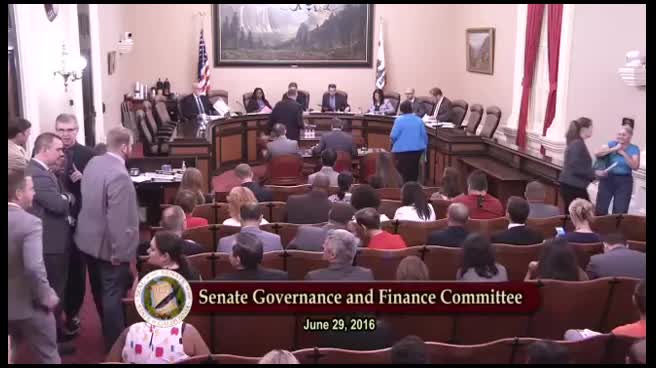 7MIN
Senate Standing Committee on Governance and Finance
 31MIN
Senate Standing Committee on Business, Professions and Economic Development
 2MIN
Assembly Floor
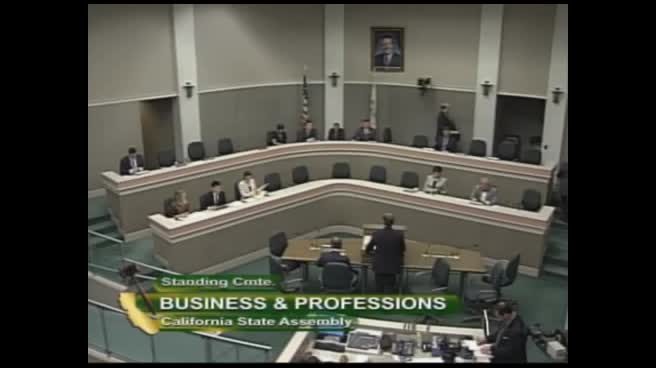 13MIN
Assembly Standing Committee on Business and Professions





Bill Co-Author(s):