AB 179: California Transportation Commission.
- Session Year: 2017-2018
- House: Assembly
- Latest Version Date: 2017-10-13
Existing law creates the California Transportation Commission, with various powers and duties relative to the programming of transportation capital projects and allocation of funds to those projects pursuant to the state transportation improvement program and various other transportation funding programs. Under existing law, the commission consists of 13 members, 9 of whom are to be appointed by the Governor in consultation with the Senate. Existing law requires the Governor, in appointing members, to use every effort to ensure geographic balance of representation.
This bill would additionally require the Governor, in appointing members, to use every effort to ensure that the commission has a diverse membership with expertise in transportation issues, taking into consideration factors including, but not limited to, socioeconomic background and professional experience, which may include experience working in, or representing, disadvantaged communities.
This bill would require the commission and the State Air Resources Board to hold at least 2 joint meetings per calendar year to coordinate their implementation of transportation policies.
Existing law creates the California Transportation Commission, with various powers and duties relative to the programming of transportation capital projects and allocation of funds to those projects pursuant to the state transportation improvement program and various other transportation funding programs. Under existing law, the commission consists of 13 members, 9 of whom are to be appointed by the Governor in consultation with the Senate. Existing law requires the Governor, in appointing members, to use every effort to ensure geographic balance of representation.
Existing law provides that the commission consists of 13 members: 11 voting members, of which 9 are appointed by the Governor subject to Senate confirmation, one is appointed by the Senate Committee on Rules, and one is appointed by the Speaker of the Assembly, and 2 Members of the Legislature who are appointed as nonvoting ex officio members.This bill would additionally require that one of those voting members have worked directly with those communities in the state that are most significantly burdened by, and vulnerable to, high levels of pollution, including, but not limited to, those communities with racially and ethnically diverse populations or with low-income populations. the Governor, in appointing members, to use every effort to ensure that the commission has a diverse membership with expertise in transportation issues, taking into consideration factors including, but not limited to, socioeconomic background and professional experience, which may include experience working in, or representing, disadvantaged communities.
This bill would require the commission and the State Air Resources Board to hold at least 2 joint meetings per calendar year to coordinate their implementation of transportation policies.
Existing law creates the California Transportation Commission, with various powers and duties relative to the programming of transportation capital projects and allocation of funds to those projects pursuant to the state transportation improvement program and various other transportation funding programs.
Existing law provides that the commission consists of 13 members: 11 voting members, of which 9 are appointed by the Governor subject to Senate confirmation, one is appointed by the Senate Committee on Rules, and one is appointed by the Speaker of the Assembly, and 2 Members of the Legislature who are appointed as nonvoting ex officio members.
This bill would require that one of those voting members have worked directly with those communities in the state that are most significantly burdened by, and vulnerable to, high levels of pollution, including, but not limited to, those communities with racially and ethnically diverse populations or with low-income populations.
This bill would require the commission and the State Air Resources Board to hold at least 2 joint meetings per calendar year to coordinate their implementation of transportation policies.
Existing law creates the California Transportation Commission, with various powers and duties relative to the programming of transportation capital projects and allocation of funds to those projects pursuant to the state transportation improvement program and various other transportation funding programs.
Existing law provides that the commission consists of 13 members: 11 voting members, of which 9 are appointed by the Governor subject to Senate confirmation, one is appointed by the Senate Committee on Rules, and one is appointed by the Speaker of the Assembly, and 2 Members of the Legislature who are appointed as nonvoting ex officio members.
This bill would require that 7 one of those voting members have specified qualifications. worked directly with those communities in the state that are most significantly burdened by, and vulnerable to, high levels of pollution, including, but not limited to, those communities with racially and ethnically diverse populations or with low-income populations.
This bill would require the commission to create an Environmental Justice Advisory Committee, comprised of at least 5 members, to advise the commission in its allocation and programming of transportation moneys and any other pertinent transportation policy matters. The bill would require that the members of the committee represent communities disproportionately burdened by, and vulnerable to, high levels of pollution and other environmental justice issues, and would require that the commission appoint only individuals nominated by environmental justice organizations and community groups to that committee.This bill would require the commission and the State Air Resources Board to hold at least 2 joint meetings per calendar year to coordinate their implementation of transportation policies.
Existing law creates the California Transportation Commission, with various powers and duties relative to the programming of transportation capital projects and allocation of funds to those projects pursuant to the state transportation improvement program and various other transportation funding programs.
Existing law provides that the commission consists of 13 members: 11 voting members, of which 9 are appointed by the Governor subject to Senate confirmation, one is appointed by the Senate Committee on Rules, and one is appointed by the Speaker of the Assembly, and 2 Members of the Legislature who are appointed as nonvoting ex officio members.
This bill would require that 6 7 of those voting members have specified qualifications.
This bill would require the commission to create an Environmental Justice Advisory Committee, comprised of at least 5 members, to advise the commission in its allocation and programming of transportation moneys and any other pertinent transportation policy matters. The bill would require that the members of the committee represent communities disproportionately burdened by, and vulnerable to, high levels of pollution and other environmental justice issues, and would require that the commission appoint only individuals nominated by environmental justice organizations and community groups to that committee.
This bill would require the commission and the State Air Resources Board to hold at least 2 joint meetings per calendar year to coordinate their implementation of transportation policies.
Existing law creates the California Transportation Commission, with various powers and duties relative to the programming of transportation capital projects and allocation of funds to those projects pursuant to the state transportation improvement program and various other transportation funding programs.
Existing law provides that the commission consists of 13 members: 11 voting members, of which 9 are appointed by the Governor subject to Senate confirmation, one is appointed by the Senate Committee on Rules, and one is appointed by the Speaker of the Assembly, and 2 Members of the Legislature who are appointed as nonvoting ex officio members.
This bill would require that 6 of those voting members have specified qualifications.
This bill would require the commission to create an Environmental Justice Advisory Committee, comprised of at least 5 members, to advise the commission in its allocation and programming of transportation moneys and any other pertinent transportation policy matters. The bill would require that the members of the committee represent communities disproportionately burdened by, and vulnerable to, high levels of pollution and other environmental justice issues, and would require that the commission appoint only individuals nominated by environmental justice organizations and community groups to that committee.
This bill would require the commission and the State Air Resources Board to hold at least 2 joint meetings per calendar year to coordinate their implementation of transportation policies.
(a)In appointing members, the Governor shall make every effort to ensure both of the following:
(1)That there is a geographic balance of representation on the commission as a whole, with members from the northern and southern areas and from the urban and rural areas of the state.
(2)That the commission has a diverse membership with expertise in transportation issues, taking into consideration factors including, but not limited to, socioeconomic background and professional experience, which may include experience working in, or representing, disadvantaged communities.
(b)Each member of the commission shall represent the state at large.
SEC. 2.Section 14516 is added to the Government Code, to read:14516.The commission and the State Air Resources Board shall hold at least two joint meetings per calendar year to coordinate their implementation of transportation policies, including interagency efforts, which shall include, but not be limited to, implementation of the sustainable freight action plan developed pursuant to Executive Order B-32-15, development of the California Transportation Plan update pursuant to Section 65071, and the setting of targets pursuant to subparagraph (A) of paragraph (2) of subdivision (b) of Section 65080.
(a)In appointing members, the Governor shall make every effort to assure that ensure both of the following:
(1)That there is a geographic balance of representation on the commission as a whole, with members from the northern and southern areas and from the urban and rural areas of the state.
(2)That the commission has a diverse membership with expertise in transportation issues, taking into consideration factors including, but not limited to, socioeconomic background and professional experience, which may include experience working in, or representing, disadvantaged communities.
Each(b)Each member of the commission shall represent the state at large.
SECTION 1.Section 14502 of the Government Code is amended to read:14502.The commission shall consist of 13 members appointed as follows:(a)(1)Nine members shall be appointed by the Governor with the advice and consent of the Senate. One member shall be appointed by the Speaker of the Assembly and one member shall be appointed by the Senate Committee on Rules, with neither of these members subject to confirmation by the Senate. A member appointed pursuant to this subdivision shall not simultaneously hold an elected public office, or serve on any local or regional public board or commission with business before the commission.(2)Of the members appointed pursuant to this subdivision one member shall have worked directly with those communities in the state that are most significantly burdened by, and vulnerable to, high levels of pollution, including, but not limited to, those communities with racially and ethnically diverse populations or with low-income populations.(3)When an appointment is made to the commission after January 1, 2018, the Governor, Speaker of the Assembly, and Senate Committee on Rules shall ensure that it is made in conformance with this subdivision.(b)One Member of the Senate appointed by the Senate Committee on Rules and one Member of the Assembly appointed by the Speaker of the Assembly shall be ex officio members without vote and shall participate in the activities of the commission to the extent that that participation is not incompatible with their positions as Members of the Legislature.(c)Notwithstanding any other provision of law, a voting member of the commission may serve on the High-Speed Rail Authority as established in Division 19.5 (commencing with Section 185000) of the Public Utilities Code.SEC. 2.Section 14516 is added to the Government Code, to read:14516.The commission and the State Air Resources Board shall hold at least two joint meetings per calendar year to coordinate their implementation of transportation policies, including interagency efforts, which shall include, but not be limited to, implementation of the sustainable freight action plan developed pursuant to Executive Order B-32-15, development of the California Transportation Plan update pursuant to Section 65071, and the setting of targets pursuant to subparagraph (A) of paragraph (2) of subdivision (b) of Section 65080.
The commission consists shall consist of 13 members appointed as follows:
(a)(1)Nine members shall be appointed by the Governor with the advice and consent of the Senate. One member shall be appointed by the Speaker of the Assembly and one member shall be appointed by the Senate Committee on Rules, with neither of these members subject to confirmation by the Senate. A member appointed pursuant to this subdivision shall not simultaneously hold an elected public office, or serve on any local or regional public board or commission with business before the commission.
(2)Of the members appointed pursuant to this subdivision one member shall have worked directly with those communities in the state that are most significantly burdened by, and vulnerable to, high levels of pollution, including, but not limited to, those communities with racially and ethnically diverse populations or with low-income populations.
(3)When an appointment is made to the commission after January 1, 2018, the Governor, Speaker of the Assembly, and Senate Committee on Rules shall ensure that it is made in conformance with this subdivision.
(b)One Member of the Senate appointed by the Senate Committee on Rules and one Member of the Assembly appointed by the Speaker of the Assembly shall be ex officio members without vote and shall participate in the activities of the commission to the extent that that participation is not incompatible with their positions as Members of the Legislature.
(c)Notwithstanding any other provision of law, a voting member of the commission may serve on the High-Speed Rail Authority as established in Division 19.5 (commencing with Section 185000) of the Public Utilities Code.
SEC. 2.Section 14516 is added to the Government Code, to read:14516.The commission and the State Air Resources Board shall hold at least two joint meetings per calendar year to coordinate their implementation of transportation policies, including interagency efforts, which shall include, but not be limited to, implementation of the sustainable freight action plan developed pursuant to Executive Order B-32-15, development of the California Transportation Plan update pursuant to Section 65071, and the setting of targets pursuant to subparagraph (A) of paragraph (2) of subdivision (b) of Section 65080.
The commission consists of 13 members appointed as follows:
(a)(1)Nine members shall be appointed by the Governor with the advice and consent of the Senate. One member shall be appointed by the Speaker of the Assembly and one member shall be appointed by the Senate Committee on Rules, with neither of these members subject to confirmation by the Senate. A member appointed pursuant to this subdivision shall not simultaneously hold an elected public office, or serve on any local or regional public board or commission with business before the commission.
(2)Of the members appointed pursuant to this subdivision, seven members shall have the following qualifications:
(A)Two members shall subdivision one member shall have worked directly with those communities in the state that are most significantly burdened by, and vulnerable to, high levels of pollution, including, but not limited to, those communities with racially and ethnically diverse populations or with low-income populations.
(B)One member shall have training and experience in sustainable transportation that includes addressing bicycle and pedestrian safety issues in transportation.(C)One member shall have training and experience in sustainable transportation that includes addressing transit issues.(D)One member shall have training and experience in, or be an authority on, the public health effects of transportation.(E)One member shall have training and experience in, or be an authority on, climate change mitigation, including the role of transportation projects on that mitigation.(F)One member shall have training and experience in, or be an authority on, air pollution.(3)When an appointment is made to the commission after January 1, 2018, the Governor, Speaker of the Assembly, and Senate Committee on Rules shall ensure that it is made in conformance with this subdivision.
(b)One Member of the Senate appointed by the Senate Committee on Rules and one Member of the Assembly appointed by the Speaker of the Assembly shall be ex officio members without vote and shall participate in the activities of the commission to the extent that that participation is not incompatible with their positions as Members of the Legislature.
(c)Notwithstanding any other provision of law, a voting member of the commission may serve on the High-Speed Rail Authority as established in Division 19.5 (commencing with Section 185000) of the Public Utilities Code.
SEC. 2.Section 14506.7 is added to the Government Code, to read:14506.7.(a)The commission shall create an Environmental Justice Advisory Committee to advise the commission in its allocation and programming of transportation moneys and any other pertinent transportation policy matters.(b)(1)The committee shall be comprised of at least five members.(2)Each member of the committee shall represent a community disproportionately burdened by, and vulnerable to, high levels of pollution and other environmental justice issues, including, but not limited to, communities with diverse racial and ethnic populations or low-income populations.(3)The commission shall appoint only individuals nominated by environmental justice organizations and community groups to the committee. (c)The commission shall provide members of the committee with a reasonable per diem for attending the committees meetings.SEC. 3.SEC. 2.Section 14516 is added to the Government Code, to read:14516.The commission and the State Air Resources Board shall hold at least two joint meetings per calendar year to coordinate their implementation of transportation policies, including interagency efforts, which shall include, but not be limited to, implementation of the sustainable freight action plan developed pursuant to Executive Order B-32-15, development of the California Transportation Plan update pursuant to Section 65071, and the setting of targets pursuant to subparagraph (A) of paragraph (2) of subdivision (b) of Section 65080.
The commission consists of 13 members appointed as follows:
(a)(1)Nine members shall be appointed by the Governor with the advice and consent of the Senate. One member shall be appointed by the Speaker of the Assembly and one member shall be appointed by the Senate Committee on Rules, with neither of these members subject to confirmation by the Senate. A member appointed pursuant to this subdivision shall not simultaneously hold an elected public office, or serve on any local or regional public board or commission with business before the commission.
(2)Of the members appointed pursuant to this subdivision, six seven members shall have the following qualifications:
(A)Two members shall have worked directly with those communities in the state that are most significantly burdened by, and vulnerable to, high levels of pollution, including, but not limited to, those communities with racially and ethnically diverse populations or with low-income populations.
(B)One member shall have training and experience in sustainable transportation that includes addressing bicycle and pedestrian safety issues in transportation.
(C)One member shall have training and experience in sustainable transportation that includes addressing transit issues.
(D)One member shall have training and experience in, or be an authority on, the public health effects of transportation, including the health effects of air pollution. transportation.
(E)One member shall have training and experience in, or be an authority on, climate change mitigation, including the role of transportation projects on that mitigation.
(F)One member shall have training and experience in, or be an authority on, air pollution.
(3)When an appointment is made to the commission after January 1, 2018, the Governor, Speaker of the Assembly, and Senate Committee on Rules shall ensure that it is made in conformance with this subdivision.
(b)One Member of the Senate appointed by the Senate Committee on Rules and one Member of the Assembly appointed by the Speaker of the Assembly shall be ex officio members without vote and shall participate in the activities of the commission to the extent that that participation is not incompatible with their positions as Members of the Legislature.
(c)Notwithstanding any other provision of law, a voting member of the commission may serve on the High-Speed Rail Authority as established in Division 19.5 (commencing with Section 185000) of the Public Utilities Code.
SEC. 2.Section 14506.7 is added to the Government Code, to read:14506.7.(a)The commission shall create an Environmental Justice Advisory Committee to advise the commission in its allocation and programming of transportation moneys and any other pertinent transportation policy matters.
(b)(1)The committee shall be comprised of at least five members.
(2)Each member of the committee shall represent a community disproportionately burdened by, and vulnerable to, high levels of pollution and other environmental justice issues, including, but not limited to, communities with diverse racial and ethnic populations or low-income populations.
(3)The commission shall appoint only individuals nominated by environmental justice organizations and community groups to the committee.
(c)The commission shall provide members of the committee with a reasonable per diem for attending the committees meetings.
SEC. 3.Section 14516 is added to the Government Code, to read:14516.The commission and the State Air Resources Board shall hold at least two joint meetings per calendar year to coordinate their implementation of transportation policies, including interagency efforts, which shall include, but not be limited to, implementation of the sustainable freight action plan develop developed pursuant to Executive Order B-32-15, development of the California Transportation Plan update pursuant to Section 65071, and the setting of targets pursuant to subparagraph (A) of paragraph (2) of subdivision (b) of Section 65080.
REVISIONS: HeadingLine 2.The commission consists of 13 members appointed as follows:
(a)(1)Nine members shall be appointed by the Governor with the advice and consent of the Senate. One member shall be appointed by the Speaker of the Assembly and one member shall be appointed by the Senate Committee on Rules, with neither of these members subject to confirmation by the Senate. A member appointed pursuant to this subdivision shall not simultaneously hold an elected public office, or serve on any local or regional public board or commission with business before the commission.
(2)Of the members appointed pursuant to this subdivision, six members shall have the following qualifications:
(A)Two members shall have worked directly with those communities in the state that are most significantly burdened by, and vulnerable to, high levels of pollution, including, but not limited to, those communities with racially and ethnically diverse populations or with low-income populations.
(B)One member shall have training and experience in sustainable transportation that includes addressing bicycle and pedestrian safety issues in transportation.
(C)One member shall have training and experience in sustainable transportation that includes addressing transit issues.
(D)One member shall have training and experience in, or be an authority on, the public health effects of transportation, including the health effects of air pollution.
(E)One member shall have training and experience in, or be an authority on, climate change mitigation, including the role of transportation projects on that mitigation.
(3)When an appointment is made to the commission after January 1, 2018, the Governor, Speaker of the Assembly, and Senate Committee on Rules shall ensure that it is made in conformance with this subdivision.
(b)One Member of the Senate appointed by the Senate Committee on Rules and one Member of the Assembly appointed by the Speaker of the Assembly shall be ex officio members without vote and shall participate in the activities of the commission to the extent that such that participation is not incompatible with their positions as Members of the Legislature.
(c)Notwithstanding any other provision of law, a voting member of the commission may serve on the High-Speed Rail Authority as established in Division 19.5 (commencing with Section 185000) of the Public Utilities Code.
SEC. 2.Section 14506.7 is added to the Government Code, to read:14506.7.(a)The commission shall create an Environmental Justice Advisory Committee to advise the commission in its allocation and programming of transportation moneys and any other pertinent transportation policy matters.
(b)(1)The committee shall be comprised of at least five members.
(2)Each member of the committee shall represent a community disproportionately burdened by, and vulnerable to, high levels of pollution and other environmental justice issues, including, but not limited to, communities with diverse racial and ethnic populations or low-income populations.
(3)The commission shall appoint only individuals nominated by environmental justice organizations and community groups to the committee.
(c)The commission shall provide members of the committee with a reasonable per diem for attending the committees meetings.
SEC. 3.Section 14516 is added to the Government Code, to read:14516.The commission and the State Air Resources Board shall hold at least two joint meetings per calendar year to coordinate their implementation of transportation policies, including interagency efforts, which shall include, but not be limited to, implementation of the sustainable freight action plan develop pursuant to Executive Order B-32-15, development of the California Transportation Plan update pursuant to Section 65071, and the setting of targets pursuant to subparagraph (A) of paragraph (2) of subdivision (b) of Section 65080.
|
Date
|
Status
|
|---|---|
| Oct 13, 2017 | Chaptered by Secretary of State - Chapter 737, Statutes of 2017. |
| Oct 13, 2017 | Approved by the Governor. |
| Sep 12, 2017 | Enrolled and presented to the Governor at 2:30 p.m. |
| Sep 5, 2017 | Senate amendments concurred in. To Engrossing and Enrolling. (Ayes 50. Noes 25.). |
| Aug 31, 2017 | In Assembly. Concurrence in Senate amendments pending. May be considered on or after September 2 pursuant to Assembly Rule 77. |
| Aug 31, 2017 | Read third time. Passed. Ordered to the Assembly. |
| Aug 22, 2017 | Read second time. Ordered to third reading. |
| Aug 21, 2017 | From committee: Be ordered to second reading pursuant to Senate Rule 28.8. |
| Jul 13, 2017 | Read second time and amended. Re-referred to Com. on APPR. |
| Jul 12, 2017 | From committee: Amend, and do pass as amended and re-refer to Com. on APPR. (Ayes 9. Noes 4.) (July 11). |
| Jun 8, 2017 | Referred to Com. on T. & H. |
| May 30, 2017 | In Senate. Read first time. To Com. on RLS. for assignment. |
| May 30, 2017 | Read third time. Passed. Ordered to the Senate. (Ayes 52. Noes 24. Page 1787.) |
| May 4, 2017 | Read second time. Ordered to third reading. |
| May 3, 2017 | From committee: Do pass. (Ayes 11. Noes 5.) (May 3). |
| Apr 25, 2017 | From committee: Do pass and re-refer to Com. on APPR. (Ayes 9. Noes 5.) (April 24). Re-referred to Com. on APPR. |
| Apr 24, 2017 | Re-referred to Com. on TRANS. |
| Apr 20, 2017 | From committee chair, with author's amendments: Amend, and re-refer to Com. on TRANS. Read second time and amended. |
| Apr 17, 2017 | In committee: Set, first hearing. Hearing canceled at the request of author. |
| Apr 17, 2017 | Coauthors revised. |
| Feb 15, 2017 | Re-referred to Com. on TRANS. |
| Feb 14, 2017 | From committee chair, with author's amendments: Amend, and re-refer to Com. on TRANS. Read second time and amended. |
| Jan 30, 2017 | Referred to Com. on TRANS. |
| Jan 19, 2017 | From printer. May be heard in committee February 18. |
| Jan 18, 2017 | Read first time. To print. |
|
Date
|
Description
|
Location
|
Votes
|
|
|---|---|---|---|---|
| Sep 5, 2017 | AB 179 CERVANTES Concurrence in Senate Amendments | Assembly Floor |
Passed |
|
| Aug 31, 2017 | Assembly 3rd Reading AB179 Cervantes et al. By Beall | Senate Floor |
Passed |
|
| Jul 11, 2017 | Do pass as amended, but first amend, and re-refer to the Committee on [Appropriations] | Senate Standing Committee on Transportation and Housing |
Passed |
|
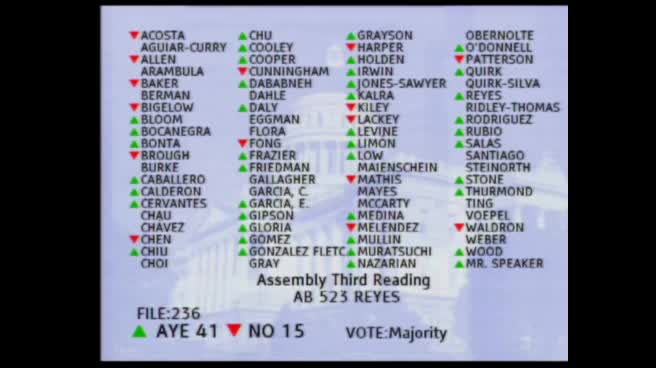
| May 30, 2017 | AB 179 CERVANTES Assembly Third Reading | Assembly Floor |
Passed |
|
| May 3, 2017 | Do pass. | Assembly Standing Committee on Appropriations |
Passed |
|
| Apr 24, 2017 | Do pass and be re-referred to the Committee on [Appropriations] | Assembly Standing Committee on Transportation |
Passed |
This list shows positions taken on this bill by organizations on the date displayed, which is linked to the original source.
Positions by individuals are not included.
CONCURRENCE IN SENATE AMENDMENTS
CSA1 Bill Id:AB 179
Author:(Cervantes)
As Amended Ver:July 13, 2017
Majority vote
ASSEMBLY: | 52-24 | (May 30, 2017) | SENATE: | 24-13 | (August 31, 2017) |
Original Committee Reference: TRANS.
SUMMARY: Directs the Governor, when appointing commissioners to the California Transportation Commission (CTC), to use every effort to ensure that the CTC has a diverse membership with expertise in transportation issues, taking into consideration factors including socio-economic background and professional experience, including working in or representing disadvantaged communities; directs the CTC and the State Air Resources Board (ARB) to hold at least two joint meetings per calendar year to coordinate their implementation of transportation policies.
The Senate amendments:
- Strike the specific requirement that one of the 11 voting members of the CTC must have worked directly with communities that are most significantly burdened by high levels of pollution.
- Require the Governor, in appointing CTC members, to use every effort to ensure that the CTC has a diverse membership with expertise in transportation issues, taking into consideration factors including socio-economic background and professional experience, including working in or representing disadvantaged communities.
EXISTING LAW:
- Directs CTC to advise and assist the Secretary of Transportation and the Legislature in formulating and evaluating state policies and plans for transportation programs in the state.
- Requires, in appointing members of CTC, that the Governor make every effort to assure that there is a geographic balance of representation, with members from northern and southern areas and from the urban and rural areas of the state.
AS PASSED BY THE ASSEMBLY, this bill:
- Provided that, of the 11 voting members of CTC, one member must have experience working directly with communities within California that are most significantly burdened by, and vulnerable to, high levels of pollution, including communities with racially and ethnically diverse populations or low-income populations.
- Directed CTC and the State Air Resources Board (ARB) to hold at least two joint meetings per calendar year to coordinate their implementation of transportation policies.
FISCAL EFFECT: According to the Senate Appropriations Committee, pursuant to Senate Rule 28.8, negligible state costs.
COMMENTS: The Legislature originally created the CTC in 1978 as a result of concerns that the state lacked a single, unified transportation policy. The 13-member commission is responsible for programming and allocating of funds for the construction of highway, passenger rail, active transportation, aeronautics, and transit improvements throughout California. CTC also advises and assists the Secretary of the California State Transportation Agency and the Legislature in formulating and evaluating state policies and plans for California's transportation programs.
According to the author, CTC is a "highly consequential body with the discretion to make important policy decisions on transportation issues affecting Californians at the state, regional, and local level." The author asserts that the "identities of the commissioners are pivotal not only for technical backgrounds, but for their ability to sympathize with our state's most disadvantaged communities." In support of the need to change the makeup of CTC commissioners, the author offers the following evidence:
- There are no technical requirements for the appointment of CTC commissioners, unlike appointments made to the Coastal Commission, ARB, and the Strategic Growth Council, despite the fact that CTC is responsible for developing and adopting guidelines for a number of transportation-related programs and plans.
- Reportedly, some commissioners expressed concern that the current level of funding going to disadvantaged communities is too high.
- Some commissioners reportedly made sarcastic comments about the need for the Active Transportation Program.
- The CTC annual report to the Legislature is disproportionally focused on roads and highways, at the expense of other forms of transportation.
The author asserts, "State transportation policy is not merely a study of streets and roads – it must also include other forms of transportation, such as mass transit, bicycling, or walking. The effects of transportation on other areas of public policy such as public health or climate change should also be considered. In addition, under existing law, there is no statutory guarantee that commissioners will give voice to the concerns of our disadvantaged communities, or the world of transportation that exists beyond roads and highways."
Please see the policy committee analysis for full discussion of this bill.
Analysis Prepared by: Janet Dawson / TRANS. / (916) 319-2093 FN: 0001368
Office of Senate Floor Analyses (916) 651-1520 Fax: (916) 327-4478 | AB |
THIRD READING
Bill No: AB 179
:
SENATE TRANS. & HOUSING COMMITTEE: 9-4, 7/11/17
AYES: Beall, Allen, Atkins, McGuire, Mendoza, Roth, Skinner, Wieckowski, Wiener
NOES: Cannella, Gaines, Morrell, Vidak
SENATE APPROPRIATIONS COMMITTEE: Senate Rule 28.8
ASSEMBLY FLOOR: 52-24, 5/30/17 - See last page for vote
DIGEST:
This bill requires the Governor to ensure that the California Transportation Commission (CTC) has a diverse membership with expertise in transportation issues.
Existing law:
- Directs CTC to advise and assist the Secretary of Transportation and the Legislature in formulating and evaluating state policies and plans for transportation programs in the state.
- Provides CTC with 13 members, appointed as follows:
- Nine members appointed by the Governor with the advice and consent of the Senate;
- One member appointed by the Speaker of the Assembly;
- One member appointed by the Senate Rules Committee; and,
- Two ex-officio, non-voting members appointed one each from the State Senate and Assembly.
- Provides that, other than ex-officio members, CTC members hold office for terms of four years.
- Requires, in appointing members of CTC, that the Governor make every effort to assure that there is a geographic balance of representation, with members from northern and southern areas and from the urban and rural areas of the state, and provides that each member is to serve the state at large.
This bill:
- Requires the Governor to make every effort to ensure that the CTC has a diverse membership with expertise in transportation issues, taking into consideration factors including socioeconomic background and professional experience, which may include experience working in, or representing, disadvantaged communities.
- Requires the CTC and the State Air Resources Board (ARB) to hold at least two joint meetings annually to coordinate their implementation of transportation policies.
Comments
- Purpose. The author introduced this bill because recent changes to state law have required other state boards and commissions to include members with experience with disadvantaged communities. Without such a provision there is no statutory guarantee of representation at the CTC.
- Who’s qualified? The author correctly notes that both the California Coastal Commission and the ARB are required to have members with experience working with disadvantaged communities. (The ARB requirement only extends to appointments by the Legislature.) However, this is by no means a uniform requirement. As examples: The California Public Utilities Commission, the State Board of Education, the High Speed Rail Authority, the California Regional Water Quality Control Boards and the Agricultural Labor Relations Board have no specific qualifications for their members. The California Energy Commission requires that its members represent specified professions.
- It’s Not Your Father’s Transportation Infrastructure. The concerns of the 1970’s, when the CTC was created, were about how to create a unified statewide vision for transportation. Now, more than 40 years later, the issues of pollution, climate change, congestion, economic inequality, land use and the creation of new innovative technologies have greatly complicated the CTC’s job. It’s no longer just about building roads; it’s about providing mobility. Like any other institution, adapting to new concerns and values will be a challenge for the CTC.
FISCAL EFFECT: Appropriation: Fiscal Com.: Local:
Alameda County Board of Supervisors
American Cancer Society Cancer Action Network
American Lung Association in California
Asian Pacific Environment Network
Asian Law Alliance
Breathe California
California Bicycle Coalition
California Environmental Justice Alliance
California Pan Ethnic Health Network
California Walks
Catholic Charities, Diocese of Stockton
Center for Community Action and Environmental Justice
Center for Climate Change and Health
Change Lab Solutions
ClimatePlan
Climate Resolve
Coalition for Clean Air
Father and Families of San Joaquin
Leadership Counsel for Justice and Accountability
Los Angeles County Bicycle Coalition
Move LA
Multicultural Communities for Mobility
PolicyLink
Physicians for Social Responsibility – Los Angeles
Public Advocates
Safe Routes to School National Partnership
San Diego County Bicycle Coalition
Sierra Club California
Sunflower Alliance
TransForm
Trust for Public Lands
350 Bay Area
OPPOSITION: (Verified 8/23/17)
California Delivery Association
Orange County Transportation Authority
Self-Help Counties Coalition
ASSEMBLY FLOOR: 52-24, 5/30/17
AYES: Aguiar-Curry, Arambula, Berman, Bloom, Bocanegra, Bonta, Burke, Caballero, Calderon, Cervantes, Chiu, Chu, Cooley, Cooper, Dababneh, Daly, Friedman, Cristina Garcia, Eduardo Garcia, Gipson, Gloria, Gomez, Gonzalez Fletcher, Gray, Grayson, Holden, Irwin, Jones-Sawyer, Kalra, Levine, Limón, Low, McCarty, Medina, Mullin, Muratsuchi, Nazarian, O'Donnell, Quirk, Quirk-Silva, Reyes, Ridley-Thomas, Rodriguez, Rubio, Salas, Santiago, Mark Stone, Thurmond, Ting, Weber, Wood, Rendon
NOES: Acosta, Travis Allen, Baker, Bigelow, Brough, Chávez, Cunningham, Dahle, Flora, Fong, Frazier, Gallagher, Harper, Kiley, Lackey, Maienschein, Mathis, Mayes, Melendez, Obernolte, Patterson, Steinorth, Voepel, Waldron
NO VOTE RECORDED: Chau, Chen, Choi, Eggman
8/24/17 13:58:22
**** END ****
SENATE COMMITTEE ON TRANSPORTATION AND HOUSING
Senator Jim Beall, Chair
2017 - 2018 Regular
Bill No: AB 179 Hearing Date: 7/11/2017
Author: | Cervantes | ||
Version: | 6/8/2017 | ||
Urgency: | No | Fiscal: | Yes |
Consultant: | Randy Chinn | ||
SUBJECT: California Transportation Commission
DIGEST: This bill requires one member of the California Transportation Commission (CTC) to have worked directly with those communities that are most significantly burdened by high levels of pollution, including those communities with racially and ethnically diverse populations or with low-income populations.
ANALYSIS:
Existing law:
- Directs CTC to advise and assist the Secretary of Transportation and the Legislature in formulating and evaluating state policies and plans for transportation programs in the state.
- Provides CTC with 13 members, appointed as follows:
- Nine members appointed by the Governor with the advice and consent of the Senate;
- One member appointed by the Speaker of the Assembly;
- One member appointed by the Senate Rules Committee; and,
- Two ex-officio, non-voting members appointed one each from the State Senate and Assembly.
- Provides that, other than ex-officio members, CTC members hold office for terms of four years.
- Requires, in appointing members of CTC, that the Governor make every effort to assure that there is a geographic balance of representation, with members from northern and southern areas and from the urban and rural areas of the state, and provides that each member is to serve the state at large.
This bill:
- Requires one member of the CTC to have worked directly with those communities that are most significantly burdened by high levels of pollution, including those communities with racially and ethnically diverse populations or with low-income populations.
- Requires the CTC and the State Air Resources Board (ARB) to hold at least two joint meetings annually to coordinate their implementation of transportation policies.
COMMENTS:
- Purpose. The author introduced this bill because recent changes to state law have required other state boards and commissions to include members with experience with disadvantaged communities. Without such a provision there is no statutory guarantee of representation at the CTC.
- Who’s qualified? The author correctly notes that both the California Coastal Commission and the ARB are required to have members with experience working with disadvantaged communities. (The ARB requirement only extends to appointments by the Legislature.) However, this is by no means a uniform requirement. As examples: The California Public Utilities Commission, the State Board of Education, the High Speed Rail Authority, the California Regional Water Quality Control Boards and the Agricultural Labor Relations Board have no specific qualifications for their members. The California Energy Commission requires that its members represent specified professions.
- It’s Not Your Father’s Transportation Infrastructure. The concerns of the 1970’s, when the CTC was created, were about how to create a unified statewide vision for transportation. Now, more than 40 years later, the issues of pollution, climate change, congestion, economic inequality, land use and the creation of new innovative technologies have greatly complicated the CTC’s job. It’s no longer just about building roads; it’s about providing mobility. Like any other institution, adapting to new concerns and values will be a challenge for the CTC.
- I Can’t Hear You. Supporters have provided anecdotal evidence of dismissiveness by CTC commissioners, though they generally note improving access to and responsiveness by, CTC staff. Supporters are concerned that they aren’t being heard, though it is difficult to identify specific CTC decisions which demonstrate their point.
- Representing Everyone. Setting aside one commissioner slot for an environmental justice representative is a slippery slope which will naturally lead to the atomization of the CTC, with every interest group desiring a commissioner representing their specific interest. This seems unwise, particularly given that an integrated transportation system is a matter of statewide interest and that commissioners are required by law to serve the state at large. There are alternative mechanisms to this bill for ensuring that underrepresented voices are heard, such as establishing an advisory committee for environmental justice issues or establishing a policy requiring the CTC to consider environmental justice perspectives when making decisions. Consequently, the committee may wish to hold this bill.
Related Legislation:
AB 174 (Bigelow, 2017) — would require at least one voting member of CTC to reside in a rural county with a population of less than 100,000 individuals. AB 174 is pending in this committee.
AB 1982 (Bloom, 2016) — would have added two members representing disadvantaged communities to CTC. AB 1982 failed passage in the Assembly.
AB 2382 (Lopez, 2016) — would have required that at least one member of the California High-Speed Rail Authority Board appointed by the Governor be a person who is from a disadvantaged community. AB 2382 failed passage in the Assembly.
AB 1288 (Atkins, Chapter 586, Statutes of 2015) — added two additional legislative appointees to the Air Resources Board with expertise in environmental justice.
FISCAL EFFECT: Appropriation: Fiscal Com.: Local:
POSITIONS: (Communicated to the committee before noon on Wednesday,
July 5, 2017.)
SUPPORT:
Alameda County Board of Supervisors
American Cancer Society Cancer Action Network
American Lung Association in California
Asian Pacific Environment Network
Asian Law Alliance
Breathe California
California Bicycle Coalition
California Environmental Justice Alliance
California Pan Ethnic Health Network
California Walks
Catholic Charities, Diocese of Stockton
Center for Community Action and Environmental Justice
Center for Climate Change and Health
Change Lab Solutions
ClimatePlan
Climate Resolve
Coalition for Clean Air
Father and Families of San Joaquin
Leadership Counsel for Justice and Accountability
Los Angeles County Bicycle Coalition
Move LA
Multicultural Communities for Mobility
PolicyLink
Physicians for Social Responsibility – Los Angeles
Public Advocates
Safe Routes to School National Partnership
San Diego County Bicycle Coalition
Sierra Club California
Sunflower Alliance
TransForm
Trust for Public Lands
350 Bay Area
OPPOSITION:
California Delivery Association
Orange County Transportation Authority
Self-Help Counties Coalition
-- END --
ASSEMBLY THIRD READING
ATR Bill Id:AB 179
Author:(Cervantes)
As Amended Ver:April 20, 2017
Majority vote
Committee | Votes | Ayes | Noes |
Transportation | 9-5 | Aguiar-Curry, Berman, Bocanegra, Chu, Daly, Friedman, Medina, Nazarian, O'Donnell | Frazier, Fong, Baker, Harper, Mathis |
Appropriations | 11-5 | Gonzalez Fletcher, Bloom, Bocanegra, Bonta, Calderon, Chau, Eggman, Friedman, Eduardo Garcia, Muratsuchi, Reyes | Bigelow, Brough, Fong, Gallagher, Obernolte |
SUMMARY: Requires one of the 11 voting members of the California Transportation Commission (CTC) to have prescribed experience. Specifically, this bill:
- Provides that, of the 11 voting members of CTC, one member must have must have experience working directly with communities within California that are most significantly burdened by, and vulnerable to, high levels of pollution, including communities with racially and ethnically diverse populations or low-income populations.
- Directs CTC and the State Air Resources Board (ARB) to hold at least two joint meetings per calendar year to coordinate their implementation of transportation policies.
EXISTING LAW:
- Directs CTC to advise and assist the Secretary of Transportation and the Legislature in formulating and evaluating state policies and plans for transportation programs in the state.
- Establishes CTC with 13 members, appointed as follows:
- Nine members appointed by the Governor with the advice and consent of the Senate;
- One member appointed by the Speaker of the Assembly;
- One member appointed by the Senate Rules Committee; and,
- Two ex-officio, non-voting members appointed from the State Senate and Assembly, usually the respective chairs of the transportation policy committee in each house.
- Requires that no CTC member simultaneously hold an elected public office or serve on any local or regional pubic board or commission with business before the commission.
- Provides that, other than ex-officio members, CTC members hold office for terms of four years.
- Requires, in appointing members of CTC, that the Governor make every effort to assure that there is a geographic balance of representation, with members from northern and southern areas and from the urban and rural areas of the state.
- Requires CTC to include in regional transportation plan guidelines a summary of policies, practices, or projects that have been employed by metropolitan planning organizations to promote health and health equity.
FISCAL EFFECT: According to the Assembly Appropriations Committee, special fund costs in the tens of thousands of dollars, for per diem and expenses for CTC commissioners and ARB board members to travel to and participate in the two required meetings, to the extent that meeting this provision requires additional meetings that would otherwise not have taken place.
COMMENTS: The Legislature originally created the CTC in 1978 as a result of concerns that the state lacked a single, unified transportation policy. The 13-member commission is responsible for programming and allocating of funds for the construction of highway, passenger rail, active transportation, aeronautics, and transit improvements throughout California. CTC also advises and assists the Secretary of the California State Transportation Agency and the Legislature in formulating and evaluating state policies and plans for California's transportation programs.
According to the author, CTC is a "highly consequential body with the discretion to make important policy decisions on transportation issues affecting Californians at the state, regional, and local level." The author asserts that the "identities of the commissioners are pivotal not only for technical backgrounds, but for their ability to sympathize with our state's most disadvantaged communities." In support of the need to change the makeup of CTC commissioners, the author offers the following evidence:
- There are no technical requirements for the appointment of CTC commissioners, unlike appointments made to the Coastal Commission, ARB, and the Strategic Growth Council, despite the fact that CTC is responsible for developing and adopting guidelines for the following programs and plans:
- State Highway and Operations Program;
- Active Transportation Program;
- State Transportation Improvement Program (STIP);
- Regional Transportation Plan; and,
- California Transportation Plan.
- Reportedly, some commissioners expressed concern that the current level of funding going to disadvantaged communities is too high.
- Some commissioners reportedly made sarcastic comments about the need for the Active Transportation Program.
- The CTC annual report to the Legislature is disproportionally focused on roads and highways, at the expense of other forms of transportation.
The author asserts, "State transportation policy is not merely a study of streets and roads—it must also include other forms of transportation, such as mass transit, bicycling, or walking. The effects of transportation on other areas of public policy such as public health or climate change should also be considered. In addition, under existing law, there is no statutory guarantee that commissioners will give voice to the concerns of our disadvantaged communities, or the world of transportation that exists beyond roads and highways."
Writing in support of this bill, the California Bicycle Coalition states, "the current membership of the CTC does not reflect the diverse needs of the users of California's transportation system. In our advocacy experience the CTC has struggled to update transportation program guidance to keep pace with our ambitious climate laws and equity goals, and address the significant negative impacts on low-income communities of color that are created by our transportation system. These shortcomings are symptomatic of a need for reform at the CTC."
Writing in opposition to this bill, the Valley Industry and Commerce Association states, "[AB 179] would require commissioners to primarily represent the special interests rather than the interest of their constituents: the people of California. Environmental issues are important and relevant to the development of transportation policy, as is the concern for safeguarding historically marginalized communities. The makeup of the CTC, however, is not the appropriate medium through which to address these issues…Furthermore, we trust in the discretion of our popularly elected Governor and Legislature to appoint and approve candidates whom they deem capable of executing the duties of the CTC."
Committee concerns:
- This bill sets forth unclear expectations regarding the role of the CTC. The author and advocates suggest that CTC has failed to appropriately reflect prevailing state policies, as evidenced in its adoption of the STIP. For example, the author suggests "In 2016, 84% of the Commission's STIP guidelines were for road and highway expansion, often with little obvious benefit for disadvantaged communities. Many of them have the potential to increase both greenhouse gas emissions and air pollution."
While it is accurate that CTC adopts the final STIP (the biennial five-year plan adopted by CTC for future allocations of certain state transportation funds for state highway improvements, intercity rail, and regional highway and transit improvements), its role in the adoption is limited, by statute.
The STIP is made of up two parts: the regional transportation improvement program (RTIP) prepared by regional transportation authorities, which represents 75% of the funding available to the STIP; and the interregional transportation improvement program (ITIP), developed by the California Department of Transportation (Caltrans), which represents 25% of the funding available to the STIP.
Projects submitted by regions in their RTIPs, must be derived from adopted Regional Transportation Plans (RTPs). RTPs, are prepared by regional agencies to identify a 20-year vision for transportation priorities and investments. RTPs in major metropolitan areas must include sustainable communities strategies, developed to ensure regions meet greenhouse gas emission reduction targets established by ARB. Sustainable Community Strategies (SCSs) contain land use, housing, and transportation strategies that, if implemented, would allow the region to meet its greenhouse gas emission reduction targets. ARB reviews SCSs adopted by regions to confirm and accept the region's determination that the SCS, if implemented, would meet the regional greenhouse gas emission reduction targets. Existing law generally directs CTC to either adopt the entire RTIP as submitted or reject the entire RTIP. CTC cannot choose or reject individual projects listed in the RTIP for funding. (CTC has discretion, albeit limited, with regard to projects that exceed a county's minimum guarantee funding level. CTC can affect project selection for projects above the minimum guarantee, but projects still have to have been identified in the RTP.)
With regard to the ITIP, existing law is very specific as to what it is to include. It prescribes that the ITIP has two parts:
- The first, funded from up to 10% of new STIP funding, is nominated solely by Caltrans in the ITIP. It is subject to a formula referred to as the north/south split that requires 40% of funds be directed to northern California counties and 60% directed to southern California counties. The projects may include state highway, intercity passenger rail, mass transit guideway, or grade separation projects;
- The second part, funded from at least 15% of new STIP funding, is not subject to the north/south split. It is limited to intercity rail projects (including Amtrak feeder bus, interregional commuter rail and grade separation projects) and to improvements outside urbanized areas on interregional road system routes (which are specified in statute). At least 15% of the 15% (or at least 2.25% of new STIP funding) must be programmed for intercity rail projects, including interregional commuter rail and grade separation projects.
Existing law requires that the ITIP includes the following types of projects:
- Projects to improve state highways;
- Projects to improve the intercity passenger rail system; and,
- Projects to improve interregional movement of people, vehicles, and goods.
Although the CTC is responsible for developing guidelines to guide development of RTP, RTIPS, and ITIPs, its policies must, and do, reflect current law, including executive orders proclaimed by the Governor.
This lengthy explanation of the STIP process is to illustrate what seems to be a misconception as to the role of the CTC in adopting the STIP. The Legislature gives CTC very specific parameters within which to develop STIP guidelines and to adopt the STIP. CTC does not itself develop projects. It must approve (or reject entirely) RTIPs and ITIPs submitted to it. Consequently, prescribing a specific makeup of the commissioners would likely not render substantially differing outcomes, assuming, that is, that CTC stays within the statutorily prescribed boundaries set forth by the Legislature
- Frustration with current transportation planning, programming and investments is misplaced. As illustrated above, existing law weighs in heavily to direct expected outcomes in transportation planning and programming, leaving CTC with minimal ability to substantially affect an alternative outcome even it if so chose. Furthermore, all of the current CTC commissioners appointed by the Governor have been appointed Governor Brown. If advocates are unhappy with CTC outcomes, their efforts would be more appropriately directed either to the Legislature, to adopt laws more in line with the advocates' desired outcomes, or to the Governor, who has unrestricted authority to appoint CTC commissioners, other than the commissioners must represent the state geographically.
Please see the policy committee analysis for full discussion of this bill.
Analysis Prepared by: Janet Dawson / TRANS. / (916) 319-2093 FN: 0000272
Date of Hearing: May 3, 2017
ASSEMBLY COMMITTEE ON APPROPRIATIONS
Lorena Gonzalez Fletcher, Chair
ABPCA Bill Id:AB 179
Author:(Cervantes) – As Amended Ver:April 20, 2017
Policy Committee: | Transportation | Vote: | 9 - 5 |
|
| ||
|
|
Urgency: No State Mandated Local Program: No Reimbursable: No
SUMMARY:
This bill requires one of the voting members of the California Transportation Commission (CTC) to have prescribed experience. Specifically, this bill:
- Requires that one member of the CTC have experience working directly with communities within California that are most significantly burdened by, and vulnerable to, high levels of pollution, including communities with racially and ethnically diverse populations or low-income populations.
- Directs CTC and the State Air Resources Board (ARB) to hold at least two joint meetings per calendar year to coordinate their implementation of transportation policies.
FISCAL EFFECT:
Special fund costs in the tens of thousands of dollars, for per diem and expenses for CTC commissioners and ARB board members to travel to and participate in the two required meetings, to the extent that meeting this provision requires additional meetings that would otherwise not have taken place.
COMMENTS:
- Background. Existing law establishes the CTC with 11 voting members and two ex-officio members. The 11 voting members include nine members appointed by the Governor with the advice and consent of the Senate, one member appointed by the Speaker of the Assembly, and one member appointment by the Senate Rules Committee.
- Purpose. According to the author, “The only qualification requirements currently imposed on the 10 appointed CTC commissioners is that they must not serve in elected office. They must also not serve on any local or regional board or commission that has business before the CTC. Commissioners are not required to have either technical backgrounds or expertise in matters related to transportation issues. This is in stark contrast to other state commissions and boards that have, enshrined in state law, requirements that at least some members have experience working directly with disadvantaged communities.”
Analysis Prepared by: Jessica Peters / APPR. / (916) 319-2081
Date of Hearing: April 24, 2017
ASSEMBLY COMMITTEE ON TRANSPORTATION
Jim Frazier, Chair
ABPCA Bill Id:AB 179 (
Author:Cervantes) – As Amended Ver:April 20, 2017
REVISED
SUBJECT: California Transportation Commission
SUMMARY: Requires 1 of the 11 voting members of the California Transportation Commission (CTC) to have prescribed experience. Specifically, this bill:
- Provides that, of the 11 voting members of CTC, 1 member must have must have experience working directly with communities within California that are most significantly burdened by, and vulnerable to, high levels of pollution, including communities with racially and ethnically diverse populations or low-income populations.
- Directs CTC and the State Air Resources Board (ARB) to hold at least two joint meetings per calendar year to coordinate their implementation of transportation policies.
EXISTING LAW:
- Directs CTC to advise and assist the Secretary of Transportation and the Legislature in formulating and evaluating state policies and plans for transportation programs in the state.
- Establishes CTC with 13 members, appointed as follows:
- Nine members appointed by the Governor with the advice and consent of the Senate;
- One member appointed by the Speaker of the Assembly;
- One member appointed by the Senate Rules Committee; and,
- Two ex-officio, non-voting members appointed from the State Senate and Assembly, usually the respective chairs of the transportation policy committee in each house.
- Requires that no CTC member simultaneously hold an elected public office or serve on any local or regional pubic board or commission with business before the commission.
- Provides that, other than ex-officio members, CTC members hold office for terms of four years.
- Requires, in appointing members of CTC, that the Governor make every effort to assure that there is a geographic balance of representation, with members from northern and southern areas and from the urban and rural areas of the state.
- Requires CTC to include in regional transportation plan guidelines a summary of policies, practices, or projects that have been employed by metropolitan planning organizations to promote health and health equity.
FISCAL EFFECT: Unknown
COMMENTS: The Legislature originally created the CTC in 1978 as a result of concerns that the state lacked a single, unified transportation policy. The 13-member commission is responsible for programming and allocating of funds for the construction of highway, passenger rail, active transportation, aeronautics, and transit improvements throughout California. CTC also advises and assists the Secretary of the California State Transportation Agency and the Legislature in formulating and evaluating state policies and plans for California's transportation programs.
According to the author, CTC is a "highly consequential body with the discretion to make important policy decisions on transportation issues affecting Californians at the state, regional, and local level." The author asserts that the "identities of the commissioners are pivotal not only for technical backgrounds, but for their ability to sympathize with our state's most disadvantaged communities." In support of the need to change the makeup of CTC commissioners, the author offers the following evidence:
- There are no technical requirements for the appointment of CTC commissioners, unlike appointments made to the Coastal Commission, ARB, and the Strategic Growth Council, despite the fact that CTC is responsible for developing and adopting guidelines for the following programs and plans:
- State Highway and Operations Program;
- Active Transportation Program;
- State Transportation Improvement Program (STIP);
- Regional Transportation Plan; and,
- California Transportation Plan.
- Reportedly, some commissioners expressed concern that the current level of funding going to disadvantaged communities is too high.
- Some commissioners reportedly made sarcastic comments about the need for the Active Transportation Program.
- The CTC annual report to the Legislature is disproportionally focused on roads and highways, at the expense of other forms of transportation.
The author asserts, "State transportation policy is not merely a study of streets and roads—it must also include other forms of transportation, such as mass transit, bicycling, or walking. The effects of transportation on other areas of public policy such as public health or climate change should also be considered. In addition, under existing law, there is no statutory guarantee that commissioners will give voice to the concerns of our disadvantaged communities, or the world of transportation that exists beyond roads and highways."
Writing in support of this bill, the California Bicycle Coalition states, "the current membership of the CTC does not reflect the diverse needs of the users of California's transportation system. In our advocacy experience the CTC has struggled to update transportation program guidance to keep pace with our ambitious climate laws and equity goals, and address the significant negative impacts on low-income communities of color that are created by our transportation system. These shortcomings are symptomatic of a need for reform at the CTC."
Writing in opposition to this bill, the Valley Industry and Commerce Association states,
"[AB 179] would require commissioners to primarily represent the special interests rather than the interest of their constituents: the people of California. Environmental issues are important and relevant to the development of transportation policy, as is the concern for safeguarding historically marginalized communities. The makeup of the CTC, however, is not the appropriate medium through which to address these issues…Furthermore, we trust in the discretion of our popularly elected Governor and Legislature to appoint and approve candidates whom they deem capable of executing the duties of the CTC."
Committee concerns:
- This bill sets forth unclear expectations regarding the role of the CTC. The author and advocates suggest that CTC has failed to appropriately reflect prevailing state policies, as evidenced in its adoption of the STIP. For example, the author suggests "In 2016, 84% of the Commission's STIP guidelines were for road and highway expansion, often with little obvious benefit for disadvantaged communities. Many of them have the potential to increase both greenhouse gas emissions and air pollution."
While it is accurate that CTC adopts the final STIP (the biennial five-year plan adopted by CTC for future allocations of certain state transportation funds for state highway improvements, intercity rail, and regional highway and transit improvements), its role in the adoption is limited, by statute.
The STIP is made of up two parts: the reginal transportation improvement program (RTIP) prepared by regional transportation authorities, which represents 75% of the funding available to the STIP; and the interregional transportation improvement program (ITIP), developed by the California Department of Transportation (Caltrans), which represents 25% of the funding available to the STIP.
Projects submitted by regions in their RTIPs, must be derived from adopted Regional Transportation Plans (RTPs). RTPs, are prepared by regional agencies to identify a 20-year vision for transportation priorities and investments. RTPs in major metropolitan areas must include sustainable communities strategies, developed to ensure regions meet greenhouse gas emission reduction targets established by ARB. Sustainable Community Strategies (SCSs) contain land use, housing, and transportation strategies that, if implemented, would allow the region to meet its greenhouse gas emission reduction targets. ARB reviews SCSs adopted by regions to confirm and accept the region's determination that the SCS, if implemented, would meet the regional greenhouse gas emission reduction targets. Existing law generally directs CTC to either adopt the entire RTIP as submitted or reject the entire RTIP. CTC cannot choose or reject individual projects listed in the RTIP for funding. (CTC has discretion, albeit limited, with regard to projects that exceed a county's minimum guarantee funding level. CTC can affect project selection for projects above the minimum guarantee, but projects still have to have been identified in the RTP.)
With regard to the ITIP, existing law is very specific as to what it is to include. It prescribes that the ITIP has two parts:
- The first, funded from up to 10% of new STIP funding, is nominated solely by Caltrans in the ITIP. It is subject to a formula referred to as the north/south split that requires 40% of funds be directed to northern California counties and 60% directed to southern California counties. The projects may include state highway, intercity passenger rail, mass transit guideway, or grade separation projects;
- The second part, funded from at least 15% of new STIP funding, is not subject to the north/south split. It is limited to intercity rail projects (including Amtrak feeder bus, interregional commuter rail and grade separation projects) and to improvements outside urbanized areas on interregional road system routes (which are specified in statute). At least 15% of the 15% (or at least 2.25% of new STIP funding) must be programmed for intercity rail projects, including interregional commuter rail and grade separation projects.
Existing law requires that the ITIP includes the following types of projects:
- Projects to improve state highways;
- Projects to improve the intercity passenger rail system; and,
- Projects to improve interregional movement of people, vehicles, and goods.
Although the CTC is responsible for developing guidelines to guide development of RTP, RTIPS, and ITIPs, its policies must, and do, reflect current law, including executive orders proclaimed by the Governor.
This lengthy explanation of the STIP process is to illustrate what seems to be a misconception as to the role of the CTC in adopting the STIP. The Legislature gives CTC very specific parameters within which to develop STIP guidelines and to adopt the STIP. CTC does not itself develop projects. It must approve (or reject entirely) RTIPs and ITIPs submitted to it. Consequently, prescribing a specific makeup of the commissioners would likely not render substantially differing outcomes, assuming, that is, that CTC stays within the statutorily prescribed boundaries set forth by the Legislature
- Frustration with current transportation planning, programming and investments is misplaced. As illustrated above, existing law weighs in heavily to direct expected outcomes in transportation planning and programming, leaving CTC with minimal ability to substantially affect an alternative outcome even it if so chose. Furthermore, all of the current CTC commissioners appointed by the Governor have been appointed Governor Brown. If advocates are unhappy with CTC outcomes, their efforts would be more appropriately directed either to the Legislature, to adopt laws more in line with the advocates' desired outcomes, or to the Governor, who has unrestricted authority to appoint CTC commissioners, other than the commissioners must represent the state geographically.
Related legislation: AB 174 (Bigelow) would require at least one voting member of CTC to reside in a rural county with a population of less than 100,000 individuals. AB 174 is scheduled to be heard by this committee on April 24, 2017.
Previous legislation: AB 1982 (Bloom) of 2016 would have added two members representing disadvantaged communities to CTC. AB 1982 failed passage in this committee.
AB 2382 (Lopez) of 2016 would have required that at least one member of the California High-Speed Rail Authority Board appointed by the Governor be a person who is from a disadvantaged community. AB 2382 failed passage in this committee.
AB 1288 (Atkins), Chapter 586, Statutes of 2015, added two additional legislative appointees to the ARB with expertise in environmental justice.
AB 1290 (John A. Pérez) of 2013 would have modified the composition of the CTC and imposed new duties relative to assessing progress in implementing sustainable communities strategies. AB 1290 was vetoed by the Governor on the grounds that the Governor's Reorganization Plan, which had recently gone into effect, would satisfy the author's objectives.
AB 441 (Monning), Chapter 365, Statutes of 2012, requires CTC to attach to its guidelines for preparing regional transportation plans a summary of policies, practices, or projects that promote health that metropolitan planning organizations can use in regional transportation plans.
REGISTERED SUPPORT / OPPOSITION:
Support
350 Bay Area
American Lung Association of California
Asian Pacific Environmental Network
Bike Coalition of San Diego County
Breathe California
California Environmental Justice Alliance
California Bicycle Coalition
California Pan-Ethnic Health Network
California Walks
Catholic Charities Diocese of Stockton
Center for Climate Change & Health
Center for Community Action and Environmental Justice
ChangeLab Solutions
Climate Plan
Climate Resolve
Coalition for Clean Air
Leadership Counsel for Justice & Accountability
Los Angeles County Bicycle Coalition
Move LA
Multicultural Communities for Mobility
Physicians for Social Responsibility Los Angeles
PolicyLink
Public Advocates
TransForm
Trust for Public Land
Safe Routes to School National Partnership
Sunflower Alliance
Opposition
California Association of Councils of Governments
California Conference of Carpenters
California Delivery Association
Orange County Transportation Authority
Rural County Representatives of California
Self-Help Counties Coalition
Valley Industry and Commerce Association
Analysis Prepared by: Janet Dawson / TRANS. /
Discussed in Hearing
 1MIN
Assembly Floor
 2MIN
Senate Floor
 12MIN
Senate Standing Committee on Transportation and Housing
 2MIN
Assembly Floor
 2MIN
Assembly Standing Committee on Appropriations
 20MIN
Assembly Standing Committee on Transportation
Bill Author





