AB 1793: Cannabis convictions: resentencing.
- Session Year: 2017-2018
- House: Assembly
- Latest Version Date: 2018-09-30
Existing law, the Control, Regulate and Tax Adult Use of Marijuana Act (AUMA), enacted by the voters at the November 8, 2016, statewide general election, regulates the cultivation, distribution, and use of cannabis for nonmedical purposes by individuals 21 years of age and older. Under AUMA, a person 21 years of age or older may, among other things, possess, process, transport, purchase, obtain, or give away, as specified, up to 28.5 grams of cannabis and up to 8 grams of concentrated cannabis. Existing law authorizes a person to petition for the recall or dismissal of a sentence, dismissal and sealing of a conviction, or redesignation of a conviction of an offense for which a lesser offense or no offense would be imposed under AUMA.
This bill would require the Department of Justice, before July 1, 2019, to review the records in the state summary criminal history information database and to identify past convictions that are potentially eligible for recall or dismissal of sentence, dismissal and sealing, or redesignation pursuant to AUMA. The bill would require the department to notify the prosecution of all cases in their jurisdiction that are eligible for recall or dismissal of a sentence, dismissal and sealing, or redesignation. The bill would require the prosecution to, on or before July 1, 2020, review all cases and determine whether to challenge the resentencing, dismissal and sealing, or redesignation. The bill would authorize the prosecution to challenge the resentencing, dismissal and sealing, or redesignation if the person does not meet the eligibility requirements or presents an unreasonable risk to public safety. The bill would require the prosecution to notify the public defender and the court when they are challenging a particular resentencing, dismissal and sealing, or redesignation, and would require the prosecution to notify the court if they are not challenging a particular resentencing, dismissal and sealing, or redesignation. By imposing additional duties on local entities, this bill would create a state-mandated local program. The bill would require the court to automatically reduce or dismiss the conviction pursuant to AUMA if there is no challenge by July 1, 2020. The bill would require the department to modify the state summary criminal history information database in conformance with the recall or dismissal of sentence, dismissal and sealing, or redesignation within 30 days and to post specified information on its Internet Web site.
The California Constitution requires the state to reimburse local agencies and school districts for certain costs mandated by the state. Statutory provisions establish procedures for making that reimbursement.
This bill would provide that, if the Commission on State Mandates determines that the bill contains costs mandated by the state, reimbursement for those costs shall be made pursuant to the statutory provisions noted above.
Existing law, the Control, Regulate and Tax Adult Use of Marijuana Act (AUMA), enacted by the voters at the November 8, 2016, statewide general election, regulates the cultivation, distribution, and use of cannabis for nonmedical purposes by individuals 21 years of age and older. Under AUMA, a person 21 years of age or older may, among other things, possess, process, transport, purchase, obtain, or give away, as specified, up to 28.5 grams of cannabis and up to 8 grams of concentrated cannabis. Existing law authorizes a person to petition for the recall or dismissal of a sentence, dismissal and sealing of a conviction, or redesignation of a conviction of an offense for which a lesser offense or no offense would be imposed under AUMA.
This bill would require the Department of Justice, before July 1, 2019, to review the records in the state summary criminal history information database and to identify past convictions that are potentially eligible for recall or dismissal of sentence, dismissal and sealing, or redesignation pursuant to AUMA. The bill would require the department to notify the courts prosecution of all cases in their jurisdiction that are eligible for recall or dismissal of a sentence, dismissal and sealing, or redesignation. The bill would require the courts to notify the prosecution of all cases under review and would prosecution to, on or before July 1, 2020, review all cases and determine whether to challenge the resentencing, dismissal and sealing, or redesignation. The bill would authorize the prosecution to challenge the resentencing, dismissal and sealing, or redesignation if the person does not meet the eligibility requirements or presents an unreasonable risk to public safety. The bill would require the prosecution to notify the public defender and the court when they are challenging a particular resentencing, dismissal and sealing, or redesignation, and would require the prosecution to notify the court if they are not challenging a particular resentencing, dismissal and sealing, or redesignation. By imposing additional duties on local entities, this bill would create a state-mandated local program. The bill would require the court to automatically reduce or dismiss the conviction pursuant to AUMA if there is no challenge. challenge by July 1, 2020. The bill would require the department to modify the state summary criminal history information database in conformance with the recall or dismissal of sentence, dismissal and sealing, or redesignation within 30 days and to give specified notifications to the eligible person. post specified information on its Internet Web site.
The California Constitution requires the state to reimburse local agencies and school districts for certain costs mandated by the state. Statutory provisions establish procedures for making that reimbursement.
This bill would provide that, if the Commission on State Mandates determines that the bill contains costs mandated by the state, reimbursement for those costs shall be made pursuant to the statutory provisions noted above.
Existing law, the Control, Regulate and Tax Adult Use of Marijuana Act (AUMA), enacted by the voters at the November 8, 2016, statewide general election, regulates the cultivation, distribution, and use of cannabis for nonmedical purposes by individuals 21 years of age and older. Under AUMA, a person 21 years of age or older may, among other things, possess, process, transport, purchase, obtain, or give away, as specified, up to 28.5 grams of cannabis and up to 8 grams of concentrated cannabis. Existing law authorizes a person to petition for the recall and resentencing recall or dismissal of a sentence, dismissal and sealing of a conviction, or redesignation of a conviction of an offense for which a lesser offense or no offense would be imposed under AUMA.
This bill would require the Department of Justice, before July 1, 2019, to review the records in the state summary criminal history information database and to identify past convictions that are potentially eligible for resentencing or dismissal recall or dismissal of sentence, dismissal and sealing, or redesignation pursuant to AUMA. The bill would require the department to notify the courts of all cases in their jurisdiction that are eligible for resentencing or dismissal. recall or dismissal of a sentence, dismissal and sealing, or redesignation. The bill would require the courts to notify the prosecution of all cases under review and would authorize the prosecution to challenge the resentencing or dismissal resentencing, dismissal and sealing, or redesignation if the person does not meet the eligibility requirements or presents an unreasonable risk to public safety. The bill would require the court to automatically resentence reduce or dismiss the conviction pursuant to AUMA if there is no challenge. The bill would require the department to modify the state summary criminal history information database in conformance with the resentencing or dismissal recall or dismissal of sentence, dismissal and sealing, or redesignation within 30 days and to give specified notifications to the eligible person.
Existing law, the Control, Regulate and Tax Adult Use of Marijuana Act (AUMA), enacted by the voters at the November 8, 2016, statewide general election, regulates the cultivation, distribution, and use of cannabis for nonmedical purposes by individuals 21 years of age and older. Under AUMA, a person 21 years of age or older may, among other things, possess, process, transport, purchase, obtain, or give away, as specified, up to 28.5 grams of cannabis and up to 8 grams of concentrated cannabis. Existing law authorizes a person to petition for the recall and resentencing of a conviction of an offense for which a lesser offense or no offense would be imposed under AUMA.
This bill would state the intent of the Legislature to enact legislation to allow automatic expungement or reduction of a prior cannabis conviction, as specified.This bill would require the Department of Justice, before July 1, 2019, to review the records in the state summary criminal history information database and to identify past convictions that are potentially eligible for resentencing or dismissal pursuant to AUMA. The bill would require the department to notify the courts of all cases in their jurisdiction that are eligible for resentencing or dismissal. The bill would require the courts to notify the prosecution of all cases under review and would authorize the prosecution to challenge the resentencing or dismissal if the person does not meet the eligibility requirements or presents an unreasonable risk to public safety. The bill would require the court to automatically resentence or dismiss the conviction pursuant to AUMA if there is no challenge. The bill would require the department to modify the state summary criminal history information database in conformance with the resentencing or dismissal within 30 days and to give specified notifications to the eligible person.
Existing law, the Control, Regulate and Tax Adult Use of Marijuana Act (AUMA), enacted by the voters at the November 8, 2016, statewide general election, regulates the cultivation, distribution, and use of cannabis for nonmedical purposes by individuals 21 years of age and older. Under AUMA, a person 21 years of age or older may, among other things, possess, process, transport, purchase, obtain, or give away, as specified, up to 28.5 grams of cannabis and up to 8 grams of concentrated cannabis.
This bill would state the intent of the Legislature to enact legislation to allow automatic expungement or reduction of a prior cannabis conviction, as specified.
(a)On or before July 1, 2019, the Department of Justice shall review the records in the state summary criminal history information database and shall identify past convictions that are potentially eligible for recall or dismissal of sentence, dismissal and sealing, or redesignation pursuant to Section 11361.8. The department shall notify the prosecution of all cases in their jurisdiction that are eligible for recall or dismissal of sentence, dismissal and sealing, or redesignation.
(b)The prosecution shall have until July 1, 2020, to review all cases and determine whether to challenge the recall or dismissal of sentence, dismissal and sealing, or redesignation.
(c)(1)The prosecution may challenge the resentencing of a person pursuant to this section when the person does not meet the criteria established in Section 11361.8 or presents an unreasonable risk to public safety.
(2)The prosecution may challenge the dismissal and sealing or redesignation of a person pursuant to this section who has completed his or her sentence for a conviction when the person does not meet the criteria established in Section 11361.8.
(3)On or before July 1, 2020, the prosecution shall inform the court and the public defenders office in their county when they are challenging a particular recall or dismissal of sentence, dismissal and sealing, or redesignation. The prosecution shall inform the court when they are not challenging a particular recall or dismissal of sentence, dismissal and sealing, or redesignation.
(4)The public defenders office, upon receiving notice from the prosecution pursuant to paragraph (3), shall make a reasonable effort to notify the person whose resentencing or dismissal is being challenged.
(d)If the prosecution does not challenge the recall or dismissal of sentence, dismissal and sealing, or redesignation by July 1, 2020, the court shall reduce or dismiss the conviction pursuant to Section 11361.8.
(e)The court shall notify the department of the recall or dismissal of sentence, dismissal and sealing, or redesignation and the department shall modify the state summary criminal history information database accordingly.
(f)The department shall post general information on its Internet Web site about the recall or dismissal of sentences, dismissal and sealing, or redesignation authorized in this section.
(g)It is the intent of the Legislature that persons who are currently serving a sentence or who proactively petition for a recall or dismissal of sentence, dismissal and sealing, or redesignation pursuant to Section 11361.8 be prioritized for review.
SEC. 2.If the Commission on State Mandates determines that this act contains costs mandated by the state, reimbursement to local agencies and school districts for those costs shall be made pursuant to Part 7 (commencing with Section 17500) of Division 4 of Title 2 of the Government Code.
(a)On or before July 1, 2019, the Department of Justice shall review the records in the state summary criminal history information database and shall identify past convictions that are potentially eligible for recall or dismissal of sentence, dismissal and sealing, or redesignation pursuant to Section 11361.8. The department shall notify the superior courts prosecution of all cases in their jurisdiction that are eligible for recall or dismissal of sentence, dismissal and sealing, or redesignation and shall notify the person whose conviction is being considered. redesignation.
(b)A court that receives notice pursuant to subdivision (a) shall notify the prosecution in all cases under review that the conviction is being reviewed for recall or dismissal of sentence, dismissal and sealing, or redesignation. The prosecution shall have 30 days from receipt of notice until July 1, 2020, to review the case all cases and determine whether to challenge the recall or dismissal of sentence, dismissal and sealing, or redesignation.
(c)(1)The prosecution may challenge the resentencing of a person pursuant to this section when the person does not meet the criteria established in Section 11361.8 or presents an unreasonable risk to public safety.
(2)The prosecution may challenge the dismissal and sealing or redesignation of a person pursuant to this section who has completed his or her sentence for a conviction when the person does not meet the criteria established in Section 11361.8.
(3)The department, when it receives notice that a resentencing or dismissal is being challenged pursuant to paragraph (1) or (2), shall notify the eligible person.(3)On or before July 1, 2020, the prosecution shall inform the court and the public defenders office in their county when they are challenging a particular recall or dismissal of sentence, dismissal and sealing, or redesignation. The prosecution shall inform the court when they are not challenging a particular recall or dismissal of sentence, dismissal and sealing, or redesignation.
(4)The public defenders office, upon receiving notice from the prosecution pursuant to paragraph (3), shall make a reasonable effort to notify the person whose resentencing or dismissal is being challenged.
(d)If the prosecution does not challenge the recall or dismissal of sentence, dismissal and sealing, or redesignation within 30 days after receiving notice, by July 1, 2020, the court shall reduce or dismiss the conviction pursuant to Section 11361.8.
(e)The court shall notify the department of the recall or dismissal of sentence, dismissal and sealing, or redesignation and the department shall modify the state summary criminal history information database accordingly. The department shall make the changes and notify the person whose record has been modified within 30 days.
(f)The department shall post general information on its Internet Web site about the recall or dismissal of sentences, dismissal and sealing, or redesignation authorized in this section.
(g)It is the intent of the Legislature that persons who are currently serving a sentence or who proactively petition for a recall or dismissal of sentence, dismissal and sealing, or redesignation pursuant to Section 11361.8 be prioritized for review.
SEC. 2.If the Commission on State Mandates determines that this act contains costs mandated by the state, reimbursement to local agencies and school districts for those costs shall be made pursuant to Part 7 (commencing with Section 17500) of Division 4 of Title 2 of the Government Code.
(a)On or before July 1, 2019, the Department of Justice shall review the records in the state summary criminal history information database and shall identify past convictions that are potentially eligible for resentencing or dismissal recall or dismissal of sentence, dismissal and sealing, or redesignation pursuant to Section 11361.8. The department shall notify the superior courts of all cases in their jurisdiction that are eligible for resentencing or dismissal recall or dismissal of sentence, dismissal and sealing, or redesignation and shall notify the person whose conviction is being considered.
(b)A court that receives notice pursuant to subdivision (a) shall notify the prosecution in all cases under review that the conviction is being reviewed for resentencing or dismissal. recall or dismissal of sentence, dismissal and sealing, or redesignation. The prosecution shall have 30 days from receipt of notice to review the case and determine whether to challenge the resentencing or dismissal. recall or dismissal of sentence, dismissal and sealing, or redesignation.
(c)(1)The prosecution may challenge the resentencing or dismissal when the person does not meet the criteria established in Section 11361.8 or presents an unreasonable risk to public safety. When challenging the resentencing or dismissal, the prosecution shall notify the court and the department and shall state the reasons for that challenge. If the resentencing or dismissal is challenged, the court shall review the case pursuant to the provisions of Section 11361.8.(c)(1)The prosecution may challenge the resentencing of a person pursuant to this section when the person does not meet the criteria established in Section 11361.8 or presents an unreasonable risk to public safety.
(2)The prosecution may challenge the dismissal and sealing or redesignation of a person pursuant to this section who has completed his or her sentence for a conviction when the person does not meet the criteria established in Section 11361.8.
(2)(3)The department, when it receives notice that a resentencing or dismissal is being challenged pursuant to paragraph (1), (1) or (2), shall notify the eligible person.
(d)If the prosecution does not challenge the resentencing or dismissal recall or dismissal of sentence, dismissal and sealing, or redesignation within 30 days after receiving notice, the court shall reduce or dismiss the conviction pursuant to Section 11361.8.
(e)The court shall notify the department of the resentencing or dismissal recall or dismissal of sentence, dismissal and sealing, or redesignation and the department shall modify the state summary criminal history information database accordingly. The department shall make the changes and notify the person whose record has been modified within 30 days.
(a)On or before July 1, 2019, the Department of Justice shall review the records in the state summary criminal history information database and shall identify past convictions that are potentially eligible for resentencing or dismissal pursuant to Section 11361.8. The department shall notify the superior courts of all cases in their jurisdiction that are eligible for resentencing or dismissal and shall notify the person whose conviction is being considered.
(b)A court that receives notice pursuant to subdivision (a) shall notify the prosecution in all cases under review that the conviction is being reviewed for resentencing or dismissal. The prosecution shall have 30 days from receipt of notice to review the case and determine whether to challenge the resentencing or dismissal.
(c)(1)The prosecution may challenge the resentencing or dismissal when the person does not meet the criteria established in Section 11361.8 or presents an unreasonable risk to public safety. When challenging the resentencing or dismissal, the prosecution shall notify the court and the department and shall state the reasons for that challenge. If the resentencing or dismissal is challenged, the court shall review the case pursuant to the provisions of Section 11361.8.
(2)The department, when it receives notice that a resentencing or dismissal is being challenged pursuant to paragraph (1), shall notify the eligible person.
(d)If the prosecution does not challenge the resentencing or dismissal within 30 days after receiving notice, the court shall reduce or dismiss the conviction pursuant to Section 11361.8.
(e)The court shall notify the department of the resentencing or dismissal and the department shall modify the state summary criminal history information database accordingly. The department shall make the changes and notify the person whose record has been modified within 30 days.
SECTION 1.It is the intent of the Legislature to enact legislation to allow automatic expungement or reduction of a prior cannabis conviction for an act that is not a crime as of January 1, 2017, or for a crime that as of that date subject to a lesser sentence.It is the intent of the Legislature to enact legislation to allow automatic expungement or reduction of a prior cannabis conviction for an act that is not a crime as of January 1, 2017, or for a crime that as of that date subject to a lesser sentence.
|
Date
|
Status
|
|---|---|
| Sep 30, 2018 | Chaptered by Secretary of State - Chapter 993, Statutes of 2018. |
| Sep 30, 2018 | Approved by the Governor. |
| Aug 27, 2018 | Enrolled and presented to the Governor at 3 p.m. |
| Aug 22, 2018 | In Assembly. Ordered to Engrossing and Enrolling. |
| Aug 22, 2018 | Read third time. Passed. Ordered to the Assembly. |
| Aug 17, 2018 | From committee: Do pass. (Ayes 5. Noes 2.) (August 16). |
| Aug 6, 2018 | In committee: Referred to APPR. suspense file. |
| Jun 26, 2018 | From committee: Do pass and re-refer to Com. on APPR. (Ayes 5. Noes 1.) (June 26). Re-referred to Com. on APPR. |
| Jun 13, 2018 | Referred to Com. on PUB. S. |
| Jun 4, 2018 | In Senate. Read first time. To Com. on RLS. for assignment. |
| May 31, 2018 | Read third time. Passed. Ordered to the Senate. |
| May 29, 2018 | Read second time. Ordered to third reading. |
| May 25, 2018 | Read second time and amended. Ordered returned to second reading. |
| May 2, 2018 | In committee: Set, first hearing. Referred to APPR. suspense file. |
| Apr 17, 2018 | From committee: Do pass and re-refer to Com. on APPR. (Ayes 6. Noes 0.) (April 17). Re-referred to Com. on APPR. |
| Apr 16, 2018 | Re-referred to Com. on PUB. S. |
| Apr 12, 2018 | From committee chair, with author's amendments: Amend, and re-refer to Com. on PUB. S. Read second time and amended. |
| Apr 2, 2018 | Re-referred to Com. on PUB. S. |
| Mar 22, 2018 | Referred to Com. on PUB. S. |
| Jan 10, 2018 | From printer. May be heard in committee February 9. |
| Jan 9, 2018 | Read first time. To print. |
|
Date
|
Description
|
Location
|
Votes
|
|
|---|---|---|---|---|
| Aug 22, 2018 | Assembly 3rd Reading AB1793 Bonta et al. By Wiener | Senate Floor |
Passed |
|
| Aug 16, 2018 | Do pass | Senate Standing Committee on Appropriations |
Passed |
|
| Aug 6, 2018 | Placed on suspense file | Senate Standing Committee on Appropriations |
Passed |
|
| Jun 26, 2018 | Do pass, but first be re-referred to the Committee on [Appropriations] | Senate Standing Committee on Public Safety |
Passed |
|
| May 31, 2018 | AB 1793 BONTA Assembly Third Reading | Assembly Floor |
Passed |
|
| May 25, 2018 | Do pass as amended. | Assembly Standing Committee on Appropriations |
Passed |
|
| Apr 17, 2018 | Do pass and be re-referred to the Committee on [Appropriations] | Assembly Standing Committee on Public Safety |
Passed |
This list shows positions taken on this bill by organizations on the date displayed, which is linked to the original source.
Positions by individuals are not included.
Office of Senate Floor Analyses (916) 651-1520 Fax: (916) 327-4478 | AB |
THIRD READING
Bill No: AB 1793
:
SENATE PUBLIC SAFETY COMMITTEE: 5-1, 6/26/18
AYES: Skinner, Bradford, Jackson, Mitchell, Wiener
NOES: Anderson
NO VOTE RECORDED: Stone
SENATE APPROPRIATIONS COMMITTEE: 5-2, 8/16/18
AYES: Portantino, Beall, Bradford, Hill, Wiener
NOES: Bates, Nielsen
ASSEMBLY FLOOR: 43-28, 5/31/18 - See last page for vote
DIGEST:
This bill expedites the identification, review, and notification of individuals who may be eligible for recall or dismissal, dismissal and sealing, or redesignation of specified cannabis-related convictions.
Existing law:
- Allows a person currently serving a sentence for a cannabis-related conviction, who would not have been guilty of an offense, or who would have been guilty of a lesser offense under the Control, Regulate and Tax Adult Use of Marijuana Act (AUMA) had that act been in effect at the time of the offense, to petition for a recall or dismissal of sentence. (Health & Saf. Code § 11361.8, subd. (a).)
- Requires the court to presume the petitioner satisfies the eligibility criteria unless the party opposing the petition proves by clear and convincing evidence that the petitioner does not satisfy the criteria. Provides that if the petitioner satisfies the eligibility criteria, the court must grant the petition to recall the sentence or dismiss the sentence because it is legally invalid unless the court determines that granting the petition would pose an unreasonable risk of danger to public safety. (Health & Saf. Code § 11361.8, subd. (b).)
- Provides that the court may consider, but is not limited to, evidence provided for in Penal Code Section 1170.18(b). (Health & Saf. Code § 11361.8, subd. (b)(1).)
- Defines an “unreasonable risk of danger to public safety” as an unreasonable risk that the petitioner will commit a violent felony within the meaning of Section 667(e). (Health & Saf. Code § 11361.8, subd. (b)(2).)
- Provides that a person who is serving a sentence and is resentenced shall be given credit for any time already served and shall be subject to supervision for one year following completion of his or her time in custody, or whatever supervision time he or she would have otherwise been subject to after release, whichever is shorter, unless the court, in its discretion, releases the person from supervision. (Health & Saf. Code § 11361.8, subd. (c).)
- Provides that under no circumstances may resentencing result in the imposition of a term longer than the original sentence or the reinstatement of charges dismissed pursuant to a negotiated plea agreement. (Health & Saf. Code § 11361.8, subd. (d).)
- Provides that a person who has completed his or her sentence for specified offenses, who would not have been guilty of an offense or who would have been guilty of a lesser offense under AUMA had that act been in effect at the time of the offense, may file an application before the trial court that entered the judgment of conviction in his or her case to have the conviction dismissed and sealed because the prior conviction is now legally invalid or redesignated as a misdemeanor or infraction, as specified. (Health & Saf. Code § 11361.8, subd. (e).)
- Requires the court to presume the petitioner satisfies the eligibility criteria unless the party opposing the application proves by clear and convincing evidence that the petitioner does not satisfy the criteria. Requires the court to redesignate the conviction as a misdemeanor or infraction or dismiss and seal the conviction as legally invalid once the applicant satisfies the eligibility criteria. (Health & Safety Code § 11361.8, subd. (f).)
- Provides that unless requested by the applicant, no hearing is necessary to grant or deny an application filed for dismissal or redesignation. (Health & Safety Code § 11361.8, subd. (g).)
This bill:
- Requires that on or before July 1, 2019, the Department of Justice (DOJ) review the records in the state summary criminal history information database and identify past convictions that are potentially eligible for recall or dismissal of sentence, dismissal and sealing, or redesignation pursuant to Section 11361.8. Requires DOJ to notify the prosecution of all cases in their jurisdiction that are eligible for recall or dismissal of sentence, dismissal and sealing, or redesignation.
- Requires the prosecution to review all cases and determine whether to challenge the recall or dismissal of sentence, dismissal and sealing, or redesignation by July 1, 2020.
- Provides that the prosecution may challenge the resentencing of a person pursuant to this section when the person does not meet the criteria established in Section 11361.8 or presents an unreasonable risk to public safety.
- Provides that the prosecution may challenge the dismissal and sealing or redesignation of a person pursuant to this section who has completed his or her sentence for a conviction when the person does not meet the criteria established in Section 11361.8.
- Requires, on or before July 1, 2020, the prosecution to inform the court and the public defender’s office in their county when they are challenging a particular recall or dismissal of sentence, dismissal and sealing, or redesignation. Requires the prosecution to inform the court when they are not challenging a particular recall or dismissal of sentence, dismissal and sealing, or redesignation.
- Requires the public defender’s office, upon receiving notice from the prosecution, to make a reasonable effort to notify the person whose resentencing or dismissal is being challenged.
- Requires the court to reduce or dismiss the conviction pursuant to Section 11361.8 if the prosecution does not challenge the recall or dismissal of sentence, dismissal and sealing, or redesignation by July 1, 2020.
- Requires the court to notify the DOJ of the recall or dismissal of sentence, dismissal and sealing, or redesignation and the department shall modify the state summary criminal history information database accordingly.
- Requires DOJ to post general information on its Web site about the recall or dismissal of sentences, dismissal and sealing, or redesignation authorized in this section.
- Provides that it is the intent of the Legislature that persons who are currently serving a sentence or who proactively petition for a recall or dismissal of sentence, dismissal and sealing, or redesignation pursuant to Section 11361.8 be prioritized for review.
Background
The voters passed Proposition 64, the AUMA, in November 2016. Among other things, the initiative legalized the possession, use, and cultivation of marijuana for people over age 21. Proposition 64 also reduced the penalties for possession, cultivation of cannabis and possession with the intent to sale, and transportation for sale. Anyone convicted of specified cannabis offenses prior to the enactment of the AUMA is eligible to petition for resentencing and/or dismissal or to apply for redesignation. (Health & Safety Code § 11361.8.)
According to a report by the Drug Policy Alliance, there were approximately 500,000 people arrested for cannabis-related felonies and misdemeanors between 2006-2015. (http://www.drugpolicy.org/news/2016/08/its-not-legal-yet-nearly-500000-marijuana-arrests-california-last-decade.) As of September 2017, only 4,885 people petitioned to the courts to have their records modified. (http://www.latimes.com/local/lanow/la-me-san-francisco-marijuana-20180131-story.html.)
Resentencing
In order to be eligible for resentencing, a person must be currently serving a sentence for one of the above-mentioned cannabis offenses, and would not have been guilty of an offense, or would have been guilty of a lesser offense, had the AUMA been in effect at the time of the offense. Resentencing may depend on factors such as the type and quantity of cannabis involved, the date of the offense, the punishment imposed, and the age of the person at the time of the offense. Though the AUMA does not define “currently serving a sentence,” it has been interpreted to mean anyone serving a term of imprisonment in county jail, mandatory supervision, parole, postrelease community supervision, and probation.
There is a four-step process for resentencing. First, the individual seeking resentencing must the file a petition. Next, the court will conduct an initial screening for eligibility. Third, the court will hold a qualification hearing where the merits of the petition are considered. Finally, the court will resentence the petitioner. Resentencing must be granted if the court finds that the petitioner is eligible, unless granting the petition would pose an unreasonable risk that the person will commit a violent felony. Notably, the court is required to presume the petitioner is eligible unless a prosecutor opposes the petition and proves with clear and convincing evidence that the offense is not eligible for resentencing or if resentencing poses an unreasonable risk of danger to public safety.
If a petition for resentencing is granted, one of three things outcomes is possible based on the circumstances of the case. The court will: impose a new term of custody or supervision as authorized by the AUMA, redesignate an offense that was previously a felony but now a misdemeanor or infraction, or dismiss a sentence for a conviction that is no longer a crime.
Redesignation
Individuals who have already completed a sentence for a cannabis-related conviction can apply for redesignation and/or dismissal. Individuals can have their cannabis-related felony conviction reduced to a misdemeanor or infraction, or dismissed and sealed if the conduct underlying the conviction is no longer a crime. Much like resentencing, redesignation requires a four step process that begins with the individual filing out an application, then the court will screen the application for eligibility and hold a hearing, if necessary and requested by the applicant. If the applicant is eligible for relief, the court must redesignate or dismiss and seal the conviction. (Health & Safety Code § 11361.8 subd. (a)-(d).)
Although Proposition 64 offers the opportunity for individuals to remove or alter their records of convictions, some advocates argue that some individuals many who are eligible for resentencing or redesignation are unaware of the process established by the initiative, or lack the resources to navigate the process on their own.
FISCAL EFFECT: Appropriation: Fiscal Com.: Local:
According to the Senate Appropriations Committee:
- Court: Judicial Council anticipates one-time costs of between $5 million to $25 million, potentially more depending on how many cases to which the prosecution objects. (General Fund*)
- DOJ: DOJ reports workload costs of $637,000 in the 2018-19 fiscal year, $1.3 million in FY 2019-20, and $950,000 in FY 2020-21. (General Fund)
- Prosecution & public defenders: Unknown, potentially-major costs in the aggregate to receive information and review cases to determine which to object to within the required timeline for the prosecution and for public defender’s offices to make reasonable efforts to notify persons whose resentencing or dismissal is being challenged. These costs likely would be reimbursable by the state, the extent of which would be determined by the Commission on State Mandates. (General Fund, local funds)
*Trial Court Trust Fund
ACLU of California
California Asian Pacific Chamber of Commerce
California Cannabis Industry Association
California Growers Association
California National Organization for the Reform of Marijuana Laws
California Public Defenders Association
Center on Juvenile and Criminal Justice
Conference of California Bar Associations
Harborside
Long Beach Collectives Association
Los Angeles County Board of Supervisors
Los Angeles County District Attorney’s Office
Los Angeles Regional Reentry Partnership
Mayor Eric Garcetti, City of Los Angeles
MedMen
National Association of Social Workers, California Chapter
WeDrop
Youth Forward
OPPOSITION: (Verified 8/16/18)
None received
ASSEMBLY FLOOR: 43-28, 5/31/18
AYES: Aguiar-Curry, Berman, Bloom, Bonta, Burke, Caballero, Carrillo, Chau, Chiu, Cooley, Daly, Eggman, Frazier, Friedman, Cristina Garcia, Eduardo Garcia, Gipson, Gloria, Gonzalez Fletcher, Grayson, Holden, Irwin, Jones-Sawyer, Kalra, Kamlager-Dove, Levine, Limón, Low, McCarty, Medina, Mullin, Nazarian, O'Donnell, Quirk, Reyes, Rubio, Santiago, Mark Stone, Thurmond, Ting, Weber, Wood, Rendon
NOES: Acosta, Travis Allen, Baker, Bigelow, Brough, Cervantes, Chávez, Chen, Choi, Cooper, Cunningham, Dahle, Flora, Fong, Gallagher, Harper, Lackey, Maienschein, Mathis, Mayes, Melendez, Muratsuchi, Obernolte, Patterson, Salas, Steinorth, Voepel, Waldron
NO VOTE RECORDED: Arambula, Calderon, Chu, Gray, Kiley, Quirk-Silva, Rodriguez
Prepared by: Stephanie Jordan / PUB. S. /
8/18/18 13:45:42
**** END ****
SENATE COMMITTEE ON
Senator Anthony Portantino, Chair
2017 - 2018 Regular Session
AB 1793 (Bonta) - Cannabis convictions: resentencing
Version: | Policy Vote: |
Urgency: | Mandate: |
Hearing Date: | Consultant: |
This bill meets the criteria for referral to the Suspense File.
Bill Summary:
AB 1793 would expedite the identification, review, and processing of specified marijuana-related convictions that may be eligible for recall or dismissal, dismissal and sealing, or redesignation of the conviction.
Fiscal Impact:
- Court: Judicial Council anticipates one-time costs of between $5 million to $25 million, potentially more depending on how many cases to which the prosecution objects. (General Fund*)
- Department of Justice (DOJ): The department reports workload costs of $637,000 in the 2018-19 fiscal year, $1.3 million in FY 2019-20, and $950,000 in FY 2020-21. (General Fund)
- Prosecution & public defenders: Unknown, potentially-major costs in the aggregate to receive information and review cases to determine which to object to within the required timeline for the prosecution and for public defender’s offices to make reasonable efforts to notify persons whose resentencing or dismissal is being challenged. These costs likely would be reimbursable by the state, the extent of which would be determined by the Commission on State Mandates. (General Fund, local funds)
*Trial Court Trust Fund
Background:
The Adult Use of Marijuana Act (Proposition 64) was passed by the voters in November 2016. Proposition 64 legalized the possession, use, and cultivation of marijuana for people over age 21. It also reduced the penalties for possession, cultivation of marijuana, possession with the intent to sale, and transportation for sale. A person who was convicted of one of these offenses prior to the enactment of the act is eligible to petition for the recall or dismissal of a sentence, dismissal and sealing of a conviction, or redesignation of a conviction of an offense for which a lesser offense or no offense would be imposed under Proposition 64.
Proposed Law:
This bill would:
- Require DOJ, before July 1, 2019, to review the records in the state summary criminal history information database and identify past convictions that are potentially eligible for recall or dismissal of sentence, dismissal and sealing, or redesignation pursuant to Proposition 64.
- Require DOJ to notify the prosecution of all cases in their jurisdiction that are eligible for recall or dismissal of a sentence, dismissal and sealing, or redesignation.
- Require the prosecution to, by July 1, 2020, review all cases and determine whether to challenge the resentencing, dismissal and sealing, or redesignation.
- Allow the prosecution to challenge the resentencing, dismissal and sealing, or redesignation if the person does not meet the eligibility requirements or presents an unreasonable risk to public safety.
- Require the prosecution to notify the public defender and the court when it is challenging a particular resentencing, dismissal and sealing, or redesignation, and would require the prosecution to notify the court if it is not challenging a particular resentencing, dismissal and sealing, or redesignation.
- Require the court to automatically reduce or dismiss the conviction pursuant to Proposition 64 if there is no challenge by July 1, 2020.
- Require DOJ to modify the state summary criminal history information database in conformance with the recall or dismissal of sentence, dismissal and sealing, or redesignation within thirty days and to post specified information on its website.
Related Legislation:
AB 2599 (Holden, 2018) would require law enforcement agencies and probation departments to increase awareness and access to the record sealing and expungement process. AB 2599 is pending in this Committee.
AB 2513 (Jones-Sawyer, 2018) would have required local law enforcement agencies to purge information in narcotics registries. AB 2513 was held on the Suspense File of the Assembly Committee on Appropriations.
AB 2438 (Ting, 2018) would have required automatic expungements of certain convictions. AB 2438 was held on the Suspense File of the Assembly Committee on Appropriations.
AB 2867 (Gonzales Fletcher, 2018) would clarify the timing and procedural requirements of motions for post-conviction relief that are based on a legal error regarding a defendant’s comprehension of immigration consequences stemming from the person’s conviction. AB 2867 is pending on the Senate floor.
AJR 27 (Low, 2018) would urge the U.S. Department of Justice not to direct its enforcement priorities towards California’s lawfully- and closely-regulated marijuana industry. AJR 27 is pending on the Senate floor.
Staff Comments:
According to DOJ, there are 218,094 convictions that may be eligible currently for recall or dismissal of sentence, dismissal and sealing, or redesignation as provided by Proposition 64. To complete the duties required, DOJ reports that its Record Management Breach would need 9.0 new permanent positions: 1.0 Supervising Program Technician III, 5.0 Program Technician IIIs, 1.0 Criminal Identification Specialists (CIS) I, 1.0 CIS II, and 1.0 Associate Governmental Program Analyst. Committee staff questions the need for permanent positions as the vast majority of duties and responsibilities that would be imposed on DOJ by this bill would cease on roughly August 1, 2020, that is thirty days after the court must reduce or dismiss uncontested recalls, dismissals, and redesignations. Moreover, it appears highly unlikely that any contested proceeding would surpass two or three years. Additionally, the department notes that it would need 1.0 Deputy Attorney General and 1.0 Legal Secretary in FY 2019-20 to handle an anticipated increase in appellate litigation related to the denials to redesignate felony convictions.
-- END --
SENATE COMMITTEE ON PUBLIC SAFETY
Senator Nancy Skinner, Chair
2017 - 2018 Regular
Bill No: AB 1793 Hearing Date: June 26, 2018
Author: | Bonta | ||
Version: | May 25, 2018 | ||
Urgency: | No | Fiscal: | Yes |
Consultant: | SJ | ||
Subject: Cannabis Convictions: Resentencing
HISTORY
Source: Author
Prior Legislation: Proposition 64, approved by the voters on November 8, 2016
AB 813 (Gonzalez), Ch. 739, Stats. of 2016
SB 1242 (Lara), Ch. 789, Stats. of 2016
Support: ACLU of California; California Asian Pacific Chamber of Commerce; California Cannabis Industry Association; California Growers Association; California National Organization for the Reform of Marijuana Laws; California Public Defenders Association; Center on Juvenile and Criminal Justice; City of Los Angeles, Mayor Eric Garcetti; Conference of California Bar Associations; Harborside; Long Beach Collectives Association; Los Angeles County Board of Supervisors; Los Angeles County District Attorney’s Office; Los Angeles Regional Reentry Partnership; MedMen; National Association of Social Workers, California Chapter; WeDrop; Youth Forward
Opposition: None known
Assembly Floor Vote: 43 - 28
PURPOSE
The purpose of this bill is to expedite the identification, review, and notification of individuals who may be eligible for recall or dismissal, dismissal and sealing, or redesignation of specified cannabis-related convictions.
Existing law allows a person currently serving a sentence for a cannabis-related conviction, who would not have been guilty of an offense, or who would have been guilty of a lesser offense under the Control, Regulate and Tax Adult Use of Marijuana Act (AUMA) had that act been in effect at the time of the offense, to petition for a recall or dismissal of sentence. (Health & Saf. Code, § 11361.8, subd. (a).)
Existing law requires the court to presume the petitioner satisfies the eligibility criteria unless the party opposing the petition proves by clear and convincing evidence that the petitioner does not satisfy the criteria. Provides that if the petitioner satisfies the eligibility criteria, the court must grant the petition to recall the sentence or dismiss the sentence because it is legally invalid unless the court determines that granting the petition would pose an unreasonable risk of danger to public safety. (Health & Saf. Code, § 11361.8, subd. (b).)
Existing law provides that the court may consider, but is not be limited to evidence provided for in Penal Code Section 1170.18(b). (Health & Saf. Code, § 11361.8, subd. (b)(1).)
Existing law defines an “unreasonable risk of danger to public safety” as an unreasonable risk that the petitioner will commit a violent felony within the meaning of Section 667(e). (Health & Saf. Code, § 11361.8, subd. (b)(2).)
Existing law provides that a person who is serving a sentence and is resentenced shall be given credit for any time already served and shall be subject to supervision for one year following completion of his or her time in custody, or whatever supervision time he or she would have otherwise been subject to after release, whichever is shorter, unless the court, in its discretion, releases the person from supervision. (Health & Saf. Code, § 11361.8, subd. (c).)
Existing law provides that under no circumstances may resentencing result in the imposition of a term longer than the original sentence or the reinstatement of charges dismissed pursuant to a negotiated plea agreement. (Health & Saf. Code, § 11361.8, subd. (d).)
Existing law provides that a person who has completed his or her sentence for specified offenses, who would not have been guilty of an offense or who would have been guilty of a lesser offense under the Control, Regulate and Tax Adult Use of Marijuana Act had that act been in effect at the time of the offense, may file an application before the trial court that entered the judgment of conviction in his or her case to have the conviction dismissed and sealed because the prior conviction is now legally invalid or redesignated as a misdemeanor or infraction, as specified. (Health & Saf Code, § 11361.8, subd. (e).)
Existing law requires the court to presume the petitioner satisfies the eligibility criteria unless the party opposing the application proves by clear and convincing evidence that the petitioner does not satisfy the criteria. Requires the court shall redesignate the conviction as a misdemeanor or infraction or dismiss and seal the conviction as legally invalid once the applicant satisfies the eligibility criteria. (Health & Safety Code, § 11361.8, subd. (f).)
Existing law provides that unless requested by the applicant, no hearing is necessary to grant or deny an application filed for dismissal or redesignation. (Health & Safety Code, § 11361.8, subd. (g).)
This bill requires that on or before July 1, 2019, the Department of Justice (DOJ) review the records in the state summary criminal history information database and identify past convictions that are potentially eligible for recall or dismissal of sentence, dismissal and sealing, or redesignation pursuant to Section 11361.8. Requires DOJ to notify the prosecution of all cases in their jurisdiction that are eligible for recall or dismissal of sentence, dismissal and sealing, or redesignation.
This bill requires the prosecution to review all cases and determine whether to challenge the recall or dismissal of sentence, dismissal and sealing, or redesignation by July 1, 2020.
This bill provides that the prosecution may challenge the resentencing of a person pursuant to this section when the person does not meet the criteria established in Section 11361.8 or presents an unreasonable risk to public safety.
This bill provides that the prosecution may challenge the dismissal and sealing or redesignation of a person pursuant to this section who has completed his or her sentence for a conviction when the person does not meet the criteria established in Section 11361.8.
This bill requires, on or before July 1, 2020, the prosecution to inform the court and the public defender’s office in their county when they are challenging a particular recall or dismissal of sentence, dismissal and sealing, or redesignation. Requires the prosecution to inform the court when they are not challenging a particular recall or dismissal of sentence, dismissal and sealing, or redesignation.
This bill requires the public defender’s office, upon receiving notice from the prosecution, to make a reasonable effort to notify the person whose resentencing or dismissal is being challenged.
This bill requires the court to reduce or dismiss the conviction pursuant to Section 11361.8 if the prosecution does not challenge the recall or dismissal of sentence, dismissal and sealing, or redesignation by July 1, 2020.
This bill requires the court to notify the DOJ of the recall or dismissal of sentence, dismissal and sealing, or redesignation and the department shall modify the state summary criminal history information database accordingly.
This bill requires to DOJ to post general information on its website about the recall or dismissal of sentences, dismissal and sealing, or redesignation authorized in this section.
This bill provides that it is the intent of the Legislature that persons who are currently serving a sentence or who proactively petition for a recall or dismissal of sentence, dismissal and sealing, or redesignation pursuant to Section 11361.8 be prioritized for review.
COMMENTS
- Need for This Bill
According to the author:
In November 2016, 57 percent of California voters approved Proposition 64 (“Prop. 64”), which legalized the adult-use of cannabis. Prop. 64 contained provisions that not only prospectively reduced or eliminated many cannabis law violations, but made those changes retroactive. Under the law, people with certain felonies or misdemeanors on their records are now legally entitled to petition the courts to expunge or reduce their cannabis convictions. Some offenses that were crimes but are now legal include possessing up to an ounce of cannabis and growing up to six cannabis plants for personal use.
Department of Justice estimates that 220,000 people in California have cannabis convictions eligible to be reduced or expunged from their records. According to a report issued by Drug Policy Alliance, there were approximately 500,000 people arrested for cannabis felonies and misdemeanors between 2006-2015. As of September 2017, only 4,885 people petitioned to the courts to have their records modified.
Data from that same report shows that penalties for cannabis-related offenses have disproportionately affected minority communities. . . .
While Prop. 64 included provisions that will either reduce or expunge hundreds of thousands of convictions, the majority of eligible individuals have not gone through the process of petitioning the courts, meaning thousands of Californians still live with convictions that could be changed on their records. Advocates state that many people are unaware of the newly created opportunity to change their records, are unsure of how to navigate the record change process on their own, or do not have access to free legal resources to engage in the process.
Adjusting records could have a significant impact on peoples’ lives. Felonies and misdemeanors create thousands of barriers to employment, housing, public benefits and more. Many low-income communities and people of color have been disproportionally criminalized by the drug war and have had to live with the ramifications. Now that California has legalized cannabis, the state should be doing all it can to provide people with the relief they deserve.
AB 1793 allows for cannabis-related offenses to be removed or reduced from a person’s record as long as they meet the criteria established by Prop. 64. AB 1793 will offer hundreds of thousands of people negatively impacted by the drug war a chance to reclaim their lives. . . .
- Cannabis-Related Convictions After Proposition 64
The voters passed Proposition 64, the Adult Use of Marijuana Act, in November 2016. Among other things, the initiative legalized the possession, use, and cultivation of marijuana for people over age 21. Proposition 64 also reduced the penalties for possession, cultivation of cannabis and possession with the intent to sale, and transportation for sale. The changes to the criminal penalties for these offenses are provided in the chart below.
Offense | Old Penalty | Current Penalty |
Possession | Possession of concentrated cannabis was a misdemeanor, punishable by one year in jail, a $500 fine, or both. Possession of 28.5 grams or less of cannabis was a $100 infraction.
Possession on the grounds of a K-12 school, of less than 28.5 grams of cannabis, by adults over 18, was a misdemeanor punishable by a fine of $250, or $500 and 10 days in jail for repeat offenses. | Possession by persons under 18 years old is an infraction requiring drug education or community service.
|
Cultivation | Cultivation was a felony, punishable by imprisonment pursuant to subdivision (h) of Section 1170. | Cultivation by persons under 18 years old is an infraction requiring drug education or community service. Cultivation of six plants or less by persons age 18-21 is a $100 infraction. |
Possession for Sale | Possession for sale was a felony punishable by imprisonment pursuant to subdivision (h) of Section 1170. | Possession for sale by persons under 18 years old is an infraction requiring drug education or community service. Possession for sale by persons over 18 years old is a misdemeanor punishable by $500 or 6 months in jail, or both. Felony enhancements are permitted for repeat offenders, offenders with serious or violent prior convictions, and sale to a minor under18 years old. (Health & Saf. Code, § 11359.) |
Transport for Sale | Transportation for sale was a felony punishable by imprisonment pursuant to subdivision (h) of Section 1170.
| Transport for sale by persons under 18 years old is an infraction requiring drug education or community service.
Transport for sale is a misdemeanor punishable by $500 or 6 months in jail, or both. Felony enhancements are permitted for importing, exporting, or transporting for sale more than one ounce of marijuana or four grams of concentrate. (Health & Saf. Code, § 11360.) |
Anyone who was convicted of one of the above-listed offenses prior to the enactment of the AUMA is eligible to petition for resentencing and/or dismissal or apply for redesignation. (Health & Safety Code, § 11361.8.)
It is estimated that between 1915 and 2016, California law enforcement made 2,756,778 cannabis-related arrests. (http://sfdistrictattorney.org/district-attorney-george-gascón-applies-proposition-64-retroactively-every-marijuana-case-1975.) According to a report by the Drug Policy Alliance, there were approximately 500,000 people arrested for cannabis-related felonies and misdemeanors between 2006-2015. (http://www.drugpolicy.org/news/2016/08/its-not-legal-yet-nearly-500000-marijuana-arrests-california-last-decade.) As of September 2017, only 4,885 people petitioned to the courts to have their records modified. (http://www.latimes.com/local/lanow/la-me-san-francisco-marijuana-20180131-story.html.)
- Resentencing:[1]
In order to be eligible for resentencing, a person must be currently serving a sentence for one of the above-mentioned cannabis offenses, and would not have been guilty of an offense, or would have been guilty of a lesser offense, had the AUMA been in effect at the time of the offense. Resentencing may depend on factors such as the type and quantity of cannabis involved, the date of the offense, the punishment imposed, and the age of the person at the time of the offense. Though the AUMA does not define “currently serving a sentence,” it has been interpreted to mean anyone serving a term of imprisonment in county jail, mandatory supervision, parole, postrelease community supervision, and probation.
There is a four step process for resentencing. First, the individual seeking resentencing must the file a petition. Next, the court will conduct an initial screening for eligibility. Third, the court will hold a qualification hearing where the merits of the petition are considered. Finally, the court will resentence the petitioner. Resentencing must be granted if the court finds that the petitioner is eligible, unless granting the petition would pose an unreasonable risk that the person will commit a violent felony. Notably, the court is required to presume the petitioner is eligible unless a prosecutor opposes the petition and proves with clear and convincing evidence that the offense is not eligible for resentencing or if resentencing poses an unreasonable risk of danger to public safety.
If a petition for resentencing is granted, one of three things outcomes is possible based on the circumstances of the case. The court will: impose a new term of custody or supervision as authorized by the AUMA, redesignate an offense that was previously a felony but now a misdemeanor or infraction, or dismiss a sentence for a conviction that is no longer a crime.
- Redesignation
Individuals who have already completed a sentence for a cannabis-related conviction can apply for redesignation and/or dismissal. Individuals can have their cannabis-related felony conviction reduced to a misdemeanor or infraction, or dismissed and sealed if the conduct underlying the conviction is no longer a crime. Much like resentencing, redesignation requires a four step process that begins with the individual filing out an application, then the court will screen the application for eligibility and hold a hearing, if necessary and requested by the applicant. If the applicant is eligible for relief, the court must redesignate or dismiss and seal the conviction. (Health & Safety Code, § 11361.8 subd. (a)-(d).)
Proposition 64 offers millions of individuals the opportunity to clear their records of convictions for conduct that California no longer deems criminal. However, advocates argue that some individuals who are eligible for resentencing or redesignation may be unaware of the process established by the initiative, or lack the resources to navigate the process on their own.
- Local Jurisdictions Have Started to Take Action
Proposition 64 modeled its redesignation and resentencing provisions after those in Proposition 47, which allows for reclassification and resentencing of wobbler offenses including simple drug possession, petty theft, shoplifting, forgery, and writing a bad check. As many as 1 million people were estimated to be eligible for reclassification under Proposition 47. (http://myprop47.org/reclassification/) However, only a quarter of eligible people have petitioned the court for resentencing as of March 2017. (http://myprop47.org/resources/second-chances-systems-change-proposition-47-changing-california/) Some argue that the low percentage of people petition for resentencing under Proposition 47 indicates that there are too many barriers to petitioning the court for reclassification. Unlike Proposition 47, which reduced penalties for low-level offenses, Californians went a step further and decriminalized many cannabis-related offenses when enacting Proposition 64. Thus, the effects of petitioning the court for resentencing and redesignation under Proportion 64 are arguably more significant.
In recognizing the barriers to resentencing and redesignation, some district attorney’s offices have taken the lead on undoing the damage of the failed war on drugs. For example, the San Francisco District Attorney’s Office will dismiss and seal 3,038 misdemeanor convictions and will review 4,940 felony convictions to consider reducing them to misdemeanors, with no action necessary from those who were convicted. The San Diego District Attorney’s Office has identified 4,700 cases, both felonies and misdemeanors, that it will ask the court and DOJ to dismiss or redesignate. (http://www.sandiegouniontribune.com/news/marijuana/sd-me-pot-revocations-20180201-story.html) However, the majority of California’s 58 district attorneys, including in Los Angeles—with more than 40,000 cannabis felony cases alone since 1993—have made no indication that they will review their marijuana charges.
- What This Bill Does
This bill establishes detailed procedures for the identification, review, and notification of individuals who may be eligible for resentencing or redesignation of their cannabis-related convictions. In addition, the bill establishes timelines for various agencies to act.
Specifically, this bill requires the DOJ to identify all Californians who might qualify for relief on or before July 1, 2019, and to provide this information to the courts and to notify the prosecution of all cases in their jurisdiction that are eligible for recall or dismissal of sentence, dismissal and sealing, or redesignation.
This bill requires the prosecution to review all cases and determine whether to challenge the recall or dismissal of sentence, dismissal and sealing, or redesignation by July 1, 2020, and permits the prosecution may challenge the resentencing of a person pursuant to this section when the person does not meet the established criteria or presents an unreasonable risk to public safety. The prosecution may challenge the dismissal and sealing or redesignation of a person pursuant to this section who has completed his or her sentence for a conviction when the person does not meet the established criteria. On or before July 1, 2020, the prosecution must inform the court and the public defender’s office in their county when they are challenging a particular recall or dismissal of sentence, dismissal and sealing, or redesignation. The prosecution must also inform the court when they are not challenging a particular recall or dismissal of sentence, dismissal and sealing, or redesignation. The public defender’s office, upon receiving notice from the prosecution, must make a reasonable effort to notify the person whose resentencing or dismissal is being challenged.
The court is required to reduce or dismiss the conviction if the prosecution does not challenge the recall or dismissal of sentence, dismissal and sealing, or redesignation by July 1, 2020. The court must notify the DOJ of the recall or dismissal of sentence, dismissal and sealing, or redesignation and the DOJ must modify the state summary criminal history information database accordingly. Finally, the DOJ must post general information on its website about the recall or dismissal of sentences, dismissal and sealing, or redesignation authorized in this section.
- Immigration Consequences
Criminal convictions can have significant immigration consequences for non-citizens. As the Supreme Court stated, “[d]eportation as a consequence of a criminal conviction has become an integral part of the penalty for a criminal conviction for noncitizens, sometimes the most important part.” (Padilla v. Kentucky (2010) 559 U.S. 356, 364.) For non-citizens, reducing or dismissing a criminal conviction is a powerful tool to avoid deportation.
Under federal immigration law, a non-citizen is deportable for a single conviction of a crime committed within five years of the first admission, if the offense has a maximum possible sentence of one year or more. (8 USC § 1227, subd., (a)(2)(A).) In California, felony drug convictions have a possible sentence of one year or more. A misdemeanor conviction has a maximum possible sentence of 364 days. (Pen. Code § 18.5.) The California Legislature intentionally limited the maximum sentence for misdemeanor convictions to 364 days so that immigrants can avoid immigration consequences for misdemeanor convictions. As stated in the Assembly Public Safety Committee Analysis for Senate Bill 1310 (Lara, Chapter 174, Statutes of 2014), “[t]his … will ensure, consistent with federal law and intent, legal residents are not deported from the state and torn away from their families for minor crimes.” (Assem. Com. on Public Safety, Analysis on Sen. Bill No. 1310 (2013-2014 Reg. Sess.) as amended Feb. 21, 2014.)
Proposition 64 requires redesignation and dismissal orders to state “the court shall grant the petition to recall the sentence or dismiss the sentence because it is legally invalid…” (Health & Safe. Code, § 11361.8 subd. (d).) A court order that specifies that a conviction has been reduced or dismissed, specifically because the conviction was “legally invalid,” will help an individual with immigration matters. This is true even if the sentence reduction is sought solely for immigration purposes. (See Matter of Cota-Vargas (2005) 23 I&N Dec. 849 BIA.) As such, this bill would ensure that non-citizens, many of whom may be hesitant to initiate contact with the district attorney’s office, DOJ, and courts to apply for a dismissal or a sentence reduction, are also able to obtain the benefits of this relief.
-- END --
For a more detailed information on the Proposition 64’s resentencing, redesignation, and dismissal procedures, see Retired Judge Richard Couzens and Presiding Court of Appeal Justice Tricia A. Bigelow’s memorandum on propositions 64’s resentencing procedures <http://www.courts.ca.gov/documents/prop64-Memo-20161110.pdf> ↑
ASSEMBLY THIRD READING
ATR Bill Id:AB 1793
Author:()
As Amended Ver:May 25, 2018
Majority vote
Committee | Votes | Ayes | Noes |
Public Safety | 6-0 | Jones-Sawyer, Carrillo, Gonzalez Fletcher, Kiley, Quirk, Santiago |
|
Appropriations | 11-4 | Gonzalez Fletcher, Bloom, Bonta, Carrillo, Chau, Eggman, Friedman, Eduardo Garcia, Nazarian, Quirk, Reyes | Bigelow, Fong, Gallagher, Obernolte |
SUMMARY: Requires the court to automatically resentence, redesignate, or dismiss cannabis-related convictions. Specifically, this bill:
- States that on or before July 1, 2019, the Department of Justice (DOJ) shall review the records in the state summary criminal history information database to identify past cannabis-related convictions, and notify the prosecution of all cases in their jurisdiction that are eligible for resenting or dismissal.
- States that the prosecution may challenge resentencing or dismissal if a person does not meet specified criteria, or presents an unreasonable risk to public safety.
- States that the prosecution has 30 days from the receipt of notice to review the case and determine whether to challenge the resentencing or dismissal.
- Requires, on or before July 1, 2020, the prosecutor to notify the court and the public defender's office in the county of its challenge and reasons for its challenge and requires the prosecution to notify the court when they are not challenging a particular sentence.
- Requires the public defender's office, when it receives notice from the prosecution to make a reasonable effort to notify the person whose resenting or dismissal is being challenged.
- Provides that if the prosecution does not challenge resentencing, redesignation, or dismal by July 1, 2020, the court shall reduce, redesignate, or dismiss the conviction.
- States that the court must notify the DOJ of the resentencing, redesignation, or dismal and the DOJ must modify the state summary criminal history information database accordingly.
- Requires the DOJ to post general information on its website about the resentencing authorized by this section.
- States that it is the intent of the Legislature to prioritize the review of persons who are currently serving a sentence or who proactively petition for resentencing.
EXISTING LAW:
Allows a person currently serving a sentence for a cannabis-related conviction, who would not have been guilty of an offense, or who would have been guilty of a lesser offense under the Control, Regulate and Tax Adult Use of Marijuana Act (AUMA), to petition for a recall or dismissal of sentence.
Provides that the court shall grant the petition to recall the sentence or dismiss the sentence because it is legally invalid unless the court determines that granting the petition would pose an unreasonable risk of danger to public safety.
- Defines an ''unreasonable risk of danger to public safety'' as an unreasonable risk that the petitioner will commit a violent felony within the meaning of Section 667.
- States that a person who is serving a sentence and is resentenced shall be given credit for any time already served and shall be subject to supervision for one year following completion of his or her time in custody, or whatever supervision time he or she would have otherwise been subject to after release, whichever is shorter, unless the court, in its discretion, releases the person from supervision.
- States that under no circumstances may resentence result in the imposition of a term longer than the original sentence or the reinstatement of charges dismissed pursuant to a negotiated plea agreement.
- Provides that a person who has completed a sentence for a cannabis-related conviction, and would not have been guilty of an offense or would have been guilty of a lesser offense under the AUMA, may file an application to have the conviction dismissed and sealed because the prior conviction is now legally invalid or redesignated as a misdemeanor or infraction, as specified.
- States that the court shall redesignate the conviction as a misdemeanor or infraction or dismiss and seal the conviction as legally invalid as now established under the AUMA.
- Provides that unless requested by the applicant, no hearing is necessary to grant or deny an application filed for dismissal or redesignation.
FISCAL EFFECT: According to the Assembly Appropriations Committee:
- Onetime General Fund (GF) costs to DOJ, likely in the hundreds of thousands to millions of dollars, to review records and modify the criminal summary information database.
- Onetime GF costs to the courts, likely in the millions of dollars, to provide notices and review cases.
- Potentially significant reimbursable state-mandated local costs, likely in the hundreds of thousands to low millions of dollars, for district attorneys' office to review cases.
COMMENTS: According to the author, ''AB 1793 creates a simpler and expedited pathway for Californians to turn the page by having certain criminal convictions for cannabis-related offenses automatically removed from or reduced on their records. Proposition 64 – which voters passed with 57% approval in November 2016 – contained provisions that not only prospectively reduced or eliminated many cannabis law violations, but made those changes retroactive. This means people with felonies or misdemeanors for cannabis-related offenses that were changed by Proposition 64 are now legally entitled to petition the courts to expunge or reduce those convictions.
''AB 1793 will help Californians take advantage of this opportunity to clear their own records by removing barriers and streamlining the process. AB 1793 will require automatic expungement of these prior criminal convictions and create a path that is less onerous on the individual.
''AB 1793 will give people the fresh start to which they are legally entitled and allow them to move on with their lives. The drug war unjustly and disproportionately targeted young people of color. Long after paying their debt to society, individuals are burdened by the collateral consequences of having a criminal conviction, which may permanently affect their ability to obtain employment, housing, and social services.
''The role of government should be to ease burdens and expedite the operation of law— not create unneeded obstacles, barriers and delay. This is a practical, common sense bill. These individuals are legally-entitled to expungement or reduction and a fresh start. It should be implemented without unnecessary delay or burden.''
Please see the policy committee analysis for a full discussion of this bill.
Analysis Prepared by: Liah Burnley / PUB. S. / (916) 319-3744 FN: 0003260
Date of Hearing: May 2, 2018
ASSEMBLY COMMITTEE ON APPROPRIATIONS
Lorena Gonzalez Fletcher, Chair
ABPCA Bill Id:AB 1793
Author:(Bonta) – As Amended Ver:April 12, 2018
Policy Committee: | Public Safety | Vote: | 6 - 0 |
Urgency: No State Mandated Local Program: No Reimbursable: No
SUMMARY:
This bill requires the courts to automatically resentence, redesignate, or dismiss cannabis-related convictions. Specifically, this bill:
- Requires the Department of Justice (DOJ), by July 1, 2019, to review the records in the state summary criminal history information database to identify past cannabis-related convictions and notify the superior courts of all cases in their jurisdictions that are eligible for resentencing or dismissal.
- Requires the DOJ to notify a person whose conviction is being considered for resentencing or dismissal.
- Provides that a court, when it receives notice, to notify the prosecution that a conviction is being reviewed for resentencing or dismissal. This bill allows the prosecution to challenge resentencing or dismissal if a person does not meet specified criteria, or presents an unreasonable risk to public safety.
- Provides that the court must review a case if the prosecutor challenges the resentencing, redesignation, or dismal.
- Requires the DOJ to notify the eligible person when it receives notice that resentencing, redesignation, or dismal is being challenged by the prosecution.
- Provides that if the prosecution does not challenge resentencing, redesignation, or dismal within 30 days of receiving notice, the court shall reduce, redesignate, or dismiss the conviction.
- States that the court must notify the DOJ of a resentencing, redesignation, or dismal and the DOJ must modify the state summary criminal history information database accordingly.
- Requires the DOJ to notify a person whose record has been modified within 30 days.
FISCAL EFFECT:
- Onetime GF costs to DOJ, likely in the millions of dollars, to review records and provide notices as required by this bill. Given the magnitude of the work involved and the limited timeline specified in this bill, it is likely that DOJ would require a significant temporary increase in staffing.
- Onetime GF costs to the courts, likely in the millions of dollars, to provide notices and review cases. Specifically the Judicial Council estimates onetime costs of between $6.9 million and $28.5 million.
COMMENTS:
- Background. Proposition 64, the Adult Use of Marijuana Act, was approved by voters in 2016. Proposition 64 legalized the possession, use, and cultivation of marijuana for people 21 years of age and older. Proposition 64 also reduced the penalties for possession, cultivation of cannabis and possession with the intent to sale, and transportation for sale. Any person who was convicted of a cannabis offense for cultivation, possession, intent to sell, or transportation for sale prior to the enactment of Proposition 64 is eligible to petition the court for resentencing or dismissal of the person’s conviction, or the person may apply for redesignation of an offense if the sentence was already served.
- Purpose. According to the author:
AB 1793 creates a simpler and expedited pathway for Californians to turn the page by having certain criminal convictions for cannabis-related offenses automatically removed from or reduced on their records. Proposition 64 – which voters passed with 57 percent approval in November 2016 – contained provisions that not only prospectively reduced or eliminated many cannabis law violations, but made those changes retroactive. This means people with felonies or misdemeanors for cannabis-related offenses that were changed by Proposition 64 are now legally entitled to petition the courts to expunge or reduce those convictions.
- Related legislation.
AB 2599 (Holden), of the current legislative session, requires law enforcement agencies and probation departments to increase awareness and access to the arrest record sealing and expungement process. AB 2599 is scheduled to be heard in this committee on May 2, 2018.
AB 2438 (Ting), of the current legislative session, requires automatic expungements of certain convictions, as specified. AB 2438 is currently on this committee’s suspense file.
Analysis Prepared by: Jessica Peters / APPR. / (916) 319-2081
Date of Hearing:
Counsel: Liah Burnley
ASSEMBLY COMMITTEE ON PUBLIC SAFETY
Reginald Byron Jones-Sawyer, Sr., Chair
ABPCA Bill Id:AB 1793
Author:(Bonta) – As Amended Ver:April 12, 2018
SUMMARY:
Requires the court to automatically resentence, redesignate, or dismiss cannabis-related convictions. Specifically, this bill:
- States that on or before July 1, 2019, the Department of Justice (DOJ) shall review the records in the state summary criminal history information database to identify past cannabis-related convictions, and notify the superior courts of all cases in their jurisdiction that are eligible for resenting or dismissal.
- Requires the DOJ to notify the person whose conviction is being considered for resenting or dismissal.
- Provides that a court, when it receives notice, to notify the prosecution that the conviction is being reviewed for resentencing or dismissal.
- States that the prosecution may challenge resentencing or dismissal if a person does not meet specified criteria, or presents an unreasonable risk to public safety.
- States that the prosecution has 30 days from the receipt of notice to review the case and determine whether to challenge the resentencing or dismissal.
- Requires the prosecutor to notify the court and the DOJ of its challenge and reasons for its challenge.
- Provides that the court must review a case if the prosecutor challenges the resentencing, redesignation, or dismal.
- Requires the DOJ to notify the eligible person when it receives notice that resentencing, redesignation, or dismal is being challenged by the prosecution.
- Provides that if the prosecution does not challenge resentencing, redesignation, or dismal within 30 days of receiving notice, the court shall reduce, redesignate, or dismiss the conviction.
- States that the court must notify the DOJ of the resentencing, redesignation, or dismal and the DOJ must modify the state summary criminal history information database accordingly.
- Requires the DOJ to notify the person whose record has been modified within 30 days.
EXISTING LAW:
- Allows a person currently serving a sentence for a cannabis-related conviction, who would not have been guilty of an offense, or who would have been guilty of a lesser offense under the Control, Regulate and Tax Adult Use of Marijuana Act (AUMA), to petition for a recall or dismissal of sentence. (Health & Saf. Code, § 11361.8 subd. (a).)
- Provides that the court shall grant the petition to recall the sentence or dismiss the sentence because it is legally invalid unless the court determines that granting the petition would pose an unreasonable risk of danger to public safety. (Health & Saf. Code, § 11361.8 subd. (b).)
- Defines an “unreasonable risk of danger to public safety” as an unreasonable risk that the petitioner will commit a violent felony within the meaning of Section 667. (Health & Saf. Code, § 11361.8 subd. (b)(2).)
- States that a person who is serving a sentence and is resentenced shall be given credit for any time already served and shall be subject to supervision for one year following completion of his or her time in custody, or whatever supervision time he or she would have otherwise been subject to after release, whichever is shorter, unless the court, in its discretion, releases the person from supervision. (Health & Saf. Code, § 11361.8 subd. (c).)
- States that under no circumstances may resentence result in the imposition of a term longer than the original sentence or the reinstatement of charges dismissed pursuant to a negotiated plea agreement. (Health & Saf. Code, § 11361.8 subd. (d).)
- Provides that a person who has completed a sentence for a cannabis-related conviction, and would not have been guilty of an offense or would have been guilty of a lesser offense under the AUMA, may file an application to have the conviction dismissed and sealed because the prior conviction is now legally invalid or redesignated as a misdemeanor or infraction, as specified. (Health & Saf Code, § 11361.8 subd. (e).)
- States that the court shall redesignate the conviction as a misdemeanor or infraction or dismiss and seal the conviction as legally invalid as now established under the AUMA. (Health & Safety Code, § 11361.8 subd. (f).)
- Provides that unless requested by the applicant, no hearing is necessary to grant or deny an application filed for dismissal or redesignation. (Health & Safety Code, § 11361.8 subd. (g).)
FISCAL EFFECT:
Unknown
COMMENTS:
- Author’s Statement: According to the author, “AB 1793 creates a simpler and expedited pathway for Californians to turn the page by having certain criminal convictions for cannabis-related offenses automatically removed from or reduced on their records. Proposition 64 – which voters passed with 57 percent approval in November 2016 – contained provisions that not only prospectively reduced or eliminated many cannabis law violations, but made those changes retroactive. This means people with felonies or misdemeanors for cannabis-related offenses that were changed by Proposition 64 are now legally entitled to petition the courts to expunge or reduce those convictions.
“AB 1793 will help Californians take advantage of this opportunity to clear their own records by removing barriers and streamlining the process. AB 1793 will require automatic expungement of these prior criminal convictions and create a path that is less onerous on the individual.
“AB 1793 will give people the fresh start to which they are legally entitled and allow them to move on with their lives. The drug war unjustly and disproportionately targeted young people of color. Long after paying their debt to society, individuals are burdened by the collateral consequences of having a criminal conviction, which may permanently affect their ability to obtain employment, housing, and social services.
“The role of government should be to ease burdens and expedite the operation of law— not create unneeded obstacles, barriers and delay. This is a practical, common sense bill. These individuals are legally-entitled to expungement or reduction and a fresh start. It should be implemented without unnecessary delay or burden.”
- Cannabis-Related Convictions Post-Proposition 64: Proposition 64, the Adult Use of Marijuana Act, was a 2016 statewide ballot initiative that, among other regulations, legalized the possession, use, and cultivation of marijuana for people over age 21. Proposition 64 also reduced the penalties for possession, cultivation of cannabis and possession with the intent to sale, and transportation for sale. The changes to the criminal penalties for these offenses are as follows:
Offense | Old Penalty | Current Penalty |
Possession | Possession of concentrated cannabis was a misdemeanor, punishable by one year in jail, a $500 fine, or both. Possession of 28.5 grams or less of cannabis was a $100 infraction.
| Possession by persons under 18 years old is an infraction requiring drug education or community service.
|
Cultivation | Cultivation was a felony, punishable by imprisonment pursuant to subdivision (h) of Section 1170. | Cultivation by persons under 18 years old is an infraction requiring drug education or community service. Cultivation of six plants or less by persons age 18-21 is a $100 infraction. |
Possession for Sale | Possession for sale was a felony punishable by imprisonment pursuant to subdivision (h) of Section 1170. | Possession for sale by persons under 18 years old is an infraction requiring drug education or community service. Possession for sale by persons over 18 years old is a misdemeanor punishable by $500 or 6 months in jail, or both. Felony enhancements are permitted for repeat offenders, offenders with serious or violent prior convictions, and sale to a minor under18 years old. (Health & Saf. Code, § 11359.) |
Transport for Sale | Transportation for sale was a felony punishable by imprisonment pursuant to subdivision (h) of Section 1170.
| Transport for sale by persons under 18 years old is an infraction requiring drug education or community service.
Transport for sale is a misdemeanor punishable by $500 or 6 months in jail, or both. Felony enhancements are permitted for importing, exporting, or transporting for sale more than one ounce of marijuana or four grams of concentrate. (Health & Saf. Code, § 11360.) |
Anyone who was convicted of one of the above-listed offenses prior to the enactment of the AUMA is eligible to petition for resentencing and/or dismissal or apply for redesignation. (Health & Safety Code, § 11361.8.)
It is estimated that between 1915 and 2016, California law enforcement made 2,756,778 cannabis arrests. (http://sfdistrictattorney.org/district-attorney-george-gascón-applies-proposition-64-retroactively-every-marijuana-case-1975.) According to a report by the Drug Policy Alliance, there were approximately 500,000 people arrested for cannabis felonies and misdemeanors between 2006-2015. (http://www.drugpolicy.org/news/2016/08/its-not-legal-yet-nearly-500000-marijuana-arrests-california-last-decade.) As of September 2017, only 4,885 people petitioned to the courts to have their records modified. (http://www.latimes.com/local/lanow/la-me-san-francisco-marijuana-20180131-story.html.)
- Resentencing:[1] For resentencing, a person must be currently serving a sentence for one of the above-mentioned cannabis offenses, and would not have been guilty of an offense, or would have been guilty of a lesser offense, had the AUMA been in effect at the time of the offense. Resentencing may depend on factors such as the type and quantity of cannabis involved, the date of the offense, the punishment imposed, and the age of the person at the time of the offense. Though the AUMA does not define “currently serving a sentence” is has been interpreted to mean anyone serving a term of imprisonment in county jail, mandatory supervision, parole, postrelease community supervision, and probation.
- Resentencing:[1] For resentencing, a person must be currently serving a sentence for one of the above-mentioned cannabis offenses, and would not have been guilty of an offense, or would have been guilty of a lesser offense, had the AUMA been in effect at the time of the offense. Resentencing may depend on factors such as the type and quantity of cannabis involved, the date of the offense, the punishment imposed, and the age of the person at the time of the offense. Though the AUMA does not define “currently serving a sentence” is has been interpreted to mean anyone serving a term of imprisonment in county jail, mandatory supervision, parole, postrelease community supervision, and probation.
There is a four step process for resentencing. (Health & Safety Code, § 11361.8 subd. (a)- (d).) First, the individual seeking resentencing must the file a petition; second the court will conduct an initial screening for eligibility; third the court will hold a qualification hearing where the merits of the petition are considered, and; fourth, the court will resentence the petitioner. Resentencing must be granted if the court finds that the petitioner is eligible, unless there is an unreasonable risk that the person will commit a violent felony. Notably, the court is required to presume the petitioner is eligible unless a prosecutor opposes the petition and proves with clear and convincing evidence that the offense is not eligible for resentencing or if resentencing poses an unreasonable risk of danger to public safety.
If a petition for resentencing is granted, one of three things will occur: the court will impose a new term of custody or supervision as authorized by the AUMA, redesignate an offense that was previously a felony but now a misdemeanor or infraction, or dismiss a sentence for a conviction that is no longer a crime.
- Redesignation: Individuals who have already completed a sentence for a cannabis-related conviction can apply for redesignation and/or dismissal. Individuals can have their cannabis-related felony conviction reduced to a misdemeanor or infraction, or dismissed and sealed if the conduct underlying the conviction is no longer a crime. Much like resentencing, redesignation requires a four step process that begins with the individual filing out an application, then the court will screen the application for eligibility and hold a hearing, if necessary and requested by the applicant. If the applicant is eligible for relief, the court must redesignate or dismiss and seal the conviction. (Health & Safety Code, § 11361.8 subd. (a)- (d).)
Proposition 64 offers millions of individuals the opportunity to clear their records of convictions for conduct that California no longer deems criminal. However, many individuals may be unaware of this newly created opportunity, or lack the resources to navigate the record change process on their own. Indeed, hiring an attorney to help expunge a misdemeanor marijuana conviction could cost an individual $2,500 and $3,750 to reduce a marijuana felony to a misdemeanor. (https://convictionfree.com/expungement_fees/)
- Local Solutions: Proposition 64 modeled Proposition 47’s redesignation and resentencing provisions, which allows for reclassification and resentencing of wobbler offenses including simple drug possession, petty theft, shoplifting, forgery, and writing a bad check. As many as 1 million people were estimated to be eligible for reclassification under Proposition 47. (http://myprop47.org/reclassification/) However, the barriers to petitioning the court for reclassification are evident: as of March 2017, only a quarter of eligible people have petitioned the court for resentencing. (http://myprop47.org/resources/second-chances-systems-change-proposition-47-changing-california/) The barriers to petition the court for resentencing may affect the opportunities that these individuals have, stifling opportunities to pursue education employment, housing, and more. Unlike Proposition 47, which reduced penalties for low-level offenses, Californian’s went a step further and decriminalized most cannabis-related offenses when enacting Proposition 64. Thus, the barriers preventing people from petitioning the court for resentencing and redesignation are arguably more important to eliminate in cannabis-related cases.
In recognizing the barriers to resenting and redesignation, some district attorney’s offices have taken the lead on undoing the damage of the failed war on drugs. The San Francisco District Attorney’s Office will dismiss and seal 3,038 misdemeanor convictions and will review 4,940 felony convictions to consider reducing them to misdemeanors, with no action necessary from those who were convicted. San Diego District Attorney’s Office has identified 4,700 cases, both felonies and misdemeanors, that it will ask the court and DOJ to dismiss or redesignate. (http://www.sandiegouniontribune.com/news/marijuana/sd-me-pot-revocations-20180201-story.html) However, the majority of California’s 58 district attorneys, including in Los Angeles—with more than 40,000 cannabis felony cases alone since 1993—have made no indication that they will review their marijuana charges. The Legislature should consider whether this relief should be also afforded to all eligible Californians with a cannabis-related conviction record.
This bill would require the DOJ to search its criminal records database to identify all Californians who might qualify for relief, and provide this information to the courts. After a review of the records, the court can modify the record to reflect the appropriate sentence under current law. This bill also requires that prosecutors be given notice and an opportunity to oppose a resentencing request where they believe that the former defendant either does not qualify or where resentencing might pose a danger to society.
- Immigration Considerations: As the Supreme Court stated, “[d]eportation as a consequence of a criminal conviction has become an integral part of the penalty for a criminal conviction for noncitizens, sometimes the most important part.” (Padilla v. Kentucky (2010) 559 U.S. 356, 364.) For non-citizens, reducing or dismissing a criminal conviction is a powerful tool to obtain citizenship benefits and avoid deportation. For example, reducing a drug possession conviction from felony to a misdemeanor could help an individual qualify for or potential future Deferred Action for Childhood Arrivals (DACA) legislation.
Sentence reductions and dismissals could also help an individual avoid deportation. Under federal immigration law, a non-citizen is deportable for a single conviction of a crime committed within five years of the first admission, if the offense has a maximum possible sentence of one year or more. (8 USC § 1227, subd., (a)(2)(A).) In California, felony drug convictions have a possible sentence of one year or more. A misdemeanor conviction has a maximum possible sentence of 364 days. (Pen. Code § 18.5.) The Legislature intentionally limited the maximum sentence for misdemeanor convictions to 364 days so that immigrants can avoid immigration consequences for misdemeanor convictions. As stated in the Assembly Public Safety Committee Analysis, “[t]his … will ensure, consistent with federal law and intent, legal residents are not deported from the state and torn away from their families for minor crimes.” (Assem. Com. on Public Safety, Analysis on SB 1310, p. 2.)
Many individuals could face severe immigration consequences if they have a felony conviction. However, a court order that specifies that a conviction has been reduced or dismissed, specifically because the conviction was “legally invalid,” will help an individual with immigration matters. This is true even if the sentence reduction is sought solely for immigration purposes. (See Matter of Cota-Vargas (2005) 23 I&N Dec. 849 BIA.) Proposition 64 requires redesignation and dismissal orders to state “the court shall grant the petition to recall the sentence or dismiss the sentence because it is legally invalid…” (Health & Safe. Code, § 11361.8 subd. (d).) As such, this bill would ensure that non-citizens, many of whom may be hesitant to initiate contact with the district attorney’s office, DOJ, and courts to apply for a dismissal or a sentence reduction, are also able to obtain the benefits of this relief.
- Promoting Fairness and Parity: As explained in California Conference of Bar Association’s Resolution 14-01-2017, proposed by the Bay Area Lawyers for Individual Freedom: “Cannabis was only recently legalized and many of the legalization movement’s most ardent advocates were convicted of felonies during the pursuit of legalization. The modern-day cannabis legalization movement is rooted in the AIDS epidemic, which decimated the LGBT community in the early 80s.” Moreover, “[s]tatistics show that minorities, most notably African Americans, have been unjustly affected by the war on drugs. These communities have suffered for years from disproportionate arrest rates, which take a toll on their families, community relations, and personal lives.”
Failure to redesignate, resentence, and dismiss these conviction records “overlooks the sacrifices of people members of the LGBT community and punishes them for their early humanitarian efforts” and furthers “inequity by allowing for increased penalties to be enforced against certain historically disproportionately impacted communities and only serves to further the United States’ mass over-incarceration problem, despite the fact that the underlying harm for this victimless crime is no different, regardless of one’s status as a prior felon or not. (http://calconference.org/html/wp-content/uploads/2017/08/Series-14-Health-Safety.pdf.)
- Marijuana Justice Act of 2018: A federal analogue to this bill, HR 4815, the “Marijuana Justice Act of 2018” (Representative Barbara Lee, D-CA 13), which would direct federal courts to expunge all previous federal convictions for marijuana use or possession, is currently pending in congress. The Act also aims to remove Marijuana from the Controlled Substance Act.
- Arguments in Support:
- Writing in support, the California Growers Association states, “When it comes correcting injustice, it is not enough to simply change the law moving forward. We must also work actively to ensure that the damage done by that injustice historically is corrected. The intent of your legislation—to automatically expunge cannabis convictions that are no longer a crime—is consistent with this principle.”
- According to the Conference of California Bar Associations, “A criminal conviction – particularly a felony conviction – can prevent an individual from obtaining employment, getting housing, obtaining a professional license, etc. If the voters have decided that the acts upon which those convictions are based are no longer criminal, and the convictions reduced or erased, we should do every reasonable thing to facilitate and expedite the process. This is particularly true of cannabis-related crimes, which statistics show have been prosecuted with most vigor against people of color and the poor, whose communities have suffered for years from disproportionate arrest rates that take a toll on their families, community relations, and personal lives. And it also is true of the LGBT community, whose members were disproportionately impacted by the War on Drugs during the AIDS epidemic of the 1980s.”
- California NORML states, “In our experience, the majority of prior offenders are unaware of their rights to resentencing under AUMA. Only a few thousand resentencing requests have been processed so far. In addition, our attorneys report that many misdemeanor possession defendants whose records were supposed to be expunged after two years under prior law (HSC 11361.5) never actually had their records cleared.”
- Writing in support, the California Growers Association states, “When it comes correcting injustice, it is not enough to simply change the law moving forward. We must also work actively to ensure that the damage done by that injustice historically is corrected. The intent of your legislation—to automatically expunge cannabis convictions that are no longer a crime—is consistent with this principle.”
- Argument in Opposition: According to the California Police Chiefs Association, “Under the Adult Use of Marijuana Act, better known as Prop. 64, individuals with cannabis convictions are legally entitled to petition the courts to expunge or reduce their convictions as it relates to cannabis. The author states that many individuals with cannabis convictions are unaware of the opportunity to change their records; however, automatically removing or reducing an individual’s cannabis conviction, regardless if they meet the criteria established by Prop. 64, is not the solution.
“While we recognize that some of the convictions are misdemeanors, such as possession of small amounts of cannabis, we also recognize that some of these offenses are felonies such as the sale of cannabis and the transportation of cannabis for sale. Our members feel these types of felonies still pose a risk to public safety and should not be eligible for automatic expungement or reduction.”
- Related Legislation:
- AB 2599 (Holden), of the 2017-2018 Legislative Session, would require law enforcement agencies and probation departments to increase awareness and access to the arrest record sealing and expungement process. AB 2599 is pending in Assembly Public Safety Committee.
- AB 2513 (Jones-Sawyer), of the 2017-2018 Legislative Session, would require local law enforcement agencies to purge information in narcotics registries. AB 2513 is pending in Assembly Appropriations Committee.
- AB 2438 (Ting), of the 2017-2018 Legislative Session, would require automatic expungements of certain convictions, as specified. AB 2438 is pending in Assembly Appropriations Committee.
- AB 2687 (Gonzales Fletcher), of the 2017-2018 Legislative Session, would clarify the timing and procedural requirements of motions for post-conviction relief that are based on either a legal error regarding a defendant’s comprehension of immigration consequences stemming from his or her conviction, or newly discovered evidence of actual innocence. AB 2687 is pending in Assembly Appropriations Committee.
- AJR 27 (Low), of the 2017-2018 Legislative Session, urges the United States Department of Justice not to direct its enforcement priorities towards California’s lawfully and closely regulated cannabis industry. AJR 27 is pending in Assembly Public Safety Committee.
- Prior Legislation:
- AB 813 (Gonzalez Fletcher) Chapter 739, Statutes of 2016 created a mechanism of post-conviction relief for a person to vacate a conviction or sentence based on error damaging his or her ability to meaningfully understand, defend against, or knowingly accept the immigration consequences of the conviction.
- SB 124 (Lara), Chapter 789, Statutes of 2016, authorizes a person who was sentenced to a term of one year prior to January 1, 2015, to submit an application to the trial court to have the term of the sentence reduced to the maximum term of 364 days.
- AB 813 (Gonzalez Fletcher) Chapter 739, Statutes of 2016 created a mechanism of post-conviction relief for a person to vacate a conviction or sentence based on error damaging his or her ability to meaningfully understand, defend against, or knowingly accept the immigration consequences of the conviction.
REGISTERED SUPPORT / OPPOSITION:
Support
American Civil Liberties Union of California
California Cannabis Industry Association
California NORML
California Growers Association
California Public Defender’s Association
Center on Juvenile and Criminal Justice
Conference of California Bar Associations
Drug Policy Alliance
Ella Baker Center for Human Rights
Los Angeles Regional Reentry Partnership
National Association of Social Workers – California Chapter
WeDrop
Opposition
California Police Chiefs Association
Analysis Prepared by:
Liah Burnley / PUB. S. / (916) 319-3744
For a more detailed information on the Proposition 64’s resentencing, redesignation, and dismissal procedures, see Retired Judge Richard Couzens and Presiding Court of Appeal Justice Tricia A. Bigelow’s memorandum on propositions 64’s resentencing procedures, available at http://www.courts.ca.gov/documents/prop64-Memo-20161110.pdf ↑
Discussed in Hearing
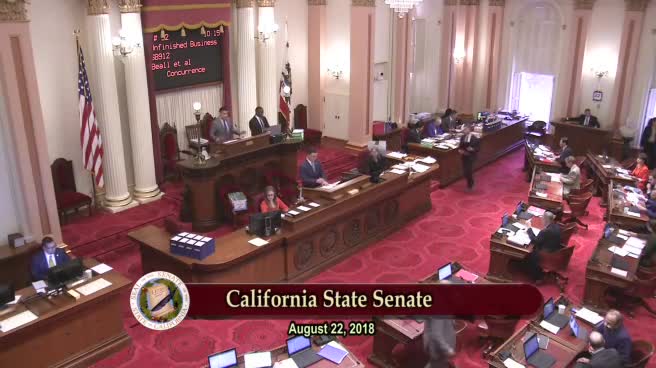 5MIN
Senate Floor
 1H
Senate Standing Committee on Appropriations
 3MIN
Assembly Floor
 10MIN
Assembly Standing Committee on Public Safety
Bill Author