AB 1800: Fire insurance: indemnity.
- Session Year: 2017-2018
- House: Assembly
- Latest Version Date: 2018-09-21
Existing law defines the measure of indemnity for a loss under an open fire insurance policy and specifies time limits under which an insured must collect the full replacement cost of the loss. Existing law prohibits, in the event of a total loss of the insured structure, a fire insurance policy issued or delivered in the state from limiting or denying payment of the replacement cost of property if the insured decides to rebuild or replace the property at a location other than the insured premises. Existing law requires the measure of indemnity to be based upon the replacement cost of the insured property and prohibits it from being based upon the cost to repair, rebuild, or replace at a location other than the insured premises.
This bill would instead prohibit, in the event of a total loss of an insured structure, a fire insurance policy issued or delivered in this state from containing a provision that limits or denies, on the basis that the insured has decided to rebuild at a new location or to purchase an already built home at a new location, payment of the building code upgrade cost or the replacement cost, including any extended replacement cost coverage, to the extent those costs are otherwise covered by the terms of the policy or any policy endorsement. The bill would prohibit the measure of indemnity from exceeding, rather than requiring it to be based upon, the replacement cost, as specified. The bill would require all policy forms issued or renewed on and after July 1, 2019, to contain these provisions.
This bill would incorporate additional changes to Section 2051.5 of the Insurance Code proposed by AB 1772 and SB 894 to be operative only if this bill, AB 1772, and SB 894 are enacted and this bill is enacted last.
This bill would declare that it is to take effect immediately as an urgency statute.
Existing law defines the measure of indemnity for a loss under an open fire insurance policy and specifies time limits under which an insured must collect the full replacement cost of the loss. Existing law prohibits, in the event of a total loss of the insured structure, a fire insurance policy issued or delivered in the state from limiting or denying payment of the replacement cost of property if the insured decides to rebuild or replace the property at a location other than the insured premises. Existing law requires the measure of indemnity to be based upon the replacement cost of the insured property and prohibits it from being based upon the cost to repair, rebuild, or replace at a location other than the insured premises.
This bill would instead prohibit, in the event of a total loss of an insured structure, a fire insurance policy issued or delivered in this state from containing a provision that limits or denies, on the basis that the insured has decided to rebuild at a new location or to purchase an already built home at a new location, payment of the building code upgrade cost or the replacement cost, including any extended replacement cost coverage, to the extent those costs are otherwise covered by the terms of the policy or any policy endorsement. The bill would prohibit the measure of indemnity from exceeding, rather than requiring it to be based upon, the replacement cost, as specified. The bill would require all policy forms issued or renewed on and after July 1, 2019, to contain these provisions.
This bill would incorporate additional changes to Section 2051.5 of the Insurance Code proposed by AB 1772 and SB 894 to be operative only if this bill, AB 1772, and SB 894 are enacted and this bill is enacted last.
This bill would declare that it is to take effect immediately as an urgency statute.
Existing law defines the measure of indemnity for a loss under an open fire insurance policy and specifies time limits under which an insured must collect the full replacement cost of the loss. Existing law prohibits, in the event of a total loss of the insured structure, a fire insurance policy issued or delivered in the state from limiting or denying payment of the replacement cost of property if the insured decides to rebuild or replace the property at a location other than the insured premises. Existing law requires the measure of indemnity to be based upon the replacement cost of the insured property and prohibits it from being based upon the cost to repair, rebuild, or replace at a location other than the insured premises.
This bill would instead prohibit, in the event of a total loss of an insured structure, a fire insurance policy issued or delivered in this state from containing a provision that limits or denies, on the basis that the insured has decided to rebuild at a new location or to purchase an already built home at a new location, payment of the building code upgrade cost or the replacement cost, including any extended replacement cost coverage, to the extent those costs are otherwise covered by the terms of the policy or any policy endorsement. The bill would prohibit the measure of indemnity from exceeding, rather than requiring it to be based upon, the replacement cost, as specified. The bill would require all policy forms issued or renewed on and after July 1, 2019, to contain these provisions.
This bill would incorporate additional changes to Section 2051.5 of the Insurance Code proposed by AB 1772 and SB 894 to be operative only if this bill, AB 1772, and SB 894 are enacted and this bill is enacted last.
This bill would declare that it is to take effect immediately as an urgency statute.
Existing law defines the measure of indemnity for a loss under an open fire insurance policy and specifies time limits under which an insured must collect the full replacement cost of the loss. Existing law prohibits, in the event of a total loss of the insured structure, a fire insurance policy issued or delivered in the state from limiting or denying payment of the replacement cost of property if the insured decides to rebuild or replace the property at a location other than the insured premises. Existing law requires the measure of indemnity to be based upon the replacement cost of the insured property and prohibits it from being based upon the cost to repair, rebuild, or replace at a location other than the insured premises.
This bill would instead prohibit, in the event of a total loss of an insured structure, a fire insurance policy issued or delivered in this state from containing a provision that limits or denies, on the basis that the insured has decided to rebuild at a new location or to purchase an already built home at a new location, payment of the building code upgrade cost or the replacement cost, including any extended replacement cost coverage, to the extent those costs are otherwise covered by the terms of the policy or any policy endorsement. The bill would prohibit the measure of indemnity from exceeding, rather than requiring it to be based upon, the replacement cost, as specified. The bill would require all policy forms issued on and after July 1, 2019, to contain these provisions.
Existing law defines the measure of indemnity for a loss under an open fire insurance policy and specifies time limits under which an insured must collect the full replacement cost of the loss. Existing law prohibits prohibits, in the event of a total loss of the insured structure, a fire insurance policy issued or delivered in the state from limiting or denying payment of the replacement cost of property in the event if the insured decides to rebuild or replace the property at a location other than the insured premises. Existing law requires the measure of indemnity to be based upon the replacement cost of the insured property and prohibits it from being based upon the cost to repair, rebuild, or replace at a location other than the insured premises.
This bill would qualify that prohibition by making it applicable in addition to any extended replacement cost coverage purchased by the insured and in addition to any increase in policy limits. The bill would require the policy to permit the insured to recover full replacement cost benefits regardless of whether the insured rebuilds at the current location, rebuilds at a new location, or purchases an already built home at a new location. The bill would also make technical changes to those provisions.This bill would instead prohibit, in the event of a total loss of an insured structure, a fire insurance policy issued or delivered in this state from containing a provision that limits or denies, on the basis that the insured has decided to rebuild at a new location or to purchase an already built home at a new location, payment of the building code upgrade cost or the replacement cost, including any extended replacement cost coverage, to the extent those costs are otherwise covered by the terms of the policy or any policy endorsement. The bill would prohibit the measure of indemnity from exceeding, rather than requiring it to be based upon, the replacement cost, as specified.
Existing law defines the measure of indemnity for a loss under an open fire insurance policy and specifies time limits under which an insured must collect the full replacement cost of the loss. Existing law prohibits a fire insurance policy issued or delivered in the state from limiting or denying payment of the replacement cost of property in the event the insured decides to rebuild or replace the property at a location other than the insured premises.
This bill would qualify that prohibition by making it applicable in addition to any extended replacement cost coverage purchased by the insured and in addition to any increase in policy limits. The bill would require the policy to permit the insured to recover full replacement cost benefits regardless of whether the insured rebuilds at the current location, rebuilds at a new location, or purchases an already built home at a new location. The bill would also make technical changes to those provisions.
(a)(1)Under an open policy that requires payment of the replacement cost for a loss, the measure of indemnity is the amount that it would cost the insured to repair, rebuild, or replace the thing lost or injured, without a deduction for physical depreciation, or the policy limit, whichever is less.
(2)If the policy requires the insured to repair, rebuild, or replace the damaged property in order to collect the full replacement cost, the insurer shall pay the actual cash value of the damaged property, as defined in Section 2051, until the damaged property is repaired, rebuilt, or replaced. Once the property is repaired, rebuilt, or replaced, the insurer shall pay the difference between the actual cash value payment made and the full replacement cost reasonably paid to replace the damaged property, up to the limits stated in the policy.
(b)(1)Except as provided in paragraph (2), a time limit of less than 12 months from the date that the first payment toward the actual cash value is made shall not be placed upon an insured in order to collect the full replacement cost of the loss, subject to the policy limit. Additional extensions of six months shall be provided to policyholders for good cause. In the event of a loss relating to a state of emergency, as defined in Section 8558 of the Government Code, no time limit of less than 24 months from the date that the first payment toward the actual cash value is made shall be placed upon the insured in order to collect the full replacement cost of the loss, subject to the policy limit. This section does not prohibit the insurer from allowing the insured additional time to collect the full replacement cost.
(2)In the event of a covered loss relating to a state of emergency, as defined in Section 8558 of the Government Code, coverage for additional living expenses is for a period of 24 months, but is subject to other policy provisions, provided that an extension of time required by this paragraph beyond the period provided in the policy does not increase the additional living expense policy limit in force at the time of the loss. This paragraph shall become operative on January 1, 2007.
(c)In the event of a total loss of the insured structure, a policy issued or delivered in this state shall not contain a provision that limits or denies, on the basis that the insured has decided to rebuild at a new location or to purchase an already built home at a new location, payment of the building code upgrade cost or the replacement cost, including any extended replacement cost coverage, to the extent those costs are otherwise covered by the terms of the policy or any policy endorsement. However, the measure of indemnity shall not exceed the replacement cost, including the building code upgrade cost and any extended replacement cost coverage, if applicable, to repair, rebuild, or replace the insured structure at its original location.
(d)This section does not prohibit an insurer from restricting payment in cases of suspected fraud.
(e)(1)On and after July 1, 2005, and only until July 1, 2019, all policy forms used by an insurer shall comply with this section, except for the changes made to this section by the act that added paragraph (2).
(2)On and after July 1, 2019, all policy forms issued or renewed by an insurer shall comply with this section in its entirety, including the changes made to this section by the act that added this paragraph.
SEC. 1.3.Section 2051.5 of the Insurance Code is amended to read:2051.5.(a)(1)Under an open policy that requires payment of the replacement cost for a loss, the measure of indemnity is the amount that it would cost the insured to repair, rebuild, or replace the thing lost or injured, without a deduction for physical depreciation, or the policy limit, whichever is less.
(2)If the policy requires the insured to repair, rebuild, or replace the damaged property in order to collect the full replacement cost, the insurer shall pay the actual cash value of the damaged property, as defined in Section 2051, until the damaged property is repaired, rebuilt, or replaced. Once the property is repaired, rebuilt, or replaced, the insurer shall pay the difference between the actual cash value payment made and the full replacement cost reasonably paid to replace the damaged property, up to the limits stated in the policy.
(b)(1)(A)(i)A time limit of less than 12 months from the date that the first payment toward the actual cash value is made shall not be placed upon an insured in order to collect the full replacement cost of the loss, subject to the policy limit.
(ii)In the event of a loss relating to a state of emergency, as defined in Section 8558 of the Government Code, a time limit of less than 36 months from the date that the first payment toward the actual cash value is made shall not be placed upon the insured in order to collect the full replacement cost of the loss, subject to the policy limit.
(iii)This section does not prohibit an insurer from allowing the insured additional time to collect the full replacement cost.
(B)An insurer shall provide to a policyholder one or more additional extensions of six months for good cause pursuant to clause (i) or (ii) of subparagraph (A) if the insured, acting in good faith and with reasonable diligence, encounters a delay or delays in approval for, or reconstruction of, the home or residence that are beyond the control of the insured. Circumstances beyond the control of the insured include, but are not limited to, unavoidable construction permit delays, the lack of necessary construction materials, or the unavailability of contractors to perform the necessary work.
(2)In the event of a covered loss relating to a state of emergency, as defined in Section 8558 of the Government Code, coverage for additional living expenses is for a period of 24 months, but is subject to other policy provisions, provided that an extension of time required by this paragraph beyond the period provided in the policy does not increase the additional living expense policy limit in force at the time of the loss.
(c)In the event of a total loss of the insured structure, a policy issued or delivered in this state shall not contain a provision that limits or denies, on the basis that the insured has decided to rebuild at a new location or to purchase an already built home at a new location, payment of the building code upgrade cost or the replacement cost, including any extended replacement cost coverage, to the extent those costs are otherwise covered by the terms of the policy or any policy endorsement. However, the measure of indemnity shall not exceed the replacement cost, including the building code upgrade cost and any extended replacement cost coverage, if applicable, to repair, rebuild, or replace the insured structure at its original location.
(d)This section does not prohibit an insurer from restricting payment in cases of suspected fraud.
(e)(1)On and after July 1, 2005, and only until July 1, 2019, all policy forms used by an insurer shall compliance with this section, except for the changes made to this section by the act that added paragraph (2).
(2)On and after July 1, 2019, all policy forms issued or renewed by an insurer shall comply with this section in its entirety, including the changes made to this section by the act that added this paragraph.
SEC. 1.5.Section 2051.5 of the Insurance Code is amended to read:2051.5.(a)(1)Under an open policy that requires payment of the replacement cost for a loss, the measure of indemnity is the amount that it would cost the insured to repair, rebuild, or replace the thing lost or injured, without a deduction for physical depreciation, or the policy limit, whichever is less.
(2)If the policy requires the insured to repair, rebuild, or replace the damaged property in order to collect the full replacement cost, the insurer shall pay the actual cash value of the damaged property, as defined in Section 2051, until the damaged property is repaired, rebuilt, or replaced. Once the property is repaired, rebuilt, or replaced, the insurer shall pay the difference between the actual cash value payment made and the full replacement cost reasonably paid to replace the damaged property, up to the limits stated in the policy.
(b)(1)Except as provided in paragraph (2), a time limit of less than 12 months from the date that the first payment toward the actual cash value is made shall not be placed upon an insured in order to collect the full replacement cost of the loss, subject to the policy limit. Additional extensions of six months shall be provided to policyholders for good cause. In the event of a loss relating to a state of emergency, as defined in Section 8558 of the Government Code, no time limit of less than 24 months from the date that the first payment toward the actual cash value is made shall be placed upon the insured in order to collect the full replacement cost of the loss, subject to the policy limit. This section does not shall prohibit the insurer from allowing the insured additional time to collect the full replacement cost.
(2)In the event of a covered loss relating to a state of emergency, as defined in Section 8558 of the Government Code, coverage for additional living expenses shall be for a period of no less than 24 months from the inception of the loss, but shall be subject to other policy provisions. An insurer shall grant an extension of up to 12 additional months, for a total of 36 months, if an insured acting in good faith and with reasonable diligence encounters a delay or delays in the reconstruction process that are the result of circumstances beyond the control of the insured. Circumstances beyond the control of the insured include, but are not limited to, unavoidable construction permit delays, lack of necessary construction materials, and lack of available contractors to perform the necessary work. Additional extensions of six months shall be provided to policyholders for good cause.
(c)In the event of a total loss of the insured structure, a policy issued or delivered in this state shall not contain a provision that limits or denies, on the basis that the insured has decided to rebuild at a new location or to purchase an already built home at a new location, payment of the building code upgrade cost or the replacement cost, including any extended replacement cost coverage, to the extent those costs are otherwise covered by the terms of the policy or any policy endorsement. However, the measure of indemnity shall not exceed the replacement cost, including the building code upgrade cost and any extended replacement cost coverage, if applicable, to repair, rebuild, or replace the insured structure at its original location.
(d)This section does not prohibit an insurer from restricting payment in cases of suspected fraud.
(e)(1)On and after July 1, 2005, and only until July 1, 2019, all policy forms used by an insurer shall be in compliance with this section, except for the changes made to this section by the act that added paragraph (2).
(2)On and after July 1, 2019, all policy forms issued or renewed by an insurer shall comply with this section in its entirety, including the changes made to this section by the act that added this paragraph.
SEC. 1.7.Section 2051.5 of the Insurance Code is amended to read:2051.5.(a)(1)Under an open policy that requires payment of the replacement cost for a loss, the measure of indemnity is the amount that it would cost the insured to repair, rebuild, or replace the thing lost or injured, without a deduction for physical depreciation, or the policy limit, whichever is less.
(2)If the policy requires the insured to repair, rebuild, or replace the damaged property in order to collect the full replacement cost, the insurer shall pay the actual cash value of the damaged property, as defined in Section 2051, until the damaged property is repaired, rebuilt, or replaced. Once the property is repaired, rebuilt, or replaced, the insurer shall pay the difference between the actual cash value payment made and the full replacement cost reasonably paid to replace the damaged property, up to the limits stated in the policy.
(b)(1)(A)(i)A time limit of less than 12 months from the date that the first payment toward the actual cash value is made shall not be placed upon an insured in order to collect the full replacement cost of the loss, subject to the policy limit.
(ii)In the event of a loss relating to a state of emergency, as defined in Section 8558 of the Government Code, a time limit of less than 36 months from the date that the first payment toward the actual cash value is made shall not be placed upon the insured in order to collect the full replacement cost of the loss, subject to the policy limit.
(iii)This section does not prohibit an insurer from allowing the insured additional time to collect the full replacement cost.
(B)An insurer shall provide to a policyholder one or more additional extensions of six months for good cause pursuant to clause (i) or (ii) of subparagraph (A) if the insured, acting in good faith and with reasonable diligence, encounters a delay or delays in approval for, or reconstruction of, the home or residence that are beyond the control of the insured. Circumstances beyond the control of the insured include, but are not limited to, unavoidable construction permit delays, the lack of necessary construction materials, or the unavailability of contractors to perform the necessary work.
(2)In the event of a covered loss relating to a state of emergency, as defined in Section 8558 of the Government Code, coverage for additional living expenses shall be for a period of no less than 24 months from the inception of the loss, but shall be subject to other policy provisions. An insurer shall grant an extension of up to 12 additional months, for a total of 36 months, if an insured acting in good faith and with reasonable diligence encounters a delay or delays in the reconstruction process that are the result of circumstances beyond the control of the insured. Circumstances beyond the control of the insured include, but are not limited to, unavoidable construction permit delays, lack of necessary construction materials, and lack of available contractors to perform the necessary work. Additional extensions of six months shall be provided to policyholders for good cause.
(c)In the event of a total loss of the insured structure, a policy issued or delivered in this state shall not contain a provision that limits or denies, on the basis that the insured has decided to rebuild at a new location or to purchase an already built home at a new location, payment of the building code upgrade cost or the replacement cost, including any extended replacement cost coverage, to the extent those costs are otherwise covered by the terms of the policy or any policy endorsement. However, the measure of indemnity shall not exceed the replacement cost, including the building code upgrade cost and any extended replacement cost coverage, if applicable, to repair, rebuild, or replace the insured structure at its original location.
(d)This section does not prohibit an insurer from restricting payment in cases of suspected fraud.
(e)(1)On and after July 1, 2005, and only until July 1, 2019, all policy forms used by an insurer shall be in compliance with this section, except for the changes made to this section by the act that added paragraph (2).
(2)On and after July 1, 2019, all policy forms issued or renewed by an insurer shall comply with this section in its entirety, including the changes made to this section by the act that added this paragraph.
SEC. 2.(a)Section 1.3 of this bill incorporates amendments to Section 2051.5 of the Insurance Code proposed by this bill and Assembly Bill 1772. That section of this bill shall only become operative if (1) both bills are enacted and become effective on or before January 1, 2019, (2) each bill amends Section 2051.5 of the Insurance Code, (3) Senate Bill 894 is not enacted or as enacted does not amend that section, and (4) this bill is enacted after Assembly Bill 1772, in which case Section 2051.5 of the Insurance Code, as amended by Assembly Bill 1772, shall remain operative only until the operative date of this bill, at which time Section 1.3 of this bill shall become operative, and Sections 1, 1.5, and 1.7 of this bill shall not become operative.
(b)Section 1.5 of this bill incorporates amendments to Section 2051.5 of the Insurance Code proposed by this bill and Senate Bill 894. That section of this bill shall only become operative if (1) both bills are enacted and become effective on or before January 1, 2019, (2) each bill amends Section 2051.5 of the Insurance Code, (3) Assembly Bill 1772 is not enacted or as enacted does not amend that section, and (4) this bill is enacted after Senate Bill 894, in which case Section 2051.5 of the Insurance Code, as amended by Section 1 of this bill, shall remain operative only until the operative date of Senate Bill 894, at which time Section 1.5 of this bill shall become operative, and Sections 1.3 and 1.7 of this bill shall not become operative.
(c)Section 1.7 of this bill incorporates amendments to Section 2051.5 of the Insurance Code proposed by this bill, Assembly Bill 1772, and Senate Bill 894. That section of this bill shall only become operative if (1) all three bills are enacted and become effective on or before January 1, 2019, (2) all three bills amend Section 2051.5 of the Insurance Code, and (3) this bill is enacted after Assembly Bill 1772 and Senate Bill 894, in which case Section 2051.5 of the Insurance Code, as amended by Assembly Bill 1772 and Senate Bill 894, shall remain operative only until the operative date of this bill, at which time Section 1.7 of this bill shall become operative, and Sections 1, 1.3, and 1.5 of this bill shall not become operative.
SEC. 3.This act is an urgency statute necessary for the immediate preservation of the public peace, health, or safety within the meaning of Article IV of the California Constitution and shall go into immediate effect. The facts constituting the necessity are:
In order to better protect California property owners from rampant wildfire damages as soon as possible, it is necessary that this act take effect immediately.
(a)(1)Under an open policy that requires payment of the replacement cost for a loss, the measure of indemnity is the amount that it would cost the insured to repair, rebuild, or replace the thing lost or injured, without a deduction for physical depreciation, or the policy limit, whichever is less.
(2)If the policy requires the insured to repair, rebuild, or replace the damaged property in order to collect the full replacement cost, the insurer shall pay the actual cash value of the damaged property, as defined in Section 2051, until the damaged property is repaired, rebuilt, or replaced. Once the property is repaired, rebuilt, or replaced, the insurer shall pay the difference between the actual cash value payment made and the full replacement cost reasonably paid to replace the damaged property, up to the limits stated in the policy.
(b)(1)Except as provided in paragraph (2), a time limit of less than 12 months from the date that the first payment toward the actual cash value is made shall not be placed upon an insured in order to collect the full replacement cost of the loss, subject to the policy limit. Additional extensions of six months shall be provided to policyholders for good cause. In the event of a loss relating to a state of emergency, as defined in Section 8558 of the Government Code, no time limit of less than 24 months from the date that the first payment toward the actual cash value is made shall be placed upon the insured in order to collect the full replacement cost of the loss, subject to the policy limit. This section does not prohibit the insurer from allowing the insured additional time to collect the full replacement cost.
(2)In the event of a covered loss relating to a state of emergency, as defined in Section 8558 of the Government Code, coverage for additional living expenses is for a period of 24 months, but is subject to other policy provisions, provided that an extension of time required by this paragraph beyond the period provided in the policy does not increase the additional living expense policy limit in force at the time of the loss. This paragraph shall become operative on January 1, 2007.
(c)In the event of a total loss of the insured structure, a policy issued or delivered in this state shall not contain a provision that limits or denies, on the basis that the insured has decided to rebuild at a new location or to purchase an already built home at a new location, payment of the building code upgrade cost or the replacement cost, including any extended replacement cost coverage, to the extent those costs are otherwise covered by the terms of the policy or any policy endorsement. However, the measure of indemnity shall not exceed the replacement cost, including the building code upgrade cost and any extended replacement cost coverage, if applicable, to repair, rebuild, or replace the insured structure at its original location.
(d)This section does not prohibit an insurer from restricting payment in cases of suspected fraud.
(e)(1)On and after July 1, 2005, and only until July 1, 2019, all policy forms used by an insurer shall comply with this section, except for the changes made to this section by the act that added paragraph (2).
(2)On and after July 1, 2019, all policy forms issued or renewed by an insurer shall comply with this section in its entirety, including the changes made to this section by the act that added this paragraph.
SEC. 1.3.Section 2051.5 of the Insurance Code is amended to read:2051.5.(a)(1)Under an open policy that requires payment of the replacement cost for a loss, the measure of indemnity is the amount that it would cost the insured to repair, rebuild, or replace the thing lost or injured, without a deduction for physical depreciation, or the policy limit, whichever is less.
(2)If the policy requires the insured to repair, rebuild, or replace the damaged property in order to collect the full replacement cost, the insurer shall pay the actual cash value of the damaged property, as defined in Section 2051, until the damaged property is repaired, rebuilt, or replaced. Once the property is repaired, rebuilt, or replaced, the insurer shall pay the difference between the actual cash value payment made and the full replacement cost reasonably paid to replace the damaged property, up to the limits stated in the policy.
(b)(1)(A)(i)A time limit of less than 12 months from the date that the first payment toward the actual cash value is made shall not be placed upon an insured in order to collect the full replacement cost of the loss, subject to the policy limit.
(ii)In the event of a loss relating to a state of emergency, as defined in Section 8558 of the Government Code, a time limit of less than 36 months from the date that the first payment toward the actual cash value is made shall not be placed upon the insured in order to collect the full replacement cost of the loss, subject to the policy limit.
(iii)This section does not prohibit an insurer from allowing the insured additional time to collect the full replacement cost.
(B)An insurer shall provide to a policyholder one or more additional extensions of six months for good cause pursuant to clause (i) or (ii) of subparagraph (A) if the insured, acting in good faith and with reasonable diligence, encounters a delay or delays in approval for, or reconstruction of, the home or residence that are beyond the control of the insured. Circumstances beyond the control of the insured include, but are not limited to, unavoidable construction permit delays, the lack of necessary construction materials, or the unavailability of contractors to perform the necessary work.
(2)In the event of a covered loss relating to a state of emergency, as defined in Section 8558 of the Government Code, coverage for additional living expenses is for a period of 24 months, but is subject to other policy provisions, provided that an extension of time required by this paragraph beyond the period provided in the policy does not increase the additional living expense policy limit in force at the time of the loss.
(c)In the event of a total loss of the insured structure, a policy issued or delivered in this state shall not contain a provision that limits or denies, on the basis that the insured has decided to rebuild at a new location or to purchase an already built home at a new location, payment of the building code upgrade cost or the replacement cost, including any extended replacement cost coverage, to the extent those costs are otherwise covered by the terms of the policy or any policy endorsement. However, the measure of indemnity shall not exceed the replacement cost, including the building code upgrade cost and any extended replacement cost coverage, if applicable, to repair, rebuild, or replace the insured structure at its original location.
(d)This section does not prohibit an insurer from restricting payment in cases of suspected fraud.
(e)(1)On and after July 1, 2005, and only until July 1, 2019, all policy forms used by an insurer shall compliance with this section, except for the changes made to this section by the act that added paragraph (2).
(2)On and after July 1, 2019, all policy forms issued or renewed by an insurer shall comply with this section in its entirety, including the changes made to this section by the act that added this paragraph.
SEC. 1.5.Section 2051.5 of the Insurance Code is amended to read:2051.5.(a)(1)Under an open policy that requires payment of the replacement cost for a loss, the measure of indemnity is the amount that it would cost the insured to repair, rebuild, or replace the thing lost or injured, without a deduction for physical depreciation, or the policy limit, whichever is less.
(2)If the policy requires the insured to repair, rebuild, or replace the damaged property in order to collect the full replacement cost, the insurer shall pay the actual cash value of the damaged property, as defined in Section 2051, until the damaged property is repaired, rebuilt, or replaced. Once the property is repaired, rebuilt, or replaced, the insurer shall pay the difference between the actual cash value payment made and the full replacement cost reasonably paid to replace the damaged property, up to the limits stated in the policy.
(b)(1)Except as provided in paragraph (2), a time limit of less than 12 months from the date that the first payment toward the actual cash value is made shall not be placed upon an insured in order to collect the full replacement cost of the loss, subject to the policy limit. Additional extensions of six months shall be provided to policyholders for good cause. In the event of a loss relating to a state of emergency, as defined in Section 8558 of the Government Code, no time limit of less than 24 months from the date that the first payment toward the actual cash value is made shall be placed upon the insured in order to collect the full replacement cost of the loss, subject to the policy limit. This section does not shall prohibit the insurer from allowing the insured additional time to collect the full replacement cost.
(2)In the event of a covered loss relating to a state of emergency, as defined in Section 8558 of the Government Code, coverage for additional living expenses shall be for a period of no less than 24 months from the inception of the loss, but shall be subject to other policy provisions. An insurer shall grant an extension of up to 12 additional months, for a total of 36 months, if an insured acting in good faith and with reasonable diligence encounters a delay or delays in the reconstruction process that are the result of circumstances beyond the control of the insured. Circumstances beyond the control of the insured include, but are not limited to, unavoidable construction permit delays, lack of necessary construction materials, and lack of available contractors to perform the necessary work. Additional extensions of six months shall be provided to policyholders for good cause.
(c)In the event of a total loss of the insured structure, a policy issued or delivered in this state shall not contain a provision that limits or denies, on the basis that the insured has decided to rebuild at a new location or to purchase an already built home at a new location, payment of the building code upgrade cost or the replacement cost, including any extended replacement cost coverage, to the extent those costs are otherwise covered by the terms of the policy or any policy endorsement. However, the measure of indemnity shall not exceed the replacement cost, including the building code upgrade cost and any extended replacement cost coverage, if applicable, to repair, rebuild, or replace the insured structure at its original location.
(d)This section does not prohibit an insurer from restricting payment in cases of suspected fraud.
(e)(1)On and after July 1, 2005, and only until July 1, 2019, all policy forms used by an insurer shall be in compliance with this section, except for the changes made to this section by the act that added paragraph (2).
(2)On and after July 1, 2019, all policy forms issued or renewed by an insurer shall comply with this section in its entirety, including the changes made to this section by the act that added this paragraph.
SEC. 1.7.Section 2051.5 of the Insurance Code is amended to read:2051.5.(a)(1)Under an open policy that requires payment of the replacement cost for a loss, the measure of indemnity is the amount that it would cost the insured to repair, rebuild, or replace the thing lost or injured, without a deduction for physical depreciation, or the policy limit, whichever is less.
(2)If the policy requires the insured to repair, rebuild, or replace the damaged property in order to collect the full replacement cost, the insurer shall pay the actual cash value of the damaged property, as defined in Section 2051, until the damaged property is repaired, rebuilt, or replaced. Once the property is repaired, rebuilt, or replaced, the insurer shall pay the difference between the actual cash value payment made and the full replacement cost reasonably paid to replace the damaged property, up to the limits stated in the policy.
(b)(1)(A)(i)A time limit of less than 12 months from the date that the first payment toward the actual cash value is made shall not be placed upon an insured in order to collect the full replacement cost of the loss, subject to the policy limit.
(ii)In the event of a loss relating to a state of emergency, as defined in Section 8558 of the Government Code, a time limit of less than 36 months from the date that the first payment toward the actual cash value is made shall not be placed upon the insured in order to collect the full replacement cost of the loss, subject to the policy limit.
(iii)This section does not prohibit an insurer from allowing the insured additional time to collect the full replacement cost.
(B)An insurer shall provide to a policyholder one or more additional extensions of six months for good cause pursuant to clause (i) or (ii) of subparagraph (A) if the insured, acting in good faith and with reasonable diligence, encounters a delay or delays in approval for, or reconstruction of, the home or residence that are beyond the control of the insured. Circumstances beyond the control of the insured include, but are not limited to, unavoidable construction permit delays, the lack of necessary construction materials, or the unavailability of contractors to perform the necessary work.
(2)In the event of a covered loss relating to a state of emergency, as defined in Section 8558 of the Government Code, coverage for additional living expenses shall be for a period of no less than 24 months from the inception of the loss, but shall be subject to other policy provisions. An insurer shall grant an extension of up to 12 additional months, for a total of 36 months, if an insured acting in good faith and with reasonable diligence encounters a delay or delays in the reconstruction process that are the result of circumstances beyond the control of the insured. Circumstances beyond the control of the insured include, but are not limited to, unavoidable construction permit delays, lack of necessary construction materials, and lack of available contractors to perform the necessary work. Additional extensions of six months shall be provided to policyholders for good cause.
(c)In the event of a total loss of the insured structure, a policy issued or delivered in this state shall not contain a provision that limits or denies, on the basis that the insured has decided to rebuild at a new location or to purchase an already built home at a new location, payment of the building code upgrade cost or the replacement cost, including any extended replacement cost coverage, to the extent those costs are otherwise covered by the terms of the policy or any policy endorsement. However, the measure of indemnity shall not exceed the replacement cost, including the building code upgrade cost and any extended replacement cost coverage, if applicable, to repair, rebuild, or replace the insured structure at its original location.
(d)This section does not prohibit an insurer from restricting payment in cases of suspected fraud.
(e)(1)On and after July 1, 2005, and only until July 1, 2019, all policy forms used by an insurer shall be in compliance with this section, except for the changes made to this section by the act that added paragraph (2).
(2)On and after July 1, 2019, all policy forms issued or renewed by an insurer shall comply with this section in its entirety, including the changes made to this section by the act that added this paragraph.
SEC. 2.(a)Section 1.3 of this bill incorporates amendments to Section 2051.5 of the Insurance Code proposed by this bill and Assembly Bill 1772. That section of this bill shall only become operative if (1) both bills are enacted and become effective on or before January 1, 2019, (2) each bill amends Section 2051.5 of the Insurance Code, (3) Senate Bill 894 is not enacted or as enacted does not amend that section, and (4) this bill is enacted after Assembly Bill 1772, in which case Section 2051.5 of the Insurance Code, as amended by Assembly Bill 1772, shall remain operative only until the operative date of this bill, at which time Section 1.3 of this bill shall become operative, and Sections 1, 1.5, and 1.7 of this bill shall not become operative.
(b)Section 1.5 of this bill incorporates amendments to Section 2051.5 of the Insurance Code proposed by this bill and Senate Bill 894. That section of this bill shall only become operative if (1) both bills are enacted and become effective on or before January 1, 2019, (2) each bill amends Section 2051.5 of the Insurance Code, (3) Assembly Bill 1772 is not enacted or as enacted does not amend that section, and (4) this bill is enacted after Senate Bill 894, in which case Section 2051.5 of the Insurance Code, as amended by Section 1 of this bill, shall remain operative only until the operative date of Senate Bill 894, at which time Section 1.5 of this bill shall become operative, and Sections 1.3 and 1.7 of this bill shall not become operative.
(c)Section 1.7 of this bill incorporates amendments to Section 2051.5 of the Insurance Code proposed by this bill, Assembly Bill 1772, and Senate Bill 894. That section of this bill shall only become operative if (1) all three bills are enacted and become effective on or before January 1, 2019, (2) all three bills amend Section 2051.5 of the Insurance Code, and (3) this bill is enacted after Assembly Bill 1772 and Senate Bill 894, in which case Section 2051.5 of the Insurance Code, as amended by Assembly Bill 1772 and Senate Bill 894, shall remain operative only until the operative date of this bill, at which time Section 1.7 of this bill shall become operative, and Sections 1, 1.3, and 1.5 of this bill shall not become operative.
SEC. 3.This act is an urgency statute necessary for the immediate preservation of the public peace, health, or safety within the meaning of Article IV of the California Constitution and shall go into immediate effect. The facts constituting the necessity are:
In order to better protect California property owners from rampant wildfire damages as soon as possible, it is necessary that this act take effect immediately.
(a)(1)Under an open policy that requires payment of the replacement cost for a loss, the measure of indemnity is the amount that it would cost the insured to repair, rebuild, or replace the thing lost or injured, without a deduction for physical depreciation, or the policy limit, whichever is less.
(2)If the policy requires the insured to repair, rebuild, or replace the damaged property in order to collect the full replacement cost, the insurer shall pay the actual cash value of the damaged property, as defined in Section 2051, until the damaged property is repaired, rebuilt, or replaced. Once the property is repaired, rebuilt, or replaced, the insurer shall pay the difference between the actual cash value payment made and the full replacement cost reasonably paid to replace the damaged property, up to the limits stated in the policy.
(b)(1)Except as provided in paragraph (2), a time limit of less than 12 months from the date that the first payment toward the actual cash value is made shall not be placed upon an insured in order to collect the full replacement cost of the loss, subject to the policy limit. Additional extensions of six months shall be provided to policyholders for good cause. In the event of a loss relating to a state of emergency, as defined in Section 8558 of the Government Code, no time limit of less than 24 months from the date that the first payment toward the actual cash value is made shall be placed upon the insured in order to collect the full replacement cost of the loss, subject to the policy limit. This section does not prohibit the insurer from allowing the insured additional time to collect the full replacement cost.
(2)In the event of a covered loss relating to a state of emergency, as defined in Section 8558 of the Government Code, coverage for additional living expenses is for a period of 24 months, but is subject to other policy provisions, provided that an extension of time required by this paragraph beyond the period provided in the policy does not increase the additional living expense policy limit in force at the time of the loss. This paragraph shall become operative on January 1, 2007.
(c)In the event of a total loss of the insured structure, a policy issued or delivered in this state shall not contain a provision that limits or denies, on the basis that the insured has decided to rebuild at a new location or to purchase an already built home at a new location, payment of the building code upgrade cost or the replacement cost, including any extended replacement cost coverage, to the extent those costs are otherwise covered by the terms of the policy or any policy endorsement. However, the measure of indemnity shall not exceed the replacement cost, including the building code upgrade cost and any extended replacement cost coverage, if applicable, to repair, rebuild, or replace the insured structure at its original location.
(d)This section does not prohibit an insurer from restricting payment in cases of suspected fraud.
(e)(1)On and after July 1, 2005, and only until July 1, 2019, all policy forms used by an insurer shall comply with this section, except for the changes made to this section by the act that added paragraph (2).
(e)(2)On and after July 1, 2019, all policy forms issued or renewed by an insurer shall comply with this section. section in its entirety, including the changes made to this section by the act that added this paragraph.
SEC. 1.3.Section 2051.5 of the Insurance Code is amended to read:2051.5.(a)(1)Under an open policy that requires payment of the replacement cost for a loss, the measure of indemnity is the amount that it would cost the insured to repair, rebuild, or replace the thing lost or injured, without a deduction for physical depreciation, or the policy limit, whichever is less.
If(2)If the policy requires the insured to repair, rebuild, or replace the damaged property in order to collect the full replacement cost, the insurer shall pay the actual cash value of the damaged property, as defined in Section 2051, until the damaged property is repaired, rebuilt, or replaced. Once the property is repaired, rebuilt, or replaced, the insurer shall pay the difference between the actual cash value payment made and the full replacement cost reasonably paid to replace the damaged property, up to the limits stated in the policy.
(b)(1)Except as provided in paragraph (2), no time limit of less than 12 months from the date that the first payment toward the actual cash value is made shall be placed upon an insured in order to collect the full replacement cost of the loss, subject to the policy limit. Additional extensions of six months shall be provided to policyholders for good cause. In(b)(1)(A)(i)A time limit of less than 12 months from the date that the first payment toward the actual cash value is made shall not be placed upon an insured in order to collect the full replacement cost of the loss, subject to the policy limit.
(ii)In the event of a loss relating to a state of emergency, as defined in Section 8558 of the Government Code, no a time limit of less than 24 36 months from the date that the first payment toward the actual cash value is made shall not be placed upon the insured in order to collect the full replacement cost of the loss, subject to the policy limit. Nothing in this section shall prohibit the insurer from allowing the insured additional time to collect the full replacement cost.
(iii)This section does not prohibit an insurer from allowing the insured additional time to collect the full replacement cost.
(B)An insurer shall provide to a policyholder one or more additional extensions of six months for good cause pursuant to clause (i) or (ii) of subparagraph (A) if the insured, acting in good faith and with reasonable diligence, encounters a delay or delays in approval for, or reconstruction of, the home or residence that are beyond the control of the insured. Circumstances beyond the control of the insured include, but are not limited to, unavoidable construction permit delays, the lack of necessary construction materials, or the unavailability of contractors to perform the necessary work.
(2)In the event of a covered loss relating to a state of emergency, as defined in Section 8558 of the Government Code, coverage for additional living expenses shall be is for a period of 24 months, but shall be is subject to other policy provisions, provided that any an extension of time required by this paragraph beyond the period provided in the policy shall not act to does not increase the additional living expense policy limit in force at the time of the loss. This paragraph shall become operative on January 1, 2007.
(c)In the event of a total loss of the insured structure, no a policy issued or delivered in this state may contain a provision that limits or denies payment of the replacement cost in the event the insured decides to rebuild or replace the property at a location other than the insured premises. However, the measure of indemnity shall be based upon the replacement cost of the insured property and shall not be based upon the cost to repair, rebuild, or replace at a location other than the insured premises. shall not contain a provision that limits or denies, on the basis that the insured has decided to rebuild at a new location or to purchase an already built home at a new location, payment of the building code upgrade cost or the replacement cost, including any extended replacement cost coverage, to the extent those costs are otherwise covered by the terms of the policy or any policy endorsement. However, the measure of indemnity shall not exceed the replacement cost, including the building code upgrade cost and any extended replacement cost coverage, if applicable, to repair, rebuild, or replace the insured structure at its original location.
(d)Nothing in this section shall This section does not prohibit an insurer from restricting payment in cases of suspected fraud.
(e)The changes made to this section by the act that added this subdivision shall be implemented by an insurer on and after the effective date of that act, except that an insurer shall not be required to modify policy forms to be consistent with those changes until July 1, 2005. On and after July 1, 2005, all policy forms used by an insurer shall reflect those changes.(e)(1)On and after July 1, 2005, and only until July 1, 2019, all policy forms used by an insurer shall compliance with this section, except for the changes made to this section by the act that added paragraph (2).
(2)On and after July 1, 2019, all policy forms issued or renewed by an insurer shall comply with this section in its entirety, including the changes made to this section by the act that added this paragraph.
SEC. 1.5.Section 2051.5 of the Insurance Code is amended to read:2051.5.(a)(1)Under an open policy that requires payment of the replacement cost for a loss, the measure of indemnity is the amount that it would cost the insured to repair, rebuild, or replace the thing lost or injured, without a deduction for physical depreciation, or the policy limit, whichever is less.
If(2)If the policy requires the insured to repair, rebuild, or replace the damaged property in order to collect the full replacement cost, the insurer shall pay the actual cash value of the damaged property, as defined in Section 2051, until the damaged property is repaired, rebuilt, or replaced. Once the property is repaired, rebuilt, or replaced, the insurer shall pay the difference between the actual cash value payment made and the full replacement cost reasonably paid to replace the damaged property, up to the limits stated in the policy.
(b)(1)Except as provided in paragraph (2), no a time limit of less than 12 months from the date that the first payment toward the actual cash value is made shall not be placed upon an insured in order to collect the full replacement cost of the loss, subject to the policy limit. Additional extensions of six months shall be provided to policyholders for good cause. In the event of a loss relating to a state of emergency, as defined in Section 8558 of the Government Code, no time limit of less than 24 months from the date that the first payment toward the actual cash value is made shall be placed upon the insured in order to collect the full replacement cost of the loss, subject to the policy limit. Nothing in this section This section does not shall prohibit the insurer from allowing the insured additional time to collect the full replacement cost.
(2)In the event of a covered loss relating to a state of emergency, as defined in Section 8558 of the Government Code, coverage for additional living expenses shall be for a period of 24 months, but shall be subject to other policy provisions, provided that any extension of time required by this paragraph beyond the period provided in the policy shall not act to increase the additional living expense policy limit in force at the time of the loss. This paragraph shall become operative on January 1, 2007. no less than 24 months from the inception of the loss, but shall be subject to other policy provisions. An insurer shall grant an extension of up to 12 additional months, for a total of 36 months, if an insured acting in good faith and with reasonable diligence encounters a delay or delays in the reconstruction process that are the result of circumstances beyond the control of the insured. Circumstances beyond the control of the insured include, but are not limited to, unavoidable construction permit delays, lack of necessary construction materials, and lack of available contractors to perform the necessary work. Additional extensions of six months shall be provided to policyholders for good cause.
(c)In the event of a total loss of the insured structure, no a policy issued or delivered in this state may contain a provision that limits or denies payment of the replacement cost in the event the insured decides to rebuild or replace the property at a location other than the insured premises. However, the measure of indemnity shall be based upon the replacement cost of the insured property and shall not be based upon the cost to repair, rebuild, or replace at a location other than the insured premises. shall not contain a provision that limits or denies, on the basis that the insured has decided to rebuild at a new location or to purchase an already built home at a new location, payment of the building code upgrade cost or the replacement cost, including any extended replacement cost coverage, to the extent those costs are otherwise covered by the terms of the policy or any policy endorsement. However, the measure of indemnity shall not exceed the replacement cost, including the building code upgrade cost and any extended replacement cost coverage, if applicable, to repair, rebuild, or replace the insured structure at its original location.
(d)Nothing in this section shall This section does not prohibit an insurer from restricting payment in cases of suspected fraud.
(e)The changes made to this section by the act that added this subdivision shall be implemented by an insurer on and after the effective date of that act, except that an insurer shall not be required to modify policy forms to be consistent with those changes until July 1, 2005. On and after July 1, 2005, all policy forms used by an insurer shall reflect those changes.(e)(1)On and after July 1, 2005, and only until July 1, 2019, all policy forms used by an insurer shall be in compliance with this section, except for the changes made to this section by the act that added paragraph (2).
(2)On and after July 1, 2019, all policy forms issued or renewed by an insurer shall comply with this section in its entirety, including the changes made to this section by the act that added this paragraph.
SEC. 1.7.Section 2051.5 of the Insurance Code is amended to read:2051.5.(a)(1)Under an open policy that requires payment of the replacement cost for a loss, the measure of indemnity is the amount that it would cost the insured to repair, rebuild, or replace the thing lost or injured, without a deduction for physical depreciation, or the policy limit, whichever is less.
If(2)If the policy requires the insured to repair, rebuild, or replace the damaged property in order to collect the full replacement cost, the insurer shall pay the actual cash value of the damaged property, as defined in Section 2051, until the damaged property is repaired, rebuilt, or replaced. Once the property is repaired, rebuilt, or replaced, the insurer shall pay the difference between the actual cash value payment made and the full replacement cost reasonably paid to replace the damaged property, up to the limits stated in the policy.
(b)(1)Except as provided in paragraph (2), no time limit of less than 12 months from the date that the first payment toward the actual cash value is made shall be placed upon an insured in order to collect the full replacement cost of the loss, subject to the policy limit. Additional extensions of six months shall be provided to policyholders for good cause. In(b)(1)(A)(i)A time limit of less than 12 months from the date that the first payment toward the actual cash value is made shall not be placed upon an insured in order to collect the full replacement cost of the loss, subject to the policy limit.
(ii)In the event of a loss relating to a state of emergency, as defined in Section 8558 of the Government Code, no a time limit of less than 24 36 months from the date that the first payment toward the actual cash value is made shall not be placed upon the insured in order to collect the full replacement cost of the loss, subject to the policy limit. Nothing in this section shall prohibit the insurer from allowing the insured additional time to collect the full replacement cost.
(iii)This section does not prohibit an insurer from allowing the insured additional time to collect the full replacement cost.
(B)An insurer shall provide to a policyholder one or more additional extensions of six months for good cause pursuant to clause (i) or (ii) of subparagraph (A) if the insured, acting in good faith and with reasonable diligence, encounters a delay or delays in approval for, or reconstruction of, the home or residence that are beyond the control of the insured. Circumstances beyond the control of the insured include, but are not limited to, unavoidable construction permit delays, the lack of necessary construction materials, or the unavailability of contractors to perform the necessary work.
(2)In the event of a covered loss relating to a state of emergency, as defined in Section 8558 of the Government Code, coverage for additional living expenses shall be for a period of 24 months, but shall be subject to other policy provisions, provided that any extension of time required by this paragraph beyond the period provided in the policy shall not act to increase the additional living expense policy limit in force at the time of the loss. This paragraph shall become operative on January 1, 2007. shall be for a period of no less than 24 months from the inception of the loss, but shall be subject to other policy provisions. An insurer shall grant an extension of up to 12 additional months, for a total of 36 months, if an insured acting in good faith and with reasonable diligence encounters a delay or delays in the reconstruction process that are the result of circumstances beyond the control of the insured. Circumstances beyond the control of the insured include, but are not limited to, unavoidable construction permit delays, lack of necessary construction materials, and lack of available contractors to perform the necessary work. Additional extensions of six months shall be provided to policyholders for good cause.
(c)In the event of a total loss of the insured structure, no a policy issued or delivered in this state may contain a provision that limits or denies payment of the replacement cost in the event the insured decides to rebuild or replace the property at a location other than the insured premises. However, the measure of indemnity shall be based upon the replacement cost of the insured property and shall not be based upon the cost to repair, rebuild, or replace at a location other than the insured premises. shall not contain a provision that limits or denies, on the basis that the insured has decided to rebuild at a new location or to purchase an already built home at a new location, payment of the building code upgrade cost or the replacement cost, including any extended replacement cost coverage, to the extent those costs are otherwise covered by the terms of the policy or any policy endorsement. However, the measure of indemnity shall not exceed the replacement cost, including the building code upgrade cost and any extended replacement cost coverage, if applicable, to repair, rebuild, or replace the insured structure at its original location.
(d)Nothing in this section shall This section does not prohibit an insurer from restricting payment in cases of suspected fraud.
(e)The changes made to this section by the act that added this subdivision shall be implemented by an insurer on and after the effective date of that act, except that an insurer shall not be required to modify policy forms to be consistent with those changes until July 1, 2005. On and after July 1, 2005, all policy forms used by an insurer shall reflect those changes.(e)(1)On and after July 1, 2005, and only until July 1, 2019, all policy forms used by an insurer shall be in compliance with this section, except for the changes made to this section by the act that added paragraph (2).
(2)On and after July 1, 2019, all policy forms issued or renewed by an insurer shall comply with this section in its entirety, including the changes made to this section by the act that added this paragraph.
SEC. 2.(a)Section 1.3 of this bill incorporates amendments to Section 2051.5 of the Insurance Code proposed by this bill and Assembly Bill 1772. That section of this bill shall only become operative if (1) both bills are enacted and become effective on or before January 1, 2019, (2) each bill amends Section 2051.5 of the Insurance Code, (3) Senate Bill 894 is not enacted or as enacted does not amend that section, and (4) this bill is enacted after Assembly Bill 1772, in which case Section 2051.5 of the Insurance Code, as amended by Assembly Bill 1772, shall remain operative only until the operative date of this bill, at which time Section 1.3 of this bill shall become operative, and Sections 1, 1.5, and 1.7 of this bill shall not become operative.
(b)Section 1.5 of this bill incorporates amendments to Section 2051.5 of the Insurance Code proposed by this bill and Senate Bill 894. That section of this bill shall only become operative if (1) both bills are enacted and become effective on or before January 1, 2019, (2) each bill amends Section 2051.5 of the Insurance Code, (3) Assembly Bill 1772 is not enacted or as enacted does not amend that section, and (4) this bill is enacted after Senate Bill 894, in which case Section 2051.5 of the Insurance Code, as amended by Section 1 of this bill, shall remain operative only until the operative date of Senate Bill 894, at which time Section 1.5 of this bill shall become operative, and Sections 1.3 and 1.7 of this bill shall not become operative.
(c)Section 1.7 of this bill incorporates amendments to Section 2051.5 of the Insurance Code proposed by this bill, Assembly Bill 1772, and Senate Bill 894. That section of this bill shall only become operative if (1) all three bills are enacted and become effective on or before January 1, 2019, (2) all three bills amend Section 2051.5 of the Insurance Code, and (3) this bill is enacted after Assembly Bill 1772 and Senate Bill 894, in which case Section 2051.5 of the Insurance Code, as amended by Assembly Bill 1772 and Senate Bill 894, shall remain operative only until the operative date of this bill, at which time Section 1.7 of this bill shall become operative, and Sections 1, 1.3, and 1.5 of this bill shall not become operative.
SEC. 3.This act is an urgency statute necessary for the immediate preservation of the public peace, health, or safety within the meaning of Article IV of the California Constitution and shall go into immediate effect. The facts constituting the necessity are:
In order to better protect California property owners from rampant wildfire damages as soon as possible, it is necessary that this act take effect immediately.
(a)(1)Under an open policy that requires payment of the replacement cost for a loss, the measure of indemnity is the amount that it would cost the insured to repair, rebuild, or replace the thing lost or injured, without a deduction for physical depreciation, or the policy limit, whichever is less.
(2)If the policy requires the insured to repair, rebuild, or replace the damaged property in order to collect the full replacement cost, the insurer shall pay the actual cash value of the damaged property, as defined in Section 2051, until the damaged property is repaired, rebuilt, or replaced. Once the property is repaired, rebuilt, or replaced, the insurer shall pay the difference between the actual cash value payment made and the full replacement cost reasonably paid to replace the damaged property, up to the limits stated in the policy.
(b)(1)Except as provided in paragraph (2), a time limit of less than 12 months from the date that the first payment toward the actual cash value is made shall not be placed upon an insured in order to collect the full replacement cost of the loss, subject to the policy limit. Additional extensions of six months shall be provided to policyholders for good cause. In the event of a loss relating to a state of emergency, as defined in Section 8558 of the Government Code, no time limit of less than 24 months from the date that the first payment toward the actual cash value is made shall be placed upon the insured in order to collect the full replacement cost of the loss, subject to the policy limit. This section does not prohibit the insurer from allowing the insured additional time to collect the full replacement cost.
(2)In the event of a covered loss relating to a state of emergency, as defined in Section 8558 of the Government Code, coverage for additional living expenses is for a period of 24 months, but is subject to other policy provisions, provided that an extension of time required by this paragraph beyond the period provided in the policy does not increase the additional living expense policy limit in force at the time of the loss. This paragraph shall become operative on January 1, 2007.
(c)In the event of a total loss of the insured structure, a policy issued or delivered in this state shall not contain a provision that limits or denies, on the basis that the insured has decided to rebuild at a new location or to purchase an already built home at a new location, payment of the building code upgrade cost or the replacement cost, including any extended replacement cost coverage, to the extent those costs are otherwise covered by the terms of the policy or any policy endorsement. However, the measure of indemnity shall not exceed the replacement cost, including the building code upgrade cost and any extended replacement cost coverage, if applicable, to repair, rebuild, or replace the insured structure at its original location.
(d)This section does not prohibit an insurer from restricting payment in cases of suspected fraud.
(e)On and after July 1, 2005, all policy forms used by an insurer shall comply with this section.(e)On and after July 1, 2019, all policy forms issued or renewed by an insurer shall comply with this section.
(a)(1)Under an open policy that requires payment of the replacement cost for a loss, the measure of indemnity is the amount that it would cost the insured to repair, rebuild, or replace the thing lost or injured, without a deduction for physical depreciation, or the policy limit, whichever is less.
(2)If the policy requires the insured to repair, rebuild, or replace the damaged property in order to collect the full replacement cost, the insurer shall pay the actual cash value of the damaged property, as defined in Section 2051, until the damaged property is repaired, rebuilt, or replaced. Once the property is repaired, rebuilt, or replaced, the insurer shall pay the difference between the actual cash value payment made and the full replacement cost reasonably paid to replace the damaged property, up to the limits stated in the policy.
(b)(1)Except as provided in paragraph (2), no a time limit of less than 12 months from the date that the first payment toward the actual cash value is made shall not be placed upon an insured in order to collect the full replacement cost of the loss, subject to the policy limit. Additional extensions of six months shall be provided to policyholders for good cause. In the event of a loss relating to a state of emergency, as defined in Section 8558 of the Government Code, no time limit of less than 24 months from the date that the first payment toward the actual cash value is made shall be placed upon the insured in order to collect the full replacement cost of the loss, subject to the policy limit. This section does not prohibit the insurer from allowing the insured additional time to collect the full replacement cost.
(2)In the event of a covered loss relating to a state of emergency, as defined in Section 8558 of the Government Code, coverage for additional living expenses is for a period of 24 months, but is subject to other policy provisions, provided that an extension of time required by this paragraph beyond the period provided in the policy does not increase the additional living expense policy limit in force at the time of the loss. This paragraph shall become operative on January 1, 2007.
(c)In the event of a total loss of the insured structure, a policy issued or delivered in this state shall not contain a provision that limits or denies payment of the replacement cost, in addition to any extended replacement cost coverage purchased by the insured and in addition to any increase in policy limits, in the event the insured decides to rebuild or replace the property at a location other than the insured premises. The policy shall permit the insured to recover full replacement cost benefits regardless of whether the insured rebuilds at the current location, rebuilds at a new location, or purchases an already built home at a new location. However, the measure of indemnity shall be based upon the replacement cost of the insured property and shall not be based upon the cost to repair, rebuild, or replace at a location other than the insured premises.(c)In the event of a total loss of the insured structure, a policy issued or delivered in this state shall not contain a provision that limits or denies, on the basis that the insured has decided to rebuild at a new location or to purchase an already built home at a new location, payment of the building code upgrade cost or the replacement cost, including any extended replacement cost coverage, to the extent those costs are otherwise covered by the terms of the policy or any policy endorsement. However, the measure of indemnity shall not exceed the replacement cost, including the building code upgrade cost and any extended replacement cost coverage, if applicable, to repair, rebuild, or replace the insured structure at its original location.
(d)This section does not prohibit an insurer from restricting payment in cases of suspected fraud.
(e)On and after July 1, 2005, all policy forms used by an insurer shall comply with this section.
(a)(1)Under an open policy that requires payment of the replacement cost for a loss, the measure of indemnity is the amount that it would cost the insured to repair, rebuild, or replace the thing lost or injured, without a deduction for physical depreciation, or the policy limit, whichever is less.
If(2)If the policy requires the insured to repair, rebuild, or replace the damaged property in order to collect the full replacement cost, the insurer shall pay the actual cash value of the damaged property, as defined in Section 2051, until the damaged property is repaired, rebuilt, or replaced. Once the property is repaired, rebuilt, or replaced, the insurer shall pay the difference between the actual cash value payment made and the full replacement cost reasonably paid to replace the damaged property, up to the limits stated in the policy.
(b)(1)Except as provided in paragraph (2), no time limit of less than 12 months from the date that the first payment toward the actual cash value is made shall be placed upon an insured in order to collect the full replacement cost of the loss, subject to the policy limit. Additional extensions of six months shall be provided to policyholders for good cause. In the event of a loss relating to a state of emergency, as defined in Section 8558 of the Government Code, no time limit of less than 24 months from the date that the first payment toward the actual cash value is made shall be placed upon the insured in order to collect the full replacement cost of the loss, subject to the policy limit. Nothing in this section shall prohibit This section does not prohibit the insurer from allowing the insured additional time to collect the full replacement cost.
(2)In the event of a covered loss relating to a state of emergency, as defined in Section 8558 of the Government Code, coverage for additional living expenses shall be is for a period of 24 months, but shall be is subject to other policy provisions, provided that any an extension of time required by this paragraph beyond the period provided in the policy shall not act to does not increase the additional living expense policy limit in force at the time of the loss. This paragraph shall become operative on January 1, 2007.
(c)In the event of a total loss of the insured structure, no a policy issued or delivered in this state may shall not contain a provision that limits or denies payment of the replacement cost cost, in addition to any extended replacement cost coverage purchased by the insured and in addition to any increase in policy limits, in the event the insured decides to rebuild or replace the property at a location other than the insured premises. The policy shall permit the insured to recover full replacement cost benefits regardless of whether the insured rebuilds at the current location, rebuilds at a new location, or purchases an already built home at a new location. However, the measure of indemnity shall be based upon the replacement cost of the insured property and shall not be based upon the cost to repair, rebuild, or replace at a location other than the insured premises.
(d)Nothing in this section shall prohibit This section does not prohibit an insurer from restricting payment in cases of suspected fraud.
(e)The changes made to this section by the act that added this subdivision shall be implemented by an insurer on and after the effective date of that act, except that an insurer shall not be required to modify policy forms to be consistent with those changes until July 1, 2005. On and after July 1, 2005, all policy forms used by an insurer shall reflect those changes. comply with this section.
|
Date
|
Status
|
|---|---|
| Sep 21, 2018 | Chaptered by Secretary of State - Chapter 628, Statutes of 2018. |
| Sep 11, 2018 | Enrolled and presented to the Governor at 4:30 p.m. |
| Aug 31, 2018 | Urgency clause adopted. Senate amendments concurred in. To Engrossing and Enrolling. |
| Aug 31, 2018 | In Assembly. Concurrence in Senate amendments pending. |
| Aug 31, 2018 | Read third time. Urgency clause adopted. Passed. Ordered to the Assembly. |
| Aug 27, 2018 | Read second time. Ordered to third reading. |
| Aug 24, 2018 | Read third time and amended. Ordered to second reading. |
| Aug 23, 2018 | Read second time. Ordered to third reading. |
| Aug 22, 2018 | From inactive file. |
| Jul 2, 2018 | Ordered to inactive file at the request of Senator Glazer. |
| Jun 19, 2018 | Read second time and amended. Ordered to third reading. |
| Jun 18, 2018 | From committee: Amend, and do pass as amended. (Ayes 11. Noes 0.) (June 13). |
| May 10, 2018 | Referred to Com. on INS. |
| Apr 26, 2018 | In Senate. Read first time. To Com. on RLS. for assignment. |
| Apr 26, 2018 | Read third time. Passed. Ordered to the Senate. |
| Apr 19, 2018 | Read second time. Ordered to Consent Calendar. |
| Apr 18, 2018 | From committee: Do pass. To Consent Calendar. (Ayes 13. Noes 0.) (April 18). |
| Apr 16, 2018 | Re-referred to Com. on INS. |
| Apr 12, 2018 | From committee chair, with author's amendments: Amend, and re-refer to Com. on INS. Read second time and amended. |
| Jan 22, 2018 | Referred to Com. on INS. |
| Jan 10, 2018 | From printer. May be heard in committee February 9. |
| Jan 9, 2018 | Read first time. To print. |
|
Date
|
Description
|
Location
|
Votes
|
|
|---|---|---|---|---|
| Aug 31, 2018 | AB 1800 Levine Concurrence - Urgency Added | Assembly Floor |
Passed |
|
| Aug 31, 2018 | Assembly 3rd Reading AB1800 Levine et al. By Glazer Urgency Clause | Senate Floor |
Passed |
|
| Jun 13, 2018 | Do pass as amended | Senate Standing Committee on Insurance |
Passed |
|
| Apr 26, 2018 | AB 1800 LEVINE Consent Calendar Second Day Regular Session | Assembly Floor |
Passed |
|
| Apr 18, 2018 | Do pass. To Consent Calendar. | Assembly Standing Committee on Insurance |
Passed |
This list shows positions taken on this bill by organizations on the date displayed, which is linked to the original source.
Positions by individuals are not included.
CONCURRENCE IN SENATE AMENDMENTS
CSA1 Bill Id:AB 1800
Author:(Levine)
As Amended Ver:August 24, 2018
2/3. Urgency
ASSEMBLY: | 74-0 | (April 26, 2018) | SENATE: | 37-0 | (August 31, 2018) |
Original Committee Reference: INS.
SUMMARY: Clarifies the law that authorizes a policyholder who suffers a total loss to residential property to rebuild or replace the dwelling at a different location, using the full benefits of the policy as it would have applied at the insured location.
The Senate amendments:
- Adopt a six-month delayed implementation date.
- Add an urgency clause.
- Adopt "chaptering" language to avoid conflicts with AB 1772 (Aguiar-Curry) and SB 894 (Dodd and McGuire), both of the current legislative session.
EXISTING LAW:
- Provides that a policyholder has the right, in the case of a total loss, to rebuild or replace the residential structure at another location.
- States that the measure of indemnity shall be based on the replacement cost of the insured property, and not the cost at a location other than the insured premises.
- Requires insurers to provide homeowners' insurance policyholders with a disclosure form that lists the various types of homeowners' insurance policies, ranging from "guaranteed replacement cost" to "extended replacement cost" to "replacement cost" and "actual cash value" coverage.
FISCAL EFFECT: Unknown. This bill has been keyed non-fiscal by the Legislative Counsel.
COMMENTS:
- Purpose. The purpose of AB 1800 is to clarify policyholders' rights when, after a total loss, the policyholder decides to rebuild or replace the destroyed structure at a location other than the insured location. It has long been the law that policyholders are not required to rebuild on the insured site in order to obtain the coverage provided by a replacement cost policy. However, according to the Department of Insurance (DOI), some insurers have maintained that "extended replacement cost" and "building code upgrade" coverages do not transfer to a new location. The bill is intended to make it clear that, if the policyholder bought these coverages, they transfer if the policyholder decides to rebuild or replace at a new location.
- Background. "Replacement cost" as used in insurance policies is not, in many circumstances, merely a measure of the money value of the loss. Under standard replacement cost policies, the policyholder has to actually replace the item. For example, a policyholder with a replacement cost policy has a partial loss fire, and among the items burned is the extra freezer in the garage. It would cost $1000 to buy a new freezer, but the 10-year old freezer only has a cash value of $200. Most policies do not provide for a $1000 payment to be used however the policyholder desires. The policyholder can obtain the $200 without strings, but in order to get the $1000, the policyholder has to actually replace the freezer.
Prior to 2004, some insurers applied this principle to argue that in a total loss of the home situation, the policyholder could take an actual cash value (depreciated) settlement and use it anywhere, but to obtain the replacement value of the home, it had to be replaced on site.
After wildfires in the San Diego area in the early 2000's brought this issue to the attention of the Legislature, AB 2199 (Kehoe), Chapter 311, in 2004 made it clear that policyholders have the right to choose to rebuild or replace at a different location.
- Replacement cost. A replacement cost policy covers the cost it takes to replace what was destroyed, as opposed to a depreciated actual cash value of what was destroyed, but only up to the stated policy limits. For example, if the policyholder has a coverage limit for the structure of $400,000, that limit still caps the maximum payout even if it costs more than $400,000 to completely rebuild the home. There are other forms of insurance that provide coverage above the stated policy limit. Guaranteed replacement cost coverage still uses a so-called policy limit for purposes of estimating what it would cost to replace the home and determining premium, but the policy pays whatever it costs, no matter how much above the limit reconstruction costs go. Extended replacement cost coverage provides some, but not unlimited, protection above a policy limit. For example, many insurers offer a 125% extended replacement cost policy. In the example of a policy with a $400,000 coverage limit, the 125% extended coverage policy would pay 125% of $400,000 – up to $500,000, but no more than that -- if necessary to replace the home.
Apparently some insurers chose to interpret the statute that grants the right to rebuild or replace at another location to mean that they had to pay out only what a "replacement cost" policy would require, even if the policyholder had purchased better coverage. That better coverage would only apply at the original location. This reliance on a "term of art" reading of the word "replacement" in the statute is contrary to common sense, and contrary to an April 3, 2008 DOI General Counsel's opinion, which correctly describes the law that entitles a policyholder to use the full extent of the coverage that was purchased to rebuild or replace either at the insured location, or at another location. The bill is merely making it crystal clear that this is the rule.
Analysis Prepared by: Mark Rakich / INS. / (916) 319-2086 FN: 0005212
Office of Senate Floor Analyses (916) 651-1520 Fax: (916) 327-4478 | AB |
THIRD READING
Bill No: AB 1800
:
SENATE INSURANCE COMMITTEE: 11-0, 6/13/18
AYES: Glazer, Gaines, Galgiani, Hernandez, Hueso, Lara, Mitchell, Moorlach, Morrell, Portantino, Roth
NO VOTE RECORDED: Berryhill, Newman
ASSEMBLY FLOOR: 74-0, 4/26/18 (Consent) - See last page for vote
SUBJECT: Fire insurance: indemnity
DIGEST:
This bill prohibits, in the event of a total loss, a residential property insurance policy from containing a provision that limits or denies payment of building code upgrade cost or replacement cost, including extended replacement cost, to the extent those costs are otherwise covered under the policy, based on the fact the insured has chosen to rebuild or purchase a home at a new location.
Senate Floor Amendments of 8/24/18 contain double-jointing language with AB 1772 (Aguiar-Curry) and SB 894 (Dodd) to prevent chaptering conflicts, and add an urgency clause.
Existing law:
- Provides that the measure of indemnity in fire insurance is the expense to insured of replacing the thing lost or damaged.
- Provides that a policy shall not provide less than 12 months for an insured to collect the full replacement cost of the loss, subject to the policy limit, and requires insurers to provide the insured additional extensions of six months for good cause.
- Provides that if a loss is the result of a state of emergency, as defined, the insured shall have a minimum of 24 months to collect the full replacement cost of the loss, subject to policy limits.
- Provides that a policyholder has the right, in the case of a total loss, to rebuild or replace the residential structure at another location.
- Requires insurers to provide a residential insurance disclosure that includes information explaining coverage option choices, including actual cash value, replacement cost, extended replacement cost, guaranteed replacement cost, and building code upgrade coverages, as specified.
This bill:
- Prohibits, in the event of a total loss, a residential property insurance policy from containing a provision that limits or denies payment of building code upgrade cost or replacement cost, including extended replacement cost, to the extent those costs are otherwise covered under the policy, based on the fact the insured has chosen to rebuild or purchase a home at a new location.
- Specifies that the measure of indemnity shall not exceed the cost to rebuild or replace at the original location.
- Specifies that all policy forms issued or renewed by an insurer must comply with this section by July 1, 2019.
- Includes an urgency clause so that victims of the remainder of the 2018 fire season may choose to rebuild in a different location with the full benefits of their policy as provided by this bill.
Background
It has long been the law that policyholders are not required to rebuild on the insured site in order to obtain the coverage provided by a replacement cost policy. According to the Department of Insurance (CDI), however, some insurers have maintained that “extended replacement cost” and “building code upgrade” coverages do not transfer to a new location.
A standard replacement cost homeowners’ insurance policy covers the cost it takes to replace or rebuild losses to a dwelling, up to the stated policy limits. For example, if the policyholder has a coverage limit for the structure of $400,000, that limit still caps the maximum payout even if it costs more than $400,000 to completely rebuild the home. There are other forms of insurance that provide coverage above the stated policy limit. Although uncommon, a few insurers still offer guaranteed replacement cost coverage that uses a so-called policy limit for purposes of estimating what it would cost to replace the home and determining premium, but the policy pays whatever it costs, no matter how much above the limit, to rebuild the home. Many insurers offer an option of extended replacement cost coverage to provide some, but not unlimited, protection above a policy limit. For example, if a customer purchases 25% extended replacement cost coverage, in the example of a policy with a $400,000 coverage limit, the 25% extended coverage policy would pay 125% of $400,000 – up to $500,000, but no more than that -- if necessary to replace the home. Some insurers offer up to 50% extended replacement coverage. Building code upgrade coverage provides additional money to cover the potentially significant cost of rebuilding an older home to meet upgraded building and zoning requirements—often a condition of obtaining a building permit.
According to the CDI, some insurers have interpreted the statute that grants the right to rebuild or replace at another location to mean that they have to pay out only what a “replacement cost” policy would require, even if the policyholder had purchased extended replacement or building code upgrade coverage. That better coverage would only apply at the original location. This reliance on a “term of art” reading of the word “replacement” in the statute is contrary to common sense, and contrary to an April 3, 2008 CDI General Counsel opinion, which describes the law as entitling a policyholder to use the full extent of the coverage that was purchased to rebuild or replace either at the insured location, or at another location.
FISCAL EFFECT: Appropriation: Fiscal Com.: Local:
California Department of Insurance
Medtronic
Mendocino County Board of Supervisors
Rural County Representatives of California
Sonoma County Board of Supervisors
United Policyholders
OPPOSITION: (Verified 8/27/18)
None received
ARGUMENTS IN SUPPORT: According to the author, climate change is increasing the intensity and risk of fires across the state. It may not be prudent for some families to rebuild in the area where their home burned down. This bill will ensure that policy holders who have lost their home to fire, and pay additional costs for additional coverage, can rebuild or purchase a new home in an area that is safe, up to the value of their total policy limits. The Rural County Representatives of California support AB 1800 because it will allow policyholders to receive the maximum benefit from their existing policies so they can rebuild or relocate as quickly as possible. The CDI supports AB 1800 because it will clarify existing law that policyholders who have lost their home to fire, and pay additional costs for additional coverage, can rebuild or purchase a new home in an area that is safe, up to the value of their plan.
ASSEMBLY FLOOR: 74-0, 4/26/18
AYES: Acosta, Aguiar-Curry, Arambula, Baker, Berman, Bigelow, Bloom, Bonta, Brough, Burke, Caballero, Calderon, Carrillo, Cervantes, Chau, Chávez, Chen, Chiu, Choi, Chu, Cooley, Cooper, Cunningham, Dahle, Daly, Eggman, Flora, Frazier, Friedman, Gallagher, Eduardo Garcia, Gipson, Gloria, Gonzalez Fletcher, Gray, Grayson, Harper, Holden, Irwin, Jones-Sawyer, Kalra, Kamlager-Dove, Kiley, Lackey, Levine, Limón, Low, Maienschein, Mathis, Mayes, McCarty, Medina, Melendez, Mullin, Muratsuchi, Nazarian, Obernolte, O'Donnell, Patterson, Quirk, Quirk-Silva, Reyes, Rubio, Salas, Santiago, Steinorth, Mark Stone, Thurmond, Ting, Voepel, Waldron, Weber, Wood, Rendon
NO VOTE RECORDED: Travis Allen, Fong, Cristina Garcia, Rodriguez
8/27/18 19:30:21
**** END ****
Office of Senate Floor Analyses (916) 651-1520 Fax: (916) 327-4478 | AB |
THIRD READING
Bill No: AB 1800
:
SENATE INSURANCE COMMITTEE: 11-0, 6/13/18
AYES: Glazer, Gaines, Galgiani, Hernandez, Hueso, Lara, Mitchell, Moorlach, Morrell, Portantino, Roth
NO VOTE RECORDED: Berryhill, Newman
ASSEMBLY FLOOR: 74-0, 4/26/18 (Consent) - See last page for vote
DIGEST:
This bill prohibits, in the event of a total loss, a residential property insurance policy from containing a provision that limits or denies payment of building code upgrade cost or replacement cost, including extended replacement cost, to the extent those costs are otherwise covered under the policy, based on the fact the insured has chosen to rebuild or purchase a home at a new location.
Existing law:
- Provides that the measure of indemnity in fire insurance is the expense to insured of replacing the thing lost or damaged.
- Provides that a policy shall not provide less than 12 months for an insured to collect the full replacement cost of the loss, subject to the policy limit, and requires insurers to provide the insured additional extensions of six months for good cause.
- Provides that if a loss is the result of a state of emergency, as defined, the insured shall have a minimum of 24 months to collect the full replacement cost of the loss, subject to policy limits.
- Provides that a policyholder has the right, in the case of a total loss, to rebuild or replace the residential structure at another location.
- Requires insurers to provide a residential insurance disclosure that includes information explaining coverage option choices, including actual cash value, replacement cost, extended replacement cost, guaranteed replacement cost, and building code upgrade coverages, as specified.
This bill:
- Prohibits, in the event of a total loss, a residential property insurance policy from containing a provision that limits or denies payment of building code upgrade cost or replacement cost, including extended replacement cost, to the extent those costs are otherwise covered under the policy, based on the fact the insured has chosen to rebuild or purchase a home at a new location.
- Specifies that the measure of indemnity shall not exceed the cost to rebuild or replace at the original location.
- Specifies that all policy forms issued or renewed by an insurer must comply with this section by July 1, 2019.
Background
It has long been the law that policyholders are not required to rebuild on the insured site in order to obtain the coverage provided by a replacement cost policy. According to the Department of Insurance (CDI), however, some insurers have maintained that “extended replacement cost” and “building code upgrade” coverages do not transfer to a new location.
A standard replacement cost homeowners’ insurance policy covers the cost it takes to replace or rebuild losses to a dwelling, up to the stated policy limits. For example, if the policyholder has a coverage limit for the structure of $400,000, that limit still caps the maximum payout even if it costs more than $400,000 to completely rebuild the home. There are other forms of insurance that provide coverage above the stated policy limit. Although uncommon, a few insurers still offer guaranteed replacement cost coverage that uses a so-called policy limit for purposes of estimating what it would cost to replace the home and determining premium, but the policy pays whatever it costs, no matter how much above the limit, to rebuild the home. Many insurers offer an option of extended replacement cost coverage to provide some, but not unlimited, protection above a policy limit. For example, if a customer purchases 25% extended replacement cost coverage, in the example of a policy with a $400,000 coverage limit, the 25% extended coverage policy would pay 125% of $400,000 – up to $500,000, but no more than that -- if necessary to replace the home. Some insurers offer up to 50% extended replacement coverage. Building code upgrade coverage provides additional money to cover the potentially significant cost of rebuilding an older home to meet upgraded building and zoning requirements—often a condition of obtaining a building permit.
According to the CDI, some insurers have interpreted the statute that grants the right to rebuild or replace at another location to mean that they have to pay out only what a “replacement cost” policy would require, even if the policyholder had purchased extended replacement or building code upgrade coverage. That better coverage would only apply at the original location. This reliance on a “term of art” reading of the word “replacement” in the statute is contrary to common sense, and contrary to an April 3, 2008 CDI General Counsel opinion, which describes the law as entitling a policyholder to use the full extent of the coverage that was purchased to rebuild or replace either at the insured location, or at another location.
FISCAL EFFECT: Appropriation: Fiscal Com.: Local:
California Department of Insurance
Medtronic
Mendocino County Board of Supervisors
Rural County Representatives of California
Sonoma County Board of Supervisors
United Policyholders
OPPOSITION: (Verified 6/19/18)
None received
ARGUMENTS IN SUPPORT: According to the author, climate change is increasing the intensity and risk of fires across the state. It may not be prudent for some families to rebuild in the area where their home burned down. This bill will ensure that policy holders who have lost their home to fire, and pay additional costs for additional coverage, can rebuild or purchase a new home in an area that is safe, up to the value of their total policy limits. The Rural County Representatives of California support AB 1800 because it will allow policyholders to receive the maximum benefit from their existing policies so they can rebuild or relocate as quickly as possible. The CDI supports AB 1800 because it will clarify existing law that policyholders who have lost their home to fire, and pay additional costs for additional coverage, can rebuild or purchase a new home in an area that is safe, up to the value of their plan.
ASSEMBLY FLOOR: 74-0, 4/26/18
AYES: Acosta, Aguiar-Curry, Arambula, Baker, Berman, Bigelow, Bloom, Bonta, Brough, Burke, Caballero, Calderon, Carrillo, Cervantes, Chau, Chávez, Chen, Chiu, Choi, Chu, Cooley, Cooper, Cunningham, Dahle, Daly, Eggman, Flora, Frazier, Friedman, Gallagher, Eduardo Garcia, Gipson, Gloria, Gonzalez Fletcher, Gray, Grayson, Harper, Holden, Irwin, Jones-Sawyer, Kalra, Kamlager-Dove, Kiley, Lackey, Levine, Limón, Low, Maienschein, Mathis, Mayes, McCarty, Medina, Melendez, Mullin, Muratsuchi, Nazarian, Obernolte, O'Donnell, Patterson, Quirk, Quirk-Silva, Reyes, Rubio, Salas, Santiago, Steinorth, Mark Stone, Thurmond, Ting, Voepel, Waldron, Weber, Wood, Rendon
NO VOTE RECORDED: Travis Allen, Fong, Cristina Garcia, Rodriguez
6/20/18 15:06:07
**** END ****
SENATE COMMITTEE ON INSURANCE
Senator Steven Glazer, Chair
2017 - 2018 Regular
Bill No: AB 1800 Hearing Date: June 13, 2018
Author: | Levine | ||
Version: | April 12, 2018 | ||
Urgency: | No | Fiscal: | No |
Consultant: | Erin Ryan | ||
Subject: Fire insurance: indemnity
SUMMARY
This bill prohibits, in the event of a total loss, a residential property insurance policy from containing a provision that limits or denies payment of building code upgrade cost or replacement cost, including extended replacement cost, to the extent those costs are otherwise covered under the policy, based on the fact the insured has chosen to rebuild or purchase a home at a new location.
DIGEST
Existing law
- Generally provides that the measure of indemnity in fire insurance is the expense to insured of replacing the thing lost or damaged.
- Provides that a policy shall not provide less than 12 months for an insured to collect the full replacement cost of the loss, subject to the policy limit, and requires insurers to provide the insured additional extensions of 6 months for good cause.
- Provides that if a loss is the result of a state of emergency, as defined, the insured shall have a minimum of 24 months to collect the full replacement cost of the loss, subject to policy limits.
- Provides that a policyholder has the right, in the case of a total loss, to rebuild or replace the residential structure at another location.
- Requires insurers to provide a residential insurance disclosure that includes information explaining coverage option choices, including actual cash value, replacement cost, extended replacement cost, guaranteed replacement cost, and building code upgrade coverages, as specified.
This bill
- Prohibits, in the event of a total loss, a residential property insurance policy from containing a provision that limits or denies payment of building code upgrade cost or replacement cost, including extended replacement cost, to the extent those costs are otherwise covered under the policy, based on the fact the insured has chosen to rebuild or purchase a home at a new location.
- Specifies that the measure of indemnity shall not exceed the cost to rebuild or replace at the original location.
COMMENTS
- Purpose of the bill AB 1800 is intended to make it clear that, if a homeowners’ insurance policyholder has purchased extended replacement coverage and/or building code upgrade coverage, those benefits transfer if the policyholder decides to rebuild or replace at a new location.
- Background It has long been the law that policyholders are not required to rebuild on the insured site in order to obtain the coverage provided by a replacement cost policy. According to the Department of Insurance (CDI), however, some insurers have maintained that “extended replacement cost” and “building code upgrade” coverages do not transfer to a new location.
A standard replacement cost homeowners’ insurance policy covers the cost it takes to replace or rebuild losses to a dwelling, up to the stated policy limits. For example, if the policyholder has a coverage limit for the structure of $400,000, that limit still caps the maximum payout even if it costs more than $400,000 to completely rebuild the home. There are other forms of insurance that provide coverage above the stated policy limit. Although uncommon, a few insurers still offer guaranteed replacement cost coverage that uses a so-called policy limit for purposes of estimating what it would cost to replace the home and determining premium, but the policy pays whatever it costs, no matter how much above the limit, to rebuild the home. Many insurers offer an option of extended replacement cost coverage to provide some, but not unlimited, protection above a policy limit. For example, if a customer purchases 125% extended replacement cost coverage, in the example of a policy with a $400,000 coverage limit, the 125% extended coverage policy would pay 125% of $400,000 – up to $500,000, but no more than that -- if necessary to replace the home. Some insurers offer up to 150% extended replacement coverage. Building code upgrade coverage provides additional money to cover the potentially significant cost of rebuilding an older home to meet upgraded building and zoning requirements—often a condition of obtaining a building permit.
According to the CDI, some insurers have interpreted the statute that grants the right to rebuild or replace at another location to mean that they had to pay out only what a “replacement cost” policy would require, even if the policyholder had purchased better coverage. That better coverage would only apply at the original location. This reliance on a “term of art” reading of the word “replacement” in the statute is contrary to common sense, and contrary to an April 3, 2008 DOI General Counsel’s opinion, which describes the law as entitling a policyholder to use the full extent of the coverage that was purchased to rebuild or replace either at the insured location, or at another location.
- Support According to the author, climate change is increasing the intensity and risk of fires across the state. It may not be prudent for some families to rebuild in the area where their home burned down. This bill will ensure that policy holders who have lost their home to fire, and pay additional costs for additional coverage, can rebuild or purchase a new home in an area that is safe, up to the value of their total policy limits. The Rural Counties Representatives of California support AB 1800 because it will allow policyholders to receive the maximum benefit from their existing policies so they can rebuild or relocate as quickly as possible.
The CDI supports AB 1800 because it will clarify existing law that policyholders who have lost their home to fire, and pay additional costs for additional coverage, can rebuild or purchase a new home in an area that is safe, up to the value of their plan.
- Opposition None received.
- Questions
- Although this bill is intended to clarify existing law, it does include potential changes to policy forms. Should implementation be limited to forms issued or renewed after July 1, 2019 to allow for form and other changes required by this bill?
- This bill, SB 894 (Dodd) and AB 1772 (Aguiar-Curry) all amend Insurance Code section 2051.5. Although the policy changes are not inconsistent, the bills will have to be amended to avoid chaptering out issues.
- Suggested Amendments
On page 4, line 3, Delete lines 3-4 and Replace with the following:
(e) On and after July 1, 2019 all policy forms issued or renewed by an insurer shall comply with this section.
(f) This section shall go into effect July 1, 2019.
- Prior and Related Legislation
SB 824 (Lara) Prohibits an insurer from canceling or refusing to renew a homeowners’ insurance policy for one year from the date of a declaration of a state of emergency; and directs the CDI to conduct a data call on wild fire and fire loss experience from insurers writing homeowners’ insurance.
SB 894 (Dodd) after a total loss of a home in a declared disaster area, requires an insurer to renew a residential insurance policy for at least two annual renewal periods or 24 months, whichever is greater, requires an insurer to grant an additional 12-month extension for a total of 36 months for additional living expense if an insured acting in good faith and with reasonable due diligence encounters a delay, subject to policy limits, allows an insured to combine payments for actual losses up to the policy limits for the primary dwelling, other structures and contents, limited to the amount necessary to rebuild or replace the home if the policy limits for the dwelling are insufficient, specifies that the payments for losses under this provision shall be full replacement value without requiring the replacement of the other structures or contents.
SB 917 (Jackson) Provides that if loss or damage results from a combination of perils, one of which is a landslide, coverage shall be provided if an insured peril is the efficient proximate cause of the loss or damage.
AB 1722 (Aguiar-Curry) Extends the minimum time to rebuild or replace after a declared disaster from 24 to 36 months.
AB 1797 (Levine) Requires insurers to provide an biennial estimate of replacement costs to the insured at the time of policy renewal.
AB 1799 (Levine) Requires an insurer to provide a full copy of an insurance policy upon request after a covered loss.
AB 1875 (Wood) Requires referral to an alternate source of insurance when an insurer declines to offer extended replacement coverage.
AB 2229 (Wood) Requires the Residential Property Insurance Disclosure form to include information regarding any fire safety discounts offered by the insurer.
AB 2594 (Friedman) Revises the standard form policy and extends the period in which to bring suit from 12 to 24 months after inception of the loss if the loss was related to a state of emergency.
POSITIONS
Support
California Department of Insurance
Medtronic
Mendocino County Board of Supervisors
Rural County Representatives of California
Sonoma County Board of Supervisors
United Policyholders
Oppose
None received
-- END --
Date of Hearing: April 18, 2018
ASSEMBLY COMMITTEE ON INSURANCE
Tom Daly, Chair
ABPCA Bill Id:AB 1800 (
Author:Levine) – As Amended Ver:April 12, 2018
SUBJECT: Fire insurance: indemnity
SUMMARY: Clarifies that a policyholder who chooses to relocate to a different location to rebuild or replace a total loss of the insured home is entitled to receive the benefits of extended replacement and building upgrade coverages. Specifically, this bill:
- Specifies that both code upgrade coverage and extended replacement cost coverage, to the extent purchased by the policyholder, are available if needed to rebuild or replace at the new location.
- Clarifies that the measure of indemnity at the new location shall not exceed the cost necessary to rebuild or replace the structure at its original location.
EXISTING LAW:
- Provides that a policyholder has the right, in the case of a total loss, to rebuild or replace the residential structure at another location.
- States that the measure of indemnity shall be based on the replacement cost of the insured property, and not the cost at a location other than the insured premises.
- Requires insurers to provide homeowners’ insurance policyholders with a disclosure form that lists the various types of homeowners’ insurance policies, ranging from “guaranteed replacement cost” to “extended replacement cost” to “replacement cost” and “actual cash value” coverage.
FISCAL EFFECT: Undetermined, although Legislative Counsel has determined the bill to be non-fiscal.
COMMENTS:
- Purpose. The purpose of AB 1800 is to clarify policyholders’ rights when, after a total loss, the policyholder decides to rebuild or replace the destroyed structure at a location other than the insured location. It has long been the law that policyholders are not required to rebuild on the insured site in order to obtain the coverage provided by a replacement cost policy. However, according to the Department of Insurance (DOI), some insurers have maintained that “extended replacement cost” and “building code upgrade” coverages do not transfer to a new location. The bill is intended to make it clear that, if the policyholder bought these coverages, they transfer if the policyholder decides to rebuild or replace at a new location.
- Background. “Replacement cost” as used in insurance policies is not, in many circumstances, merely a measure of the money value of the loss. Under standard replacement cost policies, the policyholder has to actually replace the item. For example, a policyholder with a replacement cost policy has a partial loss fire, and among the items burned is the extra freezer in the garage. It would cost $1000 to buy a new freezer, but the 10-year old freezer only has a cash value of $200. Most policies do not provide for a $1000 payment to be used however the policyholder desires. The policyholder can obtain the $200 without strings, but in order to get the $1000, the policyholder has to actually replace the freezer.
Prior to 2004, some insurers applied this principle to argue that in a total loss of the home situation, the policyholder could take an actual cash value (depreciated) settlement and use it anywhere, but to obtain the replacement value of the home, it had to be replaced on site.
After wildfires in the San Diego area in the early 2000’s brought this issue to the attention of the Legislature, AB 2199 (Kehoe) in 2004 made it clear that policyholders have the right to choose to rebuild or replace at a different location. - Replacement cost. A replacement cost policy covers the cost it takes to replace what was destroyed, as opposed to a depreciated actual cash value of what was destroyed, but only up to the stated policy limits. For example, if the policyholder has a coverage limit for the structure of $400,000, that limit still caps the maximum payout even if it costs more than $400,000 to completely rebuild the home. There are other forms of insurance that provide coverage above the stated policy limit. Guaranteed replacement cost coverage still uses a so-called policy limit for purposes of estimating what it would cost to replace the home and determining premium, but the policy pays whatever it costs, no matter how much above the limit reconstruction costs go. Extended replacement cost coverage provides some, but not unlimited, protection above a policy limit. For example, many insurers offer a 125% extended replacement cost policy. In the example of a policy with a $400,000 coverage limit, the 125% extended coverage policy would pay 125% of $400,000 – up to $500,000, but no more than that -- if necessary to replace the home.
Apparently some insurers chose to interpret the statute that grants the right to rebuild or replace at another location to mean that they had to pay out only what a “replacement cost” policy would require, even if the policyholder had purchased better coverage. That better coverage would only apply at the original location. This reliance on a “term of art” reading of the word “replacement” in the statute is contrary to common sense, and contrary to an April 3, 2008 DOI General Counsel’s opinion, which correctly describes the law that entitles a policyholder to use the full extent of the coverage that was purchased to rebuild or replace either at the insured location, or at another location.
The bill is merely making it crystal clear that this is the rule.
REGISTERED SUPPORT / OPPOSITION:
Support
Department of Insurance
Mendocino County Board of Supervisors
Sonoma County Board of Supervisors
United Policyholders
Opposition
None received
Analysis Prepared by: Mark Rakich / INS. / (916) 319-2086
Discussed in Hearing
 3MIN
Senate Floor
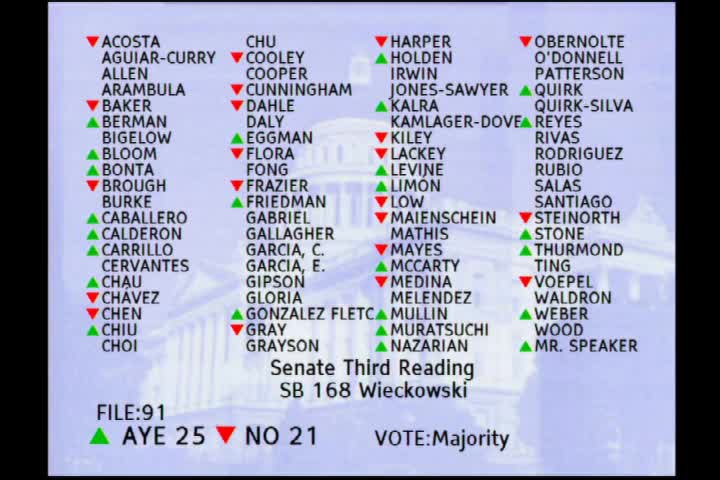 56SEC
Assembly Floor
 6MIN
Senate Standing Committee on Insurance
Bill Author