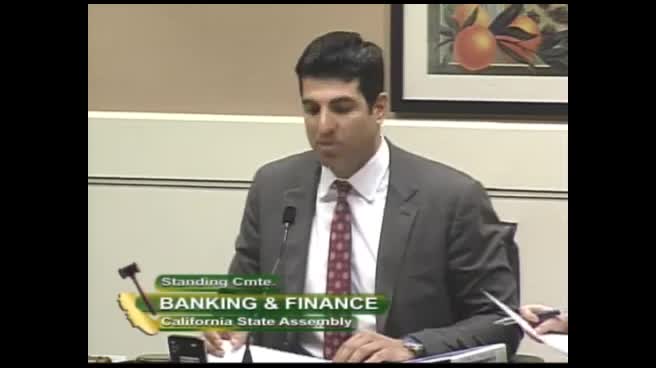
AB 1580: Consumer credit reports: security freezes: protected consumer.
- Session Year: 2015-2016
- House: Assembly
- Latest Version Date: 2016-09-23
Existing state law defines and regulates consumer credit reports and authorizes a consumer to place a security freeze on his or her credit report by making a request in writing by mail to a consumer credit reporting agency. Existing state law requires a consumer credit reporting agency to place the security freeze on the consumers credit report no later than 3 business days after receiving the consumers request.
This bill would require a consumer credit reporting agency to place a security freeze for a protected consumer, defined as an individual who is under 16 years of age at the time a request for the placement of a security freeze is made, an incapacitated person or a protected individual for whom a guardian or conservator has been appointed, or a person under the jurisdiction of a county welfare department or county probation department who has been placed in a foster care setting and is under 16 years of age at the time a request for a security freeze is made, upon that consumers representatives request and compliance with certain requirements. The bill would require a consumer credit reporting agency to send written confirmation of the security freeze to the address on file within 10 days of the placement of the security freeze.
Existing state law defines and regulates consumer credit reports and authorizes a consumer to place a security freeze on his or her credit report by making a request in writing by mail to a consumer credit reporting agency. Existing state law requires a consumer credit reporting agency to place the security freeze on the consumers credit report no later than 3 business days after receiving the consumers request.
This bill would require a consumer credit reporting agency to place a security freeze for a protected consumer, defined as an individual who is under 16 years of age at the time a request for the placement of a security freeze is made, an incapacitated person or a protected individual for whom a guardian or conservator has been appointed, or a person under the jurisdiction of a county welfare department or county probation department who has been placed in a foster care setting and is under 16 years of age at the time a request for a security freeze is made, upon that consumers representatives request and compliance with certain requirements. The bill would require a consumer credit reporting agency to send written confirmation of the security freeze to the address on file within 10 days of the placement of the security freeze.
Existing state law defines and regulates consumer credit reports and authorizes a consumer to place a security freeze on his or her credit report by making a request in writing by mail to a consumer credit reporting agency. Existing state law requires a consumer credit reporting agency to place the security freeze on the consumers credit report no later than 3 business days after receiving the consumers request.
This bill would require a consumer credit reporting agency to place a security freeze for a protected consumer, defined as an individual who is under 16 years of age at the time a request for the placement of a security freeze is made, an incapacitated person or a protected individual for whom a guardian or conservator has been appointed, or a person under the jurisdiction of a county welfare department or county probation department who has been placed in a foster care setting and is under 16 years of age at the time a request for a security freeze is made, upon that consumers representatives request and compliance with certain requirements. The bill would require a consumer credit reporting agency to send written confirmation of the security freeze to the protected consumers representative address on file within 10 days of the placement of the security freeze.
Existing state law defines and regulates consumer credit reports and authorizes a consumer to place a security freeze on his or her credit report by making a request in writing by mail to a consumer credit reporting agency. Existing state law requires a consumer credit reporting agency to place the security freeze on the consumers credit report no later than 3 business days after receiving the consumers request.
This bill would require a consumer credit reporting agency to place a security freeze for a protected consumer, defined as an individual who is under 16 years of age at the time a request for the placement of a security freeze is made, an incapacitated person or a protected individual for whom a guardian or conservator has been appointed, or a person under the jurisdiction of a county welfare department or county probation department who has been placed in a foster care setting and is under 16 years of age at the time a request for a security freeze is made, upon that consumers representatives request and compliance with certain requirements. The bill would require a consumer credit reporting agency to send written confirmation of the security freeze to the protected consumers representative within 10 days of the placement of the security freeze.
Existing state law defines and regulates consumer credit reports and authorizes a consumer to place a security freeze on his or her credit report by making a request in writing by mail to a consumer credit reporting agency. Existing state law requires a consumer credit reporting agency to place the security freeze on the consumers credit report no later than 3 business days after receiving the consumers request.
This bill would require a consumer credit reporting agency to place a security freeze for a protected consumer, defined as an individual who is under 16 years of age at the time a request for the placement of a security freeze is made or made, an incapacitated person or a protected individual for whom a guardian or conservator has been appointed, or a person under the jurisdiction of a county welfare department or county probation department who has been placed in a foster care setting and is under 16 years of age at the time a request for a security freeze is made, upon that consumers representatives request and compliance with certain requirements. The bill would require a consumer credit reporting agency to send written confirmation of the security freeze to the protected consumers representative within 10 days of the placement of the security freeze.
Existing state law defines and regulates consumer credit reports and authorizes a consumer to place a security freeze on his or her credit report by making a request in writing by mail to a consumer credit reporting agency. Existing state law requires a consumer credit reporting agency to place the security freeze on the consumers credit report no later than 3 business days after receiving the consumers request.
This bill would require a consumer credit reporting agency to place a security freeze for a protected consumer, defined as an individual who is under 16 years of age at the time a request for the placement of a security freeze is made or an incapacitated person or a protected individual for whom a guardian or conservator has been appointed, upon that consumers representatives request and compliance with certain requirements. The bill would require a consumer credit reporting agency to send written confirmation of the security freeze to the protected consumer that a freeze was placed consumers representative within 10 days of the placement of the security freeze. The bill would also require a consumer credit reporting agency to notify a protected consumer within 10 days if his or her frozen credit report was released without proper authorization.
Existing state law defines and regulates consumer credit reports and authorizes a consumer to place a security freeze on his or her credit report by making a request in writing by mail to a consumer credit reporting agency. Existing state law requires a consumer credit reporting agency to place the security freeze on the consumers credit report no later than 3 business days after receiving the consumers request.
This bill would authorize a representative of require a consumer credit reporting agency to place a security freeze for a protected consumer, defined as an individual who is under 16 years of age at the time a request for the placement of a security freeze is made or an incapacitated person or a protected individual for whom a guardian or conservator has been appointed, to place or remove a security freeze for the protected consumer, as specified. upon that consumers representatives request and compliance with certain requirements. The bill would require a consumer credit reporting agency to send confirmation to the protected consumer that a freeze was placed within 10 days of the placement of the freeze. The bill would also require a consumer credit reporting agency to notify a protected consumer within 10 days if his or her frozen credit report was released without proper authorization.
Existing state law defines and regulates consumer credit reports and authorizes a consumer to place a security freeze on his or her credit report by making a request in writing by mail to a consumer credit reporting agency. Existing state law requires a consumer credit reporting agency to place the security freeze on the consumers credit report no later than 3 business days after receiving the consumers request.
This bill would authorize a representative of a protected consumer, defined as an individual who is under 16 years of age at the time a request for the placement of a security freeze is made or an incapacitated person or a protected individual for whom a guardian or conservator has been appointed, to place or remove a security freeze for the protected consumer, as specified.
For purposes of Sections 1785.11.10 and 1785.11.11, the following terms shall have the following meanings:
(a)Protected consumer means an individual who is any of the following:
(1)Under 16 years of age at the time a request for the placement of a security freeze is made.
(2)An incapacitated person or a protected person for whom a guardian or conservator has been appointed.
(3)Under the jurisdiction of a county welfare department or county probation department, has been placed in a foster care setting, and is under 16 years of age at the time a request for placement of a security freeze is made.
(b)Record means a compilation of information that:
(1)Identifies a protected consumer.
(2)Was created by a consumer credit reporting agency solely for the purpose of complying with this section.
(3)Is not otherwise authorized to be created or used to consider the protected consumers creditworthiness, credit standing, credit capacity, character, general reputation, personal characteristics, or mode of living.
(c)(1)Representative means a person who provides to a consumer credit reporting agency sufficient proof of authority to act on behalf of a protected consumer.
(2)For a protected consumer who has been placed in a foster care setting, representative means either of the following:
(A)A county welfare department or its agent or designee.
(B)A county probation department or its agent or designee.
(3)For a protected consumer who has been placed in a foster care setting, representative does not mean a foster parent.
(d)Security freeze means:
(1)If a consumer credit reporting agency does not have a file pertaining to a protected consumer, a restriction that:
(A)Is placed on the protected consumers record in accordance with this section.
(B)Prohibits the consumer credit reporting agency from releasing the protected consumers record except as authorized in this section.
(2)If a consumer credit reporting agency has a file pertaining to a protected consumer, a restriction that:
(A)Is placed on the protected consumers consumer credit report in accordance with this section.
(B)Prohibits the consumer credit reporting agency from releasing the protected consumers consumer credit report or any information derived from the protected consumers consumer credit report except as authorized in this section.
(e)Sufficient proof of authority means documentation that shows that a representative has authority to act on behalf of a protected consumer in a financial matter. This documentation includes, but is not limited to:
(1)A court order or relevant enabling document issued by a court.
(2)A legally sufficient and valid power of attorney, or a durable power of attorney.
(3)A written, notarized statement signed by a representative that expressly describes the authority of the representative to act on behalf of a protected consumer, including a temporary conservator or temporary guardian.
(4)A written communication from a county welfare department or its agent or designee or a county probation department or its agent or designee certifying that the protected consumer is a foster youth under its jurisdiction.
(f)Sufficient proof of identification means information or documentation that identifies a protected consumer or a representative of a protected consumer. This information or documentation includes, but is not limited to:
(1)A social security number or a copy of a social security card issued by the Social Security Administration.
(2)A certified copy or official copy of a birth certificate issued by the entity authorized to issue the birth certificate.
(3)A copy of a drivers license, an identification issued by the Department of Motor Vehicles, or any other government-issued identification.
(4)A copy of a bill for telephone, sewer, septic tank, water, electric, oil, or natural gas services that shows a name and a home address.
(5)A written communication from a county welfare department or its agent or designee or a county probation department or its agent or designee certifying that the protected consumer is a foster youth under its jurisdiction.
SEC. 2.Section 1785.11.10 is added to the Civil Code, to read:1785.11.10.Sections 1785.11.9 to 1785.11.11, inclusive, do not apply to the use of a protected consumers consumer credit report or record by any of the following:
(a)A person or entity listed in paragraph (1) or (2) of subdivision (l) of Section 1785.11.2, or Section 1785.11.4 or 1785.11.6.
(b)A person administering a credit file monitoring subscription service to which the representative of the protected consumer has subscribed on behalf of the protected consumer.
(c)A person who provides the protected consumer or the protected consumers representative with a copy of the protected consumers consumer credit report at the request of the protected consumer or at the request of the protected consumers representative.
(d)Any state or local agency, law enforcement agency, trial court, or private collection agency acting pursuant to a court order, warrant, or subpoena.
(e)A child support agency acting pursuant to Chapter 2 (commencing with Section 17400) of Division 17 of the Family Code and Title IV-D of the Social Security Act (42 U.S.C. Sec. 651 et seq.).
(f)The State Department of Health Care Services or its agents or assigns acting to investigate Medi-Cal fraud.
(g)The Franchise Tax Board or its agents or assigns acting to investigate or collect delinquent taxes or unpaid court orders or to fulfill any of its other statutory responsibilities.
SEC. 3.Section 1785.11.11 is added to the Civil Code, to read:1785.11.11.(a)A consumer credit reporting agency shall place a security freeze for a protected consumer if both of the following occur:
(1)The consumer credit reporting agency receives a request from the protected consumers representative for the placement of the security freeze pursuant to this section.
(2)The protected consumers representative does all of the following:
(A)Submits the request to the consumer credit reporting agency at the address or other point of contact and in the manner specified by the consumer credit reporting agency.
(B)Provides to the consumer credit reporting agency sufficient proof of identification of the protected consumer and the representative.
(C)Provides to the consumer credit reporting agency sufficient proof of authority to act on behalf of the protected consumer.
(D)Pays to the consumer credit reporting agency a fee as authorized by subdivision (i).
(b)If a consumer credit reporting agency does not have a file pertaining to a protected consumer when the consumer credit reporting agency receives a request pursuant to paragraph (1) of subdivision (a), the consumer credit reporting agency shall create a record for the protected consumer.
(c)If a protected consumers representative requests a security freeze, the consumer credit reporting agency shall disclose the process for placing and removing a security freeze.
(d)Within 30 days after receiving a request that meets the requirements of subdivision (a), a consumer credit reporting agency shall place a security freeze for the protected consumer. The consumer credit reporting agency shall send written confirmation of the security freeze to the address on file within 10 days of the placement of the security freeze.
(e)Unless a security freeze for a protected consumer is removed pursuant to subdivision (h) or (j), a consumer credit reporting agency shall not release the protected consumers consumer credit report, any information derived from the protected consumers consumer credit report, or any record created for the protected consumer.
(f)A security freeze for a protected consumer placed pursuant to this section shall remain in effect until either of the following occurs:
(1)The protected consumer or the protected consumers representative requests that the consumer credit reporting agency remove the security freeze in accordance with subdivision (h).
(2)The security freeze is removed in accordance with subdivision (j).
(g)To remove a security freeze, a protected consumer or a protected consumers representative shall do all of the following:
(1)Submit a request for removal of the security freeze to the consumer credit reporting agency at the address or other point of contact and in the manner specified by the consumer credit reporting agency.
(2)Provide to the consumer credit reporting agency:
(A)If the request is made by the protected consumer:
(i)Proof that the sufficient proof of authority for the protected consumers representative to act on behalf of the protected consumer is no longer valid, he or she has been emancipated, or he or she is 16 years of age or older.
(ii)Sufficient proof of identification of the protected consumer.
(B)If the request is made by the representative of a protected consumer:
(i)Sufficient proof of identification of the protected consumer and the representative.
(ii)Sufficient proof of authority to act on behalf of the protected consumer.
(3)Pay to the consumer credit reporting agency a fee as authorized by subdivision (i).
(h)Within 30 days after receiving a request that meets the requirements of subdivision (g), a consumer credit reporting agency shall remove a security freeze for a protected consumer.
(i)(1)Except as provided in paragraph (2), a consumer credit reporting agency may not charge a fee for any service performed pursuant to this section.
(2)A consumer credit reporting agency is authorized to charge a reasonable fee, not exceeding ten dollars ($10), for each placement or removal of a security freeze for a protected consumer.
(3)Notwithstanding paragraph (2), a consumer credit reporting agency shall not charge any fee pursuant to this section under any of the following circumstances:
(A)The protected consumers representative has received a report of alleged identity theft against the protected consumer under Section 530.5 of the Penal Code and has provided copy of the report to the consumer credit reporting agency.
(B)The request for the placement or removal of a security freeze is for a protected consumer who is under 16 years of age at the time of the request and the consumer credit reporting agency has a report pertaining to the protected consumer.
(C)The request for the placement or removal of a security freeze is for a protected consumer who has been placed in a foster care setting.
(j)A consumer credit reporting agency is authorized to remove a security freeze for a protected consumer or to delete a record of a protected consumer if the security freeze was placed or the record was created based upon a material misrepresentation of fact by the protected consumer or the protected consumers representative.
(k)A consumer credit reporting agency may develop procedures involving the use of telephone, mail, fax, the Internet, or other electronic media to receive and process a request for a protected consumers security freeze to be placed or removed.
For purposes of Sections 1785.11.10 and 1785.11.11, the following terms shall have the following meanings:
(a)Protected consumer means an individual who is any of the following:
(1)Under 16 years of age at the time a request for the placement of a security freeze is made.
(2)An incapacitated person or a protected person for whom a guardian or conservator has been appointed.
(3)Under the jurisdiction of a county welfare department or county probation department, has been placed in a foster care setting, and is under 16 years of age at the time a request for placement of a security freeze is made.
(b)Record means a compilation of information that:
(1)Identifies a protected consumer.
(2)Was created by a consumer credit reporting agency solely for the purpose of complying with this section.
(3)Is not otherwise authorized to be created or used to consider the protected consumers creditworthiness, credit standing, credit capacity, character, general reputation, personal characteristics, or mode of living.
(c)(1)Representative means a person who provides to a consumer credit reporting agency sufficient proof of authority to act on behalf of a protected consumer.
(2)For a protected consumer who has been placed in a foster care setting, representative means either of the following:
(A)A county welfare department or its agent or designee.
(B)A county probation department or its agent or designee.
(3)For a protected consumer who has been placed in a foster care setting, representative does not mean a foster parent.
(d)Security freeze means:
(1)If a consumer credit reporting agency does not have a file pertaining to a protected consumer, a restriction that:
(A)Is placed on the protected consumers record in accordance with this section.
(B)Prohibits the consumer credit reporting agency from releasing the protected consumers record except as authorized in this section.
(2)If a consumer credit reporting agency has a file pertaining to a protected consumer, a restriction that:
(A)Is placed on the protected consumers consumer credit report in accordance with this section.
(B)Prohibits the consumer credit reporting agency from releasing the protected consumers consumer credit report or any information derived from the protected consumers consumer credit report except as authorized in this section.
(e)Sufficient proof of authority means documentation that shows that a representative has authority to act on behalf of a protected consumer in a financial matter. This documentation includes, but is not limited to:
(1)A court order or relevant enabling document issued by a court.
(2)A legally sufficient and valid power of attorney, or a durable power of attorney.
(3)A written, notarized statement signed by a representative that expressly describes the authority of the representative to act on behalf of a protected consumer, including a temporary conservator or temporary guardian.
(4)A written communication from a county welfare department or its agent or designee or a county probation department or its agent or designee certifying that the protected consumer is a foster youth under its jurisdiction.
(f)Sufficient proof of identification means information or documentation that identifies a protected consumer or a representative of a protected consumer. This information or documentation includes, but is not limited to:
(1)A social security number or a copy of a social security card issued by the Social Security Administration.
(2)A certified copy or official copy of a birth certificate issued by the entity authorized to issue the birth certificate.
(3)A copy of a drivers license, an identification issued by the Department of Motor Vehicles, or any other government-issued identification.
(4)A copy of a bill for telephone, sewer, septic tank, water, electric, oil, or natural gas services that shows a name and a home address.
(5)A written communication from a county welfare department or its agent or designee or a county probation department or its agent or designee certifying that the protected consumer is a foster youth under its jurisdiction.
SEC. 2.Section 1785.11.10 is added to the Civil Code, to read:1785.11.10.Sections 1785.11.9 to 1785.11.11, inclusive, do not apply to the use of a protected consumers consumer credit report or record by any of the following:
(a)A person or entity listed in paragraph (1) or (2) of subdivision (l) of Section 1785.11.2, or Section 1785.11.4 or 1785.11.6.
(b)A person administering a credit file monitoring subscription service to which the representative of the protected consumer has subscribed on behalf of the protected consumer.
(c)A person who provides the protected consumer or the protected consumers representative with a copy of the protected consumers consumer credit report at the request of the protected consumer or at the request of the protected consumers representative.
(d)Any state or local agency, law enforcement agency, trial court, or private collection agency acting pursuant to a court order, warrant, or subpoena.
(e)A child support agency acting pursuant to Chapter 2 (commencing with Section 17400) of Division 17 of the Family Code and Title IV-D of the Social Security Act (42 U.S.C. Sec. 651 et seq.).
(f)The State Department of Health Care Services or its agents or assigns acting to investigate Medi-Cal fraud.
(g)The Franchise Tax Board or its agents or assigns acting to investigate or collect delinquent taxes or unpaid court orders or to fulfill any of its other statutory responsibilities.
SEC. 3.Section 1785.11.11 is added to the Civil Code, to read:1785.11.11.(a)A consumer credit reporting agency shall place a security freeze for a protected consumer if both of the following occur:
(1)The consumer credit reporting agency receives a request from the protected consumers representative for the placement of the security freeze pursuant to this section.
(2)The protected consumers representative does all of the following:
(A)Submits the request to the consumer credit reporting agency at the address or other point of contact and in the manner specified by the consumer credit reporting agency.
(B)Provides to the consumer credit reporting agency sufficient proof of identification of the protected consumer and the representative.
(C)Provides to the consumer credit reporting agency sufficient proof of authority to act on behalf of the protected consumer.
(D)Pays to the consumer credit reporting agency a fee as authorized by subdivision (i).
(b)If a consumer credit reporting agency does not have a file pertaining to a protected consumer when the consumer credit reporting agency receives a request pursuant to paragraph (1) of subdivision (a), the consumer credit reporting agency shall create a record for the protected consumer.
(c)If a protected consumers representative requests a security freeze, the consumer credit reporting agency shall disclose the process for placing and removing a security freeze.
(d)Within 30 days after receiving a request that meets the requirements of subdivision (a), a consumer credit reporting agency shall place a security freeze for the protected consumer. The consumer credit reporting agency shall send written confirmation of the security freeze to the address on file within 10 days of the placement of the security freeze.
(e)Unless a security freeze for a protected consumer is removed pursuant to subdivision (h) or (j), a consumer credit reporting agency shall not release the protected consumers consumer credit report, any information derived from the protected consumers consumer credit report, or any record created for the protected consumer.
(f)A security freeze for a protected consumer placed pursuant to this section shall remain in effect until either of the following occurs:
(1)The protected consumer or the protected consumers representative requests that the consumer credit reporting agency remove the security freeze in accordance with subdivision (h).
(2)The security freeze is removed in accordance with subdivision (j).
(g)To remove a security freeze, a protected consumer or a protected consumers representative shall do all of the following:
(1)Submit a request for removal of the security freeze to the consumer credit reporting agency at the address or other point of contact and in the manner specified by the consumer credit reporting agency.
(2)Provide to the consumer credit reporting agency:
(A)If the request is made by the protected consumer:
(i)Proof that the sufficient proof of authority for the protected consumers representative to act on behalf of the protected consumer is no longer valid, he or she has been emancipated, or he or she is 16 years of age or older.
(ii)Sufficient proof of identification of the protected consumer.
(B)If the request is made by the representative of a protected consumer:
(i)Sufficient proof of identification of the protected consumer and the representative.
(ii)Sufficient proof of authority to act on behalf of the protected consumer.
(3)Pay to the consumer credit reporting agency a fee as authorized by subdivision (i).
(h)Within 30 days after receiving a request that meets the requirements of subdivision (g), a consumer credit reporting agency shall remove a security freeze for a protected consumer.
(i)(1)Except as provided in paragraph (2), a consumer credit reporting agency may not charge a fee for any service performed pursuant to this section.
(2)A consumer credit reporting agency is authorized to charge a reasonable fee, not exceeding ten dollars ($10), for each placement or removal of a security freeze for a protected consumer.
(3)Notwithstanding paragraph (2), a consumer credit reporting agency shall not charge any fee pursuant to this section under any of the following circumstances:
(A)The protected consumers representative has received a report of alleged identity theft against the protected consumer under Section 530.5 of the Penal Code and has provided copy of the report to the consumer credit reporting agency.
(B)The request for the placement or removal of a security freeze is for a protected consumer who is under 16 years of age at the time of the request and the consumer credit reporting agency has a report pertaining to the protected consumer.
(C)The request for the placement or removal of a security freeze is for a protected consumer who has been placed in a foster care setting.
(j)A consumer credit reporting agency is authorized to remove a security freeze for a protected consumer or to delete a record of a protected consumer if the security freeze was placed or the record was created based upon a material misrepresentation of fact by the protected consumer or the protected consumers representative.
(k)A consumer credit reporting agency may develop procedures involving the use of telephone, mail, fax, the Internet, or other electronic media to receive and process a request for a protected consumers security freeze to be placed or removed.
For purposes of Sections 1785.11.10 and 1785.11.11, the following terms shall have the following meanings:
(a)Protected consumer means an individual who is any of the following:
(1)Under 16 years of age at the time a request for the placement of a security freeze is made.
(2)An incapacitated person or a protected person for whom a guardian or conservator has been appointed.
(3)Under the jurisdiction of a county welfare department or county probation department, has been placed in a foster care setting, and is under 16 years of age at the time a request for placement of a security freeze is made.
(b)Record means a compilation of information that:
(1)Identifies a protected consumer.
(2)Was created by a consumer credit reporting agency solely for the purpose of complying with this section.
(3)Is not otherwise authorized to be created or used to consider the protected consumers creditworthiness, credit standing, credit capacity, character, general reputation, personal characteristics, or mode of living.
(c)(1)Representative means a person who provides to a consumer credit reporting agency sufficient proof of authority to act on behalf of a protected consumer.
(2)For a protected consumer who has been placed in a foster care setting, representative means either of the following:
(A)A county welfare department or its agent or designee.
(B)A county probation department or its agent or designee.
(3)For a protected consumer who has been placed in a foster care setting, representative does not mean a foster parent.
(d)Security freeze means:
(1)If a consumer credit reporting agency does not have a file pertaining to a protected consumer, a restriction that:
(A)Is placed on the protected consumers record in accordance with this section.
(B)Prohibits the consumer credit reporting agency from releasing the protected consumers record except as authorized in this section.
(2)If a consumer credit reporting agency has a file pertaining to a protected consumer, a restriction that:
(A)Is placed on the protected consumers consumer credit report in accordance with this section.
(B)Prohibits the consumer credit reporting agency from releasing the protected consumers consumer credit report or any information derived from the protected consumers consumer credit report except as authorized in this section.
(e)Sufficient proof of authority means documentation that shows that a representative has authority to act on behalf of a protected consumer in a financial matter. This documentation includes, but is not limited to:
(1)A court order or relevant enabling document issued by a court.
(2)A legally sufficient and valid power of attorney, or a durable power of attorney.
(3)A written, notarized statement signed by a representative that expressly describes the authority of the representative to act on behalf of a protected consumer, including a temporary conservator or temporary guardian.
(4)A written communication from a county welfare department or its agent or designee or a county probation department or its agent or designee certifying that the protected consumer is a foster youth under its jurisdiction.
(f)Sufficient proof of identification means information or documentation that identifies a protected consumer or a representative of a protected consumer. This information or documentation includes, but is not limited to:
(1)A social security number or a copy of a social security card issued by the Social Security Administration.
(2)A certified copy or official copy of a birth certificate issued by the entity authorized to issue the birth certificate.
(3)A copy of a drivers license, an identification issued by the Department of Motor Vehicles, or any other government-issued identification.
(4)A copy of a bill for telephone, sewer, septic tank, water, electric, oil, or natural gas services that shows a name and a home address.
(5)A written communication from a county welfare department or its agent or designee or a county probation department or its agent or designee certifying that the protected consumer is a foster youth under its jurisdiction.
SEC. 2.Section 1785.11.10 is added to the Civil Code, to read:1785.11.10.Sections 1785.11.9 to 1785.11.11, inclusive, do not apply to the use of a protected consumers consumer credit report or record by any of the following:
(a)A person or entity listed in paragraph (1) or (2) of subdivision (l) of Section 1785.11.2, or Section 1785.11.4 or 1785.11.6.
(b)A person administering a credit file monitoring subscription service to which the representative of the protected consumer has subscribed on behalf of the protected consumer.
(c)A person who provides the protected consumer or the protected consumers representative with a copy of the protected consumers consumer credit report at the request of the protected consumer or at the request of the protected consumers representative.
(d)Any state or local agency, law enforcement agency, trial court, or private collection agency acting pursuant to a court order, warrant, or subpoena.
(e)A child support agency acting pursuant to Chapter 2 (commencing with Section 17400) of Division 17 of the Family Code and Title IV-D of the Social Security Act (42 U.S.C. Sec. 651 et seq.).
(f)The State Department of Health Care Services or its agents or assigns acting to investigate Medi-Cal fraud.
(g)The Franchise Tax Board or its agents or assigns acting to investigate or collect delinquent taxes or unpaid court orders or to fulfill any of its other statutory responsibilities.
SEC. 3.Section 1785.11.11 is added to the Civil Code, to read:1785.11.11.(a)A consumer credit reporting agency shall place a security freeze for a protected consumer if both of the following occur:
(1)The consumer credit reporting agency receives a request from the protected consumers representative for the placement of the security freeze pursuant to this section.
(2)The protected consumers representative does all of the following:
(A)Submits the request to the consumer credit reporting agency at the address or other point of contact and in the manner specified by the consumer credit reporting agency.
(B)Provides to the consumer credit reporting agency sufficient proof of identification of the protected consumer and the representative.
(C)Provides to the consumer credit reporting agency sufficient proof of authority to act on behalf of the protected consumer.
(D)Pays to the consumer credit reporting agency a fee as authorized by subdivision (i).
(b)If a consumer credit reporting agency does not have a file pertaining to a protected consumer when the consumer credit reporting agency receives a request pursuant to paragraph (1) of subdivision (a), the consumer credit reporting agency shall create a record for the protected consumer.
(c)If a protected consumers representative requests a security freeze, the consumer credit reporting agency shall disclose the process for placing and removing a security freeze.
(d)Within 30 days after receiving a request that meets the requirements of subdivision (a), a consumer credit reporting agency shall place a security freeze for the protected consumer. The consumer credit reporting agency shall send written confirmation of the security freeze to the protected consumers representative address on file within 10 days of the placement of the security freeze.
(e)Unless a security freeze for a protected consumer is removed pursuant to subdivision (h) or (j), a consumer credit reporting agency shall not release the protected consumers consumer credit report, any information derived from the protected consumers consumer credit report, or any record created for the protected consumer.
(f)A security freeze for a protected consumer placed pursuant to this section shall remain in effect until either of the following occurs:
(1)The protected consumer or the protected consumers representative requests that the consumer credit reporting agency remove the security freeze in accordance with subdivision (h).
(2)The security freeze is removed in accordance with subdivision (j).
(g)To remove a security freeze, a protected consumer or a protected consumers representative shall do all of the following:
(1)Submit a request for removal of the security freeze to the consumer credit reporting agency at the address or other point of contact and in the manner specified by the consumer credit reporting agency.
(2)Provide to the consumer credit reporting agency:
(A)If the request is made by the protected consumer:
(i)Proof that the sufficient proof of authority for the protected consumers representative to act on behalf of the protected consumer is no longer valid, he or she has been emancipated, or he or she is 16 years of age or older.
(ii)Sufficient proof of identification of the protected consumer.
(B)If the request is made by the representative of a protected consumer:
(i)Sufficient proof of identification of the protected consumer and the representative.
(ii)Sufficient proof of authority to act on behalf of the protected consumer.
(3)Pay to the consumer credit reporting agency a fee as authorized by subdivision (i).
(h)Within 30 days after receiving a request that meets the requirements of subdivision (g), a consumer credit reporting agency shall remove a security freeze for a protected consumer.
(i)(1)Except as provided in paragraph (2), a consumer credit reporting agency may not charge a fee for any service performed pursuant to this section.
(2)A consumer credit reporting agency is authorized to charge a reasonable fee, not exceeding ten dollars ($10), for each placement or removal of a security freeze for a protected consumer.
(3)Notwithstanding paragraph (2), a consumer credit reporting agency shall not charge any fee pursuant to this section under any of the following circumstances:
(A)The protected consumers representative has received a report of alleged identity theft against the protected consumer under Section 530.5 of the Penal Code and has provided copy of the report to the consumer credit reporting agency.
(B)The request for the placement or removal of a security freeze is for a protected consumer who is under 16 years of age at the time of the request and the consumer credit reporting agency has a report pertaining to the protected consumer.
(C)The request for the placement or removal of a security freeze is for a protected consumer who has been placed in a foster care setting.
(j)A consumer credit reporting agency is authorized to remove a security freeze for a protected consumer or to delete a record of a protected consumer if the security freeze was placed or the record was created based upon a material misrepresentation of fact by the protected consumer or the protected consumers representative.
(k)A consumer credit reporting agency may develop procedures involving the use of telephone, mail, fax, the Internet, or other electronic media to receive and process a request for a protected consumers security freeze to be placed or removed.
For purposes of Sections 1785.11.10 and 1785.11.11, the following terms shall have the following meanings:
(a)Protected consumer means an individual who is any of the following:
(1)Under 16 years of age at the time a request for the placement of a security freeze is made.
(2)An incapacitated person or a protected person for whom a guardian or conservator has been appointed.
(3)Under the jurisdiction of a county welfare department or county probation department, has been placed in a foster care setting, and is under 16 years of age at the time a request for placement of a security freeze is made.
(b)Record means a compilation of information that:
(1)Identifies a protected consumer.
(2)Was created by a consumer credit reporting agency solely for the purpose of complying with this section.
(3)Is not otherwise authorized to be created or used to consider the protected consumers creditworthiness, credit standing, credit capacity, character, general reputation, personal characteristics, or mode of living.
(c)(1)Representative means a person who provides to a consumer credit reporting agency sufficient proof of authority to act on behalf of a protected consumer.
(2)For a protected consumer who has been placed in a foster care setting, representative means either of the following:
(A)A county welfare department or its agent or designee.
(B)A county probation department or its agent or designee.
(3)For a protected consumer who has been placed in a foster care setting, representative does not mean a foster parent.
(d)Security freeze means:
(1)If a consumer credit reporting agency does not have a file pertaining to a protected consumer, a restriction that:
(A)Is placed on the protected consumers record in accordance with this section.
(B)Prohibits the consumer credit reporting agency from releasing the protected consumers record except as authorized in this section.
(2)If a consumer credit reporting agency has a file pertaining to a protected consumer, a restriction that:
(A)Is placed on the protected consumers consumer report in accordance with this section.
(B)Prohibits the consumer credit reporting agency from releasing the protected consumers consumer report or any information derived from the protected consumers consumer report except as authorized in this section.
(e)Sufficient proof of authority means documentation that shows that a representative has authority to act on behalf of a protected consumer in a financial matter. This documentation includes, but is not limited to:
(1)A court order or relevant enabling document issued by a court.
(2)A legally sufficient and valid power of attorney, or a durable power of attorney.
(3)A written, notarized statement signed by a representative that expressly describes the authority of the representative to act on behalf of a protected consumer, including a temporary conservator or temporary guardian.
(4)A written communication from a county welfare department or its agency agent or designee or a county probation department or its agent or designee certifying that the protected consumer is a foster youth under its jurisdiction.
(f)Sufficient proof of identification means information or documentation that identifies a protected consumer or a representative of a protected consumer. This information or documentation includes, but is not limited to:
(1)A social security number or a copy of a social security card issued by the Social Security Administration.
(2)A certified copy or official copy of a birth certificate issued by the entity authorized to issue the birth certificate.
(3)A copy of a drivers license, an identification issued by the Department of Motor Vehicles, or any other government-issued identification.
(4)A copy of a bill for telephone, sewer, septic tank, water, electric, oil, or natural gas services that shows a name and a home address.
(5)A written communication from a county welfare department or its agency agent or designee or a county probation department or its agent or designee certifying that the protected consumer is a foster youth under its jurisdiction.
SEC. 2.Section 1785.11.10 is added to the Civil Code, to read:1785.11.10.Sections 1785.11.9 to 1785.11.11, inclusive, do not apply to the use of a protected consumers report or record by any of the following:
(a)A person or entity listed in paragraph (1) or (2) of subdivision (l) of Section 1785.11.2, or Section 1785.11.4 or 1785.11.6.
(b)A person administering a credit file monitoring subscription service to which the representative of the protected consumer has subscribed on behalf of the protected consumer.
(c)A person who provides the protected consumer or the protected consumers representative with a copy of the protected consumers consumer report at the request of the protected consumer or at the request of the protected consumers representative.
(d)Any state or local agency, law enforcement agency, trial court, or private collection agency acting pursuant to a court order, warrant, or subpoena.
(e)A child support agency acting pursuant to Chapter 2 (commencing with Section 17400) of Division 17 of the Family Code and Title IV-D of the Social Security Act (42 U.S.C. Sec. 651 et seq.).
(f)The State Department of Health Care Services or its agents or assigns acting to investigate Medi-Cal fraud.
(g)The Franchise Tax Board or its agents or assigns acting to investigate or collect delinquent taxes or unpaid court orders or to fulfill any of its other statutory responsibilities.
SEC. 3.Section 1785.11.11 is added to the Civil Code, to read:1785.11.11.(a)A consumer credit reporting agency shall place a security freeze for a protected consumer if both of the following occur:
(1)The consumer credit reporting agency receives a request from the protected consumers representative for the placement of the security freeze pursuant to this section.
(2)The protected consumers representative does all of the following:
(A)Submits the request to the consumer credit reporting agency at the address or other point of contact and in the manner specified by the consumer credit reporting agency.
(B)Provides to the consumer credit reporting agency sufficient proof of identification of the protected consumer and the representative.
(C)Provides to the consumer credit reporting agency sufficient proof of authority to act on behalf of the protected consumer.
(D)Pays to the consumer credit reporting agency a fee as authorized by subdivision (i).
(b)If a consumer credit reporting agency does not have a file pertaining to a protected consumer when the consumer credit reporting agency receives a request pursuant to paragraph (1) of subdivision (a), the consumer credit reporting agency shall create a record for the protected consumer.
(c)If a protected consumers representative requests a security freeze, the consumer credit reporting agency shall disclose the process for placing and removing a security freeze.
(d)Within 30 days after receiving a request that meets the requirements of subdivision (a), a consumer credit reporting agency shall place a security freeze for the protected consumer. The consumer credit reporting agency shall send written confirmation of the security freeze to the protected consumers representative within 10 days of the placement of the security freeze.
(e)Unless a security freeze for a protected consumer is removed pursuant to subdivision (h) or (j), a consumer credit reporting agency shall not release the protected consumers consumer report, any information derived from the protected consumers consumer report, or any record created for the protected consumer.
(f)A security freeze for a protected consumer placed pursuant to this section shall remain in effect until either of the following occurs:
(1)The protected consumer or the protected consumers representative requests that the consumer credit reporting agency remove the security freeze in accordance with subdivision (h).
(2)The security freeze is removed in accordance with subdivision (j).
(g)To remove a security freeze, a protected consumer or a protected consumers representative shall do all of the following:
(1)Submit a request for removal of the security freeze to the consumer credit reporting agency at the address or other point of contact and in the manner specified by the consumer credit reporting agency.
(2)Provide to the consumer credit reporting agency:
(A)If the request is made by the protected consumer:
(i)Proof that the sufficient proof of authority for the protected consumers representative to act on behalf of the protected consumer is no longer valid, he or she has been emancipated, or he or she is 16 years of age or older.
(ii)Sufficient proof of identification of the protected consumer.
(B)If the request is made by the representative of a protected consumer:
(i)Sufficient proof of identification of the protected consumer and the representative.
(ii)Sufficient proof of authority to act on behalf of the protected consumer.
(3)Pay to the consumer credit reporting agency a fee as authorized by subdivision (i).
(h)Within 30 days after receiving a request that meets the requirements of subdivision (g), a consumer credit reporting agency shall remove a security freeze for a protected consumer.
(i)(1)Except as provided in paragraph (2), a consumer credit reporting agency may not charge a fee for any service performed pursuant to this section.
(2)A consumer credit reporting agency is authorized to charge a reasonable fee, not exceeding ten dollars ($10), for each placement or removal of a security freeze for a protected consumer.
(3)Notwithstanding paragraph (2), a consumer credit reporting agency shall not charge any fee pursuant to this section under any of the following circumstances:
(A)The protected consumers representative has received a report of alleged identity theft against the protected consumer under Section 530.5 of the Penal Code and has provided copy of the report to the consumer credit reporting agency.
(B)The request for the placement or removal of a security freeze is for a protected consumer who is under 16 years of age at the time of the request and the consumer credit reporting agency has a report pertaining to the protected consumer.
(C)The request for the placement or removal of a security freeze is for a protected consumer who has been placed in a foster care setting.
(j)A consumer credit reporting agency is authorized to remove a security freeze for a protected consumer or to delete a record of a protected consumer if the security freeze was placed or the record was created based upon a material misrepresentation of fact by the protected consumer or the protected consumers representative.
(k)A consumer credit reporting agency may develop procedures involving the use of telephone, mail, fax, the Internet, or other electronic media to receive and process a request for a protected consumers security freeze to be placed or removed.
For purposes of Sections 1785.11.10 and 1785.11.11, the following terms shall have the following meanings:
(a)Protected consumer means an individual who is either any of the following:
(1)Under 16 years of age at the time a request for the placement of a security freeze is made.
(2)An incapacitated person or a protected person for whom a guardian or conservator has been appointed.
(3)Under the jurisdiction of a county welfare department or county probation department, has been placed in a foster care setting, and is under 16 years of age at the time a request for placement of a security freeze is made.
(b)Record means a compilation of information that:
(1)Identifies a protected consumer.
(2)Was created by a consumer credit reporting agency solely for the purpose of complying with this section.
(3)Is not otherwise authorized to be created or used to consider the protected consumers creditworthiness, credit standing, credit capacity, character, general reputation, personal characteristics, or mode of living.
(c)(1)Representative means a person who provides to a consumer credit reporting agency sufficient proof of authority to act on behalf of a protected consumer.
(2)For a protected consumer who has been placed in a foster care setting, representative means either of the following:
(A)A county welfare department or its agent or designee.
(B)A county probation department or its agent or designee.
(3)For a protected consumer who has been placed in a foster care setting, representative does not mean a foster parent.
(d)Security freeze means:
(1)If a consumer credit reporting agency does not have a file pertaining to a protected consumer, a restriction that:
(A)Is placed on the protected consumers record in accordance with this section.
(B)Prohibits the consumer credit reporting agency from releasing the protected consumers record except as authorized in this section.
(2)If a consumer credit reporting agency has a file pertaining to a protected consumer, a restriction that:
(A)Is placed on the protected consumers consumer report in accordance with this section.
(B)Prohibits the consumer credit reporting agency from releasing the protected consumers consumer report or any information derived from the protected consumers consumer report except as authorized in this section.
(e)Sufficient proof of authority means documentation that shows that a representative has authority to act on behalf of a protected consumer in a financial matter. This documentation includes, but is not limited to:
(1)A court order or relevant enabling document issued by a court.
(2)A legally sufficient and valid power of attorney, or a durable power of attorney.
(3)A written, notarized statement signed by a representative that expressly describes the authority of the representative to act on behalf of a protected consumer, including a temporary conservator or temporary guardian.
(4)A written communication from a county welfare department or its agency or designee or a county probation department or its agent or designee certifying that the protected consumer is a foster youth under its jurisdiction.
(f)Sufficient proof of identification means information or documentation that identifies a protected consumer or a representative of a protected consumer. This information or documentation includes, but is not limited to:
(1)A social security number or a copy of a social security card issued by the Social Security Administration.
(2)A certified copy or official copy of a birth certificate issued by the entity authorized to issue the birth certificate.
(3)A copy of a drivers license, an identification issued by the Department of Motor Vehicles, or any other government-issued identification.
(4)A copy of a bill for telephone, sewer, septic tank, water, electric, oil, or natural gas services that shows a name and a home address.
(5)A written communication from a county welfare department or its agency or designee or a county probation department or its agent or designee certifying that the protected consumer is a foster youth under its jurisdiction.
SEC. 2.Section 1785.11.10 is added to the Civil Code, to read:1785.11.10.Sections 1785.11.9 to 1785.11.11, inclusive, do not apply to the use of a protected consumers report or record by any of the following:
(a)A person or entity listed in subdivision (l) of Section 1785.11.2, or Section 1785.11.4 or 1785.11.6.
(b)A person administering a credit file monitoring subscription service to which the representative of the protected consumer has subscribed on behalf of the protected consumer.
(c)A person who provides the protected consumer or the protected consumers representative with a copy of the protected consumers consumer report at the request of the protected consumer or at the request of the protected consumers representative.
(d)A person or entity that maintains or is a database used solely for one of the following purposes:
(1)Criminal record information.
(2)Personal loss history information.
(3)Fraud prevention or protection.
(4)Employment screening.
(5)Tenant screening.
(d)Any state or local agency, law enforcement agency, trial court, or private collection agency acting pursuant to a court order, warrant, or subpoena.
(e)A child support agency acting pursuant to Chapter 2 (commencing with Section 17400) of Division 17 of the Family Code and Title IV-D of the Social Security Act (42 U.S.C. et seq.).
(f)The State Department of Health Care Services or its agents or assigns acting to investigate Medi-Cal fraud.
(g)The Franchise Tax Board or its assigns acting to investigate or collect delinquent taxes or unpaid court orders or to fulfill any of its other statutory responsibilities.
SEC. 3.Section 1785.11.11 is added to the Civil Code, to read:1785.11.11.(a)A consumer credit reporting agency shall place a security freeze for a protected consumer if both of the following occur:
(1)The consumer credit reporting agency receives a request from the protected consumers representative for the placement of the security freeze pursuant to this section.
(2)The protected consumers representative does all of the following:
(A)Submits the request to the consumer credit reporting agency at the address or other point of contact and in the manner specified by the consumer credit reporting agency.
(B)Provides to the consumer credit reporting agency sufficient proof of identification of the protected consumer and the representative.
(C)Provides to the consumer credit reporting agency sufficient proof of authority to act on behalf of the protected consumer.
(D)Pays to the consumer credit reporting agency a fee as authorized by subdivision (i).
(b)If a consumer credit reporting agency does not have a file pertaining to a protected consumer when the consumer credit reporting agency receives a request pursuant to paragraph (1) of subdivision (a), the consumer credit reporting agency shall create a record for the protected consumer.
(c)If a protected consumers representative requests a security freeze, the consumer credit reporting agency shall disclose the process for placing and removing a security freeze.
(d)Within 30 days after receiving a request that meets the requirements of subdivision (a), a consumer credit reporting agency shall place a security freeze for the protected consumer. The consumer credit reporting agency shall send written confirmation of the security freeze to the protected consumers representative within 10 days of the placement of the security freeze.
(e)Unless a security freeze for a protected consumer is removed pursuant to subdivision (h) or (j), a consumer credit reporting agency shall not release the protected consumers consumer report, any information derived from the protected consumers consumer report, or any record created for the protected consumer.
(f)A security freeze for a protected consumer placed pursuant to this section shall remain in effect until either of the following occurs:
(1)The protected consumer or the protected consumers representative requests that the consumer credit reporting agency remove the security freeze in accordance with subdivision (h).
(2)The security freeze is removed in accordance with subdivision (j).
(g)To remove a security freeze, a protected consumer or a protected consumers representative shall do all of the following:
(1)Submit a request for removal of the security freeze to the consumer credit reporting agency at the address or other point of contact and in the manner specified by the consumer credit reporting agency.
(2)Provide to the consumer credit reporting agency:
(A)If the request is made by the protected consumer:
(i)Proof that the sufficient proof of authority for the protected consumers representative to act on behalf of the protected consumer is no longer valid. valid, he or she has been emancipated, or he or she is 16 years of age or older.
(ii)Sufficient proof of identification of the protected consumer.
(B)If the request is made by the representative of a protected consumer:
(i)Sufficient proof of identification of the protected consumer and the representative.
(ii)Sufficient proof of authority to act on behalf of the protected consumer.
(3)Pay to the consumer credit reporting agency a fee as authorized by subdivision (i).
(h)Within 30 days after receiving a request that meets the requirements of subdivision (g), a consumer credit reporting agency shall remove a security freeze for a protected consumer.
(i)(1)Except as provided in paragraph (2), a consumer credit reporting agency may not charge a fee for any service performed pursuant to this section.
(2)A consumer credit reporting agency is authorized to charge a reasonable fee, not exceeding ten dollars ($10), for each placement or removal of a security freeze for a protected consumer.
(3)Notwithstanding paragraph (2), a consumer credit reporting agency shall not charge any fee pursuant to this section under any of the following circumstances:
(A)The protected consumers representative has received a report of alleged identity theft against the protected consumer under Section 530.5 of the Penal Code and has provided copy of the report to the consumer credit reporting agency.
(B)The request for the placement or removal of a security freeze is for a protected consumer who is under 16 years of age at the time of the request and the consumer credit reporting agency has a report pertaining to the protected consumer.
(C)The request for the placement or removal of a security freeze is for a protected consumer who has been placed in a foster care setting.
(j)A consumer credit reporting agency is authorized to remove a security freeze for a protected consumer or to delete a record of a protected consumer if the security freeze was placed or the record was created based upon a material misrepresentation of fact by the protected consumer or the protected consumers representative.
(k)A consumer credit reporting agency may develop procedures involving the use of telephone, mail, fax, the Internet, or other electronic media to receive and process a request for a protected consumers security freeze to be placed or removed.
For purposes of Sections 1785.11.10 and 1785.11.11, the following terms shall have the following meanings:
(a)Protected consumer means an individual who is either of the following:
(1)Under 16 years of age at the time a request for the placement of a security freeze is made.
(2)An incapacitated person or a protected person for whom a guardian or conservator has been appointed.
(b)Record means a compilation of information that:
(1)Identifies a protected consumer.
(2)Was created by a consumer credit reporting agency solely for the purpose of complying with this section.
(3)Is not otherwise authorized to be created or used to consider the protected consumers creditworthiness, credit standing, credit capacity, character, general reputation, personal characteristics, or mode of living.
(c)Representative means a person who provides to a consumer credit reporting agency sufficient proof of authority to act on behalf of a protected consumer.
(d)Security freeze means:
(1)If a consumer credit reporting agency does not have a file pertaining to a protected consumer, a restriction that:
(A)Is placed on the protected consumers record in accordance with this section.
(B)Prohibits the consumer credit reporting agency from releasing the protected consumers record except as authorized in this section.
(2)If a consumer credit reporting agency has a file pertaining to a protected consumer, a restriction that:
(A)Is placed on the protected consumers consumer report in accordance with this section.
(B)Prohibits the consumer credit reporting agency from releasing the protected consumers consumer report or any information derived from the protected consumers consumer report except as authorized in this section.
(e)Sufficient proof of authority means documentation that shows that a representative has authority to act on behalf of a protected consumer in a financial matter. This documentation includes, but is not limited to:
(1)A court order or relevant enabling document issued by a court.
(2)A legally sufficient and valid power of attorney, or a durable power of attorney.
(3)A written, notarized statement signed by a representative that expressly describes the authority of the representative to act on behalf of a protected consumer, including a temporary conservator or temporary guardian.
(f)Sufficient proof of identification means information or documentation that identifies a protected consumer or a representative of a protected consumer. This information or documentation includes, but is not limited to:
(1)A social security number or a copy of a social security card issued by the Social Security Administration.
(2)A certified copy or official copy of a birth certificate issued by the entity authorized to issue the birth certificate.
(3)A copy of a drivers license, an identification issued by the Department of Motor Vehicles, or any other government-issued identification.
(4)A copy of a bill for telephone, sewer, septic tank, water, electric, oil, or natural gas services, services that shows a name and a home address.
SEC. 2.Section 1785.11.10 is added to the Civil Code, to read:1785.11.10.Sections 1785.11.9 to 1785.11.11, inclusive, do not apply to the use of a protected consumer consumers report or record by any of the following:
(a)A person or entity listed in subdivision (l) of Section 1785.11.2, or Section 1785.11.4 or 1785.11.6.
(b)A person administering a credit file monitoring subscription service to which the protected consumer has subscribed or to which the representative of the protected consumer has subscribed on behalf of the protected consumer.
(c)A person who provides the protected consumer or the protected consumers representative with a copy of the protected consumers consumer report on at the request of the protected consumer or at the request of the protected consumers representative.
(d)A person or entity that maintains or is a database used solely for one of the following purposes:
(1)Criminal record information.
(2)Personal loss history information.
(3)Fraud prevention or protection.
(4)Employment screening.
(5)Tenant screening.
SEC. 3.Section 1785.11.11 is added to the Civil Code, to read:1785.11.11.(a)A consumer credit reporting agency shall place a security freeze for a protected consumer if both of the following occur:
(1)The consumer credit reporting agency receives a request from the protected consumers representative for the placement of the security freeze pursuant to this section.
(2)The protected consumers representative does all of the following:
(A)Submits the request to the consumer credit reporting agency at the address or other point of contact and in the manner specified by the consumer credit reporting agency.
(B)Provides to the consumer credit reporting agency sufficient proof of identification of the protected consumer and the representative.
(C)Provides to the consumer credit reporting agency sufficient proof of authority to act on behalf of the protected consumer.
(D)Pays to the consumer credit reporting agency a fee as authorized by subdivision (h). (i).
(b)If a consumer credit reporting agency does not have a file pertaining to a protected consumer when the consumer credit reporting agency receives a request pursuant to paragraph (1) of subdivision (a), the consumer credit reporting agency shall create a record for the protected consumer.
(c)If a protected consumers representative requests a security freeze, the consumer credit reporting agency shall disclose the process for placing and removing a security freeze.
(c)
(d)Within 30 days after receiving a request that meets the requirements of subdivision (a), a consumer credit reporting agency shall place a security freeze for the protected consumer and send confirmation consumer. The consumer credit reporting agency shall send written confirmation of the security freeze to the protected consumer that the freeze was placed consumers representative within 10 days of the placement of the security freeze.
(d)
(e)Unless a security freeze for a protected consumer is removed pursuant to subdivision (g) or (i), (h) or (j), a consumer credit reporting agency shall not release the protected consumers consumer report, any information derived from the protected consumers consumer report, or any record created for the protected consumer.
(e)
(f)A security freeze for a protected consumer placed pursuant to this section shall remain in effect until either of the following occurs:
(1)The protected consumer or the protected consumers representative requests that the consumer credit reporting agency remove the security freeze in accordance with subdivision (g). (h).
(2)The security freeze is removed in accordance with subdivision (i). (j).
(f)
(g)To remove a security freeze, a protected consumer or a protected consumers representative shall do all of the following:
(1)Submit a request for removal of the security freeze to the consumer credit reporting agency at the address or other point of contact and in the manner specified by the consumer credit reporting agency.
(2)Provide to the consumer credit reporting agency:
(A)If the request is made by the protected consumer:
(i)Proof that the sufficient proof of authority for the protected consumers representative to act on behalf of the protected consumer is no longer valid.
(ii)Sufficient proof of identification of the protected consumer.
(B)If the request is made by the representative of a protected consumer:
(i)Sufficient proof of identification of the protected consumer and the representative.
(ii)Sufficient proof of authority to act on behalf of the protected consumer.
(3)Pay to the consumer credit reporting agency a fee as authorized by subdivision (h). (i).
(g)
(h)Within 30 days after receiving a request that meets the requirements of subdivision (f), (g), a consumer credit reporting agency shall remove a security freeze for a protected consumer.
(h)
(i)(1)Except as provided in paragraph (2), a consumer credit reporting agency may not charge a fee for any service performed pursuant to this section.
(2)A consumer credit reporting agency is authorized to charge a reasonable fee, not exceeding ten dollars ($10), for each placement or removal of a security freeze for a protected consumer.
(3)Notwithstanding paragraph (2), a consumer credit reporting agency shall not charge any fee pursuant to this section under any of the following circumstances:
(A)The protected consumers representative has received a report of alleged identity theft against the protected consumer under Section 530.5 of the Penal Code and has provided copy of the report to the consumer credit reporting agency.
(B)The request for the placement or removal of a security freeze is for a protected consumer who is under 16 years of age at the time of the request and the consumer credit reporting agency has a report pertaining to the protected consumer.
(i)
(j)A consumer credit reporting agency is authorized to remove a security freeze for a protected consumer or to delete a record of a protected consumer if the security freeze was placed or the record was created based upon a material misrepresentation of fact by the protected consumer or the protected consumers representative.
(j)
(k)A consumer credit reporting agency may develop procedures involving the use of telephone, fax, the Internet, or other electronic media to receive and process a request for a protected consumer credit consumers security freeze to be placed or removed.
(k)A consumer credit reporting agency shall notify the protected consumer within 10 days if the protected consumers frozen credit record was released without proper authorization.
For purposes of Sections 1785.11.10 and 1785.11.11, the following terms shall have the following meanings:
(a)Protected consumer means an individual who is either of the following:
(1)Under 16 years of age at the time a request for the placement of a security freeze is made.
(2)An incapacitated person or a protected person for whom a guardian or conservator has been appointed.
(b)Record means a compilation of information that:
(1)Identifies a protected consumer.
(2)Was created by a consumer credit reporting agency solely for the purpose of complying with this section.
(3)Is not otherwise authorized to be created or used to consider the protected consumers credit worthiness, creditworthiness, credit standing, credit capacity, character, general reputation, personal characteristics, or mode of living.
(c)Representative means a person who provides to a consumer credit reporting agency sufficient proof of authority to act on behalf of a protected consumer.
(d)Security freeze means:
(1)If a consumer credit reporting agency does not have a file pertaining to a protected consumer, a restriction that:
(A)Is placed on the protected consumers record in accordance with this section.
(B)Prohibits the consumer credit reporting agency from releasing the protected consumers record except as authorized in this section.
(2)If a consumer credit reporting agency has a file pertaining to a protected consumer, a restriction that:
(A)Is placed on a the protected consumers consumer report in accordance with this section.
(B)Prohibits the consumer credit reporting agency from releasing the protected consumers consumer report or any information derived from the protected consumers consumer report except as authorized in this section.
(e)Sufficient proof of authority means documentation that shows that a representative has authority to act on behalf of a protected consumer. consumer in a financial matter. This documentation includes, but is not limited to:
(1)A court order. order or relevant enabling document issued by a court.
(2)A lawfully executed legally sufficient and valid power of attorney, or a durable power of attorney.
(3)A written, notarized statement signed by a representative that expressly describes the authority of the representative to act on behalf of a protected consumer. consumer, including a temporary conservator or temporary guardian.
(f)Sufficient proof of identification means information or documentation that identifies a protected consumer or a representative of a protected consumer. This information or documentation includes, but is not limited to:
(1)A social security number or a copy of a social security card issued by the Social Security Administration.
(2)A certified copy or official copy of a birth certificate issued by the entity authorized to issue the birth certificate.
(3)A copy of a drivers license, an identification issued by the Department of Motor Vehicles, or any other government-issued identification.
(4)A copy of a bill for telephone, sewer, septic tank, water, electric, oil, or natural gas services, that shows a name and a home address.
SEC. 2.Section 1785.11.10 is added to the Civil Code, to read:1785.11.10.Sections 1785.11.9 to 1785.11.11, inclusive, do not apply to the use of a protected consumer report or record by any of the following:
(a)A person or entity listed in subdivision (l) of Section 1785.11.2, or Section 1785.11.4 or 1785.11.6.
(b)A person administering a credit file monitoring subscription service to which the protected consumer has subscribed or to which the representative of the protected consumer has subscribed on behalf of the protected consumer.
(c)A person who provides the protected consumer or the protected consumers representative with a copy of the protected consumers consumer report on request of the protected consumer or of the protected consumers representative.
(d)A person or entity that maintains or is a database used solely for one of the following purposes:
(1)Criminal record information.
(2)Personal loss history information.
(3)Fraud prevention or protection.
(4)Employment screening.
(5)Tenant screening.
SEC. 3.Section 1785.11.11 is added to the Civil Code, to read:1785.11.11.(a)A consumer credit reporting agency shall place a security freeze for a protected consumer if both of the following occur:
(1)The consumer credit reporting agency receives a request from the protected consumers representative for the placement of the security freeze pursuant to this section.
(2)The protected consumers representative does all of the following:
(A)Submits the request to the consumer credit reporting agency at the address or other point of contact and in the manner specified by the consumer credit reporting agency.
(B)Provides to the consumer credit reporting agency sufficient proof of identification of the protected consumer and the representative.
(C)Provides to the consumer credit reporting agency sufficient proof of authority to act on behalf of the protected consumer.
(D)Pays to the consumer credit reporting agency a fee as authorized by subdivision (h).
(b)If a consumer credit reporting agency does not have a file pertaining to a protected consumer when the consumer credit reporting agency receives a request pursuant to paragraph (1) of subdivision (a), the consumer credit reporting agency shall create a record for the protected consumer.
(c)Within 30 days after receiving a request that meets the requirements of subdivision (a), a consumer credit reporting agency shall place a security freeze for the protected consumer. consumer and send confirmation to the protected consumer that the freeze was placed within 10 days of the placement of the freeze.
(d)Unless a security freeze for a protected consumer is removed pursuant to subdivision (g) or (i), a consumer credit reporting agency shall not release the protected consumers consumer report, any information derived from the protected consumers consumer report, or any record created for the protected consumer.
(e)A security freeze for a protected consumer placed pursuant to this section shall remain in effect until either of the following occurs:
(1)The protected consumer or the protected consumers representative requests that the consumer credit reporting agency remove the security freeze in accordance with subdivision (g).
(2)The security freeze is removed in accordance with subdivision (i).
(f)To remove a security freeze, a protected consumer or a protected consumers representative shall do all of the following:
(1)Submit a request for removal of the security freeze to the consumer credit reporting agency at the address or other point of contact and in the manner specified by the consumer credit reporting agency.
(2)Provide to the consumer credit reporting agency:
(A)If the request is made by the protected consumer:
(i)Proof that the sufficient proof of authority for the protected consumers representative to act on behalf of the protected consumer is no longer valid.
(ii)Sufficient proof of identification of the protected consumer.
(B)If the request is made by the representative of a protected consumer:
(i)Sufficient proof of identification of the protected consumer and the representative.
(ii)Sufficient proof of authority to act on behalf of the protected consumer.
(3)Pay to the consumer credit reporting agency a fee as authorized by subdivision (h).
(g)Within 30 days after receiving a request that meets the requirements of subdivision (f), a consumer credit reporting agency shall remove a security freeze for a protected consumer.
(h)(1)Except as provided in paragraph (2), a consumer credit reporting agency may not charge a fee for any service performed pursuant to this section.
(2)A consumer credit reporting agency is authorized to charge a reasonable fee, not exceeding ten dollars ($10), for each placement or removal of a security freeze for a protected consumer.
(3)Notwithstanding paragraph (2), a consumer credit reporting agency shall not charge any fee pursuant to this section under any of the following circumstances:
(A)The protected consumers representative has received a report of alleged identity fraud theft against the protected consumer under Section 530.5 of the Penal Code and has provided copy of the report to the consumer credit reporting agency.
(B)The request for the placement or removal of a security freeze is for a protected consumer who is under 16 years of age at the time of the request and the consumer credit reporting agency has a report pertaining to the protected consumer.
(i)A consumer credit reporting agency is authorized to remove a security freeze for a protected consumer or to delete a record of a protected consumer if the security freeze was placed or the record was created based upon a material misrepresentation of fact by the protected consumer or the protected consumers representative.
(j)A consumer credit reporting agency may develop procedures involving the use of telephone, fax, the Internet, or other electronic media to receive and process a request for a protected consumer credit freeze to be placed or removed.
(k)A consumer credit reporting agency shall notify the protected consumer within 10 days if the protected consumers frozen credit record was released without proper authorization.
For purposes of Sections 1785.11.10 and 1785.11.11, the following terms shall have the following meanings:
(a)Protected consumer means an individual who is either of the following:
(1)Under 16 years of age at the time a request for the placement of a security freeze is made.
(2)An incapacitated person or a protected person for whom a guardian or conservator has been appointed.
(b)Record means a compilation of information that:
(1)Identifies a protected consumer.
(2)Was created by a consumer credit reporting agency solely for the purpose of complying with this section.
(3)Is not otherwise authorized to be created or used to consider the protected consumers credit worthiness, credit standing, credit capacity, character, general reputation, personal characteristics, or mode of living.
(c)Representative means a person who provides to a consumer credit reporting agency sufficient proof of authority to act on behalf of a protected consumer.
(d)Security freeze means:
(1)If a consumer reporting agency does not have a file pertaining to a protected consumer, a restriction that:
(A)Is placed on the protected consumers record in accordance with this section.
(B)Prohibits the consumer credit reporting agency from releasing the protected consumers record except as authorized in this section.
(2)If a consumer reporting agency has a file pertaining to a protected consumer, a restriction that:
(A)Is placed on a the protected consumers consumer report in accordance with this section.
(B)Prohibits the consumer reporting agency from releasing the protected consumers consumer report or any information derived from the protected consumers consumer report except as authorized in this section.
(e)Sufficient proof of authority means documentation that shows that a representative has authority to act on behalf of a protected consumer. This documentation includes, but is not limited to:
(1)A court order.
(2)A lawfully executed and valid power of attorney.
(3)A written, notarized statement signed by a representative that expressly describes the authority of the representative to act on behalf of a protected consumer.
(f)Sufficient proof of identification means information or documentation that identifies a protected consumer or a representative of a protected consumer. This information or documentation includes, but is not limited to:
(1)A social security number or a copy of a social security card issued by the Social Security Administration.
(2)A certified copy or official copy of a birth certificate issued by the entity authorized to issue the birth certificate.
(3)A copy of a drivers license, an identification issued by the Department of Motor Vehicles, or any other government-issued identification.
(4)A copy of a bill for telephone, sewer, septic tank, water, electric, oil, or natural gas services, that shows a name and a home address.
SEC. 2.Section 1785.11.10 is added to the Civil Code, to read:1785.11.10.Sections 1785.11.9 to 1785.11.11, inclusive, do not apply to the use of a protected consumer report or record by any of the following:
(a)A person or entity listed in subdivision (l) of Section 1785.11.2, or Section 1785.11.4 or 1785.11.6.
(b)A person administering a credit file monitoring subscription service to which the protected consumer has subscribed or to which the representative of the protected consumer has subscribed on behalf of the protected consumer.
(c)A person who provides the protected consumer or the protected consumers representative with a copy of the protected consumers consumer report on request of the protected consumer or of the protected consumers representative.
(d)A person or entity that maintains or is a database used solely for one of the following purposes:
(1)Criminal record information.
(2)Personal loss history information.
(3)Fraud prevention or protection.
(4)Employment screening.
(5)Tenant screening.
SEC. 3.Section 1785.11.11 is added to the Civil Code, to read:1785.11.11.(a)A consumer credit reporting agency shall place a security freeze for a protected consumer if both of the following occur:
(1)The consumer credit reporting agency receives a request from the protected consumers representative for the placement of the security freeze pursuant to this section.
(2)The protected consumers representative does all of the following:
(A)Submits the request to the consumer credit reporting agency at the address or other point of contact and in the manner specified by the consumer reporting agency.
(B)Provides to the consumer credit reporting agency sufficient proof of identification of the protected consumer and the representative.
(C)Provides to the consumer reporting agency sufficient proof of authority to act on behalf of the protected consumer.
(D)Pays to the consumer credit reporting agency a fee as authorized by subdivision (h).
(b)If a consumer credit reporting agency does not have a file pertaining to a protected consumer when the consumer credit reporting agency receives a request pursuant to paragraph (1) of subdivision (a), the consumer credit reporting agency shall create a record for the protected consumer.
(c)Within 30 days after receiving a request that meets the requirements of subdivision (a), a consumer credit reporting agency shall place a security freeze for the protected consumer.
(d)Unless a security freeze for a protected consumer is removed pursuant to subdivision (g) or (i), a consumer credit reporting agency shall not release the protected consumers consumer report, any information derived from the protected consumers consumer report, or any record created for the protected consumer.
(e)A security freeze for a protected consumer placed pursuant to this section shall remain in effect until either of the following occurs:
(1)The protected consumer or the protected consumers representative requests that the consumer credit reporting agency remove the security freeze in accordance with subdivision (g).
(2)The security freeze is removed in accordance with subdivision (i).
(f)To remove a security freeze, a protected consumer or a protected consumers representative shall do all of the following:
(1)Submit a request for removal of the security freeze to the consumer credit reporting agency at the address or other point of contact and in the manner specified by the consumer credit reporting agency.
(2)Provide to the consumer credit reporting agency:
(A)If the request is made by the protected consumer:
(i)Proof that the sufficient proof of authority for the protected consumers representative to act on behalf of the protected consumer is no longer valid.
(ii)Sufficient proof of identification of the protected consumer.
(B)If the request is made by the representative of a protected consumer:
(i)Sufficient proof of identification of the protected consumer and the representative.
(ii)Sufficient proof of authority to act on behalf of the protected consumer.
(3)Pay to the consumer credit reporting agency a fee as authorized by subdivision (h).
(g)Within 30 days after receiving a request that meets the requirements of subdivision (f), a consumer credit reporting agency shall remove a security freeze for a protected consumer.
(h)(1)Except as provided in paragraph (2), a consumer credit reporting agency may not charge a fee for any service performed pursuant to this section.
(2)A consumer credit reporting agency is authorized to charge a reasonable fee, not exceeding ten dollars ($10), for each placement or removal of a security freeze for a protected consumer.
(3)Notwithstanding paragraph (2), a consumer credit reporting agency shall not charge any fee pursuant to this section under any of the following circumstances:
(A)The protected consumers representative has received a report of alleged identity fraud against the protected consumer under Section 530.5 of the Penal Code and has provided copy of the report to the consumer credit reporting agency.
(B)The request for the placement or removal of a security freeze is for a protected consumer who is under 16 years of age at the time of the request and the consumer credit reporting agency has a report pertaining to the protected consumer.
(i)A consumer credit reporting agency is authorized to remove a security freeze for a protected consumer or to delete a record of a protected consumer if the security freeze was placed or the record was created based upon a material misrepresentation of fact by the protected consumer or the protected consumers representative.
|
Date
|
Status
|
|---|---|
| Aug 30, 2016 | Enrolled and presented to the Governor at 4 p.m. |
| Aug 23, 2016 | Senate amendments concurred in. To Engrossing and Enrolling. (Ayes 80. Noes 0. Page 6155.). |
| Aug 23, 2016 | Senate amendments concurred in. To Engrossing and Enrolling. |
| Aug 19, 2016 | In Assembly. Concurrence in Senate amendments pending. May be considered on or after August 21 pursuant to Assembly Rule 77. |
| Aug 18, 2016 | Read third time. Passed. Ordered to the Assembly. (Ayes 38. Noes 0. Page 5128.). |
| Aug 18, 2016 | Read third time. Passed. Ordered to the Assembly. (Ayes 38. Noes 0.). |
| Aug 18, 2016 | Read third time. Passed. Ordered to the Assembly. |
| Jun 21, 2016 | Read second time and amended. Ordered to third reading. |
| Jun 20, 2016 | From committee: Amend, and do pass as amended. (Ayes 7. Noes 0.) (June 14). |
| May 19, 2016 | Referred to Com. on JUD. |
| May 12, 2016 | Read third time. Passed. Ordered to the Senate. (Ayes 78. Noes 0. Page 4791.) |
| May 12, 2016 | Read third time. Passed. Ordered to the Senate. (Ayes 78. Noes 0.) |
| May 12, 2016 | In Senate. Read first time. To Com. on RLS. for assignment. |
| May 12, 2016 | Read third time. Passed. Ordered to the Senate. |
| May 9, 2016 | Read second time. Ordered to Consent Calendar. |
| May 5, 2016 | Read second time and amended. Ordered returned to second reading. |
| May 4, 2016 | From committee: Amend, and do pass as amended. To Consent Calendar. (Ayes 11. Noes 0.) (May 3). |
| Apr 19, 2016 | Re-referred to Com. on P. & C.P. |
| Apr 18, 2016 | From committee chair, with author's amendments: Amend, and re-refer to Com. on P. & C.P. Read second time and amended. |
| Mar 28, 2016 | Re-referred to Com. on P. & C.P. |
| Mar 17, 2016 | Read second time and amended. |
| Mar 16, 2016 | From committee: Amend, and do pass as amended and re-refer to Com. on P. & C.P. (Ayes 12. Noes 0.) (March 14). |
| Mar 7, 2016 | Re-referred to Com. on B. & F. |
| Mar 3, 2016 | From committee chair, with author's amendments: Amend, and re-refer to Com. on B. & F. Read second time and amended. |
| Feb 1, 2016 | Referred to Coms. on B. & F. and P. & C.P. |
| Jan 6, 2016 | From printer. May be heard in committee February 5. |
| Jan 5, 2016 | Read first time. To print. |
|
Date
|
Description
|
Location
|
Votes
|
|
|---|---|---|---|---|
| Aug 23, 2016 | AB 1580 GATTO Concurrence in Senate Amendments | Assembly Floor |
Passed |
|
| Aug 18, 2016 | Assembly 3rd Reading AB1580 Gatto By Hertzberg | Senate Floor |
Passed |
|
| Jun 14, 2016 | Do pass as amended | Senate Standing Committee on Judiciary |
Passed |
|
| May 12, 2016 | AB 1580 GATTO Consent Calendar Second Day Regular Session | Assembly Floor |
Passed |
|
| May 3, 2016 | Do pass as amended. To Consent Calendar. | Assembly Standing Committee on Privacy and Consumer Protection |
Passed |
|
| Mar 14, 2016 | Do pass as amended and be re-referred to the Committee on [Privacy and Consumer Protection] | Assembly 1st Extraordinary Session on Finance |
Passed |
This list shows positions taken on this bill by organizations on the date displayed, which is linked to the original source.
Positions by individuals are not included.
CONCURRENCE IN SENATE AMENDMENTS
CSA1 Bill Id:AB 1580
Author:(Gatto and Irwin)
As Amended Ver:June 21, 2016
Majority vote
ASSEMBLY: | 78-0 | (May 12, 2016) | SENATE: | 38-0 | (August 18, 2016) |
Original Committee Reference: B. & F.
SUMMARY: Permits a parent or other legal representative to freeze a child's credit records with the three major consumer credit reporting agencies (CCRAs), and requires a CCRA to create a record for the protected consumer and impose a security freeze within 30 days of receiving a request if a file for that person does not already exist. Specifically, this bill:
- Requires a CCRA to disclose the process for placing and removing a security freeze, and to place a security freeze on an account if the protected consumer's representative:
- Submits a request to the CCRA at the address or other point of contact and in the manner specified by the CCRA;
- Provides sufficient proof of identification;
- Provides sufficient proof of authority to act on behalf of the protected consumer; and
- Pays the CCRA the requisite fee.
- Requires a CCRA, if it does not have a file on the protected consumer, to create a record for the protected consumer and to place the security freeze within 30 days of receiving a request and to send written confirmation of freeze to within 10 days of placing the freeze.
- Prohibits the CCRA from releasing information from a protected consumer's frozen report or record until the protected consumer (or representative) either removes the freeze or the CCRA removes the freeze because of a material misrepresentation of fact.
- Requires that in order to remove a freeze, the protected consumer (or representative) must submit a request for removal to the CCRA, as specified by the CCRA and meet the same requirements specified above for placing a freeze and allows a consumer to act for him- or herself upon presenting proof of emancipation or that he or she is at least 16 years old.
- Allows CCRAs to charge a $10 fee for placing or removing a security freeze, unless the protected consumer is a documented identity theft victim, the protected consumer is under 16 and the CCRA has an existing record on the protected consumer at the time of the request, or the request is for a foster child.
- Allows a CCRA to develop procedures for submitting requests for placement or removal of a freeze by phone, mail, fax, the Internet or other electronic media.
- Exempts from the security freeze (i.e., permits access to "frozen" records for) the following:
- Banks and other lenders who access a consumer's credit report only for the purpose of reviewing existing accounts the consumer has with the bank or lender.
- Resellers of credit report information.
- Check services or fraud prevention services that issue check fraud and exchange traded fund (ETF) fraud reports; and deposit account information services that issue reports on account closures due to fraud, substantial overdrafts, automated teller machine (ATM) abuse, or similar negative information for use by banks who are reviewing existing consumer accounts.
- Credit monitoring services when the protected consumer (or the representatives) has subscribed to the services.
- The protected consumer himself or herself (or the representative) upon request.
- Any state or local agency, law enforcement agency, trial court, or private collection agency acting pursuant to a court order, warrant, or subpoena.
- A child support agency acting under state or federal law to collect child support.
- The Department of Health Care Services acting to investigate Medi-Cal fraud.
- The Franchise Tax Board acting to investigate or collect delinquent taxes, unpaid court orders, or to fulfill its other statutory responsibilities.
- Defines the following terms:
- "Protected consumer" means an individual who is under 16, incapacitated, or under a county welfare or county probation department's jurisdiction;
- "Record" means information that identifies a protected consumer and that is created by a CCRA for this bill and not for credit decision-making;
- "Representative" means a person who provides sufficient proof of authority to act for a protected person, as specified, and would include a county welfare or probation department for a child in foster care, but would not include a foster parent;
- "Security freeze" means a restriction that a CCRA places on a protected consumer's record or file that prohibits the CCRA from releasing a any report or information about a protected consumer, except as authorized by the bill.
- "Sufficient proof of authority" means documentation that shows a representative has authority to act for a protected consumer, including: a court order, a valid power of attorney, a written, notarized statement, or in the case of a foster child a written communication from a county welfare or probation department specifying that the protected consumer is under the department's jurisdiction;
- "Sufficient proof of identification" means documentation that identifies a protected consumer or a representative, including: a social security number or card; a certified or official copy of a birth certificate; a copy of a California driver's license or identification card or other government-issued identification; a copy of a utility bill that shows name and address, or in the case of a foster child a written communication from a county welfare or probation department certifying that the protected consumer is under the department's jurisdiction.
The Senate amendments make technical and clarifying changes.
EXISTING LAW:
- Regulates CCRAs via the Consumer Credit Reporting Agencies Act. [Civil Code, Section 1785.1 et seq. All further references are to the Civil Code]
- Allows a CCRA to charge a consumer who is 65 years of age or older and who has provided identification confirming his or her age a fee not to exceed $5 for placement of each freeze, the removal of the freeze, the temporary lift of the freeze for a period of time, or the temporary lift of the freeze for a specific party. [Section 1785.11.2 (m)]
- Allows a consumer to place a security freeze on his or her credit report by making a written request by mail to a CCRA. [Section 1785.11.2(a)]
- Defines "security freeze" as a notice placed in a consumer's credit report at the consumer's request and, subject to certain exceptions, prohibits the credit reporting agency from releasing the credit report or any information from it without the consumer's express authorization. [Section 1785.11.2]
- Requires the CCRA to place a security freeze on the consumer's credit report no later than 3 days after receiving a request, and within 10 business days must send the consumer written confirmation of the freeze along with a unique personal identification or password to be used by the consumer when authorizing the release of his or her credit for a specific party or period of time. [Section 1785.11.2(b) (c)].
- Allows a consumer to request a temporary lift of a security freeze, if certain conditions are met. A CCRA that receives a request for a temporary lift of a security freeze is required to do so within three business days of receiving the request. [Section 1785.11.2(d) (e) (g)]
- Provides that a CCRA may develop procedures involving the use of telephone, fax, the internet, or other electronic media to receive and process a consumer request to temporarily lift a security freeze in an expedited manner. [Section 1785.11.2(f)]
- Requires that, if a consumer requests a security freeze, the CCRA must inform the consumer of the process for placing and temporarily lifting a freeze, and the process for allowing access to information from the consumer's credit report for a specific party or period of time while a freeze is in place. [Section 1785.11.2(i)]
- Allows, except as specified, a CCRA to charge a fee of no more than $10 to a consumer for each freeze, removal of the freeze, or temporary lift of the freeze for a period of time. [Section 1785.11.2(m)]
- Prohibits a fee from being charged to place a security freeze for a victim of identity theft who presents a valid police report or valid Department of Motor Vehicles (DMV) investigative report [Section 1785.11.2(m)]
- Requires that whenever a CCRA provides a written disclosure to a consumer that it must also include a notice to a consumer of their rights to receive and correct errors on their credit report, as well as, information on placing a security freeze and credit alert on their credit file. [Section 1785.15]
EXISTING FEDERAL LAW requires every credit reporting agency to disclose to a consumer, upon request, specific information related to that consumer's credit report, as well as, directions on how to contest information contained within the report. [Fair Credit Reporting Act 15 United States Code (U.S.C.) 1681et seq.]
FISCAL EFFECT: None.
COMMENTS: Need for the bill:
According to the Authors:
"Most children get a Social Security Number early in their lives. Identity thieves recognize this and recognize that parents are not monitoring their child's credit. For that reason, thieves are targeting children, stealing their identity, and opening credit lines with their Social Security Numbers. AB 1580 is a common-sense proposal that provides parents the tools to proactively protect their child's financial future. It is time for California to step up and join the many states that have passed similar legislation. Parents will be able to sleep better at night knowing their child's identity is protected."
A study conducted by Carnegie Mellon CyLab found that "It is not simply enough to guard your own identity in the 21st Century you must also guard your child's." This statement highlights the intent of this bill. Currently, California lacks statutory provisions specific to protected consumers. Twenty-three other states have a security freeze process in place for protected consumers, where as in most cases a protected consumer is considered to be 16 years of age or younger. The concept of a protected consumer is fairly new due to the fact protected consumers do not have access to credit therefore should not have a credit file. If a protected consumer becomes a victim of identity theft they unfortunately do not become aware of this fact until he or she applies for credit as an adult.
This bill creates a process where a protected consumer's representative, most likely a parent, has the option to place and remove a security freeze on a protected consumer. To place the freeze, a parent or representative would directly contact a CCRA and submit the request for a credit freeze by mail. Parents would then authenticate their identity and prove they are legally able to act on behalf of the child. After the request is filed, a record will be created for the child, and the credit record would be frozen within 30 days. Under the bill, a CCRA would then be prohibited from releasing credit information or customer records for that protected consumer.
If a child does not have an existing credit file, this legislation mandates a consumer credit reporting agency to create a credit "record" of the child's personal information for the sole purpose of implementing a credit freeze. A credit file in nature is directly related to credit worthiness, credit standing, and credit capacity, which are used to determine credit eligibility. Unlike a credit file, a credit record is created for identity theft prevention purposes. Therefore, creating and freezing a credit record does not impact a child's eligibility for credit in the future. Out of the 23 states that allow child credit freezing, a majority use the credit record method of implementation.
This bill does not allow a security freeze to be temporarily lifted, nor does it supply a Personal Identification Number for the purpose of lifting the freeze. Research has shown that it is not uncommon for parents or relatives of a child to commit "friendly fraud" and borrow the child's Social Security Number to apply for credit if they do not qualify based on their own credit score.
Child Identity Theft:
According to the Attorney General's Office, child identity theft happens when someone uses a minor child's personal information, such as name and Social Security number, usually to obtain credit or employment. Identity thieves may target children because the crime can go undetected for years, often until the child applies for his or her first loan or credit card.
Since children have perfectly clean backgrounds, no real credit score to speak of, and their parents do not think to monitor the status of their identity, they make easy targets for identity theft. Identity theft can have negative effects on a child's credit down the line, and they could have trouble securing student loans, getting a decent job, or even purchasing a cellphone. The study conducted by Carnegie Melon's CyLab, found that 10.2% of the children reported that someone else had used their Social Security number fraudulently. The worst of these accounts was toward a 16-year-old girl who had reported fraudulent charges of $725,000 under her name.
Among the 13 million consumers whose identities were stolen in 2013, a growing number includes children. One in 40 families with children under 18 had at least one child whose personal information was compromised, according to a 2012 survey by the Identity Theft Assistance Center and the Javelin Strategy & Research group. The survey revealed that identity thieves most often steal children's Social Security numbers, since young children seldom have the credit histories acquired by adults, such as credit cards, bank accounts, licenses and financial statements. The same survey also found 17% of children were victimized for a year or longer.
Background:
In California, consumers have the right to put a "security freeze" on their credit file which can help prevent identity theft. A security freeze means that the consumer's file cannot be shared with potential creditors. Most businesses will not open credit accounts without first checking a consumer's credit history. If credit files are frozen, even someone who has the consumer's name and Social Security number would most likely not be able to get credit in the consumer's name.
Security freezes are designed to prevent a CCRA from releasing a credit report without the consumer's consent. Using a security freeze to take control over who is allowed access to the personal and financial information in a file may delay, interfere with or prohibit the timely approval of any subsequent request or application the consumer makes regarding a new loan, credit, mortgage, insurance, government services or payments, rental housing, employment, investment, license, cellular telephone, utilities, digital signature, Internet credit card transaction or other services, including an extension of credit at point of sale.
When a consumer places a security freeze on their file, the consumer will be provided a personal identification number or password to use if the consumer chooses to remove the security freeze from their file or authorize the temporary release of their credit report for a specific person or period after the security freeze is in place. To provide that authorization, the consumer must contact the CCRA and provide all the following: Sufficient identification to verify identity, personal identification number or password provided by the CCRA, a statement that the consumer chooses to remove the security freeze from their file or that the consumer authorizes the CCRA to temporarily release the consumer report.
Analysis Prepared by: Kathleen OMalley / B. & F. / (916) 319-3081 FN: 0003603
Office of Senate Floor Analyses (916) 651-1520 Fax: (916) 327-4478 | AB |
THIRD READING
Bill No: AB 1580
:
SENATE JUDICIARY COMMITTEE: 7-0, 6/14/16
AYES: Jackson, Moorlach, Anderson, Hertzberg, Leno, Monning, Wieckowski
ASSEMBLY FLOOR: 78-0, 5/12/16 (Consent) - See last page for vote
DIGEST: This bill requires a consumer credit reporting agency to place a security freeze on the credit file of a protected consumer upon the request of, and submission of specified information by, the protected consumer’s representative, as specified. This bill defines a protected consumer as any of the following: an individual who is under 16 years of age at the time a request for the placement of a security freeze is made; an incapacitated person or a protected individual for whom a guardian or conservator has been appointed; or a person under the jurisdiction of a county welfare department or county probation department who has been placed in a foster care setting and is under 16 years of age at the time a request for a security freeze is made.
Existing law:
- Requires consumer credit reporting agencies to adopt reasonable procedures for meeting the needs of commerce for consumer credit, personnel, insurance, hiring of a dwelling unit, and other information in a manner which is fair and equitable to the consumer, with regard to the confidentiality, accuracy, relevancy, and proper utilization of such information. (California Consumer Credit Reporting Agencies Act, Civ. Code Sec. 1785.1(d); Federal Fair Credit Reporting Act 15 U.S.C. Sec. 1681(b).)
- Permits a consumer to place a “security freeze” on his or her credit report, prohibiting consumer credit reporting agencies from releasing the consumer’s credit report or any information contained in it unless the consumer expressly authorizes the release. (Civ. Code Sec. 1785.11.2(a).)
- Requires a credit reporting agency to place a security freeze on a consumer’s credit report within three business days after receiving the consumer’s request. (Civ. Code Sec. 1785.11.2(b).)
- Requires a credit reporting agency to send a written confirmation of the security freeze to the consumer within 10 business days. The credit reporting agency must also provide the consumer with a unique personal identification number or password to be used by the consumer when he or she authorizes the release of his or her information for a specific party or period of time. (Civ. Code Sec. 1785.11.2(c).)
- Permits a consumer to allow his or her credit report to be accessed for a specific party or period of time while a freeze is in place and requires the consumer to provide specified information to the credit reporting agency so that the freeze may be temporarily lifted. (Civ. Code Sec. 1785.11.2(d).)
- Requires a credit reporting agency that receives a consumer’s request to temporarily lift a freeze to comply with that request within three business days. (Civ. Code Sec. 1785.11.2(e).)
- Provides that a credit reporting agency may remove or temporarily lift a freeze only upon the consumer’s request or if the consumer’s credit report was frozen due to a material misrepresentation of fact by the consumer, in which case the credit reporting agency must notify the consumer before removing the freeze. (Civ. Code Sec. 1785.11.2(g).)
- Requires that a security freeze must remain in place until the consumer requests that it be removed. If a consumer requests that the freeze be removed and provides specified information, a credit reporting agency must comply with that request within three business days of receiving the request for removal. (Civ. Code Sec. 1785.11.2(j).) Existing law provides that a credit reporting agency must require proper identification, as defined, of a consumer making a request to place or remove a security freeze. (Civ. Code Sec. 1785.11.2(k).)
This bill:
- Requires a consumer credit reporting agency to place a security freeze on the credit file or record of a protected consumer if the agency receives both a request from the protected consumer’s representative for the placement of the freeze, and specified information showing proof of identity and authority to act on behalf of the protected consumer.
- Requires a consumer credit reporting agency to create a record for a protected consumer when it receives a request for the placement of a security freeze if the agency does not have a credit file pertaining to the protected consumer.
- Specifies that within 30 days after receiving a request, a consumer credit reporting agency shall place a security freeze for the protected consumer. The consumer credit reporting agency must send written confirmation of the security freeze to the protected consumer’s address on file within 10 days of the placement of the security freeze.
- Specifies that unless a security freeze for a protected consumer is removed, a consumer credit reporting agency shall not release the protected consumer’s credit report, any information derived from the protected consumer’s credit report, or any record created for the protected consumer.
- States that in order to remove a security freeze, a protected consumer or a protected consumer’s representative must submit a request for removal of the security freeze to the consumer credit reporting agency and provide specified information showing proof of identity and authority to act on behalf of the protected consumer.
- States that a consumer credit reporting agency shall remove a security freeze for a protected consumer within 30 days after receiving both the request to remove the freeze and all required information.
- Specifies that except as provided, a consumer credit reporting agency is authorized to charge a reasonable fee, not exceeding $10, for each placement or removal of a security freeze for a protected consumer.
- Excludes certain entities from the above restrictions, including, among others, a person administering a credit file monitoring subscription service to which the representative of the protected consumer has subscribed on behalf of the protected consumer.
- Defines a “protected consumer” as an individual who is any of the following:
- Under 16 years of age at the time a request for the placement of a security freeze is made;
- An incapacitated person or a protected person for whom a guardian or conservator has been appointed; or
- Under the jurisdiction of a county welfare department or county probation department, has been placed in a foster care setting, and is under 16 years of age at the time a request for placement of a security freeze is made.
- Defines a “representative” as a person who provides to a consumer credit reporting agency sufficient proof of authority to act on behalf of a protected consumer. This bill specifies that for a protected consumer who has been placed in a foster care setting, “representative” means either a county welfare department or its agent or designee, or a county probation department or its agent or designee, but that it does not mean the foster parent of a protected consumer who has been placed in a foster care setting.
Background
According to the Federal Trade Commission’s (FTC) “Consumer Sentinel Network Data Book for January – December 2015,” California had more identity theft complaints—55,305—than any other state. For every 100,000 people in California, there were 141.3 identity theft complaints. Nationwide, identity theft has increased more than five-fold during the past 15 years, with the FTC receiving almost a half-million complaints from consumers in 2015 alone. (FTC, Consumer Sentinel Network Data Book for January – December 2015 (Feb. 2016) <https://www.ftc.gov/system/files/ documents/reports/consumer-sentinel-network-data-book-january-december-2015/160229csn-2015databook.pdf [as of June 1, 2016].)
Identity theft victims’ information can be misused in numerous ways. One of the most common is the creation of new accounts, including credit card, utility, or wireless telephone accounts. But, victims’ information can also be used in other, equally nefarious ways. As the FTC notes:
Once identity thieves have your personal information, they can drain your bank account, run up charges on your credit cards, open new utility accounts, or get medical treatment on your health insurance. An identity thief might even file a tax return in your name and get your refund. In some extreme cases, a thief might even give your name to the police during an arrest. (Federal Trade Commission, Taking Charge: What To Do If Your Identity Is Stolen (Apr. 2013) <https://bulkorder.ftc.gov/ system/files/publications/pdf-0009-taking-charge.pdf [as of June 1, 2016].)
A credit file is a report detailing a consumer’s credit history, compiled by a credit reporting agency such as Experian, Trans Union, or Equifax. The file contains information such as annual income, outstanding debt, bill-paying history, the number, types, and age of accounts, current and previous addresses, and the consumer’s Social Security number. Under federal law, a credit reporting agency may disclose information contained in a credit report to current and prospective creditors, insurers, employers, provided the consumer has authorized the disclosure, and others who have a “legitimate business need” in connection with a business transaction initiated by the consumer. (15 U.S.C. Sec. 1681b.) Federal law requires consumer reporting agencies to give consumers one free credit report each year. (15 U.S.C. Sec. 1681j.)
In 2001, California became the first state in the nation to give consumers the right to place a “freeze” on their credit reports, which prohibits a credit reporting agency from releasing a consumer’s credit report without the express authorization of the consumer while the freeze is in place. (See SB 168 [Bowen, Chapter 720, Statutes of 2001].) Freezes placed on credit reports can be a useful tool in frustrating the ability of identity thieves to open new lines of credit using another person’s stolen identity. Since that time, at least 46 other states have followed California’s lead and enacted security freeze legislation, limiting disclosure of consumers’ credit reports. Under current law, security freezes are available to any consumer with a credit report, but individuals who have never had credit in their names, such as children, may not have a credit report on file for which a freeze could be placed.
This bill requires a consumer credit reporting agency to place a security freeze on the credit file of a protected consumer, including children under the age of 16, upon the request of, and submission of specified information by, the protected consumer’s representative.
Comments
According to the author:
Credit freezing is one of the best tools available to prevent identity theft. Under current law, credit bureaus are not mandated to, and therefore do not, offer a clear path to freeze a child’s credit record unless the child has already had his or her credit stolen. Otherwise, the parent must go through an onerous process to add the child as an authorized user on an existing credit card, which includes a 60 to 90 day wait period, provision of notarized identification documents to credit bureaus, and a confirmation notice. Similar barriers prevented adults from freezing their own credit reports until new regulations made the process secure and easy.
According to a Carnegie Mellon study, children are 50 times more likely than adults to have their identities stolen. Child identities are valuable to thieves because children do not have existing credit files, and parents may not notice fraudulent activity until the child applies for a student loan, a job, or a credit card. Recent security breaches at Anthem and Premera Blue Cross highlight the fact that technological advances make identity theft much easier. In these breaches alone, hackers stole an estimated 19 million records including names, birth dates, and social security numbers, many belonging to children.
AB 1580 will allow a parent, legal guardian or conservator to put a credit freeze in place for a child under the age of 16, or for an incapacitated individual. To place the freeze, a parent or representative would directly contact the credit bureau and submit the request for a credit freeze in a secure manner. Representatives would authenticate their identity and prove they can legally act on behalf of the child or individual. After the request is filed, a protected consumer record will be created, and credit will be frozen within 30 days. A credit bureau will then be prohibited from releasing credit information or customer records for that protected child or individual.
Related/Prior Legislation
AB 1723 (Dodd, 2016), among other things, specifies that a debt collector shall initiate review of an account within 10 business days of receiving specified information that a consumer has become the victim of identity theft and that the debt being collected is not the responsibility of the consumer. The bill additionally requires the debt collector to notify, within 10 business days, any consumer credit reporting agency to which the debt collector furnished adverse information pertaining to a creditor’s account that the account is disputed, and requires the debt collector to send notice of its determination to the debtor no later than 10 business days after concluding the review. The bill is pending in the Senate Judiciary Committee.
SB 641 (Wieckowski, Chapter 804, Statutes of 2015) added a provision to the Fair Debt Buying Practices Act to provide consumers, in limited circumstances involving actions brought by debt buyers, extended time to file a motion to set aside a default or default judgment and for leave to defend an action relating to debt, if the service of summons did not result in actual notice to the consumer in time to defend the action.
AB 2374 (Hernandez, Chapter 645, Statutes of 2012) prohibited credit reporting agencies from charging specified consumers any fee for the initial placement of a security freeze, but authorized such agencies to charge a fee of up to $5 for lifting, removing, or replacing a security freeze.
AB 372 (Salas, Chapter 151, Statutes of 2008) permitted a credit reporting agency to charge a fee of no more than $5 to a consumer 65 years of age or older and no more than $10 to other consumers for a request for a security freeze, removal of the freeze, or temporary lifting of the freeze for a period of time or for a specific party.
AB 2043 (Banking and Finance Committee, Chapter 521, Statutes of 2006) authorized specified business entities that become the victims of identity theft to utilize debt relief protections available to natural persons who are victimized by identity theft.
AB 1294 (Wiggins, Chapter 287, Statutes of 2003) required a debt collector to stop collecting a consumer’s debt if an alleged debtor provides the collector with specified information showing that the debtor is a victim of identity theft, as specified.
SB 168 (Bowen, Chapter 720, Statutes of 2001) gave California consumers the right to place a freeze on their credit reports, which, while in place, prohibits a credit reporting agency from releasing the consumer’s credit report without the express authorization of the consumer.
AB 156 (Murray, Chapter 768, Statutes of 1997) formally recognized identity theft as a crime, providing that it is a misdemeanor for a person to willfully obtain personal identifying information of another and use that information to obtain, or attempt to obtain, credit, goods, or services in the name of another person without the consent of that person.
FISCAL EFFECT: Appropriation: Fiscal Com.: Local:
California Attorney General Kamala Harris
AARP California
California District Attorneys Association
California Public Interest Research Group
Common Sense Kids Action
Consumer Attorneys of California
National Association of Social Workers, California Chapter
Privacy Rights Clearinghouse
Professional Fiduciary Association of California
Sacramento County District Attorney
Ventura County Sheriff’s Office
OPPOSITION: (Verified 6/14/16)
None received
ASSEMBLY FLOOR: 78-0, 5/12/16
AYES: Achadjian, Alejo, Travis Allen, Arambula, Atkins, Baker, Bigelow, Bloom, Bonilla, Bonta, Brough, Brown, Calderon, Campos, Chang, Chau, Chávez, Chiu, Chu, Cooley, Cooper, Dababneh, Dahle, Daly, Dodd, Eggman, Frazier, Beth Gaines, Gallagher, Cristina Garcia, Eduardo Garcia, Gatto, Gipson, Gomez, Gonzalez, Gordon, Gray, Grove, Hadley, Harper, Roger Hernández, Holden, Irwin, Jones, Kim, Lackey, Levine, Linder, Lopez, Low, Maienschein, Mathis, Mayes, McCarty, Medina, Melendez, Mullin, Nazarian, Obernolte, O'Donnell, Olsen, Patterson, Quirk, Ridley-Thomas, Rodriguez, Salas, Santiago, Steinorth, Mark Stone, Thurmond, Ting, Wagner, Waldron, Weber, Wilk, Williams, Wood, Rendon
NO VOTE RECORDED: Burke, Jones-Sawyer
6/22/16 15:14:51
**** END ****
Senator Hannah-Beth Jackson, Chair
2015-2016 Regular Session
Bill No: AB 1580 (Author:Gatto)
Version: May 5, 2016
Hearing Date: June 14, 2016
Fiscal: No
Urgency: No
Consultant: TH
SUBJECT
Consumer Credit Reports: Security Freezes: Protected Consumer
DESCRIPTION
This bill would require a consumer credit reporting agency to place a security freeze on the credit file of a protected consumer upon the request of, and submission of specified information by, the protected consumer’s representative, as specified. This bill would define a protected consumer as any of the following: an individual who is under 16 years of age at the time a request for the placement of a security freeze is made; an incapacitated person or a protected individual for whom a guardian or conservator has been appointed; or a person under the jurisdiction of a county welfare department or county probation department who has been placed in a foster care setting and is under 16 years of age at the time a request for a security freeze is made.
BACKGROUND
According to the Federal Trade Commission’s (FTC) “Consumer Sentinel Network Data Book for January – December 2015,” California had more identity theft complaints—55,305—than any other state. For every 100,000 people in California, there were 141.3 identity theft complaints. Nationwide, identity theft has increased more than five-fold during the past 15 years, with the FTC receiving almost a half-million complaints from consumers in 2015 alone. (Federal Trade Commission, Consumer Sentinel Network Data Book for January – December 2015 (Feb. 2016) <https://www.ftc.gov/system/files/ documents/reports/consumer-sentinel-network-data-book-january-december-2015/160229csn-2015databook.pdf> [as of June 1, 2016].)
Identity theft victims’ information can be misused in numerous ways. One of the most common is the creation of new accounts, including credit card, utility, or wireless telephone accounts. But, victims’ information can also be used in other, equally nefarious ways. As the Federal Trade Commission notes:
Once identity thieves have your personal information, they can drain your bank account, run up charges on your credit cards, open new utility accounts, or get medical treatment on your health insurance. An identity thief might even file a tax return in your name and get your refund. In some extreme cases, a thief might even give your name to the police during an arrest. (Federal Trade Commission, Taking Charge: What To Do If Your Identity Is Stolen (Apr. 2013) <https://bulkorder.ftc.gov/ system/files/publications/pdf-0009-taking-charge.pdf> [as of June 1, 2016].)
A credit file is a report detailing a consumer’s credit history, compiled by a credit reporting agency such as Experian, Trans Union, or Equifax. The file contains information such as annual income, outstanding debt, bill-paying history, the number, types, and age of accounts, current and previous addresses, and the consumer’s Social Security number. Under federal law, a credit reporting agency may disclose information contained in a credit report to current and prospective creditors, insurers, employers, provided the consumer has authorized the disclosure, and others who have a “legitimate business need” in connection with a business transaction initiated by the consumer. (15 U.S.C. Sec. 1681b.) Federal law requires consumer reporting agencies to give consumers one free credit report each year. (15 U.S.C. Sec. 1681j.)
In 2001, California became the first state in the nation to give consumers the right to place a “freeze” on their credit reports, which prohibits a credit reporting agency from releasing a consumer’s credit report without the express authorization of the consumer while the freeze is in place. (See SB 168 [Bowen, Ch. 720, Stats. 2001].) Freezes placed on credit reports can be a useful tool in frustrating the ability of identity thieves to open new lines of credit using another person’s stolen identity. Since that time, at least 46 other states have followed California’s lead and enacted security freeze legislation, limiting disclosure of consumers’ credit reports. Under current law, security freezes are available to any consumer with a credit report, but individuals who have never had credit in their names, such as children, may not have a credit report on file for which a freeze could be placed.
This bill would require a consumer credit reporting agency to place a security freeze on the credit file of a protected consumer, including children under the age of 16, upon the request of, and submission of specified information by, the protected consumer’s representative.
CHANGES TO EXISTING LAW
Existing law, the California Consumer Credit Reporting Agencies Act (Civ. Code Sec. 1785.1 et seq.) and the Federal Fair Credit Reporting Act (15 U.S.C. Sec. 1681 et seq.), require consumer credit reporting agencies to adopt reasonable procedures for meeting the needs of commerce for consumer credit, personnel, insurance, hiring of a dwelling unit, and other information in a manner which is fair and equitable to the consumer, with regard to the confidentiality, accuracy, relevancy, and proper utilization of such information. (Civ. Code Sec. 1785.1(d); 15 U.S.C. Sec. 1681(b).)
Existing law permits a consumer to place a “security freeze” on his or her credit report, prohibiting consumer credit reporting agencies from releasing the consumer’s credit report or any information contained in it unless the consumer expressly authorizes the release. (Civ. Code Sec. 1785.11.2(a).)
Existing law requires a credit reporting agency to place a security freeze on a consumer’s credit report within three business days after receiving the consumer’s request. (Civ. Code Sec. 1785.11.2(b).)
Existing law requires a credit reporting agency to send a written confirmation of the security freeze to the consumer within 10 business days. The credit reporting agency must also provide the consumer with a unique personal identification number or password to be used by the consumer when he or she authorizes the release of his or her information for a specific party or period of time. (Civ. Code Sec. 1785.11.2(c).)
Existing law permits a consumer to allow his or her credit report to be accessed for a specific party or period of time while a freeze is in place and requires the consumer to provide specified information to the credit reporting agency so that the freeze may be temporarily lifted. (Civ. Code Sec. 1785.11.2(d).)
Existing law requires a credit reporting agency that receives a consumer’s request to temporarily lift a freeze to comply with that request within three business days. (Civ. Code Sec. 1785.11.2(e).)
Existing law provides that a credit reporting agency may remove or temporarily lift a freeze only upon the consumer’s request or if the consumer’s credit report was frozen due to a material misrepresentation of fact by the consumer, in which case the credit reporting agency must notify the consumer before removing the freeze. (Civ. Code Sec. 1785.11.2(g).)
Existing law requires that a security freeze must remain in place until the consumer requests that it be removed. If a consumer requests that the freeze be removed and provides specified information, a credit reporting agency must comply with that request within three business days of receiving the request for removal. (Civ. Code Sec. 1785.11.2(j).) Existing law provides that a credit reporting agency must require proper identification, as defined, of a consumer making a request to place or remove a security freeze. (Civ. Code Sec. 1785.11.2(k).)
This bill requires a consumer credit reporting agency to place a security freeze on the credit file or record of a protected consumer if the agency receives a request from the protected consumer’s representative for the placement of the freeze, and specified information showing proof of identity and authority to act on behalf of the protected consumer.
This bill requires a consumer credit reporting agency to create a record for a protected consumer when it receives a request for the placement of a security freeze if the agency does not have a credit file pertaining to the protected consumer.
This bill specifies that within 30 days after receiving a request, a consumer credit reporting agency shall place a security freeze for the protected consumer. The consumer credit reporting agency must send written confirmation of the security freeze to the protected consumer’s representative within 10 days of the placement of the security freeze.
This bill specifies that unless a security freeze for a protected consumer is removed, a consumer credit reporting agency shall not release the protected consumer’s consumer report, any information derived from the protected consumer’s consumer report, or any record created for the protected consumer.
This bill states that in order to remove a security freeze, a protected consumer or a protected consumer’s representative must submit a request for removal of the security freeze to the consumer credit reporting agency and provide specified information showing proof of identity and authority to act on behalf of the protected consumer.
This bill states that a consumer credit reporting agency shall remove a security freeze for a protected consumer within 30 days after receiving both the request to remove the freeze and all required information.
This bill specifies that except as provided, a consumer credit reporting agency is authorized to charge a reasonable fee, not exceeding $10, for each placement or removal of a security freeze for a protected consumer.
This bill excludes certain entities from the above restrictions, including, among others, a person administering a credit file monitoring subscription service to which the representative of the protected consumer has subscribed on behalf of the protected consumer.
This bill defines a “protected consumer” as an individual who is any of the following:
- under 16 years of age at the time a request for the placement of a security freeze is made;
- an incapacitated person or a protected person for whom a guardian or conservator has been appointed; or
- under the jurisdiction of a county welfare department or county probation department, has been placed in a foster care setting, and is under 16 years of age at the time a request for placement of a security freeze is made.
This bill defines a “representative” as a person who provides to a consumer credit reporting agency sufficient proof of authority to act on behalf of a protected consumer. This bill specifies that for a protected consumer who has been placed in a foster care setting, “representative” means either a county welfare department or its agent or designee, or a county probation department or its agent or designee, but that it does not mean the foster parent of a protected consumer who has been placed in a foster care setting.
COMMENT
- Stated need for the bill
The author writes:
Credit freezing is one of the best tools available to prevent identity theft. Under current law, credit bureaus are not mandated to, and therefore do not, offer a clear path to freeze a child’s credit record unless the child has already had his or her credit stolen. Otherwise, the parent must go through an onerous process to add the child as an authorized user on an existing credit card, which includes a 60 to 90 day wait period, provision of notarized identification documents to credit bureaus, and a confirmation notice. Similar barriers prevented adults from freezing their own credit reports until new regulations made the process secure and easy.
According to a Carnegie Mellon study, children are 50 times more likely than adults to have their identities stolen. Child identities are valuable to thieves because children do not have existing credit files, and parents may not notice fraudulent activity until the child applies for a student loan, a job, or a credit card. Recent security breaches at Anthem and Premera Blue Cross highlight the fact that technological advances make identity theft much easier. In these breaches alone, hackers stole an estimated 19 million records including names, birth dates, and social security numbers, many belonging to children.
AB 1580 will allow a parent, legal guardian or conservator to put a credit freeze in place for a child under the age of 16, or for an incapacitated individual. To place the freeze, a parent or representative would directly contact the credit bureau and submit the request for a credit freeze in a secure manner. Representatives would authenticate their identity and prove they can legally act on behalf of the child or individual. After the request is filed, a protected consumer record will be created, and credit will be frozen within 30 days. A credit bureau will then be prohibited from releasing credit information or customer records for that protected child or individual.
- Protecting credit of vulnerable populations
Identity theft and credit fraud affect tens of thousands of Californians every year, including those with diminished capacity who may be unable to take steps to protect themselves. This bill would empower specified guardians and conservators to protect the credit of individuals under their charge. According to AARP California:
Seniors with substantial mental deficits (e.g. loss of critical thinking after small pre-frontal lobe strokes) are at risk of financial ruin by utilizing credit to pay money they do not have and cannot afford to . . . abusers. AB 1580 provides a minimally invasive but effective way of providing prompt protection against this risk, pending further resolution of the underlying issues. The truth of most elder financial abuse is that after the money is gone, getting it back is impracticable. Predators pressure at-risk seniors for funds, including whatever the seniors can borrow. The debts the elders may incur as a result of the financial abuse can be devastating, depriving them of the safety and dignity they deserve.
Similarly, Common Sense Kids Action writes:
Unfortunately, the most attractive targets of identity theft are those whose futures are most at stake: our children. Sensitive information about children is widely available, and data breaches and hacks, including of children’s information, are only likely to grow. Credit freezes are a key tool in preventing identity theft and its negative consequences. While adults in California currently enjoy this right, children do not. Common Sense Kids Action believes this must be fixed, particularly given children’s greater susceptibility to identity theft and the devastating harm it can bring for years to come.
While not prohibited, existing law is arguably unclear concerning how an individual with diminished capacity, like a minor, can request to have a security freeze placed on their credit file. This bill would create a clear process for guardians and conservators to follow when requesting the placement of a security freeze in the name of someone placed under their care.
- Alternate perspective on protecting children’s credit
It should be noted that, with regard to children, opinion is divided concerning whether security freezes are the best tool for preventing credit fraud. Experian, one of the three major credit reporting agencies in the United States, gives the following advice to members of the public on its Web site:
There seems to be a growing misperception that everyone is assigned a credit history at birth, just like a Social Security number. In fact, your children won’t have a credit report until they have credit in their names. Having no credit report is better protection than having a credit report with a freeze. If an identity thief applies for credit using your children’s information, the lender will get a response indicating no credit report exists with those identifiers, and also may receive an alert that the Social Security number belongs to a minor.
A notice that the Social Security number is issued to a minor can tip off the lender to fraud, stop the application and allow the lender to notify law enforcement. If there were a credit history and it were frozen, the lender would receive only a message that the credit file needed to be thawed by the consumer. The lender would then have to ask the identity thief to thaw the credit file before the application could be processed. The identity thief could then explain that he or she needed to go get the password and could simply walk out of the bank never to be seen again.
If your children already have credit reports in their names, one of three things has happened. You have applied for credit in their names and the applications were approved. You have added them as authorized users or joint account holders on one or more of your accounts. Or, someone has fraudulently used their information to apply for credit and they are already identity theft victims. . . . One of the few instances in which I would recommend freezing a credit history is if the child is very young and is a victim of identity theft. It is an extreme situation that may warrant an extreme action. (Experian, Freezing Your Child’s Credit History (Aug. 24, 2013) <http://www.experian.com/blogs/ask-experian/freezing-your-childrens-credit-histories> [as of June 3, 2016].)
Experian has not registered a position on AB 1580.
- Clarifying Amendments
The author offers the following clarifying amendments to correct references to “consumer reports” in a manner consistent with other provisions of the Consumer Credit Reporting Agencies Act, and to clarify the responsibility of consumer credit reporting agencies to send confirmation of security freeze requests to the protected consumer’s address on file with the agency.
Author’s Amendments:
On page 3, in line 15, after “consumer” insert “credit”
On page 3, in line 19, after “consumer” insert “credit”
On page 5, in line 35, strike out “protected consumer’s representative” and insert “address on file”
Support: AARP California; California Attorney General; California District Attorneys Association; California Public Interest Research Group; Common Sense Kids Action; Consumer Attorneys of California; National Association of Social Workers, California Chapter; Privacy Rights Clearinghouse; Professional Fiduciary Association of California; Sacramento County District Attorney; Ventura County Sheriff’s Office
Opposition: None Known
HISTORY
Source: Author
Related Pending Legislation: AB 1723 (Dodd, 2016) would, among other things, specify that a debt collector shall initiate review of an account within 10 business days of receiving specified information that a consumer has become the victim of identity theft and that the debt being collected is not the responsibility of the consumer. This bill would additionally require the debt collector to notify, within 10 business days, any consumer credit reporting agency to which the debt collector furnished adverse information pertaining to a creditor’s account that the account is disputed, and would require the debt collector to send notice of its determination to the debtor no later than 10 business days after concluding the review. This bill is pending in the Senate Judiciary Committee.
Prior Legislation:
SB 641 (Wieckowski, Ch. 804, Stats. 2015) added a provision to the Fair Debt Buying Practices Act to provide consumers, in limited circumstances involving actions brought by debt buyers, extended time to file a motion to set aside a default or default judgment and for leave to defend an action relating to debt, if the service of summons did not result in actual notice to the consumer in time to defend the action.
AB 2374 (Hernandez, Ch. 645, Stats. 2012) prohibited credit reporting agencies from charging specified consumers any fee for the initial placement of a security freeze, but authorized such agencies to charge a fee of up to $5 for lifting, removing, or replacing a security freeze.
AB 372 (Salas, Ch. 151, Stats. 2008) permitted a credit reporting agency to charge a fee of no more than $5 to a consumer 65 years of age or older and no more than $10 to other consumers for a request for a security freeze, removal of the freeze, or temporary lifting of the freeze for a period of time or for a specific party.
AB 2043 (Banking and Finance Committee, Ch. 521, Stats. 2006) authorized specified business entities that become the victims of identity theft to utilize debt relief protections available to natural persons who are victimized by identity theft.
AB 1294 (Wiggins, Ch. 287, Stats. 2003) required a debt collector to stop collecting a consumer’s debt if an alleged debtor provides the collector with specified information showing that the debtor is a victim of identity theft, as specified.
SB 168 (Bowen, Ch. 720, Stats. 2001) gave California consumers the right to place a freeze on their credit reports, which, while in place, prohibits a credit reporting agency from releasing the consumer’s credit report without the express authorization of the consumer.
AB 156 (Murray, Ch. 768, Stats. 1997) formally recognized identity theft as a crime, providing that it is a misdemeanor for a person to willfully obtain personal identifying information of another and use that information to obtain, or attempt to obtain, credit, goods, or services in the name of another person without the consent of that person.
Prior Vote:
Assembly Floor (Ayes 78, Noes 0)
Assembly Privacy and Consumer Protection Committee (Ayes 11, Noes 0)
Assembly Banking and Finance Committee (Ayes 12, Noes 0)
**************
Date of Hearing: May 3, 2016
ASSEMBLY COMMITTEE ON PRIVACY AND CONSUMER PROTECTION
Ed Chau, Chair
ABPCA Bill Id:AB 1580 (
Author:Gatto and Irwin) – As Amended Ver:April 18, 2016
SUBJECT: Consumer credit reports: security freezes: protected consumer
SUMMARY: Permits a parent or other legal representative to freeze a child’s credit records with the three major consumer credit reporting agencies (CRAs), and requires a CRA to create a record for the protected consumer and impose a security freeze within 30 days of receiving a request if a file for that person does not already exist. Specifically, this bill:
- Requires a CRA to disclose the process for placing and removing a security freeze, and to place a security freeze on an account if the protected consumer’s representative:
- Submits a request to the CRA at the address or other point of contact and in the manner specified by the CRA;
- Provides sufficient proof of identification;
- Provides sufficient proof of authority to act on behalf of the protected consumer; and
- Pays the CRA the requisite fee.
- Requires a CRA, if it does not have a file on the protected consumer, to create a record for the protected consumer and to place the security freeze within 30 days of receiving a request and to send written confirmation of freeze to within 10 days of placing the freeze.
- Prohibits the CRA from releasing information from a protected consumer’s frozen report or record until the protected consumer (or representative) either removes the freeze or the CRA removes the freeze because of a material misrepresentation of fact.
- Requires that in order to remove a freeze, the protected consumer (or representative) must submit a request for removal to the CRA, as specified by the CRA and meet the same requirements specified above for placing a freeze and allows a consumer to act for him- or herself upon presenting proof of emancipation or that he or she is at least 16 years old.
- Allows CRAs to charge a $10 fee for placing or removing a security freeze, unless the protected consumer is a documented identity theft victim, the protected consumer is under 16 and the CRA has an existing record on the protected consumer at the time of the request, or the request is for a foster child.
- Allows a CRA to develop procedures for submitting requests for placement or removal of a freeze by phone, mail, fax, the Internet or other electronic media.
- Exempts from the security freeze (i.e., permits access to “frozen” records for) the following:
- Banks and other lenders who access a consumer’s credit report only for the purpose of reviewing existing accounts the consumer has with the bank or lender.
- Resellers of credit report information.
- Check services or fraud prevention services that issue check fraud and ETF fraud reports; and deposit account information services that issue reports on account closures due to fraud, substantial overdrafts, ATM abuse, or similar negative information for use by banks who are reviewing existing consumer accounts.
- Credit monitoring services when the protected consumer (or the representatives) has subscribed to the services.
- The protected consumer himself or herself (or the representative) upon request.
- Any state or local agency, law enforcement agency, trial court, or private collection agency acting pursuant to a court order, warrant, or subpoena.
- A child support agency acting under state or federal law to collect child support.
- The Department of Health Care Services acting to investigate Medi-Cal fraud.
- The Franchise Tax Board acting to investigate or collect delinquent taxes, unpaid court orders, or to fulfill its other statutory responsibilities.
- Defines the following terms:
- “Protected consumer” means an individual who is under 16, incapacitated, or under a county welfare or county probation department’s jurisdiction;
- “Record” means information that identifies a protected consumer and that is created by a CRA for this bill and not for credit decision-making;
- “Representative” means a person who provides sufficient proof of authority to act for a protected person, as specified, and would include a county welfare or probation department for a child in foster care, but would not include a foster parent;
- “Security freeze” means a restriction that a CRA places on a protected consumer’s record or file that prohibits the CRA from releasing a any report or information about a protected consumer, except as authorized by the bill.
- “Sufficient proof of authority” means documentation that shows a representative has authority to act for a protected consumer, including: a court order, a valid power of attorney, a written, notarized statement, or in the case of a foster child a written communication from a county welfare or probation department specifying that the protected consumer is under the department’s jurisdiction;
- “Sufficient proof of identification” means documentation that identifies a protected consumer or a representative, including: a social security number or card; a certified or official copy of a birth certificate; a copy of a California driver’s license or identification card or other government-issued identification; a copy of a utility bill that shows name and address, or in the case of a foster child a written communication from a county welfare or probation department certifying that the protected consumer is under the department’s jurisdiction.
EXISTING LAW:
- Allows an adult consumer to place a security alert on his or her credit report, so that banks and other lenders get a warning – before approving new credit – that the consumer may be a victim of identity theft. (Civil Code (CC) Section 1785.11.1)
- Allows an adult consumer to prevent identity theft by placing a security freeze on his or her credit report, so that banks and other lenders – who may request the consumer’s credit report as part of a credit approval process – are denied access to the consumer’s report, which then prevents the lender from approving credit. (CC 1785.11.2)
- Requires a CRA to place a security freeze on a consumer’s credit report no later than three business days after receiving a written request from the consumer and requires the (CC 1785.11.2(b))
- Requires a CRA to send a unique personal identification number (PIN) to a consumer who places a security freeze and establish a process, so that the consumer may lift the freeze if he or she wishes to apply for a new loan or credit. (CC 1785.11.2(c)-(f))
- Allows a CRA to charge a $10 fee for placing, or lifting, a security freeze, but prohibits charging a fee to proven identity theft victims, but specifies that no initial fee may be charged for seniors age 65 or older and that a reduced fee of $5 applies to seniors when they lift a security freeze. (CC 1785.11.2(m))
- Specifies that the security freeze provisions do not apply to:
- Banks and other lenders who access a consumer’s credit report only for the purpose of reviewing existing accounts the consumer has with the bank or lender.
- Any state or local agency, law enforcement agency, trial court, or private collection agency acting pursuant to a court order, warrant, or subpoena.
- A child support agency acting pursuant to Chapter 2 (commencing with Section 17400) of Division 17 of the Family Code or Title IV-D of the Social Security Act (42 U.S.C. et seq.).
- The State Department of Health Care Services or its agents or assigns acting to investigate Medi-Cal fraud.
- The Franchise Tax Board or its agents or assigns acting to investigate or collect delinquent taxes or unpaid court orders or to fulfill any of its other statutory responsibilities.
- The use of credit information for the purposes of prescreening as provided for by the federal Fair Credit Reporting Act.
- A person or entity administering a credit file monitoring subscription service to which the consumer has subscribed.
- A person or entity for the purpose of providing a consumer with a copy of his or her credit report upon the consumer’s request.
- Resellers of credit reporting information.
- Check services or fraud prevention services that issue check fraud and electronic transaction fund fraud reports; and deposit account information services that issue reports on account closures due to fraud, substantial overdrafts, ATM abuse, or similar negative information for use by banks who are reviewing existing consumer accounts. (CC 1785.11.2(l), 1785.11.4, and 1785.11.6)
FISCAL EFFECT: None. This bill is keyed nonfiscal by the Legislative Counsel.
COMMENTS:
- Purpose of this bill. This bill is intended to help protect children from identity theft by requiring CRAs to accept requests from parents or legal representatives to freeze the credit files or credit records of children under 16 years old, much the same way adults can currently place a security freeze on their credit reports. This measure is author-sponsored.
- Author’s statement. According to the author's office, this bill “will help parents be proactive preventers of child identity theft by allowing them to freeze their child’s credit record with the three consumer credit reporting agencies. This legislation creates an avenue to prevent identity thieves from opening fraudulent accounts in a child’s name and ruining the child’s credit at an early age."
“Credit freezing is one of the best tools available to prevent identity theft. Under current law, consumer credit reporting agencies are not mandated to, and therefore do not, offer a clear path to freezing a child’s credit report unless the child’s credit has already been stolen. In that case, the child would have an existing credit file in his or her name upon which a consumer credit reporting agency could place a freeze. However, most children do not have an existing credit file, meaning thieves have open access to a clean credit history if they steal the Social Security Number of a minor and use it to open fraudulent credit accounts. Parents or children often do not notice the fraudulent activity until the child applies for a student loan, attempts to buy a car, get a credit card, or rent an apartment and does not qualify due to bad credit. Parents will be able to sleep better at night knowing their child’s identity is protected.”
- Recent child identity theft statistics. In 2014, the U.S. Department of Justice found that 17.6 million residents over the age of 16 experienced identity theft, and according to a Carnegie Mellon CyLab study, children are targeted for identity theft 51 times more frequently than adults. According to the Carnegie Mellon CyLab study, child identities are valuable to thieves because children do not have existing credit files, and parents may not notice fraudulent activity until the child turns 18. (See www.bjs.gov/content/pub/press/vit14pr.cfm and www.cylab.cmu.edu/files/pdfs/reports/2011/child-identity-theft.pdf)
In 2015, the security breaches at Anthem and Premera Blue Cross highlight the fact that technological advances make identity theft much easier. In these breaches alone, hackers stole an estimated 19 million records including names, birth dates, and Social Security numbers, many belonging to children.
- Actions in other states. In 2002, California became the first state in the nation to pass identity theft prevention legislation that both protected the confidentiality of Social Security numbers and for the first time allowed consumers to place a security freeze on their credit reports. (SB 168 (Bowen), Chapter 720, Statutes of 2001) Since then all other states adopted California’s security freeze law. Since 2001, however, with the growing incidence of child identity theft, a number of states have updated their security freeze laws to allow parents to freeze their minor children’s credit records. According to the National Conference of State Legislatures, 23 states now allow child security freezes. According to the author’s office, this bill is carefully modeled on the statutory language already in place for the child security freeze laws found in other states.
- How would the child security freeze work? This bill allows a parent, legal guardian or conservator to place a security freeze on behalf of a child under the age of 16 or an incapacitated individual of any age. To place the freeze, a parent or representative directly contacts a CRA and submits the request for a security freeze by mail. Representatives then authenticate their identity and prove they are legally able to act on behalf of the protected individual. After the request is filed, a record is created for the individual and credit is frozen within 30 days. A CRA then will no longer release credit information or customer records for the protected individual.
If an individual does not have an existing credit file, this bill requires CRA to create a credit “record” of the individual's personal information for the sole purpose of implementing a security freeze. While a traditional credit file is used to determine credit worthiness, a credit record is created under this bill for identity theft prevention purposes when a child or incapacitated person has no existing credit file. Under current law and under this bill, using a security freeze does not impact a person’s eligibility for credit in the future.
- Preventing “familial” identity theft. Unfortunately, it is not uncommon for parents or relatives of a child to commit “friendly fraud” and borrow the child’s Social Security number to apply for credit if they do not qualify based on their own credit score. This bill is specifically designed to prevent familial abuse of a child’s identity once it has been locked down. While a parent may eventually request the freeze be permanently removed, this bill does not allow a child security freeze to be temporarily lifted, so upon placing a security freeze, no PIN or password is issued to the parent, guardian or conservator.
- Technical amendments. In order to correct a reference to current law, the following technical amendment is needed:
On page 4, line 17 after “A person or entity listed in” insert
paragraphs (1) or (2) of
- Arguments in support. CalPIRG states in support of this bill that it "actively supported the original credit freeze bill in California, SB 168 (Bowen), back in 2001, and credit freezing remains one of the best tools available to prevent identity theft. According to a Carnegie Mellon study, children are 50 times more likely than adults to have their identity stolen. Child identities are valuable to thieves because children do not have existing credit files, and parents may not notice fraudulent activity for years or even decades."
“AB 1580 will allow a parent to place a credit freeze for a child under the age of 16. After the request is filed, a record will be created for the child, and credit will be frozen within 30 days. A consumer credit reporting agency will then be prohibited from releasing credit information or customer records for that protected child.
“Unfortunately, it is not uncommon for parents or relatives of a child to commit “friendly fraud” and borrow the child’s Social Security Number to apply for credit if they do not qualify based on their own credit score. This legislation specifically prevents friendly fraud because it does not allow the freeze to be temporarily lifted, nor does it supply a Personal Identification Number for the purpose of lifting the freeze. Therefore, this bill is crafted in a way that prevents thieves from finding the key to an otherwise locked down credit record.”
- Related legislation. AB 1553 (Irwin) would expand the state’s existing security freeze laws to children. That bill was subsequently gutted and amended to address an unrelated topic.
REGISTERED SUPPORT / OPPOSITION:
Support
AARP California
California District Attorneys Association (CDAA)
CALPIRG
Consumer Attorneys of California
National Association of Social Workers, California Chapter (NASW-CA)
Professional Fiduciary Association of California
Privacy Rights Clearinghouse
Sacramento County District Attorney’s Office
Ventura County Sheriff’s Office
Opposition
None on file.
Analysis Prepared by: Jennie Bretschneider / P. & C.P. / (916) 319-2200
Date of Hearing: March 14, 2016
ASSEMBLY COMMITTEE ON BANKING AND FINANCE
Matthew Dababneh, Chair
ABPCA Bill Id:AB 1580 (
Author:Gatto & Irwin) – As Amended Ver:March 3, 2016
SUBJECT: Consumer credit reports: security freezes: protected consumer
SUMMARY: Creates a process for the placement or removal of a security freeze for a protected consumer, as defined. Specifically, this bill:
- Defines "protected consumer" as an individual who is either:
- Under 16 years of age at the time a request is made; or,
- An incapacitated person or a protected person for whom a guardian or conservator has been appointed.
- Requires a consumer credit reporting agency (CCRA) to place a security freeze for a protected consumer if:
- The CCRA receives a request from the protected consumer's representative for the placement of the security freeze; and,
- The protected consumer's representative does all of the following:
- Submits the request to the CCRA;
- Provides to the CCRA sufficient proof of identification of the protected consumer and the representative;
- Provides to the CCRA sufficient proof of authority to act on behalf of the protected consumer; and,
- Pays a fee of no more than $10 to the CCRA.
- Provides that if a CCRA does not have a file pertaining to a protected consumer when the CCRA receives a request, the CCRA shall create a record for the protected consumer.
- Allows the CCRA 30 days, after receiving a request, to place a security freeze for a protected consumer.
- Requires the CCRA to send confirmation to the protected consumer that the freeze was placed within 10 days of the freeze being placed.
- Prohibits a CCRA from releasing the protected consumer's consumer report or any information derived from the protected consumer's consumer report unless the security freeze is removed.
- Requires a security freeze for a protected consumer to remain in place unless:
- The protected consumer or the protected consumer's representative requests that the CCRA remove the security freeze; or,
- The protected consumer's security freeze was created based upon a material misrepresentation of fact by the protected consumer or the protected consumer's representative.
- Provides in order to remove a security freeze, the protected consumer or the protected consumer's representative shall:
- Submit the request in the manner specified by the CCRA;
- If the request is made by the protected consumer, the protected consumer must provide to the CCRA:
- Proof that the protected consumer's representative, to act on behalf of the protected consumer, is no longer valid; and,
- Sufficient proof of identification of the protected consumer.
- If the request is made by the representative, the representative must provide to the CCRA:
- Proof of identification of the protected consumer and the representative; and,
- Sufficient proof of authority to act on behalf of the protected consumer.
- Pay a fee, not to exceed $10 to the CCRA.
- Provides that the CCRA has 30 days to remove a security freeze after receiving a request.
- Allows a CCRA to charge a reasonable fee, not to exceed $10 for each placement or removal of a security freeze for a protected consumer.
- Prohibits a CCRA from charging a fee if:
- The protected consumer's representative has received a report of alleged identity theft; or,
- The request for the placement or removal of a security freeze is for a protected consumer who is under 16 at the time of the request and the CCRA has a report pertaining to the protected consumer.
- Prohibits a CCRA from charging a fee if:
- Provides a number of exemptions to the use of a protected consumer report which include:
- A person or entity listed in subdivision (l) of Civil Code Section, 1785.11.2, or Section 1785.11.4 or 1785.11.6;
- A person administering a credit file monitoring subscription service to which the protected consumer subscribed or to which the representative of the protected consumer subscribed;
- A person who provided the protected consumer or representative with a copy of the protected consumer's credit report; or,
- A person or entity that maintains or is a database used solely for one of the following:
- Criminal record information;
- Personal loss history information;
- Fraud prevention or protection;
- Employment screening; or,
- Tenant screening.
- Allows a CCRA to develop procedures involving the use of telephone, fax, the Internet, or other electronic media to receive and process a request for a protected consumer credit freeze to be placed or removed.
- Requires CCRA to notify the protected consumer within 10 days if the protected consumer's frozen credit record was released without proper authorization.
- Defines "record" as a compilation of information that:
- Identifies a protected consumer;
- Was created by a CCRA;
- Is not otherwise authorized to be created or used to consider the protected consumer's creditworthiness, credit standing, credit capacity, character, general reputation, personal characteristics or mode of living.
- Defines "representative" as a person who provides to a CCRA sufficient proof of authority to act on behalf of a protected consumer.
- Defines "security freeze":
- If CCRA does not have a file pertaining to a protected consumer, a restriction that:
- Is placed on the protected consumer's record; or,
- Prohibits the CCRA from releasing the protected consumer's record.
- If a CCRA has a file pertaining to a protected consumer, a restriction that;
- Is place on the protected consumer's report; or,
- Prohibits the CCRA from releasing the protected consumer's report or any information derived from the protected consumer's consumer report.
- If CCRA does not have a file pertaining to a protected consumer, a restriction that:
- Defines "sufficient proof of authority" as documentation that shows that the representative has authority to act on behalf of a protected consumer in a financial matter. This documentation includes, but is not limited to:
- A court order or relevant enabling document issued by a court;
- A legally sufficient and valid power of attorney or a durable power of attorney; or,
- A written, notarized statement signed by a representative that expressly describes the authority of the representative to act on behalf of a protected consumer; including a temporary conservator or temporary guardian.
- Defines "sufficient proof of identification" as information or documentation that identifies a protected consumer of a representative of a protected consumer. This information or documentation includes but is not limited to:
- A social security number (SSN) or a copy of a social security card issued by the Social Security Administration;
- A certified copy or official copy of a birth certificate;
- A copy of a driver's license, an identification issued by the DMV, or any other government-issued identification; or,
- A copy of a bill for telephone, sewer, septic tank, water, electric, oil, or natural gas services, that shows a name and a home address.
EXISTING STATE LAW:
- Regulates CCRAs via the Consumer Credit Reporting Agencies Act. [Civil Code, Section 1785.1 et seq. All further references are to the Civil Code]
- Allows a CCRA to charge a consumer who is 65 years of age or older and who has provided identification confirming his or her age a fee not to exceed $5 for placement of each freeze, the removal of the freeze, the temporary lift of the freeze for a period of time, or the temporary lift of the freeze for a specific party. [Section 1785.11.2 (m)]
- Allows a consumer to place a security freeze on his or her credit report by making a written request by mail to a CCRA. [Section 1785.11.2(a)]
- Defines "security freeze" as a notice placed in a consumer's credit report at the consumer's request and, subject to certain exceptions, prohibits the credit reporting agency from releasing the credit report or any information from it without the consumer's express authorization. [Section 1785.11.2]
- Requires the CCRA to place a security freeze on the consumer's credit report no later than 3 days after receiving a request, and within 10 business days must send the consumer written confirmation of the freeze along with a unique personal identification or password to be used by the consumer when authorizing the release of his or her credit for a specific party or period of time. [Section 1785.11.2(b) (c)].
- Allows a consumer to request a temporary lift of a security freeze, if certain conditions are met. A CCRA that receives a request for a temporary lift of a security freeze is required to do so within three business days of receiving the request. [Section 1785.11.2(d) (e) (g)]
- Provides that a CCRA may develop procedures involving the use of telephone, fax, the internet, or other electronic media to receive and process a consumer request to temporarily lift a security freeze in an expedited manner. [Section 1785.11.2(f)]
- Requires that, if a consumer requests a security freeze, the CCRA must inform the consumer of the process for placing and temporarily lifting a freeze, and the process for allowing access to information from the consumer's credit report for a specific party or period of time while a freeze is in place. [Section 1785.11.2(i)]
- Allows, except as specified, a CCRA to charge a fee of no more than $10 to a consumer for each freeze, removal of the freeze, or temporary lift of the freeze for a period of time. [Section 1785.11.2(m)]
- Prohibits a fee from being charged to place a security freeze for a victim of identity theft who presents a valid police report or valid DMV investigative report [Section 1785.11.2(m)]
- Requires that whenever a CCRA provides a written disclosure to a consumer that it must also include a notice to a consumer of their rights to receive and correct errors on their credit report, as well as, information on placing a security freeze and credit alert on their credit file. [Section 1785.15]
EXISTING FEDERAL LAW requires every credit reporting agency to disclose to a consumer, upon request, specific information related to that consumer's credit report, as well as, directions on how to contest information contained within the report. [Fair Credit Reporting Act 15 U.S.C. 1681et seq.]
FISCAL EFFECT: None.
COMMENTS:
Need for the bill:
According to the Authors:
"Most children get a Social Security Number early in their lives. Identity thieves recognize this and recognize that parents are not monitoring their child’s credit. For that reason, thieves are targeting children, stealing their identity, and opening credit lines with their Social Security Numbers. AB 1580 is a common-sense proposal that provides parents the tools to proactively protect their child’s financial future. It is time for California to step up and join the many states that have passed similar legislation. Parents will be able to sleep better at night knowing their child’s identity is protected."
A study conducted by Carnegie Mellon CyLab found that "It is not simply enough to guard your own identity in the 21st Century you must also guard your child's." This statement highlights the intent of AB 1580. Currently, California lacks statutory provisions specific to protected consumers. Twenty-three other states have a security freeze process in place for protected consumers, where as in most cases a protected consumer is considered to be 16 years of age or younger. The concept of a protected consumer is fairly new due to the fact protected consumers do not have access to credit therefore should not have a credit file. If a protected consumer becomes a victim of identity theft they unfortunately do not become aware of this fact until he or she applies for credit as an adult.
AB 1580 creates a process where a protected consumer's representative, most likely a parent, has the option to place and remove a security freeze on a protected consumer. To place the freeze, a parent or representative would directly contact a CCRA and submit the request for a credit freeze by mail. Parents would then authenticate their identity and prove they are legally able to act on behalf of the child. After the request is filed, a record will be created for the child, and the credit record would be frozen within 30 days. Under the bill, a CCRA would then be prohibited from releasing credit information or customer records for that protected consumer.
If a child does not have an existing credit file, this legislation mandates a consumer credit reporting agency to create a credit “record” of the child’s personal information for the sole purpose of implementing a credit freeze. A credit file in nature is directly related to credit worthiness, credit standing, and credit capacity, which are used to determine credit eligibility. Unlike a credit file, a credit record is created for identity theft prevention purposes. Therefore, creating and freezing a credit record does not impact a child’s eligibility for credit in the future. Out of the 23 states that allow child credit freezing, a majority use the credit record method of implementation.
AB 1580 does not allow a security freeze to be temporarily lifted, nor does it supply a Personal Identification Number for the purpose of lifting the freeze. Research has shown that it is not uncommon for parents or relatives of a child to commit “friendly fraud” and borrow the child’s Social Security Number to apply for credit if they do not qualify based on their own credit score.
Child Identity Theft:
According to the Attorney General's Office, child identity theft happens when someone uses a minor child's personal information, such as name and Social Security number, usually to obtain credit or employment. Identity thieves may target children because the crime can go undetected for years, often until the child applies for his or her first loan or credit card.
Since children have perfectly clean backgrounds, no real credit score to speak of, and their parents do not think to monitor the status of their identity, they make easy targets for identity theft. Identity theft can have negative effects on a child’s credit down the line, and they could have trouble securing student loans, getting a decent job, or even purchasing a cellphone. The study conducted by Carnegie Melon’s CyLab, found that 10.2% of the children reported that someone else had used their Social Security number fraudulently. The worst of these accounts was toward a 16-year-old girl who had reported fraudulent charges of $725,000 under her name.
Among the 13 million consumers whose identities were stolen in 2013, a growing number includes children. One in 40 families with children under 18 had at least one child whose personal information was compromised, according to a 2012 survey by the Identity Theft Assistance Center and the Javelin Strategy & Research group. The survey revealed that identity thieves most often steal children’s Social Security numbers, since young children seldom have the credit histories acquired by adults, such as credit cards, bank accounts, licenses and financial statements. The same survey also found 17 percent of children were victimized for a year or longer.
Background:
In California, consumers have the right to put a “security freeze” on their credit file which can help prevent identity theft. A security freeze means that the consumer's file cannot be shared with potential creditors. Most businesses will not open credit accounts without first checking a consumer's credit history. If credit files are frozen, even someone who has the consumer's name and Social Security number would most likely not be able to get credit in the consumer's name.
Security freezes are designed to prevent a CCRA from releasing a credit report without the consumer's consent. Using a security freeze to take control over who is allowed access to the personal and financial information in a file may delay, interfere with or prohibit the timely approval of any subsequent request or application the consumer makes regarding a new loan, credit, mortgage, insurance, government services or payments, rental housing, employment, investment, license, cellular telephone, utilities, digital signature, Internet credit card transaction or other services, including an extension of credit at point of sale.
When a consumer places a security freeze on their file, the consumer will be provided a personal identification number or password to use if the consumer chooses to remove the security freeze from their file or authorize the temporary release of their credit report for a specific person or period after the security freeze is in place. To provide that authorization, the consumer must contact the CCRA and provide all the following: Sufficient identification to verify identity, personal identification number or password provided by the CCRA, a statement that the consumer chooses to remove the security freeze from their file or that the consumer authorizes the CCRA to temporarily release the consumer report.
Previous Legislation:
AB 1658 ((Jones-Sawyer, Chapter 762, Statutes of 2014) This bill specified the process for placement of a credit freeze for a child in foster care.
AB 372 ((Salas) Chapter 151, Statutes of 2008) This bill amended the CCRA Act to provide that a consumer credit reporting agency may, except as specified, charge a fee of no more than $5 to a consumer 65 years of age or older and no more than $10 to other consumers for each security freeze request, removal of the freeze, temporary lift of the freeze for a period of time, or temporary lift of a freeze for a specific party; required a CCRA to place a security freeze on a consumer's credit report no later than three business days after receiving a request; allows a consumer to place a security freeze on his or her credit report by making a written request by regular mail to a CCRA.
Recommended Amendments:
Most of these amendments are technical and clarifying. Further clarification is needed for #11 which is why the committee recommends deleting this provision and revisiting this issue in the future.
- On page 3, line 29, delete "," before that
- On page 3, line 33, insert "consumer's" after protected
- On page 3, line 38, delete " to which the protected consumer has subscribed or "
- On page 4, line 3, delete "on" and insert "at the"
- On page 4, line 4, insert after or, "at the request"
- On page 4, between lines 35-35- insert:
"(c) If a protected consumer's representative requests a security freeze, the consumer credit reporting agency shall disclose the process for placing and removing a security freeze."
- On page 4, line 38, after consumer, insert "."
- On page 4, delete lines 39-40 and insert:
"(1) The consumer credit reporting agency shall send a written confirmation of the security freeze to the protected consumer's representative within 10 days of the placement of the security freeze.
- On page 6, line 22, delete "consumer" and insert "consumer's"
- On page 6, line 23, delete "credit" and insert "security"
- On page 6, delete lines 24-26
REGISTERED SUPPORT / OPPOSITION:
Support
California District Attorneys Association (CDAA)
California Public Interest Research group (CALPIRG)
Consumer Attorneys of California
Privacy Rights Clearinghouse
Opposition
None on file.
Analysis Prepared by: Kathleen O'Malley / B. & F. / (916) 319-3081