AB 186: Controlled substances: overdose prevention program.
- Session Year: 2017-2018
- House: Assembly
- Latest Version Date: 2018-08-29
Existing law makes it a crime to possess specified controlled substances or paraphernalia. Existing law makes it a crime to use or be under the influence of specified controlled substances. Existing law additionally makes it a crime to visit or be in any room where specified controlled substances are being unlawfully used with knowledge that the activity is occurring, or to open or maintain a place for the purpose of giving away or using specified controlled substances. Existing law makes it a crime for a person to rent, lease, or make available for use any building or room for the purpose of storing or distributing any controlled substance. Existing law authorizes forfeiture of property used for specified crimes involving controlled substances.
This bill would, until January 1, 2022, authorize the City and County of San Francisco to approve entities to operate overdose prevention programs for adults that satisfies specified requirements, including, among other things, a hygienic space supervised by health care professionals, as defined, where people who use drugs can consume preobtained drugs, sterile consumption supplies, and access to referrals to substance use disorder treatment. The bill would require any entity operating a program under its provisions to provide an annual report to the city and county, as specified. The bill would exempt a person from existing criminal sanctions solely for actions or conduct on the site of a safer drug consumption services program for adults authorized by the city and county.
This bill would make legislative findings and declarations as to the necessity of a special statute for the City and County of San Francisco.
Existing law makes it a crime to possess specified controlled substances or paraphernalia. Existing law makes it a crime to use or be under the influence of specified controlled substances. Existing law additionally makes it a crime to visit or be in any room where specified controlled substances are being unlawfully used with knowledge that the activity is occurring, or to open or maintain a place for the purpose of giving away or using specified controlled substances. Existing law makes it a crime for a person to rent, lease, or make available for use any building or room for the purpose of storing or distributing any controlled substance. Existing law authorizes forfeiture of property used for specified crimes involving controlled substances.
This bill would, until January 1, 2022, authorize specified counties or cities within those counties to authorize the operation of supervised injection services the City and County of San Francisco to approve entities to operate overdose prevention programs for adults that satisfies specified requirements, including, among other things, a hygienic space supervised by health care professionals, as defined, where people who use drugs can consume preobtained drugs, sterile consumption supplies, and access to referrals to substance use disorder treatment. The bill would require any entity operating a program under its provisions to provide an annual report to the city, county, or city and county, as specified. The bill would exempt a person from existing criminal sanctions solely for actions or conduct on the site of a safer drug consumption services program for adults authorized by a city, county, or the city and county.
This bill would make legislative findings and declarations as to the necessity of a special statute for the City and County of San Francisco.
Existing law makes it a crime to possess specified controlled substances or paraphernalia. Existing law makes it a crime to use or be under the influence of specified controlled substances. Existing law additionally makes it a crime to visit or be in any room where specified controlled substances are being unlawfully used with knowledge that the activity is occurring, or to open or maintain a place for the purpose of giving away or using specified controlled substances. Existing law makes it a crime for a person to rent, lease, or make available for use any building or room for the purpose of storing or distributing any controlled substance. Existing law authorizes forfeiture of property used for specified crimes involving controlled substances.
This bill would, until January 1, 2022, authorize specified counties or cities within those counties to authorize the operation of supervised injection services programs for adults that satisfies specified requirements, including, among other things, a hygienic space supervised by health care professionals, as defined, where people who use drugs can consume preobtained drugs, sterile consumption supplies, and access to referrals to substance use disorder treatment. The bill would require any entity operating a program under its provisions to provide an annual report to the city, county, or city and county, as specified. The bill would exempt a person from existing criminal sanctions solely for actions or conduct on the site of a safer drug consumption services program for adults authorized by a city, county, or city and county.
Existing law makes it a crime to possess specified controlled substances or paraphernalia. Existing law makes it a crime to use or be under the influence of specified controlled substances. Existing law additionally makes it a crime to visit or be in any room where specified controlled substances are being unlawfully used with knowledge that the activity is occurring, or to open or maintain a place for the purpose of giving away or using specified controlled substances. Existing law makes it a crime for a person to rent, lease, or make available for use any building or room for the purpose of storing or distributing any controlled substance. Existing law authorizes forfeiture of property used for specified crimes involving controlled substances.
This bill would, until January 1, 2022, authorize specified counties or cities within those counties to authorize the operation of supervised injection services programs for adults that satisfies specified requirements, including, among other things, a hygienic space supervised by healthcare professionals or other trained staff health care professionals, as defined, where people who use drugs can consume preobtained drugs, sterile consumption supplies, and access to referrals to addiction substance use disorder treatment. The bill would require any entity operating a program under its provisions to provide an annual report to the city, county, or city and county, as specified. The bill would exempt a person from existing criminal sanctions while he or she is using or operating a supervised injection solely for actions or conduct on the site of a safer drug consumption services program for adults authorized by a city, county, or city and county.
Existing law makes it a crime to possess specified controlled substances or paraphernalia. Existing law makes it a crime to use or be under the influence of specified controlled substances. Existing law additionally makes it a crime to visit or be in any room where specified controlled substances are being unlawfully used with knowledge that the activity is occurring, or to open or maintain a place for the purpose of giving away or using specified controlled substances. Existing law makes it a crime for a person to rent, lease, or make available for use any building or room for the purpose of storing or distributing any controlled substance. Existing law authorizes forfeiture of property used for specified crimes involving controlled substances.
This bill would authorize a city, county, or city and county would, until January 1, 2022, authorize specified counties or cities within those counties to authorize the operation of supervised injection services programs for adults that satisfies specified requirements, including, among other things, a space supervised by healthcare professionals or other trained staff where people who use drugs can consume preobtained drugs, sterile consumption supplies, and access to referrals to addiction treatment. The bill would require any entity operating a program under its provisions to provide an annual report to the city, county, or city and county, as specified. The bill would exempt a person from existing criminal sanctions while he or she is using or operating a supervised injection services program for adults authorized by a city, county, or city and county.
Existing law makes it a crime to possess specified controlled substances or paraphernalia. Existing law makes it a crime to use or be under the influence of specified controlled substances. Existing law additionally makes it a crime to visit or be in any room where specified controlled substances are being unlawfully used with knowledge that the activity is occurring, or to open or maintain a place for the purpose of giving away or using specified controlled substances. Existing law makes it a crime for a person to rent, lease, or make available for use any building or room for the purpose of storing or distributing any controlled substance. Existing law authorizes forfeiture of property used for specified crimes involving controlled substances.
This bill would authorize a city, county, or city and county to authorize the operation of supervised injection services programs for adults that satisfies specified requirements, including, among other things, a space supervised by healthcare professionals or other trained staff where people who use drugs can consume preobtained drugs, sterile consumption supplies, and access to referrals to addiction treatment. The bill would require any entity operating a program under its provisions to provide an annual report to the city, county, or city and county, as specified. The bill would exempt a person from existing criminal sanctions while he or she is using or operating a supervised injection services program for adults authorized by a city, county, or city and county.
(a)Notwithstanding any other law, the City and County of San Francisco may approve entities to establish and operate overdose prevention programs for persons 18 years of age or older that satisfy the requirements set forth in subdivision (c).
(b)Prior to approving an entity pursuant to subdivision (a), the city and county shall provide local law enforcement officials, local public health officials, and the public with an opportunity to comment in a public meeting. The notice of the meeting to the public shall be sufficient to ensure adequate participation in the meeting by the public. The meetings shall be noticed in accordance with all state laws and local ordinances, and as local officials deem appropriate.
(c)In order for an entity to be approved to operate an overdose prevention program pursuant to this section, the entity shall demonstrate that it will, at a minimum:
(1)Provide a hygienic space supervised by health care professionals where people who use drugs can consume preobtained drugs. For purposes of this paragraph, health care professional includes, but is not limited to, a physician, physician assistant, nurse practitioner, licensed vocational nurse, registered nurse, psychiatrist, psychologist, licensed clinical social worker, licensed professional clinical counselor, mental health provider, social service provider, or substance use disorder provider, trained in overdose recognition and reversal pursuant to Section 1714.22 of the Civil Code.
(2)Provide sterile consumption supplies, collect used hypodermic needles and syringes, and provide secure hypodermic needle and syringe disposal services.
(3)Administer first aid, if needed, monitor participants for potential overdose, and provide treatment as necessary to prevent fatal overdose.
(4)Provide access or referrals to substance use disorder treatment services, medical services, mental health services, and social services.
(5)Educate participants on the risks of contracting HIV and viral hepatitis.
(6)Provide overdose prevention education and access to or referrals to obtain naloxone hydrochloride or another overdose reversal medication approved by the United States Food and Drug Administration.
(7)Educate participants regarding proper disposal of hypodermic needles and syringes.
(8)Provide reasonable security of the program site.
(9)Establish operating procedures for the program, made available to the public either through an Internet Web site or upon request, that are publicly noticed, including, but not limited to, standard hours of operation, a minimum number of personnel required to be onsite during those hours of operation, the licensing and training standards for staff present, an established maximum number of individuals who can be served at one time, and an established relationship with the nearest emergency department of a general acute care hospital, as well as eligibility criteria for program participants.
(10)Train staff members to deliver services offered by the program.
(11)Establish a good neighbor policy that facilitates communication from and to local businesses and residences, to the extent they exist, to address any neighborhood concerns and complaints.
(12)Establish a policy for informing local government officials and neighbors about the approved entitys complaint procedures, and the contact number of the director, manager, or operator of the approved entity.
(d)An entity operating an overdose prevention program under this section shall provide an annual report to the city and county that shall include:
(1)The number of program participants.
(2)Aggregate information regarding the characteristics of program participants.
(3)The number of hypodermic needles and syringes distributed for use onsite.
(4)The number of overdoses experienced and the number of overdoses reversed onsite.
(5)The number of persons referred to drug treatment.
(6)The number of individuals directly and formally referred to other services and the type of service.
(e)Notwithstanding any other law, a person or entity, including, but not limited to, property owners, managers, employees, volunteers, and clients or participants, shall not be arrested, charged, or prosecuted pursuant to Section 11350, 11364, 11365, 11366, 11366.5, or 11377, or subdivision (a) of Section 11550, including for attempt, aiding and abetting, or conspiracy to commit a violation of any of those sections, or have his or her property subject to forfeiture, or otherwise be penalized solely for actions or conduct on the site of an overdose prevention program approved by the City and County of San Francisco pursuant to subdivision (a).
(f)This section shall remain in effect only until January 1, 2022, and as of that date is repealed.
SEC. 2.The Legislature finds and declares that a special statute is necessary and that a general statute cannot be made applicable within the meaning of Section 16 of Article IV of the California Constitution because of the unique size and need of the City and County of San Francisco.
(a)Notwithstanding any other law, the City and County of San Francisco may approve entities to establish and operate overdose prevention programs for persons 18 years of age or older that satisfy the requirements set forth in subdivision (c).
(b)Prior to approving an entity pursuant to subdivision (a), the city and county shall provide local law enforcement officials, local public health officials, and the public with an opportunity to comment in a public meeting. The notice of the meeting to the public shall be sufficient to ensure adequate participation in the meeting by the public. The meetings shall be noticed in accordance with all state laws and local ordinances, and as local officials deem appropriate.
(b)(c)In order for an entity to be approved to operate a safer drug consumption an overdose prevention program pursuant to this section, the entity shall demonstrate that it will, at a minimum:
(1)Provide a hygienic space supervised by health care professionals where people who use drugs can consume preobtained drugs. For purposes of this paragraph, health care professional includes, but is not limited to, a physician, physician assistant, nurse practitioner, licensed vocational nurse, registered nurse, psychiatrist, psychologist, licensed clinical social worker, licensed professional clinical counselor, mental health provider, social service provider, or substance use disorder provider, trained in overdose recognition and reversal pursuant to Section 1714.22 of the Civil Code.
(2)Provide sterile consumption supplies, collect used hypodermic needles and syringes, and provide secure hypodermic needle and syringe disposal services.
(3)Administer first aid, if needed, monitor participants for potential overdose, and provide treatment as necessary to prevent fatal overdose.
(4)Provide access or referrals to substance use disorder treatment services, medical services, mental health services, and social services.
(5)Educate participants on the risks of contracting HIV and viral hepatitis.
(6)Provide overdose prevention education and access to or referrals to obtain naloxone hydrochloride or another overdose reversal medication approved by the United States Food and Drug Administration.
(7)Educate participants regarding proper disposal of hypodermic needles and syringes.
(8)Provide reasonable security of the program site.
(9)Establish operating procedures for the program program, made available to the public either through an Internet Web site or upon request, that are publicly noticed, including, but not limited to, standard hours of operation, a minimum number of personnel required to be onsite during those hours of operation, the licensing and training standards for staff present, an established maximum number of individuals who can be served at one time, and an established relationship with the nearest emergency department of a general acute care hospital, as well as eligibility criteria for program participants.
(10)Train staff members to deliver services offered by the program.
(11)Establish a good neighbor policy that facilitates communication from and to local businesses and residences, to the extent they exist, to address any neighborhood concerns and complaints.
(12)Establish a policy for informing local government officials and neighbors about the approved entitys complaint procedures, and the contact number of the director, manager, or operator of the approved entity.
(c)(d)An entity operating a safer drug consumption an overdose prevention program under this section shall provide an annual report to the approving city, county, or city and county at a date set by the city, county, or city and county which city and county that shall include:
(1)The number of program participants.
(2)Aggregate information regarding the characteristics of program participants.
(3)The number of hypodermic needles and syringes distributed for use onsite.
(4)The number of overdoses experienced and the number of overdoses reversed onsite.
(5)The number of persons referred to drug treatment.
(5)(6)The number of individuals directly and formally referred to other services and the type of service.
(d)(e)Notwithstanding any other law, a person or entity, including, but not limited to, property owners, managers, employees, volunteers, and clients or participants, shall not be arrested, charged, or prosecuted pursuant to Section 11350, 11364, 11365, 11366, 11366.5, or 11377, or subdivision (a) of Section 11550, including for attempt, aiding and abetting, or conspiracy to commit a violation of any of those sections, or have his or her property subject to forfeiture, or otherwise be penalized solely for actions or conduct on the site of a safer drug consumption services an overdose prevention program approved by a city, county, or a city and county the City and County of San Francisco pursuant to subdivision (a).
(e)(f)This section shall remain in effect only until January 1, 2022, and as of that date is repealed.
SEC. 2.The Legislature finds and declares that a special statute is necessary and that a general statute cannot be made applicable within the meaning of Section 16 of Article IV of the California Constitution because of the unique size and need of the City and County of San Francisco.
(a)Notwithstanding any other law, upon the action of a county board of supervisors or upon the action of a city council and mayor, the Counties, or cities within the Counties, of Alameda, Fresno, Humboldt, Los Angeles, Mendocino, San Francisco, San Joaquin, and Santa Cruz and San Joaquin may approve entities to establish and operate a safer drug consumption program for persons 18 years of age or older that satisfies the requirements set forth in subdivision (b). An action by a county board of supervisors shall only pertain to the areas of the unincorporated county outside of municipal jurisdictions, and an action of a city council and mayor shall only pertain to an action within the city boundary and jurisdiction.
(b)In order for an entity to be approved to operate a safer drug consumption program pursuant to this section, the entity shall demonstrate that it will, at a minimum:
(1)Provide a hygienic space supervised by health care professionals where people who use drugs can consume preobtained drugs. For purposes of this paragraph, health care professional includes, but is not limited to, a physician, physician assistant, nurse practitioner, licensed vocational nurse, registered nurse, psychiatrist, psychologist, licensed clinical social worker, licensed professional clinical counselor, mental health provider, social service provider, or substance use disorder provider, trained in overdose recognition and reversal pursuant to Section 1714.22 of the Civil Code.
(2)Provide sterile consumption supplies, collect used hypodermic needles and syringes, and provide secure hypodermic needle and syringe disposal services.
(3)Administer first aid, if needed, monitor participants for potential overdose, and provide treatment as necessary to prevent fatal overdose.
(4)Provide access or referrals to substance use disorder treatment services, medical services, mental health services, and social services.
(5)Educate participants on the risks of contracting HIV and viral hepatitis.
(6)Provide overdose prevention education and access to or referrals to obtain naloxone hydrochloride or another overdose reversal medication approved by the United States Food and Drug Administration.
(7)Educate participants regarding proper disposal of hypodermic needles and syringes.
(8)Provide reasonable security of the program site.
(9)Establish operating procedures for the program that are publicly noticed, including, but not limited to, standard hours of operation, a minimum number of personnel required to be onsite during those hours of operation, the licensing and training standards for staff present, an established maximum number of individuals who can be served at one time, and an established relationship with the nearest emergency department of a general acute care hospital, as well as eligibility criteria for program participants.
(10)Train staff members to deliver services offered by the program.
(11)Establish a good neighbor policy to address neighborhood concerns and complaints.
(12)Establish a policy for informing local government officials and neighbors about the approved entitys complaint procedures, and the contact number of the director, manager, or operator of the approved entity.
(c)An entity operating a safer drug consumption program under this section shall provide an annual report to the approving city, county, or city and county at a date set by the city, county, or city and county which shall include:
(1)The number of program participants.
(2)Aggregate information regarding the characteristics of program participants.
(3)The number of hypodermic needles and syringes distributed for use onsite.
(4)The number of overdoses experienced and the number of overdoses reversed onsite.
(5)The number of individuals directly and formally referred to other services and the type of service.
(d)Notwithstanding any other law, a person or entity, including, but not limited to, property owners, managers, employees, volunteers, and clients or participants, shall not be arrested, charged, or prosecuted pursuant to Section 11350, 11364, 11365, 11366, 11366.5, or 11377, or subdivision (a) of Section 11550, including for attempt, aiding and abetting, or conspiracy to commit a violation of any of those sections, or have his or her property subject to forfeiture, or otherwise be penalized solely for actions or conduct on the site of a safer drug consumption services program approved by a city, county, or a city and county pursuant to subdivision (a).
(e)This section shall remain in effect only until January 1, 2022, and as of that date is repealed.
(a)Notwithstanding any other law, law, upon the action of a county board of supervisors or upon the action of a city council and mayor, the Counties, or cities within the Counties, of Alameda, Fresno, Humboldt, Los Angeles, Mendocino, San Francisco, San Joaquin, and Santa Cruz, Cruz may approve entities to establish and operate a safer drug consumption program for persons 18 years of age or older that satisfies the requirements set forth in subdivision (b). An action by a county board of supervisors shall only pertain to the areas of the unincorporated county outside of municipal jurisdictions, and an action of a city council and mayor shall only pertain to an action within the city boundary and jurisdiction.
(b)In order for an entity to be approved to operate a safer drug consumption program pursuant to this section, the entity shall demonstrate that it will, at a minimum:
(1)Provide a hygienic space supervised by health care professionals or other trained staff where people who use drugs can consume preobtained drugs. For purposes of this paragraph, health care professional includes, but is not limited to, a physician, physician assistant, nurse practitioner, licensed vocational nurse, registered nurse, psychiatrist, psychologist, licensed clinical social worker, licensed professional clinical counselor, mental health provider, social service provider, or substance use disorder provider, trained in overdose recognition and reversal pursuant to Section 1714.22 of the Civil Code.
(2)Provide sterile consumption supplies, collect used hypodermic needles and syringes, and provide secure hypodermic needle and syringe disposal services.
(3)Answer questions on safe consumption practices.(4)(3)Administer first aid, if needed, monitor participants for potential overdose, and provide treatment as necessary to prevent fatal overdose.
(5)(4)Provide access or referrals to addiction substance use disorder treatment services, medical services, mental health services, and social services.
(6)(5)Educate participants on the risks of contracting HIV and viral hepatitis.
(7)(6)Provide overdose prevention education and access to or referrals to obtain naloxone. naloxone hydrochloride or another overdose reversal medication approved by the United States Food and Drug Administration.
(8)(7)Educate participants regarding proper disposal of hypodermic needles and syringes.
(9)(8)Provide reasonable security of the program site.
(10)(9)Establish operating procedures for the program that are publicly noticed, including, but not limited to, standard hours of operation, a minimum number of personnel required to be on site onsite during those hours of operations, operation, the licensing and training standards for staff present, an established maximum number of individuals that who can be served at one time, and an established relationship with the nearest emergency care facility, department of a general acute care hospital, as well as eligibility criteria for program participants.
(11)(10)Train staff members to deliver services offered by the program.
(12)(11)Establish a good neighbor policy to address neighborhood concerns and complaints.
(13)(12)Establish a policy for informing local government officials and neighbors about the approved entitys complaint procedures, and the contact number of the director, manager, or operator of the approved entity.
(c)An entity operating a safer drug consumption program under this section shall provide an annual report to the approving city, county, or city and county at a date set by the city, county, or city and county which shall include:
(1)The number of program participants.
(2)Aggregate information regarding the characteristics of program participants.
(3)The number of hypodermic needles and syringes distributed for use onsite.
(4)The number of overdoses experienced and the number of overdoses reversed onsite.
(5)The number of individuals directly and formally referred to other services and the type of service.
(d)Notwithstanding any other law, a person or entity, including, but not limited to, property owners, managers, employees, volunteers, and clients or participants, shall not be arrested, charged, or prosecuted pursuant to Section 11350, 11364, 11365, 11366, 11366.5, or 11377, or subdivision (a) of Section 11550, including for attempt, aiding and abetting, or conspiracy to commit a violation of any of those sections, or have his or her property subject to forfeiture, or otherwise be penalized solely for involvement in actions or conduct on the site of a safer drug consumption services program approved by a city, county, or a city and county pursuant to subdivision (a).
(e)This section shall remain in effect only until January 1, 2022, and as of that date is repealed.
(a)Notwithstanding any other law, a city, county, or a city and county, with or without a health department, the Counties, or cities within the Counties, of Alameda, Fresno, Humboldt, Los Angeles, Mendocino, San Francisco, San Joaquin, and Santa Cruz, may approve entities to establish and operate a safer drug consumption program for persons 18 years of age or older that satisfies the requirements set forth in paragraph subdivision (b).
(b)In order for an entity to be approved to operate a safer drug consumption program pursuant to this section, the entity shall demonstrate that it will, at a minimum:
(1)Provide a space supervised by healthcare health care professionals or other trained staff where people who use drugs can consume preobtained drugs.
(2)Provide sterile consumption supplies, collect used hypodermic needles and syringes, and provide secure hypodermic needle and syringe disposal services.
(3)Answer questions on safe consumption practices.
(4)Administer first aid, if needed, monitor participants for potential overdose, and provide treatment as necessary to prevent fatal overdose.
(5)Provide access or referrals to addiction treatment services, medical services, and social services.
(6)Educate participants on the risks of contracting HIV and viral hepatitis.
(7)Provide overdose prevention education and access to or referrals to obtain naloxone.
(8)Educate participants regarding proper disposal of hypodermic needles and syringes.
(9)Provide reasonable security of the program site.
(10)Establish operating procedures for the program that are publicly noticed, including, but not limited to, standard hours of operation, a minimum number of personnel required to be on site during those hours of operations, an established maximum number of individuals that can be served at one time, and an established relationship with the nearest emergency care facility, as well as eligibility criteria for program participants.
(11)Train staff members to deliver services offered by the program.
(12)Establish a good neighbor policy to address neighborhood concerns and complaints.
(13)Establish a policy for informing local government officials and neighbors about the approved entitys complaint procedures, and the contact number of the operator of the approved entity.
(c)An entity operating a safer drug consumption program under this section shall provide an annual report to the approving city, county, or city and county at a date set by the city, county, or city and county which shall include:
(1)The number of program participants.
(2)Aggregate information regarding the characteristics of program participants.
(3)The number of hypodermic needles and syringes distributed for use onsite.
(4)The number of overdoses experienced and the number of overdoses reversed onsite.
(5)The number of individuals directly and formally referred to other services and the type of service.
(d)Notwithstanding any other law, a person or entity, including, but not limited to, property owners, managers, employees, volunteers, and clients or participants, shall not be arrested, charged, or prosecuted pursuant to Sections Section 11350, 11364, 11365, 11366, 11366.5, or 11377, or subdivision (a) of Section 11550, including for attempt, aiding and abetting, or conspiracy to commit a violation of any of those sections, or have his or her property subject to forfeiture, or otherwise be penalized solely for involvement in a safer drug consumption services program approved by a city, county, or a city and county pursuant to subdivision (a).
(e)This section shall remain in effect only until January 1, 2022, and as of that date is repealed.
(a)Notwithstanding any other law, a city, county, or a city and county, with or without a health department, may approve entities to establish and operate a safer drug consumption program for persons 18 years of age or older that satisfies the requirements set forth in paragraph (b).
(b)In order for an entity to be approved to operate a safer drug consumption program pursuant to this section, the entity shall demonstrate that it will, at a minimum:
(1)Provide a space supervised by healthcare professionals or other trained staff where people who use drugs can consume preobtained drugs.
(2)Provide sterile consumption supplies, collect used hypodermic needles and syringes, and provide secure hypodermic needle and syringe disposal services.
(3)Answer questions on safe consumption practices.
(4)Administer first aid, if needed, monitor participants for potential overdose, and provide treatment as necessary to prevent fatal overdose.
(5)Provide access or referrals to addiction treatment services, medical services, and social services.
(6)Educate participants on the risks of contracting HIV and viral hepatitis.
(7)Provide overdose prevention education and access to or referrals to obtain naloxone.
(8)Educate participants regarding proper disposal of hypodermic needles and syringes.
(9)Provide reasonable security of the program site.
(10)Establish operating procedures for the program as well as eligibility criteria for program participants.
(11)Train staff members to deliver services offered by the program.
(c)An entity operating a safer drug consumption program under this section shall provide an annual report to the approving city, county, or city and county at a date set by the city, county, or city and county which shall include:
(1)The number of program participants.
(2)Aggregate information regarding the characteristics of program participants.
(3)The number of hypodermic needles and syringes distributed for use onsite.
(4)The number of overdoses experienced and the number of overdoses reversed onsite.
(5)The number of individuals directly and formally referred to other services and the type of service.
(d)Notwithstanding any other law, a person or entity, including, but not limited to, property owners, managers, employees, volunteers, and clients or participants, shall not be arrested, charged, or prosecuted pursuant to Sections 11350, 11364, 11365, 11366, 11366.5, or 11377, or subdivision (a) of Section 11550, including for attempt, aiding and abetting, or conspiracy to commit a violation of any of those sections, or have his or her property subject to forfeiture, or otherwise be penalized solely for involvement in a safer drug consumption services program approved by a city, county, or a city and county pursuant to subdivision (a).
REVISIONS: HeadingLine 3.|
Date
|
Status
|
|---|---|
| Sep 30, 2018 | Vetoed by Governor. |
| Sep 4, 2018 | Enrolled and presented to the Governor at 3 p.m. |
| Aug 27, 2018 | Senate amendments concurred in. To Engrossing and Enrolling. |
| Aug 22, 2018 | In Assembly. Concurrence in Senate amendments pending. May be considered on or after August 24 pursuant to Assembly Rule 77. |
| Aug 21, 2018 | Read third time. Passed. Ordered to the Assembly. |
| Aug 20, 2018 | Read second time. Ordered to third reading. |
| Aug 16, 2018 | From inactive file. |
| Sep 15, 2017 | Ordered to inactive file at the request of Senator De León. |
| Sep 12, 2017 | Read third time. Refused passage. |
| Sep 11, 2017 | Read second time. Ordered to third reading. |
| Sep 8, 2017 | Read third time and amended. Ordered to second reading. |
| Jul 13, 2017 | Read second time and amended. Ordered to third reading. |
| Jul 12, 2017 | From committee: Amend, and do pass as amended. (Ayes 5. Noes 2.) (July 11). |
| Jul 6, 2017 | From committee: Do pass and re-refer to Com. on PUB. S. (Ayes 5. Noes 3.) (July 5). Re-referred to Com. on PUB. S. |
| Jun 14, 2017 | Referred to Coms. on HEALTH and PUB. S. |
| Jun 5, 2017 | In Senate. Read first time. To Com. on RLS. for assignment. |
| Jun 1, 2017 | Read third time. Passed. Ordered to the Senate. (Ayes 41. Noes 33. Page 2074.) |
| Apr 26, 2017 | Read second time. Ordered to third reading. |
| Apr 25, 2017 | From committee: Do pass. (Ayes 4. Noes 3.) (April 25). |
| Apr 18, 2017 | In committee: Hearing postponed by committee. |
| Mar 27, 2017 | Re-referred to Com. on PUB. S. |
| Mar 23, 2017 | Read second time and amended. |
| Mar 22, 2017 | From committee: Amend, and do pass as amended and re-refer to Com. on PUB. S. (Ayes 9. Noes 4.) (March 21). |
| Mar 14, 2017 | Coauthors revised. |
| Jan 30, 2017 | Referred to Coms. on HEALTH and PUB. S. |
| Jan 20, 2017 | From printer. May be heard in committee February 19. |
| Jan 19, 2017 | Read first time. To print. |
|
Date
|
Description
|
Location
|
Votes
|
|
|---|---|---|---|---|
| Aug 27, 2018 | AB 186 EGGMAN Concurrence in Senate Amendments | Assembly Floor |
Passed |
|
| Aug 21, 2018 | Assembly 3rd Reading AB186 Eggman et al. By Wiener | Senate Floor |
Passed |
|
| Sep 12, 2017 | Assembly 3rd Reading AB186 Eggman et al. By Wiener Reconsider | Senate Floor |
Passed |
|
| Sep 12, 2017 | Assembly 3rd Reading AB186 Eggman et al. By Wiener | Senate Floor |
Passed |
|
| Jul 11, 2017 | Do pass as amended | Senate Standing Committee on Public Safety |
Passed |
|
| Jul 5, 2017 | Do pass, but first be re-referred to the Committee on [Public Safety] | Senate Standing Committee on Health |
Passed |
|
| Jun 1, 2017 | AB 186 EGGMAN Assembly Third Reading | Assembly Floor |
Passed |
|
| Apr 25, 2017 | Do pass. | Assembly Standing Committee on Public Safety |
Passed |
|
| Mar 21, 2017 | Do pass as amended and be re-referred to the Committee on [Public Safety] | Assembly Standing Committee on Health |
Passed |
This list shows positions taken on this bill by organizations on the date displayed, which is linked to the original source.
Positions by individuals are not included.
GOVERNOR'S VETO
GV Bill Id:AB 186
Author:(Eggman)
As Enrolled Ver:September 4, 2018
2/3 vote
ASSEMBLY: | 41-33 | (June 1, 2017) | SENATE: | 21-16 | (August 21, 2018) |
ASSEMBLY: | 42-30 | (August 27, 2018) |
|
Original Committee Reference: HEALTH.
SUMMARY: Authorizes the City and County of San Francisco to approve entities to operate an overdose prevention program for adults supervised by healthcare professionals or other trained staff where people who use drugs can safely consume drugs and get access to referrals to addiction treatment. Establishes a sunset date of January 1, 2022.
The Senate amendments:
- Limit the provisions of this bill to the City and County of San Francisco.
- Specify that prior to approving an entity to operate and overdose prevention program the City and County of San Francisco shall provide local law enforcement officials, local public health officials, and the public with an opportunity to comment in a public meeting.
- Require that the notice of the meeting to the public shall be sufficient to ensure adequate participation in the meeting by the public.
- Require that the meetings be noticed in accordance with all state laws and local ordinances, and as local officials deem appropriate.
- Specify that immunity from arrest and prosecution for specified drug related offenses, related to possession and use, only applies to conduct on the site of an approved safer drug consumption services program.
- Define "health care professional," for purposes of this bill.
- Require the annual report by an entity that operates an overdose prevention program include the number of persons referred to drug treatment, in addition to the other information already required.
- Require operating procedures for the any overdose prevention program to be made available to the public either through an Internet Web site or upon request.
- Make technical changes.
EXISTING LAW:
- Provides that the possession of cocaine, cocaine base, heroin, opium, and other specified controlled substances, unless the possession is with the prescription of a physician, dentist, podiatrist, or veterinarian, shall be punished by imprisonment in a county jail for not more than one year, except at specified.
- Makes the possession of methamphetamine and other specified controlled substances, unless the possession is with the prescription of a physician, dentist, podiatrist, or veterinarian, punishable by imprisonment in a county jail for a term not to exceed one year, except as specified.
- States that any person who has under his or her management or control any building, room, space, or enclosure, either as an owner, lessee, agent, employee, or mortgagee, who knowingly rents, leases, or makes available for use, with or without compensation, the building, room, space, or enclosure for the purpose of unlawfully manufacturing, storing, or distributing any controlled substance for sale or distribution can be punished by imprisonment in the county jail up to three years.
- Specifies that any person who utilizes a building, room, space, or enclosure specifically designed to prevent law enforcement entry in order to sell, manufacture, or possess for sale any amount of drugs, as specified, shall be punished by imprisonment in the county jail for three, four, or five years.
- Provides that until January 1, 2021, as a public health measure intended to prevent the transmission of human immunodeficiency virus (HIV), viral hepatitis, and other blood borne diseases among persons who use syringes and hypodermic needles, and to prevent subsequent infection of sexual partners, newborn children, or other persons, the possession solely for personal use of hypodermic needles if acquired from a physician, pharmacist, hypodermic needle and syringe exchange program, or any other source that is authorized by law to provide sterile syringes or hypodermic needles without a prescription shall not be criminalized.
- Specifies that notwithstanding any other provision of law and until January 1, 2021, as a public health measure intended to prevent the transmission of HIV, viral hepatitis, and other bloodborne diseases among persons who use syringes and hypodermic needles, and to prevent subsequent infection of sexual partners, newborn children, or other persons, a physician or pharmacist may, without a prescription or a permit, furnish hypodermic needles and syringes for human use to a person 18 years of age or older, and a person 18 years of age or older may, without a prescription or license, obtain hypodermic needles and syringes solely for personal use from a physician or pharmacist.
- Classifies controlled substances in five schedules according to their danger and potential for abuse. Schedule I controlled substances have the greatest restrictions and penalties, including prohibiting the prescribing of a Schedule I controlled substance.
AS PASSED BY THE ASSEMBLY, this bill:
- Allowed the Counties, or cities within the Counties, of Alameda, Fresno, Humboldt, Los Angeles, Mendocino, San Francisco, San Joaquin, and Santa Cruz, to approve entities to establish and operate a safer drug consumption program, as specified, for persons 18 years of age or older.
- Stated than in order for an entity to be approved to operate a safer drug consumption program pursuant to this section, the entity shall demonstrate that it will, at a minimum:
- Provide a space supervised by health care professionals or other trained staff where people who use drugs can consume preobtained drugs;
- Provide sterile consumption supplies, collect used hypodermic needles and syringes, and provide secure hypodermic needle and syringe disposal services;
- Answer questions on safe consumption practices;
- Administer first aid, if needed, monitor participants for potential overdose, and provide treatment as necessary to prevent fatal overdose;
- Provide access or referrals to addiction treatment services, medical services, and social services;
- Educate participants on the risks of contracting HIV and viral hepatitis;
- Provide overdose prevention education and access to or referrals to obtain naloxone;
- Educate participants regarding proper disposal of hypodermic needles and syringes;
- Provide reasonable security of the program site;
- Establish operating procedures for the program that are publicly noticed, including, but not limited to, standard hours of operation, a minimum number of personnel required to be on site during those hours of operations, an established maximum number of individuals that can be served at one time, and an established relationship with the nearest emergency care facility, as well as eligibility criteria for program participants;
- Train staff members to deliver services offered by the program;
- Establish a good neighbor policy to address neighborhood concerns and complaints; and
- Establish a policy for informing local government officials and neighbors about the approved entity's complaint procedures, and the contact number of the operator of the approved entity.
- Required an entity operating a safer drug consumption program under this section to provide an annual report to the approving city, county, or city and county at a date set by the city, county, or city and county which shall include:
- The number of program participants;
- Aggregate information regarding the characteristics of program participants;
- The number of hypodermic needles and syringes distributed for use onsite;
- The number of overdoses experienced and the number of overdoses reversed onsite; and
- The number of individuals directly and formally referred to other services and the type of service.
- Stated that a person or entity, including, but not limited to, property owners, managers, employees, volunteers, and clients or participants, shall not be arrested, charged, or prosecuted for possession of drugs for personal use, or being under the influence of drugs, including for attempt, aiding and abetting, or conspiracy to commit those crimes, or have his or her property subject to forfeiture, or otherwise be penalized solely for involvement in a safer drug consumption services program approved by a city, county, or a city and county.
- Provided that provisions of this bill will sunset January 1, 2022.
FISCAL EFFECT: Unknown. This bill is keyed non-fiscal by the Legislative Counsel.
COMMENTS: According to the author, "Across the United States, heroin and opiate use and overdose is on the rise. Legislation in many states, including California, has improved access to sterile needles; broadened the use life-saving drug naloxone, which reverses the impact of opiate overdose; and continued the utilization of drug courts and drug diversion programs. However, with 125 Americans dying every day, and California hospitals treating one overdose every 45 minutes, we must continue to look for innovative strategies for addressing this epidemic.
"This bill would extend the harm reduction strategies we are already using in California, by enabling Local Health Jurisdictions to authorize programs to provide medical supervision to consumers of pre-obtained drugs, in order to save lives, connect individuals with vital services like detoxification and housing, and reduce public nuisance and potentially hazardous litter. Research has shown these programs reduce overdose mortality, public injection, litter from drug use, and public nuisance all while increasing access to treatment, safe use behaviors, and entrance into detoxification services. In a single year the Canadian safe consumption facility made more than 2,000 referrals to community-based services: 37% were for addictions counseling, 12% for detoxification, 16% for community health centers, 4% for methadone maintenance therapy, and 3% for long-term recovery houses. The research shows no increase in the number of people who use drugs, drug trafficking and consumption crimes, or relapse rates. A simulation of the population of Vancouver suggests that their program has contributed to the prevention of 1191 HIV infections and 54 hepatitis C virus infections, and saved over 1300 years of life and $14 million."
This bill authorizes the City and County of San Francisco to approve "overdose prevention programs," including the establishment of centers where illegal drugs can be injected under sanitary conditions.
The supporters of this bill believe these "injection centers" will have positive impacts, including the reduction of deaths, disease and infections resulting from drug use. Other authorities-including law enforcement, drug court judges and some who provide rehabilitative treatment-strongly disagree that the "harm reduction" approach envisioned by AB 186 is beneficial.
After great reflection, I conclude that the disadvantages of this bill far outweigh the possible benefits.
Fundamentally, I do not believe that enabling illegal drug use in government sponsored injection centers-with no corresponding requirement that the user undergo treatment-will reduce drug addiction.
In addition, although this bill creates immunity under state law, it can't create such immunity under federal law. In fact, the United States Attorney General has already threatened prosecution and it would be irresponsible to expose local officials and health care professionals to potential federal criminal charges.
Our paramount goal must be to reduce the use of illegal drugs and opioids that daily enslaves human beings and wreaks havoc in our communities. California has never had enough drug treatment programs and does not have enough now. Residential, outpatient and case management-all are needed, voluntarily undertaken or coercively imposed by our courts. Both incentives and sanctions are needed. One without the other is futile.
There is no silver bullet, quick fix or piecemeal approach that will work. A comprehensive effort at the state and local level is required. Fortunately, under the Affordable Care Act, California now has federal money to support a much expanded system of care for the addicted. That's the route we should follow: involving many parties and many elements in a thoroughly integrated undertaking.
I repeat, enabling illegal and destructive drug use will never work. The community must have the authority and the laws to require compassionate but effective and mandatory treatment. AB 186 is all carrot and no stick.
Analysis Prepared by: David Billingsley / PUB. S. / (916) 319-3744 FN: 0005345
CONCURRENCE IN SENATE AMENDMENTS
CSA1 Bill Id:AB 186
Author:(Eggman)
As Amended Ver:August 16, 2018
Majority vote
ASSEMBLY: | 41-33 | (June 1, 2017) | SENATE: | 21-16 | (August 21, 2018) |
Original Committee Reference: HEALTH.
SUMMARY: Authorizes the City and County of San Francisco to approve entities to operate an overdose prevention program for adults supervised by healthcare professionals or other trained staff where people who use drugs can safely consume drugs and get access to referrals to addiction treatment. Establishes a sunset date of January 1, 2022.
The Senate amendments:
- Limit the provisions of this bill to the City and County of San Francisco.
- Specify that prior to approving an entity to operate and overdose prevention program the City and County of San Francisco shall provide local law enforcement officials, local public health officials, and the public with an opportunity to comment in a public meeting.
- Require that the notice of the meeting to the public shall be sufficient to ensure adequate participation in the meeting by the public.
- Require that the meetings be noticed in accordance with all state laws and local ordinances, and as local officials deem appropriate.
- Specify that immunity from arrest and prosecution for specified drug related offenses, related to possession and use, only applies to conduct on the site of an approved safer drug consumption services program.
- Define "health care professional," for purposes of this bill.
- Require the annual report by an entity that operates an overdose prevention program include the number of persons referred to drug treatment, in addition to the other information already required.
- Require operating procedures for the any overdose prevention program to be made available to the public either through an Internet Web site or upon request.
- Make technical changes.
EXISTING LAW:
- Provides that the possession of cocaine, cocaine base, heroin, opium, and other specified controlled substances, unless the possession is with the prescription of a physician, dentist, podiatrist, or veterinarian, shall be punished by imprisonment in a county jail for not more than one year, except at specified.
- Makes the possession of methamphetamine and other specified controlled substances, unless the possession is with the prescription of a physician, dentist, podiatrist, or veterinarian, punishable by imprisonment in a county jail for a term not to exceed one year, except as specified.
- States that any person who has under his or her management or control any building, room, space, or enclosure, either as an owner, lessee, agent, employee, or mortgagee, who knowingly rents, leases, or makes available for use, with or without compensation, the building, room, space, or enclosure for the purpose of unlawfully manufacturing, storing, or distributing any controlled substance for sale or distribution can be punished by imprisonment in the county jail up to three years.
- Specifies that any person who utilizes a building, room, space, or enclosure specifically designed to prevent law enforcement entry in order to sell, manufacture, or possess for sale any amount of drugs, as specified, shall be punished by imprisonment in the county jail for three, four, or five years.
- Provides that until January 1, 2021, as a public health measure intended to prevent the transmission of human immunodeficiency virus (HIV), viral hepatitis, and other blood borne diseases among persons who use syringes and hypodermic needles, and to prevent subsequent infection of sexual partners, newborn children, or other persons, the possession solely for personal use of hypodermic needles if acquired from a physician, pharmacist, hypodermic needle and syringe exchange program, or any other source that is authorized by law to provide sterile syringes or hypodermic needles without a prescription shall not be criminalized.
- Specifies that notwithstanding any other provision of law and until January 1, 2021, as a public health measure intended to prevent the transmission of HIV, viral hepatitis, and other bloodborne diseases among persons who use syringes and hypodermic needles, and to prevent subsequent infection of sexual partners, newborn children, or other persons, a physician or pharmacist may, without a prescription or a permit, furnish hypodermic needles and syringes for human use to a person 18 years of age or older, and a person 18 years of age or older may, without a prescription or license, obtain hypodermic needles and syringes solely for personal use from a physician or pharmacist.
- Classifies controlled substances in five schedules according to their danger and potential for abuse. Schedule I controlled substances have the greatest restrictions and penalties, including prohibiting the prescribing of a Schedule I controlled substance.
AS PASSED BY THE ASSEMBLY, this bill:
- Allowed the Counties, or cities within the Counties, of Alameda, Fresno, Humboldt, Los Angeles, Mendocino, San Francisco, San Joaquin, and Santa Cruz, to approve entities to establish and operate a safer drug consumption program, as specified, for persons 18 years of age or older.
- Stated than in order for an entity to be approved to operate a safer drug consumption program pursuant to this section, the entity shall demonstrate that it will, at a minimum:
- Provide a space supervised by health care professionals or other trained staff where people who use drugs can consume preobtained drugs;
- Provide sterile consumption supplies, collect used hypodermic needles and syringes, and provide secure hypodermic needle and syringe disposal services;
- Answer questions on safe consumption practices;
- Administer first aid, if needed, monitor participants for potential overdose, and provide treatment as necessary to prevent fatal overdose;
- Provide access or referrals to addiction treatment services, medical services, and social services;
- Educate participants on the risks of contracting HIV and viral hepatitis;
- Provide overdose prevention education and access to or referrals to obtain naloxone;
- Educate participants regarding proper disposal of hypodermic needles and syringes;
- Provide reasonable security of the program site;
- Establish operating procedures for the program that are publicly noticed, including, but not limited to, standard hours of operation, a minimum number of personnel required to be on site during those hours of operations, an established maximum number of individuals that can be served at one time, and an established relationship with the nearest emergency care facility, as well as eligibility criteria for program participants;
- Train staff members to deliver services offered by the program;
- Establish a good neighbor policy to address neighborhood concerns and complaints; and
- Establish a policy for informing local government officials and neighbors about the approved entity's complaint procedures, and the contact number of the operator of the approved entity.
- Required an entity operating a safer drug consumption program under this section to provide an annual report to the approving city, county, or city and county at a date set by the city, county, or city and county which shall include:
- The number of program participants;
- Aggregate information regarding the characteristics of program participants;
- The number of hypodermic needles and syringes distributed for use onsite;
- The number of overdoses experienced and the number of overdoses reversed onsite; and
- The number of individuals directly and formally referred to other services and the type of service.
- Stated that a person or entity, including, but not limited to, property owners, managers, employees, volunteers, and clients or participants, shall not be arrested, charged, or prosecuted for possession of drugs for personal use, or being under the influence of drugs, including for attempt, aiding and abetting, or conspiracy to commit those crimes, or have his or her property subject to forfeiture, or otherwise be penalized solely for involvement in a safer drug consumption services program approved by a city, county, or a city and county.
- Provided that provisions of this bill will sunset January 1, 2022.
FISCAL EFFECT: Unknown. This bill is keyed non-fiscal by the Legislative Counsel.
COMMENTS: According to the author, "Across the United States, heroin and opiate use and overdose is on the rise. Legislation in many states, including California, has improved access to sterile needles; broadened the use life-saving drug naloxone, which reverses the impact of opiate overdose; and continued the utilization of drug courts and drug diversion programs. However, with 125 Americans dying every day, and California hospitals treating one overdose every 45 minutes, we must continue to look for innovative strategies for addressing this epidemic.
"This bill would extend the harm reduction strategies we are already using in California, by enabling Local Health Jurisdictions to authorize programs to provide medical supervision to consumers of pre-obtained drugs, in order to save lives, connect individuals with vital services like detoxification and housing, and reduce public nuisance and potentially hazardous litter. Research has shown these programs reduce overdose mortality, public injection, litter from drug use, and public nuisance all while increasing access to treatment, safe use behaviors, and entrance into detoxification services. In a single year the Canadian safe consumption facility made more than 2,000 referrals to community-based services: 37% were for addictions counseling, 12% for detoxification, 16% for community health centers, 4% for methadone maintenance therapy, and 3% for long-term recovery houses. The research shows no increase in the number of people who use drugs, drug trafficking and consumption crimes, or relapse rates. A simulation of the population of Vancouver suggests that their program has contributed to the prevention of 1191 HIV infections and 54 hepatitis C virus infections, and saved over 1300 years of life and $14 million."
Analysis Prepared by: David Billingsley / PUB. S. / (916) 319-3744 FN: 0004258
Office of Senate Floor Analyses (916) 651-1520 Fax: (916) 327-4478 | AB |
THIRD READING
Bill No: AB 186
Amended: 8/16/18 in Senate
SENATE HEALTH COMMITTEE: 5-3, 7/5/17
AYES: Hernandez, Atkins, Leyva, Mitchell, Monning
NOES: Nguyen, Newman, Nielsen
NO VOTE RECORDED: Roth
SENATE PUBLIC SAFETY COMMITTEE: 5-2, 7/11/17
AYES: Skinner, Bradford, Jackson, Mitchell, Wiener
NOES: Anderson, Stone
SENATE FLOOR: 19-17, 9/12/17 (FAIL)
AYES: Allen, Atkins, Beall, Bradford, De León, Dodd, Hernandez, Hertzberg, Hill, Hueso, Jackson, Lara, Leyva, McGuire, Mitchell, Monning, Skinner, Wieckowski, Wiener
NOES: Anderson, Bates, Berryhill, Cannella, Fuller, Gaines, Glazer, Moorlach, Morrell, Newman, Nguyen, Nielsen, Portantino, Roth, Stone, Vidak, Wilk
NO VOTE RECORDED: Galgiani, Mendoza, Pan, Stern
ASSEMBLY FLOOR: 41-33, 6/1/17 - See last page for vote
SOURCE: California Association of Alcohol and Drug Program Executives, Inc.
California Society of Addiction Medicine
Drug Policy Alliance
Harm Reduction Coalition
Project Inform
Tarzana Treatment Centers
DIGEST:
This bill permits the City and County of San Francisco to approve entities to establish and operate an overdose prevention program for individuals 18 years of age or older, until January 1, 2022, and to provide specified reports about the program. Requires overdose prevention programs to provide specified services, including supervision by health care professionals and referrals for treatment.
Senate Floor Amendments of 8/16/18 narrow the bill to apply only to the City and County of San Francisco, and require the city and county to provide specified entities with an opportunity to comment in a public meeting.
Existing law:
- Prohibits the prescription, administration, or dispensing of a controlled substance to an addict, except under certain circumstances. [HSC §11154]
- Permits a licensed health care provider who is authorized by law to prescribe and issue standing orders for an opioid antagonist (to prevent fatal opioid overdose) to a person at risk of an opioid-related overdose or to a family member, friend, or other person if they receive training, as specified. [CIV §1714.22]
- Permits, until January 1, 2021, a pharmacist or physician, without a prescription or a permit, to furnish hypodermic needles and syringes for human use to a person 18 years of age or older, and permits a person 18 years of age or older, without a prescription or license, to obtain hypodermic needles and syringes solely for personal use. [BPC §4145.5]
- Permits the state Department of Public Health to purchase sterile hypodermic needles and syringes, and other supplies, for distribution to syringe exchange projects, as specified. [HSC §121349.1]
- Authorizes a clean needle and syringe exchange project in any city, county, or city and county, as specified. Prohibits staff, volunteers, and participants of an exchange project from being subject to criminal prosecution for violation of any laws related to possession, furnishing, or transfer of hypodermic needles or syringes, as specified. [HSC §121349.1]
This bill:
- Permits the City and County of San Francisco to approve entities to establish and operate an overdose prevention program for individuals 18 years of age or older, until January 1, 2022.
- Requires the city and county, prior to approving a program, to provide local law enforcement officials, local public health officials, and the public with an opportunity to comment in a public meeting. Requires the notice of the meeting to the public to be sufficient to ensure adequate participation in the meeting by the public. Requires the meetings to be noticed in accordance with all state laws and local ordinances, and as local officials deem appropriate.
- Requires an entity, in order to be approved, to demonstrate that an overdose prevention program will, at a minimum:
- Provide a hygienic space supervised by health care professionals, as specified, where people who use drugs can consume pre-obtained drugs, and provide sterile consumption supplies, as specified;
- Administer first aid, if needed, monitor participants for potential overdose, and provide treatment as necessary to prevent fatal overdose;
- Provide access or referrals to substance use disorder treatment, mental health, medical, and social services;
- Educate participants on the risks of contracting HIV and viral hepatitis;
- Provide overdose prevention education and access to or referrals to obtain naloxone hydrochloride or other federally approved drugs, as specified;
- Educate participants regarding proper disposal of hypodermic needles and syringes;
- Provide reasonable security of the program site;
- Establish operating procedures for the program, made available to the public either through a Web site or upon request, including a minimum number of personnel required to be onsite, and an established relationship with the nearest emergency department of a general acute care hospital;
- Train staff members to deliver services offered by the program;
- Establish a good neighbor policy that facilitates communication from and to local businesses and residences, to the extent they exist, to address any neighborhood concerns and complaints; and,
- Establish a policy for informing local government officials and neighbors about the approved entity’s complaint procedures, as specified.
- Requires an approved entity to provide an annual report to the city and county, as specified.
- Prohibits a person or entity, including, but not limited to, property owners, managers, employees, volunteers, and clients or participants from being charged with drug-related crimes, as specified, solely for actions or conduct within an overdose prevention program approved by the City and County of San Francisco.
Comments
- Author’s statement. According to the author, heroin and opiate use and overdose is on the rise. Legislation in California has improved access to sterile needles to prevent HIV and viral hepatitis, broadened the use of the life-saving drug naloxone, and expanded the use of effective treatment and drug diversion programs. However, with 125 Americans dying every day, and California hospitals treating one overdose every 45 minutes, the state must continue to look for innovative strategies for addressing this epidemic. This bill extends the harm reduction strategies already used in California by enabling local governments to permit programs to provide drug users a safe and hygienic space to use pre-obtained drugs under the supervision of trained staff. Programs like this have been proven to save lives, connect individuals with vital services like detoxification, treatment, medical care, and housing, and reduce public nuisance and safety concerns, such as improperly disposed syringes. In a single year, a Canadian facility made more than 2,000 referrals to community-based services, like addiction counseling, detoxification, health centers, methadone maintenance therapy, and long-term recovery houses. The research also shows no increase in the number of people who use drugs, drug trafficking or consumption crimes, or relapse rates. Also, a recent study in California projects that a single supervised consumption program could save $3.5 million in San Francisco annually.
- Effects of heroin use. According to Office of Statewide Health and Planning Development (OSHPD) data, emergency department (ED) encounters for individuals with heroin poisoning have increased dramatically since 2005. Overall, ED visits among heroin users of all ages increased, but the sharpest was among the state’s young adults aged 20 to 29. About 1,300 ED visits by that population poisoned by heroin were logged in 2015 compared with fewer than 1,000 in 2012. For individuals aged 30 to 39, ED encounter rates rose from approximately 400 in 2012 to 600 in 2014. All other age groups experienced a small increase in encounter rates. In an April 21, 2017, San Francisco Chronicle article, “Safe injection sites offer hope in scourge of discarded syringes,” the San Francisco Department of Public Works (SFDPW) reported collecting 13,333 syringes left on the streets in March 2017—an average of 430 every day—10,465 more needles than were collected in March 2016. These figures come only from SFDPW’s “hot spot” crews, which mostly clean homeless camps, and do not include the number of syringes found by other cleaning crews, which are not tracked, or the ones found on port property and in parks. The article further states that SF public health officials estimate there are 22,000 intravenous (IV) drug users in the city, and many choose to inject in public spaces in the hopes that somebody will help should they overdose. Public health officials estimate 85% of IV drug users would use SIFs and that the city could save $3.5 million in medical costs. The SF Board of Supervisors approved creating a SIF task force, which was given 90 days to meet, gather data, and offer a recommendation.
- For more detailed background, please see the Senate Health Committee analysis dated July 3, 2017.
FISCAL EFFECT: Appropriation: Fiscal Com.: Local:
California Association of Alcohol and Drug Program Executives, Inc. (co-source)
California Society of Addiction Medicine (co-source)
Drug Policy Alliance (co-source)
Harm Reduction Coalition (co-source)
Project Inform (co-source)
Tarzana Treatment Centers (co-source)
AIDS Community Research Consortium
Aegis Treatment Centers
American Civil Liberties Union of California
Any Positive Change Inc.
APLA Health
California Alliance for Retired Americans
California Behavioral Health Planning Council
California Consortium of Addiction Programs and Professionals
California Council of Community Behavioral Health Agencies
CaliforniaHealth+ Advocates
California Hepatitis Alliance
California Opioid Maintenance Providers
California Psychiatric Association
Center for Living and Learning
Coalition on Homelessness, San Francisco
Courage Campaign
Dataway Inc.
District Attorney George Gascón, City and County of San Francisco
End Hep C SF
Episcopal Community Services of San Francisco
Equality California
Face to Face/Sonoma County AIDS Network
Gender Health Center
The Glide Foundation
The Gubbio Project
Harm Reduction Services
HealthRight360
Hep Carestream/Hepatitis C Clinical Education Group, Inc.
Homeless Health Care Los Angeles
Homeless Youth Alliance
HIV Education Prevention Project of Alameda County
Humboldt Area Center for Harm Reduction
Law Enforcement Action Partnership
Los Angeles LGBT Center
Los Angeles Overdose Taskforce
Los Angeles Regional Reentry Partnership
Mental Health America of California
National Association of Social Workers, California Chapter
National Viral Hepatitis Roundtable
Needle Exchange Emergency Distribution
A New Path
Northeast Valley Health Corporation
Orange County Needle Exchange Program
Positive Women’s Network
San Francisco AIDS Foundation
San Francisco Chamber of Commerce
San Francisco Travel
Service Employees International Union
St. Anthony Foundation
Saint Francis Foundation
St. James Infirmary
Tenderloin Neighborhood Development Corporation
Transitions Clinic Network
Two individuals
OPPOSITION: (Verified 8/16/18)
Association for Los Angeles Deputy Sheriffs
California Association of Code Enforcement Officers
California College and University Police Chiefs Association
California District Attorneys Association
California Narcotic Officers’ Association
California Police Chiefs Association
California State Sheriffs’ Association
City of West Covina
District Attorney Nancy O’Malley, Alameda County
International Faith Based Coalition
Los Angeles County Professional Peace Officers Association
Los Angeles Police Protective League
Peace Officers Research Association of California
Riverside Sheriffs Association
Sheriff Tom Bosenko, Shasta County
Supervisors Ryan Coonerty and Bruce McPherson, Santa Cruz County
ARGUMENTS IN SUPPORT: The California Association of Alcohol and Drug Program Executives, Inc., California Society of Addiction Medicine, Drug Policy Alliance, Harm Reduction Coalition, Project Inform, and Tarzana Treatment Centers (all cosponsors) and other supporters, largely provider organizations and advocated, argue that this bill would allow local cities and counties to establish effective harm reduction programs, giving communities the ability to improve public order, prevent overdose deaths, link people to SUD treatment, and reduce HIV and hepatitis infections. Supporters state that on average 12 Californians die every day of an accidental drug overdose, leaving behind grieving friends and family. Supporters state that supervised consumption services, or overdose prevention programs such as those that could be established under this bill, have been shown to reduce health and safety problems associated with drug use, including public drug use, discarded syringes, HIV and hepatitis infections, and overdose deaths. Supporters use as an example a similar program in Canada in which people were more likely to enter treatment and more likely to stop using drugs. Supporters further argue that this bill would provide narrow exemptions to certain controlled substance laws for programs that are permitted by local governments, allowing for the operation and utilization of lifesaving public health and medical intervention programs intended to reduce death, disease, or injury related to the use and administration of controlled substances. Supporters state that safer drug consumption programs are a commonsense next step to address drug-related harm beyond sterile syringe access, which has been supported in this state since 1999.
ARGUMENTS IN OPPOSITION: Opponents of this bill, largely law enforcement and local governments, argue that this bill may have an impact on crime in the areas surrounding the programs, and that it would create a safety risk for the individuals participating in the programs as they may become attractive targets for other criminals who would take advantage of the clusters of impaired victims. Opponents also argue that this bill would further create conflict between federal and state law, creating government-sanctioned drug dens with no requirement that participants enter treatment, and that the provision prohibiting prosecution of those involved with the programs is too broad, which could limit law enforcement’s ability to arrest individuals for drug possession who are nowhere near a program.
ASSEMBLY FLOOR: 41-33, 6/1/17
AYES: Aguiar-Curry, Berman, Bloom, Bocanegra, Bonta, Burke, Caballero, Chávez, Chiu, Chu, Cunningham, Daly, Eggman, Frazier, Friedman, Cristina Garcia, Gipson, Gloria, Gonzalez Fletcher, Holden, Jones-Sawyer, Kalra, Levine, Limón, Low, McCarty, Medina, Mullin, Nazarian, O'Donnell, Quirk, Reyes, Ridley-Thomas, Rubio, Santiago, Mark Stone, Thurmond, Ting, Weber, Wood, Rendon
NOES: Acosta, Travis Allen, Arambula, Baker, Bigelow, Brough, Cervantes, Chen, Cooley, Cooper, Dababneh, Dahle, Flora, Fong, Gallagher, Gomez, Gray, Grayson, Harper, Irwin, Kiley, Lackey, Maienschein, Mathis, Mayes, Melendez, Obernolte, Patterson, Quirk-Silva, Salas, Steinorth, Voepel, Waldron
NO VOTE RECORDED: Calderon, Chau, Choi, Eduardo Garcia, Muratsuchi, Rodriguez
8/20/18 16:48:25
**** END ****
Office of Senate Floor Analyses (916) 651-1520 Fax: (916) 327-4478 | AB |
THIRD READING
Bill No: AB 186
Amended: 9/8/17 in Senate
SENATE HEALTH COMMITTEE: 5-3, 7/5/17
AYES: Hernandez, Atkins, Leyva, Mitchell, Monning
NOES: Nguyen, Newman, Nielsen
NO VOTE RECORDED: Roth
SENATE PUBLIC SAFETY COMMITTEE: 5-2, 7/11/17
AYES: Skinner, Bradford, Jackson, Mitchell, Wiener
NOES: Anderson, Stone
SENATE FLOOR: 19-17, 9/12/17 (FAIL)
AYES: Allen, Atkins, Beall, Bradford, De León, Dodd, Hernandez, Hertzberg, Hill, Hueso, Jackson, Lara, Leyva, McGuire, Mitchell, Monning, Skinner, Wieckowski, Wiener
NOES: Anderson, Bates, Berryhill, Cannella, Fuller, Gaines, Glazer, Moorlach, Morrell, Newman, Nguyen, Nielsen, Portantino, Roth, Stone, Vidak, Wilk
NO VOTE RECORDED: Galgiani, Mendoza, Pan, Stern
ASSEMBLY FLOOR: 41-33, 6/1/17 - See last page for vote
SOURCE: California Association of Alcohol and Drug Program Executives, Inc.
California Society of Addiction Medicine
Drug Policy Alliance
Harm Reduction Coalition
Project Inform
Tarzana Treatment Centers
DIGEST:
This bill permits specified counties and cities to approve entities to establish and operate a safer drug consumption program for individuals 18 years of age or older, until January 1, 2022, and to provide specified reports about the program. Requires safer drug consumption programs to provide specified services, including supervision by health care professionals and referrals for treatment. Prohibits those involved with the programs from being charged with drug-related crimes, as specified.
Senate Floor Amendments of 9/8/17 remove Fresno and Santa Cruz Counties from the list of counties that are authorized to establish safer drug consumption programs. The amendments also add Senator Lara as a coauthor of the bill.
Existing law:
- Prohibits the prescription, administration, or dispensing of a controlled substance to an addict, except under certain circumstances.
- Permits a licensed health care provider who is authorized by law to prescribe and issue standing orders for an opioid antagonist (to prevent fatal opioid overdose) to a person at risk of an opioid-related overdose or to a family member, friend, or other person if they receive training, as specified.
- Permits, until January 1, 2021, a pharmacist or physician, without a prescription or a permit, to furnish hypodermic needles and syringes for human use to a person 18 years of age or older, and permits a person 18 years of age or older, without a prescription or license, to obtain hypodermic needles and syringes solely for personal use.
- Permits the Department of Public Health (DPH) to purchase sterile hypodermic needles and syringes, and other supplies, for distribution to syringe exchange projects, as specified.
- Authorizes a clean needle and syringe exchange project in any city, county, or city and county, as specified. Prohibits staff, volunteers, and participants of an exchange project from being subject to criminal prosecution for violation of any laws related to possession, furnishing, or transfer of hypodermic needles or syringes, as specified.
This bill:
- Permits the counties, or cities within the counties, of Alameda, Humboldt, Los Angeles, Mendocino, San Francisco, and San Joaquin to approve entities to establish and operate a safer drug consumption program for individuals 18 years of age or older, until January 1, 2022. Specifies that an action by a county board of supervisors would pertain to the areas of the unincorporated county outside of municipal jurisdictions, and an action of a city council and mayor would only pertain to an action within the city boundary and jurisdiction.
- Requires an entity, in order to be approved, to demonstrate that a safer drug consumption program will, at a minimum:
- Provide a hygienic space supervised by health care professionals, as specified, where people who use drugs can consume pre-obtained drugs, and provide sterile consumption supplies, as specified;
- Administer first aid, if needed, monitor participants for potential overdose, and provide treatment as necessary to prevent fatal overdose;
- Provide access or referrals to substance use disorder treatment, mental health, medical, and social services;
- Educate participants on the risks of contracting HIV and viral hepatitis;
- Provide overdose prevention education and access to or referrals to obtain naloxone hydrochloride or other federally approved drugs, as specified;
- Educate participants regarding proper disposal of hypodermic needles and syringes;
- Provide reasonable security of the program site;
- Establish operating procedures for the program, including a minimum number of personnel required to be onsite, and an established relationship with the nearest emergency department of a general acute care hospital;
- Train staff members to deliver services offered by the program;
- Establish a good neighbor policy to address neighborhood concerns and complaints; and,
- Establish a policy for informing local government officials and neighbors about the approved entity’s complaint procedures, as specified.
- Requires an approved entity to provide an annual report to the approving city, county, or city and county, as specified.
- Prohibits a person or entity, including, but not limited to, property owners, managers, employees, volunteers, and clients or participants from being charged with drug-related crimes, as specified, solely for actions or conduct within a safer drug consumption program.
Comments
- Author’s statement. According to the author, heroin and opiate use and overdose is on the rise. Legislation in California has improved access to sterile needles to prevent HIV and viral hepatitis, broadened the use of the life-saving drug naloxone, and expanded the use of effective treatment and drug diversion programs. However, with 125 Americans dying every day, and California hospitals treating one overdose every 45 minutes, the state must continue to look for innovative strategies for addressing this epidemic. This bill extends the harm reduction strategies already used in California by enabling local governments to permit programs to provide drug users a safe and hygienic space to use pre-obtained drugs under the supervision of trained staff. Programs like this have been proven to save lives, connect individuals with vital services like detoxification, treatment, medical care, and housing, and reduce public nuisance and safety concerns, such as improperly disposed syringes. In a single year, a Canadian facility made more than 2,000 referrals to community-based services, like addiction counseling, detoxification, health centers, methadone maintenance therapy, and long-term recovery houses. The research also shows no increase in the number of people who use drugs, drug trafficking or consumption crimes, or relapse rates. Also, a recent study in California projects that a single supervised consumption program could save $3.5 million in San Francisco annually.
- Effects of heroin use. According to Office of Statewide Health and Planning Development (OSHPD) data, emergency department (ED) encounters for individuals with heroin poisoning have increased dramatically since 2005. Overall, ED visits among heroin users of all ages increased, but the sharpest was among the state’s young adults aged 20 to 29. About 1,300 ED visits by that population poisoned by heroin were logged in 2015 compared with fewer than 1,000 in 2012. For individuals aged 30 to 39, ED encounter rates rose from approximately 400 in 2012 to 600 in 2014. All other age groups experienced a small increase in encounter rates. In an April 21, 2017, San Francisco Chronicle article, “Safe injection sites offer hope in scourge of discarded syringes,” the San Francisco Department of Public Works (SFDPW) reported collecting 13,333 syringes left on the streets in March 2017—an average of 430 every day—10,465 more needles than were collected in March 2016. These figures come only from SFDPW’s “hot spot” crews, which mostly clean homeless camps, and do not include the number of syringes found by other cleaning crews, which are not tracked, or the ones found on port property and in parks. The article further states that SF public health officials estimate there are 22,000 intravenous (IV) drug users in the city, and many choose to inject in public spaces in the hopes that somebody will help should they overdose. Public health officials estimate 85% of IV drug users would use SIFs and that the city could save $3.5 million in medical costs. The SF Board of Supervisors approved creating a SIF task force, which was given 90 days to meet, gather data, and offer a recommendation.
- Harm reduction. According to the National Institutes of Health (NIH) Web site, harm reduction can be described as a strategy that aims to reduce the harms associated with certain behaviors. When applied to substance use disorders (SUDs), harm reduction accepts that a continuing level of drug use (both legal and illegal) in society is inevitable and defines objectives as reducing adverse consequences. It emphasizes the measurement of health, social, and economic outcomes, as opposed to the measurement of drug consumption. Harm reduction has evolved over time, from its initial identification in the 1980s, as an alternative to abstinence-only focused interventions for adults with SUDs. At the time, it was recognized that abstinence was not a realistic goal for those with SUDs. In addition, those individuals who were interested in reducing, but not eliminating, their use were excluded from programs that required abstinence. NIH’s Web site states there is persuasive evidence that harm reduction approaches greatly reduce morbidity and mortality associated with risky health behaviors. For example, areas that have introduced needle-exchange programs have shown mean annual decreases in HIV seroprevalence compared with those areas that have not introduced needle-exchange programs. Access to and use of methadone maintenance programs are strongly related to decreased mortality, both from natural causes and overdoses, which suggests that these programs have an impact on overall socio-medical health. The most recent addition to the harm reduction continuum is that of supervised injection facilities (SIFs), which have been successfully implemented in Switzerland and the Netherlands, and more recently in Vancouver.
- SIFs. According to the Drug Policy Alliance (DPA), a cosponsor of this bill, SIFs are legally sanctioned facilities where people who use intravenous drugs can inject pre-obtained drugs under medical supervision. Supervised injection facilities are designed to reduce the health and societal problems associated with injection drug use. SIFs provide sterile injection equipment, information about reducing the harms of drugs, health care, treatment referrals, and access to medical staff. Some offer counseling, hygienic amenities, and other services. They are also successful in reducing public disorder associated with illicit drug use, including improper syringe disposal and public drug use. SIFs have been researched and evaluated for years. DPA states the evidence is conclusive that they reduce HIV and hepatitis transmission risks, prevent overdose deaths, reduce public injections, reduce discarded syringes, and increase the number of people who enter drug treatment. There are now approximately 100 SIFs operating in at least 66 cities around the world in nine countries (Switzerland, Germany, the Netherlands, Norway, Luxembourg, Spain, Denmark, Australia, and Canada). Insite, in Vancouver, Canada, became the first SIF established in North America in 2003. Insite was designed as part of a continuum of care for people with SUDs, mental illness, and HIV/AIDS. In 2015, Insite had 263,713 visits to the site by 6,532 unique individuals with an average of 722 visits per day and an average of 440 injection room visits per day. There were 5,359 clinical treatment interventions, and 5,368 referrals to other social and health services. Additionally, there were 464 admissions into their adjoining detox treatment facility, which recorded a program completion rate of 54%.
FISCAL EFFECT: Appropriation: Fiscal Com.: Local:
California Association of Alcohol and Drug Program Executives, Inc. (co-source)
California Society of Addiction Medicine (co-source)
Drug Policy Alliance (co-source)
Harm Reduction Coalition (co-source)
Project Inform (co-source)
Tarzana Treatment Centers (co-source)
AIDS Community Research Consortium
Aegis Treatment Centers
American Civil Liberties Union of California
Any Positive Change Inc.
APLA Health
California Alliance for Retired Americans
California Consortium of Addiction Programs and Professionals
California Council of Community Behavioral Health Agencies
CaliforniaHealth+ Advocates
California Hepatitis Alliance
California Opioid Maintenance Providers
California Psychiatric Association
Center for Living and Learning
Coalition on Homelessness, San Francisco
Courage Campaign
Dataway Inc.
District Attorney George Gascón, City and County of San Francisco
End Hep C SF
Episcopal Community Services of San Francisco
Equality California
Face to Face/Sonoma County AIDS Network
Gender Health Center
The Glide Foundation
The Gubbio Project
Harm Reduction Services
HealthRight360
Hep Carestream/Hepatitis C Clinical Education Group, Inc.
Homeless Health Care Los Angeles
Homeless Youth Alliance
HIV Education Prevention Project of Alameda County
Humboldt Area Center for Harm Reduction
Law Enforcement Action Partnership
Los Angeles LGBT Center
Los Angeles Overdose Taskforce
Los Angeles Regional Reentry Partnership
Mental Health America of California
National Association of Social Workers, California Chapter
National Viral Hepatitis Roundtable
Needle Exchange Emergency Distribution
A New Path
Northeast Valley Health Corporation
Orange County Needle Exchange Program
Positive Women’s Network
San Francisco AIDS Foundation
St. Anthony Foundation
Saint Francis Foundation
St. James Infirmary
Tenderloin Neighborhood Development Corporation
Transitions Clinic Network
Two individuals
Association for Los Angeles Deputy Sheriffs
California Association of Code Enforcement Officers
California College and University Police Chiefs Association
California District Attorneys Association
California Narcotic Officers’ Association
California Police Chiefs Association
California State Sheriffs’ Association
City of West Covina
District Attorney Nancy O’Malley, Alameda County
International Faith Based Coalition
Los Angeles County Professional Peace Officers Association
Los Angeles Police Protective League
Peace Officers Research Association of California
Riverside Sheriffs Association
Sheriff Tom Bosenko, Shasta County
Supervisors Ryan Coonerty and Bruce McPherson, Santa Cruz County
ARGUMENTS IN SUPPORT: The California Association of Alcohol and Drug Program Executives, Inc., California Society of Addiction Medicine, Drug Policy Alliance, Harm Reduction Coalition, Project Inform, and Tarzana Treatment Centers (all cosponsors) and other supporters, largely provider organizations and advocated, argue that this bill would allow local cities and counties to establish effective harm reduction programs, giving communities the ability to improve public order, prevent overdose deaths, link people to SUD treatment, and reduce HIV and hepatitis infections. Supporters state that on average 12 Californians die every day of an accidental drug overdose, leaving behind grieving friends and family. Supporters state that supervised consumption services, or SIFs, such as those that could be established under this bill, have been shown to reduce health and safety problems associated with drug use, including public drug use, discarded syringes, HIV and hepatitis infections, and overdose deaths. Supporters use as an example a similar program in Canada in which people were more likely to enter treatment and more likely to stop using drugs. Supporters further argue that this bill would provide narrow exemptions to certain controlled substance laws for programs that are permitted by local governments, allowing for the operation and utilization of lifesaving public health and medical intervention programs intended to reduce death, disease, or injury related to the use and administration of controlled substances. Supporters state that safer drug consumption programs are a commonsense next step to address drug-related harm beyond sterile syringe access, which has been supported in this state since 1999.
ARGUMENTS IN OPPOSITION: Opponents of this bill, largely law enforcement and local governments, argue that this bill may have an impact on crime in the areas surrounding the safer consumption programs, and that it would create a safety risk for the individuals participating in the programs as they may become attractive targets for other criminals who would take advantage of the clusters of impaired victims. Opponents also argue that this bill would further create conflict between federal and state law, creating government-sanctioned drug dens with no requirement that participants enter treatment, and that the provision prohibiting prosecution of those involved with the safer consumption programs is too broad, which could limit law enforcement’s ability to arrest individuals for drug possession who are nowhere near a program.
ASSEMBLY FLOOR: 41-33, 6/1/17
AYES: Aguiar-Curry, Berman, Bloom, Bocanegra, Bonta, Burke, Caballero, Chávez, Chiu, Chu, Cunningham, Daly, Eggman, Frazier, Friedman, Cristina Garcia, Gipson, Gloria, Gonzalez Fletcher, Holden, Jones-Sawyer, Kalra, Levine, Limón, Low, McCarty, Medina, Mullin, Nazarian, O'Donnell, Quirk, Reyes, Ridley-Thomas, Rubio, Santiago, Mark Stone, Thurmond, Ting, Weber, Wood, Rendon
NOES: Acosta, Travis Allen, Arambula, Baker, Bigelow, Brough, Cervantes, Chen, Cooley, Cooper, Dababneh, Dahle, Flora, Fong, Gallagher, Gomez, Gray, Grayson, Harper, Irwin, Kiley, Lackey, Maienschein, Mathis, Mayes, Melendez, Obernolte, Patterson, Quirk-Silva, Salas, Steinorth, Voepel, Waldron
NO VOTE RECORDED: Calderon, Chau, Choi, Eduardo Garcia, Muratsuchi, Rodriguez
9/12/17 21:00:57
**** END ****
Office of Senate Floor Analyses (916) 651-1520 Fax: (916) 327-4478 | AB |
THIRD READING
Bill No: AB 186
Amended: 7/13/17 in Senate
SENATE HEALTH COMMITTEE: 5-3, 7/5/17
AYES: Hernandez, Atkins, Leyva, Mitchell, Monning
NOES: Nguyen, Newman, Nielsen
NO VOTE RECORDED: Roth
SENATE PUBLIC SAFETY COMMITTEE: 5-2, 7/11/17
AYES: Skinner, Bradford, Jackson, Mitchell, Wiener
NOES: Anderson, Stone
ASSEMBLY FLOOR: 41-33, 6/1/17 - See last page for vote
SOURCE: California Association of Alcohol and Drug Program Executives, Inc.
California Society of Addiction Medicine
Drug Policy Alliance
Harm Reduction Coalition
Project Inform
Tarzana Treatment Centers
DIGEST:
This bill permits specified counties and cities to approve entities to establish and operate a safer drug consumption program for individuals 18 years of age or older, until January 1, 2022, and to provide specified reports about the program. Requires safer drug consumption programs to provide specified services, including supervision by health care professionals and referrals for treatment. Prohibits those involved with the programs from being charged with drug-related crimes, as specified.
Existing law:
- Prohibits the prescription, administration, or dispensing of a controlled substance to an addict, except under certain circumstances.
- Permits a licensed health care provider who is authorized by law to prescribe and issue standing orders for an opioid antagonist (to prevent fatal opioid overdose) to a person at risk of an opioid-related overdose or to a family member, friend, or other person if they receive training, as specified.
- Permits, until January 1, 2021, a pharmacist or physician, without a prescription or a permit, to furnish hypodermic needles and syringes for human use to a person 18 years of age or older, and permits a person 18 years of age or older, without a prescription or license, to obtain hypodermic needles and syringes solely for personal use.
- Permits the Department of Public Health (DPH) to purchase sterile hypodermic needles and syringes, and other supplies, for distribution to syringe exchange projects, as specified.
- Authorizes a clean needle and syringe exchange project in any city, county, or city and county, as specified. Prohibits staff, volunteers, and participants of an exchange project from being subject to criminal prosecution for violation of any laws related to possession, furnishing, or transfer of hypodermic needles or syringes, as specified.
This bill:
- Permits the counties, or cities within the counties, of Alameda, Fresno, Humboldt, Los Angeles, Mendocino, San Francisco, San Joaquin, and Santa Cruz to approve entities to establish and operate a safer drug consumption program for individuals 18 years of age or older, until January 1, 2022. Specifies that an action by a county board of supervisors would pertain to the areas of the unincorporated county outside of municipal jurisdictions, and an action of a city council and mayor would only pertain to an action within the city boundary and jurisdiction.
- Requires an entity, in order to be approved, to demonstrate that a safer drug consumption program will, at a minimum:
- Provide a hygienic space supervised by health care professionals, as specified, where people who use drugs can consume pre-obtained drugs, and provide sterile consumption supplies, as specified;
- Administer first aid, if needed, monitor participants for potential overdose, and provide treatment as necessary to prevent fatal overdose;
- Provide access or referrals to substance use disorder treatment, mental health, medical, and social services;
- Educate participants on the risks of contracting HIV and viral hepatitis;
- Provide overdose prevention education and access to or referrals to obtain naloxone hydrochloride or other federally approved drugs, as specified;
- Educate participants regarding proper disposal of hypodermic needles and syringes;
- Provide reasonable security of the program site;
- Establish operating procedures for the program, including a minimum number of personnel required to be onsite, and an established relationship with the nearest emergency department of a general acute care hospital;
- Train staff members to deliver services offered by the program;
- Establish a good neighbor policy to address neighborhood concerns and complaints; and,
- Establish a policy for informing local government officials and neighbors about the approved entity’s complaint procedures, as specified.
- Requires an approved entity to provide an annual report to the approving city, county, or city and county, as specified.
- Prohibits a person or entity, including, but not limited to, property owners, managers, employees, volunteers, and clients or participants from being charged with drug-related crimes, as specified, solely for actions or conduct within a safer drug consumption program.
Comments
- Author’s statement. According to the author, heroin and opiate use and overdose is on the rise. Legislation in California has improved access to sterile needles to prevent HIV and viral hepatitis, broadened the use of the life-saving drug naloxone, and expanded the use of effective treatment and drug diversion programs. However, with 125 Americans dying every day, and California hospitals treating one overdose every 45 minutes, the state must continue to look for innovative strategies for addressing this epidemic. This bill extends the harm reduction strategies already used in California by enabling local governments to permit programs to provide drug users a safe and hygienic space to use pre-obtained drugs under the supervision of trained staff. Programs like this have been proven to save lives, connect individuals with vital services like detoxification, treatment, medical care, and housing, and reduce public nuisance and safety concerns, such as improperly disposed syringes. In a single year, a Canadian facility made more than 2,000 referrals to community-based services, like addiction counseling, detoxification, health centers, methadone maintenance therapy, and long-term recovery houses. The research also shows no increase in the number of people who use drugs, drug trafficking or consumption crimes, or relapse rates. Also, a recent study in California projects that a single supervised consumption program could save $3.5 million in San Francisco annually.
- Effects of heroin use. According to Office of Statewide Health and Planning Development (OSHPD) data, emergency department (ED) encounters for individuals with heroin poisoning have increased dramatically since 2005. Overall, ED visits among heroin users of all ages increased, but the sharpest was among the state’s young adults aged 20 to 29. About 1,300 ED visits by that population poisoned by heroin were logged in 2015 compared with fewer than 1,000 in 2012. For individuals aged 30 to 39, ED encounter rates rose from approximately 400 in 2012 to 600 in 2014. All other age groups experienced a small increase in encounter rates. In an April 21, 2017, San Francisco Chronicle article, “Safe injection sites offer hope in scourge of discarded syringes,” the San Francisco Department of Public Works (SFDPW) reported collecting 13,333 syringes left on the streets in March 2017—an average of 430 every day—10,465 more needles than were collected in March 2016. These figures come only from SFDPW’s “hot spot” crews, which mostly clean homeless camps, and do not include the number of syringes found by other cleaning crews, which are not tracked, or the ones found on port property and in parks. The article further states that SF public health officials estimate there are 22,000 intravenous (IV) drug users in the city, and many choose to inject in public spaces in the hopes that somebody will help should they overdose. Public health officials estimate 85% of IV drug users would use SIFs and that the city could save $3.5 million in medical costs. The SF Board of Supervisors approved creating a SIF task force, which was given 90 days to meet, gather data, and offer a recommendation.
- Harm reduction. According to the National Institutes of Health (NIH) Web site, harm reduction can be described as a strategy that aims to reduce the harms associated with certain behaviors. When applied to substance use disorders (SUDs), harm reduction accepts that a continuing level of drug use (both legal and illegal) in society is inevitable and defines objectives as reducing adverse consequences. It emphasizes the measurement of health, social, and economic outcomes, as opposed to the measurement of drug consumption. Harm reduction has evolved over time, from its initial identification in the 1980s, as an alternative to abstinence-only focused interventions for adults with SUDs. At the time, it was recognized that abstinence was not a realistic goal for those with SUDs. In addition, those individuals who were interested in reducing, but not eliminating, their use were excluded from programs that required abstinence. NIH’s Web site states there is persuasive evidence that harm reduction approaches greatly reduce morbidity and mortality associated with risky health behaviors. For example, areas that have introduced needle-exchange programs have shown mean annual decreases in HIV seroprevalence compared with those areas that have not introduced needle-exchange programs. Access to and use of methadone maintenance programs are strongly related to decreased mortality, both from natural causes and overdoses, which suggests that these programs have an impact on overall socio-medical health. The most recent addition to the harm reduction continuum is that of supervised injection facilities (SIFs), which have been successfully implemented in Switzerland and the Netherlands, and more recently in Vancouver.
- SIFs. According to the Drug Policy Alliance (DPA), a cosponsor of this bill, SIFs are legally sanctioned facilities where people who use intravenous drugs can inject pre-obtained drugs under medical supervision. Supervised injection facilities are designed to reduce the health and societal problems associated with injection drug use. SIFs provide sterile injection equipment, information about reducing the harms of drugs, health care, treatment referrals, and access to medical staff. Some offer counseling, hygienic amenities, and other services. They are also successful in reducing public disorder associated with illicit drug use, including improper syringe disposal and public drug use. SIFs have been researched and evaluated for years. DPA states the evidence is conclusive that they reduce HIV and hepatitis transmission risks, prevent overdose deaths, reduce public injections, reduce discarded syringes, and increase the number of people who enter drug treatment. There are now approximately 100 SIFs operating in at least 66 cities around the world in nine countries (Switzerland, Germany, the Netherlands, Norway, Luxembourg, Spain, Denmark, Australia, and Canada). Insite, in Vancouver, Canada, became the first SIF established in North America in 2003. Insite was designed as part of a continuum of care for people with SUDs, mental illness, and HIV/AIDS. In 2015, Insite had 263,713 visits to the site by 6,532 unique individuals with an average of 722 visits per day and an average of 440 injection room visits per day. There were 5,359 clinical treatment interventions, and 5,368 referrals to other social and health services. Additionally, there were 464 admissions into their adjoining detox treatment facility, which recorded a program completion rate of 54%.
FISCAL EFFECT: Appropriation: Fiscal Com.: Local:
California Association of Alcohol and Drug Program Executives, Inc. (co-source)
California Society of Addiction Medicine (co-source)
Drug Policy Alliance (co-source)
Harm Reduction Coalition (co-source)
Project Inform (co-source)
Tarzana Treatment Centers (co-source)
AIDS Community Research Consortium
Aegis Treatment Centers
American Civil Liberties Union of California
Any Positive Change Inc.
APLA Health
California Alliance for Retired Americans
California Consortium of Addiction Programs and Professionals
California Council of Community Behavioral Health Agencies
CaliforniaHealth+ Advocates
California Hepatitis Alliance
California Opioid Maintenance Providers
California Psychiatric Association
Center for Living and Learning
Coalition on Homelessness, San Francisco
Courage Campaign
Dataway Inc.
District Attorney George Gascón, City and County of San Francisco
End Hep C SF
Episcopal Community Services of San Francisco
Equality California
Face to Face/Sonoma County AIDS Network
Gender Health Center
The Glide Foundation
The Gubbio Project
Harm Reduction Services
HealthRight360
Hep Carestream/Hepatitis C Clinical Education Group, Inc.
Homeless Health Care Los Angeles
Homeless Youth Alliance
HIV Education Prevention Project of Alameda County
Humboldt Area Center for Harm Reduction
Law Enforcement Action Partnership
Los Angeles LGBT Center
Los Angeles Overdose Taskforce
Los Angeles Regional Reentry Partnership
Mental Health America of California
National Association of Social Workers, California Chapter
National Viral Hepatitis Roundtable
Needle Exchange Emergency Distribution
A New Path
Northeast Valley Health Corporation
Orange County Needle Exchange Program
Positive Women’s Network
San Francisco AIDS Foundation
St. Anthony Foundation
Saint Francis Foundation
St. James Infirmary
Tenderloin Neighborhood Development Corporation
Transitions Clinic Network
Two individuals
OPPOSITION: (Verified 7/12/17)
Association for Los Angeles Deputy Sheriffs
California Association of Code Enforcement Officers
California College and University Police Chiefs Association
California District Attorneys Association
California Narcotic Officers’ Association
California Police Chiefs Association
California State Sheriffs’ Association
City of West Covina
District Attorney Nancy O’Malley, Alameda County
International Faith Based Coalition
Los Angeles County Professional Peace Officers Association
Los Angeles Police Protective League
Peace Officers Research Association of California
Riverside Sheriffs Association
Sheriff Tom Bosenko, Shasta County
Supervisors Ryan Coonerty and Bruce McPherson, Santa Cruz County
ARGUMENTS IN SUPPORT: The California Association of Alcohol and Drug Program Executives, Inc., California Society of Addiction Medicine, Drug Policy Alliance, Harm Reduction Coalition, Project Inform, and Tarzana Treatment Centers (all cosponsors) and other supporters, largely provider organizations and advocated, argue that this bill would allow local cities and counties to establish effective harm reduction programs, giving communities the ability to improve public order, prevent overdose deaths, link people to SUD treatment, and reduce HIV and hepatitis infections. Supporters state that on average 12 Californians die every day of an accidental drug overdose, leaving behind grieving friends and family. Supporters state that supervised consumption services, or SIFs, such as those that could be established under this bill, have been shown to reduce health and safety problems associated with drug use, including public drug use, discarded syringes, HIV and hepatitis infections, and overdose deaths. Supporters use as an example a similar program in Canada in which people were more likely to enter treatment and more likely to stop using drugs. Supporters further argue that this bill would provide narrow exemptions to certain controlled substance laws for programs that are permitted by local governments, allowing for the operation and utilization of lifesaving public health and medical intervention programs intended to reduce death, disease, or injury related to the use and administration of controlled substances. Supporters state that safer drug consumption programs are a commonsense next step to address drug-related harm beyond sterile syringe access, which has been supported in this state since 1999.
ARGUMENTS IN OPPOSITION: Opponents of this bill, largely law enforcement and local governments, argue that this bill may have an impact on crime in the areas surrounding the safer consumption programs, and that it would create a safety risk for the individuals participating in the programs as they may become attractive targets for other criminals who would take advantage of the clusters of impaired victims. Opponents also argue that this bill would further create conflict between federal and state law, creating government-sanctioned drug dens with no requirement that participants enter treatment, and that the provision prohibiting prosecution of those involved with the safer consumption programs is too broad, which could limit law enforcement’s ability to arrest individuals for drug possession who are nowhere near a program.
ASSEMBLY FLOOR: 41-33, 6/1/17
AYES: Aguiar-Curry, Berman, Bloom, Bocanegra, Bonta, Burke, Caballero, Chávez, Chiu, Chu, Cunningham, Daly, Eggman, Frazier, Friedman, Cristina Garcia, Gipson, Gloria, Gonzalez Fletcher, Holden, Jones-Sawyer, Kalra, Levine, Limón, Low, McCarty, Medina, Mullin, Nazarian, O'Donnell, Quirk, Reyes, Ridley-Thomas, Rubio, Santiago, Mark Stone, Thurmond, Ting, Weber, Wood, Rendon
NOES: Acosta, Travis Allen, Arambula, Baker, Bigelow, Brough, Cervantes, Chen, Cooley, Cooper, Dababneh, Dahle, Flora, Fong, Gallagher, Gomez, Gray, Grayson, Harper, Irwin, Kiley, Lackey, Maienschein, Mathis, Mayes, Melendez, Obernolte, Patterson, Quirk-Silva, Salas, Steinorth, Voepel, Waldron
NO VOTE RECORDED: Calderon, Chau, Choi, Eduardo Garcia, Muratsuchi, Rodriguez
7/14/17 13:37:42
**** END ****
SENATE COMMITTEE ON PUBLIC SAFETY
Senator Nancy Skinner, Chair
2017 - 2018 Regular
Bill No: AB 186 Hearing Date: July 11, 2017
Author: | Eggman | ||
Version: | March 23, 2017 | ||
Urgency: | No | Fiscal: | No |
Consultant: | SJ | ||
Subject: Controlled Substances: Safer Drug Consumption Program
HISTORY
Source: California Association of Alcohol and Drug Program Executives
California Society of Addiction Medicine
Drug Policy Alliance
Harm Reduction Coalition
Project Inform
Tarzana Treatment Center
Prior Legislation: AB 2495 (Eggman) Heard in Assembly Public Safety in 2016
AB 635 (Ammiano) Ch. 707, Stats. of 2014
AB 1743 (Ting) Ch. 331, Stats. of 2014
AB 604 (Skinner) Ch. 744, Stats. of 2011
SB 41 (Yee) Ch. 738, Stats. of 2011
AB 2145 (Ammiano) Ch. 545, Stats. of 2010
SB 767 (Ridley-Thomas) Ch. 477, Stats. of 2007
SB 1159 (Vasconcellos) Ch. 608, Stats. of 2004
AB 136 (Mazzoni) Ch. 762, Stats. of 1999
Support: A New Path; Aegis Treatment Centers; AIDS Community Research Consortium; American Civil Liberties Union of California; Any Positive Change, Inc.; APLA Health; CaliforniaHealth Advocates; California Alliance for Retired Americans; California Council of Community Behavioral Health Agencies; California Consortium of Addiction Programs and Professionals; California Hepatitis Alliance; California Opioid Maintenance Providers; California Psychiatric Association; California Public Defenders Association; Center for Living and Learning; Coalition on Homelessness, San Francisco; Community Clinic Association of Los Angeles County; Courage Campaign; Dataway; End Hep C SF; Equality California; Face to Face/ Sonoma County AIDS Network; Gender Health Center; The Glide Foundation; The Gubbio Project; Harm Reduction Coalition; Harm Reduction Services; HealthRight360; HepCarestream/ Hepatitis C Clinical Education Group, Inc.; HIV Education and Prevention Project of Alameda County; Homeless Health Care Los Angeles; Homeless Youth Alliance; Humboldt Area Center for Harm Reduction; Law Enforcement Action Partnership; Los Angeles LGBT Center; Los Angeles Overdose Task Force; Los Angeles Regional ReEntry Partnership; Mental Health America of California; National Association of Social Workers, California; National Viral Hepatitis
Roundtable; Needle Exchange Emergency Distribution; Northeast Valley Health Corporation; Orange County Needle Exchange Program; Positive Women’s Network; Saint Francis Foundation; San Francisco AIDS Foundation; San Francisco District Attorney’s Office; St. Anthony Foundation; Transitions Clinic Network; 2 individuals
Opposition: Association for Los Angeles Deputy Sheriffs; Association of Deputy District Attorneys; California Association of Code Enforcement Officers; California College and University Police Chiefs Association; California District Attorneys Association; California Narcotic Officers Association; California Police Chiefs Association; California State Sheriffs’ Association; City of West Covina; Los Angeles County Probation Officers Union AFSCME Local 685; Los Angeles County Professional Peace Officers Association; Los Angeles Police Protective League; Peace Officers Research Association of California; Riverside Sheriffs’ Association; Santa Cruz County Supervisor Bruce McPherson; Santa Cruz County Supervisor Ryan Coonerty; 4 individuals
Assembly Floor Vote: 41 - 33
PURPOSE
The purpose of this bill is to establish a pilot program to permit the establishment and operation of safe drug consumption programs, as specified.
Existing law classifies controlled substances in five schedules according to their danger and potential for abuse. Schedule I controlled substances have the greatest restrictions and penalties, including prohibiting the prescribing of a Schedule I controlled substance. (Health & Saf. Code, §§ 11054 to 11058.)
Existing law provides that possession of cocaine, cocaine base, heroin, opiates, opium derivatives, and other specified controlled substances shall be punishable by a term of imprisonment in a county jail for 16 months, or two or three years. (Health & Saf. Code, § 11350, subd. (a).)
Existing law provides that it is unlawful to possess any device, instrument, or paraphernalia used for unlawfully injecting or smoking specified controlled substances. Existing law further provides that until January 1, 2021, this section does not apply to the possession of hypodermic needles or syringes solely for personal use if acquired from a physician, pharmacist, hypodermic needle and syringe exchange program, or any other source that is authorized by law to provide sterile syringes or hypodermic needles without a prescription. (Health & Saf. Code, § 11364, subd. (a) & (c).)
Existing law provides that it is unlawful to visit or to be in any room or place where specified controlled substances are being unlawfully smoked or used with knowledge that such activity is occurring. Applies only where the defendant aids, assists, or abets the perpetration of the unlawful smoking or use of the controlled substance. (Health & Saf. Code, § 11365, subd. (a) & (b).)
Existing law provides that every person who opens or maintains any place for the purpose of unlawfully selling, giving away, or using specified controlled substances shall be punished by imprisonment in the county jail for a period of not more than one year or the state prison. (Health & Saf. Code, § 11366.)
Existing law provides that any person who has under his or her management or control any building, room, space, or enclosure, either as an owner, lessee, agent, employee, or mortgagee, who knowingly rents, leases, or makes available for use, with or without compensation, the building, room, space, or enclosure for the purpose of unlawfully manufacturing, storing, or distributing any controlled substance for sale or distribution shall be punished by imprisonment in the county jail up to three years. (Health & Saf. Code, § 11366.5, subd. (a).)
Existing law makes the possession of methamphetamine and other specified controlled substances punishable by imprisonment in a county jail for a term not to exceed one year, except as specified. (Health & Saf. Code, § 11377, subd. (a).)
Existing law provides that it is unlawful to be under the influence of specified controlled substances, except as specified. The punishment is a sentence of not more than one year in a county jail, and the court may also place a person convicted under this subdivision on probation for a period not to exceed five years. (Health & Saf. Code, § 11550, subd. (a).)
Existing law provides that until January 1, 2021, a physician or pharmacist may, without a prescription or a permit, furnish hypodermic needles and syringes for human use to a person 18 years of age or older, and a person 18 years of age or older may, without a prescription or license, obtain hypodermic needles and syringes solely for personal use from a physician or pharmacist. (Bus. & Prof. Code, § 4145.5, subd. (b).)
Existing law provides that until January 1, 2021, a pharmacy that furnishes nonprescription syringes is required to provide written information or verbal counseling to consumers at the time of furnishing or sale of nonprescription hypodermic needles or syringes on how to do the following: (1) access drug treatment; (2) access testing and treatment for HIV and hepatitis C; and (3) safely dispose of sharps waste. (Bus. & Prof. Code, § 4145.5, subd. (f).)
This bill allows the Counties, or cities within the Counties, of Alameda, Fresno, Humboldt, Los Angeles, Mendocino, San Francisco, San Joaquin, and Santa Cruz, to approve entities to establish and operate a safer drug consumption program for persons 18 years of age or older if certain requirements are satisfied.
This bill provides that in order for an entity to be approved to operate a safer drug consumption program pursuant to this section, the entity is required to demonstrate that it will, at a minimum:
- Provide a space supervised by health care professionals where people who use drugs can consume preobtained drugs;
- Provide sterile consumption supplies, collect used hypodermic needles and syringes, and provide secure hypodermic needle and syringe disposal services;
- Answer questions on safe consumption practices;
- Administer first aid, if needed, monitor participants for potential overdose, and provide treatment as necessary to prevent fatal overdose;
- Provide access or referrals to addiction treatment services, medical services, and social services;
- Educate participants on the risks of contracting HIV and viral hepatitis;
- Provide overdose prevention education and access to or referrals to obtain naloxone;
- Educate participants regarding proper disposal of hypodermic needles and syringes;
- Provide reasonable security of the program site;
- Establish operating procedures for the program that are publicly noticed, including, but not limited to, standard hours of operation, a minimum number of personnel required to be on site during those hours of operations, an established maximum number of individuals that can be served at one time, and an established relationship with the nearest emergency care facility, as well as eligibility criteria for program participants;
- Train staff members to deliver services offered by the program;
- Establish a good neighbor policy to address neighborhood concerns and complaints; and
- Establish a policy for informing local government officials and neighbors about the approved entity’s complaint procedures, and the contact number of the operator of the approved entity.
This bill requires an entity operating a safer drug consumption program to provide an annual report to the approving city, county, or city and county at a date set by the city, county, or city and county that includes:
- The number of program participants;
- Aggregate information regarding the characteristics of program participants;
- The number of hypodermic needles and syringes distributed for use onsite;
- The number of overdoses experienced and the number of overdoses reversed onsite; and
- The number of individuals directly and formally referred to other services and the type of service.
This bill provides that a person or entity, including, but not limited to, property owners, managers, employees, volunteers, and clients or participants, shall not be arrested, charged, or prosecuted for possession of drugs for personal use, or being under the influence of drugs, including for attempt, aiding and abetting, or conspiracy to commit those crimes, or have his or her property subject to forfeiture, or otherwise be penalized solely for involvement in a safer drug consumption services program approved by a city, county, or a city and county.
This bill provides that the provisions of this bill will sunset on January 1, 2022.
COMMENTS
1. Need for This Bill
According to the author:
Across the United States, heroin and opiate use and overdose is on the rise. Legislation in many states, including California, has improved access to sterile needles to prevent HIV and viral hepatitis, broadened the use of the life-saving drug naloxone, and expanded the use of effective treatment and drug diversion programs. However, with 125 Americans dying every day, and California hospitals treating one overdose every 45 minutes, we must continue to look for innovative strategies for addressing this epidemic.
This bill extends the harm reduction strategies we are already using in California by enabling local governments to permit programs to provide drug users a safe and hygienic space to use pre-obtained drugs under the supervision of trained staff. Programs like this have been proven to save lives, connect individuals with vital services like detoxification, treatment, medical care, and housing, and reduce public nuisance and safety concerns such as improperly disposed syringes. Approximately 90 such programs are currently operating in 66 cities around the world.
In a single year the Canadian facility made more than 2,000 referrals to community-based services like addiction counseling, detoxification, health centers, methadone maintenance therapy, and long-term recovery houses. The research also shows no increase in the number of people who use drugs, drug trafficking or consumption crimes, or relapse rates. Also, a recent study in California projects that a single supervised consumption program could save $3.5 million in San Francisco annually.
Existing law creates barriers to the authorization of public health interventions that would reduce drug overdose fatalities, reduce public discard of syringes, reduce the spread of HIV and Hepatitis C. This bill will provide limited immunity from specified control substance offenses, but only in localities that permit the establishment of a program to supervise the consumption of control substances in safe and hygienic settings.
2. Heroin Use and Overdoses
In the past decade, California has seen an increase in heroin overdoses. According to Office of Statewide Health and Planning Development (OSHPD) data, emergency department (ED) encounters for individuals with heroin poisoning have increased dramatically since 2005. (<http://www.oshpd.ca.gov/documents/PressReleases/2015/ED-Heroin-Poisoning-Age-Group.pdf> [as of Jul. 3, 2017].) Overall, ED visits among heroin users of all ages increased, but the sharpest was among the state’s young adults aged 20 to 29. About 1,300 ED visits by that population poisoned by heroin were logged in 2015 compared with fewer than 1,000 in 2012. For individuals aged 30 to 39, ED encounters rose from approximately 400 in 2012 to 600 in 2014. All other age groups experienced a small increase in ED encounters.
A recent San Francisco Chronicle article focused on the prevalence of publicly discarded syringes and San Francisco’s inquiry into the use of safe injection sites. (See <http://www.sfchronicle.com/news/article/Safe-injection-sites-offer-hope-in-scourge-of-11087892.php> [as of Jul. 3, 2017].) The article noted that the San Francisco Department of Public Works (SFDPW) reported collecting 13,333 syringes left on the streets in March 2017—an average of 430 every day—10,465 more needles than were collected in March 2016. These figures come only from SFDPW’s “hot spot” crews, which mostly clean homeless camps, and do not include the number of syringes found by other cleaning crews, which are not tracked, or the ones found on port property and in parks. The article stated that San Francisco public health officials estimate there are 22,000 intravenous (IV) drug users in the city, and many choose to inject in public spaces in the hopes that somebody will help should they overdose. Public health officials estimate 85% of IV drug users would use SIFs and that the city could save $3.5 million in medical costs. In April 2017, the San Francisco Board of Supervisors approved the creation of a SIF task force, which discussed more below.
3. Supervised Injection Facilities (SIFs)
Supervised injection facilities, also known as safe consumption spaces and safe injection sites, are legally sanctioned facilities where people who use intravenous drugs can inject pre-obtained drugs under the supervision of a health care provider. SIFs are designed to reduce the health and societal problems associated with injection drug use. SIFs provide sterile injection equipment, information about reducing the harms of drugs, health care services, treatment referrals, and access to medical staff. Some offer counseling, hygienic amenities, and other services. They also reduce public drug consumption and improper syringe disposal. Research on SIFs demonstrates that they reduce HIV and hepatitis transmission risks, prevent overdose deaths, reduce public injections, reduce discarded syringes, and increase the number of people who enter drug treatment. There are now approximately 100 SIFs operating in at least 66 cities around the world. Legislation authorizing the establishment of SIFs has been introduced this year in the legislatures of New York, Maine, and Maryland. Below are other examples of SIFs and similar facilities.
- Vancouver
Insite, in Vancouver, Canada, became the first SIF established in North America in 2003. Insite was designed as part of a continuum of care for people with substance use disorderss, mental illness, and HIV/AIDS. In 2015, Insite had 263,713 visits to the site by 6,532 unique individuals with an average of 722 visits per day and an average of 440 injection room visits per day. There were 5,359 clinical treatment interventions, and 5,368 referrals to other social and health services. Additionally, there were 464 admissions into their adjoining detox treatment facility, which recorded a program completion rate of 54%.
In May 2017, additional SIF sites were approved for the Vancouver area. In addition, three SIFs opened in Montreal in June 2017, and three sites are planned to open by the end of the year in Toronto. (<http://www.huffingtonpost.ca/2017/06/02/safe-injection-sites-toro_n_16926976.html>; <http://www.cbc.ca/news/canada/montreal/montreal-safe-injection-sites-open-2017-1.4166638> [as of Jul. 3, 2017].)
b) Seattle
In January 2017, officials in Seattle and King County, WA voted to create two SIFs for drug users, the first of their kind in the U.S., as part of an effort to halt the surge of heroin and prescription opioid overdose deaths in the region. (<http://www.seattletimes.com/seattle-news/crime/seattle-king-county-move-to-create-2-injection-sites-for-drug-users/> [as of Jul. 3, 2017].) The sites will be stocked with opioid antagonists and aim to save lives and connect people with substance use disorders to treatment services. The vote to approve the facilities is part of efforts to implement all of the recommendations made by the joint city and county Heroin and Prescription Opiate Addiction Task Force that met throughout 2016. (<http://www.kingcounty.gov/~/media/depts/community-human-services/behavioral-health/documents/herointf/final-heroin-opiate-addiction-task-_force-report.ashx?la=en> [as of Jul. 3, 2017].) The approval of two SIFs in King County has prompted a campaign to ban them. (<http://www.seattletimes.com/seattle-news/politics/initiative-proposed-to-ban-heroin-safe-injection-sites-in-king-county/> [as of Jul. 3, 2017].)
c) Boston
In response to Boston’s increase in opioid overdoses, which are magnified among people experiencing homelessness, Boston Health Care for the Homeless Program’s (BHCHP) has implemented a program called Supportive Place for Observation and Treatment (SPOT). (<https://www.bhchp.org/spot > [as of Jul. 3, 2017].) The SPOT offers engagement, support, medical monitoring, and serves as an entry way to primary care and treatment on demand for 8-10 individuals at a time who are over-sedated from the use of substances and who would otherwise be outside on a street corner, alleyway, or alone in a public bathroom, at high risk of overdose. The SPOT does not permit drug injection on site. In the first four months of SPOT’s opening, the program has cared for nearly 200 individuals in over 800 different encounters. While the immediate goal is to reduce the harm associated with use of opioids and other substances in a population who lacks stable housing and supports, SPOT’s ultimate goal is to help medically complex individuals gain access to treatment for SUDs on demand, including medication-assisted therapies or detoxification. BHCHP states that it will continuously evaluate the positive effect of SPOT on these individuals and the surrounding community.
d) San Francisco
In April 2017, the San Francisco County Board of Supervisors unanimously passed a resolution urging the city’s department of public health to convene a SIF task force to make recommendations regarding the need for safe injection facilities, the feasibility of opening and operating such facilities, and the obstacles associated with the facilities. The task force will develop recommendations for the mayor, board of supervisors, and city departments. The final report will be released in September 2017. (<https://www.sfdph.org/dph/files/SIStaskforce/Meeting-01/SIS-TF-Slides-6-15-17-FINAL.pdf> [as of Jul. 3, 2017].)
4. California Allows Sale of Hypodermic Needles
California has allowed the sale of hypodermic needles and syringes for a number of years. SB 1159 (Vasconcellos), Chapter 608, Statutes of 2004, established a five-year pilot program to allow California pharmacies, when authorized by a local government, to sell up to 10 syringes to adults without a prescription. Within several years, there were hundreds of pharmacies participating in the program. The pilot was suspended when statewide sales were authorized by SB 41 (Yee), Chapter 738, Statutes of 2011. SB 41 also required the Department of Public Health (DPH) to evaluate the results of the pilot project.
In July 2010, DPH published an evaluation of the pilot. The report had a number of findings. Among the most relevant were that an increased number of intravenous drug users (IDUs) reported using pharmacies as a source of their syringes. The availability of these sterile syringes seemed to impact behavior. A significantly lower portion of IDUs reported sharing of syringes and there was no evidence of increased unsafe discard of used hypodermic needles or syringes was observed in the Disease Prevention Demonstration Projects (DPDP). DPH reported that the level of injection of illegal drugs decreased among publicly funded HIV testing clients. The report also found that drug-related crime remained stable in the jurisdictions that authorized DPDPs. Nevertheless, DPH concluded that the program appeared to be having the desired effect of augmenting access to sterile syringes.
A number of studies provide evidence that access to non-prescription sterile hypodermic needles and syringes reduces HIV transmission. Public health experts, including the Centers for Disease Control and Prevention, have identified access to sterile syringes as one component of a comprehensive HIV prevention strategy designed to reduce HIV transmission among IDUs. In the last 10 years, a number of national organizations have endorsed deregulation to allow IDUs to purchase and possess syringes and needles without a prescription, including the American Medical Association, the American Pharmaceutical Association, the NABP, the National Alliance of State and Territorial AIDS Directors, and the Association of State and Territorial Health Officials.
5. Conflict with Federal Law
Under federal law, the conduct that would take place in SIFs would continue to be illegal. Two federal laws are particularly relevant with respect to the activity occurring at a SIF. Title 21 United State Code section 844 provides that it is “unlawful for any person knowingly or intentionally to possess a controlled substance unless such substance was obtained directly, or pursuant to a valid prescription or order, from a practitioner, while acting in the course of his professional practice, or except as otherwise authorized.” In addition, federal law provides that it is unlawful to:
(a) knowingly open, lease, rent, use, or maintain any place, whether permanently or temporarily,
for the purpose of manufacturing, distributing, or using any controlled substance;
(b) manage or control any place, whether permanently or temporarily, either as an owner, lessee,
agent, employee, occupant, or mortgagee, and knowingly and intentionally rent, lease, profit from, or make available for use, with or without compensation, the place for the purpose of unlawfully manufacturing, storing, distributing, or using a controlled substance. (21 U.S.C. § 856.)
These two statutes would criminalize both the behavior of the clients using the facilities and the owners or operators of the facilities.
6. What This Bill Does
This bill establishes a pilot program which permits, but does not mandate, 8 specified counties and cities within those counties to establish and operate SIFs. Facilities must meet several requirements, including providing a space supervised by health care professionals where people who use drugs can consume their own drugs. This bill also prohibits the arrest or prosecution of specified drug offenses related to involvement in a safer drug consumption services program.
This bill includes a sunset provision. The following section delineates the amendments the author intends to make to clarify various provisions of the bill.
7. Proposed Amendments
The author intends to make the following amendments:
- Clarifying that the establishment and operation of a safer drug consumption program would take place upon the action of a county board of supervisors, or upon the action of a city council and mayor;
- Clarifying that an action by a county board of supervisors would pertain to the areas of the unincorporated county outside of municipal jurisdictions, and an action of a city council and mayor would only pertain to an action within the city boundary and jurisdiction;
- Specifying that the space provided for a safer drug consumption program would be a “hygienic” space;
- Defining “health care professional” to include “a physician, physician assistant, nurse practitioner, licensed vocational nurse, registered nurse, psychiatrist, psychologist, licensed clinical social worker, licensed professional clinical counselor, mental health provider, social service provider, or substance use disorder providers, trained in overdose recognition and reversal pursuant to Civil Code 1714.22”;
- Including mental health services in the subsection on providing access or referrals;
- Amending the subsection on naloxone to say “naloxone hydrochloride or another overdose reversal medication approved by the United States Food and Drug Administration”;
- Including the licenses and/or training standards for staff in the subsection on operating procedures for the program; and
- Amending subdivision (d) to say: Notwithstanding any other law a person or entity, including, but not limited to, property owners, managers, employees, volunteers, and clients or participants, shall not be arrested, charged, or prosecuted pursuant to Section 11350, 11364, 11365, 11366, 11366.5, or 11377, or subdivision (a) of Section 11550, including for attempt, aiding and abetting, or conspiracy to commit a violation of any of those sections, or have his or her property subject to forfeiture, or otherwise be penalized solely for actions or conduct within a safer drug consumption services program approved by a city, county, or a city and county pursuant to subdivision (a).
8. Prior Legislation
SB 2495 (Eggman) of the 2015-2016 legislative session would have decriminalized conduct connected to the use and operation of an adult public health or medical intervention program that is permitted by state or local health departments and intended to reduce death, disability, or injury due to the use of controlled substances. SB 2495 was heard for testimony, but no vote was taken.
9. Argument in Support
The California Public Defenders Association writes:
Safe injections facilities have been shown to reduce overdoses, HIV and Hepatitis infection rates, public drug use, and discarded syringes. They are an evidence-based strategy for harm reduction and have been successfully deployed in many other countries, including Canada. Those who used the safe injection facilities in Canada were shown to be more likely to seek drug treatment, and ultimately more likely to stop using drugs altogether.
AB 186 establishes pilot programs for specified counties in the hopes that they will replicate the health and safety benefits that are the results of using safe injection facilities in other jurisdictions. It represents a data-driven and humane approach to the health problems associated with drug use.
10. Argument in Opposition
The California District Attorneys Association writes:
While we appreciate that the intent of the bill is to provide a space where people who use drugs can do so under the watchful eye of healthcare professionals who may also educate and connect them with addiction treatment services, we are concerned about the impact this drug activity would have on crime in the areas surrounding these sites. Beyond the drug and theft crimes that are often committed by individuals with substance abuse issues, those individuals themselves may become attractive targets for other criminals who would take advantage of these geographic clusters of impaired victims.
In addition to these general concerns, we believe that proposed Penal Code section 11376.6(d) is drafted so broadly that it could be interpreted that an individual who participates in one of these programs could never be arrested for drug possession, even outside of the designated program site. This subdivision provides that a person “shall not be arrested, charged or prosecuted…or otherwise be penalized solely for involvement in a safer drug consumption services program…”. Nowhere in that language does it limit this safe harbor to the area on or around the program site. An individual possessing heroin five miles away could avoid arrest simply by alleging that he or she intended to consume those drugs at the program site.
-- END --
SENATE COMMITTEE ON HEALTH
Senator Ed Hernandez, O.D., Chair
BILL NO: AB 186
AUTHOR: | Eggman | ||
VERSION: | March 23, 2017 | ||
HEARING DATE: | July 5, 2017 | ||
CONSULTANT: | Reyes Diaz | ||
SUBJECT: Controlled substances: safer drug consumption program
SUMMARY:
Permits specified counties and cities to approve entities to establish and operate a safer drug consumption program for individuals 18 years of age or older, until January 1, 2022, and to provide specified reports about the program. Requires safer drug consumption programs to provide specified services, including supervision by health care professionals and referrals for treatment. Prohibits those involved with the programs from being charged with drug-related crimes, as specified.
Existing law:
- Establishes the California Uniform Controlled Substances Act, which regulates the distribution of controlled substances.
- Prohibits the prescription, administration, or dispensing of a controlled substance to an addict, except under certain circumstances.
- Defines “opioid overdose prevention and treatment training program” as any program operated by a local health jurisdiction or that is registered by a local health jurisdiction to train individuals to prevent, recognize, and respond to an opiate overdose, and that provides, at a minimum, training in all of the following:
- The causes of an opiate overdose;
- Mouth to mouth resuscitation;
- How to contact appropriate emergency medical services; and,
- How to administer an opioid antagonist.
- Permits a licensed health care provider who is authorized by law to prescribe an opioid antagonist to and subsequently dispense and issue standing orders for the distribution of an opioid antagonist to a person at risk of an opioid-related overdose or to a family member, friend, or other person if they receive training, as specified. Exempts specified persons from being subjected to a civil action or criminal prosecution for issuing a prescription or order, possessing, distributing, or administering an opioid antagonist, as specified.
- Permits, until January 1, 2021, a pharmacist or physician, without a prescription or a permit, to furnish hypodermic needles and syringes for human use to a person 18 years of age or older, and permits a person 18 years of age or older, without a prescription or license, to obtain hypodermic needles and syringes solely for personal use.
- Permits the Department of Public Health (DPH) to purchase sterile hypodermic needles and syringes, and other supplies, for distribution to syringe exchange projects, as specified.
- Authorizes a clean needle and syringe exchange project in any city, county, or city and county, upon the action of a county board of supervisors and the local health officer or health commission of that county, or upon the action of the city council, the mayor, and the local health officer of a city with a health department, or upon the action of the city council and the mayor of a city without a health department. Prohibits staff, volunteers, and participants of an exchange project from being subject to criminal prosecution for violation of any laws related to possession, furnishing, or transfer of hypodermic needles or syringes, as specified.
This bill:
- Permits the counties, or cities within the counties, of Alameda, Fresno, Humboldt, Los Angeles, Mendocino, San Francisco, San Joaquin, and Santa Cruz to approve entities to establish and operate a safer drug consumption program for individuals 18 years of age or older, until January 1, 2022.
- Requires an entity, in order to be approved, to demonstrate that a safer drug consumption program will, at a minimum:
- Provide a space supervised by health care professionals or other trained staff where people who use drugs can consume pre-obtained drugs;
- Provide sterile consumption supplies, collect used hypodermic needles and syringes, and provide secure hypodermic needle and syringe disposal services;
- Answer questions on safe consumption practices;
- Administer first aid, if needed, monitor participants for potential overdose, and provide treatment as necessary to prevent fatal overdose;
- Provide access or referrals to addiction treatment services, medical services, and social services;
- Educate participants on the risks of contracting HIV and viral hepatitis;
- Provide overdose prevention education and access to or referrals to obtain naloxone;
- Educate participants regarding proper disposal of hypodermic needles and syringes;
- Provide reasonable security of the program site;
- Establish operating procedures for the program that are publicly noticed, including hours of operation, a minimum number of personnel required to be onsite during hours of operation, an established maximum number of participants and eligibility criteria, and an established relationship with the nearest emergency care facility;
- Train staff members to deliver services offered by the program;
- Establish a good neighbor policy to address neighborhood concerns and complaints; and,
- Establish a policy for informing local government officials and neighbors about the approved entity’s complaint procedures, and a contact number of the entity’s operator.
- Requires an approved entity to provide an annual report to the approving city, county, or city and county, at a date set by the city, county, or city and county, that is required to include: the number of program participants, aggregate information regarding the characteristics of program participants, the number of hypodermic needles and syringes distributed for use onsite, the number of overdoses experienced and reversed onsite, and the number of individuals directly and formally referred to other services and the type of service.
- Prohibits a person or entity, including, but not limited to, property owners, managers, employees, volunteers, and clients or participants from being arrested, charged, or prosecuted for possession of drugs for personal use, or being under the influence of drugs, including for attempt, aiding and abetting, or conspiracy to commit those crimes, or from having his or her property subject to forfeiture, or otherwise being penalized solely for involvement in a safer drug consumption program approved by a city, county, or a city and county.
FISCAL EFFECT:
This bill has been keyed nonfiscal.
PRIOR VOTES:
Assembly Floor: | 41 - 33 |
Assembly Public Safety Committee Assembly Health Committee: | 4 - 3 9 - 4 |
COMMENTS:
- Author’s statement. According to the author, heroin and opiate use and overdose is on the rise. Legislation in California has improved access to sterile needles to prevent HIV and viral hepatitis, broadened the use of the life-saving drug naloxone, and expanded the use of effective treatment and drug diversion programs. However, with 125 Americans dying every day, and California hospitals treating one overdose every 45 minutes, the state must continue to look for innovative strategies for addressing this epidemic. This bill extends the harm reduction strategies already used in California by enabling local governments to permit programs to provide drug users a safe and hygienic space to use pre-obtained drugs under the supervision of trained staff. Programs like this have been proven to save lives, connect individuals with vital services like detoxification, treatment, medical care, and housing, and reduce public nuisance and safety concerns, such as improperly disposed syringes. In a single year, a Canadian facility made more than 2,000 referrals to community-based services, like addiction counseling, detoxification, health centers, methadone maintenance therapy, and long-term recovery houses. The research also shows no increase in the number of people who use drugs, drug trafficking or consumption crimes, or relapse rates. Also, a recent study in California projects that a single supervised consumption program could save $3.5 million in San Francisco annually.
- Opioids and consequences of abuse. Opioids are a class of narcotic drugs that include medications such as hydrocodone, oxycodone, morphine, codeine, and methadone. Taken as prescribed, opioids can be used to manage pain safely and effectively. However, opioids may also produce other effects, and according to the National Institute on Drug Abuse (NIDA), some individuals experience a euphoric response to opioid medications since these drugs affect the regions of the brain involving reward response. NIDA states that those who abuse opioids may seek to intensify their experience by taking the drug in ways other than those prescribed. For example, OxyContin is an oral medication used to treat moderate to severe pain through a slow, steady release of the opioid. However, NIDA states people may crush or dissolve the drug in order to snort or inject it, thereby increasing their risk for serious medical complications, including overdose. Prescription opioid misuse can lead to long-term health consequences, including limitations in daily activity, impaired driving, mental health problems, trouble breathing, overdose, and death. According to the Centers for Disease Control and Prevention’s (CDC) Web site, drug overdose deaths and opioid-involved deaths from prescription opioids have more than quadrupled since 1999. The majority of drug overdose deaths (more than six out of 10) involve an opioid. In 2015, there were over 22,000 deaths involving prescription opioids, equivalent to about 62 deaths per day. This is an increase from approximately 19,000 in 2014. A significant portion of the increase in deaths was due to deaths involving synthetic opioids other than methadone, which includes fentanyl. The CDC states that overdoses from prescription opioids are a driving factor in the 15-year increase in opioid overdose deaths. Since 1999, the amount of prescription opioids sold in the U.S. nearly quadrupled, yet there has not been an overall change in the amount of pain that individuals report. According to DPH, in the past, opioids were prescribed to relieve acute, short-term pain. Today, they are increasingly being used for long-term, chronic pain management. According to DPH, in 2015, there were 1,966 opioid-related overdose deaths in the state. Some of the counties most affected are northern and large urban counties, including Lake, Shasta, San Francisco, Orange, and San Diego. For example, Lake and Shasta counties have prescription opioid-related death rates that are two to three times higher than the national average while San Francisco, Orange, and San Diego counties have higher than state average rates, accounting for a greater total number of deaths.
- Effects of heroin use. According to Office of Statewide Health and Planning Development (OSHPD) data, emergency department (ED) encounters for individuals with heroin poisoning have increased dramatically since 2005. Overall, ED visits among heroin users of all ages increased, but the sharpest was among the state’s young adults aged 20 to 29. About 1,300 ED visits by that population poisoned by heroin were logged in 2015 compared with fewer than 1,000 in 2012. For individuals aged 30 to 39, ED encounter rates rose from approximately 400 in 2012 to 600 in 2014. All other age groups experienced a small increase in encounter rates.
In an April 21, 2017, San Francisco Chronicle article, “Safe injection sites offer hope in scourge of discarded syringes,” the San Francisco Department of Public Works (SFDPW) reported collecting 13,333 syringes left on the streets in March 2017—an average of 430 every day—10,465 more needles than were collected in March 2016. These figures come only from SFDPW’s “hot spot” crews, which mostly clean homeless camps, and do not include the number of syringes found by other cleaning crews, which are not tracked, or the ones found on port property and in parks. The article states that in the previous weeks, a man was passed out on a bike rack in a busy public plaza with needles spread around him, and another man was injecting drugs between his toes in an area close to City Hall, in addition to other accounts of mothers with children encountering discarded needles near the ocean, busy public parks, and other public spaces. The article further states that SF public health officials estimate there are 22,000 intravenous (IV) drug users in the city, and many choose to inject in public spaces in the hopes that somebody will help should they overdose. Public health officials estimate 85% of IV drug users would use SIFs and that the city could save $3.5 million in medical costs. The SF Board of Supervisors approved creating a SIF task force, which was given 90 days to meet, gather data, and offer a recommendation.
- Harm reduction. According to the National Institutes of Health (NIH) Web site, harm reduction can be described as a strategy that aims to reduce the harms associated with certain behaviors. When applied to substance use disorders (SUDs), harm reduction accepts that a continuing level of drug use (both legal and illegal) in society is inevitable and defines objectives as reducing adverse consequences. It emphasizes the measurement of health, social, and economic outcomes, as opposed to the measurement of drug consumption. Harm reduction has evolved over time, from its initial identification in the 1980s, as an alternative to abstinence-only focused interventions for adults with SUDs. At the time, it was recognized that abstinence was not a realistic goal for those with SUDs. In addition, those individuals who were interested in reducing, but not eliminating, their use were excluded from programs that required abstinence. NIH’s Web site states there is persuasive evidence that harm reduction approaches greatly reduce morbidity and mortality associated with risky health behaviors. For example, areas that have introduced needle-exchange programs have shown mean annual decreases in HIV seroprevalence compared with those areas that have not introduced needle-exchange programs. Access to and use of methadone maintenance programs are strongly related to decreased mortality, both from natural causes and overdoses, which suggests that these programs have an impact on overall socio-medical health. The most recent addition to the harm reduction continuum is that of supervised injection facilities (SIFs), which have been successfully implemented in Switzerland and the Netherlands, and more recently in Vancouver.
- SIFs. According to the Drug Policy Alliance (DPA), a cosponsor of this bill, SIFs are legally sanctioned facilities where people who use intravenous drugs can inject pre-obtained drugs under medical supervision. Supervised injection facilities are designed to reduce the health and societal problems associated with injection drug use. SIFs provide sterile injection equipment, information about reducing the harms of drugs, health care, treatment referrals, and access to medical staff. Some offer counseling, hygienic amenities, and other services. They are also successful in reducing public disorder associated with illicit drug use, including improper syringe disposal and public drug use. SIFs have been researched and evaluated for years. DPA states the evidence is conclusive that they reduce HIV and hepatitis transmission risks, prevent overdose deaths, reduce public injections, reduce discarded syringes, and increase the number of people who enter drug treatment. There are now approximately 100 SIFs operating in at least 66 cities around the world in nine countries (Switzerland, Germany, the Netherlands, Norway, Luxembourg, Spain, Denmark, Australia, and Canada). Below are other examples of SIFs and similar facilities:
- Insite, in Vancouver, Canada, became the first SIF established in North America in 2003. Insite was designed as part of a continuum of care for people with SUDs, mental illness, and HIV/AIDS. In 2015, Insite had 263,713 visits to the site by 6,532 unique individuals with an average of 722 visits per day and an average of 440 injection room visits per day. There were 5,359 clinical treatment interventions, and 5,368 referrals to other social and health services. Additionally, there were 464 admissions into their adjoining detox treatment facility, which recorded a program completion rate of 54%.
- According to the Boston Health Care for the Homeless Program’s (BHCHP) Web site, in response to Boston’s increase in opioid overdoses, which are magnified among people experiencing homelessness, BHCHP has implemented a program called Supportive Place for Observation and Treatment (SPOT). The SPOT offers engagement, support, medical monitoring, and serves as an entry way to primary care and treatment on demand for 8-10 individuals at a time who are over-sedated from the use of substances and who would otherwise be outside on a street corner, alleyway, or alone in a public bathroom, at high risk of overdose. In the first four months of SPOT’s opening, the program has cared for nearly 200 individuals in over 800 different encounters. While the immediate goal is to reduce the harm associated with use of opioids and other substances in a population who lacks stable housing and supports, SPOT’s ultimate goal is to help medically complex individuals gain access to treatment for SUDs on demand, including medication-assisted therapies or detoxification. BHCHP states that it will continuously evaluate the positive effect of SPOT on these individuals and the surrounding community.
- In January 2017, officials in Seattle and King County, WA voted to create two safe-consumption sites for drug users, the first of their kind in the U.S., as part of an effort to halt the surge of heroin and prescription opioid overdose deaths in the region. The sites will be stocked with opioid antagonists and aim to save lives and connect people with SUDs to treatment services. The vote to approve the facilities is part of efforts to implement all of the recommendations made by the joint city and county Heroin and Prescription Opiate Addiction Task Force that met throughout 2016.
- In May 2017, the SF Board of Supervisors announced the approval for creating a SIF Task Force, which in the next several months will produce a report to analyze the potential for creating safe consumption services in the city, where drug users can have clean spaces, clean needles, and supervision to prevent overdoses, as well as the possibility of directing them to counseling services. The Board of Supervisors was given 90 days to meet, gather data, and offer a recommendation.
- Double referral. Should this bill pass out of this committee, it will be referred to the Senate Public Safety Committee.
- Related legislation. AB 715 (Wood) would require DPH to convene a workgroup for the purpose of reviewing existing guidelines and developing a recommended statewide guideline regarding the prescribing of opioid pain relievers for instances of acute, short-term pain, as specified. Requires DPH to report to the Legislature on or before March 1, 2019, as specified, and requires the provisions in this bill to remain in effect only until January 1, 2020. AB 715 passed out of this committee by a vote of 9-0 on June 21, 2017.
AB 182 (Waldron) would require DPH to develop, coordinate, implement, and oversee a public awareness campaign, as specified, upon appropriation or receipt of adequate state or federal funds, to educate targeted audiences about the growing heroin use and opioid medication abuse epidemic, as well as the importance and availability of services to avert addiction and to treat substance use disorders. AB 182 is set for hearing on June 28, 2017 in this Committee.
- Prior legislation. AB 2495 (Eggman of 2016) would have decriminalized conduct connected to use and operation of an adult public health or medical intervention facility that is permitted by state or local health departments and intended to reduce death, disability, or injury due to the use of controlled substances. AB 2495 was heard for testimony in the Assembly Public Safety Committee, but no vote was taken.
AB 1977 (Wood of 2016) would have established the Opioid Abuse Task Force to develop recommendations to the Legislature regarding the abuse and misuse of opioids in California. AB 1977 passed out of this Committee by a vote of 8-0 on June 29, 2016, and these provisions were amended out on the Senate Floor.
SB 75 (Committee on Budget and Fiscal Review, Chapter 18, Statutes of 2015), among other things, permits DPH to purchase sterile hypodermic needles and syringes, and other supplies, for distribution to syringe exchange programs, as specified.
AB 1743 (Ting, Chapter 331, Statutes of 2014) authorizes, until January 1, 2021, a pharmacist or physician to provide an unlimited number of hypodermic needles and syringes to a person 18 years of age or older solely for his or her personal use, and exempts from the prohibition of possession the possession of any amount of hypodermic needles and syringes that are acquired from an authorized source.
AB 831 (Bloom of 2013) would have required the California Health and Human Services Agency (CHHSA) to convene a temporary working group to develop a state plan to reduce the rate of fatal drug overdoses and would have appropriated $500,000 from the General Fund to CHHSA to provide grants to local agencies to implement drug overdose prevention and response programs. AB 831 was held on the Assembly Appropriations Committee suspense file.
SB 41 (Yee, Chapter 738, Statutes of 2011) authorized a county or city to authorize a licensed pharmacist to sell or furnish 10 or fewer hypodermic needles or syringes to a person 18 or older for human use without a prescription.
AB 604 (Skinner, Chapter 744, Statutes of 2011) authorized, among other things, DPH to authorize, as specified, certain entities to provide hypodermic needle and syringe exchange services in any location where it determines that the conditions exist for the rapid spread of HIV, viral hepatitis, or any other potentially deadly or disabling infections that are spread through the sharing of used hypodermic needles and syringes. Requires, until January 1, 2019, DPH to establish and maintain on its Internet Web site the address and contact information of these programs.
SB 1159 (Vasconcellos, Chapter 608, Statutes of 2004) authorized the Disease Prevention Demonstration Projects (DPDP) to evaluate the long-term desirability of allowing licensed pharmacies to sell or furnish nonprescription hypodermic needles or syringes to prevent the spread of blood-borne pathogens. Authorized a licensed pharmacist, until December 31, 2010, and subject to authorization by a county or city, to sell or furnish 10 or fewer hypodermic needles or syringes to a person for human use without a prescription if the pharmacy is registered in the DPDP with a local health department.
AB 136 (Mazzoni, Chapter 762, Statutes of 1999) exempted from criminal prosecution public entities and their agents and employees who distribute hypodermic needles or syringes to participants in clean needle and syringe exchange projects authorized by the public entity pursuant to a declaration of a local emergency due to the existence of a critical local public health crisis.
- Support. The California Association of Alcohol and Drug Program Executives, Inc., California Society of Addiction Medicine, Drug Policy Alliance, Harm Reduction Coalition, Project Inform, and Tarzana Treatment Centers (all cosponsors) and other supporters, largely provider organizations and advocated, argue that this bill would allow local cities and counties to establish effective harm reduction programs, giving communities the ability to improve public order, prevent overdose deaths, link people to SUD treatment, and reduce HIV and hepatitis infections. Supporters state that on average 12 Californians die every day of an accidental drug overdose, leaving behind grieving friends and family. Supporters state that supervised consumption services, or SIFs, such as those that could be established under this bill, have been shown to reduce health and safety problems associated with drug use, including public drug use, discarded syringes, HIV and hepatitis infections, and overdose deaths. Supporters use as an example a similar program in Canada in which people were more likely to enter treatment and more likely to stop using drugs. Supporters further argue that this bill would provide narrow exemptions to certain controlled substance laws for programs that are permitted by local governments, allowing for the operation and utilization of lifesaving public health and medical intervention programs intended to reduce death, disease, or injury related to the use and administration of controlled substances. Supporters state that safer drug consumption programs are a commonsense next step to address drug-related harm beyond sterile syringe access, which has been supported in this state since 1999.
- Opposition. Opponents of this bill, largely law enforcement and local governments, argue that this bill may have an impact on crime in the areas surrounding the safer consumption programs, and that it would create a safety risk for the individuals participating in the programs as they may become attractive targets for other criminals who would take advantage of the clusters of impaired victims. Opponents also argue that this bill would further create conflict between federal and state law, creating government-sanctioned drug dens with no requirement that participants enter treatment, and that the provision prohibiting prosecution of those involved with the safer consumption programs is too broad, which could limit law enforcement’s ability to arrest individuals for drug possession who are nowhere near a program.
- Technical amendments. The author may wish to consider the following technical amendments:
- Provide a definition for “health care professional” for purposes of a SIF.
- Clarify overdose reversal medication includes naloxone hydrochloride or another overdose reversal medication approved by the federal Food and Drug Administration.
- Correct the reference to an emergency department of a general acute care hospital.
SUPPORT AND OPPOSITION:
Support: California Association of Alcohol and Drug Program Executives, Inc. (cosponsor)
California Society of Addiction Medicine (cosponsor)
Drug Policy Alliance (cosponsor)
Harm Reduction Coalition (cosponsor)
Project Inform (cosponsor)
Tarzana Treatment Centers (cosponsor)
AIDS Community Research Consortium
Aegis Treatment Centers
American Civil Liberties Union of California
Any Positive Change Inc.
APLA Health
California Alliance for Retired Americans
California Consortium of Addiction Programs and Professionals
California Council of Community Behavioral Health Agencies
CaliforniaHealth+ Advocates
California Hepatitis Alliance
California Opioid Maintenance Providers
California Psychiatric Association
Center for Living and Learning
Coalition on Homelessness, San Francisco
Courage Campaign
Dataway Inc.
District Attorney George Gascón, City and County of San Francisco
End Hep C SF
Episcopal Community Services of San Francisco
Equality California
Face to Face/Sonoma County AIDS Network
Gender Health Center
The Glide Foundation
The Gubbio Project
Harm Reduction Services
HealthRight360
Hep Carestream/Hepatitis C Clinical Education Group, Inc.
Homeless Health Care Los Angeles
Homeless Youth Alliance
HIV Education Prevention Project of Alameda County
Humboldt Area Center for Harm Reduction
Law Enforcement Action Partnership
Los Angeles LGBT Center
Los Angeles Overdose Taskforce
Los Angeles Regional Reentry Partnership
Mental Health America of California
National Association of Social Workers, California Chapter
National Viral Hepatitis Roundtable
Needle Exchange Emergency Distribution
A New Path
Northeast Valley Health Corporation
Orange County Needle Exchange Program
Positive Women’s Network
San Francisco AIDS Foundation
St. Anthony Foundation
Saint Francis Foundation
St. James Infirmary
Tenderloin Neighborhood Development Corporation
Transitions Clinic Network
Two individuals
Oppose: Association for Los Angeles Deputy Sheriffs
California Association of Code Enforcement Officers
California College and University Police Chiefs Association
California District Attorneys Association
California Narcotic Officers’ Association
California Police Chiefs Association
California State Sheriffs’ Association
City of West Covina
District Attorney Nancy O’Malley, Alameda County
International Faith Based Coalition
Los Angeles County Professional Peace Officers Association
Los Angeles Police Protective League
Peace Officers Research Association of California
Riverside Sheriffs Association
Sheriff Tom Bosenko, Shasta County
Supervisors Ryan Coonerty and Bruce McPherson, Santa Cruz County
-- END --
ASSEMBLY THIRD READING
ATR Bill Id:AB 186
Author:(Eggman)
As Amended Ver:March 23, 2017
Majority vote
Committee | Votes | Ayes | Noes |
Health | 9-4 | Wood, Bonta, Burke, Limón, McCarty, Nazarian, Chiu, Santiago, Thurmond | Maienschein, Gallagher, Patterson, Quirk-Silva |
Public Safety | 4-3 | Jones-Sawyer, Quirk, Rubio, Santiago | Lackey, Flora, Gonzalez Fletcher |
SUMMARY: Authorizes the operation of supervised injection services programs for adults supervised by healthcare professionals or other trained staff where people who use drugs can safely consume drugs and get access to referrals to addiction treatment in specified counties. Specifically, this bill:
- Allows the Counties, or cities within the Counties, of Alameda, Fresno, Humboldt, Los Angeles, Mendocino, San Francisco, San Joaquin, and Santa Cruz, to approve entities to establish and operate a safer drug consumption program, as specified, for persons 18 years of age or older.
- States than in order for an entity to be approved to operate a safer drug consumption program pursuant to this section, the entity shall demonstrate that it will, at a minimum:
- Provide a space supervised by health care professionals or other trained staff where people who use drugs can consume preobtained drugs;
- Provide sterile consumption supplies, collect used hypodermic needles and syringes, and provide secure hypodermic needle and syringe disposal services;
- Answer questions on safe consumption practices;
- Administer first aid, if needed, monitor participants for potential overdose, and provide treatment as necessary to prevent fatal overdose;
- Provide access or referrals to addiction treatment services, medical services, and social services;
- Educate participants on the risks of contracting HIV and viral hepatitis;
- Provide overdose prevention education and access to or referrals to obtain naloxone;
- Educate participants regarding proper disposal of hypodermic needles and syringes;
- Provide reasonable security of the program site;
- Establish operating procedures for the program that are publicly noticed, including, but not limited to, standard hours of operation, a minimum number of personnel required to be on site during those hours of operations, an established maximum number of individuals that can be served at one time, and an established relationship with the nearest emergency care facility, as well as eligibility criteria for program participants;
- Train staff members to deliver services offered by the program;
- Establish a good neighbor policy to address neighborhood concerns and complaints; and
- Establish a policy for informing local government officials and neighbors about the approved entity's complaint procedures, and the contact number of the operator of the approved entity.
- Requires an entity operating a safer drug consumption program under this section to provide an annual report to the approving city, county, or city and county at a date set by the city, county, or city and county which shall include:
- The number of program participants;
- Aggregate information regarding the characteristics of program participants;
- The number of hypodermic needles and syringes distributed for use onsite;
- The number of overdoses experienced and the number of overdoses reversed onsite; and
- The number of individuals directly and formally referred to other services and the type of service.
- States that a person or entity, including, but not limited to, property owners, managers, employees, volunteers, and clients or participants, shall not be arrested, charged, or prosecuted for possession of drugs for personal use, or being under the influence of drugs, including for attempt, aiding and abetting, or conspiracy to commit those crimes, or have his or her property subject to forfeiture, or otherwise be penalized solely for involvement in a safer drug consumption services program approved by a city, county, or a city and county.
- Provides that provisions of this bill will sunset January 1, 2022.
EXISTING LAW:
- Provides that the possession of cocaine, cocaine base, heroin, opium, and other specified controlled substances, unless the possession is with the prescription of a physician, dentist, podiatrist, or veterinarian, shall be punished by imprisonment in a county jail for not more than one year, except at specified.
- Makes the possession of methamphetamine and other specified controlled substances, unless the possession is with the prescription of a physician, dentist, podiatrist, or veterinarian, punishable by imprisonment in a county jail for a term not to exceed one year, except as specified.
- States that any person who has under his or her management or control any building, room, space, or enclosure, either as an owner, lessee, agent, employee, or mortgagee, who knowingly rents, leases, or makes available for use, with or without compensation, the building, room, space, or enclosure for the purpose of unlawfully manufacturing, storing, or distributing any controlled substance for sale or distribution can be punished by imprisonment in the county jail up to three years
- Specifies that any person who utilizes a building, room, space, or enclosure specifically designed to prevent law enforcement entry in order to sell, manufacture, or possess for sale any amount of drugs, as specified, shall be punished by imprisonment in the county jail for three, four, or five years.
- Provides that until January 1, 2021, as a public health measure intended to prevent the transmission of HIV, viral hepatitis, and other blood borne diseases among persons who use syringes and hypodermic needles, and to prevent subsequent infection of sexual partners, newborn children, or other persons, the possession solely for personal use of hypodermic needles if acquired from a physician, pharmacist, hypodermic needle and syringe exchange program, or any other source that is authorized by law to provide sterile syringes or hypodermic needles without a prescription shall not be criminalized.
- Specifies that notwithstanding any other provision of law and until January 1, 2021, as a public health measure intended to prevent the transmission of HIV, viral hepatitis, and other bloodborne diseases among persons who use syringes and hypodermic needles, and to prevent subsequent infection of sexual partners, newborn children, or other persons, a physician or pharmacist may, without a prescription or a permit, furnish hypodermic needles and syringes for human use to a person 18 years of age or older, and a person 18 years of age or older may, without a prescription or license, obtain hypodermic needles and syringes solely for personal use from a physician or pharmacist.
- Classifies controlled substances in five schedules according to their danger and potential for abuse. Schedule I controlled substances have the greatest restrictions and penalties, including prohibiting the prescribing of a Schedule I controlled substance.
FISCAL EFFECT: Unknown. This bill is keyed non-fiscal by the Legislative Counsel.
COMMENTS: According to the author, "Across the United States, heroin and opiate use and overdose is on the rise. Legislation in many states, including California, has improved access to sterile needles; broadened the use life-saving drug naloxone, which reverses the impact of opiate overdose; and continued the utilization of drug courts and drug diversion programs. However, with 125 Americans dying every day, and California hospitals treating one overdose every 45 minutes, we must continue to look for innovative strategies for addressing this epidemic.
"This bill would extend the harm reduction strategies we are already using in California, by enabling Local Health Jurisdictions to authorize programs to provide medical supervision to consumers of pre-obtained drugs, in order to save lives, connect individuals with vital services like detoxification and housing, and reduce public nuisance and potentially hazardous litter. Research has shown these programs reduce overdose mortality, public injection, litter from drug use, and public nuisance all while increasing access to treatment, safe use behaviors, and entrance into detoxification services. In a single year the Canadian safe consumption facility made more than 2,000 referrals to community-based services: 37% were for addictions counseling, 12% for detoxification, 16% for community health centers, 4% for methadone maintenance therapy, and 3% for long-term recovery houses. The research shows no increase in the number of people who use drugs, drug trafficking and consumption crimes, or relapse rates. A simulation of the population of Vancouver suggests that their program has contributed to the prevention of 1191 HIV infections and 54 hepatitis C virus infections, and saved over 1300 years of life and $14 million."
Analysis Prepared by: David Billingsley / PUB. S. / (916) 319-3744 FN: 0000162
Date of Hearing:
Counsel: David Billingsley
ASSEMBLY COMMITTEE ON
Reginald Byron Jones-Sawyer, Sr., Chair
ABPCA Bill Id:
Author:() – As Ver:
SUMMARY:
Authorizes the operation of supervised injection services programs for adults supervised by healthcare professionals or other trained staff where people who use drugs can safely consume drugs and get access to referrals to addiction treatment in specified counties. Specifically, this bill:
- Allows the Counties, or cities within the Counties, of Alameda, Fresno, Humboldt, Los Angeles, Mendocino, San Francisco, San Joaquin, and Santa Cruz, to approve entities to establish and operate a safer drug consumption program, as specified, for persons 18 years of age or older.
- States than in order for an entity to be approved to operate a safer drug consumption program pursuant to this section, the entity shall demonstrate that it will, at a minimum:
- Provide a space supervised by health care professionals or other trained staff where people who use drugs can consume preobtained drugs;
- Provide sterile consumption supplies, collect used hypodermic needles and syringes, and provide secure hypodermic needle and syringe disposal services;
- Answer questions on safe consumption practices;
- Administer first aid, if needed, monitor participants for potential overdose, and provide treatment as necessary to prevent fatal overdose;
- Provide access or referrals to addiction treatment services, medical services, and social services;
- Educate participants on the risks of contracting HIV and viral hepatitis;
- Provide overdose prevention education and access to or referrals to obtain naloxone;
- Educate participants regarding proper disposal of hypodermic needles and syringes;
- Provide reasonable security of the program site;
- Establish operating procedures for the program that are publicly noticed, including, but not limited to, standard hours of operation, a minimum number of personnel required to be on site during those hours of operations, an established maximum number of individuals that can be served at one time, and an established relationship with the nearest emergency care facility, as well as eligibility criteria for program participants;
- Train staff members to deliver services offered by the program;
- Establish a good neighbor policy to address neighborhood concerns and complaints; and
- Establish a policy for informing local government officials and neighbors about the approved entity’s complaint procedures, and the contact number of the operator of the approved entity.
- Provide a space supervised by health care professionals or other trained staff where people who use drugs can consume preobtained drugs;
- Requires an entity operating a safer drug consumption program under this section to provide an annual report to the approving city, county, or city and county at a date set by the city, county, or city and county which shall include:
- The number of program participants;
- Aggregate information regarding the characteristics of program participants;
- The number of hypodermic needles and syringes distributed for use onsite;
- The number of overdoses experienced and the number of overdoses reversed onsite; and
- The number of individuals directly and formally referred to other services and the type of service.
- The number of program participants;
- States that a person or entity, including, but not limited to, property owners, managers, employees, volunteers, and clients or participants, shall not be arrested, charged, or prosecuted for possession of drugs for personal use, or being under the influence of drugs, including for attempt, aiding and abetting, or conspiracy to commit those crimes, or have his or her property subject to forfeiture, or otherwise be penalized solely for involvement in a safer drug consumption services program approved by a city, county, or a city and county.
- Provides that provisions of this bill will sunset January 1, 2022.
EXISTING LAW:
- Provides that the possession of cocaine, cocaine base, heroin, opium, and other specified controlled substances, unless the possession is with the prescription of a physician, dentist, podiatrist, or veterinarian, shall be punished by imprisonment in a county jail for not more than one year, except at specified. (Health and Saf. Code, § 11350(a).)
- Makes the possession of methamphetamine and other specified controlled substances, unless the possession is with the prescription of a physician, dentist, podiatrist, or veterinarian, punishable by imprisonment in a county jail for a term not to exceed one year, except as specified. (Health and Saf. Code, § 11377(a).)
- States that any person who has under his or her management or control any building, room, space, or enclosure, either as an owner, lessee, agent, employee, or mortgagee, who knowingly rents, leases, or makes available for use, with or without compensation, the building, room, space, or enclosure for the purpose of unlawfully manufacturing, storing, or distributing any controlled substance for sale or distribution can be punished by imprisonment in the county jail up to three years (Health & Saf. Code, § 11366.5, subd. (a).)
- Specifies that any person who utilizes a building, room, space, or enclosure specifically designed to prevent law enforcement entry in order to sell, manufacture, or possess for sale any amount of drugs, as specified, shall be punished by imprisonment in the county jail for three, four, or five years. (Health & Saf. Code, § 11366.6.)
- Provides that until January 1, 2021, as a public health measure intended to prevent the transmission of HIV, viral hepatitis, and other blood borne diseases among persons who use syringes and hypodermic needles, and to prevent subsequent infection of sexual partners, newborn children, or other persons, the possession solely for personal use of hypodermic needles if acquired from a physician, pharmacist, hypodermic needle and syringe exchange program, or any other source that is authorized by law to provide sterile syringes or hypodermic needles without a prescription shall not be criminalized. (Health & Saf. Code, § 11364, subd. (c).)
- Specifies that notwithstanding any other provision of law and until January 1, 2021, as a public health measure intended to prevent the transmission of HIV, viral hepatitis, and other bloodborne diseases among persons who use syringes and hypodermic needles, and to prevent subsequent infection of sexual partners, newborn children, or other persons, a physician or pharmacist may, without a prescription or a permit, furnish hypodermic needles and syringes for human use to a person 18 years of age or older, and a person 18 years of age or older may, without a prescription or license, obtain hypodermic needles and syringes solely for personal use from a physician or pharmacist. (Business & Prof. Code, § 4145.5, subd. (b).)
- Classifies controlled substances in five schedules according to their danger and potential for abuse. Schedule I controlled substances have the greatest restrictions and penalties, including prohibiting the prescribing of a Schedule I controlled substance. (Health & Saf. Code, §§ 11054 to 11058.)
FISCAL EFFECT:
Unknown
COMMENTS:
- Author's Statement: According to the author, "Across the United States, heroin and opiate use and overdose is on the rise. Legislation in many states, including California, has improved access to sterile needles; broadened the use life-saving drug naloxone, which reverses the impact of opiate overdose; and continued the utilization of drug courts and drug diversion programs. However, with 125 Americans dying every day, and California hospitals treating one overdose every 45 minutes, we must continue to look for innovative strategies for addressing this epidemic.
“This bill would extend the harm reduction strategies we are already using in California, by enabling Local Health Jurisdictions to authorize programs to provide medical supervision to consumers of pre-obtained drugs, in order to save lives, connect individuals with vital services like detoxification and housing, and reduce public nuisance and potentially hazardous litter. Research has shown these programs reduce overdose mortality, public injection, litter from drug use, and public nuisance all while increasing access to treatment, safe use behaviors, and entrance into detoxification services. In a single year the Canadian safe consumption facility made more than 2,000 referrals to community-based services: 37% were for addictions counseling, 12% for detoxification, 16% for community health centers, 4% for methadone maintenance therapy, and 3% for long-term recovery houses. The research shows no increase in the number of people who use drugs, drug trafficking and consumption crimes, or relapse rates. A simulation of the population of Vancouver suggests that their program has contributed to the prevention of 1191 HIV infections and 54 hepatitis C virus infections, and saved over 1300 years of life and $14 million.” - Supervised Injection Facilities and Drug Consumption Rooms: This bill would authorize the operation of supervised injection services programs in specified counties. Supervised injection facilities and drug consumption rooms are professionally supervised healthcare facilities where drug users can consume drugs in safer conditions. One of their primary goals is to reduce morbidity and mortality by providing a safe environment for more hygienic drug use and by training clients in safer drug use. The drug consumption room seeks to attract hard-to-reach populations of drug users, especially marginalized groups and those who use drugs on the streets or in other risky and unhygienic conditions. At the same time, they seek to reduce drug use in public and improve public amenity in areas surrounding urban drug markets. A further aim is to promote access to social, health and drug treatment facilities. (http://www.drugwarfacts.org/cms/Safe_Injection#sthash.jb2AsCAE.dpbs)
- Increasing Opioid and Heroin Overdoses in California: An August 17, 2015 article in the Sacramento Bee discussed the increase California hospitals have been seeing in opioid and heroin overdoses.
“California hospitals treated more than 11,500 patients suffering an opioid or heroin overdose in 2013, new state figures show. That's roughly one overdose every 45 minutes. It's also up more than 50 percent from 2006.
“. . . Opioid overdoses resulting in ER visits and hospitalizations increased steadily nearly every year from 2006 to 2013, according to the Office of Statewide Health Planning and Development. Opioid deaths peaked in 2010 and have dropped slightly in following years, according to the California Department of Public Health. (http://www.sacbee.com/siteservices/databases/article31324532.htm)
About 4,500 Californians died following drug poisoning in 2014, up by 1,500, or 50 percent, from 2002. The age adjusted rate of drug overdose deaths rose almost 30 percent during the same period. Far more Californians die from drug poisoning each year than die in car accidents. (Two Maps That Illustrate California’s Growing Opioid Epidemic, Sacramento Bee, January 22, 2016.) According to the CDC, "Opioids, primarily prescription pain relievers and heroin, are the main drugs associated with overdose deaths. In 2014, opioids were involved in 28,647 deaths, or 61 percent of all drug overdose deaths" nationwide. (Id.) - Seattle Safe Injection Sites: King County in the state of Washington has recently authorized two safe injection sites. One site will be located in Seattle and the other in the surrounding county. Both sites will be aimed primarily at homeless drug users, with a goal of providing them basic health services and ultimately drug treatment. Drug users will be supervised at all times. If a person exhibits signs of an overdose, a health-care worker will administer Naloxone, a drug that reverses the effects of opioids. (www.washingtonpost.com/politics/awash-in-overdoses-seattle-creates-safe-sites-for-addicts-to-inject-illegal-drugs/2017/01/27/ddc58842-e415-11e6-ba11-63c4b4fb5a63_story.html?utm_term=.c0ebb767740f)
Worldwide, at least 90 facilities have been created to permit people to inject illegal drugs under medical supervision. The first opened in Berne, Switzerland, in 1986. France opened its first facility in October. A supervised injection site in Vancouver, B.C., is the only such site in North America. (Id.)
- California Allows Sale of Hypodermic Needles: California has allowed the sale of hypodermic needles and syringes for a number of years. SB 1159 (Vasconcellos), Chapter 608, Statutes of 2004, established a five-year pilot program to allow California pharmacies, when authorized by a local government, to sell up to 10 syringes to adults without a prescription. Within several years there were hundreds of pharmacies, reaching a total of 650 by the suspension of the pilot. The pilot was suspended when statewide sales were authorized by SB 41 (Yee), Chapter 738, Statutes of 2011. SB 41 also required the Department of Public Health (DPH) to evaluate the results of the pilot project.
In July 2010, DPH published an evaluation of the pilot. The report had a number of findings. Among the most relevant were that an increased number of intravenous drug users (IDUs) reported using pharmacies as a source of their syringes. The availability of these sterile syringes seemed to impact behavior. A significantly lower portion of IDUs reported sharing of syringes and there was no evidence of increased unsafe discard of used hypodermic needles or syringes was observed in the Disease Prevention Demonstration Projects (DPDP). DPH reported that the level of injection of illegal drugs decreased among publicly funded HIV testing clients. The report also found that drug related crime remained stable in the jurisdictions that authorized DPDPs. Nevertheless, DPH concluded that the program appeared to be having the desired effect of augmenting access to sterile syringes.
There are a host of studies both domestically and internationally that provide evidence that provision of sterile hypodermic needles and syringes reduces HIV transmission. Public health experts, including the Centers for Disease Control and Prevention, have identified access to sterile syringes as one component of a comprehensive HIV prevention strategy designed to reduce HIV transmission among IDUs. In the last 10 years, a number of national organizations have endorsed deregulation to allow IDUs to purchase and possess syringes and needles without a prescription, including the American Medical Association, the American Pharmaceutical Association, the NABP, the National Alliance of State and Territorial AIDS Directors, and the Association of State and Territorial Health Officials.
- If This Bill Becomes Law, the Conduct Allowed would Still be Criminal Under Federal Law: State authorization does not nullify federal drug laws. As a result state authorization for drug consumption rooms would not prevent them from being shut down by federal law enforcement agencies. Likewise, state authorization does not provide immunity from federal criminal proceedings, if federal law enforcement was inclined to pursue them.
21 U.S.C. 844 and 21 U.S.C. 856 are two federal laws which prohibit behavior related to activity at a drug consumption room.
21 U.S.C. 844 prohibits possession of drugs.
21 U.S.C 856 prohibits:
(a) knowingly open, lease, rent, use, or maintain any place, whether permanently or temporarily, for the purpose of manufacturing, distributing, or using any controlled substance;
(b) manage or control any place, whether permanently or temporarily, either as an owner, lessee, agent, employee, occupant, or mortgagee, and knowingly and intentionally rent, lease, profit from, or make available for use, with or without compensation, the place for the purpose of unlawfully manufacturing, storing, distributing, or using a controlled substance.
Those sections would criminalize the behavior of both the clients using the facilities and the owners or operators of the facilities.
California already has existing law which is in conflict with federal drug law. California authorized medical marijuana in 1996 when Prop 215 was passed. Prop 215 was, and continues to be, in conflict with federal drug law. - Argument in Support: According to Drug Policy Alliance, “Supervised consumption services (SCS), or safer injection facilities, such as those that could be established under this bill, have been shown to reduce health and safety problems associated with drug use1, including public drug use, discarded syringes, HIV and hepatitis infections4, and overdose deaths5. People who used such a program in Canada were more likely to enter treatment and more likely to stop using drugs. SCS are sites where individuals are able to use illicit drugs in a clinical setting, with expert supervision and sterile supplies. Over 100 exist around the world in ten countries, including Canada. DPA has long championed SCS as an evidence-based, effective response to the harms of drug use.
“AB 186 provides narrow exemptions to certain controlled substance laws for programs permitted by localities. It would allow the operation and utilization of live-saving public health and medical intervention programs intended to reduce death, disease, or injury related to the use and administration of controlled substances. SCS are a common-sense next step to address drug-related harm beyond sterile syringe access, which has been supported by the California legislature since 1999. The bill as currently amended provides that only specified jurisdictions could pilot these programs. It includes a 4-year sunset, which will provide an opportunity to demonstrate that these programs will succeed in a California context, proving that they are cost-effective interventions to save lives and reduce public disorder.” - Argument in Opposition: According to the Association for Los Angeles Deputy Sheriffs, “AB 186 would exempt employees at supervised injection sites (SIS) from criminal sanctions. We believe that the impact of this measure will be to permit the virtual unregulated operation of these sites. We are particularly concerned that these locations appear to be based on the notion that drug use is inevitable and that there is no requirement for employees to meaningfully assist or encourage SIS visitors to secure treatment or seek some other type of ameliorative intervention. Instead, the reference to the securing addiction treatment lacks requisite intervention vigor. We are also concerned that SIS are all too frequently located in fragile communities that are already replete with social, quality of life and public safety problems.”
- Prior Legislation:
- AB 2495 (Eggman), would have decriminalized conduct connected to use and operation of an adult public health or medical intervention facility that is permitted by state or local health departments and intended to reduce death, disability, or injury due to the use of controlled substances. SB 294 was heard for testimony and returned to the desk.
- SB 41 (Yee), Chapter 738, Statutes of 2011, authorized a county or city to authorize a licensed pharmacist to sell or furnish 10 or fewer hypodermic needles or syringes to a person 18 or older for human use without a prescription.
- SB 1159 (Vasconcellos), Chapter 608, Statutes of 2004, established a five-year pilot program to allow California pharmacies, when authorized by a local government, to sell up to 10 syringes to adults without a prescription.
- AB 2495 (Eggman), would have decriminalized conduct connected to use and operation of an adult public health or medical intervention facility that is permitted by state or local health departments and intended to reduce death, disability, or injury due to the use of controlled substances. SB 294 was heard for testimony and returned to the desk.
REGISTERED SUPPORT / OPPOSITION:
Support
Drug Policy Alliance (Sponsor)
Harm Reduction Coalition (Sponsor)
Project Inform (Sponsor)
Aegis Treatment Centers
AIDS Community Research Consortium
American Civil Liberties Union of California
A New Path
California Association of Alcohol and Drug Program Executives
California Consortium of Addiction Programs and Professionals
California Hepatitis Alliance
California Opioid Maintenance Providers
California Public Defenders Association
California Society of Addiction Medicine
Center for Living and Learning
Coalition on Homelessness, San Francisco
Dataway
District Attorney, City and County of San Francisco
Equality California
Friends Committee on Legislation of California
Gender Health Center
HIV Education Prevention Project of Alameda County
Homeless Health Care Los Angeles
Homeless Youth Alliance
Humboldt Area Center for Harm Reduction
Law Enforcement Action Partnership
Los Angeles LGBT Center
Los Angeles Overdose Taskforce
Los Angeles Regional Rentry Partnership
National Association of Social Workers
National Viral Hepatitis Roundtable
Orange County Needle Exchange Program
Positive Women’s Network
St. Anthony Foundation
St. Francis Foundation
San Francisco AIDS Foundation
Tarzana Treatment Centers
The Glide Foundation
The Gubbio Project
Opposition
Association for Los Angeles Deputy Sheriffs
California Association of Code Enforcement Officers
California College and University Police Chiefs Association
California District Attorneys Association
California Narcotic Officers’ Association
California Police Chiefs Association
California State Sheriffs’ Association
International Faith Based Coalition
Los Angeles County Professional Peace officers Association
Los Angeles Police Protective League
Riverside Sheriffs Association
Analysis Prepared by:
Date of Hearing:
Counsel: David Billingsley
ASSEMBLY COMMITTEE ON PUBLIC SAFETY
Reginald Byron Jones-Sawyer, Sr., Chair
ABPCA Bill Id:AB 186
Author:(Eggman) – As Amended Ver:March 23, 2017
SUMMARY:
Authorizes the operation of supervised injection services programs for adults supervised by healthcare professionals or other trained staff where people who use drugs can safely consume drugs and get access to referrals to addiction treatment in specified counties. Specifically, this bill:
- Allows the Counties, or cities within the Counties, of Alameda, Fresno, Humboldt, Los Angeles, Mendocino, San Francisco, San Joaquin, and Santa Cruz, to approve entities to establish and operate a safer drug consumption program, as specified, for persons 18 years of age or older.
- States than in order for an entity to be approved to operate a safer drug consumption program pursuant to this section, the entity shall demonstrate that it will, at a minimum:
- Provide a space supervised by health care professionals or other trained staff where people who use drugs can consume preobtained drugs;
- Provide sterile consumption supplies, collect used hypodermic needles and syringes, and provide secure hypodermic needle and syringe disposal services;
- Answer questions on safe consumption practices;
- Administer first aid, if needed, monitor participants for potential overdose, and provide treatment as necessary to prevent fatal overdose;
- Provide access or referrals to addiction treatment services, medical services, and social services;
- Educate participants on the risks of contracting HIV and viral hepatitis;
- Provide overdose prevention education and access to or referrals to obtain naloxone;
- Educate participants regarding proper disposal of hypodermic needles and syringes;
- Provide reasonable security of the program site;
- Establish operating procedures for the program that are publicly noticed, including, but not limited to, standard hours of operation, a minimum number of personnel required to be on site during those hours of operations, an established maximum number of individuals that can be served at one time, and an established relationship with the nearest emergency care facility, as well as eligibility criteria for program participants;
- Train staff members to deliver services offered by the program;
- Establish a good neighbor policy to address neighborhood concerns and complaints; and
- Establish a policy for informing local government officials and neighbors about the approved entity’s complaint procedures, and the contact number of the operator of the approved entity.
- Provide a space supervised by health care professionals or other trained staff where people who use drugs can consume preobtained drugs;
- Requires an entity operating a safer drug consumption program under this section to provide an annual report to the approving city, county, or city and county at a date set by the city, county, or city and county which shall include:
- The number of program participants;
- Aggregate information regarding the characteristics of program participants;
- The number of hypodermic needles and syringes distributed for use onsite;
- The number of overdoses experienced and the number of overdoses reversed onsite; and
- The number of individuals directly and formally referred to other services and the type of service.
- The number of program participants;
- States that a person or entity, including, but not limited to, property owners, managers, employees, volunteers, and clients or participants, shall not be arrested, charged, or prosecuted for possession of drugs for personal use, or being under the influence of drugs, including for attempt, aiding and abetting, or conspiracy to commit those crimes, or have his or her property subject to forfeiture, or otherwise be penalized solely for involvement in a safer drug consumption services program approved by a city, county, or a city and county.
- Provides that provisions of this bill will sunset January 1, 2022.
EXISTING LAW:
- Provides that the possession of cocaine, cocaine base, heroin, opium, and other specified controlled substances, unless the possession is with the prescription of a physician, dentist, podiatrist, or veterinarian, shall be punished by imprisonment in a county jail for not more than one year, except at specified. (Health and Saf. Code, § 11350(a).)
- Makes the possession of methamphetamine and other specified controlled substances, unless the possession is with the prescription of a physician, dentist, podiatrist, or veterinarian, punishable by imprisonment in a county jail for a term not to exceed one year, except as specified. (Health and Saf. Code, § 11377(a).)
- States that any person who has under his or her management or control any building, room, space, or enclosure, either as an owner, lessee, agent, employee, or mortgagee, who knowingly rents, leases, or makes available for use, with or without compensation, the building, room, space, or enclosure for the purpose of unlawfully manufacturing, storing, or distributing any controlled substance for sale or distribution can be punished by imprisonment in the county jail up to three years (Health & Saf. Code, § 11366.5, subd. (a).)
- Specifies that any person who utilizes a building, room, space, or enclosure specifically designed to prevent law enforcement entry in order to sell, manufacture, or possess for sale any amount of drugs, as specified, shall be punished by imprisonment in the county jail for three, four, or five years. (Health & Saf. Code, § 11366.6.)
- Provides that until January 1, 2021, as a public health measure intended to prevent the transmission of HIV, viral hepatitis, and other blood borne diseases among persons who use syringes and hypodermic needles, and to prevent subsequent infection of sexual partners, newborn children, or other persons, the possession solely for personal use of hypodermic needles if acquired from a physician, pharmacist, hypodermic needle and syringe exchange program, or any other source that is authorized by law to provide sterile syringes or hypodermic needles without a prescription shall not be criminalized. (Health & Saf. Code, § 11364, subd. (c).)
- Specifies that notwithstanding any other provision of law and until January 1, 2021, as a public health measure intended to prevent the transmission of HIV, viral hepatitis, and other bloodborne diseases among persons who use syringes and hypodermic needles, and to prevent subsequent infection of sexual partners, newborn children, or other persons, a physician or pharmacist may, without a prescription or a permit, furnish hypodermic needles and syringes for human use to a person 18 years of age or older, and a person 18 years of age or older may, without a prescription or license, obtain hypodermic needles and syringes solely for personal use from a physician or pharmacist. (Business & Prof. Code, § 4145.5, subd. (b).)
- Classifies controlled substances in five schedules according to their danger and potential for abuse. Schedule I controlled substances have the greatest restrictions and penalties, including prohibiting the prescribing of a Schedule I controlled substance. (Health & Saf. Code, §§ 11054 to 11058.)
FISCAL EFFECT:
Unknown
COMMENTS:
- Author's Statement: According to the author, "Across the United States, heroin and opiate use and overdose is on the rise. Legislation in many states, including California, has improved access to sterile needles; broadened the use life-saving drug naloxone, which reverses the impact of opiate overdose; and continued the utilization of drug courts and drug diversion programs. However, with 125 Americans dying every day, and California hospitals treating one overdose every 45 minutes, we must continue to look for innovative strategies for addressing this epidemic.
“This bill would extend the harm reduction strategies we are already using in California, by enabling Local Health Jurisdictions to authorize programs to provide medical supervision to consumers of pre-obtained drugs, in order to save lives, connect individuals with vital services like detoxification and housing, and reduce public nuisance and potentially hazardous litter. Research has shown these programs reduce overdose mortality, public injection, litter from drug use, and public nuisance all while increasing access to treatment, safe use behaviors, and entrance into detoxification services. In a single year the Canadian safe consumption facility made more than 2,000 referrals to community-based services: 37% were for addictions counseling, 12% for detoxification, 16% for community health centers, 4% for methadone maintenance therapy, and 3% for long-term recovery houses. The research shows no increase in the number of people who use drugs, drug trafficking and consumption crimes, or relapse rates. A simulation of the population of Vancouver suggests that their program has contributed to the prevention of 1191 HIV infections and 54 hepatitis C virus infections, and saved over 1300 years of life and $14 million.” - Supervised Injection Facilities and Drug Consumption Rooms: This bill would authorize the operation of supervised injection services programs in specified counties. Supervised injection facilities and drug consumption rooms are professionally supervised healthcare facilities where drug users can consume drugs in safer conditions. One of their primary goals is to reduce morbidity and mortality by providing a safe environment for more hygienic drug use and by training clients in safer drug use. The drug consumption room seeks to attract hard-to-reach populations of drug users, especially marginalized groups and those who use drugs on the streets or in other risky and unhygienic conditions. At the same time, they seek to reduce drug use in public and improve public amenity in areas surrounding urban drug markets. A further aim is to promote access to social, health and drug treatment facilities. (http://www.drugwarfacts.org/cms/Safe_Injection#sthash.jb2AsCAE.dpbs)
- Increasing Opioid and Heroin Overdoses in California: An August 17, 2015 article in the Sacramento Bee discussed the increase California hospitals have been seeing in opioid and heroin overdoses.
“California hospitals treated more than 11,500 patients suffering an opioid or heroin overdose in 2013, new state figures show. That's roughly one overdose every 45 minutes. It's also up more than 50 percent from 2006.
“. . . Opioid overdoses resulting in ER visits and hospitalizations increased steadily nearly every year from 2006 to 2013, according to the Office of Statewide Health Planning and Development. Opioid deaths peaked in 2010 and have dropped slightly in following years, according to the California Department of Public Health. (http://www.sacbee.com/siteservices/databases/article31324532.htm)
About 4,500 Californians died following drug poisoning in 2014, up by 1,500, or 50 percent, from 2002. The age adjusted rate of drug overdose deaths rose almost 30 percent during the same period. Far more Californians die from drug poisoning each year than die in car accidents. (Two Maps That Illustrate California’s Growing Opioid Epidemic, Sacramento Bee, January 22, 2016.) According to the CDC, "Opioids, primarily prescription pain relievers and heroin, are the main drugs associated with overdose deaths. In 2014, opioids were involved in 28,647 deaths, or 61 percent of all drug overdose deaths" nationwide. (Id.) - Seattle Safe Injection Sites: King County in the state of Washington has recently authorized two safe injection sites. One site will be located in Seattle and the other in the surrounding county. Both sites will be aimed primarily at homeless drug users, with a goal of providing them basic health services and ultimately drug treatment. Drug users will be supervised at all times. If a person exhibits signs of an overdose, a health-care worker will administer Naloxone, a drug that reverses the effects of opioids. (www.washingtonpost.com/politics/awash-in-overdoses-seattle-creates-safe-sites-for-addicts-to-inject-illegal-drugs/2017/01/27/ddc58842-e415-11e6-ba11-63c4b4fb5a63_story.html?utm_term=.c0ebb767740f)
Worldwide, at least 90 facilities have been created to permit people to inject illegal drugs under medical supervision. The first opened in Berne, Switzerland, in 1986. France opened its first facility in October. A supervised injection site in Vancouver, B.C., is the only such site in North America. (Id.)
- California Allows Sale of Hypodermic Needles: California has allowed the sale of hypodermic needles and syringes for a number of years. SB 1159 (Vasconcellos), Chapter 608, Statutes of 2004, established a five-year pilot program to allow California pharmacies, when authorized by a local government, to sell up to 10 syringes to adults without a prescription. Within several years there were hundreds of pharmacies, reaching a total of 650 by the suspension of the pilot. The pilot was suspended when statewide sales were authorized by SB 41 (Yee), Chapter 738, Statutes of 2011. SB 41 also required the Department of Public Health (DPH) to evaluate the results of the pilot project.
In July 2010, DPH published an evaluation of the pilot. The report had a number of findings. Among the most relevant were that an increased number of intravenous drug users (IDUs) reported using pharmacies as a source of their syringes. The availability of these sterile syringes seemed to impact behavior. A significantly lower portion of IDUs reported sharing of syringes and there was no evidence of increased unsafe discard of used hypodermic needles or syringes was observed in the Disease Prevention Demonstration Projects (DPDP). DPH reported that the level of injection of illegal drugs decreased among publicly funded HIV testing clients. The report also found that drug related crime remained stable in the jurisdictions that authorized DPDPs. Nevertheless, DPH concluded that the program appeared to be having the desired effect of augmenting access to sterile syringes.
There are a host of studies both domestically and internationally that provide evidence that provision of sterile hypodermic needles and syringes reduces HIV transmission. Public health experts, including the Centers for Disease Control and Prevention, have identified access to sterile syringes as one component of a comprehensive HIV prevention strategy designed to reduce HIV transmission among IDUs. In the last 10 years, a number of national organizations have endorsed deregulation to allow IDUs to purchase and possess syringes and needles without a prescription, including the American Medical Association, the American Pharmaceutical Association, the NABP, the National Alliance of State and Territorial AIDS Directors, and the Association of State and Territorial Health Officials.
- If This Bill Becomes Law, the Conduct Allowed would Still be Criminal Under Federal Law: State authorization does not nullify federal drug laws. As a result state authorization for drug consumption rooms would not prevent them from being shut down by federal law enforcement agencies. Likewise, state authorization does not provide immunity from federal criminal proceedings, if federal law enforcement was inclined to pursue them.
21 U.S.C. 844 and 21 U.S.C. 856 are two federal laws which prohibit behavior related to activity at a drug consumption room.
21 U.S.C. 844 prohibits possession of drugs.
21 U.S.C 856 prohibits:
(a) knowingly open, lease, rent, use, or maintain any place, whether permanently or temporarily, for the purpose of manufacturing, distributing, or using any controlled substance;
(b) manage or control any place, whether permanently or temporarily, either as an owner, lessee, agent, employee, occupant, or mortgagee, and knowingly and intentionally rent, lease, profit from, or make available for use, with or without compensation, the place for the purpose of unlawfully manufacturing, storing, distributing, or using a controlled substance.
Those sections would criminalize the behavior of both the clients using the facilities and the owners or operators of the facilities.
California already has existing law which is in conflict with federal drug law. California authorized medical marijuana in 1996 when Prop 215 was passed. Prop 215 was, and continues to be, in conflict with federal drug law. - Argument in Support: According to Drug Policy Alliance, “Supervised consumption services (SCS), or safer injection facilities, such as those that could be established under this bill, have been shown to reduce health and safety problems associated with drug use1, including public drug use, discarded syringes, HIV and hepatitis infections4, and overdose deaths5. People who used such a program in Canada were more likely to enter treatment and more likely to stop using drugs. SCS are sites where individuals are able to use illicit drugs in a clinical setting, with expert supervision and sterile supplies. Over 100 exist around the world in ten countries, including Canada. DPA has long championed SCS as an evidence-based, effective response to the harms of drug use.
“AB 186 provides narrow exemptions to certain controlled substance laws for programs permitted by localities. It would allow the operation and utilization of live-saving public health and medical intervention programs intended to reduce death, disease, or injury related to the use and administration of controlled substances. SCS are a common-sense next step to address drug-related harm beyond sterile syringe access, which has been supported by the California legislature since 1999. The bill as currently amended provides that only specified jurisdictions could pilot these programs. It includes a 4-year sunset, which will provide an opportunity to demonstrate that these programs will succeed in a California context, proving that they are cost-effective interventions to save lives and reduce public disorder.” - Argument in Opposition: According to the Association for Los Angeles Deputy Sheriffs, “AB 186 would exempt employees at supervised injection sites (SIS) from criminal sanctions. We believe that the impact of this measure will be to permit the virtual unregulated operation of these sites. We are particularly concerned that these locations appear to be based on the notion that drug use is inevitable and that there is no requirement for employees to meaningfully assist or encourage SIS visitors to secure treatment or seek some other type of ameliorative intervention. Instead, the reference to the securing addiction treatment lacks requisite intervention vigor. We are also concerned that SIS are all too frequently located in fragile communities that are already replete with social, quality of life and public safety problems.”
- Prior Legislation:
- AB 2495 (Eggman), would have decriminalized conduct connected to use and operation of an adult public health or medical intervention facility that is permitted by state or local health departments and intended to reduce death, disability, or injury due to the use of controlled substances. SB 294 was heard for testimony and returned to the desk.
- SB 41 (Yee), Chapter 738, Statutes of 2011, authorized a county or city to authorize a licensed pharmacist to sell or furnish 10 or fewer hypodermic needles or syringes to a person 18 or older for human use without a prescription.
- SB 1159 (Vasconcellos), Chapter 608, Statutes of 2004, established a five-year pilot program to allow California pharmacies, when authorized by a local government, to sell up to 10 syringes to adults without a prescription.
- AB 2495 (Eggman), would have decriminalized conduct connected to use and operation of an adult public health or medical intervention facility that is permitted by state or local health departments and intended to reduce death, disability, or injury due to the use of controlled substances. SB 294 was heard for testimony and returned to the desk.
REGISTERED SUPPORT / OPPOSITION:
Support
Drug Policy Alliance (Sponsor)
Harm Reduction Coalition (Sponsor)
Project Inform (Sponsor)
Aegis Treatment Centers
AIDS Community Research Consortium
American Civil Liberties Union of California
A New Path
California Association of Alcohol and Drug Program Executives
California Consortium of Addiction Programs and Professionals
California Hepatitis Alliance
California Opioid Maintenance Providers
California Public Defenders Association
California Society of Addiction Medicine
Center for Living and Learning
Coalition on Homelessness, San Francisco
Dataway
District Attorney, City and County of San Francisco
Equality California
Friends Committee on Legislation of California
Gender Health Center
HIV Education Prevention Project of Alameda County
Homeless Health Care Los Angeles
Homeless Youth Alliance
Humboldt Area Center for Harm Reduction
Law Enforcement Action Partnership
Los Angeles LGBT Center
Los Angeles Overdose Taskforce
Los Angeles Regional Rentry Partnership
National Association of Social Workers
National Viral Hepatitis Roundtable
Orange County Needle Exchange Program
Positive Women’s Network
St. Anthony Foundation
St. Francis Foundation
San Francisco AIDS Foundation
Tarzana Treatment Centers
The Glide Foundation
The Gubbio Project
Opposition
Association for Los Angeles Deputy Sheriffs
California Association of Code Enforcement Officers
California College and University Police Chiefs Association
California District Attorneys Association
California Narcotic Officers’ Association
California Police Chiefs Association
California State Sheriffs’ Association
International Faith Based Coalition
Los Angeles County Professional Peace officers Association
Los Angeles Police Protective League
Riverside Sheriffs Association
Analysis Prepared by:
David Billingsley / PUB. S. /
Date of Hearing: March 21, 2017
ASSEMBLY COMMITTEE ON HEALTH
Jim Wood, Chair
ABPCA Bill Id:AB 186
Author:(Eggman) – As Introduced Ver:January 19, 2017
SUBJECT: Controlled substances: safer drug consumption program.
SUMMARY: Permits a city, county, or a city and county, with or without a health department, to approve entities to establish and operate a safer drug consumption program for persons 18 years of age or older, as specified. Specifically, this bill:
- Authorizes a city, county, or city and county to approve entities to establish and operate a safer drug consumption program for persons age 18 or older.
- Requires an entity that is approved by a city, county, or a city and county, to operate a safer drug consumption program if it fulfills the following minimum requirements:
- Provide a space supervised by healthcare professionals or other trained staff where people who use drugs can consume pre-obtained drugs;
- Provide sterile consumption supplies, collect used hypodermic needles and syringes, and provide secure hypodermic needle and syringe disposal services;
- Answer questions on safe consumption practices;
- Administer first aid, if needed, monitor participants for potential overdose, and provide treatment as necessary to prevent fatal overdose;
- Provide access or referrals to addiction treatment services, medical services, and social services;
- Educate participants on the risks of contracting HIV and viral hepatitis;
- Provide overdose prevention education and access to or referrals to obtain naloxone;
- Educate participants regarding proper disposal of hypodermic needles and syringes;
- Provide reasonable security of the program site;
- Establish operating procedures for the program as well as eligibility criteria for program participants; and,
- Train staff members to deliver services offered by the program.
- Requires an entity operating a safer drug consumption program to provide an annual report to the approving city, county, or city and county that must include:
- The number of program participants;
- Aggregate information regarding the characteristics of program participants;
- The number of hypodermic needles and syringes distributed for use onsite;
- The number of overdoses experienced and the number of overdoses reversed onsite; and,
- The number of individuals directly and formally referred to other services and the type of service.
- Prohibits, a person or entity, including, but not limited to, property owners, managers, employees, volunteers, and clients or participants from being charged, or prosecuted as specified, including for attempt, aiding and abetting, or conspiracy to commit a violation, or have his or her property subject to forfeiture, or otherwise be penalized solely for involvement in a safer drug consumption services program, as specified.
EXISTING LAW:
- Establishes the California Uniform Controlled Substances Act, which strictly regulates the distribution of controlled substances within California.
- Prohibits the prescription, administration, or dispensing of a controlled substance to an addict, except under certain circumstances.
- Defines “opioid overdose prevention and treatment training program” as any program operated by a local health jurisdiction or that is registered by a local health jurisdiction to train individuals to prevent, recognize, and respond to an opiate overdose, and that provides, at a minimum, training in all of the following:
- The causes of an opiate overdose;
- Mouth to mouth resuscitation;
- How to contact appropriate emergency medical services; and,
- How to administer an opioid antagonist.
- Permits a licensed health care provider who is authorized by law to prescribe an opioid antagonist to, if acting with reasonable care, prescribe and subsequently dispense and issue standing orders for the distribution of an opioid antagonist to a person at risk of an opioid-related overdose or to a family member, friend, or other person in a position to assist a person at risk of or reasonably suspected of experiencing an opioid-related overdose.
- Requires a person who is prescribed or possesses an opioid antagonist pursuant to a standing order to receive the training provided by an opioid overdose prevention and treatment training program.
- Specifies that a person who is prescribed an opioid antagonist directly from a licensed prescriber is not required to receive training from an opioid prevention and treatment training program.
- Exempts specified persons from being subjected to a civil action or criminal prosecution for issuing a prescription or order, possession, distribution, or administration of opioid antagonist, as specified.
- Exempts a person who possesses or distributes an opioid antagonist pursuant to a prescription or standing order, and a person who is trained to administer an opioid antagonist and who acts within reasonable care in administering an opioid antagonist, in good faith and not for compensation, from being subject to professional review, liability in a civil action, or from being subject to criminal prosecution for this administration, possession, or distribution.
FISCAL EFFECT: None.
COMMENTS:
- PURPOSE OF THIS BILL. According to the author, across the United States, heroin and opiate use and overdose is on the rise. Legislation in many states, including California, has improved access to sterile needles to prevent the spread of HIV and viral hepatitis; broadened the use of the life-saving drug naloxone, which reverses the impact of opiate overdose; and, expanded the use of effective treatment and drug diversion programs. However, with 125 Americans dying every day, and California hospitals treating one overdose every 45 minutes, we must continue to look for innovative strategies for addressing this epidemic.
The author states that this bill would extend the harm reduction strategies we are already using in California by enabling local health jurisdictions to permit programs to provide drug users a safe and hygienic space to use pre-obtained drugs under the supervision of trained staff, in order to save lives, connect individuals with vital services like detoxification, treatment, medical care, and housing, and reduce public nuisance and safety concerns such as improperly disposed syringes. Approximately 100 such programs are currently operating in 66 cities around the world in 10 countries (Switzerland, Germany, the Netherlands, Norway, Luxembourg, Spain, Denmark, France, Australia, and Canada).
The author referred to extensive scientific research on these programs demonstrating that they reduce overdose mortality and transmission of infectious diseases, public injection, litter from drug use, and public nuisance, all while increasing access to treatment, safe use behaviors, and entrance into detoxification services. For example, in Canada, a supervised consumption facility made more than 2,000 referrals to community-based services: 37% were for addiction counseling; 12% for detoxification; 16% for community health centers; 4% for methadone maintenance therapy; and, 3% for long-term recovery houses. The research also shows no increase in the number of people who use drugs, drug trafficking or consumption crimes, or relapse rates. A simulation of the population of Vancouver suggests that their program has contributed to the prevention of 1,191 HIV infections and 54 hepatitis C virus infections, and saved over 1,300 years of life and $14 million. A recent study in California projects that a single supervised consumption program could save $3.5 million in San Francisco annually.
- BACKGROUND. In June of 2016, the Department of Public Health (DPH) released a report entitled, “The State of California Strategies to Address Prescription Drug (Opioid) Misuse, Abuse, and Overdose Epidemic in California” (DPH Report). According to the DPH Report, in California, all opioid-related deaths increased by 34% from 2006 to 2009 from an age-adjusted rate of 3.3 to 4.4 per 100,000. By 2013, there were 1,934 opioid-related deaths in California (4.2/100,000). Opioid pharmaceutical-related deaths also showed a peak of 1,616 deaths in 2009 and represented 82% of the total opioid-related deaths. In 2013, the rate was 3.1 per 100,000 but pharmaceutical opioids accounted for only 73% of all opioid-related deaths. As also seen nationally, heroin-related deaths in California have increased by 67% since 2006 with a 2013 age-adjusted rate of 1.1 per 100,000. By 2013, heroin-related deaths in California accounted for 25% of all opioid-related deaths. California data mirror the increasing national trends in opioid-related deaths through 2009 but have leveled off over the past five years. The exception to this trend is heroin, which appears to have spiked in 2013.
- California Heroin Overdose Epidemic. According to the Office of Statewide Health and Planning Development (OSHPD) data, emergency department (ED) encounters for individuals with heroin poisoning have increased dramatically since 2005. Overall, ED visits among heroin users of all ages increased, but the sharpest was among the state’s young adults aged 20 to 29. About 1,300 ED visits by California’s millennials poisoned by heroin were logged in 2015 compared with fewer than 1,000 in 2012. For individuals aged 30 – 39, ED encounter rates rose from approximately 400 in 2012 to 600 in 2014. All other age groups experienced a small increase in encounter rates.
- Opioids and Opioid Abuse. Opioids are a class of narcotic drugs that include medications such as hydrocodone (e.g. Vicodin), oxycodone (e.g., OxyContin, Percocet), morphine (e.g., Kadian, Avinza) codeine, and other related drugs. Taken as prescribed, opioids can be used to manage pain safely and effectively. However, opioids may also produce other effects, and according to the National Institute on Drug Abuse (NIDA), some individuals experience a euphoric response to opioid medications since these drugs affect the regions of the brain involving reward response.
NIDA states that those who abuse opioids may seek to intensify their experience by taking the drug in ways other than those prescribed. For example, Oxycontin is an oral medication used to treat moderate to severe pain through a slow, steady release of the opioid. However, NIDA states that people who abuse the drug may crush or dissolve the drug in order snort or inject it, thereby increasing their risk for serious medical complications, including overdose. NIDA states that when abused, even a single large dose of opioids can cause severe respiratory depression and death.
According to DPH, in the past, prescription opioids were prescribed for relieving short-term, acute pain. However, today, they are increasingly being used for long-term (chronic) pain management. As a result, sales of opioid pain relievers quadrupled in the past 10 years. By 2010, enough opioid pain relievers were sold to medicate every American adult (about 240 million people) every four hours for an entire month. DPH states that in California, deaths involving opioid prescription medications have increased 16.5% since 2006. In 2012, there were more than 1,800 deaths from all types of opioids, and 72% involved prescription opioids. - Supervised Injection Facilities. Supervised injection facilities (SIFs), also known as supervised injection sites and drug consumption rooms (DCRs) are controlled health care settings where drug users can inject their own personally acquired illicit drugs under supervision and receive health care, counseling and referral to social, health, and drug use treatment services. At the beginning of 2009 there were 92 facilities operating in 61 cities, including 30 cities in the Netherlands, 16 cities in Germany and 8 cities in Switzerland. Denmark passed a law allowing municipalities to run "fix rooms" in 2012, and by the end of 2013 there were three open. Below are examples of such facilities:
- Vancouver, Canada. INSITE, in Vancouver, Canada, became the first SIF established in North America in 2003. INSITE was designed as part of a continuum of care for people with addiction, mental illness and HIV/AIDS. For many injection drug users living in the area, housing is either unstable or nonexistent and having a safe, clean place to inject drugs prevents people from transmitting infectious diseases and provides the opportunity to access health care services, including primary care and addiction treatment. In 2015, INSITE had 263,713 visits to the site by 6,532 unique individuals with an average of 722 visits per day and an average of 440 injection room visits per day. There were 5,359 clinical treatment interventions, and 5,368 referrals to other social and health services. Additionally, there were 464 admissions into their adjoining detox treatment facility, which recorded a program completion rate of 54%.
- Boston, Massachusetts. In April 2016, the Boston Health Care for the Homeless Program (BHCHP) opened the "Supportive Place for Observation and Treatment" or "SPOT." SPOT provides people with opioid use disorder a safe space where they are monitored during periods of sedation after taking substances. The SPOT is not a safe injection facility – injection of substances is not permitted on-site. Participants are also offered connection to medical and addiction services. This innovative “harm reduction” approach aims to reduce the risk of overdose and is one strategy in a continuum of care to help address the growing opioid crisis among vulnerable populations. BHCHP anticipates serving approximately 300 people through the SPOT over the course of a year.
- Seattle and King County, Washington. In January 2017, officials in Seattle and King County, Washington voted to create two safe-consumption sites for drug users, the first of their kind in the country, as part of an effort to halt the surge of heroin and prescription opioid overdose deaths in the region. The sites will be stocked with opioid antagonists and aim to save lives and connect people dealing with addiction to treatment services. The vote to approve the facilities is part of efforts to implement all of the recommendations made by the joint city and county Heroin and Prescription Opiate Addiction Task Force that met throughout 2016. Other recommendations of the task force include:
- Promote safe storage and disposal of medications;
- Leverage and augment existing screening practices in schools and health care settings to prevent and identify opioid use disorder;
- Create access to buprenorphine in low-barrier modalities close to where individuals live for all people in need of services;
- Develop treatment on demand for all modalities of substance use disorder treatment services; and,
- Alleviate barriers placed upon opioid treatment programs, including the number of clients served and siting of clinics.
- Potential Cost Reduction. An article published in the Journal of Drug Issues titled, "A Cost-Benefit Analysis of a Potential Supervised Injection Facility in San Francisco, California, USA" by Irwin, Jozaghi, Bluthenthal, and Kral (Irwin study) discusses the estimated economic costs and benefits of establishing a potential SIF in San Francisco. Using mathematical models that combine local public health data with previous research on the effects of existing SIFs, the Irwin study considers potential savings from five outcomes: averted HIV and hepatitis C virus infections, reduced skin and soft tissue infection, averted overdose deaths, and increased medication-assisted treatment uptake. The study concludes that each dollar spent on a SIF would generate $2.33 in savings, for total annual net savings of $3.5 million for a single 13-booth SIF. The Irwin study analysis suggests that a SIF in San Francisco would not only be a cost-effective intervention but also a significant boost to the public health system.
- Recent substance use treatment reforms. On August 13, 2015, the Department of Health Care Services (DHCS) announced that the Centers for Medicare & Medicaid Services (CMS) approved California's Drug Medi-Cal Organized Delivery System (DMC-ODS) Waiver. Counties participating in the DMC-ODS waiver program will administer, or arrange for, substance use disorder treatment for Medi-Cal beneficiaries. The DMC-ODS demonstration will be approved for five years.
The DMC-ODS waiver provides a continuum of care modeled after the American Society of Addiction Medicine (ASAM) Criteria for substance use disorder (SUD) treatment services. As part of their participation in the DMC-ODS, CMS requires all residential providers to meet the ASAM requirements and obtain a DHCS-issued ASAM designation. The ASAM criteria is a nationally accepted set of treatment criteria for SUD care and is being adopted beyond Medi-Cal beneficiaries as the SUD industry standard. As of March 14, DHCS has designated 168 residential alcohol and/or other drug treatment facilities with the appropriate ASAM level of care. DHCS has initiated a phased-in implementation of the DMC-ODS waiver and established five regions throughout the state. DHCS determined the order of implementation based on location, population, and county and provider readiness, in five phases.
- Federal Controlled Substances Act. The Federal Controlled Substances Act prohibits knowingly opening, leasing, renting, using, or maintenance of any place, whether permanently or temporarily, for the purpose of manufacturing, distributing, or using any controlled substance. Additionally, it is unlawful to manage or control any place, whether permanently or temporarily, either as an owner, lessee, agent, employee, occupant, or mortgagee, and knowingly and intentionally rent, lease, profit from, or make available for use, with or without compensation, the place for the purpose of unlawfully manufacturing, storing, distributing, or using a controlled substance. The provisions of this bill would appear to be inconsistent with federal law.
- SUPPORT. The American Civil Liberties Union of California (ACLU) states in support of the bill that supervised consumption services have been shown to reduce health and safety problems associated with drug use, including public drug use, discarded syringes, HIV and hepatitis infections, and overdose deaths. People who used such programs in Canada were more likely to enter treatment and to stop using drugs. The ACLU argues that this bill provides narrow exemptions to certain controlled substances laws for programs permitted by cities or counties and would allow communities to choose to offer these effective and safe programs.
The California Association of Alcohol and Drug Program Executives, Inc., (CAADPE) states that this is a common-sense public health and public safety approach to harms-related drug use and follows California's successful model for needle exchange programs that began with the same model, which is, authorizing local communities to make their own decisions about harm reduction programs. CAADPE states that under this bill, local health officials will be able to permit local programs to prevent drug overdose deaths, prevent public drug use, curb the transmission of diseases including HIV and Hepatitis-C, and provide effective referrals for treatment to people who inject drugs.
The California Consortium of Addiction of Programs and Professionals (CCAPP) states that addressing the harm caused when addicts self-administer drugs orally or by injection in unsupervised and dangerous environments is a life and death effort. Death and injury for thousands of Californians each year calls for urgent attention to this matter. CCAPP concludes that regardless of a client's motivation to seek treatment at any particular given time, the need to preserve life and reduce the impact of overdose is a necessity.
- OPPOSITION. The California Police Chiefs Association (CPCA) states in opposition to this bill that while these locations may remedy immediate symptoms of drug use, such as public injection and litter, they fall short in supporting long-term healing. Harm reduction devoid of a path to treatment and medical care does not reduce harm in the long term, something we are committed to. CPCA states that this bill will put California law enforcement in the inappropriate position of enforcing a state law at odds with federal law. While the federal government has opined on the issue of state marijuana laws diverging from federal law, there has been no indication that the federal government will take a hands-off approach surrounding safe injection sites.
The California State Sheriffs' Association (CSSA) states in opposition to this bill that existing law prohibits the possession of drug paraphernalia, being in a location where controlled substances are being used, and being under the influence of controlled substances. CSSA also argues that this bill would exempt specified persons from criminal liability for these offenses in order to permit local governments to allow the operation of "safe drug consumption programs."
- PREVIOUS LEGISLATION.
- AB 2495 (Eggman) of 2016, would have decriminalized conduct connected to the use and operation of an adult public health or medical intervention facility that is permitted by state or local health departments and intended to reduce death, disability, or injury due to the use of controlled substances. AB 2495 was held in the Assembly Public Safety Committee.
- SB 41 (Yee), Chapter 738, Statutes of 2011, authorizes a county or city to authorize a licensed pharmacist to sell or furnish 10 or fewer hypodermic needles or syringes to a person 18 or older for human use without a prescription.
- AB 635 (Ammiano), Chapter 707, Statutes of 2014, expands the pilot program authorized by SB 767 (Ridley-Thomas), Chapter 477, Statutes of 2008, by removing the restriction to only seven counties, authorizing licensed health care providers to also prescribe naloxone to third parties (family members, friends, or other persons in a position to assist a person at risk of an opioid-related overdose), as well as to issue standing orders for the distribution and/or administration of naloxone.
- AB 2145 (Ammiano), Chapter 545, Statutes of 2010, expands who can administer opioid antidote to include persons not otherwise licensed to administer an opioid antidote, in an emergency without fee, as specified, and extends the provisions of SB 767 to 2015.
- SB 767 authorizes, until January 1, 2011, a pilot project in the counties of Alameda, Fresno, Humboldt, Los Angeles, Mendocino, San Francisco, and Santa Cruz . which authorized a licensed health care provider, who is already permitted pursuant to existing law to prescribe an opioid antagonist, as defined, if acting with reasonable care, to prescribe and subsequently dispense or distribute an opioid antagonist in conjunction with an opioid overdose prevention and treatment training program, as defined, without being subject to civil liability or criminal prosecution. Requires a local health jurisdiction that operates or registers an opioid overdose prevention and treatment training program to collect prescribed data and report it to the legislature as specified by January 1, 2010.
- SB 1159 (Vasconcellos), Chapter 608, Statutes of 2004, establishes a five-year pilot program to allow California pharmacies, when authorized by a local government, to sell up to 10 syringes to adults without a prescription.
- SUGGESTED AMENDMENTS.
- Limit Participating Counties & Sunset. This bill permits the establishment of safer drug consumption programs to safely supervise drug consumers. While the City of Seattle has authorized the establishment of a facility, it is not yet in operation and no other similar program has been established in the United States. In an effort to evaluate the effectiveness and public benefit of these programs, the Committee may wish to limit the application of this bill to counties with demonstrated need and/or desire to establish such a pilot.
- Additional Specification. The Committee may wish to consider specifying requirements for entities established by this bill, including:
- Establishing a good neighbor policy;
- Requiring the notification of local governments and neighbors about complaint procedures;
- Standard operating hours;
- Establishing a minimum number of required staff on site; and,
- Establishing relationship with the nearest emergency care facility.
- Mental Health Referrals. This bill authorizes established safer drug consumption programs to provide access or referrals to addiction treatment services. The Committee may wish to consider including mental health treatment services to the list of services to which SIFs must provide access or referrals.
- DOUBLE REFERRAL. This bill is double referred, upon passage of this Committee, it will be referred to the Assembly Committee on Public Safety.
REGISTERED SUPPORT / OPPOSITION:
Support
Drug Policy Alliance (sponsor)
Aegis Treatment Centers
AIDS Community Research Consortium
American Civil Liberties Union of California
A New PATH
APLA Health
California Association of Alcohol and Drug Program Executives, Inc.
California Consortium of Addiction Programs and Professionals
California Hepatitis Alliance
California Psychiatric Association
California Opioid Maintenance Providers
Center for Living and Learning
Coalition on Homelessness San Francisco
Dataway
Gender Health Center – Sacramento
Equality California
Harm Reduction Services
HealthRIGHT 360
HEPPAC
Homeless Healthcare LA
Homeless Youth Alliance
Humboldt Area Center for Harm Reduction
Law Enforcement Action Partnership
Los Angeles Overdose Taskforce
Los Angeles LGBT Center
Los Angeles Regional Reentry Project
National Association of Social Workers
National Viral Hepatitis Roundtable
Orange County Needle Exchange Program
Positive Women's Network
Project Inform
Tarzana Treatment Centers
The Glide Foundation
The Gubbio Project
San Francisco AIDS Foundation
St. Anthony Foundation
Saint Francis Foundation
St. James Infirmary
Union Station Homeless Services
Opposition
Association for Los Angeles Deputy Sheriffs
California Association of Code Enforcement Officers
California College and University Policy Chiefs Association
California Narcotic Officers' Association
California Police Chiefs Association, Inc.
California State Sheriffs’ Association
Los Angeles County Professional Peace Officers Association
Los Angeles Police Protective League
Riverside Sheriffs Association
Analysis Prepared by: Paula Villescaz / HEALTH / (916) 319-2097
Discussed in Hearing
 11MIN
Assembly Floor
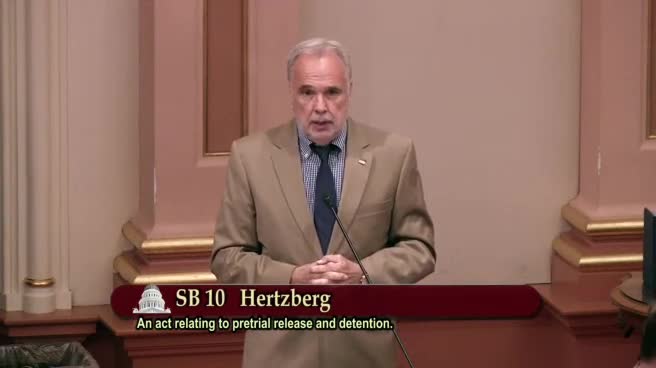 16MIN
Senate Floor
 39MIN
Senate Floor
 39MIN
Senate Standing Committee on Public Safety
 43MIN
Senate Standing Committee on Health
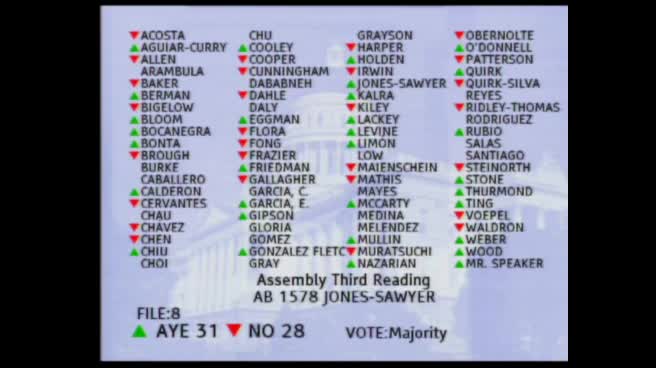 7MIN
Assembly Floor
 24MIN
Assembly Standing Committee on Public Safety
Bill Author