AB 1860: Health care coverage: cancer treatment.
- Session Year: 2017-2018
- House: Assembly
- Latest Version Date: 2018-09-17
Existing law, the Knox-Keene Health Care Service Plan Act of 1975, provides for the licensure and regulation of health care service plans by the Department of Managed Health Care. Existing law also provides for the regulation of health insurers by the Department of Insurance. Existing law prohibits, until January 1, 2019, an individual or group health care service plan contract or health insurance policy issued, amended, or renewed on or after January 1, 2015, that provides coverage for prescribed, orally administered anticancer medications used to kill or slow the growth of cancerous cells from requiring an enrollee or insured to pay, notwithstanding any deductible, a total amount of copayments and coinsurance that exceeds $200 for an individual prescription of up to a 30-day supply of a prescribed orally administered anticancer medication, as specified. Existing law authorizes health care service plans to adjust that $200 limit on January 1 of each year, to the extent that adjustment does not exceed the percentage increase in the Consumer Price Index for that year. Under existing law, a willful violation of this prohibition by a health care service plan is a crime.
This bill would extend the duration of this prohibition until January 1, 2024. The bill would increase the total amount of copayments allowed under those provisions to $250. The bill would remove the authorization for a health care service plan to adjust that limit. Because the bill would expand the scope of a crime, the bill would impose a state-mandated local program.
The California Constitution requires the state to reimburse local agencies and school districts for certain costs mandated by the state. Statutory provisions establish procedures for making that reimbursement.
This bill would provide that no reimbursement is required by this act for a specified reason.
Existing law, the Knox-Keene Health Care Service Plan Act of 1975, provides for the licensure and regulation of health care service plans by the Department of Managed Health Care. Existing law also provides for the regulation of health insurers by the Department of Insurance. Existing law prohibits, until January 1, 2019, an individual or group health care service plan contract or health insurance policy issued, amended, or renewed on or after January 1, 2015, that provides coverage for prescribed, orally administered anticancer medications used to kill or slow the growth of cancerous cells from requiring an enrollee or insured to pay, notwithstanding any deductible, a total amount of copayments and coinsurance that exceeds $200 for an individual prescription of up to a 30-day supply of a prescribed orally administered anticancer medication, as specified. Existing law authorizes health care service plans to adjust that $200 limit on January 1 of each year, to the extent that adjustment does not exceed the percentage increase in the Consumer Price Index for that year. Under existing law, a willful violation of this prohibition by a health care service plan is a crime.
This bill would extend the duration of this prohibition until January 1, 2024. The bill would increase the total amount of copayments allowed under those provisions to $250. The bill would remove the authorization for a health care service plan to adjust that limit. Because the bill would expand the scope of a crime, the bill would impose a state-mandated local program.
The California Constitution requires the state to reimburse local agencies and school districts for certain costs mandated by the state. Statutory provisions establish procedures for making that reimbursement.
This bill would provide that no reimbursement is required by this act for a specified reason.
Existing law, the Knox-Keene Health Care Service Plan Act of 1975, provides for the licensure and regulation of health care service plans by the Department of Managed Health Care. Existing law also provides for the regulation of health insurers by the Department of Insurance. Existing law prohibits, until January 1, 2019, an individual or group health care service plan contract or health insurance policy issued, amended, or renewed on or after January 1, 2015, that provides coverage for prescribed, orally administered anticancer medications used to kill or slow the growth of cancerous cells from requiring an enrollee or insured to pay, notwithstanding any deductible, a total amount of copayments and coinsurance that exceeds $200 for an individual prescription of up to a 30-day supply of a prescribed orally administered anticancer medication, as specified. Existing law authorizes health care service plans to adjust that $200 limit on January 1 of each year, to the extent that adjustment does not exceed the percentage increase in the Consumer Price Index for that year. Under existing law, a willful violation of this prohibition by a health care service plan is a crime.
This bill would extend the duration of this prohibition indefinitely. until January 1, 2024. The bill would increase the total amount of copayments allowed under those provisions to $250. The bill would remove the authorization for a health care service plan to adjust that limit. Because the bill would expand the scope of a crime, the bill would impose a state-mandated local program.
The California Constitution requires the state to reimburse local agencies and school districts for certain costs mandated by the state. Statutory provisions establish procedures for making that reimbursement.
This bill would provide that no reimbursement is required by this act for a specified reason.
Existing law, the Knox-Keene Health Care Service Plan Act of 1975, provides for the licensure and regulation of health care service plans by the Department of Managed Health Care. Existing law also provides for the regulation of health insurers by the Department of Insurance. Existing law prohibits, until January 1, 2019, an individual or group health care service plan contract or health insurance policy issued, amended, or renewed on or after January 1, 2015, that provides coverage for prescribed, orally administered anticancer medications used to kill or slow the growth of cancerous cells from requiring an enrollee or insured to pay, notwithstanding any deductible, a total amount of copayments and coinsurance that exceeds $200 for an individual prescription of up to a 30-day supply of a prescribed orally administered anticancer medication, as specified. Existing law authorizes health care service plans to adjust that $200 limit on January 1 of each year, to the extent that adjustment does not exceed the percentage increase in the Consumer Price Index for that year. Under existing law, a willful violation of this prohibition by a health care service plan is a crime.
This bill would extend the duration of this prohibition indefinitely. The bill would increase the total amount of copayments allowed under those provisions to $250. The bill would remove the authorization for a health care service plan to adjust that limit. Because the bill would expand the scope of a crime, the bill would impose a state-mandated local program.
The California Constitution requires the state to reimburse local agencies and school districts for certain costs mandated by the state. Statutory provisions establish procedures for making that reimbursement.
This bill would provide that no reimbursement is required by this act for a specified reason.
Existing law, the Knox-Keene Health Care Service Plan Act of 1975, provides for the licensure and regulation of health care service plans by the Department of Managed Health Care. Existing law also provides for the regulation of health insurers by the Department of Insurance. Existing law prohibits, until January 1, 2019, an individual or group health care service plan contract or health insurance policy issued, amended, or renewed on or after January 1, 2015, that provides coverage for prescribed, orally administered anticancer medications used to kill or slow the growth of cancerous cells from requiring an enrollee or insured to pay, notwithstanding any deductible, a total amount of copayments and coinsurance that exceeds $200 for an individual prescription of up to a 30-day supply of a prescribed orally administered anticancer medication, as specified. Under existing law, a willful violation of this prohibition by a health care service plan is a crime.
This bill would extend the duration of this prohibition indefinitely. Because the bill would expand the scope of a crime, the bill would impose a state-mandated local program.
The California Constitution requires the state to reimburse local agencies and school districts for certain costs mandated by the state. Statutory provisions establish procedures for making that reimbursement.
This bill would provide that no reimbursement is required by this act for a specified reason.
(a)Notwithstanding any other law, an individual or group health care service plan contract issued, amended, or renewed on or after January 1, 2015, that provides coverage for prescribed, orally administered anticancer medications used to kill or slow the growth of cancerous cells shall comply with all of the following:
(1)Notwithstanding any deductible, the total amount of copayments and coinsurance an enrollee is required to pay shall not exceed two hundred fifty dollars ($250) for an individual prescription of up to a 30-day supply of a prescribed orally administered anticancer medication covered by the contract.
(2)For a health care service plan contract that meets the definition of a high deductible health plan set forth in Section 223(c)(2) of Title 26 of the United States Code, paragraph (1) shall only apply once an enrollees deductible has been satisfied for the year.
(3)Paragraph (1) shall not apply to any coverage under a health care service plan contract for the Medicare Program pursuant to Title XVIII of the federal Social Security Act (42 U.S.C. Sec. 1395 et seq.).
(4)A prescription for an orally administered anticancer medication shall be provided consistent with the appropriate standard of care for that medication.
(b)This section shall remain in effect only until January 1, 2024, and as of that date is repealed.
SEC. 2.Section 10123.206 of the Insurance Code is amended to read:10123.206.(a)Notwithstanding any other law, an individual or group health insurance policy issued, amended, or renewed on or after January 1, 2015, that provides coverage for prescribed, orally administered anticancer medications used to kill or slow the growth of cancerous cells shall comply with all of the following:
(1)Notwithstanding any deductible, the total amount of copayments and coinsurance an insured is required to pay shall not exceed two hundred fifty dollars ($250) for an individual prescription of up to a 30-day supply of a prescribed orally administered anticancer medication covered by the policy.
(2)For a health insurance policy that meets the definition of a high deductible health plan set forth in Section 223(c)(2) of Title 26 of the United States Code, paragraph (1) shall only apply once an insureds deductible has been satisfied for the year.
(3)Paragraph (1) shall not apply to any coverage under a health insurance policy for the Medicare Program pursuant to Title XVIII of the federal Social Security Act (42 U.S.C. Sec. 1395 et seq.).
(4)A prescription for an orally administered anticancer medication shall be provided consistent with the appropriate standard of care for that medication.
(b)This section shall remain in effect only until January 1, 2024, and as of that date is repealed.
SEC. 3.No reimbursement is required by this act pursuant to Section 6 of Article XIIIB of the California Constitution because the only costs that may be incurred by a local agency or school district will be incurred because this act creates a new crime or infraction, eliminates a crime or infraction, or changes the penalty for a crime or infraction, within the meaning of Section 17556 of the Government Code, or changes the definition of a crime within the meaning of Section 6 of Article XIIIB of the California Constitution.
(a)Notwithstanding any other law, an individual or group health care service plan contract issued, amended, or renewed on or after January 1, 2015, that provides coverage for prescribed, orally administered anticancer medications used to kill or slow the growth of cancerous cells shall comply with all of the following:
(1)Notwithstanding any deductible, the total amount of copayments and coinsurance an enrollee is required to pay shall not exceed two hundred fifty dollars ($250) for an individual prescription of up to a 30-day supply of a prescribed orally administered anticancer medication covered by the contract.
(2)For a health care service plan contract that meets the definition of a high deductible health plan set forth in Section 223(c)(2) of Title 26 of the United States Code, paragraph (1) shall only apply once an enrollees deductible has been satisfied for the year.
(3)Paragraph (1) shall not apply to any coverage under a health care service plan contract for the Medicare Program pursuant to Title XVIII of the federal Social Security Act (42 U.S.C. Sec. 1395 et seq.).
(4)A prescription for an orally administered anticancer medication shall be provided consistent with the appropriate standard of care for that medication.
(b)This section shall remain in effect only until January 1, 2024, and as of that date is repealed.
SEC. 2.Section 10123.206 of the Insurance Code is amended to read:10123.206.(a)Notwithstanding any other law, an individual or group health insurance policy issued, amended, or renewed on or after January 1, 2015, that provides coverage for prescribed, orally administered anticancer medications used to kill or slow the growth of cancerous cells shall comply with all of the following:
(1)Notwithstanding any deductible, the total amount of copayments and coinsurance an insured is required to pay shall not exceed two hundred fifty dollars ($250) for an individual prescription of up to a 30-day supply of a prescribed orally administered anticancer medication covered by the policy.
(2)For a health insurance policy that meets the definition of a high deductible health plan set forth in Section 223(c)(2) of Title 26 of the United States Code, paragraph (1) shall only apply once an insureds deductible has been satisfied for the year.
(3)Paragraph (1) shall not apply to any coverage under a health insurance policy for the Medicare Program pursuant to Title XVIII of the federal Social Security Act (42 U.S.C. Sec. 1395 et seq.).
(4)A prescription for an orally administered anticancer medication shall be provided consistent with the appropriate standard of care for that medication.
(b)This section shall remain in effect only until January 1, 2024, and as of that date is repealed.
SEC. 3.No reimbursement is required by this act pursuant to Section 6 of Article XIIIB of the California Constitution because the only costs that may be incurred by a local agency or school district will be incurred because this act creates a new crime or infraction, eliminates a crime or infraction, or changes the penalty for a crime or infraction, within the meaning of Section 17556 of the Government Code, or changes the definition of a crime within the meaning of Section 6 of Article XIIIB of the California Constitution.
(a)Notwithstanding any other law, an individual or group health care service plan contract issued, amended, or renewed on or after January 1, 2015, that provides coverage for prescribed, orally administered anticancer medications used to kill or slow the growth of cancerous cells shall comply with all of the following:
(a)(1)Notwithstanding any deductible, the total amount of copayments and coinsurance an enrollee is required to pay shall not exceed two hundred fifty dollars ($250) for an individual prescription of up to a 30-day supply of a prescribed orally administered anticancer medication covered by the contract.
(b)(2)For a health care service plan contract that meets the definition of a high deductible health plan set forth in Section 223(c)(2) of Title 26 of the United States Code, subdivision (a) paragraph (1) shall only apply once an enrollees deductible has been satisfied for the year.
(c)Subdivision (a)(3)Paragraph (1) shall not apply to any coverage under a health care service plan contract for the Medicare Program pursuant to Title XVIII of the federal Social Security Act (42 U.S.C. Sec. 1395 et seq.).
(d)(4)A prescription for an orally administered anticancer medication shall be provided consistent with the appropriate standard of care for that medication.
(b)This section shall remain in effect only until January 1, 2024, and as of that date is repealed.
SEC. 2.Section 10123.206 of the Insurance Code is amended to read:10123.206.(a)Notwithstanding any other law, an individual or group health insurance policy issued, amended, or renewed on or after January 1, 2015, that provides coverage for prescribed, orally administered anticancer medications used to kill or slow the growth of cancerous cells shall comply with all of the following:
(a)(1)Notwithstanding any deductible, the total amount of copayments and coinsurance an insured is required to pay shall not exceed two hundred fifty dollars ($250) for an individual prescription of up to a 30-day supply of a prescribed orally administered anticancer medication covered by the policy.
(b)(2)For a health insurance policy that meets the definition of a high deductible health plan set forth in Section 223(c)(2) of Title 26 of the United States Code, subdivision (a) paragraph (1) shall only apply once an insureds deductible has been satisfied for the year.
(c)Subdivision (a)(3)Paragraph (1) shall not apply to any coverage under a health insurance policy for the Medicare Program pursuant to Title XVIII of the federal Social Security Act (42 U.S.C. Sec. 1395 et seq.).
(d)(4)A prescription for an orally administered anticancer medication shall be provided consistent with the appropriate standard of care for that medication.
(b)This section shall remain in effect only until January 1, 2024, and as of that date is repealed.
SEC. 3.No reimbursement is required by this act pursuant to Section 6 of Article XIIIB of the California Constitution because the only costs that may be incurred by a local agency or school district will be incurred because this act creates a new crime or infraction, eliminates a crime or infraction, or changes the penalty for a crime or infraction, within the meaning of Section 17556 of the Government Code, or changes the definition of a crime within the meaning of Section 6 of Article XIIIB of the California Constitution.
Notwithstanding any other law, an individual or group health care service plan contract issued, amended, or renewed on or after January 1, 2015, that provides coverage for prescribed, orally administered anticancer medications used to kill or slow the growth of cancerous cells shall comply with all of the following:
(a)Notwithstanding any deductible, the total amount of copayments and coinsurance an enrollee is required to pay shall not exceed two hundred dollars ($200) two hundred fifty dollars ($250) for an individual prescription of up to a 30-day supply of a prescribed orally administered anticancer medication covered by the contract.
(b)For a health care service plan contract that meets the definition of a high deductible health plan set forth in Section 223(c)(2) of Title 26 of the United States Code, subdivision (a) shall only apply once an enrollees deductible has been satisfied for the year.
(c)Subdivision (a) shall not apply to any coverage under a health care service plan contract for the Medicare Program pursuant to Title XVIII of the federal Social Security Act (42 U.S.C. Sec. 1395 et seq.).
(d)On January 1, 2016, and on January 1 of each year thereafter, health care service plans may adjust the two hundred dollar ($200) limit described in subdivision (a). The adjustment shall not exceed the percentage increase in the Consumer Price Index for that year.(e)(d)A prescription for an orally administered anticancer medication shall be provided consistent with the appropriate standard of care for that medication.
SEC. 2.Section 10123.206 of the Insurance Code is amended to read:10123.206.Notwithstanding any other law, an individual or group health insurance policy issued, amended, or renewed on or after January 1, 2015, that provides coverage for prescribed, orally administered anticancer medications used to kill or slow the growth of cancerous cells shall comply with all of the following:
(a)Notwithstanding any deductible, the total amount of copayments and coinsurance an insured is required to pay shall not exceed two hundred dollars ($200) two hundred fifty dollars ($250) for an individual prescription of up to a 30-day supply of a prescribed orally administered anticancer medication covered by the policy.
(b)For a health insurance policy that meets the definition of a high deductible health plan set forth in Section 223(c)(2) of Title 26 of the United States Code, subdivision (a) shall only apply once an insureds deductible has been satisfied for the year.
(c)Subdivision (a) shall not apply to any coverage under a health insurance policy for the Medicare Program pursuant to Title XVIII of the federal Social Security Act (42 U.S.C. Sec. 1395 et seq.).
(d)On January 1, 2016, and on January 1 of each year thereafter, health insurers may adjust the two hundred dollar ($200) limit described in subdivision (a) The adjustment shall not exceed the percentage increase in the Consumer Price Index for that year.(e)(d)A prescription for an orally administered anticancer medication shall be provided consistent with the appropriate standard of care for that medication.
SEC. 3.No reimbursement is required by this act pursuant to Section 6 of Article XIIIB of the California Constitution because the only costs that may be incurred by a local agency or school district will be incurred because this act creates a new crime or infraction, eliminates a crime or infraction, or changes the penalty for a crime or infraction, within the meaning of Section 17556 of the Government Code, or changes the definition of a crime within the meaning of Section 6 of Article XIIIB of the California Constitution.
(a)Notwithstanding any other law, an individual or group health care service plan contract issued, amended, or renewed on or after January 1, 2015, that provides coverage for prescribed, orally administered anticancer medications used to kill or slow the growth of cancerous cells shall comply with all of the following:
(1)(a)Notwithstanding any deductible, the total amount of copayments and coinsurance an enrollee is required to pay shall not exceed two hundred dollars ($200) for an individual prescription of up to a 30-day supply of a prescribed orally administered anticancer medication covered by the contract.
(2)(b)For a health care service plan contract that meets the definition of a high deductible health plan set forth in Section 223(c)(2) of Title 26 of the United States Code, paragraph (1) subdivision (a) shall only apply once an enrollees deductible has been satisfied for the year.
(3) Paragraph (1)(c)Subdivision (a) shall not apply to any coverage under a health care service plan contract for the Medicare Program pursuant to Title XVIII of the federal Social Security Act (42 U.S.C. Sec. 1395 et seq.).
(4)(d)On January 1, 2016, and on January 1 of each year thereafter, health care service plans may adjust the two hundred dollar ($200) limit described in paragraph (1). subdivision (a). The adjustment shall not exceed the percentage increase in the Consumer Price Index for that year.
(5)(e)A prescription for an orally administered anticancer medication shall be provided consistent with the appropriate standard of care for that medication.
(b)This section shall remain in effect only until January 1, 2019, and as of that date is repealed, unless a later enacted statute, that is enacted before January 1, 2019, deletes or extends that date.SEC. 2.Section 10123.206 of the Insurance Code is amended to read:10123.206.(a)Notwithstanding any other law, an individual or group health insurance policy issued, amended, or renewed on or after January 1, 2015, that provides coverage for prescribed, orally administered anticancer medications used to kill or slow the growth of cancerous cells shall comply with all of the following:
(1)(a)Notwithstanding any deductible, the total amount of copayments and coinsurance an insured is required to pay shall not exceed two hundred dollars ($200) for an individual prescription of up to a 30-day supply of a prescribed orally administered anticancer medication covered by the policy.
(2)(b)For a health insurance policy that meets the definition of a high deductible health plan set forth in Section 223(c)(2) of Title 26 of the United States Code, paragraph (1) subdivision (a) shall only apply once an insureds deductible has been satisfied for the year.
(3)Paragraph (1)(c)Subdivision (a) shall not apply to any coverage under a health insurance policy for the Medicare Program pursuant to Title XVIII of the federal Social Security Act (42 U.S.C. Sec. 1395 et seq.).
(4)(d)On January 1, 2016, and on January 1 of each year thereafter, health insurers may adjust the two hundred dollar ($200) limit described in paragraph (1). subdivision (a) The adjustment shall not exceed the percentage increase in the Consumer Price Index for that year.
(5)(e)A prescription for an orally administered anticancer medication shall be provided consistent with the appropriate standard of care for that medication.
(b)This section shall remain in effect only until January 1, 2019, and as of that date is repealed, unless a later enacted statute, that is enacted before January 1, 2019, deletes or extends that date.SEC. 3.No reimbursement is required by this act pursuant to Section 6 of Article XIIIB of the California Constitution because the only costs that may be incurred by a local agency or school district will be incurred because this act creates a new crime or infraction, eliminates a crime or infraction, or changes the penalty for a crime or infraction, within the meaning of Section 17556 of the Government Code, or changes the definition of a crime within the meaning of Section 6 of Article XIIIB of the California Constitution.
REVISIONS: HeadingLine 2.|
Date
|
Status
|
|---|---|
| Sep 17, 2018 | Chaptered by Secretary of State - Chapter 427, Statutes of 2018. |
| Sep 17, 2018 | Approved by the Governor. |
| Sep 6, 2018 | Enrolled and presented to the Governor at 3 p.m. |
| Aug 29, 2018 | Senate amendments concurred in. To Engrossing and Enrolling. |
| Aug 27, 2018 | In Assembly. Concurrence in Senate amendments pending. May be considered on or after August 29 pursuant to Assembly Rule 77. |
| Aug 27, 2018 | Read third time. Passed. Ordered to the Assembly. |
| Aug 21, 2018 | Read second time. Ordered to third reading. |
| Aug 20, 2018 | Read third time and amended. Ordered to second reading. |
| Aug 7, 2018 | Read second time. Ordered to third reading. |
| Aug 6, 2018 | From committee: Be ordered to second reading pursuant to Senate Rule 28.8. |
| Jun 28, 2018 | From committee: Do pass and re-refer to Com. on APPR. (Ayes 9. Noes 0.) (June 27). Re-referred to Com. on APPR. |
| Jun 7, 2018 | Referred to Com. on HEALTH. |
| May 31, 2018 | In Senate. Read first time. To Com. on RLS. for assignment. |
| May 30, 2018 | Read third time. Passed. Ordered to the Senate. |
| May 29, 2018 | Read second time. Ordered to third reading. |
| May 25, 2018 | From committee: Amend, and do pass as amended. (Ayes 12. Noes 2.) (May 25). |
| May 9, 2018 | In committee: Set, first hearing. Referred to APPR. suspense file. |
| Apr 25, 2018 | Coauthors revised. |
| Jan 29, 2018 | Referred to Com. on HEALTH. |
| Jan 11, 2018 | From printer. May be heard in committee February 10. |
| Jan 10, 2018 | Read first time. To print. |
|
Date
|
Description
|
Location
|
Votes
|
|
|---|---|---|---|---|
| Aug 29, 2018 | AB 1860 LIMÓN Concurrence in Senate Amendments | Assembly Floor |
Passed |
|
| Aug 27, 2018 | Assembly 3rd Reading AB1860 Limón et al. By Mitchell | Senate Floor |
Passed |
|
| Jun 27, 2018 | Do pass, but first be re-referred to the Committee on [Appropriations] | Senate Standing Committee on Health |
Passed |
|
| May 30, 2018 | AB 1860 LIMÓN Assembly Third Reading | Assembly Floor |
Passed |
|
| May 25, 2018 | Do pass as amended. | Assembly Standing Committee on Appropriations |
Passed |
|
| Apr 24, 2018 | Do pass and be re-referred to the Committee on [Appropriations] | Assembly Standing Committee on Health |
Passed |
This list shows positions taken on this bill by organizations on the date displayed, which is linked to the original source.
Positions by individuals are not included.
CONCURRENCE IN SENATE AMENDMENTS
CSA1 Bill Id:AB 1860
Author:(Limón and Cervantes)
As Amended Ver:August 20, 2018
Majority vote
ASSEMBLY: | 67-7 | (May 30, 2018) | SENATE: | 34-3 | (August 27, 2018) |
Original Committee Reference: HEALTH
SUMMARY: Increases the $200 copayment and coinsurance limit to $250 for prescribed, orally administered anticancer medications used to kill or slow the growth of cancerous cells, and deletes the sunset on the law that establishes this limit on the coinsurance and copayment amount for prescribed, orally administered anticancer medications and extends the sunset to January 1, 2024.
The Senate amendments extend the sunset in existing law to January 1, 2024 and make technical changes.
EXISTING LAW:
- Establishes the Department of Managed Health Care (DMHC) to regulate health plans under the Knox-Keene Health Care Service Plan Act of 1975 (Knox-Keene Act) and the California Department of Insurance (CDI) to regulate health insurance.
- Establishes as California's essential health benefits (EHBs) benchmark the Kaiser Small Group Health Maintenance Organization, existing California mandates, and ten Affordable Care Act (ACA) mandated benefits, which include prescription drug coverage. Requires nongrandfathered individual and small group health plan contracts and health insurance policies to cover these EHBs and comply with Knox-Keene Act requirements including those related to prescription drug coverage.
- Requires an individual or group health plan contract or insurance policy that provides coverage for prescribed, orally administered anticancer medications used to kill or slow the growth of cancerous cells to comply with the all of the following:
- Limits, notwithstanding any deductible, the total amount of copayments and coinsurance an enrollee or insured is required to pay to not more than $200 for an individual prescription of up to a 30-day supply of a prescribed orally administered anticancer medication covered by the contract;
- Requires the limit in a), above, for a high deductible health plan to apply only once an enrollee’s or insured’s deductible has been satisfied;
- Exempts from the limit in a), above, any coverage under a health plan contract or health insurance policy for the Medicare program; and,
- Permits the $200 limit to be adjusted, and limits the adjustment to not more than the percentage increases in the Consumer Price Index for that year.
- Sunsets 3), above, on January 1, 2019.
- Prohibits, with respect to an individual or group health plan contract or health insurance policy that covers EHBs, the copayment, coinsurance, or any other form of cost sharing for a covered outpatient prescription drug for an individual prescription for a supply of up to 30 days from exceeding $250; for a product with an actuarial value at or equivalent to a bronze level, limits cost sharing to not more than $500 for a supply of up to 30 days; and for a high deductible health plan the $250 or $500 limits to apply only after an enrollee’s deductible is met.
FISCAL EFFECT: According to the Senate Appropriations Committee, pursuant to Senate Rule 28.8, negligible state costs.
COMMENTS: According to the author, in recent years, increasingly specialized medications have increased the price of treatments for cancer. This increase is known to create financial difficulties for cancer patients and have lead people to avoid or delay care or drugs. This financial burden can also cause stress that can lead to mental and physical health problems. This bill would continue to maintain affordability by prohibiting a health plan or health insurer from requiring more than $250 per month in out-of-pocket costs for each filled prescription of a covered oral anticancer medication.
- Oral anticancer medications. According to California Health Benefits Review Program, the Food and Drug Administration (FDA) has approved 83 oral anticancer medications used to kill or slow the growth of cancerous cells. These medications are used to treat more than 62 different of types of cancers and play a variety of roles in cancer treatment. Oral anticancer medications are used to treat frequently diagnosed cancers, such as breast, lung, prostate, colorectal cancers, adrenocortical cancer (cancer of the adrenal gland), dermatofibrosarcoma protuberans (a cancer of the dermis layer of skin), and retinoblastoma (an eye cancer). Studies estimate that a majority of patients (up to 89%) prefer oral anticancer medications to traditional IV fluid or injection therapies when available. Reasons for patient preference of oral administration include less invasive administration methods, time savings, feeling of control over treatment regimen, fewer side effects, and less disruption to daily life. However, challenges associated with oral anticancer medications include complex medication schedules, and proper patient adherence. For example, some patients must monitor drug-food or drug-drug interactions to prevent interference with oral cancer medication absorption, which could dilute the prescribed dosing.
Most oral anticancer medications are available only as brand-name (i.e., nongeneric) medications. Generic equivalents are available for 20% of oral anticancer medications approved by the FDA (17 of the 83 medications). Many oral anticancer medications are relatively new medications for which the pharmaceutical company that developed the medication (i.e., the brand-name manufacturer) has exclusive marketing rights and/or for which the patent has not expired. In other cases, manufacturers do not currently market generic equivalents of brand-name drugs.
- Outpatient prescription copays. According to the Henry J. Kaiser Family Foundation, copayments for outpatient prescription drugs generally range from $11 to $110 per prescription. However, some prescription medications are subject to coinsurance, which can range from 0% to 38% of the medication cost after any applicable deductible has been met. The deductible amount also varies by plan or policy.
According to the California Affiliates of Susan G. Komen, over the years, oral chemotherapy has emerged as an essential option for patients who can take oral anticancer medications when prescribed by their doctors rather than receiving chemotherapy treatment intravenously at a medical facility. The high cost of oral chemotherapy medications often deters patients from receiving necessary care. Forty-two other states, along with the District of Columbia have enacted similar laws, and this will make a significant difference in the lives of many cancer patients. The California Association for Health Services at Home (CAHSAH) writes that the development of safe, clinically-effective, orally-administered anticancer medications has dramatically improved the quality of life for many cancer patients who take these drugs and they are quickly becoming the preferred treatment instead of previously used intravenous chemotherapy. However, patients have routinely been charged significantly greater out-of-pocket costs for oral anticancer therapies than traditionally used intravenous therapies. CAHSAH states that the cost of orally-administered cancer drugs has increased from an average of $1,869 a month in 2000 to $11,325 a month in 2014. CAHSAH contends that health plans have sought to use coinsurance, which pays a percentage of medical costs after paying the deductible, to pass along such costs to patients, however, such high costs to patients discourage them from using such drugs.
In a previous version of this bill, the California Association of Health Plans (CAHP) writes that an indefinite cap does not account for rising drug prices; and the number one concern for consumers when selecting a health plan is the cost of the monthly premium. Several benefit mandates have been proposed in recent years and CAHP members remain concerned about the cumulative impact of benefit mandates on premiums, particularly as we face the inherent pressures of an evolving market. CAHP states that this is a particularly bad time to pass additional benefit mandates that treat disease groups differently and are administratively burdensome. DMHC indicates that a comprehensive cost-sharing limit on all outpatient prescription drugs was enacted by AB 339 (Gordon), Chapter 619, Statutes of 2015 and it is not clear why oral anticancer medications should continue to be distinguished from all other prescription drugs. AB 339 sunsets in 2020, but SB 1021(Wiener) of the current legislative session, would extend those provisions until 2024, which allows the Legislature to re-examine prescription drug cost-sharing limits and make any changes necessary. Current opposition is unknown.
Analysis Prepared by: Kristene Mapile / HEALTH / (916) 319-2097 FN: 0004932
Office of Senate Floor Analyses (916) 651-1520 Fax: (916) 327-4478 | AB |
THIRD READING
Bill No: AB 1860
:
SENATE HEALTH COMMITTEE: 9-0, 6/27/18
AYES: Pan, Nguyen, Beall, Hernandez, Leyva, Mitchell, Monning, Nielsen, Roth
SENATE APPROPRIATIONS COMMITTEE: Senate Rule 28.8
ASSEMBLY FLOOR: 67-7, 5/30/18 - See last page for vote
SOURCE: Association of Northern California Oncologists
California Affiliates of Susan G. Komen
Medical Oncology Association of Southern California
DIGEST:
- This bill raises the $200 copayment and coinsurance limit to $250 for prescribed, orally administered anticancer medications used to kill or slow the growth of cancerous cells, and extends the sunset on the law that establishes this limit on the coinsurance and copayment amount for prescribed, orally administered anticancer medications.
Senate Floor Amendments of 8/20/18 add a sunset date of January 1, 2024.
Existing law:
- Establishes the Department of Managed Health Care (DMHC) to regulate health plans under the Knox-Keene Health Care Service Plan Act of 1975 (Knox-Keene Act) and the California Department of Insurance (CDI) to regulate health insurance. [HSC §1340, et seq. and INS §106, et seq.]
- Establishes as California's essential health benefits (EHBs) benchmark the Kaiser Small Group Health Maintenance Organization, existing California mandates, and 10 Affordable Care Act mandated benefits, which include prescription drug coverage. Requires nongrandfathered individual and small group health plan contracts and health insurance policies to cover these EHBs and comply with Knox-Keene Act requirements including those related to prescription drug coverage.[HSC §1367.005 and INS §10112.27]
- Requires an individual or group health plan contract or insurance policy that provides coverage for prescribed, orally administered anticancer medications used to kill or slow the growth of cancerous cells to comply with the all of the following:
- Limits, notwithstanding any deductible, the total amount of copayments and coinsurance an enrollee or insured is required to pay to not more than $200 for an individual prescription of up to a 30-day supply of a prescribed orally administered anticancer medication covered by the contract;
- Requires the limit in a) above for a high deductible health plan to apply only once an enrollee’s or insured’s deductible has been satisfied;
- Exempts from the limit in a) above, any coverage under a health plan contract or health insurance policy for the Medicare program; and,
- Permits the $200 limit to be adjusted, and limits the adjustment to not more than the percentage increases in the Consumer Price Index (CPI) for that year. [HSC §1367.656 and INS §10123.206]
- Sunsets 3) above on January 1, 2019. [HSC §1367.656 and INS §10123.206]
- Prohibits, with respect to an individual or group health plan contract or health insurance policy that covers EHBs, the copayment, coinsurance, or any other form of cost sharing for a covered outpatient prescription drug for an individual prescription for a supply of up to 30 days from exceeding $250; for a product with an actuarial value at or equivalent to a bronze level, limits cost sharing to not more than $500 for a supply of up to 30 days; and for a high deductible health plan the $250 or $500 limits to apply only after an enrollee’s deductible is met. [HSC §1342.71 and INS §10123.193]
This bill:
- Raises the $200 copayment and coinsurance limit for prescribed, orally administered anticancer medications used to kill or slow the growth of cancerous cells, to $250.
- Deletes the authority for a health plan or health insurer to adjust the copayment and coinsurance limit not to exceed the CPI for that year.
- Extends the sunset date to January 1, 2024.
Comments
- Author’s statement. According to the author, in recent years, increasingly specialized medications have increased the price of treatments for cancer. This increase is known to create financial difficulties for cancer patients and have lead people to avoid or delay care or drugs. This financial burden can also cause stress that can lead to mental and physical health problems. This bill would continues to maintain affordability by prohibiting a health plan or health insurer from requiring more than $250 per month in out-of-pocket costs for each filled prescription of a covered oral anticancer medication.
- Oral anticancer medications. According to California Health Benefits Review Program (CHBRP), the Food and Drug Administration (FDA) has approved 83 oral anticancer medications used to kill or slow the growth of cancerous cells. These medications are used to treat more than 62 different of types of cancers and play a variety of roles in cancer treatment. Oral anticancer medications are used to treat frequently diagnosed cancers, such as breast, lung, prostate, colorectal cancers, adrenocortical cancer (cancer of the adrenal gland), dermatofibrosarcoma protuberans (a cancer of the dermis layer of skin), and retinoblastoma (an eye cancer). Studies estimate that a majority of patients (up to 89%) prefer oral anticancer medications to traditional IV fluid or injection therapies when available. Reasons for patient preference of oral administration include less invasive administration methods, time savings, feeling of control over treatment regimen, fewer side effects, and less disruption to daily life. However, challenges associated with oral anticancer medications include complex medication schedules, and proper patient adherence. For example, some patients must monitor drug-food or drug-drug interactions to prevent interference with oral cancer medication absorption, which could dilute the prescribed dosing.
Most oral anticancer medications are available only as brand-name (i.e., nongeneric) medications. Generic equivalents are available for 20% of oral anticancer medications approved by the FDA (17 of the 83 medications). Many oral anticancer medications are relatively new medications for which the pharmaceutical company that developed the medication (i.e., the brand-name manufacturer) has exclusive marketing rights and/or for which the patent has not expired. In other cases, manufacturers do not currently market generic equivalents of brand-name drugs.
- Outpatient prescription copays. According to the Henry J. Kaiser Family Foundation, copayments for outpatient prescription drugs generally range from $11 to $110 per prescription. However, some prescription medications are subject to coinsurance, which can range from 0% to 38% of the medication cost after any applicable deductible has been met. The deductible amount also varies by plan or policy.
- CHBRP analysis. AB 1996 (Thomson, Chapter 795, Statutes of 2002) requests the University of California to assess legislation proposing a mandated benefit or service and prepare a written analysis with relevant data on the medical, economic, and public health impacts of proposed health plan and health insurance benefit mandate legislation. CHBRP was created in response to AB 1996, and reviewed this bill.
- Coverage impacts and enrollees covered. CHBRP states that this bill affects the coverage of approximately 15.9 million enrollees and insureds in California. Based on a previous version of this bill, CHBRP estimated that most patients using oral anticancer medication will not reach the $200 cost sharing limit (approximately 85% of the 102,000 patients using oral anticancer medications will not reach the $200 cost-sharing limit). This bill was amended on May 25, 2018 to raise this limit to $250, which is consistent with existing law that caps copayments at $250 for a 30-day supply of a covered outpatient drug and $500 for someone in a bronze plan. CHBRP states that on the basis of the evidence that lower cost-sharing for oral anticancer medications are associated with a greater likelihood of medication initiation and adherence, CHBRP assumes medication utilization and health outcomes for these enrollees would remain the same regardless of the presence of the cost-sharing provision(s). However, for some portion of the 15% of enrollees who may reach the $200 cost-sharing limit, especially those in high deductible health plans, there could be significant financial and health benefits associated with the passage of AB 1860.
- Essential health benefits. This bill does not require coverage for a new state benefit mandate, but instead, specifies cost-sharing limits and therefore CHBRP indicates this bill appears not to exceed the definition of EHBs in California.
- Medical effectiveness. The preponderance of evidence from all studies included in CHBRP’s review suggests that lower cost-sharing for oral anticancer medications is associated with greater likelihood of initiating treatment with oral anticancer medications and with adherence to treatment. There is limited evidence that lower cost-sharing for oral anticancer medication is associated with persistence with treatment over a longer period of time.
- Utilization. CHBRP estimates that enrollees with coverage utilize 33.1 prescriptions of oral anticancer medication per year per 1,000 enrollees and that 0.64%, or 102,000, of enrollees with coverage subject to AB 1860 will use oral anticancer medications in 2019. The utilization of oral anticancer medications increased slightly from the estimates CHBRP provided when analyzing the potential impacts of AB 219 (Perea, Chapter 661, Statutes of 2013) for 2014, which indicated that enrollees utilized 27.4 prescriptions of oral anticancer medications per 1,000 enrollees and that 0.54% of enrollees used these medications in a year. This may reflect an increased number of oral anticancer drugs available to treat more types of cancers. Overall utilization, the number of users, and the number of units of oral anticancer medications will not change within the first year postmandate.
- Impact on expenditures. CHBRP indicates the estimated average cost per oral anticancer medication prescription for 2019 is $1,362, an increase from $856 in 2014, which may be due to the availability and price of new drugs. The three most frequently prescribed oral anticancer medications represent 62.1% of all oral anticancer medication prescriptions, but account for only 1.5% of total cost. The three most expensive oral anticancer medications represent 0.5% of prescriptions, but account for 6.1% of total cost. The top three oral anticancer medications as a percentage of total cost represent 32.4% of total cost, but account for 3.4% of total prescriptions.
CHBRP indicates that no change in premiums is expected as a result of AB 1860, due to existing law. There may be concerns that the reduction in enrollee expenses for oral anticancer medications due to cost-sharing limitations would lead to health plans and insurers increasing premiums. However, CHBRP estimated minimal changes in premiums due to the enactment of AB 219, which found premiums would increase by $0.01 per member per month in 2014 at most. CHBRP states no change in related enrollee expenses for covered benefits (deductibles, etc.) is expected as a result of AB 1860. The major impact of the passage of AB 219 was the shift of some of the costs from individual patients who use high-cost oral anticancer medications to the purchasers of health plans and policies. The CHBRP analysis of AB 219 estimated that such a shift could range from $0 to $58,744, averaging $25.63 per user per year in 2014. The wide variations in cost-sharing shifts are related to the price of a particular oral anticancer medication, as well as the benefit structure of a particular health plan or policy. These changes are expected to continue should AB 1860 pass, but additional shifts are not expected. CHBRP does not project any cost offsets or savings in health care that would result from the enactment of provisions in AB 1860. However, should the cap be permitted to sunset annual expenditures would decrease by -.0001% largely due to a decrease in total health insurance premium paid ($1,017,000), adjusted by an increase in enrollee expense ($844,000).
- Public health. No impact because existing law limits copayments and coinsurance to no more than $250 per 30-day supply of any covered outpatient prescription medication.
Related/Prior Legislation
SB 1021 (Wiener, 2018) mandates health plan contracts and health insurance policies cover a single-table drug regimen for the prevention of HIV infection and AIDS; extends the January 1, 2020 sunset on law that caps cost sharing for a covered outpatient prescription drug at $250/$500 per 30-day supply, as specified, as well as other formulary requirements; and codifies a regulation that prohibits an enrollee or insured from being charged more than the retail price for a prescription drug when the applicable copayment or coinsurance is a higher amount.
AB 399 (Gordon, Chapter 619, Statutes of 2015) required health plans and health insurers that provide coverage for outpatient prescription drugs to have formularies that do not discourage the enrollment of individuals with health conditions, and required combination antiretrovirals drug treatment coverage of a single-tablet that is as effective as a multitablet regimen for treatment of HIV/AIDS, as specified. Placed in state law, federal requirements related to pharmacy and therapeutics committees, access to in-network retail pharmacies, standardized formulary requirements, formulary tier requirements similar to those required of health plans and insurers participating in Covered California and copayment caps of $250 and $500 for a supply of up to 30 days for an individual prescription, as specified.
AB 219 (Perea, Chapter 661, Statutes of 2013) limited the total amount of copayments and coinsurance an enrollee or insured is required to pay for orally administered anticancer medications to $200 for an individual prescription of up to a 30-day supply.
FISCAL EFFECT: Appropriation: Fiscal Com.: Local:
Association of Northern California Oncologists (co-source)
California Affiliates of Susan G. Komen (co-source)
Medical Oncology Association of Southern California (co-source)
American Federation of State, County and Municipal Employees
American Lung Association
California Association for Health Services at Home
California Medical Association
Health Access California
OPPOSITION: (Verified 8/17/18)
California Association of Health Plans
Department of Managed Health Care
ARGUMENTS IN SUPPORT: According to the California Affiliates of Susan G. Komen, over the years, oral chemotherapy has emerged as an essential option for patients who can take oral anticancer medications when prescribed by their doctors rather than receiving chemotherapy treatment intravenously at a medical facility. The high cost of oral chemotherapy medications often deters patients from receiving necessary care. Forty-two other states, along with the District of Columbia have enacted similar laws, and this will make a significant difference in the lives of many cancer patients. The California Association for Health Services at Home (CAHSAH) writes that the development of safe, clinically-effective, orally-administered anticancer medications has dramatically improved the quality of life for many cancer patients who take these drugs and they are quickly becoming the preferred treatment instead of previously used intravenous chemotherapy. However, patients have routinely been charged significantly greater out-of-pocket costs for oral anticancer therapies than traditionally used intravenous therapies. The cost of orally-administered cancer drugs has increased from an average of $1,869 a month in 2000 to $11,325 a month in 2014. Health plans have sought to use coinsurance, which pays a percentage of medical costs after paying the deductible, to pass along such costs to patients. But, such high costs to patients discourage them from using such drugs. CAHSAH supports affordable treatment for all cancer patients and removing the sunset date on this provision of law is vital to ensuring more affordable cancer treatment.
ARGUMENTS IN OPPOSITION: The California Association of Health Plans (CAHP) writes that an indefinite cap does not account for rising drug prices; and the number one concern for consumers when selecting a health plan is the cost of the monthly premium. Several benefit mandates have been proposed in recent years and CAHP members remain concerned about the cumulative impact of benefit mandates on premiums, particularly as we face the inherent pressures of an evolving market. CAHP states that this is a particularly bad time to pass additional benefit mandates that treat disease groups differently and are administratively burdensome. DMHC indicates that a comprehensive cost-sharing limit on all outpatient prescription drugs was enacted by AB 339 and it is not clear why oral anticancer medications should continue to be distinguished from all other prescription drugs. AB 339 sunsets in 2020 but SB 1021 would extend those provisions until 2024, which allows the Legislature to re-examine prescription drug cost-sharing limits and make any changes necessary.
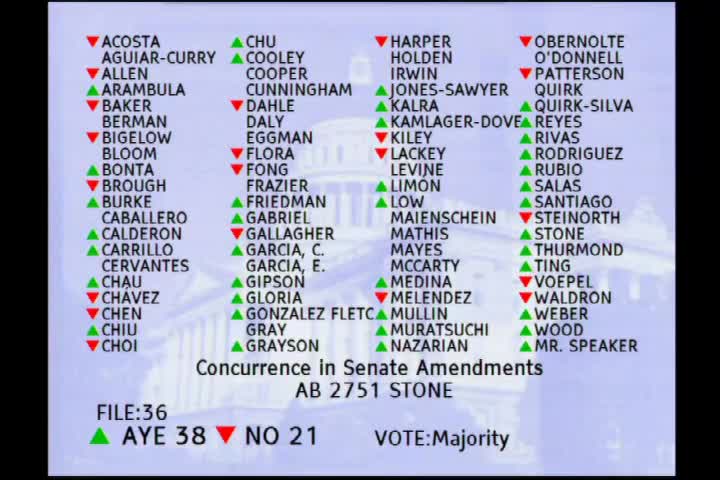
ASSEMBLY FLOOR: 67-7, 5/30/18
AYES: Acosta, Aguiar-Curry, Travis Allen, Arambula, Baker, Berman, Bigelow, Bloom, Bonta, Burke, Caballero, Calderon, Carrillo, Cervantes, Chau, Chen, Chiu, Chu, Cooley, Cooper, Cunningham, Daly, Eggman, Flora, Frazier, Friedman, Gallagher, Cristina Garcia, Eduardo Garcia, Gipson, Gloria, Gonzalez Fletcher, Gray, Grayson, Holden, Irwin, Jones-Sawyer, Kalra, Kamlager-Dove, Levine, Limón, Low, Maienschein, Mathis, Mayes, McCarty, Medina, Melendez, Mullin, Muratsuchi, Nazarian, O'Donnell, Quirk, Quirk-Silva, Reyes, Rodriguez, Rubio, Salas, Santiago, Steinorth, Mark Stone, Thurmond, Ting, Waldron, Weber, Wood, Rendon
NOES: Brough, Dahle, Harper, Kiley, Lackey, Obernolte, Voepel
NO VOTE RECORDED: Chávez, Choi, Fong, Patterson
8/21/18 19:11:54
**** END ****
Office of Senate Floor Analyses (916) 651-1520 Fax: (916) 327-4478 | AB |
THIRD READING
Bill No: AB 1860
:
SENATE HEALTH COMMITTEE: 9-0, 6/27/18
AYES: Pan, Nguyen, Beall, Hernandez, Leyva, Mitchell, Monning, Nielsen, Roth
SENATE APPROPRIATIONS COMMITTEE: Senate Rule 28.8
ASSEMBLY FLOOR: 67-7, 5/30/18 - See last page for vote
SOURCE: Association of Northern California Oncologists
California Affiliates of Susan G. Komen
Medical Oncology Association of Southern California
DIGEST:
- This bill raises the $200 copayment and coinsurance limit to $250 for prescribed, orally administered anticancer medications used to kill or slow the growth of cancerous cells, and deletes the sunset on the law that establishes this limit on the coinsurance and copayment amount for prescribed, orally administered anticancer medications.
Existing law:
- Establishes the Department of Managed Health Care (DMHC) to regulate health plans under the Knox-Keene Health Care Service Plan Act of 1975 (Knox-Keene Act) and the California Department of Insurance (CDI) to regulate health insurance. [HSC §1340, et seq. and INS §106, et seq.]
- Establishes as California's essential health benefits (EHBs) benchmark the Kaiser Small Group Health Maintenance Organization, existing California mandates, and ten Affordable Care Act (ACA) mandated benefits, which include prescription drug coverage. Requires nongrandfathered individual and small group health plan contracts and health insurance policies to cover these EHBs and comply with Knox-Keene Act requirements including those related to prescription drug coverage.[HSC §1367.005 and INS §10112.27]
- Requires an individual or group health plan contract or insurance policy that provides coverage for prescribed, orally administered anticancer medications used to kill or slow the growth of cancerous cells to comply with the all of the following:
- Limits, notwithstanding any deductible, the total amount of copayments and coinsurance an enrollee or insured is required to pay to not more than $200 for an individual prescription of up to a 30-day supply of a prescribed orally administered anticancer medication covered by the contract;
- Requires the limit in a) above for a high deductible health plan to apply only once an enrollee’s or insured’s deductible has been satisfied;
- Exempts from the limit in a) above, any coverage under a health plan contract or health insurance policy for the Medicare program; and,
- Permits the $200 limit to be adjusted, and limits the adjustment to not more than the percentage increases in the Consumer Price Index (CPI) for that year. [HSC §1367.656 and INS §10123.206]
- Sunsets 3) above on January 1, 2019. [HSC §1367.656 and INS §10123.206]
- Prohibits, with respect to an individual or group health plan contract or health insurance policy that covers EHBs, the copayment, coinsurance, or any other form of cost sharing for a covered outpatient prescription drug for an individual prescription for a supply of up to 30 days from exceeding $250; for a product with an actuarial value at or equivalent to a bronze level, limits cost sharing to not more than $500 for a supply of up to 30 days; and for a high deductible health plan the $250 or $500 limits to apply only after an enrollee’s deductible is met. [HSC §1342.71 and INS §10123.193]
This bill:
- Raises the $200 copayment and coinsurance limit for prescribed, orally administered anticancer medications used to kill or slow the growth of cancerous cells, to $250.
- Deletes the authority for a health plan or health insurer to adjust the copayment and coinsurance limit not to exceed the CPI for that year.
- Deletes the January 1, 2019 sunset date.
Comments
- Author’s statement. According to the author, in recent years, increasingly specialized medications have increased the price of treatments for cancer. This increase is known to create financial difficulties for cancer patients and have lead people to avoid or delay care or drugs. This financial burden can also cause stress that can lead to mental and physical health problems. This bill would continue to maintain affordability by prohibiting a health plan or health insurer from requiring more than $250 per month in out-of-pocket costs for each filled prescription of a covered oral anticancer medication.
- Oral anticancer medications. According to California Health Benefits Review Program (CHBRP), the Food and Drug Administration (FDA) has approved 83 oral anticancer medications used to kill or slow the growth of cancerous cells. These medications are used to treat more than 62 different of types of cancers and play a variety of roles in cancer treatment. Oral anticancer medications are used to treat frequently diagnosed cancers, such as breast, lung, prostate, colorectal cancers, adrenocortical cancer (cancer of the adrenal gland), dermatofibrosarcoma protuberans (a cancer of the dermis layer of skin), and retinoblastoma (an eye cancer). Studies estimate that a majority of patients (up to 89%) prefer oral anticancer medications to traditional IV fluid or injection therapies when available. Reasons for patient preference of oral administration include less invasive administration methods, time savings, feeling of control over treatment regimen, fewer side effects, and less disruption to daily life. However, challenges associated with oral anticancer medications include complex medication schedules, and proper patient adherence. For example, some patients must monitor drug-food or drug-drug interactions to prevent interference with oral cancer medication absorption, which could dilute the prescribed dosing.
Most oral anticancer medications are available only as brand-name (i.e., nongeneric) medications. Generic equivalents are available for 20% of oral anticancer medications approved by the FDA (17 of the 83 medications). Many oral anticancer medications are relatively new medications for which the pharmaceutical company that developed the medication (i.e., the brand-name manufacturer) has exclusive marketing rights and/or for which the patent has not expired. In other cases, manufacturers do not currently market generic equivalents of brand-name drugs. - Outpatient prescription copays. According to the Henry J. Kaiser Family Foundation, copayments for outpatient prescription drugs generally range from $11 to $110 per prescription. However, some prescription medications are subject to coinsurance, which can range from 0% to 38% of the medication cost after any applicable deductible has been met. The deductible amount also varies by plan or policy.
- CHBRP analysis. AB 1996 (Thomson, Chapter 795, Statutes of 2002) requests the University of California to assess legislation proposing a mandated benefit or service and prepare a written analysis with relevant data on the medical, economic, and public health impacts of proposed health plan and health insurance benefit mandate legislation. CHBRP was created in response to AB 1996, and reviewed this bill.
- Coverage impacts and enrollees covered. CHBRP states that this bill would affect the coverage of approximately 15.9 million enrollees and insureds in California. Based on a previous version of this bill, CHBRP estimated that most patients using oral anticancer medication will not reach the $200 cost sharing limit (approximately 85% of the 102,000 patients using oral anticancer medications will not reach the $200 cost-sharing limit). This bill was amended on May 25, 2018 to raise this limit to $250, which is consistent with existing law that caps copayments at $250 for a 30-day supply of a covered outpatient drug and $500 for someone in a bronze plan. CHBRP states that on the basis of the evidence that lower cost-sharing for oral anticancer medications are associated with a greater likelihood of medication initiation and adherence, CHBRP assumes medication utilization and health outcomes for these enrollees would remain the same regardless of the presence of the cost-sharing provision(s). However, for some portion of the 15% of enrollees who may reach the $200 cost-sharing limit, especially those in high deductible health plans, there could be significant financial and health benefits associated with the passage of AB 1860.
- Essential health benefits. This bill would not require coverage for a new state benefit mandate, but instead, specifies cost-sharing limits and therefore CHBRP indicates this bill appears not to exceed the definition of EHBs in California.
- Medical effectiveness. The preponderance of evidence from all studies included in CHBRP’s review suggests that lower cost-sharing for oral anticancer medications is associated with greater likelihood of initiating treatment with oral anticancer medications and with adherence to treatment. There is limited evidence that lower cost-sharing for oral anticancer medication is associated with persistence with treatment over a longer period of time.
- Utilization. CHBRP estimates that enrollees with coverage utilize 33.1 prescriptions of oral anticancer medication per year per 1,000 enrollees and that 0.64%, or 102,000, of enrollees with coverage subject to AB 1860 will use oral anticancer medications in 2019. The utilization of oral anticancer medications increased slightly from the estimates CHBRP provided when analyzing the potential impacts of AB 219 (Perea, Chapter 661, Statutes of 2013) for 2014, which indicated that enrollees utilized 27.4 prescriptions of oral anticancer medications per 1,000 enrollees and that 0.54% of enrollees used these medications in a year. This may reflect an increased number of oral anticancer drugs available to treat more types of cancers. Overall utilization, the number of users, and the number of units of oral anticancer medications will not change within the first year postmandate.
- Impact on expenditures. CHBRP indicates the estimated average cost per oral anticancer medication prescription for 2019 is $1,362, an increase from $856 in 2014, which may be due to the availability and price of new drugs. The three most frequently prescribed oral anticancer medications represent 62.1% of all oral anticancer medication prescriptions, but account for only 1.5% of total cost. The three most expensive oral anticancer medications represent 0.5% of prescriptions, but account for 6.1% of total cost. The top three oral anticancer medications as a percentage of total cost represent 32.4% of total cost, but account for 3.4% of total prescriptions.
- Coverage impacts and enrollees covered. CHBRP states that this bill would affect the coverage of approximately 15.9 million enrollees and insureds in California. Based on a previous version of this bill, CHBRP estimated that most patients using oral anticancer medication will not reach the $200 cost sharing limit (approximately 85% of the 102,000 patients using oral anticancer medications will not reach the $200 cost-sharing limit). This bill was amended on May 25, 2018 to raise this limit to $250, which is consistent with existing law that caps copayments at $250 for a 30-day supply of a covered outpatient drug and $500 for someone in a bronze plan. CHBRP states that on the basis of the evidence that lower cost-sharing for oral anticancer medications are associated with a greater likelihood of medication initiation and adherence, CHBRP assumes medication utilization and health outcomes for these enrollees would remain the same regardless of the presence of the cost-sharing provision(s). However, for some portion of the 15% of enrollees who may reach the $200 cost-sharing limit, especially those in high deductible health plans, there could be significant financial and health benefits associated with the passage of AB 1860.
CHBRP indicates that no change in premiums is expected as a result of AB 1860, due to existing law. There may be concerns that the reduction in enrollee expenses for oral anticancer medications due to cost-sharing limitations would lead to health plans and insurers increasing premiums. However, CHBRP estimated minimal changes in premiums due to the enactment of AB 219, which found premiums would increase by $0.01 per member per month in 2014 at most. CHBRP states no change in related enrollee expenses for covered benefits (deductibles, etc.) is expected as a result of AB 1860. The major impact of the passage of AB 219 was the shift of some of the costs from individual patients who use high-cost oral anticancer medications to the purchasers of health plans and policies. The CHBRP analysis of AB 219 estimated that such a shift could range from $0 to $58,744, averaging $25.63 per user per year in 2014. The wide variations in cost-sharing shifts are related to the price of a particular oral anticancer medication, as well as the benefit structure of a particular health plan or policy. These changes are expected to continue should AB 1860 pass, but additional shifts are not expected. CHBRP does not project any cost offsets or savings in health care that would result from the enactment of provisions in AB 1860. However, should the cap be permitted to sunset annual expenditures would decrease by -.0001% largely due to a decrease in total health insurance premium paid ($1,017,000), adjusted by an increase in enrollee expense ($844,000).
- Public health. No impact because existing law limits copayments and coinsurance to no more than $250 per 30-day supply of any covered outpatient prescription medication.
- Public health. No impact because existing law limits copayments and coinsurance to no more than $250 per 30-day supply of any covered outpatient prescription medication.
Related/Prior Legislation
SB 1021 (Wiener, 2018) mandates health plan contracts and health insurance policies cover a single-table drug regimen for the prevention of HIV infection and AIDS; extends the January 1, 2020 sunset on law that caps cost sharing for a covered outpatient prescription drug at $250/$500 per 30-day supply, as specified, as well as other formulary requirements; and codifies a regulation that prohibits an enrollee or insured from being charged more than the retail price for a prescription drug when the applicable copayment or coinsurance is a higher amount.
AB 399 (Gordon, Chapter 619, Statutes of 2015) required health plans and health insurers that provide coverage for outpatient prescription drugs to have formularies that do not discourage the enrollment of individuals with health conditions, and requires combination antiretrovirals drug treatment coverage of a single-tablet that is as effective as a multitablet regimen for treatment of HIV/AIDS, as specified. Placed in state law, federal requirements related to pharmacy and therapeutics committees, access to in-network retail pharmacies, standardized formulary requirements, formulary tier requirements similar to those required of health plans and insurers participating in Covered California and copayment caps of $250 and $500 for a supply of up to 30 days for an individual prescription, as specified.
AB 219 (Perea, Chapter 661, Statutes of 2013) limited the total amount of copayments and coinsurance an enrollee or insured is required to pay for orally administered anticancer medications to $200 for an individual prescription of up to a 30-day supply.
FISCAL EFFECT: Appropriation: Fiscal Com.: Local:
Association of Northern California Oncologists (co-source)
California Affiliates of Susan G. Komen (co-source)
Medical Oncology Association of Southern California (co-source)
American Federation of State, County and Municipal Employees
American Lung Association
California Association for Health Services at Home
Health Access California
California Association of Health Plans
Department of Managed Health Care
ARGUMENTS IN SUPPORT: According to the California Affiliates of Susan G. Komen, over the years, oral chemotherapy has emerged as an essential option for patients who can take oral anticancer medications when prescribed by their doctors rather than receiving chemotherapy treatment intravenously at a medical facility. The high cost of oral chemotherapy medications often deters patients from receiving necessary care. Forty-two other states, along with the District of Columbia have enacted similar laws, and this will make a significant difference in the lives of many cancer patients. The California Association for Health Services at Home (CAHSAH) writes that the development of safe, clinically-effective, orally-administered anticancer medications has dramatically improved the quality of life for many cancer patients who take these drugs and they are quickly becoming the preferred treatment instead of previously used intravenous chemotherapy. However, patients have routinely been charged significantly greater out-of-pocket costs for oral anticancer therapies than traditionally used intravenous therapies. The cost of orally-administered cancer drugs has increased from an average of $1,869 a month in 2000 to $11,325 a month in 2014. Health plans have sought to use coinsurance, which pays a percentage of medical costs after paying the deductible, to pass along such costs to patients. But, such high costs to patients discourage them from using such drugs. CAHSAH supports affordable treatment for all cancer patients and removing the sunset date on this provision of law is vital to ensuring more affordable cancer treatment.
ARGUMENTS IN OPPOSITION: The California Association of Health Plans (CAHP) writes that an indefinite cap does not account for rising drug prices; and the number one concern for consumers when selecting a health plan is the cost of the monthly premium. Several benefit mandates have been proposed in recent years and CAHP members remain concerned about the cumulative impact of benefit mandates on premiums, particularly as we face the inherent pressures of an evolving market. CAHP states that this is a particularly bad time to pass additional benefit mandates that treat disease groups differently and are administratively burdensome. DMHC indicates that a comprehensive cost-sharing limit on all outpatient prescription drugs was enacted by AB 339 and it is not clear why oral anticancer medications should continue to be distinguished from all other prescription drugs. AB 339 sunsets in 2020 but SB 1021 would extend those provisions until 2024, which allows the Legislature to re-examine prescription drug cost-sharing limits and make any changes necessary.
ASSEMBLY FLOOR: 67-7, 5/30/18
AYES: Acosta, Aguiar-Curry, Travis Allen, Arambula, Baker, Berman, Bigelow, Bloom, Bonta, Burke, Caballero, Calderon, Carrillo, Cervantes, Chau, Chen, Chiu, Chu, Cooley, Cooper, Cunningham, Daly, Eggman, Flora, Frazier, Friedman, Gallagher, Cristina Garcia, Eduardo Garcia, Gipson, Gloria, Gonzalez Fletcher, Gray, Grayson, Holden, Irwin, Jones-Sawyer, Kalra, Kamlager-Dove, Levine, Limón, Low, Maienschein, Mathis, Mayes, McCarty, Medina, Melendez, Mullin, Muratsuchi, Nazarian, O'Donnell, Quirk, Quirk-Silva, Reyes, Rodriguez, Rubio, Salas, Santiago, Steinorth, Mark Stone, Thurmond, Ting, Waldron, Weber, Wood, Rendon
NOES: Brough, Dahle, Harper, Kiley, Lackey, Obernolte, Voepel
NO VOTE RECORDED: Chávez, Choi, Fong, Patterson
8/8/18 9:54:50
**** END ****
SENATE COMMITTEE ON HEALTH
Senator Dr. Richard Pan, Chair
BILL NO: AB 1860
AUTHOR: | Limón and Cervantes | ||
VERSION: | May 25, 2018 | ||
HEARING DATE: | June 27, 2018 | ||
CONSULTANT: | Teri Boughton | ||
SUBJECT: Health care coverage: cancer treatment.
SUMMARY:
- Raises the $200 copayment and coinsurance limit to $250 for prescribed, orally administered anticancer medications used to kill or slow the growth of cancerous cells, and deletes the sunset on the law that establishes this limit on the coinsurance and copayment amount for prescribed, orally administered anticancer medications.
Existing law:
- Establishes the Department of Managed Health Care (DMHC) to regulate health plans under the Knox-Keene Health Care Service Plan Act of 1975 (Knox-Keene Act) and the California Department of Insurance (CDI) to regulate health insurance. [HSC §1340, et seq. and INS §106, et seq.]
- Establishes as California's essential health benefits (EHBs) benchmark the Kaiser Small Group Health Maintenance Organization, existing California mandates, and ten Affordable Care Act (ACA) mandated benefits, which include prescription drug coverage. Requires nongrandfathered individual and small group health plan contracts and health insurance policies to cover these EHBs and comply with Knox-Keene Act requirements including those related to prescription drug coverage.[HSC §1367.005 and INS §10112.27]
- Requires an individual or group health plan contract or insurance policy that provides coverage for prescribed, orally administered anticancer medications used to kill or slow the growth of cancerous cells to comply with the all of the following:
- Limits, notwithstanding any deductible, the total amount of copayments and coinsurance an enrollee or insured is required to pay to not more than $200 for an individual prescription of up to a 30-day supply of a prescribed orally administered anticancer medication covered by the contract;
- Requires the limit in a) above for a high deductible health plan to apply only once an enrollee’s or insured’s deductible has been satisfied;
- Exempts from the limit in a) above, any coverage under a health plan contract or health insurance policy for the Medicare program; and,
- Permits the $200 limit to be adjusted, and limits the adjustment to not more than the percentage increases in the Consumer Price Index for that year. [HSC §1367.656 and INS §10123.206]
- Sunsets 3) above on January 1, 2019. [HSC §1367.656 and INS §10123.206]
- Prohibits, with respect to an individual or group health plan contract or health insurance policy that covers EHBs, the copayment, coinsurance, or any other form of cost sharing for a covered outpatient prescription drug for an individual prescription for a supply of up to 30 days from exceeding $250; for a product with an actuarial value at or equivalent to a bronze level, limits cost sharing to not more than $500 for a supply of up to 30 days; and for a high deductible health plan the $250 or $500 limits to apply only after an enrollee’s deductible is met. [HSC §1342.71 and INS §10123.193]
This bill:
- Raises the $200 copayment and coinsurance limit for prescribed, orally administered anticancer medications used to kill or slow the growth of cancerous cells, to $250.
- Deletes the authority for a health plan or health insurer to adjust the copayment and coinsurance limit not to exceed the Consumer Price Index (CPI) for that year.
- Deletes the January 1, 2019 sunset date.
FISCAL EFFECT:
According to the Assembly Appropriations Committee, the California Health Benefit Review Program (CHBRP), which examined this bill, did not project any costs in the commercial market or to California Public Employees Retirement System (CalPERS) because this bill simply removes a sunset. Any commercial insurance costs associated with this copayment cap are already included in premiums.
The fiscal impact is limited because this bill would keep co-payment caps in place. In absence of these caps, however, if patient cost-sharing was instituted at a higher level, there could conceivably be some longer-term reduction in cost pressures on commercial premiums, including those paid by CalPERS, as well as increases in costs to individual patients.
PRIOR VOTES:
Assembly Floor: | 67 - 7 |
Assembly Appropriations Committee: | 12 - 2 |
Assembly Health Committee: | 13 - 0 |
COMMENTS:
- Author’s statement. According to the author, in recent years, increasingly specialized medications have increased the price of treatments for cancer. This increase is known to create financial difficulties for cancer patients and have lead people to avoid or delay care or drugs. This financial burden can also cause stress that can lead to mental and physical health problems. This bill would continue to maintain affordability by prohibiting a health plan or health insurer from requiring more than $250 per month in out-of-pocket costs for each filled prescription of a covered oral anticancer medication.
- Oral anticancer medications. According to CHBRP, the Food and Drug Administration (FDA) has approved 83 oral anticancer medications used to kill or slow the growth of cancerous cells. These medications are used to treat more than 62 different of types of cancers and play a variety of roles in cancer treatment. Oral anticancer medications are used to treat frequently diagnosed cancers, such as breast, lung, prostate, colorectal cancers, adrenocortical cancer (cancer of the adrenal gland), dermatofibrosarcoma protuberans (a cancer of the dermis layer of skin), and retinoblastoma (an eye cancer). Studies estimate that a majority of patients (up to 89%) prefer oral anticancer medications to traditional IV fluid or injection therapies when available. Reasons for patient preference of oral administration include less invasive administration methods, time savings, feeling of control over treatment regimen, fewer side effects, and less disruption to daily life. However, challenges associated with oral anticancer medications include complex medication schedules, and proper patient adherence. For example, some patients must monitor drug-food or drug-drug interactions to prevent interference with oral cancer medication absorption, which could dilute the prescribed dosing.
Most oral anticancer medications are available only as brand-name (i.e., nongeneric) medications. Generic equivalents are available for 20% of oral anticancer medications approved by the FDA (17 of the 83 medications). Many oral anticancer medications are relatively new medications for which the pharmaceutical company that developed the medication (i.e., the brand-name manufacturer) has exclusive marketing rights and/or for which the patent has not expired. In other cases, manufacturers do not currently market generic equivalents of brand-name drugs. - Outpatient prescription copays. According to the Henry J. Kaiser Family Foundation, copayments for outpatient prescription drugs generally range from $11 to $110 per prescription. However, some prescription medications are subject to coinsurance, which can range from 0% to 38% of the medication cost after any applicable deductible has been met. The deductible amount also varies by plan or policy.
- CHBRP analysis. AB 1996 (Thomson, Chapter 795, Statutes of 2002) requests the University of California to assess legislation proposing a mandated benefit or service and prepare a written analysis with relevant data on the medical, economic, and public health impacts of proposed health plan and health insurance benefit mandate legislation. CHBRP was created in response to AB 1996, and reviewed this bill.
- Coverage impacts and enrollees covered. CHBRP states that this bill would affect the coverage of approximately 15.9 million enrollees and insureds in California. Based on a previous version of this bill, CHBRP estimated that most patients using oral anticancer medication will not reach the $200 cost sharing limit (approximately 85% of the 102,000 patients using oral anticancer medications will not reach the $200 cost-sharing limit). This bill was amended on May 25, 2018 to raise this limit to $250, which is consistent with existing law that caps copayments at $250 for a 30-day supply of a covered outpatient drug and $500 for someone in a bronze plan. CHBRP states that on the basis of the evidence that lower cost-sharing for oral anticancer medications are associated with a greater likelihood of medication initiation and adherence, CHBRP assumes medication utilization and health outcomes for these enrollees would remain the same regardless of the presence of the cost-sharing provision(s). However, for some portion of the 15% of enrollees who may reach the $200 cost-sharing limit, especially those in high deductible health plans, there could be significant financial and health benefits associated with the passage of AB 1860.
- Essential health benefits. This bill would not require coverage for a new state benefit mandate, but instead, specifies cost-sharing limits and therefore CHBRP indicates this bill appears not to exceed the definition of EHBs in California.
- Medical effectiveness. The preponderance of evidence from all studies included in CHBRP’s review suggests that lower cost-sharing for oral anticancer medications is associated with greater likelihood of initiating treatment with oral anticancer medications and with adherence to treatment. There is limited evidence that lower cost-sharing for oral anticancer medication is associated with persistence with treatment over a longer period of time.
- Utilization. CHBRP estimates that enrollees with coverage utilize 33.1 prescriptions of oral anticancer medication per year per 1,000 enrollees and that 0.64%, or 102,000, of enrollees with coverage subject to AB 1860 will use oral anticancer medications in 2019. The utilization of oral anticancer medications increased slightly from the estimates CHBRP provided when analyzing the potential impacts of AB 219 (Perea, Chapter 661, Statutes of 2013) for 2014, which indicated that enrollees utilized 27.4 prescriptions of oral anticancer medications per 1,000 enrollees and that 0.54% of enrollees used these medications in a year. This may reflect an increased number of oral anticancer drugs available to treat more types of cancers. Overall utilization, the number of users, and the number of units of oral anticancer medications will not change within the first year postmandate.
- Impact on expenditures. CHBRP indicates the estimated average cost per oral anticancer medication prescription for 2019 is $1,362, an increase from $856 in 2014, which may be due to the availability and price of new drugs. The three most frequently prescribed oral anticancer medications represent 62.1% of all oral anticancer medication prescriptions, but account for only 1.5% of total cost. The three most expensive oral anticancer medications represent 0.5% of prescriptions, but account for 6.1% of total cost. The top three oral anticancer medications as a percentage of total cost represent 32.4% of total cost, but account for 3.4% of total prescriptions.
- Coverage impacts and enrollees covered. CHBRP states that this bill would affect the coverage of approximately 15.9 million enrollees and insureds in California. Based on a previous version of this bill, CHBRP estimated that most patients using oral anticancer medication will not reach the $200 cost sharing limit (approximately 85% of the 102,000 patients using oral anticancer medications will not reach the $200 cost-sharing limit). This bill was amended on May 25, 2018 to raise this limit to $250, which is consistent with existing law that caps copayments at $250 for a 30-day supply of a covered outpatient drug and $500 for someone in a bronze plan. CHBRP states that on the basis of the evidence that lower cost-sharing for oral anticancer medications are associated with a greater likelihood of medication initiation and adherence, CHBRP assumes medication utilization and health outcomes for these enrollees would remain the same regardless of the presence of the cost-sharing provision(s). However, for some portion of the 15% of enrollees who may reach the $200 cost-sharing limit, especially those in high deductible health plans, there could be significant financial and health benefits associated with the passage of AB 1860.
CHBRP indicates that no change in premiums is expected as a result of AB 1860, due to existing law. There may be concerns that the reduction in enrollee expenses for oral anticancer medications due to cost-sharing limitations would lead to health plans and insurers increasing premiums. However, CHBRP estimated minimal changes in premiums due to the enactment of AB 219, which found premiums would increase by $0.01 per member per month in 2014 at most. CHBRP states no change in related enrollee expenses for covered benefits (deductibles, etc.) is expected as a result of AB 1860. The major impact of the passage of AB 219 was the shift of some of the costs from individual patients who use high-cost oral anticancer medications to the purchasers of health plans and policies. The CHBRP analysis of AB 219 estimated that such a shift could range from $0 to $58,744, averaging $25.63 per user per year in 2014. The wide variations in cost-sharing shifts are related to the price of a particular oral anticancer medication, as well as the benefit structure of a particular health plan or policy. These changes are expected to continue should AB 1860 pass, but additional shifts are not expected. CHBRP does not project any cost offsets or savings in health care that would result from the enactment of provisions in AB 1860. However, should the cap be permitted to sunset annual expenditures would decrease by -.0001% largely due to a decrease in total health insurance premium paid ($1,017,000), adjusted by an increase in enrollee expense ($844,000).
- Public health. No impact because existing law limits copayments and coinsurance to no more than $250 per 30-day supply of any covered outpatient prescription medication.
- Public health. No impact because existing law limits copayments and coinsurance to no more than $250 per 30-day supply of any covered outpatient prescription medication.
- Related legislation. SB 1021 (Wiener) mandates health plan contracts and health insurance policies cover a single-table drug regimen for the prevention of HIV infection and AIDS; extends the January 1, 2020 sunset on law that caps cost sharing for a covered outpatient prescription drug at $250/$500 per 30-day supply, as specified, as well as other formulary requirements; and codifies a regulation that prohibits an enrollee or insured from being charged more than the retail price for a prescription drug when the applicable copayment or coinsurance is a higher amount. SB 1021 passed the Assembly Health Committee by a vote of 15-0 on June 19, 2018.
AB 2863 (Nazarian) prohibits a health plan or health insurer from requiring an enrollee or insured to pay the applicable cost sharing amount for the prescription medication, if the retail price is less at the point of sale and requires the retail amount to be applied to the enrollee’s deductible and out-of-pocket maximum in the same manner as if the enrollee had purchased the prescription medication by paying the cost-sharing amount. AB 2863 passed the Senate Health Committee on June 13, 2018 on a vote of 8-0.
- Prior legislation. AB 17 (Hernandez, Chapter 603, Statutes of 2017) requires health plans and insurers that report rate information through the existing large and small group rate review process to also report specified information related to prescription drug pricing to DMHC and CDI. Requires DMHC and CDI to compile specified information into a consumer-friendly report that demonstrates the overall impact of drug costs on health care premiums. Requires drug manufacturers to notify specified purchasers, in writing at least 90 days prior to the planned effective date, if it is increasing the wholesale acquisition cost of a prescription drug by specified amounts. Requires drug manufacturers to notify Office of Statewide Health Planning and Development (OSHPD) three days after federal Food and Drug Administration approval when introducing a new drug to market at a WAC that exceeds the Medicare Part D specialty drug threshold. Requires drug manufacturers to provide specified information to OSHPD related to the drug’s price.
AB 265 (Wood, Chapter 611, Statutes of 2017) prohibits prescription drug manufacturers from offering a discount, repayment, product voucher, or other reduction in an individual’s out-of-pocket expenses associated with insurance coverage, including, but not limited to, a copayment, coinsurance, or deductible, for a prescription drug if a lower cost generic or an over-the-counter drug are available at a lower cost. Exempts a single-tablet drug regimen for treatment or prevention of HIV/AIDS that is as effective as a multitablet regimen, unless, consistent with clinical guidelines and peer-reviewed scientific and medical literature, the multitablet regimen is clinically equally effective or more effective and is more likely to result in adherence to the drug regimen.
AB 399 (Gordon, Chapter 619, Statutes of 2015) requires health plans and health insurers that provide coverage for outpatient prescription drugs to have formularies that do not discourage the enrollment of individuals with health conditions, and requires combination antiretrovirals drug treatment coverage of a single-tablet that is as effective as a multitablet regimen for treatment of HIV/AIDS, as specified. Places in state law, federal requirements related to pharmacy and therapeutics committees, access to in-network retail pharmacies, standardized formulary requirements, formulary tier requirements similar to those required of health plans and insurers participating in Covered California and copayment caps of $250 and $500 for a supply of up to 30 days for an individual prescription, as specified.
AB 219 limits the total amount of copayments and coinsurance an enrollee or insured is required to pay for orally administered anticancer medications to $200 for an individual prescription of up to a 30-day supply.
- Support. According to the California Affiliates of Susan G. Komen, over the years, oral chemotherapy has emerged as an essential option for patients who can take oral anticancer medications when prescribed by their doctors rather than receiving chemotherapy treatment intravenously at a medical facility. The high cost of oral chemotherapy medications often deters patients from receiving necessary care. Forty-two other states, along with the District of Columbia have enacted similar laws, and this will make a significant difference in the lives of many cancer patients. The California Association for Health Services at Home (CAHSAH) writes that the development of safe, clinically-effective, orally-administered anticancer medications has dramatically improved the quality of life for many cancer patients who take these drugs and they are quickly becoming the preferred treatment instead of previously used intravenous chemotherapy. However, patients have routinely been charged significantly greater out-of-pocket costs for oral anticancer therapies than traditionally used intravenous therapies. The cost of orally-administered cancer drugs has increased from an average of $1,869 a month in 2000 to $11,325 a month in 2014. Health plans have sought to use coinsurance, which pays a percentage of medical costs after paying the deductible, to pass along such costs to patients. But, such high costs to patients discourage them from using such drugs. CAHSAH supports affordable treatment for all cancer patients and removing the sunset date on this provision of law is vital to ensuring more affordable cancer treatment.
- Oppose. The California Association of Health Plans (CAHP) writes that an indefinite cap does not account for rising drug prices; and the number one concern for consumers when selecting a health plan is the cost of the monthly premium. Several benefit mandates have been proposed in recent years and CAHP members remain concerned about the cumulative impact of benefit mandates on premiums, particularly as we face the inherent pressures of an evolving market. CAHP states that this is a particularly bad time to pass additional benefit mandates that treat disease groups differently and are administratively burdensome.
- Policy Comments. It is not clear why this bill is necessary since existing law caps outpatient prescription medication copayments at $250 until 2020 under AB 339; and SB 1021 would extend that cap to 2024, if enacted. However, if the Committee wishes to maintain a distinct cap for oral anticancer medication to be consistent with action it took on SB 1021, this bill could be amended to extend the sunset date to January 1, 2024 rather than eliminate it. This would allow the Legislature an opportunity to revisit the policy to determine if the cap is still necessary or reevaluate the cap amount.
SUPPORT AND OPPOSITION:
Support: California Affiliates of Susan G. Komen (co-sponsor)
Association of Northern California Oncologists (co-sponsor)
Medical Oncology Association of Southern California (co-sponsor)
American Federation of State, County and Municipal Employees
American Lung Association
California Association for Health Services at Home
Health Access California
Oppose: California Association of Health Plans
-- END --
ASSEMBLY THIRD READING
ATR Bill Id:AB 1860
Author:(Limón and Cervantes)
As Amended Ver:May 25, 2018
Majority vote
Committee | Votes | Ayes | Noes |
Health | 13-0 | Wood, Mayes, Aguiar-Curry, Bonta, Burke, Carrillo, Flora, Limón, McCarty, Nazarian, Rodriguez, Santiago, Thurmond | |
Appropriations | 12-2 | Gonzalez Fletcher, Bloom, Bonta, Calderon, Carrillo, Chau, Eggman, Friedman, Eduardo Garcia, Nazarian, Quirk, Reyes | Bigelow, Obernolte |
SUMMARY: Deletes the January 1, 2019 sunset date in existing law and makes permanent the prohibition on an individual or group health care service plan (health plan) contract or health insurance policy (health policy) issued, amended, or renewed on or after January 1, 2015, that provides coverage for prescribed, orally administered anticancer medications used to kill or slow the growth of cancerous cells from requiring an enrollee or insured to pay, notwithstanding any deductible, a total amount of copayments and coinsurance that exceeds $250 for an individual prescription of up to a 30-day supply of a prescribed orally administered anticancer medication, as specified. Deletes the authorization of a health plan or health insurer to adjust the copayment and coinsurance limit on January 1 of each year, as specified.
FISCAL EFFECT: According to the Assembly Appropriations Committee, the California Health Benefits Review Program (CHBRP), which examined this bill, did not project any costs in the commercial market or to California Public Employees Retirement System (CalPERS) because this bill simply removes a sunset. Any commercial insurance costs associated with this copayment cap are already included in premiums.
The fiscal impact is limited because this bill would keep co-payment caps in place. In absence of these caps, however, if patient cost-sharing was instituted at a higher level, there could conceivably be some longer-term reduction in cost pressures on commercial premiums, including those paid by CalPERS, as well as increases in costs to individual patients.
COMMENTS: According to the author, in recent years, increasingly specialized medications have increased the price of treatments for cancer. This increase is known to create financial difficulties for cancer patients and have lead people to avoid or delay care or drugs. This financial burden can also cause stress that can lead to mental and physical health problems. This bill would continue to maintain affordability by prohibiting a health plan or health insurer from requiring more than $200 per month in out-of-pocket costs for each filled prescription of a covered oral anticancer medication.
To date, the Food and Drug Administration (FDA) has approved 83 oral anticancer medications used to kill or slow the growth of cancerous cells. These medications are used to treat more than 62 different of types of cancers and play a variety of roles in cancer treatment. Oral anticancer medications are used to treat frequently diagnosed cancers, such as breast, lung, prostate, and colorectal cancers. They are also used for rare cancers, such as adrenocortical cancer (cancer of the adrenal gland), dermatofibrosarcoma protuberans (a cancer of the dermis layer of skin), and retinoblastoma (an eye cancer).
Anticancer medications may be administered intravenously (IV), by injection, or orally. Although oral anticancer medications have been available for many years, the number of oral anticancer medications approved by the FDA has grown substantially over the past decade. The FDA approved 29 new oral anticancer medications between 2013 and early 2018, which increased the total number of oral anticancer medications from 54 to 83 medications. This trend is likely to continue.
- Current law. AB 219 (Perea), Chapter 661, Statutes of 2013, established the requirements in existing law that limits the total amount of copayments and coinsurance an enrollee or insured is required to pay for orally administered anticancer medications to $200 for an individual prescription of up to a 30-day supply. AB 219 also authorizes a health plan or health insurer, on January 1, 2016, and on January 1 of each year thereafter, to increase the $200 limit by the percentage increase in the Consumer Price Index (CPI) for that year. While AB 219 would repeal these provisions on January 1, 2019, this bill deletes the sunset date.
- Other states. CHBRP is aware of 42 other states and the District of Columbia that have similar laws in place as of March 2018. Thirty-one of these state laws create cost-sharing parity between intravenous chemotherapy and oral anticancer medications, while 12 states have laws that limit cost-sharing to a specific dollar limit for oral anticancer medications. Cost-sharing limits in other states range from $50 per prescription to $300 per prescription, with the most states limiting cost-sharing per prescription to $100.
- Background on cancer rates and treatment options. Overall, Californians have experienced a 15% decrease in cancer incidence rates and a 30% decrease in cancer mortality rates between 1988 and 2014 due primarily to improved screening and improved treatment options. Nevertheless, cancer remains the second leading cause of mortality in California, accounting for 24% of all deaths. The American Cancer Society estimates that 178,130 new cases of cancer will be diagnosed and 60,650 cancer deaths will occur in California in 2018 (excluding in situ and basal and squamous cell skin cancers). Data show that fewer than 45% of cancer cases occur in those younger than age 65 (the most relevant population to this report since this bill excludes Medicare). An estimate of the future cancer burden projects that one in two Californians born today will be diagnosed with cancer during their lifetime, and about one in five will die of cancer.
Breast cancer is the most prevalent of cancers in California with an estimated 29,360 new cases in 2018, followed by cancer of the lung/bronchus (18,760), prostate (15,190) and colon/rectum (14,400), melanoma (9,830), non-Hodgkin lymphoma (8,190). These top six cancers comprise about 54% of the 178,130 estimated cancers diagnosed in California in 2018.
Early diagnoses through population-based screening, reductions in smoking rates, as well as advances in cancer treatment have greatly improved survival rates of cancer patients. Nationally, the American Cancer Society reported the relative five year survival rate from all cancers is 67% with 26% of survivors under age 60 years.
The treatment options for cancer depend on the type of cancer, as well as the stage of diagnosis, and include surgical removal, radiation treatment, and medications, including chemotherapy. Delivery of anticancer medications is shifting from IV fluid or injection in a clinician setting to oral medications self-administered by the patient. Facilitating this shift in administration mode is the increased number of oral anticancer medications approved by the FDA as a primary cancer treatment. Intercontinental Marketing Services (IMS) Health reports that in 2015, 33% of oncology drug costs were attributed to oral anticancer purchases at the retail pharmacy level--an increase from 25% in 2010. Many of the most prevalent cancers in California, such as breast, lung, colorectal, lymphoma, and leukemia cancers, have oral anticancer medication options.
Studies estimate that a majority of patients (up to 89%) prefer oral anticancer medications to traditional IV fluid or injection therapies when available. Reasons for patient preference of oral administration include less invasive administration methods, time savings, feeling of control over treatment regimen, fewer side effects, and less disruption to daily life. However, challenges associated with oral anticancer medications include complex medication schedules, and proper patient adherence. For example, some patients must monitor drug-food or drug-drug interactions to prevent interference with oral cancer medication absorption, which could dilute the prescribed dosing.
The Association of Northern California Oncologists (ANCO) and the Medical Oncology Association of Southern California (MOASC) state that effective, orally-administered anticancer medications has dramatically improved the quality of life for cancer patients that take these drugs as opposed to traditional IV chemotherapy. ANCO and MOASC write that oral chemotherapy does not require patients to schedule routine appointments and take extensive time away from their families to receive the treatment.
The Association of California Life and Health Insurance Companies (ACLHIC), in a previous version of this bill, contends that a better use of resources would be if the oral chemotherapy benefit limits were folded into the current $250 mandatory outpatient prescription drug co-pay caps set forth in existing law. ACLHIC further contends that extending the sunset by three years will allow insurers to evaluate the potential premium impacts this bill may have going forward.
Analysis Prepared by: Kristene Mapile / HEALTH / (916) 319-2097 FN: 0003337
Date of Hearing: May 9, 2018
ASSEMBLY COMMITTEE ON APPROPRIATIONS
Lorena Gonzalez Fletcher, Chair
ABPCA Bill Id:AB 1860
Author:(Limón) – As Introduced Ver:January 10, 2018
Policy Committee: | Health | Vote: | 13 - 0 |
Urgency: No State Mandated Local Program: Yes Reimbursable: No
SUMMARY:
This bill makes permanent an existing statutory cap on copayments for oral anti-cancer medication at $200 per 30-day supply. Specifically, the bill deletes from existing law a January 1, 2019, sunset on the copayment cap.
FISCAL EFFECT:
The California Health Benefits Review Program (CHBRP), which examined this bill, did not project any costs in the commercial market or to California Public Employees Retirement System (CalPERS) because this bill simply removes a sunset. Any commercial insurance costs associated with this copayment cap are already included in premiums.
The fiscal impact is limited because this bill would keep co-payment caps in place. In absence of these caps, however, if patient cost-sharing was instituted at a higher level, there could conceivably be some longer-term reduction in cost pressures on commercial premiums, including those paid by CalPERS, as well as increases in costs to individual patients.
COMMENTS:
- Purpose. This bill is intended to continue caps on patient cost-sharing for oral anti-cancer medications that have made these drugs more affordable to patients. Greater affordability is associated with greater treatment initiation and adherence.
- Background. Anticancer medications may be administered intravenously (IV), by injection, or orally. The average cost per prescription for oral anticancer medication is $1,362, an increase in average price of $856 since 2014.
AB 219 (Perea), Chapter 661, Statutes of 2013, established the oral anticancer medication copayment cap in law. That bill included a January 1, 2019, sunset date, which this bill would remove. The existing law also allows oral anticancer drug co-payments to increase by the consumer price index (CPI). Since AB 219 was passed, a newer statute put in place a much broader copayment cap of $250 for most health plans and policies per 30-day supply of most covered outpatient drugs (through AB 339 (Gordon), Chapter 619, Statutes of 2015). Thus, in absence of this bill, anticancer drugs would generally be subject to a $250 cap instead of a $200 cap, at least until the January 1, 2020, sunset of the broader cap. One exception to the broader cap put into place by AB 339 is “bronze-level” plans, which offer much less generous coverage and include a $500 cap instead.
- Related Legislation. SB 1021 (Weiner), pending in Senate Appropriations, among other things, deletes the January 1, 2020, sunset on the law put into place by AB 339 that caps cost sharing for a covered outpatient prescription drug in most plans at $250 per 30-day supply, as described above.
- Staff Comments. It is unclear what distinguishes oral anticancer medication from other costly, specialized medications for which adherence is important. Other medications have a $250 co-pay limit, which was put in place two years after the initial anti-cancer medication copayment cap. It is unclear whether it necessary and prudent to continue a disease-specific copayment cap, given the broader cap is in place. If so, it is unclear what justifies the $50 difference in the caps.
In general, copayment caps limit cost-sharing and reduce price signals at the patient level, but do not reduce the cost of drugs. Instead, caps spread drug costs over the insured population. Given the high prices of many oral anticancer drugs proposals such as this bill simply address how these high and growing costs will be spread among the insured population. Such proposals do not truly address health care affordability in a broader sense.
Analysis Prepared by: Lisa Murawski / APPR. / (916) 319-2081
Date of Hearing: April 24, 2018
ASSEMBLY COMMITTEE ON HEALTH
Jim Wood, Chair
ABPCA Bill Id:AB 1860
Author:(Limón) – As Introduced Ver:January 10, 2018
SUBJECT: Health care coverage: cancer treatment.
SUMMARY: Deletes the January 1, 2019 sunset date in existing law and makes permanent the prohibition on an individual or group health care service plan (health plan) contract or health insurance policy (health policy) issued, amended, or renewed on or after January 1, 2015, that provides coverage for prescribed, orally administered anticancer medications used to kill or slow the growth of cancerous cells from requiring an enrollee or insured to pay, notwithstanding any deductible, a total amount of copayments and coinsurance that exceeds $200 for an individual prescription of up to a 30-day supply of a prescribed orally administered anticancer medication, as specified.
EXISTING LAW:
- Regulates health plans under the Knox-Keene Health Care Service Plan Act of 1975 through the Department of Managed Health Care (DMHC) and regulates health insurers under the Insurance Code through the California Department of Insurance.
- Establishes the federal Patient Protection and Affordable Care Act, which enacts various health care coverage market reforms including the availability of health insurance exchanges.
- Mandates the 10 federally required essential health benefits (EHBs) in the individual and small group market and establishes the Kaiser Small Group health plan as California’s EHB benchmark plan, including prescription drug benefits, as specified, and incorporates by reference state law and regulations related to outpatient prescription drug coverage.
- Requires health plans that provide prescription drug benefits to provide coverage for all medically necessary outpatient drugs, except as specified.
- Imposes various requirements on contracts and policies that cover prescription drug benefits, including that a copayment or percentage coinsurance, not to exceed 50% of the cost to the health plan. Defines “cost to the plan” as the actual cost incurred by the health plan or its contracting provider to acquire and dispense a covered outpatient prescription drug, without subtracting or otherwise considering any copayment or coinsurance amount to be paid by enrollees.
- Requires a health plan contract or health insurance policy that provides coverage for outpatient prescription drugs to provide coverage for medically necessary prescription drugs, including non-formulary drugs determined to be medically necessary, and, for an insurer, requires copayments, coinsurance, and other cost sharing for outpatient prescription drugs to be reasonable.
- Prohibits an individual or group health plan contract or health policy issued, amended, or renewed on or after January 1, 2015, that provides coverage for prescribed, orally administered anticancer medications used to kill or slow the growth of cancerous cells from requiring an enrollee or insured to pay, notwithstanding any deductible, a total amount of copayments and coinsurance that exceeds $200 for an individual prescription of up to a 30-day supply of a prescribed orally administered anticancer medication, as specified, until January 1, 2019.
- Sets forth copayment caps of $250 and $500 for a supply of up to 30 days for an individual prescription, as specified.
FISCAL EFFECT: This bill has not yet been analyzed by a fiscal committee.
COMMENTS:
- PURPOSE OF THIS BILL. According to the author, in recent years, increasingly specialized medications have increased the price of treatments for cancer. This increase is known to create financial difficulties for cancer patients and have lead people to avoid or delay care or drugs. This financial burden can also cause stress that can lead to mental and physical health problems. This bill would continue to maintain affordability by prohibiting a health plan or health insurer from requiring more than $200 per month in out-of-pocket costs for each filled prescription of a covered oral anticancer medication.
- BACKGROUND. To date, the Food and Drug Administration (FDA) has approved 83 oral anticancer medications used to kill or slow the growth of cancerous cells. These medications are used to treat more than 62 different of types of cancers and play a variety of roles in cancer treatment. Oral anticancer medications are used to treat frequently diagnosed cancers, such as breast, lung, prostate, and colorectal cancers. They are also used for rare cancers, such as adrenocortical cancer (cancer of the adrenal gland), dermatofibrosarcoma protuberans (a cancer of the dermis layer of skin), and retinoblastoma (an eye cancer).
Anticancer medications may be administered intravenously (IV), by injection, or orally. Although oral anticancer medications have been available for many years, the number of oral anticancer medications approved by the FDA has grown substantially over the past decade. The FDA approved 29 new oral anticancer medications between 2013 and early 2018, which increased the total number of oral anticancer medications from 54 to 83 medications. This trend is likely to continue.
- Current law. AB 219 (Perea), Chapter 661, Statutes of 2013, established the requirements in existing law that limits the total amount of copayments and coinsurance an enrollee or insured is required to pay for orally administered anticancer medications to $200 for an individual prescription of up to a 30-day supply. AB 219 also authorizes a health plan or health insurer, on January 1, 2016, and on January 1 of each year thereafter, to increase the $200 limit by the percentage increase in the Consumer Price Index (CPI) for that year. While AB 219 would repeal these provisions on January 1, 2019, this bill deletes the sunset date.
- California Health Benefits Review Program (CHBRP) analysis. AB 1996 (Thomson), Chapter 795, Statutes of 2002, requests the University of California to assess legislation proposing a mandated benefit or service and prepare a written analysis with relevant data on the medical, economic, and public health impacts of proposed health plan and health insurance benefit mandate legislation. CHBRP was created in response to AB 1996. SB 125 (Hernandez), Chapter 9, Statutes of 2015, added an impact assessment on essential health benefits, and legislation that impacts health insurance benefit designs, cost sharing, premiums, and other health insurance topics. CHBRP states in its analysis of this bill the following:
- Enrollees covered. All enrollees with health insurance that would be subject to this bill have fully compliant coverage due to existing law.
- Impact on expenditures. The estimated average cost per prescription of oral anticancer medications for 2019 is $1,362, an increase from $856 in 2014, which may be due to the availability and price of new drugs. The three most frequently prescribed oral anticancer medications represent 62.1% of all oral anticancer medication prescriptions, but account for only 1.5% of total cost. The three most expensive oral anticancer medications represent 0.5% of prescriptions, but account for 6.1% of total cost. The top three oral anticancer medications as a percentage of total cost represent 32.4% of total cost, but account for 3.4% of total prescriptions. No changes in total premiums would be expected due to the passage of this bill in the short term, because this bill extends current law indefinitely. However, if this bill does not pass, the maximum cost sharing paid by enrollees using oral anticancer medications may increase by $50 per prescription given the current law that limits cost sharing to $250 for all prescriptions. CHBRP estimates no measurable impact for Medi-Cal, The California Public Employees' Retirement System, or the uninsured.
- EHBs. According to CHBRP, this bill would not require coverage for a new state benefit mandate, but instead, specifies cost-sharing limits, and therefore appears not to exceed the definition of EHBs in California.
- Medical effectiveness. The CHBRP analysis examines studies of the effects of cost sharing for oral anticancer mediations on measures of medication use, such as abandonment of prescriptions, initiation of treatment, persistence with treatment, and adherence to treatment for oral anticancer medications. There is a preponderance of evidence that lower cost sharing is associated with greater likelihood of initiating treatment with oral anticancer medications, adherence to treatment, and persistence with treatment. One study compared persons with seven levels of cost-sharing and found that persons who had cost-sharing greater than $200 per prescription were more likely to abandon their prescriptions than persons who had cost-sharing of $100 or less.
- Benefit coverage. According to CHBRP, all enrollees with health insurance that would be subject to this bill have fully compliant coverage due to existing law.
- Utilization. CHBRP estimates that enrollees utilize 33.1 prescriptions of oral anticancer medication per year per 1,000 enrollees and that 0.64%, or 102,000, of enrollees with coverage subject to this bill will use oral anticancer medications in 2019. Overall utilization, the number of users, and the number of units of oral anticancer medications will not change within the first year post mandate due to the passage of this bill, because the cost-sharing limitations are included in current law.
- Public health. CHBRP concludes that passage of this bill would have no short-term public health impact because it would extend current coinsurance/copayment limitations for oral anticancer medications. However, if this bill fails to pass, CHBRP still does not project a public health impact in 2019 because another existing law limits copayments and coinsurance to no more than $250 per 30-day supply of any prescription medication. (AB 339 (Gordon), Chapter 619, Statutes of 2015).
- Long-term impacts. According to CHBRP, long-term impacts on overall health care costs as a result of the elimination of the sunset date are unknown. However, it is expected that the overall utilization and cost of premiums in the long term will increase due to increased availability of new and expensive oral medications. The $200 out-of-pocket cost-sharing limit is fixed [assuming plans and policies continue to not increase the cost-sharing limit by the CPI]; therefore, as drug costs increase, more enrollees will reach the out of pocket cost-sharing limit. CHBRP completed a 3 year projection of the maximum number of enrollees hitting the cost-sharing limit of $200 per prescription for up to a 30-day supply, assuming all else remains constant (i.e., number of approved drugs and utilization). CHBRP estimates that approximately 85% of the 102,000 patients using oral anticancer medications will not reach the $200 cost-sharing limit. On the basis of the evidence that lower cost sharing for oral anticancer medications is associated with a greater likelihood of medication initiation and adherence, CHBRP assumes medication utilization and health outcomes for these enrollees would remain the same regardless of the presence of the cost-sharing provision(s). However, for some portion of the 15% of enrollees who may reach the $200 cost-sharing limit, especially those in high deductible health plans, there could be significant financial and health benefits associated with the passage of this bill.
- Other states. CHBRP is aware of 42 other states and the District of Columbia that have similar laws in place as of March 2018. Thirty-one of these state laws create cost-sharing parity between intravenous chemotherapy and oral anticancer medications, while 12 states have laws that limit cost-sharing to a specific dollar limit for oral anticancer medications. Cost-sharing limits in other states range from $50 per prescription to $300 per prescription, with the most states limiting cost-sharing per prescription to $100.
- Background on cancer rates and treatment options. Overall, Californians have experienced a 15% decrease in cancer incidence rates and a 30% decrease in cancer mortality rates between 1988 and 2014 due primarily to improved screening and improved treatment options. Nevertheless, cancer remains the second leading cause of mortality in California, accounting for 24% of all deaths. The American Cancer Society estimates that 178,130 new cases of cancer will be diagnosed and 60,650 cancer deaths will occur in California in 2018 (excluding in situ and basal and squamous cell skin cancers). Data show that fewer than 45% of cancer cases occur in those younger than age 65 (the most relevant population to this report since this bill excludes Medicare). An estimate of the future cancer burden projects that one in two Californians born today will be diagnosed with cancer during their lifetime, and about one in five will die of cancer.
Breast cancer is the most prevalent of cancers in California with an estimated 29,360 new cases in 2018, followed by cancer of the lung/bronchus (18,760), prostate (15,190) and colon/rectum (14,400), melanoma (9,830), non-Hodgkin lymphoma (8,190). These top six cancers comprise about 54% of the 178,130 estimated cancers diagnosed in California in 2018.
Early diagnoses through population-based screening, reductions in smoking rates, as well as advances in cancer treatment have greatly improved survival rates of cancer patients. Nationally, the American Cancer Society reported the relative five year survival rate from all cancers is 67% with 26% of survivors under age 60 years.
The treatment options for cancer depend on the type of cancer, as well as the stage of diagnosis, and include surgical removal, radiation treatment, and medications, including chemotherapy. Delivery of anticancer medications is shifting from IV fluid or injection in a clinician setting to oral medications self-administered by the patient. Facilitating this shift in administration mode is the increased number of oral anticancer medications approved by the FDA as a primary cancer treatment. IMS Health reports that in 2015, 33% of oncology drug costs were attributed to oral anticancer purchases at the retail pharmacy level--an increase from 25% in 2010. Many of the most prevalent cancers in California, such as breast, lung, colorectal, lymphoma, and leukemia cancers, have oral anticancer medication options.
Studies estimate that a majority of patients (up to 89%) prefer oral anticancer medications to traditional IV fluid or injection therapies when available. Reasons for patient preference of oral administration include less invasive administration methods, time savings, feeling of control over treatment regimen, fewer side effects, and less disruption to daily life. However, challenges associated with oral anticancer medications include complex medication schedules, and proper patient adherence. For example, some patients must monitor drug-food or drug-drug interactions to prevent interference with oral cancer medication absorption, which could dilute the prescribed dosing.
- SUPPORT. The Association of Northern California Oncologists (ANCO) and the Medical Oncology Association of Southern California (MOASC) state that effective, orally-administered anticancer medications has dramatically improved the quality of life for cancer patients that take these drugs as opposed to traditional IV chemotherapy. ANCO and MOASC write that oral chemotherapy does not require patients to schedule routine appointments and take extensive time away from their families to receive the treatment.
- OPPOSITION. The Association of California Life and Health Insurance Companies (ACLHIC) contends that a better use of resources would be if the oral chemotherapy benefit limits were folded into the current $250 mandatory outpatient prescription drug co-pay caps set forth in existing law. ACLHIC further contends that extending the sunset by three years will allow insurers to evaluate the potential premium impacts this bill may have going forward.
- RELATED LEGISLATION.
- SB 1021 (Weiner) deletes the January 1, 2020 sunset in existing law the prohibits the formulary or formularies for outpatient prescription drugs maintained by a health care service plan or health insurer from discouraging the enrollment of individuals with health conditions and from reducing the generosity of the benefit for enrollees or insureds with a particular condition; provides that the copayment, coinsurance, or any other form of cost sharing for a covered outpatient prescription drug for an individual prescription shall not exceed $250 for a supply of up to 30 days, except as specified; requires a non-grandfathered individual or small group plan contract or policy to use specified definitions for each tier of a drug formulary; and requires coverage of combination antiretroviral drug treatments that are medically necessary for the prevention of AIDS/HIV, as specified. SB 1021 bill also prohibits a drug formulary maintained by a health plan or health insurer from containing more than 4 tiers, and permits a biologic with a therapeutic equivalent to be placed on a tier other than tier 4, as specified. SB 1021 requires a prescription drug benefit to provide that an enrollee or an insured is not required to pay more than the retail price for a prescription drug if a pharmacy’s retail price is less than the applicable copayment or coinsurance amount, and the payment rendered by an enrollee or insured would constitute the applicable cost sharing, as specified. SB 1021 is pending in Senate Health Committee.
- AB 2342 (Burke) requires health plans, health insurers, and the Department of Health Care Services to cover screening, genetic counseling, and testing for breast cancer susceptibility gene (BRCA) gene mutations in women who have not been diagnosed with the BRCA related cancer and do not have signs or symptoms of the disease, but who may have an increased risk based on one or more of specified family history risk factors. AB 2342 is pending in Assembly Health Committee.
- SB 945 (Atkins) deletes the definition of period of coverage for the diagnosis of breast or cervical cancer, and, instead, provides that treatment services be provided for the duration of the period of treatment for an individual made eligible for treatment due to a diagnosis of breast cancer or cervical cancer, as long as the individual continues to meet all other eligibility requirements for Medi-Cal. SB 945 is currently pending in Senate Health Committee.
- SB 1034 (Mitchell) removes the January 1, 2019 sunset in existing law that requires a health facility at which a mammography examination is performed to include a prescribed notice on breast density in the summary of the written report that is sent to a patient, if specified circumstances apply. SB 1034 is currently pending in Senate Health Committee.
- PREVIOUS LEGISLATION.
- AB 339 (Gordon), Chapter 619, Statutes of 2015, requires health plans and insurers that provide coverage for outpatient prescription drugs to have formularies that do not discourage the enrollment of individuals with health conditions, and requires combination antiretroviral drug treatment coverage of a single-tablet that is as effective as a multitablet regimen for treatment of HIV/AIDS, as specified. AB 339 places in state law, federal requirements related to pharmacy and therapeutics committees, access to in-network retail pharmacies, standardized formulary requirements, formulary tier requirements similar to those required of health plans and insurers participating in Covered California and copayment caps of $250 and $500 for a supply of up to 30 days for an individual prescription, as specified.
- AB 219 (Perea), Chapter 661, Statutes of 2013, limits the total amount of copayments and coinsurance an enrollee or insured is required to pay for orally administered anticancer medications to $200 for an individual prescription of up to a 30-day supply. AB 219 also provided that the provisions would repeal on January 1, 2019. Governor Brown wrote in signing message approving AB 219 that this policy is not without the potential for unintended consequences and that placing a price cap on a specific class of drugs for a specific class of diseases might not be a policy for the ages. A sunset on the bill allows for examination of intended and unintended consequences before embracing the policy long term.
- AB 1000 (Perea) of 2011 would have required a health plan contract or health insurance policy that provides coverage for prescription drugs and cancer chemotherapy treatment to limit enrollee out-of-pocket costs for prescribed, orally administered anti-cancer medications. AB 1000 was vetoed on the basis that AB 1000 does not distinguish between health plans and insurers who make these drugs available at a reasonable cost and those who do not. The governor directed the DMHC to work with the author and stakeholders to find alternative approaches to solve this problem.
- SB 961 (Wright) of 2010 was identical to AB 1000 and vetoed on the basis that the bill would have added costs to increasingly expensive health insurance premiums and it was unnecessary in light of federal health reform.
- SB 161 (Wright) of 2009 would have required a carrier contract or policy that covers anti-cancer treatment to provide coverage for a prescribed, orally administered anti-cancer medication on a basis "no less favorable" than intravenous or injected anti-cancer medications. SB 161 was vetoed citing concerns that SB 161 limited a carrier's ability to control both the appropriateness and cost of the care by requiring immediate coverage of every medication upon receipt of federal approval, regardless of the provisions of the carrier's formulary, and placed carriers at a severe disadvantage when negotiating prices with drug manufacturers. The Governor further stated his belief that oral anti-cancer medications were more cost-effective and efficacious in some instances and encouraged the author to collaborate with his Administration, carriers, and the pharmaceutical manufacturers to explore whether there were ways to provide greater access without increasing costs.
REGISTERED SUPPORT / OPPOSITION:
Support
Association of Northern Oncologists (sponsor)
Medical Oncology Association of Southern California (sponsor)
American Federation of State, County and Municipal Employees (AFSCME), AFL-CIO
American Lung Association in California
Bay Area Women's Health Advocacy Council
Biocom
California Association for Health Services at Home
California Commission on Aging
California Department of Insurance
California Medical Association
California Pan-Ethnic Health Network
Carrie's TOUCH
Health Access California
Ovarian Cancer Coalition of Greater California
Opposition
Association of California Life and Health Insurance Companies
California Association of Health Plans
Analysis Prepared by: Kristene Mapile / HEALTH / (916) 319-2097