AB 1892: CalFresh.
- Session Year: 2017-2018
- House: Assembly
- Latest Version Date: 2018-09-14
Existing federal law provides for the federal Supplemental Nutrition Assistance Program (SNAP), known in California as CalFresh, under which supplemental nutrition assistance benefits allocated to the state by the federal government are distributed to eligible individuals by each county. Existing federal law authorizes states to provide transitional SNAP benefits to households that are terminating their participation in a TANF-funded or state maintenance of effort-funded cash assistance program, or a state-funded cash assistance program that provides assistance to families with children.
Existing law authorizes counties to participate in the CalFresh Employment and Training program (CalFresh E&T), established by federal law, and requires a participating county to demonstrate in its CalFresh E&T plan how it is effectively using CalFresh E&T funds for each of the specified components that the county may offer, including work experience or training, job search, and support services or client reimbursements needed to participate in the other listed components.
This bill would direct the department to issue guidance to counties participating in the CalFresh E&T program with instructions for providing the support services or client reimbursements described above, including instructions for reimbursing a proportion of the cost of Internet or telephone service.
Existing law authorizes the State Department of Social Services, to the extent permitted by federal law, to contract directly with an entity that has expertise in, and secures funds for, specified CalFresh E&T program services, and authorizes the department to act as the state entity for receipt of federal reimbursement on behalf of the entity provided that the entity complies with state and federal contracting requirements and, among other things, provides services to participants who face multiple barriers to employment, as defined.
This bill would revise and recast the definition of participant who faces multiple barriers to employment.
By increasing the duties of counties administering CalFresh, this bill would impose a state-mandated local program.
The California Constitution requires the state to reimburse local agencies and school districts for certain costs mandated by the state. Statutory provisions establish procedures for making that reimbursement.
This bill would provide that, if the Commission on State Mandates determines that the bill contains costs mandated by the state, reimbursement for those costs shall be made pursuant to the statutory provisions noted above.
Existing federal law provides for the federal Supplemental Nutrition Assistance Program (SNAP), known in California as CalFresh, under which supplemental nutrition assistance benefits allocated to the state by the federal government are distributed to eligible individuals by each county. Existing federal law authorizes states to provide transitional SNAP benefits to households that are terminating their participation in a TANF-funded or state maintenance of effort-funded cash assistance program, or a state-funded cash assistance program that provides assistance to families with children. Existing state law requires, to the maximum extent allowed by federal law, that each county welfare department provide transitional CalFresh benefits to households that are terminating their participation in the CalWORKs program.
This bill would make a household that is terminating its participation in a TANF-funded or state maintenance of effort-funded cash assistance program, or a state-funded cash assistance program that provides assistance to families with children, eligible for transitional CalFresh benefits upon certification and guidance issued by the State Department of Social Services to the county human services agencies.Existing law authorizes counties to participate in the CalFresh Employment and Training program (CalFresh E&T), established by federal law, and requires a participating county to demonstrate in its CalFresh E&T plan how it is effectively using CalFresh E&T funds for each of the specified components that the county may offer, including work experience or training, job search, and support services or client reimbursements needed to participate in the other listed components.
This bill would, to the extent permitted under federal law, authorize recipients of transitional CalFresh benefits to participate in the CalFresh E&T program if they are not receiving specified welfare-to-work services under the CalWORKs program. The bill would also would direct the department to issue guidance to counties participating in the CalFresh E&T program with instructions for providing the support services or client reimbursements described above, including instructions for reimbursing a proportion of the cost of Internet or telephone service.
Existing law authorizes the State Department of Social Services, to the extent permitted by federal law, to contract directly with an entity that has expertise in, and secures funds for, specified CalFresh E&T program services, and authorizes the department to act as the state entity for receipt of federal reimbursement on behalf of the entity provided that the entity complies with state and federal contracting requirements and, among other things, provides services to participants who face multiple barriers to employment, as defined.
This bill would revise and recast the definition of participant who faces multiple barriers to employment.
By increasing the duties of counties administering CalFresh, this bill would impose a state-mandated local program.
The California Constitution requires the state to reimburse local agencies and school districts for certain costs mandated by the state. Statutory provisions establish procedures for making that reimbursement.
This bill would provide that, if the Commission on State Mandates determines that the bill contains costs mandated by the state, reimbursement for those costs shall be made pursuant to the statutory provisions noted above.
Existing law provides for the California Work Opportunity and Responsibility to Kids (CalWORKs) program, under which each county provides cash assistance and other benefits to qualified low-income families and individuals using federal Temporary Assistance to Needy Families (TANF) block grant program, state, and county funds. Existing law generally requires a recipient of CalWORKs benefits to participate in welfare-to-work activities as a condition of eligibility for aid.
Existing federal law provides for the federal Supplemental Nutrition Assistance Program (SNAP), known in California as CalFresh, under which supplemental nutrition assistance benefits allocated to the state by the federal government are distributed to eligible individuals by each county. Existing federal law authorizes states to provide transitional SNAP benefits to households that are terminating their participation in a TANF-funded or state maintenance of effort-funded cash assistance program, or a state-funded cash assistance program that provides assistance to families with children. Existing state law requires, to the maximum extent allowed by federal law, that each county welfare department provide transitional CalFresh benefits to households that are terminating their participation in the CalWORKs program.
This bill would make a household that is terminating its participation in a TANF-funded or state maintenance of effort-funded cash assistance program, or a state-funded cash assistance program that provides assistance to families with children, eligible for transitional CalFresh benefits upon certification and guidance issued by the State Department of Social Services to the county human services agencies.
Existing law authorizes counties to participate in the CalFresh Employment and Training program (CalFresh E&T), established by federal law, and requires a participating county to demonstrate in its CalFresh E&T plan how it is effectively using CalFresh E&T funds for each of the specified components that the county may offer, including work experience or training, job search, and support services or client reimbursements needed to participate in the other listed components.
This bill would, to the extent permitted under federal law, authorize recipients of transitional CalFresh benefits to participate in the CalFresh E&T program if they are not receiving specified welfare-to-work services under the CalWORKs program. The bill would also direct the department to issue guidance to counties participating in the program with instructions for providing the support services or client reimbursements described above, including instructions for reimbursing a proportion of the cost of Internet or telephone service.
Existing law authorizes the State Department of Social Services, to the extent permitted by federal law, to contract directly with an entity that has expertise in, and secures funds for, specified CalFresh E&T program services, and authorizes the department to act as the state entity for receipt of federal reimbursement on behalf of the entity provided that the entity complies with state and federal contracting requirements and, among other things, provides services to participants who face multiple barriers to employment, as defined.
This bill would revise and recast the definition of participant who faces multiple barriers to employment.
By increasing the duties of counties administering CalFresh, this bill would impose a state-mandated local program.
The California Constitution requires the state to reimburse local agencies and school districts for certain costs mandated by the state. Statutory provisions establish procedures for making that reimbursement.
This bill would provide that, if the Commission on State Mandates determines that the bill contains costs mandated by the state, reimbursement for those costs shall be made pursuant to the statutory provisions noted above.
Existing law provides for the California Work Opportunity and Responsibility to Kids (CalWORKs) program, under which each county provides cash assistance and other benefits to qualified low-income families and individuals using federal Temporary Assistance to Needy Families (TANF) block grant program, state, and county funds. Existing law generally requires a recipient of CalWORKs benefits to participate in welfare-to-work activities as a condition of eligibility for aid.
Existing federal law provides for the federal Supplemental Nutrition Assistance Program (SNAP), known in California as CalFresh, under which supplemental nutrition assistance benefits allocated to the state by the federal government are distributed to eligible individuals by each county. Existing federal law authorizes states to provide transitional SNAP benefits to households that are terminating their participation in a TANF-funded or state maintenance of effort-funded cash assistance program, or a state-funded cash assistance program that provides assistance to families with children. Existing state law requires, to the maximum extent allowed by federal law, that each county welfare department provide transitional CalFresh benefits to households that are terminating their participation in the CalWORKs program.
This bill would make a household that is terminating its participation in a TANF-funded or state maintenance of effort-funded cash assistance program, or a state-funded cash assistance program that provides assistance to families with children, eligible for transitional CalFresh benefits upon certification and guidance issued by the State Department of Social Services to the county human services agencies.
Existing law authorizes counties to participate in the CalFresh Employment and Training program (CalFresh E&T), established by federal law, and requires a participating county to demonstrate in its CalFresh E&T plan how it is effectively using CalFresh E&T funds for each of the specified components that the county may offer, including work experience or training, job search, and support services or client reimbursements needed to participate in the other listed components.
This bill would, to the extent permitted under federal law, authorize recipients of transitional CalFresh benefits to participate in the CalFresh E&T program if they are not receiving specified welfare-to-work services under the CalWORKs program. The bill would also authorize a county to include the cost of Internet service or telephone service as part of the support services or client reimbursements component that may be offered in the countys CalFresh E&T program. direct the department to issue guidance to counties with instructions for providing the support services or client reimbursements described above, including instructions for reimbursing a proportion of the cost of Internet or telephone service.
Existing law authorizes the State Department of Social Services, to the extent permitted by federal law, to contract directly with an entity that has expertise in, and secures funds for, specified CalFresh E&T program services, and authorizes the department to act as the state entity for receipt of federal reimbursement on behalf of the entity provided that the entity complies with state and federal contracting requirements and, among other things, provides services to participants who face multiple barriers to employment, as defined.
This bill would revise and recast the definition of participant who faces multiple barriers to employment.
By increasing the duties of counties administering CalFresh, this bill would impose a state-mandated local program.
The California Constitution requires the state to reimburse local agencies and school districts for certain costs mandated by the state. Statutory provisions establish procedures for making that reimbursement.
This bill would provide that, if the Commission on State Mandates determines that the bill contains costs mandated by the state, reimbursement for those costs shall be made pursuant to the statutory provisions noted above.
Existing law provides for the California Work Opportunity and Responsibility to Kids (CalWORKs) program, under which each county provides cash assistance and other benefits to qualified low-income families and individuals. individuals using federal Temporary Assistance to Needy Families (TANF) block grant program, state, and county funds. Existing law generally requires a recipient of CalWORKs benefits to participate in welfare-to-work activities as a condition of eligibility for aid.
Existing federal law provides for the federal Supplemental Nutrition Assistance Program (SNAP), known in California as CalFresh, under which supplemental nutrition assistance benefits allocated to the state by the federal government are distributed to eligible individuals by each county. Existing federal law authorizes states to provide transitional SNAP benefits to households that are terminating their participation in a TANF-funded or state maintenance of effort-funded cash assistance program, or a state-funded cash assistance program that provides assistance to families with children. Existing state law requires, to the maximum extent allowed by federal law, that each county welfare department provide transitional CalFresh benefits to households that are terminating their participation in the CalWORKs program.
This bill would additionally require each county human services agency, to the maximum extent permitted by federal law, to provide transitional CalFresh benefits to households terminating their participation in the Cash Assistance Program for Aged, Blind, and Disabled Legal Immigrants or the County Relief, General Relief, or General Assistance program, and to nonminor dependents exiting foster care. make a household that is terminating its participation in a TANF-funded or state maintenance of effort-funded cash assistance program, or a state-funded cash assistance program that provides assistance to families with children, eligible for transitional CalFresh benefits upon certification and guidance issued by the State Department of Social Services to the county human services agencies.
Existing law authorizes counties to participate in the CalFresh Employment and Training program (CalFresh E&T), established by federal law, and requires a participating county to demonstrate in its CalFresh E&T plan how it is effectively using CalFresh E&T funds for each of the specified components that the county may offer, including work experience or training, job search, and support services or client reimbursements needed to participate in the other listed components.
This bill would, to the extent permitted under federal law, authorize recipients of transitional CalFresh benefits to participate in the CalFresh E&T program if they are not receiving specified welfare-to-work services under the CalWORKs program. The bill would also authorize a county to include the cost of Internet service or telephone service as part of the support services or client reimbursements component that may be offered in the countys CalFresh E&T program.
Existing law authorizes the State Department of Social Services, to the extent permitted by federal law, to contract directly with an entity that has expertise in, and secures funds for, specified CalFresh E&T program services, and authorizes the department to act as the state entity for receipt of federal reimbursement on behalf of the entity provided that the entity complies with state and federal contracting requirements and, among other things, provides services to participants who face multiple barriers to employment, as defined.
This bill would revise and recast the definition of participant who faces multiple barriers to employment.
By increasing the duties of counties administering CalFresh, this bill would impose a state-mandated local program.
The California Constitution requires the state to reimburse local agencies and school districts for certain costs mandated by the state. Statutory provisions establish procedures for making that reimbursement.
This bill would provide that, if the Commission on State Mandates determines that the bill contains costs mandated by the state, reimbursement for those costs shall be made pursuant to the statutory provisions noted above.
Existing law provides for the California Work Opportunity and Responsibility to Kids (CalWORKs) program, under which each county provides cash assistance and other benefits to qualified low-income families and individuals. Existing law generally requires a recipient of CalWORKs benefits to participate in welfare-to-work activities as a condition of eligibility for aid.
Existing federal law provides for the federal Supplemental Nutrition Assistance Program (SNAP), known in California as CalFresh, under which supplemental nutrition assistance benefits allocated to the state by the federal government are distributed to eligible individuals by each county. Existing law requires, to the maximum extent allowed by federal law, that each county welfare department provide transitional CalFresh benefits to households that are terminating their participation in the CalWORKs program.
This bill would additionally require each county human services agency, to the maximum extent permitted by federal law, to provide transitional CalFresh benefits to households terminating their participation in the Cash Assistance Program for Aged, Blind, and Disabled Legal Immigrants or the County Relief, General Relief, or General Assistance program, and to nonminor dependents exiting foster care.
Existing law authorizes counties to participate in the CalFresh Employment and Training program (CalFresh E&T), established by federal law, and requires a participating county to demonstrate in its CalFresh E&T plan how it is effectively using CalFresh E&T funds for each of the specified components that the county may offer, including work experience or training, job search, and support services or client reimbursements needed to participate in the other listed components.
This bill would, to the extent permitted under federal law, authorize recipients of transitional CalFresh benefits to participate in the CalFresh E&T program if they are not receiving specified welfare-to-work services under the CalWORKs program. The bill would also authorize a county to include the cost of Internet service or telephone service as part of the support services or client reimbursements component that may be offered in the countys CalFresh E&T program.
Existing law authorizes the State Department of Social Services, to the extent permitted by federal law, to contract directly with an entity that has expertise in, and secures funds for, specified CalFresh E&T program services, and authorizes the department to act as the state entity for receipt of federal reimbursement on behalf of the entity provided that the entity complies with state and federal contracting requirements and, among other things, provides services to participants who face multiple barriers to employment, as defined.
This bill would revise and recast the definition of participant who faces multiple barriers to employment.
By increasing the duties of counties administering CalFresh, this bill would impose a state-mandated local program.
The California Constitution requires the state to reimburse local agencies and school districts for certain costs mandated by the state. Statutory provisions establish procedures for making that reimbursement.
This bill would provide that, if the Commission on State Mandates determines that the bill contains costs mandated by the state, reimbursement for those costs shall be made pursuant to the statutory provisions noted above.
(a)For the purposes of this chapter, CalFresh Employment and Training program or CalFresh E&T means the program established under Section 6(d)(4)(B) of the federal Food and Nutrition Act of 2008 (7 U.S.C. Sec. 2015), Section 273.7 of Title 7 of the Code of Federal Regulations, and associated administrative notices published by the United States Department of Agriculture with the purpose of assisting members of CalFresh households in gaining skills, training, work, or experience that will increase their ability to obtain regular employment.
(b)(1)A county that elects to participate in the CalFresh Employment and Training (CalFresh E&T) program, as authorized by the federal Food and Nutrition Act of 2008 (7 U.S.C. Sec. 2015), shall screen CalFresh work registrants to determine whether they will participate in, or be deferred from, CalFresh E&T. If deferred, a CalFresh work registrant may request to enroll in CalFresh E&T as a voluntary participant. An individual shall be deferred from a mandatory placement in CalFresh E&T if he or she satisfies any of the criteria in Sections 273.7 and 273.24 of Title 7 of the Code of Federal Regulations, if he or she resides in a federally determined work surplus area, if he or she is a veteran who has been honorably discharged from the United States Armed Forces, if he or she is a victim of domestic violence, or if he or she is subject to the able-bodied adult without dependents (ABAWD) time limit pursuant to Section 18926.
(2)For purposes of this section, deferred has the same meaning as exempt.
(c)(1)A county participating in CalFresh E&T shall be required to demonstrate in its CalFresh E&T plan how it is effectively using CalFresh E&T funds for each of the components that the county offers, which may include, but are not limited to, any of the following:
(A)Self-initiated workfare.
(B)Work experience or training.
(C)Education.
(D)Job search.
(E)Job search training.
(F)Workforce Innovation and Opportunity Act activities.
(G)Self-employment training.
(H)Job retention.
(I)Subsidized employment, as set forth in subdivision (d).
(J)(i)The support services or client reimbursements needed to participate in subparagraphs (A) to (I), inclusive, as allowed by federal and state law and guidance.
(ii)The department shall issue guidance to counties participating in CalFresh E&T with instructions for providing support services or client reimbursements pursuant to this subparagraph. The guidance shall include, but not be limited to, instructions for reimbursing a proportion of the cost of Internet service or telephone service.
(2)This section does not require a county to offer a particular component as a part of its CalFresh E&T plan.
(d)To the extent permitted by federal law, the department shall seek a federal waiver that would allow 50-percent federal reimbursement for eligible CalFresh E&T activities to be used to provide a wage subsidy for ABAWD participants in counties that do not participate in the waiver of the ABAWD time limit pursuant to Section 18926.
(e)This section does not limit a countys ability to condition the receipt of nonmedical benefits under Section 17000 on an individuals participation in an employment and training or workfare program of the countys choice, even if that program is financed in whole or in part with CalFresh E&T funds or match funds.
(f)This section does not restrict the use of federal funds for the financing of CalFresh E&T programs.
(g)This section does not require a county to provide for workers compensation coverage for a CalFresh E&T participant. Notwithstanding Division 4 (commencing with Section 3200) of the Labor Code, a CalFresh E&T participant is not an employee for the purposes of workers compensation coverage, and a county has no duty to provide workers compensation coverage for a CalFresh E&T participant.
(h)This section does not prevent the department from entering into an agreement with an organization, institution, or agency, and, subject to approval of the states employment and training plan by the United States Department of Agriculture, from acting as the state entity for receipt of employment and training reimbursement from/through the federal Supplemental Nutrition Assistance Program on behalf of the organization, institution, or agency.
(i)Notwithstanding the rulemaking provisions of the Administrative Procedure Act (Chapter 3.5 (commencing with Section 11340) of Part 1 of Division 3 of Title 2 of the Government Code), the department may implement this section by all-county letters or similar instructions. The department shall adopt regulations to implement this section by January 1, 2019.
SEC. 2.Section 18926.7 of the Welfare and Institutions Code is amended to read:18926.7.(a)(1)To the extent permitted under federal law, the department may contract directly with an entity that provides services on a regional or statewide basis and that has expertise in, and secures funds for, CalFresh E&T program services provided to participants that are allowable for partial federal reimbursement.
(2)The department may act as the state entity for receipt of federal reimbursement on behalf of the entity, provided that the entity complies with state and federal contracting requirements and the entity serves participants who face multiple barriers to employment and offers evidence-based skills development that results in a demonstrable increase in employment rates and earnings from work. The entity may include, but is not limited to, any of the following:
(A)An employment social enterprise.
(B)A private nonprofit.
(C)A public postsecondary educational institution, or other state or local agency.
(D)An organization serving as an intermediary for an entity described in subparagraphs (A) to (C), inclusive, and the department.
(b)The department shall seek any county consultation necessary to implement subdivision (a), including, but not limited to, coordination with counties that have contracts in place pursuant to subdivision (c), or counties that are considering entering into contracts pursuant to subdivision (c).
(c)Notwithstanding subdivision (a), a county may contract with an employment social enterprise or designated intermediary to provide services to its CalFresh E&T program participants. The department shall, no later than June 1, 2018, in consultation with the County Welfare Directors Association, issue guidance instructing counties that elect to participate in CalFresh E&T program services of any special considerations for partnering with employment social enterprises in the development or implementation of their county CalFresh E&T programs.
(d)(1)For purposes of this section, employment social enterprise means a social purpose corporation, a benefit corporation, or a nonprofit corporation that earns 51 percent or more of its enterprise revenue from production or assembly of goods or the provision of services and that demonstrates evidence of its mission to provide employment with on-the-job and life skills training to a direct labor force, not including supervisors, administrators, and trainers, that is comprised of 80 percent or more participants who face multiple barriers to employment.
(2)For purposes of this section, participant who faces multiple barriers to employment means any of the following individuals:
(A)An individual with employment barriers who is a member of at least two of the groups listed under subdivision (j) of Section 14005 of the Unemployment Insurance Code.
(B)An individual who is or has been a homeless individual, as defined in Section 254b of Title 42 of the United States Code.
(C)An individual who is an out-of-school youth, as defined in Section 3164(a)(1)(B) of Title 29 of the United States Code.
SEC. 3.If the Commission on State Mandates determines that this act contains costs mandated by the state, reimbursement to local agencies and school districts for those costs shall be made pursuant to Part 7 (commencing with Section 17500) of Division 4 of Title 2 of the Government Code.
(a)For the purposes of this chapter, CalFresh Employment and Training program or CalFresh E&T means the program established under Section 6(d)(4)(B) of the federal Food and Nutrition Act of 2008 (7 U.S.C. Sec. 2015), Section 273.7 of Title 7 of the Code of Federal Regulations, and associated administrative notices published by the United States Department of Agriculture with the purpose of assisting members of CalFresh households in gaining skills, training, work, or experience that will increase their ability to obtain regular employment.
(b)(1)A county that elects to participate in the CalFresh Employment and Training (CalFresh E&T) program, as authorized by the federal Food and Nutrition Act of 2008 (7 U.S.C. Sec. 2015), shall screen CalFresh work registrants to determine whether they will participate in, or be deferred from, CalFresh E&T. If deferred, a CalFresh work registrant may request to enroll in CalFresh E&T as a voluntary participant. An individual shall be deferred from a mandatory placement in CalFresh E&T if he or she satisfies any of the criteria in Sections 273.7 and 273.24 of Title 7 of the Code of Federal Regulations, if he or she resides in a federally determined work surplus area, if he or she is a veteran who has been honorably discharged from the United States Armed Forces, if he or she is a victim of domestic violence, or if he or she is subject to the able-bodied adult without dependents (ABAWD) time limit pursuant to Section 18926.
(2)For purposes of this section, deferred has the same meaning as exempt.
(c)(1)A county participating in CalFresh E&T shall be required to demonstrate in its CalFresh E&T plan how it is effectively using CalFresh E&T funds for each of the components that the county offers, which may include, but are not limited to, any of the following:
(A)Self-initiated workfare.
(B)Work experience or training.
(C)Education.
(D)Job search.
(E)Job search training.
(F)Workforce Innovation and Opportunity Act activities.
(G)Self-employment training.
(H)Job retention.
(I)Subsidized employment, as set forth in subdivision (d).
(J)(i)The support services or client reimbursements needed to participate in subparagraphs (A) to (I), inclusive, as allowed by federal and state law and guidance.
(ii)The department shall issue guidance to counties participating in CalFresh E&T with instructions for providing support services or client reimbursements pursuant to this subparagraph. The guidance shall include, but not be limited to, instructions for reimbursing a proportion of the cost of Internet service or telephone service.
(2)This section does not require a county to offer a particular component as a part of its CalFresh E&T plan.
(d)To the extent permitted by federal law, the department shall seek a federal waiver that would allow 50-percent federal reimbursement for eligible CalFresh E&T activities to be used to provide a wage subsidy for ABAWD participants in counties that do not participate in the waiver of the ABAWD time limit pursuant to Section 18926.
(e)This section does not limit a countys ability to condition the receipt of nonmedical benefits under Section 17000 on an individuals participation in an employment and training or workfare program of the countys choice, even if that program is financed in whole or in part with CalFresh E&T funds or match funds.
(f)This section does not restrict the use of federal funds for the financing of CalFresh E&T programs.
(g)This section does not require a county to provide for workers compensation coverage for a CalFresh E&T participant. Notwithstanding Division 4 (commencing with Section 3200) of the Labor Code, a CalFresh E&T participant is not an employee for the purposes of workers compensation coverage, and a county has no duty to provide workers compensation coverage for a CalFresh E&T participant.
(h)This section does not prevent the department from entering into an agreement with an organization, institution, or agency, and, subject to approval of the states employment and training plan by the United States Department of Agriculture, from acting as the state entity for receipt of employment and training reimbursement from/through the federal Supplemental Nutrition Assistance Program on behalf of the organization, institution, or agency.
(i)Notwithstanding the rulemaking provisions of the Administrative Procedure Act (Chapter 3.5 (commencing with Section 11340) of Part 1 of Division 3 of Title 2 of the Government Code), the department may implement this section by all-county letters or similar instructions. The department shall adopt regulations to implement this section by January 1, 2019.
SEC. 3.SEC. 2.Section 18926.7 of the Welfare and Institutions Code is amended to read:18926.7.(a)(1)To the extent permitted under federal law, the department may contract directly with an entity that provides services on a regional or statewide basis and that has expertise in, and secures funds for, CalFresh E&T program services provided to participants that are allowable for partial federal reimbursement.
(2)The department may act as the state entity for receipt of federal reimbursement on behalf of the entity, provided that the entity complies with state and federal contracting requirements and the entity serves participants who face multiple barriers to employment and offers evidence-based skills development that results in a demonstrable increase in employment rates and earnings from work. The entity may include, but is not limited to, any of the following:
(A)An employment social enterprise.
(B)A private nonprofit.
(C)A public postsecondary educational institution, or other state or local agency.
(D)An organization serving as an intermediary for an entity described in subparagraphs (A) to (C), inclusive, and the department.
(b)The department shall seek any county consultation necessary to implement subdivision (a), including, but not limited to, coordination with counties that have contracts in place pursuant to subdivision (c), or counties that are considering entering into contracts pursuant to subdivision (c).
(c)Notwithstanding subdivision (a), a county may contract with an employment social enterprise or designated intermediary to provide services to its CalFresh E&T program participants. The department shall, no later than June 1, 2018, in consultation with the County Welfare Directors Association, issue guidance instructing counties that elect to participate in CalFresh E&T program services of any special considerations for partnering with employment social enterprises in the development or implementation of their county CalFresh E&T programs.
(d)(1)For purposes of this section, employment social enterprise means a social purpose corporation, a benefit corporation, or a nonprofit corporation that earns 51 percent or more of its enterprise revenue from production or assembly of goods or the provision of services and that demonstrates evidence of its mission to provide employment with on-the-job and life skills training to a direct labor force, not including supervisors, administrators, and trainers, that is comprised of 80 percent or more participants who face multiple barriers to employment.
(2)For purposes of this section, participant who faces multiple barriers to employment means any of the following individuals:
(A)An individual with employment barriers who is a member of at least two of the groups listed under subdivision (j) of Section 14005 of the Unemployment Insurance Code.
(B)An individual who is or has been a homeless individual, as defined in Section 254b of Title 42 of the United States Code.
(C)An individual who is an out-of-school youth, as defined in Section 3164(a)(1)(B) of Title 29 of the United States Code.
SEC. 4.SEC. 3.If the Commission on State Mandates determines that this act contains costs mandated by the state, reimbursement to local agencies and school districts for those costs shall be made pursuant to Part 7 (commencing with Section 17500) of Division 4 of Title 2 of the Government Code.
(a)(1)To the maximum extent permitted by federal law, each county human services agency shall provide transitional CalFresh benefits to households that are terminating their participation in the CalWORKs program.
(2)A household that is terminating its participation in a program described in Section 273.26(a) of Title 7 of the Code of Federal Regulation, as authorized by Section 2020(s) of Title 7 of the United States Code, shall be deemed eligible for transitional CalFresh benefits upon certification and guidance issued by the department to county human services agencies.
(b)To the extent permitted by federal law, a recipient of transitional CalFresh benefits may participate in the CalFresh Employment and Training program if he or she is not receiving CalWORKs welfare-to-work services pursuant to Section 11320.15, subdivision (b) of Section 11323.2, or Section 11323.25.
SEC. 2.Section 18926.5 of the Welfare and Institutions Code is amended to read:18926.5.(a)For the purposes of this chapter, CalFresh Employment and Training program or CalFresh E&T means the program established under Section 6(d)(4)(B) of the federal Food and Nutrition Act of 2008 (7 U.S.C. Sec. 2015), Section 273.7 of Title 7 of the Code of Federal Regulations, and associated administrative notices published by the United States Department of Agriculture with the purpose of assisting members of CalFresh households in gaining skills, training, work, or experience that will increase their ability to obtain regular employment.
(b)(1)A county that elects to participate in the CalFresh Employment and Training (CalFresh E&T) program, as authorized by the federal Food and Nutrition Act of 2008 (7 U.S.C. Sec. 2015), shall screen CalFresh work registrants to determine whether they will participate in, or be deferred from, CalFresh E&T. If deferred, a CalFresh work registrant may request to enroll in CalFresh E&T as a voluntary participant. An individual shall be deferred from a mandatory placement in CalFresh E&T if he or she satisfies any of the criteria in Sections 273.7 and 273.24 of Title 7 of the Code of Federal Regulations, if he or she resides in a federally determined work surplus area, if he or she is a veteran who has been honorably discharged from the United States Armed Forces, if he or she is a victim of domestic violence, or if he or she is subject to the able-bodied adult without dependents (ABAWD) time limit pursuant to Section 18926.
(2)For purposes of this section, deferred has the same meaning as exempt.
(c)(1)A county participating in CalFresh E&T shall be required to demonstrate in its CalFresh E&T plan how it is effectively using CalFresh E&T funds for each of the components that the county offers, which may include, but are not limited to, any of the following:
(A)Self-initiated workfare.
(B)Work experience or training.
(C)Education.
(D)Job search.
(E)Job search training.
(F)Workforce Innovation and Opportunity Act activities.
(G)Self-employment training.
(H)Job retention.
(I)Subsidized employment, as set forth in subdivision (d).
(J)(i)The support services or client reimbursements needed to participate in subparagraphs (A) to (I), inclusive, as allowed by federal and state law and guidance.
(ii)The department shall issue guidance to counties participating in CalFresh E&T with instructions for providing support services or client reimbursements pursuant to this subparagraph. The guidance shall include, but not be limited to, instructions for reimbursing a proportion of the cost of Internet service or telephone service.
(2)This section does not require a county to offer a particular component as a part of its CalFresh E&T plan.
(d)To the extent permitted by federal law, the department shall seek a federal waiver that would allow 50-percent federal reimbursement for eligible CalFresh E&T activities to be used to provide a wage subsidy for ABAWD participants in counties that do not participate in the waiver of the ABAWD time limit pursuant to Section 18926.
(e)This section does not limit a countys ability to condition the receipt of nonmedical benefits under Section 17000 on an individuals participation in an employment and training or workfare program of the countys choice, even if that program is financed in whole or in part with CalFresh E&T funds or match funds.
(f)This section does not restrict the use of federal funds for the financing of CalFresh E&T programs.
(g)This section does not require a county to provide for workers compensation coverage for a CalFresh E&T participant. Notwithstanding Division 4 (commencing with Section 3200) of the Labor Code, a CalFresh E&T participant is not an employee for the purposes of workers compensation coverage, and a county has no duty to provide workers compensation coverage for a CalFresh E&T participant.
(h)This section does not prevent the department from entering into an agreement with an organization, institution, or agency, and, subject to approval of the states employment and training plan by the United States Department of Agriculture, from acting as the state entity for receipt of employment and training reimbursement from/through the federal Supplemental Nutrition Assistance Program on behalf of the organization, institution, or agency.
(i)Notwithstanding the rulemaking provisions of the Administrative Procedure Act (Chapter 3.5 (commencing with Section 11340) of Part 1 of Division 3 of Title 2 of the Government Code), the department may implement this section by all-county letters or similar instructions. The department shall adopt regulations to implement this section by January 1, 2019.
SEC. 3.Section 18926.7 of the Welfare and Institutions Code is amended to read:18926.7.(a)(1)To the extent permitted under federal law, the department may contract directly with an entity that provides services on a regional or statewide basis and that has expertise in, and secures funds for, CalFresh E&T program services provided to participants that are allowable for partial federal reimbursement.
(2)The department may act as the state entity for receipt of federal reimbursement on behalf of the entity, provided that the entity complies with state and federal contracting requirements and the entity serves participants who face multiple barriers to employment and offers evidence-based skills development that results in a demonstrable increase in employment rates and earnings from work. The entity may include, but is not limited to, any of the following:
(A)An employment social enterprise.
(B)A private nonprofit.
(C)A public postsecondary educational institution, or other state or local agency.
(D)An organization serving as an intermediary for an entity described in subparagraphs (A) to (C), inclusive, and the department.
(b)The department shall seek any county consultation necessary to implement subdivision (a), including, but not limited to, coordination with counties that have contracts in place pursuant to subdivision (c), or counties that are considering entering into contracts pursuant to subdivision (c).
(c)Notwithstanding subdivision (a), a county may contract with an employment social enterprise or designated intermediary to provide services to its CalFresh E&T program participants. The department shall, no later than June 1, 2018, in consultation with the County Welfare Directors Association, issue guidance instructing counties that elect to participate in CalFresh E&T program services of any special considerations for partnering with employment social enterprises in the development or implementation of their county CalFresh E&T programs.
(d)(1)For purposes of this section, employment social enterprise means a social purpose corporation, a benefit corporation, or a nonprofit corporation that earns 51 percent or more of its enterprise revenue from production or assembly of goods or the provision of services and that demonstrates evidence of its mission to provide employment with on-the-job and life skills training to a direct labor force, not including supervisors, administrators, and trainers, that is comprised of 80 percent or more participants who face multiple barriers to employment.
(2)For purposes of this section, participant who faces multiple barriers to employment means any of the following individuals:
(A)An individual with employment barriers who is a member of at least two of the groups listed under subdivision (j) of Section 14005 of the Unemployment Insurance Code.
(B)An individual who is or has been a homeless individual, as defined in Section 254b of Title 42 of the United States Code.
(C)An individual who is an out-of-school youth, as defined in Section 3164(a)(1)(B) of Title 29 of the United States Code.
SEC. 4.If the Commission on State Mandates determines that this act contains costs mandated by the state, reimbursement to local agencies and school districts for those costs shall be made pursuant to Part 7 (commencing with Section 17500) of Division 4 of Title 2 of the Government Code.
(a)(1)To the maximum extent permitted by federal law, each county human services agency shall provide transitional CalFresh benefits to households that are terminating their participation in the CalWORKs program.
(2)A household that is terminating its participation in a program described in Section 273.26(a) of Title 7 of the Code of Federal Regulation, as authorized by Section 2020(s) of Title 7 of the United States Code, shall be deemed eligible for transitional CalFresh benefits upon certification and guidance issued by the department to county human services agencies.
(b)To the extent permitted by federal law, a recipient of transitional CalFresh benefits may participate in the CalFresh Employment and Training program if he or she is not receiving CalWORKs welfare-to-work services pursuant to Section 11320.15, subdivision (b) of Section 11323.2, or Section 11323.25.
SEC. 2.Section 18926.5 of the Welfare and Institutions Code is amended to read:18926.5.(a)For the purposes of this chapter, CalFresh Employment and Training program or CalFresh E&T means the program established under Section 6(d)(4)(B) of the federal Food and Nutrition Act of 2008 (7 U.S.C. Sec. 2015), Section 273.7 of Title 7 of the Code of Federal Regulations, and associated administrative notices published by the United States Department of Agriculture with the purpose of assisting members of CalFresh households in gaining skills, training, work, or experience that will increase their ability to obtain regular employment.
(b)(1)A county that elects to participate in the CalFresh Employment and Training (CalFresh E&T) program, as authorized by the federal Food and Nutrition Act of 2008 (7 U.S.C. Sec. 2015), shall screen CalFresh work registrants to determine whether they will participate in, or be deferred from, CalFresh E&T. If deferred, a CalFresh work registrant may request to enroll in CalFresh E&T as a voluntary participant. An individual shall be deferred from a mandatory placement in CalFresh E&T if he or she satisfies any of the criteria in Sections 273.7 and 273.24 of Title 7 of the Code of Federal Regulations, if he or she resides in a federally determined work surplus area, if he or she is a veteran who has been honorably discharged from the United States Armed Forces, if he or she is a victim of domestic violence, or if he or she is subject to the able-bodied adult without dependents (ABAWD) time limit pursuant to Section 18926.
(2)For purposes of this section, deferred has the same meaning as exempt.
(c)(1)A county participating in CalFresh E&T shall be required to demonstrate in its CalFresh E&T plan how it is effectively using CalFresh E&T funds for each of the components that the county offers, which may include, but are not limited to, any of the following:
(A)Self-initiated workfare.
(B)Work experience or training.
(C)Education.
(D)Job search.
(E)Job search training.
(F)Workforce Innovation and Opportunity Act activities.
(G)Self-employment training.
(H)Job retention.
(I)Subsidized employment, as set forth in subdivision (d).
(J)(i)The support services or client reimbursements needed to participate in subparagraphs (A) to (I), inclusive, as allowed by federal and state law and guidance. The county may include the cost of Internet service or telephone service as part of the support services or client reimbursements provided under this subparagraph.
(ii)The department shall issue guidance to counties with instructions for providing support services or client reimbursements pursuant to this subparagraph. The guidance shall include, but not be limited to, instructions for reimbursing a proportion of the cost of Internet service or telephone service.
(2)This section does not require a county to offer a particular component as a part of its CalFresh E&T plan.
(d)To the extent permitted by federal law, the department shall seek a federal waiver that would allow 50-percent federal reimbursement for eligible CalFresh E&T activities to be used to provide a wage subsidy for ABAWD participants in counties that do not participate in the waiver of the ABAWD time limit pursuant to Section 18926.
(e)This section does not limit a countys ability to condition the receipt of nonmedical benefits under Section 17000 on an individuals participation in an employment and training or workfare program of the countys choice, even if that program is financed in whole or in part with CalFresh E&T funds or match funds.
(f)This section does not restrict the use of federal funds for the financing of CalFresh E&T programs.
(g)This section does not require a county to provide for workers compensation coverage for a CalFresh E&T participant. Notwithstanding Division 4 (commencing with Section 3200) of the Labor Code, a CalFresh E&T participant is not an employee for the purposes of workers compensation coverage, and a county has no duty to provide workers compensation coverage for a CalFresh E&T participant.
(h)This section does not prevent the department from entering into an agreement with an organization, institution, or agency, and, subject to approval of the states employment and training plan by the United States Department of Agriculture, from acting as the state entity for receipt of employment and training reimbursement from/through the federal Supplemental Nutrition Assistance Program on behalf of the organization, institution, or agency.
(i)Notwithstanding the rulemaking provisions of the Administrative Procedure Act (Chapter 3.5 (commencing with Section 11340) of Part 1 of Division 3 of Title 2 of the Government Code), the department may implement this section by all-county letters or similar instructions. The department shall adopt regulations to implement this section by January 1, 2019.
SEC. 3.Section 18926.7 of the Welfare and Institutions Code is amended to read:18926.7.(a)(1)To the extent permitted under federal law, the department may contract directly with an entity that provides services on a regional or statewide basis and that has expertise in, and secures funds for, CalFresh E&T program services provided to participants that are allowable for partial federal reimbursement.
(2)The department may act as the state entity for receipt of federal reimbursement on behalf of the entity, provided that the entity complies with state and federal contracting requirements and the entity serves participants who face multiple barriers to employment and offers evidence-based skills development that results in a demonstrable increase in employment rates and earnings from work. The entity may include, but is not limited to, any of the following:
(A)An employment social enterprise.
(B)A private nonprofit.
(C)A public postsecondary educational institution, or other state or local agency.
(D)An organization serving as an intermediary for an entity described in subparagraphs (A) to (C), inclusive, and the department.
(b)The department shall seek any county consultation necessary to implement subdivision (a), including, but not limited to, coordination with counties that have contracts in place pursuant to subdivision (c), or counties that are considering entering into contracts pursuant to subdivision (c).
(c)Notwithstanding subdivision (a), a county may contract with an employment social enterprise or designated intermediary to provide services to its CalFresh E&T program participants. The department shall, no later than June 1, 2018, in consultation with the County Welfare Directors Association, issue guidance instructing counties that elect to participate in CalFresh E&T program services of any special considerations for partnering with employment social enterprises in the development or implementation of their county CalFresh E&T programs.
(d)(1)For purposes of this section, employment social enterprise means a social purpose corporation, a benefit corporation, or a nonprofit corporation that earns 51 percent or more of its enterprise revenue from production or assembly of goods or the provision of services and that demonstrates evidence of its mission to provide employment with on-the-job and life skills training to a direct labor force, not including supervisors, administrators, and trainers, that is comprised of 80 percent or more participants who face multiple barriers to employment.
(2)For purposes of this section, participant who faces multiple barriers to employment means any of the following individuals:
(A)An individual with employment barriers who is a member of at least two of the groups listed under subdivision (j) of Section 14005 of the Unemployment Insurance Code.
(B)An individual who is or has been a homeless individual, as defined in Section 254b of Title 42 of the United States Code.
(C)An individual who is an out-of-school youth, as defined in Section 3164(a)(1)(B) of Title 29 of the United States Code.
SEC. 4.If the Commission on State Mandates determines that this act contains costs mandated by the state, reimbursement to local agencies and school districts for those costs shall be made pursuant to Part 7 (commencing with Section 17500) of Division 4 of Title 2 of the Government Code.
(a)(1)To the maximum extent permitted by federal law, each county human services agency shall provide transitional CalFresh benefits to households that are terminating their participation in the CalWORKs program, the Cash Assistance Program for Aged, Blind, and Disabled Legal Immigrants (CAPI) (Chapter 10.3 (commencing with Section 18937)), or the County Relief, General Relief, or General Assistance program (Part 5 (commencing with Section 17000), and to nonminor dependents exiting foster care. program.
(2)A household that is terminating its participation in a program described in Section 273.26(a) of Title 7 of the Code of Federal Regulation, as authorized by Section 2020(s) of Title 7 of the United States Code, shall be deemed eligible for transitional CalFresh benefits upon certification and guidance issued by the department to county human services agencies.
(b)To the extent permitted by federal law, a recipient of transitional CalFresh benefits may participate in the CalFresh Employment and Training program if he or she is not receiving CalWORKs welfare-to-work services pursuant to Section 11320.15, subdivision (b) of Section 11323.2, or Section 11323.25.
SEC. 2.Section 18926.5 of the Welfare and Institutions Code is amended to read:18926.5.(a)For the purposes of this chapter, CalFresh Employment and Training program or CalFresh E&T means the program established under Section 6(d)(4)(B) of the federal Food and Nutrition Act of 2008 (7 U.S.C. Sec. 2015), Section 273.7 of Title 7 of the Code of Federal Regulations, and associated administrative notices published by the United States Department of Agriculture with the purpose of assisting members of CalFresh households in gaining skills, training, work, or experience that will increase their ability to obtain regular employment.
(b)(1)A county that elects to participate in the CalFresh Employment and Training (CalFresh E&T) program, as authorized by the federal Food and Nutrition Act of 2008 (7 U.S.C. Sec. 2015), shall screen CalFresh work registrants to determine whether they will participate in, or be deferred from, CalFresh E&T. If deferred, a CalFresh work registrant may request to enroll in CalFresh E&T as a voluntary participant. An individual shall be deferred from a mandatory placement in CalFresh E&T if he or she satisfies any of the criteria in Sections 273.7 and 273.24 of Title 7 of the Code of Federal Regulations, if he or she resides in a federally determined work surplus area, if he or she is a veteran who has been honorably discharged from the United States Armed Forces, if he or she is a victim of domestic violence, or if he or she is subject to the able-bodied adult without dependents (ABAWD) time limit pursuant to Section 18926.
(2)For purposes of this section, deferred has the same meaning as exempt.
(c)(1)A county participating in CalFresh E&T shall be required to demonstrate in its CalFresh E&T plan how it is effectively using CalFresh E&T funds for each of the components that the county offers, which may include, but are not limited to, any of the following:
(A)Self-initiated workfare.
(B)Work experience or training.
(C)Education.
(D)Job search.
(E)Job search training.
(F)Workforce Innovation and Opportunity Act activities.
(G)Self-employment training.
(H)Job retention.
(I)Subsidized employment, as set forth in subdivision (d).
(J)The support services or client reimbursements needed to participate in subparagraphs (A) to (I), inclusive, as allowed by federal and state law and guidance. The county may include the cost of Internet service or telephone service as part of the support services or client reimbursements provided under this subparagraph.
(2)This section does not require a county to offer a particular component as a part of its CalFresh E&T plan.
(d)To the extent permitted by federal law, the department shall seek a federal waiver that would allow 50-percent federal reimbursement for eligible CalFresh E&T activities to be used to provide a wage subsidy for ABAWD participants in counties that do not participate in the waiver of the ABAWD time limit pursuant to Section 18926.
(e)This section does not limit a countys ability to condition the receipt of nonmedical benefits under Section 17000 on an individuals participation in an employment and training or workfare program of the countys choice, even if that program is financed in whole or in part with CalFresh E&T funds or match funds.
(f)This section does not restrict the use of federal funds for the financing of CalFresh E&T programs.
(g)This section does not require a county to provide for workers compensation coverage for a CalFresh E&T participant. Notwithstanding Division 4 (commencing with Section 3200) of the Labor Code, a CalFresh E&T participant is not an employee for the purposes of workers compensation coverage, and a county has no duty to provide workers compensation coverage for a CalFresh E&T participant.
(h)This section does not prevent the department from entering into an agreement with an organization, institution, or agency, and, subject to approval of the states employment and training plan by the United States Department of Agriculture, from acting as the state entity for receipt of employment and training reimbursement from/through the federal Supplemental Nutrition Assistance Program on behalf of the organization, institution, or agency.
(i)Notwithstanding the rulemaking provisions of the Administrative Procedure Act (Chapter 3.5 (commencing with Section 11340) of Part 1 of Division 3 of Title 2 of the Government Code), the department may implement this section by all-county letters or similar instructions. The department shall adopt regulations to implement this section by January 1, 2019.
SEC. 3.Section 18926.7 of the Welfare and Institutions Code is amended to read:18926.7.(a)(1)To the extent permitted under federal law, the department may contract directly with an entity that provides services on a regional or statewide basis and that has expertise in, and secures funds for, CalFresh E&T program services provided to participants that are allowable for partial federal reimbursement.
(2)The department may act as the state entity for receipt of federal reimbursement on behalf of the entity, provided that the entity complies with state and federal contracting requirements and the entity serves participants who face multiple barriers to employment and offers evidence-based skills development that results in a demonstrable increase in employment rates and earnings from work. The entity may include, but is not limited to, any of the following:
(A)An employment social enterprise.
(B)A private nonprofit.
(C)A public postsecondary educational institution, or other state or local agency.
(D)An organization serving as an intermediary for an entity described in subparagraphs (A) to (C), inclusive, and the department.
(b)The department shall seek any county consultation necessary to implement subdivision (a), including, but not limited to, coordination with counties that have contracts in place pursuant to subdivision (c), or counties that are considering entering into contracts pursuant to subdivision (c).
(c)Notwithstanding subdivision (a), a county may contract with an employment social enterprise or designated intermediary to provide services to its CalFresh E&T program participants. The department shall, no later than June 1, 2018, in consultation with the County Welfare Directors Association, issue guidance instructing counties that elect to participate in CalFresh E&T program services of any special considerations for partnering with employment social enterprises in the development or implementation of their county CalFresh E&T programs.
(d)(1)For purposes of this section, employment social enterprise means a social purpose corporation, a benefit corporation, or a nonprofit corporation that earns 51 percent or more of its enterprise revenue from production or assembly of goods or the provision of services and that demonstrates evidence of its mission to provide employment with on-the-job and life skills training to a direct labor force, not including supervisors, administrators, and trainers, that is comprised of 80 percent or more participants who face multiple barriers to employment.
(2)For purposes of this section, participant who faces multiple barriers to employment means any of the following individuals:
(A)An individual with employment barriers who is a member of at least two of the groups listed under subdivision (j) of Section 14005 of the Unemployment Insurance Code.
(B)An individual who is or has been a homeless individual, as defined in Section 254b of Title 42 of the United States Code.
(C)An individual who is an out-of-school youth, as defined in Section 3164(a)(1)(B) of Title 29 of the United States Code.
SEC. 4.If the Commission on State Mandates determines that this act contains costs mandated by the state, reimbursement to local agencies and school districts for those costs shall be made pursuant to Part 7 (commencing with Section 17500) of Division 4 of Title 2 of the Government Code.
(a)To the maximum extent allowable permitted by federal law, each county welfare department human services agency shall provide transitional CalFresh benefits to households that are terminating their participation in the CalWORKs program. program, the Cash Assistance Program for Aged, Blind, and Disabled Legal Immigrants (CAPI) (Chapter 10.3 (commencing with Section 18937)), or the County Relief, General Relief, or General Assistance program (Part 5 (commencing with Section 17000), and to nonminor dependents exiting foster care.
(b)To the extent permitted by federal law, a recipient of transitional CalFresh benefits may participate in the CalFresh Employment and Training program if he or she is not receiving CalWORKs welfare-to-work services pursuant to Section 11320.15, subdivision (b) of Section 11323.2, or Section 11323.25.
SEC. 2.Section 18926.5 of the Welfare and Institutions Code is amended to read:18926.5.(a)For the purposes of this chapter, CalFresh Employment and Training program or CalFresh E&T means the program established under Section 6(d)(4)(B) of the federal Food and Nutrition Act of 2008 (7 U.S.C. Sec. 2015), Section 273.7 of Title 7 of the Code of Federal Regulations, and associated administrative notices published by the United States Department of Agriculture with the purpose of assisting members of CalFresh households in gaining skills, training, work, or experience that will increase their ability to obtain regular employment.
(b)(1)A county that elects to participate in the CalFresh Employment and Training (CalFresh E&T) program, as authorized by the federal Food and Nutrition Act of 2008 (7 U.S.C. Sec. 2015), shall screen CalFresh work registrants to determine whether they will participate in, or be deferred from, CalFresh E&T. If deferred, a CalFresh work registrant may request to enroll in CalFresh E&T as a voluntary participant. An individual shall be deferred from a mandatory placement in CalFresh E&T if he or she satisfies any of the criteria in Sections 273.7 and 273.24 of Title 7 of the Code of Federal Regulations, if he or she resides in a federally determined work surplus area, if he or she is a veteran who has been honorably discharged from the United States Armed Forces, if he or she is a victim of domestic violence, or if he or she is subject to the able-bodied adult without dependents (ABAWD) time limit pursuant to Section 18926.
(2)For purposes of this section, deferred has the same meaning as exempt.
(c)(1)A county participating in CalFresh E&T shall be required to demonstrate in its CalFresh E&T plan how it is effectively using CalFresh E&T funds for each of the components that the county offers, which may include, but are not limited to, any of the following:
(A)Self-initiated workfare.
(B)Work experience or training.
(C)Education.
(D)Job search.
(E)Job search training.
(F)Workforce Innovation and Opportunity Act activities.
(G)Self-employment training.
(H)Job retention.
(I)Subsidized employment, as set forth in subdivision (d).
(J)The support services or client reimbursements needed to participate in subparagraphs (A) to (I), inclusive, as allowed by federal and state law and guidance. The county may include the cost of Internet service or telephone service as part of the support services or client reimbursements provided under this subparagraph.
(2)This section does not require a county to offer a particular component as a part of its CalFresh E&T plan.
(d)To the extent permitted by federal law, the department shall seek a federal waiver that would allow 50-percent federal reimbursement for eligible CalFresh E&T activities to be used to provide a wage subsidy for ABAWD participants in counties that do not participate in the waiver of the ABAWD time limit pursuant to Section 18926.
(e)This section does not limit a countys ability to condition the receipt of nonmedical benefits under Section 17000 on an individuals participation in an employment and training or workfare program of the countys choice, even if that program is financed in whole or in part with CalFresh E&T funds or match funds.
(f)This section does not restrict the use of federal funds for the financing of CalFresh E&T programs.
(g)This section does not require a county to provide for workers compensation coverage for a CalFresh E&T participant. Notwithstanding Division 4 (commencing with Section 3200) of the Labor Code, a CalFresh E&T participant is not an employee for the purposes of workers compensation coverage, and a county has no duty to provide workers compensation coverage for a CalFresh E&T participant.
(h)This section does not prevent the department from entering into an agreement with an organization, institution, or agency, and, subject to approval of the states employment and training plan by the United States Department of Agriculture, from acting as the state entity for receipt of employment and training reimbursement from/through the federal Supplemental Nutrition Assistance Program on behalf of the organization, institution, or agency.
(i)Notwithstanding the rulemaking provisions of the Administrative Procedure Act (Chapter 3.5 (commencing with Section 11340) of Part 1 of Division 3 of Title 2 of the Government Code), the department may implement this section by all-county letters or similar instructions. The department shall adopt regulations to implement this section by January 1, 2019.
SEC. 3.Section 18926.7 of the Welfare and Institutions Code is amended to read:18926.7.(a)(1)To the extent permitted under federal law, the department may contract directly with an entity that provides services on a regional or statewide basis and that has expertise in, and secures funds for, CalFresh E&T program services provided to participants that are allowable for partial federal reimbursement.
(2)The department may act as the state entity for receipt of federal reimbursement on behalf of the entity, provided that the entity complies with state and federal contracting requirements and the entity serves participants who face multiple barriers to employment and offers evidence-based skills development that results in a demonstrable increase in employment rates and earnings from work. The entity may include, but is not limited to, any of the following:
(A)An employment social enterprise.
(B)A private nonprofit.
(C)A public postsecondary educational institution, or other state or local agency.
(D)An organization serving as an intermediary for an entity described in subparagraphs (A) to (C), inclusive, and the department.
(b)The department shall seek any county consultation necessary to implement subdivision (a), including, but not limited to, coordination with counties that have contracts in place pursuant to subdivision (c), or who counties that are considering entering into contracts pursuant to subdivision (c).
(c)Notwithstanding subdivision (a), a county may contract with an employment social enterprise or designated intermediary to provide services to its CalFresh E&T program participants. The department shall, no later than June 1, 2018, in consultation with the County Welfare Directors Association, issue guidance instructing counties that elect to participate in CalFresh E&T program services of any special considerations for partnering with employment social enterprises in the development or implementation of their county CalFresh E&T programs.
(d)(1)For purposes of this section, employment social enterprise means a social purpose corporation, a benefit corporation, or a nonprofit corporation that earns 51 percent or more of its enterprise revenue from production or assembly of goods or the provision of services and that demonstrates evidence of its mission to provide employment with on-the-job and life skills training to a direct labor force, not including supervisors, administrators, and trainers, that is comprised of 80 percent or more participants who face multiple barriers to employment.
(2)For purposes of this section, participant who faces multiple barriers to employment means an individual who meets at least two of the following: any of the following individuals:
(A)An individual with employment barriers, as defined in barriers who is a member of at least two of the groups listed under subdivision (j) of Section 14005 of the Unemployment Insurance Code.
(B)An individual who is or has been a homeless individual, as defined in Section 254b of Title 42 of the United States Code.
(C)An individual who is an out-of-school youth, as defined in Section 3164(a)(1)(B) of Title 29 of the United States Code.
SEC. 4.If the Commission on State Mandates determines that this act contains costs mandated by the state, reimbursement to local agencies and school districts for those costs shall be made pursuant to Part 7 (commencing with Section 17500) of Division 4 of Title 2 of the Government Code.
|
Date
|
Status
|
|---|---|
| Sep 14, 2018 | Chaptered by Secretary of State - Chapter 381, Statutes of 2018. |
| Sep 14, 2018 | Approved by the Governor. |
| Aug 28, 2018 | Enrolled and presented to the Governor at 3 p.m. |
| Aug 23, 2018 | Senate amendments concurred in. To Engrossing and Enrolling. |
| Aug 20, 2018 | In Assembly. Concurrence in Senate amendments pending. May be considered on or after August 22 pursuant to Assembly Rule 77. |
| Aug 20, 2018 | Read third time. Passed. Ordered to the Assembly. |
| Aug 16, 2018 | Read second time. Ordered to third reading. |
| Aug 15, 2018 | Read third time and amended. Ordered to second reading. |
| Jul 3, 2018 | Read second time. Ordered to third reading. |
| Jul 2, 2018 | From committee: Be ordered to second reading pursuant to Senate Rule 28.8. |
| Jun 14, 2018 | Read second time and amended. Re-referred to Com. on APPR. |
| Jun 13, 2018 | From committee: Amend, and do pass as amended and re-refer to Com. on APPR. (Ayes 6. Noes 0.) (June 12). |
| May 17, 2018 | Referred to Com. on HUMAN S. |
| May 7, 2018 | In Senate. Read first time. To Com. on RLS. for assignment. |
| May 7, 2018 | Read third time. Passed. Ordered to the Senate. |
| Apr 30, 2018 | Read third time and amended. Ordered to third reading. |
| Apr 19, 2018 | Read second time. Ordered to third reading. |
| Apr 18, 2018 | From committee: Do pass. (Ayes 10. Noes 5.) (April 18). |
| Mar 7, 2018 | From committee: Do pass and re-refer to Com. on APPR. (Ayes 5. Noes 1.) (March 6). Re-referred to Com. on APPR. |
| Feb 28, 2018 | Re-referred to Com. on HUM. S. |
| Feb 27, 2018 | From committee chair, with author's amendments: Amend, and re-refer to Com. on HUM. S. Read second time and amended. |
| Feb 5, 2018 | Referred to Com. on HUM. S. |
| Jan 19, 2018 | From printer. May be heard in committee February 18. |
| Jan 18, 2018 | Read first time. To print. |
|
Date
|
Description
|
Location
|
Votes
|
|
|---|---|---|---|---|
| Aug 23, 2018 | AB 1892 JONES-SAWYER Concurrence in Senate Amendments | Assembly Floor |
Passed |
|
| Aug 20, 2018 | Assembly 3rd Reading AB1892 Jones-Sawyer By Mitchell | Senate Floor |
Passed |
|
| Jun 12, 2018 | Do pass as amended, but first amend, and re-refer to the Committee on [Appropriations] | Senate Standing Committee on Human Services |
Passed |
|
| May 7, 2018 | AB 1892 JONES-SAWYER Assembly Third Reading | Assembly Floor |
Passed |
|
| Apr 18, 2018 | Do pass. | Assembly Standing Committee on Appropriations |
Passed |
|
| Mar 6, 2018 | Do pass and be re-referred to the Committee on [Appropriations] | Assembly Standing Committee on Human Services |
Passed |
This list shows positions taken on this bill by organizations on the date displayed, which is linked to the original source.
Positions by individuals are not included.
CONCURRENCE IN SENATE AMENDMENTS
CSA1 Bill Id:AB 1892
Author:(Jones-Sawyer)
As Amended Ver:August 15, 2018
Majority vote
ASSEMBLY: | 63-2 | (May 7, 2018) | SENATE: | 34-3 | (August 20, 2018) |
Original Committee Reference: HUM. S.
SUMMARY: Requires the Department of Social Services (DSS) to issue guidance to counties participating in CalFresh Employment and Training (CFET) program with instructions for providing CFET support services or client reimbursements, requires guidance to include instructions for reimbursing a portion of the cost of Internet service or telephone services, and expands the definition of "participant who faces multiple barriers to employment."
Specifically, this bill:
- Requires DSS to issue guidance to counties participating in CFET with instructions for providing CFET support services or client reimbursements for CFET participants, and further, requires the guidance to include instructions for reimbursing a portion of the cost of Internet service or telephone services.
- Expands the definition of "participant who faces multiple barriers to employment" for purposes of CFET by deleting the requirement that an individual meet two of three criteria (which are: having a barrier to employment, being homeless, or being an out-of-school youth, as specified) and instead requiring that just one of those criteria be met. Further, requires that meeting the first criteria – being an individual with employment barriers – involves being a member of at least two of the groups listed in current law regarding employment barriers.
- Makes technical changes.
The Senate amendments:
- Clarify that this bill's requirement regarding DSS issuance of guidance related to CFET services and reimbursements applies only to counties participating in CFET.
- Delete the requirement that households ending participation in state-funded cash assistance programs, Temporary Assistance for Needy Families (TANF), or state Maintenance of Effort (MOE)-funded cash assistance programs be eligible for transitional CalFresh.
- Delete the ability of a transitional CalFresh benefits recipient to participate in CFET if he or she is not receiving CalWORKs welfare-to-work services.
EXISTING LAW:
- Establishes under federal law the Supplemental Nutrition Assistance Program (SNAP) pursuant to the Food Stamp Act of 1964 and establishes, in California statute, the CalFresh program to administer the provision of federal SNAP benefits to families and individuals meeting certain criteria, as specified. (7 United States Code Section 2011 et seq., Welfare and Institutions Code Section (WIC) 18900 et seq.)
- Establishes within CalFresh the federally authorized Employment and Training (E&T) program to assist members of CalFresh households in gaining skills, training, work, or experience that will increase their ability to obtain regular employment. (7 Code of Federal Regulations Section 273.7, WIC 18926.5)
- Requires a county participating in CFET to demonstrate in its CFET plan how funds are being used effectively for job search training, Workforce Innovation and Opportunity Act activities, self-employment training, job retention, and subsidized jobs, among others. (WIC 18926.5 (c))
- Defines an "individual with employment barriers" as an individual with any characteristic that substantially limits an individual's ability to obtain employment, and includes members of certain groups, including, but not limited to: displaced homemakers, low-income individuals, ex-offenders, youth who are in, or have aged out of, the foster care system, and eligible migrant and seasonal farmworkers. (Unemployment Insurance Code (UIC) 14005 (j))
FISCAL EFFECT: According to the Senate Appropriations Committee, pursuant to Senate Rule 28.8, this bill will result in negligible state costs.
COMMENTS:
CalFresh: Funded entirely by the federal government through the SNAP program, CalFresh eligibility requirements are set by the United States Department of Agriculture for SNAP programs across the country. These requirements include gross and net income tests, work requirements, and documentation requirements. While the maximum allowable gross income is 200% of the Federal Poverty Level (FPL), certain households, including those with elderly or disabled members, are not subject to gross income criteria. Instead, these households must have a net monthly income at or below 100% of the FPL. While federal, state, and county governments share in the administrative costs of CalFresh, the program is administered locally by county human services agencies.
CalFresh Employment and Training (CFET): In order to assist SNAP recipients acquire the skills and experience necessary to enter the workforce, as well as reduce dependency on public benefits, the Food Security Act created the Food Stamp Employment & Training Program, also known as SNAP E&T, in 1985. Federal law requires all states to offer SNAP E&T and in California, this program is administered by counties as the CalFresh Employment & Training Program (CFET). In order to comply with federal requirements, each year, DSS submits its CFET program plan to the USDA Food and Nutrition Service (FNS) for approval.
Employment social enterprises: Employment social enterprises are businesses that hire and assist people who are willing and able to work, but face barriers to employment, while also providing on-the-job soft and hard skills development, counseling, and life-stability supports such as food, clothing, transportation, or housing assistance. Challenges to employment can include youth and a lack of experience, homelessness, mental health issues, or previous incarceration. AB 415 (Chiu), Chapter 340, Statutes of 2017, allowed DSS to contract with employment social enterprises in order to provide CFET services to eligible individuals.
Need for this bill: According to the author, "Communities of color are often at a disadvantage because of generations of economic inequality and a lack of dedicated resources to their success. California and its counties administer various programs that help provide resources to low-income individuals, often in communities of color, including SNAP and CFET. Among the assistance that counties can provide using CFET dollars, is helping individuals cover the cost of home internet and phone service. This is particularly important for low-income urban communities and rural communities which have historically not had the same access to internet resources. [This bill] would require that DSS provides counties with guidance on how to cover a portion of the cost of home internet and phone service. This bill does not impose any new mandates on counties, but it does require that counties are provided the tools to help individuals afford internet or home phone services.
Additionally, as the economy continues to grow and the state unemployment rate continues to fall, there are many individuals that continue to face barriers to employment. Homeless individuals, people with a prior conviction, English language learners, and many other populations often lack the necessary resources to successfully navigate the job market. By changing the definition of 'participants facing multiple barriers to employment,' this bill would expand the number of individuals that counties may serve through a partnership with an employment social enterprise."
PRIOR LEGISLATION:
AB 415 (Chiu), Chapter 340, Statutes of 2017, allowed DSS to contract with employment social enterprises in order to provide CFET services.
AB 563 (Arambula), Chapter 343, Statutes of 2017, deferred individuals subject to the able-bodied adult without dependents time limit from mandatory participation in CFET programs, and expanded the list of CFET components a county may offer, and maintained the ability of DSS to enter into an agreement with an organization to receive federal CFET reimbursement.
House Resolution Section (H.R.) 2646, Public Law (P.L.) 107-171, 2002, the Farm Security and Rural Investment Act of 2002 and known as the 2002 Farm Bill, authorized states to offer transitional SNAP benefits to clients leaving the TANF program.
H.R. 2100, P.L. 99-198, 1985, created the Food Security Act of 1985 which created the Food Stamp Employment & Training Program, now known as SNAP E&T.
Analysis Prepared by: Kelsy Castillo / HUM. S. / (916) 319-2089 FN: 0004078
Office of Senate Floor Analyses (916) 651-1520 Fax: (916) 327-4478 | AB |
THIRD READING
Bill No: AB 1892
Amended: 8/15/18 in Senate
SENATE HUMAN SERVICES COMMITTEE: 6-0, 6/12/18
AYES: Wiener, Glazer, Leyva, McGuire, Nguyen, Portantino
NO VOTE RECORDED: Berryhill
SENATE APPROPRIATIONS COMMITTEE: Senate Rule 28.8
ASSEMBLY FLOOR: 63-2, 5/7/18 - See last page for vote
SOURCE: Western Center on Law and Poverty
DIGEST:
This bill directs the California Department of Social Services (CDSS) to issue guidance to counties participating in the CalFresh E&T program with instructions for providing work experience training, job search help, and support services or client reimbursements through use of the county’s CalFresh Employment and Training (E&T) funds. This bill includes instructions for reimbursing a proportion of the cost of Internet or telephone service as part of that CDSS issued guidance. This bill also revises and recast the definition of “participants who face multiple barriers to employment, as defined.”
Senate Floor Amendments of 8/15/18 remove provisions of this bill that amend Section 18901.6 of the Welfare and Institutions Code. These provisions would have clarified, per federal regulation, that certain households ending participation in certain cash assistance programs were eligible for transitional CalFresh benefits and allows transitional CalFresh recipients to participate in CalFresh E&T services, as provided.
Existing law:
- Establishes the federal Temporary Assistance for Needy Families (TANF) program, which permits states to implement the program under a state plan. (42 USC 601 et seq.)
- Establishes in state law the CalWORKs program to provide cash assistance and other services for low-income families through the federal TANF program. Under CalWORKs, each county provides assistance through a combination of state, county and federal TANF funds. (WIC 10530, 11200)
- Establishes income, asset and real property limits to determine eligibility for CalWORKs program participants, including net income below the maximum aid payment, based on family size and county of residence, which is around 40 percent of the Federal Poverty Level (FPL). (WIC 11150 et seq., 11450 et seq.)
- Establishes a 48-month lifetime limit on CalWORKs benefits for eligible adults, including a “24-month time clock” (24 cumulative, but not necessarily consecutive, months) during which a recipient has broad range of permissible activities, and after which, a recipient must meet the more stringent federal work requirements in order to retain eligibility. (WIC 11454, 11322.85)
- Requires a recipient of CalWORKs benefits to participate in welfare to work activities as a condition of eligibility for aid. (WIC 11320 et seq.)
- Provides for the federal Supplemental Nutrition Assistance Program (SNAP), known in California as CalFresh, under which supplemental nutrition assistance benefits allocated to the state by the federal government are distributed to eligible individuals by each county. (7 CFR 271.1; 7 CFR 273.9)
- Allows a state agency to provide transitional supplemental nutrition benefits to households that cease to receive cash assistance under a state program funded under Part A of Title IV of the Social Security Act, as specified, or at the option of the state, to a household with children that ceases to receive cash assistance under a state-funded public assistance program for no more than five months after the date on which cash assistance is terminated. (7 U.S.C. 2020(s), 42 U.S.C. 601 et seq., 7 C.F.R. Section (CFR) 273.26(a))
- Defines approved activities under the SNAP E&T program including specified educational activities, participation in a Workforce Investment Act program, and others. (7 U.S.C. Sec. 2015(e)(3)(B))
- Establishes the CalFresh program to administer the provisions of federal SNAP benefits to low-income families and individuals meeting specified criteria. (WIC 18900 et seq.)
- Requires each county welfare department, to the maximum extent permitted by federal law, to provide transitional CalFresh benefits to households terminating their participation in the CalWORKs program. (WIC 18901.6)
- Establishes the CalFresh E&T program to assist members of CalFresh households in gaining skills, training, work, or experience that will increase their ability to obtain regular employment. (WIC 18926.5)
- Requires a county participating in CalFresh E&T to demonstrate in its Calfresh E&T plan how funds are being used effectively for job search training, Workforce Innovation and Opportunity Act activities, self-employment training, job retention, and subsidized jobs, among others. (WIC 18926.5(c))
- Provides that a county may contract with an employment social enterprise or designated intermediary to provide services to its CalFresh E&T program participants. CDSS was required to issue guidance instructing counties that elect to participate in CalFresh E&T program services of any special considerations for partnering with employment social enterprises in the development or implementation of their county CalFresh E&T programs by June 1, 2018. (WIC 18926.7(c))
- Defines “employment social enterprise” as meaning a social purpose corporation, a benefit corporation, or a nonprofit corporation that earns 51 percent or more of its enterprise revenue from production or assembly of goods or the provision of services that demonstrates evidence of its mission to provide employment with on-the-job and life skills training to a direct labor force, not including supervisors, administrators, and trainers, that is comprised of 80 percent or more participants who face multiple barriers to employment. (WIC 18926.7(d))
- Defines a “participant who faces multiple barriers to employment” as meaning an individual who meets at least two of the following:
- An individual with employment barriers, as defined;
- An individual who is or has been homeless, as defined; and
- An individual who is an out-of-school youth, as defined.
- Defines an individual with employment barriers to mean an individual with any characteristic that substantially limits the ability to obtain employment, including indicators of poor work history, lack of work experience, or access to employment in nontraditional occupations, long-term unemployment, lack of educational or occupational skills attainment, dislocation from high-wage and high-benefit employment, low levels of literacy or English proficiency, disability status, or welfare dependency, including, but not limited to individuals with disabilities, older individuals, and ex-offenders. (UIC 14005 (j))
This bill:
- Requires CDSS to issue guidance to counties participating in CalFresh E&T with instructions for providing Calfresh E&T support services or client reimbursements for CalFresh E&T participants, and further, requires the guidance to include instructions for reimbursing a portion of the cost of Internet service or telephone services.
- Expands the definition of "participant who faces multiple barriers to employment" for purposes of CalFresh E&T by deleting the requirement that an individual meet two of three criteria (which are: having a barrier to employment, being homeless, or being an out-of-school youth, as specified) and instead requiring that just one of those criteria be met. Further, requires that in order to meet the first criteria – being an individual with employment barriers, as defined – an individual must be a member of at least two of the groups listed in current law regarding employment barriers.
- Makes technical changes.
Comments
Purpose of this bill. According to the author's office, "CalFresh recipients are already a vulnerable population, and while CalFresh E&T has been successful in providing assistance to individuals, that support can be strengthened by providing guidance to counties on their ability to cover home internet and phone service through this program. As the economy becomes more reliant on the internet, it is important that we help increase access to online resources for low-income individuals.
“Additionally, this bill would expand the reach of CalFresh E&T to allow contracts with social enterprises that target populations of people who are formerly incarcerated, people who are homeless or formerly homeless, and opportunity youth.”
Public assistance benefits offered to Californians. Federal law provides funding for and authorizes California to administer public benefits programs for low-income individuals who meet certain eligibility criteria as well as specific education and work requirements. These benefits are provided as both food and cash assistance, and include: CalWORKS; welfare to work services; CalFresh; CalFresh E&T Program; Employment Social Enterprises; and Transitional CalFresh.
CalWORKs. Federal welfare reform of the mid-1990s created the TANF program at the federal level and led to the establishment of CalWORKs in California. When creating CalWORKs, the Legislature declared its intent that CalWORKs would reduce child poverty in the state, achieve TANF goals, and meet requirements of federal law. The CalWORKs program is funded with a mix of federal TANF money, state, and county funds. CDSS is the designated state agency responsible for program supervision at the state level. The counties are responsible for administering the program at the local level. In order to be eligible for CalWORKs, families must meet income and asset tests. Today, the CalWORKs program is one of California’s largest anti-poverty programs. CalWORKs provides cash assistance to more than 450,000 families and 860,000 children.
CalFresh. The CalFresh program provides qualified low-income households with EBT cards which are used to purchase food and seeds or plants that grow food for human consumption. CalFresh is administered by CDSS at the state level and 100 percent federally funded. Eligibility standards and benefit levels are established by the federal government.
To participate in CalFresh, households must meet defined income-eligibility standards. For most households, monthly gross income must be at or below 200 percent of the Federal Poverty Level, which is $3,404 for a family of three. CalFresh benefit levels are based on household size and income after certain deductions. As of October 2017, the average monthly CalFresh benefit was $286 per household and $138 per person. This means a single CalFresh recipient receives less than $5.00 per day to buy food.
During Fiscal Year 2016/17 approximately two million California households received CalFresh benefits.
CalFresh E&T program. In 1985, the Food Security Act created the Food Stamp Employment & Training Program, now known nationally as SNAP E&T, for the purpose of helping SNAP recipients to gain the skills and experience needed to enter the workforce and reduce dependency on public benefits. All states are required by federal law to offer SNAP E&T, or in California, the CalFresh E&T program. While it is mandatory for California to have an E&T program, counties have the discretion as to whether to operate a CalFresh E&T program. According to CDSS, 36 counties currently operate CalFresh E&T programs, with three of those counties having begun their participation in 2018.
Employment social enterprises. Employment social enterprises are businesses that hire and assist people who are willing and able to work, but face barriers in attaining employment – often the same people who fit the Able-Bodied Adults Without Dependents criteria for time limited CalFresh benefits. Barriers to employment can include youth and lack of experience, homelessness, mental health issues, or previous incarceration. Employment social enterprises also provide on-the-job soft and hard skills development, counseling, and life-stability supports such as food, clothing, transportation, or housing assistance. AB 415 (Chiu, Chapter 340, Statutes of 2017) allowed CDSS to contact with employment social enterprises in order to provide CalFresh E&T services to eligible individuals.
Transitional CalFresh. The 2002 Farm Bill created the federal Transitional Food Stamps program and authorized states to provide up to five months of Transitional Food Stamps to families that cease to receive TANF cash assistance. In 2003, AB 1752 (Committee on Budget, Chapter 225, Statutes of 2003) implemented federal Transitional Food Stamps and required county human services agencies to provide transitional CalFresh to families that cease to receive CalWORKs assistance for up to five months. Entitlement to transitional CalFresh is determined by the county and families are not required to apply for it. A household receiving transitional CalFresh receives the same amount it received while on CalWORKs with the amount adjusted to take into account the decrease in household income due to the loss of the CalWORKs grant. The transitional CalFresh amount remains the same even if a household member becomes ineligible for CalFresh benefits, which includes the loss of CalFresh benefits due to receipt of social security income during the transitional CalFresh period.
Related/Prior Legislation
AB 415 (Chiu, Chapter 340, Statutes of 2017) allowed CDSS to contract with employment social enterprises in order to provide E&T services.
AB 563 (Arambula, Chapter 343, Statutes of 2017) deferred individuals subject to the ABAWD time limit from mandatory participation in CalFresh E&T programs, expanded the list of CalFresh E&T components a county may offer, and maintained the ability of CDSS to enter into an agreement with an organization to receive federal CalFresh E&T reimbursement.
AB 1752 (Committee on Budget, Chapter 225, Statutes of 2003) required counties to provide transitional CalFresh to households terminating their participation in the CalWORKs program for a period of five months.
H.R. 2646 (P.L. 107-171, 2002), the Farm Security and Rural Investment Act of 2002 and known as the 2002 Farm Bill, authorized states to offer transitional SNAP benefits to clients leaving the TANF program.
H.R. 2100 (P.L. 99-198, 1985) created the Food Security Act of 1985 which created the Food Stamp Employment & Training Program, now known as SNAP E&T.
FISCAL EFFECT: Appropriation: No Fiscal Com.: Yes Local: Yes
Western Center on Law and Poverty (source)
Alameda County Food Bank
Aspiranet
California Catholic Conference
California Immigrant Policy Center
Child Abuse Prevention Center/California Family Resource Association
Food for People, the Food Bank of Humboldt County
Food Security Task Force
Orange County Food Access Coalition
San Diego Hunger Advocacy Network
San Diego Hunger Coalition
St Anthony’s Foundation
The Alliance for Children’s Rights
The California Association of Food Banks
The Children’s Defense Fund
The Hunger Advocacy Network
The National Association of Social Workers
The San Francisco –Marin Food Bank
None received
ASSEMBLY FLOOR: 63-2, 5/7/18
AYES: Acosta, Aguiar-Curry, Arambula, Baker, Berman, Bigelow, Bloom, Burke, Caballero, Calderon, Carrillo, Cervantes, Chau, Chávez, Chiu, Chu, Cooley, Cooper, Dahle, Daly, Eggman, Frazier, Friedman, Eduardo Garcia, Gipson, Gloria, Gonzalez Fletcher, Gray, Grayson, Holden, Irwin, Jones-Sawyer, Kalra, Kamlager-Dove, Lackey, Levine, Limón, Low, Maienschein, Mathis, Mayes, McCarty, Medina, Mullin, Muratsuchi, Nazarian, O'Donnell, Quirk, Quirk-Silva, Reyes, Rodriguez, Rubio, Salas, Santiago, Steinorth, Mark Stone, Thurmond, Ting, Voepel, Waldron, Weber, Wood, Rendon
NOES: Travis Allen, Harper
NO VOTE RECORDED: Bonta, Brough, Chen, Choi, Cunningham, Flora, Fong, Gallagher, Cristina Garcia, Kiley, Melendez, Obernolte, Patterson
8/18/18 13:59:01
**** END ****
Office of Senate Floor Analyses (916) 651-1520 Fax: (916) 327-4478 | AB |
THIRD READING
Bill No: AB 1892
:
SENATE HUMAN SERVICES COMMITTEE: 6-0, 6/12/18
AYES: Wiener, Glazer, Leyva, McGuire, Nguyen, Portantino
NO VOTE RECORDED: Berryhill
SENATE APPROPRIATIONS COMMITTEE: Senate Rule 28.8
ASSEMBLY FLOOR: 63-2, 5/7/18 - See last page for vote
SOURCE: Western Center on Law and Poverty
DIGEST:
This bill deems households that are ending participation in certain cash assistance programs as eligible for transitional CalFresh benefits and allows, to the extent permitted by federal law, a transitional CalFresh recipient to participate in CalFresh Employment and Training (E&T) services if he or she is not receiving California Work Opportunity and Responsibility to Kids (CalWORKs) welfare-to-work services.
Existing law:
- Establishes the federal Temporary Assistance for Needy Families (TANF) program, which permits states to implement the program under a state plan. (42 USC 601 et seq.)
- Establishes in state law the CalWORKs program to provide cash assistance and other services for low-income families through the federal TANF program. Under CalWORKs, each county provides assistance through a combination of state, county and federal TANF funds. (WIC 10530, 11200)
- Establishes income, asset and real property limits to determine eligibility for CalWORKs program participants, including net income below the maximum aid payment, based on family size and county of residence, which is around 40 percent of the Federal Poverty Level (FPL). (WIC 11150 et seq., 11450 et seq.)
- Establishes a 48-month lifetime limit on CalWORKs benefits for eligible adults, including a “24-month time clock” (24 cumulative, but not necessarily consecutive, months) during which a recipient has broad range of permissible activities, and after which, a recipient must meet the more stringent federal work requirements in order to retain eligibility. (WIC 11454, 11322.85)
- Requires a recipient of CalWORKs benefits to participate in welfare to work activities as a condition of eligibility for aid. (WIC 11320 et seq.)
- Provides for the federal Supplemental Nutrition Assistance Program (SNAP), known in California as CalFresh, under which supplemental nutrition assistance benefits allocated to the state by the federal government are distributed to eligible individuals by each county. (7 CFR 271.1; 7 CFR 273.9)
- Allows a state agency to provide transitional supplemental nutrition benefits to households that cease to receive cash assistance under a state program funded under Part A of Title IV of the Social Security Act, as specified, or at the option of the state, to a household with children that ceases to receive cash assistance under a state-funded public assistance program for no more than five months after the date on which cash assistance is terminated. (7 U.S.C. 2020(s), 42 U.S.C. 601 et seq., 7 C.F.R. Section (CFR) 273.26(a))
- Defines approved activities under the SNAP E&T program including specified educational activities, participation in a Workforce Investment Act program, and others. (7 U.S.C. Sec. 2015(e)(3)(B))
- Establishes the CalFresh program to administer the provisions of federal SNAP benefits to low-income families and individuals meeting specified criteria. (WIC 18900 et seq.)
- Requires each county welfare department, to the maximum extent permitted by federal law, to provide transitional CalFresh benefits to households terminating their participation in the CalWORKs program. (WIC 18901.6)
- Establishes the CalFresh E&T program to assist members of CalFresh households in gaining skills, training, work, or experience that will increase their ability to obtain regular employment. (WIC 18926.5)
- Requires a county participating in CalFresh E&T to demonstrate in its Calfresh E&T plan how funds are being used effectively for job search training, Workforce Innovation and Opportunity Act activities, self-employment training, job retention, and subsidized jobs, among others. (WIC 18926.5(c))
- Provides that a county may contract with an employment social enterprise or designated intermediary to provide services to its CalFresh E&T program participants. California Department of Social Services (CDSS) was required to issue guidance instructing counties that elect to participate in CalFresh E&T program services of any special considerations for partnering with employment social enterprises in the development or implementation of their county CalFresh E&T programs by June 1, 2018. (WIC 18926.7(c))
- Defines “employment social enterprise” as meaning a social purpose corporation, a benefit corporation, or a nonprofit corporation that earns 51 percent or more of its enterprise revenue from production or assembly of goods or the provision of services that demonstrates evidence of its mission to provide employment with on-the-job and life skills training to a direct labor force, not including supervisors, administrators, and trainers, that is comprised of 80 percent or more participants who face multiple barriers to employment. (WIC 18926.7(d))
- Defines a “participant who faces multiple barriers to employment” as meaning an individual who meets at least two of the following:
- An individual with employment barriers, as defined;
- An individual who is or has been homeless, as defined; and
- An individual who is an out-of-school youth, as defined.
- Defines an individual with employment barriers to mean an individual with any characteristic that substantially limits the ability to obtain employment, including indicators of poor work history, lack of work experience, or access to employment in nontraditional occupations, long-term unemployment, lack of educational or occupational skills attainment, dislocation from high-wage and high-benefit employment, low levels of literacy or English proficiency, disability status, or welfare dependency, including, but not limited to individuals with disabilities, older individuals, and ex-offenders. (UIC 14005 (j))
This bill:
- Requires a household that is ending participation in any of the following programs to be deemed eligible for transitional CalFresh benefits following certification and guidance issued by the CDSS, as specified:
- A state-funded cash assistance program that provides assistance to families and children;
- TANF cash assistance program; or
- State Maintenance of Effort-funded cash assistance programs.
- Allows, to the extent permitted by federal law, a recipient of transitional CalFresh benefits to participate in CalFresh E&T if he or she is not receiving CalWORKs welfare-to-work services, as specified.
- Requires CDSS to issue guidance to counties participating in CalFresh E&T with instructions for providing Calfresh E&T support services or client reimbursements for CalFresh E&T participants, and further, requires the guidance to include instructions for reimbursing a portion of the cost of Internet service or telephone services.
- Expands the definition of "participant who faces multiple barriers to employment" for purposes of CalFresh E&T by deleting the requirement that an individual meet two of three criteria (which are: having a barrier to employment, being homeless, or being an out-of-school youth, as specified) and instead requiring that just one of those criteria be met. Further, requires that in order to meet the first criteria – being an individual with employment barriers, as defined – an individual must be a member of at least two of the groups listed in current law regarding employment barriers.
- Makes technical changes.
Comments
Purpose of this bill. According to the author's office, "Lack of dependable access to food is a problem that disproportionately affects low-income individuals and communities of color. In 2017, the US Department of Agriculture found that among households at or near the poverty line, 38.3% lack dependable access to food. California and its counties administer various programs to address this issue, including CalFresh.
“Although the economy continues to grow and the state unemployment rate continues to fall, there are many individuals who continue to face barriers to employment. Homeless individuals, people with a prior conviction, English language learners, and many other populations often lack the necessary resources to successfully navigate the job market. By changing the definition of 'participants facing multiple barriers to entry,' this bill would expand the number of individuals that counties may serve through a partnership with an employment social enterprise.
“Finally, because access to online resources and applications is often a barrier to work, [this bill] would allow CFET dollars to be used to cover the costs of internet or telephone services for CFET program participants.”
Public assistance benefits offered to Californians. Federal law provides funding for and authorizes California to administer public benefits programs for low-income individuals who meet certain eligibility criteria as well as specific education and work requirements. These benefits are provided as both food and cash assistance, and include: CalWORKS; welfare to work services; CalFresh; CalFresh E&T Program; Employment Social Enterprises; and Transitional CalFresh.
CalWORKs. Federal welfare reform of the mid-1990s created the TANF program at the federal level and led to the establishment of CalWORKs in California. When creating CalWORKs, the Legislature declared its intent that CalWORKs would reduce child poverty in the state, achieve TANF goals, and meet requirements of federal law. The CalWORKs program is funded with a mix of federal TANF money, state, and county funds. CDSS is the designated state agency responsible for program supervision at the state level. The counties are responsible for administering the program at the local level. In order to be eligible for CalWORKs, families must meet income and asset tests. Today, the CalWORKs program is one of California’s largest anti-poverty programs. CalWORKs provides cash assistance to more than 450,000 families and 860,000 children.
CalFresh. The CalFresh program provides qualified low-income households with EBT cards which are used to purchase food and seeds or plants that grow food for human consumption. CalFresh is administered by CDSS at the state level and 100 percent federally funded. Eligibility standards and benefit levels are established by the federal government.
To participate in CalFresh, households must meet defined income-eligibility standards. For most households, monthly gross income must be at or below 200 percent of the Federal Poverty Level, which is $3,404 for a family of three. CalFresh benefit levels are based on household size and income after certain deductions. As of October 2017, the average monthly CalFresh benefit was $286 per household and $138 per person. This means a single CalFresh recipient receives less than $5.00 per day to buy food.
During Fiscal Year 2016/17 approximately two million California households received CalFresh benefits.
CalFresh E&T Program. In 1985, the Food Security Act created the Food Stamp Employment & Training Program, now known nationally as SNAP E&T, for the purpose of helping SNAP recipients to gain the skills and experience needed to enter the workforce and reduce dependency on public benefits. All states are required by federal law to offer SNAP E&T, or in California, the CalFresh E&T program. While it is mandatory for California to have an E&T program, counties have the discretion as to whether to operate a CalFresh E&T program. According to CDSS, 36 counties currently operate CalFresh E&T programs, with three of those counties having begun their participation in 2018.
Employment Social Enterprises. Employment social enterprises are businesses that hire and assist people who are willing and able to work, but face barriers in attaining employment – often the same people who fit the Able-Bodied Adults Without Dependents (ABAWDs) criteria for time limited CalFresh benefits. Barriers to employment can include youth and lack of experience, homelessness, mental health issues, or previous incarceration. Employment social enterprises also provide on-the-job soft and hard skills development, counseling, and life-stability supports such as food, clothing, transportation, or housing assistance. AB 415 (Chiu, Chapter 340, Statutes of 2017) allowed CDSS to contact with employment social enterprises in order to provide CalFresh E&T services to eligible individuals.
Transitional CalFresh . The 2002 Farm Bill created the federal Transitional Food Stamps program and authorized states to provide up to five months of Transitional Food Stamps to families that cease to receive TANF cash assistance. In 2003, AB 1752 (Committee on Budget, Chapter 225, Statutes of 2003), implemented federal Transitional Food Stamps and required county human services agencies to provide transitional CalFresh to families that cease to receive CalWORKs assistance for up to five months. Entitlement to transitional CalFresh is determined by the county and families are not required to apply for it. A household receiving transitional CalFresh receives the same amount it received while on CalWORKs with the amount adjusted to take into account the decrease in household income due to the loss of the CalWORKs grant. The transitional CalFresh amount remains the same even if a household member becomes ineligible for CalFresh benefits, which includes the loss of CalFresh benefits due to receipt of social security income during the transitional CalFresh period.
Related/Prior Legislation
AB 415 (Chiu, Chapter 340, Statutes of 2017) allowed CDSS to contract with employment social enterprises in order to provide E&T services.
AB 563 (Arambula, Chapter 343, Statutes of 2017) deferred individuals subject to the ABAWD time limit from mandatory participation in CalFresh E&T programs, expanded the list of CalFresh E&T components a county may offer, and maintained the ability of CDSS to enter into an agreement with an organization to receive federal CalFresh E&T reimbursement.
AB 1752 (Committee on Budget, Chapter 225, Statutes of 2003) required counties to provide transitional CalFresh to households terminating their participation in the CalWORKs program for a period of five months.
H.R. 2646 (P.L. 107-171, 2002), the Farm Security and Rural Investment Act of 2002 and known as the 2002 Farm Bill, authorized states to offer transitional SNAP benefits to clients leaving the TANF program.
H.R. 2100 (P.L. 99-198, 1985) created the Food Security Act of 1985 which created the Food Stamp Employment & Training Program, now known as SNAP E&T.
FISCAL EFFECT: Appropriation: No Fiscal Com.: Yes Local: Yes
Western Center on Law and Poverty (source)
Alameda County Food Bank
Aspiranet
California Catholic Conference
California Immigrant Policy Center
Child Abuse Prevention Center/California Family Resource Association
Food for People, the Food Bank of Humboldt County
Food Security Task Force
Orange County Food Access Coalition
San Diego Hunger Advocacy Network
San Diego Hunger Coalition
St Anthony’s Foundation
The Alliance for Children’s Rights
The California Association of Food Banks
The Children’s Defense Fund
The Hunger Advocacy Network
The National Association of Social Workers
The San Francisco –Marin Food Bank
None received
ASSEMBLY FLOOR: 63-2, 5/7/18
AYES: Acosta, Aguiar-Curry, Arambula, Baker, Berman, Bigelow, Bloom, Burke, Caballero, Calderon, Carrillo, Cervantes, Chau, Chávez, Chiu, Chu, Cooley, Cooper, Dahle, Daly, Eggman, Frazier, Friedman, Eduardo Garcia, Gipson, Gloria, Gonzalez Fletcher, Gray, Grayson, Holden, Irwin, Jones-Sawyer, Kalra, Kamlager-Dove, Lackey, Levine, Limón, Low, Maienschein, Mathis, Mayes, McCarty, Medina, Mullin, Muratsuchi, Nazarian, O'Donnell, Quirk, Quirk-Silva, Reyes, Rodriguez, Rubio, Salas, Santiago, Steinorth, Mark Stone, Thurmond, Ting, Voepel, Waldron, Weber, Wood, Rendon
NOES: Travis Allen, Harper
NO VOTE RECORDED: Bonta, Brough, Chen, Choi, Cunningham, Flora, Fong, Gallagher, Cristina Garcia, Kiley, Melendez, Obernolte, Patterson
7/3/18 15:53:09
**** END ****
SENATE COMMITTEE ON HUMAN SERVICES
Senator Wiener, Chair
2017 - 2018 Regular
Bill No: AB 1892
Author: | Jones-Sawyer | ||
Version: | April 30, 2018 | Hearing Date: | June 12, 2018 |
Urgency: | No | Fiscal: | Yes |
Consultant: | Marisa Shea | ||
Subject: CalFresh
SUMMARY
This bill deems households that are ending participation in certain cash assistance programs as eligible for transitional CalFresh benefits and allows, to the extent permitted by federal law, a transitional CalFresh recipient to participate in CalFresh Employment and Training (E&T) services if he or she is not receiving California Work Opportunity and Responsibility to Kids (CalWORKs) welfare-to-work services.
ABSTRACT
Existing law:
- Establishes the federal Temporary Assistance for Needy Families (TANF) program, which permits states to implement the program under a state plan. (42 USC 601 et seq.)
- Establishes in state law the CalWORKs program to provide cash assistance and other services for low-income families through the federal TANF program. Under CalWORKs, each county provides assistance through a combination of state, county and federal TANF funds. (WIC 10530, 11200)
- Establishes income, asset and real property limits to determine eligibility for CalWORKs program participants, including net income below the maximum aid payment (MAP), based on family size and county of residence, which is around 40 percent of the Federal Poverty Level. (WIC 11150 et seq., 11450 et seq.)
- Establishes a 48-month lifetime limit on CalWORKs benefits for eligible adults, including a “24-month time clock” (24 cumulative, but not necessarily consecutive, months) during which a recipient has broad range of permissible activities, and after which, a recipient must meet the more stringent federal work requirements in order to retain eligibility. (WIC 11454, 11322.85)
- Generally requires a recipient of CalWORKs benefits to participate in welfare to work activities as a condition of eligibility for aid. (WIC 11320 et seq.)
- Provides for the federal Supplemental Nutrition Assistance Program (SNAP), known in California as CalFresh, under which supplemental nutrition assistance benefits allocated to the state by the federal government are distributed to eligible individuals by each county. (7 CFR 271.1; 7 CFR 273.9)
- Allows a State agency to provide transitional supplemental nutrition benefits to households that cease to receive cash assistance under a State program funded under Part A of Title IV of the Social Security Act, as specified, or at the option of the State, to a household with children that ceases to receive cash assistance under a State-funded public assistance program for no more than five months after the date on which cash assistance is terminated. (7 U.S.C. 2020(s), 42 U.S.C. 601 et seq., 7 C.F.R. Section (CFR) 273.26(a))
- Defines approved activities under the SNAP E&T program including specified educational activities, participation in a Workforce Investment Act program, and others. (7 U.S.C. Sec. 2015(e)(3)(B))
- Establishes the CalFresh program to administer the provisions of federal SNAP benefits to low-income families and individuals meeting specified criteria. (WIC 18900 et seq.)
- Requires each county welfare department, to the maximum extent permitted by federal law, to provide transitional CalFresh benefits to households terminating their participation in the CalWORKs program. (WIC 18901.6)
- Establishes the CalFresh E&T program to assist members of CalFresh households in gaining skills, training, work, or experience that will increase their ability to obtain regular employment. (WIC 18926.5)
- Requires a county participating in CalFresh E&T to demonstrate in its Calfresh E&T plan how funds are being used effectively for job search training, Workforce Innovation and Opportunity Act activities, self-employment training, job retention, and subsidized jobs, among others. (WIC 18926.5(c))
- Provides that a county may contract with an employment social enterprise or designated intermediary to provide services to its CalFresh E&T program participants. CDSS was required to issue guidance instructing counties that elect to participate in CalFresh E&T program services of any special considerations for partnering with employment social enterprises in the development or implementation of their county CalFresh E&T programs by June 1, 2018. (WIC 18926.7(c))
- Defines “employment social enterprise” as meaning a social purpose corporation, a benefit corporation, or a nonprofit corporation that earns 51 percent or more of its enterprise revenue from production or assembly of goods or the provision of services that demonstrates evidence of its mission to provide employment with on-the-job and life skills training to a direct labor force, not including supervisors, administrators, and trainers, that is comprised of 80 percent or more participants who face multiple barriers to employment. (WIC 18926.7(d))
- Defines a “participant who faces multiple barriers to employment” as meaning an individual who meets at least two of the following:
- An individual with employment barriers, as defined;
- An individual who is or has been homeless, as defined; and
- An individual who is an out-of-school youth, as defined.
- Defines an individual with employment barriers to mean an individual with any characteristic that substantially limits the ability to obtain employment, including indicators of poor work history, lack of work experience, or access to employment in nontraditional occupations, long-term unemployment, lack of educational or occupational skills attainment, dislocation from high-wage and high-benefit employment, low levels of literacy or English proficiency, disability status, or welfare dependency, including, but not limited to individuals with disabilities, older individuals, and ex-offenders. (UIC 14005 (j))
This bill:
- Requires a household that is ending participation in any of the following programs to be deemed eligible for transitional CalFresh benefits following certification and guidance issued by the CDSS, as specified:
- A state-funded cash assistance program that provides assistance to families and children;
- TANF cash assistance program; or
- State Maintenance of Effort (MOE)-funded cash assistance programs.
- Allows, to the extent permitted by federal law, a recipient of transitional CalFresh benefits to participate in CalFresh E&T if he or she is not receiving CalWORKs welfare-to-work services, as specified.
- Requires CDSS to issue guidance to counties with instructions for providing Calfresh E&T support services or client reimbursements for CalFresh E&T participants, and further, requires the guidance to include instructions for reimbursing a portion of the cost of Internet service or telephone services.
- Expands the definition of "participant who faces multiple barriers to employment" for purposes of CalFresh E&T by deleting the requirement that an individual meet two of three criteria (which are: having a barrier to employment, being homeless, or being an out-of-school youth, as specified) and instead requiring that just one of those criteria be met. Further, requires that in order to meet the first criteria – being an individual with employment barriers, as defined – an individual must be a member of at least two of the groups listed in current law regarding employment barriers.
- Makes technical changes.
FISCAL IMPACT
According to the Assembly Appropriations Committee on April 18, 2018, this bill may result in negligible costs to CDSS.
BACKGROUND AND DISCUSSION
Purpose of the bill:
According to the author's office, "Lack of dependable access to food is a problem that disproportionately affects low-income individuals and communities of color. In 2017, the US Department of Agriculture found that among households at or near the poverty line, 38.3% lack dependable access to food. California and its counties administer various programs to address this issue, including CalFresh.
Although the economy continues to grow and the state unemployment rate continues to fall, there are many individuals who continue to face barriers to employment. Homeless individuals, people with a prior conviction, English language learners, and many other populations often lack the necessary resources to successfully navigate the job market. By changing the definition of 'participants facing multiple barriers to entry,' this bill would expand the number of individuals that counties may serve through a partnership with an employment social enterprise.
Finally, because access to online resources and applications is often a barrier to work, [this bill] would allow CFET dollars to be used to cover the costs of internet or telephone services for CFET program participants."
Public assistance benefits offered to Californians
Federal law provides funding for and authorizes California to administer public benefits programs for low-income individuals who meet certain eligibility criteria as well as specific education and work requirements. These benefits are provided as both food and cash assistance, and include: CalWORKS; welfare to work services; CalFresh; CalFresh E&T Program; Employment Social Enterprises; and Transitional CalFresh.
CalWORKs
Federal welfare reform of the mid-1990s created the TANF program at the federal level and led to the establishment of CalWORKs in California. When creating CalWORKs, the Legislature declared its intent that CalWORKs would reduce child poverty in the state, achieve TANF goals, and meet requirements of federal law. The CalWORKs program is funded with a mix of federal TANF money, state, and county funds. CDSS is the designated state agency responsible for program supervision at the state level. The counties are responsible for administering the program at the local level. In order to be eligible for CalWORKs, families must meet income and asset tests. Today, the CalWORKs program is one of California’s largest anti-poverty programs. CalWORKs provides cash assistance to more than 450,000 families and 860,000 children.
CalFresh
The CalFresh program provides qualified low-income households with EBT cards which are used to purchase food and seeds or plants that grow food for human consumption. CalFresh is administered by CDSS at the state level and 100 percent federally funded. Eligibility standards and benefit levels are established by the federal government.
To participate in CalFresh, households must meet defined income-eligibility standards. For most households, monthly gross income must be at or below 200 percent of the Federal Poverty Level (FPL), which is $3,404 for a family of three. CalFresh benefit levels are based on household size and income after certain deductions. As of October 2017, the average monthly CalFresh benefit was $286 per household and $138 per person. This means a single CalFresh recipient receives less than $5.00 per day to buy food.
During Fiscal Year 2016/17 approximately 2 million California households received CalFresh benefits.
CalFresh E&T Program
In 1985, the Food Security Act created the Food Stamp Employment & Training Program, now known nationally as SNAP E&T, for the purpose of helping SNAP recipients to gain the skills and experience needed to enter the workforce and reduce dependency on public benefits. All states are required by federal law to offer SNAP E&T, or in California, the CalFresh E&T program. While it is mandatory for California to have an E&T program, counties have the discretion as to whether to operate a CalFresh E&T program. According to CDSS, 36 counties currently operate CalFresh E&T programs, with three of those counties having begun their participation in 2018.
Employment Social Enterprises
Employment social enterprises are businesses that hire and assist people who are willing and able to work, but face barriers in attaining employment – often the same people who fit the Able-Bodied Adults Without Dependents (ABAWDs) criteria for time limited CalFresh benefits. Barriers to employment can include youth and lack of experience, homelessness, mental health issues, or previous incarceration. Employment social enterprises also provide on-the-job soft and hard skills development, counseling, and life-stability supports such as food, clothing, transportation, or housing assistance. AB 415 (Chiu, Chapter 340, Statutes of 2017) allowed CDSS to contact with employment social enterprises in order to provide CalFresh E&T services to eligible individuals.
Transitional CalFresh
The 2002 Farm Bill created the federal Transitional Food Stamps program and authorized states to provide up to five months of Transitional Food Stamps to families that cease to receive TANF cash assistance. In 2003, AB 1752 (Committee on Budget, Chapter 225, Statutes of 2003), implemented federal Transitional Food Stamps and required county human services agencies to provide transitional CalFresh to families that cease to receive CalWORKs assistance for up to five months. Entitlement to transitional CalFresh is determined by the county and families are not required to apply for it. A household receiving transitional CalFresh receives the same amount it received while on CalWORKs with the amount adjusted to take into account the decrease in household income due to the loss of the CalWORKs grant. The transitional CalFresh amount remains the same even if a household member becomes ineligible for CalFresh benefits, which includes the loss of CalFresh benefits due to receipt of social security income during the transitional CalFresh period.
Related legislation:
AB 415 (Chiu, Chapter 340, Statutes of 2017) allowed CDSS to contract with employment social enterprises in order to provide CFET services.
AB 563 (Arambula, Chapter 343, Statutes of 2017) deferred individuals subject to the ABAWD time limit from mandatory participation in CalFresh E&T programs, expanded the list of CalFresh E&T components a county may offer, and maintained the ability of CDSS to enter into an agreement with an organization to receive federal CalFresh E&T reimbursement.
AB 1752 (Committee on Budget, Chapter 225, Statutes of 2003) required counties to provide transitional CalFresh to households terminating their participation in the CalWORKs program for a period of five months.
H.R. 2646 (P.L. 107-171, 2002) the Farm Security and Rural Investment Act of 2002 and known as the 2002 Farm Bill, authorized states to offer transitional SNAP benefits to clients leaving the TANF program.
H.R. 2100 (P.L. 99-198, 1985) created the Food Security Act of 1985 which created the Food Stamp Employment & Training Program, now known as SNAP E&T.
COMMENTS
This bill deems households that cease to receive cash assistance under a State-funded public assistance program, which may include recipients of Cash Assistance Program for Immigrants benefits, General Assistance/General Relief payments, and youth transitioning from foster care payments, among others, as eligible for transitional CalFresh benefits. This bill also provides that a recipient of transitional CalFresh benefits may participate in CalFresh E&T, to the extent permitted by federal law. Existing law provides counties with discretion as to whether they offer CalFresh E&T program options, and if a county decides to offer CalFresh E&T, allows the county to decide which particular components of CalFresh E&T are available within their county.
To clarify that this bill is not intending to modify a county’s discretion in regards to CalFresh E&T, the author may wish to consider the following amendment:
On page four, line 38:
(ii) The department shall issue guidance to counties counties participating in CalFresh E&T with instructions for providing support services or client reimbursements pursuant to this subparagraph. The guidance shall include, but not be limited to, instructions for reimbursing a proportion of the cost of Internet service or telephone service.
PRIOR VOTES
Assembly Floor: | 63 - 2 |
Assembly Appropriations Committee: | 10 - 5 |
Assembly Human Services Committee: | 5 - 1 |
POSITIONS
Support:
Western Center on Law and Poverty (Sponsor)
Aspiranet
Alameda County Community Food Bank
California Association of Food Banks
California Catholic Conference
California Immigrant Policy Center
Child Abuse Prevention Center/California Family Resource Association
Food for People, the Food Bank of Humboldt County
National Association of Social Workers
Orange County Food Access Coalition
San Diego Hunger Advocacy Network
San Diego Hunger Coalition
San Francisco Food Security Task Force
San Francisco – Marin Food Bank
St. Anthony’s Foundation
The Alliance for Children’s Rights
The Children’s Defense Fund
The Hunger Advocacy Network
Oppose:
None received
-- END --
ASSEMBLY THIRD READING
ATR Bill Id:AB 1892
Author:(Jones-Sawyer)
As Amended Ver:April 30, 2018
Majority vote
Committee | Votes | Ayes | Noes |
Human Services | 5-1 | Rubio, Maienschein, Reyes, Mark Stone, Thurmond | Choi |
Appropriations | 10-5 | Gonzalez Fletcher, Bloom, Bonta, Calderon, Carrillo, Chau, McCarty, Friedman, Nazarian, Reyes | Bigelow, Brough, Fong, Gallagher, Obernolte |
SUMMARY: Deems households that are ending participation in certain cash assistance programs as eligible for transitional CalFresh (TCF) benefits and allows, to the extent permitted by federal law, a TCF recipient to participate in CalFresh Employment and Training (CFET) services if he or she is not receiving California Work Opportunity and Responsibility to Kids (CalWORKs) welfare-to-work services.
Specifically, this bill:
- Requires a household that is ending participation in any of the following programs to be deemed eligible for transitional CalFresh following certification and guidance issued by the Department of Social Services (DSS), as specified:
- A state-funded cash assistance program that provides assistance to families and children;
- Temporary Assistance for Needy Families (TANF) cash assistance program; or
- State Maintenance of Effort (MOE)-funded cash assistance programs.
- Allows, to the extent permitted by federal law, a recipient of transitional CalFresh benefits to participate in CFET if he or she is not receiving CalWORKs welfare-to-work services, as specified.
- Requires DSS to issue guidance to counties with instructions for providing CFET support services or client reimbursements for CFET participants, and further, requires the guidance to include instructions for reimbursing a portion of the cost of Internet service or telephone services.
- Expands the definition of "participant who faces multiple barriers to employment" for purposes of CFET by deleting the requirement that an individual meet two of three criteria (which are: having a barrier to employment, being homeless, or being an out-of-school youth, as specified) and instead requiring that just one of those criteria be met. Further, requires that meeting the first criteria – being an individual with employment barriers – involves being a member of at least two of the groups listed in current law regarding employment barriers.
- Makes technical changes.
EXISTING LAW:
- Establishes under federal law the Temporary Assistance for Needy Families (TANF) program to provide aid and welfare-to-work services to eligible families and, in California, provides that TANF funds for welfare-to-work services are administered through the CalWORKs program. (42 United States Code Section (U.S.C.) 601 et seq., Welfare and Institutions Code Section (WIC) 11200 et seq.)
- Establishes under federal law the Supplemental Nutrition Assistance Program (SNAP) pursuant to the Food Stamp Act of 1964 and establishes, in California statute, the CalFresh program to administer the provision of federal SNAP benefits to families and individuals meeting certain criteria, as specified. (7 U.S.C. 2011 et seq., WIC 18900 et seq.)
- Allows a State agency to provide transitional supplemental nutrition benefits to households that cease to receive cash assistance under a State program funded under Part A of Title IV of the Social Security Act, as specified, or at the option of the State, to a household with children that ceases to receive cash assistance under a State-funded public assistance program for no more than five months after the date on which cash assistance is terminated. (7 U.S.C. 2020(s), 42 U.S.C. 601 et seq., 7 Code of Federal Regulations Section (CFR) 273.26(a))
- Requires each county welfare department, to the maximum extent permitted by federal law, to provide transitional CalFresh benefits to households terminating their participation in the CalWORKs program. (WIC 18901.6)
- Requires all individuals over 16 years of age, unless they are otherwise exempt, to participate in welfare-to-work activities as a condition of eligibility for CalWORKs. (WIC 11320.4, 11322.6)
- Establishes within CalFresh the federally authorized Employment and Training (E&T) program to assist members of CalFresh households in gaining skills, training, work, or experience that will increase their ability to obtain regular employment. (7 CFR 273.7, WIC 18926.5)
- Requires a county participating in CFET to demonstrate in its CFET plan how funds are being used effectively for job search training, Workforce Innovation and Opportunity Act activities, self-employment training, job retention, and subsidized jobs, among others. (WIC 18926.5 (c))
- Defines an "individual with employment barriers" as an individual with any characteristic that substantially limits an individual's ability to obtain employment, and includes members of certain groups, including, but not limited to: displaced homemakers, low-income individuals, ex-offenders, youth who are in, or have aged out of, the foster care system, and eligible migrant and seasonal farmworkers. (Unemployment Insurance Code (UIC) 14005 (j))
FISCAL EFFECT: According to the Assembly Appropriations Committee on April 18, 2018, this bill may result in negligible costs to DSS.
COMMENTS:
Public assistance benefits offered to Californians: Federal law provides funding for and authorizes California to administer public benefits programs for low-income individuals who meet certain eligibility criteria as well as specific education and work requirements. These benefits are provided as both food and cash assistance, and include:
CalFresh: Funded entirely by the federal government through the SNAP program, CalFresh eligibility requirements are set by the United States Department of Agriculture for SNAP programs across the country. These requirements include gross and net income tests, work requirements, and documentation requirements. While the maximum allowable gross income is 200% of the Federal Poverty Level (FPL), certain households, including those with elderly or disabled members, are not subject to gross income criteria. Instead, these households must have a net monthly income at or below 100% of the FPL. While federal, state, and county governments share in the administrative costs of CalFresh, the program is administered locally by county human services agencies.
CalFresh Employment and Training (CFET): In order to assist SNAP recipients acquire the skills and experience necessary to enter the workforce, as well as reduce dependency on public benefits, the Food Security Act created the Food Stamp Employment & Training Program, also known as SNAP E&T, in 1985. Federal law requires all states to offer SNAP E&T and in California, this program is administered by counties as the CalFresh Employment & Training Program (CFET). In order to comply with federal requirements, each year, DSS submits its CFET program plan to the USDA Food and Nutrition Service (FNS) for approval.
CalWORKs: Created by the Personal Responsibility and Work Opportunity Reconciliation Act of 1996, the Temporary Assistance for Needy Family (TANF) grant provides monthly income assistance and services aimed at increasing employment recipients in order to move children out of poverty. California's TANF program, known as CalWORKs, receives federal funds and seeks to help families meet basic needs. The maximum monthly grant for a family of three living in a high cost county is $714, or $7.93 per family member, per day. A family of three receiving CalWORKs therefore has an annual household income of $8,568, which is 41% of the poverty level. Federal Poverty Guidelines for 2018 specify that the poverty threshold for a family of three is $20,780 per year. According to DSS, during 2016-17, there were 452,770 CalWORKs cases.
Welfare-to-work: One component of the CalWORKs program is the welfare-to-work program, which provides employment support and training through public or private sector subsidized or unsubsidized employment, on-the-job training, community service, secondary school, adult basic education, and certain mental health, substance abuse, or domestic violence services, if they are deemed necessary to reduce or remove barriers to employment for participants. Additional employment support services are provided based on an individual's work history and experience, and can include unpaid work experience and preparation, vocational training placements, and adult education or community college programs.
Transitional CalFresh (TCF): The Farm Security and Rural Investment Act of 2002 (7 U.S.C. Section 2901), known as the 2002 Farm Bill, created the federal transitional Food Stamps (TFS) program and authorized states to provide up to five months of TFS to families that cease to receive TANF cash assistance. In 2003, AB 1752 (Committee on Budget) Chapter 225, Statutes of 2003, implemented federal law related to TFS and required county human services agencies to provide transitional CalFresh (TCF) to families that cease to receive CalWORKs assistance for up to five months. Entitlement to TCF is determined by the county and families are not required to apply for TCF. A household receiving TCF receives the same amount it received while on CalWORKs with the amount adjusted to take into account the decrease in household income due to the loss of the CalWORKs grant. The TCF amount remains the same even if a household member becomes ineligible for CalFresh benefits, which includes the loss of CalFresh benefits due to receipt of SSI during the TCF period.
The provisions of this bill would deem households with children that cease to receive cash assistance under a State-funded public assistance program, which may include recipients of Cash Assistance Program for Immigrants (CAPI) benefits, General Assistance (GA)/General Relief (GR) payments, and youth transitioning from foster care payments, among others, as eligible for TCF benefits.
Employment social enterprises: Employment social enterprises are businesses that hire and assist people who are willing and able to work, but face barriers to employment, while also providing on-the-job soft and hard skills development, counseling, and life-stability supports such as food, clothing, transportation, or housing assistance. Challenges to employment can include youth and a lack of experience, homelessness, mental health issues, or previous incarceration. AB 415 (Chiu), Chapter 340, Statutes of 2017, allowed DSS to contract with employment social enterprises in order to provide CFET services to eligible individuals.
Need for this bill: According to the author's office, "Lack of dependable access to food is a problem that disproportionately affects low-income individuals and communities of color. In 2017, the US Department of Agriculture found that among households at or near the poverty line, 38.3% lack dependable access to food. California and its counties administer various programs to address this issue, including CalFresh.
Under federal law, California may offer five months of Transitional CalFresh to people who are leaving state or county cash aid programs, under certain conditions. While hunger impacts families receiving public benefits, those transitioning from welfare and into work are cited as having even higher incidences of hunger, as the transition to work can result in many unexpected 'new job' expenses, such as a lack of reliable scheduling, and a long wait between aid and their first paycheck; California currently offers Transitional CalFresh for households leaving the CalWORKs program. By exercising its discretion under federal law California can provide households in need with access to nutritional resources by expanding Transitional CalFresh benefits to more programs.
Although the economy continues to grow and the state unemployment rate continues to fall, there are many individuals who continue to face barriers to employment. Homeless individuals, people with a prior conviction, English language learners, and many other populations often lack the necessary resources to successfully navigate the job market. By changing the definition of 'participants facing multiple barriers to entry,' this bill would expand the number of individuals that counties may serve through a partnership with an employment social enterprise.
Finally, because access to online resources and applications is often a barrier to work, [this bill] would allow CFET dollars to be used to cover the costs of internet or telephone services for CFET program participants."
PRIOR LEGISLATION:
AB 415 (Chiu), Chapter 340, Statutes of 2017, allowed DSS to contract with employment social enterprises in order to provide CFET services.
AB 563 (Arambula), Chapter 343, Statutes of 2017, deferred individuals subject to the able-bodied adult without dependents time limit from mandatory participation in CFET programs, and expanded the list of CFET components a county may offer, and maintained the ability of DSS to enter into an agreement with an organization to receive federal CFET reimbursement.
AB 1752 (Committee on Budget), Chapter 225, Statutes of 2003, required counties to provide TCF to households terminating their participation in the CalWORKs program for a period of five months.
House Resolution Section (H.R.) 2646, Public Law (P.L.) 107-171, 2002, the Farm Security and Rural Investment Act of 2002 and known as the 2002 Farm Bill, authorized states to offer transitional SNAP benefits to clients leaving the TANF program.
H.R. 2100, P.L. 99-198, 1985, created the Food Security Act of 1985 which created the Food Stamp Employment & Training Program, now known as SNAP E&T.
Analysis Prepared by: Kelsy Castillo / HUM. S. / (916) 319-2089 FN: 0002759
ASSEMBLY THIRD READING
ATR Bill Id:AB 1892
Author:(Jones-Sawyer)
As Amended Ver:
Majority vote
Committee | Votes | Ayes | Noes |
Human Services | 5-1 | Rubio, Maienschein, Reyes, Mark Stone, Thurmond | Choi |
Appropriations | 10-5 | Gonzalez Fletcher, Bloom, Bonta, Calderon, Carrillo, Chau, McCarty, Friedman, Nazarian, Reyes | Bigelow, Brough, Fong, Gallagher, Obernolte |
SUMMARY: Deems households that are ending participation in certain cash assistance programs as eligible for transitional CalFresh (TCF) benefits and allows, to the extent permitted by federal law, a TCF recipient to participate in CalFresh Employment & Training (CFET) services if he or she is not receiving California Work Opportunity and Responsibility to Kids (CalWORKs) welfare-to-work services.
Specifically, this bill:
- Requires a household that is ending participation in any of the following programs to be deemed eligible for transitional CalFresh following certification and guidance issued by the Department of Social Services (DSS), as specified:
- A state-funded cash assistance program that provides assistance to families and children;
- Temporary Assistance for Needy Families (TANF) cash assistance program; or
- State Maintenance of Effort (MOE)-funded cash assistance programs.
- Allows, to the extent permitted by federal law, a recipient of transitional CalFresh benefits to participate in CFET if he or she is not receiving CalWORKs welfare-to-work services, as specified.
- Allows a county to include the cost of Internet service or telephone service as part of the CFET-funded support services or client reimbursements offered to clients, as specified.
- Expands the definition of "participant who faces multiple barriers to employment" for purposes of CFET by deleting the requirement that an individual meet two of three criteria (which are: having a barrier to employment, being homeless, or being an out-of-school youth, as specified) and instead requiring that just one of those criteria be met. Further, requires that meeting the first criteria – being an individual with employment barriers – involves being a member of at least two of the groups listed in current law regarding employment barriers.
- Makes technical changes.
EXISTING LAW:
- Establishes under federal law the Temporary Assistance for Needy Families (TANF) program to provide aid and welfare-to-work services to eligible families and, in California, provides that TANF funds for welfare-to-work services are administered through the CalWORKs program. (Title 42 United States Code Section (U.S.C.) 601 et seq., Welfare and Institutions Code Section (WIC) 11200 et seq.)
- Establishes under federal law the Supplemental Nutrition Assistance Program (SNAP) pursuant to the Food Stamp Act of 1964 and establishes, in California statute, the CalFresh program to administer the provision of federal SNAP benefits to families and individuals meeting certain criteria, as specified. (Title 7 U.S.C. 2011 et seq., WIC 18900 et seq.)
- Allows a State agency to provide transitional supplemental nutrition benefits to households that cease to receive cash assistance under a State program funded under Title IV Part A of the Social Security Act, as specified, or at the option of the State, to a household with children that ceases to receive cash assistance under a State-funded public assistance program for no more than five months after the date on which cash assistance is terminated. (Title 7 U.S.C. 2020 (s), Title 42 U.S.C. 601 et seq.,Title 7 Code of Federal Regulations (CFR) 273.26(a))
- Requires each county welfare department, to the maximum extent permitted by federal law, to provide transitional CalFresh benefits to households terminating their participation in the CalWORKs program. (WIC 18901.6)
- Requires all individuals over 16 years of age, unless they are otherwise exempt, to participate in welfare-to-work activities as a condition of eligibility for CalWORKs. (WIC 11320.4, 11322.6)
- Establishes within CalFresh the federally authorized Employment and Training (E&T) program to assist members of CalFresh households in gaining skills, training, work, or experience that will increase their ability to obtain regular employment. (7 CFR 273.7, WIC 18926.5)
- Requires a county participating in CFET to demonstrate in its CFET plan how funds are being used effectively for job search training, Workforce Innovation and Opportunity Act activities, self-employment training, job retention, and subsidized jobs, among others. (WIC 18926.5 (c))
- Defines an "individual with employment barriers" as an individual with any characteristic that substantially limits an individual's ability to obtain employment, and includes members of certain groups, including, but not limited to: displaced homemakers, low-income individuals, ex-offenders, youth who are in, or have aged out of, the foster care system, and eligible migrant and seasonal farmworkers. (Unemployment and Insurance Code Section (UIC) 14005 (j))
FISCAL EFFECT: According to the Assembly Appropriations Committee on April 18, 2018, this bill may result in negligible costs to DSS. The changes are clarifying and consistent with current practice.
COMMENTS:
Public assistance benefits offered to Californians: Federal law provides funding for and authorizes California to administer public benefits programs for low-income individuals who meet certain eligibility criteria as well as specific education and work requirements. These benefits are provided as both food and cash assistance, and include:
CalFresh: Funded entirely by the federal government through the SNAP program, CalFresh eligibility requirements are set by the United States Department of Agriculture for SNAP programs across the country. These requirements include gross and net income tests, work requirements, and documentation requirements. While the maximum allowable gross income is 200% of the Federal Poverty Level (FPL), certain households, including those with elderly or disabled members, are not subject to gross income criteria. Instead, these households must have a net monthly income at or below 100% of the FPL. While federal, state, and county governments share in the administrative costs of CalFresh, the program is administered locally by county human services agencies.
CalFresh Employment and Training (CFET): In order to assist SNAP recipients acquire the skills and experience necessary to enter the workforce, as well as reduce dependency on public benefits, the Food Security Act created the Food Stamp Employment & Training Program, also known as SNAP E&T, in 1985. Federal law requires all states to offer SNAP E&T and in California, this program is administered by counties as the CalFresh Employment & Training Program (CFET). In order to comply with federal requirements, each year, DSS submits its CFET program plan to the USDA Food and Nutrition Service (FNS) for approval.
CalWORKs: Created by the Personal Responsibility and Work Opportunity Reconciliation Act of 1996, the Temporary Assistance for Needy Family (TANF) grant provides monthly income assistance and services aimed at increasing employment recipients in order to move children out of poverty. California's TANF program, known as CalWORKs, receives federal funds and seeks to help families meet basic needs. The maximum monthly grant for a family of three living in a high cost county is $714, or $7.93 per family member, per day. A family of three receiving CalWORKs therefore has an annual household income of $8,568, which is 41% of the poverty level. Federal Poverty Guidelines for 2018 specify that the poverty threshold for a family of three is $20,780 per year. According to DSS, during 2016-17, there were 452,770 CalWORKs cases.
Welfare-to-work: One component of the CalWORKs program is the welfare-to-work program, which provides employment support and training through public or private sector subsidized or unsubsidized employment, on-the-job training, community service, secondary school, adult basic education, and certain mental health, substance abuse, or domestic violence services, if they are deemed necessary to reduce or remove barriers to employment for participants. Additional employment support services are provided based on an individual's work history and experience, and can include unpaid work experience and preparation, vocational training placements, and adult education or community college programs.
Transitional CalFresh (TCF): The Farm Security and Rural Investment Act of 2002 (Title 7 U.S.C. 2901), known as the 2002 Farm Bill, created the federal transitional Food Stamps (TFS) program and authorized states to provide up to five months of TFS to families that cease to receive TANF cash assistance. In 2003, AB 1752 (Committee on Budget) Chapter 225, implemented federal law related to TFS and required county human services agencies to provide transitional CalFresh (TCF) to families that cease to receive CalWORKs assistance for up to five months. Entitlement to TCF is determined by the county and families are not required to apply for TCF. A household receiving TCF receives the same amount it received while on CalWORKs with the amount adjusted to take into account the decrease in household income due to the loss of the CalWORKs grant. The TCF amount remains the same even if a household member becomes ineligible for CalFresh benefits, which includes the loss of CalFresh benefits due to receipt of Supplemental Security Income during the TCF period.
The provisions of this bill would deem households with children that cease to receive cash assistance under a State-funded public assistance program, which may include recipients of Cash Assistance Program for Immigrants (CAPI) benefits, General Assistance (GA)/General Relief (GR) payments, and youth transitioning from foster care payments, among others, as eligible for TCF benefits.
Employment social enterprises: Employment social enterprises are businesses that hire and assist people who are willing and able to work, but face barriers to employment, while also providing on-the-job soft and hard skills development, counseling, and life-stability supports such as food, clothing, transportation, or housing assistance. Challenges to employment can include youth and a lack of experience, homelessness, mental health issues, or previous incarceration. AB 415 (Chiu), Chapter 340, Statutes of 2017, allowed DSS to contract with employment social enterprises in order to provide CFET services to eligible individuals.
Need for this bill: According to the author's office, "Lack of dependable access to food is a problem that disproportionately affects low-income individuals and communities of color. In 2017, the US Department of Agriculture found that among households at or near the poverty line, 38.3% lack dependable access to food. California and its counties administer various programs to address this issue, including CalFresh.
Under federal law, California may offer five months of Transitional CalFresh to people who are leaving state or county cash aid programs, under certain conditions. While hunger impacts families receiving public benefits, those transitioning from welfare and into work are cited as having even higher incidences of hunger, as the transition to work can result in many unexpected 'new job' expenses, such as a lack of reliable scheduling, and a long wait between aid and their first paycheck; California currently offers Transitional CalFresh for households leaving the CalWORKs program. By exercising its discretion under federal law California can provide households in need with access to nutritional resources by expanding Transitional CalFresh benefits to more programs.
Although the economy continues to grow and the state unemployment rate continues to fall, there are many individuals who continue to face barriers to employment. Homeless individuals, people with a prior conviction, English language learners, and many other populations often lack the necessary resources to successfully navigate the job market. By changing the definition of 'participants facing multiple barriers to entry,' this bill would expand the number of individuals that counties may serve through a partnership with an employment social enterprise.
Finally, because access to online resources and applications is often a barrier to work, [this bill] would allow CFET dollars to be used to cover the costs of internet or telephone services for CFET program participants."
PRIOR LEGISLATION:
AB 415 (Chiu), Chapter 340, Statutes of 2017, allowed DSS to contract with employment social enterprises in order to provide CFET services.
AB 563 (Arambula), Chapter 343, Statutes of 2017, deferred individuals subject to the able-bodied adult without dependents time limit from mandatory participation in CFET programs, and expanded the list of CFET components a county may offer, and maintained the ability of DSS to enter into an agreement with an organization to receive federal CFET reimbursement.
AB 1752 (Committee on Budget), Chapter 225, Statutes of 2003, required counties to provide TCF to households terminating their participation in the CalWORKs program for a period of five months.
H.R. 2646, P.L. 107-171, 2002, the Farm Security and Rural Investment Act of 2002 and known as the 2002 Farm Bill, authorized states to offer transitional SNAP benefits to clients leaving the TANF program.
H.R. 2100, P.L. 99-198, 1985, created the Food Security Act of 1985 which created the Food Stamp Employment & Training Program, now known as SNAP E&T.
Analysis Prepared by: Kelsy Castillo / HUM. S. / (916) 319-2089 FN: 0002720
Date of Hearing: April 18, 2018
ASSEMBLY COMMITTEE ON APPROPRIATIONS
Lorena Gonzalez Fletcher, Chair
ABPCA Bill Id:AB 1892
Author:(Jones-Sawyer) – As Amended Ver:February 27, 2018
Policy Committee: | Human Services | Vote: | 5 - 1 |
|
| ||
|
|
Urgency: No State Mandated Local Program: Yes Reimbursable: Yes
SUMMARY:
This bill makes clarifying and conforming changes regarding transitional CalFresh (TCF) and CalFresh Employment & Training (CFET) services. Specifically, this bill:
- Requires a household that is ending participation in any of the following programs to be deemed eligible for TCF following certification and guidance issued by the Department of Social Services (DSS):
- A state-funded cash assistance program that provides assistance to families and children.
- Temporary Assistance for Needy Families (TANF) cash assistance program.
- State Maintenance of Effort (MOE)-funded cash assistance programs.
- Allows, to the extent permitted by federal law, a TCF benefits recipient to participate in CFET if he or she is not receiving California Work Opportunity and Responsibility to Kids (CalWORKs) welfare-to-work services.
- Allows a county to include the cost of Internet service or telephone service as part of the CFET-funded support services or client reimbursements offered to clients, as specified.
- Corrects a drafting error in AB 415 (Chu), Chapter 340, Statutes of 2017, regarding the definition of “participant who faces multiple barriers to employment” for purposes of CFET.
FISCAL EFFECT:
Negligible costs to DSS. The changes are clarifying and consistent with current practice.
COMMENTS:
- Purpose. This bill seeks to reduce hunger and increase opportunities for low-income Californians by clarifying state law and, in some instances, conforming to federal law regarding CTF benefits and CFET training eligibility. According to the author:
Under federal law, California may offer five months of Transitional CalFresh to people who are leaving state or county cash aid programs, under certain conditions. While hunger impacts families receiving public benefits, those transitioning from welfare and into work are cited as having even higher incidences of hunger, as the transition to work can result in many unexpected ‘new job’ expenses, such as a lack of reliable scheduling, and a long wait between aid and their first paycheck; California currently offers Transitional CalFresh for households leaving the CalWORKs program. By exercising its discretion under federal law California can provide households in need with access to nutritional resources by expanding Transitional CalFresh benefits to more programs.
- Background. The Supplemental Nutrition Assistance Program (SNAP) (also known as food stamps) is administered as the CalFresh program in California. Benefits are entirely federally funded and eligibility requirements are set by the United States Department of Agriculture (USDA). These requirements include gross and net income tests, work requirements, and documentation requirements. Federal, state, and county governments share in the administrative costs of CalFresh, but the program is administered locally by county human services agencies.
In 2002, federal law created the federal transitional Food Stamps (TFS) program and authorized states to provide up to five months of TFS to households terminating their participation in a TANF-funded or state maintenance of effort-funded cash assistance program, or a state-funded cash assistance program that provides assistance to families with children. In 2003, California implemented this federal law by requiring county human services agencies to provide TCF for up to five months to families that cease to receive CalWORKs assistance. This bill conforms state law to federal law by explicitly including all federally eligible households.
Federal law requires all states to offer Food Stamp Employment & Training Program, (SNAP E&T) to help SNAP recipients gain the skills and experience necessary to enter the workforce and reduce dependency on public benefits. In California this program is known as the CalFresh Employment & Training Program (CFET). Federal law mandates California to have an E&T program, but does not require counties to offer it. According to DSS, 34 counties currently operate CFET programs, and two additional counties are expected to join in 2018. Each year, DSS is required to submit the CFET program plan to the USDA Food and Nutrition Service for approval. Upon approval, California is eligible for federal matching funds. In federal FY 2017, the federal government approved a federal funds allocation totaling $10,335,573.
This bill clarifies that TCF recipients are eligible to participate in a CFET program if they are not receiving CalWORKs welfare-to-work services.
- Prior Legislation.
AB 415 (Chiu), Chapter 340, Statutes of 2017, allowed DSS to contract with employment social enterprises in order to provide CFET services.
AB 563 (Arambula), Chapter 343, Statutes of 2017, deferred individuals subject to the able-bodied adult without dependents time limit from mandatory participation in CFET programs, expanded the list of CFET components a county may offer, and maintained the ability of DSS to enter into an agreement with an organization to receive federal CFET reimbursement.
AB 1752 (Committee on Budget), Chapter 226, Statutes of 2003, required counties to provide TCF to households terminating their participation in the CalWORKs program for a period of five months.
Analysis Prepared by: Jennifer Swenson / APPR. / (916) 319-2081
Date of Hearing: March 6, 2018
ASSEMBLY COMMITTEE ON HUMAN SERVICES
Blanca Rubio, Chair
ABPCA Bill Id:AB 1892 (
Author:Jones-Sawyer) – As Amended Ver:February 27, 2018
SUBJECT: CalFresh
SUMMARY: Deems households that are ending participation in certain cash assistance programs as eligible for transitional CalFresh (TCF) benefits and allows, to the extent permitted by federal law, a TCF recipient to participate in CalFresh Employment & Training (CFET) services if he or she is not receiving California Work Opportunity and Responsibility to Kids (CalWORKs) welfare-to-work services.
Specifically, this bill:
- Requires a household that is ending participation in any of the following programs to be deemed eligible for transitional CalFresh following certification and guidance issued by the Department of Social Services (DSS), as specified:
- a state-funded cash assistance program that provides assistance to families and children;
- Temporary Assistance for Needy Families (TANF) cash assistance program; or
- State Maintenance of Effort (MOE)-funded cash assistance programs.
- Allows, to the extent permitted by federal law, a recipient of transitional CalFresh benefits to participate in CFET if he or she is not receiving CalWORKs welfare-to-work services, as specified.
- Allows a county to include the cost of Internet service or telephone service as part of the CFET-funded support services or client reimbursements offered to clients, as specified.
- Expands the definition of “participant who faces multiple barriers to employment” for purposes of CFET by deleting the requirement that an individual meet two of three criteria (which are: having a barrier to employment, being homeless, or being an out-of-school youth, as specified) and instead requiring that just one of those criteria be met. Further, requires that meeting the first criteria – being an individual with employment barriers – involves being a member of at least two of the groups listed in current law regarding employment barriers.
- Makes technical changes.
EXISTING LAW:
- Establishes under federal law the Temporary Assistance for Needy Families (TANF) program to provide aid and welfare-to-work services to eligible families and, in California, provides that TANF funds for welfare-to-work services are administered through the CalWORKs program. (42 U.S.C. 601 et seq., WIC 11200 et seq.)
- Establishes under federal law the Supplemental Nutrition Assistance Program (SNAP) pursuant to the Food Stamp Act of 1964 and establishes, in California statute, the CalFresh program to administer the provision of federal SNAP benefits to families and individuals meeting certain criteria, as specified. (7 U.S.C. 2011 et seq., WIC 18900 et seq.)
- Allows a State agency to provide transitional supplemental nutrition benefits to households that cease to receive cash assistance under a State program funded under Part A of Title IV of the Social Security Act, as specified, or at the option of the State, to a household with children that ceases to receive cash assistance under a State-funded public assistance program for no more than five months after the date on which cash assistance is terminated. (7 U.S.C. § 2020 (s), 42 U.S.C. 601 et seq., 7 CFR 273.26(a))
- Requires each county welfare department, to the maximum extent permitted by federal law, to provide transitional CalFresh benefits to households terminating their participation in the CalWORKs program. (WIC 18901.6)
- Requires all individuals over 16 years of age, unless they are otherwise exempt, to participate in welfare-to-work activities as a condition of eligibility for CalWORKs. (WIC 11320.4, 11322.6)
- Establishes within CalFresh the federally authorized Employment and Training (E&T) program to assist members of CalFresh households in gaining skills, training, work, or experience that will increase their ability to obtain regular employment. (7 CFR 273.7, WIC 18926.5)
- Requires a county participating in CFET to demonstrate in its CFET plan how funds are being used effectively for job search training, Workforce Innovation and Opportunity Act activities, self-employment training, job retention, and subsidized jobs, among others. (WIC 18926.5 (c))
- Defines an “individual with employment barriers” as an individual with any characteristic that substantially limits an individual’s ability to obtain employment, and includes members of certain groups, including, but not limited to: displaced homemakers, low-income individuals, ex-offenders, youth who are in, or have aged out of, the foster care system, and eligible migrant and seasonal farmworkers. (UIC 14005 (j))
FISCAL EFFECT: Unknown.
COMMENTS:
Public assistance benefits offered to Californians: Federal law provides funding for and authorizes California to administer public benefits programs for low-income individuals who meet certain eligibility criteria as well as specific education and work requirements. These benefits are provided as both food and cash assistance, and include:
CalFresh: Funded entirely by the federal government through the SNAP program, CalFresh eligibility requirements are set by the United States Department of Agriculture for SNAP programs across the country. These requirements include gross and net income tests, work requirements, and documentation requirements. While the maximum allowable gross income is 200% of the Federal Poverty Level (FPL), certain households, including those with elderly or disabled members, are not subject to gross income criteria. Instead, these households must have a net monthly income at or below 100% of the FPL. While federal, state, and county governments share in the administrative costs of CalFresh, the program is administered locally by county human services agencies.
CalFresh Employment and Training (CFET): In order to assist SNAP recipients acquire the skills and experience necessary to enter the workforce, as well as reduce dependency on public benefits, the Food Security Act created the Food Stamp Employment & Training Program, also known as SNAP E&T, in 1985. Federal law requires all states to offer SNAP E&T and in California, this program is administered by counties as the CalFresh Employment & Training Program (CFET). In order to comply with federal requirements, each year, DSS submits its CFET program plan to the USDA Food and Nutrition Service (FNS) for approval.
CalWORKs: Created by the Personal Responsibility and Work Opportunity Reconciliation Act of 1996, the Temporary Assistance for Needy Family (TANF) grant provides monthly income assistance and services aimed at increasing employment recipients in order to move children out of poverty. California’s TANF program, known as CalWORKs, receives federal funds and seeks to help families meet basic needs. The maximum monthly grant for a family of three living in a high cost county is $714, or $7.93 per family member, per day. A family of three receiving CalWORKs therefore has an annual household income of $8,568, which is 41% of the poverty level. Federal Poverty Guidelines for 2018 specify that the poverty threshold for a family of three is $20,780 per year. According to DSS, during 2016-17, there were 452,770 CalWORKs cases.
Welfare-to-work: One component of the CalWORKs program is the welfare-to-work program, which provides employment support and training through public or private sector subsidized or unsubsidized employment, on-the-job training, community service, secondary school, adult basic education, and certain mental health, substance abuse, or domestic violence services, if they are deemed necessary to reduce or remove barriers to employment for participants. Additional employment support services are provided based on an individual’s work history and experience, and can include unpaid work experience and preparation, vocational training placements, and adult education or community college programs.
Transitional CalFresh (TCF): The Farm Security and Rural Investment Act of 2002 (7 U.S.C. § 2901), known as the 2002 Farm Bill, created the federal transitional Food Stamps (TFS) program and authorized states to provide up to five months of TFS to families that cease to receive TANF cash assistance. In 2003, AB 1752 (Committee on Budget) Chapter 226, Statutes of 2003, implemented federal law related to TFS and required county human services agencies to provide transitional CalFresh (TCF) to families that cease to receive CalWORKs assistance for up to five months. Entitlement to TCF is determined by the county and families are not required to apply for TCF. A household receiving TCF receives the same amount it received while on CalWORKs with the amount adjusted to take into account the decrease in household income due to the loss of the CalWORKs grant. The TCF amount remains the same even if a household member becomes ineligible for CalFresh benefits, which includes the loss of CalFresh benefits due to receipt of SSI during the TCF period.
The provisions of this bill would deem households with children that cease to receive cash assistance under a State-funded public assistance program, which may include recipients of Cash Assistance Program for Immigrants (CAPI) benefits, General Assistance (GA)/General Relief (GR) payments, and youth transitioning from foster care payments, among others, as eligible for TCF benefits.
Employment social enterprises: Employment social enterprises are businesses that hire and assist people who are willing and able to work, but face barriers to employment, while also providing on-the-job soft and hard skills development, counseling, and life-stability supports such as food, clothing, transportation, or housing assistance. Challenges to employment can include youth and a lack of experience, homelessness, mental health issues, or previous incarceration. AB 415 (Chiu and Reyes), Chapter 340, Statutes of 2017, allowed DSS to contract with employment social enterprises in order to provide CFET services to eligible individuals.
Need for this bill: According to the author’s office, “Lack of dependable access to food is a problem that disproportionately affects low-income individuals and communities of color. In 2017, the US Department of Agriculture found that among households at or near the poverty line, 38.3% lack dependable access to food. California and its counties administer various programs to address this issue, including CalFresh.
Under federal law, California may offer five months of Transitional CalFresh to people who are leaving state or county cash aid programs, under certain conditions. While hunger impacts families receiving public benefits, those transitioning from welfare and into work are cited as having even higher incidences of hunger, as the transition to work can result in many unexpected ‘new job’ expenses, such as a lack of reliable scheduling, and a long wait between aid and their first paycheck; California currently offers Transitional CalFresh for households leaving the CalWORKs program. By exercising its discretion under federal law California can provide households in need with access to nutritional resources by expanding Transitional CalFresh benefits to more programs.
Although the economy continues to grow and the state unemployment rate continues to fall, there are many individuals who continue to face barriers to employment. Homeless individuals, people with a prior conviction, English language learners, and many other populations often lack the necessary resources to successfully navigate the job market. By changing the definition of ‘participants facing multiple barriers to entry,’ this bill would expand the number of individuals that counties may serve through a partnership with an employment social enterprise.
Finally, because access to online resources and applications is often a barrier to work, [this bill] would allow CFET dollars to be used to cover the costs of internet or telephone services for CFET program participants.”
PRIOR LEGISLATION:
AB 415 (Chiu), Chapter 340, Statutes of 2017, allowed DSS to contract with employment social enterprises in order to provide CFET services.
AB 563 (Arambula), Chapter 343, Statutes of 2017, deferred individuals subject to the able-bodied adult without dependents time limit from mandatory participation in CFET programs, and expanded the list of CFET components a county may offer, and maintained the ability of DSS to enter into an agreement with an organization to receive federal CFET reimbursement.
AB 1752 (Committee on Budget), Chapter 226, Statutes of 2003, required counties to provide TCF to households terminating their participation in the CalWORKs program for a period of five months.
H.R. 2646, P.L. 107-171, 2002, the Farm Security and Rural Investment Act of 2002 and known as the 2002 Farm Bill, authorized states to offer transitional SNAP benefits to clients leaving the TANF program.
H.R. 2100, P.L. 99-198, 1985, created the Food Security Act of 1985 which created the Food Stamp Employment & Training Program, now known as SNAP E&T.
REGISTERED SUPPORT / OPPOSITION:
Support
American Academy of Pediatrics, CA
California Immigrant Policy Center
Coalition of California Welfare Rights Organization
Food for People, the Food Bank for Humboldt Co
Western Center on Law and Poverty
Opposition
None on File.
Analysis Prepared by: Kelsy Castillo / HUM. S. / (916) 319-2089
Discussed in Hearing
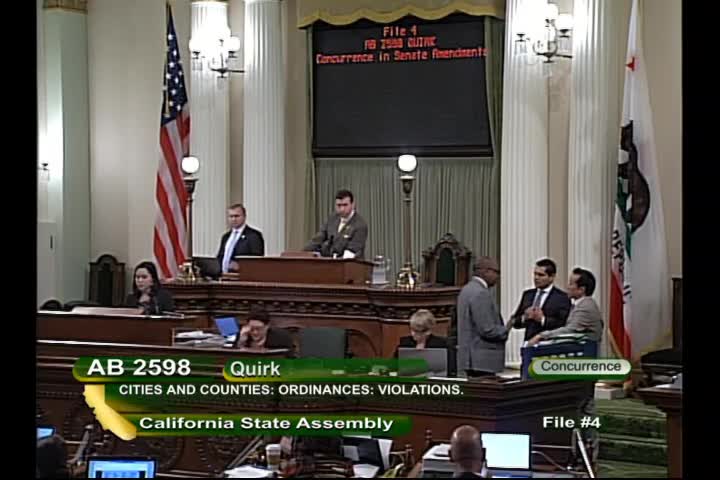 48SEC
Assembly Floor
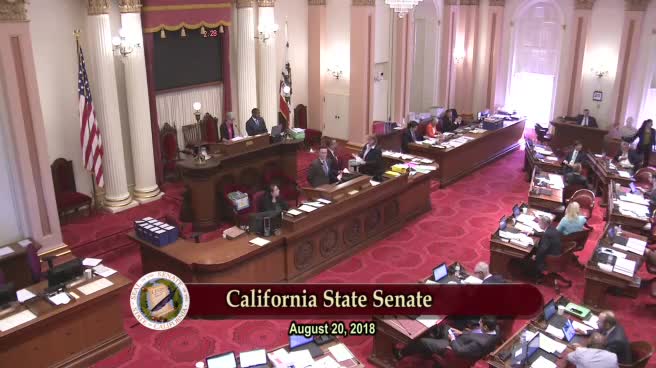 3MIN
Senate Floor
 7MIN
Senate Standing Committee on Human Services
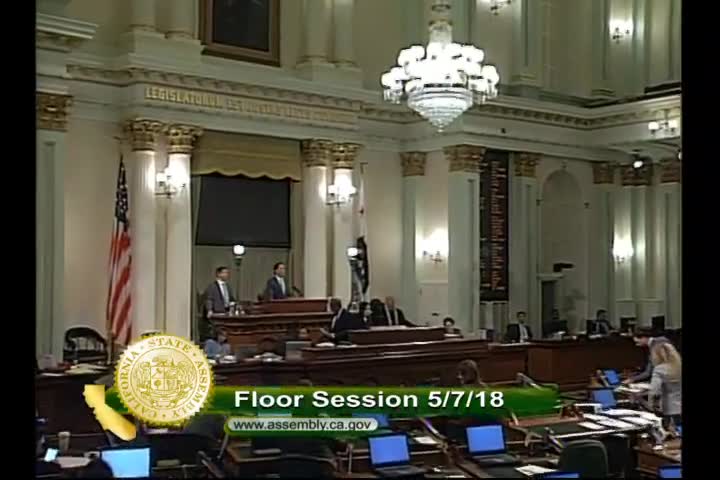 2MIN
Assembly Floor
 50SEC
Assembly Floor
 3MIN
Assembly Standing Committee on Appropriations
 8MIN
Assembly Standing Committee on Human Services
Bill Author

Bill Co-Author(s):