AB 1901: California Environmental Quality Act: exemption: roadway projects.
- Session Year: 2017-2018
- House: Assembly
- Latest Version Date: 2018-04-18
The California Environmental Quality Act (CEQA) requires a lead agency, as defined, to prepare, or cause to be prepared, and certify the completion of, an environmental impact report on a project that it proposes to carry out or approve that may have a significant effect on the environment or to adopt a negative declaration if it finds that the project will not have that effect. CEQA also requires a lead agency to prepare a mitigated negative declaration for a project that may have a significant effect on the environment if revisions in the project would avoid or mitigate that effect and there is no substantial evidence that the project, as revised, would have a significant effect on the environment.
CEQA, until January 1, 2020, exempts a project or an activity to repair, maintain, or make minor alterations to an existing roadway, as defined, if the project or activity is carried out by a city or county with a population of less than 100,000 persons to improve public safety and meets other specified requirements. requirements, including a requirement that the project involves negligible or no expansion of an existing use beyond that existing at the time of the lead agencys determination.
This bill would extend the above exemption indefinitely. to January 1, 2023. The bill would revise the requirement described above to specify that the exemption applies if, among other things, the project involves negligible or no expansion of an existing vehicular use beyond that existing at the time of the lead agencys determination.
The California Environmental Quality Act (CEQA) requires a lead agency, as defined, to prepare, or cause to be prepared, and certify the completion of, an environmental impact report on a project that it proposes to carry out or approve that may have a significant effect on the environment or to adopt a negative declaration if it finds that the project will not have that effect. CEQA also requires a lead agency to prepare a mitigated negative declaration for a project that may have a significant effect on the environment if revisions in the project would avoid or mitigate that effect and there is no substantial evidence that the project, as revised, would have a significant effect on the environment.
CEQA, until January 1, 2020, exempts a project or an activity to repair, maintain, or make minor alterations to an existing roadway, as defined, if the project or activity is carried out by a city or county with a population of less than 100,000 persons to improve public safety and meets other specified requirements.
This bill would extend the above exemption indefinitely.
(a)This division does not apply to a project or an activity to repair, maintain, or make minor alterations to an existing roadway if all of the following conditions are met:
(1)The project is carried out by a city or county with a population of less than 100,000 persons to improve public safety.
(2)(A)The project does not cross a waterway.
(B)For purposes of this paragraph, waterway means a bay, estuary, lake, pond, river, slough, or a perennial, intermittent, or ephemeral stream, lake, or estuarine-marine shoreline.
(3)The project involves negligible or no expansion of an existing vehicular use beyond that existing at the time of the lead agencys determination.
(4)The roadway is not a state roadway.
(5)(A)The site of the project does not contain wetlands or riparian areas and does not have significant value as a wildlife habitat, and the project does not harm any species protected by the federal Endangered Species Act of 1973 (16 U.S.C. Sec. 1531 et seq.), the Native Plant Protection Act (Chapter 10 (commencing with Section 1900) of Division 2 of the Fish and Game Code), or the California Endangered Species Act (Chapter 1.5 (commencing with Section 2050) of Division 3 of the Fish and Game Code), and the project does not cause the destruction or removal of any species protected by a local ordinance.
(B)For the purposes of this paragraph:
(i)Riparian areas mean those areas transitional between terrestrial and aquatic ecosystems and that are distinguished by gradients in biophysical conditions, ecological processes, and biota. A riparian area is an area through which surface and subsurface hydrology connect waterbodies with their adjacent uplands. A riparian area includes those portions of terrestrial ecosystems that significantly influence exchanges of energy and matter with aquatic ecosystems. A riparian area is adjacent to perennial, intermittent, and ephemeral streams, lakes, and estuarine-marine shorelines.
(ii)Significant value as a wildlife habitat includes wildlife habitat of national, statewide, regional, or local importance; habitat for species protected by the federal Endangered Species Act of 1973 (16 U.S.C. Sec. 1531, et seq.), the California Endangered Species Act (Chapter 1.5 (commencing with Section 2050) of Division 3 of the Fish and Game Code), or the Native Plant Protection Act (Chapter 10 (commencing with Section 1900) of Division 2 of the Fish and Game Code); habitat identified as candidate, fully protected, sensitive, or species of special status by local, state, or federal agencies; or habitat essential to the movement of resident or migratory wildlife.
(iii)Wetlands has the same meaning as in the United States Fish and Wildlife Service Manual, Part 660 FW 2 (June 21, 1993).
(iv)Wildlife habitat means the ecological communities upon which wild animals, birds, plants, fish, amphibians, and invertebrates depend for their conservation and protection.
(6)The project does not impact cultural resources.
(7)The roadway does not affect scenic resources, as provided pursuant to subdivision (c) of Section 21084.
(b)Prior to determining that a project is exempt pursuant to this section, the lead agency shall do both of the following:
(1)Include measures in the project to mitigate potential vehicular traffic and safety impacts and bicycle and pedestrian safety impacts.
(2)Hold a noticed public hearing on the project to hear and respond to public comments. The hearing on the project may be conducted with another noticed lead agency public hearing. Publication of the notice shall be no fewer times than required by Section 6061 of the Government Code, by the public agency in a newspaper of general circulation in the area.
(c)For purposes of this section, roadway means a roadway as defined pursuant to Section 530 of the Vehicle Code and the previously graded and maintained shoulder that is within a roadway right-of-way of no more than five feet from the edge of the roadway.
(d)Whenever a local agency determines that a project is not subject to this division pursuant to this section, and it approves or determines to carry out that project, the local agency shall file a notice with the Office of Planning and Research, and with the county clerk in the county in which the project will be located in the manner specified in subdivisions (b) and (c) of Section 21152.
(e)This section shall remain in effect only until January 1, 2023, and as of that date is repealed.
(a)This division does not apply to a project or an activity to repair, maintain, or make minor alterations to an existing roadway if all of the following conditions are met:
(1)The project is carried out by a city or county with a population of less than 100,000 persons to improve public safety.
(2)(A)The project does not cross a waterway.
(B)For purposes of this paragraph, waterway means a bay, estuary, lake, pond, river, slough, or a perennial, intermittent, or ephemeral stream, lake, or estuarine-marine shoreline.
(3)The project involves negligible or no expansion of an existing use beyond that existing at the time of the lead agencys determination.
(4)The roadway is not a state roadway.
(5)(A)The site of the project does not contain wetlands or riparian areas and does not have significant value as a wildlife habitat, and the project does not harm any species protected by the federal Endangered Species Act of 1973 (16 U.S.C. Sec. 1531 et seq.), the Native Plant Protection Act (Chapter 10 (commencing with Section 1900) of Division 2 of the Fish and Game Code), or the California Endangered Species Act (Chapter 1.5 (commencing with Section 2050) of Division 3 of the Fish and Game Code), and the project does not cause the destruction or removal of any species protected by a local ordinance.
(B)For the purposes of this paragraph:
(i)Riparian areas mean those areas transitional between terrestrial and aquatic ecosystems and that are distinguished by gradients in biophysical conditions, ecological processes, and biota. A riparian area is an area through which surface and subsurface hydrology connect waterbodies with their adjacent uplands. A riparian area includes those portions of terrestrial ecosystems that significantly influence exchanges of energy and matter with aquatic ecosystems. A riparian area is adjacent to perennial, intermittent, and ephemeral streams, lakes, and estuarine-marine shorelines.
(ii)Significant value as a wildlife habitat includes wildlife habitat of national, statewide, regional, or local importance; habitat for species protected by the federal Endangered Species Act of 1973 (16 U.S.C. Sec. 1531, et seq.), the California Endangered Species Act (Chapter 1.5 (commencing with Section 2050) of Division 3 of the Fish and Game Code), or the Native Plant Protection Act (Chapter 10 (commencing with Section 1900) of Division 2 of the Fish and Game Code); habitat identified as candidate, fully protected, sensitive, or species of special status by local, state, or federal agencies; or habitat essential to the movement of resident or migratory wildlife.
(iii)Wetlands has the same meaning as in the United States Fish and Wildlife Service Manual, Part 660 FW 2 (June 21, 1993).
(iv)Wildlife habitat means the ecological communities upon which wild animals, birds, plants, fish, amphibians, and invertebrates depend for their conservation and protection.
(6)The project does not impact cultural resources.
(7)The roadway does not affect scenic resources, as provided pursuant to subdivision (c) of Section 21084.
(b)Prior to determining that a project is exempt pursuant to this section, the lead agency shall do both of the following:
(1)Include measures in the project to mitigate potential vehicular traffic and safety impacts and bicycle and pedestrian safety impacts.
(2)Hold a noticed public hearing on the project to hear and respond to public comments. The hearing on the project may be conducted with another noticed lead agency public hearing. Publication of the notice shall be no fewer times than required by Section 6061 of the Government Code, by the public agency in a newspaper of general circulation in the area.
(c)For purposes of this section, roadway means a roadway as defined pursuant to Section 530 of the Vehicle Code and the previously graded and maintained shoulder that is within a roadway right-of-way of no more than five feet from the edge of the roadway.
(d)Whenever a local agency determines that a project is not subject to this division pursuant to this section, and it approves or determines to carry out that project, the local agency shall file a notice with the Office of Planning and Research, and with the county clerk in the county in which the project will be located in the manner specified in subdivisions (b) and (c) of Section 21152.
(e)This section shall remain in effect only until January 1, 2020, and as of that date is repealed, unless a later enacted statute, that is enacted before January 1, 2020, deletes or extends that date.|
Date
|
Status
|
|---|---|
| Jun 20, 2018 | In committee: Set, second hearing. Hearing canceled at the request of author. |
| Jun 6, 2018 | In committee: Set, first hearing. Hearing canceled at the request of author. |
| May 10, 2018 | Referred to Com. on EQ. |
| Apr 26, 2018 | In Senate. Read first time. To Com. on RLS. for assignment. |
| Apr 26, 2018 | Read third time. Passed. Ordered to the Senate. |
| Apr 25, 2018 | Read second time. Ordered to third reading. |
| Apr 24, 2018 | From committee: Do pass. (Ayes 14. Noes 0.) (April 23). |
| Apr 19, 2018 | Re-referred to Com. on TRANS. |
| Apr 18, 2018 | Read second time and amended. |
| Apr 17, 2018 | From committee: Amend, and do pass as amended and re-refer to Com. on TRANS. (Ayes 8. Noes 1.) (April 16). |
| Apr 9, 2018 | In committee: Set, first hearing. Hearing canceled at the request of author. |
| Feb 5, 2018 | Referred to Coms. on NAT. RES. and TRANS. |
| Jan 23, 2018 | From printer. May be heard in committee February 22. |
| Jan 22, 2018 | Read first time. To print. |
|
Date
|
Description
|
Location
|
Votes
|
|
|---|---|---|---|---|
| Apr 26, 2018 | AB 1901 OBERNOLTE Assembly Third Reading | Assembly Floor |
Passed |
|
| Apr 23, 2018 | Do pass. | Assembly Standing Committee on Transportation |
Passed |
|
| Apr 16, 2018 | Do pass as amended and be re-referred to the Committee on [Transportation] | Assembly Standing Committee on Natural Resources |
Passed |
This list shows positions taken on this bill by organizations on the date displayed, which is linked to the original source.
Positions by individuals are not included.
SENATE COMMITTEE ON ENVIRONMENTAL QUALITY
Senator Wieckowski, Chair
2017 - 2018 Regular
Bill No: AB 1901
Author: | Obernolte | ||
Version: | 4/18/2018 | Hearing Date: | 6/20/2018 |
Urgency: | No | Fiscal: | No |
Consultant: | Rachel Machi Wagoner | ||
SUBJECT: California Environmental Quality Act: exemption: roadway projects
ANALYSIS:
EXISTING LAW:
- Requires lead agencies with the principal responsibility for carrying out or approving a proposed project to prepare a negative declaration, mitigated negative declaration, or environmental impact report (EIR) for this action, unless the project is exempt from CEQA (CEQA includes various statutory exemptions, as well as categorical exemptions in the CEQA guidelines).
- Exempts, until January 1, 2020, minor roadway repairs, maintenance and minor alterations meeting the following conditions:
- The project is carried out by a city or county with a population of less than 100,000 to improve public safety.
- The project does not cross a "waterway" (defined as a bay, estuary, lake, pond, river, slough, or a perennial, intermittent, or ephemeral stream, lake, or estuarine-marine shoreline).
- Exclude projects on state roadways; sites containing wetlands, riparian areas, and significant wildlife habitat value; and that harm any protected species, impact cultural resources, or affect scenic resources.
- Require the lead agency to mitigate potential vehicular traffic and safety impacts, and bicycle and pedestrian safety impacts; hold a noticed public hearing on the project to hear and respond to public comments; and to file a notice of exemption with the Office of Planning and Research (OPR).
This bill:
- Extends the January 1, 2020 sunset to January 1, 2023 on an exemption from the CEQA for projects to repair, maintain, and make minor alterations to existing roadways, provided the project is carried out by a city or county with a population of less than 100,000 to improve public safety and meets other specified conditions.
- Specifies that the exemption applies if, among other things, the project involves negligible or no expansion of an existing vehicular use beyond that existing at the time of the lead agency’s determination.
Background
- CEQA: Environmental review process. CEQA provides a process for evaluating the environmental effects of a project, and includes statutory exemptions as well as categorical exemptions in the CEQA guidelines. If a project is not exempt from CEQA, an initial study is prepared to determine whether a project may have a significant effect on the environment. If the initial study shows that there would not be a significant effect on the environment, the lead agency must prepare a negative declaration. If the initial study shows that the project may have a significant effect on the environment, then the lead agency must prepare an EIR.
Generally, an EIR must accurately describe the proposed project, identify and analyze each significant environmental impact expected to result from the proposed project, identify mitigation measures to reduce those impacts to the extent feasible, and evaluate a range of reasonable alternatives to the proposed project. Prior to approving any project that has received an environmental review, an agency must make certain findings. If mitigation measures are required or incorporated into a project, the agency must adopt a reporting or monitoring program to ensure compliance with those measures.
If a mitigation measure would cause one or more significant effects in addition to those that would be caused by the proposed project, the effects of the mitigation measure must be discussed but in less detail than the significant effects of the proposed project. - What is analyzed in an environmental review? Pursuant to CEQA, an environmental review analyzing the significant direct and indirect environmental impacts of a proposed project, may include water quality, surface and subsurface hydrology, land use and agricultural resources, transportation and circulation, air quality and greenhouse gas emissions, terrestrial and aquatic biological resources, aesthetics, geology and soils, recreation, public services and utilities such as water supply and wastewater disposal, cultural resources, and tribal cultural resources.
The analysis must also evaluate the cumulative impacts of any past, present, and reasonably foreseeable projects/activities within study areas that are applicable to the resources being evaluated. A study area for a proposed project must not be limited to the footprint of the project because many environmental impacts of a development extend beyond the identified project boundary. Also, CEQA stipulates that the environmental impacts must be measured against existing physical conditions within the project area, not future, allowable conditions. - Current CEQA Exemptions. It should be noted that CEQA already provides alternatives to comprehensive environmental review for minor projects. First, the CEQA Guidelines provide a categorical exemption for work on existing facilities where there is negligible expansion of an existing use, specifically including "(e)xisting highways and streets, sidewalks, gutters, bicycle and pedestrian trails, and similar facilities," (CEQA Guidelines, Section 15301(c)). Second, if the project is not exempt from CEQA, but the initial study shows that it would not result in a significant effect on the environment, the lead agency must prepare a negative declaration, and no EIR is required.
Comments
- Purpose of Bill. AB 1901 will allow small local jurisdictions to depend on this CEQA exemption when planning their road maintenance and improvement projects. Infrastructure projects are often planned years out and knowing this exemption will still be available is crucial to being able to accurately plan these projects.
- What is lost with a CEQA exemption? It is not unusual for certain interests to assert that a particular exemption will expedite construction of a particular type of project and reduce costs. This, however, frequently overlooks the benefits of adequate environmental review where lead and responsible agencies are legally accountable for their actions to:
- Inform decisionmakers and the public about project impacts;
- Identify ways to avoid or significantly reduce environmental damage;
- Prevent environmental damage by requiring feasible alternatives or mitigation measures;
- Disclose to the public reasons why an agency approved a project if significant environmental effects are involved;
- Involve public agencies in the process; and,
- Increase public participation in the environmental review and the planning processes.
If a project is exempt from CEQA, certain issues should be addressed. For example:
- How can decisionmakers and the public be aware of impacts, mitigation measures, and alternatives of a project because of the exemption?
- Is it appropriate for the public to live with the consequences when a project is exempt and impacts may not be mitigated and alternatives may not be considered regarding certain matters, such as air quality, water quality, and noise impacts?
- Because adverse project impacts do not disappear when they are not identified and mitigated, does an exemption result in a direct transfer of responsibility for mitigating impacts from the applicant to the public (i.e., taxpayers) if impacts are ultimately addressed after completion of the project?
- If taxpayers, rather than the project applicant, are ultimately responsible for mitigating certain impacts of such a project after project completion, what assessments or taxes will be increased to fund mitigation or pay for alternatives at a later date?
- What is the need for this bill? In 2012, AB 890 (Olsen) established the minor roadway exemption that is the subject of this bill. AB 890 included a January 1, 2016 sunset. The original impetus for the bill was road safety projects in Tuolumne County, though Tuolumne apparently has not used the exemption. In 2015, AB 323 (Olsen) extended the sunset to January 1, 2020. Among its conditions, AB 890 required lead agencies claiming exemption to file a notice with OPR. According to OPR, one project has filed a notice of exemption – the Chestnut Street Corridor Improvement Project in Fort Bragg (June 29, 2015). Is there one specific or multiple projects that can be pointed to in need of this exemption? Or is this an exemption for the sake of an exemption?
Related/Prior Legislation
AB 323 (Olsen, Chapter 52, Statutes of 2015) extended the January 1, 2016 sunset date to January 1, 2020 on an exemption from CEQA, pursuant to PRC §21080.37, for projects to repair, maintain, and make minor alterations to existing roadways under specified conditions.
AB 890 (Olsen, Chapter 528, Statutes of 2012), exempted a project or activity from CEQA to repair, maintain, or make minor alterations to an existing roadway if certain conditions are met, and sunsets January 1, 2016.
SOURCE:
author
SUPPORT:
AAA, Northern and Southern California, Nevada and Utah
American Council of Engineering Companies
Associated Builders and Contractors
Automobile Club of Southern California
California Chamber of Commerce
California State Association of Counties
California Transportation Commission
Rural County Representatives of California
Southern California Association of Governments
OPPOSITION:
Sierra Club
-- END --
SENATE COMMITTEE ON ENVIRONMENTAL QUALITY
Senator Wieckowski, Chair
2017 - 2018 Regular
Bill No: AB 1901
Author: | Obernolte | ||
Version: | 4/18/2018 | Hearing Date: | 6/6/2018 |
Urgency: | No | Fiscal: | No |
Consultant: | Rachel Machi Wagoner | ||
SUBJECT: California Environmental Quality Act: exemption: roadway projects
ANALYSIS:
EXISTING LAW:
- Requires lead agencies with the principal responsibility for carrying out or approving a proposed project to prepare a negative declaration, mitigated negative declaration, or environmental impact report (EIR) for this action, unless the project is exempt from CEQA (CEQA includes various statutory exemptions, as well as categorical exemptions in the CEQA guidelines).
- Exempts, until January 1, 2020, minor roadway repairs, maintenance and minor alterations meeting the following conditions:
- The project is carried out by a city or county with a population of less than 100,000 to improve public safety.
- The project does not cross a "waterway" (defined as a bay, estuary, lake, pond, river, slough, or a perennial, intermittent, or ephemeral stream, lake, or estuarine-marine shoreline).
- Exclude projects on state roadways; sites containing wetlands, riparian areas, and significant wildlife habitat value; and that harm any protected species, impact cultural resources, or affect scenic resources.
- Require the lead agency to mitigate potential vehicular traffic and safety impacts, and bicycle and pedestrian safety impacts; hold a noticed public hearing on the project to hear and respond to public comments; and to file a notice of exemption with the Office of Planning and Research (OPR).
This bill:
- Extends the January 1, 2020 sunset to January 1, 2023 on an exemption from the CEQA for projects to repair, maintain, and make minor alterations to existing roadways, provided the project is carried out by a city or county with a population of less than 100,000 to improve public safety and meets other specified conditions.
- Specifies that the exemption applies if, among other things, the project involves negligible or no expansion of an existing vehicular use beyond that existing at the time of the lead agency’s determination.
Background
- CEQA: Environmental review process. CEQA provides a process for evaluating the environmental effects of a project, and includes statutory exemptions as well as categorical exemptions in the CEQA guidelines. If a project is not exempt from CEQA, an initial study is prepared to determine whether a project may have a significant effect on the environment. If the initial study shows that there would not be a significant effect on the environment, the lead agency must prepare a negative declaration. If the initial study shows that the project may have a significant effect on the environment, then the lead agency must prepare an EIR.
Generally, an EIR must accurately describe the proposed project, identify and analyze each significant environmental impact expected to result from the proposed project, identify mitigation measures to reduce those impacts to the extent feasible, and evaluate a range of reasonable alternatives to the proposed project. Prior to approving any project that has received an environmental review, an agency must make certain findings. If mitigation measures are required or incorporated into a project, the agency must adopt a reporting or monitoring program to ensure compliance with those measures.
If a mitigation measure would cause one or more significant effects in addition to those that would be caused by the proposed project, the effects of the mitigation measure must be discussed but in less detail than the significant effects of the proposed project. - What is analyzed in an environmental review? Pursuant to CEQA, an environmental review analyzing the significant direct and indirect environmental impacts of a proposed project, may include water quality, surface and subsurface hydrology, land use and agricultural resources, transportation and circulation, air quality and greenhouse gas emissions, terrestrial and aquatic biological resources, aesthetics, geology and soils, recreation, public services and utilities such as water supply and wastewater disposal, cultural resources, and tribal cultural resources.
The analysis must also evaluate the cumulative impacts of any past, present, and reasonably foreseeable projects/activities within study areas that are applicable to the resources being evaluated. A study area for a proposed project must not be limited to the footprint of the project because many environmental impacts of a development extend beyond the identified project boundary. Also, CEQA stipulates that the environmental impacts must be measured against existing physical conditions within the project area, not future, allowable conditions. - Current CEQA Exemptions. It should be noted that CEQA already provides alternatives to comprehensive environmental review for minor projects. First, the CEQA Guidelines provide a categorical exemption for work on existing facilities where there is negligible expansion of an existing use, specifically including "(e)xisting highways and streets, sidewalks, gutters, bicycle and pedestrian trails, and similar facilities," (CEQA Guidelines, Section 15301(c)). Second, if the project is not exempt from CEQA, but the initial study shows that it would not result in a significant effect on the environment, the lead agency must prepare a negative declaration, and no EIR is required.
Comments
- Purpose of Bill. AB 1901 will allow small local jurisdictions to depend on this CEQA exemption when planning their road maintenance and improvement projects. Infrastructure projects are often planned years out and knowing this exemption will still be available is crucial to being able to accurately plan these projects.
- What is lost with a CEQA exemption? It is not unusual for certain interests to assert that a particular exemption will expedite construction of a particular type of project and reduce costs. This, however, frequently overlooks the benefits of adequate environmental review where lead and responsible agencies are legally accountable for their actions to:
- Inform decisionmakers and the public about project impacts;
- Identify ways to avoid or significantly reduce environmental damage;
- Prevent environmental damage by requiring feasible alternatives or mitigation measures;
- Disclose to the public reasons why an agency approved a project if significant environmental effects are involved;
- Involve public agencies in the process; and,
- Increase public participation in the environmental review and the planning processes.
If a project is exempt from CEQA, certain issues should be addressed. For example:
- How can decisionmakers and the public be aware of impacts, mitigation measures, and alternatives of a project because of the exemption?
- Is it appropriate for the public to live with the consequences when a project is exempt and impacts may not be mitigated and alternatives may not be considered regarding certain matters, such as air quality, water quality, and noise impacts?
- Because adverse project impacts do not disappear when they are not identified and mitigated, does an exemption result in a direct transfer of responsibility for mitigating impacts from the applicant to the public (i.e., taxpayers) if impacts are ultimately addressed after completion of the project?
- If taxpayers, rather than the project applicant, are ultimately responsible for mitigating certain impacts of such a project after project completion, what assessments or taxes will be increased to fund mitigation or pay for alternatives at a later date?
- What is the need for this bill? In 2012, AB 890 (Olsen) established the minor roadway exemption that is the subject of this bill. AB 890 included a January 1, 2016 sunset. The original impetus for the bill was road safety projects in Tuolumne County, though Tuolumne apparently has not used the exemption. In 2015, AB 323 (Olsen) extended the sunset to January 1, 2020. Among its conditions, AB 890 required lead agencies claiming exemption to file a notice with OPR. According to OPR, one project has filed a notice of exemption – the Chestnut Street Corridor Improvement Project in Fort Bragg (June 29, 2015). Is there one specific or multiple projects that can be pointed to in need of this exemption? Or is this an exemption for the sake of an exemption?
Related/Prior Legislation
AB 323 (Olsen, Chapter 52, Statutes of 2015) extended the January 1, 2016 sunset date to January 1, 2020 on an exemption from CEQA, pursuant to PRC §21080.37, for projects to repair, maintain, and make minor alterations to existing roadways under specified conditions.
AB 890 (Olsen, Chapter 528, Statutes of 2012), exempted a project or activity from CEQA to repair, maintain, or make minor alterations to an existing roadway if certain conditions are met, and sunsets January 1, 2016.
SOURCE:
author
SUPPORT:
AAA, Northern and Southern California, Nevada and Utah
Associated Builders and Contractors
Associated General Contractors, the California Chapters
California Chamber of Commerce
California State Association of Counties
California Transportation Commission
Rural County Representatives of California
Southern California Association of Governments
OPPOSITION:
Sierra Club
-- END --
ASSEMBLY THIRD READING
ATR Bill Id:AB 1901
Author:(Obernolte)
As Amended Ver:April 18, 2018
Majority vote
Committee | Votes | Ayes | Noes |
Natural Resources | 8-1 | Muratsuchi, Acosta, Chau, Eggman, Flora, McCarty, Melendez, Bloom | Mark Stone |
Transportation | 14-0 | Frazier, Fong, Aguiar-Curry, Baker, Berman, Chu, Daly, Friedman, Gipson, Harper, Mathis, Medina, Nazarian, O'Donnell |
SUMMARY: Extends the January 1, 2020 sunset date to January 1, 2023 on an exemption from the California Environmental Quality Act (CEQA) for projects to repair, maintain, and make minor alterations to existing roadways, provided the project is carried out by a city or county with a population of less than 100,000 to improve public safety and meets other specified conditions.
EXISTING LAW:
- Requires lead agencies with the principal responsibility for carrying out or approving a proposed project to prepare a negative declaration, mitigated negative declaration, or environmental impact report (EIR) for this action, unless the project is exempt from CEQA (CEQA includes various statutory exemptions, as well as categorical exemptions in the CEQA guidelines).
- Exempts, until January 1, 2020, minor roadway repairs, maintenance and minor alterations meeting the following conditions:
- The project is carried out by a city or county with a population of less than 100,000 to improve public safety.
- The project does not cross a "waterway" (defined as a bay, estuary, lake, pond, river, slough, or a perennial, intermittent, or ephemeral stream, lake, or estuarine-marine shoreline).
- Exclude projects on state roadways; sites containing wetlands, riparian areas, and significant wildlife habitat value; and that harm any protected species, impact cultural resources, or affect scenic resources.
- Require the lead agency to mitigate potential vehicular traffic and safety impacts, and bicycle and pedestrian safety impacts; hold a noticed public hearing on the project to hear and respond to public comments; and to file a notice of exemption with the Office of Planning and Research (OPR).
FISCAL EFFECT: This bill is keyed non-fiscal by the Legislative Counsel.
COMMENTS: CEQA provides a process for evaluating the environmental effects of applicable projects undertaken or approved by public agencies. If a project is not exempt from CEQA, an initial study is prepared to determine whether the project may have a significant effect on the environment. If the initial study shows that there would not be a significant effect on the environment, the lead agency must prepare a negative declaration. If the initial study shows that the project may have a significant effect on the environment, the lead agency must prepare an EIR.
Generally, an EIR must accurately describe the proposed project, identify and analyze each significant environmental impact expected to result from the proposed project, identify mitigation measures to reduce those impacts to the extent feasible, and evaluate a range of reasonable alternatives to the proposed project. Prior to approving any project that has received environmental review, an agency must make certain findings. If mitigation measures are required or incorporated into a project, the agency must adopt a reporting or monitoring program to ensure compliance with those measures.
It should be noted that CEQA already provides alternatives to comprehensive environmental review for minor projects. First, the CEQA Guidelines provide a categorical exemption for work on existing facilities where there is negligible expansion of an existing use, specifically including "(e)xisting highways and streets, sidewalks, gutters, bicycle and pedestrian trails, and similar facilities," (CEQA Guidelines, Section 15301(c)). Second, if the project is not exempt from CEQA, but the initial study shows that it would not result in a significant effect on the environment, the lead agency must prepare a negative declaration, and no EIR is required.
In 2012, AB 890 (Olsen), Chapter 528, established the minor roadway exemption that is the subject of this bill. AB 890 included a January 1, 2016 sunset. The original impetus for the bill was road safety projects in Tuolumne County, though Tuolumne apparently has not used the exemption. In 2015, AB 323 (Olsen), Chapter 52, extended the sunset to January 1, 2020. Among its conditions, AB 890 required lead agencies claiming exemption to file a notice with OPR. According to OPR, one project has filed a notice of exemption – the Chestnut Street Corridor Improvement Project in Fort Bragg (June 29, 2015).
Analysis Prepared by: Lawrence Lingbloom / NAT. RES. / (916) 319-2092 FN: 0002737
Date of Hearing: April 23, 2018
ASSEMBLY COMMITTEE ON TRANSPORTATION
Jim Frazier, Chair
ABPCA Bill Id:AB 1901 (
Author:Obernolte) – As Amended Ver:April 18, 2018
SUBJECT: California Environmental Quality Act: exemption: roadway projects
SUMMARY: Extends the sunset date on an exemption from the California Environmental Quality Act (CEQA) for projects to repair, maintain, and make minor alterations to existing roadways to January 1, 2023.
EXISTING LAW:
- Requires lead agencies with the principal responsibility for carrying out or approving a proposed project to prepare a negative declaration, mitigated negative declaration, or environmental impact report (EIR) for this project, unless the project is exempt from CEQA.
- Exempts from CEQA, until January 1, 2020, minor roadway repairs, maintenance and minor alterations meeting the following conditions:
- The project is carried out by a city or county with a population of less than 100,000 to improve public safety.
- The project does not cross a "waterway" (defined as a bay, estuary, lake, pond, river, slough, or a perennial, intermittent, or ephemeral stream, lake, or estuarine-marine shoreline).
- The project involves negligible or no expansion of an existing use.
- The project is not on a state highway.
- The site of the project does not contain wetlands, riparian areas, or significant wildlife habitat value and does not harm any protected species, impact cultural resources, or affect scenic resources.
- Requires the lead agency to: include measures in the project to mitigate potential vehicular traffic and safety impacts and bicycle and pedestrian safety impacts, hold a noticed public hearing on the project to hear and respond to public comments, and file a notice of exemption with the Office of Planning and Research (OPR).
- Exempts from CEQA any emergency project undertaken by a public agency to maintain, repair, or restore an existing highway that has been damaged as a result of fire, flood, storm, earthquake, land subsidence, gradual earth movement, or landslide, within one year of the damage.
FISCAL EFFECT: None, this bill is keyed non-fiscal by the Legislative Counsel.
COMMENTS: CEQA provides a process for evaluating the environmental effects of applicable projects undertaken or approved by public agencies. If a project is not exempt from CEQA, an initial study is prepared to determine whether the project may have a significant effect on the environment. If the initial study shows that there would not be a significant effect on the environment, the lead agency must prepare a negative declaration. If the initial study shows that the project may have a significant effect on the environment, the lead agency must prepare an EIR. Generally, an EIR must accurately describe the proposed project, identify and analyze each significant environmental impact expected to result from the project, identify mitigation measures to reduce those impacts to the extent feasible, and evaluate a range of reasonable alternatives to the project.
Legislation enacted in 2012, AB 890 (Olsen), Chapter 528, Statutes of 2012, exempted from CEQA minor roadway repair projects carried out by a local government, until January 1, 2016. In 2015, AB 323 (Olsen), Chapter 52, Statutes of 2015, extended this exemption to January 1, 2020. This exemption is consistent with other existing CEQA exemptions. For example, CEQA guidelines provide a categorical exemption for work on existing facilities where there is negligible expansion of an existing use, specifically including existing highways and streets, sidewalks, gutters, bicycle and pedestrian trails, and similar facilities. Additionally, emergency projects undertaken by a public agency to maintain, repair, or restore an existing highway that has been damaged as a result of fire, flood, storm, earthquake, land subsidence, gradual earth movement or landslide are exempt from CEQA if carried out within one year of the damage.
AB 890 included a provision that requires lead agencies claiming the exemption to file a notice with OPR. The Assembly Natural Resources Committee analysis, where this bill was heard previously notes, “According to OPR, one project has filed a notice of exemption – the Chestnut Street Corridor Improvement Project in Fort Bragg (June 29, 2015).”
Double-referral: This bill passed out of the Assembly Natural Resources Committee on
April 16, 2018, with an 8-1 vote.
Previous legislation: AB 323 (Olsen) Chapter 52, Statutes of 2015 extended the January 1, 2016, sunset date, until January 1, 2020, on an exemption from CEQA for projects for minor repairs of existing roadwork.
AB 890 (Olsen), Chapter 528, Statutes of 2012, provided the original CEQA exemption for projects to repair, maintain, and make minor alterations to existing roadways.
REGISTERED SUPPORT / OPPOSITION:
Support
California Chamber of Commerce
California Transportation Commission
Rural County Representatives of California
Opposition
None on file
Analysis Prepared by: Cynthia Alvarez / TRANS. / (916) 319-2093
Date of Hearing: April 16, 2018
ASSEMBLY COMMITTEE ON NATURAL RESOURCES
Al Muratsuchi, Acting Chair
ABPCA Bill Id:AB 1901 (
Author:Obernolte) – As Introduced Ver:January 22, 2018
SUBJECT: California Environmental Quality Act: exemption: roadway projects
SUMMARY: Repeals the January 1, 2020 sunset on an exemption from the California Environmental Quality Act (CEQA) for projects to repair, maintain, and make minor alterations to existing roadways, provided the project is carried out by a city or county with a population of less than 100,000 to improve public safety and meets other specified conditions.
EXISTING LAW:
- Requires lead agencies with the principal responsibility for carrying out or approving a proposed project to prepare a negative declaration, mitigated negative declaration, or environmental impact report (EIR) for this action, unless the project is exempt from CEQA (CEQA includes various statutory exemptions, as well as categorical exemptions in the CEQA guidelines).
- Exempts, until January 1, 2020, minor roadway repairs, maintenance and minor alterations meeting the following conditions:
- The project is carried out by a city or county with a population of less than 100,000 to improve public safety.
- The project does not cross a "waterway" (defined as a bay, estuary, lake, pond, river, slough, or a perennial, intermittent, or ephemeral stream, lake, or estuarine-marine shoreline).
- Exclude projects on state roadways; sites containing wetlands, riparian areas, and significant wildlife habitat value; and that harm any protected species, impact cultural resources, or affect scenic resources.
- Require the lead agency to mitigate potential vehicular traffic and safety impacts, and bicycle and pedestrian safety impacts; hold a noticed public hearing on the project to hear and respond to public comments; and to file a notice of exemption with the Office of Planning and Research (OPR).
FISCAL EFFECT: Non-fiscal
COMMENTS:
- Background. CEQA provides a process for evaluating the environmental effects of applicable projects undertaken or approved by public agencies. If a project is not exempt from CEQA, an initial study is prepared to determine whether the project may have a significant effect on the environment. If the initial study shows that there would not be a significant effect on the environment, the lead agency must prepare a negative declaration. If the initial study shows that the project may have a significant effect on the environment, the lead agency must prepare an EIR.
Generally, an EIR must accurately describe the proposed project, identify and analyze each significant environmental impact expected to result from the proposed project, identify mitigation measures to reduce those impacts to the extent feasible, and evaluate a range of reasonable alternatives to the proposed project. Prior to approving any project that has received environmental review, an agency must make certain findings. If mitigation measures are required or incorporated into a project, the agency must adopt a reporting or monitoring program to ensure compliance with those measures.
It should be noted that CEQA already provides alternatives to comprehensive environmental review for minor projects. First, the CEQA Guidelines provide a categorical exemption for work on existing facilities where there is negligible expansion of an existing use, specifically including "(e)xisting highways and streets, sidewalks, gutters, bicycle and pedestrian trails, and similar facilities," (CEQA Guidelines, Section 15301(c)). Second, if the project is not exempt from CEQA, but the initial study shows that it would not result in a significant effect on the environment, the lead agency must prepare a negative declaration, and no EIR is required.
- Down on Chestnut Street. In 2012, AB 890 (Olsen) established the minor roadway exemption that is the subject of this bill. AB 890 included a January 1, 2016 sunset. The original impetus for the bill was road safety projects in Tuolumne County, though Tuolumne apparently has not used the exemption. In 2015, AB 323 (Olsen) extended the sunset to January 1, 2020. Among its conditions, AB 890 required lead agencies claiming exemption to file a notice with OPR. According to OPR, one project has filed a notice of exemption – the Chestnut Street Corridor Improvement Project in Fort Bragg (June 29, 2015). To preserve the Legislature's ability to periodically evaluate the use and effects of this exemption, the author and the committee may wish to consider extending the sunset to January 1, 2023, rather than eliminating it. To ensure the exemption is usable for its intended purpose, the author and the committee may also wish to consider clarifying that the limit on expansion of use refers to vehicular uses by adding "vehicular" after the first "existing" on page 2, line 13.
- Double referral. This bill has been double referred to the Transportation Committee.
REGISTERED SUPPORT / OPPOSITION:
Support
AAA Northern California, Nevada & Utah
Associated Builders and Contractors
Association of California Cities – Orange County
Automobile Club of Southern California
California Chamber of Commerce
California Transportation Commission
Rural County Representatives of California
San Gabriel Valley Economic Partnership
San Bernardino County Transportation Authority
Transportation Agency for Monterey County
Opposition
Sierra Club California
Analysis Prepared by: Lawrence Lingbloom / NAT. RES. /
Discussed in Hearing
 1MIN
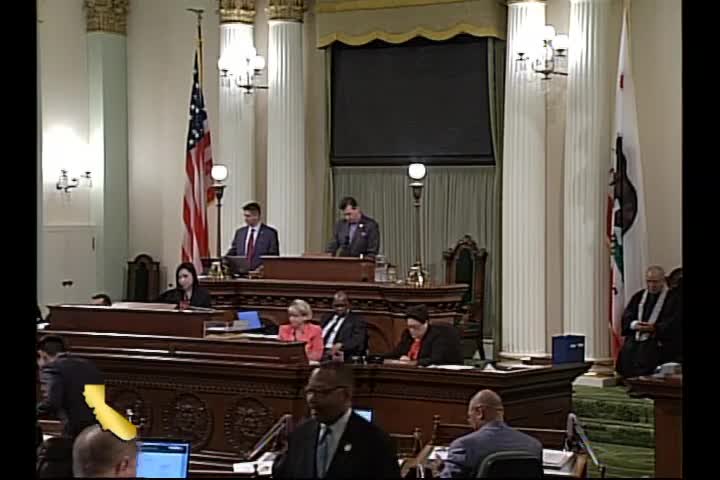
Assembly Floor
 3MIN
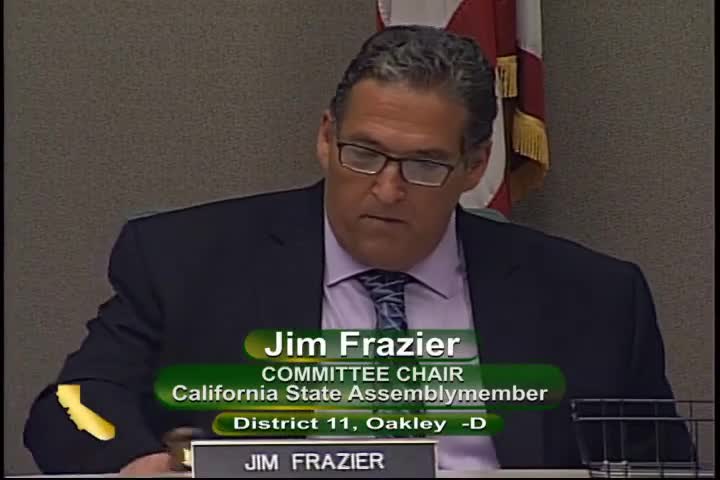
Assembly Standing Committee on Transportation
 3MIN
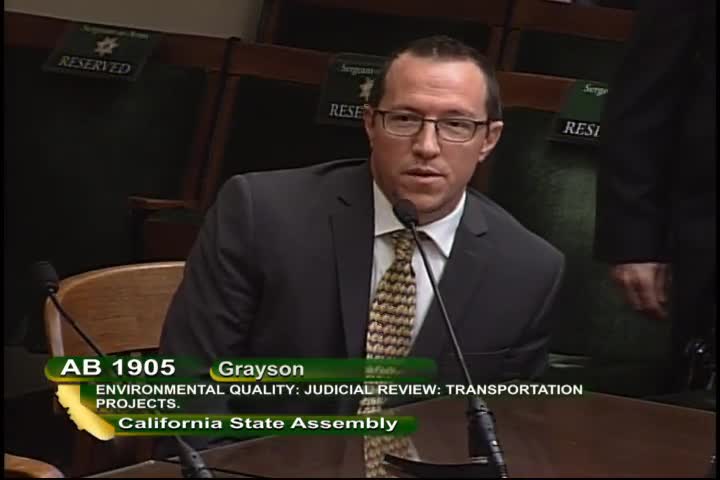
Assembly Standing Committee on Natural Resources
Bill Author

Bill Co-Author(s):