AB 1906: Information privacy: connected devices.
- Session Year: 2017-2018
- House: Assembly
- Latest Version Date: 2018-09-28
Existing law requires a business to take all reasonable steps to dispose of customer records within its custody or control containing personal information when the records are no longer to be retained by the business by shredding, erasing, or otherwise modifying the personal information in those records to make it unreadable or undecipherable. Existing law also requires a business that owns, licenses, or maintains personal information about a California resident to implement and maintain reasonable security procedures and practices appropriate to the nature of the information, to protect the personal information from unauthorized access, destruction, use, modification, or disclosure. Existing law authorizes a customer injured by a violation of these provisions to institute a civil action to recover damages.
This bill, beginning on January 1, 2020, would require a manufacturer of a connected device, as those terms are defined, to equip the device with a reasonable security feature or features that are appropriate to the nature and function of the device, appropriate to the information it may collect, contain, or transmit, and designed to protect the device and any information contained therein from unauthorized access, destruction, use, modification, or disclosure, as specified.
This bill would become operative only if SB 327 of the 201718 Regular Session is enacted and becomes effective.
Existing law requires a business to take all reasonable steps to dispose of customer records within its custody or control containing personal information when the records are no longer to be retained by the business by shredding, erasing, or otherwise modifying the personal information in those records to make it unreadable or undecipherable. Existing law also requires a business that owns, licenses, or maintains personal information about a California resident to implement and maintain reasonable security procedures and practices appropriate to the nature of the information, to protect the personal information from unauthorized access, destruction, use, modification, or disclosure. Existing law authorizes a customer injured by a violation of these provisions to institute a civil action to recover damages.
This bill, beginning on January 1, 2020, would require a manufacturer of a connected device, as those terms are defined, to equip the device with a reasonable security feature or features that are appropriate to the nature and function of the device, appropriate to the information it may collect, contain, or transmit, and designed to protect the device and any information contained therein from unauthorized access, destruction, use, modification, or disclosure, as specified.
This bill would become operative only if SB 327 of the 201718 Regular Session is enacted and becomes effective.
Existing law requires a business to take all reasonable steps to dispose of customer records within its custody or control containing personal information when the records are no longer to be retained by the business by shredding, erasing, or otherwise modifying the personal information in those records to make it unreadable or undecipherable. Existing law also requires a business that owns, licenses, or maintains personal information about a California resident to implement and maintain reasonable security procedures and practices appropriate to the nature of the information, to protect the personal information from unauthorized access, destruction, use, modification, or disclosure. Existing law authorizes a customer injured by a violation of these provisions to institute a civil action to recover damages.
This bill, beginning in on January 1, 2020, would require a manufacturer of a connected device, as those terms are defined, to equip the device with a reasonable security feature or features, features that are appropriate to the nature and function of the device, and appropriate to the information it may collect, contain, or transmit, and designed to protect the device and any information contained therein from unauthorized access, destruction, use, modification, or disclosure, as specified.
This bill would become operative only if SB 327 of the 201718 Regular Session is enacted and becomes effective.
Existing law requires a business to take all reasonable steps to dispose of customer records within its custody or control containing personal information when the records are no longer to be retained by the business by shredding, erasing, or otherwise modifying the personal information in those records to make it unreadable or undecipherable. Existing law also requires a business that owns, licenses, or maintains personal information about a California resident to implement and maintain reasonable security procedures and practices appropriate to the nature of the information, to protect the personal information from unauthorized access, destruction, use, modification, or disclosure. Existing law authorizes a customer injured by a violation of these provisions to institute a civil action to recover damages.
This bill, beginning in 2020, would require a manufacturer of a connected device, as those terms are defined, to equip the device with a reasonable security feature or features, appropriate to the nature and function of the device, and the information it may collect, contain, or transmit, designed to protect the device and any information contained therein from unauthorized access, destruction, use, modification, or disclosure, as specified.
Existing law requires a device that includes an integrated and enabled wireless access point and that is sold as new in California for use in a small office, home office, or residential setting to be manufactured to include certain security warnings or advisories about protection against unauthorized access. Existing law also prohibits a person or entity from providing for the operation of a voice recognition feature in California without prominently informing, during initial setup or installation of a connected television, either the user or person designated by the user to perform the initial setup or installation of the connected television.This bill, beginning January 1, 2020, would, with certain exceptions, require a person who manufactures, or contracts with another person to manufacture on the persons behalf, a connected device that is sold or offered for sale in California, to equip the connected device, as defined, with a reasonable security feature or features, appropriate to the nature and function of the device, designed to protect the device from unauthorized remote access or use. The bill would provide that equipping a connected device with a means for authentication outside a local area network is deemed a reasonable security feature, if the preprogrammed password is unique to each device manufactured or the device contains a security feature that requires a user to generate a new means of authentication before access is granted to the device for the first time. The bill would grant exclusive authority to enforce these provisions to the Attorney General, a city attorney, a county counsel, or a district attorney.Existing law requires a device that includes an integrated and enabled wireless access point and that is sold as new in California for use in a small office, home office, or residential setting to be manufactured to include certain security warnings or advisories about protection against unauthorized access. Existing law also prohibits a person or entity from providing for the operation of a voice recognition feature in California without prominently informing, during initial setup or installation of a connected television, either the user or person designated by the user to perform the initial setup or installation of the connected television.
This bill, beginning January 1, 2020, would would, with certain exceptions, require a manufacturer that sells or offers to sell person who manufactures, or contracts with another person to manufacture on the persons behalf, a connected device that is sold or offered for sale in California California, to equip the connected device, as defined, with a reasonable security feature or features, appropriate to the nature and function of the device, designed to protect the device from unauthorized remote access or use. The bill would provide that equipping a connected device with a means for authentication outside a local area network is deemed a reasonable security feature, if the preprogrammed password is unique to each device manufactured or the device contains a security feature that requires a user to generate a new means of authentication before access is granted to the device for the first time. The bill would grant exclusive authority to enforce these provisions to the Attorney General, a city attorney, a county counsel, or a district attorney.
Existing law requires a device that includes an integrated and enabled wireless access point and that is sold as new in California for use in a small office, home office, or residential setting to be manufactured to include certain security warnings or advisories about protection against unauthorized access. Existing law also prohibits a person or entity from providing for the operation of a voice recognition feature in California without prominently informing, during initial setup or installation of a connected television, either the user or person designated by the user to perform the initial setup or installation of the connected television.
This bill bill, beginning January 1, 2020, would require a manufacturer that sells or offers to sell a connected device in California to equip the connected device, as defined, with a reasonable security feature or features features, appropriate to the nature and function of the device that is device, designed to protect the device from unauthorized remote access or use. The bill would provide that equipping a connected device with a means for authentication outside a local area network is deemed a reasonable security feature, if the preprogrammed password is unique to each device manufactured or the device contains a security feature that requires a user to generate a new means of authentication before access is granted to the device for the first time.
Existing law requires a device that includes an integrated and enabled wireless access point and that is sold as new in California for use in a small office, home office, or residential setting to be manufactured to include certain security warnings or advisories about protection against unauthorized access. Existing law also prohibits a person or entity from providing for the operation of a voice recognition feature in California without prominently informing, during initial setup or installation of a connected television, either the user or person designated by the user to perform the initial setup or installation of the connected television.
This bill would require a manufacturer that sells or offers to sell a connected device in California to equip the connected device, as defined, with a reasonable security features feature or features appropriate to the nature and function of the device and the information that it may collect, contain, or transmit, that is designed to protect the device and any information contained within it from unauthorized remote access or use. The bill would require the equipped security features for any connected device to include either a security feature that requires a preprogrammed password for access that is unique to each device manufactured or sold, or a security feature that requires the user to create a new password before access is granted for the first time. provide that equipping a connected device with a means for authentication outside a local area network is deemed a reasonable security feature, if the preprogrammed password is unique to each device manufactured or the device contains a security feature that requires a user to generate a new means of authentication before access is granted to the device for the first time.
Existing law requires a device that includes an integrated and enabled wireless access point and that is sold as new in California for use in a small office, home office, or residential setting to be manufactured to include certain security warnings or advisories about protection against unauthorized access. Existing law also prohibits a person or entity from providing for the operation of a voice recognition feature in California without prominently informing, during initial setup or installation of a connected television, either the user or person designated by the user to perform the initial setup or installation of the connected television.
This bill would require a manufacturer that sells or offers to sell a connected device in California to equip the connected device, as defined, with reasonable security features appropriate to the nature of the device and the information that it may collect, contain, or transmit, to protect the device and any information contained within it from unauthorized access or use. The bill would require the equipped security features for any connected device to include either a security feature that requires a preprogrammed password for access that is unique to each device manufactured or sold, or a security feature that requires the user to create a new password before access is granted for the first time.
(a)A manufacturer of a connected device shall equip the device with a reasonable security feature or features that are all of the following:
(1)Appropriate to the nature and function of the device.
(2)Appropriate to the information it may collect, contain, or transmit.
(3)Designed to protect the device and any information contained therein from unauthorized access, destruction, use, modification, or disclosure.
(b)Subject to all of the requirements of subdivision (a), if a connected device is equipped with a means for authentication outside a local area network, it shall be deemed a reasonable security feature under subdivision (a) if either of the following requirements are met:
(1)The preprogrammed password is unique to each device manufactured.
(2)The device contains a security feature that requires a user to generate a new means of authentication before access is granted to the device for the first time.
1798.91.05.For the purposes of this title, the following terms have the following meanings:
(a)Authentication means a method of verifying the authority of a user, process, or device to access resources in an information system.
(b)Connected device means any device, or other physical object that is capable of connecting to the Internet, directly or indirectly, and that is assigned an Internet Protocol address or Bluetooth address.
(c)Manufacturer means the person who manufactures, or contracts with another person to manufacture on the persons behalf, connected devices that are sold or offered for sale in California. For the purposes of this subdivision, a contract with another person to manufacture on the persons behalf does not include a contract only to purchase a connected device, or only to purchase and brand a connected device.
(d)Security feature means a feature of a device designed to provide security for that device.
(e)Unauthorized access, destruction, use, modification, or disclosure means access, destruction, use, modification, or disclosure that is not authorized by the consumer.
1798.91.06.(a)This title shall not be construed to impose any duty upon the manufacturer of a connected device related to unaffiliated third-party software or applications that a user chooses to add to a connected device.
(b)This title shall not be construed to impose any duty upon a provider of an electronic store, gateway, marketplace, or other means of purchasing or downloading software or applications, to review or enforce compliance with this title.
(c)This title shall not be construed to impose any duty upon the manufacturer of a connected device to prevent a user from having full control over a connected device, including the ability to modify the software or firmware running on the device at the users discretion.
(d)This title shall not apply to any connected device the functionality of which is subject to security requirements under federal law, regulations, or guidance promulgated by a federal agency pursuant to its regulatory enforcement authority.
(e)This title shall not be construed to provide a basis for a private right of action. The Attorney General, a city attorney, a county counsel, or a district attorney shall have the exclusive authority to enforce this title.
(f)The duties and obligations imposed by this title are cumulative with any other duties or obligations imposed under other law, and shall not be construed to relieve any party from any duties or obligations imposed under other law.
(g)This title shall not be construed to limit the authority of a law enforcement agency to obtain connected device information from a manufacturer as authorized by law or pursuant to an order of a court of competent jurisdiction.
(h)A covered entity, provider of health care, business associate, health care service plan, contractor, employer, or any other person subject to the federal Health Insurance Portability and Accountability Act of 1996 (HIPAA) (Public Law 104-191) or the Confidentiality of Medical Information Act (Part 2.6 (commencing with Section 56) of Division 1) shall not be subject to this title with respect to any activity regulated by those acts.
(i)This title shall become operative on January 1, 2020.
SEC. 2.This act shall become operative only if Senate Bill 327 of the 201718 Regular Session is also enacted and becomes effective.
(a)A manufacturer of a connected device shall equip the device with a reasonable security feature or features that are all of the following:
(1)Appropriate to the nature and function of the device.
(2)Appropriate to the information it may collect, contain, or transmit.
(3)Designed to protect the device and any information contained therein from unauthorized access, destruction, use, modification, or disclosure.
(b)Subject to all of the requirements of subdivision (a), if a connected device is equipped with a means for authentication outside a local area network, it shall be deemed a reasonable security feature under subdivision (a) if either of the following requirements are met:
(1)The preprogrammed password is unique to each device manufactured.
(2)The device contains a security feature that requires a user to generate a new means of authentication before access is granted to the device for the first time.
1798.91.05.For the purposes of this title, the following terms have the following meanings:
(a)Authentication means a method of verifying the authority of a user, process, or device to access resources in an information system.
(b)Connected device means any device, or other physical object that is capable of connecting to the Internet, directly or indirectly, and that is assigned an Internet Protocol address or Bluetooth address.
(c)Manufacturer means the person who manufactures, or contracts with another person to manufacture on the persons behalf, connected devices that are sold or offered for sale in California. For the purposes of this subdivision, a contract with another person to manufacture on the persons behalf does not include a contract only to purchase a connected device, or only to purchase and brand a connected device.
(d)Security feature means a feature of a device designed to provide security for that device.
(e)Unauthorized access, destruction, use, modification, or disclosure means access, destruction, use, modification, or disclosure that is not authorized by the consumer.
1798.91.06.(a)This title shall not be construed to impose any duty upon the manufacturer of a connected device related to unaffiliated third-party software or applications that a user chooses to add to a connected device.
(b)This title shall not be construed to impose any duty upon a provider of an electronic store, gateway, marketplace, or other means of purchasing or downloading software or applications, to review or enforce compliance with this title.
(c)This title shall not be construed to impose any duty upon the manufacturer of a connected device to prevent a user from having full control over a connected device, including the ability to modify the software or firmware running on the device at the users discretion.
(d)This title shall not apply to any connected device the functionality of which is subject to security requirements under federal law, regulations, or guidance promulgated by a federal agency pursuant to its regulatory enforcement authority.
(e)This title shall not be construed to provide a basis for a private right of action. The Attorney General, a city attorney, a county counsel, or a district attorney shall have the exclusive authority to enforce this title.
(f)The duties and obligations imposed by this title are cumulative with any other duties or obligations imposed under other law, and shall not be construed to relieve any party from any duties or obligations imposed under other law.
(g)This title shall not be construed to limit the authority of a law enforcement agency to obtain connected device information from a manufacturer as authorized by law or pursuant to an order of a court of competent jurisdiction.
(h)A covered entity, provider of health care, business associate, health care service plan, contractor, employer, or any other person subject to the federal Health Insurance Portability and Accountability Act of 1996 (HIPAA) (Public Law 104-191) or the Confidentiality of Medical Information Act (Part 2.6 (commencing with Section 56) of Division 1) shall not be subject to this title with respect to any activity regulated by those acts.
(i)This title shall become operative on January 1, 2020.
SEC. 2.This act shall become operative only if Senate Bill 327 of the 201718 Regular Session is also enacted and becomes effective.
(a)A manufacturer of a connected device shall equip the device with a reasonable security feature or features, appropriate features that are all of the following:
(1)Appropriate to the nature and function of the device, and device.
(2)Appropriate to the information it may collect, contain, or transmit, designed transmit.
(3)Designed to protect the device and any information contained therein from unauthorized access, destruction, use, modification, or disclosure.
(b)Equipping Subject to all of the requirements of subdivision (a), if a connected device is equipped with a means for authentication outside a local area network network, it shall be deemed a reasonable security feature under subdivision (a) if either of the following requirements are met:
(1)The preprogrammed password is unique to each device manufactured.
(2)The device contains a security feature that requires a user to generate a new means of authentication before access is granted to the device for the first time.
1798.91.05.For the purposes of this title, the following terms have the following meanings:
(a)Authentication means a method of verifying the authority of a user, process, or device to access resources in an information system.
(b)Connected device means any device, or other physical object that is capable of connecting to the Internet, directly or indirectly, and that is assigned an Internet Protocol address or Bluetooth address.
(c)Manufacturer means the person who manufactures, or contracts with another person to manufacture on the persons behalf, connected devices that are sold or offered for sale in California. For the purposes of this subdivision, a contract with another person to manufacture on the persons behalf does not include a contract only to purchase a connected device, or only to purchase and brand a connected device.
(d)Security feature means a feature of a device designed to provide security for that device.
(e)Unauthorized access, destruction, use, modification, or disclosure means access, destruction, use, modification, or disclosure that is not authorized by the consumer.
1798.90.06.1798.91.06.(a)This title shall not be construed to impose any duty upon the manufacturer of a connected device related to unaffiliated third-party software or applications that a user chooses to add to a connected device.
(b)This title shall not be construed to impose any duty upon a provider of an electronic store, gateway, marketplace, or other means of purchasing or downloading software or applications, to review or enforce compliance with this title.
(c)This title shall not be construed to impose any duty upon the manufacturer of a connected device to prevent a user from having full control over a connected device, including the ability to modify the software or firmware running on the device at the users discretion.
(d)This title shall not apply to any connected device the functionality of which is subject to security requirements under federal law, regulations, or guidance promulgated by a federal agency pursuant to its regulatory enforcement authority.
(e)This title shall not be construed to provide a basis for a private right of action. The Attorney General, a city attorney, a county counsel, or a district attorney shall have the exclusive authority to enforce this chapter. However, the title.
(f)The duties and obligations imposed by this title are cumulative with any other duties or obligations imposed under other law, and shall not be construed to relieve any party from any duties or obligations imposed under other law.
(f)(g)This title shall not be construed to limit the authority of a law enforcement agency to obtain connected device information from a manufacturer as authorized by law or pursuant to an order of a court of competent jurisdiction.
(g)(h)A covered entity, provider of health care, business associate, health care service plan, contractor, employer, or any other person subject to the federal Health Insurance Portability and Accountability Act of 1996 (HIPAA) (Public Law 104-191) or the Confidentiality of Medical Information Act (Part 2.6 (commencing with Section 56) of Division 1) shall not be subject to this title with respect to any activity regulated by those acts.
(h)(i)This title shall become operative on January 1, 2020.
SEC. 2.This act shall become operative only if Senate Bill 327 of the 201718 Regular Session is also enacted and becomes effective.
(a)A manufacturer of a connected device shall equip the device with a reasonable security feature or features, appropriate to the nature and function of the device, and the information it may collect, contain, or transmit, designed to protect the device and any information contained therein from unauthorized access, destruction, use, modification, or disclosure.
(b)Equipping a connected device with a means for authentication outside a local area network shall be deemed a reasonable security feature under subdivision (a) if either of the following requirements are met:
(1)The preprogrammed password is unique to each device manufactured.
(2)The device contains a security feature that requires a user to generate a new means of authentication before access is granted to the device for the first time.
1798.91.05.For the purposes of this title, the following terms have the following meanings:
(a)Authentication means a method of verifying the authority of a user, process, or device to access resources in an information system.
(b)Connected device means any device, or other physical object that is capable of connecting to the Internet, directly or indirectly, and that is assigned an Internet Protocol address.
(c)Manufacturer means the person who manufactures, or contracts with another person to manufacture on the persons behalf, connected devices that are sold or offered for sale in California. For the purposes of this subdivision, a contract with another person to manufacture on the persons behalf does not include a contract only to purchase a connected device, or only to purchase and brand a connected device.
(d)Security feature means a feature of a device designed to provide security for that device.
(e)Unauthorized access, destruction, use, modification, or disclosure means access, destruction, use, modification, or disclosure that is not authorized by the consumer.
1798.90.06.(a)This title shall not be construed to impose any duty upon the manufacturer of a connected device related to unaffiliated third-party software or applications that a user chooses to add to a connected device.
(b)This title shall not be construed to impose any duty upon a provider of an electronic store, gateway, marketplace, or other means of purchasing or downloading software or applications, to review or enforce compliance with this title.
(c)This title shall not be construed to impose any duty upon the manufacturer of a connected device to prevent a user from having full control over a connected device, including the ability to modify the software or firmware running on the device at the users discretion.
(d)This title shall not apply to any connected device the functionality of which is subject to security requirements under federal law, regulations, or guidance promulgated by a federal agency pursuant to its regulatory enforcement authority.
(e)This title shall not be construed to provide a basis for a private right of action. The Attorney General, a city attorney, a county counsel, or a district attorney shall have the exclusive authority to enforce this chapter. However, the duties and obligations imposed by this title are cumulative with any other duties or obligations imposed under other law, and shall not be construed to relieve any party from any duties or obligations imposed under other law.
(f)This title shall not be construed to limit the authority of a law enforcement agency to obtain connected device information from a manufacturer as authorized by law or pursuant to an order of a court of competent jurisdiction.
(g)A covered entity, provider of health care, business associate, health care service plan, contractor, employer, or any other person subject to the federal Health Insurance Portability and Accountability Act of 1996 (HIPAA) (Public Law 104-191) or the Confidentiality of Medical Information Act (Part 2.6 (commencing with Section 56) of Division 1) shall not be subject to this title with respect to any activity regulated by those acts.
(h)This title shall become operative on January 1, 2020.
SEC. 2.This act shall become operative only if Senate Bill 327 of the 201718 Regular Session is also enacted and becomes effective.
SECTION 1.Chapter 36 (commencing with Section 22948.30) is added to Division 8 of the Business and Professions Code, to read:36.Internet of Things Botnet Prevention Act22948.30.For purposes of this chapter:(a)Authentication means a method of verifying the authority of a user, process, or device to access resources in an information system.(b)Connected device means any device, or other physical object that is capable of connecting to the Internet, directly or through a device, and that is assigned an Internet Protocol address.(c)Manufacturer means the person who manufactures, or contracts with another person to manufacture on the persons behalf, connected devices that are sold or offered for sale in California. For the purposes of this subdivision, a contract with another person to manufacture on the persons behalf does not include a contract only to purchase a connected device, or only to purchase and brand a connected device.(d)Security feature means a feature of a device designed to provide security for that device.22948.31.(a)A manufacturer shall equip the connected device with a reasonable security feature or features, appropriate to the nature and function of the device, designed to protect the device from unauthorized remote access or use.(b)Equipping a connected device with a means for authentication outside a local area network shall be deemed a reasonable security feature under subdivision (a) if either:(1)The preprogrammed password is unique to each device manufactured.(2)The device contains a security feature that requires a user to generate a new means of authentication before access is granted to the device for the first time.(c)This chapter shall not be construed to impose any duty upon the manufacturer of a connected device related to unauthorized software or applications that violate the terms of use of a connected device.(d)This chapter shall not apply to any connected device whose functionality is subject to security requirements under federal law, regulations, or guidance promulgated by a federal agency pursuant to its regulatory enforcement authority.(e)This chapter shall not be construed to provide a basis for a private right of action. The Attorney General, a city attorney, a county counsel, or a district attorney shall have the exclusive authority to enforce this chapter.(f)This chapter shall become operative on January 1, 2020.For purposes of this chapter:
(a)Authentication means a method of verifying the authority of a user, process, or device to access resources in an information system.
(b)Connected device means any device, or other physical object that is capable of connecting to the Internet, directly or through a device, and that is assigned an Internet Protocol address.
(c)Manufacturer means the person who (1) physically manufactures, and (2) sells or offers to sell a connected device in California. manufactures, or contracts with another person to manufacture on the persons behalf, connected devices that are sold or offered for sale in California. For the purposes of this subdivision, a contract with another person to manufacture on the persons behalf does not include a contract only to purchase a connected device, or only to purchase and brand a connected device.
(d)Security feature means a feature of a device designed to provide security for that device.
22948.31.(a)A manufacturer shall equip the connected device with a reasonable security feature or features, appropriate to the nature and function of the device, designed to protect the device from unauthorized remote access or use.
(b)Equipping a connected device with a means for authentication outside a local area network shall be deemed a reasonable security feature under subdivision (a) if either:
(1)The preprogrammed password is unique to each device manufactured.
(2)The device contains a security feature that requires a user to generate a new means of authentication before access is granted to the device for the first time.
(c)This chapter shall not be construed to impose any duty upon the manufacturer of a connected device related to unauthorized software or applications that violate the terms of use of a connected device.
(d)This chapter shall not apply to any connected device whose functionality is subject to security requirements under federal law, regulations, or guidance promulgated by a federal agency pursuant to its regulatory enforcement authority.
(e)This chapter shall not be construed to provide a basis for a private right of action. The Attorney General, a city attorney, a county counsel, or a district attorney shall have the exclusive authority to enforce this chapter.
(f)This chapter shall become operative on January 1, 2020.
For purposes of this chapter:
(a)Authentication means a method of verifying the authority of a user, process, or device to access resources in an information system.
(b)Connected device means any device, sensor, or other physical object that is capable of connecting to the Internet, directly or indirectly, or to another connected device. or other physical object that is capable of connecting to the Internet, directly or through a device, and that is assigned an Internet Protocol address.
(c)Manufacturer means the person who (1) physically manufactures, and (2) sells or offers to sell a connected device in California.
(d)Security feature means a feature of a device designed to provide security for that device.
22948.31.(a)A manufacturer shall equip the connected device with a reasonable security feature or features features, appropriate to the nature or and function of the device that is device, designed to protect the device from unauthorized remote access or use.
(b)Equipping a connected device with a means for authentication outside a local area network shall be deemed a reasonable security feature under subdivision (a) if either:
(1)The preprogrammed password is unique to each device manufactured.
(2)The device contains a security feature that requires a user to generate a new means of authentication before access is granted to the device for the first time.
(c)This chapter shall not be construed to impose any duty upon the manufacturer of a connected device related to unauthorized software or applications that violate the terms of use of a connected device.
(d)This chapter shall not apply to any connected device whose functionality is subject to security requirements under federal law, regulations, or guidance promulgated by a federal agency pursuant to its regulatory enforcement authority.
(e)This chapter shall not be construed to provide a basis for a private right of action.
(f)This chapter shall become operative on January 1, 2020.
For purposes of this chapter, connected device chapter:
(a)Authentication means a method of verifying the authority of a user, process, or device to access resources in an information system.
(b)Connected device means any device, sensor, or other physical object that is capable of connecting to the Internet, directly or indirectly, or to another connected device.
(c)Manufacturer means the person who (1) physically manufactures, and (2) sells or offers to sell a connected device in California.
(d)Security feature means a feature of a device designed to provide security for that device.
22948.31.(a)A manufacturer that sells or offers to sell a connected device in California shall equip the connected device with a reasonable security feature or features appropriate to the nature or function of the device and the information that it may collect, contain, or transmit, that that is designed to protect the device and any information contained therein from unauthorized remote access or use.
(b)The equipped security features for any connected devices shall include either of the following:(1)A security feature that requires a preprogrammed(b)Equipping a connected device with a means for authentication outside a local area network shall be deemed a reasonable security feature under subdivision (a) if either:
(1)The preprogrammed password for access that is unique to each device manufactured or sold. manufactured.
(2)A The device contains a security feature that requires a user to create generate a new password means of authentication before access is granted to the device for the first time.
(c)This chapter shall not be construed to impose any duty upon the manufacturer of a connected device related to unauthorized software or applications that violate the terms of use of a connected device.
(d)This chapter shall not apply to any connected device whose functionality is subject to security requirements under federal law, regulations, or guidance promulgated by a federal agency pursuant to its regulatory enforcement authority.
(e)This chapter shall not be construed to provide a basis for a private right of action.
For purposes of this chapter, connected device means any device, sensor, or other physical object that is capable of connecting to the Internet, directly or indirectly, or to another connected device.
22948.31.(a)A manufacturer that sells or offers to sell a connected device in California shall equip the connected device with reasonable security features appropriate to the nature of the device and the information that it may collect, contain, or transmit, that protect the device and any information contained therein from unauthorized access or use.
(b)The equipped security features for any connected devices shall include either of the following:
(1)A security feature that requires a preprogrammed password for access that is unique to each device manufactured or sold.
(2)A security feature that requires a user to create a new password before access is granted for the first time.
|
Date
|
Status
|
|---|---|
| Sep 28, 2018 | Chaptered by Secretary of State - Chapter 860, Statutes of 2018. |
| Sep 28, 2018 | Approved by the Governor. |
| Sep 10, 2018 | Enrolled and presented to the Governor at 3:30 p.m. |
| Aug 30, 2018 | Senate amendments concurred in. To Engrossing and Enrolling. |
| Aug 29, 2018 | In Assembly. Concurrence in Senate amendments pending. |
| Aug 29, 2018 | Read third time. Passed. Ordered to the Assembly. |
| Aug 27, 2018 | Read second time. Ordered to third reading. |
| Aug 24, 2018 | Read third time and amended. Ordered to second reading. |
| Aug 17, 2018 | From committee: Do pass. (Ayes 5. Noes 2.) (August 16). |
| Aug 6, 2018 | In committee: Referred to APPR. suspense file. |
| Jul 3, 2018 | Read second time and amended. Re-referred to Com. on APPR. |
| Jul 2, 2018 | From committee: Amend, and do pass as amended and re-refer to Com. on APPR. (Ayes 5. Noes 1.) (June 26). |
| Jun 19, 2018 | From committee: Do pass and re-refer to Com. on JUD. (Ayes 8. Noes 1.) (June 18). Re-referred to Com. on JUD. |
| Jun 11, 2018 | From committee chair, with author's amendments: Amend, and re-refer to committee. Read second time, amended, and re-referred to Com. on B., P. & E.D. |
| Jun 7, 2018 | Referred to Coms. on B., P. & E.D. and JUD. |
| May 30, 2018 | In Senate. Read first time. To Com. on RLS. for assignment. |
| May 29, 2018 | Read third time. Passed. Ordered to the Senate. |
| May 10, 2018 | Read second time. Ordered to third reading. |
| May 9, 2018 | Read second time and amended. Ordered returned to second reading. |
| May 8, 2018 | From committee: Amend, and do pass as amended. (Ayes 8. Noes 2.) (May 1). |
| Apr 24, 2018 | Re-referred to Com. on P. & C.P. |
| Apr 23, 2018 | From committee chair, with author's amendments: Amend, and re-refer to Com. on P. & C.P. Read second time and amended. |
| Feb 5, 2018 | Referred to Com. on P. & C.P. |
| Jan 23, 2018 | From printer. May be heard in committee February 22. |
| Jan 22, 2018 | Read first time. To print. |
|
Date
|
Description
|
Location
|
Votes
|
|
|---|---|---|---|---|
| Aug 30, 2018 | AB 1906 IRWIN Concurrence in Senate Amendments | Assembly Floor |
Passed |
|
| Aug 29, 2018 | Assembly 3rd Reading AB1906 Irwin et al. By Jackson | Senate Floor |
Passed |
|
| Aug 16, 2018 | Do pass | Senate Standing Committee on Appropriations |
Passed |
|
| Aug 6, 2018 | Placed on suspense file | Senate Standing Committee on Appropriations |
Passed |
|
| Jun 26, 2018 | Do pass as amended, but first amend, and re-refer to the Committee on [Appropriations] | Senate Standing Committee on Judiciary |
Passed |
|
| Jun 18, 2018 | Do pass, but first be re-referred to the Committee on [Judiciary] | Senate Standing Committee on Business, Professions and Economic Development |
Passed |
|
| May 29, 2018 | AB 1906 IRWIN Assembly Third Reading | Assembly Floor |
Passed |
|
| May 1, 2018 | Do pass as amended. | Assembly Standing Committee on Privacy and Consumer Protection |
Passed |
This list shows positions taken on this bill by organizations on the date displayed, which is linked to the original source.
Positions by individuals are not included.
CONCURRENCE IN SENATE AMENDMENTS
CSA1 Bill Id:AB 1906
Author:(Irwin)
As Amended Ver:August 24, 2018
Majority vote
ASSEMBLY: | 56-15 | (May 29, 2018) | SENATE: | 29-8 | (August 29, 2018) |
Original Committee Reference: P. & C.P.
SUMMARY: Generally requires, starting January 1, 2020, that manufacturers equip their connected devices with reasonable security features, as specified. Subject to those requirements, provides that equipping a device with a means for authentication outside a local area network for authentication shall be deemed a reasonable security feature, as specified, if certain standards relating to unique passwords or to the authentication of devices for the first time are met. Places various limits upon the operation and interpretation of this Act, including a prohibition against any private right of action for violations of the bill, and includes definitions for purposes of this bill, including:
- "Connected device" means any device, or other physical object that is capable of connecting to the Internet, directly or indirectly, and that is assigned an Internet Protocol address or Bluetooth address; and,
- "Manufacturer" generally means the person who manufactures, or contracts with another person to manufacture on the person's behalf, connected devices that are sold or offered for sale in California.
The Senate amendments:
- Reconcile this bill and SB 327 (Jackson) of the current legislative session by gutting and amending the contents of both bills and reinserting various provisions into both bills, including many provisions previously contained in this bill. Specifically, the Senate amendments reinsert many provisions from this bill as last heard in the Assembly, with various technical and clarifying changes, but also:
- Provide that a manufacturer of a connected device must equip the device with a reasonable security feature or features, that are all of the following: 1) appropriate to the nature and function of the device; 2) appropriate to the information it may collect, contain, or transmit; and 3) designed to protect the device and any information contained therein from unauthorized access, destruction, use, modification, or disclosure (differences compared to AB 1906, as last heard in the Assembly, reflected in italics).
- Clarify the definition of "manufacturer"; add a definition for the term "unauthorized access, destruction, use, modification, or disclosure"; and expand the definition of "connected devices" to include devices that are assigned a Bluetooth address.
- Clarify that the Attorney General, a city attorney, a county counsel, or a district attorney shall have the exclusive authority to enforce this bill.
- Clarify that the bill shall also not be construed to: i) limit the authority of a law enforcement agency to obtain connected device information from a manufacturer as authorized by law or pursuant to an order of a court of competent jurisdiction; ii) impose any duty upon the manufacturer of a connected device to prevent a user from having full control over a connected device, including the ability to modify the software or firmware running on the device at the user's discretion.
- Provide contingent enactment language so that this bill shall only become operative if SB 327 (Jackson) of the current legislative session is enacted and becomes effective.
- Add Senator Jackson as a co-author.
- Make other technical or clarifying changes.
EXISTING LAW:
- Provides that, among other rights, all people have an inalienable right to pursue and obtain privacy. (California Constitution Article 1, Section 1.)
- Governs connected televisions and requires a person or entity providing the operation of a voice recognition feature to prominently inform, during the initial setup or installation of a connected television, either the user or the person designated by the user to perform the initial setup or installation of the connected television. Prohibits any actual recordings of spoken word collected through the operation of a voice recognition feature by the manufacturer or a third party for the purpose of improving the voice recognition feature from being sold or used for any advertising purpose. (Business and Professions Code Sections (BPC) 22948.20(a) to (c).)
- Provides that actions for relief pursuant to the chapter governing connected televisions may be prosecuted exclusively in a court of competent jurisdiction in a civil action brought in the name of the people of the State of California by the Attorney General or by any district attorney. Specifies that this chapter shall not be deemed to create a private right of action, or limit any existing private right of action. (BPC 22948.23.)
- Establishes the information security law, which requires a business that owns, licenses, or maintains personal information, as defined, about a California resident to implement and maintain "reasonable security procedures and practices appropriate to the nature of the information," to protect the personal information from unauthorized access, destruction, use, modification, or disclosure. (Civil Code Section (CIV) 1798.81.5(b).)
- Further requires a business that discloses personal information about a California resident pursuant to a contract with a nonaffiliated third party that is not subject to the above provision to require by contract that the third party implement and maintain "reasonable security procedures and practices appropriate to the nature of the information," to protect the personal information from unauthorized access, destruction, use, modification, or disclosure. (CIV 1798.81.5(c).)
- Provides that any person who commits any of the following acts, among others, is guilty of a public offense, except as specified:
- Knowingly accesses and without permission adds, alters, damages, deletes, or destroys any data, computer software, or computer programs which reside or exist internal or external to a computer, computer system, or computer network.
- Knowingly and without permission disrupts or causes the disruption of computer services or denies or causes the denial of computer services to an authorized user of a computer, computer system, or computer network.
- Knowingly and without permission accesses or causes to be accessed any computer, computer system, or computer network. (Penal Code Section 502(c).)
FISCAL EFFECT: According to the Senate Appropriations Committee:
Unknown, potentially-significant workload cost pressures to the court to adjudicate lawsuits filed by the Attorney General, city attorneys, county counsels, and district attorneys against manufacturers of connected devices that do not equip the devices with reasonable security features. While the superior courts are not funded on a workload basis, an increase in workload could result in delayed court services and would put pressure on the General Fund to fund additional staff and resources. For example, the 2018 Budget Act appropriated $64 million from the General Fund to backfill continued reduction in fine and penalty revenue for trial court operations. (General Fund*)
*Trial Court Trust Fund
COMMENTS:
- Purpose of this bill: This bill seeks to ensure that internet-connected devices are equipped with reasonable security measures to protect them from unauthorized access, use, destruction, disclosure, or modification by hackers.
- Internet of Things, generally: Underlying this bill is a recognition that as the Internet of Things (IoT) booms, the need for increased security measures also increases to prevent against attacks on personal privacy by way of internet-connected devices which include everything from cars, to street lights, parking meters, microwave ovens, door locks, power plants, and more.
To fully understand IoT devices, one must understand the circumstances and technologies driving the IoT. A 2014 Forbes article on the topic describes how as "Broadband Internet is become more widely available, the cost of connecting is decreasing, more devices are being created with Wi-Fi capabilities and sensors built into them, technology costs are going down, and smartphone penetration is sky-rocketing. All of these things are creating a 'perfect storm' for the IoT." (Morgan, Forbes, A Simple Explanation of 'The Internet Of Things' (May 13, 2014) <https://www.forbes.com/sites/jacobmorgan/2014/05/13/simple-explanation-internet-things-that-anyone-can-understand/#301ee1a71d09> [as of Apr. 20, 2018].)
Simply put, [the IoT] is the concept of basically connecting any device with an on and off switch to the Internet (and/or to each other). This includes everything from cellphones, coffee makers, washing machines, headphones, lamps, wearable devices and almost anything else you can think of. This also applies to components of machines, for example a jet engine of an airplane or the drill of an oil rig. [I]f it has an on and off switch then chances are it can be a part of the IoT. […] The IoT is a giant network of connected 'things' (which also includes people). The relationship will be between people-people, people-things, and things-things. […] On a broader scale, the IoT can be applied to things like transportation networks: 'smart cities' which can help us reduce waste and improve efficiency for things such as energy use; this helping us understand and improve how we work and live. […] (Id.)
While the analyst firm, Gartner, has estimated the number of IoT devices to be around 20 billion by 2020, other sources indicate varying numbers. For example, a 2017 book on the topic separately indicates that the numbers may be even larger. As stated in that book, "widespread expectation is there will be 50 billion IoT devices in 2020, but the management consulting firm McKinsey goes even further to predict one trillion Internet-connected devices by 2025." (Unemyr, The Internet of Things–The Next Industrial Revolution Has Begun: How IoT, big data, predictive analytics, machine learning and AI will change our lives forever (2017).) Staff notes that while it may be difficult to accurately predict several years down the line, the numbers are clearly not going to be small. In 2017, Gartner placed the forecast for IoT devices that year alone to be 8.4 billion – 31% higher than the year prior. (Gartner Press Release, Gartner Says 8.4 Billion Connected "Things" Will Be in Use in 2017, Up 31 Percent From 2016 (Feb. 7, 2017) <https://www.gartner.com/newsroom/id/3598917> [as of Apr. 21, 2018].)
- Associated risks with IoT devices: The rise in IoT does not come without risks. "The reality is that the IoT allows for virtually endless opportunities and connections to take place, many of which we can't even think of or fully understand the impact of today. It's not hard to see how and why the IoT is such a hot topic today; it certainly opens the door to a lot of opportunities but also to many challenges. Security is a big issue that is oftentimes brought up. With billions of devices being connected together, what can people do to make sure that their information stays secure? Will someone be able to hack into your toaster and thereby get access to your entire network? The IoT also opens up companies all over the world to more security threats. Then we have the issue of privacy and data sharing." (Morgan, Forbes.)
Highlighting the real world privacy and security risks posed by unauthorized access of these IoT devices are examples of how "security researchers have already managed to take control of a Jeep Cherokee driving on a highway and remotely control its steering, brakes, and more from miles away. Another security researcher has successfully hacked his own insulin pump, allowing him to wirelessly control the amount of insulin released and showing how a lethal dose could be triggered remotely by an attacker." (Unemyr.)
A 2017 report by the United States (U.S.) Department of Justice (DOJ) Criminal Division's Cybersecurity Unit and the Consumer Technology Association advising IoT device owners on practices to institute when using most internet-connected devices, details the risks as follows:
In recent years, the dramatic growth of Internet-connected devices has transformed how people, households, and businesses interact with each other and the physical world. Connected devices as diverse as security cameras, digital video recorders, printers, wearable devices, "smart" lightbulbs, and Internet connected-appliances have come to be collectively known as the "Internet of Things" ("IoT"). IoT devices represent a growing constellation of gadgets and tools designed to collect, exchange, and process information over the Internet to furnish their users with convenient access to an array of services and information.
Unfortunately, IoT devices have also become an increasingly attractive target for criminals. To attack IoT devices, cyber criminals often probe the devices for security vulnerabilities and then install malicious software ("malware") to surreptitiously control the device, damage the device, gain unauthorized access to the data on the device, and/or otherwise affect the device's operation without permission. Installed malware may not only compromise the operation and information security of the infected IoT device, but can also provide hackers a conduit for penetrating other electronic devices on the same network. Unless appropriate precautions are taken, malware can quickly spread across networks of IoT devices without a user opening a file, clicking on a link, or doing anything other than turning on an Internet-connected device.
Although malware has existed for many years, the burgeoning popularity of IoT devices has significantly increased the number of Internet-accessible targets that may be exploited; the advent of a new generation of malware dedicated to exploiting IoT devices is largely to blame." (U.S. DOJ Cybersecurity Unit, Securing Your "Internet of Things" Devices (Jul. 2017).)
Indeed, the concern around unauthorized use of internet-connected devices is not new. This Legislature has previously addressed a specific issue with the unauthorized use of an IoT device which demonstrates some of the risks alluded to above: smart televisions. Specifically, AB 1116 (Privacy and Consumer Protection Committee), Chapter 524, Statutes of 2015, was enacted to prohibit a person or entity from providing the operation of a voice recognition feature without first prominently informing either the user or the person designated by the user to perform the initial setup or installation of the connected television. AB 1116 further prohibits any actual recordings of spoken word collected through the operation of a voice recognition feature by the manufacturer of a connected television or a third party for the purpose of improving the voice recognition feature from being sold or used for any advertising purpose.
This bill, like SB 327 (Jackson), seeks to address a broader security issue with internet-connected devices on the whole, as opposed to a specific example of an IoT device such as these "smart TVs."
- Recent reconciliation with SB 327: Both this bill, AB 1906 (Irwin), and a Senate bill, SB 327 (Jackson), share a common goal of setting minimum reasonable security standards for IoT devices that will protect consumers but also be technology neutral and workable into the future for various industries impacted by the bill. As recently amended in both houses, these bills now include identical language (including language precluding the bill from being construed to create a new private right of action) and contingent enactment language, requiring both bills to be passed and signed by the Governor in order to become law.
Analysis Prepared by: Ronak Daylami / P. & C.P. / (916) 319-2200 FN: 0005112
Office of Senate Floor Analyses (916) 651-1520 Fax: (916) 327-4478 | AB |
THIRD READING
Bill No: AB 1906
: 8/24/18
SENATE BUS., PROF. & ECON. DEV. COMMITTEE: 8-1, 6/18/18
AYES: Hill, Allen, Dodd, Galgiani, Glazer, Hernandez, Pan, Wilk
NOES: Fuller
SENATE JUDICIARY COMMITTEE: 5-1, 6/26/18
AYES: Jackson, Hertzberg, Monning, Stern, Wieckowski
NOES: Anderson
NO VOTE RECORDED: Moorlach
SENATE APPROPRIATIONS COMMITTEE: 5-2, 8/16/18
AYES: Portantino, Beall, Bradford, Hill, Wiener
NOES: Bates, Nielsen
ASSEMBLY FLOOR: 56-16, 5/29/18 - See last page for vote
SUBJECT: Information privacy: connected devices
DIGEST:
This bill requires manufacturers, beginning January 1, 2020, to equip connected devices with a reasonable security feature or features appropriate to the nature and function of the device and the information the device may collect, contain, or transmit that are designed to protect the device from unauthorized access, destruction, use, modification, or disclosure.
Senate Floor Amendments of 8/24/18 reflect stakeholder discussions by making clarifying changes and expanding the definition of connected device.
ANALYSIS: Existing law requires a business that owns, licenses, or maintains personal information about a California resident to implement and maintain reasonable security procedures and practices appropriate to the nature of the information, to protect the personal information from unauthorized access, destruction, use, modification, or disclosure. (Civil Code (CIV) § 1798.81.5(b))
This bill:
- Requires a manufacturer to equip a connected device with a reasonable security feature or features appropriate to the nature and function of the device and the information it may collect, contain, or transmit, designed to protect the device and any information on the device from unauthorized access, destruction, use, modification, or disclosure.
- Specifies that equipping a connected device with a means for authentication outside local area network is considered a reasonable security feature, if either:
- The preprogrammed password is unique to each device manufactured.
- The device contains a security feature that requires a user to generate a new means of authentication before access is granted to the device for the first time.
- Specifies that this does not impose any duty upon:
- The manufacturer of a connected device related to unaffiliated third-party software or applications that the user adds to the connected device.
- A provider of an electronic store, gateway, marketplace, or other means of purchasing or downloading software of applications to review and enforce compliance.
- The manufacturer of a connected device to prevent a user from having full control of a connected device, as specified.
- Specifies that this does not apply to connected devices that are subject to security requirements under federal law, regulations, or guidance promulgated by a federal agency.
- Establishes that this chapter does not provide a basis for private right of action and that the Attorney General, a city attorney, a county counsel, or a district attorney have the exclusive authority to enforce this chapter. Establishes that this title does not limit the authority of a law enforcement agency to obtain connected device information from a manufacturer, as a specified.
- Exempts any covered entity, provider of health care, business associate, health care service plan, contractor, employer, or any other person subject to the federal health Insurance Portability and Accountability Act of 1996.
- Makes the provisions operative on January 1, 2020.
Background
Internet of Things (IoT). The Internet of Things, otherwise known as IoT, refers to technology that allows devices to connect to the internet and communicate wirelessly with other devices. Using IoT technology, almost any object - from cars, televisions, and kitchen appliances to medical devises, street lights, and power grids – can be monitored and controlled from a remote location. IoT brings with it numerous benefits, including improved data collection and the optimization of resources used, and has become more and more commonplace over the last few years. In fact, Gartner, Inc., a technology research and advisory firm, estimates that by 2020 there will be 20.4 billion IoT devices in use worldwide and 95 percent of electronics for new product designs will make use of IoT technology. While the majority of these devices are projected to be purchased by consumers, businesses are estimated to account for the bulk of money spent on IoT technology; over
$1 Trillion dollars by 2020.
Security and Privacy Concerns Regarding IoT. Security has not always been considered in IoT product design nor has it been able to keep up with the pace of innovation. In the 2018 Berkeley School of Information report RioT: Qualifying Consumer Costs of Insecure Internet of Things Devices, researchers noted that many consumer IoT manufacturers “have not adequately implemented rudimentary security measures to prevent unauthorized access to and exploitation of these network connected devices.” Consumers may be unaware of the security risks associated with IoT technology or have insufficient technical knowledge to properly secure IoT devices themselves. The U.S. Department of Homeland Security (DHS), in its report Strategic Principles for securing the Internet of Things (IoT), also found that it can be unclear which entity is responsible for security decisions on the supply chain where several different companies can be responsible for a device’s production; there is a lack of comprehensive and widely adopted norms and standards of IoT security; and developers either lack incentive or are unaware of how to adequately secure IoT products, all of which result in IoT device security vulnerability.
Due to the lack of sufficient security features in many IoT devices, these vulnerabilities can, and have been taken advantage of with malicious intents by hackers. Many IoT devices store or record sensitive information which hackers can access if information is not properly secured. In 2012, for example, live feeds from around 700 Trendnet SecurView cameras were posted online by hackers.
According to the United States Federal Trade Commission, the SecurView Cameras, which are typically used for home security or baby monitoring, had faulty IoT software that allowed anyone who obtained a camera’s IP address view the camera’s feed and, in some cases, listen as well. Similarly, in January 2017, the United States Food and Drug Administration confirmed that St. Jude Medical’s implanted cardiac devices had vulnerabilities that could allow a hacker to access a device. While no patients were harmed, the vulnerabilities had the potential of allowing someone to deplete the cardiac device’s battery or administer incorrect pacing or shocks to a patient.
Security vulnerabilities in IoT devices can also lead to hackers infecting devices with malware to create botnets and exploit infected devices for their computing power to launch cyberattacks, such as distributed denial of service (DDos) attacks. DDos attacks occur when a network of devices on a botnet are programmed to bombard a server with traffic until it crashes. In October 2016, the largest DDoS attack was launched on Dyn, an internet service provider that controls much of the internet’s domain name system infrastructure, by botnets created by a malware called Mirai. Computers infected with Mirai continually searched the internet for vulnerable devices and used known default usernames and passwords to login to the devices and infect them with malware. These devices were primarily IoT devices, such as digital cameras and DVR players, which had insufficient security features. The attack, which made use of up to 100,000 compromised devices, resulted in large portions of the internet temporarily going down, including Twitter, the Guardian, Netflix, Reddit, and CNN.
According to an MIT Technology Review 2017 issue on 10 Breakthrough Technologies, while botnets are not a new phenomenon and have existed for over a decade, the problem is getting worse “thanks to a flood of cheap webcams, digital video recorders, and other gadgets in the ‘Internet of things.’ Because these devices typically have little or no security, hackers can take them over with little effort.”
The DHS notes that there is no one universal solution for security IoT products as not all practices are “equally relevant across the diversity of IoT devices.” However, among suggested best practices is the recommendation that “security should be evaluated as an integral component of any network-connected device” as “building security in at the design phase reduces potential disruptions and avoids the much more difficult and expensive endeavor of attempting to add security to products after they have been developed and deployed,” which this bill aims to accomplish by requiring manufacturers to equip IoT devices with security features.
FISCAL EFFECT: Appropriation: Fiscal Com.: Local:
According to the Senate Appropriations Committee, unknown, potentially-significant workload cost pressures to the court to adjudicate lawsuits filed by the Attorney General, city attorneys, county counsels, and district attorneys against manufacturers of connected devices that do not equip the devices with reasonable security features. While the superior courts are not funded on a workload basis, an increase in workload could result in delayed court services and would put pressure on the General Fund to fund additional staff and resources. For example, the 2018 Budget Act appropriated $64 million from the General Fund to backfill continued reduction in fine and penalty revenue for trial court operations. (General Fund*)
*Trial Court Trust Fund
None received
OPPOSITION: (Verified 8/24/18)
Association of Home Appliance Manufactures
Custom Electronic Design & Installation Association
California Manufacturers & Technology Association
National Electrical Manufacturers Association
Security Industry Association
ARGUMENTS IN OPPOSITION: Opponents express concern that language in AB 1906 leave manufactures vulnerable to the California Attorney General’s interpretation of what a “reasonable security feature” years after a product is designed, manufactured and sold. Opponents also believe that AB 1906 creates a loophole for companies that “purchase and brand a connected device” which opponents argue would create an incentive for companies to stop manufacturing or sourcing products in California or the U.S. Furthermore, opponents express concern that while state and federal regulations recognize that manufacturer’s requirements for products need to be based on the date of manufacturer, SB 1906 does not include this provision.
ASSEMBLY FLOOR: 56-16, 5/29/18
AYES: Aguiar-Curry, Arambula, Baker, Berman, Bloom, Bonta, Burke, Caballero, Calderon, Carrillo, Cervantes, Chau, Chávez, Chiu, Chu, Cooley, Daly, Frazier, Friedman, Cristina Garcia, Eduardo Garcia, Gipson, Gloria, Gonzalez Fletcher, Gray, Grayson, Holden, Irwin, Jones-Sawyer, Kalra, Kamlager-Dove, Lackey, Levine, Limón, Low, Maienschein, McCarty, Medina, Mullin, Muratsuchi, Nazarian, O'Donnell, Quirk, Quirk-Silva, Reyes, Rodriguez, Rubio, Salas, Santiago, Mark Stone, Thurmond, Ting, Voepel, Weber, Wood, Rendon
NOES: Acosta, Travis Allen, Bigelow, Brough, Chen, Cunningham, Dahle, Fong, Gallagher, Harper, Kiley, Mathis, Melendez, Obernolte, Patterson, Waldron
NO VOTE RECORDED: Choi, Cooper, Eggman, Flora, Mayes, Steinorth
8/27/18 19:42:17
Office of Senate Floor Analyses (916) 651-1520 Fax: (916) 327-4478 | AB |
THIRD READING
Bill No: AB 1906
:
SENATE BUS., PROF. & ECON. DEV. COMMITTEE: 8-1, 6/18/18
AYES: Hill, Allen, Dodd, Galgiani, Glazer, Hernandez, Pan, Wilk
NOES: Fuller
SENATE JUDICIARY COMMITTEE: 5-1, 6/26/18
AYES: Jackson, Hertzberg, Monning, Stern, Wieckowski
NOES: Anderson
NO VOTE RECORDED: Moorlach
SENATE APPROPRIATIONS COMMITTEE: 5-2, 8/16/18
AYES: Portantino, Beall, Bradford, Hill, Wiener
NOES: Bates, Nielsen
ASSEMBLY FLOOR: 56-16, 5/29/18 - See last page for vote
SUBJECT: Information privacy: connected devices
DIGEST:
This bill requires manufacturers, beginning January 1, 2020, to equip connected devices with a reasonable security feature or features appropriate to the nature and function of the device and the information the device may collect, contain, or transmit that are designed to protect the device from unauthorized access, destruction, use, modification, or disclosure.
ANALYSIS: Existing law requires a business that owns, licenses, or maintains personal information about a California resident to implement and maintain reasonable security procedures and practices appropriate to the nature of the information, to protect the personal information from unauthorized access, destruction, use, modification, or disclosure. (Civil Code (CIV) § 1798.81.5(b))
This bill:
- Requires a manufacturer to equip a connected device with a reasonable security feature or features appropriate to the nature and function of the device and the information it may collect, contain, or transmit, designed to protect the device and any information on the device from unauthorized access, destruction, use, modification, or disclosure.
- Specifies that equipping a connected device with a means for authentication outside local area network is considered a reasonable security feature, if either:
- The preprogrammed password is unique to each device manufactured.
- The device contains a security feature that requires a user to generate a new means of authentication before access is granted to the device for the first time.
- Specifies that this does not impose any duty upon:
- The manufacturer of a connected device related to unaffiliated third-party software or applications that the user adds to the connected device.
- A provider of an electronic store, gateway, marketplace, or other means of purchasing or downloading software of applications to review and enforce compliance.
- The manufacturer of a connected device to prevent a user from having full control of a connected device, as specified.
- Specifies that this does not apply to connected devices that are subject to security requirements under federal law, regulations, or guidance promulgated by a federal agency.
- Establishes that this chapter does not provide a basis for private right of action and that the Attorney General, a city attorney, a county counsel, or a district attorney have the exclusive authority to enforce this chapter. Establishes that this title does not limit the authority of a law enforcement agency to obtain connected device information from a manufacturer, as a specified.
- Exempts any covered entity, provider of health care, business associate, health care service plan, contractor, employer, or any other person subject to the federal health Insurance Portability and Accountability Act of 1996.
- Makes the provisions operative on January 1, 2020.
Background
Internet of Things (IoT). The Internet of Things, otherwise known as IoT, refers to technology that allows devices to connect to the internet and communicate wirelessly with other devices. Using IoT technology, almost any object - from cars, televisions, and kitchen appliances to medical devises, street lights, and power grids – can be monitored and controlled from a remote location. IoT brings with it numerous benefits, including improved data collection and the optimization of resources used, and has become more and more commonplace over the last few years. In fact, Gartner, Inc., a technology research and advisory firm, estimates that by 2020 there will be 20.4 billion IoT devices in use worldwide and 95 percent of electronics for new product designs will make use of IoT technology. While the majority of these devices are projected to be purchased by consumers, businesses are estimated to account for the bulk of money spent on IoT technology; over
$1 Trillion dollars by 2020.
Security and Privacy Concerns Regarding IoT. Security has not always been considered in IoT product design nor has it been able to keep up with the pace of innovation. In the 2018 Berkeley School of Information report RioT: Qualifying Consumer Costs of Insecure Internet of Things Devices, researchers noted that many consumer IoT manufacturers “have not adequately implemented rudimentary security measures to prevent unauthorized access to and exploitation of these network connected devices.” Consumers may be unaware of the security risks associated with IoT technology or have insufficient technical knowledge to properly secure IoT devices themselves. The U.S. Department of Homeland Security (DHS), in its report Strategic Principles for securing the Internet of Things (IoT), also found that it can be unclear which entity is responsible for security decisions on the supply chain where several different companies can be responsible for a device’s production; there is a lack of comprehensive and widely adopted norms and standards of IoT security; and developers either lack incentive or are unaware of how to adequately secure IoT products, all of which result in IoT device security vulnerability.
Due to the lack of sufficient security features in many IoT devices, these vulnerabilities can, and have been taken advantage of with malicious intents by hackers. Many IoT devices store or record sensitive information which hackers can access if information is not properly secured. In 2012, for example, live feeds from around 700 Trendnet SecurView cameras were posted online by hackers.
According to the United States Federal Trade Commission, the SecurView Cameras, which are typically used for home security or baby monitoring, had faulty IoT software that allowed anyone who obtained a camera’s IP address view the camera’s feed and, in some cases, listen as well. Similarly, in January 2017, the United States Food and Drug Administration confirmed that St. Jude Medical’s implanted cardiac devices had vulnerabilities that could allow a hacker to access a device. While no patients were harmed, the vulnerabilities had the potential of allowing someone to deplete the cardiac device’s battery or administer incorrect pacing or shocks to a patient.
Security vulnerabilities in IoT devices can also lead to hackers infecting devices with malware to create botnets and exploit infected devices for their computing power to launch cyberattacks, such as distributed denial of service (DDos) attacks. DDos attacks occur when a network of devices on a botnet are programmed to bombard a server with traffic until it crashes. In October 2016, the largest DDoS attack was launched on Dyn, an internet service provider that controls much of the internet’s domain name system infrastructure, by botnets created by a malware called Mirai. Computers infected with Mirai continually searched the internet for vulnerable devices and used known default usernames and passwords to login to the devices and infect them with malware. These devices were primarily IoT devices, such as digital cameras and DVR players, which had insufficient security features. The attack, which made use of up to 100,000 compromised devices, resulted in large portions of the internet temporarily going down, including Twitter, the Guardian, Netflix, Reddit, and CNN.
According to an MIT Technology Review 2017 issue on 10 Breakthrough Technologies, while botnets are not a new phenomenon and have existed for over a decade, the problem is getting worse “thanks to a flood of cheap webcams, digital video recorders, and other gadgets in the ‘Internet of things.’ Because these devices typically have little or no security, hackers can take them over with little effort.”
The DHS notes that there is no one universal solution for security IoT products as not all practices are “equally relevant across the diversity of IoT devices.” However, among suggested best practices is the recommendation that “security should be evaluated as an integral component of any network-connected device” as “building security in at the design phase reduces potential disruptions and avoids the much more difficult and expensive endeavor of attempting to add security to products after they have been developed and deployed,” which this bill aims to accomplish by requiring manufacturers to equip IoT devices with security features.
FISCAL EFFECT: Appropriation: Fiscal Com.: Local:
According to the Senate Appropriations Committee, unknown, potentially-significant workload cost pressures to the court to adjudicate lawsuits filed by the Attorney General, city attorneys, county counsels, and district attorneys against manufacturers of connected devices that do not equip the devices with reasonable security features. While the superior courts are not funded on a workload basis, an increase in workload could result in delayed court services and would put pressure on the General Fund to fund additional staff and resources. For example, the 2018 Budget Act appropriated $64 million from the General Fund to backfill continued reduction in fine and penalty revenue for trial court operations. (General Fund*)
*Trial Court Trust Fund
TechNet
OPPOSITION: (Verified 8/17/18)
Association of Home Appliance Manufactures
Custom Electronic Design & Installation Association
California Manufacturers & Technology Association
National Electrical Manufacturers Association
Security Industry Association
ARGUMENTS IN SUPPORT: TechNet, in support, writes that “with the Internet of Things promising a bright future for California, we appreciate [the] efforts to bring a requirement for reasonable security measurers appropriate to the nature of a connected devise.”
ARGUMENTS IN OPPOSITION: Opponents express concern that language in AB 1906 leave manufactures vulnerable to the California Attorney General’s interpretation of what a “reasonable security feature” years after a product is designed, manufactured and sold. Opponents also believe that AB 1906 creates a loophole for companies that “purchase and brand a connected device” which opponents argue would create an incentive for companies to stop manufacturing or sourcing products in California or the U.S. Furthermore, opponents express concern that while state and federal regulations recognize that manufacturer’s requirements for products need to be based on the date of manufacturer, SB 1906 does not include this provision.
ASSEMBLY FLOOR: 56-16, 5/29/18
AYES: Aguiar-Curry, Arambula, Baker, Berman, Bloom, Bonta, Burke, Caballero, Calderon, Carrillo, Cervantes, Chau, Chávez, Chiu, Chu, Cooley, Daly, Frazier, Friedman, Cristina Garcia, Eduardo Garcia, Gipson, Gloria, Gonzalez Fletcher, Gray, Grayson, Holden, Irwin, Jones-Sawyer, Kalra, Kamlager-Dove, Lackey, Levine, Limón, Low, Maienschein, McCarty, Medina, Mullin, Muratsuchi, Nazarian, O'Donnell, Quirk, Quirk-Silva, Reyes, Rodriguez, Rubio, Salas, Santiago, Mark Stone, Thurmond, Ting, Voepel, Weber, Wood, Rendon
NOES: Acosta, Travis Allen, Bigelow, Brough, Chen, Cunningham, Dahle, Fong, Gallagher, Harper, Kiley, Mathis, Melendez, Obernolte, Patterson, Waldron
NO VOTE RECORDED: Choi, Cooper, Eggman, Flora, Mayes, Steinorth
8/18/18 13:45:44
SENATE COMMITTEE ON
Senator Anthony Portantino, Chair
2017 - 2018 Regular Session
AB 1906 (Irwin) - Information privacy: connected devices
Version: | Policy Vote: |
Urgency: | Mandate: |
Hearing Date: | Consultant: |
This bill meets the criteria for referral to the Suspense File.
Bill Summary:
AB 1906 would require connected device manufacturers to equip those devices with reasonable security features, as specified. It also would grant authority to the Attorney General, a city attorney, a county counsel, or a district attorney to enforce the provisions of this measure.
Fiscal Impact:
Unknown, potentially-significant workload cost pressures to the court to adjudicate lawsuits filed by the Attorney General, city attorneys, county counsels, and district attorneys against manufacturers of connected devices that do not equip the devices with reasonable security features. While the superior courts are not funded on a workload basis, an increase in workload could result in delayed court services and would put pressure on the General Fund to fund additional staff and resources. For example, the 2018 Budget Act appropriated $64 million from the General Fund to backfill continued reduction in fine and penalty revenue for trial court operations. (General Fund*)
*Trial Court Trust Fund
Background:
It is the intent of the Legislature to ensure that personal information about California residents is protected. To that end, the Legislature has enacted certain provisions of law to encourage business that own, license, or maintain personal information about Californians to provide reasonable security for that information. Specifically, a business that owns, licenses, or maintains personal information about a California resident shall implement and maintain reasonable security procedures and practices appropriate to the nature of the information, to protect the personal information from unauthorized access, destruction, use, modification, or disclosure. Additionally, a business is required to take all reasonable steps to dispose of customer records containing personal information and must comply with other requirements on a business relating to the custody of customer records containing personal information. “Personal information” is defined as any information that identifies, relates to, describes, or is capable of being associated with, a particular individual, including, but not limited to, his or her name, signature, social security number, physical characteristics or description, address, telephone number, passport number, driver’s license or state identification card number, insurance policy number, education, employment, employment history, bank account number, credit card number, debit card number, or any other financial information, medical information, or health insurance information but does not include publicly-available information that is lawfully made available to the general public from federal, state, or local government records.
Proposed Law:
This bill would require manufacturers of connected devices to equip those devices with reasonable security features that are appropriate to the nature of the device and the information it may collect, contain, or transmit. The security features should be designed to protect the device and any information contained within the device from unauthorized access, destruction, use, modification, or disclosure. Equipping the device with a means for authentication outside a local area network would satisfy the reasonable security feature requirement if either of the following requirements is met:
- The preprogrammed password is unique to each device manufactured.
- The device has a security feature that requires a user to generate a new means of authentication before access is granted to the device for the first time.
This measure would not impose any of the following:
- Duty upon the manufacturer of a connected device related to unaffiliated third-party software or applications that a user chooses to add to a connected device.
- Duty on a provider of an electronic store, gateway, marketplace, or other means of purchasing or downloading software or applications, to review or enforce compliance with the provisions of AB 1906.
- Duty upon the manufacturer of a connected device to prevent a user from having full control over a connected device, including the ability to modify the software or firmware running on the device at the user’s discretion.
Additionally, the provisions of AB 1906 do not apply to any connected device the functionality of which is subject to security requirements under federal law, regulations, or guidance promulgated by a federal agency pursuant to its regulatory enforcement authority.
The exclusive authority to enforce the provisions of this bill is vested in the Attorney General, a city attorney, a county counsel, or a district attorney. The duties and obligations imposed by this measure, however, are cumulative with any other duties or obligations imposed by other provisions of law, and AB 1906 should not be construed to relieve any party from any duties or obligations imposed by other provisions of law.
Lastly, AB 1906 would become operative on January 1, 2020 and only if SB 327 (described below) is enacted and becomes operative as well.
Related Legislation:
SB 327 (Jackson, 2018) would require manufacturers that sell or offer to sell a connected device to a consumer in California to equip the device with reasonable security features appropriate to the nature of the device and the information it may collect, contain, or transmit, that protect the device and any information contained therein from unauthorized access, destruction, use, modification, or disclosure. SB 327 is pending in the Assembly Committee on Appropriations.
Staff Comments:
According to the analysis of this bill by the Senate Committee on Judiciary:
Homes are rapidly filling up with “smart” devices.
…
Earlier this year, reports surfaced that CloudPets toys were similarly hacked. The toys connect to mobile apps and let family members send messages to their children. However, the information was insecurely stored on the cloud and a hack exposed over 820,000 accounts, including personal information, photos, and recordings of children’s voices.
Lawsuits have also been filed in recent years in response to internet-connected televisions. Smart televisions produced and sold by Vizio were alleged to be tracking users’ viewing history without customers’ knowledge or consent. Samsung televisions were also in the spotlight after it was discovered their voice-recognition technology was recording personal conversations within range of the sets and transmitting the information to third parties.
Researchers have also concluded that thousands of insecure web cameras made by Chinese electronics firm Xiongmai were taken over by hackers and turned into a “botnet” army that attacked and disabled major websites including those of Twitter, Spotify, New York Times, and Airbnb in October 2016. Experts in the field expect that the number of attacks on IoT devices will likely increase in the coming years.
…
California recognizes that the right to privacy is a fundamental right, and has enshrined that right along with other fundamental rights in article I, section 1 of the California Constitution. Given the ubiquity of IoT and the depth of the personal and sensitive information that can be collected and stored, this fundamental right is increasingly at risk.
Unfortunately, because of the size of its economy and the sheer number of consumers, the data collected and held by California businesses is frequently targeted by cyber criminals. The Attorney General’s 2014 California Data Breach Report found that, in 2012, “17 percent of the data breaches recorded in the United States took place in California – more than any other state” and that “the number of reported breaches in California increased by 28 percent in 2013.” (California Department of Justice, California Data Breach Report (Oct. 2014) <https://oag.ca.gov/sites/all/files/agweb/pdfs/privacy /2014data_breach_rpt.pdf> [as of June 25, 2018].)
Over the four-year period from 2012 to 2015, the Attorney General received reports on over 657 breaches, affecting over 49 million records. (California Department of Justice, California Data Breach Report (Feb. 2016) <https://oag.ca.gov/breachreport2016> [as of June 25, 2018].) In 2015 alone, nearly three in five Californians were victims of a data breach. These data breaches are not harmless. The Attorney General reports that in 2014, 67 percent of breach victims in the United States were also victims of fraud.
The frequency of data breaches in California and the threat that such breaches pose makes increased security features for connected devices, and the information they collect, contain, and transmit, vital to maintaining the right to privacy for California residents.
Clearly, many connected devices currently are not equipped with appropriated security features. If some manufacturers continue to under equip their devices with appropriate security features after the enactment of this measure, it could result in additional cases that the court would have to adjudicate for violations of AB 1906.
The actual fiscal impact of AB 1906 to the court will depend on many factors, including the violations alleged to have occurred, if the Attorney General, a city attorney, a county counsel, or a district attorney decides to pursue legal action, if parties settle before the filing of an action, and the factors unique to each case. While it is unknown how many petitions would be filed ultimately, it costs the court $7,010 in personnel and resources to operate a courtroom for one day. This cost takes into consideration the time from when a petition or complaint is received by the court, processing and calendaring by the clerks, any hearings presided over by a judicial officer, and the finalizing of the outcome by the clerk. Additionally, it costs the court, on average, a little over $11,600 in personnel and resources to adjudicate an unlimited civil case, which likely would be the type of case litigation brought pursuant to this bill would be. If violations of AB 1906 led to the filing of more than four new large cases, or a few complex cases that took longer than seven days to adjudicate, the cost pressures to the court would surpass the Suspense File threshold. As indicated above, while the court is not funded on a workload basis, an increase in workload could result in delayed court services and would put pressure on the General Fund to fund additional staff and resources.
-- END --
Senator Hannah-Beth Jackson, Chair
2017-2018 Regular Session
Bill No: AB 1906 (Author:Irwin)
Version: June 11, 2018
Hearing Date: June 26, 2018
Fiscal: Yes
Urgency: No
CKConsultant:
SUBJECT
Business regulations: information privacy: connected devices: security features
DESCRIPTION
This bill, beginning January 1, 2020, would require manufacturers of connected devices to equip those devices with reasonable security features appropriate to the nature of the device. The bill would grant exclusive authority to enforce its provisions to the Attorney General, a city attorney, a county counsel, or a district attorney.
BACKGROUND
Kevin Ashton is widely credited with coining the phrase “Internet of Things” (IoT). The phrase refers to technology that allows an ever-growing list of devices to communicate wirelessly with other devices. Two decades later, the concept is well known and has gained increasing traction in recent years. Currently, everything from toasters and baby dolls to televisions are connected to the Internet, gathering and using a wide range of information. This technology has limitless possibilities. It has revolutionized the capabilities of medical devices and made shopping easier. Industry experts foresee a dramatic expansion in the years ahead with internet connected household goods, including refrigerators, washing machines, dishwashers, and thermostats. The CEO of Cisco has declared that IoT will generate $19 trillion in profits.
However, along with the promise IoT brings comes serious privacy and security concerns. Corporations are rapidly networking the physical world and gathering data from everything. Many of these devices collect a vast amount of personal and intimate information. If not properly secured, this immense amount of private information can be vulnerable to breaches. In addition, many of these devices can be directly hacked into, allowing strangers to conduct surreptitious surveillance on homes or to communicate through devices directly. Perhaps most disturbing, consumers may not even be aware of the full capabilities of these products or the information that is being collected. Recent research indicates that the number of devices will climb from 6.4 billion at the end of last year to 25 billion by 2020. (See Tim Johnson, Why your next Echo command should be: “Disconnect me from the internet” <http://www.sacbee.com/news/
nation-world/national/article148879664.html> [as of June 25, 2018].) This incredible growth further emphasizes the need to address security and privacy concerns. The Former Director of the FBI recently expressed concerns that the “zombie armies” created by IoT devices can do tremendous harm. (See ibid.)
To address these innovations and their attendant risks, this bill would set out requirements concerning the security of such devices. This bill would require manufacturers to ensure these devices are equipped with reasonable security features to protect both the device and the information collected. It also specifies that equipping a connected device with a means for authentication outside a local area network is deemed a reasonable security feature, if a preprogrammed password is unique to each device or the device contains a security feature that requires a user to generate a new means of authentication before access is granted to the device for the first time.
CHANGES TO EXISTING LAW
Existing law provides, through the California Constitution, that all people are by nature free and independent and have inalienable rights. Among these are enjoying and defending life and liberty, acquiring, possessing, and protecting property, and pursuing and obtaining safety, happiness, and privacy. (Cal. Const, art. I, Sec. 1.)
Existing law permits a person to bring an action in tort for an invasion of privacy and provides that in order to state a claim for violation of the constitutional right to privacy, a plaintiff must establish the following three elements: (a) a legally protected privacy interest; (b) a reasonable expectation of privacy in the circumstances; and (c) conduct by the defendant that constitutes a serious invasion of privacy. (Hill v. National Collegiate Athletic Assn. (1994) 7 Cal.4th 1, 40.)
Existing law states that legally recognized privacy interests are generally of two classes: interests in precluding the dissemination or misuse of sensitive and confidential information (informational privacy), and interests in making intimate personal decisions or conducting personal activities without observation, intrusion, or interference (autonomy privacy). (Hill v. National Collegiate Athletic Assn. (1994) 7 Cal.4th 1, 35.)
Existing law renders an individual liable for constructive invasion of privacy when that individual attempts to capture, in a manner that is offensive to a reasonable person, any type of visual image, sound recording, or other physical impression of another engaging in a private, personal, or familial activity, through the use of any device, regardless of whether there is a physical trespass, if this image, sound recording, or other physical impression could not have been achieved without a trespass unless the device was used. (Civ. Code Sec. 1708.8.)
Existing law provides that a person or entity shall not provide the operation of a voice recognition feature without prominently informing, during the initial setup or installation of a connected television, either the user or the person designated by the user to perform the initial setup or installation of the connected television. Any actual recordings of spoken word collected through the operation of a voice recognition feature by the manufacturer of a connected television or a third party for the purpose of improving the voice recognition feature shall not be sold or used for any advertising purpose. (Bus. & Prof. Code Sec. 22948.20.)
Existing law requires a business that owns, licenses, or maintains personal information about a California resident to implement and maintain reasonable security procedures and practices appropriate to the nature of the information, to protect the personal information from unauthorized access, destruction, use, modification, or disclosure. (Civ. Code Sec. 1798.81.5(b).)
Existing law states that no person who owns, controls, operates, or manages a satellite or cable television corporation, or who leases channels on a satellite or cable system shall use any electronic device to record, transmit, or observe any events or listen to, record, or monitor any conversations that take place inside a subscriber’s residence, workplace, or place of business, without obtaining the express written consent of the subscriber, as specified. (Pen. Code Sec. 637.5(a)(1).)
Existing law states that no satellite or cable television corporation may provide any person with any individually identifiable information regarding any of its subscribers, including, but not limited to, the subscriber’s television viewing habits, shopping choices, interests, opinions, energy uses, medical information, banking data or information, or any other personal or private information, without the subscriber’s express written consent. (Pen. Code Sec. 637.5(a)(2).)
Existing law specifies that individual subscriber viewing responses or other individually identifiable information derived from subscribers may be retained and used by a satellite or cable television corporation only to the extent reasonably necessary for billing purposes and internal business practices, and to monitor for unauthorized reception of services, as specified. (Pen. Code Sec. 637.5(b).)
Existing law specifies that any individually identifiable subscriber information gathered by a satellite or cable television corporation shall be made available for subscriber examination within 30 days of receiving a request by a subscriber to examine the information on the premises of the corporation. (Pen. Code Sec. 637.5(d).)
This bill would require a manufacturer to equip a connected device with a reasonable security feature or features, appropriate to the nature and function of the device, designed to protect the device from unauthorized remote access or use.
This bill would provide that equipping a connected device with a means for authentication outside a local area network shall be deemed a reasonable security feature if either:
- the preprogrammed password is unique to each device manufactured; or
- the device contains a security feature that requires a user to generate a new means of authentication before access is granted to the device for the first time.
This bill would provide that the above requirements shall become operative on January 1, 2020.
This bill would provide that the above requirements shall not be construed to impose any duty upon the manufacturer of a connected device related to unauthorized software or applications that violate the terms of use of a connected device.
This bill would provide that the above requirements shall not apply to any connected device whose functionality is subject to security requirements under federal law, regulations, or guidance promulgated by a federal agency pursuant to its regulatory enforcement authority.
This bill would provide that the above requirements shall not be construed to provide a basis for a private right of action, and that the Attorney General, a city attorney, a county counsel, or a district attorney shall have the exclusive authority to enforce these provisions.
This bill would define the following terms:
- “authentication” means a method of verifying the authority of a user, process, or device to access resources in an information system;
- “connected device” means any device, or other physical object that is capable of connecting to the Internet, directly or through a device, and that is assigned an Internet Protocol address;
- “manufacturer” means the person who manufactures, or contracts with another person to manufacture on the person’s behalf, connected devices that are sold or offered for sale in California. For the purposes of this subdivision, a contract with another person to manufacture on the person’s behalf does not include a contract only to purchase a connected device, or only to purchase and brand a connected device; and
- “security feature” means a feature of a device designed to provide security for that device.
COMMENT
- Stated need for this bill
According to the author:
The internet of things or “IoT” references the billions of devices that connect to the internet like Smart Thermostats, Smart Light Bulbs, Smart Door Locks, DVRs, Printers, and Security Cameras. An IoT device can become compromised by a cyber attack, allowing hackers to attack other computer networks, send spam e-mails, interfere with physical safety, and leverage compromised devices for participation in distributed denial of service (DDoS) attacks. AB 1906 is a product of extensive collaboration by my office and the tech industry to address this critical cybersecurity problem, one that is forecasted to only get worse. This bill requires manufacturers to equip connected devices with reasonable security features, appropriate to nature and function of the device, designed to prevent unauthorized remote access or use. This measure when enacted will secure our Smart Homes and Smart Cities from being leveraged against us.
- Results of deficient security features and privacy intrusions
Homes are rapidly filling up with “smart” devices. Technology that was once limited to computers or cell phones is now embedded in our appliances and toys. Given the ever-increasing capabilities of this technology to collect and synthesize information, security and privacy become of paramount importance. Widespread reports of security failures, hacks, and spying have only further emphasized the need for protections such as those provided by this bill.
- Recent examples of IoT pitfalls
One alarming example of the potential for abuse of such technology surfaced in connection with “My Friend Cayla” dolls. The toy dolls were equipped with blue tooth technology that allowed them to access the internet, enabling them to communicate with children. However, the dolls would prompt children to provide personal data verbally, including their parents’ names, the name of their school, and where they live. In addition, the blue tooth technology was vulnerable to hackers in general proximity to the dolls. Strangers could program the doll to utter obscenities or even speak directly to children through the doll from up to 50 feet away, including through walls into a child’s bedroom.
This incident is similar to many stories regarding unsecured baby monitors that allow hackers to communicate through them. Foscam-manufactured baby monitors were reported to have been particularly susceptible to hacking, with reports of hackers speaking through the monitors to children and operating the camera lens to track their movements.
Earlier this year, reports surfaced that CloudPets toys were similarly hacked. The toys connect to mobile apps and let family members send messages to their children. However, the information was insecurely stored on the cloud and a hack exposed over 820,000 accounts, including personal information, photos, and recordings of children’s voices.
Lawsuits have also been filed in recent years in response to internet-connected televisions. Smart televisions produced and sold by Vizio were alleged to be tracking users’ viewing history without customers’ knowledge or consent. Samsung televisions were also in the spotlight after it was discovered their voice-recognition technology was recording personal conversations within range of the sets and transmitting the information to third parties.
Researchers have also concluded that thousands of insecure web cameras made by Chinese electronics firm Xiongmai were taken over by hackers and turned into a “botnet” army that attacked and disabled major websites including those of Twitter, Spotify, New York Times, and Airbnb in October 2016. Experts in the field expect that the number of attacks on IoT devices will likely increase in the coming years.
- Widespread data breaches
California recognizes that the right to privacy is a fundamental right, and has enshrined that right along with other fundamental rights in article I, section 1 of the California Constitution. Given the ubiquity of IoT and the depth of the personal and sensitive information that can be collected and stored, this fundamental right is increasingly at risk.
Unfortunately, because of the size of its economy and the sheer number of consumers, the data collected and held by California businesses is frequently targeted by cyber criminals. The Attorney General’s 2014 California Data Breach Report found that, in 2012, “17 percent of the data breaches recorded in the United States took place in California – more than any other state” and that “the number of reported breaches in California increased by 28 percent in 2013.” (California Department of Justice, California Data Breach Report (Oct. 2014) <https://oag.ca.gov/sites/all/files/agweb/pdfs/privacy /2014data_breach_rpt.pdf> [as of June 25, 2018].)
Over the four-year period from 2012 to 2015, the Attorney General received reports on over 657 breaches, affecting over 49 million records. (California Department of Justice, California Data Breach Report (Feb. 2016) <https://oag.ca.gov/breachreport2016> [as of June 25, 2018].) In 2015 alone, nearly three in five Californians were victims of a data breach. These data breaches are not harmless. The Attorney General reports that in 2014, 67 percent of breach victims in the United States were also victims of fraud.
The frequency of data breaches in California and the threat that such breaches pose makes increased security features for connected devices, and the information they collect, contain, and transmit, vital to maintaining the right to privacy for California residents.
- Need for additional security and privacy protections
The countless examples of Internet-connected devices being hacked together with the increasing incidence of data breaches bring into sharp relief the need to more thoroughly address IoT security issues. A common thread among these examples is the deficiency of the devices’ security features. The harm that can result from the theft of personal and sensitive information through data breaches, the covert surveillance of users’ lives, or the direct hack of household devices threatens to undermine the privacy and security of California’s consumers.
This bill would take a step toward addressing these issues. Existing law requires businesses that own, license, or maintain personal information about a California resident to implement and maintain reasonable security procedures and practices appropriate to the nature of the information. This bill would extend these requirements to manufacturers of Internet-connected devices, requiring that such devices be equipped with reasonable security features to protect them from unauthorized remote access or use. The bill would also provide some guidance to manufacturers as to what qualifies as a reasonable security feature in this context, including preprogramming passwords unique to each device manufactured or adding features that require users to generate a new means of authentication before access is granted to a device for the first time.
- Impact to existing remedies
While this bill broadly sets out to protect all Internet users -- consumers and businesses alike – from the threat posed by insecure IoT devices, a provision in the bill may have the unintended consequence of harming the ability for aggrieved individuals to bring claims under existing law against those who fail to take reasonable steps to produce IoT devices secured from unauthorized use or access. Section 22948.31(e) states, “this chapter shall not be construed to provide a basis for a private right of action. The Attorney General, a city attorney, a county counsel, or a district attorney shall have the exclusive authority to enforce this chapter.” Consequently, only a very limited group of attorneys acting on behalf of the state, including the Attorney General, may directly enforce this bill’s provisions.
In practice, this restriction on enforceability may significantly undercut the bill’s remedial aims. Depending on funding, staffing levels, and other enforcement priorities, the Attorney General and designated attorneys acting on behalf of the state may be unwilling or unable to prosecute offenders and enforce the practices prohibited by this bill. More importantly, by explicitly imposing a duty on manufacturers to provide reasonable security, this bill might actually deprive California residents of certain concurrent claims and remedies available to them under existing law, particularly claims based on violations of the Unfair Competition Law (UCL). The Supreme Court has held that:
[a]lthough the unfair competition law’s scope is sweeping, it is not unlimited. Courts may not simply impose their own notions of the day as to what is fair or unfair. Specific legislation may limit the judiciary’s power to declare conduct unfair. If the Legislature has permitted certain conduct or considered a situation and concluded no action should lie, courts may not override that determination. When specific legislation provides a safe harbor, plaintiffs may not use the general unfair competition law to assault that harbor.
(Cel-Tech Communications, Inc. v. Los Angeles Cellular Telephone Co. (1999) 20 Cal.4th 163, 182 (internal quotation marks and citations omitted).)
This bill’s limited remedies provision may be interpreted as providing just this sort of legislative safe harbor. By restricting enforcement authority to the attorney general and designated attorneys acting on behalf of the state, a reviewing court may be inclined to dismiss private party UCL claims based on activities that also fall within the scope of this bill. As the Court has observed, “[a] plaintiff may . . . not plead around an absolute bar to relief simply by recasting the cause of action as one for unfair competition.” (Id.) Explicitly barring plaintiffs from maintaining a private right of action in this bill may render parallel UCL claims as attempts to “plead around” this bill’s remedies limitations, thus eliminating causes of action that may be available under existing law.
The Committee may want to consider the following amendments to ensure that this bill does not deprive California residents of remedies they currently have under existing law. For example, the Committee may wish to add a clause to the bill stating, “the duties and obligations imposed by this title are cumulative with any other duties or obligations imposed under other law, and shall not be construed to relieve any party from any duties or obligations imposed under other law.”
- Overlap with SB 327 (Jackson, 2018): Information privacy: connected devices
This bill would impose a substantially similar requirement upon manufacturers to equip internet connected devices with reasonable security features as that proposed in SB 327 (Jackson, 2018). Indeed, several definitions and operative sections in SB 327 and AB 1906 use near identical language. However, there are some important differences between the two bills. SB 327 does not have the same potential impact to existing remedies as AB 1906. AB 1906 is broader in scope in some respects, capturing non-consumer IoT devices like connected streetlights and traffic infrastructure, but is narrower in others, such as through its exclusion of any connected device whose functionality is subject to security requirements under federal law, regulations, or guidance, as specified. AB 1906 also contains some specific examples of qualifying reasonable security features not found in SB 327.
Given the similar aim and purpose of these two bills, and the near-identical language found within each, the Committee may wish to consider amendments that allow each bill to proceed complimentarily through the legislative process. Such amendments could take the form harmonizing amendments that blend the provisions of the two bills and add a concurrent enactment clause, or, to the extent possible, divide the subject between the two bills to avoid future conflicts between their overlapping provisions. The former option may be more preferable to the latter insofar as it would set out a single reasonable security standard for IoT devices, whether consumer or non-consumer in nature, thereby making compliance simpler for the manufacturing community.
- Amendments
Given the concerns laid out above, the following amended bill language has been agreed to by the author:
SECTION 1.
Title 1.81.26 (commencing with Section 1798.91.01) is added to Part 4 of Division 3 of the Civil Code, to read:
TITLE 1.81.26. Security of Connected Devices
1798.91.01.
(a) A manufacturer of a connected device shall equip the device with a reasonable security feature or features, appropriate to the nature and function of the device, and the information it may collect, contain, or transmit, designed to protect the device and any information contained therein from unauthorized access, destruction, use, modification, or disclosure.
(b) Equipping a connected device with a means for authentication outside a local area network shall be deemed a reasonable security feature under subdivision (a) if either:
(1) The preprogrammed password is unique to each device manufactured; or
(2) The device contains a security feature that requires a user to generate a new means of authentication before access is granted to the device for the first time.
1798.91.02.
For purposes of this title, the following terms have the following meanings:
(a) “Authentication” means a method of verifying the authority of a user, process, or device to access resources in an information system.
(b) “Connected device” means any device, or other physical object that is capable of connecting to the Internet, directly or indirectly, and that is assigned an Internet Protocol address.
(c) “Manufacturer” means the person who manufactures, or contracts with another person to manufacture on the person’s behalf, connected devices that are sold or offered for sale in California. For the purposes of this subdivision, a contract with another person to manufacture on the person’s behalf does not include a contract only to purchase a connected device, or only to purchase and brand a connected device.
(d) “Security feature” means a feature of a device designed to provide security for that device.
(e) “Unauthorized access, destruction, use, modification, or disclosure” means access, destruction, use, modification, or disclosure that is not authorized by the consumer.
1798.91.03.
(a) This title shall not be construed to impose any duty upon the manufacturer of a connected device related to unaffiliated third-party software or applications that a user chooses to add to a connected device.
(b) This title shall not be construed to impose any duty upon a provider of an electronic store, gateway, marketplace, or other means of purchasing or downloading software or applications, to review or enforce compliance with this title.
(c) This title shall not be construed to impose any duty upon the manufacturer of a connected device to prevent a user from having full control over a connected device, including the ability to modify the software or firmware running on the device at the user’s discretion.
(d) This chapter shall not apply to any connected device whose functionality is subject to security requirements under federal law, regulations, or guidance promulgated by a federal agency pursuant to its regulatory enforcement authority.
(e) This chapter shall not be construed to provide a basis for a private right of action. The Attorney General, a city attorney, a county counsel, or a district attorney shall have the exclusive authority to enforce this chapter. However, the duties and obligations imposed by this title are cumulative with any other duties or obligations imposed under other law, and shall not be construed to relieve any party from any duties or obligations imposed under other law.
(f) This section shall not be construed to limit the authority of a law enforcement agency to obtain connected device information from a manufacturer as authorized by law or pursuant to an order of a court of competent jurisdiction.
(g) A covered entity, provider of health care, business associate, health care service plan, contractor, employer, or any other person subject to the federal Health Insurance Portability and Accountability Act of 1996 (HIPAA) (Public Law 104-191) or the Confidentiality of Medical Information Act (Part 2.6 (commencing with Section 56) of Division 1) shall not be subject to this title with respect to any activity regulated by those acts.
(h) This chapter shall become operative on January 1, 2020.
Sec. 2. This act shall only become operative if Senate Bill 327 of the 2017-18 Regular Session is enacted and becomes effective.
- Opposition concerns
The three trade associations registered in opposition to AB 1906 express concerns with the bill that fall, broadly speaking, into three distinct categories. First, the Association of Home Appliance Manufacturers (AHAM) and the California Manufacturers and Technology Association (CMTA) argue that the “reasonableness” standard in the bill is vague, leading to potential compliance issues for manufacturers seeking to meet this standard. CMTA suggests that this challenge may be overcome by providing a safe harbor for manufacturers who, in good faith, engaged in research and adopted means to protect their connected devices based on their findings.
Second, AHAM argues that the specific examples of reasonable security provided in AB 1906 concerning preprogrammed unique passwords is insufficiently flexible for manufacturers and that deferring to a standards development process may be preferable. The Alliance of Automobile Manufacturers (AAM) makes a similar point, stating that the implementation of specified best practices developed with the National Highway Transportation Safety Administration may be more appropriate to addressing vehicular cybersecurity on a national basis.
Finally, AAM additionally argues that the delayed enactment date of January 1, 2020, in AB 1906 should be extended to the year 2025 to allow automobile manufacturers sufficient time to design and engineer cybersecurity protections for future automobile models. AAM states “vehicles that will be offered for sale in California in [2020] have already been designed and engineered. Making changes to those vehicles at this point would be extraordinarily costly.”
Support: TechNet
Opposition: Alliance of Automobile Manufacturers; Association of Home Appliance Manufacturers; California Manufacturers and Technology Association
HISTORY
Source: Author
Related Pending Legislation: SB 327 (Jackson, 2017-18) would require a manufacturer that sells or offers to sell a connected device to a consumer in this state, as defined, to equip the device with reasonable security features appropriate to the nature of the device and the information it may collect, contain, or transmit, that protect it from unauthorized access, destruction, use, modification, or disclosure. This bill is pending in the Assembly Privacy and Consumer Protection Committee.
Prior Legislation:
AB 1116 (Gatto, Ch. 524, Stats. 2015) required a person or entity to prominently inform a user, during the initial setup or installation of a connected television, before providing the operation of a voice recognition feature. It prohibited the sale or use for advertising purposes any recordings collected through the voice recognition feature. The bill provided a public right of action.
AB 2306 (Chau, Ch. 858, Stats. 2014) expanded the tort of constructive invasion of privacy to include the use of any device to capture, or attempt to capture, in a manner that is offensive to a reasonable person, any type of visual image, sound recording, or other physical impression of another person engaging in a personal or familial activity under circumstances in which the other person had a reasonable expectation of privacy.
Prior Vote:
Senate Business, Professions and Economic Development Committee (Ayes 8, Noes 1)
Assembly Floor (Ayes 56, Noes 16)
Assembly Privacy and Consumer Protection Committee (Ayes 8, Noes 2)
**************
SENATE COMMITTEE ON
BUSINESS, PROFESSIONS AND ECONOMIC DEVELOPMENT
Senator Jerry Hill, Chair
2017 - 2018 Regular
Bill No: AB 1906 Hearing Date: June 18, 2018
Author: | Irwin | ||
Version: |
| ||
Urgency: | Fiscal: | Yes | |
Consultant: | |||
Subject: Business regulations: information privacy: connected devices: security features
SUMMARY:
Requires manufacturers, beginning January 1, 2020, to equip connected devices with a reasonable security feature or features appropriate to the nature and function of the device that are designed to protect the device from unauthorized remote access.
Existing law:
- Requires a device that includes an integrated and enabled wireless access point for use in a small office, home office, or residential setting and is sold as new in California to be manufactured to comply with specified requirements to aid a consumer in protecting their wireless network from unauthorized access.
(Business and Professions Code (BPC) Section (§) 22948.6) - Requires a person or entity providing the operation of a voice recognition feature within California to inform the user or the person designated by the user of the voice recognition feature prior to performing the initial setup or installation of the connected television. (BPC § 22948.20)
- Requires a business that owns, licenses, or maintains personal information about a California resident to implement and maintain reasonable security procedures and practices appropriate to the nature of the information, to protect the personal information from unauthorized access, destruction, use, modification, or disclosure. (Civil Code (CIV) § 1798.81.5(b))
- Establishes that any person who commits the following acts is guilty of a public offense: (Penal Code (PEN) § 502(c))
- Knowingly accessing and without permission adding, altering, damaging, deleting, or destroying any data, computer software, or computer programs which reside or exist internally or externally to a computer, computer system, or computer network.
- Knowingly and without permission disrupting or causing the disruption of computer services or denying or causing the denial of computer services to an authorized user of a computer, computer system, or computer network.
- Knowingly and without permission accessing or causing to be accessed any computer, computer system, or computer network.
- Knowingly introducing any computer contaminant into any computer, computer system, or computer network.
This bill:
- Defines “authentication” as a means of verifying the authority of a user, process, or device to access resources in an information system.
- Defines “connected device” as any device, or other physical object that is capable of connecting to the Internet, directly or through a device, and that is assigned an Internet Protocol (IP) address.
- Defines “manufacturer” as the person who manufactures, or contracts with another person to manufacture on the person’s behalf, connected devices that are sold or offered for sale in California. Specifies that a contract with another person to manufacture on the person’s behalf does not include a contract only to purchase a connected device, or only to purchase and brand a connected device.
- Defines “security feature” as a feature of a device designed to provide security for that device.
- Requires a manufacture to equip a connected device with a reasonable security feature or features appropriate to the nature and function of the device, designed to protect the device from unauthorized remote access.
- Specifies that equipping a connected device with a means for authentication outside local area network is considered a reasonable security feature, if either:
- The preprogrammed password is unique to each device manufactured.
- The device contains a security feature that requires a user to generate a new means of authentication before access is granted to the device for the first time.
- Specifies that this chapter does not impose any duty upon the manufacturer of a connected device related to unauthorized software or applications that violate the terms of use of a connected device or apply to any connected device whose functionality is subject to federal requirements.
- Establishes that this chapter does not provide a basis for private right of action and that the Attorney General, a city attorney, a county counsel, or a district attorney have the exclusive authority to enforce this chapter.
- Specifies that this chapter shall become operative on January 1, 2020.
FISCAL EFFECT:
This bill was keyed fiscal by Legislative Counsel following the
June 11, 2018 Author’s amendments.
COMMENTS:
- Purpose. The Author is the sponsor of this bill. According to the Author, “AB 1906 requires manufacturers of internet connected devices, as defined, to equip the device with security feature(s) designed to protect the device from unauthorized remote access and use that are appropriate to the nature and function of the device. The bill outlines two methods that will be deemed reasonable security features regarding authentication outside of a local area network…In structuring the requirement of the bill, the intent of the Author is to have this code section have longevity in technology policy, by not mandating certain technologies which may become outdated or hopelessly vulnerable in the near future.”
- Internet of Things (IoT). The Internet of Things, otherwise known as IoT, refers to technology that allows devices to connect to the internet and communicate wirelessly with other devices. Using IoT technology, almost any object - from cars, televisions, and kitchen appliances to medical devises, street lights, and power grids – can be monitored and controlled from a remote location. IoT brings with it numerous benefits, including improved data collection and the optimization of resources used, and has become more and more commonplace over the last few years. In fact, Gartner, Inc., a technology research and advisory firm, estimates that by 2020 there will be 20.4 billion IoT devices in use worldwide and 95 percent of electronics for new product designs will make use of IoT technology. While the majority of these devices are projected to be purchased by consumers, businesses are estimated to account for the bulk of money spent on IoT technology; over
$1 Trillion dollars by 2020. - Security and Privacy Concerns Regarding IoT. Security has not always been considered in IoT product design nor has it been able to keep up with the pace of innovation. In the 2018 Berkeley School of Information report RioT: Qualifying Consumer Costs of Insecure Internet of Things Devices, researchers noted that many consumer IoT manufacturers “have not adequately implemented rudimentary security measures to prevent unauthorized access to and exploitation of these network connected devices.” Consumers may be unaware of the security risks associated with IoT technology or have insufficient technical knowledge to properly secure IoT devices themselves. The U.S. Department of Homeland Security (DHS), in its report Strategic Principles for securing the Internet of Things (IoT), also found that it can be unclear which entity is responsible for security decisions on the supply chain where several different companies can be responsible for a device’s production; there is a lack of comprehensive and widely adopted norms and standards of IoT security; and developers either lack incentive or are unaware of how to adequately secure IoT products, all of which result in IoT device security vulnerability.
Due to the lack of sufficient security features in many IoT devices, these vulnerabilities can, and have been taken advantage of with malicious intents by hackers. Many IoT devices store or record sensitive information which hackers can access if information is not properly secured. In 2012, for example, live feeds from around 700 Trendnet SecurView cameras were posted online by hackers.
According to the United States Federal Trade Commission (FTC), the SecurView Camers, which are typically used for home security or baby monitoring, had faulty IoT software that allowed anyone who obtained a camera’s IP address view the camera’s feed and, in some cases, listen as well. Similarly, in January 2017, the United State Food and Drug Administration (FDA) confirmed that St. Jude Medical’s implanted cardiac devices had vulnerabilities that could allow a hacker to access a device. While no patients were harmed, the vulnerabilities had the potential of allowing someone to deplete the cardiac device’s battery or administer incorrect pacing or shocks to a patient.
Security vulnerabilities in IoT devices can also lead to hackers infecting devices with malware to create botnets and exploit infected devices for their computing power to launch cyberattacks, such as distributed denial of service (DDos) attacks. DDos attacks occur when a network of devices on a botnet are programmed to bombard a server with traffic until it crashes. In October 2016, the largest DDoS attack was launched on Dyn, an internet service provider that controls much of the internet’s domain name system infrastructure, by botnets created by a malware called Mirai. Computers infected with Mirai continually searched the internet for vulnerable devices and used known default usernames and passwords to login to the devices and infect them with malware. These devices were primarily IoT devices, such as digital cameras and DVR players, which had insufficient security features. The attack, which made use of up to 100,000 compromised devices, resulted in large portions of the internet temporarily going down, including Twitter, the Guardian, Netflix, Reddit, and CNN.
According to an MIT Technology Review 2017 issue on 10 Breakthrough Technologies, while botnets are not a new phenomenon and have existed for over a decade, the problem is getting worse “thanks to a flood of cheap webcams, digital video recorders, and other gadgets in the ‘Internet of things.’ Because these devices typically have little or no security, hackers can take them over with little effort.”
The DHS notes that there is no one universal solution for security IoT products as not all practices are “equally relevant across the diversity of IoT devices.” However, among suggested best practices is the recommendation that “security should be evaluated as an integral component of any network-connected device” as “building security in at the design phase reduces potential disruptions and avoids the much more difficult and expensive endeavor of attempting to add security to products after they have been developed and deployed,” which this bill aims to accomplish by requiring manufacturers to equip IoT devices with security features.
- Author’s Amendments to the Definition of Manufacturer. In the May 9, 2018 version of this bill, “manufacture” was defined as “the person who (1) physically manufacturers, and (2) sells or offers to sell a connected device in California.” Opposition raised concerns that this definition would only be applying the requirements of this bill to the “physical manufacturer” and therefore create a loophole for companies that outsourced the production of connected device to a third party outside of California. The Author amended the bill on June 11, 2018 to address this concern by changing the definition of manufacture to “the person who manufactures, or contracts with another person to manufacture on the person’s behalf, connected devices that are sold or offered for sale in California,” therefore closing the loophole.
- Related Legislation This Year. SB 327 (Jackson) would require a manufacturer that sells or offers to sell a connected device to a consumer in California to equip the devise with reasonable security features appropriate to the device and information it may collect and protect the device and the information it may collect from unauthorized use. (Status: This bill is in the Assembly Committee on Privacy and Consumer Protection.)
- Previous Related Legislation. AB 1116 (Committee on Privacy and Consumer Protection, Chapter 524, Statutes of 2015) prohibited the collection and use of spoken words and conversations captured by Internet-connected televisions, commonly known as "connected televisions" or "smart TVs" without first informing the user, and prohibits using or selling for advertising purposes any spoken words or sounds collected through a connected television for purposes of improving the voice recognition feature.
- Arguments in Support. TechNet, in support, writes that “with the Internet of Things promising a bright future for California, we appreciate [the] efforts to bring a requirement for reasonable security measurers appropriate to the nature of a connected devise.”
- Arguments in Opposition. The Association of Home Appliance Manufactures, in opposition, writes that “the appliance industry opposes AB 1906 because it would stifle innovation and create unnecessary and problematic legal and/or enforcement risks over what would be considered ‘reasonable.’ A manufacturer would invest for years in design of a product and retooling of its factories only to be subject to unknown and unpredictable legal enforcement at the subjective discretion of the California AG…These issues are more appropriately handled through a standards development organizations as changes occur in technology rather than in a patchwork of state laws that are inflexible and conflicting.”
- Arguments in Opposition, Unless Amended. The California Manufacturers & Technology Association (CMTA) writes in opposition, unless amended, and voices two main concerns. According to CMTA, the definition of manufacturer “excludes parties most often responsible for purveying insecure connected devices: those that import devices from overseas manufacturers and resell them to California retailers” and that “regulating domestic manufacturers without placing the same requirements on importers places California manufacturers at a competitive disadvantage while leaving a significant hole in the bill’s security framework.” Second, CMTA writes that “manufacturers strongly discourage AB 1906’s creation of a new and vague reasonableness test that departs from the existing cybersecurity enforcement framework” as “a manufacturer of a connected device has no meaningful notice as to what security features they implement will be considered reasonable or appropriate to the nature of the and function of the device…This uncertain and unreliable framework that does not allow for the meaningful input of security experts and industry standards.”
NOTE: Double-referral to Senate Committee on Judiciary, second.
SUPPORT AND OPPOSITION:
Support:
TechNet
Opposition:
Association of Home Appliance Manufactures
California Manufacturers & Technology Association (unless amended)
-- END --
ASSEMBLY THIRD READING
ATR Bill Id:AB 1906
Author:(Irwin)
As Amended Ver:May 9, 2018
Majority vote
Committee | Votes | Ayes | Noes |
Privacy | 8-2 | Chau, Baker, Berman, Calderon, Irwin, Mullin, Reyes, Ting | Kiley, Obernolte |
SUMMARY: This bill, beginning January 1, 2020, enacts the Internet of Things Botnet Prevention Act (Act) to require manufacturers to equip their connected devices with reasonable security features, as specified. This bill includes various definitions for these purposes, and places certain limits upon the operation and interpretation of this Act, including a prohibition against any private right of action for violations of the Act. Specifically, this bill:
- Requires a manufacturer to equip the connected device with reasonable security feature or features, appropriate to the nature and function of the device, designed to protect the device from unauthorized remote access or use.
- Specifies that equipping a connected device with a means for authentication outside a local area network shall be deemed a reasonable security feature under the provision, above, if either:
- The preprogrammed password is unique to each device manufactured; or
- The device contains a security feature that requires a user to generate a new means of authentication before access is granted to the device for the first time.
- Defines various terms for this Act, including "authentication" to mean a method of verifying the authority of a user, process, or device to access resources in an information system, and "connected device" to mean any device, or other physical object that is capable of connecting to the internet, directly or through a device, and that is assigned an internet protocol address.
- Provides that this Act shall not do any of the following:
- Be construed to impose any duty upon the manufacturer of a connected device related to unauthorized software or applications that violate the terms of use of a connected device;
- Apply to any connected device whose functionality is subject to specified federal security requirements; or
- Be construed to provide a basis for a private right of action.
- Provides that this Act shall become operative on January 1, 2020.
EXISTING LAW:
- Provides that, among other rights, all people have an inalienable right to pursue and obtain privacy. (California Constitution, Article 1, Section 1.)
- Governs connected televisions and requires a person or entity providing the operation of a voice recognition feature to prominently inform, during the initial setup or installation of a connected television, either the user or the person designated by the user to perform the initial setup or installation of the connected television. Prohibits any actual recordings of spoken word collected through the operation of a voice recognition feature by the manufacturer or a third party for the purpose of improving the voice recognition feature from being sold or used for any advertising purpose. (Business and Professions Code Sections (BPC) 22948.20(a) to (c).)
- Provides that actions for relief pursuant to the chapter governing connected televisions may be prosecuted exclusively in a court of competent jurisdiction in a civil action brought in the name of the people of the State of California by the Attorney General or by any district attorney. Specifies that this chapter shall not be deemed to create a private right of action, or limit any existing private right of action. (BPC 22948.23.)
- Establishes the information security law, which requires a business that owns, licenses, or maintains personal information, as defined, about a California resident to implement and maintain "reasonable security procedures and practices appropriate to the nature of the information," to protect the personal information from unauthorized access, destruction, use, modification, or disclosure. (Civil Code Section (CIV) 1798.81.5(b).)
- Further requires a business that discloses personal information about a California resident pursuant to a contract with a nonaffiliated third party that is not subject to the above provision to require by contract that the third party implement and maintain "reasonable security procedures and practices appropriate to the nature of the information," to protect the personal information from unauthorized access, destruction, use, modification, or disclosure. (CIV 1798.81.5(c).)
FISCAL EFFECT: None. This bill is keyed non-fiscal by the Legislative Counsel.
COMMENTS:
- Purpose of this bill: This bill seeks to ensure that internet-connected devices are equipped with reasonable and appropriate security measures to protect them from unauthorized access or use by hackers. This is an author-sponsored bill.
- Author's statement: According to the author, "AB 1906 requires manufacturers of internet connected devices, as defined, to equip the device with security feature(s) designed to protect the device from unauthorized remote access and use that are appropriate to the nature and function of the device. The bill outlines two methods that will be deemed reasonable security features regarding authentication outside of a local area network." In structuring the requirements of the bill in this manner, the author states that the intent of this bill is to give the resulting code section "longevity in technology policy," by avoiding any mandates for specific technologies "which may become outdated or hopelessly vulnerable in the near future" but at the same time include some recognition of "industry best practices that can solve a large portion of current vulnerabilities in IoT [Internet of Things] devices."
- Internet of Things, generally: Underlying this bill is a recognition that as the Internet of Things (IoT) booms, the need for increased security measures also increases to prevent against attacks on personal privacy by way of internet-connected devices which include everything from cars, to street lights, to parking meters, microwave ovens, door locks, power plants, and more.
To fully understand IoT devices, one must understand the circumstances and technologies driving the IoT. A 2014 Forbes article on the topic describes how as "Broadband Internet is become more widely available, the cost of connecting is decreasing, more devices are being created with Wi-Fi capabilities and sensors built into them, technology costs are going down, and smartphone penetration is sky-rocketing. All of these things are creating a 'perfect storm' for the IoT." (Morgan, Forbes, A Simple Explanation of 'The Internet Of Things' (May 13, 2014) <https://www.forbes.com/sites/jacobmorgan/2014/05/13/simple-explanation-internet-things-that-anyone-can-understand/#301ee1a71d09> [as of Apr. 20, 2018].)
Simply put, [the IoT] is the concept of basically connecting any device with an on and off switch to the Internet (and/or to each other). This includes everything from cellphones, coffee makers, washing machines, headphones, lamps, wearable devices and almost anything else you can think of. This also applies to components of machines, for example a jet engine of an airplane or the drill of an oil rig. [I]f it has an on and off switch then chances are it can be a part of the IoT. […] The IoT is a giant network of connected 'things' (which also includes people). The relationship will be between people-people, people-things, and things-things. […] On a broader scale, the IoT can be applied to things like transportation networks: 'smart cities' which can help us reduce waste and improve efficiency for things such as energy use; this helping us understand and improve how we work and live. […] (Id.)
While the analyst firm, Gartner, has estimated the number of IoT devices to be around 20 billion by 2020, other sources indicate varying numbers. For example, a 2017 book on the topic separately indicates that the numbers may be even larger. As stated in that book, "widespread expectation is there will be 50 billion IoT devices in 2020, but the management consulting firm McKinsey goes even further to predict one trillion Internet-connected devices by 2025." (Unemyr, The Internet of Things–The Next Industrial Revolution Has Begun: How IoT, big data, predictive analytics, machine learning and AI will change our lives forever (2017).)
- Associated risks with IoT devices: The rise in IoT does not come without risks. "The reality is that the IoT allows for virtually endless opportunities and connections to take place, many of which we can't even think of or fully understand the impact of today. It's not hard to see how and why the IoT is such a hot topic today; it certainly opens the door to a lot of opportunities but also to many challenges. Security is a big issue that is oftentimes brought up. With billions of devices being connected together, what can people do to make sure that their information stays secure? Will someone be able to hack into your toaster and thereby get access to your entire network? The IoT also opens up companies all over the world to more security threats. Then we have the issue of privacy and data sharing." (Morgan, Forbes.)
Highlighting the real world privacy and security risks posed by unauthorized access of these IoT devices are examples of how "security researchers have already managed to take control of a Jeep Cherokee driving on a highway and remotely control its steering, brakes, and more from miles away. Another security researcher has successfully hacked his own insulin pump, allowing him to wireless control the amount of insulin released and showing how a lethal dose could be triggered remotely by an attacker." (Unemyr.)
A 2017 report by the United States (U.S.) Department of Justice (DOJ) Criminal Division's Cybersecurity Unit and the Consumer Technology Association advising IoT device owners on practices to institute when using most internet-connected devices, details the risks as follows:
In recent years, the dramatic growth of Internet-connected devices has transformed how people, households, and businesses interact with each other and the physical world. Connected devices as diverse as security cameras, digital video recorders, printers, wearable devices, "smart" lightbulbs, and Internet connected-appliances have come to be collectively known as the "Internet of Things" ("IoT"). IoT devices represent a growing constellation of gadgets and tools designed to collect, exchange, and process information over the Internet to furnish their users with convenient access to an array of services and information.
Unfortunately, IoT devices have also become an increasingly attractive target for criminals. To attack IoT devices, cyber criminals often probe the devices for security vulnerabilities and then install malicious software ("malware") to surreptitiously control the device, damage the device, gain unauthorized access to the data on the device, and/or otherwise affect the device's operation without permission. Installed malware may not only compromise the operation and information security of the infected IoT device, but can also provide hackers a conduit for penetrating other electronic devices on the same network. Unless appropriate precautions are taken, malware can quickly spread across networks of IoT devices without a user opening a file, clicking on a link, or doing anything other than turning on an Internet-connected device.
Although malware has existed for many years, the burgeoning popularity of IoT devices has significantly increased the number of Internet-accessible targets that may be exploited; the advent of a new generation of malware dedicated to exploiting IoT devices is largely to blame." (U.S. DOJ Cybersecurity Unit, Securing Your "Internet of Things" Devices (Jul. 2017).)
The concern around unauthorized use of internet-connected devices is not new. This Legislature has previously addressed a specific issue with the unauthorized use of an IoT device which demonstrates some of the risks alluded to above: smart televisions. Specifically AB 1116 (Privacy and Consumer Protection Committee), Chapter 524, Statutes of 2015, was enacted to prohibit a person or entity from providing the operation of a voice recognition feature without first prominently informing either the user or the person designated by the user to perform the initial setup or installation of the connected television. AB 1116 further prohibits any actual recordings of spoken word collected through the operation of a voice recognition feature by the manufacturer of a connected television or a third party for the purpose of improving the voice recognition feature from being sold or used for any advertising purpose. This bill seeks to address a broader security issue with internet-connected devices on the whole, as opposed to a specific example of an IoT such as these "smart TVs." Notably, while entitled the "Internet of Things Botnet Prevention Act" it applies equally to botnet attacks, described below, and one-on-one attacks, involving all types of IoT devices, pursuant to the definition of "connected device" under this bill, which would include any device, or other physical object that is capable of connecting to the internet, directly or through a device, and that is assigned an internet protocol address.
- Botnets: Also related to the IoT discussion, above, and this bill in particular, is the problem posed by "botnets" which only compounds the risks inherent in internet-connected devices. As described in an MIT Technology Review 2017 issue on "10 Breakthrough Technologies":
Botnets have existed for at least a decade. As early as 2000, hackers were breaking into computers over the Internet and controlling them en masse from centralized systems. Among other things, the hackers used the combined computing power of these botnets to launch distributed denial-of-service attacks, which flood websites with traffic to take them down.
But now the problem is getting worse, thanks to a flood of cheap webcams, digital video recorders, and other gadgets in the "Internet of things." Because these devices typically have little or no security, hackers can take them over with little effort. And that makes it easier than ever to build huge botnets that take down much more than one site at a time.
In October [2016], a botnet made up of 100,000 compromised gadgets knocked an Internet infrastructure provider partially offline. Taking down that provider, Dyn, resulted in a cascade of effects that ultimately caused a long list of high-profile websites, including Twitter and Netflix, to temporarily disappear from the Internet. More attacks are sure to follow: the botnet that attacked Dyn was created with publicly available malware called Mirai that largely automates the process of coöpting computers.
The best defense would be for everything online to run only secure software, so botnets couldn't be created in the first place. This isn't going to happen anytime soon. Internet of things devices are not designed with security in mind and often have no way of being patched. The things that have become part of Mirai botnets, for example, will be vulnerable until their owners throw them away. Botnets will get larger and more powerful simply because the number of vulnerable devices will go up by orders of magnitude over the next few years. (Schneider, Botnets of Things: The relentless push to add connectivity to home gadgets is creating dangerous side effects that figure to get even worse (Mar/Apr. 2017 issue) <https://www.technologyreview.com/s/603500/10-breakthrough-technologies-2017-botnets-of-things/> [as of Apr. 20, 2016].)
The article highlights how botnets can be used by hackers to conduct everything from click fraud (a scheme to fool advertisers into thinking that people are clicking on, or viewing, their ads) to evade spam filters, to speed up password guessing to break into online accounts, mine bitcoins, and do anything else that requires a large network of computers. But the most headline grabbing activity of botnets is what is known as "denial-of-service" attacks. "Dyn seems to have been the victim of some angry hackers, but more financially motivated groups use these attacks as a form of extortion. Political groups use them to silence websites they don't like. Such attacks will certainly be a tactic in any future cyberwar." (Id.)
- Reasonable security features: Recognizing the risks detailed above, this bill seeks to increase the security of "connected devices" in a flexible manner that will survive changes in technology, but also recognizing certain industry practices. To this end, the bill primarily requires a manufacturer (a person who 1) physically manufactures, and 2) sells or offers to sell a connected device in California), to equip their connected device with "reasonable security feature or features, appropriate to the nature and function of the device, designed to protect the device from unauthorized remote access or use." (Proposed Section 22948.31(a).) Fundamentally, this appears consistent with California law, which uses "reasonable security" standards in various statutes, such as the state's information security law. (See e.g., CIV 1798.81.5.)
This bill also specifies that equipping a connected device with a means for authentication outside a local area network will be deemed to have met the "reasonable security feature" requirement under subdivision a), above, if either: a) the preprogrammed password is unique to each device manufactured; or b) the device contains a security feature that requires a user to generate a new means of authentication before access is granted to the device for the first time. (Proposed Section 22948.31(b))
According to the author, earning this designation as a "reasonable" security feature by way of this provision "does not in itself satisfy the requirement to equip the device with features appropriate to the nature and function of the device" under subdivision (a). (Emphasis added.) The author's stated intent with listing these specific items as "per se reasonable is to provide a path to reasonable security features for the most commonly exploited vulnerability, default credentials (username/passwords)[…]."
Various stakeholders, however, raise concerns with the "reasonable security feature" language and with the preprogrammed password language, as reflected in Comments 8 and 9, below.
- Limitations and remedies: This bill includes three limitations on how it is to be construed, or otherwise applied. Specifically, the bill provides that it shall not: a) be construed to impose any duty upon the manufacturer of a connected device related to unauthorized software or applications that violate the terms of use of a connected device; b) apply to any connected device whose functionality is subject to security requirements under federal law, regulations, or guidance promulgated by a federal agency pursuant to its regulatory enforcement authority; or c) be construed to provide a basis for a private right of action.
The first limitation, above, seeks to make clear that a manufacturer's duty to provide security features does not extend to a situation where a consumer has installed unauthorized software or applications that the manufacturer has prohibited in their terms of service. As explained by the author, "[t]his is colloquially referred to a 'jail-broken' device. It is impossible to address security risks in software a manufacturer does not have knowledge of or access to. The duty to protect against unauthorized remote access or use relating to its own software or software it authorizes to be installed on its devices is manageable as the manufacturer controls this software content and has an ability to test the effectiveness of the features. Once a consumer breaks the manufacturer's terms of use and introduces software not vetted by the manufacturer, it is understandably unfair to require the manufacturer's security features to withstand unauthorized modifications."
With respect to the second limitation, above, this bill seeks to avoid any foreseeable future preemption issues by simply allowing for compliance with any applicable federal statutes, rules, or guidance. According to the author, "[w]hile regulation focused on security is relatively unknown and new at most levels of government, federal regulations of devices for other purposes have been around for decades (e.g. medical devices, and motor vehicles). Federal regulators have been slowly expanding their mandate to include the security of these devices."
Lastly, with respect to the third limitation, above, while this bill precludes private right of action, it presumably leaves open the possibility of enforcement of the bill by public prosecutors, such as the Attorney General or a district attorney. As indicated in the policy committee analysis, this enforcement mechanism has not yet been made explicit under this bill, in contrast to state laws on anti-phishing (BPC 22948.3(b)) and connected TVs (AB 1116, discussed above; BPC 22948.23) which expressly authorize various public prosecutors to enforce violations. The California Manufacturers & Technology Association (CMTA) takes an "oppose unless amended" position to the bill, requesting, among other things, the inclusion of an affirmative good faith defense. Again, this assumes that this bill can be enforced by public prosecutors.
- Support if amended: The Electronic Frontier Foundation (EFF) writes a letter of "support if amended," stating that it shares the author's "zeal to end the production of insecure connected devices that are vulnerable to hackers" in order to help keep Californians secure, but providing suggestions on how to improve the bill's language regarding the use of preprogrammed passwords unique to each device manufactured. Specifically, EFF recommends "requiring that the passwords are generated such that each device's password is prohibitively difficult for persons other than the manufacturer to predict." EFF also comments that it is concerned that the text of this provision "may be interpreted to mean that each device's password must be unique among all devices made by any manufacturer. We believe this is an unrealistic requirement, and that it would be difficult to demonstrate in court. From a security standpoint, it is most important that bad actors are unable to effectively guess each device's password." To this end, EFF provides suggested language to address these concerns, which would revise that provision to read: "The preprogrammed password is generated randomly such that it is prohibitively difficult for persons other than the manufacturer to predict, even given knowledge of the passwords for other devices made by the manufacturer[.]"
EFF also raised issue with a prior definition of the term "connected device" and particularly the use of the phrase "or another connected device" in the definition. (See the April 23, 2018 version of the bill.) To address this concern, EFF recommended constraining the original definition of a "connected device" to only include devices with computer processing capabilities in line with the proposed federal Internet of Things Cybersecurity Act (S.1691) which defines an "internet-connected device" in part as "any physical object that ... has computer processing capabilities that can collect, send, or receive data." The author has recently amended the bill to, instead, define the term to mean: any device, or other physical object that is capable of connecting to the Internet, directly or through a device, and that is assigned an Internet Protocol address.
- Other arguments in opposition: CMTA also "strongly discourages the use of a vague reasonableness standard expanding to describe the security features AB 1906 will require on connected devices," asserting that the language "does not provide manufacturers of connected devices with clear notice as to what features constitute reasonable security. It is likely to be construed against manufacturers in the event of a security breach despite the security features they adopt. We encourage developing a device security framework that evaluates what a manufacturer has done to protect a device, rather than inviting litigation where ever reasonable people could disagree about whether a security feature is appropriate for a specific type of connected device. In lieu of such a framework, adopting an affirmative defense for manufacturers that do their due diligence and implement security measures based on that research brings us closer to the framework that the reasonableness language intends to create." Lastly, CMTA asks that the author further revise the definition of manufacturer to mean "the person who (1) manufactures, imports, or privately labels and (2) sells or offers to sell a connected device in California."
The Association of Home Appliance Manufacturers (AHAM) also raises many similar issues in opposition, including with the definition of "manufacturer." AHAM specifically questions how the definition would apply to contract manufacturers, component manufacturers, private labelers, and importers of these devices. AHAM also raises issues with the definition of the term, "security feature" which it believes is broad and unclear and thereby creates legal or enforcement risks. Ultimately, AHAM opposes this bill because it believes the bill "would stifle innovation and create unnecessary and problematic legal and/or enforcement risks over what would be considered 'reasonable.'"
Analysis Prepared by: Ronak Daylami / P. & C.P. / (916) 319-2200 FN: 0002900
Date of Hearing: May 1, 2018
ASSEMBLY COMMITTEE ON PRIVACY AND CONSUMER PROTECTION
Ed Chau, Chair
ABPCA Bill Id:AB 1906 (
Author:Irwin) – As Amended Ver:April 23, 2018
SUBJECT: Business regulations: information privacy: connected devices: security features
SUMMARY: This bill would enact the Internet of Things Botnet Prevention Act to require manufacturers to equip their connected devices with reasonable security features, as specified. This bill would include various definitions for these purposes, and would place certain limits upon the operation and interpretation of this Act, including a prohibition against any private right of action for violations of the Act. Specifically, this bill would:
- Require a manufacturer to equip the connected device with reasonable security feature or features appropriate to the nature or function of the device that is designed to protect the device from unauthorized remote access or use.
- Specify that equipping a connected device with a means for authentication outside a local area network shall be deemed a reasonable security feature under the provision, above, if either:
- the preprogrammed password is unique to each device manufactured; or
- the device contains a security feature that requires a user to generate a new means of authentication before access is granted to the device for the first time.
- Define various terms for these purposes, including “authentication” to mean a method of verifying the authority of a user, process, or device to access resources in an information system, and “connected device” to mean any device, sensor, or other physical object that is capable of connecting to the Internet, directly or indirectly, or to another connected device.
- Provide that this Act shall not do any of the following:
- be construed to impose any duty upon the manufacturer of a connected device related to unauthorized software or applications that violate the terms of use of a connected device;
- apply to any connected device whose functionality is subject to specified federal security requirements; or
- be construed to provide a basis for a private right of action.
EXISTING LAW:
- Provides that, among other rights, all people have an inalienable right to pursue and obtain privacy. (Cal. Const., art., Sec. 1.)
- Governs connected televisions and requires a person or entity providing the operation of a voice recognition feature to prominently inform, during the initial setup or installation of a connected television, either the user or the person designated by the user to perform the initial setup or installation of the connected television. Prohibits any actual recordings of spoken word collected through the operation of a voice recognition feature by the manufacturer or a third party for the purpose of improving the voice recognition feature from being sold or used for any advertising purpose. (Bus. & Prof. Code Sec. 22948.20(a)-(c).)
- Provides that actions for relief pursuant to the chapter governing connected televisions may be prosecuted exclusively in a court of competent jurisdiction in a civil action brought in the name of the people of the State of California by the Attorney General or by any district attorney. Specifies that this chapter shall not be deemed to create a private right of action, or limit any existing private right of action. (Bus. & Prof. Code Sec. 22948.23.)
- Establishes the information security law, which requires a business that owns, licenses, or maintains personal information, as defined, about a California resident to implement and maintain “reasonable security procedures and practices appropriate to the nature of the information,” to protect the personal information from unauthorized access, destruction, use, modification, or disclosure. (Civ. Code Sec. 1798.81.5(b).)
- Further requires a business that discloses personal information about a California resident pursuant to a contract with a nonaffiliated third party that is not subject to the above provision to require by contract that the third party implement and maintain “reasonable security procedures and practices appropriate to the nature of the information,” to protect the personal information from unauthorized access, destruction, use, modification, or disclosure. (Civ. Code Sec. 1798.81.5(c).)
- Provides that any person who commits any of the following acts, among others, is guilty of a public offense, except as specified:
- Knowingly accesses and without permission adds, alters, damages, deletes, or destroys any data, computer software, or computer programs which reside or exist internal or external to a computer, computer system, or computer network.
- Knowingly and without permission disrupts or causes the disruption of computer services or denies or causes the denial of computer services to an authorized user of a computer, computer system, or computer network.
- Knowingly and without permission accesses or causes to be accessed any computer, computer system, or computer network.
- Knowingly introduces any computer contaminant into any computer, computer system, or computer network. (Pen. Code Sec. 502(c).)
FISCAL EFFECT: None. This bill has been keyed nonfiscal by the Legislative Counsel.
COMMENTS:
- Purpose of this bill: This bill seeks to ensure that internet-connected devices are equipped with reasonable and appropriate security measures to protect them from unauthorized access or use by hackers. This is an author-sponsored bill.
- Author’s statement: According to the author, “AB 1906 requires manufacturers of internet connected devices, as defined, to equip the device with security feature(s) designed to protect the device from unauthorized remote access and use that are appropriate to the nature and function of the device. The bill outlines two methods that will be deemed reasonable security features regarding authentication outside of a local area network.” In structuring the requirements of the bill in this manner, the author states that the intent of AB 1906 is to give the resulting code section “longevity in technology policy,” by avoiding any mandates for specific technologies “which may become outdated or hopelessly vulnerable in the near future” but at the same time include some recognition of “industry best practices that can solve a large portion of current vulnerabilities in IoT [Internet of Things] devices.”
- Internet of Things, generally: Underlying this bill is a recognition that as the Internet of Things (IoT) booms, the need for increased security measures also increases to prevent against attacks on personal privacy by way of internet-connected devices which include everything from cars, to street lights, to parking meters, microwave ovens, door locks, power plants, and more.
To fully understand IoT devices, one must understand the circumstances and technologies driving the IoT. A 2014 Forbes article on the topic describes how as “Broadband Internet is become more widely available, the cost of connecting is decreasing, more devices are being created with Wi-Fi capabilities and sensors built into them, technology costs are going down, and smartphone penetration is sky-rocketing. All of these things are creating a ‘perfect storm’ for the IoT.” (Morgan, Forbes, A Simple Explanation of ‘The Internet Of Things’ (May 13, 2014) <https://www.forbes.com/sites/jacobmorgan/2014/05/13/simple-explanation-internet-things-that-anyone-can-understand/#301ee1a71d09> [as of Apr. 20, 2018].)
Simply put, [the IoT] is the concept of basically connecting any device with an on and off switch to the Internet (and/or to each other). This includes everything from cellphones, coffee makers, washing machines, headphones, lamps, wearable devices and almost anything else you can think of. This also applies to components of machines, for example a jet engine of an airplane or the drill of an oil rig. [I]f it has an on and off switch then chances are it can be a part of the IoT. […] The IoT is a giant network of connected ‘things’ (which also includes people). The relationship will be between people-people, people-things, and things-things. […] On a broader scale, the IoT can be applied to things like transportation networks: ‘smart cities’ which can help us reduce waste and improve efficiency for things such as energy use; this helping us understand and improve how we work and live. […] (Id.)
While the analyst firm, Gartner, has estimated the number of IoT devices to be around 20 billion by 2020, other sources indicate varying numbers. For example, a 2017 book on the topic separately indicates that the numbers may be even larger. As stated in that book, “widespread expectation is there will be 50 billion IoT devices in 2020, but the management consulting firm McKinsey goes even further to predict one trillion Internet-connected devices by 2025.” (Unemyr, The Internet of Things–The Next Industrial Revolution Has Begun: How IoT, big data, predictive analytics, machine learning and AI will change our lives forever (2017).) Staff notes that while it may be difficult to accurately predict several years down the line, the numbers are clearly not going to be small. In 2017, Gartner placed the forecast for IoT devices that year alone to be 8.4 billion–31 percent higher than the year prior. (Gartner Press Release, Gartner Says 8.4 Billion Connected "Things" Will Be in Use in 2017, Up 31 Percent From 2016 (Feb. 7, 2017) <https://www.gartner.com/newsroom/id/3598917> [as of Apr. 21, 2018].)
- Associated risks with IoT devices: The rise in IoT does not come without risks. “The reality is that the IoT allows for virtually endless opportunities and connections to take place, many of which we can’t even think of or fully understand the impact of today. It’s not hard to see how and why the IoT is such a hot topic today; it certainly opens the door to a lot of opportunities but also to many challenges. Security is a big issue that is oftentimes brought up. With billions of devices being connected together, what can people do to make sure that their information stays secure? Will someone be able to hack into your toaster and thereby get access to your entire network? The IoT also opens up companies all over the world to more security threats. Then we have the issue of privacy and data sharing.” (Morgan, Forbes.)
Highlighting the real world privacy and security risks posed by unauthorized access of these IoT devices are examples of how “security researchers have already managed to take control of a Jeep Cherokee driving on a highway and remotely control its steering, brakes, and more from miles away. Another security researcher has successfully hacked his own insulin pump, allowing him to wireless control the amount of insulin released and showing how a lethal dose could be triggered remotely by an attacker.” (Unemyr.)
A 2017 report by the U.S. Department of Justice (DOJ) Criminal Division’s Cybersecurity Unit and the Consumer Technology Association advising IoT device owners on practices to institute when using most internet-connected devices, details the risks as follows:
In recent years, the dramatic growth of Internet-connected devices has transformed how people, households, and businesses interact with each other and the physical world. Connected devices as diverse as security cameras, digital video recorders, printers, wearable devices, “smart” lightbulbs, and Internet connected-appliances have come to be collectively known as the “Internet of Things” (“IoT”). IoT devices represent a growing constellation of gadgets and tools designed to collect, exchange, and process information over the Internet to furnish their users with convenient access to an array of services and information.
Unfortunately, IoT devices have also become an increasingly attractive target for criminals. To attack IoT devices, cyber criminals often probe the devices for security vulnerabilities and then install malicious software (“malware”) to surreptitiously control the device, damage the device, gain unauthorized access to the data on the device, and/or otherwise affect the device’s operation without permission. Installed malware may not only compromise the operation and information security of the infected IoT device, but can also provide hackers a conduit for penetrating other electronic devices on the same network. Unless appropriate precautions are taken, malware can quickly spread across networks of IoT devices without a user opening a file, clicking on a link, or doing anything other than turning on an Internet-connected device.
Although malware has existed for many years, the burgeoning popularity of IoT devices has significantly increased the number of Internet-accessible targets that may be exploited; the advent of a new generation of malware dedicated to exploiting IoT devices is largely to blame.” (U.S. DOJ Cybersecurity Unit, Securing Your “Internet of Things” Devices (Jul. 2017).)
Indeed, the concern around unauthorized use of internet-connected devices is not new. This Legislature has previously addressed a specific issue with the unauthorized use of an IoT device which demonstrates some of the risks alluded to above: smart televisions. Specifically AB 1116 (Committee on Privacy and Consumer Protection, Ch. 524, Stats. 2015) was enacted to prohibit a person or entity from providing the operation of a voice recognition feature without first prominently informing either the user or the person designated by the user to perform the initial setup or installation of the connected television. AB 1116 further prohibits any actual recordings of spoken word collected through the operation of a voice recognition feature by the manufacturer of a connected television or a third party for the purpose of improving the voice recognition feature from being sold or used for any advertising purpose. This bill seeks to address a broader security issue with internet-connected devices on the whole, as opposed to a specific example of an IoT such as these “smart TVs.” Notably, while entitled the “Internet of Things Botnet Prevention Act” it applies equally to botnet attacks, described below, and one-on-one attacks, involving all types of IoT devices, pursuant to the definition of “connected device” under this bill, which would include any device, or other physical object that is capable of connecting to the internet, directly or through a device, and that is assigned an internet protocol address, as proposed to be amended by the author. (See Comment 8.)
- Botnets: Also related to the IoT discussion, above, and this bill in particular, is the problem posed by “botnets” which only compounds the risks inherent in internet-connected devices. As described in an MIT Technology Review 2017 issue on “10 Breakthrough Technologies”:
Botnets have existed for at least a decade. As early as 2000, hackers were breaking into computers over the Internet and controlling them en masse from centralized systems. Among other things, the hackers used the combined computing power of these botnets to launch distributed denial-of-service attacks, which flood websites with traffic to take them down.
But now the problem is getting worse, thanks to a flood of cheap webcams, digital video recorders, and other gadgets in the “Internet of things.” Because these devices typically have little or no security, hackers can take them over with little effort. And that makes it easier than ever to build huge botnets that take down much more than one site at a time.
In October [2016], a botnet made up of 100,000 compromised gadgets knocked an Internet infrastructure provider partially offline. Taking down that provider, Dyn, resulted in a cascade of effects that ultimately caused a long list of high-profile websites, including Twitter and Netflix, to temporarily disappear from the Internet. More attacks are sure to follow: the botnet that attacked Dyn was created with publicly available malware called Mirai that largely automates the process of coöpting computers.
The best defense would be for everything online to run only secure software, so botnets couldn’t be created in the first place. This isn’t going to happen anytime soon. Internet of things devices are not designed with security in mind and often have no way of being patched. The things that have become part of Mirai botnets, for example, will be vulnerable until their owners throw them away. Botnets will get larger and more powerful simply because the number of vulnerable devices will go up by orders of magnitude over the next few years. (Schneider, Botnets of Things: The relentless push to add connectivity to home gadgets is creating dangerous side effects that figure to get even worse (Mar/Apr. 2017 issue) <https://www.technologyreview.com/s/603500/10-breakthrough-technologies-2017-botnets-of-things/> [as of Apr. 20, 2016].)
The article highlights how botnets can be used by hackers to conduct everything from click fraud (a scheme to fool advertisers into thinking that people are clicking on, or viewing, their ads) to evade spam filters, to speed up password guessing to break into online accounts, mine bitcoins, and do anything else that requires a large network of computers. But the most headline grabbing activity of botnets is what is known as “denial-of-service” attacks. “Dyn seems to have been the victim of some angry hackers, but more financially motivated groups use these attacks as a form of extortion. Political groups use them to silence websites they don’t like. Such attacks will certainly be a tactic in any future cyberwar.” (Id.)
- Reasonable security features: Recognizing the risks detailed above, this bill seeks to increase the security of “connected devices” in a flexible manner that will survive changes in technology, but also recognizing certain industry practices. To this end, the bill primarily requires a manufacturer (a person who (1) physically manufactures, and (2) sells or offers to sell a connected device in California), to equip their connected device with “reasonable security feature or features appropriate to the nature or function of the device that is designed to protect the device from unauthorized remote access or use.” (Proposed Section 22948.31(a).) Fundamentally, this appears consistent with California law, which uses “reasonable security” standards in various statutes, such as the state’s information security law. (See e.g., Civ. Code Sec. 1798.81.5.)
This bill also specifies, however, that equipping a connected device with a means for authentication outside a local area network will be deemed to have met the “reasonable security feature” requirement under subdivision (a), above, if either: (1) the preprogrammed password is unique to each device manufactured; or (2) the device contains a security feature that requires a user to generate a new means of authentication before access is granted to the device for the first time. (Proposed Section 22948.31(b).)
While, at first glance, this proposed subdivision (b) language might be read to operate as a safe harbor, the author states that earning this designation as a “reasonable” security feature by way of this provision “does not in itself satisfy the requirement to equip the device with features appropriate to the nature and function of the device” under subdivision (a). (Emphasis added.) The author’s stated intent with listing these specific items as “per se reasonable is to provide a path to reasonable security features for the most commonly exploited vulnerability, default credentials (username/passwords)[…].”
That being said, Committee staff notes that because the bill states that equipping a device with either of these features will have met the “reasonable security feature under subdivision (a)” and that subdivision does not clearly distinguish between the “reasonable” element and the “appropriate to the nature or function of the device” element, the language above could nonetheless be misread as a safe harbor. As drafted, subdivision (a) appears to tie the elements together, stating that a device must be equipped with “a reasonable security feature or features appropriate to the nature or function of the device that is designed to protect the device from unauthorized remote access or use.” (To this end, there also appears to be a drafting error in the bill where the language states “nature or function of the device” instead of “nature and function of the device.”) This issue, however, can be resolved by structurally separating those elements, so that it is clear, consistent with the author’s intent, that a device that meets either of those standards in subdivision (b) would be deemed reasonable, but the manufacturer would still have to ensure that the device is equipped with sufficient feature or features that are both reasonable and appropriate to the nature and function of the device; the totality of which culminates in protecting the device from unauthorized remote access or use.
As such, the author has accepted the following amendment to break up the elements of proposed subdivision (a) to read, instead, as follows: (a) A manufacturer shall equip the connected device with a reasonable security feature or features, appropriate to the nature and function of the device, designed to protect the device from unauthorized remote access or use. This amendment also corrects the drafting error described above.
Author’s amendment:
On page 2, line 22, after “features” and before “appropriate” insert comma
On page 2, line 23, strike “or” and insert “and”
On page 2, line 23, after “device” insert comma
On page 2, line 24 strike “that is”
- Limitations and remedies: To address various stakeholder concerns, the author also recently amended the bill placing three limitations on how the bill would be construed, or otherwise applied. Specifically, the bill provides that it shall not: (1) be construed to impose any duty upon the manufacturer of a connected device related to unauthorized software or applications that violate the terms of use of a connected device; (2) apply to any connected device whose functionality is subject to security requirements under federal law, regulations, or guidance promulgated by a federal agency pursuant to its regulatory enforcement authority; or (3) be construed to provide a basis for a private right of action.
Insofar as this bill provides that this new Act shall not be construed to impose any duty upon the manufacturer of a connected device related to unauthorized software or applications that violate the terms of use of a connected device, the bill seeks to make clear that a manufacturer’s duty to provide security features does not extend to a situation where a consumer has installed unauthorized software or applications that the manufacturer has prohibited in their terms of service. As explained by the author, “[t]his is colloquially referred to a ‘jail-broken’ device. It is impossible to address security risks in software a manufacturer does not have knowledge of or access to. The duty to protect against unauthorized remote access or use relating to its own software or software it authorizes to be installed on its devices is manageable as the manufacturer controls this software content and has an ability to test the effectiveness of the features. Once a consumer breaks the manufacturer’s terms of use and introduces software not vetted by the manufacturer, it is understandably unfair to require the manufacturer’s security features to withstand unauthorized modifications.”
With respect to the second limitation, above, exempting connected devices whose functionality is subject to federal laws, regulations, or guidance promulgated by a federal agency, the author states that “[w]hile regulation focused on security is relatively unknown and new at most levels of government, federal regulations of devices for other purposes have been around for decades (e.g. medical devices, and motor vehicles). Federal regulators have been slowly expanding their mandate to include the security of these devices.” Recognizing that “the modest security goals of this legislation would most likely be covered by any federal regulatory regime,” and could very well run into preemption issues, the author has included this provision to avoid any future confusion on the matter by simply allowing for compliance with any applicable federal statutes, rules, or guidance.
Lastly, with respect to the third limitation, above, while this bill precludes private right of action, it presumably leaves open the possibility of enforcement of the bill by public prosecutors, such as the Attorney General or a district attorney. While the author has indicated to Committee staff an understanding that those enforcement mechanisms will remain in lieu of private rights of action, there may be benefits to making such avenues for enforcement expressly clear, similar to how those state laws on anti-phishing (Bus. & Prof. Code Sec. 22948.3(b)) and connected TVs (AB 1116, discussed above; Bus. & Prof. Code Sec. 22948.23) authorize various public prosecutors to enforce violations.
- Author’s amendment to update definition of connected device: Staff notes that the author recently amended the bill to reflect various agreements reached with stakeholders who remain in an “oppose unless amended” position. One of the amendments that the author intended to incorporate in the April 23, 2018 version of the bill was inadvertently left out which would have updated the definition of connected device to mean, “any device, or other physical object that is capable of connecting to the Internet, directly or through a device, and that is assigned an internet protocol address.” As such, the author offers the following amendment to replace the bill’s current definition with that updated definition.
Author’s amendment:
On page 2 line 12, after “device,” strike “sensor, or other,” strike lines 13-14, and insert “or other physical object that is capable of connecting to the Internet, directly or through a device, and that is assigned an internet protocol address”
- Oppose unless amended: A coalition of business and technology stakeholders, including California Chamber of Commerce and TechNet, among others, writes an oppose unless amended position, stating that “[a]lthough our objections remain to the bill that appears in print today, we have worked extensively with the author and her staff to address our concerns. Through the course of these discussions, we believe that a number of our concerns have already been resolved including, but not limited to, defining the scope of the bill and the mechanics of the security requirement. We are still in the process of resolving the serious concerns we have with the bill’s implementation date as well as fine tuning potential bill language.” The coalition states it believes that these remaining concerns will be addressed.
The California Manufacturers & Technology Association (CMTA) also takes an oppose unless amended position, requesting, among other things the inclusion of an affirmative good faith defense. CMTA also “strongly discourages the use of a vague reasonableness standard expanding to describe the security features AB 1906 will require on connected devices,” asserting that the language “does not provide manufacturers of connected devices with clear notice as to what features constitute reasonable security. It is likely to be construed against manufacturers in the event of a security breach despite the security features they adopt. We encourage developing a device security framework that evaluates what a manufacturer has done to protect a device, rather than inviting litigation where ever reasonable people could disagree about whether a security feature is appropriate for a specific type of connected device. In lieu of such a framework, adopting an affirmative defense for manufacturers that do their due diligence and implement security measures based on that research brings us closer to the framework that the reasonableness language intends to create.” Lastly, CMTA asks that the author further revise the definition of manufacturer to mean “the person who (1) manufactures, imports, or privately labels and (2) sells or offers to sell a connected device in California.”
- Related legislation: SB 374 (Jackson, 2017) would require a manufacturer that sells or offers to sell a connected device to a consumer in this state, defined as any device, sensor, or other physical object that is capable of connecting to the internet, directly or indirectly, or to another connected device, to equip the device with reasonable security features appropriate to the nature of the device and the information it may collect, contain, or transmit, that protect it from unauthorized access, destruction, use, modification, or disclosure. That two-year bill remains pending in this Committee.
- Prior legislation: AB 1116 (Committee on Privacy and Consumer Protection, Ch. 524, Stats. 2015) see Comment 3.
REGISTERED SUPPORT / OPPOSITION:
Support
None on file
Opposition
Association of Home Appliance Manufacturers
California Chamber of Commerce (unless amended)
Association of National Advertisers (unless amended)
California Retailers Association (unless amended)
California Manufacturers & Technology Association (unless amended)
CompTIA (unless amended)
CTIA (unless amended)
TechNet (unless amended)
Analysis Prepared by: Ronak Daylami / P. & C.P. / (916) 319-2200
Discussed in Hearing
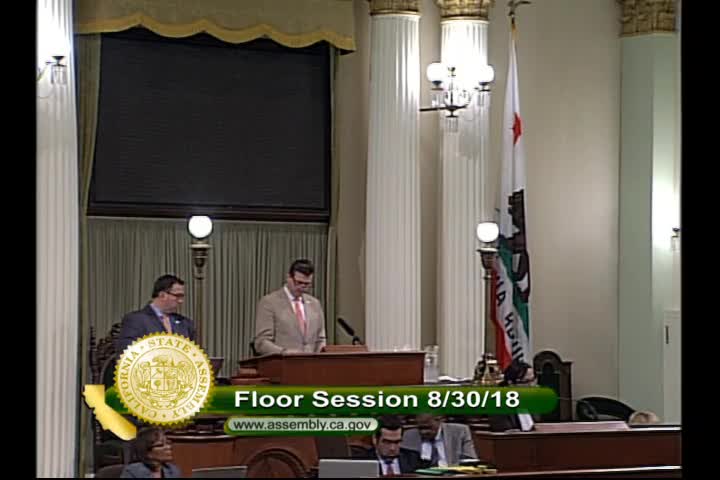 1MIN
Assembly Floor
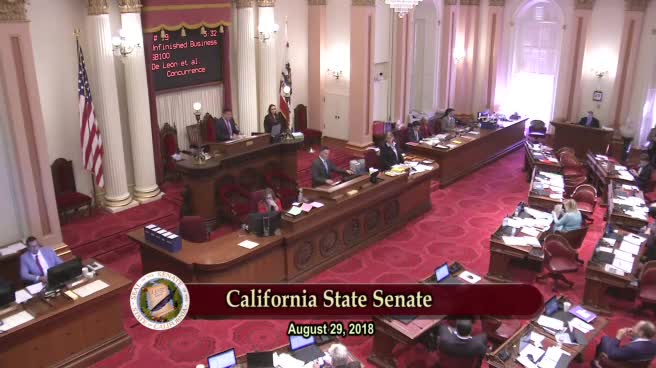 2MIN
Senate Floor
 1H
Senate Standing Committee on Appropriations
 8MIN
Senate Standing Committee on Business, Professions and Economic Development
 1MIN
Assembly Floor
 26MIN
Assembly Standing Committee on Privacy and Consumer Protection
Bill Author

Bill Co-Author(s):