AB 1909: In-home supportive services: written content translation.
- Session Year: 2017-2018
- House: Assembly
- Latest Version Date: 2018-08-22
Existing law requires a state agency that serves a substantial number of non-English-speaking people and provides English language materials explaining services to provide the same type of materials in other languages, as specified. Existing law requires the State Department of Social Services to translate a specified notice of action into all languages spoken by a substantial number of the public receiving in-home supportive services, as specified.
This bill would clarify that the department is required to provide translations of written content, as defined, in languages spoken by a substantial number of providers of in-home supportive services in California. The bill would permit the department to work with counties and the County Welfare Directors Association to repurpose existing, county-produced translations of written content.
Existing law requires a state agency that serves a substantial number of non-English-speaking people and provides English language materials explaining services to provide the same type of materials in other languages, as specified. Existing law requires the State Department of Social Services to translate a specified notice of action into all languages spoken by a substantial number of the public receiving in-home supportive services, as specified.
This bill would clarify that the department is required to provide translations of written content, as defined, in languages spoken by a substantial number of providers of in-home supportive services. services in California. The bill would permit the department to work with counties and the County Welfare Directors Association to repurpose existing, county-produced translations of written content.
Existing law requires a state agency that serves a substantial number of non-English-speaking people and provides English language materials explaining services to provide the same type of materials in other languages, as specified. Existing law requires the State Department of Social Services to translate a specified notice of action into all languages spoken by a substantial number of the public receiving in-home supportive services, as specified.
This bill would clarify that the department is required to provide translations of written content, as defined, in languages spoken by a substantial number of providers of in-home supportive services. The bill would permit the department to work with counties and the County Welfare Directors Association to repurpose existing, county-produced translations of written content.
(a)For all written content to be mailed to, or electronically viewed by, providers of in-home supportive services, the department shall provide translations of the content in all languages spoken by a substantial number of providers of in-home supportive services within the state, in accordance with Section 7295.2 of the Government Code and related regulations.
(b)To implement this section, the department may work with counties and the County Welfare Directors Association to repurpose existing, county-produced translations of written content.
(c)For purposes of this section, written content includes, but is not limited to, any informational notice, notice of action, timesheet, or form intended for providers of in-home supportive services that is required by this article, state regulations, or other state action.
(a)For all written content to be mailed to, or electronically viewed by, providers of in-home supportive services, the department shall provide translations of the content in all languages spoken by a substantial number of providers of in-home supportive services, services within the state, in accordance with Section 7295.2 of the Government Code and related regulations.
(b)To implement this section, the department may work with counties and the County Welfare Directors Association to repurpose existing, county-produced translations of written content.
(c)For purposes of this section, written content includes, but is not limited to, any informational notice, notice of action, timesheet, or form intended for providers of in-home supportive services that is required by this article, state regulations, or other state action.
(a)For all written content to be mailed to, or electronically viewed by, providers of in-home supportive services, the department shall provide translations of the content in all languages spoken by a substantial number of providers of in-home supportive services, in accordance with Section 7295.2 of the Government Code and related regulations.
(b)To implement this section, the department may work with counties and the County Welfare Directors Association to repurpose existing, county-produced translations of written content.
(c)For purposes of this section, written content includes includes, but is not limited to, any informational notice, notice of action, timesheet, or form intended for providers of in-home supportive services that is required by this article or article, state regulations. regulations, or other state action.
(a)For all written content to be mailed to, or electronically viewed by, providers of in-home supportive services, the department shall provide translations of the content in all languages spoken by a substantial number of providers of in-home supportive services, in accordance with Section 7295.2 of the Government Code and related regulations.
(b)To implement this section, the department may work with counties and the County Welfare Directors Association to repurpose existing, county-produced translations of written content.
(c)For purposes of this section, written content includes any informational notice, notice of action, or form required by this article or state regulations.
|
Date
|
Status
|
|---|---|
| Sep 30, 2018 | Vetoed by Governor. |
| Aug 24, 2018 | Enrolled and presented to the Governor at 4:30 p.m. |
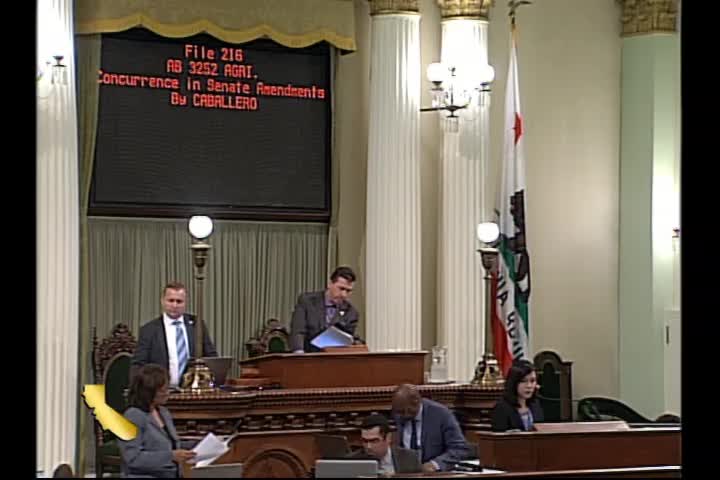
| Aug 20, 2018 | Senate amendments concurred in. To Engrossing and Enrolling. |
| Aug 16, 2018 | In Assembly. Concurrence in Senate amendments pending. May be considered on or after August 18 pursuant to Assembly Rule 77. |
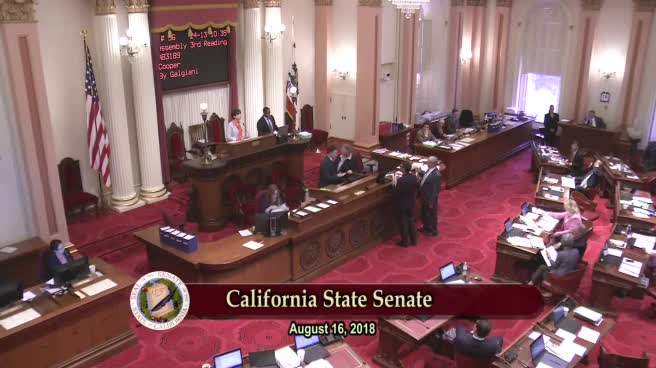
| Aug 16, 2018 | Read third time. Passed. Ordered to the Assembly. |
| Jun 26, 2018 | Read second time. Ordered to third reading. |
| Jun 25, 2018 | From committee: Be ordered to second reading pursuant to Senate Rule 28.8. |
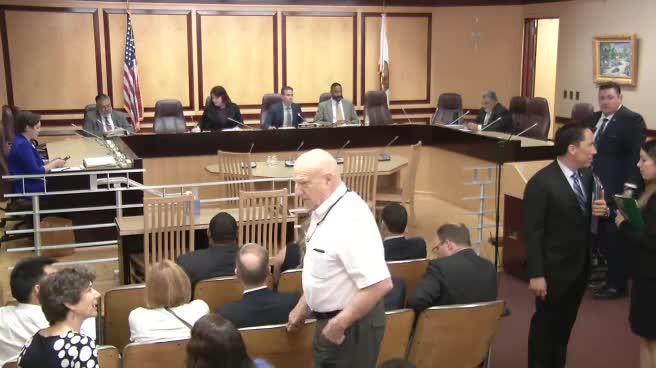
| Jun 13, 2018 | From committee: Do pass and re-refer to Com. on APPR. (Ayes 6. Noes 0.) (June 12). Re-referred to Com. on APPR. |
| Jun 6, 2018 | From committee chair, with author's amendments: Amend, and re-refer to committee. Read second time, amended, and re-referred to Com. on HUMAN S. |
| Apr 25, 2018 | Referred to Com. on HUMAN S. |
| Apr 12, 2018 | In Senate. Read first time. To Com. on RLS. for assignment. |
| Apr 12, 2018 | Read third time. Passed. Ordered to the Senate. |
| Apr 5, 2018 | Read second time. Ordered to Consent Calendar. |
| Apr 4, 2018 | From committee: Do pass. To Consent Calendar. (Ayes 15. Noes 0.) (April 4). |
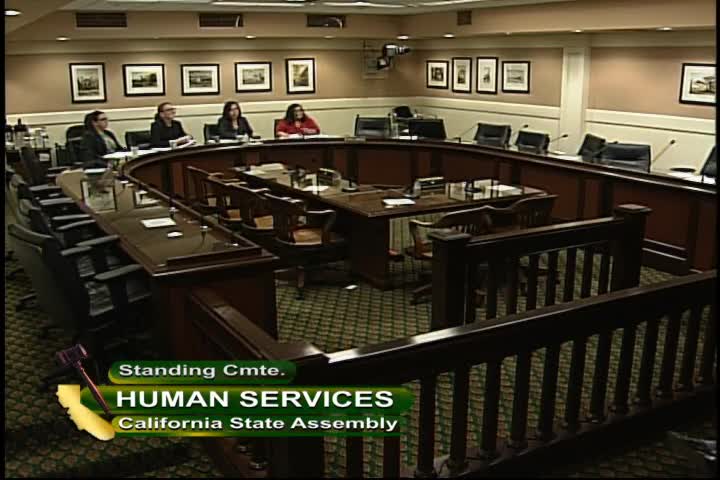
| Mar 7, 2018 | From committee: Do pass and re-refer to Com. on APPR. (Ayes 7. Noes 0.) (March 6). Re-referred to Com. on APPR. |
| Feb 28, 2018 | Re-referred to Com. on HUM. S. |
| Feb 27, 2018 | From committee chair, with author's amendments: Amend, and re-refer to Com. on HUM. S. Read second time and amended. |
| Feb 5, 2018 | Referred to Com. on HUM. S. |
| Jan 24, 2018 | From printer. May be heard in committee February 23. |
| Jan 23, 2018 | Read first time. To print. |
|
Date
|
Description
|
Location
|
Votes
|
|
|---|---|---|---|---|
| Aug 20, 2018 | AB 1909 NAZARIAN Concurrence in Senate Amendments | Assembly Floor |
Passed |
|
| Aug 16, 2018 | Assembly 3rd Reading AB1909 Nazarian By Nguyen | Senate Floor |
Passed |
|
| Jun 12, 2018 | Do pass, but first be re-referred to the Committee on [Appropriations] | Senate Standing Committee on Human Services |
Passed |
|
| Apr 12, 2018 | AB 1909 NAZARIAN Consent Calendar Second Day Regular Session | Assembly Floor |
Passed |
|
| Apr 4, 2018 | Do pass. To Consent Calendar. | Assembly Standing Committee on Appropriations |
Passed |
|
| Mar 6, 2018 | Do pass and be re-referred to the Committee on [Appropriations] | Assembly Standing Committee on Human Services |
Passed |
This list shows positions taken on this bill by organizations on the date displayed, which is linked to the original source.
Positions by individuals are not included.
GOVERNOR'S VETO
GV Bill Id:AB 1909
Author:(Nazarian)
As Enrolled Ver:August 24, 2018
2/3 vote
ASSEMBLY: | 68-0 | (April 12, 2018) | SENATE: | 39-0 | (August 16, 2018) |
ASSEMBLY: | 80-0 | (August 20, 2018) |
|
|
SUMMARY: Requires the Department of Social Services (DSS) to offer certain materials for in-home supportive services (IHSS) providers in state-level threshold languages.
Specifically, this bill:
- Defines "written content" to include, but not be limited to, any of the following: informational notices, notices of action, timesheets, or forms intended for IHSS providers that are required by state law, regulations, or action, as specified.
- Requires DSS to provide translations of all written content mailed or electronically delivered to IHSS providers in state-level threshold languages, as specified.
- Authorizes DSS, in order to implement the provisions of this bill, to work with counties and the County Welfare Directors Association (CWDA) to repurpose county-produced translations of written content that already exist.
The Senate amendments: Clarify that the threshold languages in which materials are to be provided pursuant to the provisions of this bill are those languages spoken by a substantial number of IHSS providers within California.
EXISTING LAW:
- Establishes the IHSS program to provide supportive services, including domestic, protective supervision, personal care, and paramedical services as specified, to individuals who are aged, blind, or living with disabilities, and who are unable to perform the services themselves or remain safely in their homes without receiving these services. (Welfare and Institutions Code Section (WIC) 12300 et seq.)
- Authorizes counties to choose to contract with a nonprofit consortium or establish a public authority for the provision of IHSS services. Requires nonprofit consortia and public authorities to, among other things, establish a registry to assist recipients in locating IHSS providers, and to investigate the background and qualifications of potential providers, as specified. (WIC 12301.6)
- Maintains an IHSS recipient's right to hire, fire, and supervise the work of any IHSS provider, regardless of the employer responsibilities of a public authority or nonprofit consortium, as specified. (WIC 12301.6 (c))
- Requires an IHSS provider to submit a signed payroll timesheet within two weeks after the end of each bimonthly payroll period and stipulates information related to the veracity of the information provided that must be included on the standardized provider timesheet, as specified. (WIC 12300.4, 12301.25)
- Requires all prospective IHSS providers, at the time of enrollment, to complete an orientation developed by DSS in consultation with counties, and stipulates items that must be included in the orientation, including, among other things, a description of the IHSS program and the requirements, rules, regulations, policies, and procedures related to being an IHSS provider. (WIC 12301.24)
- Requires any oral presentation and written materials provided at the orientation for prospective IHSS providers to be translated into all IHSS threshold languages in the county. (WIC 12301.24 (e))
- Establishes the Dymally-Alatorre Bilingual Services Act to provide for effective communication between all levels of government in California and the people of the state who are prevented from utilizing public services due to language barriers. (Government Code Section (GOV) 7290 et seq.)
- Defines "substantial number of non-English-speaking people" to mean members of a group who are unable to effectively communicate in English and who make up 5% or more of the people served by the jurisdiction or entity in question, as specified. Further, requires every state agency that serves a substantial number of non-English-speaking people to provide any materials it provides in English, and notice regarding those materials, in any non-English language spoken by the a substantial number of the public served by the agency. (GOV 7296.2, 7295.2)
FISCAL EFFECT: According to the Assembly Appropriations Committee on April 4, 2018, this bill would result in negligible costs to DSS.
COMMENTS:
In-Home Supportive Services: The IHSS program assists eligible low-income individuals in California who are at least 65 years old, living with disabilities, or blind by providing for services that enable them to remain in their own homes. The program pays care providers to assist with personal care services (such as bathing, toileting, and grooming), domestic and related services (meal preparation, housecleaning, and the like), paramedical services, and protective supervision. As of January, there were 570,838 Californians who received IHSS; 98.5% of these individuals received it as a Medicaid benefit.
The IHSS program is overseen by DSS, and administered at the county level. After applying, applicants are assessed by a county social worker for eligibility and need. If determined eligible, an individual is authorized for certain services and number of hours of care. IHSS recipients are responsible for selecting, hiring, firing, directing, and supervising their IHSS workers. These responsibilities also include some administrative duties, such as scheduling and signing timesheets; however, the state handles payroll. As of January, there were 485,411 IHSS providers in California; 69% of these providers were relatives and 53% of these providers lived in the same residence as the recipient. Providers must complete an enrollment process that includes providing fingerprint images and submitting to a criminal background check. Prospective IHSS providers are also required to participate in an on-site orientation developed by DSS and the counties prior to receiving payment for services.
Threshold languages and IHSS: Over 200 languages are spoken in California, and approximately 44% of Californians over the age of 4 live in households where a language other than English is sometimes or always spoken. The Dymally-Alatorre Bilingual Services Act, added by AB 86 (Alatorre, et al.) Chapter 1182, Statutes of 1973, states that it is the intention of the Legislature to "provide for effective communication between all levels of government in this state and the people of this state who are precluded from utilizing public services because of language barriers" (Government Code Section 7291). This Act requires state agencies that are directly engaged in providing information and/or services to a "substantial number" of non-English-speaking individuals to take a number of steps to ensure that information and services are provided in languages other than English. These steps include, among others, translating certain materials into any non-English language spoken by a substantial number of the public served by the agency. The Act defines a "substantial number of non-English-speaking people" to mean members of a group "who either do not speak English, or who are unable to effectively communicate in English because it is not their native language, and who comprise five percent or more of the people served by the statewide or any local office or facility of a state agency" (Government Code Section 7296.2).
The languages in which materials and information must be provided to meet the standards of the Dymally-Alatorre Bilingual Services Act or similar requirements are often referred to as "threshold languages." Different programs and localities may establish varying threshold languages. At the statewide level for IHSS, the three threshold languages aside from English are Spanish, Chinese, and Armenian. However, counties may establish other threshold languages.
Data collected from 27 counties by CWDA, one of the co-sponsors of this bill, indicate that a significant number of IHSS providers speak and write in languages other than English. For example, in Los Angeles County: 30,736 providers (18% of total providers in the county) communicate in Spanish; 9,114 (5%) in Chinese; 16,586 (10%) in Armenian; and 15,977 (9%) in other languages. The remaining 58% communicate in English. In Alameda County, 824 (3% of providers) communicate in Spanish, 2,312 (9%) do so in Chinese, and 9,468 communicate in other languages. CWDA estimates that approximately 95,000 IHSS providers read in Spanish, Chinese, or Armenian.
Current law already requires that certain notices be provided to IHSS recipients in threshold languages and DSS's Internet Web site features a number of materials – including various instructions and forms – in the four IHSS threshold languages. SB 878 (Senate Committee on Budget and Fiscal Review), Chapter 689, Statutes of 2014, adopted a number of new requirements for the mandated orientation for prospective IHSS providers including, among other things, that presentations and materials must be translated into all IHSS threshold languages in a county.
Need for this bill: IHSS providers comprise a large workforce, individually dispersed across hundreds of thousands of households in the state. Providing clear and consistent communication for this population of employees is already a significant task. Additionally, a number of factors – including varying length of bimonthly pay periods, complex rules for calculation of hours, and new overtime standards (the violation of which can eventually lead to suspension) – can contribute to confusing and complicated provider experiences when filling out timesheets. Navigating this system of information and requirements can already present difficulties for providers who don't face language barriers; for those who do read and speak languages other than English, those difficulties can be compounded.
According to the author, "[This bill] simply extends language translation services IHSS recipients receive to IHSS providers. Language barriers prevent approximately 40% of providers across the state from understanding and completing program instructions, timesheets, tax notices, forms, and other important materials. If a provider is unable to understand the already complicated IHSS rules, it may jeopardize their pay and, ultimately, their job. By ensuring that the same language translation rules for IHSS recipients also apply to providers, [this bill] will reduce duplicated workload, provide consistency across the state, and move IHSS toward equity for all providers."
CWDA, as co-sponsor of this bill, states that, "This bill requires the state to translate materials produced for In-Home Supportive Services (IHSS) providers into all threshold languages defined for the program. Currently, such a requirement exists only for materials produced for IHSS recipients. Whether to translate materials for providers is thus left to each county, with no statewide assistance. Counties have stepped in to fill the gap to the extent possible, but the lack of statewide translations for provider-related materials can cause confusion among both providers and recipients and lead to inefficiencies in the program. A recent example is with the state-level development of time sheets that contain sections for both groups. Only the portions for non-English-speaking recipients were translated, with the portions for providers left in English. [This bill] would address this issue, reduce confusion, and improve program administration by requiring translation of materials for providers who speak one of the identified threshold languages for IHSS. We estimate that 95,000 providers who read in Spanish, Chinese and Armenian would benefit from the legislation."
PRIOR LEGISLATION:
SB 878 (Senate Committee on Budget and Fiscal Review), Chapter 689, Statutes of 2014, required new components be included in the the mandated orientation for prospective IHSS providers and adopted new requirements for the orientation, including, among other things, that oral presentations and written materials be translated into all IHSS threshold languages in a county.
This bill would require the Department of Social Services to translate all written documents and materials for providers in the in-home supportive services (IHHS) program.
Materials in this program are translated by counties with the assistance of the department. I believe current arrangements are working reasonably well and should be continued.
Analysis Prepared by: Daphne Hunt / HUM. S. / (916) 319-2089 FN: 0005359
CONCURRENCE IN SENATE AMENDMENTS
CSA1 Bill Id:AB 1909
Author:(Nazarian)
As Amended Ver:June 6, 2018
Majority vote
ASSEMBLY: | 68-0 | (April 12, 2018) | SENATE: | 39-0 | (August 16, 2018) |
Original Committee Reference: HUM. S.
SUMMARY: Requires the Department of Social Services (DSS) to offer certain materials for in-home supportive services (IHSS) providers in state-level threshold languages.
Specifically, this bill:
- Defines "written content" to include, but not be limited to, any of the following: informational notices, notices of action, timesheets, or forms intended for IHSS providers that are required by state law, regulations, or action, as specified.
- Requires DSS to provide translations of all written content mailed or electronically delivered to IHSS providers in state-level threshold languages, as specified.
- Authorizes DSS, in order to implement the provisions of this bill, to work with counties and the County Welfare Directors Association (CWDA) to repurpose county-produced translations of written content that already exist.
The Senate amendments: Clarify that the threshold languages in which materials are to be provided pursuant to the provisions of this bill are those languages spoken by a substantial number of IHSS providers within California.
EXISTING LAW:
- Establishes the IHSS program to provide supportive services, including domestic, protective supervision, personal care, and paramedical services as specified, to individuals who are aged, blind, or living with disabilities, and who are unable to perform the services themselves or remain safely in their homes without receiving these services. (Welfare and Institutions Code Section (WIC) 12300 et seq.)
- Authorizes counties to choose to contract with a nonprofit consortium or establish a public authority for the provision of IHSS services. Requires nonprofit consortia and public authorities to, among other things, establish a registry to assist recipients in locating IHSS providers, and to investigate the background and qualifications of potential providers, as specified. (WIC 12301.6)
- Maintains an IHSS recipient's right to hire, fire, and supervise the work of any IHSS provider, regardless of the employer responsibilities of a public authority or nonprofit consortium, as specified. (WIC 12301.6 (c))
- Requires an IHSS provider to submit a signed payroll timesheet within two weeks after the end of each bimonthly payroll period and stipulates information related to the veracity of the information provided that must be included on the standardized provider timesheet, as specified. (WIC 12300.4, 12301.25)
- Requires all prospective IHSS providers, at the time of enrollment, to complete an orientation developed by DSS in consultation with counties, and stipulates items that must be included in the orientation, including, among other things, a description of the IHSS program and the requirements, rules, regulations, policies, and procedures related to being an IHSS provider. (WIC 12301.24)
- Requires any oral presentation and written materials provided at the orientation for prospective IHSS providers to be translated into all IHSS threshold languages in the county. (WIC 12301.24 (e))
- Establishes the Dymally-Alatorre Bilingual Services Act to provide for effective communication between all levels of government in California and the people of the state who are prevented from utilizing public services due to language barriers. (Government Code Section (GOV) 7290 et seq.)
- Defines "substantial number of non-English-speaking people" to mean members of a group who are unable to effectively communicate in English and who make up 5% or more of the people served by the jurisdiction or entity in question, as specified. Further, requires every state agency that serves a substantial number of non-English-speaking people to provide any materials it provides in English, and notice regarding those materials, in any non-English language spoken by the a substantial number of the public served by the agency. (GOV 7296.2, 7295.2)
FISCAL EFFECT: According to the Assembly Appropriations Committee on April 4, 2018, this bill would result in negligible costs to DSS.
COMMENTS:
In-Home Supportive Services: The IHSS program assists eligible low-income individuals in California who are at least 65 years old, living with disabilities, or blind by providing for services that enable them to remain in their own homes. The program pays care providers to assist with personal care services (such as bathing, toileting, and grooming), domestic and related services (meal preparation, housecleaning, and the like), paramedical services, and protective supervision. As of January, there were 570,838 Californians who received IHSS; 98.5% of these individuals received it as a Medicaid benefit.
The IHSS program is overseen by DSS, and administered at the county level. After applying, applicants are assessed by a county social worker for eligibility and need. If determined eligible, an individual is authorized for certain services and number of hours of care. IHSS recipients are responsible for selecting, hiring, firing, directing, and supervising their IHSS workers. These responsibilities also include some administrative duties, such as scheduling and signing timesheets; however, the state handles payroll. As of January, there were 485,411 IHSS providers in California; 69% of these providers were relatives and 53% of these providers lived in the same residence as the recipient. Providers must complete an enrollment process that includes providing fingerprint images and submitting to a criminal background check. Prospective IHSS providers are also required to participate in an on-site orientation developed by DSS and the counties prior to receiving payment for services.
Threshold languages and IHSS: Over 200 languages are spoken in California, and approximately 44% of Californians over the age of 4 live in households where a language other than English is sometimes or always spoken. The Dymally-Alatorre Bilingual Services Act, added by AB 86 (Alatorre, et al.) Chapter 1182, Statutes of 1973, states that it is the intention of the Legislature to "provide for effective communication between all levels of government in this state and the people of this state who are precluded from utilizing public services because of language barriers" (Government Code Section 7291). This Act requires state agencies that are directly engaged in providing information and/or services to a "substantial number" of non-English-speaking individuals to take a number of steps to ensure that information and services are provided in languages other than English. These steps include, among others, translating certain materials into any non-English language spoken by a substantial number of the public served by the agency. The Act defines a "substantial number of non-English-speaking people" to mean members of a group "who either do not speak English, or who are unable to effectively communicate in English because it is not their native language, and who comprise five percent or more of the people served by the statewide or any local office or facility of a state agency" (Government Code Section 7296.2).
The languages in which materials and information must be provided to meet the standards of the Dymally-Alatorre Bilingual Services Act or similar requirements are often referred to as "threshold languages." Different programs and localities may establish varying threshold languages. At the statewide level for IHSS, the three threshold languages aside from English are Spanish, Chinese, and Armenian. However, counties may establish other threshold languages.
Data collected from 27 counties by CWDA, one of the co-sponsors of this bill, indicate that a significant number of IHSS providers speak and write in languages other than English. For example, in Los Angeles County: 30,736 providers (18% of total providers in the county) communicate in Spanish; 9,114 (5%) in Chinese; 16,586 (10%) in Armenian; and 15,977 (9%) in other languages. The remaining 58% communicate in English. In Alameda County, 824 (3% of providers) communicate in Spanish, 2,312 (9%) do so in Chinese, and 9,468 communicate in other languages. CWDA estimates that approximately 95,000 IHSS providers read in Spanish, Chinese, or Armenian.
Current law already requires that certain notices be provided to IHSS recipients in threshold languages and DSS's Internet Web site features a number of materials – including various instructions and forms – in the four IHSS threshold languages. SB 878 (Senate Committee on Budget and Fiscal Review), Chapter 689, Statutes of 2014, adopted a number of new requirements for the mandated orientation for prospective IHSS providers including, among other things, that presentations and materials must be translated into all IHSS threshold languages in a county.
Need for this bill: IHSS providers comprise a large workforce, individually dispersed across hundreds of thousands of households in the state. Providing clear and consistent communication for this population of employees is already a significant task. Additionally, a number of factors – including varying length of bimonthly pay periods, complex rules for calculation of hours, and new overtime standards (the violation of which can eventually lead to suspension) – can contribute to confusing and complicated provider experiences when filling out timesheets. Navigating this system of information and requirements can already present difficulties for providers who don't face language barriers; for those who do read and speak languages other than English, those difficulties can be compounded.
According to the author, "[This bill] simply extends language translation services IHSS recipients receive to IHSS providers. Language barriers prevent approximately 40% of providers across the state from understanding and completing program instructions, timesheets, tax notices, forms, and other important materials. If a provider is unable to understand the already complicated IHSS rules, it may jeopardize their pay and, ultimately, their job. By ensuring that the same language translation rules for IHSS recipients also apply to providers, [this bill] will reduce duplicated workload, provide consistency across the state, and move IHSS toward equity for all providers."
CWDA, as co-sponsor of this bill, states that, "This bill requires the state to translate materials produced for In-Home Supportive Services (IHSS) providers into all threshold languages defined for the program. Currently, such a requirement exists only for materials produced for IHSS recipients. Whether to translate materials for providers is thus left to each county, with no statewide assistance. Counties have stepped in to fill the gap to the extent possible, but the lack of statewide translations for provider-related materials can cause confusion among both providers and recipients and lead to inefficiencies in the program. A recent example is with the state-level development of time sheets that contain sections for both groups. Only the portions for non-English-speaking recipients were translated, with the portions for providers left in English. [This bill] would address this issue, reduce confusion, and improve program administration by requiring translation of materials for providers who speak one of the identified threshold languages for IHSS. We estimate that 95,000 providers who read in Spanish, Chinese and Armenian would benefit from the legislation."
PRIOR LEGISLATION:
SB 878 (Senate Committee on Budget and Fiscal Review), Chapter 689, Statutes of 2014, required new components be included in the the mandated orientation for prospective IHSS providers and adopted new requirements for the orientation, including, among other things, that oral presentations and written materials be translated into all IHSS threshold languages in a county.
Analysis Prepared by: Daphne Hunt / HUM. S. / (916) 319-2089 FN: 0003642
Office of Senate Floor Analyses (916) 651-1520 Fax: (916) 327-4478 | AB |
THIRD READING
Bill No: AB 1909
:
SENATE HUMAN SERVICES COMMITTEE: 6-0, 6/12/18
AYES: Wiener, Glazer, Leyva, McGuire, Nguyen, Portantino
NO VOTE RECORDED: Berryhill
SENATE APPROPRIATIONS COMMITTEE: Senate Rule 28.8
ASSEMBLY FLOOR: 68-0, 4/12/18 (Consent) - See last page for vote
DIGEST:
This bill clarifies that the California Department of Social Services (CDSS) is required to provide translations of written content, as defined, in languages spoken by a substantial number of providers of in-home supportive services (IHSS) in California. This bill permits CDSS to work with counties and the County Welfare Directors Association to repurpose existing, county-produced translations of written content.
Existing law:
- Establishes the IHSS program to provide supportive services for aged, blind, or disabled persons who are unable to perform the tasks themselves and who cannot safely remain in their homes unless such services are provided. Those supportive services include, but are not limited to, domestic services, heavy cleaning, personal care services, and accompaniment during travel to health-related appointments or to alternative resource sites, yard hazard abatement, protective supervision, and paramedical services, as defined. (WIC 12300 et seq.)
- Permits counties to choose to contract with a nonprofit consortium or establish a public authority for the provision of IHSS services. Requires nonprofit consortia and public authorities to, among other things, establish a registry to assist recipients in locating IHSS providers, and to investigate the background and qualifications of potential providers, as specified. (WIC 12301.6)
- Provides that a nonprofit consortium or public authority is employer of record with specified employer responsibilities, but maintains an IHSS recipient’s right to hire, fire, and supervise the work of any IHSS provider. (WIC 12301.6) (c)
- Requires an IHSS provider to submit a signed payroll timesheet within two weeks after the end of each bimonthly payroll period, as specified. (WIC 12300.4 (g))
- Requires that a standardized IHSS provider timesheet contain a certification to be signed by the provider and recipient, verifying that the information provided in the timesheet is true and correct and a statement that the provider or recipient may be subject to civil penalties if the information provided is found not to be true and correct. (WIC 12301.25)
- Requires all prospective IHSS providers to complete a provider orientation at the time of enrollment, as developed by the department, in consultation with counties, which shall include, but is not limited to, a description of the IHSS program and the requirements, rules, regulations, policies, and procedures related to being an IHSS provider. (WIC 12301.24)
- Requires any oral presentation and written materials provided at the orientation for prospective IHSS providers to be translated into all IHSS threshold languages in the county. (WIC 12301.24 (e)(3))
- Requires CDSS to develop a letter that is understandable to an IHSS applicant or recipient, and that is translated into all languages spoken by a substantial number of the public served by the IHSS program, as specified, in which the IHSS applicant or recipient would be informed that they must obtain a certification from a specified licensed health care professional, declaring that the applicant or recipient is unable to perform some activities of daily living independently, and that without services to assist him or her, the applicant or recipient is at risk of placement in out-of-home care. (WIC 12309.1 (d))
- Establishes the Dymally-Alatorre Bilingual Services Act to provide for effective communication between all levels of government in California and the people of the state who are prevented from utilizing public services due to language barriers. (GOV 7290 et seq.)
- Requires that every state agency which serves a substantial number of non-English-speaking people and which provides materials in English explaining services to also provide the same type of materials in any non-English language spoken by a substantial number of the public served by the agency, as specified. (GOV 7295.2)
- Defines “substantial number of non-English-speaking people” to mean members of a group who either do not speak English, or who are unable to effectively communicate in English because it is not their native language, and who comprise five percent or more of the people served by the statewide or any local office or facility of a state agency. (GOV 7296.2)
This bill:
- Requires that for written content mailed to, or electronically viewed by, providers of IHSS, CDSS shall provide translations of the content in all languages spoken by a substantial number of providers of IHSS in California, as specified.
- Permits CDSS to work with counties and the County Welfare Directors Association (CWDA) to repurpose existing, county-produced translations of written content.
- Defines “written content” to include, but not be limited to, any informational notice, notice of action, timesheet, or form intended for IHSS providers that is required by this article, state regulations, or other state action.
Background
IHSS
The IHSS program, which is administered at the state-level by the CDSS and at the local level by counties, provides in-home services for low-income aged, blind and disabled individuals who are unable to perform certain tasks themselves and who cannot safely remain in their homes unless these services are provided.
The IHSS program provides domestic and related services (housework, meal preparation, laundry and shopping) and personal care services (toileting, bathing, and grooming). IHSS services also may include accompaniment to medical appointments, protective supervision for mentally-impaired recipients who may place themselves at risk of injury, and hazard or accident and paramedical services, when directed by a physician.
According to CDSS, approximately 466,500 Californians receive IHSS each month, with about 98 percent receiving it as a Medicaid benefit. The remaining two percent are state-only funded. As of January 2018, there were about 460,500 eligible IHSS providers in the state; approximately 69 percent of whom are relatives of the IHSS recipient, and 53 percent of whom are relatives who live in the same home as the recipient.
In order to receive payments for IHSS services, providers must complete an enrollment process, which includes submitting fingerprint images for a criminal background check and participating in a provider orientation.
Dymally-Alatorre Bilingual Services Act
More than 200 languages are spoken in California. According to the US Census Bureau, 44.6 percent of people living in California who are five years of age and older speak a language other an English at home and seven million Californians say they cannot speak English well.
The Dymally-Alatorre Bilingual Services Act was signed into law in 1973 to eliminate language barriers that preclude Californians from having equal access to public services because they do not speak or write English or because English is not their primary language. The Act states that it is the intent of the Legislature to “provide for effective communication between all levels of government in this state and the people of this state who are precluded from utilizing public services because of language barriers.”
The Act mandates that state and local agencies directly involved in the furnishing of information or the rendering of services to the public to take a number of steps to ensure that information and services are provided to individuals who do not speak English, as specified.
The Act mandates that every state and local agency that serves a “substantial number” of non-English speaking people, and provides materials in English explaining services, shall also provide the same type of materials in any non-English language spoken by a substantial number of the public served by the agency. The Act defines a “substantial number of non-English-speaking people” to mean members of a group “who either do not speak English, or who are unable to effectively communicate in English because it is not their native language, and who comprise five percent or more of the people served by the statewide or any local office or facility of a state agency”
Threshold Languages for IHSS
Aside from English, there are three statewide threshold languages for IHSS: Spanish, Chinese, and Armenian. However, a county may establish their own threshold languages to reflect the languages spoken by IHSS providers and recipient within that county.
Data collected from 27 counties by CWDA, one of the co-sponsors of this bill, indicate that a significant number of IHSS providers speak and write in languages other than English. For example, Los Angeles County reported it had 173,913 IHSS providers. Of those, 30,736 (18 percent) communicate in Spanish; 9,114 (5 percent) in Chinese; 16,586 (10 percent) in Armenian; and 15,977 (9 percent) communicate in other languages. The remaining 58 percent communicate in English. In Alameda County, out of 24,953 IHSS providers, 824 (3 percent) communicate in Spanish, 2,312 (9 percent) do so in Chinese, and 9,468 (38 percent) communicate in other languages. CWDA estimates that approximately 95,000 IHSS providers read in Spanish, Chinese, or Armenian.
Current law already requires that certain IHSS notices be provided in threshold languages. For example, any oral presentation and written materials provided at IHSS orientation for prospective providers must to be translated into all IHSS threshold languages in the county. CDSS’s Internet Web site features a number of materials in the four IHSS threshold languages. CDSS currently provides some program content in the four threshold languages to providers of IHSS. CDSS indicates they have and are continuing to work with counties and the CWDA to identify provider materials that require translation and to have any omitted documents translated into the threshold languages in accordance with existing procedures and standards. The department’s new online electronic timesheet for IHSS program is translated into threshold languages for recipients, not providers. According to the Web site, translation of the provider screens is in process.
Comments
According to the author, language barriers prevent approximately 40 percent of providers across the state from understanding and completing program instructions, timesheets, tax notices, forms and other important materials. “If a provider is unable to understand the already complicated IHSS rules, it may jeopardize their pay and, ultimately, their jobs,” per the author. AB 1909 extends language translation services IHSS recipients receive to IHSS providers. By ensuring that the same language translation rules of IHSS recipients also apply to providers, AB 1909 will “reduce duplicated workload, provide consistency across the state, and move IHSS toward equity for all providers,” according to the author.
Related/Prior Legislation
SB 878 (Senate Budget and Fiscal Review Committee, Chapter 689, Statutes of 2014) made several changes to the content of the IHSS prospective provider orientation, including requiring that any oral presentation and written materials presented at the orientation be translated into all IHSS threshold languages in the county.
FISCAL EFFECT: Appropriation: Fiscal Com.: Local:
UDW/AFSCME Local 3930 (source)
AFSCME
Alameda County Board of Supervisors
California Immigrant Policy Center
California Labor Federation
California State Association of Counties
City and County of San Francisco
City and County of San Francisco, the San Francisco Human Services Agency
Coalition of California Welfare Rights Organizations
Congress of California Seniors
County of San Diego
County of Santa Clara
County of Ventura
County Welfare Directors Association
Disability Rights California
Fresno County Board of Supervisors
Monterey County Board of Supervisors
Western Center on Law and Poverty
OPPOSITION: (Verified 6/27/18)
None received
ASSEMBLY FLOOR: 68-0, 4/12/18
AYES: Acosta, Aguiar-Curry, Travis Allen, Arambula, Baker, Berman, Bigelow, Bonta, Brough, Burke, Caballero, Calderon, Carrillo, Cervantes, Chau, Chávez, Chen, Chiu, Choi, Chu, Cooley, Cooper, Cunningham, Dahle, Daly, Eggman, Flora, Fong, Frazier, Friedman, Gallagher, Eduardo Garcia, Gipson, Gloria, Gonzalez Fletcher, Grayson, Harper, Holden, Irwin, Kalra, Kiley, Lackey, Levine, Maienschein, Mathis, Mayes, McCarty, Medina, Melendez, Muratsuchi, Nazarian, Obernolte, O'Donnell, Patterson, Quirk, Quirk-Silva, Reyes, Rodriguez, Rubio, Salas, Mark Stone, Thurmond, Ting, Voepel, Waldron, Weber, Wood, Rendon
NO VOTE RECORDED: Bloom, Cristina Garcia, Gray, Jones-Sawyer, Limón, Low, Mullin, Santiago, Steinorth
6/27/18 15:09:30
**** END ****
SENATE COMMITTEE ON HUMAN SERVICES
Senator Wiener, Chair
2017 - 2018 Regular
Bill No: AB 1909
Author: | Nazarian | ||
Version: | June 6, 2018 | Hearing Date: | June 12, 2018 |
Urgency: | No | Fiscal: | Yes |
Consultant: | Taryn Smith | ||
Subject: In-home supportive services: written content translation.
SUMMARY
This bill clarifies that the California Department of Social Services (CDSS) is required to provide translations of written content, as defined, in languages spoken by a substantial number of providers of in-home supportive services (IHSS) in California. The bill permits CDSS to work with counties and the County Welfare Directors Association to repurpose existing, county-produced translations of written content.
ABSTRACT
Existing law:
- Establishes the IHSS program to provide supportive services for aged, blind, or disabled persons who are unable to perform the tasks themselves and who cannot safely remain in their homes unless such services are provided. Those supportive services include, but are not limited to, domestic services, heavy cleaning, personal care services, and accompaniment during travel to health-related appointments or to alternative resource sites, yard hazard abatement, protective supervision, and paramedical services, as defined. (WIC 12300 et seq.)
- Permits counties to choose to contract with a nonprofit consortium or establish a public authority for the provision of IHSS services. Requires nonprofit consortia and public authorities to, among other things, establish a registry to assist recipients in locating IHSS providers, and to investigate the background and qualifications of potential providers, as specified. (WIC 12301.6)
- Provides that a nonprofit consortium or public authority is employer of record with specified employer responsibilities, but maintains an IHSS recipient’s right to hire, fire, and supervise the work of any IHSS provider. (WIC 12301.6) (c)
- Requires an IHSS provider to submit a signed payroll timesheet within two weeks after the end of each bimonthly payroll period, as specified. (WIC 12300.4 (g))
- Requires that standardized IHSS provider timesheet contain a certification to be signed by the provider and recipient, verifying that the information provided in the timesheet is true and correct and a statement that the provider or recipient may be subject to civil penalties if the information provided is found not to be true and correct. (WIC 12301.25)
- Requires all prospective IHSS providers to complete a provider orientation at the time of enrollment, as developed by the department, in consultation with counties, which shall include, but is not limited to, a description of the IHSS program and the requirements, rules, regulations, policies, and procedures related to being an IHSS provider. (WIC 12301.24)
- Requires any oral presentation and written materials provided at the orientation for prospective IHSS providers to be translated into all IHSS threshold languages in the county. (WIC 12301.24 (e)(3))
- Requires CDSS to develop a letter that is understandable to an IHSS applicant or recipient, and that is translated into all languages spoken by a substantial number of the public served by the IHSS program, as specified, in which the IHSS applicant or recipient would be informed that they must obtain a certification from a specified licensed health care professional, declaring that the applicant or recipient is unable to perform some activities of daily living independently, and that without services to assist him or her, the applicant or recipient is at risk of placement in out-of-home care. (WIC 12309.1 (d))
- Establishes the Dymally-Alatorre Bilingual Services Act to provide for effective communication between all levels of government in California and the people of the state who are prevented from utilizing public services due to language barriers. (GOV 7290 et seq.)
- Requires that every state agency which serves a substantial number of non-English-speaking people and which provides materials in English explaining services to also provide the same type of materials in any non-English language spoken by a substantial number of the public served by the agency, as specified. (GOV 7295.2)
- Defines “substantial number of non-English-speaking people” to mean members of a group who either do not speak English, or who are unable to effectively communicate in English because it is not their native language, and who comprise five percent or more of the people served by the statewide or any local office or facility of a state agency. (GOV 7296.2)
This bill:
- Requires that written content be mailed to, or electronically viewed by, providers of IHSS, CDSS shall provide translations of the content in all languages spoken by a substantial number of providers of in-home supportive services in California, as specified.
- Permits CDSS to work with counties and the County Welfare Directors Association to repurpose existing, county-produced translations of written content.
- Defines “written content” include but not be limited to, any informational notice, notice of action, timesheet, or form intended for IHSS providers that is required by this article, state regulations, or other state action.
FISCAL IMPACT
According to an analysis prepared by the Assembly Committee on Appropriations, this bill would generate negligible costs to CDSS.
BACKGROUND AND DISCUSSION
Purpose of the bill:
According to the author, language barriers prevent approximately 40 percent of providers across the state from understanding and completing program instructions, timesheets, tax notices, forms and other important materials. “If a provider is unable to understand the already complicated IHSS rules, it may jeopardize their pay and, ultimately, their jobs,” per the author. AB 1909 extends language translation services IHSS recipients receive to IHSS providers. By ensuring that the same language translation rules of IHSS recipients also apply to providers, AB 1909 will “reduce duplicated workload, provide consistency across the state, and move IHSS toward equity for all providers,” according to the author.
In-Home Supportive Services
The IHSS program, which is administered at the state-level by the CDSS and at the local level by counties, provides in-home services for low-income aged, blind and disabled individuals who are unable to perform certain tasks themselves and who cannot safely remain in their homes unless these services are provided.
The IHSS program provides domestic and related services (housework, meal preparation, laundry and shopping) and personal care services (toileting, bathing, and grooming). IHSS services also may include accompaniment to medical appointments, protective supervision for mentally-impaired recipients who may place themselves at risk of injury, and hazard or accident and paramedical services, when directed by a physician.
According to CDSS, approximately 466,500 Californians receive IHSS each month, with about 98 percent receiving it as a Medicaid benefit. The remaining two percent are state-only funded. As of January 2018, there were about 460,500 eligible IHSS providers in the state; approximately 69 percent of whom are relatives of the IHSS recipient, and 53 percent of whom are relatives who live in the same home as the recipient.
In order to receive payments for IHSS services, providers must complete an enrollment process, which includes submitting fingerprint images for a criminal background check and participating in a provider orientation.
Dymally-Alatorre Bilingual Services Act
More than 200 languages are spoken in California. According to the US Census Bureau, 44.6 percent of people living in California who are five years of age and older speak a language other an English at home and 7 million Californians say they cannot speak English well.
The Dymally–Alatorre Bilingual Services Act was signed into law in 1973 to eliminate language barriers that preclude Californians from having equal access to public services because they do not speak or write English or because English is not their primary language. The Act states that it is the intent of the Legislature to “provide for effective communication between all levels of government in this state and the people of this state who are precluded from utilizing public services because of language barriers.”
The Act mandates that state and local agencies directly involved in the furnishing of information or the rendering of services to the public to take a number of steps to ensure that information and services are provided to individuals who do not speak English, as specified.
The Act mandates that every state and local agency that serves a “substantial number” of non-English speaking people, and provides materials in English explaining services, shall also provide the same type of materials in any non-English language spoken by a substantial number of the public served by the agency. The Act defines a “substantial number of non-English-speaking people” to mean members of a group “who either do not speak English, or who are unable to effectively communicate in English because it is not their native language, and who comprise five percent or more of the people served by the statewide or any local office or facility of a state agency”
Threshold Languages for IHSS
Aside from English, there are three statewide threshold languages for IHSS: Spanish, Chinese, and Armenian. However, a county may establish their own threshold languages to reflect the languages spoken by IHSS providers and recipient within that county.
Data collected from 27 counties by CWDA, one of the co-sponsors of this bill, indicate that a significant number of IHSS providers speak and write in languages other than English. For example, Los Angeles County reported it had 173,913 IHSS providers. Of those, 30,736 (18 percent) communicate in Spanish; 9,114 (5 percent) in Chinese; 16,586 (10 percent) in Armenian; and 15,977 (9 percent) communicate in other languages. The remaining 58 percent communicate in English. In Alameda County, out of 24,953 IHSS providers, 824 (3 percent) communicate in Spanish, 2,312 (9 percent) do so in Chinese, and 9,468 (38 percent) communicate in other languages. CWDA estimates that approximately 95,000 IHSS providers read in Spanish, Chinese, or Armenian.
Current law already requires that certain IHSS notices be provided in threshold languages. For example, any oral presentation and written materials provided at IHSS orientation for prospective providers must to be translated into all IHSS threshold languages in the county. CDSS’s internet website features a number of materials in the four IHSS threshold languages. CDSS currently provides some program content in the four threshold languages to providers of IHSS. CDSS indicates they have and are continuing to work with counties and the CWDA to identify provider materials that require translation and to have any omitted documents translated into the threshold languages in accordance with existing procedures and standards. The department’s new online electronic timesheet for IHSS program is translated into threshold languages for recipients, not providers. According to the website, translation of the provider screens is in process.
Related legislation:
SB 878 (Senate Committee on Budget and Fiscal Review), Chapter 689, Statutes of 2014, made several changes to the content of the IHSS prospective provider orientation, including requiring that any oral presentation and written materials presented at the orientation be translated into all IHSS threshold languages in the county.
PRIOR VOTES
Assembly Floor: | 68 - 0 |
Assembly Appropriations Committee: | 15 - 0 |
Assembly Human Services Committee: | 7 - 0 |
POSITIONS
Support:
UDW/AFSCME Local 3930 (Co-Sponsors)
AFSCME
Alameda County Board of Supervisors
California Immigrant Policy Center
California Labor Federation
City and County of San Francisco
City and County of San Francisco, the San Francisco Human Services Agency
Congress of California Seniors
County of Ventura
County Welfare Directors Association
Disability Rights California
Fresno County Board of Supervisors
The California State Association of Counties
The Coalition of California Welfare Rights Organizations
The County of San Diego
The County of Santa Clara
The Monterey County Board of Supervisors
The Western Center on Law and Poverty
Oppose:
None received
-- END --
Date of Hearing: April 4, 2018
ASSEMBLY COMMITTEE ON APPROPRIATIONS
Lorena Gonzalez Fletcher, Chair
ABPCA Bill Id:AB 1909
Author:(Nazarian) – As Amended Ver:February 27, 2018
Policy Committee: | Human Services | Vote: | 7 - 0 |
|
| ||
|
|
Urgency: No State Mandated Local Program: No Reimbursable: No
SUMMARY:
This bill requires the Department of Social Services (DSS) to provide translations in DSS’s four threshold languages (English, Armenian, Chinese, and Spanish) of all written content that is mailed to, or electronically viewed by, in-home supportive services (IHSS) providers.
FISCAL EFFECT:
Negligible costs to DSS.
Staff notes that DSS currently provides most program content in the four threshold languages to both recipients and providers of IHSS. DSS indicates they have and are continuing to work with counties and the County Welfare Directors Association (CWDA) to identify remaining provider materials requiring translation and to have any omitted documents translated into the threshold languages in accordance with existing procedures and standards. DSS indicates that any remaining translations could be done on an expedited basis, if deemed necessary, without additional legislation.
COMMENTS:
- Purpose. This bill seeks to ensure materials provided to IHSS providers are translated into DSS’s four threshold languages, thereby ensuring ease of access and use of the IHSS program by both providers and recipients.
According to the author, the bill:
Extends language translation services IHSS recipients receive to IHSS providers. Language barriers prevent approximately 40% of providers across the state from understanding and completing program instructions, timesheets, tax notices, forms, and other important materials. If a provider is unable to understand the already complicated IHSS rules, it may jeopardize their pay and, ultimately, their job. By ensuring that the same language translation rules for IHSS recipients also apply to providers, [this bill] will reduce duplicated workload, provide consistency across the state, and move IHSS toward equity for all providers.
- Background. Over 200 languages are spoken in California. The Dymally-Alatorre Bilingual Services Act, added by Chapter 1182, Statutes of 1973, requires state agencies that are directly engaged in providing information or services to a “substantial number” of non-English-speaking individuals (defined as 5% or more of the people served statewide) to take steps to ensure that information and services are provided in languages other than English. These steps include, among others, translating certain materials into any non-English language spoken by a substantial number of the public served by the agency, often referred to as a “threshold language.”
Different programs and localities may establish varying threshold languages. At the statewide level for IHSS, the three threshold languages aside from English are Spanish, Chinese, and Armenian. Counties may establish additional threshold languages. Among IHSS providers in Los Angeles County, for example, 58% communicate in English, 18% in Spanish, 10% in Armenian, 5% in Chinese, and 9% in other languages.
Current law already requires that certain IHSS notices be provided in threshold languages, and DSS’s internet website features a number of materials – including various instructions and forms – in the four IHSS threshold languages.
In addition, SB 878 (Senate Committee on Budget and Fiscal Review), Chapter 689, Statutes of 2014, required new components be included in the mandated orientation for prospective IHSS providers and adopted new requirements for the orientation, including, among other things, that oral presentations and written materials be translated into all IHSS threshold languages in a county.
Analysis Prepared by: Jennifer Swenson / APPR. / (916) 319-2081
Date of Hearing: March 6, 2018
ASSEMBLY COMMITTEE ON HUMAN SERVICES
Blanca Rubio, Chair
ABPCA Bill Id:AB 1909 (
Author:Nazarian) – As Amended Ver:February 27, 2018
SUBJECT: In-home supportive services: written content translation
SUMMARY: Requires the Department of Social Services (DSS) to offer certain materials for in-home supportive services (IHSS) providers in threshold languages.
Specifically, this bill:
- Defines “written content” to include, but not be limited to, any of the following: informational notices, notices of action, timesheets, or forms intended for IHSS providers that are required by state law, regulations, or action, as specified.
- Requires DSS to provide translations of all written content mailed or electronically delivered to IHSS providers in threshold languages, as specified.
- Authorizes DSS, in order to implement the provisions of this bill, to work with counties and the County Welfare Directors Association (CWDA) to repurpose county-produced translations of written content that already exist.
EXISTING LAW:
- Establishes the IHSS program to provide supportive services, including domestic, protective supervision, personal care, and paramedical services as specified, to individuals who are aged, blind, or living with disabilities, and who are unable to perform the services themselves or remain safely in their homes without receiving these services. (WIC 12300 et seq.)
- Authorizes counties to choose to contract with a nonprofit consortium or establish a public authority for the provision of IHSS services. Requires nonprofit consortia and public authorities to, among other things, establish a registry to assist recipients in locating IHSS providers, and to investigate the background and qualifications of potential providers, as specified. (WIC 12301.6)
- Maintains an IHSS recipient’s right to hire, fire, and supervise the work of any IHSS provider, regardless of the employer responsibilities of a public authority or nonprofit consortium, as specified. (WIC 12301.6 (c))
- Requires an IHSS provider to submit a signed payroll timesheet within two weeks after the end of each bimonthly payroll period and stipulates information related to the veracity of the information provided that must be included on the standardized provider timesheet, as specified. (WIC 12300.4, 12301.25)
- Requires all prospective IHSS providers, at the time of enrollment, to complete an orientation developed by DSS in consultation with counties, and stipulates items that must be included in the orientation, including, among other things, a description of the IHSS program and the requirements, rules, regulations, policies, and procedures related to being an IHSS provider. (WIC 12301.24)
- Requires any oral presentation and written materials provided at the orientation for prospective IHSS providers to be translated into all IHSS threshold languages in the county. (WIC 12301.24 (e))
- Establishes the Dymally-Alatorre Bilingual Services Act to provide for effective communication between all levels of government in California and the people of the state who are prevented from utilizing public services due to language barriers. (GOV 7290 et seq.)
- Defines “substantial number of non-English-speaking people” to mean members of a group who are unable to effectively communicate in English and who make up 5% or more of the people served by the jurisdiction or entity in question, as specified. Further, requires every state agency that serves a substantial number of non-English-speaking people to provide any materials it provides in English, and notice regarding those materials, in any non-English language spoken by the a substantial number of the public served by the agency. (GOV 7296.2, 7295.2)
FISCAL EFFECT: Unknown.
COMMENTS:
In-Home Supportive Services: The IHSS program assists eligible low-income individuals in California who are at least 65 years old, living with disabilities, or blind by providing for services that enable them to remain in their own homes. The program pays care providers to assist with personal care services (such as bathing, toileting, and grooming), domestic and related services (meal preparation, housecleaning, and the like), paramedical services, and protective supervision. As of January, there were 570,838 Californians who received IHSS; 98.5% of these individuals received it as a Medicaid benefit.
The IHSS program is overseen by DSS, and administered at the county level. After applying, applicants are assessed by a county social worker for eligibility and need. If determined eligible, an individual is authorized for certain services and number of hours of care. IHSS recipients are responsible for selecting, hiring, firing, directing, and supervising their IHSS workers. These responsibilities also include some administrative duties, such as scheduling and signing timesheets; however, the state handles payroll. As of January, there were 485,411 IHSS providers in California; 69% of these providers were relatives and 53% of these providers lived in the same residence as the recipient. Providers must complete an enrollment process that includes providing fingerprint images and submitting to a criminal background check. Prospective IHSS providers are also required to participate in an on-site orientation developed by DSS and the counties prior to receiving payment for services.
Threshold languages and IHSS: Over 200 languages are spoken in California, and approximately 44% of Californians over the age of 4 live in households where a language other than English is sometimes or always spoken. The Dymally-Alatorre Bilingual Services Act, added by Chapter 1182, Statutes of 1973, states that it is the intention of the Legislature to “provide for effective communication between all levels of government in this state and the people of this state who are precluded from utilizing public services because of language barriers” (Government Code Section 7291). This Act requires state agencies that are directly engaged in providing information and/or services to a “substantial number” of non-English-speaking individuals to take a number of steps to ensure that information and services are provided in languages other than English. These steps include, among others, translating certain materials into any non-English language spoken by a substantial number of the public served by the agency. The Act defines a “substantial number of non-English-speaking people” to mean members of a group “who either do not speak English, or who are unable to effectively communicate in English because it is not their native language, and who comprise five percent or more of the people served by the statewide or any local office or facility of a state agency” (Government Code Section 7296.2).
The languages in which materials and information must be provided to meet the standards of the Dymally-Alatorre Bilingual Services Act or similar requirements are often referred to as “threshold languages.” Different programs and localities may establish varying threshold languages. At the statewide level for IHSS, the three threshold languages aside from English are Spanish, Chinese, and Armenian. However, counties may establish other threshold languages.
Data collected from 27 counties by CWDA, one of the co-sponsors of this bill, indicate that a significant number of IHSS providers speak and write in languages other than English. For example, in Los Angeles County: 30,736 providers (18% of total providers in the county) communicate in Spanish; 9,114 (5%) in Chinese; 16,586 (10%) in Armenian; and 15,977 (9%) in other languages. The remaining 58% communicate in English. In Alameda County, 824 (3% of providers) communicate in Spanish, 2,312 (9%) do so in Chinese, and 9,468 communicate in other languages. CWDA estimates that approximately 95,000 IHSS providers read in Spanish, Chinese, or Armenian.
Current law already requires that certain notices be provided to IHSS recipients in threshold languages and DSS’s Internet Web site features a number of materials – including various instructions and forms – in the four IHSS threshold languages. SB 878 (Senate Committee on Budget and Fiscal Review), Chapter 689, Statutes of 2014, adopted a number of new requirements for the mandated orientation for prospective IHSS providers including, among other things, that presentations and materials must be translated into all IHSS threshold languages in a county.
Need for this bill: IHSS providers comprise a large workforce, individually dispersed across hundreds of thousands of households in the state. Providing clear and consistent communication for this population of employees is already a significant task. Additionally, a number of factors – including varying length of bimonthly pay periods, complex rules for calculation of hours, and new overtime standards (the violation of which can eventually lead to suspension) – can contribute to confusing and complicated provider experiences when filling out timesheets. Navigating this system of information and requirements can already present difficulties for providers who don’t face language barriers; for those who do read and speak languages other than English, those difficulties can be compounded.
According to the author, “[This bill] simply extends language translation services IHSS recipients receive to IHSS providers. Language barriers prevent approximately 40% of providers across the state from understanding and completing program instructions, timesheets, tax notices, forms, and other important materials. If a provider is unable to understand the already complicated IHSS rules, it may jeopardize their pay and, ultimately, their job. By ensuring that the same language translation rules for IHSS recipients also apply to providers, [this bill] will reduce duplicated workload, provide consistency across the state, and move IHSS toward equity for all providers.”
CWDA, as co-sponsor of this bill, states that, “This bill requires the state to translate materials produced for In-Home Supportive Services (IHSS) providers into all threshold languages defined for the program. Currently, such a requirement exists only for materials produced for IHSS recipients. Whether to translate materials for providers is thus left to each county, with no statewide assistance. Counties have stepped in to fill the gap to the extent possible, but the lack of statewide translations for provider-related materials can cause confusion among both providers and recipients and lead to inefficiencies in the program. A recent example is with the state-level development of time sheets that contain sections for both groups. Only the portions for non-English-speaking recipients were translated, with the portions for providers left in English. [This bill] would address this issue, reduce confusion, and improve program administration by requiring translation of materials for providers who speak one of the identified threshold languages for IHSS. We estimate that 95,000 providers who read in Spanish, Chinese and Armenian would benefit from the legislation.”
PRIOR LEGISLATION:
SB 878 (Senate Committee on Budget and Fiscal Review), Chapter 689, Statutes of 2014, required new components be included in the the mandated orientation for prospective IHSS providers and adopted new requirements for the orientation, including, among other things, that oral presentations and written materials be translated into all IHSS threshold languages in a county.
REGISTERED SUPPORT / OPPOSITION:
Support
American Federation of State, County and Municipal Employees (AFSCME)
California Association of Public Authorities for IHSS (co-sponsor)
California Immigrant Policy Center
Coalition of California Welfare Rights Organizations
Congress of California Seniors
Contra Costa County Board of Supervisors
County of Santa Clara
County Welfare Directors Association of California (co-sponsor)
Disability Rights California
Sonoma County Human Services Department
The County of Butte
UDW/AFSCME Local 3930 (co-sponsor)
Ventura County Board of Supervisors
Opposition
None on file.
Analysis Prepared by: Daphne Hunt / HUM. S. / (916) 319-2089
Discussed in Hearing
 46SEC
Assembly Floor
 3MIN
Senate Floor
 4MIN
Senate Standing Committee on Human Services
 19MIN
Assembly Standing Committee on Human Services
Bill Author

Bill Co-Author(s):