AB 1912: Public employees’ retirement: joint powers agreements: liability.
- Session Year: 2017-2018
- House: Assembly
- Latest Version Date: 2018-09-29
(1)Existing law establishes various public agency retirement systems, including, among others, the Public Employees Retirement System, the State Teachers Retirement System, the Judges Retirement System II, and various county retirement systems pursuant to the County Employees Retirement Law of 1937. These systems provide defined pension benefits to public employees based on age, service credit, and amount of final compensation. Existing law authorizes a contracting agency, as defined, to terminate a contract under the Public Employees Retirement System pursuant to specified procedures and authorizes the Board of Administration of the Public Employees Retirement System to terminate a contract with a contracting agency under specified circumstances, including if a contracting agency fails to pay any installment of contributions into the Public Employees Retirement Fund.
The Joint Exercise of Powers Act generally authorizes 2 or more public agencies, by agreement, to jointly exercise any common power. Under the act, if an agency is not one or more of the parties to the agreement but is a public entity, commission, or board constituted pursuant to the agreement, the debts, liabilities, and obligations of the agency are the debts, liabilities, and obligations of the parties to the agreement, unless the agreement specifies otherwise.
This bill would specify that the parties to the joint powers agreement may not specify otherwise with respect to retirement liabilities of the agency if the agency contracts with a public retirement system, and would eliminate an authorization for a party to a joint powers agreement to separately contract or assume responsibilities for specific debts, liabilities, or obligations of the agency.
Existing law authorizes a contracting agency, as defined, to terminate a contract under the Public Employees Retirement System pursuant to specified procedures and authorizes the Board of Administration of the Public Employees Retirement System to terminate a contract with a contracting agency under specified circumstances, including if a contracting agency fails to pay an installment of contributions into the Public Employees Retirement Fund.
This bill would require member agencies of an agency established pursuant to a joint powers agreement that participates in, or contracts with, a public retirement system, prior to filing a notice of termination or upon notice of potential termination by the Board of Administration of the Public Employees Retirement System, to mutually agree as to the apportionment of the agencys retirement obligations among themselves, provided that the agreement equals 100% of the retirement liability of the agency. If the member agencies are unable to mutually agree to the apportionment, the bill would require the board to apportion the retirement liability of the agency to each member agency, as specified, and would establish procedures allowing a member agency to challenge the boards determination through the arbitration process. The bill would also provide that if a judgment is rendered against an agency or a party to the agreement for a breach of its obligations to the retirement system, the time within which a claim for injury may be presented or an action commenced against the other party that is subject to the liability determined by the judgment begins to run when the judgment is rendered. The bill would specify that those provisions apply both retroactively to a member agency, or current and former member agency, that has an agreement with the board on or before January 1, 2019, and to new agreements with the board on or after that date.
(2)The Public Employees Retirement Law (PERL) creates the Public Employees Retirement System (PERS), which provides a defined benefit to members of the system, based on final compensation, credited service, and age at retirement, subject to certain variations. PERL vests management and control of PERS in its Board of Administration.
Existing law requires the PERS board to enter into a specified agreement with the governing body of a terminating agency, upon request of that agency, to ensure that final compensation is calculated in the same manner as benefits of nonterminating agencies, and that related necessary adjustments in the employers contribution rate are made and benefits adequately funded, including a lump-sum payment at termination, if agreed to by the terminating agency and the board. Existing law requires a terminating agency to notify the PERS board of its intention to enter into this agreement within a specified period of time. Existing law authorizes the PERS board to choose not to enter into an agreement to terminate if the board determines that it is not in the best interests of PERS. Existing law requires all plan assets and liabilities of a terminating agency to be deposited in a single pooled account, the terminated agency pool subaccount within the Public Employees Retirement Fund, a continuously appropriated fund.
This bill would also require the PERS board to enter into the above-described agreement upon request of a member agency of a terminating agency formed under the Joint Exercise of Powers Act and would provide that the member agencies of the terminating agency are liable to the system for inadequate funding of the benefits pursuant to the agreement. To the extent that the bill would increase any lump-sum payments made by a terminating agency and deposited into a subaccount within the Public Employees Retirement Fund, the bill would make an appropriation.
(3)Existing law makes a terminated agency liable to the system for any deficit in funding for earned benefits, interest, and for reasonable and necessary costs of collection, including attorneys fees. Existing law provides that the board has a lien on the assets of a terminated contracting agency, as specified, and that assets shall also be available to pay actual costs, including attorneys fees necessarily expended for collection on the lien.
This bill would extend that liability and lien to all of the parties of a terminating agency that was formed under the Joint Exercise of Powers Act. To the extent that these changes would increase deposits in the Public Employees Retirement Fund, the bill would make an appropriation.
(4)Existing law authorizes the board of PERS to elect not to impose a reduction, or to impose a lesser reduction, on a terminated plan if the board has made all reasonable efforts to collect the amount necessary to fully fund the liabilities of the plan and the board finds that not reducing the benefits, or imposing a lesser reduction, will not impact the actuarial soundness of the terminated agency pool.
This bill would eliminate that provision. The bill would require the board, prior to exercising its authority to reduce benefits and to the extent consistent with its fiduciary duties, to consider and exhaust all options and necessary actions, including evaluating whether to bring a civil action against any member agencies to a terminated agency formed by an agreement under the Joint Exercise of Powers Act to compel payment of the terminated public agencys pension obligations. The bill would also specify that the board is entitled to reasonable attorneys fees in addition to other costs. The bill would also set forth related legislative findings.
(1)Existing law establishes various public agency retirement systems, including, among others, the Public Employees Retirement System, the State Teachers Retirement System, the Judges Retirement System II, and various county retirement systems pursuant to the County Employees Retirement Law of 1937. These systems provide defined pension benefits to public employees based on age, service credit, and amount of final compensation. Existing law authorizes a contracting agency, as defined, to terminate a contract under the Public Employees Retirement System pursuant to specified procedures and authorizes the Board of Administration of the Public Employees Retirement System to terminate a contract with a contracting agency under specified circumstances, including if a contracting agency fails to pay any installment of contributions into the Public Employees Retirement Fund.
The Joint Exercise of Powers Act generally authorizes 2 or more public agencies, by agreement, to jointly exercise any common power. Under the act, if an agency is not one or more of the parties to the agreement but is a public entity, commission, or board constituted pursuant to the agreement, the debts, liabilities, and obligations of the agency are the debts, liabilities, and obligations of the parties to the agreement, unless the agreement specifies otherwise. The act also authorizes a party to a joint powers agreement to separately contract for, or assume responsibilities for, specific debts, liabilities, or obligations of the agency.
This bill would eliminate that authorization, and would specify that if an agency established by a joint powers agreement participates in, or contracts with, a public retirement system, member agencies, both current and former to the agreement, would be required, prior to filing a notice of termination or a decision to dissolve or cease the operations of the agency, specify that the parties to the joint powers agreement may not specify otherwise with respect to retirement liabilities of the agency if the agency contracts with a public retirement system, and would eliminate an authorization for a party to a joint powers agreement to separately contract or assume responsibilities for specific debts, liabilities, or obligations of the agency.
Existing law authorizes a contracting agency, as defined, to terminate a contract under the Public Employees Retirement System pursuant to specified procedures and authorizes the Board of Administration of the Public Employees Retirement System to terminate a contract with a contracting agency under specified circumstances, including if a contracting agency fails to pay an installment of contributions into the Public Employees Retirement Fund.
This bill would require member agencies of an agency established pursuant to a joint powers agreement that participates in, or contracts with, a public retirement system, prior to filing a notice of termination or upon notice of potential termination by the Board of Administration of the Public Employees Retirement System, to mutually agree as to the apportionment of the agencys retirement obligations among themselves, provided that the agreement equals 100% of the retirement liability of the agency. If the member agencies are unable to mutually agree to the apportionment, the bill would require the board to apportion the retirement liability of the agency to each member agency, as specified, and would establish procedures allowing a member agency to challenge the boards determination through the arbitration process. The bill would also provide that if a judgment is rendered against an agency or a party to the agreement for a breach of its obligations to the retirement system, the time within which a claim for injury may be presented or an action commenced against the other party that is subject to the liability determined by the judgment begins to run when the judgment is rendered. The bill would specify that those provisions apply both retroactively to a member agency, or current and former member agency, that has an agreement with the board on or before January 1, 2019, and to new agreements with the board on or after that date.
(2)The Public Employees Retirement Law (PERL) creates the Public Employees Retirement System (PERS), which provides a defined benefit to members of the system, based on final compensation, credited service, and age at retirement, subject to certain variations. PERL vests management and control of PERS in its Board of Administration.
Existing law authorizes the governing board of a contracting agency to terminate its membership with PERS, subject to specified criteria. Existing law requires the PERS board to enter into a specified agreement with the governing body of a terminating agency, upon request of that agency, to ensure that final compensation is calculated in the same manner as benefits of nonterminating agencies, and that related necessary adjustments in the employers contribution rate are made and benefits adequately funded, including a lump-sum payment at termination, if agreed to by the terminating agency and the board. Existing law requires a terminating agency to notify the PERS board of its intention to enter into this agreement within a specified period of time. Existing law authorizes the PERS board to choose not to enter into an agreement to terminate if the board determines that it is not in the best interests of PERS. Existing law requires all plan assets and liabilities of a terminating agency to be deposited in a single pooled account, the terminated agency pool subaccount within the Public Employees Retirement Fund, a continuously appropriated fund.
This bill would also require the PERS board to enter into the above-described agreement upon request of a member agency of a terminating agency formed under the Joint Exercise of Powers Act and would provide that the member agencies of the terminating agency are liable to the system for inadequate funding of the benefits pursuant to the agreement. To the extent that the bill would increase any lump-sum payments made by a terminating agency and deposited into a subaccount within the Public Employees Retirement Fund, the bill would make an appropriation.
(3)Existing law makes a terminated agency liable to the system for any deficit in funding for earned benefits, interest, and for reasonable and necessary costs of collection, including attorneys fees. Existing law provides that the board has a lien on the assets of a terminated contracting agency, as specified, and that assets shall also be available to pay actual costs, including attorneys fees necessarily expended for collection on the lien.
This bill would extend that liability and lien to all of the parties of a terminating agency that was formed under the Joint Exercise of Powers Act. To the extent that these changes would increase deposits in the Public Employees Retirement Fund, the bill would make an appropriation.
(4)Existing law authorizes the board of PERS to elect not to impose a reduction, or to impose a lesser reduction, on a terminated plan if the board has made all reasonable efforts to collect the amount necessary to fully fund the liabilities of the plan and the board finds that not reducing the benefits, or imposing a lesser reduction, will not impact the actuarial soundness of the terminated agency pool.
This bill would eliminate that provision. The bill would require the board, prior to exercising its authority to reduce benefits and to the extent consistent with its fiduciary duties, to consider and exhaust all options and necessary actions, including evaluating whether to bring a civil action against any member agencies to a terminated agency formed by an agreement under the Joint Exercise of Powers Act to compel payment of the terminated public agencys pension obligations. The bill would also specify that the board is entitled to reasonable attorneys fees in addition to other costs. The bill would also set forth related legislative findings.
(1)Existing law establishes various public agency retirement systems, including, among others, the Public Employees Retirement System, the State Teachers Retirement System, the Judges Retirement System II, and various county retirement systems pursuant to the County Employees Retirement Law of 1937. These systems provide defined pension benefits to public employees based on age, service credit, and amount of final compensation.
The Joint Exercise of Powers Act generally authorizes 2 or more public agencies, by agreement, to jointly exercise any common power. Under the act, if an agency is not one or more of the parties to the agreement but is a public entity, commission, or board constituted pursuant to the agreement, the debts, liabilities, and obligations of the agency are the debts, liabilities, and obligations of the parties to the agreement, unless the agreement specifies otherwise. The act also authorizes a party to a joint powers agreement to separately contract for, or assume responsibilities for, specific debts, liabilities, or obligations of the agency.
This bill would eliminate that authorization, and would specify that if an agency established by a joint powers agreement participates in, or contracts with, a public retirement system, member agencies, both current and former to the agreement, would be required, prior to a filing a notice of termination or a decision to dissolve or cease the operations of the agency, to mutually agree as to the apportionment of the agencys retirement obligations among themselves, provided that the agreement equals 100% of the retirement liability of the agency. If the member agencies are unable to mutually agree to the apportionment, the bill would require the board to apportion the retirement liability of the agency to each member agency based on the share of service received from the agency, or the population of each member agency, as specified, and would establish procedures allowing a member agency to challenge the boards determination through the arbitration process. The bill would also provide that if a judgment is rendered against an agency or a party to the agreement for a breach of its obligations to the retirement system, the time within which a claim for injury may be presented or an action commenced against the other party that is subject to the liability determined by the judgment begins to run when the judgment is rendered. The bill would specify that those provisions apply both retroactively to a member agency, or current and former member agency, that has an agreement with the board on or before January 1, 2019, and to new agreements with the board on or after that date.
(2)The Public Employees Retirement Law (PERL) creates the Public Employees Retirement System (PERS), which provides a defined benefit to members of the system, based on final compensation, credited service, and age at retirement, subject to certain variations. PERL vests management and control of PERS in its Board of Administration.
Existing law authorizes the governing board of a contracting agency to terminate its membership with PERS, subject to specified criteria. Existing law requires the PERS board to enter into a specified agreement with the governing body of a terminating agency, upon request of that agency, to ensure that final compensation is calculated in the same manner as benefits of nonterminating agencies, and that related necessary adjustments in the employers contribution rate are made and benefits adequately funded, including a lump-sum payment at termination, if agreed to by the terminating agency and the board. Existing law requires a terminating agency to notify the PERS board of its intention to enter into this agreement within a specified period of time. Existing law authorizes the PERS board to choose not to enter into an agreement to terminate if the board determines that it is not in the best interests of PERS. Existing law requires all plan assets and liabilities of a terminating agency to be deposited in a single pooled account, the terminated agency pool subaccount within the Public Employees Retirement Fund, a continuously appropriated fund.
This bill would also require the PERS board to enter into the above-described agreement upon request of a member agency of a terminating agency formed under the Joint Exercise of Powers Act, and would require a member agency to notify the PERS board of its intention to enter into this agreement within a specified period of time. The bill would authorize the board, if it determines that it is not in the best interests of the retirement system, to choose not to enter into that agreement. Act and would provide that the member agencies of the terminating agency are liable to the system for inadequate funding of the benefits pursuant to the agreement. To the extent that the bill would increase any lump-sum payments made by a terminating agency and deposited into a subaccount within the Public Employees Retirement Fund, the bill would make an appropriation. The bill would also provide that if the governing body of a terminating agency or the governing bodies of its member agencies do not enter into an agreement, the member agencies would then assume the retirement obligations for their retirement systems.
(3)Existing law makes a terminated agency liable to the system for any deficit in funding for earned benefits, interest, and for reasonable and necessary costs of collection, including attorneys fees. Existing law provides that the board has a lien on the assets of a terminated contracting agency, as specified, and that assets shall also be available to pay actual costs, including attorneys fees necessarily expended for collection on the lien.
This bill would extend that liability and lien to all of the parties of a terminating agency that was formed under the Joint Exercise of Powers Act. To the extent that these changes would increase deposits in the Public Employees Retirement Fund, the bill would make an appropriation.
(4)Existing law authorizes the board of PERS to elect not to impose a reduction, or to impose a lesser reduction, on a terminated plan if the board has made all reasonable efforts to collect the amount necessary to fully fund the liabilities of the plan and the board finds that not reducing the benefits, or imposing a lesser reduction, will not impact the actuarial soundness of the terminated agency pool.
This bill would eliminate that provision. The bill would require the board, prior to exercising its authority to reduce benefits, benefits and to the extent consistent with its fiduciary duties, to consider and exhaust all options and necessary actions, including evaluating whether to bring a civil action against any member agencies to a terminated agency formed by an agreement under the Joint Exercise of Powers Act to compel payment of the terminated public agencys pension obligations. The bill would also specify that the board is entitled to reasonable attorneys fees in addition to other costs. The bill would also set forth related legislative findings.
(1)Existing law establishes various public agency retirement systems, including, among others, the Public Employees Retirement System, the State Teachers Retirement System, the Judges Retirement System II, and various county retirement systems pursuant to the County Employees Retirement Law of 1937. These systems provide defined pension benefits to public employees based on age, service credit, and amount of final compensation.
The Joint Exercise of Powers Act generally authorizes 2 or more public agencies, by agreement, to jointly exercise any common power. Under the act, if an agency is not one or more of the parties to the agreement but is a public entity, commission, or board constituted pursuant to the agreement, the debts, liabilities, and obligations of the agency are the debts, liabilities, and obligations of the parties to the agreement, unless the agreement specifies otherwise. The act also authorizes a party to a joint powers agreement to separately contract for, or assume responsibilities for, specific debts, liabilities, or obligations of the agency.
This bill would eliminate that authorization, and would specify that if an agency established by a joint powers agreement participates in, or contracts with, a public retirement system, member agencies, both current and former to the agreement, would be required, upon prior to a termination or a decision to dissolve or cease the operations of the agency, to mutually agree as to the apportionment of the agencys retirement obligations among themselves, within 60 calendar days, themselves, provided that the agreement equals the total 100% of the retirement liability of the agency. If the member agencies are unable to mutually agree to the apportionment, the bill would require them to be jointly and severally liable for the retirement liability of the agency. the board to apportion the retirement liability of the agency to each member agency based on the share of service received from the agency, or the population of each member agency, as specified, and would establish procedures allowing a member agency to challenge the boards determination through the arbitration process. The bill would also provide that if a judgment is rendered against an agency or a party to the agreement for a breach of its obligations to the retirement system, the time within which a claim for injury may be presented or an action commenced against the other party that is subject to the liability determined by the judgment begins to run when the judgment is rendered. The bill would specify that those provisions apply both retroactively to all parties, both current and former, to the joint powers agreement. a member agency, or current and former member agency, that has an agreement with the board on or before January 1, 2019, and to new agreements with the board on or after that date.
(2)The Public Employees Retirement Law (PERL) creates the Public Employees Retirement System (PERS), which provides a defined benefit to members of the system, based on final compensation, credited service, and age at retirement, subject to certain variations. PERL vests management and control of PERS in its Board of Administration.
(3)ExistingExisting law authorizes the governing board of a contracting agency to terminate its membership with PERS, subject to specified criteria. Existing law requires the PERS board to enter into a specified agreement with the governing body of a terminating agency, upon request of that agency, to ensure that final compensation is calculated in the same manner as benefits of nonterminating agencies, and that related necessary adjustments in the employers contribution rate are made and benefits adequately funded, including a lump-sum payment at termination, if agreed to by the terminating agency and the board. Existing law requires a terminating agency to notify the PERS board of its intention to enter into this agreement within a specified period of time. Existing law authorizes the PERS board to choose not to enter into an agreement to terminate if the board determines that it is not in the best interests of PERS. Existing law requires all plan assets and liabilities of a terminating agency to be deposited in a single pooled account, the terminated agency pool subaccount within the Public Employees Retirement Fund, a continuously appropriated fund.
This bill would also require the PERS board to enter into the above-described agreement upon request of a member agency of a terminating agency formed under the Joint Exercise of Powers Act, and would require a member agency to notify the PERS board of its intention to enter into this agreement within a specified period of time. The bill would authorize the board, if it determines that it is not in the best interests of the retirement system, to choose not to enter into that agreement. To the extent that the bill would increase any lump-sum payments made by a terminating agency and deposited into a subaccount within the Public Employees Retirement Fund, the bill would make an appropriation. The bill would also provide that if the governing body of a terminating agency or the governing bodies of its member agencies do not enter into an agreement, the member agencies would then assume the retirement obligations for their retirement systems.
(4)(3)Existing law makes a terminated agency liable to the system for any deficit in funding for earned benefits, interest, and for reasonable and necessary costs of collection, including attorneys fees. Existing law provides that the board has a lien on the assets of a terminated contracting agency, as specified, and that assets shall also be available to pay actual costs, including attorneys fees necessarily expended for collection on the lien.
This bill would extend that liability and lien to all of the parties of a terminating agency that was formed under the Joint Exercise of Powers Act. To the extent that these changes would increase deposits in the Public Employees Retirement Fund, the bill would make an appropriation.
(5)(4)Existing law authorizes the board of PERS to elect not to impose a reduction, or to impose a lesser reduction, on a terminated plan if the board has made all reasonable efforts to collect the amount necessary to fully fund the liabilities of the plan and the board finds that not reducing the benefits, or imposing a lesser reduction, will not impact the actuarial soundness of the terminated agency pool.
This bill would eliminate that provision. The bill would require the board, prior to exercising its authority to reduce benefits, to consider and exhaust all options and necessary actions, including evaluating whether to bring a civil action against any member agencies to a terminated agency formed by an agreement under the Joint Exercise of Powers Act to compel payment of the terminated public agencys pension obligations. The bill would also specify that the board is entitled to reasonable attorneys fees in addition to other costs. The bill would also set forth related legislative findings.
(1)Existing law establishes various public agency retirement systems, including, among others, the Public Employees Retirement System, the State Teachers Retirement System, the Judges Retirement System II, and various county retirement systems pursuant to the County Employees Retirement Law of 1937. These systems provide defined pension benefits to public employees based on age, service credit, and amount of final compensation.
The Joint Exercise of Powers Act generally authorizes 2 or more public agencies, by agreement, to jointly exercise any common power. Under the act, if an agency is not one or more of the parties to the agreement but is a public entity, commission, or board constituted pursuant to the agreement, the debts, liabilities, and obligations of the agency are the debts, liabilities, and obligations of the parties to the agreement, unless the agreement specifies otherwise. The act also authorizes a party to a joint powers agreement to separately contract for, or assume responsibilities for, specific debts, liabilities, or obligations of the agency.
This bill would eliminate that authorization, and would specify that if an agency established by a joint powers agreement participates in, or contracts with, a public retirement system, member agencies, both current and former to the agreement, would be required required, upon termination or a decision to dissolve or cease operations of the agency, to mutually agree as to the apportionment of the agencys retirement obligations among themselves, within 60 calendar days, provided that the agreement equals the total retirement liability of the agency. The bill would require the board, in cases in which the member agencies are unable to mutually agree to apportionment, to apportion the retirement liability of the agency to each member agency, as specified. If the member agencies are unable to mutually agree to the apportionment, the bill would require them to be jointly and severally liable for the retirement liability of the agency. The bill would also provide that if a judgment is rendered against an agency or a party to the agreement for a breach of its obligations to the retirement system, the time within which a claim for injury may be presented or an action commenced against the other party that is subject to the liability determined by the judgment begins to run when the judgment is rendered. The bill would specify that those provisions apply retroactively to all parties, both current and former, to the joint powers agreement.
(2)The Public Employees Retirement Law (PERL) creates the Public Employees Retirement System (PERS), which provides a defined benefit to members of the system, based on final compensation, credited service, and age at retirement, subject to certain variations. PERL vests management and control of PERS in its Board of Administration. Under PERL, the board may refuse to contract with, or to agree to an amendment proposed by, any public agency for any benefit provisions that are not specifically authorized by that law and that the board determines would adversely affect the administration of the retirement system.This bill would prohibit the board, on and after January 1, 2019, from contracting with any public agency formed under the Joint Exercise of Powers Act unless all the parties to that agreement are jointly and severally liable for all of the public agencys obligation to the system.(3)Existing law authorizes the governing board of a contracting agency to terminate its membership with PERS, subject to specified criteria. Existing law requires the PERS board to enter into a specified agreement with the governing body of a terminating agency, upon request of that agency, to ensure that final compensation is calculated in the same manner as benefits of nonterminating agencies, and that related necessary adjustments in the employers contribution rate are made and benefits adequately funded, including a lump-sum payment at termination, if agreed to by the terminating agency and the board. Existing law requires a terminating agency to notify the PERS board of its intention to enter into this agreement within a specified period of time. Existing law authorizes the PERS board to choose not to enter into an agreement to terminate if the board determines that it is not in the best interests of PERS. Existing law requires all plan assets and liabilities of a terminating agency to be deposited in a single pooled account, the terminated agency pool subaccount within the Public Employees Retirement Fund, a continuously appropriated fund.This bill would also require the PERS board to enter into the above-described agreement upon request of a member agency of a terminating agency formed under the Joint Exercise of Powers Act, and would require a member agency to notify the PERS board of its intention to enter into this agreement within a specified period of time. The bill would authorize the board, if it determines that it is not in the best interests of the retirement system, to choose not to enter into that agreement. To the extent that the bill would increase any lump-sum payments made by a terminating agency and deposited into a subaccount within the Public Employees Retirement Fund, the bill would make an appropriation. The bill would also provide that if the governing body of a terminating agency or the governing bodies of its member agencies do not enter into an agreement, the member agencies would then assume the retirement obligations for their retirement systems.
(4)Existing law makes a terminated agency liable to the system for any deficit in funding for earned benefits, interest, and for reasonable and necessary costs of collection, including attorneys fees. Existing law provides that the board has a lien on the assets of a terminated contracting agency, as specified, and that assets shall also be available to pay actual costs, including attorneys fees necessarily expended for collection on the lien.
This bill would extend that liability and lien to all of the parties of a terminating agency that was formed under the Joint Exercise of Powers Act. To the extent that these changes would increase deposits in the Public Employees Retirement Fund, the bill would make an appropriation.
(5)Existing law authorizes the board of PERS to elect not to impose a reduction, or to impose a lesser reduction, on a terminated plan if the board has made all reasonable efforts to collect the amount necessary to fully fund the liabilities of the plan and the board finds that not reducing the benefits, or imposing a lesser reduction, will not impact the actuarial soundness of the terminated agency pool.
This bill would eliminate that provision. The bill would require the board, prior to exercising its authority to reduce benefits, to consider and exhaust all options and necessary actions, including evaluating whether to bring a civil action against any member agencies to a terminated agency formed by an agreement under the Joint Exercise of Powers Act to compel payment of the terminated public agencys pension obligations. The bill would also specify that the board is entitled to reasonable attorneys fees in addition to other costs. The bill would also set forth related legislative findings.
(1)Existing law establishes various public agency retirement systems, including, among others, the Public Employees Retirement System, the State Teachers Retirement System, the Judges Retirement System II, and various county retirement systems pursuant to the County Employees Retirement Law of 1937. These systems provide defined pension benefits to public employees based on age, service credit, and amount of final compensation.
The Joint Exercise of Powers Act generally authorizes 2 or more public agencies, by agreement, to jointly exercise any common power. Under the act, if the an agency is not one or more of the parties to the agreement but is a public entity, commission, or board constituted pursuant to the agreement, the debts, liabilities, and obligations of the agency are the debts, liabilities, and obligations of the parties to the agreement, unless the agreement specifies otherwise and except as otherwise provided with respect to certain community choice aggregator joint powers agencies. otherwise. The act also authorizes a party to a joint powers agreement to separately contract for, or assume responsibilities for, specific debts, liabilities, or obligations of the agency.
This bill would eliminate that authorization, and would specify that if an agency to established by a joint powers agreement participates in in, or contracts with, a public retirement system, all parties, member agencies, both current and former to the agreement, would be jointly and severally liable for all required to mutually agree as to the apportionment of the agencys retirement obligations to the retirement system, and would eliminate the authority of those parties to agree otherwise with respect to the retirement liabilities among themselves, provided that the agreement equals the total retirement liability of the agency. The bill would require the board, in cases in which the member agencies are unable to mutually agree to apportionment, to apportion the retirement liability of the agency to each member agency, as specified. The bill would also provide that if a judgment is rendered against an agency or a party to the agreement for a breach of its obligations to the retirement system, the time within which a claim for injury may be presented or an action commenced against the other party that is subject to the liability determined by the judgment begins to run when the judgment is rendered. The bill would specify that those provisions apply retroactively to all parties, both current and former, to the joint powers agreement.
(2)The Public Employees Retirement Law (PERL) creates the Public Employees Retirement System (PERS), which provides a defined benefit to members of the system, based on final compensation, credited service, and age at retirement, subject to certain variations. PERL vests management and control of PERS in its Board of Administration. Under PERL, the board may refuse to contract with, or to agree to an amendment proposed by, any public agency for any benefit provisions that are not specifically authorized by that law and that the board determines would adversely affect the administration of the retirement system.
This bill would prohibit the board board, on and after January 1, 2019, from contracting with any public agency formed under the Joint Exercise of Powers Act unless all the parties to that agreement are jointly and severally liable for all of the public agencys obligation to the system. The bill would specify that those provisions apply retroactively to all parties, both current and former, to the agreement. The bill would also require any current agreement that does not meet these requirements to be reopened to include a provision holding all member agencies party to the agreement jointly and severally liable for all of the public agencys obligations to the system.
(3)Existing law authorizes the governing board of a contracting agency to terminate its membership with PERS, subject to specified criteria. Existing law requires the PERS board to enter into a specified agreement with the governing body of a terminating agency, upon request of that agency, to ensure that final compensation is calculated in the same manner as benefits of nonterminating agencies, and that related necessary adjustments in the employers contribution rate are made and benefits adequately funded, including a lump-sum payment at termination, if agreed to by the terminating agency and the board. Existing law requires a terminating agency to notify the PERS board of its intention to enter into this agreement within a specified period of time. Existing law authorizes the PERS board to choose not to enter into an agreement to terminate if the board determines that it is not in the best interests of PERS. Existing law requires all plan assets and liabilities of a terminating agency to be deposited in a single pooled account, the terminated agency pool subaccount within the Public Employees Retirement Fund, a continuously appropriated fund.
This bill would also require the PERS board to enter into the above-described agreement upon request of a member agency of a terminating agency formed under the Joint Exercise of Powers Act, and would require a member agency to notify the PERS board of its intention to enter into this agreement within a specified period of time. The bill would authorize the board, if it determines that it is not in the best interests of the retirement system, to choose not to enter into that agreement. To the extent that the bill would increase any lump-sum payments made by a terminating agency and deposited into a subaccount within the Public Employees Retirement Fund, the bill would make an appropriation. The bill would also provide that if the governing body of a terminating agency or the governing bodies of its member agencies do not enter into an agreement, the member agencies would then assume the retirement obligations for their retirement systems, by apportionment among the member agencies as mutually agreed to by those agencies, or as determined by the board if the member agencies are unable to mutually agree, as prescribed. systems.
(4)Existing law makes a terminated agency liable to the system for any deficit in funding for earned benefits, interest, and for reasonable and necessary costs of collection, including attorneys fees. Existing law provides that the board has a lien on the assets of a terminated contracting agency, as specified, and that assets shall also be available to pay actual costs, including attorneys fees necessarily expended for collection on the lien.
This bill would extend that liability and lien to all of the parties of a terminating agency that was formed under the Joint Exercise of Powers Act. The bill would specify that the liability of those parties is joint and several. To the extent that these changes would increase deposits in the Public Employees Retirement Fund, the bill would make an appropriation.
(5)Existing law authorizes the board of PERS to elect not to impose a reduction, or to impose a lesser reduction, on a terminated plan if the board has made all reasonable efforts to collect the amount necessary to fully fund the liabilities of the plan and the board finds that not reducing the benefits, or imposing a lesser reduction, will not impact the actuarial soundness of the terminated agency pool.
This bill would eliminate that provision. The bill would require the board board, prior to exercising its authority to reduce benefits, to consider and exhaust all options and necessary actions, including evaluating whether to bring a civil action against any member agencies to a terminated agency formed by an agreement under the Joint Exercise of Powers Act to compel payment of the terminated public agencys pension obligations. The bill would also specify that the board is entitled to reasonable attorneys fees in addition to other costs. The bill would also set forth related legislative findings.
(1)Existing law establishes various public agency retirement systems, including, among others, the Public Employees Retirement System, the State Teachers Retirement System, the Judges Retirement System II, and various county retirement systems pursuant to the County Employees Retirement Law of 1937. These systems provide defined pension benefits to public employees based on age, service credit, and amount of final compensation.
The Joint Exercise of Powers Act generally authorizes 2 or more public agencies, by agreement, to jointly exercise any common power. Under the act, if the agency is not one or more of the parties to the agreement but is a public entity, commission, or board constituted pursuant to the agreement, the debts, liabilities, and obligations of the agency are the debts, liabilities, and obligations of the parties to the agreement, unless the agreement specifies otherwise. Existing law also permits otherwise and except as otherwise provided with respect to certain community choice aggregator joint powers agencies. The act also authorizes a party to an a joint powers agreement to separately contract for, or assume responsibilities for, specific debts, liabilities, or obligations of the agency. Existing law, with respect to electrical loads, permits entities authorized to be community choice aggregators to participate as a group through a joint powers agency and to also specify in their joint powers agreement that the debts, liabilities, and obligations of the agency shall not be those of the members of the agency.
This bill would eliminate the above provisions within the Joint Exercise of Powers Act and those related provisions for community choice aggregators that permit an agreement between one or more parties to specify otherwise as to their debts, liabilities, and obligations and that permit a party to separately contract for those debts, liabilities, or obligations. TheThis bill would additionally eliminate that authorization, would specify that if an agency to a joint powers agreement participates in a public retirement system, all parties, both current and former to the agreement, would be jointly and severally liable for all obligations to the retirement system. system, and would eliminate the authority of those parties to agree otherwise with respect to the retirement liabilities of the agency. The bill would also provide that if a judgment is rendered against an agency or a party to the agreement for a breach of its obligations to the retirement system, the time within which a claim for injury may be presented or an action commenced against the other party that is subject to the liability determined by the judgment begins to run when the judgment is rendered. The bill would specify that those provisions apply retroactively to all parties, both current and former, to the joint powers agreement.
(2)The Public Employees Retirement Law (PERL) creates the Public Employees Retirement System (PERS), which provides a defined benefit to members of the system, based on final compensation, credited service, and age at retirement, subject to certain variations. PERL vests management and control of PERS in its Board of Administration. Under PERL, the board may refuse to contract with, or to agree to an amendment proposed by, any public agency for any benefit provisions that are not specifically authorized by that law and that the board determines would adversely affect the administration of the retirement system.
This bill would prohibit the board from contracting with any public agency formed under the Joint Exercise of Powers Act unless all the parties to that agreement are jointly and severally liable for all of the public agencys obligation to the system. The bill would specify that those provisions apply retroactively to all parties, both current and former, to the agreement. The bill would also require any current agreement that does not meet these requirements to be reopened to include a provision holding all member agencies party to the agreement jointly and severally liable for all of the public agencys obligations to the system.
(3)Existing law authorizes the governing board of a contracting agency to terminate its membership with PERS, subject to specified criteria. Existing law requires the PERS board to enter into a specified agreement with the governing body of a terminating agency, upon request of that agency, to ensure that final compensation is calculated in the same manner as benefits of nonterminating agencies, and that related necessary adjustments in the employers contribution rate are made and benefits adequately funded, including a lump-sum payment at termination, if agreed to by the terminating agency and the board. Existing law requires a terminating agency to notify the PERS board of its intention to enter into this agreement within a specified period of time. Existing law authorizes the PERS board to choose not to enter into an agreement to terminate if the board determines that it is not in the best interests of PERS. Existing law requires all plan assets and liabilities of a terminating agency to be deposited in a single pooled account, the terminated agency pool subaccount within the Public Employees Retirement Fund, a continuously appropriated fund.
This bill would also require the PERS board to enter into the above-described agreement upon request of a member agency of a terminating agency formed under the Joint Exercise of Powers Act, and would require a member agency to notify the PERS board of its intention to enter into this agreement within a specified period of time. The bill would authorize the board, if it determines that it is not in the best interests of the retirement system, to choose not to enter into that agreement. To the extent that the bill would increase any lump-sum payments made by a terminating agency and deposited into a subaccount within the Public Employees Retirement Fund, the bill would make an appropriation. The bill would also provide that if the governing body of a terminating agency or the governing bodies of its member agencies do not enter into an agreement, the member agencies would then assume the retirement obligations for their retirement systems, which the board would be required to apportion equitably among the member agencies. systems, by apportionment among the member agencies as mutually agreed to by those agencies, or as determined by the board if the member agencies are unable to mutually agree, as prescribed.
(4)Existing law makes a terminated agency liable to the system for any deficit in funding for earned benefits, interest, and for reasonable and necessary costs of collection, including attorneys fees. Existing law provides that the board has a lien on the assets of a terminated contracting agency, as specified, and that assets shall also be available to pay actual costs, including attorneys fees necessarily expended for collection on the lien.
This bill would extend that liability and lien to all of the parties of a terminating agency that was formed under the Joint Exercise of Powers Act. The bill would specify that the liability of those parties is joint and several. To the extent that these changes would increase deposits in the Public Employees Retirement Fund, the bill would make an appropriation.
(5)Existing law authorizes the board of PERS to elect not to impose a reduction, or to impose a lesser reduction, on a terminated plan if the board has made all reasonable efforts to collect the amount necessary to fully fund the liabilities of the plan and the board finds that not reducing the benefits, or imposing a lesser reduction, will not impact the actuarial soundness of the terminated agency pool.
This bill would eliminate that provision. The bill would require the board to bring a civil action against any member agencies to a terminated agency formed by an agreement under the Joint Exercise of Powers Act to compel payment of the terminated public agencys pension obligations. The bill would also specify that the board is entitled to reasonable attorneys fees in addition to other costs. The bill would also set forth related legislative findings.
(1)Existing law establishes various public agency retirement systems, including, among others, the Public Employees Retirement System, the State Teachers Retirement System, the Judges Retirement System II, and various county retirement systems pursuant to the County Employees Retirement Law of 1937. These systems provide defined pension benefits to public employees based on age, service credit, and amount of final compensation.
The Joint Exercise of Powers Act generally authorizes 2 or more public agencies, by agreement, to jointly exercise any common power. Under the act, if the agency is not one or more of the parties to the agreement but is a public entity, commission, or board constituted pursuant to the agreement, the debts, liabilities, and obligations of the agency are the debts, liabilities, and obligations of the parties to the agreement, unless the agreement specifies otherwise. Existing law also permits a party to an agreement to separately contract for, or assume responsibilities for, specific debts, liabilities, or obligations of the agency. Existing law, with respect to electrical loads, permits entities authorized to be community choice aggregators to participate as a group through a joint powers agency and to also specify in their joint powers agreement that the debts, liabilities, and obligations of the agency shall not be those of the members of the agency.
This bill would eliminate the above provisions within the Joint Exercise of Powers Act and those related provisions for community choice aggregators that permit an agreement between one or more parties to specify otherwise as to their debts, liabilities, and obligations and that permit a party to separately contract for those debts, liabilities, or obligations.
The bill would additionally specify that if an agency to a joint powers agreement participates in a public retirement system, all parties, both current and former to the agreement, would be jointly and severally liable for all obligations to the retirement system. The bill would also provide that if a judgment is rendered against an agency or a party to the agreement for a breach of its obligations to the retirement system, the time within which a claim for injury may be presented or an action commenced against the other party that is subject to the liability determined by the judgment begins to run when the judgment is rendered. The bill would specify that those provisions apply retroactively to all parties, both current and former, to the joint powers agreement.
(2)The Public Employees Retirement Law (PERL) creates the Public Employees Retirement System (PERS), which provides a defined benefit to members of the system, based on final compensation, credited service, and age at retirement, subject to certain variations. PERL vests management and control of PERS in its Board of Administration. Under PERL, the board may refuse to contract with, or to agree to an amendment proposed by, any public agency for any benefit provisions that are not specifically authorized by that law and that the board determines would adversely affect the administration of the retirement system.
This bill would prohibit the board from contracting with any public agency formed under the Joint Exercise of Powers Act unless all the parties to that agreement are jointly and severally liable for all of the public agencys obligation to the system. The bill would specify that those provisions apply retroactively to all parties, both current and former, to the agreement. The bill would also require any current agreement that does not meet these requirements to be reopened to include a provision holding all member agencies party to the agreement jointly and severally liable for all of the public agencys obligations to the system.
(3)Existing law authorizes the governing board of a contracting agency to terminate its membership with PERS, subject to specified criteria. Existing law requires the PERS board to enter into a specified agreement with the governing body of a terminating agency, upon request of that agency, to ensure that final compensation is calculated in the same manner as benefits of nonterminating agencies, and that related necessary adjustments in the employers contribution rate are made and benefits adequately funded, including a lump-sum payment at termination, if agreed to by the terminating agency and the board. Existing law requires a terminating agency to notify the PERS board of its intention to enter into this agreement within a specified period of time. Existing law authorizes the PERS board to choose not to enter into an agreement to terminate if the board determines that it is not in the best interests of PERS. Existing law requires all plan assets and liabilities of a terminating agency to be deposited in a single pooled account, the terminated agency pool subaccount within the Public Employees Retirement Fund, a continuously appropriated fund.
This bill would also require the PERS board to enter into the above-described agreement upon request of a member agency of a terminating agency formed under the Joint Exercise of Powers Act, and would require a member agency to notify the PERS board of its intention to enter into this agreement within a specified period of time. The bill would authorize the board, if it determines that it is not in the best interests of the retirement system, to choose not to enter into that agreement. To the extent that the bill would increase any lump-sum payments made by a terminating agency and deposited into a subaccount within the Public Employees Retirement Fund, the bill would make an appropriation. The bill would also provide that if the governing body of a terminating agency or the governing bodies of its member agencies do not enter into an agreement, the member agencies would then assume the retirement obligations for their retirement systems, which the board would be required to apportion equitably among the member agencies.
(4)Existing law makes a terminated agency liable to the system for any deficit in funding for earned benefits, interest, and for reasonable and necessary costs of collection, including attorneys fees. Existing law provides that the board has a lien on the assets of a terminated contracting agency, as specified, and that assets shall also be available to pay actual costs, including attorneys fees necessarily expended for collection on the lien.
This bill would extend that liability and lien to all of the parties of a terminating agency that was formed under the Joint Exercise of Powers Act. The bill would specify that the liability of those parties is joint and several. To the extent that these changes would increase deposits in the Public Employees Retirement Fund, the bill would make an appropriation.
(5)Existing law authorizes the board of PERS to elect not to impose a reduction, or to impose a lesser reduction, on a terminated plan if the board has made all reasonable efforts to collect the amount necessary to fully fund the liabilities of the plan and the board finds that not reducing the benefits, or imposing a lesser reduction, will not impact the actuarial soundness of the terminated agency pool.
This bill would eliminate that provision. The bill would require the board to bring a civil action against any member agencies to a terminated agency formed by an agreement under the Joint Exercise of Powers Act to compel payment of the terminated public agencys pension obligations. The bill would also specify that the board is entitled to reasonable attorneys fees in addition to other costs. The bill would also set forth related legislative findings.
The Public Employees Retirement Law (PERL) establishes the Public Employees Retirement System (PERS), which provides pension and other benefits to members of PERS. Under PERL, certain public employers and employees are required to contribute moneys to PERS. Existing law prohibits the state, school employers, and contracting agencies, as defined, from refusing to pay the employers contribution as required by PERL.This bill would make nonsubstantive changes to that provision.The Public Employees Retirement Law (PERL) establishes the Public Employees Retirement System (PERS), which provides pension and other benefits to members of PERS. Under PERL, certain public employers and employees are required to contribute moneys to PERS. Existing law prohibits the state, school employers, and contracting agencies, as defined, from refusing to pay the employers contribution as required by PERL.
This bill would make nonsubstantive changes to that provision.
The Legislature finds and declares as follows:
(a)Retirement security is important to families, workers, and communities, as well as to the local, regional, and statewide economies, and provides financial security and dignity to those who retire.
(b)A defined benefit plan offers, among other types of retirement plans, a guarantee of financial security in retirement.
(c)A Joint Power Authority (JPA) created pursuant to the Joint Exercise of Powers Act (Chapter 5 (commencing with Section 6500) of Division 7 of Title 1 of the Government Code) provides important services and benefits to its geographical areas and communities.
(d)A JPA may offer a defined benefit plan to attract, recruit, and retain highly skilled employees toward providing services and fulfilling its purpose.
(e)Employees who have been promised a retirement allowance and the other benefits of a defined benefit plan by their employer should be provided those benefits after reaching the requisite age, based on years of service and an established benefit formula, as promised by that employer.
(f)Further, an employee who accepts employment with a JPA employer that promises a defined benefit plan may detrimentally rely on the retirement benefit, as committed by the employer, during his or her employment and retirement from that employer.
(g)Moreover, a JPA might have limited sources of revenue, and an inability to increase, or secure additional sources of revenue, that may lead to financial distress or insolvency of the JPA, absent the financial surety of its member agencies and for the retirement benefits of the JPAs employees.
(h)Thus, member agencies of a JPA should not be permitted to absolve themselves of financial liability, in whole or in part, that may result in a reduction of a retirement benefit to an employee or retiree of a JPA of which the agencies are, or were, members.
(i)Therefore, in order to ensure that the board of a public retirement system is meeting its fiduciary duties and responsibilities to its members and the system, the board should be required to consider and exhaust all options and necessary actions and be permitted to seek legal redress on behalf of its members if an action by the governing body of the JPA may result in a reduction of retirement benefits to the employees or retirees of a JPA.
(j)Further, to ensure that the board is meeting its fiduciary duties and responsibilities, contracts with the retirement system by a JPA must protect present and future retirees of the JPA.
(k)For purposes of this section, public retirement system means any pension or retirement system of a public employer, including, but not limited to, an independent retirement plan offered by a public employer that the public employer participates in or offers to its employees for the purpose of providing retirement benefits, or a system of benefits for public employees that is governed by Section 401(a) of Title 26 of the United States Code.
SEC. 2.Section 6508.1 of the Government Code is amended to read:6508.1.(a)If the agency is not one or more of the parties to the agreement but is a public entity, commission, or board constituted pursuant to the agreement, the debts, liabilities, and obligations of the agency shall be debts, liabilities, and obligations of the parties to the agreement, unless the agreement specifies otherwise. However, the parties to the agreement may not agree otherwise with respect to the retirement liabilities of the agency if the agency contracts with a public retirement system.
(b)For purposes of this section, public retirement system means any pension or retirement system of a public employer, including, but not limited to, an independent retirement plan offered by a public employer that the public employer participates in or offers to its employees for the purpose of providing retirement benefits, or a system of benefits for public employees that is governed by Section 401(a) of Title 26 of the United States Code.
SEC. 3.Section 6508.2 is added to the Government Code, to read:6508.2.(a)(1)Prior to filing a notice of termination pursuant to Section 20570 or 20571, or a decision by the governing body of an agency that does not contract with the California Public Employees Retirement System to dissolve or to cease the operations of the agency, member agencies of an agency established by agreement under this chapter that participates in, or contracts with, a public retirement system, shall mutually agree as to the apportionment of the agencys retirement obligations among themselves, provided that the agreement equals 100 percent of the retirement liability of the agency. A copy of this mutual agreement, signed by all parties thereto, shall be provided to the board, which shall be reflected in the agreement with the board. If the member agencies are unable to mutually agree, the board shall apportion the retirement liability of the agency to each member agency based on the share of service received from the agency, or population of each member agency, such that the apportionment equals 100 percent of the retirement liability of the agency, which shall be reflected in the agreement with the board.
(2)A member agency may challenge the determination by the board to apportion the retirement liability of the agency within 30 calendar days of the determination. However, a member, or a former member, that is not identified by the board pursuant to subdivision (a) shall not be permitted to challenge a determination by the board.
(A)A challenge pursuant to this paragraph shall be referred by the member agency or agencies that challenge a determination by the board to an arbitrator who shall, at his or her discretion, apportion the liability among the current and former member agencies such that the apportionment equals 100 percent of the retirement liability of the agency. The arbitrator shall make a decision as to the apportionment of liability no later than 60 calendar days following referral of a challenge.
(B)The final decision by the arbitrator shall be binding on all current and former member agencies, and all costs of arbitration shall be equally shared among the member agencies that are identified by the arbitrator to share in the apportioned liability. The arbitrator shall submit an official copy of his or her final decision to the board within seven calendar days of the decision.
(b)An agency shall not be permitted to terminate pursuant to Section 20570 or 20571, nor shall a decision by the governing body of an agency that does not contract with the California Public Employees Retirement System to dissolve or cease to operate, become effective until a final determination or decision, pursuant to paragraph (1) or paragraph (2) of subdivision (a), is final.
(c)Upon notice by the board of a potential termination pursuant to Section 20572, an agency established by agreement under this chapter shall, within 60 calendar days, provide to the board a copy of an agreement, signed by all parties thereto, that sets forth the apportionment of 100 percent of the retirement obligations of the agency. If the agency does not timely provide a copy of the mutual agreement, the board shall in its sole discretion apportion the retirement liability of the agency among the current or former member agencies, such that the apportionment equals 100 percent of the retirement liability of the agency.
(1)A member agency may challenge the determination by the board to apportion the retirement liability of the agency within 30 calendar days of the determination. However, a member, or a former member, that is not identified by the board pursuant to subdivision (a) shall not be permitted to challenge a determination by the board.
(2)A challenge pursuant to paragraph (1) shall be referred by the member agency or agencies that challenge a determination by the board to an arbitrator who shall, at his or her discretion, apportion the liability among the current and former member agencies such that the apportionment equals 100 percent of the retirement liability of the agency.
(3)The arbitrator shall make a decision as to the apportionment of liability no later than 60 calendar days following referral of a challenge and shall submit an official copy of his or her final decision to the board within seven calendar days of the decision. The final decision by the arbitrator shall be binding on all current and former member agencies, and all costs of arbitration shall be equally shared among the member agencies that are identified by the arbitrator to share in the apportioned liability. The board may take action to terminate the agencys contract no earlier than 30 calendar days following the final decision by the arbitrator.
(d)Mutual agreement among the member agencies, or a determination by the board, as to the apportionment of the retirement liability of the agency pursuant to paragraph (1) of subdivision (a), or a decision by the arbitrator pursuant to paragraph (2) of subdivision (a), may include the apportionment of retirement liability to a former member of the agency.
(e)This section shall apply retroactively to a member agency, or current and former member agency, that has an agreement in existence with the board on or before January 1, 2019. In addition, this section shall apply to a new agreement between an agency and the board on or after January 1, 2019. However, this section shall not apply to an agency established pursuant to this chapter that has dissolved prior to January 1, 2019.
(f)For purposes of this section, board means the board of any pension or retirement system of a public employer, including, but not limited to, an independent retirement plan offered by a public employer that the public employer participates in or offers to its employees for the purpose of providing retirement benefits, or a system of benefits for public employees that is governed by Section 401(a) of Title 26 of the United States Code.
(g)Notwithstanding any other law, if a judgment is rendered against an agency or a party to the agreement for a breach to its obligations to the public retirement system, the time within which a claim for injury may be presented or an action commenced against any other party that is subject to the liability determined by the judgment begins to run when the judgment is rendered.
SEC. 4.Section 20574.1 is added to the Government Code, to read:20574.1.In lieu of the procedure set forth in Section 20574, all parties to a terminating agency that was formed by an agreement under Chapter 5 (commencing with Section 6500) of Division 7 of Title 1 shall be liable to the system for any deficit in funding for earned benefits, as determined pursuant to Section 20577, interest at the actuarial rate from the date of termination to the date the agency, or the parties to the terminating contracting agency, pays the system, and reasonable and necessary costs of collection, including attorneys fees. The board shall have a lien on the assets of a terminated contracting agency and on the assets of all parties to the terminating contracting agency, subject only to a prior lien for wages, in an amount equal to the actuarially determined deficit in funding for earned benefits of the employee members of the agency, interest, and collection costs. The assets shall also be available to pay actual costs, including attorneys fees, necessarily expended for collection of the lien.
SEC. 5.Section 20575 of the Government Code is amended to read:20575.(a)Notwithstanding any other provision of this part to the contrary, upon request of a terminating agency, the board shall enter into an agreement with the governing body of a terminating agency in order to ensure that both: the final compensation used in the calculation of benefits of its employees shall be calculated in the same manner as the benefits of employees of agencies that are not terminating, regardless of whether they retire directly from employment with the terminating agency or continue in other public service; and related necessary adjustments in the employers contribution rate are made, from time to time, by the board prior to the date of termination to ensure that benefits are adequately funded or any other actuarially sound payment technique, including a lump-sum payment at termination, is agreed to by the governing body of the terminating agency and the board.
(b)The terminating agency that will cease to exist shall notify the board not sooner than three years nor later than one year prior to its termination date of its intention to enter into agreement pursuant to this section.
(c)The terms of the agreement shall be reflected in an amendment to the agencys contract with the board.
(d)If the board, itself, determines that it is not in the best interests of the system, it may choose not to enter into an agreement pursuant to this section.
(e)A terminating agency formed by an agreement under Chapter 5 (commencing with Section 6500) of Division 7 of Title 1 shall enter into an agreement with the board pursuant to subdivisions (a), (c), and (d) and its member agencies shall be liable to the system for inadequate funding of the benefits pursuant to subdivision (a).
SEC. 6.Section 20577.5 of the Government Code is repealed.SEC. 7.Section 20577.5 is added to the Government Code, to read:20577.5.The board shall, prior to exercising authority granted pursuant to Section 20577, and to the extent consistent with its fiduciary duties, consider and exhaust all options and necessary actions, including evaluating whether to bring a civil action against any and all of the member agencies that are parties to a terminated agency formed by an agreement under Chapter 5 (commencing with Section 6500) of Division 7 of Title 1 to compel payment of the terminated agencys retirement obligations, and shall be entitled to reasonable attorneys fees in addition to other costs.
The Legislature finds and declares as follows:
(a)Retirement security is important to families, workers, and communities, as well as to the local, regional, and statewide economies, and provides financial security and dignity to those who retire.
(b)A defined benefit plan offers, among other types of retirement plans, a guarantee of financial security in retirement.
(c)A Joint Power Authority (JPA) created pursuant to the Joint Exercise of Powers Act (Chapter 5 (commencing with Section 6500) of Division 7 of Title 1 of the Government Code) provides important services and benefits to its geographical areas and communities.
(d)A JPA may offer a defined benefit plan to attract, recruit, and retain highly skilled employees toward providing services and fulfilling its purpose.
(e)Employees who have been promised a retirement allowance and the other benefits of a defined benefit plan by their employer should be provided those benefits after reaching the requisite age, based on years of service and an established benefit formula, as promised by that employer.
(f)Further, an employee who accepts employment with a JPA employer that promises a defined benefit plan may detrimentally rely on the retirement benefit, as committed by the employer, during his or her employment and retirement from that employer.
(g)Moreover, a JPA might have limited sources of revenue, and an inability to increase, or secure additional sources of revenue, that may lead to financial distress or insolvency of the JPA, absent the financial surety of its member agencies and for the retirement benefits of the JPAs employees.
(h)Thus, member agencies of a JPA should not be permitted to absolve themselves of financial liability, in whole or in part, that may result in a reduction of a retirement benefit to an employee or retiree of a JPA of which the agencies are, or were, members.
(i)Therefore, in order to ensure that the board of a public retirement system is meeting its fiduciary duties and responsibilities to its members and the system, the board should be required to consider and exhaust all options and necessary actions and be permitted to seek legal redress on behalf of its members if an action by the governing body of the JPA may result in a reduction of retirement benefits to the employees or retirees of a JPA.
(j)Further, to ensure that the board is meeting its fiduciary duties and responsibilities, contracts with the retirement system by a JPA must protect present and future retirees of the JPA.
(k)For purposes of this section, public retirement system means any pension or retirement system of a public employer, including, but not limited to, an independent retirement plan offered by a public employer that the public employer participates in or offers to its employees for the purpose of providing retirement benefits, or a system of benefits for public employees that is governed by Section 401(a) of Title 26 of the United States Code.
SEC. 2.Section 6508.1 of the Government Code is amended to read:6508.1.(a)If the agency is not one or more of the parties to the agreement but is a public entity, commission, or board constituted pursuant to the agreement, the debts, liabilities, and obligations of the agency shall be debts, liabilities, and obligations of the parties to the agreement, unless the agreement specifies otherwise. However, the parties to the agreement may not agree otherwise with respect to the retirement liabilities of the agency if the agency contracts with a public retirement system.
(b)For purposes of this section, public retirement system means any pension or retirement system of a public employer, including, but not limited to, an independent retirement plan offered by a public employer that the public employer participates in or offers to its employees for the purpose of providing retirement benefits, or a system of benefits for public employees that is governed by Section 401(a) of Title 26 of the United States Code.
SEC. 3.Section 6508.2 is added to the Government Code, to read:6508.2.(a)(1)Prior to filing a notice of termination pursuant to Section 20570 or 20571,, 20571, or a decision by the governing body of an agency that does not contract with the California Public Employees Retirement System to dissolve or to cease the operations of the agency, member agencies of an agency established by agreement under this chapter that participates in, or contracts with, a public retirement system, shall mutually agree as to the apportionment of the agencys retirement obligations among themselves, provided that the agreement equals 100 percent of the retirement liability of the agency. A copy of this mutual agreement, signed by all parties thereto, shall be provided to the board, which shall be reflected in the agreement with the board. If the member agencies are unable to mutually agree, the board shall apportion the retirement liability of the agency to each member agency based on the share of service received from the agency, or population of each member agency, such that the apportionment equals one hundred 100 percent of the retirement liability of the agency, which shall be reflected in the agreement with the board.
(2)A member agency may challenge the determination by the board to apportion the retirement liability of the agency within 30 calendar days of the termination. determination. However, a member, or a former member, that is not identified by the board pursuant to subdivision (a) shall not be permitted to challenge a determination by the board.
(A)A challenge pursuant to this paragraph (2) shall be referred by the member agency or agencies that challenge a determination by the board to an arbitrator who shall, at his or her discretion, apportion the liability among the current and former member agencies identified by the board such that the apportionment equals 100 percent of the retirement liability of the agency. The arbitrator shall make a decision as to the apportionment of liability no later than 60 calendar days following referral of a challenge.
(B)The final decision by the arbitrator shall be binding on all current and former member agencies, and all costs of arbitration shall be equally shared among the member agencies that are identified by the arbitrator to share in the apportioned liability. The arbitrator shall submit an official copy of his or her final decision to the board within seven calendar days of the decision.
(b)An agency shall not be permitted to terminate pursuant to Section 20570 or 20571, nor shall a decision by the governing body of an agency that does not contract with the California Public Employees Retirement System to dissolve or cease to operate, become effective until a final determination or decision, pursuant to paragraph (1) or paragraph (2) of subdivision (a), is final.
(c)Upon notice by the board of a potential termination pursuant to Section 20572, an agency established by agreement under this chapter shall, within 60 calendar days, provide to the board a copy of an agreement, signed by all current and former member agencies of the agency, parties thereto, that sets forth the apportionment of 100 percent of the retirement obligations of the agency. If the agency does not timely provide a copy of the mutual agreement, the board shall in its sole discretion apportion the retirement liability of the agency among the current or former member agencies, such that the apportionment equals 100 percent of the retirement liability of the agency.
(1)A member agency may challenge the determination by the board to apportion the retirement liability of the agency within 30 calendar days of the termination. determination. However, a member, or a former member, that is not identified by the board pursuant to subdivision (a) shall not be permitted to challenge a determination by the board.
(2)A challenge pursuant to paragraph (1) shall be referred by the member agency or agencies that challenge a determination by the board to an arbitrator who shall, at his or her discretion, apportion the liability among the current and former member agencies identified by the board such that the apportionment equals 100 percent of the retirement liability of the agency.
(3)The arbitrator shall make a decision as to the apportionment of liability at least 30 calendar days prior to an action by the board to terminate the agreement, no later than 60 calendar days following referral of a challenge and shall submit an official copy of his or her final decision to the board within seven calendar days of the decision. The final decision by the arbitrator shall be binding on all current and former member agencies, and all costs of arbitration shall be equally shared among the member agencies that are identified by the arbitrator to share in the apportioned liability. The board may take action to terminate the agencys contract no earlier than 30 calendar days following the final decision by the arbitrator.
(d)Mutual agreement among the member agencies, or a determination by the board, as to the apportionment of the retirement liability of the agency pursuant to paragraph (1) of subdivision (a), or a decision by the arbitrator pursuant to paragraph (2) of subdivision (a), may include the apportionment of retirement liability to a former member of the agency.
(e)This section shall apply retroactively to a member agency, or current and former member agency, that has an agreement in existence with the board on or before January 1, 2019. In addition, this section shall apply to a new agreement between an agency and the board on or after January 1, 2019. However, this section shall not apply to an agency established pursuant to this chapter that has dissolved prior to January 1, 2019.
(f)For purposes of this section, board means the board of any pension or retirement system of a public employer, including, but not limited to, an independent retirement plan offered by a public employer that the public employer participates in or offers to its employees for the purpose of providing retirement benefits, or a system of benefits for public employees that is governed by Section 401(a) of Title 26 of the United States Code.
(g)Notwithstanding any other law, if a judgment is rendered against an agency or a party to the agreement for a breach to its obligations to the public retirement system, the time within which a claim for injury may be presented or an action commenced against any other party that is subject to the liability determined by the judgment begins to run when the judgment is rendered.
SEC. 4.Section 20574.1 is added to the Government Code, to read:20574.1.In lieu of the procedure set forth in Section 20574, all parties to a terminating agency that was formed by an agreement under Chapter 5 (commencing with Section 6500) of Division 7 of Title 1 shall be liable to the system for any deficit in funding for earned benefits, as determined pursuant to Section 20577, interest at the actuarial rate from the date of termination to the date the agency, or the parties to the terminating contracting agency, pays the system, and reasonable and necessary costs of collection, including attorneys fees. The board shall have a lien on the assets of a terminated contracting agency and on the assets of all parties to the terminating contracting agency, subject only to a prior lien for wages, in an amount equal to the actuarially determined deficit in funding for earned benefits of the employee members of the agency, interest, and collection costs. The assets shall also be available to pay actual costs, including attorneys fees, necessarily expended for collection of the lien.
SEC. 5.Section 20575 of the Government Code is amended to read:20575.(a)Notwithstanding any other provision of this part to the contrary, upon request of a terminating agency, the board shall enter into an agreement with the governing body of a terminating agency in order to ensure that both: the final compensation used in the calculation of benefits of its employees shall be calculated in the same manner as the benefits of employees of agencies that are not terminating, regardless of whether they retire directly from employment with the terminating agency or continue in other public service; and related necessary adjustments in the employers contribution rate are made, from time to time, by the board prior to the date of termination to ensure that benefits are adequately funded or any other actuarially sound payment technique, including a lump-sum payment at termination, is agreed to by the governing body of the terminating agency and the board.
(b)The terminating agency that will cease to exist shall notify the board not sooner than three years nor later than one year prior to its termination date of its intention to enter into agreement pursuant to this section.
(c)The terms of the agreement shall be reflected in an amendment to the agencys contract with the board.
(d)If the board, itself, determines that it is not in the best interests of the system, it may choose not to enter into an agreement pursuant to this section.
(e)A terminating agency formed by an agreement under Chapter 5 (commencing with Section 6500) of Division 7 of Title 1 shall enter into an agreement with the board pursuant to subdivisions (a), (c), and (d) and its member agencies shall be liable to the system for inadequate funding of the benefits pursuant to subdivision (a).
SEC. 6.Section 20577.5 of the Government Code is repealed.SEC. 7.Section 20577.5 is added to the Government Code, to read:20577.5.The board shall, prior to exercising authority granted pursuant to Section 20577, and to the extent consistent with its fiduciary duties, consider and exhaust all options and necessary actions, including evaluating whether to bring a civil action against any and all of the member agencies that are parties to a terminated agency formed by an agreement under Chapter 5 (commencing with Section 6500) of Division 7 of Title 1 to compel payment of the terminated agencys retirement obligations, and shall be entitled to reasonable attorneys fees in addition to other costs.
The Legislature finds and declares as follows:
(a)Retirement security is important to families, workers, and communities, as well as to the local, regional, and statewide economies, and provides financial security and dignity to those who retire.
(b)A defined benefit plan offers, among other types of retirement plans, a guarantee of financial security in retirement.
(c)A Joint Power Authority (JPA) created pursuant to the Joint Exercise of Powers Act (Chapter 5 (commencing with Section 6500) of Division 7 of Title 1 of the Government Code) provides important services and benefits to its geographical areas and communities.
(d)A JPA may offer a defined benefit plan to attract, recruit, and retain highly skilled employees toward providing services and fulfilling its purpose.
(e)Employees who have been promised a retirement allowance and the other benefits of a defined benefit plan by their employer should be provided those benefits after reaching the requisite age, based on years of service and an established benefit formula, as promised by that employer.
(f)Further, an employee who accepts employment with a JPA employer that promises a defined benefit plan may detrimentally rely on the retirement benefit, as committed by the employer, during his or her employment and retirement from that employer.
(g)Moreover, a JPA might have limited sources of revenue, and an inability to increase, or secure additional sources of revenue, that may lead to financial distress or insolvency of the JPA, absent the financial surety of its member agencies and for the retirement benefits of the JPAs employees.
(h)Thus, member agencies of a JPA should not be permitted to absolve themselves of financial liability, in whole or in part, that may result in a reduction of a retirement benefit to an employee or retiree of a JPA of which the agencies are, or were, members.
(i)Therefore, in order to ensure that the board of a public retirement system is meeting its fiduciary duties and responsibilities to its members and the system, the board should be required to consider and exhaust all options and necessary actions and be permitted to seek legal redress on behalf of its members if an action by the governing body of the JPA may result in a reduction of retirement benefits to the employees or retirees of a JPA.
(j)Further, to ensure that the board is meeting its fiduciary duties and responsibilities, contracts with the retirement system by a JPA must protect present and future retirees of the JPA.
(k)For purposes of this section, public retirement system means any pension or retirement system of a public employer, including, but not limited to, an independent retirement plan offered by a public employer that the public employer participates in or offers to its employees for the purpose of providing retirement benefits, or a system of benefits for public employees that is governed by Section 401(a) of Title 26 of the United States Code.
SEC. 2.Section 6508.1 of the Government Code is amended to read:6508.1.(a)If the agency is not one or more of the parties to the agreement but is a public entity, commission, or board constituted pursuant to the agreement, the debts, liabilities, and obligations of the agency shall be debts, liabilities, and obligations of the parties to the agreement, unless the agreement specifies otherwise. However, the parties to the agreement may not agree otherwise with respect to the retirement liabilities of the agency if the agency contracts with a public retirement system.
(b)For purposes of this section, public retirement system means any pension or retirement system of a public employer, including, but not limited to, an independent retirement plan offered by a public employer that the public employer participates in or offers to its employees for the purpose of providing retirement benefits, or a system of benefits for public employees that is governed by Section 401(a) of Title 26 of the United States Code.
SEC. 3.Section 6508.2 is added to the Government Code, to read:6508.2.(a)(1)Prior to a filing a notice of termination pursuant to Section 20570, 20570 or 20571, or 20572, or a decision by the governing body of the agency an agency that does not contract with the California Public Employees Retirement System to dissolve or to cease the operations of the agency, member agencies of an agency established by agreement under this chapter that participates in, or contracts with, a public retirement system, shall mutually agree as to the apportionment of the agencys retirement obligations among themselves, provided that the agreement equals 100 percent of the retirement liability of the agency. A copy of this mutual agreement, signed by all parties thereto, shall be provided to the board, which shall be reflected in the agreement with the board. If the member agencies are unable to mutually agree, the board shall apportion the retirement liability of the agency to each member agency based on the share of service received from the agency, or population of each member agency, such that the apportionment equals one hundred percent of the retirement liability of the agency, which shall be reflected in the agreement with the board.
(2)A member agency may challenge the determination by the board to apportion the retirement liability of the agency. agency within 30 days of the termination. However, a member, or a former member, that is not identified by the board pursuant to subdivision (a) shall not be permitted to challenge a determination by the board.
(A)A challenge pursuant to paragraph (2) of subdivision (a) shall be referred to an arbitrator who shall, at his or her discretion, apportion the liability among the member agencies identified by the board such that the apportionment equals 100 percent of the retirement liability of the agency.
(B)The final decision by the arbitrator shall be binding on all current and former member agencies to the decision, agencies, and all costs of arbitration shall be equally shared among the current, or current and former, members of the agency that are subject to the decision. member agencies that are identified by the arbitrator to share in the apportioned liability. The arbitrator shall submit an official copy of his or her final determination decision to the board within seven calendar days of the decision.
(3)Mutual agreement among the member agencies, or a determination by the board, as to the apportionment of the retirement liability of the agency pursuant to paragraph (1) of subdivision (a), or a decision by the arbitrator pursuant to paragraph (2) of subdivision (a), may include the apportionment of retirement liability to a former member of the agency.(b)An agency shall not be permitted to terminate pursuant to Section 20570, 20570 or 20571, or 20572, nor shall a decision by the governing body of the agency an agency that does not contract with the California Public Employees Retirement System to dissolve, dissolve or cease to operate, become effective until a final determination or decision, pursuant to paragraph (1) or paragraph (2) of subdivision (a), is final.
(c)Upon notice by the board of a potential termination pursuant to Section 20572, an agency established by agreement under this chapter shall, within 60 calendar days, provide to the board a copy of an agreement, signed by all current and former member agencies of the agency, that sets forth the apportionment of 100 percent of the retirement obligations of the agency. If the agency does not timely provide a copy of the mutual agreement, the board shall in its sole discretion apportion the retirement liability of the agency among the current or former member agencies, such that the apportionment equals 100 percent of the retirement liability of the agency.
(1)A member agency may challenge the determination by the board to apportion the retirement liability of the agency within 30 days of the termination. However, a member, or a former member, that is not identified by the board pursuant to subdivision (a) shall not be permitted to challenge a determination by the board.
(2)A challenge pursuant to paragraph (1) shall be referred to an arbitrator who shall, at his or her discretion, apportion the liability among the member agencies identified by the board such that the apportionment equals 100 percent of the retirement liability of the agency.
(3)The arbitrator shall make a decision as to the apportionment of liability at least 30 calendar days prior to an action by the board to terminate the agreement, and shall submit an official copy of his or her final decision to the board within seven calendar days of the decision. The final decision by the arbitrator shall be binding on all current and former member agencies, and all costs of arbitration shall be equally shared among the member agencies that are identified by the arbitrator to share in the apportioned liability.
(d)Mutual agreement among the member agencies, or a determination by the board, as to the apportionment of the retirement liability of the agency pursuant to paragraph (1) of subdivision (a), or a decision by the arbitrator pursuant to paragraph (2) of subdivision (a), may include the apportionment of retirement liability to a former member of the agency.
(c)(e)This section shall apply retroactively to a member agency, or current and former member agency, that has an agreement in existence with the board on or before January 1, 2019. In addition, this section shall apply to a new agreement between an agency and the board on or after January 1, 2019. However, this section shall not apply to an agency established pursuant to this chapter that has dissolved prior to January 1, 2019.
(d)(f)For purposes of this section, board means the board of any pension or retirement system of a public employer, including, but not limited to, an independent retirement plan offered by a public employer that the public employer participates in or offers to its employees for the purpose of providing retirement benefits, or a system of benefits for public employees that is governed by Section 401(a) of Title 26 of the United States Code.
(e)(g)Notwithstanding any other law, if a judgment is rendered against an agency or a party to the agreement for a breach to its obligations to the public retirement system, the time within which a claim for injury may be presented or an action commenced against any other party that is subject to the liability determined by the judgment begins to run when the judgment is rendered.
SEC. 4.Section 20574.1 is added to the Government Code, to read:20574.1.In lieu of the procedure set forth in Section 20574, all parties to a terminating agency that was formed by an agreement under Chapter 5 (commencing with Section 6500) of Division 7 of Title 1 shall be liable to the system for any deficit in funding for earned benefits, as determined pursuant to Section 20577, interest at the actuarial rate from the date of termination to the date the agency agency, or the parties to the terminating contracting agency, pays the system, and reasonable and necessary costs of collection, including attorneys fees. The board shall have a lien on the assets of a terminated contracting agency and on the assets of all parties to the terminating contracting agency, subject only to a prior lien for wages, in an amount equal to the actuarially determined deficit in funding for earned benefits of the employee members of the agency, interest, and collection costs. The assets shall also be available to pay actual costs, including attorneys fees, necessarily expended for collection of the lien.
SEC. 5.Section 20575.1 is added to the Government Code, to read:20575.1.(a)Notwithstanding any other provision of this part to the contrary, upon request of a terminating agency formed by an agreement under Chapter 5 (commencing with Section 6500) of Division 7 of Title 1 or of any member agency to the agreement, the board shall enter into an agreement with the governing body of a terminating agency or the governing body of the member agency in order to ensure that (1) the final compensation used in the calculation of benefits of its employees shall be calculated in the same manner as the benefits of employees of agencies that are not terminating, regardless of whether they retire directly from employment with the terminating agency or continue in other public service; and (2) related necessary adjustments in the employers contribution rate are made, from time to time, by the board prior to the date of termination to ensure that benefits are adequately funded or any other actuarially sound payment technique, including a lump-sum payment at termination, is agreed to by the governing body of the terminating agency and the board.(b)A terminating agency formed by an agreement under Chapter 5 (commencing with Section 6500) of Division 7 of Title 1 that will cease to exist or its member agency shall notify the board not sooner than three years nor later than one year prior to the terminating agencys termination date of its intention to enter into agreement pursuant to this section. The terms of the agreement shall be reflected in an amendment to the agencys contract with the board.(c)If the board, itself, determines that it is not in the best interests of the system, it may choose not to enter into an agreement pursuant to this section.(d)If the governing body of a terminating agency formed by an agreement under Chapter 5 (commencing with Section 6500) of Division 7 of Title 1 or the governing bodies of its member agencies do not enter into an agreement pursuant to this section, the member agencies shall assume the retirement obligations on their retirement systems.SEC. 5.Section 20575 of the Government Code is amended to read:20575.(a)Notwithstanding any other provision of this part to the contrary, upon request of a terminating agency, the board shall enter into an agreement with the governing body of a terminating agency in order to ensure that (a) both: the final compensation used in the calculation of benefits of its employees shall be calculated in the same manner as the benefits of employees of agencies that are not terminating, regardless of whether they retire directly from employment with the terminating agency or continue in other public service; and (b) related necessary adjustments in the employers contribution rate are made, from time to time, by the board prior to the date of termination to ensure that benefits are adequately funded or any other actuarially sound payment technique, including a lump-sum payment at termination, is agreed to by the governing body of the terminating agency and the board.
The(b)The terminating agency that will cease to exist shall notify the board not sooner than three years nor later than one year prior to its termination date of its intention to enter into agreement pursuant to this section. The
(c)The terms of the agreement shall be reflected in an amendment to the agencys contract with the board.
If(d)If the board, itself, determines that it is not in the best interests of the system, it may choose not to enter into an agreement pursuant to this section.
(e)A terminating agency formed by an agreement under Chapter 5 (commencing with Section 6500) of Division 7 of Title 1 shall enter into an agreement with the board pursuant to subdivisions (a), (c), and (d) and its member agencies shall be liable to the system for inadequate funding of the benefits pursuant to subdivision (a).
SEC. 6.Section 20577.5 of the Government Code is repealed.SEC. 7.Section 20577.5 is added to the Government Code, to read:20577.5.The board shall, prior to exercising authority granted pursuant to Section 20577, and to the extent consistent with its fiduciary duties, consider and exhaust all options and necessary actions, including evaluating whether to bring a civil action against any and all of the member agencies that are parties to a terminated agency formed by an agreement under Chapter 5 (commencing with Section 6500) of Division 7 of Title 1 to compel payment of the terminated agencys retirement obligations pursuant to Section 20575.1, obligations, and shall be entitled to reasonable attorneys fees in addition to other costs.
The Legislature finds and declares as follows:
(a)Retirement security is important to families, workers, and communities, as well as to the local, regional, and statewide economies, and provides financial security and dignity to those who retire.
(b)A defined benefit plan offers, among other types of retirement plans, a guarantee of financial security in retirement.
(c)A Joint Power Authority (JPA) created pursuant to the Joint Exercise of Powers Act (Chapter 5 (commencing with Section 6500) of Division 7 of Title 1 of the Government Code) provides important services and benefits to its geographical areas and communities.
(d)A JPA may offer a defined benefit plan to attract, recruit, and retain highly skilled employees toward providing services and fulfilling its purpose.
(e)Employees who have been promised a retirement allowance and the other benefits of a defined benefit plan by their employer should be provided those benefits after reaching the requisite age, based on years of service and an established benefit formula, as promised by that employer.
(f)Further, an employee who accepts employment with a JPA employer that promises a defined benefit plan may detrimentally rely on the retirement benefit, as committed by the employer, during his or her employment and retirement from that employer.
(g)Moreover, a JPA might have limited sources of revenue, and an inability to increase, or secure additional sources of revenue, that may lead to financial distress or insolvency of the JPA, absent the financial surety of its member agencies and for the retirement benefits of the JPAs employees.
(h)Thus, member agencies of a JPA should not be permitted to absolve themselves of financial liability, in whole or in part, that may result in a reduction of a retirement benefit to an employee or retiree of a JPA of which the agencies are, or were, members.
(i)Therefore, in order to ensure that the board of a public retirement system is meeting its fiduciary duties and responsibilities to its members and the system, the board should be required to consider and exhaust all options and necessary actions and be permitted to seek legal redress on behalf of its members if an action by the governing body of the JPA may result in a reduction of retirement benefits to the employees or retirees of a JPA.
(j)Further, to ensure that the board is meeting its fiduciary duties and responsibilities, contracts with the retirement system by a JPA must protect present and future retirees of the JPA.
(k)For purposes of this section, public retirement system means any pension or retirement system of a public employer, including, but not limited to, an independent retirement plan offered by a public employer that the public employer participates in or offers to its employees for the purpose of providing retirement benefits, or a system of benefits for public employees that is governed by Section 401(a) of Title 26 of the United States Code.
SEC. 2.Section 6508.1 of the Government Code is amended to read:6508.1.(a)If the agency is not one or more of the parties to the agreement but is a public entity, commission, or board constituted pursuant to the agreement, the debts, liabilities, and obligations of the agency shall be debts, liabilities, and obligations of the parties to the agreement, unless the agreement specifies otherwise. However, the parties to the agreement may not agree otherwise with respect to the retirement liabilities of the agency if the agency contracts with a public retirement system.
(b)For purposes of this section, public retirement system means any pension or retirement system of a public employer, including, but not limited to, an independent retirement plan offered by a public employer that the public employer participates in or offers to its employees for the purpose of providing retirement benefits, or a system of benefits for public employees that is governed by Section 401(a) of Title 26 of the United States Code.
SEC. 3.Section 6508.2 is added to the Government Code, to read:6508.2.(a)(1)Upon Prior to a termination pursuant to Section 20570, 20571, or 20572, or a decision by the governing body of the agency to dissolve or to cease the operations of the agency, member agencies of an agency established by agreement under this chapter that participates in, or contracts with, a public retirement system, member agencies, both current and former, to the agreement, including all amendments thereto, shall mutually agree as to the apportionment of the agencys retirement obligations among themselves, within 60 calendar days, provided that the agreement equals 100 percent of the total retirement liability of the agency. A copy of this mutual agreement, signed by all parties thereto, shall be provided to the board, which shall be reflected in the agreement with the board. If the member agencies are unable to mutually agree to apportionment of the total retirement liability of the agency, pursuant to this section, the member agencies shall be jointly and severally liable for the retirement liability of the agency. agree, the board shall apportion the retirement liability of the agency to each member agency based on the share of service received from the agency, or population of each member agency, such that the apportionment equals one hundred percent of the retirement liability of the agency, which shall be reflected in the agreement with the board.
(2)This section also applies to an agency that merges or reforms and continues an agreement with the public retirement system.(2)A member agency may challenge the determination by the board to apportion the retirement liability of the agency. However, a member, or a former member, that is not identified by the board pursuant to subdivision (a) shall not be permitted to challenge a determination by the board.
(A)A challenge pursuant to paragraph (2) of subdivision (a) shall be referred to an arbitrator who shall, at his or her discretion, apportion the liability among the member agencies such that the apportionment equals 100 percent of the retirement liability of the agency.
(B)The final decision by the arbitrator shall be binding on all member agencies to the decision, and all costs of arbitration shall be equally shared among the current, or current and former, members of the agency that are subject to the decision. The arbitrator shall submit an official copy of his or her final determination to the board within seven calendar days of the decision.
(3)Mutual agreement among the member agencies, or a determination by the board, as to the apportionment of the retirement liability of the agency pursuant to paragraph (1) of subdivision (a), or a decision by the arbitrator pursuant to paragraph (2) of subdivision (a), may include the apportionment of retirement liability to a former member of the agency.
(b)An agency shall not be permitted to terminate pursuant to Section 20570, 20571, or 20572, nor shall a decision by the governing body of the agency to dissolve, become effective until a final decision, pursuant to paragraph (1) or paragraph (2) of subdivision (a), is final.
(c)This section shall apply retroactively to a member agency, or current and former member agency, that has an agreement in existence with the board on or before January 1, 2019. In addition, this section shall apply to a new agreement between an agency and the board on or after January 1, 2019. However, this section shall not apply to an agency established pursuant to this chapter that has dissolved prior to January 1, 2019.
(3)(d)For purposes of this section, board means the board of any pension or retirement system of a public employer, including, but not limited to, an independent retirement plan offered by a public employer that the public employer participates in or offers to its employees for the purpose of providing retirement benefits, or a system of benefits for public employees that is governed by Section 401(a) of Title 26 of the United States Code.
(b)(e)Notwithstanding any other law, if a judgment is rendered against an agency or a party to the agreement for a breach to its obligations to the public retirement system, the time within which a claim for injury may be presented or an action commenced against any other party that is subject to the liability determined by the judgment begins to run when the judgment is rendered.
(c)This section shall apply retroactively to all parties, both current and former, to the agreement.SEC. 4.Section 20574.1 is added to the Government Code, to read:20574.1.In lieu of the procedure set forth in Section 20574, all parties to a terminating agency that was formed by an agreement under Chapter 5 (commencing with Section 6500) of Division 7 of Title 1 shall be liable to the system for any deficit in funding for earned benefits, as determined pursuant to Section 20577, interest at the actuarial rate from the date of termination to the date the agency pays the system, and reasonable and necessary costs of collection, including attorneys fees. The board shall have a lien on the assets of a terminated contracting agency and on the assets of all parties to the terminating contracting agency, subject only to a prior lien for wages, in an amount equal to the actuarially determined deficit in funding for earned benefits of the employee members of the agency, interest, and collection costs. The assets shall also be available to pay actual costs, including attorneys fees, necessarily expended for collection of the lien.
SEC. 5.Section 20575.1 is added to the Government Code, to read:20575.1.(a)Notwithstanding any other provision of this part to the contrary, upon request of a terminating agency formed by an agreement under Chapter 5 (commencing with Section 6500) of Division 7 of Title 1 or of any member agency to the agreement, the board shall enter into an agreement with the governing body of a terminating agency or the governing body of the member agency in order to ensure that (1) the final compensation used in the calculation of benefits of its employees shall be calculated in the same manner as the benefits of employees of agencies that are not terminating, regardless of whether they retire directly from employment with the terminating agency or continue in other public service; and (2) related necessary adjustments in the employers contribution rate are made, from time to time, by the board prior to the date of termination to ensure that benefits are adequately funded or any other actuarially sound payment technique, including a lump-sum payment at termination, is agreed to by the governing body of the terminating agency and the board.
(b)A terminating agency formed by an agreement under Chapter 5 (commencing with Section 6500) of Division 7 of Title 1 that will cease to exist or its member agency shall notify the board not sooner than three years nor later than one year prior to the terminating agencys termination date of its intention to enter into agreement pursuant to this section. The terms of the agreement shall be reflected in an amendment to the agencys contract with the board.
(c)If the board, itself, determines that it is not in the best interests of the system, it may choose not to enter into an agreement pursuant to this section.
(d)If the governing body of a terminating agency formed by an agreement under Chapter 5 (commencing with Section 6500) of Division 7 of Title 1 or the governing bodies of its member agencies do not enter into an agreement pursuant to this section, the member agencies shall assume the retirement obligations on their retirement systems.
SEC. 6.Section 20577.5 of the Government Code is repealed.SEC. 7.Section 20577.5 is added to the Government Code, to read:20577.5.The board shall, prior to exercising authority granted pursuant to Section 20577, consider and exhaust all options and necessary actions, including evaluating whether to bring a civil action against any and all of the member agencies that are parties to a terminated agency formed by an agreement under Chapter 5 (commencing with Section 6500) of Division 7 of Title 1 to compel payment of the terminated agencys retirement obligations pursuant to Section 20575.1, and shall be entitled to reasonable attorneys fees in addition to other costs.
The Legislature finds and declares as follows:
(a)Retirement security is important to families, workers, and communities, as well as to the local, regional, and statewide economies, and provides financial security and dignity to those who retire.
(b)A defined benefit plan offers, among other types of retirement plans, a guarantee of financial security in retirement.
(c)A Joint Power Authority (JPA) created pursuant to the Joint Exercise of Powers Act (Chapter 5 (commencing with Section 6500) of Division 7 of Title 1 of the Government Code) provides important services and benefits to its geographical areas and communities.
(d)A JPA may offer a defined benefit plan to attract, recruit, and retain highly skilled employees toward providing services and fulfilling its purpose.
(e)Employees who have been promised a retirement allowance and the other benefits of a defined benefit plan by their employer should be provided those benefits after reaching the requisite age, based on years of service and an established benefit formula, as promised by that employer.
(f)Further, an employee who accepts employment with a JPA employer that promises a defined benefit plan may detrimentally rely on the retirement benefit, as committed by the employer, during his or her employment and retirement from that employer.
(g)Moreover, a JPA might have limited sources of revenue, and an inability to increase, or secure additional sources of revenue, that may lead to financial distress or insolvency of the JPA, absent the financial surety of its member agencies and for the retirement benefits of the JPAs employees.
(h)Additionally, employees who rely on a promise by a JPA employer to provide retirement benefits by accepting and maintaining employment with the employer based partly on the employers promise may do so to their own retirement detriment.(i)(h)Thus, member agencies of a JPA should not be permitted to absolve themselves of financial liability, in whole or in part, of the financial distress or insolvency of a JPA that results in reductions in a defined benefit plan retirement allowance of a retired JPA employee, of which the agencies are members. that may result in a reduction of a retirement benefit to an employee or retiree of a JPA of which the agencies are, or were, members.
(j)(i)Therefore, in order to ensure that the board of a public retirement system is meeting its fiduciary duties and responsibilities to its members and the system, the board should be required to consider and exhaust all options and necessary actions and be permitted to seek legal redress on behalf of its members as a result of the financial insolvency of a JPA that contracts with the retirement system if the financial distress or insolvency of the JPA may result in a reduction of retirement benefits to its members. if an action by the governing body of the JPA may result in a reduction of retirement benefits to the employees or retirees of a JPA.
(k)(j)Further, to ensure that the board is meeting its fiduciary duties and responsibilities, contracts with the retirement system by a JPA must protect present and future retirees of the JPA.
(l)(k)For purposes of this section, public retirement system means any pension or retirement system of a public employer, including, but not limited to, an independent retirement plan offered by a public employer that the public employer participates in or offers to its employees for the purpose of providing retirement benefits, or a system of benefits for public employees that is governed by Section 401(a) of Title 26 of the United States Code.
SEC. 2.Section 6508.1 of the Government Code is amended to read:6508.1.(a)If the agency is not one or more of the parties to the agreement but is a public entity, commission, or board constituted pursuant to the agreement, the debts, liabilities, and obligations of the agency shall be debts, liabilities, and obligations of the parties to the agreement, unless the agreement specifies otherwise. However, the parties to the agreement may not agree otherwise with respect to the retirement liabilities of the agency if the agency contracts with a public retirement system.
(b)For purposes of this section, public retirement system means any pension or retirement system of a public employer, including, but not limited to, an independent retirement plan offered by a public employer that the public employer participates in or offers to its employees for the purpose of providing retirement benefits, or a system of benefits for public employees that is governed by Section 401(a) of Title 26 of the United States Code.
SEC. 3.Section 6508.2 is added to the Government Code, to read:6508.2.(a)(1)An Upon termination pursuant to Section 20570, 20571, or 20572, or a decision by the governing body of the agency to dissolve or cease operations of the agency, an agency established by agreement under this chapter that participates in, or contracts with, a public retirement system, and member agencies, both current and former, to the agreement, including all amendments thereto, shall mutually agree as to the apportionment of the agencys retirement obligations among themselves, within 60 calendar days, provided that the agreement equals the total retirement liability of the agency. A copy of this mutual agreement, signed by all parties thereto, shall be provided to the board, which shall be reflected in the agreement with the board. If the member agencies are unable to mutually agree to apportionment of the total retirement liability of the agency, the board shall apportion the retirement liability of the agency to each member agency based on the share of service received from the joint power authority by the agency, or population of each member agency, such that the apportionment equals the total retirement liability of the agency, which shall be reflected in the agreement with the board. However, if, after the board apportions the retirement liability, the member agencies mutually agree to apportionment that equals the total retirement liability of the agency, a copy of that agreement signed by all parties thereto shall be provided to the board, which shall supersede the apportionment made by the board, and be reflected in the agreement with the board. agency, pursuant to this section, the member agencies shall be jointly and severally liable for the retirement liability of the agency.
(2)This section also applies to an agency that merges or reforms and continues an agreement with the public retirement system.
(2)(3)For purposes of this section, board means the board of any pension or retirement system of a public employer, including, but not limited to, an independent retirement plan offered by a public employer that the public employer participates in or offers to its employees for the purpose of providing retirement benefits, or a system of benefits for public employees that is governed by Section 401(a) of Title 26 of the United States Code.
(b)Notwithstanding any other law, if a judgment is rendered against an agency or a party to the agreement for a breach to its obligations to the public retirement system, the time within which a claim for injury may be presented or an action commenced against any other party that is subject to the liability determined by the judgment begins to run when the judgment is rendered.
(c)This section shall apply retroactively to all parties, both current and former, to the agreement.
SEC. 4.Section 20461.1 is added to the Government Code, to read:20461.1.On and after January 1, 2019, the board shall not contract with any public agency formed by an agreement under Chapter 5 (commencing with Section 6500) of Division 7 of Title 1 unless all the parties to that agreement, including all amendments thereto, are jointly and severally liable for all of the public agencys obligations to this system.SEC. 5.SEC. 4.Section 20574.1 is added to the Government Code, to read:20574.1.In lieu of the procedure set forth in Section 20574, all parties to a terminating agency that was formed by an agreement under Chapter 5 (commencing with Section 6500) of Division 7 of Title 1 shall be liable to the system for any deficit in funding for earned benefits, as determined pursuant to Section 20577, interest at the actuarial rate from the date of termination to the date the agency pays the system, and reasonable and necessary costs of collection, including attorneys attorneys fees. The board shall have a lien on the assets of a terminated contracting agency and on the assets of all parties to the terminating contracting agency, subject only to a prior lien for wages, in an amount equal to the actuarially determined deficit in funding for earned benefits of the employee members of the agency, interest, and collection costs. The assets shall also be available to pay actual costs, including attorneys fees, necessarily expended for collection of the lien.
SEC. 6.SEC. 5.Section 20575.1 is added to the Government Code, to read:20575.1.(a)Notwithstanding any other provision of this part to the contrary, upon request of a terminating agency formed by an agreement under Chapter 5 (commencing with Section 6500) of Division 7 of Title 1 or of any member agency to the agreement, the board shall enter into an agreement with the governing body of a terminating agency or the governing body of the member agency in order to ensure that (1) the final compensation used in the calculation of benefits of its employees shall be calculated in the same manner as the benefits of employees of agencies that are not terminating, regardless of whether they retire directly from employment with the terminating agency or continue in other public service; and (2) related necessary adjustments in the employers contribution rate are made, from time to time, by the board prior to the date of termination to ensure that benefits are adequately funded or any other actuarially sound payment technique, including a lump-sum payment at termination, is agreed to by the governing body of the terminating agency and the board.
(b)A terminating agency formed by an agreement under Chapter 5 (commencing with Section 6500) of Division 7 of Title 1 that will cease to exist or its member agency shall notify the board not sooner than three years nor later than one year prior to the terminating agencys termination date of its intention to enter into agreement pursuant to this section. The terms of the agreement shall be reflected in an amendment to the agencys contract with the board.
(c)If the board, itself, determines that it is not in the best interests of the system, it may choose not to enter into an agreement pursuant to this section.
(d)If the governing body of a terminating agency formed by an agreement under Chapter 5 (commencing with Section 6500) of Division 7 of Title 1 or the governing bodies of its member agencies do not enter into an agreement pursuant to this section, the member agencies shall assume the retirement obligations on their retirement systems.
SEC. 7.SEC. 6.Section 20577.5 of the Government Code is repealed.SEC. 8.SEC. 7.Section 20577.5 is added to the Government Code, to read:20577.5.The board shall, prior to exercising authority granted pursuant to Section 20577, consider and exhaust all options and necessary actions, including evaluating whether to bring a civil action against any and all of the member agencies that are parties to a terminated agency formed by an agreement under Chapter 5 (commencing with Section 6500) of Division 7 of Title 1 to compel payment of the terminated agencys retirement obligations pursuant to Section 20575.1, and shall be entitled to reasonable attorneys fees in addition to other costs.
The Legislature finds and declares as follows:
(a)Retirement security is important to families, workers, and communities, as well as to the local, regional, and statewide economies, and provides financial security and dignity to those who retire.
(b)A defined benefit plan offers, among other types of retirement plans, a guarantee of financial security in retirement.
(c)A Joint Power Authority (JPA) created pursuant to the Joint Exercise of Powers Act (Chapter 5 (commencing with Section 6500) of Division 7 of Title 1 of the Government Code) provides important services and benefits to its geographical areas and communities.
(d)A JPA may offer a defined benefit plan to attract, recruit, and retain highly skilled employees toward providing services and fulfilling its purpose.
(e)Employees who have been promised a retirement allowance and the other benefits of a defined benefit plan by their employer should be provided those benefits after reaching the requisite age, based on years of service and an established benefit formula, as promised by that employer.
(f)Further, an employee who accepts employment with a JPA employer that promises a defined benefit plan may detrimentally rely on the retirement benefit, as committed by the employer, during his or her employment and retirement from that employer.
(g)Moreover, a JPA might have limited sources of revenue, and an inability to increase, or secure additional sources of revenue, that may lead to financial distress or insolvency of the JPA, absent the financial surety of its member agencies and for the retirement benefits of the JPAs employees.
(h)Additionally, employees who rely on a promise by a JPA employer to provide retirement benefits by accepting and maintaining employment with the employer based partly on the employers promise may do so to their own retirement detriment.
(i)Thus, member agencies of a JPA should not be permitted to absolve themselves of financial liability, in whole or in part, of the financial distress or insolvency of a JPA that results in reductions in a defined benefit plan retirement allowance of a retired JPA employee, of which the agencies are members.
(j)Therefore, in order to ensure that the Board of Administration of the Public Employees Retirement System board of a public retirement system is meeting its fiduciary duties and responsibilities to its members and the system, the board should be permitted to seek legal redress on behalf of its members as a result of the financial insolvency of a JPA that contracts with the retirement system if the financial distress or insolvency of the JPA may result in a reduction of retirement benefits to its members.
(k)Further, to ensure that the board is meeting its fiduciary duties and responsibilities, both current and future contracts with the retirement system by a JPA must include joint and several liability provisions that apply to all agencies under the agreement in order to protect the members of the retirement system against financial insolvency. contracts with the retirement system by a JPA must protect present and future retirees of the JPA.
(l)For purposes of this section, public retirement system means any pension or retirement system of a public employer, including, but not limited to, an independent retirement plan offered by a public employer that the public employer participates in or offers to its employees for the purpose of providing retirement benefits, or a system of benefits for public employees that is governed by Section 401(a) of Title 26 of the United States Code.
SEC. 2.Section 6508.1 of the Government Code is amended to read:6508.1.(a)If the agency is not one or more of the parties to the agreement but is a public entity, commission, or board constituted pursuant to the agreement, the debts, liabilities, and obligations of the agency shall be debts, liabilities, and obligations of the parties to the agreement, unless the agreement specifies otherwise. However, the parties to the agreement may not agree otherwise with respect to the retirement liabilities of the agency if the agency contracts with a public retirement system. system.
(b)For purposes of this section, public retirement system means any pension or retirement system of a public employer, including, but not limited to, an independent retirement plan offered by a public employer that the public employer participates in or offers to its employees for the purpose of providing retirement benefits, or a system of benefits for public employees that is governed by Section 401(a) of Title 26 of the United States Code.
SEC. 3.Section 6508.2 is added to the Government Code, to read:6508.2.(a)Notwithstanding Section 6508.1, if the agency (1)An agency established by agreement under this chapter that participates in in, or contracts with, a public retirement system, all parties, and member agencies, both current and former, to the agreement, including all amendments thereto, shall be jointly and severally liable for all obligations to the retirement system. mutually agree as to the apportionment of the agencys retirement obligations among themselves, provided that the agreement equals the total retirement liability of the agency. A copy of this mutual agreement, signed by all parties thereto, shall be provided to the board, which shall be reflected in the agreement with the board. If the member agencies are unable to mutually agree to apportionment of the total retirement liability of the agency, the board shall apportion the retirement liability of the agency to each member agency based on the share of service received from the joint power authority by the agency, or population of each member agency, such that the apportionment equals the total retirement liability of the agency, which shall be reflected in the agreement with the board. However, if, after the board apportions the retirement liability, the member agencies mutually agree to apportionment that equals the total retirement liability of the agency, a copy of that agreement signed by all parties thereto shall be provided to the board, which shall supersede the apportionment made by the board, and be reflected in the agreement with the board.
(2)For purposes of this section, board means the board of any pension or retirement system of a public employer, including, but not limited to, an independent retirement plan offered by a public employer that the public employer participates in or offers to its employees for the purpose of providing retirement benefits, or a system of benefits for public employees that is governed by Section 401(a) of Title 26 of the United States Code.
(b)Notwithstanding any other law, if a judgment is rendered against an agency or a party to the agreement for a breach to its obligations to the public retirement system, the time within which a claim for injury may be presented or an action commenced against any other party that is subject to the liability determined by the judgment begins to run when the judgment is rendered.
(c)This section shall apply retroactively to all parties, both current and former, to the agreement.
SEC. 4.Section 20461.1 is added to the Government Code, to read:20461.1.(a)The On and after January 1, 2019, the board shall not contract with any public agency formed by an agreement under Chapter 5 (commencing with Section 6500) of Division 7 of Title 1 unless all the parties to that agreement, including all amendments thereto, are jointly and severally liable for all of the public agencys obligations to this system.
(b)This section shall apply retroactively to all parties, both current and former, to the agreement. Any current agreement forming a public agency under Chapter 5 (commencing with Section 6500) of Division 7 of Title 1 that does not meet the requirements set forth in this section shall be reopened to include a provision holding all member agencies party to the agreement jointly and severally liable for all of the public agencys obligations to this system.SEC. 5.Section 20574.1 is added to the Government Code, to read:20574.1.In lieu of the procedure set forth in Section 20574, all parties to a terminating agency that was formed by an agreement under Chapter 5 (commencing with Section 6500) of Division 7 of Title 1 shall be jointly and severally liable to the system for any deficit in funding for earned benefits, as determined pursuant to Section 20577, interest at the actuarial rate from the date of termination to the date the agency pays the system, and reasonable and necessary costs of collection, including attorneys fees. The board shall have a lien on the assets of a terminated contracting agency and on the assets of all parties to the terminating contracting agency, subject only to a prior lien for wages, in an amount equal to the actuarially determined deficit in funding for earned benefits of the employee members of the agency, interest, and collection costs. The assets shall also be available to pay actual costs, including attorneys fees, necessarily expended for collection of the lien.
SEC. 6.Section 20575.1 is added to the Government Code, to read:20575.1.(a)Notwithstanding any other provision of this part to the contrary, upon request of a terminating agency formed by an agreement under Chapter 5 (commencing with Section 6500) of Division 7 of Title 1 or of any member agency to the agreement, the board shall enter into an agreement with the governing body of a terminating agency or the governing body of the member agency in order to ensure that (1) the final compensation used in the calculation of benefits of its employees shall be calculated in the same manner as the benefits of employees of agencies that are not terminating, regardless of whether they retire directly from employment with the terminating agency or continue in other public service; and (2) related necessary adjustments in the employers contribution rate are made, from time to time, by the board prior to the date of termination to ensure that benefits are adequately funded or any other actuarially sound payment technique, including a lump-sum payment at termination, is agreed to by the governing body of the terminating agency and the board.
(b)A terminating agency formed by an agreement under Chapter 5 (commencing with Section 6500) of Division 7 of Title 1 that will cease to exist or its member agency shall notify the board not sooner than three years nor later than one year prior to the terminating agencys termination date of its intention to enter into agreement pursuant to this section. The terms of the agreement shall be reflected in an amendment to the agencys contract with the board.
(c)If the board, itself, determines that it is not in the best interests of the system, it may choose not to enter into an agreement pursuant to this section.
(d)If the governing body of a terminating agency formed by an agreement under Chapter 5 (commencing with Section 6500) of Division 7 of Title 1 or the governing bodies of its member agencies do not enter into an agreement pursuant to this section, the member agencies shall assume the retirement obligations on their retirement systems. Member agencies of the agency shall mutually agree as to the apportionment of the agencys retirement obligations among themselves provided that the agreement equals the total retirement liability of the agency. A copy of this mutual agreement signed by all parties thereto shall be provided to the board, which shall be reflected in the agreement with the board. If the member agencies are unable to mutually agree to apportionment of the total retirement liability of the agency, the board shall, in its discretion, apportion the retirement liability of the agency to each member agency such that the apportionment equals the total retirement liability of the agency, which shall be reflected in the agreement with the board. However, if after the board apportions the retirement liability, the member agencies mutually agree to apportionment that equals the total retirement liability of the agency, a copy of that agreement signed by all parties thereto shall be provided to the board, which shall supersede the apportionment made by the board, and be reflected in the agreement with the board.
SEC. 7.Section 20577.5 of the Government Code is repealed.SEC. 8.Section 20577.5 is added to the Government Code, to read:20577.5.The board shall bring a shall, prior to exercising authority granted pursuant to Section 20577, consider and exhaust all options and necessary actions, including evaluating whether to bring a civil action against any and all of the member agencies that are parties to a terminated agency formed by an agreement under Chapter 5 (commencing with Section 6500) of Division 7 of Title 1 to compel payment of the terminated agencys pension obligations, retirement obligations pursuant to Section 20575.1, and shall be entitled to reasonable attorneys attorneys fees in addition to other costs.
SEC. 9.Section 366.2 of the Public Utilities Code is amended to read:366.2.(a)(1)Customers shall be entitled to aggregate their electric loads as members of their local community with community choice aggregators.(2)Customers may aggregate their loads through a public process with community choice aggregators, if each customer is given an opportunity to opt out of his or her communitys aggregation program.(3)If a customer opts out of a community choice aggregators program, or has no community choice aggregation program available, that customer shall have the right to continue to be served by the existing electrical corporation or its successor in interest.(4)The implementation of a community choice aggregation program shall not result in a shifting of costs between the customers of the community choice aggregator and the bundled service customers of an electrical corporation.(5)A community choice aggregator shall be solely responsible for all generation procurement activities on behalf of the community choice aggregators customers, except where other generation procurement arrangements are expressly authorized by statute.(b)If a public agency seeks to serve as a community choice aggregator, it shall offer the opportunity to purchase electricity to all residential customers within its jurisdiction.(c)(1)Notwithstanding Section 366, a community choice aggregator is hereby authorized to aggregate the electrical load of interested electricity consumers within its boundaries to reduce transaction costs to consumers, provide consumer protections, and leverage the negotiation of contracts. However, the community choice aggregator may not aggregate electrical load if that load is served by a local publicly owned electric utility. A community choice aggregator may group retail electricity customers to solicit bids, broker, and contract for electricity and energy services for those customers. The community choice aggregator may enter into agreements for services to facilitate the sale and purchase of electricity and other related services. Those service agreements may be entered into by an entity authorized to be a community choice aggregator, as defined in Section 331.1.(2)Under community choice aggregation, customer participation may not require a positive written declaration, but each customer shall be informed of his or her right to opt out of the community choice aggregation program. If no negative declaration is made by a customer, that customer shall be served through the community choice aggregation program. If an existing customer moves the location of his or her electric service within the jurisdiction of the community choice aggregator, the customer shall retain the same subscriber status as prior to the move, unless the customer affirmatively changes his or her subscriber status. If the customer is moving from outside to inside the jurisdiction of the community choice aggregator, customer participation shall not require a positive written declaration, but the customer shall be informed of his or her right to elect not to receive service through the community choice aggregator.(3)A community choice aggregator establishing electrical load aggregation pursuant to this section shall develop an implementation plan detailing the process and consequences of aggregation. The implementation plan, and any subsequent changes to it, shall be considered and adopted at a duly noticed public hearing. The implementation plan shall contain all of the following:(A)An organizational structure of the program, its operations, and its funding.(B)Ratesetting and other costs to participants.(C)Provisions for disclosure and due process in setting rates and allocating costs among participants.(D)The methods for entering and terminating agreements with other entities.(E)The rights and responsibilities of program participants, including, but not limited to, consumer protection procedures, credit issues, and shutoff procedures.(F)Termination of the program.(G)A description of the third parties that will be supplying electricity under the program, including, but not limited to, information about financial, technical, and operational capabilities.(4)A community choice aggregator establishing electrical load aggregation shall prepare a statement of intent with the implementation plan. Any community choice load aggregation established pursuant to this section shall provide for the following:(A)Universal access.(B)Reliability.(C)Equitable treatment of all classes of customers.(D)Any requirements established by state law or by the commission concerning aggregated service, including those rules adopted by the commission pursuant to paragraph (3) of subdivision (b) of Section 8341 for the application of the greenhouse gases emission performance standard to community choice aggregators.(5)In order to determine the cost-recovery mechanism to be imposed on the community choice aggregator pursuant to subdivisions (d), (e), and (f) that shall be paid by the customers of the community choice aggregator to prevent shifting of costs, the community choice aggregator shall file the implementation plan with the commission, and any other information requested by the commission that the commission determines is necessary to develop the cost-recovery mechanism in subdivisions (d), (e), and (f).(6)The commission shall notify any electrical corporation serving the customers proposed for aggregation that an implementation plan initiating community choice aggregation has been filed, within 10 days of the filing.(7)Within 90 days after the community choice aggregator establishing load aggregation files its implementation plan, the commission shall certify that it has received the implementation plan, including any additional information necessary to determine a cost-recovery mechanism. After certification of receipt of the implementation plan and any additional information requested, the commission shall then provide the community choice aggregator with its findings regarding any cost recovery that must be paid by customers of the community choice aggregator to prevent a shifting of costs as provided for in subdivisions (d), (e), and (f).(8)No entity proposing community choice aggregation shall act to furnish electricity to electricity consumers within its boundaries until the commission determines the cost recovery that must be paid by the customers of that proposed community choice aggregation program, as provided for in subdivisions (d), (e), and (f). The commission shall designate the earliest possible effective date for implementation of a community choice aggregation program, taking into consideration the impact on any annual procurement plan of the electrical corporation that has been approved by the commission.(9)All electrical corporations shall cooperate fully with any community choice aggregators that investigate, pursue, or implement community choice aggregation programs. Cooperation shall include providing the entities with appropriate billing and electrical load data, including, but not limited to, electrical consumption data as defined in Section 8380 and other data detailing electricity needs and patterns of usage, as determined by the commission, and in accordance with procedures established by the commission. The commission shall exercise its authority pursuant to Chapter 11 (commencing with Section 2100) to enforce the requirements of this paragraph when it finds that the requirements of this paragraph have been violated. Electrical corporations shall continue to provide all metering, billing, collection, and customer service to retail customers that participate in community choice aggregation programs. Bills sent by the electrical corporation to retail customers shall identify the community choice aggregator as providing the electrical energy component of the bill. The commission shall determine the terms and conditions under which the electrical corporation provides services to community choice aggregators and retail customers.(10)If the commission finds that an electrical corporation has violated this section, the commission shall consider the impact of the violation upon community choice aggregators.(11)The commission shall proactively expedite the complaint process for disputes regarding an electrical corporations violation of its obligations pursuant to this section in order to provide for timely resolution of complaints made by community choice aggregation programs, so that all complaints are resolved in no more than 180 days following the filing of a complaint by a community choice aggregation program concerning the actions of the incumbent electrical corporation. This deadline may only be extended under either of the following circumstances:(A)Upon agreement of all of the parties to the complaint.(B)The commission makes a written determination that the deadline cannot be met, including findings for the reason for this determination, and issues an order extending the deadline. A single order pursuant to this subparagraph shall not extend the deadline for more than 60 days.(12)(A)An entity authorized to be a community choice aggregator, as defined in Section 331.1, that elects to implement a community choice aggregation program within its jurisdiction pursuant to this chapter, shall do so by ordinance. A city, county, or city and county may request, by affirmative resolution of its governing council or board, that another entity authorized to be a community choice aggregator act as the community choice aggregator on its behalf. If a city, county, or city and county, by resolution, requests another authorized entity be the community choice aggregator for the city, county, or city and county, that authorized entity shall be responsible for adopting the ordinance to implement the community choice aggregation program on behalf of the city, county, or city and county.(B)(i)Two or more entities authorized to be a community choice aggregator, as defined in Section 331.1, may participate as a group in a community choice aggregation program pursuant to this chapter, through a joint powers agency established pursuant to Chapter 5 (commencing with Section 6500) of Division 7 of Title 1 of the Government Code, if each entity adopts an ordinance pursuant to subparagraph (A).(ii)Pursuant to Section 6508.1 of the Government Code, members of a joint powers agency that is a community choice aggregator may specify in their joint powers agreement that, unless otherwise agreed by the members of the agency, the debts, liabilities, and obligations of the agency shall not be the debts, liabilities, and obligations, either jointly or severally, of the members of the agency.(iii)Notwithstanding clause (ii), if the agency contracts with a public retirement system, the members of the agency shall be jointly and severally liable for the retirement liabilities of the agency.(iv)Except as provided in clause (iii), the commission shall not, as a condition of registration or otherwise, require an agencys members to voluntarily assume the debts, liabilities, and obligations of the agency to the electrical corporation unless the commission finds that the agreement by the agencys members is the only reasonable means by which the agency may establish its creditworthiness under the electrical corporations tariff to pay charges to the electrical corporation under the tariff.(13)Following adoption of aggregation through the ordinance described in subparagraph (A) of paragraph (12), the program shall allow any retail customer to opt out and to continue to be served as a bundled service customer by the existing electrical corporation, or its successor in interest. Delivery services shall be provided at the same rates, terms, and conditions, as approved by the commission, for community choice aggregation customers and customers that have entered into a direct transaction where applicable, as determined by the commission. Once enrolled in the aggregated entity, any ratepayer that chooses to opt out within 60 days or two billing cycles of the date of enrollment may do so without penalty and shall be entitled to receive default service pursuant to paragraph (3) of subdivision (a). Customers that return to the electrical corporation for procurement services shall be subject to the same terms and conditions as are applicable to other returning direct access customers from the same class, as determined by the commission, as authorized by the commission pursuant to this code or any other provision of law, except that those customers shall be subject to no more than a 12-month stay requirement with the electrical corporation. Any reentry fees to be imposed after the opt-out period specified in this paragraph, shall be approved by the commission and shall reflect the cost of reentry. The commission shall exclude any amounts previously determined and paid pursuant to subdivisions (d), (e), and (f) from the cost of reentry.(14)Nothing in this section shall be construed as authorizing any city or any community choice retail load aggregator to restrict the ability of retail electricity customers to obtain or receive service from any authorized electric service provider in a manner consistent with law.(15)(A)The community choice aggregator shall fully inform participating customers at least twice within two calendar months, or 60 days, in advance of the date of commencing automatic enrollment. Notifications may occur concurrently with billing cycles. Following enrollment, the aggregated entity shall fully inform participating customers for not less than two consecutive billing cycles. Notification may include, but is not limited to, direct mailings to customers, or inserts in water, sewer, or other utility bills. Any notification shall inform customers of both of the following:(i)That they are to be automatically enrolled and that the customer has the right to opt out of the community choice aggregator without penalty.(ii)The terms and conditions of the services offered.(B)The community choice aggregator may request the commission to approve and order the electrical corporation to provide the notification required in subparagraph (A). If the commission orders the electrical corporation to send one or more of the notifications required pursuant to subparagraph (A) in the electrical corporations normally scheduled monthly billing process, the electrical corporation shall be entitled to recover from the community choice aggregator all reasonable incremental costs it incurs related to the notification or notifications. The electrical corporation shall fully cooperate with the community choice aggregator in determining the feasibility and costs associated with using the electrical corporations normally scheduled monthly billing process to provide one or more of the notifications required pursuant to subparagraph (A).(C)Each notification shall also include a mechanism by which a ratepayer may opt out of community choice aggregated service. The opt out may take the form of a self-addressed return postcard indicating the customers election to remain with, or return to, electrical energy service provided by the electrical corporation, or another straightforward means by which the customer may elect to derive electrical energy service through the electrical corporation providing service in the area.(16)A community choice aggregator shall have an operating service agreement with the electrical corporation prior to furnishing electric service to consumers within its jurisdiction. The service agreement shall include performance standards that govern the business and operational relationship between the community choice aggregator and the electrical corporation. The commission shall ensure that any service agreement between the community choice aggregator and the electrical corporation includes equitable responsibilities and remedies for all parties. The parties may negotiate specific terms of the service agreement, provided that the service agreement is consistent with this chapter.(17)The community choice aggregator shall register with the commission, which may require additional information to ensure compliance with basic consumer protection rules and other procedural matters.(18)Once the community choice aggregators contract is signed, the community choice aggregator shall notify the applicable electrical corporation that community choice service will commence within 30 days.(19)Once notified of a community choice aggregator program, the electrical corporation shall transfer all applicable accounts to the new supplier within a 30-day period from the date of the close of the electrical corporations normally scheduled monthly metering and billing process.(20)An electrical corporation shall recover from the community choice aggregator any costs reasonably attributable to the community choice aggregator, as determined by the commission, of implementing this section, including, but not limited to, all business and information system changes, except for transaction-based costs as described in this paragraph. Any costs not reasonably attributable to a community choice aggregator shall be recovered from ratepayers, as determined by the commission. All reasonable transaction-based costs of notices, billing, metering, collections, and customer communications or other services provided to an aggregator or its customers shall be recovered from the aggregator or its customers on terms and at rates to be approved by the commission.(21)At the request and expense of any community choice aggregator, electrical corporations shall install, maintain, and calibrate metering devices at mutually agreeable locations within or adjacent to the community choice aggregators political boundaries. The electrical corporation shall read the metering devices and provide the data collected to the community choice aggregator at the aggregators expense. To the extent that the community choice aggregator requests a metering location that would require alteration or modification of a circuit, the electrical corporation shall only be required to alter or modify a circuit if such alteration or modification does not compromise the safety, reliability, or operational flexibility of the electrical corporations facilities. All costs incurred to modify circuits pursuant to this paragraph, shall be borne by the community choice aggregator.(d)(1)It is the intent of the Legislature that each retail end-use customer that has purchased power from an electrical corporation on or after February 1, 2001, should bear a fair share of the Department of Water Resources electricity purchase costs, as well as electricity purchase contract obligations incurred as of the effective date of the act adding this section, that are recoverable from electrical corporation customers in commission-approved rates. It is further the intent of the Legislature to prevent any shifting of recoverable costs between customers.(2)The Legislature finds and declares that this subdivision is consistent with the requirements of Division 27 (commencing with Section 80000) of the Water Code and Section 360.5 of this code, and is therefore declaratory of existing law.(e)A retail end-use customer that purchases electricity from a community choice aggregator pursuant to this section shall pay both of the following:(1)A charge equivalent to the charges that would otherwise be imposed on the customer by the commission to recover bond-related costs pursuant to any agreement between the commission and the Department of Water Resources pursuant to Section 80110 of the Water Code, which charge shall be payable until any obligations of the Department of Water Resources pursuant to Division 27 (commencing with Section 80000) of the Water Code are fully paid or otherwise discharged.(2)Any additional costs of the Department of Water Resources, equal to the customers proportionate share of the Department of Water Resources estimated net unavoidable electricity purchase contract costs as determined by the commission, for the period commencing with the customers purchases of electricity from the community choice aggregator, through the expiration of all then existing electricity purchase contracts entered into by the Department of Water Resources.(f)A retail end-use customer purchasing electricity from a community choice aggregator pursuant to this section shall reimburse the electrical corporation that previously served the customer for all of the following:(1)The electrical corporations unrecovered past undercollections for electricity purchases, including any financing costs, attributable to that customer, that the commission lawfully determines may be recovered in rates.(2)Any additional costs of the electrical corporation recoverable in commission-approved rates, equal to the share of the electrical corporations estimated net unavoidable electricity purchase contract costs attributable to the customer, as determined by the commission, for the period commencing with the customers purchases of electricity from the community choice aggregator, through the expiration of all then existing electricity purchase contracts entered into by the electrical corporation.(g)Estimated net unavoidable electricity costs paid by the customers of a community choice aggregator shall be reduced by the value of any benefits that remain with bundled service customers, unless the customers of the community choice aggregator are allocated a fair and equitable share of those benefits.(h)(1)Any charges imposed pursuant to subdivision (e) shall be the property of the Department of Water Resources. Any charges imposed pursuant to subdivision (f) shall be the property of the electrical corporation. The commission shall establish mechanisms, including agreements with, or orders with respect to, electrical corporations necessary to ensure that charges payable pursuant to this section shall be promptly remitted to the party entitled to payment.(2)Charges imposed pursuant to subdivisions (d), (e), and (f) shall be nonbypassable.(i)The commission shall authorize community choice aggregation only if the commission imposes a cost-recovery mechanism pursuant to subdivisions (d), (e), (f), and (h). Except as provided by this subdivision, this section shall not alter the suspension by the commission of direct purchases of electricity from alternate providers other than by community choice aggregators, pursuant to Section 365.1.(j)(1)The commission shall not authorize community choice aggregation until it implements a cost-recovery mechanism, consistent with subdivisions (d), (e), and (f), that is applicable to customers that elected to purchase electricity from an alternate provider between February 1, 2001, and January 1, 2003.(2)The commission shall not authorize community choice aggregation until it has adopted rules for implementing community choice aggregation.(k)(1)Except for nonbypassable charges imposed by the commission pursuant to subdivisions (d), (e), (f), and (h), and programs authorized by the commission to provide broader statewide or regional benefits to all customers, electric service customers of a community choice aggregator shall not be required to pay nonbypassable charges for goods, services, or programs that do not benefit either, or where applicable, both, the customer and the community choice aggregator serving the customer.(2)The commission, Energy Commission, electrical corporation, or third-party administrator shall administer any program funded through a nonbypassable charge on a nondiscriminatory basis so that the electric service customers of a community choice aggregator may participate in the program on an equal basis with the customers of an electrical corporation.(3)Nothing in this subdivision is intended to modify, or prohibit the use of, charges funding programs for the benefit of low-income customers.(l)(1)An electrical corporation shall not terminate the services of a community choice aggregator unless authorized by a vote of the full commission. The commission shall ensure that prior to authorizing a termination of service, that the community choice aggregator has been provided adequate notice and a reasonable opportunity to be heard regarding any electrical corporation contentions in support of termination. If the contentions made by the electrical corporation in favor of termination include factual claims, the community choice aggregator shall be afforded an opportunity to address those claims in an evidentiary hearing.(2)Notwithstanding paragraph (1), if the Independent System Operator has transferred the community choice aggregators scheduling coordination responsibilities to the incumbent electrical corporation, an administrative law judge or assigned commissioner, after providing the aggregator with notice and an opportunity to respond, may suspend the aggregators service to customers pending a full vote of the commission.(m)Any meeting of an entity authorized to be a community choice aggregator, as defined in Section 331.1, for the purpose of developing, implementing, or administering a program of community choice aggregation shall be conducted in the manner prescribed by the Ralph M. Brown Act (Chapter 9 (commencing with Section 54950) of Part 1 of Division 2 of Title 5 of the Government Code).The Legislature finds and declares as follows:
(a)Retirement security is important to families, workers, and communities, as well as to the local, regional, and statewide economies, and provides financial security and dignity to those who retire.
(b)A defined benefit plan offers, among other types of retirement plans, a guarantee of financial security in retirement.
(c)A Joint Power Authority (JPA) created pursuant to the Joint Exercise of Powers Act (Chapter 5 (commencing with Section 6500) of Division 7 of Title 1 of the Government Code) provides important services and benefits to its geographical areas and communities.
(d)A JPA may offer a defined benefit plan to attract, recruit, and retain highly skilled employees toward providing services and fulfilling its purpose.
(e)Employees who have been promised a retirement allowance and the other benefits of a defined benefit plan by their employer should be provided those benefits after reaching the requisite age, based on years of service and an established benefit formula, as promised by that employer.
(f)Further, an employee who accepts employment with a JPA employer that promises a defined benefit plan may detrimentally rely on the retirement benefit, as committed by the employer, during his or her employment and retirement from that employer.
(g)Moreover, a JPA might have limited sources of revenue, and an inability to increase, or secure additional sources of revenue, that may lead to financial distress or insolvency of the JPA, absent the financial surety of its member agencies and for the retirement benefits of the JPAs employees.
(h)Additionally, employees who rely on a promise by a JPA employer to provide retirement benefits by accepting and maintaining employment with the employer based partly on the employers promise may do so to their own retirement detriment.
(i)Thus, member agencies of a JPA should not be permitted to absolve themselves of financial liability, in whole or in part, of the financial distress or insolvency of a JPA that results in reductions in a defined benefit plan retirement allowance of a retired JPA employee, of which the agencies are members.
(j)Therefore, in order to ensure that the Board of Administration of the Public Employees Retirement System is meeting its fiduciary duties and responsibilities to its members and the system, the board should be permitted to seek legal redress on behalf of its members as a result of the financial insolvency of a JPA that contracts with the retirement system if the financial distress or insolvency of the JPA may result in a reduction of retirement benefits to its members.
(k)Further, to ensure that the board is meeting its fiduciary duties and responsibilities, both current and future contracts with the retirement system by a JPA must include joint and several liability provisions that apply to all agencies under the agreement in order to protect the members of the retirement system against financial insolvency.
SEC. 2.Section 6508.1 of the Government Code is amended to read:6508.1.If the agency is not one or more of the parties to the agreement but is a public entity, commission, or board constituted pursuant to the agreement, the debts, liabilities, and obligations of the agency shall be debts, liabilities, and obligations of the parties to the agreement. agreement, unless the agreement specifies otherwise. However, the parties to the agreement may not agree otherwise with respect to the retirement liabilities of the agency if the agency contracts with a public retirement system.
SEC. 3.Section 6508.2 is added to the Government Code, to read:6508.2.(a)Notwithstanding Section 6508.1, if the agency participates in a public retirement system, all parties, both current and former, to the agreement, including all amendments thereto, shall be jointly and severally liable for all obligations to the retirement system.
(b)Notwithstanding any other law, if a judgment is rendered against an agency or a party to the agreement for a breach to its obligations to the public retirement system, the time within which a claim for injury may be presented or an action commenced against any other party that is subject to the liability determined by the judgment begins to run when the judgment is rendered.
(c)This section shall apply retroactively to all parties, both current and former, to the agreement.
SEC. 4.Section 20461.1 is added to the Government Code, to read:20461.1.(a)The board shall not contract with any public agency formed by an agreement under Chapter 5 (commencing with Section 6500) of Division 7 of Title 1 unless all the parties to that agreement, including all amendments thereto, are jointly and severally liable for all of the public agencys obligations to this system.
(b)This section shall apply retroactively to all parties, both current and former, to the agreement. Any current agreement forming a public agency under Chapter 5 (commencing with Section 6500) of Division 7 of Title 1 that does not meet the requirements set forth in this section shall be reopened to include a provision holding all member agencies party to the agreement jointly and severally liable for all of the public agencys obligations to this system.
SEC. 5.Section 20574.1 is added to the Government Code, to read:20574.1.In lieu of the procedure set forth in Section 20574, all parties to a terminating agency that was formed by an agreement under Chapter 5 (commencing with Section 6500) of Division 7 of Title 1 shall be jointly and severally liable to the system for any deficit in funding for earned benefits, as determined pursuant to Section 20577, interest at the actuarial rate from the date of termination to the date the agency pays the system, and reasonable and necessary costs of collection, including attorneys fees. The board shall have a lien on the assets of a terminated contracting agency and on the assets of all parties to the terminating contracting agency, subject only to a prior lien for wages, in an amount equal to the actuarially determined deficit in funding for earned benefits of the employee members of the agency, interest, and collection costs. The assets shall also be available to pay actual costs, including attorneys fees, necessarily expended for collection of the lien.
SEC. 6.Section 20575.1 is added to the Government Code, to read:20575.1.(a)Notwithstanding any other provision of this part to the contrary, upon request of a terminating agency formed by an agreement under Chapter 5 (commencing with Section 6500) of Division 7 of Title 1 or of any member agency to the agreement, the board shall enter into an agreement with the governing body of a terminating agency or the governing body of the member agency in order to ensure that (1) the final compensation used in the calculation of benefits of its employees shall be calculated in the same manner as the benefits of employees of agencies that are not terminating, regardless of whether they retire directly from employment with the terminating agency or continue in other public service; and (2) related necessary adjustments in the employers contribution rate are made, from time to time, by the board prior to the date of termination to ensure that benefits are adequately funded or any other actuarially sound payment technique, including a lump-sum payment at termination, is agreed to by the governing body of the terminating agency and the board.
(b)A terminating agency formed by an agreement under Chapter 5 (commencing with Section 6500) of Division 7 of Title 1 that will cease to exist or its member agency shall notify the board not sooner than three years nor later than one year prior to the terminating agencys termination date of its intention to enter into agreement pursuant to this section. The terms of the agreement shall be reflected in an amendment to the agencys contract with the board.
(c)If the board, itself, determines that it is not in the best interests of the system, it may choose not to enter into an agreement pursuant to this section.
(d)If the governing body of a terminating agency formed by an agreement under Chapter 5 (commencing with Section 6500) of Division 7 of Title 1 or the governing bodies of its member agencies do not enter into an agreement pursuant to this section, the member agencies shall assume the retirement obligations on their retirement systems. The board shall apportion the obligations among the member agencies in an equitable manner. Member agencies of the agency shall mutually agree as to the apportionment of the agencys retirement obligations among themselves provided that the agreement equals the total retirement liability of the agency. A copy of this mutual agreement signed by all parties thereto shall be provided to the board, which shall be reflected in the agreement with the board. If the member agencies are unable to mutually agree to apportionment of the total retirement liability of the agency, the board shall, in its discretion, apportion the retirement liability of the agency to each member agency such that the apportionment equals the total retirement liability of the agency, which shall be reflected in the agreement with the board. However, if after the board apportions the retirement liability, the member agencies mutually agree to apportionment that equals the total retirement liability of the agency, a copy of that agreement signed by all parties thereto shall be provided to the board, which shall supersede the apportionment made by the board, and be reflected in the agreement with the board.
SEC. 7.Section 20577.5 of the Government Code is repealed.SEC. 8.Section 20577.5 is added to the Government Code, to read:20577.5.The board shall bring a civil action against any and all of the member agencies that are parties to a terminated agency formed by an agreement under Chapter 5 (commencing with Section 6500) of Division 7 of Title 1 to compel payment of the terminated agencys pension obligations, and shall be entitled to reasonable attorneys fees in addition to other costs.
SEC. 9.Section 366.2 of the Public Utilities Code is amended to read:366.2.(a)(1)Customers shall be entitled to aggregate their electric loads as members of their local community with community choice aggregators.
(2)Customers may aggregate their loads through a public process with community choice aggregators, if each customer is given an opportunity to opt out of his or her communitys aggregation program.
(3)If a customer opts out of a community choice aggregators program, or has no community choice aggregation program available, that customer shall have the right to continue to be served by the existing electrical corporation or its successor in interest.
(4)The implementation of a community choice aggregation program shall not result in a shifting of costs between the customers of the community choice aggregator and the bundled service customers of an electrical corporation.
(5)A community choice aggregator shall be solely responsible for all generation procurement activities on behalf of the community choice aggregators customers, except where other generation procurement arrangements are expressly authorized by statute.
(b)If a public agency seeks to serve as a community choice aggregator, it shall offer the opportunity to purchase electricity to all residential customers within its jurisdiction.
(c)(1)Notwithstanding Section 366, a community choice aggregator is hereby authorized to aggregate the electrical load of interested electricity consumers within its boundaries to reduce transaction costs to consumers, provide consumer protections, and leverage the negotiation of contracts. However, the community choice aggregator may not aggregate electrical load if that load is served by a local publicly owned electric utility. A community choice aggregator may group retail electricity customers to solicit bids, broker, and contract for electricity and energy services for those customers. The community choice aggregator may enter into agreements for services to facilitate the sale and purchase of electricity and other related services. Those service agreements may be entered into by an entity authorized to be a community choice aggregator, as defined in Section 331.1.
(2)Under community choice aggregation, customer participation may not require a positive written declaration, but each customer shall be informed of his or her right to opt out of the community choice aggregation program. If no negative declaration is made by a customer, that customer shall be served through the community choice aggregation program. If an existing customer moves the location of his or her electric service within the jurisdiction of the community choice aggregator, the customer shall retain the same subscriber status as prior to the move, unless the customer affirmatively changes his or her subscriber status. If the customer is moving from outside to inside the jurisdiction of the community choice aggregator, customer participation shall not require a positive written declaration, but the customer shall be informed of his or her right to elect not to receive service through the community choice aggregator.
(3)A community choice aggregator establishing electrical load aggregation pursuant to this section shall develop an implementation plan detailing the process and consequences of aggregation. The implementation plan, and any subsequent changes to it, shall be considered and adopted at a duly noticed public hearing. The implementation plan shall contain all of the following:
(A)An organizational structure of the program, its operations, and its funding.
(B)Ratesetting and other costs to participants.
(C)Provisions for disclosure and due process in setting rates and allocating costs among participants.
(D)The methods for entering and terminating agreements with other entities.
(E)The rights and responsibilities of program participants, including, but not limited to, consumer protection procedures, credit issues, and shutoff procedures.
(F)Termination of the program.
(G)A description of the third parties that will be supplying electricity under the program, including, but not limited to, information about financial, technical, and operational capabilities.
(4)A community choice aggregator establishing electrical load aggregation shall prepare a statement of intent with the implementation plan. Any community choice load aggregation established pursuant to this section shall provide for the following:
(A)Universal access.
(B)Reliability.
(C)Equitable treatment of all classes of customers.
(D)Any requirements established by state law or by the commission concerning aggregated service, including those rules adopted by the commission pursuant to paragraph (3) of subdivision (b) of Section 8341 for the application of the greenhouse gases emission performance standard to community choice aggregators.
(5)In order to determine the cost-recovery mechanism to be imposed on the community choice aggregator pursuant to subdivisions (d), (e), and (f) that shall be paid by the customers of the community choice aggregator to prevent shifting of costs, the community choice aggregator shall file the implementation plan with the commission, and any other information requested by the commission that the commission determines is necessary to develop the cost-recovery mechanism in subdivisions (d), (e), and (f).
(6)The commission shall notify any electrical corporation serving the customers proposed for aggregation that an implementation plan initiating community choice aggregation has been filed, within 10 days of the filing.
(7)Within 90 days after the community choice aggregator establishing load aggregation files its implementation plan, the commission shall certify that it has received the implementation plan, including any additional information necessary to determine a cost-recovery mechanism. After certification of receipt of the implementation plan and any additional information requested, the commission shall then provide the community choice aggregator with its findings regarding any cost recovery that must be paid by customers of the community choice aggregator to prevent a shifting of costs as provided for in subdivisions (d), (e), and (f).
(8)No entity proposing community choice aggregation shall act to furnish electricity to electricity consumers within its boundaries until the commission determines the cost recovery that must be paid by the customers of that proposed community choice aggregation program, as provided for in subdivisions (d), (e), and (f). The commission shall designate the earliest possible effective date for implementation of a community choice aggregation program, taking into consideration the impact on any annual procurement plan of the electrical corporation that has been approved by the commission.
(9)All electrical corporations shall cooperate fully with any community choice aggregators that investigate, pursue, or implement community choice aggregation programs. Cooperation shall include providing the entities with appropriate billing and electrical load data, including, but not limited to, electrical consumption data as defined in Section 8380 and other data detailing electricity needs and patterns of usage, as determined by the commission, and in accordance with procedures established by the commission. The commission shall exercise its authority pursuant to Chapter 11 (commencing with Section 2100) to enforce the requirements of this paragraph when it finds that the requirements of this paragraph have been violated. Electrical corporations shall continue to provide all metering, billing, collection, and customer service to retail customers that participate in community choice aggregation programs. Bills sent by the electrical corporation to retail customers shall identify the community choice aggregator as providing the electrical energy component of the bill. The commission shall determine the terms and conditions under which the electrical corporation provides services to community choice aggregators and retail customers.
(10)If the commission finds that an electrical corporation has violated this section, the commission shall consider the impact of the violation upon community choice aggregators.
(11)The commission shall proactively expedite the complaint process for disputes regarding an electrical corporations violation of its obligations pursuant to this section in order to provide for timely resolution of complaints made by community choice aggregation programs, so that all complaints are resolved in no more than 180 days following the filing of a complaint by a community choice aggregation program concerning the actions of the incumbent electrical corporation. This deadline may only be extended under either of the following circumstances:
(A)Upon agreement of all of the parties to the complaint.
(B)The commission makes a written determination that the deadline cannot be met, including findings for the reason for this determination, and issues an order extending the deadline. A single order pursuant to this subparagraph shall not extend the deadline for more than 60 days.
(12)(A)An entity authorized to be a community choice aggregator, as defined in Section 331.1, that elects to implement a community choice aggregation program within its jurisdiction pursuant to this chapter, shall do so by ordinance. A city, county, or city and county may request, by affirmative resolution of its governing council or board, that another entity authorized to be a community choice aggregator act as the community choice aggregator on its behalf. If a city, county, or city and county, by resolution, requests another authorized entity be the community choice aggregator for the city, county, or city and county, that authorized entity shall be responsible for adopting the ordinance to implement the community choice aggregation program on behalf of the city, county, or city and county.
(B)(i)Two or more entities authorized to be a community choice aggregator, as defined in Section 331.1, may participate as a group in a community choice aggregation program pursuant to this chapter, through a joint powers agency established pursuant to Chapter 5 (commencing with Section 6500) of Division 7 of Title 1 of the Government Code, if each entity adopts an ordinance pursuant to subparagraph (A).
(ii)Pursuant to Section 6508.1 of the Government Code, members of a joint powers agency that is a community choice aggregator may specify in their joint powers agreement that, unless otherwise agreed by the members of the agency, the debts, liabilities, and obligations of the agency shall not be the debts, liabilities, and obligations, either jointly or severally, of the members of the agency.
(iii)Notwithstanding clause (ii), if the agency contracts with a public retirement system, the members of the agency shall be jointly and severally liable for the retirement liabilities of the agency.
(iv)Except as provided in clause (iii), the commission shall not, as a condition of registration or otherwise, require an agencys members to voluntarily assume the debts, liabilities, and obligations of the agency to the electrical corporation unless the commission finds that the agreement by the agencys members is the only reasonable means by which the agency may establish its creditworthiness under the electrical corporations tariff to pay charges to the electrical corporation under the tariff.
(13)Following adoption of aggregation through the ordinance described in subparagraph (A) of paragraph (12), the program shall allow any retail customer to opt out and to continue to be served as a bundled service customer by the existing electrical corporation, or its successor in interest. Delivery services shall be provided at the same rates, terms, and conditions, as approved by the commission, for community choice aggregation customers and customers that have entered into a direct transaction where applicable, as determined by the commission. Once enrolled in the aggregated entity, any ratepayer that chooses to opt out within 60 days or two billing cycles of the date of enrollment may do so without penalty and shall be entitled to receive default service pursuant to paragraph (3) of subdivision (a). Customers that return to the electrical corporation for procurement services shall be subject to the same terms and conditions as are applicable to other returning direct access customers from the same class, as determined by the commission, as authorized by the commission pursuant to this code or any other provision of law, except that those customers shall be subject to no more than a 12-month stay requirement with the electrical corporation. Any reentry fees to be imposed after the opt-out period specified in this paragraph, shall be approved by the commission and shall reflect the cost of reentry. The commission shall exclude any amounts previously determined and paid pursuant to subdivisions (d), (e), and (f) from the cost of reentry.
(14)Nothing in this section shall be construed as authorizing any city or any community choice retail load aggregator to restrict the ability of retail electricity customers to obtain or receive service from any authorized electric service provider in a manner consistent with law.
(15)(A)The community choice aggregator shall fully inform participating customers at least twice within two calendar months, or 60 days, in advance of the date of commencing automatic enrollment. Notifications may occur concurrently with billing cycles. Following enrollment, the aggregated entity shall fully inform participating customers for not less than two consecutive billing cycles. Notification may include, but is not limited to, direct mailings to customers, or inserts in water, sewer, or other utility bills. Any notification shall inform customers of both of the following:
(i)That they are to be automatically enrolled and that the customer has the right to opt out of the community choice aggregator without penalty.
(ii)The terms and conditions of the services offered.
(B)The community choice aggregator may request the commission to approve and order the electrical corporation to provide the notification required in subparagraph (A). If the commission orders the electrical corporation to send one or more of the notifications required pursuant to subparagraph (A) in the electrical corporations normally scheduled monthly billing process, the electrical corporation shall be entitled to recover from the community choice aggregator all reasonable incremental costs it incurs related to the notification or notifications. The electrical corporation shall fully cooperate with the community choice aggregator in determining the feasibility and costs associated with using the electrical corporations normally scheduled monthly billing process to provide one or more of the notifications required pursuant to subparagraph (A).
(C)Each notification shall also include a mechanism by which a ratepayer may opt out of community choice aggregated service. The opt out may take the form of a self-addressed return postcard indicating the customers election to remain with, or return to, electrical energy service provided by the electrical corporation, or another straightforward means by which the customer may elect to derive electrical energy service through the electrical corporation providing service in the area.
(16)A community choice aggregator shall have an operating service agreement with the electrical corporation prior to furnishing electric service to consumers within its jurisdiction. The service agreement shall include performance standards that govern the business and operational relationship between the community choice aggregator and the electrical corporation. The commission shall ensure that any service agreement between the community choice aggregator and the electrical corporation includes equitable responsibilities and remedies for all parties. The parties may negotiate specific terms of the service agreement, provided that the service agreement is consistent with this chapter.
(17)The community choice aggregator shall register with the commission, which may require additional information to ensure compliance with basic consumer protection rules and other procedural matters.
(18)Once the community choice aggregators contract is signed, the community choice aggregator shall notify the applicable electrical corporation that community choice service will commence within 30 days.
(19)Once notified of a community choice aggregator program, the electrical corporation shall transfer all applicable accounts to the new supplier within a 30-day period from the date of the close of the electrical corporations normally scheduled monthly metering and billing process.
(20)An electrical corporation shall recover from the community choice aggregator any costs reasonably attributable to the community choice aggregator, as determined by the commission, of implementing this section, including, but not limited to, all business and information system changes, except for transaction-based costs as described in this paragraph. Any costs not reasonably attributable to a community choice aggregator shall be recovered from ratepayers, as determined by the commission. All reasonable transaction-based costs of notices, billing, metering, collections, and customer communications or other services provided to an aggregator or its customers shall be recovered from the aggregator or its customers on terms and at rates to be approved by the commission.
(21)At the request and expense of any community choice aggregator, electrical corporations shall install, maintain, and calibrate metering devices at mutually agreeable locations within or adjacent to the community choice aggregators political boundaries. The electrical corporation shall read the metering devices and provide the data collected to the community choice aggregator at the aggregators expense. To the extent that the community choice aggregator requests a metering location that would require alteration or modification of a circuit, the electrical corporation shall only be required to alter or modify a circuit if such alteration or modification does not compromise the safety, reliability, or operational flexibility of the electrical corporations facilities. All costs incurred to modify circuits pursuant to this paragraph, shall be borne by the community choice aggregator.
(d)(1)It is the intent of the Legislature that each retail end-use customer that has purchased power from an electrical corporation on or after February 1, 2001, should bear a fair share of the Department of Water Resources electricity purchase costs, as well as electricity purchase contract obligations incurred as of the effective date of the act adding this section, that are recoverable from electrical corporation customers in commission-approved rates. It is further the intent of the Legislature to prevent any shifting of recoverable costs between customers.
(2)The Legislature finds and declares that this subdivision is consistent with the requirements of Division 27 (commencing with Section 80000) of the Water Code and Section 360.5 of this code, and is therefore declaratory of existing law.
(e)A retail end-use customer that purchases electricity from a community choice aggregator pursuant to this section shall pay both of the following:
(1)A charge equivalent to the charges that would otherwise be imposed on the customer by the commission to recover bond-related costs pursuant to any agreement between the commission and the Department of Water Resources pursuant to Section 80110 of the Water Code, which charge shall be payable until any obligations of the Department of Water Resources pursuant to Division 27 (commencing with Section 80000) of the Water Code are fully paid or otherwise discharged.
(2)Any additional costs of the Department of Water Resources, equal to the customers proportionate share of the Department of Water Resources estimated net unavoidable electricity purchase contract costs as determined by the commission, for the period commencing with the customers purchases of electricity from the community choice aggregator, through the expiration of all then existing electricity purchase contracts entered into by the Department of Water Resources.
(f)A retail end-use customer purchasing electricity from a community choice aggregator pursuant to this section shall reimburse the electrical corporation that previously served the customer for all of the following:
(1)The electrical corporations unrecovered past undercollections for electricity purchases, including any financing costs, attributable to that customer, that the commission lawfully determines may be recovered in rates.
(2)Any additional costs of the electrical corporation recoverable in commission-approved rates, equal to the share of the electrical corporations estimated net unavoidable electricity purchase contract costs attributable to the customer, as determined by the commission, for the period commencing with the customers purchases of electricity from the community choice aggregator, through the expiration of all then existing electricity purchase contracts entered into by the electrical corporation.
(g)Estimated net unavoidable electricity costs paid by the customers of a community choice aggregator shall be reduced by the value of any benefits that remain with bundled service customers, unless the customers of the community choice aggregator are allocated a fair and equitable share of those benefits.
(h)(1)Any charges imposed pursuant to subdivision (e) shall be the property of the Department of Water Resources. Any charges imposed pursuant to subdivision (f) shall be the property of the electrical corporation. The commission shall establish mechanisms, including agreements with, or orders with respect to, electrical corporations necessary to ensure that charges payable pursuant to this section shall be promptly remitted to the party entitled to payment.
(2)Charges imposed pursuant to subdivisions (d), (e), and (f) shall be nonbypassable.
(i)The commission shall authorize community choice aggregation only if the commission imposes a cost-recovery mechanism pursuant to subdivisions (d), (e), (f), and (h). Except as provided by this subdivision, this section shall not alter the suspension by the commission of direct purchases of electricity from alternate providers other than by community choice aggregators, pursuant to Section 365.1.
(j)(1)The commission shall not authorize community choice aggregation until it implements a cost-recovery mechanism, consistent with subdivisions (d), (e), and (f), that is applicable to customers that elected to purchase electricity from an alternate provider between February 1, 2001, and January 1, 2003.
(2)The commission shall not authorize community choice aggregation until it has adopted rules for implementing community choice aggregation.
(k)(1)Except for nonbypassable charges imposed by the commission pursuant to subdivisions (d), (e), (f), and (h), and programs authorized by the commission to provide broader statewide or regional benefits to all customers, electric service customers of a community choice aggregator shall not be required to pay nonbypassable charges for goods, services, or programs that do not benefit either, or where applicable, both, the customer and the community choice aggregator serving the customer.
(2)The commission, Energy Commission, electrical corporation, or third-party administrator shall administer any program funded through a nonbypassable charge on a nondiscriminatory basis so that the electric service customers of a community choice aggregator may participate in the program on an equal basis with the customers of an electrical corporation.
(3)Nothing in this subdivision is intended to modify, or prohibit the use of, charges funding programs for the benefit of low-income customers.
(l)(1)An electrical corporation shall not terminate the services of a community choice aggregator unless authorized by a vote of the full commission. The commission shall ensure that prior to authorizing a termination of service, that the community choice aggregator has been provided adequate notice and a reasonable opportunity to be heard regarding any electrical corporation contentions in support of termination. If the contentions made by the electrical corporation in favor of termination include factual claims, the community choice aggregator shall be afforded an opportunity to address those claims in an evidentiary hearing.
(2)Notwithstanding paragraph (1), if the Independent System Operator has transferred the community choice aggregators scheduling coordination responsibilities to the incumbent electrical corporation, an administrative law judge or assigned commissioner, after providing the aggregator with notice and an opportunity to respond, may suspend the aggregators service to customers pending a full vote of the commission.
(m)Any meeting of an entity authorized to be a community choice aggregator, as defined in Section 331.1, for the purpose of developing, implementing, or administering a program of community choice aggregation shall be conducted in the manner prescribed by the Ralph M. Brown Act (Chapter 9 (commencing with Section 54950) of Part 1 of Division 2 of Title 5 of the Government Code).
The Legislature finds and declares as follows:
(a)Retirement security is important to families, workers, and communities, as well as to the local, regional, and statewide economies, and provides financial security and dignity to those who retire.
(b)A defined benefit plan offers, among other types of retirement plans, a guarantee of financial security in retirement.
(c)A Joint Power Authority (JPA) created pursuant to the Joint Exercise of Powers Act (Chapter 5 (commencing with Section 6500) of Division 7 of Title 1 of the Government Code) provides important services and benefits to its geographical areas and communities.
(d)A JPA may offer a defined benefit plan to attract, recruit, and retain highly skilled employees toward providing services and fulfilling its purpose.
(e)Employees who have been promised a retirement allowance and the other benefits of a defined benefit plan by their employer should be provided those benefits after reaching the requisite age, based on years of service and an established benefit formula, as promised by that employer.
(f)Further, an employee who accepts employment with a JPA employer that promises a defined benefit plan may detrimentally rely on the retirement benefit, as committed by the employer, during his or her employment and retirement from that employer.
(g)Moreover, a JPA might have limited sources of revenue, and an inability to increase, or secure additional sources of revenue, that may lead to financial distress or insolvency of the JPA, absent the financial surety of its member agencies and for the retirement benefits of the JPAs employees.
(h)Additionally, employees who rely on a promise by a JPA employer to provide retirement benefits by accepting and maintaining employment with the employer based partly on the employers promise may do so to their own retirement detriment.
(i)Thus, member agencies of a JPA should not be permitted to absolve themselves of financial liability, in whole or in part, of the financial distress or insolvency of a JPA that results in reductions in a defined benefit plan retirement allowance of a retired JPA employee, of which the agencies are members.
(j)Therefore, in order to ensure that the Board of Administration of the Public Employees Retirement System is meeting its fiduciary duties and responsibilities to its members and the system, the board should be permitted to seek legal redress on behalf of its members as a result of the financial insolvency of a JPA that contracts with the retirement system if the financial distress or insolvency of the JPA may result in a reduction of retirement benefits to its members.
(k)Further, to ensure that the board is meeting its fiduciary duties and responsibilities, both current and future contracts with the retirement system by a JPA must include joint and several liability provisions that apply to all agencies under the agreement in order to protect the members of the retirement system against financial insolvency.
SEC. 2.Section 6508.1 of the Government Code is amended to read:6508.1.If the agency is not one or more of the parties to the agreement but is a public entity, commission, or board constituted pursuant to the agreement, the debts, liabilities, and obligations of the agency shall be debts, liabilities, and obligations of the parties to the agreement, unless the agreement specifies otherwise. agreement.
A party to the agreement may separately contract for, or assume responsibility for, specific debts, liabilities, or obligations of the agency.SEC. 3.Section 6508.2 is added to the Government Code, to read:6508.2.(a)Notwithstanding Section 6508.1, if the agency participates in a public retirement system, all parties, both current and former, to the agreement, including all amendments thereto, shall be jointly and severally liable for all obligations to the retirement system.
(b)Notwithstanding any other law, if a judgment is rendered against an agency or a party to the agreement for a breach to its obligations to the public retirement system, the time within which a claim for injury may be presented or an action commenced against any other party that is subject to the liability determined by the judgment begins to run when the judgment is rendered.
(c)This section shall apply retroactively to all parties, both current and former, to the agreement.
SEC. 4.Section 20461.1 is added to the Government Code, to read:20461.1.(a)The board shall not contract with any public agency formed by an agreement under Chapter 5 (commencing with Section 6500) of Division 7 of Title 1 unless all the parties to that agreement, including all amendments thereto, are jointly and severally liable for all of the public agencys obligations to this system.
(b)This section shall apply retroactively to all parties, both current and former, to the agreement. Any current agreement forming a public agency under Chapter 5 (commencing with Section 6500) of Division 7 of Title 1 that does not meet the requirements set forth in this section shall be reopened to include a provision holding all member agencies party to the agreement jointly and severally liable for all of the public agencys obligations to this system.
SEC. 5.Section 20574.1 is added to the Government Code, to read:20574.1.In lieu of the procedure set forth in Section 20574, all parties to a terminating agency that was formed by an agreement under Chapter 5 (commencing with Section 6500) of Division 7 of Title 1 shall be jointly and severally liable to the system for any deficit in funding for earned benefits, as determined pursuant to Section 20577, interest at the actuarial rate from the date of termination to the date the agency pays the system, and reasonable and necessary costs of collection, including attorneys fees. The board shall have a lien on the assets of a terminated contracting agency and on the assets of all parties to the terminating contracting agency, subject only to a prior lien for wages, in an amount equal to the actuarially determined deficit in funding for earned benefits of the employee members of the agency, interest, and collection costs. The assets shall also be available to pay actual costs, including attorneys fees, necessarily expended for collection of the lien.
SEC. 6.Section 20575.1 is added to the Government Code, to read:20575.1.(a)Notwithstanding any other provision of this part to the contrary, upon request of a terminating agency formed by an agreement under Chapter 5 (commencing with Section 6500) of Division 7 of Title 1 or of any member agency to the agreement, the board shall enter into an agreement with the governing body of a terminating agency or the governing body of the member agency in order to ensure that (1) the final compensation used in the calculation of benefits of its employees shall be calculated in the same manner as the benefits of employees of agencies that are not terminating, regardless of whether they retire directly from employment with the terminating agency or continue in other public service; and (2) related necessary adjustments in the employers contribution rate are made, from time to time, by the board prior to the date of termination to ensure that benefits are adequately funded or any other actuarially sound payment technique, including a lump-sum payment at termination, is agreed to by the governing body of the terminating agency and the board.
(b)A terminating agency formed by an agreement under Chapter 5 (commencing with Section 6500) of Division 7 of Title 1 that will cease to exist or its member agency shall notify the board not sooner than three years nor later than one year prior to the terminating agencys termination date of its intention to enter into agreement pursuant to this section. The terms of the agreement shall be reflected in an amendment to the agencys contract with the board.
(c)If the board, itself, determines that it is not in the best interests of the system, it may choose not to enter into an agreement pursuant to this section.
(d)If the governing body of a terminating agency formed by an agreement under Chapter 5 (commencing with Section 6500) of Division 7 of Title 1 or the governing bodies of its member agencies do not enter into an agreement pursuant to this section, the member agencies shall assume the retirement obligations on their retirement systems. The board shall apportion the obligations among the member agencies in an equitable manner.
SEC. 7.Section 20577.5 of the Government Code is repealed.20577.5.Notwithstanding Section 20577, the board may elect not to impose a reduction, or to impose a lesser reduction, on a plan that has been terminated pursuant to Section 20572 if (a) the board has made all reasonable efforts to collect the amount necessary to fully fund the liabilities of the plan and (b) the board finds that not reducing the benefits, or imposing a lesser reduction, will not impact the actuarial soundness of the terminated agency pool.SEC. 8.Section 20577.5 is added to the Government Code, to read:20577.5.The board shall bring a civil action against any and all of the member agencies that are parties to a terminated agency formed by an agreement under Chapter 5 (commencing with Section 6500) of Division 7 of Title 1 to compel payment of the terminated agencys pension obligations, and shall be entitled to reasonable attorneys fees in addition to other costs.
SEC. 9.Section 366.2 of the Public Utilities Code is amended to read:366.2.(a)(1)Customers shall be entitled to aggregate their electric loads as members of their local community with community choice aggregators.
(2)Customers may aggregate their loads through a public process with community choice aggregators, if each customer is given an opportunity to opt out of his or her communitys aggregation program.
(3)If a customer opts out of a community choice aggregators program, or has no community choice aggregation program available, that customer shall have the right to continue to be served by the existing electrical corporation or its successor in interest.
(4)The implementation of a community choice aggregation program shall not result in a shifting of costs between the customers of the community choice aggregator and the bundled service customers of an electrical corporation.
(5)A community choice aggregator shall be solely responsible for all generation procurement activities on behalf of the community choice aggregators customers, except where other generation procurement arrangements are expressly authorized by statute.
(b)If a public agency seeks to serve as a community choice aggregator, it shall offer the opportunity to purchase electricity to all residential customers within its jurisdiction.
(c)(1)Notwithstanding Section 366, a community choice aggregator is hereby authorized to aggregate the electrical load of interested electricity consumers within its boundaries to reduce transaction costs to consumers, provide consumer protections, and leverage the negotiation of contracts. However, the community choice aggregator may not aggregate electrical load if that load is served by a local publicly owned electric utility. A community choice aggregator may group retail electricity customers to solicit bids, broker, and contract for electricity and energy services for those customers. The community choice aggregator may enter into agreements for services to facilitate the sale and purchase of electricity and other related services. Those service agreements may be entered into by an entity authorized to be a community choice aggregator, as defined in Section 331.1.
(2)Under community choice aggregation, customer participation may not require a positive written declaration, but each customer shall be informed of his or her right to opt out of the community choice aggregation program. If no negative declaration is made by a customer, that customer shall be served through the community choice aggregation program. If an existing customer moves the location of his or her electric service within the jurisdiction of the community choice aggregator, the customer shall retain the same subscriber status as prior to the move, unless the customer affirmatively changes his or her subscriber status. If the customer is moving from outside to inside the jurisdiction of the community choice aggregator, customer participation shall not require a positive written declaration, but the customer shall be informed of his or her right to elect not to receive service through the community choice aggregator.
(3)A community choice aggregator establishing electrical load aggregation pursuant to this section shall develop an implementation plan detailing the process and consequences of aggregation. The implementation plan, and any subsequent changes to it, shall be considered and adopted at a duly noticed public hearing. The implementation plan shall contain all of the following:
(A)An organizational structure of the program, its operations, and its funding.
(B)Ratesetting and other costs to participants.
(C)Provisions for disclosure and due process in setting rates and allocating costs among participants.
(D)The methods for entering and terminating agreements with other entities.
(E)The rights and responsibilities of program participants, including, but not limited to, consumer protection procedures, credit issues, and shutoff procedures.
(F)Termination of the program.
(G)A description of the third parties that will be supplying electricity under the program, including, but not limited to, information about financial, technical, and operational capabilities.
(4)A community choice aggregator establishing electrical load aggregation shall prepare a statement of intent with the implementation plan. Any community choice load aggregation established pursuant to this section shall provide for the following:
(A)Universal access.
(B)Reliability.
(C)Equitable treatment of all classes of customers.
(D)Any requirements established by state law or by the commission concerning aggregated service, including those rules adopted by the commission pursuant to paragraph (3) of subdivision (b) of Section 8341 for the application of the greenhouse gases emission performance standard to community choice aggregators.
(5)In order to determine the cost-recovery mechanism to be imposed on the community choice aggregator pursuant to subdivisions (d), (e), and (f) that shall be paid by the customers of the community choice aggregator to prevent shifting of costs, the community choice aggregator shall file the implementation plan with the commission, and any other information requested by the commission that the commission determines is necessary to develop the cost-recovery mechanism in subdivisions (d), (e), and (f).
(6)The commission shall notify any electrical corporation serving the customers proposed for aggregation that an implementation plan initiating community choice aggregation has been filed, within 10 days of the filing.
(7)Within 90 days after the community choice aggregator establishing load aggregation files its implementation plan, the commission shall certify that it has received the implementation plan, including any additional information necessary to determine a cost-recovery mechanism. After certification of receipt of the implementation plan and any additional information requested, the commission shall then provide the community choice aggregator with its findings regarding any cost recovery that must be paid by customers of the community choice aggregator to prevent a shifting of costs as provided for in subdivisions (d), (e), and (f).
(8)No entity proposing community choice aggregation shall act to furnish electricity to electricity consumers within its boundaries until the commission determines the cost recovery that must be paid by the customers of that proposed community choice aggregation program, as provided for in subdivisions (d), (e), and (f). The commission shall designate the earliest possible effective date for implementation of a community choice aggregation program, taking into consideration the impact on any annual procurement plan of the electrical corporation that has been approved by the commission.
(9)All electrical corporations shall cooperate fully with any community choice aggregators that investigate, pursue, or implement community choice aggregation programs. Cooperation shall include providing the entities with appropriate billing and electrical load data, including, but not limited to, electrical consumption data as defined in Section 8380 and other data detailing electricity needs and patterns of usage, as determined by the commission, and in accordance with procedures established by the commission. The commission shall exercise its authority pursuant to Chapter 11 (commencing with Section 2100) to enforce the requirements of this paragraph when it finds that the requirements of this paragraph have been violated. Electrical corporations shall continue to provide all metering, billing, collection, and customer service to retail customers that participate in community choice aggregation programs. Bills sent by the electrical corporation to retail customers shall identify the community choice aggregator as providing the electrical energy component of the bill. The commission shall determine the terms and conditions under which the electrical corporation provides services to community choice aggregators and retail customers.
(10)If the commission finds that an electrical corporation has violated this section, the commission shall consider the impact of the violation upon community choice aggregators.
(11)The commission shall proactively expedite the complaint process for disputes regarding an electrical corporations violation of its obligations pursuant to this section in order to provide for timely resolution of complaints made by community choice aggregation programs, so that all complaints are resolved in no more than 180 days following the filing of a complaint by a community choice aggregation program concerning the actions of the incumbent electrical corporation. This deadline may only be extended under either of the following circumstances:
(A)Upon agreement of all of the parties to the complaint.
(B)The commission makes a written determination that the deadline cannot be met, including findings for the reason for this determination, and issues an order extending the deadline. A single order pursuant to this subparagraph shall not extend the deadline for more than 60 days.
(12)(A)An entity authorized to be a community choice aggregator, as defined in Section 331.1, that elects to implement a community choice aggregation program within its jurisdiction pursuant to this chapter, shall do so by ordinance. A city, county, or city and county may request, by affirmative resolution of its governing council or board, that another entity authorized to be a community choice aggregator act as the community choice aggregator on its behalf. If a city, county, or city and county, by resolution, requests another authorized entity be the community choice aggregator for the city, county, or city and county, that authorized entity shall be responsible for adopting the ordinance to implement the community choice aggregation program on behalf of the city, county, or city and county.
(B)Two or more entities authorized to be a community choice aggregator, as defined in Section 331.1, may participate as a group in a community choice aggregation program pursuant to this chapter, through a joint powers agency established pursuant to Chapter 5 (commencing with Section 6500) of Division 7 of Title 1 of the Government Code, if each entity adopts an ordinance pursuant to subparagraph (A). Pursuant to Section 6508.1 of the Government Code, members of a joint powers agency that is a community choice aggregator may specify in their joint powers agreement that, unless otherwise agreed by the members of the agency, the debts, liabilities, and obligations of the agency shall not be the debts, liabilities, and obligations, either jointly or severally, of the members of the agency. The commission shall not, as a condition of registration or otherwise, require an agencys members to voluntarily assume the debts, liabilities, and obligations of the agency to the electrical corporation unless the commission finds that the agreement by the agencys members is the only reasonable means by which the agency may establish its creditworthiness under the electrical corporations tariff to pay charges to the electrical corporation under the tariff.
(13)Following adoption of aggregation through the ordinance described in paragraph (12), the program shall allow any retail customer to opt out and to continue to be served as a bundled service customer by the existing electrical corporation, or its successor in interest. Delivery services shall be provided at the same rates, terms, and conditions, as approved by the commission, for community choice aggregation customers and customers that have entered into a direct transaction where applicable, as determined by the commission. Once enrolled in the aggregated entity, any ratepayer that chooses to opt out within 60 days or two billing cycles of the date of enrollment may do so without penalty and shall be entitled to receive default service pursuant to paragraph (3) of subdivision (a). Customers that return to the electrical corporation for procurement services shall be subject to the same terms and conditions as are applicable to other returning direct access customers from the same class, as determined by the commission, as authorized by the commission pursuant to this code or any other provision of law, except that those customers shall be subject to no more than a 12-month stay requirement with the electrical corporation. Any reentry fees to be imposed after the opt-out period specified in this paragraph, shall be approved by the commission and shall reflect the cost of reentry. The commission shall exclude any amounts previously determined and paid pursuant to subdivisions (d), (e), and (f) from the cost of reentry.
(14)Nothing in this section shall be construed as authorizing any city or any community choice retail load aggregator to restrict the ability of retail electricity customers to obtain or receive service from any authorized electric service provider in a manner consistent with law.
(15)(A)The community choice aggregator shall fully inform participating customers at least twice within two calendar months, or 60 days, in advance of the date of commencing automatic enrollment. Notifications may occur concurrently with billing cycles. Following enrollment, the aggregated entity shall fully inform participating customers for not less than two consecutive billing cycles. Notification may include, but is not limited to, direct mailings to customers, or inserts in water, sewer, or other utility bills. Any notification shall inform customers of both of the following:
(i)That they are to be automatically enrolled and that the customer has the right to opt out of the community choice aggregator without penalty.
(ii)The terms and conditions of the services offered.
(B)The community choice aggregator may request the commission to approve and order the electrical corporation to provide the notification required in subparagraph (A). If the commission orders the electrical corporation to send one or more of the notifications required pursuant to subparagraph (A) in the electrical corporations normally scheduled monthly billing process, the electrical corporation shall be entitled to recover from the community choice aggregator all reasonable incremental costs it incurs related to the notification or notifications. The electrical corporation shall fully cooperate with the community choice aggregator in determining the feasibility and costs associated with using the electrical corporations normally scheduled monthly billing process to provide one or more of the notifications required pursuant to subparagraph (A).
(C)Each notification shall also include a mechanism by which a ratepayer may opt out of community choice aggregated service. The opt out may take the form of a self-addressed return postcard indicating the customers election to remain with, or return to, electrical energy service provided by the electrical corporation, or another straightforward means by which the customer may elect to derive electrical energy service through the electrical corporation providing service in the area.
(16)A community choice aggregator shall have an operating service agreement with the electrical corporation prior to furnishing electric service to consumers within its jurisdiction. The service agreement shall include performance standards that govern the business and operational relationship between the community choice aggregator and the electrical corporation. The commission shall ensure that any service agreement between the community choice aggregator and the electrical corporation includes equitable responsibilities and remedies for all parties. The parties may negotiate specific terms of the service agreement, provided that the service agreement is consistent with this chapter.
(17)The community choice aggregator shall register with the commission, which may require additional information to ensure compliance with basic consumer protection rules and other procedural matters.
(18)Once the community choice aggregators contract is signed, the community choice aggregator shall notify the applicable electrical corporation that community choice service will commence within 30 days.
(19)Once notified of a community choice aggregator program, the electrical corporation shall transfer all applicable accounts to the new supplier within a 30-day period from the date of the close of the electrical corporations normally scheduled monthly metering and billing process.
(20)An electrical corporation shall recover from the community choice aggregator any costs reasonably attributable to the community choice aggregator, as determined by the commission, of implementing this section, including, but not limited to, all business and information system changes, except for transaction-based costs as described in this paragraph. Any costs not reasonably attributable to a community choice aggregator shall be recovered from ratepayers, as determined by the commission. All reasonable transaction-based costs of notices, billing, metering, collections, and customer communications or other services provided to an aggregator or its customers shall be recovered from the aggregator or its customers on terms and at rates to be approved by the commission.
(21)At the request and expense of any community choice aggregator, electrical corporations shall install, maintain, and calibrate metering devices at mutually agreeable locations within or adjacent to the community choice aggregators political boundaries. The electrical corporation shall read the metering devices and provide the data collected to the community choice aggregator at the aggregators expense. To the extent that the community choice aggregator requests a metering location that would require alteration or modification of a circuit, the electrical corporation shall only be required to alter or modify a circuit if such alteration or modification does not compromise the safety, reliability, or operational flexibility of the electrical corporations facilities. All costs incurred to modify circuits pursuant to this paragraph, shall be borne by the community choice aggregator.
(d)(1)It is the intent of the Legislature that each retail end-use customer that has purchased power from an electrical corporation on or after February 1, 2001, should bear a fair share of the Department of Water Resources electricity purchase costs, as well as electricity purchase contract obligations incurred as of the effective date of the act adding this section, that are recoverable from electrical corporation customers in commission-approved rates. It is further the intent of the Legislature to prevent any shifting of recoverable costs between customers.
(2)The Legislature finds and declares that this subdivision is consistent with the requirements of Division 27 (commencing with Section 80000) of the Water Code and Section 360.5 of this code, and is therefore declaratory of existing law.
(e)A retail end-use customer that purchases electricity from a community choice aggregator pursuant to this section shall pay both of the following:
(1)A charge equivalent to the charges that would otherwise be imposed on the customer by the commission to recover bond-related costs pursuant to any agreement between the commission and the Department of Water Resources pursuant to Section 80110 of the Water Code, which charge shall be payable until any obligations of the Department of Water Resources pursuant to Division 27 (commencing with Section 80000) of the Water Code are fully paid or otherwise discharged.
(2)Any additional costs of the Department of Water Resources, equal to the customers proportionate share of the Department of Water Resources estimated net unavoidable electricity purchase contract costs as determined by the commission, for the period commencing with the customers purchases of electricity from the community choice aggregator, through the expiration of all then existing electricity purchase contracts entered into by the Department of Water Resources.
(f)A retail end-use customer purchasing electricity from a community choice aggregator pursuant to this section shall reimburse the electrical corporation that previously served the customer for all of the following:
(1)The electrical corporations unrecovered past undercollections for electricity purchases, including any financing costs, attributable to that customer, that the commission lawfully determines may be recovered in rates.
(2)Any additional costs of the electrical corporation recoverable in commission-approved rates, equal to the share of the electrical corporations estimated net unavoidable electricity purchase contract costs attributable to the customer, as determined by the commission, for the period commencing with the customers purchases of electricity from the community choice aggregator, through the expiration of all then existing electricity purchase contracts entered into by the electrical corporation.
(g)Estimated net unavoidable electricity costs paid by the customers of a community choice aggregator shall be reduced by the value of any benefits that remain with bundled service customers, unless the customers of the community choice aggregator are allocated a fair and equitable share of those benefits.
(h)(1)Any charges imposed pursuant to subdivision (e) shall be the property of the Department of Water Resources. Any charges imposed pursuant to subdivision (f) shall be the property of the electrical corporation. The commission shall establish mechanisms, including agreements with, or orders with respect to, electrical corporations necessary to ensure that charges payable pursuant to this section shall be promptly remitted to the party entitled to payment.
(2)Charges imposed pursuant to subdivisions (d), (e), and (f) shall be nonbypassable.
(i)The commission shall authorize community choice aggregation only if the commission imposes a cost-recovery mechanism pursuant to subdivisions (d), (e), (f), and (h). Except as provided by this subdivision, this section shall not alter the suspension by the commission of direct purchases of electricity from alternate providers other than by community choice aggregators, pursuant to Section 365.1.
(j)(1)The commission shall not authorize community choice aggregation until it implements a cost-recovery mechanism, consistent with subdivisions (d), (e), and (f), that is applicable to customers that elected to purchase electricity from an alternate provider between February 1, 2001, and January 1, 2003.
(2)The commission shall not authorize community choice aggregation until it has adopted rules for implementing community choice aggregation.
(k)(1)Except for nonbypassable charges imposed by the commission pursuant to subdivisions (d), (e), (f), and (h), and programs authorized by the commission to provide broader statewide or regional benefits to all customers, electric service customers of a community choice aggregator shall not be required to pay nonbypassable charges for goods, services, or programs that do not benefit either, or where applicable, both, the customer and the community choice aggregator serving the customer.
(2)The commission, Energy Commission, electrical corporation, or third-party administrator shall administer any program funded through a nonbypassable charge on a nondiscriminatory basis so that the electric service customers of a community choice aggregator may participate in the program on an equal basis with the customers of an electrical corporation.
(3)Nothing in this subdivision is intended to modify, or prohibit the use of, charges funding programs for the benefit of low-income customers.
(l)(1)An electrical corporation shall not terminate the services of a community choice aggregator unless authorized by a vote of the full commission. The commission shall ensure that prior to authorizing a termination of service, that the community choice aggregator has been provided adequate notice and a reasonable opportunity to be heard regarding any electrical corporation contentions in support of termination. If the contentions made by the electrical corporation in favor of termination include factual claims, the community choice aggregator shall be afforded an opportunity to address those claims in an evidentiary hearing.
(2)Notwithstanding paragraph (1), if the Independent System Operator has transferred the community choice aggregators scheduling coordination responsibilities to the incumbent electrical corporation, an administrative law judge or assigned commissioner, after providing the aggregator with notice and an opportunity to respond, may suspend the aggregators service to customers pending a full vote of the commission.
(m)Any meeting of an entity authorized to be a community choice aggregator, as defined in Section 331.1, for the purpose of developing, implementing, or administering a program of community choice aggregation shall be conducted in the manner prescribed by the Ralph M. Brown Act (Chapter 9 (commencing with Section 54950) of Part 1 of Division 2 of Title 5 of the Government Code).
SECTION 1.Section 20831 of the Government Code is amended to read:20831.Notwithstanding any other provision of law, neither the state, a school employer, nor a contracting agency shall fail or refuse to pay the employers contribution required by this chapter or to pay the employers contributions required by this chapter within the applicable time limitations.Notwithstanding any other provision of law, neither the state, any a school employer, nor any a contracting agency shall fail or refuse to pay the employers contribution required by this chapter or to pay the employers contributions required by this chapter within the applicable time limitations.
|
Date
|
Status
|
|---|---|
| Sep 29, 2018 | Chaptered by Secretary of State - Chapter 909, Statutes of 2018. |
| Sep 29, 2018 | Approved by the Governor. |
| Sep 11, 2018 | Enrolled and presented to the Governor at 4:30 p.m. |
| Aug 31, 2018 | Senate amendments concurred in. To Engrossing and Enrolling. |
| Aug 30, 2018 | In Assembly. Concurrence in Senate amendments pending. |
| Aug 30, 2018 | Read third time. Passed. Ordered to the Assembly. |
| Aug 27, 2018 | Read second time. Ordered to third reading. |
| Aug 24, 2018 | Read third time and amended. Ordered to second reading. |
| Aug 20, 2018 | Read second time. Ordered to third reading. |
| Aug 17, 2018 | From committee: Amend, and do pass as amended. (Ayes 5. Noes 2.) (August 16). |
| Aug 6, 2018 | In committee: Referred to APPR. suspense file. |
| Jul 3, 2018 | Read second time and amended. Re-referred to Com. on APPR. |
| Jul 2, 2018 | From committee: Amend, and do pass as amended and re-refer to Com. on APPR. (Ayes 5. Noes 1.) (June 26). |
| Jun 26, 2018 | From committee: Do pass and re-refer to Com. on JUD. (Ayes 3. Noes 1.) (June 25). Re-referred to Com. on JUD. |
| Jun 20, 2018 | From committee chair, with author's amendments: Amend, and re-refer to committee. Read second time, amended, and re-referred to Com. on P.E. & R. |
| Jun 11, 2018 | In committee: Set, first hearing. Hearing canceled at the request of author. |
| Jun 7, 2018 | Referred to Coms. on P.E. & R. and JUD. |
| May 31, 2018 | In Senate. Read first time. To Com. on RLS. for assignment. |
| May 30, 2018 | Read third time. Passed. Ordered to the Senate. |
| May 25, 2018 | From committee: Do pass. (Ayes 12. Noes 4.) (May 25). |
| May 16, 2018 | In committee: Set, first hearing. Referred to APPR. suspense file. |
| May 10, 2018 | Re-referred to Com. on APPR. |
| May 9, 2018 | From committee chair, with author's amendments: Amend, and re-refer to Com. on APPR. Read second time and amended. |
| Apr 24, 2018 | From committee: Do pass and re-refer to Com. on APPR. (Ayes 7. Noes 2.) (April 24). Re-referred to Com. on APPR. |
| Apr 23, 2018 | Re-referred to Com. on JUD. |
| Apr 19, 2018 | Read second time and amended. |
| Apr 18, 2018 | From committee: Amend, and do pass as amended and re-refer to Com. on JUD. (Ayes 5. Noes 0.) (April 18). |
| Mar 20, 2018 | Re-referred to Com. on P.E., R., & S.S. |
| Mar 19, 2018 | From committee chair, with author's amendments: Amend, and re-refer to Com. on P.E., R., & S.S. Read second time and amended. |
| Mar 15, 2018 | Referred to Coms. on P.E., R., & S.S. and JUD. |
| Jan 24, 2018 | From printer. May be heard in committee February 23. |
| Jan 23, 2018 | Read first time. To print. |
|
Date
|
Description
|
Location
|
Votes
|
|
|---|---|---|---|---|
| Aug 31, 2018 | AB 1912 RODRIGUEZ Concurrence in Senate Amendments | Assembly Floor |
Passed |
|
| Aug 30, 2018 | Assembly 3rd Reading AB1912 Rodriguez By Portantino | Senate Floor |
Passed |
|
| Aug 16, 2018 | Do pass as amended | Senate Standing Committee on Appropriations |
Passed |
|
| Aug 6, 2018 | Placed on suspense file | Senate Standing Committee on Appropriations |
Passed |
|
| Jun 26, 2018 | Do pass as amended, but first amend, and re-refer to the Committee on [Appropriations] | Senate Standing Committee on Judiciary |
Passed |
|
| Jun 25, 2018 | Do pass, but first be re-referred to the Committee on [Judiciary] | Senate Standing Committee on Public Employment and Retirement |
Passed |
|
| May 30, 2018 | AB 1912 RODRIGUEZ Assembly Third Reading | Assembly Floor |
Passed |
|
| May 25, 2018 | Do pass. | Assembly Standing Committee on Appropriations |
Passed |
|
| Apr 24, 2018 | Do pass and be re-referred to the Committee on [Appropriations] | Assembly Standing Committee on Judiciary |
Passed |
|
| Apr 18, 2018 | Do pass as amended and be re-referred to the Committee on [Judiciary] | Assembly Standing Committee on Public Employees, Retirement, and Social Security |
Passed |
This list shows positions taken on this bill by organizations on the date displayed, which is linked to the original source.
Positions by individuals are not included.
CONCURRENCE IN SENATE AMENDMENTS
CSA1 Bill Id:AB 1912
Author:(Rodriguez)
As Amended Ver:August 24, 2018
Majority vote
ASSEMBLY: | 49-27 | (May 30, 2018) | SENATE: | 27-10 | (August 30, 2018) |
Original Committee Reference: P.E.,R., & S.S.
SUMMARY: Prohibits member agencies of Joint Powers Authority (JPA) from disclaiming the retirement liability of a JPA, and requires the apportionment of retirement liability among JPA member agencies if the JPA's agreement with the Board of Administration of the California Public Employees' Retirement System (CalPERS) is terminated, or the JPA dissolves or ceases operations as applied to other California public retirement systems or associations, among other provisions.
The Senate amendments:
- Remove provisions previously included that specifically applied joint and several liability to member agencies relating to the retirement liability of a JPA.
- Make the apportionment of 100% of a JPA's retirement liability among its member agencies contingent upon whether the JPA terminates its agreement (voluntary or involuntary) with CalPERS, or dissolves or ceases operations as applied to the board of other California public retirement systems or associations.
- Establish the following process for apportionment of the retirement liability of a JPA:
- Prior to filing a notice of voluntary or involuntary termination of an agreement with CalPERS, or a decision by the governing body of the JPA to dissolve or cease operations of the JPA as applied to other public employee retirement associations, the member agencies of the JPA must mutually agree to apportion the retirement liability of the JPA, and must provide a copy of the agreement signed by all parties thereto, to the retirement system or association.
As applied to an involuntary termination of an agreement with CalPERS, the member agencies of the JPA must provide a copy of the mutual agreement signed by all parties thereto, within 60 calendar days.
- If the members are unable to reach mutual agreement, the board of the retirement system or association must apportion 100% of the retirement liability among the member agencies considering the level of service that each member agencies receives from the JPA or the population of each member agency.
As applied to involuntary termination of an agreement with CalPERS, if the member agencies are unable to mutually agree to apportion the retirement liability, the board must, in its sole discretion, apportion 100% of the retirement liability among current and former member agencies.
- A member agency identified by the board for apportionment may, within 30 days of the determination, challenge the board's decision regarding the apportionment, which will then be referred to, and determined by, an arbitrator who is required to apportion 100% of the JPA's retirement liability among the member agencies, and permits apportionment to a former member agency. A decision by the arbitrator is final and binding and all costs of the arbitration are to be equally shared among the member agencies identified in the arbitration decision.
- Prohibit a JPA from terminating (voluntary or involuntary) an agreement with CalPERS, or, as applied to other public employee retirement systems or associations, dissolving or ceasing operations, until a decision regarding the apportionment of retirement liability is final.
- Permit the apportionment of a JPA's retirement liability to a former member agency of the JPA.
- Establish timeframes within which the apportionment of liability must occur if a JPA terminates its contract with CalPERS, or dissolves or ceases operations related to a JPA's participation in a non-CalPERS public retirement system or association.
- Retroactively (on or before January 1, 2019) and prospectively (on and after January 1, 2019) apply these provisions to existing and future JPA agreements, respectively, with CalPERS or other public employee retirement systems or associations, excluding a JPA that has dissolved prior to January 1, 2019.
- Require, consistent with its fiduciary duties, CalPERS to consider and exhaust all options and necessary actions prior to reducing a retirement benefit, including evaluating whether to bring a civil action against any and all member agencies that are parties to a JPA that has terminated its agreement with the board.
- Remove proposed provisions related to the calculation of retirement benefits and instead, amend existing law related to this purpose.
- Make technical changes for purposes of conformity to existing law and processes.
EXISTING LAW:
1) Permits a public agency to contract with CalPERS for purposes of administering retirement and other benefits on behalf of the agency's employees, and prohibits a public agency from contracting with CalPERS within three years of the termination of a previous contract with the system.
2) Authorizes two or more public agencies, upon authorization by their respective legislative or other governing bodies, to jointly exercise any power common to the contracting parties to the contracting parties creating a JPA, and that the JPA created is a public entity separate from the parties to the agreement that created the JPA.
3) Provides that if the agency is not one or more of the parties to the agreement but is a public entity, commission, or board constituted pursuant to the agreement, the debts, liabilities, and obligations of the agency shall be debts, liabilities, and obligations of the parties to the agreement, unless the agreement specifies otherwise. However, a party to the agreement may separately contract for, or assume responsibility for, specific debts, liabilities, or obligations of the agency.
4) Provides that if a contracting agency fails for 30 days after a demand by CalPERS to pay the full installment of contributions required by its contract with the system, or fails for three months after the demand, or if CalPERS determines that the contracting agency no longer exists, CalPERS may terminate the contract by resolution adopted by a majority vote of the board, effective 60 days after notice of its adoption has been mailed by registered mail to the governing body of the contracting agency.
5) Permits CalPERS to negotiate with the governing board of the terminating agency or the governing body of any agency that may assume any portion of the liabilities of the terminating agency, and the terms and conditions of the termination and payment of unfunded liabilities. This also applies to inactive contracting agencies or an inactive member category, as determined by CalPERS.
6) Requires a terminated agency to be liable to CalPERS for any deficit in funding for earned benefits, interest at the actuarial determined rate from the date of termination to the date the agency pays the system, and for other certain costs. In addition, CalPERS must place a lien on the assets of the terminating contracting agency, subject to a prior lien for wages, in an amount equal to the actuarially determined deficit in funding for earned benefits.
7) Requires CalPERS, at the request of a terminating agency, to enter into an agreement with the terminating agency's governing body to ensure that the final compensation used in calculating benefits of its employees is the same manner as the benefits of employees of nonterminating agencies, regardless of retirement directly from the terminating agency or continue in other public service, and CalPERS may make adjustments to the employer's contribution rates to ensure the adequate funding of benefits, among other sound payment techniques.
8) Requires CalPERS to reduce the benefits of employees of a terminating agency by an actuarially determined equivalent as a percentage, and if the agency fails to pay the actuarially determined amount owed to the system.
FISCAL EFFECT: According to the Senate Appropriations Committee, "[t]his bill would result in unknown, potentially significant costs to state agencies participating in state-sponsored JPAs to apportion retirement obligations with other participating agencies. There are currently six state-sponsored JPAs: the California Authority of Racing Fairs, the California Fair Services Authority, California Fairs Financing Authority, the Capitol Area Development Authority, the Cooperative Personnel Services, and the Intergovernmental Training and Development Center. Affected agencies include the California Department of Food and Agriculture and the California State Personnel Board.
'The potentially extended length of time it could take to reach a final apportionment of liability among a JPA's member agencies, and for CalPERS to collect those funds, could increase liabilities for member agencies that would be ultimately responsible for payment of any shortfalls.
'The bill would result in potential legal costs to the extent that CalPERS must take legal actions. Potential legal costs are unknown and would depend on how member agencies respond to the requirements of this bill, but CalPERS indicates that such costs would be recovered from the member agencies of the JPA."
COMMENTS: According to the author, "[i]n response to a CalPERS demand for payment of the JPA's pension obligations, the Cities of Azusa, Covina, Glendora, and West Covina that created the JPA cited existing JPA law, contract, and case law to support their position that they were not responsible for the JPA's retirement obligations, and refused to remit payment to CalPERS for the JPA's unfunded obligations to the system.
'Since payment for the JPA's retirement obligations could not be obtained from the JPA nor its member agencies, and without financial, statutory or legal recourse, the retirement benefits of the JPA's employees and retirees were proportionately reduced. Retirees received a reduction in their retirement allowance up to 63%.
'In June of last year, the Assembly Public Employees, Retirement, and Social Security Committee and the Senate Public Employment and Retirement Committee discussed this issue, among others, during a joint informational hearing.
'We know that JPAs are valuable to the communities and regions that they serve. And, we also know that this problem has occurred once and could happen again without doing something to prevent it. There are approximately 25,000 to 30,000 employees and retirees throughout this state who either work for, or have retired from, a JPA. The loopholes in existing law must be closed to prevent broken public employer promises to their employees regarding a pension and retirement security in the future.
'A Defined Benefit Plan provides financial security in retirement, but that means nothing if a JPA contracting with CalPERS or any other pension system can become insolvent. Assembly Bill 1912 would provide retirement security to a JPA's employees and retirees if the JPA contracts with CalPERS or any other public pension system for retirement benefits, and strikes a balance among pension promises, retirement security, and governmental accountability.
Analysis Prepared by: Michael Bolden / P.E.,R., & S.S. / (916) 319-3957 FN: 0005198
Office of Senate Floor Analyses (916) 651-1520 Fax: (916) 327-4478 | AB |
THIRD READING
Bill No: AB 1912
:
SENATE PUBLIC EMP. & RET. COMMITTEE: 3-1, 6/25/18
AYES: Pan, Leyva, Portantino
NOES: Morrell
NO VOTE RECORDED: Moorlach
SENATE JUDICIARY COMMITTEE: 5-1, 6/26/18
AYES: Jackson, Hertzberg, Monning, Stern, Wieckowski
NOES: Anderson
NO VOTE RECORDED: Moorlach
SENATE APPROPRIATIONS COMMITTEE: 5-2, 8/16/18
AYES: Portantino, Beall, Bradford, Hill, Wiener
NOES: Bates, Nielsen
ASSEMBLY FLOOR: 49-27, 5/30/18 - See last page for vote
SUBJECT: Public employees’ retirement: joint powers agreements: liability
SOURCE: Service Employees International Union, California
DIGEST: This bill eliminates Joint Powers Authority (JPA) member agencies’ ability to disclaim the JPA’s pension liability; amends the process for terminating the JPA’s contracts with their respective public pension boards or, in the case of an agency that does not contract with CalPERS, its ability to legally dissolve or cease operations; and, requires JPA member agencies to agree to an apportionment of the JPA’s pension liability or have the apportionment of the JPA’s liability imposed by their respective pension board or an arbitrator, as specified.
Senate Floor Amendments of 8/24/18 make the following changes: 1) modify the time frame within which a member agency may challenge the pension board’s JPA liability apportionment determination to within 30 calendar days from when the pension board makes the determination; 2) clarify that the responsibility to refer a member agency’s challenge of the pension board’s JPA liability apportionment determination to an arbitrator falls on the challenging member agency not on the pension board; 3) provide that the arbitrator shall apportion JPA pension liability in a challenge of the pension board’s determination among the current and former member agencies rather than among member agencies identified by the pension board; 4) require the arbitrator to make a decision regarding the JPA liability apportionment no later than 60 calendar days following referral of a challenge rather than 30 calendar days prior to a pension board’s action to terminate the JPA contract; 5) clarify that in the case of an involuntary termination of a JPA contract, the JPA shall provide the California Public Employees’ Retirement System a copy of an agreement signed by the parties thereto that sets forth the apportionment of 100 percent of the JPA’s pension liability; and 6) provide that the pension board may take action to terminate the agency’s contract no earlier than 30 calendar days following the arbitrator’s final decision.
ANALYSIS:
Existing law:
- Authorizes two or more public agencies, upon authorization by their respective legislative or other governing bodies, to jointly exercise any power common to the contracting parties by creating a JPA, and that the JPA is a public entity separate from the parties to the agreement that created the JPA.
- Provides that if the agency is not one or more of the parties to the agreement but is a public entity, commission, or board constituted pursuant to the agreement, the debts, liabilities, and obligations of the agency shall be debts, liabilities, and obligations of the parties to the agreement, unless the agreement specifies otherwise. However, a party to the agreement may separately contract for, or assume responsibility for, specific debts, liabilities, or obligations of the agency.
- Permits a public agency to contract with the California Public Employees’ Retirement System (CalPERS) or other respective public pension fund for purposes of providing retirement benefits to the agency's employees.
- Provides a process for public agencies that elect to terminate their respective contracts with CalPERS or their other respective public pension system board, as specified.
- Provides a process for CalPERS or other respective pension boards to terminate an agency’s contract with its pension board, as specified.
- Requires CalPERS to reduce a terminating agency employees’ benefits by an actuarially determined equivalent as a percentage if the agency fails to pay the actuarially determined amount owed to the system.
This bill:
Provisions Applicable to JPAs with Pension Liability to Any Public Pension System
- Makes legislative findings and declarations as specified.
- Eliminates existing authority for JPA member agencies to disclaim the JPA's retirement liability if the JPA contracts with a public employee retirement system.
- Defines “board” to mean the board of any pension or retirement system of a public employer, including, but not limited to, an independent retirement plan offered by a public employer that the public employer participates in or offers to its employees for the purpose of providing retirement benefits, or a system of benefits for public employees that is governed by Section 401(a) of Title 26 of the United States Code.
- Requires the JPA member agencies to mutually agree to apportion the JPA’s retirement liability before the JPA can dissolve or cease operations or, if the JPA contracts with CalPERS, before it can voluntary terminate its contract with CalPERS. The agreement must equal 100 percent of the JPA’s total retirement liability to the respective retirement system. (See below for JPAs whose contract is involuntarily terminated by CalPERS).
- Requires that the JPA provide the respective pension board a copy of the member agencies’ liability apportionment agreement signed by all the parties thereto to be reflected in the JPA’s agreement with the pension board to terminate, dissolve, or cease operations.
- Provides that if the JPA members are unable to agree to apportion the JPA’s retirement liability, the respective pension board shall apportion the JPA’s liability to each member agency based on the share of service received from the agency or population of each member agency such that the apportionment equals 100 percent of the JPA’s retirement liability.
- Permits a member agency to challenge through arbitration, as specified, the respective pension board’s apportionment within 30 calendar days of the pension board’s determination of the apportionment. However, this bill prohibits a member agency that is not identified by the pension board in the initial process of determining the liability apportionment from challenging the pension board’s determination.
- Provides that the challenging member agency, not the pension board, has the responsibility to refer the challenge of the pension board’s liability apportionment determination to the arbitrator.
- Requires that the arbitrator, at his or her discretion, shall apportion the pension liability among the current and former member agencies such that the apportionment equals 100 percent.
- Requires the arbitrator to make a decision on the liability apportionment no later than 60 calendar days following referral of a challenge; makes the arbitrator’s final decision binding on all of the JPA’s current and former member agencies; and requires the arbitrator to charge all arbitration costs equally among the member agencies that the arbitrator identifies to share in the JPA’s apportioned pension liability.
- Authorizes that the apportionment of the JPA’s pension liability (whether determined by the member agencies’ mutual agreement, the respective pension board’s determination, or the arbitrator’s decision) may include the apportionment of pension liability to a former member of the JPA.
- Applies these requirements for apportioning JPA pension liability retroactively to a member agency, or current and former member agency that has an agreement in existence with the respective pension board on or before January 1, 2019. In addition, applies these requirements to a new agreement between an agency and the respective pension board on or after January 1, 2019. However, these requirements shall not apply to a JPA that has dissolved prior to January 1, 2019.
- Declares that if a judgment is rendered against a JPA or a party to the JPA agreement for a breach to its obligations to the public retirement system, then the time within which a claim for injury may be presented or an action commenced against any other party that is subject to the liability determined by the judgment begins to run when the judgment is rendered, notwithstanding any other law.
- Prohibits a JPA from terminating its pension contract with CalPERS, or from legally dissolving or ceasing operations if it does not contract with CalPERS, until there is a final determination or decision on apportioning its pension liability pursuant to this bill’s provisions.
Provisions Applicable Only to JPAs With Pension Liability to CalPERS
- Requires within 60 days of receiving notice from CalPERS of an involuntary contract termination, a JPA that is subject to an involuntary termination shall provide a copy of an agreement to CalPERS signed by all parties thereto that sets forth the apportionment of 100 percent of the JPA’s retirement liability.
- Requires CalPERS, at its sole discretion, and if it the JPA does not timely provide a copy of the aforementioned signed agreement, to apportion the JPA’s retirement liability among the current or former member agencies, such that the apportionment equals 100 percent of the JPA’s retirement liability.
- Permits a member agency to challenge through arbitration, as specified, CalPERS’ apportionment within 30 calendar days of CalPERS’ determination of the apportionment. However, this bill prohibits a member agency that is not identified by CalPERS in the initial process of determining the liability apportionment from challenging CalPERS’s determination.
- Requires the arbitrator to make a decision on the liability apportionment no later than 60 calendar days following referral of a challenge; makes the arbitrator’s final decision binding on all of the JPA’s current and former member agencies; and requires the arbitrator to charge all arbitration costs equally among the member agencies that the arbitrator identifies to share in the JPA’s apportioned pension liability.
- Authorizes CalPERS to take action to terminate the JPA’s contract no earlier than 30 calendar days following the arbitrator’s final decision.
- Extends liability to all parties to a terminating JPA for any deficit in funding for earned retirement benefits, as specified, and provides CalPERS with a lien on the assets of all parties to the terminating JPA, subject only to a prior lien for wages, to satisfy those retirement obligations, as specified, including fees, interest, and legal costs.
- Requires a terminating JPA to enter into an agreement with CalPERS conforming to the requirements for apportioning pension liability established by this bill.
- Holds the terminating JPA’s member agencies liable to CalPERS for inadequate funding of benefits pursuant to Government Code Section 20575 (a) which allows an agreement between the JPA and CalPERS to use final compensation for its employees in the same manner for non-terminating agency employees, as specified, and to make related necessary adjustments to the employer contribution rate, including a lump sum payment at termination.
- Eliminates existing law that gives CalPERS’ discretion to not impose a reduction or to impose a lesser reduction on a plan that has been terminated if CalPERS has made all reasonable efforts to collect the amount necessary to fully fund the plan’s liabilities and CalPERS finds that not reducing the benefits, or imposing a lesser reduction, will not impact the actuarial soundness of the terminated agency pool.
- Requires CalPERS, to the extent consistent with its fiduciary duty, to consider and exhaust all options and necessary actions prior to reducing a retirement benefit of a terminated plan whose assets are not sufficient to cover the plan liabilities, including evaluating whether to bring a civil action to recover monies to mitigate a reduction of a retirement benefit.
Comments
According to the author,
As a public agency, a JPA may contract with CalPERS to administer the retirement benefits of the JPA’s employees. While JPA’s are public agencies, their sources of revenue are limited as well as their ability to increase revenue.
Last year, CalPERS reduced the retirement benefits of almost 200 employees of the East San Gabriel Valley Human Service Consortium – a JPA – after its sole source of revenue was terminated. The JPA terminated all if its employees, was unable to pay its retirement obligations to CalPERS, and became insolvent.
In response to a CalPERS demand for payment of the JPA’s retirement obligations from the member agencies that established the JPA – the Cities of Azusa, Covina, Glendora and West Covina – the member agencies cited existing JPA law, contract, and case law to support their position that they were not responsible for the JPA’s retirement obligations.
Since payment for the JPA’s retirement obligations could not be obtained from the JPA nor its member agencies, and without financial, statutory or legal recourse, the retirement benefits of the JPAs retirees were reduced by approximately 63 percent.
There are other JPA’s that currently contract with CalPERS whose employees and retirees could see a similar occurrence if the JPA becomes financially distressed or insolvent, absent surety of the financial health of the JPA by its member agencies related to retirement obligations.
FISCAL EFFECT: Appropriation: Fiscal Com.: Local:
According to Senate Appropriations Committee:
- This bill would result in unknown, potentially significant costs to state agencies participating in state-sponsored JPAs to apportion retirement obligations with other participating agencies. There are currently six state-sponsored JPAs: the California Authority of Racing Fairs, the California Fair Services Authority, California Fairs Financing Authority, the Capitol Area Development Authority, the Cooperative Personnel Services, and the Intergovernmental Training and Development Center. Affected agencies include the California Department of Food and Agriculture and the California State Personnel Board.
- The potentially extended length of time it could take to reach a final apportionment of liability among a JPA’s member agencies, and for CalPERS to collect those funds, could increase liabilities for member agencies that would be ultimately responsible for payment of any shortfalls.
- This bill would result in potential legal costs to the extent that CalPERS must take legal actions. Potential legal costs are unknown and would depend on how member agencies respond to the requirements of this bill, but CalPERS indicates that such costs would be recovered from the member agencies of the JPA.
Service Employees International Union, California (source)
American Federation of State, County and Municipal Employees, AFL-CIO
Association of California State Supervisors
California Association of Highway Patrolmen
California Association of Professional Scientists
California School Employees Association, AFL-CIO
California State Retirees
California Statewide Law Enforcement Association
Laborers’ International Union of North American, Local 792
Orange County Professional Firefighters Association, Local 3631
Peace Officers Research Association of California
Professional Engineers in California Government
Retired Public Employees Association
OPPOSITION: (Verified 8/18/18)
Alameda County Transportation Commission
Big Bear Area Regional Wastewater Agency
Cities of Alamitos, Arroyo Grande, Belvedere, Beverly Hills, Brea, Buena Park, Cerritos, Claremont, Irvine, Laguna Hills, Los Angeles, Mission Viejo, Palm Desert, Placentia, San Jose, San Marcos, and Stanton
County of Los Angeles
County of Riverside
County of Santa Clara
Monterey County Regional Fire District
Orange County Transportation Authority
Southern California Regional Rail Authority
Ventura County Transportation Commission
Yuba County Board of Supervisors
ARGUMENTS IN SUPPORT: According to the sponsor, “As a public agency, a JPA may contract with CalPERS to administer the retirement benefits of the JPA’s employees. Last year, CalPERS reduced the retirement benefits of nearly 200 employees of the East San Gabriel Valley Human Service Consortium, a JPA, after its sole source of revenue was terminated. The JPA terminated all of its employees, was unable to pay its retirement obligations to CalPERS, and became insolvent…workers and retirees should not have to worry about their retirement benefits being drastically reduced.”
ARGUMENTS IN OPPOSITION: According to the Orange County Transportation Authority, “If enacted, AB 1912 would have significant consequences for OCTA and other JPA member agencies. OCTA’s liability for pension obligations for any JPAs in which it is a member would have to be disclosed in future bonding and financing agreements, potentially reducing the agency’s bond rating and inhibiting OCTA’s ability to achieve the most cost-effective agreements. The increased financing costs would directly impact OCTA’s ability to deliver its services.”
ASSEMBLY FLOOR: 49-27, 5/30/18
AYES: Aguiar-Curry, Arambula, Berman, Bloom, Bonta, Burke, Caballero, Calderon, Carrillo, Cervantes, Chau, Chiu, Chu, Cooley, Cooper, Eggman, Frazier, Gallagher, Cristina Garcia, Eduardo Garcia, Gipson, Gloria, Gonzalez Fletcher, Gray, Holden, Irwin, Jones-Sawyer, Kalra, Kamlager-Dove, Limón, Low, McCarty, Medina, Muratsuchi, Nazarian, O'Donnell, Quirk, Quirk-Silva, Reyes, Rodriguez, Rubio, Salas, Santiago, Mark Stone, Thurmond, Ting, Weber, Wood, Rendon
NOES: Acosta, Travis Allen, Baker, Bigelow, Brough, Chávez, Chen, Choi, Cunningham, Dahle, Flora, Fong, Grayson, Harper, Kiley, Lackey, Levine, Maienschein, Mathis, Mayes, Melendez, Mullin, Obernolte, Patterson, Steinorth, Voepel, Waldron
NO VOTE RECORDED: Daly, Friedman
8/27/18 19:32:32
Office of Senate Floor Analyses (916) 651-1520 Fax: (916) 327-4478 | AB |
THIRD READING
Bill No: AB 1912
:
SENATE PUBLIC EMP. & RET. COMMITTEE: 3-1, 6/25/18
AYES: Pan, Leyva, Portantino
NOES: Morrell
NO VOTE RECORDED: Moorlach
SENATE JUDICIARY COMMITTEE: 5-1, 6/26/18
AYES: Jackson, Hertzberg, Monning, Stern, Wieckowski
NOES: Anderson
NO VOTE RECORDED: Moorlach
SENATE APPROPRIATIONS COMMITTEE: 5-2, 8/16/18
AYES: Portantino, Beall, Bradford, Hill, Wiener
NOES: Bates, Nielsen
ASSEMBLY FLOOR: 49-27, 5/30/18 - See last page for vote
SUBJECT: Public employees’ retirement: joint powers agreements: liability
SOURCE: Service Employees International Union, California
DIGEST: This bill eliminates Joint Powers Authority (JPA) member agencies’ ability to disclaim the JPA’s pension liability; amends the process for terminating the JPA’s contracts with their respective public pension boards or, in the case of an agency that does not contract with CalPERS, its ability to legally dissolve or cease operations; and, requires JPA member agencies to agree to an apportionment of the JPA’s pension liability or have the apportionment of the JPA’s liability imposed by their respective pension board or an arbitrator, as specified.
ANALYSIS:
Existing law:
- Authorizes two or more public agencies, upon authorization by their respective legislative or other governing bodies, to jointly exercise any power common to the contracting parties by creating a JPA, and that the JPA is a public entity separate from the parties to the agreement that created the JPA.
- Provides that if the agency is not one or more of the parties to the agreement but is a public entity, commission, or board constituted pursuant to the agreement, the debts, liabilities, and obligations of the agency shall be debts, liabilities, and obligations of the parties to the agreement, unless the agreement specifies otherwise. However, a party to the agreement may separately contract for, or assume responsibility for, specific debts, liabilities, or obligations of the agency.
- Permits a public agency to contract with the California Public Employees’ Retirement System (CalPERS) or other respective public pension fund for purposes of providing retirement benefits to the agency's employees.
- Provides a process for public agencies that elect to terminate their respective contracts with CalPERS or their other respective public pension system board, as specified.
- Provides a process for CalPERS or other respective pension boards to terminate an agency’s contract with its pension board, as specified.
- Requires CalPERS to reduce a terminating agency employees’ benefits by an actuarially determined equivalent as a percentage if the agency fails to pay the actuarially determined amount owed to the system.
This bill:
Provisions Applicable to JPAs with Pension Liability to Any Public Pension System
- Makes legislative findings and declarations as specified.
- Eliminates existing authority for JPA member agencies to disclaim the JPA's retirement liability if the JPA contracts with a public employee retirement system.
- Defines “board” to mean the board of any pension or retirement system of a public employer, including, but not limited to, an independent retirement plan offered by a public employer that the public employer participates in or offers to its employees for the purpose of providing retirement benefits, or a system of benefits for public employees that is governed by Section 401(a) of Title 26 of the United States Code.
- Requires the JPA member agencies to mutually agree to apportion the JPA’s retirement liability before the JPA can dissolve or cease operations or, if the JPA contracts with CalPERS, before it can voluntary terminate its contract with CalPERS. The agreement must equal 100 percent of the JPA’s total retirement liability to the respective retirement system. (See below for JPAs whose contract is involuntarily terminated by CalPERS).
- Requires the member agencies to provide to the respective pension board a copy of their mutual agreement apportioning the JPA’s retirement liability, signed by all parties thereto, to be reflected in the agreement with the pension board.
- Provides that if the JPA members are unable to agree to apportion the JPA’s retirement liability, the respective pension board shall apportion the JPA’s liability to each member agency based on the share of service received from the agency or population of each member agency such that the apportionment equals 100 percent of the JPA’s retirement liability.
- Permits a member agency to challenge the respective pension board’s apportionment within 30 days of the JPA’s termination through arbitration, as specified. However, this bill prohibits a member agency that is not identified by the pension board in the initial process of determining the apportionment of the JPA’s pension liability from challenging the pension board’s apportionment.
- Requires that the arbitrator, at his or her discretion, shall apportion the pension liability among the member agencies identified by the pension board such that the apportionment equals 100 percent.
- Requires the arbitrator to make a decision on the apportionment at least 30 days prior to the pension board’s action to terminate the JPA’s contract and to submit a copy of the final decision to the respective pension board within seven calendar days of the decision. The arbitrator shall charge all arbitration costs equally among the member agencies that the arbitrator identifies to share in the JPA’s apportioned pension liability.
- Makes the arbitrator’s final decision binding on all of the JPA’s current and former member agencies that are identified to share in the apportioned liability. [However, the committee notes that the language does not appear to make the arbitrator’s decision binding on the respective pension board.]
- Authorizes that the apportionment of the JPA’s pension liability (whether determined by the member agencies’ mutual agreement, the respective pension board’s determination, or the arbitrator’s decision) may include the apportionment of pension liability to a former member of the JPA.
- Applies these requirements for apportioning JPA pension liability retroactively to a member agency, or current and former member agency that has an agreement in existence with the respective pension board on or before January 1, 2019. In addition, applies these requirements to a new agreement between an agency and the respective pension board on or after January 1, 2019. However, these requirements shall not apply to a JPA that has dissolved prior to January 1, 2019.
- Declares that if a judgment is rendered against a JPA or a party to the JPA agreement for a breach to its obligations to the public retirement system, then the time within which a claim for injury may be presented or an action commenced against any other party that is subject to the liability determined by the judgment begins to run when the judgment is rendered, notwithstanding any other law.
Provisions Applicable Only to JPAs With Pension Liability to CalPERS
- Requires a JPA that is subject to an involuntary termination of its CalPERS contract to provide within 60 days of receiving notice from CalPERS of the involuntary termination a copy of an agreement signed by all of the JPA’s current and former member agencies that sets forth the apportionment of 100 percent of the JPA’s retirement liability.
- Requires CalPERS, at its sole discretion, and if it does not receive the copy of the aforementioned signed agreement, to apportion the JPA’s retirement liability among the current or former member agencies, such that the apportionment equals 100 percent of the JPA’s retirement liability.
- Extends liability to all parties to a terminating JPA for any deficit in funding for earned retirement benefits, as specified, and provides CalPERS with a lien on the assets of all parties to the terminating JPA, subject only to a prior lien for wages, to satisfy those retirement obligations, as specified, including fees, interest, and legal costs.
- Requires a terminating JPA to enter into an agreement with CalPERS conforming to the requirements for apportioning pension liability established by this bill.
- Holds the terminating JPA’s member agencies liable to CalPERS for inadequate funding of benefits pursuant to Government Code Section 20575 (a) which allows an agreement between the JPA and CalPERS to use final compensation for its employees in the same manner for non-terminating agency employees, as specified, and to make related necessary adjustments to the employer contribution rate, including a lump sum payment at termination.
- Eliminates existing law that gives CalPERS’ discretion to not impose a reduction or to impose a lesser reduction on a plan that has been terminated if CalPERS has made all reasonable efforts to collect the amount necessary to fully fund the plan’s liabilities and CalPERS finds that not reducing the benefits, or imposing a lesser reduction, will not impact the actuarial soundness of the terminated agency pool.
- Requires CalPERS, to the extent consistent with its fiduciary duty, to consider and exhaust all options and necessary actions prior to reducing a retirement benefit of a terminated plan whose assets are not sufficient to cover the plan liabilities, including evaluating whether to bring a civil action to recover monies to mitigate a reduction of a retirement benefit.
Comments
According to the author,
As a public agency, a JPA may contract with CalPERS to administer the retirement benefits of the JPA’s employees. While JPA’s are public agencies, their sources of revenue are limited as well as their ability to increase revenue.
Last year, CalPERS reduced the retirement benefits of almost 200 employees of the East San Gabriel Valley Human Service Consortium – a JPA – after its sole source of revenue was terminated. The JPA terminated all if its employees, was unable to pay its retirement obligations to CalPERS, and became insolvent.
In response to a CalPERS demand for payment of the JPA’s retirement obligations from the member agencies that established the JPA – the Cities of Azusa, Covina, Glendora and West Covina – the member agencies cited existing JPA law, contract, and case law to support their position that they were not responsible for the JPA’s retirement obligations.
Since payment for the JPA’s retirement obligations could not be obtained from the JPA nor its member agencies, and without financial, statutory or legal recourse, the retirement benefits of the JPAs retirees were reduced by approximately 63 percent.
There are other JPA’s that currently contract with CalPERS whose employees and retirees could see a similar occurrence if the JPA becomes financially distressed or insolvent, absent surety of the financial health of the JPA by its member agencies related to retirement obligations.
FISCAL EFFECT: Appropriation: Fiscal Com.: Local:
According to Senate Appropriations Committee:
- This bill would result in unknown, potentially significant costs to state agencies participating in state-sponsored JPAs to apportion retirement obligations with other participating agencies. There are currently six state-sponsored JPAs: the California Authority of Racing Fairs, the California Fair Services Authority, California Fairs Financing Authority, the Capitol Area Development Authority, the Cooperative Personnel Services, and the Intergovernmental Training and Development Center. Affected agencies include the California Department of Food and Agriculture and the California State Personnel Board.
- The potentially extended length of time it could take to reach a final apportionment of liability among a JPA’s member agencies, and for CalPERS to collect those funds, could increase liabilities for member agencies that would be ultimately responsible for payment of any shortfalls.
- This bill would result in potential legal costs to the extent that CalPERS must take legal actions. Potential legal costs are unknown and would depend on how member agencies respond to the requirements of this bill, but CalPERS indicates that such costs would be recovered from the member agencies of the JPA.
Service Employees International Union, California (source)
American Federation of State, County and Municipal Employees, AFL-CIO
Association of California State Supervisors
California Association of Highway Patrolmen
California Association of Professional Scientists
California School Employees Association, AFL-CIO
California State Retirees
California Statewide Law Enforcement Association
Laborers’ International Union of North American, Local 792
Orange County Professional Firefighters Association, Local 3631
Peace Officers Research Association of California
Professional Engineers in California Government
Retired Public Employees Association
OPPOSITION: (Verified 8/18/18)
Alameda County Transportation Commission
Big Bear Area Regional Wastewater Agency
Cities of Alamitos, Arroyo Grande, Belvedere, Beverly Hills, Brea, Buena Park, Cerritos, Claremont, Irvine, Laguna Hills, Los Angeles, Mission Viejo, Palm Desert, Placentia, San Jose, San Marcos, and Stanton
County of Los Angeles
County of Riverside
County of Santa Clara
Monterey County Regional Fire District
Orange County Transportation Authority
Southern California Regional Rail Authority
Ventura County Transportation Commission
Yuba County Board of Supervisors
ARGUMENTS IN SUPPORT: According to the sponsor, “As a public agency, a JPA may contract with CalPERS to administer the retirement benefits of the JPA’s employees. Last year, CalPERS reduced the retirement benefits of nearly 200 employees of the East San Gabriel Valley Human Service Consortium, a JPA, after its sole source of revenue was terminated. The JPA terminated all of its employees, was unable to pay its retirement obligations to CalPERS, and became insolvent…workers and retirees should not have to worry about their retirement benefits being drastically reduced.”
ARGUMENTS IN OPPOSITION: According to the Orange County Transportation Authority, “If enacted, AB 1912 would have significant consequences for OCTA and other JPA member agencies. OCTA’s liability for pension obligations for any JPAs in which it is a member would have to be disclosed in future bonding and financing agreements, potentially reducing the agency’s bond rating and inhibiting OCTA’s ability to achieve the most cost-effective agreements. The increased financing costs would directly impact OCTA’s ability to deliver its services.”
ASSEMBLY FLOOR: 49-27, 5/30/18
AYES: Aguiar-Curry, Arambula, Berman, Bloom, Bonta, Burke, Caballero, Calderon, Carrillo, Cervantes, Chau, Chiu, Chu, Cooley, Cooper, Eggman, Frazier, Gallagher, Cristina Garcia, Eduardo Garcia, Gipson, Gloria, Gonzalez Fletcher, Gray, Holden, Irwin, Jones-Sawyer, Kalra, Kamlager-Dove, Limón, Low, McCarty, Medina, Muratsuchi, Nazarian, O'Donnell, Quirk, Quirk-Silva, Reyes, Rodriguez, Rubio, Salas, Santiago, Mark Stone, Thurmond, Ting, Weber, Wood, Rendon
NOES: Acosta, Travis Allen, Baker, Bigelow, Brough, Chávez, Chen, Choi, Cunningham, Dahle, Flora, Fong, Grayson, Harper, Kiley, Lackey, Levine, Maienschein, Mathis, Mayes, Melendez, Mullin, Obernolte, Patterson, Steinorth, Voepel, Waldron
NO VOTE RECORDED: Daly, Friedman
8/23/18 8:30:35
SENATE COMMITTEE ON
Senator Anthony Portantino, Chair
2017 - 2018 Regular Session
AB 1912 (Rodriguez) - Public employees’ retirement: joint powers agreements: liability
Version: | Policy Vote: |
Urgency: | Mandate: |
Hearing Date: | Consultant: |
Bill Summary:
AB 1912 would change Joint Powers Authority (JPA) member agencies’ authority to disclaim the JPA’s retirement liability, as specified.
*********** ANALYSIS ADDENDUM – SUSPENSE FILE ***********
The following information is revised to reflect amendments
adopted by the committee on August 16, 2018
Fiscal Impact:
- This bill would result in unknown, potentially significant costs to state agencies participating in state-sponsored JPAs to apportion retirement obligations with other participating agencies. There are currently six state-sponsored JPAs: the California Authority of Racing Fairs, the California Fair Services Authority, California Fairs Financing Authority, the Capitol Area Development Authority, the Cooperative Personnel Services, and the Intergovernmental Training and Development Center. Affected agencies include the California Department of Food and Agriculture and the California State Personnel Board.
- The potentially extended length of time it could take to reach a final apportionment of liability among a JPA’s member agencies, and for CalPERS to collect those funds, could increase liabilities for member agencies that would be ultimately responsible for payment of any shortfalls.
- The bill would result in potential legal costs to the extent that CalPERS must take legal actions. Potential legal costs are unknown and would depend on how member agencies respond to the requirements of this bill, but CalPERS indicates that such costs would be recovered from the member agencies of the JPA.
Author Amendments:
Separate the apportionment process for voluntary and involuntary terminations, and make the process of apportionment for involuntary terminations fit with CalPERS’ existing contract termination process. Establish timelines for member agencies to challenge a determination by the CalPERS Board related to arbitration.
-- END --
SENATE COMMITTEE ON APPROPRIATIONS
Senator Anthony Portantino, Chair
2017 - 2018 Regular Session
AB 1912 (Rodriguez) - Public employees’ retirement: joint powers agreements: liability
Version: July 3, 2018 | Policy Vote: P.E. & R. 3 - 1, JUD. 5 - 1 |
Urgency: No | Mandate: No |
Hearing Date: August 6, 2018 | Consultant: Robert Ingenito |
This bill meets the criteria for referral to the Suspense File.
Bill Summary:
AB 1912 would change Joint Powers Authority (JPA) member agencies’ authority to disclaim the JPA’s retirement liability, as specified.
Fiscal Impact:
- This bill would result in unknown, potentially significant costs to state agencies participating in state-sponsored JPAs to apportion retirement obligations with other participating agencies. There are currently six state-sponsored JPAs: the California Authority of Racing Fairs, the California Fair Services Authority, California Fairs Financing Authority, the Capitol Area Development Authority, the Cooperative Personnel Services, and the Intergovernmental Training and Development Center. Affected agencies include the California Department of Food and Agriculture and the California State Personnel Board.
- The potentially extended length of time it could take to reach a final apportionment of liability among a JPA’s member agencies, and for CalPERS to collect those funds, could increase liabilities for member agencies that would be ultimately responsible for payment of any shortfalls.
- The bill would result in potential legal costs to the extent that CalPERS must take legal actions. Potential legal costs are unknown and would depend on how member agencies respond to the requirements of this bill, but CalPERS indicates that such costs would be recovered from the member agencies of the JPA.
Background:
A JPA is a government-regulated public entity formed under a contract between two or more public agencies, such as the State, cities, counties, and school districts. JPAs allow agencies to jointly address problems that do not neatly conform to jurisdictional lines. The JPA may exercise any power common to the contracting parties. The agency or entity provided by the agreement to administer or execute the agreement may be (1) one or more of the parties to the agreement, (2) a separate public entity, commission, or board constituted by the agreement, or (3) a person, firm or corporation, including a nonprofit corporation, designated in the agreement.
The finances or revenues of a JPA may come from various sources such as grants, contracts, or bonds. However, these sources of revenue, particularly grants and contracts, for example, are limited in terms of dollar amount and duration. A grant or a contract may be renewed depending on a number of factors, such as cost, continued need for the JPA’s services, or a change in the granting or contracting authority’s needs or requirements. Thus, the revenues of a JPA are not guaranteed beyond the grant or contractual period.
Cities, counties and special districts have certain statutory authority to raise revenue and improve their overall bottom line, such as issuing revenue bonds, increasing taxes, or reducing public services for various purposes. Consequently, they generally have stable sources of revenue. This is in contrast to a JPA, which does not have similar authority or has limited authority.
Recently, a JPA was terminated, such that its nearly 200 employees experienced a significant reduction in their pensions. The JPA—East San Gabriel Valley Human Services Consortium (ESGV), which was created in 1979 by four cities in Los Angeles County—provided employment and training services to local residents, and to inmates incarcerated by the Los Angeles County Sheriff’s Department (LACSD). Shortly thereafter, ESGV became a contracting agency of CalPERS for purposes of retirement benefits for its local miscellaneous employees.
In September 2014, ESGV (1) terminated all of its employees, and (2) discontinued all provision of services due, in part, to the loss of its contract with LACSD – a significant and sole source of revenue. ESGV was not successful with respect to securing other sources of funding. Although ESGV discontinued its service operations, a contract with CalPERS remained in effect, which required the payment from the JPA of its unfunded accrued liability (UAL) payment obligations to the system to fund its employees’ and retirees’ earned retirement benefits. Due to the loss of all sources of finance or revenue, the JPA informed CalPERS that it was unable to pay its UAL. CalPERS then sought payment from the JPA’s member agencies: the Cities of Azusa, Covina, Glendora, and West Covina. In response, the cities stated that they were under no obligation to pay the amount that the JPA owed to CalPERS.
Since no payment of ESGV’s UAL could be obtained from the JPA or its member agencies, CalPERS, pursuant to existing law, reduced the retirement benefits of nearly 200 of the JPA’s employees and retirees. The reductions ranged from 24 percent to as high as 63 percent, depending on whether the employees were under the “classic” miscellaneous plan or the Public Employees’ Pension Reform Act (PEPRA) miscellaneous plan. The reduction of benefits only applied to the employees’ or retirees’ benefits derived from their service to ESGV.
It is possible that many of ESGV’s former employees were able to obtain employment with other public agencies, and thus be able to continue earning service credit towards future retirement. However, ESGV’s retirees have seen their pension income reduced.
As of September 2017, there were approximately 160 JPAs contracting with CalPERS, covering nearly 25,000 participants. The combined unfunded actuarial liability for the contracting JPAs is approximately $855 million, which represents a combined funded status of 75 percent.
Proposed Law:
This bill would, among other things, do the following:
- Eliminate the statutory provision that enables member agencies to disclaim a JPA’s retirement liability for JPAs that contract with a public employee retirement system
- Require JPA member agencies to mutually agree within 60 calendar days to apportion the JPA’s retirement liability with a public retirement system if the JPA dissolves or ceases operations or if the JPA’s contract with CalPERS terminates, as specified.
- Provide that if the JPA members fail to agree to apportion the JPA’s retirement liability, the member agencies are jointly and severally liable for the JPA’s retirement obligations.
- Make other related changes, as specified.
Staff Comments:
This bill would retroactively require member agencies to absorb the retirement obligations of JPAs when the JPAs dissolve. As noted above, if the JPA members fail to agree to apportion the JPA’s retirement liability, the bill would make the member agencies jointly and severally liable for the JPA’s retirement obligations.
All else equal, the costs from the bill would increase in relation to the number of member agencies comprising a JPA. As an example, the California Authority of Racing Fairs has 26 member agencies. Apportioning the UAL of a JPA of this size would be considerably more complex and costly than doing so for a JPA with a smaller number of member agencies, such as the Capitol Area Development Authority (comprised of only two member agencies).
-- END --
Senator Hannah-Beth Jackson, Chair
2017-2018 Regular Session
Bill No: AB 1912 (Author:Rodriguez)
Version: June 20, 2018
Hearing Date: June 26, 2018
Fiscal: Yes
Urgency: No
Consultant: JDT
SUBJECT
Public employees’ retirement: joint powers agreements: liability
DESCRIPTION
This bill changes Joint Powers Authority (JPA) member agencies’ authority to disclaim the JPA’s retirement liability, as specified. Among other things, the bill:
- Eliminates the statutory provision that enables member agencies to disclaim a JPA’s retirement liability for JPAs that contract with a public employee retirement system;
- Requires JPA member agencies to mutually agree within 60 calendar days to apportion the JPA’s retirement liability with a public retirement system if the JPA dissolves or ceases operations or if the JPA’s contract with CalPERS terminates, as specified;
- Provides that if the JPA members fail to agree to apportion the JPA’s retirement liability, the member agencies are jointly and severally liable for the JPA’s retirement obligations; and
- Makes other related changes, as specified.
BACKGROUND
A Joint Powers Authority (JPA) is a government-regulated public entity formed under a contract between two or more public agencies, such as state, cities, counties, and school districts. The JPA may exercise any power common to the contracting parties. The agency or entity provided by the agreement to administer or execute the agreement may be one or more of the parties to the agreement; a separate public entity, commission, or board constituted by the agreement; or a person, firm or corporation, including a nonprofit corporation, designated in the agreement. (Gov. Code Sec. 6500 et seq.)
This bill was prompted by a JPA that was recently terminated, resulting in its nearly 200 employees losing most of their pensions. The JPA—East San Gabriel Valley Human Services Consortium, which was created by four cities in Los Angeles County—provided job training for incarcerated, unemployed, or underemployed persons. When allegations surfaced that the JPA was overcharging its members for services, the contract was terminated. In 2015, LA Works ceased submitting pension contributions to CalPERS. CalPERS attempted but failed to collect money from the JPA as well as the member agencies. However, pursuant to state law, the member agencies had crafted the JPA agreement to disclaim such liability. Thus, CalPERS reduced the benefits of most of the employees by approximately 63 percent.
This bill would address problems such as this by retroactively requiring member agencies to absorb the retirement obligations of JPAs when the JPAs dissolve. If the JPA members fail to agree to apportion the JPA’s retirement liability, the bill would make the member agencies jointly and severally liable for the JPA’s retirement obligations.
This bill is scheduled to be heard in the Senate Public Employment and Retirement Committee on June 25, 2018.
CHANGES TO EXISTING LAW
Existing law authorizes two or more agencies to agree to jointly exercise any common power as a JPA. If authorized by their legislative or other governing bodies, two or more public agencies may, by agreement, jointly exercise any power common to the contracting parties. The agency or entity provided by the agreement to administer or execute the agreement may be one or more of the parties to the agreement; a separate public entity, commission, or board constituted by the agreement; or a person, firm or corporation, including a nonprofit corporation, designated in the agreement. (Gov. Code Sec. 6500 et seq.)
Existing law provides that if the agency created by the JPA agreement is not one or more of the parties to the agreement, but is a separate public entity, commission, or board created by the agreement, then the debts, liabilities, and obligations of the created agency are the debts, liabilities, and obligations of the parties to the agreement, unless the agreement specifies otherwise. (Gov. Code Sec. 6508.1.)
Existing law provides that any terminating agency that has a contract with the PERS system is liable to the system for any deficit in funding for earned benefits, and other specified costs, from the date of termination to the date the agency pays the system, and further provides that the board has a lien, as specified, on the assets of a terminated contracting agency in an amount equal to the deficit. (Gov. Code Sec. 20574.)
This bill would make legislative findings and declarations, as specified.
This bill would eliminate existing authority for JPA member agencies to disclaim the JPA's retirement liability if the JPA contracts with a public employee retirement system.
This bill would define “public retirement system” to mean any pension or retirement system of a public employer, including, but not limited to, an independent retirement plan offered by a public employer that the public employer participates in or offers to its employees for the purpose of providing retirement benefits, or a system of benefits for public employees that is governed by Section 401(a) of Title 26 of the United States Code.
This bill would require both the current and former JPA member agencies to mutually agree within 60 calendar days to apportion the JPA’s retirement liability if the JPA dissolves or ceases operations or if the JPA contracts with CalPERS terminates, as specified, provided that the agreement equals the total retirement liability of the JPA.
This bill would require the member agencies to provide to the retirement board a copy of their mutual agreement apportioning the JPA’s retirement liability, signed by all parties thereto, to be reflected in the agreement with the board.
This bill would provide that if the JPA members fail to agree to apportion the JPA’s retirement liability, the member agencies are jointly and severally liable for the JPA’s retirement obligations.
This bill would make the above obligations to address the JPA’s retirement liabilities also applicable to a JPA that merges or reforms and continues an agreement with the public retirement system.
This bill would define “board,” for purposes of the section addressing JPA members’ obligation to agree to apportion a terminating JPA’s retirement liability, to mean the board of any pension or retirement system of a public employer, including an independent retirement plan offered by a public employer that the public employer participates in or offers to its employees for the purpose of providing retirement benefits, or a system of benefits for public employees that is governed by Section 401(a) of Title 26 of the United States Code.
This bill would declare that if a judgment is rendered against a JPA or a party to the JPA agreement for a breach to its obligations to the public retirement system, then the time within which a claim for injury may be presented or an action commenced against any other party that is subject to the liability determined by the judgment begins to run when the judgment is rendered, notwithstanding any other law.
This bill would specify that its provisions regarding a JPA’s retirement liability apply retroactively to all parties, both current and former, to the JPA agreement.
This bill would extend liability to all parties to a terminating JPA for any deficit in funding for earned retirement benefits, as specified, and provides CalPERS with a lien on the assets of all parties to the terminating JPA, subject only to a prior lien for wages, to satisfy those retirement obligations, as specified, including fees, interest, and legal costs.
This bill would require CalPERS, upon a request of a terminating JPA or any of its member agencies, to enter into an agreement to ensure that the JPA’s employees final compensation calculation will be calculated in the same manner as those of employees whose agencies are not terminating and to make necessary adjustments to the employer contribution rate prior to the termination date to ensure that benefits are adequately funded or agree to any other actuarially sound payment technique; additionally, the bill would:
- require a JPA terminating agency to notify CalPERS 1 to 3 years prior to its termination date of its intent to enter into this agreement to maintain its employees’ benefits, as specified;
- allow CalPERS not to enter into the agreement if it determines that it is not in the best interest of the retirement system; and
- provide that if the JPA or its member agencies do not enter into an agreement to maintain employee benefits, as specified, the JPA or member agencies assume the retirement obligations on their retirement systems.
This bill would eliminate existing law that gives CalPERS discretion to not impose a reduction or to impose a lesser reduction on a plan that has been terminated if CalPERS has made all reasonable efforts to collect the amount necessary to fully fund the plan’s liabilities and CalPERS finds that not reducing the benefits, or imposing a lesser reduction, will not impact the actuarial soundness of the terminated agency pool.
This bill would require CalPERS to consider and exhaust all options and necessary actions prior to reducing a retirement benefit of a terminated plan whose assets are not sufficient to cover the plan liabilities, including evaluating whether to bring a civil action to recover monies to mitigate a reduction of a retirement benefit.
COMMENT
1. Stated need for the bill
The author writes:
In response to a CalPERS demand for payment of the JPA’s pension obligations, the Cities of Azusa, Covina, Glendora, and West Covina that created the JPA cited existing JPA law, contract, and case law to support their position that they were not responsible for the JPA’s retirement obligations, and refused to remit payment to CalPERS for the JPA’s unfunded obligations to the system.
Since payment for the JPA’s retirement obligations could not be obtained from the JPA nor its member agencies, and without financial, statutory or legal recourse, the retirement benefits of the JPA’s employees and retirees were proportionately reduced. Retirees received a reduction in their retirement allowance by approximately 63 percent.
In June of last year, the Assembly Public Employees, Retirement, and Social Security Committee and the Senate Public Employment and Retirement Committee discussed this issue, among others, during a joint informational hearing.
We know that JPAs are valuable to the communities and regions that they serve. And, we also know that this problem has occurred once and could happen again without doing something to prevent it. There are approximately 25,000 to 30,000 employees and retirees throughout this state who either work for, or have retired from, a JPA. The loopholes in existing law must be closed to prevent broken public employer promises to their employees regarding pension and retirement security in the future.
A Defined Benefit Plan provides financial security in retirement, but that means nothing if a JPA contracting with CalPERS or any other pension system can become insolvent. Assembly Bill 1912 would provide retirement security to a JPA’s employees and retirees if the JPA contracts with CalPERS or any other public pension system for retirement benefits.
The sponsor, Service Employees International Union, writes:
As a public agency, a JPA may contract with CalPERS to administer the retirement benefits of the JPA’s employees. Last year, CalPERS reduced the retirement benefits of nearly 200 employees of the East San Gabriel Valley Human Service Consortium, a JPA, after its sole source of revenue was terminated. The JPA terminated all of its employees, was unable to pay its retirement obligations to CalPERS, and became insolvent…workers and retirees should not have to worry about their retirement benefits being drastically reduced.
According to AFCSME, “AB 1912 seeks to provide retirement security to JPA employees and retirees” as the bill “amends current JPA law by prohibiting member agencies from disclaiming liability for the JPA’s retirement liability.”
2. State Auditor Report
The State Auditor recently issued a report regarding the unfunded pension obligations of South Orange County Wastewater Authority (SOCWA). The report finds that “SOCWA has over $18 million of unfunded obligations for pension and other postemployment benefits, its JPA agreement – like many JPAs – does not expressly hold its members liable for the costs of these retirement benefits. If members do not pay the outstanding debt and the JPA dissolves, SOCWA’s retirement plan beneficiaries could have their retirement benefits reduced.” The State Auditor makes the following recommendations regarding the retirement obligations of JPAs:
The Legislature should require new JPA agreements to hold the members responsible for the JPA’s unfunded pension and other postemployment benefits obligations and to specify the manner of apportioning those liabilities.
In addition, the Legislature should require all existing JPAs to disclose annually as part of any regularly scheduled communication to their pension and other postemployment benefits plan participants whether the JPA’s members are liable for the JPA’s unfunded retirement obligations.
(California State Auditor, South Orange County Wastewater Authority, Report # 2017-113, March 2018, pp. 1-2, 17-19; emphasis added.)
3. Joint and several liability
This bill would require both the current and former JPA member agencies to mutually agree within 60 calendar days to apportion the JPA’s retirement liability if the JPA dissolves or ceases operations or if the JPA’s contract with CalPERS terminates, as specified, provided that the agreement equals the total retirement liability of the JPA.
If the JPA members fail to agree to apportion the JPA’s retirement liability, the member agencies would be jointly and severally liable for the JPA’s retirement obligations.
Joint and several liability is premised on the theory that the defendants are in the best position to apportion damages amongst themselves. When parties are jointly and severally liable, a claimant may recover all the damages from any of the parties, regardless of their individual share of liability. However, if the claimant pursues one party, and receives payment in full, that party can then pursue the other joint obligors for contribution in accordance with their share of the liability.
Joint and several liability could be a harsh remedy to impose on member agencies. The membership could consist of numerous public entities, and one of which could be saddled with the full liability. Similarly, the membership could include very large public entities and very small ones, raising the possibility that, for example, a small city is held responsible for the full amount of the liability and is forced to seek recourse against must larger cities.
4. Retroactivity
The bill would specify that its provisions regarding a JPA’s retirement liability apply retroactively to all parties, both current and former, to the JPA agreement. Consequently, the bill would effectively modify existing JPA agreements that specify that the member agencies are not liable for the retirement obligations of the JPA employees. Additionally, the bill could be read to impose this remedy with regard to JPAs that have already dissolved.
“‘A retrospective law is one which affects rights, obligations, acts, transactions and conditions which are performed or exist prior to the adoption of the statute. [Citations.]’ [Citation.] ‘Phrased another way, a statute that operates to “increase a party's liability for past conduct” is retroactive. [Citations.]’” (Bouley v. Long Beach Memorial Medical Center (2005) 127 Cal.App.4th 601, 606 (Bouley).) “If the Legislature has clearly indicated its intent that … amendments operate retroactively, we must carry out that intent unless the Constitution forbids. [Citations.] ‘[A] statute's retroactivity is, in the first instance, a policy determination for the Legislature and one to which courts defer absent “some constitutional objection” to retroactivity. [Citation.]’” (Id. at p. 607.)
The U.S. Supreme Court has observed that:
[T]he presumption against retroactive legislation is deeply rooted in our jurisprudence, and embodies a legal doctrine centuries older than our Republic. Elementary considerations of fairness dictate that individuals should have an opportunity to know what the law is and to conform their conduct accordingly; settled expectations should not be lightly disrupted. For that reason, the principle that the legal effect of conduct should ordinarily be assessed under the law that existed when the conduct took place has timeless and universal appeal. (Landgraf v. USI Film Products (1994) 511 U.S. 244, 265 (internal citations omitted).)
“A statute does not operate [retroactively] merely because it is applied in a case arising from conduct antedating the statute’s enactment, or upsets expectations based in prior law. Rather, the court must ask whether the new provision attaches new legal consequences to events completed before its enactment.” (Landgraf, 511 U.S. at 269-70 (internal citations omitted).) “This is not to say,” however, “that a statute may never apply retroactively.” (McClung v. Employment Dev. Dept. (2004) 34 Cal.4th 467, 475.) In California, “[a] statute’s retroactivity is, in the first instance, a policy determination for the Legislature and one to which courts defer absent some constitutional objection to retroactivity.” (Id., at 475.) Under California law, “a statute may be applied retroactively only if it contains express language of retroactivity or if other sources provide a clear and unavoidable implication that the Legislature intended retroactive application.” (Myers v. Philip Morris Companies, Inc. (2002) 28 Cal.4th 828, 844.)
“‘[R]etroactive application of a statute may be unconstitutional if it is an ex post facto law, if it deprives a person of a vested right without due process of law, or if it impairs the obligation of a contract.’” (Bouley, supra, 127 Cal.App.4th at p. 609.) This bill, by retroactively altering the liability of member agencies under a JPA contract, may constitute an impairment of contract under the state and federal constitutions.
5. Impairment of contract
In Sveen v. Melin (2018) U.S. LEXIS 3503, the Supreme Court summarized Contracts Clause doctrine as follows:
The Contracts Clause restricts the power of States to disrupt contractual arrangements. It provides that “[n]o state shall . . . pass any . . . Law impairing the Obligation of Contracts.” U. S. Const., Art. I, §10, cl. 1. The origins of the Clause lie in legislation enacted after the Revolutionary War to relieve debtors of their obligations to creditors. [Citation.] But the Clause applies to any kind of contract. [Citation.] […]
At the same time, not all laws affecting pre-existing contracts violate the Clause. [Citation.] To determine when such a law crosses the constitutional line, this Court has long applied a two-step test. The threshold issue is whether the state law has “operated as a substantial impairment of a contractual relationship.” [Citation.] In answering that question, the Court has considered the extent to which the law undermines the contractual bargain, interferes with a party’s reasonable expectations, and prevents the party from safeguarding or reinstating his rights. [Citation.] If such factors show a substantial impairment, the inquiry turns to the means and ends of the legislation. In particular, the Court has asked whether the state law is drawn in an “appropriate” and “reasonable” way to advance “a significant and legitimate public purpose.” [Citation.]
- Applicability to public contracts
In State v. Marin Municipal Water Dist. (1941) 17 Cal.2d 699, the court ruled that a water district, as a municipal corporation, was without standing to invoke the impairment of contracts clauses of the state and federal constitutions or to allege the taking of property without due process of law, where a state law necessitated relocation of a water main at the expense of the water district. The court stated as follows:
The United States Supreme Court has held that a municipal corporation whether acting in a so-called “governmental” capacity or “proprietary” capacity has no standing to invoke the impairment of contracts clause or the provisions of the Fourteenth Amendment of the United States Constitution in opposition to acts of the state legislature. [Citation.] Whether or not the like guarantees in the California Constitution apply as between the state and its subdivisions [citation], the legislation here in question is clearly within that residuary power of the state to protect the health, safety, and morals of its inhabitants known as the “police power.”
(Id. at pp. 705-706.)
In United States Trust Co. v. New Jersey (1977) 431 U.S. 1 (United States Trust Co.) the government attempted to impair the contract of a public entity. New York and New Jersey had entered into a bi-state compact to coordinate transportation facilities at the port of New York by establishment of the Port Authority. Under a 1962 statutory covenant, the two states agreed with the holders of bonds issued to finance activities of the Port Authority that, so long as the bonds remained outstanding, the revenues pledged as security would not be used for certain purposes. In 1974, however, the states repealed the covenant in order to facilitate the financing of mass transit improvements.
The Supreme Court held that the repeal was an unconstitutional impairment of contract because it eliminated an important security provision for the protection of the bondholders and was neither reasonable nor necessary to serve an important state interest. The court held that a less drastic modification of the bondholders’ security rights would have sufficed, that alternative means of achieving the state’s goals could have been adopted, and that changed circumstances did not justify the impairment because the need for mass transit in the New York metropolitan area had been known by the state as early as 1922.
In Sonoma County Organization of Public Employees v. County of Sonoma (1979) 23 Cal.3d 296, the California Court of Appeal addressed the issue of whether the federal contracts clause and its counterpart in the California Constitution were violated by a statute that declared null and void a memorandum of understanding between a local agency and some of its employees to pay a cost-of-living increase in excess of that granted to state employees. The court held that the statute severely impaired the employees’ contractual rights and that respondents “have clearly failed to satisfy their threshold burden of demonstrating that the substantial abridgement of petitioners’ contract rights to an increase in wages was warranted by a grave fiscal crisis, and they advance no other justification for the impairment.” (Id. at pp. 313-314.) The court also held the statute violated California Constitution article XI, section 5(b), by interfering with the rights of chartered cities and counties to determine the compensation of their employees.
These cases make it clear that the Contracts Clause applies to public contracts insofar as they impair private rights. It is not clear whether the Contracts Clause also applies to the impairment of the contractual expectations of government entities themselves.
- Applicability to a statutory imposition of pension liability
In Allied Structural Steel Company v. Spannaus (1978) 438 U.S. 234, a corporation challenged a Minnesota law that substantially increased the liabilities of certain corporations for the payment of pensions to employees. The high court held that the statute constituted an unlawful impairment of contract because it retroactively modified the compensation the company had agreed to pay its employees. The court opined that, although minimal alteration of contractual obligations would call for a lesser standard of inquiry, a severe impairment “will push the inquiry to a careful examination of the nature and purpose of the state legislation.” The statute was invalidated on the grounds that it imposed upon corporations a substantial liability which was not a temporary alteration of contractual terms but worked severe and permanent change in those terms, the measure was not necessary to meet an important general societal problem, and it was not enacted to deal with a situation remotely approaching the broad and desperate economic emergency posed by the depression, as was the situation in earlier cases.
Author’s amendment
As can be seen, the retroactive effect of this bill potentially presents a significant constitutional question with regard to existing JPA contracts. Moreover, with regard to JPAs that have already dissolved, this bill’s provisions would likely be impractical to implement.
In order to clarify that the provisions of this bill do not apply to JPAs that have already dissolved as of the effective date of the bill, the author has agreed to amend the bill to specify that its provisions apply to contracts in existence as of the effective date of the bill, as well as to new contracts formed thereafter.
6. Opposition
A coalition of public employers and public employer associations, including the League of California Cities, the California Special Districts Association, the California State Association of Counties, among others, opposes the bill. Examples of their concerns are presented below.
Costs
AB 1912 places substantial burdens and costly unworkable requirements on local agencies as well as the State of California by applying retroactive, apportioned liability as well as prospective joint and several liability for all retirement related obligations to any current or former member of a JPA throughout its existence…
Local debt limits
[B]y applying retroactive apportioned liability to existing contracts, we have strong concerns that local agencies will incur significant reportable debts or obligations that may exceed our annual revenue without receiving voter approval – thus violating the (cited constitutional) provision.…
Apportioning liability
JPAs have been in existence in California for nearly 100 years with state and local agencies. Some JPAs have as many as 500 members entering and exiting as service demands shift and evolve. It would be virtually impossible for the JPA’s governmental body, let alone a retirement system, to retroactively assign “equitable” retirement specific liabilities to potentially hundreds of agencies…
Effect on credit
[I]ncurring retroactive debt would require each originating agency of a JPA to report these liabilities as debts impacting an agency’s net financial position. A drastic spike in liability could contribute to the downgrading of an agency’s credit rating, which in turn would make issuing and servicing future bonds more costly through higher interest costs and additional required insurance.
As evidenced by the State Auditor’s findings and recommendations described in Comment 2, it would arguably be prudent for the Legislature to adopt a solution to the problem of JPA employees being left in the lurch. Despite the potential constitutional issues with the bill in print, the Committee may wish to pass the bill in order to afford stakeholders the opportunity to continue negotiating a solution to this important problem.
Support: American Federation of State, County and Municipal Employees, AFL-CIO; Association of California State Supervisors; California Association of Professional Scientists; California Association of Highway Patrolmen; California School Employees Association, AFL-CIO; California State Retirees; California Statewide Law Enforcement Association; Laborers’ International Union of North American, Local 792; Orange County Professional Firefighters Association, Local 3631; Peace Officers Research Association of California; Professional Engineers in California Government; Retired Public Employees Association
Opposition: Alameda County Transportation Commission; Big Bear Area Regional; Wastewater Agency; California Association of Joint Powers Authorities; California Association of Recreational Park Districts; California Authority of Racing Fairs; California Fire Chiefs Association; California Contract Cities Association; California Special Districts Association; California State Association of Counties; City of Alamitos; City of Alhambra; City of American Canyon; City of Anderson; City of Angels Camp; City of Arroyo Grande; City of Artesia; City of Azusa; City of Belmont; City of Belvedere; City of Beverly Hills; City of Burbank; City of Burlingame; City of Camarillo; City of Cerritos; City of Chino Hills; City of Claremont; City of Cloverdale; City of Concord; City of Corte Madera; City of Covina; City of Eastvale; City of Eureka; City of Fortuna; City of Foster City; City of Fountain Valley; City of Glendora; City of Goleta; City of Grand Terrace; City of Gustine; City of Hayward; City of Hesperia; City of Highland; City of Huntington Beach; City of Indian Wells; City of Irvine; City of La Cañada Flintridge; City of La Mirada; City of Laguna Hills; City of Lake Forest; City of Lakeport; City of Lakewood; City of Los Alamitos; City of Los Angeles; City of Manteca; City of Martinez; City of Mill Valley; City of Moorpark; City of Murrieta; City of Norwalk; City of Oakdale; City of Ojai; City of Orinda; City of Pacific Grove; City of Palm Desert; City of Palmdale; City of Palos Verdes Estates; City of Pasadena; City of Pittsburg; City of Portola Valley; City of Rancho Cucamonga; City of Rancho Palos Verdes; City of Rancho Santa Margarita; City of Rocklin; City of Ross; City of San Carlos; City of San Jose; City of San Luis Obispo; City of San Marcos; City of San Mateo; City of Sausalito; City of Soledad; City of Sunnyvale; City of Thousand Oaks; City of Tulelake; City of Tustin; City of Vernon; City of Villa Park; City of Walnut Creek; City of West Covina; City of Whittier; City of Yucca Valley; County of Riverside; County of Santa Clara; Fire Districts Association of California; King City; LA Regional Interoperable Communications System Authority; League of California Cities; Lodi Chamber of Commerce; Los Angeles County; Marina County Council of Mayors and Councilmembers; Monterey County Regional Fire District; Northern California Power Agency; Orange County Cities; Orange County Transportation Authority; Redwood City; Riverside County; Riverside County Division League of Cities; Rural County Representatives of California; Sand City; Silicon Valley Clean Water JPA; Southern California Regional Rail Authority; Stopwaste; Urban Counties of California; Ventura County Transportation Commission; Western Fairs Association; Yuba County Board of Supervisors
HISTORY
Source: Service Employees International Union, California (source)
Related Pending Legislation: None Known
Prior Legislation: None Known
Prior Vote:
Assembly Floor (Ayes 49, Noes 27)
Assembly Appropriations Committee (Ayes 12, Noes 4)
Assembly Judiciary Committee (Ayes 7, Noes 2)
Assembly Public Employees, Retirement, and Social Security Committee (Ayes 5, Noes 0)
**************
SENATE COMMITTEE ON
PUBLIC EMPLOYMENT AND RETIREMENT
Dr. Richard Pan, Chair
2017 - 2018 Regular
Bill No: AB 1912 Hearing Date: 6/25/18
Author: | Rodriguez | ||
Version: | 6/20/18 As amended | ||
Urgency: | No | Fiscal: | Yes |
Consultant: | Glenn Miles | ||
Subject: Public employees’ retirement: joint powers agreements: liability
SOURCE: Service Employees International Union, California
ASSEMBLY VOTES:
Assembly Floor: | 49 - 27 |
Assembly Appropriations Committee: | 12 - 4 |
Assembly Public Employees, Retirement, and Social Security Committee: | 5 - 0 |
DIGEST: This bill changes Joint Powers Authority (JPA) member agencies’ authority to disclaim the JPA’s retirement liability, as specified, including as follows:
- Eliminates authorization to disclaim the JPA's retirement liability if the JPA contracts with a public employee retirement system;
- Requires JPA member agencies to mutually agree within 60 calendar days to apportion the JPA’s retirement liability with a public retirement system if the JPA dissolves or ceases operations or if the JPA’s contract with CalPERS terminates, as specified;
- Provides that if the JPA members fail to agree to apportion the JPA’s retirement liability, the member agencies shall be jointly and severally liable for the JPA’s retirement obligations;
- Makes other related changes, as specified.
ANALYSIS:
Existing law:
Existing law:
- Permits a public agency to contract with CalPERS for purposes of administering retirement and other benefits on behalf of the agency's employees, and prohibits a public agency from contracting with CalPERS within three years of the termination of a previous contract with the system.
- Authorizes two or more public agencies, upon authorization by their respective legislative or other governing bodies, to jointly exercise any power common to the contracting parties to the contracting parties creating a JPA, and that the JPA created is a public entity separate from the parties to the agreement that created the JPA.
- Provides that if the agency is not one or more of the parties to the agreement but is a public entity, commission, or board constituted pursuant to the agreement, the debts, liabilities, and obligations of the agency shall be debts, liabilities, and obligations of the parties to the agreement, unless the agreement specifies otherwise. However, a party to the agreement may separately contract for, or assume responsibility for, specific debts, liabilities, or obligations of the agency.
- Provides that if a contracting agency fails for 30 days after a demand by CalPERS to pay the full installment of contributions required by its contract with the system, or fails for three months after the demand, or if CalPERS determines that the contracting agency no longer exists, CalPERS may terminate the contract by resolution adopted by a majority vote of the board, effective 60 days after notice of its adoption has been mailed by registered mail to the governing body of the contracting agency.
- Permits CalPERS to negotiate with the governing board of the terminating agency or the governing body of any agency that may assume any portion of the liabilities of the terminating agency, and the terms and conditions of the termination and payment of unfunded liabilities. This also applies to inactive contracting agencies or an inactive member category, as determined by CalPERS.
- Requires a terminated agency to be liable to CalPERS for any deficit in funding for earned benefits, interest at the actuarial determined rate from the date of termination to the date the agency pays the system, and for other certain costs. In addition, CalPERS must place a lien on the assets of the terminating contracting agency, subject to a prior lien for wages, in an amount equal to the actuarially determined deficit in funding for earned benefits.
- Requires CalPERS, at a terminating agency’s request, to enter into an agreement with the terminating agency's governing body to ensure that the final compensation used in calculating its employees’ benefits is calculated in the same manner as used for calculating the benefits of nonterminating agencies’ employees, whether or not the terminating agency’s employees retire directly from the terminating agency or continue in employment in other public service, and permits CalPERS to make adjustments to the employer's contribution rates to ensure the adequate funding of benefits, as specified.
- Requires CalPERS to reduce a terminating agency employees’ benefits by an actuarially determined equivalent as a percentage if the agency fails to pay the actuarially determined amount owed to the system.
This bill:
- Makes legislative findings and declarations as specified.
- Eliminates existing authority for JPA member agencies to disclaim the JPA's retirement liability if the JPA contracts with a public employee retirement system.
- Defines “public retirement system” to mean any pension or retirement system of a public employer, including, but not limited to, an independent retirement plan offered by a public employer that the public employer participates in or offers to its employees for the purpose of providing retirement benefits, or a system of benefits for public employees that is governed by Section 401(a) of Title 26 of the United States Code.
- Requires both the current and former JPA member agencies to mutually agree within 60 calendar days to apportion the JPA’s retirement liability if the JPA dissolves or ceases operations or if the JPA’s contract with CalPERS terminates, as specified, provided that the agreement equals the total retirement liability of the JPA.
- Requires the member agencies to provide to the retirement board a copy of their mutual agreement apportioning the JPA’s retirement liability, signed by all parties thereto, to be reflected in the agreement with the board.
- Provides that if the JPA members fail to agree to apportion the JPA’s retirement liability, the member agencies shall be jointly and severally liable for the JPA’s retirement obligations.
- Makes the above obligations to address the JPA’s retirement liabilities also applicable to a JPA that merges or reforms and continues an agreement with the public retirement system.
- Defines “board”, for purposes of the section addressing JPA members’ obligation to agree to apportion a terminating JPA’s retirement liability, to mean the board of any pension or retirement system of a public employer, including, but not limited to, an independent retirement plan offered by a public employer that the public employer participates in or offers to its employees for the purpose of providing retirement benefits, or a system of benefits for public employees that is governed by Section 401(a) of Title 26 of the United States Code.
- Declares that if a judgment is rendered against a JPA or a party to the JPA agreement for a breach to its obligations to the public retirement system, then the time within which a claim for injury may be presented or an action commenced against any other party that is subject to the liability determined by the judgment begins to run when the judgment is rendered, notwithstanding any other law.
- The bill’s provisions regarding a JPA’s retirement liability, as specified, apply retroactively to all parties, both current and former, to the JPA agreement.
- Extends liability to all parties to a terminating JPA for any deficit in funding for earned retirement benefits, as specified, and provides CalPERS with a lien on the assets of all parties to the terminating JPA, subject only to a prior lien for wages, to satisfy those retirement obligations, as specified, including fees, interest, and legal costs.
- Requires CalPERS, upon a request of a terminating JPA or any of its member agencies, to enter into an agreement to ensure that the JPA’s employees final compensation calculation will be calculated in the same manner as those of employees whose agencies are not terminating and to make necessary adjustments to the employer contribution rate prior to the termination date to ensure that benefits are adequately funded or agree to any other actuarially sound payment technique.
- Requires a JPA terminating agency to notify CalPERS 1 to 3 years prior to its termination date of its intent to enter into this agreement to maintain its employees’ benefits, as specified.
- Allows CalPERS not to enter into the agreement if it determines that it is not in the best interest of the retirement system.
- Provides that if the JPA or its member agencies do not enter into an agreement to maintain employee benefits, as specified, the JPA or member agencies shall assume the retirement obligations on their retirement systems. (It is unclear what the author intends by this wording but Committee staff believe the intent is that where certain member agencies have an alternative public retirement system to CalPERS such as an independent public system or a system established under the 1937 Act, the member agencies must accept a transfer of JPA liabilities from CalPERS to the alternative public retirement system).
- Eliminates existing law that gives CalPERS’ discretion to not impose a reduction or to impose a lesser reduction on a plan that has been terminated if CalPERS has made all reasonable efforts to collect the amount necessary to fully fund the plan’s liabilities and CalPERS finds that not reducing the benefits, or imposing a lesser reduction, will not impact the actuarial soundness of the terminated agency pool.
- Requires CalPERS to consider and exhaust all options and necessary actions prior to reducing a retirement benefit of a terminated plan whose assets are not sufficient to cover the plan liabilities, including evaluating whether to bring a civil action to recover monies to mitigate a reduction of a retirement benefit.
Background
According to the author,
As a public agency, a JPA may contract with CalPERS to administer the retirement benefits of the JPA’s employees. While JPA’s are public agencies, their sources of revenue are limited as well as their ability to increase revenue.
Last year, CalPERS reduced the retirement benefits of almost 200 employees of the East San Gabriel Valley Human Service Consortium – a JPA – after its sole source of revenue was terminated. The JPA terminated all if its employees, was unable to pay its retirement obligations to CalPERS, and became insolvent.
In response to a CalPERS demand for payment of the JPA’s retirement obligations from the member agencies that established the JPA – the Cities of Azusa, Covina, Glendora and West Covina – the member agencies cited existing JPA law, contract, and case law to support their position that they were not responsible for the JPA’s retirement obligations.
Since payment for the JPA’s retirement obligations could not be obtained from the JPA nor its member agencies, and without financial, statutory or legal recourse, the retirement benefits of the JPAs retirees were reduced by approximately 63 percent.
There are other JPA’s that currently contract with CalPERS whose employees and retirees could see a similar occurrence if the JPA becomes financially distressed or insolvent, absent surety of the financial health of the JPA by its member agencies related to retirement obligations.
Related/Prior Legislation
None known.
FISCAL EFFECT: Appropriation: Yes Fiscal Com.: Yes Local: No
SUPPORT:
Service Employees International Union, California (source)
American Federation of State, County and Municipal Employees, AFL-CIO
Association of California State Supervisors
California Association of Professional Scientists
California Association of Highway Patrolmen
California School Employees Association, AFL-CIO
California State Retirees
California Statewide Law Enforcement Association
Laborers’ International Union of North American, Local 792
Orange County Professional Firefighters Association, Local 3631
Peace Officers Research Association of California
Professional Engineers in California Government
Retired Public Employees Association
OPPOSITION:
Alameda County Transportation Commission
Big Bear Area Regional Wastewater Agency
California Association of Joint Powers Authorities
California Association of Recreational Park Districts
California Authority of Racing Fairs
California Fire Chiefs Association
California Contract Cities Association
California Special Districts Association
California State Association of Counties
City of Alamitos
City of Alhambra
City of American Canyon
City of Anderson
City of Angels Camp
City of Arroyo Grande
City of Artesia
City of Azusa
City of Belmont
City of Belvedere
City of Beverly Hills
City of Burbank
City of Burlingame
City of Camarillo
City of Cerritos
City of Chino Hills
City of Claremont
City of Cloverdale
City of Concord
City of Corte Madera
City of Covina
City of Eastvale
City of Eureka
City of Fortuna
City of Foster City
City of Fountain Valley
City of Glendora
City of Goleta
City of Grand Terrace
City of Gustine
City of Hayward
City of Hesperia
City of Highland
City of Huntington Beach
City of Indian Wells
City of Irvine
City of La Cañada Flintridge
City of La Mirada
City of Laguna Hills
City of Lakeport
City of Lakewood
City of Los Alamitos
City of Los Angeles
City of Manteca
City of Martinez
City of Mill Valley
City of Moorpark
City of Murrieta
City of Norwalk
City of Oakdale
City of Ojai
City of Orinda
City of Pacific Grove
City of Palm Desert
City of Palmdale
City of Palos Verdes Estates
City of Pasadena
City of Pittsburg
City of Portola Valley
City of Rancho Cucamonga
City of Rancho Palos Verdes
City of Rancho Santa Margarita
City of Rocklin
City of Ross
City of San Carlos
City of San Jose
City of San Luis Obispo
City of San Marcos
City of San Mateo
City of Sausalito
City of Soledad
City of Sunnyvale
City of Thousand Oaks
City of Tulelake
City of Tustin
City of Vernon
City of Villa Park
City of Walnut Creek
City of West Covina
City of Whittier
City of Yucca Valley
County of Riverside
County of Santa Clara
Fire Districts Association of California
King City
LA Regional Interoperable Communications System Authority
League of California Cities
Lodi Chamber of Commerce
Los Angeles County
Marina County Council of Mayors and Councilmembers
Monterey County Regional Fire District
Northern California Power Agency
Orange County Cities
Orange County Transportation Authority
Redwood City
Riverside County
Riverside County Division League of Cities
Rural County Representatives of California
Sand City
Silicon Valley Clean Water JPA
Southern California Regional Rail Authority
Stopwaste
Urban Counties of California
Ventura County Transportation Commission
Western Fairs Association
Yuba County Board of Supervisors
ARGUMENTS IN SUPPORT: According to the sponsor,
As a public agency, a JPA may contract with CalPERS to administer the retirement benefits of the JPA’s employees. Last year, CalPERS reduced the retirement benefits of nearly 200 employees of the East San Gabriel Valley Human Service Consortium, a JPA, after its sole source of revenue was terminated. The JPA terminated all of its employees, was unable to pay its retirement obligations to CalPERS, and became insolvent…workers and retirees should not have to worry about their retirement benefits being drastically reduced.
According to AFCSME, “AB 1912 seeks to provide retirement security to JPA employees and retirees” as the bill “amends current JPA law by prohibiting member agencies from disclaiming liability for the JPA’s retirement liability.”
According to the Retired Public Employees Association, the California Association of Professional Scientists, the California Association of Highway Patrolmen, and the Peace Officers Research Association of California,
This bill is also consistent with the State Auditor’s recommendation in its findings in their report… (regarding South Orange County Wastewater Authority) which recommended, among other things that “the Legislature should require new JPA agreements to hold the members responsible for the JPA’s unfunded retirement obligations.”
ARGUMENTS IN OPPOSITION: According to a coalition of public employers and public employer associations, including the League of California Cities, the California Special Districts Association, the California State Association of Counties among others,
(Regarding costs), AB 1912 places substantial burdens and costly unworkable requirements on local agencies as well as the State of California by applying retroactive, apportioned liability as well as prospective joint and several liability for all retirement related obligations to any current or former member of a JPA throughout its existence…
(Regarding constitutional concerns related to local agency debt limits), by applying retroactive apportioned liability to existing contracts, we have strong concerns that local agencies will incur significant reportable debts or obligations that may exceed our annual revenue without receiving voter approval – thus violating the (cited constitutional) provision.…
(Regarding the complexity of equitably apportioning liability), JPAs have been in existence in California for nearly 100 years with state and local agencies. Some JPAs have as many as 500 members entering and exiting as service demands shift and evolve. It would be virtually impossible for the JPA’s governmental body, let alone a retirement system, to retroactively assign “equitable” retirement specific liabilities to potentially hundreds of agencies…
(Regarding GASB reporting requirements), incurring retroactive debt would require each originating agency of a JPA to report these liabilities as debts impacting an agency’s net financial position. A drastic spike in liability could contribute to the downgrading of an agency’s credit rating, which in turn would make issuing and servicing future bonds more costly through higher interest costs and additional required insurance.
ASSEMBLY THIRD READING
ATR Bill Id:AB 1912
Author:(Rodriguez)
As Amended Ver:May 9, 2018
Majority vote
Committee | Votes | Ayes | Noes |
Public Employees | 5-0 | Rodriguez, Cervantes, Cooley, Cooper, O'Donnell | |
Judiciary | 7-2 | Mark Stone, Chau, Chiu, Weber, Holden, Kalra, Reyes | Cunningham, Kiley |
Appropriations | 12-4 | Gonzalez Fletcher, Bloom, Bonta, Calderon, Carrillo, Chau, Eggman, Friedman, Eduardo Garcia, Nazarian, Quirk, Reyes | Bigelow, Fong, Gallagher, Obernolte |
SUMMARY: Prohibits member agencies of a Joint Powers Authority (JPA) from disclaiming liability for the JPA's retirement liability, if the JPA contracts with a public employee retirement system; requires member agencies of a JPA to mutually agree to apportion the retirement liability of the JPA for existing contracts with a public employee retirement system; and, prohibits, on and after January 1, 2019, the California Public Employees' Retirement System (CalPERS) from contracting with a JPA, unless the contract contains provisions regarding joint and several liability, among other provisions. Specifically, this bill:
- Amends existing law by prohibiting member agencies of a JPA from disclaiming liability for the JPA's retirement liability, if the JPA contracts with a public employee retirement system.
- As applied to existing JPA contracts with a public employee retirement system, amends existing law by requiring the member agencies to reach mutual agreement to apportion the retirement liability of the JPA if it contracts with a CA public retirement system. If the member agencies are unable to mutually agree, the board of the public employee retirement system may apportion the liability based on certain criteria. However, if the member agencies of the JPA are able to mutually agree thereafter, that agreement will supersede the public employee retirement system's apportionment determination.
- As applied to new JPA contracts with a public employee retirement system, prohibits, as of January 1, 2019, CalPERS from contracting with a JPA, unless the contract contains provisions regarding joint and several liability.
- Requires CalPERS to consider and exhaust all options and actions necessary prior to reducing a retirement benefit. This includes evaluating whether to bring a civil action to recover monies to mitigate a reduction of a retirement benefit.
- States legislative findings and declarations regarding retirement security and a defined benefit retirement plan; creation of, and services by a JPA in addition to promises made by a JPA employer to employees and detrimental reliance on the part of employees and retirees of a JPA; revenues, limitations of those revenues, and surety for the retirement obligations of the JPA by the JPA's member agencies; reductions in retirement benefits; requirement for legal redress by CalPERS; and the retrospective and prospective application of joint and several liability provisions in contracts with the retirement system relating to a retirement board meeting its fiduciary duties.
EXISTING LAW:
- Permits a public agency to contract with CalPERS for purposes of administering retirement and other benefits on behalf of the agency's employees, and prohibits a public agency from contracting with CalPERS within three years of the termination of a previous contract with the system.
- Authorizes two or more public agencies, upon authorization by their respective legislative or other governing bodies, to jointly exercise any power common to the contracting parties to the contracting parties creating a JPA, and that the JPA created is a public entity separate from the parties to the agreement that created the JPA.
- Provides that if the agency is not one or more of the parties to the agreement but is a public entity, commission, or board constituted pursuant to the agreement, the debts, liabilities, and obligations of the agency shall be debts, liabilities, and obligations of the parties to the agreement, unless the agreement specifies otherwise. However, a party to the agreement may separately contract for, or assume responsibility for, specific debts, liabilities, or obligations of the agency.
- Provides that if a contracting agency fails for 30 days after a demand by CalPERS to pay the full installment of contributions required by its contract with the system, or fails for three months after the demand, or if CalPERS determines that the contracting agency no longer exists, CalPERS may terminate the contract by resolution adopted by a majority vote of the board, effective 60 days after notice of its adoption has been mailed by registered mail to the governing body of the contracting agency.
- Permits CalPERS to negotiate with the governing board of the terminating agency or the governing body of any agency that may assume any portion of the liabilities of the terminating agency, and the terms and conditions of the termination and payment of unfunded liabilities. This also applies to inactive contracting agencies or an inactive member category, as determined by CalPERS.
- Requires a terminated agency to be liable to CalPERS for any deficit in funding for earned benefits, interest at the actuarial determined rate from the date of termination to the date the agency pays the system, and for other certain costs. In addition, CalPERS must place a lien on the assets of the terminating contracting agency, subject to a prior lien for wages, in an amount equal to the actuarially determined deficit in funding for earned benefits.
- Requires CalPERS, at the request of a terminating agency, to enter into an agreement with the terminating agency's governing body to ensure that the final compensation used in calculating benefits of its employees is the same manner as the benefits of employees of nonterminating agencies, regardless of retirement directly from the terminating agency or continue in other public service, and CalPERS may make adjustments to the employer's contribution rates to ensure the adequate funding of benefits, among other sound payment techniques.
- Requires CalPERS to reduce the benefits of employees of a terminating agency by an actuarially determined equivalent as a percentage, and if the agency fails to pay the actuarially determined amount owed to the system.
FISCAL EFFECT: According to the Assembly Appropriations Committee, this bill would result in "one-time costs of approximately $30,000 for CalPERS to work with JPAs to amend existing agreements. CalPERS has existing processes to reach out to JPAs, coordinate activities, and amend agreements; potential legal costs to the extent that CalPERS must take legal actions. Potential legal costs are unknown and would depend on how member agencies respond to the requirements of this bill; and, unknown costs to state agencies participating in state-sponsored JPAs to apportion retirement obligations with other participating agencies. According to CalPERS, there are six state-sponsored JPAs – the California Authority of Racing Fairs, the California Fair Services Authority, California Fairs Financing Authority, the Capitol Area Development Authority, the Cooperative Personnel Services, and the Intergovernmental Training and Development Center. Affected agencies include the California Department of Food and Agriculture and the California State Personnel Board."
COMMENTS: According to the author, "[l]ast year, CalPERS reduced the retirement benefits of almost 200 employees of the East San Gabriel Valley Human Services Consortium – a JPA also commonly known as 'LA Works' – after its sole source of revenue was terminated. The JPA terminated all if its employees, was unable to pay its retirement obligations to CalPERS and became insolvent.
'In response to a CalPERS demand for payment of the JPA's pension obligations, the Cities of Azusa, Covina, Glendora, and West Covina that created the JPA cited existing law, contract, and case law to support their position that they were not responsible for the JPA's retirement obligations, and refused to remit payment to CalPERS for the JPA's unfunded obligations to the system. Since payment for the JPA's retirement obligations could not be obtained from the JPA nor its member agencies, and without financial, statutory or legal recourse, the retirement benefits of the JPA's employees and retirees were reduced by approximately 63%.
'In June 2017, during a Joint Hearing of the Assembly Public Employees, Retirement, and Social Security Committee and the Senate Public Employment and Retirement Committee in June 2017, the committees heard from interested and affected stakeholders regarding this issue and discussed it in detail, among others.
'We know that JPAs are valuable to the communities and regions that they serve. And, we also know that this problem has occurred once and could happen again without doing something to prevent it. A Defined Benefit Plan provides financial security in retirement, but that means nothing if a JPA contracting with CalPERS or any other pension system can become insolvent.
'This bill would provide retirement security to a JPA's employees and retirees if the JPA contracts with CalPERS or any other public pension system for retirement benefits."
- Another Potential JPA Pension Issue Looming on the Horizon: Recent Report by the California State Auditor
On March 22, 2018, the State Auditor issued a report titled, "South Orange County Wastewater Authority [SOCWA]: It Should Continue to Improve Its Accounting of Member Agencies' Funds and Determine Whether Members Are Responsible for Its Unfunded Liabilities."
The report provides key findings of which one states that "SOCWA has over $18 million of unfunded obligations for pension and other postemployment benefits, its JPA agreement – like many JPAs – does not expressly hold its members liable for the costs of these retirement benefits. If members do not pay the outstanding debt and the JPA dissolves, SOCWA's retirement plan beneficiaries could have their retirement benefits reduced."
Among the key recommendations in this report, the State Auditor provides the following regarding retirement obligations: "The Legislature should require: a) New JPA agreements to hold the members responsible for the JPA's unfunded retirement obligations, and b) all existing JPAs to communicate annually to their retirement plan participants whether JPA members are liable for the JPA's unfunded retirement obligations.
- Please see the policy committee analyses for a full discussion of this bill.
Analysis Prepared by: Michael Bolden / P.E.,R., & S.S. / (916) 319-3957 FN: 0003169
Date of Hearing: May 16, 2018
ASSEMBLY COMMITTEE ON APPROPRIATIONS
Lorena Gonzalez Fletcher, Chair
ABPCA Bill Id:AB 1912
Author:(Rodriguez) – As Amended Ver:May 9, 2018
Policy Committee: | Public Employees, Retirement, and Social Security | Vote: | 5 - 0 |
Judiciary | 7 - 2 | ||
|
|
Urgency: No State Mandated Local Program: No Reimbursable: No
SUMMARY:
This bill requires member agencies of a Joint Powers Authority (JPA) that contracts with a public retirement system to apportion retirement obligations, as specified, and prohibits the California Public Employee Retirement System (CalPERS) from contracting with a JPA unless all parties are jointly and severally liable for the JPA’s obligations to CalPERS.
FISCAL EFFECT:
- One-time costs of approximately $30,000 for CalPERS to work with JPAs to amend existing agreements. CalPERS has existing processes to reach out to JPAs, coordinate activities, and amend agreements.
- Potential legal costs to the extent that CalPERS must take legal actions. Potential legal costs are unknown and would depend on how member agencies respond to the requirements of this bill.
- Unknown costs to state agencies participating in state-sponsored JPAs to apportion retirement obligations with other participating agencies. According to CalPERS, there are six state-sponsored JPAs: the California Authority of Racing Fairs, the California Fair Services Authority, California Fairs Financing Authority, the Capitol Area Development Authority, the Cooperative Personnel Services, and the Intergovernmental Training and Development Center. Affected agencies include the California Department of Food and Agriculture and the California State Personnel Board.
COMMENTS:
- Background. Under the Joint Exercise of Powers Act, two or more public agencies may agree to form a new agency – a JPA – that will exercise powers common to the member agencies. This allows agencies to jointly address problems that do not neatly conform to jurisdictional lines. As of September 2017, there were approximately 162 JPAs contracting with CalPERS, covering nearly 25,000 participants. The combined unfunded actuarial liability for the contracting JPAs is approximately $855 million, which represents a combined funded status of 75%.
- JPAs and retirement obligations. Existing law presumes that any debts, liabilities, or obligations incurred by the JPA become the debts, liabilities, and obligations of member agencies unless the agreement specifies otherwise. In the case of retirement obligations, it may be the case that a JPA agreement specifically states that these obligations are not the debts of member agencies, thereby creating problems if those obligations cannot be met. This was the case for the JPA titled “LA Works,” which was created by four cities in Los Angeles County to provide job training for jail inmates and other unemployed or underemployed persons. After Los Angeles County terminated its contract with LA Works in 2014, LA Works ceased submitting pension contributions. Because CalPERS was not able to collect money from either the JPA or the member agencies, CalPERS reduced the benefits of nearly 200 employees by 63%.
- Recent amendments. AB 1912 was recently amended to clarify provisions related to joint and several liability for, and apportion of, retirement liabilities and clarifies that CalPERS must consider and exhaust all options and actions necessary prior to reducing a retirement benefit. These amendments also make permissive CalPERS’ obligation to bring a civil action to recover funds, thereby reducing the costs associated with prior version of this bill.
Analysis Prepared by: Luke Reidenbach / APPR. / (916) 319-2081
Date of Hearing: April 24, 2018
ASSEMBLY COMMITTEE ON JUDICIARY
Mark Stone, Chair
ABPCA Bill Id:AB 1912
Author:(Rodriguez) – As Amended Ver:April 19, 2018
SUBJECT: Public employees’ retirement: joint powers agreements: liability
KEY ISSUES:
- Should the member agencies of a joint powers authority (JPA) be legally responsible – whether by joint and several liability or by apportionment – for pension obligations of the JPA?
- should the board of THE public employees retirement SYSTEM BE required to bring a civil action against the member agencies of a jpa to recover pension obligations of the jpa?
SYNOPSIS
The premise of this well-intentioned bill is fairly simple: when several government agencies form a joint powers authority (JPA), and the JPA for one reason or another dissolves or is otherwise unable to meet its pension obligations, the member agencies of the JPA should be held responsible so that retirees do not have the pensions that they have earned and contracted for reduced, as recently happened with a JPA in Los Angeles County. As the analysis points out, while the bill's premise is fairly simple and straightforward, the means used to get there is anything but. Because the bill was amended in principle in the prior Committee, and only in print two business days before this hearing, the Committee has not had time to fully analyze the bill, much less propose concrete amendments to a number of apparent drafting and structural errors in the bill in print. Nonetheless, this is an important measure that deals with a serious and timely issue; it is hoped that if the bill moves forward the author will work with all stakeholders in order to protect retiree benefits in a way that is both workable and equitable.
Under the Joint Exercise of Powers Act, two or more public agencies may agree to form a new agency – a JPA – that will exercise powers common to the member agencies. This allows agencies to jointly address problems that do not neatly conform to jurisdictional lines. Existing law presumes that any debts, liabilities, or obligations incurred by the JPA become the debts, liabilities, and obligations of member agencies "unless the agreement specifies otherwise." Despites the law's presumption in favor of shared liability, in all but a handful of cases the member agencies adopt an agreement that "specifies otherwise." Therein lays the problem at the heart of this bill. This bill attempts to address the problem by simply prohibiting the agencies from "agreeing otherwise" when it comes to the JPA's retirement obligations to a public retirement system. If this were all that it did, the bill would be fairly straightforward. Instead, as explained in the analysis, the bill creates an elaborate structure that appears to confuse "joint and several liability" with "apportioned" liability; it creates an unclear litigation timeline; and imposes joint and several liability not only on both new and existing agreements, but it also imposes liability on "former" members of a JPA for all of the JPA's obligations, even if the member has left the JPA long before the JPA incurred the obligation.
The bill is sponsored by SEIU and supported by several associations of public employees and professionals. The bill is opposed by the League of California Cities and several associations of state and local governments and special districts.
SUMMARY: Provides that the member agencies of a joint powers authority (JPA) shall be jointly and severally liable for the retirement obligations of the JPA. Specifically, this bill:
- Provides, notwithstanding an existing law that makes member agencies of a JPA liable for the debts, liabilities, and obligations of a JPA unless the parties agree otherwise, that the parties may not agree otherwise with respect to the retirement liabilities of the JPA, if the JPA contracts with a public retirement system.
- Specifies that if a JPA participates in a public retirement system, all member agencies of the JPA, both current and former, shall be jointly and severally liable for all obligations to the retirement system. Specifies that this provision shall apply retroactively to all parties, both current and former, to the JPA agreement.
- Prohibits the board of the Public Employee's Retirement System (PERS) from contracting with any JPA unless all the parties to the agreement are jointly and severally liable for all of the JPA's obligations to PERS. Specifies that any current agreement that does not meet these requirements must be reopened to include a provision holding all member agencies jointly and severally liable for the JPA's obligations to PERS.
- Specifies that the PERS board shall have a lien on the assets of a terminating JPA and on the assets of all of the member agencies of the JPA, as specified.
- Requires the PERS board, upon the request of a terminating JPA or upon the request of any member agency of the JPA, to enter into an agreement with a terminating JPA or the member agency in order to, first, ensure that final compensation of benefits are calculated in a prescribed manner and, second, to ensure that benefits are adequately funded, as prescribed. However, if the board determines that it is not in the best interest of the retirement system, it may choose not to enter into such an agreement.
- Specifies that if the parties do not enter into the agreement pursuant to the provisions above, the member agencies shall assume the retirement obligations. Requires the member agencies to mutually agree as to the apportionment of the agency's retirement obligations among themselves, provided that the agreement equals the total retirement obligation of the JPA. If the member agencies are unable to mutually agree upon an apportionment, the PERS board shall apportion the obligation among the member agencies. However, if after the PERS board apportions liability the members mutually agree to a different apportionment that equals the total liability, the agreement made by the member agencies shall supersede the apportionment made by the board.
- Requires the PERS board to bring a civil action against any and all members of a terminated JPA to compel payment of the terminated JPA's pension obligations, and specifies that the board shall be entitled to reasonable attorneys' fees in addition to other costs.
- Makes changes to the Public Utilities Code relating to a "community choice aggregator," if formed as a JPA, so as to similarly provide that member agencies are liable for the retirement obligations of the JPA and may not agree otherwise.
EXISTING LAW:
- Authorizes two or more agencies to agree to jointly exercise any common power as a Joint Powers Authority (JPA). If authorized by their legislative or other governing bodies, two or more public agencies may, by agreement, jointly exercise any power common to the contracting parties. The agency or entity provided by the agreement to administer or execute the agreement may be one or more of the parties to the agreement; a separate public entity, commission, or board constituted by the agreement; or a person, firm or corporation, including a nonprofit corporation, designated in the agreement. (Government Code Section 6500 et seq.)
- Provides that if the agency created by the JPA agreement is not one or more of the parties to the agreement, but is a separate public entity, commission, or board created by the agreement, then the debts, liabilities, and obligations of the created agency are the debts, liabilities, and obligations of the parties to the agreement, unless the agreement specifies otherwise. (Government Code Section 6508.1.)
- Provides that any terminating agency that has a contract with the PERS system shall be liable to the system for any deficit in funding for earned benefits, and other specified costs, from the date of termination to the date the agency pays the system, and further provides that the board shall have a lien, as specified, on the assets of a terminated contracting agency in an amount equal to the deficit. (Government Code Section 20574.)
FISCAL EFFECT: As currently in print this bill is keyed fiscal.
COMMENTS: According to the author, this bill was prompted, in large measure, by the fact that nearly 200 employees of the East San Gabriel Valley Human Services Consortium, a Joint Powers Authority operating under the name "LA Works," had their CalPERS pension benefits reduced by up to 63 percent after the JPA dissolved. LA Works, the JPA, was created by four cities in Los Angeles County (Azusa, Covina, Glendora, and West Covina) in order to provide job training for jail inmates and other unemployed or underemployed persons. Amidst allegations that LA Works overcharged Los Angeles County, the county terminated its contract with LA Works in 2014. Beginning in 2015, LA Works ceased submitting pension contributions to CalPERS. CalPERS, in turn, attempted but failed to collect money from either the JPA or the member agencies. Accordingly, CalPERS' only option, apparently, was to reduce the benefits of most of the nearly 200 employees by approximately 63 percent. This bill attempts to address the problem illustrated by this case by providing, notwithstanding any agreement to the contrary, that the member agencies will be responsible for the retirement obligations of a JPA that has failed to meet its public pension obligations.
State Auditor's Report and Recommendations. While the East San Gabriel Valley termination prompted this bill, at about the same time, the California State Auditor was conducting an investigation of the South Orange County Wastewater Authority (SOCWA), a JPA formed in 2001 by ten member agencies, including local water districts, service districts, and cities. In addition to finding that SOCWA had accounting problems more generally, the State Auditor also noted that SOCWA's JPA agreement "does not expressly hold its members liable for retirement benefits of its employees," specifically pension and other post-employment benefits which amounted to $18 million as of June 2017. When the Auditor asked SOCWA whether its member agencies would be liable for these benefits if SOCWA dissolved and did not have sufficient funds to meet this obligation, SOCWA responded that it "believed" the members would be liable. The Auditor, however, concluded that it was not clear from the agreement whether or not the member agencies would be liable in the event SOCWA could not meet these obligations. Although the Committee was not able to obtain a copy of this agreement, it must contain some language that purports to relieve the member agencies from liability because, under existing law, the debts and liabilities of the JPA are presumed to also be the debts of members "unless the agreement specifies otherwise." (Government Code Section 6508.1.) In order to eliminate any ambiguity, and to ensure that retirees get the benefits to which they are entitled, the Auditor recommended legislation that would "require new JPA agreements to hold the members responsible for the JPA's unfunded pension and other postemployment benefits obligations." (California State Auditor, South Orange County Wastewater Authority, Report # 2017-113, March 2018, pp. 1-2, 17-19; emphasis added.) In other words, while existing law presumes member agencies are responsible for the debts and liabilities of the JPA, unless an agreement specifies otherwise, the Auditor effectively recommended that the ability to agree otherwise be eliminated, at least for "new" agreements. As for existing JPA agreements, the Auditor recommended legislation requiring all existing JPAs to disclose annually, as part of any regularly scheduled communications to beneficiaries, whether the JPA's members are liable for the JPA's unfunded retirement obligations. (Id. at 19.)
As discussed in more detail below, this bill goes significantly beyond the approach recommended in the State Auditor's recommendation. Whereas the Auditor recommended making member agencies of new JPAs subject to joint and several liability, while only requiring existing JPAs to inform beneficiaries as to the extent of member agency liability, this bill would impose joint and several liability on the member agencies of both new and existing JPA. Existing agreements that do not provide for joint and several liability would be "reopened" so that such liability could be provided for. Moreover, the bill would impose joint and several liability on both "current and former" members of the JPA. It is the retrospective aspect of this bill, including even former members of a JPA, which appears to cause the greatest concern among the opponents of this bill.
Proposed changes to existing liability for the obligations of a JPA. Under the Joint Exercise of Powers Act, two or more public agencies may agree to form a new agency – a JPA – that will exercise powers common to the member agencies. This allows agencies to jointly address problems that do not neatly conform to jurisdictional lines. Existing law presumes that any debts, liabilities, or obligations incurred by the JPA become the debts, liabilities, and obligations of member agencies "unless the agreement specifies otherwise." Despites the law's presumption in favor of shared liability, in all but a handful of cases the member agencies adopt an agreement that "specifies otherwise." This bill attempts to address this problem by prohibiting the agencies from "agreeing otherwise" when it comes to the JPA's retirement obligations to a public retirement system. If this were all that it did, the bill would be fairly straightforward. Instead, as explained below, the bill creates an elaborate structure that raises a number of questions.
Questions regarding the structure of the bill in print. Because the bill was amended in principle in the prior Committee, and only in print two business days before this hearing, the Committee has not had time to fully analyze, much less propose concrete amendments, to a number of drafting and structural issues in the bill in print. The remainder of this analysis, discusses just two related issues that go to the overall structure and intent of the bill: first, the bill appears to confuse "joint and several liability" with "apportioned" liability, or at least it is unclear how the provisions that impose joint and several liability work with the provisions on apportioned liability; second, the bill creates a somewhat confusing litigation timeline by requiring the PERS board to bring a civil action against "any and all" member agencies, though it is unclear whether this civil action is independent of the provisions calling for apportionment or if it is merely the means by which the PERS board would enforce its apportionment.
Joint and several liability vs. apportioned liability. Proposed new Government Code Section 6508.2 provides, notwithstanding any agreement or provision of the law to the contrary, that if a JPA participates in a public retirement system all member agencies, both current and former, "shall be jointly and severally liable for all obligations to the retirement system." Other references to joint and several liability of the parties appear throughout the bill. However, despite these declarations, the bill also provides that when a JPA terminates, all members must mutually agree to "apportion" responsibility for the JPA's retirement obligations amongst them; if they fail to do so, then the PERS board will apportion the liability among the members. However, “joint and several liability” is very different from “apportioned” liability. The former means that any one of the members could be responsible for the entire amount; the latter means each member will pay its share. It is not entirely clear in what meaningful sense members are jointly and severally liable if, in the end, liability will be apportioned, whether by mutual agreement of the members, or by imposition from the PERS board. It is unclear, to the Committee at least, whether this merely reflects an error in terminology or if this language is substantive and intentional. For example, did the drafters assume that the members would need to be made jointly and severally liable in order for the board to impose liability? It is not clear why this should be the case; the board's power to apportion liability is granted by the statute. Do the members only become jointly and severally liable after the board has apportioned liability and the members fail to pay their portion? This last question speaks to the next issue: the timing of the litigation.
The litigation timeline and the requirement that the PERS board bring a cause of action. It appears, under the bill, that the apportionment of liability occurs after the JPA, or one of its member agencies, request the PERS board to enter into an agreement that will terminate the JPA's contract with PERS. (See proposed Section 20575.1.) Among other things, that agreement must include a final calculation of benefits and ensure that benefits are adequately funded. If such an agreement cannot be reached – that is, one that ensures funding by the JPA – then subdivision (d) would apparently require the parties to mutually agree as to the apportionment of the JPA's retirement obligations. If the members fail to reach an agreement, the PERS board will apportion liability to each member agency. (If the members do not like the board's apportionment, they are given one last opportunity to reach a mutual agreement that will supersede the board's agreement.)
Not only is it unclear as to how this "apportionment" squares the members' supposed "joint and several liability," it is also unclear where the apportionment stands, both in time and in legal theory, to the proposed new Section 20577.5. That section provides that the PERS board "shall" bring an action against "any and all of the member agencies" that were parties to the terminated JPA in order to compel payment of the terminated JPA's pension obligations. Although it is not entirely clear from the language, this action would presumably be brought only after an apportionment of the JPA's obligations has been made and one or more members failed to pay their apportioned share. However, the language requiring the PERS board to bring a civil action against "any and all" of the member agencies suggest joint and several liability, which would allow the PERS board to obtain the entire obligation from any one member. Presumably, the PERS board would bring an action only against the member or members who had not paid the imposed or agreed upon portion, but the language – along with the earlier imposition of joint and several liability – would allow the PERS board to sue any member for the entire amount. Indeed, if the author and sponsor truly intend to impose joint and several liability, then the PERS board could even sue a member that had paid its portion in order to collect the portions not paid by the other members. While this might seem an unlikely scenario, there is nothing in the bill to prevent it.
ARGUMENTS IN SUPPORT: According to the author, this bill was prompted, at least in part, by the fact that nearly 200 employees of the East San Gabriel Valley Human Services Consortium, (ESGV) JPA had their CalPERS pension benefits reduced by about 63 percent after the JPA dissolved. "We know," the author writes, "that JPAs are valuable to the communities and regions that they serve. And, we also know that this problem has occurred once and could happen again, absent the surety of the JPAs member agencies, and without doing something to prevent it from occurring again." The author suspects that what happened with ESGV could happen again given that there are "approximately 170 JPAs currently contracting with CalPERS covering approximately 25,000 employees and retirees that could see a similar occurrence if the JPA becomes financially distressed or insolvent." The author believes that AB 1912 will "provide retirement security to a JPA’s employees and retirees if the JPA contracts with CalPERS or any other public pension system for retirement benefits." Finally, the author adds that this measure "is not intended to vary or modify CalPERS’ fiduciary duties or responsibilities. Rather, it should be viewed as a principle that CalPERS treat each member with the same standards of fiduciary duty and responsibility that it owes to the system in its entirety. The provisions requiring joint and several liability, and that require CalPERS to seek legal redress would advance this principle"
ARGUMENTS IN OPPOSITION: The League of California Cities (LCC), along with several other associations representing local governments, special districts, and joint powers authorities, oppose AB 1912 because it "places substantial burdens and new unworkable requirements on local and state agencies by applying retroactive as well as prospective joint and several liability for all retirement related obligations to any current or former member of a JPA through its existence." LCC contends that JPAs play an important role in promoting regional, multi-jurisdictional efforts to solve problems that cannot be adequately addressed by one local agency or jurisdiction acting on its own. LCC and the other associations claim that "the unfunded liability of California's 130 government pension plans stands at $241.3 billion and $125 billion for retiree healthcare costs." In addition to adding to this already-existing burden of unfunded pension obligations, LCC and the other associations also argue that AB 1912 provisions of the California constitution that prohibit an agency from incurring debt beyond the agency's ability to pay the debt back from revenues received in the same fiscal year without the approval of two-thirds of its voters.
Opponents especially object to the bill's retroactive application to existing contracts and former members. LCC, for example, argues that under this bill public agencies would "be on the hook for decisions made after a local government left a JPA."
Finally, the opponents also point to what they see as the general "unworkability" of the bill's provisions, including the provisions that appear to call for both "joint and several liability" and "equitable" apportionment. LCC wonders if the bill's intent "is to create 'several' liability that is apportioned among JPA members," and if this is the intent, "this should be clarified so that individual JPA members are not held liable for the full amount." However, LCC also notes that even if the bill were amended to assign equitable or apportioned liability, it would be very difficult to assign "equitable" liability among both current and former members.
REGISTERED SUPPORT / OPPOSITION:
Support
Association of California State Supervisors
California Association of Professional Scientists
California State Retirees
LIUNA Local 792
Orange County Professional Firefighters Association, IAFF Local 3631
Professional Engineers in California Government
Retired Public Employees Association
Opposition
California Association of Joint Powers Authority
California Contract Cities Association
California Special Districts Association
California State Association of Counties
City of Glendora
City of La Canada Flintridge
Country of Riverside
League of California Cities
Urban Counties of California
Analysis Prepared by: Thomas Clark / JUD. / (916) 319-2334
Date of Hearing: April 18, 2018
ASSEMBLY COMMITTEE ON PUBLIC EMPLOYEES, RETIREMENT, AND SOCIAL SECURITY
Freddie Rodriguez, Chair
ABPCA Bill Id:AB 1912 (
Author:Rodriguez) – As Amended Ver:March 19, 2018
SUBJECT: Public employees’ retirement: joint powers agreements: liability
SUMMARY: Requires agreements of member agencies of a Joint Powers Authority (JPA) that participates as a contracting agency in the California Public Employees’ Retirement System (CalPERS), or any other public employee retirement system for purposes of administration of retirement benefits, to be jointly and severally liable for the retirement obligations of the JPA, among other provisions. Specifically, this bill:
1) States legislative findings and declarations regarding retirement security and a defined benefit retirement plan; creation of, and services by a JPA in addition to promises made by a JPA employer to employees and detrimental reliance on the part of employees and retirees of a JPA; revenues, limitations of those revenues, and surety for the retirement obligations of the JPA by the JPA’s member agencies; reductions in retirement benefits; requirement for legal redress by CalPERS; and the retrospective and prospective application of joint and several liability provisions in contracts with the retirement system relating to a retirement board meeting its fiduciary duties.
2) Amends provisions in existing law regarding by removing the ability of an agency that is party to a JPA agreement to not be responsible for the debts, liabilities, and obligations of the JPA.
3) Requires the member agencies of a JPA to be jointly and severally liable for the JPA’s pension obligations if the JPA contracts with CalPERS, or any other public employee retirement system for administration of its retirement benefits.
4) Requires current and new JPA contracts with CalPERS to include joint and several liability provisions. Existing contracts must be reopened to include such provisions.
5) Prohibits CalPERS from contracting with a JPA, unless all parties to the agreement establishing the JPA are jointly and severally liable for the JPA pension obligations.
6) Requires CalPERS to sue the member agencies of a JPA for recovery of its pension obligations owed to the system if the JPA’s contract with CalPERS is terminated.
7) Provides that CalPERS shall have a lien on the assets of a terminated contracting JPA, subject only to a prior lien for wages equal to the actuarially determined deficit for funding for the employee’s earned benefits. The assets must be available to pay actual costs, including attorney’s fees expended for collection of the lien.
8) Permits JPA member agencies or the JPA itself to enter into an agreement with CalPERS to ensure the proper calculation of benefits such that employees and retirees of the terminating agency remain whole, and allows for lump-sum payments at termination, and permits CalPERS to refuse to enter into an agreement if it determines that it is not in the best interests of the system,
Creates a two-year window in which a JPA must notify CalPERS of its intention to enter into such an agreement before the JPA dissolves. The notification would grant CalPERS sufficient time to ensure that the proposed arrangements are in the best interests of the system. Failure to notify CalPERS within the two-year window would result in the JPA’s member agencies assuming the beneficiaries on their own retirement system.
9) Removes language in existing law regarding CalPERS’ discretion in reducing retirement benefits related to terminating agencies.
10) Makes changes in the Public Utilities Code related to JPAs regarding liability for obligations.
EXISTING LAW:
1) Federal:
Pursuant to Section 414(d) of Title 26 of the United States Code, “governmental plan” is defined to mean, in part, a plan established and maintained for its employees by the government of the United States, the government of any state or its political subdivisions, or by any agency or instrumentality of any of the foregoing.
Pursuant to federal law, to contract with CalPERS for retirement benefits, an employer must be an agency or instrumentality of a state, or a political subdivision of the state, and meet the definition of a “public agency,” as defined in state law, infra.
2) State:
a) Provides, pursuant to Section 17 of Article XVI of the state constitution, that:
i) The retirement board of a public pension or retirement system has the sole and exclusive fiduciary responsibility over the assets of the public pension or retirement system;
ii) The retirement board of a public pension or retirement system has the sole and exclusive responsibility to administer the system in a manner that will assure prompt delivery of benefits and related services to the participants and their beneficiaries;
iii) The assets of a public pension or retirement system are trust funds and shall be held for the exclusive purposes of providing benefits to participants in the pension or retirement system and their beneficiaries;
iv) The board of a public pension or retirement system has fiduciary duties and responsibilities, including a duty to its participants and their beneficiaries that take precedence over any other duty; and, sole and exclusive power to provide for actuarial services in order to assure the competency of the assets of the public pension or retirement system.
b) Permits a public agency to contract with CalPERS for purposes of administering retirement and other benefits on behalf of the agency’s employees, and prohibits a public agency from contracting with CalPERS within three years of the termination of a previous contract with the system.
c) Defines “public agency” to mean any city, county, district, other local authority or public body of, or within this state.
d) Pursuant to Chapter 5 of Statutes of 1949, also known as the Joint Exercise of Powers Act, two or more public agencies may, upon authorization by their respective legislative or other governing bodies, jointly exercise any power common to the contracting parties to the contracting parties creating a JPA.
In general, the agreement between the two or more public agencies that creates the JPA must state the purpose of the agreement or the power to be exercised, and must provide for the method by which the purpose will be accomplished, or the manner in which the power will be exercised.
e) Provides that the JPA created is a public entity separate from the parties to the agreement that created the JPA.
f) Provides that if the agency is not one or more of the parties to the agreement but is a public entity, commission, or board constituted pursuant to the agreement, the debts, liabilities, and obligations of the agency shall be debts, liabilities, and obligations of the parties to the agreement, unless the agreement specifies otherwise. However, a party to the agreement may separately contract for, or assume responsibility for, specific debts, liabilities, or obligations of the agency.
g) Provides that if a contracting agency fails for 30 days after a demand by CalPERS to pay the full installment of contributions required by its contract with the system, or fails for three months after the demand, or if CalPERS determines that the contracting agency no longer exists, CalPERS may terminate the contract by resolution adopted by a majority vote of the board, which is effective 60 days after notice of its adoption has been mailed by registered mail to the governing body of the contracting agency.
h) Permits CalPERS to negotiate with the governing board of the terminating agency or the governing body of any agency that may assume any portion of the liabilities of the terminating agency, and the terms and conditions of the termination and payment of unfunded liabilities. This also applies to inactive contracting agencies or an inactive member category, as determined by CalPERS.
i) Requires a terminated agency to be liable to CalPERS for any deficit in funding for earned benefits, interest at the actuarial determined rate from the date of termination to the date the agency pays the system, and for other specified costs.
In addition, CalPERS must place a lien on the assets of the terminating contracting agency, subject to a prior lien for wages, in an amount equal to the actuarially determined deficit in funding for earned benefits, as specified.
j) Requires CalPERS, at the request of a terminating agency, to enter into an agreement with the terminating agency’s governing body to ensure that the final compensation used in calculating benefits of its employees is the same manner as the benefits of employees of nonterminating agencies, regardless of retirement directly from the terminating agency or continue in other public service, and CalPERS may make adjustments to the employer’s contribution rates to ensure the adequate funding of benefits, among other sound payment techniques.
k) Requires CalPERS to reduce the benefits of employees of a terminating agency by an actuarially determined equivalent as a percentage, as specified, and if the agency fails to pay the actuarially determined amount owed to the system, also as specified.
The reduction applies before or after retirement or death to the employee of a terminated contracting agency and his or her beneficiaries.
The assets and liabilities of agencies that have terminated contracts are merged into a single pooled account that is exclusively used to pay the benefits of members of these plans. Recoveries by CalPERS from terminated agencies for any funding deficit for earned member benefits of terminated agency plans, including interest, are deposited to the credit of this pool.
l) Permits CalPERS to elect not to impose a reduction, or to impose a lesser reduction, on a plan that involuntarily terminates if: (i) CalPERS has made all reasonable efforts to collect the amount necessary to fully fund the liabilities of the plan, and (ii) CalPERS finds that not reducing the benefits, or imposing a lesser reduction, will not impact the actuarial soundness of the terminated agency pool.
FISCAL EFFECT: Unknown. This bill has been flagged as fiscal by Legislative Counsel.
COMMENTS: According to the author, “[l]ast year, CalPERS reduced the retirement benefits of almost 200 employees of the East San Gabriel Valley Human Services Consortium – a JPA – after its sole source of revenue was terminated. The JPA terminated all if its employees, was unable to pay its retirement obligations to CalPERS and became insolvent.
‘In response to a CalPERS demand for payment of the JPA’s pension obligations, the Cities of Azusa, Covina, Glendora, and West Covina that created the JPA cited existing JPA law, contract, and case law to support their position that they were not responsible for the JPA’s retirement obligations, and refused to remit payment to CalPERS for the JPA’s unfunded obligations to the system.
‘Since payment for the JPA’s retirement obligations could not be obtained from the JPA nor its member agencies, and without financial, statutory or legal recourse, the retirement benefits of the JPA’s employees and retirees were proportionately reduced. Retirees received a reduction in their retirement allowance by approximately 63 percent.
‘In June of last year, we heard about, and discussed this issue, among others, during a Joint Hearing of the Assembly Public Employees, Retirement, and Social Security Committee and the Senate Public Employment and Retirement Committee.
‘We know that JPAs are valuable to the communities and regions that they serve. And, we also know that this problem has occurred once and could happen again without doing something to prevent it. A Defined Benefit Plan provides financial security in retirement, but that means nothing if a JPA contracting with CalPERS or any other pension system can become insolvent. This bill would provide retirement security to a JPA’s employees and retirees if the JPA contracts with CalPERS or any other public pension system for retirement benefits.”
1) Dual Referral
This bill has also been referred to the Assembly Committee on Judiciary.
2) Public Agencies Contracting with CalPERS
As stated under “Existing Law” supra, a public agency is permitted to contract with CalPERS for purposes of participation in the system for administration of the agency’s retirement benefits that the agency offers to its employees.
The process involves the public agency completing and submitting an applicant questionnaire to CalPERS which is then reviewed by the system. The agency applicant questionnaire requests information from the applicant covering a range of subjects towards CalPERS determining the eligibility of the public agency to participate in CalPERS’ benefit plans pursuant to Section 414(d) of the Internal Revenue Code IRC.
Submittal of this application is not an offer by CalPERS to contract.
Existing law also permits CalPERS to refuse to contract with, or agree to an amendment proposed by, any public agency for any benefit provisions that are not specifically authorized under the Public Employees’ Retirement Law (PERL), and that CalPERS determines would adversely affect administration of the system.
3) JPA Finances or Revenues, in General
As a bona fide public agency established pursuant to the Joint Exercise of Powers Act, a JPA may contract with CalPERS to administer the retirement benefits offered by the JPA to its employees provided that the benefits are authorized pursuant to the PERL.
In general, JPAs are created by other public entities that are deemed to be a member agency of the JPA. The JPA member agencies create a JPA for a number of reasons, and the JPA provides a service or various services based on the purpose for which it was established by its member agencies. In many instances, a JPA provides a service to a certain geographical area to meet a particular need.
The finances or revenues of a JPA may come from various sources such as grants, contracts, or bonds. However, these sources of revenue, particularly grants and contracts, for example, are limited in terms of dollar amount and duration. A grant or a contract may be renewed depending on a number of factors such as cost, continued need for the JPA’s services, or a change in the granting or contracting authority’s needs or requirements, etc.; thus, the revenues are not guaranteed beyond the grant or contractual period.
When compared to cities, counties and special districts which have certain statutory authority to raise revenue such as issuing revenue bonds, increasing taxes, or reducing public services for various purposes, in general, or have stable sources of revenue, generally, a JPA does not have similar authority or has limited authority. Therefore and again, a JPA’s source or sources of finance or revenue are limited and not guaranteed.
4) Case Point: Insolvency of a JPA – East San Gabriel Valley Human Services Consortium
The East San Gabriel Valley Human Services Consortium (ESGV) was a JPA formed by the Cities of Azusa, Covina, Glendora, and West Covina in September 1979 to provide employment and training services to local residents, and to inmates incarcerated by the Los Angeles County Sheriff’s Department (LACSD). Shortly thereafter, ESGV became a contracting agency of CalPERS for purposes of retirement benefits for its local miscellaneous employees.
In September 2014, ESGV terminated all of its employees due, in part, to the loss of its contract with LACSD – a significant and sole source of revenue – and discontinued all provision of services. Although ESGV attempted to secure other sources of funding, it was unsuccessful and as of the date of this writing and to committee staff’s knowledge, only its governing body remains.
Although ESGV discontinued its service operations, a contract with CalPERS remained in effect which required the payment from the JPA of its unfunded accrued liability (UAL) payment obligations to the system to fund its employees’ and retirees’ earned retirement benefits.
a) ESGV’s Outstanding Balance Owed to CalPERS and Termination of its CalPERS Contract
In 2015, ESGV became delinquent with respect to paying its UAL to CalPERS, and CalPERS contacted the JPA to address the outstanding balance. Due to the loss of all sources of finance or revenue, the JPA informed the system that it was unable to pay its UAL. CalPERS then sought payment from the JPA’s member agencies: the Cities of Azusa, Covina, Glendora, and West Covina.
In response, the cities in general stated that they were under no obligation to pay the amount that the JPA owed to CalPERS. Some of the cities relied on the state’s JPA law, and more specifically, Section 6805.1 of the Government Code (outlined under “Existing Law,” supra); the provisions of the JPA’s agreement within its member agencies that state “the debts, liabilities, and obligations of [the JPA] do not constitute the debts, liabilities or obligations of any party to [this] agreement; and, others cited case law where the court ruled that only the tort liability of a JPA can pass through to its members. (See Tucker Land Company v. State of California (2001) 94 Cal. App. 4th 1191.)
Section 20572 of the Government Code provides in general, that CalPERS may terminate a contract by resolution adopted by its board if the contracting agency fails to pay the full installment of contributions required by the contract within 30 days of demand for payment by the system, or if CalPERS determines that the contracting agency is no longer in existence. ESGV informed the system that although its governing body still existed, operations had ceased, and it did not have the funds to pay its contractual obligation to the system.
Without a source of payment for the JPA’s UAL, in March 2017, CalPERS terminated the JPA’s contract pursuant to existing law.
b) The Positions of ESGV and its Member Agencies as to the Payment of the JPA’s Retirement Obligation, and Effects of those Positions on the JPA’s Employees and Retirees: Reduction of Retirement Benefits
In general, Section 20577 of the Government Code provides that if, at the date of contract termination with CalPERS, the accumulated contributions to the credit of the contracting agency are less than the actuarial equivalent owed to CalPERS, and the agency fails to pay the amount of the difference, the benefits under the contract must be reduced, as specified. This reduction also applies to the employee’s beneficiary, whether before or after retirement or death.
Since no payment of ESGV’s UAL could be obtained from the JPA or its member agencies, CalPERS, pursuant to existing law, reduced the retirement benefits of nearly 200 of the JPA’s employees and retirees.
The reductions ranged from approximately 24 percent to as high as 63 percent depending on whether the employees were under the “classic” miscellaneous plan or the Public Employees’ Pension Reform Act (PEPRA) miscellaneous plan. The reduction of benefits only applied to the employee’s or retiree’s benefits derived from their service to ESGV.
It is possible that many of ESGV’s former employees were able to obtain employment with other public agencies and, therefore, also able to continue earning service credit towards future retirement. However, ESGV’s retiree’s – the individuals who provided many years of service to the JPA, a public entity, in exchange for what they detrimentally relied upon to be an irrevocable commitment as to a retirement benefit offered by the JPA upon employment – remain deeply concerned as to their financial security in retirement.
5) Another Potential JPA Pension Issue Looming on the Horizon: Recent Report by the California State Auditor
On March 22, 2018, the State Auditor issued a report titled, “South Orange County Wastewater Authority: It Should Continue to Improve Its Accounting of Member Agencies’ Funds and Determine Whether Members Are Responsible for Its Unfunded Liabilities.”
The report provides key findings of which one states that “SOCWA has over $18 million of unfunded obligations for pension and other postemployment benefits, its JPA agreement – like many JPAs – does not expressly hold its members liable for the costs of these retirement benefits. If members do not pay the outstanding debt and the JPA dissolves, SOCWA’s retirement plan beneficiaries could have their retirement benefits reduced.”
Among the key recommendations in this report, the State Auditor provides the following regarding retirement obligations: “The Legislature should require: a) New JPA agreements to hold the members responsible for the JPA’s unfunded retirement obligations, and b) All existing JPAs to communicate annually to their retirement plan participants whether JPA members are liable for the JPA’s unfunded retirement obligations.
While the issue of ESGV, among others, was previously discussed by the committee last year, and this measure was introduced prior to the issuance of the report by the State Auditor, there appears to be alignment of concern and thought on solutions towards dealing with broader and potentially significant challenges with JPAs in the future.
6) Possibility of Similar Future Occurrences with JPAs Contracting with CalPERS
According to data from CalPERS, as of September 2017, there are approximately 167 JPAs contracting with the system covering 24,724 participants in the system. The number of JPAs contracting with CalPERS varies as JPAs enter into, merge, terminate their contracts, or reform into special districts.
This data also shows that as of September 2016, all JPAs contracting with CalPERS were current on their pension contributions. Although all are current, the funding status of these JPAs varies as shown below.
- 1 JPA has a funded status over 100 percent.
- 5 JPAs have a funded status between 90 percent and 100 percent.
- 26 JPAs have a funded status between 80 percent and 90 percent.
- 113 JPAs have a funded status between 70 percent and 80 percent.
- 20 JPAs have a funded status between 60 percent and 70 percent.
- 2 JPAs have a funded status between 50 percent and 60 percent.
All JPAs contracting with CalPERS, with the exception of those that have a funded status of 100 percent or more, present a possibility of financial challenges regarding retirement obligations in the event of financial distress, insolvency or dissolution, and which could affect the retirement benefits of employees and retirees. Absent a financial backstop for the retirement obligations by the JPA’s member agencies, the likelihood of another occurrence similar to ESGV and potentially SOCWA, that would affect the retirement benefits of their employees and retirees exists.
7) CalPERS’ Fiduciary Duties: Payments to the System
The CalPERS Board of Administration has a fiduciary duty to ensure the integrity of the system and to provide or pay benefits. This includes protecting the soundness of the system in its entirety when employers fail to pay their required contributions to the system. These duties are embedded in Section 17 of Article XVI of the California Constitution and in portions of the Government Code administered by CalPERS.
Generally, while other participating employers in CalPERS pay their obligations to the system, those amounts account for their respective employees – not to cover another employer’s unpaid retirement obligations. To do so would create significant uncertainty and cause instability in the financial solvency of the system.
Absent payment by ESGV or another source of payment of ESGV’s retirement obligation to the system, as required, CalPERS reduced the retirement benefits of the JPA’s employees and retirees in accordance to law and consistent with its fiduciary duties to the system in its entirety.
According to information received from the author, this measure is not intended to vary or modify CalPERS’ fiduciary duties or responsibilities. Rather, it should be viewed as a principle that CalPERS treat each member with the same standards of fiduciary duty and responsibility that it owes to the system in its entirety. The provision requiring joint and several liability, and that CalPERS seek legal redress would advance this principle.
8) Joint and Several Liability by JPA Member Agencies: Reporting of Liability
The Government Accounting Standards Board (GASB) establishes accounting and financial reporting standards for state and local governments that follow Generally Accepted Accounting Principles (GAAP).
Based on GAAP principles, the GASB issues various “Statements” that outline financial reporting requirements for the pension liability of public agencies. These statements are revised from time to time towards increased disclosure and transparency by, and accountability of, public agencies, including public employee retirement funds.
Relating to this measure, member agencies of JPAs would likely be required to report, under the appropriate GASB Statement, the retirement obligations of a JPA for which they are a member agency and jointly and severally liable for the JPAs retirement obligations owed to CalPERS or any other public retirement system.
However, reporting for the liability would be based on an equitable apportionment of the liability to each member agency of the JPA, as provided for in this measure.
For example, when applying this measure to ESGV which owed approximately $20 million to CalPERS, the four cities (Azusa, Covina, Glendora, and West Covina) that were member agencies of the ESGV JPA would have been jointly and severally liable for approximately $5 million each to cover the JPAs $20 million outstanding pension liability when the JPA contract with CalPERS was terminated. Ostensibly, the $5 million would be the amount reported on the appropriate GASB Statement by each city, unless there was a separate agreement among those cities, and with CalPERS that apportioned those costs differently that covered the full outstanding retirement liability of the JPA.
According to data from CalPERS, there are currently nine JPAs contracting with the system in which the agreement between the JPA and its member agencies contain joint and several liability provisions for the JPA’s retirement obligations. These JPAs are the Association of Monterey Bay Area Governments; BETA Healthcare Group Risk Management Authority; Calaveras Council of Governments; Humboldt County Association of Governments; Los Gatos-Saratoga Department of Community Education and Recreation; Santa Clarita Valley School Food Services Agency; Santa Cruz Regional 9-1-1; Tri-Dam project; and, Yuba Sutter Transit Authority.
9) Impairment of Contracts, Due Process and Significant and Legitimate Public Purpose
a) Impairment of Contractual Obligations and Due Process Implications
An issue may be raised whether, in circumstances, the retroactive application of this measure’s provisions may be nullified as an unconstitutional denial of due process (Fifth Amendment, United States Constitution) where courts have held that the retrospective application of a statute may offend principles of substantive due process of law if it affects rights, obligations, acts, transactions, and conditions that are performed, or that exist prior to the adoption of a statute (see In re Cindy B. (1987) 181 Cal.App.3d 771, 783), and that the retroactive application of a change in the law may not be deemed to contravene the due process clause if that application is necessary to serve a sufficiently important state interest. (See In re Marriage of Kelkar (2014) 229 Cal.App.4th 833, 840.)
A court, in determining whether a retrospective law contravenes the due process clause, must consider the factors such as “the significance of the state interest served by the law, the importance of the retroactive application of the law to the effectuation of that interest, the extent of reliance upon the former law, the legitimacy of that reliance, the extent of actions taken on the basis of that reliance, and the extent to which retroactive application of the new law would disrupt those actions.” (See In re Marriage of Bouquet (1976) 16 Cal.3d 583, 592.)
In addition, to the extent that these provisions conflict with the terms of an existing agreement, an issue may be raised whether the measure violates the United States and California Constitutions as an impairment of the obligations of contract.
Whether a provision violates those prohibitions is governed by a three-step inquiry, which includes determining whether the law operates as a substantial impairment of a contractual relationship, whether the state has a significant and legitimate public purpose behind the regulation, and whether the law provides a reasonable means to address that significant and legitimate public purpose (see Energy Reserves Group, Inc. v. Kansas power and Light Co. (1983) 459 U.S. 400, 411-413.)
With regard to actions by the state in relation to its political subdivisions, additional case law may be considered as persuasive as to a question raised whether this measure would be an impairment of contractual relations and due process. Indeed, several courts have held that [local government entities] are creatures of the state, and exercise and hold powers and privileges subject to the sovereign will. Being political subdivisions of the state, they do not have standing to invoke the impairment of contracts clauses of the state and federal constitutions. (See Trenton v. New Jersey, (1923) 262 U.S. 182; State v. Marin Municipal Water District, (1941) 17 Cal. 2d 699; Mallon v. Long Beach, (1955) 44 Cal. 2d 199; and, City of Galt v. Cohen, (2017) 12 Cal. App. 5th 367.)
b) Significant and Legitimate Public Purpose: Legislative Findings and Declarations
The legislative findings and declarations of this measure include several key provisions that may provide guidance related to the significant and legitimate public purposes provided by this measure.
Specifically, the legislative findings and declarations provide, in part, that “[e]mployees who have been promised a retirement allowance and the other benefits of a defined benefit plan by their employer should be provided those benefits after reaching the requisite age, based on years of service, and an established benefit formula, as promised by the employer.” Moreover, “…employees who rely on a promise by a JPA employer to provide retirement benefits by accepting and maintaining employment with the employer based partly on the employer’s promise may do so to their own retirement detriment.”
Finally, these provisions also include statements as to CalPERS’ fiduciary duties and responsibilities to its members and the system in relation to the financial solvency of a JPA to which it contracts for purposes of retirement.
Although these are a couple of key provisions in the legislative findings and declarations, the entirety of the findings and declarations in this measure should be viewed in toto for context.
10) Comments by Supporters
According to the Orange County Professional Firefighters Association (OCPFA), “[p]rotecting our members’ safety, working conditions, and their hard-earned retirement benefits are top priorities…” The OCPFA further states that, “[w]e cannot allow bad actors in a JPA to forfeit their responsibility to employees who have loyally served their community,” and that, “[i]n the case of our Firefighters, they have played by the rules and risk their lives on a daily basis to save property and people throughout Orange County. They have contributed to their retirement plans and it should not be possible for a unilateral action to deny their hard-earned pension benefits.”
According to the California State Retirees (CSR), this bill “will protect employees and retirees of these JPAs by ensuring that their retirement benefits will be paid in full, as promised, even if a JPA dissolves or terminates their contract with a pension system.”
Other supporters generally provide comments similar to those of the author.
11) Comments by Opponents
The California Association of Joint Powers Authorities, California Special Districts Association, California State Association of Counties, County of Riverside, League of California Cities, and Urban Counties of California state that, regarding conflicts with the California State Constitution, the “…constitutional debt limit prohibits an agency from incurring indebtedness beyond the agency’s ability to pay the debt back from revenues received in the same fiscal year without the approval of two-thirds of its voters. (See Section 18 of Article XVI of the State Constitution.) These safeguards were placed in the state’s constitution to avoid a situation in which the holders of an issue of bonds might compel an increase in taxes or foreclose on an agency’s assets. (See City of Redondo Beach v. Taxpayers, Property Owners, Citizens and Electors (1960) 54 C2d 123, 131; County of Shasta v. County of Trinity (1980) 106 CA3d 30, 35.)”
Opponents further state that “… applying retroactive joint and several liability to existing contracts, agencies will not incur significant debts that in many cases will exceed an agency’s annual revenue without receiving voter approval - thus violating the sighted provision.” Opponents also discuss the issue of “giving or lending funds to any person, public or private entity.”
Opponents also add that “[a] JPA is an independent governmental body whereby the agency members have no legal, statutory oversight or managing authority - liabilities from cash entities retroactively applied to each member agency would constitute a gift of public funds to an individual(s) and/or public entity.
Opponents also discuss that this measure “gives exclusive authority to the retirement agency to assign liability” and that it “would be virtually impossible for the JPAs governmental body, let alone a retirement agency, to retroactively assign equitable retirement specific liabilities to potentially hundreds of agencies.
12) Author’s Amendments and Committee Staff Comments
a) Author’s Amendments
- Clarifying Liability for the JPAs Retirement Obligations
Although the findings and declarations of this measure speak to, in part, that member agencies of a JPA are to be jointly and severally liable for the retirement obligations of the JPA, the substantive provisions of this measure can be construed to mean that such member agencies are liable for all obligations of the JPA.
The author intends to amend this bill to remove the existing amendments to Section 6508.1 of the Government Code and 366.2 of the Public Utilities Code to instead clearly specify that member agencies must be liable for the retirement obligations of the JPA, not all obligations, debts, and liabilities of the JPA.
These changes will make the substantive provisions align with the author’s stated intent, and as expressed in the measure’s findings and declarations; thereby resolving ambiguity, and concerns expressed by some of the interested parties to this measure.
- Apportionment of Liability
While this measure provides for apportionment of the JPAs obligations among its member agencies, the author agrees with concerns expressed by opponents that apportionment of liability of the JPAs retirement obligations should not solely be decided by the public retirement system. In response, the author is proposing amendments that would:
a) Remove the requirement of the board to solely apportion the retirement obligations among the member agencies, and instead:
b) Require the member agencies to mutually agree to apportionment provided that the agreement equals the total retirement liability of the JPA. A copy of the signed agreement by all parties thereto must be provided to the board, which must be reflected in the agreement with the board.
c) Require, if the member agencies are unable to mutually agree to apportionment, as specified, the board, in its discretion, must apportion the retirement liability among the member agencies.
d) Provide that, if after the board exercises discretionary authority regarding apportionment the member agencies mutually agree to apportionment provided that it equals the total retirement liability of the JPA, that agreement will supersede the apportionment determined by the board. In addition, a copy of the signed agreement by all parties thereto must be provided to the board, which must be reflected in the agreement with the board.
This approach will place the responsibility for apportioning retirement liability by, and among, the member agencies of the JPA, with a mechanism to ensure that apportionment in fact does occur if the member agencies are unable to mutually agree, but permits the member agencies to reach an agreement subsequent to the board’s exercise of discretionary authority, which must be reflected in the agreement with the board.
b) Committee Staff Comments
Opponents also express concerns regarding giving the retirement agency authority to increase the amount owed through assumption changes and/or investment losses.
However, this is not new authority granted by provisions contained in this measure because such authority currently is permissible under existing law, and pursuant to authority granted to public retirement systems within Section 17 of Article XVI of the State Constitution. Changes made to the discount rate (i.e., the rate of employer contributions to the system) for participating public agencies by a retirement system demonstrate the historical and current existence of such authority.
Finally, opponents express concerns that this measure would “create funding and operational impairments” in relation to GASB reporting standards that “…play a vital role in assessing the fiscal health and viability of an agency. Incurring retroactive debt would require each originating agency of a JPA to report these liabilities as debts impacting an agency’s net financial position…” and that, “[a] drastic spike in liability could contribute to downgrading of an agency’s credit rating…” resulting in other consequences.
The practical mechanics in relation to GASB reporting, which would be based on the mutual agreement of retirement liability apportionment by and among member agencies of a JPA, and what is intended to be reported by each member agency of a JPA on their respective and appropriate GASB Statement are discussed supra.
REGISTERED SUPPORT / OPPOSITION:
Support
Service Employees International Union, California (Sponsor)
Association of California State Supervisors
California Association of Professional Scientists
California State Retirees
LIUNA Local 792
Orange County Professional Firefighters Association, Local 3631
Professional Engineers In California Government
Retired Public Employees Association
Opposition
Big Bear Area Regional Wastewater Agency
California Association of Joint Powers Authorities
California Contract Cities Association
California Special Districts Association
California State Association of Counties
City of Belmont
City of Chino Hills
City of Eureka
City of Foster City
City of Glendora
City of Grand Terrace
City of Hesperia
City of Highland
City of La Canada
City of Manteca
City of Oakdale
City of Palmdale
City of San Carlos
City of San Marcos
County of Riverside
League of California Cities
League of California Cities, Riverside County Division
Monterey Regional Fire
Urban Counties of California
Analysis Prepared by: Michael Bolden / P.E.,R., & S.S. / (916) 319-3957
Discussed in Hearing
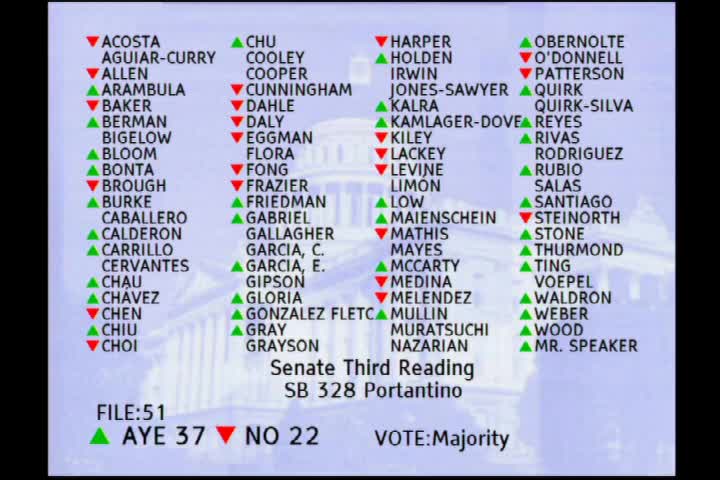 1MIN
Assembly Floor
 3MIN
Senate Floor
 1H
Senate Standing Committee on Appropriations
 3MIN
Assembly Floor
 18MIN
Assembly Standing Committee on Judiciary
 17MIN
Assembly Standing Committee on Public Employees, Retirement, and Social Security
Bill Author

Bill Co-Author(s):