AB 1919: Price gouging: state of emergency.
- Session Year: 2017-2018
- House: Assembly
- Latest Version Date: 2018-09-21
Under existing law, upon the proclamation of a state of emergency, as defined, declared by the President of the United States or the Governor, or upon the declaration of a local emergency, as defined, by the executive officer of any county, city, or city and county, and for a period of 30 days following that declaration, it is a misdemeanor with specified penalties for a person, contractor, business, or other entity to sell or offer to sell certain goods and services, including housing, for a price that exceeds by 10% the price charged by that person immediately prior to the proclamation of emergency, except as specified. Existing law, the California Emergency Services Act, establishes the Office of Emergency Services and vests the office with responsibility for the states emergency and disaster response services for natural, technological, or manmade disasters and emergencies, as specified.
This bill would additionally, upon the proclamation or declaration of an emergency as described above, make it a misdemeanor for a person, business, or other entity to increase the rental price, as defined, advertised, offered, or charged for housing to an existing or prospective tenant by more than 10%. The bill would extend the prohibition with regards to housing for any period that the proclamation or declaration is extended. The bill would additionally make it a misdemeanor for a person, business, or entity to evict a housing tenant after the proclamation of a state of emergency and then rent or offer to rent to another person at a rental price higher than the evicted tenant could be charged. By creating a new crime, this bill would create a state-mandated local program. The bill would require the Office of Emergency Services, upon the proclamation of an emergency by the Governor, to include information about these provisions and guidance to property owners, as specified, on an appropriate Internet Web site.
The California Constitution requires the state to reimburse local agencies and school districts for certain costs mandated by the state. Statutory provisions establish procedures for making that reimbursement.
This bill would provide that no reimbursement is required by this act for a specified reason.
Under existing law, upon the proclamation of a state of emergency, as defined, declared by the President of the United States or the Governor, or upon the declaration of a local emergency, as defined, by the executive officer of any county, city, or city and county, and for a period of 30 days following that declaration, it is a misdemeanor with specified penalties for a person, contractor, business, or other entity to sell or offer to sell certain goods and services, including housing, for a price that exceeds by 10% the price charged by that person immediately prior to the proclamation of emergency, except as specified. Existing law, the California Emergency Services Act, establishes the Office of Emergency Services and vests the office with responsibility for the states emergency and disaster response services for natural, technological, or manmade disasters and emergencies, as specified.
This bill would additionally, upon the proclamation or declaration of an emergency as described above, make it a misdemeanor for a person, business, or other entity to increase the rental price, as defined, advertised, offered, or charged for housing to an existing or prospective tenant by more than 10%. The bill would extend the prohibition with regards to housing for any period that the proclamation or declaration is extended. The bill would additionally make it a misdemeanor for a person, business, or entity to evict a housing tenant after the proclamation of a state of emergency and then rent or offer to rent to another person at a rental price higher than the evicted tenant could be charged. By creating a new crime, this bill would create a state-mandated local program. The bill would require the Office of Emergency Services, upon the proclamation or declaration of an emergency as described above, by the Governor, to include information about these provisions and guidance to property owners, as specified, on an appropriate Internet Web site.
The California Constitution requires the state to reimburse local agencies and school districts for certain costs mandated by the state. Statutory provisions establish procedures for making that reimbursement.
This bill would provide that no reimbursement is required by this act for a specified reason.
Under existing law, upon the proclamation of a state of emergency, as defined, declared by the President of the United States or the Governor, or upon the declaration of a local emergency, as defined, by the executive officer of any county, city, city and county, and for a period of 30 days following that declaration, it is a misdemeanor with specified penalties for a person, contractor, business, or other entity to sell or offer to sell certain goods and services, including housing, for a price that exceeds by 10% the price charged by that person immediately prior to the proclamation of emergency, except as specified. Existing law, the California Emergency Services Act, establishes the Office of Emergency Services and vests the office with responsibility for the states emergency and disaster response services for natural, technological, or manmade disasters and emergencies, as specified.
This bill would additionally, upon the proclamation or declaration of an emergency as described above, make it a misdemeanor for a person, business, or other entity to increase the rental price, as defined, advertised, offered, or charged for housing to an existing or prospective tenant by more than 10%. The bill would extend the prohibition with regards to housing for any period that the proclamation or declaration is extended. The bill would additionally make it a misdemeanor for a person, business, or entity to evict a housing tenant after the proclamation of a state of emergency and then rent or offer to rent to another person at a rental price higher than the evicted tenant could be charged. By creating a new crime, this bill would create a state-mandated local program. The bill would require the Office of Emergency Services, upon the proclamation or declaration of an emergency as described above, to include information about these provisions and guidance to property owners, as specified, on an appropriate Internet Web site.
The California Constitution requires the state to reimburse local agencies and school districts for certain costs mandated by the state. Statutory provisions establish procedures for making that reimbursement.
This bill would provide that no reimbursement is required by this act for a specified reason.
Under existing law, upon the proclamation of a state of emergency, as defined, declared by the President of the United States or the Governor, or upon the declaration of a local emergency, as defined, by the executive officer of any county, city, city and county, and for a period of 30 days following that declaration, it is a misdemeanor with specified penalties for a person, contractor, business, or other entity to sell or offer to sell certain goods and services, including housing, for a price that exceeds by 10% the price charged by that person immediately prior to the proclamation of emergency, except as specified.
This bill would additionally, upon the proclamation or declaration of an emergency as described above, make it a misdemeanor for a person, business, or other entity to increase the monthly rental price, as defined, advertised, offered offered, or charged for residential housing to an existing or prospective tenant by more than 10% greater than the rental price advertised, offered, or charged by that person, business, or entity within 30 days immediately prior to the date of the proclamation or disaster. 10%. The bill would extend the prohibition with regards to housing for any period that the proclamation or declaration is extended. The bill would additionally make it a misdemeanor for a person, business, or entity to evict a housing tenant after the proclamation of a state of emergency for the purpose of renting the housing out in violation of the above provisions, as specified. and then rent or offer to rent to another person at a rental price higher than the evicted tenant could be charged. By creating a new crime, this bill would create a state-mandated local program.
The California Constitution requires the state to reimburse local agencies and school districts for certain costs mandated by the state. Statutory provisions establish procedures for making that reimbursement.
This bill would provide that no reimbursement is required by this act for a specified reason.
Under existing law, upon the proclamation of a state of emergency, as defined, declared by the President of the United States or the Governor, or upon the declaration of a local emergency, as defined, by the executive officer of any county, city, city and county, and for a period of 30 days following that declaration, it is a misdemeanor with specified penalties for a person, contractor, business, or other entity to sell or offer to sell certain goods and services, including housing, for a price that exceeds by 10% the price charged by that person immediately prior to the proclamation of emergency, except as specified.
This bill would additionally, upon the proclamation or declaration of an emergency as described above, make it a misdemeanor for a person, business, or other entity to increase the monthly rental price advertised, offered or charged for residential housing to an existing or prospective tenant by more than 10% greater than the rental price advertised, offered, or charged by that person, business, or entity within 30 days immediately prior to the date of the proclamation or disaster. The bill would extend the prohibition with regards to housing for any period that the proclamation or declaration is extended. The bill would additionally make it a misdemeanor for a person, business, or entity to evict a housing tenant after the proclamation of a state of emergency for the purpose of renting the housing out in violation of the above provisions, as specified. By creating a new crime, this bill would create a state-mandated local program.
The California Constitution requires the state to reimburse local agencies and school districts for certain costs mandated by the state. Statutory provisions establish procedures for making that reimbursement.
This bill would provide that no reimbursement is required by this act for a specified reason.
Upon the proclamation of a state of emergency declared by the Governor, the Office of Emergency Services shall include, on an appropriate Internet Web site, information about Section 396 of the Penal Code, including information for property owners about the effect of the proclamation on rental price as defined in paragraph (11) of subdivision (j) of Section 396 of the Penal Code.
SEC. 2.Section 396 of the Penal Code is amended to read:396.(a)The Legislature hereby finds that during a state of emergency or local emergency, including, but not limited to, an earthquake, flood, fire, riot, storm, drought, plant or animal infestation or disease, or other natural or manmade disaster, some merchants have taken unfair advantage of consumers by greatly increasing prices for essential consumer goods and services. While the pricing of consumer goods and services is generally best left to the marketplace under ordinary conditions, when a declared state of emergency or local emergency results in abnormal disruptions of the market, the public interest requires that excessive and unjustified increases in the prices of essential consumer goods and services be prohibited. It is the intent of the Legislature in enacting this act to protect citizens from excessive and unjustified increases in the prices charged during or shortly after a declared state of emergency or local emergency for goods and services that are vital and necessary for the health, safety, and welfare of consumers. Further, it is the intent of the Legislature that this section be liberally construed so that its beneficial purposes may be served.
(b)Upon the proclamation of a state of emergency declared by the President of the United States or the Governor, or upon the declaration of a local emergency by an official, board, or other governing body vested with authority to make that declaration in any county, city, or city and county, and for a period of 30 days following that proclamation or declaration, it is unlawful for a person, contractor, business, or other entity to sell or offer to sell any consumer food items or goods, goods or services used for emergency cleanup, emergency supplies, medical supplies, home heating oil, building materials, housing, transportation, freight, and storage services, or gasoline or other motor fuels for a price of more than 10 percent greater than the price charged by that person for those goods or services immediately prior to the proclamation or declaration of emergency. However, a greater price increase is not unlawful if that person can prove that the increase in price was directly attributable to additional costs imposed on it by the supplier of the goods, or directly attributable to additional costs for labor or materials used to provide the services, during the state of emergency or local emergency, and the price is no more than 10 percent greater than the total of the cost to the seller plus the markup customarily applied by the seller for that good or service in the usual course of business immediately prior to the onset of the state of emergency or local emergency.
(c)Upon the proclamation of a state of emergency declared by the President of the United States or the Governor, or upon the declaration of a local emergency by an official, board, or other governing body vested with authority to make that declaration in any county, city, or city and county, and for a period of 180 days following that proclamation or declaration, it is unlawful for a contractor to sell or offer to sell any repair or reconstruction services or any services used in emergency cleanup for a price of more than 10 percent above the price charged by that person for those services immediately prior to the proclamation or declaration of emergency. However, a greater price increase is not unlawful if that person can prove that the increase in price was directly attributable to additional costs imposed on it by the supplier of the goods, or directly attributable to additional costs for labor or materials used to provide the services, during the state of emergency or local emergency, and the price represents no more than 10 percent greater than the total of the cost to the contractor plus the markup customarily applied by the contractor for that good or service in the usual course of business immediately prior to the onset of the state of emergency or local emergency.
(d)Upon the proclamation of a state of emergency declared by the President of the United States or the Governor, or upon the declaration of a local emergency by an official, board, or other governing body vested with authority to make that declaration in any county, city, or city and county, and for a period of 30 days following that proclamation or declaration, it is unlawful for an owner or operator of a hotel or motel to increase the hotel or motels regular rates, as advertised immediately prior to the proclamation or declaration of emergency, by more than 10 percent. However, a greater price increase is not unlawful if the owner or operator can prove that the increase in price is directly attributable to additional costs imposed on it for goods or labor used in its business, to seasonal adjustments in rates that are regularly scheduled, or to previously contracted rates.
(e)Upon the proclamation of a state of emergency declared by the President of the United States or the Governor, or upon the declaration of a local emergency by an official, board, or other governing body vested with authority to make that declaration in any city, county, or city and county, and for a period of 30 days following that proclamation or declaration, or any period the proclamation or declaration is extended by the applicable authority, it is unlawful for any person, business, or other entity, to increase the rental price, as defined in paragraph (11) of subdivision (j), advertised, offered, or charged for housing, to an existing or prospective tenant, by more than 10 percent. However, a greater rental price increase is not unlawful if that person can prove that the increase is directly attributable to additional costs for repairs or additions beyond normal maintenance that were amortized over the rental term that caused the rent to be increased greater than 10 percent or that an increase was contractually agreed to by the tenant prior to the proclamation or declaration. It shall not be a defense to a prosecution under this subdivision that an increase in rental price was based on the length of the rental term, the inclusion of additional goods or services, except as provided in paragraph (11) of subdivision (j) with respect to furniture, or that the rent was offered by, or paid by, an insurance company, or other third party, on behalf of a tenant. This subdivision does not authorize a landlord to charge a price greater than the amount authorized by a local rent control ordinance.
(f)It is unlawful for a person, business, or other entity to evict any residential tenant of residential housing after the proclamation of a state of emergency declared by the President of the United States or the Governor, or upon the declaration of a local emergency by an official, board, or other governing body vested with authority to make that declaration in any city, county, or city and county, and for a period of 30 days following that proclamation or declaration, or any period that the proclamation or declaration is extended by the applicable authority and rent or offer to rent to another person at a rental price greater than the evicted tenant could be charged under this section. It shall not be a violation of this subdivision for a person, business, or other entity to continue an eviction process that was lawfully begun prior to the proclamation or declaration of emergency.
(g)The prohibitions of this section may be extended for additional 30-day periods, as needed, by a local legislative body, local official, the Governor, or the Legislature, if deemed necessary to protect the lives, property, or welfare of the citizens.
(h)A violation of this section is a misdemeanor punishable by imprisonment in a county jail for a period not exceeding one year, or by a fine of not more than ten thousand dollars ($10,000), or by both that fine and imprisonment.
(i)A violation of this section shall constitute an unlawful business practice and an act of unfair competition within the meaning of Section 17200 of the Business and Professions Code. The remedies and penalties provided by this section are cumulative to each other, the remedies under Section 17200 of the Business and Professions Code, and the remedies or penalties available under all other laws of this state.
(j)For the purposes of this section, the following terms have the following meanings:
(1)State of emergency means a natural or manmade emergency resulting from an earthquake, flood, fire, riot, storm, drought, plant or animal infestation or disease, or other natural or manmade disaster for which a state of emergency has been declared by the President of the United States or the Governor.
(2)Local emergency means a natural or manmade emergency resulting from an earthquake, flood, fire, riot, storm, drought, plant or animal infestation or disease, or other natural or manmade disaster for which a local emergency has been declared by an official, board, or other governing body vested with authority to make that declaration in any county, city, or city and county in California.
(3)Consumer food item means any article that is used or intended for use for food, drink, confection, or condiment by a person or animal.
(4)Repair or reconstruction services means services performed by any person who is required to be licensed under the Contractors State License Law (Chapter 9 (commencing with Section 7000) of Division 3 of the Business and Professions Code), for repairs to residential or commercial property of any type that is damaged as a result of a disaster.
(5)Emergency supplies includes, but is not limited to, water, flashlights, radios, batteries, candles, blankets, soaps, diapers, temporary shelters, tape, toiletries, plywood, nails, and hammers.
(6)Medical supplies includes, but is not limited to, prescription and nonprescription medications, bandages, gauze, isopropyl alcohol, and antibacterial products.
(7)Building materials means lumber, construction tools, windows, and anything else used in the building or rebuilding of property.
(8)Gasoline means any fuel used to power any motor vehicle or power tool.
(9)Transportation, freight, and storage services means any service that is performed by any company that contracts to move, store, or transport personal or business property or that rents equipment for those purposes, including towing services.
(10)Housing means any rental housing with an initial lease term of no longer than one year, including, but not limited to, a space rented in a mobilehome park or campground.
(11)Rental price for housing means any of the following:
(A)For housing rented within one year prior to the time of the proclamation or declaration of emergency, the actual rental price paid by the tenant. For housing not rented at the time of the declaration or proclamation, but rented, or offered for rent, within one year prior to the proclamation or declaration of emergency, the most recent rental price offered before the proclamation or declaration of emergency. For housing rented at the time of the proclamation or declaration of emergency but which becomes vacant while the proclamation or declaration of emergency remains in effect and which is subject to any ordinance, rule, regulation, or initiative measure adopted by any local governmental entity that establishes a maximum amount that a landlord may charge a tenant for rent, the actual rental price paid by the previous tenant or the amount specified in subparagraph (B), whichever is greater. This amount may be increased by 5 percent if the housing was previously rented or offered for rent unfurnished, and it is now being offered for rent fully furnished. This amount shall not be adjusted for any other good or service, including, but not limited to, gardening or utilities currently or formerly provided in connection with the lease.
(B)For housing not rented and not offered for rent within one year prior to the proclamation or declaration of emergency, 160 percent of the fair market rent established by the United States Department of Housing and Urban Development. This amount may be increased by 5 percent if the housing is offered for rent fully furnished. This amount shall not be adjusted for any other good or service, including, but not limited to, gardening or utilities currently or formerly provided in connection with the lease.
(C)Housing advertised, offered, or charged, at a daily rate at the time of the declaration or proclamation of emergency, shall be subject to the rental price described in subparagraph (A), if the housing continues to be advertised, offered, or charged, at a daily rate. Housing advertised, offered, or charged, on a daily basis at the time of the declaration or proclamation of emergency, shall be subject to the rental price in subparagraph (B), if the housing is advertised, offered, or charged, on a periodic lease agreement after the declaration or proclamation of emergency.
(D)For mobilehome spaces rented to existing tenants at the time of the proclamation or declaration of emergency and subject to a local rent control ordinance, the amount authorized under the local rent control ordinance. For new tenants who enter into a rental agreement for a mobilehome space that is subject to rent control but not rented at the time of the proclamation or declaration of emergency, the amount of rent last charged for a space in the same mobilehome park. For mobilehome spaces not subject to a local rent control ordinance and not rented at the time of the proclamation or declaration of emergency, the amount of rent last charged for the space.
(12)Goods has the same meaning as defined in subdivision (c) of Section 1689.5 of the Civil Code.
(k)This section does not preempt any local ordinance prohibiting the same or similar conduct or imposing a more severe penalty for the same conduct prohibited by this section.
(l)A business offering an item for sale at a reduced price immediately prior to the proclamation or declaration of the emergency may use the price at which it usually sells the item to calculate the price pursuant to subdivision (b) or (c).
(m)This section does not prohibit an owner from evicting a tenant for any lawful reason, including pursuant to Section 1161 of the Code of Civil Procedure.
SEC. 3.No reimbursement is required by this act pursuant to Section 6 of Article XIIIB of the California Constitution because the only costs that may be incurred by a local agency or school district will be incurred because this act creates a new crime or infraction, eliminates a crime or infraction, or changes the penalty for a crime or infraction, within the meaning of Section 17556 of the Government Code, or changes the definition of a crime within the meaning of Section 6 of Article XIIIB of the California Constitution.
Upon the proclamation of a state of emergency declared by the Governor, the Office of Emergency Services shall include, on an appropriate Internet Web site, information about Section 396 of the Penal Code, including information for property owners about the effect of the proclamation on rental price as defined in paragraph (11) of subdivision (j) of Section 396 of the Penal Code.
SEC. 2.Section 396 of the Penal Code is amended to read:396.(a)The Legislature hereby finds that during a state of emergency or local emergency, including, but not limited to, an earthquake, flood, fire, riot, storm, drought, plant or animal infestation or disease, or other natural or manmade disaster, some merchants have taken unfair advantage of consumers by greatly increasing prices for essential consumer goods and services. While the pricing of consumer goods and services is generally best left to the marketplace under ordinary conditions, when a declared state of emergency or local emergency results in abnormal disruptions of the market, the public interest requires that excessive and unjustified increases in the prices of essential consumer goods and services be prohibited. It is the intent of the Legislature in enacting this act to protect citizens from excessive and unjustified increases in the prices charged during or shortly after a declared state of emergency or local emergency for goods and services that are vital and necessary for the health, safety, and welfare of consumers. Further, it is the intent of the Legislature that this section be liberally construed so that its beneficial purposes may be served.
(b)Upon the proclamation of a state of emergency declared by the President of the United States or the Governor, or upon the declaration of a local emergency by an official, board, or other governing body vested with authority to make that declaration in any county, city, or city and county, and for a period of 30 days following that proclamation or declaration, it is unlawful for a person, contractor, business, or other entity to sell or offer to sell any consumer food items or goods, goods or services used for emergency cleanup, emergency supplies, medical supplies, home heating oil, building materials, housing, transportation, freight, and storage services, or gasoline or other motor fuels for a price of more than 10 percent greater than the price charged by that person for those goods or services immediately prior to the proclamation or declaration of emergency. However, a greater price increase is not unlawful if that person can prove that the increase in price was directly attributable to additional costs imposed on it by the supplier of the goods, or directly attributable to additional costs for labor or materials used to provide the services, during the state of emergency or local emergency, and the price is no more than 10 percent greater than the total of the cost to the seller plus the markup customarily applied by the seller for that good or service in the usual course of business immediately prior to the onset of the state of emergency or local emergency.
(c)Upon the proclamation of a state of emergency declared by the President of the United States or the Governor, or upon the declaration of a local emergency by an official, board, or other governing body vested with authority to make that declaration in any county, city, or city and county, and for a period of 180 days following that proclamation or declaration, it is unlawful for a contractor to sell or offer to sell any repair or reconstruction services or any services used in emergency cleanup for a price of more than 10 percent above the price charged by that person for those services immediately prior to the proclamation or declaration of emergency. However, a greater price increase is not unlawful if that person can prove that the increase in price was directly attributable to additional costs imposed on it by the supplier of the goods, or directly attributable to additional costs for labor or materials used to provide the services, during the state of emergency or local emergency, and the price represents no more than 10 percent greater than the total of the cost to the contractor plus the markup customarily applied by the contractor for that good or service in the usual course of business immediately prior to the onset of the state of emergency or local emergency.
(d)Upon the proclamation of a state of emergency declared by the President of the United States or the Governor, or upon the declaration of a local emergency by an official, board, or other governing body vested with authority to make that declaration in any county, city, or city and county, and for a period of 30 days following that proclamation or declaration, it is unlawful for an owner or operator of a hotel or motel to increase the hotel or motels regular rates, as advertised immediately prior to the proclamation or declaration of emergency, by more than 10 percent. However, a greater price increase is not unlawful if the owner or operator can prove that the increase in price is directly attributable to additional costs imposed on it for goods or labor used in its business, to seasonal adjustments in rates that are regularly scheduled, or to previously contracted rates.
(e)Upon the proclamation of a state of emergency declared by the President of the United States or the Governor, or upon the declaration of a local emergency by an official, board, or other governing body vested with authority to make that declaration in any city, county, or city and county, and for a period of 30 days following that proclamation or declaration, or any period the proclamation or declaration is extended by the applicable authority, it is unlawful for any person, business, or other entity, to increase the rental price, as defined in paragraph (11) of subdivision (j), advertised, offered, or charged for housing, to an existing or prospective tenant, by more than 10 percent. However, a greater rental price increase is not unlawful if that person can prove that the increase is directly attributable to additional costs for repairs or additions beyond normal maintenance that were amortized over the rental term that caused the rent to be increased greater than 10 percent or that an increase was contractually agreed to by the tenant prior to the proclamation or declaration. It shall not be a defense to a prosecution under this subdivision that an increase in rental price was based on the length of the rental term, the inclusion of additional goods or services, except as provided in paragraph (11) of subdivision (j) with respect to furniture, or that the rent was offered by, or paid by, an insurance company, or other third party, on behalf of a tenant. This subdivision does not authorize a landlord to charge a price greater than the amount authorized by a local rent control ordinance.
(f)It is unlawful for a person, business, or other entity to evict any residential tenant of residential housing after the proclamation of a state of emergency declared by the President of the United States or the Governor, or upon the declaration of a local emergency by an official, board, or other governing body vested with authority to make that declaration in any city, county, or city and county, and for a period of 30 days following that proclamation or declaration, or any period that the proclamation or declaration is extended by the applicable authority and rent or offer to rent to another person at a rental price higher greater than the evicted tenant could be charged under this section. It shall not be a violation of this subdivision for a person, business, or other entity to continue an eviction process that was lawfully begun prior to the proclamation or declaration of emergency.
(g)The provisions prohibitions of this section may be extended for additional 30-day periods, as needed, by a local legislative body, local official, the Governor, or the Legislature, if deemed necessary to protect the lives, property, or welfare of the citizens.
(h)A violation of this section is a misdemeanor punishable by imprisonment in a county jail for a period not exceeding one year, or by a fine of not more than ten thousand dollars ($10,000), or by both that fine and imprisonment.
(i)A violation of this section shall constitute an unlawful business practice and an act of unfair competition within the meaning of Section 17200 of the Business and Professions Code. The remedies and penalties provided by this section are cumulative to each other, the remedies under Section 17200 of the Business and Professions Code, and the remedies or penalties available under all other laws of this state.
(j)For the purposes of this section, the following terms have the following meanings:
(1)State of emergency means a natural or manmade emergency resulting from an earthquake, flood, fire, riot, storm, drought, plant or animal infestation or disease, or other natural or manmade disaster for which a state of emergency has been declared by the President of the United States or the Governor.
(2)Local emergency means a natural or manmade emergency resulting from an earthquake, flood, fire, riot, storm, drought, plant or animal infestation or disease, or other natural or manmade disaster for which a local emergency has been declared by an official, board, or other governing body vested with authority to make that declaration in any county, city, or city and county in California.
(3)Consumer food item means any article that is used or intended for use for food, drink, confection, or condiment by a person or animal.
(4)Repair or reconstruction services means services performed by any person who is required to be licensed under the Contractors State License Law (Chapter 9 (commencing with Section 7000) of Division 3 of the Business and Professions Code), for repairs to residential or commercial property of any type that is damaged as a result of a disaster.
(5)Emergency supplies includes, but is not limited to, water, flashlights, radios, batteries, candles, blankets, soaps, diapers, temporary shelters, tape, toiletries, plywood, nails, and hammers.
(6)Medical supplies includes, but is not limited to, prescription and nonprescription medications, bandages, gauze, isopropyl alcohol, and antibacterial products.
(7)Building materials means lumber, construction tools, windows, and anything else used in the building or rebuilding of property.
(8)Gasoline means any fuel used to power any motor vehicle or power tool.
(9)Transportation, freight, and storage services means any service that is performed by any company that contracts to move, store, or transport personal or business property or that rents equipment for those purposes, including towing services.
(10)Housing means any rental housing with an initial lease term of no longer than one year, including, but not limited to, a space rented in a mobilehome park or campground.
(11)Rental price for housing means any of the following:
(A)For housing rented within one year prior to the time of the proclamation or declaration of emergency, the actual rental price paid by the tenant. For housing not rented at the time of the declaration or proclamation, but rented, or offered for rent, within one year prior to the proclamation or declaration of emergency, the most recent rental price offered before the proclamation or declaration of emergency. For housing rented at the time of the proclamation or declaration of emergency but which becomes vacant while the proclamation or declaration of emergency remains in effect and which is subject to any ordinance, rule, regulation, or initiative measure adopted by any local governmental entity that establishes a maximum amount that a landlord may charge a tenant for rent, the actual rental price paid by the previous tenant or the amount specified in subparagraph (B), whichever is greater. This amount may be increased by 5 percent if the housing was previously rented or offered for rent unfurnished, and it is now being offered for rent fully furnished. This amount shall not be adjusted for any other good or service, including, but not limited to, gardening or utilities currently or formerly provided in connection with the lease.
(B)For housing not rented and not offered for rent within one year prior to the proclamation or declaration of emergency, 160 percent of the fair market rent established by the United States Department of Housing and Urban Development. This amount may be increased by 5 percent if the housing is offered for rent fully furnished. This amount shall not be adjusted for any other good or service, including, but not limited to, gardening or utilities currently or formerly provided in connection with the lease.
(C)Housing advertised, offered, or charged, at a daily rate at the time of the declaration or proclamation of emergency, shall be subject to the rental price described in subparagraph (A), if the housing continues to be advertised, offered, or charged, at a daily rate. Housing advertised, offered, or charged, on a daily basis at the time of the declaration or proclamation of emergency, shall be subject to the rental price in subparagraph (B), if the housing is advertised, offered, or charged, on a periodic lease agreement after the declaration or proclamation of emergency.
(D)For mobilehome spaces rented to existing tenants at the time of the proclamation or declaration of emergency and subject to a local rent control ordinance, the amount authorized under the local rent control ordinance. For new tenants who enter into a rental agreement for a mobilehome space that is subject to rent control but not rented at the time of the proclamation or declaration of emergency, the amount of rent last charged for a space in the same mobilehome park. For mobilehome spaces not subject to a local rent control ordinance and not rented at the time of the proclamation or declaration of emergency, the amount of rent last charged for the space.
(12)Goods has the same meaning as defined in subdivision (c) of Section 1689.5 of the Civil Code.
(k)This section does not preempt any local ordinance prohibiting the same or similar conduct or imposing a more severe penalty for the same conduct prohibited by this section.
(l)A business offering an item for sale at a reduced price immediately prior to the proclamation or declaration of the emergency may use the price at which it usually sells the item to calculate the price pursuant to subdivision (b) or (c).
(m)This section does not prohibit an owner from evicting a tenant for any lawful reason, including pursuant to Section 1161 of the Code of Civil Procedure.
SEC. 3.No reimbursement is required by this act pursuant to Section 6 of Article XIIIB of the California Constitution because the only costs that may be incurred by a local agency or school district will be incurred because this act creates a new crime or infraction, eliminates a crime or infraction, or changes the penalty for a crime or infraction, within the meaning of Section 17556 of the Government Code, or changes the definition of a crime within the meaning of Section 6 of Article XIIIB of the California Constitution.
(a)Upon the proclamation of a state of emergency declared by the President of the United States or the Governor, or upon the declaration of a local emergency by an official, board, or other governing body vested with authority to make that declaration in any city, or city and county, the Office of Emergency Services shall include, on an appropriate Internet Web site, information about Section 396 of the Penal Code, including guidance to information for property owners about the effect of the proclamation or declaration on rental price as defined in paragraph (11) of subdivision (j) of Section 396 of the Penal Code.
(b)The office shall make this information available to relevant local jurisdictions, law enforcement agencies, and trade associations.SEC. 2.Section 396 of the Penal Code is amended to read:396.(a)The Legislature hereby finds that during a state of emergency or local emergency, including, but not limited to, an earthquake, flood, fire, riot, storm, drought, plant or animal infestation or disease, or other natural or manmade disaster, some merchants have taken unfair advantage of consumers by greatly increasing prices for essential consumer goods and services. While the pricing of consumer goods and services is generally best left to the marketplace under ordinary conditions, when a declared state of emergency or local emergency results in abnormal disruptions of the market, the public interest requires that excessive and unjustified increases in the prices of essential consumer goods and services be prohibited. It is the intent of the Legislature in enacting this act to protect citizens from excessive and unjustified increases in the prices charged during or shortly after a declared state of emergency or local emergency for goods and services that are vital and necessary for the health, safety, and welfare of consumers. Further, it is the intent of the Legislature that this section be liberally construed so that its beneficial purposes may be served.
(b)Upon the proclamation of a state of emergency declared by the President of the United States or the Governor, or upon the declaration of a local emergency by an official, board, or other governing body vested with authority to make that declaration in any county, city, or city and county, and for a period of 30 days following that proclamation or declaration, it is unlawful for a person, contractor, business, or other entity to sell or offer to sell any consumer food items or goods, goods or services used for emergency cleanup, emergency supplies, medical supplies, home heating oil, building materials, housing, transportation, freight, and storage services, or gasoline or other motor fuels for a price of more than 10 percent greater than the price charged by that person for those goods or services immediately prior to the proclamation or declaration of emergency. However, a greater price increase is not unlawful if that person can prove that the increase in price was directly attributable to additional costs imposed on it by the supplier of the goods, or directly attributable to additional costs for labor or materials used to provide the services, during the state of emergency or local emergency, and the price is no more than 10 percent greater than the total of the cost to the seller plus the markup customarily applied by the seller for that good or service in the usual course of business immediately prior to the onset of the state of emergency or local emergency.
(c)Upon the proclamation of a state of emergency declared by the President of the United States or the Governor, or upon the declaration of a local emergency by an official, board, or other governing body vested with authority to make that declaration in any county, city, or city and county, and for a period of 180 days following that proclamation or declaration, it is unlawful for a contractor to sell or offer to sell any repair or reconstruction services or any services used in emergency cleanup for a price of more than 10 percent above the price charged by that person for those services immediately prior to the proclamation or declaration of emergency. However, a greater price increase is not unlawful if that person can prove that the increase in price was directly attributable to additional costs imposed on it by the supplier of the goods, or directly attributable to additional costs for labor or materials used to provide the services, during the state of emergency or local emergency, and the price represents no more than 10 percent greater than the total of the cost to the contractor plus the markup customarily applied by the contractor for that good or service in the usual course of business immediately prior to the onset of the state of emergency or local emergency.
(d)Upon the proclamation of a state of emergency declared by the President of the United States or the Governor, or upon the declaration of a local emergency by an official, board, or other governing body vested with authority to make that declaration in any county, city, or city and county, and for a period of 30 days following that proclamation or declaration, it is unlawful for an owner or operator of a hotel or motel to increase the hotel or motels regular rates, as advertised immediately prior to the proclamation or declaration of emergency, by more than 10 percent. However, a greater price increase is not unlawful if the owner or operator can prove that the increase in price is directly attributable to additional costs imposed on it for goods or labor used in its business, to seasonal adjustments in rates that are regularly scheduled, or to previously contracted rates.
(e)Upon the proclamation of a state of emergency declared by the President of the United States or the Governor, or upon the declaration of a local emergency by an official, board, or other governing body vested with authority to make that declaration in any city, or city and county, and for a period of 30 days following that proclamation or declaration, or any period the proclamation or declaration is extended by the applicable authority, it is unlawful for any person, business, or other entity, to increase the rental price, as defined in paragraph (11) of subdivision (j), advertised, offered, or charged for housing, to an existing or prospective tenant, by more than 10 percent. However, a greater rental price increase is not unlawful if that person can prove that the increase is directly attributable to additional costs for repairs or additions beyond normal maintenance that were amortized over the rental term that caused the rent to be increased greater than 10 percent or that an increase was contractually agreed to by the tenant prior to the proclamation or declaration. It shall not be a defense to a prosecution under this subdivision that an increase in rental price was based on the length of the rental term, the inclusion of additional goods or services, except as provided in paragraph (11) of subdivision (j) with respect to furniture, or that the rent was offered by, or paid by, an insurance company, or other third party, on behalf of a tenant.
(f)It is unlawful for a person, business, or other entity to evict any residential tenant of residential housing after the proclamation of a state of emergency declared by the President of the United States or the Governor, or upon the declaration of a local emergency by an official, board, or other governing body vested with authority to make that declaration in any city, or city and county, and for a period of 30 days following that proclamation or declaration, or any period that the proclamation or declaration is extended by the applicable authority and rent or offer to rent to another person at a rental price higher than the evicted tenant could be charged under this section. It shall not be a violation of this subdivision for a person, business, or other entity to continue an eviction process that was lawfully begun prior to the proclamation or declaration of emergency.
(g)The provisions of this section may be extended for additional 30-day periods, as needed, by a local legislative body, local official, the Governor, or the California Legislature, if deemed necessary to protect the lives, property, or welfare of the citizens.
(h)A violation of this section is a misdemeanor punishable by imprisonment in a county jail for a period not exceeding one year, or by a fine of not more than ten thousand dollars ($10,000), or by both that fine and imprisonment.
(i)A violation of this section shall constitute an unlawful business practice and an act of unfair competition within the meaning of Section 17200 of the Business and Professions Code. The remedies and penalties provided by this section are cumulative to each other, the remedies under Section 17200 of the Business and Professions Code, and the remedies or penalties available under all other laws of this state.
(j)For the purposes of this section, the following terms have the following meanings:
(1)State of emergency means a natural or manmade emergency resulting from an earthquake, flood, fire, riot, storm, drought, plant or animal infestation or disease, or other natural or manmade disaster for which a state of emergency has been declared by the President of the United States or the Governor of California. Governor.
(2)Local emergency means a natural or manmade emergency resulting from an earthquake, flood, fire, riot, storm, drought, plant or animal infestation or disease, or other natural or manmade disaster for which a local emergency has been declared by an official, board, or other governing body vested with authority to make that declaration in any county, city, or city and county in California.
(3)Consumer food item means any article that is used or intended for use for food, drink, confection, or condiment by a person or animal.
(4)Repair or reconstruction services means services performed by any person who is required to be licensed under the Contractors State License Law (Chapter 9 (commencing with Section 7000) of Division 3 of the Business and Professions Code), for repairs to residential or commercial property of any type that is damaged as a result of a disaster.
(5)Emergency supplies includes, but is not limited to, water, flashlights, radios, batteries, candles, blankets, soaps, diapers, temporary shelters, tape, toiletries, plywood, nails, and hammers.
(6)Medical supplies includes, but is not limited to, prescription and nonprescription medications, bandages, gauze, isopropyl alcohol, and antibacterial products.
(7)Building materials means lumber, construction tools, windows, and anything else used in the building or rebuilding of property.
(8)Gasoline means any fuel used to power any motor vehicle or power tool.
(9)Transportation, freight, and storage services means any service that is performed by any company that contracts to move, store, or transport personal or business property or that rents equipment for those purposes, including towing services.
(10)Housing means any rental housing with an initial lease term of no longer than one year, including, but not limited to, a space rented in a mobilehome park or campground.
(11)Rental price for housing means any of the following:
(A)For housing rented within one year prior to the time of the proclamation or declaration of emergency, the actual rental price paid by the tenant. For housing not rented at the time of the declaration or proclamation, but rented, or offered for rent, within one year prior to the proclamation or declaration of emergency, the most recent rental price offered before the proclamation or declaration of emergency. For housing rented at the time of the proclamation or declaration of emergency but which becomes vacant while the proclamation or declaration of emergency remains in effect and which is subject to any ordinance, rule, regulation, or initiative measure adopted by any local governmental entity that establishes a maximum amount that a landlord may charge a tenant for rent, the actual rental price paid by the previous tenant or the amount specified in subparagraph (B), whichever is greater. This amount may be increased by 5 percent if the housing was previously rented or offered for rent unfurnished, and it is now being offered for rent fully furnished. This amount shall not be adjusted for any other good or service, including, but not limited to, gardening or utilities currently or formerly provided in connection with the lease.
(B)For housing not rented, or not offered for rent, rented and not offered for rent within one year prior to the proclamation or declaration of emergency, 160 percent of the fair market rent established by the United States Department of Housing and Urban Development. This amount may be increased by 5 percent if the housing is offered for rent fully furnished. This amount shall not be adjusted for any other good or service, including, but not limited to, gardening or utilities currently or formerly provided in connection with the lease.
(C)Housing advertised, offered, or charged, at a daily rate at the time of the declaration or proclamation of emergency, shall be subject to the rental price described in subparagraph (A), if the housing continues to be advertised, offered, or charged, at a daily rate. Housing advertised, offered, or charged, on a daily basis at the time of the declaration or proclamation of emergency emergency, shall be subject to the rental price in subparagraph (B), if the housing is advertised, offered, or charged, on a periodic lease agreement after the declaration or proclamation of emergency.
(12)Goods has the same meaning as defined in subdivision (c) of Section 1689.5 of the Civil Code.
(k)This section does not preempt any local ordinance prohibiting the same or similar conduct or imposing a more severe penalty for the same conduct prohibited by this section.
(l)A business offering an item for sale at a reduced price immediately prior to the proclamation or declaration of the emergency may use the price at which it usually sells the item to calculate the price pursuant to subdivision (b) or (c).
(m)This section does not prohibit an owner from evicting a tenant for nonpayment of rent any lawful reason, including pursuant to Section 1161 of the Code of Civil Procedure.
SEC. 3.No reimbursement is required by this act pursuant to Section 6 of Article XIIIB of the California Constitution because the only costs that may be incurred by a local agency or school district will be incurred because this act creates a new crime or infraction, eliminates a crime or infraction, or changes the penalty for a crime or infraction, within the meaning of Section 17556 of the Government Code, or changes the definition of a crime within the meaning of Section 6 of Article XIIIB of the California Constitution.
(a)Upon the proclamation of a state of emergency declared by the President of the United States or the Governor, or upon the declaration of a local emergency by an official, board, or other governing body vested with authority to make that declaration in any city, or city and county, the Office of Emergency Services shall include, on an appropriate Internet Web site, information about Section 396 of the Penal Code, including guidance to property owners about the effect of the proclamation or declaration on rental price as defined in paragraph (11) of subdivision (j) of Section 396 of the Penal Code.
(b)The office shall make this information available to relevant local jurisdictions, law enforcement agencies, and trade associations.
SECTION 1.SEC. 2.Section 396 of the Penal Code is amended to read:396.(a)The Legislature hereby finds that during a state of emergency or local emergency, including, but not limited to, an earthquake, flood, fire, riot, storm, drought, plant or animal infestation or disease, or other natural or manmade disaster, some merchants have taken unfair advantage of consumers by greatly increasing prices for essential consumer goods and services. While the pricing of consumer goods and services is generally best left to the marketplace under ordinary conditions, when a declared state of emergency or local emergency results in abnormal disruptions of the market, the public interest requires that excessive and unjustified increases in the prices of essential consumer goods and services be prohibited. It is the intent of the Legislature in enacting this act to protect citizens from excessive and unjustified increases in the prices charged during or shortly after a declared state of emergency or local emergency for goods and services that are vital and necessary for the health, safety, and welfare of consumers. Further, it is the intent of the Legislature that this section be liberally construed so that its beneficial purposes may be served.
(b)Upon the proclamation of a state of emergency declared by the President of the United States or the Governor, or upon the declaration of a local emergency by an official, board, or other governing body vested with authority to make that declaration in any county, city, or city and county, and for a period of 30 days following that proclamation or declaration, it is unlawful for a person, contractor, business, or other entity to sell or offer to sell any consumer food items or goods, goods or services used for emergency cleanup, emergency supplies, medical supplies, home heating oil, building materials, housing, transportation, freight, and storage services, or gasoline or other motor fuels for a price of more than 10 percent greater than the price charged by that person for those goods or services immediately prior to the proclamation or declaration of emergency. However, a greater price increase is not unlawful if that person can prove that the increase in price was directly attributable to additional costs imposed on it by the supplier of the goods, or directly attributable to additional costs for labor or materials used to provide the services, during the state of emergency or local emergency, and the price is no more than 10 percent greater than the total of the cost to the seller plus the markup customarily applied by the seller for that good or service in the usual course of business immediately prior to the onset of the state of emergency or local emergency.
(c)Upon the proclamation of a state of emergency declared by the President of the United States or the Governor, or upon the declaration of a local emergency by an official, board, or other governing body vested with authority to make that declaration in any county, city, or city and county, and for a period of 180 days following that proclamation or declaration, it is unlawful for a contractor to sell or offer to sell any repair or reconstruction services or any services used in emergency cleanup for a price of more than 10 percent above the price charged by that person for those services immediately prior to the proclamation or declaration of emergency. However, a greater price increase is not unlawful if that person can prove that the increase in price was directly attributable to additional costs imposed on it by the supplier of the goods, or directly attributable to additional costs for labor or materials used to provide the services, during the state of emergency or local emergency, and the price represents no more than 10 percent greater than the total of the cost to the contractor plus the markup customarily applied by the contractor for that good or service in the usual course of business immediately prior to the onset of the state of emergency or local emergency.
(d)Upon the proclamation of a state of emergency declared by the President of the United States or the Governor, or upon the declaration of a local emergency by an official, board, or other governing body vested with authority to make that declaration in any county, city, or city and county, and for a period of 30 days following that proclamation or declaration, it is unlawful for an owner or operator of a hotel or motel to increase the hotel or motels regular rates, as advertised immediately prior to the proclamation or declaration of emergency, by more than 10 percent. However, a greater price increase is not unlawful if the owner or operator can prove that the increase in price is directly attributable to additional costs imposed on it for goods or labor used in its business, to seasonal adjustments in rates that are regularly scheduled, or to previously contracted rates.
(e)Upon the proclamation of a state of emergency declared by the President of the United States or the Governor, or upon the declaration of a local emergency by an official, board, or other governing body vested with authority to make that declaration in any city, or city and county, and for a period of 30 days following that proclamation or declaration, or any period the proclamation or declaration is extended by the applicable authority, it is unlawful for any person, business, or other entity, to increase the rental price, as defined in paragraph (11) of subdivision (j), advertised, offered, or charged for housing, to an existing or prospective tenant, by more than 10 percent. However, a greater rental price increase is not unlawful if that person can prove that the increase is directly attributable to additional costs for repairs or additions beyond normal maintenance that were amortized over the rental term that caused the rent to be increased greater than 10 percent or that an increase was contractually agreed to by the tenant prior to the proclamation or declaration. It shall not be a defense to a prosecution under this subdivision that an increase in rental price was based on the length of the rental term, the inclusion of additional goods or services, except as provided in paragraph (11) of subdivision (j) with respect to furniture, or that the rent was offered by, or paid by, an insurance company, or other third party, on behalf of a tenant.
(f)It is unlawful for a person, business, or other entity to evict any residential tenant of residential housing after the proclamation of a state of emergency declared by the President of the United States or the Governor, or upon the declaration of a local emergency by an official, board, or other governing body vested with authority to make that declaration in any city, or city and county, and for a period of 30 days following that proclamation or declaration, or any period that the proclamation or declaration is extended by the applicable authority and rent or offer to rent to another person at a rental price higher than the evicted tenant could be charged under this section. It shall not be a violation of this subdivision for a person, business, or other entity to continue an eviction process that was lawfully begun prior to the proclamation or declaration of emergency.
(g)The provisions of this section may be extended for additional 30-day periods, as needed, by a local legislative body, local official, the Governor, or the California Legislature, if deemed necessary to protect the lives, property, or welfare of the citizens.
(h)A violation of this section is a misdemeanor punishable by imprisonment in a county jail for a period not exceeding one year, or by a fine of not more than ten thousand dollars ($10,000), or by both that fine and imprisonment.
(i)A violation of this section shall constitute an unlawful business practice and an act of unfair competition within the meaning of Section 17200 of the Business and Professions Code. The remedies and penalties provided by this section are cumulative to each other, the remedies under Section 17200 of the Business and Professions Code, and the remedies or penalties available under all other laws of this state.
(j)For the purposes of this section, the following terms have the following meanings:
(1)State of emergency means a natural or manmade emergency resulting from an earthquake, flood, fire, riot, storm, drought, plant or animal infestation or disease, or other natural or manmade disaster for which a state of emergency has been declared by the President of the United States or the Governor of California.
(2)Local emergency means a natural or manmade emergency resulting from an earthquake, flood, fire, riot, storm, drought, plant or animal infestation or disease, or other natural or manmade disaster for which a local emergency has been declared by an official, board, or other governing body vested with authority to make that declaration in any county, city, or city and county in California.
(3)Consumer food item means any article that is used or intended for use for food, drink, confection, or condiment by a person or animal.
(4)Repair or reconstruction services means services performed by any person who is required to be licensed under the Contractors State License Law (Chapter 9 (commencing with Section 7000) of Division 3 of the Business and Professions Code), for repairs to residential or commercial property of any type that is damaged as a result of a disaster.
(5)Emergency supplies includes, but is not limited to, water, flashlights, radios, batteries, candles, blankets, soaps, diapers, temporary shelters, tape, toiletries, plywood, nails, and hammers.
(6)Medical supplies includes, but is not limited to, prescription and nonprescription medications, bandages, gauze, isopropyl alcohol, and antibacterial products.
(7)Building materials means lumber, construction tools, windows, and anything else used in the building or rebuilding of property.
(8)Gasoline means any fuel used to power any motor vehicle or power tool.
(9)Transportation, freight, and storage services means any service that is performed by any company that contracts to move, store, or transport personal or business property or that rents equipment for those purposes, including towing services.
(10)Housing means any rental housing with an initial lease term of no longer than one year, including, but not limited to, a space rented in a mobilehome park or campground.
(11)Rental price for housing means any of the following:
(A)For housing rented within one year prior to the time of the proclamation or declaration of emergency, the actual rental price paid by the tenant. For housing not rented at the time of the declaration or proclamation, but rented, or offered for rent, within one year prior to the proclamation or declaration of emergency, the most recent rental price offered before the proclamation or declaration of emergency. This amount may be increased by 5 percent if the housing was previously rented or offered for rent unfurnished, and it is now being offered for rent fully furnished. This amount shall not be adjusted for any other good or service, including, but not limited to, gardening or utilities currently or formerly provided in connection with the lease.
(B)For housing not rented, or not offered for rent, within one year prior to the proclamation or declaration of emergency, 160 percent of the fair market rent established by the United States Department of Housing and Urban Development. This amount may be increased by 5 percent if the housing is offered for rent fully furnished. This amount shall not be adjusted for any other good or service, including, but not limited to, gardening or utilities currently or formerly provided in connection with the lease.
(C)Housing advertised, offered, or charged, at a daily rate at the time of the declaration or proclamation of emergency, shall be subject to the rental price described in subparagraph (A), if the housing continues to be advertised, offered, or charged, at a daily rate. Housing advertised, offered, or charged, on a daily basis at the time of the declaration or proclamation of emergency shall be subject to the rental price in subparagraph (B), if the housing is advertised, offered, or charged, on a periodic lease agreement after the declaration or proclamation of emergency.
(12)Goods has the same meaning as defined in subdivision (c) of Section 1689.5 of the Civil Code.
(k)This section does not preempt any local ordinance prohibiting the same or similar conduct or imposing a more severe penalty for the same conduct prohibited by this section.
(l)A business offering an item for sale at a reduced price immediately prior to the proclamation or declaration of the emergency may use the price at which it usually sells the item to calculate the price pursuant to subdivision (b) or (c).
(m)This section does not prohibit an owner from evicting a tenant for nonpayment of rent pursuant to Section 1161 of the Code of Civil Procedure.
SEC. 2.SEC. 3.No reimbursement is required by this act pursuant to Section 6 of Article XIIIB of the California Constitution because the only costs that may be incurred by a local agency or school district will be incurred because this act creates a new crime or infraction, eliminates a crime or infraction, or changes the penalty for a crime or infraction, within the meaning of Section 17556 of the Government Code, or changes the definition of a crime within the meaning of Section 6 of Article XIIIB of the California Constitution.
(a)The Legislature hereby finds that during a state of emergency or local emergency, including, but not limited to, an earthquake, flood, fire, riot, storm, drought, plant or animal infestation or disease, or other natural or manmade disaster, some merchants have taken unfair advantage of consumers by greatly increasing prices for essential consumer goods and services. While the pricing of consumer goods and services is generally best left to the marketplace under ordinary conditions, when a declared state of emergency or local emergency results in abnormal disruptions of the market, the public interest requires that excessive and unjustified increases in the prices of essential consumer goods and services be prohibited. It is the intent of the Legislature in enacting this act to protect citizens from excessive and unjustified increases in the prices charged during or shortly after a declared state of emergency or local emergency for goods and services that are vital and necessary for the health, safety, and welfare of consumers. Further, it is the intent of the Legislature that this section be liberally construed so that its beneficial purposes may be served.
(b)Upon the proclamation of a state of emergency declared by the President of the United States or the Governor, or upon the declaration of a local emergency by an official, board, or other governing body vested with authority to make such a that declaration in any county, city, or city and county, and for a period of 30 days following that proclamation or declaration, it is unlawful for a person, contractor, business, or other entity to sell or offer to sell any consumer food items or goods, goods or services used for emergency cleanup, emergency supplies, medical supplies, home heating oil, building materials, housing, transportation, freight, and storage services, or gasoline or other motor fuels for a price of more than 10 percent greater than the price charged by that person for those goods or services immediately prior to the proclamation or declaration of emergency. However, a greater price increase is not unlawful if that person can prove that the increase in price was directly attributable to additional costs imposed on it by the supplier of the goods, or directly attributable to additional costs for labor or materials used to provide the services, during the state of emergency or local emergency, and the price is no more than 10 percent greater than the total of the cost to the seller plus the markup customarily applied by the seller for that good or service in the usual course of business immediately prior to the onset of the state of emergency or local emergency.
(c)Upon the proclamation of a state of emergency declared by the President of the United States or the Governor, or upon the declaration of a local emergency by an official, board, or other governing body vested with authority to make such a that declaration in any county, city, or city and county, and for a period of 180 days following that proclamation or declaration, it is unlawful for a contractor to sell or offer to sell any repair or reconstruction services or any services used in emergency cleanup for a price of more than 10 percent above the price charged by that person for those services immediately prior to the proclamation or declaration of emergency. However, a greater price increase is not unlawful if that person can prove that the increase in price was directly attributable to additional costs imposed on it by the supplier of the goods, or directly attributable to additional costs for labor or materials used to provide the services, during the state of emergency or local emergency, and the price represents no more than 10 percent greater than the total of the cost to the contractor plus the markup customarily applied by the contractor for that good or service in the usual course of business immediately prior to the onset of the state of emergency or local emergency.
(d)Upon the proclamation of a state of emergency declared by the President of the United States or the Governor, or upon the declaration of a local emergency by an official, board, or other governing body vested with authority to make such a that declaration in any county, city, or city and county, and for a period of 30 days following that proclamation or declaration, it is unlawful for an owner or operator of a hotel or motel to increase the hotel or motels regular rates, as advertised immediately prior to the proclamation or declaration of emergency, by more than 10 percent. However, a greater price increase is not unlawful if the owner or operator can prove that the increase in price is directly attributable to additional costs imposed on it for goods or labor used in its business, to seasonal adjustments in rates that are regularly scheduled, or to previously contracted rates.
(e)Upon the proclamation of a state of emergency declared by the President of the United States or the Governor, or upon the declaration of a local emergency by an official, board, or other governing body vested with authority to make that declaration in any city, or city and county, and for a period of 30 days following that proclamation or declaration, or any period the proclamation or declaration is extended by the applicable authority, it is unlawful for any person, business, or other entity, to increase the monthly rental price rental price, as defined in paragraph (11) of subdivision (j), advertised, offered, or charged for residential housing, to an existing or prospective tenant, by more than 10 percent greater than the rental price advertised, offered, or charged by that person, business, or other entity, within 30 days immediately prior to the date of the proclamation or declaration. percent. However, a greater rental price increase is not unlawful if that person can prove that he or she incurred increased the increase is directly attributable to additional costs for repairs or additions beyond normal maintenance that were amortized over the rental term that caused the rent to be increased greater than 10 percent or that an increase was contractually agreed to by the tenant prior to the proclamation or declaration. It shall not be a defense to a prosecution under this subdivision that the amount of the monthly an increase in rental price was based on the length of the rental term, the inclusion of additional goods or services, except as provided in paragraph (11) of subdivision (j) with respect to furniture, or that the rent was offered by, or paid by, an insurance company, or other third party, on behalf of a tenant.
(f)A It is unlawful for a person, business, or other entity shall not evict a to evict any residential tenant of residential housing after the proclamation of a state of emergency declared by the President of the United States or the Governor, or upon the declaration of a local emergency by an official, board, or other governing body vested with authority to make that declaration in any city, or city and county, and for a period of 30 days following that proclamation or declaration, or any period that the proclamation or declaration is extended by the applicable authority, for the purpose of renting the housing in violation of subdivision (e). authority and rent or offer to rent to another person at a rental price higher than the evicted tenant could be charged under this section. It shall not be a violation of this subdivision for a person, business, or other entity to continue an eviction process that was lawfully begun prior to the proclamation or declaration of emergency. A violation of this subdivision is a separate punishable offense.
(g)The provisions of this section may be extended for additional 30-day periods, as needed, by a local legislative body, local official, the Governor, or the California Legislature, if deemed necessary to protect the lives, property, or welfare of the citizens.
(h)A violation of this section is a misdemeanor punishable by imprisonment in a county jail for a period not exceeding one year, or by a fine of not more than ten thousand dollars ($10,000), or by both that fine and imprisonment.
(i)A violation of this section shall constitute an unlawful business practice and an act of unfair competition within the meaning of Section 17200 of the Business and Professions Code. The remedies and penalties provided by this section are cumulative to each other, the remedies under Section 17200 of the Business and Professions Code, and the remedies or penalties available under all other laws of this state.
(j)For the purposes of this section, the following terms have the following meanings:
(1)State of emergency means a natural or manmade emergency resulting from an earthquake, flood, fire, riot, storm, drought, plant or animal infestation or disease, or other natural or manmade disaster for which a state of emergency has been declared by the President of the United States or the Governor of California.
(2)Local emergency means a natural or manmade emergency resulting from an earthquake, flood, fire, riot, storm, drought, plant or animal infestation or disease, or other natural or manmade disaster for which a local emergency has been declared by an official, board, or other governing body vested with authority to make such a that declaration in any county, city, or city and county in California.
(3)Consumer food item means any article that is used or intended for use for food, drink, confection, or condiment by a person or animal.
(4)Repair or reconstruction services means services performed by any person who is required to be licensed under the Contractors State License Law (Chapter 9 (commencing with Section 7000) of Division 3 of the Business and Professions Code), for repairs to residential or commercial property of any type that is damaged as a result of a disaster.
(5)Emergency supplies includes, but is not limited to, water, flashlights, radios, batteries, candles, blankets, soaps, diapers, temporary shelters, tape, toiletries, plywood, nails, and hammers.
(6)Medical supplies includes, but is not limited to, prescription and nonprescription medications, bandages, gauze, isopropyl alcohol, and antibacterial products.
(7)Building materials means lumber, construction tools, windows, and anything else used in the building or rebuilding of property.
(8)Gasoline means any fuel used to power any motor vehicle or power tool.
(9)Transportation, freight, and storage services means any service that is performed by any company that contracts to move, store, or transport personal or business property or that rents equipment for those purposes, including towing services.
(10)Housing means any rental housing with an initial lease term of no longer than one year, including, but not limited to, a space rented in a mobilehome park or campground.
(11)Rental price for housing means any of the following:
(A)For housing rented within one year prior to the time of the proclamation or declaration of emergency, the actual rental price paid by the tenant. For housing not rented at the time of the declaration or proclamation, but rented, or offered for rent, within one year prior to the proclamation or declaration of emergency, the most recent rental price offered before the proclamation or declaration of emergency. This amount may be increased by 5 percent if the housing was previously rented or offered for rent unfurnished, and it is now being offered for rent fully furnished. This amount shall not be adjusted for any other good or service, including, but not limited to, gardening or utilities currently or formerly provided in connection with the lease.
(B)For housing not rented, or not offered for rent, within one year prior to the proclamation or declaration of emergency, 160 percent of the fair market rent established by the United States Department of Housing and Urban Development. This amount may be increased by 5 percent if the housing is offered for rent fully furnished. This amount shall not be adjusted for any other good or service, including, but not limited to, gardening or utilities currently or formerly provided in connection with the lease.
(C)Housing advertised, offered, or charged, at a daily rate at the time of the declaration or proclamation of emergency, shall be subject to the rental price described in subparagraph (A), if the housing continues to be advertised, offered, or charged, at a daily rate. Housing advertised, offered, or charged, on a daily basis at the time of the declaration or proclamation of emergency shall be subject to the rental price in subparagraph (B), if the housing is advertised, offered, or charged, on a periodic lease agreement after the declaration or proclamation of emergency.
(11)(12)Goods has the same meaning as defined in subdivision (c) of Section 1689.5 of the Civil Code.
(k)Nothing in this section shall This section does not preempt any local ordinance prohibiting the same or similar conduct or imposing a more severe penalty for the same conduct prohibited by this section.
(l)A business offering an item for sale at a reduced price immediately prior to the proclamation or declaration of the emergency may use the price at which it usually sells the item to calculate the price pursuant to subdivision (b) or (c).
(m)This section does not prohibit an owner from evicting a tenant for nonpayment of rent pursuant to Section 1161 of the Code of Civil Procedure.
SEC. 2.No reimbursement is required by this act pursuant to Section 6 of Article XIIIB of the California Constitution because the only costs that may be incurred by a local agency or school district will be incurred because this act creates a new crime or infraction, eliminates a crime or infraction, or changes the penalty for a crime or infraction, within the meaning of Section 17556 of the Government Code, or changes the definition of a crime within the meaning of Section 6 of Article XIIIB of the California Constitution.
(a)The Legislature hereby finds that during a state of emergency or local emergency, including, but not limited to, an earthquake, flood, fire, riot, storm, drought, plant or animal infestation or disease, or other natural or manmade disaster, some merchants have taken unfair advantage of consumers by greatly increasing prices for essential consumer goods and services. While the pricing of consumer goods and services is generally best left to the marketplace under ordinary conditions, when a declared state of emergency or local emergency results in abnormal disruptions of the market, the public interest requires that excessive and unjustified increases in the prices of essential consumer goods and services be prohibited. It is the intent of the Legislature in enacting this act to protect citizens from excessive and unjustified increases in the prices charged during or shortly after a declared state of emergency or local emergency for goods and services that are vital and necessary for the health, safety, and welfare of consumers. Further, it is the intent of the Legislature that this section be liberally construed so that its beneficial purposes may be served.
(b)Upon the proclamation of a state of emergency declared by the President of the United States or the Governor, or upon the declaration of a local emergency by an official, board, or other governing body vested with authority to make such a declaration in any county, city, or city and county, and for a period of 30 days following that proclamation or declaration, it is unlawful for a person, contractor, business, or other entity to sell or offer to sell any consumer food items or goods, goods or services used for emergency cleanup, emergency supplies, medical supplies, home heating oil, building materials, housing, transportation, freight, and storage services, or gasoline or other motor fuels for a price of more than 10 percent above greater than the price charged by that person for those goods or services immediately prior to the proclamation or declaration of emergency. However, a greater price increase is not unlawful if that person can prove that the increase in price was directly attributable to additional costs imposed on it by the supplier of the goods, or directly attributable to additional costs for labor or materials used to provide the services, provided that in those situations where the increase in price is attributable to additional costs imposed by the sellers supplier or additional costs of providing the good or service during the state of emergency or local emergency, emergency, and the price represents is no more than 10 percent above greater than the total of the cost to the seller plus the markup customarily applied by the seller for that good or service in the usual course of business immediately prior to the onset of the state of emergency or local emergency.
(c)Upon the proclamation of a state of emergency declared by the President of the United States or the Governor, or upon the declaration of a local emergency by an official, board, or other governing body vested with authority to make such a declaration in any county, city, or city and county, and for a period of 180 days following that proclamation or declaration, it is unlawful for a contractor to sell or offer to sell any repair or reconstruction services or any services used in emergency cleanup for a price of more than 10 percent above the price charged by that person for those services immediately prior to the proclamation or declaration of emergency. However, a greater price increase is not unlawful if that person can prove that the increase in price was directly attributable to additional costs imposed on it by the supplier of the goods, or directly attributable to additional costs for labor or materials used to provide the services, provided that in those situations where the increase in price is attributable to the additional costs imposed by the contractors supplier or additional costs of providing the service during the state of emergency or local emergency, emergency, and the price represents no more than 10 percent above greater than the total of the cost to the contractor plus the markup customarily applied by the contractor for that good or service in the usual course of business immediately prior to the onset of the state of emergency or local emergency.
(d)Upon the proclamation of a state of emergency declared by the President of the United States or the Governor, or upon the declaration of a local emergency by an official, board, or other governing body vested with authority to make such a declaration in any county, city, or city and county, and for a period of 30 days following that proclamation or declaration, it is unlawful for an owner or operator of a hotel or motel to increase the hotel or motels regular rates, as advertised immediately prior to the proclamation or declaration of emergency, by more than 10 percent. However, a greater price increase is not unlawful if the owner or operator can prove that the increase in price is directly attributable to additional costs imposed on it for goods or labor used in its business, to seasonal adjustments in rates that are regularly scheduled, or to previously contracted rates.
(e)Upon the proclamation of a state of emergency declared by the President of the United States or the Governor, or upon the declaration of a local emergency by an official, board, city, or city and county, and for a period of 30 days following that proclamation or declaration, or any period the proclamation or declaration is extended by the applicable authority, it is unlawful for any person, business, or other entity, to increase the monthly rental price advertised, offered, or charged for residential housing, to an existing or prospective tenant, by more than 10 percent greater than the rental price advertised, offered, or charged by that person, business, or other entity, within 30 days immediately prior to the date of the proclamation or declaration. However, a greater rental price increase is not unlawful if that person can prove that he or she incurred increased costs for repairs or additions beyond normal maintenance that were amortized over the rental term that caused the rent to be increased greater than 10 percent or that an increase was contractually agreed to by the tenant prior to the proclamation or declaration. It shall not be a defense to a prosecution under this subdivision that the amount of the monthly rent was offered by, or paid by, an insurance company, or other third party, on behalf of a tenant.
(f)A person, business, or other entity shall not evict a tenant of residential housing after the proclamation of a state of emergency declared by the President of the United States or the Governor, or upon the declaration of a local emergency by an official, board, city, or city and county, and for a period of 30 days following that proclamation or declaration, or any period that the proclamation or declaration is extended by the applicable authority, for the purpose of renting the housing in violation of subdivision (e). It shall not be a violation of this subdivision for a person, business, or other entity to continue an eviction process that was begun prior to the proclamation or declaration of emergency. A violation of this subdivision is a separate punishable offense.
(e)(g)The provisions of this section may be extended for additional 30-day periods, as needed, by a local legislative body, local official, the Governor, or the California Legislature, if deemed necessary to protect the lives, property, or welfare of the citizens.
(f)(h)A violation of this section is a misdemeanor punishable by imprisonment in a county jail for a period not exceeding one year, or by a fine of not more than ten thousand dollars ($10,000), or by both that fine and imprisonment.
(g)(i)A violation of this section shall constitute an unlawful business practice and an act of unfair competition within the meaning of Section 17200 of the Business and Professions Code. The remedies and penalties provided by this section are cumulative to each other, the remedies under Section 17200 of the Business and Professions Code, and the remedies or penalties available under all other laws of this state.
(h)(j)For the purposes of this section, the following terms have the following meanings:
(1)State of emergency means a natural or manmade emergency resulting from an earthquake, flood, fire, riot, storm, drought, plant or animal infestation or disease, or other natural or manmade disaster for which a state of emergency has been declared by the President of the United States or the Governor of California.
(2)Local emergency means a natural or manmade emergency resulting from an earthquake, flood, fire, riot, storm, drought, plant or animal infestation or disease, or other natural or manmade disaster for which a local emergency has been declared by an official, board, or other governing body vested with authority to make such a declaration in any county, city, or city and county in California.
(3)Consumer food item means any article that is used or intended for use for food, drink, confection, or condiment by a person or animal.
(4)Repair or reconstruction services means services performed by any person who is required to be licensed under the Contractors State License Law (Chapter 9 (commencing with Section 7000) of Division 3 of the Business and Professions Code), for repairs to residential or commercial property of any type that is damaged as a result of a disaster.
(5)Emergency supplies includes, but is not limited to, water, flashlights, radios, batteries, candles, blankets, soaps, diapers, temporary shelters, tape, toiletries, plywood, nails, and hammers.
(6)Medical supplies includes, but is not limited to, prescription and nonprescription medications, bandages, gauze, isopropyl alcohol, and antibacterial products.
(7)Building materials means lumber, construction tools, windows, and anything else used in the building or rebuilding of property.
(8)Gasoline means any fuel used to power any motor vehicle or power tool.
(9)Transportation, freight, and storage services means any service that is performed by any company that contracts to move, store, or transport personal or business property or that rents equipment for those purposes, including towing services.
(10)Housing means any rental housing with an initial lease term of no longer than one year. year, including, but not limited to, a space rented in a mobilehome park or campground.
(11)Goods has the same meaning as defined in subdivision (c) of Section 1689.5 of the Civil Code.
(i)(k)Nothing in this section shall preempt any local ordinance prohibiting the same or similar conduct or imposing a more severe penalty for the same conduct prohibited by this section.
(j)(l)A business offering an item for sale at a reduced price immediately prior to the proclamation or declaration of the emergency may use the price at which it usually sells the item to calculate the price pursuant to subdivision (b) or (c).
SEC. 2.No reimbursement is required by this act pursuant to Section 6 of Article XIIIB of the California Constitution because the only costs that may be incurred by a local agency or school district will be incurred because this act creates a new crime or infraction, eliminates a crime or infraction, or changes the penalty for a crime or infraction, within the meaning of Section 17556 of the Government Code, or changes the definition of a crime within the meaning of Section 6 of Article XIIIB of the California Constitution.
|
Date
|
Status
|
|---|---|
| Sep 21, 2018 | Chaptered by Secretary of State - Chapter 631, Statutes of 2018. |
| Sep 21, 2018 | Approved by the Governor. |
| Sep 11, 2018 | Enrolled and presented to the Governor at 4:30 p.m. |
| Aug 31, 2018 | In Assembly. Concurrence in Senate amendments pending. |
| Aug 31, 2018 | Read third time. Passed. Ordered to the Assembly. |
| Aug 20, 2018 | Read second time. Ordered to third reading. |
| Aug 17, 2018 | From committee: Amend, and do pass as amended. (Ayes 7. Noes 0.) (August 16). |
| Aug 6, 2018 | In committee: Referred to APPR. suspense file. |
| Jun 26, 2018 | From committee: Do pass and re-refer to Com. on APPR. (Ayes 13. Noes 0.) (June 26). Re-referred to Com. on APPR. |
| Jun 20, 2018 | From committee: Do pass and re-refer to Com. on G.O. (Ayes 6. Noes 1.) (June 19). Re-referred to Com. on G.O. |
| Jun 12, 2018 | From committee chair, with author's amendments: Amend, and re-refer to committee. Read second time, amended, and re-referred to Com. on PUB. S. |
| Jun 7, 2018 | Referred to Coms. on PUB. S. and G.O. |
| May 31, 2018 | In Senate. Read first time. To Com. on RLS. for assignment. |
| May 30, 2018 | Read third time. Passed. Ordered to the Senate. |
| May 29, 2018 | Read second time. Ordered to third reading. |
| May 25, 2018 | From committee: Amend, and do pass as amended. (Ayes 13. Noes 0.) (May 25). |
| Apr 25, 2018 | In committee: Set, first hearing. Referred to APPR. suspense file. |
| Apr 19, 2018 | Re-referred to Com. on APPR. |
| Apr 18, 2018 | Read second time and amended. |
| Apr 17, 2018 | From committee: Amend, and do pass as amended and re-refer to Com. on APPR. (Ayes 6. Noes 1.) (April 10). |
| Mar 20, 2018 | In committee: Set, second hearing. Testimony taken. |
| Mar 6, 2018 | In committee: Set, first hearing. Hearing canceled at the request of author. |
| Feb 5, 2018 | Referred to Com. on PUB. S. |
| Jan 25, 2018 | From printer. May be heard in committee February 24. |
| Jan 24, 2018 | Read first time. To print. |
|
Date
|
Description
|
Location
|
Votes
|
|
|---|---|---|---|---|
| Aug 31, 2018 | AB 1919 WOOD Concurrence in Senate Amendments | Assembly Floor |
Passed |
|
| Aug 31, 2018 | Assembly 3rd Reading AB1919 Wood et al. By Jackson | Senate Floor |
Passed |
|
| Aug 16, 2018 | Do pass as amended | Senate Standing Committee on Appropriations |
Passed |
|
| Aug 6, 2018 | Placed on suspense file | Senate Standing Committee on Appropriations |
Passed |
|
| Jun 26, 2018 | Do pass, but first be re-referred to the Committee on [Appropriations] | Senate Standing Committee on Governmental Organization |
Passed |
|
| Jun 19, 2018 | Do pass, but first be re-referred to the Committee on [Governmental Organization] | Senate Standing Committee on Public Safety |
Passed |
|
| May 30, 2018 | AB 1919 WOOD Assembly Third Reading | Assembly Floor |
Passed |
|
| May 25, 2018 | Do pass as amended. | Assembly Standing Committee on Appropriations |
Passed |
|
| Apr 10, 2018 | Do pass as amended and be re-referred to the Committee on [Appropriations] | Assembly Standing Committee on Public Safety |
Passed |
This list shows positions taken on this bill by organizations on the date displayed, which is linked to the original source.
Positions by individuals are not included.
(Without Reference to File)
CONCURRENCE IN SENATE AMENDMENTS
CSA1 Bill Id:AB 1919
Author:(Wood)
As Amended Ver:August 17, 2018
Majority vote
ASSEMBLY: | 65-5 | (May 30, 2018) | SENATE: | 37-1 | (August 31, 2018) |
Original Committee Reference: PUB. S.
SUMMARY: Expands the scope of the crime price gouging by including rental housing that was not on the market at the time of the proclamation or declaration of emergency. Defines the "rental price" of housing for purposes of price gouging.
The Senate amendments:
- Require the Office of Emergency Services to include, on an appropriate Internet Web site, information about price gouging, including information for property owners about the effect of a declaration of emergency by the Governor on rental house pricing, but not emergency declarations of other officials or governing bodies.
- Specify that for housing rented at the time of the declaration of emergency, but which becomes vacant while the declaration of emergency remains in effect and which is subject to any rule adopted by any local governmental entity that establishes a maximum amount that a landlord may charge a tenant for rent, the "rental price for housing" is the actual rental price paid by the previous tenant or 160%of the fair market rent established by the United States Department of Housing and Urban Development, whichever is greater.
- State that for mobilehome spaces rented to existing tenants at the time of the declaration of emergency and subject to a local rent control ordinance, the "rental price" for housing is the amount authorized under the local rent control ordinance.
- State that for new tenants who enter into a rental agreement for a mobilehome space that is subject to rent control but not rented at the time declaration of emergency, the "rental price" for housing is the amount of rent last charged for a space in the same mobilehome park.
- State that for mobilehome spaces not subject to a local rent control ordinance and not rented at the time of the proclamation or declaration of emergency, the "rental price" for housing is the amount of rent last charged for the space.
- State that the provisions of this bill do not prohibit an owner from evicting a tenant for any lawful reason.
- Specify that the provisions of this bill do not authorize a landlord to charge a price greater than the amount authorized by a local rent control ordinance.
- Make technical, non-substantive changes.
EXISTING LAW:
- Finds that during emergencies and major disasters, including, but not limited to, earthquakes, fires, floods, or civil disturbances, some merchants have taken unfair advantage of consumers by greatly increasing prices for essential consumer goods and services.
- States that it is the intent of the Legislature in to protect citizens from excessive and unjustified increases in the prices charged during or shortly after a declared state of emergency for goods and services that are vital and necessary for the health, safety, and welfare of consumers.
- Provides that upon the declaration of a state of emergency resulting from an earthquake, flood, fire, riot, storm, or natural or manmade disaster declared by the President of the United States or the Governor, or upon the declaration of a local emergency resulting from an earthquake, flood, fire, riot, storm, or natural or manmade disaster by the executive officer of any county, city, or city and county, and for a period of 30 days following that declaration, it is unlawful for a person, contractor, business, or other entity to sell or offer to sell any consumer food items or goods, goods or services used for emergency cleanup, emergency supplies, medical supplies, home heating oil, building materials, housing, transportation, freight, and storage services, or gasoline or other motor fuels for a price of more than 10% above the price charged by that person for those goods or services immediately prior to the proclamation of emergency.
- States that upon the declaration of a state of emergency, as specified, and for a period of 180 days following that declaration, it is unlawful for a contractor to sell or offer to sell any repair or reconstruction services or any services used in emergency cleanup for a price of more than 10% above the price charged by that person for those services immediately prior to the proclamation or declaration of emergency.
- Provides that a greater price increase is not unlawful if that person can prove that the increase in price was directly attributable to additional costs imposed on it by the supplier of the goods, or directly attributable to additional costs for labor or materials used to provide the services, provided that in those situations where the increase in price is attributable to the additional costs imposed by the contractor's supplier or additional costs of providing the service during the state of emergency or local emergency, the price represents no more than 10% above the total of the cost to the contractor plus the markup customarily applied by the contractor for that good or service in the usual course of business immediately prior to the onset of the state of emergency or local emergency.
- Specifies that upon the proclamation of a state of emergency, as specified, and for a period of 30 days following that proclamation or declaration, it is unlawful for an owner or operator of a hotel or motel to increase the hotel or motel's regular rates, as advertised immediately prior to the proclamation or declaration of emergency, by more than 10%. However, a greater price increase is not unlawful if the owner or operator can prove that the increase in price is directly attributable to additional costs imposed on it for goods or labor used in its business, to seasonal adjustments in rates that are regularly scheduled, or to previously contracted rates.
- Specifies that, a greater price increase for the goods and services, mentioned above, is not unlawful if that person can prove that the increase in price was directly attributable to additional costs imposed by specified circumstances.
- Provides that time frame prohibiting specified price increases may be extended for additional 30-day periods by a local legislative body or the California Legislature, if deemed necessary to protect the lives, property, or welfare of the citizens.
- States that the conduct described above is a misdemeanor punishable by imprisonment in a county jail for a period not exceeding one year, or by a fine of not more than $10,000, or by both that fine and imprisonment.
- Specifies that the conduct described above shall constitute an unlawful business practice and an act of unfair competition.
- Defines "State of emergency" as ''a natural or manmade emergency resulting from an earthquake, flood, fire, riot, storm, drought, plant or animal infestation or disease, or other natural or manmade disaster for which a state of emergency has been declared by the President of the United States or the Governor of California.''
- Defines "Local emergency" as "a natural or manmade emergency resulting from an earthquake, flood, fire, riot, storm, drought, plant or animal infestation or disease, or other natural or manmade disaster for which a local emergency has been declared by an official, board, or other governing body vested with authority to make such a declaration in any county, city, or city and county in California.."
- Defines "Housing" as ''any rental housing with an initial lease term of no longer than one year'' for purposes of criminal price gouging.
AS PASSED BY THE ASSEMBLY, this bill:
- Defined the rental price for housing for purposes of the crime of price gouging, as follows:
- For housing rented at the time of the proclamation or declaration of emergency, the actual rental price paid by the tenant. For housing not rented at the time of the declaration or proclamation, but rented, or offered for rent, within one year prior to the proclamation or declaration of emergency, the most recent rental price offered before the proclamation or declaration of emergency. This amount may be increased by 5% if the housing was previously rented or offered for rent unfurnished, and it is now being offered for rent fully furnished. This amount shall not be adjusted for any other good or service, including without limitation gardening or utilities, currently or formerly provided in connection with the lease;
- For housing not rented, or not offered for rent, within one year prior to the proclamation or declaration of emergency, 160% of the Fair Market Rent established by the US Department of Housing and Urban Development. This amount may be increased by 5% if the housing is offered for rent fully furnished. This amount shall not be adjusted for any other good or service, including without limitation gardening or utilities, currently or formerly provided in connection with the lease; or
- For housing advertised, offered, or charged, at a daily rate at the time of the declaration or proclamation of emergency, shall be subject to the rental price described in subparagraph a), if the housing continues to be advertised, offered, or charged, at a daily rate. Housing advertised, offered, or charged, on a daily basis at the time of the declaration or proclamation of emergency, shall be subject to the rental price in subparagraph b) if the housing is advertised, offered, or charged, on a periodic lease agreement after the declaration or proclamation of emergency.
- Stated that it is unlawful for a person, business, or other entity to evict any residential tenant of residential housing after the proclamation of a state of emergency, as specified, and for a period of 30 days following that proclamation or declaration, or any period that the proclamation or declaration is extended by the applicable authority, and then rent or offer to rent to another tenant a rental priced higher than the evicted tenant could be charged under this section.
- Specified that it shall not be a violation of this subdivision for a person, business, or other entity to continue an eviction process that was lawfully begun prior to the proclamation or declaration of emergency.
- Stated that nothing in this bill prohibits an owner from evicting a tenant for nonpayment of rent, as specified.
- Specified that it shall not be a defense to a prosecution under this subdivision that an increase in rental price was based on length of the rental term, the inclusion of additional goods or services, or that the rent was offered by, or paid by, an insurance company, or other third party, on behalf of a tenant.
- Clarified proclamation of a state of emergency, and for a period of 30 days following that proclamation or declaration, or any period the proclamation or declaration is extended by the applicable authority, it is unlawful for any person, business, or other entity, to increase the monthly rental price advertised, offered, or charged for residential housing, to an existing or prospective tenant, by more than 10% greater than the rental price advertised, offered, or charged by that person, business, or other entity, within 30 days immediately prior to the date of the proclamation or declaration.
- Clarified that, a greater rental price increase is not unlawful if that person can prove that he or she incurred increased costs for repairs or additions beyond normal maintenance that were amortized over the rental term that caused the rent to be increased greater than 10% or that an increase was contractually agreed to by the tenant prior to the proclamation or declaration. It shall not be a defense to a prosecution under this subdivision that the amount of the monthly rent was offered by, or paid by, an insurance company, or other third party, on behalf of a tenant.
- Defined "Housing" for purposes of the crime of price gouging as "any rental housing with an initial lease term of no longer than one year, including, but not limited to, a space rented in a mobilehome park or campground."
- Required the Office of Emergency Services to publish information about price gouging, including guidance for property owners of rental housing, upon a proclamation of a state of emergency.
FISCAL EFFECT: According to the Senate Appropriations Committee:
- Court: Unknown, potentially-significant workload cost pressures to the court to adjudicate any civil actions and misdemeanor charges filed against defendants who are alleged to have engaged in price gouging as expanded upon by this measure. While the superior courts are not funded on a workload basis, an increase in workload could result in delayed court services and would put pressure on the General Fund to fund additional staff and resources. For example, the 2018 Budget Act appropriated $64 million from the General Fund to backfill continued reduction in fine and penalty revenue for trial court operations. (General Fund*)
- Office of Emergency Services (OES): Minor and absorbable costs to post the required information on an appropriate website.
- Prosecution & incarceration: Unknown potential increase in non-reimbursable local enforcement and incarceration costs to prosecute and incarcerate those charged with and found guilty of conduct proscribed by this bill. Costs would be offset, to a degree, by fee and assessment revenue. (Local funds)
*Trial Court Trust Fund
COMMENTS: According to the author, "In October 2017 wildfires destroyed more than 5,000 homes in Sonoma County alone. Current law prevents landlords from raising rent by more than 10% within 30 days of a declared disaster, unfortunately, because current law does not apply to new home rental units, the victims of the North Bay fires have been subjected to a skyrocketing rental market. According to a study by the online housing marketplace Zillow, in the seven days that followed the fires, the median rent in the county jumped over 35% and local newspapers reported anecdotal stories of homes coming onto the rental market at nearly double the price of other similar rentals in the same neighborhood. This bill closes a loophole in current price gouging protections by including new rentals in the list of goods and services that are price controlled in the aftermath of declared disasters.
''Additionally this bill clarifies ambiguities in the current law’s definition of base rent that has led to confusion.
''Unlike goods and services for which there is typically a fixed rate at any given moment, though that price may fluctuate, it is not unusual for tenants in comparable units to pay different rental rates. This happens for several reasons, including that long-term tenants are likely to pay a lower monthly rental rate because rental housing providers often avoid raising rents on existing tenants to market rates. This is particularly true in areas subject to local rent control because annual rent increases are limited by local law. However, when there is a vacancy, the rent is typically raised to the market rate for the incoming tenant. Following the declaration of the state of emergency, this normal cycle of limited rent increases during the tenancy, and an increase to market upon turnover posed a problem. Namely, even if a housing provider kept their prices at exactly the same rates as they were pre-emergency, the rent charged for a vacant unit may be more than 10% above what the outgoing tenant paid despite the fact that it was exactly the same rate that was charged to incoming tenants for comparable units prior to the emergency (i.e., no increase). Without clarity as to how to determine the base price to which the 10% increase cap applies, housing providers have inadvertently exposed themselves to claims of price gouging even though this was below what incoming tenants paid prior to the emergency.
Analysis Prepared by: David Billingsley / PUB. S. / (916) 319-3744 FN: 0004491
Office of Senate Floor Analyses (916) 651-1520 Fax: (916) 327-4478 | AB |
THIRD READING
Bill No: AB 1919
Amended: 8/17/18 in Senate
SENATE PUBLIC SAFETY COMMITTEE: 6-1, 6/19/18
AYES: Skinner, Bradford, Jackson, Mitchell, Stone, Wiener
NOES: Anderson
SENATE GOVERNMENTAL ORG. COMMITTEE: 13-0, 6/26/18
AYES: Dodd, Wilk, Bradford, Cannella, Gaines, Galgiani, Glazer, Hill, Hueso, Lara, Portantino, Vidak, Wiener
SENATE APPROPRIATIONS COMMITTEE: 7-0, 8/16/18
AYES: Portantino, Bates, Beall, Bradford, Hill, Nielsen, Wiener
ASSEMBLY FLOOR: 65-5, 5/30/18 - See last page for vote
SOURCE: Sonoma County District Attorney’s Office
DIGEST:
This bill expands the scope of criminal price gouging by including rental housing that was not on the market at the time of the proclamation or declaration of emergency and by creating a definition of "rental price" for housing.
Existing law:
- States the Legislature finding that during emergencies and major disasters, including, but not limited to, earthquakes, fires, floods, or civil disturbances, some merchants have taken unfair advantage of consumers by greatly increasing prices for essential consumer goods and services. (Pen. Code, § 396, subd. (a).)
- States that it is the intent of the Legislature to protect citizens from excessive and unjustified increases in the prices charged during or shortly after a declared state of emergency for goods and services that are vital and necessary for the health, safety, and welfare of consumers. (Ibid.)
- Provides that upon the declaration of a state of emergency or local emergency resulting from an earthquake, flood, fire, riot, storm, or natural or manmade disaster, and for a period of 30 days following that declaration, it is unlawful for a person, contractor, business, or other entity to sell or offer to sell any consumer food items or goods, goods or services used for emergency cleanup, emergency supplies, medical supplies, home heating oil, building materials, housing, transportation, freight, and storage services, or gasoline or other motor fuels for a price of more than 10 percent above the price charged by that person for those goods or services immediately prior to the proclamation of emergency. (Pen. Code, § 396, subd. (b).)
- States that upon the declaration of a state of emergency, as specified, and for a period of 180 days following that declaration, it is unlawful for a contractor to sell or offer to sell any repair or reconstruction services or any services used in emergency cleanup for a price of more than 10 percent above the price charged by that person for those services immediately prior to the proclamation or declaration of emergency. (Pen. Code, § 396, subd. (c).)
- Provides that a greater price increase is not unlawful if that person can prove that the increase in price was directly attributable to additional costs imposed on it by the supplier of the goods, or directly attributable to additional costs for labor or materials used to provide the services, provided that in those situations where the increase in price is attributable to the additional costs imposed by the contractor’s supplier or additional costs of providing the service during the state of emergency or local emergency, the price represents no more than 10 percent above the total of the cost to the contractor plus the markup customarily applied by the contractor for that good or service in the usual course of business immediately prior to the onset of the state of emergency or local emergency. (Pen. Code, § 396, subd. (c).)
- Specifies that upon the proclamation of a state of emergency or local emergency, and for a period of 30 days following that proclamation or declaration, it is unlawful for an owner or operator of a hotel or motel to increase the hotel or motel’s regular rates, as advertised immediately prior to the proclamation or declaration of emergency, by more than 10 percent. However, a greater price increase is not unlawful if the owner or operator can prove that the increase in price is directly attributable to additional costs imposed on it for goods or labor used in its business, to seasonal adjustments in rates that are regularly scheduled, or to previously contracted rates. (Pen. Code, § 396, subd. (d).)
- Specifies that, a greater price increase is not unlawful if the owner or operator of a hotel or motel can prove that the increase in price was directly attributable to additional costs imposed on it for goods or labor used in its business, to seasonal adjustments in rates that are regularly scheduled, or to previously contracted rates. (Ibid.)
- Provides that time frame prohibiting specified price increases may be extended for additional 30-day periods by a local legislative body or the California Legislature, if deemed necessary to protect the lives, property, or welfare of the citizens. (Pen. Code, § 396, subd. (e).)
- States that the conduct described above is a misdemeanor punishable by imprisonment in a county jail for a period not exceeding one year, or by a fine of not more than $10,000, or by both that fine and imprisonment. (Pen. Code, § 396 subd. (f).)
- Specifies that the conduct described above shall constitute an unlawful business practice and an act of unfair competition. (Pen. Code, § 396 subd. (g).)
- Defines “state of emergency” as “a natural or manmade emergency resulting from an earthquake, flood, fire, riot, storm, drought, plant or animal infestation or disease, or other natural or manmade disaster for which a state of emergency has been declared by the President of the United States or the Governor of California.” (Pen. Code, § 396, subd. (h)(1).)
- Defines "local emergency" as “a natural or manmade emergency resulting from an earthquake, flood, fire, riot, storm, drought, plant or animal infestation or disease, or other natural or manmade disaster for which a local emergency has been declared by an official, board, or other governing body vested with authority to make such a declaration in any county, city, or city and county in California..” (Pen. Code, § 396, subd. (h)(2).)
- Defines “housing,” for purposes of criminal price gouging, as “any rental housing with an initial lease term of no longer than one year.” (Pen. Code, § 396, subd. (g)(2).)
- Provides that the statute that prohibits price gouging does not preempt any local ordinance prohibiting the same conduct or imposing a more severe penalty for the same conduct prohibited by the state law. (Pen. Code, § 396, subd. (i).)
This bill:
- Amends the definition of housing to include a space rented in a mobilehome park or campground.
- Adds the following definition for “rental price” for housing:
- For housing rented within one year prior to the time of the proclamation or declaration of emergency, the actual rental price paid by the tenant. For housing not rented at the time of the declaration or proclamation, but rented, or offered for rent, within one year prior to the proclamation or declaration of emergency, the most recent rental price offered before the proclamation or declaration of emergency. For housing rented at the time of the proclamation or declaration of emergency but which becomes vacant while the proclamation or declaration of emergency remains in effect and which is subject to any ordinance, rule, regulation, or initiative measure adopted by any local governmental entity that establishes a maximum amount that a landlord may charge a tenant for rent, the actual rental price paid by the previous tenant or an amount that equals 160 percent of the fair market rent, whichever is greater. This amount may be increased by 5 percent if the housing was previously rented or offered for rent unfurnished, and it is now being offered for rent fully furnished. This amount shall not be adjusted for any other good or service, including, but not limited to, gardening or utilities currently or formerly provided in connection with the lease.
- For housing not rented and not offered for rent within one year prior to the proclamation or declaration of emergency, 160 percent of the fair market rent established by the United States Department of Housing and Urban Development. This amount may be increased by 5 percent if the housing is offered for rent fully furnished. This amount shall not be adjusted for any other good or service, including, but not limited to, gardening or utilities currently or formerly provided in connection with the lease.
- Housing advertised, offered, or charged, at a daily rate at the time of the declaration or proclamation of emergency, shall be subject to the rental price applicable to housing rented within one year prior to the proclamation or declaration of emergency, if the housing continues to be advertised, offered, or charged, at a daily rate. Housing advertised, offered, or charged, on a daily basis at the time of the declaration or proclamation of emergency, shall be subject to the rental price specified for housing not rented and not offered for rent within one year prior to the proclamation or declaration of emergency, if the housing is advertised, offered, or charged, on a periodic lease agreement after the declaration or proclamation of emergency.
- For mobilehome spaces rented to existing tenants at the time of the proclamation or declaration of emergency and subject to a local rent control ordinance, the amount authorized under the local rent control ordinance. For new tenants who enter into a rental agreement for a mobilehome space that is subject to rent control but not rented at the time of the proclamation or declaration of emergency, the amount of rent last charged for a space in the same mobilehome park. For mobilehome spaces not subject to a local rent control ordinance and not rented at the time of the proclamation or declaration of emergency, the amount of rent last charged for the space.
- Provides that that it is unlawful under the section that prohibits price gouging for any person, business, or other entity, to increase the rental price, as defined, advertised, offered, or charged for housing, to an existing or prospective tenant, by more than 10 percent.
- States that a greater rental price increase than the 10 percent is not unlawful if that person can prove that the increase is directly attributable to additional costs for repairs or additions beyond normal maintenance that were amortized over the rental term that caused the rent to be increased greater than 10 percent or that an increase was contractually agreed to by the tenant prior to the proclamation or declaration.
- Provides that it shall not be defense to prosecution that an increase in rental price was based on the length of the rental term, the inclusion of additional goods or services, except as specified with respect to furniture, or that the rent was offered by, or paid by, an insurance company, or other third party, on behalf of a tenant.
- States that it is unlawful under the section that prohibits price gouging for a person, business, or other entity to evict any residential tenant of residential housing and rent or offer to rent to another person at a rental price higher than the evicted tenant could be charged under that section.
- Provides that it is not unlawful for a person, business, or other entity to continue an eviction process that was lawfully begun prior to the proclamation or declaration of emergency.
- States that the section that prohibits price gouging does not prohibit an owner from evicting a tenant for any lawful reason.
- Requires the Office of Emergency Services, upon the proclamation of a state of emergency declared by the Governor, to include on an appropriate Internet Web site information about applicable laws on price gouging including information for property owners about the effect of the proclamation on rental price, as defined.
Background
In October of 2017, massive wildfires burned homes in counties across California. On October 9, Governor Brown declared a state of emergency for Napa, Sonoma, Butte, Lake, Mendocino, Nevada, and Yuba Counties. On October 10, Governor Brown declared a state of emergency in Solano County. On October 18, 2017, Governor Brown issued an Executive Order that extended the prohibition on price gouging in times of emergency will remained in effect until April 18, 2018 to protect the disaster survivors in the affected counties. (California Governor’s Executive Order B-43-17.)
The existing price gouging law applies only to previously rented units, not to rentals that have come on the market since the fires. It does not apply to housing if a resident decides to move out of their house and make it available for rent. As a new unit it is not covered under the price gouging law. The price gouging law also doesn’t apply to second homes which are vacation homes for the owners and the owners were not previously renting them out. Such homes would also be new housing units.
In addition to state law, local jurisdictions may pass ordinances to place limits on price hikes during emergencies. For example, in October 2017, the city of Santa Rosa approved an emergency law that limits rent hikes in the city to no more than 10 percent above the price charged for the housing unit before the fires. A similar 10-percent limit is placed on hotels and vacation rentals. The city also made it illegal to move out an existing tenant and then increase rent for the next renter above the average price charged for the unit during the 30 days before Oct. 9. Exemptions to the increases are allowed when an owner can prove the excess amount of rent is directly attributable to added costs from labor or materials needed for the unit. (District Attorney: Most Sonoma County rental price gouging reports since fires are unfounded, The Press Democrat, Nov. 11, 2017 < http://www.pressdemocrat.com/news/7622767-181/district-attorney-most-sonoma-county [as of June 11, 2018].)
Both the state and city provisions applied until April 18, which was the same date specifically set by Gov. Jerry Brown. On April 17, the governor extended the order until December 4, 2018. (<https://www.sonomacountyrecovers.org/governor-brown-extends-price-gouging-protections-through-dec-4-2018/ [as of June 11, 2018].)
The median rent listing increased from September to October by 32% across Sonoma County, 23% in Napa County and 16% in Santa Rosa, according to Zillow Real Estate Research. Neighboring counties unaffected by the wildfires showed little change in the median rent price. (<http://www.latimes.com/local/lanow/la-me-ln-wine-country-rent-gouging-20180101-story.html [as of June 11, 2018].)
FISCAL EFFECT: Appropriation: Fiscal Com.: Local:
According to the Senate Appropriations Committee:
- Court: Unknown, potentially-significant workload cost pressures to the court to adjudicate any civil actions and misdemeanor charges filed against defendants who are alleged to have engaged in price gouging as expanded upon by this measure. While the superior courts are not funded on a workload basis, an increase in workload could result in delayed court services and would put pressure on the General Fund to fund additional staff and resources. For example, the 2018 Budget Act appropriated $64 million from the General Fund to backfill continued reduction in fine and penalty revenue for trial court operations. (General Fund*)
- Office of Emergency Services (OES): Minor and absorbable costs to post the required information on an appropriate website.
- Prosecution & incarceration: Unknown potential increase in non-reimbursable local enforcement and incarceration costs to prosecute and incarcerate those charged with and found guilty of conduct proscribed by this bill. Costs would be offset, to a degree, by fee and assessment revenue. (Local funds)
*Trial Court Trust Fund
Sonoma County District Attorney’s Office
California District Attorney’s Office
California Housing Alliance
California Police Chiefs Association
California Professional Firefighters
Golden State Manufactured-Home Owners League
GSMOL Superchapter 0018/0018A
Los Angeles County District Attorney’s Office
Rural County Representatives of California
Sonoma County Board of Supervisors
OPPOSITION: (Verified 8/16/18)
None received
ASSEMBLY FLOOR: 65-5, 5/30/18
AYES: Acosta, Aguiar-Curry, Arambula, Baker, Berman, Bigelow, Bloom, Bonta, Burke, Caballero, Calderon, Carrillo, Cervantes, Chau, Chávez, Chiu, Cooley, Cooper, Cunningham, Dahle, Daly, Eggman, Frazier, Friedman, Gallagher, Cristina Garcia, Eduardo Garcia, Gipson, Gloria, Gonzalez Fletcher, Gray, Grayson, Holden, Irwin, Jones-Sawyer, Kalra, Kamlager-Dove, Lackey, Levine, Limón, Low, Maienschein, Mathis, McCarty, Medina, Melendez, Mullin, Muratsuchi, Nazarian, O'Donnell, Quirk, Quirk-Silva, Reyes, Rodriguez, Rubio, Salas, Santiago, Steinorth, Mark Stone, Thurmond, Ting, Waldron, Weber, Wood, Rendon
NOES: Travis Allen, Chen, Harper, Kiley, Obernolte
NO VOTE RECORDED: Brough, Choi, Chu, Flora, Fong, Mayes, Patterson, Voepel
8/19/18 14:11:10
SENATE COMMITTEE ON APPROPRIATIONS
Senator Anthony Portantino, Chair
2017 - 2018 Regular Session
AB 1919 (Wood) - Price gouging: state of emergency
Version: June 12, 2018 | Policy Vote: PUB. S. 6 - 1, G.O. 13 - 0 |
Urgency: No | Mandate: Yes |
Hearing Date: August 16, 2018 | Consultant: Shaun Naidu |
Bill Summary:
AB 1919 would expand criminal and civil price gouging to include rental housing that was not on the market at the time of the proclamation or declaration of emergency.
*********** ANALYSIS ADDENDUM – SUSPENSE FILE ***********
The following information is revised to reflect amendments
adopted by the committee on August 16, 2018
Fiscal Impact:
- Court: Unknown, potentially-significant workload cost pressures to the court to adjudicate any civil actions and misdemeanor charges filed against defendants who are alleged to have engaged in price gouging as expanded upon by this measure. While the superior courts are not funded on a workload basis, an increase in workload could result in delayed court services and would put pressure on the General Fund to fund additional staff and resources. For example, the 2018 Budget Act appropriated $64 million from the General Fund to backfill continued reduction in fine and penalty revenue for trial court operations. (General Fund*)
- Office of Emergency Services (OES): Minor and absorbable costs to post the required information on an appropriate website.
- Prosecution & incarceration: Unknown potential increase in non-reimbursable local enforcement and incarceration costs to prosecute and incarcerate those charged with and found guilty of conduct proscribed by this bill. Costs would be offset, to a degree, by fee and assessment revenue. (Local funds)
*Trial Court Trust Fund
Author Amendments:
Define base rent for mobile home spaces and specify that the provision does not allow a landlord to charge more than an amount allowable by a local rent control ordinance.
-- END --
SENATE COMMITTEE ON APPROPRIATIONS
Senator Anthony Portantino, Chair
2017 - 2018 Regular Session
AB 1919 (Wood) - Price gouging: state of emergency
Version: June 12, 2018 | Policy Vote: PUB. S. 6 - 1, G.O. 13 - 0 |
Urgency: No | Mandate: Yes |
Hearing Date: August 6, 2018 | Consultant: Shaun Naidu |
This bill meets the criteria for referral to the Suspense File.
Bill Summary:
AB 1919 would expand criminal and civil price gouging to include rental housing that was not on the market at the time of the proclamation or declaration of emergency.
Fiscal Impact:
- Court: Unknown, potentially-significant workload cost pressures to the court to adjudicate any civil actions and misdemeanor charges filed against defendants who are alleged to have engaged in price gouging as expanded upon by this measure. While the superior courts are not funded on a workload basis, an increase in workload could result in delayed court services and would put pressure on the General Fund to fund additional staff and resources. For example, the 2018 Budget Act appropriated $64 million from the General Fund to backfill continued reduction in fine and penalty revenue for trial court operations. (General Fund*)
- Office of Emergency Services (OES): Minor and absorbable costs to post the required information on an appropriate website.
- Prosecution & incarceration: Unknown potential increase in non-reimbursable local enforcement and incarceration costs to prosecute and incarcerate those charged with and found guilty of conduct proscribed by this bill. Costs would be offset, to a degree, by fee and assessment revenue. (Local funds)
*Trial Court Trust Fund
Background:
Price gouging, generally, is the practice of pricing goods or services above a reasonable market rate resulting in a surplus of revenue for the seller. In California specifically, it is a crime for a person, contractor, business, or other entity to sell or offer to sell certain goods and services, including housing, for a price that exceeds by 10 percent the price charged by that person immediately prior to the proclamation of a state of emergency declared by the president or the governor, or upon the declaration of a local emergency by the executive officer of any county or city and for a period of thirty days following that declaration, except as specified. The crime of price gouging is a misdemeanor that is punishable by incarceration in county jail for up to one year and/or a base fine of up to $10,000.
Additionally, price gouging is an unlawful business practice and an act of unfair competition in violation of the Unfair Competition Law. The Unfair Competition Law (UCL) establishes a statutory cause of action for unfair competition, including any unlawful, unfair, or fraudulent business act or practice and unfair, deceptive, untrue, or misleading advertising. Under this law, actions for relief are required to be prosecuted exclusively by the Attorney General, a district attorney, a county counsel authorized by agreement with the district attorney in actions involving violation of a county ordinance, a city attorney of a city with a population of over 750,000 residents, or a city attorney of a city and county. Additionally, with the consent of the district attorney, a UCL action may be brought by a city prosecutor in a city having a full-time city prosecutor in the name of the people of the State of California, as specified. A person who has suffered injury in fact and has lost money or property as a result of the unfair competition may file a UCL lawsuit as well. The suing party may seek to recover civil penalties or injunctive relief.
Proposed Law:
This bill would classify as price gouging when a person, business, or other entity increases the rental price, as defined, advertised, offered, or charged for housing to an existing or prospective tenant by more than 10 percent upon the proclamation or declaration of an emergency and for a period of thirty days following the proclamation or declaration or any period the proclamation or declaration is extended by the applicable authority. Additionally, it would make it unlawful for a person, business, or other entity to evict any residential tenant of residential housing after the proclamation or declaration of an emergency, except that the eviction process may continue that was lawfully started before the proclamation or declaration.
AB 1919 also would define “rental price” for the purposes of price gouging and would require OES to post specified information on an appropriate website upon the proclamation of a state of emergency that is declared by the governor.
Prior Legislation:
AB 2820 (Chau, Ch. 671, Stats. 2016) expanded price gouging to include rental of any housing with an initial lease of up to one year and to include the transportation of persons and towing services during a declared emergency.
SB 1363 (Ducheny, Ch. 492, Stats. 2004) prohibited the owner or operator of a hotel or motel from increasing its regular-advertised rates by more than 10 percent for thirty days following a proclamation or declaration of emergency, except as specified.
Staff Comments:
The fiscal impact of this bill cannot be known with certainty, as the actual impact will be dependent on numerous factors, including, but not limited to, the frequency of declarations and proclamations of emergency, how often people or entities are accused of price gouging, the complexity of alleged violations, if parties settle matters prior to litigation, and the factors unique to each case. It costs the court a little over $2,600, on average, in personnel and resources to adjudicate a limited civil case and a little over $11,600, on average, in personnel and resources to adjudicate an unlimited civil case. Also, it generally costs about $7,010 to operate a courtroom for one day. So if violations of the expansion of CMIA proposed by this bill led to more than nineteen new limited civil cases, more than four unlimited civil cases, a dozen or more misdemeanor charges, or a few complex case that took longer than seven days, the cost pressures of this bill to the court would surpass the Suspense File threshold.
-- END --
SENATE COMMITTEE ON GOVERNMENTAL ORGANIZATION
Senator Bill Dodd
Chair
2017 - 2018 Regular
Bill No: AB Hearing Date: 6/26/2018
Author: | Wood, et al. | ||
Version: | Amended | ||
Urgency: | Fiscal: | ||
Consultant: | |||
SUBJECT:
DIGEST: This bill prohibits price gouging of rental housing that was not on the market at the time of the proclamation or declaration of an emergency, as specified.
ANALYSIS:
Existing law:
- Establishes the Office of Emergency Services (OES), in the office of the Governor, and provides that OES is responsible for the state’s emergency and disaster response services for natural, technological, or manmade disasters and emergencies.
- Specifies those events constituting a state or local emergency and provides for specified activities in preparation for, or response to, those events.
- Declares that during a state of emergency or local emergency, including, but not limited to, an earthquake, flood, fire, riot, storm, drought, plant or animal infestation or disease, or other natural or manmade disaster, some merchants have taken unfair advantage of consumers by greatly increasing prices for essential consumer goods and services.
- Provides that upon the declaration of a state of emergency, that it is unlawful for a person, contractor, business, or other entity to sell or offer to sell any consumer food items or goods, goods or services used for emergency cleanup, and other various supplies for a price of more than 10% above the price charged by that person for those goods or services immediately prior to the proclamation or declaration of emergency.
- Provides that upon the declaration of a state of emergency, it is unlawful for an owner or operator of a hotel or motel to increase the hotel or motel’s regular rates, as advertised immediately prior to the proclamation or declaration of emergency, by more than 10%.
- Specifies that, a greater price increase for the goods and services, mentioned above, is not unlawful if that person can prove that the increase in price was directly attributable to additional costs imposed by specified circumstances.
- Provides that a violation of the above prohibitions is punishable by imprisonment in a county jail for a period not exceeding one year, or by a fine of not more than $10,000, or by both that fine and imprisonment.
This bill:
- Makes it a misdemeanor for a person, business, or other entity to increase the rental price advertised or offered, or charged for housing to an existing or prospective tenant by more than 10% upon the proclamation or declaration of an emergency.
- Makes it a misdemeanor for a person, business, or entity to evict a housing tenant after the proclamation of a state of emergency and then rent or offer to rent to another person at a rental price higher than the evicted tenant could be charged.
- Specifies that this act does not prohibit an owner from evicting a tenant for any lawful reason.
- Extends the prohibition with regards to housing for any period that the proclamation or declaration is extended.
- Requires OES, upon the proclamation or declaration of an emergency by the Governor, to include information about these provisions and guidance to property owners, as specified, on an appropriate Internet Web site.
- Defines “housing” to mean any rental housing with an initial lease term of no longer than one year, including, but not limited to, a space rented in a mobile home park or campground.
- Defines “rental price” to mean any of the following:
- For housing rented within one year prior to the time of the proclamation or declaration of emergency, the actual rental price paid by the tenant. For housing not rented at the time of the declaration or proclamation, but rented, or offered for rent, within one year prior to the proclamation or declaration of emergency, the most recent rental price offered before the proclamation or declaration of emergency. For housing rented at the time of the proclamation or declaration of emergency but which becomes vacant while the proclamation or declaration of emergency remains in effect and which is subject to any ordinance, rule, regulation, or initiative measure adopted by any local governmental entity that establishes a maximum amount that a landlord may charge a tenant for rent, the actual rental price paid by the previous tenant or the amount specified in subparagraph (b), whichever is greater. This amount may be increased by 5% if the housing was previously rented or offered for rent unfurnished, and it is now being offered for rent fully furnished.
- For housing not rented and not offered for rent, within one year prior to the proclamation or declaration of emergency, 160% of the fair market rent established by the United States Department of Housing and Urban Development. This amount may be increased by 5% if the housing is offered for rent fully furnished.
- Housing advertised, offered, or charged, at a daily rate at the time of the declaration or proclamation of emergency, shall be subject to the rental price described in subparagraph (a), if the housing continues to be advertised, offered, or charged, at a daily rate. Housing advertised, offered, or charged, on a daily basis at the time of the declaration or proclamation of emergency, shall be subject to the rental price in subparagraph (b), if the housing is advertised, offered, or charged, on a periodic lease agreement after the declaration or proclamation of emergency.
- Makes various technical changes.
- Provides that no reimbursement is required by this act for specified reasons.
Background
Purpose of the bill. According to the author, “this bill closes a loophole in current price gouging protections by including new rentals to the list of goods and services that are price controlled in the aftermath of declared disasters. According to a study by the online housing marketplace Zillow, in the seven days that followed the fires, the median rent in the county jumped over 35% and local newspapers reported anecdotal stories of homes coming onto the rental market at nearly double the price of other similar rentals in the same neighborhood.”
Further, the author argues that, “following the declaration of the state of emergencies, the normal cycle of limited rent increases during the tenancy and an increase to market upon turnover posed a problem. Namely, even if a housing provider kept their prices at exactly the same rates as they were pre-emergency, the rent charged for a vacant unit may be more than 10% above what the outgoing tenant paid despite the fact that it was exactly the same rate that was charged to incoming tenants for comparable units prior to the emergency (i.e., no increase). Without clarity as to how to determine the base price to which the 10% increase cap applies, housing providers have inadvertently exposed themselves to claims of price gouging even though this was below what incoming tenants paid prior to the emergency.”
2017 California fire season. California’s 2017 wildfire season was unprecedented, both in terms of scope and destruction. The state faced roughly 9,000 wildfires which burned over one million acres. The fires destroyed nearly 11,000 structures and were responsible for the deaths of at least 46 people. The cleanup and recovery from these devastating fires, and ensuing debris flows, continue to this day. As climate change continues to plague the state, many scientists predict that the 2017 fire season is not an anomaly, and that similar wildfires are likely to continue into the future.
Sonoma County fire and reports of price gouging. On October 9, Governor Brown declared a state of emergency for Napa, Sonoma, Butte, Lake, Mendocino, Nevada, and Yuba Counties. On October 10, Governor Brown declared a state of emergency in Solano County. On October 18, 2017, Governor Brown issued Executive Order B-43-17 that extended the prohibition on price gouging in times of emergency until April 18, 2018 to protect the disaster survivors in the affected counties.
The Santa Rosa Press Democrat published an article on November 11, 2017 about reports of rental housing and hotel price gouging in the wake of the Sonoma fires. The reporter communicated with Sonoma County District Attorney, Jill Ravitch about those reports. Ms. Ravitch stated as of November 11, 2017, her office had received over 60 reports of potential rental price gouging. Ms. Ravitch noted “the majority of these allegations have not been found to violate the law regarding price gouging,” but her staff is “aggressively pursuing evidence on the remaining cases.”
Ms. Ravitch also said some of the price-gouging reports that reached her office have proven to be untrue. Also, she suggested that some high-end vacation rentals may have been rented for hefty amounts, but the owners still haven’t exceeded a 10 percent jump over what the property’s listing prices were before the fires.
Current prohibition on price gouging. The price gouging law applies only to previously rented units, not to rentals that have come on the market since the fires. It does not apply to housing if a resident decides to move out of their house and make it available for rent, as a new unit it is not covered under the price gouging law. The price gouging law also doesn’t apply to second homes which are vacation homes for the owners, and the owners were not previously renting them out. Such homes would also be new housing units.
The price gouging law does cover short term rentals such as Airbnb, which were being offered for rent at the time the emergency was declared. The owner of an Airbnb is subject to the same limitations on price increases as other rental units or hotels. Additionally, local jurisdictions may pass ordinances to place limits on price hikes during emergencies. For example, in October 2017, the city of Santa Rosa approved an emergency law that limits rent hikes in the city to no more than 10% above the price charged for the housing unit before the fires. A similar 10% limit is placed on hotels and vacation rentals.
Seeking a balance. During an emergency that results in loss of housing stock, demand for the remaining housing stock increases as demand outstrips supply. The existing price gouging statute attempts to mitigate prices for existing housing units, but at the same time ensuring that owners of housing units don’t have any incentive to pull their units off the housing market. A price gouging statute that affects housing units that were not part of the rental market at the time the emergency is declared, runs the risk that those housing units will never come on the market at all. Prior to the declaration of emergency, those owners did not have a reason to rent those units out. If significant price restrictions are put on those units, there is a chance that they will not be placed on the market during the declared emergency.
This bill would include rental housing that is not on the market at the time of the declaration of emergency within the scope of the price gouging statute. This bill seeks to retain an incentive for property owners that were not renting housing units at the time of the emergency, but put still place some limits on the amount that such owners could charge.
Prior/Related Legislation
AB 289 (Gray, Chapter 289, Statutes of 2017) required OES to update the SEP on or before January 1, 2019, and every five years thereafter.
AB 2820 (Chau, Chapter 671, Statutes of 2016) specified that criminal price gouging includes rental of any housing with an initial lease of up to one year for purposed of criminal price gouging, and included the transportation of persons and towing services to criminal price gouging during a declared emergency.
SR 84 (Hall, 2016) would have requested the Governor to declare a state of emergency on homelessness. (Never heard in the Senate Transportation & Housing Committee)
SB 1363 (Ducheny, Chapter 492, Statutes of 2004) prohibited the owner or operator of a hotel or motel from increasing its regular advertised rates by more than 10% for 30 days following a proclamation or declaration of emergency, except as specified.
FISCAL EFFECT: Appropriation: No Fiscal Com.: Yes Local: Yes
SUPPORT:
California District Attorneys Association
California Housing Alliance
California Police Chiefs Association
Golden State Manufactured-home Owners League
Rural County Representatives of California
Sonoma County Board of Supervisors
OPPOSITION:
None received
ARGUMENTS IN SUPPORT: In support of the bill, the Sonoma County Board of Supervisors write that during the recent North Bay wildfires, “the majority of price gouging complaints received by the Sonoma County District Attorney involved violations relating to rental housing. Unfortunately, many of these cases involved housing units that were not on the rental market prior to the disaster declaration, allowing landlords to exploit a loophole in current law and charge whatever they deemed fir for the rental housing unit. As a result in the seven days that followed the fires, the median rent in the county jumped over 35% and local newspapers reported homes coming onto the rental market at nearly double the price of other similar rentals in the same neighborhood.”
Further, the Board of Supervisors state that current law “applies the same base price definition for goods and services, to housing, creating confusion for well-meaning landlords. Following the declaration of the state of emergency this discrepancy posed a problem. Without clarity as to how to determine the base price to which the 10% increase cap applies, housing providers have inadvertently exposed themselves to claims of price gouging even though this was below what incoming tenants paid prior to the emergency.”
DUAL REFERRAL: Senate Public Safety Committee (6-1).
SENATE COMMITTEE ON PUBLIC SAFETY
Senator Nancy Skinner, Chair
2017 - 2018 Regular
Bill No: AB 1919 Hearing Date: June 19, 2018
Author: | Wood | ||
Version: | June 12, 2018 | ||
Urgency: | No | Fiscal: | Yes |
Consultant: | SC | ||
Subject: Price Gouging: State of Emergency
HISTORY
Source: Sonoma County District Attorney’s Office
Prior Legislation: AB 2820 (Chiu), Ch. 671, Stats. 2016
AB 457 (Nunez), 2005, failed passage in the Senate
SB 1363 (Ducheny), Ch. 492, Stats. 2004
ABX1 36 (Katz), Ch. 52, Stats. 1994
Support: California District Attorney’s Office; California Housing Alliance; California Police Chiefs Association; Golden State Manufactured-Home Owners League (GSMOL); GSMOL Superchapter 0018/0018A; Los Angeles County District Attorney’s Office; Rural County Representatives of California; Sonoma County Board of Supervisors
Opposition: None known
Assembly Floor Vote: 65 - 5
PURPOSE
The purpose of this bill is to expand the scope of criminal price gouging by including rental housing that was not on the market at the time of the proclamation or declaration of emergency and by creating a definition of "rental price" for housing.
Existing law states the Legislature finding that during emergencies and major disasters, including, but not limited to, earthquakes, fires, floods, or civil disturbances, some merchants have taken unfair advantage of consumers by greatly increasing prices for essential consumer goods and services. (Pen. Code, § 396, subd. (a).)
Existing law states that it is the intent of the Legislature to protect citizens from excessive and unjustified increases in the prices charged during or shortly after a declared state of emergency for goods and services that are vital and necessary for the health, safety, and welfare of consumers. (Ibid.)
Existing law provides that upon the declaration of a state of emergency or local emergency resulting from an earthquake, flood, fire, riot, storm, or natural or manmade disaster, and for a period of 30 days following that declaration, it is unlawful for a person, contractor, business, or other entity to sell or offer to sell any consumer food items or goods, goods or services used for emergency cleanup, emergency supplies, medical supplies, home heating oil, building materials, housing, transportation, freight, and storage services, or gasoline or other motor fuels for a price of more than 10 percent above the price charged by that person for those goods or services immediately prior to the proclamation of emergency. (Pen. Code, § 396, subd. (b).)
Existing law states that upon the declaration of a state of emergency, as specified, and for a period of 180 days following that declaration, it is unlawful for a contractor to sell or offer to sell any repair or reconstruction services or any services used in emergency cleanup for a price of more than 10 percent above the price charged by that person for those services immediately prior to the proclamation or declaration of emergency. (Pen. Code, § 396, subd. (c).)
Existing law provides that a greater price increase is not unlawful if that person can prove that the increase in price was directly attributable to additional costs imposed on it by the supplier of the goods, or directly attributable to additional costs for labor or materials used to provide the services, provided that in those situations where the increase in price is attributable to the additional costs imposed by the contractor’s supplier or additional costs of providing the service during the state of emergency or local emergency, the price represents no more than 10 percent above the total of the cost to the contractor plus the markup customarily applied by the contractor for that good or service in the usual course of business immediately prior to the onset of the state of emergency or local emergency. (Pen. Code, § 396, subd. (c).)
Existing law specifies that upon the proclamation of a state of emergency or local emergency, and for a period of 30 days following that proclamation or declaration, it is unlawful for an owner or operator of a hotel or motel to increase the hotel or motel’s regular rates, as advertised immediately prior to the proclamation or declaration of emergency, by more than 10 percent. However, a greater price increase is not unlawful if the owner or operator can prove that the increase in price is directly attributable to additional costs imposed on it for goods or labor used in its business, to seasonal adjustments in rates that are regularly scheduled, or to previously contracted rates. (Pen. Code, § 396, subd. (d).)
Existing law specifies that, a greater price increase is not unlawful if the owner or operator of a hotel or motel can prove that the increase in price was directly attributable to additional costs imposed on it for goods or labor used in its business, to seasonal adjustments in rates that are regularly scheduled, or to previously contracted rates. (Ibid.)
Existing law provides that time frame prohibiting specified price increases may be extended for additional 30-day periods by a local legislative body or the California Legislature, if deemed necessary to protect the lives, property, or welfare of the citizens. (Pen. Code, § 396, subd. (e).)
Existing law states that the conduct described above is a misdemeanor punishable by imprisonment in a county jail for a period not exceeding one year, or by a fine of not more than $10,000, or by both that fine and imprisonment. (Pen. Code, § 396 subd. (f).)
Existing law specifies that the conduct described above shall constitute an unlawful business practice and an act of unfair competition. (Pen. Code, § 396 subd. (g).)
Existing law defines “state of emergency” as “a natural or manmade emergency resulting from an earthquake, flood, fire, riot, storm, drought, plant or animal infestation or disease, or other natural or manmade disaster for which a state of emergency has been declared by the President of the United States or the Governor of California.” (Pen. Code, § 396, subd. (h)(1).)
Existing law defines "local emergency" as “a natural or manmade emergency resulting from an earthquake, flood, fire, riot, storm, drought, plant or animal infestation or disease, or other natural or manmade disaster for which a local emergency has been declared by an official, board, or other governing body vested with authority to make such a declaration in any county, city, or city and county in California..” (Pen. Code, § 396, subd. (h)(2).)
Existing law defines “housing,” for purposes of criminal price gouging, as “any rental housing with an initial lease term of no longer than one year.” (Pen. Code, § 396, subd. (g)(2).)
This bill amends the definition of housing to include a space rented in a mobilehome park or campground.
This bill adds the following definition for “rental price” for housing:
- For housing rented within one year prior to the time of the proclamation or declaration of emergency, the actual rental price paid by the tenant. For housing not rented at the time of the declaration or proclamation, but rented, or offered for rent, within one year prior to the proclamation or declaration of emergency, the most recent rental price offered before the proclamation or declaration of emergency. For housing rented at the time of the proclamation or declaration of emergency but which becomes vacant while the proclamation or declaration of emergency remains in effect and which is subject to any ordinance, rule, regulation, or initiative measure adopted by any local governmental entity that establishes a maximum amount that a landlord may charge a tenant for rent, the actual rental price paid by the previous tenant or an amount that equals 160 percent of the fair market rent, whichever is greater. This amount may be increased by 5 percent if the housing was previously rented or offered for rent unfurnished, and it is now being offered for rent fully furnished. This amount shall not be adjusted for any other good or service, including, but not limited to, gardening or utilities currently or formerly provided in connection with the lease.
- For housing not rented and not offered for rent within one year prior to the proclamation or declaration of emergency, 160 percent of the fair market rent established by the United States Department of Housing and Urban Development. This amount may be increased by 5 percent if the housing is offered for rent fully furnished. This amount shall not be adjusted for any other good or service, including, but not limited to, gardening or utilities currently or formerly provided in connection with the lease.
- Housing advertised, offered, or charged, at a daily rate at the time of the declaration or proclamation of emergency, shall be subject to the rental price applicable to housing rented within one year prior to the proclamation or declaration of emergency, if the housing continues to be advertised, offered, or charged, at a daily rate. Housing advertised, offered, or charged, on a daily basis at the time of the declaration or proclamation of emergency, shall be subject to the rental price specified for housing not rented and not offered for rent within one year prior to the proclamation or declaration of emergency, if the housing is advertised, offered, or charged, on a periodic lease agreement after the declaration or proclamation of emergency.
Existing law provides that the statute that prohibits price gouging does not preempt any local ordinance prohibiting the same conduct or imposing a more severe penalty for the same conduct prohibited by the state law. (Pen. Code, § 396, subd. (i).)
This bill provides that that it is unlawful under the section that prohibits price gouging for any person, business, or other entity, to increase the rental price, as defined, advertised, offered, or charged for housing, to an existing or prospective tenant, by more than 10 percent.
This bill states that a greater rental price increase than the 10 percent is not unlawful if that person can prove that the increase is directly attributable to additional costs for repairs or additions beyond normal maintenance that were amortized over the rental term that caused the rent to be increased greater than 10 percent or that an increase was contractually agreed to by the tenant prior to the proclamation or declaration.
This bill provides that it shall not be defense to prosecution that an increase in rental price was based on the length of the rental term, the inclusion of additional goods or services, except as specified with respect to furniture, or that the rent was offered by, or paid by, an insurance company, or other third party, on behalf of a tenant.
This bill states that it is unlawful under the section that prohibits price gouging for a person, business, or other entity to evict any residential tenant of residential housing and rent or offer to rent to another person at a rental price higher than the evicted tenant could be charged under that section.
This bill provides that it is not unlawful for a person, business, or other entity to continue an eviction process that was lawfully begun prior to the proclamation or declaration of emergency.
This bill states that the section that prohibits price gouging does not prohibit an owner from evicting a tenant for any lawful reason.
This bill requires the Office of Emergency Services, upon the proclamation of a state of emergency declared by the Governor, to include on an appropriate Internet Web site information about applicable laws on price gouging including information for property owners about the effect of the proclamation on rental price, as defined.
COMMENTS
- Need for This Bill
According to the author of this bill:
Current law prevents landlords from raising rent by more than 10% within 30 days of a declared disaster.
This bill closes a loophole in current price gouging protections by including new rentals to the list of goods and services that are price controlled in the aftermath of declared disasters. According to a study by the online housing marketplace Zillow, in the seven days that followed the fires, the median rent in the county jumped over 35% and local newspapers reported anecdotal stories of homes coming onto the rental market at nearly double the price of other similar rentals in the same neighborhood.
Additionally this bill clarifies ambiguities in the definition of base rent in the current law that has led to confusion.
Unlike goods and services for which there is typically a fixed rate at any given moment (though that price may fluctuate), it is not unusual for tenants in comparable units to pay different rental rates. This could be for several reasons, including that long-term tenants are likely to pay a lower monthly rental rate because rental housing providers often avoid raising rents on existing tenants to market rates. This is particularly true in areas subject to local rent control because annual rent increases are limited by local law. However, when there is a vacancy, the rent is typically raised to the market rate for the incoming tenant. Following the declaration of the state of emergency, this normal cycle of limited rent increases during the tenancy and an increase to market upon turnover posed a problem. Namely, even if a housing provider kept their prices at exactly the same rates as they were pre-emergency, the rent charged for a vacant unit may be more than 10% above what the outgoing tenant paid despite the fact that it was exactly the same rate that was charged to incoming tenants for comparable units prior to the emergency (i.e., no increase). Without clarity as to how to determine the base price to which the 10% increase cap applies, housing providers have inadvertently exposed themselves to claims of price gouging even though this was below what incoming tenants paid prior to the emergency.
- Recent Fires and Reports of Price Gouging
In October of 2017, massive wildfires burned homes in counties across California. On October 9, Governor Brown declared a state of emergency for Napa, Sonoma, Butte, Lake, Mendocino, Nevada, and Yuba Counties. On October 10, Governor Brown declared a state of emergency in Solano County. On October 18, 2017, Governor Brown issued an Executive Order that extended the prohibition on price gouging in times of emergency will remained in effect until April 18, 2018 to protect the disaster survivors in the affected counties. (California Governor’s Executive Order B-43-17.)
The existing price gouging law applies only to previously rented units, not to rentals that have come on the market since the fires. It does not apply to housing if a resident decides to move out of their house and make it available for rent. As a new unit it is not covered under the price gouging law. The price gouging law also doesn’t apply to second homes which are vacation homes for the owners and the owners were not previously renting them out. Such homes would also be new housing units.
In addition to state law, local jurisdictions may pass ordinances to place limits on price hikes during emergencies. For example, in October 2017, the city of Santa Rosa approved an emergency law that limits rent hikes in the city to no more than 10 percent above the price charged for the housing unit before the fires. A similar 10-percent limit is placed on hotels and vacation rentals. The city also made it illegal to move out an existing tenant and then increase rent for the next renter above the average price charged for the unit during the 30 days before Oct. 9. Exemptions to the increases are allowed when an owner can prove the excess amount of rent is directly attributable to added costs from labor or materials needed for the unit. (District Attorney: Most Sonoma County rental price gouging reports since fires are unfounded, The Press Democrat, Nov. 11, 2017 < http://www.pressdemocrat.com/news/7622767-181/district-attorney-most-sonoma-county> [as of June 11, 2018].)
Both the state and city provisions applied until April 18, which was the same date specifically set by Gov. Jerry Brown. On April 17, the governor extended the order until December 4, 2018. (<https://www.sonomacountyrecovers.org/governor-brown-extends-price-gouging-protections-through-dec-4-2018/> [as of June 11, 2018].)
The median rent listing increased from September to October by 32% across Sonoma County, 23% in Napa County and 16% in Santa Rosa, according to Zillow Real Estate Research. Neighboring counties unaffected by the wildfires showed little change in the median rent price. (<http://www.latimes.com/local/lanow/la-me-ln-wine-country-rent-gouging-20180101-story.html> [as of June 11, 2018].)
- Prohibition on Using Specified Facts as Defenses
This bill states that it shall not be a defense to criminal price gouging as pertains to residential rental property that an increase in rental price was based on the length of the rental term, the inclusion of additional goods or services, except the additional 5% allowed for fully furnished housing, or that the rent was offered by, or paid by, an insurance company, or other third party, on behalf of a tenant.
Not only is this provision inconsistent with the rest of the criminal price gouging statute which currently does not prohibit any use of specified facts as defenses, this prohibition is contrary to the general principal that a criminal defendant is entitled to present a complete defense . Putting limitations on what facts may be introduced at trial would hinder the defendant’s ability to defend him or herself. Additionally, it assumes that the jury whose role is to determine the weight of those facts cannot make this decision on its own.
- Argument in Support
According to the Sonoma County Board of Supervisors:
During this declared disaster period the majority of price gouging complaints received by the Sonoma County District Attorney involved violations of rental housing. Unfortunately, many of these cases involved housing units that were not on the rental market prior to the disaster declaration, allowing landlords to exploit a loophole in current law and charge whatever they deemed fit for the rental housing unit. As a result in the seven days that followed the fires, the median rent in the county jumped over 35% and local newspapers reported homes coming onto the rental market at nearly double the price of other similar rentals in the same neighborhood.
Current law applies the same base price definition for goods and services, to housing, creating confusion for well-meaning landlords. Following the declaration of the state of emergency, this discrepancy posed a problem. Without clarity as to how to determine the base price to which the 10% cap applies, housing providers have inadvertently exposed themselves to claims of price gouging even though this was below what incoming tenants paid prior to the emergency.
-- END –
ASSEMBLY THIRD READING
ATR Bill Id:AB 1919
Author:(Wood)
As Amended Ver:May 25, 2018
Majority vote
Committee | Votes | Ayes | Noes |
Public Safety | 6-1 | Jones-Sawyer, Lackey, Carrillo, Gonzalez Fletcher, Quirk, Santiago | Kiley |
Appropriations | 13-0 | Gonzalez Fletcher, Bloom, Bonta, Calderon, Carrillo, Chau, Eggman, Friedman, Gallagher, Eduardo Garcia, Nazarian, Quirk, Reyes |
|
SUMMARY: Expands the scope of the crime price gouging by including rental housing that was not on the market at the time of the proclamation or declaration of emergency. Defines and clarifies the "rental price" of housing for purposes of price gouging. Specifically, this bill:
- Defines the rental price for housing for purposes of the crime of price gouging, as follows:
- For housing rented at the time of the proclamation or declaration of emergency, the actual rental price paid by the tenant. For housing not rented at the time of the declaration or proclamation, but rented, or offered for rent, within one year prior to the proclamation or declaration of emergency, the most recent rental price offered before the proclamation or declaration of emergency. This amount may be increased by 5% if the housing was previously rented or offered for rent unfurnished, and it is now being offered for rent fully furnished. This amount shall not be adjusted for any other good or service, including without limitation gardening or utilities, currently or formerly provided in connection with the lease;
- For housing not rented, or not offered for rent, within one year prior to the proclamation or declaration of emergency, 160% of the Fair Market Rent established by the US Department of Housing and Urban Development. This amount may be increased by 5% if the housing is offered for rent fully furnished. This amount shall not be adjusted for any other good or service, including without limitation gardening or utilities, currently or formerly provided in connection with the lease; or
- For housing advertised, offered, or charged, at a daily rate at the time of the declaration or proclamation of emergency, shall be subject to the rental price described in subparagraph (A), if the housing continues to be advertised, offered, or charged, at a daily rate. Housing advertised, offered, or charged, on a daily basis at the time of the declaration or proclamation of emergency, shall be subject to the rental price in subparagraph (B) if the housing is advertised, offered, or charged, on a periodic lease agreement after the declaration or proclamation of emergency.
- States that it is unlawful for a person, business, or other entity to evict any residential tenant of residential housing after the proclamation of a state of emergency, as specified, and for a period of 30 days following that proclamation or declaration, or any period that the proclamation or declaration is extended by the applicable authority, and then rent or offer to rent to another tenant a rental priced higher than the evicted tenant could be charged under this section.
- Specifies that it shall not be a violation of this subdivision for a person, business, or other entity to continue an eviction process that was lawfully begun prior to the proclamation or declaration of emergency.
- States that nothing in this bill prohibits an owner from evicting a tenant for nonpayment of rent, as specified.
- Specifies that it shall not be a defense to a prosecution under this subdivision that an increase in rental price was based on length of the rental term, the inclusion of additional goods or services, or that the rent was offered by, or paid by, an insurance company, or other third party, on behalf of a tenant.
- Clarifies proclamation of a state of emergency, and for a period of 30 days following that proclamation or declaration, or any period the proclamation or declaration is extended by the applicable authority, it is unlawful for any person, business, or other entity, to increase the monthly rental price advertised, offered, or charged for residential housing, to an existing or prospective tenant, by more than 10% greater than the rental price advertised, offered, or charged by that person, business, or other entity, within 30 days immediately prior to the date of the proclamation or declaration.
- Clarifies that, a greater rental price increase is not unlawful if that person can prove that he or she incurred increased costs for repairs or additions beyond normal maintenance that were amortized over the rental term that caused the rent to be increased greater than 10% or that an increase was contractually agreed to by the tenant prior to the proclamation or declaration. It shall not be a defense to a prosecution under this subdivision that the amount of the monthly rent was offered by, or paid by, an insurance company, or other third party, on behalf of a tenant.
- Defines "Housing" for purposes of the crime of price gouging as "any rental housing with an initial lease term of no longer than one year, including, but not limited to, a space rented in a mobilehome park or campground."
- Requires the Office of Emergency Services to publish information about price gouging, including guidance for property owners of rental housing, upon a proclamation of a state of emergency.
EXISTING LAW:
- Finds that during emergencies and major disasters, including, but not limited to, earthquakes, fires, floods, or civil disturbances, some merchants have taken unfair advantage of consumers by greatly increasing prices for essential consumer goods and services.
- States that it is the intent of the Legislature in to protect citizens from excessive and unjustified increases in the prices charged during or shortly after a declared state of emergency for goods and services that are vital and necessary for the health, safety, and welfare of consumers.
- Provides that upon the declaration of a state of emergency resulting from an earthquake, flood, fire, riot, storm, or natural or manmade disaster declared by the President of the United States or the Governor, or upon the declaration of a local emergency resulting from an earthquake, flood, fire, riot, storm, or natural or manmade disaster by the executive officer of any county, city, or city and county, and for a period of 30 days following that declaration, it is unlawful for a person, contractor, business, or other entity to sell or offer to sell any consumer food items or goods, goods or services used for emergency cleanup, emergency supplies, medical supplies, home heating oil, building materials, housing, transportation, freight, and storage services, or gasoline or other motor fuels for a price of more than 10% above the price charged by that person for those goods or services immediately prior to the proclamation of emergency.
- States that upon the declaration of a state of emergency, as specified, and for a period of 180 days following that declaration, it is unlawful for a contractor to sell or offer to sell any repair or reconstruction services or any services used in emergency cleanup for a price of more than 10% above the price charged by that person for those services immediately prior to the proclamation or declaration of emergency.
- Provides that a greater price increase is not unlawful if that person can prove that the increase in price was directly attributable to additional costs imposed on it by the supplier of the goods, or directly attributable to additional costs for labor or materials used to provide the services, provided that in those situations where the increase in price is attributable to the additional costs imposed by the contractor's supplier or additional costs of providing the service during the state of emergency or local emergency, the price represents no more than 10% above the total of the cost to the contractor plus the markup customarily applied by the contractor for that good or service in the usual course of business immediately prior to the onset of the state of emergency or local emergency.
- Specifies that upon the proclamation of a state of emergency, as specified, and for a period of 30 days following that proclamation or declaration, it is unlawful for an owner or operator of a hotel or motel to increase the hotel or motel's regular rates, as advertised immediately prior to the proclamation or declaration of emergency, by more than 10%. However, a greater price increase is not unlawful if the owner or operator can prove that the increase in price is directly attributable to additional costs imposed on it for goods or labor used in its business, to seasonal adjustments in rates that are regularly scheduled, or to previously contracted rates.
- Specifies that, a greater price increase for the goods and services, mentioned above, is not unlawful if that person can prove that the increase in price was directly attributable to additional costs imposed by specified circumstances.
- Provides that time frame prohibiting specified price increases may be extended for additional 30-day periods by a local legislative body or the California Legislature, if deemed necessary to protect the lives, property, or welfare of the citizens.
- States that the conduct described above is a misdemeanor punishable by imprisonment in a county jail for a period not exceeding one year, or by a fine of not more than $10,000, or by both that fine and imprisonment.
- Specifies that the conduct described above shall constitute an unlawful business practice and an act of unfair competition.
- Defines "State of emergency" as ''a natural or manmade emergency resulting from an earthquake, flood, fire, riot, storm, drought, plant or animal infestation or disease, or other natural or manmade disaster for which a state of emergency has been declared by the President of the United States or the Governor of California.''
- Defines "Local emergency" as "a natural or manmade emergency resulting from an earthquake, flood, fire, riot, storm, drought, plant or animal infestation or disease, or other natural or manmade disaster for which a local emergency has been declared by an official, board, or other governing body vested with authority to make such a declaration in any county, city, or city and county in California.."
- Defines "Housing" as ''any rental housing with an initial lease term of no longer than one year'' for purposes of criminal price gouging.
FISCAL EFFECT: According to the Assembly Appropriations Committee, unknown, likely minor costs for the Governor's Office of Emergency Services to post information on its websites.
COMMENTS: According to the author, "In October 2017 wildfires destroyed more than 5,000 homes in Sonoma County alone. Current law prevents landlords from raising rent by more than 10% within 30 days of a declared disaster, unfortunately, because current law does not apply to new home rental units, the victims of the North Bay fires have been subjected to a skyrocketing rental market. According to a study by the online housing marketplace Zillow, in the seven days that followed the fires, the median rent in the county jumped over 35% and local newspapers reported anecdotal stories of homes coming onto the rental market at nearly double the price of other similar rentals in the same neighborhood. This bill closes a loophole in current price gouging protections by including new rentals in the list of goods and services that are price controlled in the aftermath of declared disasters.
''Additionally this bill clarifies ambiguities in the current law’s definition of base rent that has led to confusion.
''Unlike goods and services for which there is typically a fixed rate at any given moment, though that price may fluctuate, it is not unusual for tenants in comparable units to pay different rental rates. This happens for several reasons, including that long-term tenants are likely to pay a lower monthly rental rate because rental housing providers often avoid raising rents on existing tenants to market rates. This is particularly true in areas subject to local rent control because annual rent increases are limited by local law. However, when there is a vacancy, the rent is typically raised to the market rate for the incoming tenant. Following the declaration of the state of emergency, this normal cycle of limited rent increases during the tenancy, and an increase to market upon turnover posed a problem. Namely, even if a housing provider kept their prices at exactly the same rates as they were pre-emergency, the rent charged for a vacant unit may be more than 10% above what the outgoing tenant paid despite the fact that it was exactly the same rate that was charged to incoming tenants for comparable units prior to the emergency (i.e., no increase). Without clarity as to how to determine the base price to which the 10% increase cap applies, housing providers have inadvertently exposed themselves to claims of price gouging even though this was below what incoming tenants paid prior to the emergency.
Please see the policy committee analysis for a full discussion of this bill.
Analysis Prepared by: David Billingsley / PUB. S. / (916) 319-3744 FN: 0003247
Date of Hearing: April 25, 2018
ASSEMBLY COMMITTEE ON APPROPRIATIONS
Lorena Gonzalez Fletcher, Chair
ABPCA Bill Id:AB 1919
Author:(Wood) – As Amended Ver:April 18, 2018
Policy Committee: | Public Safety | Vote: | 6 - 1 |
Urgency: No State Mandated Local Program: Yes Reimbursable: No
SUMMARY:
This bill expands the crime of price gouging—increasing the price of goods or services by more than 10% of the base price during, and for 30 days after, the declaration of an emergency—for certain residential rental properties. Specifically, this bill:
- Applies the price increase limit of 10% above the base price, from California’s existing price gouging law, to residential properties that were not rented or offered for rent at the time of the declaration of an emergency or for one year prior. This bill specifies the base price of a newly offered rental, for purposes of the price gouging law, as 160% of the fair market rent as established by the US Department of Housing and Urban Development. This means newly offered rental properties may have a price no more than 10% above 160% of the fair market value (or roughly 176% of the fair market value).
- Specifies that the base price for a rental property not rented or offered for rent at the time of the declaration of an emergency, but rented or offered for rent within one year prior to the declaration of an emergency, is the last price for which the property was rented or offered for rent, for purposes of the price gouging law.
- Changes the calculation of the base price, for purposes of the price gouging law, for short-term or daily rental properties (such as AirBNB rentals) that are converted to monthly or long-term rentals during, or for 30 days after, the declaration of an emergency. Specifically, the base price pursuant to this bill will be 160% of the fair market rent as established by the US Department of Housing and Urban Development. This means rental properties converted from daily or short-term rentals to monthly or long-term rentals may have a price no more than 10% above 160% of the fair market value (or roughly 176% of the fair market value).
- Applies the punishment for violating the price gouging law to the expanded and redefined rental of residential properties, as described above. Specifically, renting a residential property in excess of the allowable rates described above is a misdemeanor punishable by imprisonment in county jail for up to one year and a fine of up to $10,000. Additionally, charging residential rents in excess of the allowable rates is an unlawful business practice subject to administrative remedies and penalties.
- States that it is unlawful for a person, business, or other entity to evict any residential tenant of residential housing during, and for 30 days after, the declaration of an emergency and then rent or offer to rent to another tenant at a higher price than the evicted tenant could be charged under the provisions of this bill.
- Clarifies that a rental price increase in excess of the amounts described above is not unlawful if the person renting the property can prove that he or she incurred increased costs for repairs or additions beyond normal maintenance that were amortized over the rental term and causing the rent to be increased greater than 10 % or that an increase was contractually agreed to by the tenant prior to the proclamation or declaration.
FISCAL EFFECT:
Unknown, significant costs, likely in the hundreds of thousands to low millions of dollars to administer, implement, and enforce this bill. It is unclear which agency or agencies, or fund source or sources, will bear these costs because the bill does not specify implementation and enforcement details.
COMMENTS:
- Background and purpose. Existing law creates the crime of price gouging. This bill expands the crime of price gouging relative to residential rental properties, as defined. According to the author:
Current law prevents landlords from raising rent by more than 10% within 30 days of a declared disaster, unfortunately, because current law does not apply to new home rental units, the victims of the North Bay fires have been subjected to a skyrocketing rental market. According to a study by the online housing marketplace Zillow, in the seven days that followed the fires, the median rent in the county jumped over 35% and local newspapers reported anecdotal stories of homes coming onto the rental market at nearly double the price of other similar rentals in the same neighborhood. This bill closes a loophole in current price gouging protections by including new rentals in the list of goods and services that are price controlled in the aftermath of declared disasters.
- Staff comments. While the author’s intent is laudable, this bill as currently written appears to be missing necessary details on implementation and enforcement. Without some process for educating and informing people about the restrictions on pricing a rental property, pursuant to this bill, most people will likely continue to increase rental rates during an emergency in response to changes in supply and demand. These people, who may be well-intentioned, might not know that increasing the rental price of a property is a misdemeanor under this bill.
In addition, even individuals who are aware of the state’s price gouging law will likely find it difficult to maintain compliance with the pricing restrictions established in this bill without information or tools to help them determine the allowable rental price for a property. This is because the pricing restrictions established in this bill are complicated and will likely be difficult for people to understand without some assistance. Therefore, effective implementation of this bill will require significant implementation costs to educate individuals about the law and handle an increase in inquiries both from individuals wanting to place a rental property on the market and from renters. The author may wish to amend the bill to specify these details.
Analysis Prepared by: Jessica Peters / APPR. / (916) 319-2081
Date of Hearing:
Counsel: David Billingsley
ASSEMBLY COMMITTEE ON PUBLIC SAFETY
Reginald Byron Jones-Sawyer, Sr., Chair
ABPCA Bill Id:AB 1919
Author:(Wood) – As Introduced Ver:January 24, 2018
As Proposed to be Amended in Committee
VOTE ONLY
SUMMARY:
Expands the scope of the crime price gouging by including rental housing that was not on the market at the time of the proclamation or declaration of emergency. Defines and clarifies the “rental price” of housing for purposes of price gouging. Specifically, this bill:
- Defines the rental price for housing for purposes of the crime of price gouging, as follows:
- For housing rented at the time of the proclamation or declaration of emergency, the actual rental price paid by the tenant. For housing not rented at the time of the declaration or proclamation, but rented, or offered for rent, within one year prior to the proclamation or declaration of emergency, the most recent rental price offered before the proclamation or declaration of emergency. This amount may be increased by 5% if the housing was previously rented or offered for rent unfurnished, and it is now being offered for rent fully furnished. This amount shall not be adjusted for any other good or service, including without limitation gardening or utilities, currently or formerly provided in connection with the lease;
- For housing not rented, or not offered for rent, within one year prior to the proclamation or declaration of emergency, 160% of the Fair Market Rent established by the US Department of Housing and Urban Development. This amount may be increased by 5% if the housing is offered for rent fully furnished. This amount shall not be adjusted for any other good or service, including without limitation gardening or utilities, currently or formerly provided in connection with the lease; or
- For housing advertised, offered, or charged, at a daily rate at the time of the declaration or proclamation of emergency, shall be subject to the rental price described in subparagraph (A), if the housing continues to be advertised, offered, or charged, at a daily rate. Housing advertised, offered, or charged, on a daily basis at the time of the declaration or proclamation of emergency, shall be subject to the rental price in subparagraph (B) if the housing is advertised, offered, or charged, on a periodic lease agreement after the declaration or proclamation of emergency.
- For housing rented at the time of the proclamation or declaration of emergency, the actual rental price paid by the tenant. For housing not rented at the time of the declaration or proclamation, but rented, or offered for rent, within one year prior to the proclamation or declaration of emergency, the most recent rental price offered before the proclamation or declaration of emergency. This amount may be increased by 5% if the housing was previously rented or offered for rent unfurnished, and it is now being offered for rent fully furnished. This amount shall not be adjusted for any other good or service, including without limitation gardening or utilities, currently or formerly provided in connection with the lease;
- States that it is unlawful for a person, business, or other entity to evict any residential tenant of residential housing after the proclamation of a state of emergency, as specified, and for a period of 30 days following that proclamation or declaration, or any period that the proclamation or declaration is extended by the applicable authority, and then rent or offer to rent to another tenant a rental priced higher than the evicted tenant could be charged under this section.
- Specifies that it shall not be a violation of this subdivision for a person, business, or other entity to continue an eviction process that was lawfully begun prior to the proclamation or declaration of emergency.
- States that nothing in this bill prohibits an owner from evicting a tenant for nonpayment of rent, as specified.
- Specifies that it shall not be a defense to a prosecution under this subdivision that an increase in rental price was based on length of the rental term, the inclusion of additional goods or services, or that the rent was offered by, or paid by, an insurance company, or other third party, on behalf of a tenant.
- Clarifies proclamation of a state of emergency, and for a period of 30 days following that proclamation or declaration, or any period the proclamation or declaration is extended by the applicable authority, it is unlawful for any person, business, or other entity, to increase the monthly rental price advertised, offered, or charged for residential housing, to an existing or prospective tenant, by more than 10 percent greater than the rental price advertised, offered, or charged by that person, business, or other entity, within 30 days immediately prior to the date of the proclamation or declaration.
- Clarifies that, a greater rental price increase is not unlawful if that person can prove that he or she incurred increased costs for repairs or additions beyond normal maintenance that were amortized over the rental term that caused the rent to be increased greater than 10 percent or that an increase was contractually agreed to by the tenant prior to the proclamation or declaration. It shall not be a defense to a prosecution under this subdivision that the amount of the monthly rent was offered by, or paid by, an insurance company, or other third party, on behalf of a tenant.
- Defines “Housing” for purposes of the crime of price gouging as “any rental housing with an initial lease term of no longer than one year, including, but not limited to, a space rented in a mobilehome park or campground.”
EXISTING LAW:
- Finds that during emergencies and major disasters, including, but not limited to, earthquakes, fires, floods, or civil disturbances, some merchants have taken unfair advantage of consumers by greatly increasing prices for essential consumer goods and services. (Pen. Code, § 396, subd. (a).)
- States that it is the intent of the Legislature in to protect citizens from excessive and unjustified increases in the prices charged during or shortly after a declared state of emergency for goods and services that are vital and necessary for the health, safety, and welfare of consumers. (Pen. Code, § 396, subd. (a).)
- Provides that upon the declaration of a state of emergency resulting from an earthquake, flood, fire, riot, storm, or natural or manmade disaster declared by the President of the United States or the Governor, or upon the declaration of a local emergency resulting from an earthquake, flood, fire, riot, storm, or natural or manmade disaster by the executive officer of any county, city, or city and county, and for a period of 30 days following that declaration, it is unlawful for a person, contractor, business, or other entity to sell or offer to sell any consumer food items or goods, goods or services used for emergency cleanup, emergency supplies, medical supplies, home heating oil, building materials, housing, transportation, freight, and storage services, or gasoline or other motor fuels for a price of more than 10 percent above the price charged by that person for those goods or services immediately prior to the proclamation of emergency. (Pen. Code, § 396, subd. (b).)
- States that upon the declaration of a state of emergency, as specified, and for a period of 180 days following that declaration, it is unlawful for a contractor to sell or offer to sell any repair or reconstruction services or any services used in emergency cleanup for a price of more than 10 percent above the price charged by that person for those services immediately prior to the proclamation or declaration of emergency. (Pen. Code, § 396, subd. (c).)
- Provides that a greater price increase is not unlawful if that person can prove that the increase in price was directly attributable to additional costs imposed on it by the supplier of the goods, or directly attributable to additional costs for labor or materials used to provide the services, provided that in those situations where the increase in price is attributable to the additional costs imposed by the contractor’s supplier or additional costs of providing the service during the state of emergency or local emergency, the price represents no more than 10 percent above the total of the cost to the contractor plus the markup customarily applied by the contractor for that good or service in the usual course of business immediately prior to the onset of the state of emergency or local emergency. (Pen. Code, § 396, subd. (c).)
- Specifies that upon the proclamation of a state of emergency, as specified, and for a period of 30 days following that proclamation or declaration, it is unlawful for an owner or operator of a hotel or motel to increase the hotel or motel’s regular rates, as advertised immediately prior to the proclamation or declaration of emergency, by more than 10 percent. However, a greater price increase is not unlawful if the owner or operator can prove that the increase in price is directly attributable to additional costs imposed on it for goods or labor used in its business, to seasonal adjustments in rates that are regularly scheduled, or to previously contracted rates. (Pen. Code, § 396, subd. (d).)
- Specifies that, a greater price increase for the goods and services, mentioned above, is not unlawful if that person can prove that the increase in price was directly attributable to additional costs imposed by specified circumstances. (Pen. Code, § 396, subd. (a)-(c).)
- Provides that time frame prohibiting specified price increases may be extended for additional 30-day periods by a local legislative body or the California Legislature, if deemed necessary to protect the lives, property, or welfare of the citizens. (Pen. Code, § 396, subd. (e).)
- States that the conduct described above is a misdemeanor punishable by imprisonment in a county jail for a period not exceeding one year, or by a fine of not more than ten thousand dollars ($10,000), or by both that fine and imprisonment. (Pen. Code, § 396 subd. (f).)
- Specifies that the conduct described above shall constitute an unlawful business practice and an act of unfair competition. (Pen. Code, § 396 subd. (g).)
- Defines "State of emergency" as “a natural or manmade emergency resulting from an earthquake, flood, fire, riot, storm, drought, plant or animal infestation or disease, or other natural or manmade disaster for which a state of emergency has been declared by the President of the United States or the Governor of California.” (Pen. Code, § 396, subd. (g)(1).)
- Defines "Local emergency" as “a natural or manmade emergency resulting from an earthquake, flood, fire, riot, storm, drought, plant or animal infestation or disease, or other natural or manmade disaster for which a local emergency has been declared by an official, board, or other governing body vested with authority to make such a declaration in any county, city, or city and county in California..” (Pen. Code, § 396, subd. (g)(2).)
- Defines "Housing" as “any rental housing with an initial lease term of no longer than one year” for purposes of criminal price gouging. (Pen. Code, § 396, subd. (g)(2).)
- States that except as specified, in all leases of lands from week to week, month to month, or other period less than a month, the landlord may, upon giving notice in writing to the tenant, in the appropriate manner, change the terms of the lease to take effect, as to tenancies for less than one month, upon the expiration of a period at least as long as the term of the hiring itself, and, as to tenancies from month to month, to take effect at the expiration of not less than 30 days, but if that change takes effect within a rental term, the rent accruing from the first day of the term to the date of that change shall be computed at the rental rate obtained immediately prior to that change. (Civil Code, § 827, subd. (a).)
- Specifies that the notice, when served upon the tenant, shall in and of itself operate and be effectual to create and establish, as a part of the lease, the terms, rents, and conditions specified in the notice, if the tenant shall continue to hold the premises after the notice takes effect.
- States that all leases of a residential dwelling, or of any interest therein, from week to week, month to month, or other period less than a month, the landlord may increase the rent provided in the lease or rental agreement, upon giving written notice to the tenant, as follows, by either of the following procedures:
- By delivering a copy to the tenant personally; or (Civil Code, § 827, subd. (b)(1)(A).)
- By serving a copy by mail under the procedures as specified. (Civil Code, § 827, subd. (b)(1)(B).)
- By delivering a copy to the tenant personally; or (Civil Code, § 827, subd. (b)(1)(A).)
- States that for an increase in rent greater than 10%, the minimum notice period required pursuant to that paragraph shall be increased by an additional 30 days, but does not apply to an increase in rent caused by a change in a tenant's income or family composition as determined by a recertification required by statute or regulation. (Civil Code, § 827, subd. (b)(3).)
FISCAL EFFECT:
Unknown
COMMENTS:
- Author's Statement: According to the author, "In October 2017 wildfires destroyed more than 5,000 homes in Sonoma County alone. Current law prevents landlords from raising rent by more than 10% within 30 days of a declared disaster, unfortunately, because current law does not apply to new home rental units, the victims of the North Bay fires have been subjected to a skyrocketing rental market. According to a study by the online housing marketplace Zillow, in the seven days that followed the fires, the median rent in the county jumped over 35% and local newspapers reported anecdotal stories of homes coming onto the rental market at nearly double the price of other similar rentals in the same neighborhood. This bill closes a loophole in current price gouging protections by including new rentals in the list of goods and services that are price controlled in the aftermath of declared disasters.
“Additionally this bill clarifies ambiguities in the current law’s definition of base rent that has led to confusion.
“Unlike goods and services for which there is typically a fixed rate at any given moment, though that price may fluctuate, it is not unusual for tenants in comparable units to pay different rental rates. This happens for several reasons, including that long-term tenants are likely to pay a lower monthly rental rate because rental housing providers often avoid raising rents on existing tenants to market rates. This is particularly true in areas subject to local rent control because annual rent increases are limited by local law. However, when there is a vacancy, the rent is typically raised to the market rate for the incoming tenant. Following the declaration of the state of emergency, this normal cycle of limited rent increases during the tenancy, and an increase to market upon turnover posed a problem. Namely, even if a housing provider kept their prices at exactly the same rates as they were pre-emergency, the rent charged for a vacant unit may be more than 10% above what the outgoing tenant paid despite the fact that it was exactly the same rate that was charged to incoming tenants for comparable units prior to the emergency (i.e., no increase). Without clarity as to how to determine the base price to which the 10% increase cap applies, housing providers have inadvertently exposed themselves to claims of price gouging even though this was below what incoming tenants paid prior to the emergency. - Sonoma County Fire and Reports of Price Gouging: In October of 2017, massive wildfires burned homes in counties across California. On October 9, Governor Brown declared a state of emergency for Napa, Sonoma, Butte, Lake, Mendocino, Nevada, and Yuba Counties. On October 10, Governor Brown declared a state of emergency in Solano County. On October 18, 2017, Governor Brown issued an Executive Order that extended the prohibition on price gouging in times of emergency will remained in effect until April 18, 2018 to protect the disaster survivors in the affected counties. (California Governor’s Executive Order B-43-17.)
The Press Democrat published an article on November 11, 2017 about reports of rental housing and hotel price gouging in the wake of the Sonoma fires. The reporter communicated with Sonoma County District Attorney, Jill Ravitch about those reports. Ms. Ravich stated as of November 11, 2017, her office had received over 60 reports of potential rental price gouging. Ms. Ravitch noted “the majority of these allegations have not been found to violate the law regarding price gouging,” but her staff is “aggressively pursuing evidence on the remaining cases.” Ravitch added that her office will seek criminal charges or pursue an unfair business practices case for “any instance where the evidence establishes that a violation of the law has occurred.”
Ms. Ravitch also said some of the price-gouging reports that reached her office have proven to be untrue. Also, she suggested that some high-end vacation rentals may have been rented for hefty amounts, but the owners still haven’t exceeded a 10 percent jump over what the property’s listing prices were before the fires. (District Attorney: Most Sonoma County rental price gouging reports since fires are unfounded, The Press Democrat, November 11, 2017.)
The price gouging law applies only to previously rented units, not to rentals that have come on the market since the fires. It does not apply to housing if a resident decides to move out of their house and make it available for rent. As a new unit it is not covered under the price gouging law. The price gouging law also doesn’t apply to 2nd homes which are vacation homes for the owners and the owners were not previously renting them out. Such homes would also be new housing units.
The price gouging law does cover short term rentals such as air b and b, which were being offered for rent at the time the emergency was declared. The owner of an air b and b is subject to the same limitations on price increases as other rental units or hotels.
“If you want to move out and rent your house for a year,” Ravitch said, “you can set whatever price the current market will bear without penalty.”
The city of Santa Rosa chose to pass additional ordinances to regulate their local housing market. In October of 2017, the Santa Rosa approved an emergency law that limits rent hikes in the city to no more than 10 percent above the price charged for the housing unit before the fires. A similar 10-percent limit is placed on hotels and vacation rentals.
The city also made it illegal to move out an existing tenant and then increase rent for the next renter above the average price charged for the unit during the 30 days before Oct. 9. Exemptions to the increases are allowed when an owner can prove the excess amount of rent is directly attributable to added costs from labor or materials needed for the unit. (District Attorney: Most Sonoma County rental price gouging reports since fires are unfounded, The Press Democrat, November 11, 2017.)
Both the state and city provisions applied until April 18, which was the same date specifically set by Gov. Jerry Brown.
The median rent listing increased from September to October by 32% across Sonoma County, 23% in Napa County and 16% in Santa Rosa, according to Zillow Real Estate Research. Neighboring counties unaffected by the wildfires showed little change in the median rent price. (http://www.latimes.com/local/lanow/la-me-ln-wine-country-rent-gouging-20180101-story.html)
- Balance Between Mitigating Housing Prices and Ensuring Sufficient Housing During an Emergency that Results in a Loss of Housing Stock: During an emergency that results in loss of housing stock, demand for the remaining housing stock increases as demand outstrips supply. The existing price gouging statute attempts to mitigate prices for existing housing units, but at the same time ensuring that owners of housing units don’t have any incentive to pull their units off the housing market. A price gouging statute that affects housing units that were not part of the rental market at the time the emergency is declared runs the risk that those housing units will never come on the market at all. Prior to the declaration of emergency, those owners did not have a reason to rent those units out. If significant price restrictions are put on those units, there is a likelihood that they will not be placed on the market during the declared emergency. However, that is precisely the time that new housing stock is most needed.
This bill would include rental housing that is not on the market at the time of the declaration of emergency within the scope of the price gouging statute. This bill seeks to retain an incentive for property owners that were not renting housing units at the time of the emergency, but put still place some limits on the amount that such owners could charge. - Argument in Support: According to the California Police Chiefs Association, “AB 1919 protects victims displaced during a state of emergencies from being subject to unfair housing costs. In post-emergency situations such as the Tubbs Fire in Sonoma County or the Ventura Mud Slides, families should be able to find a new home without having to worry about the unwarranted and overwhelming high prices of housing units.”
- Prior Legislation:
- AB 2820 (Chiu), Chapter 671, Statutes of 2016, specified that criminal price gouging includes rental of any housing with an initial lease of up to one year for purposes of criminal price gouging. Included the transportation of persons and towing services in the criminal price gouging during a declared emergency.
- AB 457 (Nunez), Legislative Session of 2005-2006, would have authorized the Governor to proclaim an abnormal market disruption, as defined. AB 457 died in the Senate.
- SB 1363 (Ducheny), Chapter 492, Statutes of 2004, prohibits the owner or operator of a hotel or motel from increasing its regular advertised rates by more than 10% for 30 days following a proclamation or declaration of emergency, except as specified.
- AB 2820 (Chiu), Chapter 671, Statutes of 2016, specified that criminal price gouging includes rental of any housing with an initial lease of up to one year for purposes of criminal price gouging. Included the transportation of persons and towing services in the criminal price gouging during a declared emergency.
REGISTERED SUPPORT / OPPOSITION:
Support
California District Attorney Association
California Police Chiefs Association
Golden State Manufactured-home Owners League
Rural County Representatives of California
Sonoma County Board of Supervisors
Opposition
None
Analysis Prepared by:
David Billingsley / PUB. S. / (916) 319-3744
Date of Hearing:
Counsel: David Billingsley
ASSEMBLY COMMITTEE ON PUBLIC SAFETY
Reginald Byron Jones-Sawyer, Sr., Chair
ABPCA Bill Id:AB 1919
Author:(Wood) – As Introduced Ver:January 24, 2018
SUMMARY:
Specifies that it is unlawful to evict a residential tenant after a proclamation or declaration of emergency for the purpose of raising the rent to engage in price gouging. Clarifies the definition of “housing” for the purposes of price gouging, to include a space rented in a mobilehome park or campground. Specifically, this bill:
- Specifies that a person, business, or other entity shall not evict a tenant of residential housing after the proclamation of a state of emergency declared by the President of the United States or the Governor, or upon the declaration of a local emergency by an official, board, city, or city and county, and for a period of 30 days following that proclamation or declaration, or any period that the proclamation or declaration is extended by the applicable authority, for the purpose of renting the housing in violation of the crime of price gouging.
- States that it shall not be a violation to continue an eviction process that was begun prior to the proclamation or declaration of emergency.
- Provides that an eviction in violation of this bill is a separate punishable offense.
- Specifies that it shall not be a violation of this subdivision for a person, business, or other entity to continue an eviction process that was lawfully begun prior to the proclamation or declaration of emergency.
- Specifies that it shall not be a defense to a prosecution under this subdivision that an increase in rental price was based on length of the rental term, the inclusion of additional goods or services, or that the rent was offered by, or paid by, an insurance company, or other third party, on behalf of a tenant.
- Clarifies that for a period of 30 days following a proclamation of a state of emergency, or any period the proclamation is extended by the applicable authority, it is unlawful for any person, business, or other entity, to increase the monthly rental price advertised, offered, or charged for residential housing, to an existing or prospective tenant, by more than 10 percent greater than the rental price advertised, offered, or charged by that person, business, or other entity, within 30 days immediately prior to the date of the proclamation or declaration.
- Clarifies that a greater rental price increase is not unlawful if that person can prove that he or she incurred increased costs for repairs or additions beyond normal maintenance that were amortized over the rental term that caused the rent to be increased greater than 10 percent or that an increase was contractually agreed to by the tenant prior to the proclamation or declaration. It shall not be a defense to a prosecution under this bill that the amount of the monthly rent was offered by, or paid by, an insurance company, or other third party, on behalf of a tenant.
- Defines “Housing” for purposes of the crime of price gouging “as any rental housing with an initial lease term of no longer than one year, including, but not limited to, a space rented in a mobilehome park or campground.”
EXISTING LAW:
- Finds that during emergencies and major disasters, including, but not limited to, earthquakes, fires, floods, or civil disturbances, some merchants have taken unfair advantage of consumers by greatly increasing prices for essential consumer goods and services. (Pen. Code, § 396, subd. (a).)
- States that it is the intent of the Legislature to protect citizens from excessive and unjustified increases in the prices charged during or shortly after a declared state of emergency for goods and services that are vital and necessary for the health, safety, and welfare of consumers. (Pen. Code, § 396, subd. (a).)
- Provides that upon the declaration of a state of emergency resulting from an earthquake, flood, fire, riot, storm, or natural or manmade disaster declared by the President of the United States or the Governor, or upon the declaration of a local emergency resulting from an earthquake, flood, fire, riot, storm, or natural or manmade disaster by the executive officer of any county, city, or city and county, and for a period of 30 days following that declaration, it is unlawful for a person, contractor, business, or other entity to sell or offer to sell any consumer food items or goods, goods or services used for emergency cleanup, emergency supplies, medical supplies, home heating oil, building materials, housing, transportation, freight, and storage services, or gasoline or other motor fuels for a price of more than 10 percent above the price charged by that person for those goods or services immediately prior to the proclamation of emergency. (Pen. Code, § 396, subd. (b).)
- States that upon the declaration of a state of emergency, as specified, and for a period of 180 days following that declaration, it is unlawful for a contractor to sell or offer to sell any repair or reconstruction services or any services used in emergency cleanup for a price of more than 10 percent above the price charged by that person for those services immediately prior to the proclamation or declaration of emergency. (Pen. Code, § 396, subd. (c).)
- Provides that a greater price increase is not unlawful if that person can prove that the increase in price was directly attributable to additional costs imposed on it by the supplier of the goods, or directly attributable to additional costs for labor or materials used to provide the services, provided that in those situations where the increase in price is attributable to the additional costs imposed by the contractor’s supplier or additional costs of providing the service during the state of emergency or local emergency, the price represents no more than 10 percent above the total of the cost to the contractor plus the markup customarily applied by the contractor for that good or service in the usual course of business immediately prior to the onset of the state of emergency or local emergency. (Pen. Code, § 396, subd. (c).)
- Specifies that upon the proclamation of a state of emergency, as specified, and for a period of 30 days following that proclamation or declaration, it is unlawful for an owner or operator of a hotel or motel to increase the hotel or motel’s regular rates, as advertised immediately prior to the proclamation or declaration of emergency, by more than 10 percent. However, a greater price increase is not unlawful if the owner or operator can prove that the increase in price is directly attributable to additional costs imposed on it for goods or labor used in its business, to seasonal adjustments in rates that are regularly scheduled, or to previously contracted rates. (Pen. Code, § 396, subd. (d).)
- Specifies that, a greater price increase for the goods and services, mentioned above, is not unlawful if that person can prove that the increase in price was directly attributable to additional costs imposed by specified circumstances. (Pen. Code, § 396, subd. (a)-(c).)
- Provides that time frame prohibiting specified price increases may be extended for additional 30-day periods by a local legislative body or the California Legislature, if deemed necessary to protect the lives, property, or welfare of the citizens. (Pen. Code, § 396, subd. (e).)
- States that the conduct described above is a misdemeanor punishable by imprisonment in a county jail for a period not exceeding one year, or by a fine of not more than ten thousand dollars ($10,000), or by both that fine and imprisonment. (Pen. Code, § 396 subd. (f).)
- Specifies that the conduct described above shall constitute an unlawful business practice and an act of unfair competition. (Pen. Code, § 396 subd. (g).)
- Defines "State of emergency" as “a natural or manmade emergency resulting from an earthquake, flood, fire, riot, storm, drought, plant or animal infestation or disease, or other natural or manmade disaster for which a state of emergency has been declared by the President of the United States or the Governor of California.” (Pen. Code, § 396, subd. (g)(1).)
- Defines "Local emergency" as “a natural or manmade emergency resulting from an earthquake, flood, fire, riot, storm, drought, plant or animal infestation or disease, or other natural or manmade disaster for which a local emergency has been declared by an official, board, or other governing body vested with authority to make such a declaration in any county, city, or city and county in California..” (Pen. Code, § 396, subd. (g)(2).)
- Defines "Housing" as “any rental housing with an initial lease term of no longer than one year” for purposes of criminal price gouging. (Pen. Code, § 396, subd. (g)(2).)
- States that except as specified, in all leases of lands from week to week, month to month, or other period less than a month, the landlord may, upon giving notice in writing to the tenant, in the appropriate manner, change the terms of the lease to take effect, as to tenancies for less than one month, upon the expiration of a period at least as long as the term of the hiring itself, and, as to tenancies from month to month, to take effect at the expiration of not less than 30 days, but if that change takes effect within a rental term, the rent accruing from the first day of the term to the date of that change shall be computed at the rental rate obtained immediately prior to that change. (Civil Code, § 827, subd. (a).)
- Specifies that the notice, when served upon the tenant, shall in and of itself operate and be effectual to create and establish, as a part of the lease, the terms, rents, and conditions specified in the notice, if the tenant shall continue to hold the premises after the notice takes effect.
- States that all leases of a residential dwelling, or of any interest therein, from week to week, month to month, or other period less than a month, the landlord may increase the rent provided in the lease or rental agreement, upon giving written notice to the tenant, as follows, by either of the following procedures:
- By delivering a copy to the tenant personally; or (Civil Code, § 827, subd. (b)(1)(A).)
- By serving a copy by mail under the procedures as specified. (Civil Code, § 827, subd. (b)(1)(B).)
- By delivering a copy to the tenant personally; or (Civil Code, § 827, subd. (b)(1)(A).)
- States that for an increase in rent greater than 10%, the minimum notice period required pursuant to that paragraph shall be increased by an additional 30 days, but does not apply to an increase in rent caused by a change in a tenant's income or family composition as determined by a recertification required by statute or regulation. (Civil Code, § 827, subd. (b)(3).)
FISCAL EFFECT:
Unknown
COMMENTS:
- Author's Statement: According to the author, "In October 2017 wildfires destroyed more than 5,000 homes in Sonoma County alone. Current law prevents landlords from raising rent by more than 10% within 30 days of a declared disaster, unfortunately, because current law does not apply to new home rental units, the victims of the North Bay fires have been subjected to a skyrocketing rental market. According to a study by the online housing marketplace Zillow, in the seven days that followed the fires, the median rent in the county jumped over 35% and local newspapers reported anecdotal stories of homes coming onto the rental market at nearly double the price of other similar rentals in the same neighborhood. This bill closes a loophole in current price gouging protections by including new rentals in the list of goods and services that are price controlled in the aftermath of declared disasters.
“Additionally this bill clarifies ambiguities in the current law’s definition of base rent that has led to confusion.
“Unlike goods and services for which there is typically a fixed rate at any given moment, though that price may fluctuate, it is not unusual for tenants in comparable units to pay different rental rates. This happens for several reasons, including that long-term tenants are likely to pay a lower monthly rental rate because rental housing providers often avoid raising rents on existing tenants to market rates. This is particularly true in areas subject to local rent control because annual rent increases are limited by local law. However, when there is a vacancy, the rent is typically raised to the market rate for the incoming tenant. Following the declaration of the state of emergency, this normal cycle of limited rent increases during the tenancy, and an increase to market upon turnover posed a problem. Namely, even if a housing provider kept their prices at exactly the same rates as they were pre-emergency, the rent charged for a vacant unit may be more than 10% above what the outgoing tenant paid despite the fact that it was exactly the same rate that was charged to incoming tenants for comparable units prior to the emergency (i.e., no increase). Without clarity as to how to determine the base price to which the 10% increase cap applies, housing providers have inadvertently exposed themselves to claims of price gouging even though this was below what incoming tenants paid prior to the emergency. - Sonoma County Fire and Reports of Price Gouging: In October of 2017, massive wildfires burned homes in counties across California. On October 9, Governor Brown declared a state of emergency for Napa, Sonoma, Butte, Lake, Mendocino, Nevada, and Yuba Counties. On October 10, Governor Brown declared a state of emergency in Solano County. On October 18, 2017, Governor Brown issued an Executive Order that extended the prohibition on price gouging in times of emergency will remained in effect until April 18, 2018 to protect the disaster survivors in the affected counties. (California Governor’s Executive Order B-43-17.)
The Press Democrat published an article on November 11, 2017 about reports of rental housing and hotel price gouging in the wake of the Sonoma fires. The reporter communicated with Sonoma County District Attorney, Jill Ravitch about those reports. Ms. Ravich stated as of November 11, 2017, her office had received over 60 reports of potential rental price gouging. Ms. Ravitch noted “the majority of these allegations have not been found to violate the law regarding price gouging,” but her staff is “aggressively pursuing evidence on the remaining cases.” Ravitch added that her office will seek criminal charges or pursue an unfair business practices case for “any instance where the evidence establishes that a violation of the law has occurred.”
Ms. Ravitch also said some of the price-gouging reports that reached her office have proven to be untrue. Also, she suggested that some high-end vacation rentals may have been rented for hefty amounts, but the owners still haven’t exceeded a 10 percent jump over what the property’s listing prices were before the fires. (District Attorney: Most Sonoma County rental price gouging reports since fires are unfounded, The Press Democrat, November 11, 2017.)
The price gouging law applies only to previously rented units, not to rentals that have come on the market since the fires. It does not apply to housing if a resident decides to move out of their house and make it available for rent. As a new unit it is not covered under the price gouging law. The price gouging law also doesn’t apply to 2nd homes which are vacation homes for the owners and the owners were not previously renting them out. Such homes would also be new housing units.
The price gouging law does cover short term rentals such as air b and b, which were being offered for rent at the time the emergency was declared. The owner of an air b and b is subject to the same limitations on price increases as other rental units or hotels.
“If you want to move out and rent your house for a year,” Ravitch said, “you can set whatever price the current market will bear without penalty.”
The City of Santa Rosa chose to pass additional ordinances to regulate their local housing market. In October of 2017, the City of Santa Rosa approved an emergency law that limits rent hikes in the city to no more than 10 percent above the price charged for the housing unit before the fires. A similar 10-percent limit is placed on hotels and vacation rentals.
The city also made it illegal to move out an existing tenant and then increase rent for the next renter above the average price charged for the unit during the 30 days before Oct. 9. Exemptions to the increases are allowed when an owner can prove the excess amount of rent is directly attributable to added costs from labor or materials needed for the unit. (District Attorney: Most Sonoma County rental price gouging reports since fires are unfounded, The Press Democrat, November 11, 2017.)
Both the state and city provisions applied until April 18, which was the same date specifically set by Gov. Jerry Brown.
The median rent listing increased from September to October by 32% across Sonoma County, 23% in Napa County and 16% in Santa Rosa, according to Zillow Real Estate Research. Neighboring counties unaffected by the wildfires showed little change in the median rent price. (http://www.latimes.com/local/lanow/la-me-ln-wine-country-rent-gouging-20180101-story.html)
- Balance Between Mitigating Housing Prices and Ensuring Sufficient Housing During an Emergency that Results in a Loss of Housing Stock: During an emergency that results in loss of housing stock, demand for the remaining housing stock increases as demand outstrips supply. The existing price gouging statute attempts to mitigate prices for existing housing units, but at the same time ensuring that owners of housing units don’t have any incentive to pull their units off the housing market. A price gouging statute that affects housing units that were not part of the rental market at the time the emergency is declared runs the risk that those housing units will never come on the market at all. Prior to the declaration of emergency, those owners did not have a reason to rent those units out. If significant price restrictions are put on those units, there is a likelihood that they will not be placed on the market during the declared emergency. However, that is precisely the time that new housing stock is most needed.
This bill would make it unlawful to evict a residential tenant for purposes of raising the rent to engage in price gouging, but maintains the existing structure of price gouging with respect to rental housing. This bill also seeks to clarify that ‘housing” includes space rented in a mobilehome park or campground for purposes of price gouging. - Argument in Support: According to the California Police Chiefs Association, “AB 1919 protects victims displaced during a state of emergencies from being subject to unfair housing costs. In post-emergency situations such as the Tubbs Fire in Sonoma County or the Ventura Mud Slides, families should be able to find a new home without having to worry about the unwarranted and overwhelming high prices of housing units.”
- Prior Legislation:
- AB 2820 (Chiu), Chapter 671, Statutes of 2016, specified that criminal price gouging includes rental of any housing with an initial lease of up to one year for purposes of criminal price gouging. Included the transportation of persons and towing services in the criminal price gouging during a declared emergency.
- AB 457 (Nunez), Legislative Session of 2005-2006, would have authorized the Governor to proclaim an abnormal market disruption, as defined. AB 457 died in the Senate.
- SB 1363 (Ducheny), Chapter 492, Statutes of 2004, prohibits the owner or operator of a hotel or motel from increasing its regular advertised rates by more than 10% for 30 days following a proclamation or declaration of emergency, except as specified.
- AB 2820 (Chiu), Chapter 671, Statutes of 2016, specified that criminal price gouging includes rental of any housing with an initial lease of up to one year for purposes of criminal price gouging. Included the transportation of persons and towing services in the criminal price gouging during a declared emergency.
REGISTERED SUPPORT / OPPOSITION:
Support
California Police Chiefs Association
Rural County Representatives of California
Opposition
None
Analysis Prepared by:
David Billingsley / PUB. S. / (916) 319-3744
Discussed in Hearing
 5MIN
Senate Floor
 1MIN
Assembly Floor
 1H
Senate Standing Committee on Appropriations
 10MIN
Senate Standing Committee on Public Safety
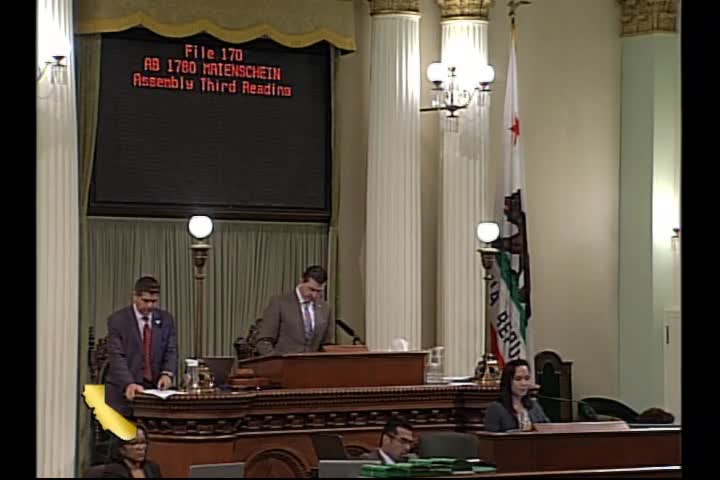 1MIN
Assembly Floor
 17MIN
Assembly Standing Committee on Public Safety
Bill Author